SMS/Text 469-608-9944
Parashat Noach · Genesis 6:9–11:32

Noach: A Visual Journey

Illustrated teaching slides from Benei Avraham walking through Parashat Noach, portion by portion: Noach, a righteous man in a world filled with violence; the decree; the blueprint of the ark; the flood, the raven and the dove, and the drying of the earth; Noach’s altar and the laws of the renewed earth; the rainbow, sign of the everlasting covenant; the Table of Nations; and the tower of Babel and the line from Shem to Avram. The haftarah, Isaiah 54:1–55:5, closes with Hashem’s covenant of peace, sworn like the waters of Noach. Tap any image to open the slideshow; use the arrows (or swipe) to move through every slide.

Rishon · Genesis 6:9–22

First Portion
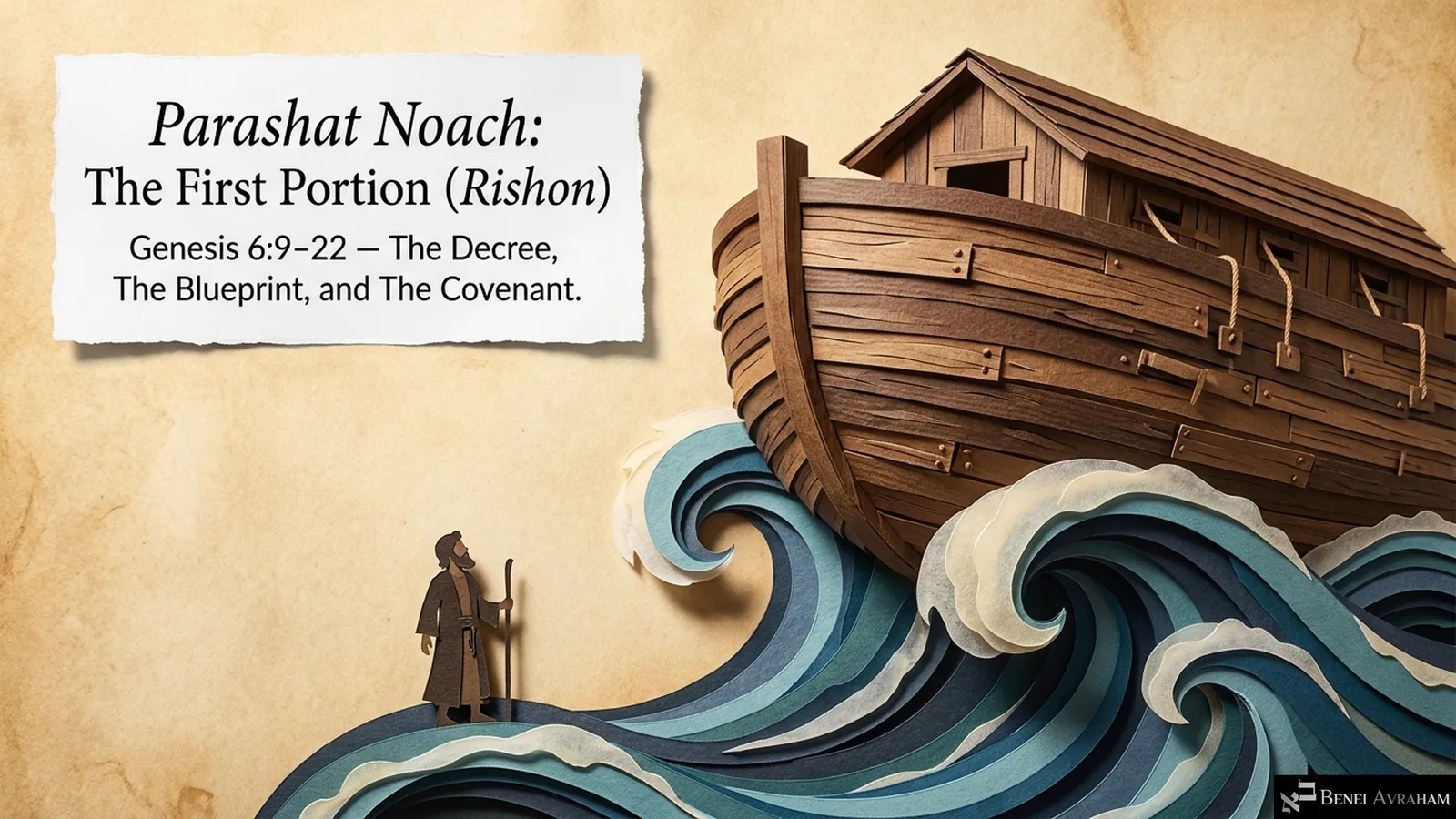
Parashat Noach: The First Portion (Rishon), Genesis 6:9–22: the decree, the blueprint and the covenant
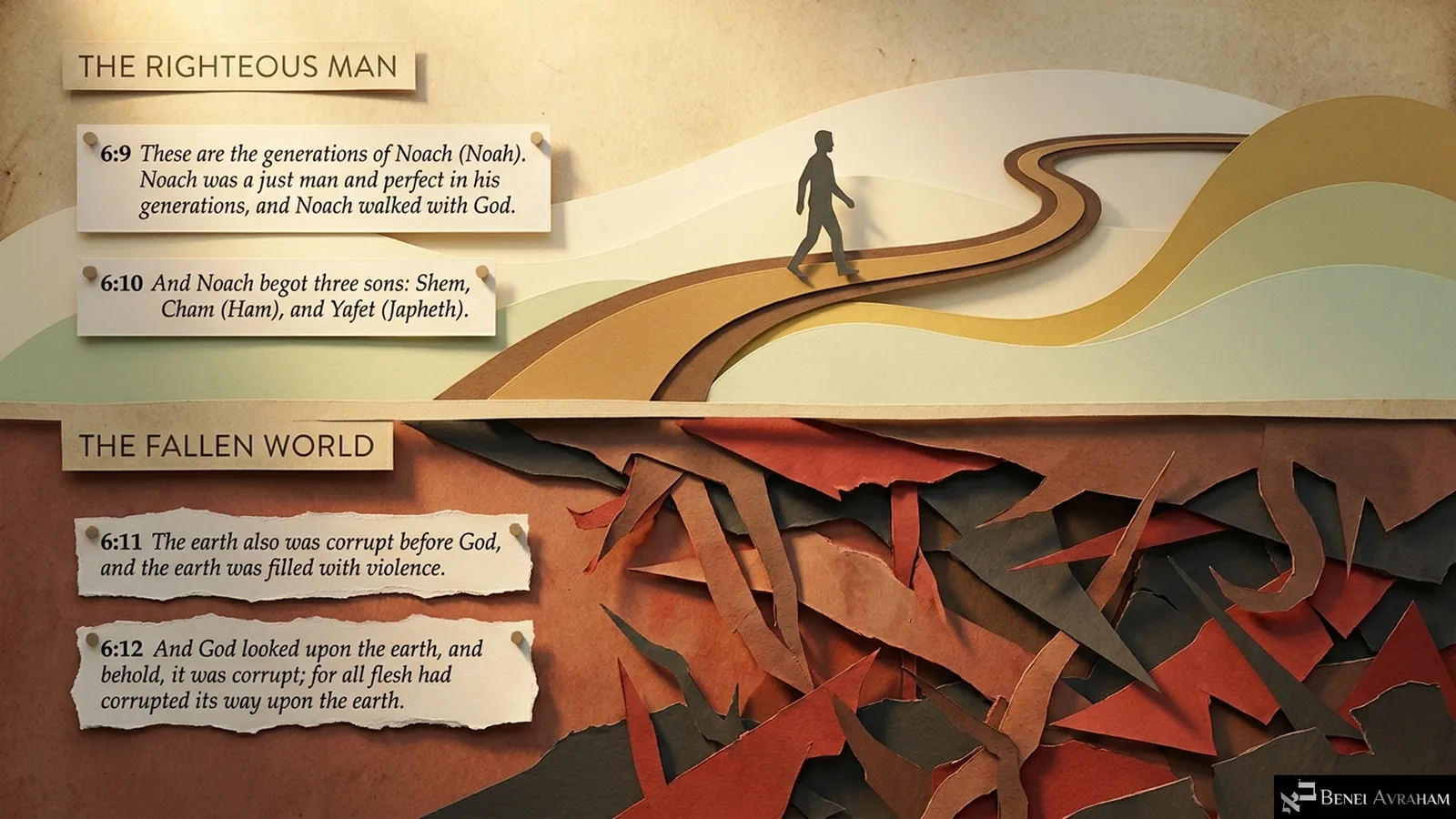
The righteous man and the fallen world: Noach walked with God while the earth was filled with violence (Genesis 6:9–12)
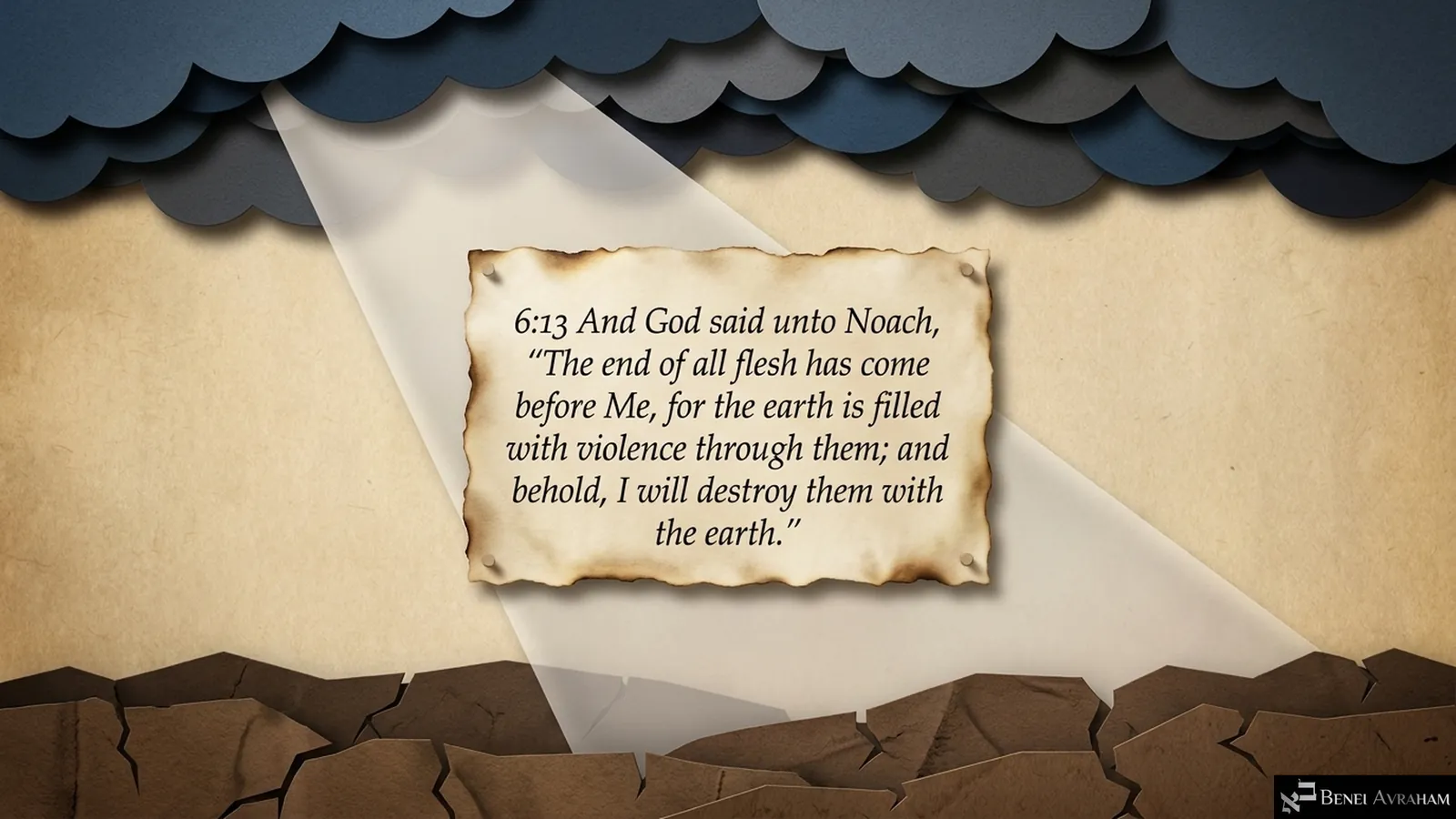
The decree: “The end of all flesh has come before Me” (Genesis 6:13)
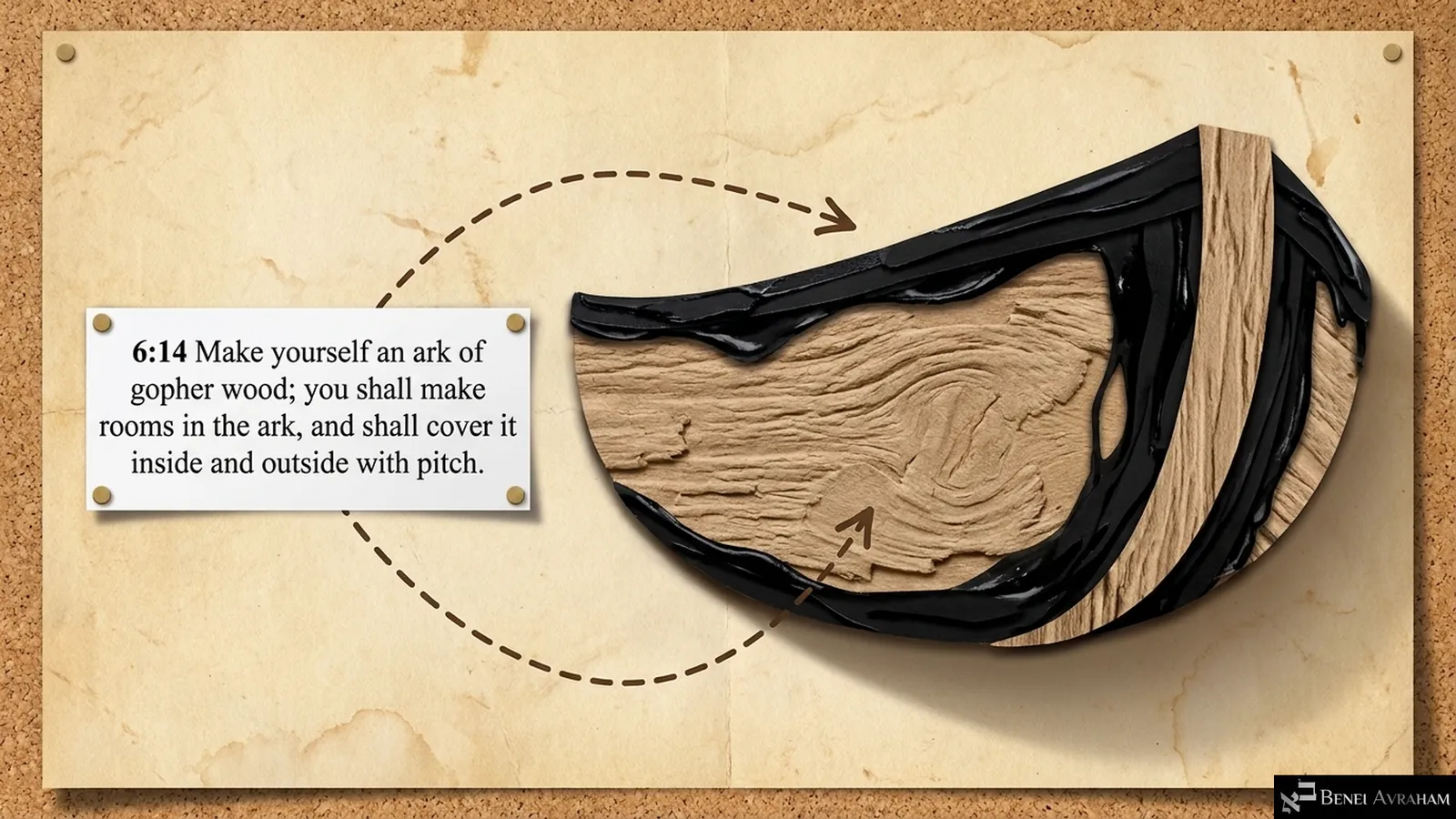
Make yourself an ark of gopher wood, covered inside and outside with pitch (Genesis 6:14)
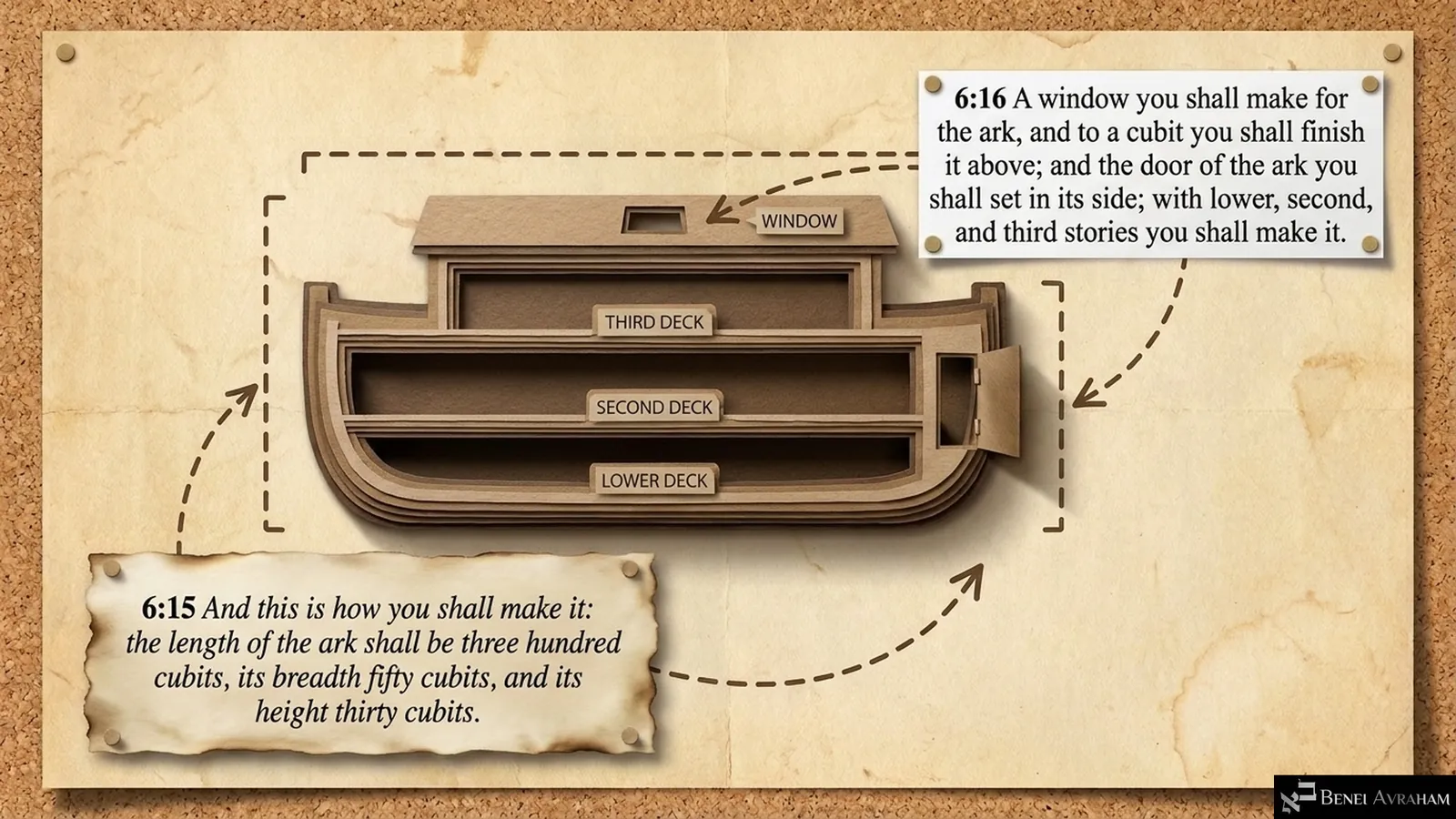
The blueprint of the ark: three hundred by fifty by thirty cubits, a window, a door and three decks (Genesis 6:15–16)
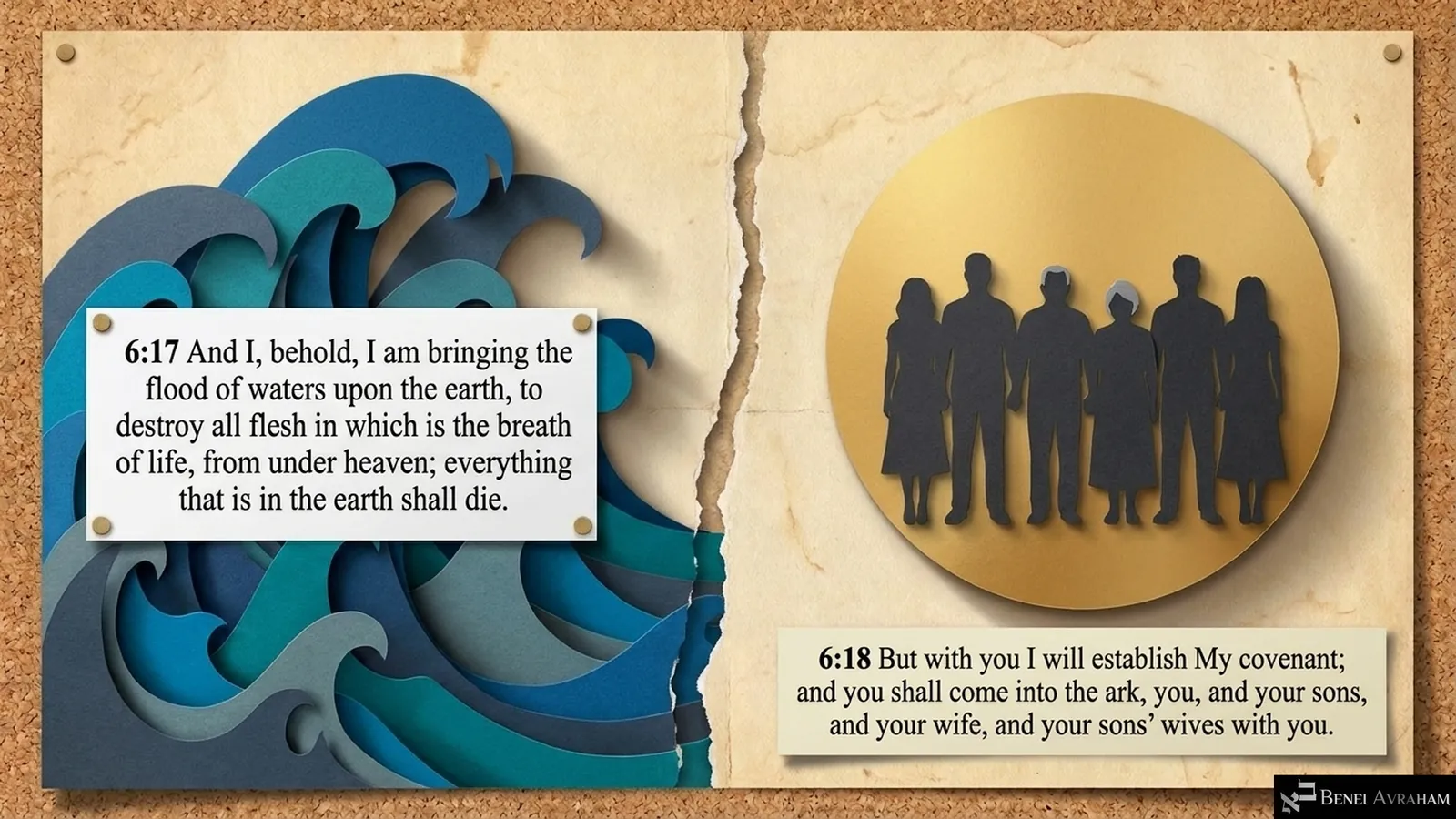
The flood and the covenant: “But with you I will establish My covenant” (Genesis 6:17–18)
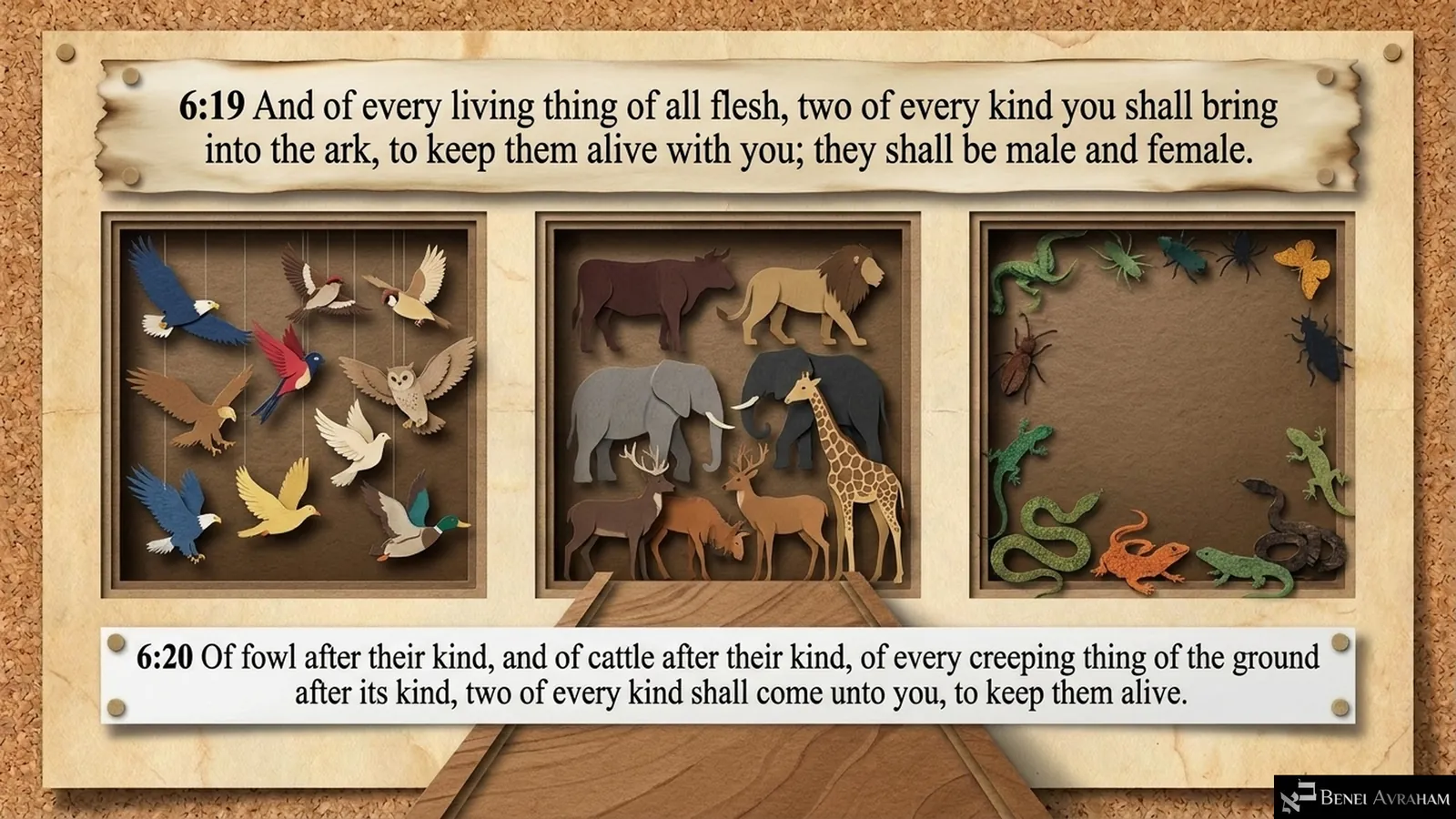
Two of every kind: birds, cattle and creeping things come into the ark (Genesis 6:19–20)
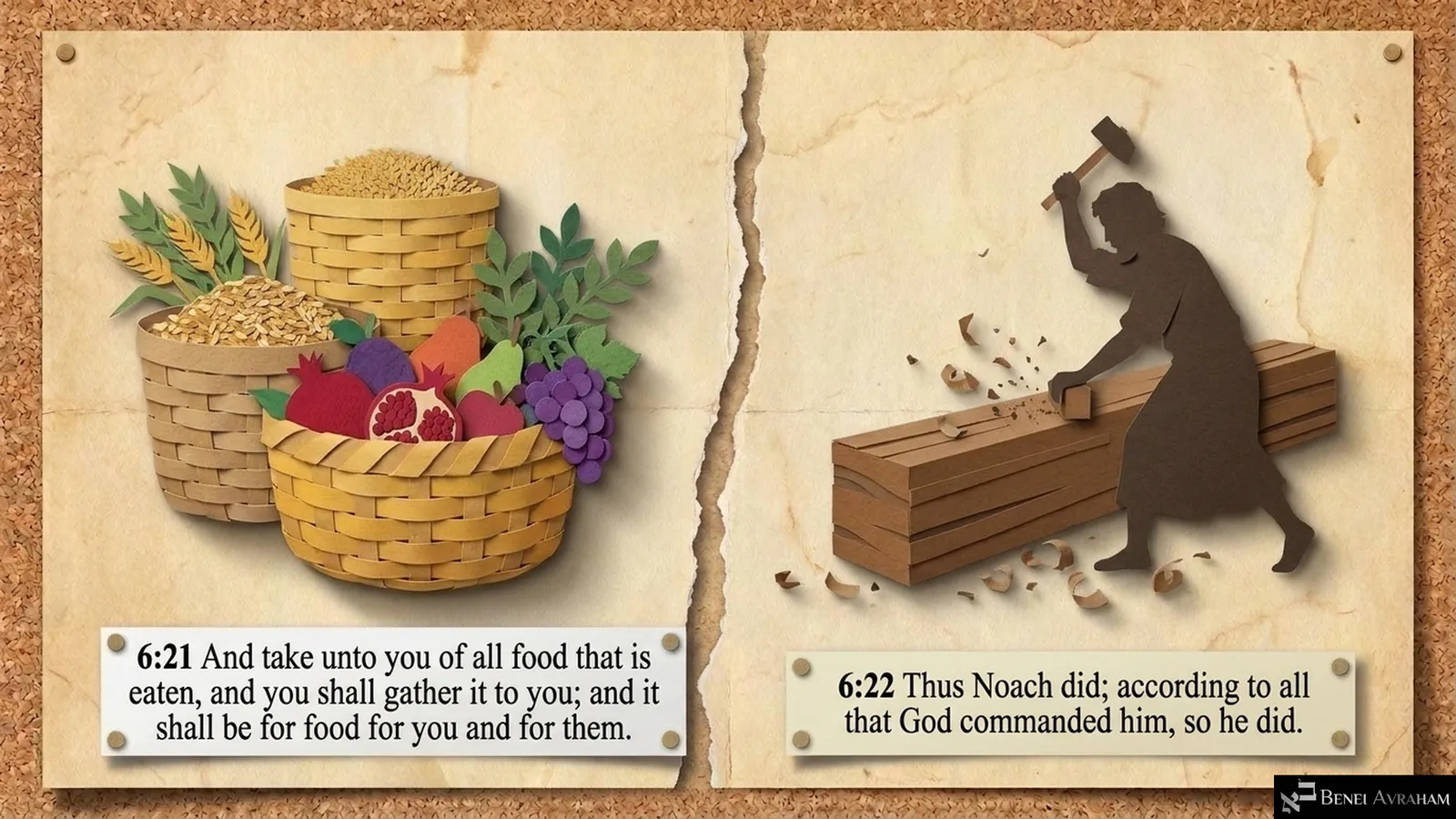
Food for all, and Noach’s obedience: “Thus Noach did; according to all that God commanded him” (Genesis 6:21–22)
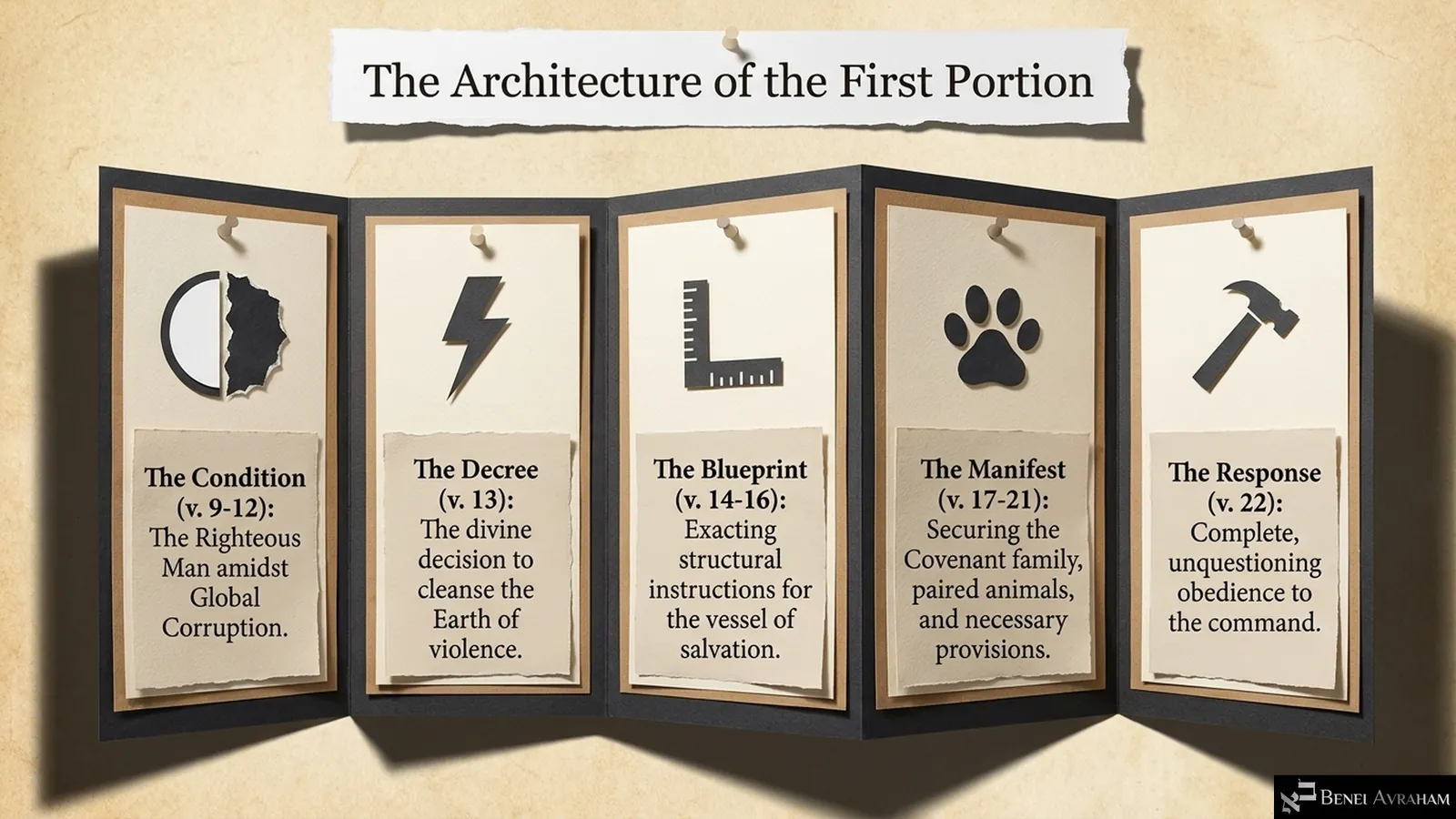
The architecture of the First Portion: the condition, the decree, the blueprint, the manifest and the response
Sheni · Genesis 7:1–16

Second Portion
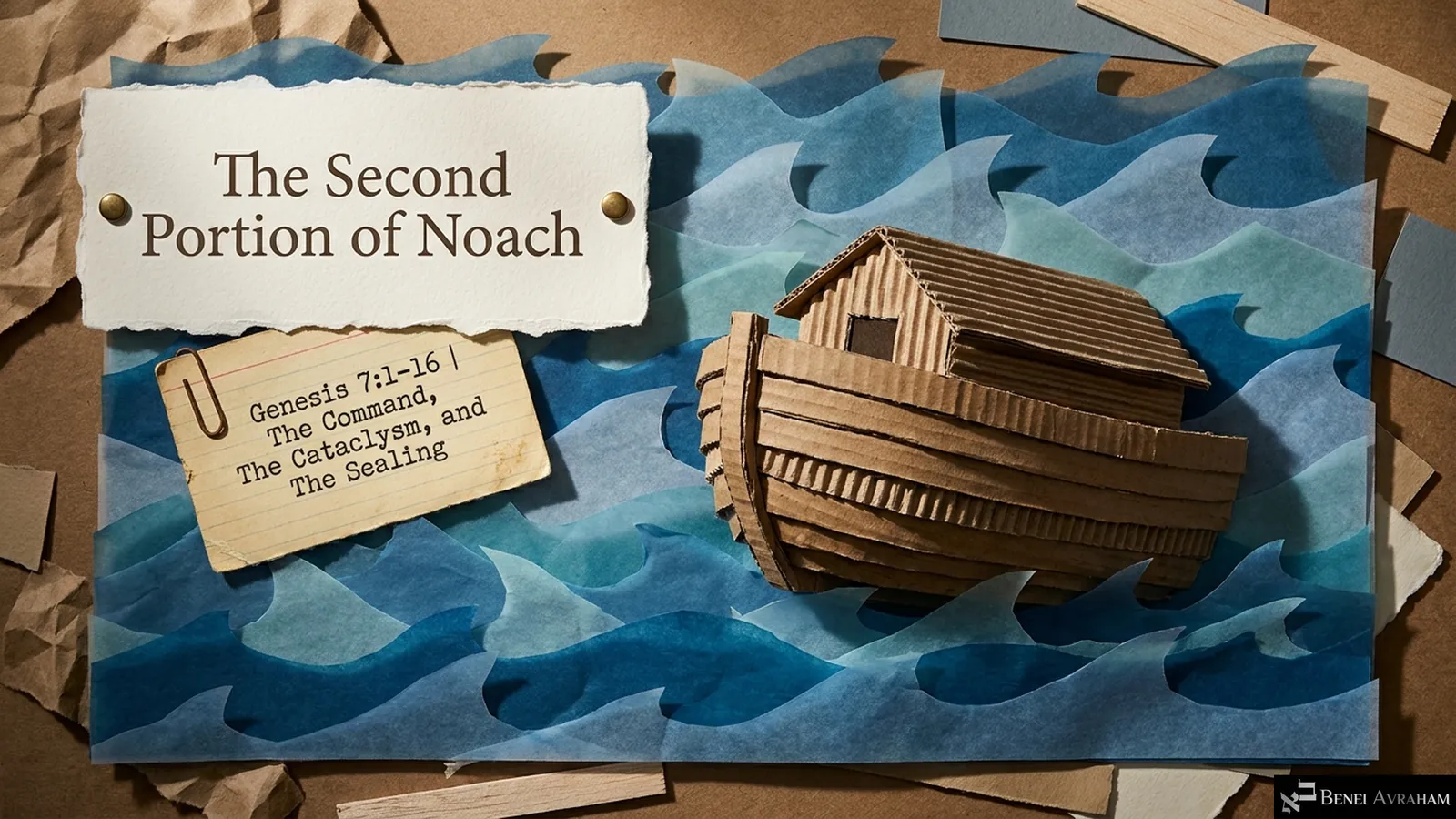
The Second Portion of Noach, Genesis 7:1–16: the command, the cataclysm and the sealing
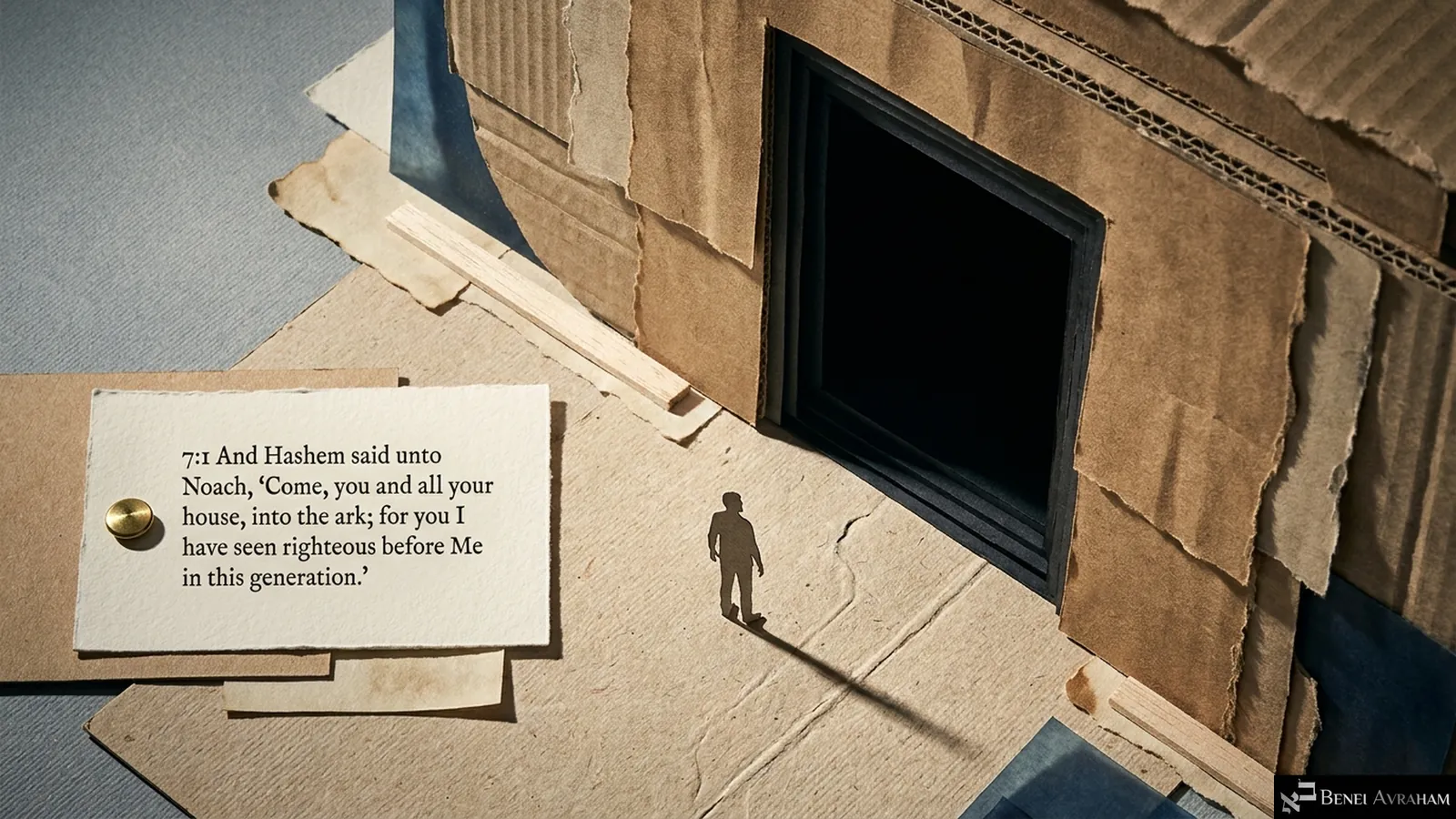
“Come, you and all your house, into the ark” (Genesis 7:1)
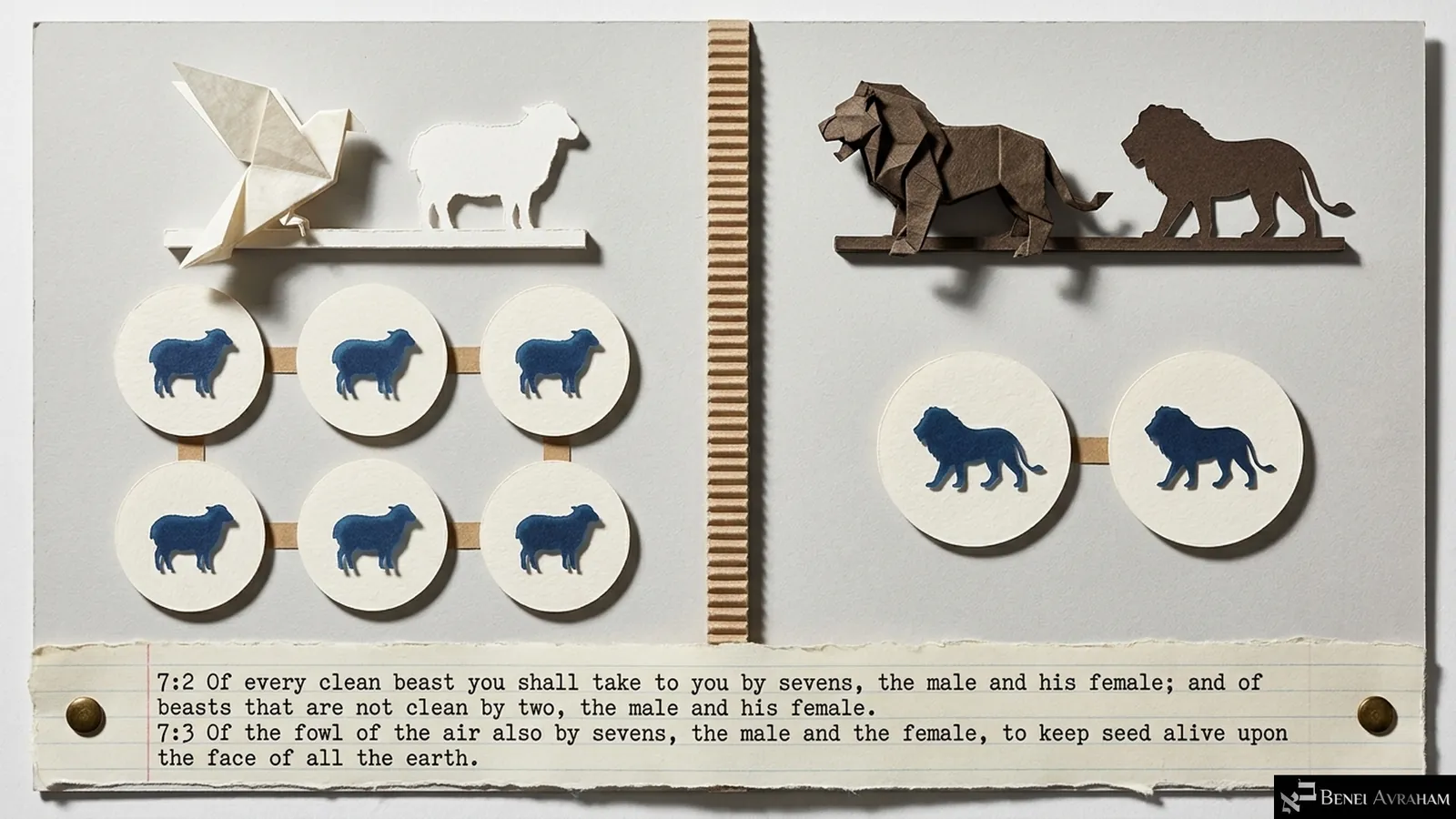
Clean animals by sevens, unclean animals by two (Genesis 7:2–3)
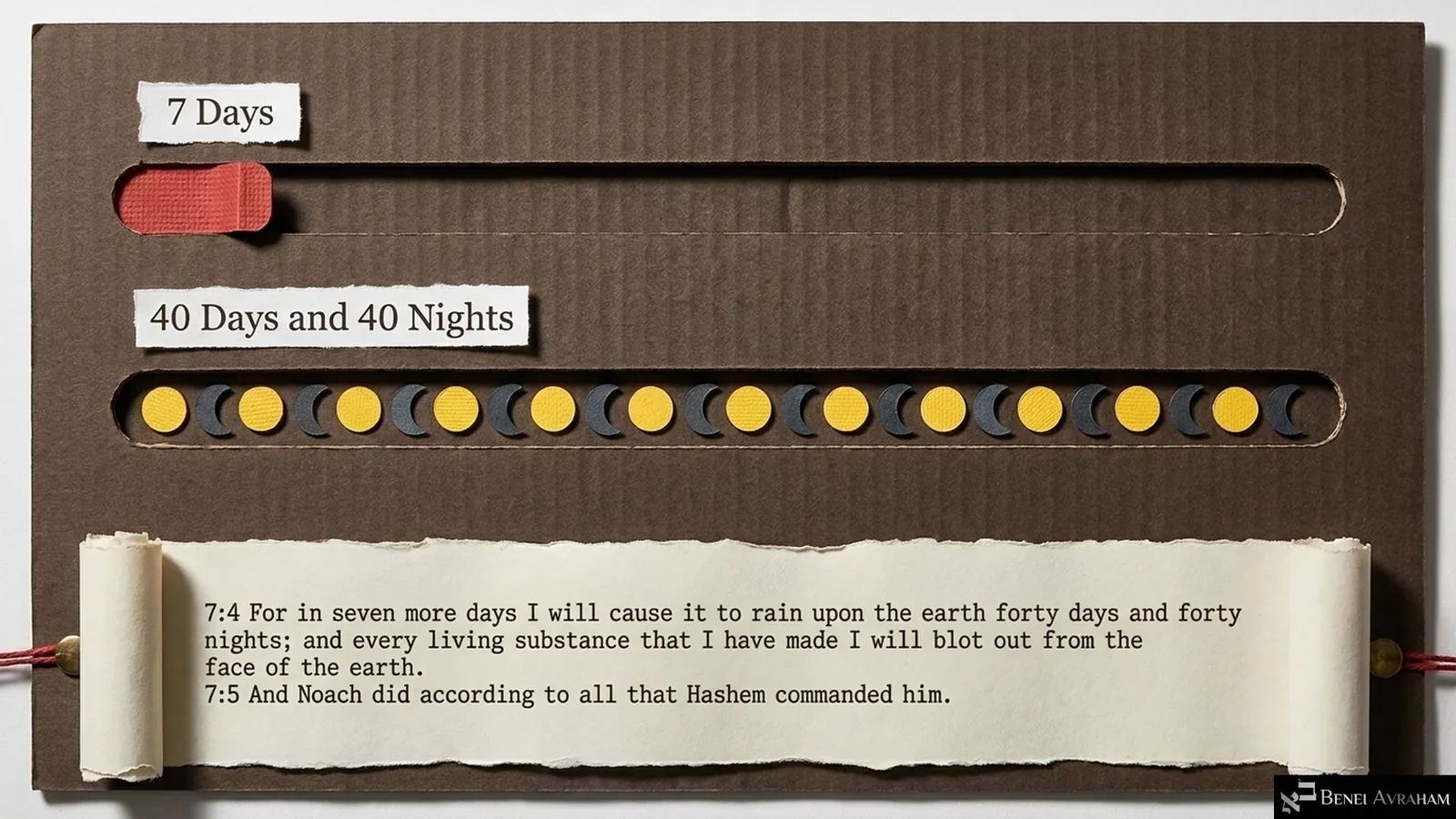
Seven days, then forty days and forty nights of rain (Genesis 7:4–5)
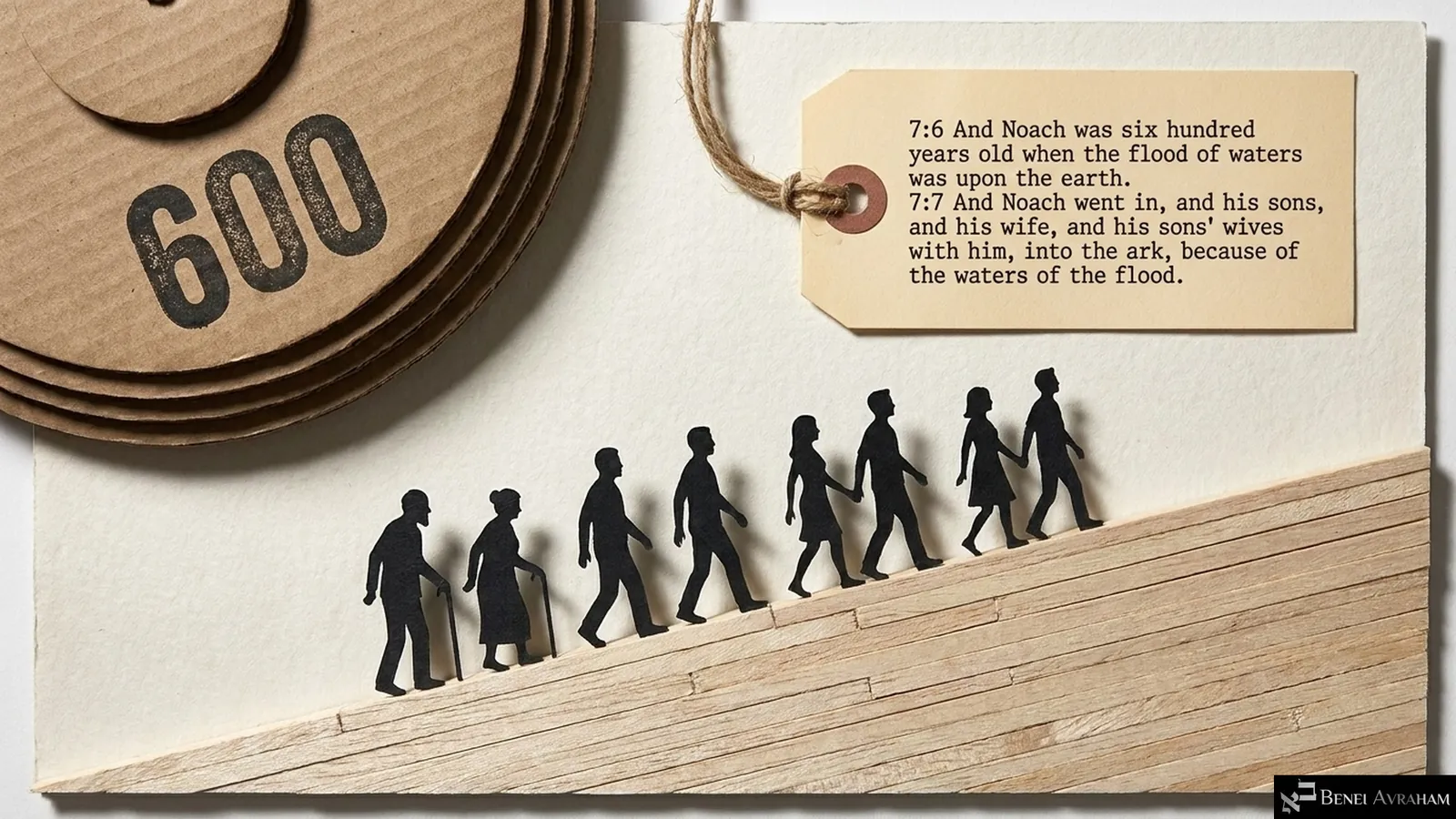
Noach, six hundred years old, goes into the ark with his family (Genesis 7:6–7)
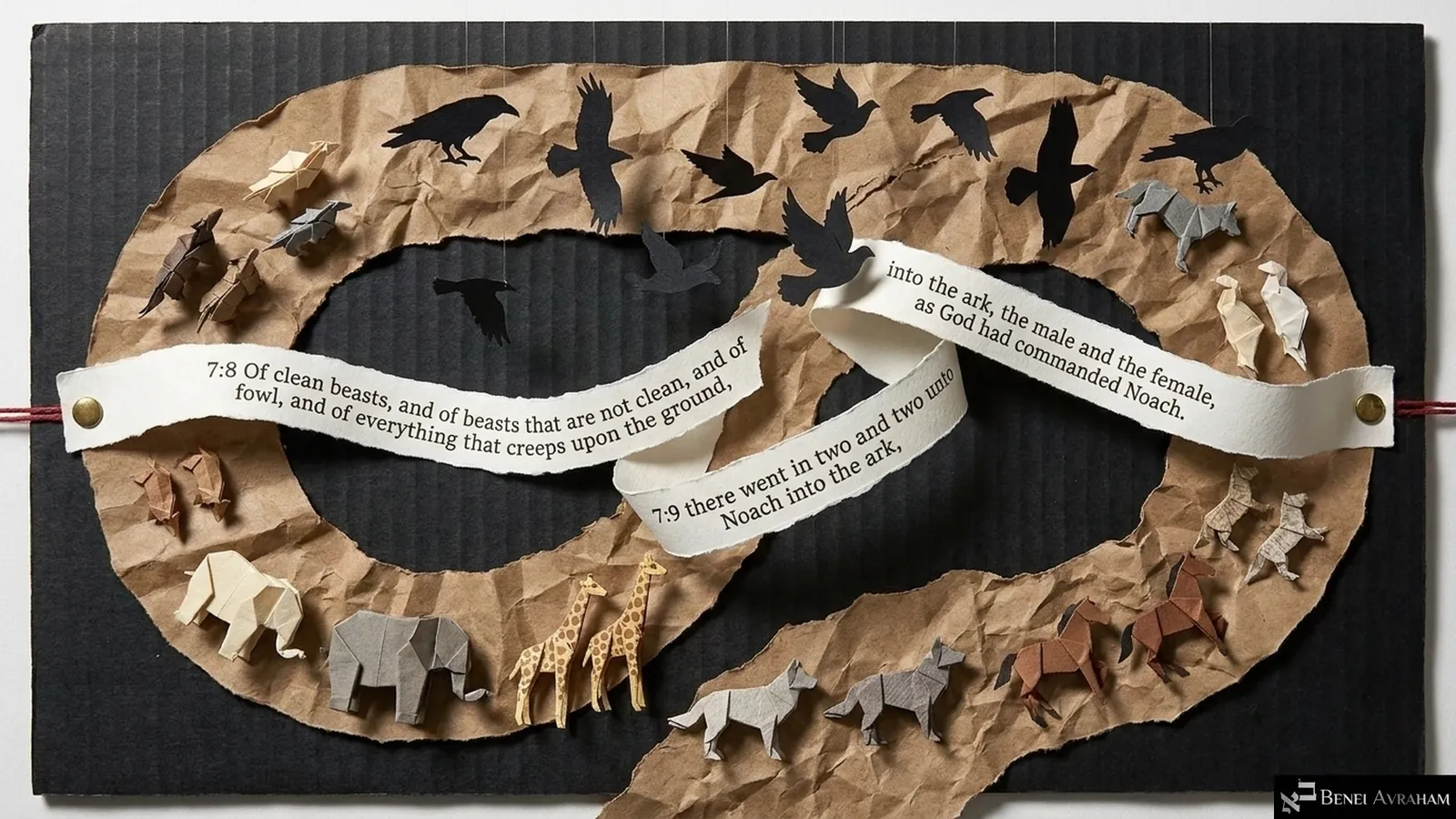
Two by two, the animals go in to Noach into the ark (Genesis 7:8–9)
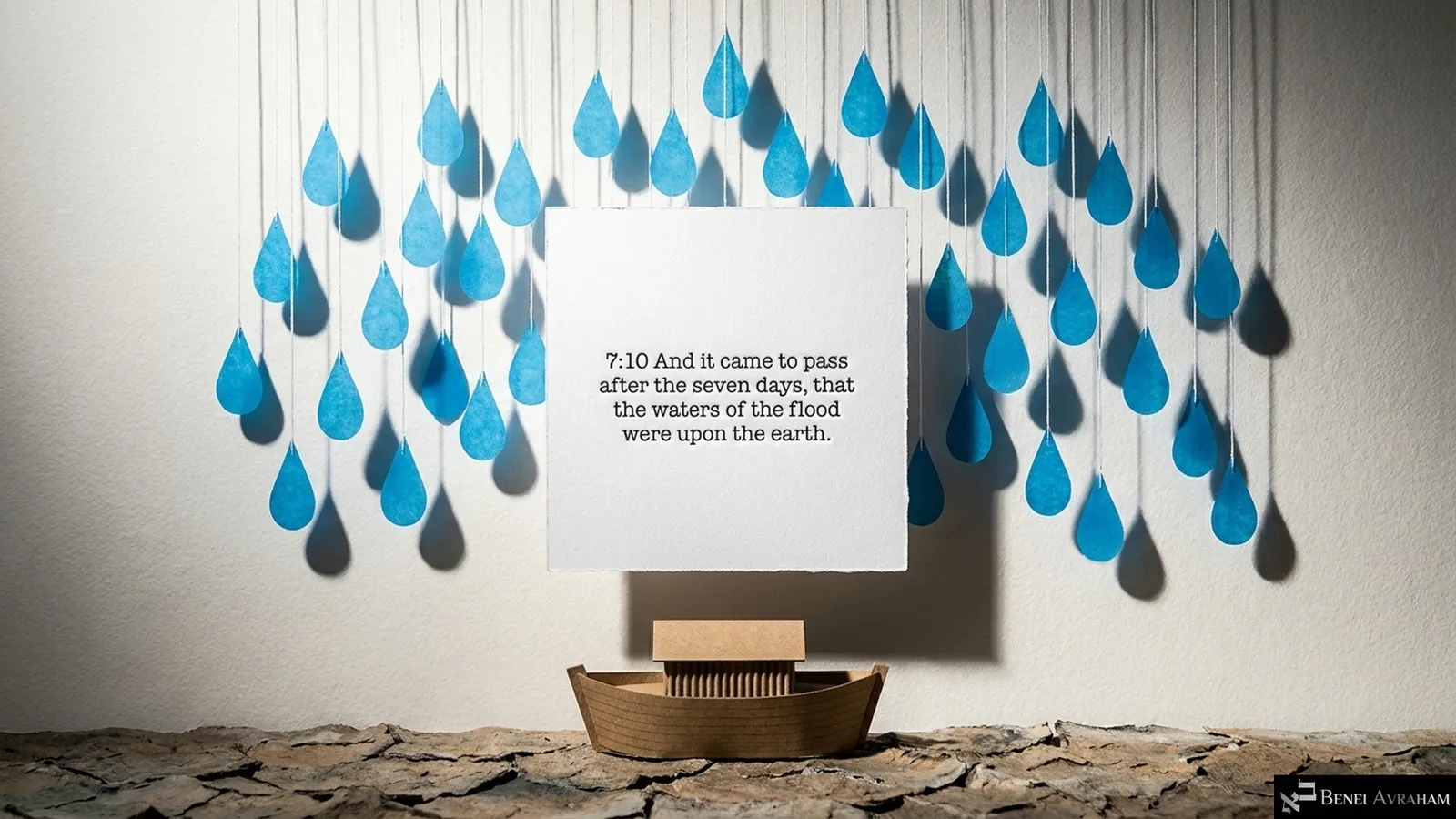
After the seven days, the waters of the flood came upon the earth (Genesis 7:10)
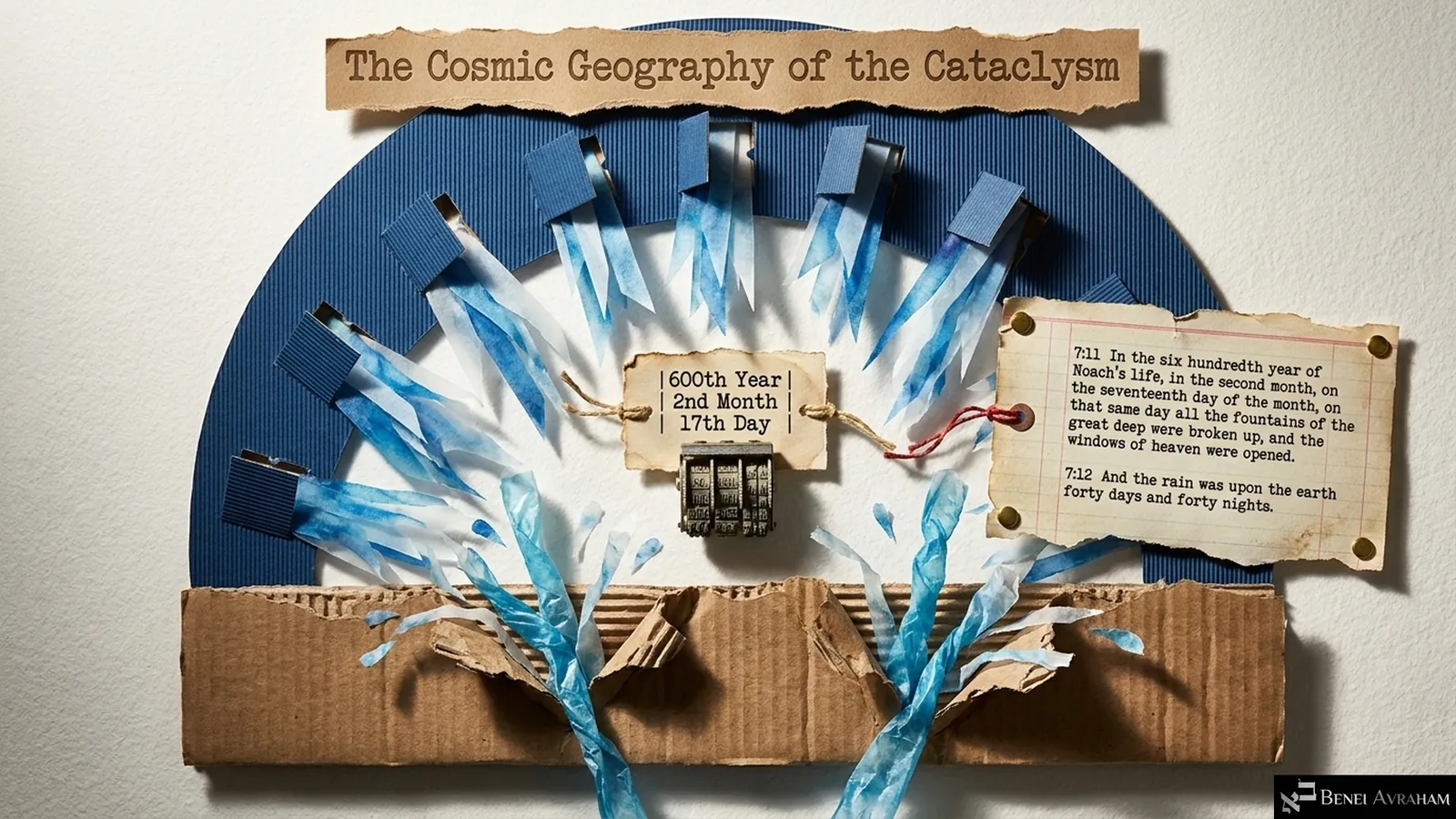
The cosmic geography of the cataclysm: the fountains of the deep and the windows of heaven (Genesis 7:11–12)
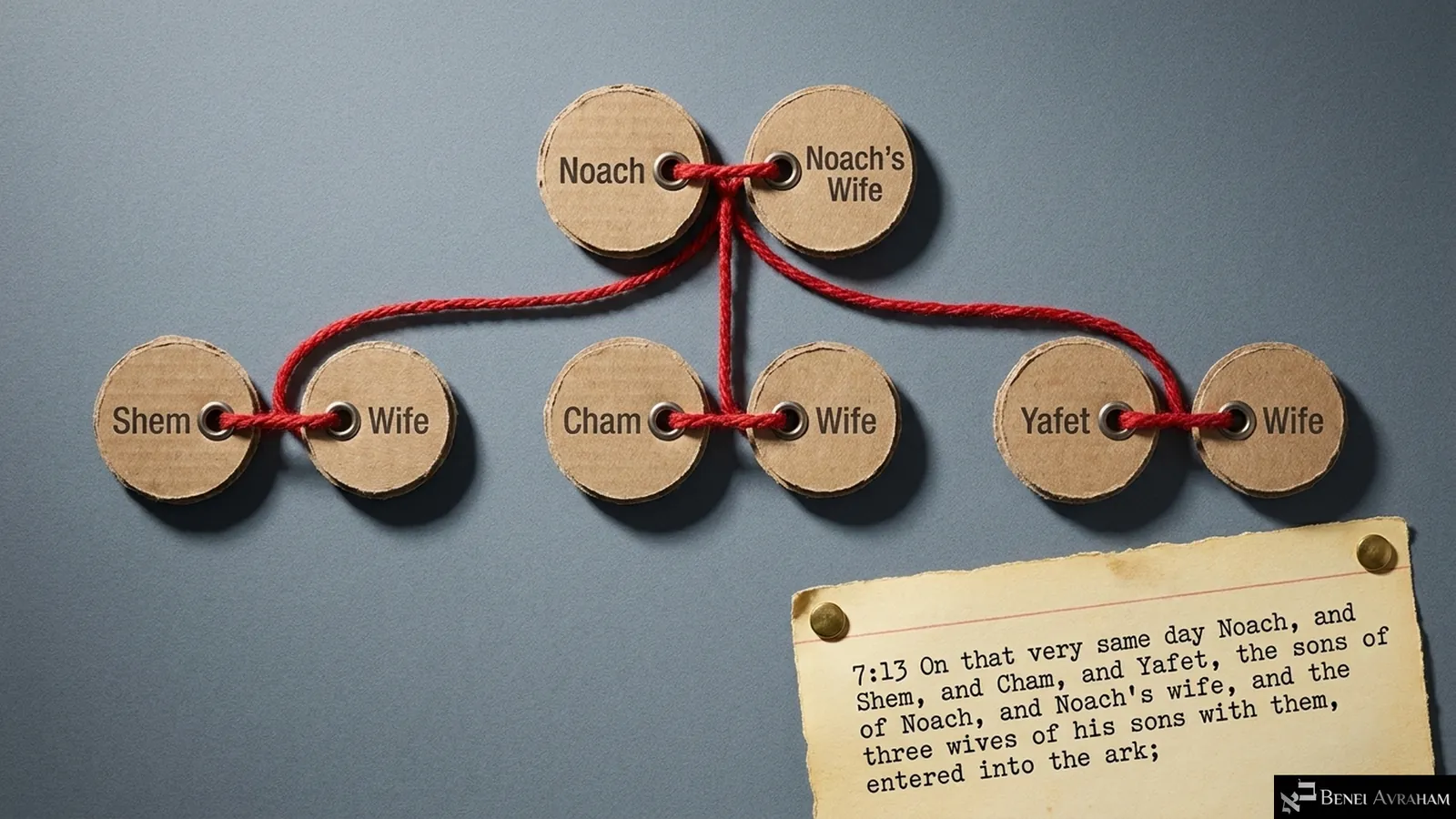
Noach’s family enters the ark: Noach and his wife, Shem, Cham and Yafet and their wives (Genesis 7:13)
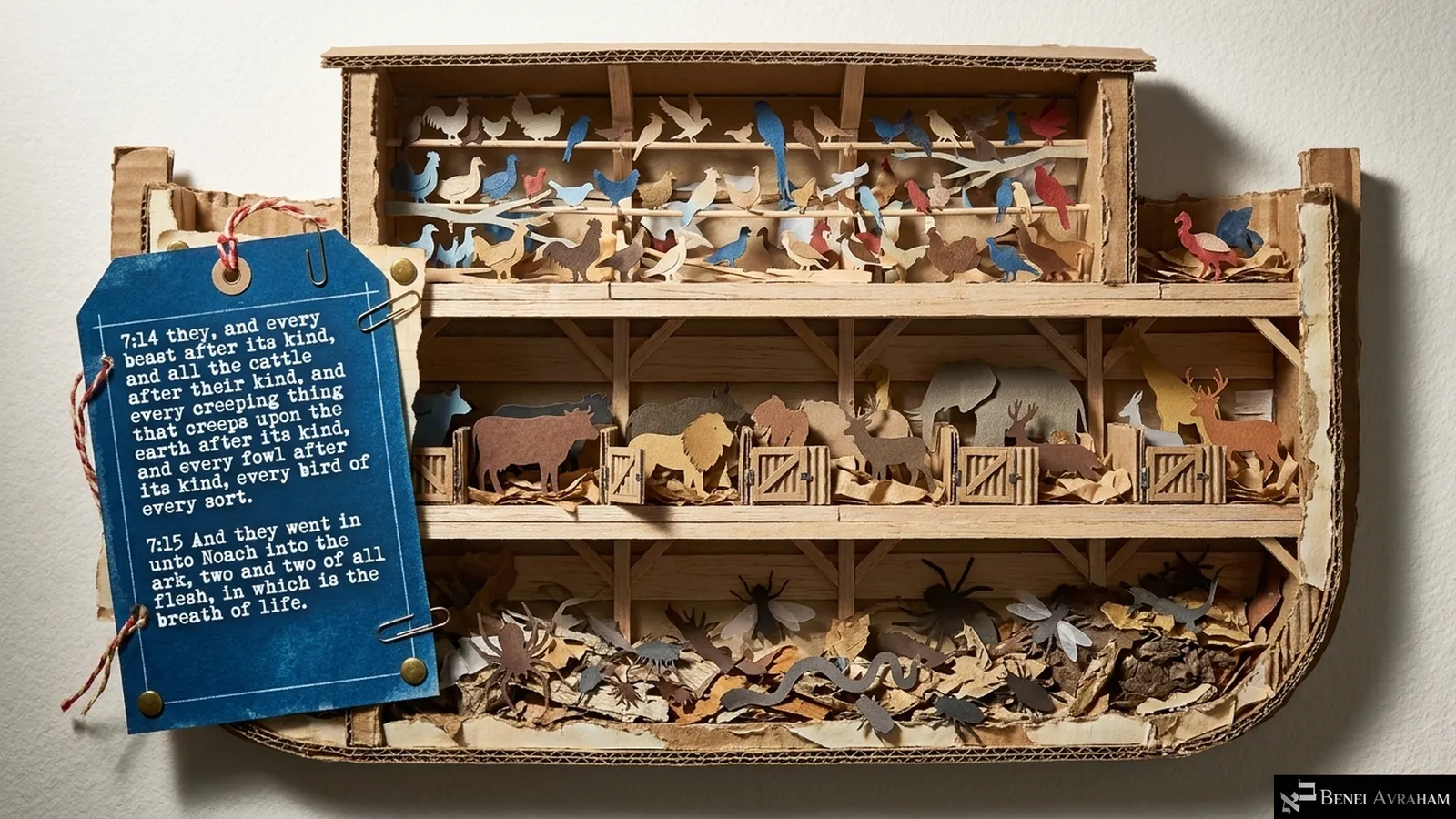
Every beast, bird and creeping thing after its kind, inside the ark (Genesis 7:14–15)
“And Hashem shut him in” (Genesis 7:16)
Shlishi · Genesis 7:17–8:14

Third Portion
The Flood and the Remembrance: a visual journey through the third portion of Parashat Noach (Genesis 7:17–8:14)
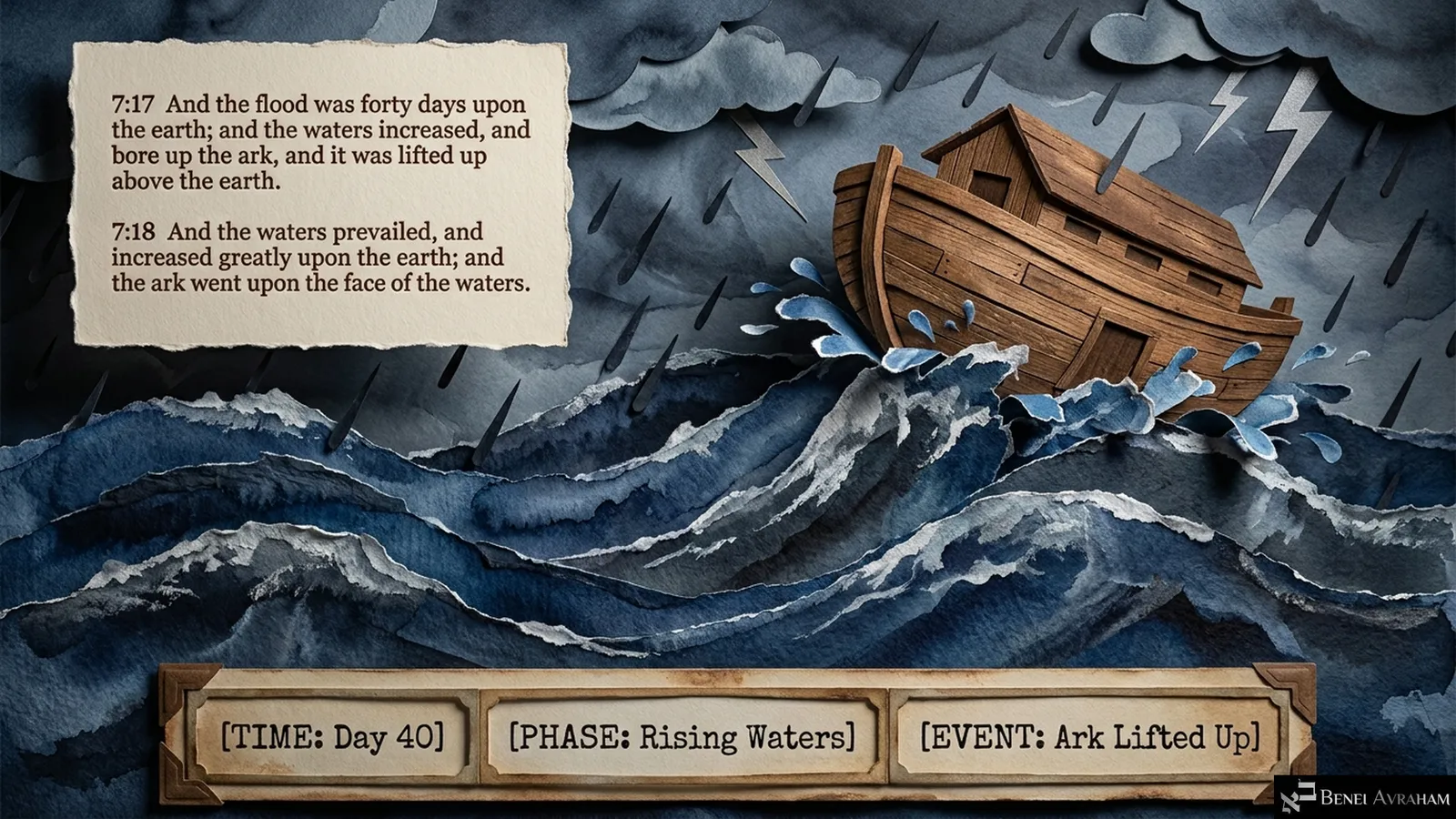
Day 40: the waters increase and lift up the ark above the earth (Genesis 7:17–18)
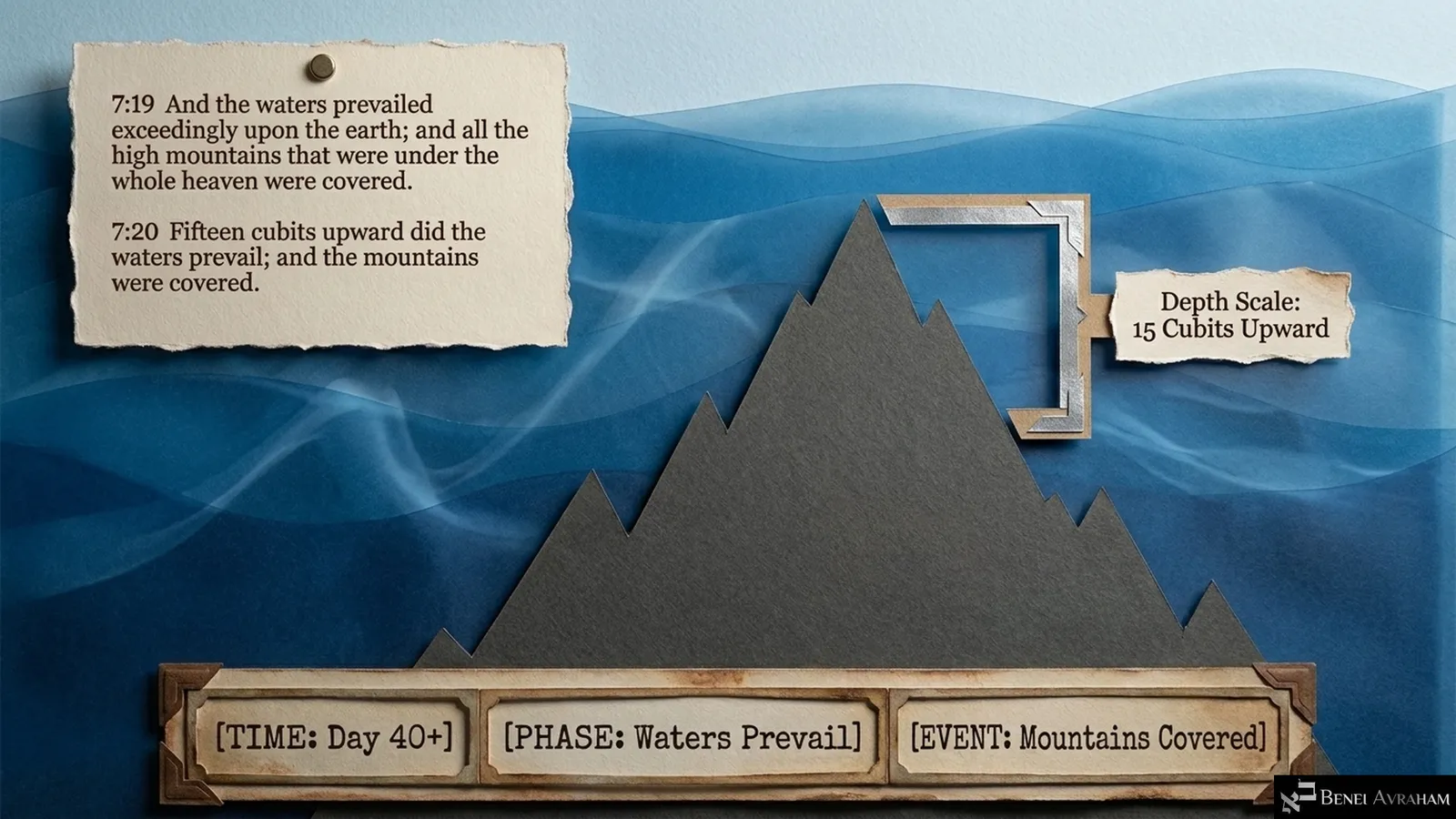
The waters prevail fifteen cubits upward and the high mountains are covered (Genesis 7:19–20)
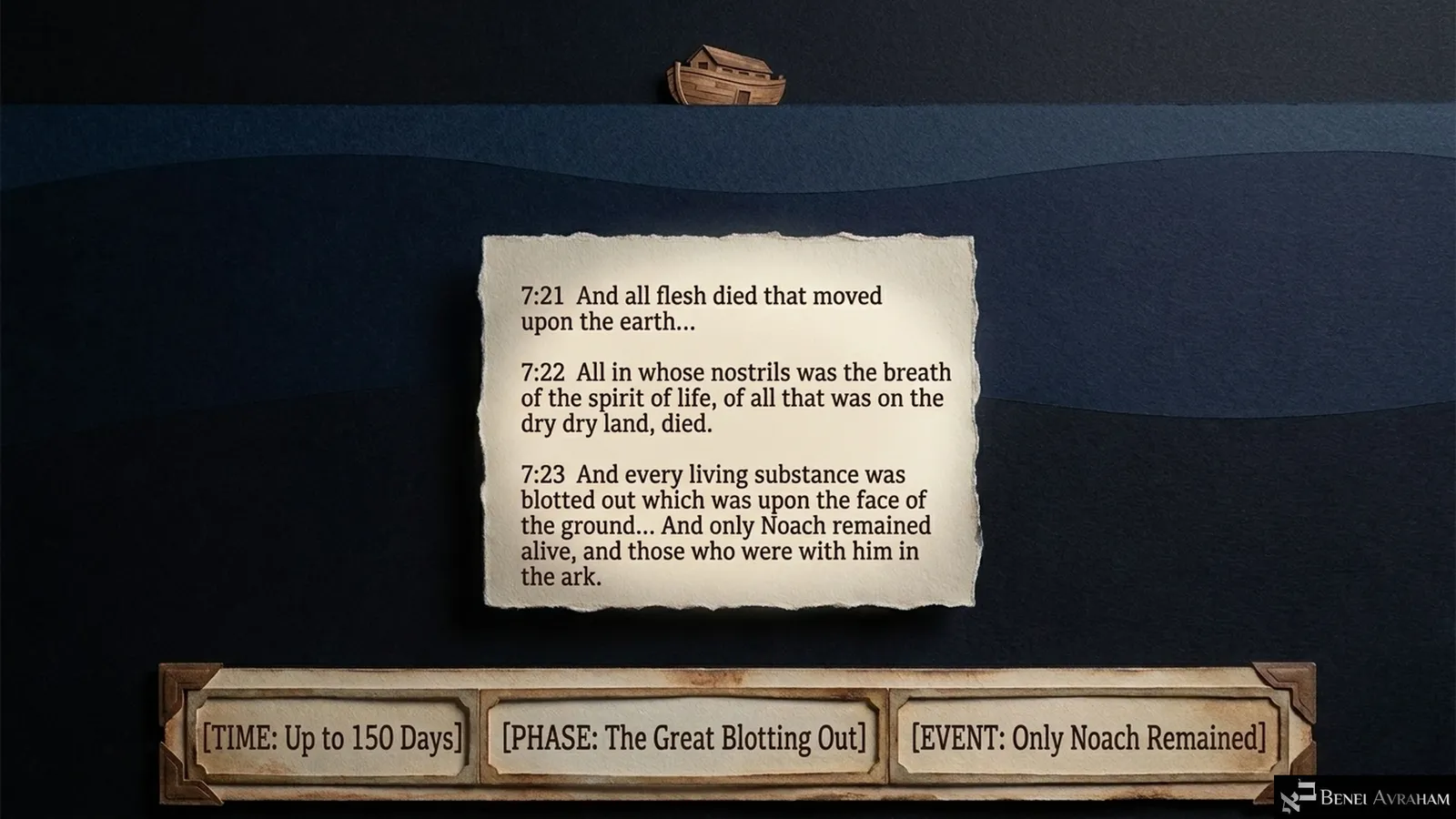
The great blotting out: all flesh dies, and only Noach and those with him in the ark remain (Genesis 7:21–23)
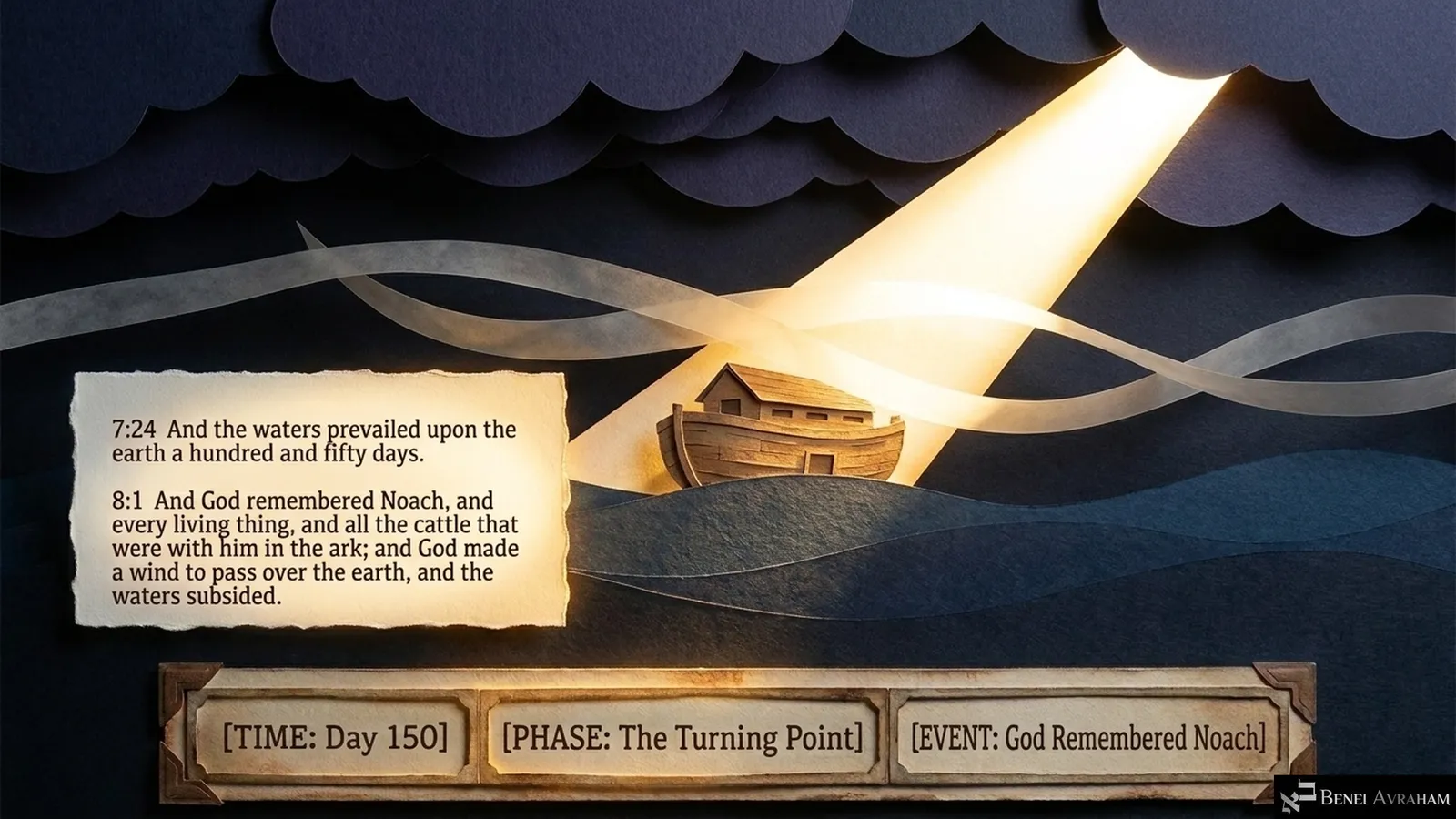
Day 150, the turning point: God remembers Noach and makes a wind pass over the earth (Genesis 7:24–8:1)
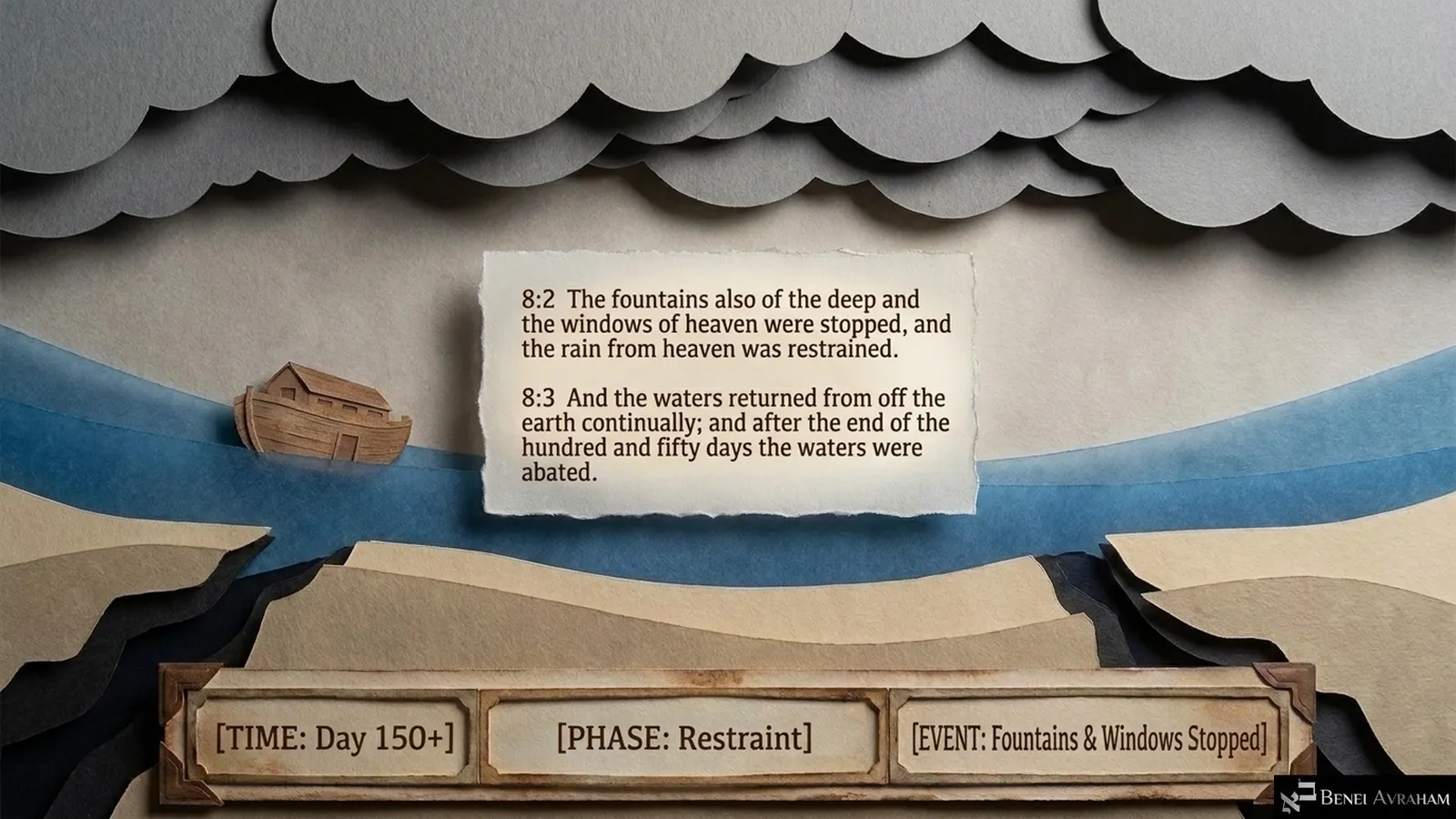
The fountains of the deep and the windows of heaven are stopped, and the waters recede (Genesis 8:2–3)
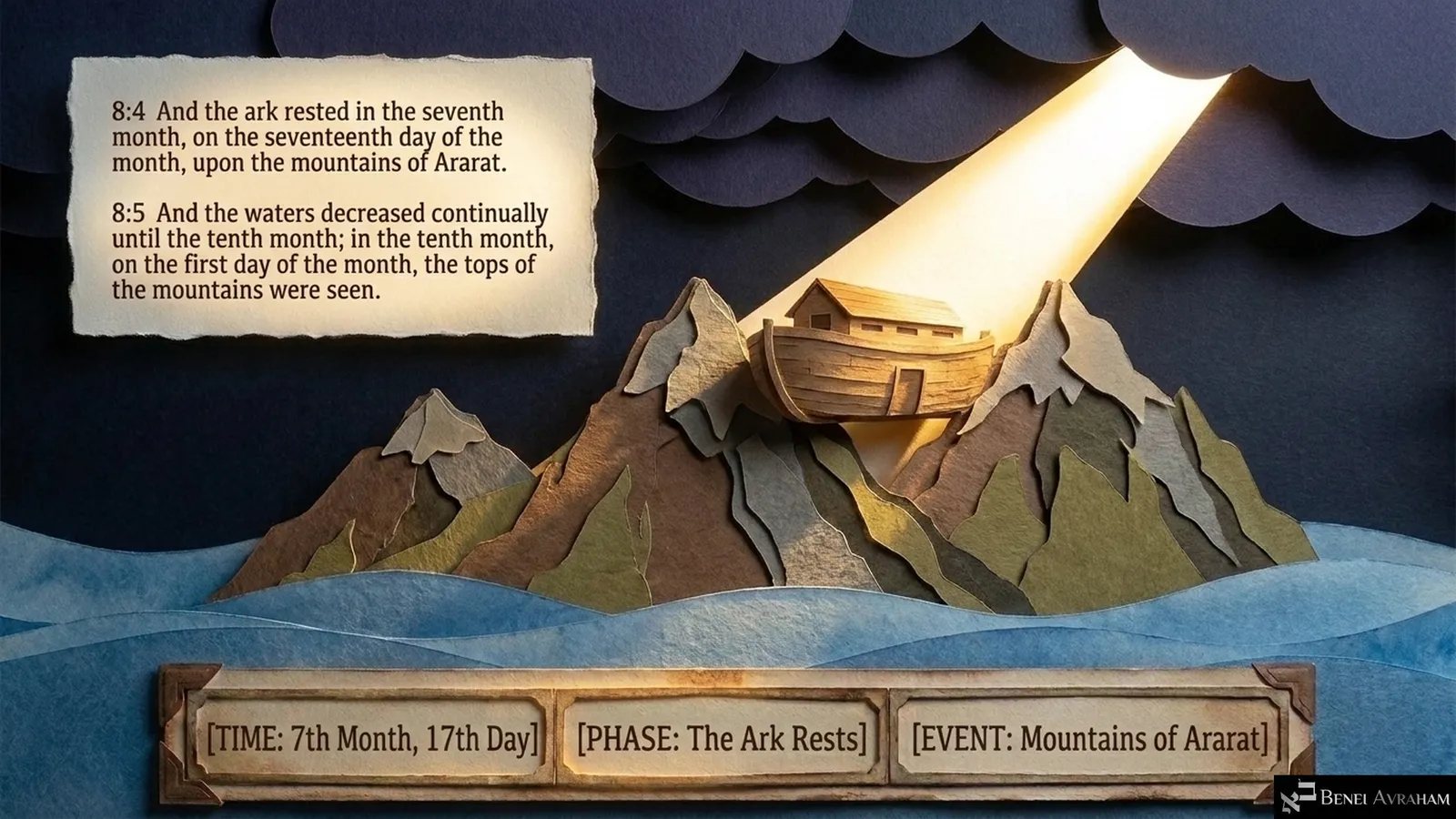
The ark rests on the mountains of Ararat, and the tops of the mountains are seen (Genesis 8:4–5)
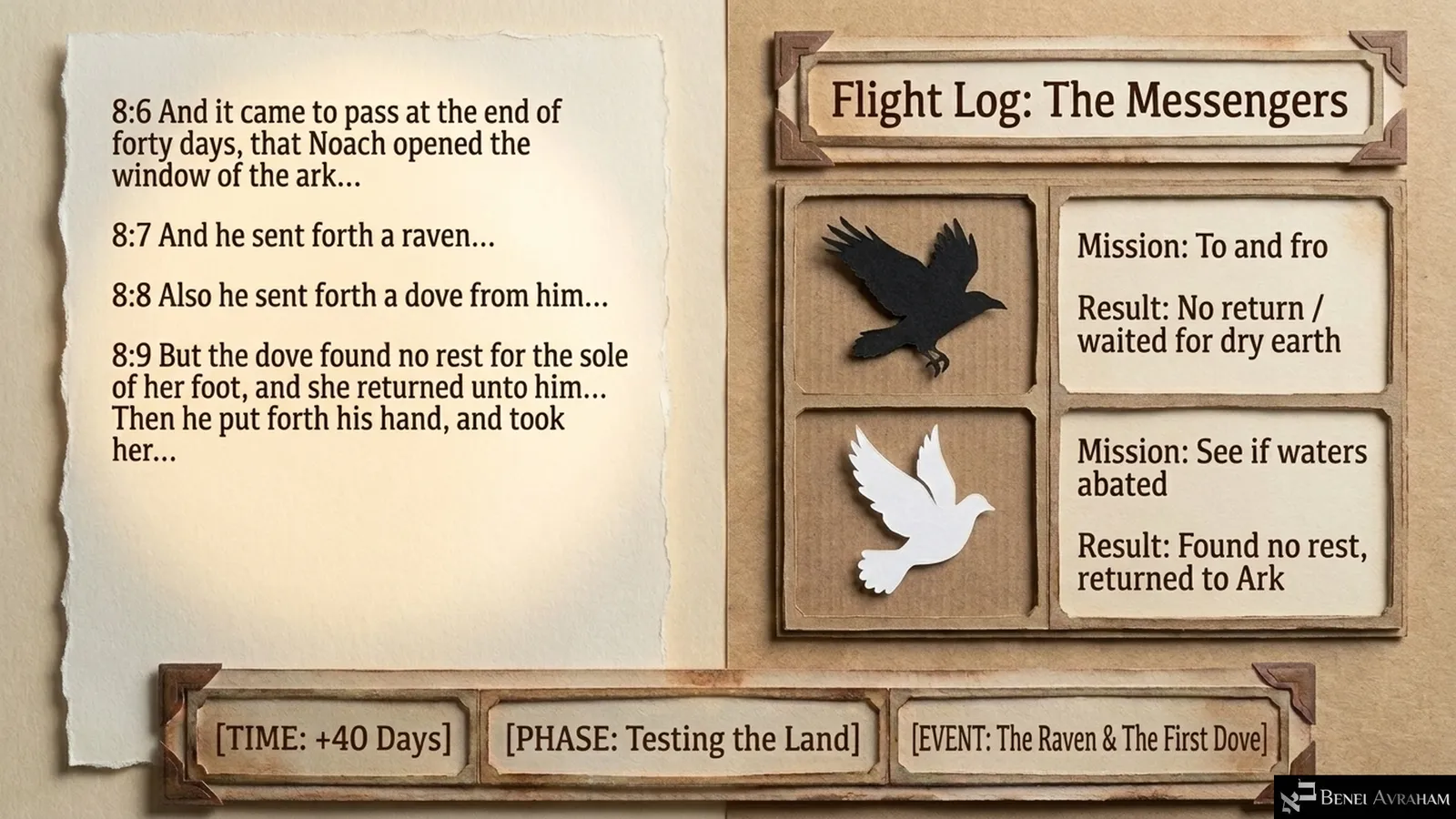
Flight log of the messengers: Noach sends out the raven and the first dove (Genesis 8:6–9)
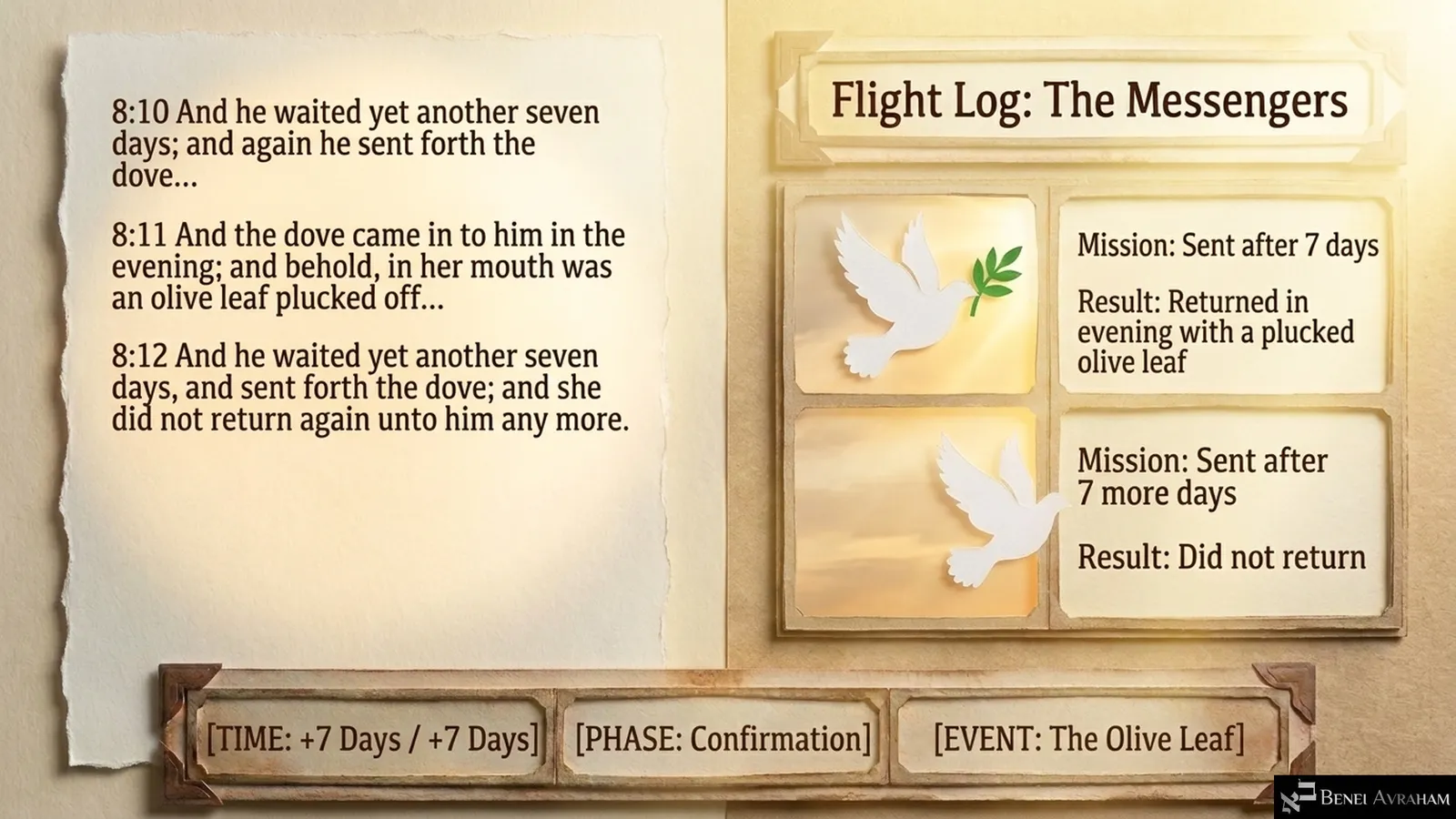
The dove returns with a plucked olive leaf, and then does not return again (Genesis 8:10–12)
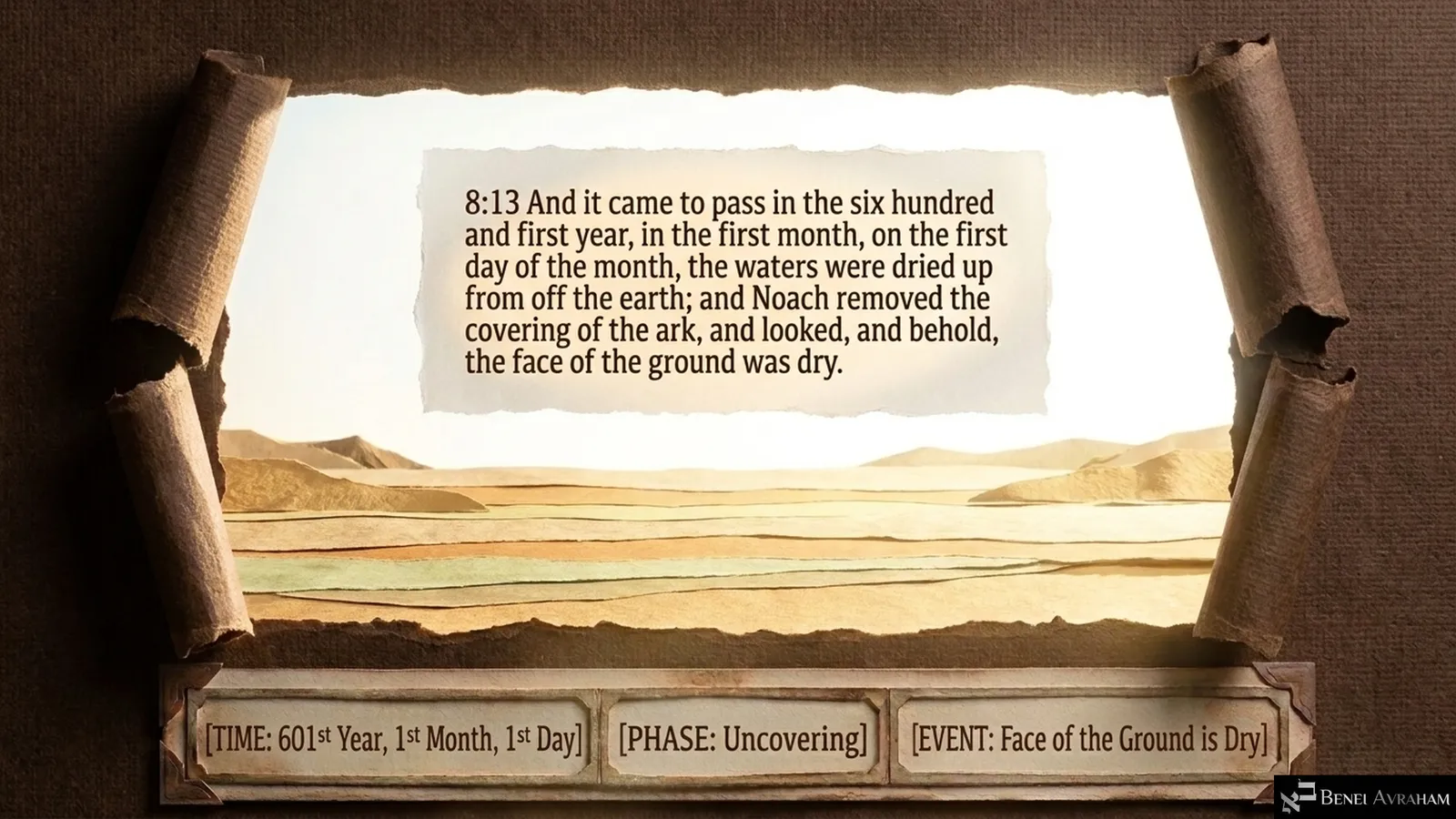
Noach removes the covering of the ark: the face of the ground is dry (Genesis 8:13)
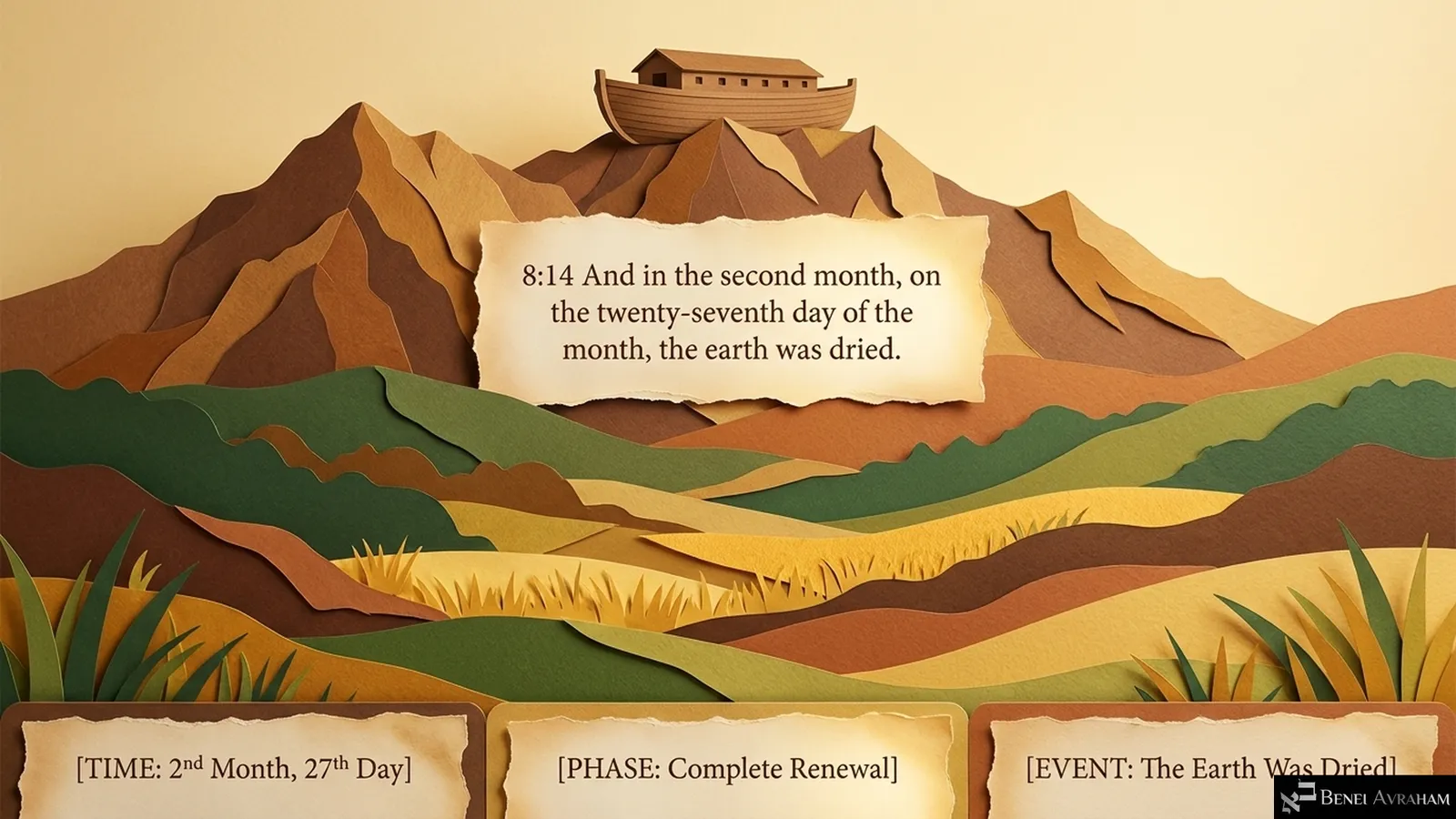
Complete renewal: on the twenty-seventh day of the second month the earth is dried (Genesis 8:14)
Revi’i · Genesis 8:15–9:7

Fourth Portion
Title slide: Parashat Noach, the fourth portion, Revi’i (Genesis 8:15–9:7)
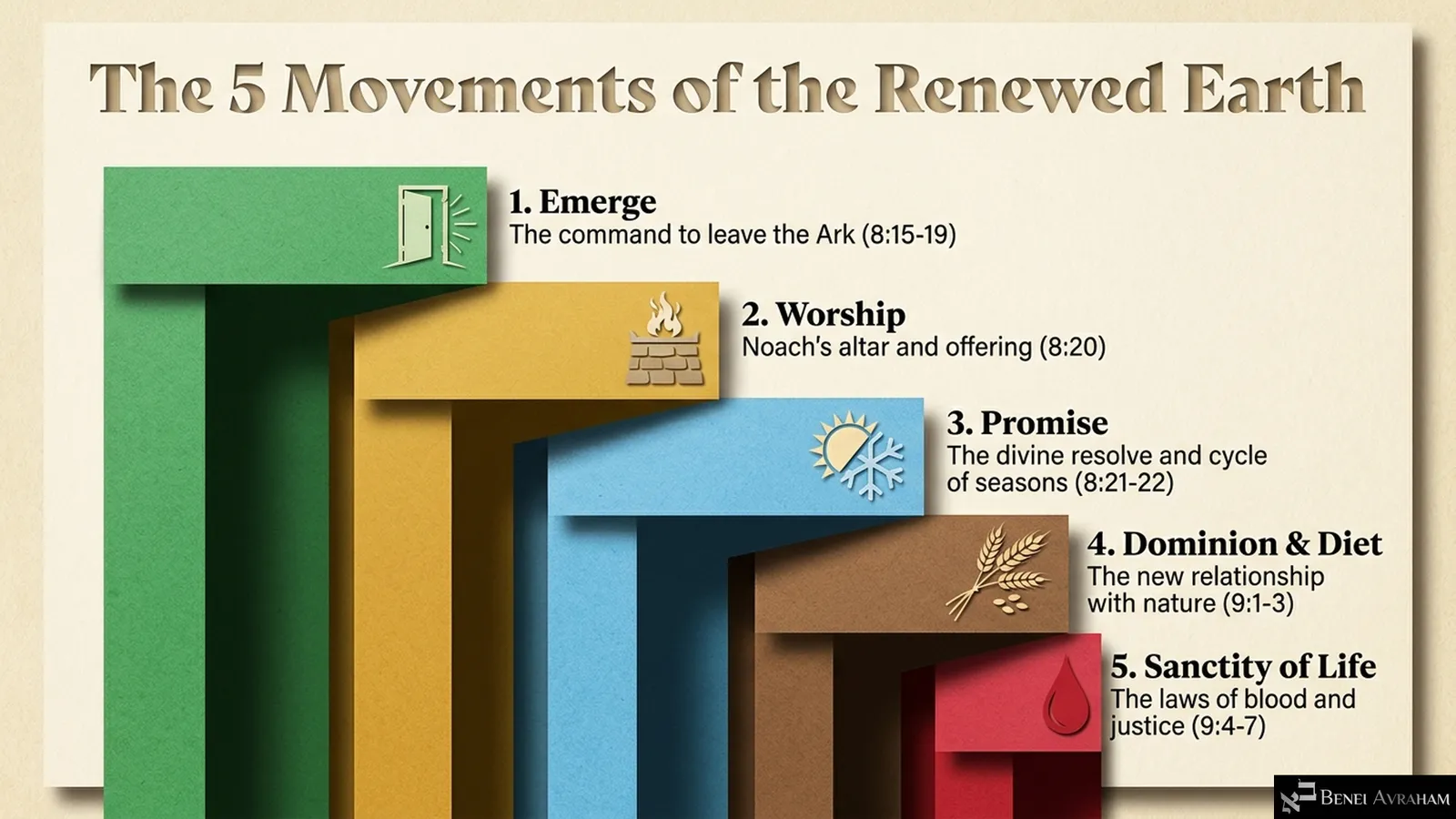
The five movements of the renewed earth: emerge, worship, promise, dominion and diet, sanctity of life (Genesis 8:15–9:7)
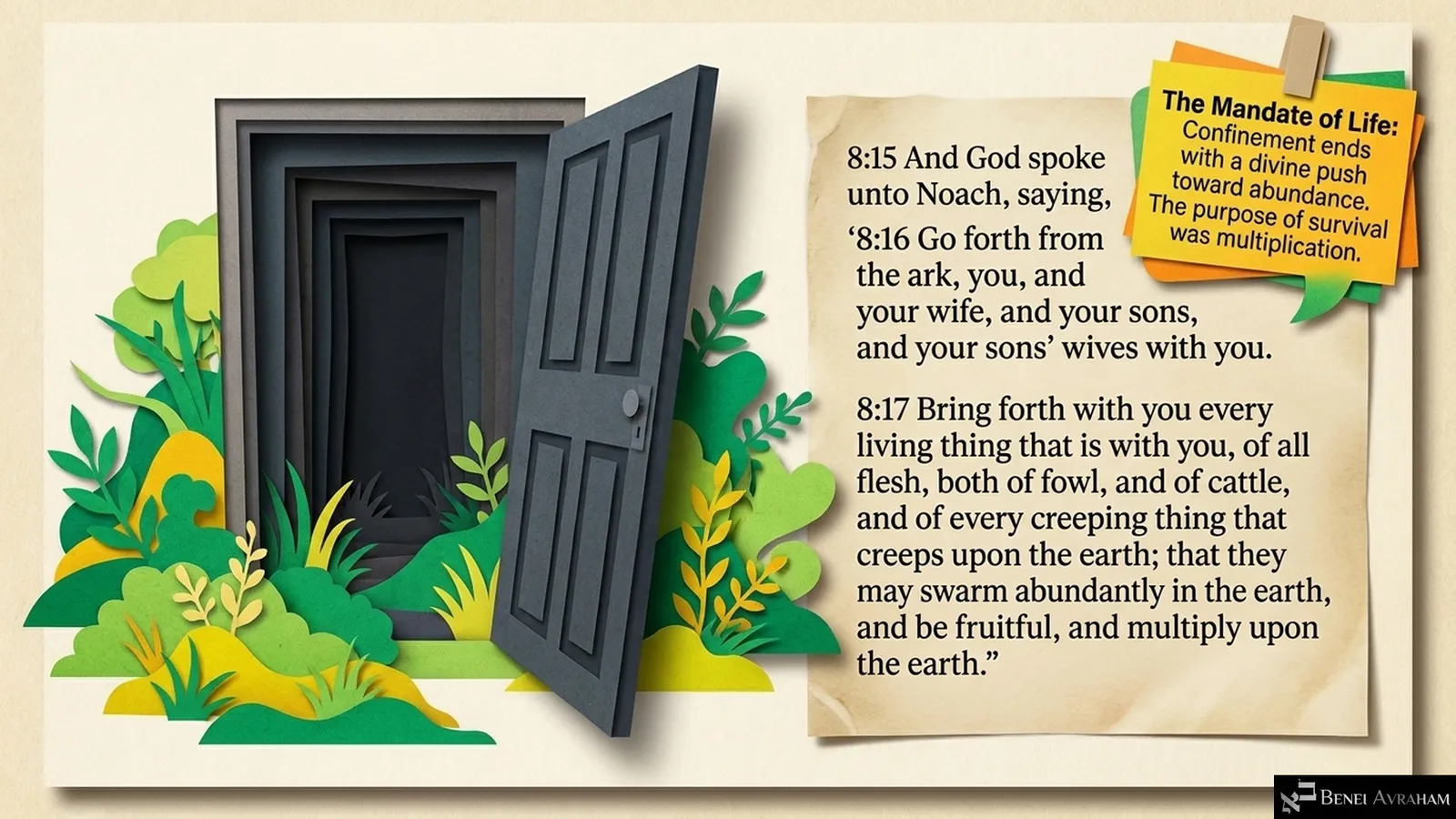
God tells Noach to go out of the ark with his family and every living thing (Genesis 8:15–17)
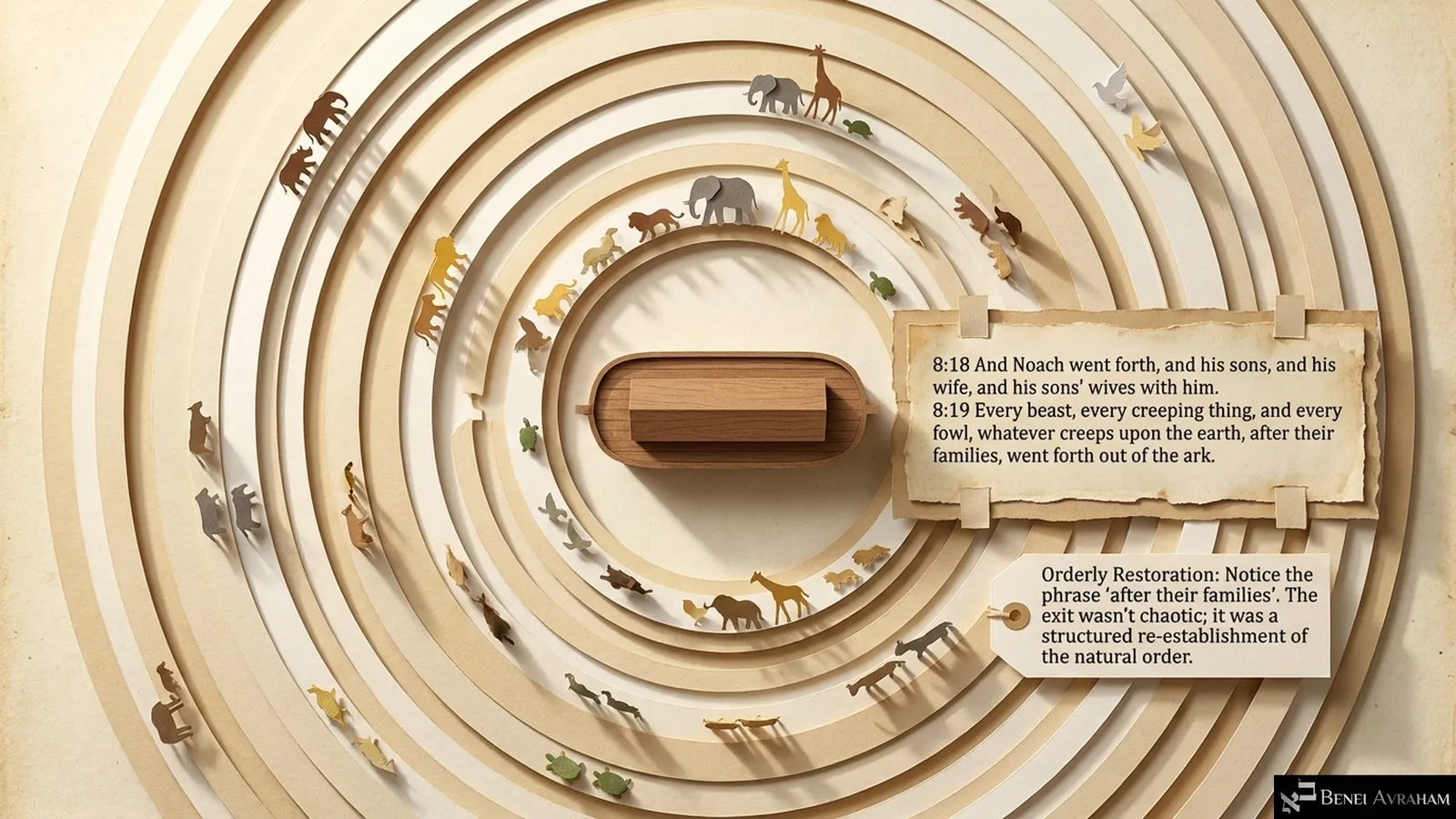
Noach, his family and the animals leave the ark by their families (Genesis 8:18–19)
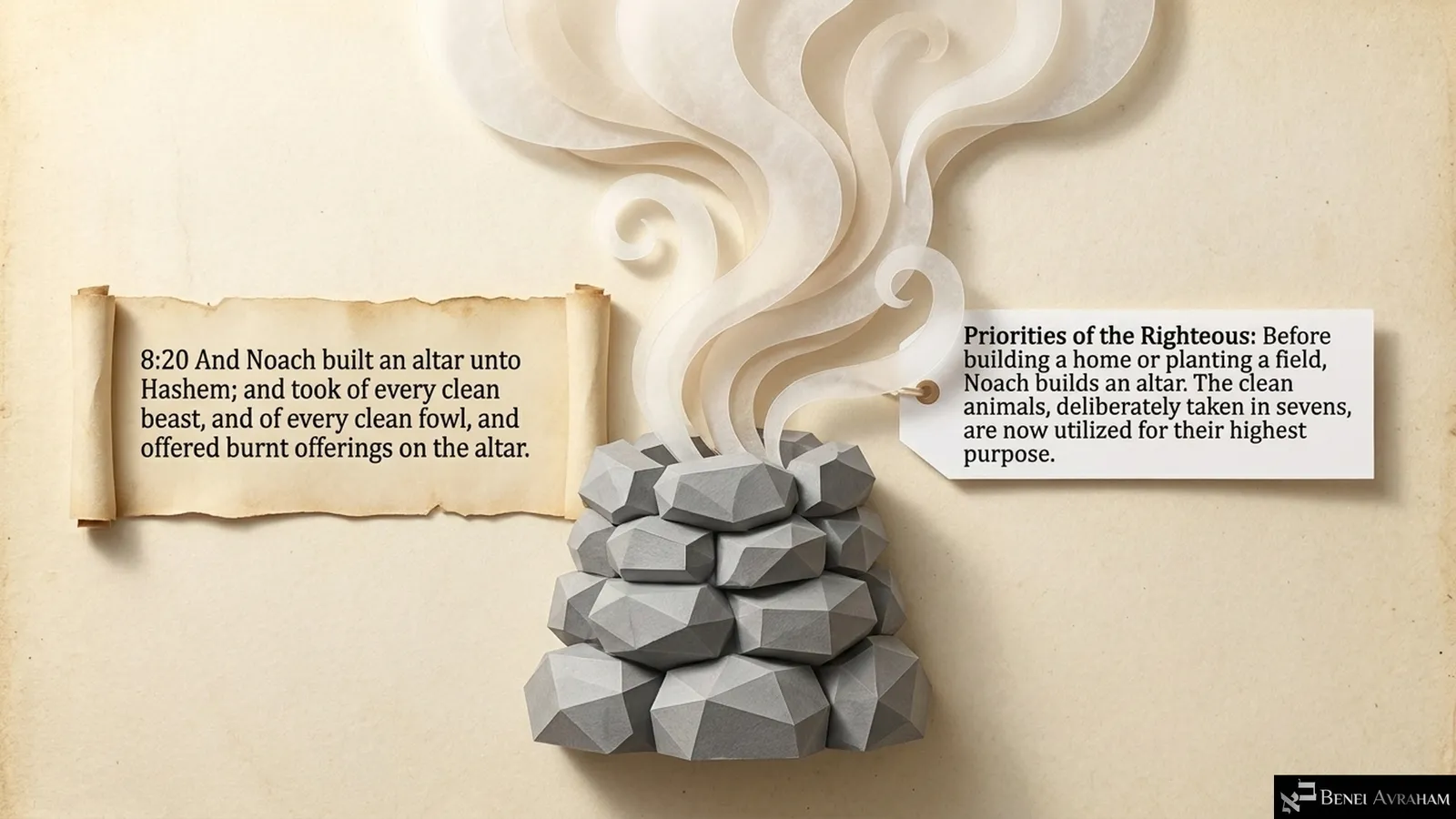
Noach builds an altar to Hashem and offers clean animals and birds (Genesis 8:20)
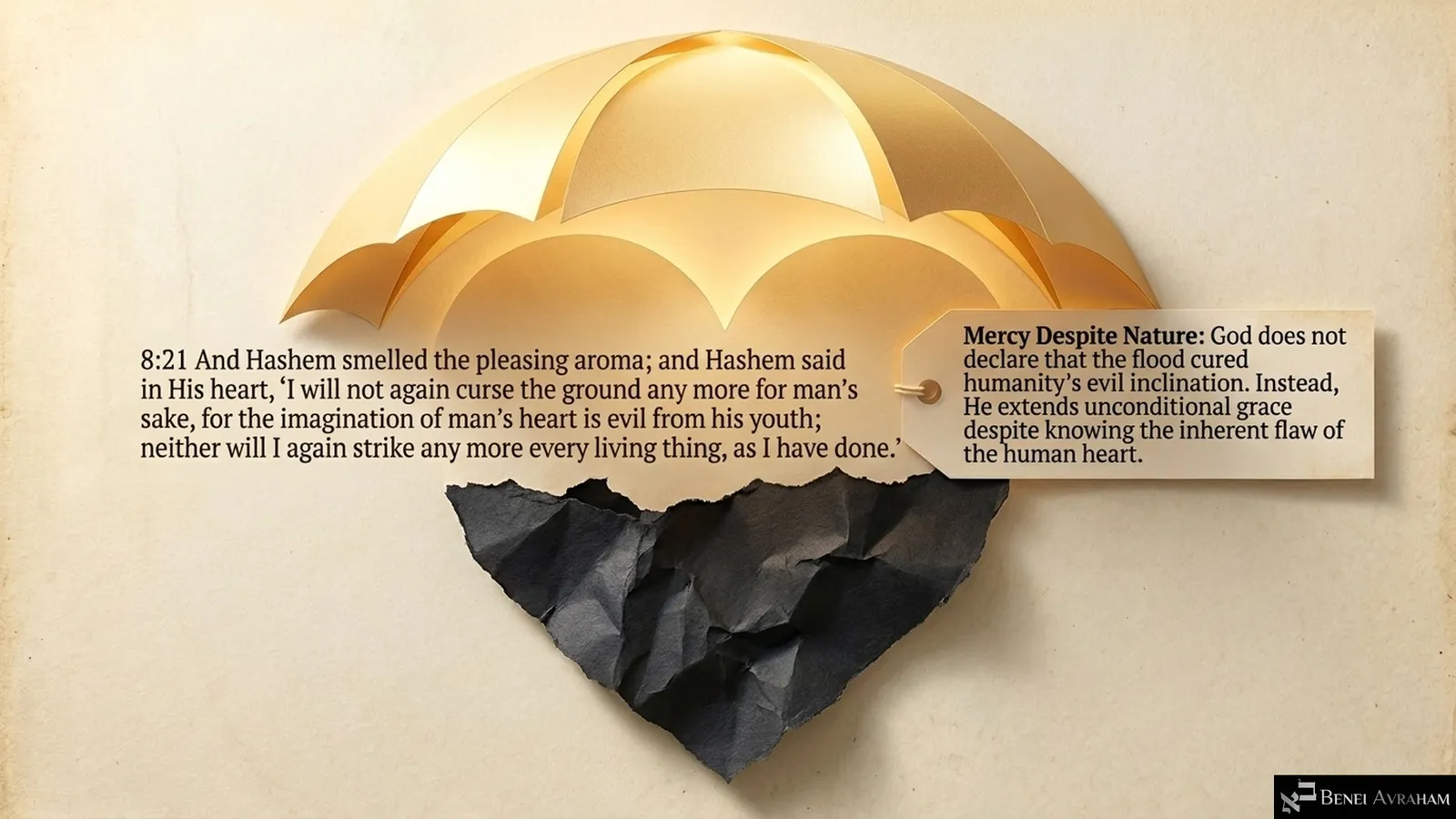
Hashem smells the pleasing aroma and promises never again to curse the ground (Genesis 8:21)
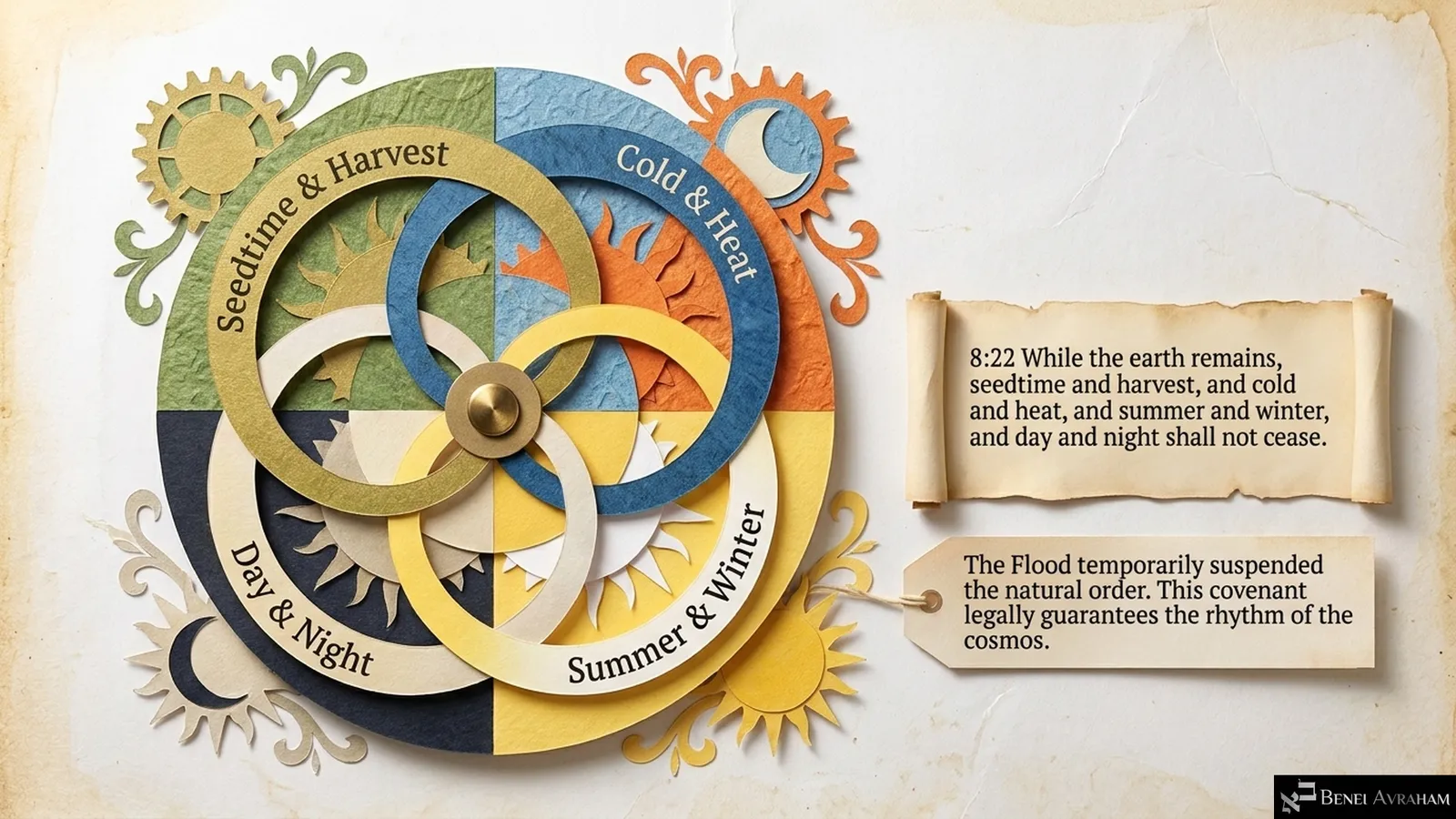
Seedtime and harvest, cold and heat, summer and winter, day and night shall not cease (Genesis 8:22)
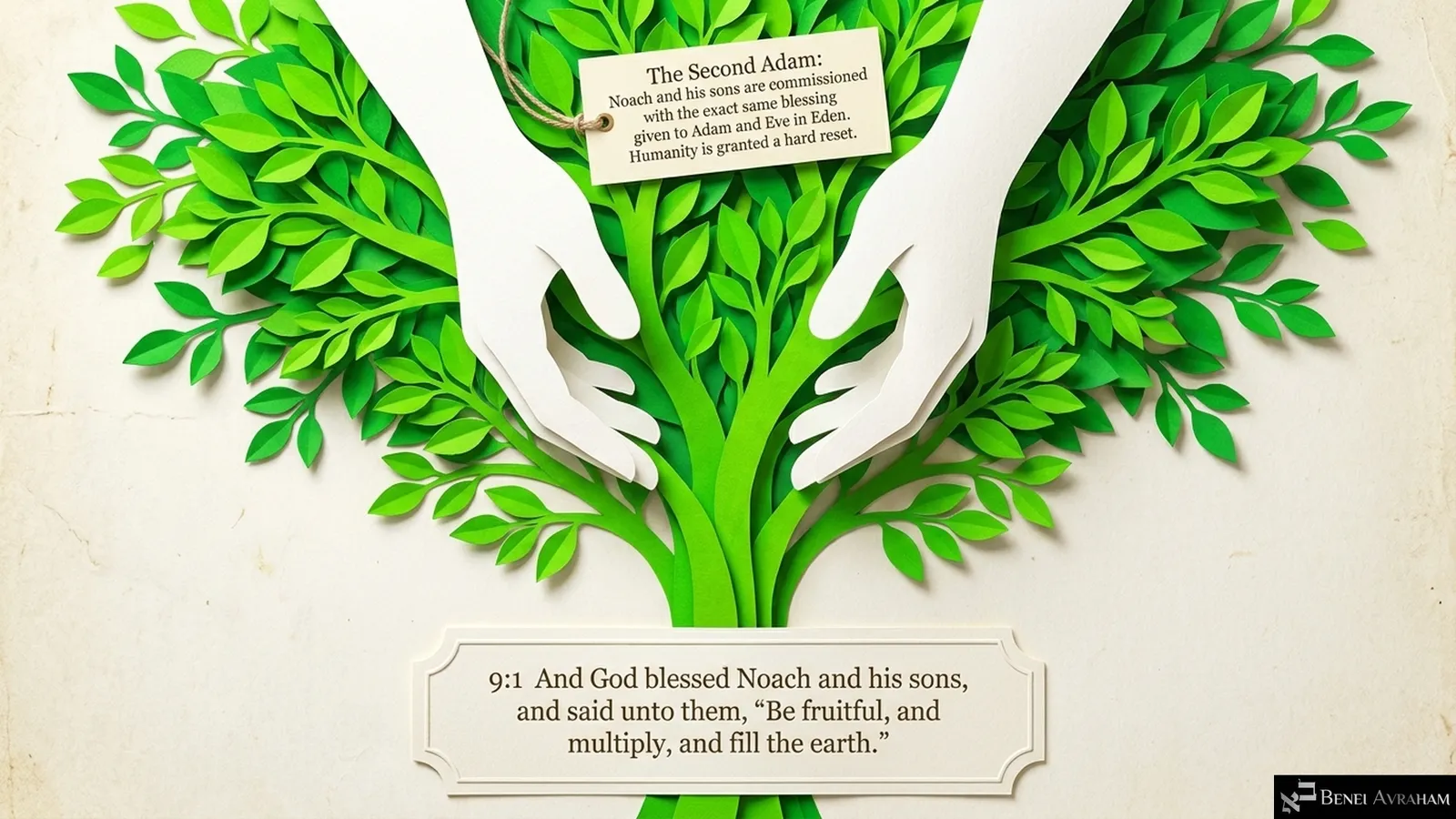
God blesses Noach and his sons: be fruitful and multiply (Genesis 9:1)
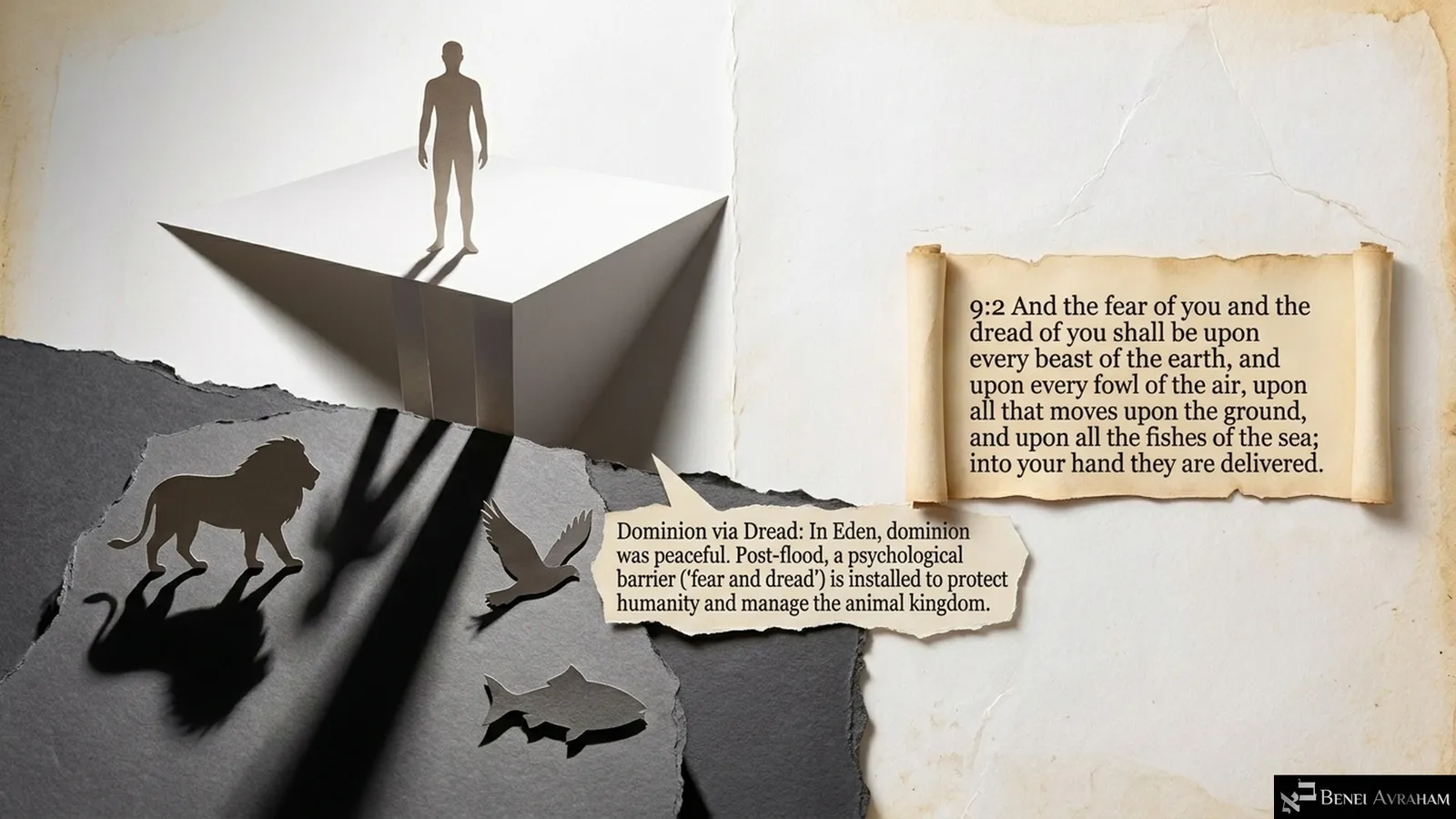
The fear and dread of humanity falls on every animal (Genesis 9:2)
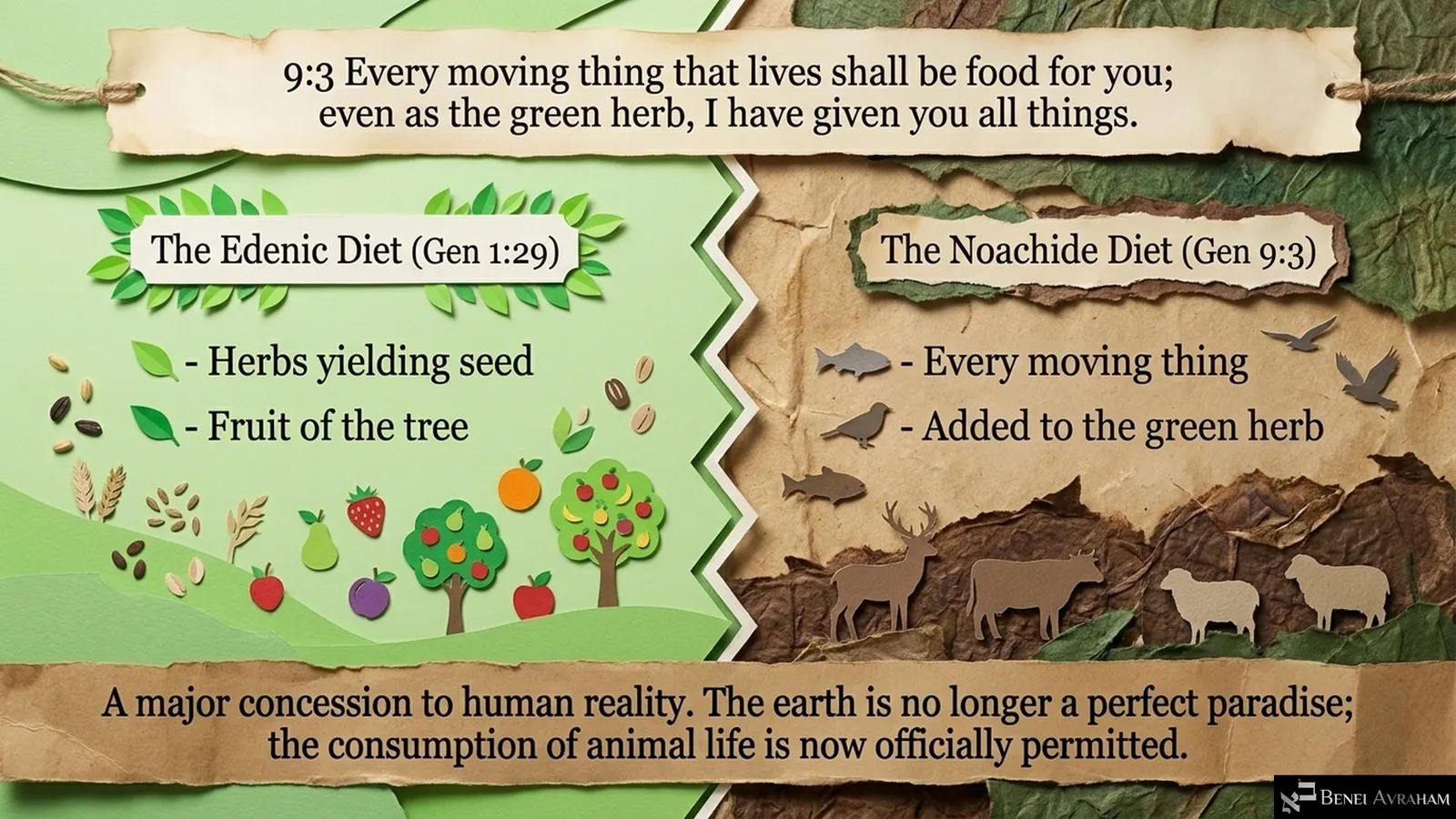
From the diet of Eden to the diet of Noach: every moving thing given as food (Genesis 9:3)
Flesh with its life, its blood, may not be eaten (Genesis 9:4)
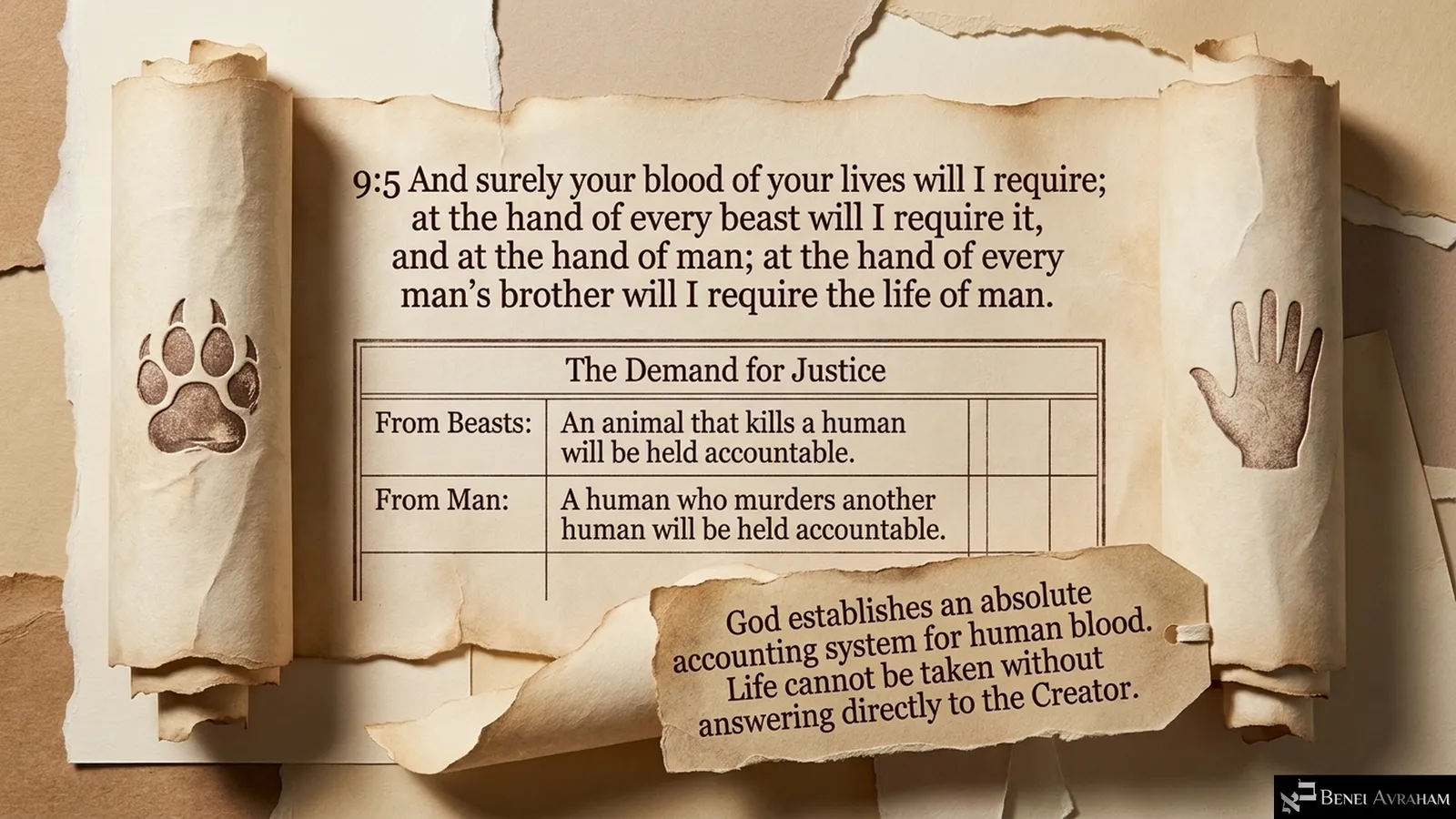
Hashem will require the blood of human life from beast and from man (Genesis 9:5)
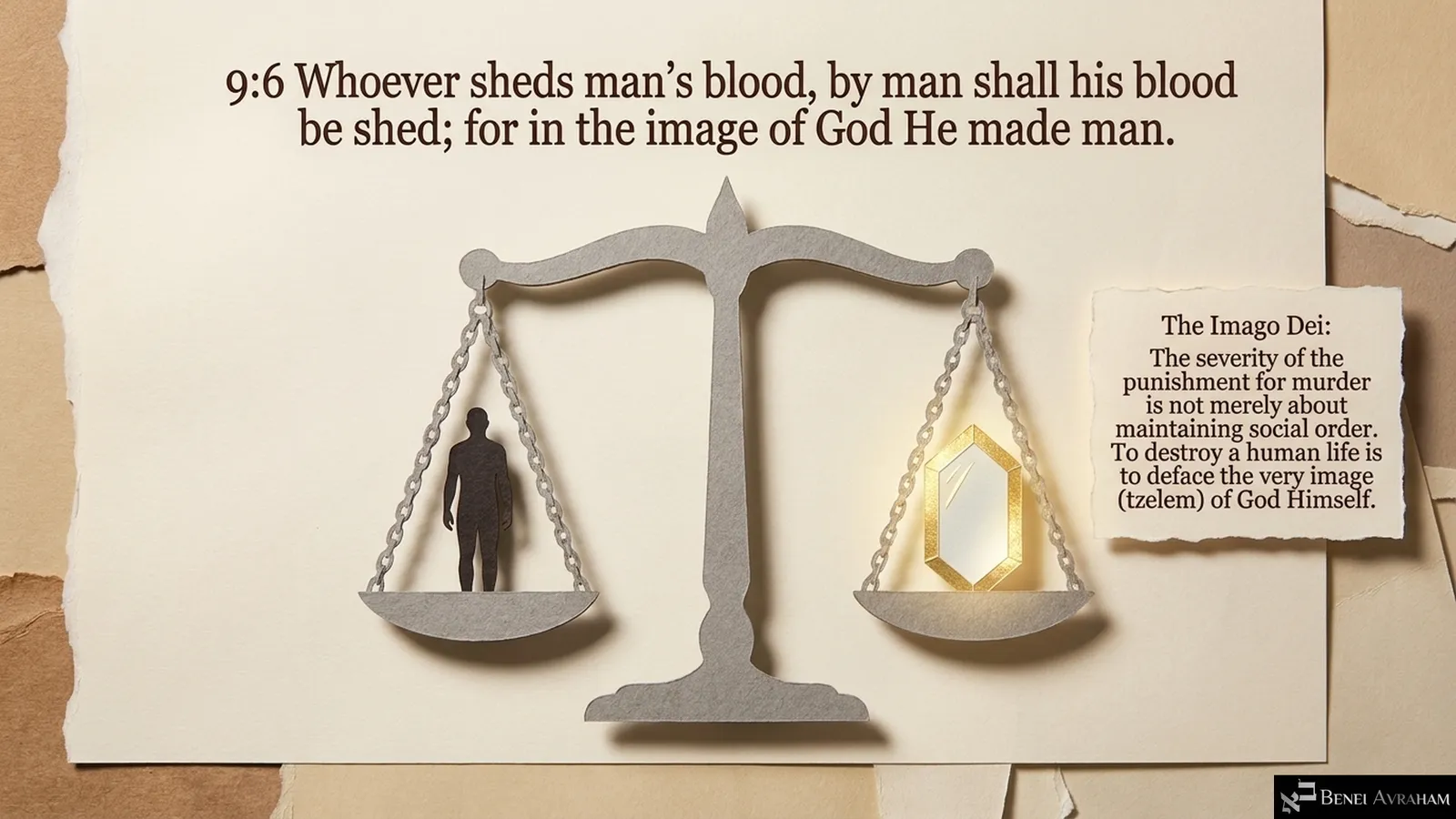
Whoever sheds human blood: man is made in the image of God (Genesis 9:6)
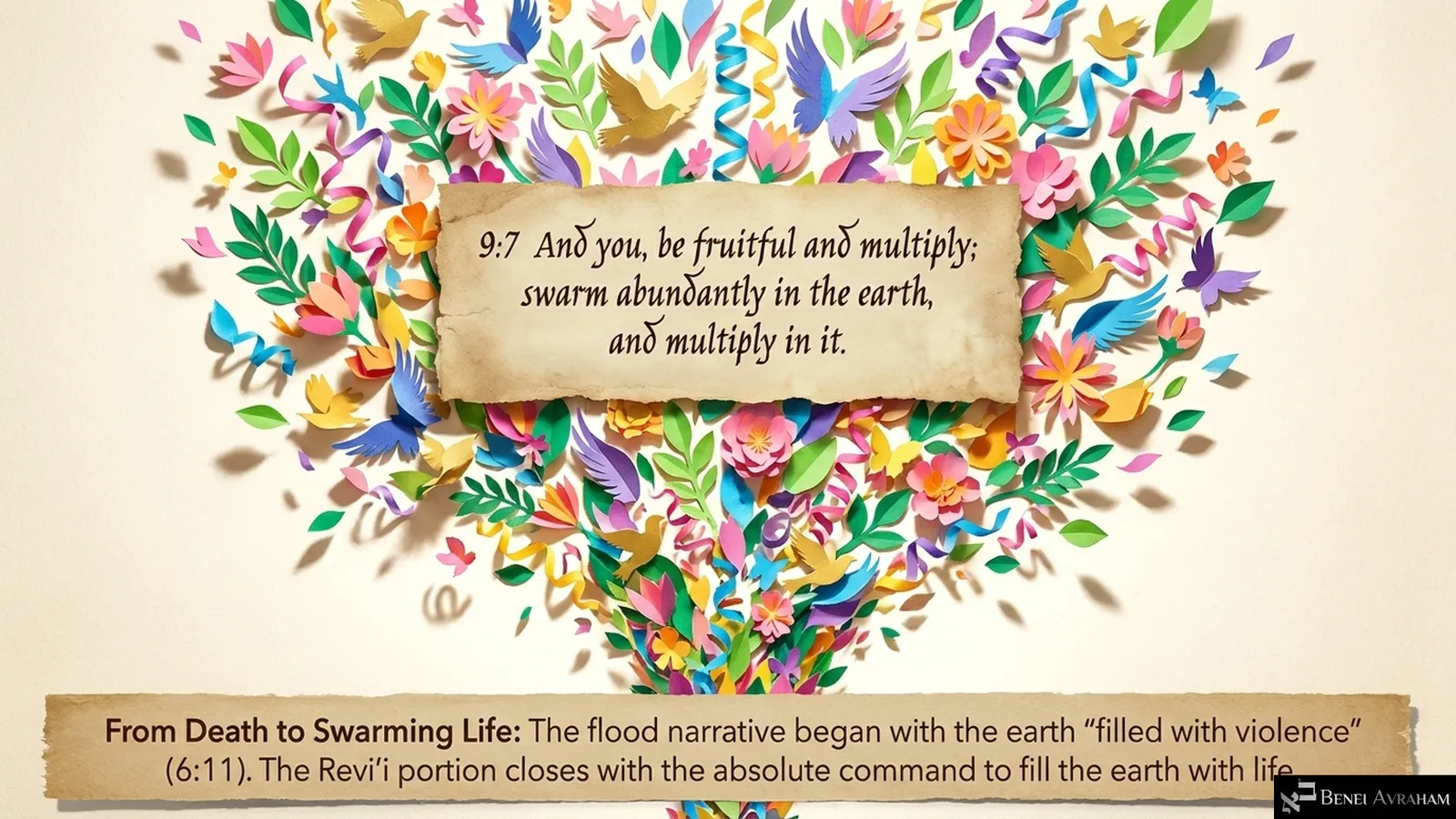
Be fruitful and multiply, swarm abundantly in the earth (Genesis 9:7)
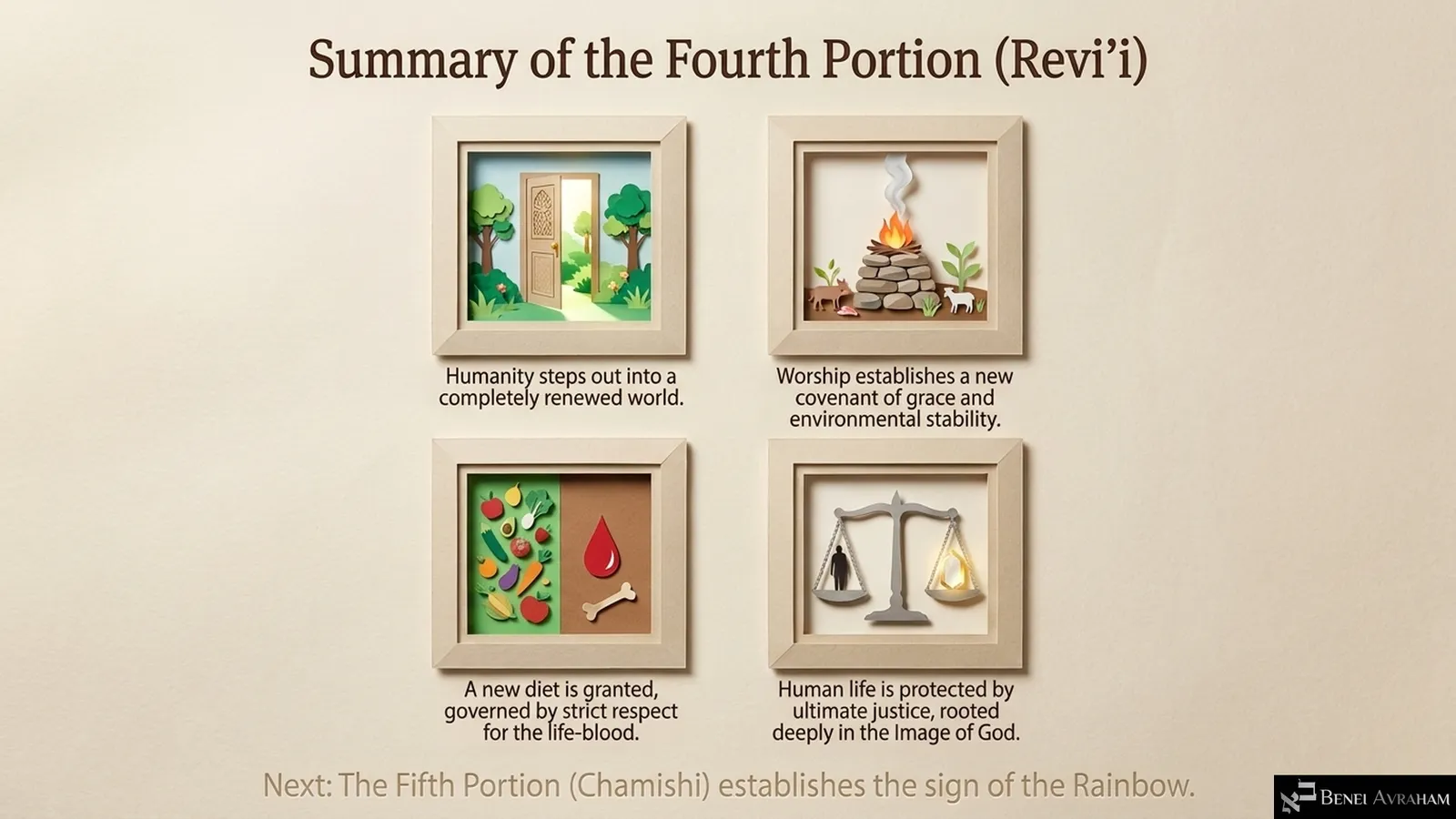
Summary of Revi’i, with a look ahead to Chamishi and the rainbow
Chamishi · Genesis 9:8–17

Fifth Portion
Title slide: Parashat Noach, the fifth portion, Chamishi: the anatomy of the everlasting covenant (Genesis 9:8–17)
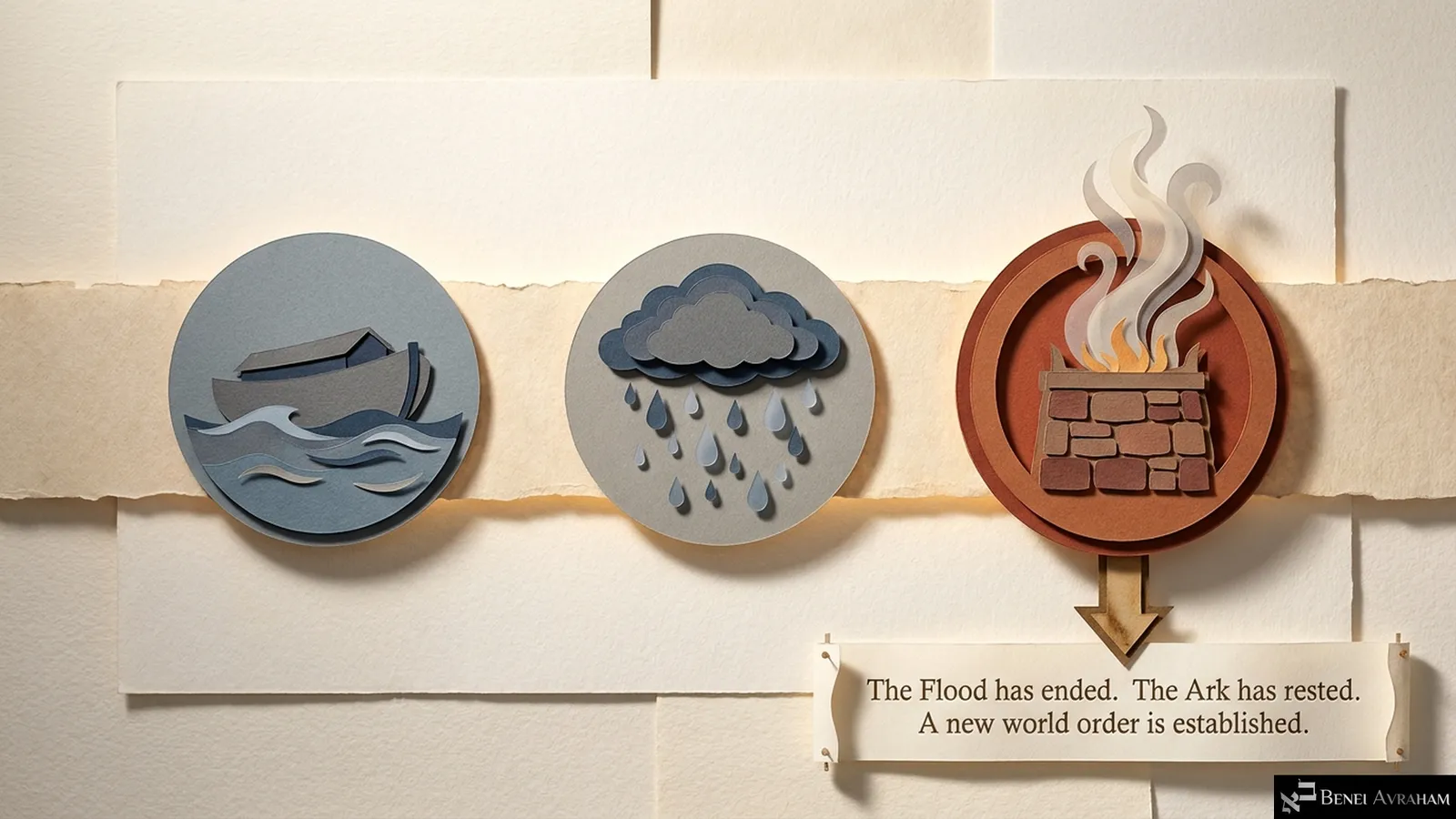
The flood has ended, the ark has rested, and a new world order begins
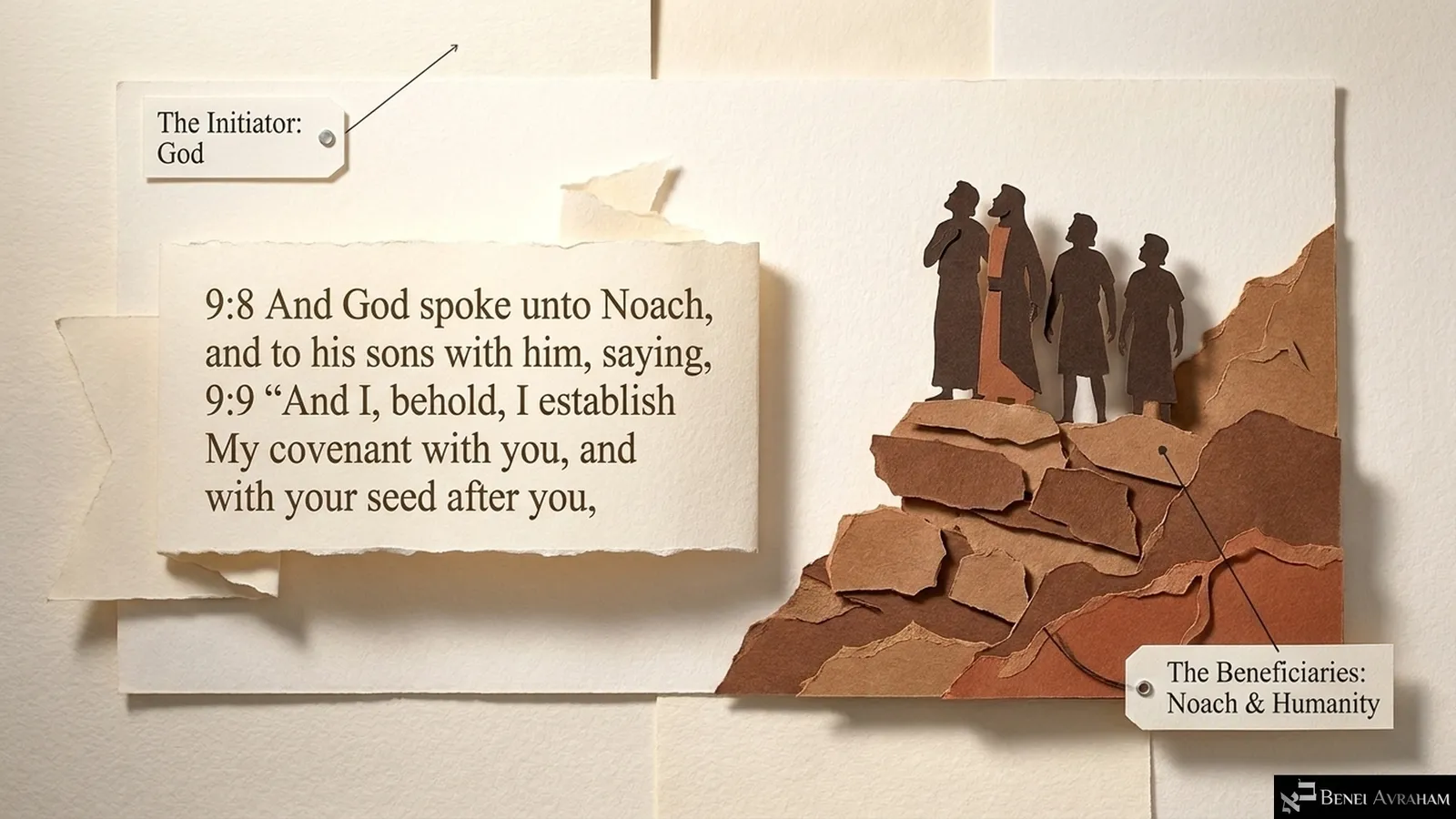
God speaks to Noach and his sons: “I establish My covenant with you and your seed” (Genesis 9:8–9)
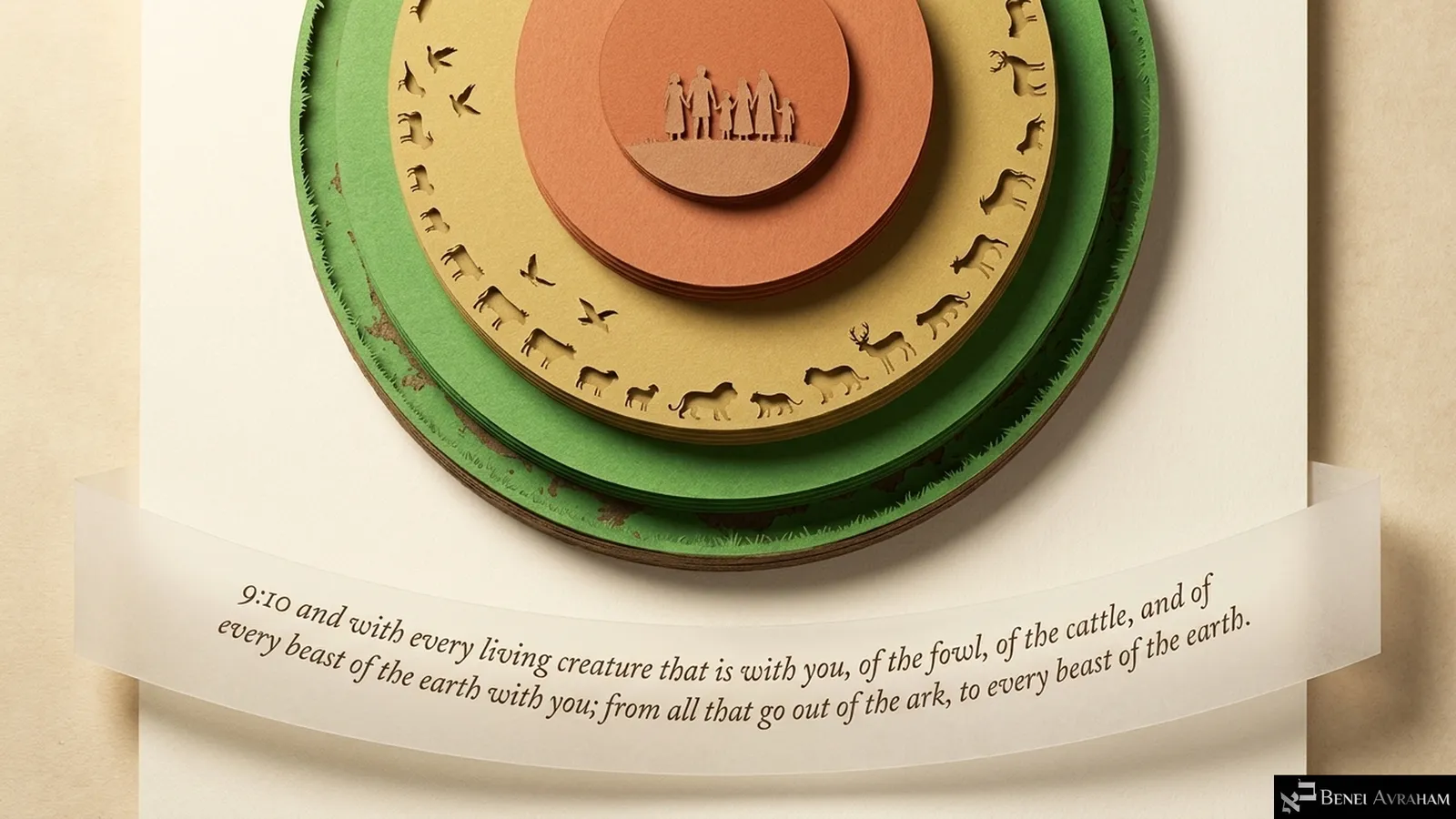
The covenant includes every living creature that came out of the ark (Genesis 9:10)
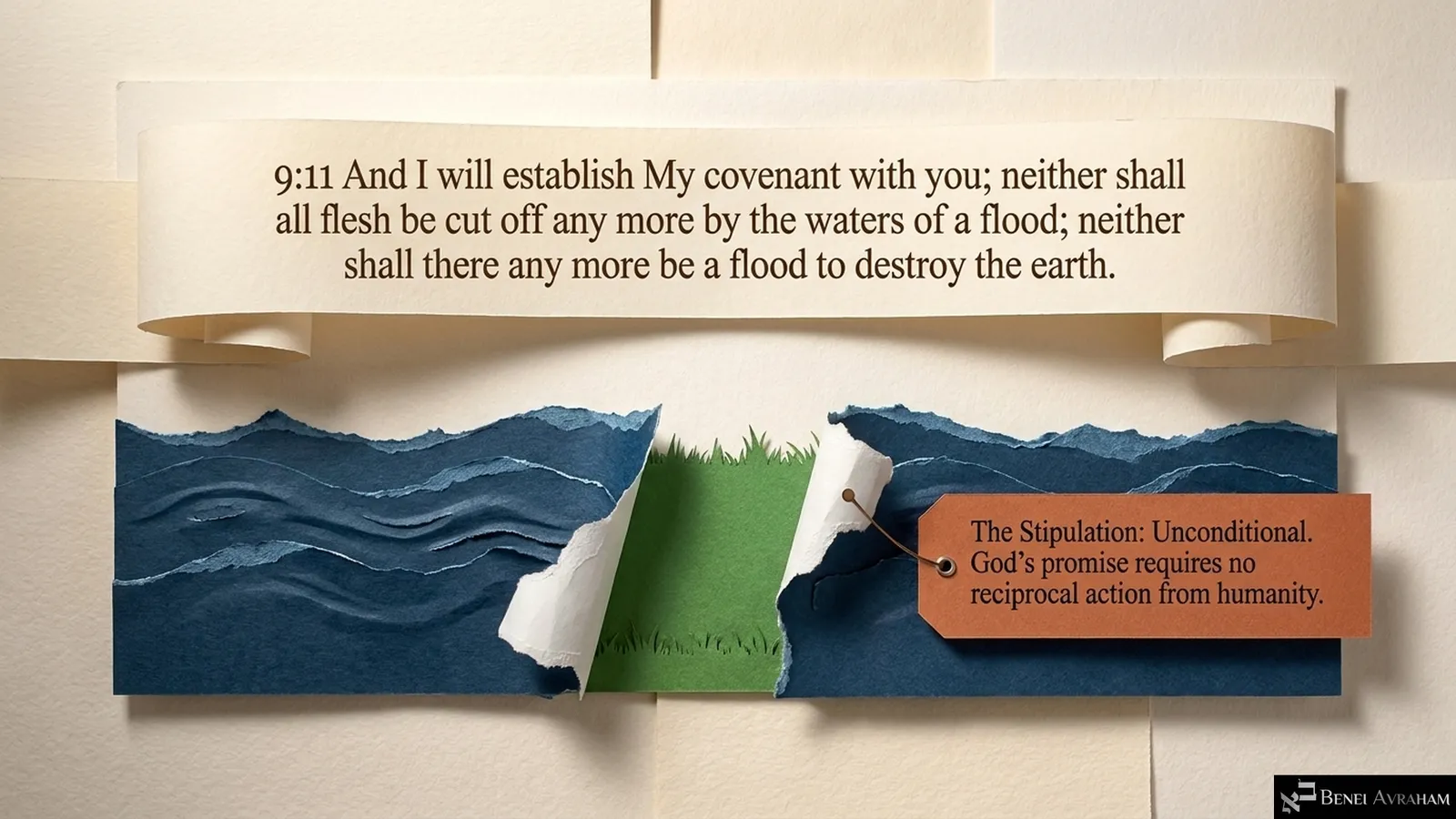
Never again will all flesh be cut off by a flood: an unconditional promise (Genesis 9:11)
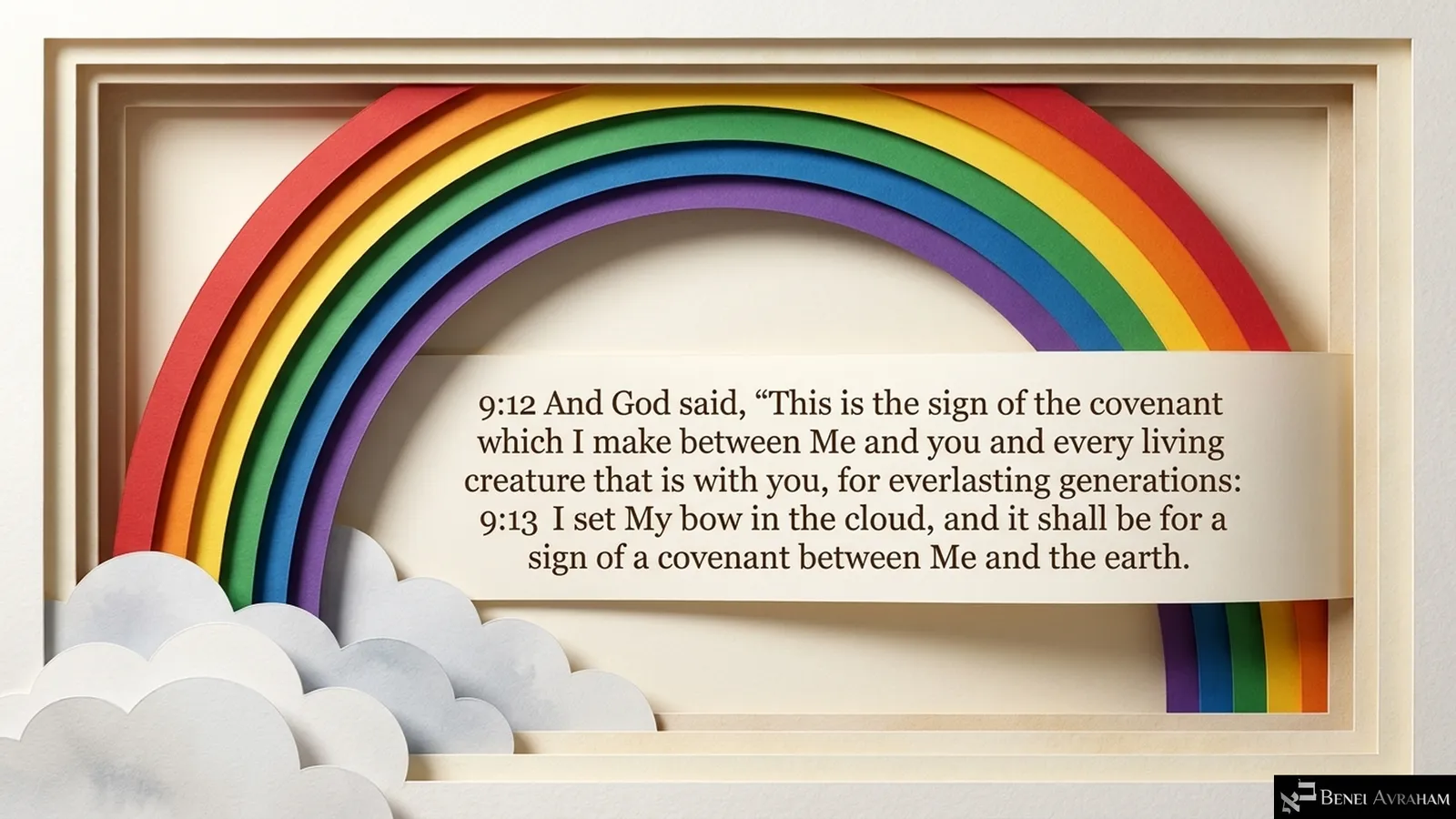
The sign of the covenant: God sets His bow in the cloud (Genesis 9:12–13)
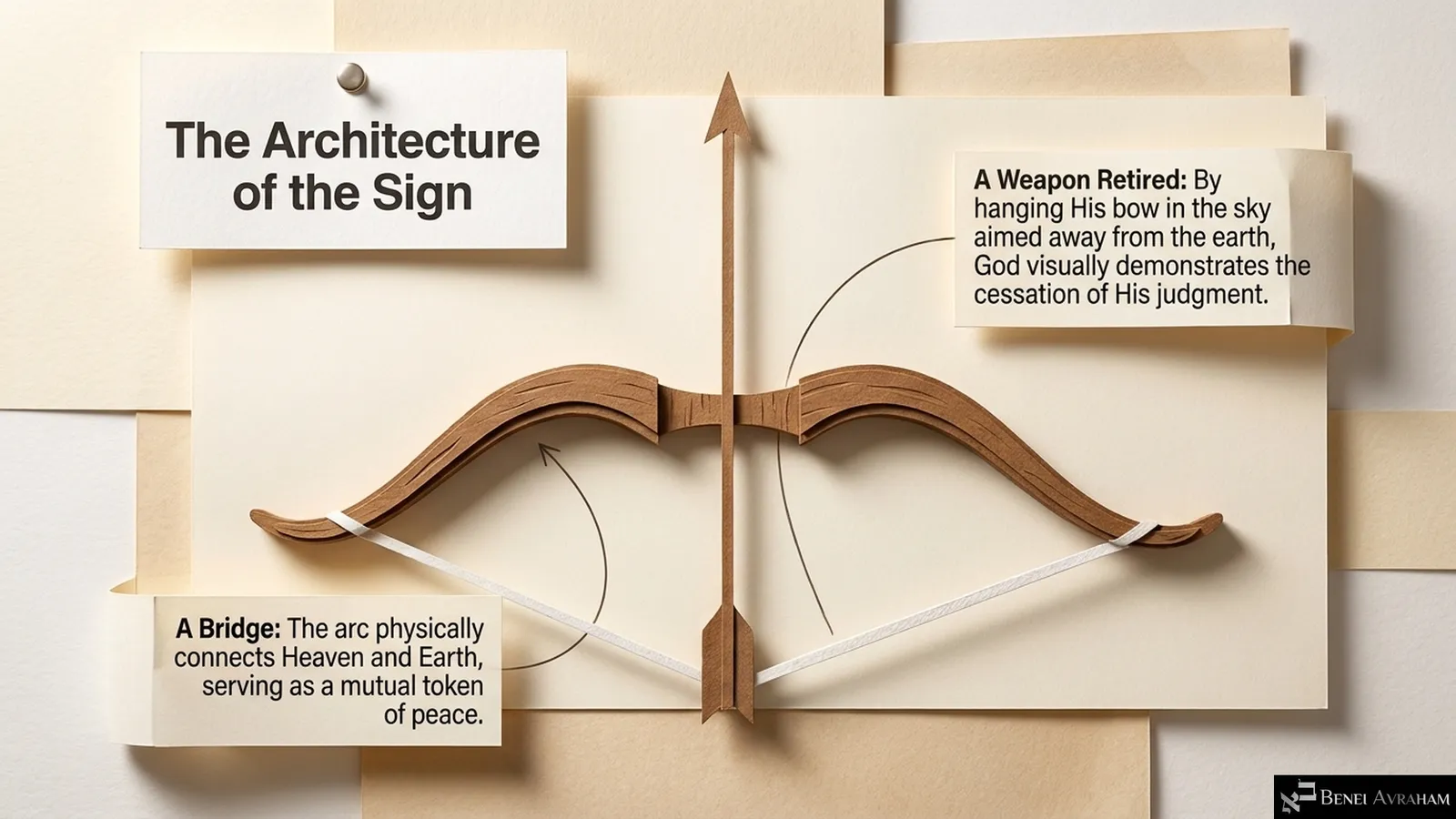
The architecture of the sign: a weapon retired and a bridge between heaven and earth
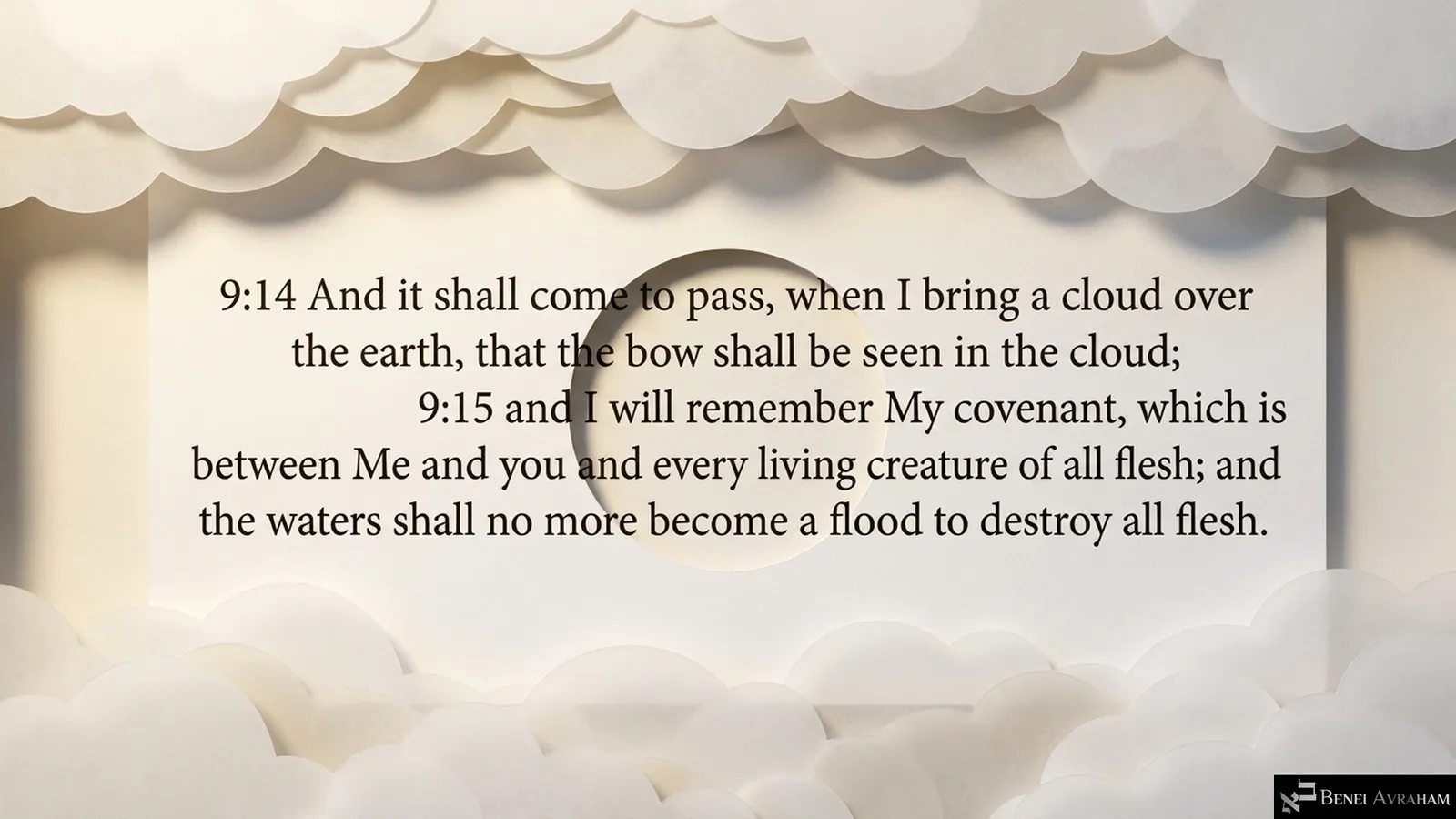
When the bow is seen in the cloud, God will remember His covenant (Genesis 9:14–15)
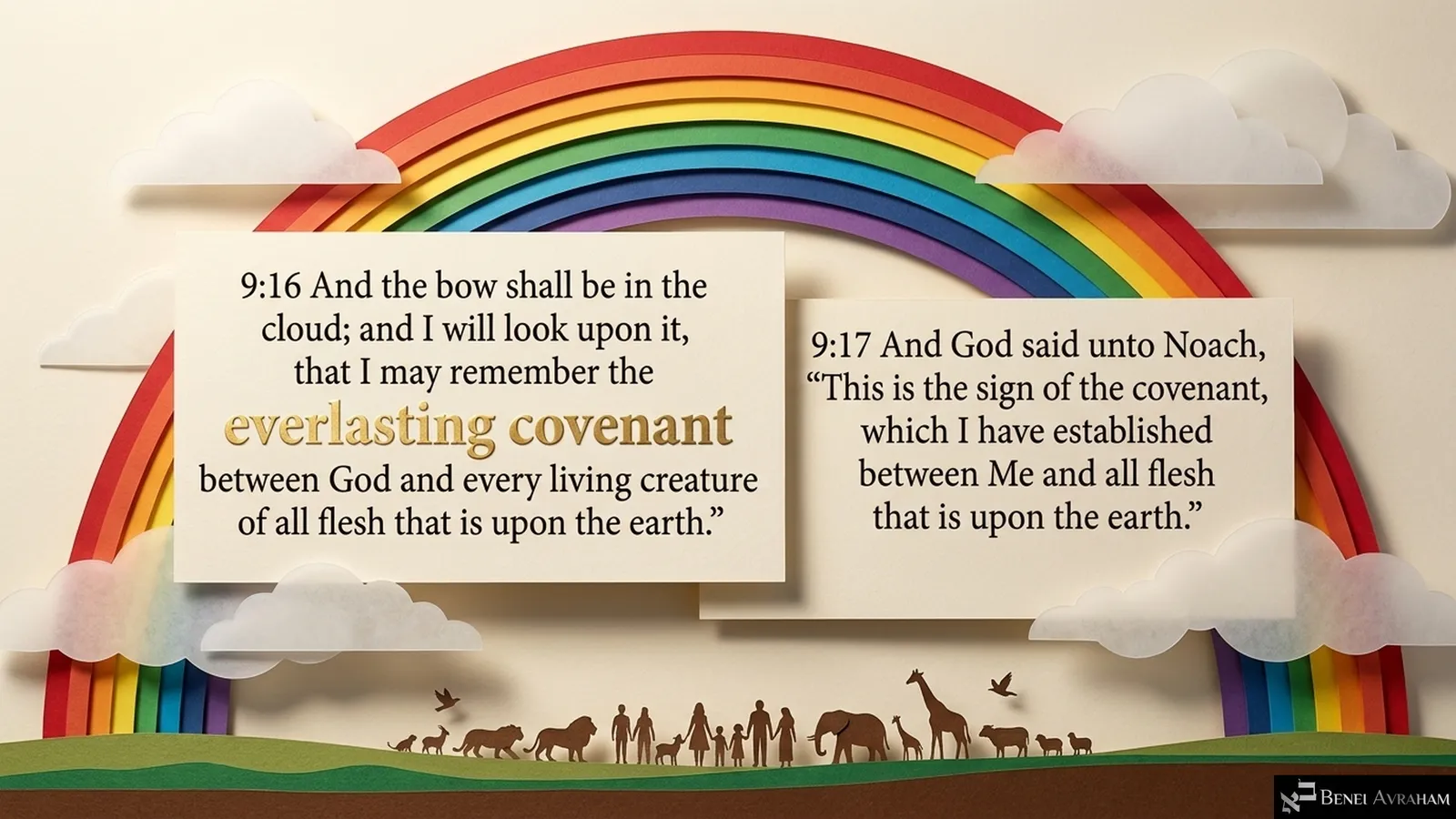
The everlasting covenant between God and every living creature (Genesis 9:16–17)
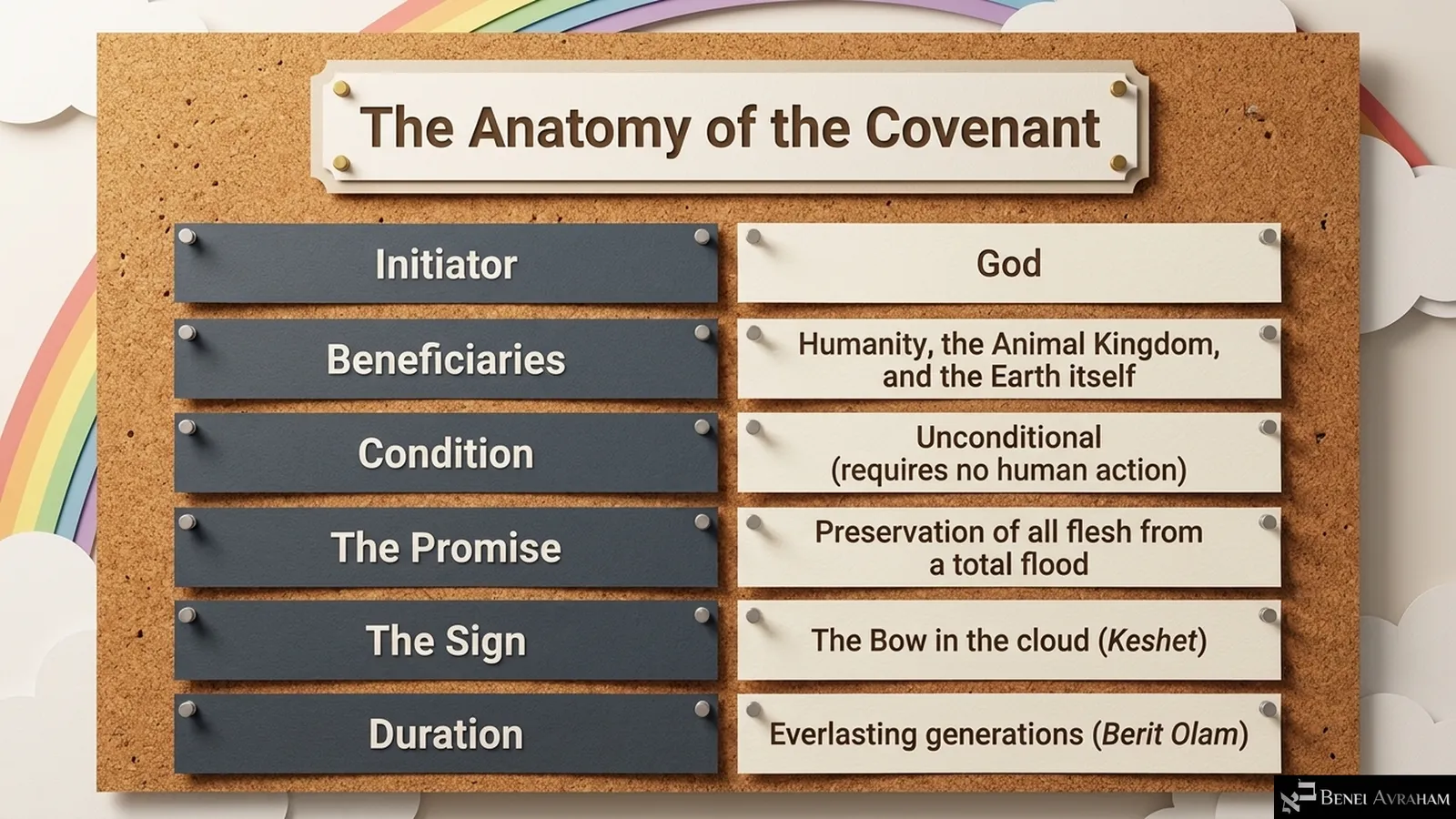
The anatomy of the covenant: initiator, beneficiaries, condition, promise, sign and duration
Closing slide: Parashat Noach, the fifth portion, from Benei Avraham
Shishi · Genesis 9:18–10:32

Sixth Portion
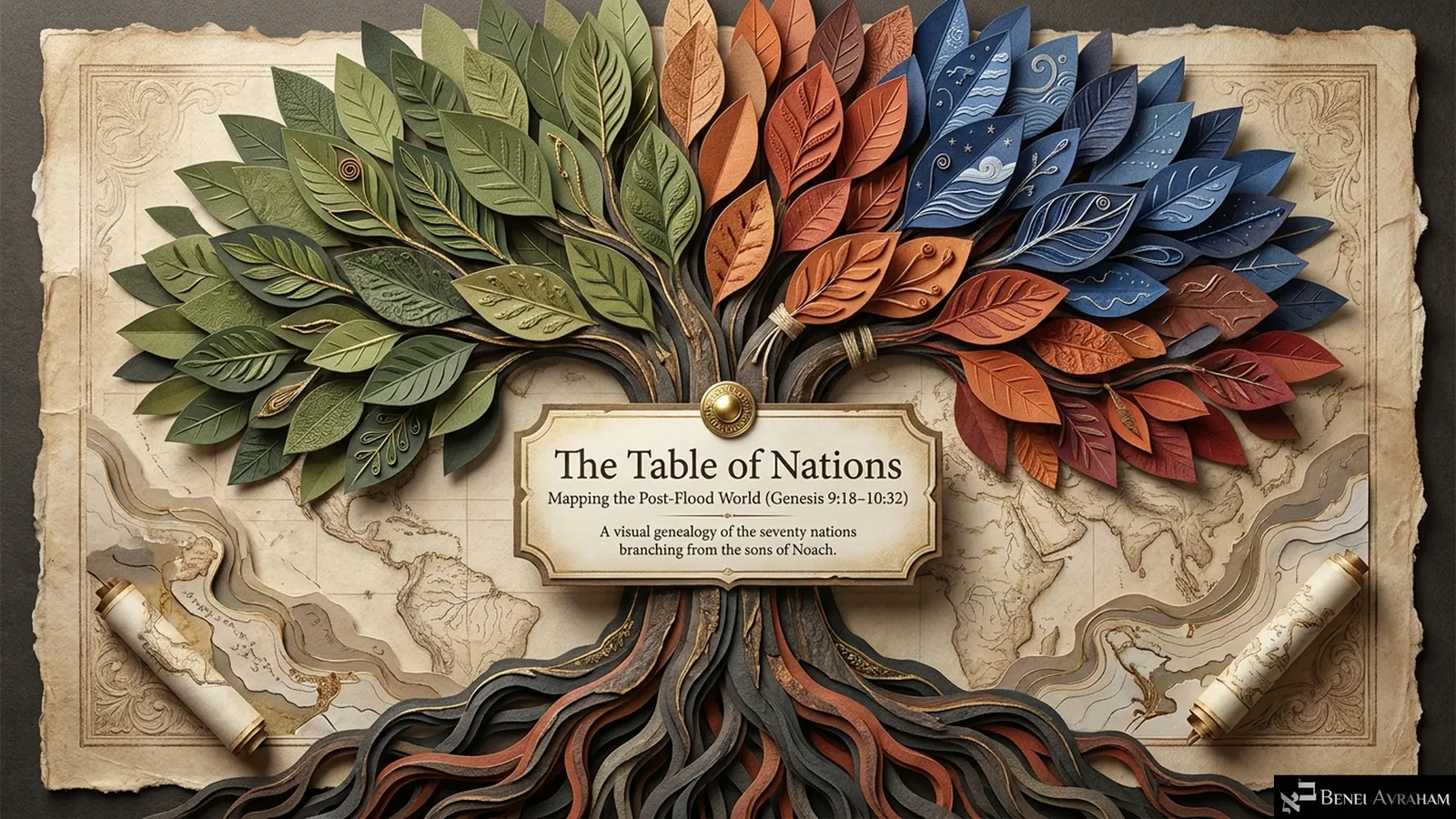
Title slide: the Table of Nations, mapping the world after the flood (Genesis 9:18–10:32)
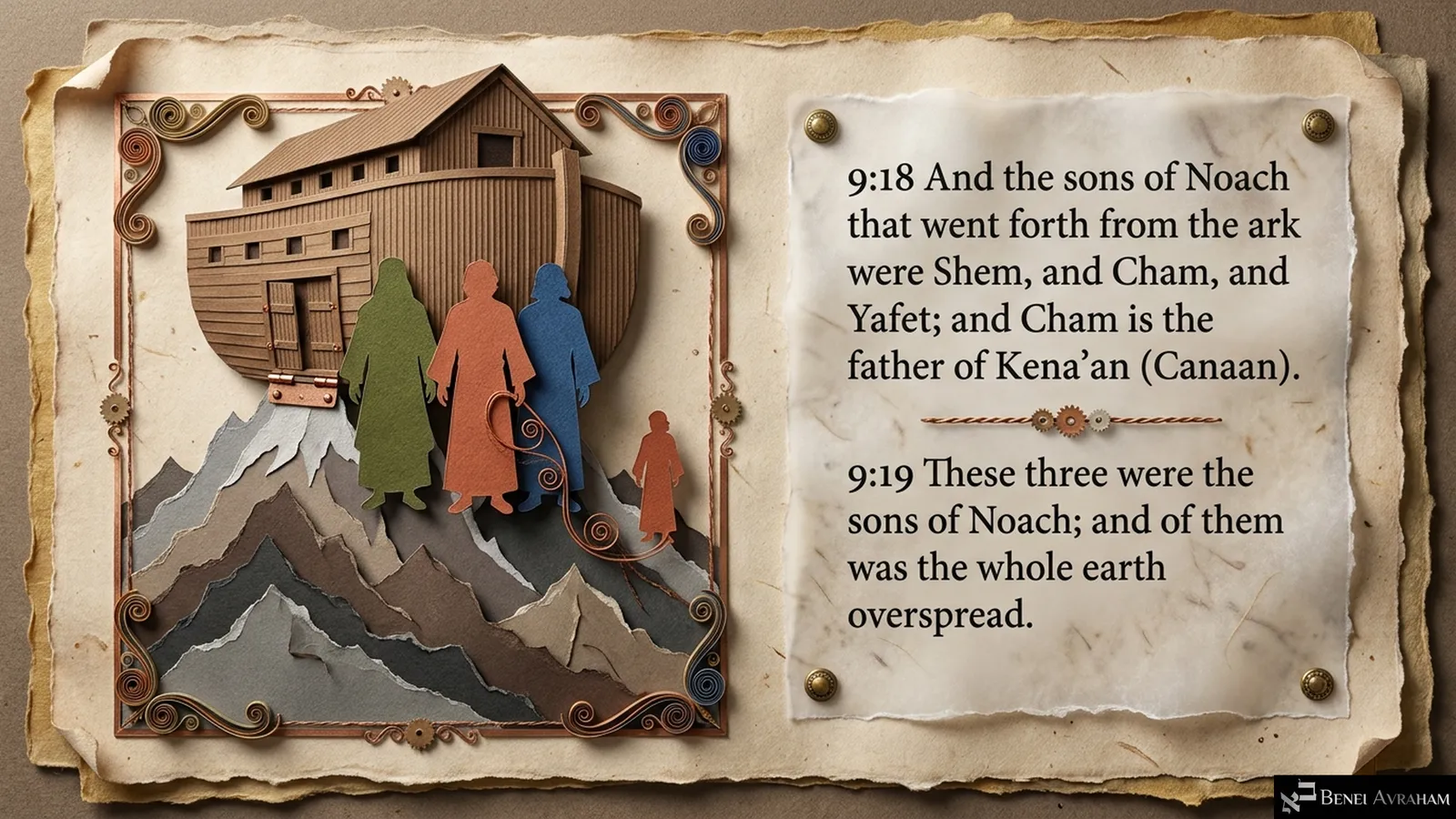
The sons of Noach who came out of the ark: Shem, Cham and Yafet (Genesis 9:18–19)
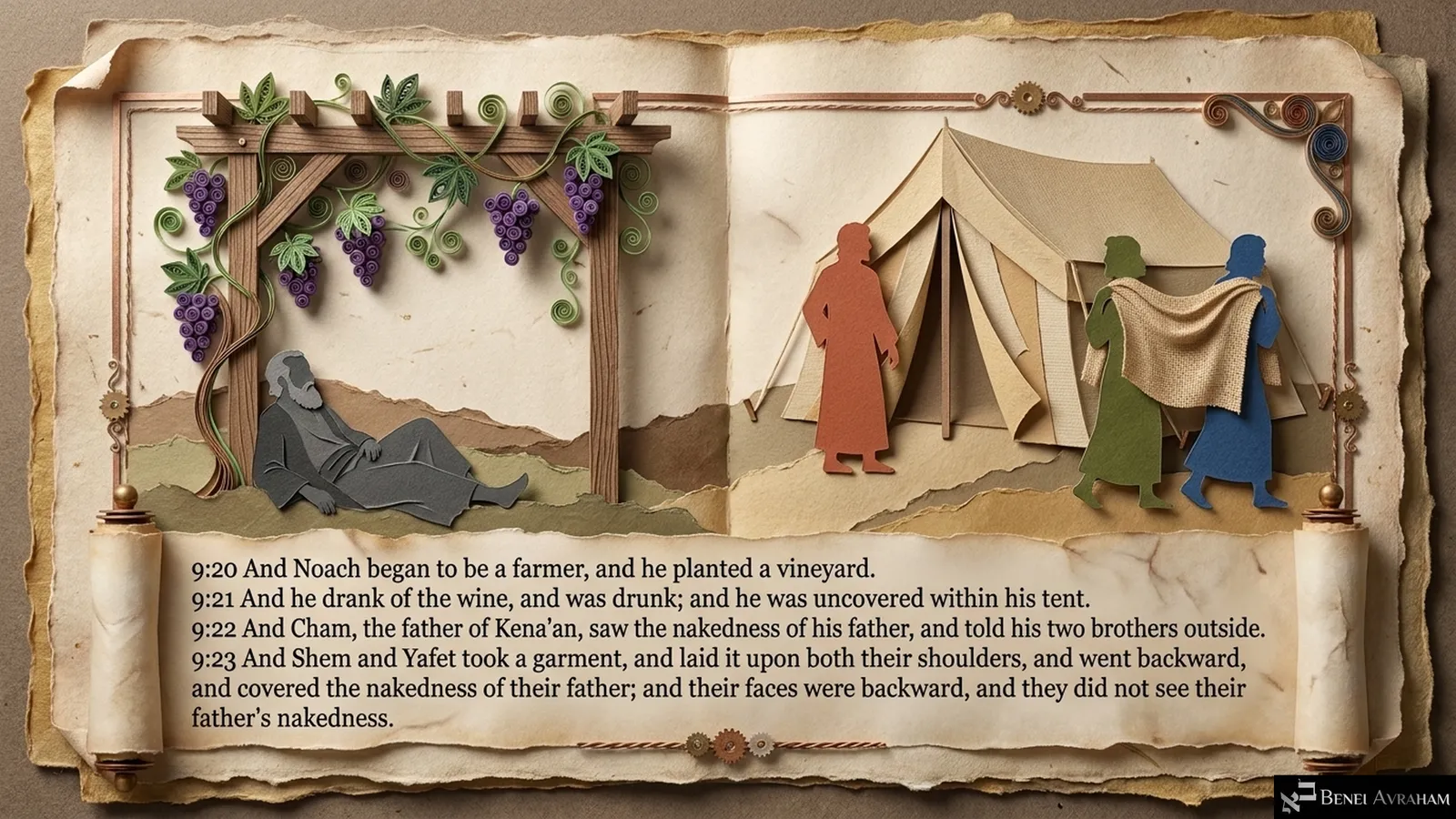
Noach plants a vineyard; Shem and Yafet cover their father (Genesis 9:20–23)
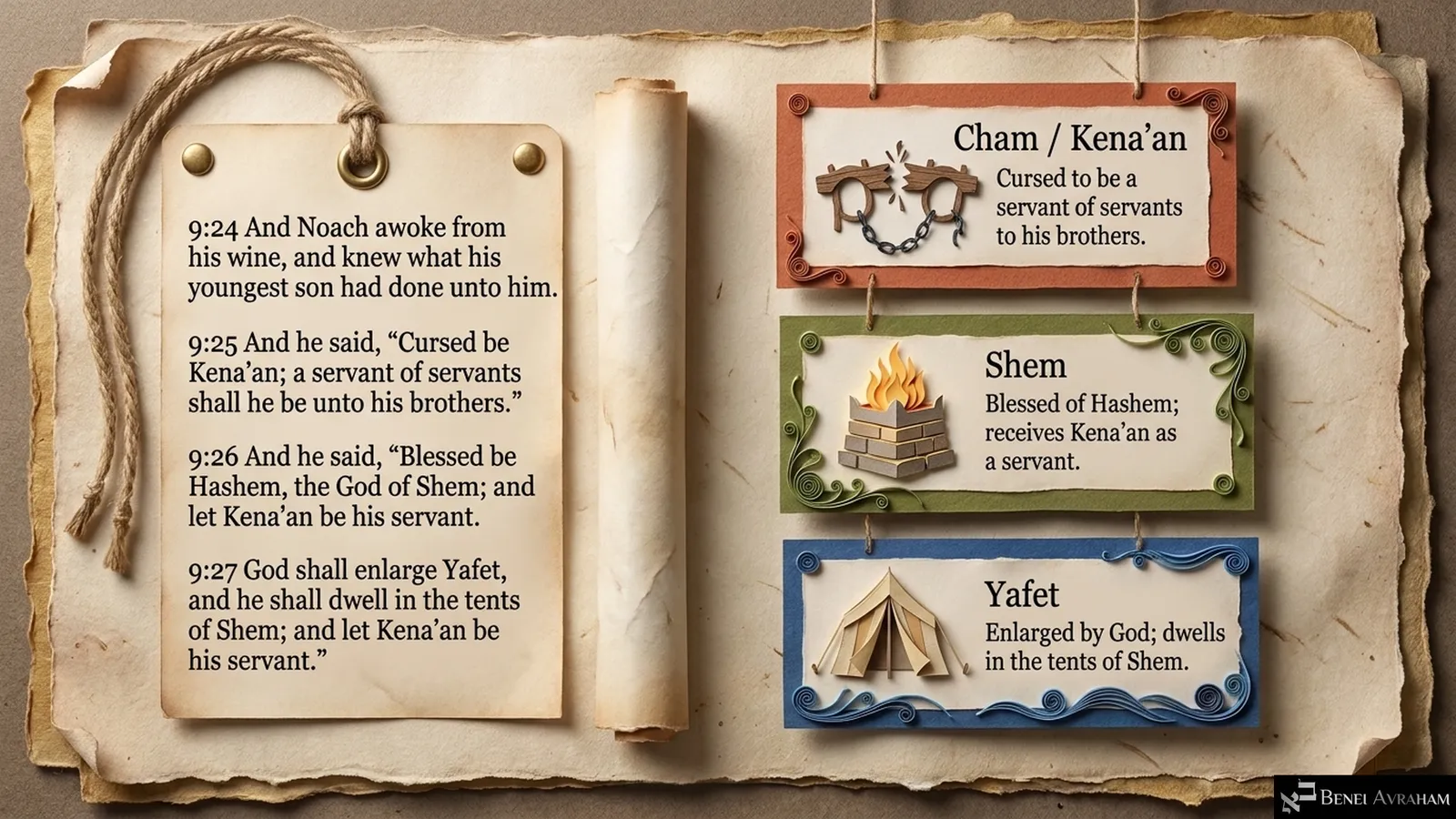
Noach’s words over Kena’an, Shem and Yafet (Genesis 9:24–27)
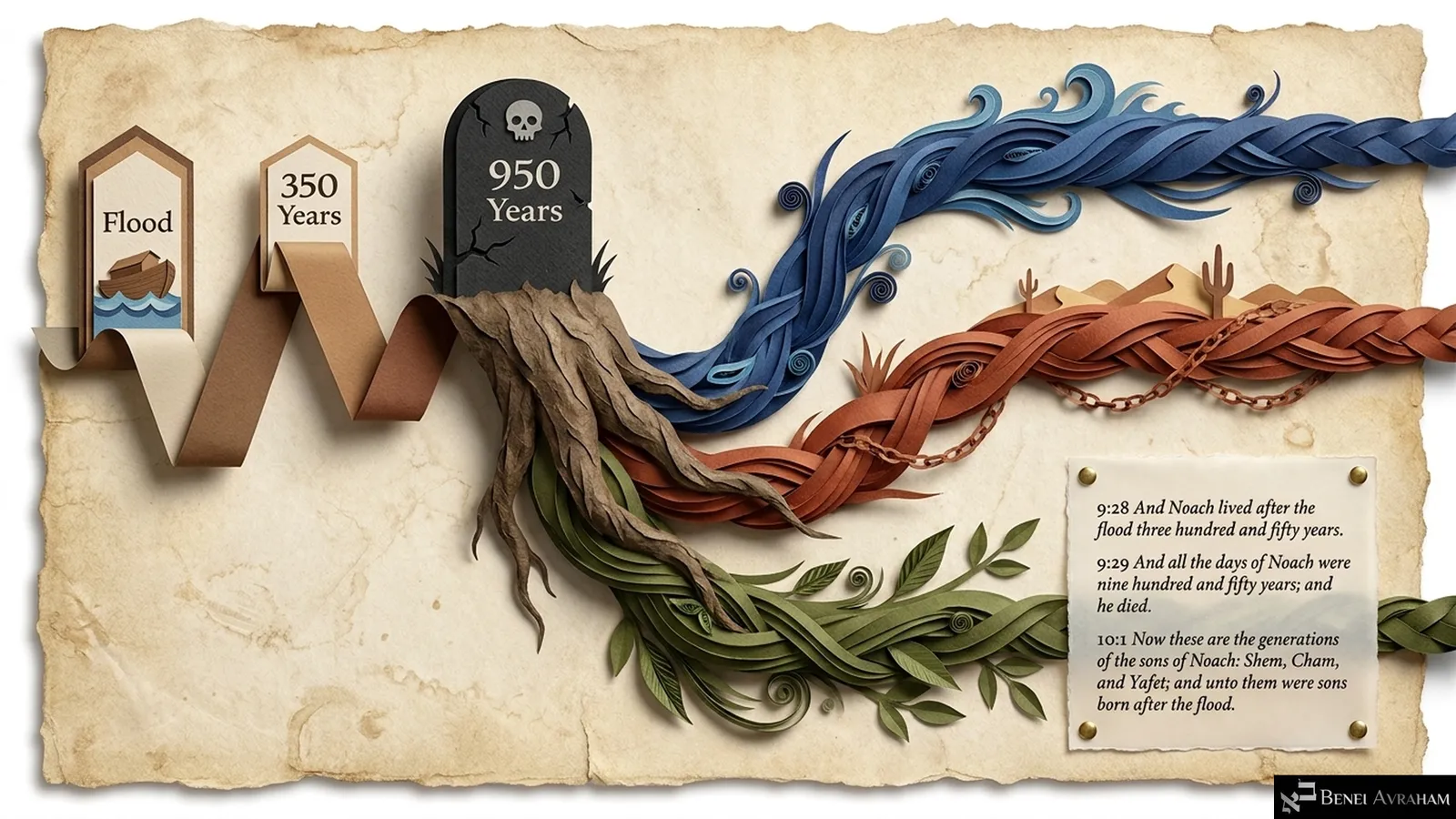
Noach lives 350 years after the flood and dies at 950; the generations of his sons begin (Genesis 9:28–10:1)
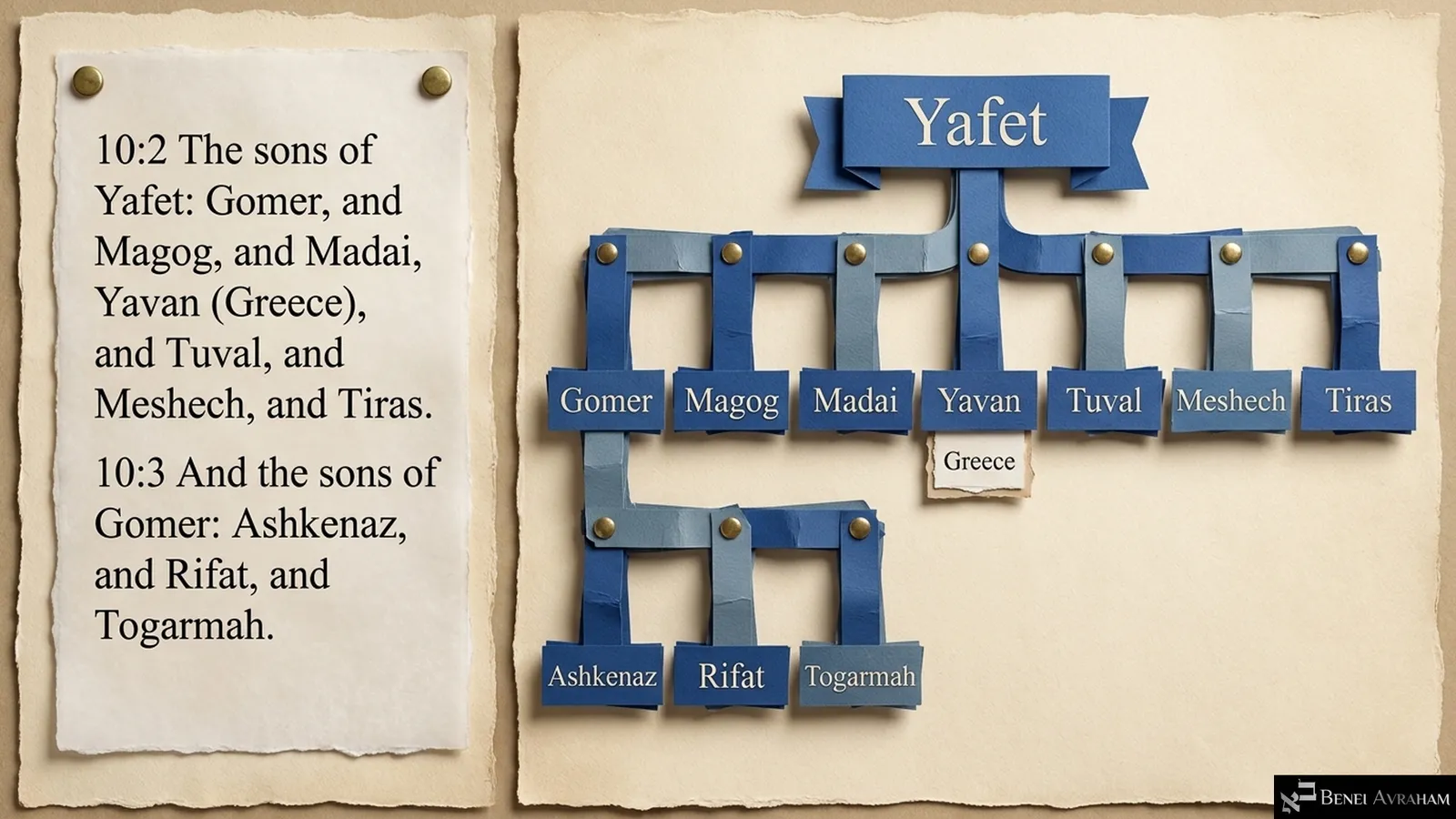
The sons of Yafet and of Gomer (Genesis 10:2–3)
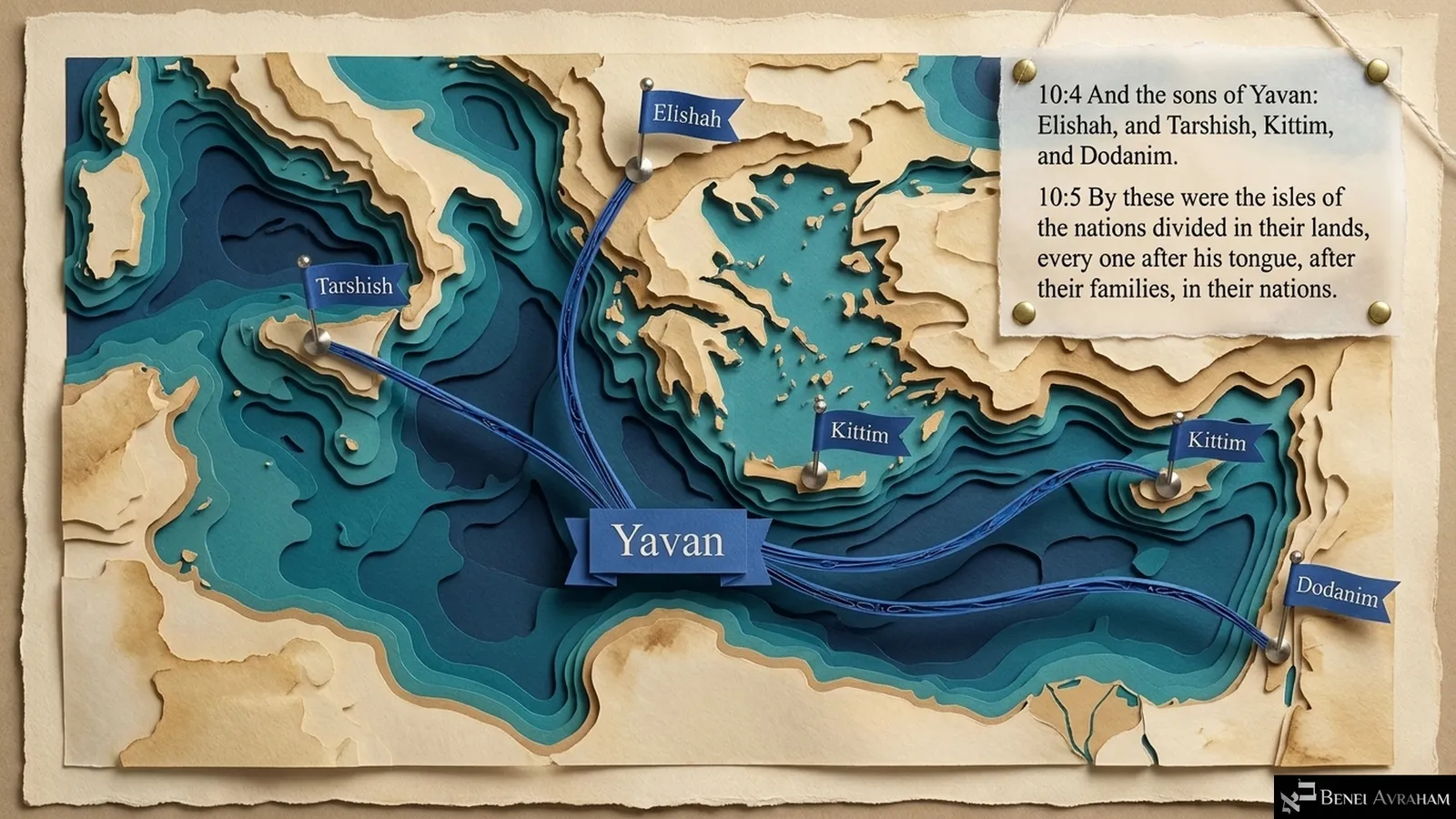
The sons of Yavan and the isles of the nations (Genesis 10:4–5)
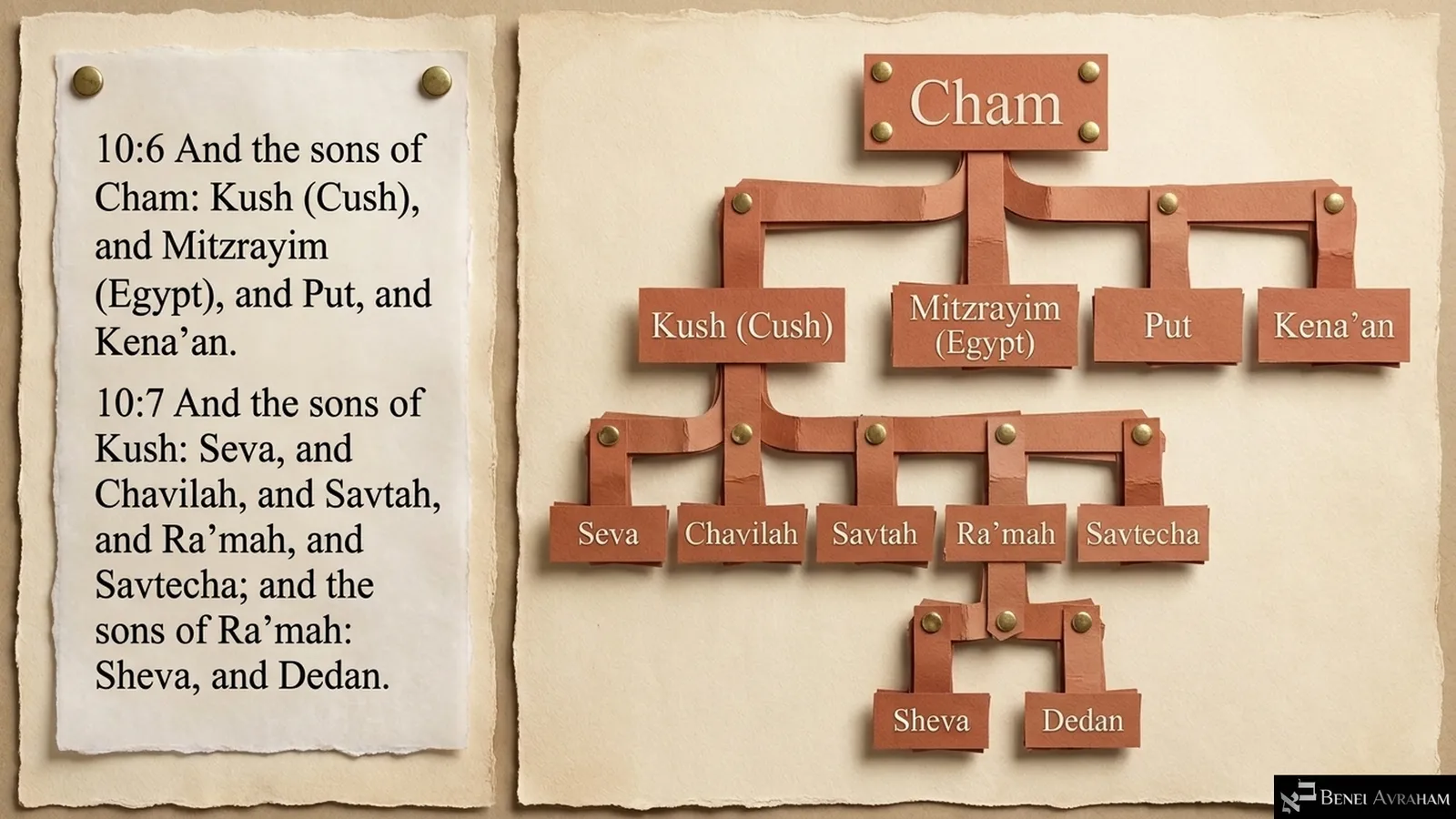
The sons of Cham and of Kush (Genesis 10:6–7)
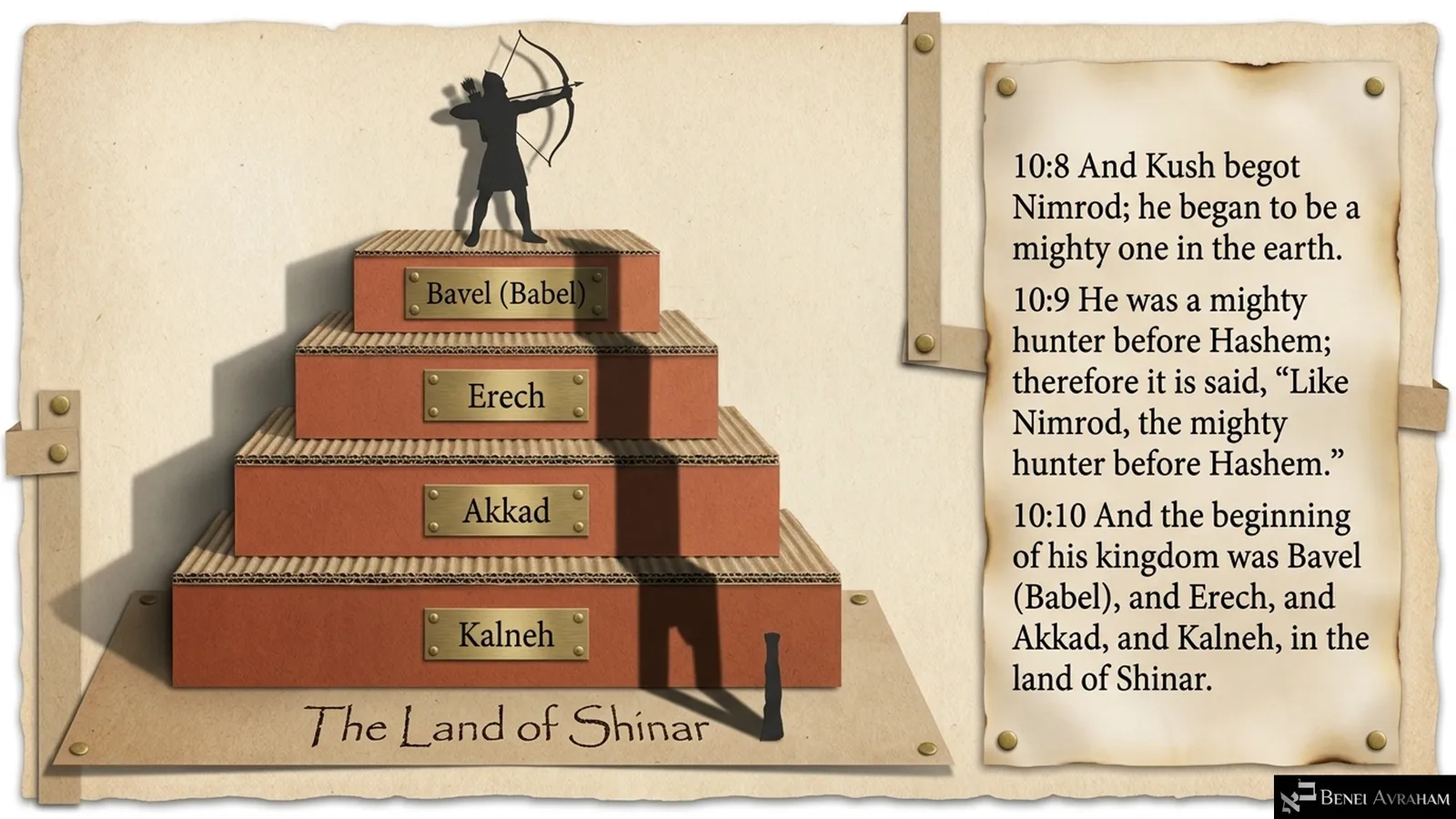
Nimrod, the mighty hunter, and his kingdom in the land of Shinar (Genesis 10:8–10)
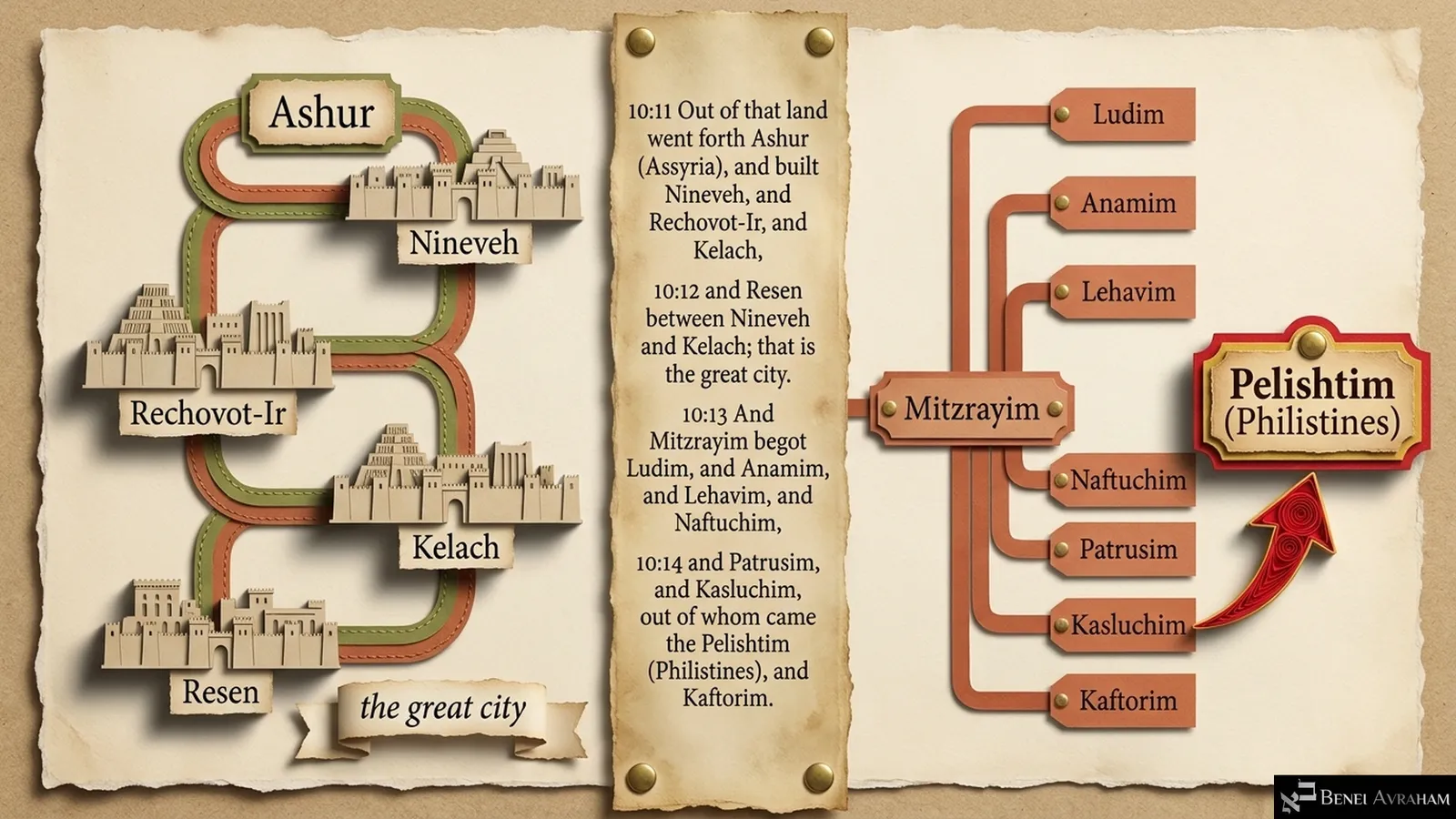
Ashur builds Nineveh; the sons of Mitzrayim and the origin of the Pelishtim (Genesis 10:11–14)
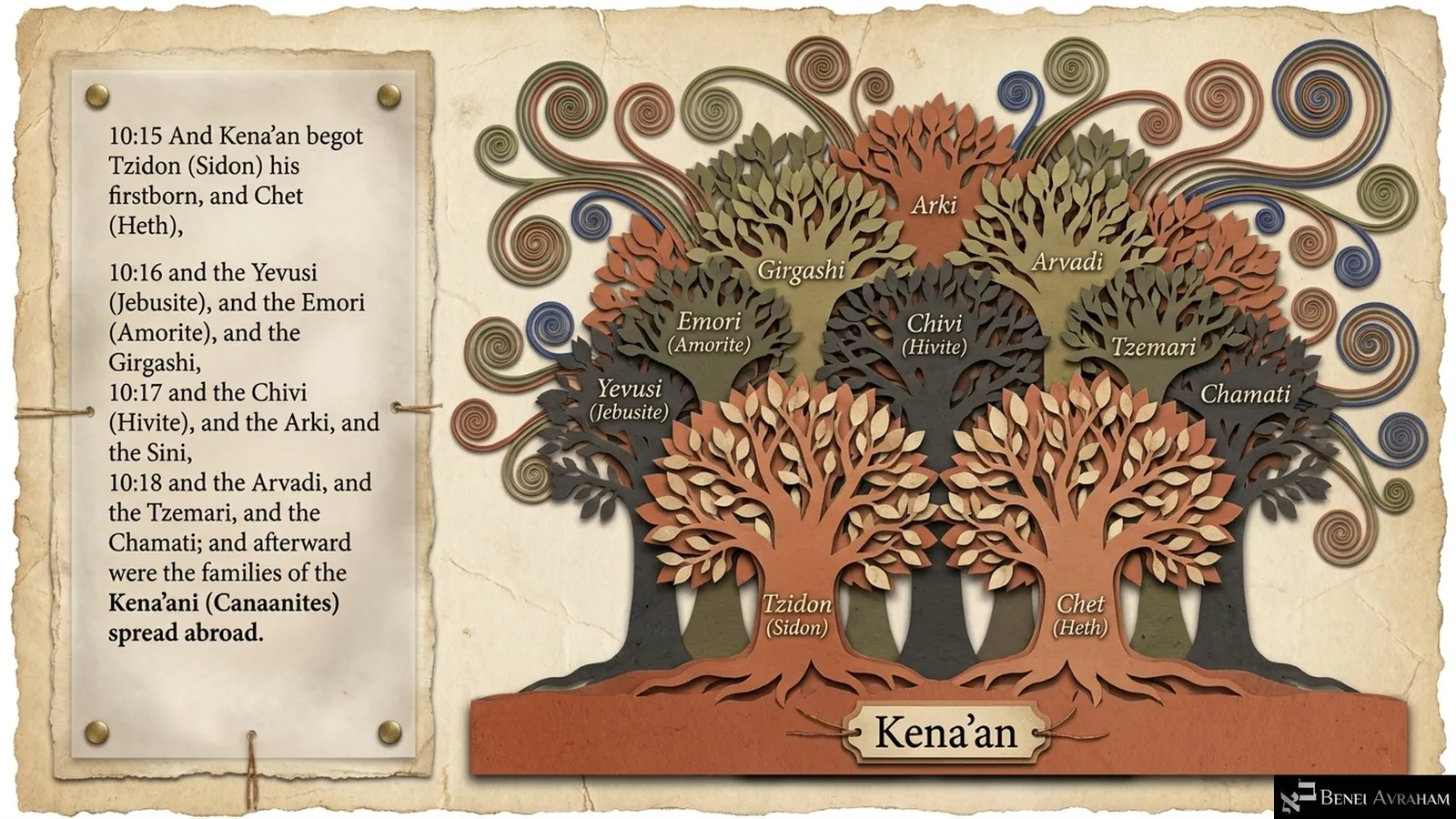
The families of Kena’an (Genesis 10:15–18)
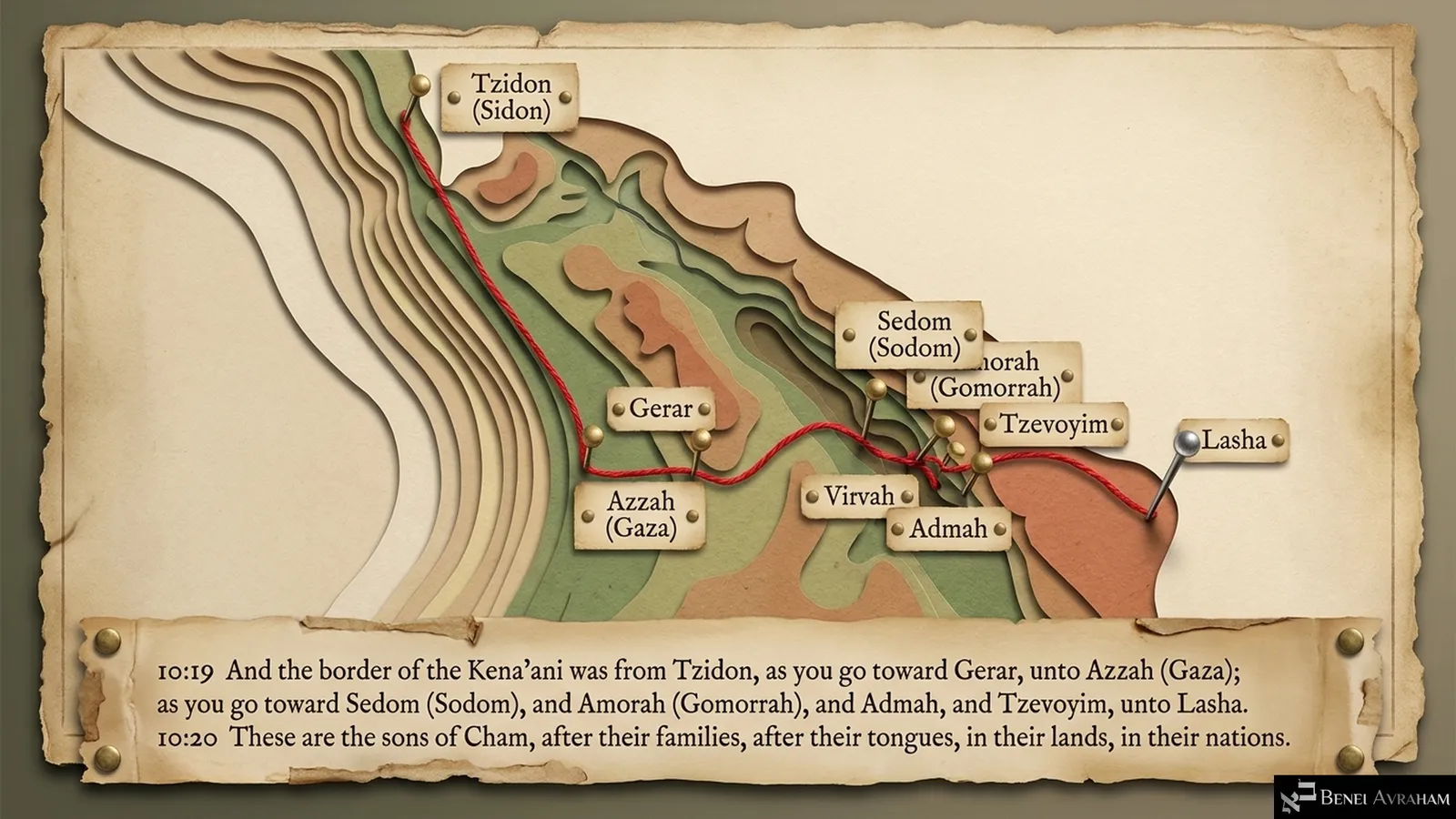
The border of the Kena’ani, from Tzidon to Azzah and Sedom (Genesis 10:19–20)
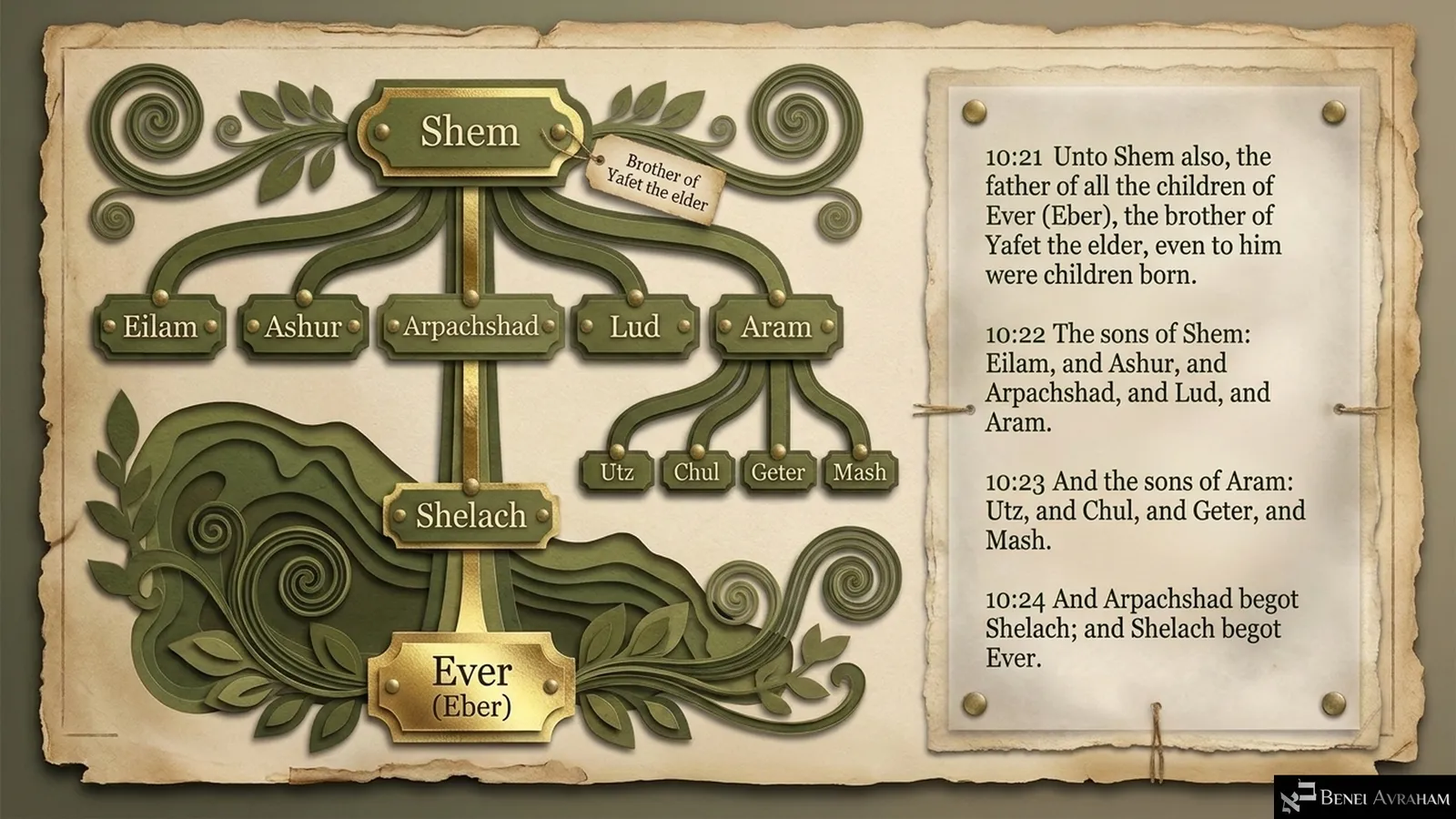
The sons of Shem, through Arpachshad and Shelach to Ever (Genesis 10:21–24)
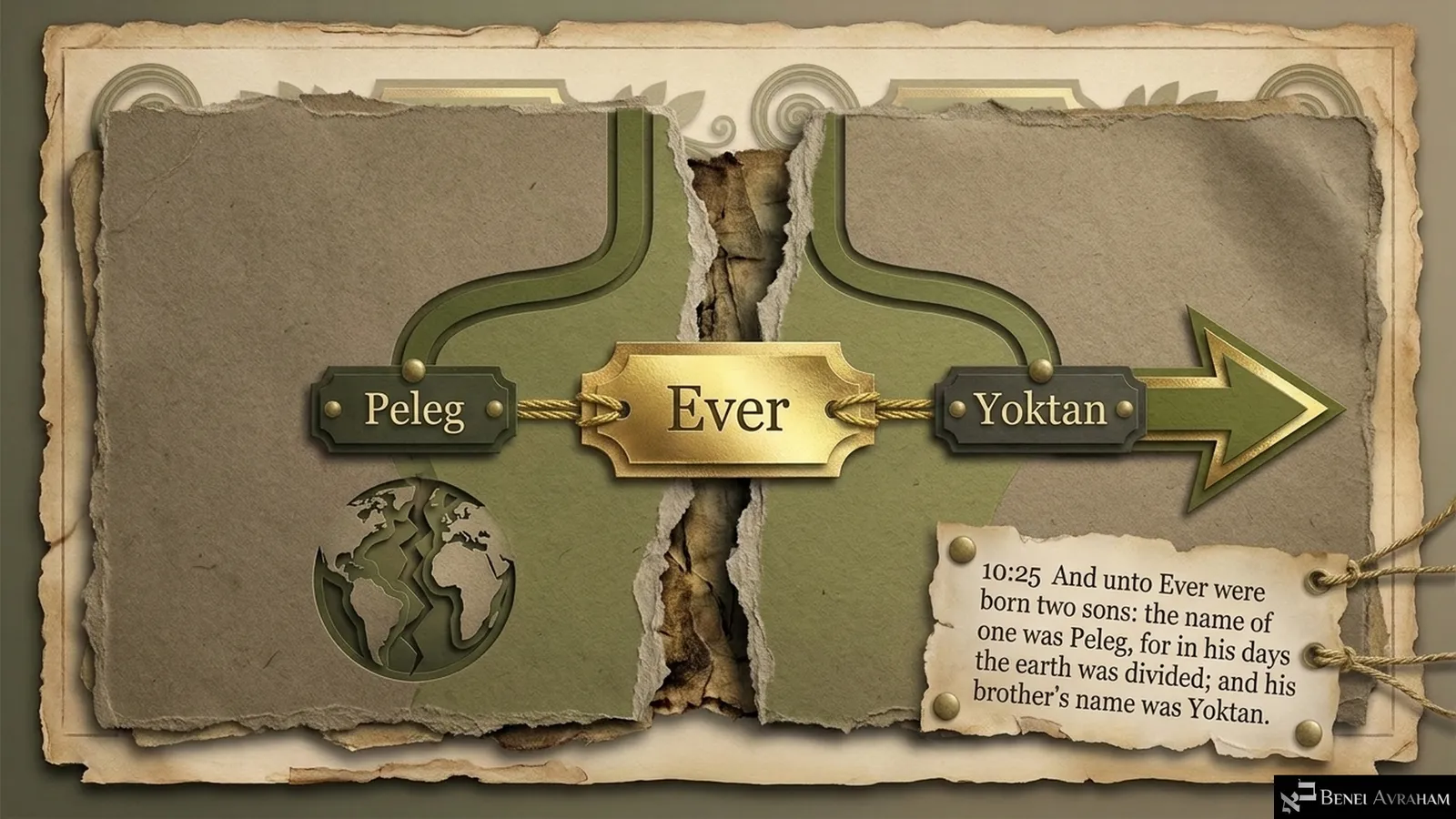
Ever’s two sons, Peleg and Yoktan: in Peleg’s days the earth was divided (Genesis 10:25)
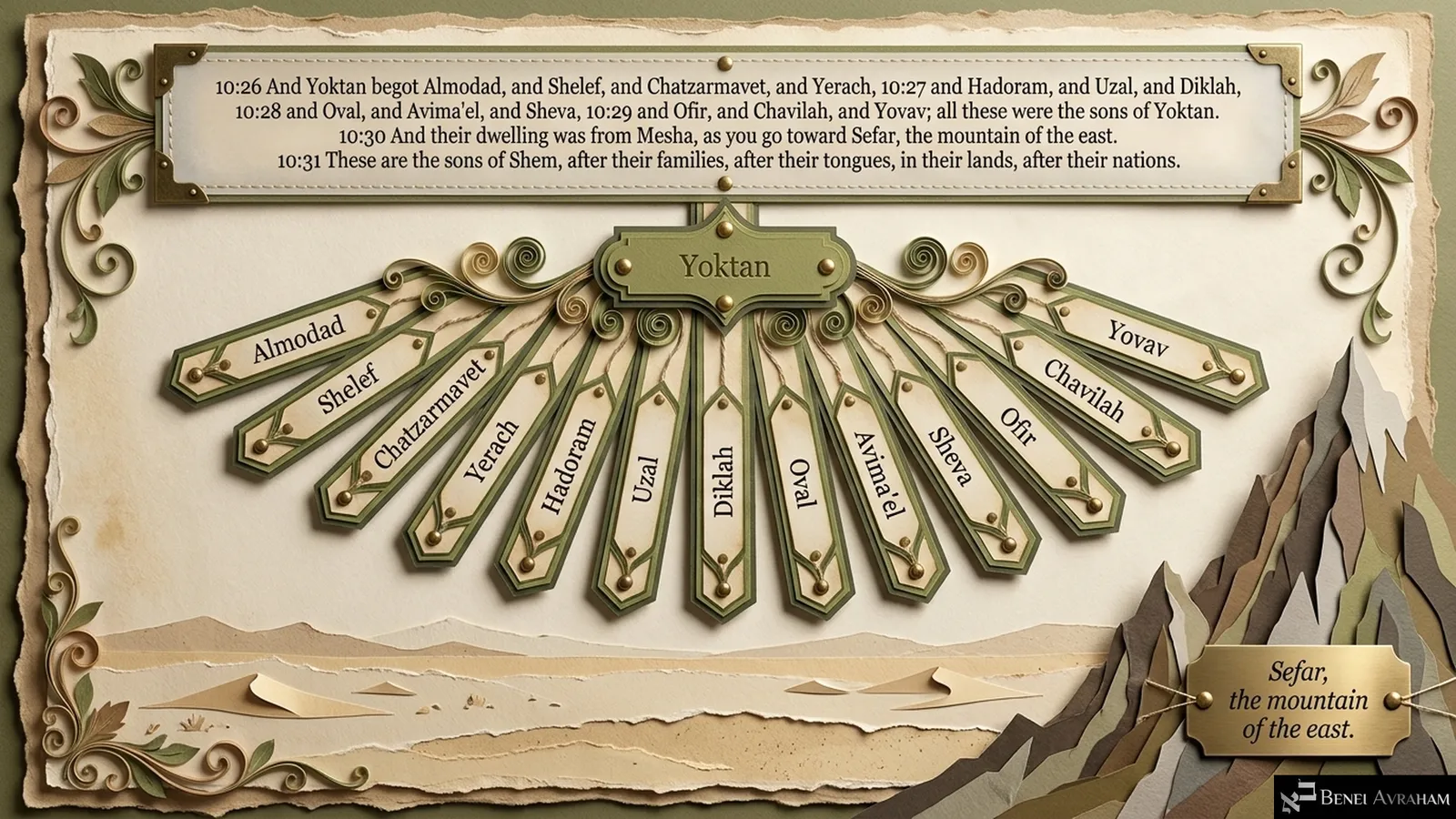
The thirteen sons of Yoktan, from Mesha toward Sefar (Genesis 10:26–31)
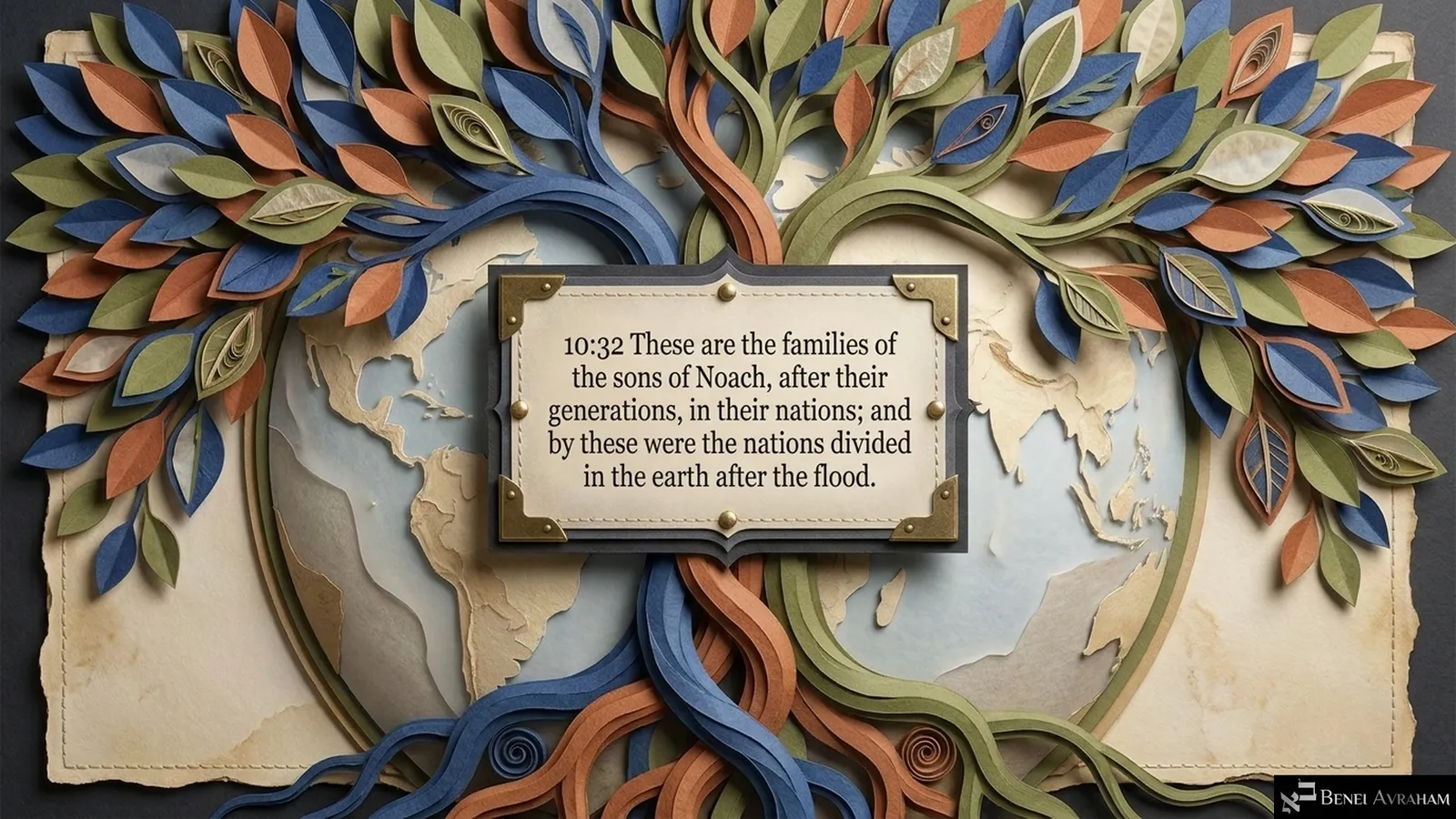
The families of the sons of Noach, from whom the nations spread after the flood (Genesis 10:32)
Shevi’i · Genesis 11:1–32

Seventh Portion
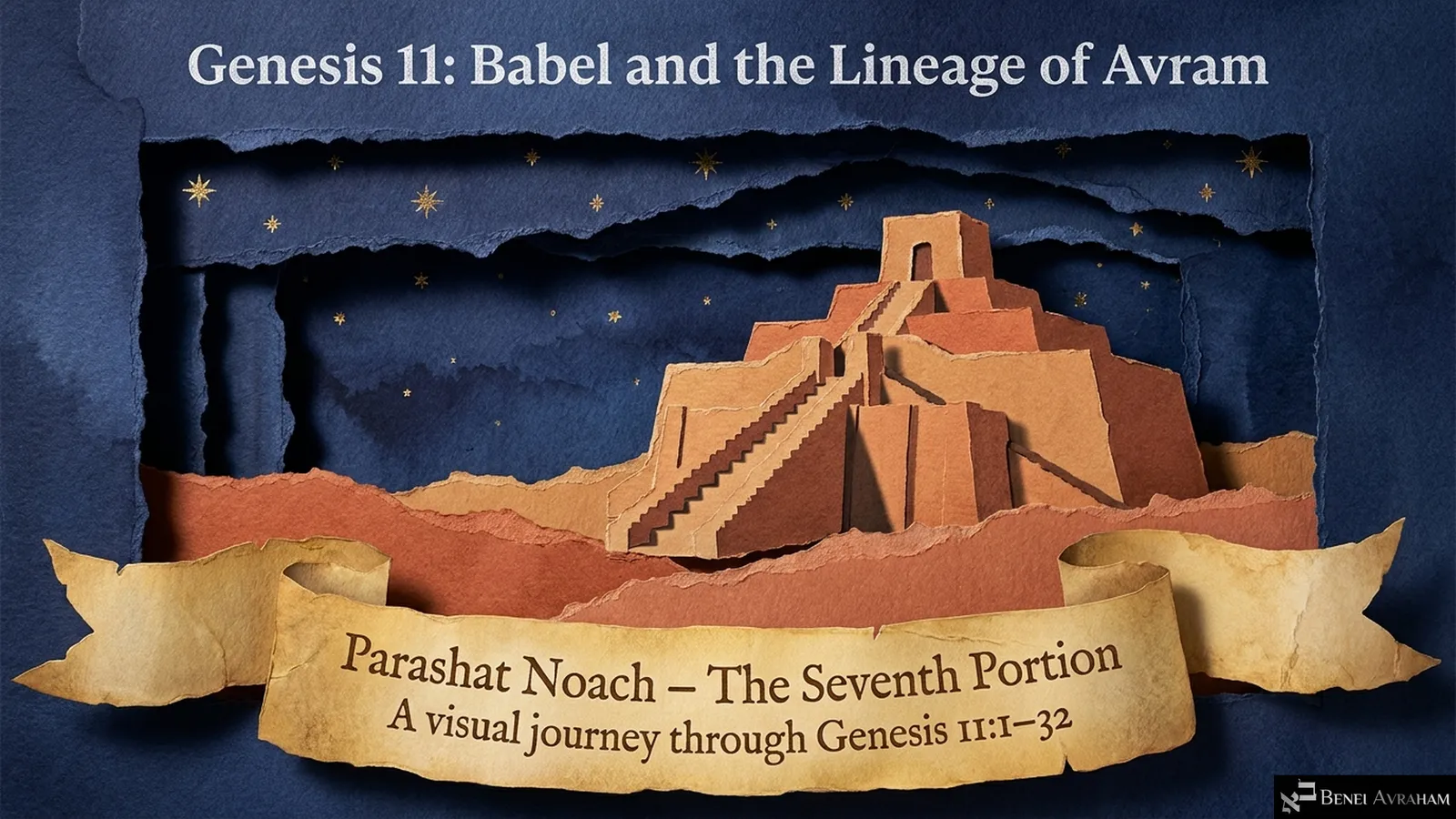
Title slide: Genesis 11, Babel and the lineage of Avram; Parashat Noach, the seventh portion (Genesis 11:1–32)
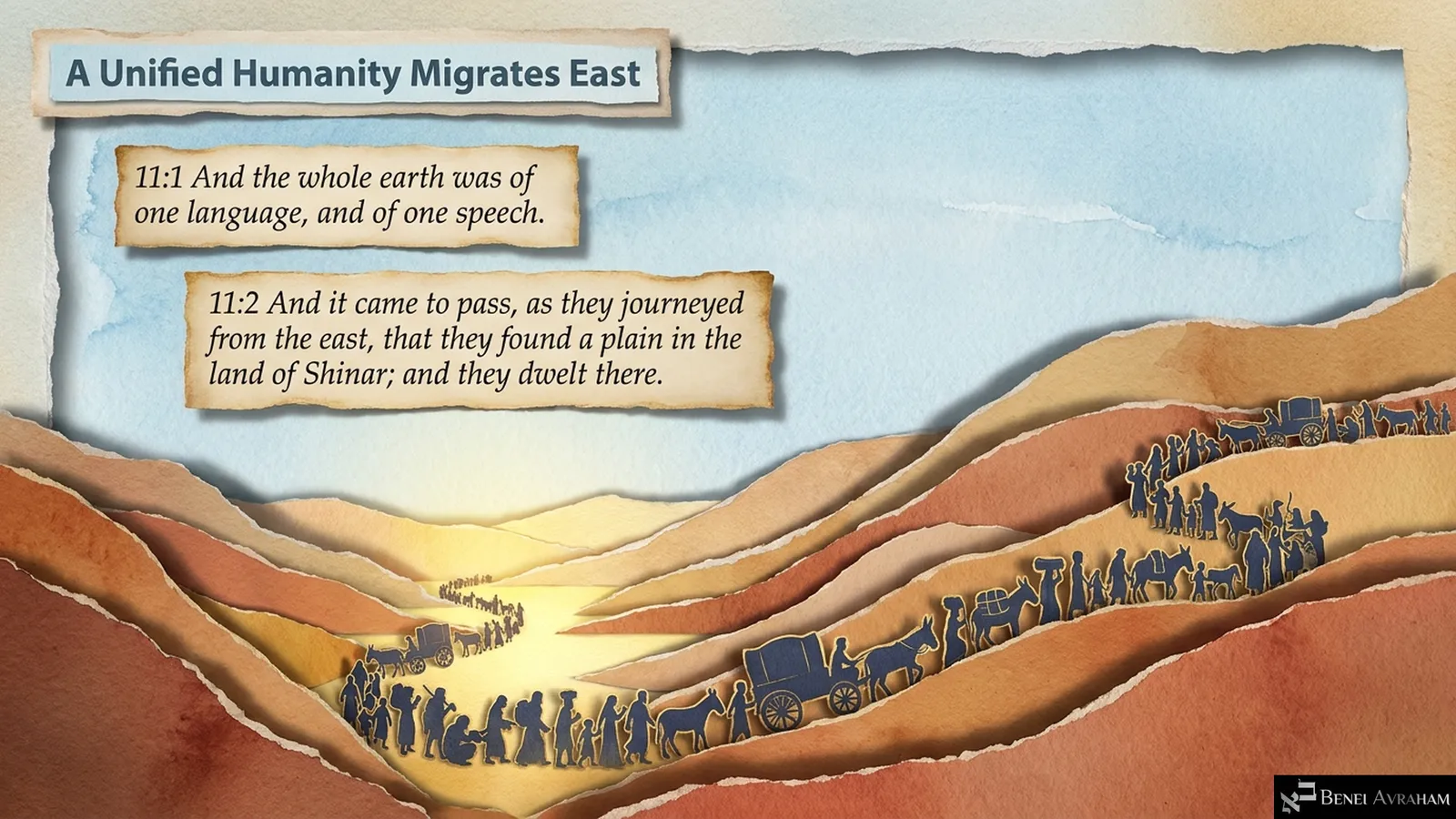
A unified humanity of one language migrates east and settles in the land of Shinar (Genesis 11:1–2)
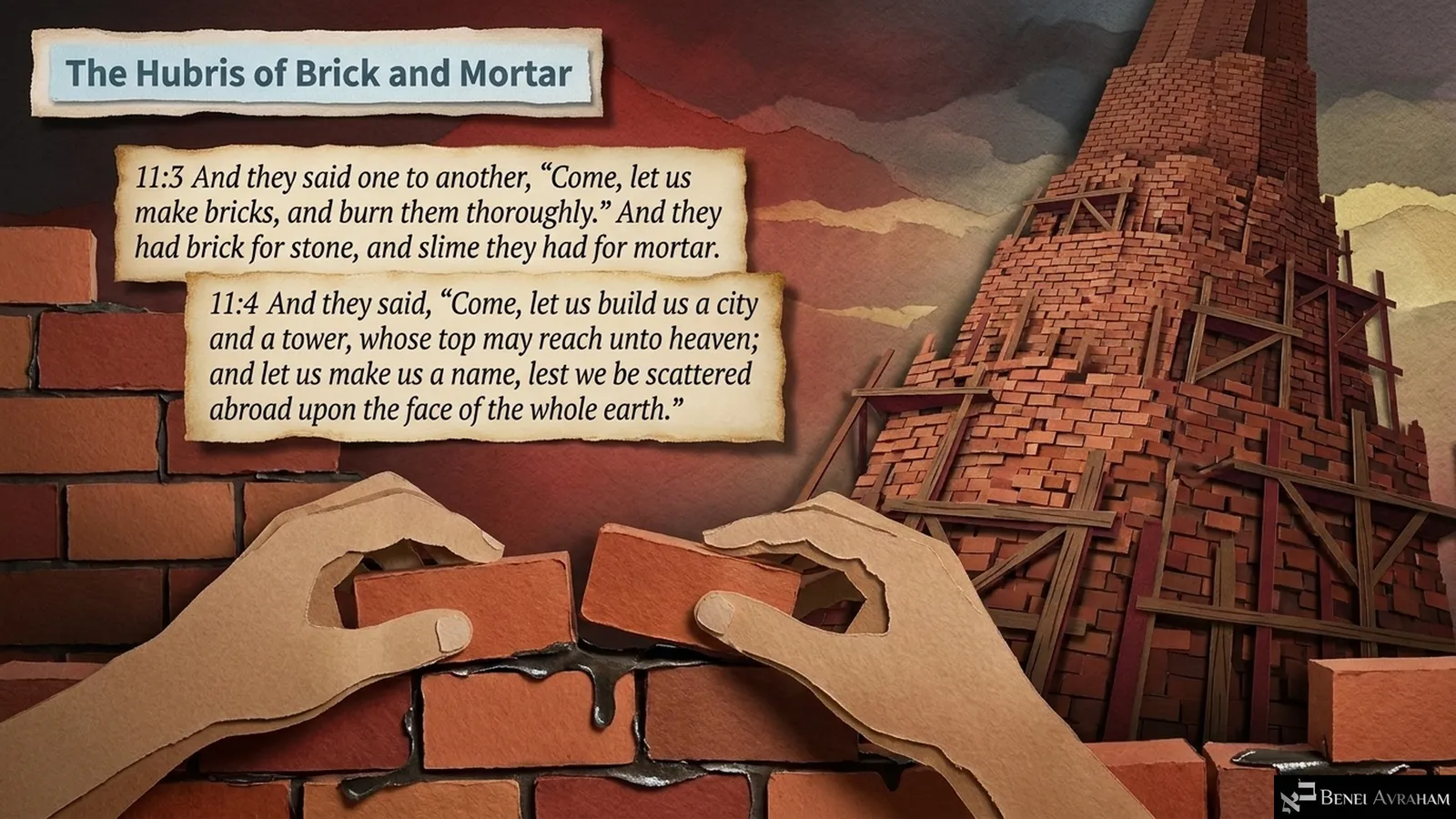
The hubris of brick and mortar: “Let us build us a city and a tower, whose top may reach unto heaven” (Genesis 11:3–4)
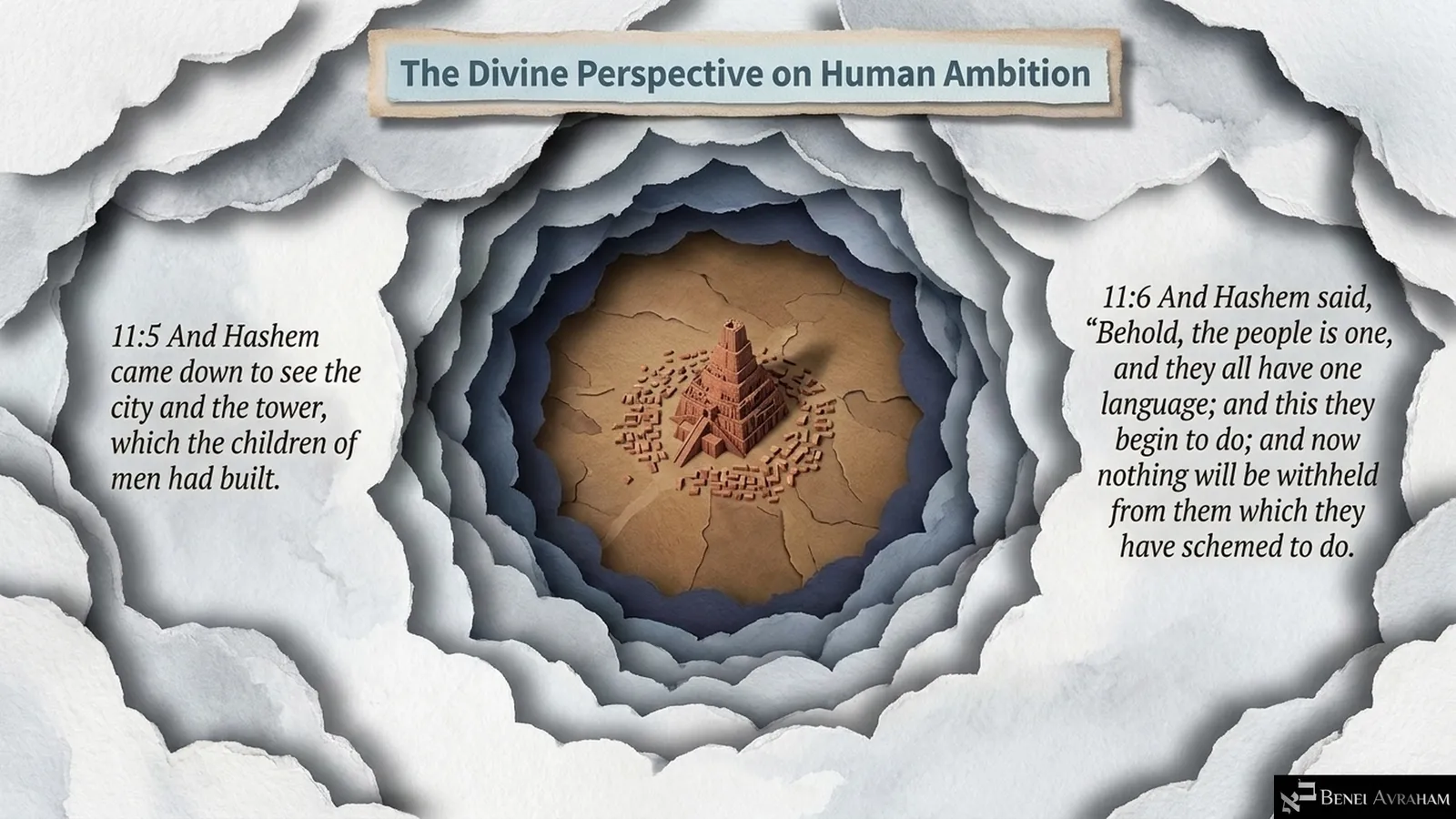
The divine perspective on human ambition: Hashem comes down to see the city and the tower (Genesis 11:5–6)
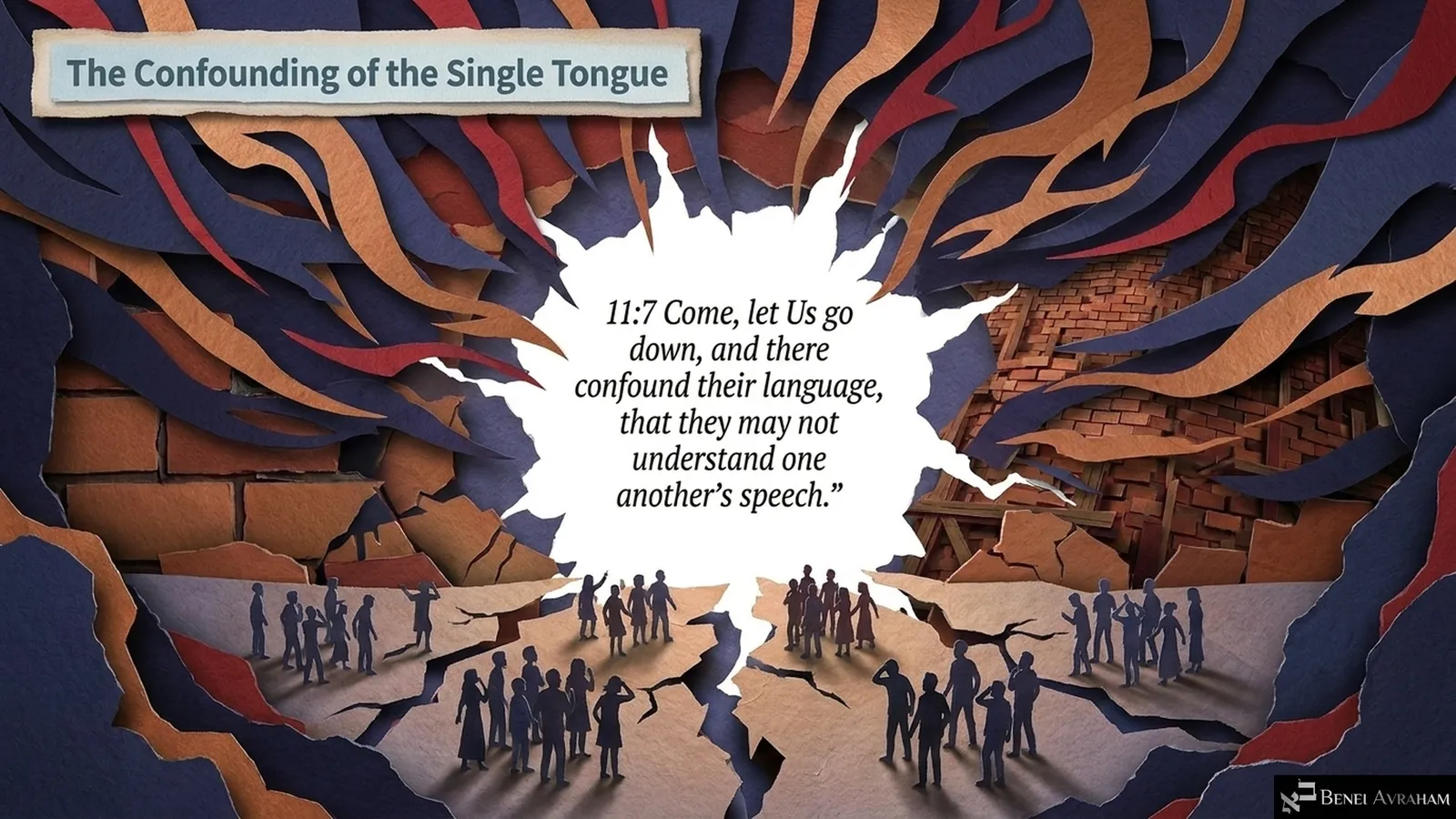
The confounding of the single tongue: “Come, let Us go down, and there confound their language” (Genesis 11:7)
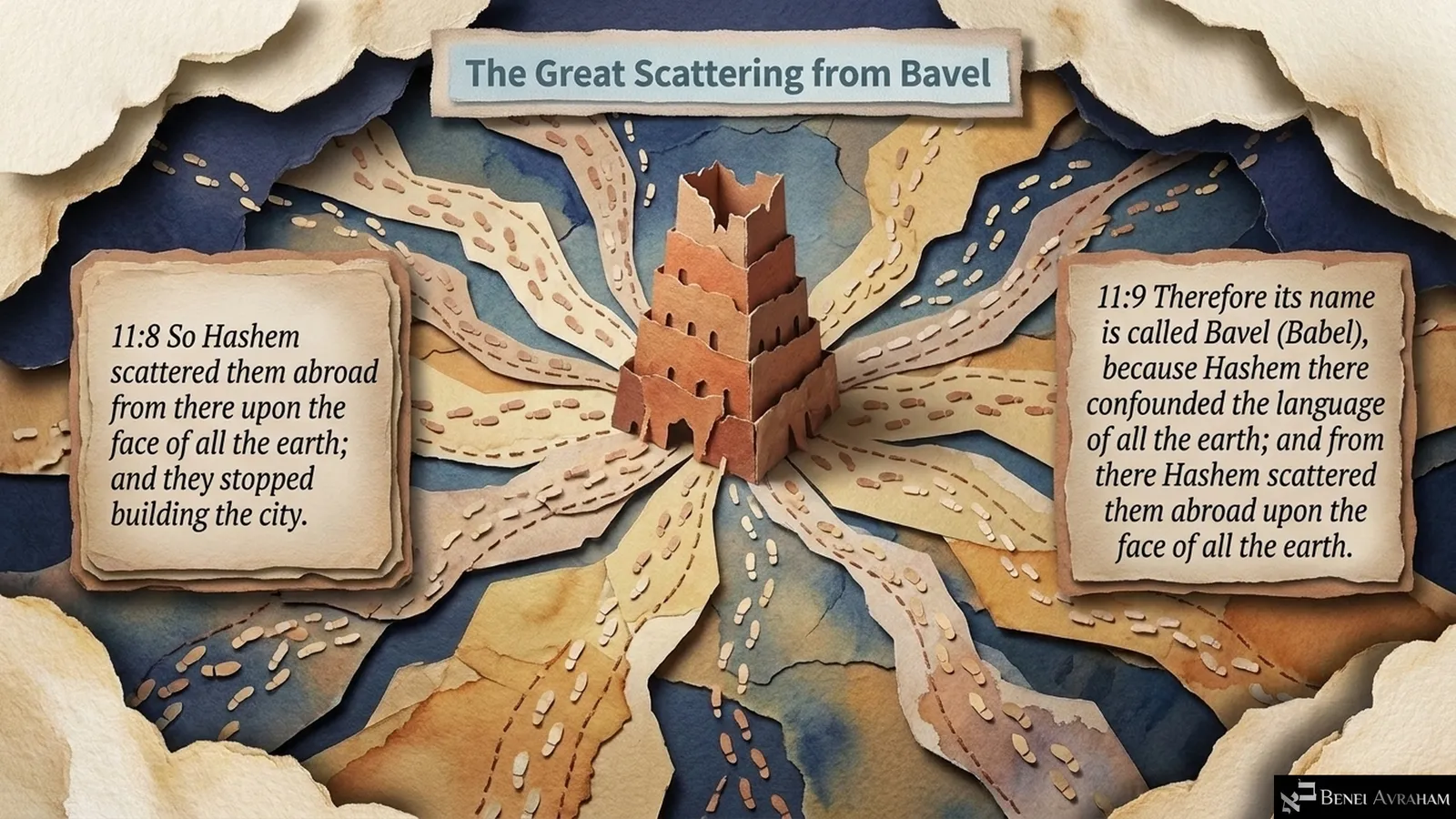
The great scattering from Bavel: Hashem scatters them over the face of all the earth (Genesis 11:8–9)
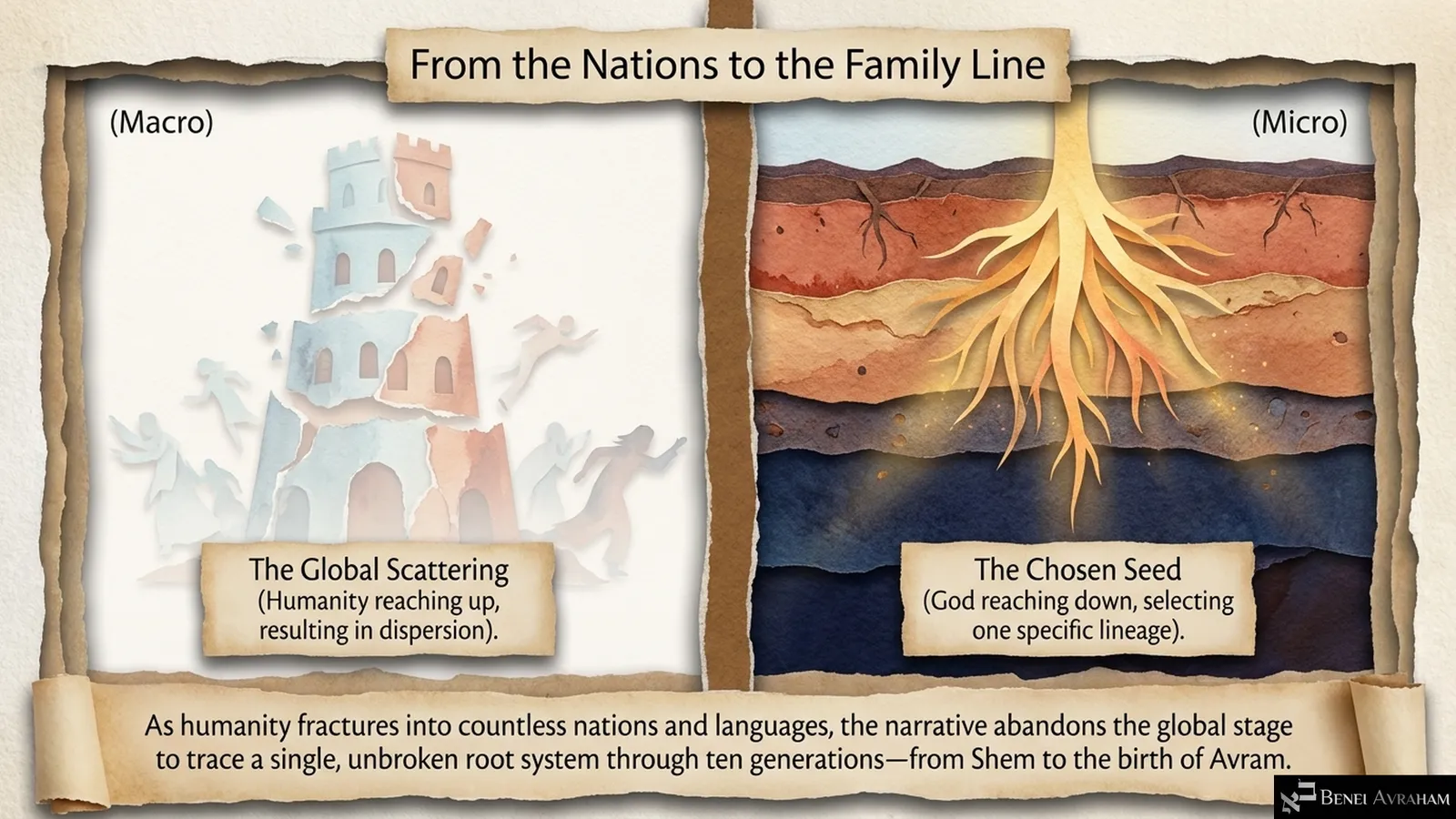
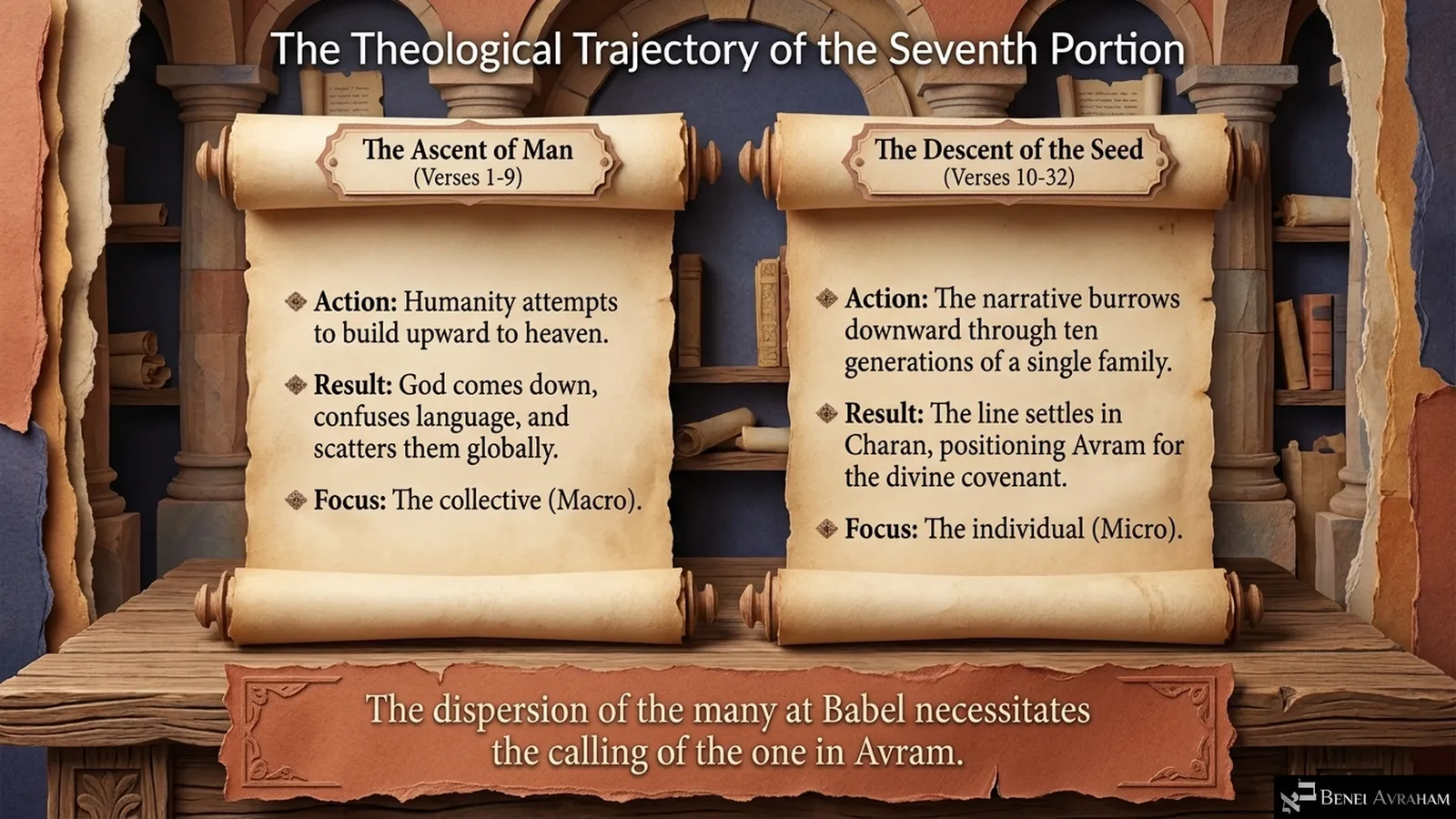
From the nations to the family line: the global scattering and the chosen seed
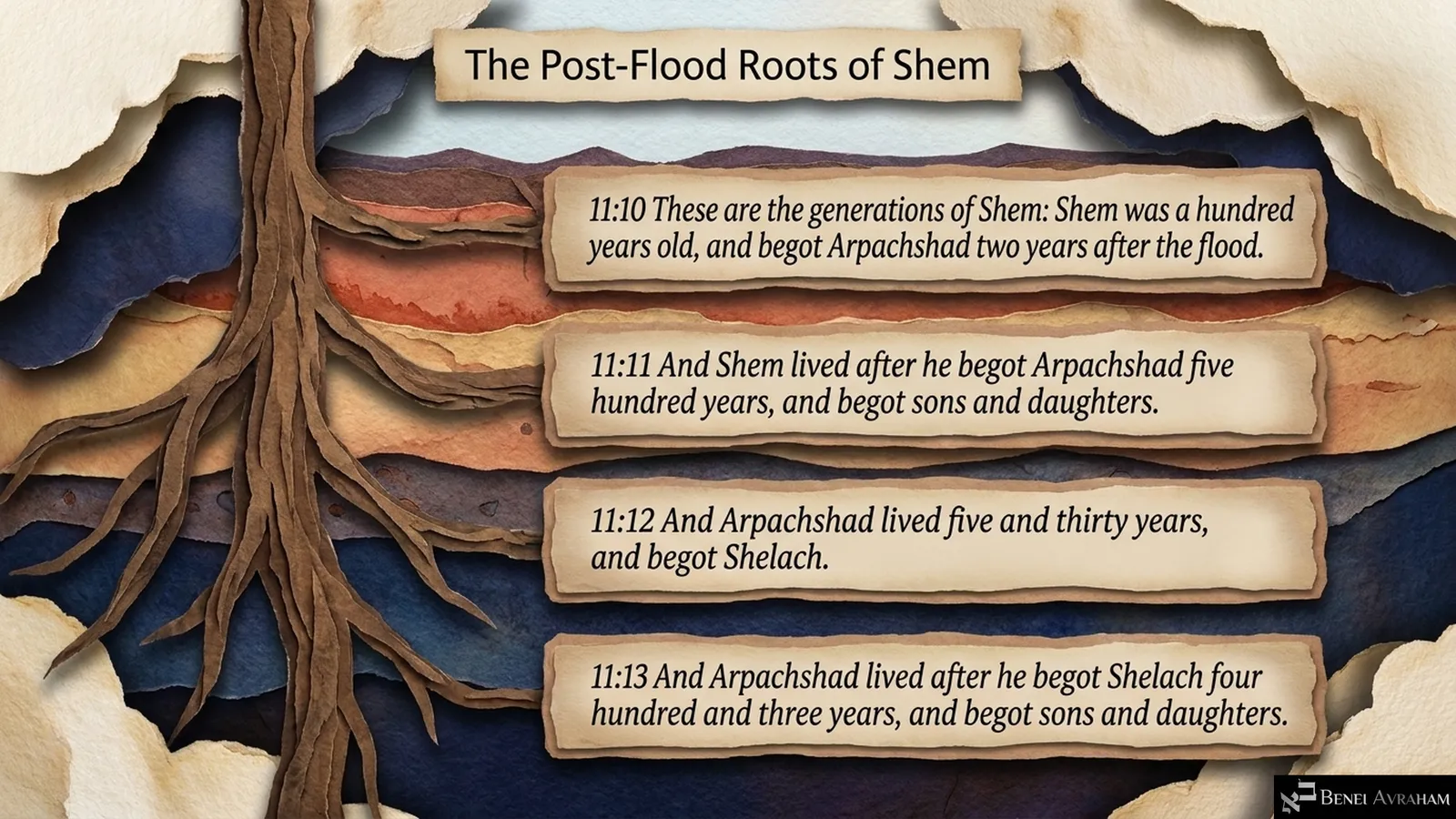
The post-flood roots of Shem: Shem, Arpachshad and Shelach (Genesis 11:10–13)
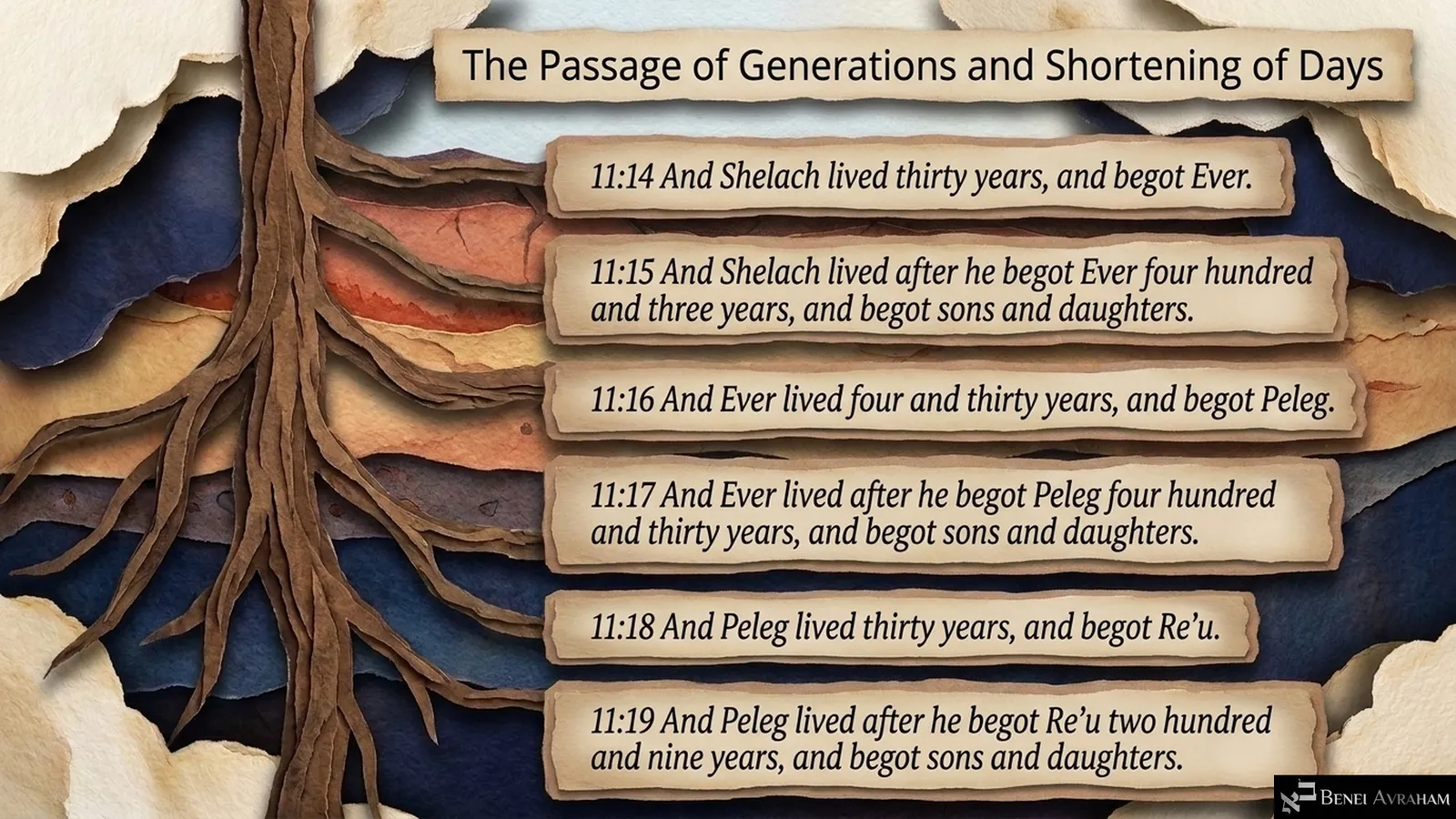
The passage of generations and the shortening of days: Shelach, Ever and Peleg (Genesis 11:14–19)
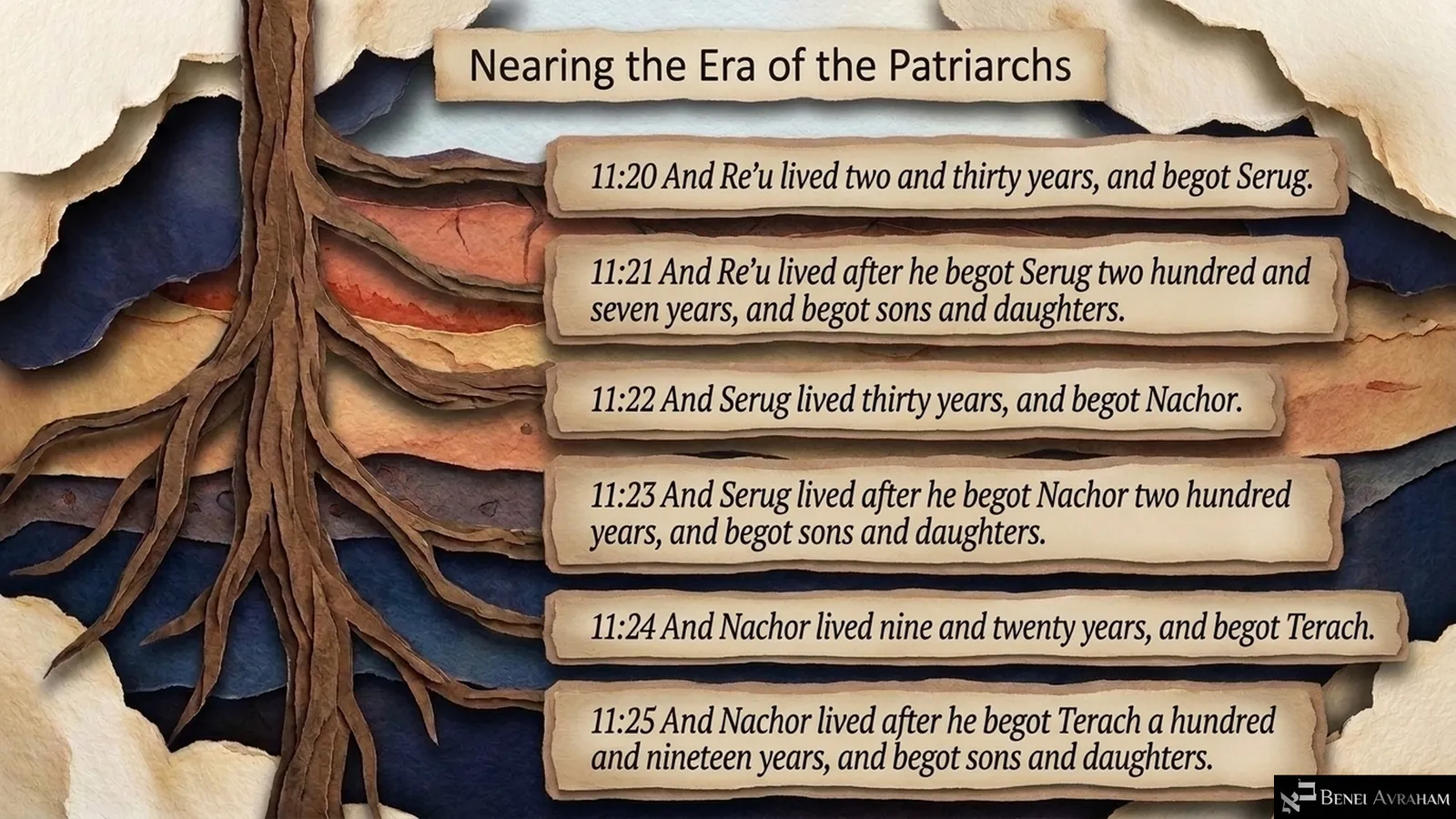
Nearing the era of the patriarchs: Re’u, Serug and Nachor (Genesis 11:20–25)
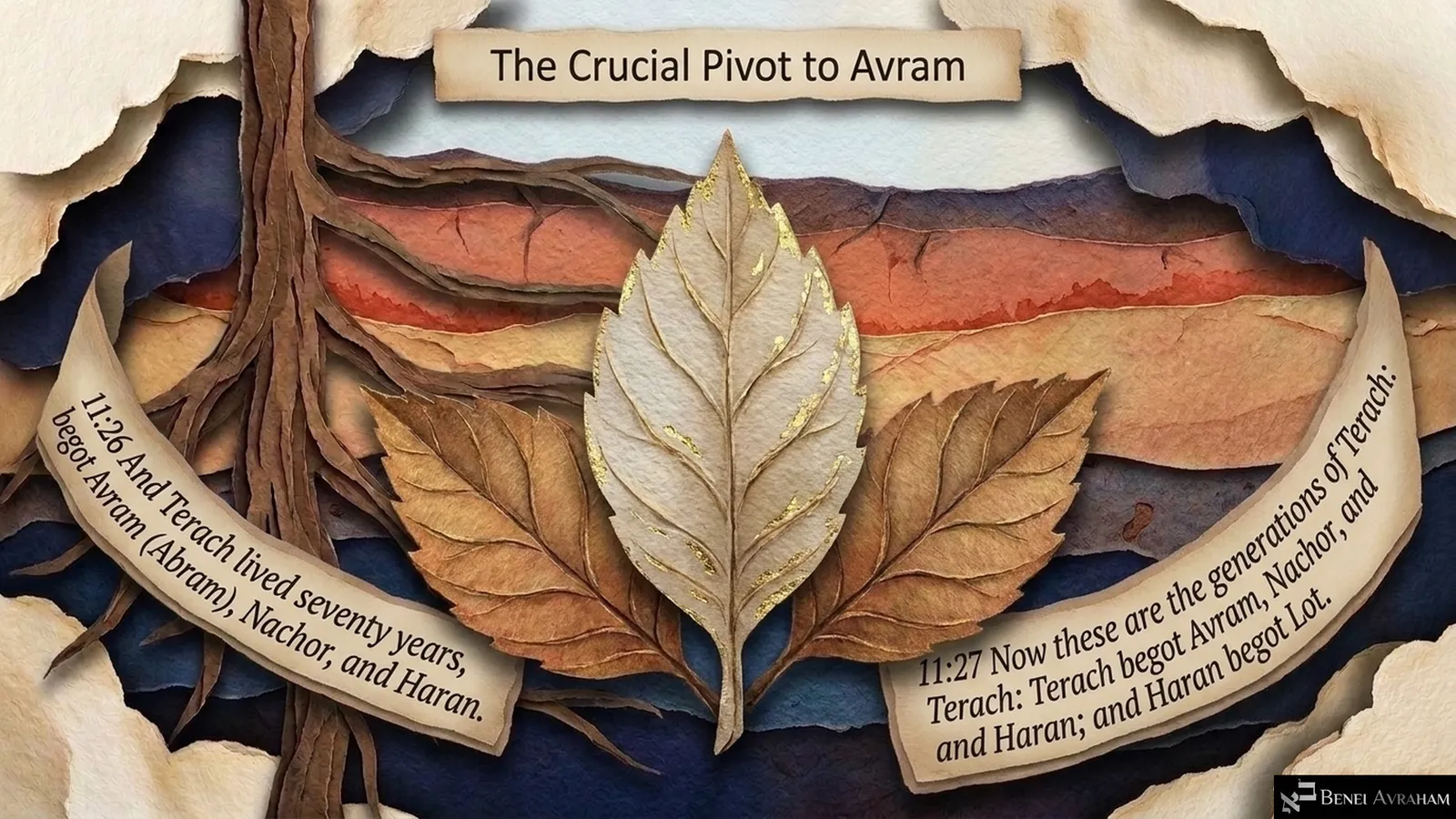
The crucial pivot to Avram: Terach begets Avram, Nachor and Haran (Genesis 11:26–27)
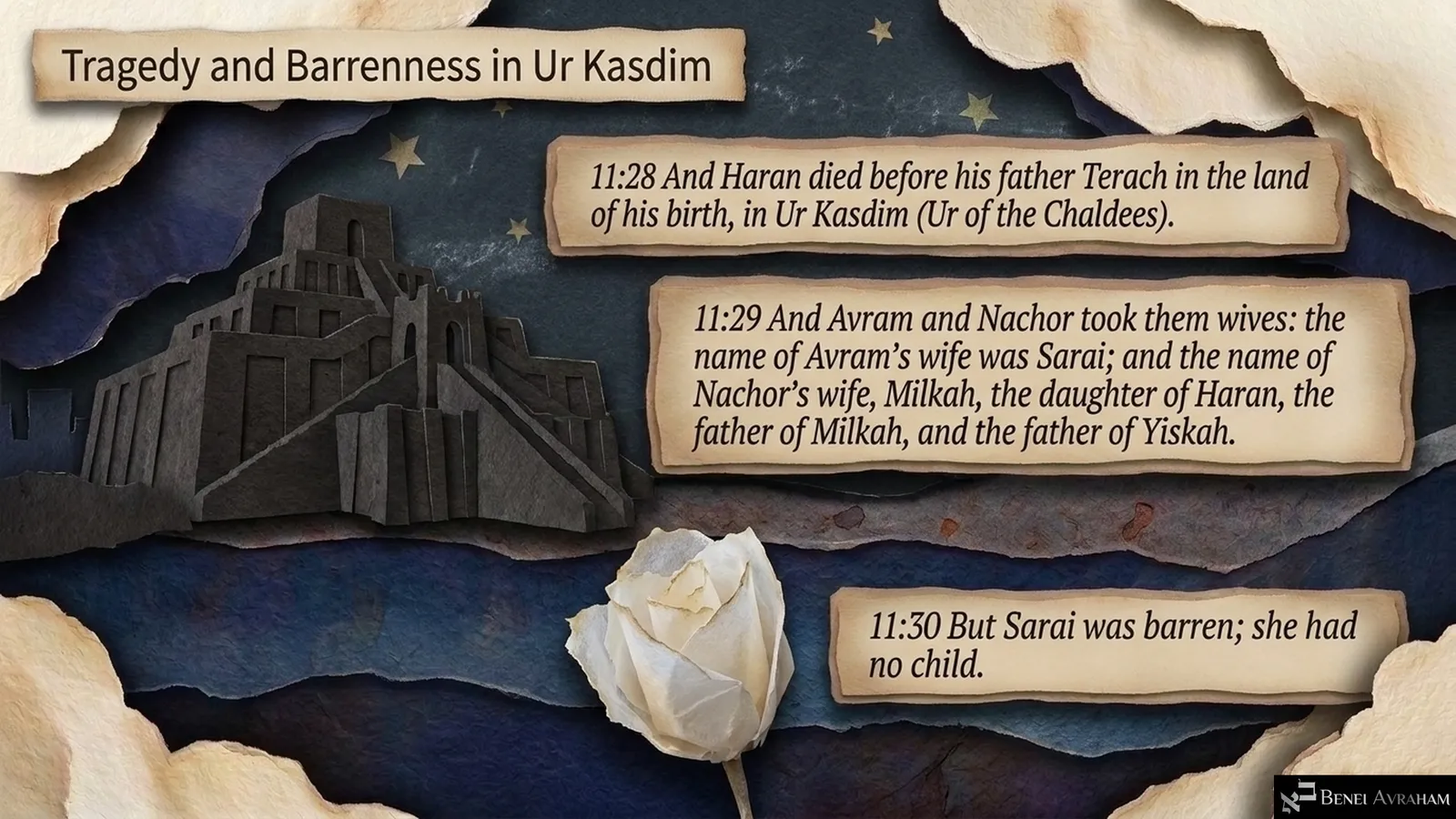
Tragedy and barrenness in Ur Kasdim: Haran dies, Avram marries Sarai, and Sarai is barren (Genesis 11:28–30)
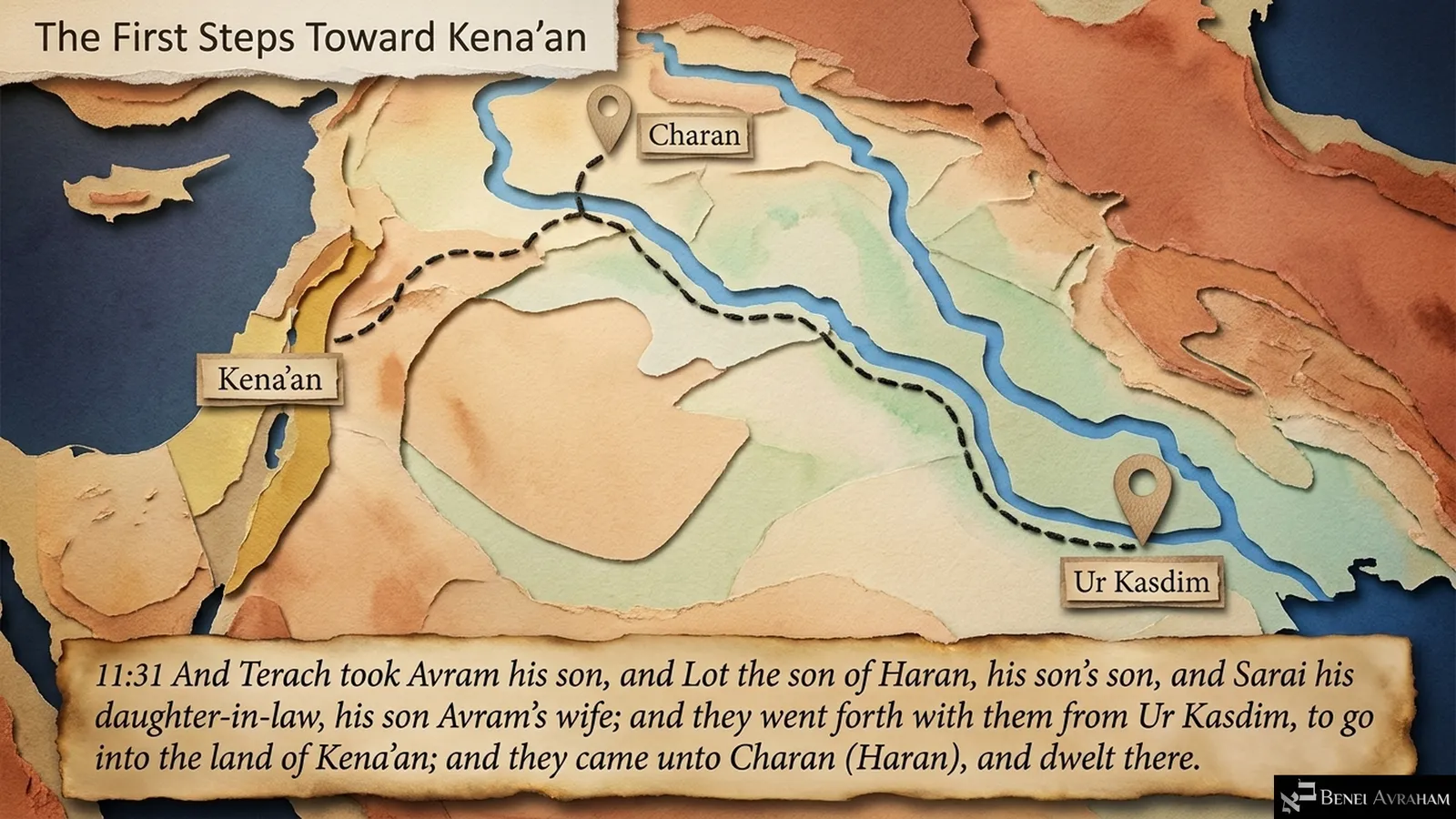
First steps toward Kena’an: Terach takes Avram, Sarai and Lot from Ur Kasdim to Charan (Genesis 11:31)
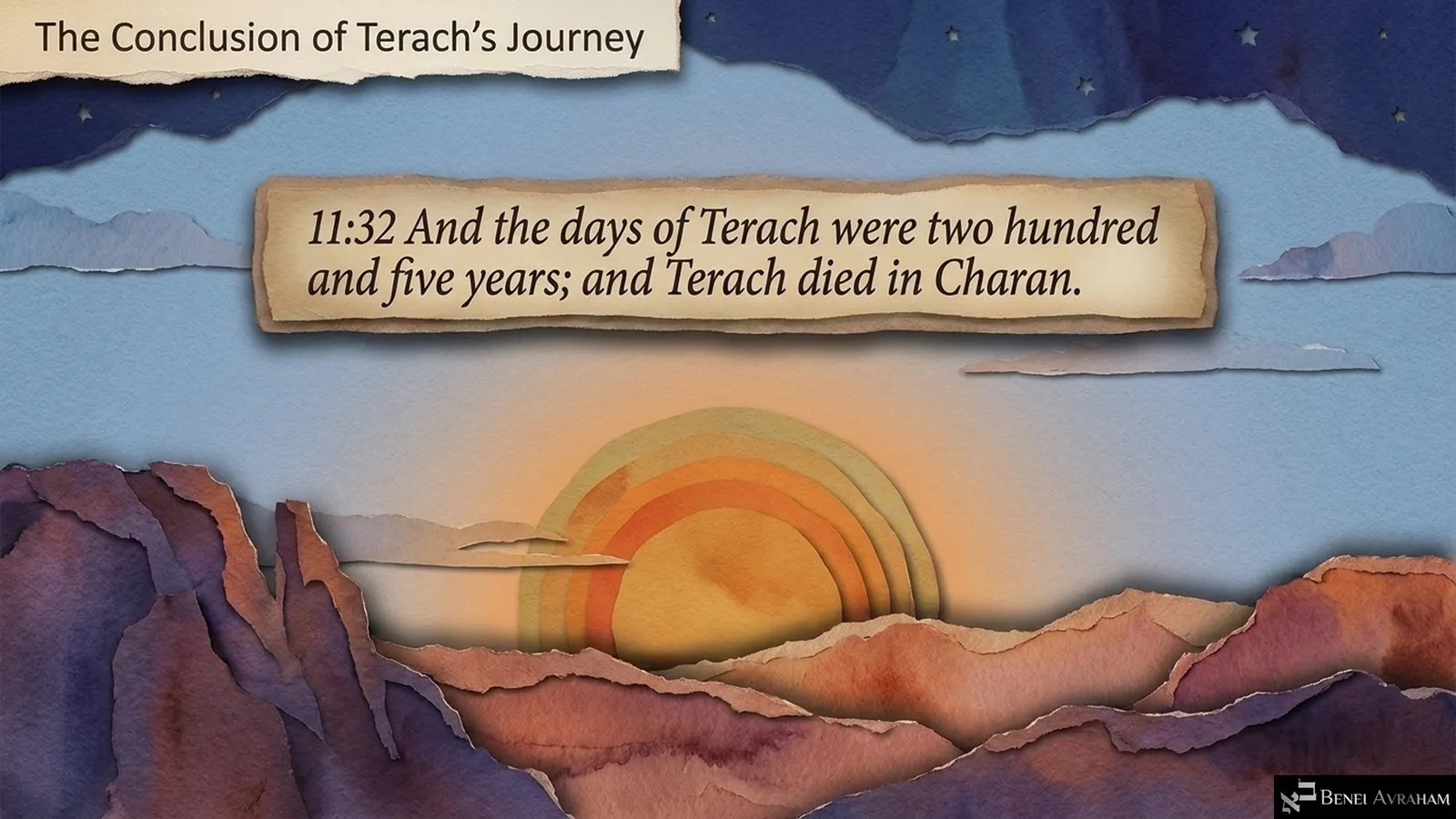
The conclusion of Terach’s journey: Terach dies in Charan (Genesis 11:32)
The theological trajectory of the seventh portion: the ascent of man at Babel and the descent of the seed to Avram
Haftarah · Isaiah 54:1–55:5

Haftarah: The Layered Covenant
Title slide: The Layered Covenant, a visual study of the Haftarah for Parashat Noach (Isaiah 54:1–55:5)
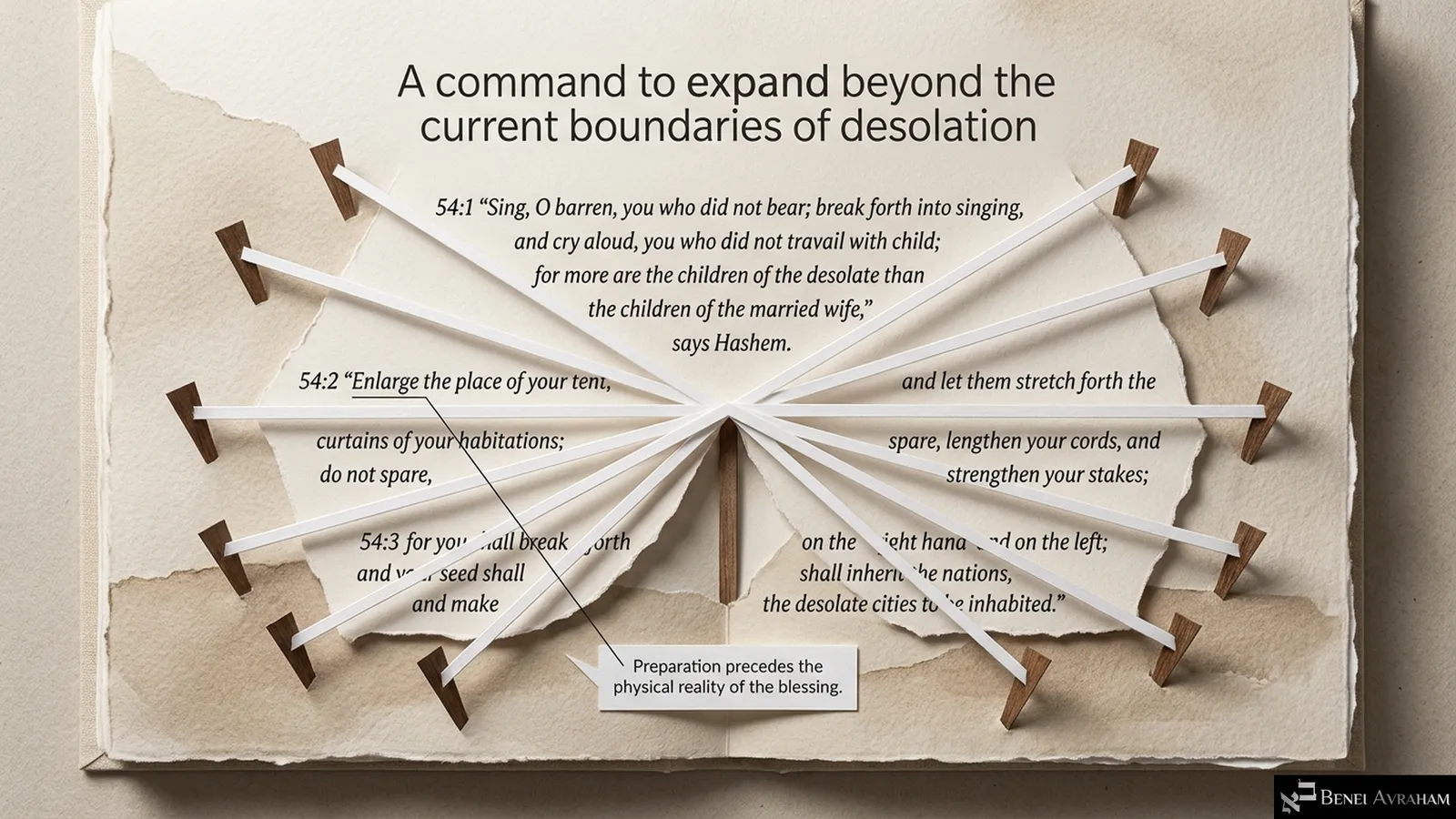
“Sing, O barren”: a command to enlarge the place of your tent and stretch beyond the desolation (Isaiah 54:1–3)
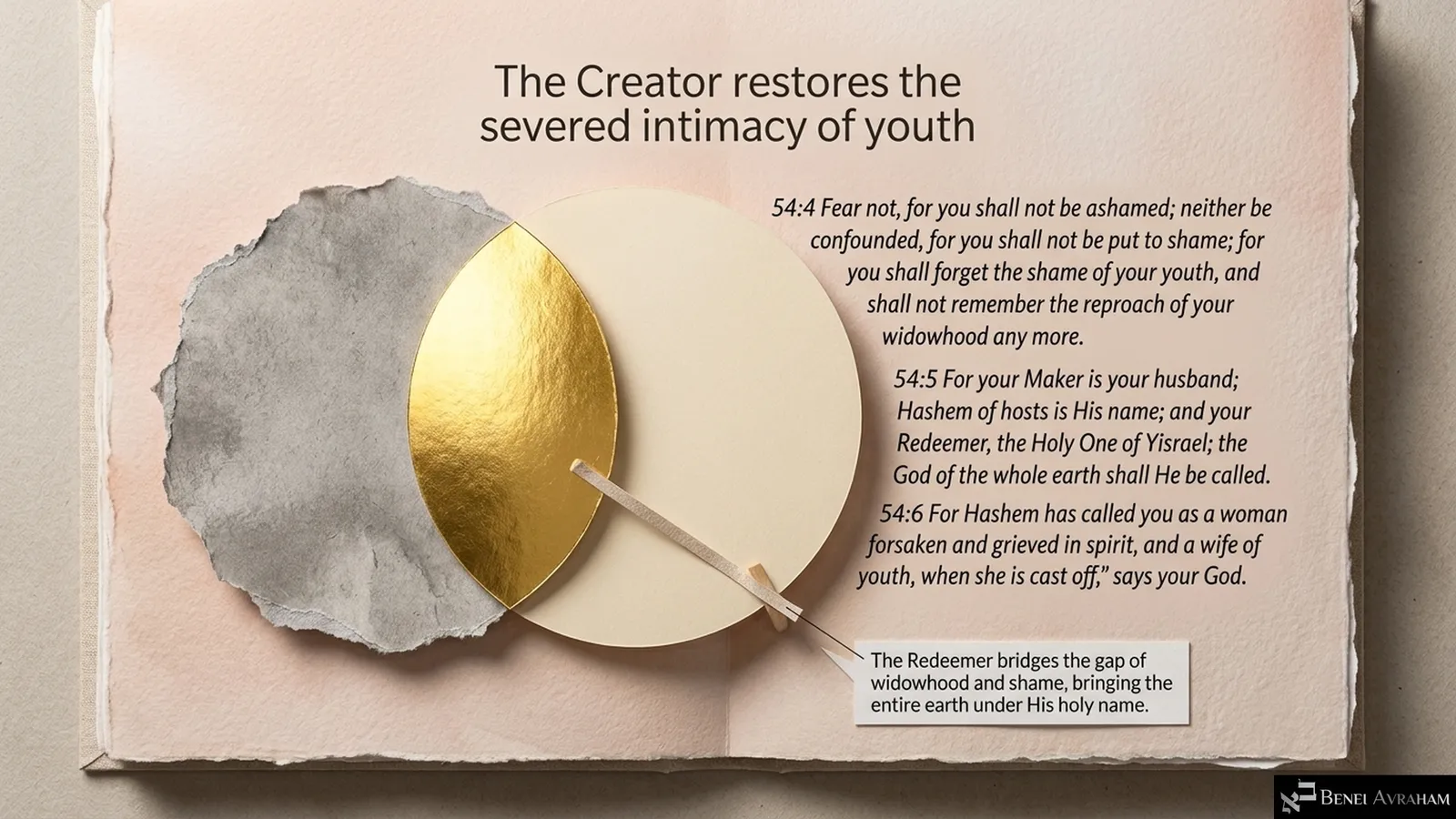
The Creator restores the severed intimacy of youth: “For your Maker is your husband” (Isaiah 54:4–6)
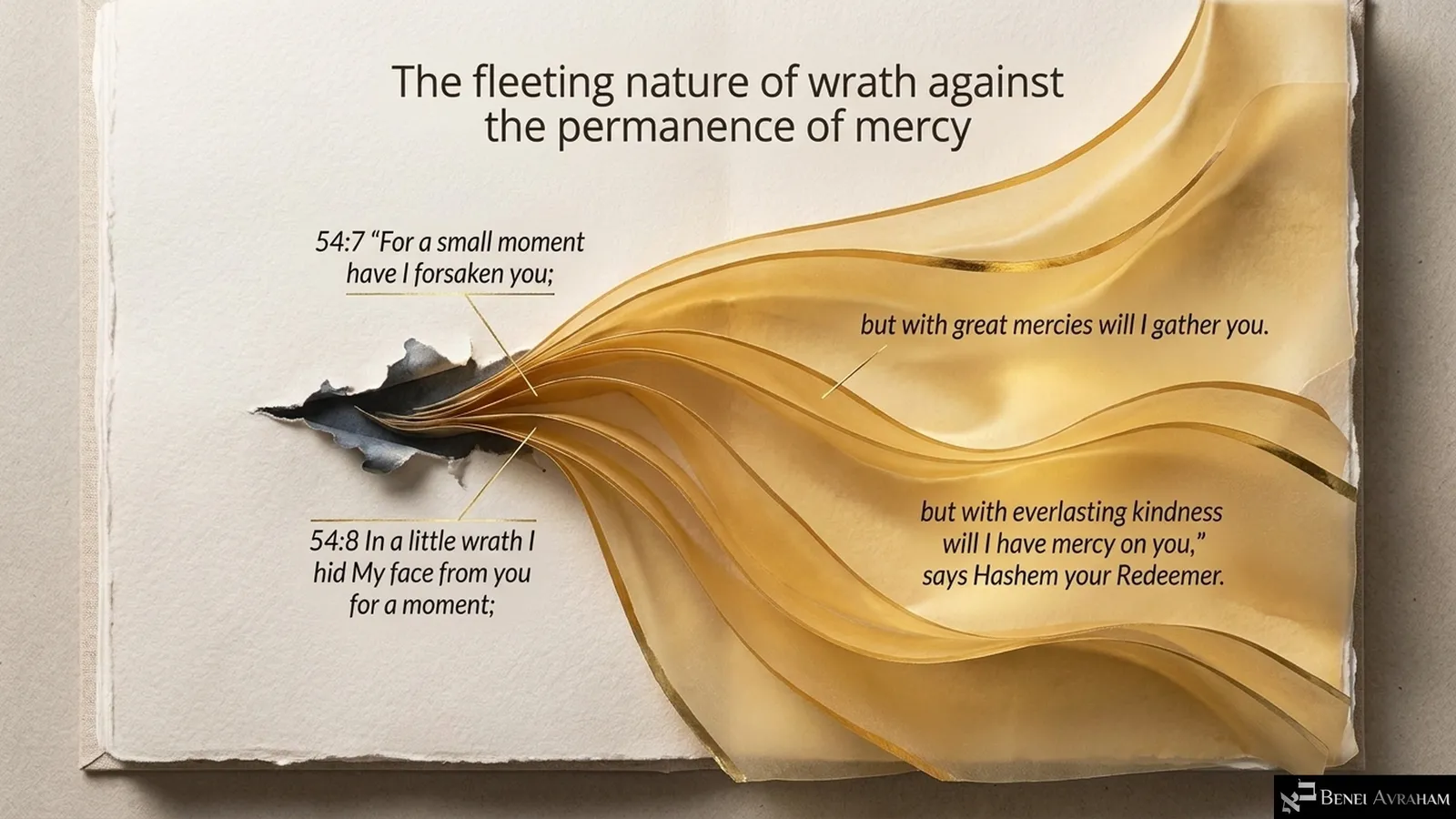
The fleeting nature of wrath against the permanence of mercy: “For a small moment have I forsaken you” (Isaiah 54:7–8)
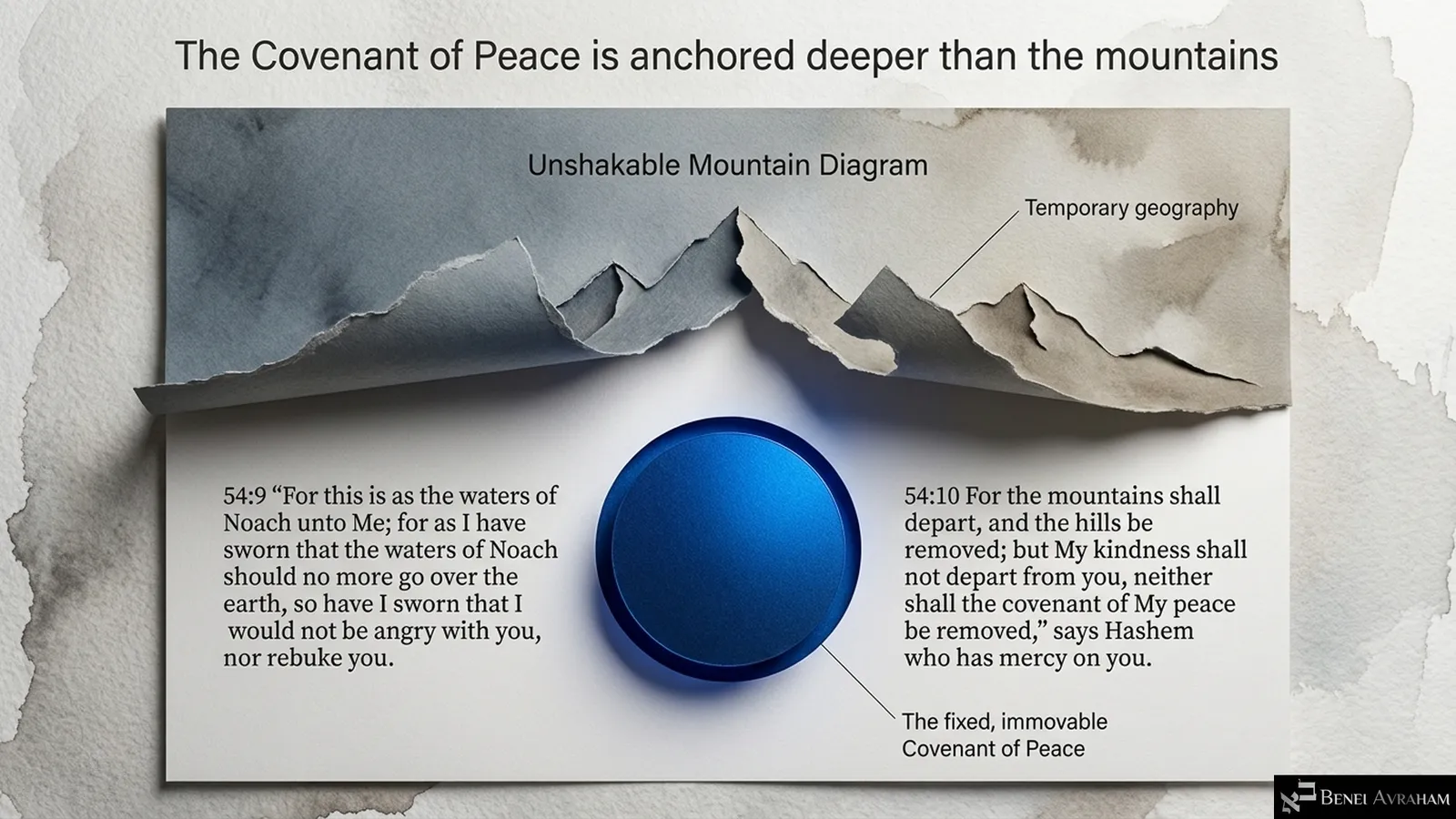
The covenant of peace is anchored deeper than the mountains: “As I have sworn that the waters of Noach should no more go over the earth” (Isaiah 54:9–10)
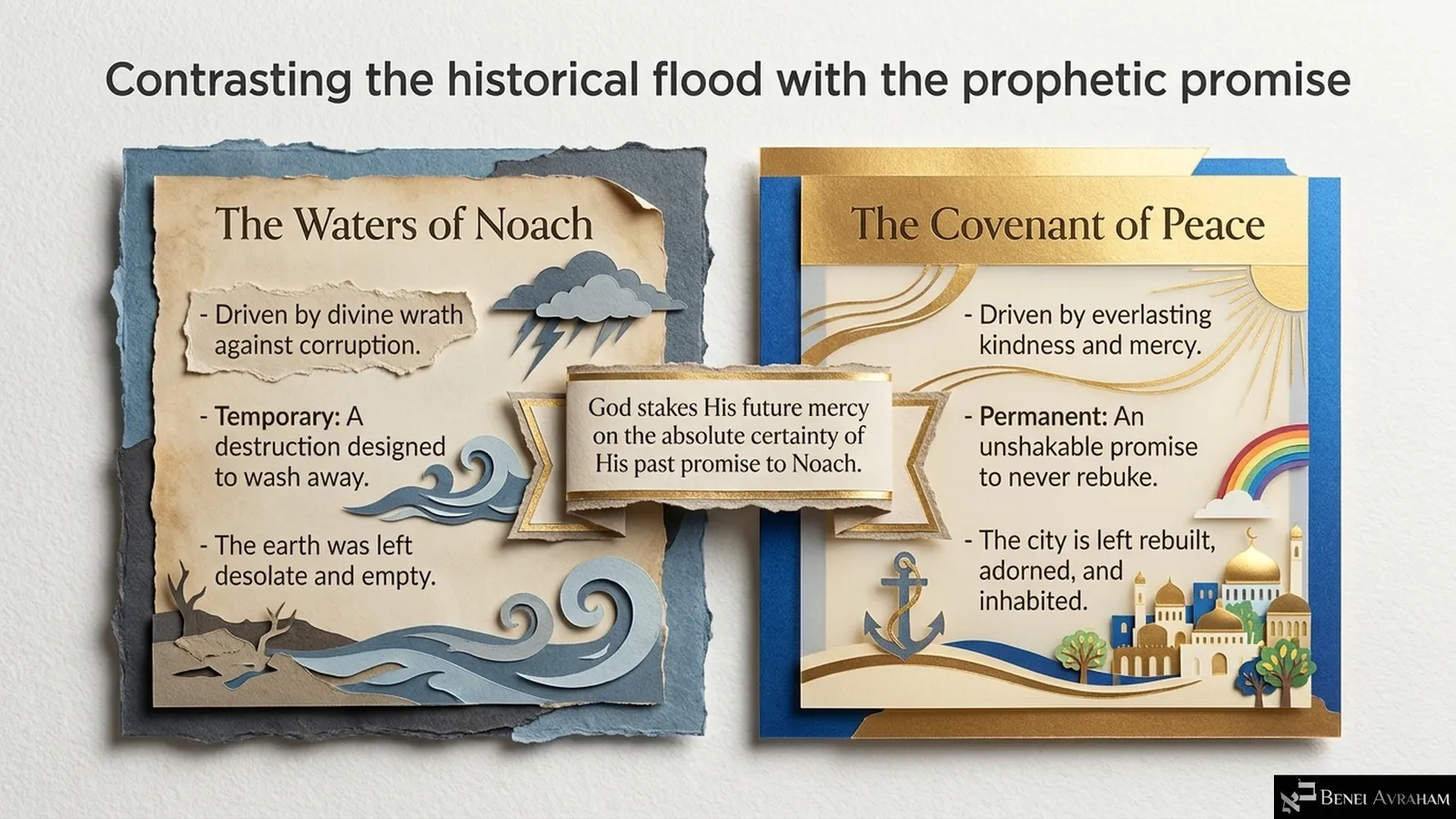
Contrasting the historical flood with the prophetic promise: the waters of Noach and the covenant of peace
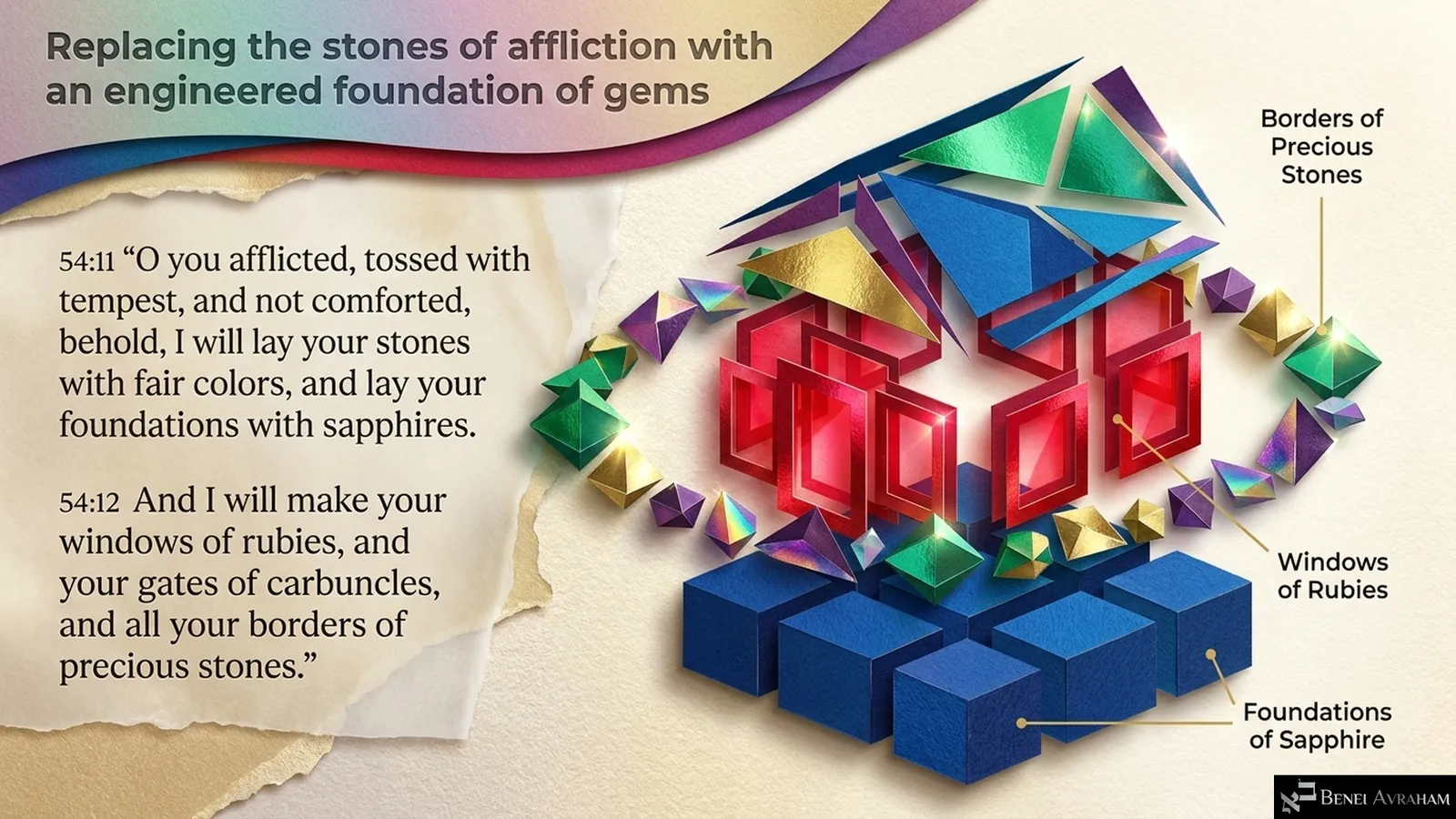
Replacing the stones of affliction with a foundation of sapphires, windows of rubies and borders of precious stones (Isaiah 54:11–12)
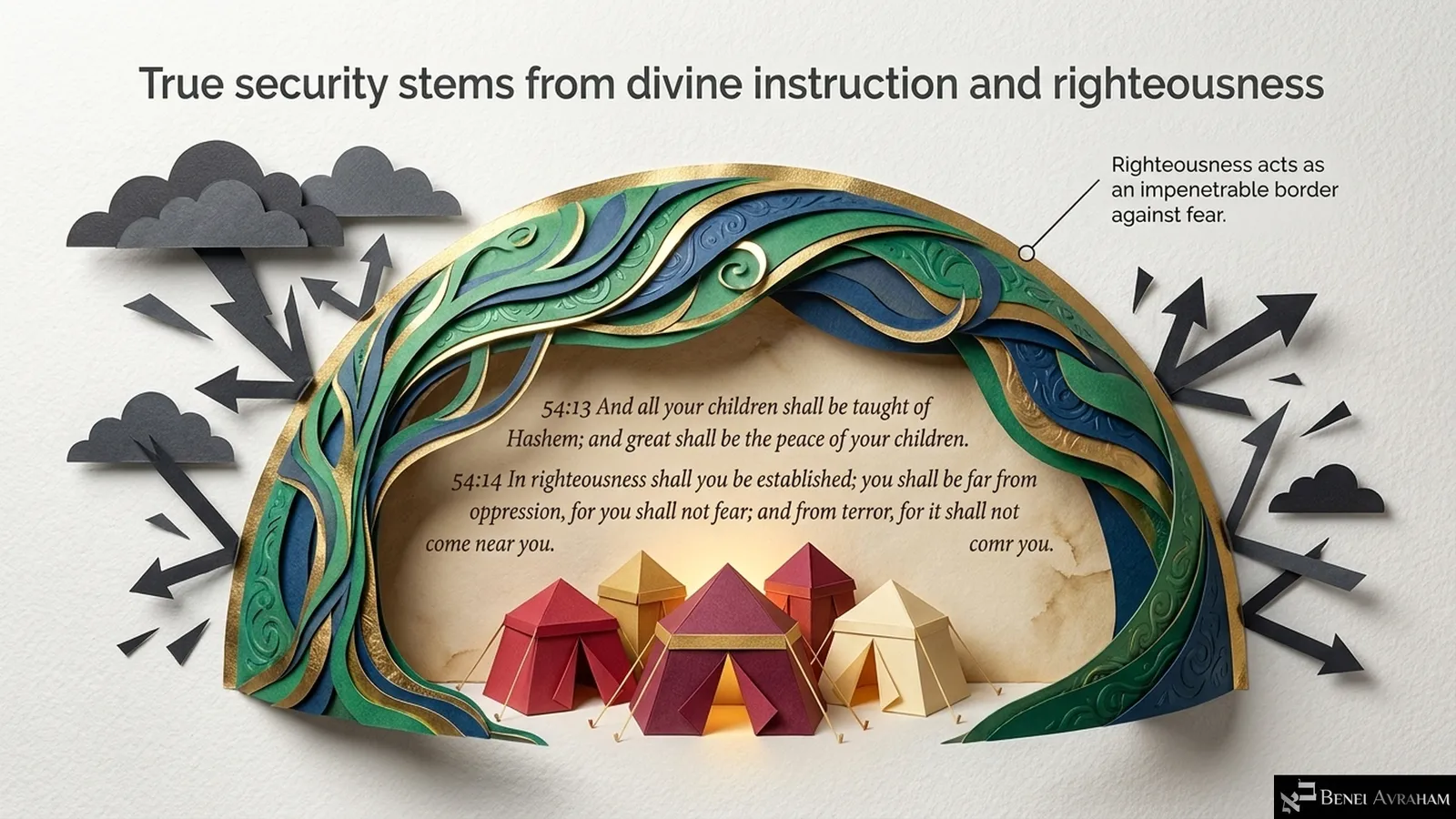
True security stems from divine instruction and righteousness: “All your children shall be taught of Hashem” (Isaiah 54:13–14)
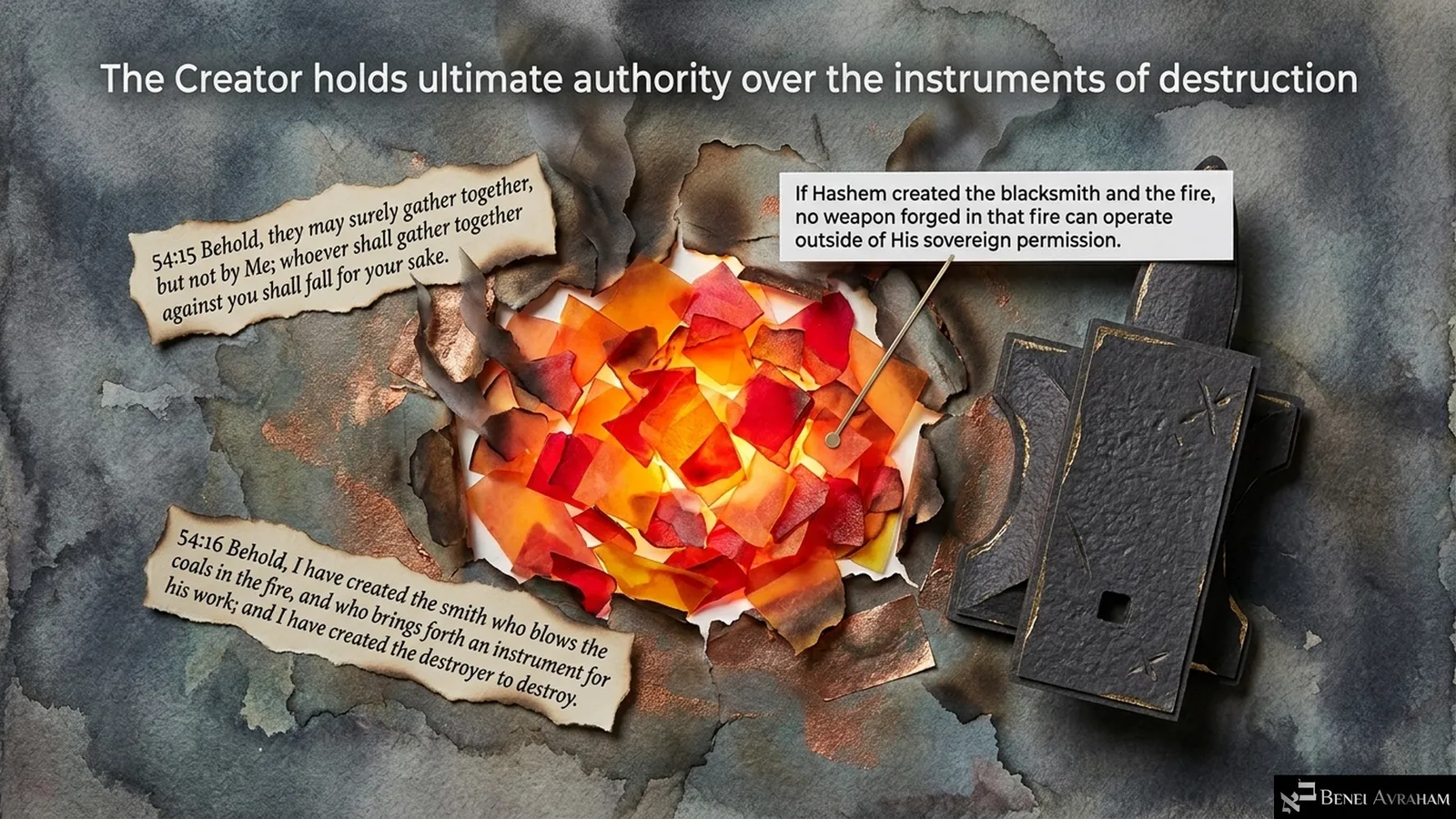
The Creator holds ultimate authority over the smith and the destroyer (Isaiah 54:15–16)
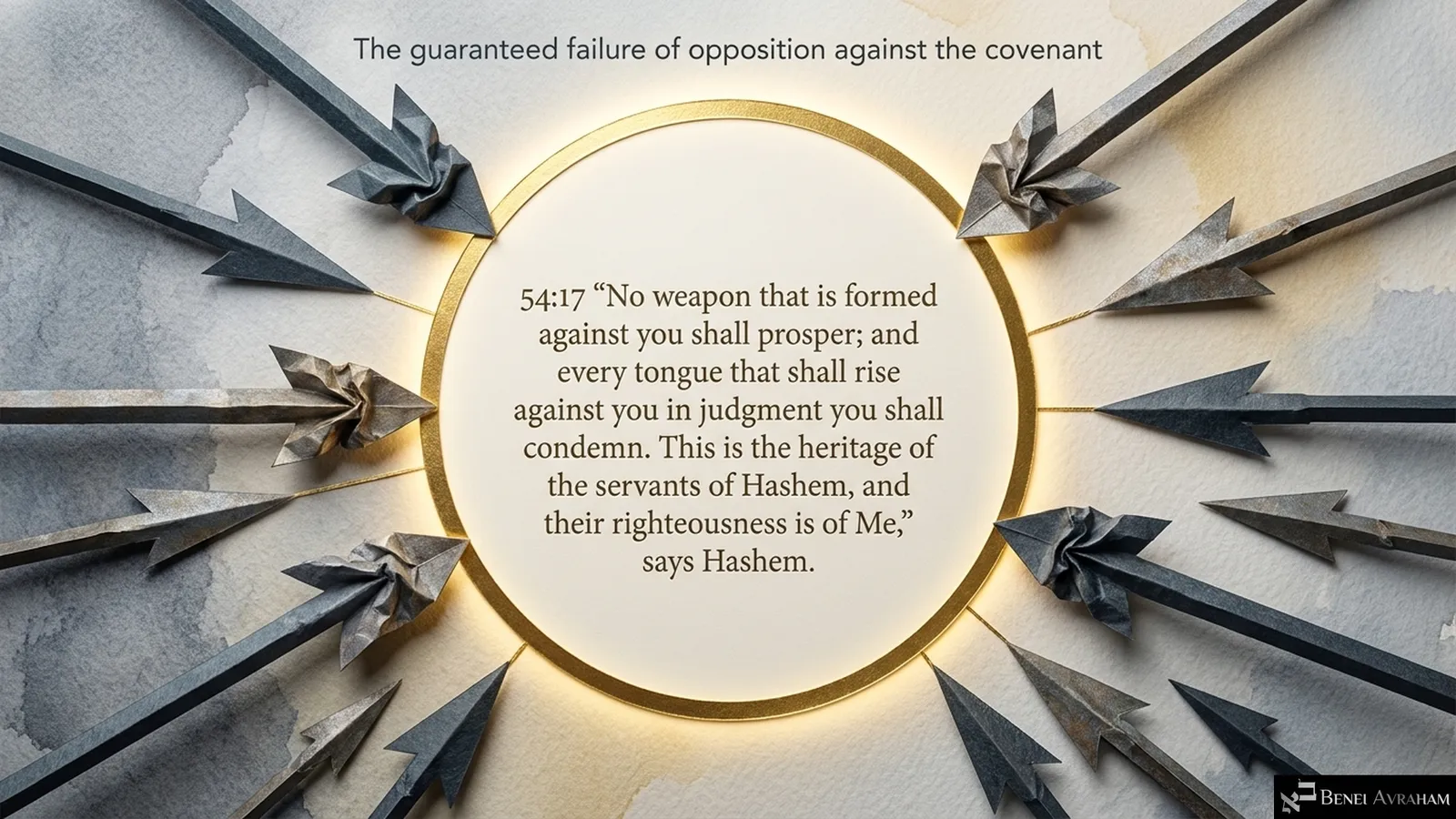
“No weapon that is formed against you shall prosper”: the heritage of the servants of Hashem (Isaiah 54:17)
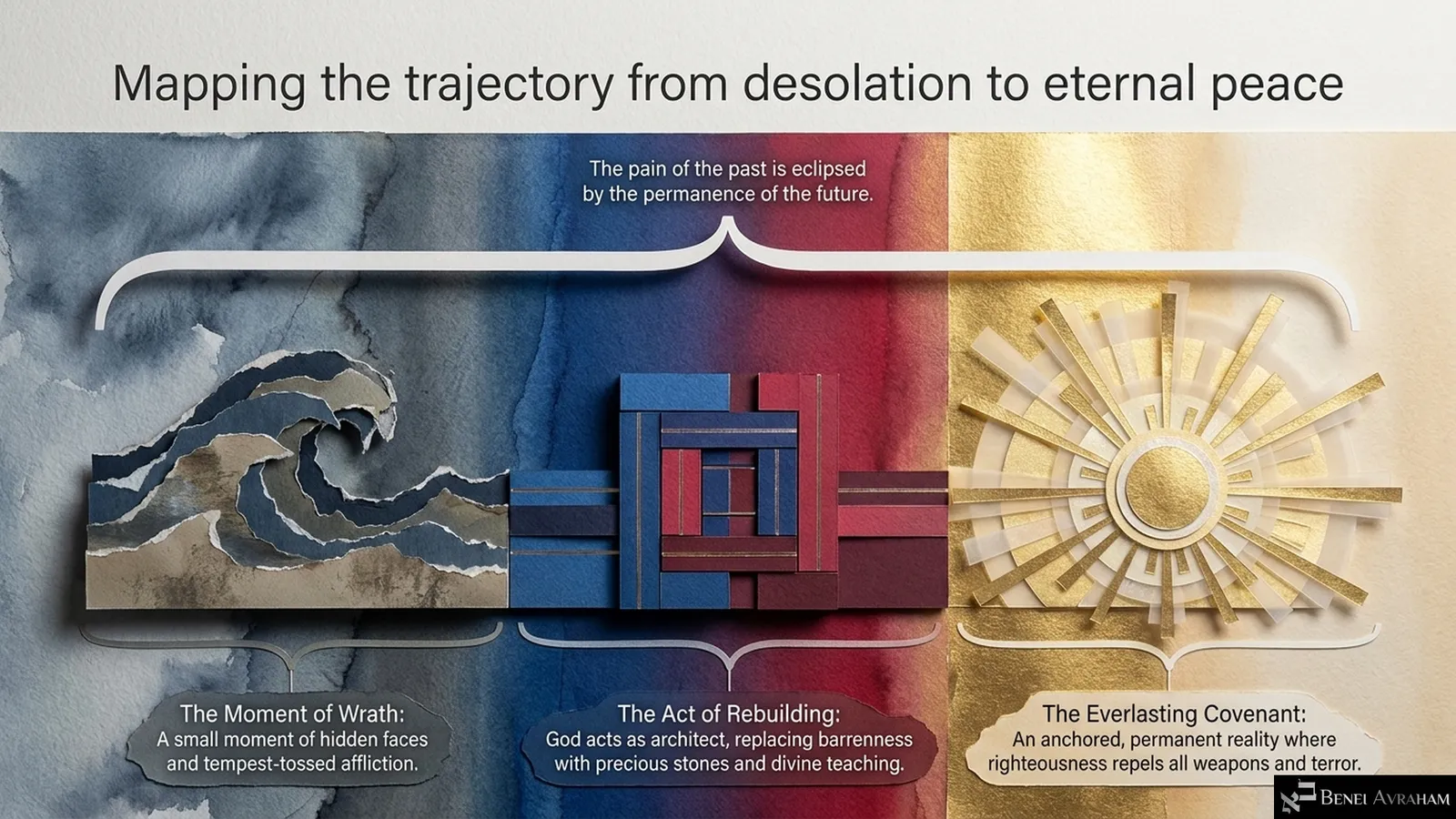
Mapping the trajectory from desolation to eternal peace: wrath, rebuilding and the everlasting covenant
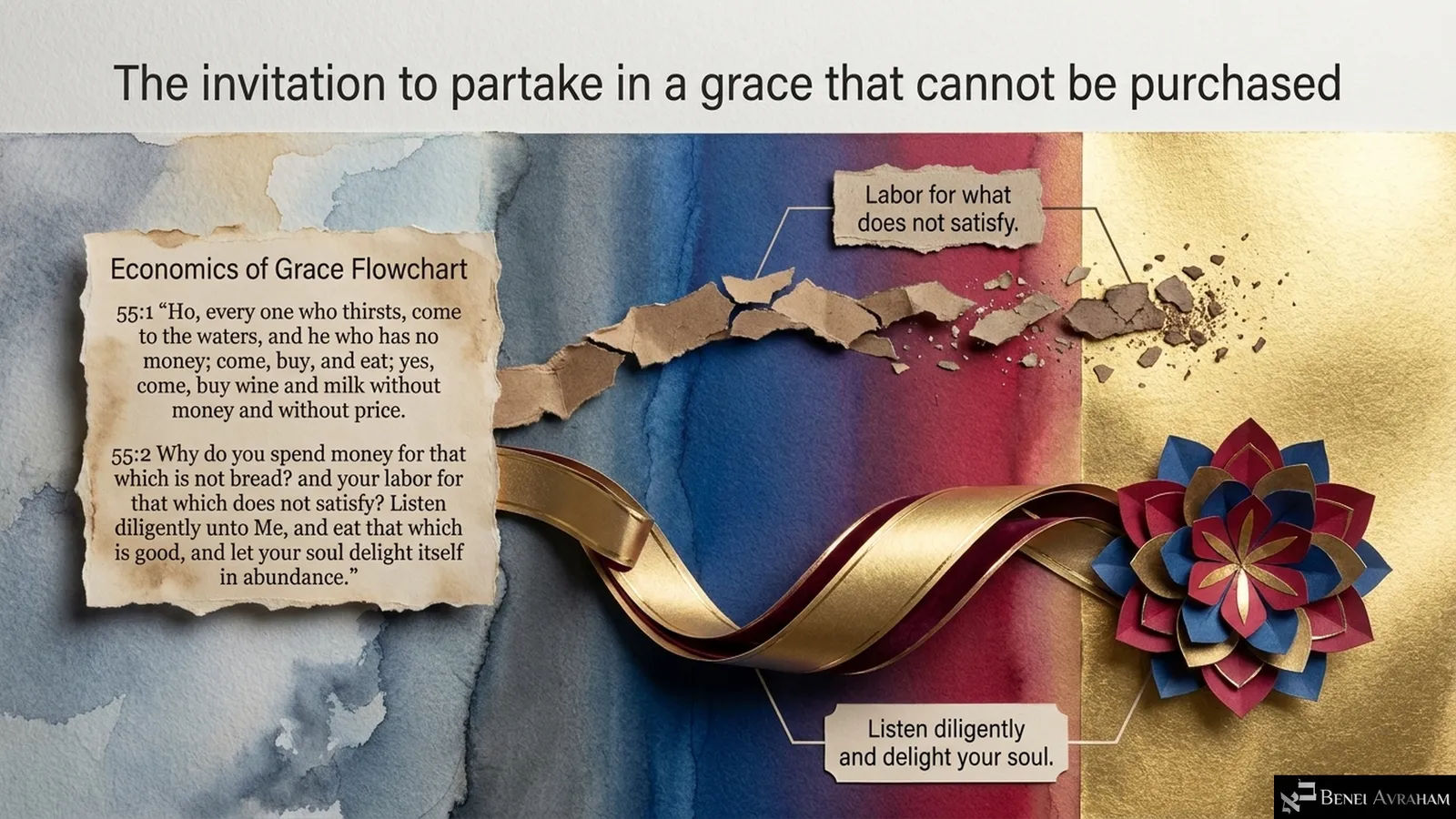
The invitation to grace that cannot be purchased: “Ho, every one that thirsts, come to the waters” (Isaiah 55:1–2)
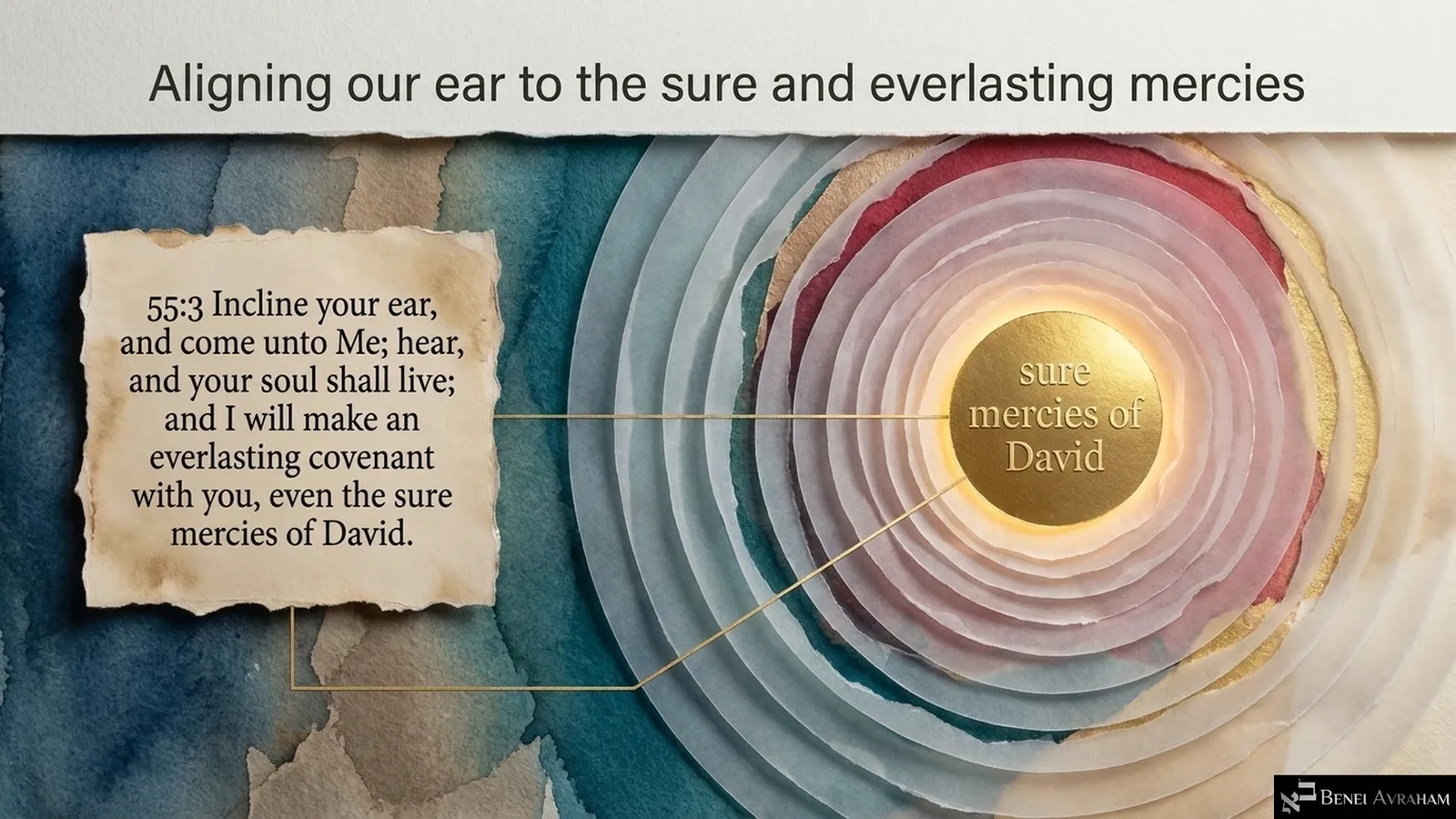
Incline your ear: an everlasting covenant, the sure mercies of David (Isaiah 55:3)
The rebuilt people become a witness to the nations: “You shall call a nation that you do not know” (Isaiah 55:4–5)