SMS/Text 469-608-9944
Parashat Vayera · Genesis 18:1–22:24 · Haftarah 2 Kings 4:1–37

Vayera: A Visual Journey

Illustrated teaching slides from Benei Avraham, in English and Spanish, walking through Parashat Vayera portion by portion: Hashem appears to Avraham at Mamre, and Avraham runs to welcome three guests; the promise that Sarah will have a son, and her laughter; Avraham’s plea for Sedom, from fifty righteous down to ten; the angels in Lot’s house, the rescue of Lot and the fire on Sedom and Amorah; Avraham and Sarah in Gerar with Avimelech; the birth of Yitzḥak; Hagar and Yishmael sent into the wilderness, and the well that God opens; the covenant with Avimelech at Be’er-Sheva and the tamarisk of El Olam; and the Akedah, the binding of Yitzḥak on Mount Moriyah, with the ram caught in the thicket and the oath of blessing. The haftarah follows: Elisha’s miracles, the widow’s oil and the Shunamit’s son brought back to life. Tap any image to open the slideshow; use the arrows (or swipe) to move through every slide.

Rishon · Genesis 18:1–14

First Portion

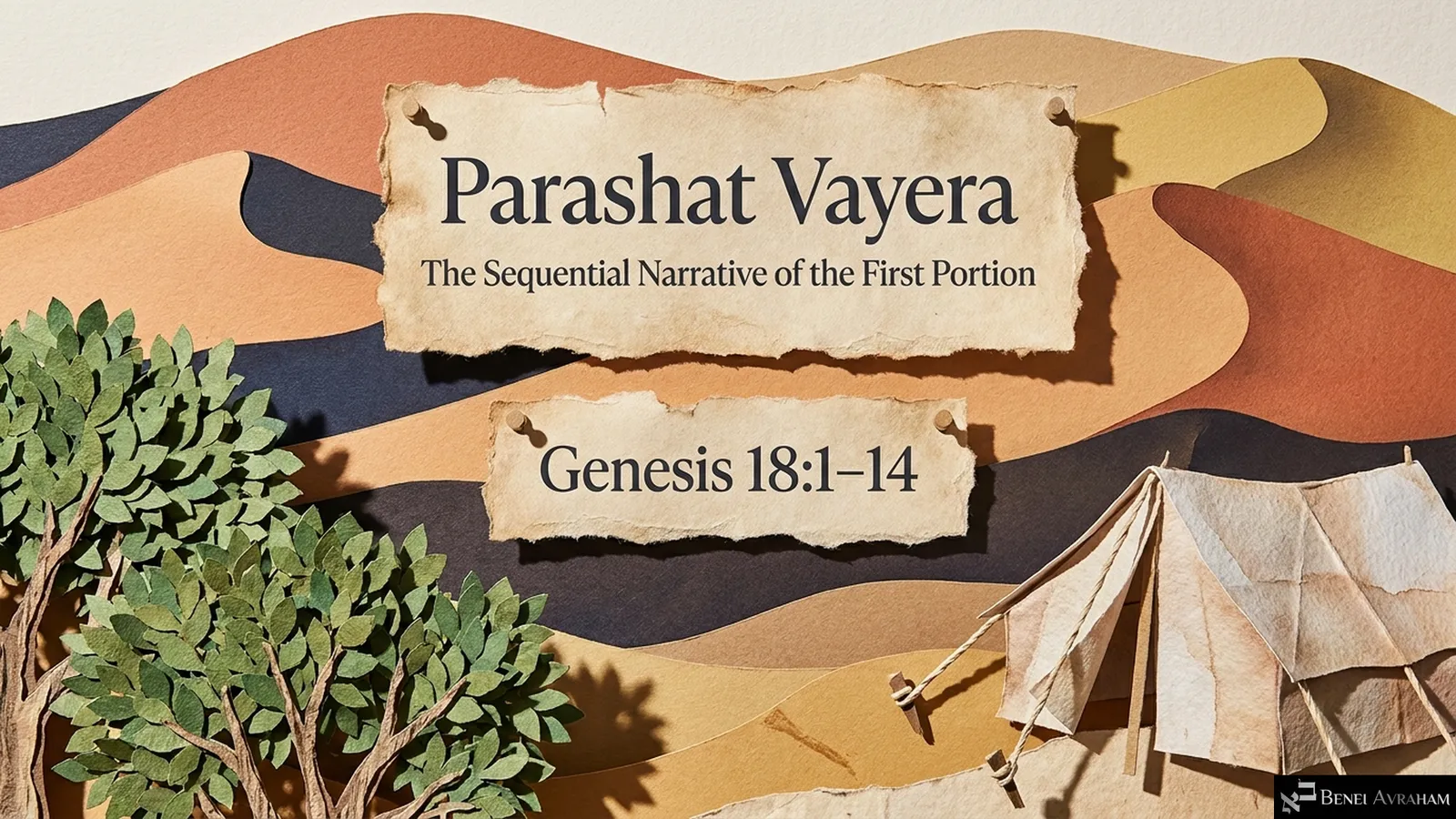
Title slide: Parashat Vayera, the sequential narrative of the first portion, Genesis 18:1–14, with paper-cut trees and Avraham’s tent.
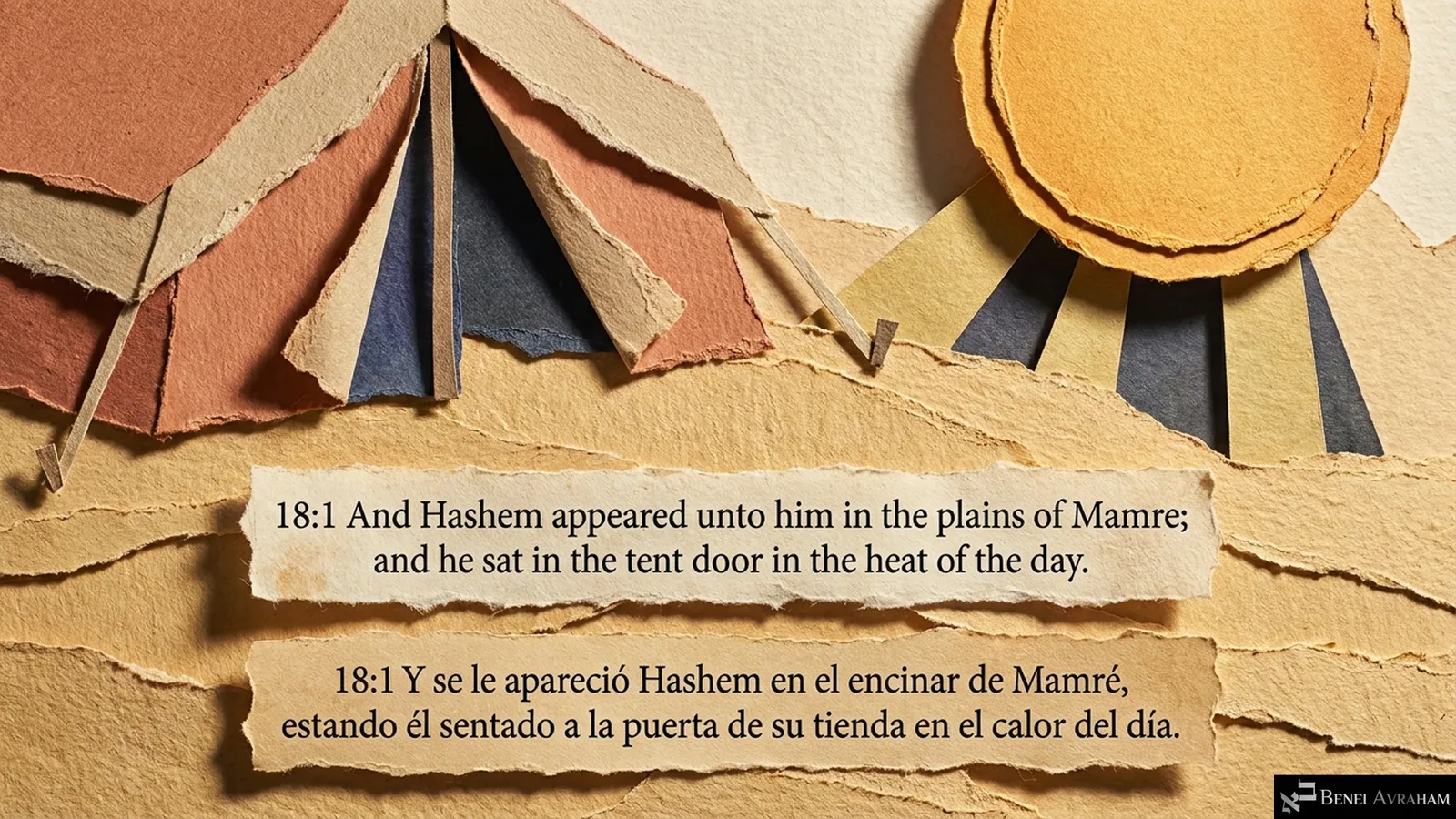
“Hashem appeared unto him in the plains of Mamre”: Avraham’s tent under the blazing midday sun (Genesis 18:1).
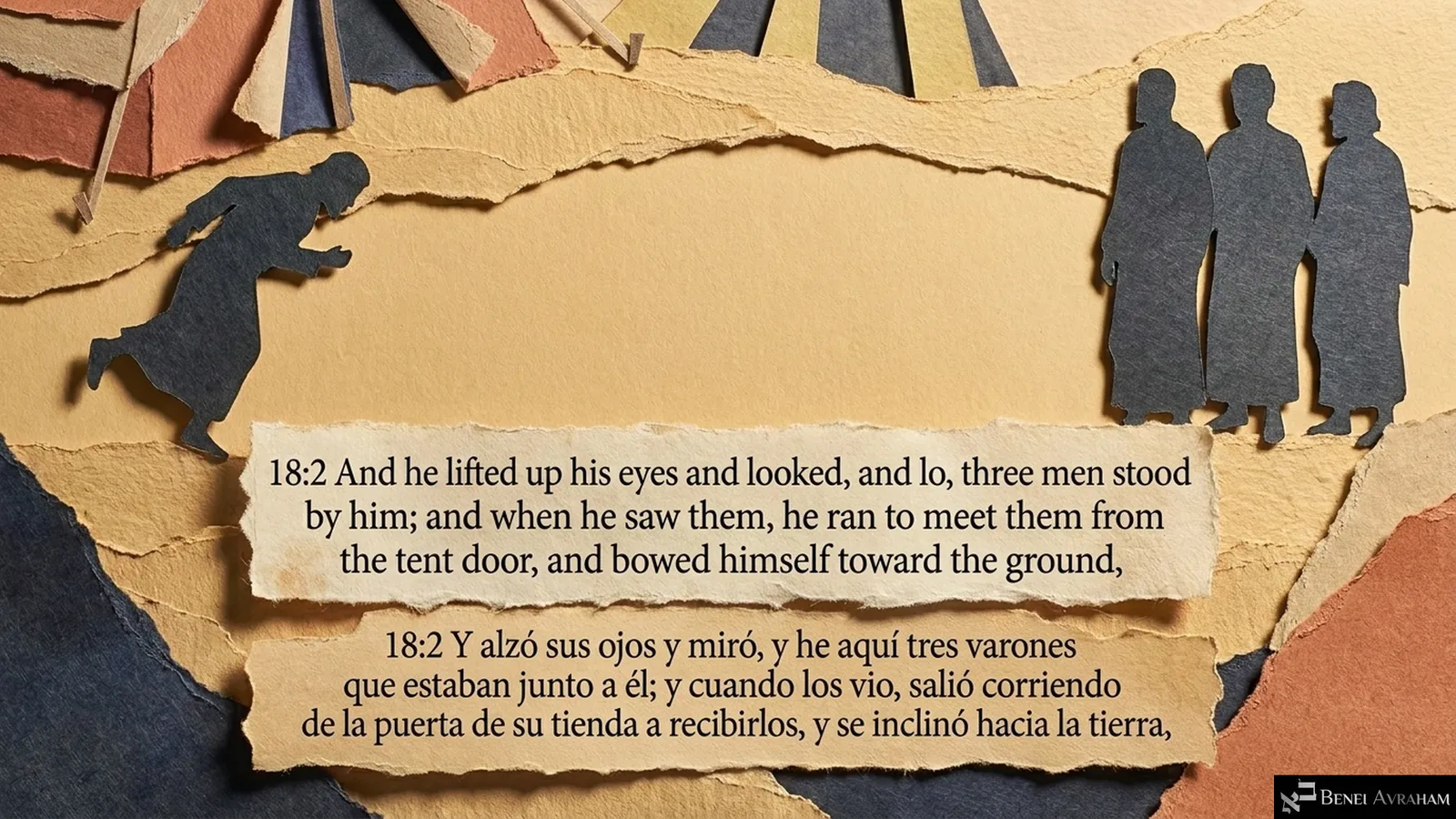
Avraham runs from his tent door to greet three men standing nearby and bows to the ground (Genesis 18:2).
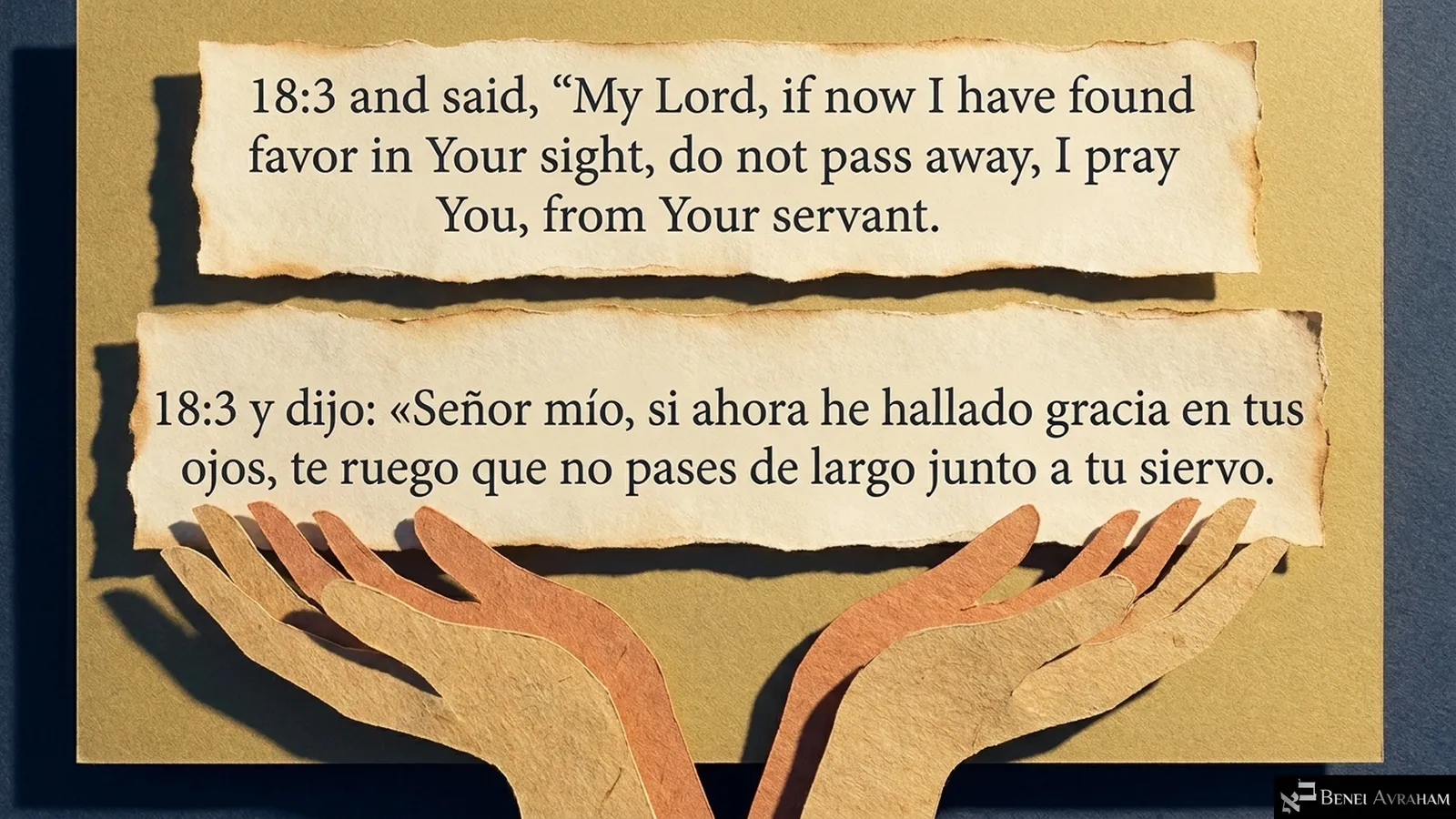
“Do not pass away, I pray You, from Your servant”: open hands offer Avraham’s welcome (Genesis 18:3).
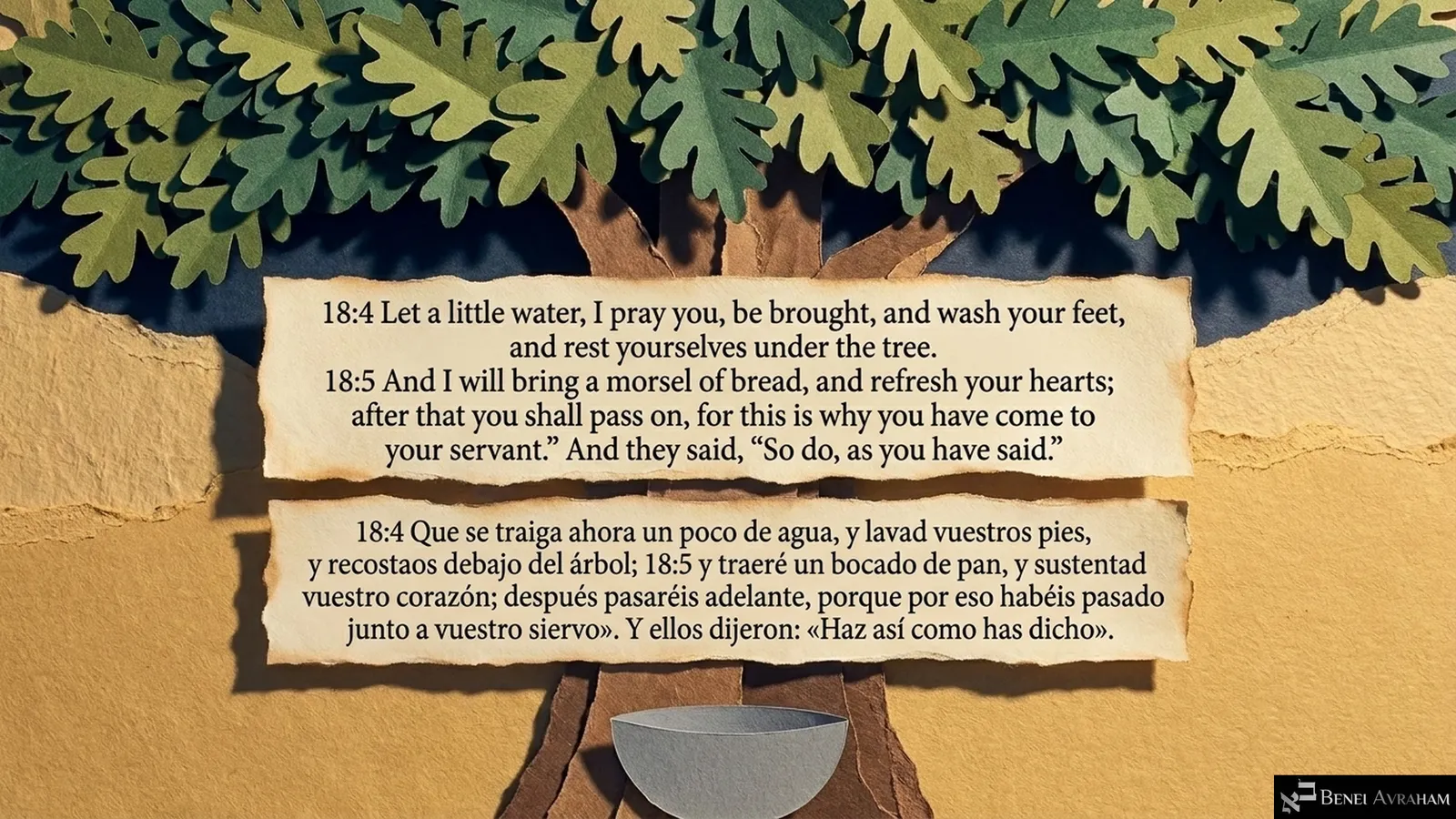
Water to wash their feet and rest under the tree: Avraham invites the guests beneath a great tree (Genesis 18:4–5).
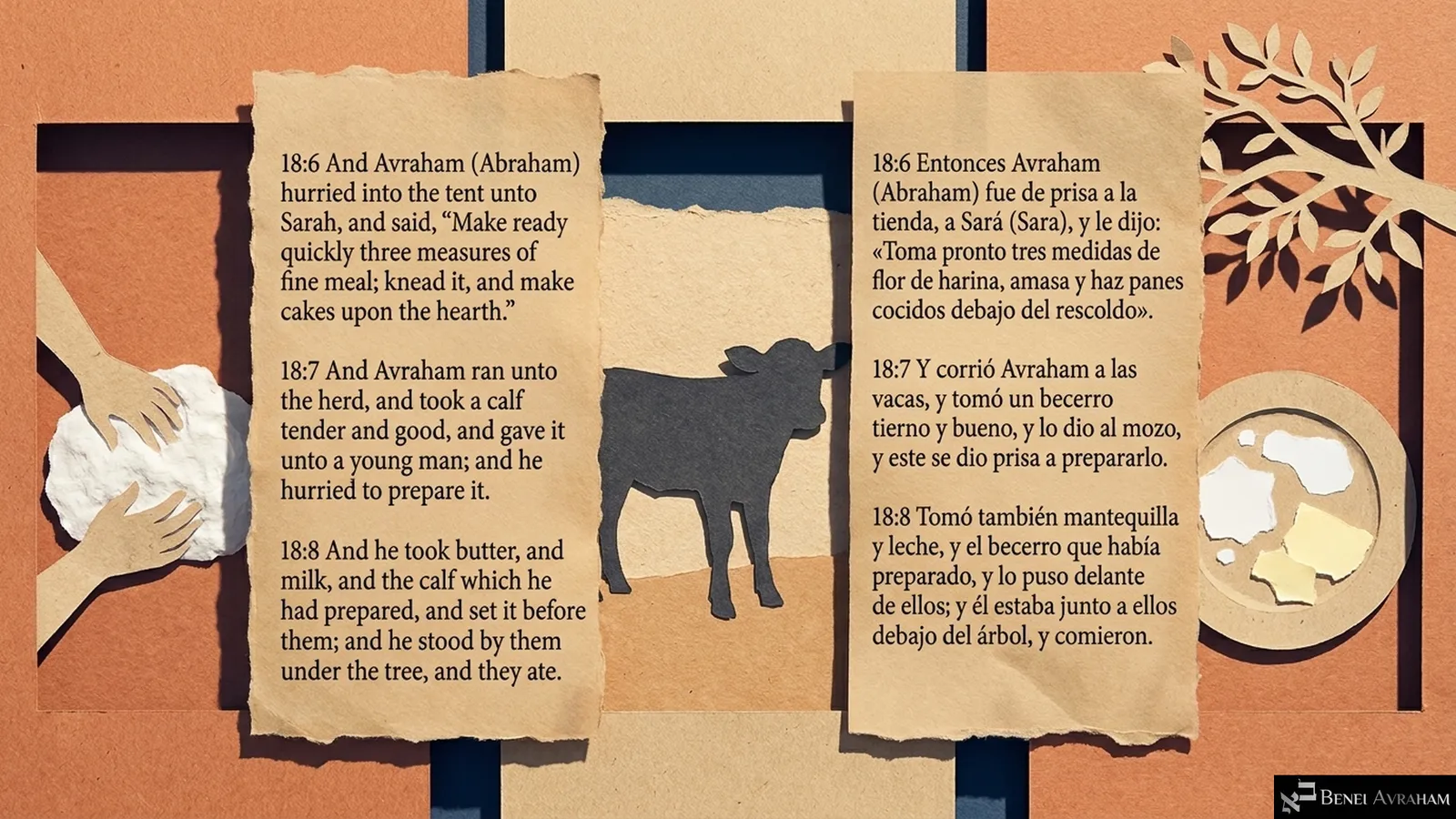
Sarah kneads cakes, a tender calf is prepared, and butter and milk are set before the guests (Genesis 18:6–8).
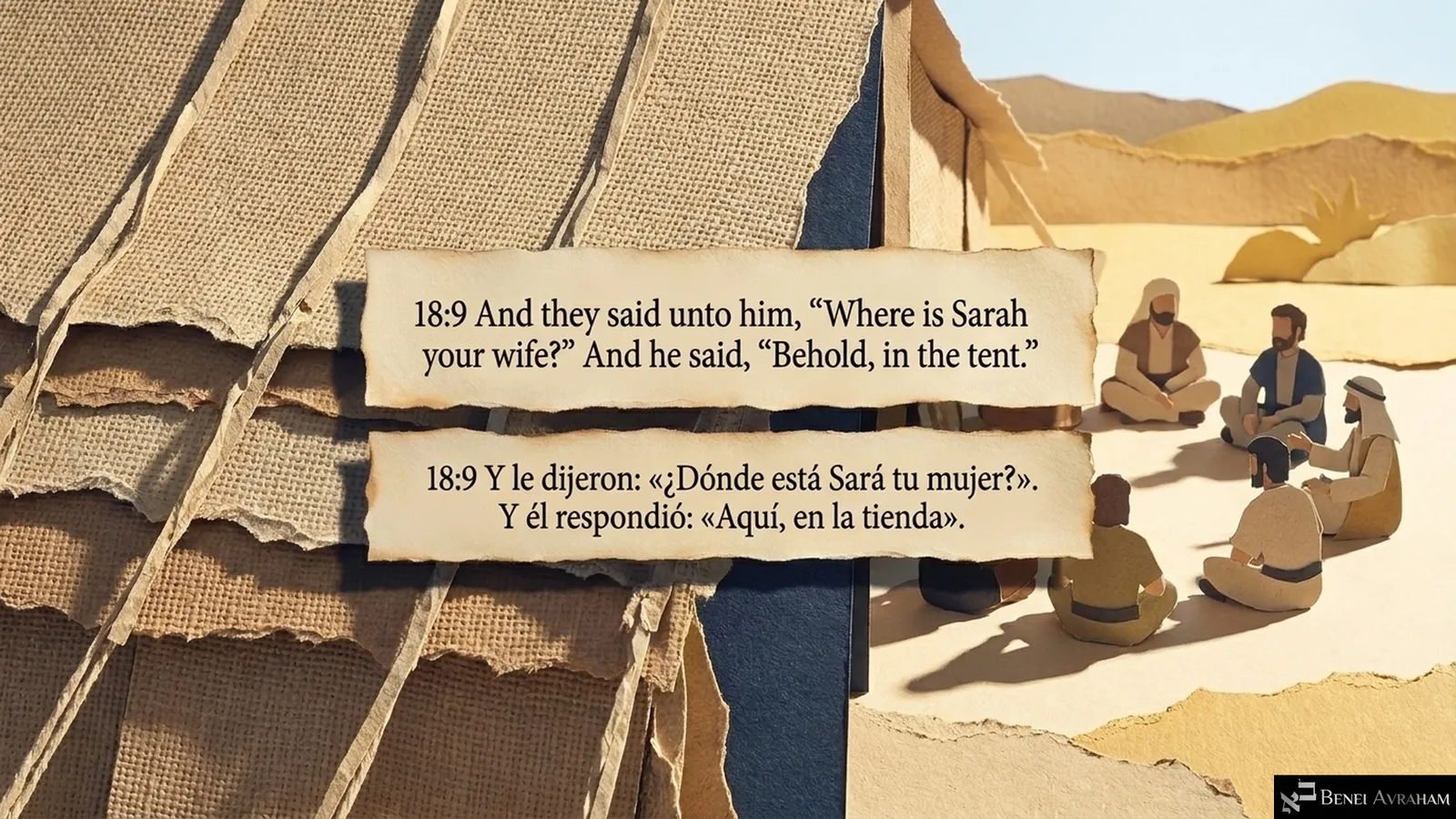
“Where is Sarah your wife?” The guests sit beside the tent, and Avraham answers, “Behold, in the tent” (Genesis 18:9).
“Sarah your wife shall have a son”: the promise, overheard by Sarah at the tent door behind him (Genesis 18:10).
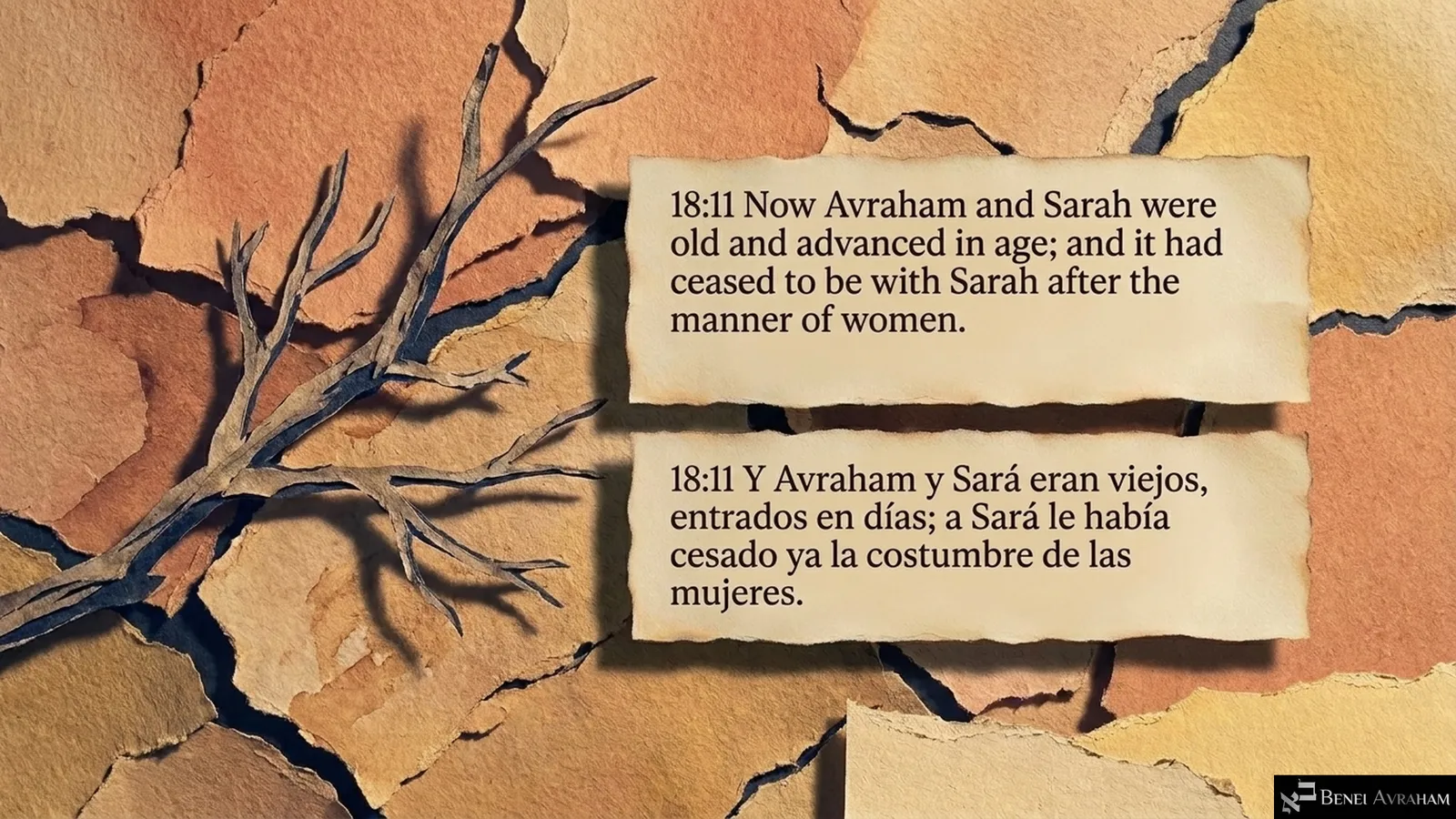
A bare, dry branch over cracked earth shows that Avraham and Sarah were old and advanced in age (Genesis 18:11).
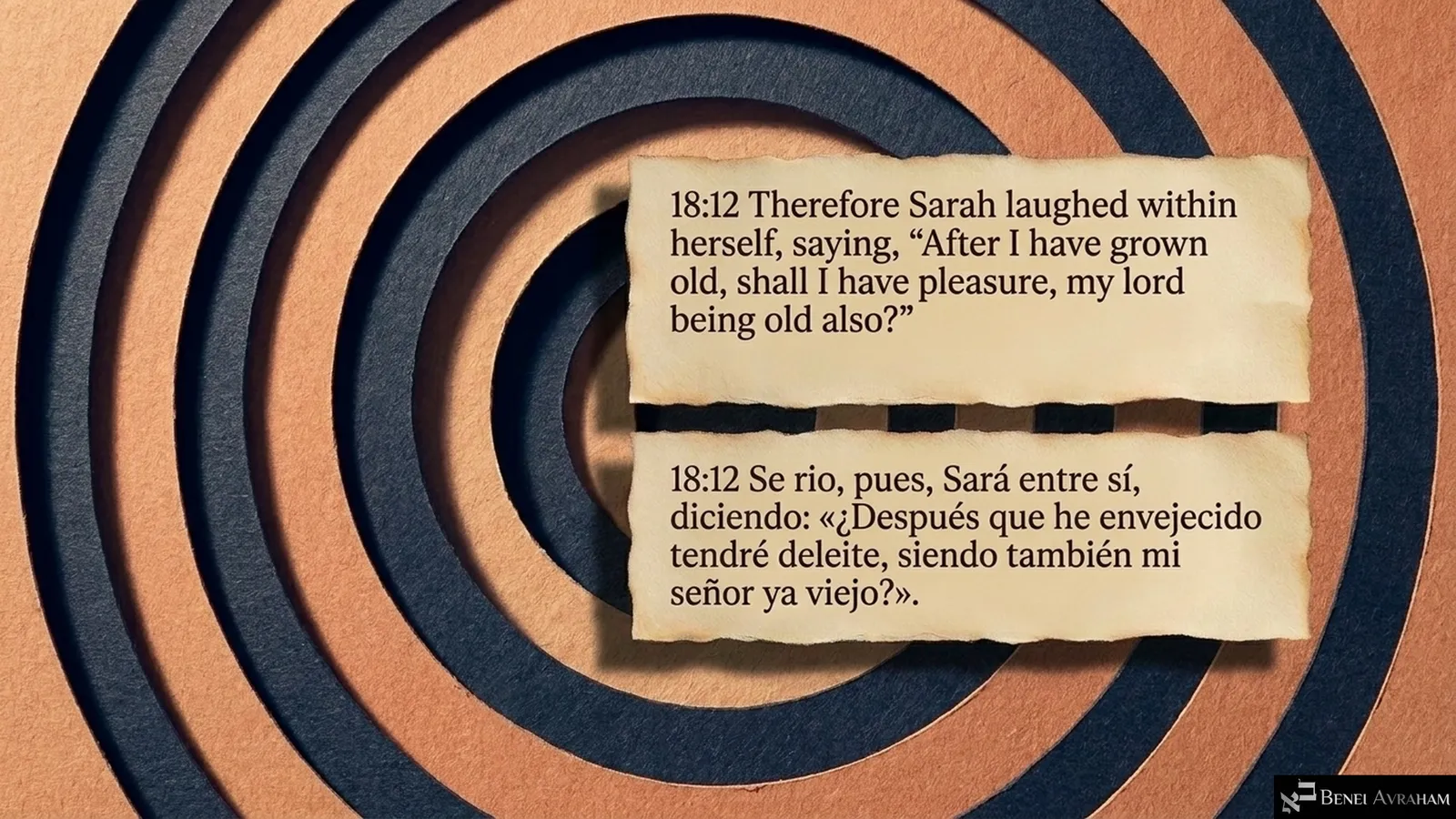
Rippling rings picture Sarah laughing within herself: “After I have grown old, shall I have pleasure?” (Genesis 18:12).
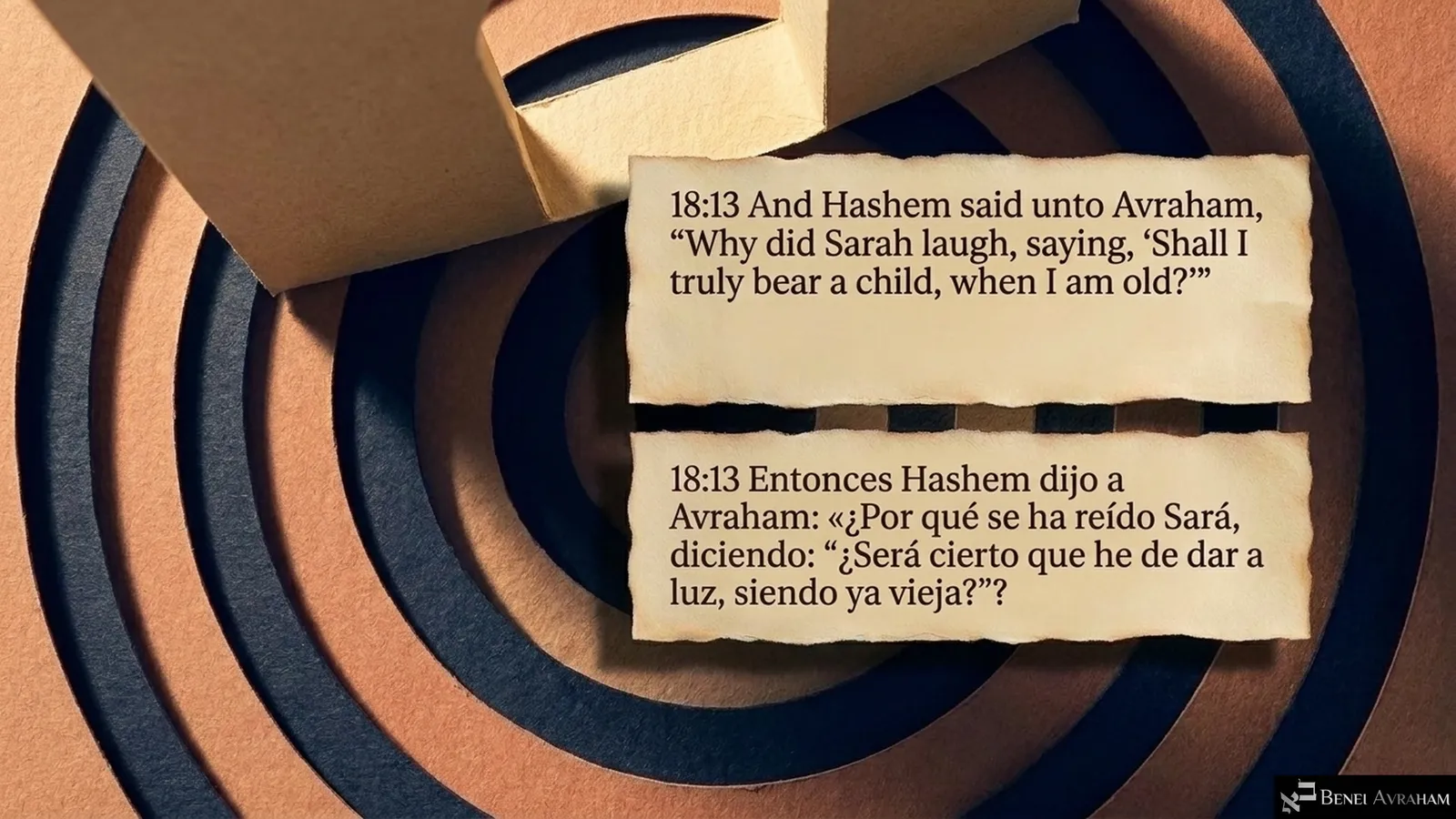
“Why did Sarah laugh?” Hashem asks Avraham, as the rings of laughter spread from the tent (Genesis 18:13).
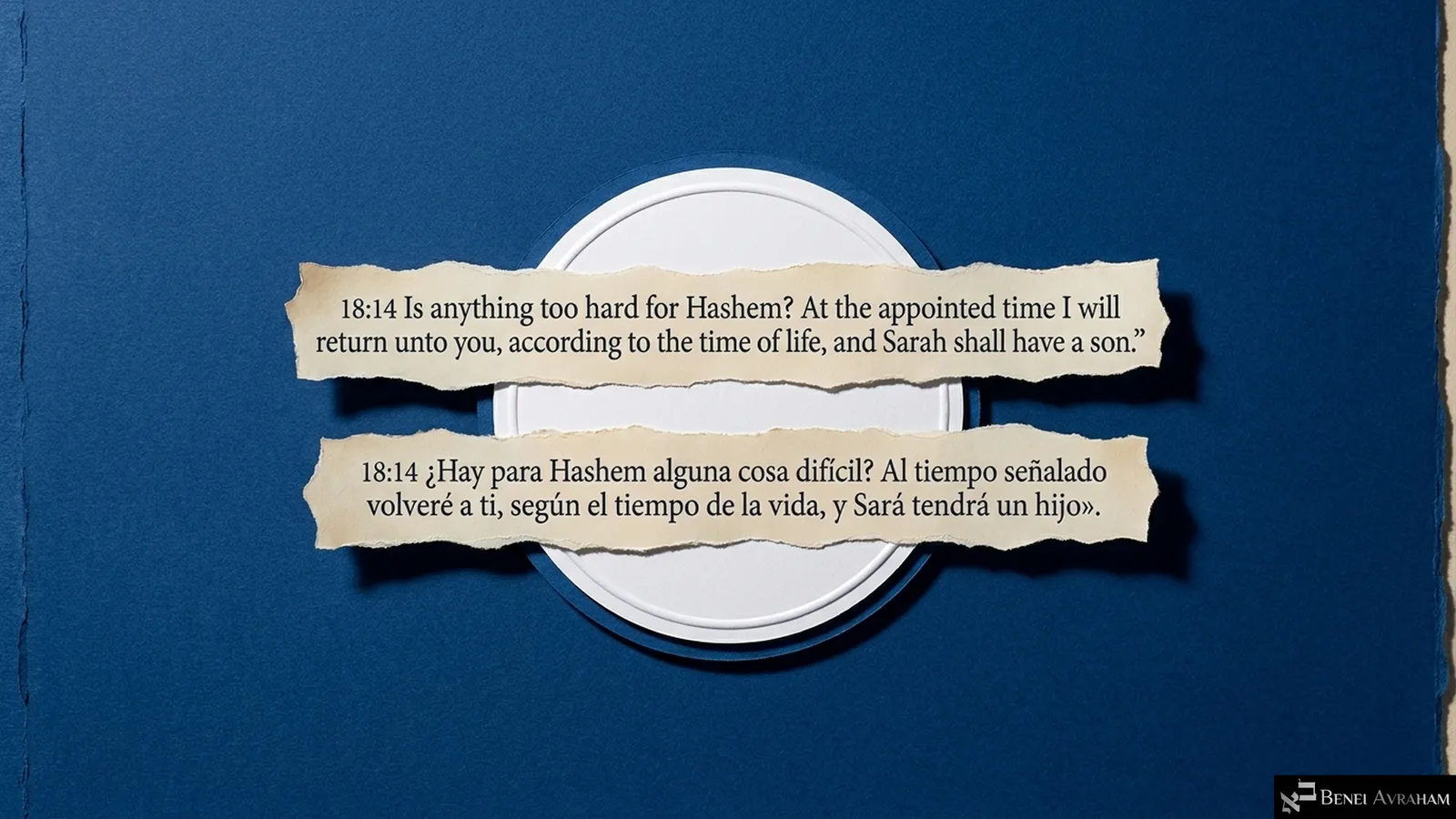
“Is anything too hard for Hashem?” A white circle marks the appointed time for Sarah’s son (Genesis 18:14).
Sheni · Genesis 18:15–33

Second Portion

Title slide: Parashat Vayera, Second Portion (Segunda Porción), Genesis 18:15–33, on layered desert dunes.
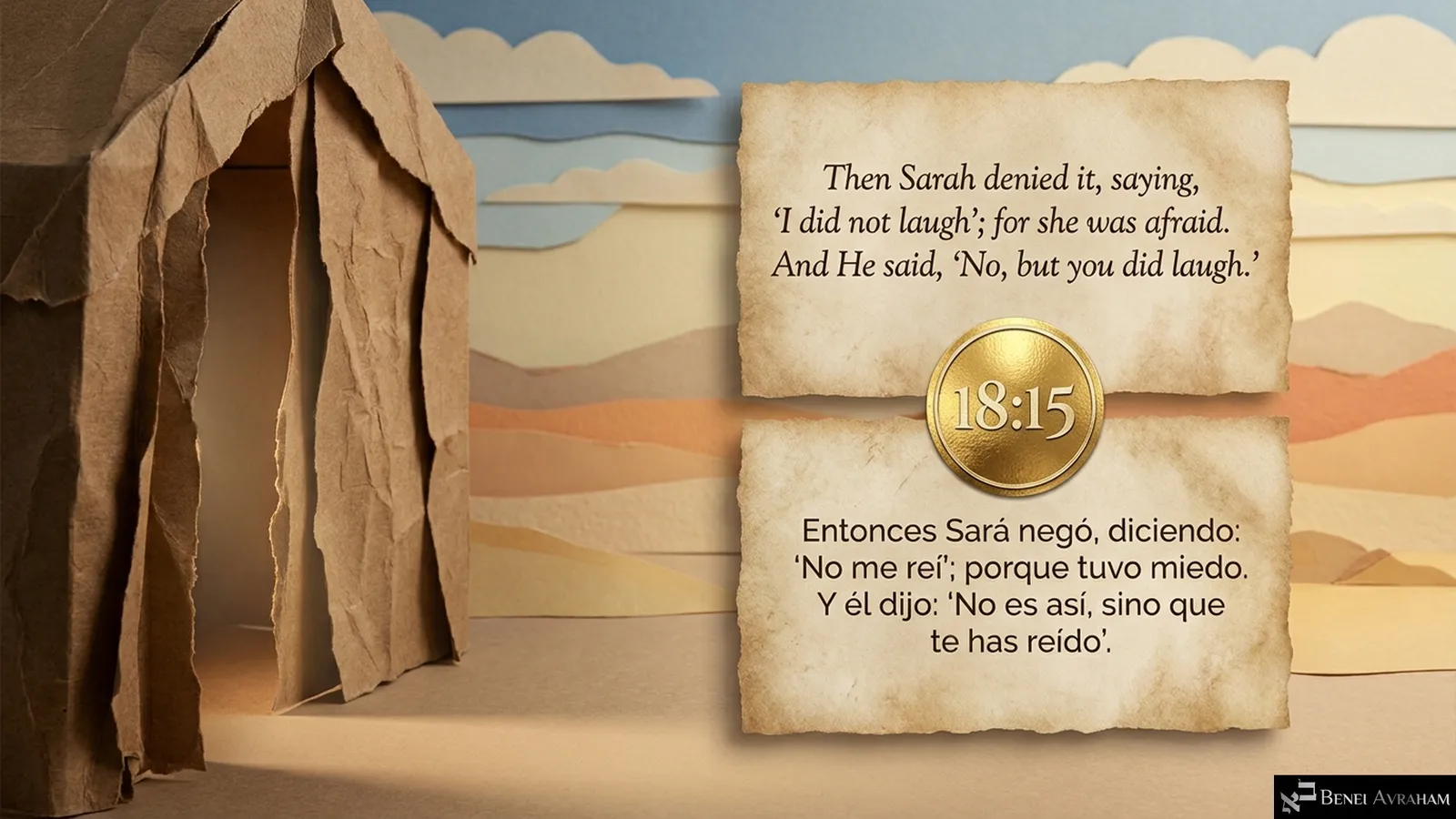
Beside the tent, Sarah denies laughing out of fear, and He answers, “No, but you did laugh” (Genesis 18:15).
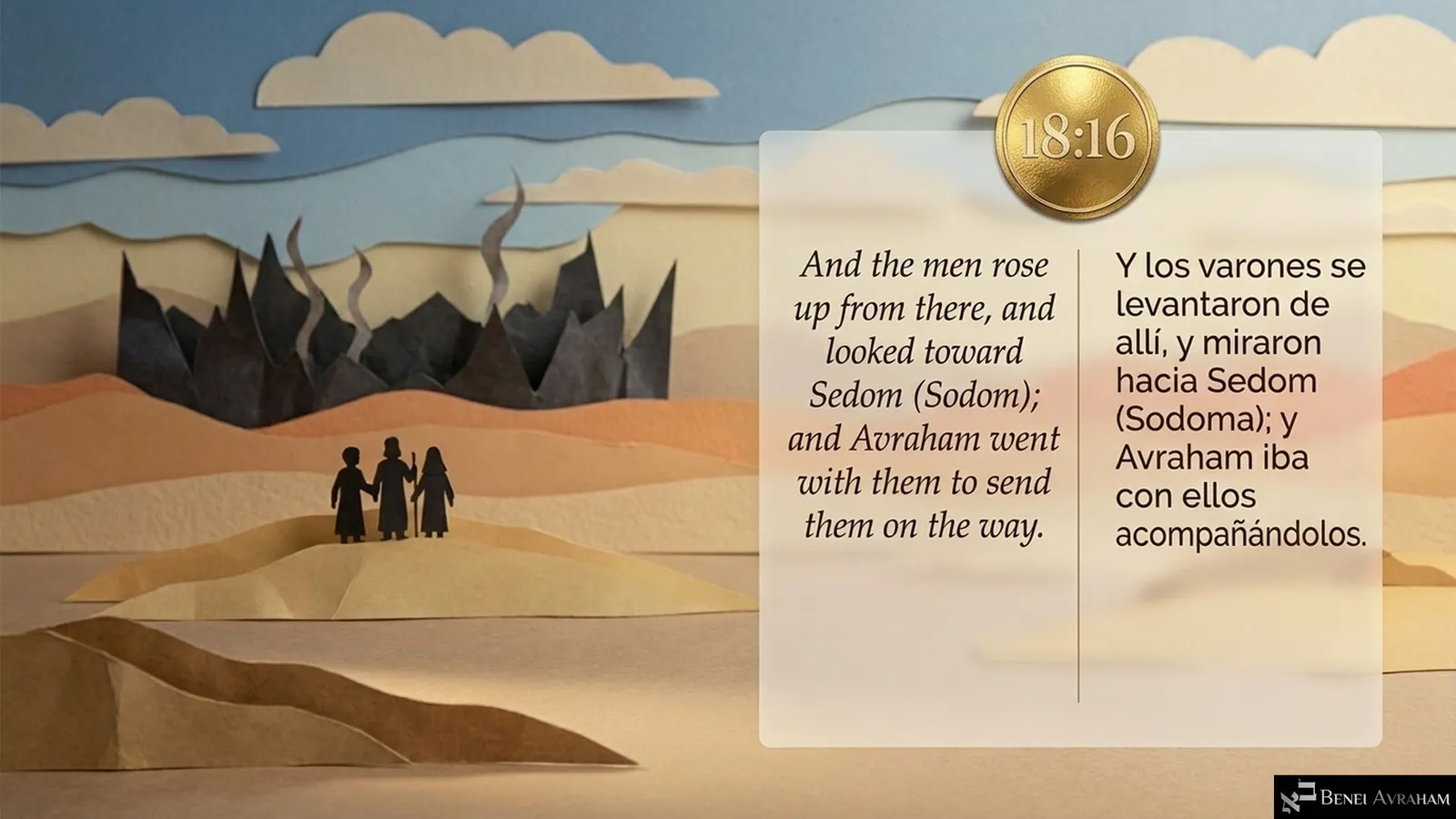
The men look toward smoking Sedom, and Avraham walks with them to send them on the way (Genesis 18:16).
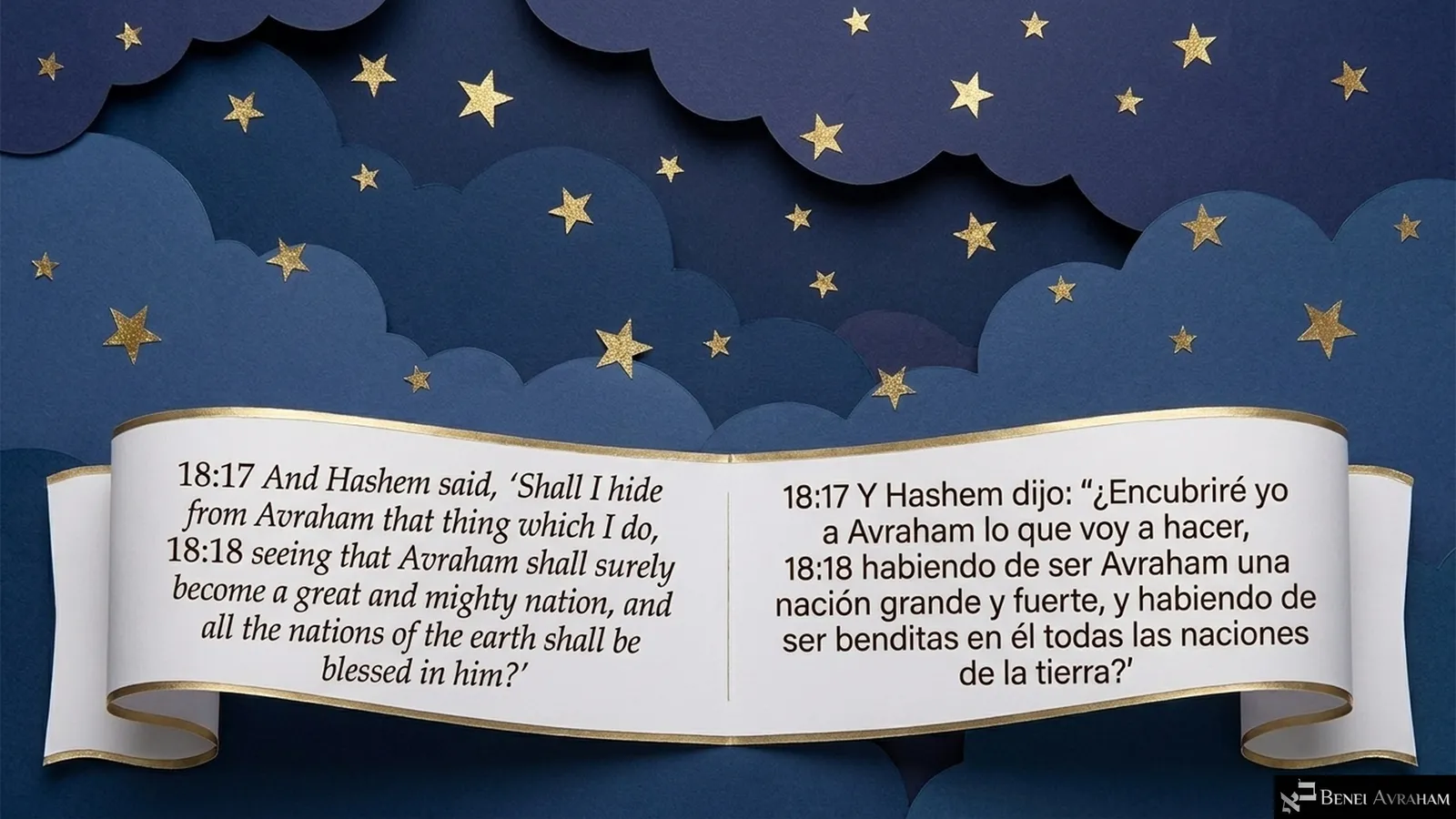
Under a starry sky Hashem asks, “Shall I hide from Avraham that thing which I do?” (Genesis 18:17–18).
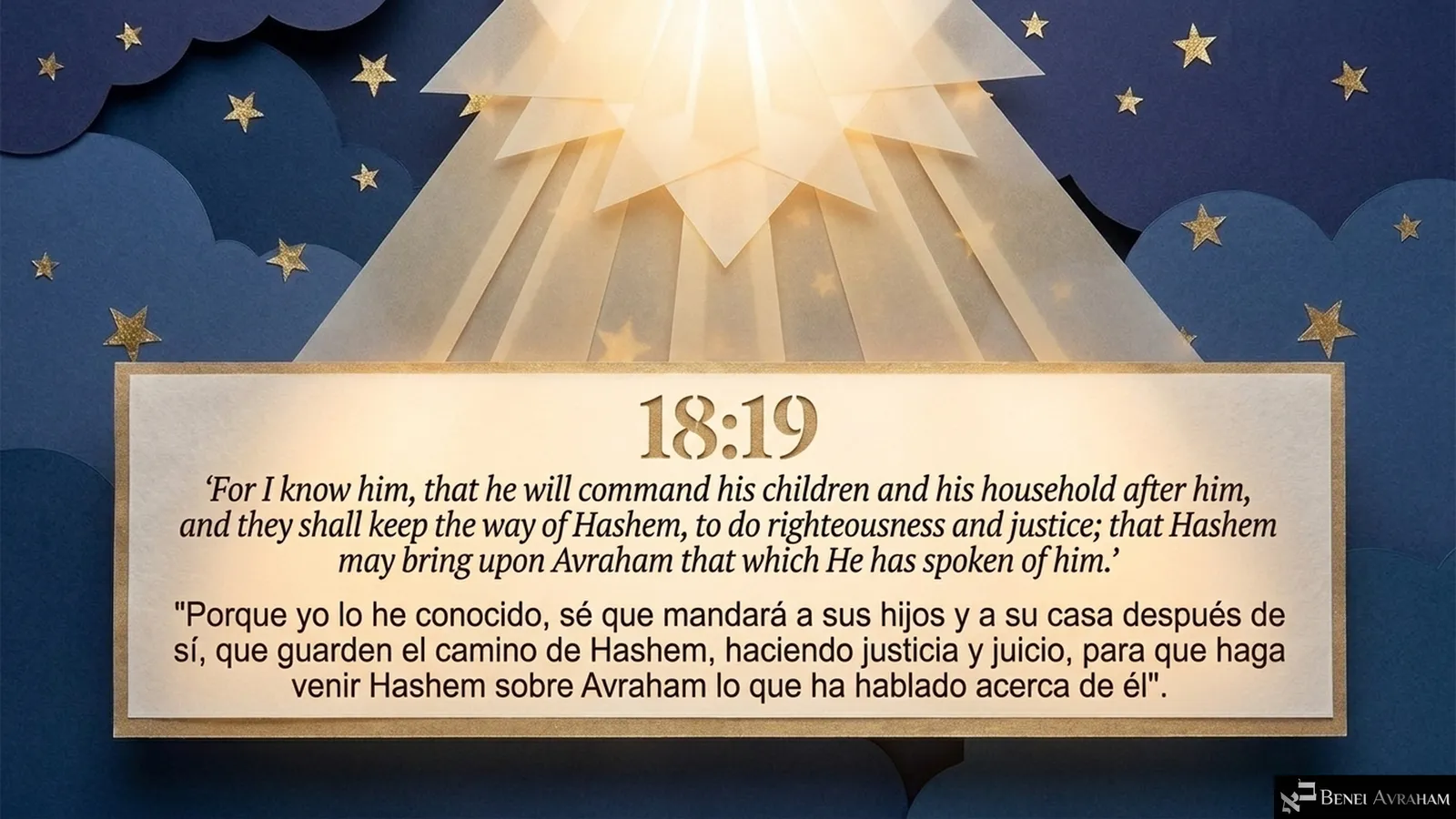
Light pours down: Avraham will command his household to keep the way of Hashem, righteousness and justice (Genesis 18:19).
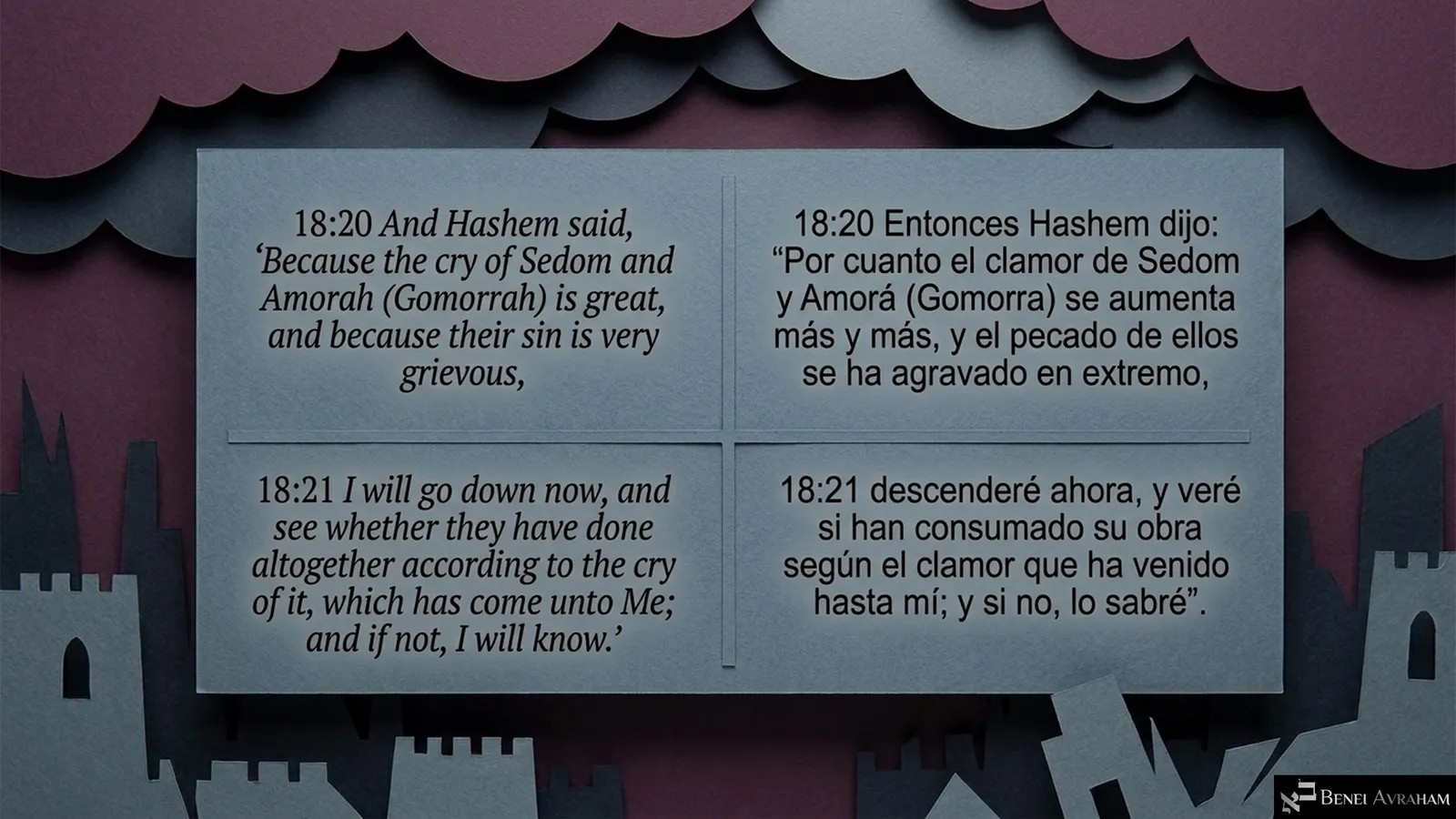
Storm clouds over the city: the cry of Sedom and Amorah is great, and Hashem will go down (Genesis 18:20–21).
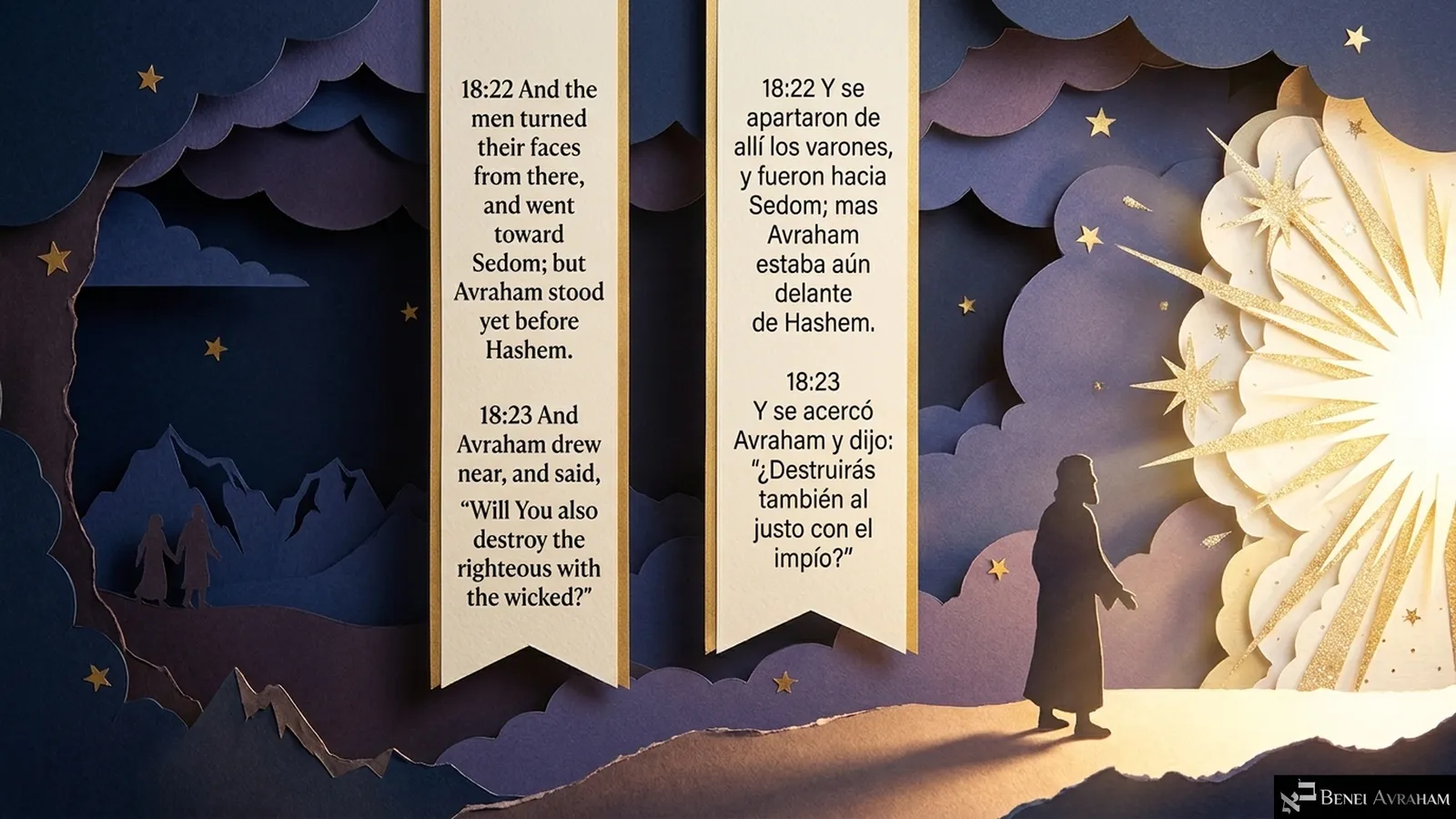
The men go toward Sedom while Avraham stands before Hashem’s radiant light and draws near to plead (Genesis 18:22–23).
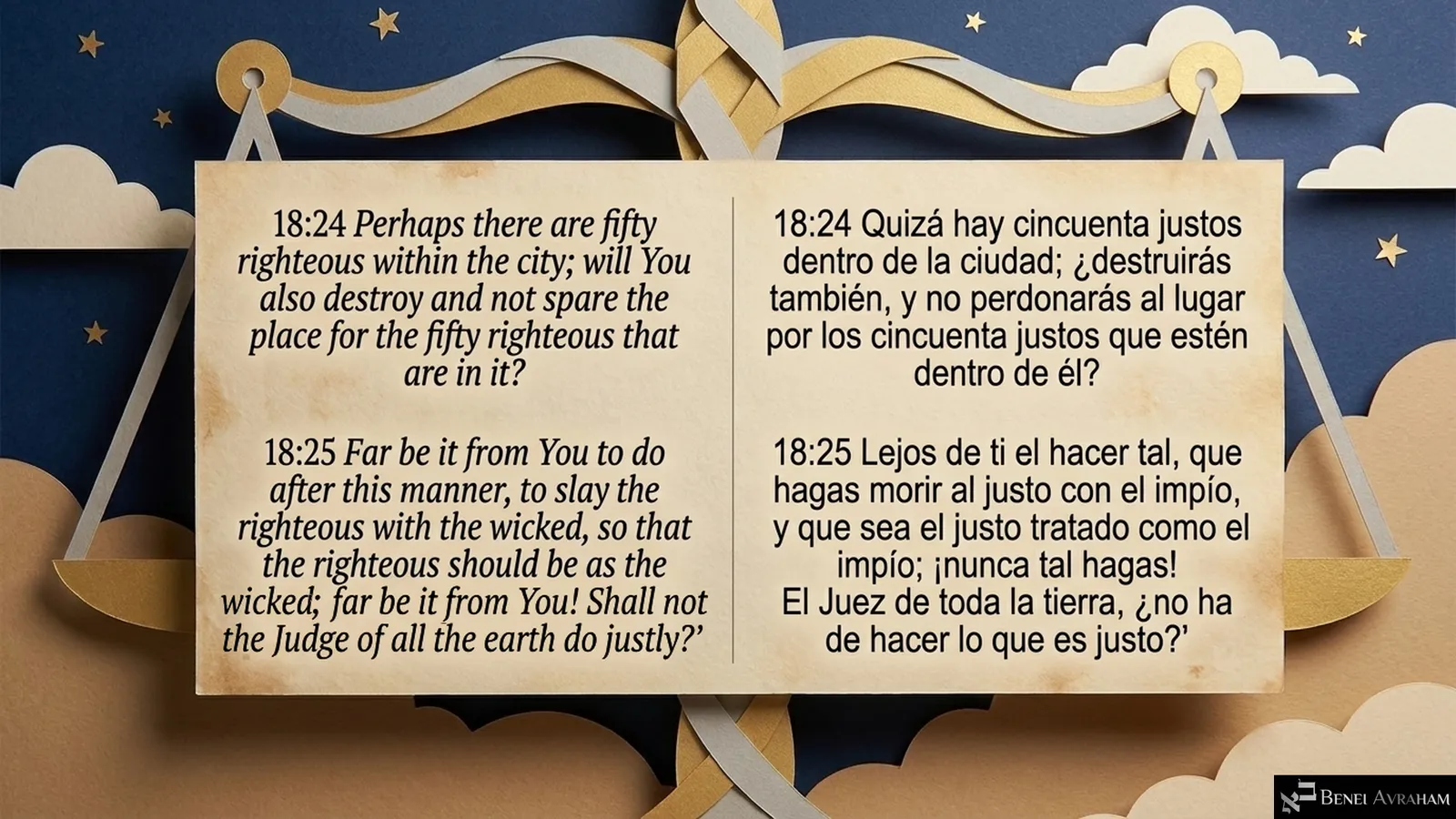
Balance scales frame Avraham’s plea for fifty righteous: “Shall not the Judge of all the earth do justly?” (Genesis 18:24–25).
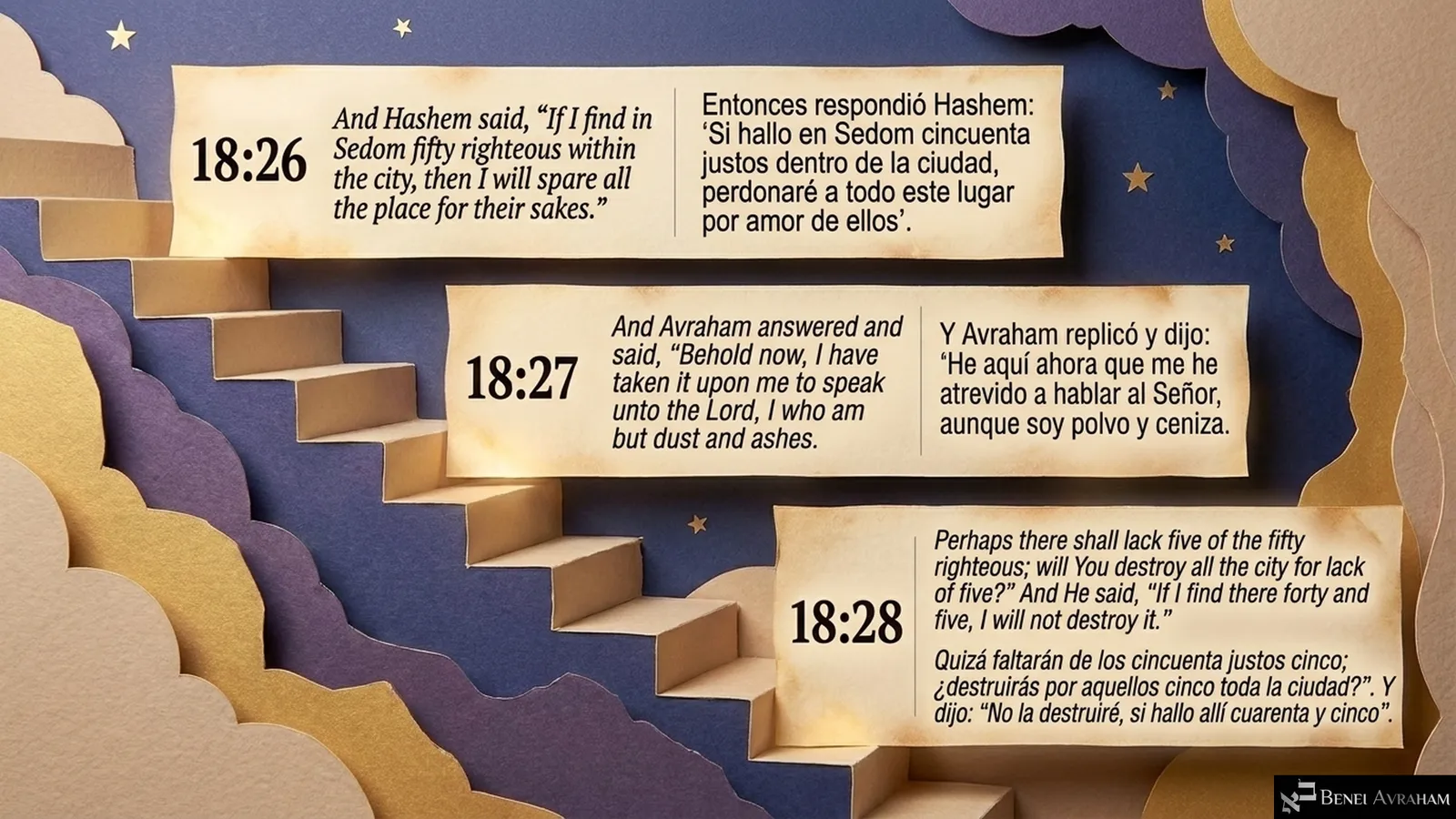
A staircase climbs into the night as Avraham, “but dust and ashes,” pleads from fifty down to forty-five (Genesis 18:26–28).
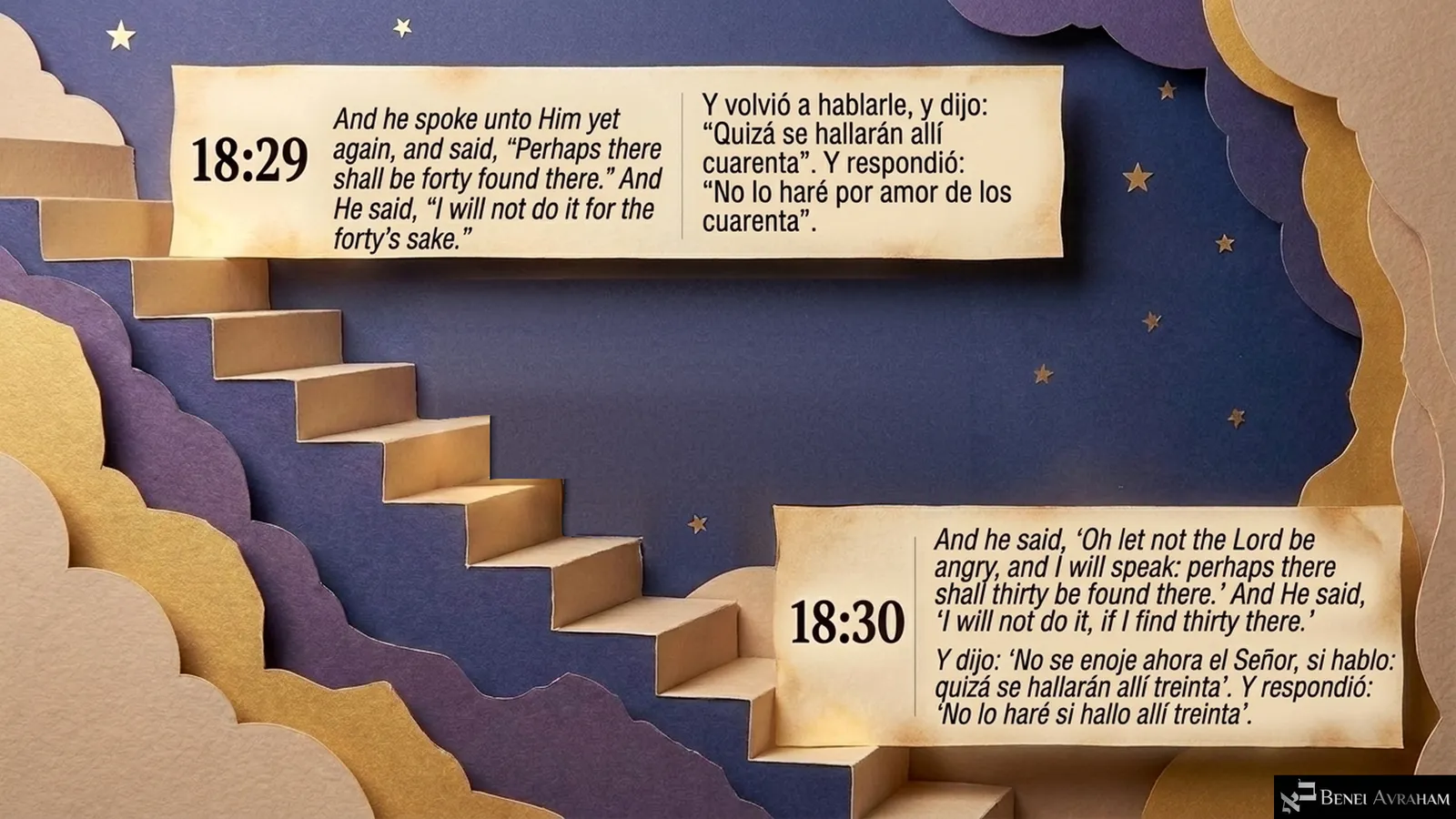
The staircase continues as Avraham asks for Sedom’s sake with forty, then thirty righteous (Genesis 18:29–30).
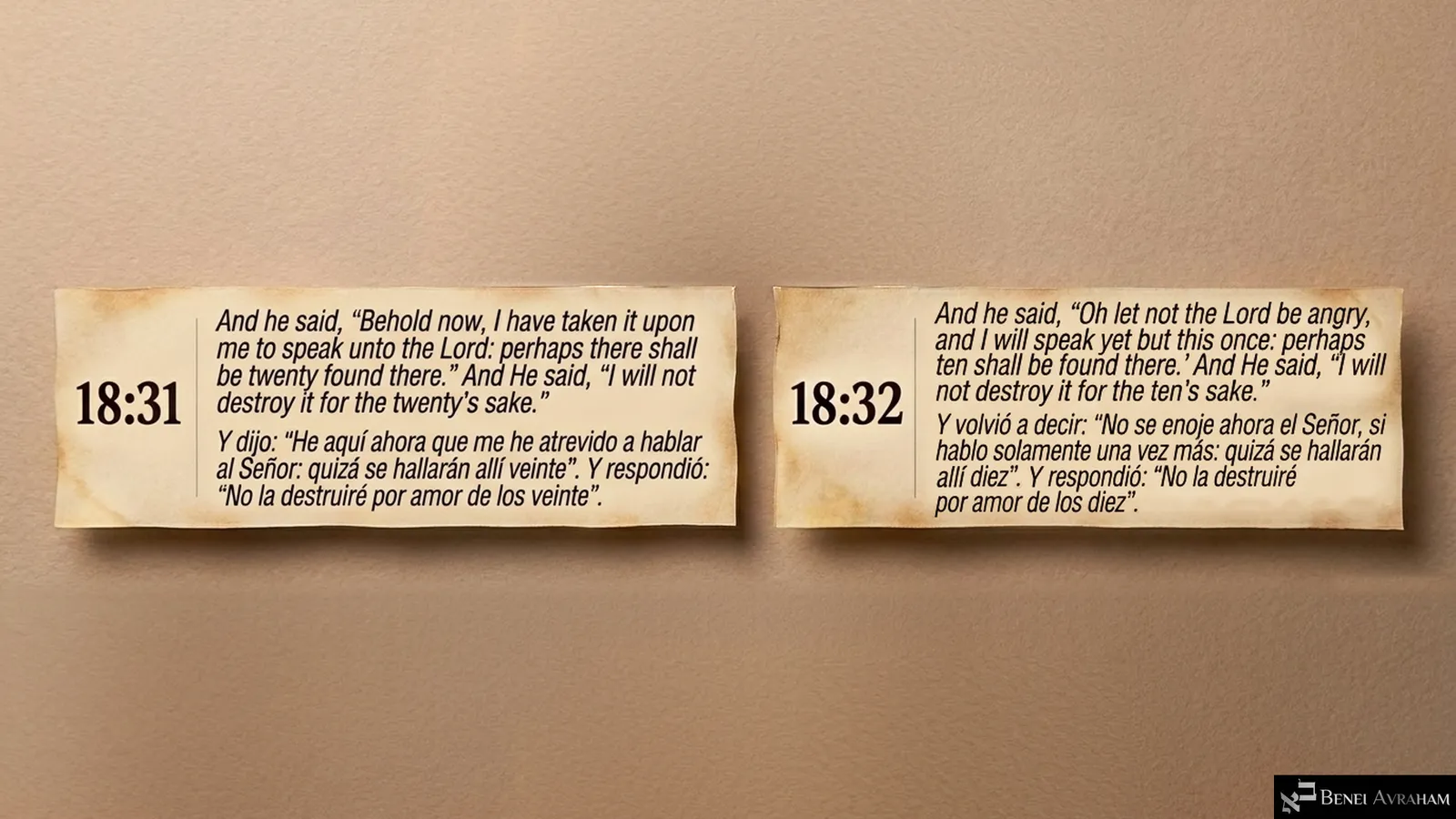
Avraham’s last pleas, for twenty and then ten: “I will not destroy it for the ten’s sake” (Genesis 18:31–32).
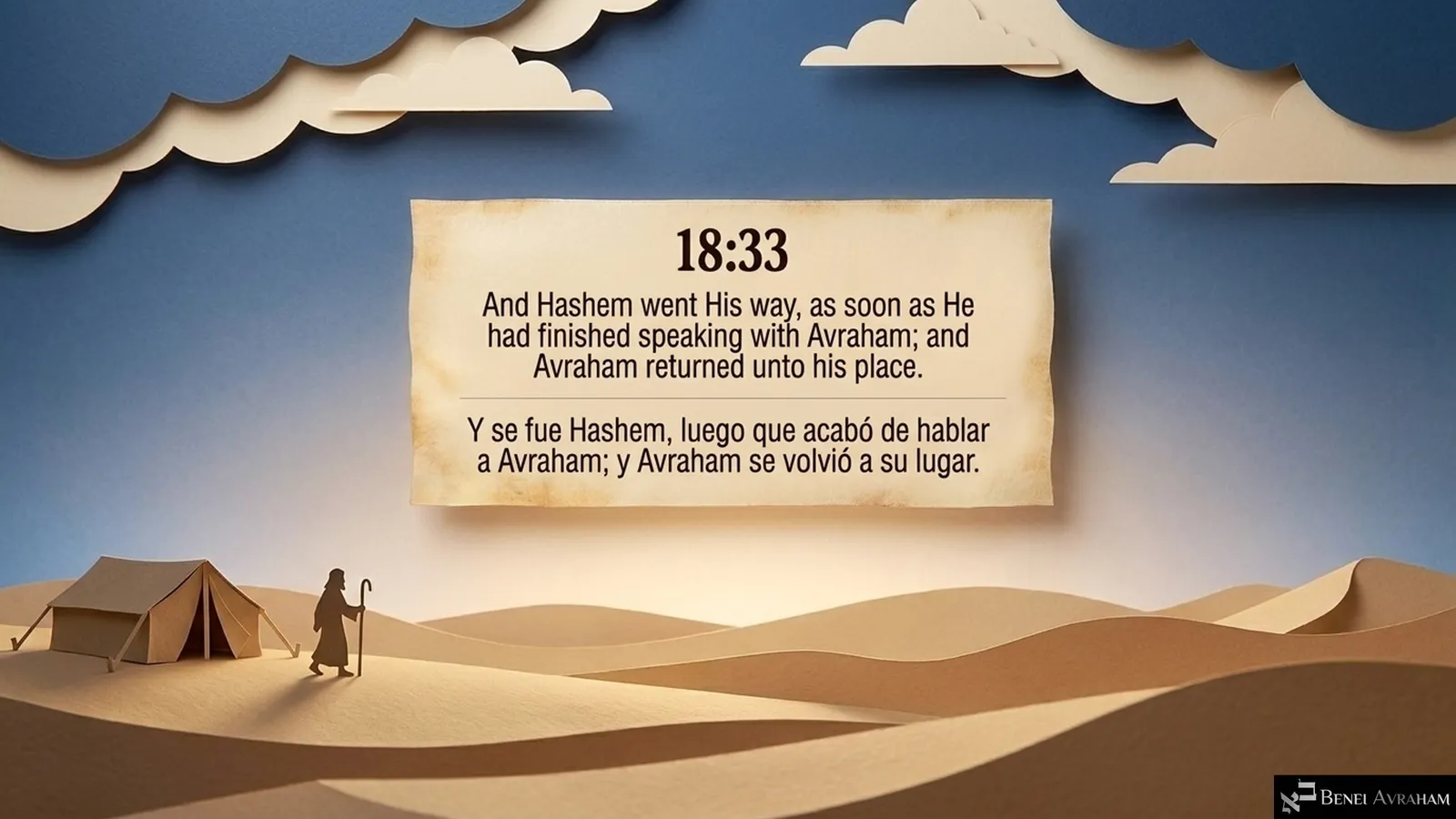
Hashem goes His way, and Avraham, staff in hand, returns to his tent and his place (Genesis 18:33).
Shlishi · Genesis 19:1–20

Third Portion
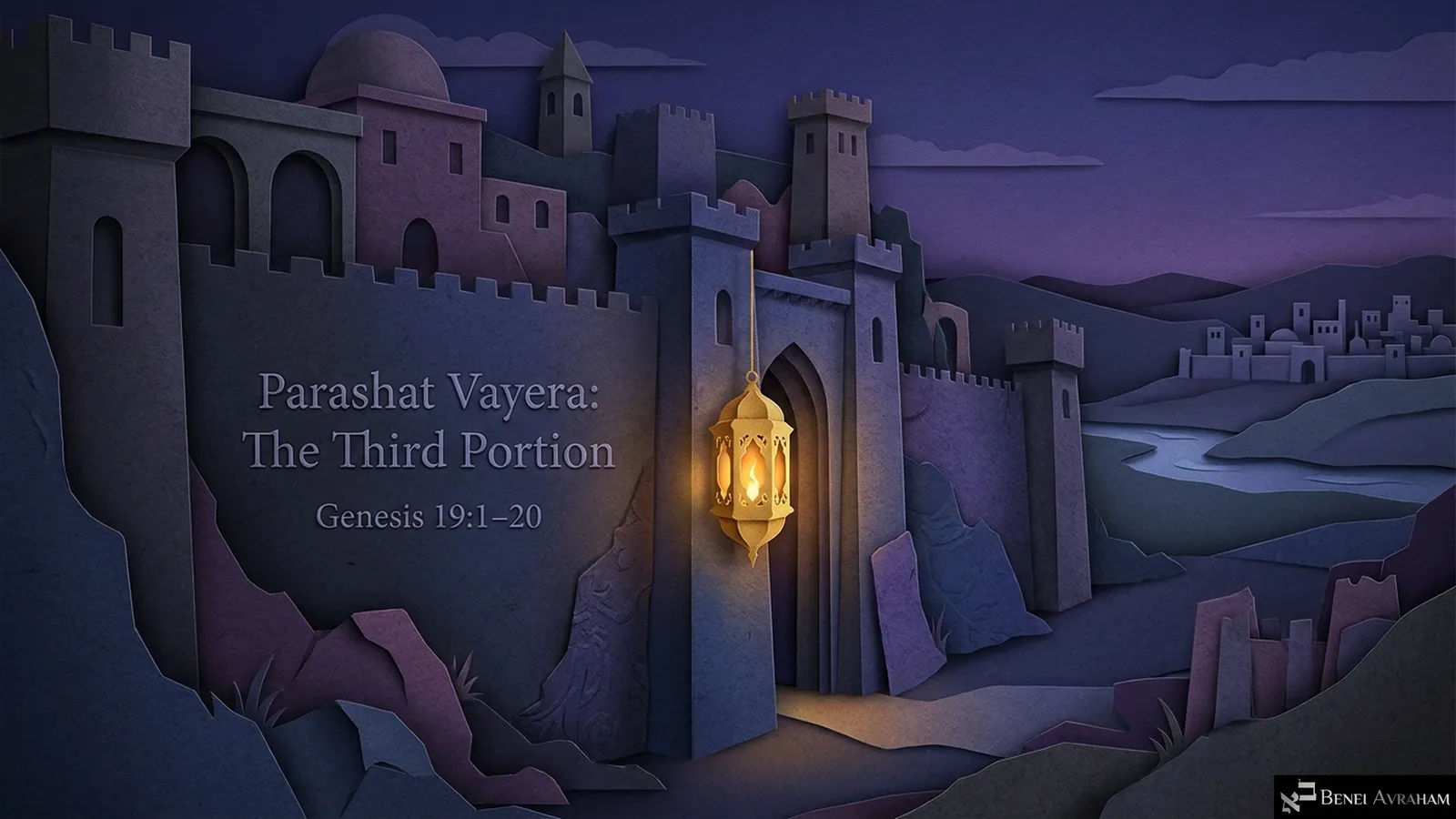
Title slide: Parashat Vayera, the Third Portion, Genesis 19:1–20, showing Sedom’s walled gate lit by a lantern at dusk.
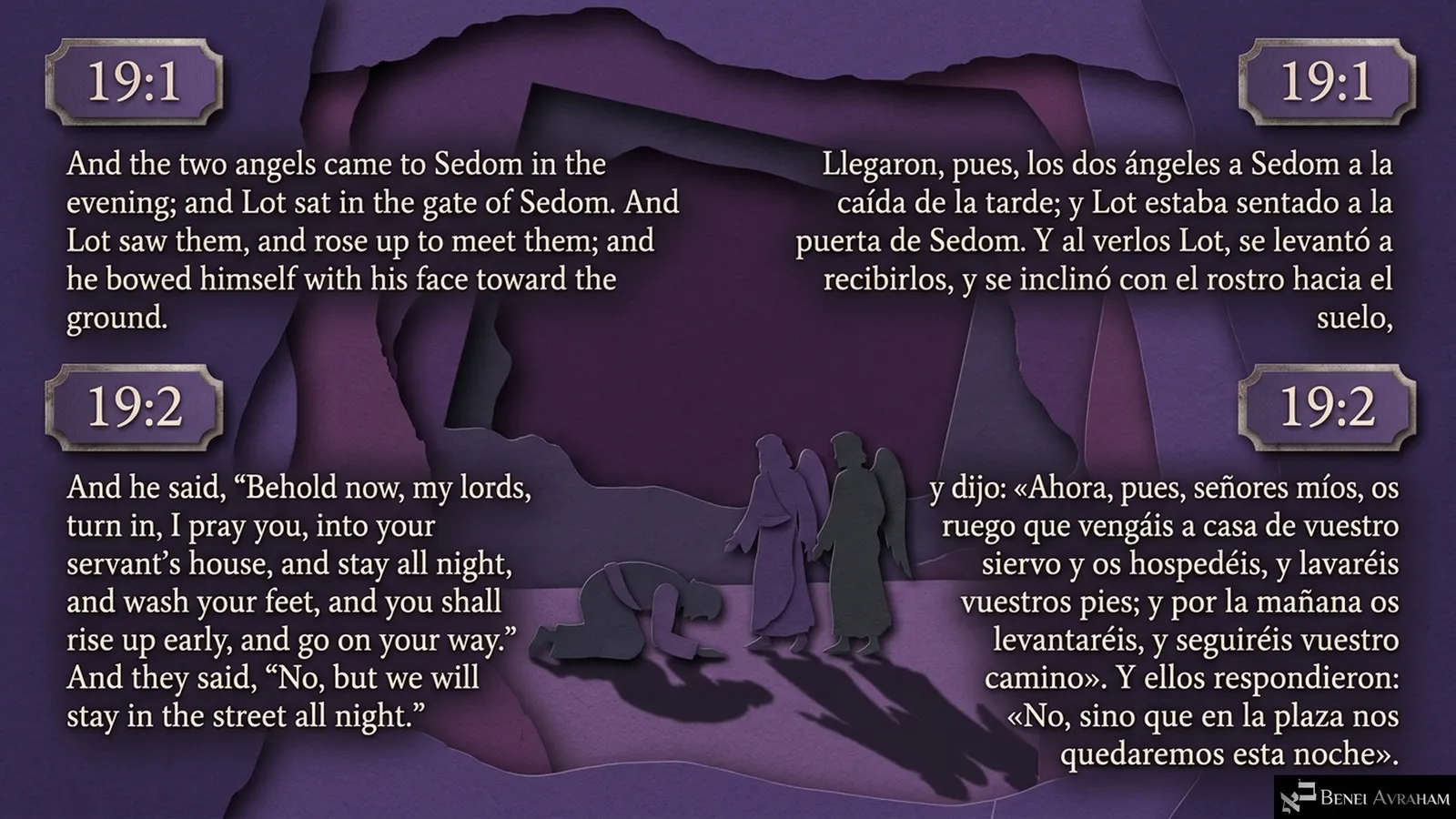
Lot, sitting in Sedom’s gate, bows before the two angels and urges them to lodge with him (Genesis 19:1–2).
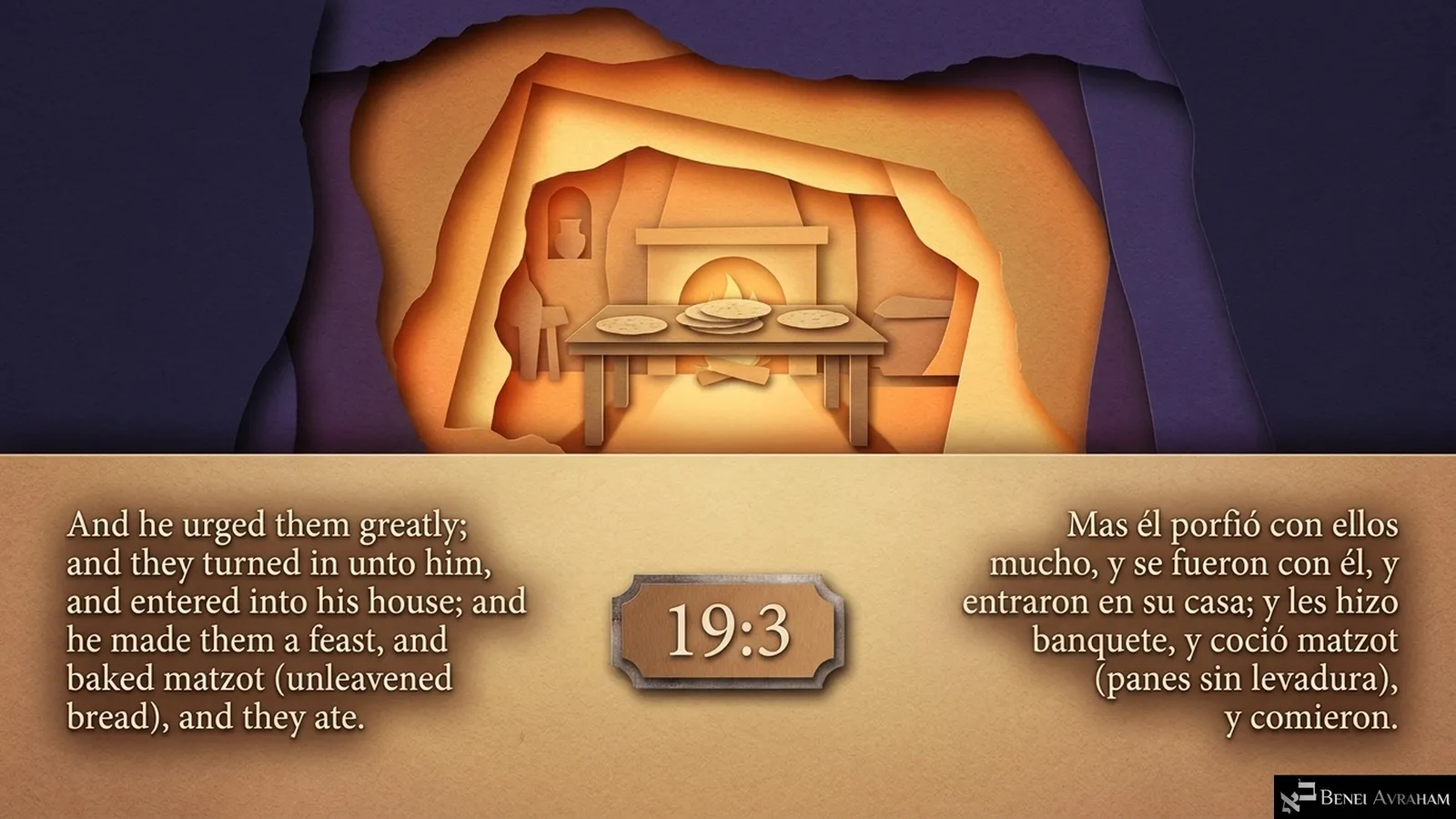
Lot’s warm hearth and a table of matzot: he makes the angels a feast inside his house (Genesis 19:3).
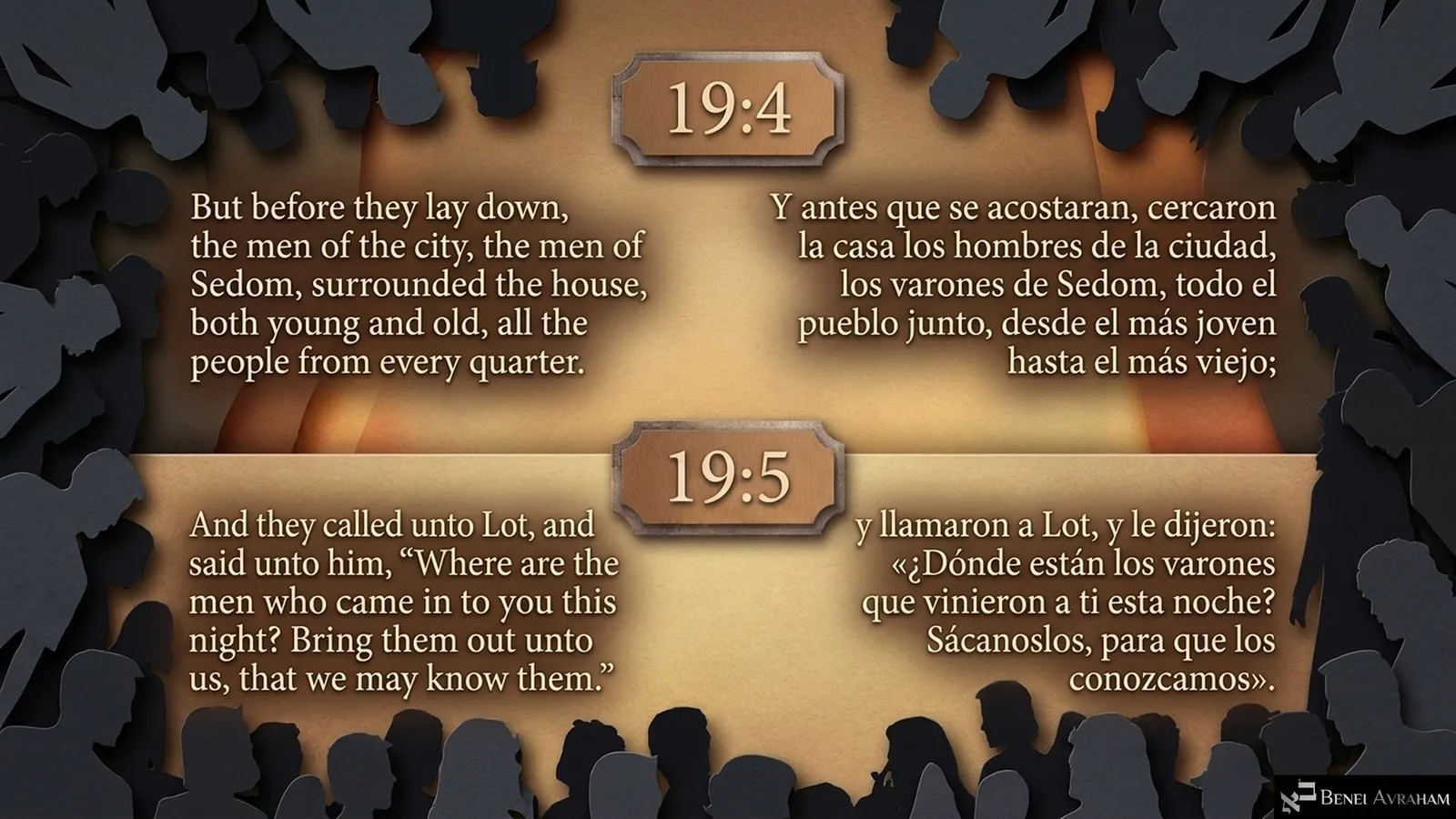
Shadowy crowds press in from every side as the men of Sedom surround Lot’s house, young and old (Genesis 19:4–5).
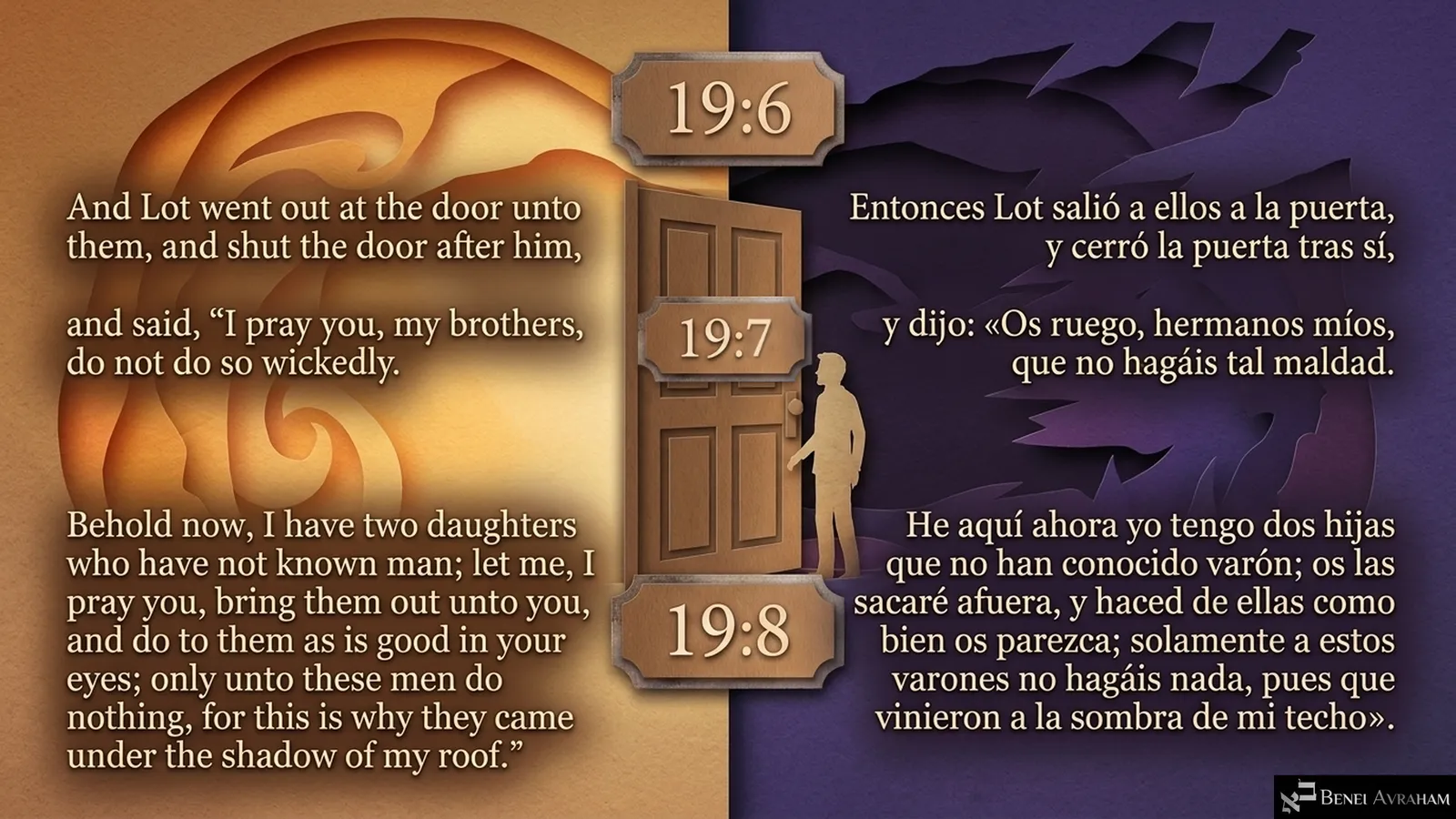
Lot shuts the door behind him and pleads with the men of Sedom not to do so wickedly (Genesis 19:6–8).
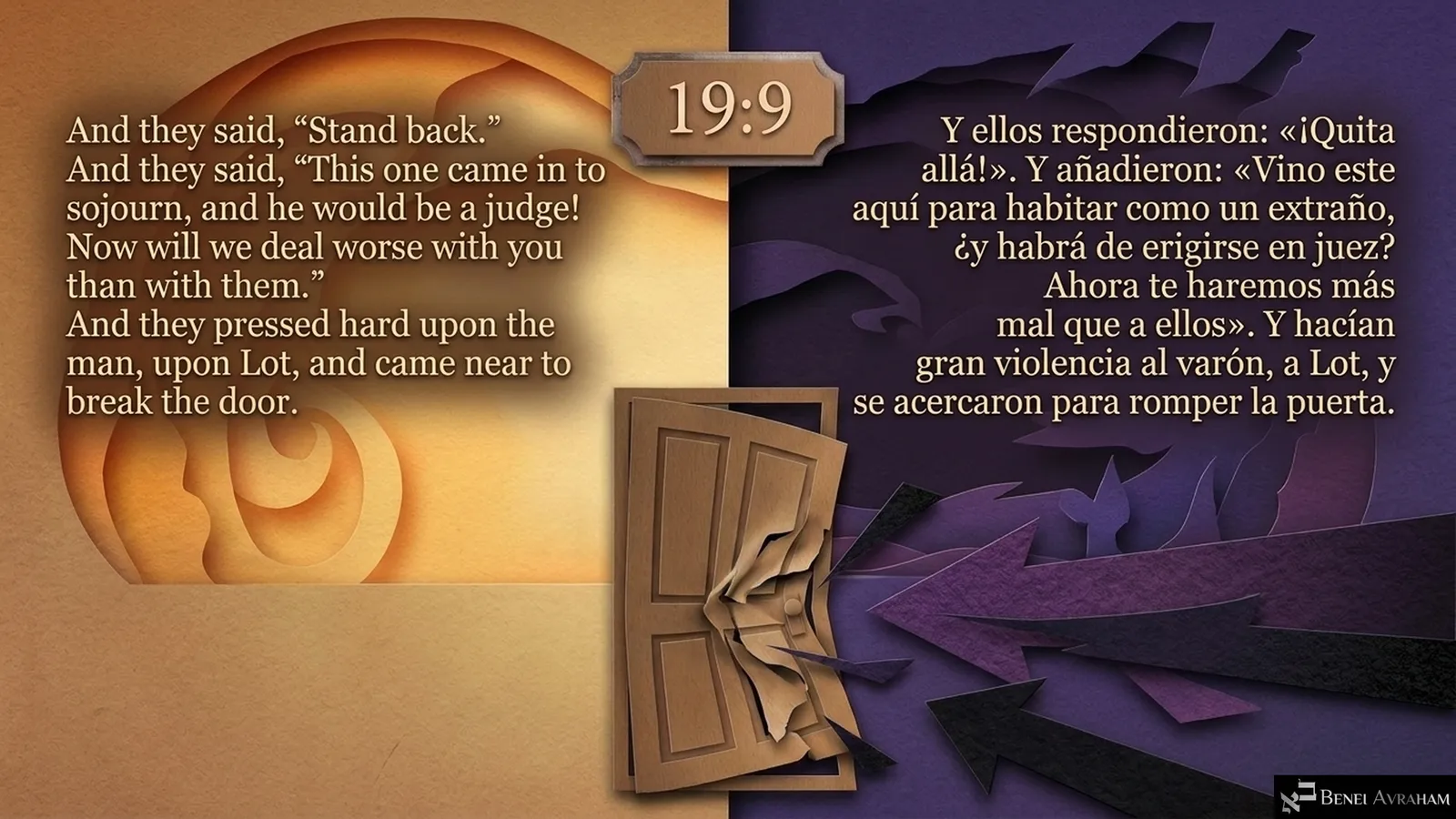
The crowd presses on Lot, and the door buckles under their arrows of rage (Genesis 19:9).
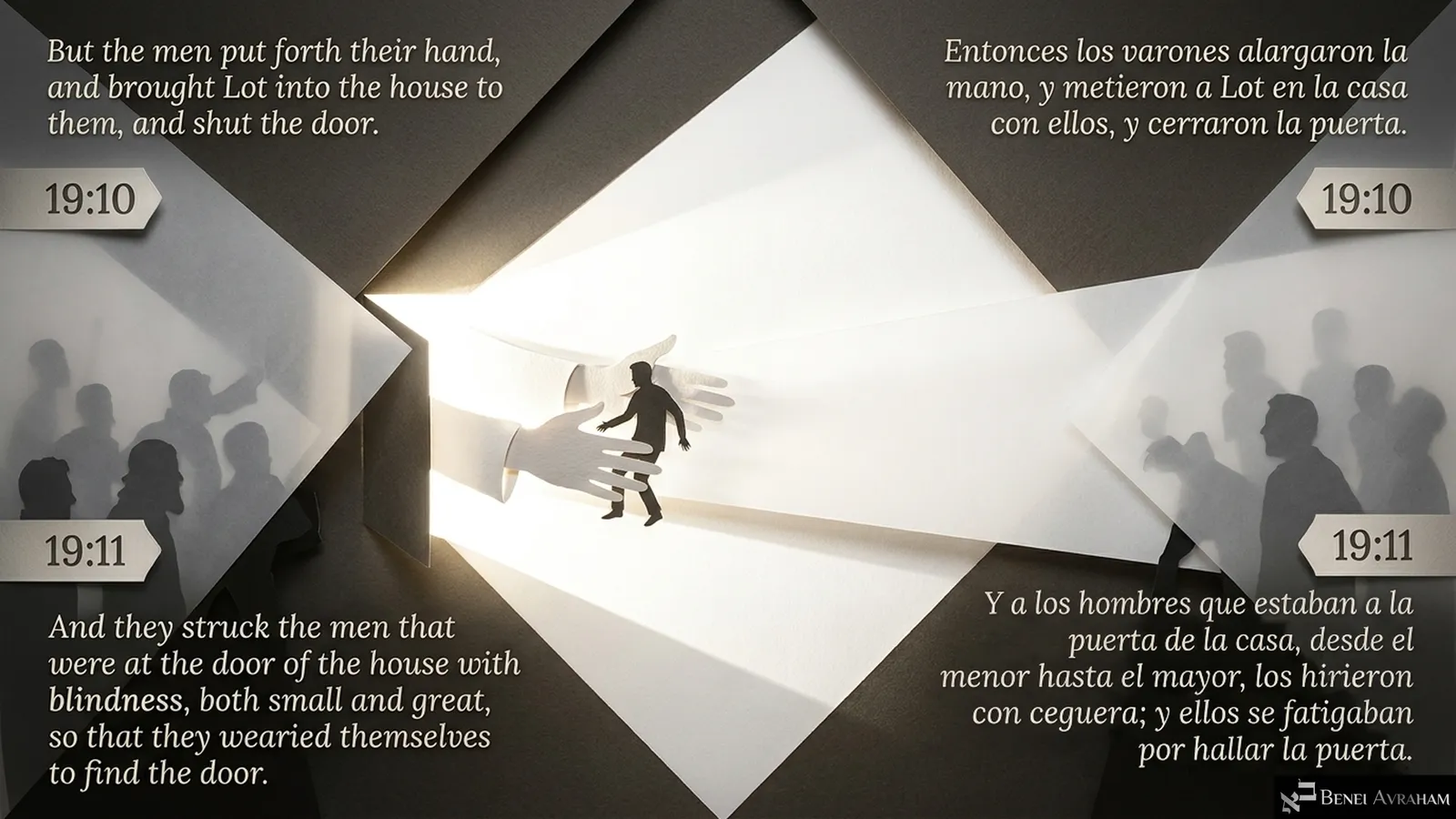
Hands of light pull Lot back inside, while the men at the door are struck with blindness (Genesis 19:10–11).
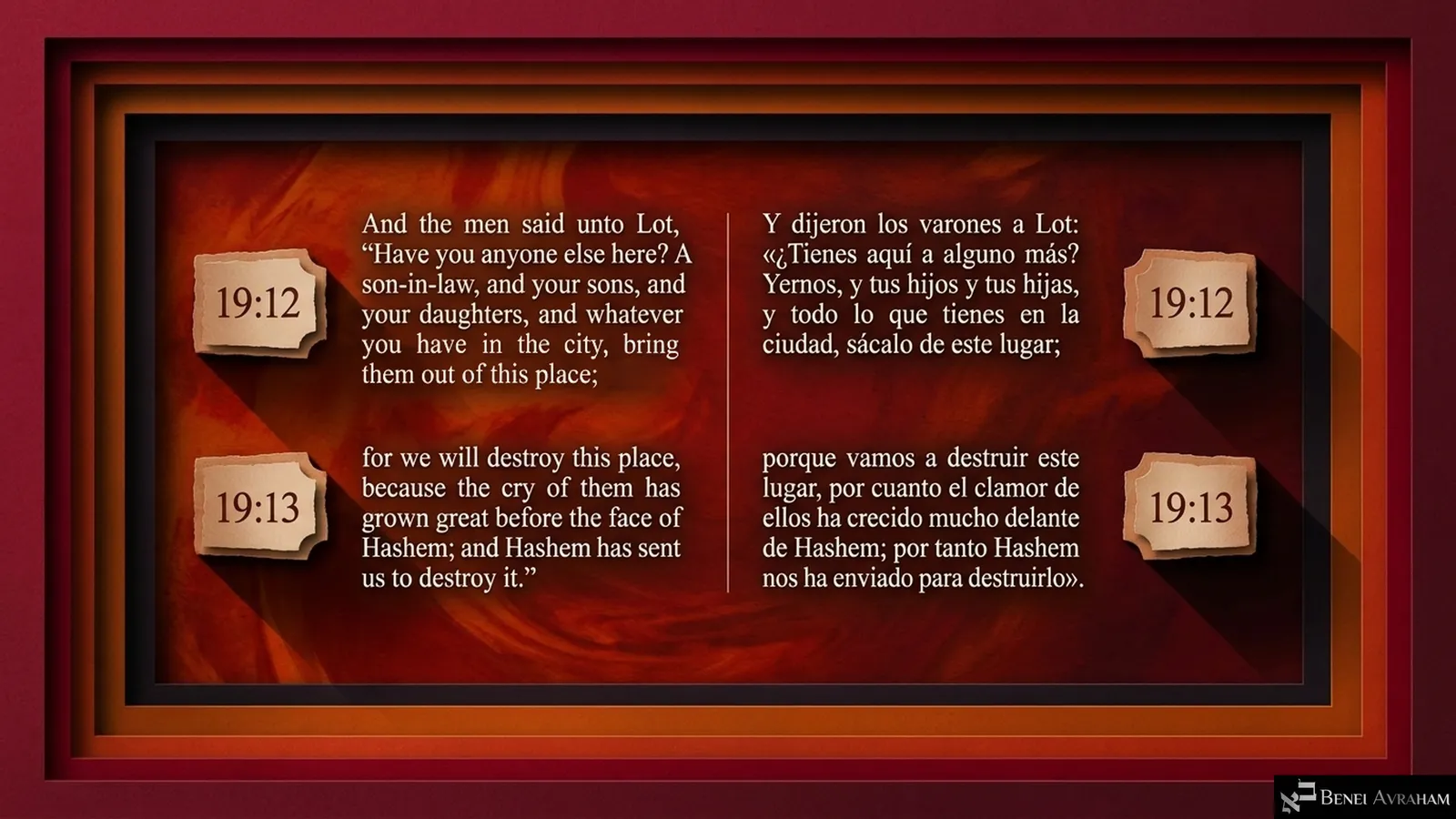
Framed in fire-red: the angels tell Lot to bring his family out, for Hashem will destroy the place (Genesis 19:12–13).
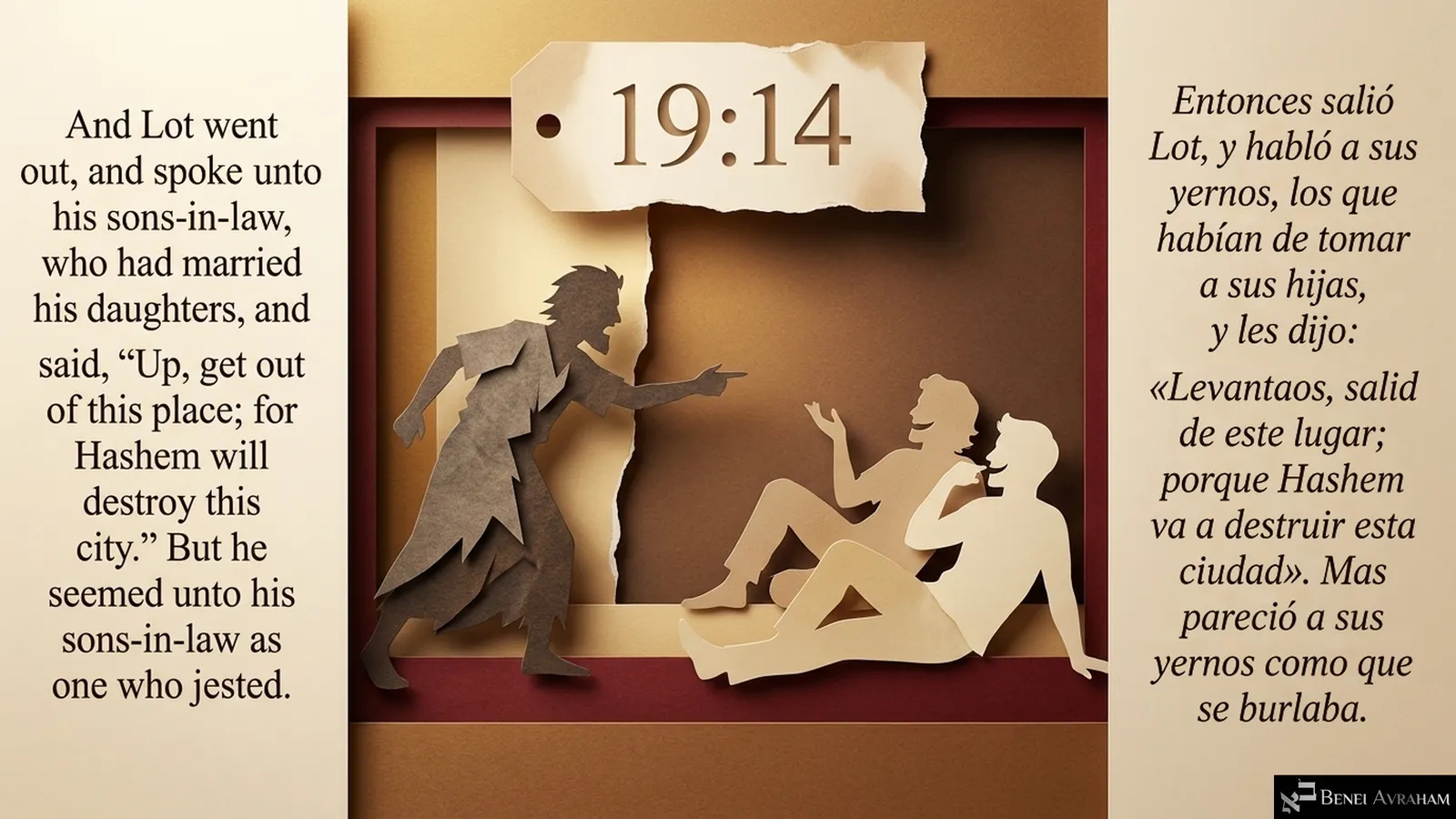
Lot warns his sons-in-law, “Hashem will destroy this city,” but they laugh as if he were jesting (Genesis 19:14).
At dawn the angels hasten Lot to take his wife and two daughters and flee (Genesis 19:15).
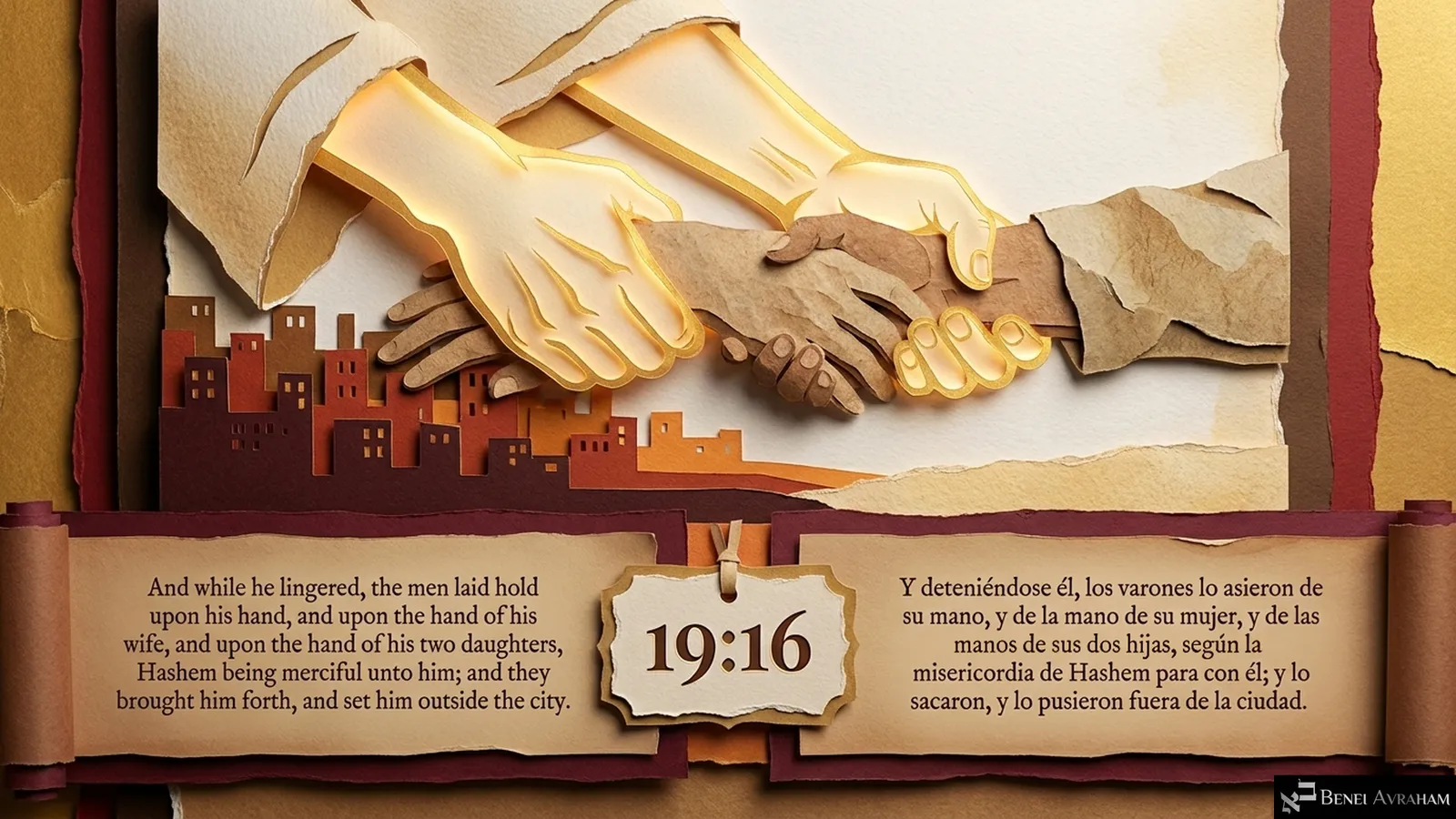
Glowing hands of the angels grasp Lot’s hand as Hashem’s mercy brings him out of the city (Genesis 19:16).
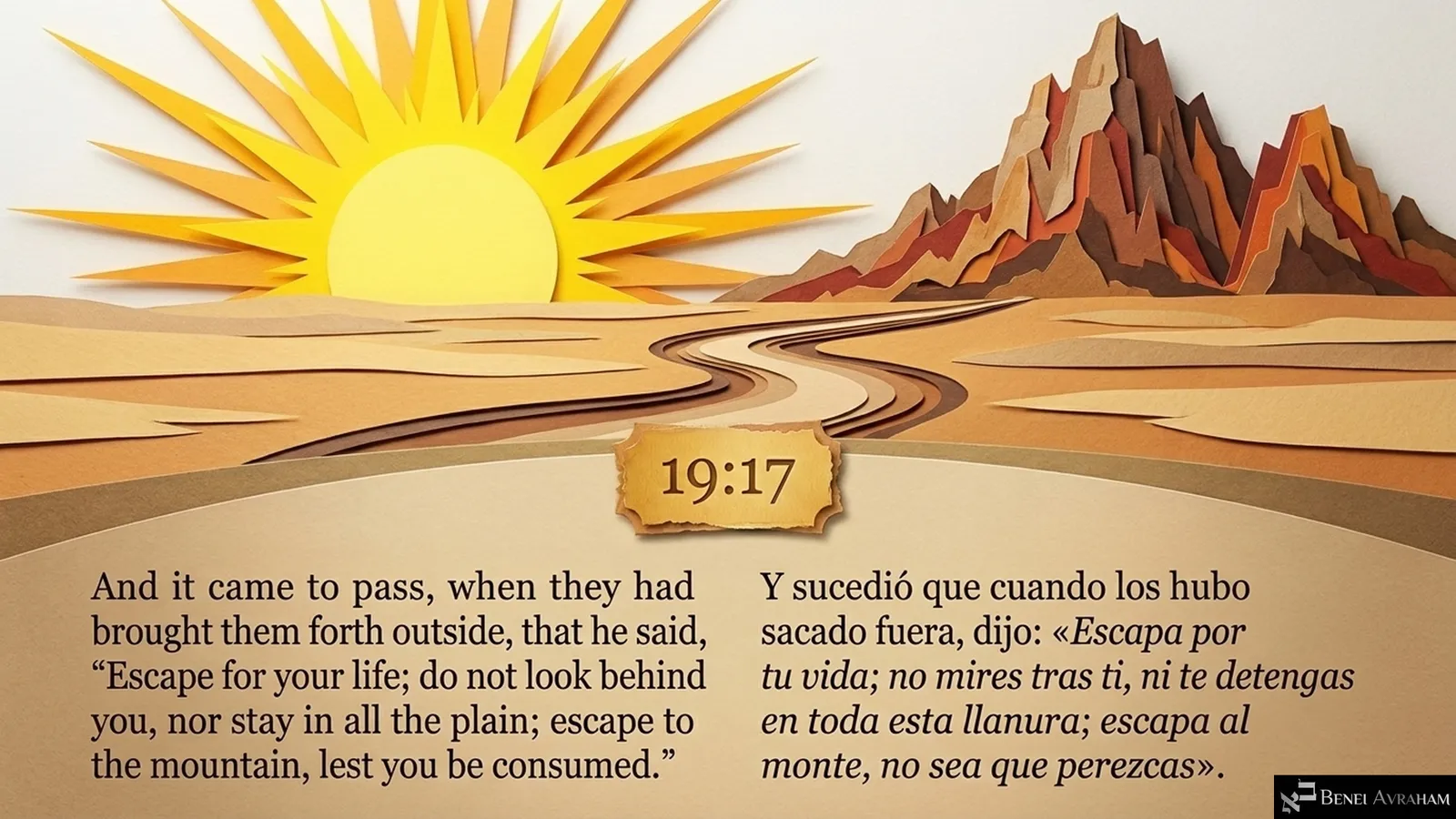
“Escape for your life; do not look behind you”: a road under the sun leads to the mountain (Genesis 19:17).
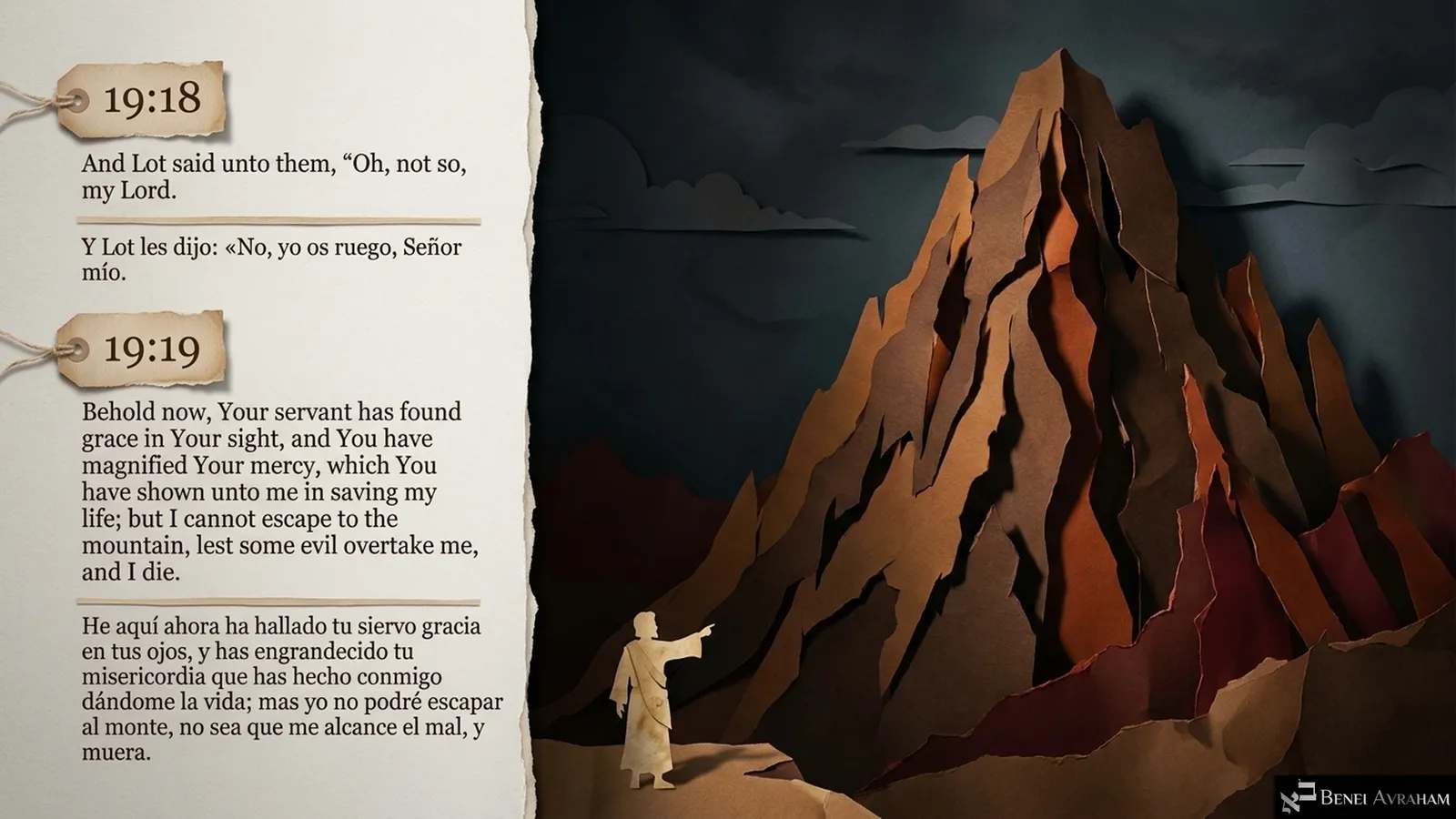
Lot points up at the towering mountain and pleads that he cannot escape there (Genesis 19:18–19).
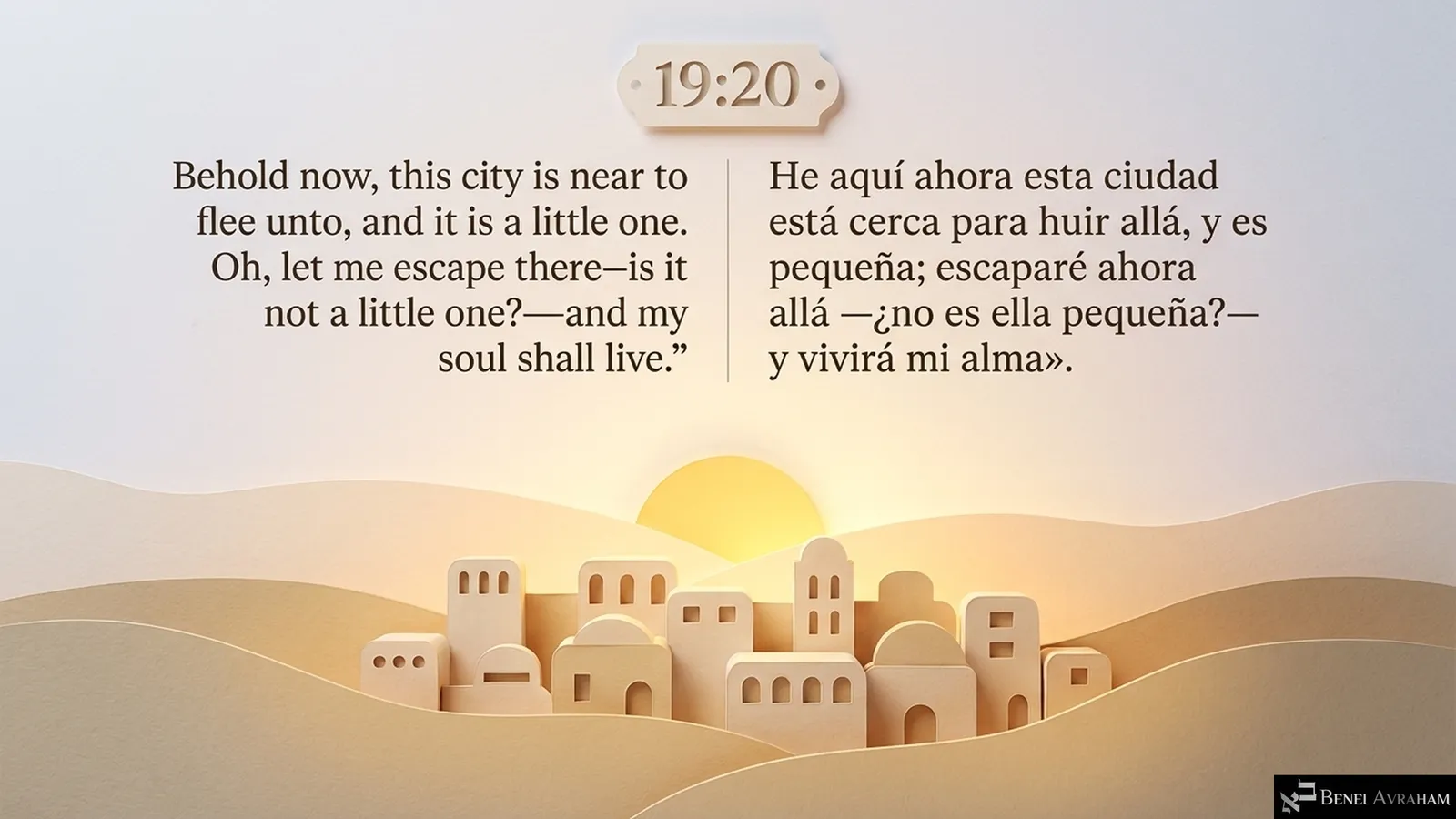
“This city is near … is it not a little one?” A small town glows at sunrise (Genesis 19:20).
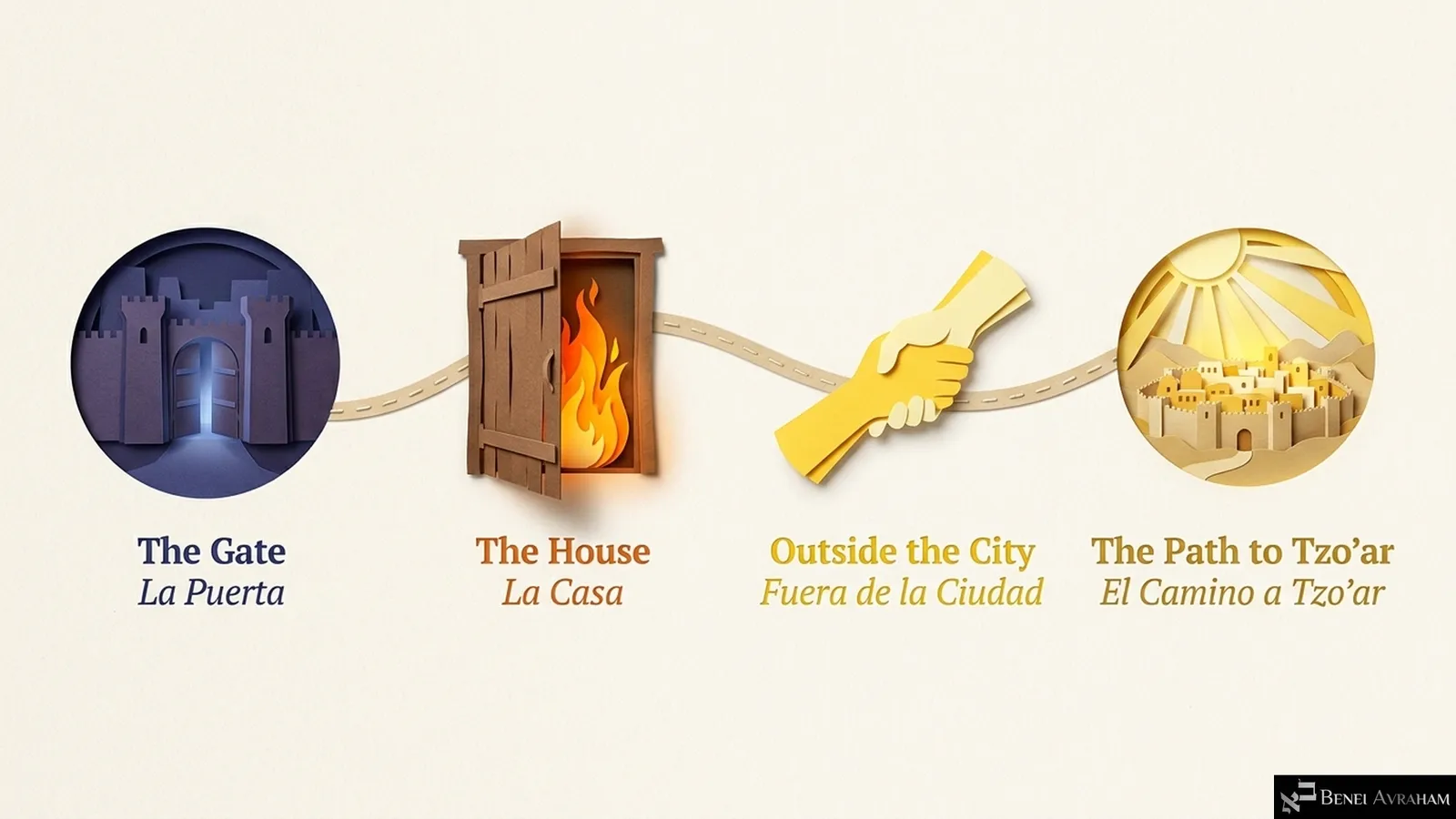
Summary of Lot’s rescue in four steps: the gate, the house, outside the city, and the path to Tzo’ar.
Revi’i · Genesis 19:21–21:4

Fourth Portion
Title slide: Parashat Vayera, Fourth Portion, Revi’i, Genesis 19:21–21:4, before a rising sun over layered hills.
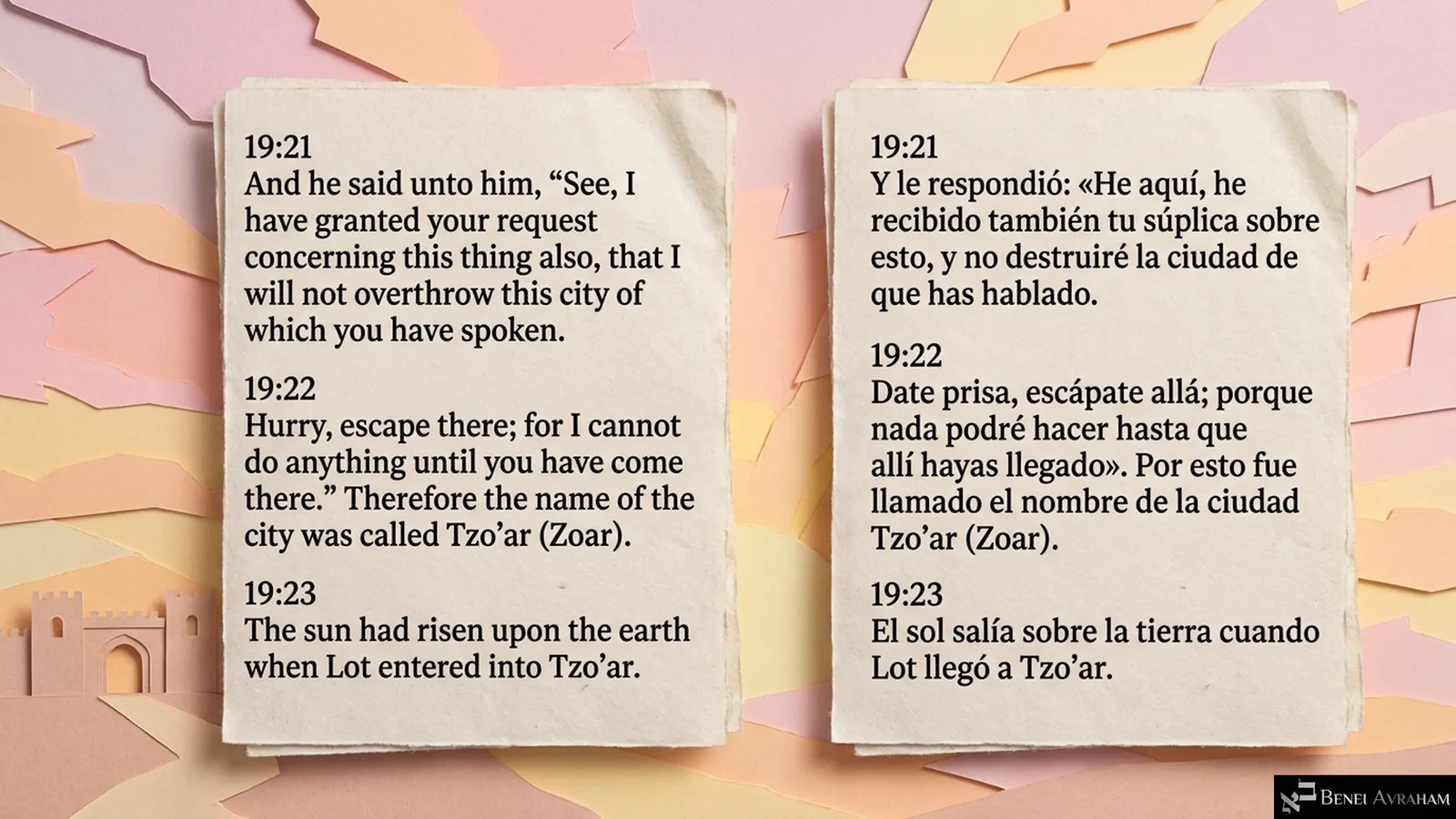
Lot’s request is granted: the little city is spared and named Tzo’ar, and he enters it at sunrise (Genesis 19:21–23).
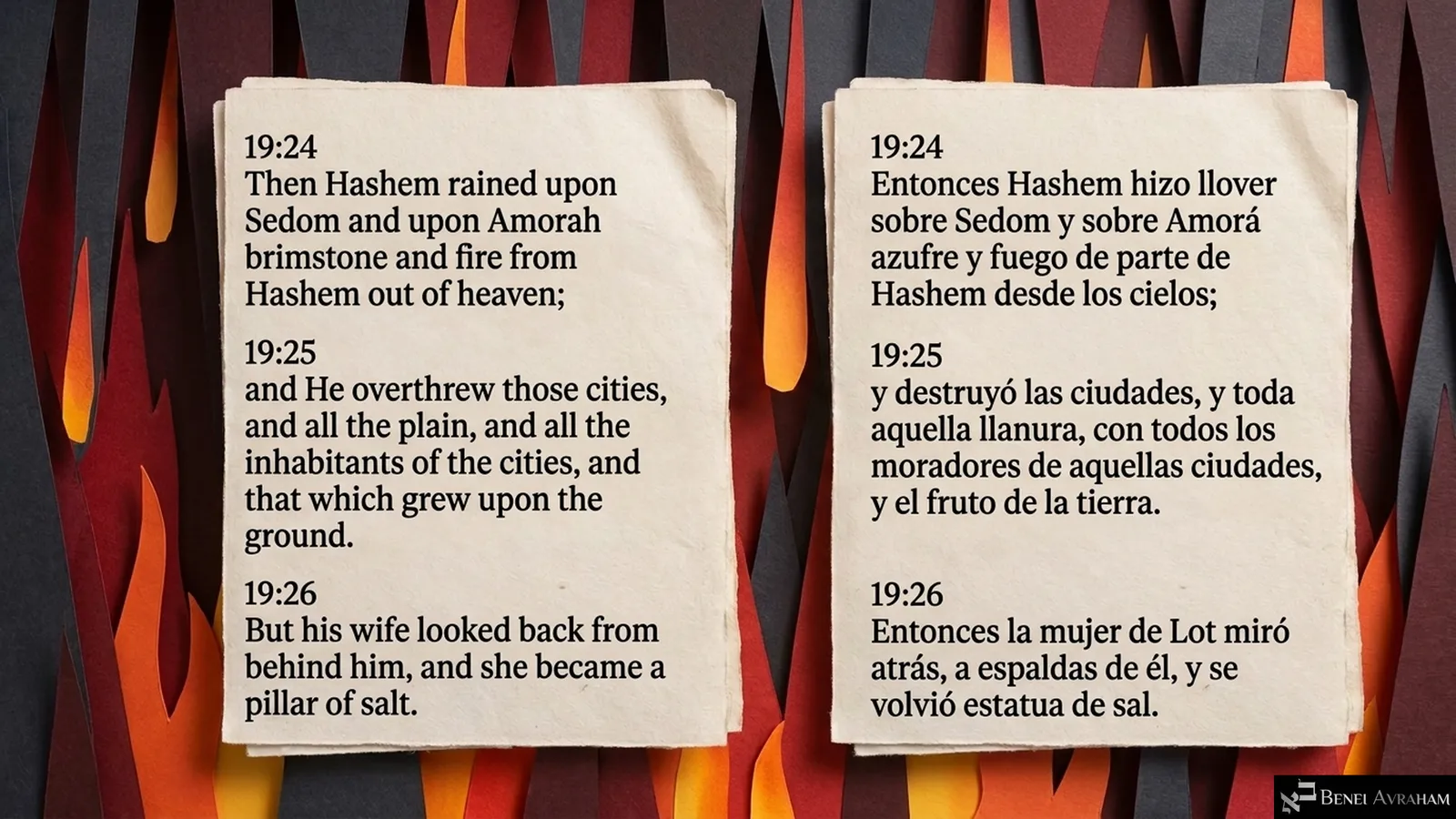
Paper flames: Hashem rains brimstone and fire on Sedom and Amorah; Lot’s wife becomes a pillar of salt (Genesis 19:24–26).
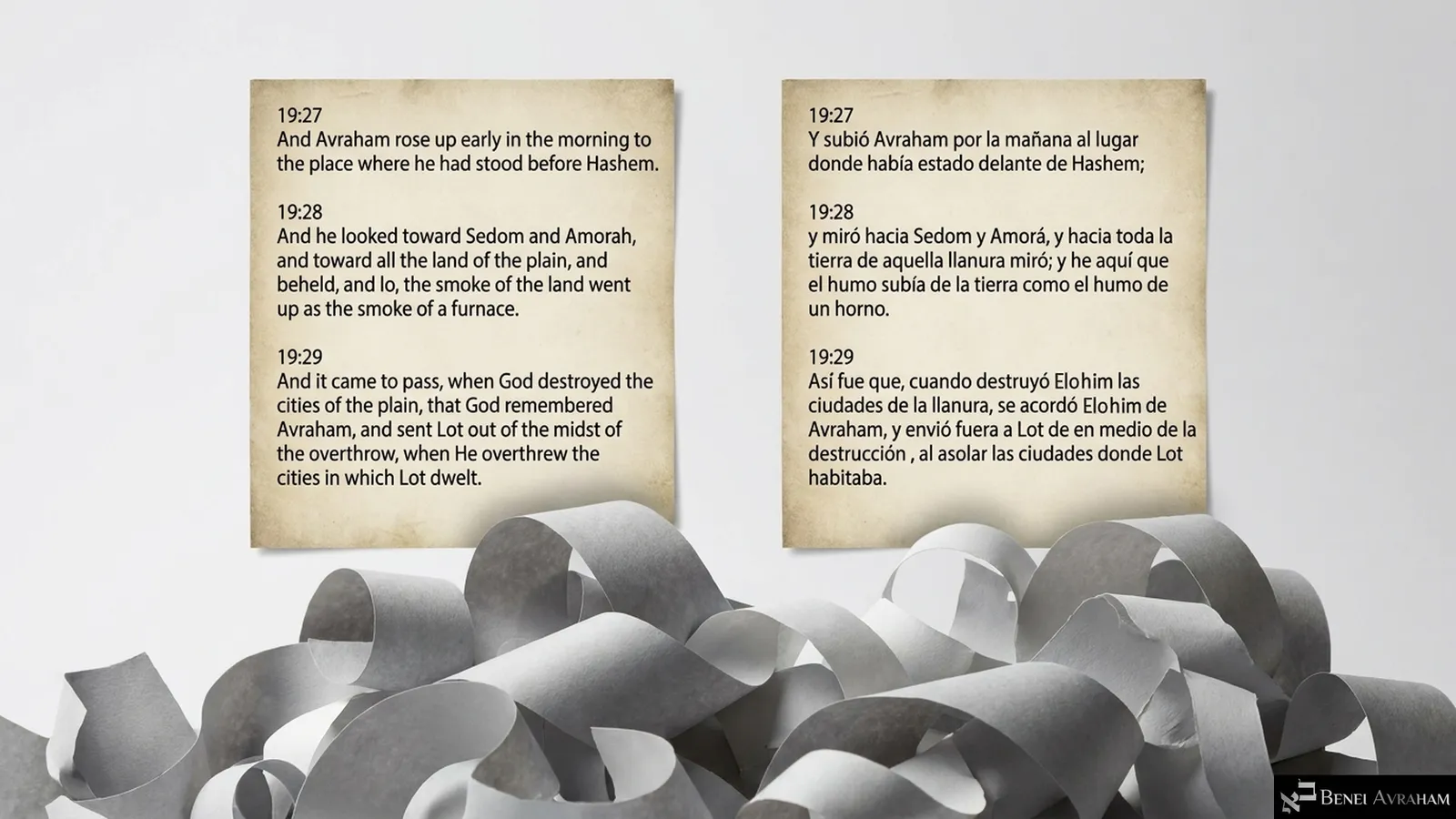
Avraham looks toward Sedom and Amorah and sees smoke rising like a furnace; Lot was spared for Avraham’s sake (Genesis 19:27–29).
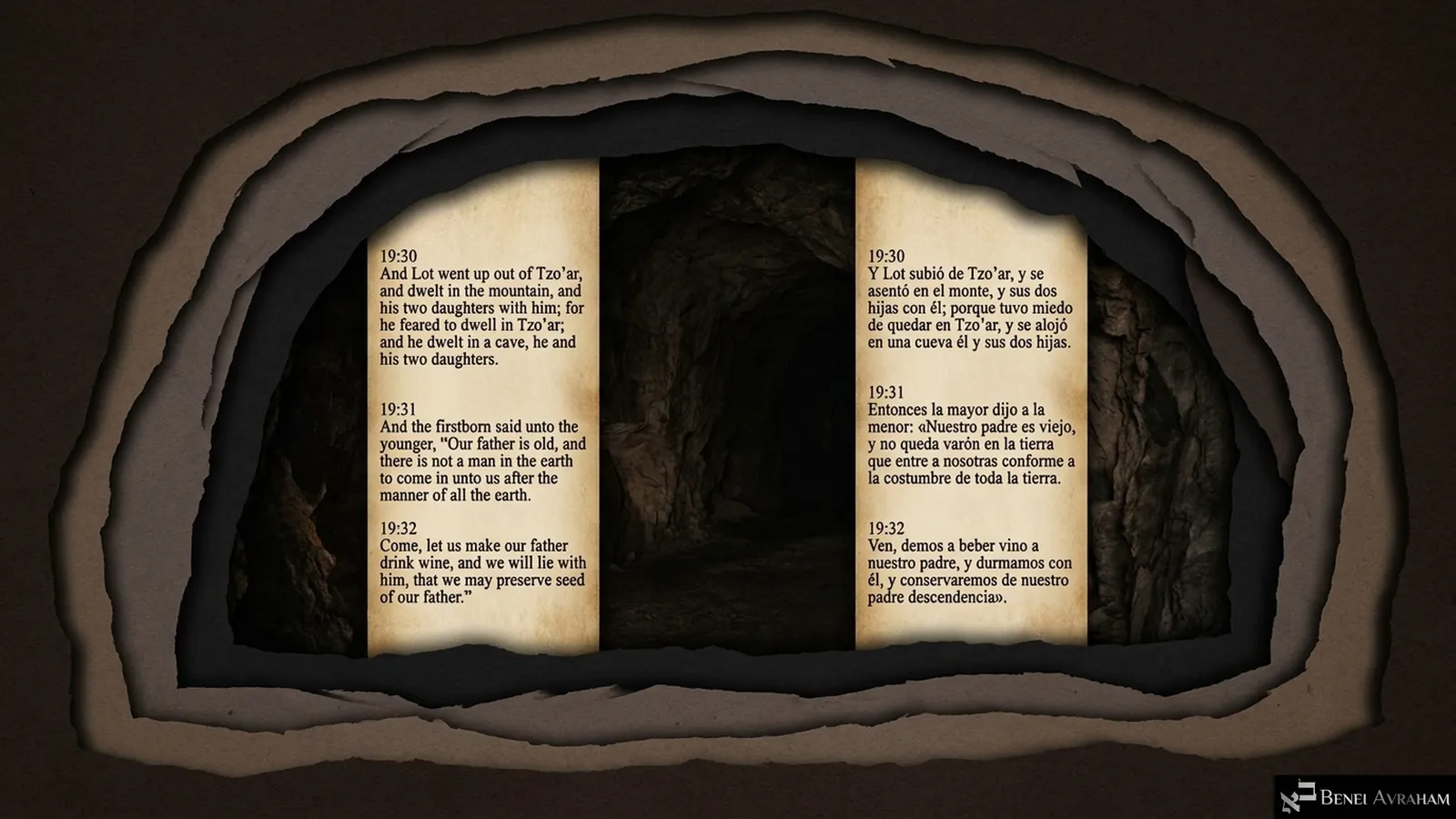
In a dark mountain cave, Lot dwells with his two daughters after leaving Tzo’ar (Genesis 19:30–32).
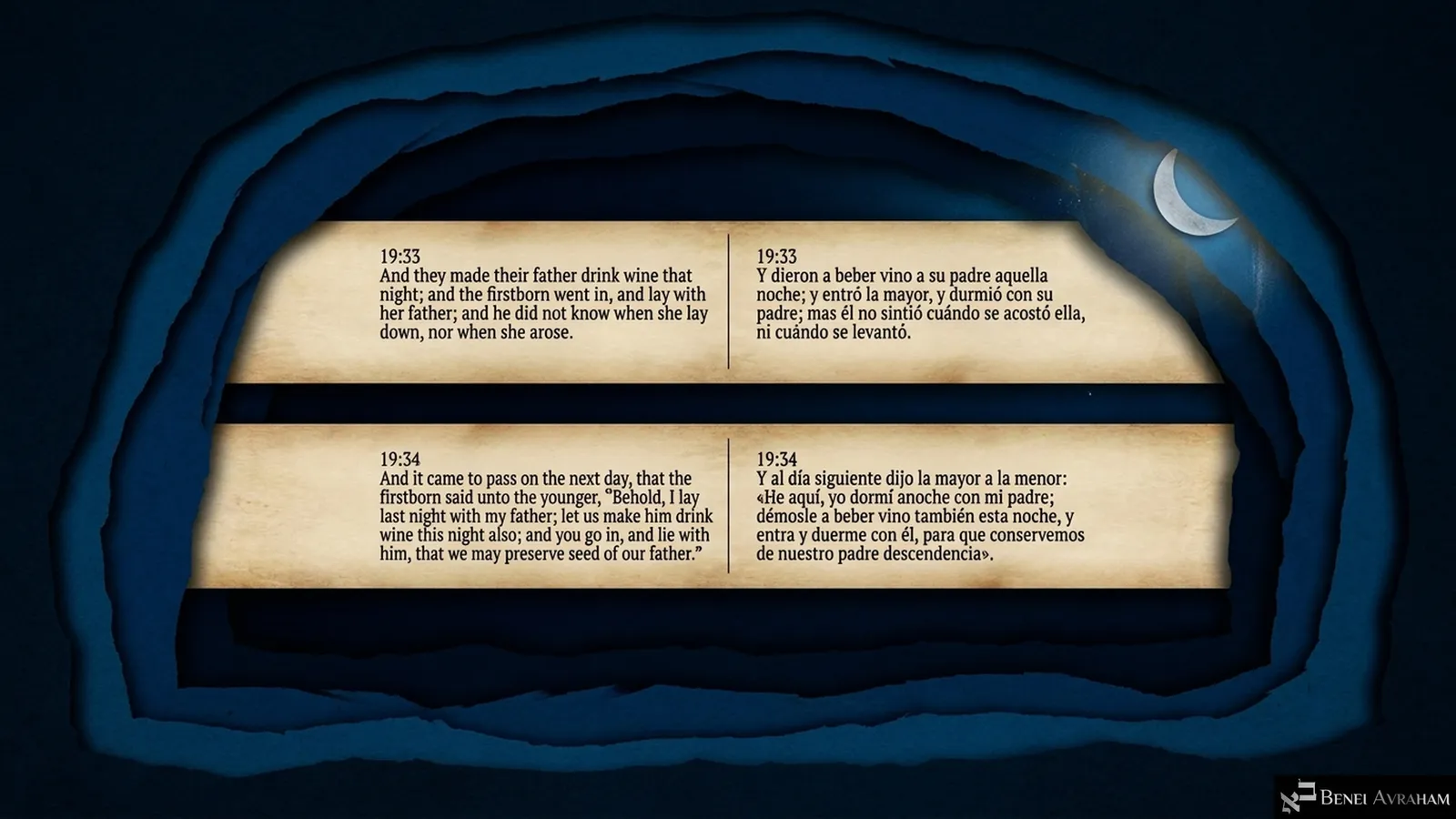
Under a crescent moon, the daughters make their father drink wine on two nights (Genesis 19:33–34).
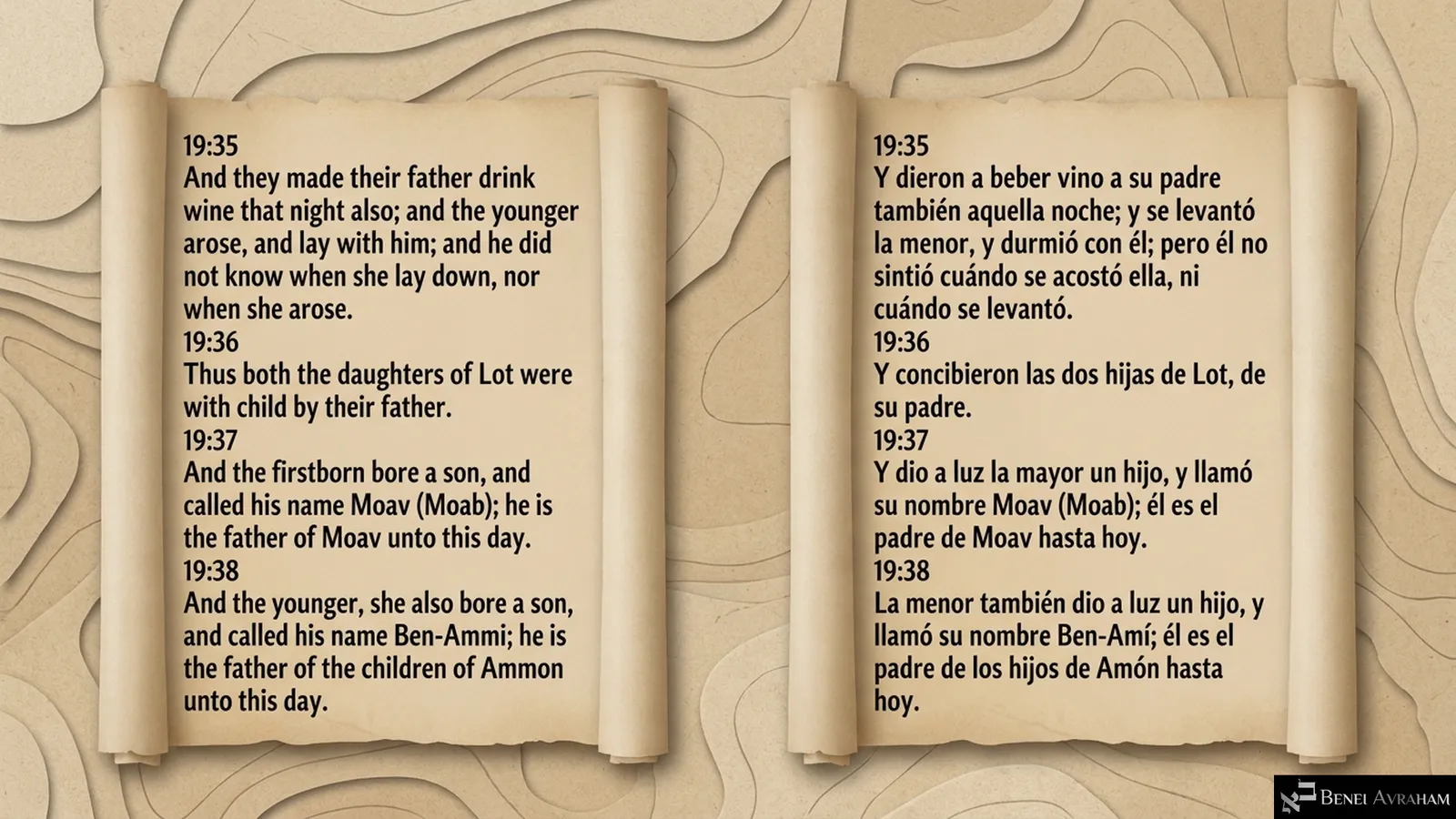
Scrolls record the births of Moav and Ben-Ammi, fathers of Moav and Ammon (Genesis 19:35–38).
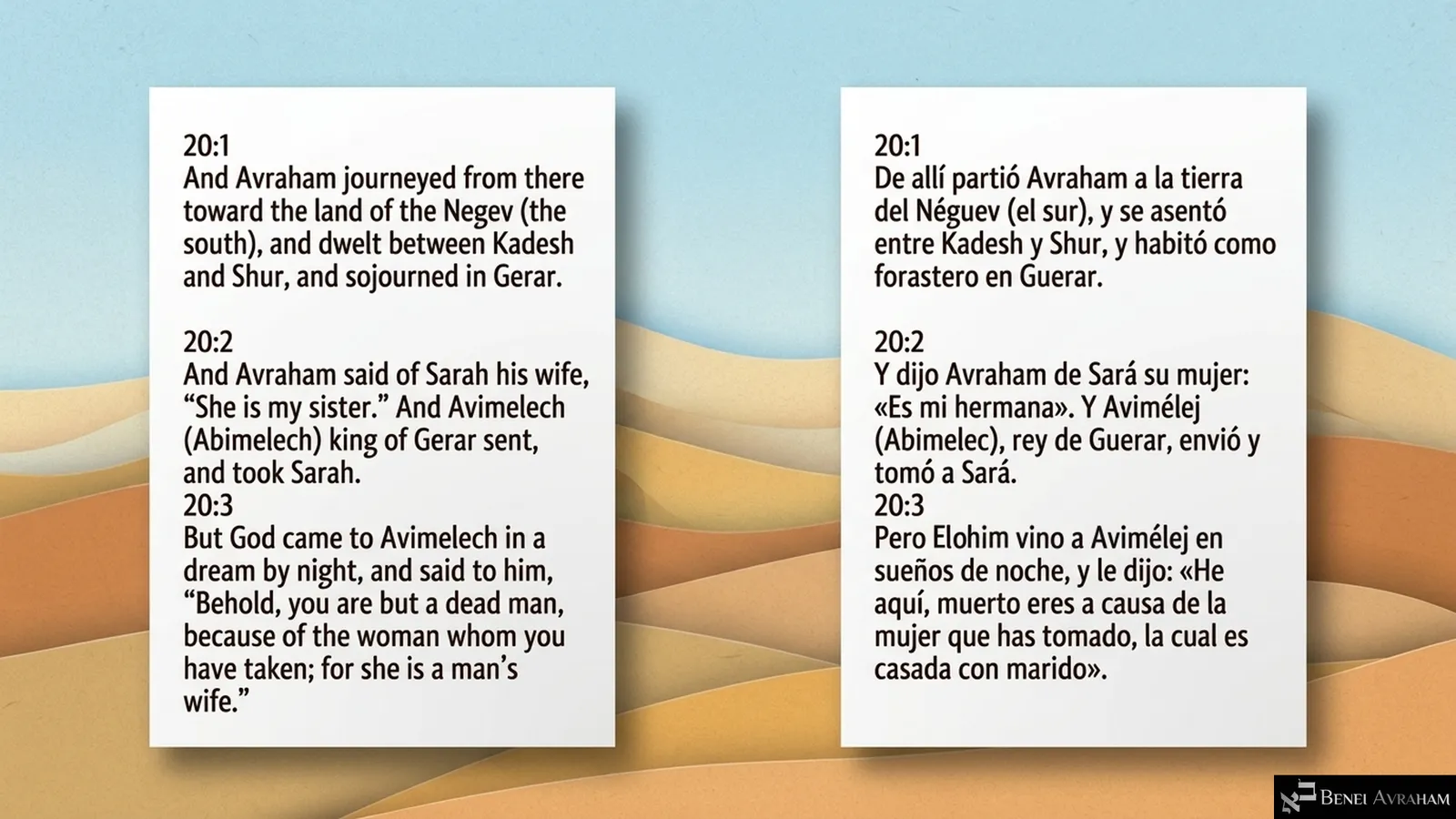
Desert dunes of the Negev: Avraham sojourns in Gerar, and God warns Avimelech in a dream (Genesis 20:1–3).
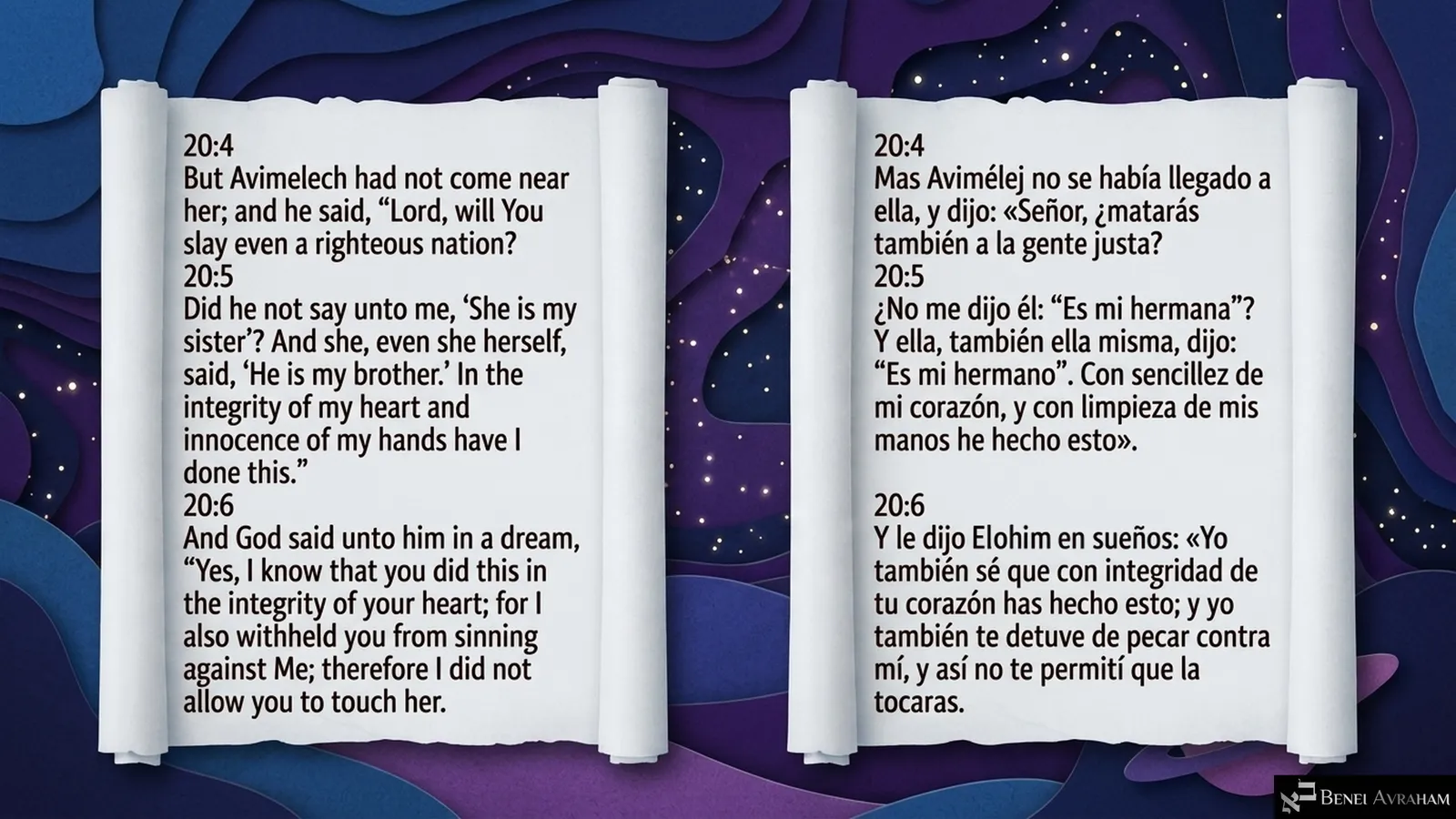
On a starry night, Avimelech pleads innocence and God says He kept him from sinning (Genesis 20:4–6).
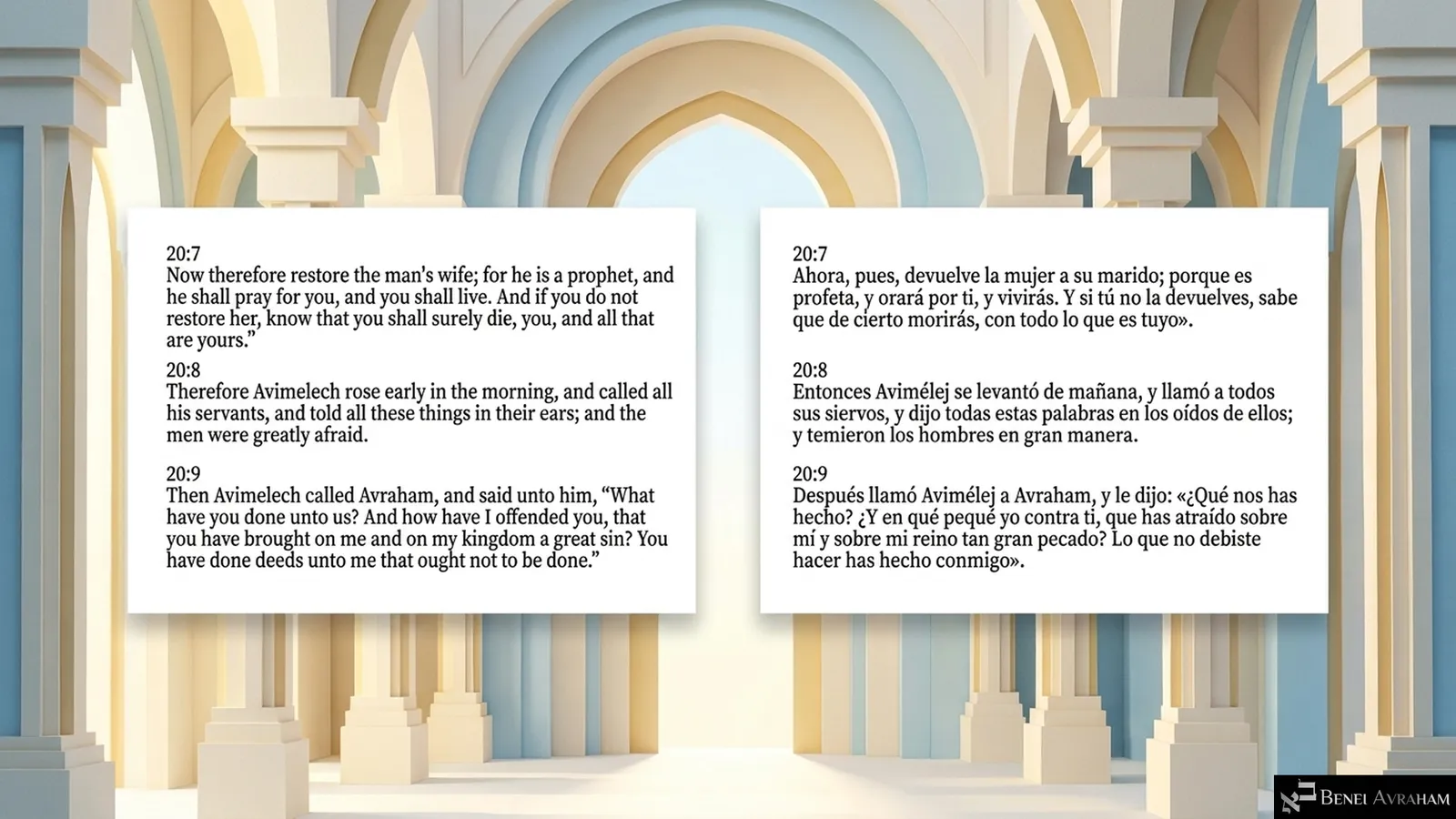
In a palace of arches, Avimelech is told to restore Sarah, for Avraham is a prophet, then confronts him (Genesis 20:7–9).
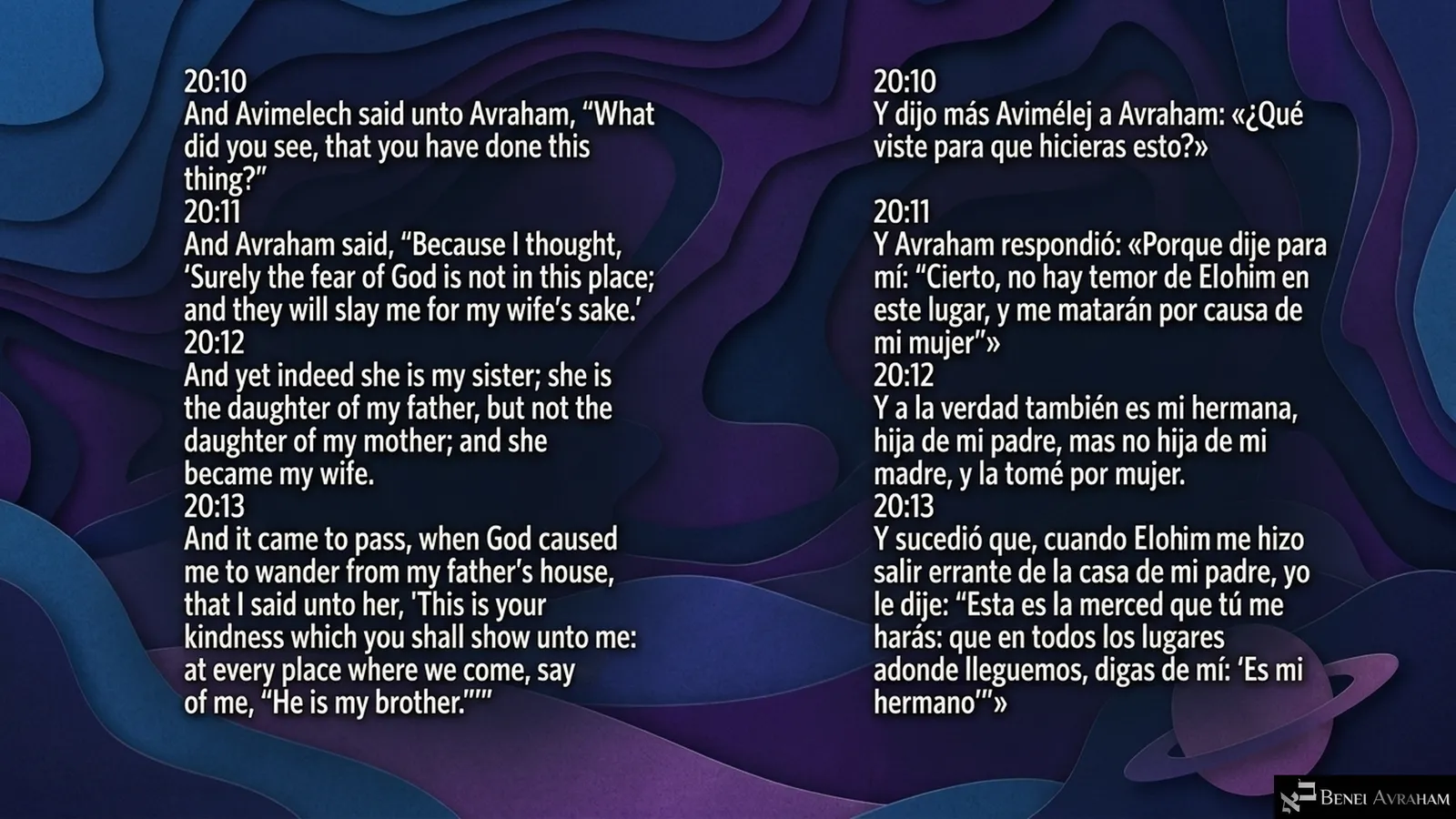
Avraham explains to Avimelech: he feared there was no fear of God there, and Sarah is truly his half-sister (Genesis 20:10–13).
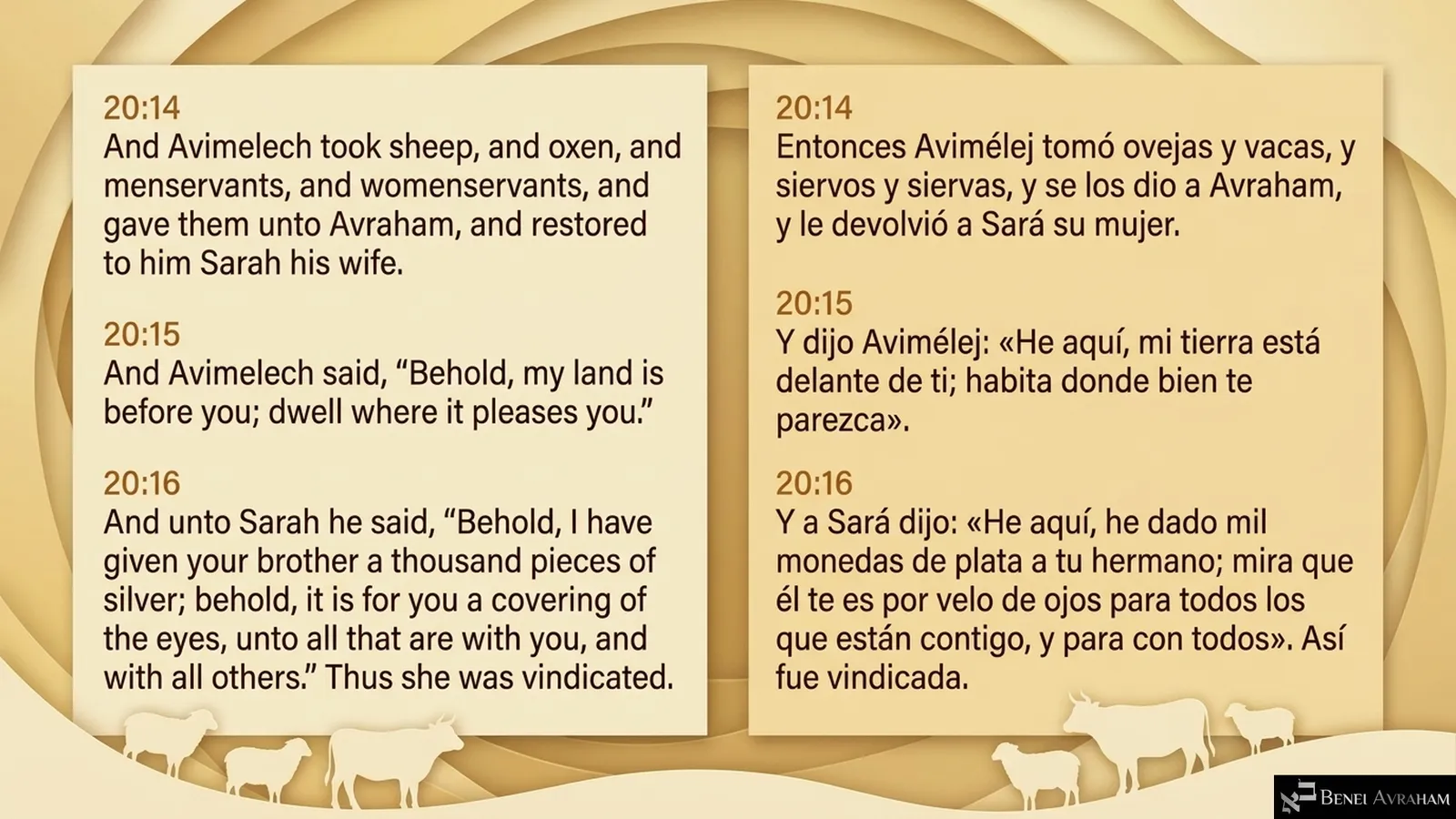
With sheep and oxen, Avimelech restores Sarah, offers his land, and gives a thousand pieces of silver (Genesis 20:14–16).
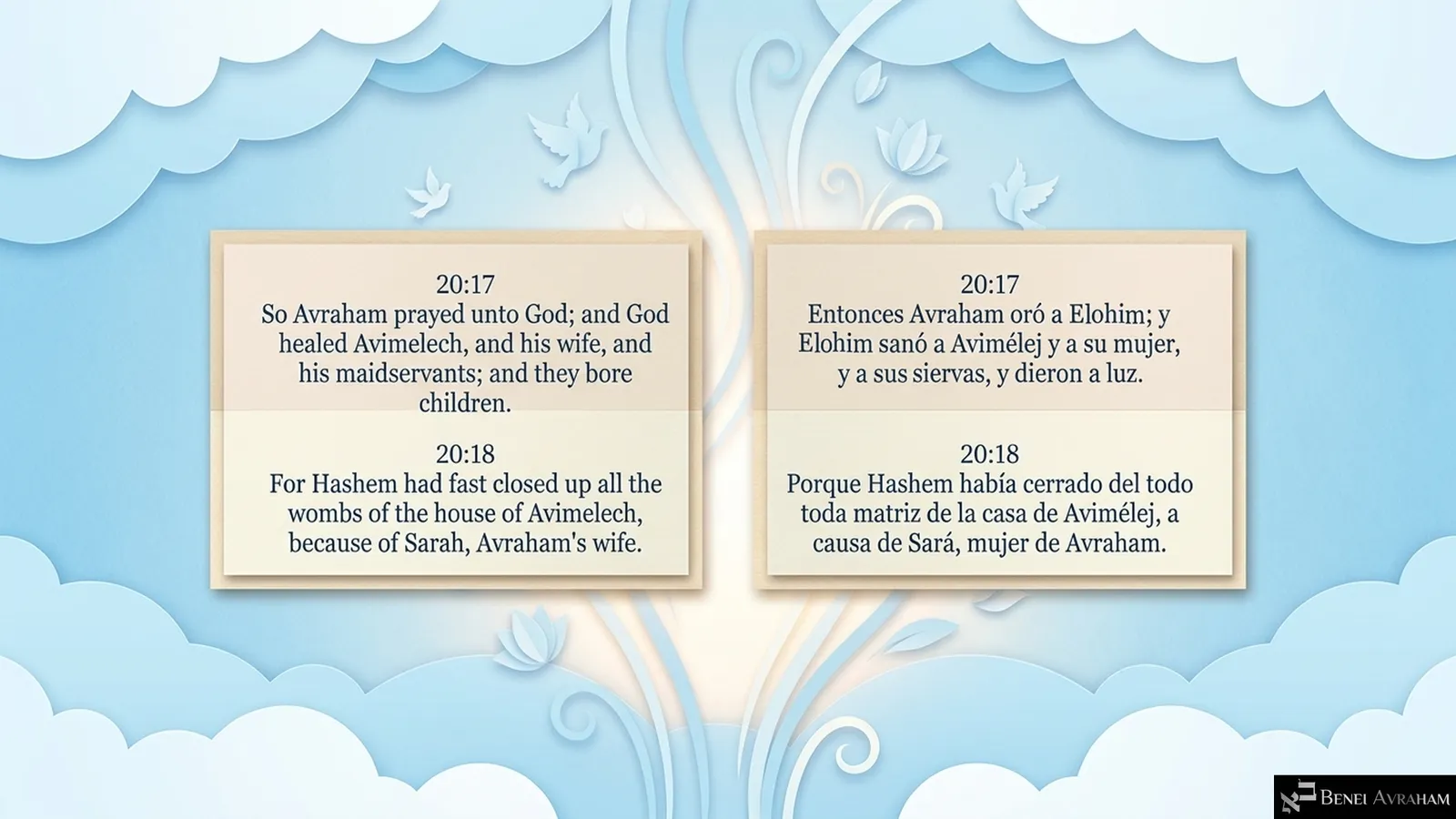
Doves and clouds: Avraham prays, and Avimelech’s household is healed after Hashem had closed its wombs (Genesis 20:17–18).
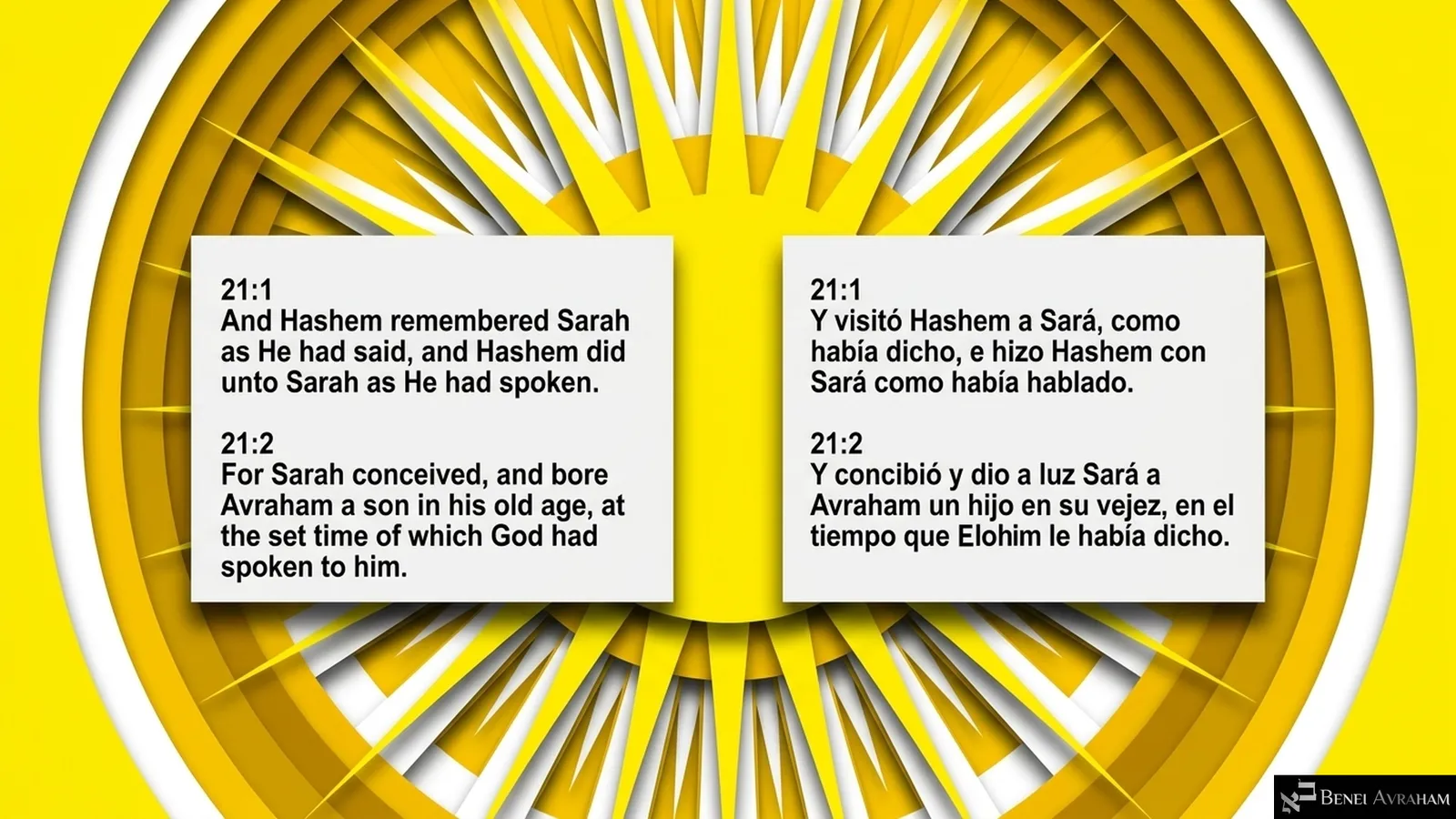
A golden sunburst celebrates Hashem remembering Sarah, who bears Avraham a son in his old age (Genesis 21:1–2).
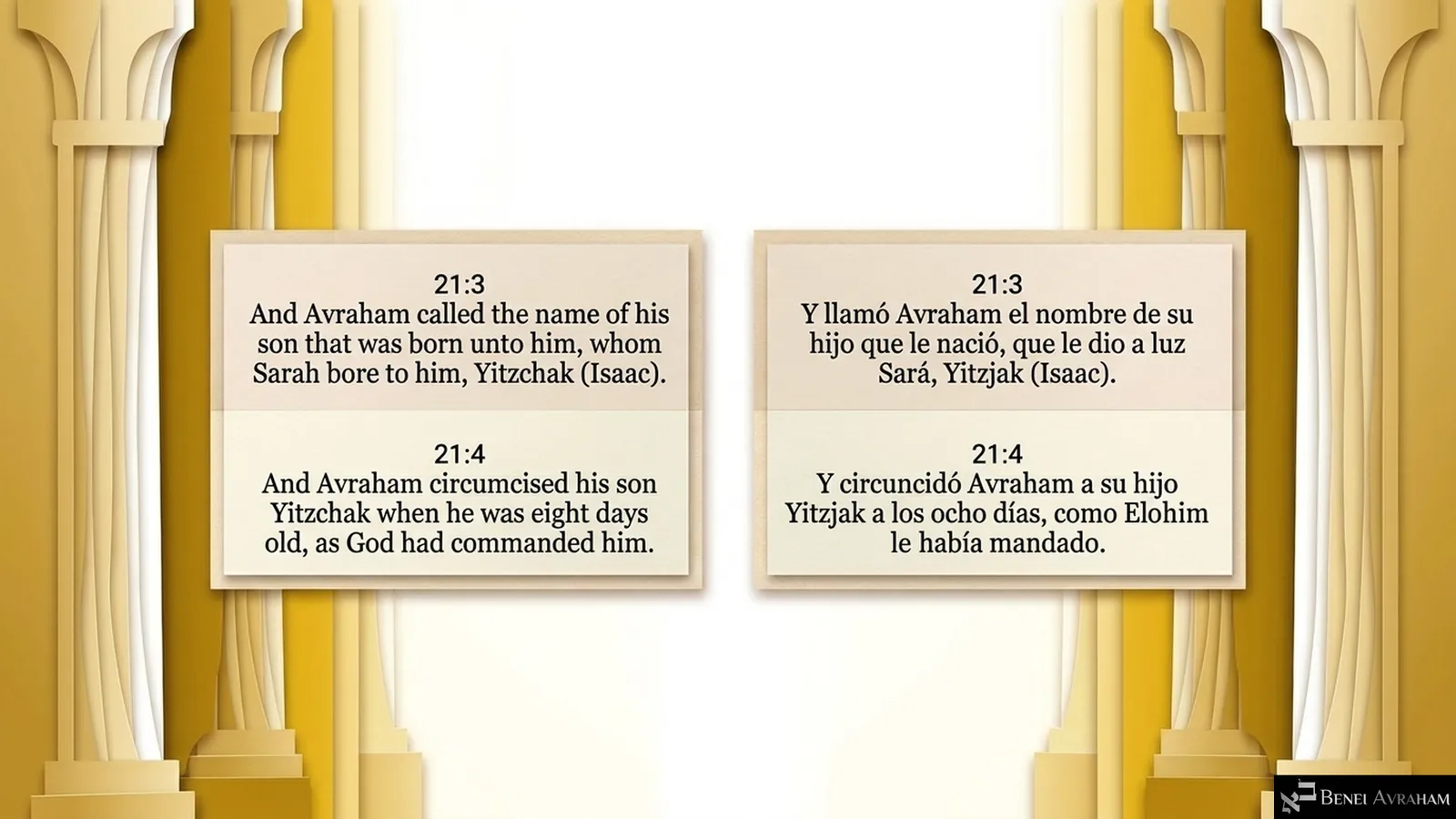
Between golden columns: Avraham names his son Yitzḥak and circumcises him at eight days old (Genesis 21:3–4).
Chamishi · Genesis 21:5–21

Fifth Portion
Title slide for Chamishi, the fifth portion of Vayera: a paper-cut tent and well under a desert sunrise (Genesis 21:5–21).
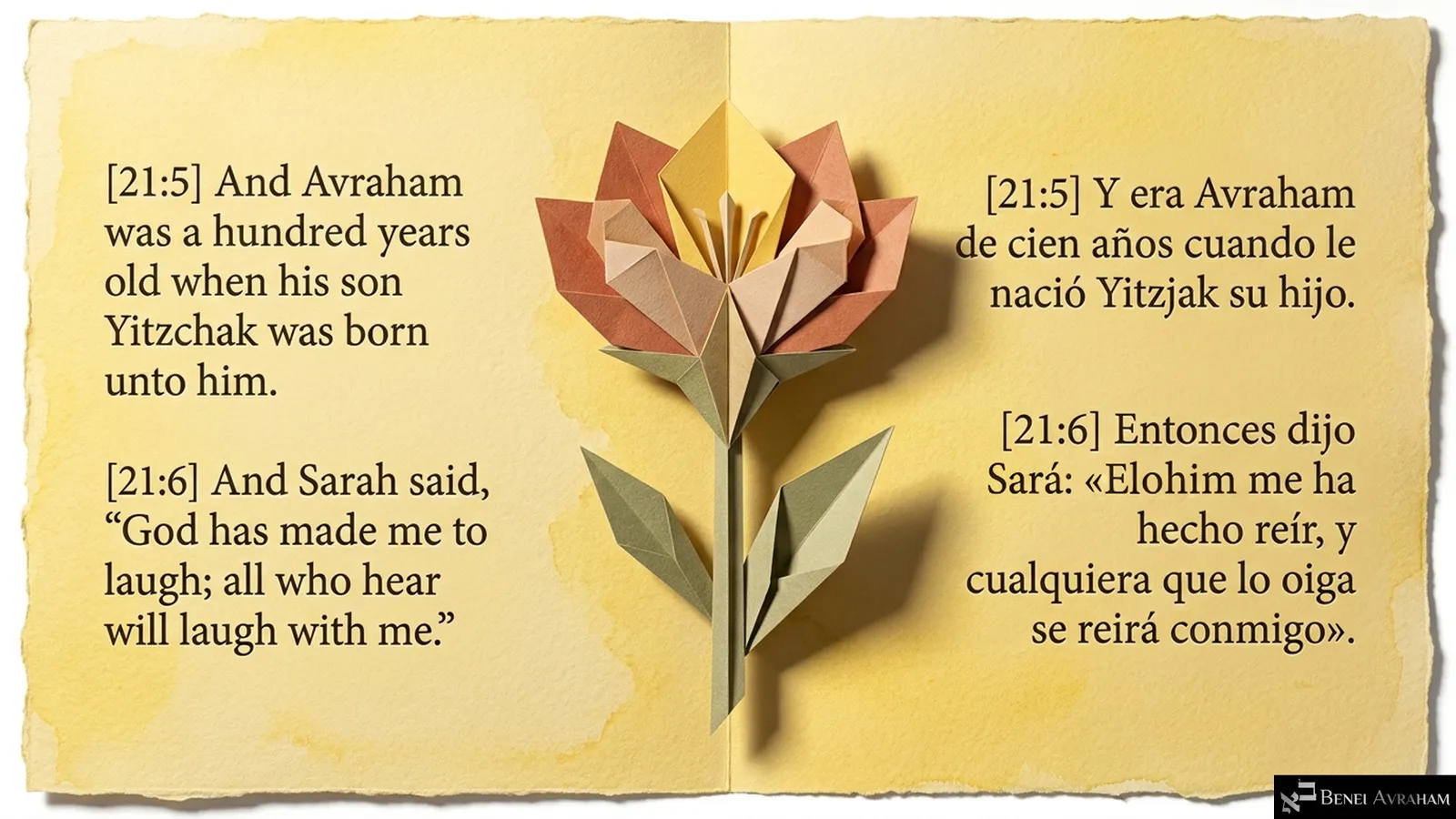
A folded paper flower blooms as Avraham, aged a hundred, welcomes Yitzḥak and Sarah laughs for joy (Genesis 21:5–6).
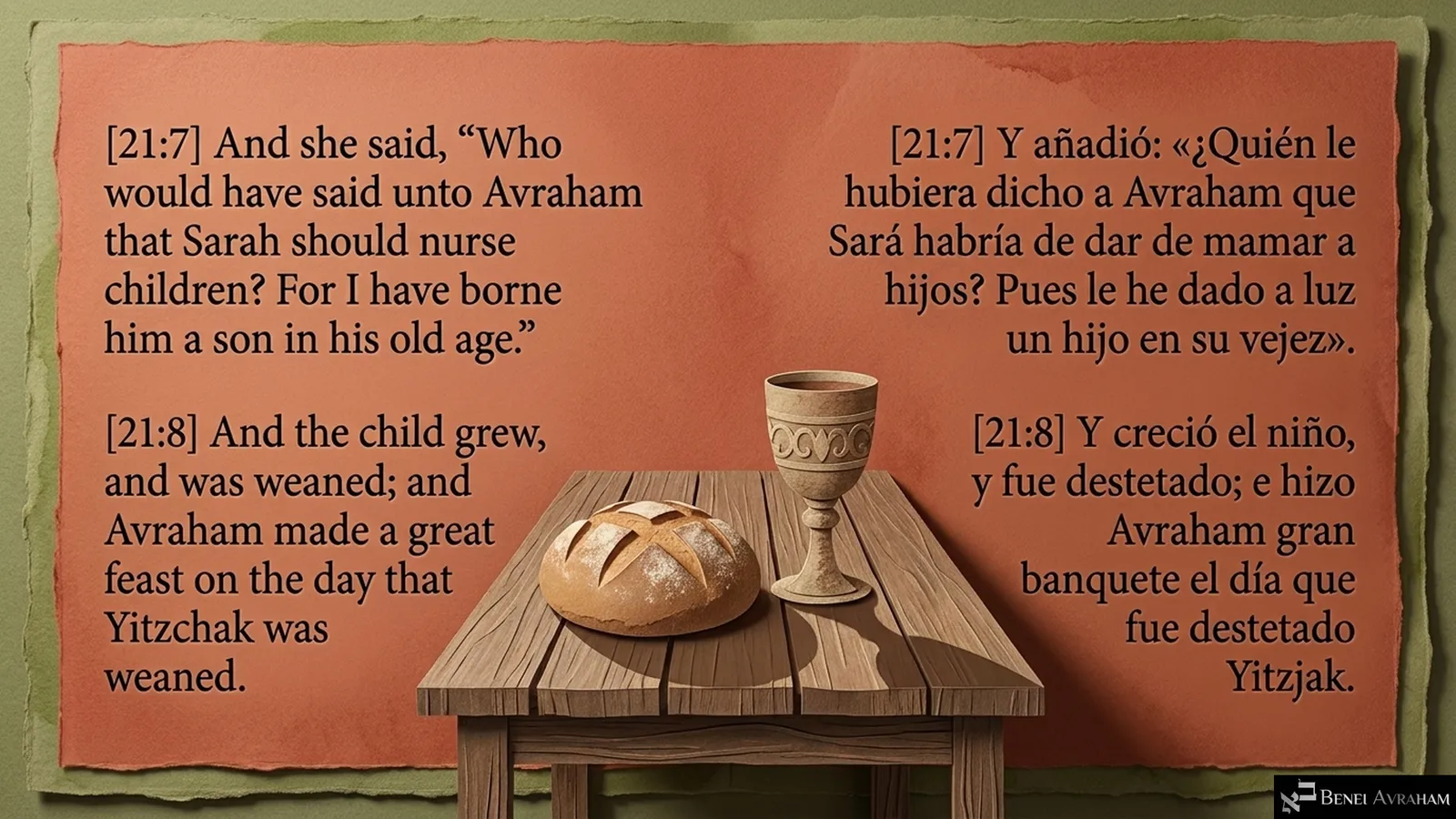
Bread and a cup on a wooden table recall Avraham’s great feast on the day Yitzḥak was weaned (Genesis 21:7–8).
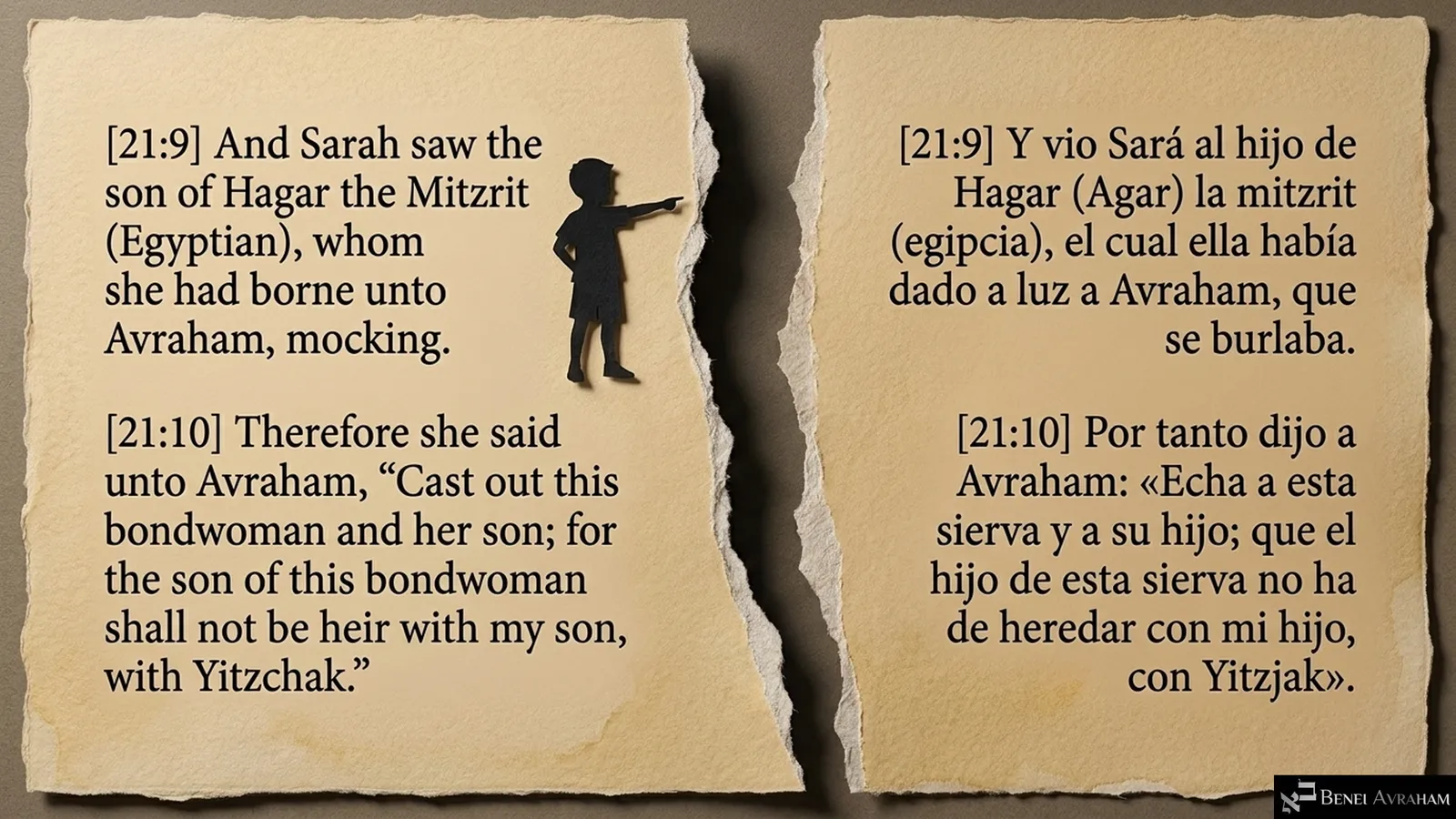
On torn parchment a boy’s silhouette points and mocks; Sarah asks Avraham to cast out the bondwoman and her son (Genesis 21:9–10).
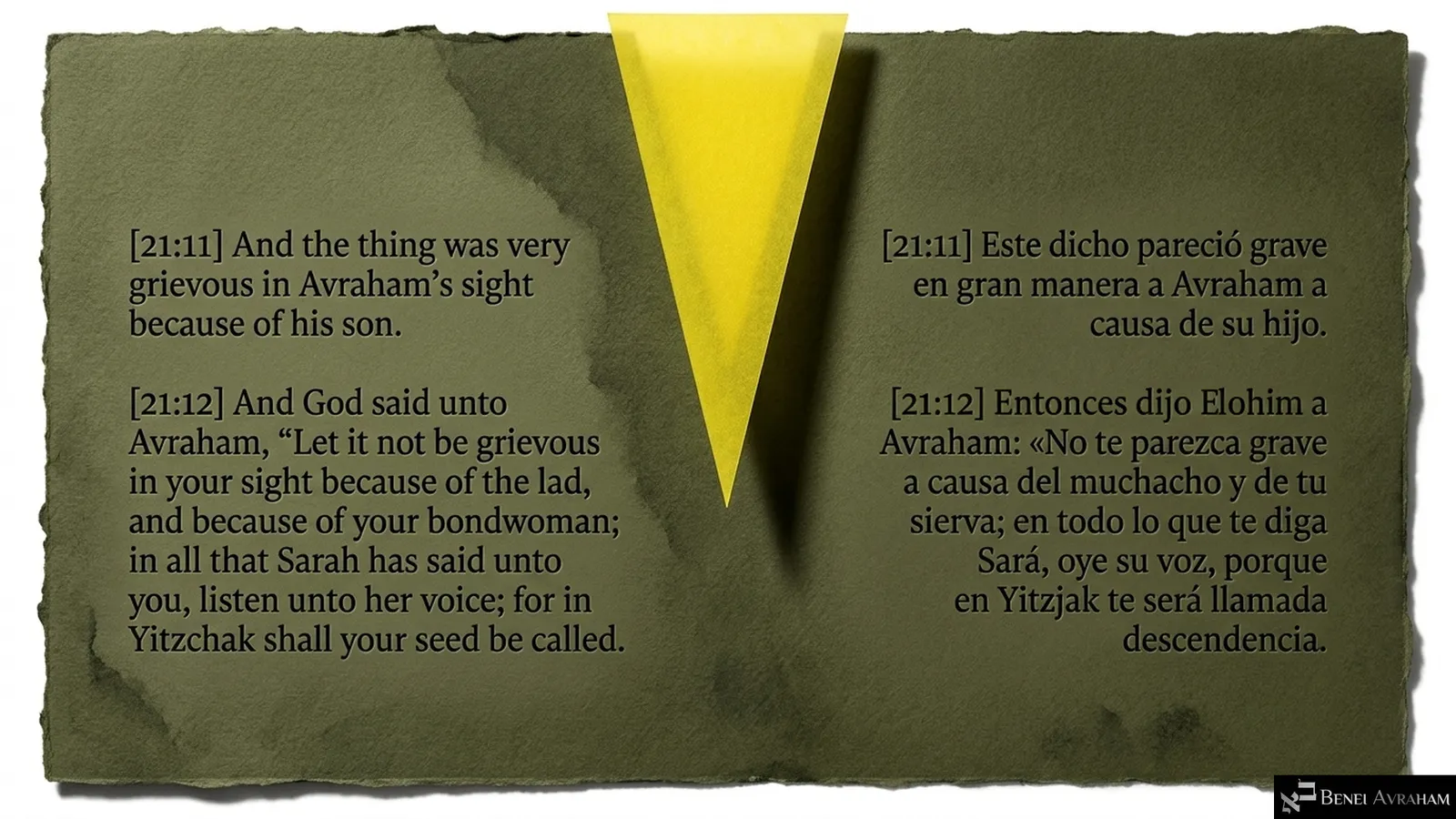
A shaft of light divides the page as God tells Avraham to listen to Sarah: “in Yitzḥak shall your seed be called” (Genesis 21:11–12).
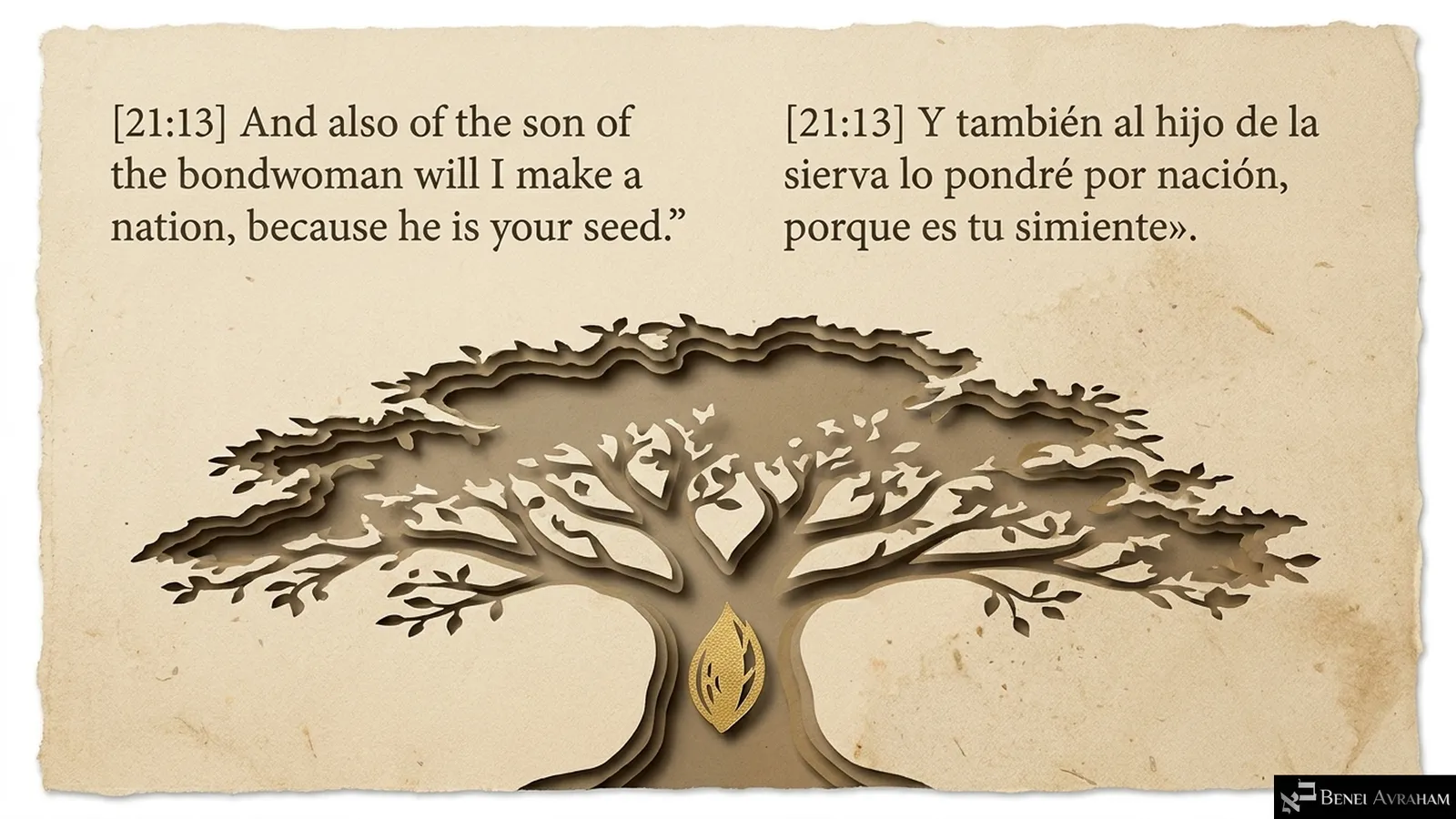
A great paper-cut tree pictures God’s promise to make the bondwoman’s son a nation too (Genesis 21:13).
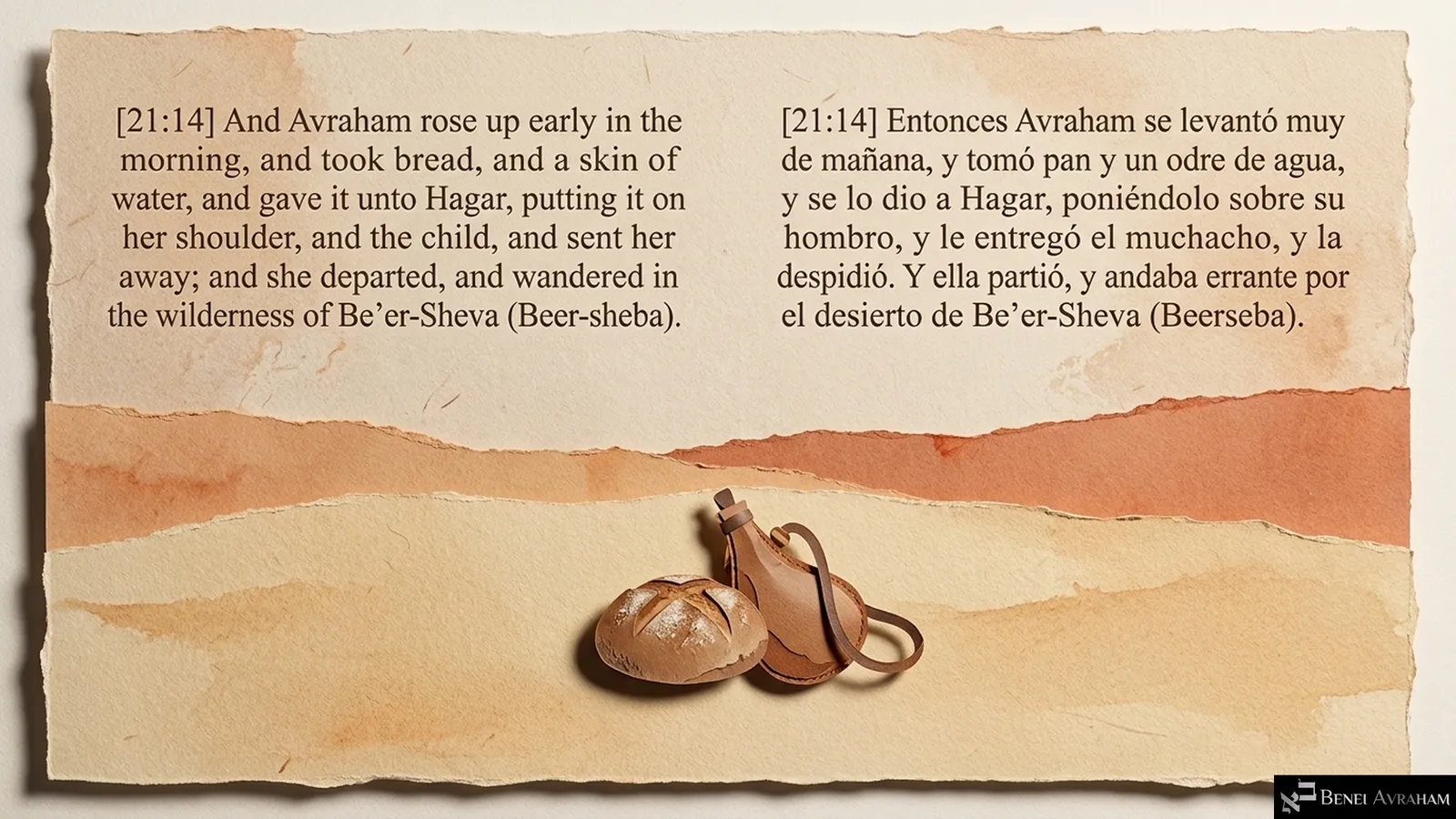
Bread and a water skin in the desert: Avraham sends Hagar and the child away into the wilderness of Be’er-Sheva (Genesis 21:14).
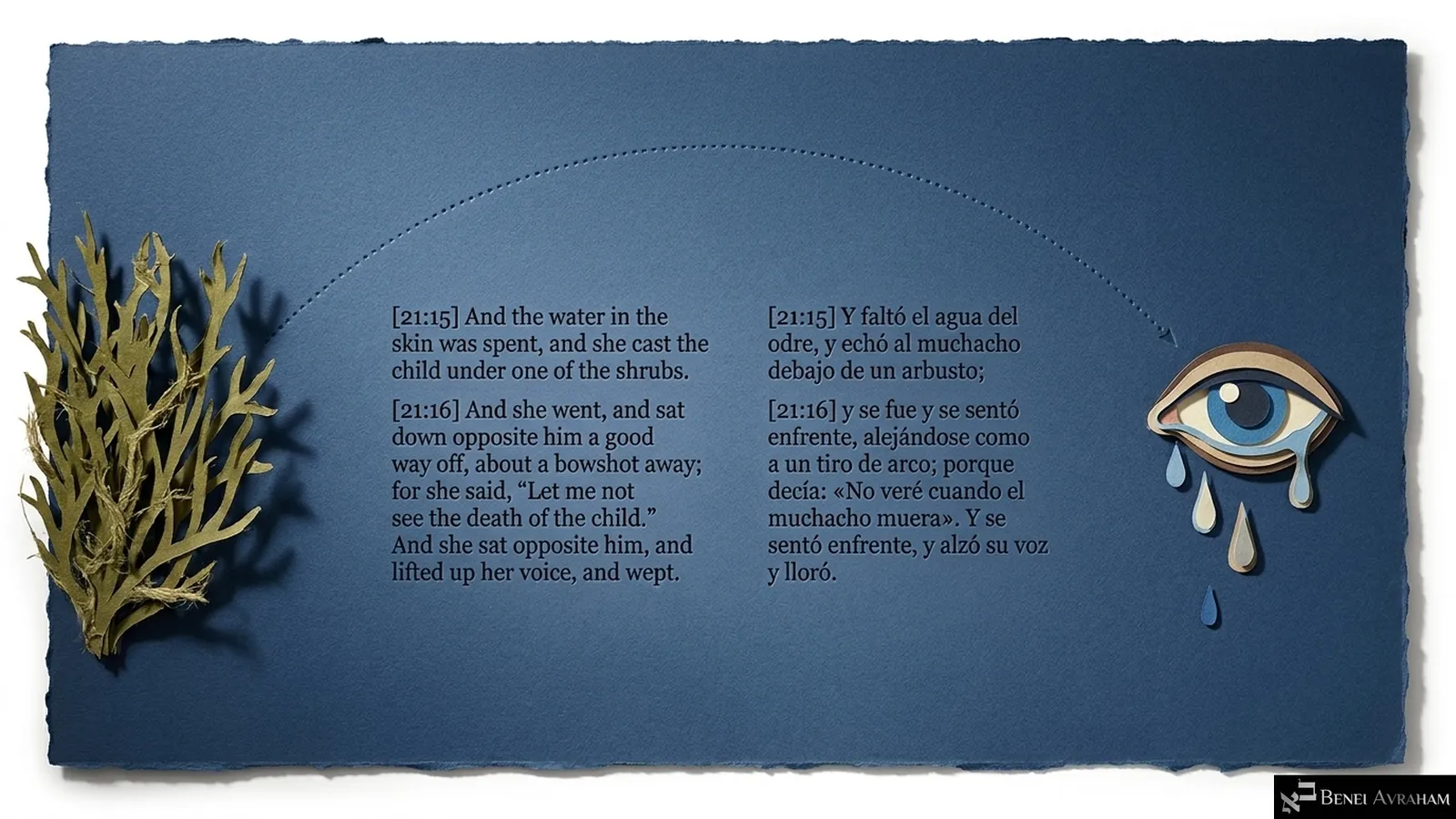
A shrub and a weeping eye: with the water spent, Hagar sits a bowshot away so as not to see the child die (Genesis 21:15–16).
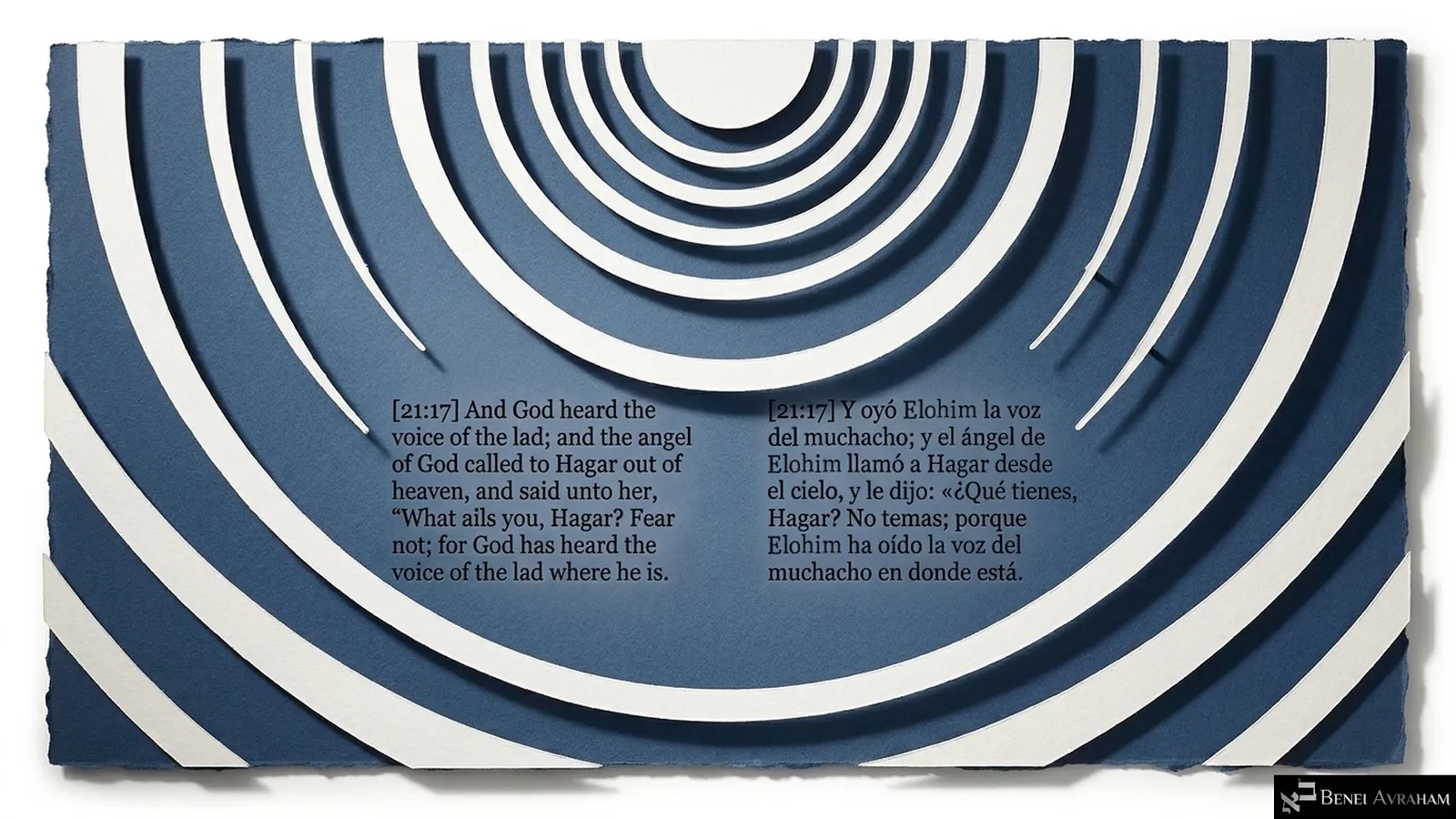
Rings of sound ripple from heaven as God hears the lad’s voice and the angel calls to Hagar, “Fear not” (Genesis 21:17).
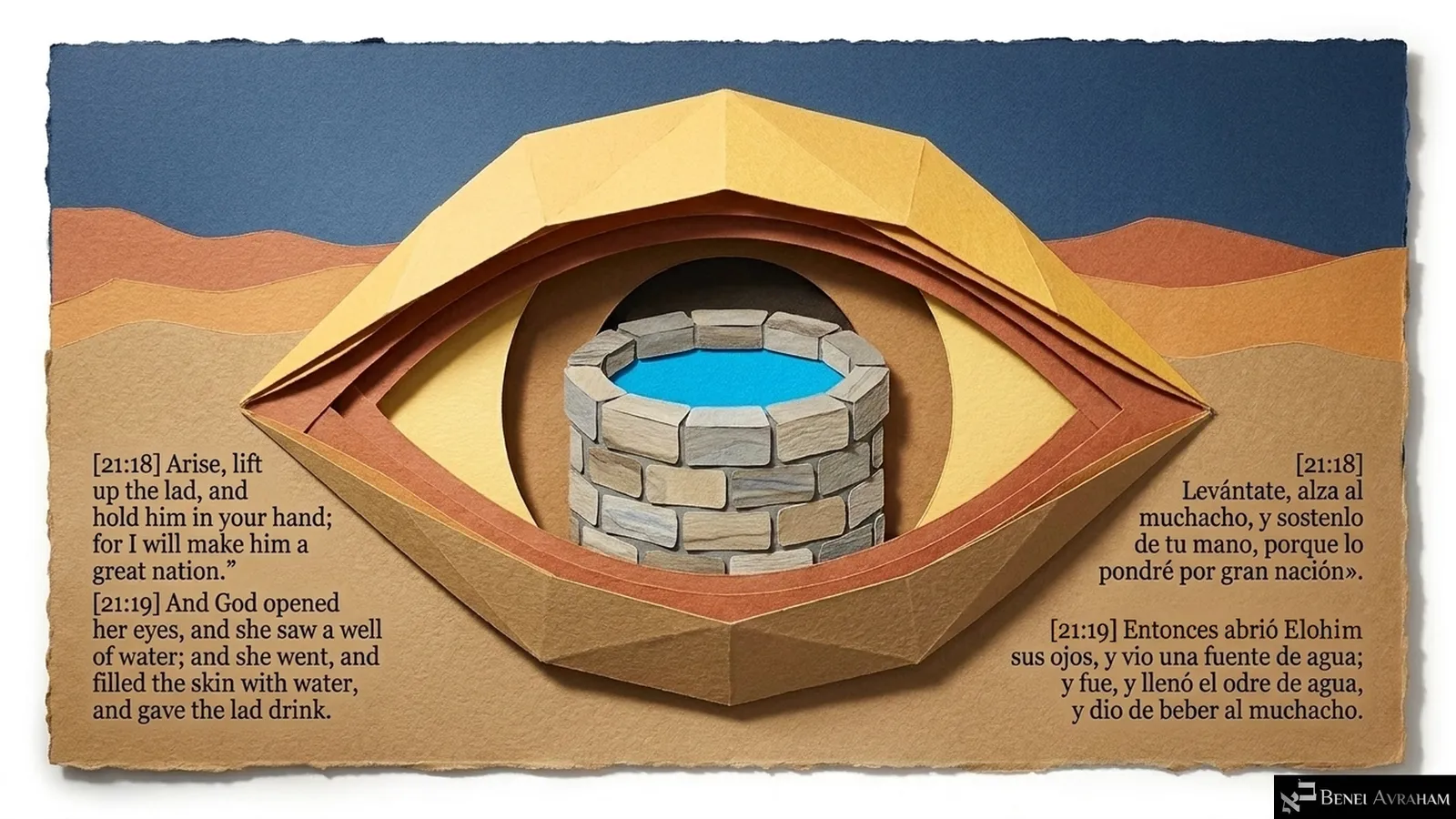
An opened eye frames a well of water: God opens Hagar’s eyes and she gives the lad drink (Genesis 21:18–19).
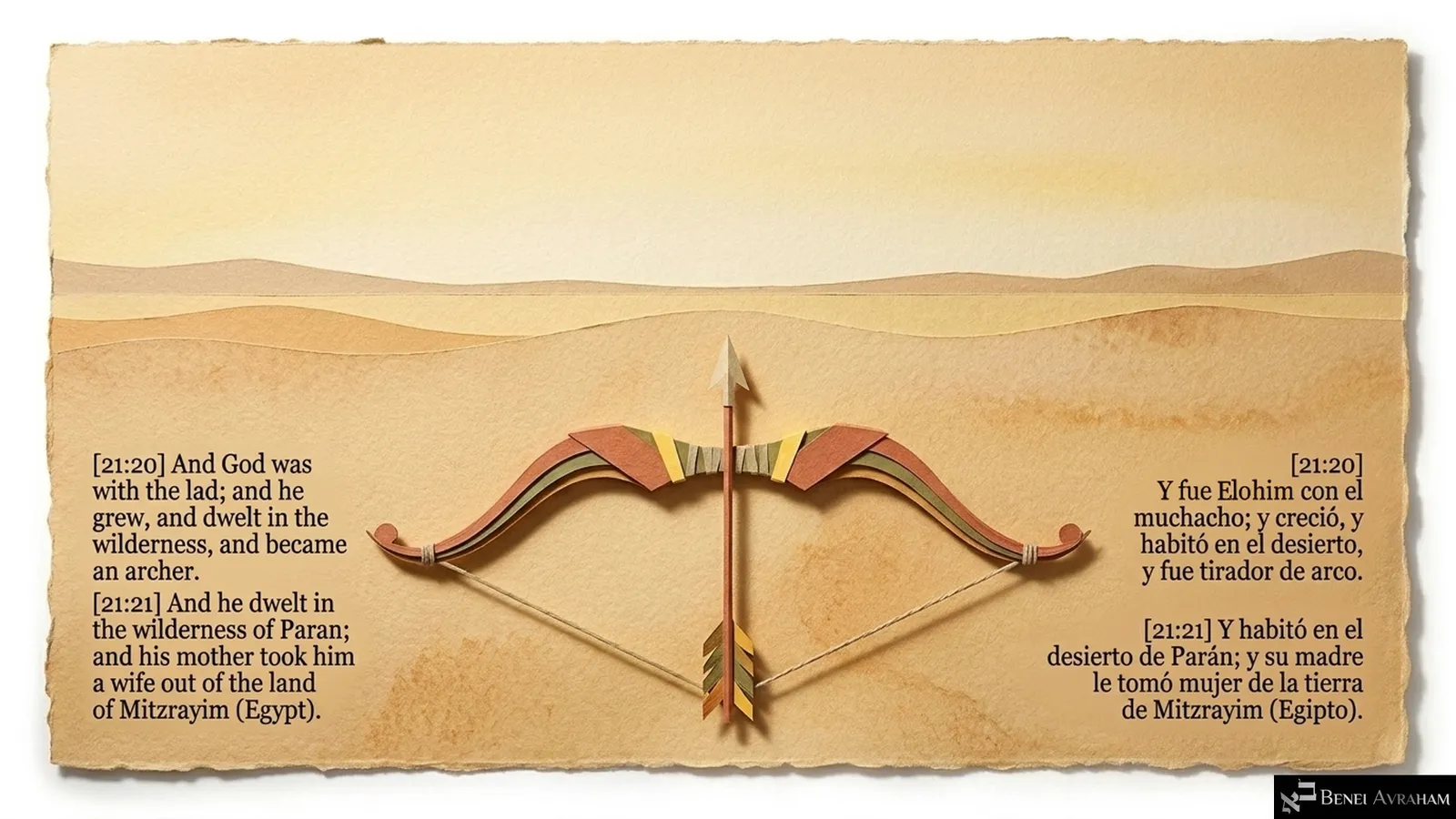
A bow and arrow in the desert: Yishmael grows up an archer in the wilderness of Paran, with a wife from Mitzrayim (Genesis 21:20–21).
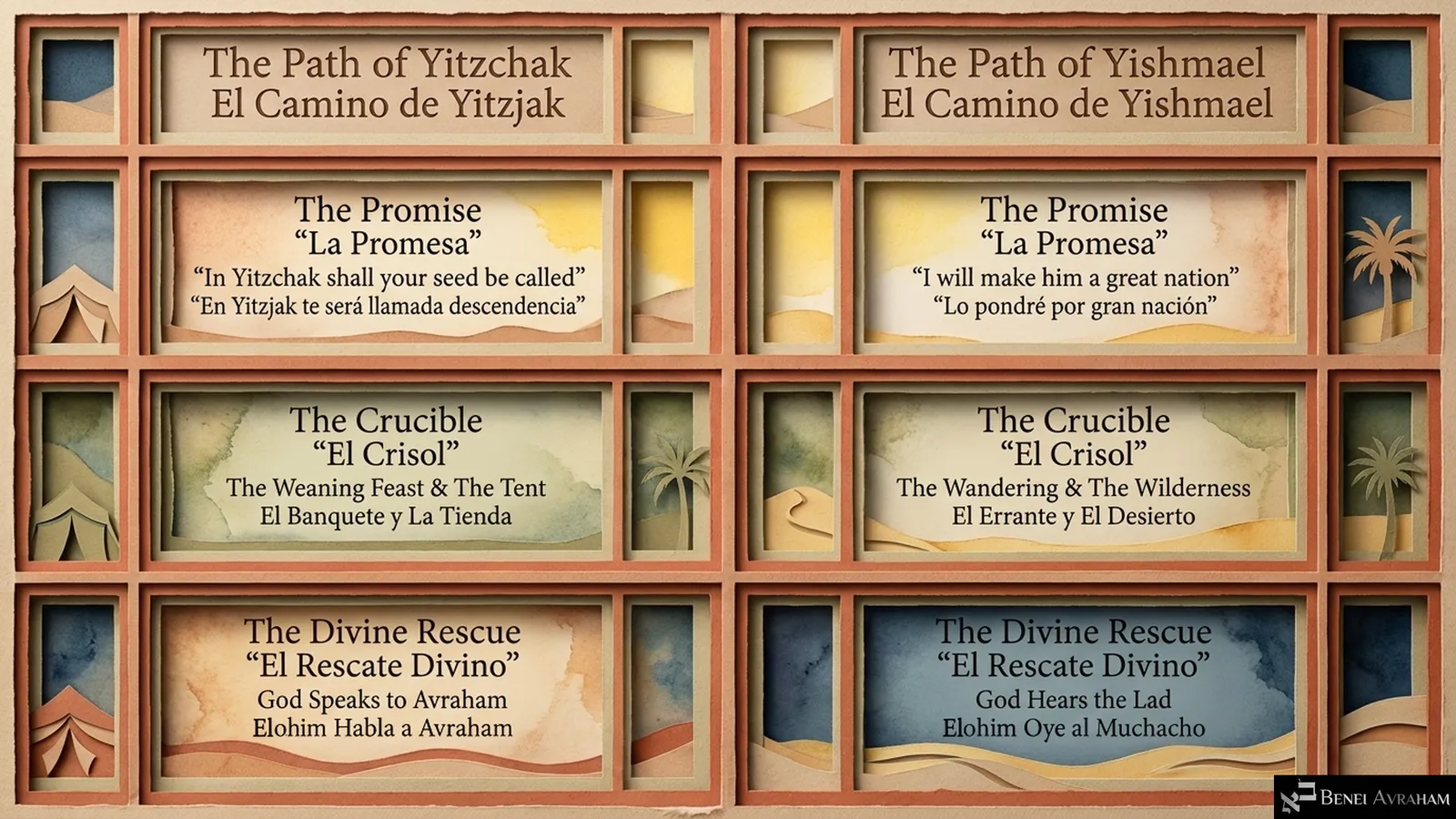
Summary chart comparing the paths of Yitzḥak and Yishmael: the promise, the crucible and the divine rescue of each son.
Shishi · Genesis 21:22–34

Sixth Portion
Title slide for Shishi, the sixth portion of Vayera: “The Covenant at Be’er-Sheva” over paper-cut desert dunes (Genesis 21:22–34).
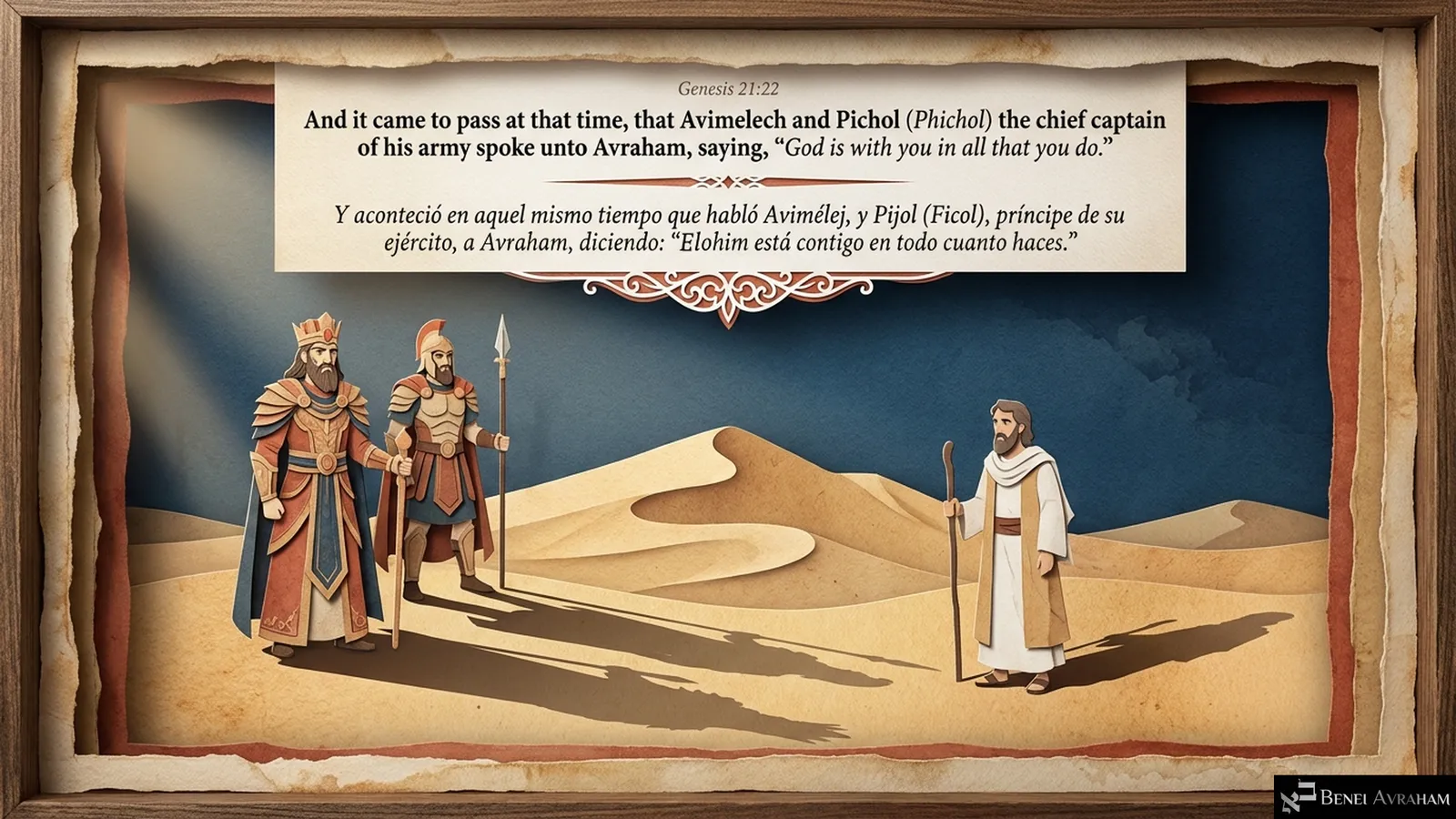
King Avimelech and his captain Pichol approach Avraham: “God is with you in all that you do” (Genesis 21:22).
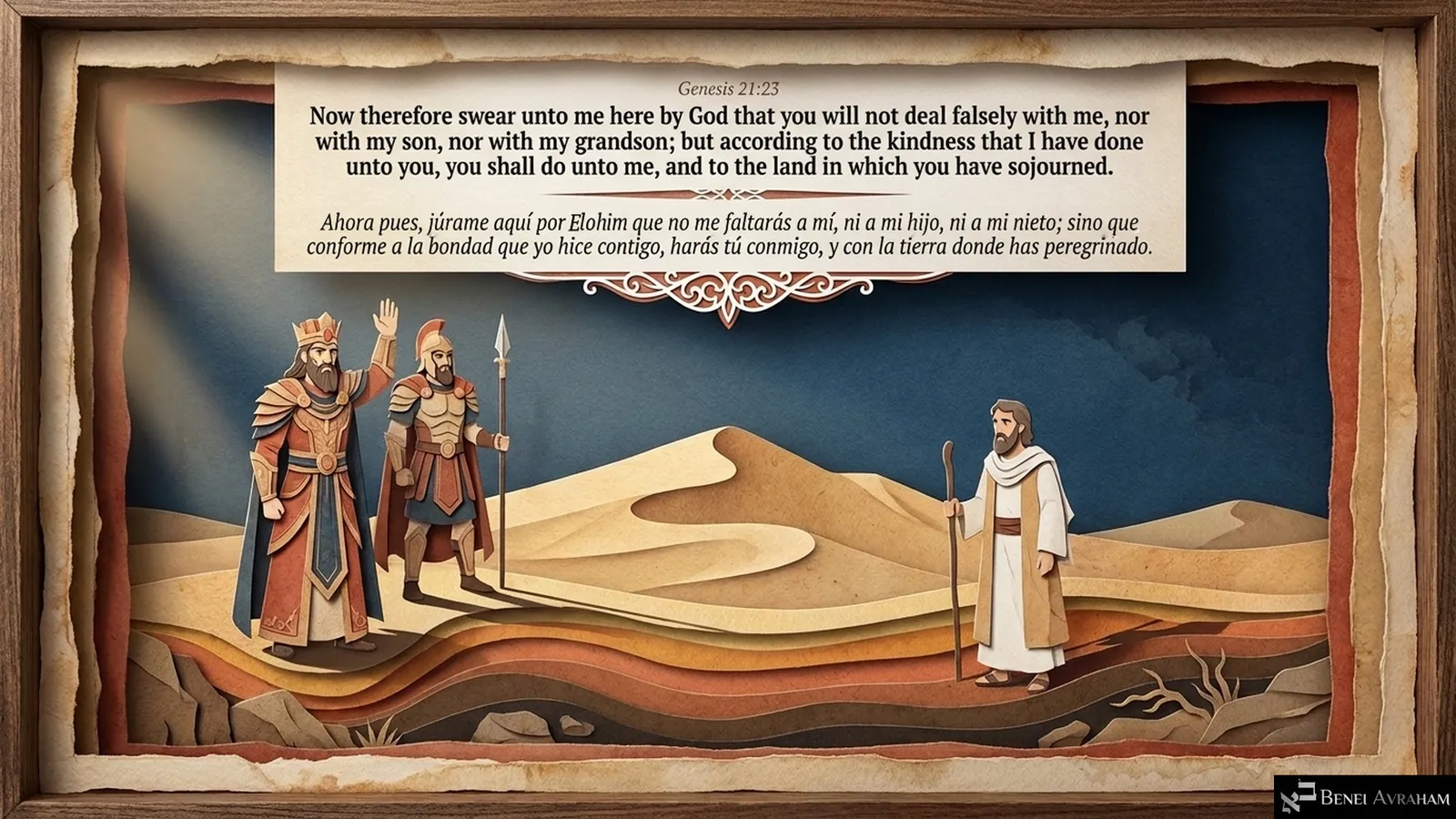
With raised hand Avimelech asks Avraham to swear by God to deal kindly with him and his descendants (Genesis 21:23).
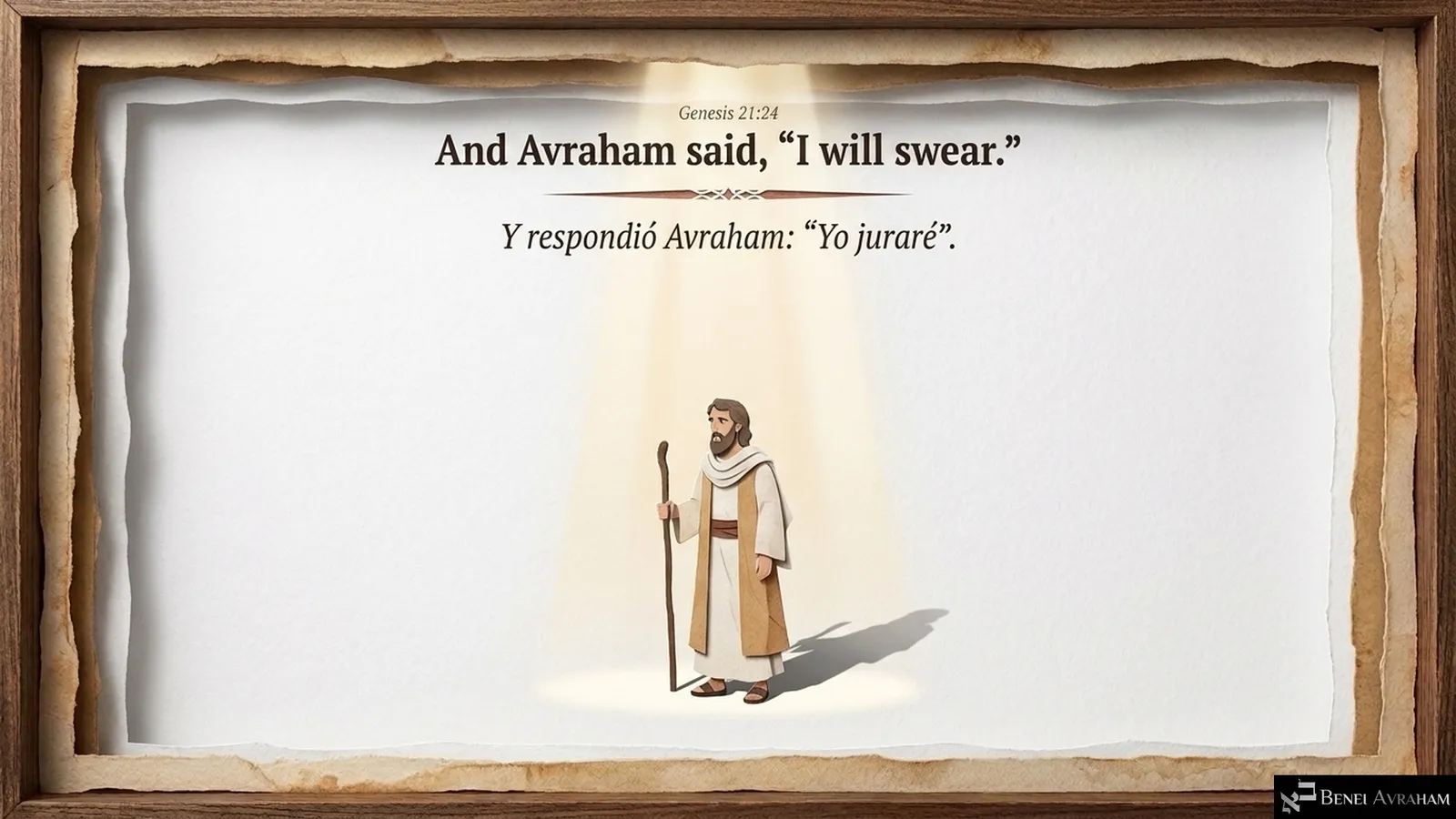
Avraham stands alone in a shaft of light and answers simply, “I will swear” (Genesis 21:24).
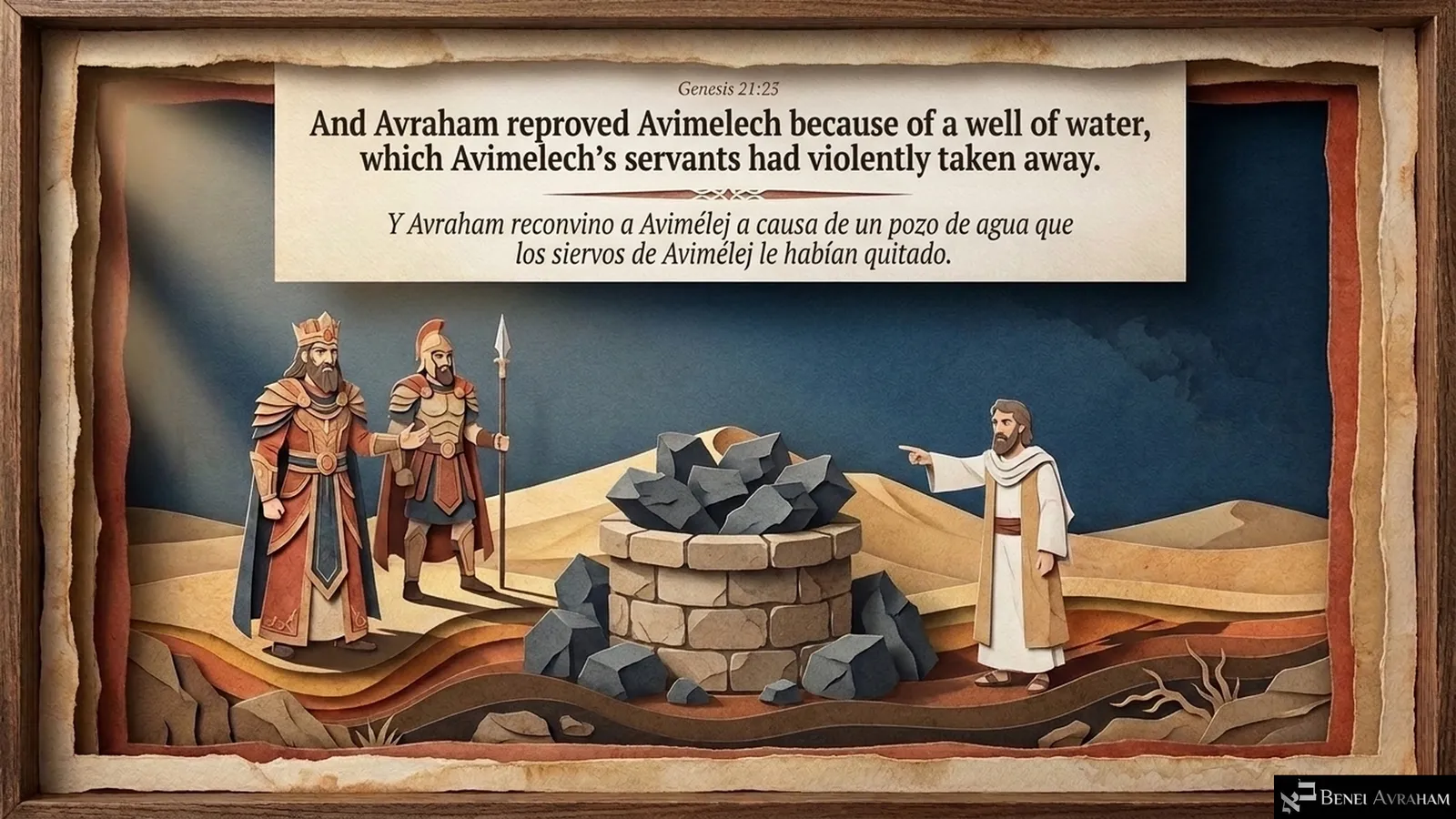
Beside a well blocked with stones, Avraham reproves Avimelech over the well his servants seized (Genesis 21:25).
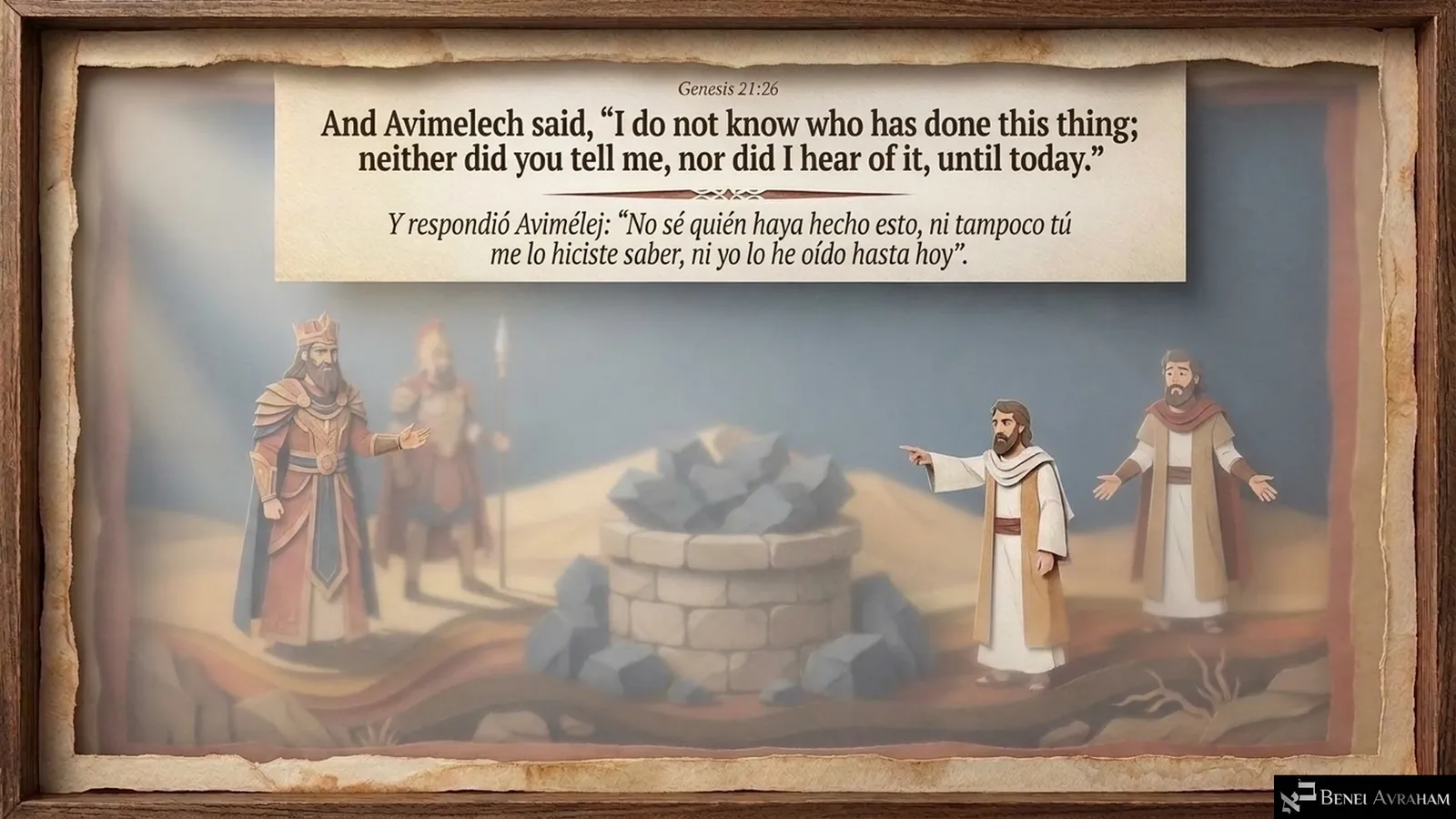
Avimelech spreads his hands: he did not know who had done this thing until today (Genesis 21:26).
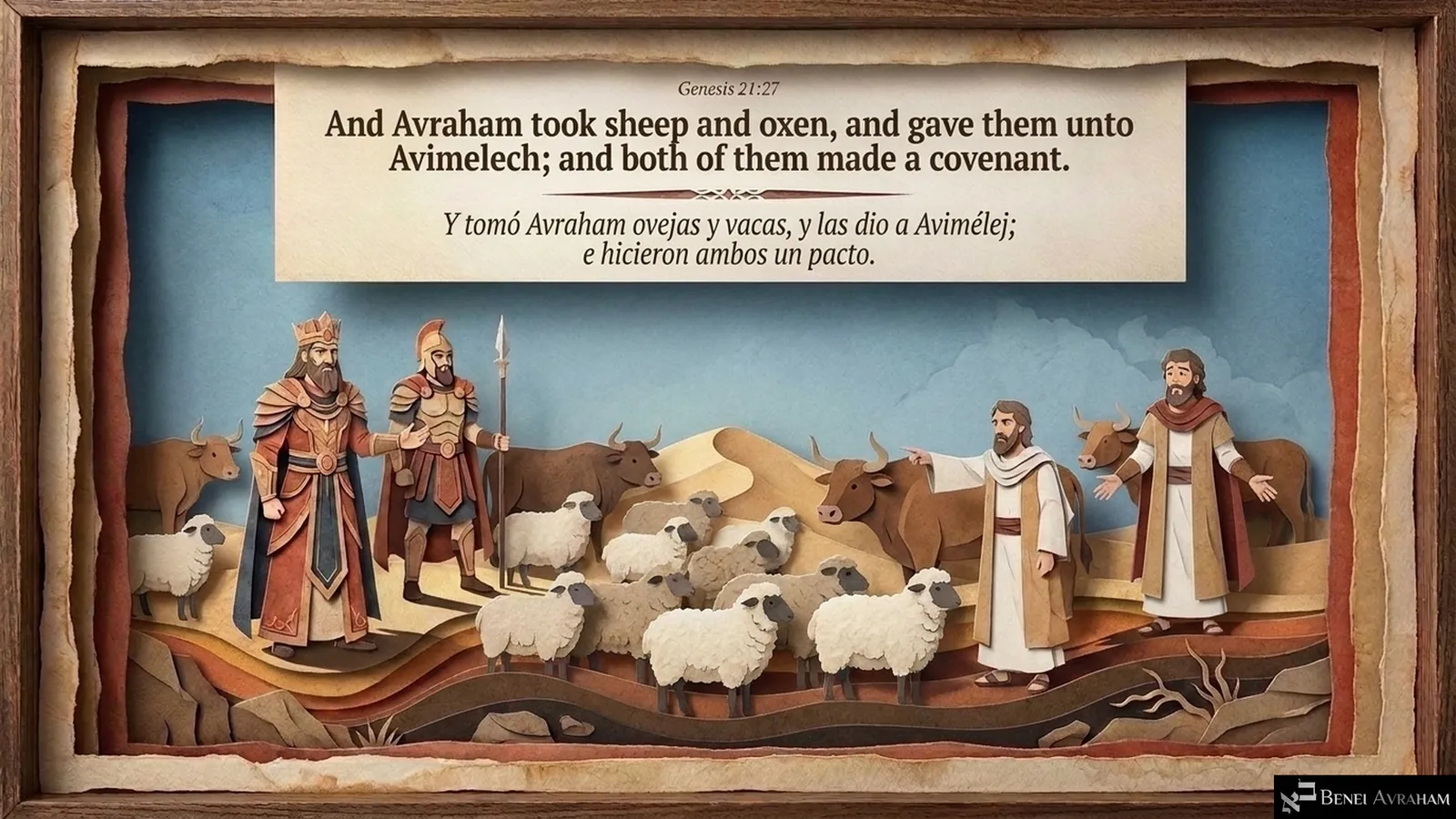
Sheep and oxen fill the scene as Avraham gives them to Avimelech and the two make a covenant (Genesis 21:27).
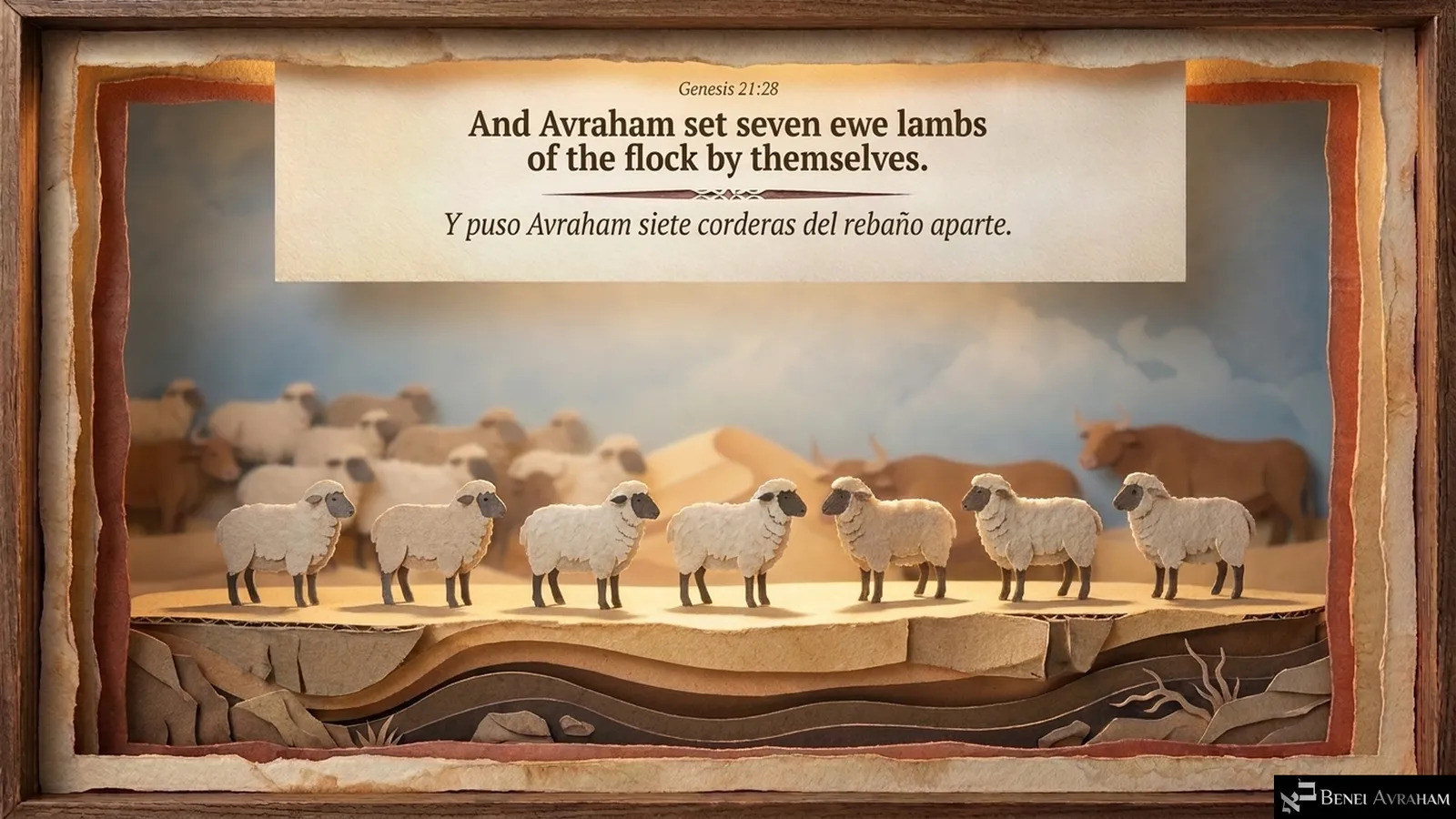
Seven ewe lambs stand in a row, set apart by Avraham from the flock (Genesis 21:28).
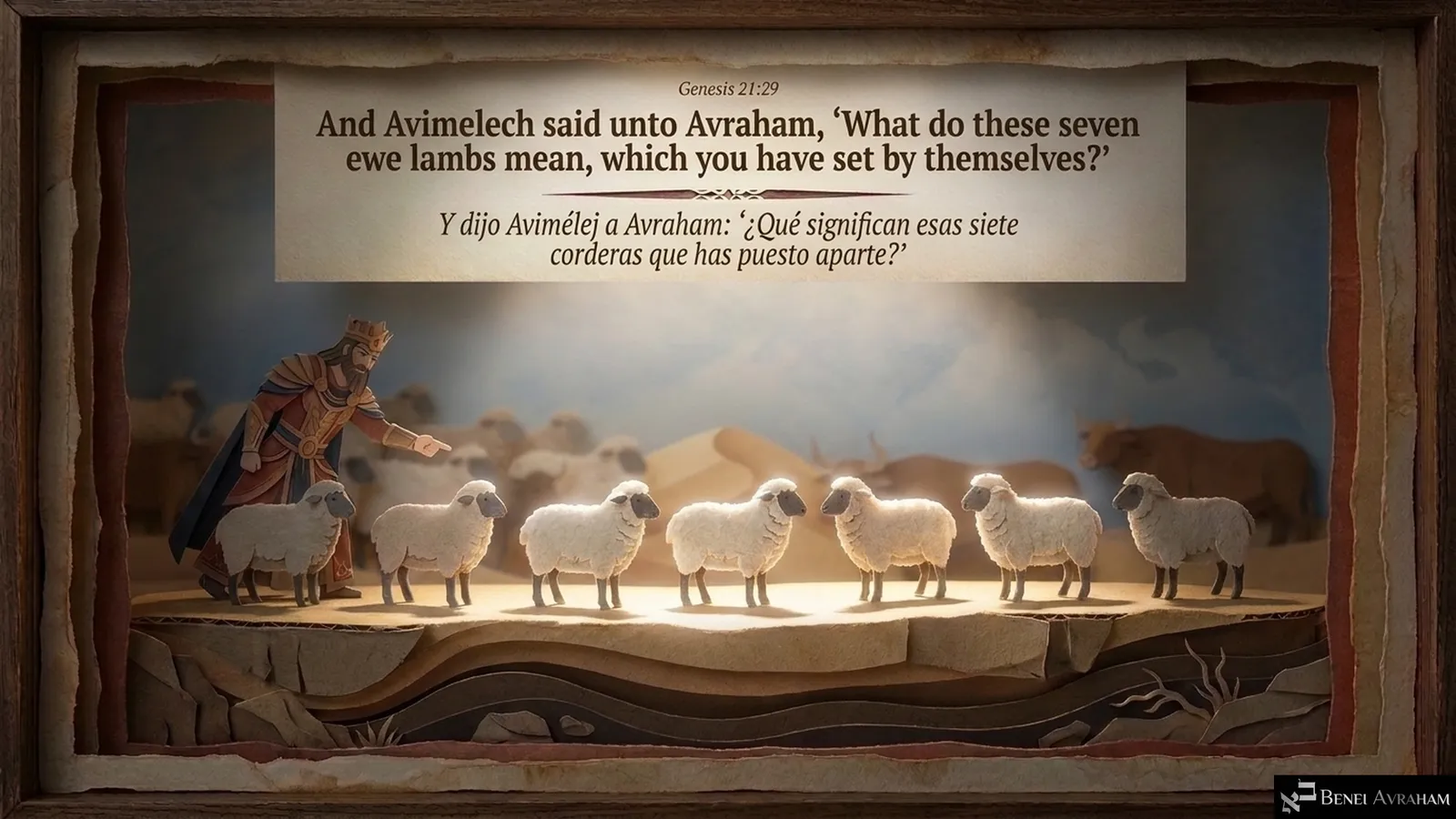
Avimelech points to the seven ewe lambs and asks what they mean (Genesis 21:29).
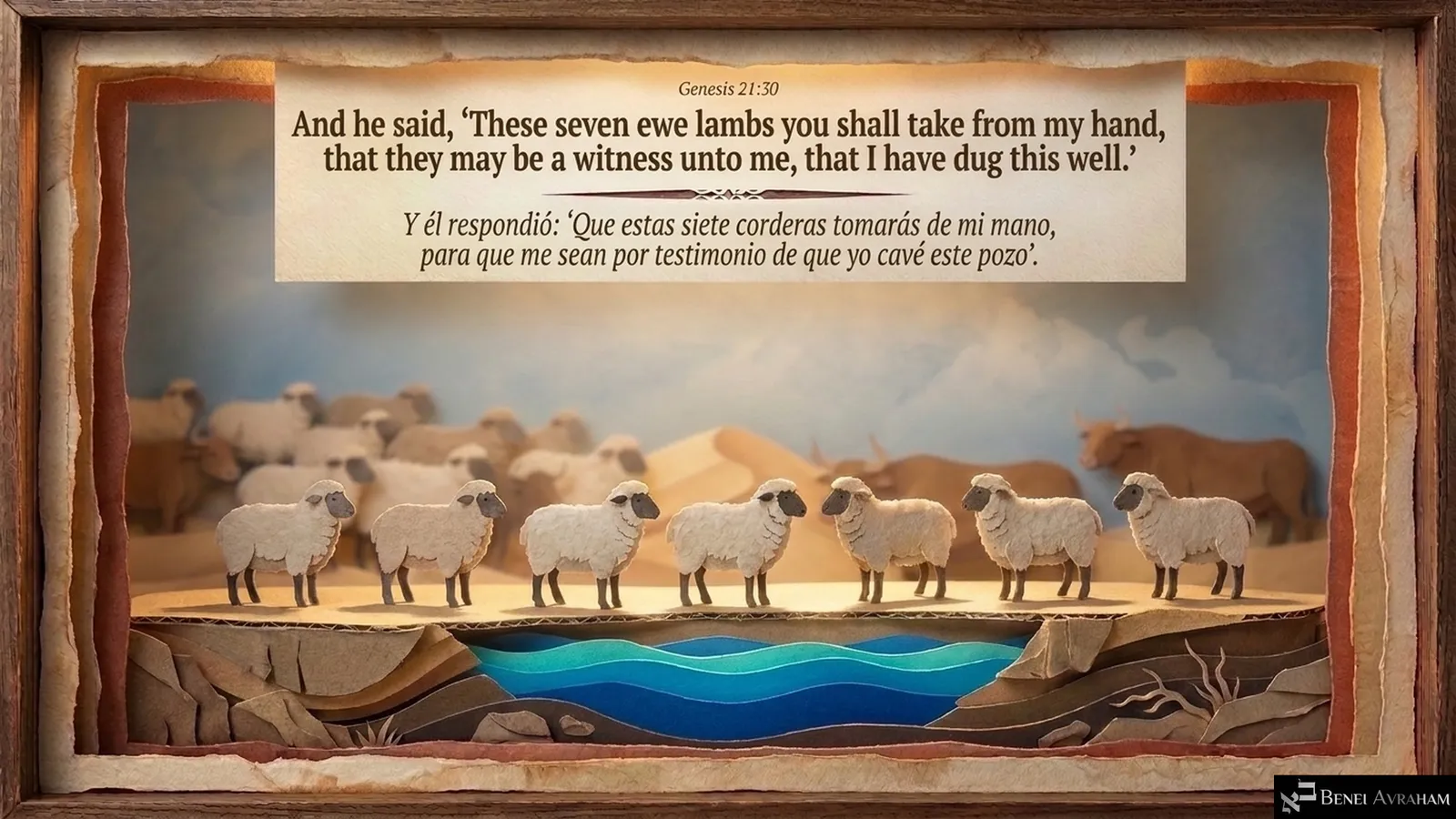
Water flows beneath the seven ewe lambs, a witness that Avraham dug this well (Genesis 21:30).
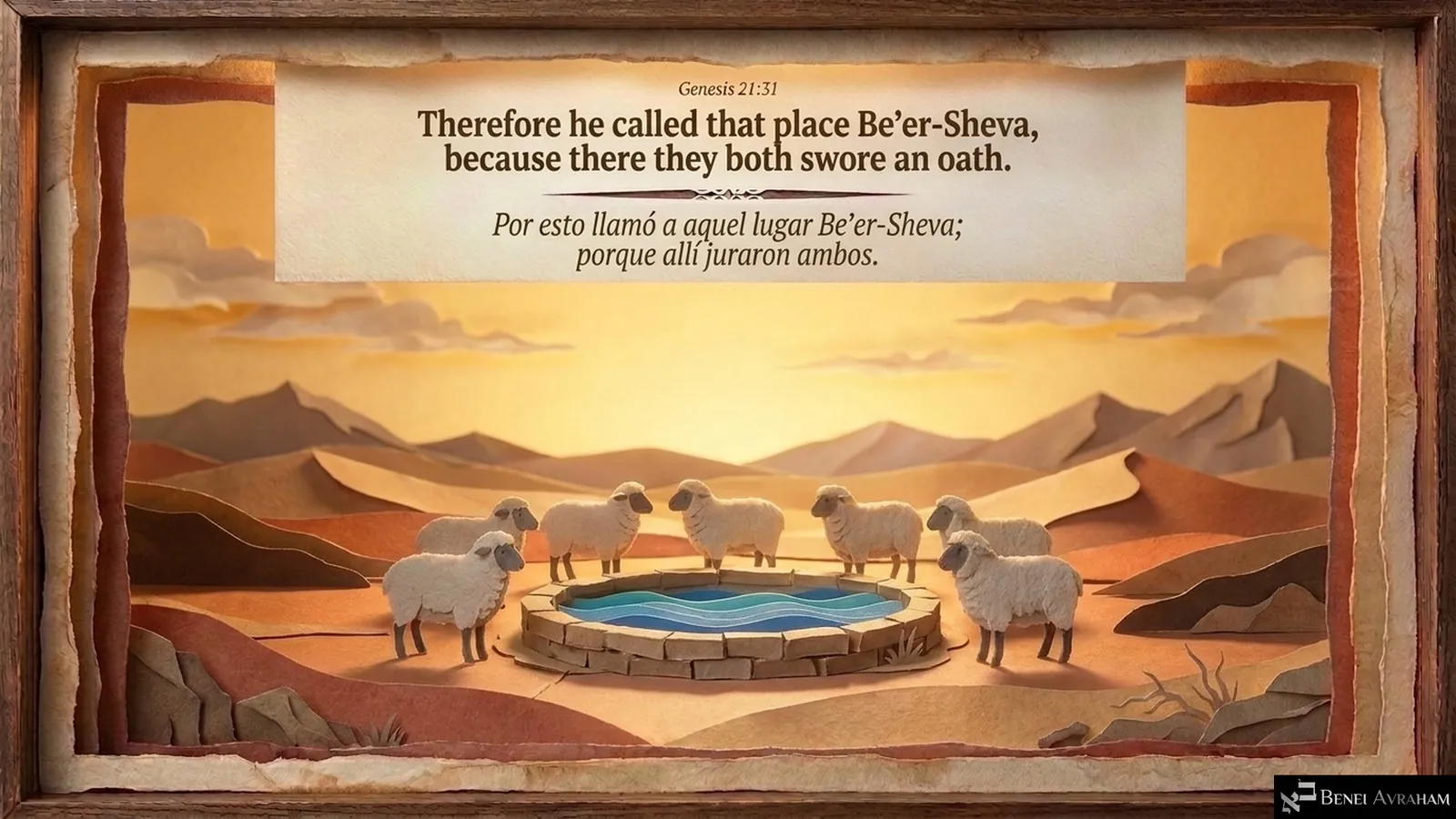
Sheep gather around the well as the place is named Be’er-Sheva, where both swore an oath (Genesis 21:31).
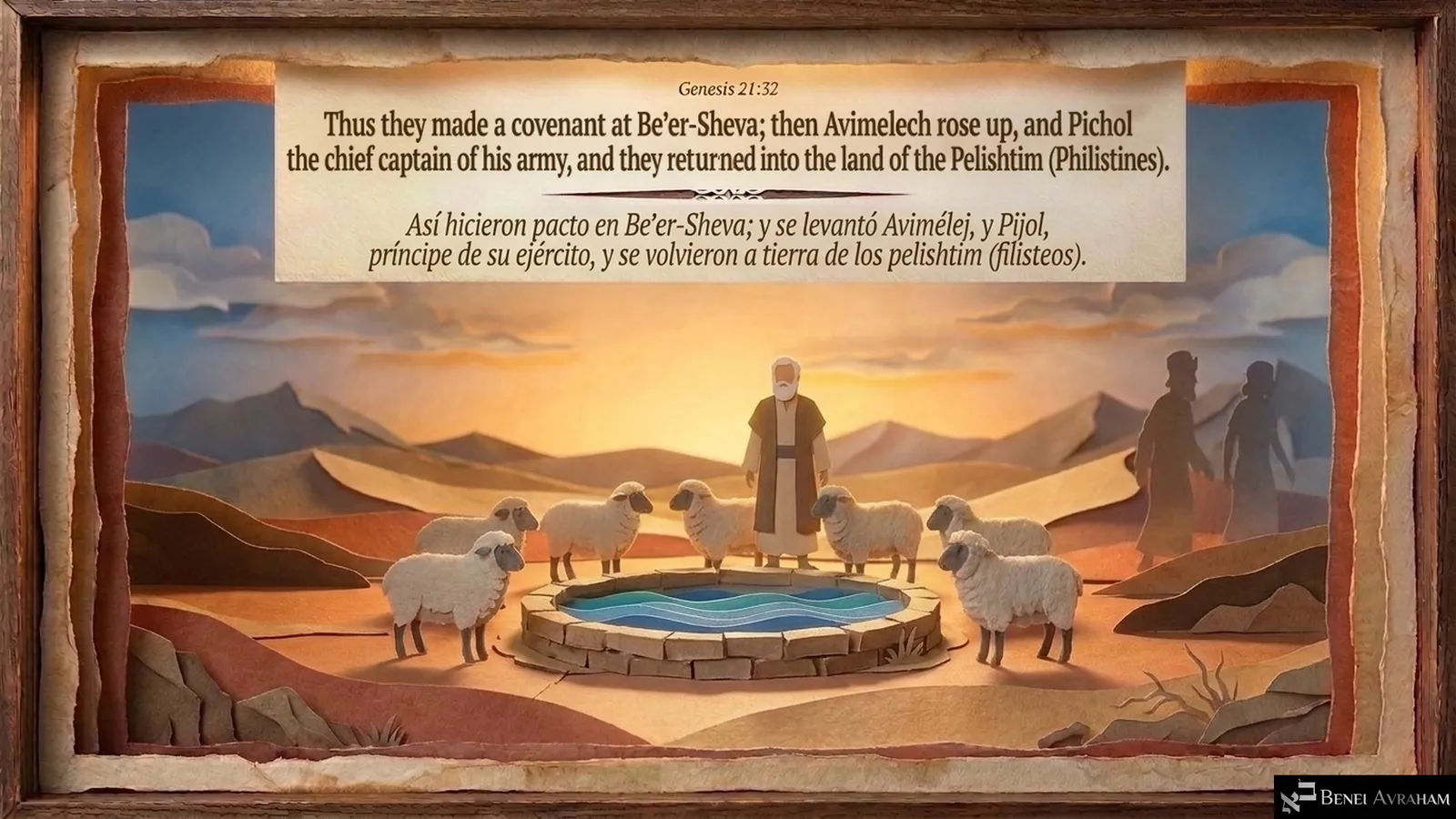
Avraham stands by the well as Avimelech and Pichol return to the land of the Pelishtim (Genesis 21:32).
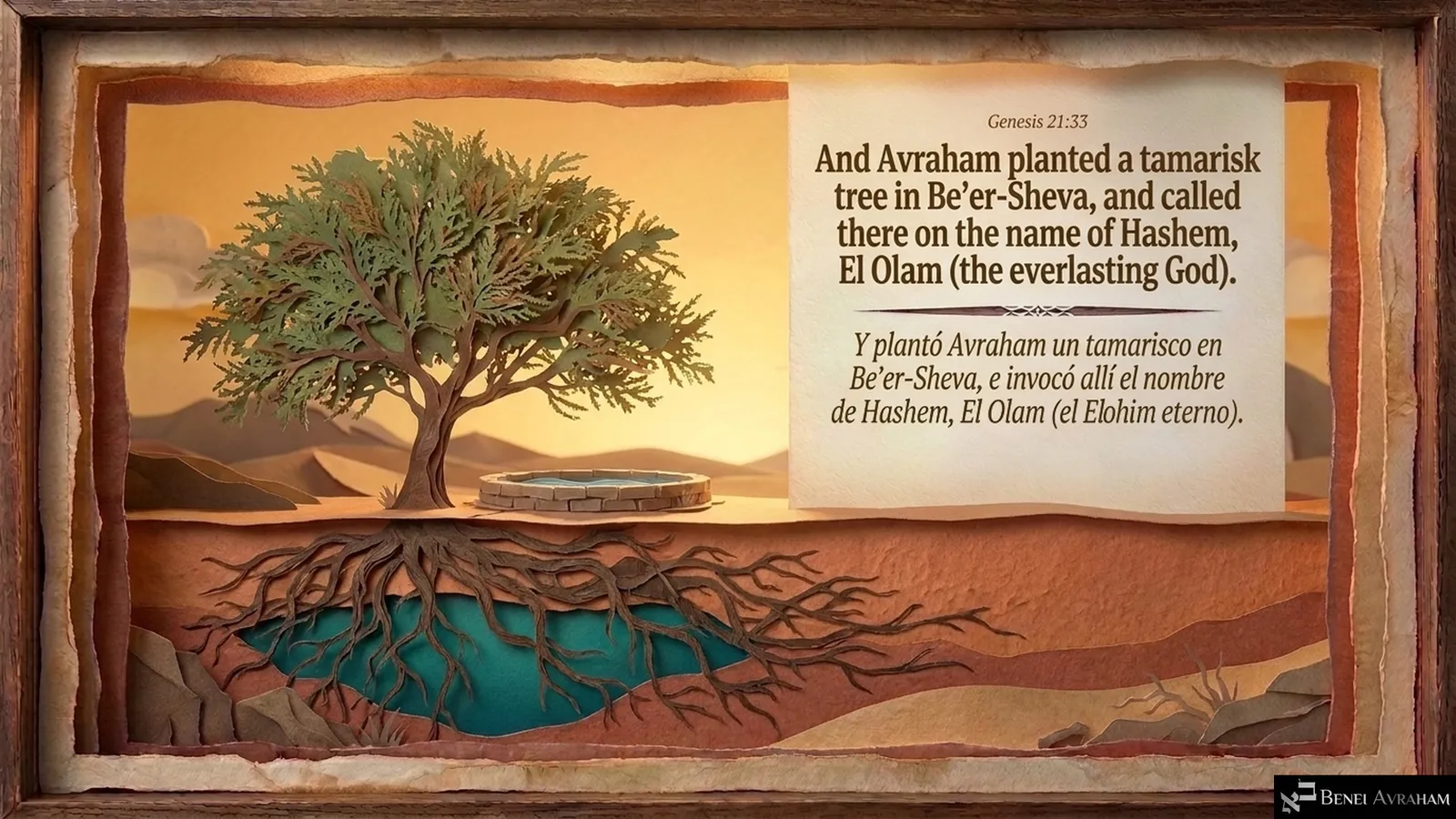
A tamarisk with roots reaching water: Avraham plants it in Be’er-Sheva and calls on Hashem, El Olam (Genesis 21:33).
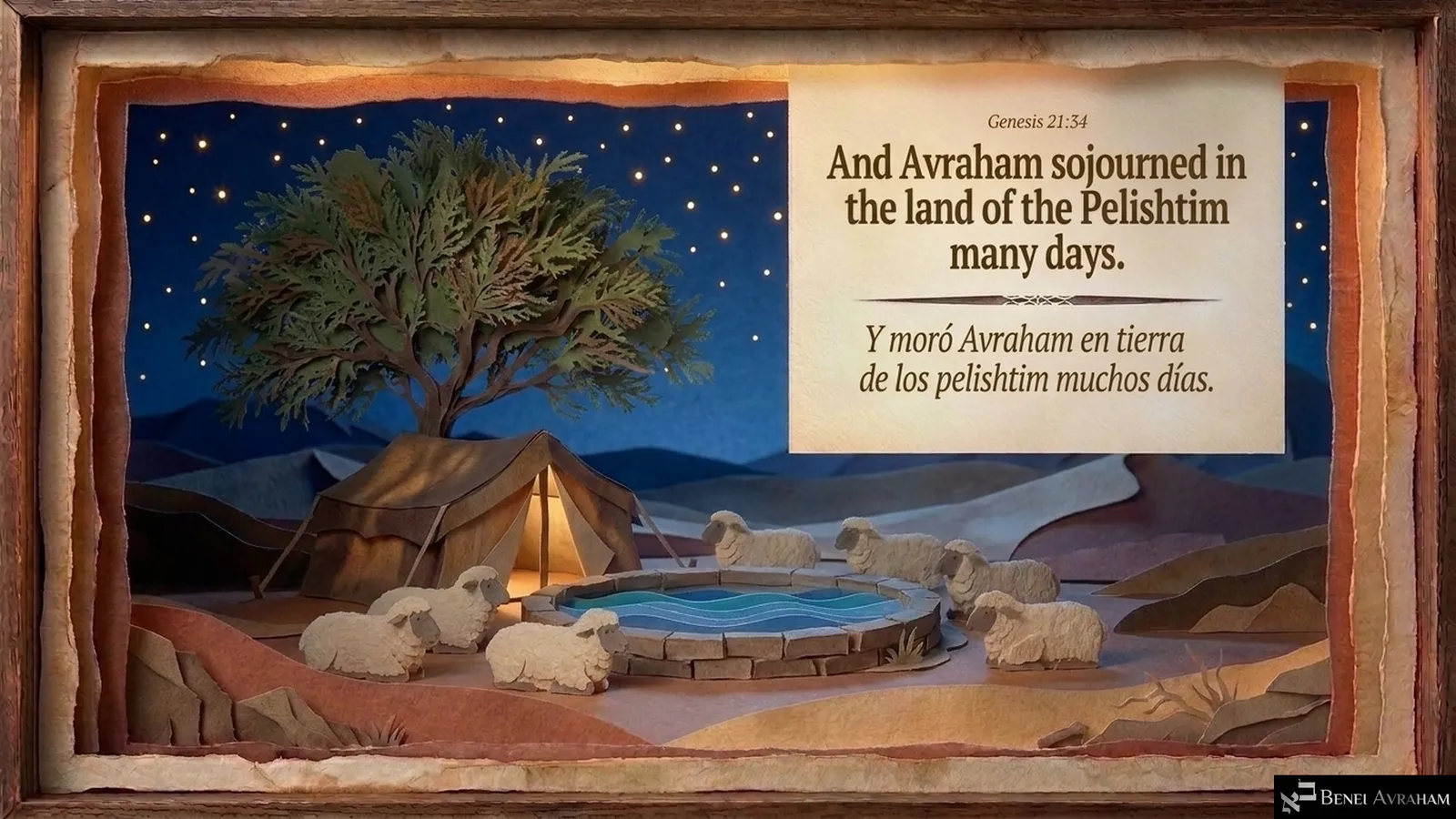
Avraham’s tent under the tamarisk on a starry night: he sojourns in the land of the Pelishtim many days (Genesis 21:34).
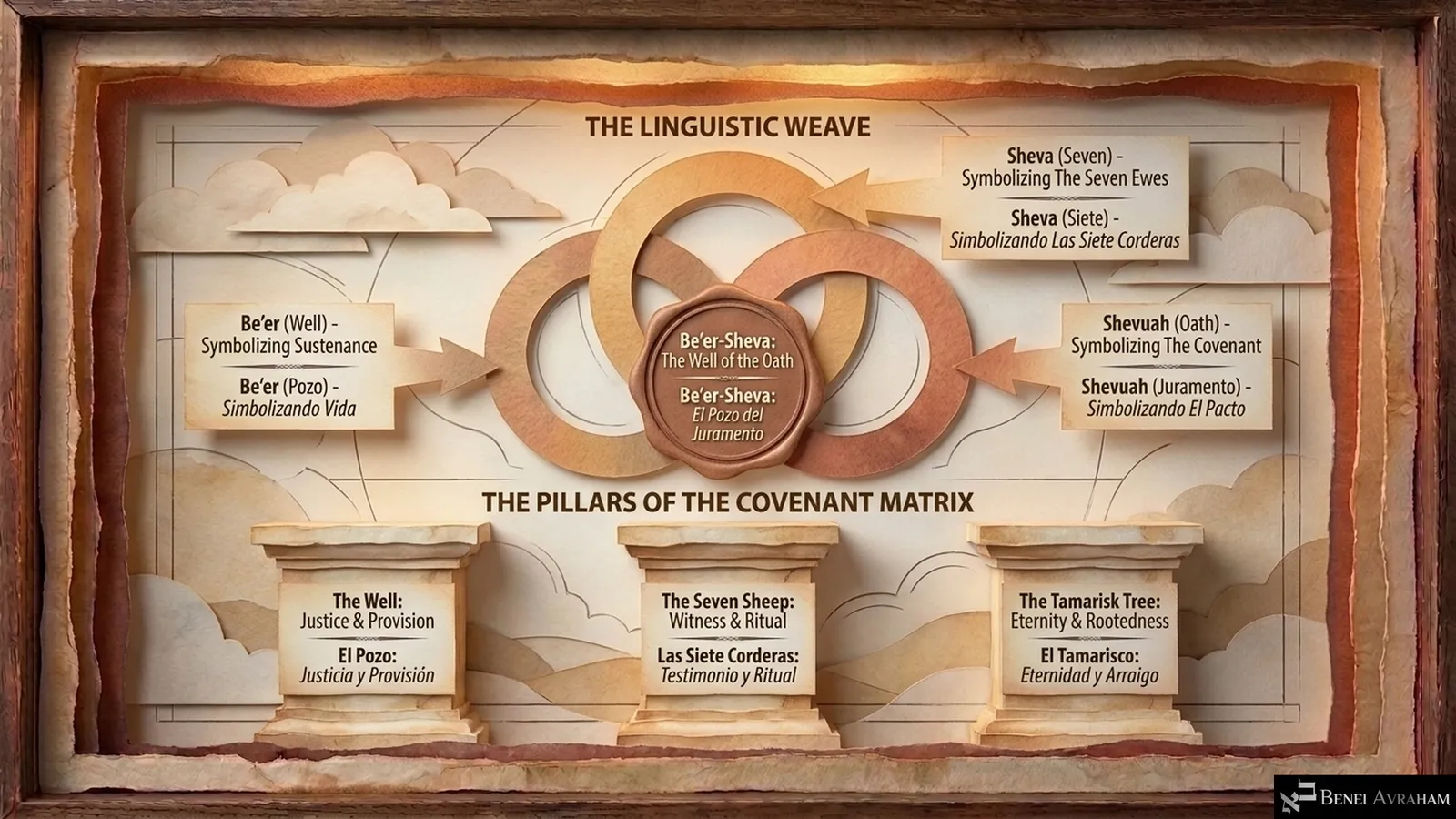
Diagram of Be’er-Sheva, “the Well of the Oath”: well, seven and oath interlinked, with the well, sheep and tamarisk as pillars.
Shevi’i · Genesis 22:1–24

Seventh Portion
Title slide for Shevi’i, the seventh portion of Vayera: a jagged paper-cut mountain rising above desert dunes (Genesis 22).
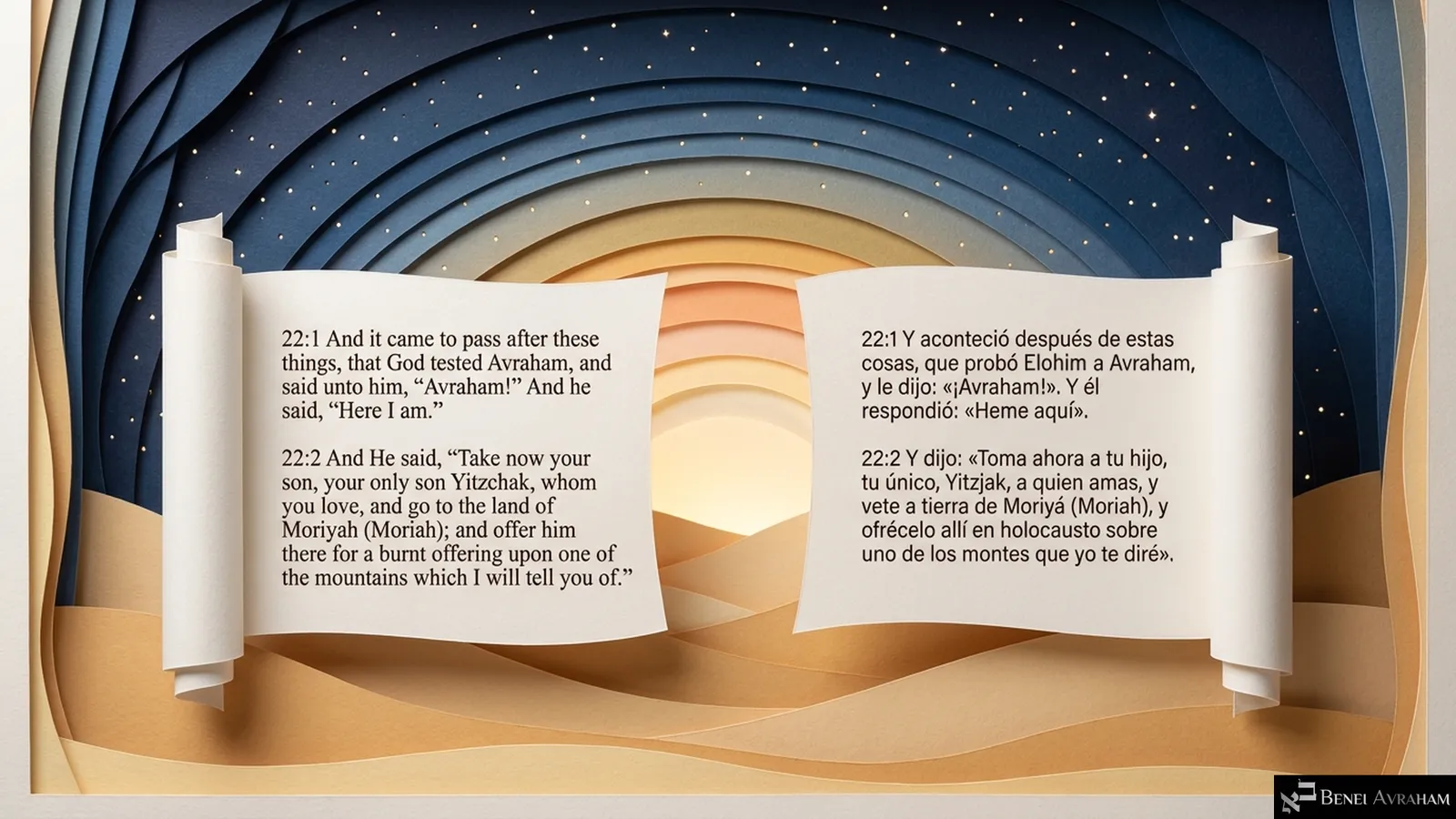
Twin scrolls under a starry sky: God tests Avraham and commands him to offer Yitzḥak in the land of Moriyah (Genesis 22:1–2).
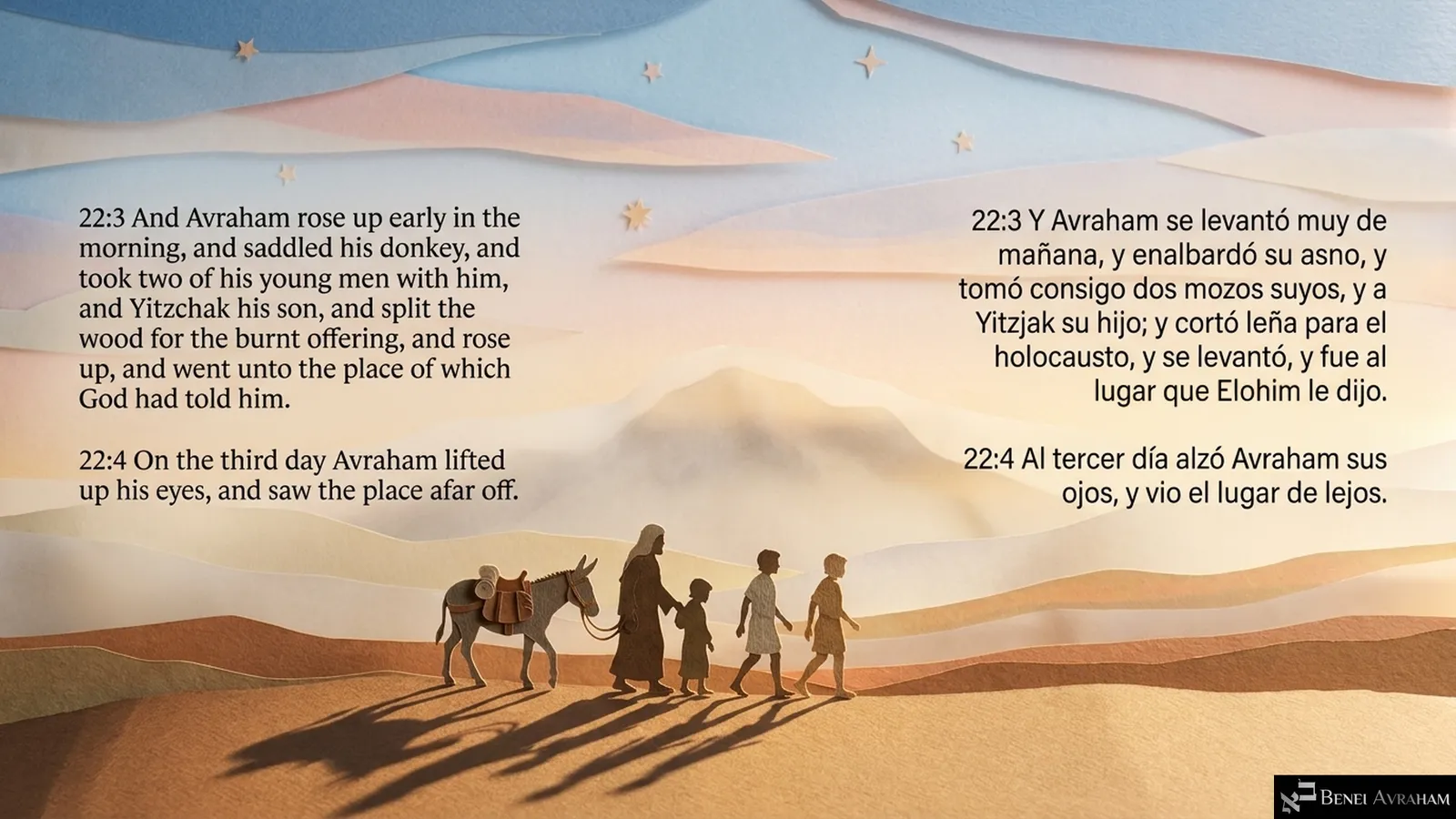
Avraham, Yitzḥak, two young men and a donkey set out at dawn and see the place afar off on the third day (Genesis 22:3–4).
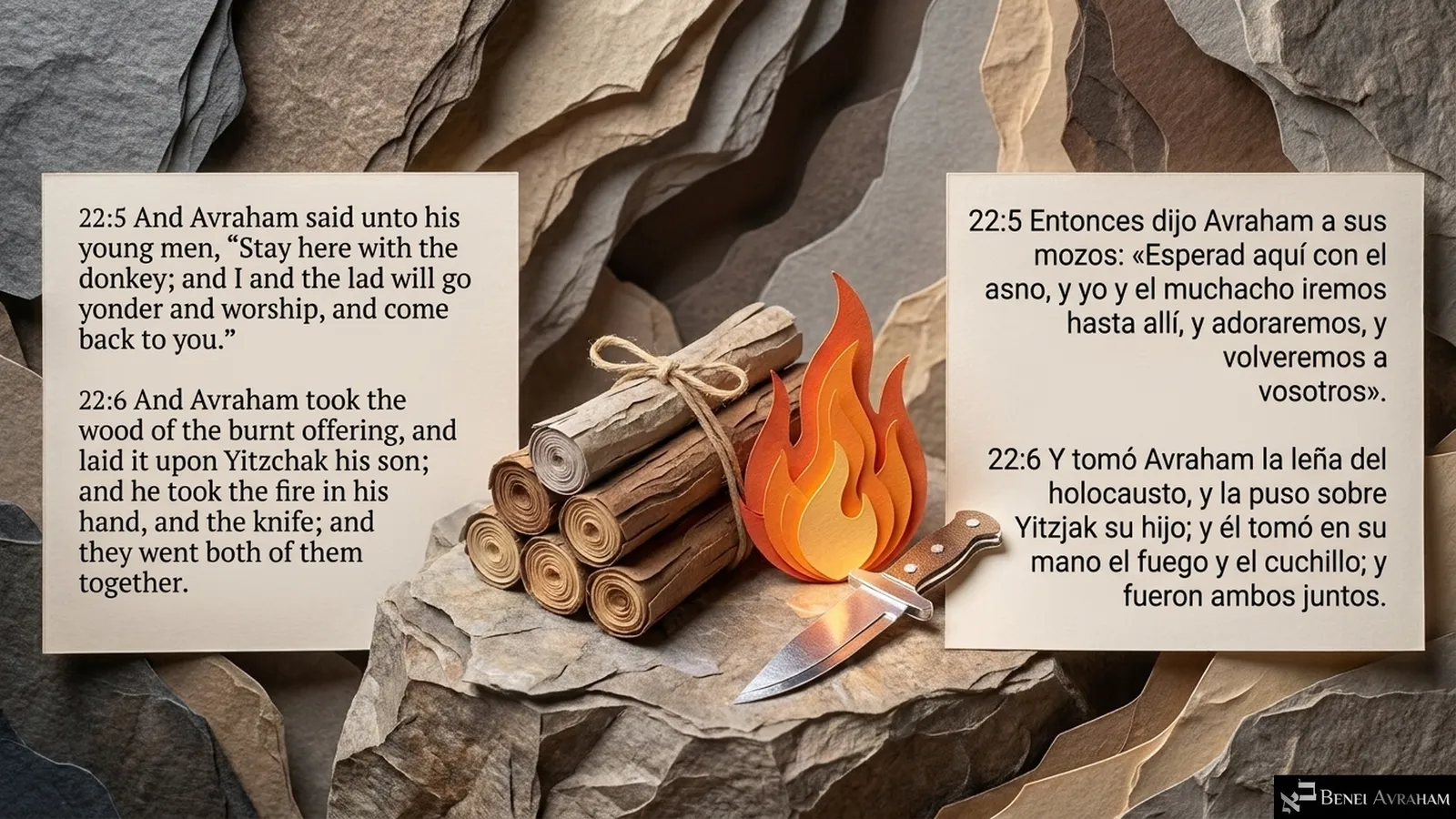
Bound wood, fire and knife on a rock: Avraham lays the wood on Yitzḥak and they go on together (Genesis 22:5–6).
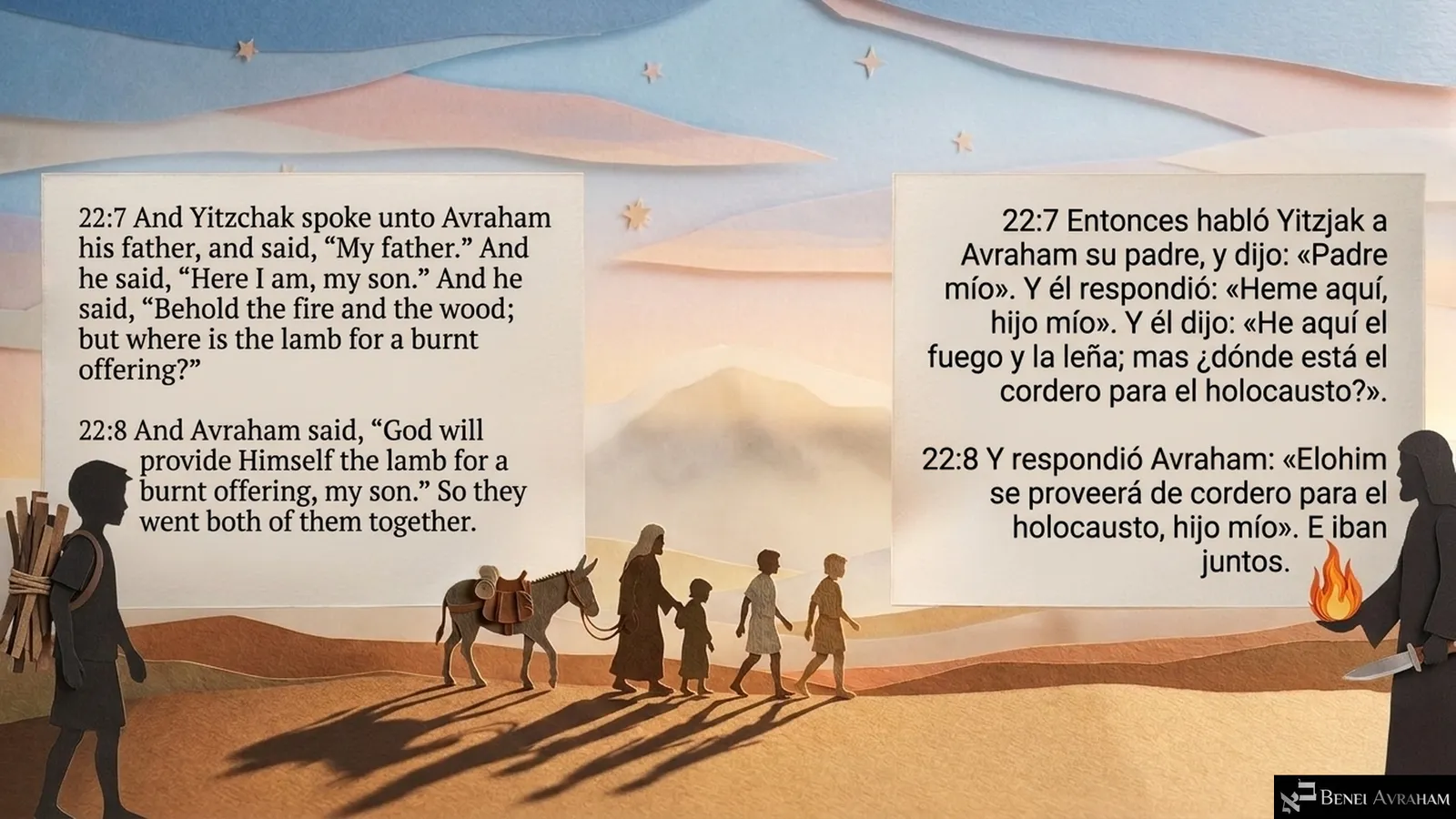
“Where is the lamb?” Yitzḥak asks, carrying the wood; “God will provide Himself the lamb,” Avraham answers (Genesis 22:7–8).
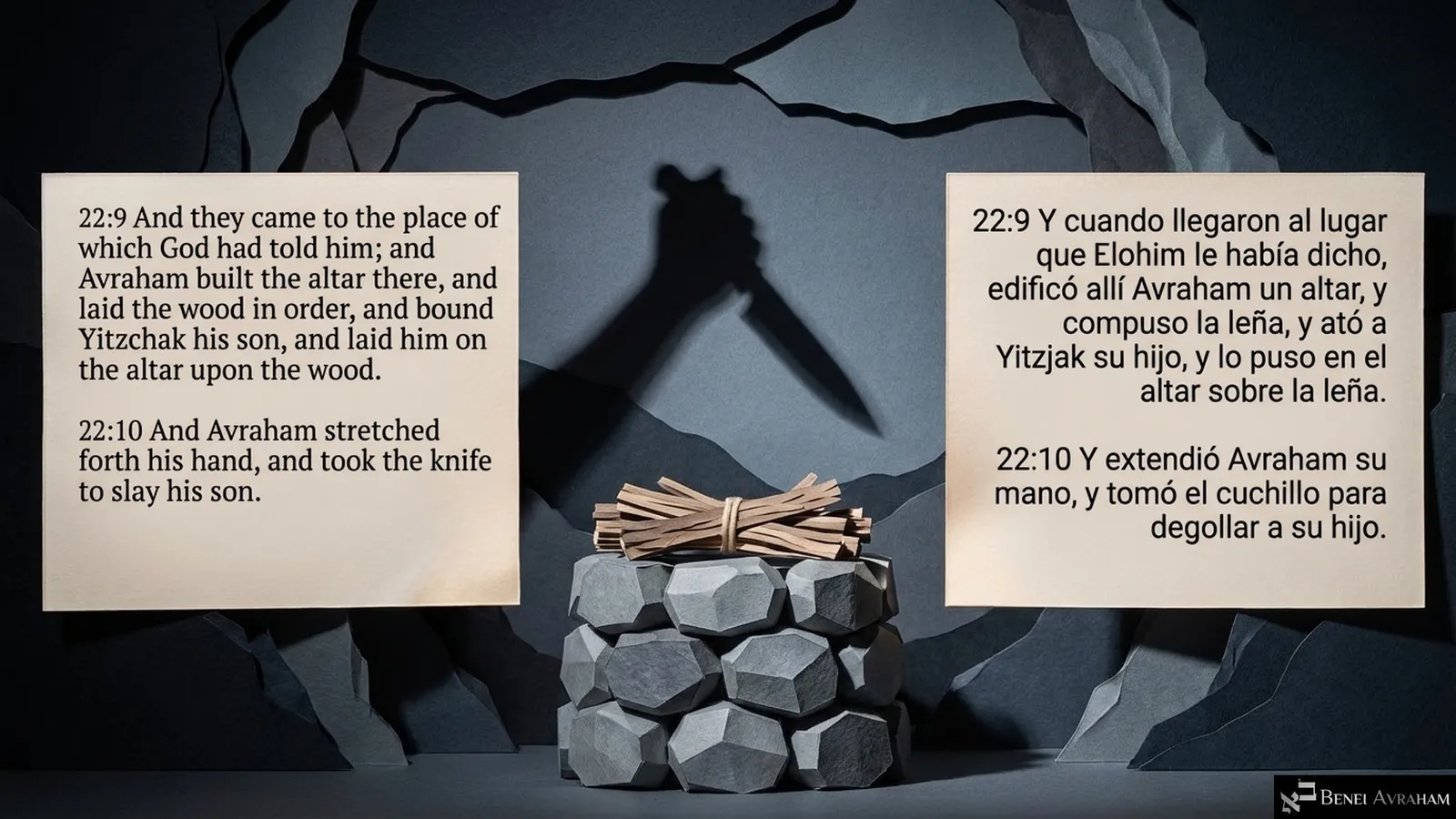
A knife’s shadow falls over a stone altar laid with wood as Avraham binds Yitzḥak and takes the knife (Genesis 22:9–10).
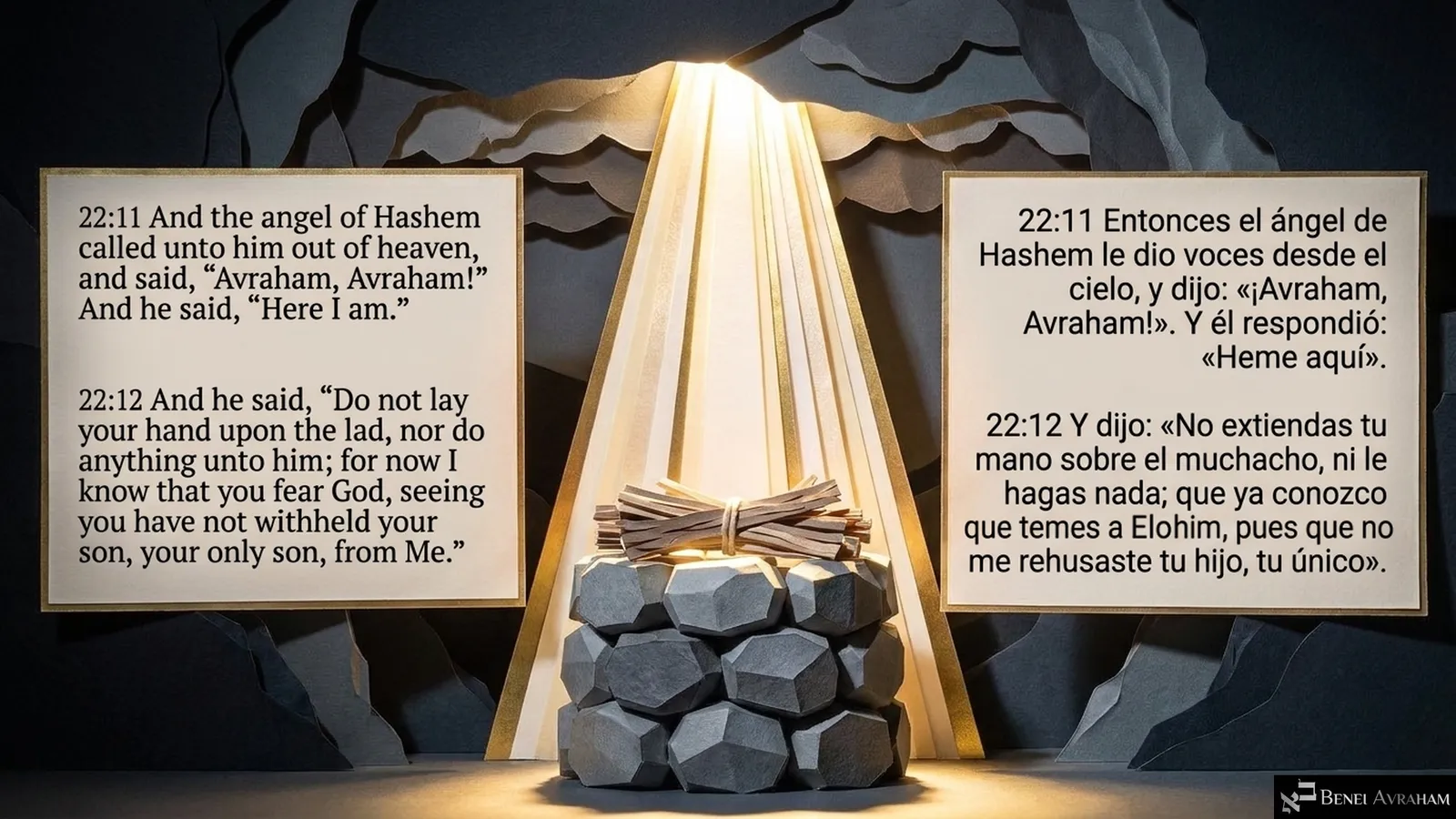
Light pours down on the altar as the angel of Hashem calls, “Do not lay your hand upon the lad” (Genesis 22:11–12).
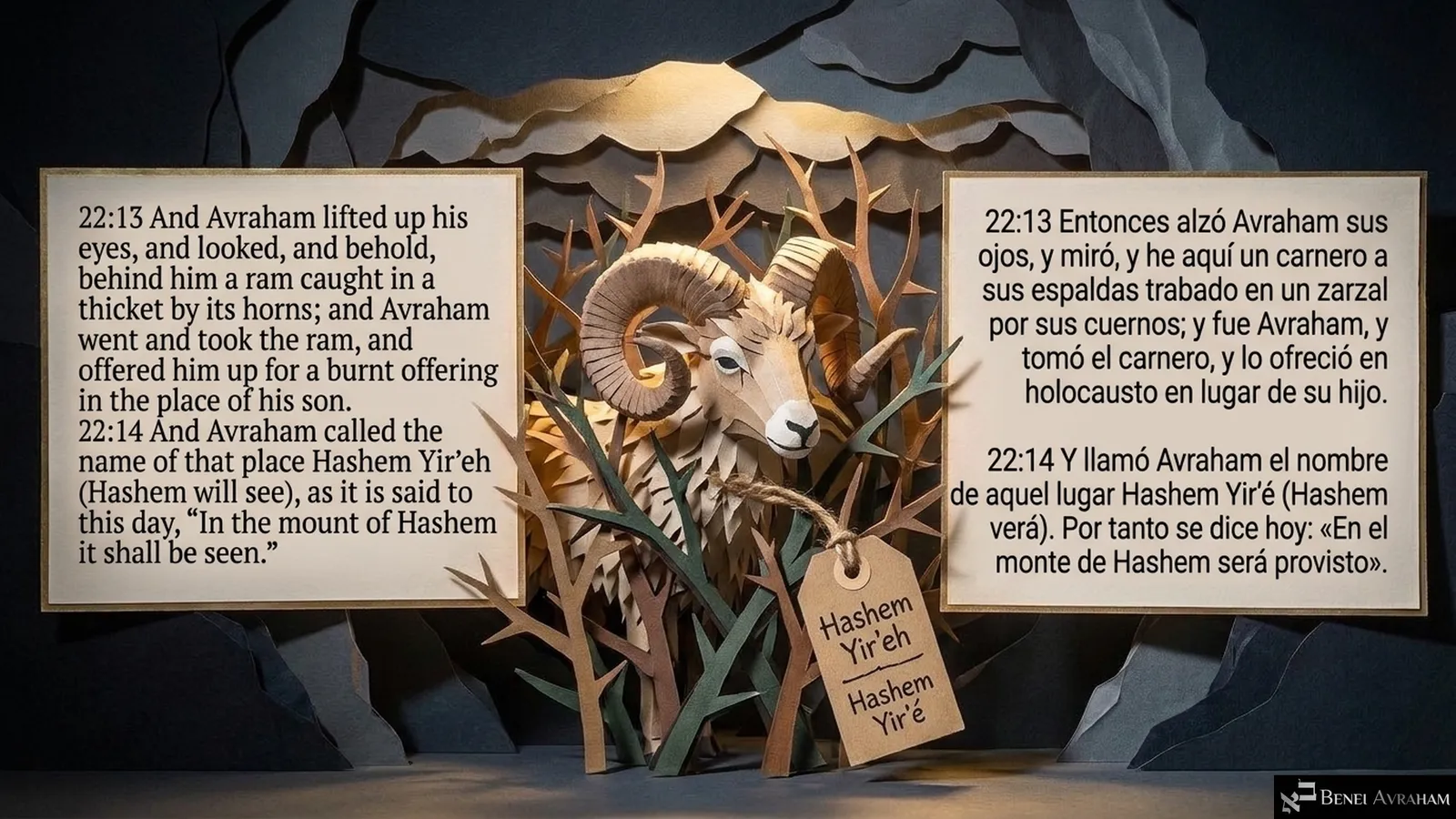
A ram caught by its horns in a thicket, tagged “Hashem Yir’eh”: Avraham offers it in place of his son (Genesis 22:13–14).
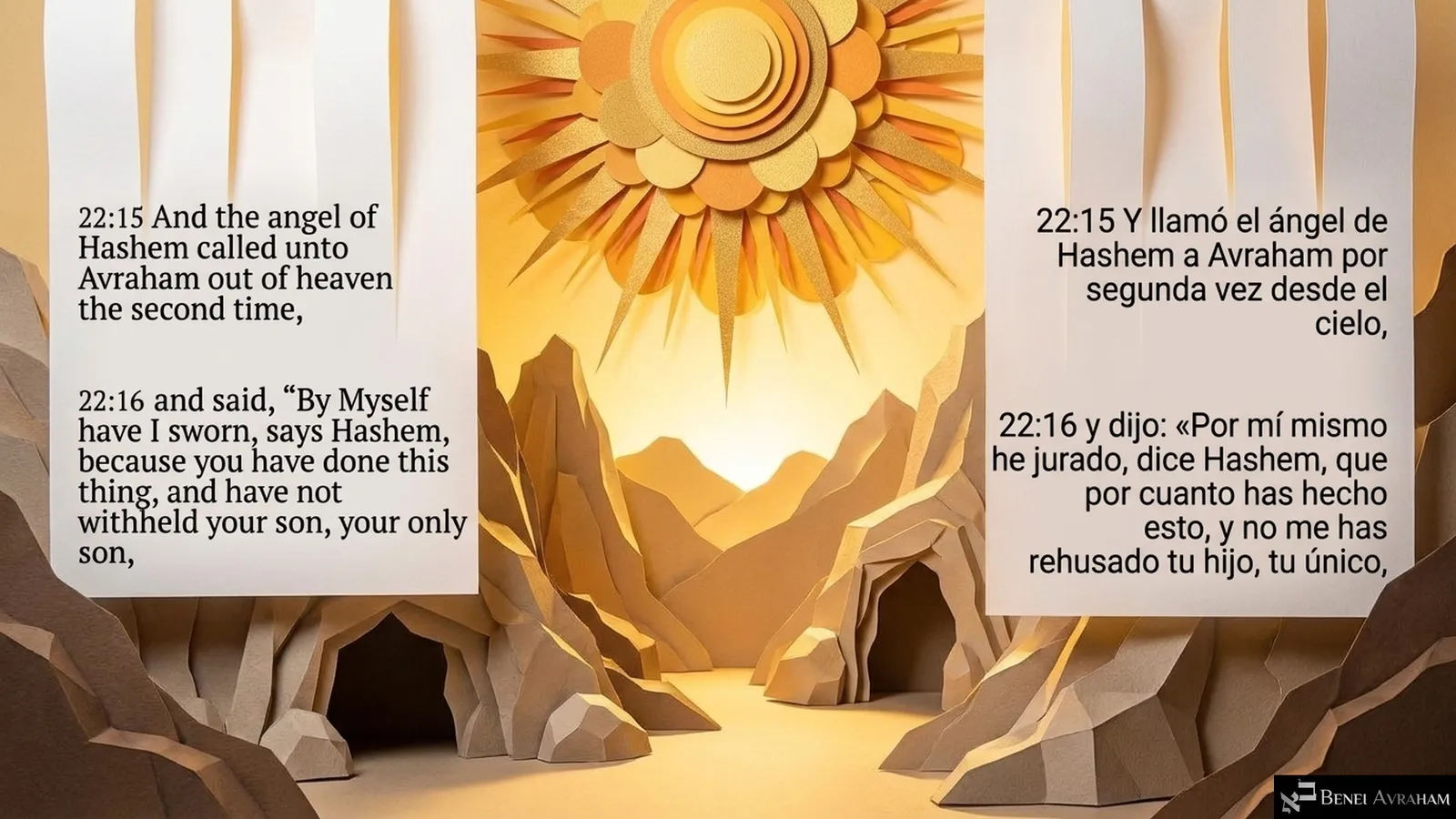
A radiant sun between rocky cliffs: the angel of Hashem calls a second time, “By Myself have I sworn” (Genesis 22:15–16).
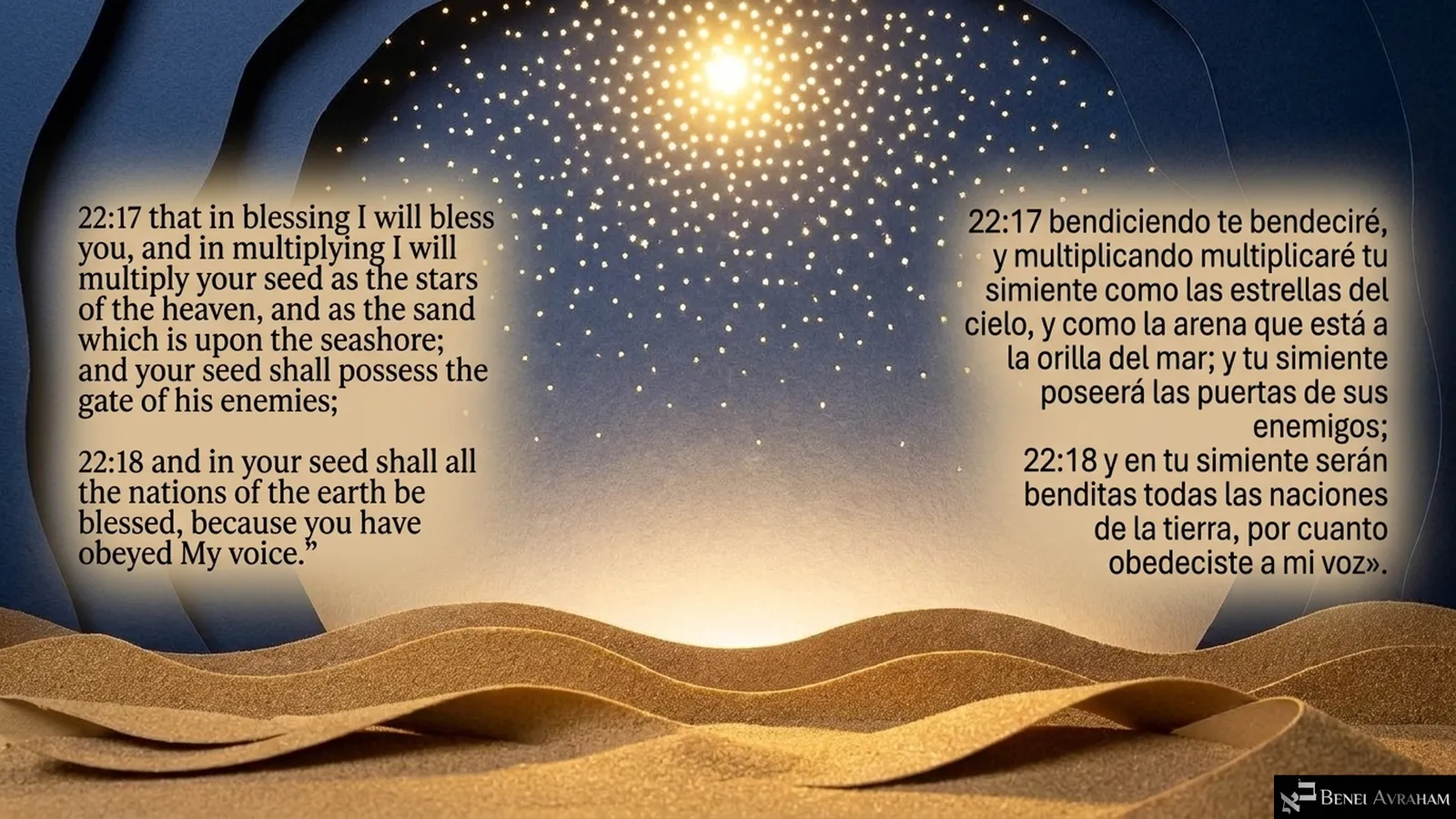
Countless stars over desert sand picture the promise to multiply Avraham’s seed, a blessing to all nations (Genesis 22:17–18).
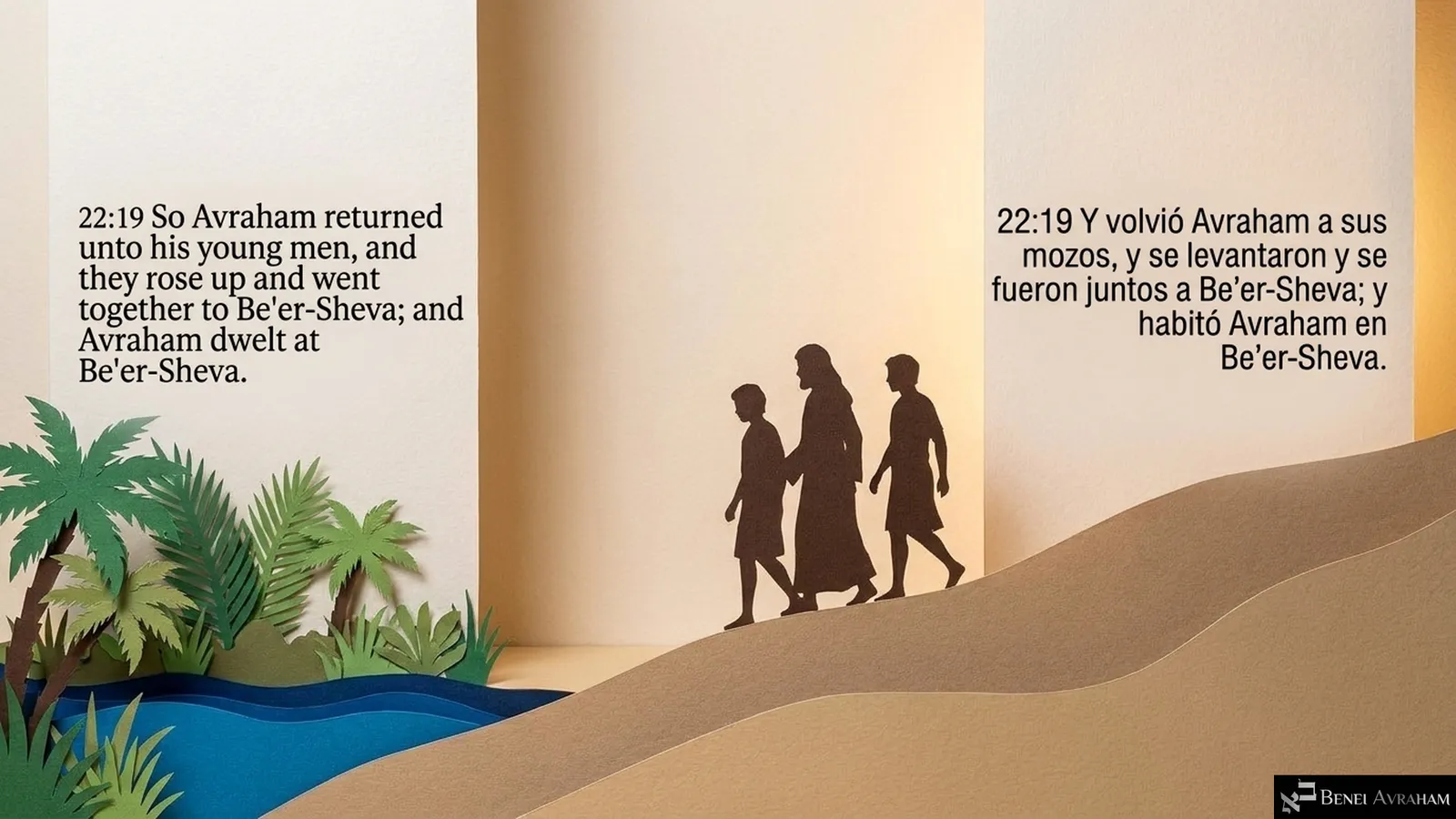
Silhouetted figures walk over the dunes as Avraham returns to his young men and dwells at Be’er-Sheva (Genesis 22:19).
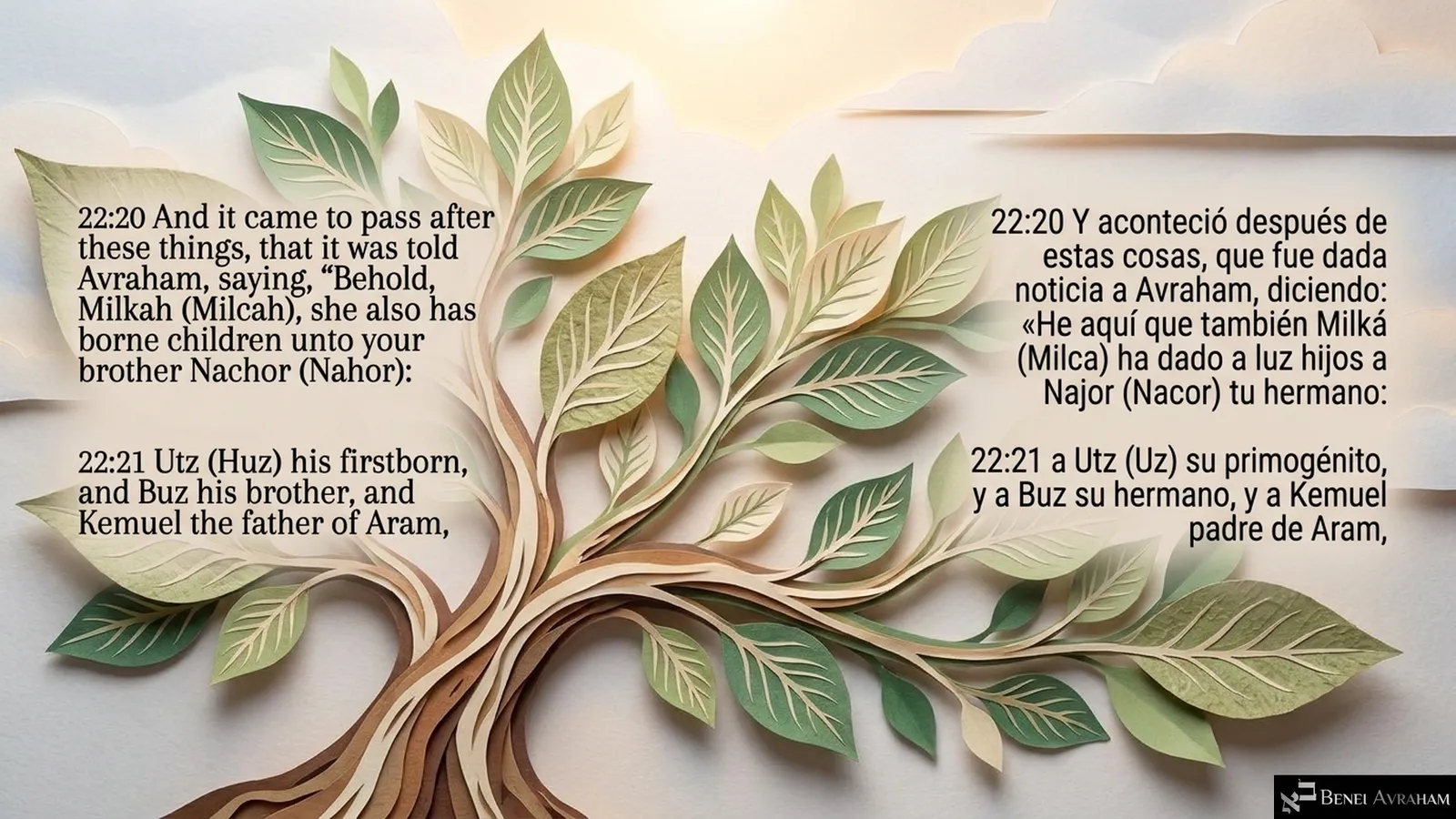
A spreading paper-cut tree: news reaches Avraham that Milkah has borne sons to his brother Naḥor (Genesis 22:20–21).
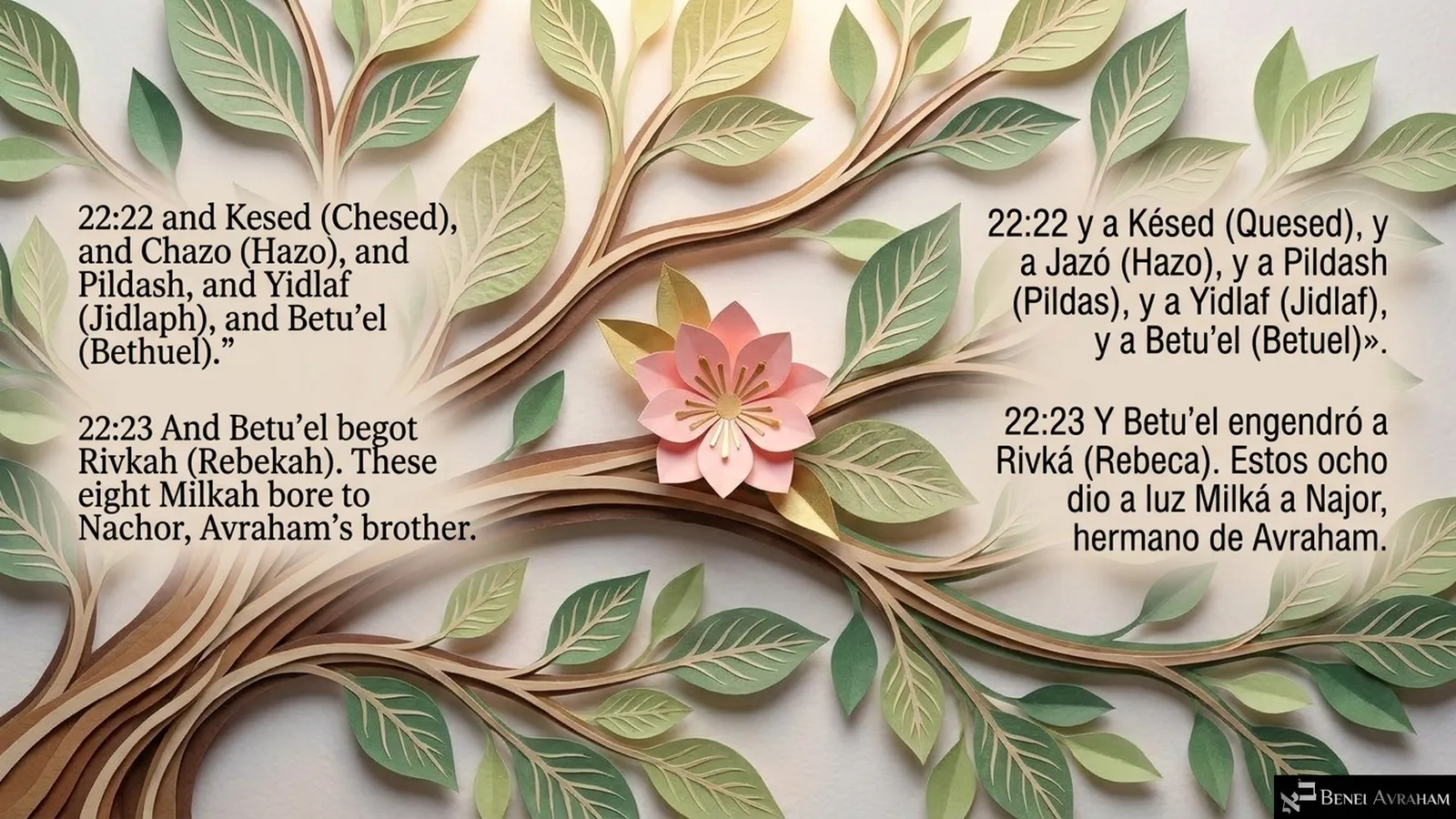
A pink blossom on the family tree marks the birth of Rivkah, daughter of Betu’el, among Naḥor’s eight sons (Genesis 22:22–23).
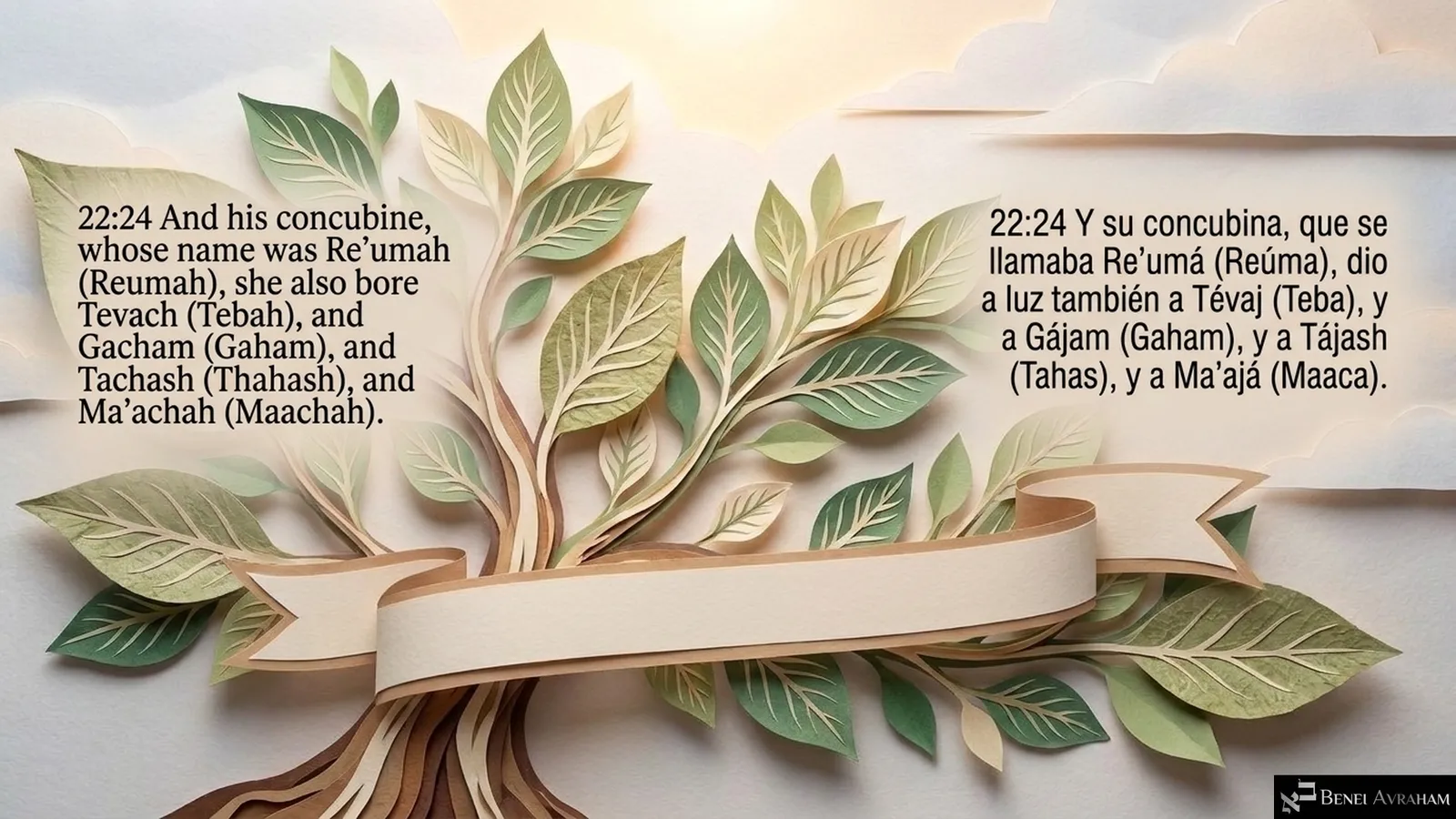
Leafy branches and a ribbon complete Naḥor’s family with the sons of his concubine Re’umah (Genesis 22:24).
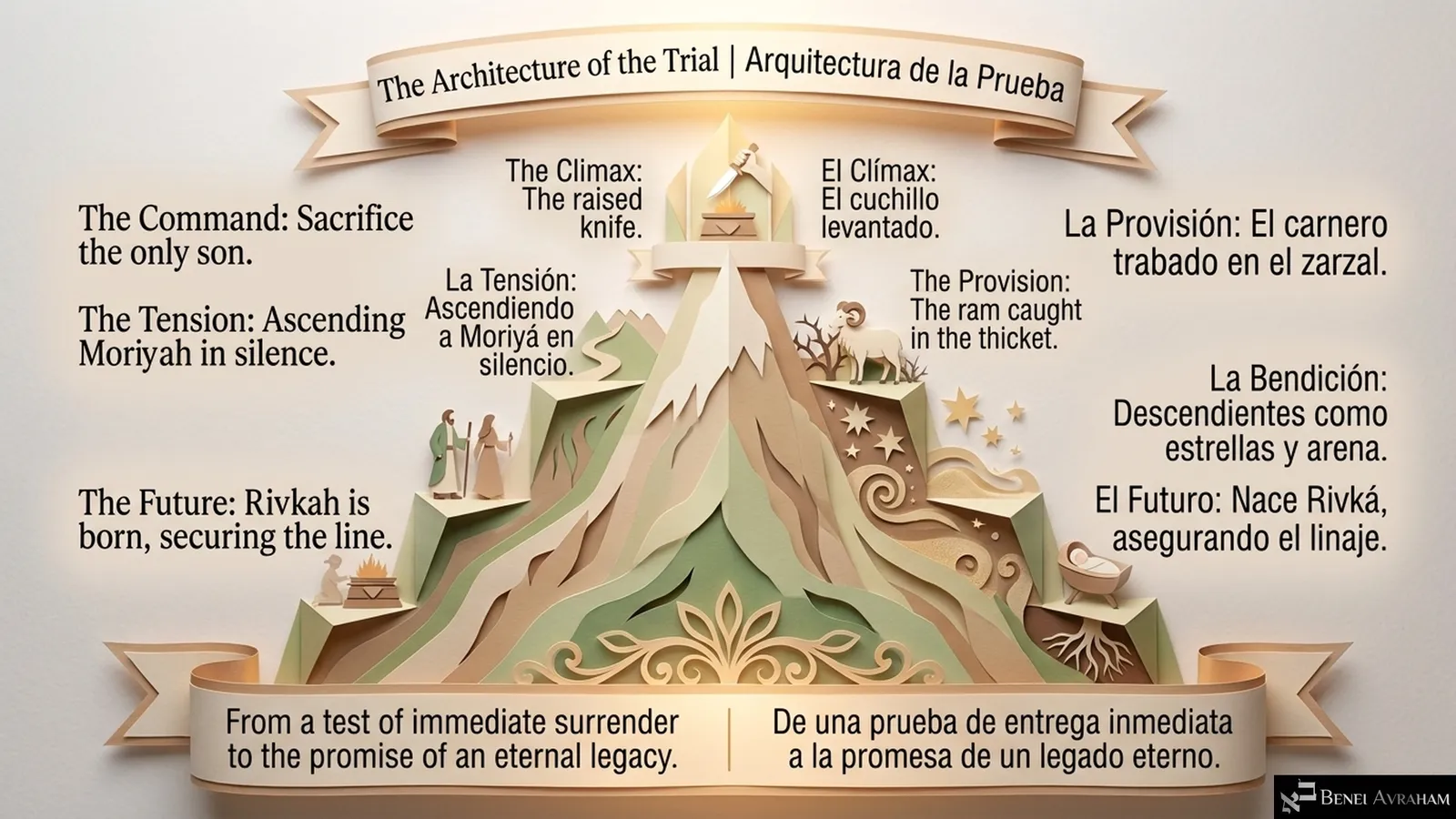
Mountain diagram of the Akedah’s structure: command, ascent, raised knife, ram, blessing and Rivkah’s birth, from surrender to eternal legacy.
Haftarah · 2 Kings 4:1–37

Haftarah: The Miracles of Elisha
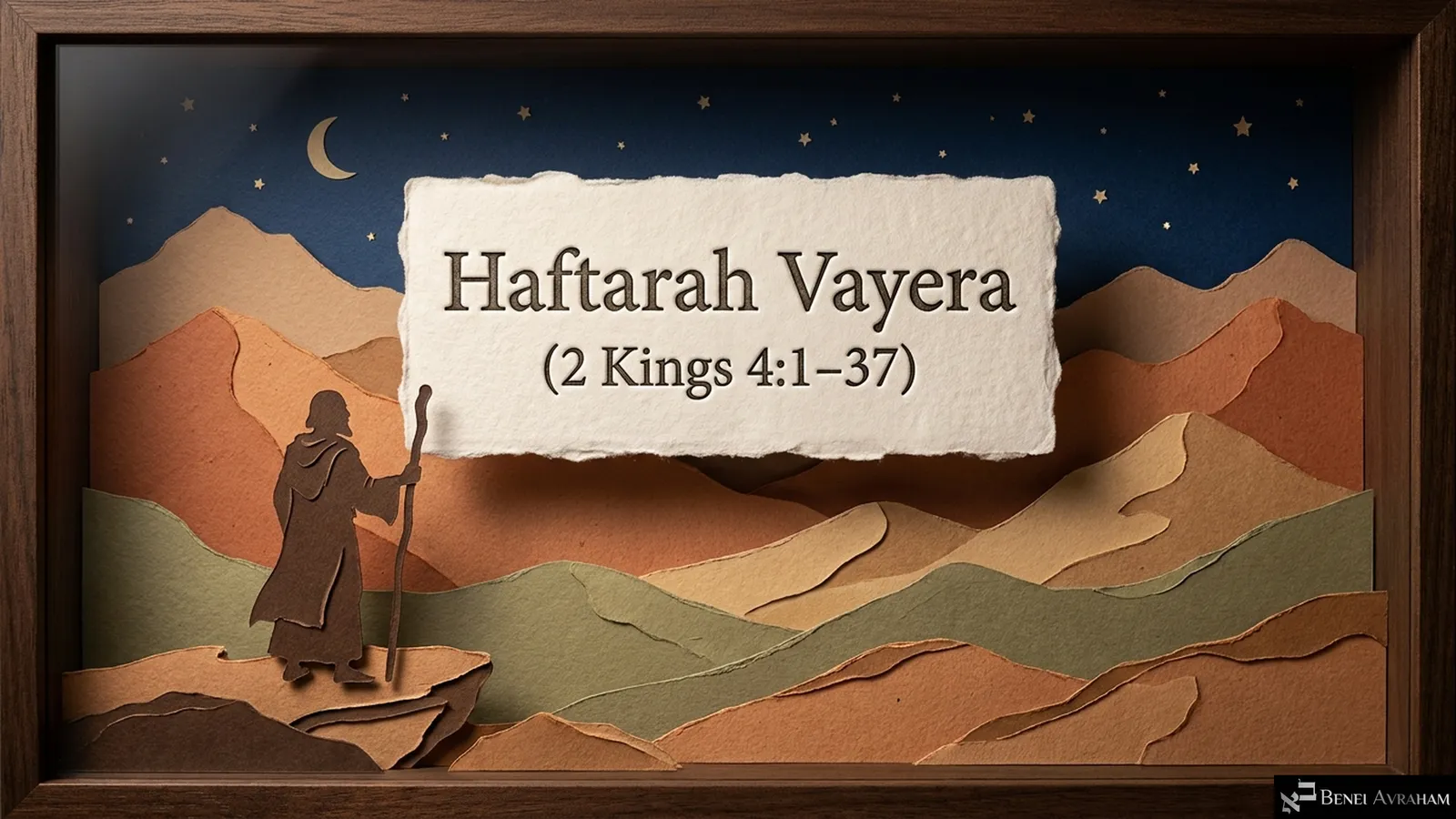
Title slide for the Haftarah of Vayera: a prophet with his staff looks out over paper-cut hills by moonlight (2 Kings 4:1–37).
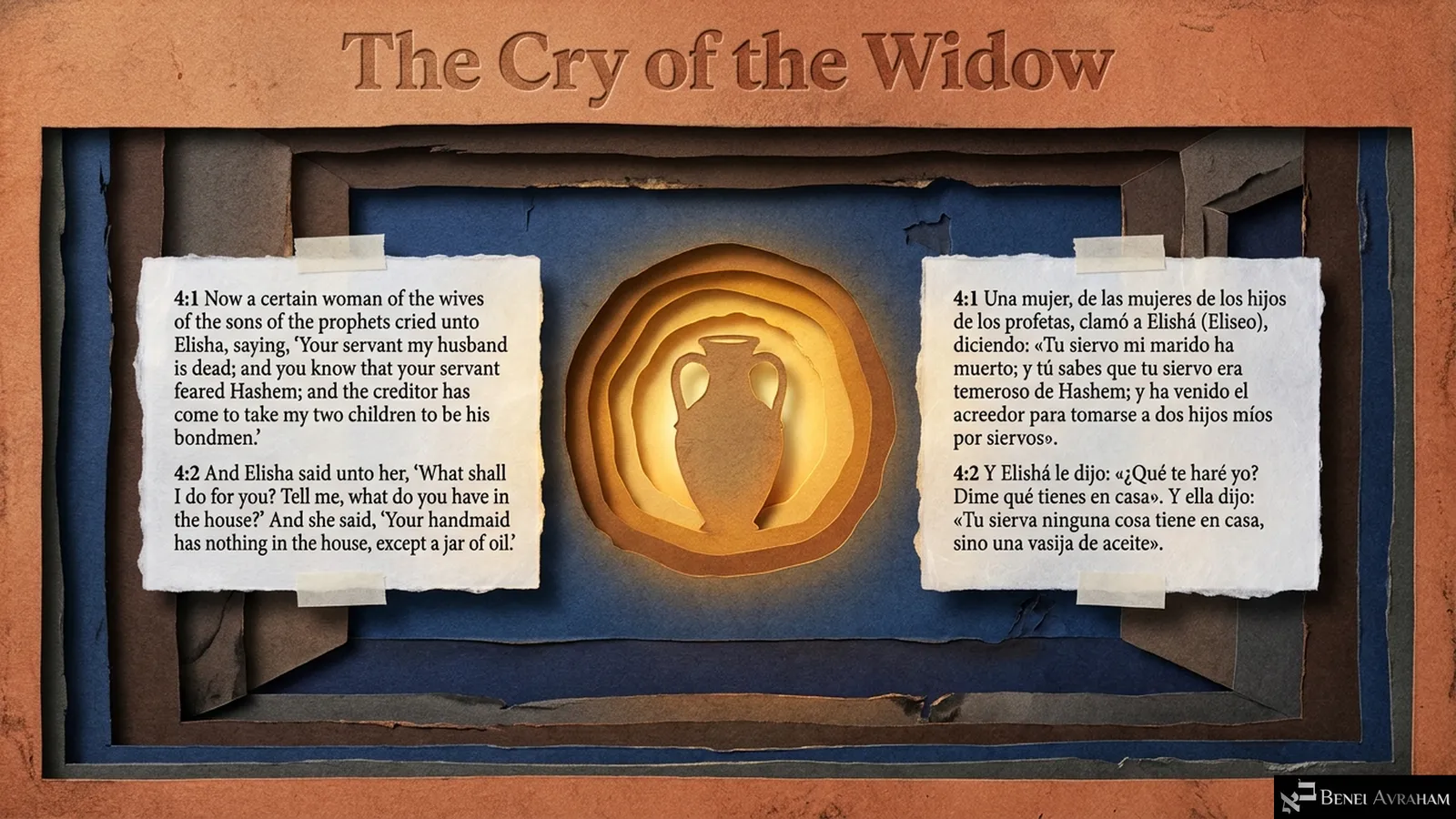
“The Cry of the Widow”: a glowing jar of oil, all a prophet’s widow has left when she cries to Elisha (2 Kings 4:1–2).
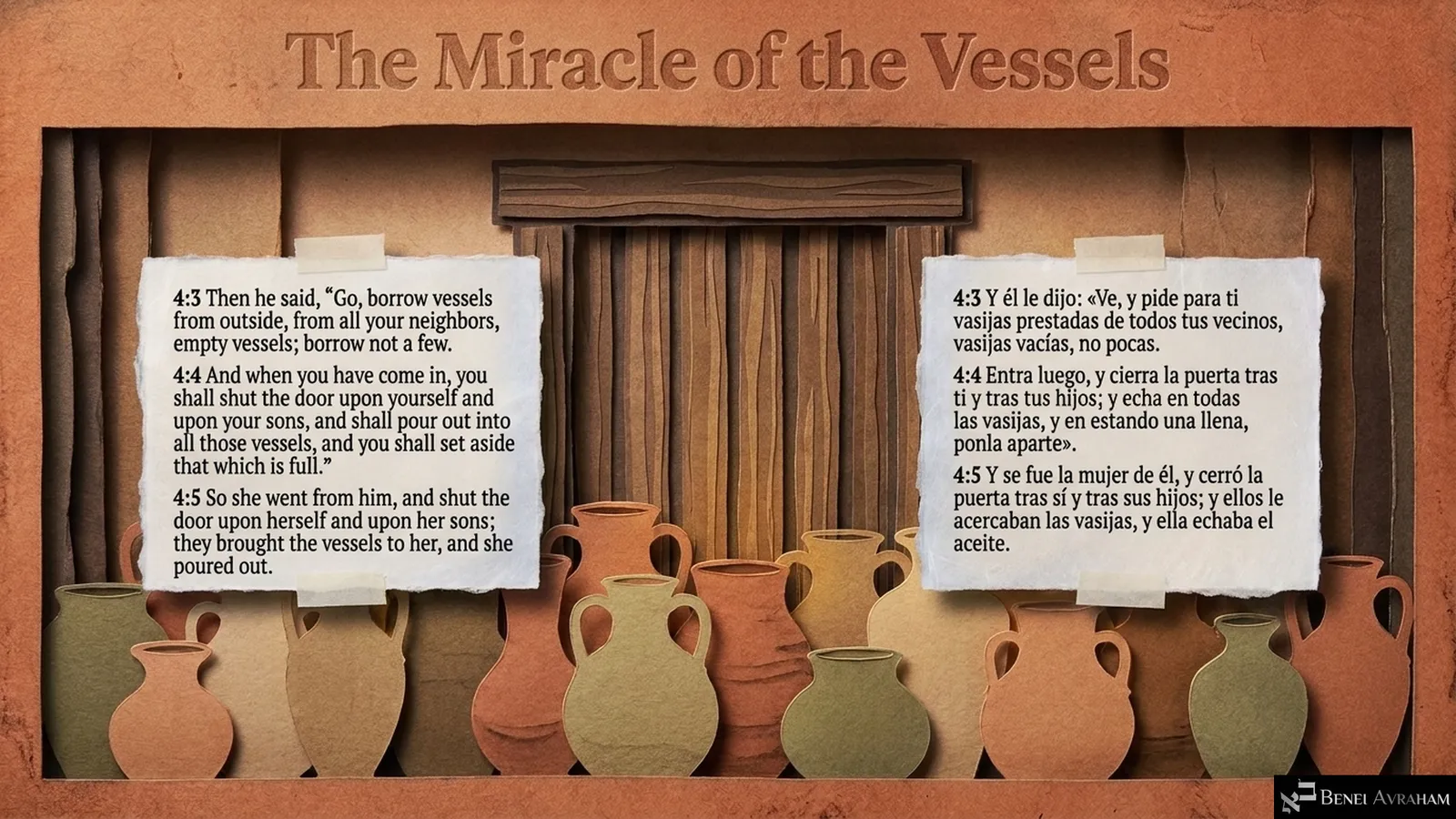
“The Miracle of the Vessels”: empty jars gather at a shut door as Elisha tells the widow to borrow vessels (2 Kings 4:3–5).
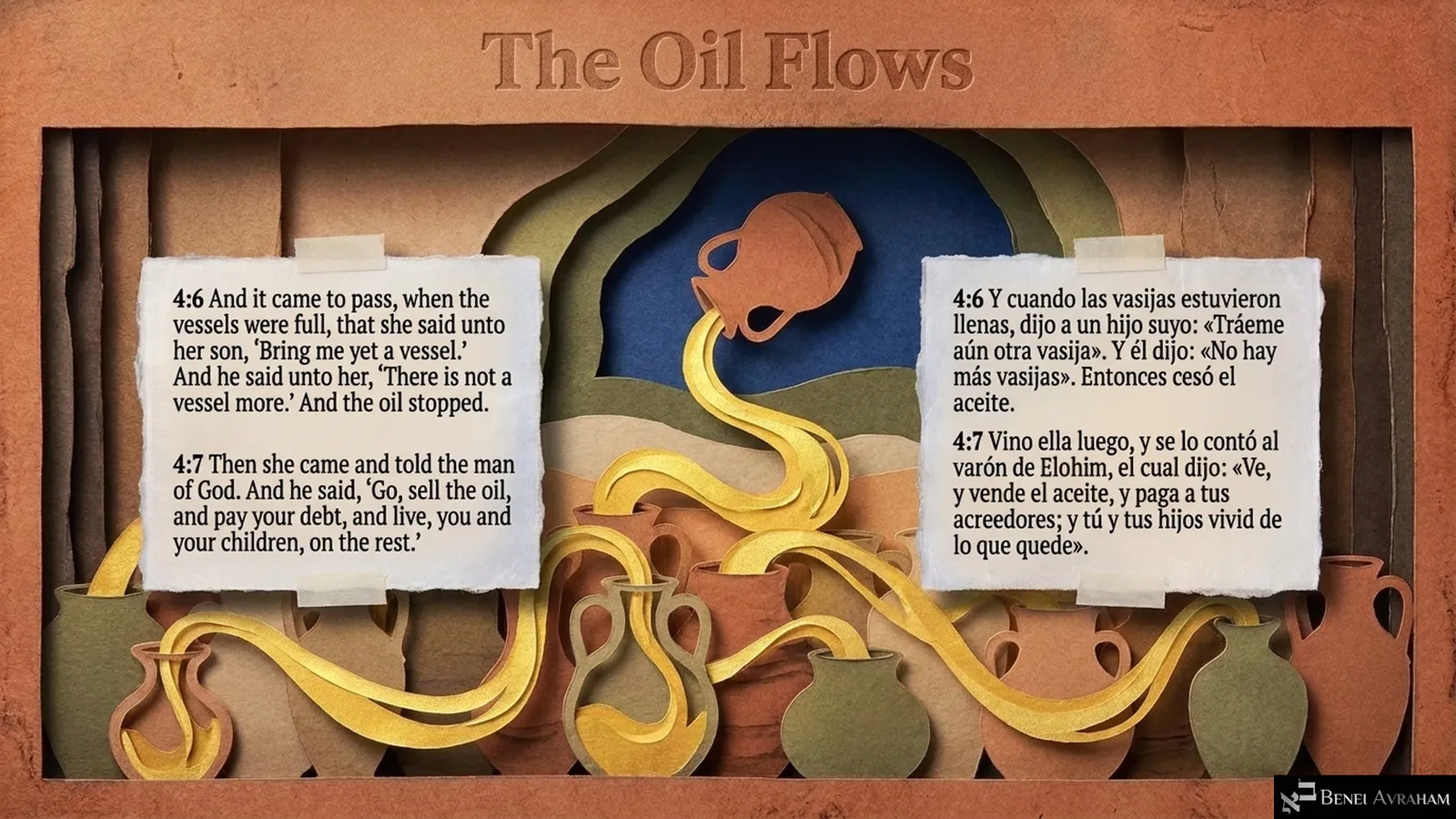
“The Oil Flows”: golden oil pours from one jar into many until no vessel is left; she sells it to pay her debt (2 Kings 4:6–7).
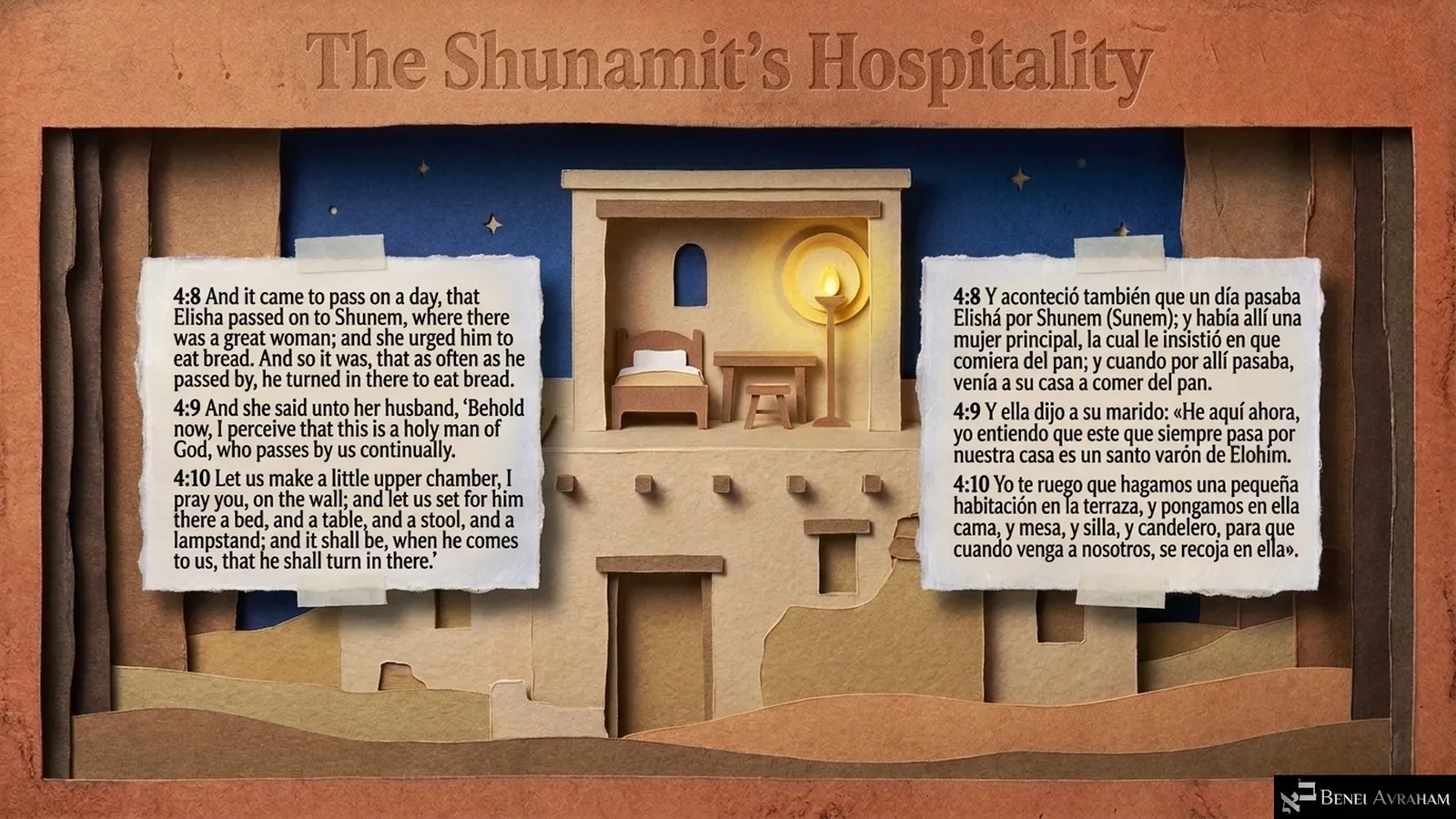
“The Shunamit’s Hospitality”: a lamplit upper chamber with bed, table and stool built for Elisha in Shunem (2 Kings 4:8–10).
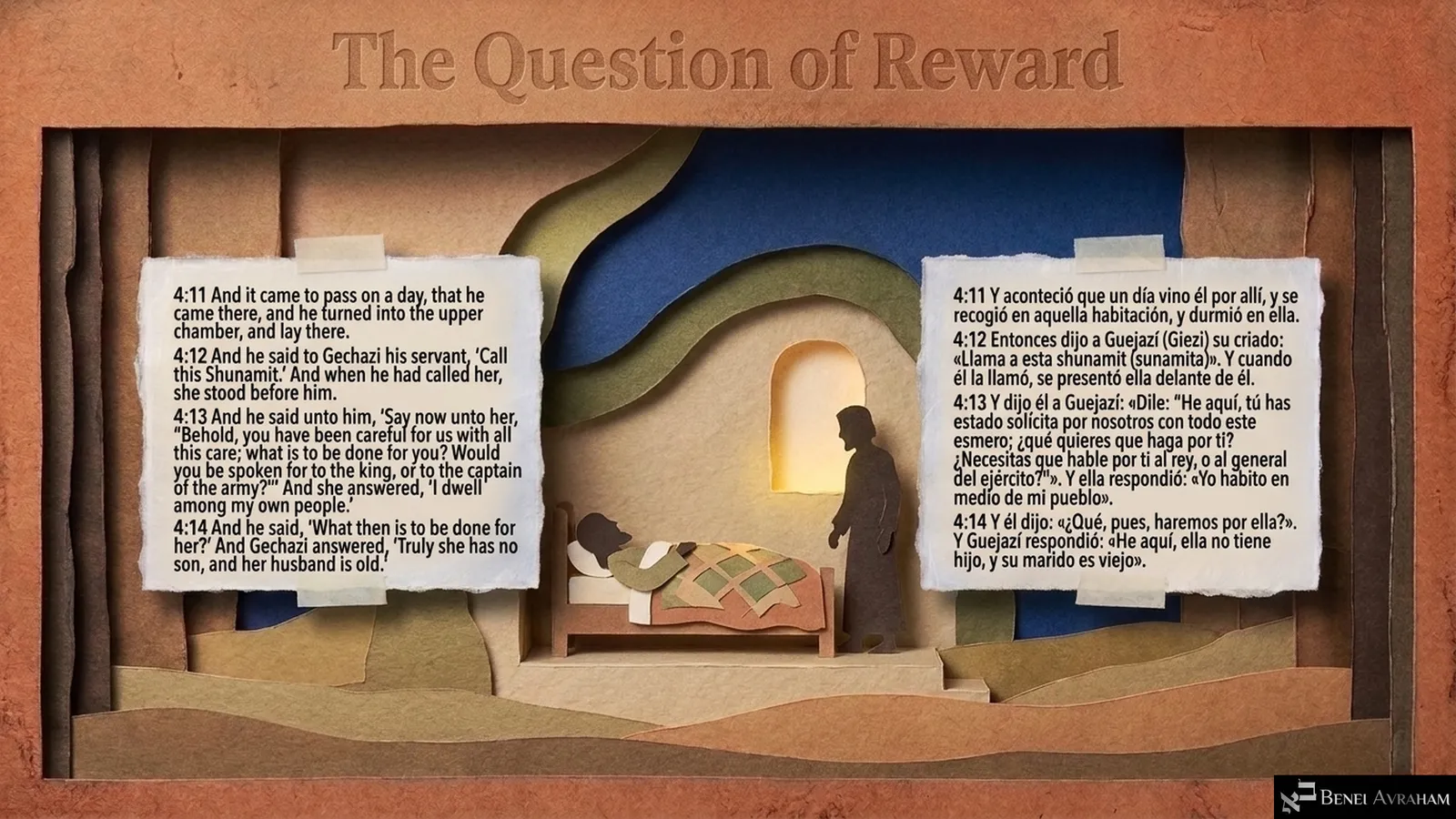
“The Question of Reward”: Elisha asks what can be done for the Shunamit; Geḥazi notes she has no son (2 Kings 4:11–14).
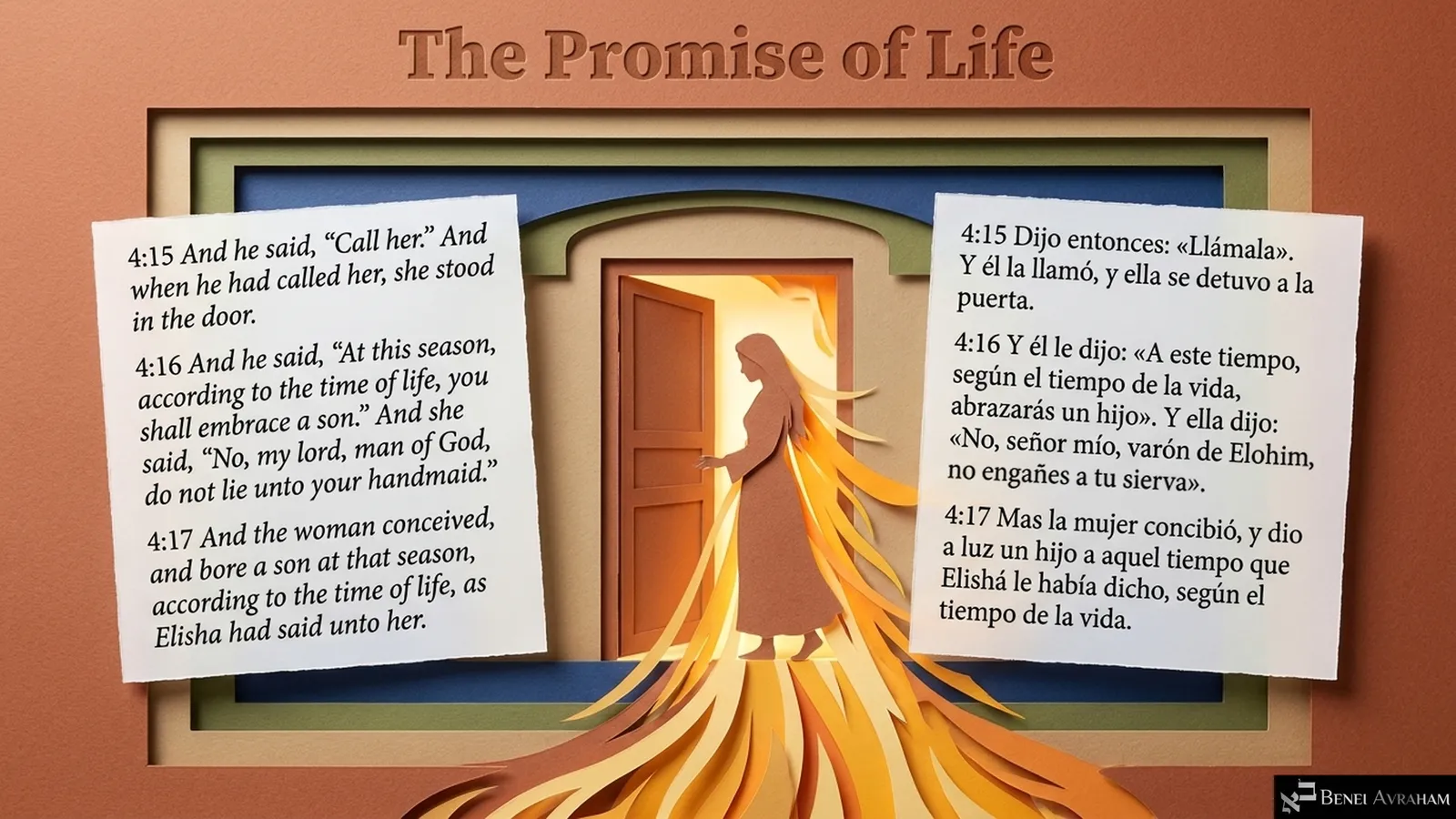
“The Promise of Life”: the Shunamit stands in a glowing doorway as Elisha promises she will embrace a son (2 Kings 4:15–17).
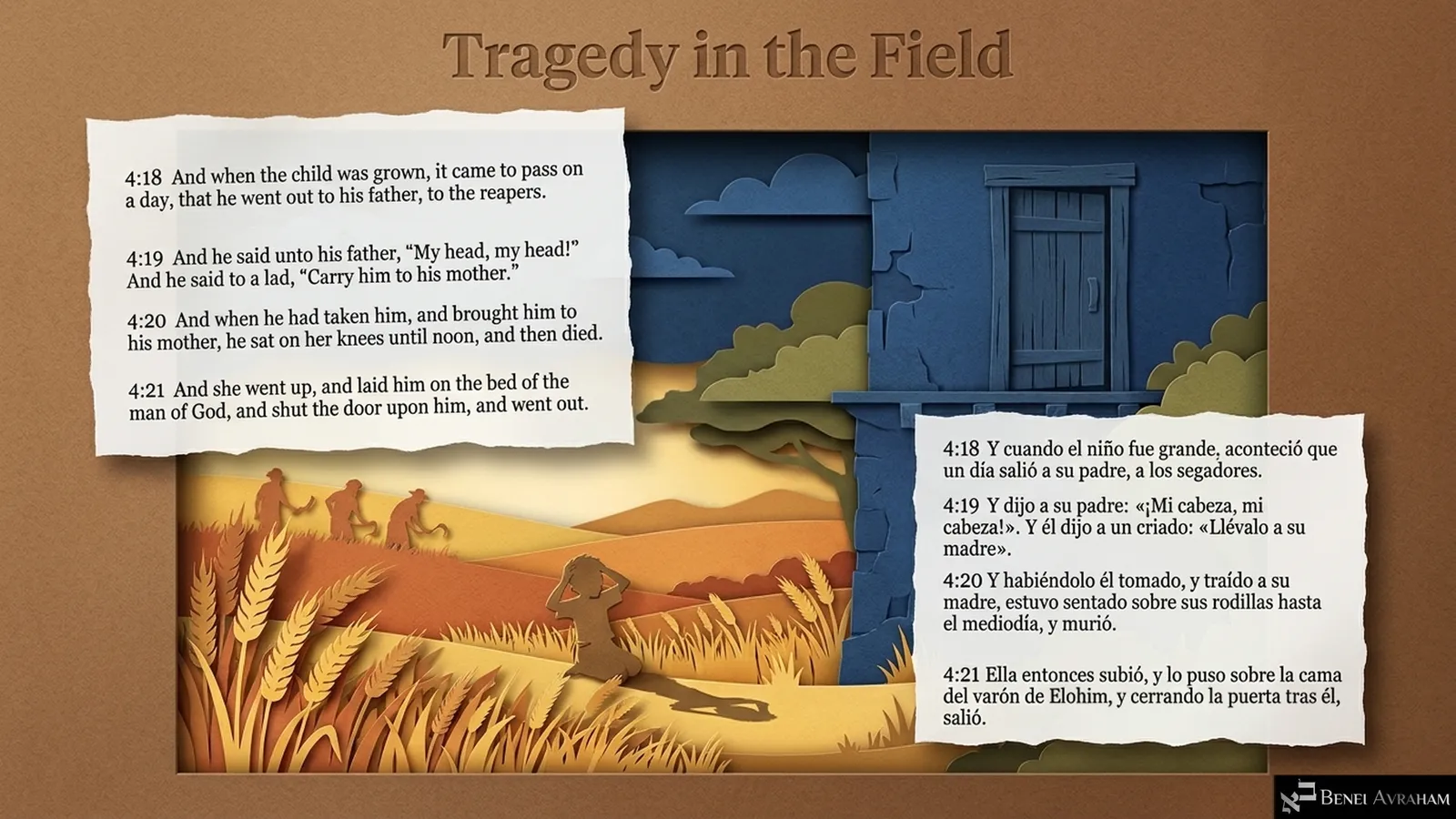
“Tragedy in the Field”: the boy cries “My head, my head!” among the reapers and dies on his mother’s knees (2 Kings 4:18–21).
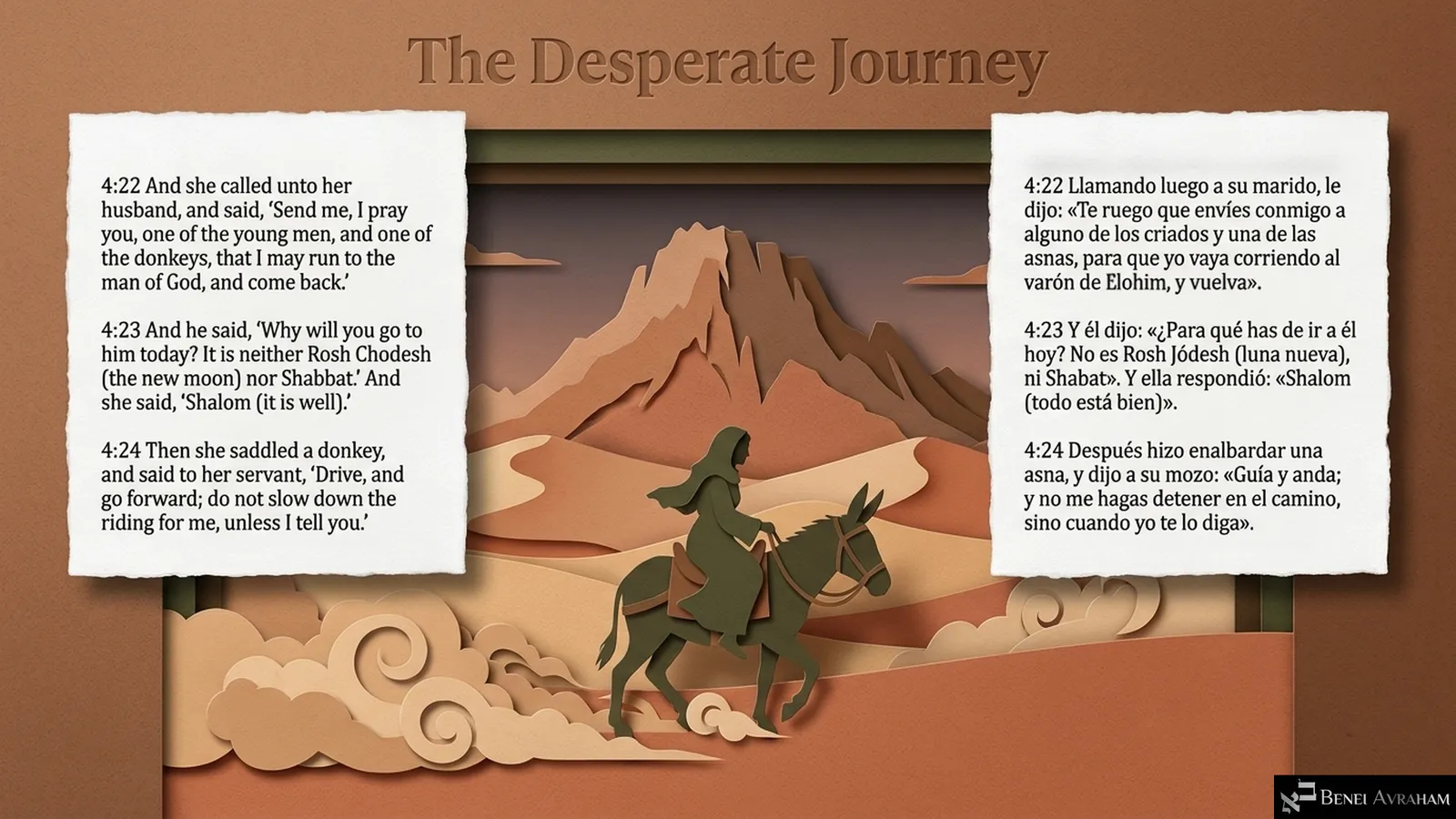
“The Desperate Journey”: the Shunamit rides a donkey toward the mountain to reach the man of God (2 Kings 4:22–24).
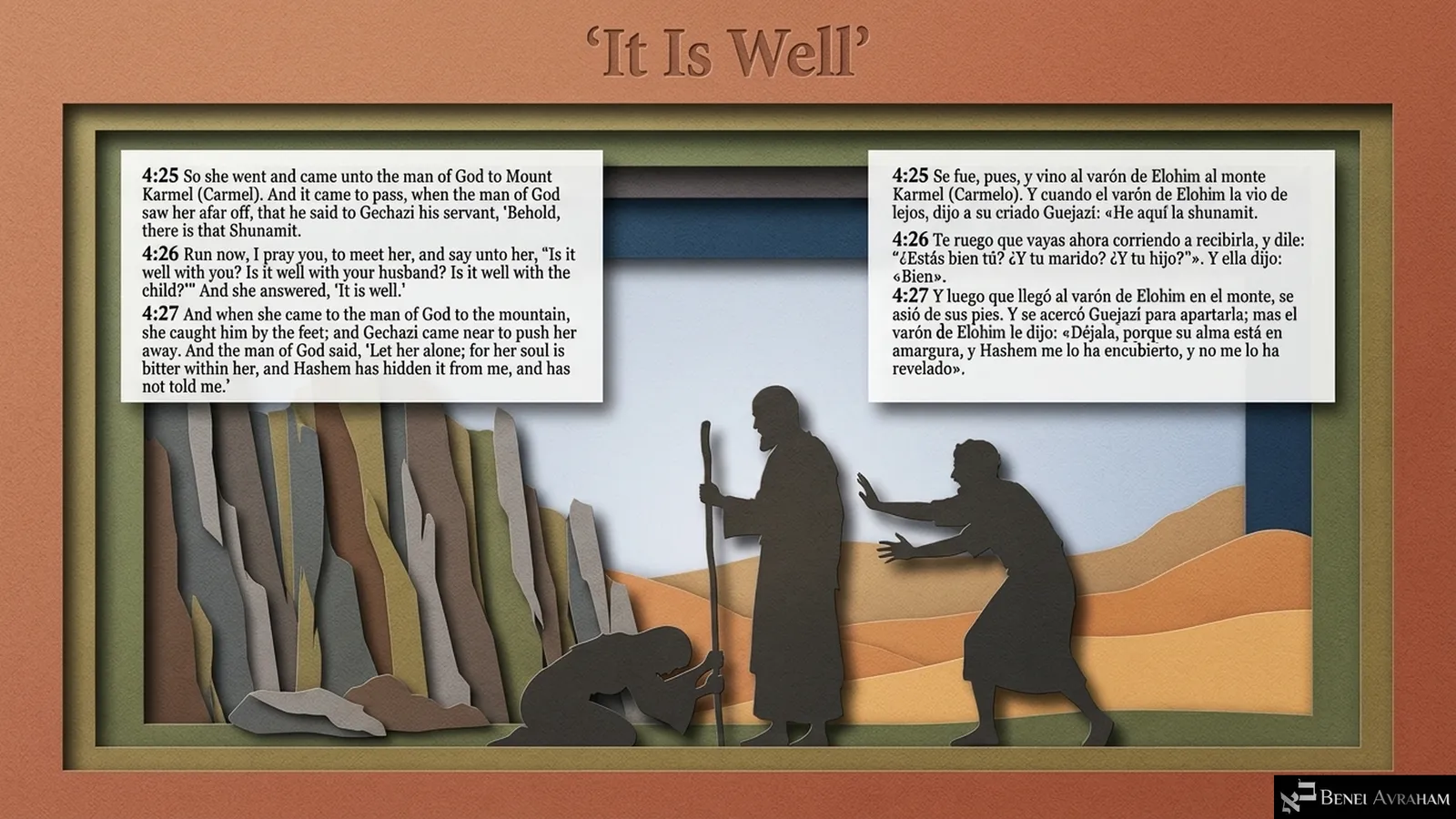
“It Is Well”: the Shunamit falls at Elisha’s feet on Mount Karmel as Geḥazi moves to push her away (2 Kings 4:25–27).
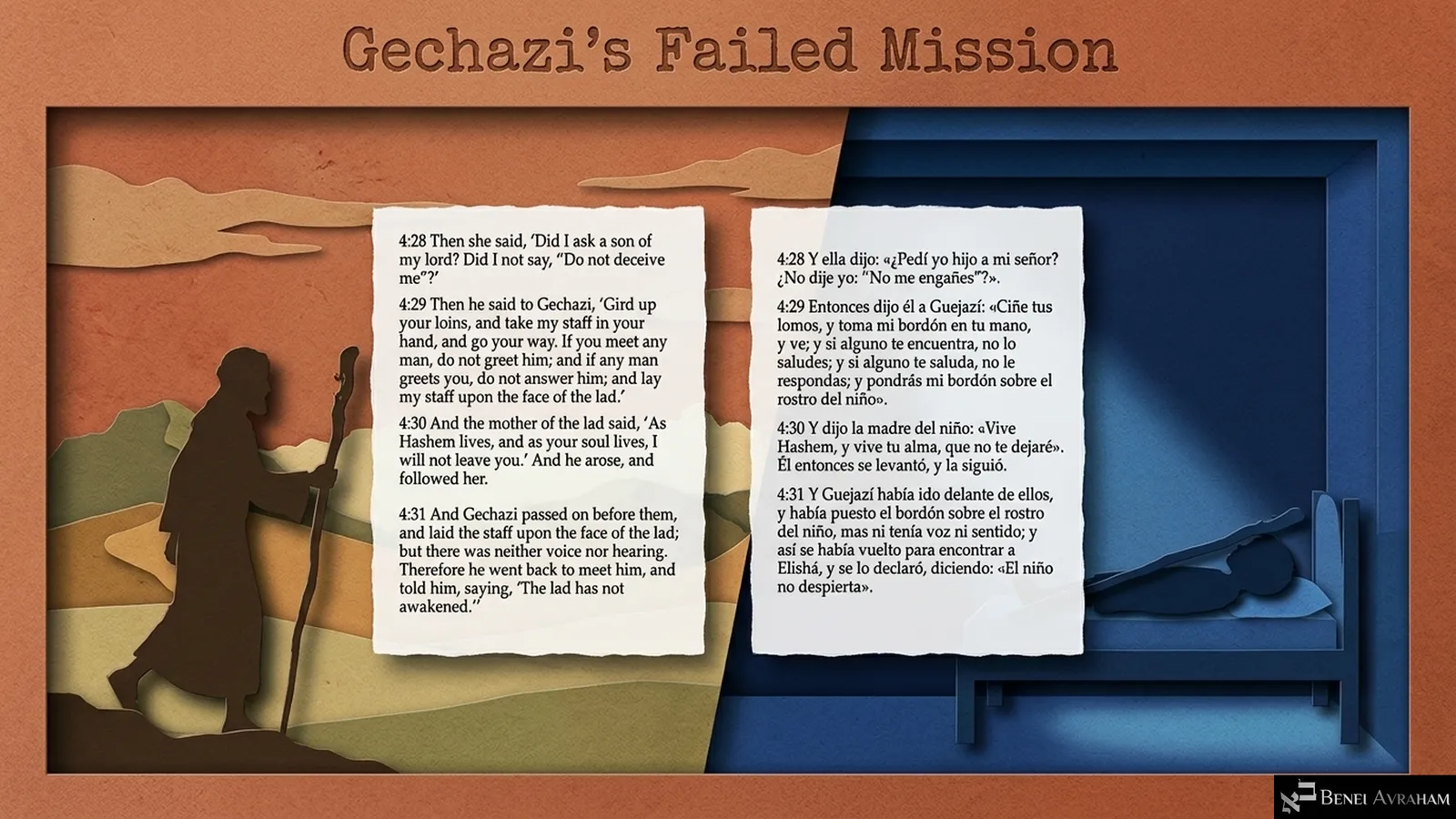
“Geḥazi’s Failed Mission”: Geḥazi lays Elisha’s staff on the boy’s face, but the lad does not awaken (2 Kings 4:28–31).
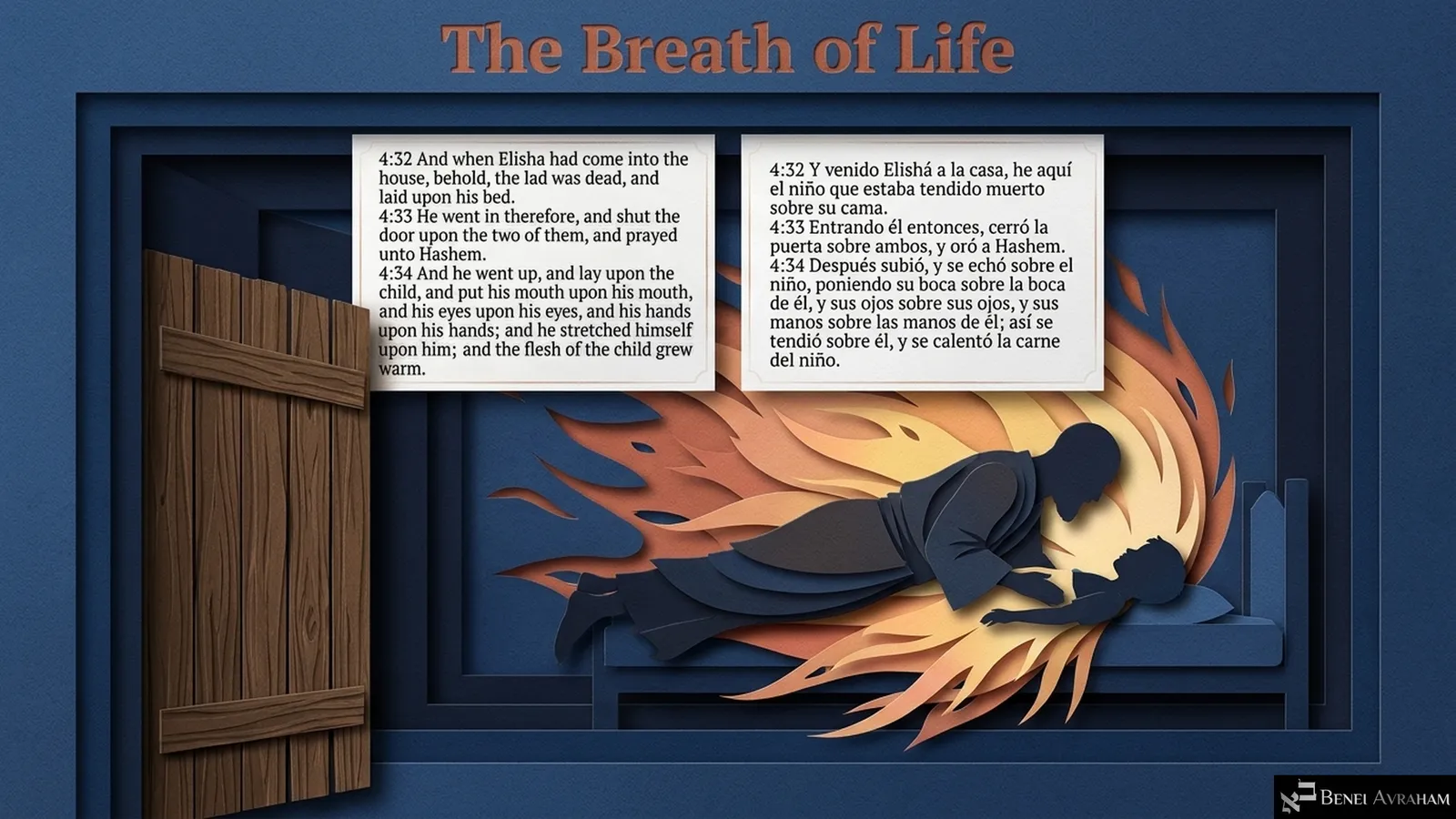
“The Breath of Life”: Elisha prays to Hashem and stretches himself upon the child until his flesh grows warm (2 Kings 4:32–34).
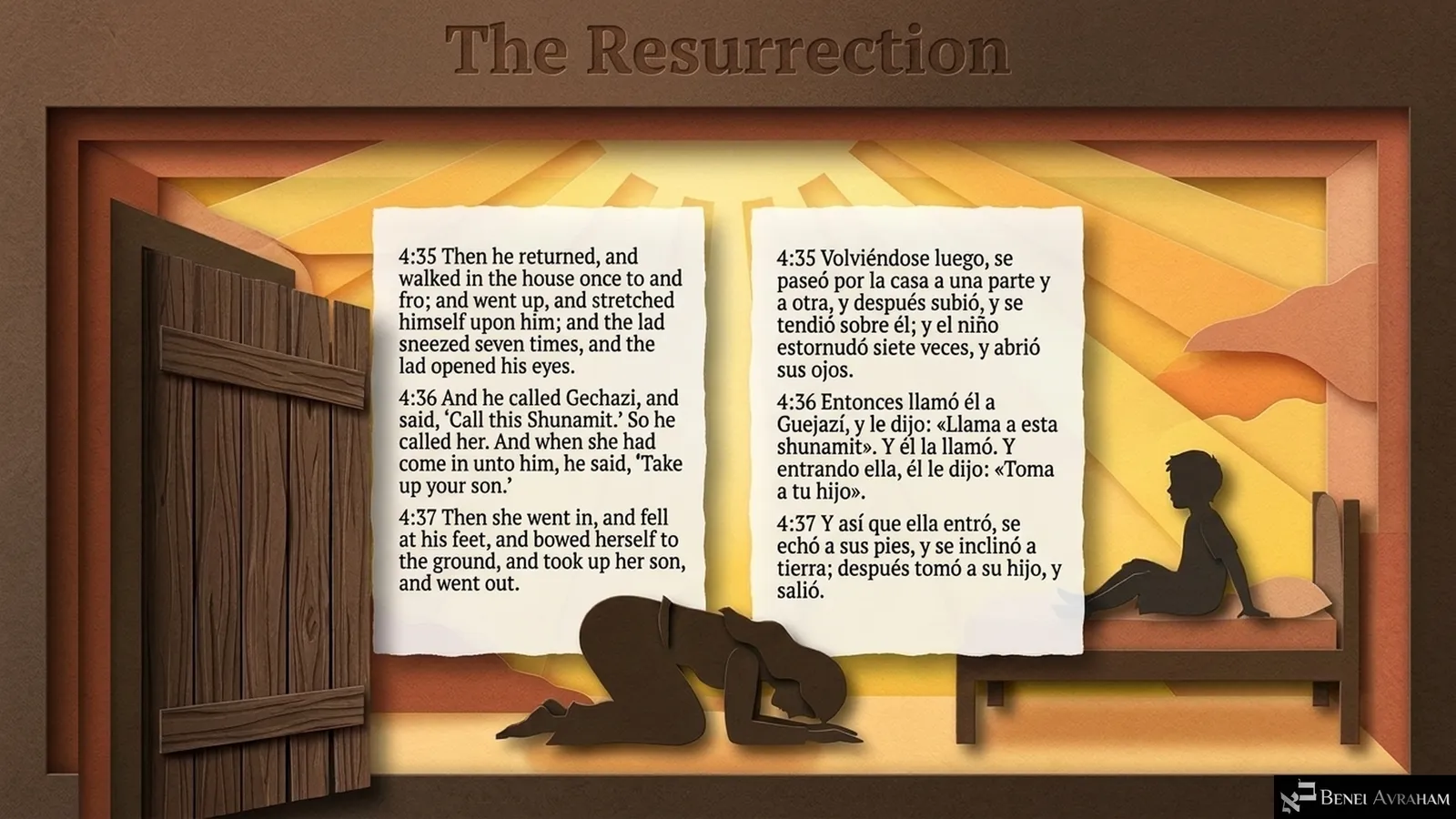
“The Resurrection”: the boy sneezes seven times and sits up; his mother bows at Elisha’s feet and takes her son (2 Kings 4:35–37).