SMS/Text 469-608-9944
Parashat Vayigash · Genesis 44:18–47:27 · Haftarah Ezekiel 37:15–28

Vayigash: A Visual Journey

Illustrated teaching slides from Benei Avraham, in English and Spanish, walking through Parashat Vayigash portion by portion: Yehudah comes near and pleads for Binyamin, offering himself as a slave in the lad’s place; Yosef can no longer restrain himself, sends everyone out and says, “I am Yosef; does my father yet live?”, telling his brothers that God sent him before them to preserve life; Par’oh sends wagons, and when Yaakov sees them his spirit revives; at Be’er-Sheva God tells him not to fear to go down into Mitzrayim, and the seventy souls of the house of Yaakov are named; Yosef falls on his father’s neck in Goshen, presents his brothers and his father to Par’oh, and Yaakov blesses Par’oh; through the famine Yosef buys the land of Mitzrayim for Par’oh, and Yisrael dwells in Goshen and multiplies. The haftarah follows: Yeḥezkel joins the stick of Yehudah and the stick of Yosef into one, a sign that Yisrael will be one nation under one king, David, with Hashem’s sanctuary in their midst forever. Tap any image to open the slideshow; use the arrows (or swipe) to move through every slide.

Rishon · Genesis 44:18–30

First Portion

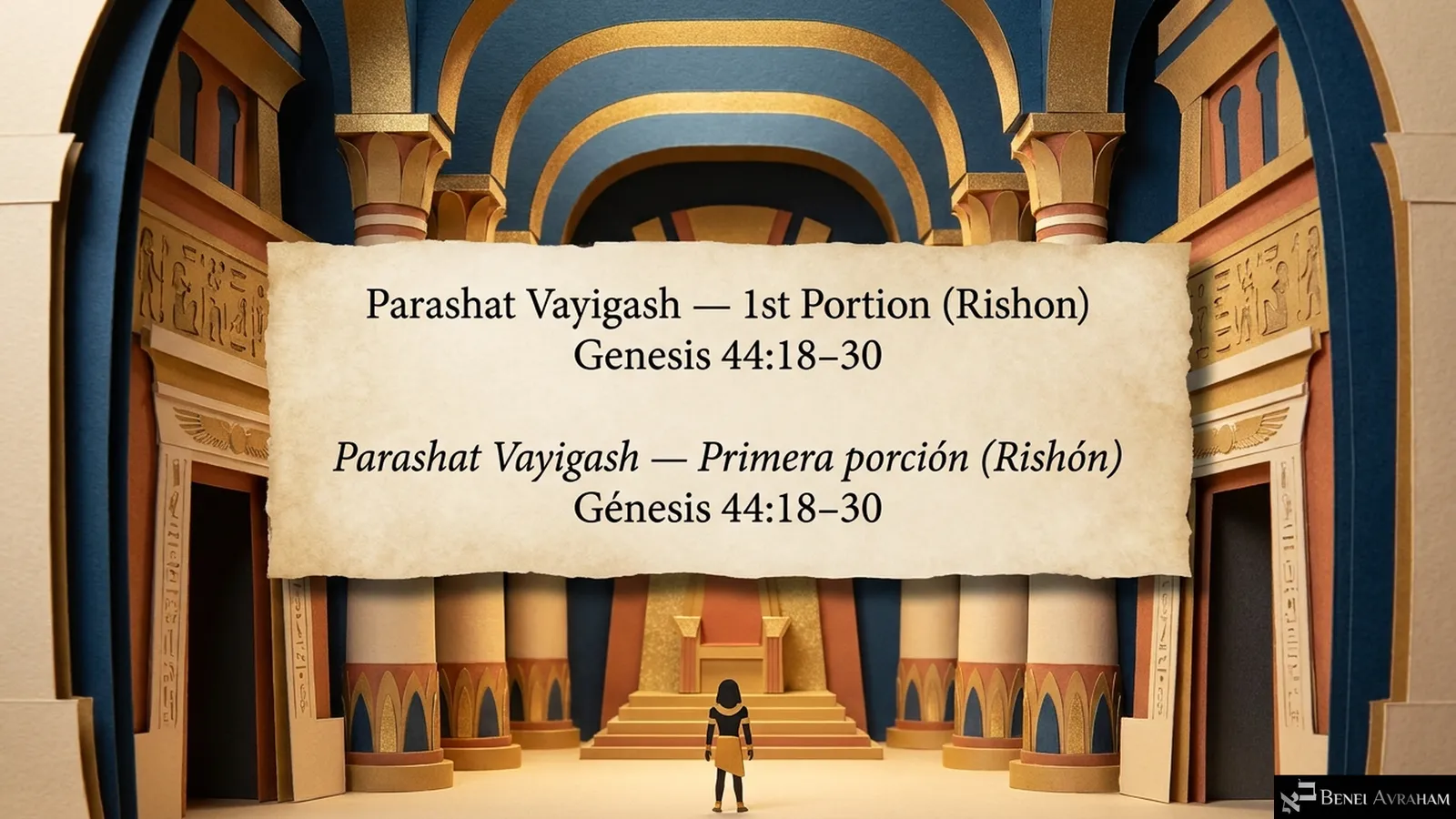
Title card for the first portion: a lone paper figure stands before Yosef’s throne in a columned Egyptian hall, “Parashat Vayigash, 1st Portion (Rishon), Genesis 44:18–30”.
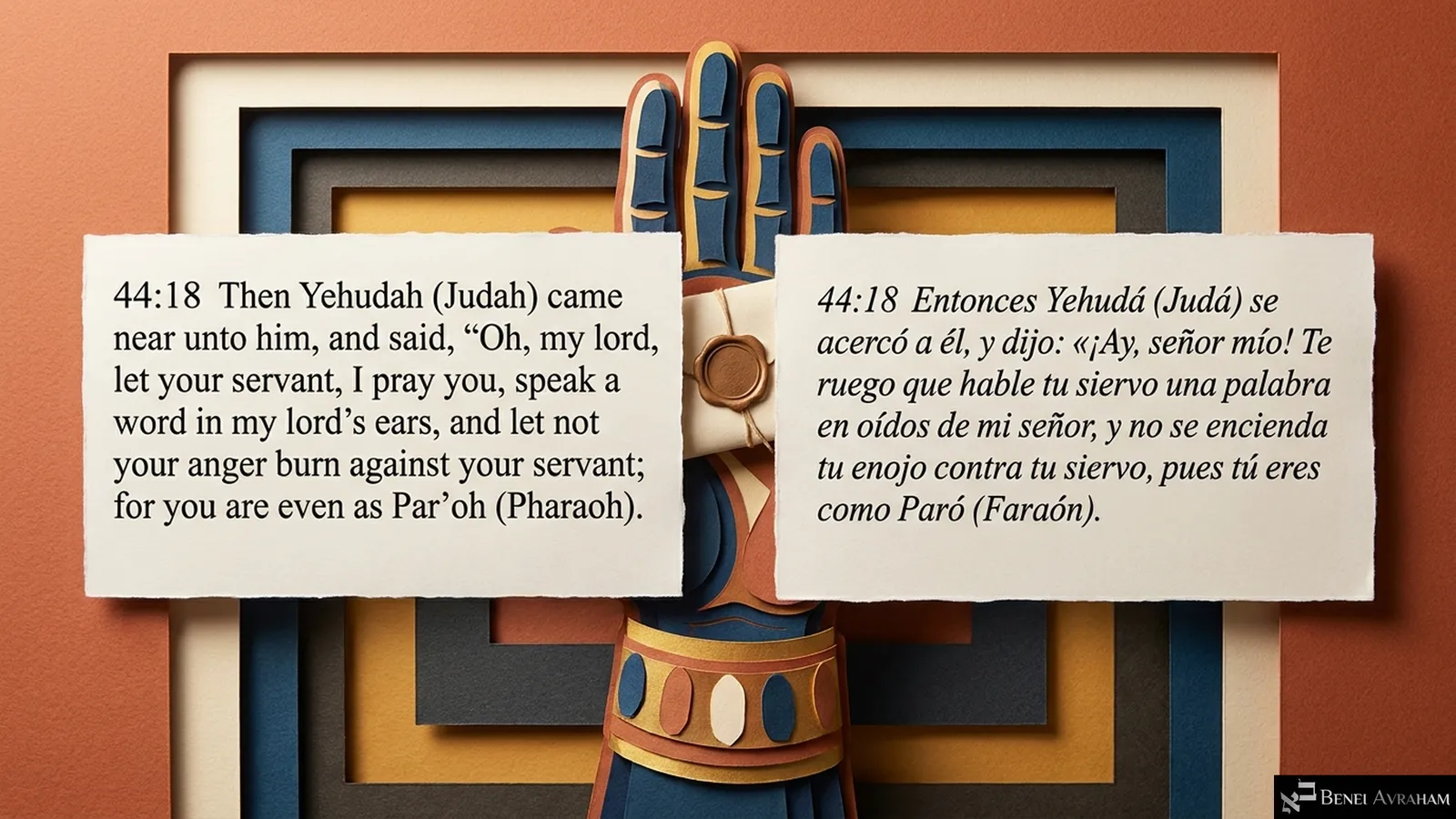
A paper hand with a sealed scroll rises behind two cards: Yehudah came near unto him and said, “Oh, my lord, let your servant speak a word in my lord’s ears” (Genesis 44:18).
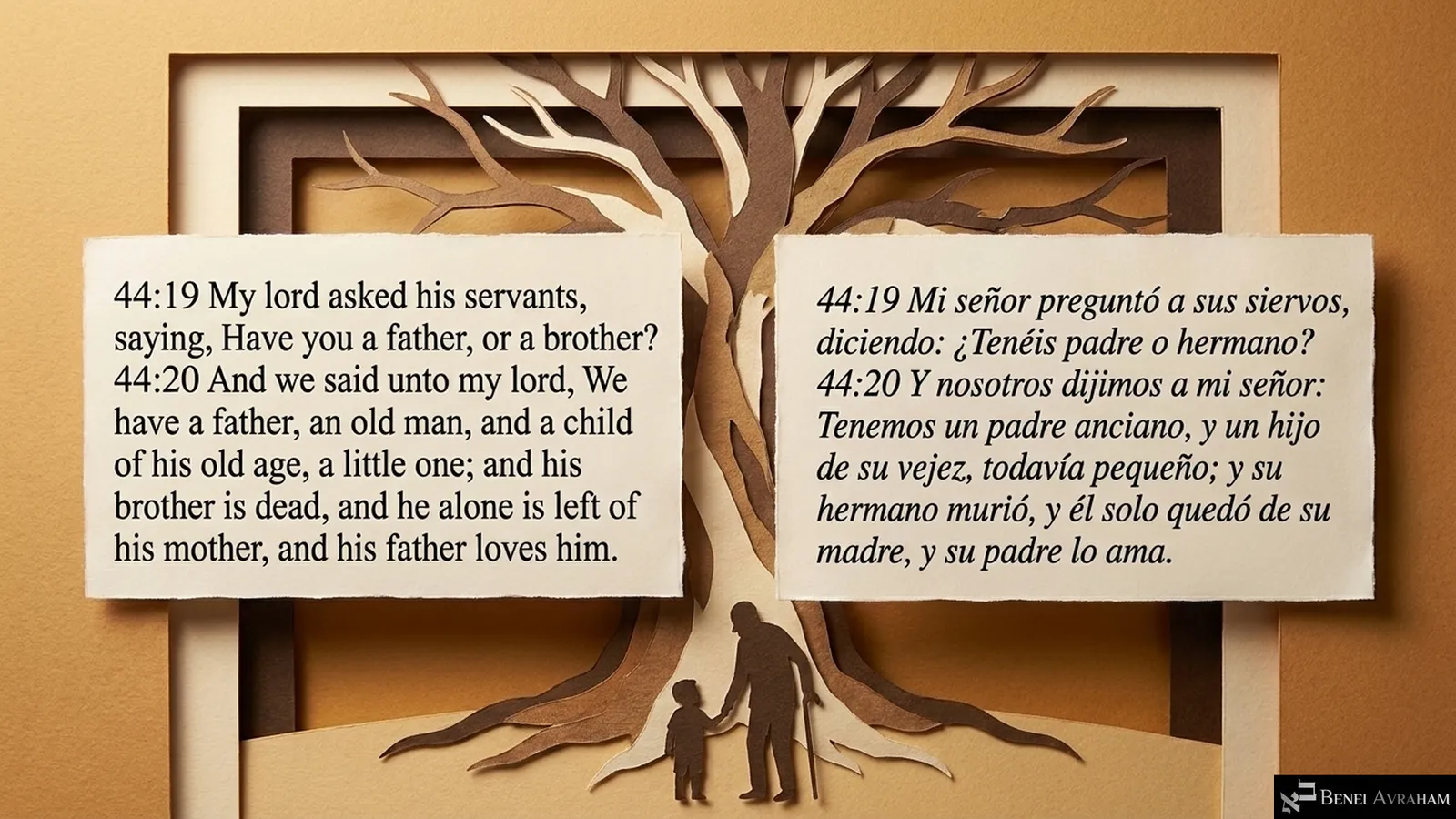
An old man holds a child’s hand beneath a bare paper tree: “We have a father, an old man, and a child of his old age, a little one” (Genesis 44:19–20).
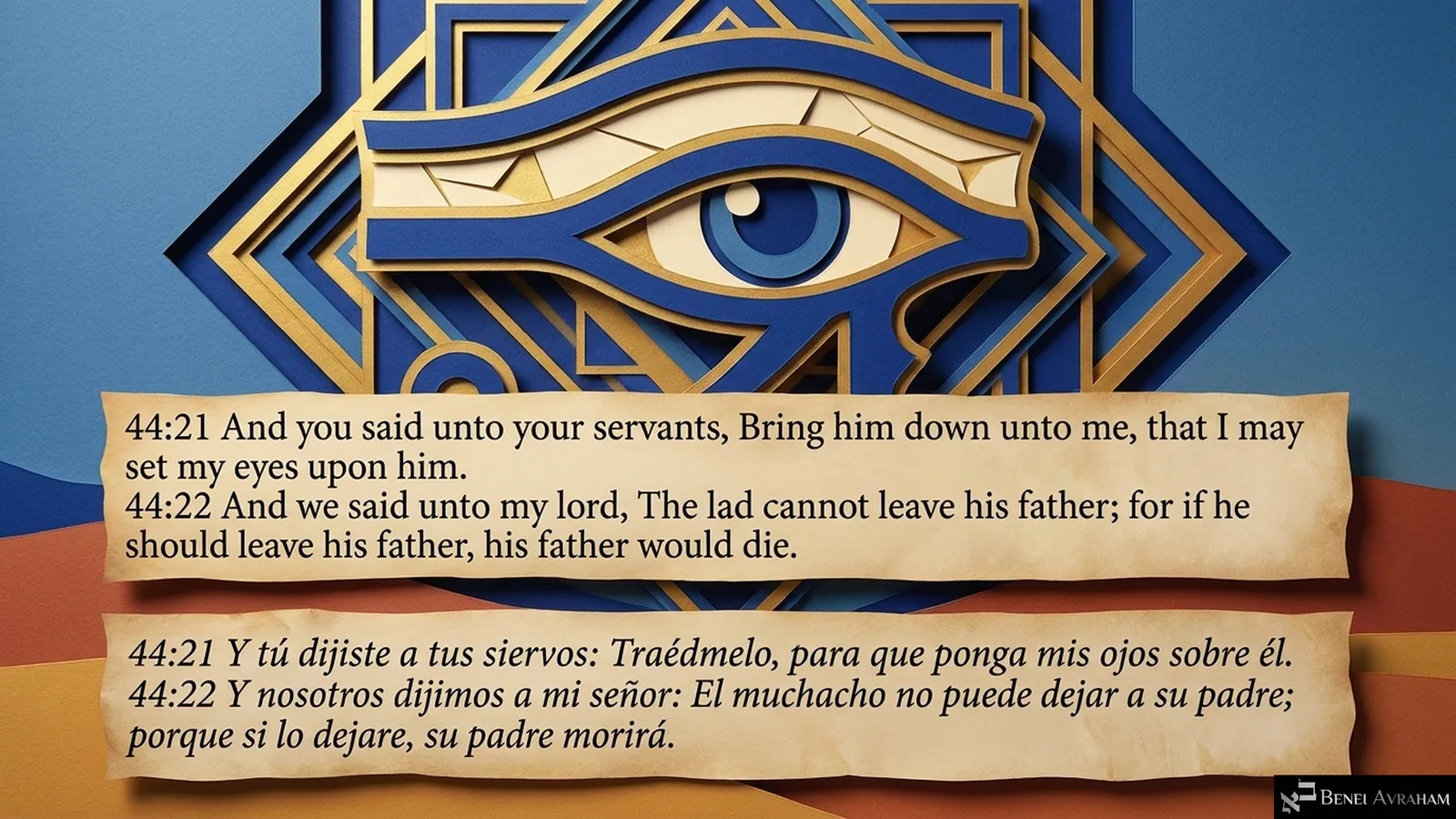
A great paper eye in blue and gold: “Bring him down unto me, that I may set my eyes upon him”; “The lad cannot leave his father” (Genesis 44:21–22).
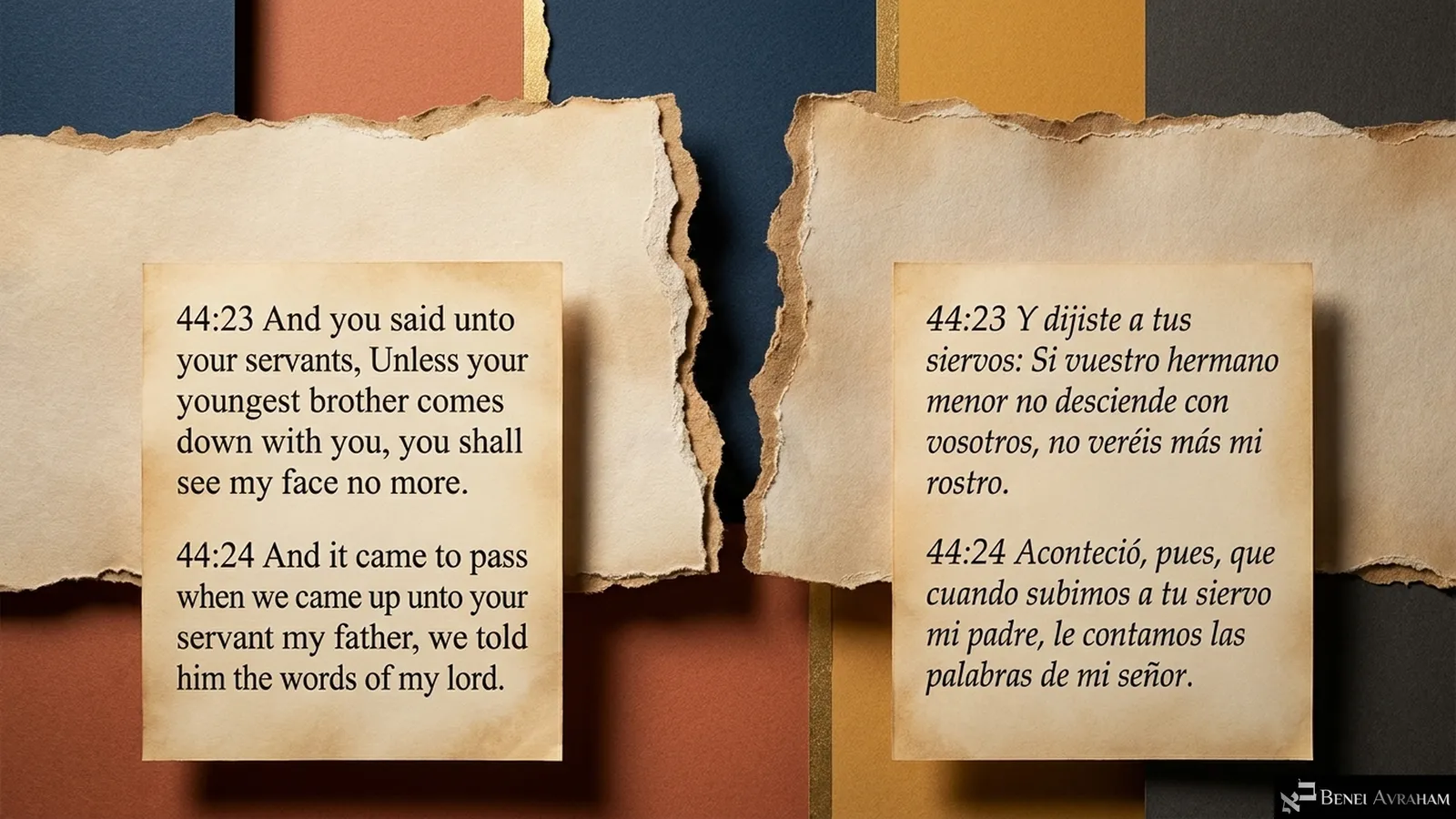
Two torn paper cards on coloured bands: “Unless your youngest brother comes down with you, you shall see my face no more” (Genesis 44:23–24).
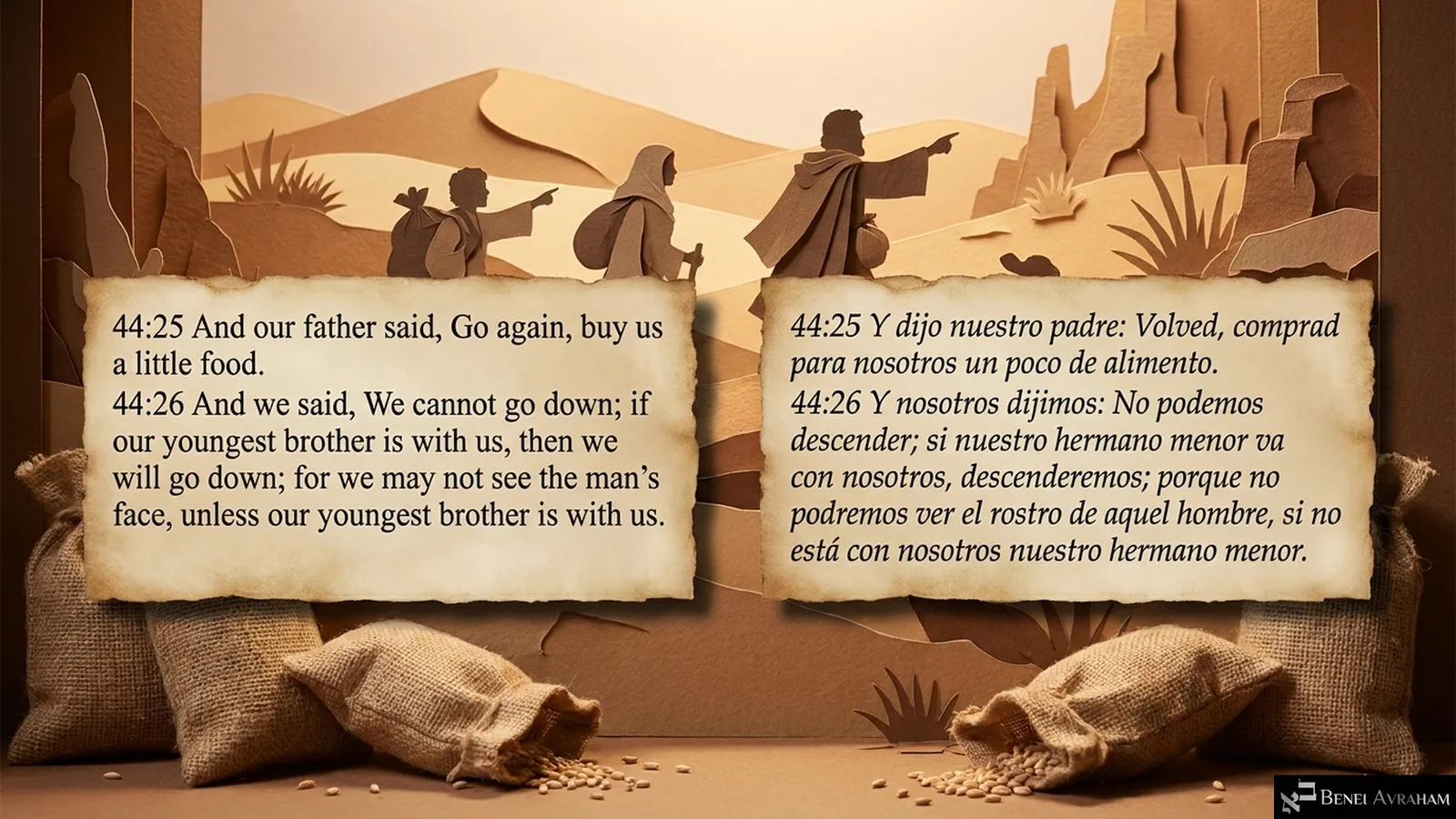
The brothers point back across paper dunes beside spilled grain sacks: “Go again, buy us a little food”; “We cannot go down, unless our youngest brother is with us” (Genesis 44:25–26).
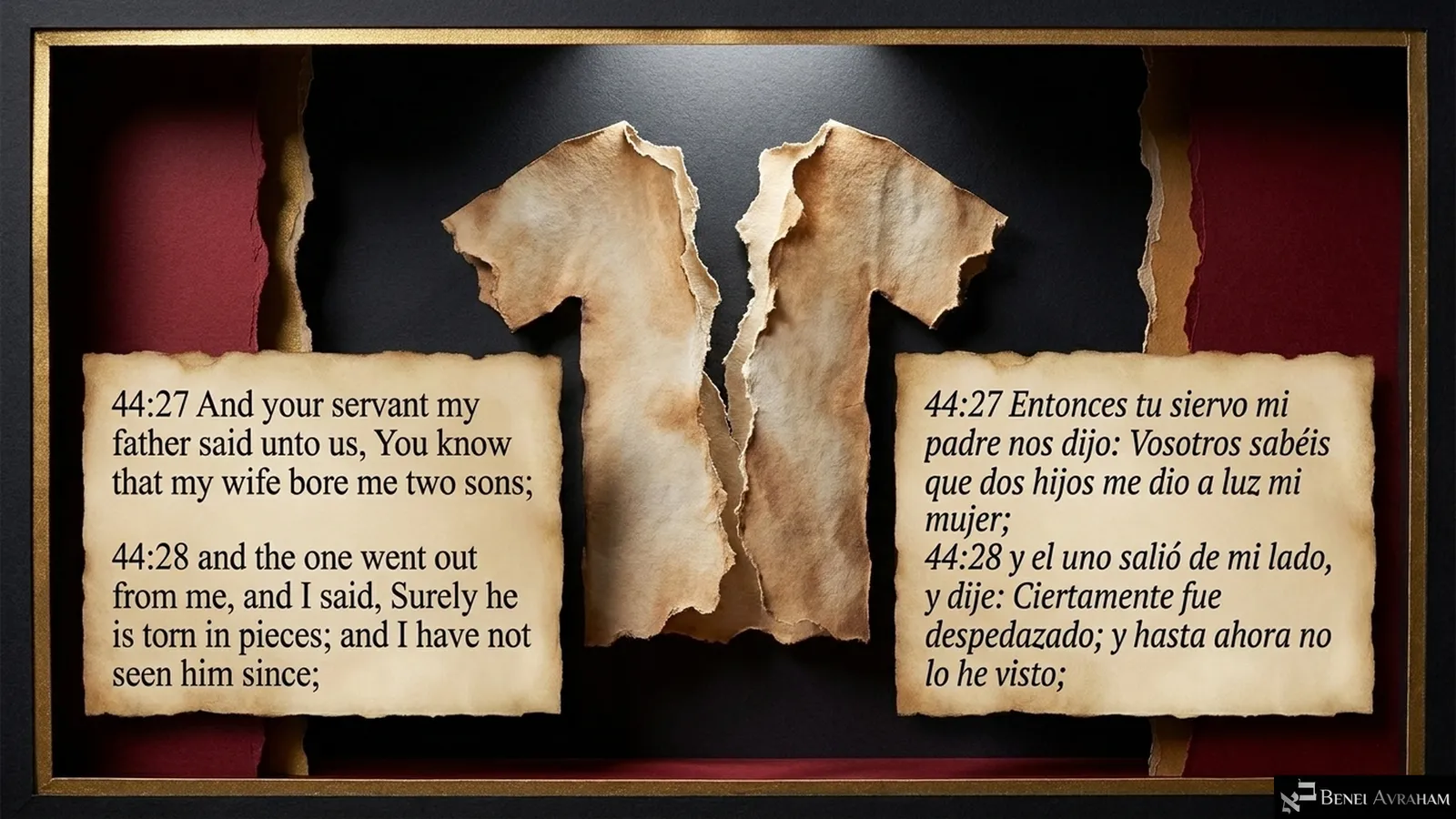
A torn paper tunic hangs in a dark frame: “My wife bore me two sons; and the one went out from me, and I said, Surely he is torn in pieces” (Genesis 44:27–28).
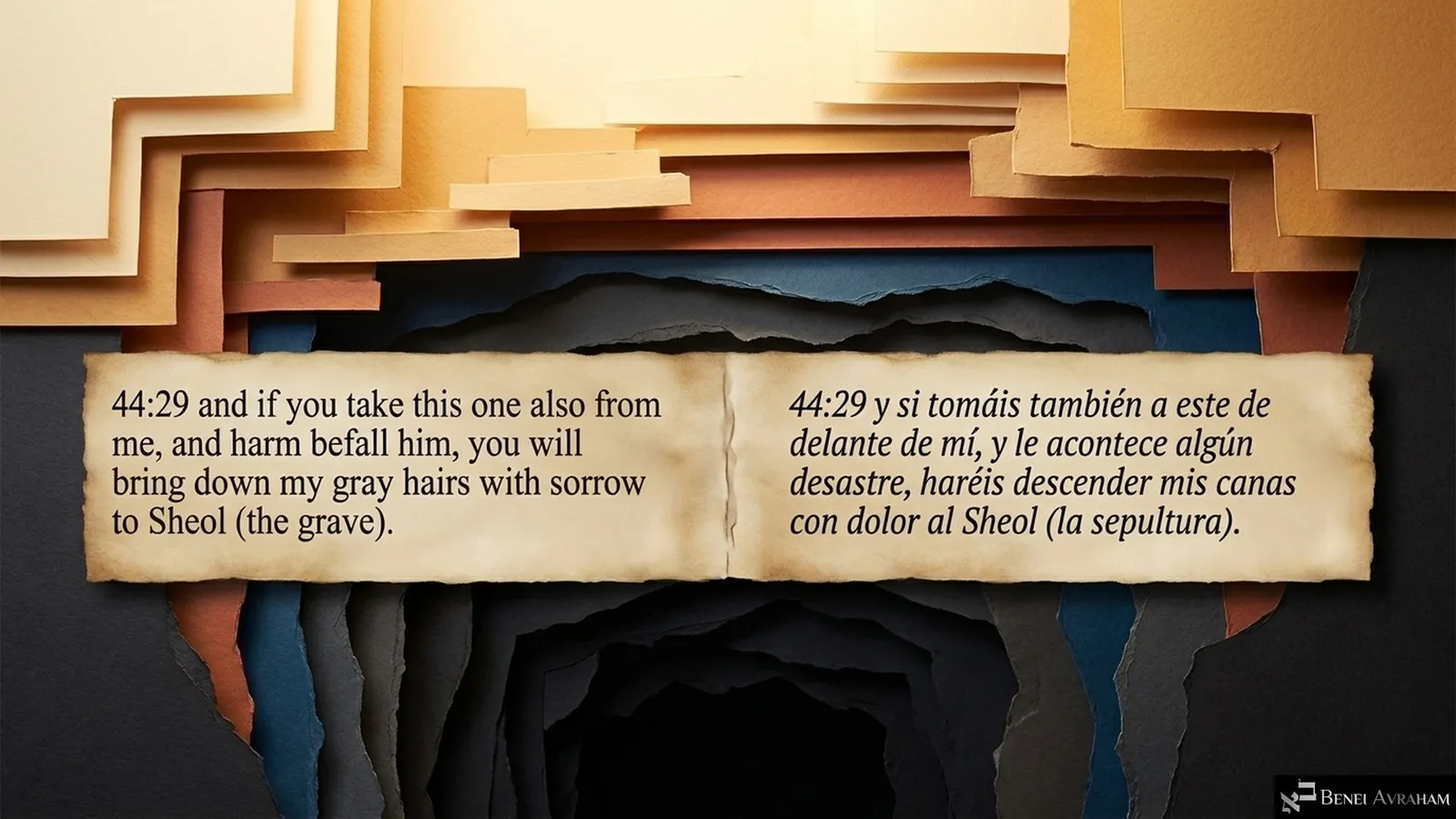
Layered paper strata open into a dark pit: “If you take this one also from me, you will bring down my gray hairs with sorrow to Sheol” (Genesis 44:29).
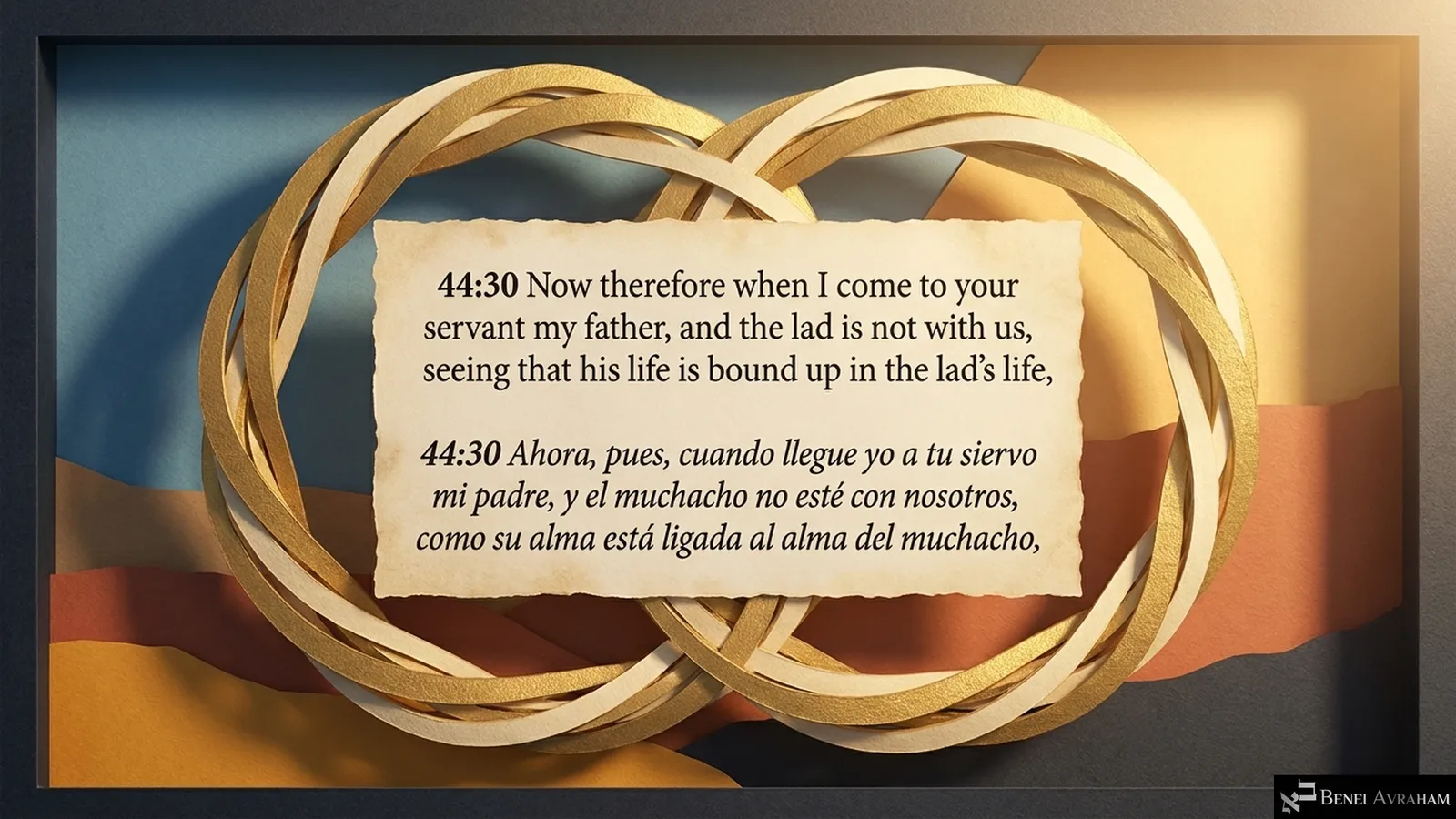
Two golden paper rings knotted together: “His life is bound up in the lad’s life” (Genesis 44:30).
Sheni · Genesis 44:31–45:7

Second Portion

Title card for the second portion: a paper sheaf of wheat crowned in gold, “Parashat Vayigash, Genesis 44:31–45:7, The Second Portion”.
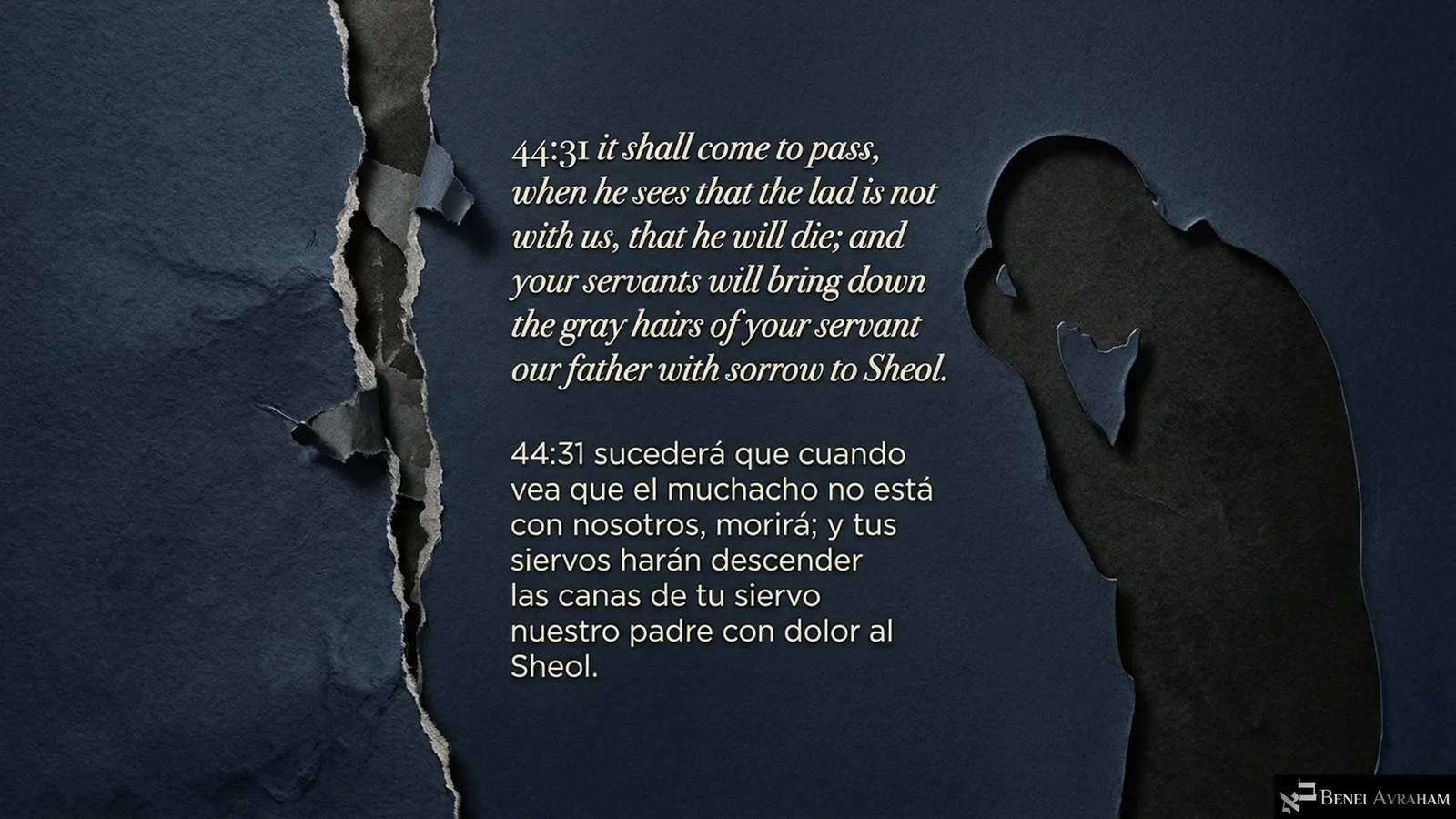
A bowed paper figure holds his head against a torn dark-blue wall: “Your servants will bring down the gray hairs of your servant our father with sorrow to Sheol” (Genesis 44:31).
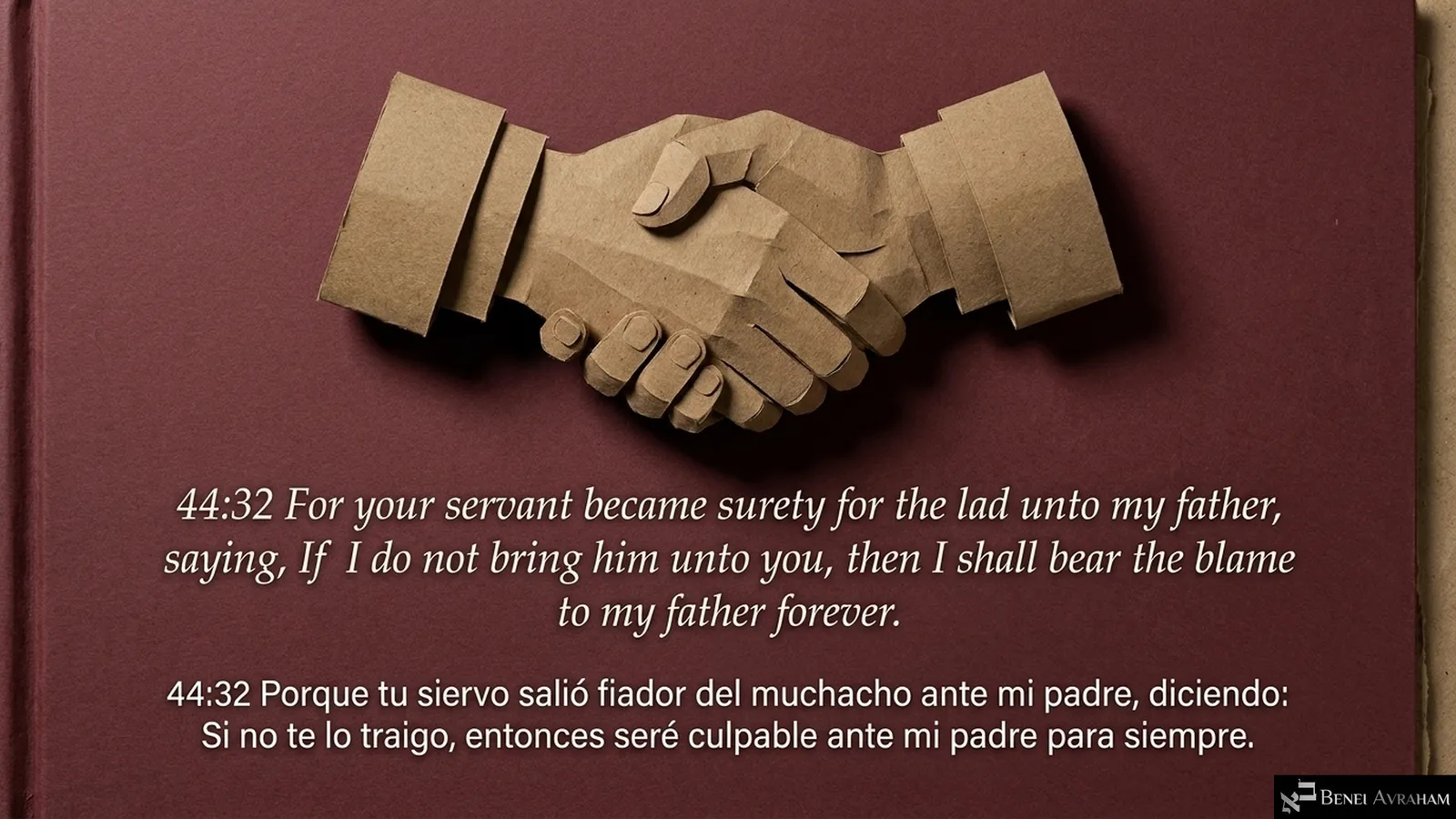
Two paper hands clasp over a dark red ground: “Your servant became surety for the lad unto my father” (Genesis 44:32).
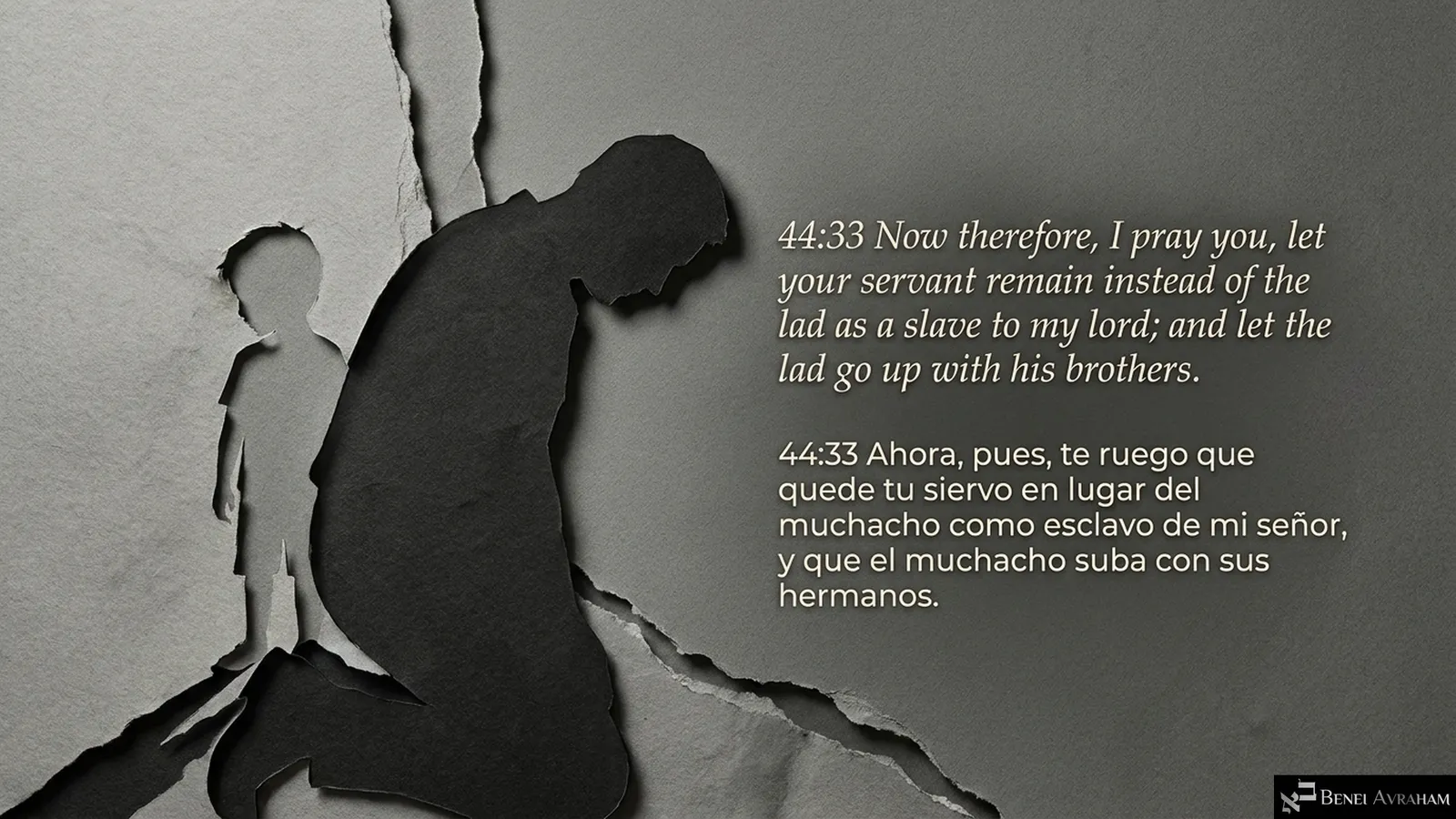
A kneeling paper silhouette with a boy behind him: “Let your servant remain instead of the lad as a slave to my lord” (Genesis 44:33).
Crumpled grey paper mountains: “How shall I go up to my father, and the lad is not with me?” (Genesis 44:34).
Grey torn paper parts around a bright white opening as figures walk away: “Make every man go out from me” — Yosef made himself known unto his brothers (Genesis 45:1).
Concentric rings of white and blue paper: he wept aloud, and the Egyptians and the house of Par’oh heard (Genesis 45:2).
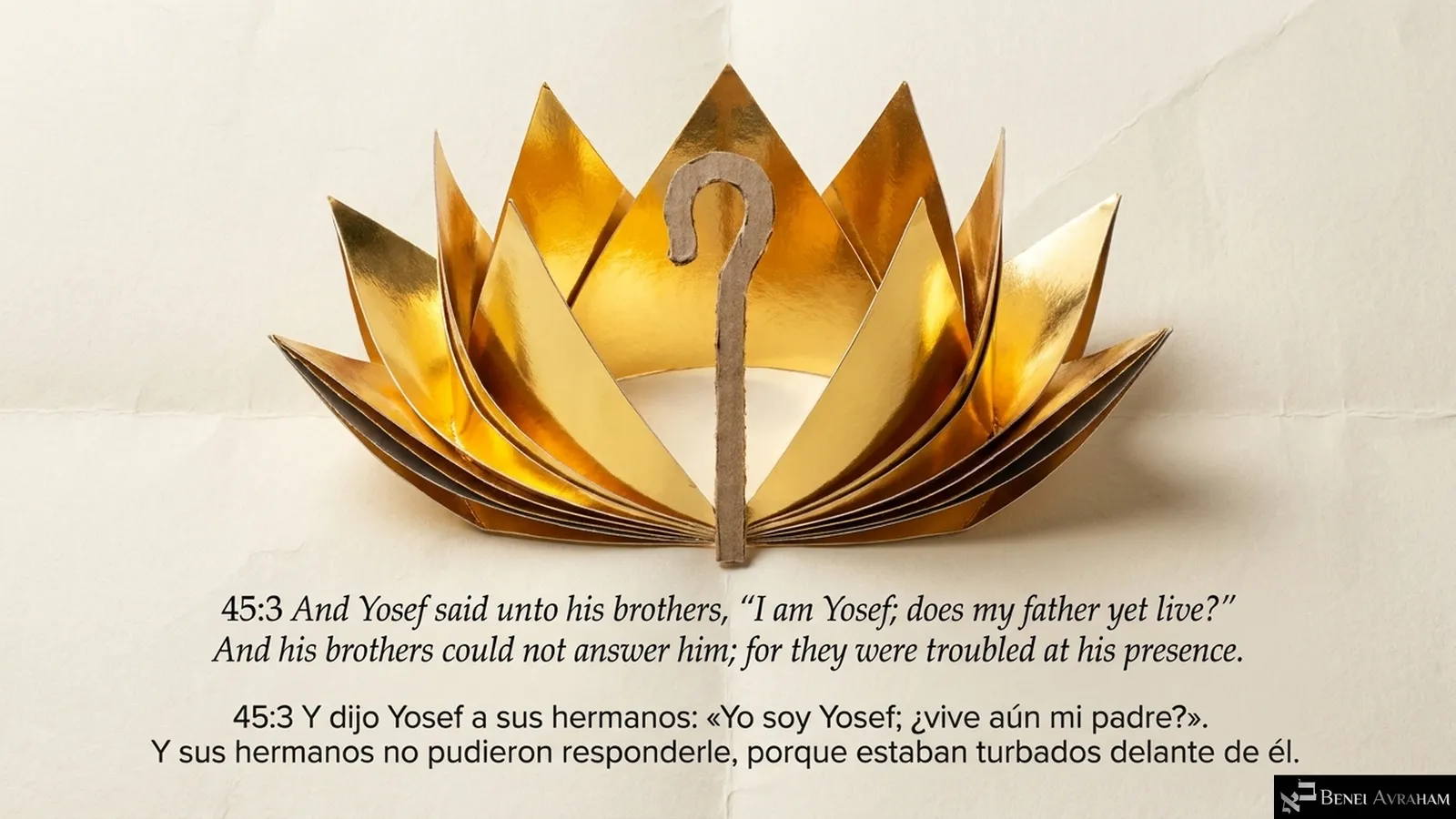
A golden paper lotus crown with a shepherd’s crook: “I am Yosef; does my father yet live?” (Genesis 45:3).
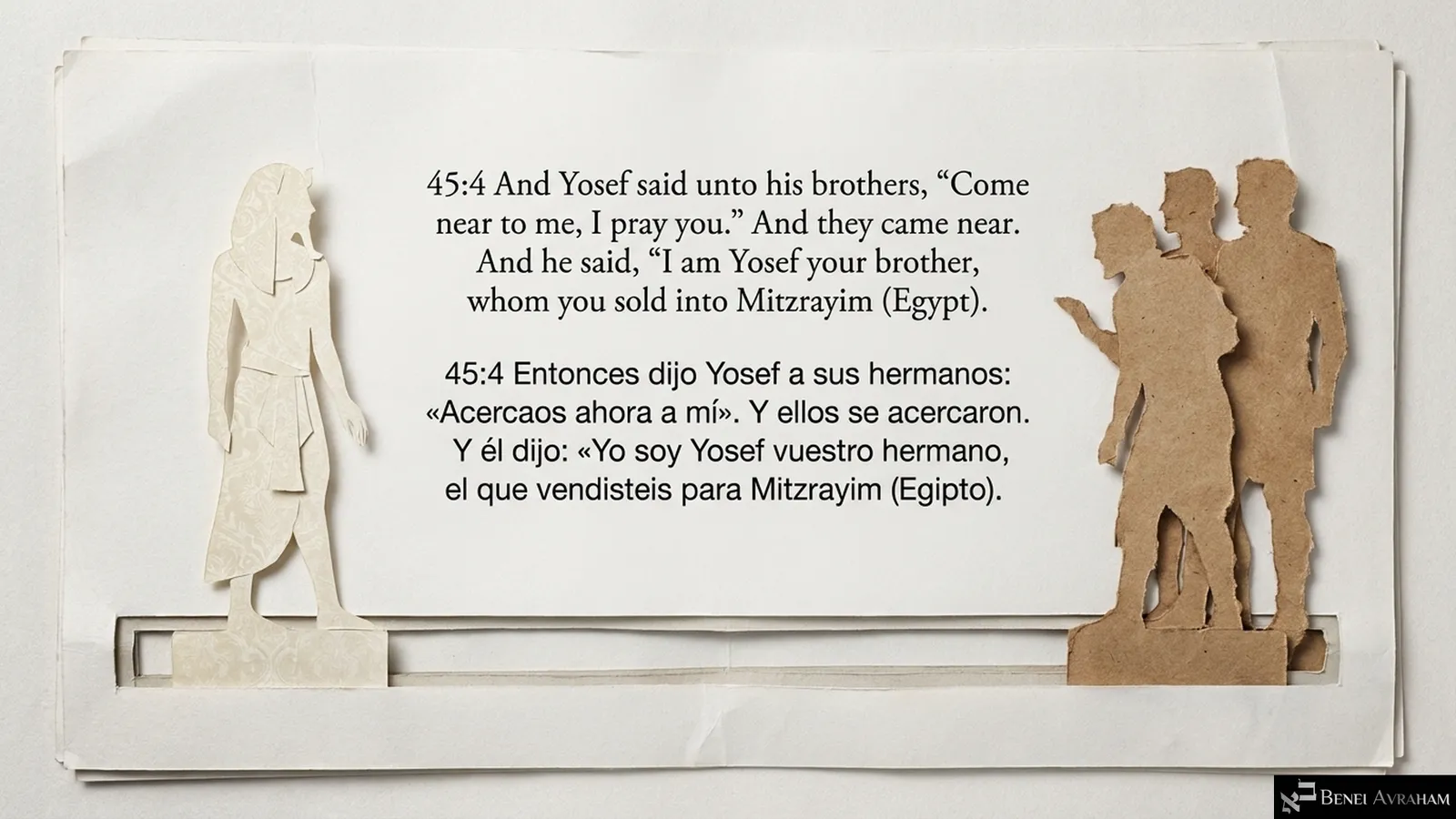
A paper Egyptian figure faces three brothers: “Come near to me. I am Yosef your brother, whom you sold into Mitzrayim” (Genesis 45:4).
Flowing layered bands of cream and gold paper: “Do not be grieved; for God sent me before you to preserve life” (Genesis 45:5).
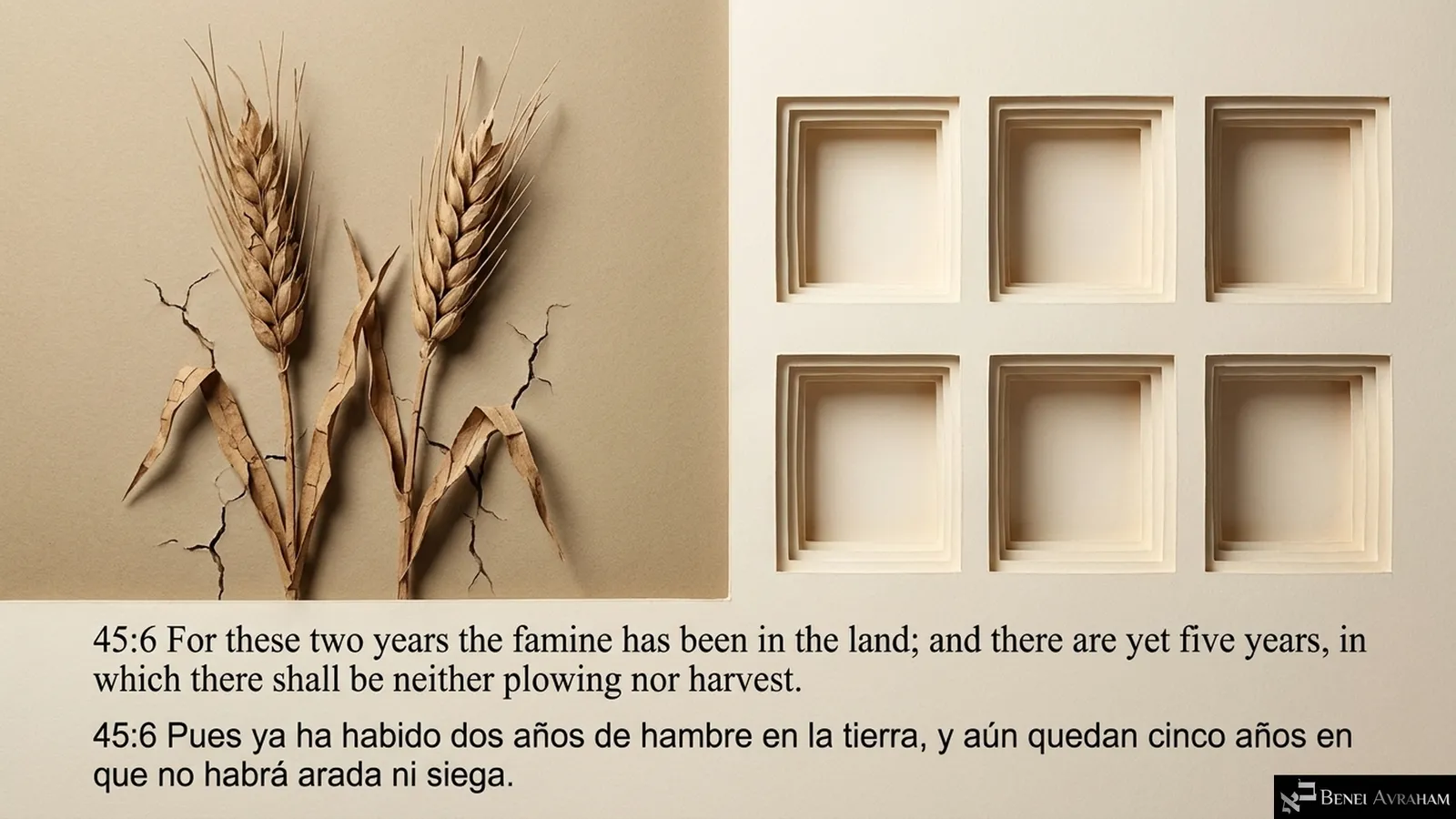
Two dry paper ears of wheat beside six empty paper windows: two years of famine, and five more without plowing or harvest (Genesis 45:6).
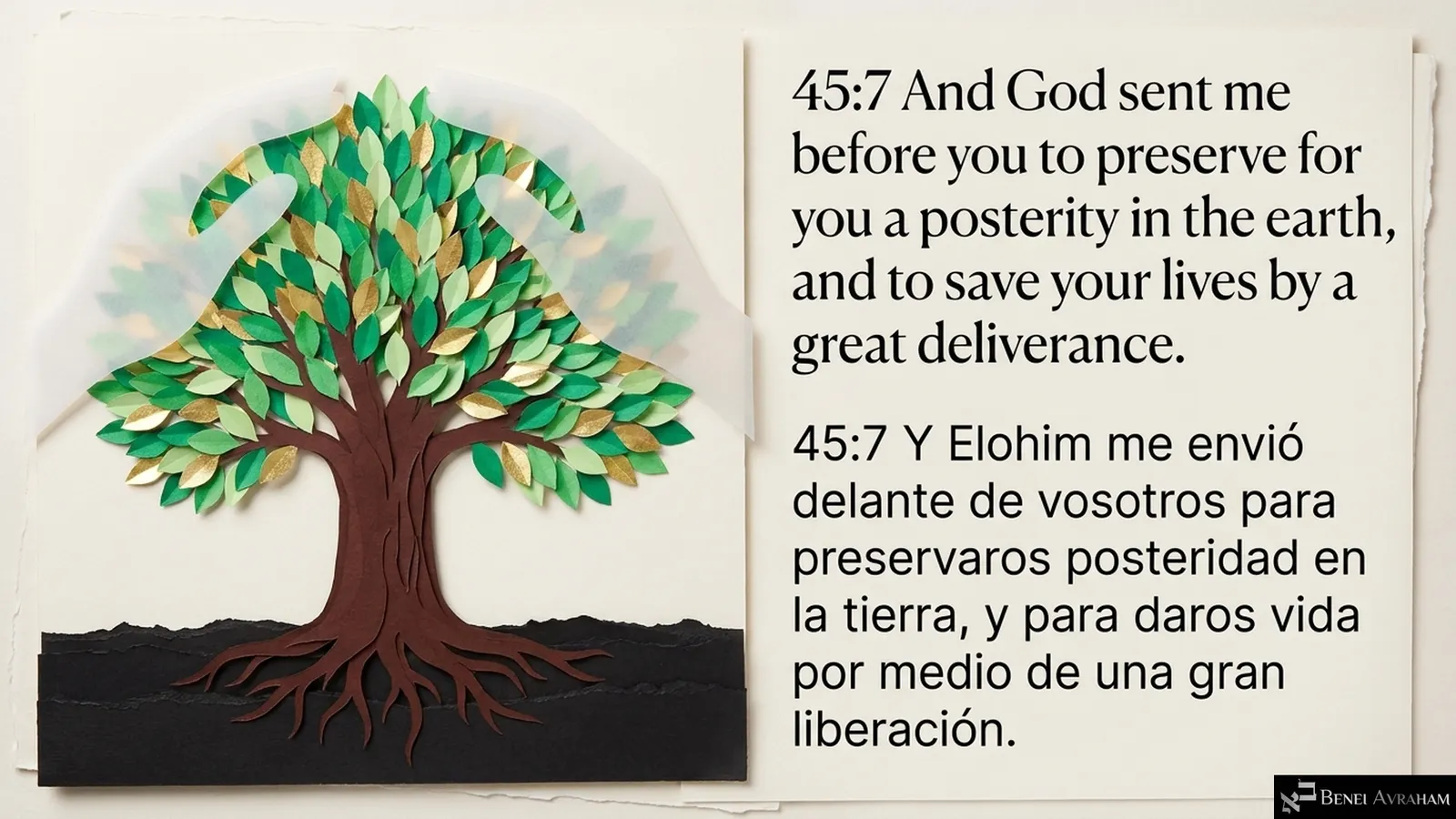
A paper tree with green and gold leaves and deep roots: “God sent me before you to preserve for you a posterity in the earth” (Genesis 45:7).
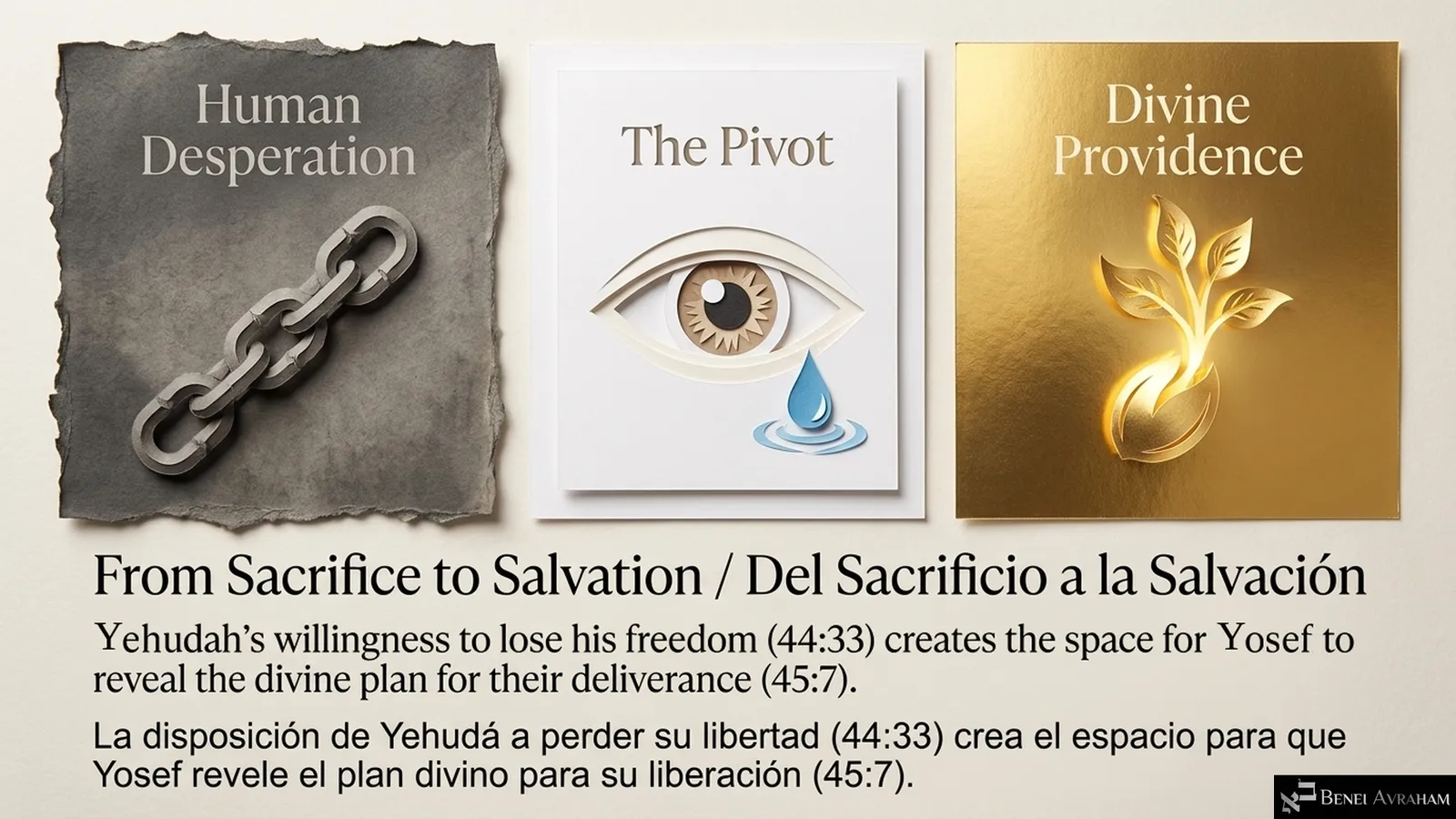
Summary panels — Human Desperation, The Pivot, Divine Providence: Yehudah’s willingness to lose his freedom (44:33) opens the way for Yosef to reveal the divine plan (45:7).
Shlishi · Genesis 45:8–18

Third Portion

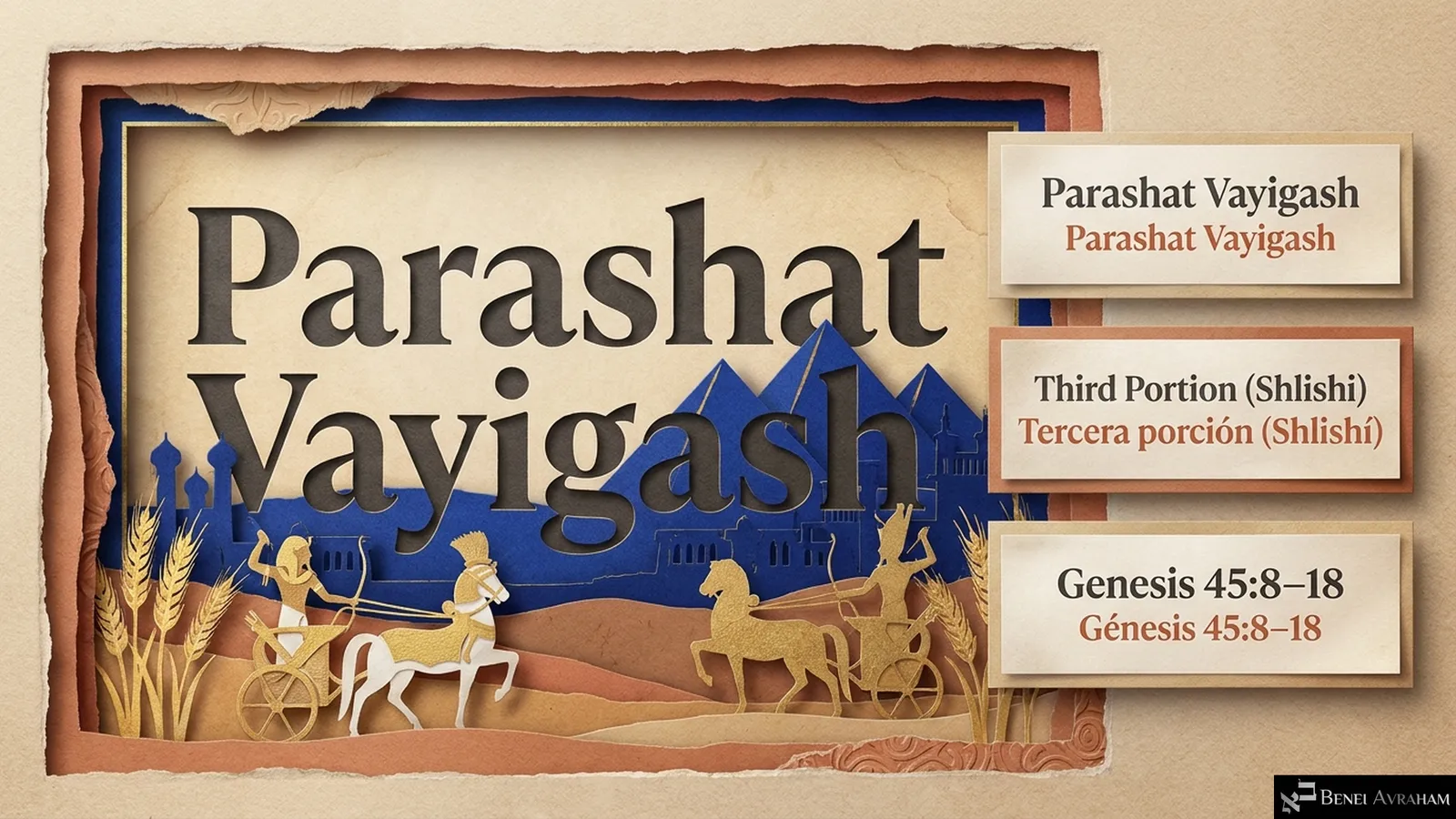
Title card for the third portion: paper chariots and wheat before blue pyramids, “Parashat Vayigash, Third Portion (Shlishi), Genesis 45:8–18”.
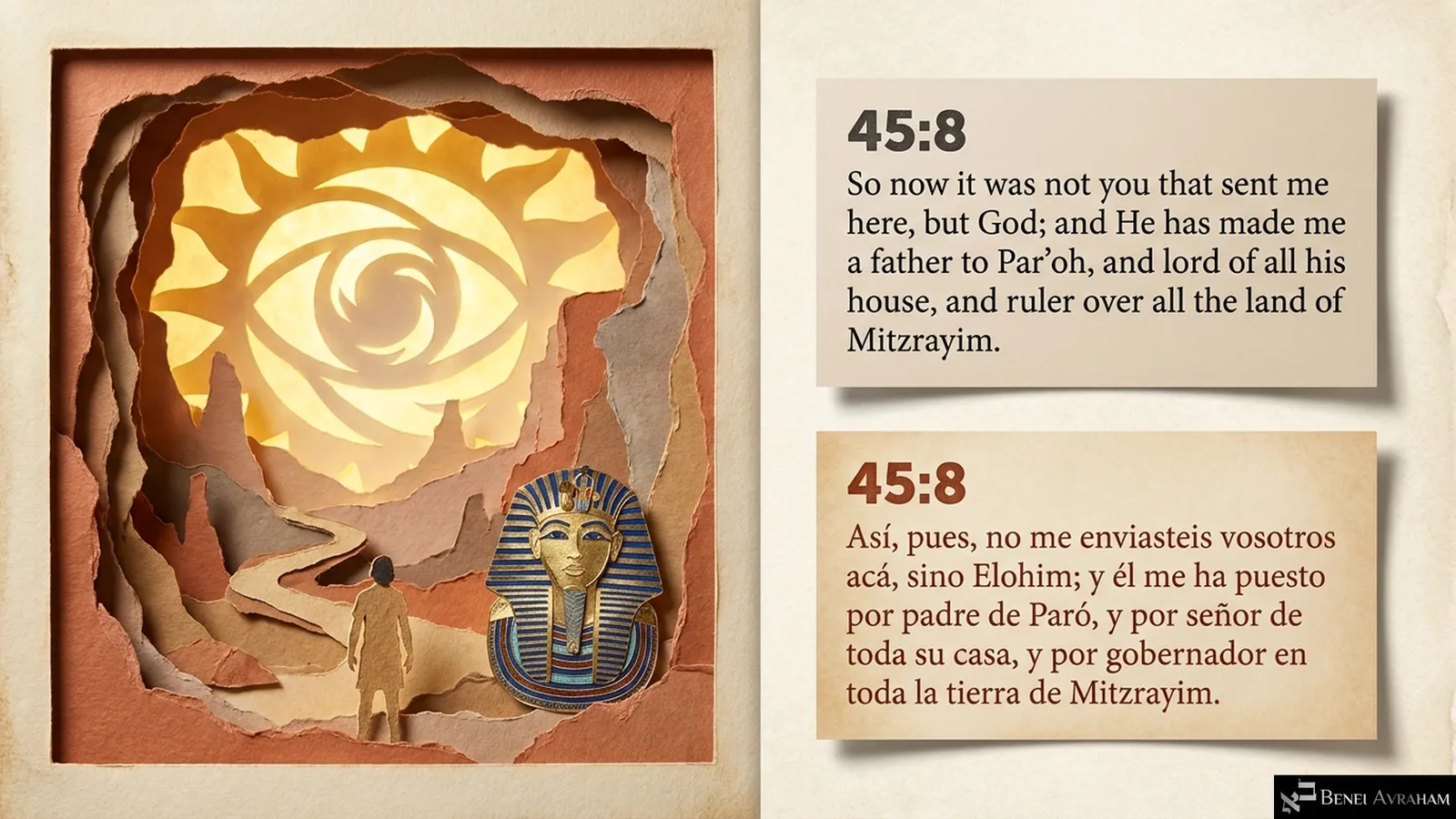
A lone paper figure walks toward a radiant sun with a golden pharaoh’s mask beside him: “It was not you that sent me here, but God” (Genesis 45:8).
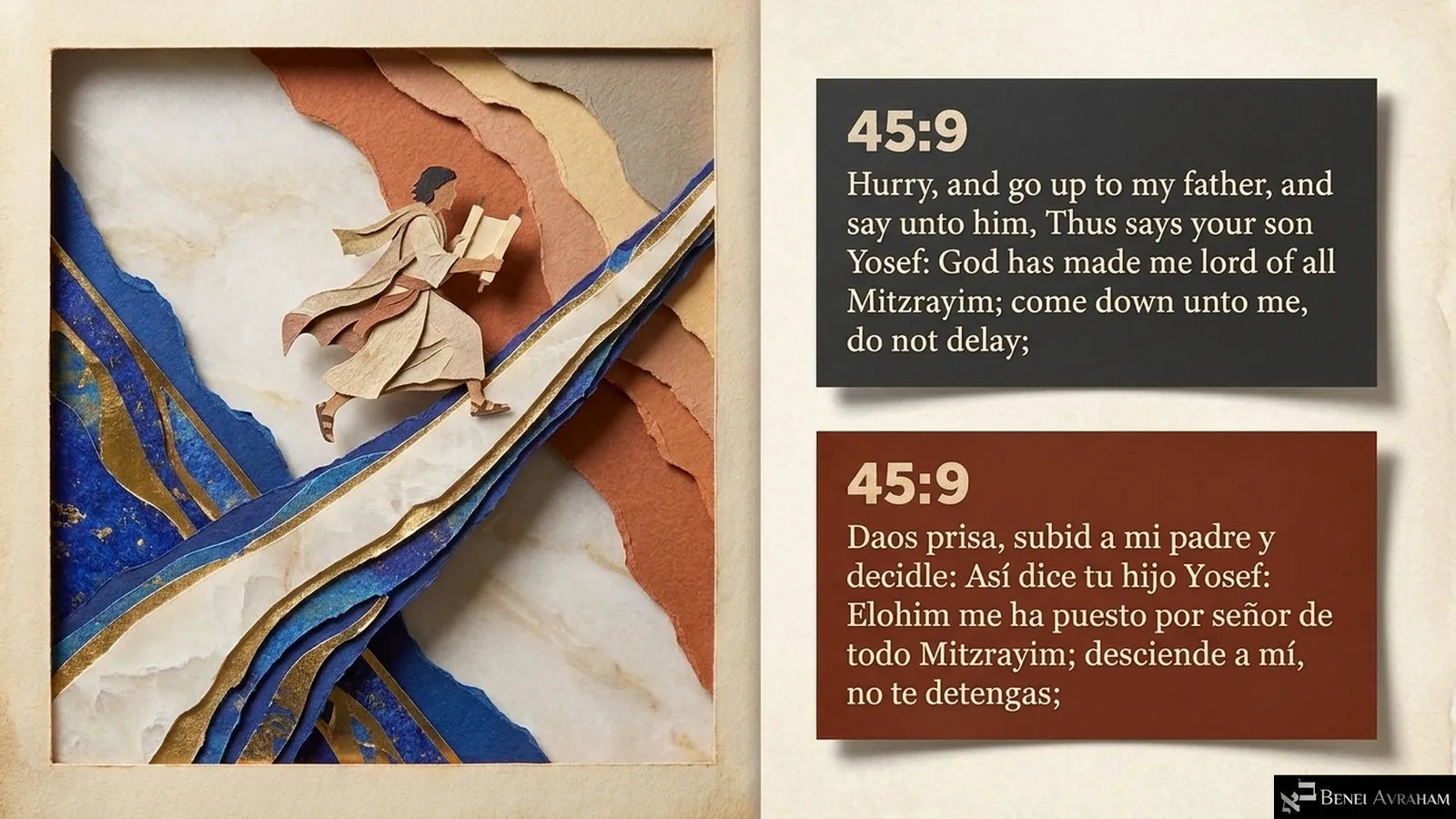
A paper messenger runs down a path of blue and gold: “Hurry, and go up to my father; God has made me lord of all Mitzrayim” (Genesis 45:9).
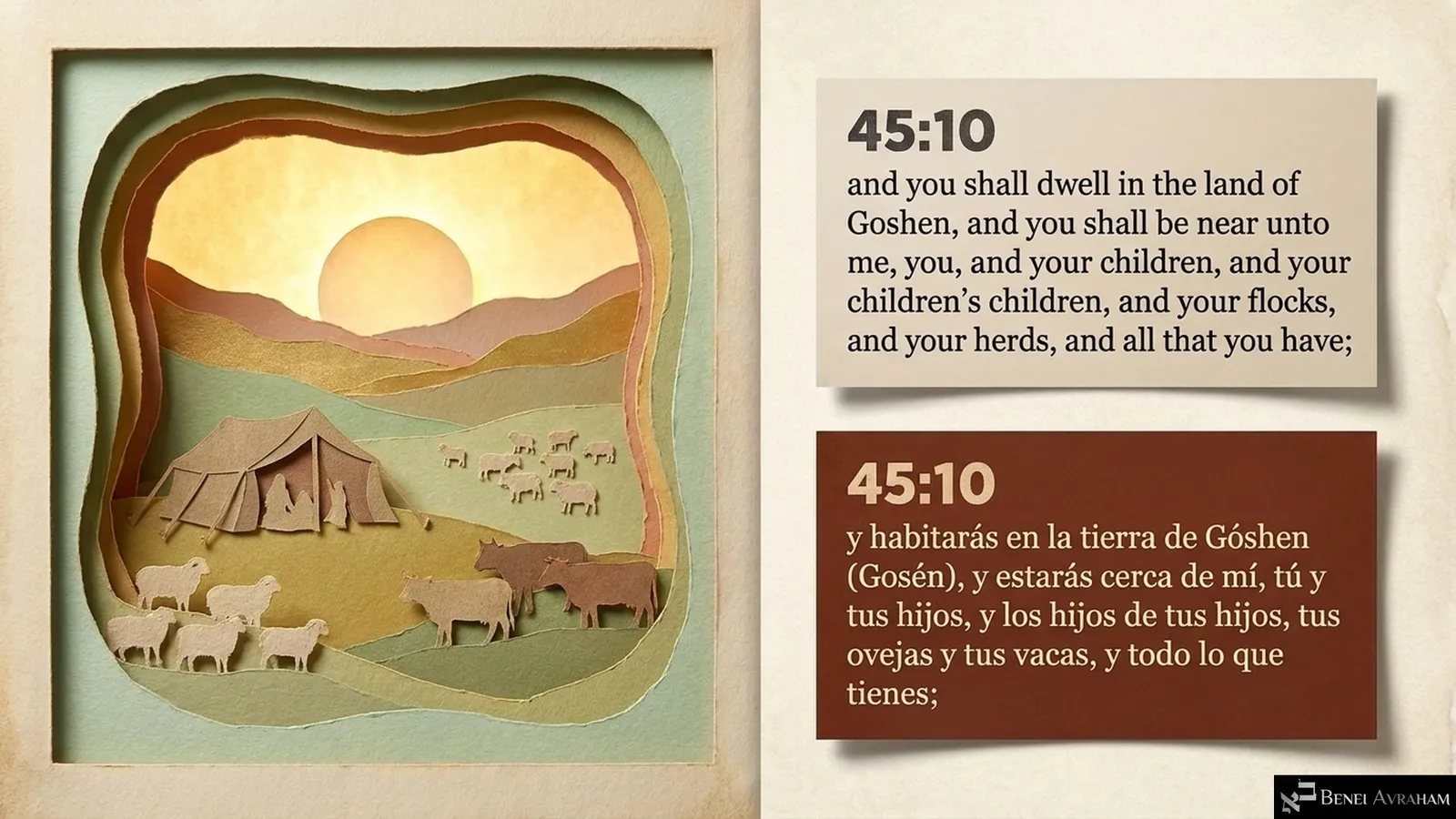
A paper tent and flocks in a green valley at sunrise: “You shall dwell in the land of Goshen, and you shall be near unto me” (Genesis 45:10).
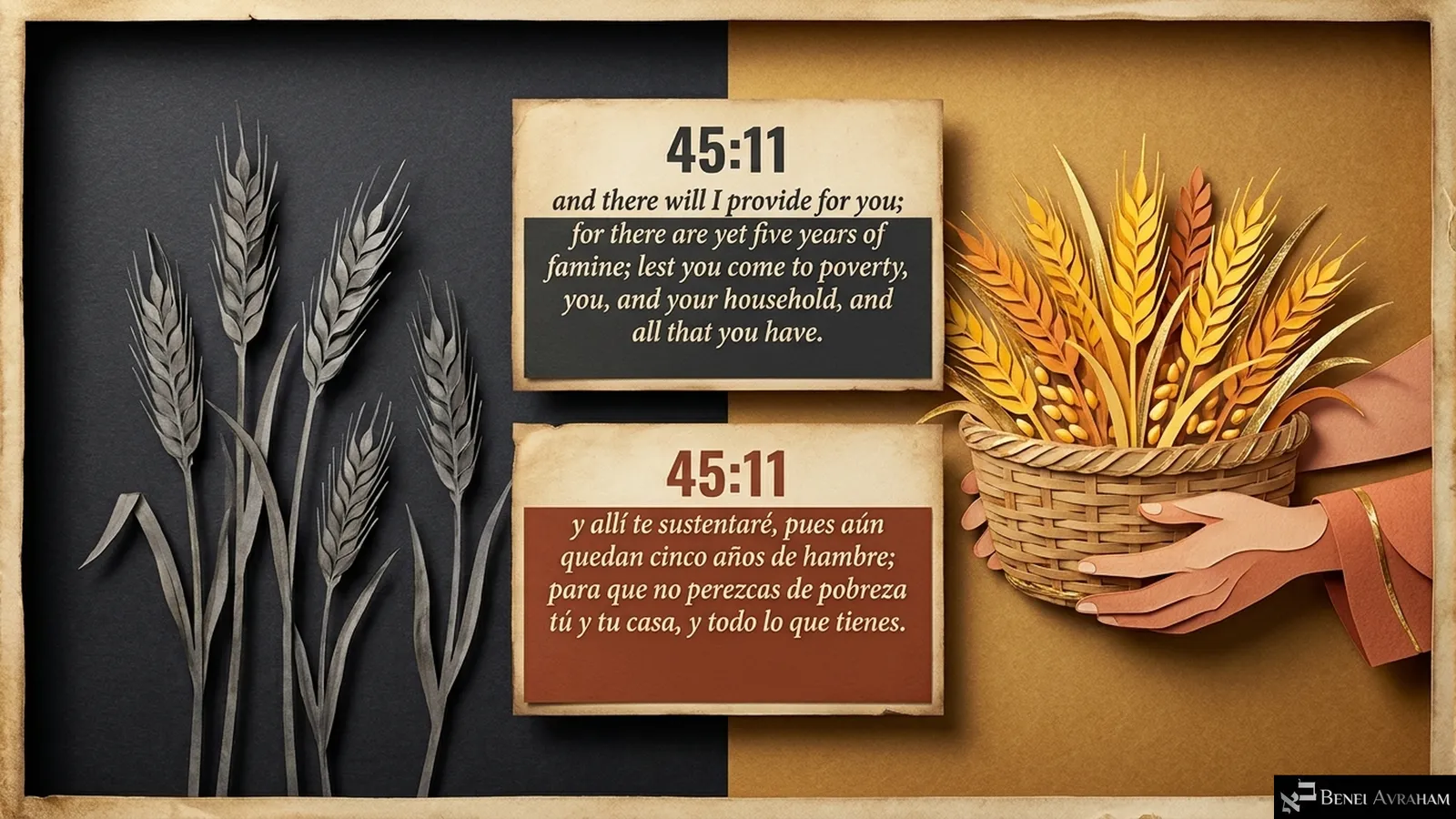
Grey and golden paper wheat, and a basket of grain held out: “There will I provide for you; for there are yet five years of famine” (Genesis 45:11).
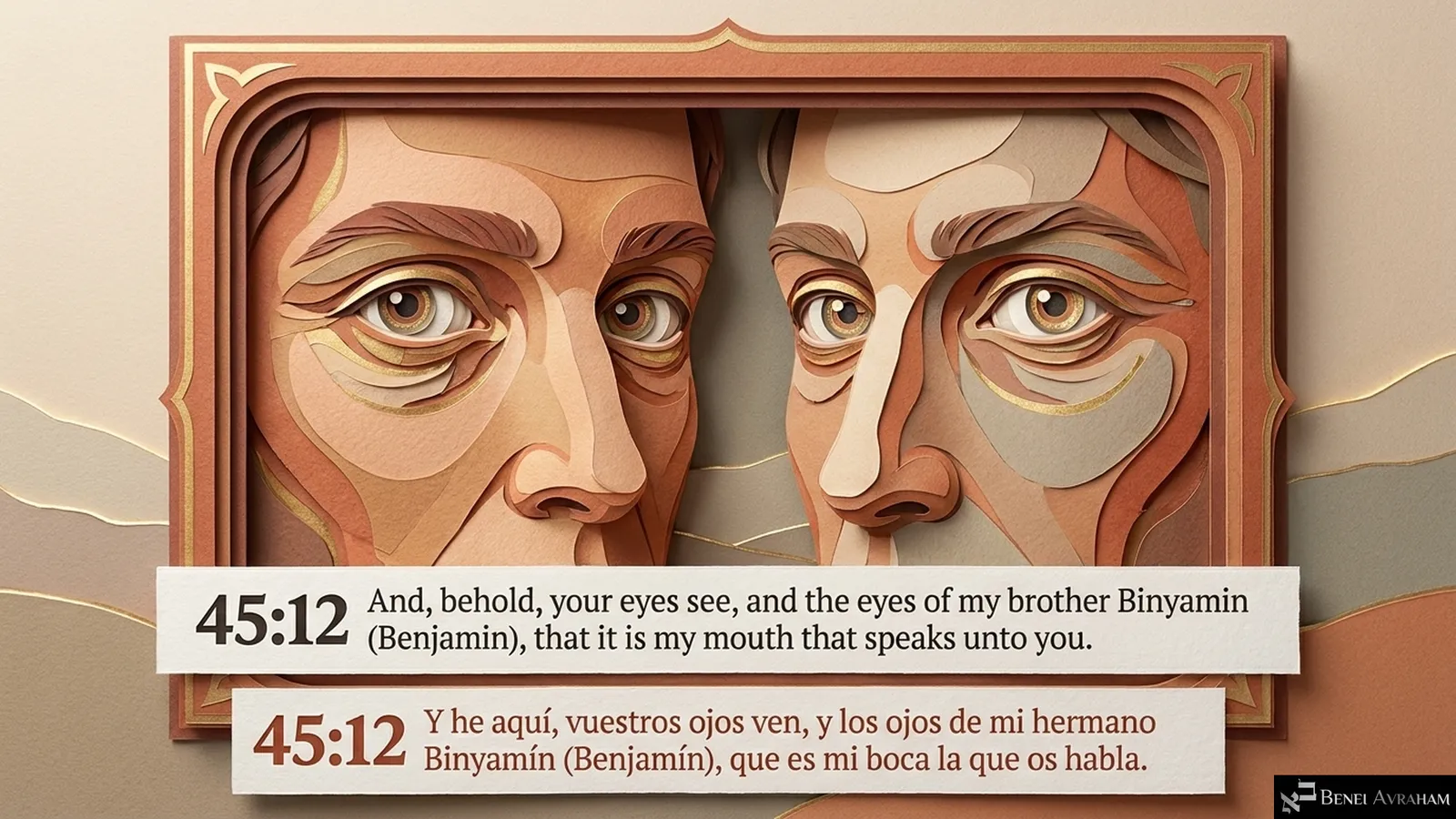
Two paper faces gaze out of a frame: “Your eyes see, and the eyes of my brother Binyamin, that it is my mouth that speaks unto you” (Genesis 45:12).
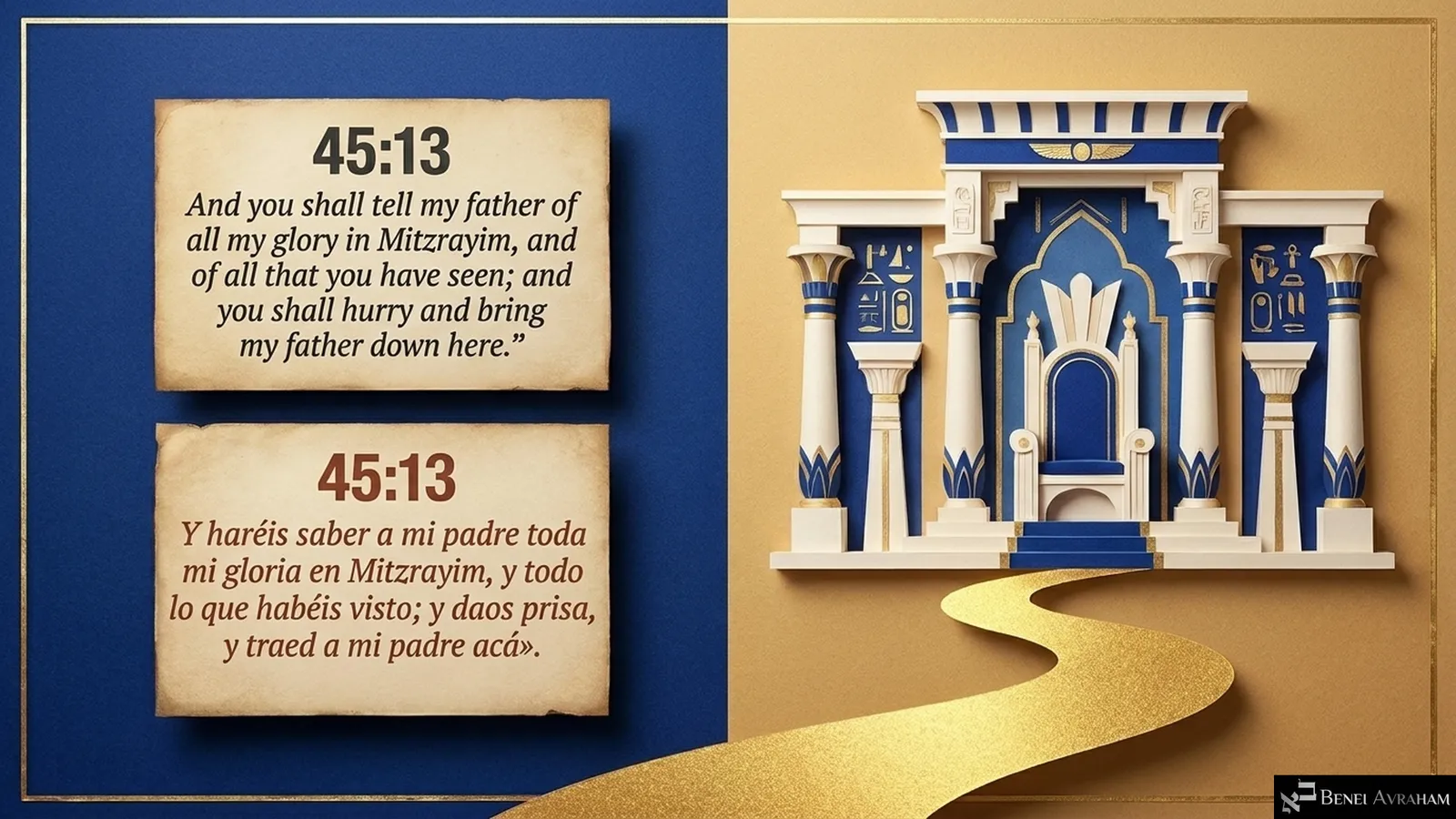
A golden road leads up to a paper throne room: “You shall tell my father of all my glory in Mitzrayim” (Genesis 45:13).
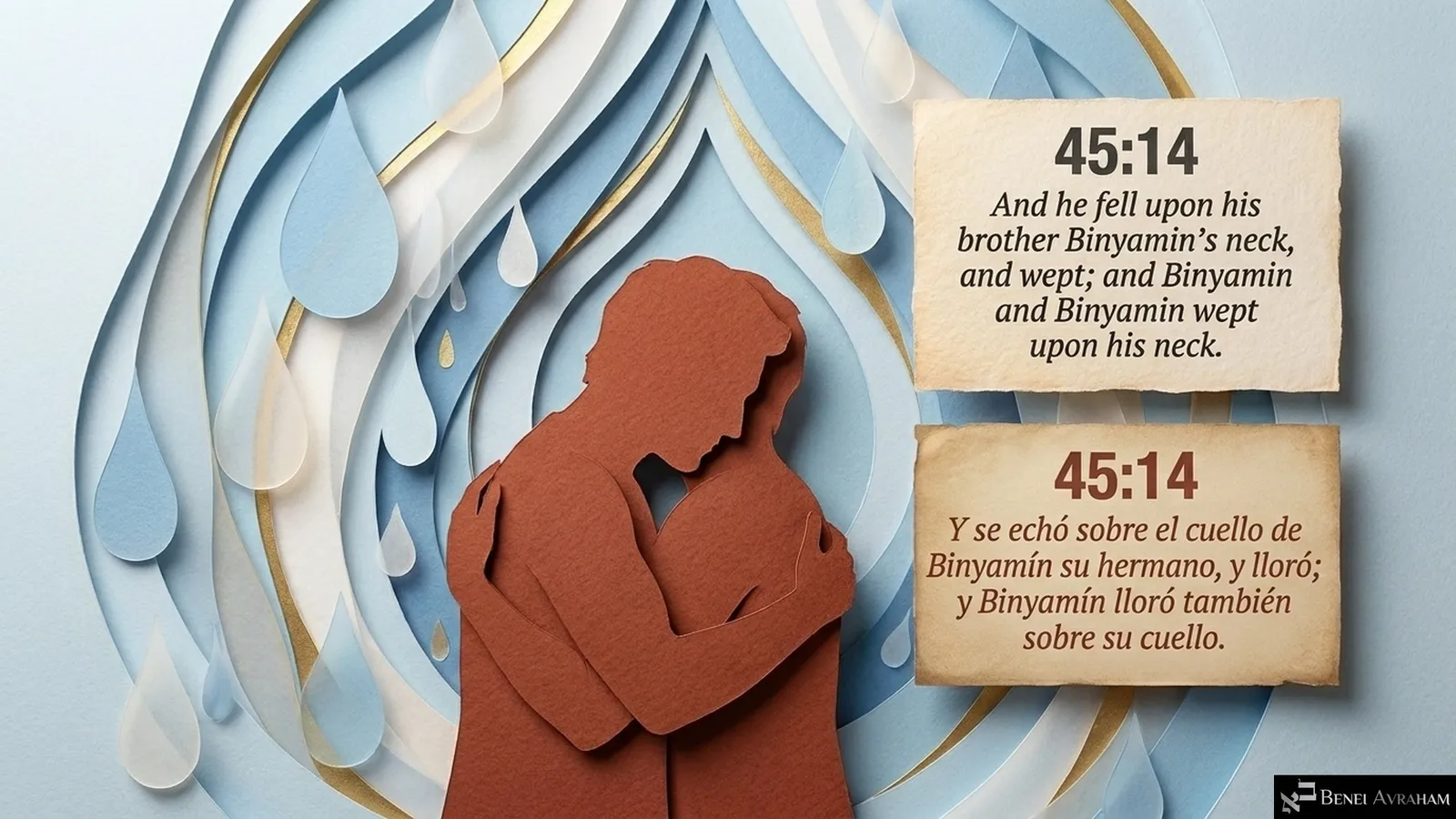
Two paper figures embrace among falling teardrops: he fell upon his brother Binyamin’s neck, and wept (Genesis 45:14).
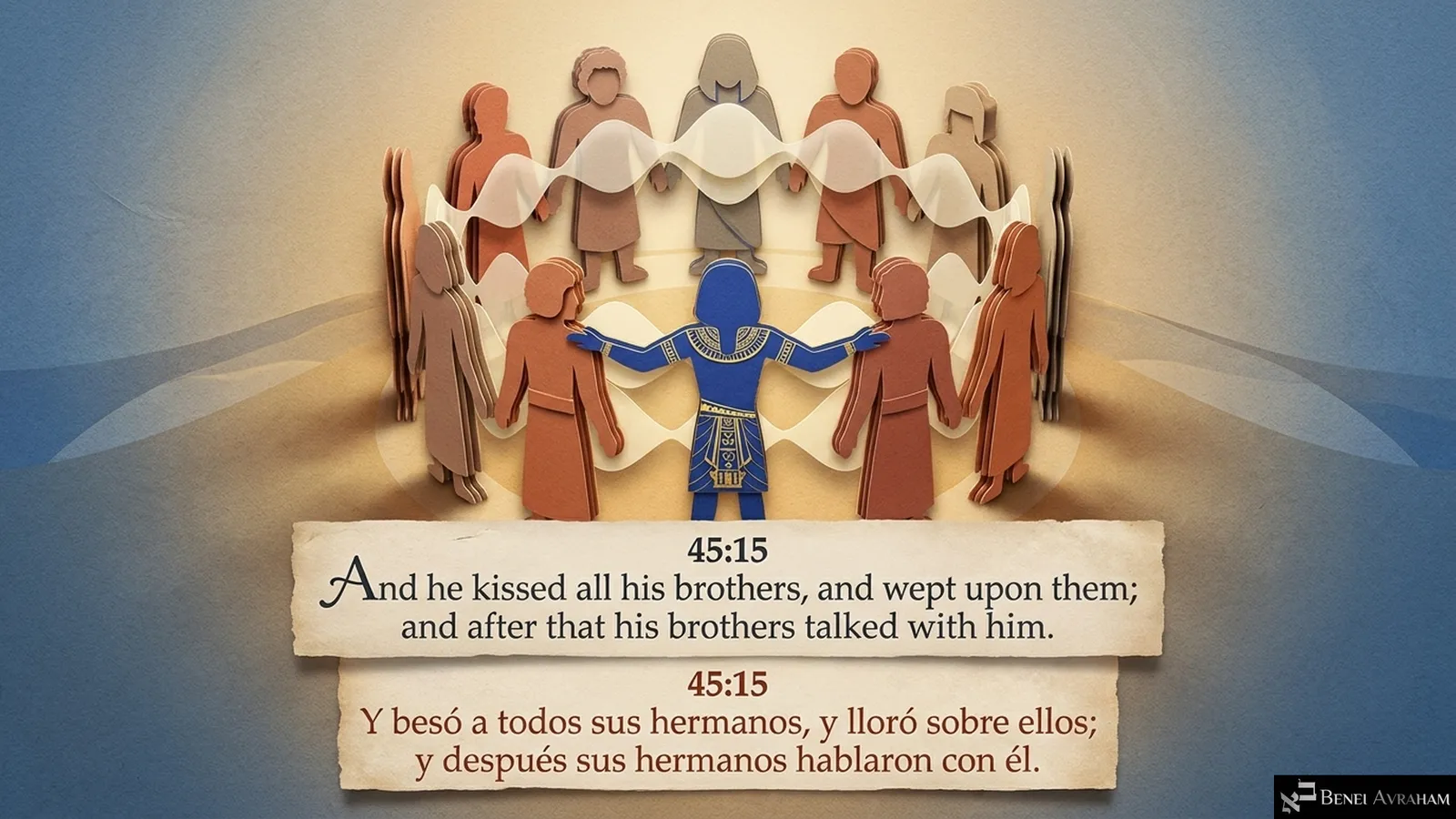
Paper brothers stand in a circle around Yosef: he kissed all his brothers, and wept upon them (Genesis 45:15).
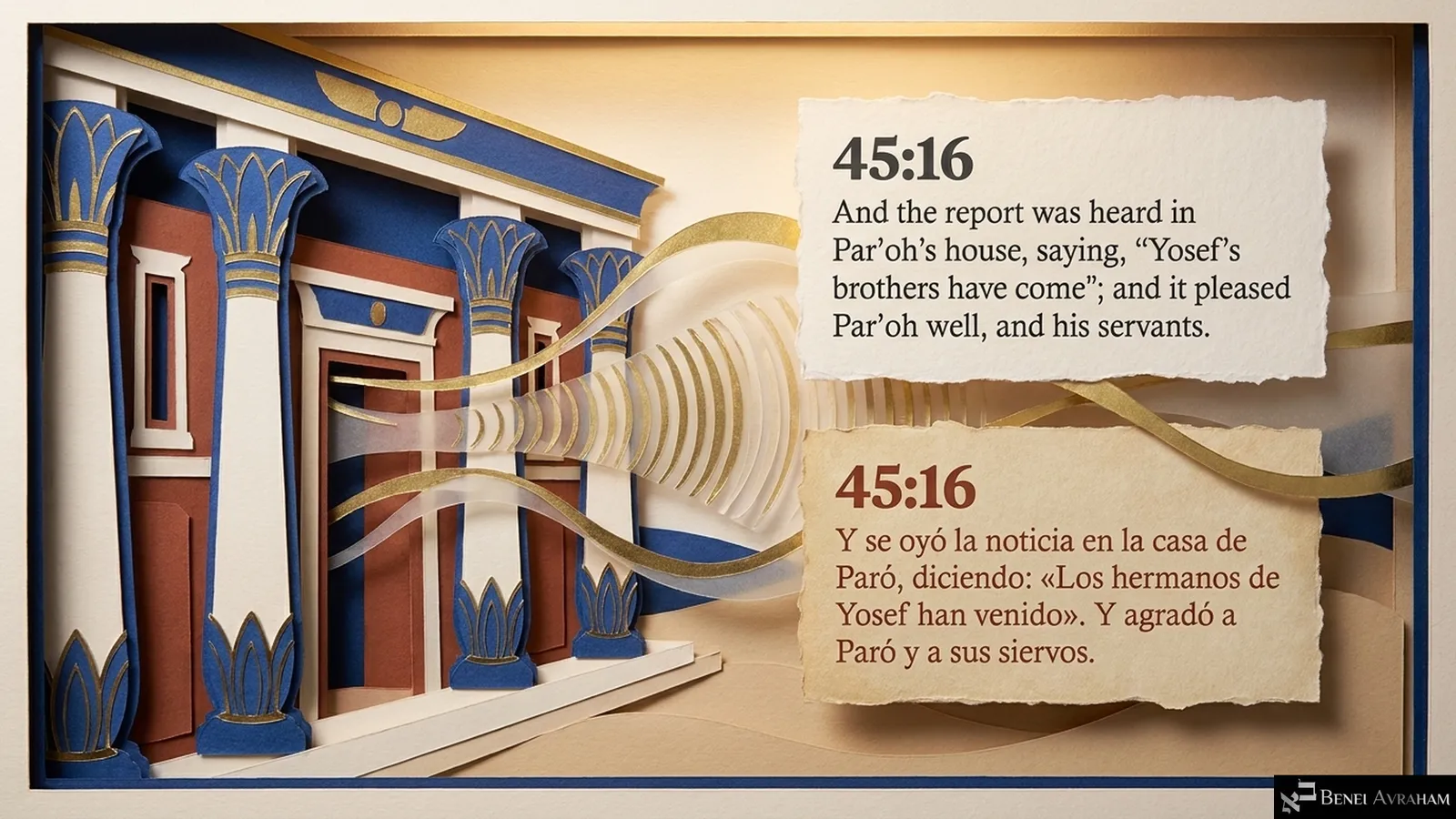
Sound waves of paper ribbon sweep through Par’oh’s columned palace: the report was heard in Par’oh’s house, “Yosef’s brothers have come” (Genesis 45:16).
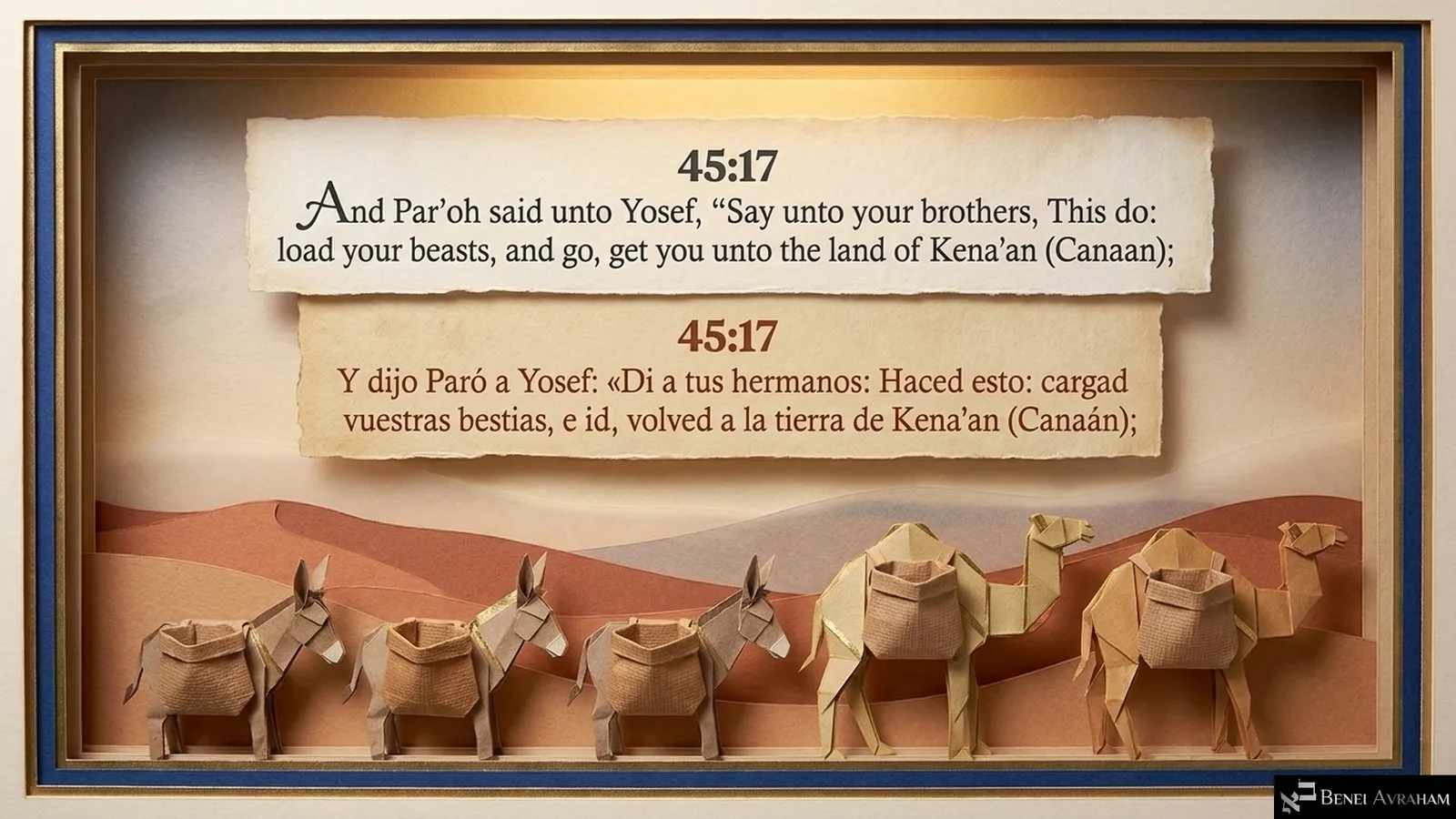
Laden paper donkeys and camels cross the desert: “Load your beasts, and go, get you unto the land of Kena’an” (Genesis 45:17).
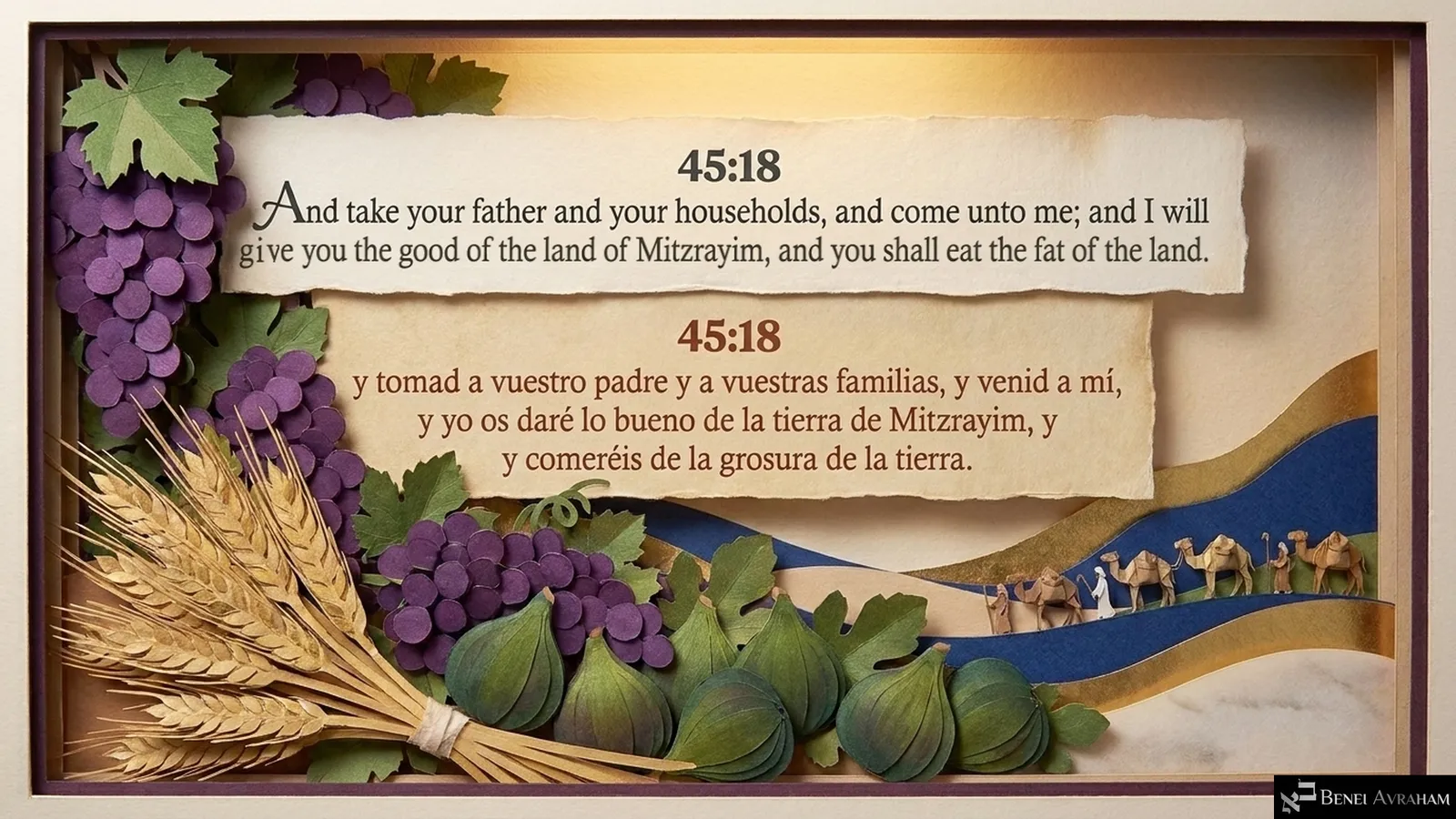
Paper grapes, figs and wheat before a caravan by the river: “I will give you the good of the land of Mitzrayim, and you shall eat the fat of the land” (Genesis 45:18).
Revi’i · Genesis 45:19–27

Fourth Portion

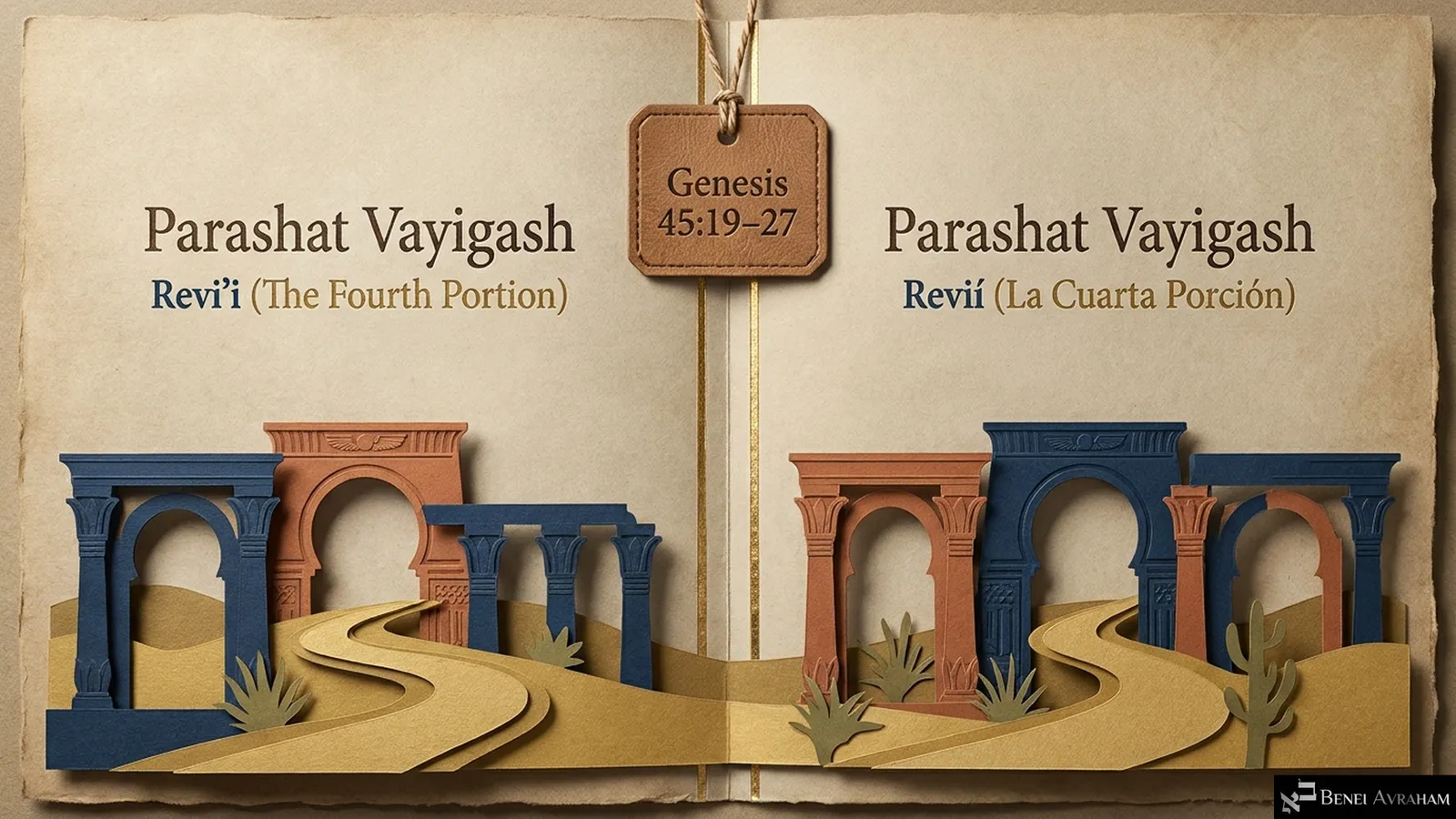
Title card for the fourth portion on a papyrus panel framed by hieroglyphs: “Parashat Vayigash, Revi’i (The Fourth Portion)”.
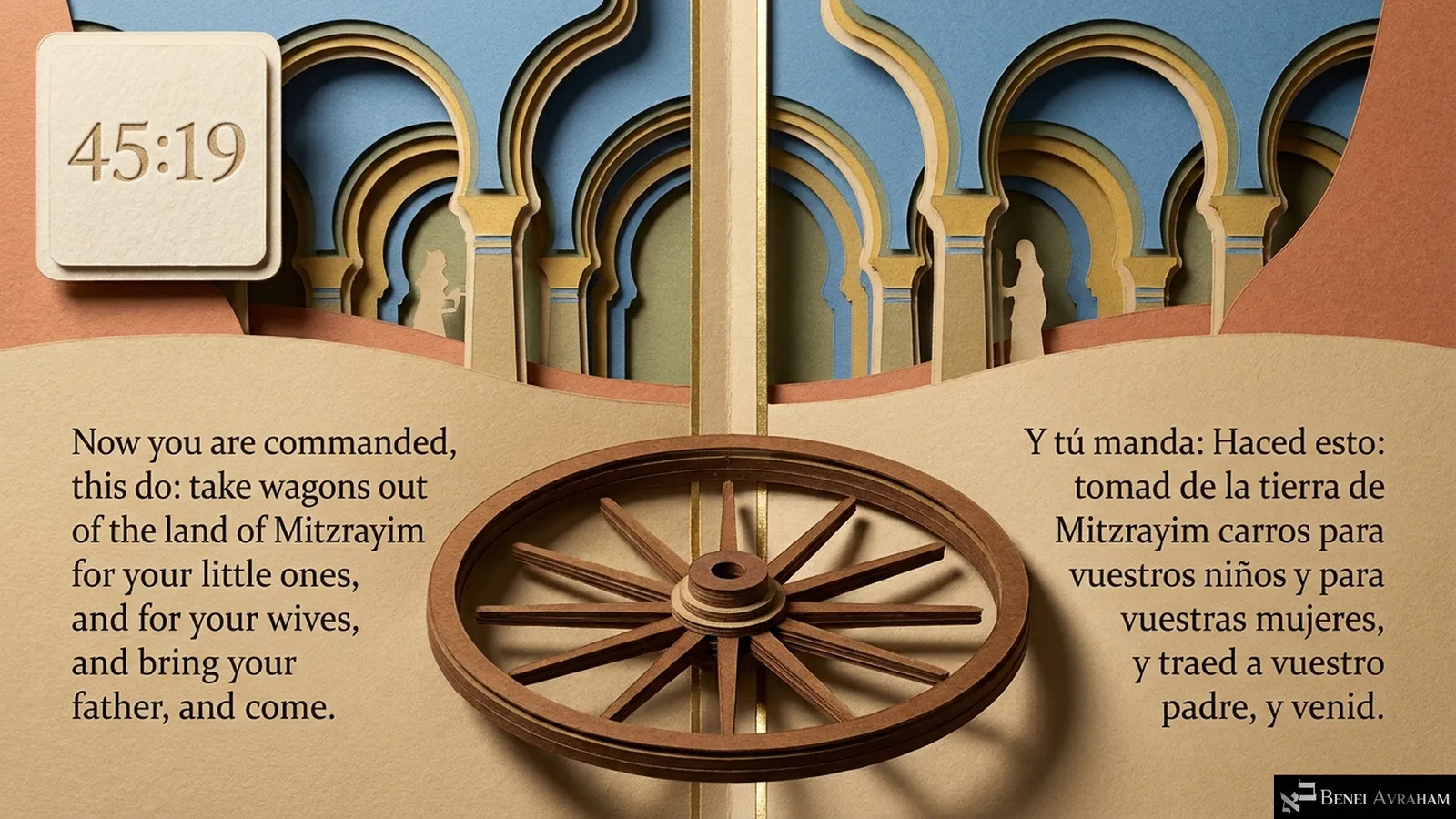
A paper wagon wheel beneath blue Egyptian arches: “Take wagons out of the land of Mitzrayim for your little ones, and for your wives, and bring your father, and come” (Genesis 45:19).
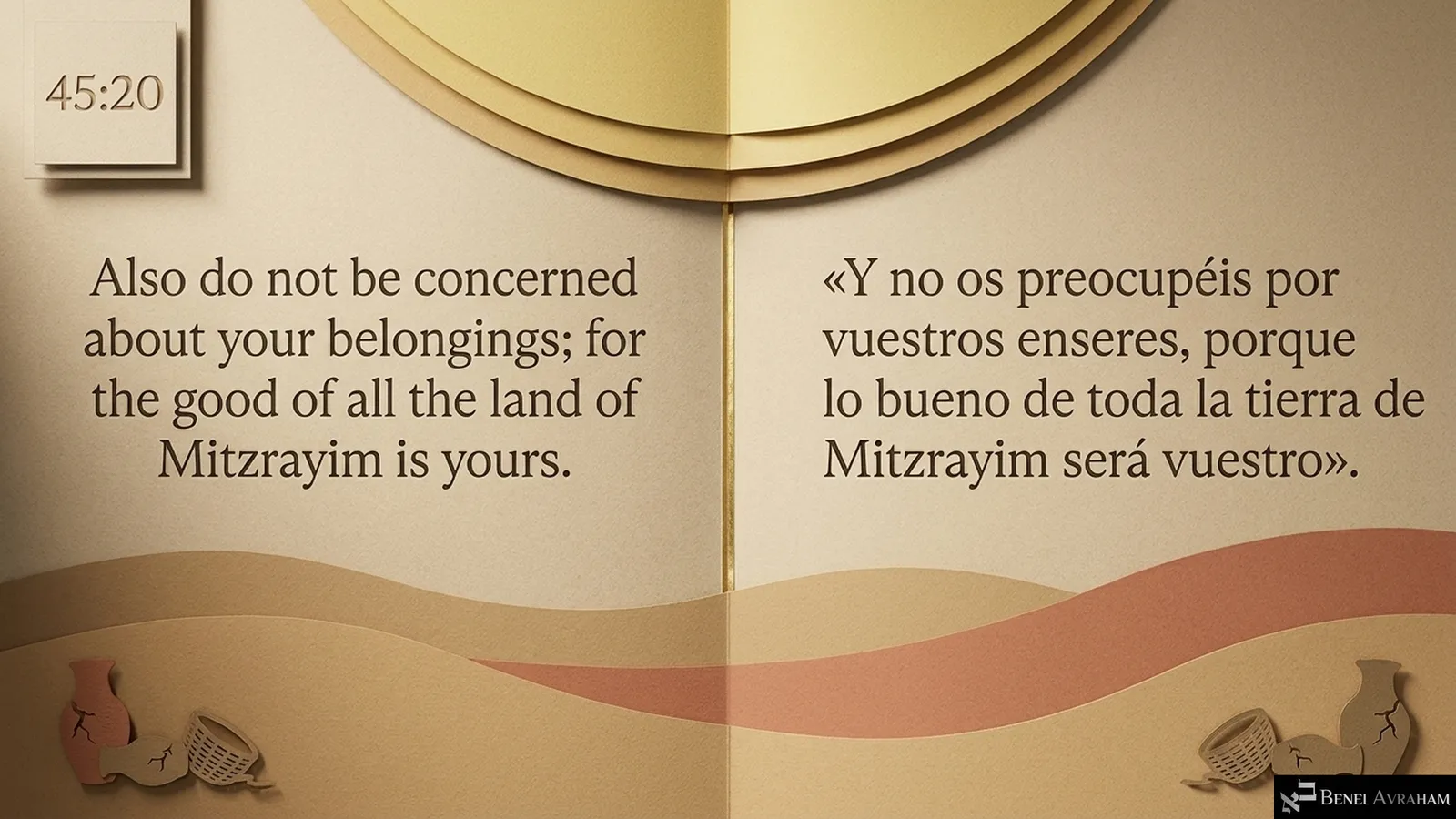
A paper book opens on a sunlit golden arch: “Do not be concerned about your belongings; for the good of all the land of Mitzrayim is yours” (Genesis 45:20).
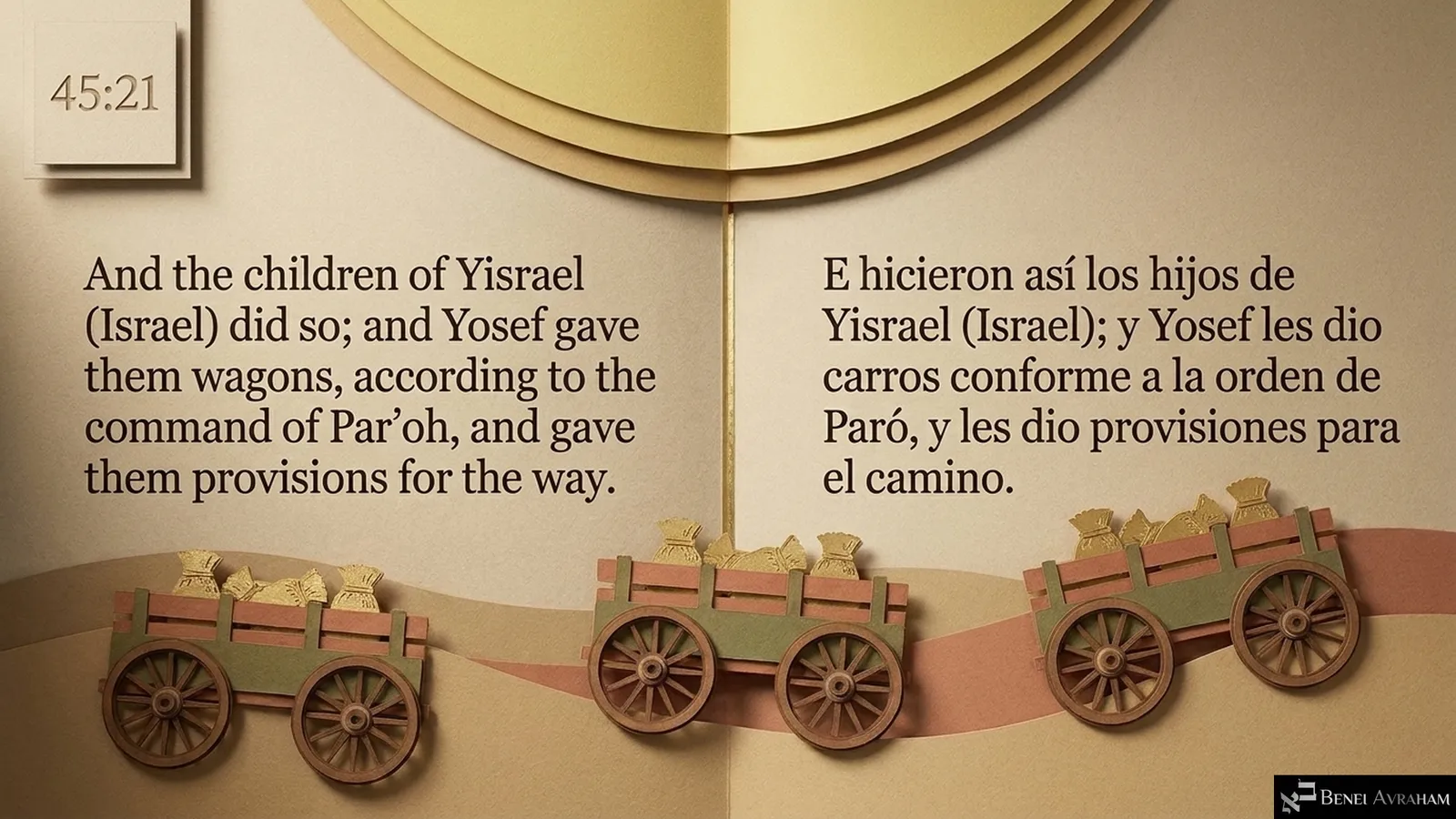
Three paper wagons laden with sacks roll across the page: Yosef gave them wagons according to the command of Par’oh, and provisions for the way (Genesis 45:21).
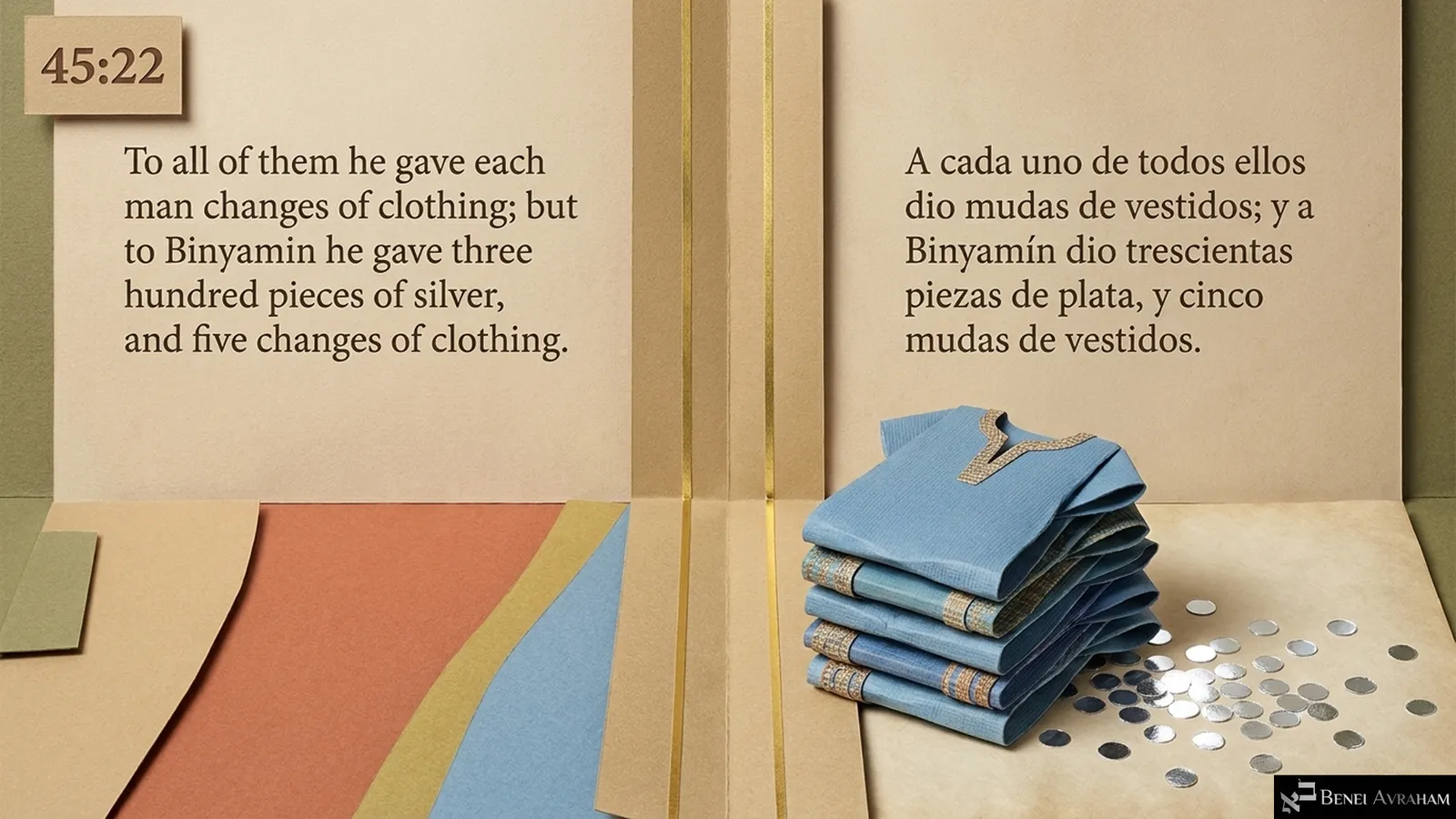
A stack of folded blue garments beside scattered silver coins: changes of clothing for each man, and for Binyamin three hundred pieces of silver and five changes (Genesis 45:22).
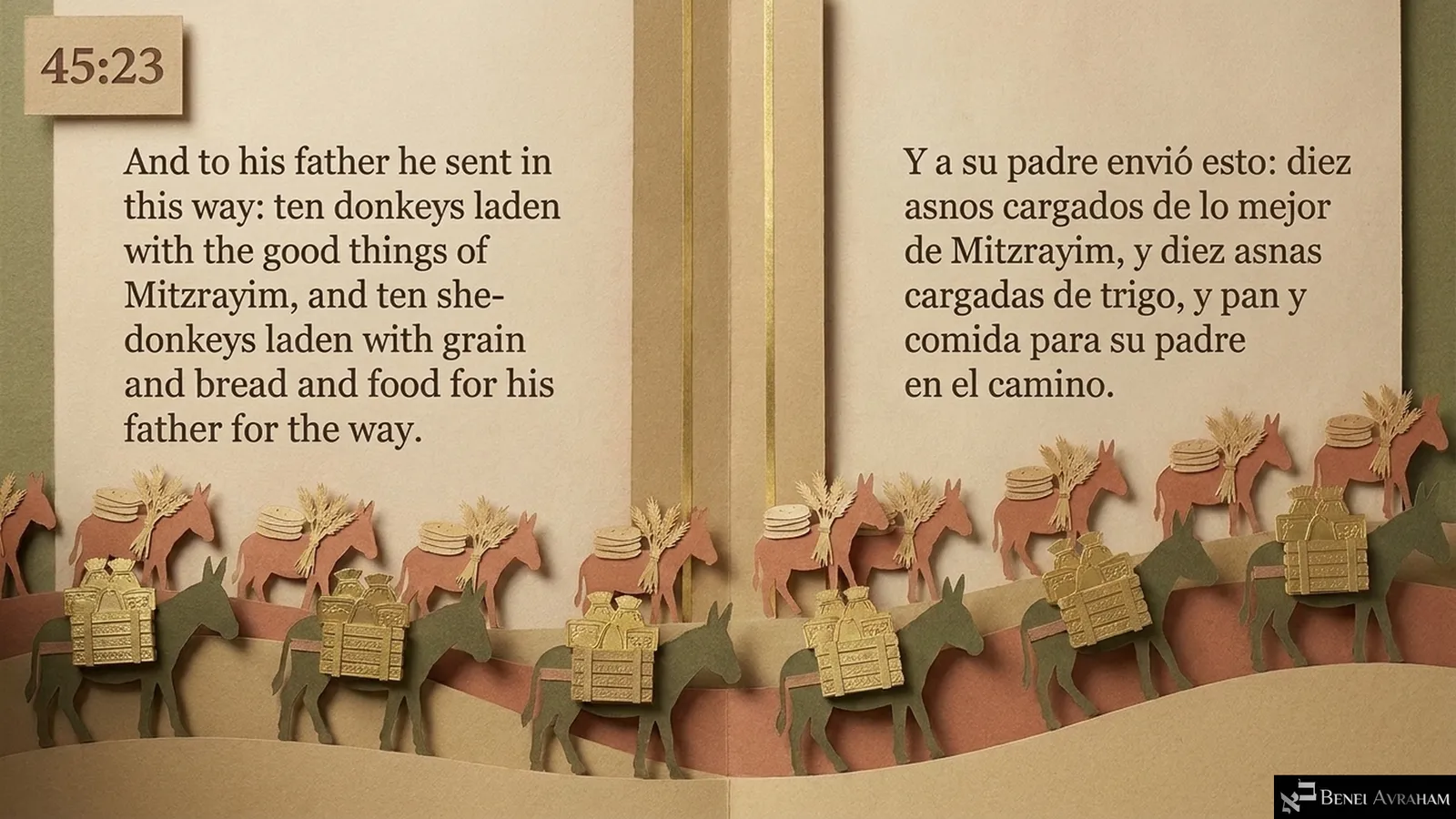
A long paper caravan of laden donkeys crosses the dunes: ten donkeys with the good things of Mitzrayim, and ten she-donkeys with grain and bread for the way (Genesis 45:23).
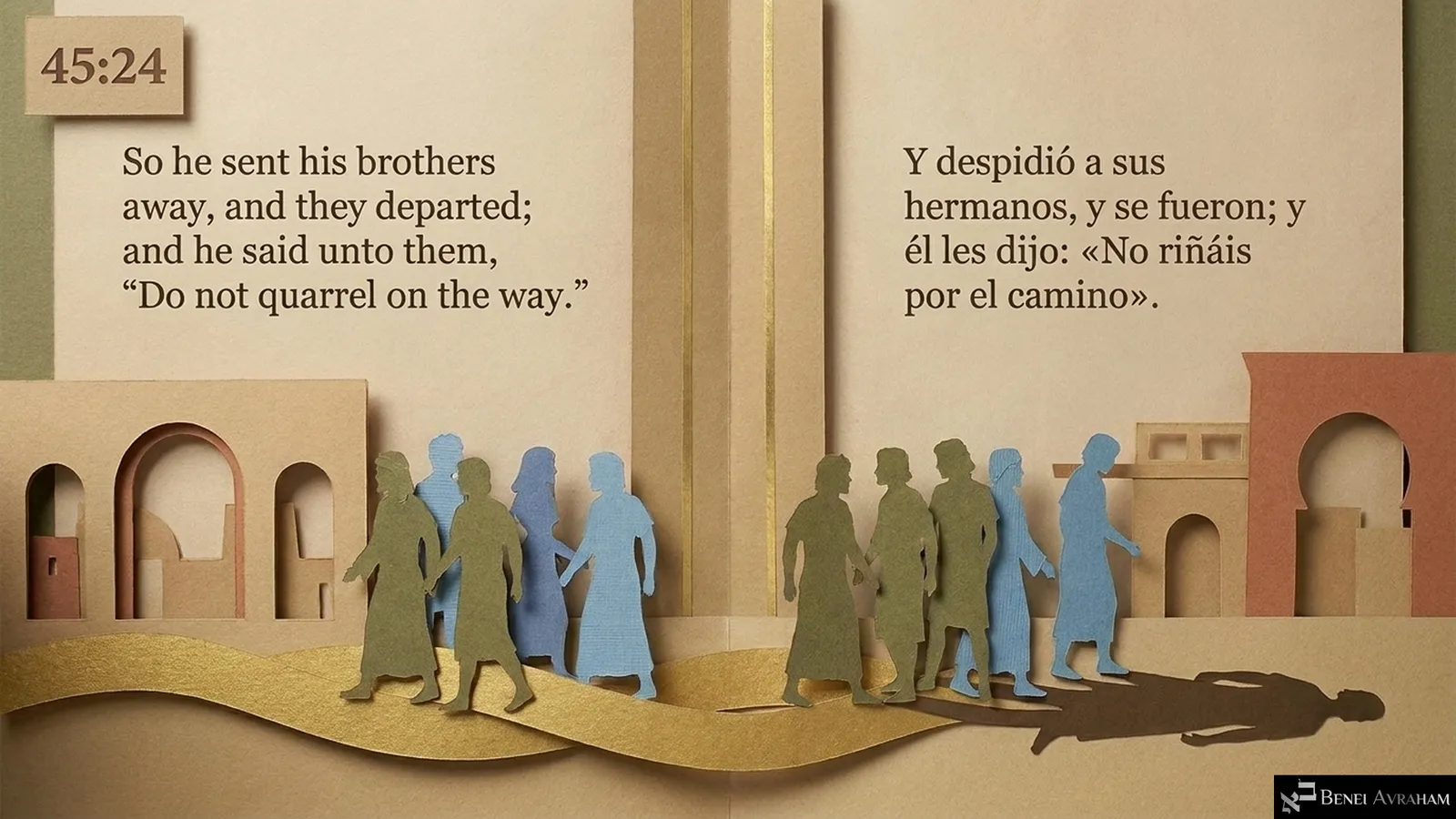
Paper brothers walk out through desert arches: “Do not quarrel on the way” (Genesis 45:24).
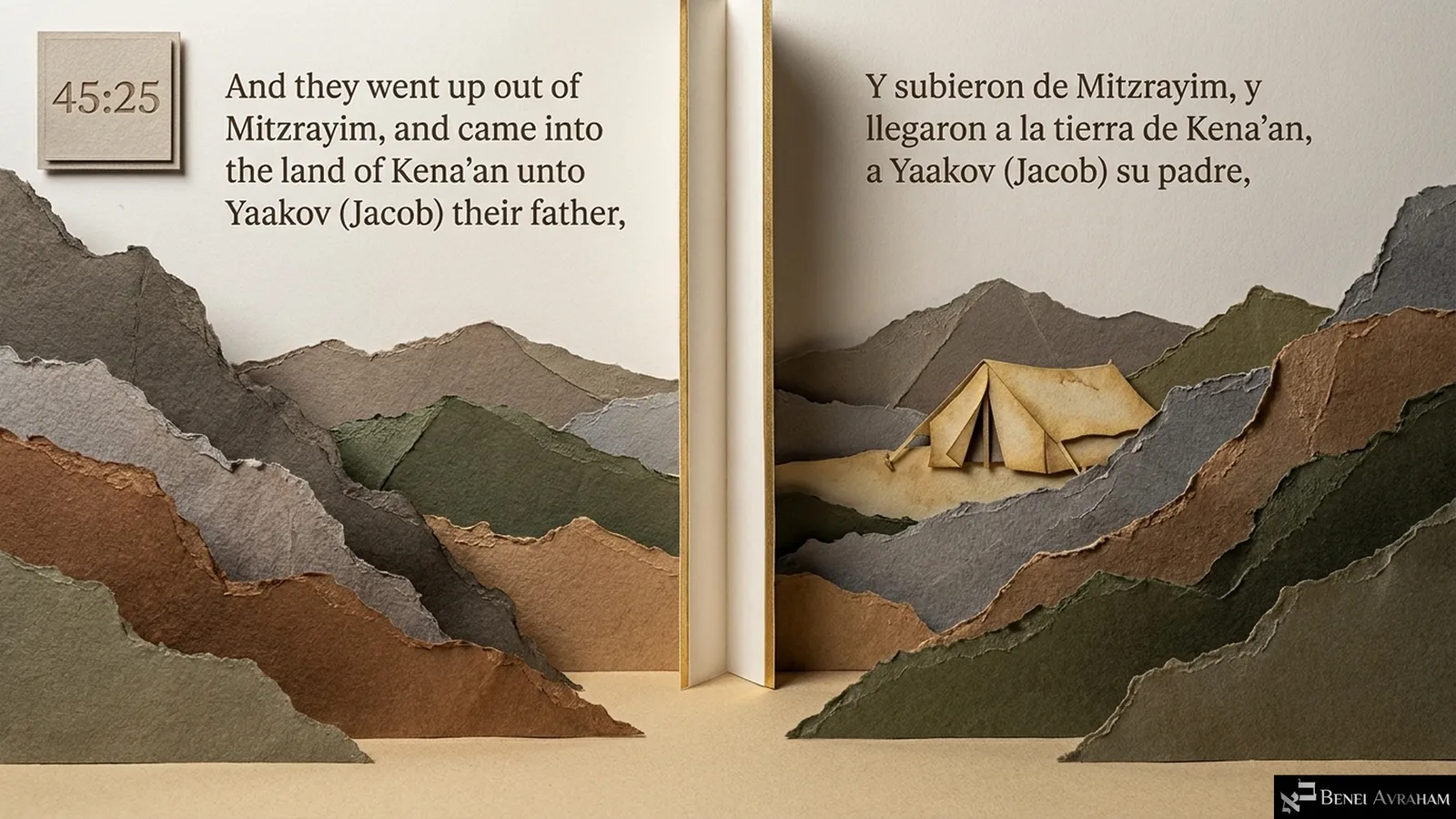
A paper tent among layered brown and green hills: they came into the land of Kena’an unto Yaakov their father (Genesis 45:25).
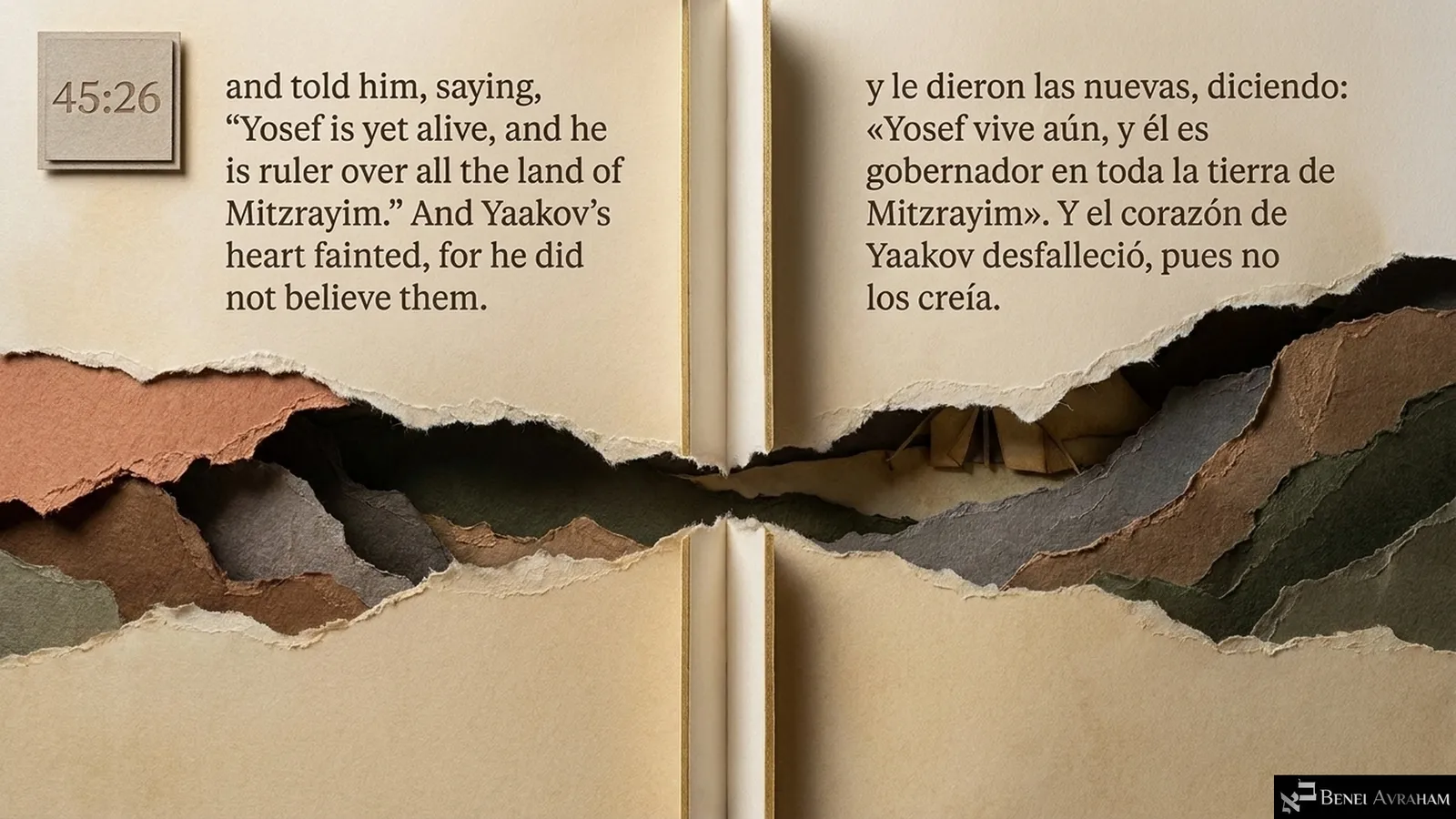
Torn paper landscape split open: “Yosef is yet alive”; Yaakov’s heart fainted, for he did not believe them (Genesis 45:26).
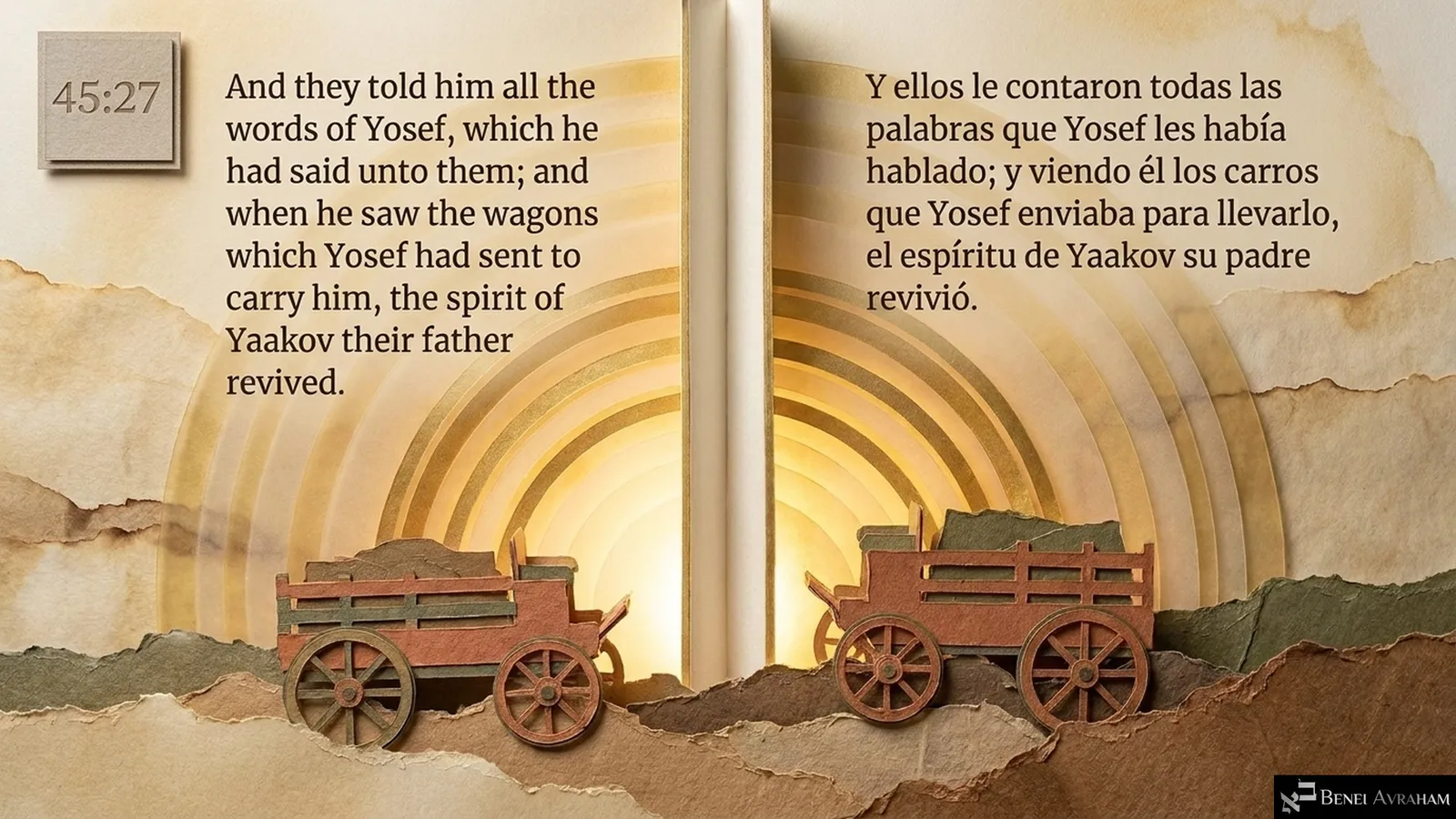
Two laden paper wagons before golden rays: when he saw the wagons Yosef had sent, the spirit of Yaakov their father revived (Genesis 45:27).
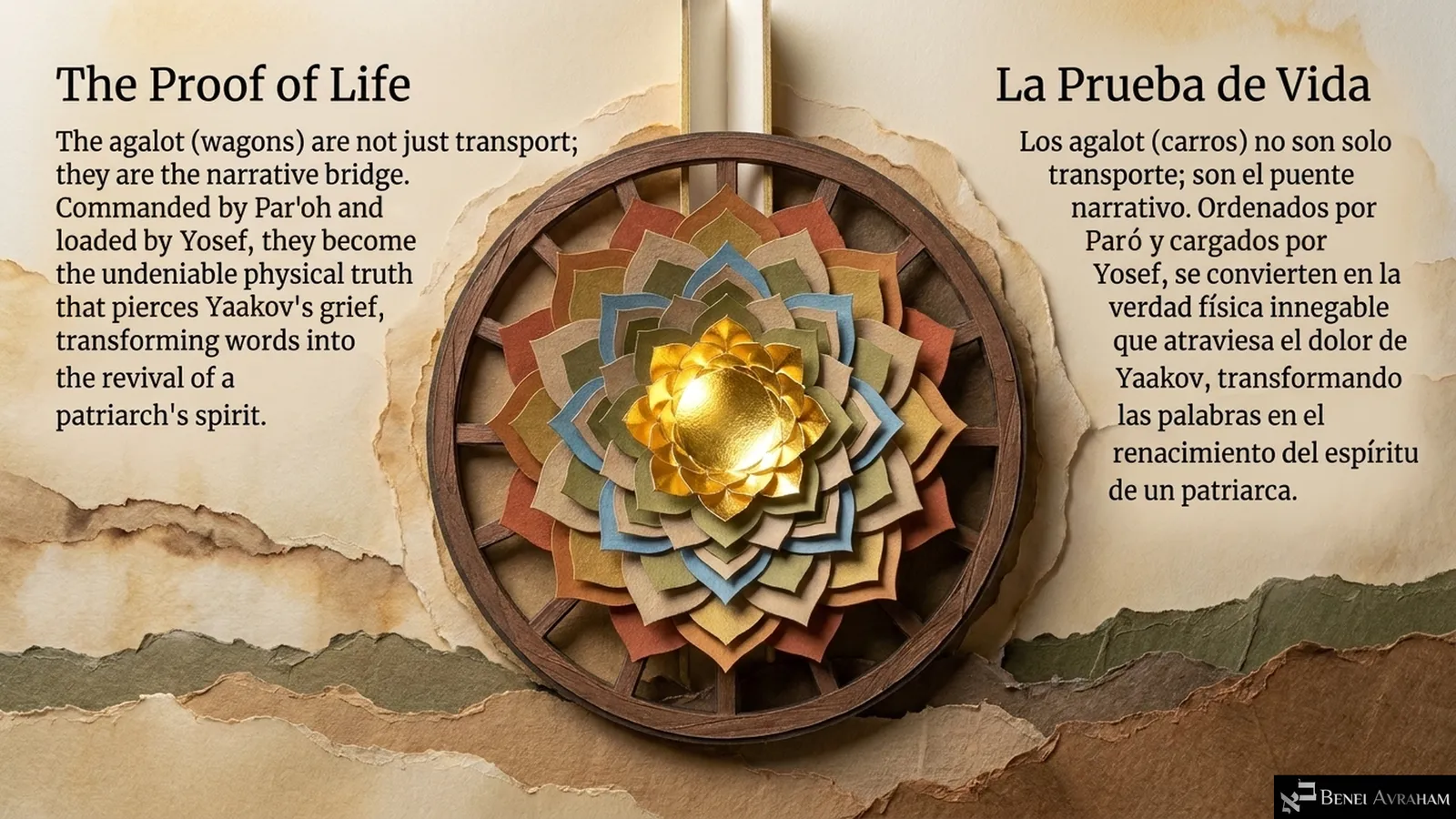
Summary: “The Proof of Life / La Prueba de Vida” beside a paper wheel blooming into a golden flower — the wagons, commanded by Par’oh and loaded by Yosef, pierce Yaakov’s grief.
Chamishi · Genesis 45:28–46:27

Fifth Portion
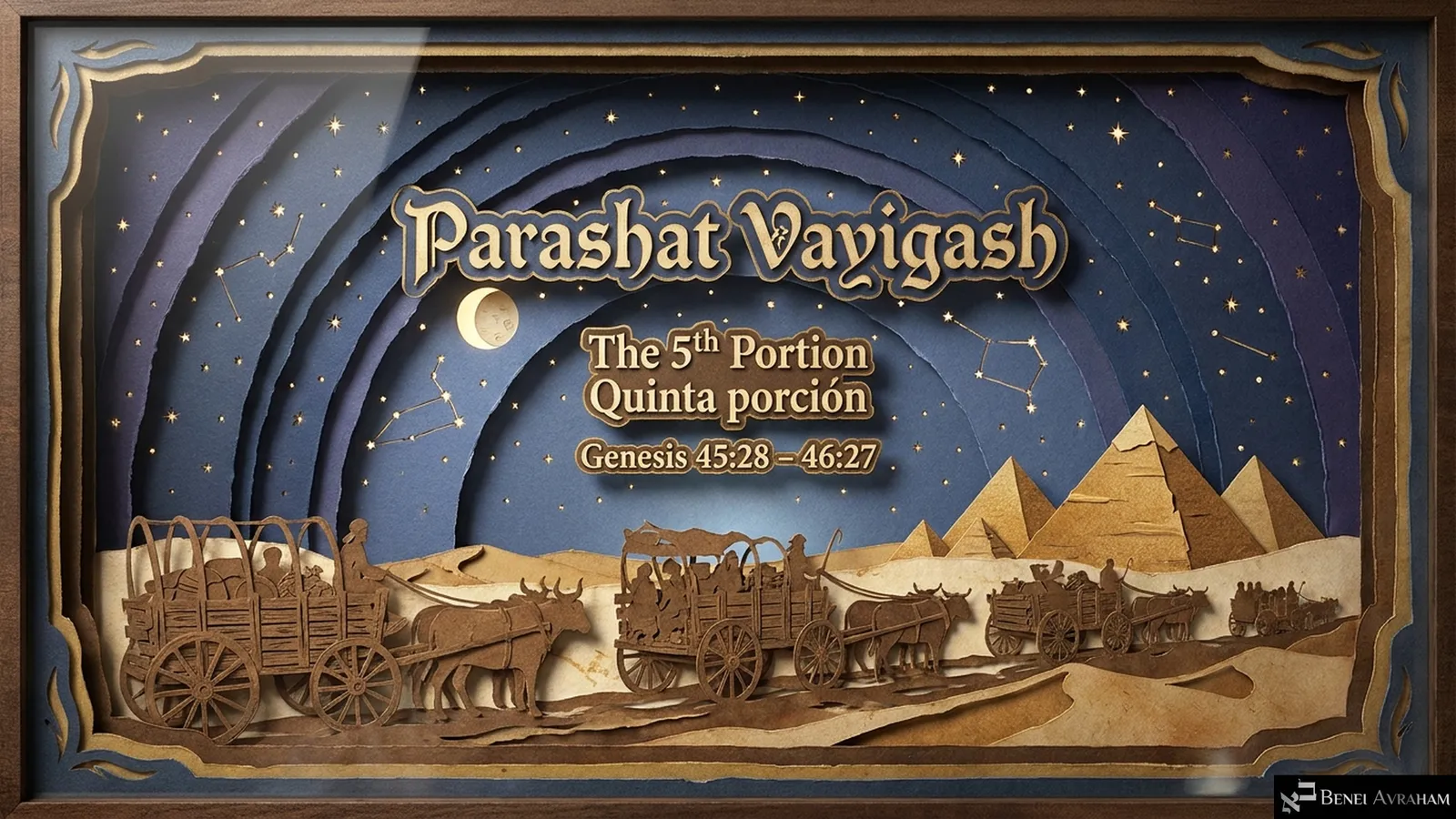
Title card for the fifth portion over a caravan of wagons and pyramids under a starry paper sky: “Parashat Vayigash, The 5th Portion, Genesis 45:28–46:27”.
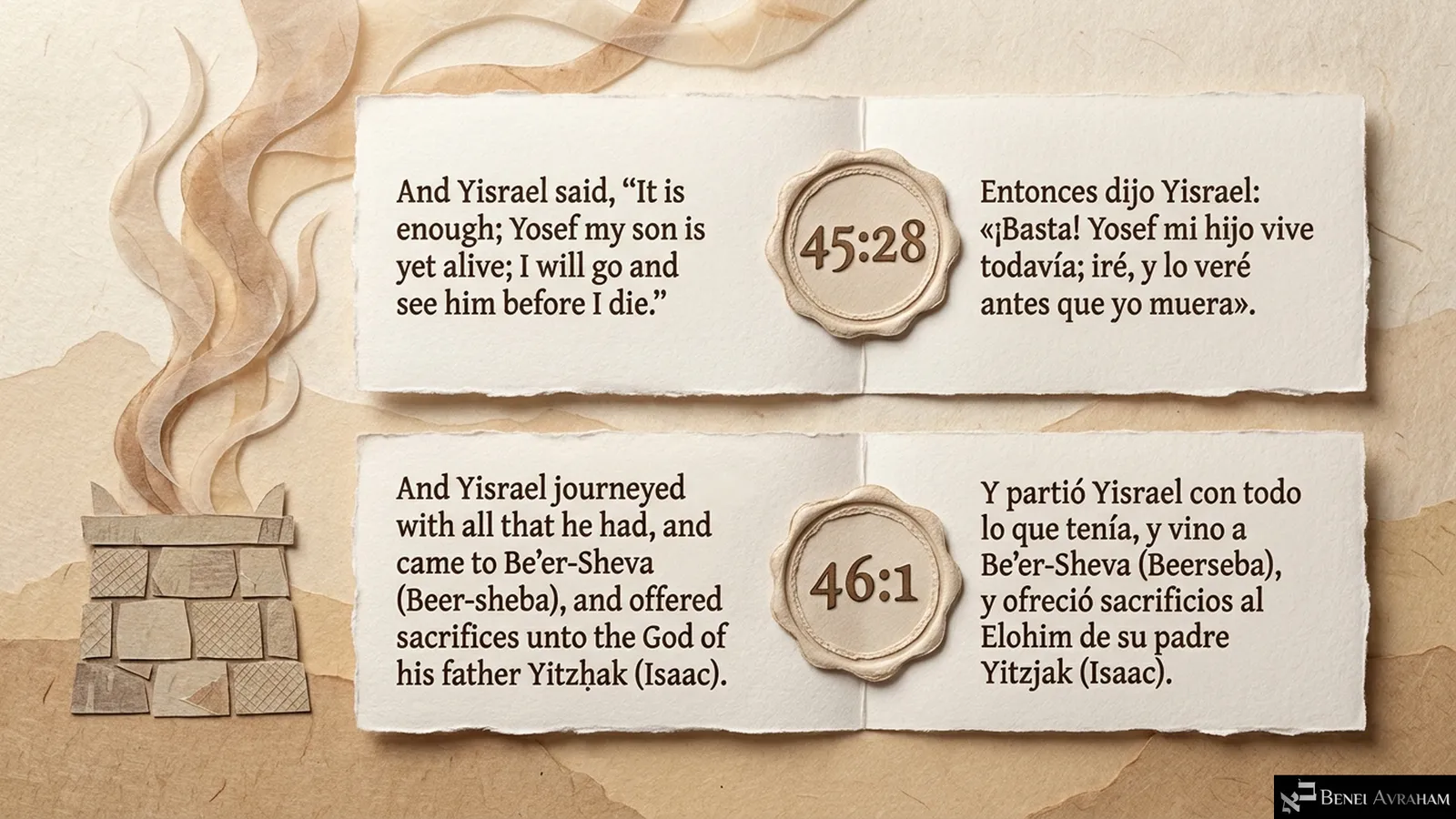
A paper altar with rising smoke beside sealed cards: “It is enough; Yosef my son is yet alive”; Yisrael journeyed to Be’er-Sheva and offered sacrifices (Genesis 45:28–46:1).
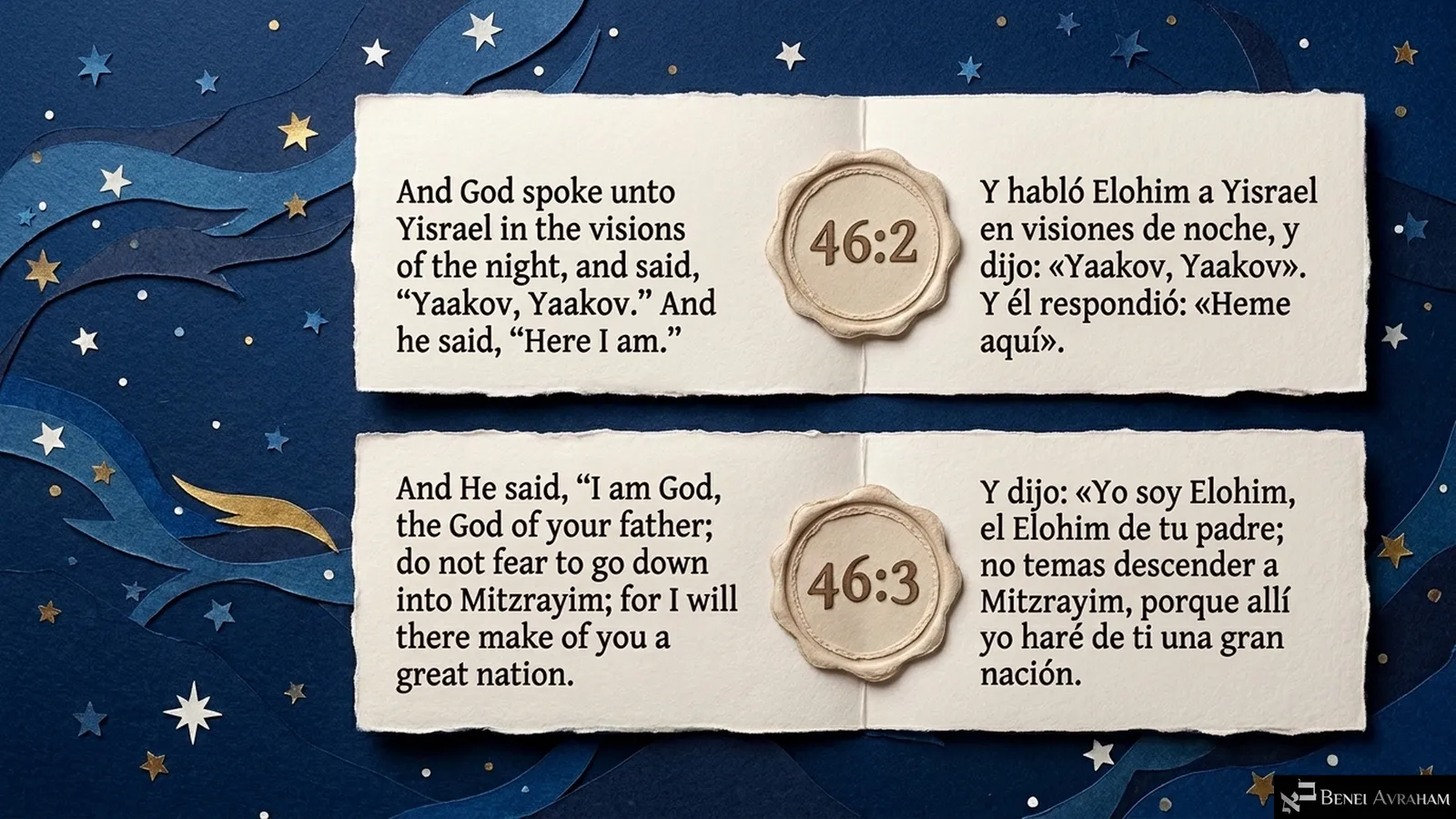
Sealed cards on a starry night sky: God spoke unto Yisrael in the visions of the night — “Do not fear to go down into Mitzrayim” (Genesis 46:2–3).
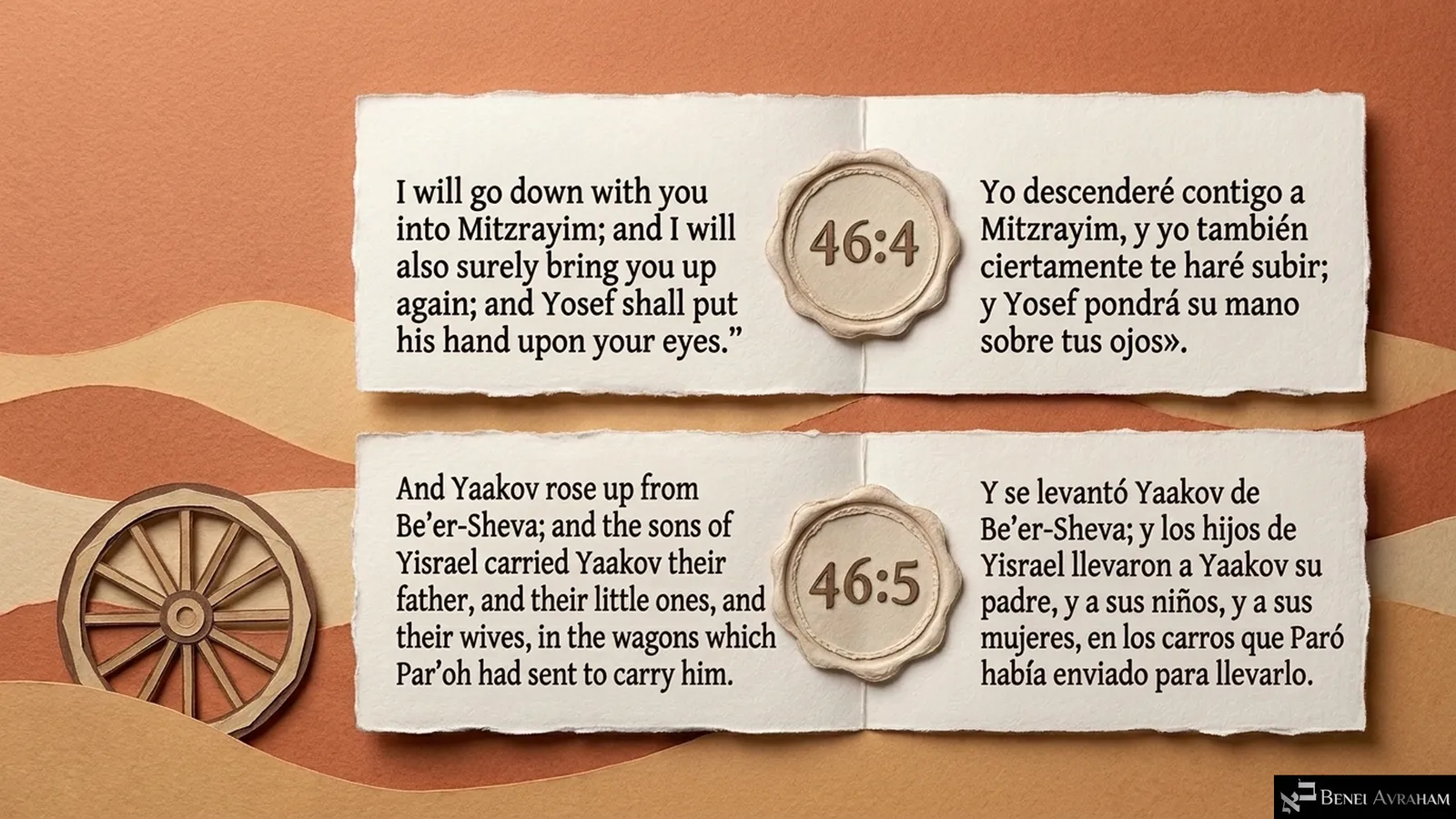
A paper wagon wheel beside sealed cards: “I will go down with you into Mitzrayim”; the sons of Yisrael carried Yaakov in the wagons Par’oh had sent (Genesis 46:4–5).
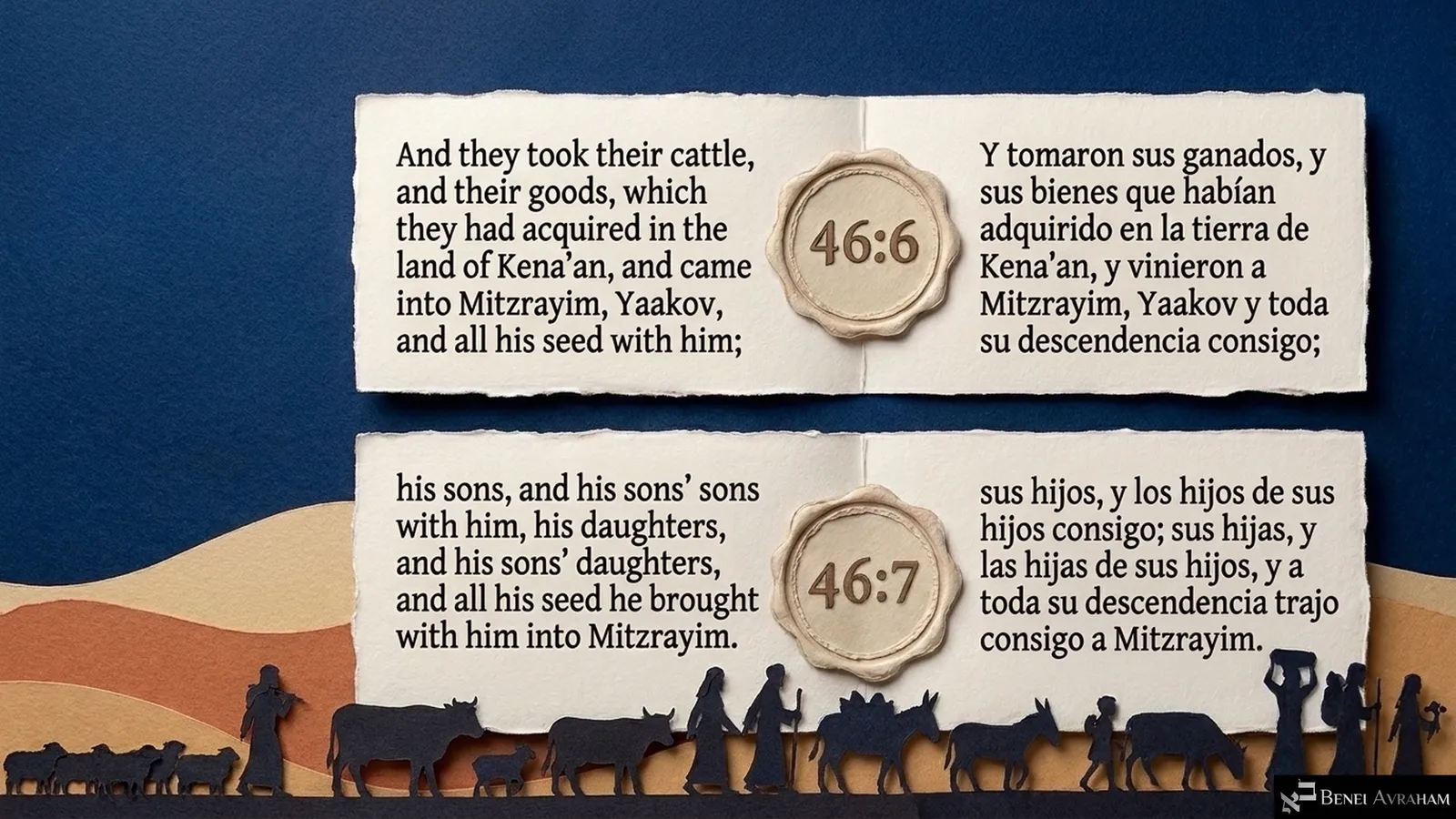
Paper silhouettes of the family and their animals walk along the bottom: they came into Mitzrayim, Yaakov and all his seed with him (Genesis 46:6–7).
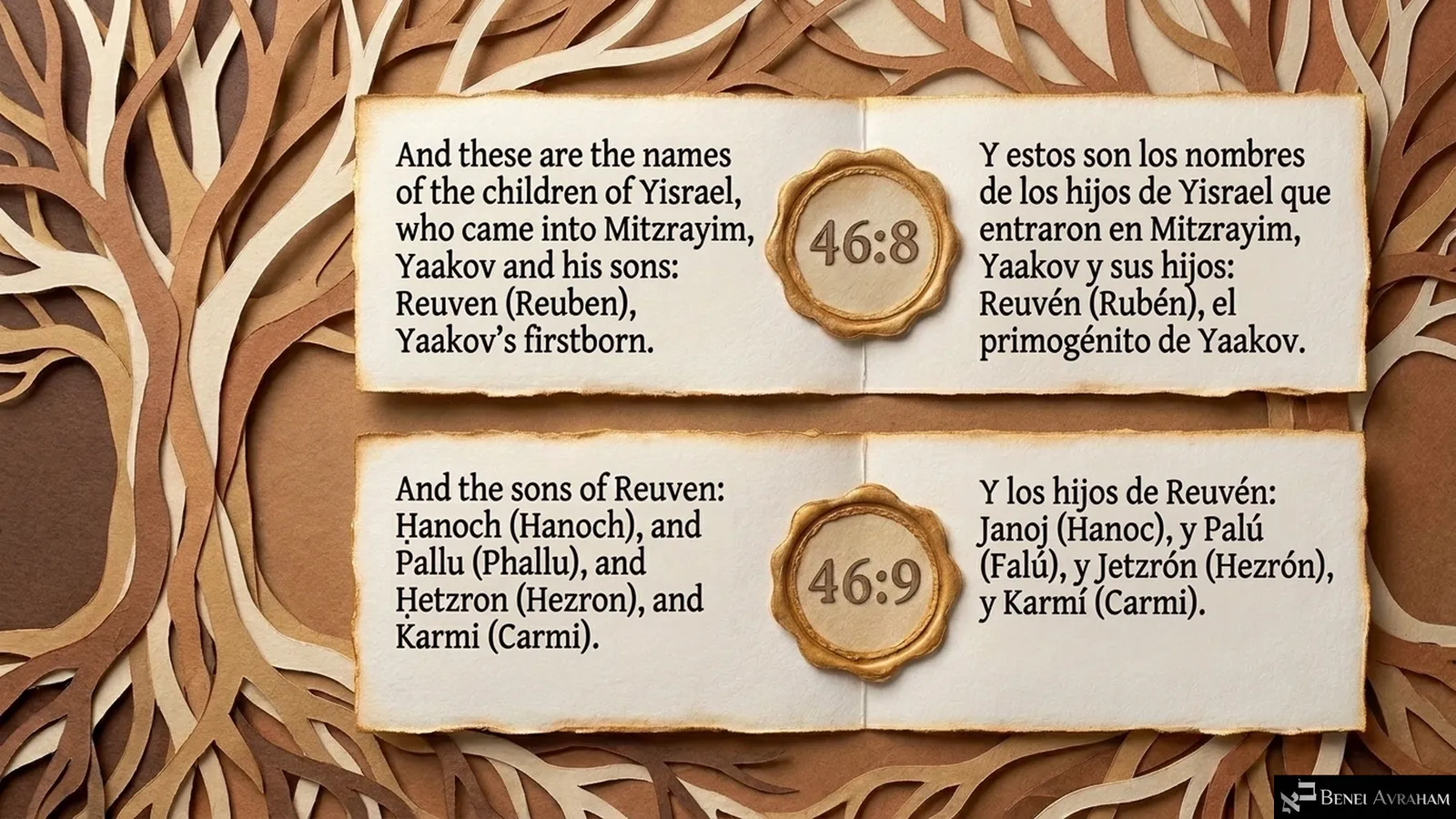
Paper trees with wax-sealed cards: the names of the children of Yisrael who came into Mitzrayim, and the sons of Reuven (Genesis 46:8–9).
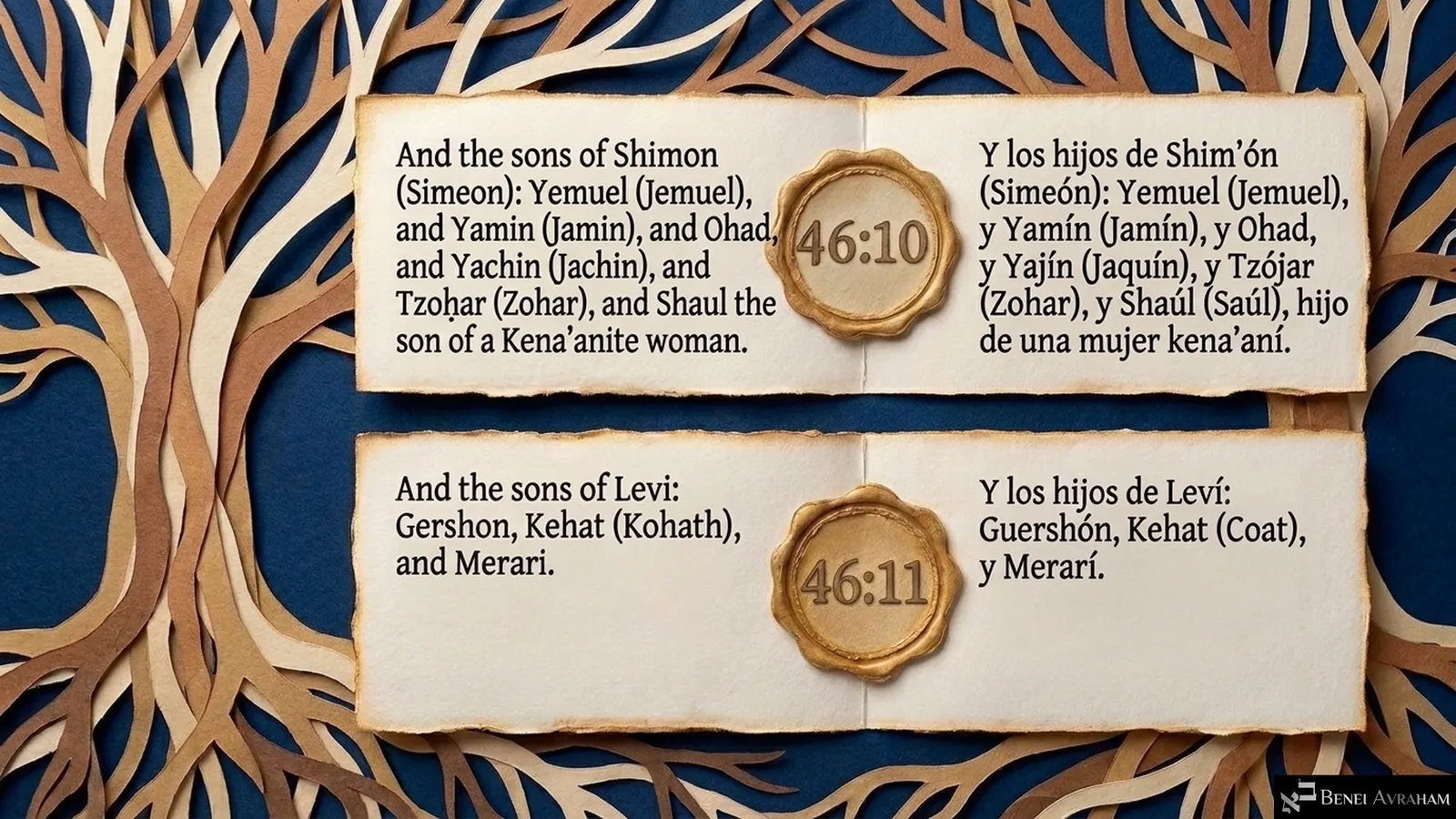
Wax-sealed cards among paper branches: the sons of Shimon and of Levi (Genesis 46:10–11).
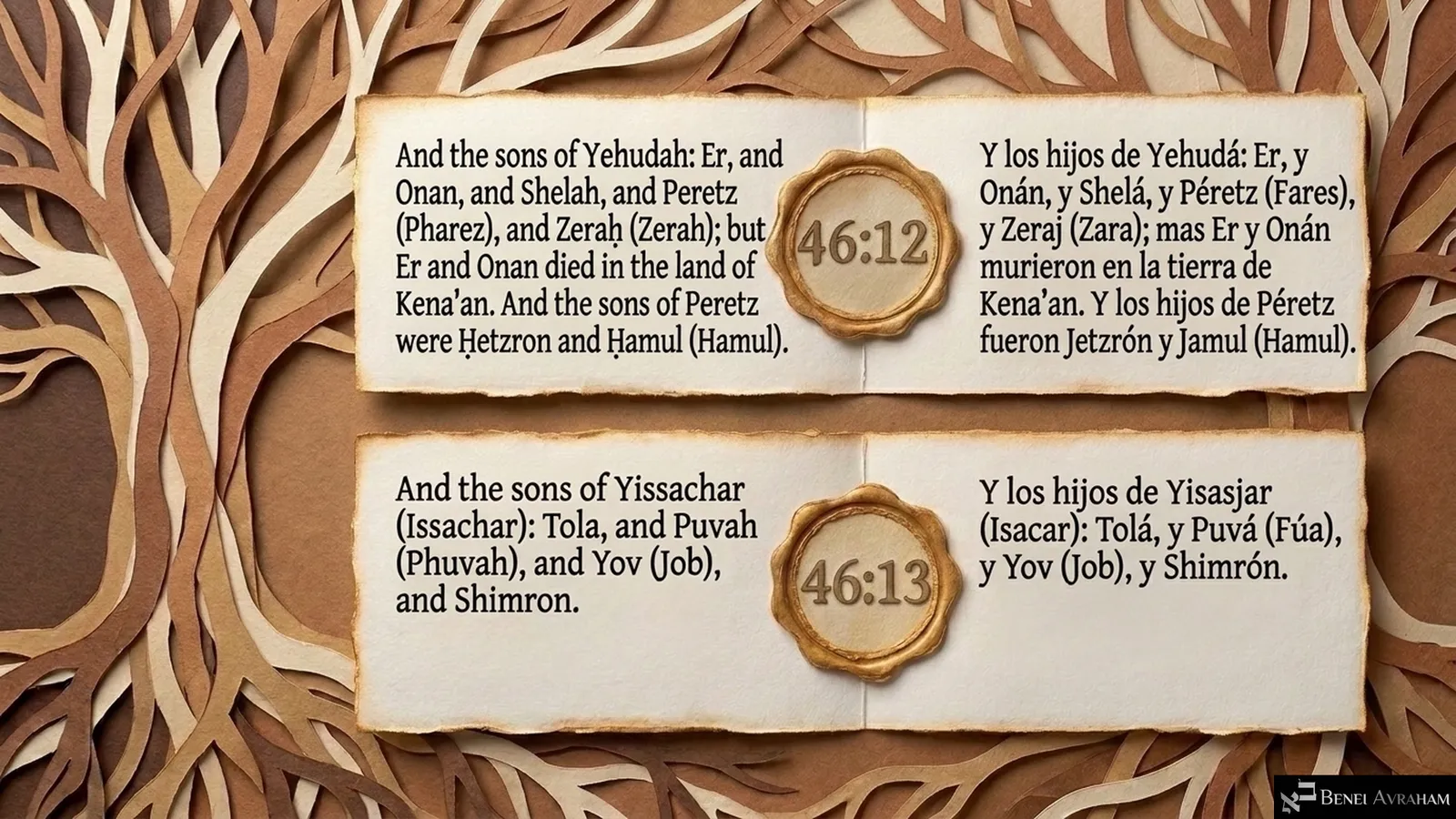
Wax-sealed cards among paper branches: the sons of Yehudah and of Yissachar (Genesis 46:12–13).
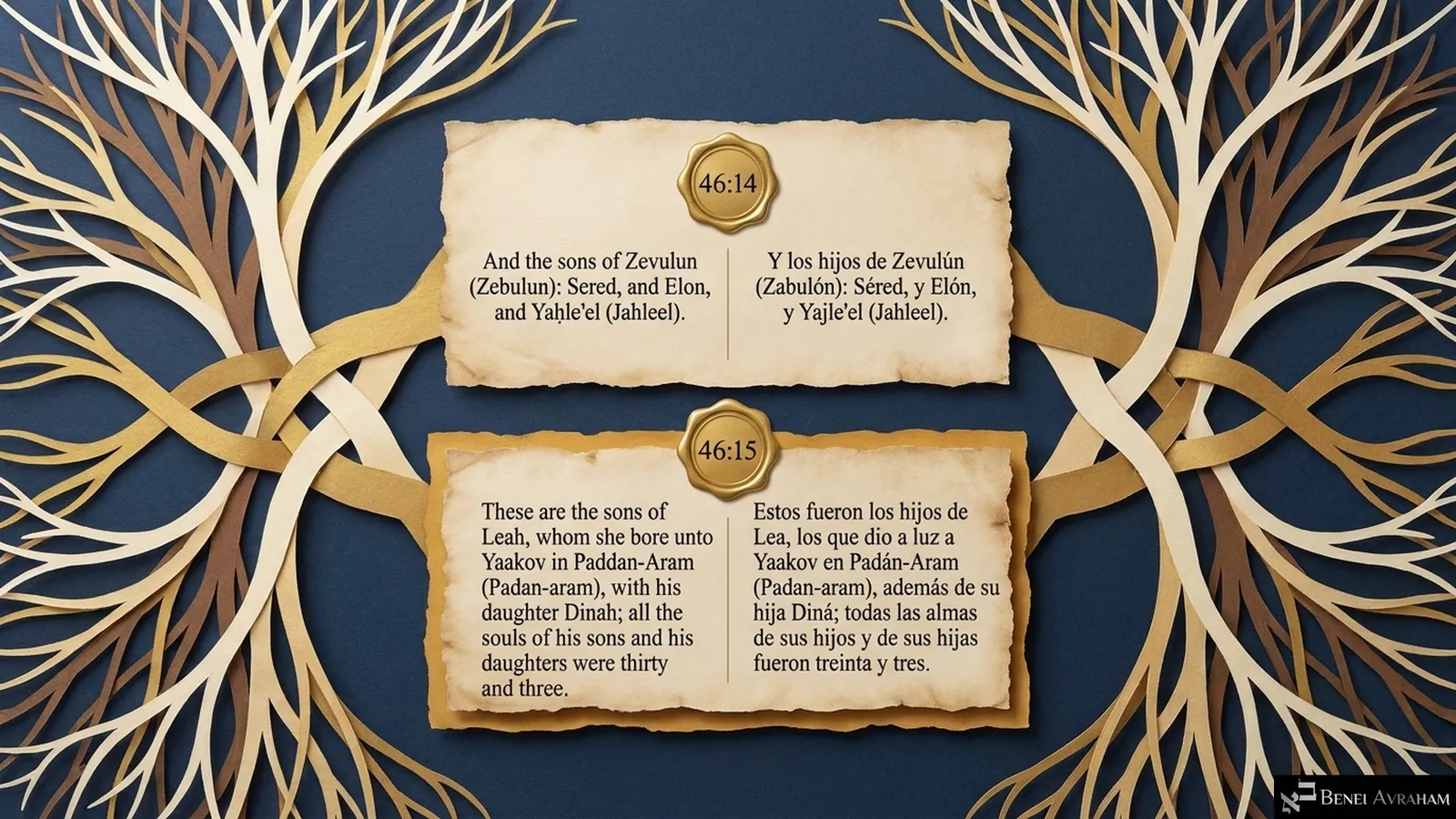
Wax-sealed cards: the sons of Zevulun, and the sons of Leah, thirty and three souls (Genesis 46:14–15).
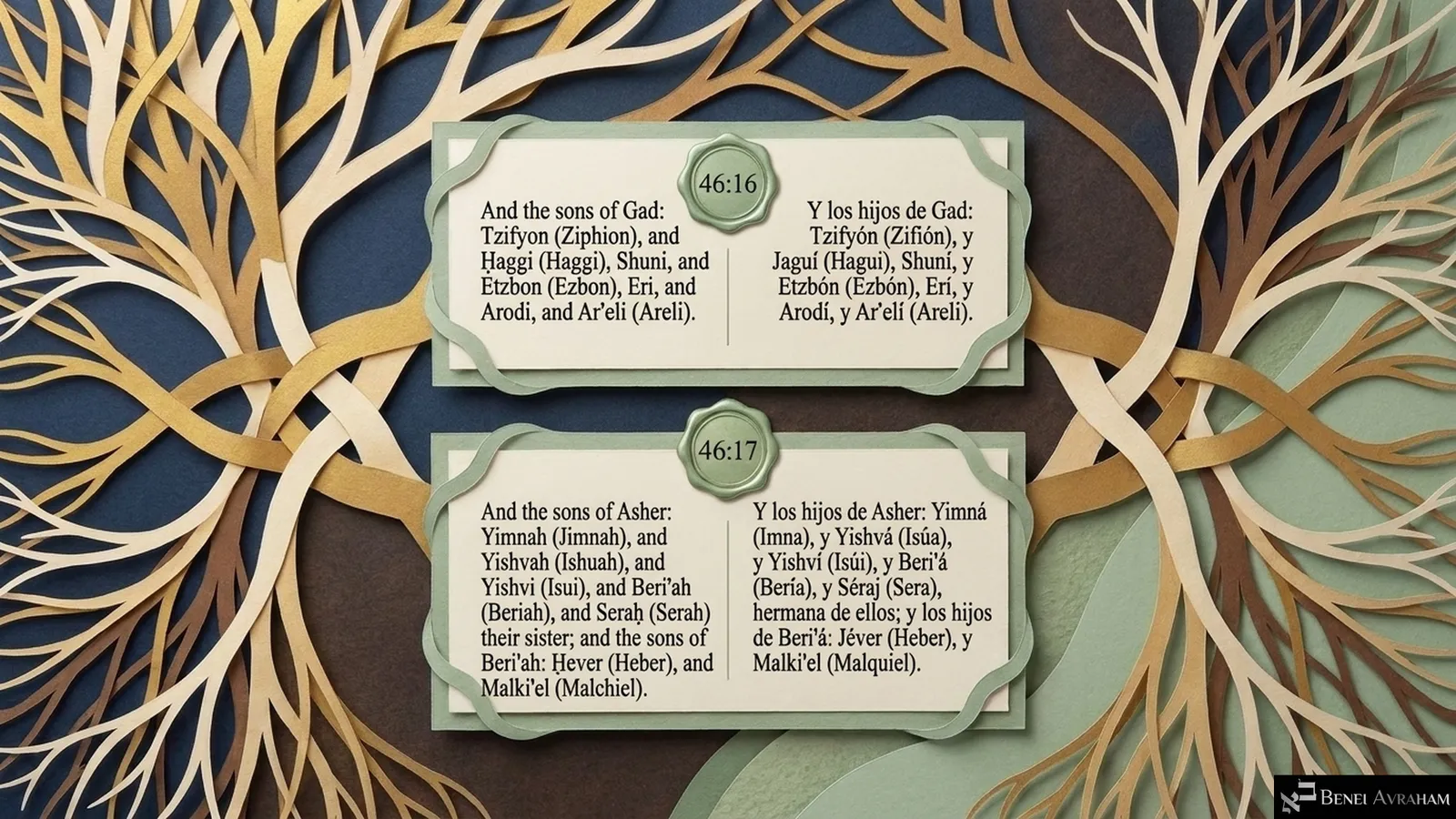
Green-framed cards among golden paper trees: the sons of Gad and of Asher (Genesis 46:16–17).
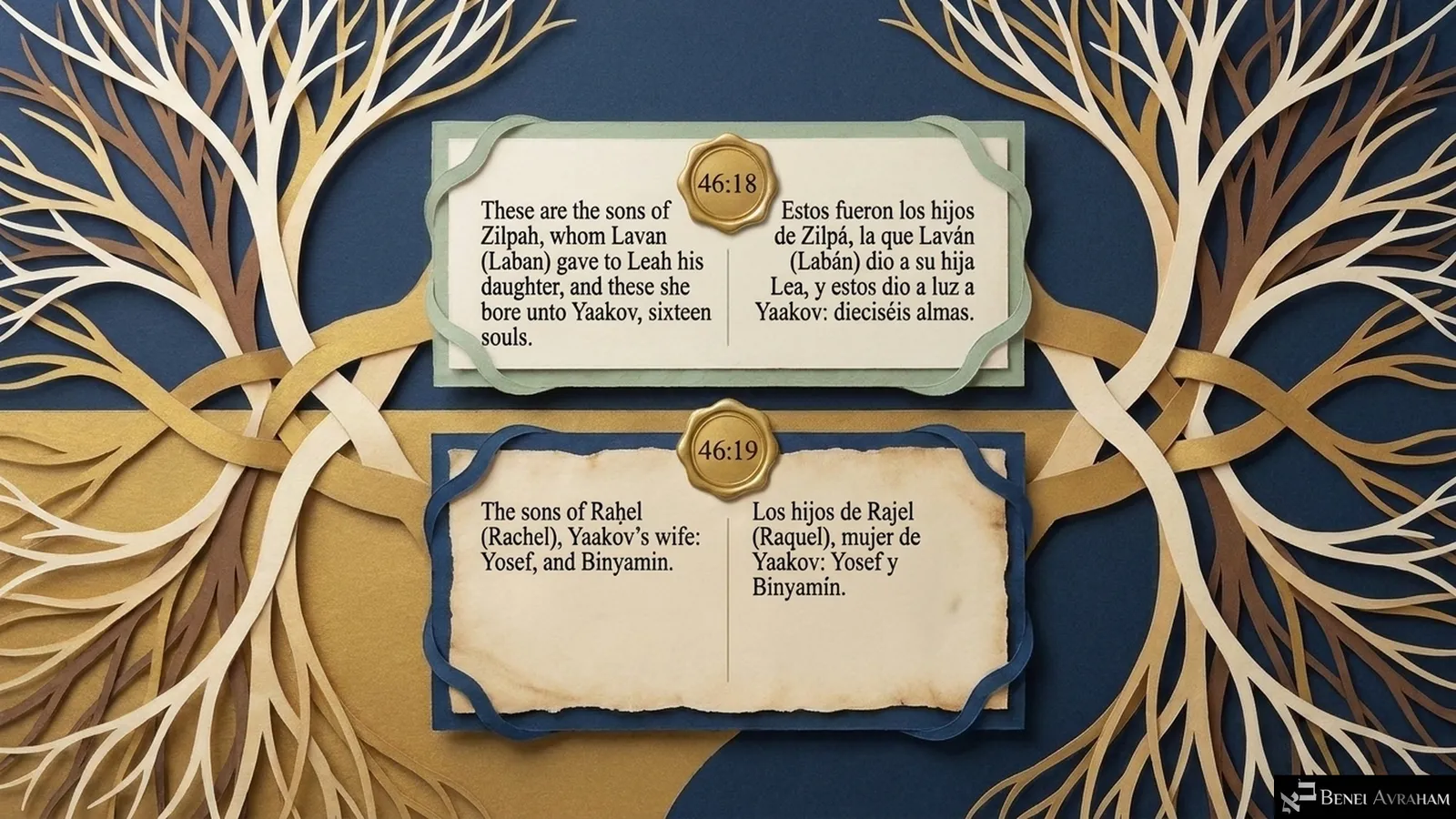
Framed cards among paper trees: the sons of Zilpah, sixteen souls, and the sons of Raḥel, Yaakov’s wife (Genesis 46:18–19).
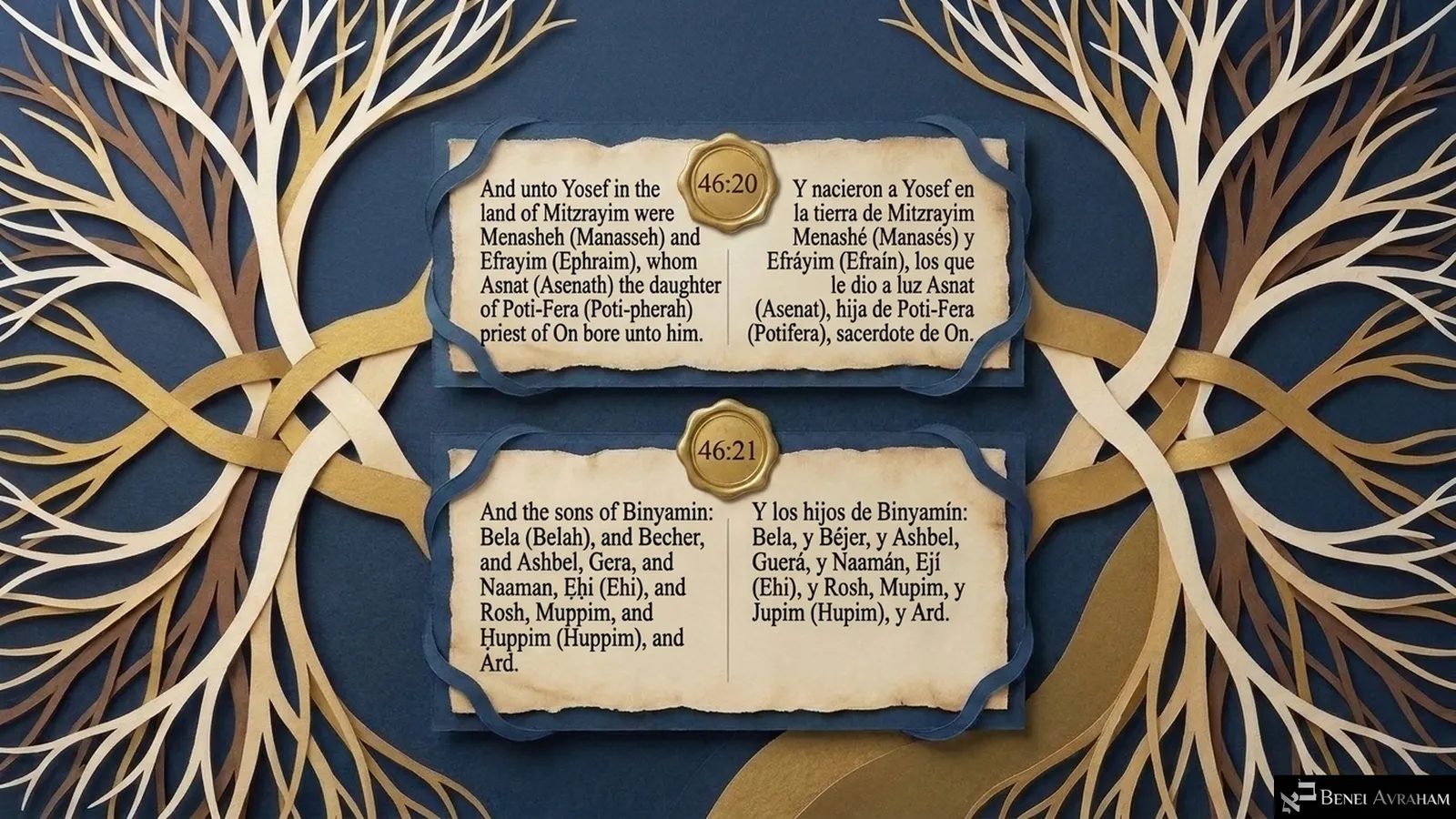
Framed cards among paper trees: Menasheh and Efrayim born to Yosef in Mitzrayim, and the sons of Binyamin (Genesis 46:20–21).
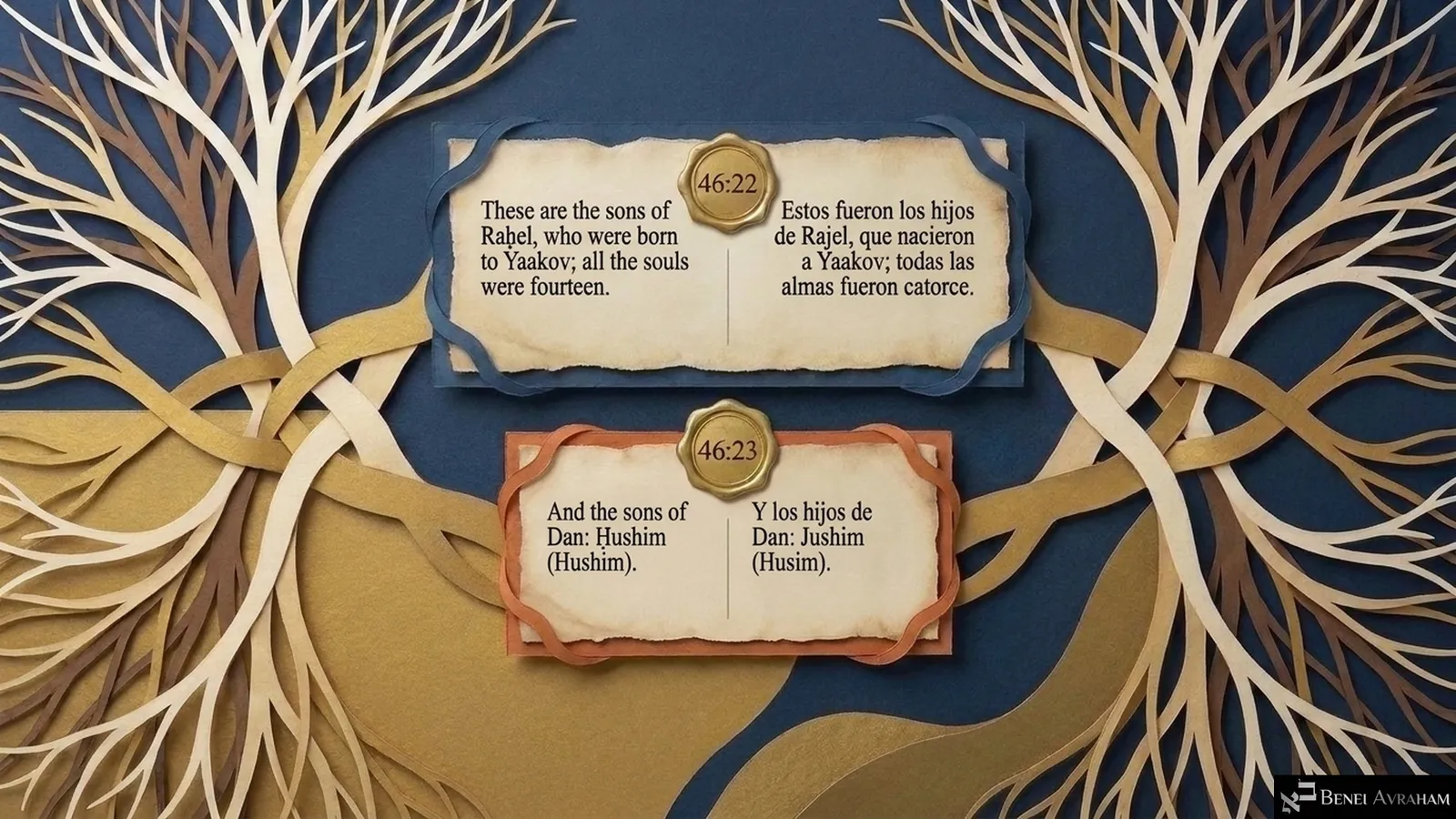
Framed cards among paper trees: the sons of Raḥel, fourteen souls, and the sons of Dan (Genesis 46:22–23).
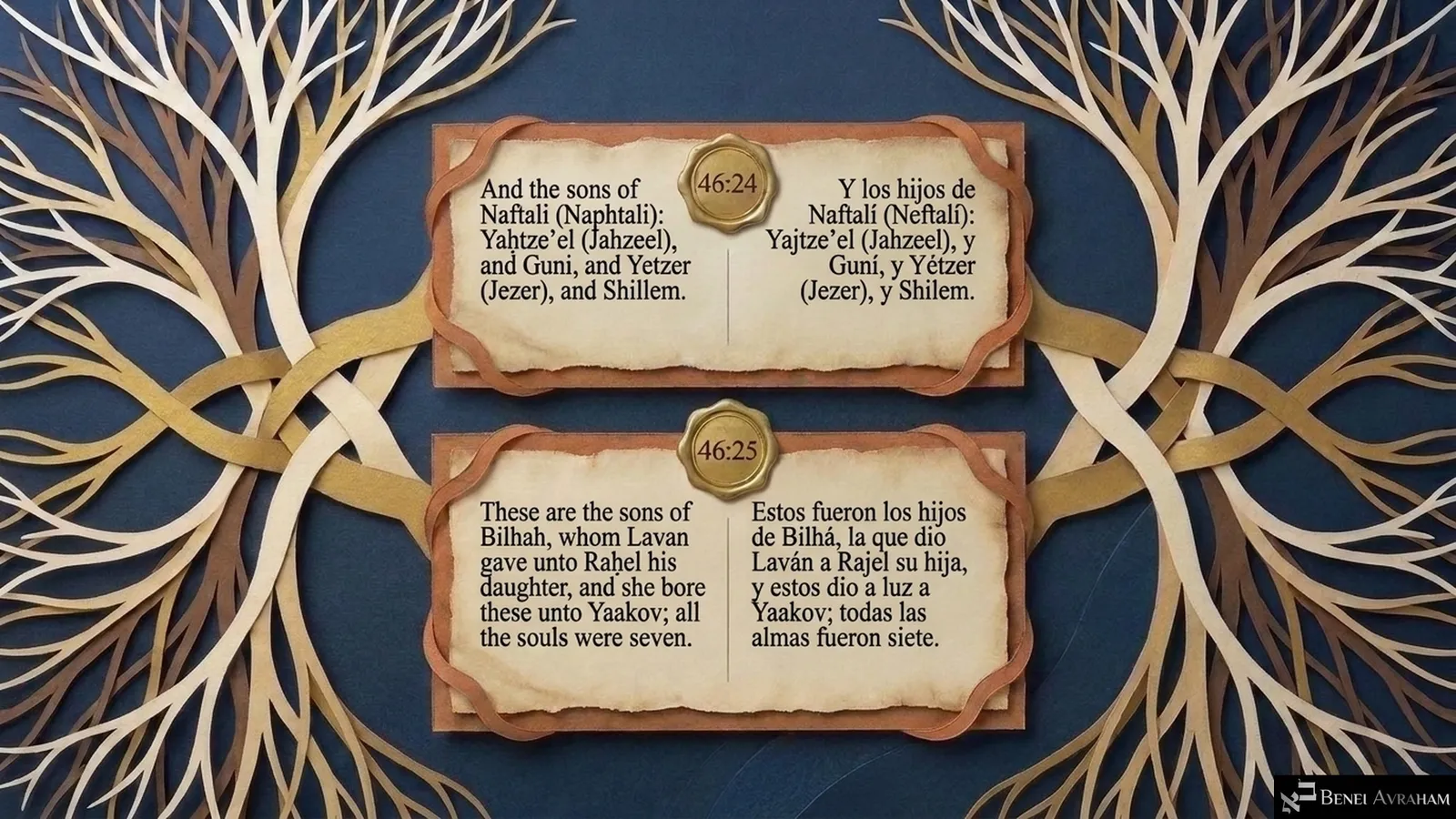
Framed cards among paper trees: the sons of Naftali, and the sons of Bilhah, seven souls (Genesis 46:24–25).
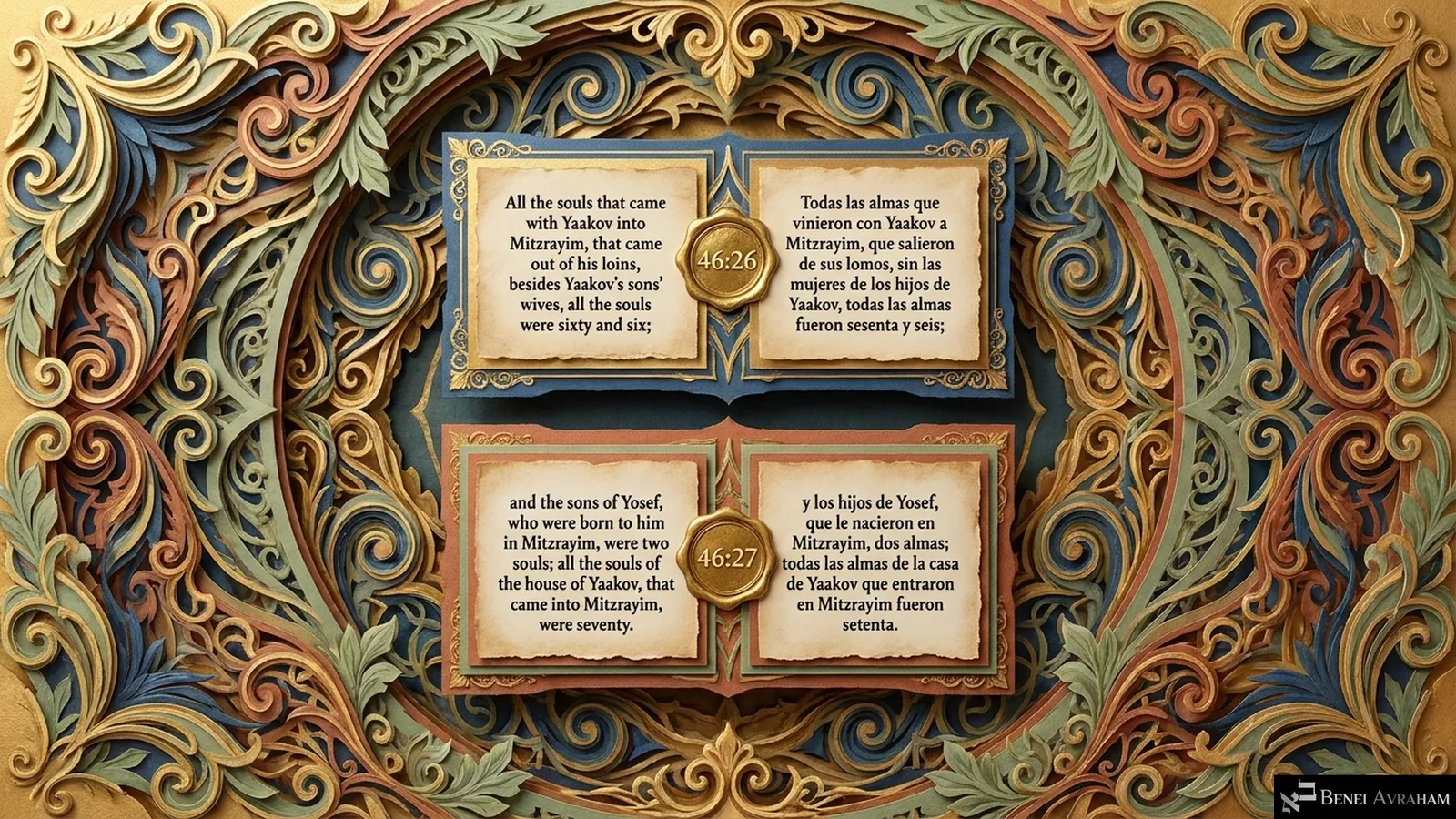
Four sealed cards in an ornate carved paper frame: all the souls of the house of Yaakov that came into Mitzrayim were seventy (Genesis 46:26–27).
Shishi · Genesis 46:28–47:10

Sixth Portion
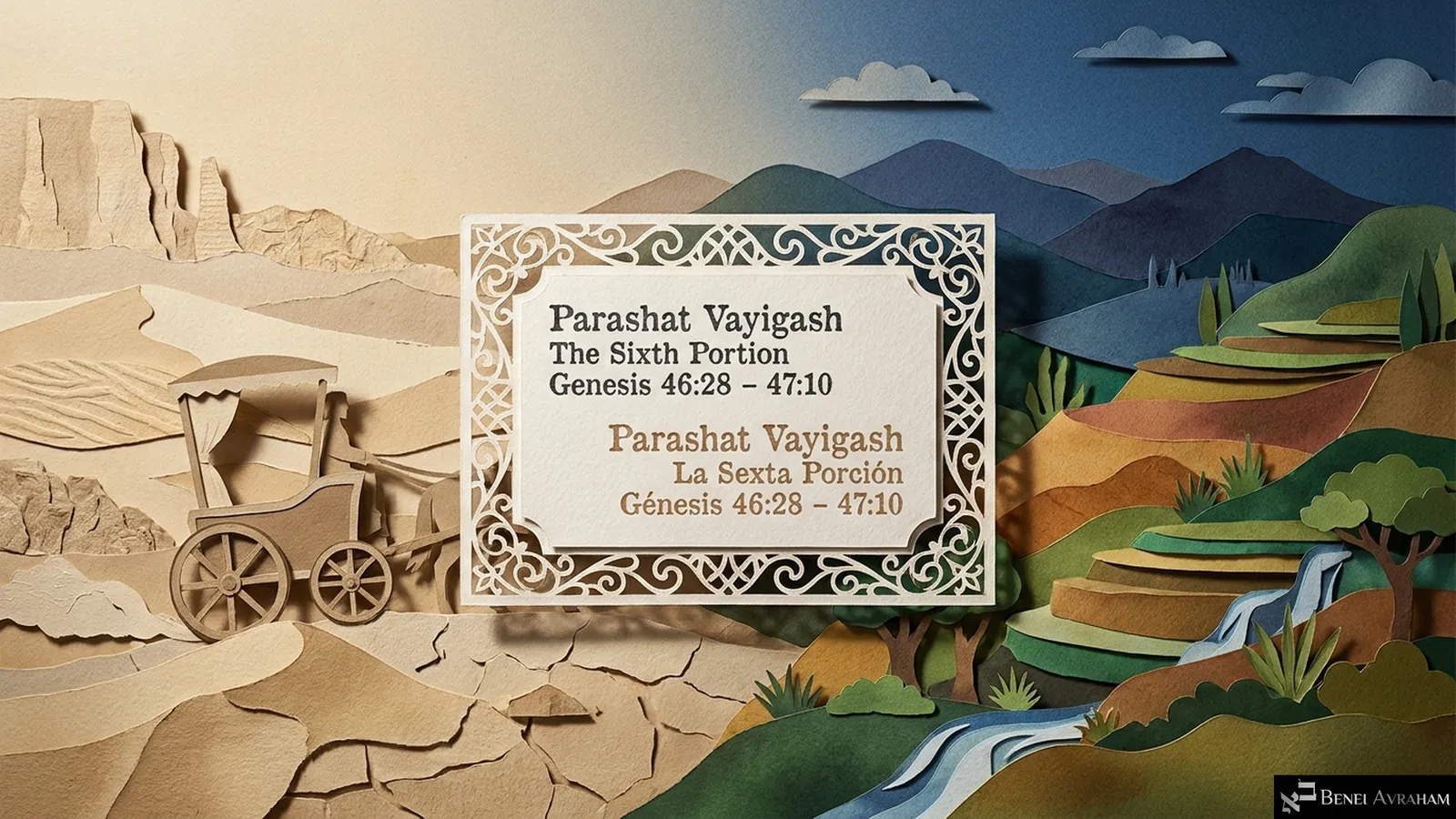
Title card for the sixth portion: a framed card over a paper wagon in the desert and green hills, “Parashat Vayigash, The Sixth Portion, Genesis 46:28–47:10”.
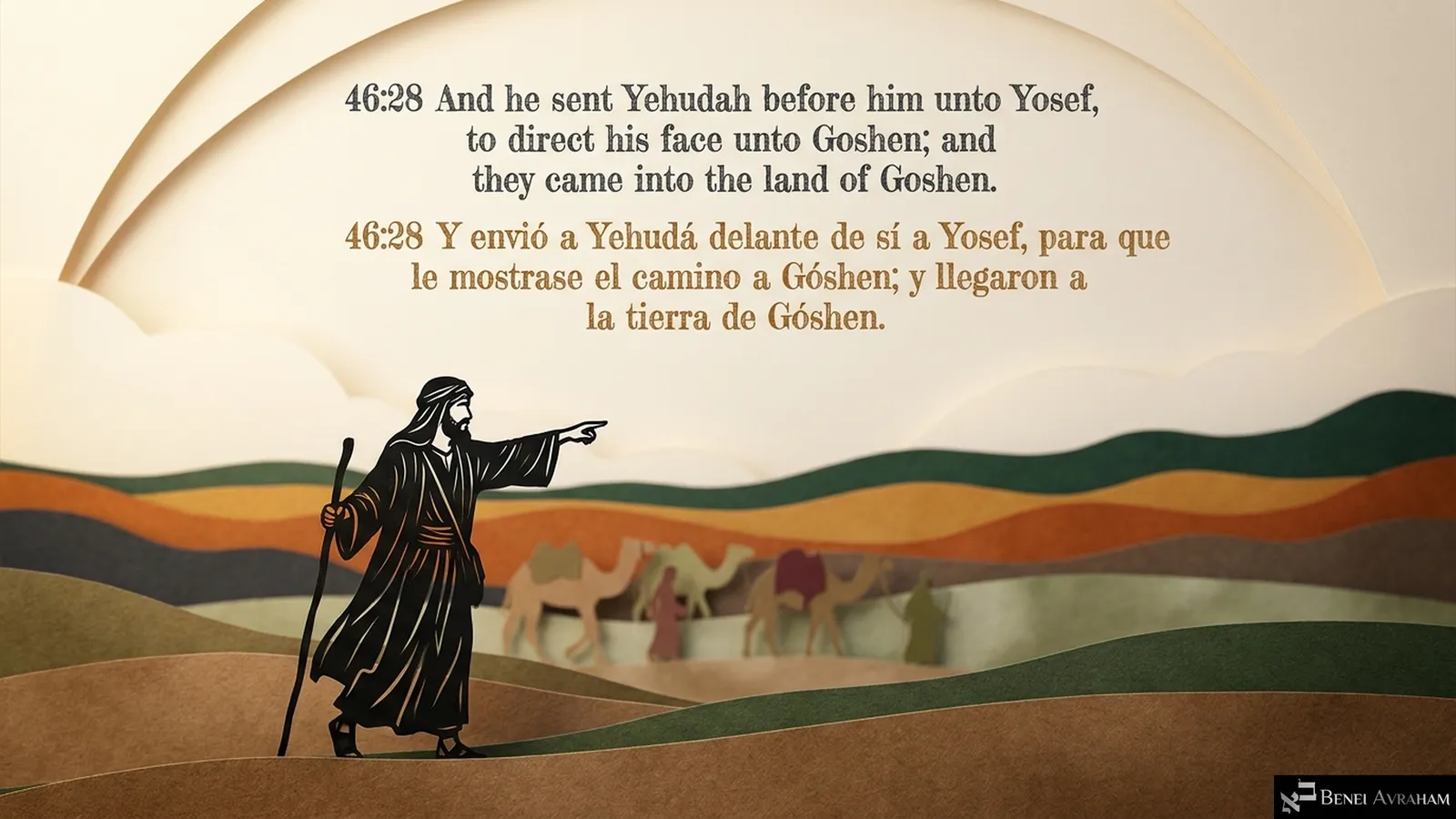
A paper figure with a staff points toward green hills: he sent Yehudah before him unto Yosef, to direct his face unto Goshen (Genesis 46:28).
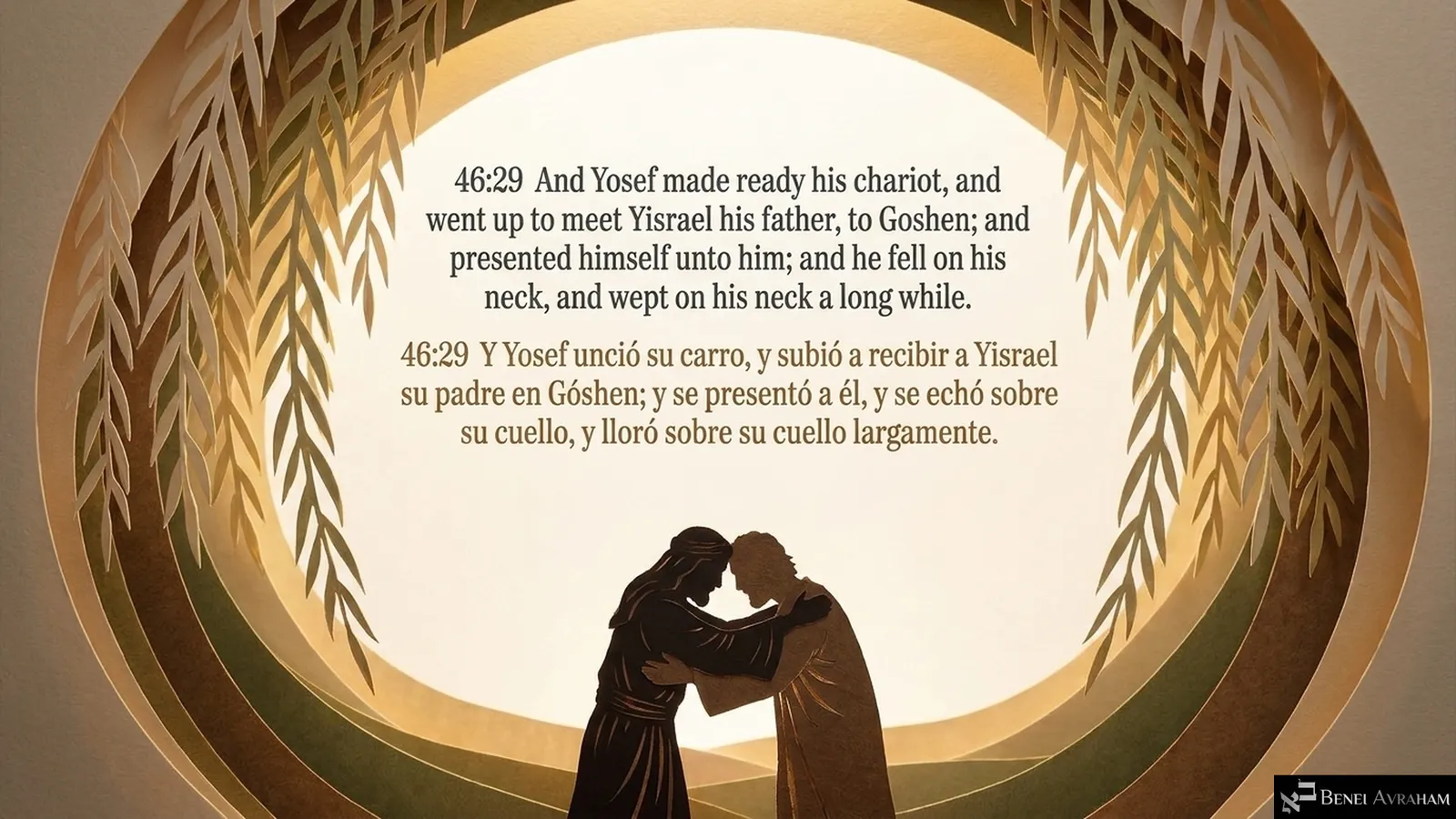
Father and son embrace inside a golden paper ring: Yosef went up to meet Yisrael his father and wept on his neck a long while (Genesis 46:29).
Paper rainbow arcs over green hills: “Now let me die, since I have seen your face, that you are yet alive” (Genesis 46:30).
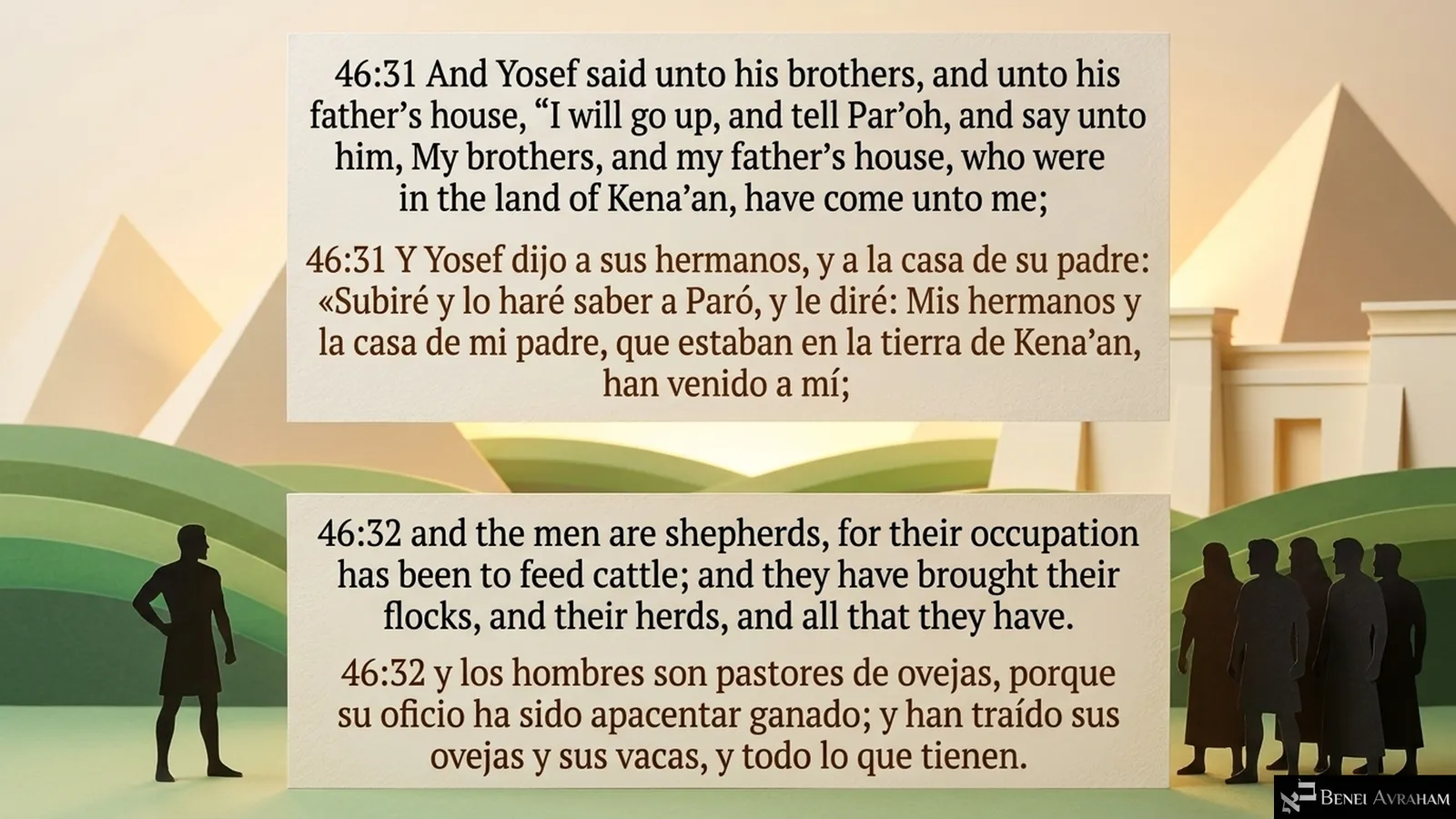
Paper pyramids and a lone figure facing a group of brothers: “I will go up, and tell Par’oh… the men are shepherds” (Genesis 46:31–32).
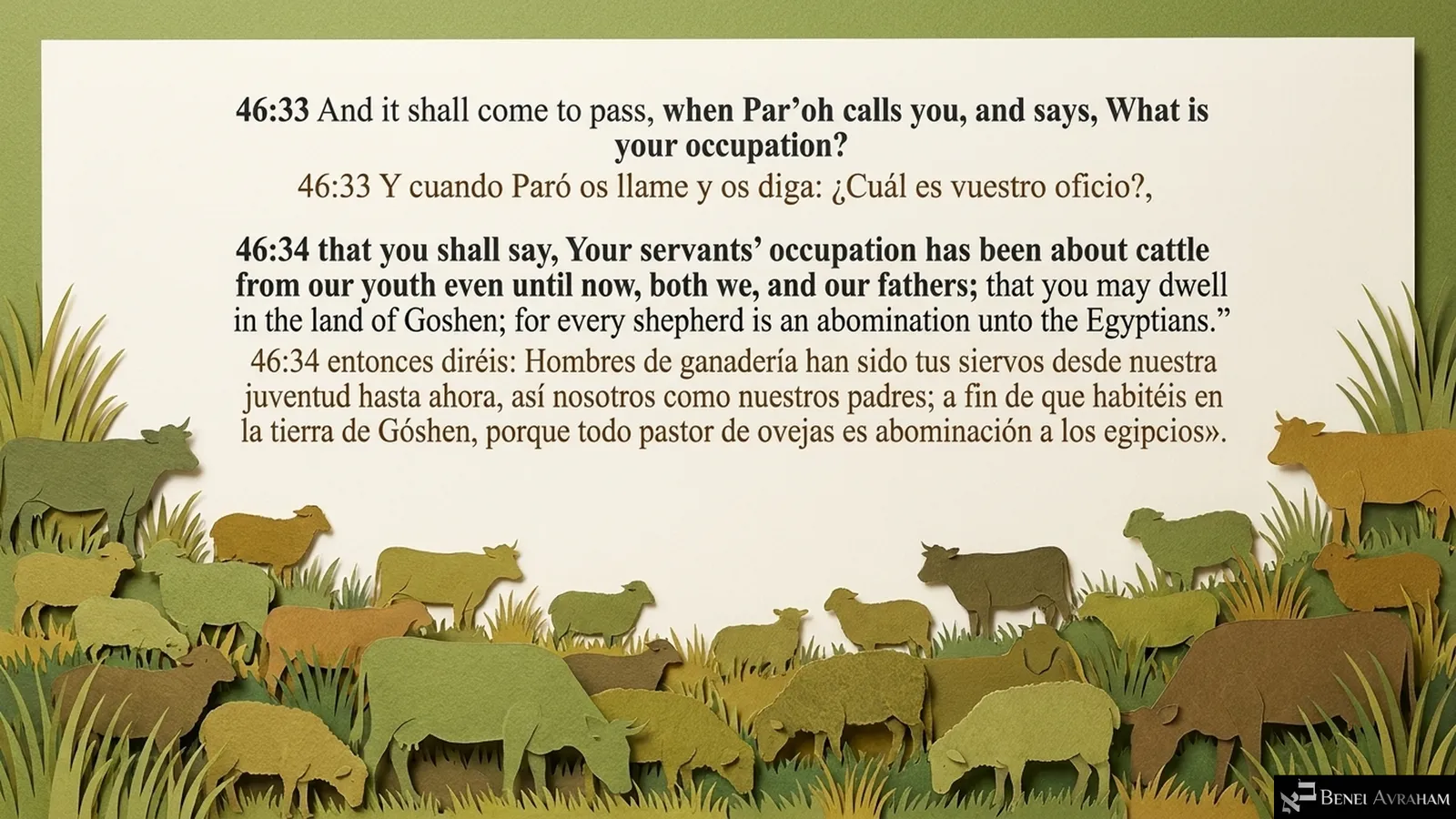
Paper sheep graze in tall grass: “Your servants’ occupation has been about cattle from our youth… for every shepherd is an abomination unto the Egyptians” (Genesis 46:33–34).
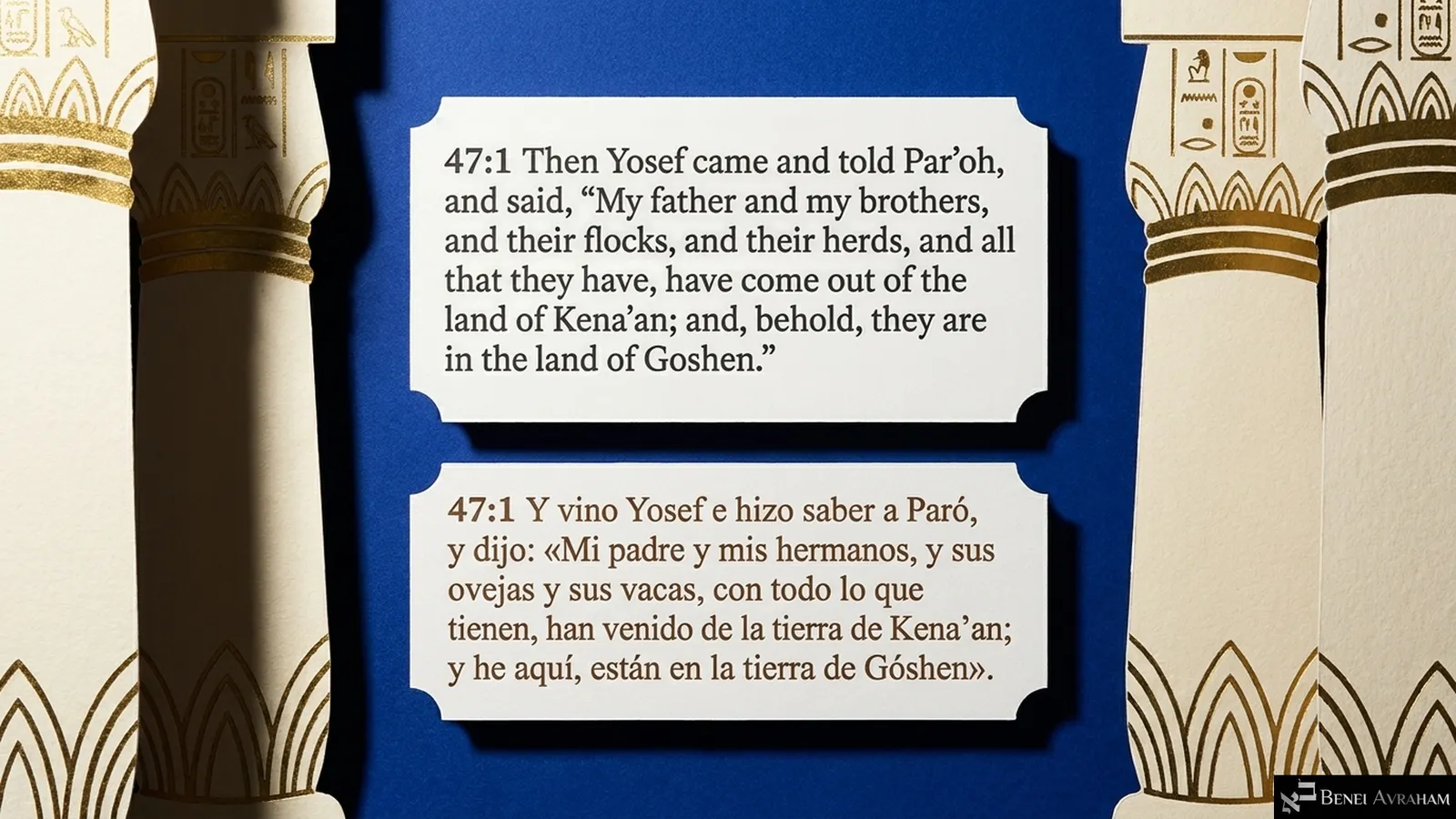
Paper cards beside an Egyptian palace: Yosef told Par’oh, “My father and my brothers have come out of the land of Kena’an” (Genesis 47:1).
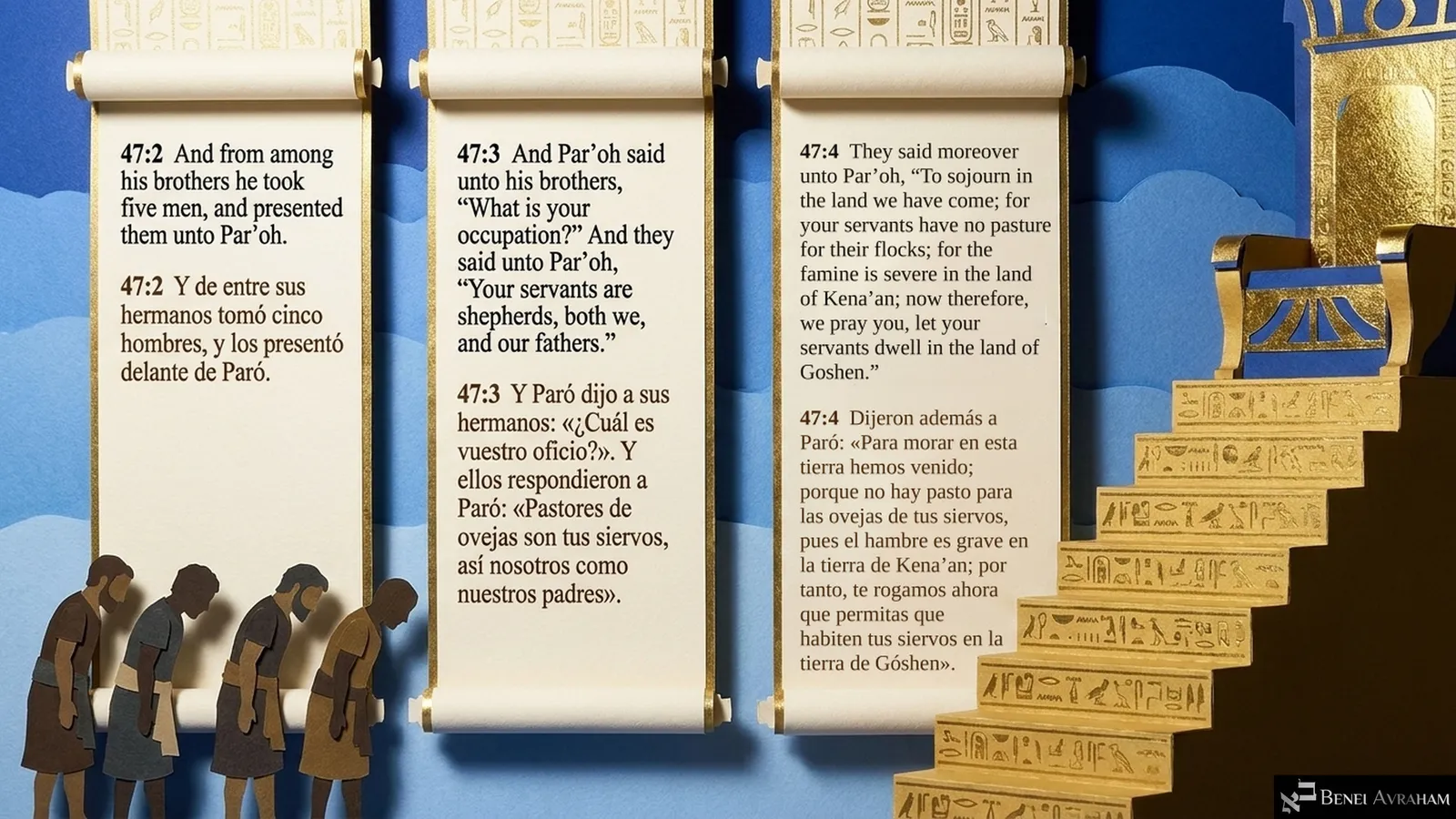
Paper scrolls before blue skies as bowing brothers approach a golden stair: five brothers are presented to Par’oh and ask to dwell in Goshen (Genesis 47:2–4).
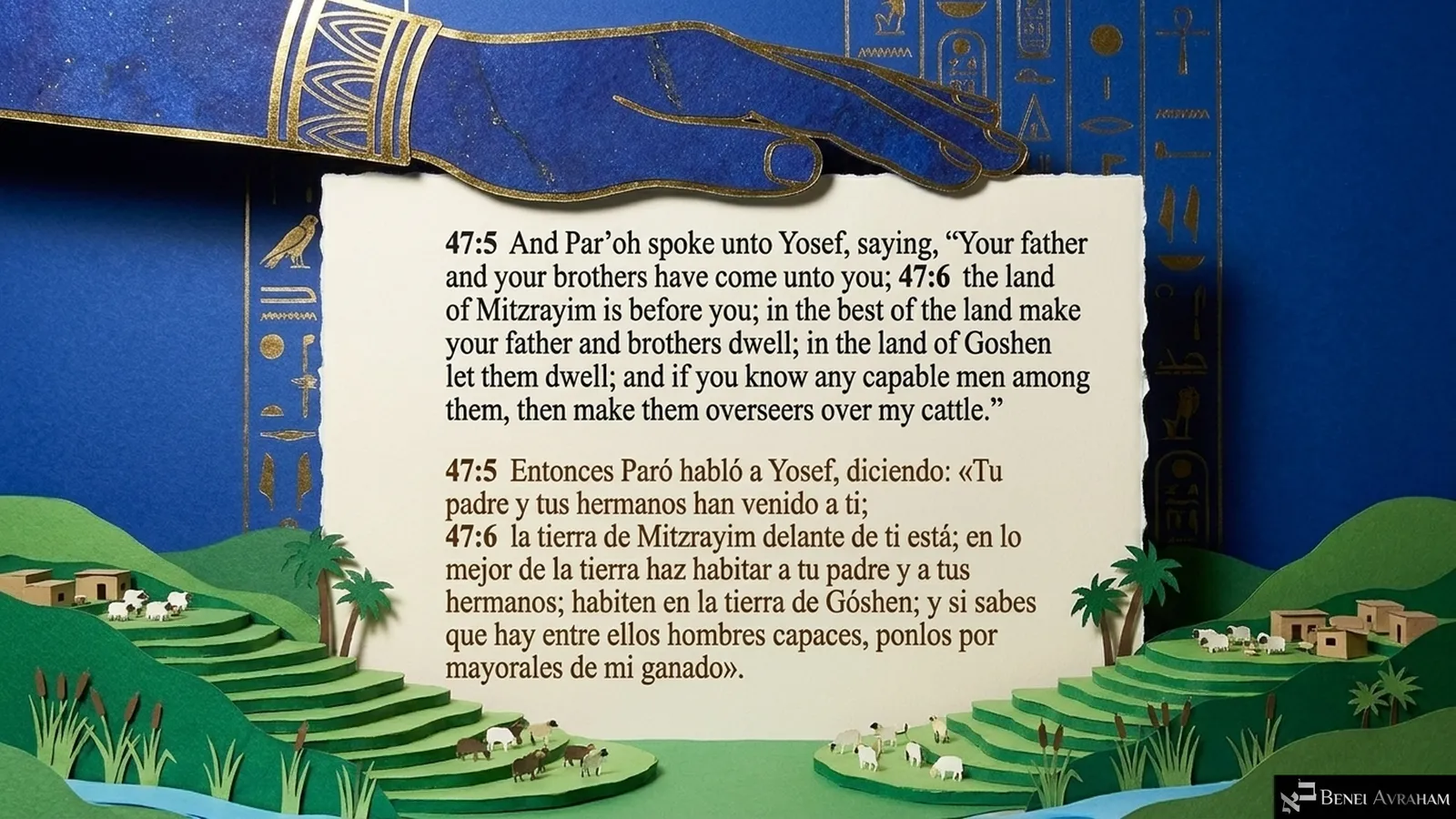
A great blue paper hand points over terraced green fields with flocks: “In the best of the land make your father and brothers dwell” (Genesis 47:5–6).
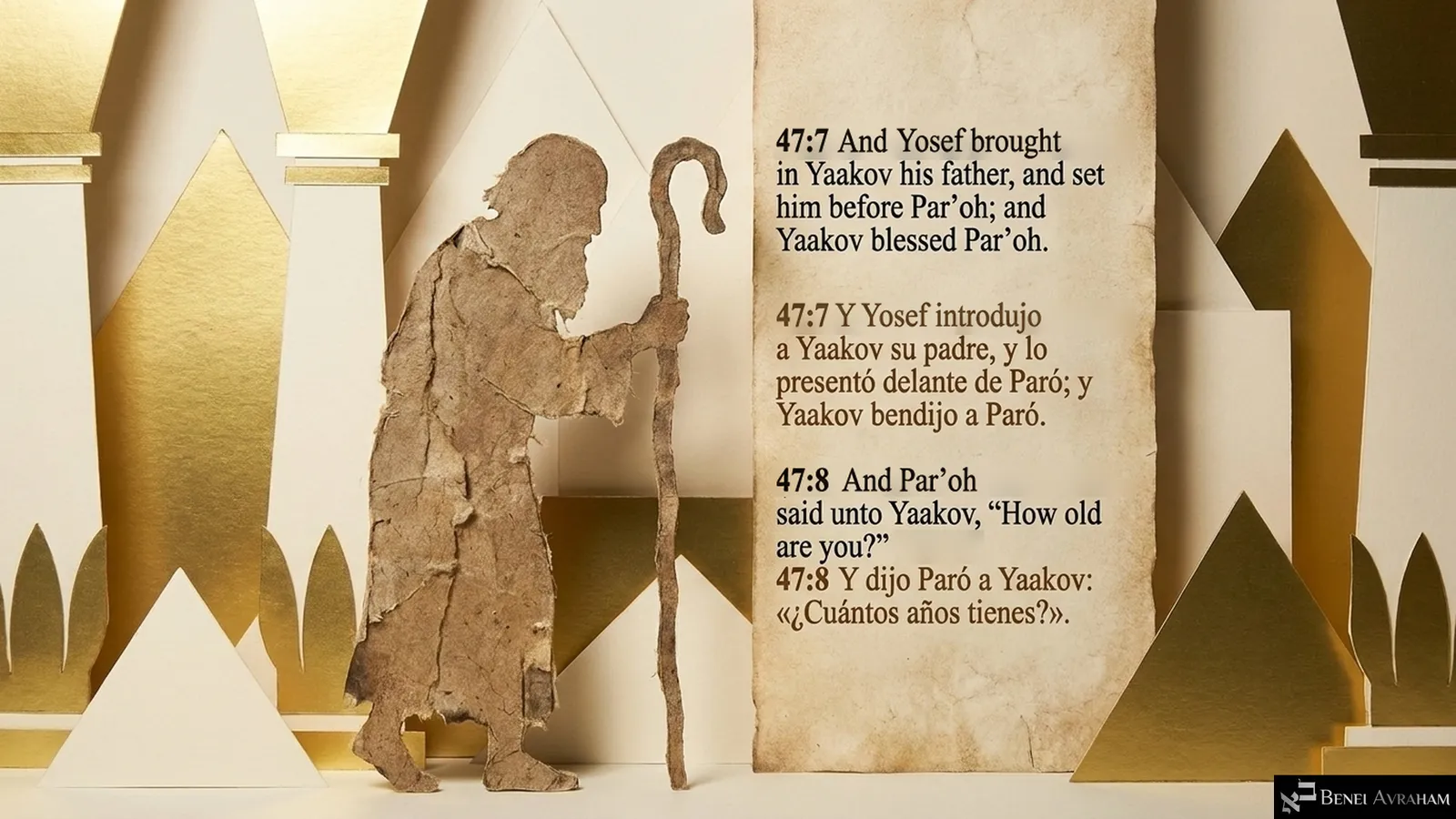
An old paper figure with a shepherd’s staff before golden pyramids: Yaakov blessed Par’oh; “How old are you?” (Genesis 47:7–8).
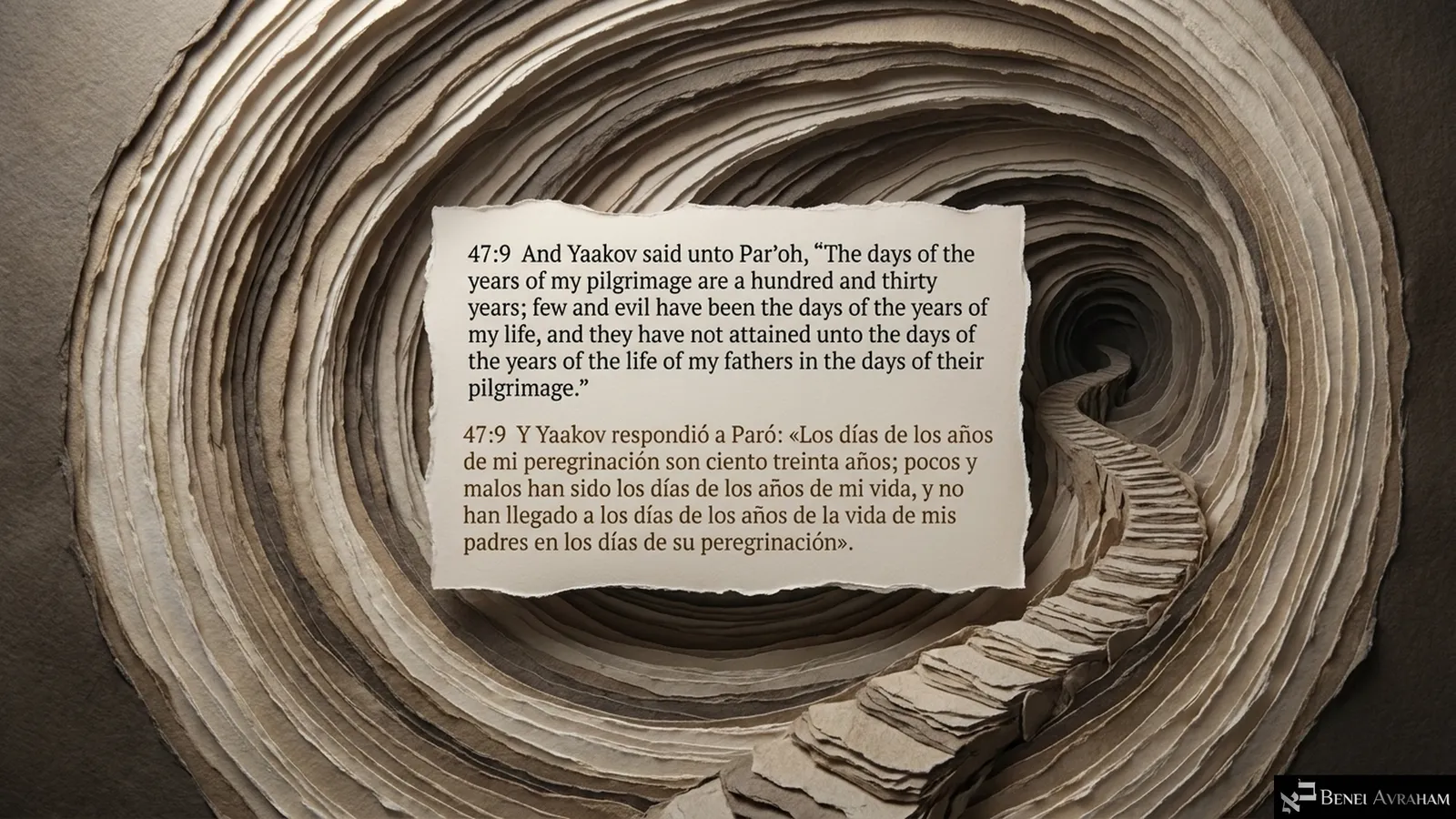
A paper stair winds into a spiral of layered paper: “The days of the years of my pilgrimage are a hundred and thirty years” (Genesis 47:9).
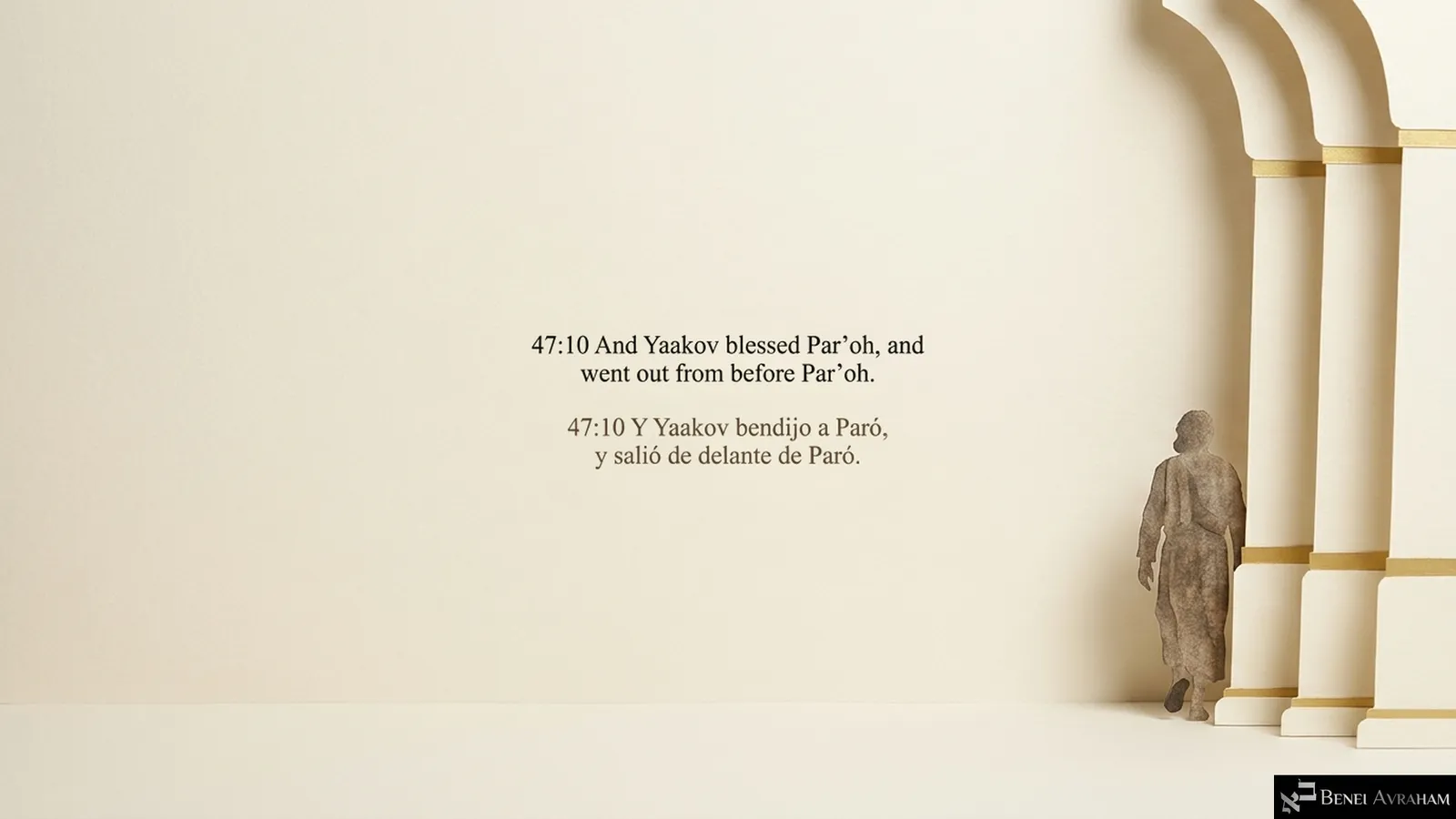
An old paper figure walks out between white columns: Yaakov blessed Par’oh, and went out from before Par’oh (Genesis 47:10).
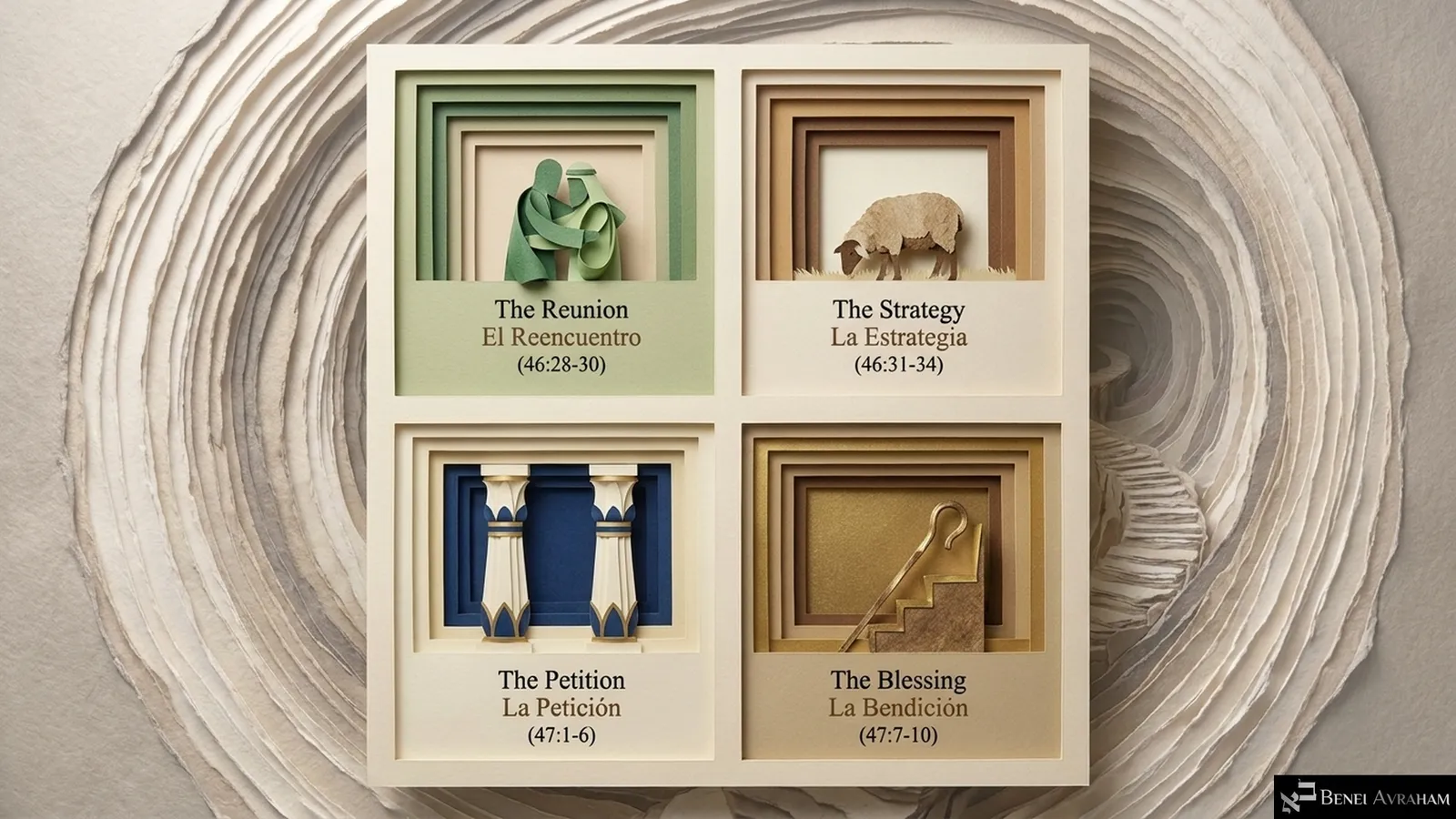
Summary panels — The Reunion, The Strategy, The Petition, The Blessing (Genesis 46:28–47:10).
Shevi’i · Genesis 47:11–27

Seventh Portion
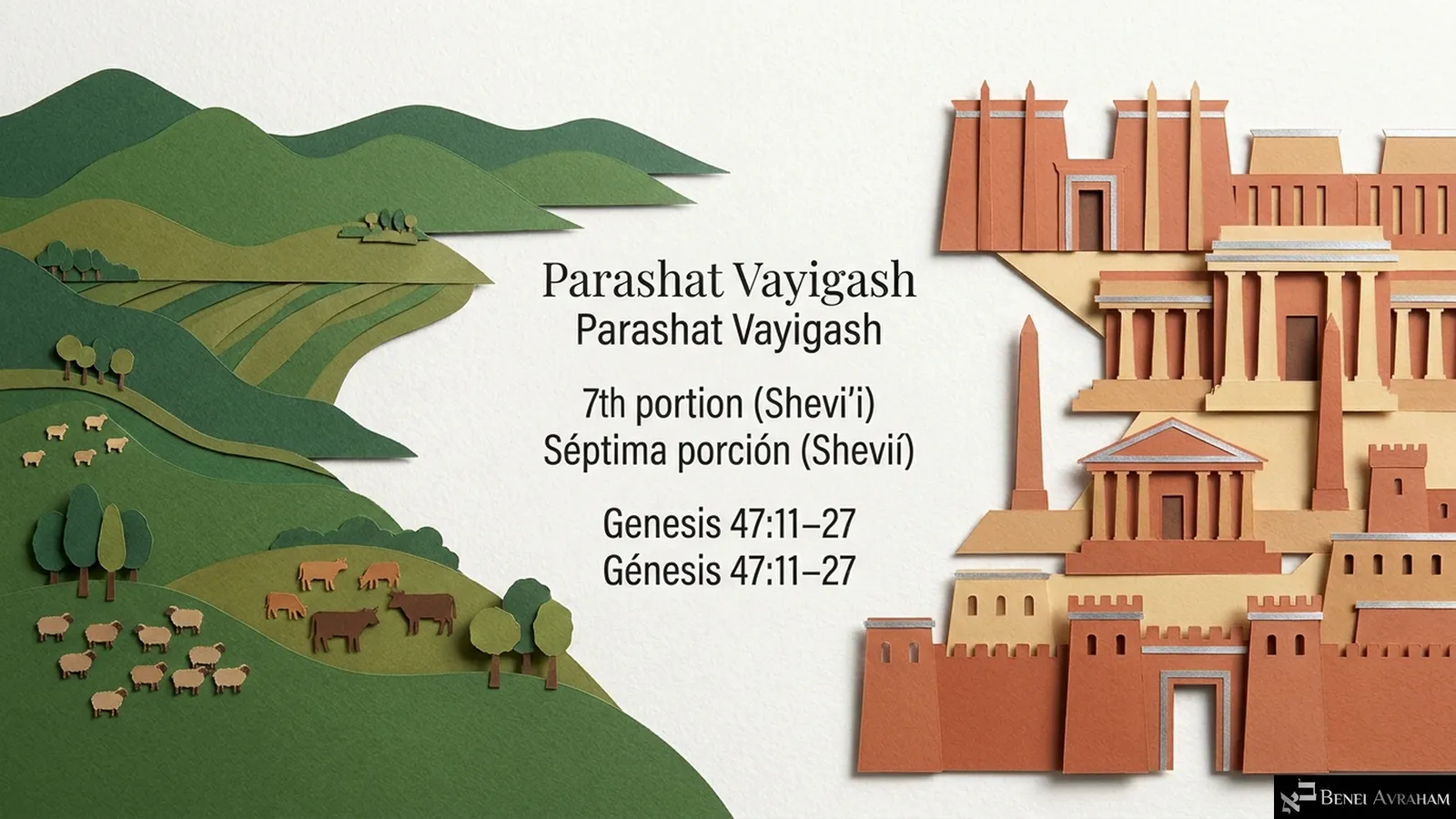
Title card for the seventh portion between green paper hills with flocks and a red Egyptian city: “Parashat Vayigash, 7th portion (Shevi’i), Genesis 47:11–27”.
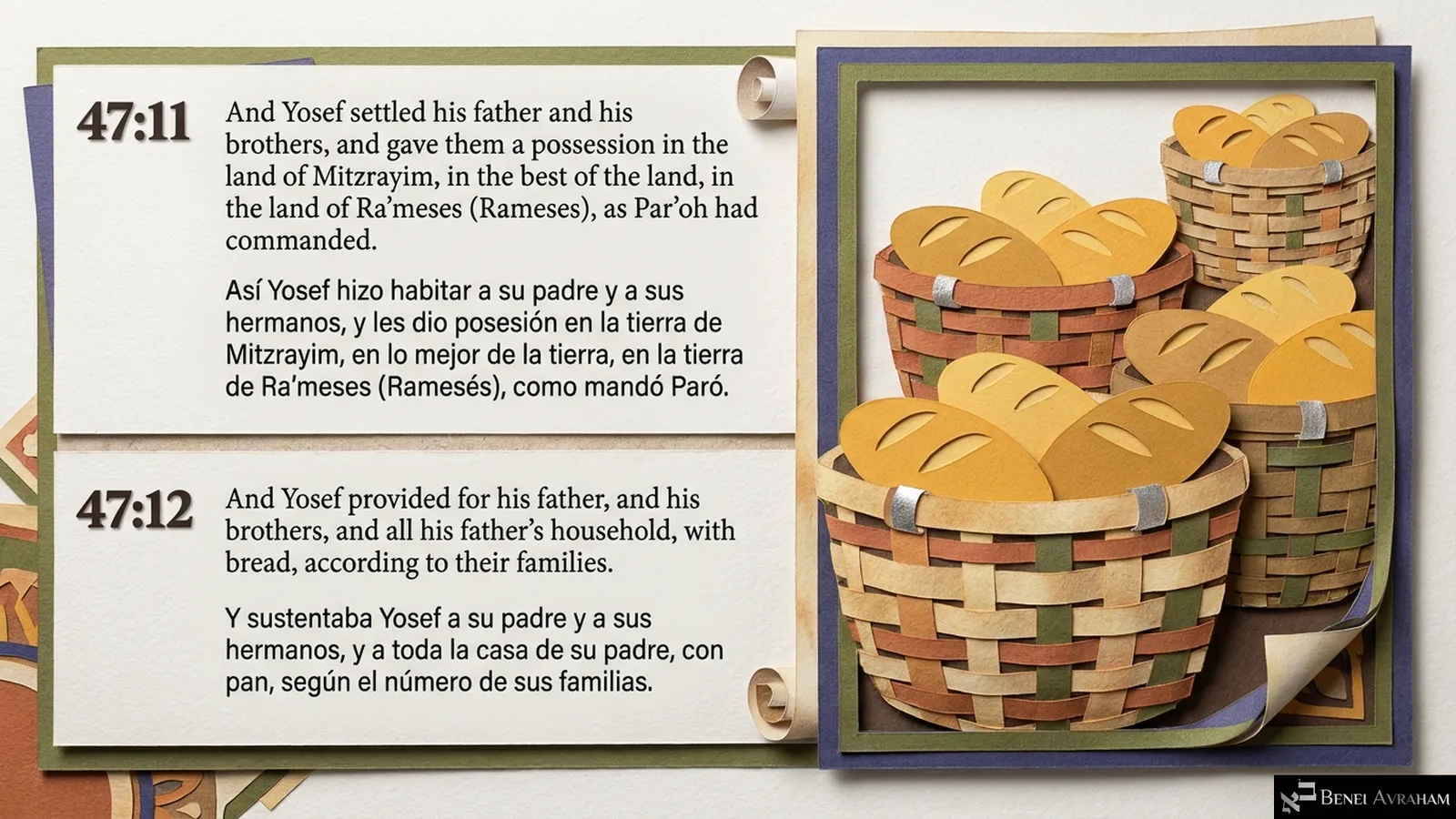
Paper baskets of bread: Yosef settled his family in the land of Ra’meses and provided them with bread (Genesis 47:11–12).
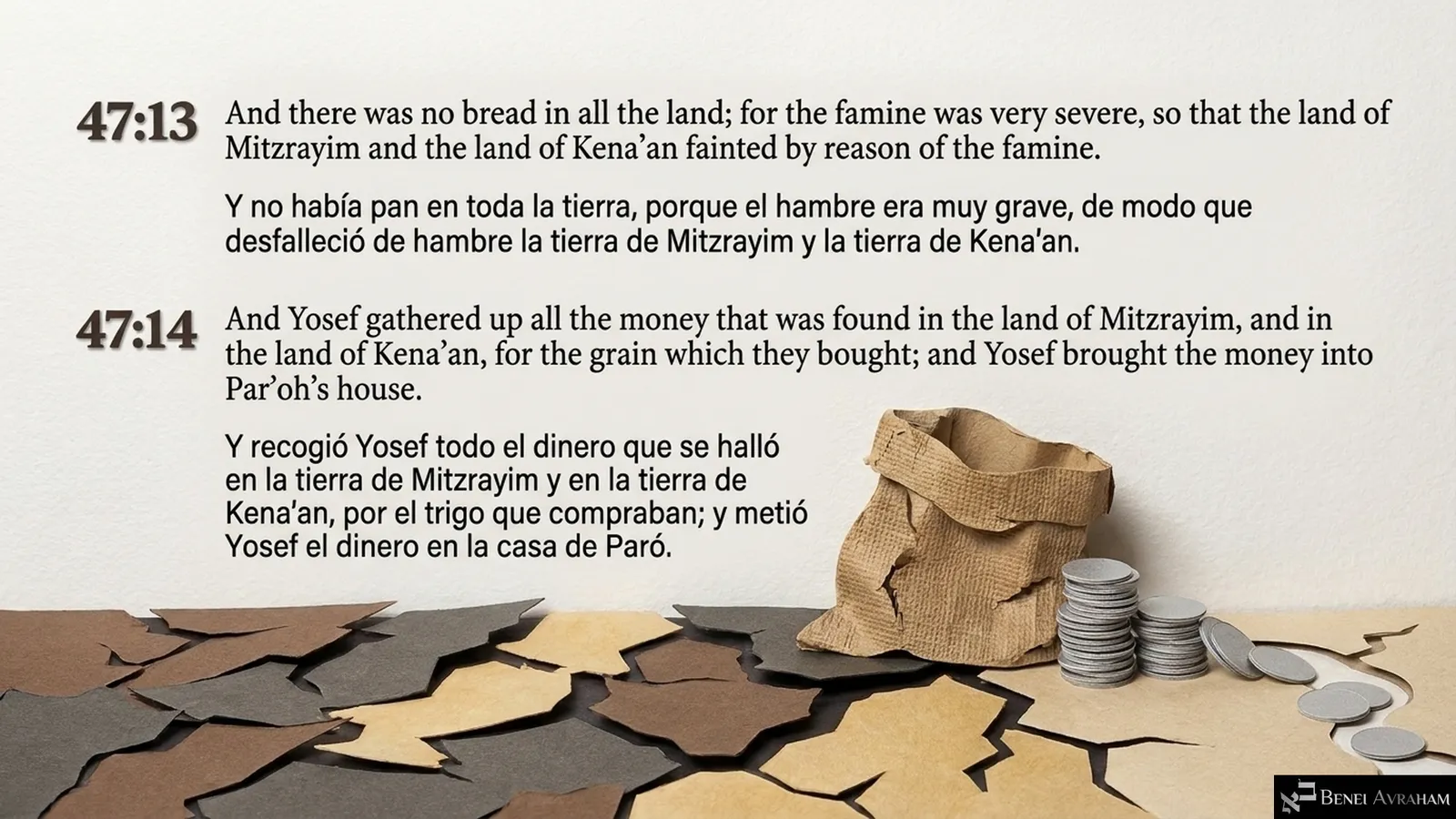
Cracked paper earth, a sack and silver coins: no bread in all the land; Yosef gathered up all the money (Genesis 47:13–14).
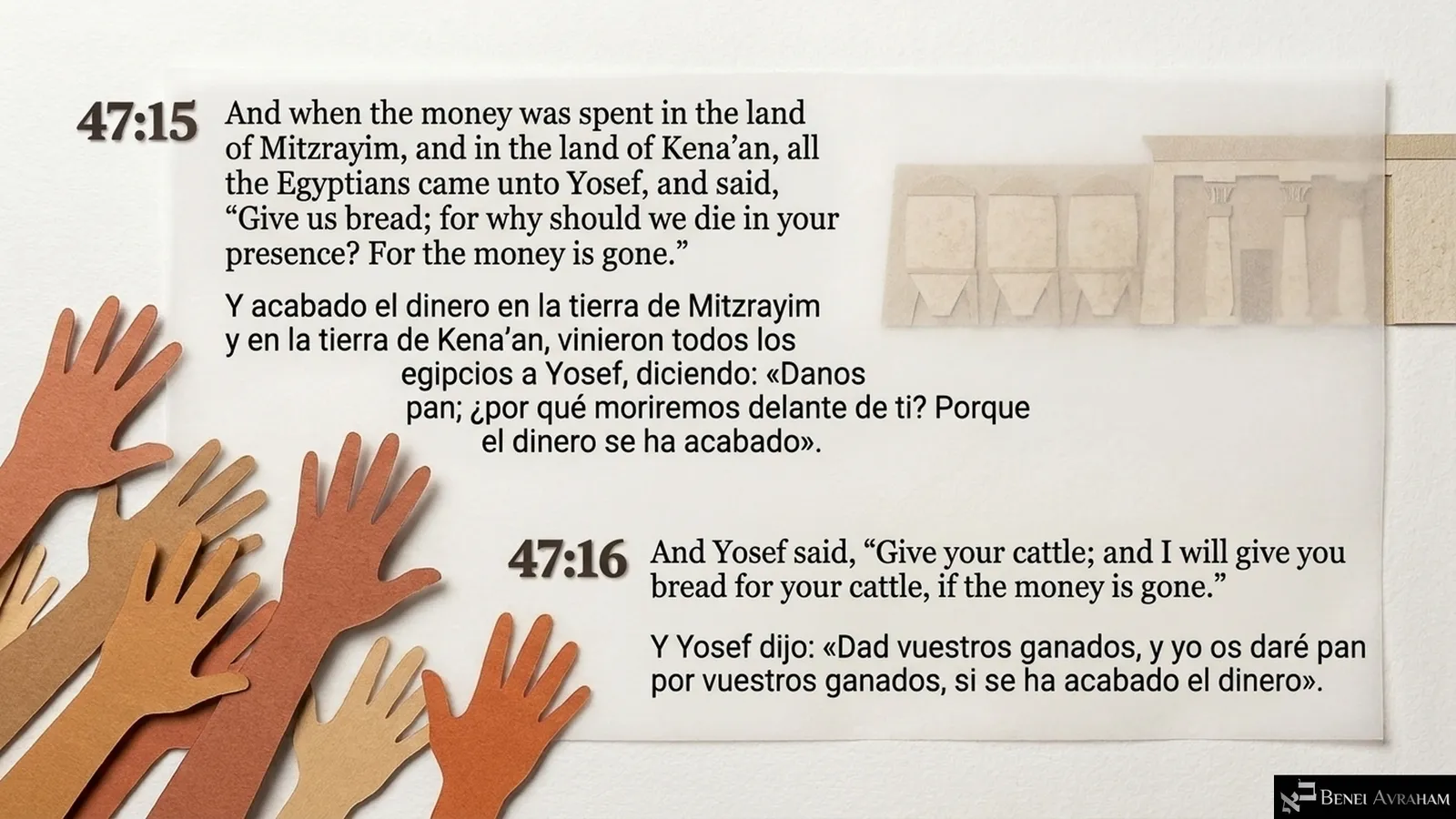
Paper hands reach up toward the granaries: “Give us bread; for the money is gone”; “Give your cattle” (Genesis 47:15–16).
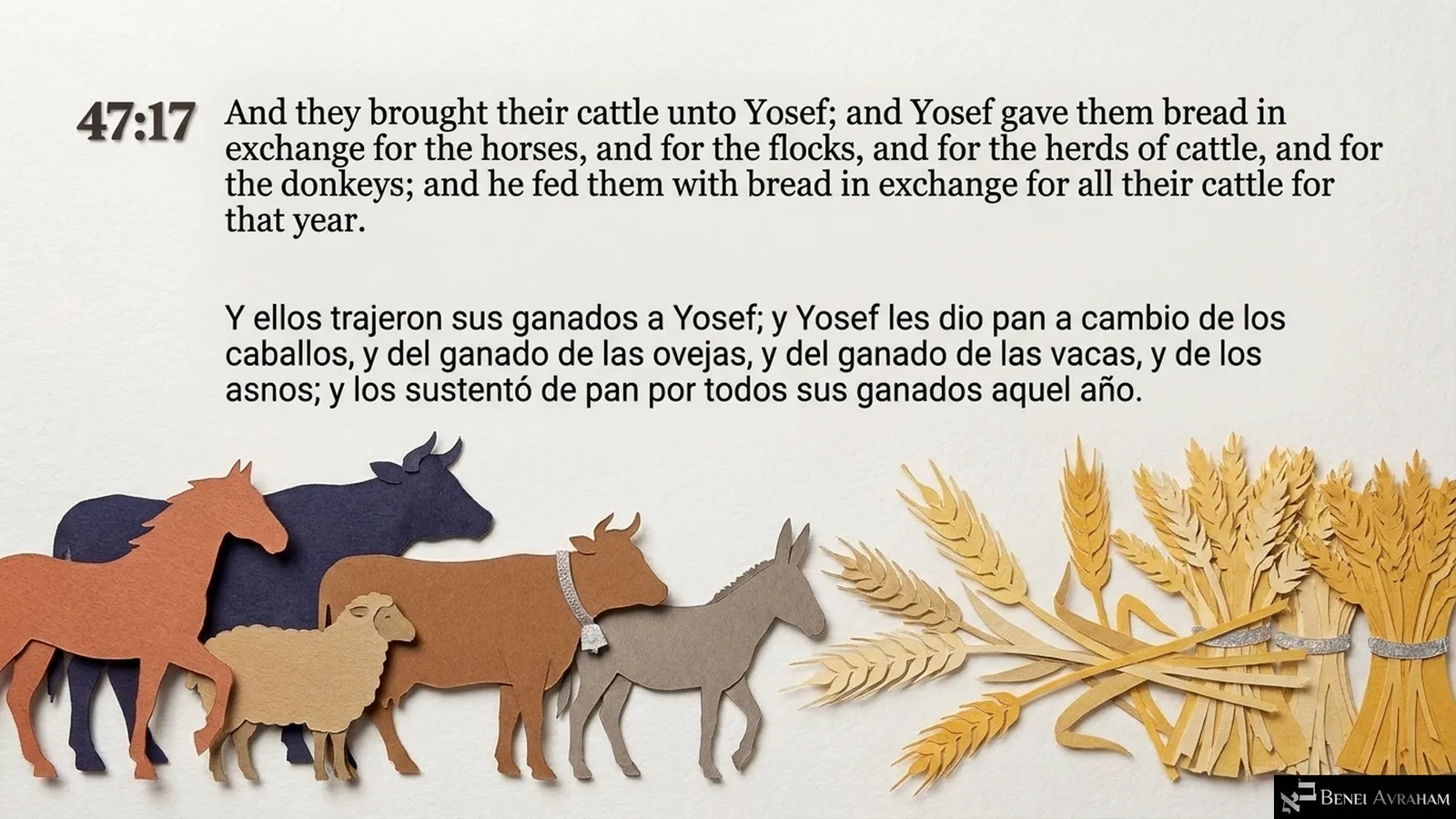
A paper procession of horse, cattle, sheep and donkey beside sheaves of wheat: bread in exchange for all their cattle for that year (Genesis 47:17).
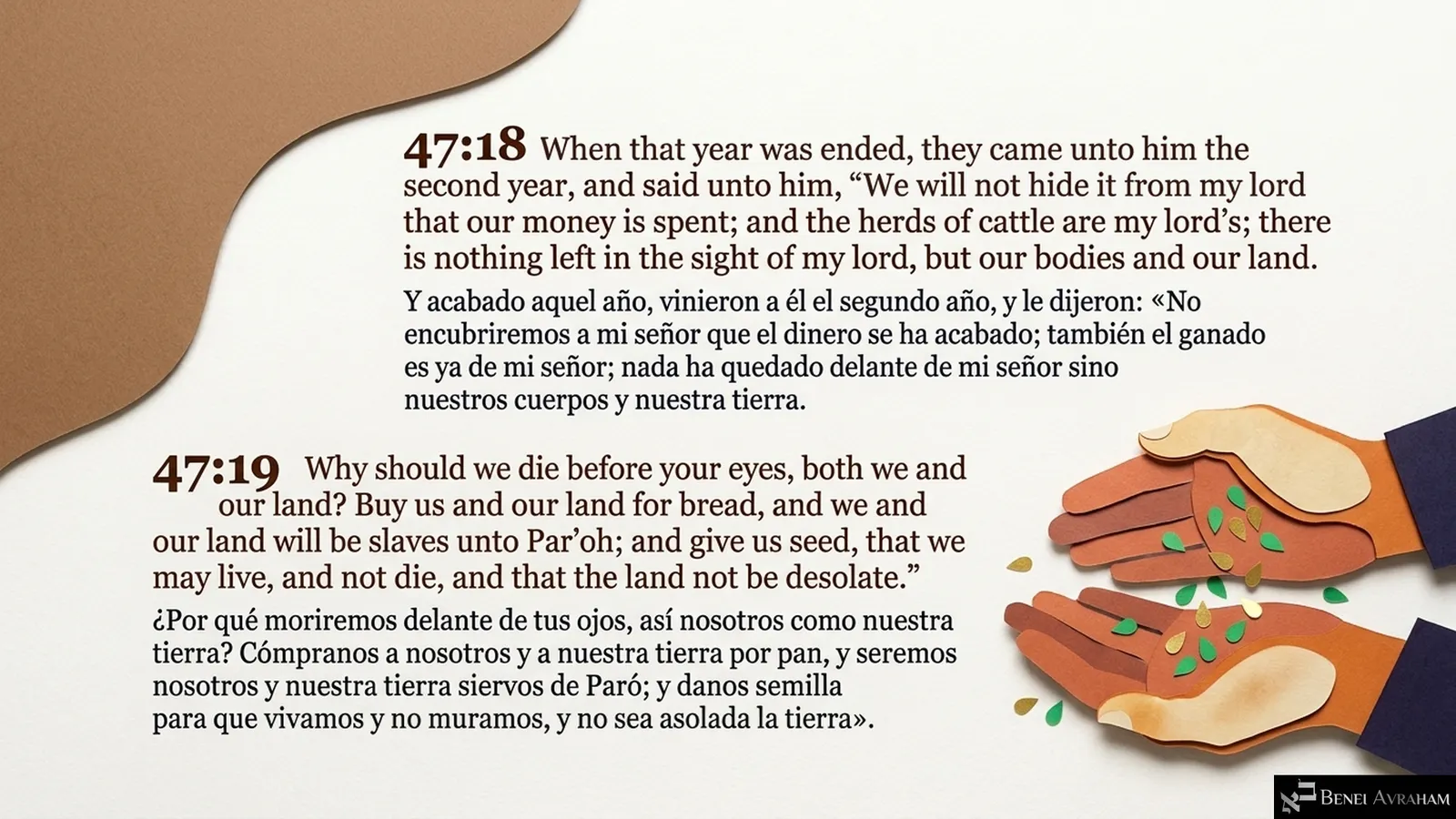
Paper hands hold seeds: “Buy us and our land for bread… and give us seed, that we may live, and not die” (Genesis 47:18–19).
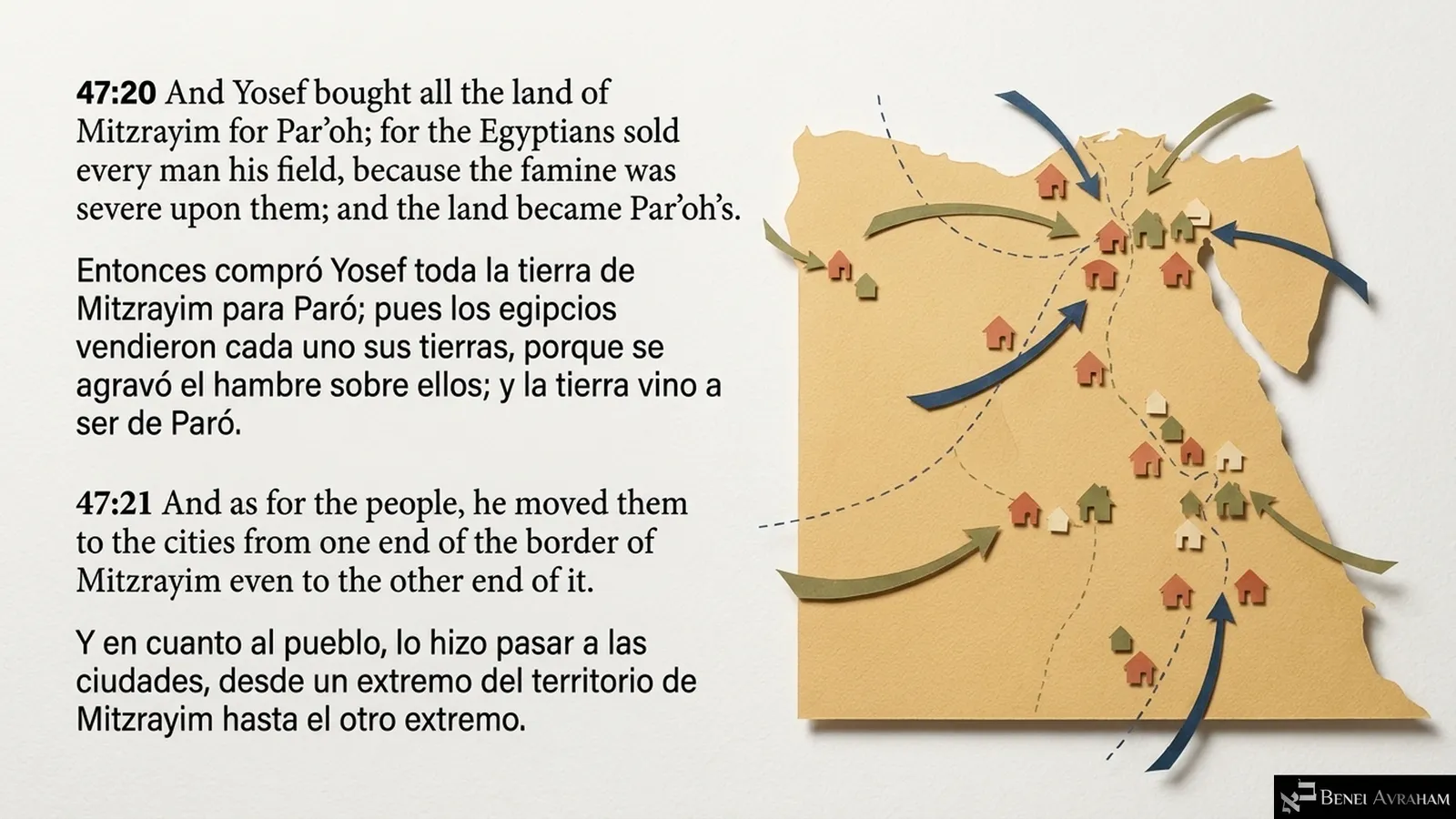
A paper map of Egypt with arrows toward the cities: the land became Par’oh’s, and the people moved to the cities (Genesis 47:20–21).
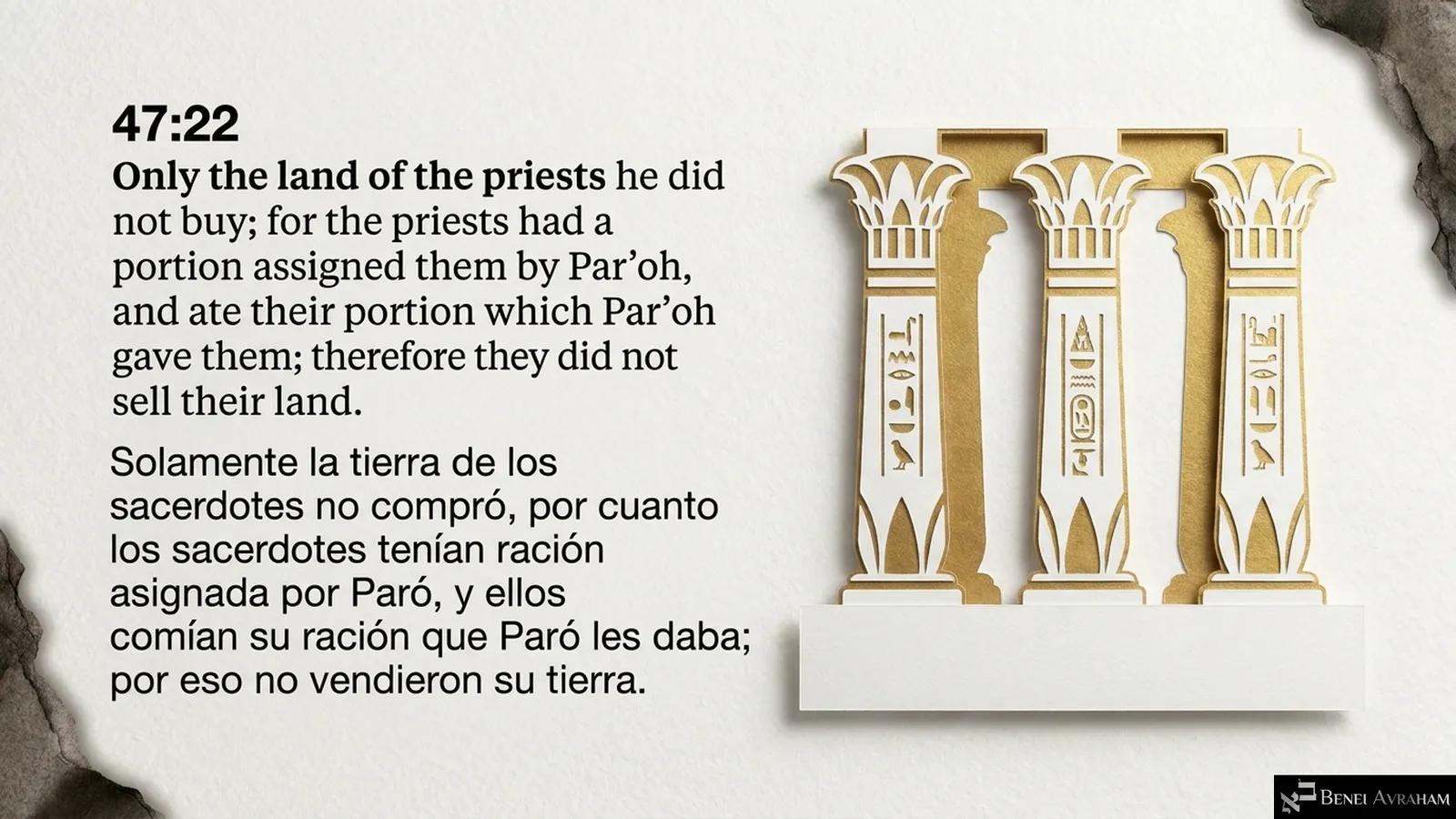
Golden paper temple columns: only the land of the priests he did not buy (Genesis 47:22).
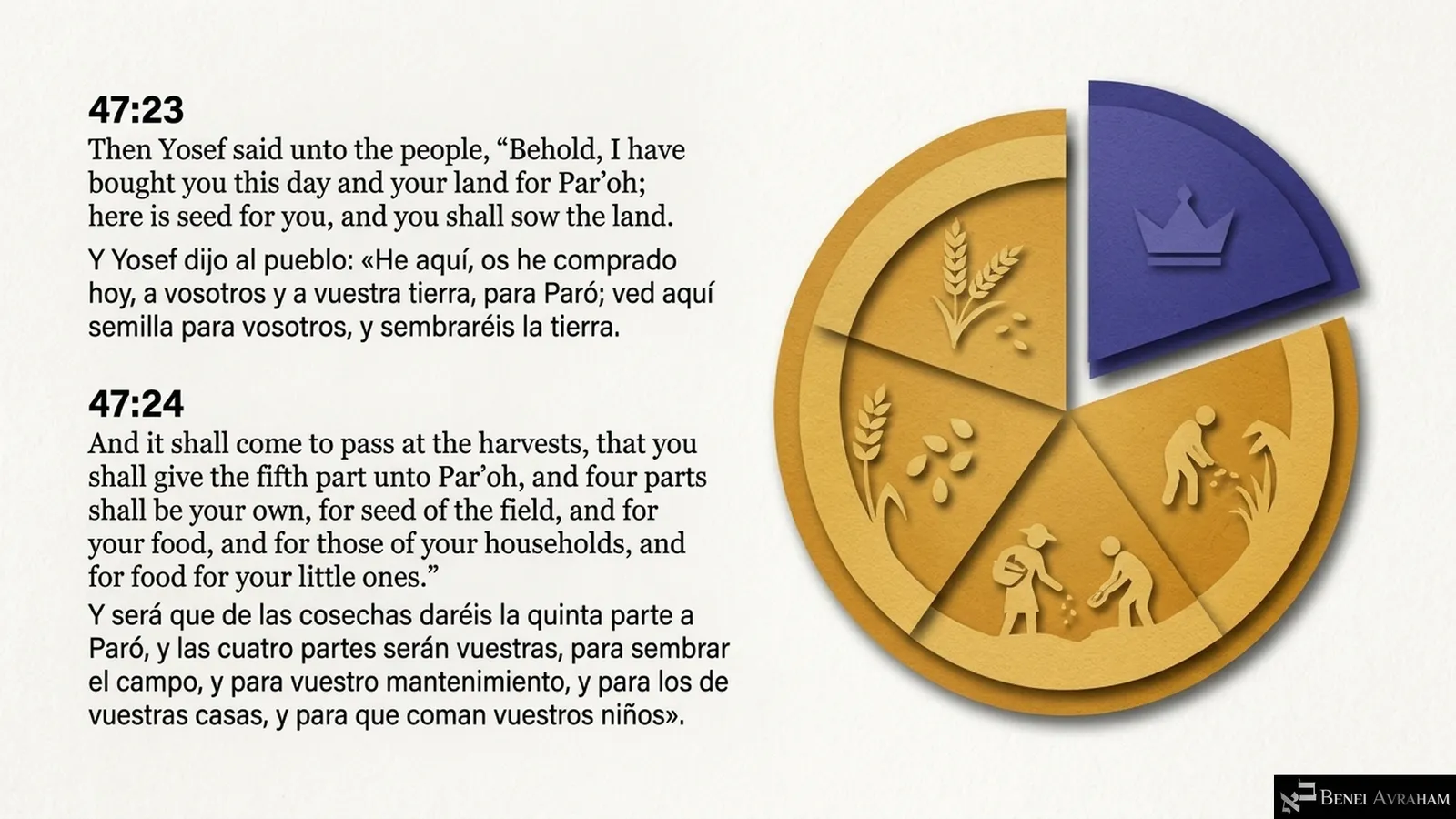
A paper pie of five slices, one marked with a crown: you shall give the fifth part unto Par’oh (Genesis 47:23–24).
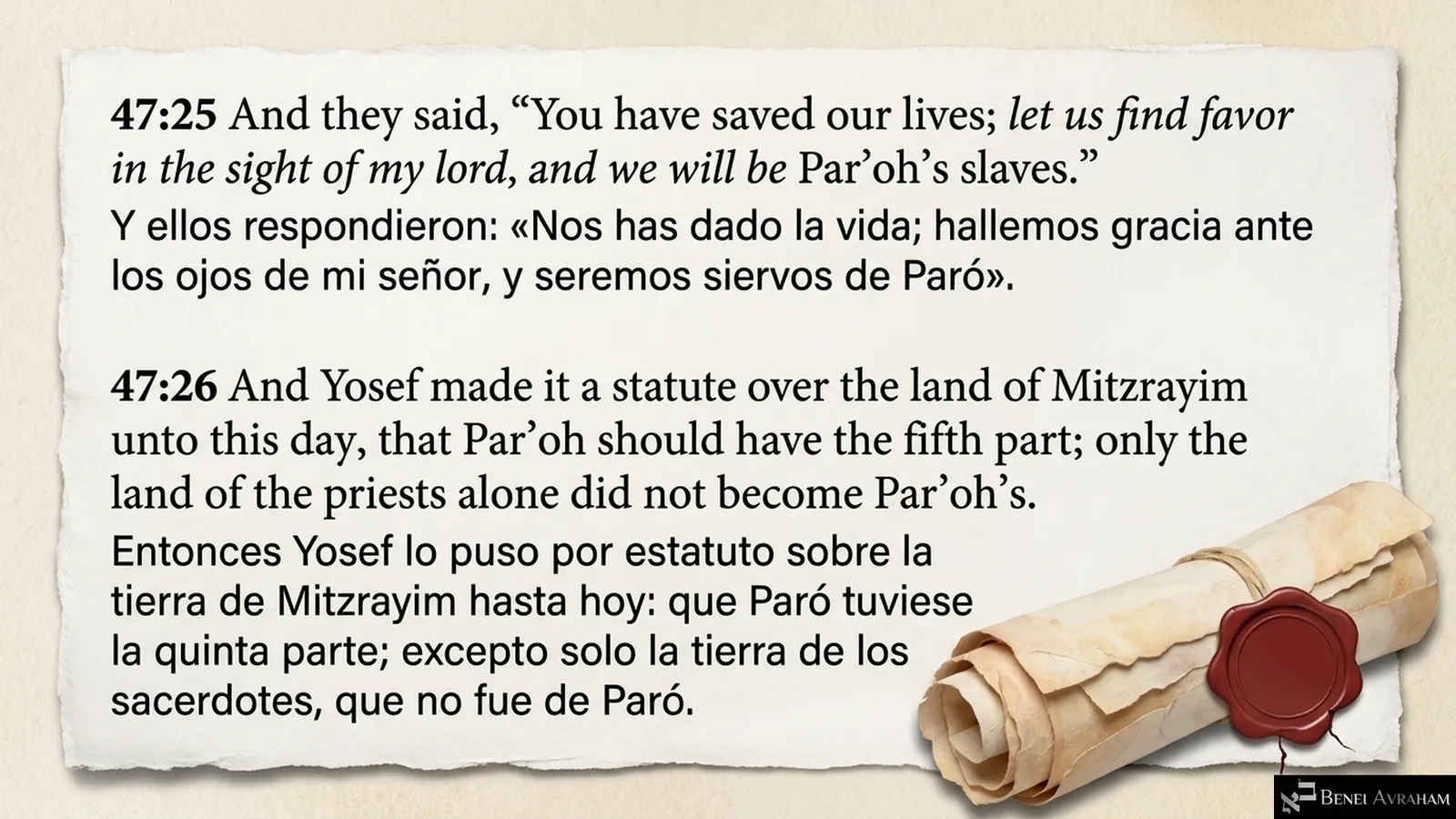
A sealed paper scroll: “You have saved our lives”; Yosef made it a statute that Par’oh should have the fifth part (Genesis 47:25–26).
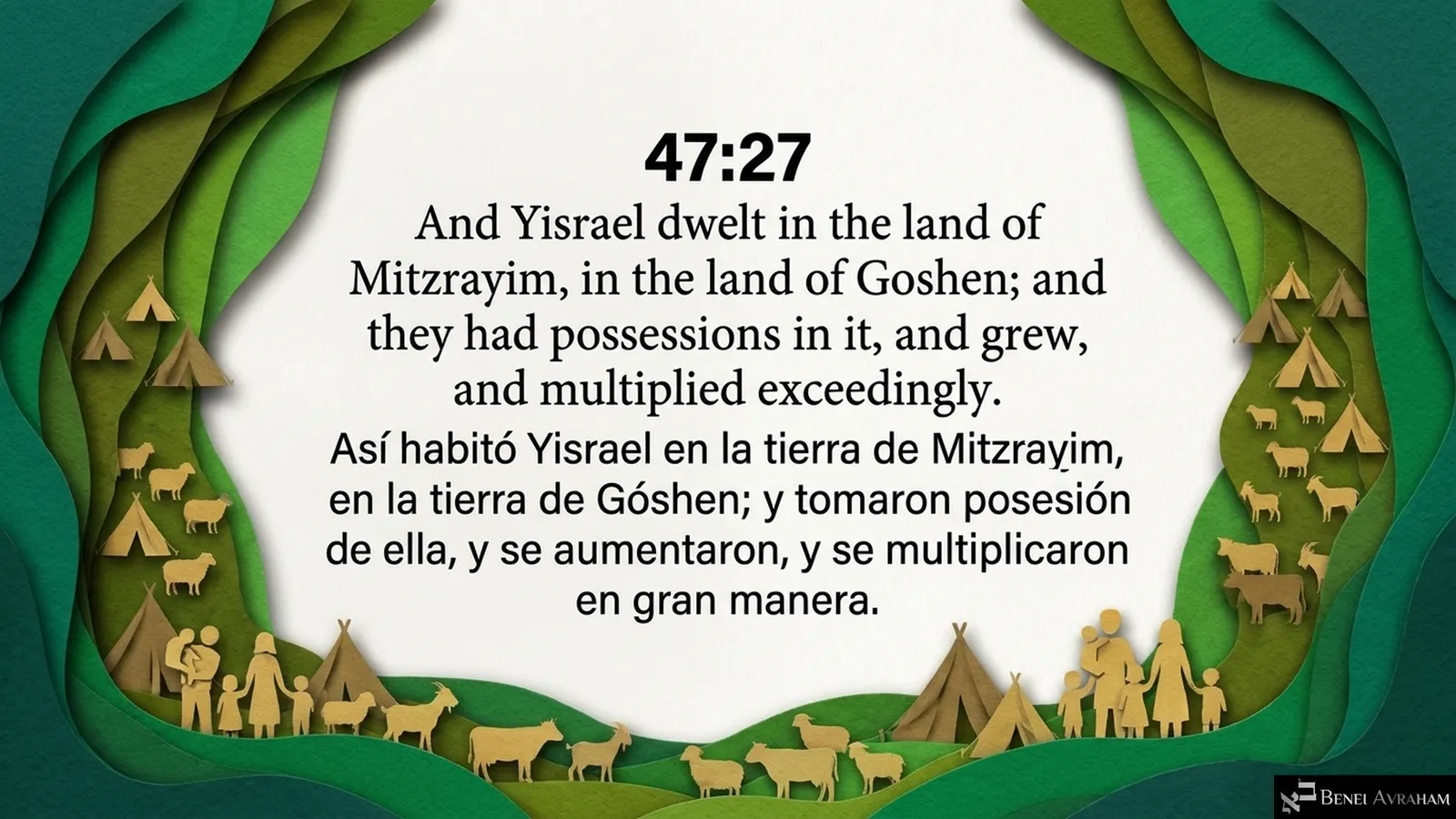
Green paper hills with tents, flocks and families: Yisrael dwelt in the land of Goshen, and grew, and multiplied exceedingly (Genesis 47:27).
Haftarah · Ezekiel 37:15–28

Haftarah: The Two Sticks Made One
Title card for the haftarah: a paper scroll framed by olive branches on deep blue, “Parashat Vayigash — Haftarah, Ezekiel 37:15–28”.
Rings of white and gold paper above a wax-sealed card: the word of Hashem came unto me (Ezekiel 37:15).
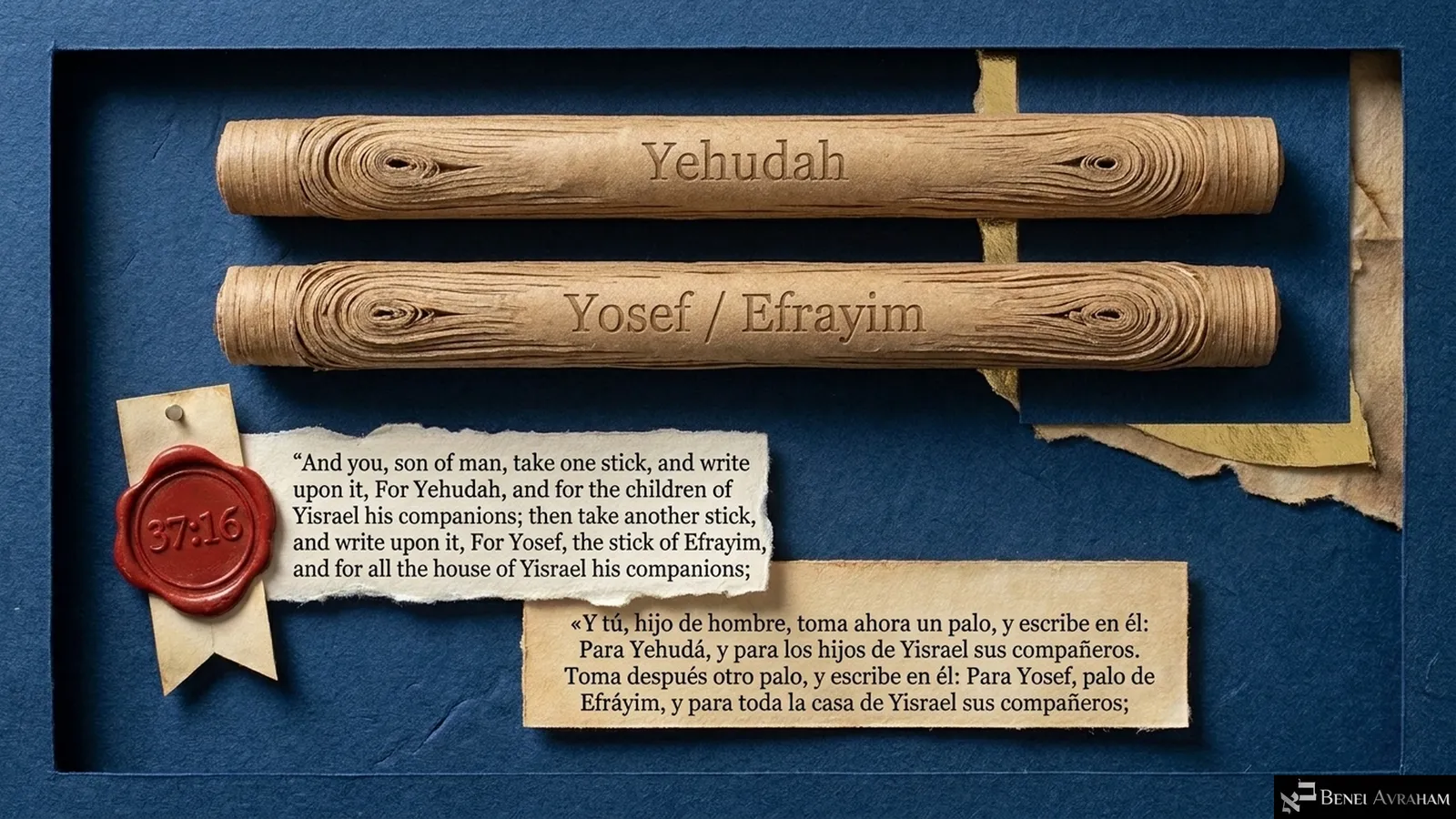
Two paper sticks carved “Yehudah” and “Yosef / Efrayim”: take one stick and write upon it, For Yehudah; then take another stick, For Yosef (Ezekiel 37:16).
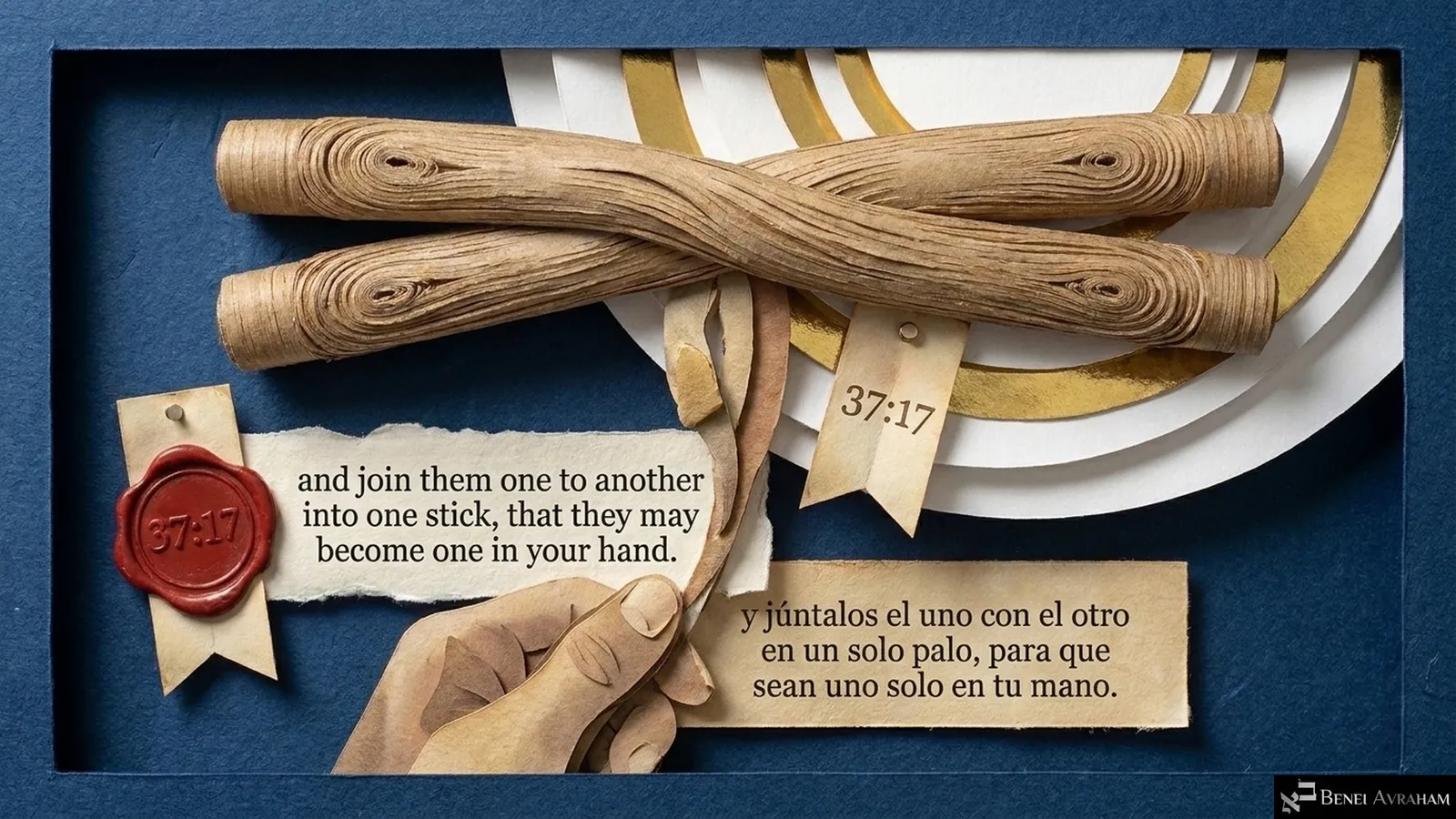
A paper hand twists the two sticks together: join them one to another into one stick, that they may become one in your hand (Ezekiel 37:17).
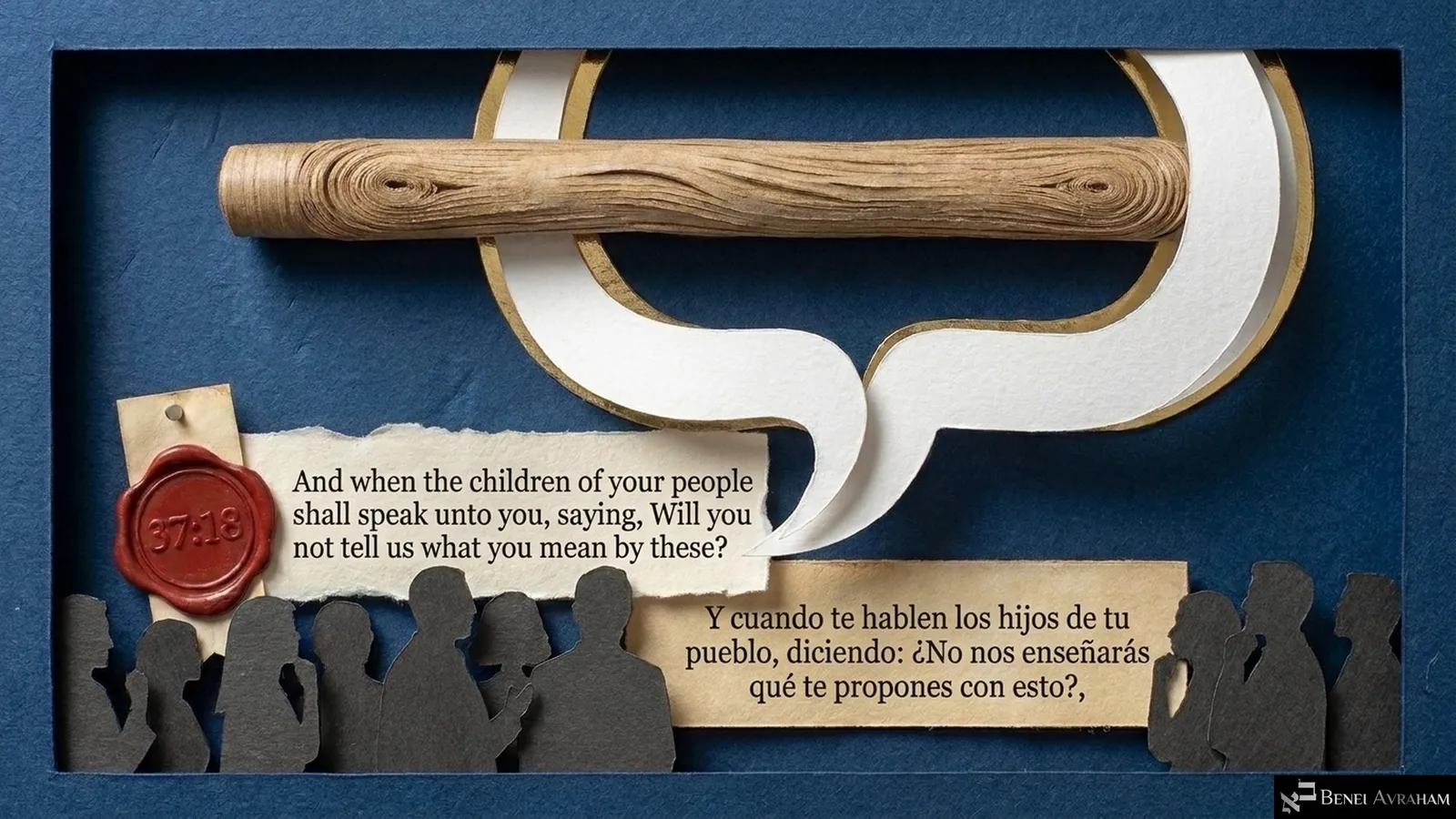
Paper silhouettes of the people beneath a speech bubble around a stick: “Will you not tell us what you mean by these?” (Ezekiel 37:18).
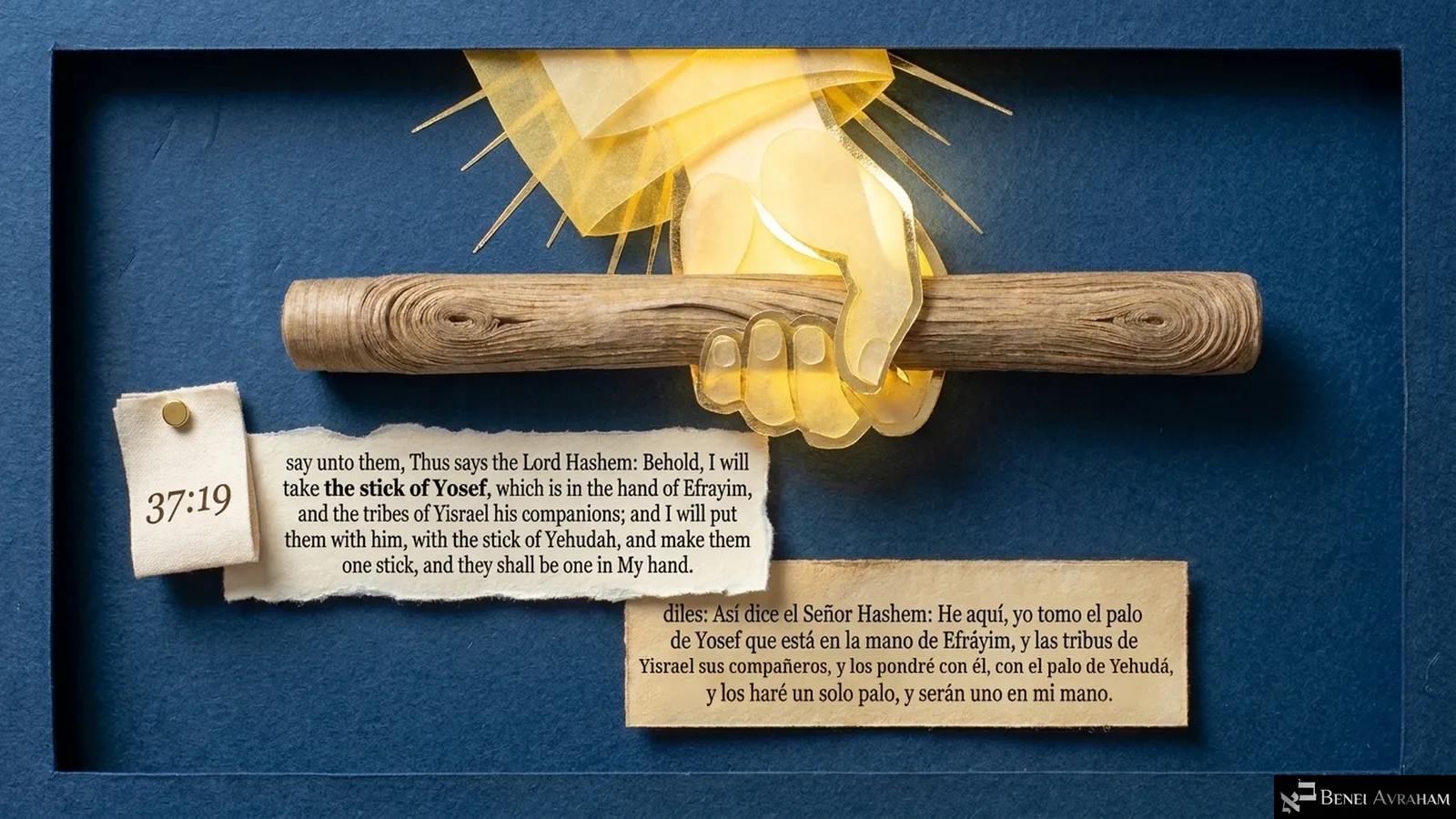
A glowing golden hand grasps the stick: I will take the stick of Yosef and put it with the stick of Yehudah, and they shall be one in My hand (Ezekiel 37:19).
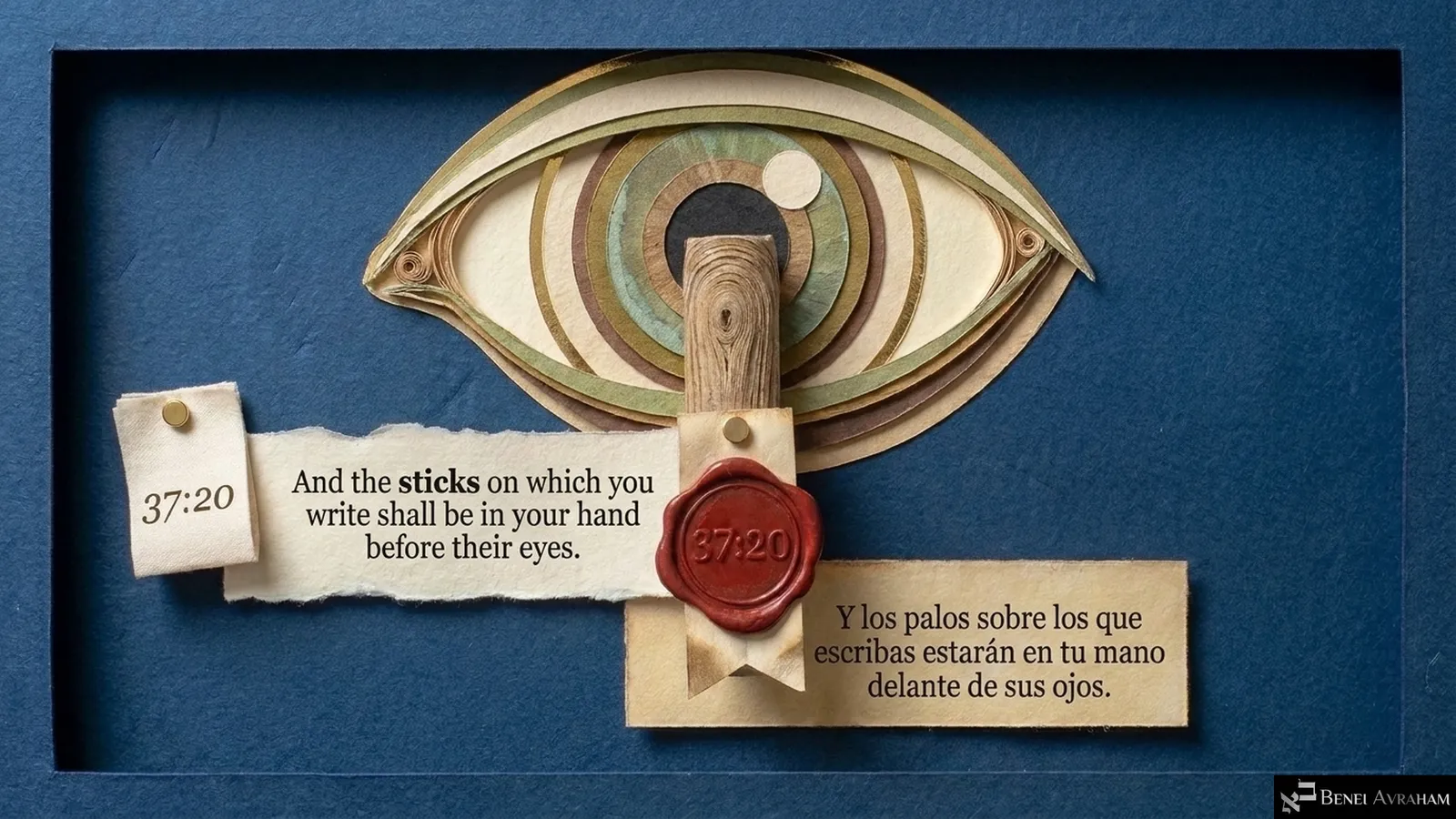
A great paper eye with a stick at its centre: the sticks on which you write shall be in your hand before their eyes (Ezekiel 37:20).
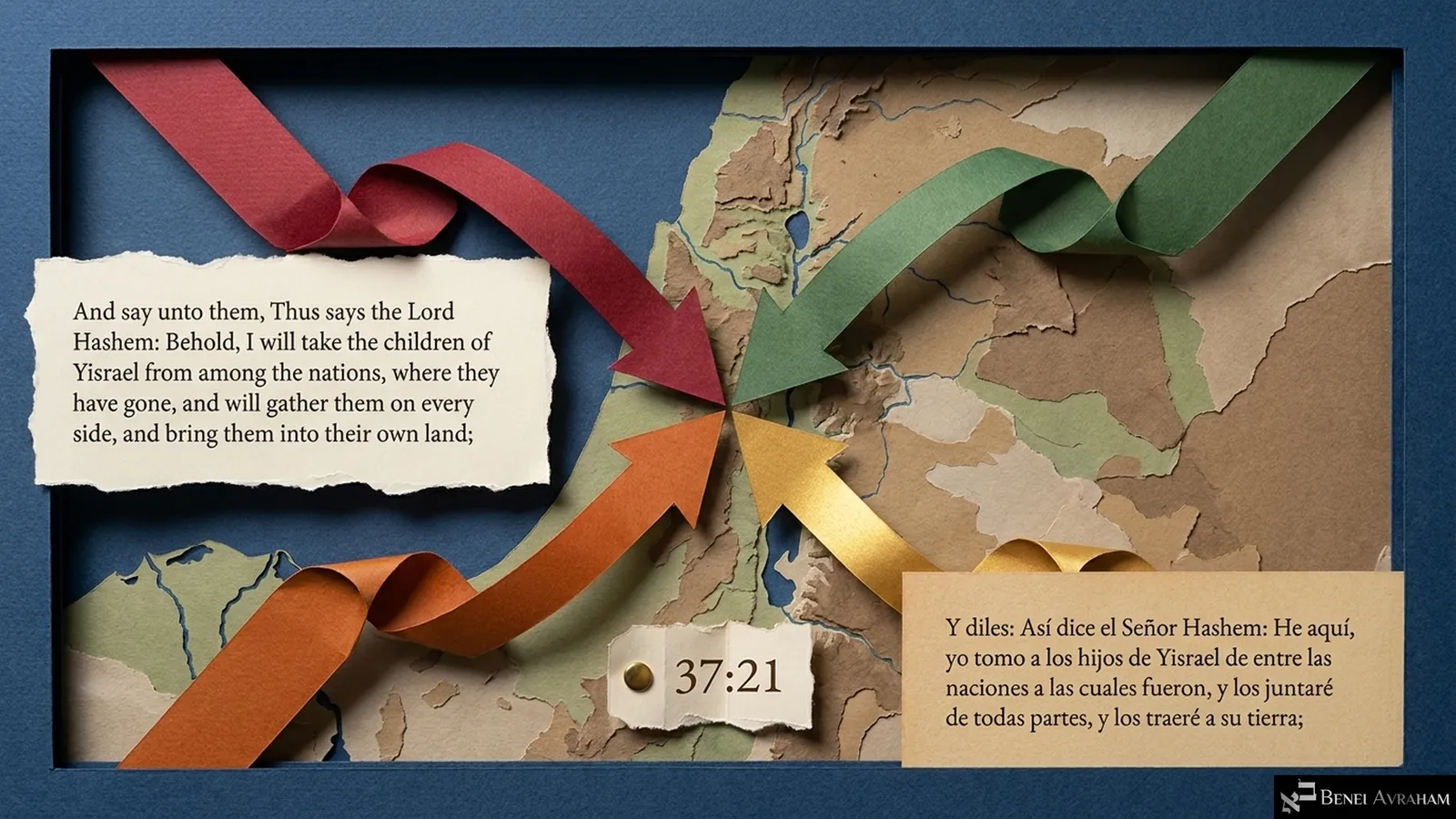
Paper ribbons from every direction meet over a map of the land: I will gather the children of Yisrael from among the nations and bring them into their own land (Ezekiel 37:21).
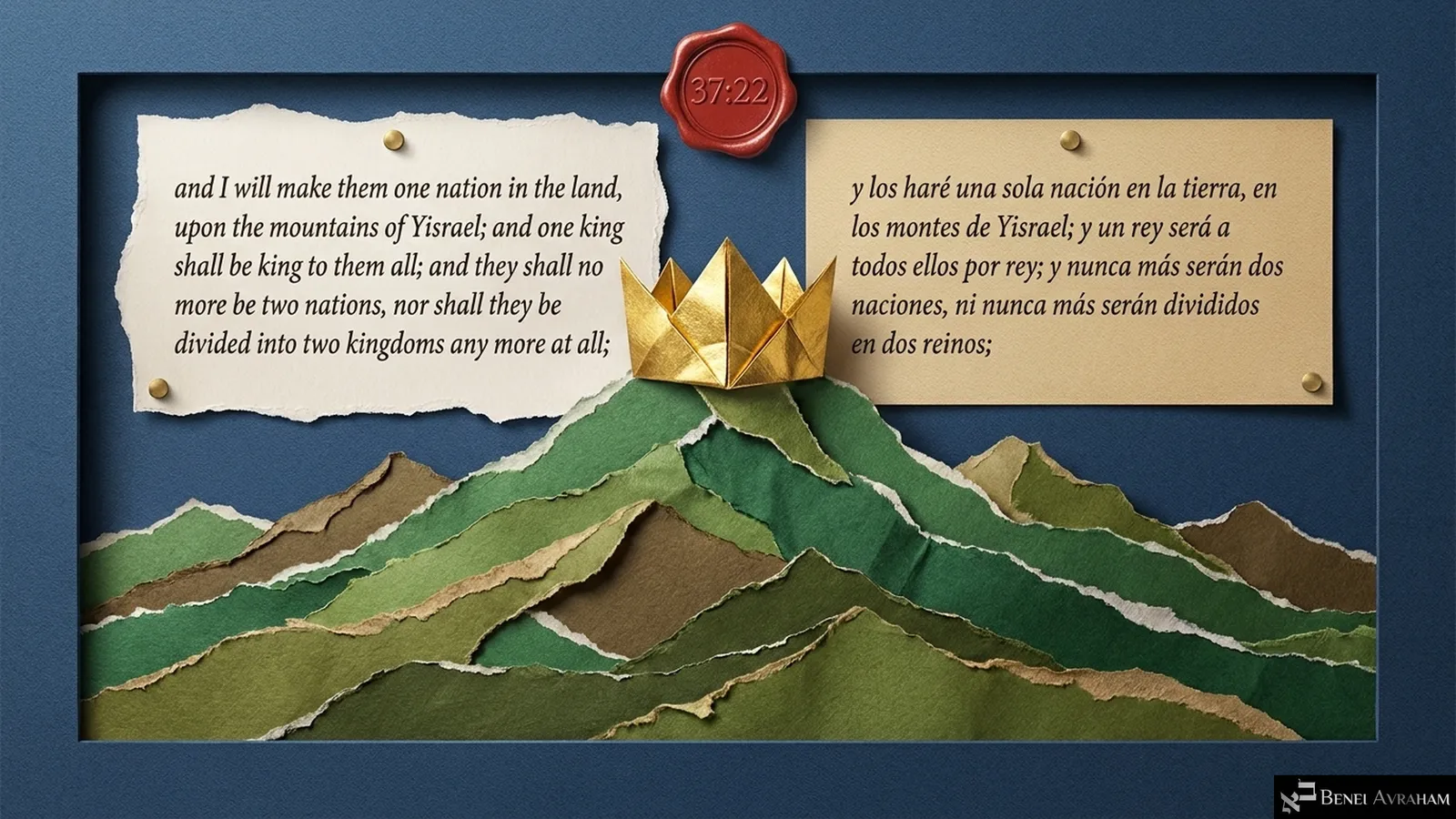
A golden paper crown on green layered mountains: one nation upon the mountains of Yisrael, and one king to them all (Ezekiel 37:22).
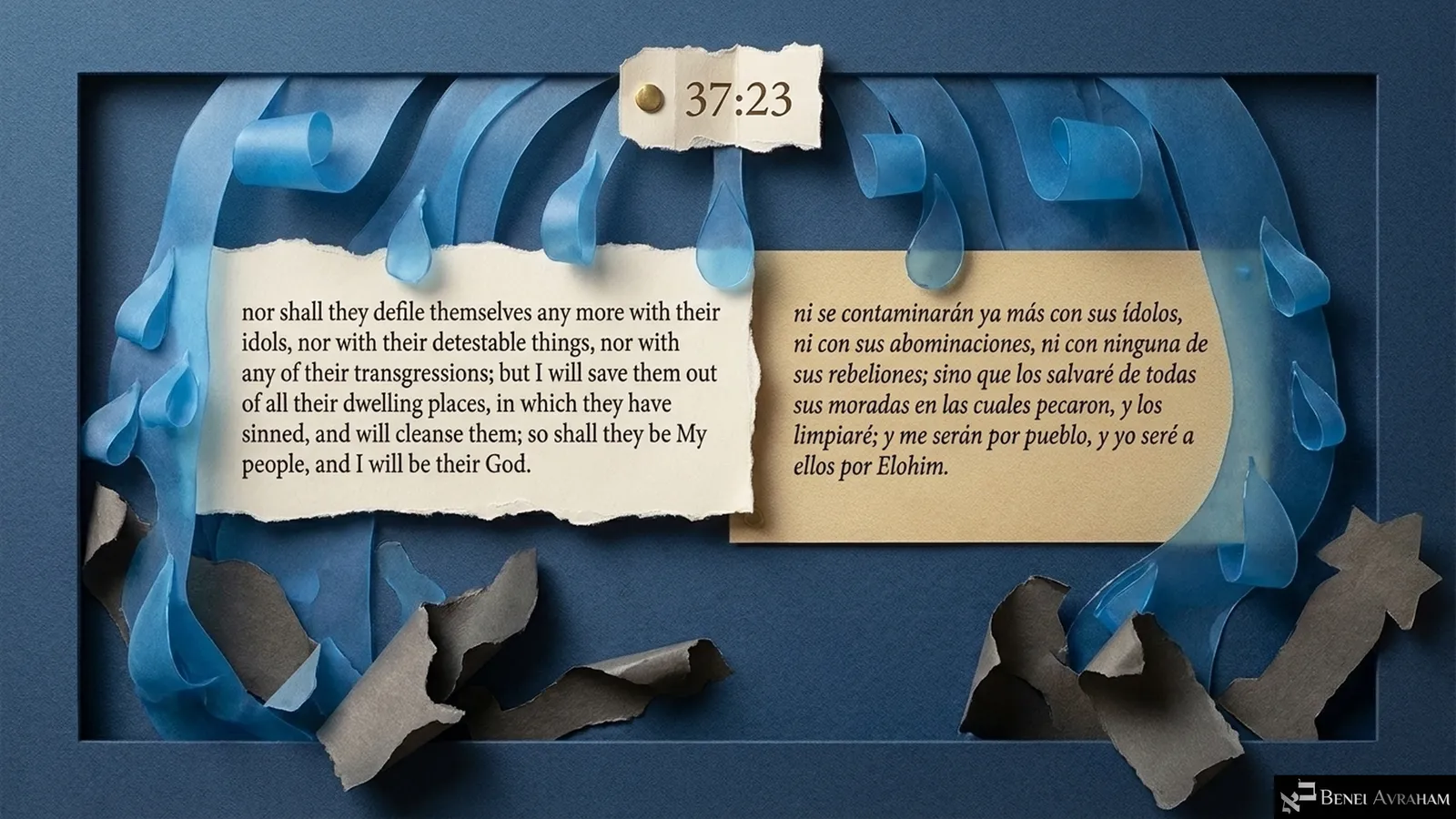
Blue paper ribbons and drops wash over broken grey shards: I will cleanse them; they shall be My people, and I will be their God (Ezekiel 37:23).
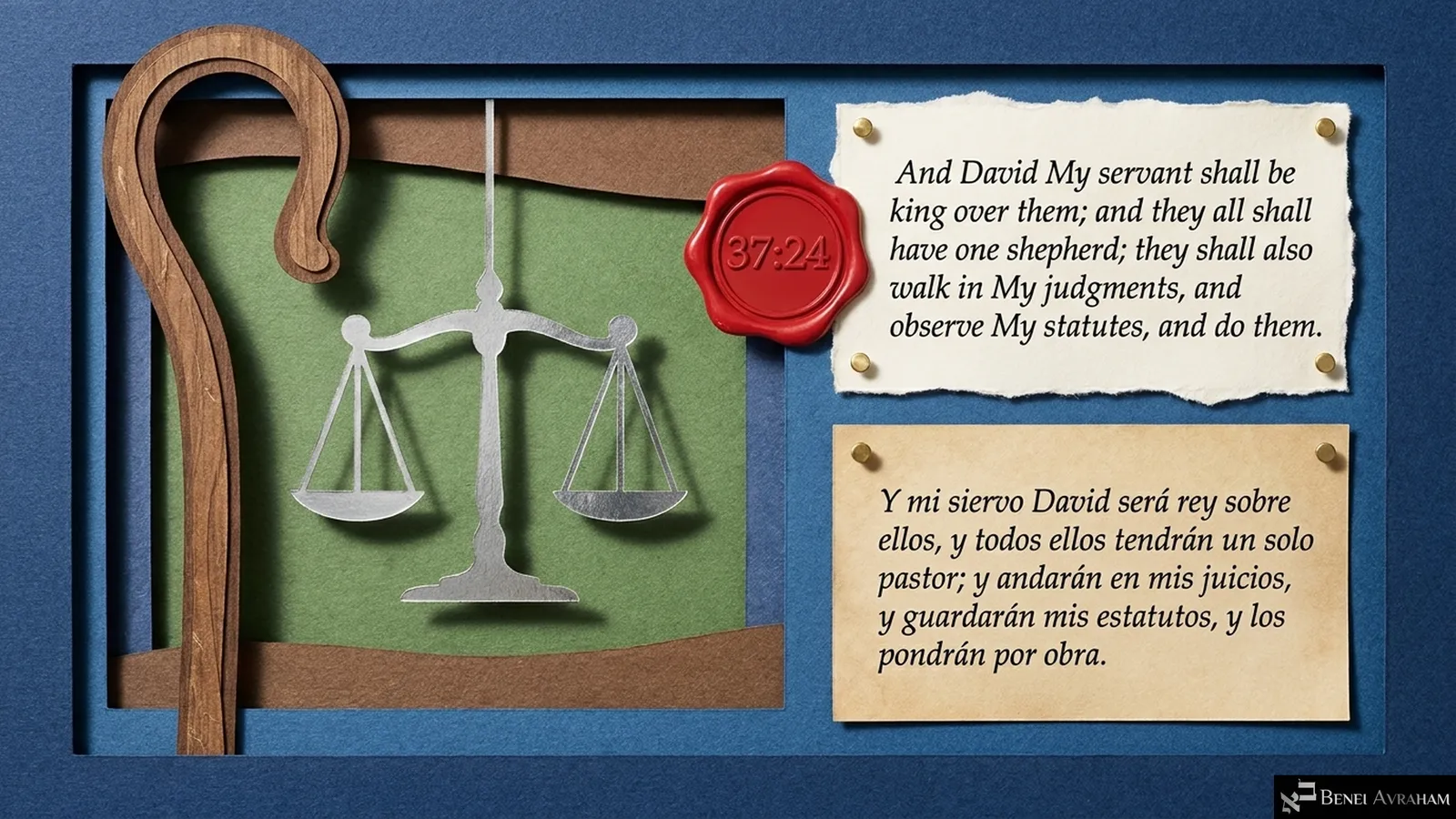
A shepherd’s crook and silver scales over green fields: David My servant shall be king over them, and they all shall have one shepherd (Ezekiel 37:24).
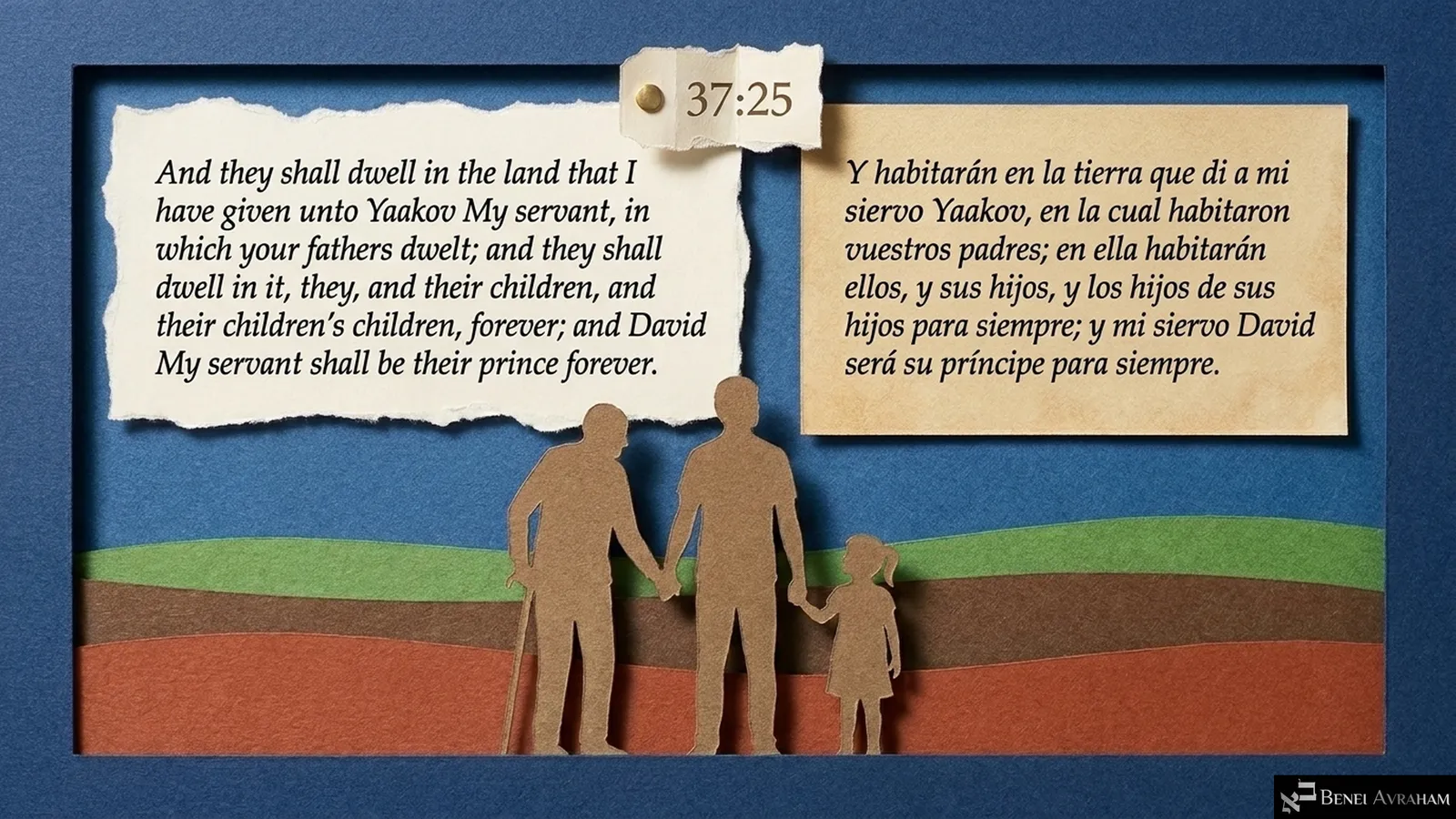
Paper figures of three generations hand in hand on striped hills: they shall dwell in the land, they and their children’s children, forever (Ezekiel 37:25).
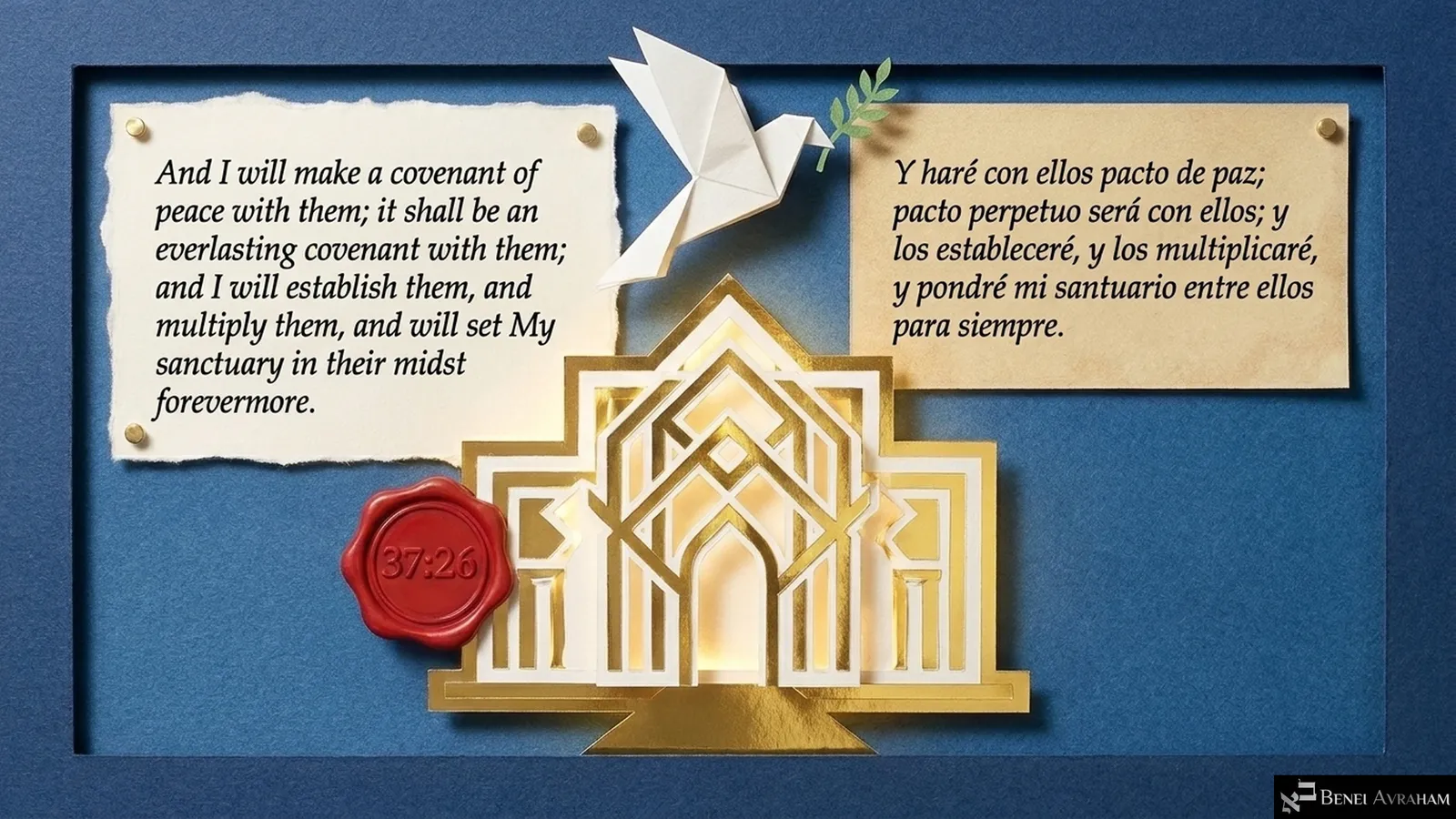
An origami dove with an olive branch above a golden paper sanctuary: a covenant of peace, an everlasting covenant (Ezekiel 37:26).
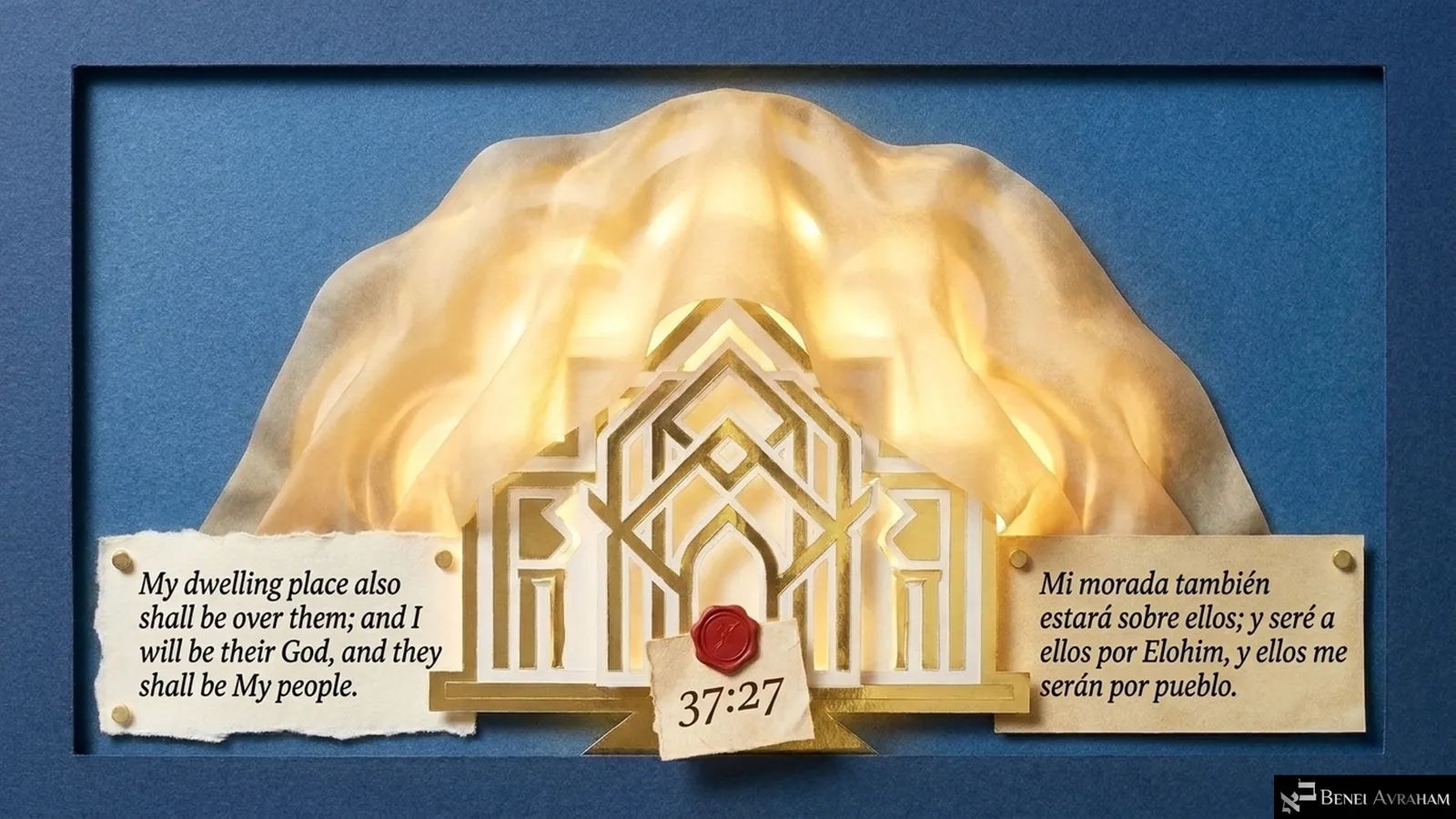
A glowing veil of paper spreads over the golden sanctuary: My dwelling place also shall be over them (Ezekiel 37:27).
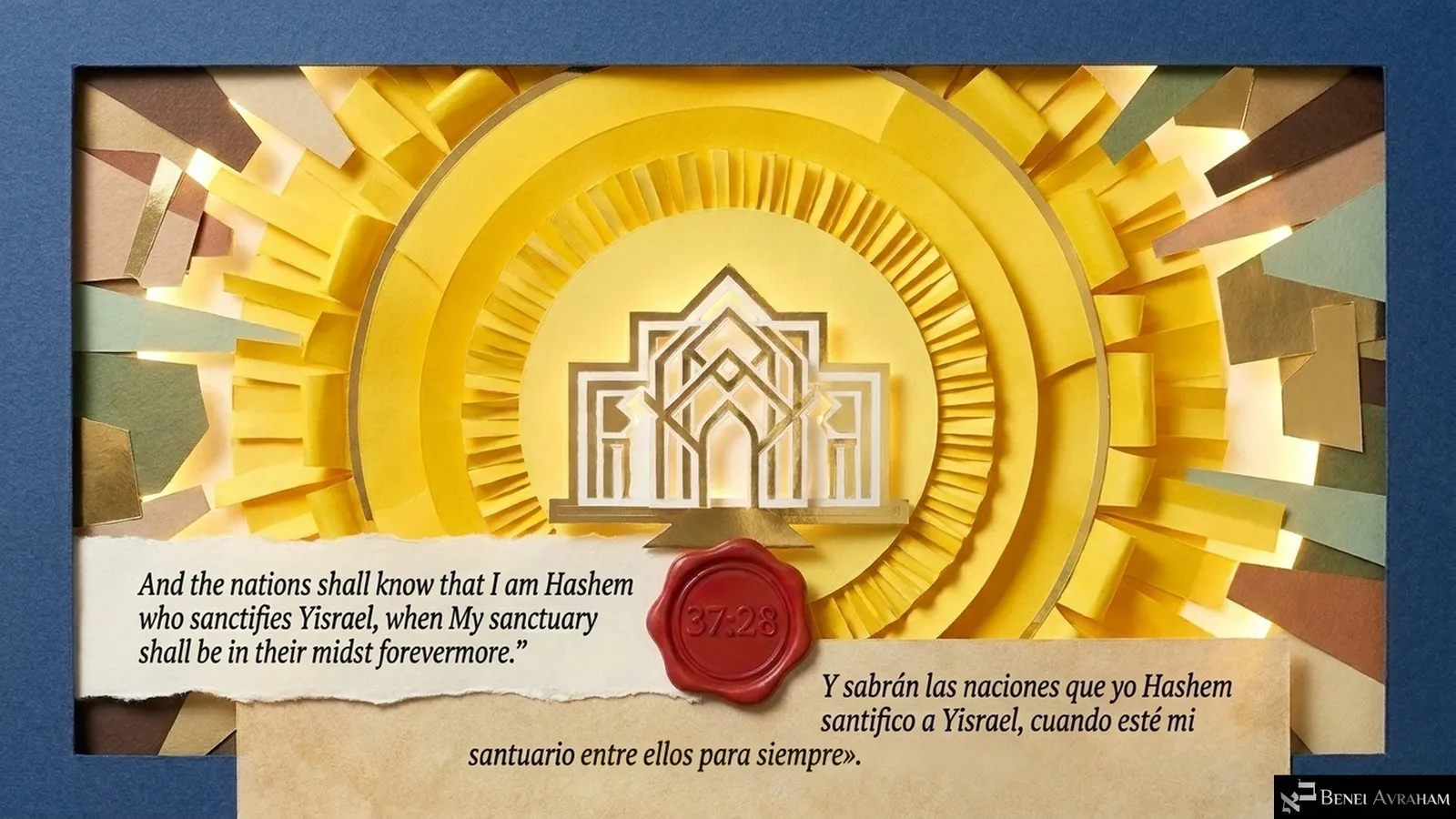
The golden sanctuary at the centre of a radiant paper sunburst: the nations shall know that I am Hashem who sanctifies Yisrael (Ezekiel 37:28).