SMS/Text 469-608-9944
Parashat Shemot · Exodus 1:1–6:1 · Haftarah Isaiah 27:6–28:13; 29:22–23

Shemot: A Visual Journey

Illustrated teaching slides from Benei Avraham, in English and Spanish, walking through Parashat Shemot portion by portion: the children of Yisrael multiply in Mitzrayim and a new king who did not know Yosef makes their lives bitter with hard bondage; the midwives Shifrah and Pu’ah fear God and save the male children alive; a daughter of Levi hides her son in an ark of bulrushes, and Par’oh’s daughter draws him out of the water and names him Moshe; Moshe strikes down an Egyptian, flees to Midyan, waters the flock of Yitro’s daughters and marries Tzipporah; at Ḥorev the angel of Hashem appears in a bush that burns and is not consumed, and Hashem reveals His Name, “I AM THAT I AM”, and sends Moshe to Par’oh with signs — the rod, the leprous hand and the water turned to blood — and Aharon as his spokesman; Par’oh answers, “Who is Hashem?” and takes away the straw, and Hashem promises, “Now you shall see what I will do to Par’oh.” The haftarah follows: Yaakov shall take root and Yisrael shall blossom and bud, a great shofar shall be blown, and the word comes precept upon precept, line upon line. Tap any image to open the slideshow; use the arrows (or swipe) to move through every slide.

Rishon · Exodus 1:1–17

First Portion

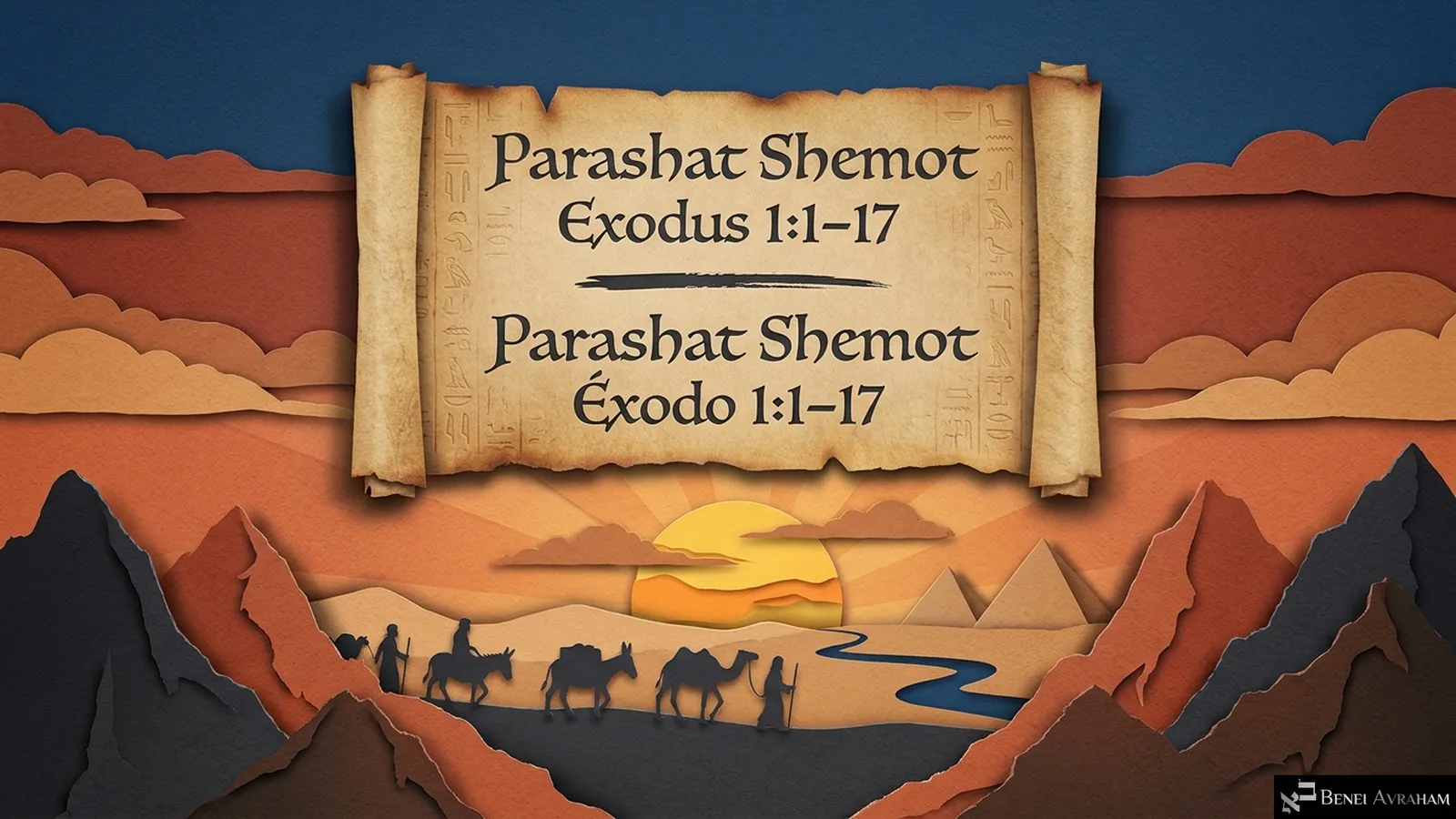
Title card for the first portion: a paper scroll above a caravan of camels at sunset among red mountains, “Parashat Shemot, Exodus 1:1–17”.
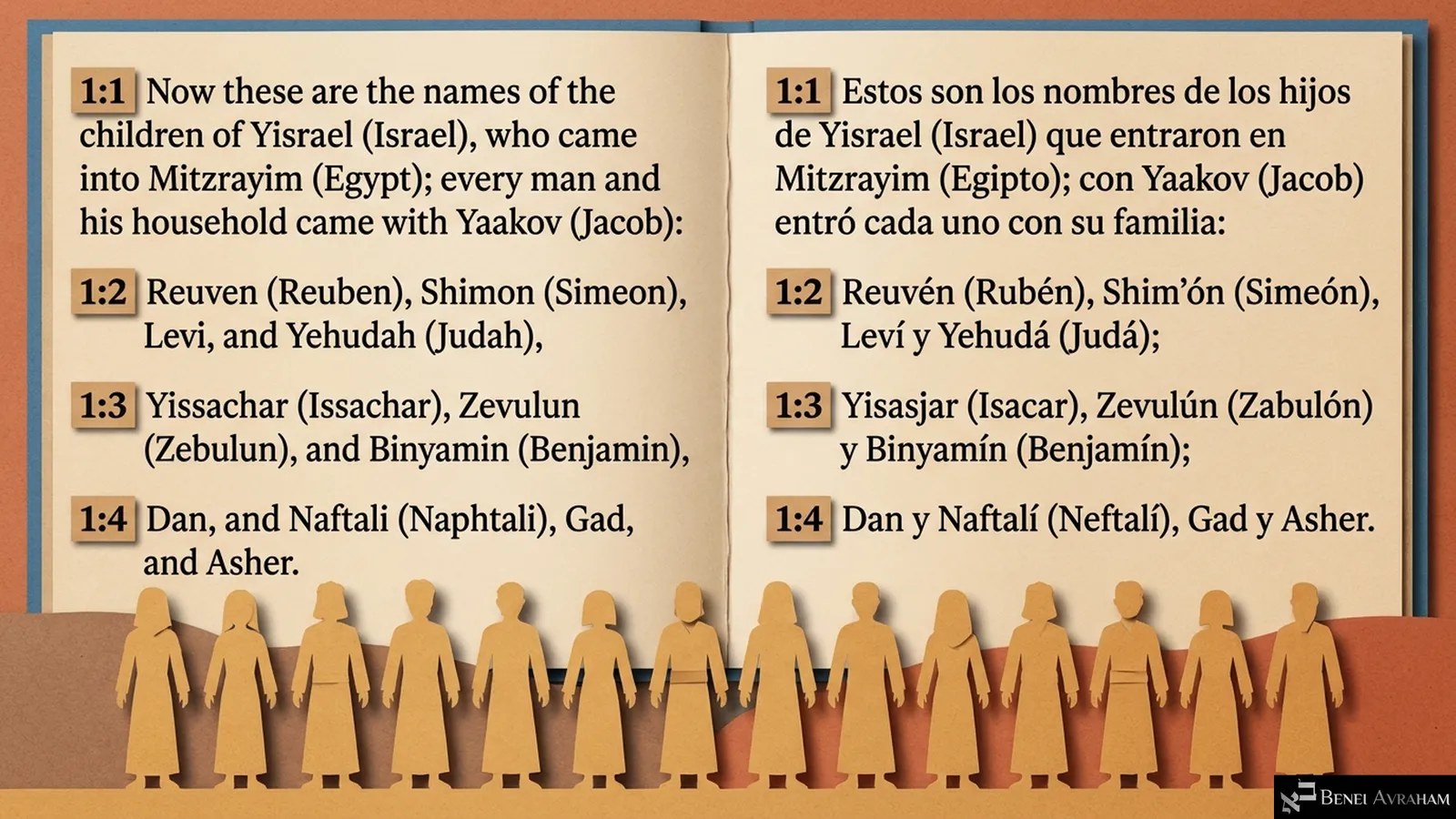
An open paper book above a row of paper figures: the names of the children of Yisrael who came into Mitzrayim with Yaakov (Exodus 1:1–4).
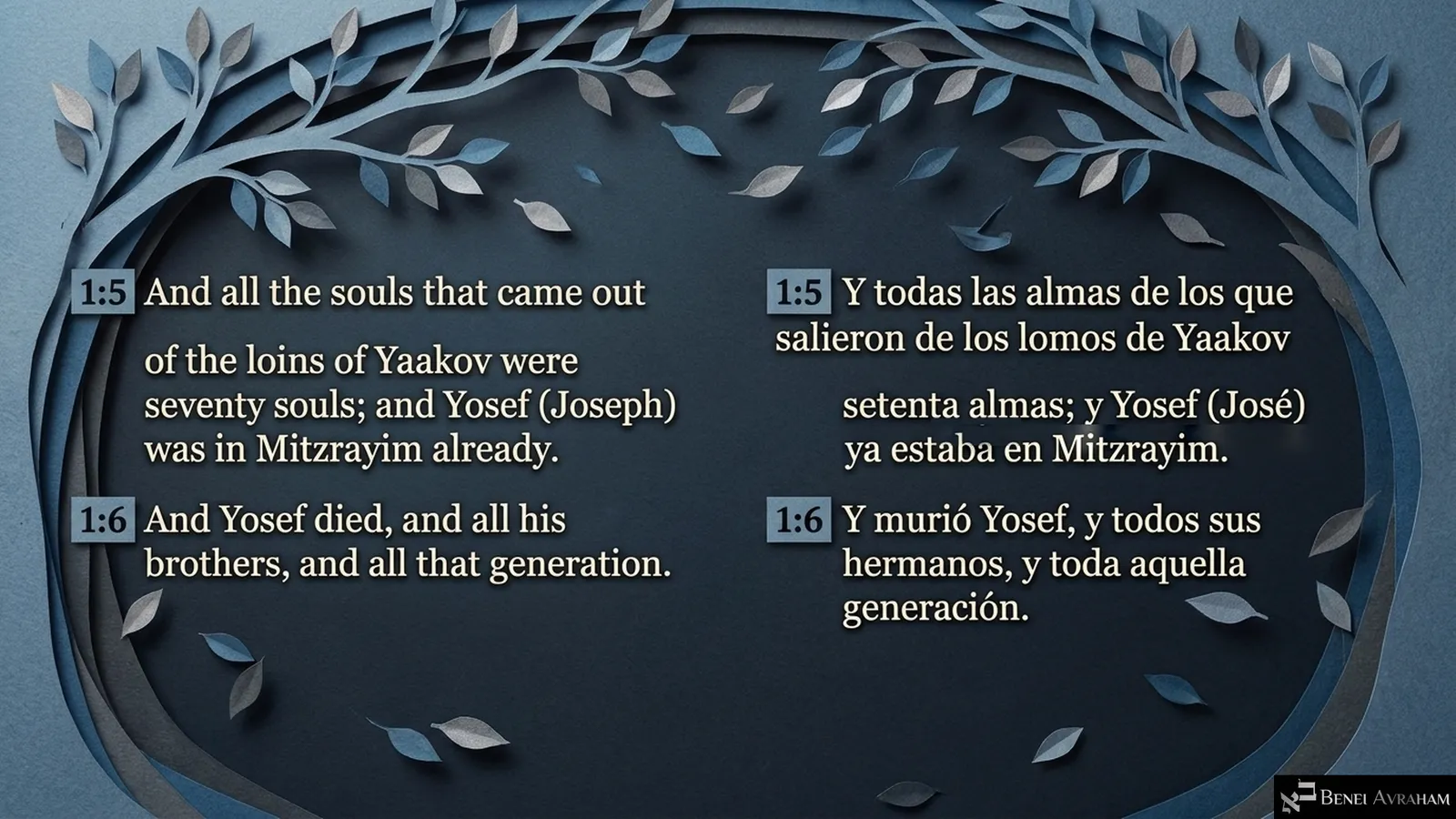
Paper leaves and branches frame a dark blue panel: seventy souls came out of the loins of Yaakov; Yosef died, and all that generation (Exodus 1:5–6).
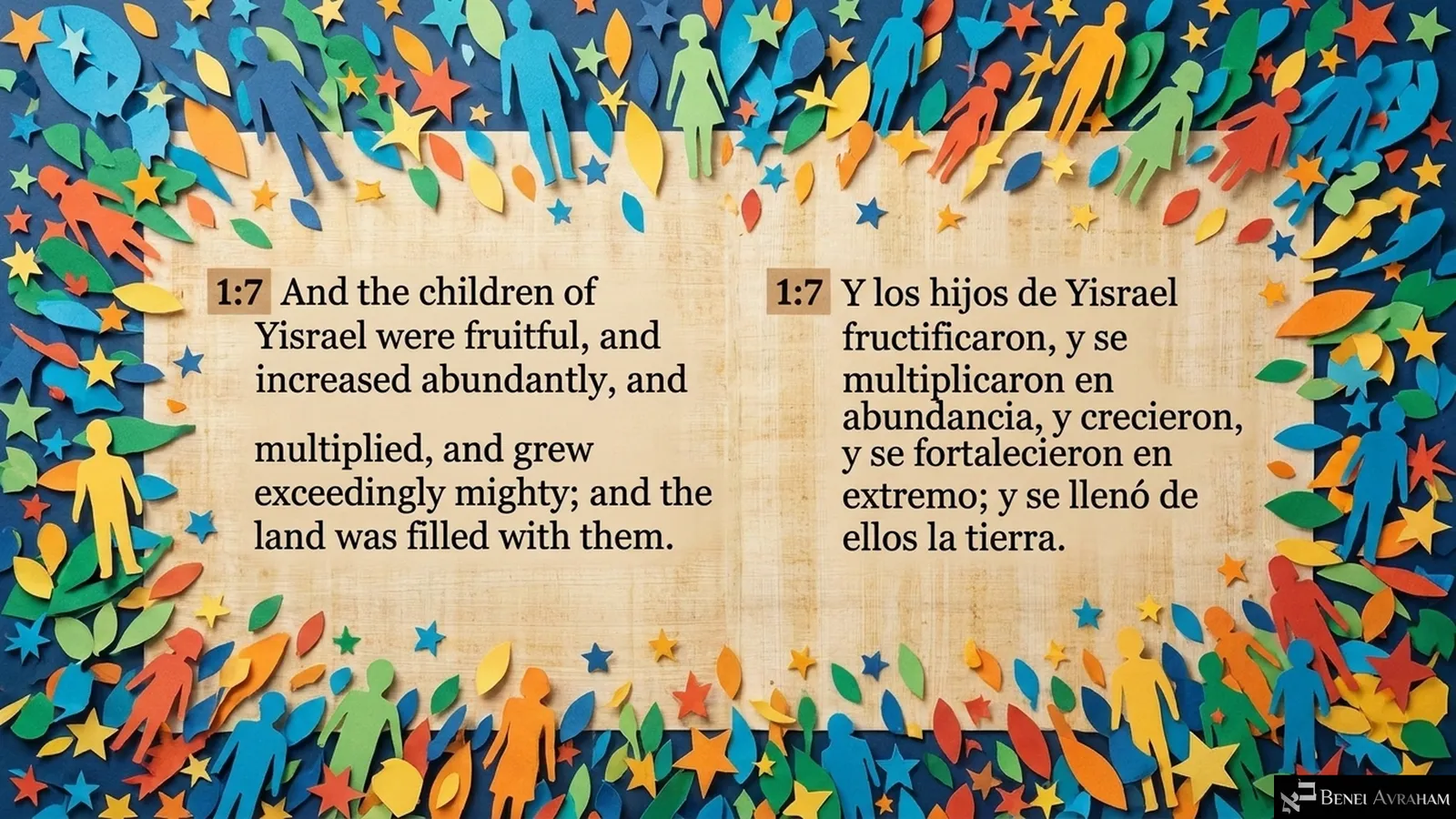
A bright border of paper people, stars and leaves: the children of Yisrael were fruitful and multiplied, and the land was filled with them (Exodus 1:7).
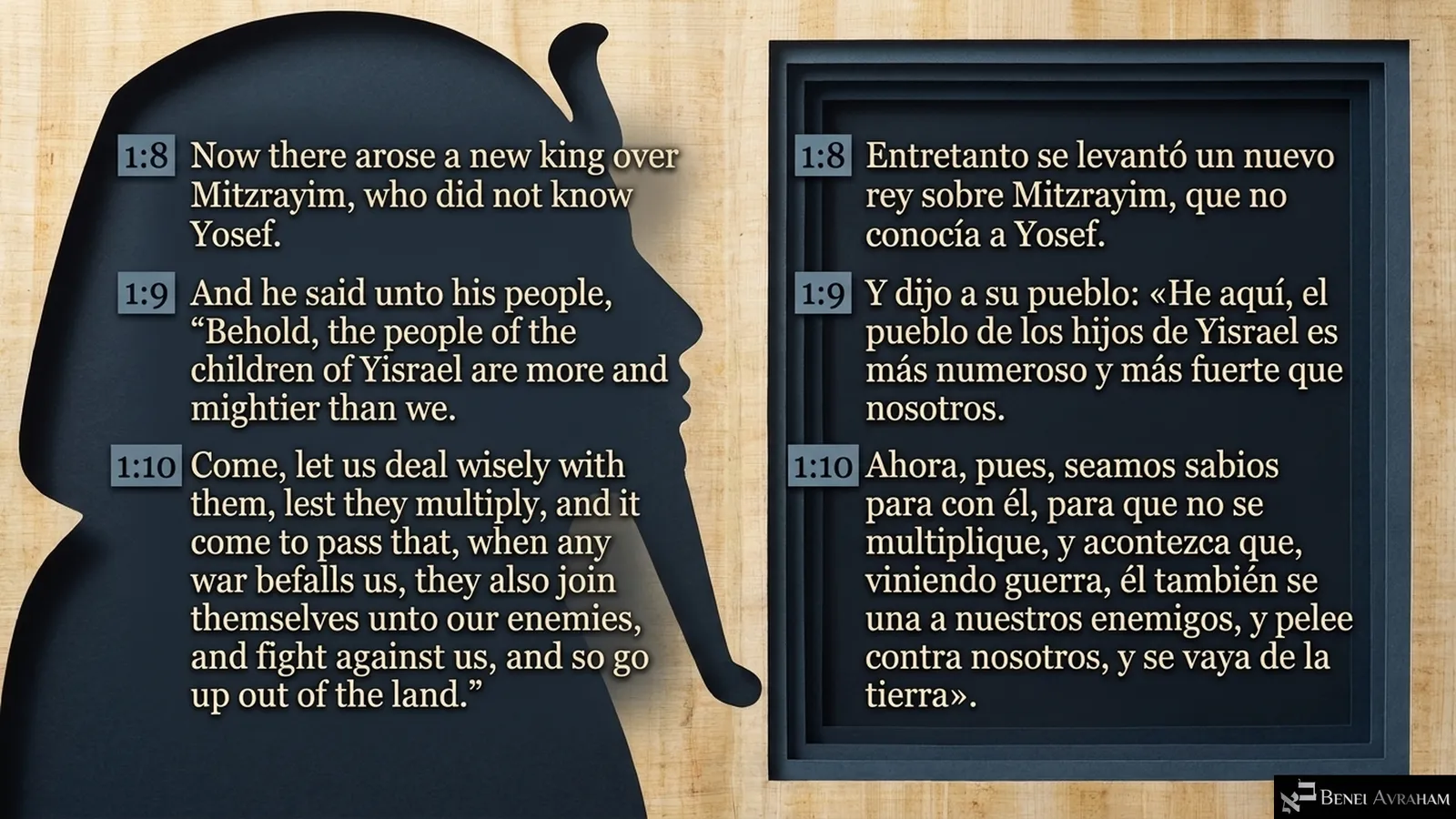
The paper silhouette of a pharaoh’s head: a new king arose who did not know Yosef; “Come, let us deal wisely with them” (Exodus 1:8–10).
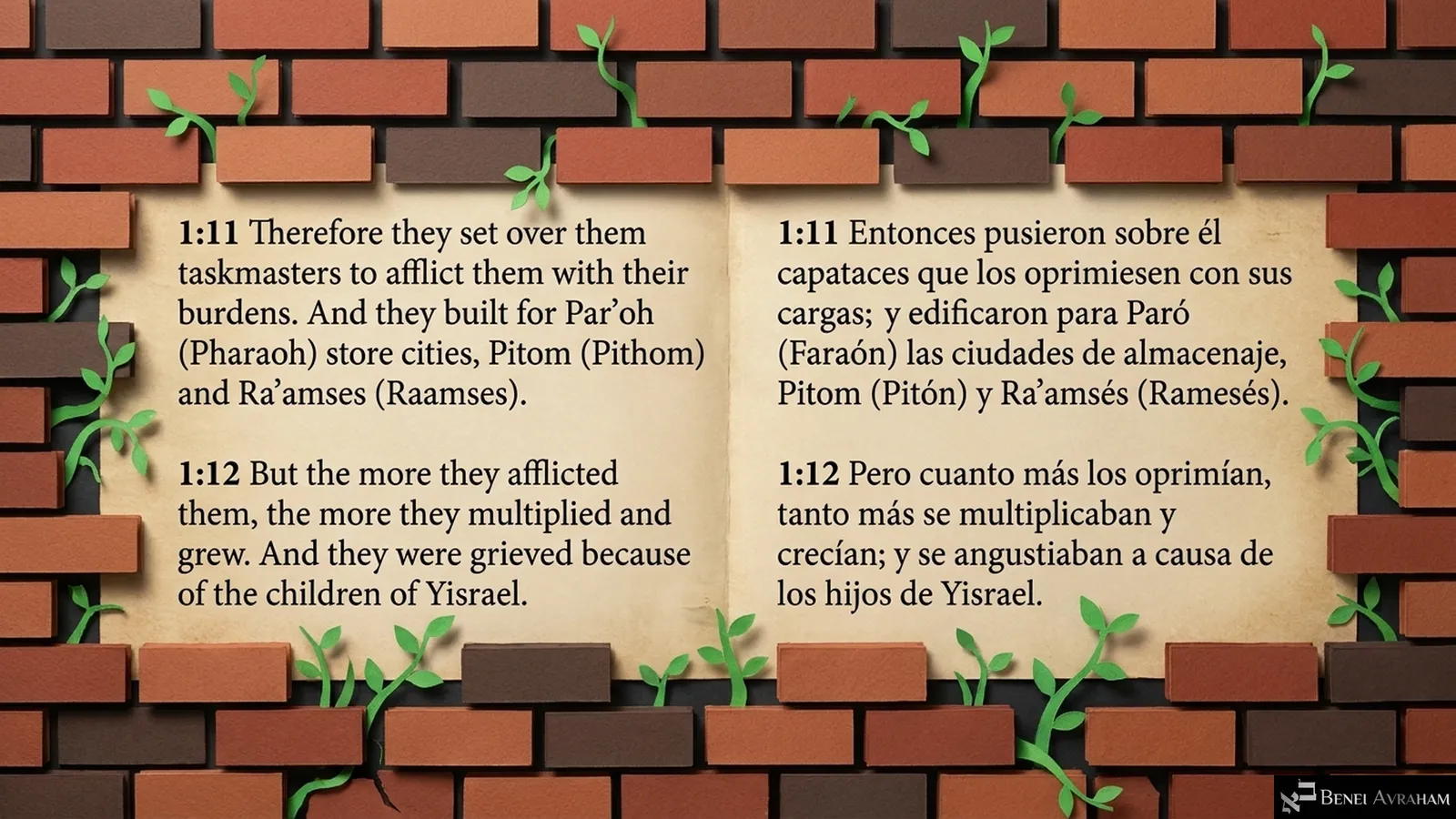
A paper brick wall with green shoots: taskmasters set over them; they built Pitom and Ra’amses, but the more they were afflicted, the more they grew (Exodus 1:11–12).
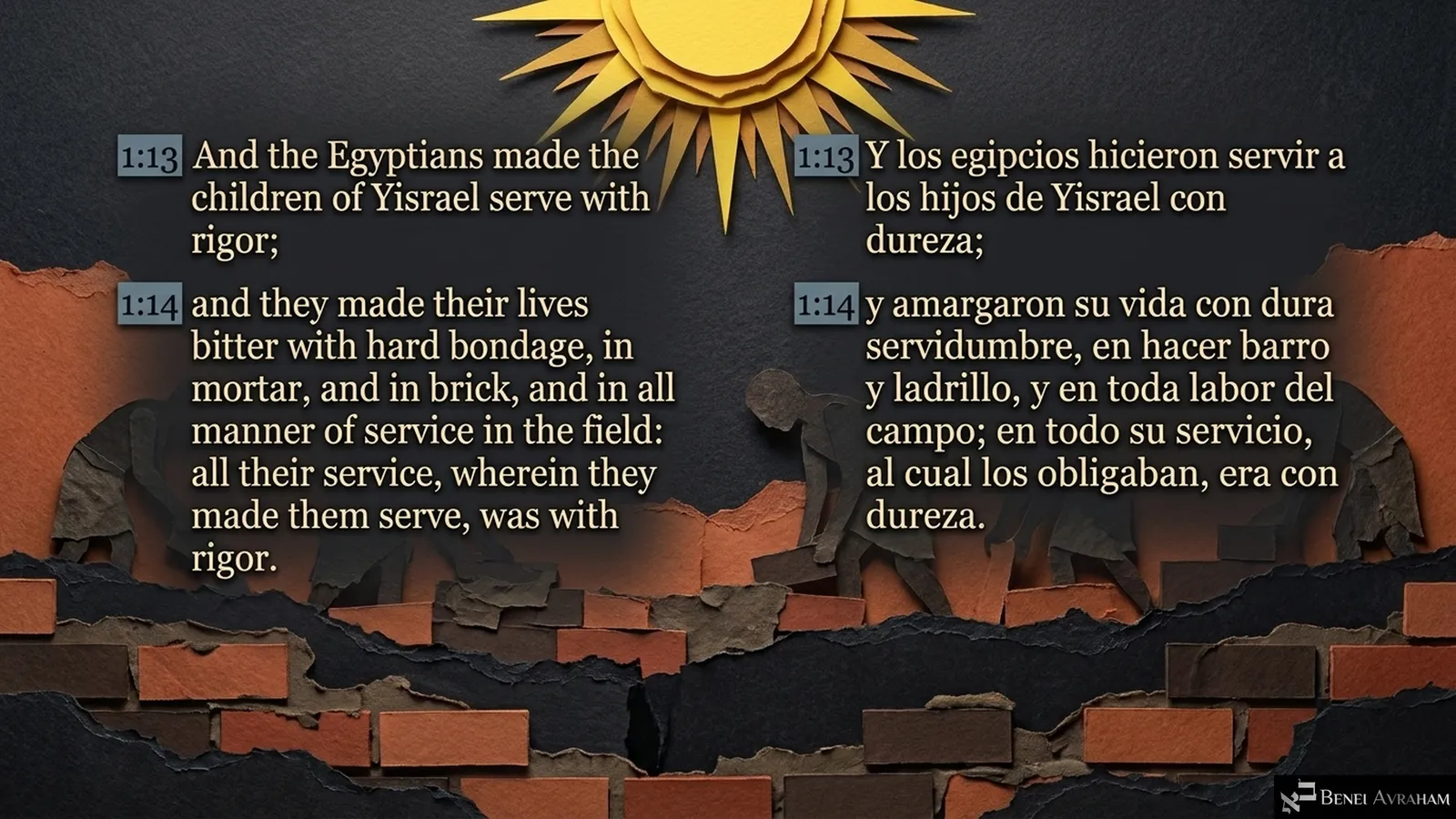
Bent paper figures among broken bricks under a hard sun: they made their lives bitter with hard bondage, in mortar and in brick (Exodus 1:13–14).
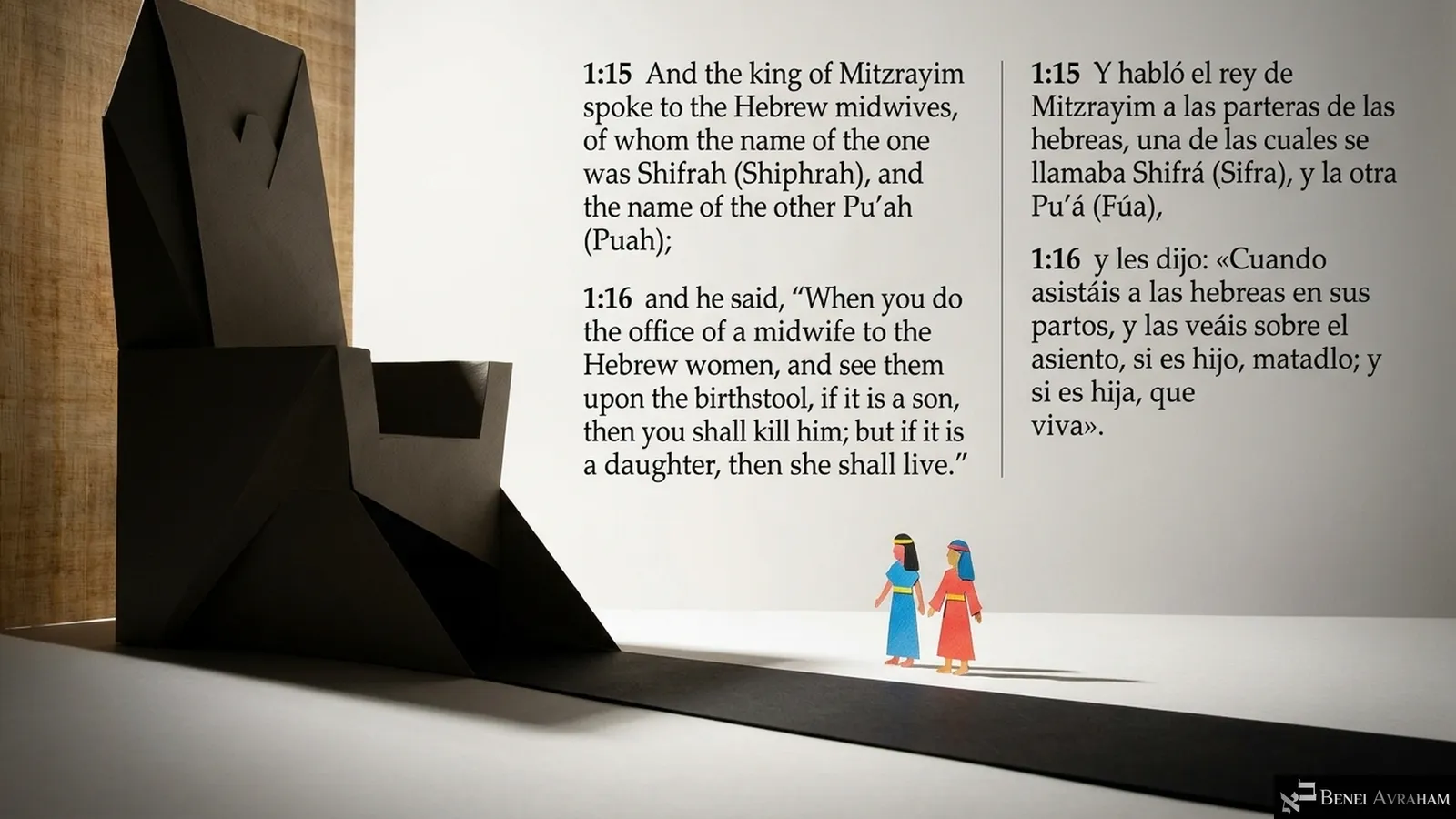
Two small paper midwives before a towering black throne: the king of Mitzrayim spoke to Shifrah and Pu’ah (Exodus 1:15–16).
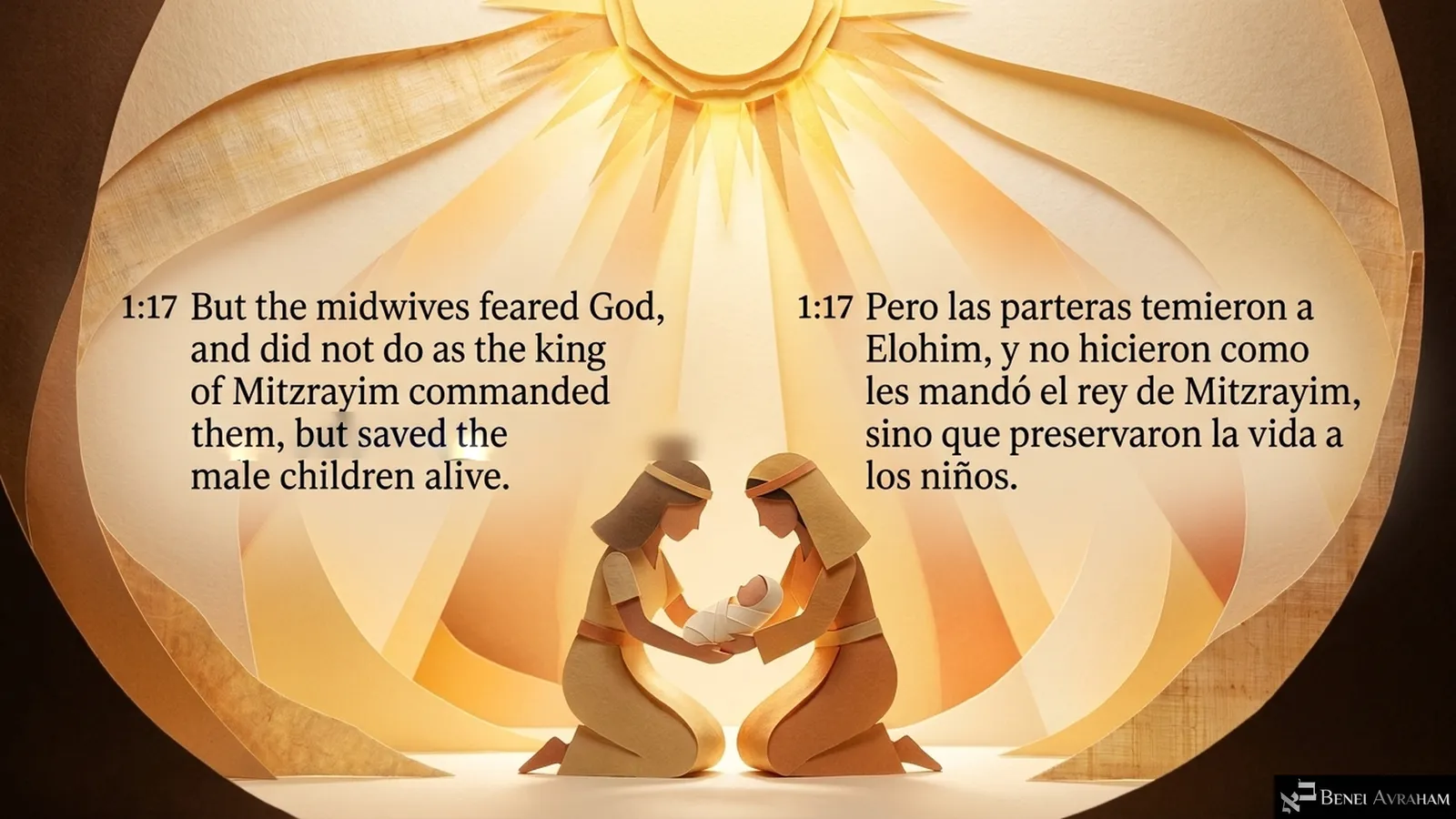
Two paper midwives cradle a baby in a glowing shelter: the midwives feared God, and saved the male children alive (Exodus 1:17).
Sheni · Exodus 1:18–2:10

Second Portion

Title card for the second portion over a paper river among reeds: “Parashat Shemot: The River of Deliverance, Exodus 1:18–2:10”.
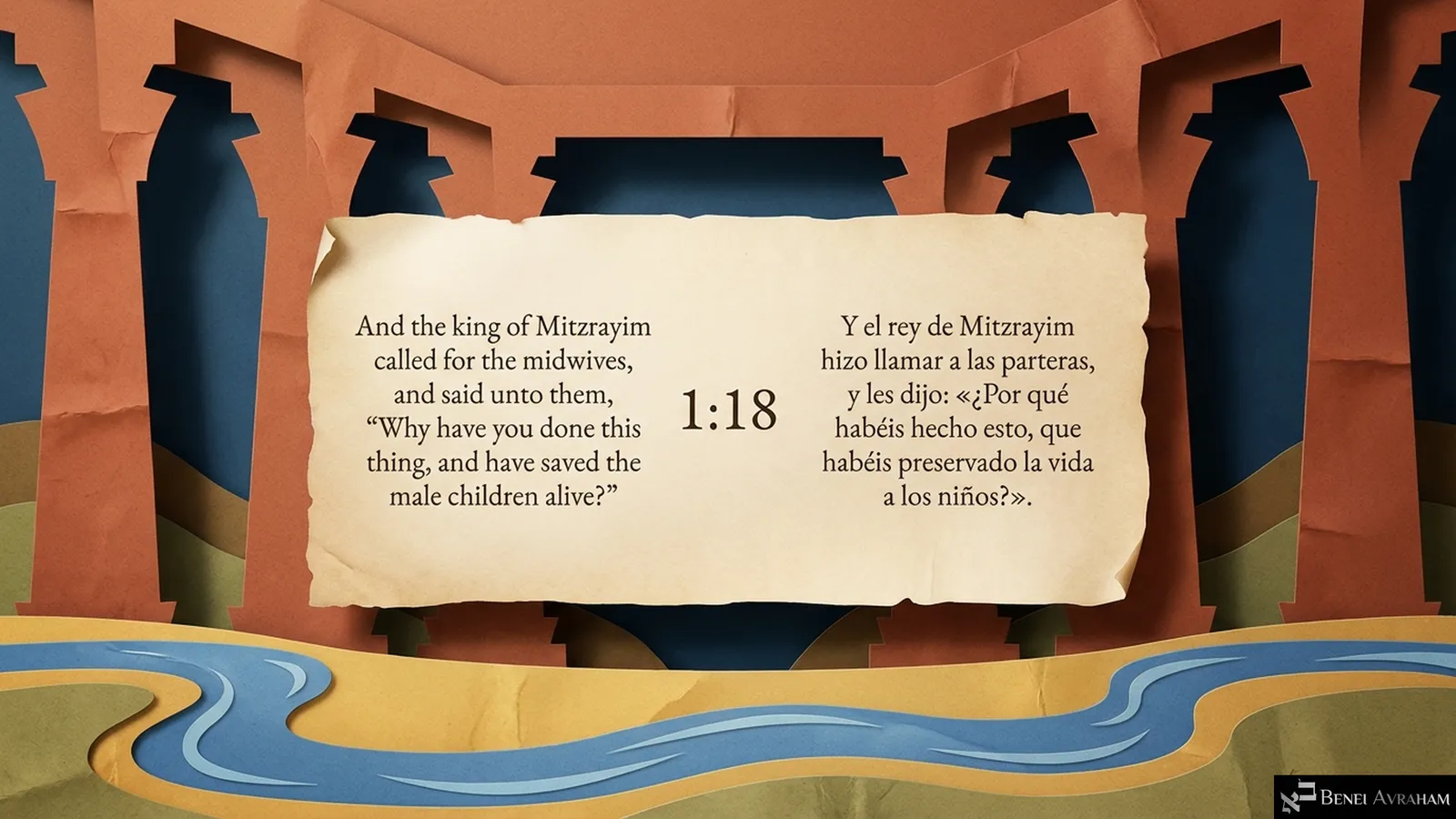
A parchment card between red paper columns above the river: “Why have you done this thing, and have saved the male children alive?” (Exodus 1:18).
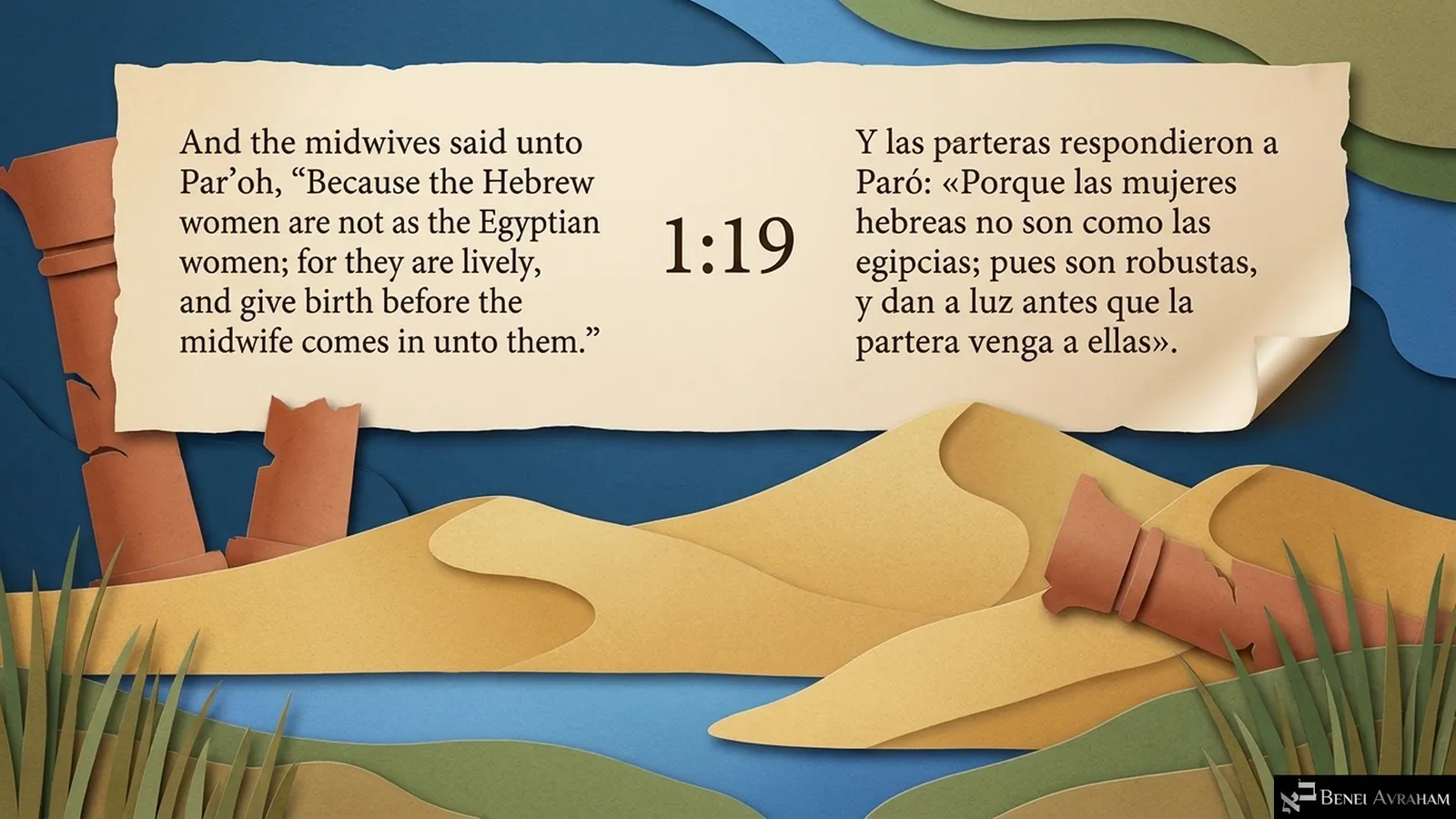
A parchment card over dunes and a broken column: “Because the Hebrew women are not as the Egyptian women” (Exodus 1:19).
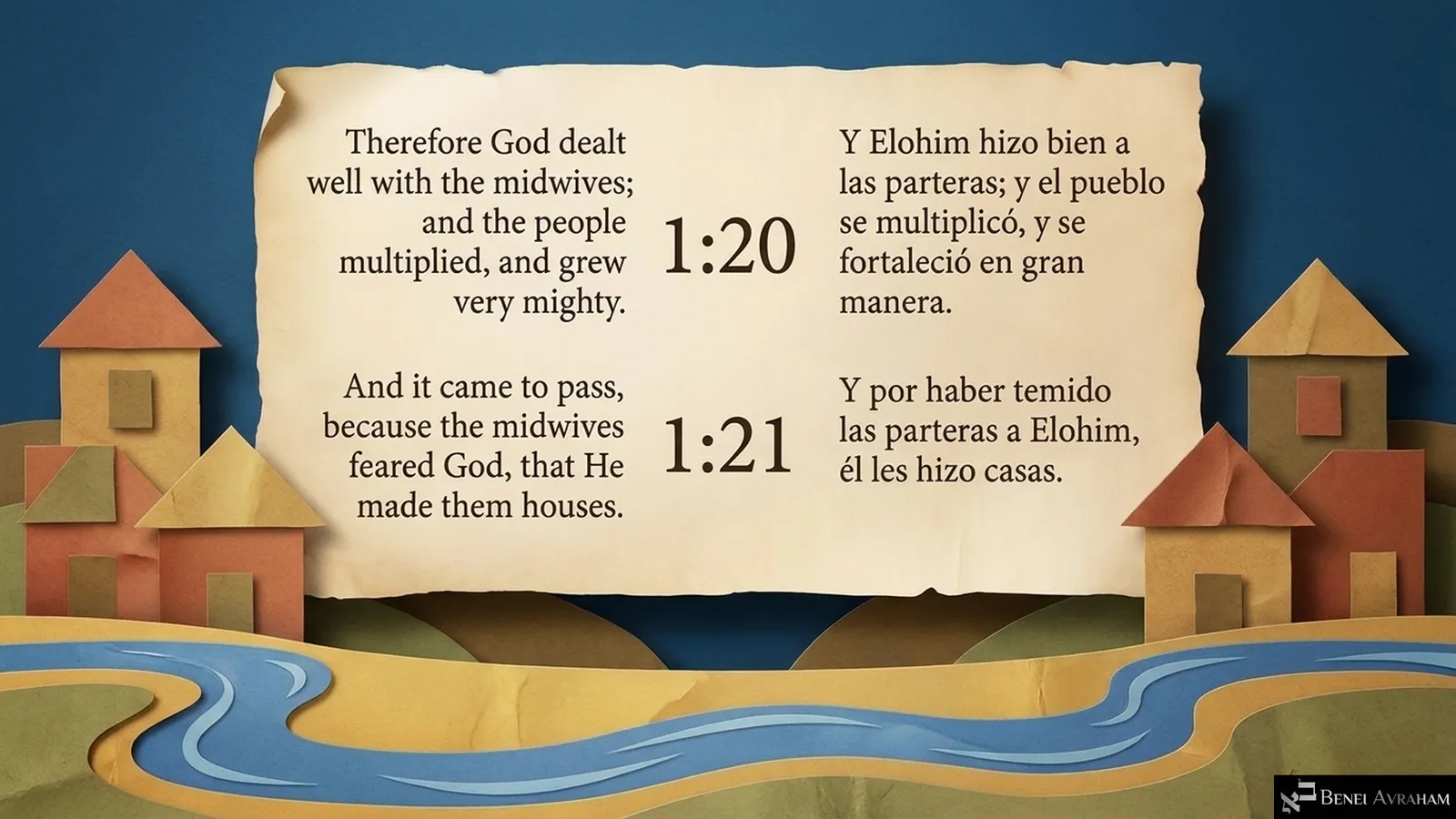
Paper houses beside the river: God dealt well with the midwives, and made them houses (Exodus 1:20–21).
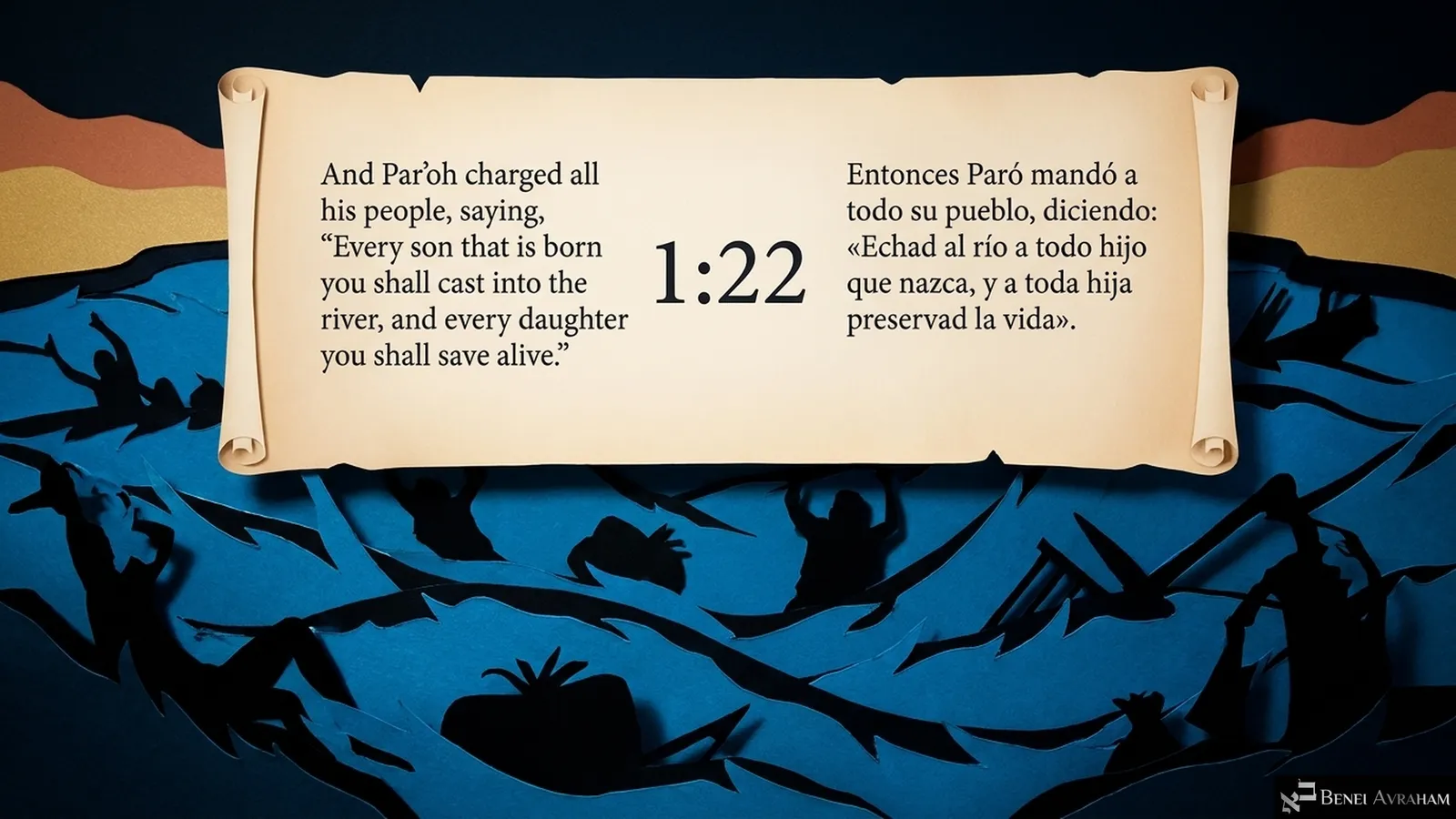
Dark figures sink in deep blue paper water beneath a scroll: “Every son that is born you shall cast into the river” (Exodus 1:22).
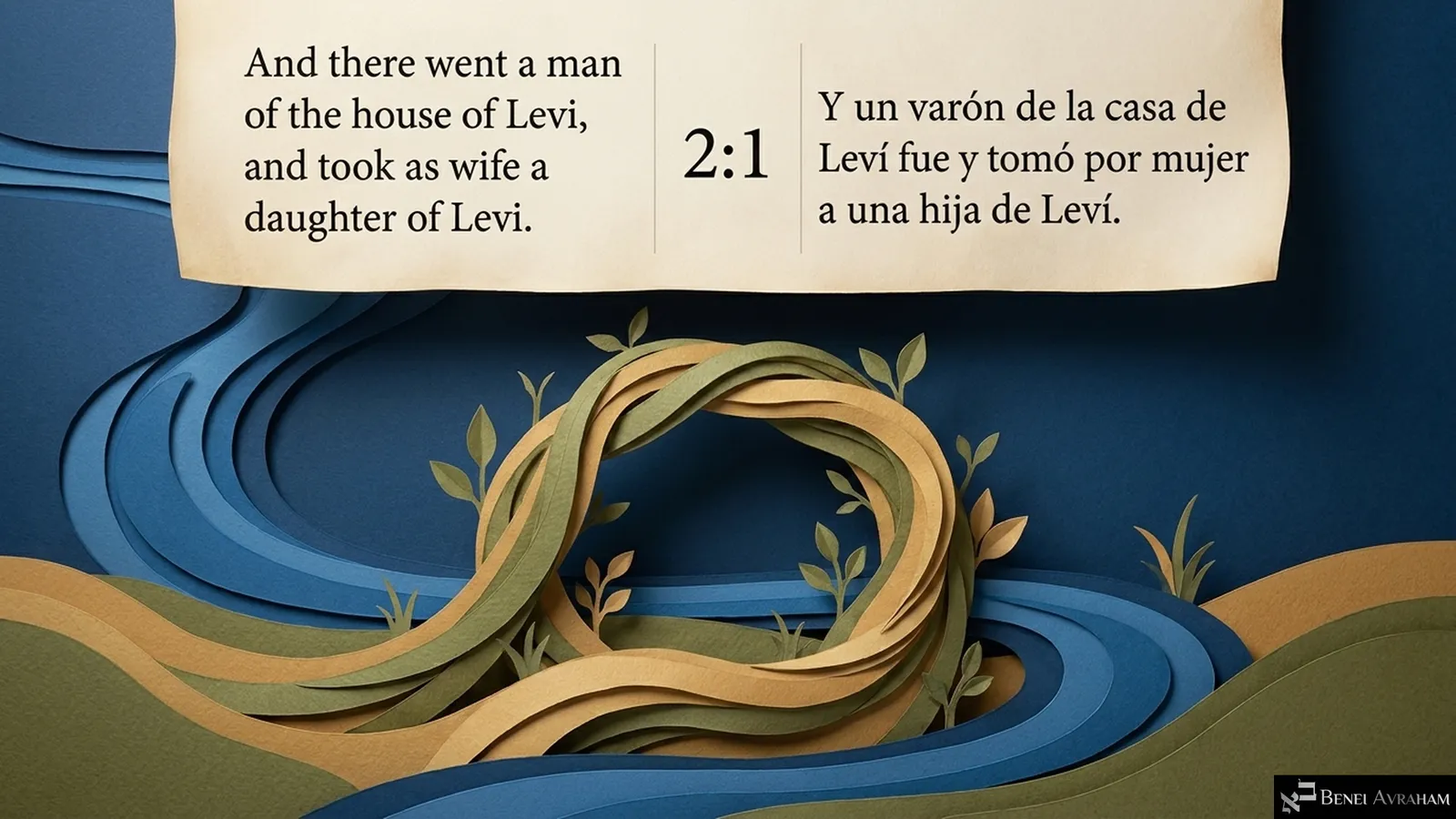
A woven ring of paper reeds by the river: a man of the house of Levi took as wife a daughter of Levi (Exodus 2:1).
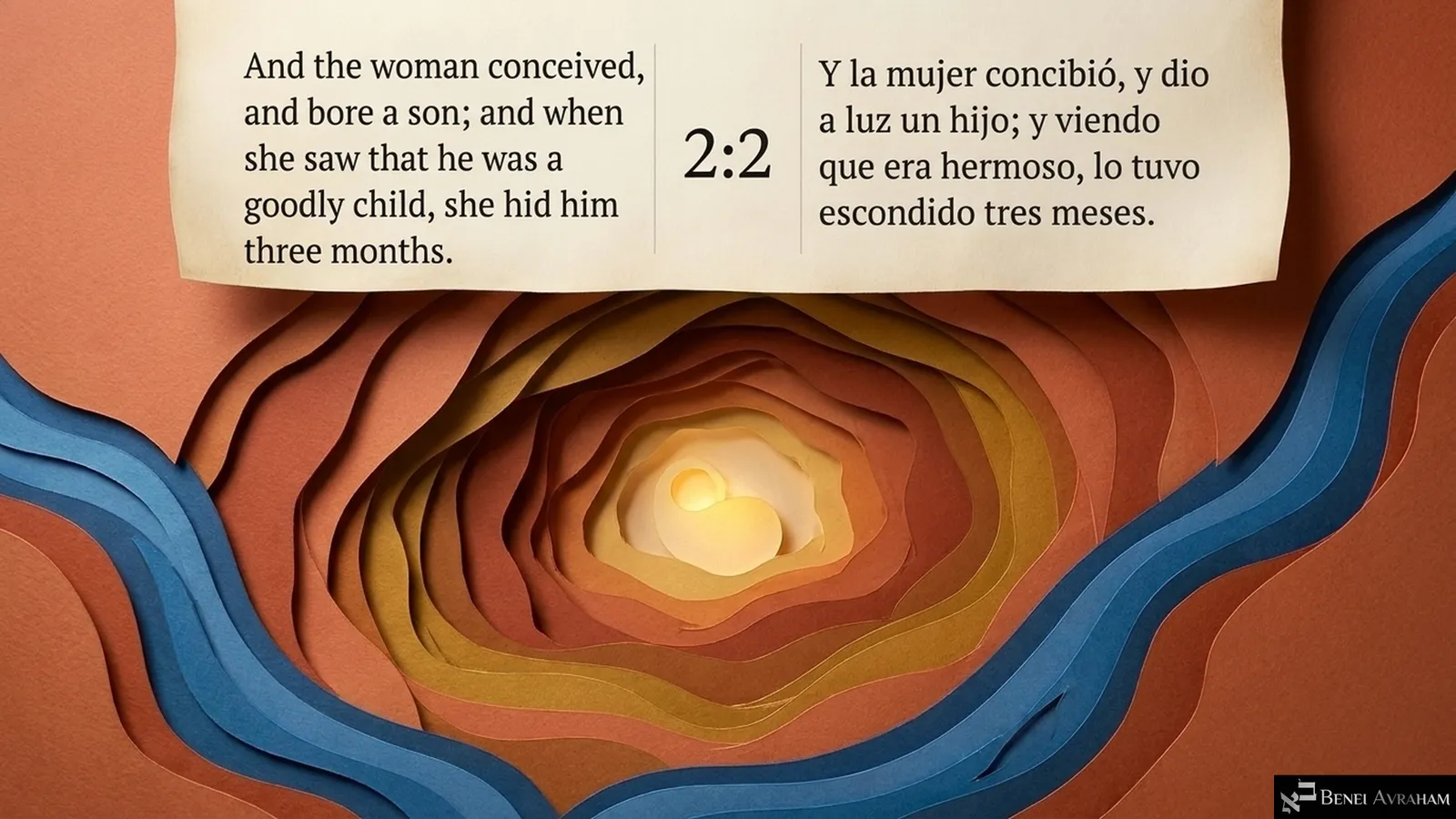
A glowing hollow among layered red paper: she saw that he was a goodly child, and hid him three months (Exodus 2:2).
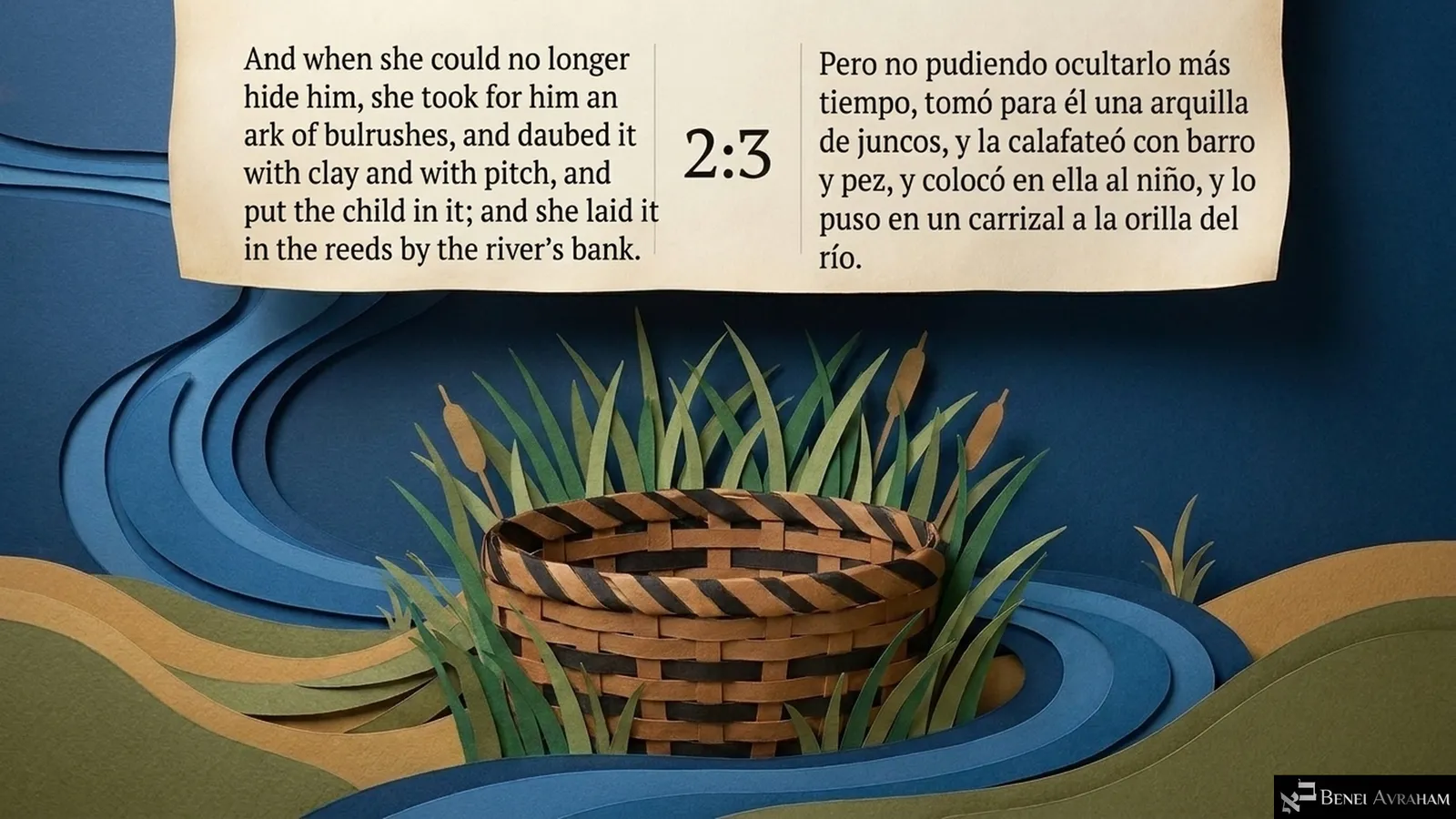
A woven paper basket in the reeds by the river: she took for him an ark of bulrushes, and laid it in the reeds (Exodus 2:3).
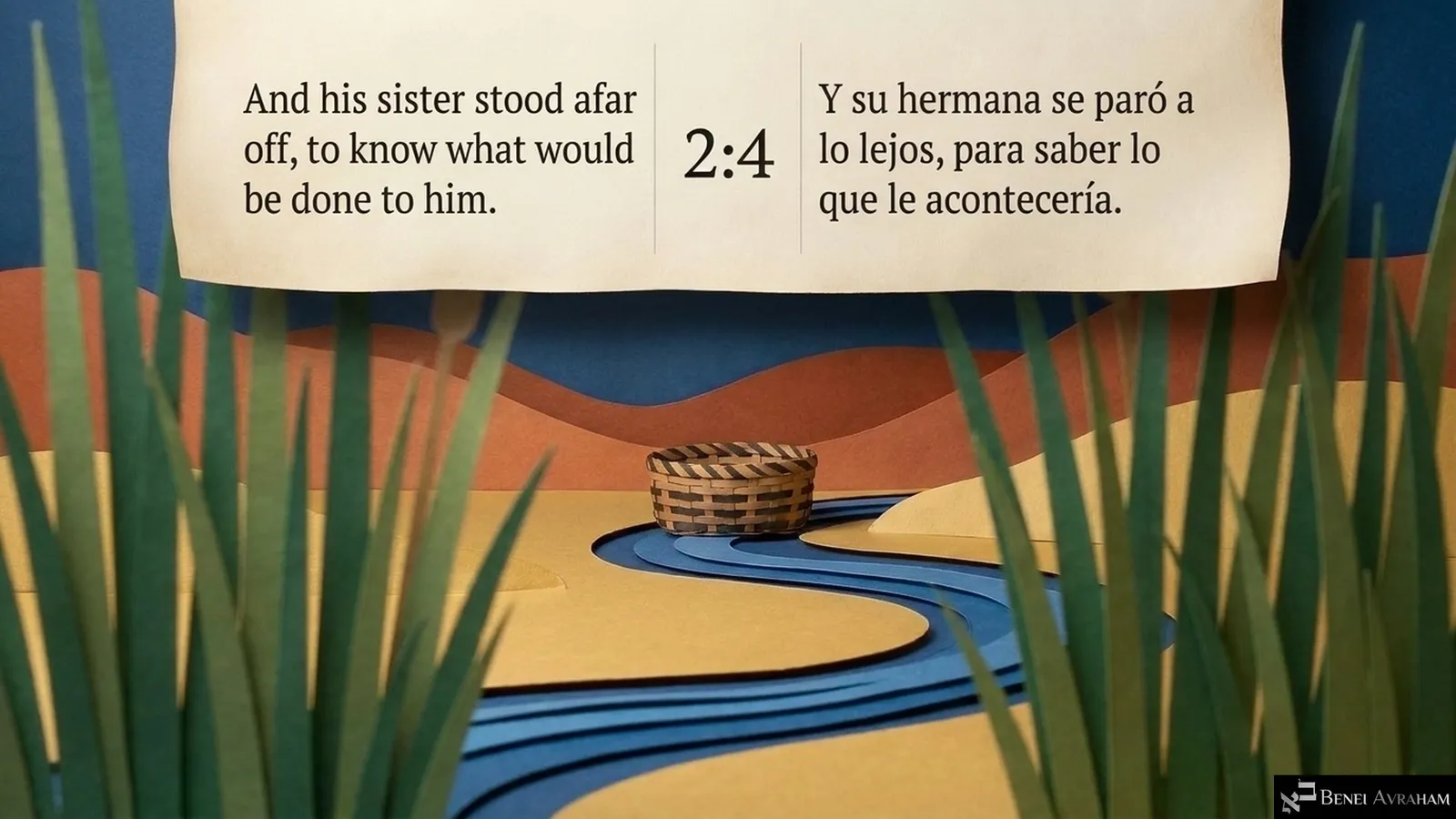
The basket floats far off down the winding river: his sister stood afar off, to know what would be done to him (Exodus 2:4).
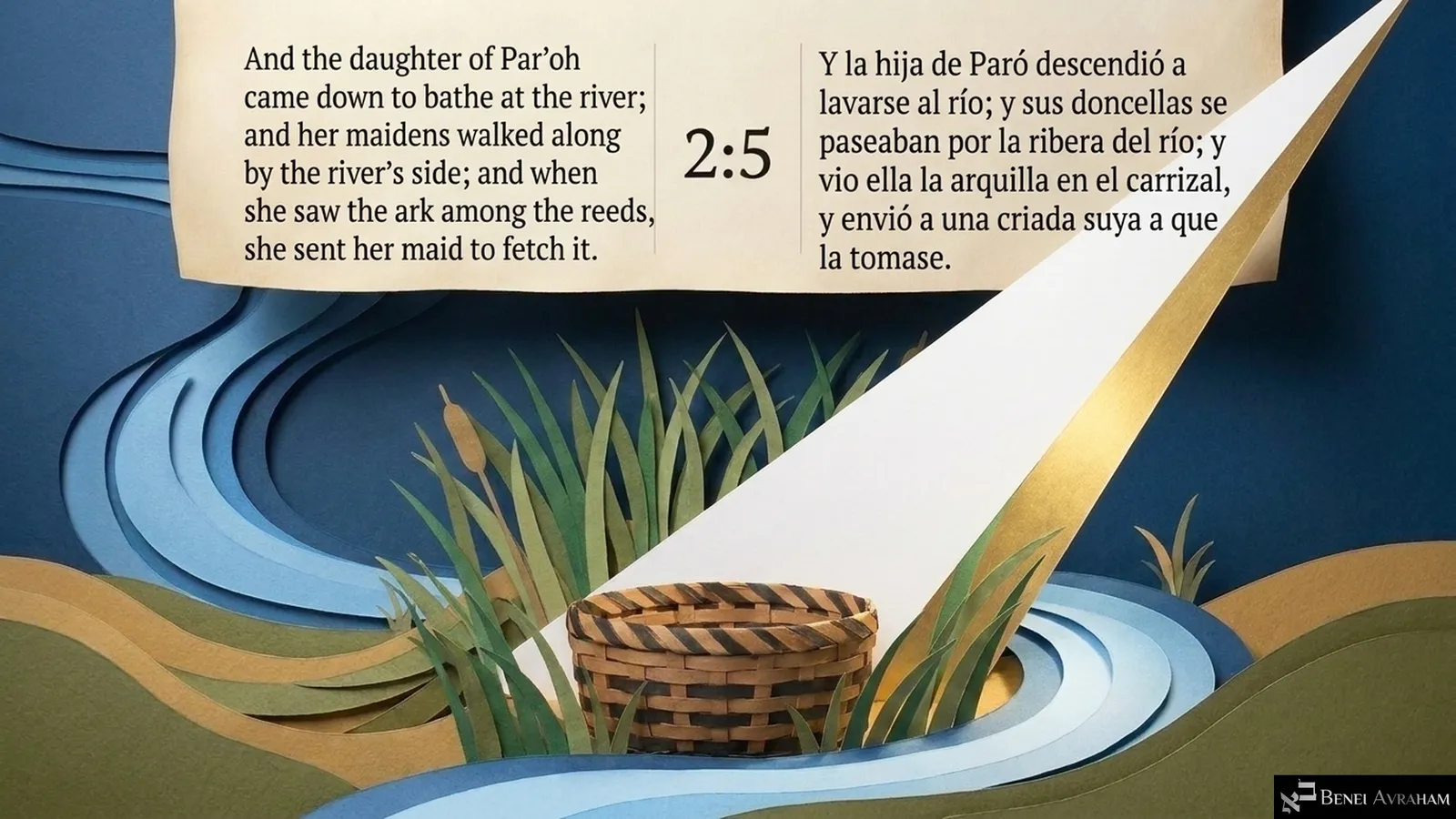
A beam of light falls across the basket in the reeds: Par’oh’s daughter came down to bathe and saw the ark (Exodus 2:5).
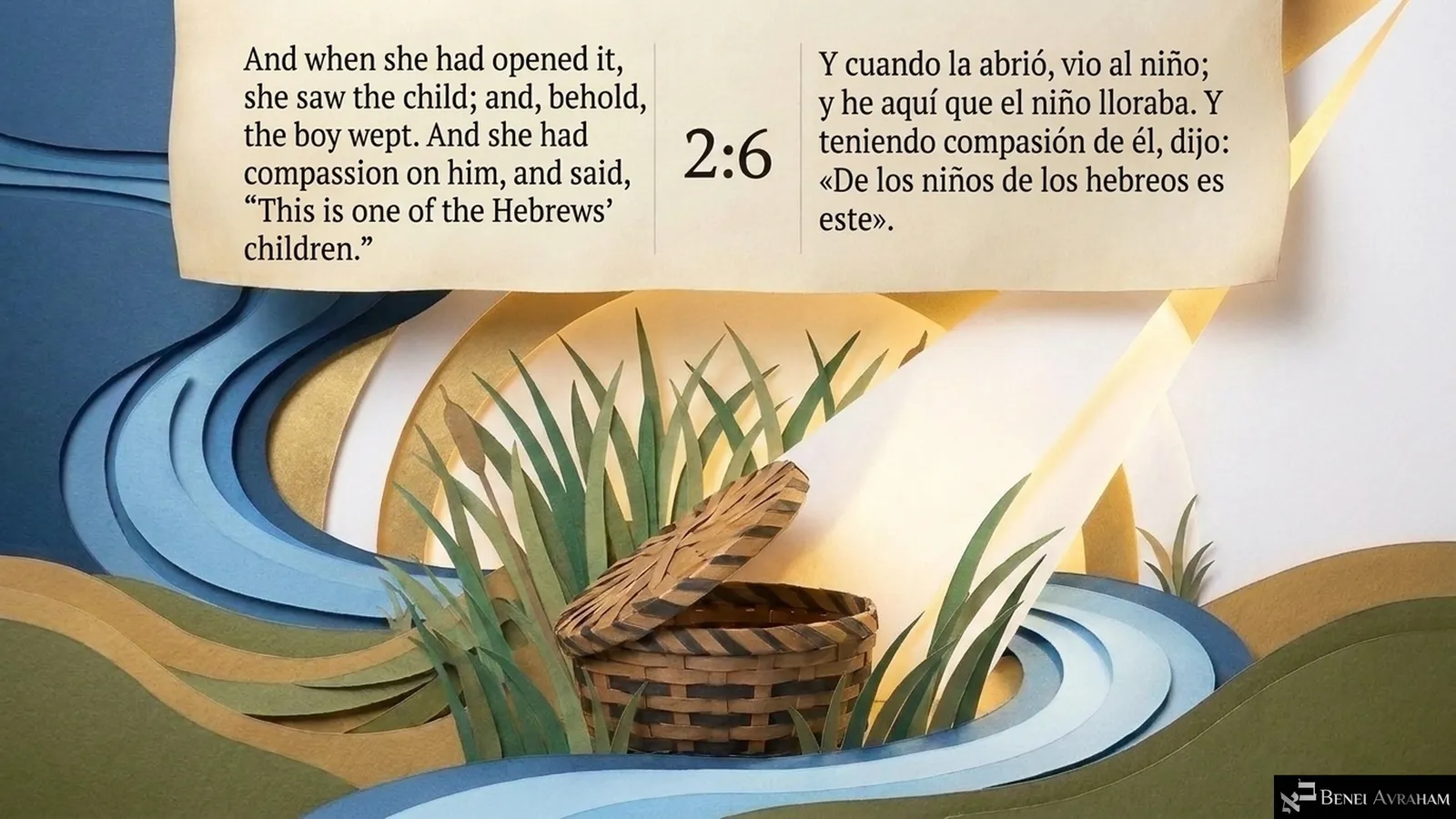
The basket lid lifted in golden light: she saw the child, and behold, the boy wept; she had compassion on him (Exodus 2:6).
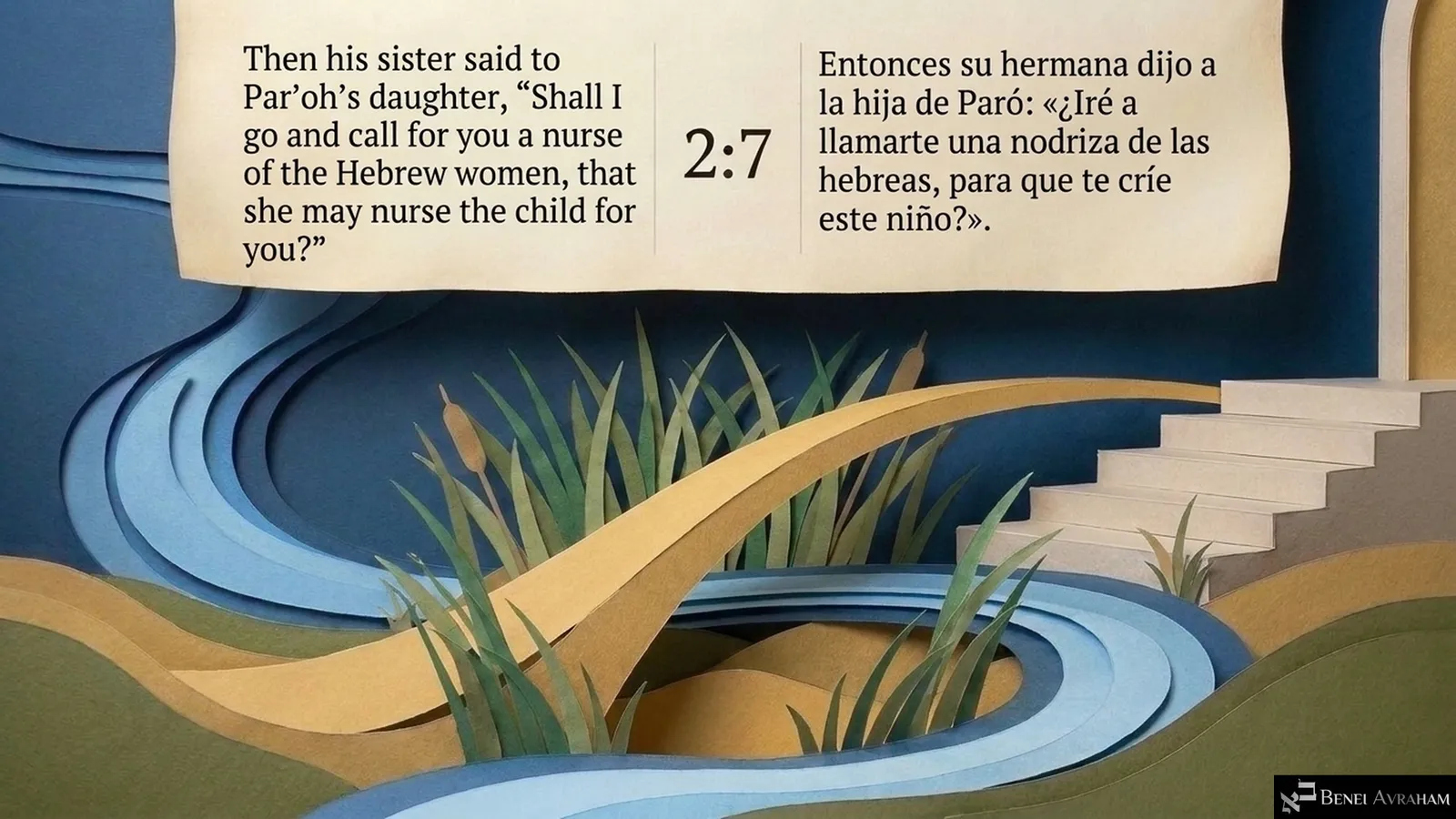
A path and stairs lead up from the river: “Shall I go and call for you a nurse of the Hebrew women?” (Exodus 2:7).
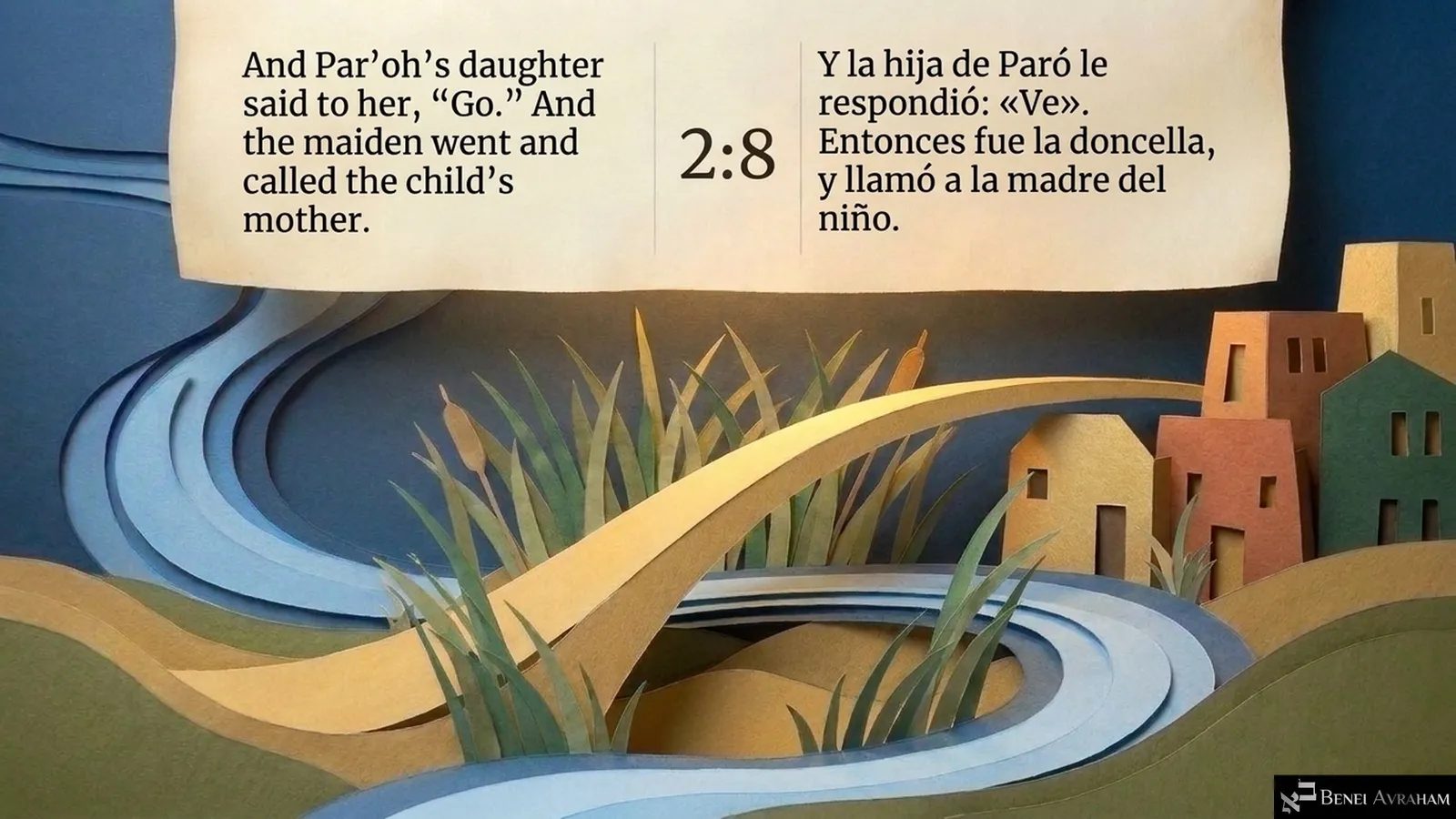
The path leads from the river to a paper village: the maiden went and called the child’s mother (Exodus 2:8).
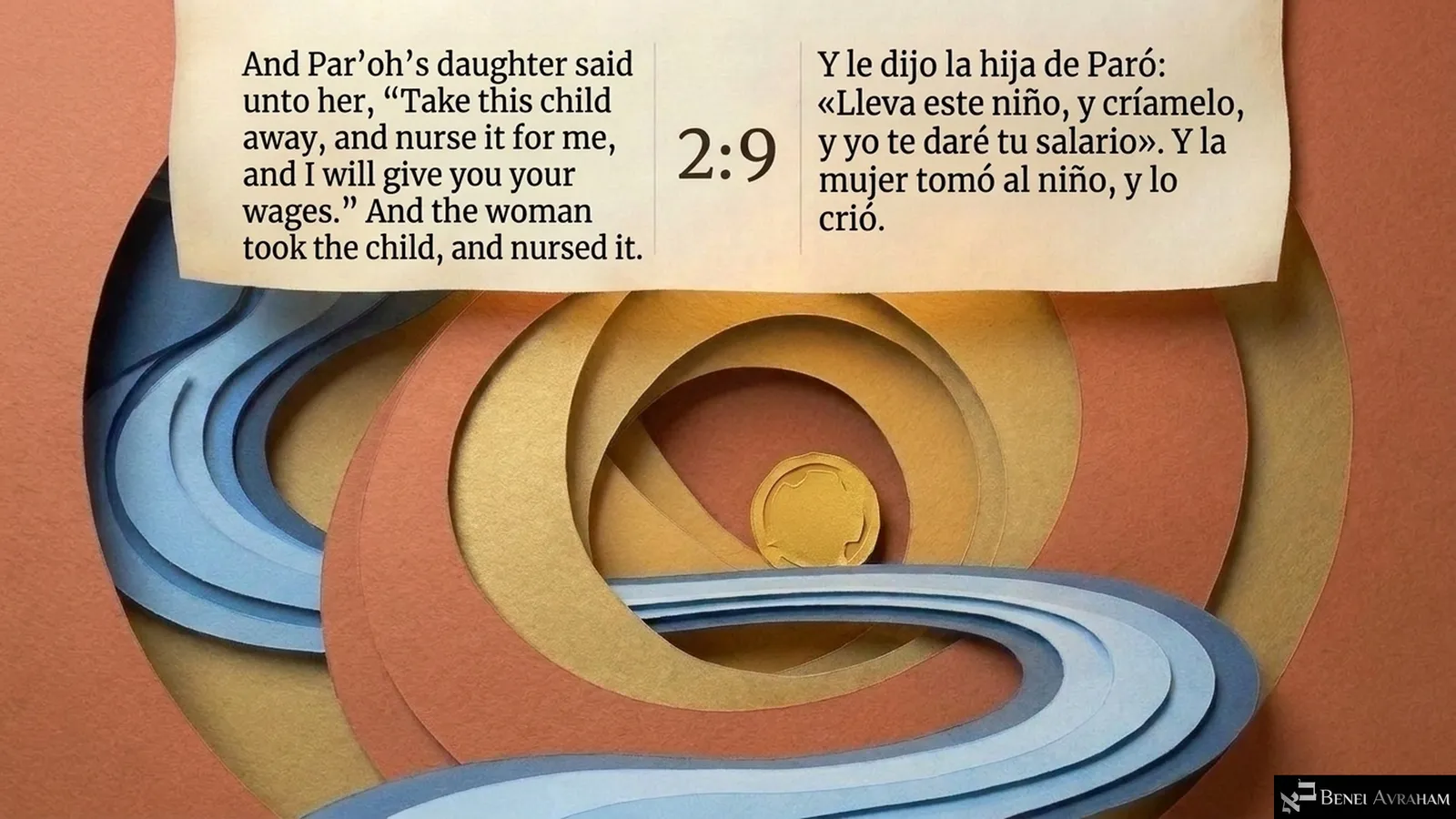
A golden paper coin among swirling rings: “Nurse it for me, and I will give you your wages” (Exodus 2:9).
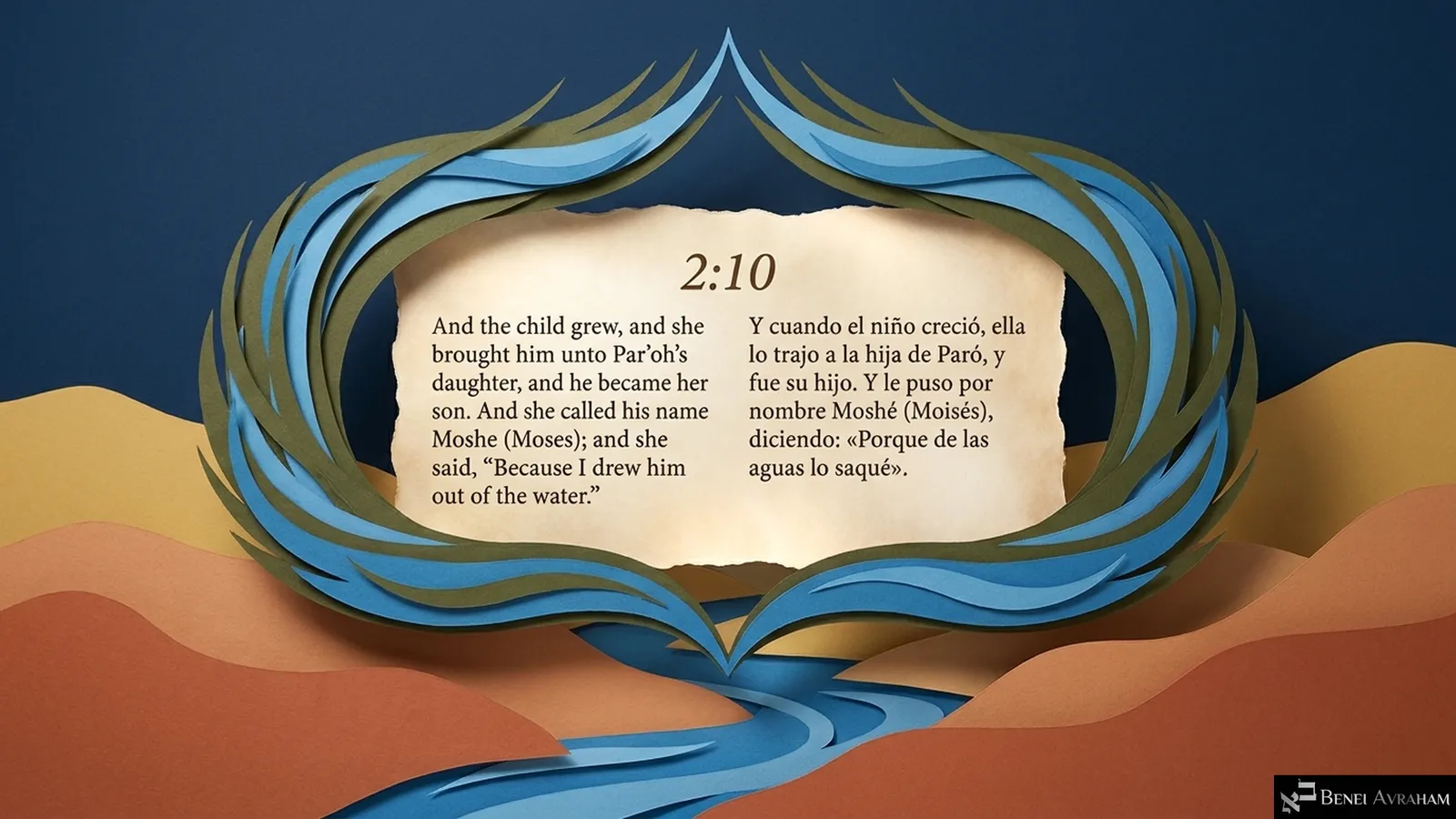
A parchment card within arching paper reeds over the river: she called his name Moshe, “Because I drew him out of the water” (Exodus 2:10).
Shlishi · Exodus 2:11–25

Third Portion

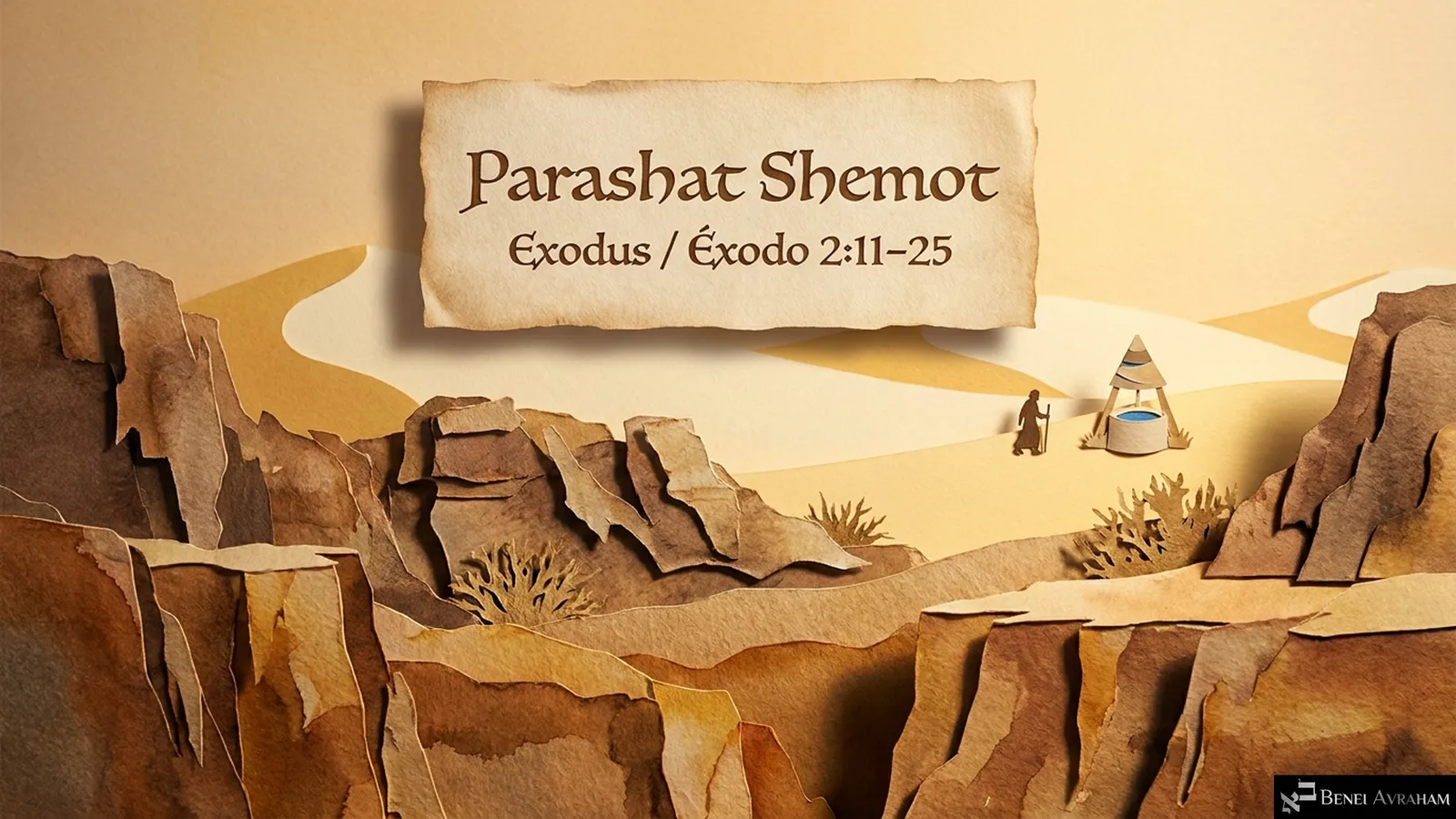
Title card for the third portion over paper cliffs, a lone figure and a well in the desert: “Parashat Shemot, Exodus 2:11–25”.
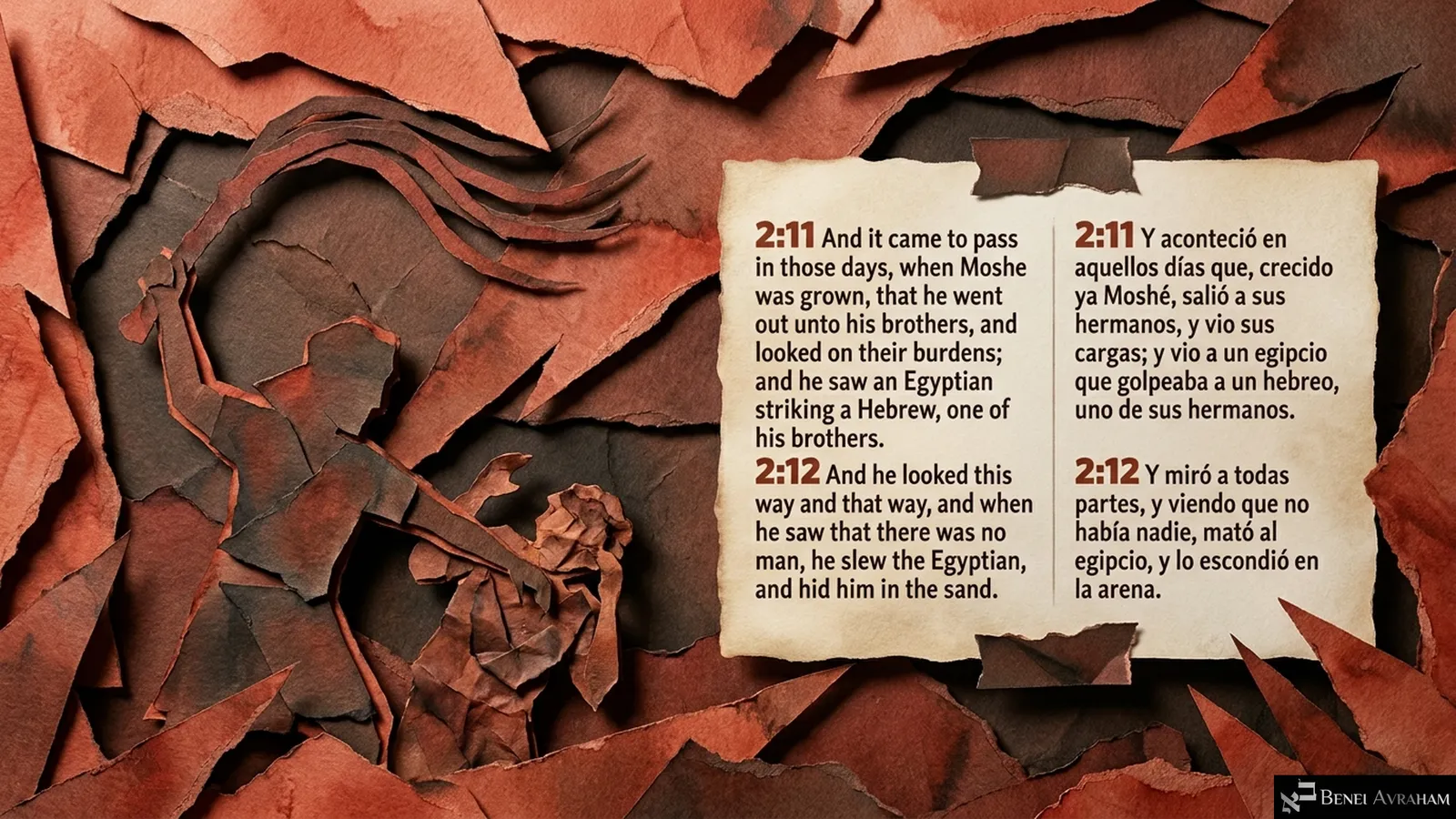
Jagged red paper shapes frame a struggle: Moshe saw an Egyptian striking a Hebrew, and slew the Egyptian, and hid him in the sand (Exodus 2:11–12).
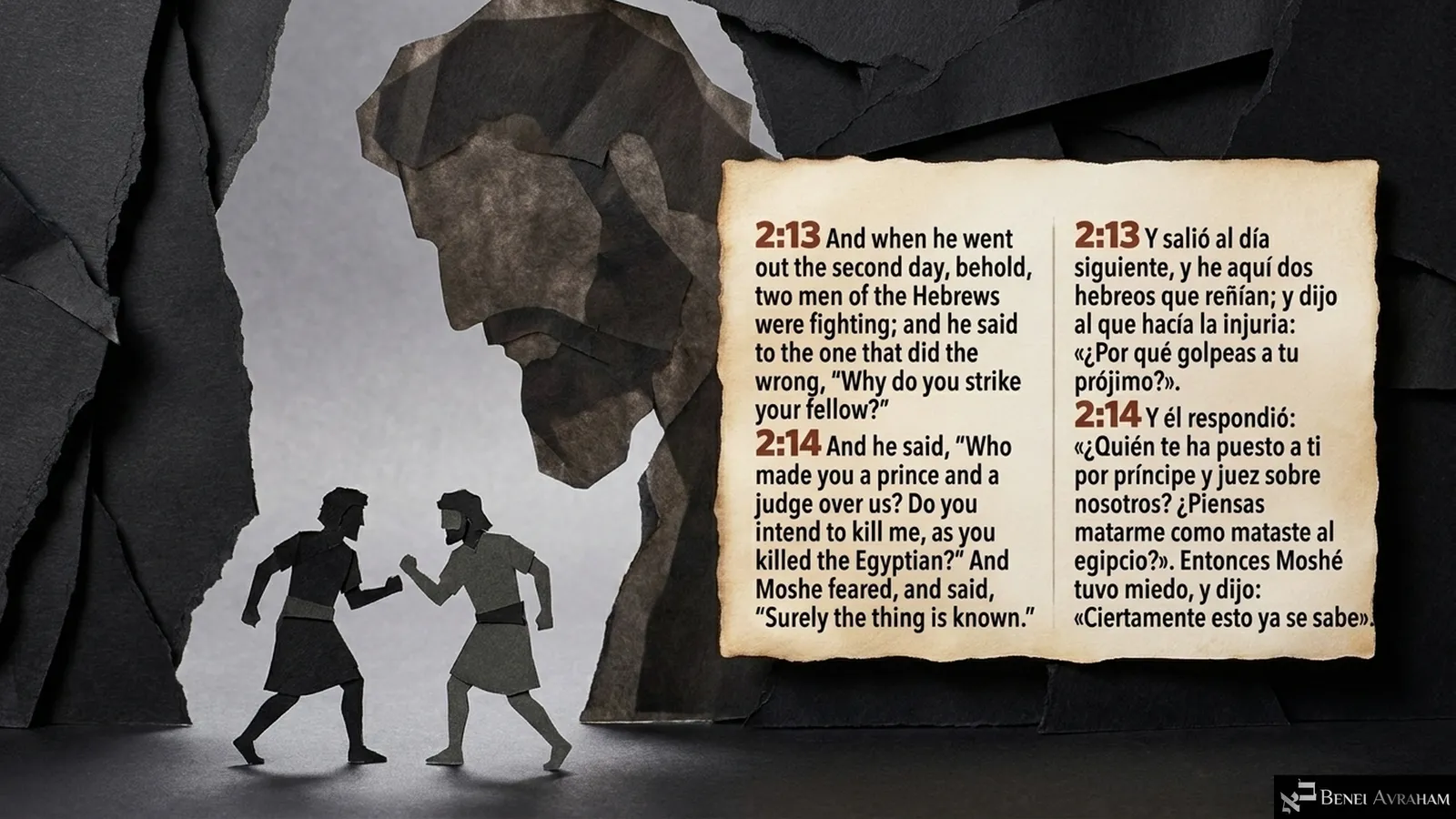
Two paper Hebrews fight beneath dark cliffs: “Who made you a prince and a judge over us?” and Moshe feared (Exodus 2:13–14).
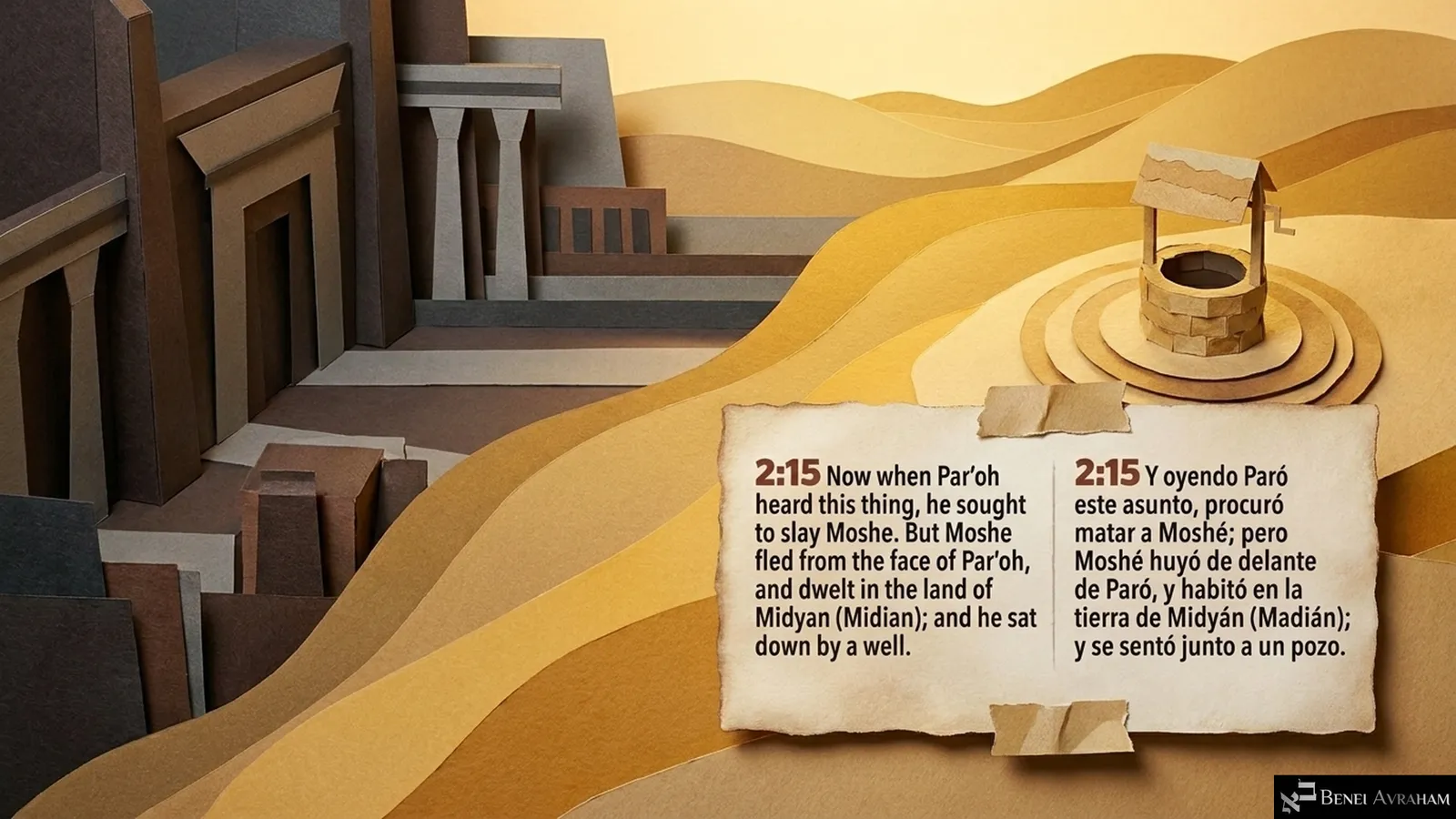
A paper well in the desert beyond Par’oh’s palace: Moshe fled to the land of Midyan, and sat down by a well (Exodus 2:15).
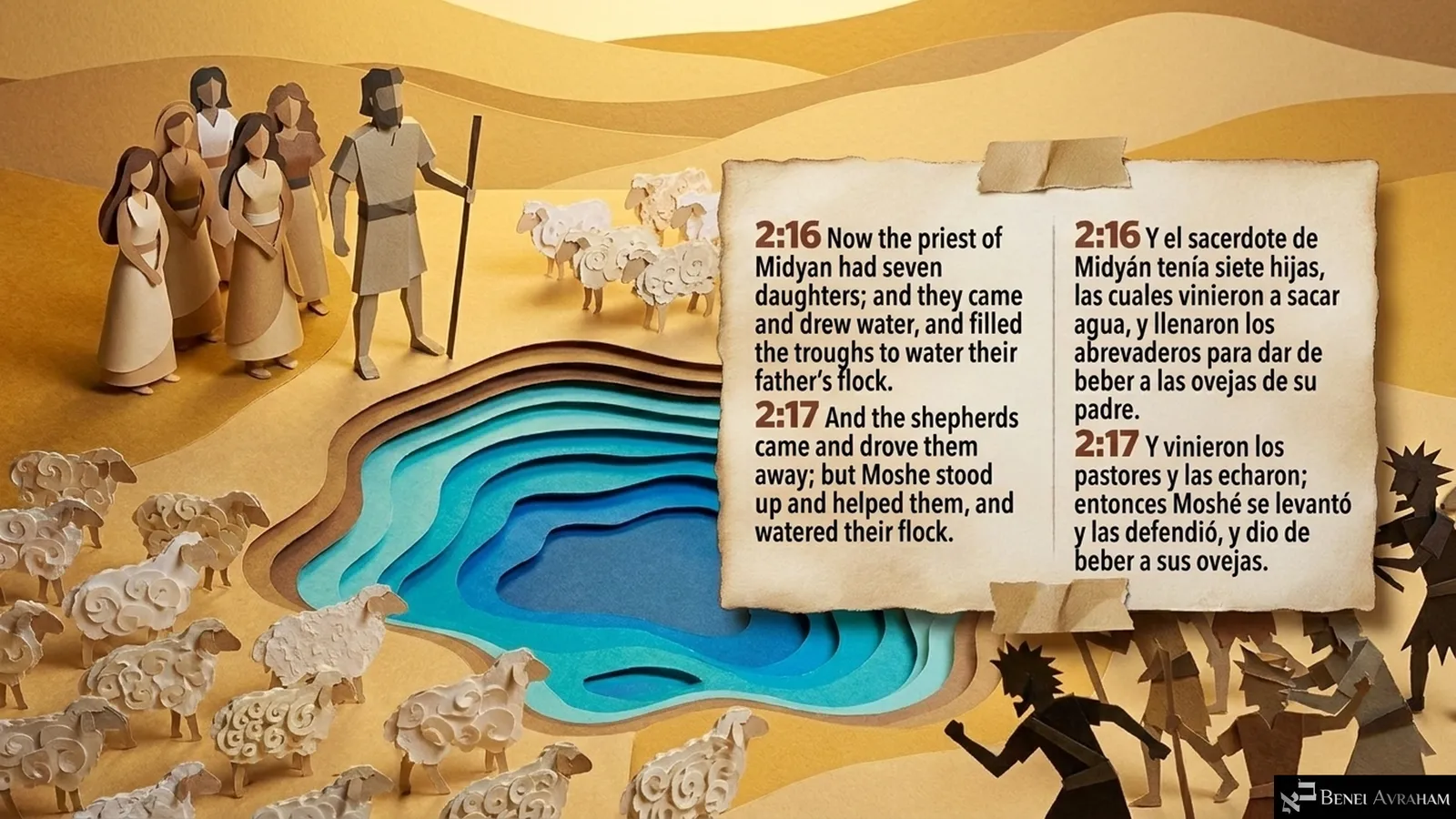
Paper sheep and the seven daughters of Midyan by a blue pool: Moshe stood up and helped them, and watered their flock (Exodus 2:16–17).
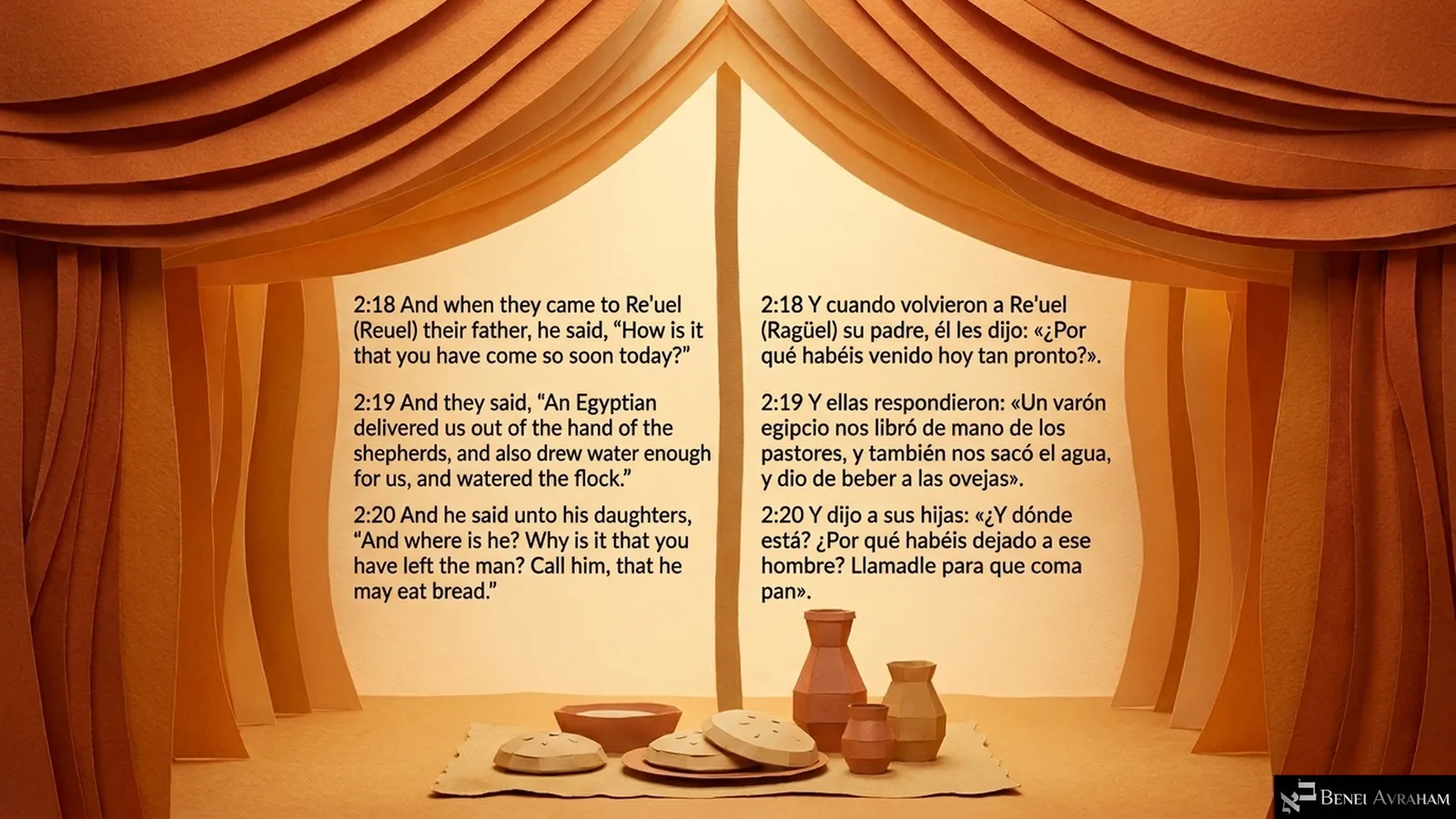
A paper tent with bread and jars on a cloth: “How is it that you have come so soon today?… Call him, that he may eat bread” (Exodus 2:18–20).
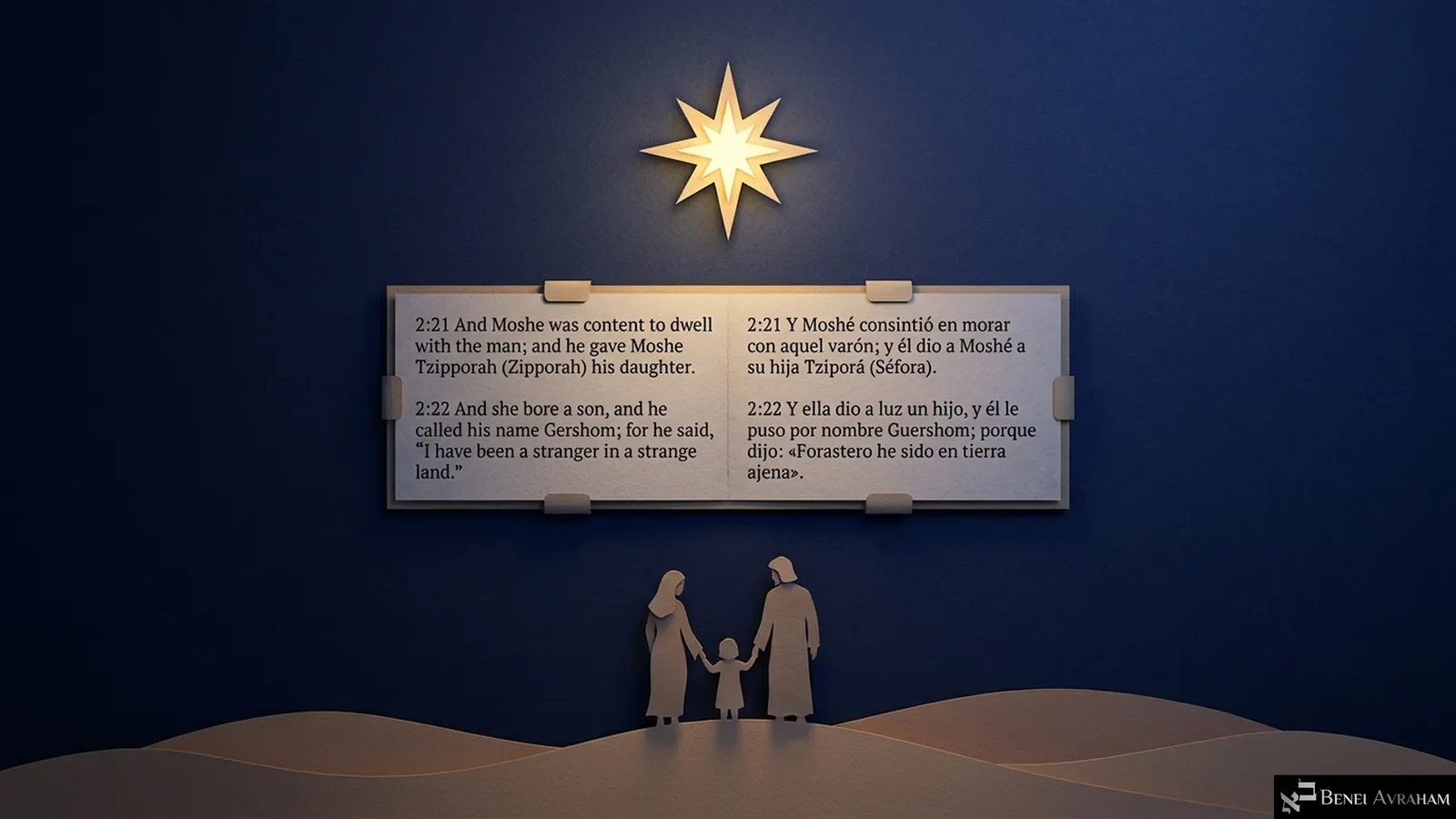
A family walks beneath a paper star: Moshe was content to dwell with the man; Gershom, “I have been a stranger in a strange land” (Exodus 2:21–22).
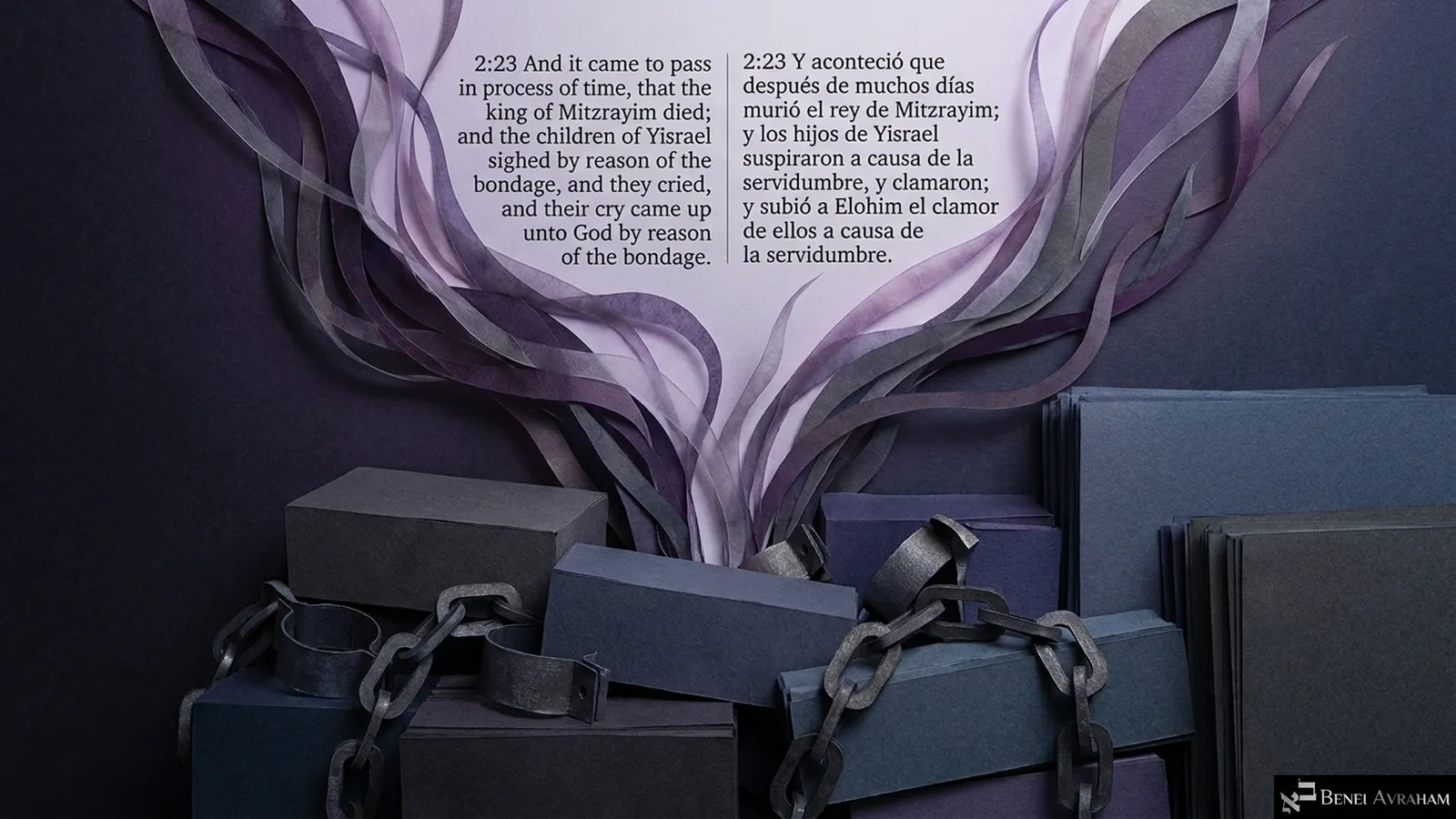
Chains and dark blocks below rising purple ribbons: the children of Yisrael sighed by reason of the bondage, and their cry came up unto God (Exodus 2:23).
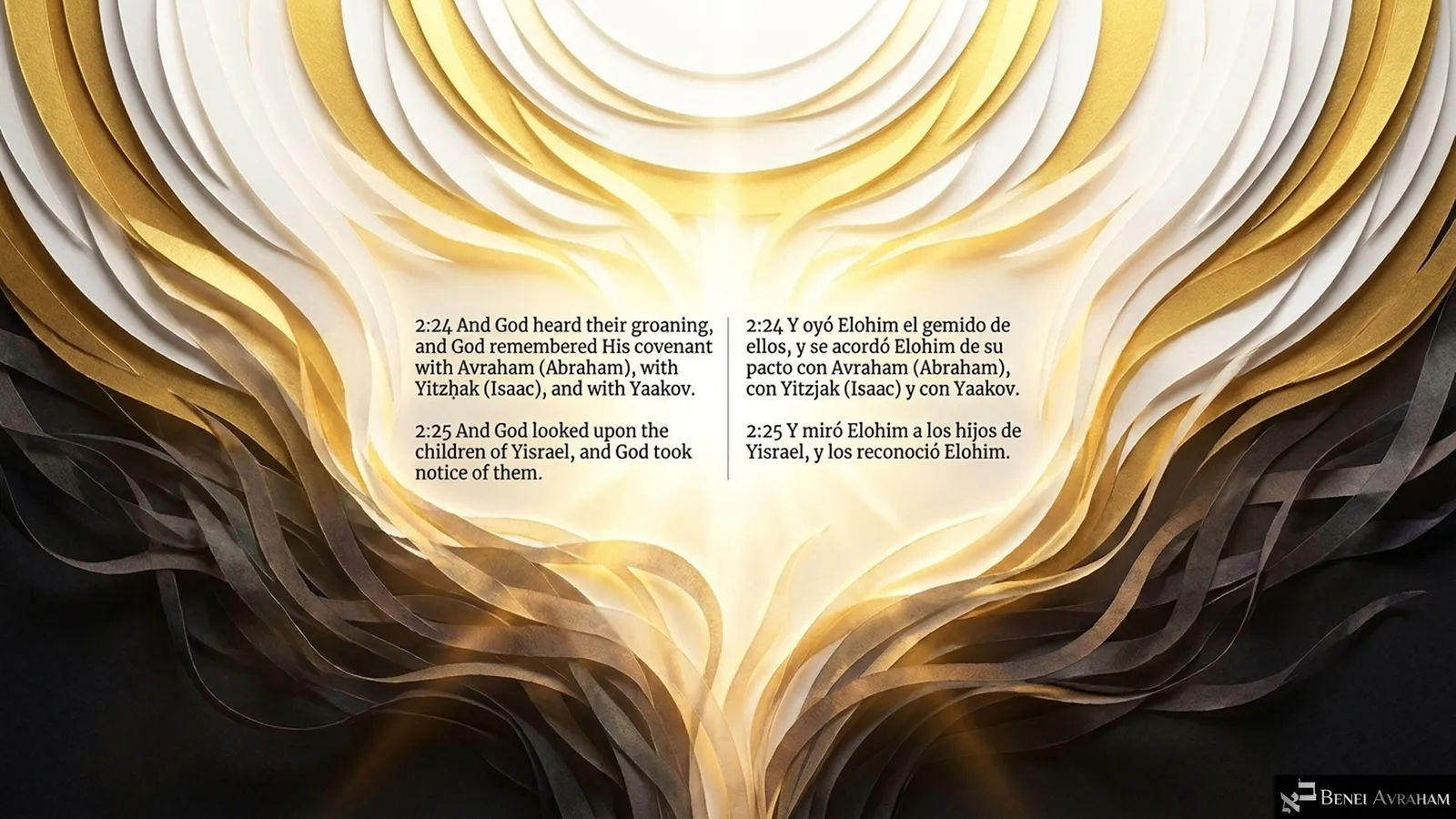
Rings of golden paper rise from dark ribbons: God heard their groaning and remembered His covenant (Exodus 2:24–25).
Revi’i · Exodus 3:1–15

Fourth Portion

Title card for the fourth portion on a ribbon across a paper bush among desert cliffs: “Parashat Shemot — 4th Portion (Revi’i), Exodus 3:1–15”.
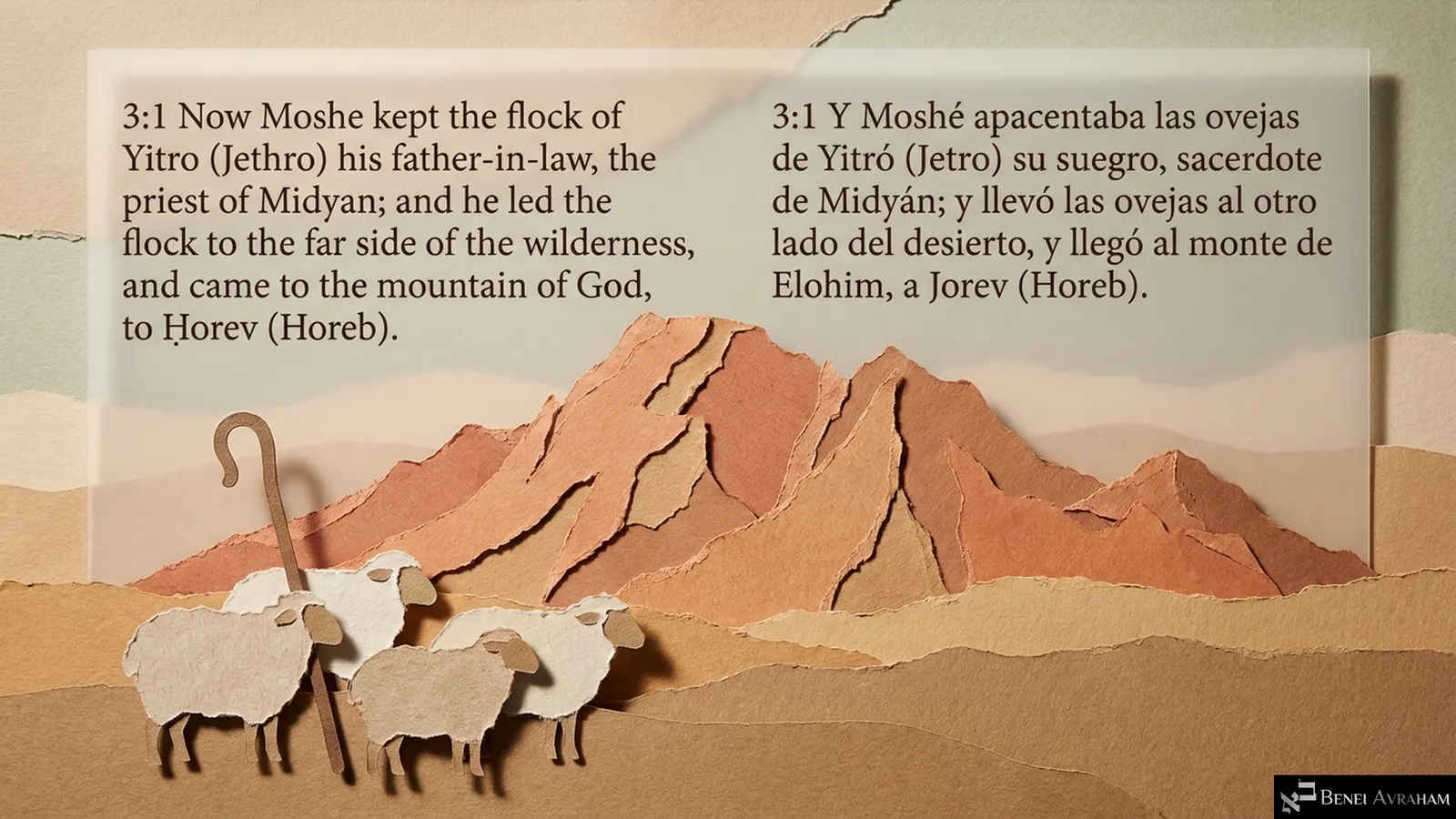
Paper sheep and a shepherd’s staff before the mountains: Moshe kept the flock of Yitro and came to the mountain of God, to Ḥorev (Exodus 3:1).
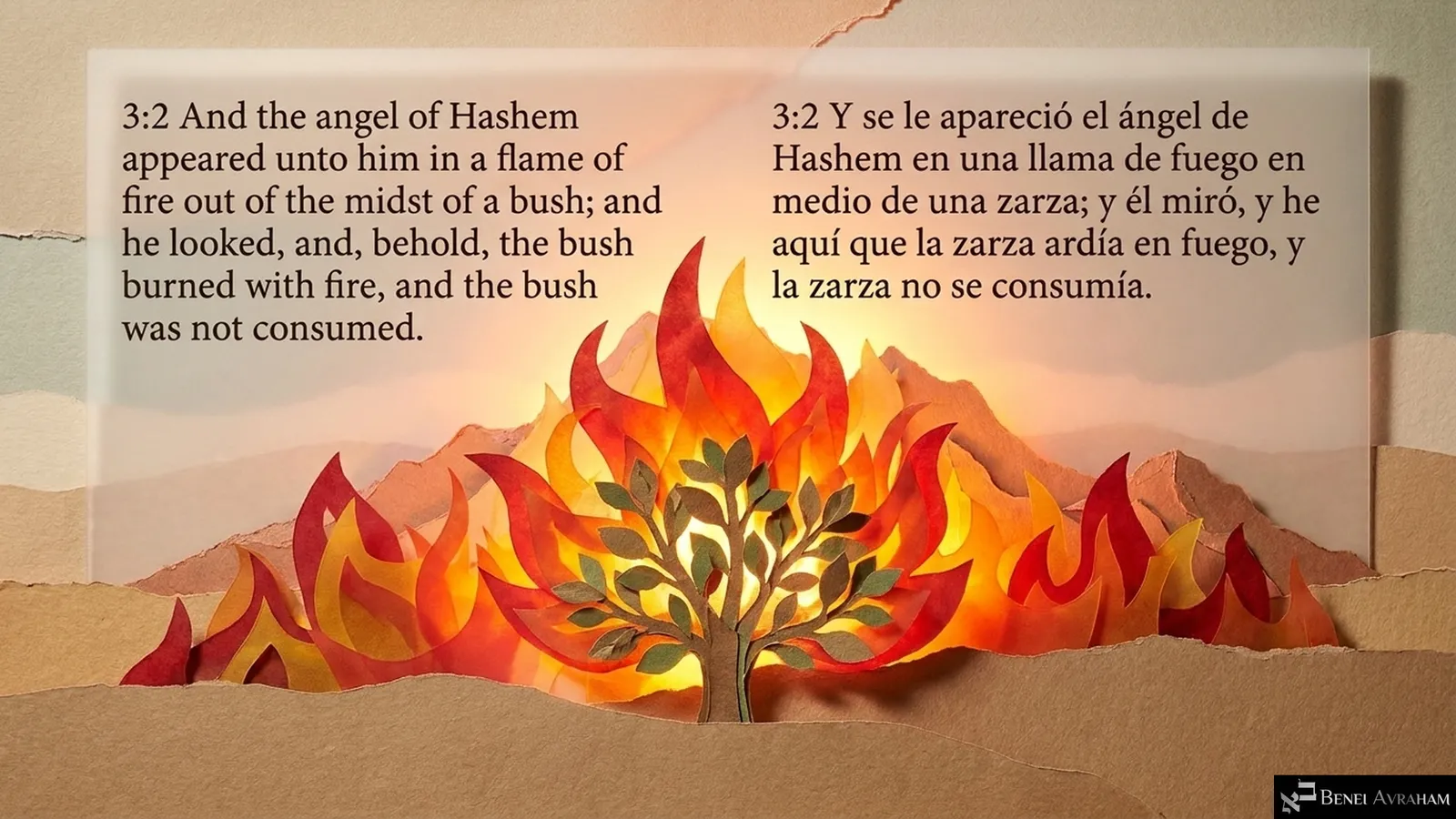
A paper bush in red and gold flames: the bush burned with fire, and the bush was not consumed (Exodus 3:2).
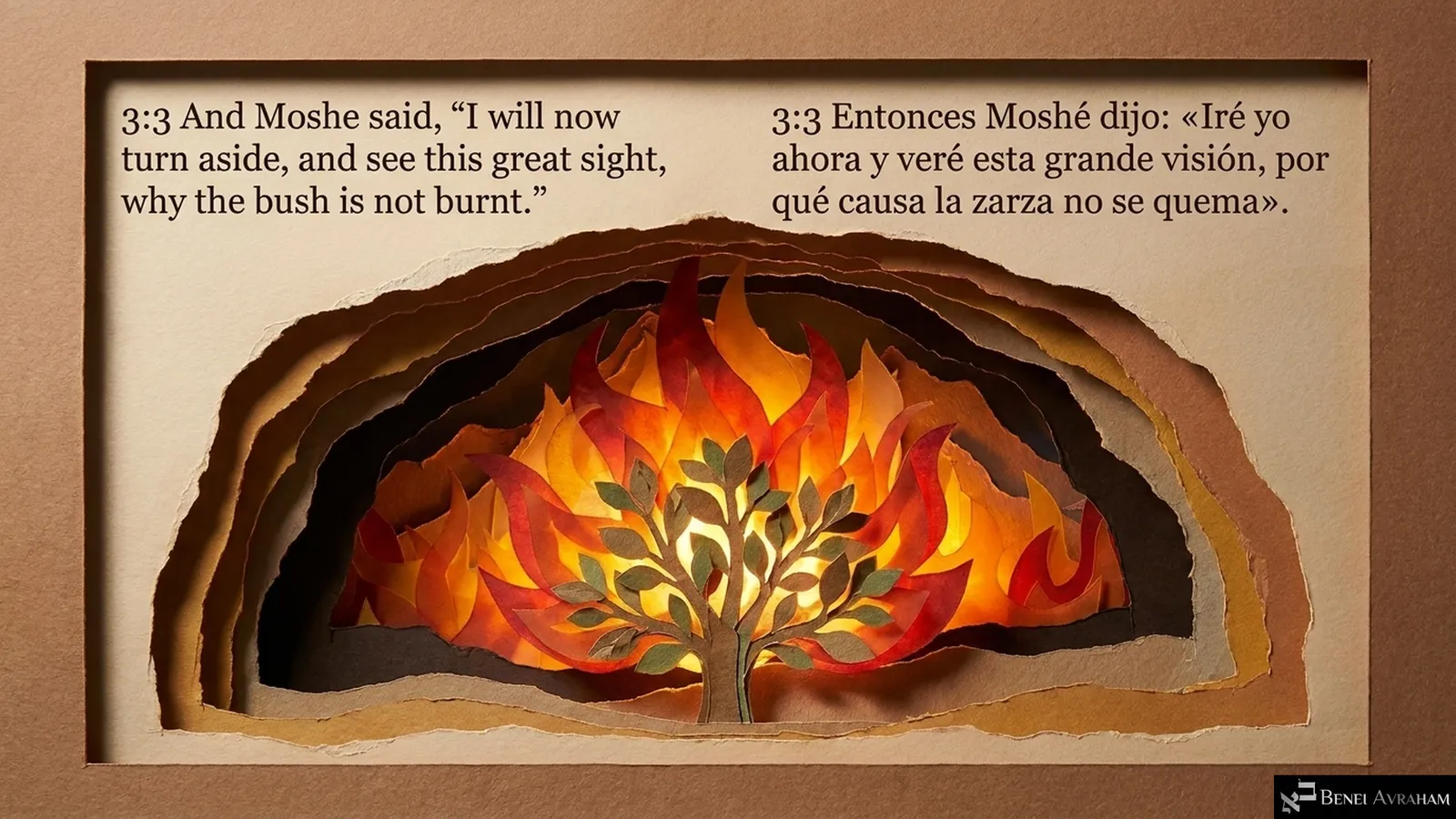
The burning bush inside a cave of layered paper: “I will now turn aside, and see this great sight” (Exodus 3:3).
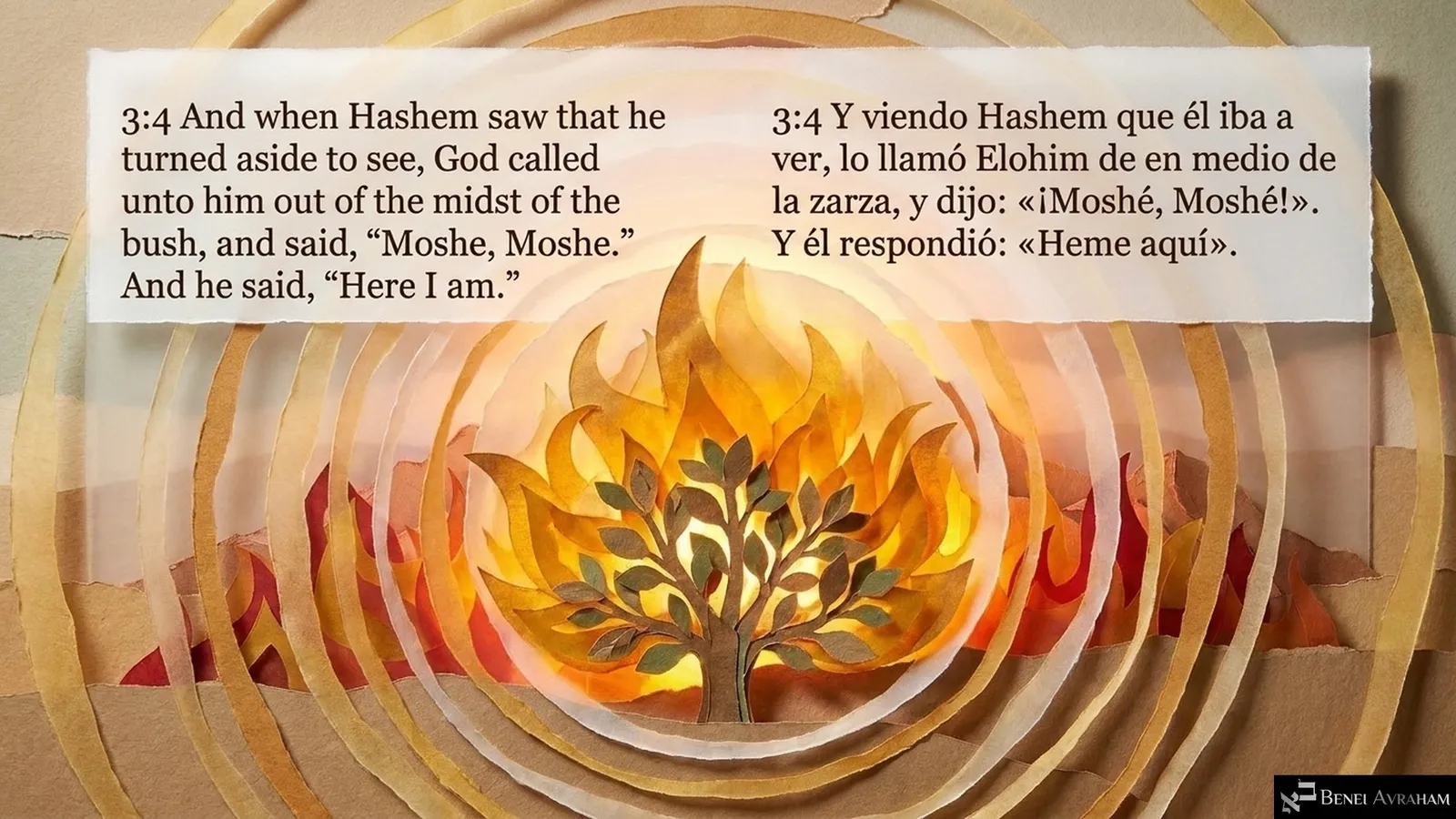
The burning bush within golden rings: God called unto him out of the midst of the bush, “Moshe, Moshe” (Exodus 3:4).
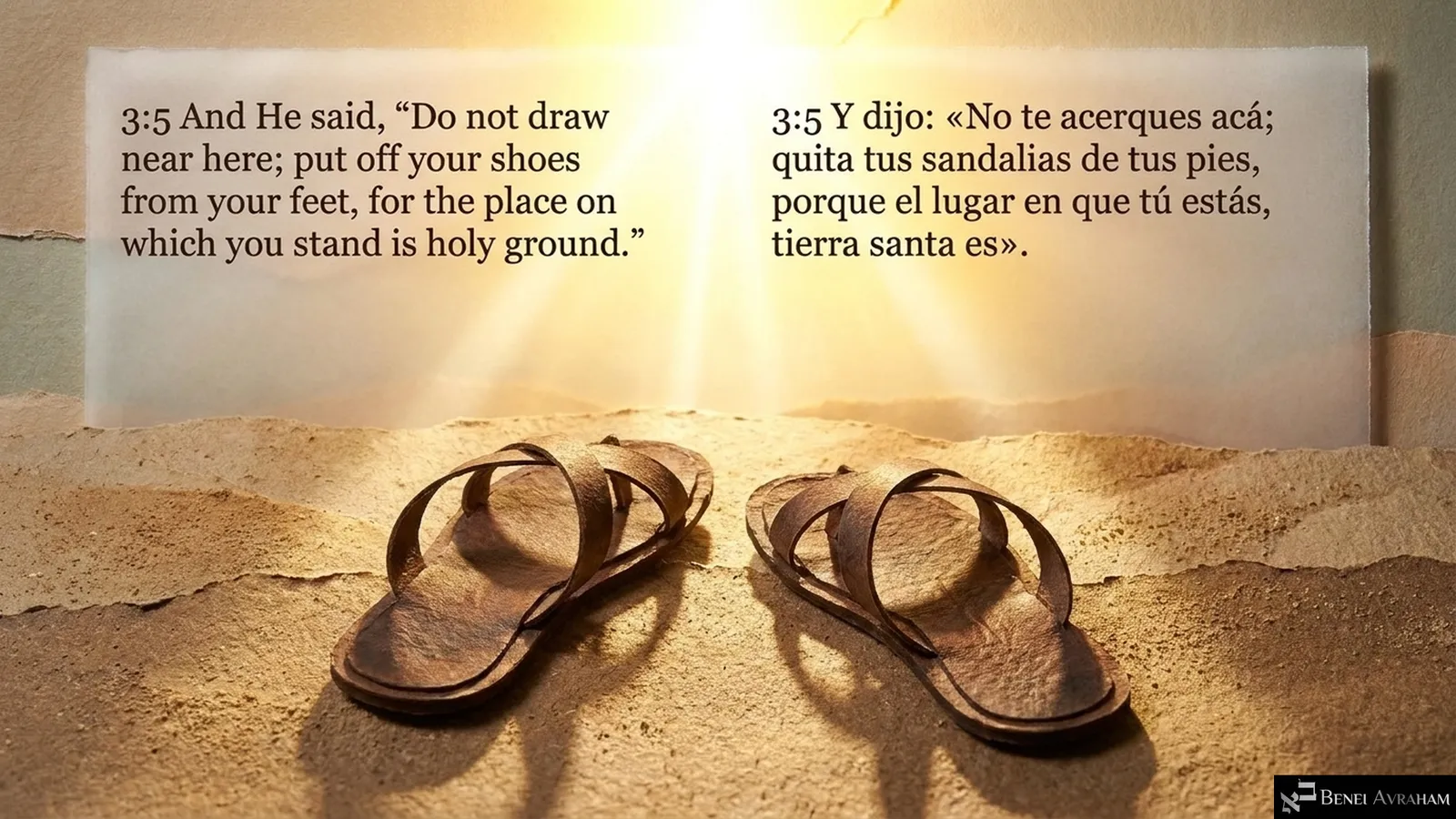
A pair of paper sandals on the sand in streaming light: “Put off your shoes from your feet, for the place on which you stand is holy ground” (Exodus 3:5).
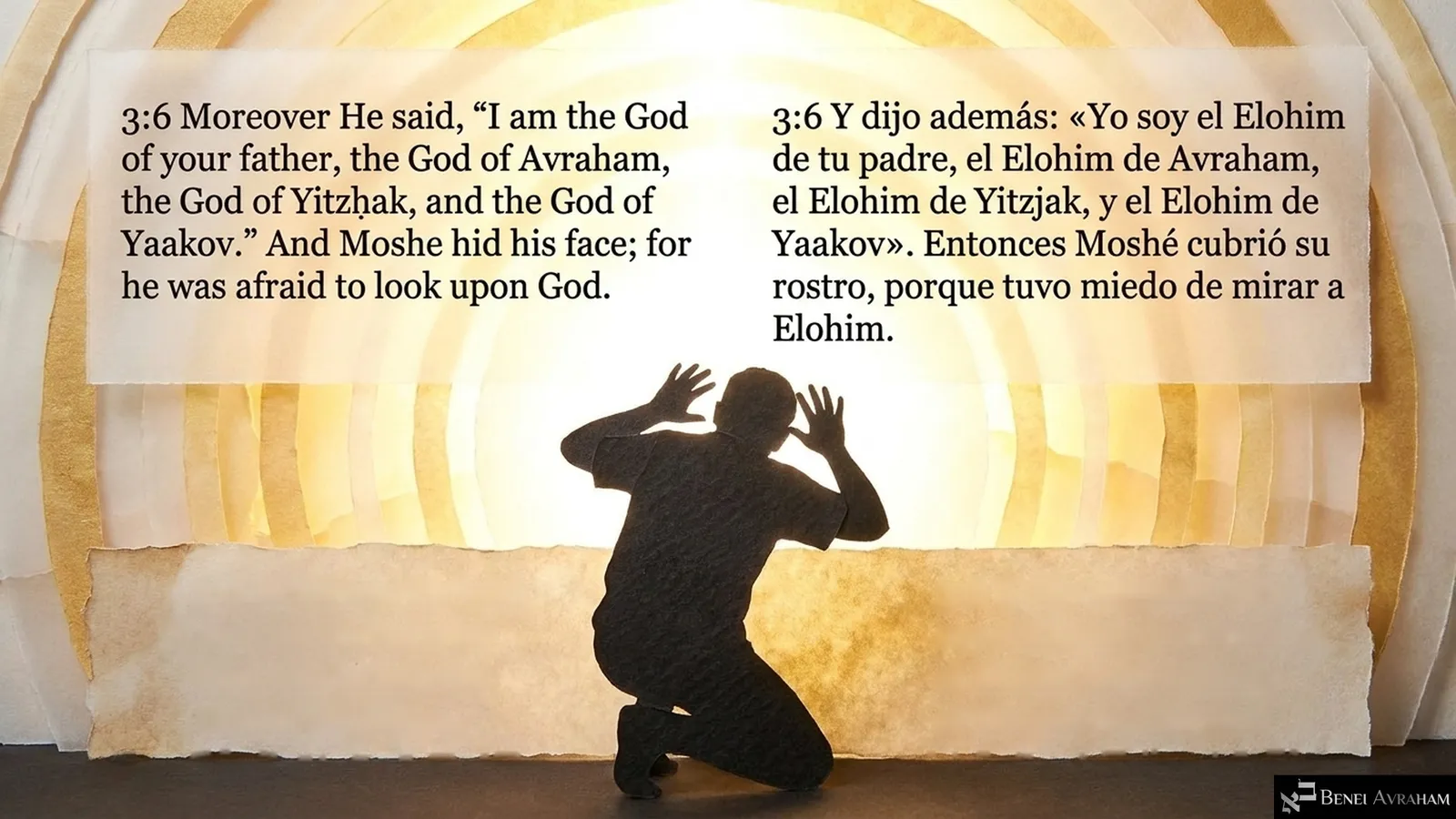
A kneeling paper figure hides his face before a glowing light: “I am the God of your father”; Moshe was afraid to look upon God (Exodus 3:6).
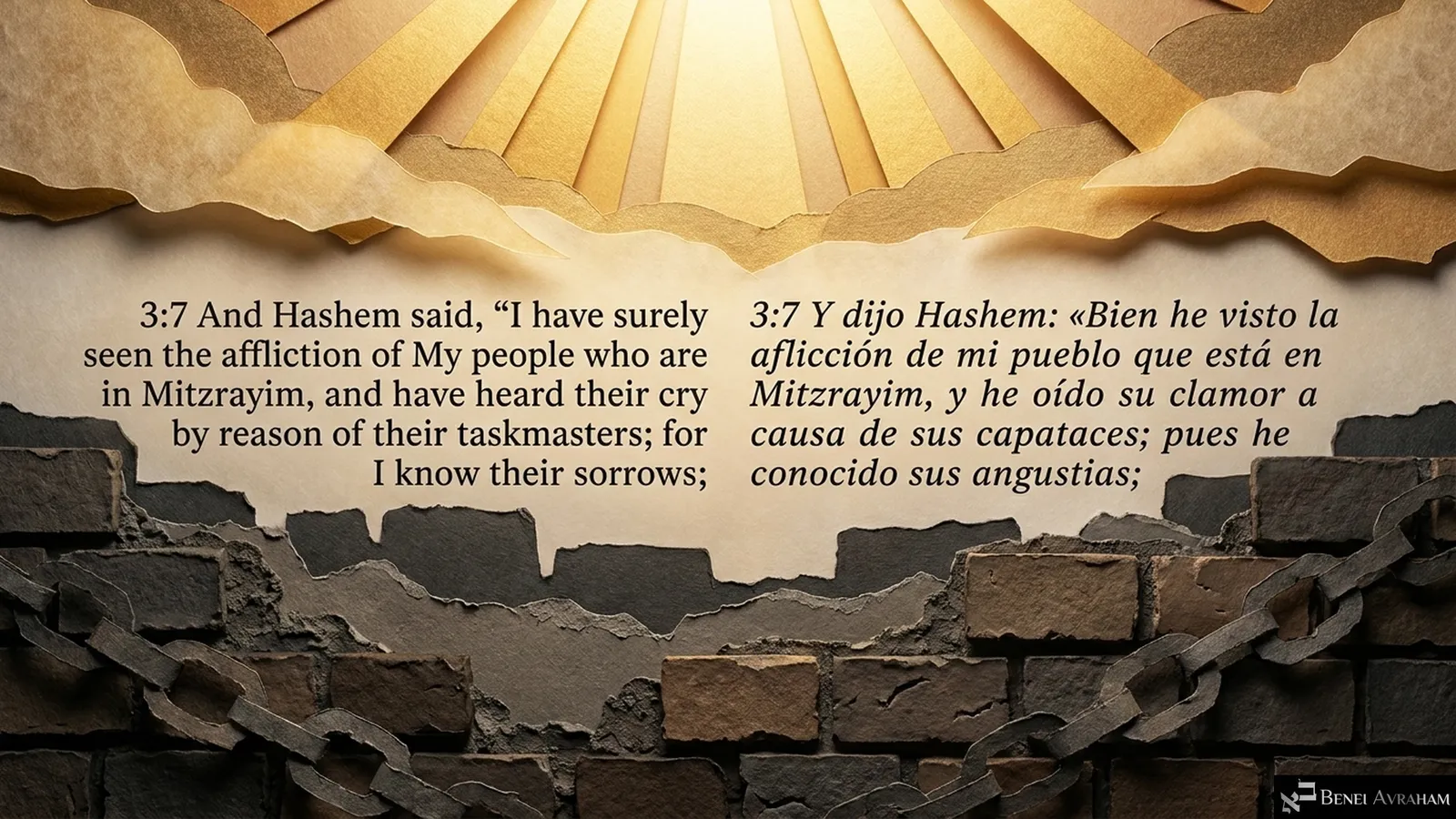
A paper sun above a broken brick wall and chains: “I have surely seen the affliction of My people” (Exodus 3:7).
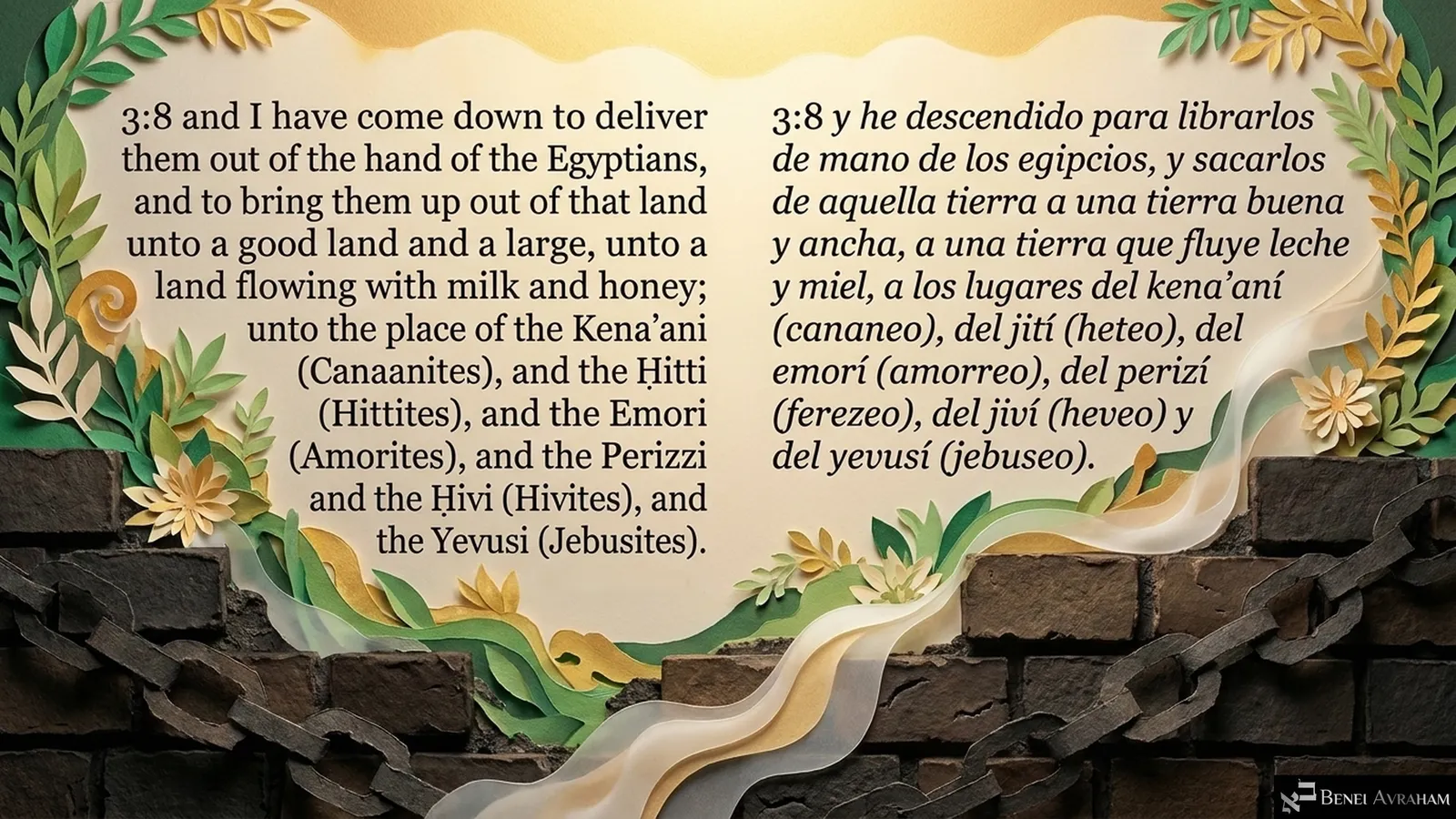
Paper flowers and a flowing white ribbon over the wall: to bring them up unto a land flowing with milk and honey (Exodus 3:8).
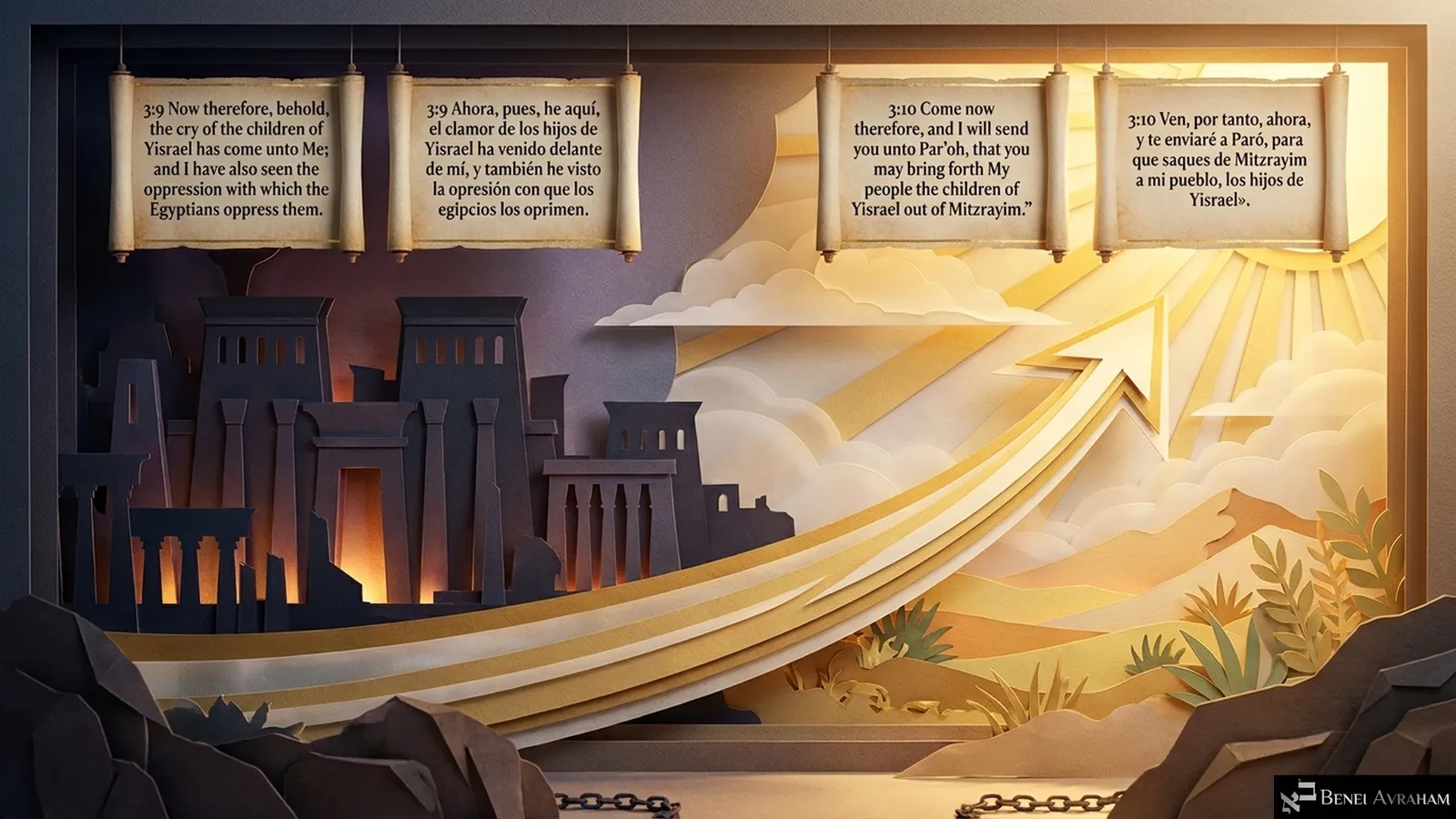
Hanging scrolls above a golden arrow sweeping from a dark city toward a sunlit land: “I will send you unto Par’oh” (Exodus 3:9–10).
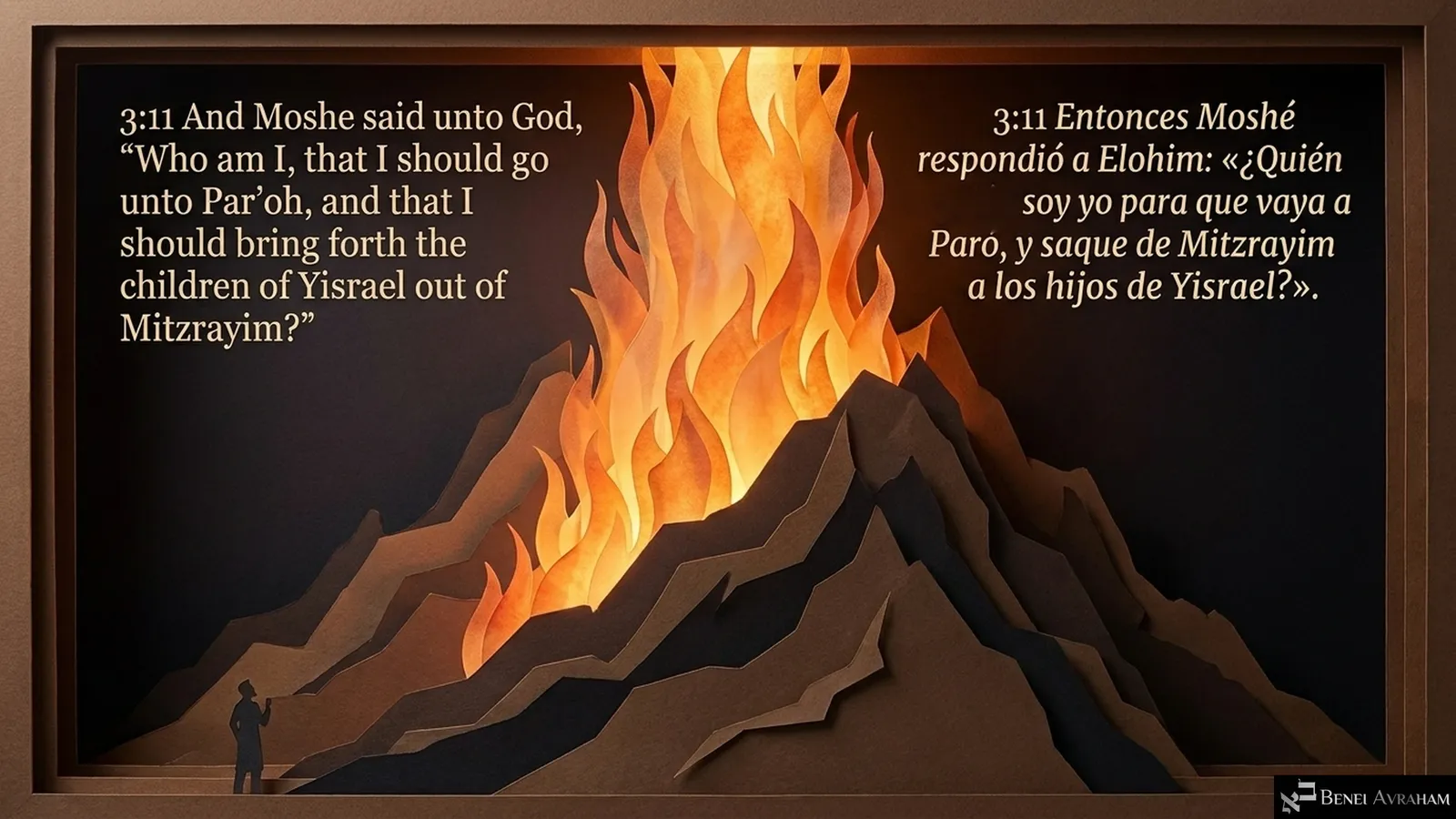
A small paper figure before a burning mountain: “Who am I, that I should go unto Par’oh?” (Exodus 3:11).
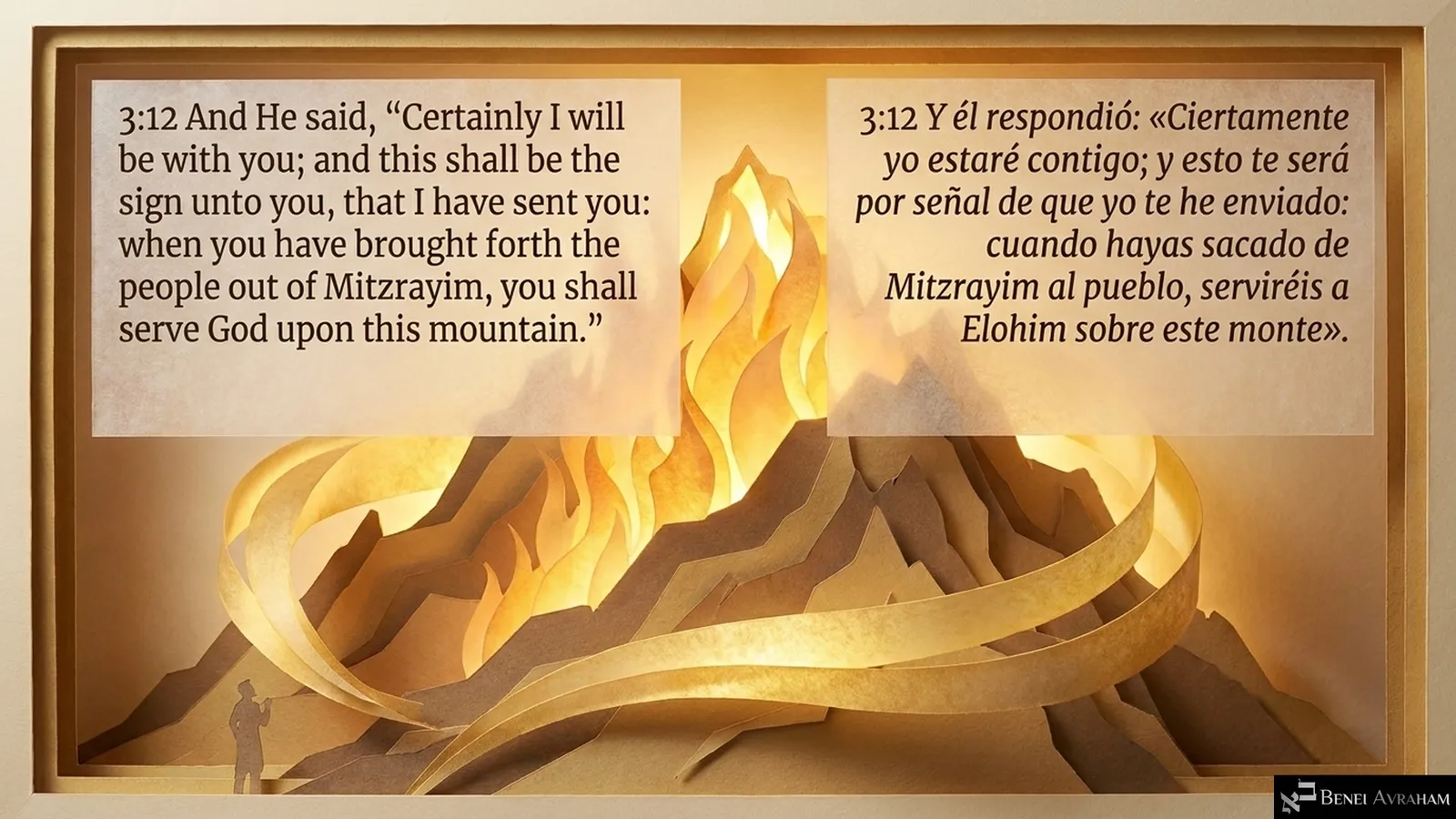
A golden ribbon wraps a glowing paper mountain: “Certainly I will be with you… you shall serve God upon this mountain” (Exodus 3:12).
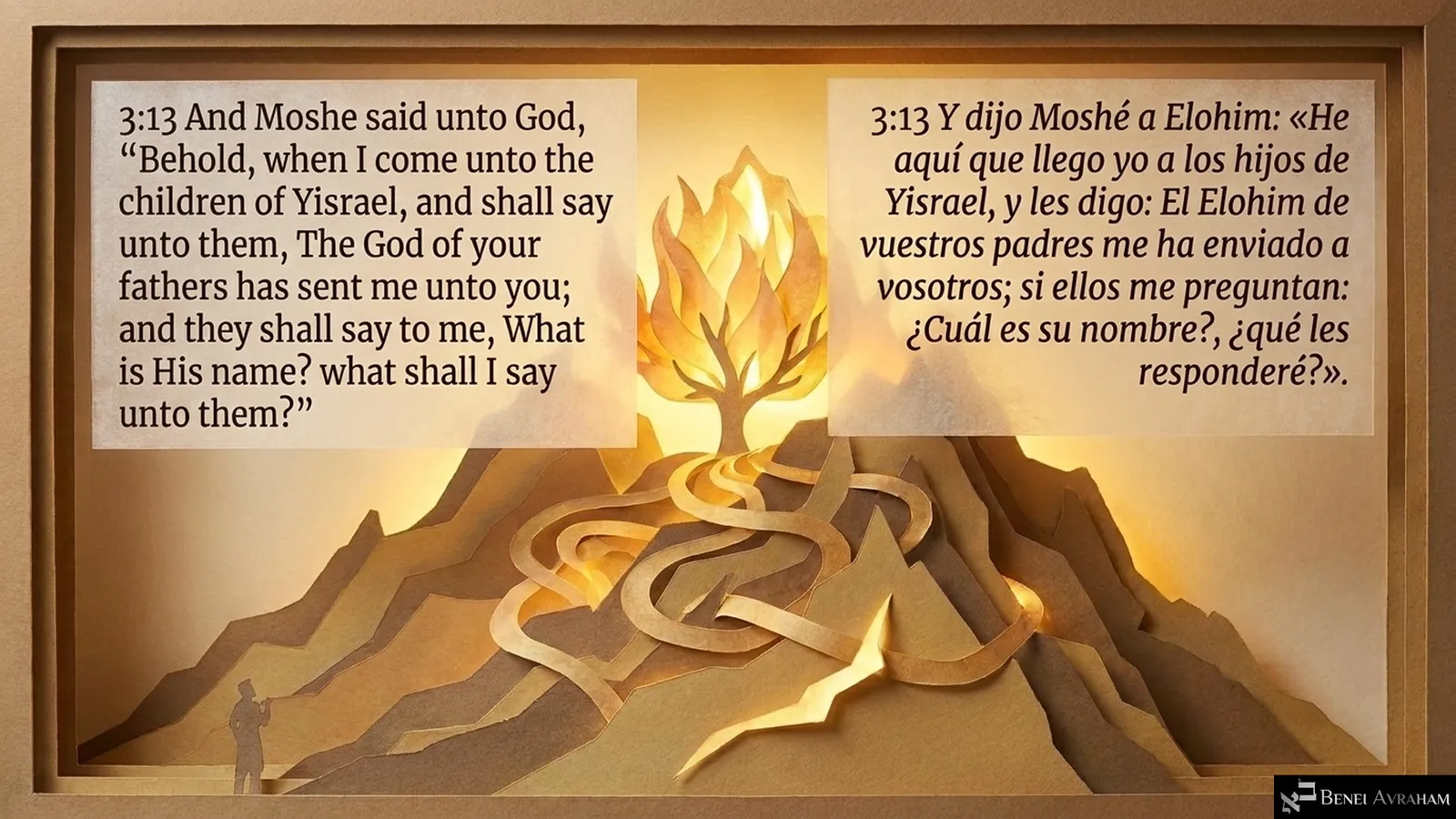
A golden path winds up to a burning tree on the mountain: “What is His name? what shall I say unto them?” (Exodus 3:13).
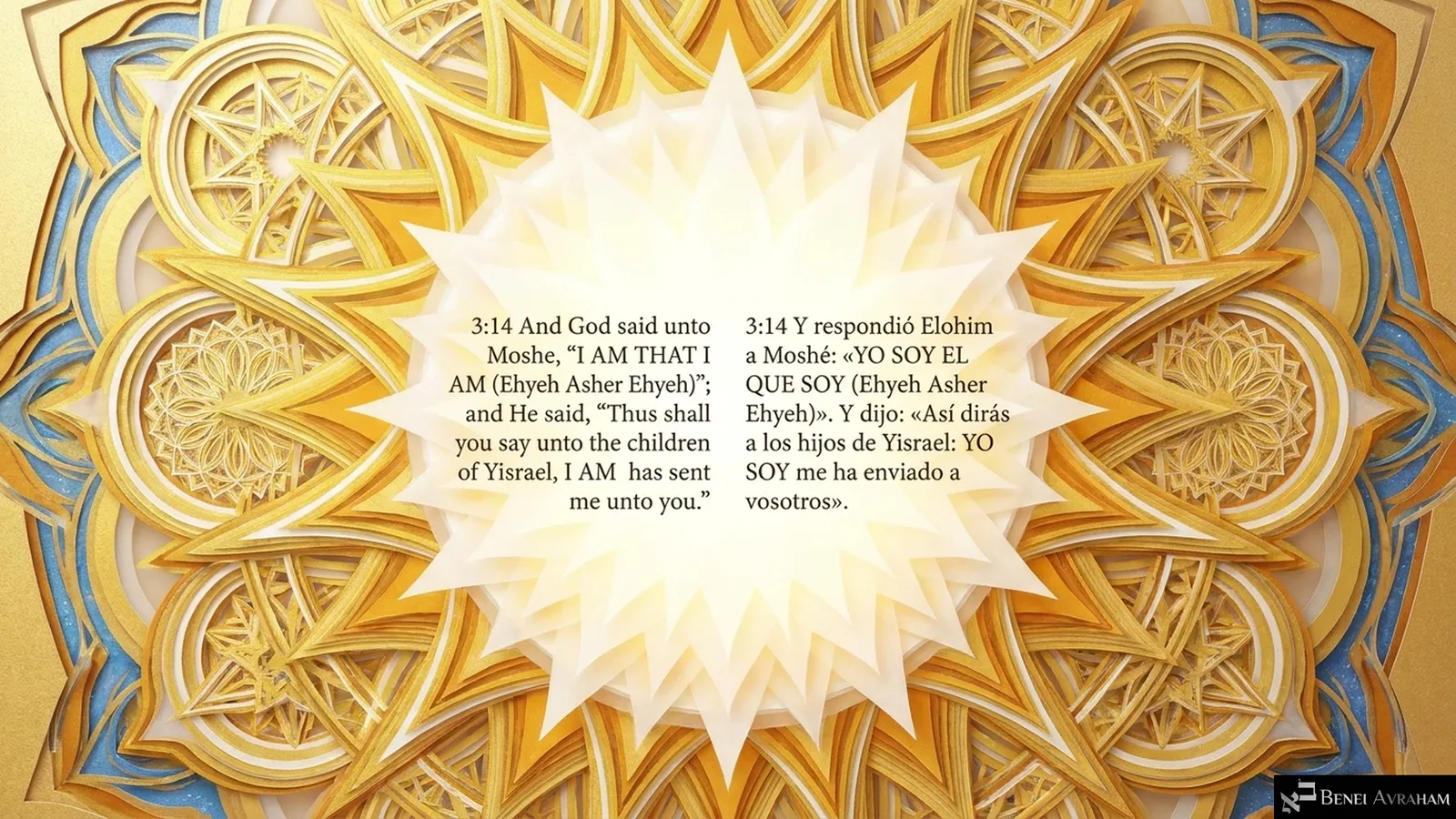
A radiant paper star within golden geometric patterns: “I AM THAT I AM (Ehyeh Asher Ehyeh)” (Exodus 3:14).
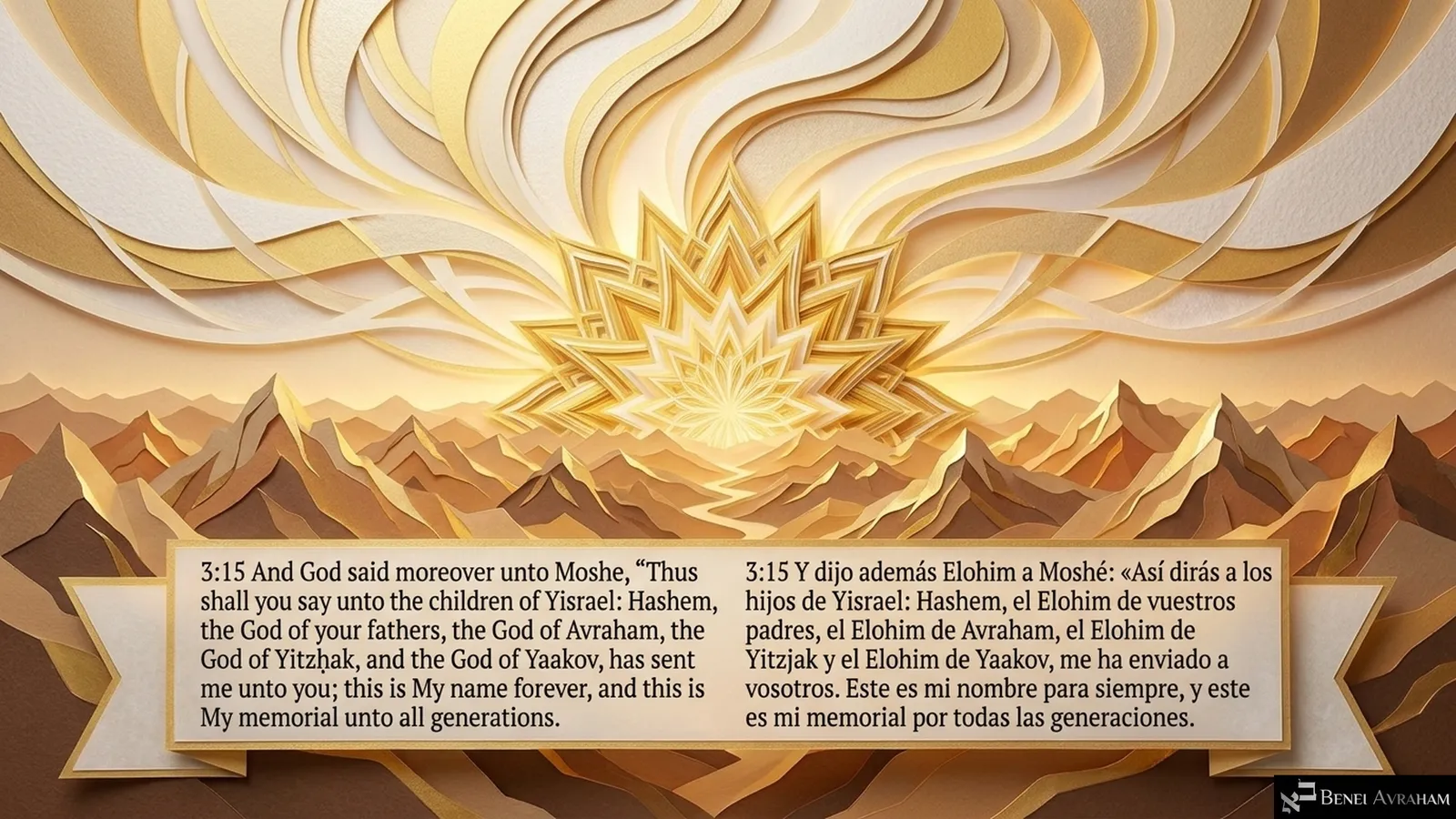
A golden paper star rises over the mountains: “This is My name forever, and this is My memorial unto all generations” (Exodus 3:15).
Chamishi · Exodus 3:16–4:17

Fifth Portion
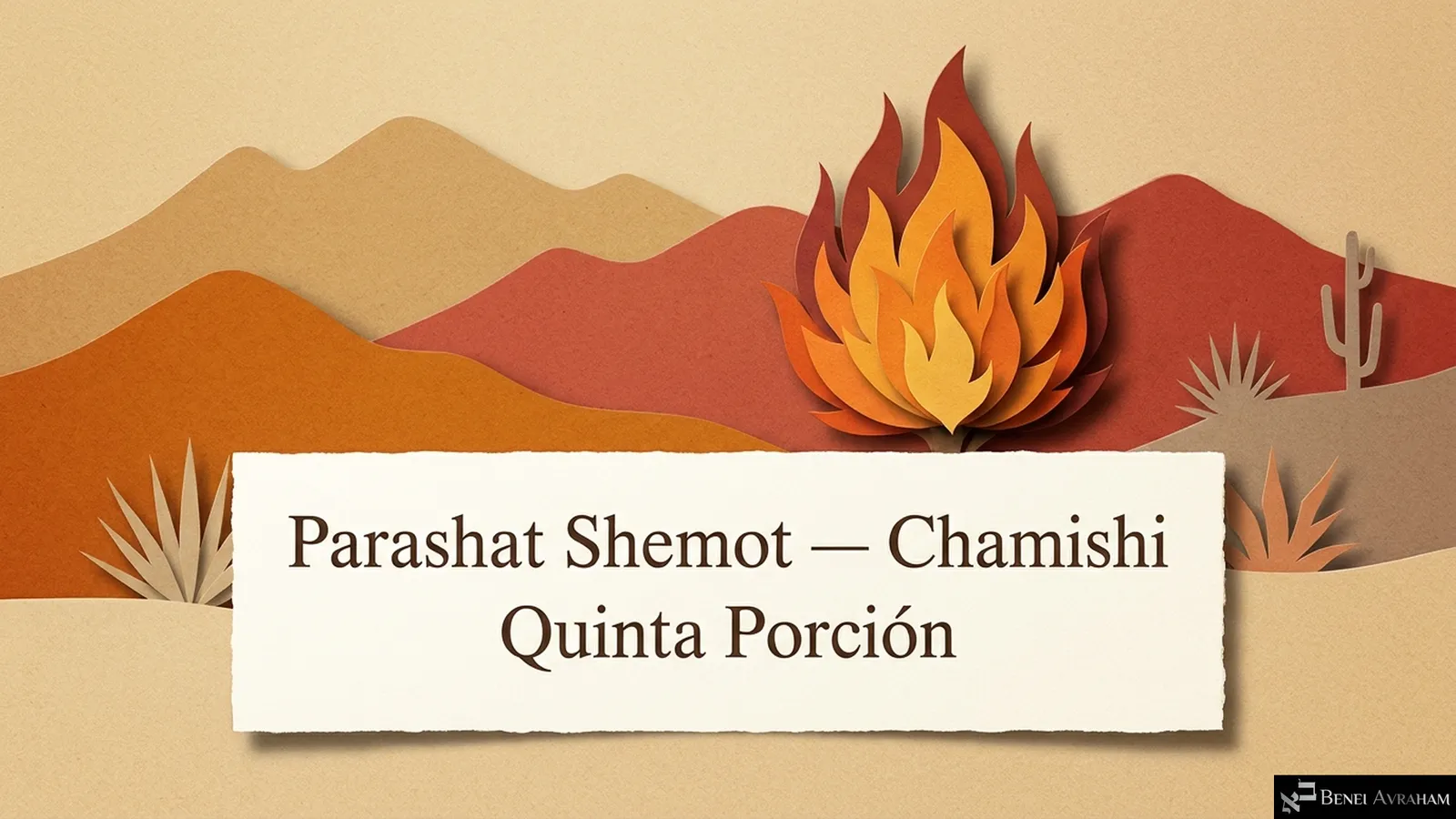
Title card for the fifth portion with a paper flame among desert hills: “Parashat Shemot — Chamishi, Quinta Porción”.
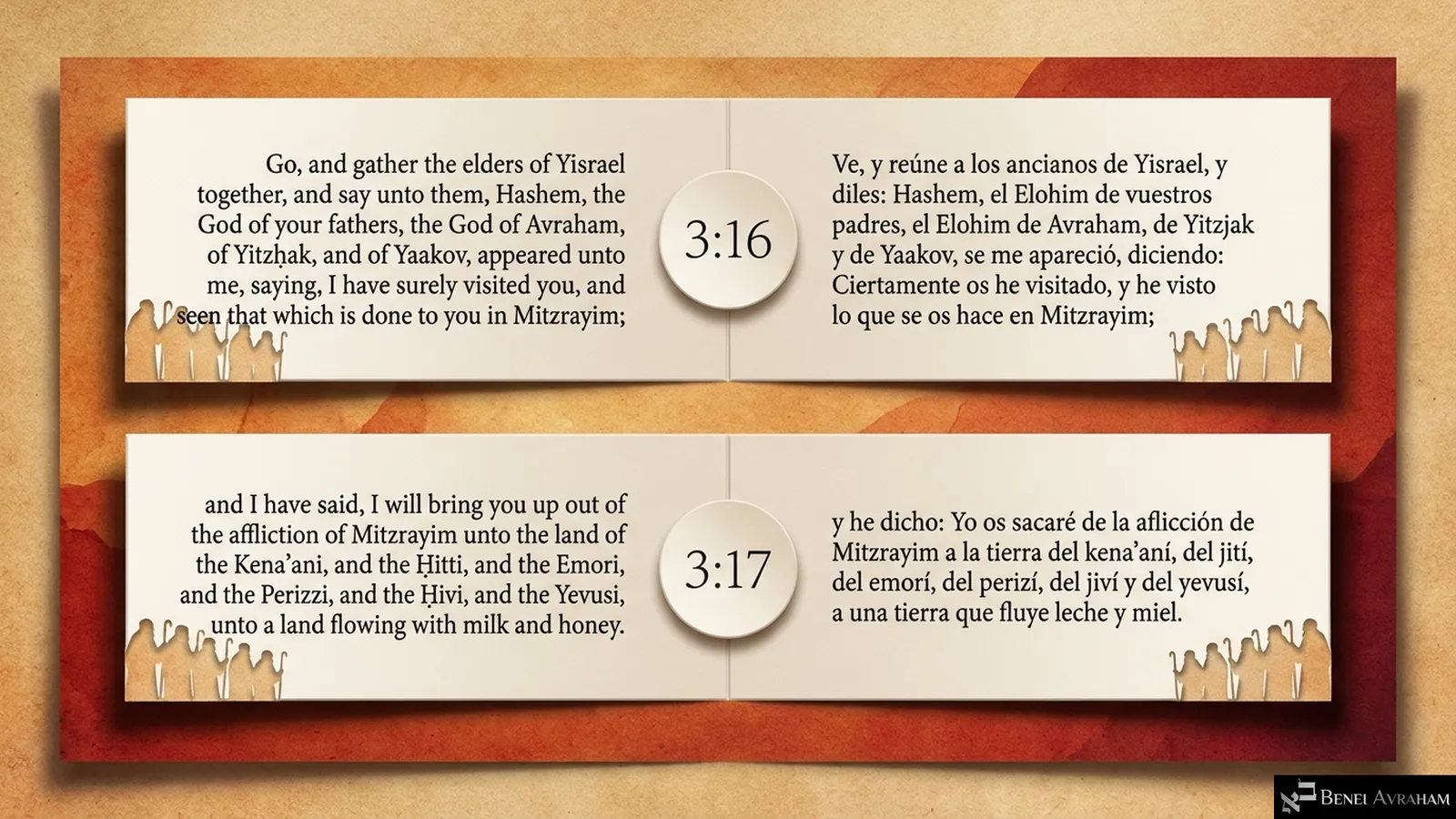
Facing parchment cards with verse medallions: “Gather the elders of Yisrael… I will bring you up out of the affliction of Mitzrayim” (Exodus 3:16–17).
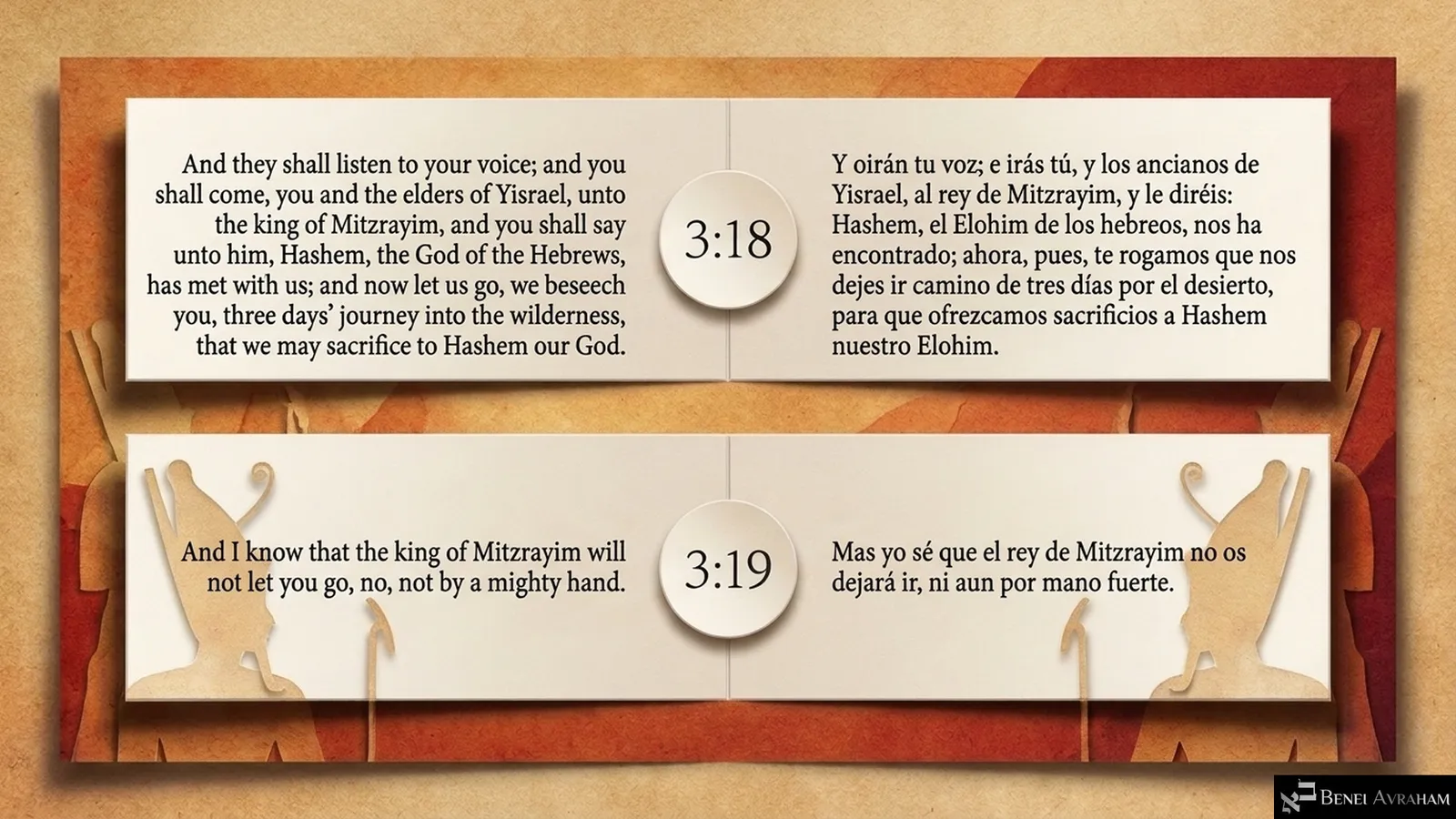
Parchment cards over paper figures: “Let us go three days’ journey into the wilderness… the king of Mitzrayim will not let you go” (Exodus 3:18–19).
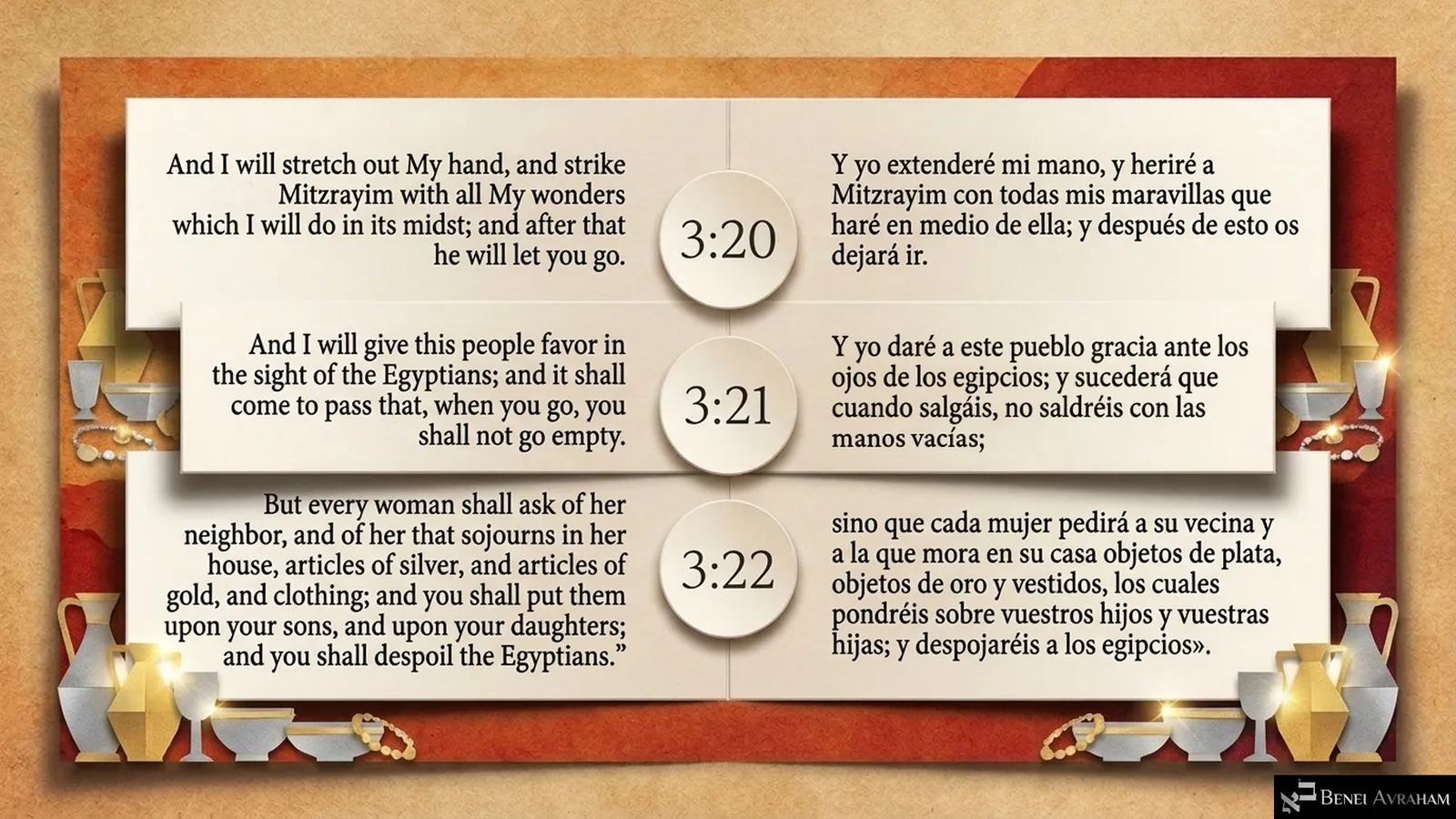
Parchment cards with paper vessels of silver and gold: “I will strike Mitzrayim with all My wonders… you shall despoil the Egyptians” (Exodus 3:20–22).
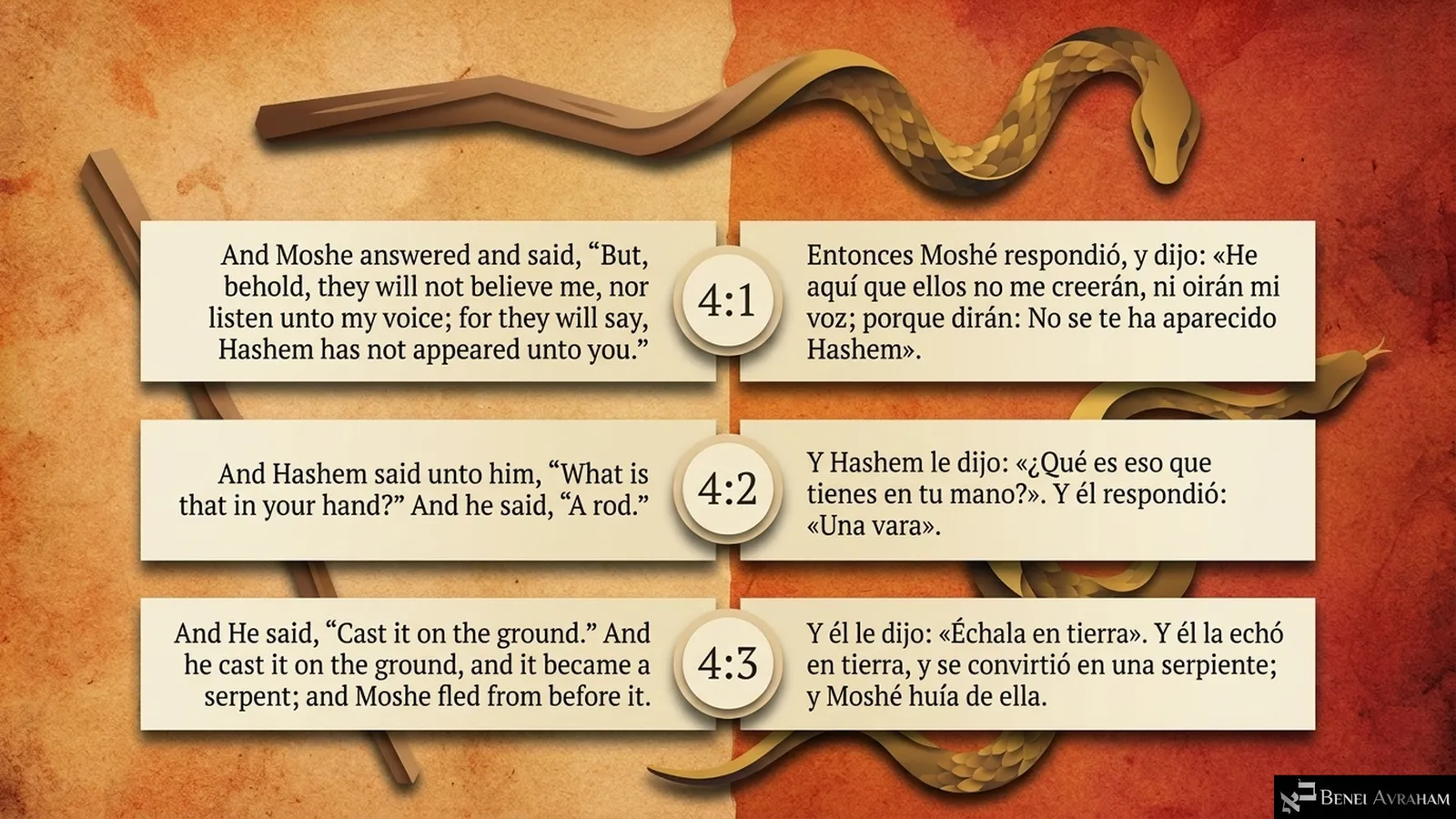
A paper rod turning into a serpent: “What is that in your hand?” “A rod.” It became a serpent (Exodus 4:1–3).
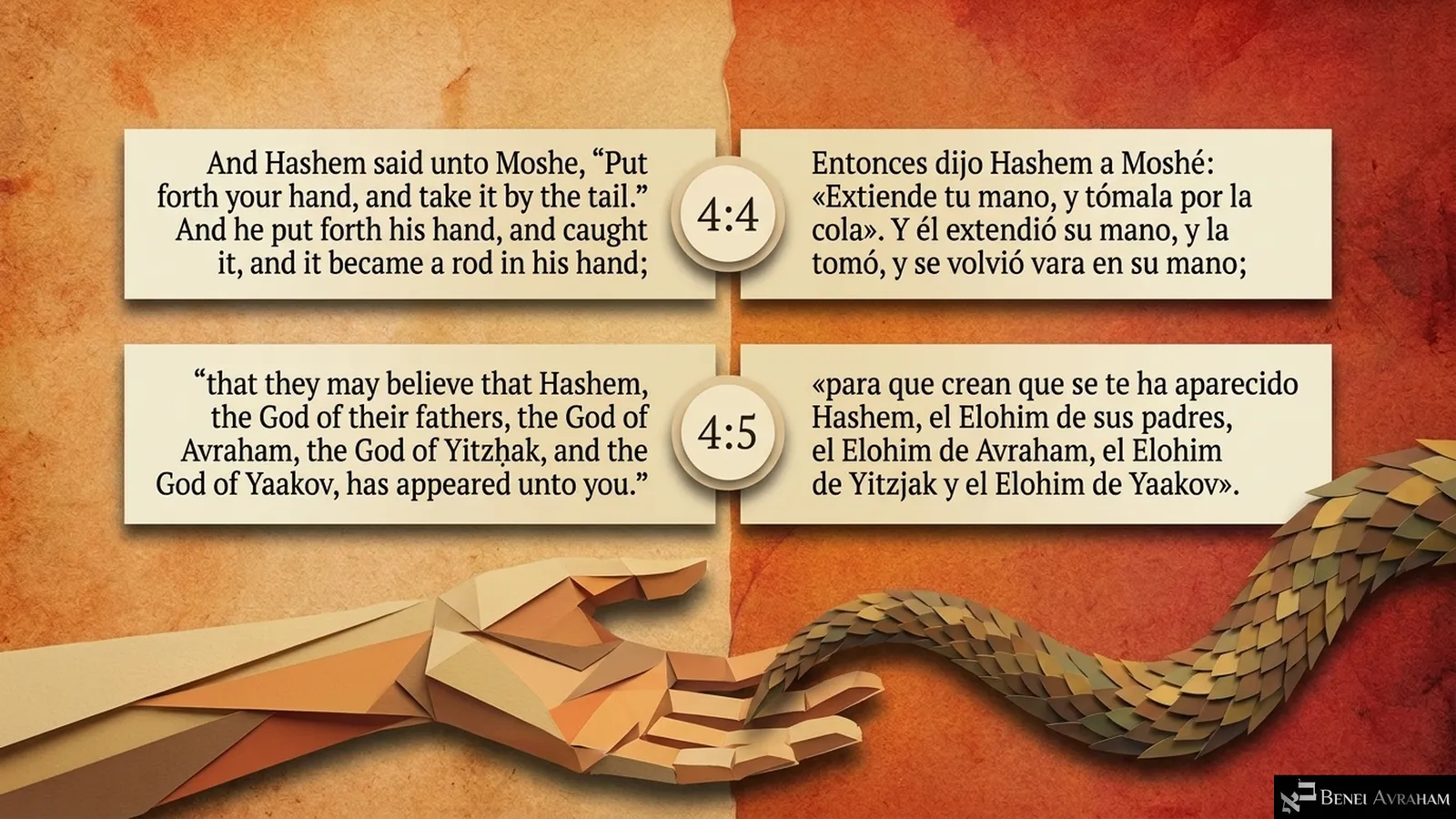
A paper hand grasps the serpent by the tail: it became a rod in his hand, that they may believe (Exodus 4:4–5).
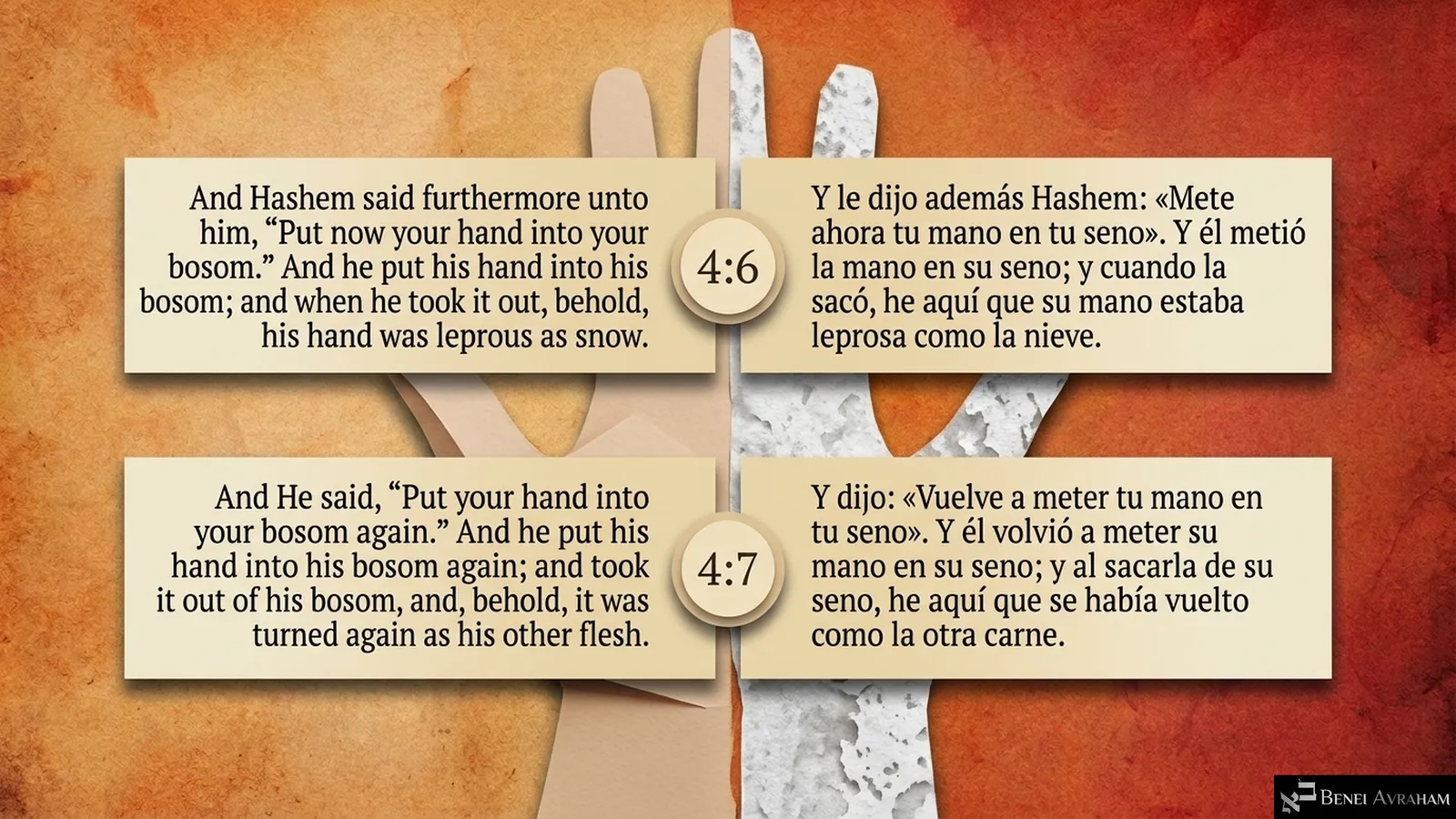
A paper hand turning white as snow and back again: his hand was leprous as snow; it was turned again as his other flesh (Exodus 4:6–7).
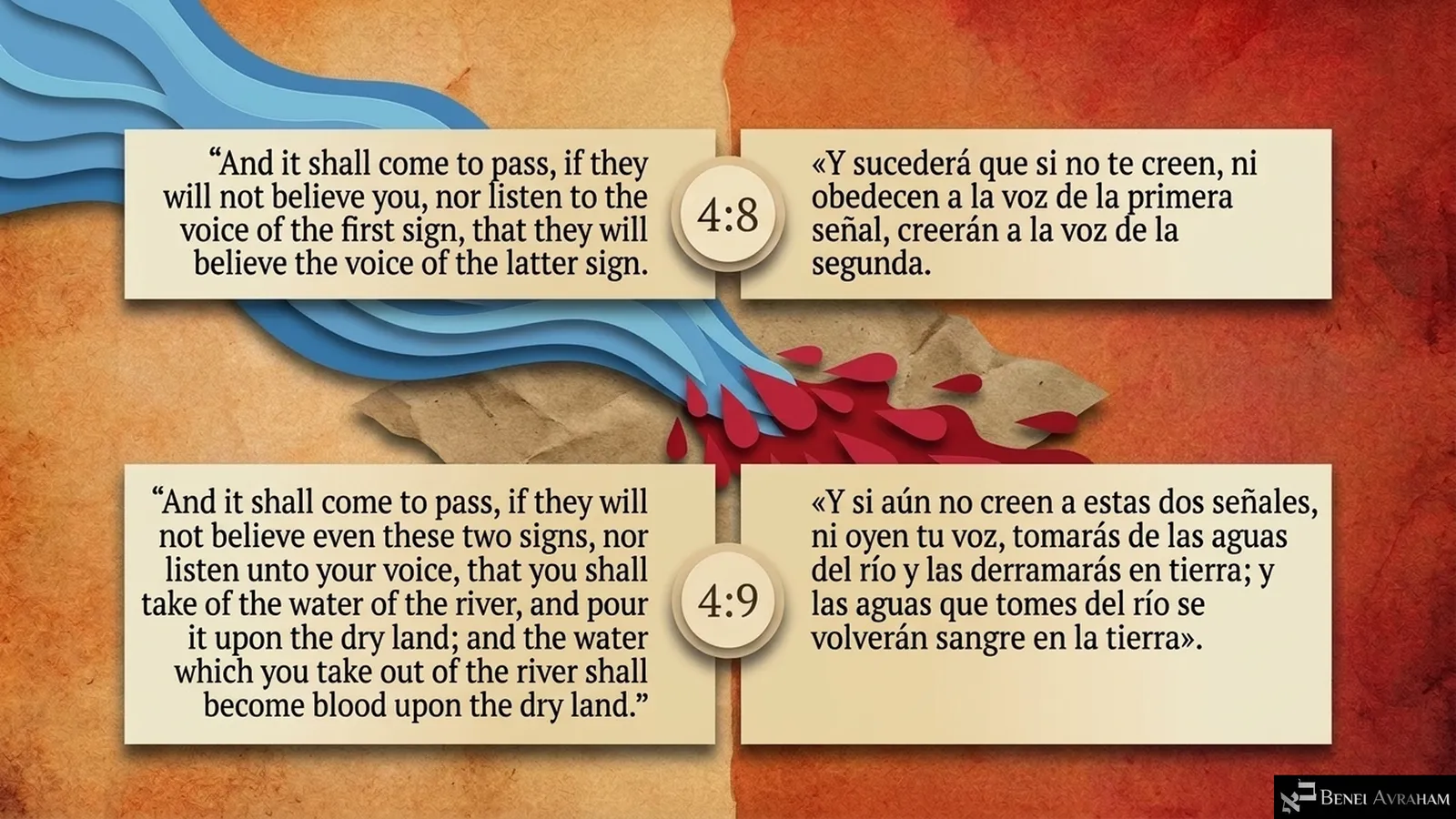
Blue paper water turning to red: the water of the river shall become blood upon the dry land (Exodus 4:8–9).
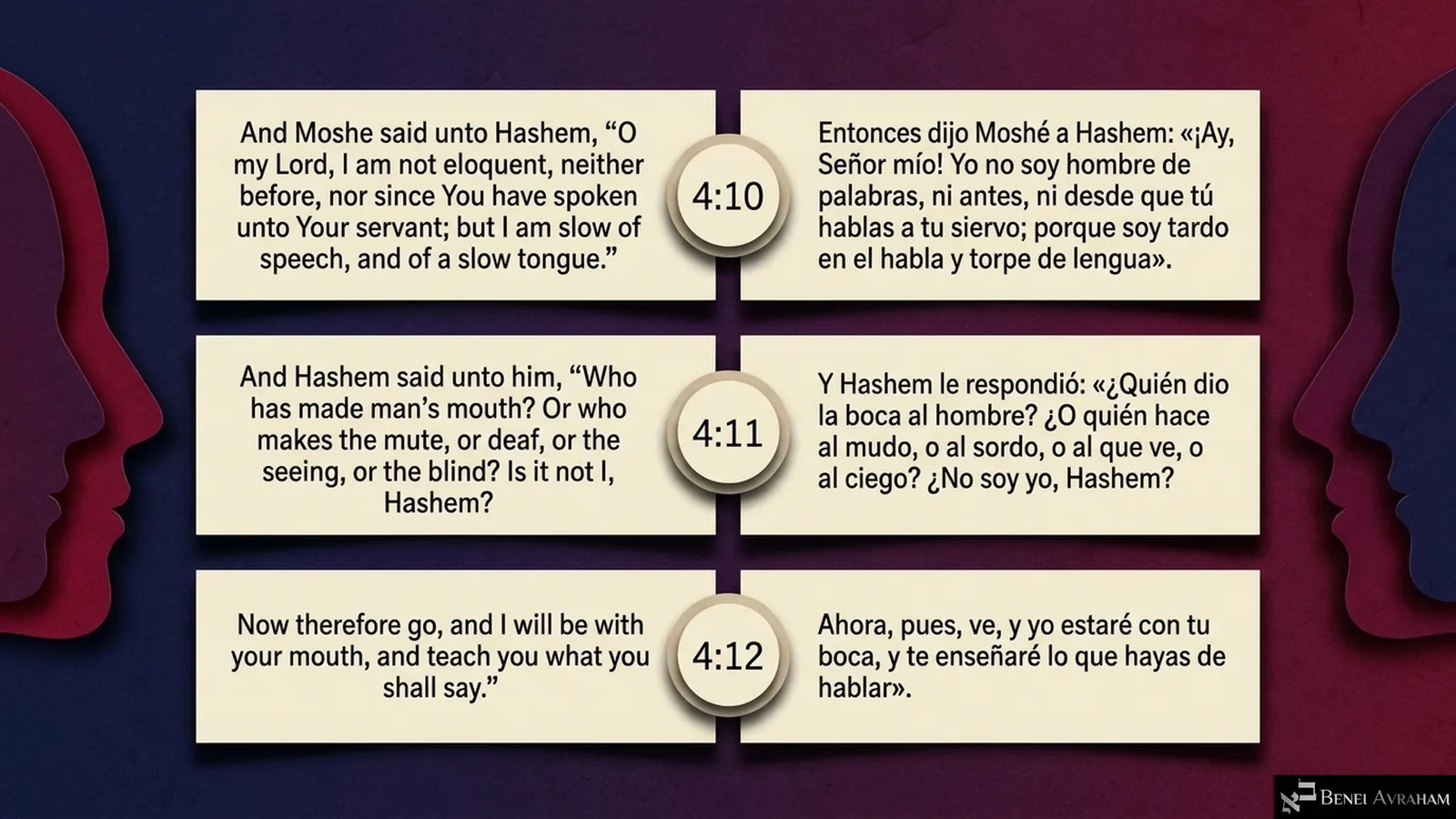
Two paper profiles face each other: “I am slow of speech”; “Who has made man’s mouth?… I will be with your mouth” (Exodus 4:10–12).
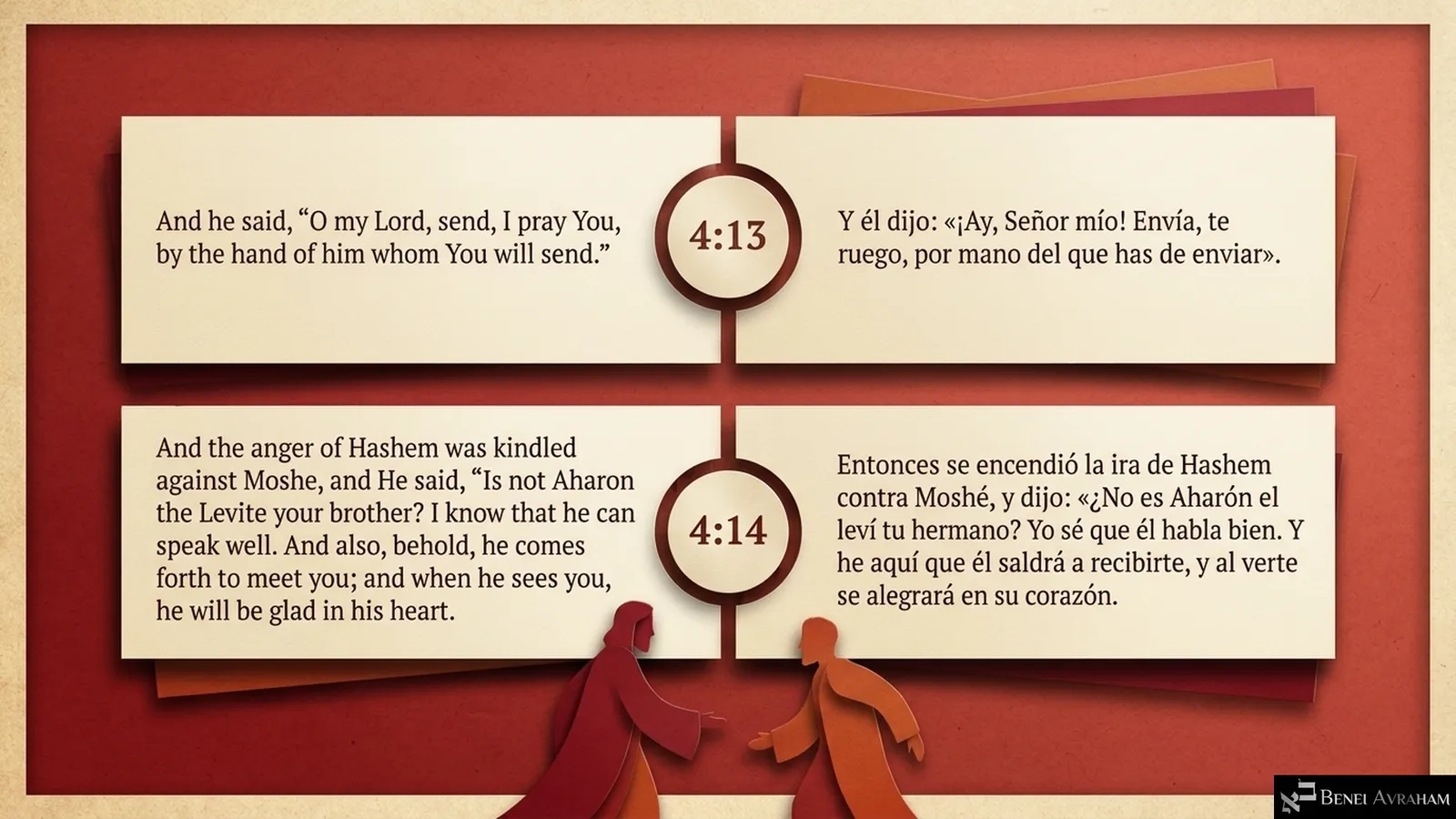
Two paper figures walk toward each other below the cards: “Is not Aharon the Levite your brother? He comes forth to meet you” (Exodus 4:13–14).
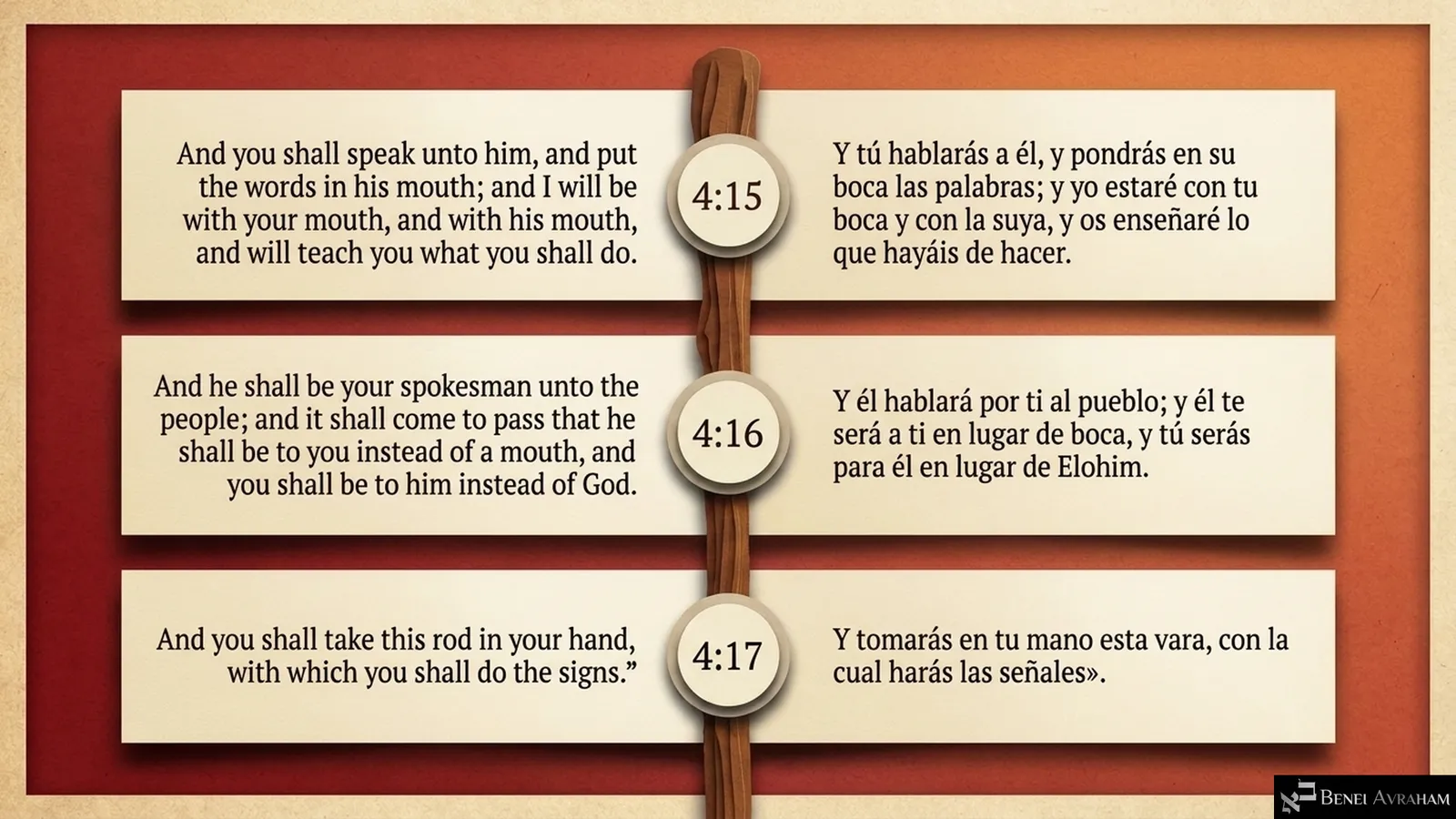
A paper rod runs down between the cards: Aharon shall be your spokesman; “You shall take this rod in your hand” (Exodus 4:15–17).
Shishi · Exodus 4:18–31

Sixth Portion

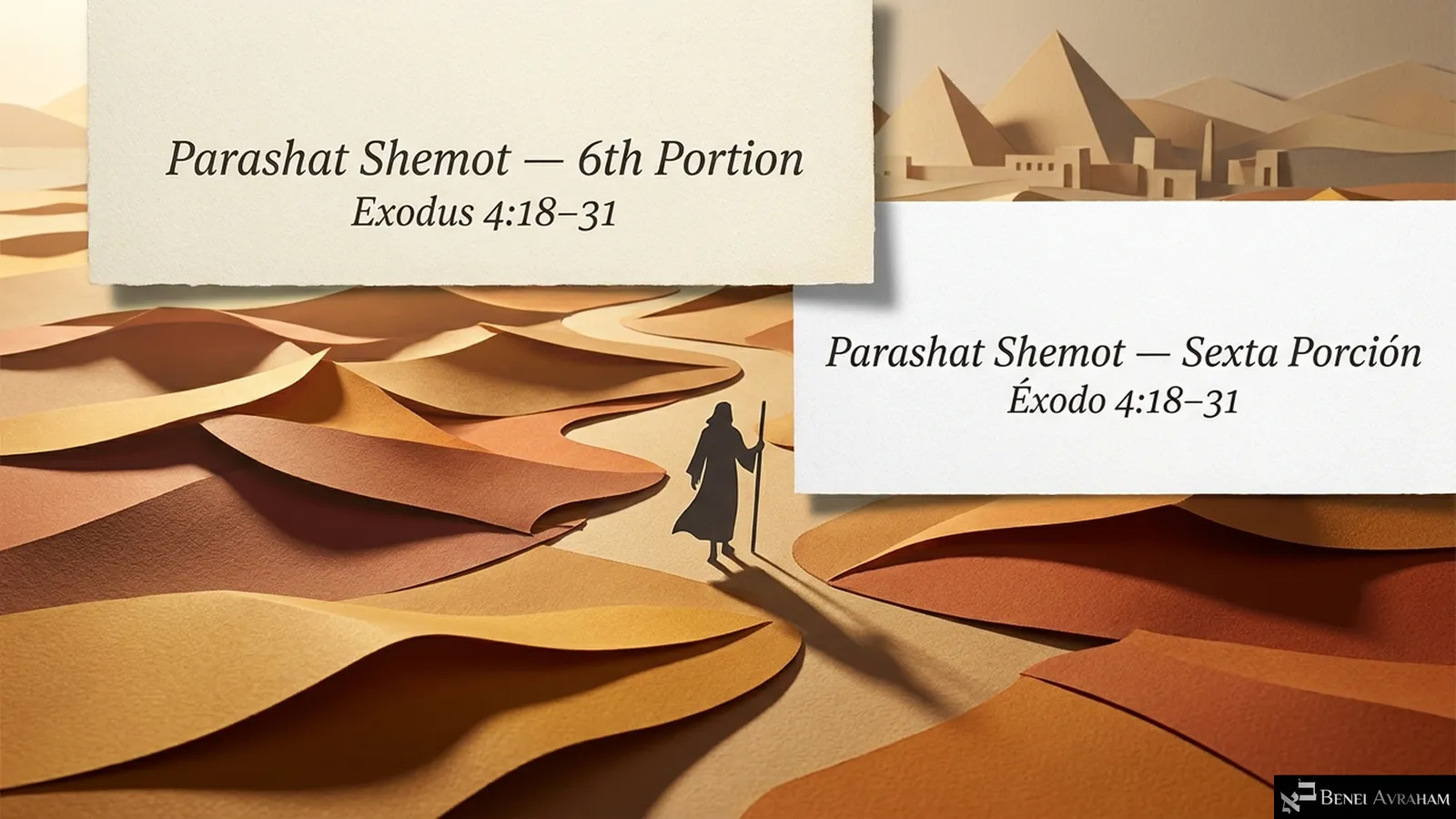
Title card for the sixth portion: a lone paper figure with a staff crosses the dunes toward Mitzrayim, “Parashat Shemot — 6th Portion, Exodus 4:18–31”.
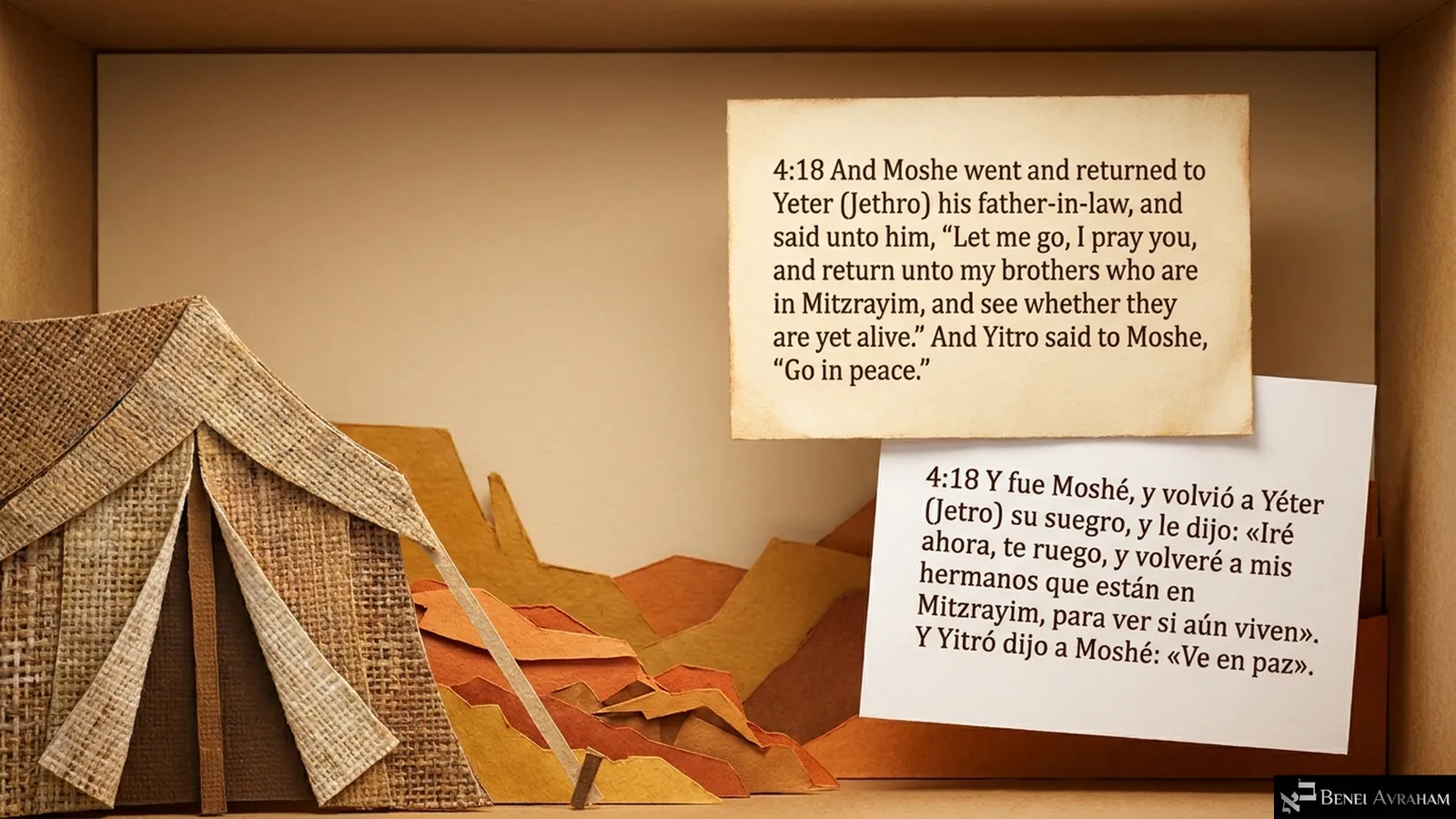
A burlap paper tent in the desert: “Let me go, I pray you, and return unto my brothers”; “Go in peace” (Exodus 4:18).
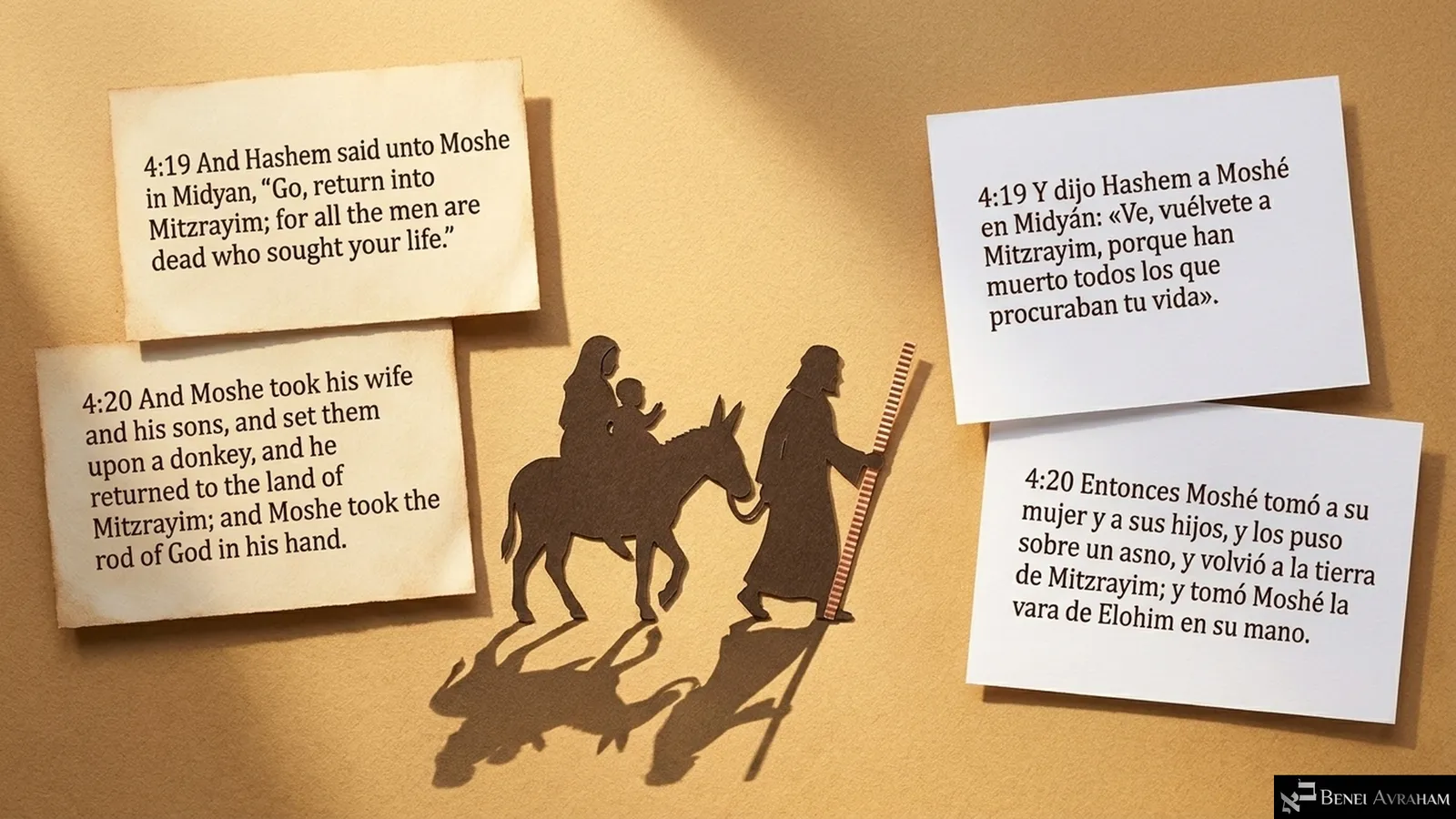
Moshe leads a donkey carrying his wife and son: Moshe returned to Mitzrayim with the rod of God in his hand (Exodus 4:19–20).
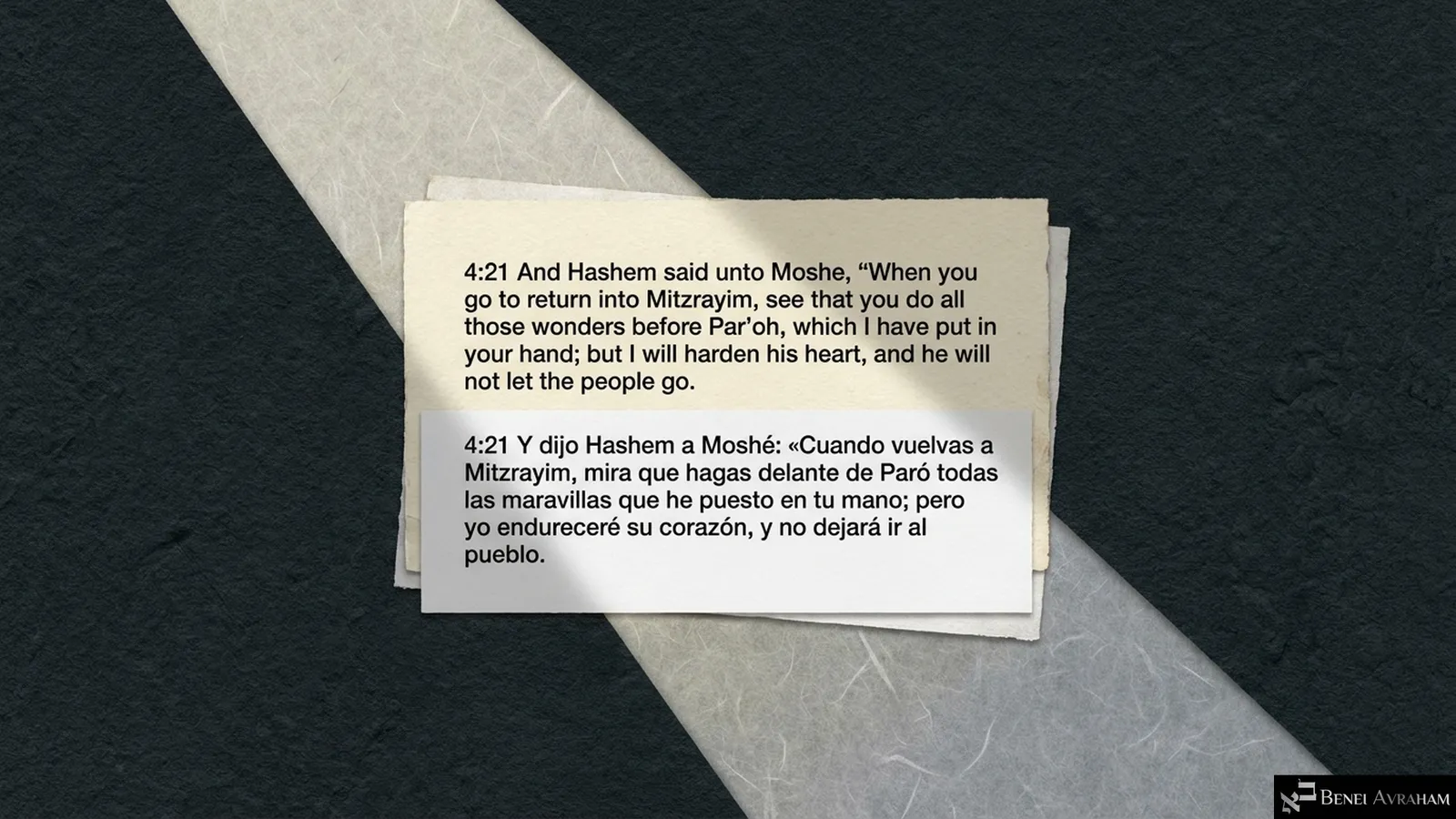
Overlapping cards on a dark ground: “I will harden his heart, and he will not let the people go” (Exodus 4:21).
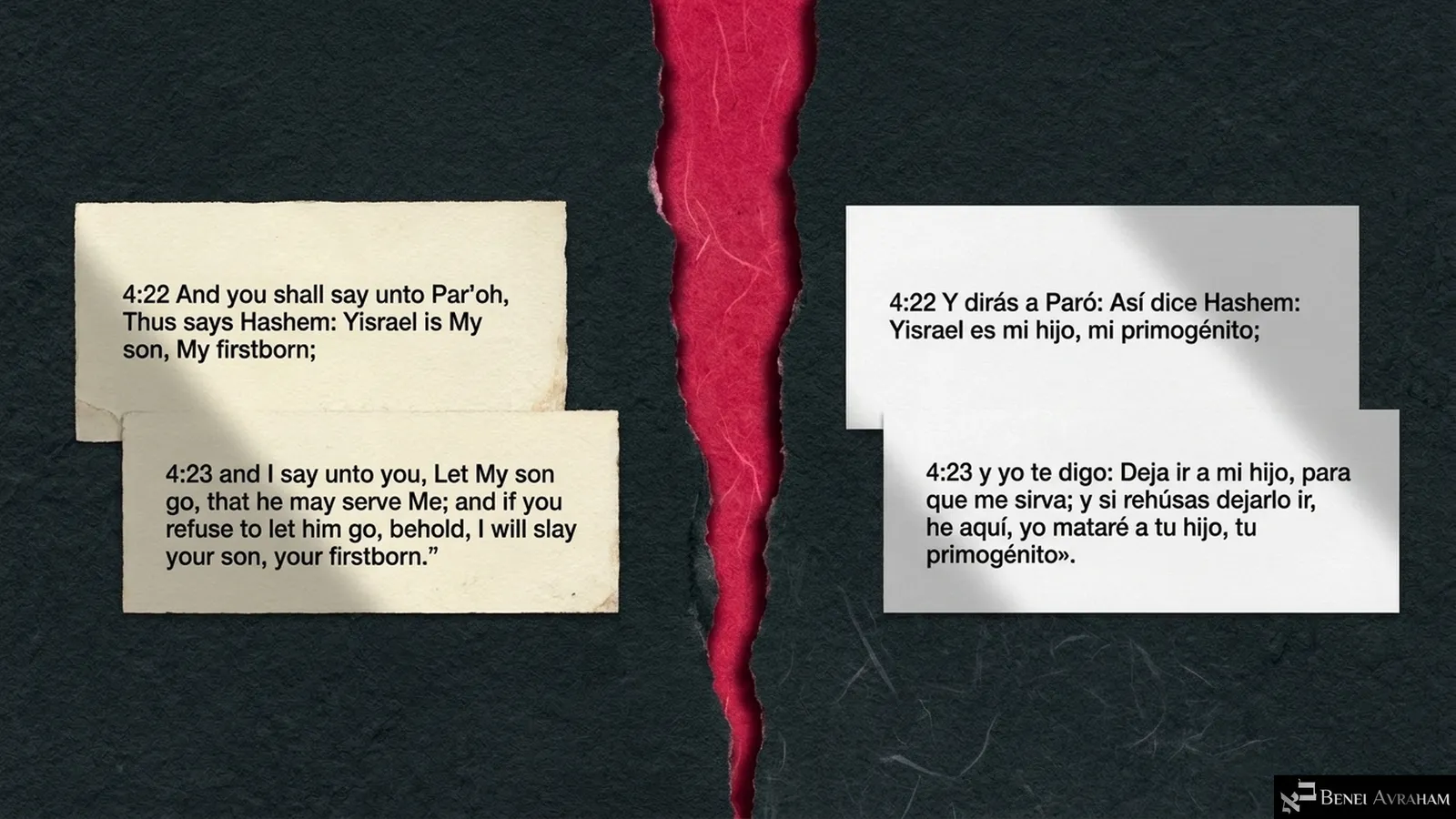
A red tear splits the dark page: “Yisrael is My son, My firstborn… Let My son go” (Exodus 4:22–23).
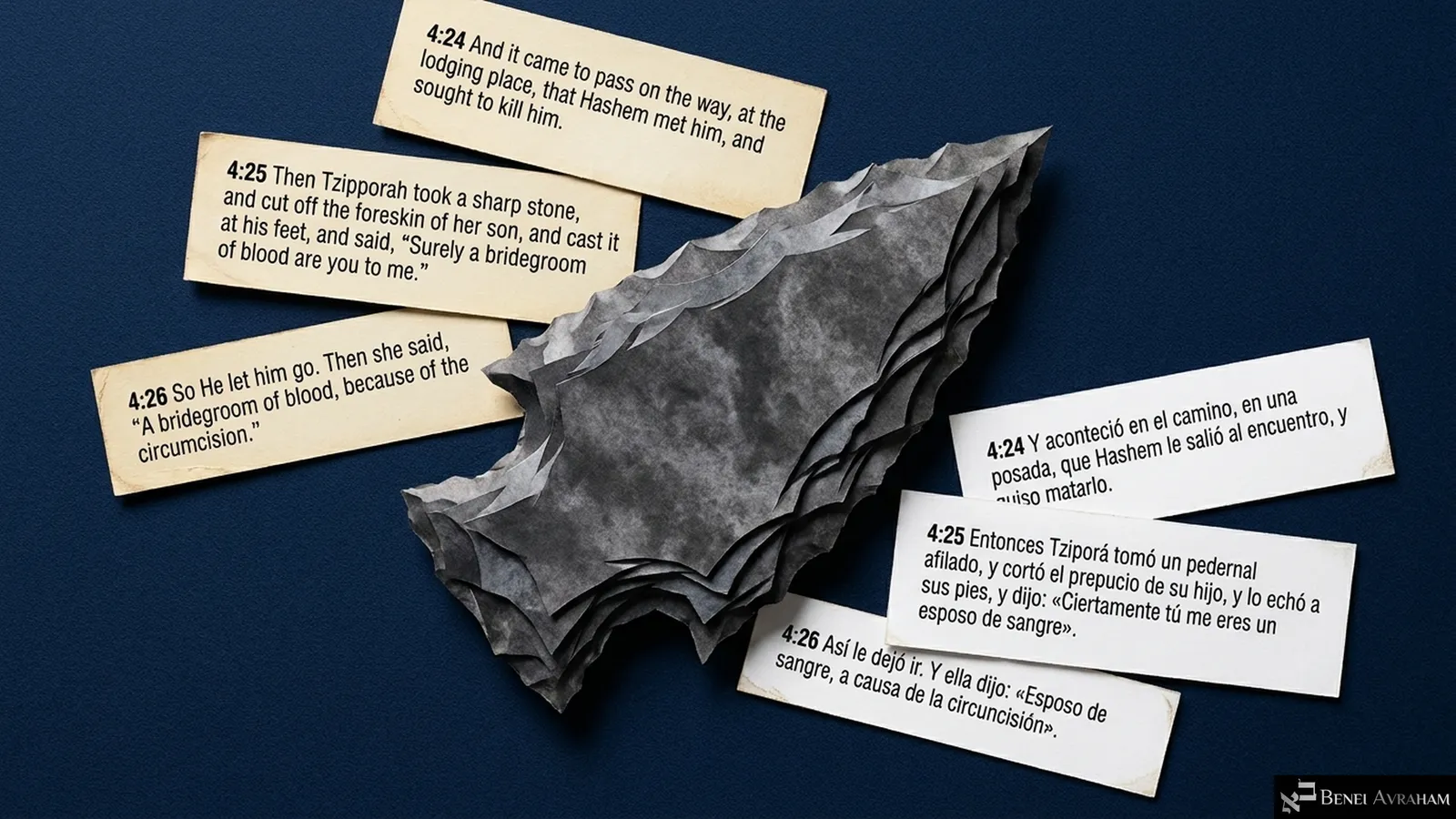
A grey paper flint among scattered cards: Tzipporah took a sharp stone; “A bridegroom of blood” (Exodus 4:24–26).
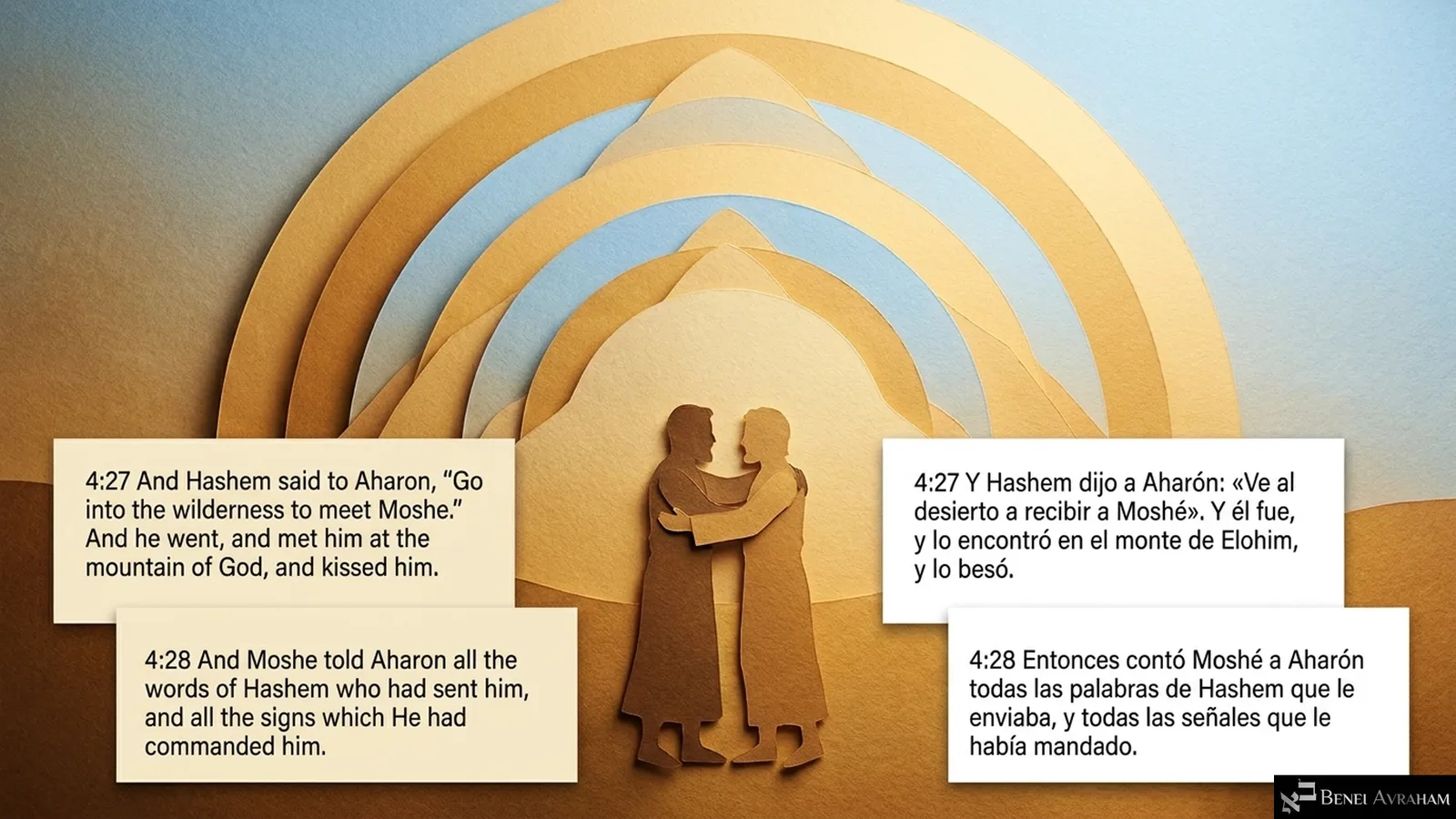
Two brothers embrace beneath golden arches: Aharon met Moshe at the mountain of God, and kissed him (Exodus 4:27–28).
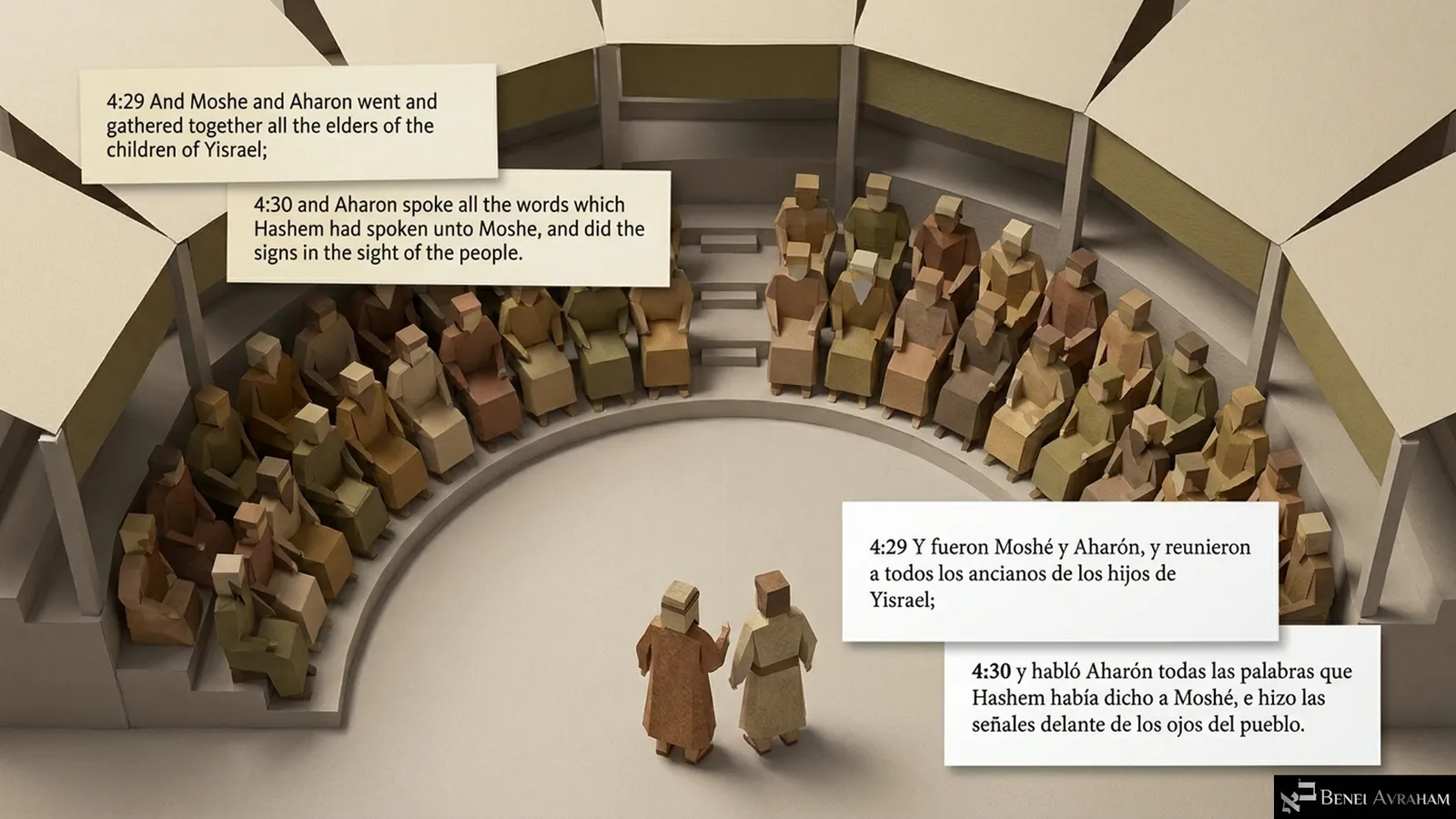
Paper elders seated in a circle as Moshe and Aharon speak: they gathered the elders, and did the signs in the sight of the people (Exodus 4:29–30).
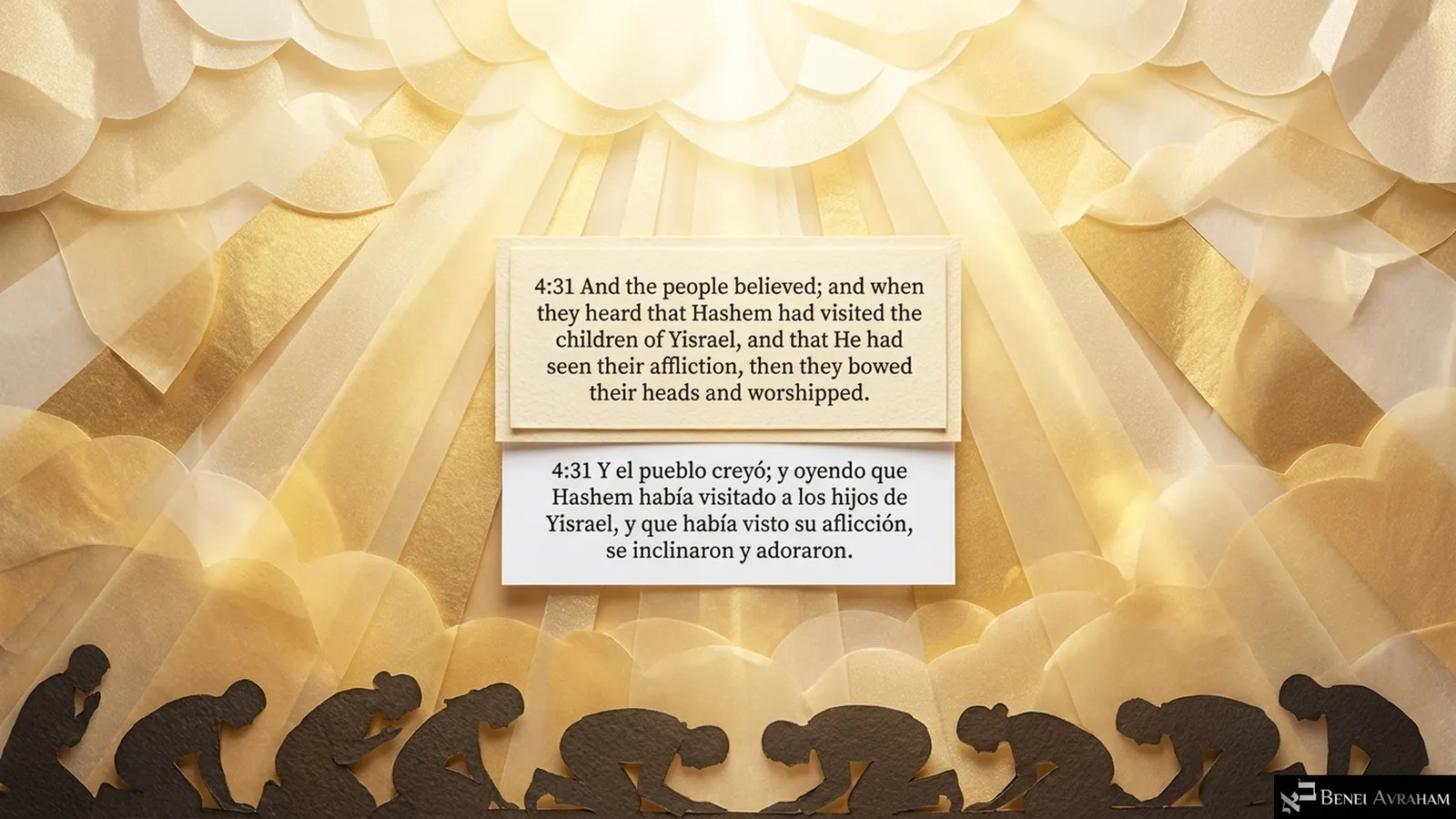
Bowing paper silhouettes beneath golden light: the people believed, and bowed their heads and worshipped (Exodus 4:31).
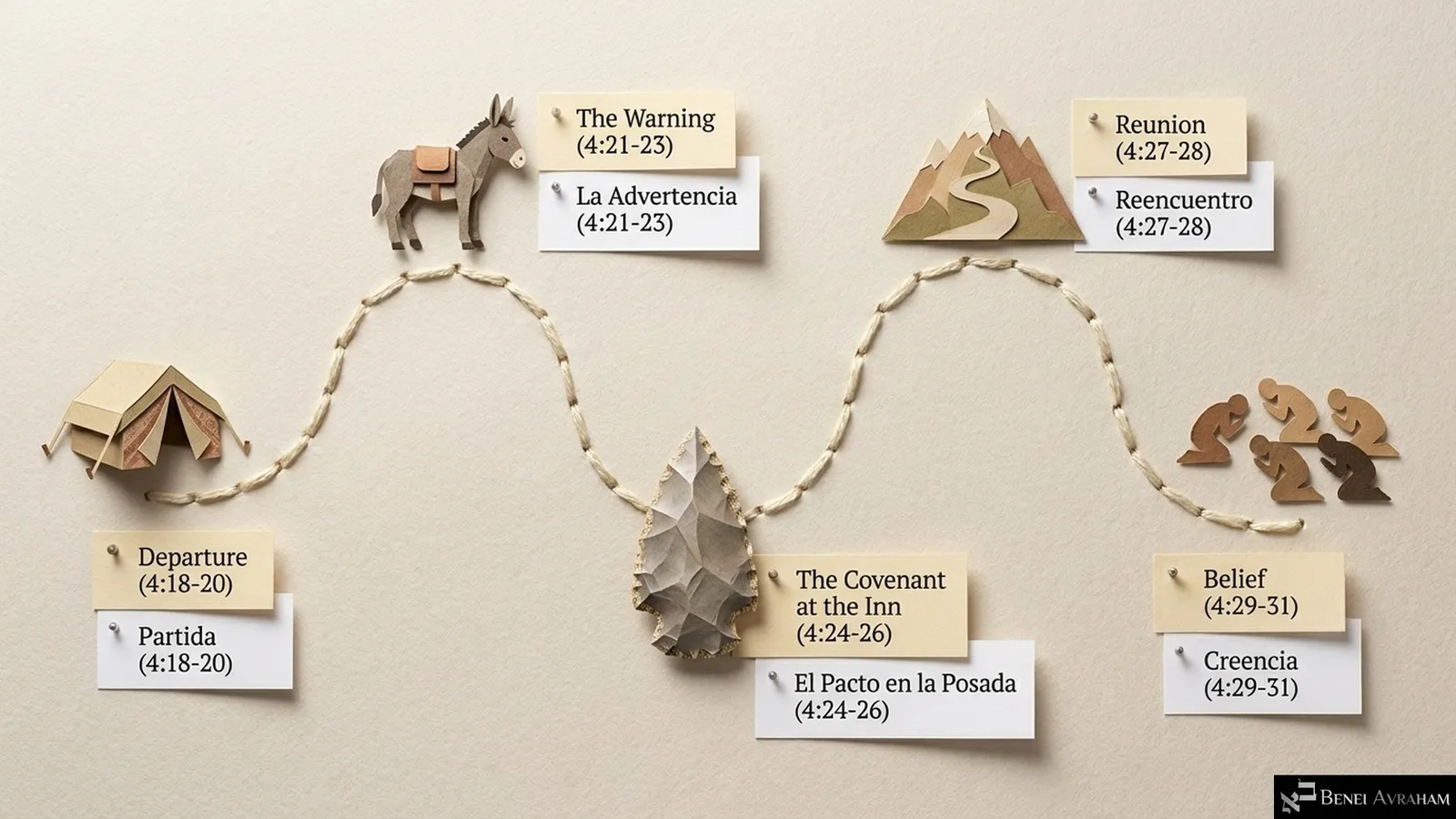
A paper journey map from tent to bowing elders: Departure, The Warning, The Covenant at the Inn, Reunion, Belief (Exodus 4:18–31).
Shevi’i · Exodus 5:1–6:1

Seventh Portion
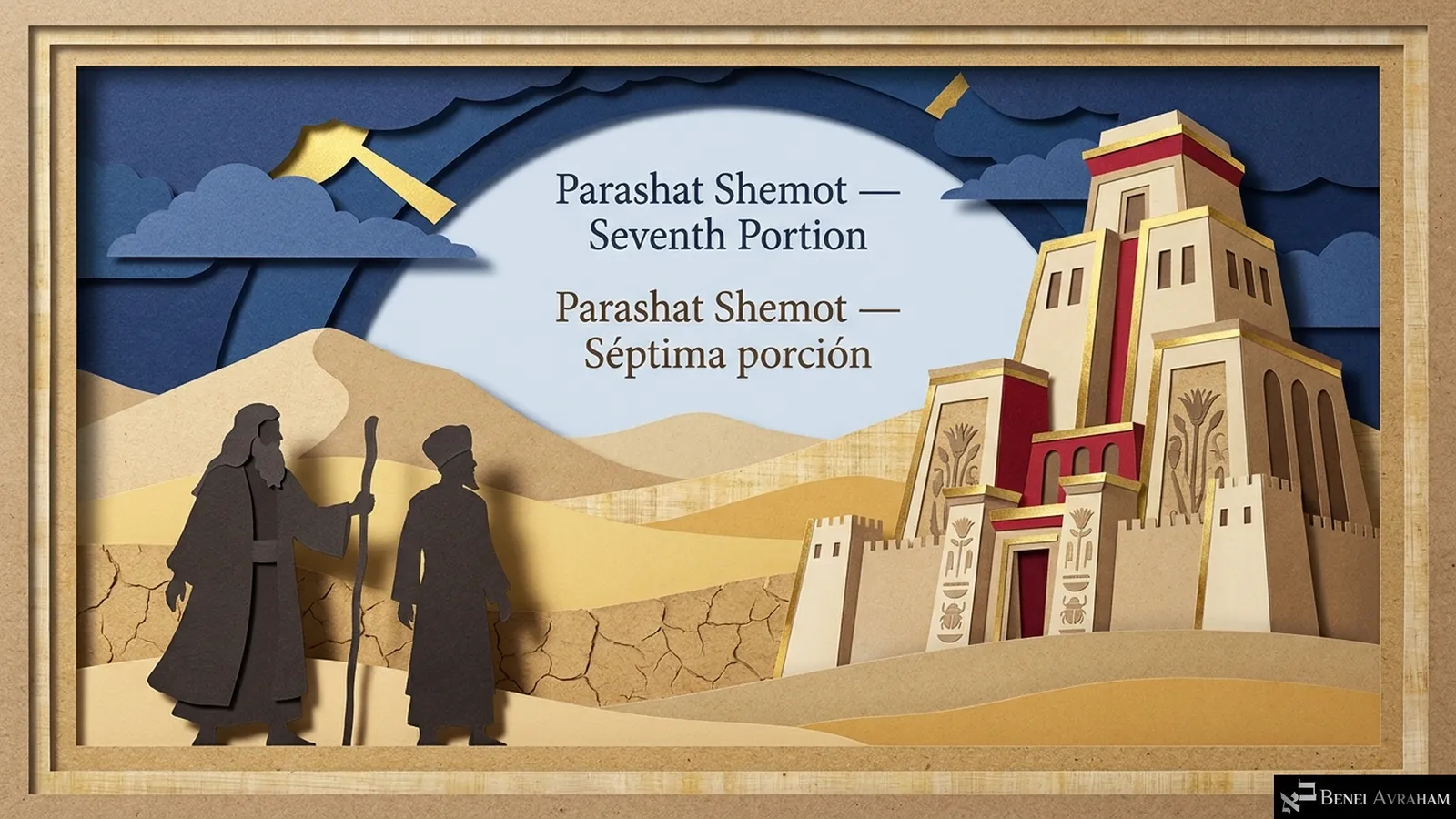
Title card for the seventh portion: Moshe and Aharon walk toward Par’oh’s palace, “Parashat Shemot — Seventh Portion”.
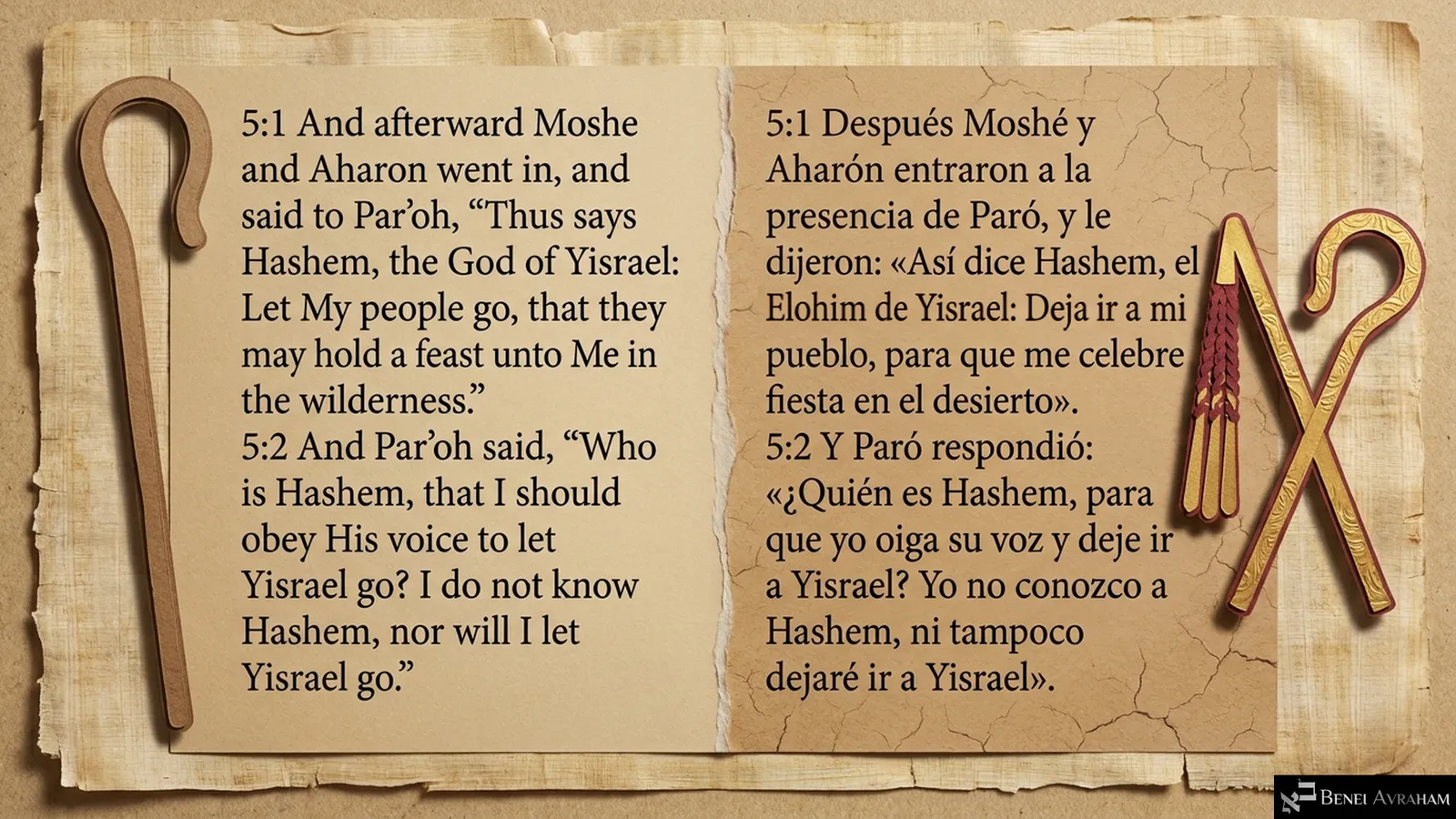
A paper crook and flail on parchment: “Let My people go”; “Who is Hashem, that I should obey His voice?” (Exodus 5:1–2).
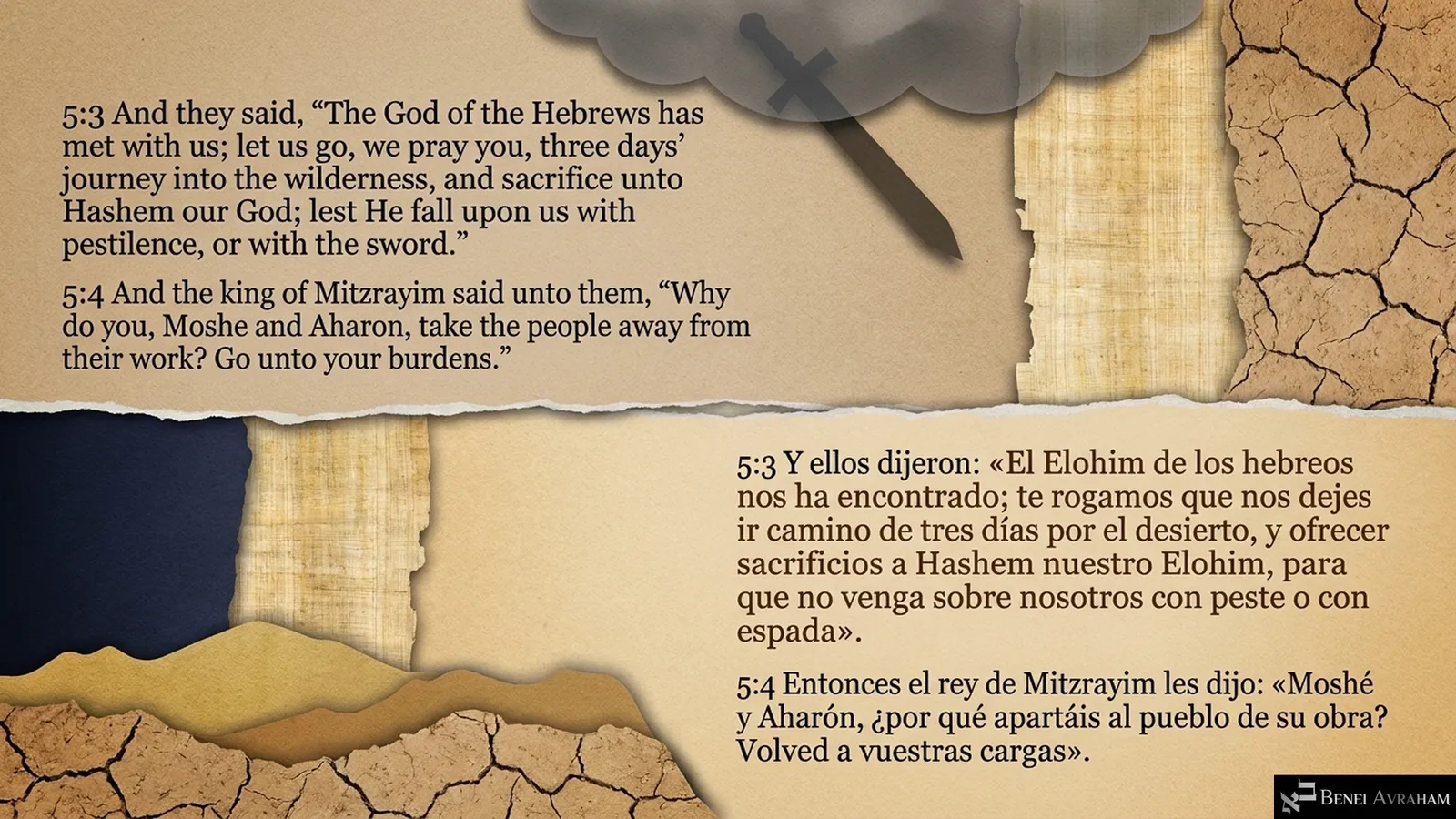
A paper sword in a dark cloud over torn papyrus: “Let us go three days’ journey… lest He fall upon us with pestilence, or with the sword” (Exodus 5:3–4).
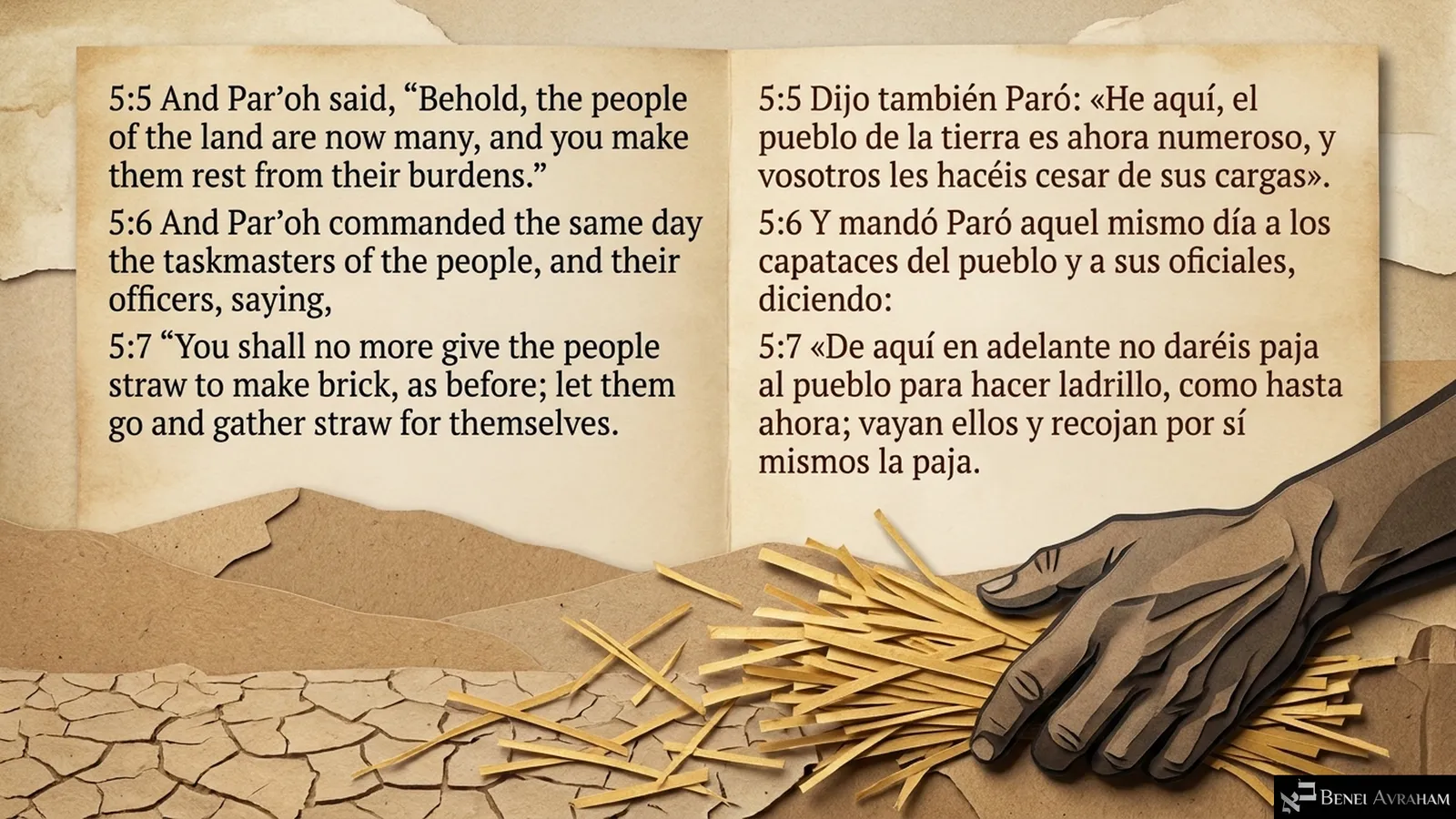
A paper hand over scattered straw on cracked earth: “You shall no more give the people straw to make brick” (Exodus 5:5–7).
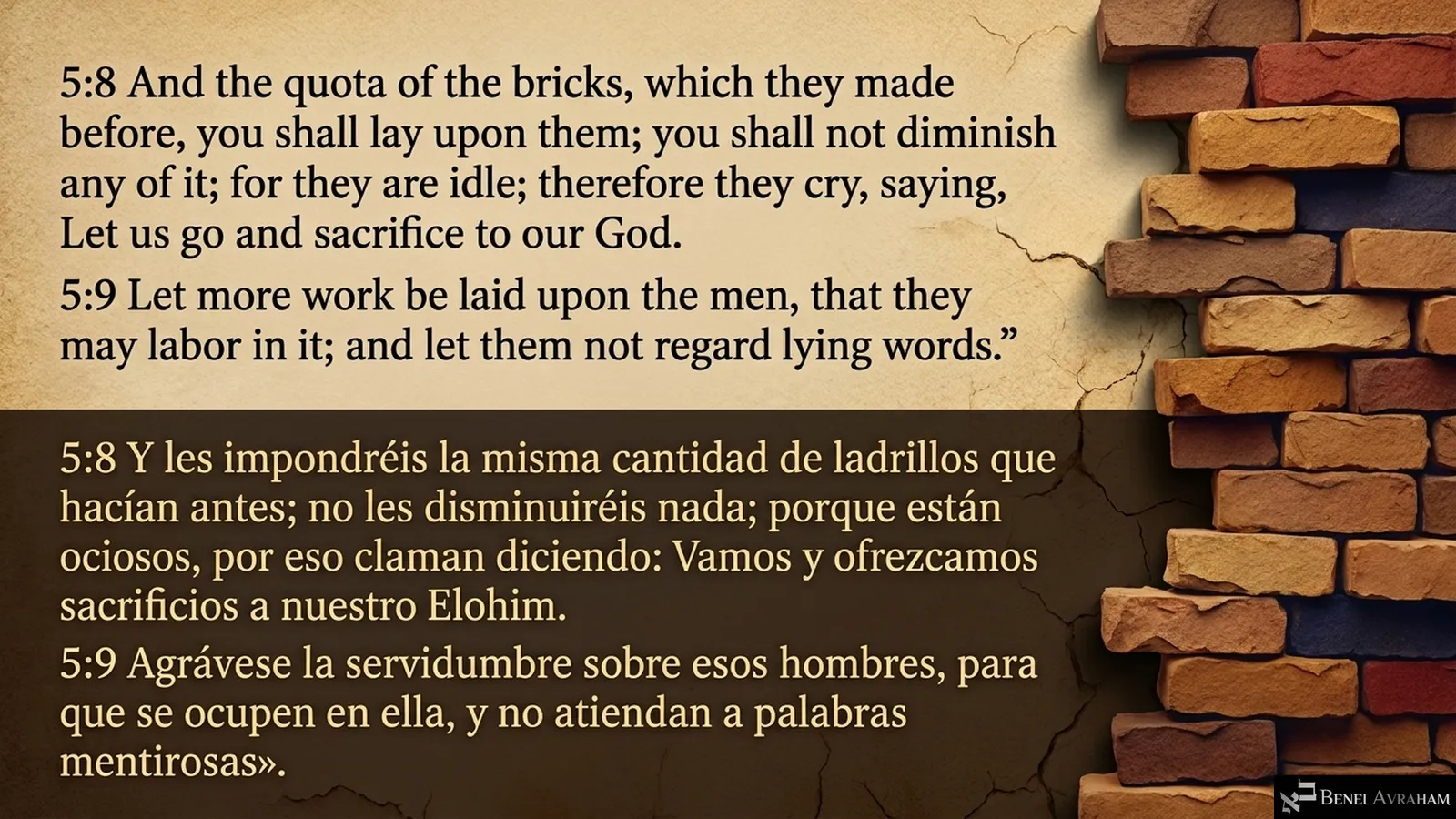
Bricks stacked beside dark panels: the same quota of bricks; “Let more work be laid upon the men” (Exodus 5:8–9).
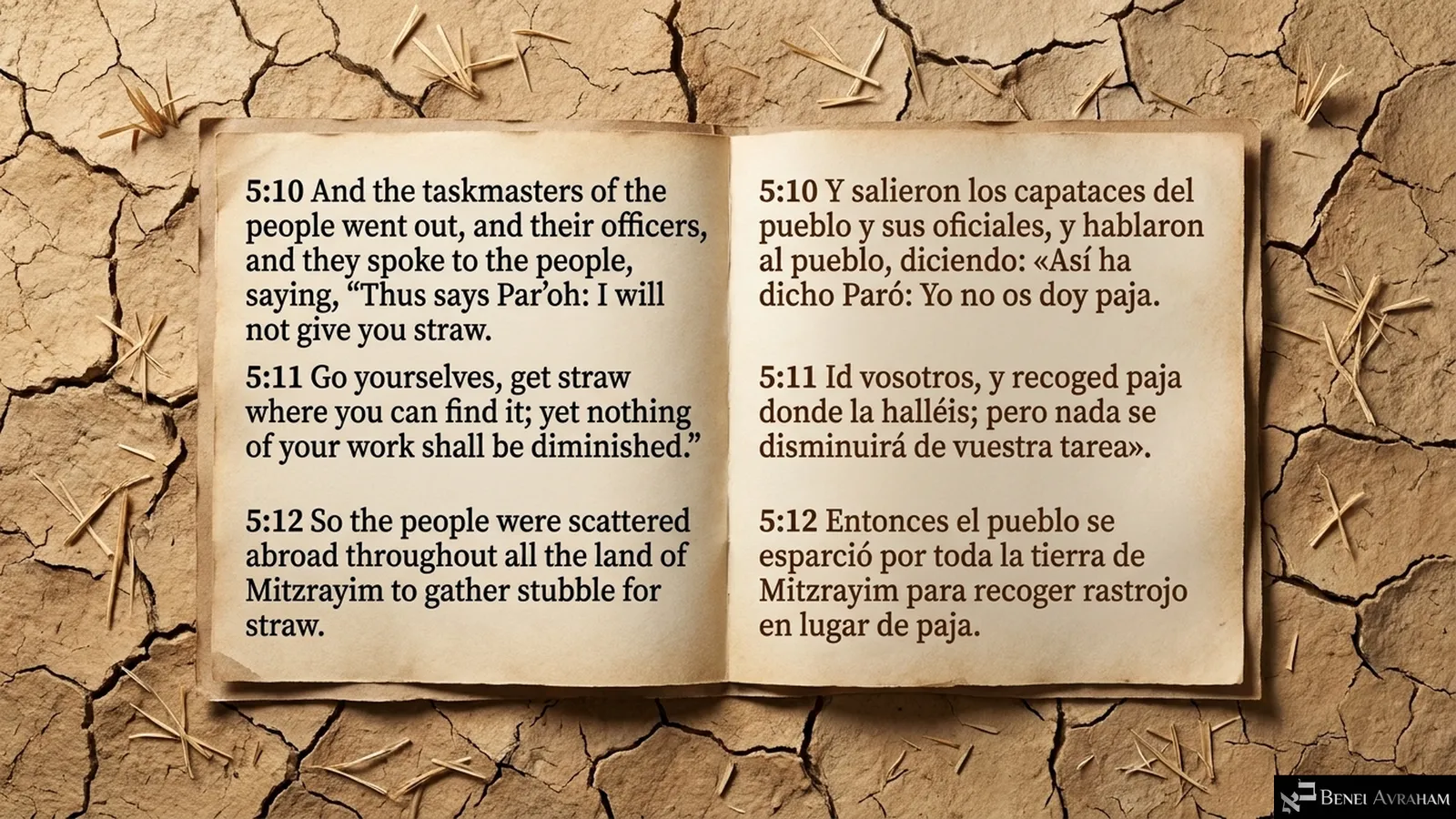
An open paper book on cracked earth with scattered straw: “Thus says Par’oh: I will not give you straw” (Exodus 5:10–12).
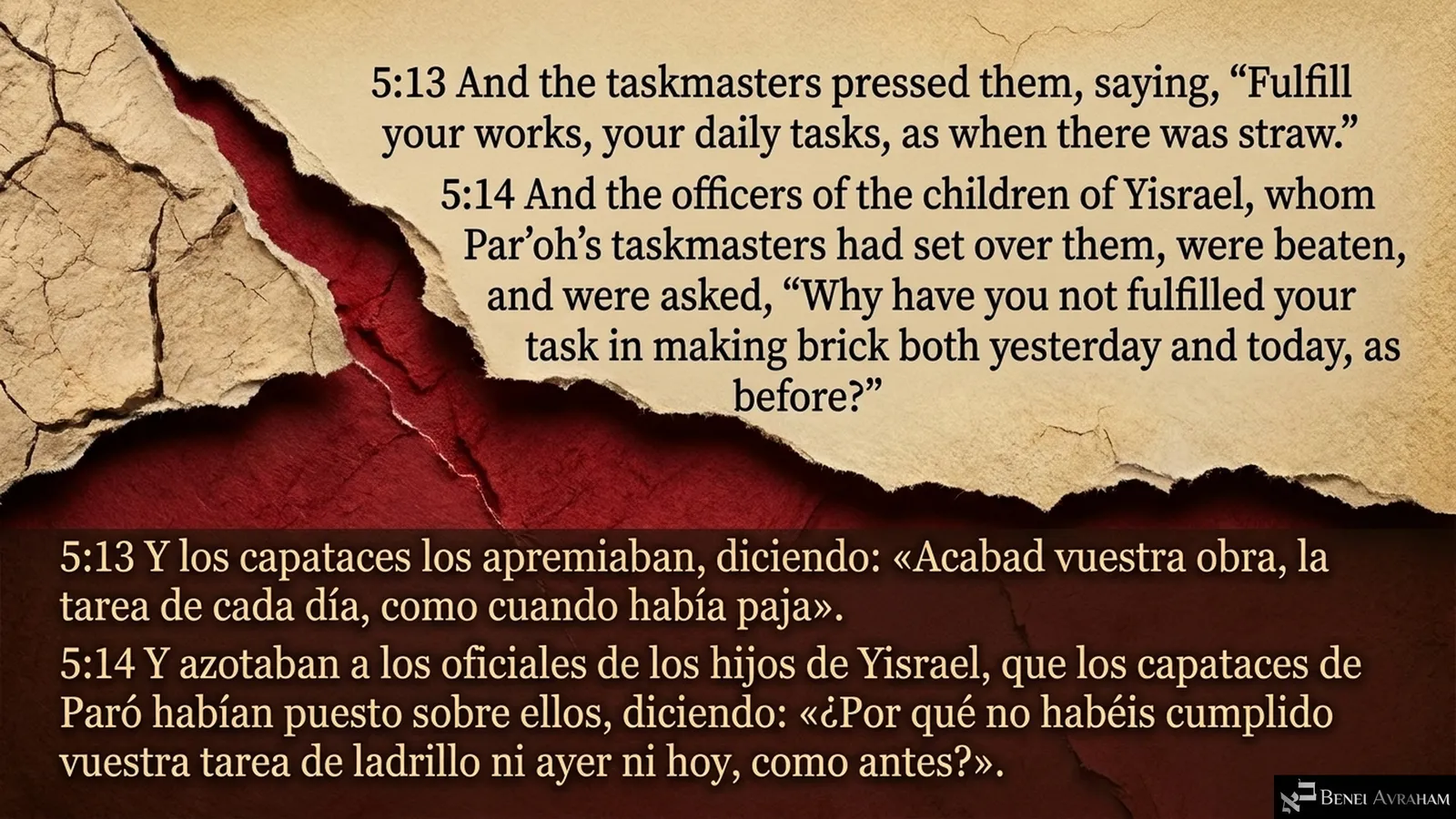
Torn parchment over a dark red ground: the taskmasters pressed them, and the officers were beaten (Exodus 5:13–14).
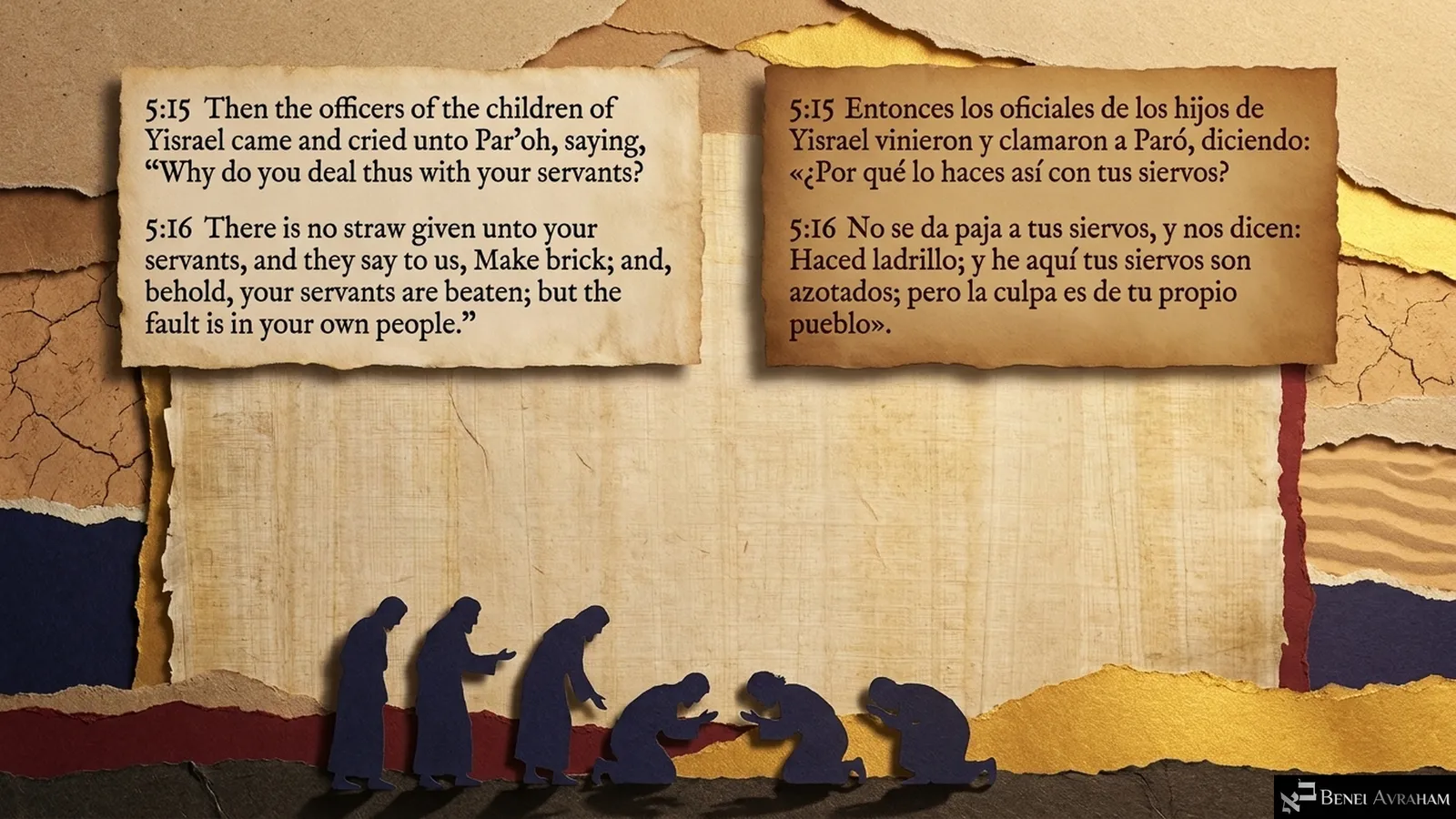
Paper officers bow and kneel before the cards: “Why do you deal thus with your servants?” (Exodus 5:15–16).
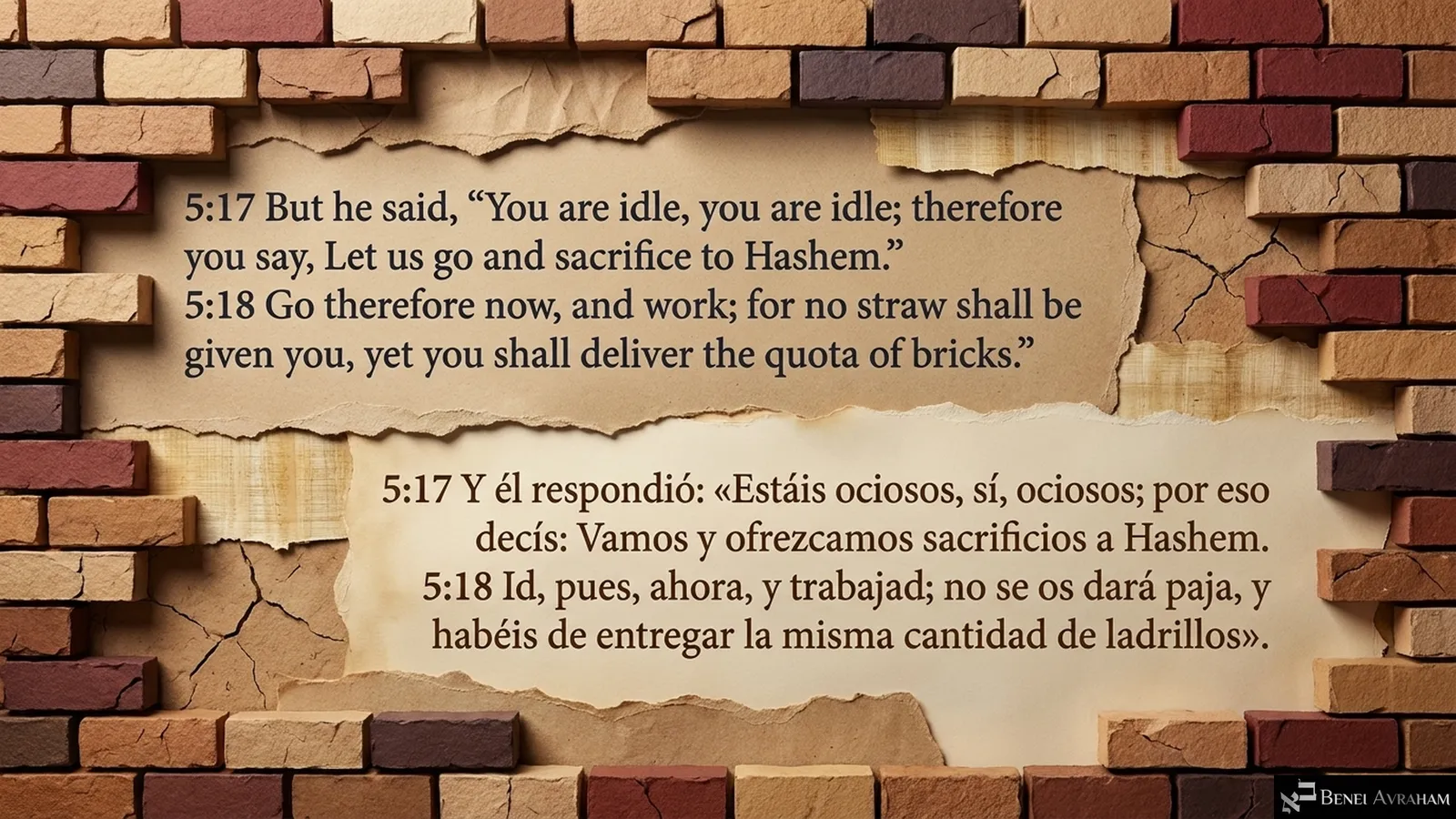
A torn opening in a paper brick wall: “You are idle, you are idle… you shall deliver the quota of bricks” (Exodus 5:17–18).
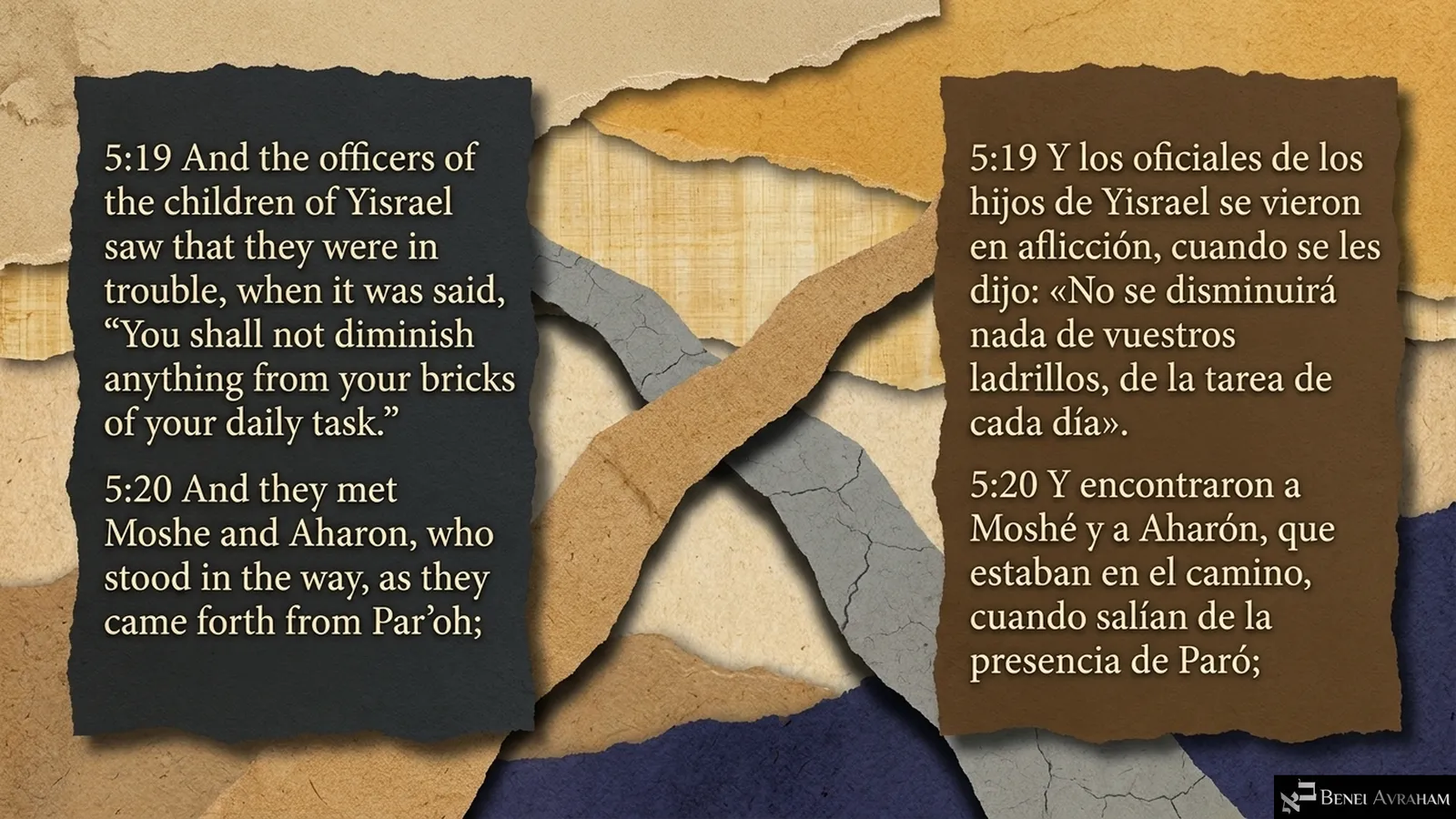
Dark and brown torn panels crossed by paper paths: the officers saw that they were in trouble, and met Moshe and Aharon (Exodus 5:19–20).
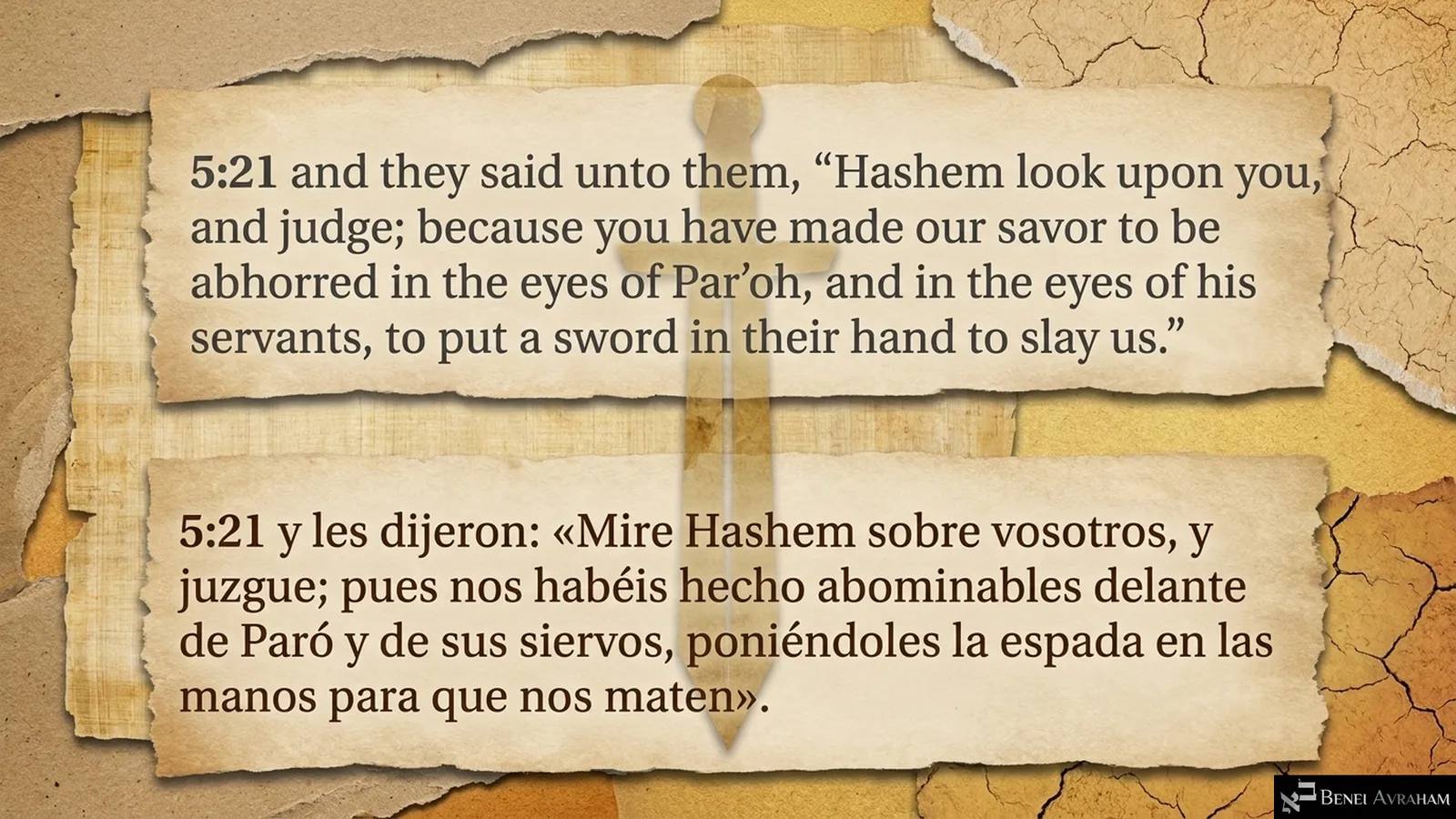
A paper sword behind two parchment cards: “Hashem look upon you, and judge… to put a sword in their hand to slay us” (Exodus 5:21).
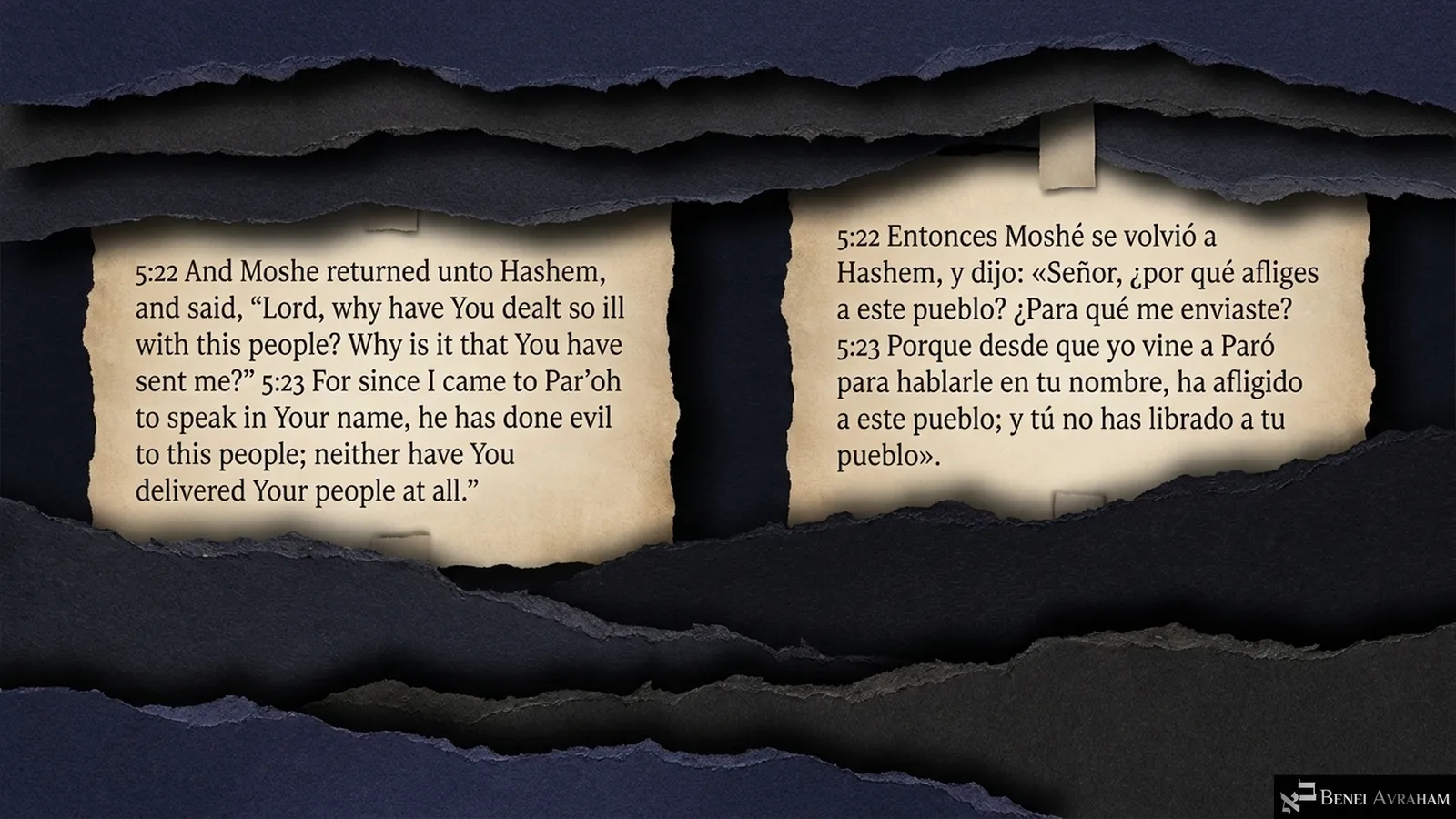
Torn dark-blue paper over parchment: “Lord, why have You dealt so ill with this people? Why is it that You have sent me?” (Exodus 5:22–23).
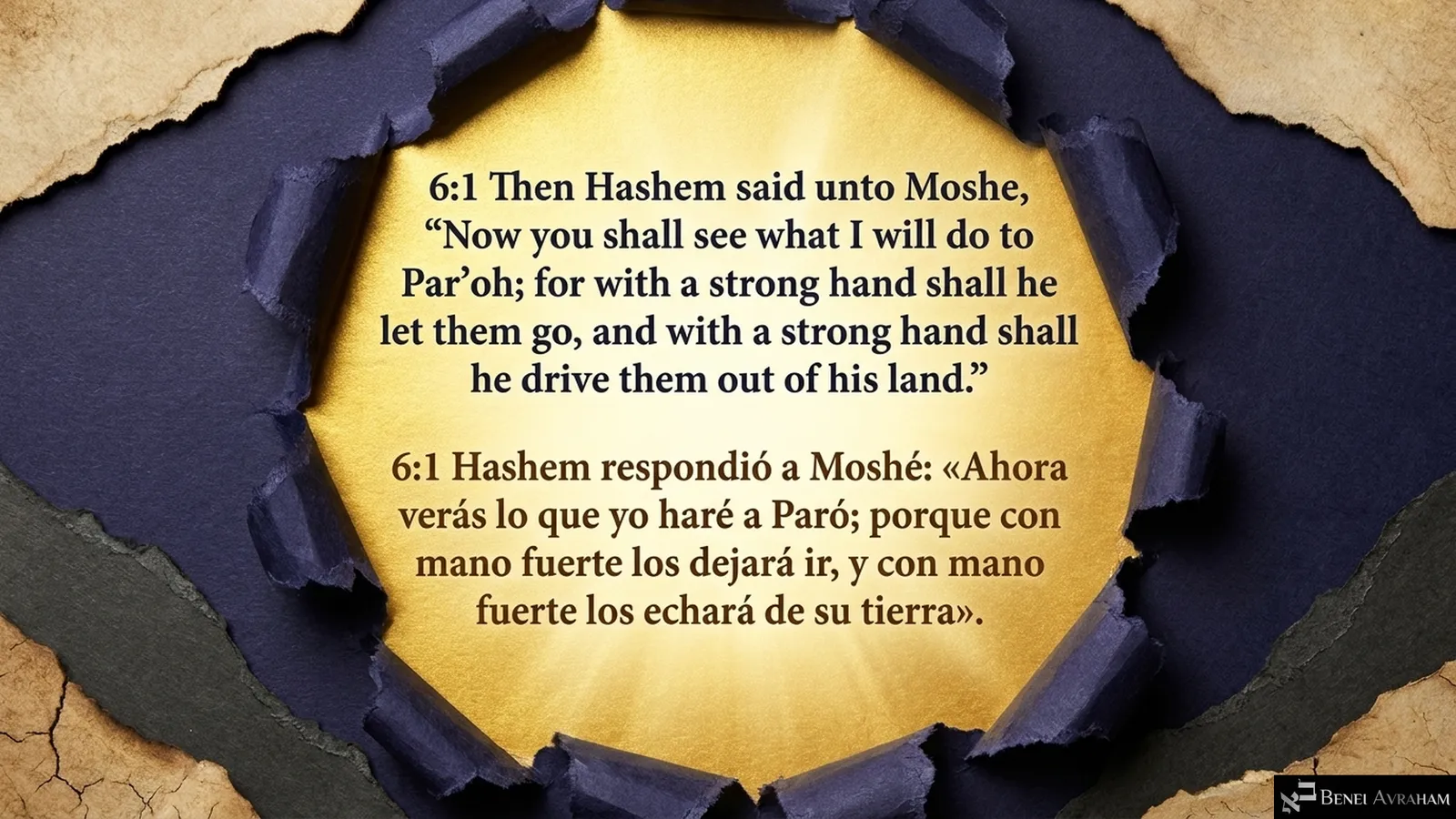
A golden glow bursts through torn paper: “Now you shall see what I will do to Par’oh; for with a strong hand shall he let them go” (Exodus 6:1).
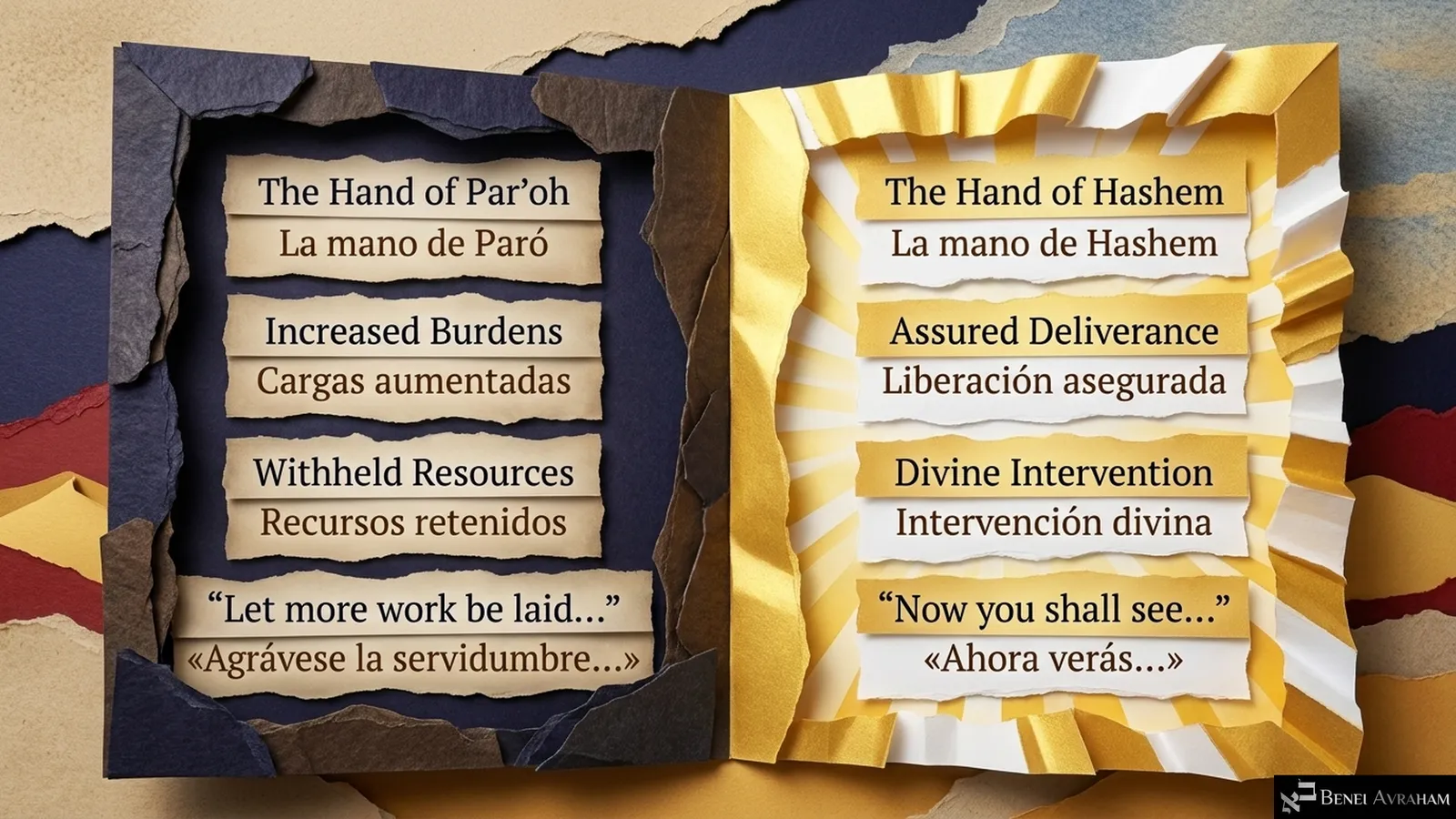
Summary panels — The Hand of Par’oh: Increased Burdens, Withheld Resources; The Hand of Hashem: Assured Deliverance, Divine Intervention.
Haftarah · Isaiah 27:6–28:13; 29:22–23

Haftarah: Yisrael Shall Blossom
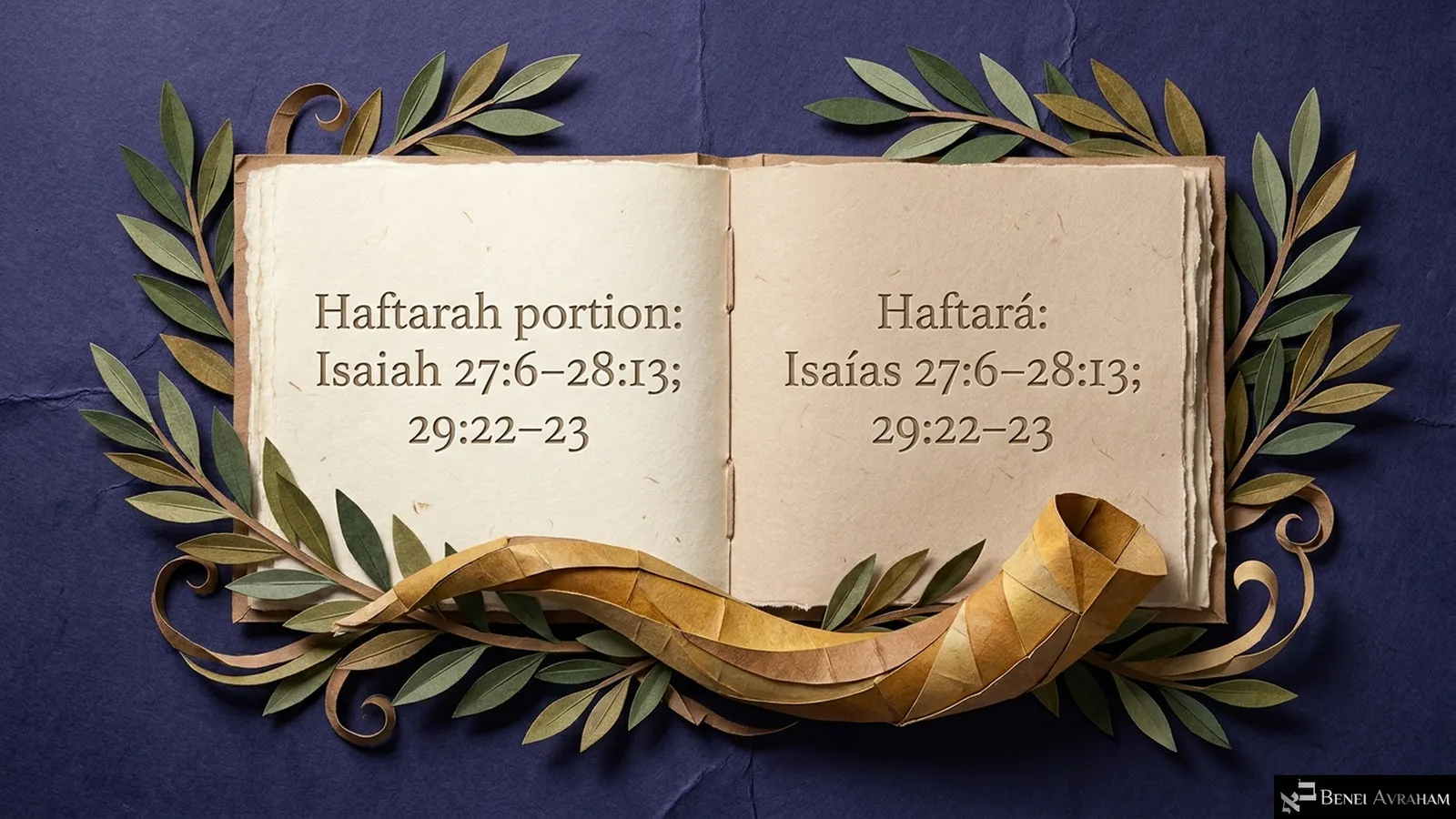
Title card for the haftarah: an open paper book among olive branches with a golden shofar, “Haftarah: Isaiah 27:6–28:13; 29:22–23”.
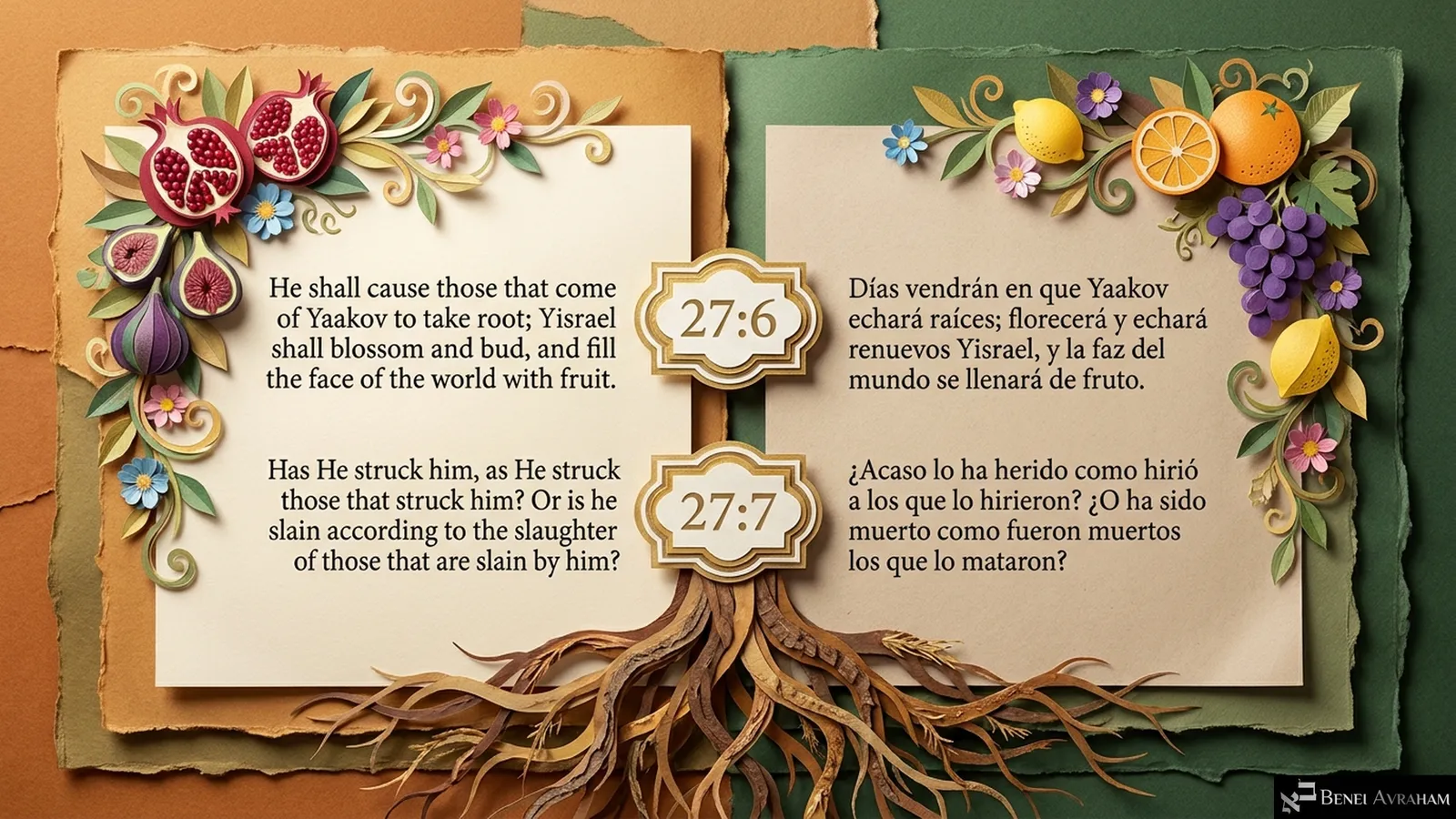
Pomegranates, grapes and figs over deep paper roots: Yaakov shall take root; Yisrael shall blossom and bud (Isaiah 27:6–7).
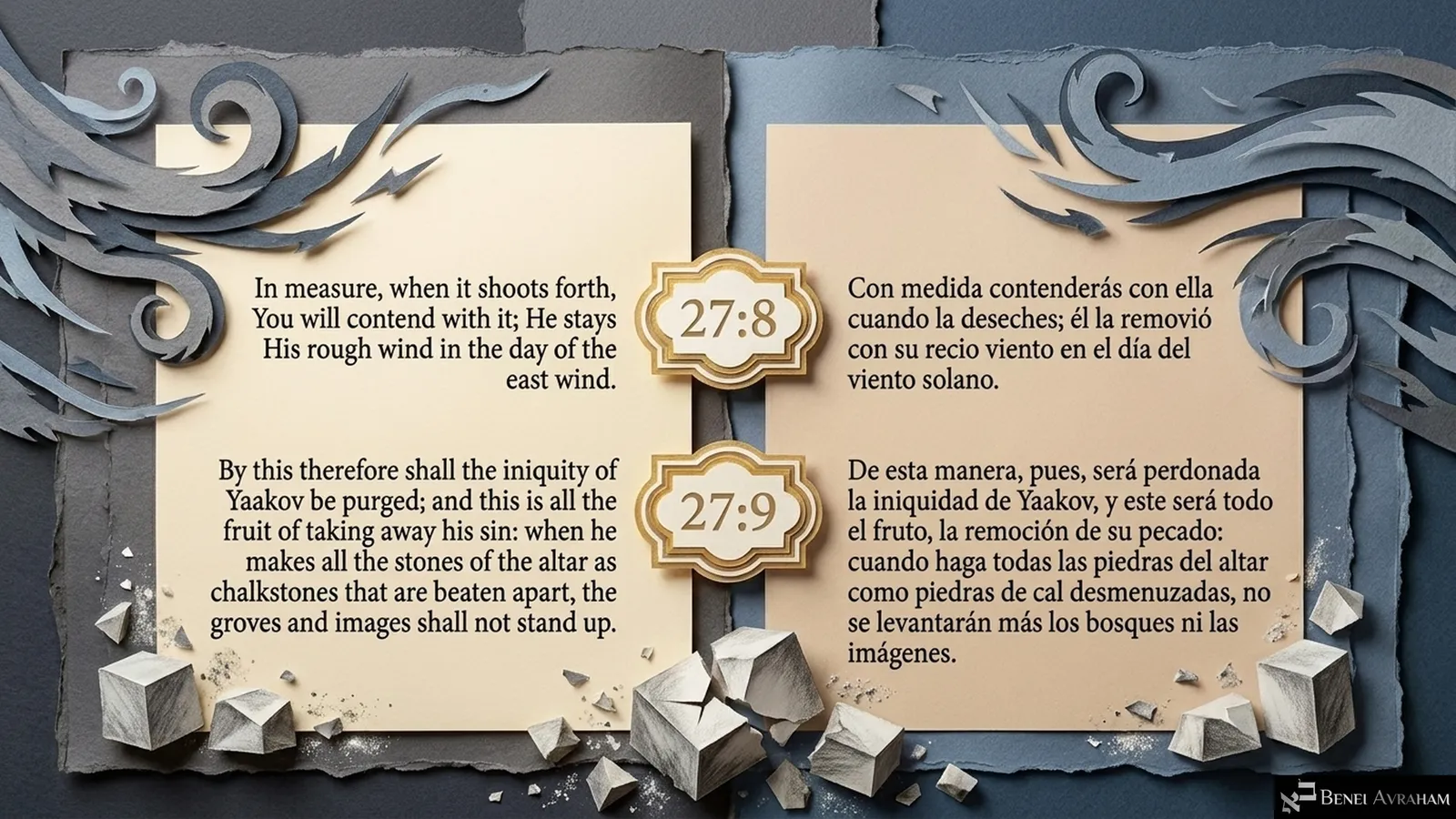
Swirling grey paper wind and broken chalkstones: the iniquity of Yaakov purged (Isaiah 27:8–9).
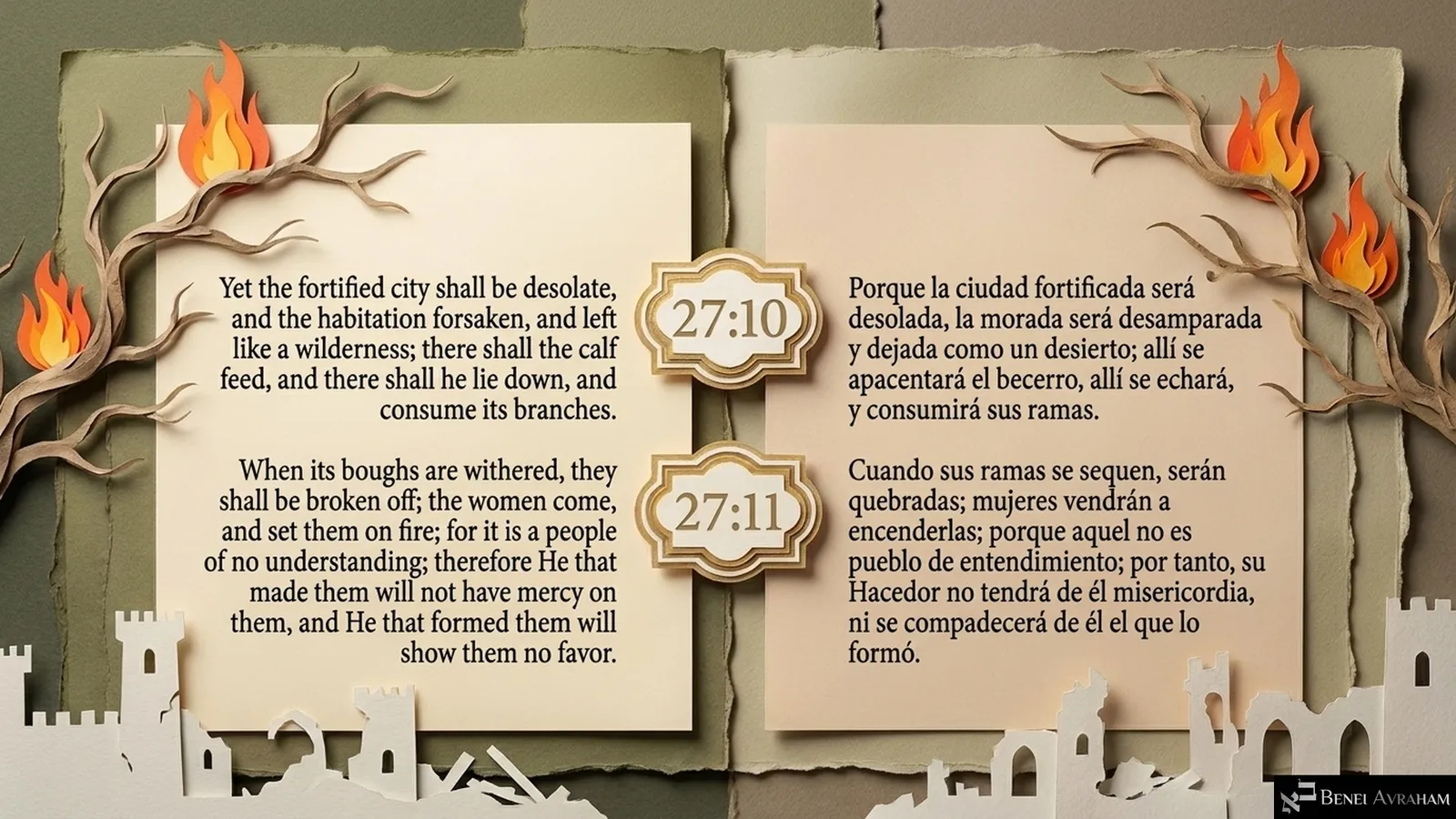
Burning paper branches above a ruined city: the fortified city shall be desolate (Isaiah 27:10–11).
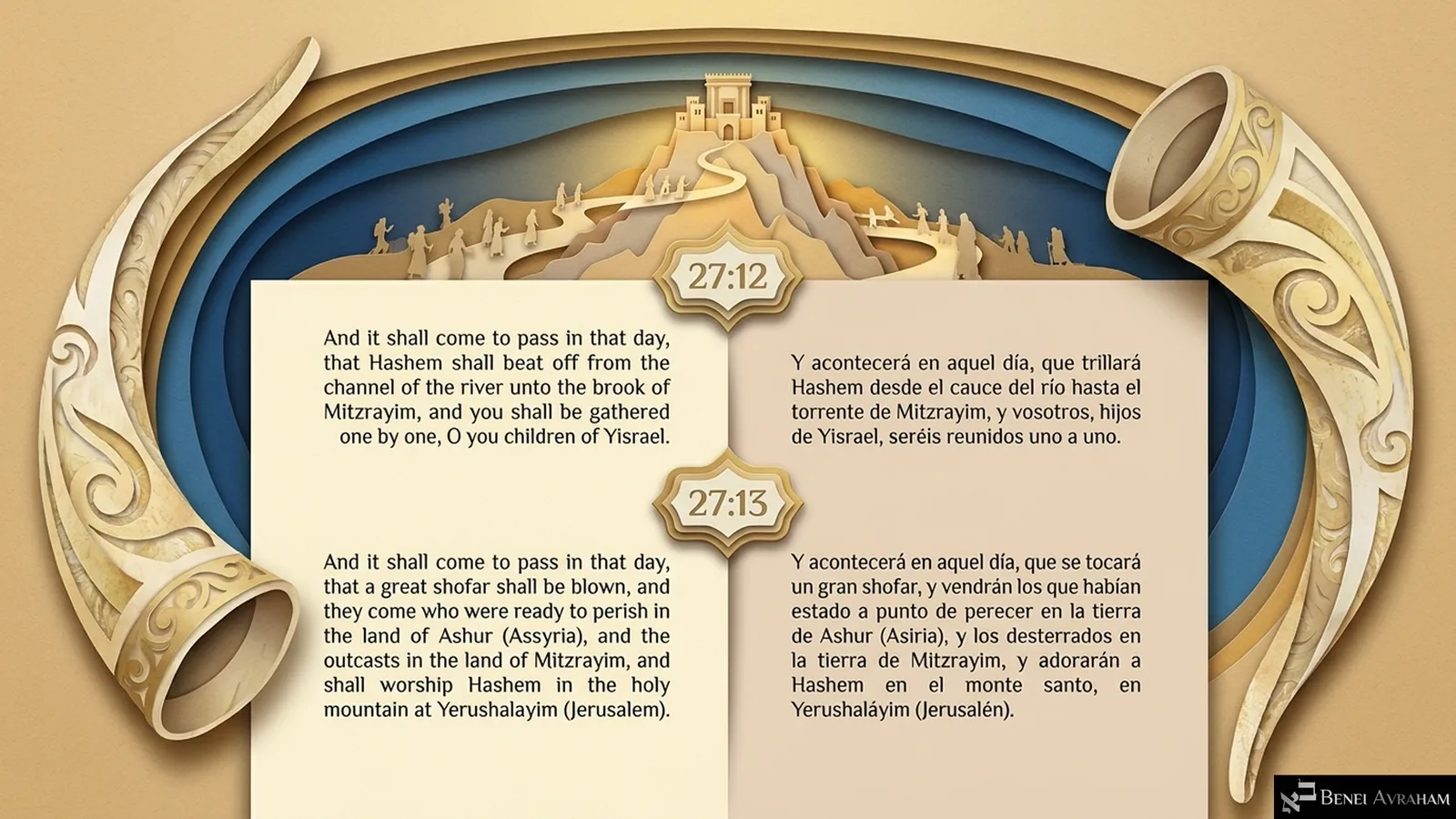
Two golden paper shofars around Yerushalayim: a great shofar shall be blown, and they shall worship Hashem in the holy mountain (Isaiah 27:12–13).
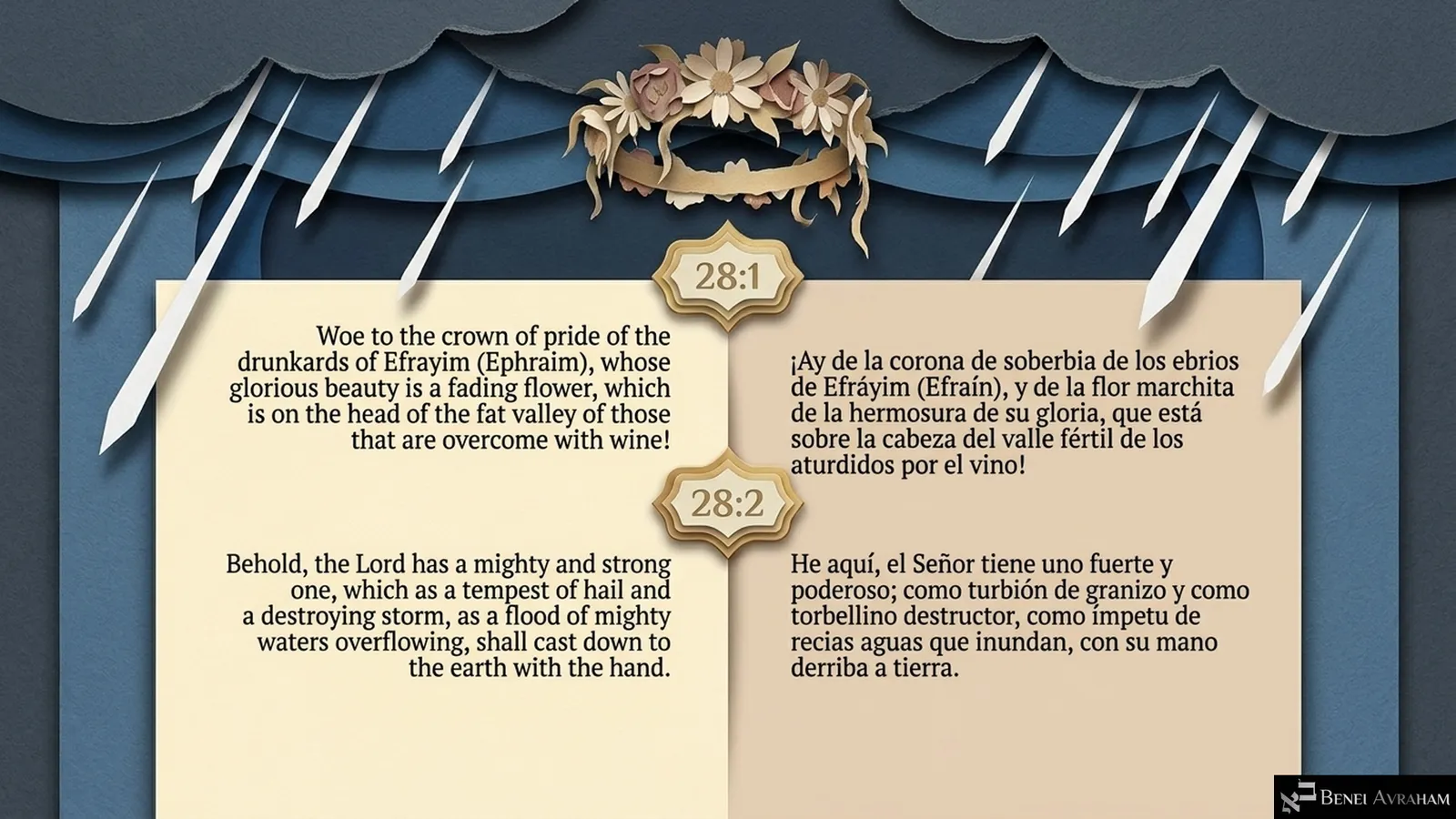
A fading paper flower crown under falling hail: woe to the crown of pride of the drunkards of Efrayim (Isaiah 28:1–2).
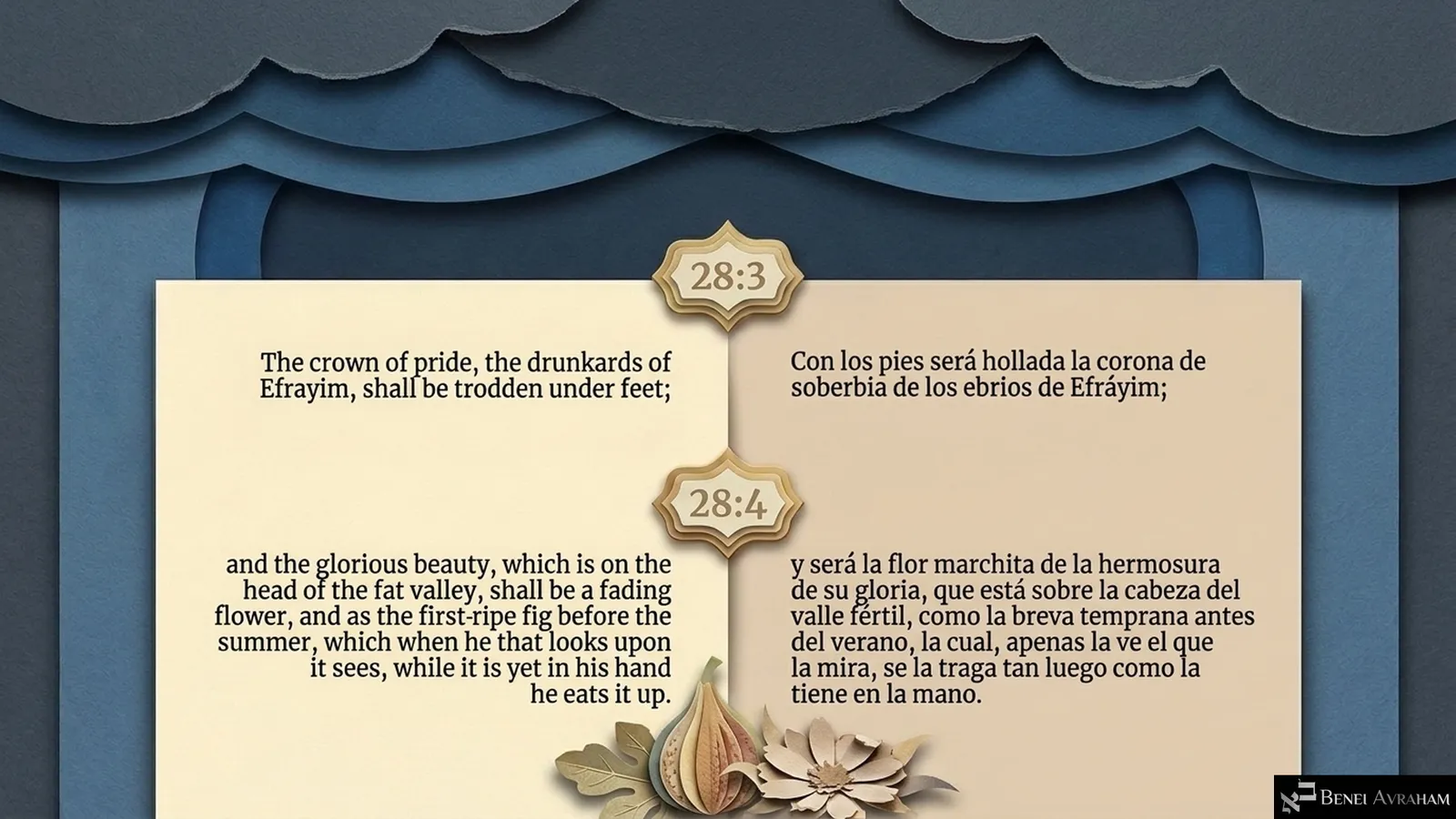
A paper fig and flowers beneath dark clouds: the crown of pride shall be trodden under feet (Isaiah 28:3–4).
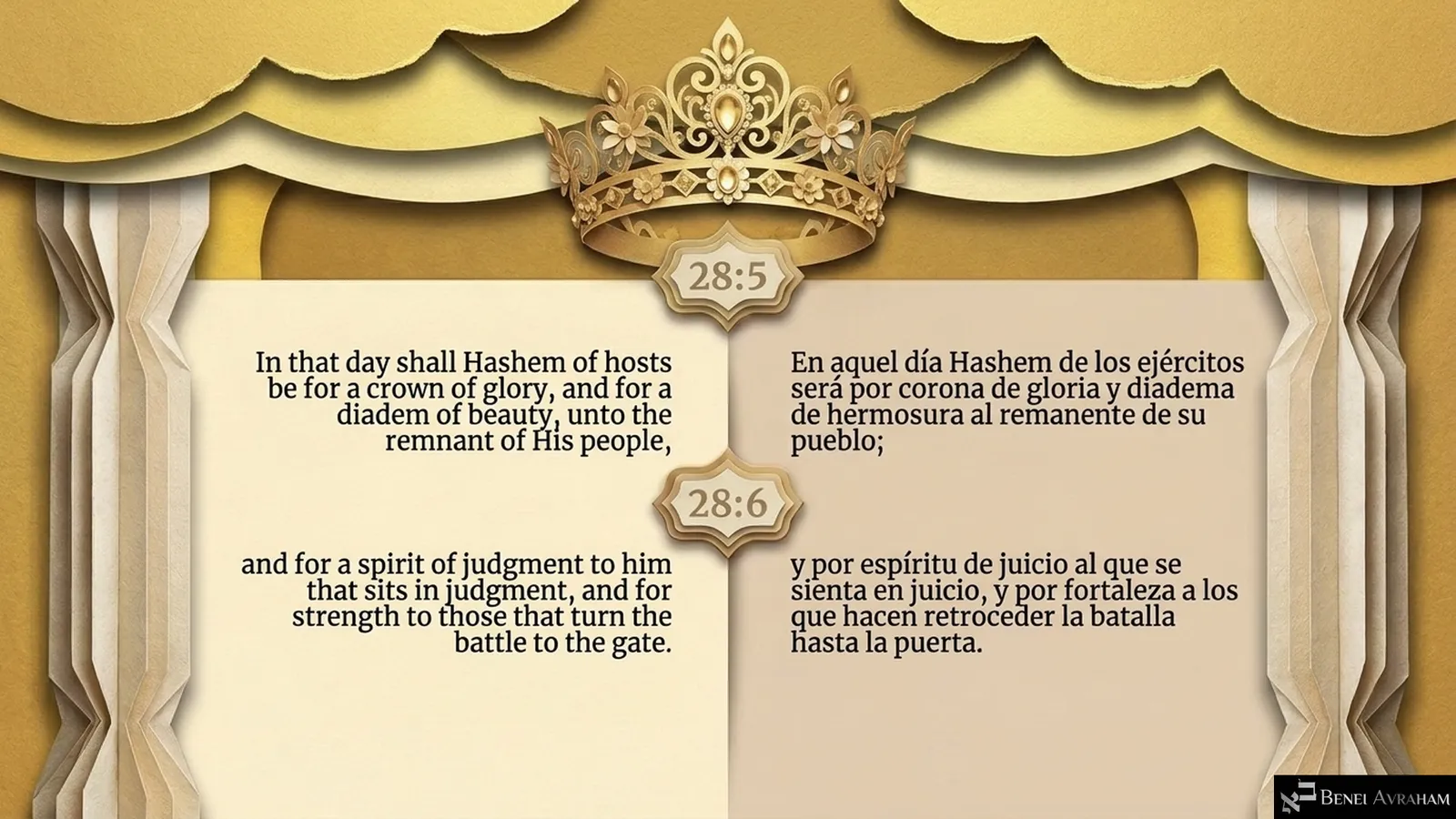
A golden paper crown between drawn curtains: Hashem of hosts shall be a crown of glory to the remnant of His people (Isaiah 28:5–6).
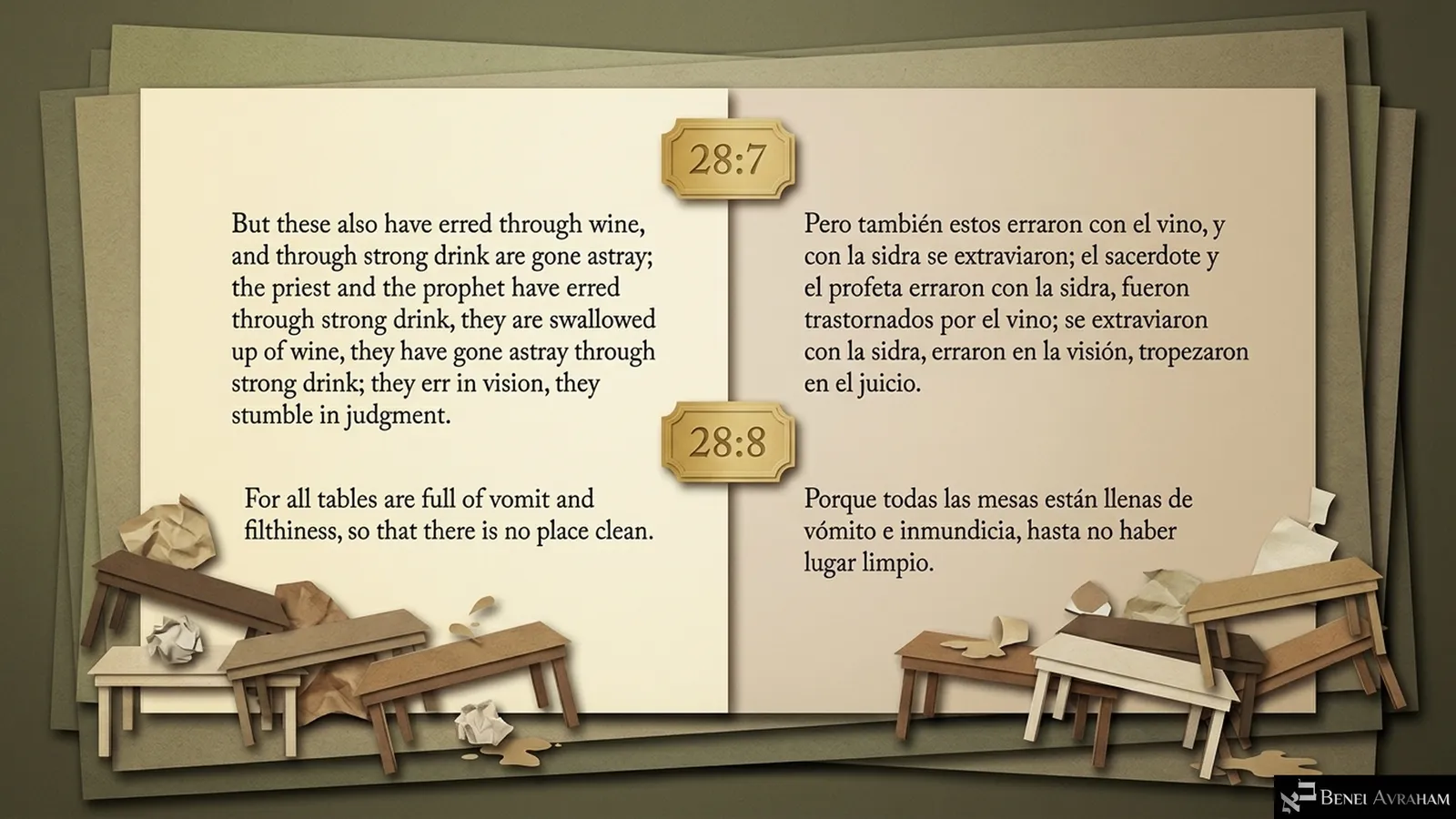
Overturned paper tables: the priest and the prophet have erred through strong drink (Isaiah 28:7–8).
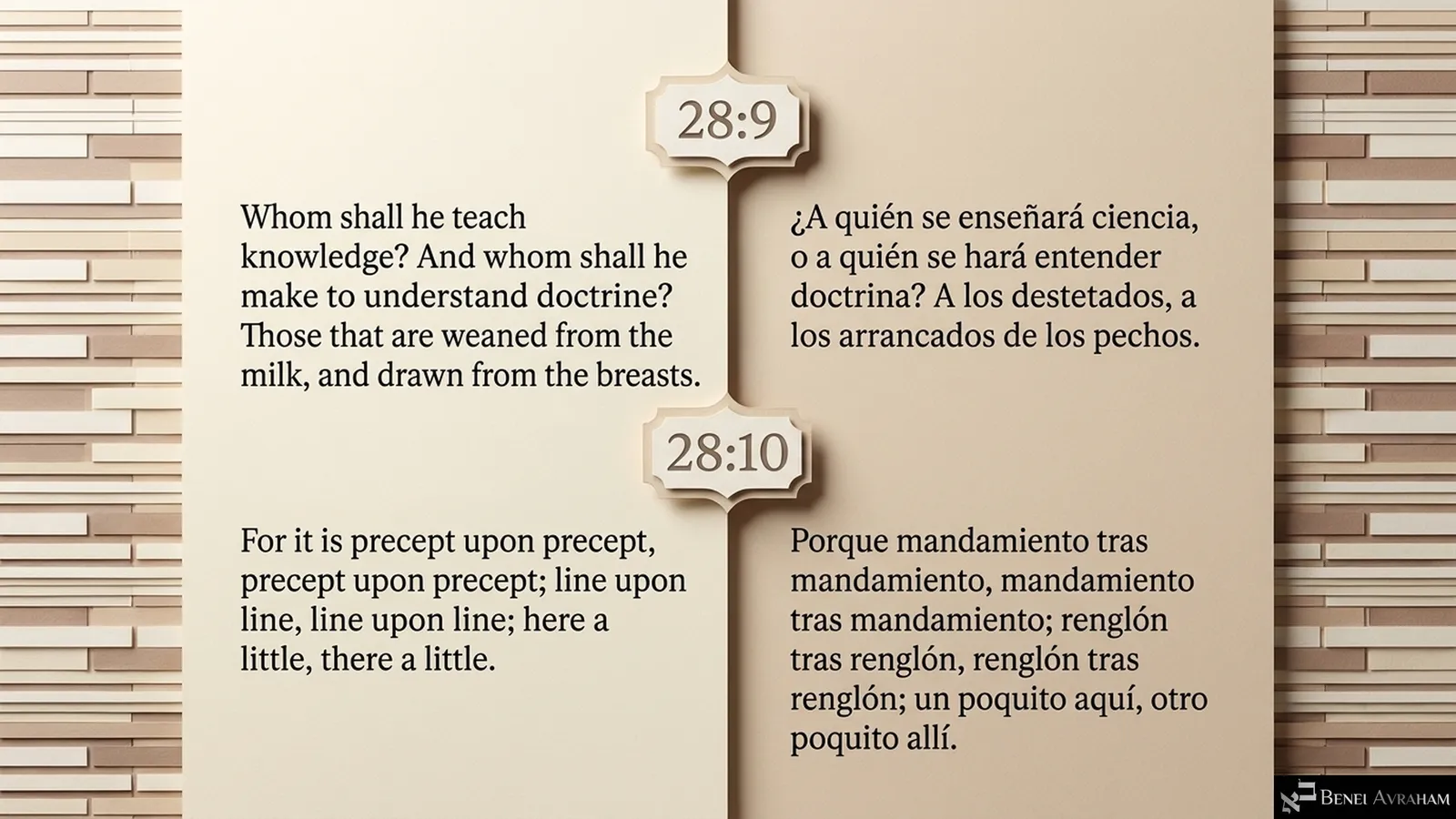
Layered paper strips like lines of text: precept upon precept, line upon line, here a little, there a little (Isaiah 28:9–10).
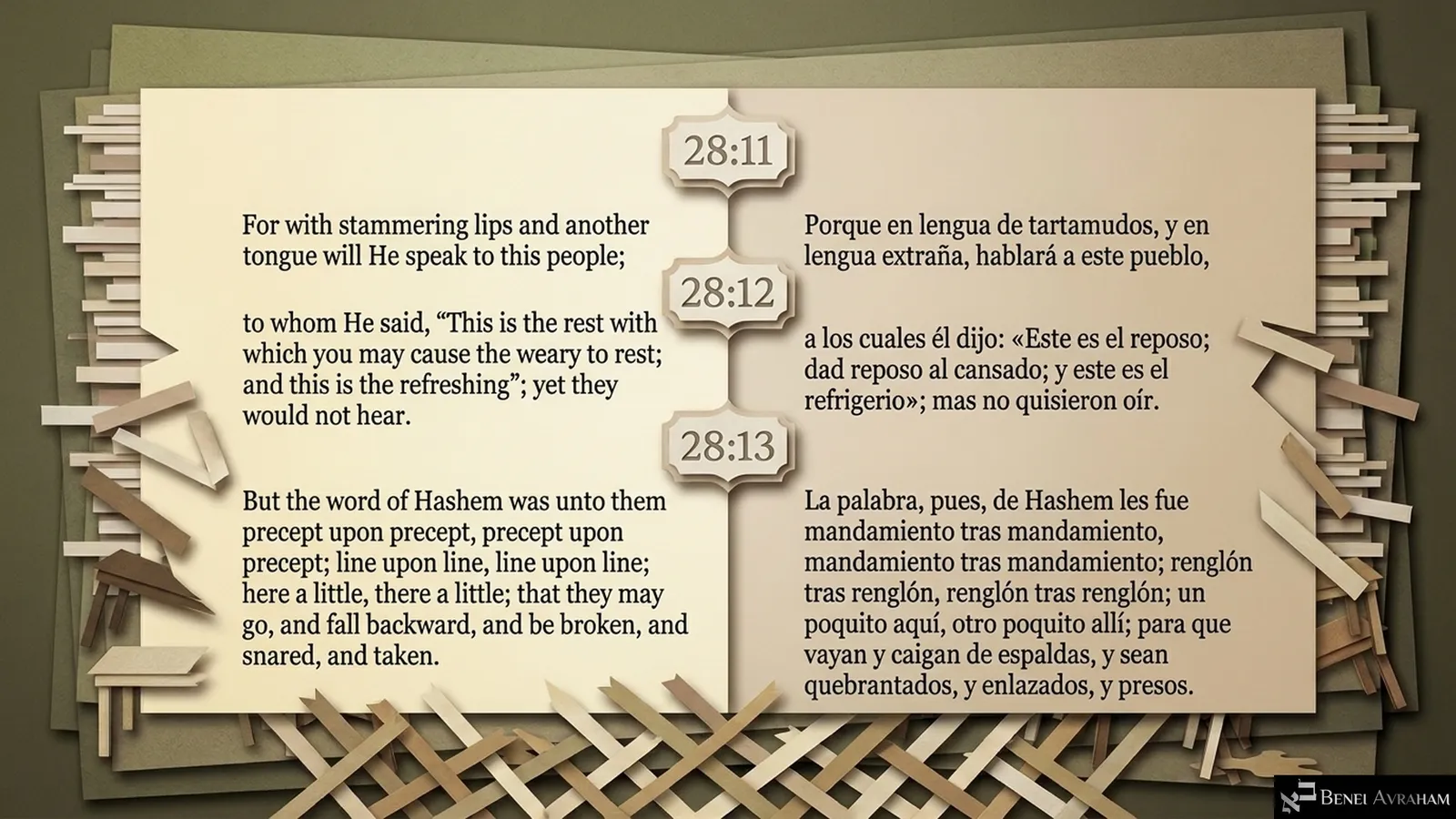
Woven paper strips around the cards: with stammering lips and another tongue will He speak to this people (Isaiah 28:11–13).
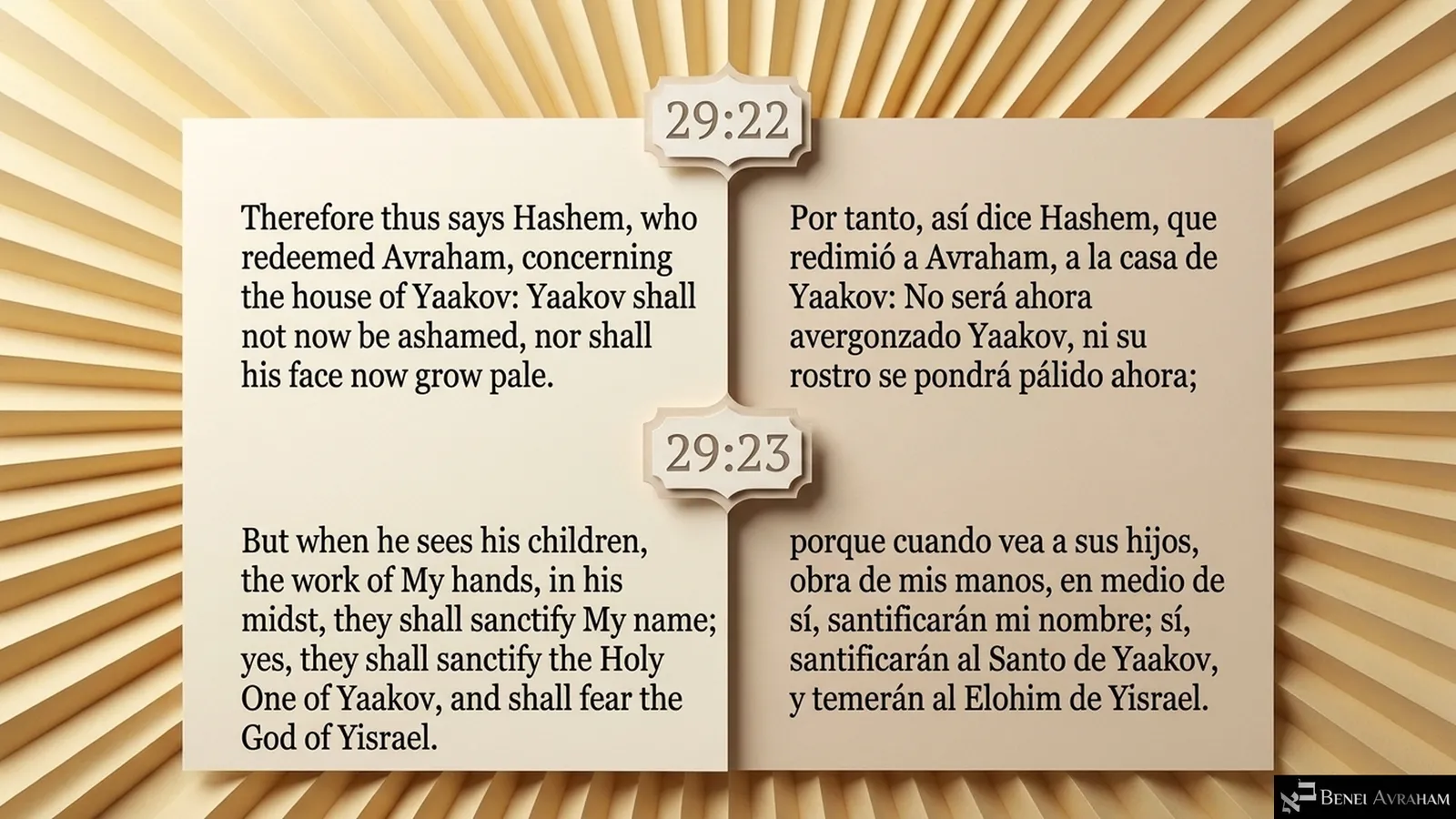
Golden paper rays: Yaakov shall not now be ashamed; they shall sanctify the Holy One of Yaakov (Isaiah 29:22–23).