SMS/Text 469-608-9944
Parashat Yitro · Exodus 18:1–20:23 · Isaiah 6:1–7:6; 9:5–6

Yitro: A Visual Journey

Illustrated teaching slides from Benei Avraham, in English and Spanish, walking through Parashat Yitro portion by portion: Yitro, the priest of Midyan, brings Tzipporah and her sons to Moshe at the mount of God and says, “Now I know that Hashem is greater than all gods”; seeing Moshe judge the people from morning to evening, he counsels him to set able men who fear God over thousands, hundreds, fifties and tens; in the third month Yisrael camps before Sinai, and Hashem says, “I bore you on eagles’ wings… you shall be unto Me a kingdom of priests, and a holy nation”; the people sanctify themselves, and on the third day the mountain is wrapped in smoke and fire, with thunder, lightning and the voice of the trumpet; Hashem speaks all these words — “I am Hashem your God” — from no other gods to the Shabbat, honoring father and mother, and not coveting; and the people stand afar off while Moshe draws near unto the thick darkness, and Hashem asks for an altar of earth. The haftarah from Isaiah 6:1–7:6 and 9:5–6 follows: the seraphim cry “Holy, holy, holy,” a live coal touches the prophet’s lips — “Here am I; send me” — and “unto us a child is born, unto us a son is given.” Tap any image to open the slideshow; use the arrows (or swipe) to move through every slide.

Rishon · Exodus 18:1–12

First Portion

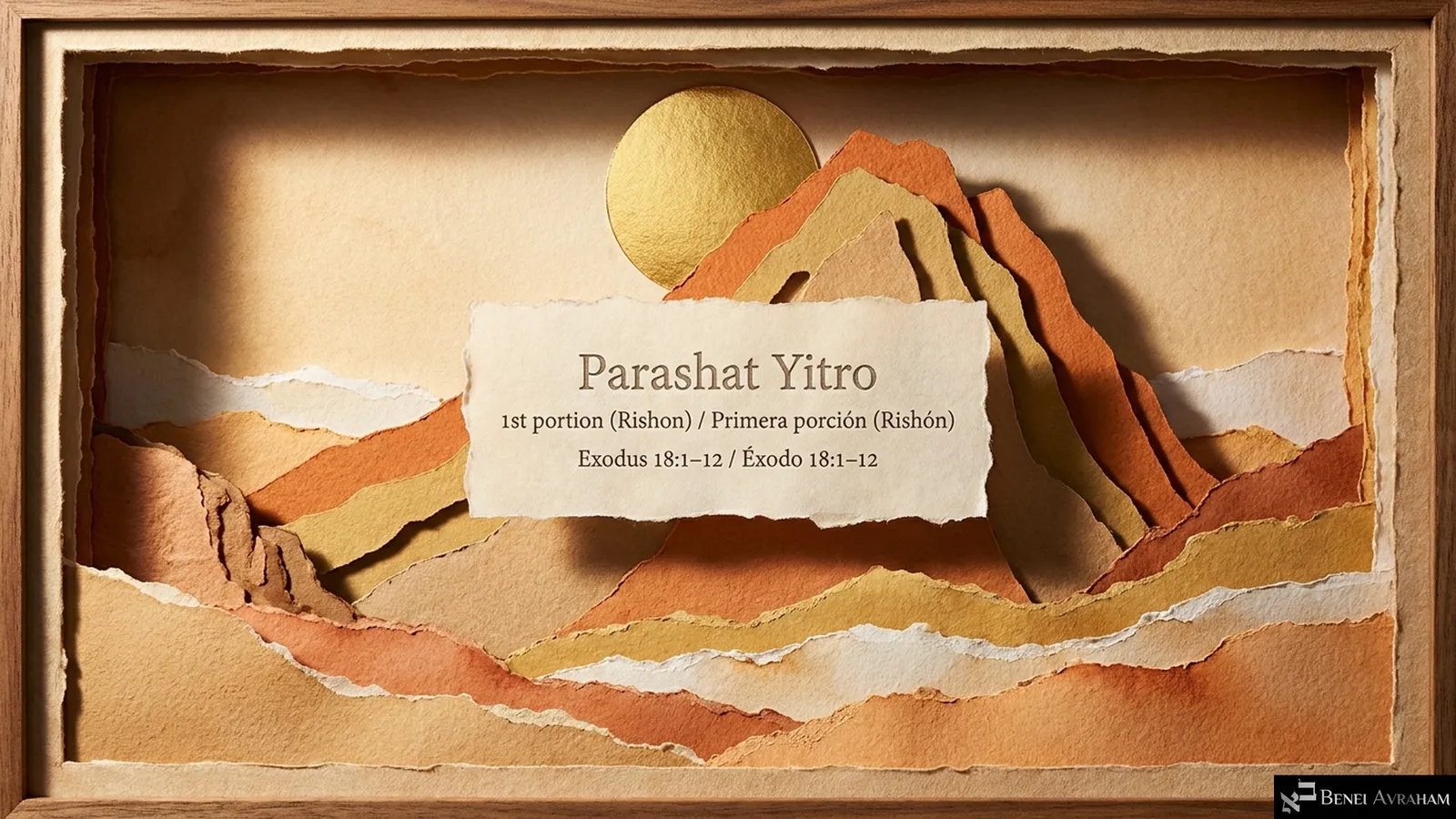
Title card for the first portion in a paper shadow box with layered desert hills: “Parashat Yitro — 1st portion (Rishon), Exodus 18:1–12”.
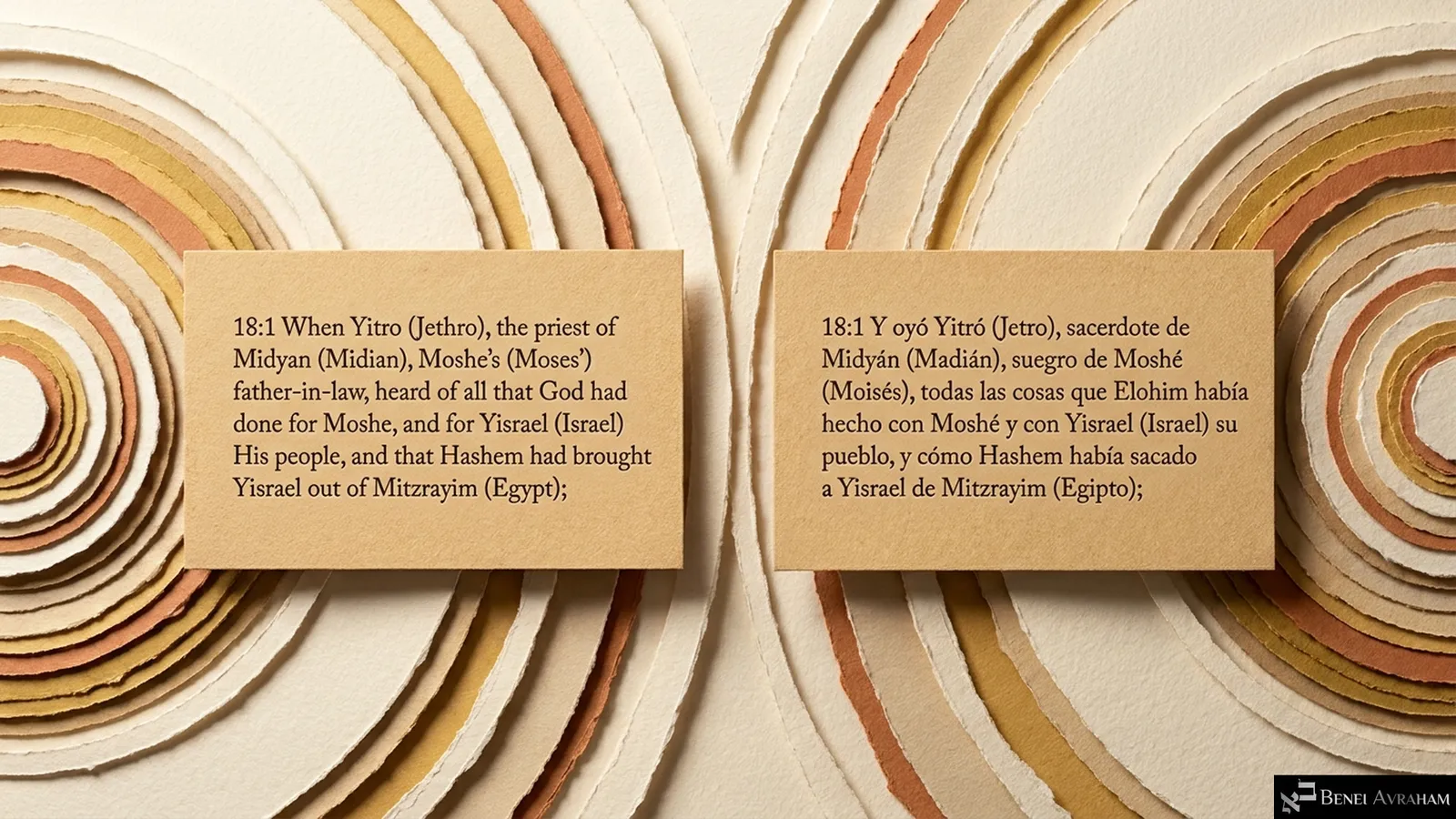
Two cards between rippling paper rings: Yitro, the priest of Midyan, heard of all that God had done for Moshe and for Yisrael (Exodus 18:1).
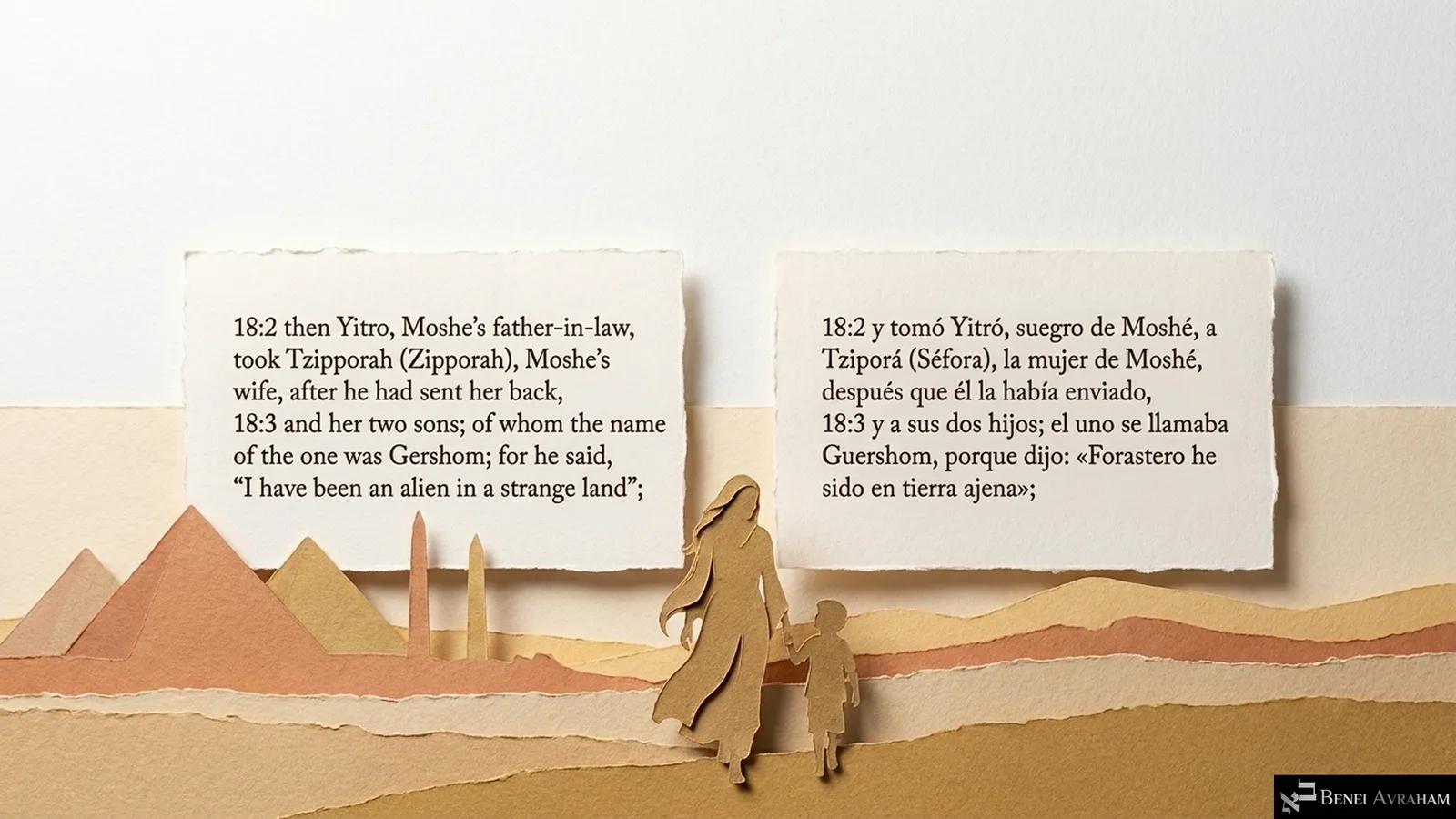
A paper mother and child walk past the pyramids: Yitro took Tzipporah and her two sons; the one was Gershom, “I have been an alien in a strange land” (Exodus 18:2–3).
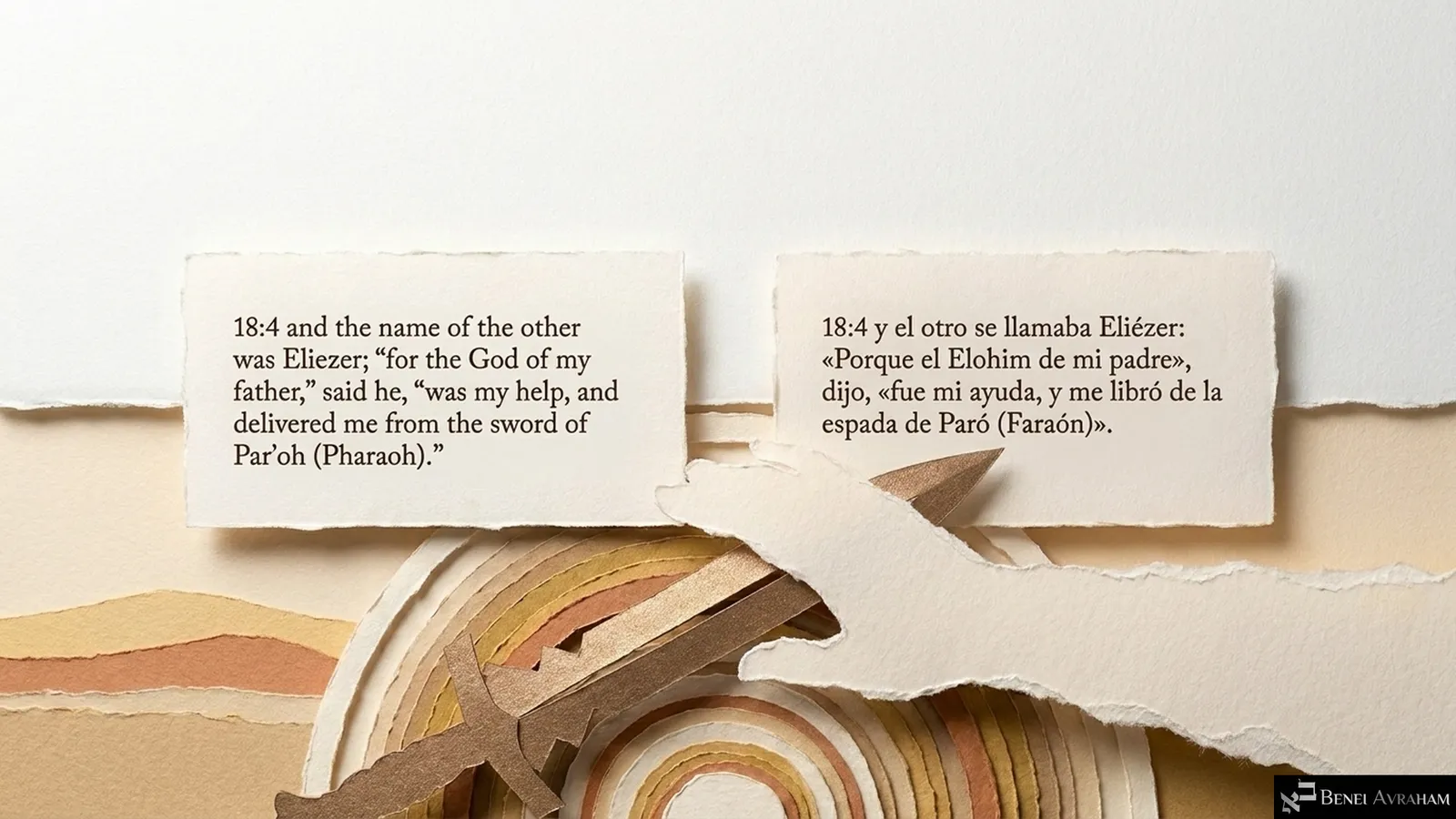
A paper sword beside torn rings: the other was Eliezer, “for the God of my father was my help, and delivered me from the sword of Par’oh” (Exodus 18:4).
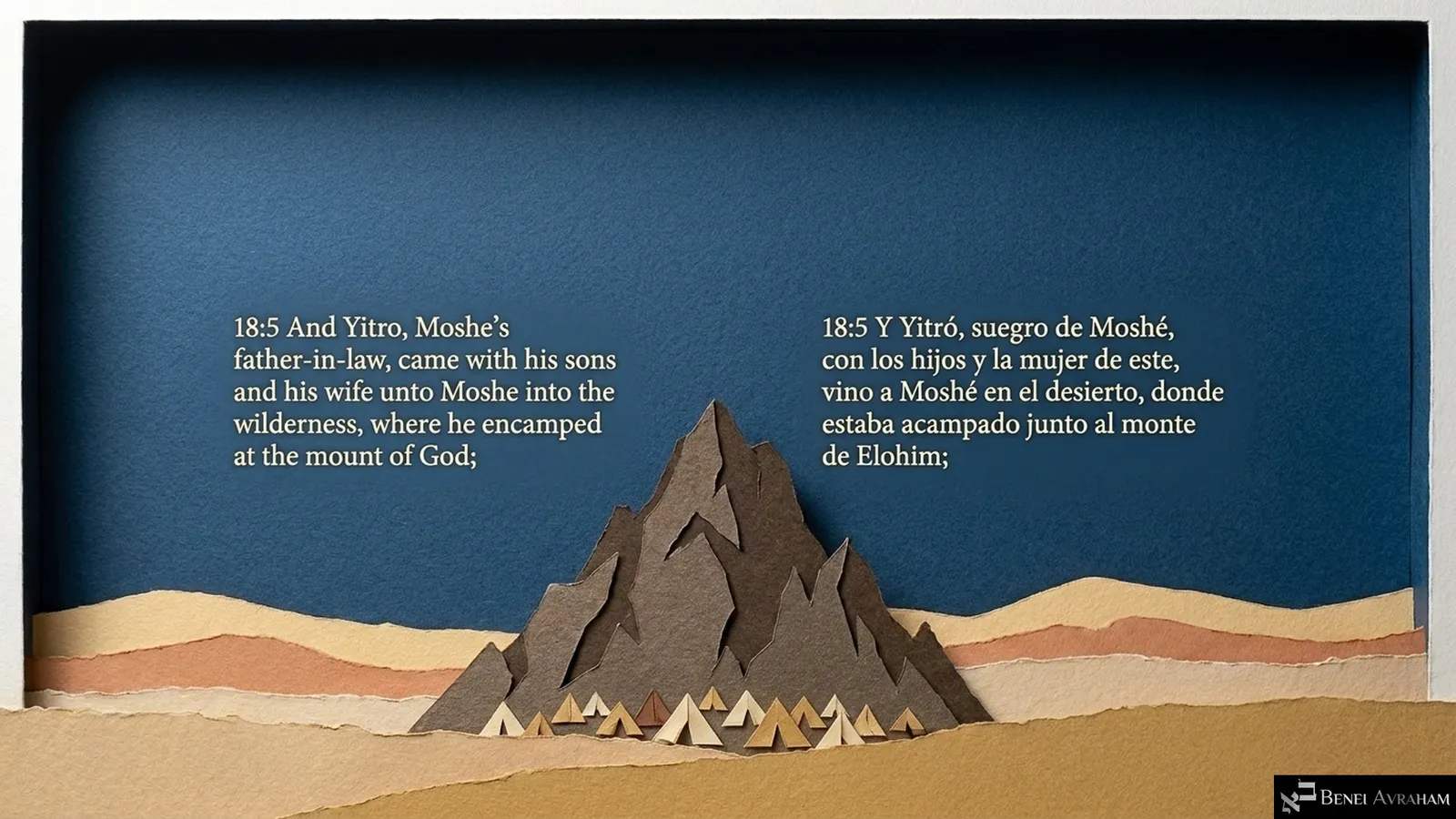
A paper mountain with tents at its foot: Yitro came with Moshe’s sons and his wife into the wilderness, to the mount of God (Exodus 18:5).
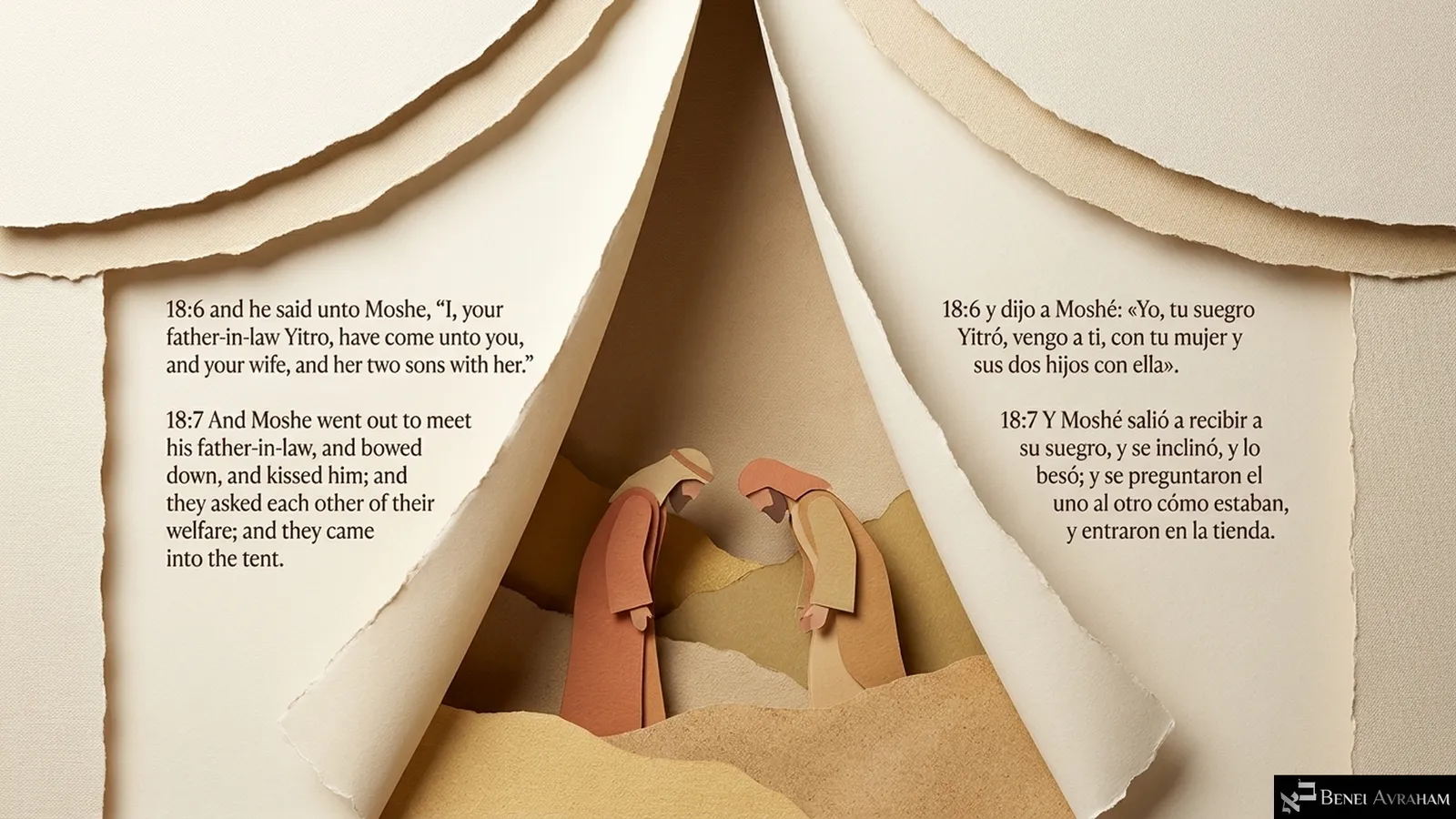
Moshe and Yitro embrace inside a paper tent: Moshe went out to meet his father-in-law, bowed down and kissed him (Exodus 18:6–7).
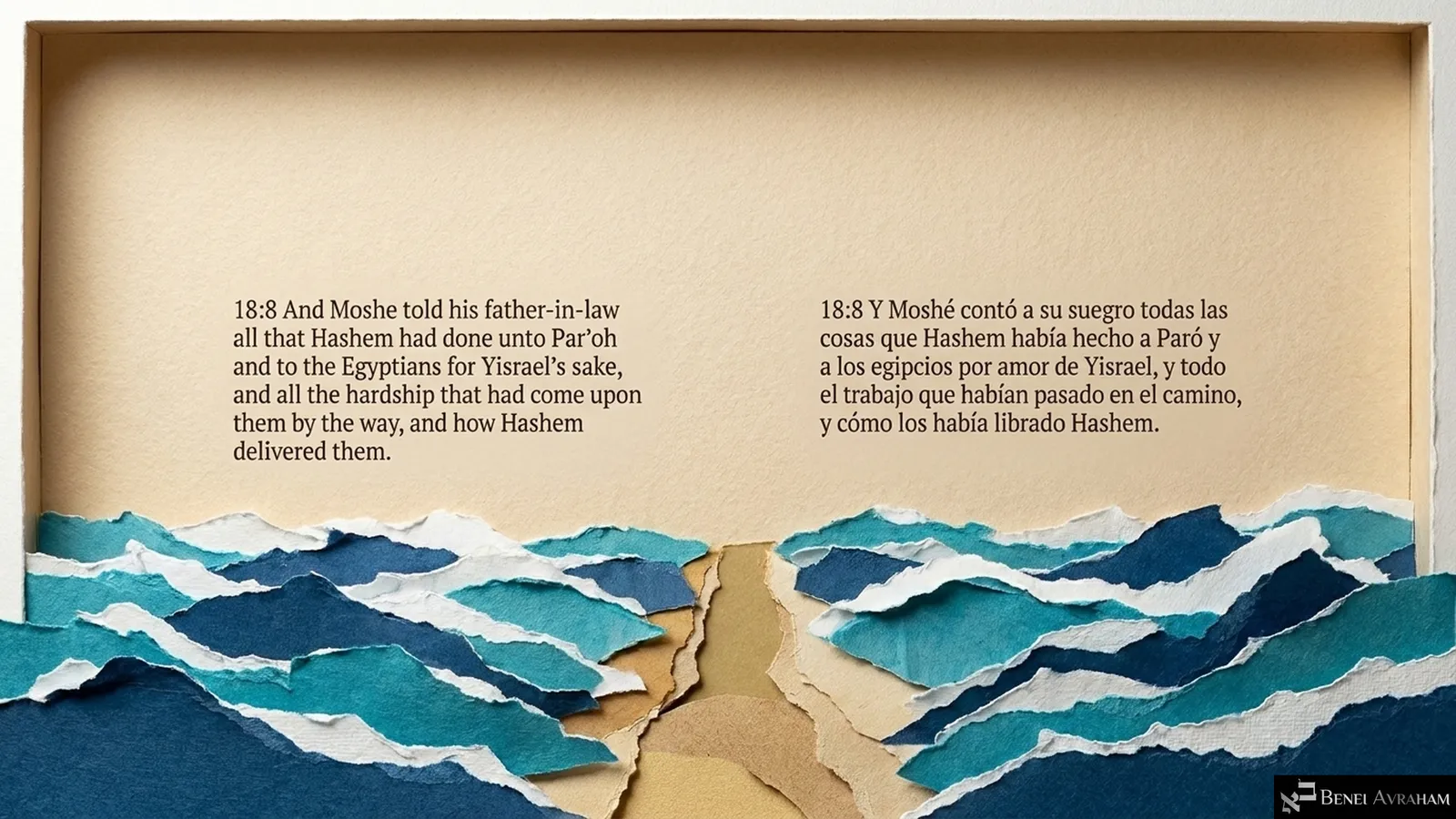
Torn blue paper waves below the cards: Moshe told his father-in-law all that Hashem had done unto Par’oh and how Hashem delivered them (Exodus 18:8).
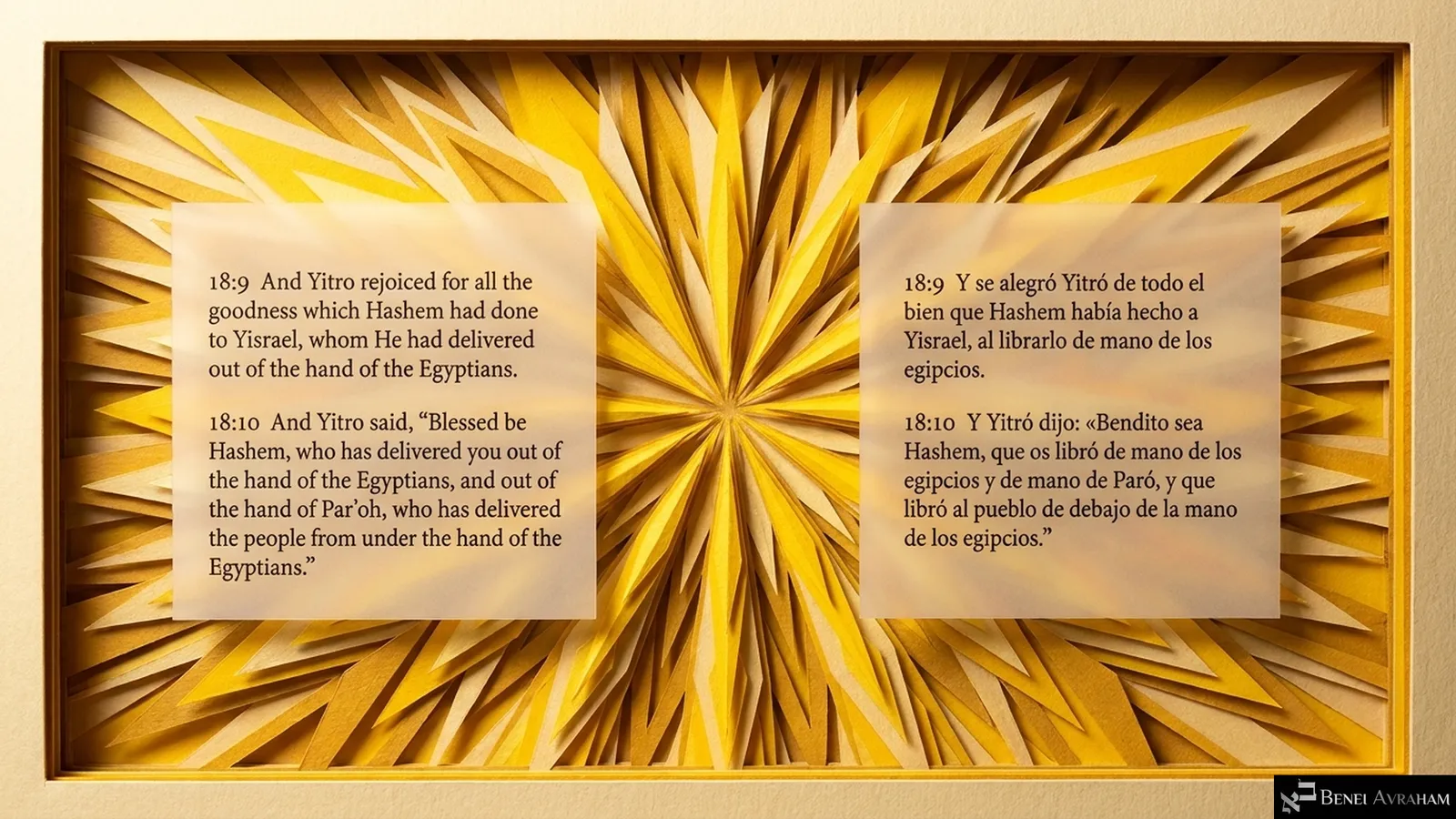
Golden paper rays bursting from the centre: “Blessed be Hashem, who has delivered you out of the hand of the Egyptians” (Exodus 18:9–10).
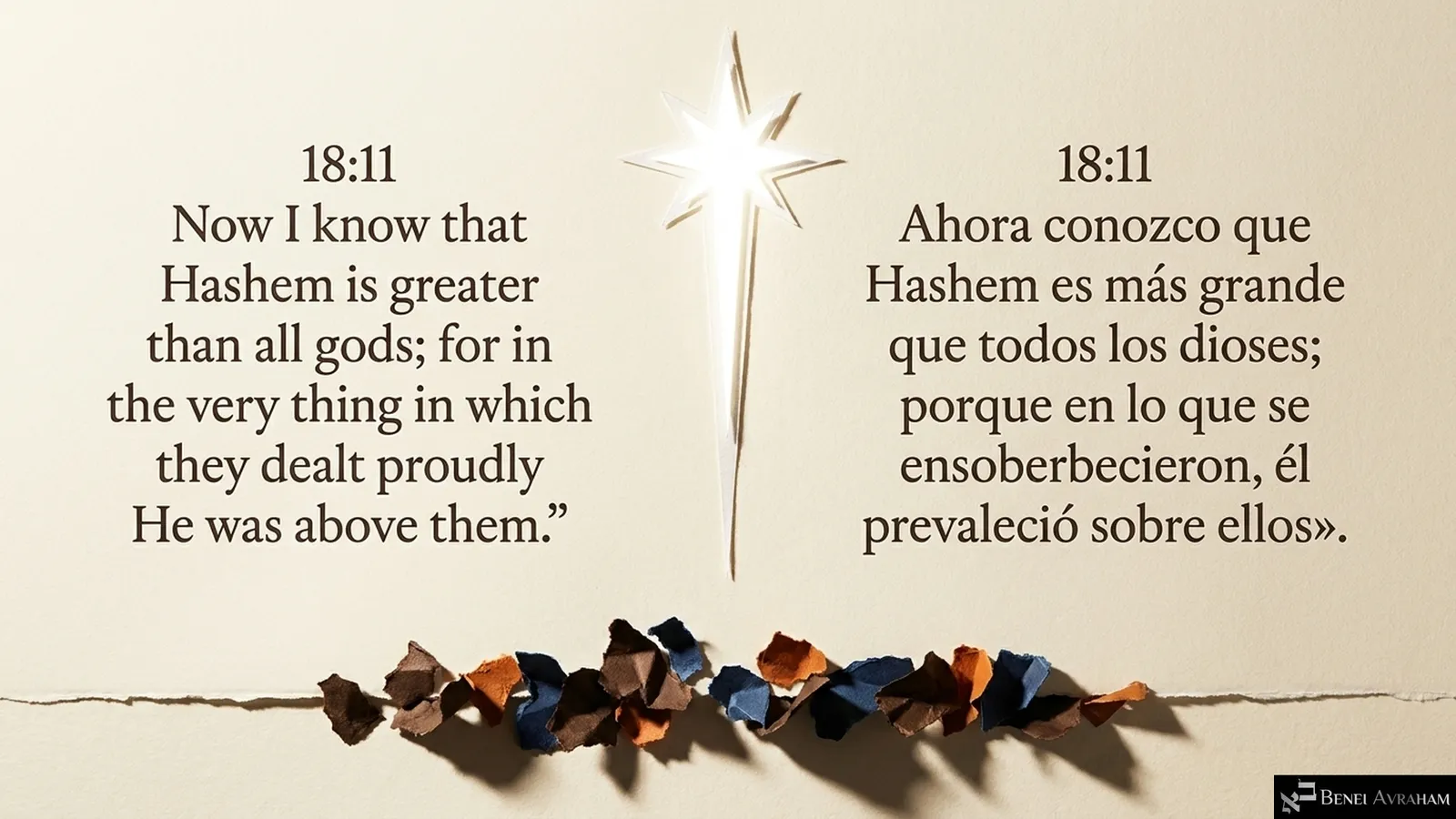
A paper star above a scatter of broken stones: “Now I know that Hashem is greater than all gods” (Exodus 18:11).
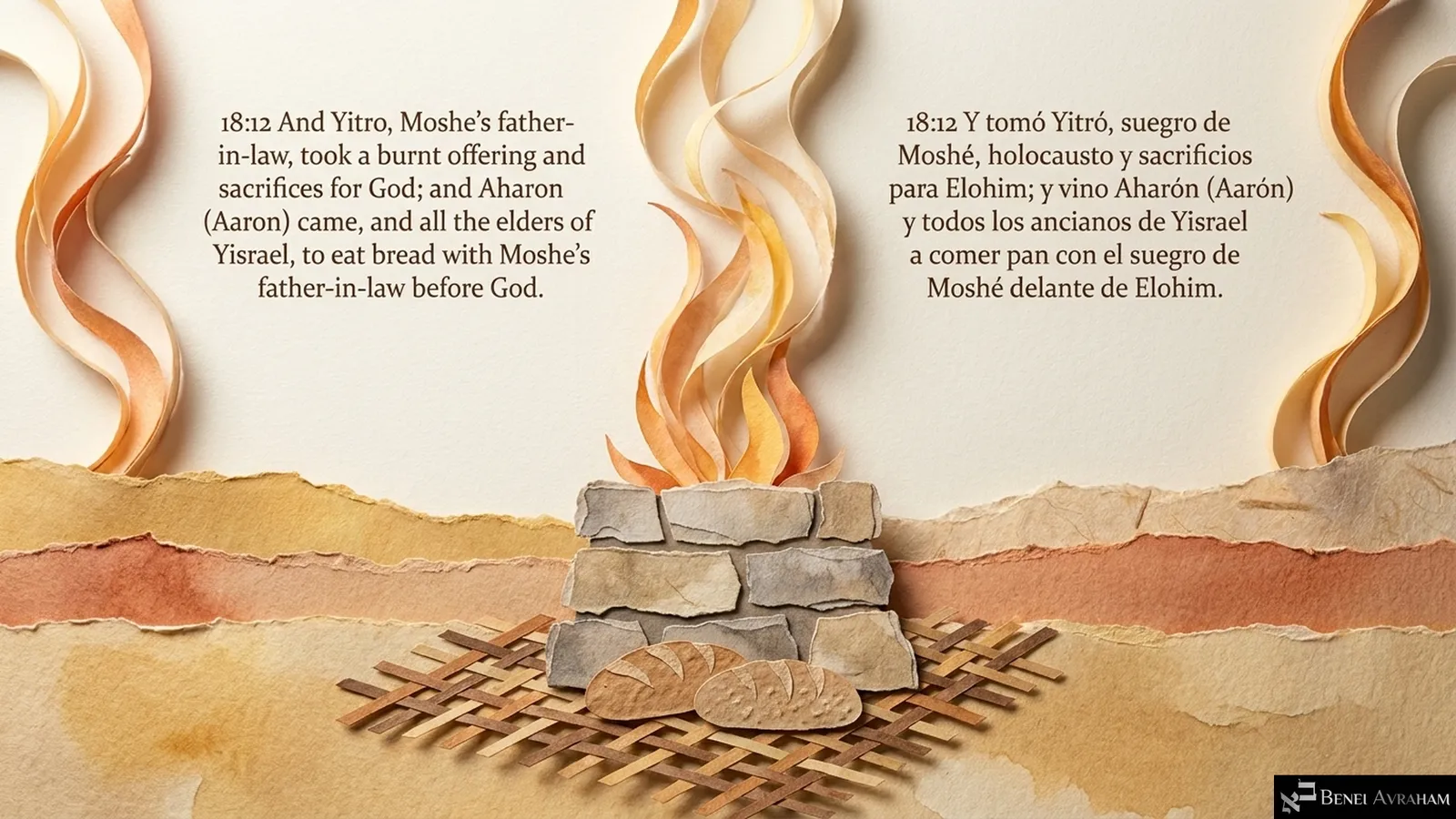
Paper flames over a stone altar and loaves of bread: Yitro brought a burnt offering, and Aharon and the elders came to eat bread before God (Exodus 18:12).
Sheni · Exodus 18:13–23

Second Portion

Title card for the second portion clipped over torn paper hills: “Parashat Yitro — 2nd Portion, Exodus 18:13–23”.
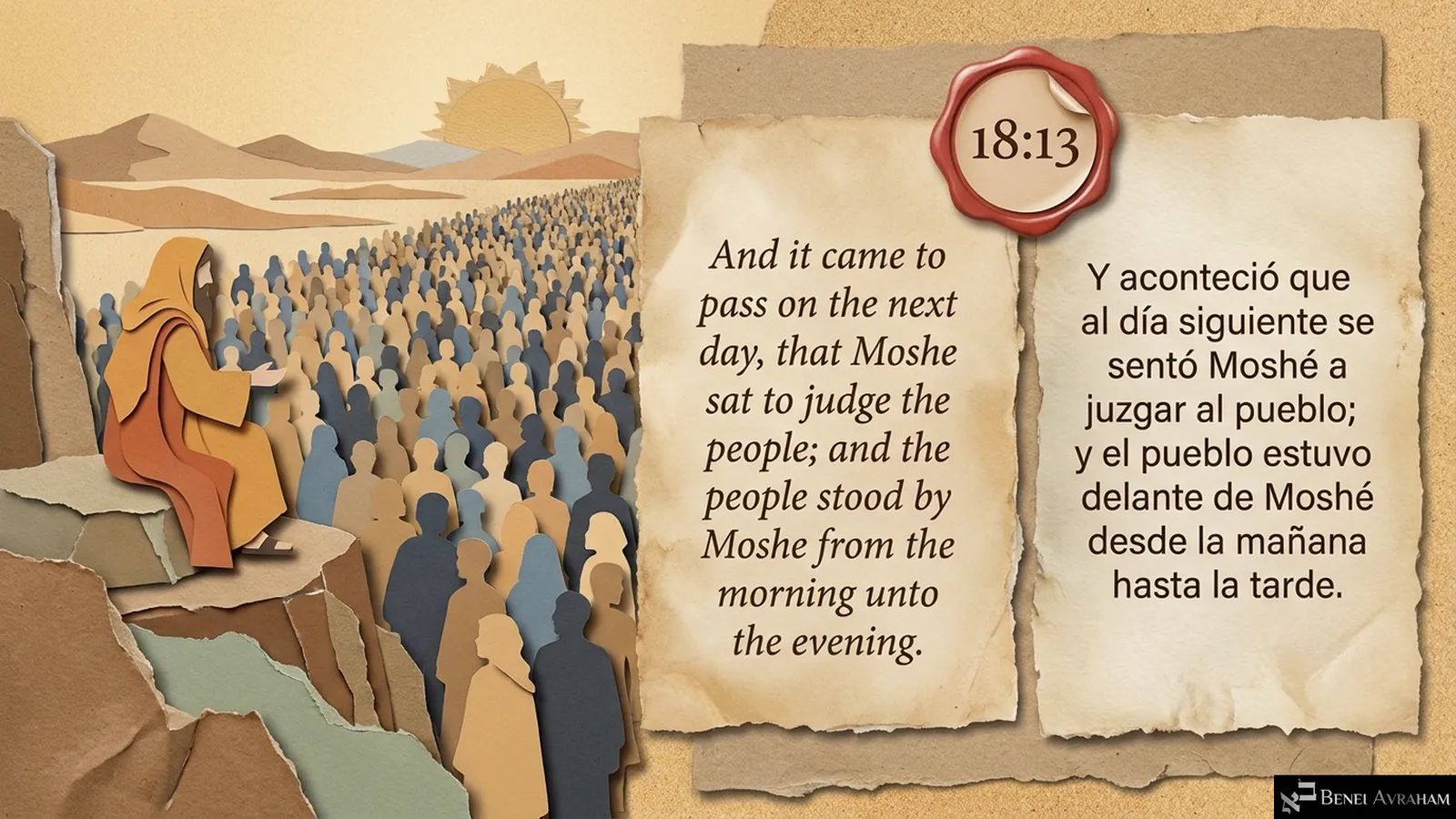
Moshe seated before a long line of paper figures: Moshe sat to judge the people from the morning unto the evening (Exodus 18:13).
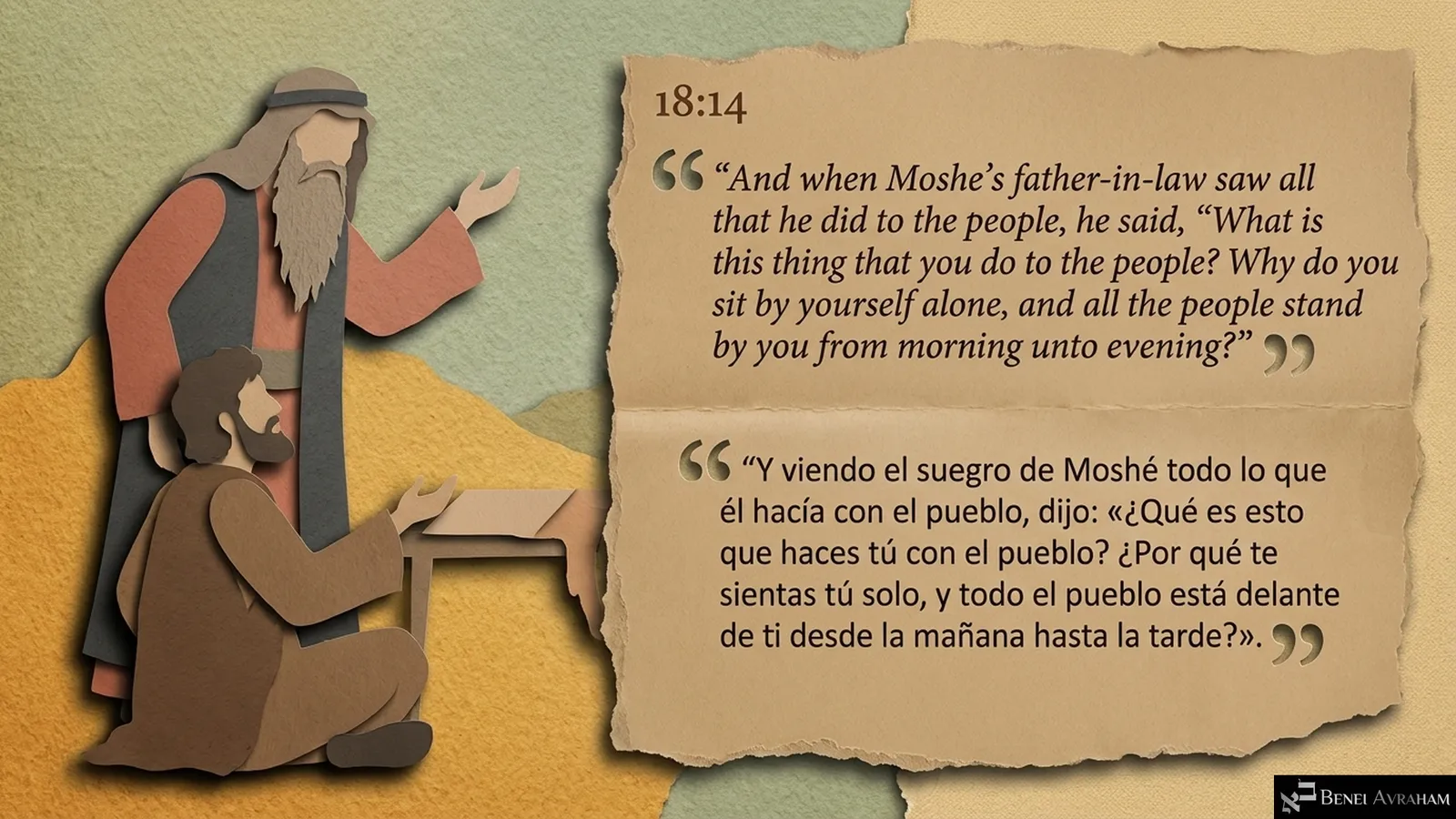
Yitro questions Moshe at his table: “Why do you sit by yourself alone, and all the people stand by you from morning unto evening?” (Exodus 18:14).
Two cards over golden circles: “Because the people come unto me to inquire of God” (Exodus 18:15).
A rolled scroll beside two cards: “I judge between one and another, and I make them know the statutes of God, and His laws” (Exodus 18:16).
A torn note on dark paper: “The thing that you do is not good” (Exodus 18:17).
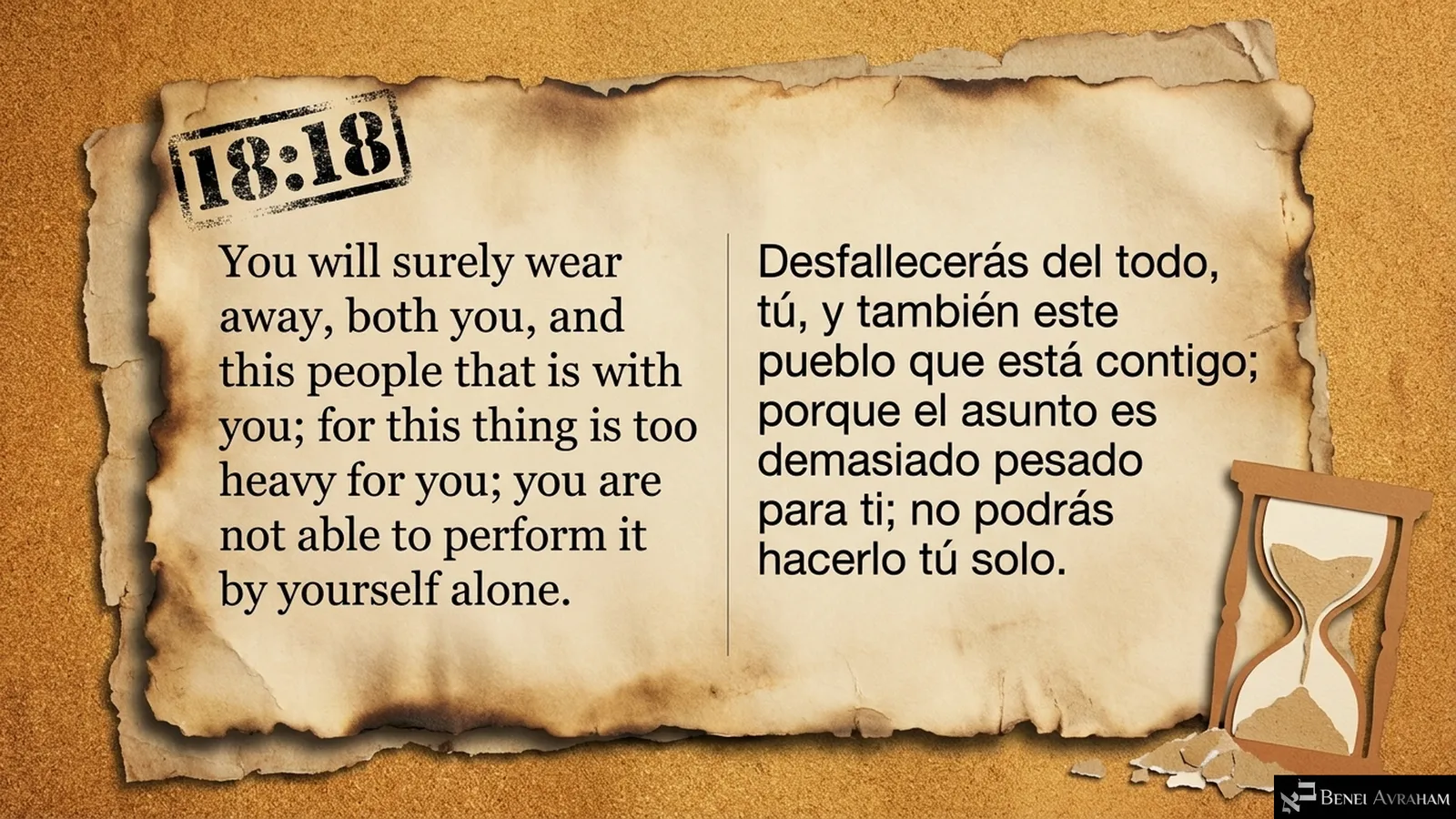
A burnt parchment with an hourglass: “You will surely wear away… you are not able to perform it by yourself alone” (Exodus 18:18).
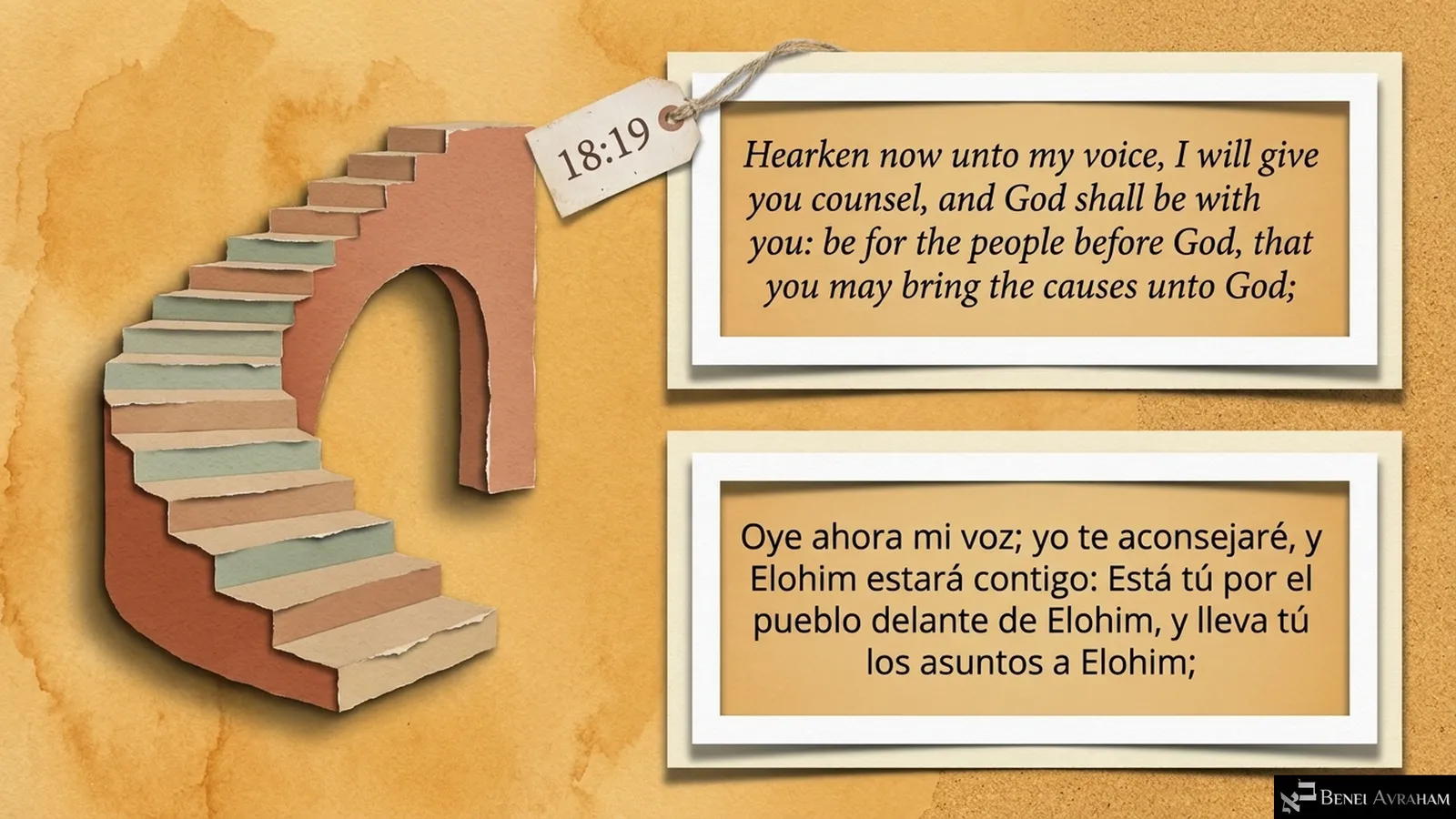
A paper staircase and arch beside two framed cards: “Be for the people before God, that you may bring the causes unto God” (Exodus 18:19).
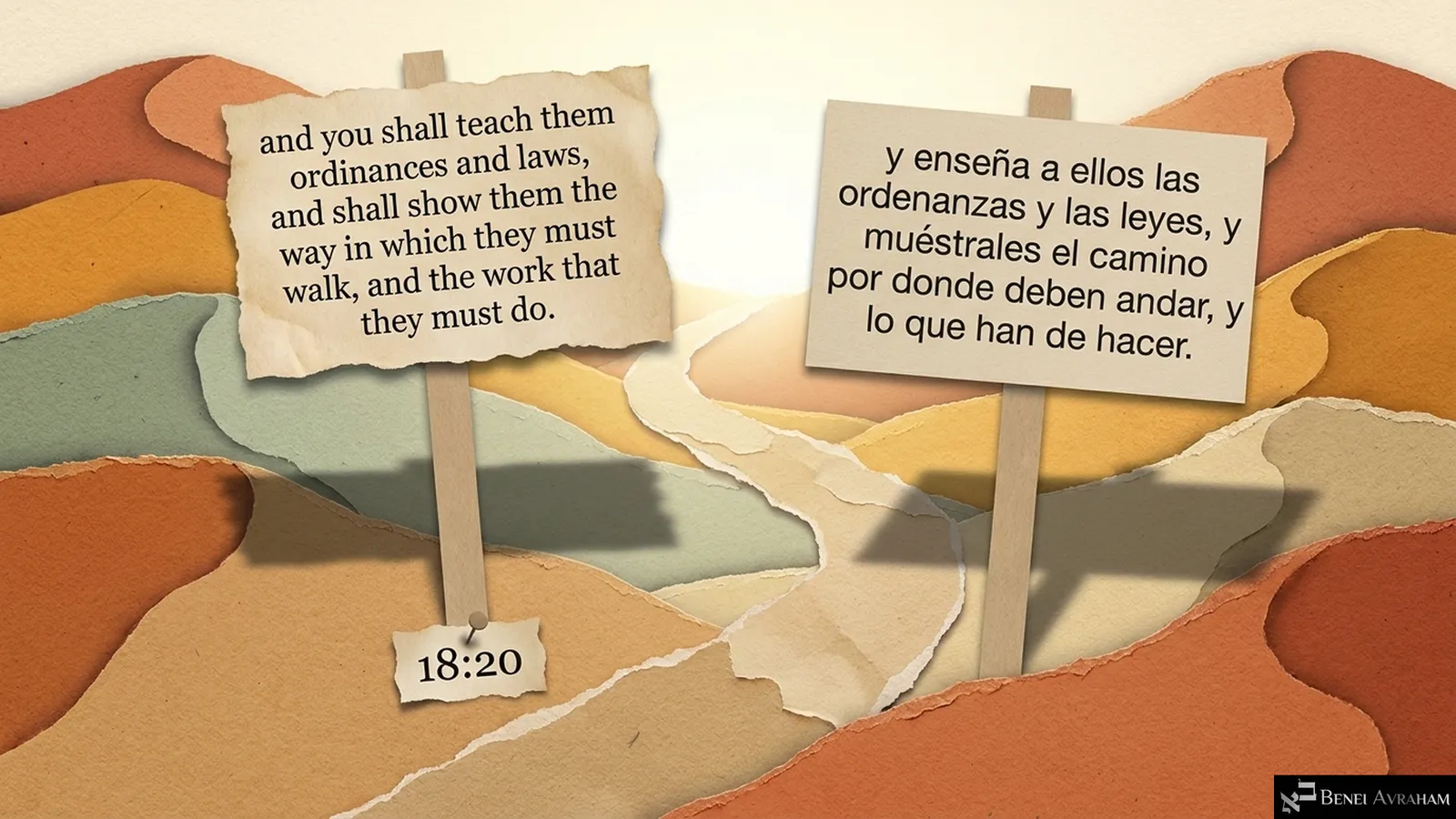
Two wooden signposts over winding paper paths: “Show them the way in which they must walk, and the work that they must do” (Exodus 18:20).
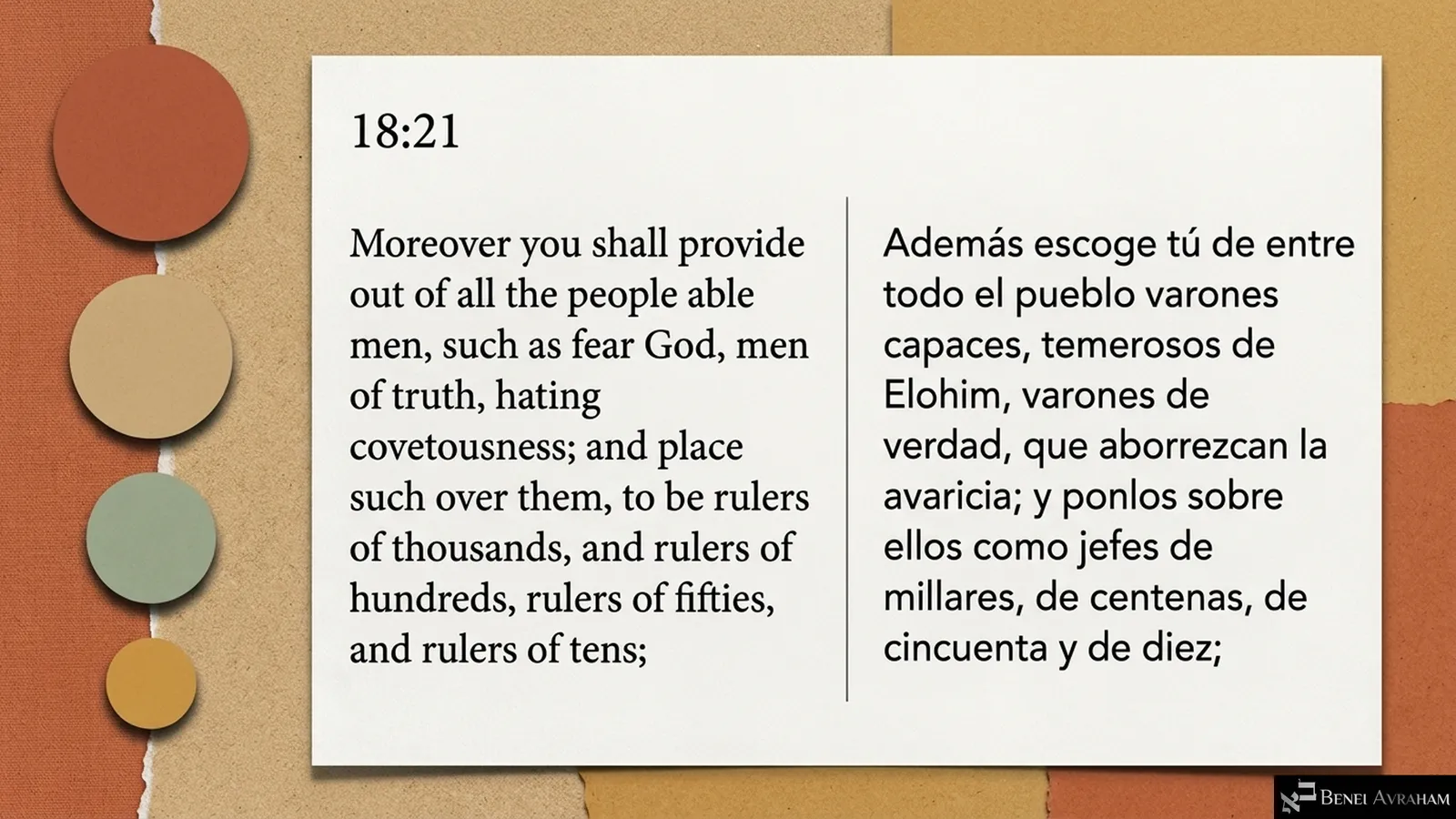
A white card beside paper colour swatches: provide able men, such as fear God, men of truth, hating covetousness, rulers of thousands, hundreds, fifties and tens (Exodus 18:21).
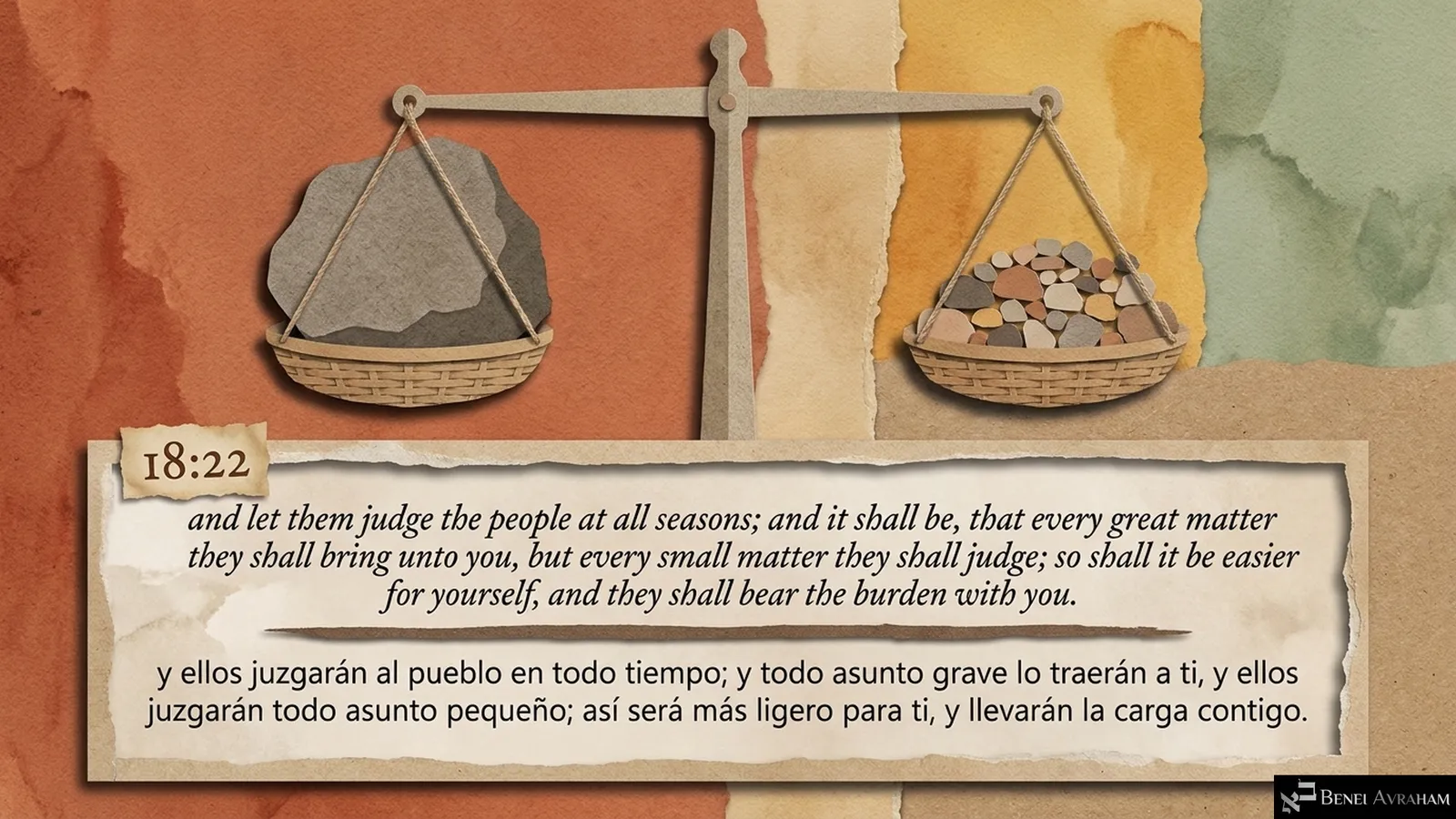
A balance with a great stone and a basket of pebbles: every great matter they shall bring unto you, but every small matter they shall judge (Exodus 18:22).
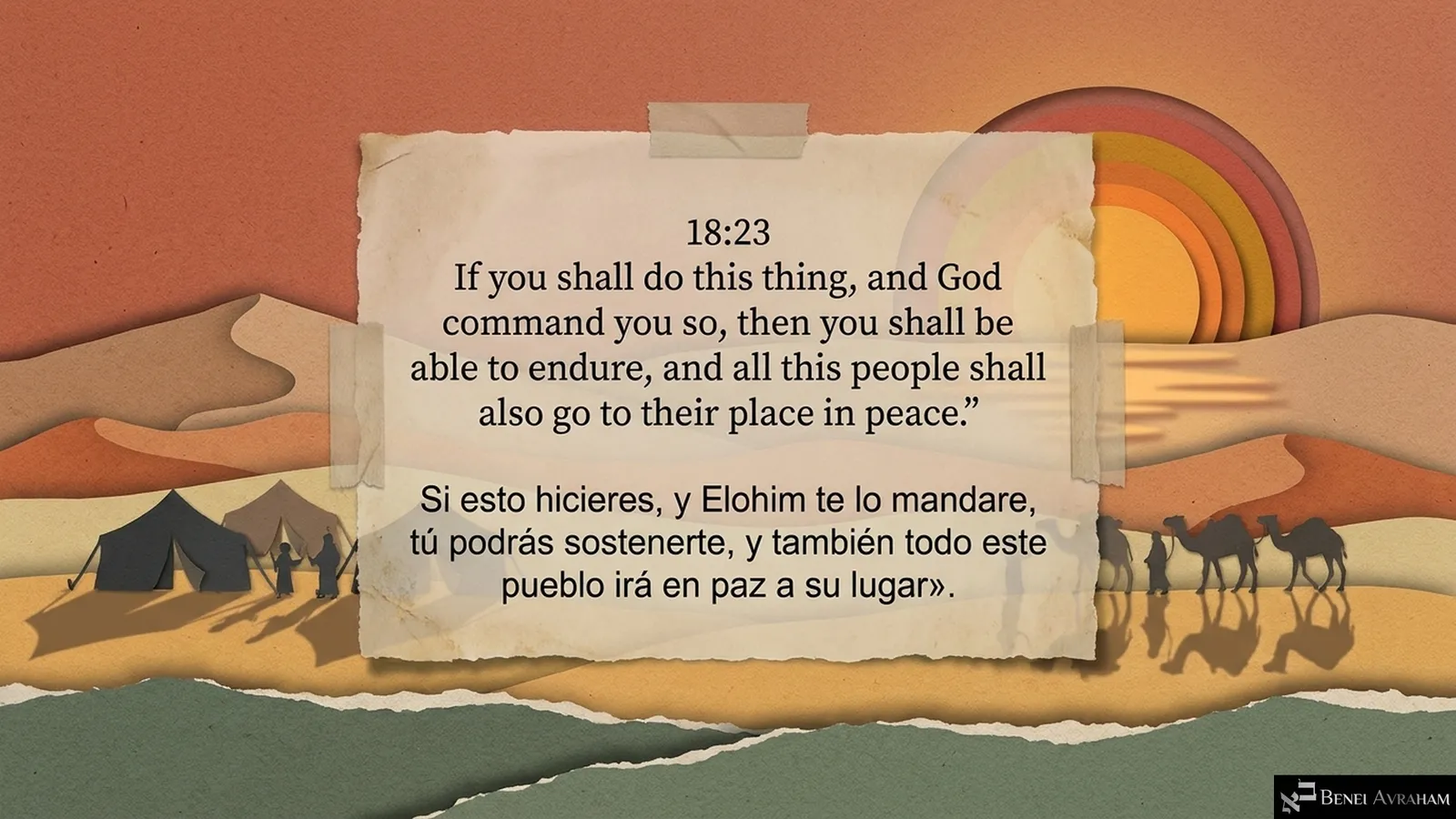
Tents and camels at sunset under a taped note: “all this people shall also go to their place in peace” (Exodus 18:23).
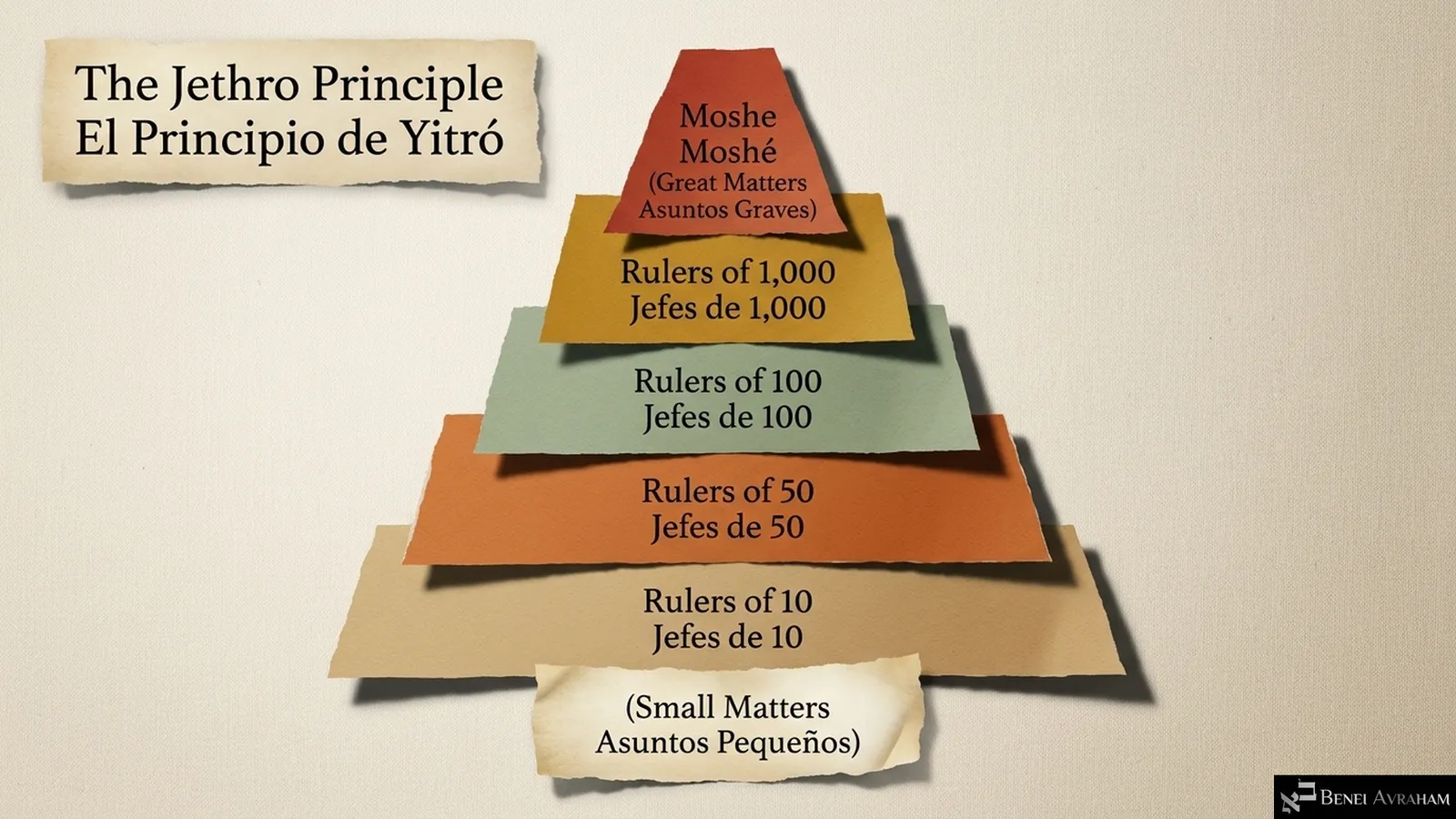
A paper pyramid, “The Jethro Principle”: Moshe for great matters, then rulers of thousands, hundreds, fifties and tens (Exodus 18:21–22).
Shlishi · Exodus 18:24–27

Third Portion

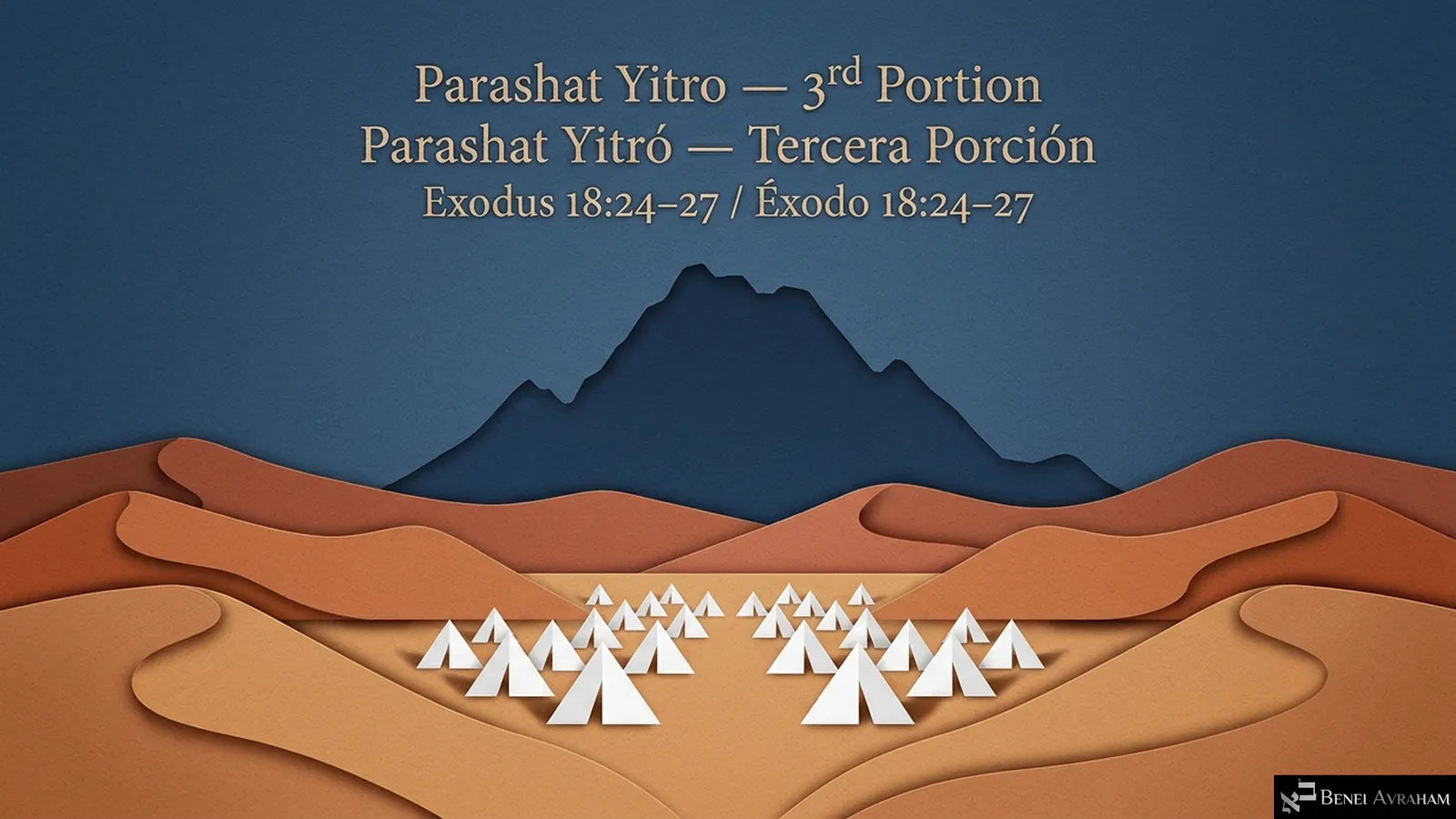
Title card for the third portion over tents beneath the mountain: “Parashat Yitro — 3rd Portion, Exodus 18:24–27”.
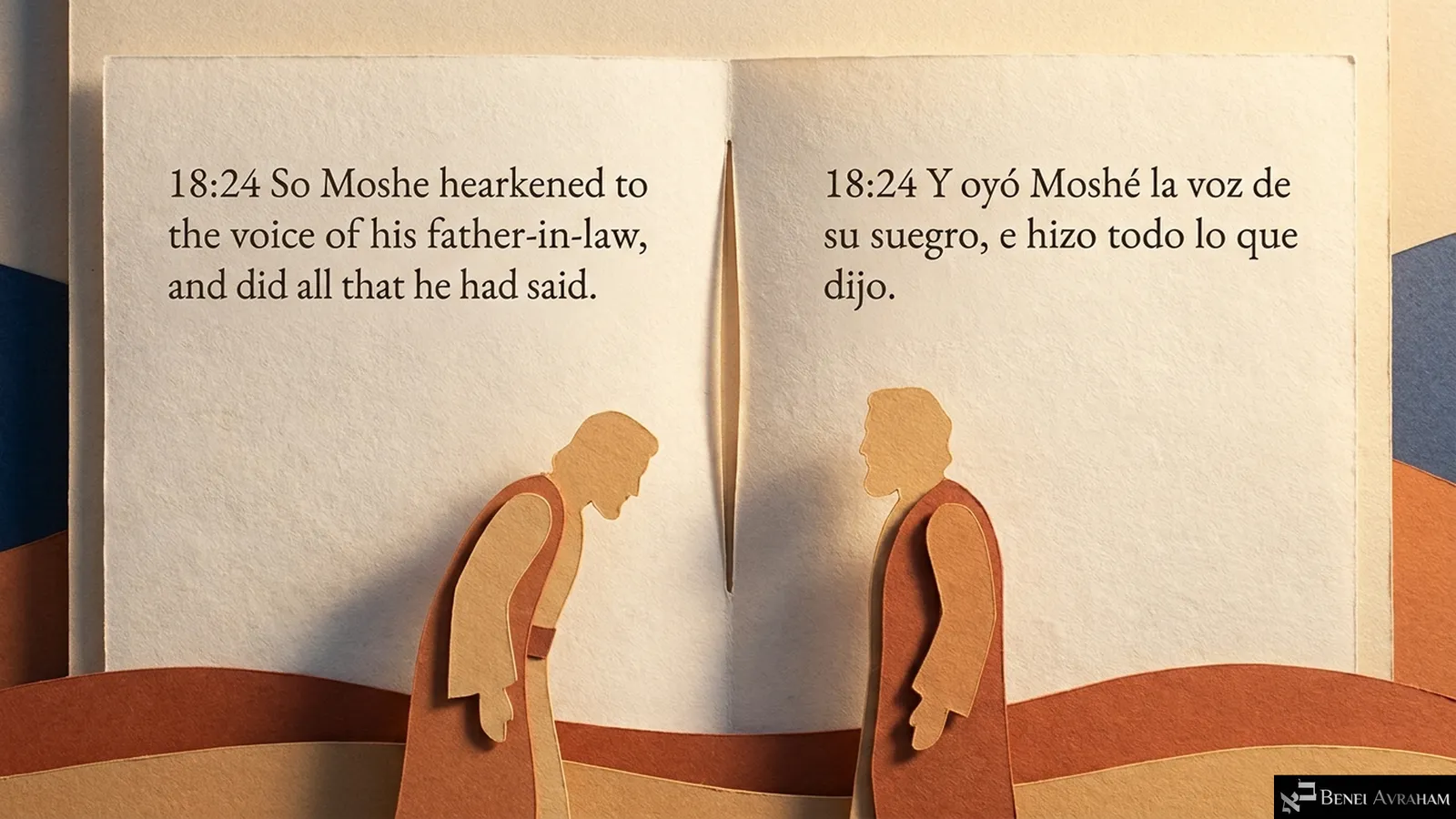
Moshe and Yitro facing across an open paper book: Moshe hearkened to the voice of his father-in-law (Exodus 18:24).
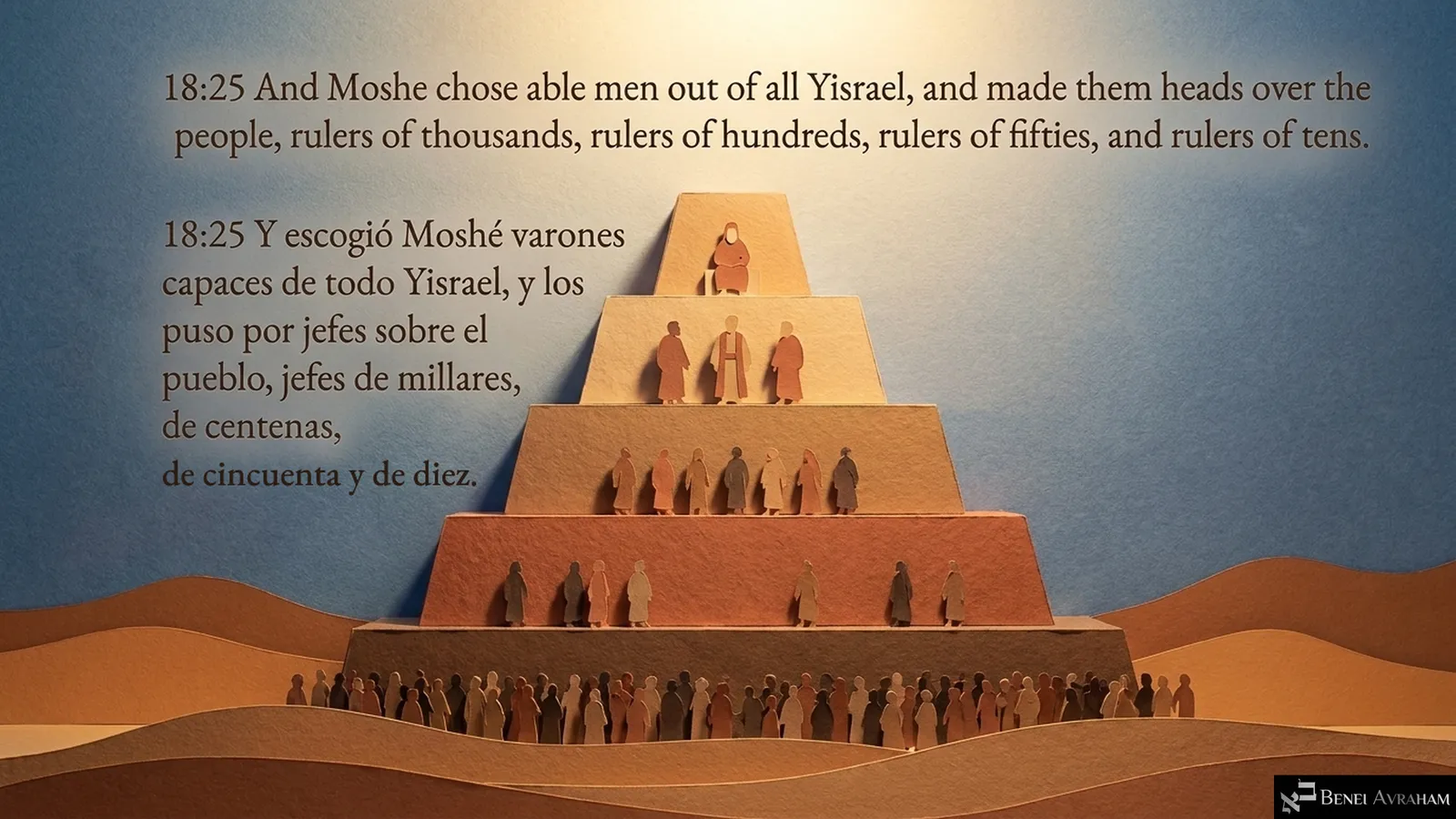
A stepped paper pyramid of people: Moshe chose able men and made them rulers of thousands, hundreds, fifties and tens (Exodus 18:25).
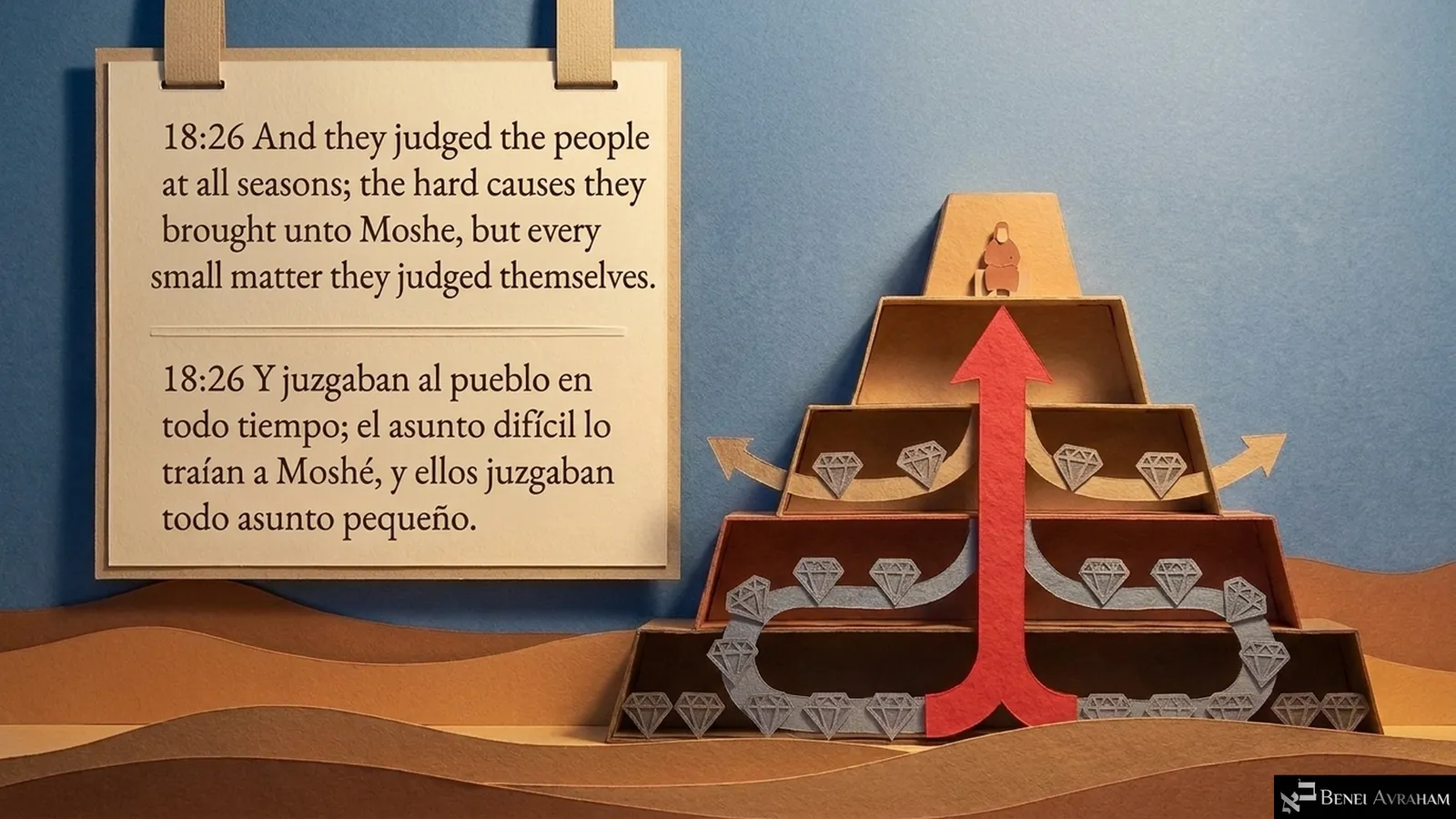
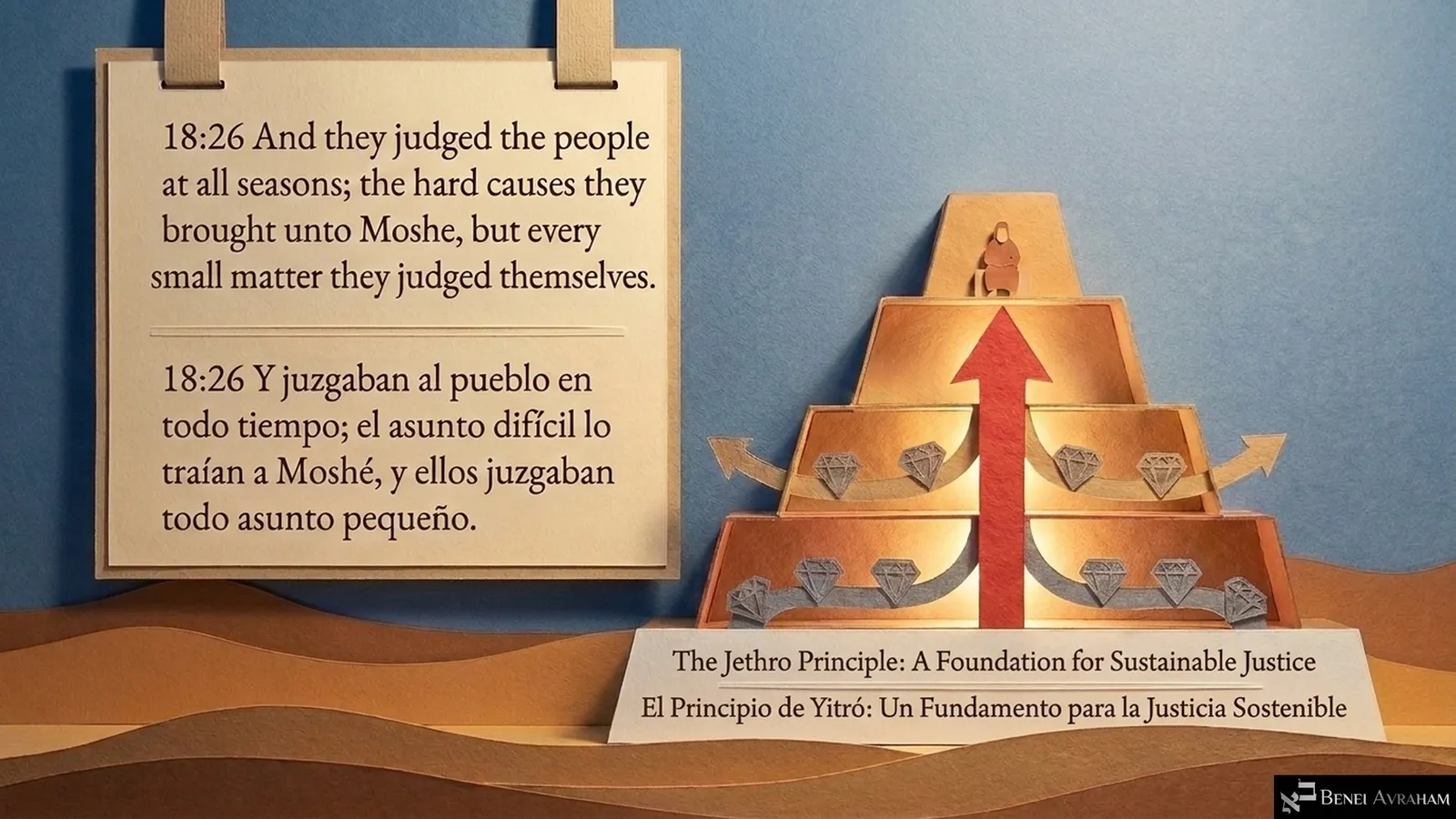
A red arrow rising through the pyramid: the hard causes they brought unto Moshe, but every small matter they judged themselves (Exodus 18:26).
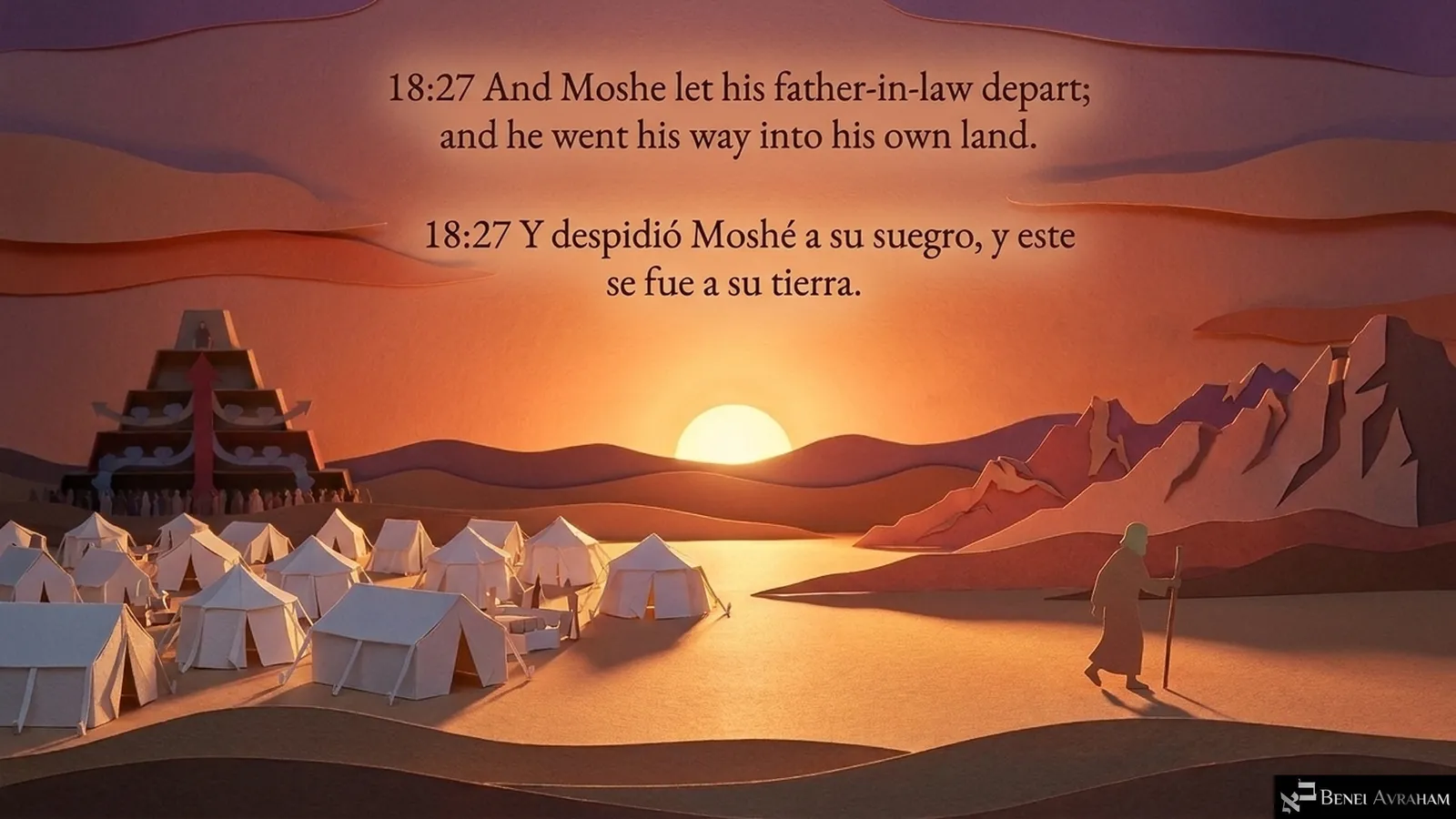
Yitro walks into the sunset past the camp: Moshe let his father-in-law depart, and he went his way into his own land (Exodus 18:27).
The pyramid and its label, “The Jethro Principle: A Foundation for Sustainable Justice” (Exodus 18:24–27).
Revi’i · Exodus 19:1–6

Fourth Portion

Title card for the fourth portion over a winding paper road: “Parashat Yitro — 4th Portion (Revi’i), Exodus 19:1–6”.
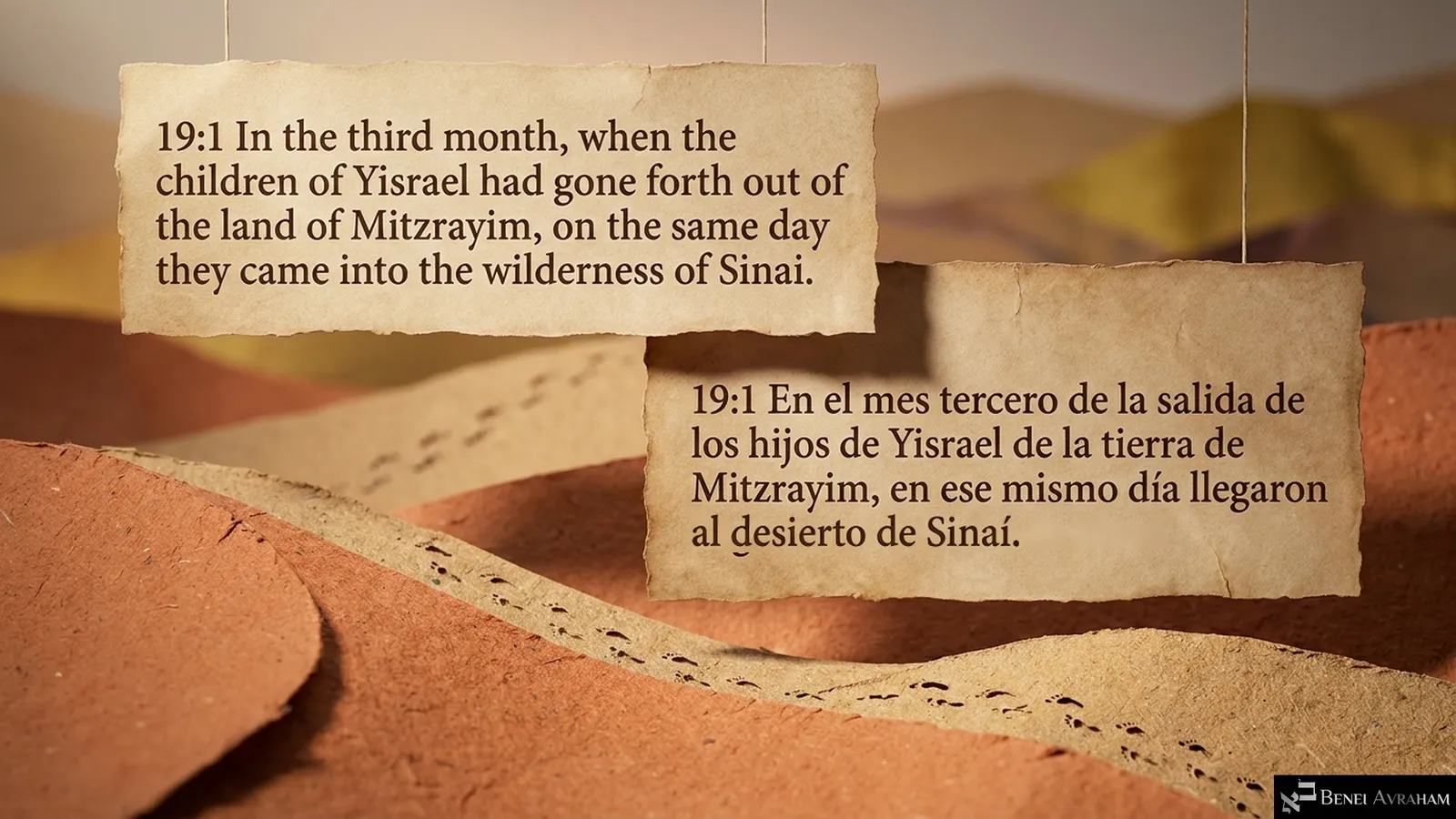
Footprints across paper dunes: in the third month they came into the wilderness of Sinai (Exodus 19:1).
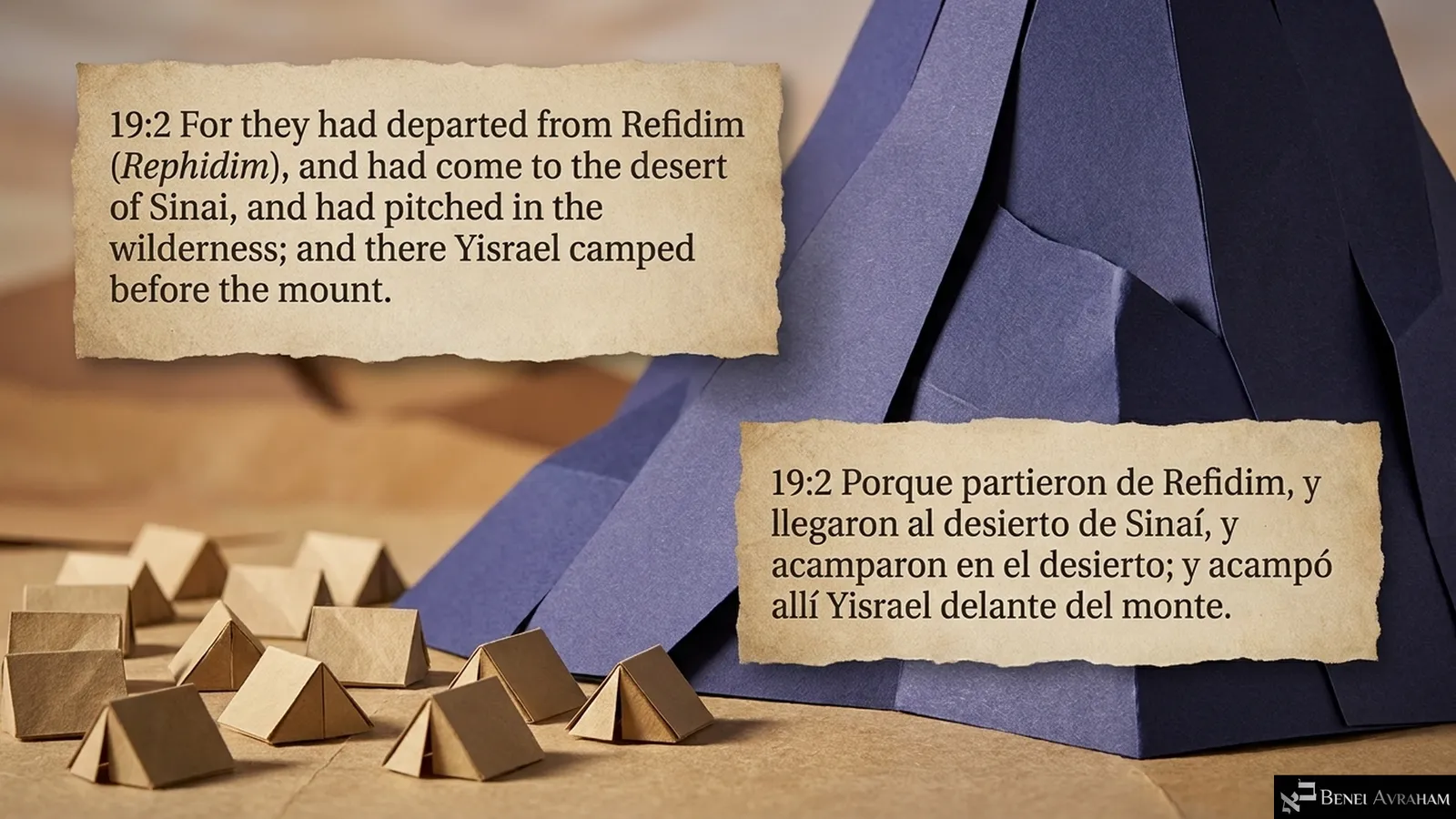
Paper tents before a tall blue mountain: there Yisrael camped before the mount (Exodus 19:2).
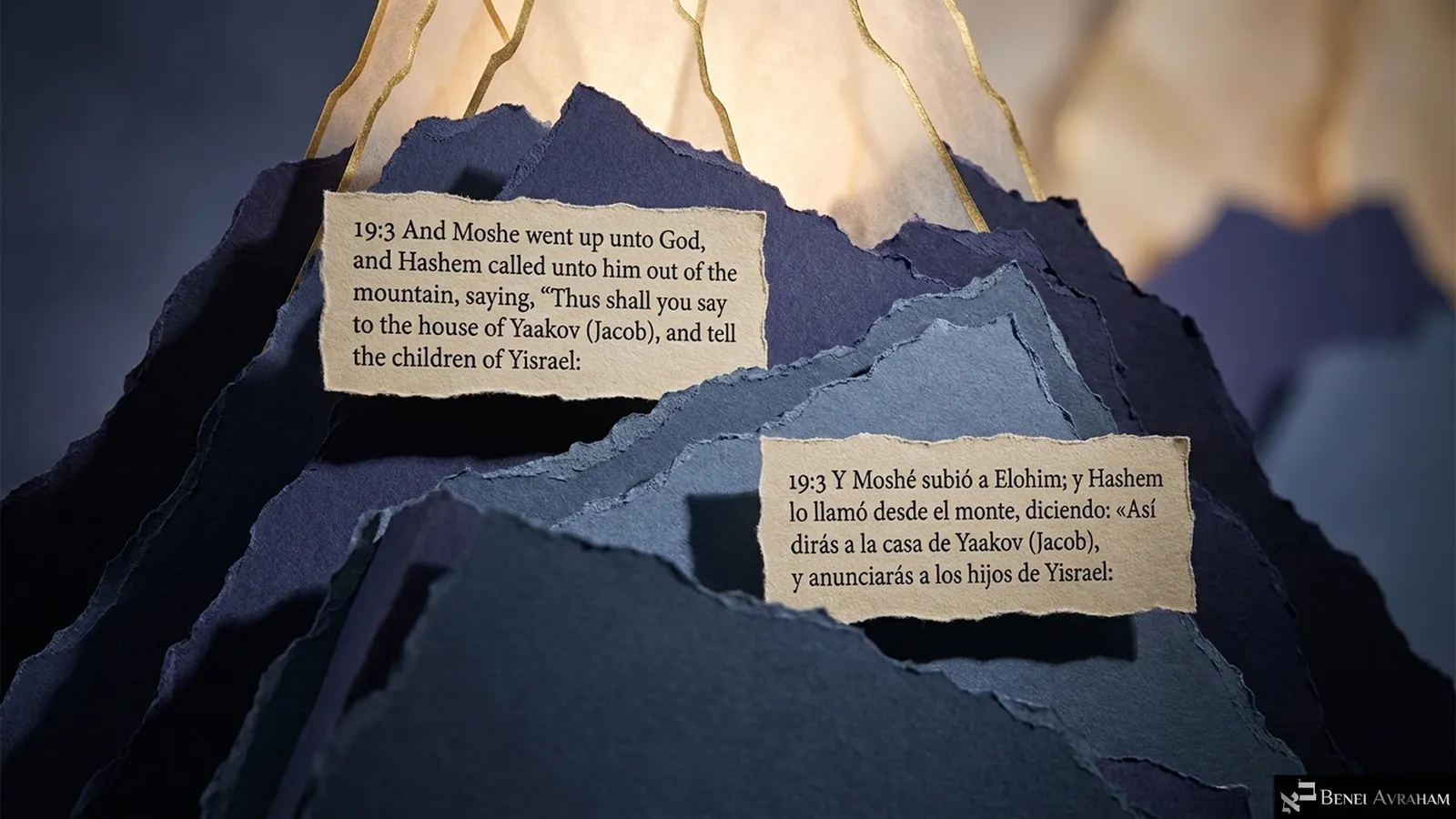
Cards on the dark slopes of the mountain: Moshe went up unto God, and Hashem called unto him out of the mountain (Exodus 19:3).
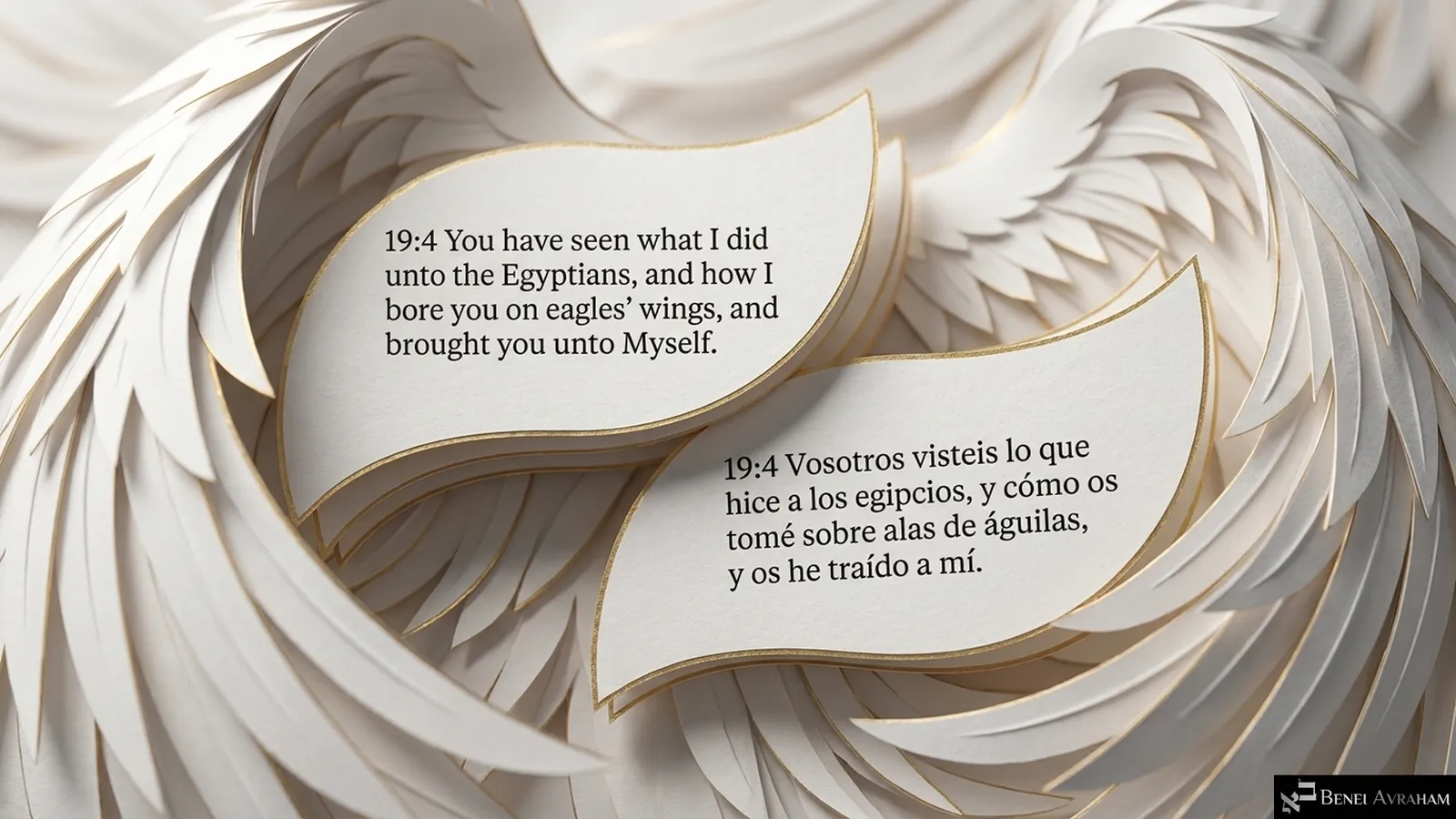
Two cards held in white paper wings: “I bore you on eagles’ wings, and brought you unto Myself” (Exodus 19:4).
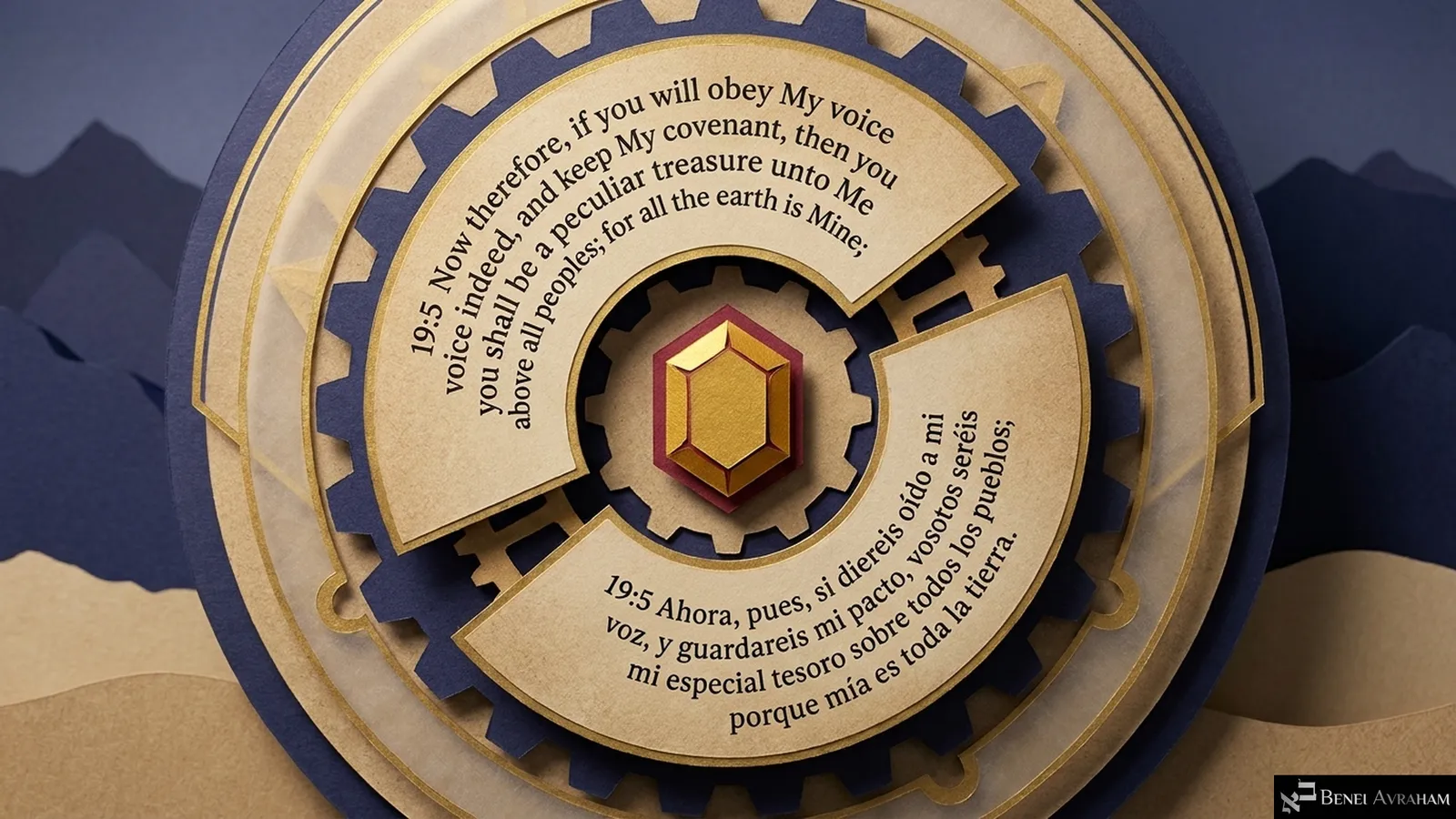
Curved cards around a jewel: “You shall be a peculiar treasure unto Me above all peoples; for all the earth is Mine” (Exodus 19:5).
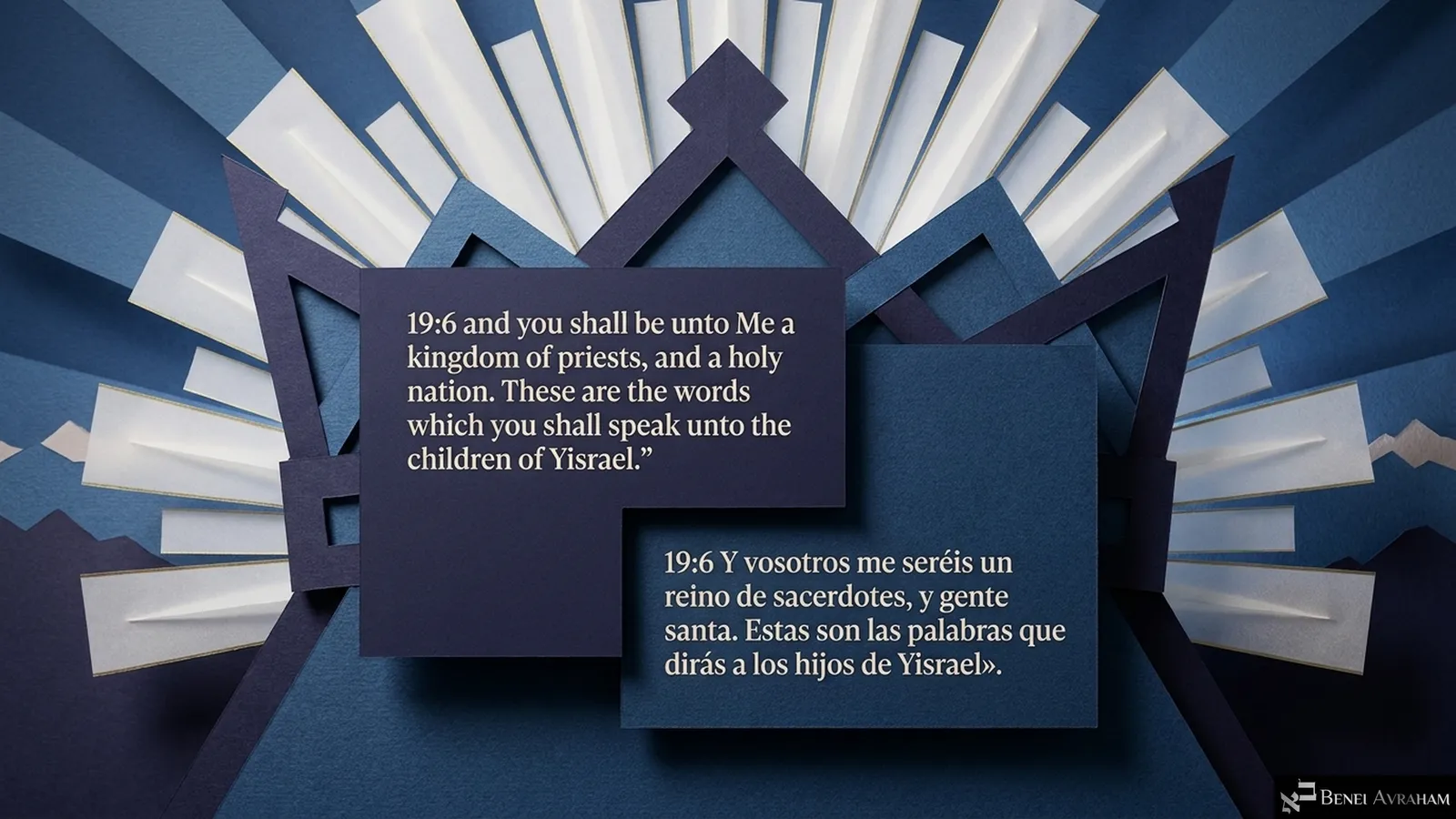
Blue cards before white paper rays: “You shall be unto Me a kingdom of priests, and a holy nation” (Exodus 19:6).
Chamishi · Exodus 19:7–19

Fifth Portion

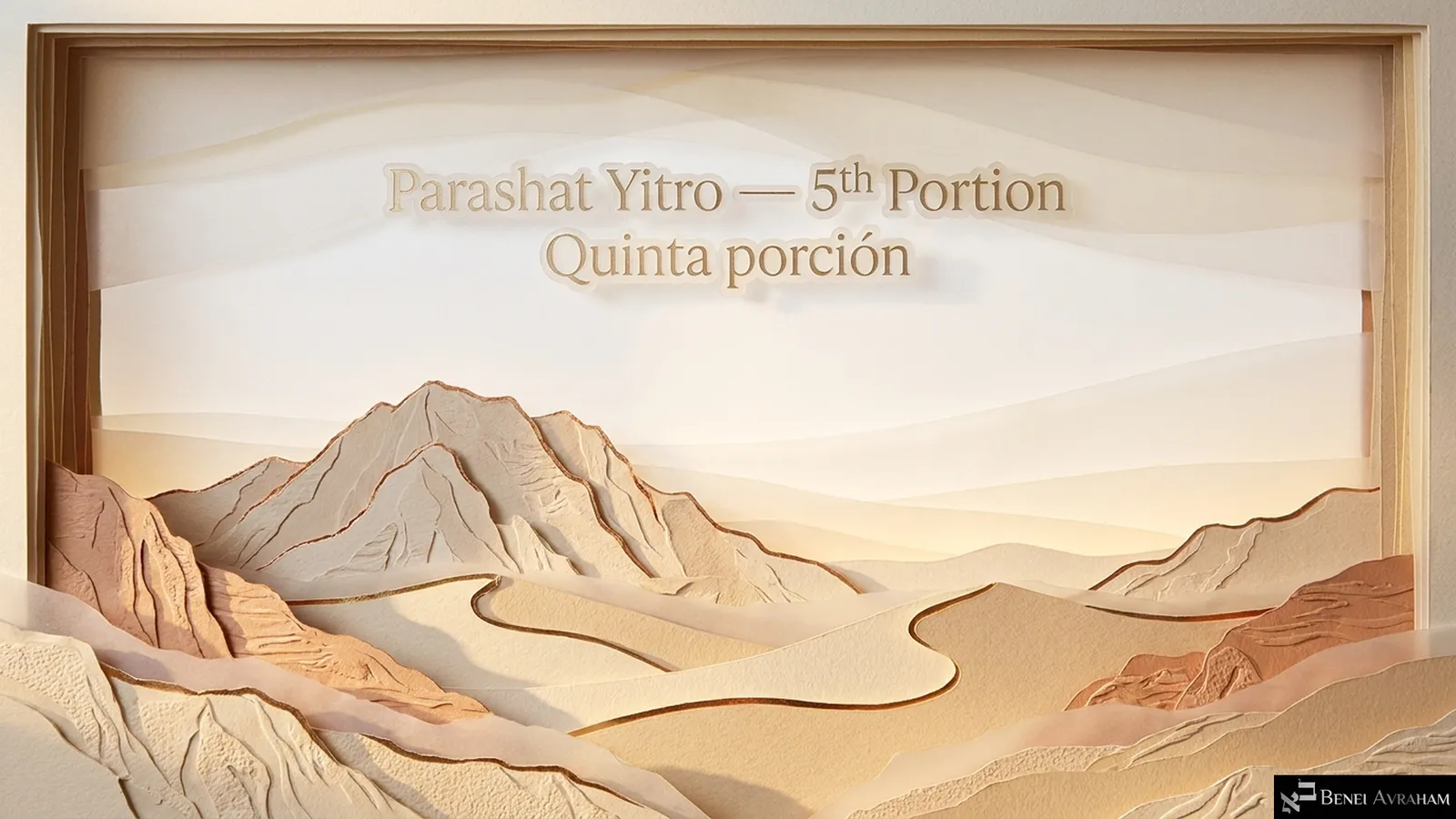
Title card for the fifth portion over pale paper mountains: “Parashat Yitro — 5th Portion”.
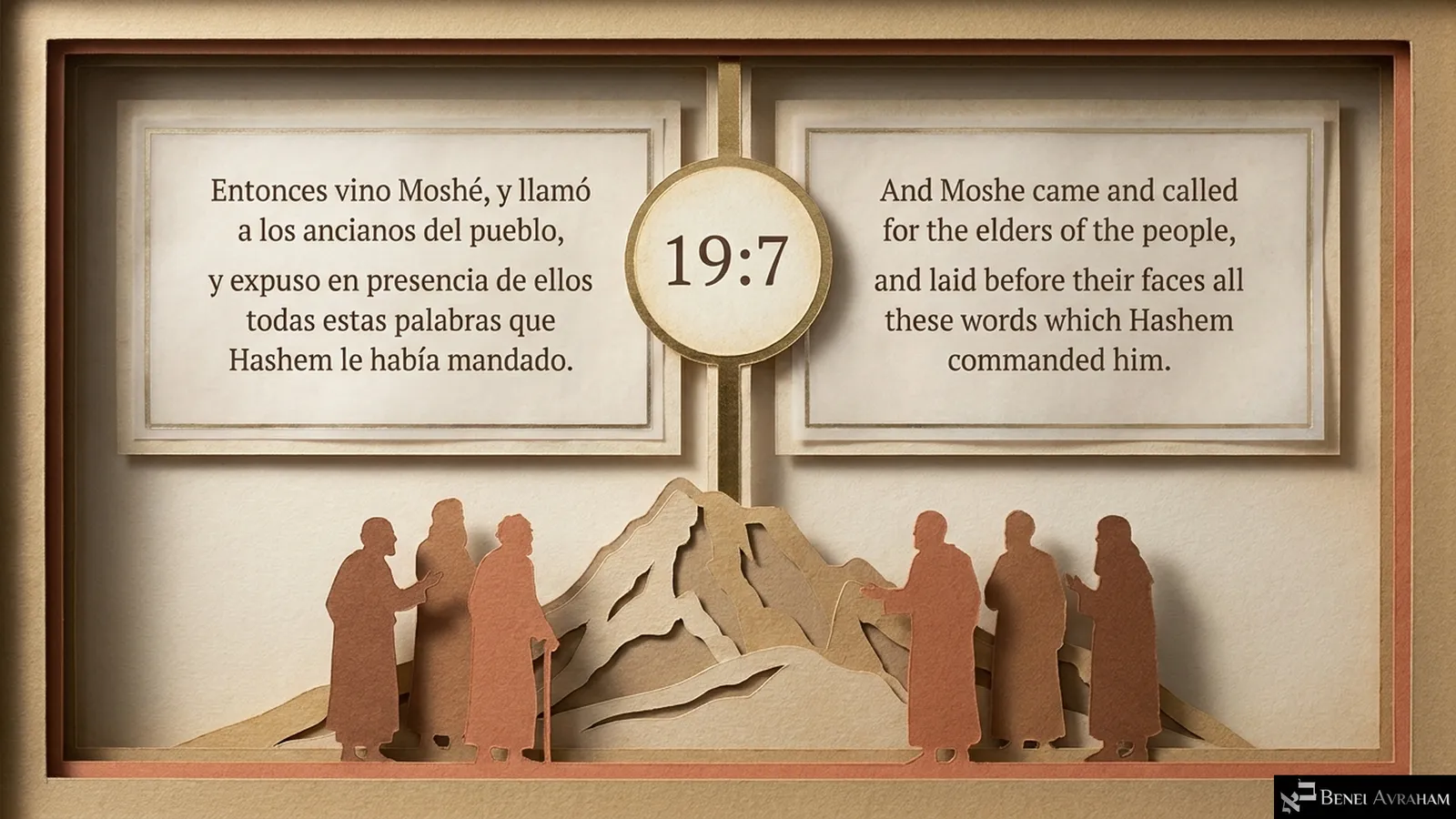
Moshe and the elders below the mountain: he laid before them all these words which Hashem commanded him (Exodus 19:7).
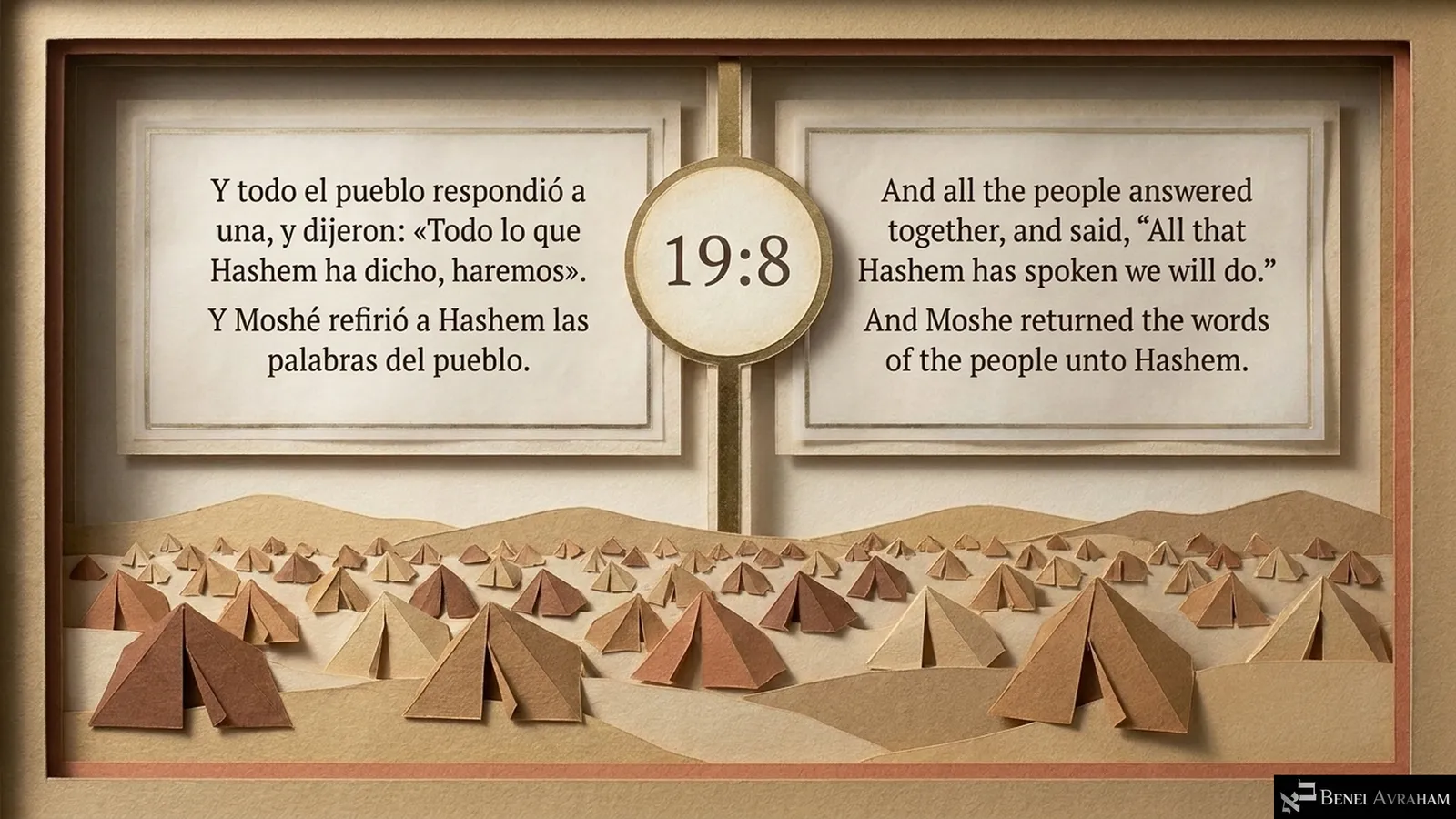
Rows of paper tents: “All that Hashem has spoken we will do” (Exodus 19:8).
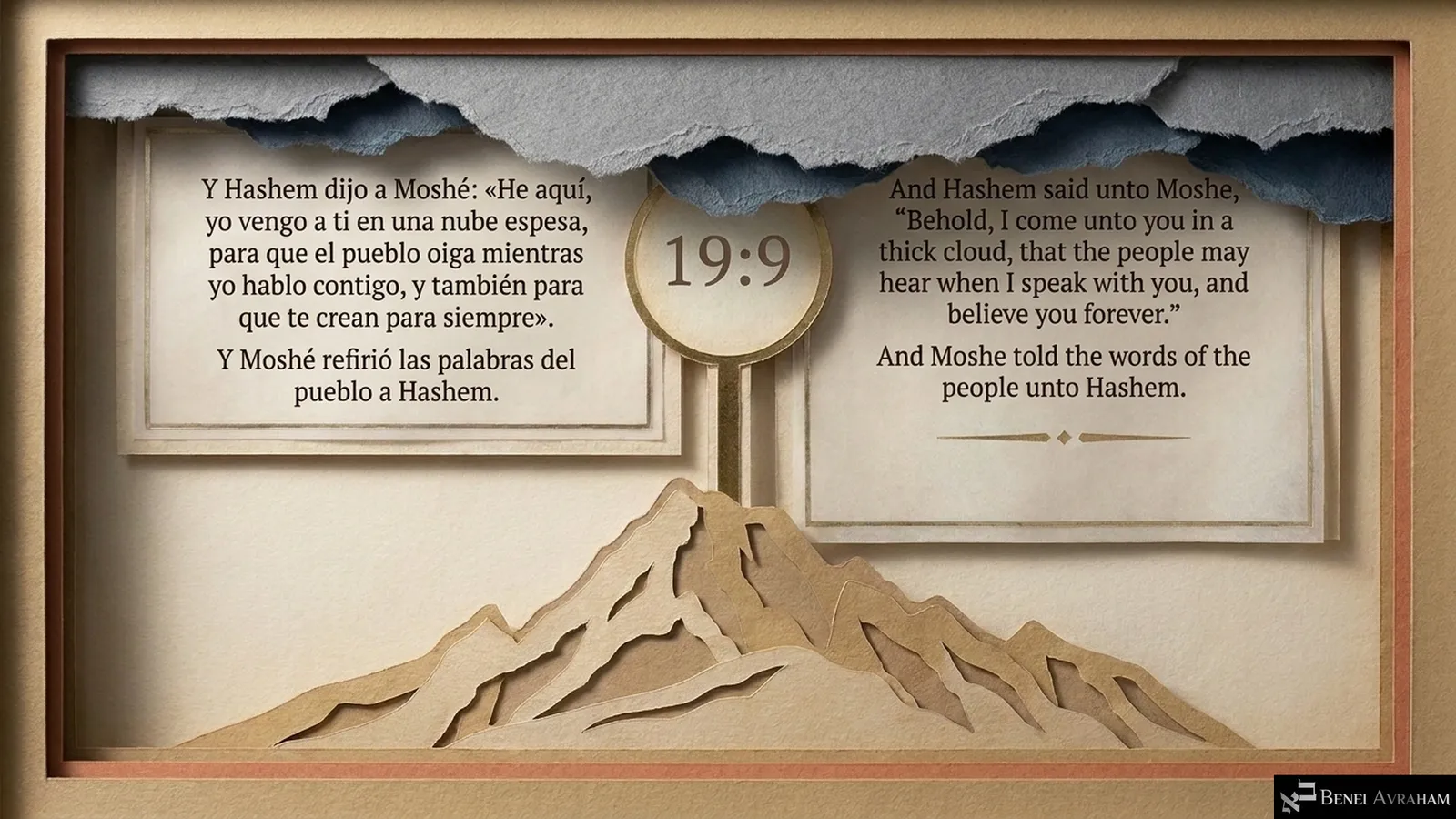
A grey paper cloud over the mountain: “Behold, I come unto you in a thick cloud, that the people may hear when I speak with you” (Exodus 19:9).
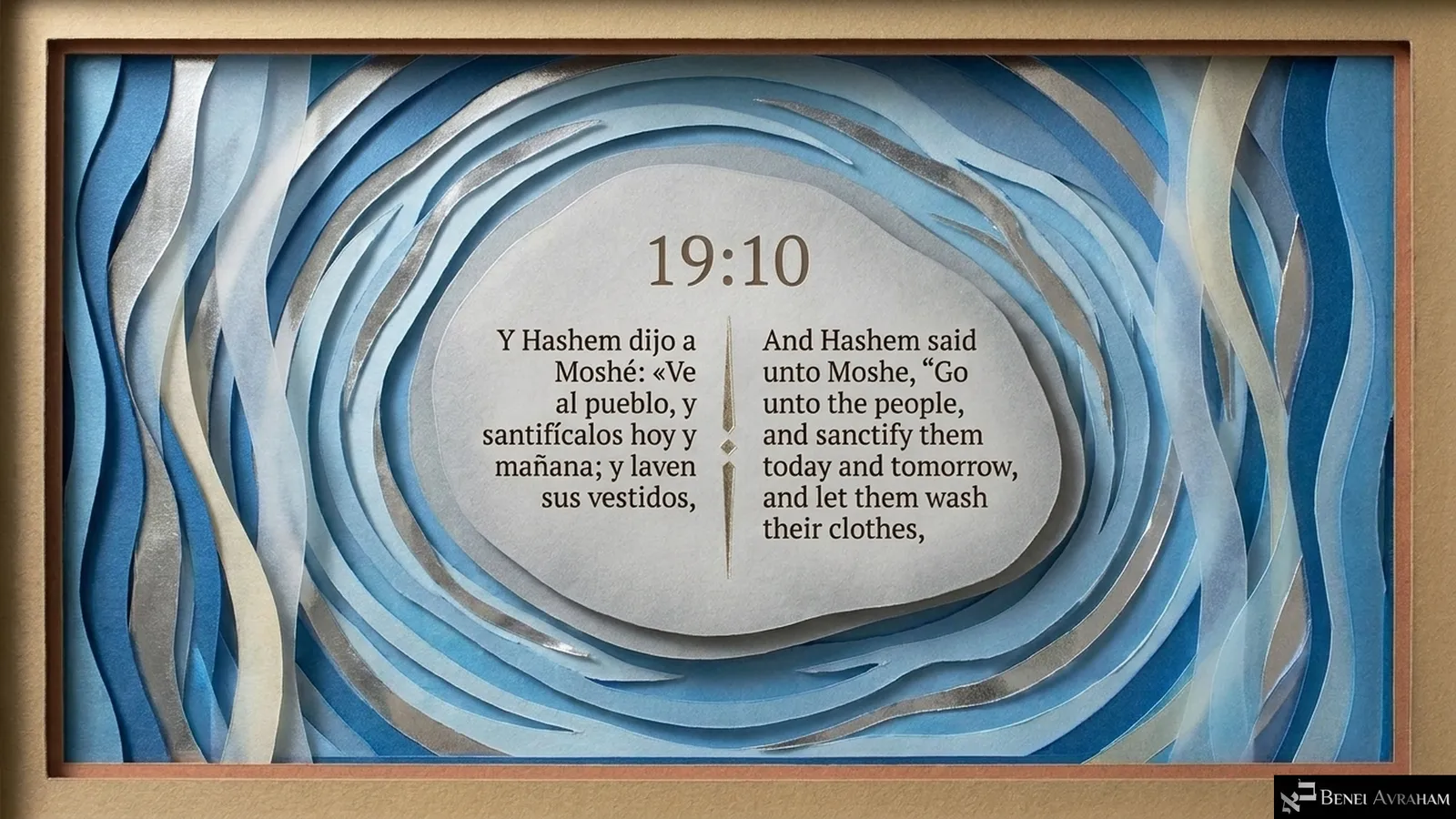
Swirling blue and white paper water: “Sanctify them today and tomorrow, and let them wash their clothes” (Exodus 19:10).
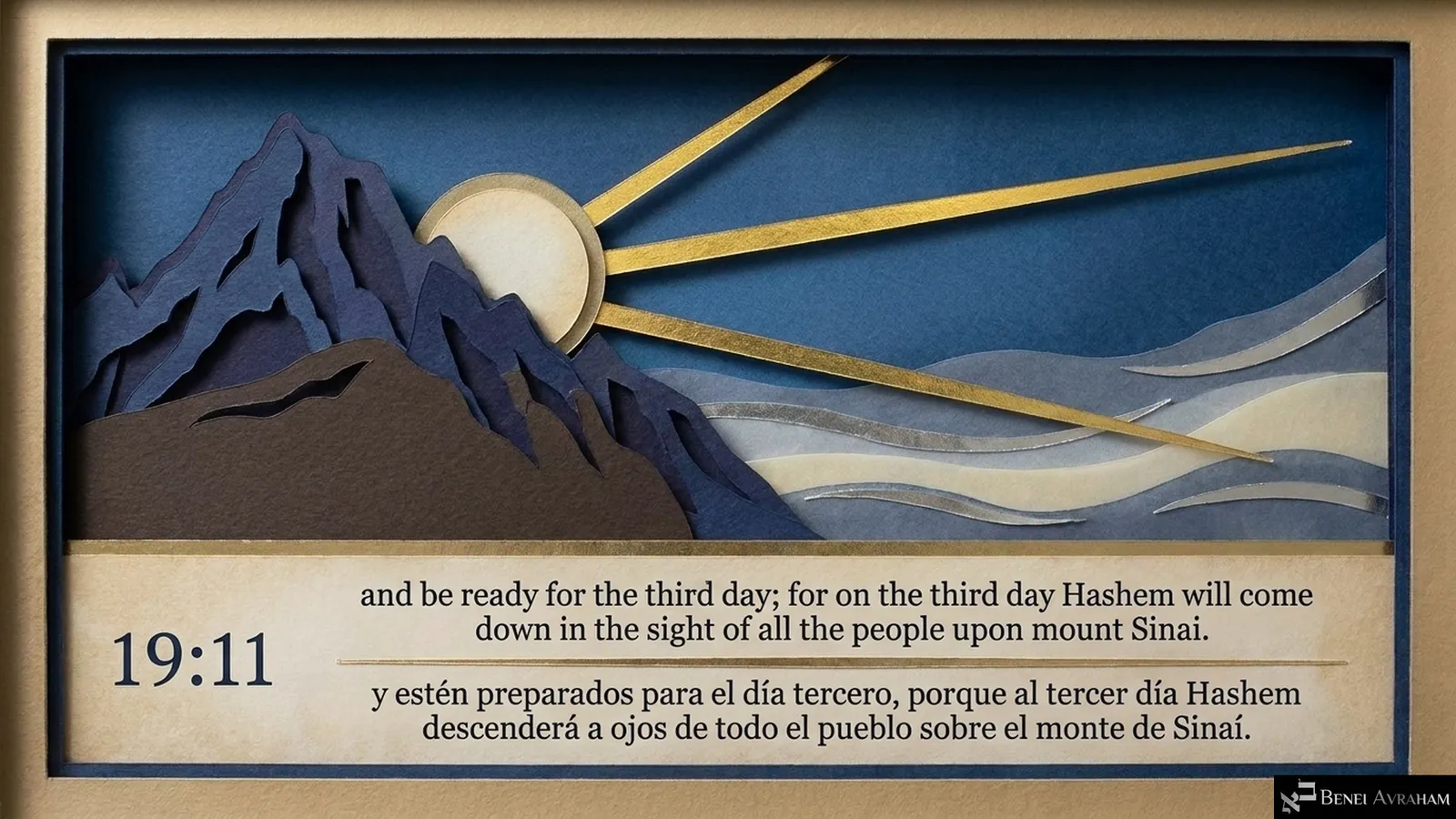
A paper sun with long rays over the mountain: on the third day Hashem will come down in the sight of all the people upon mount Sinai (Exodus 19:11).
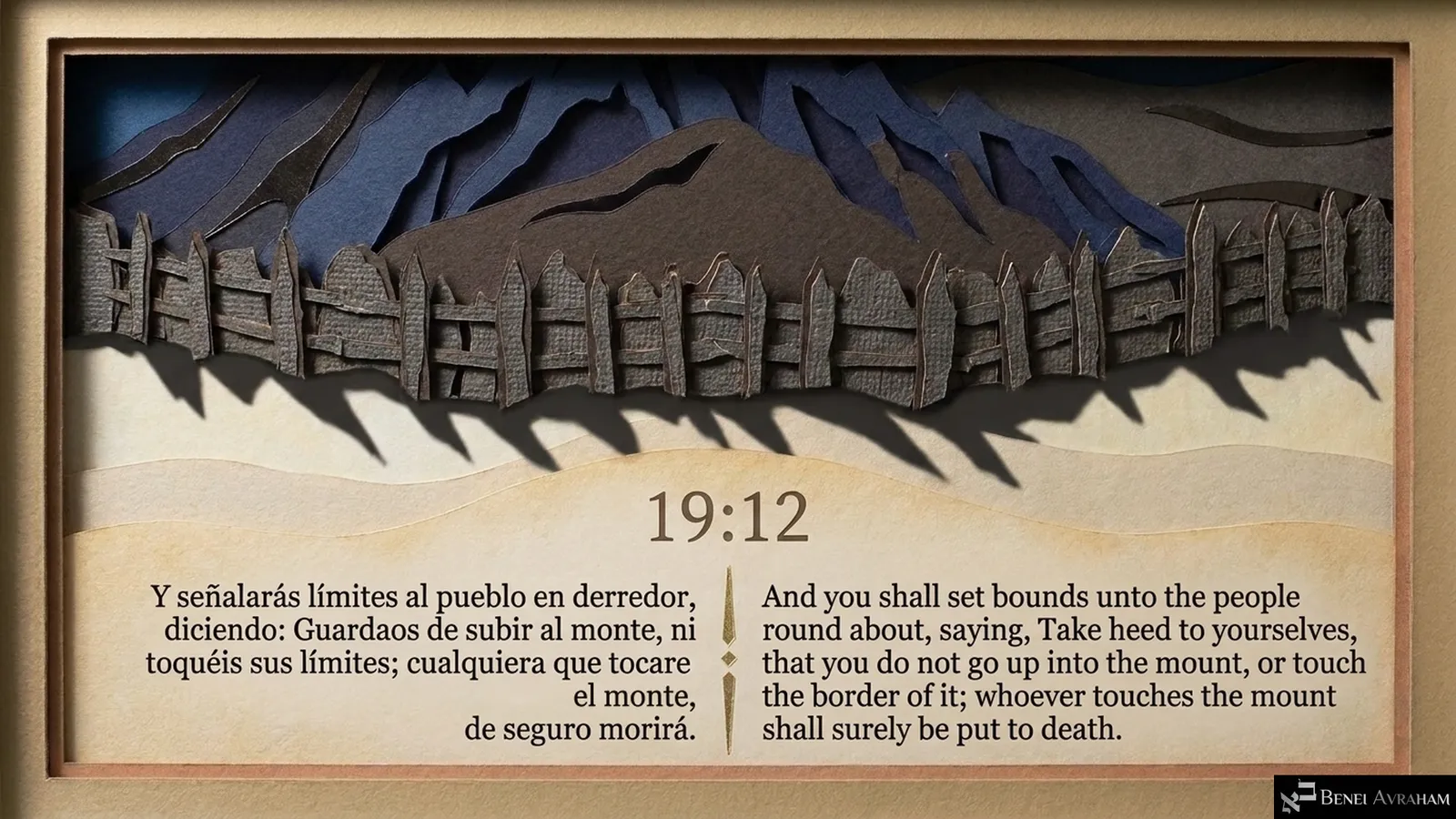
A rough paper fence around the mountain: “You shall set bounds unto the people round about” (Exodus 19:12).
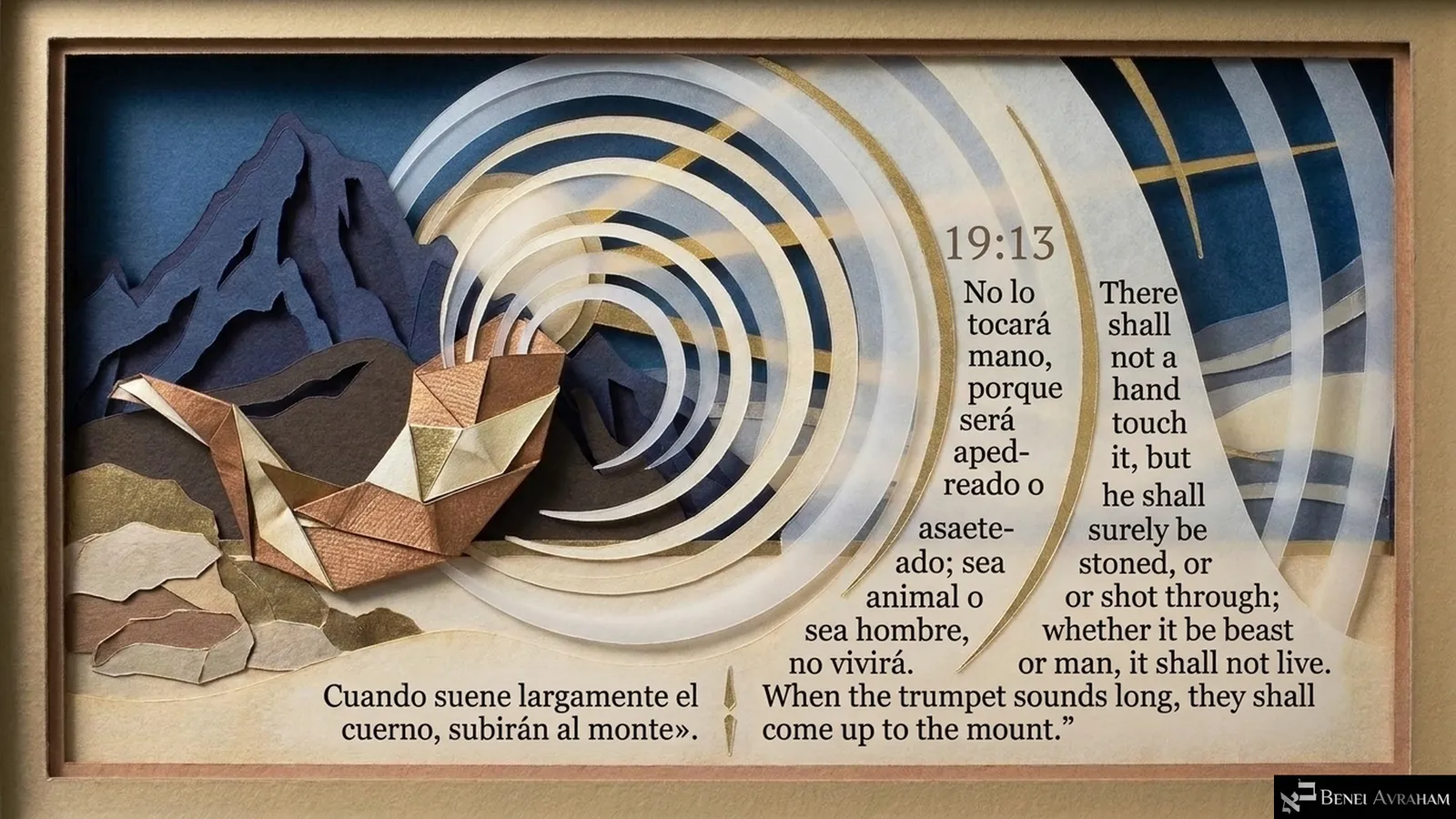
A paper ram’s horn among white rings: when the trumpet sounds long, they shall come up to the mount (Exodus 19:13).
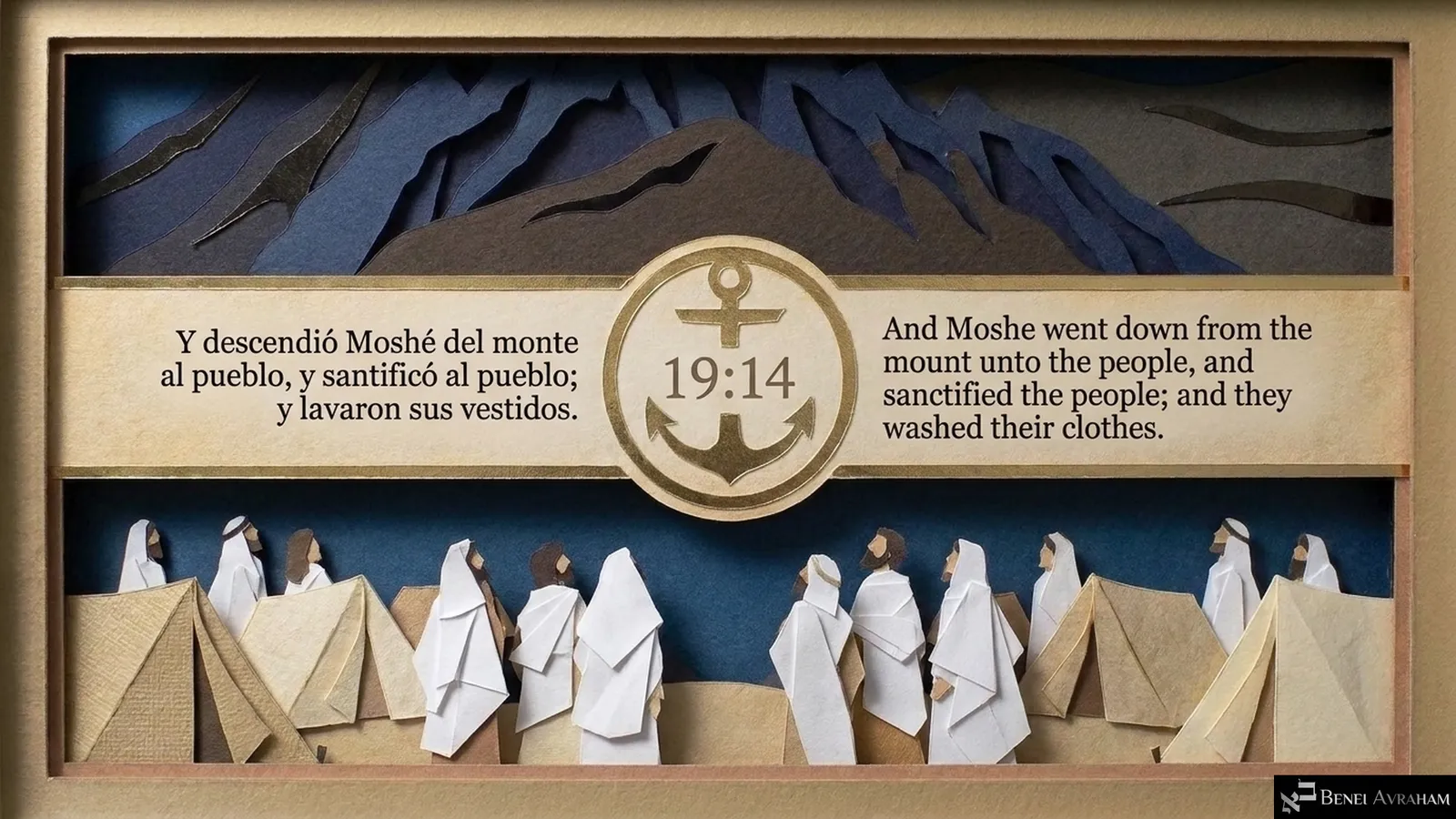
Paper people in white below an anchor seal: Moshe sanctified the people, and they washed their clothes (Exodus 19:14).
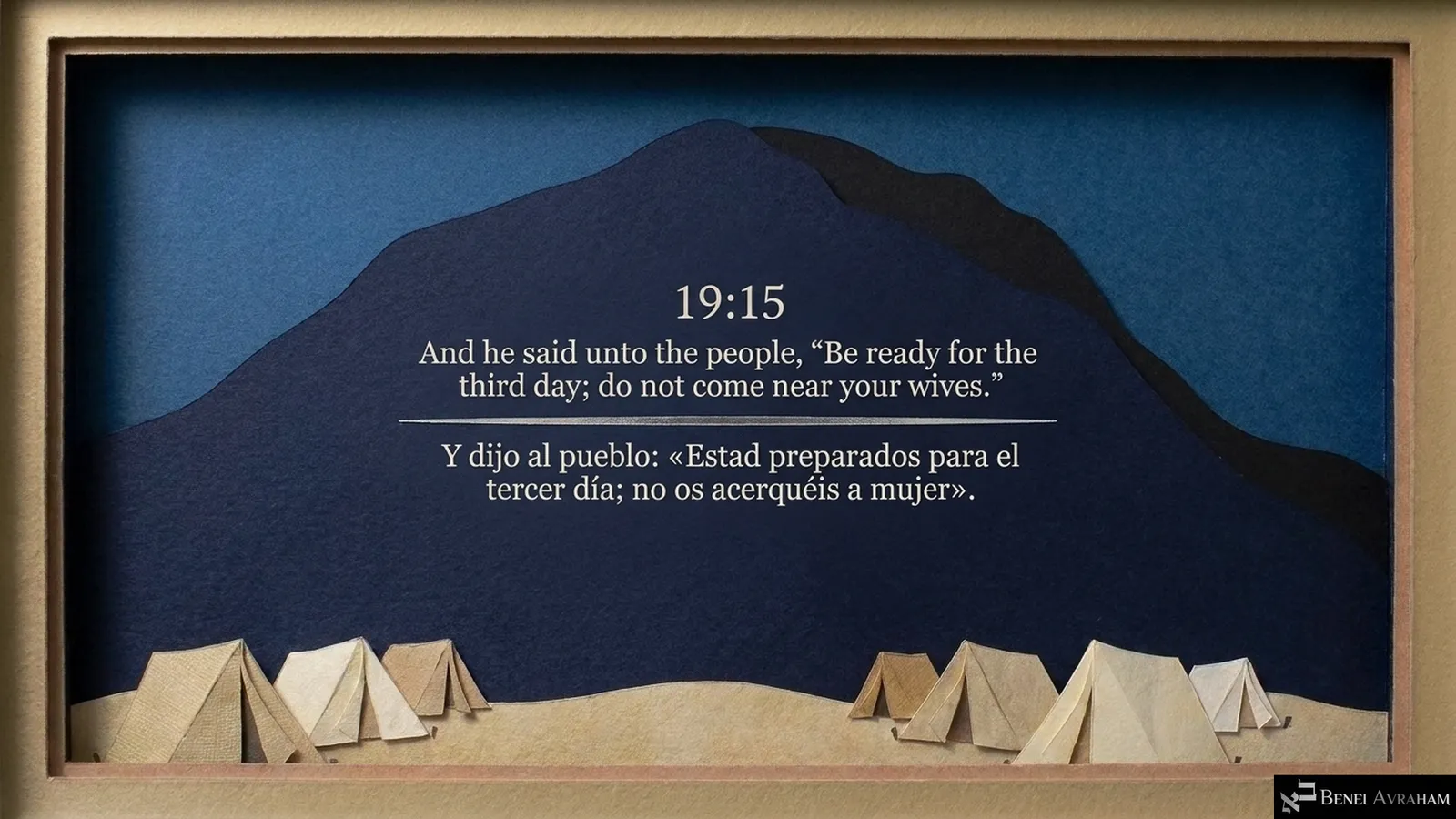
Paper tents under the dark mountain: “Be ready for the third day” (Exodus 19:15).
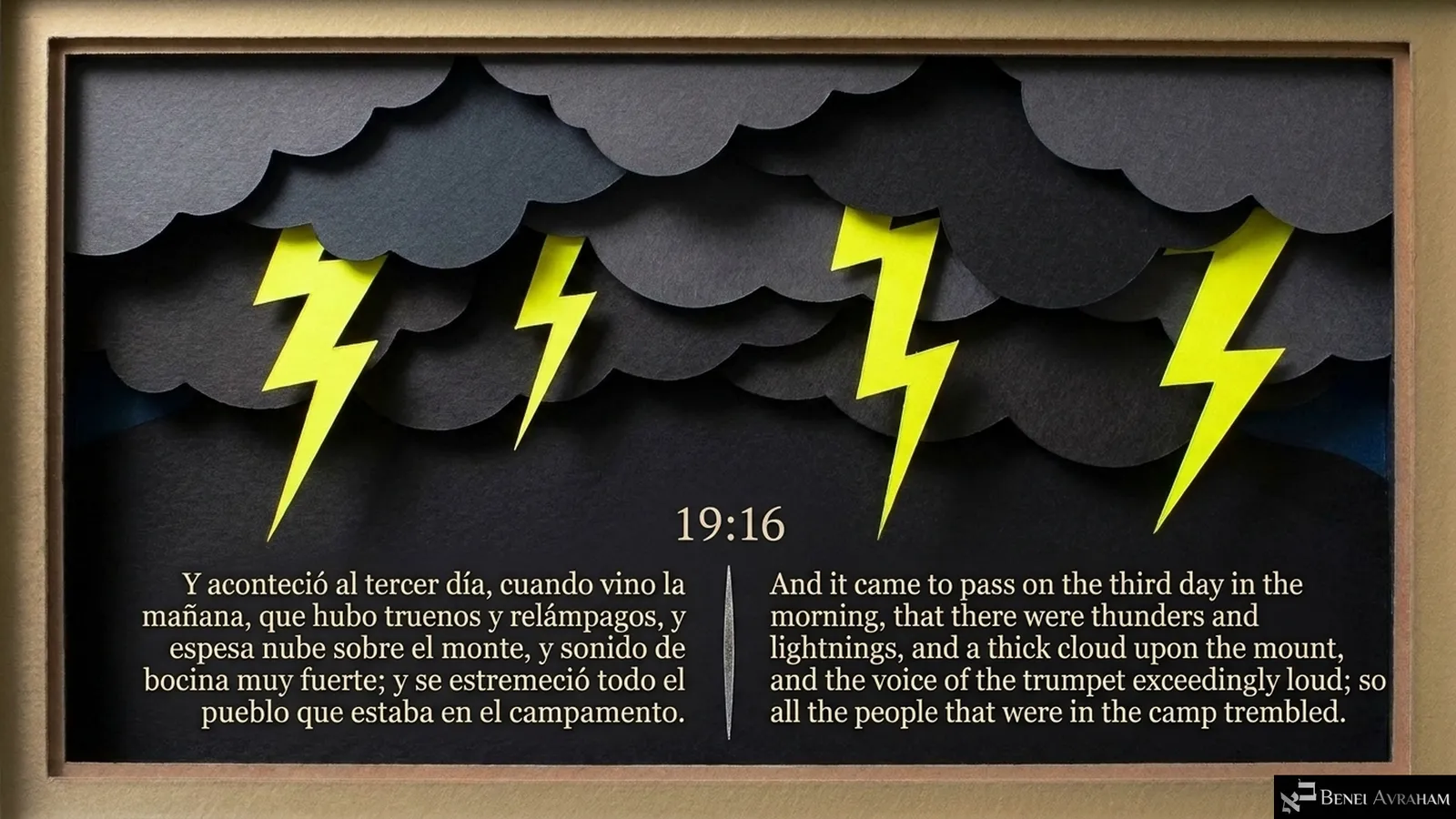
Yellow paper lightning from dark clouds: thunders and lightnings, a thick cloud, and the voice of the trumpet exceedingly loud (Exodus 19:16).
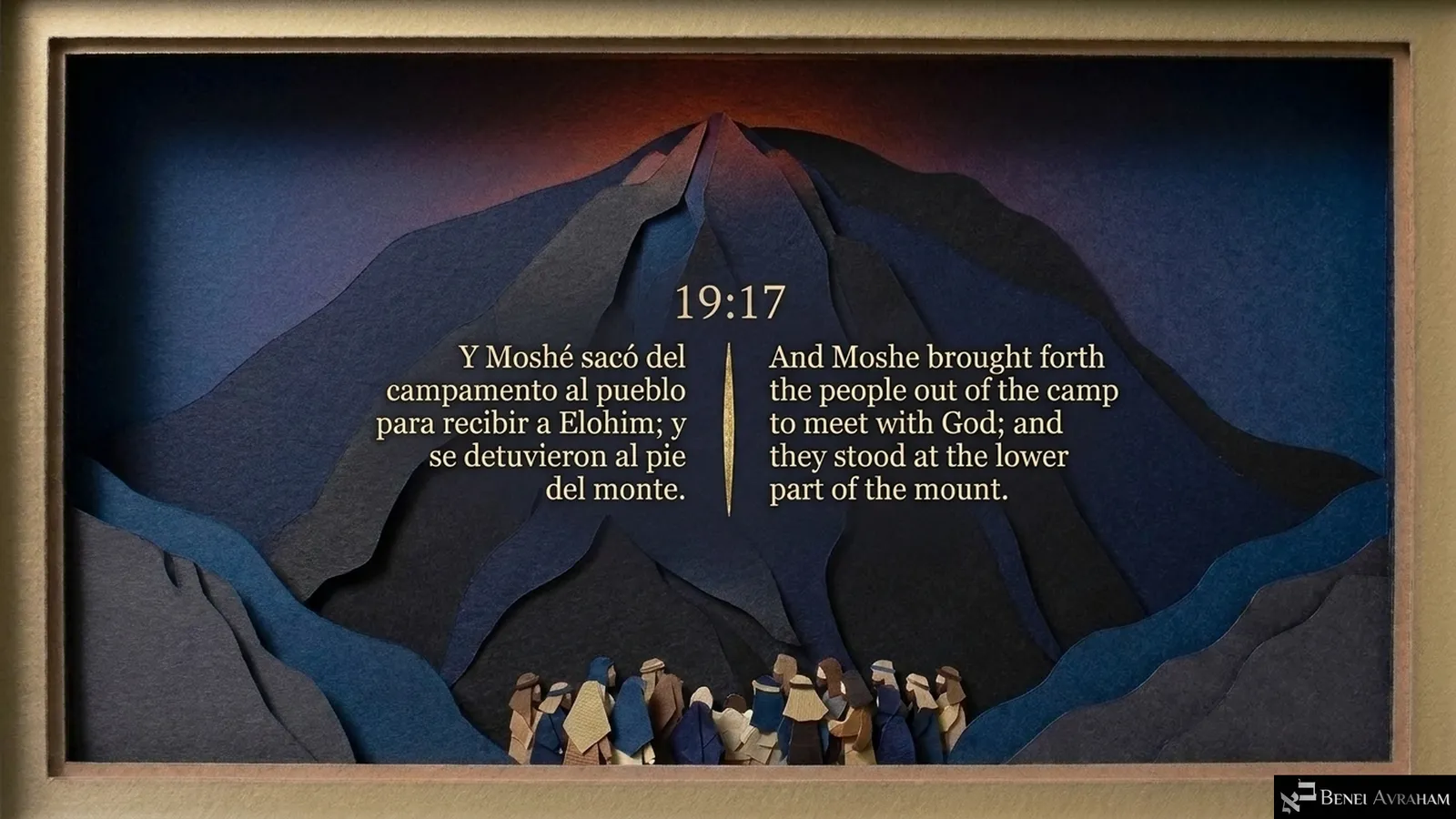
People gathered at the foot of the mountain: Moshe brought forth the people out of the camp to meet with God (Exodus 19:17).
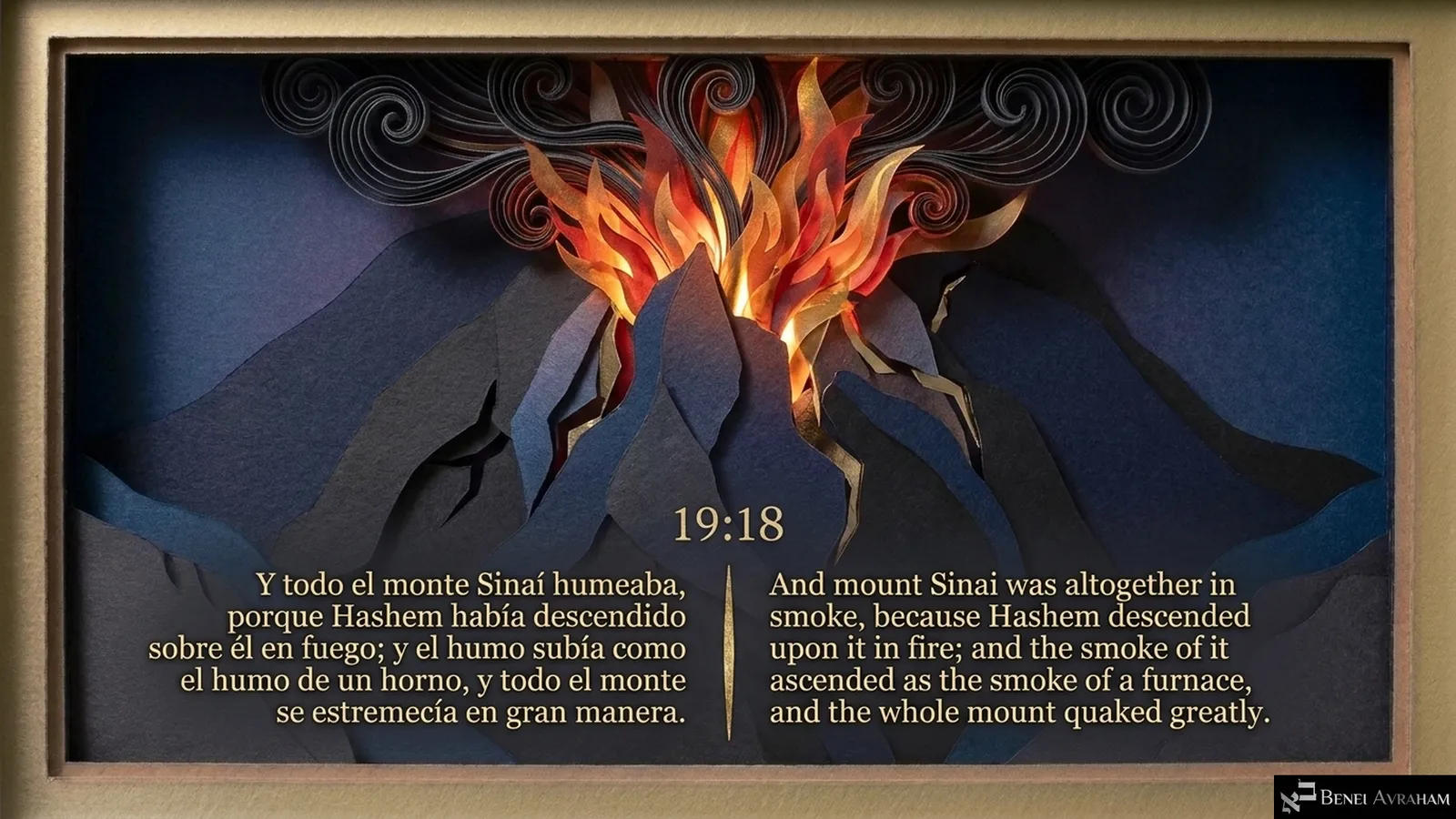
Paper flames and smoke on the mountain: mount Sinai was altogether in smoke, because Hashem descended upon it in fire (Exodus 19:18).
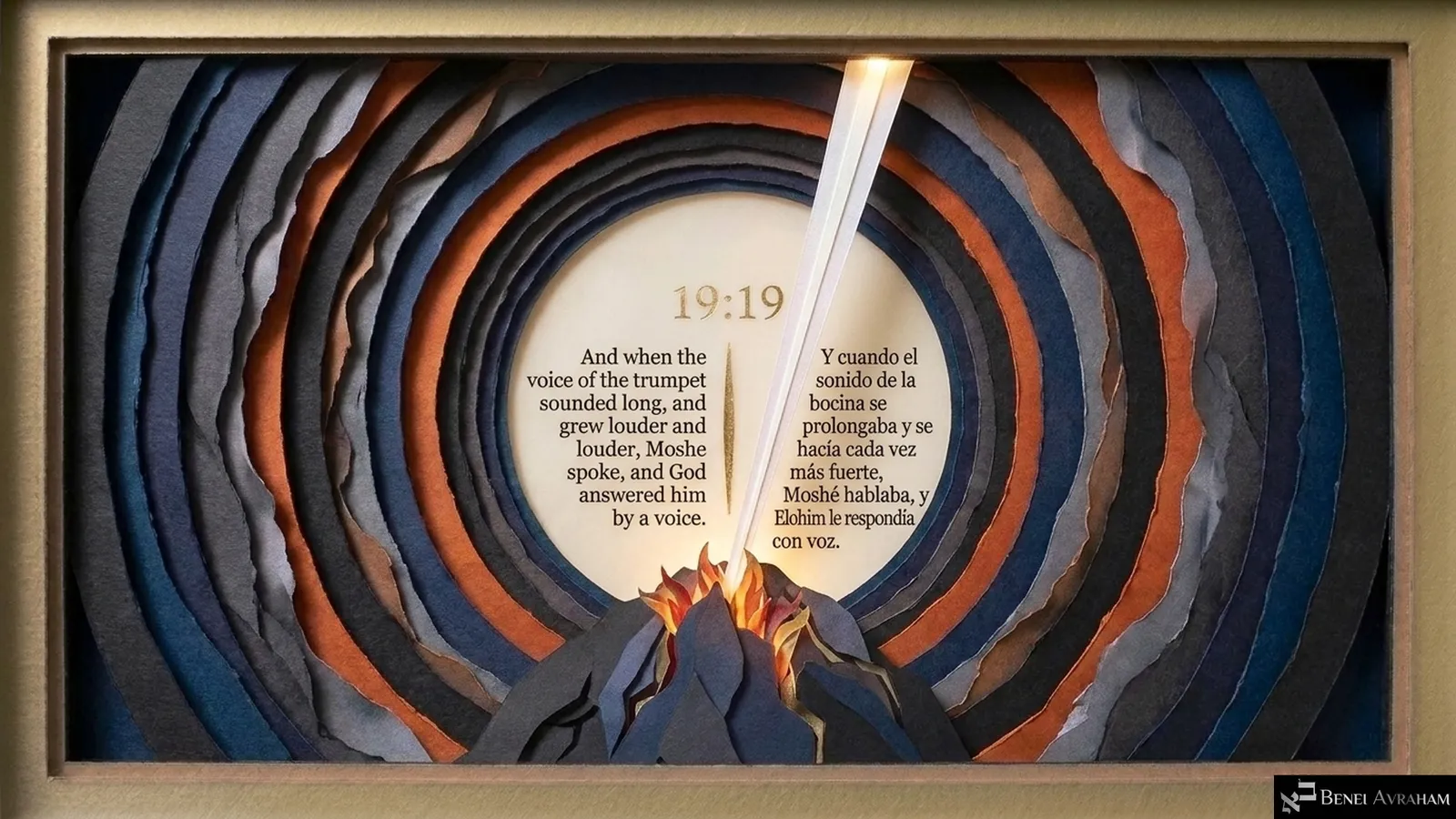
Rings of torn paper around a beam of light: the voice of the trumpet grew louder and louder; Moshe spoke, and God answered him (Exodus 19:19).
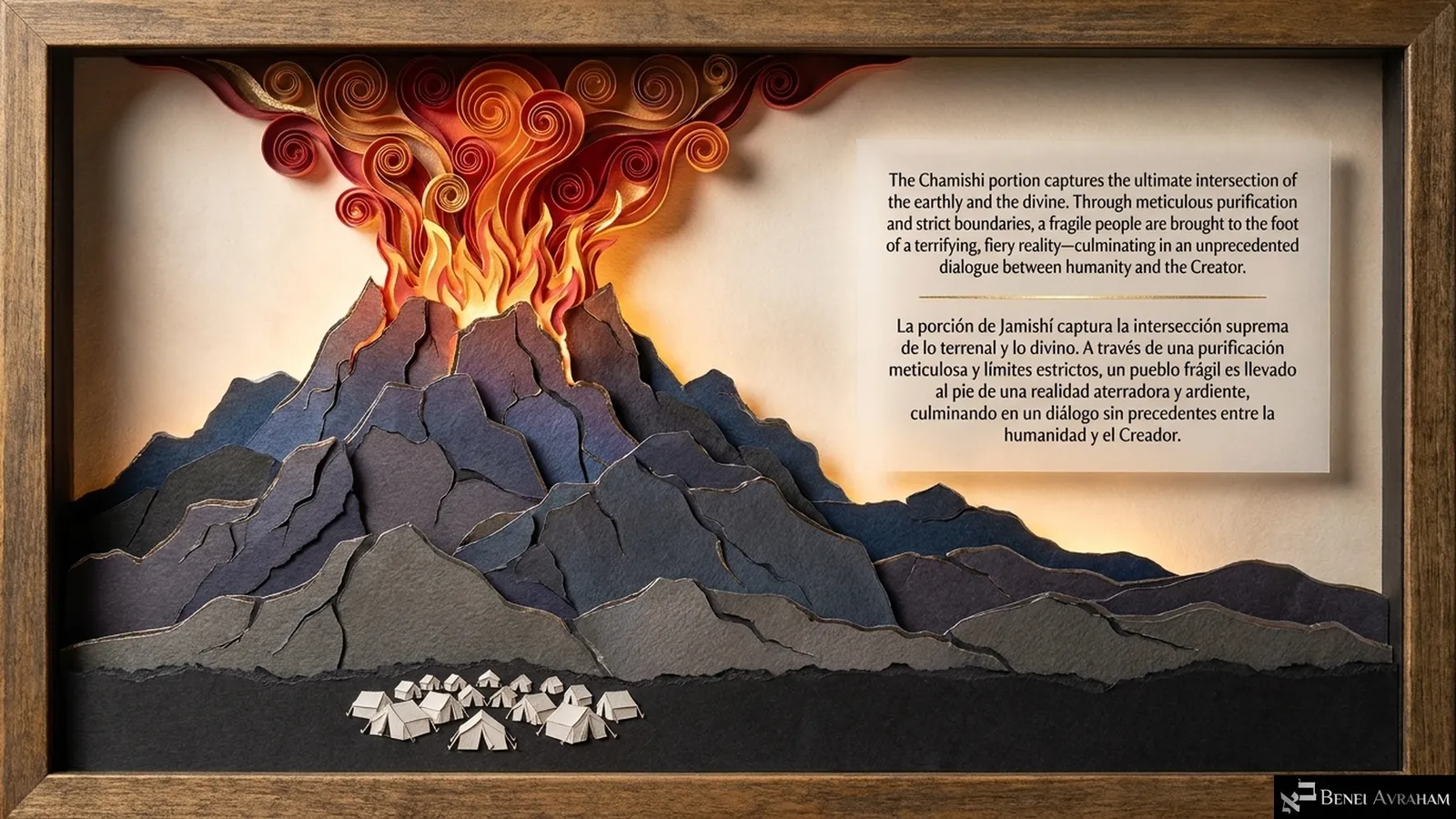
A paper volcano above the camp with a summary card of the fifth portion (Exodus 19:7–19).
Shishi · Exodus 19:20–20:14

Sixth Portion
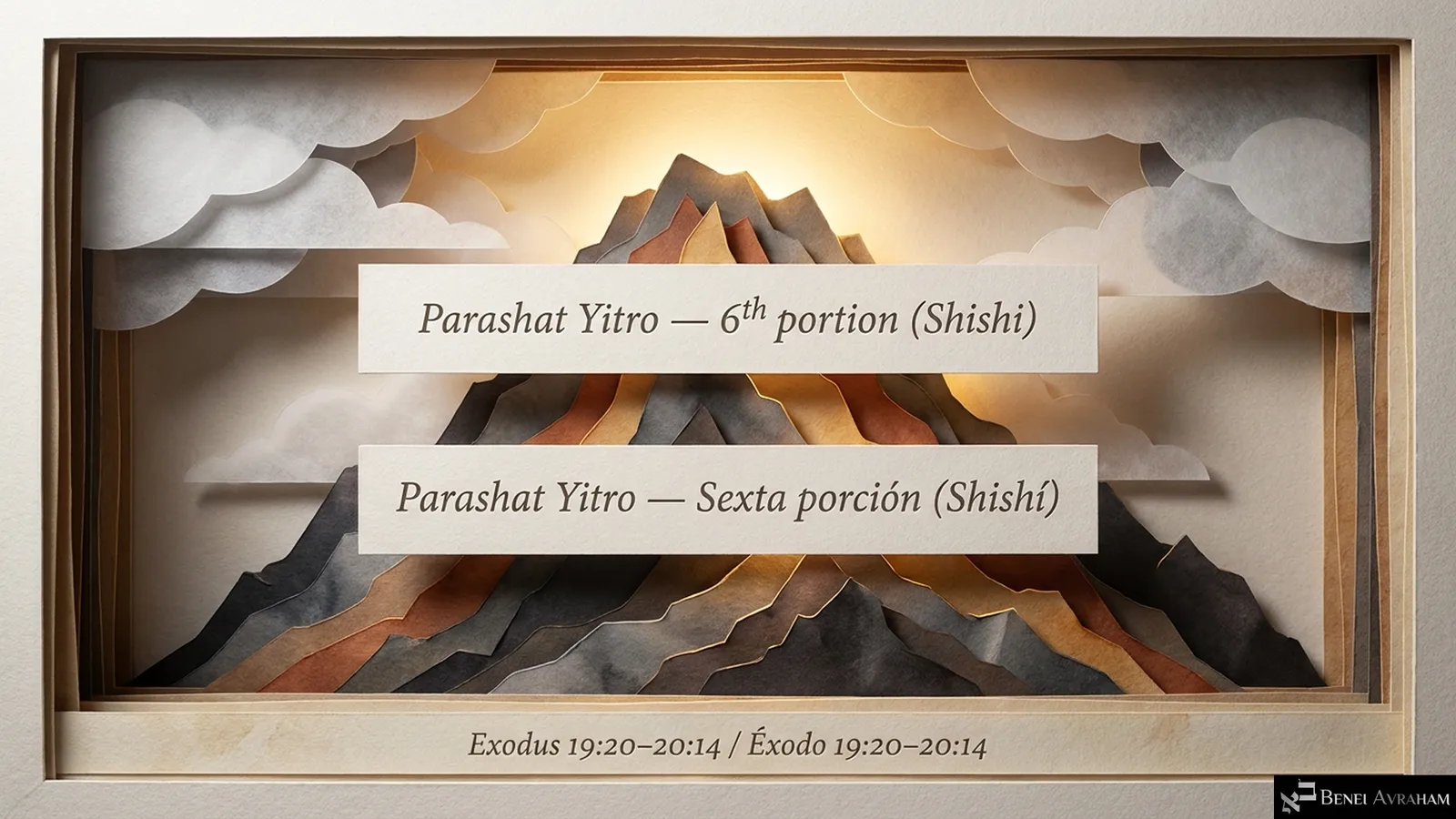
Title card for the sixth portion before a glowing paper mountain: “Parashat Yitro — 6th portion (Shishi), Exodus 19:20–20:14”.
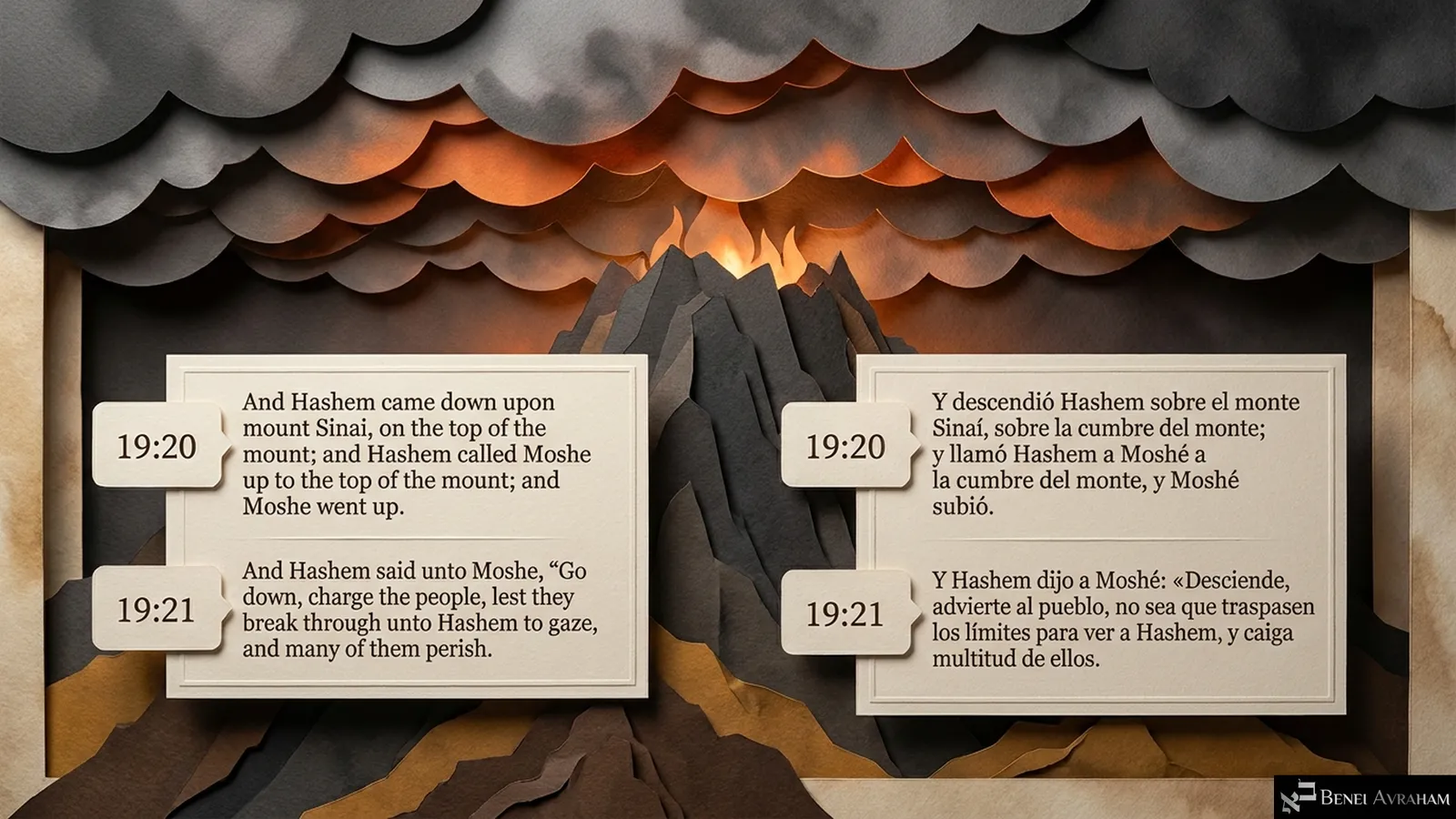
Cards before the smoking mountain: Hashem came down upon mount Sinai and called Moshe up to the top of the mount (Exodus 19:20–21).
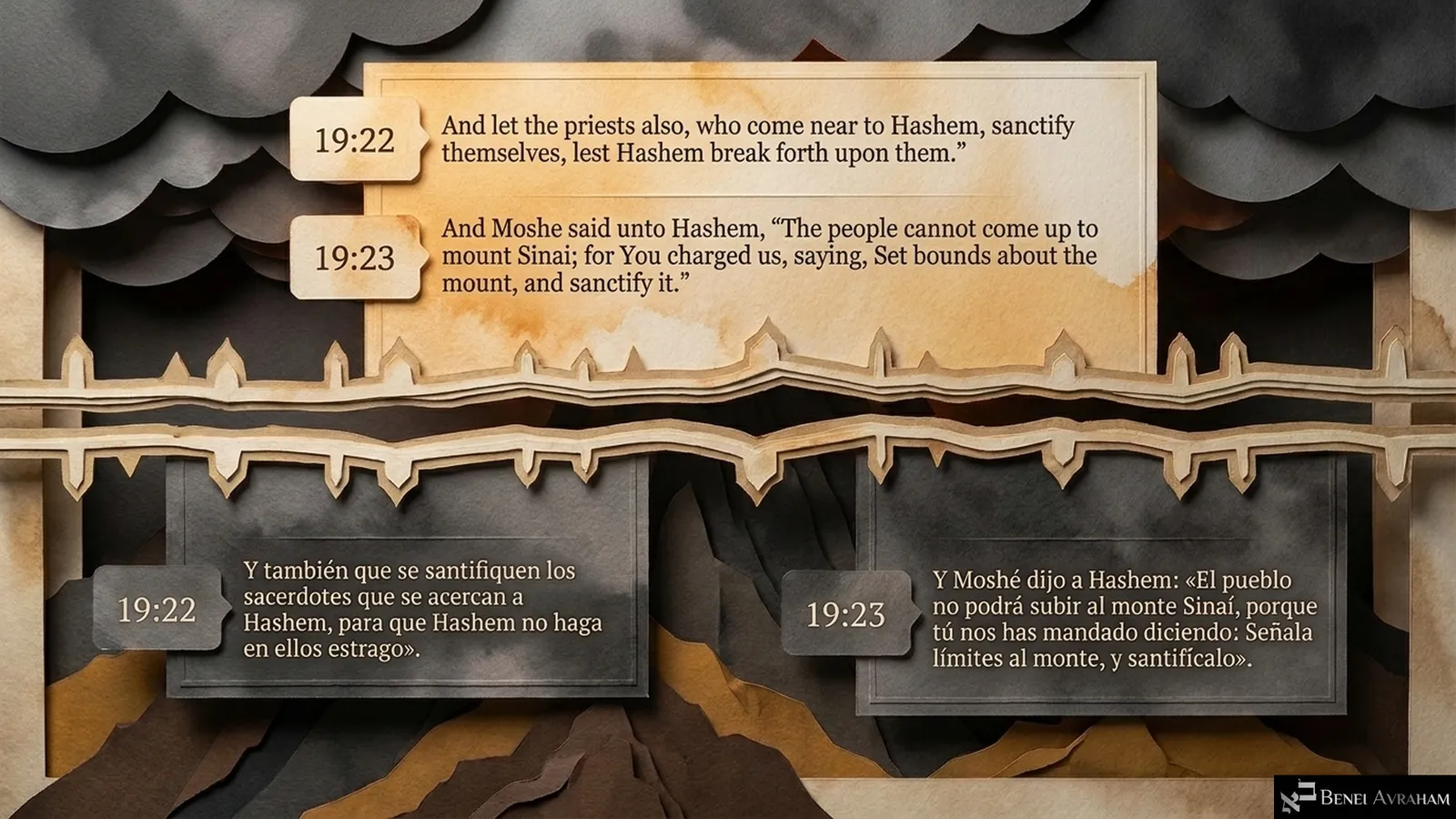
A carved paper border between the cards: “Let the priests also sanctify themselves… Set bounds about the mount, and sanctify it” (Exodus 19:22–23).
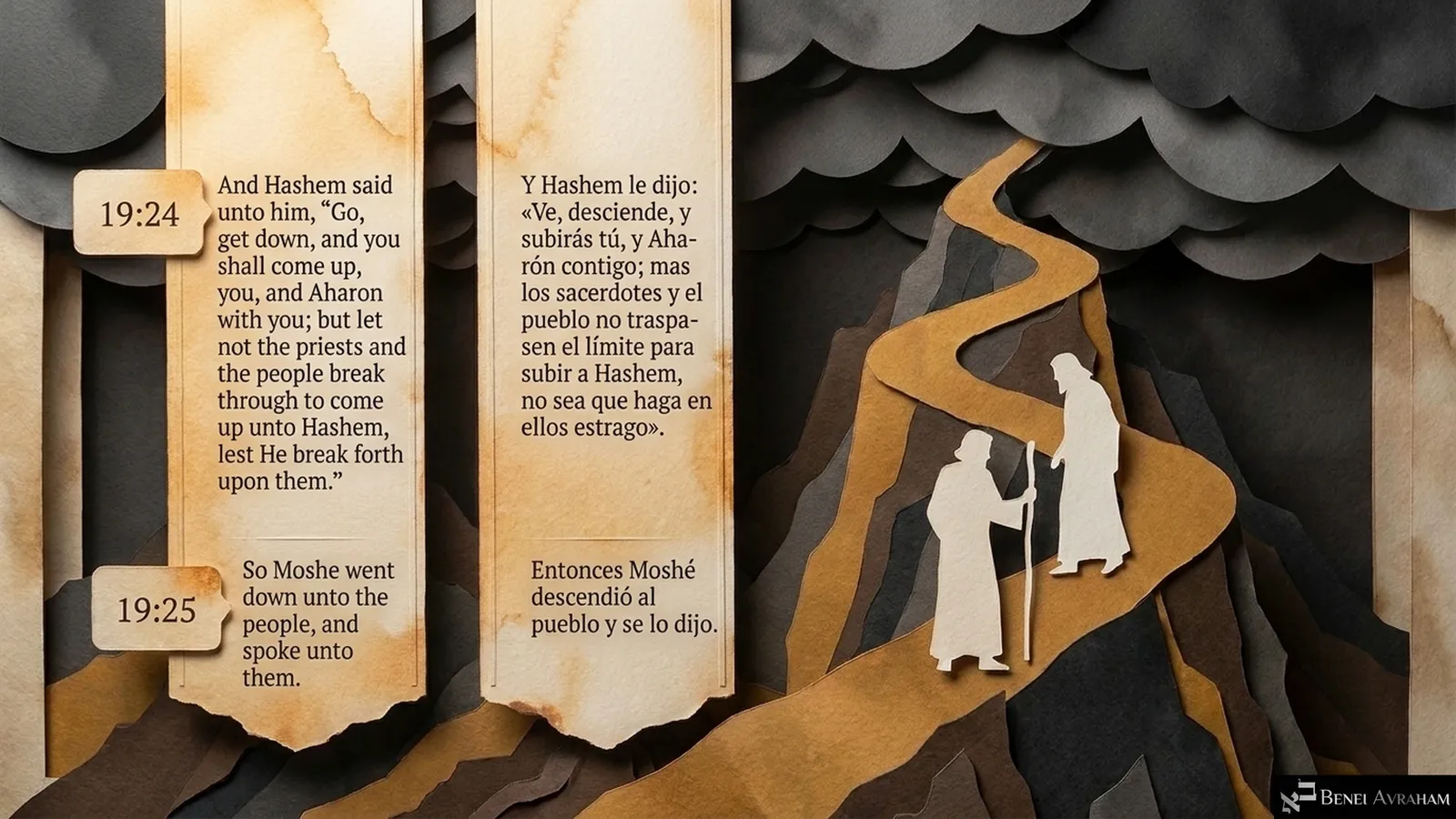
Moshe and Aharon on a winding paper path: “Go, get down, and you shall come up, you, and Aharon with you” (Exodus 19:24–25).
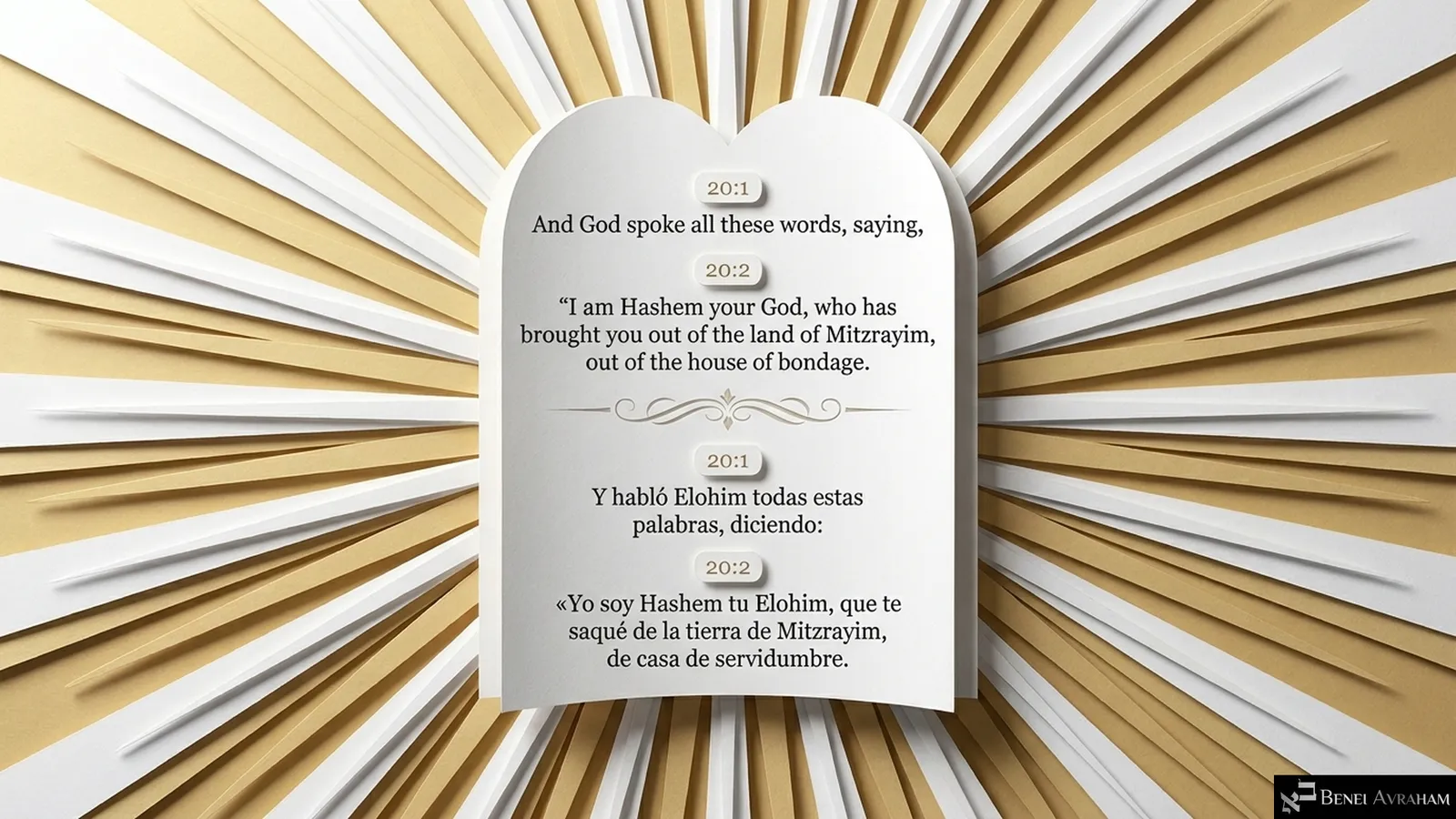
A white paper tablet in golden rays: “I am Hashem your God, who has brought you out of the land of Mitzrayim” (Exodus 20:1–2).
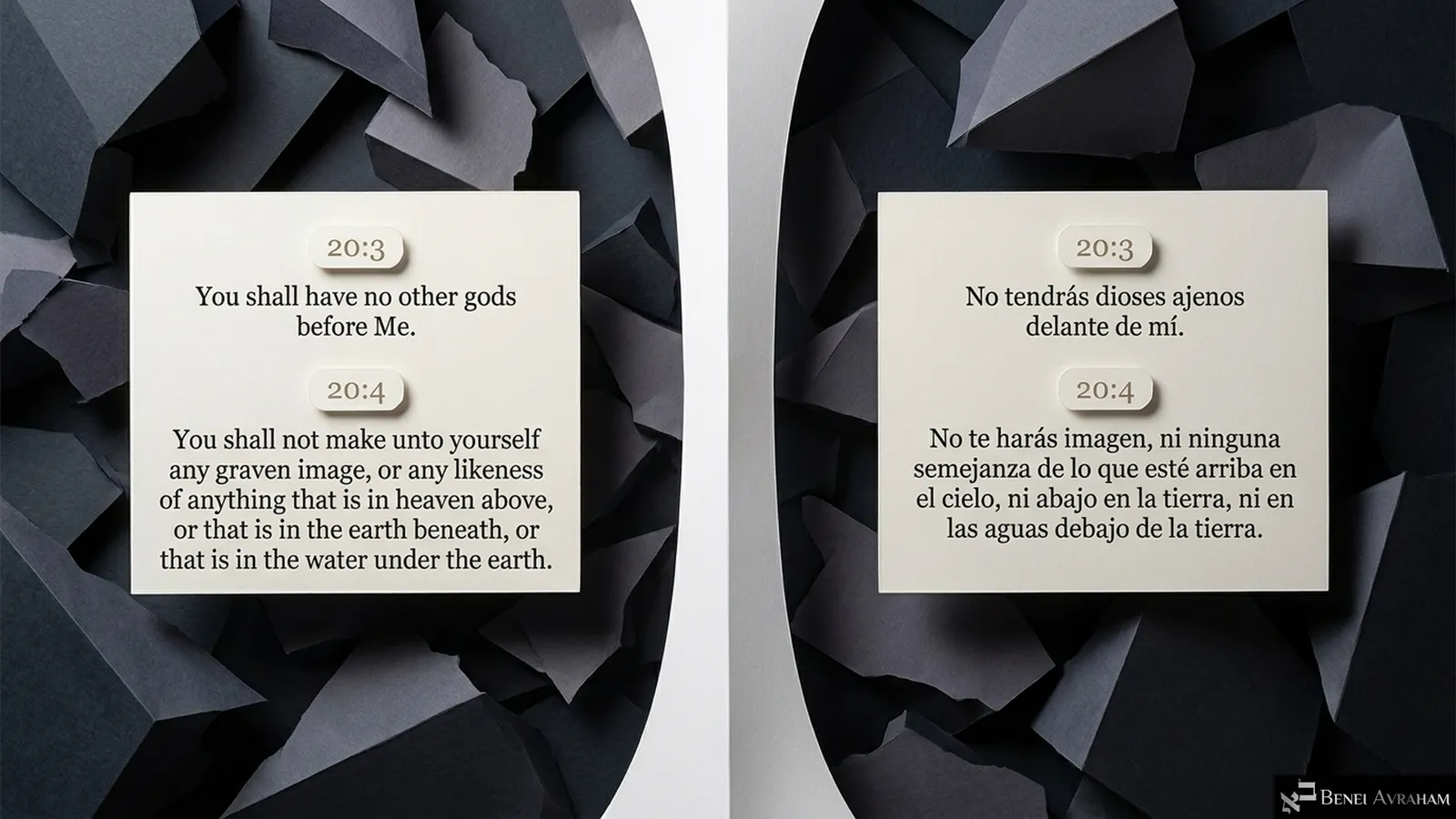
Two cards on dark paper: “You shall have no other gods before Me… You shall not make unto yourself any graven image” (Exodus 20:3–4).
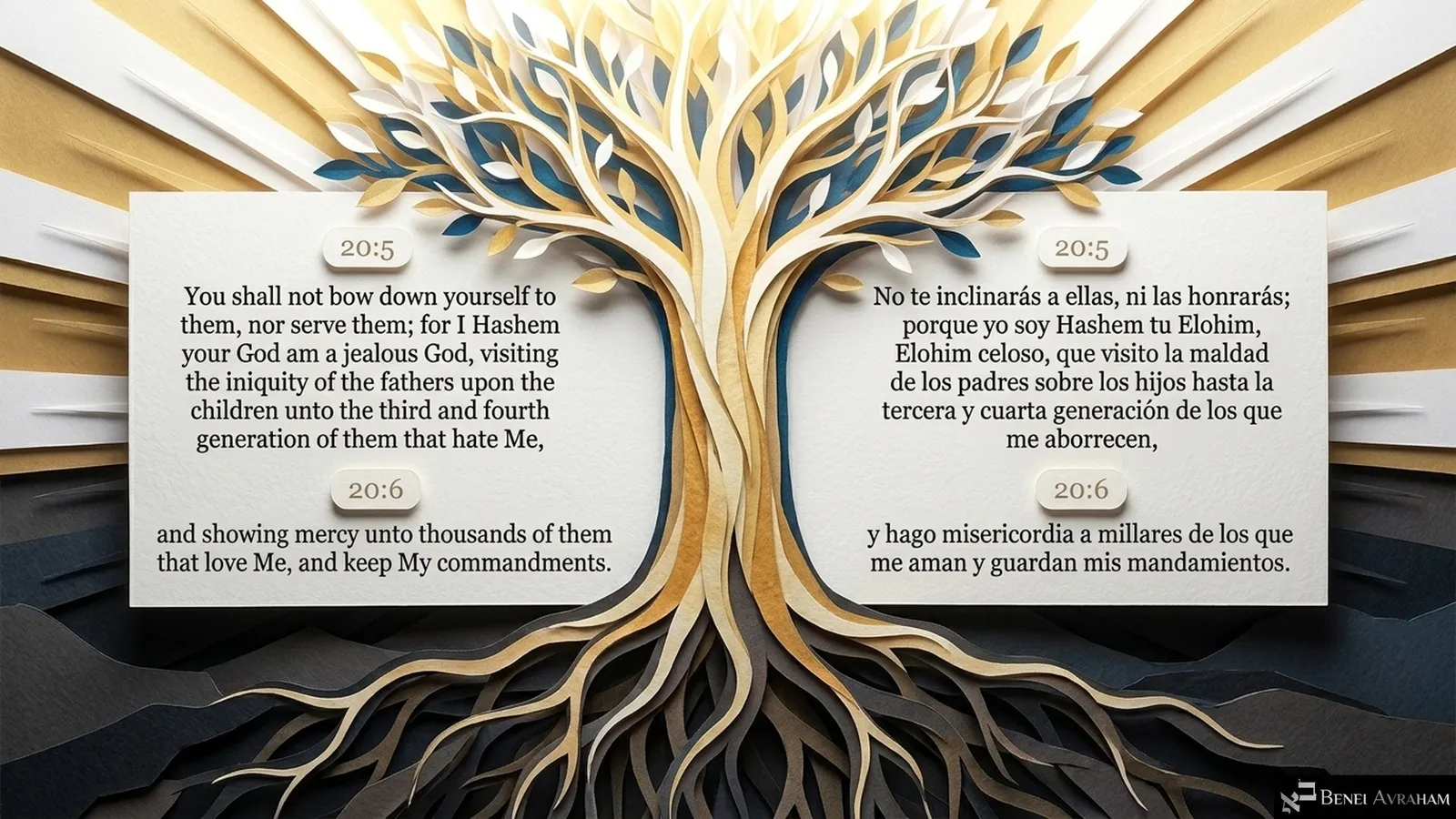
A golden paper tree with deep roots: visiting iniquity unto the third and fourth generation, and showing mercy unto thousands (Exodus 20:5–6).
An embossed crown above a card: “You shall not take the name of Hashem your God in vain” (Exodus 20:7).
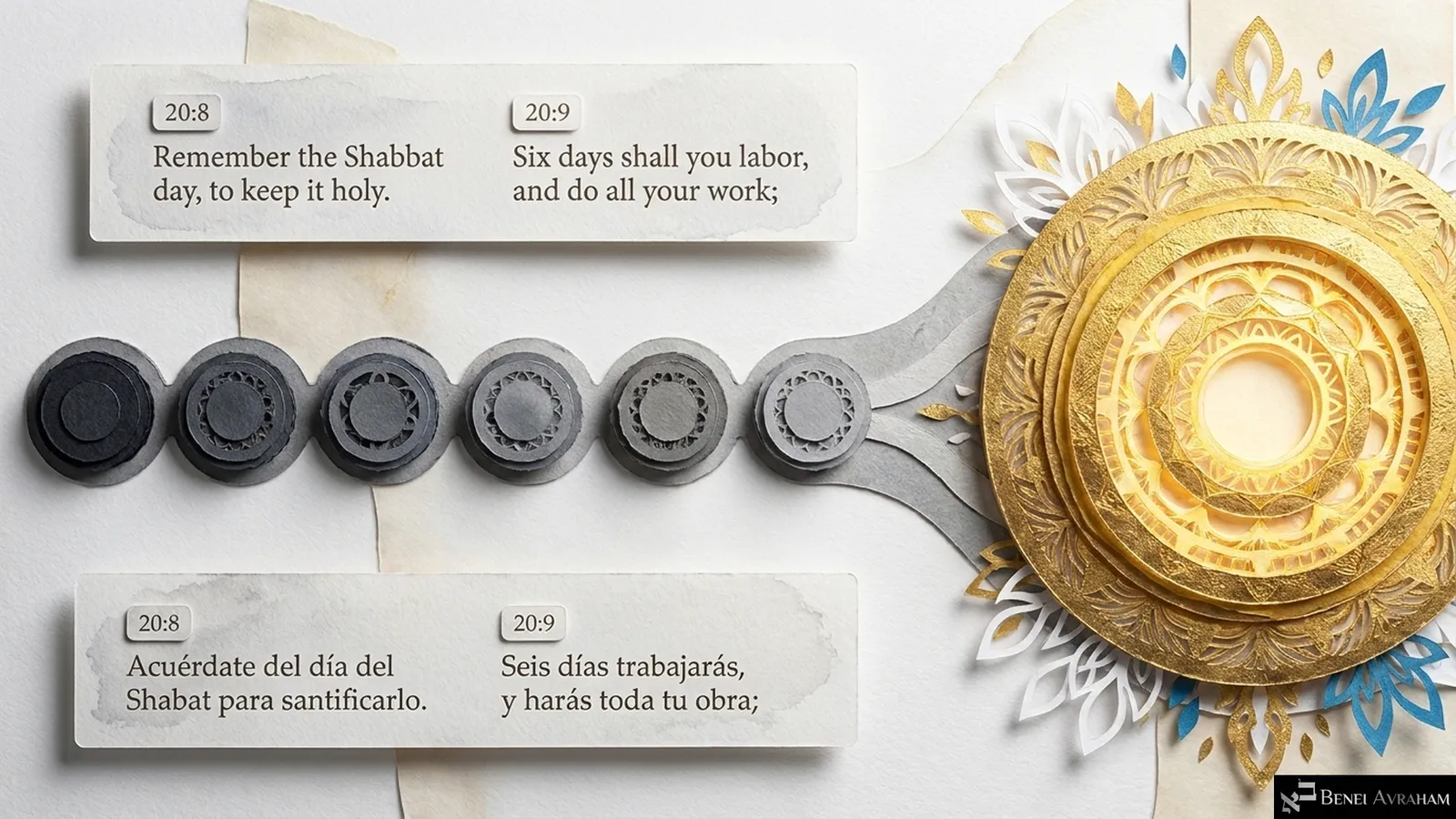
Six grey discs leading to a golden seventh: “Remember the Shabbat day, to keep it holy. Six days shall you labor” (Exodus 20:8–9).
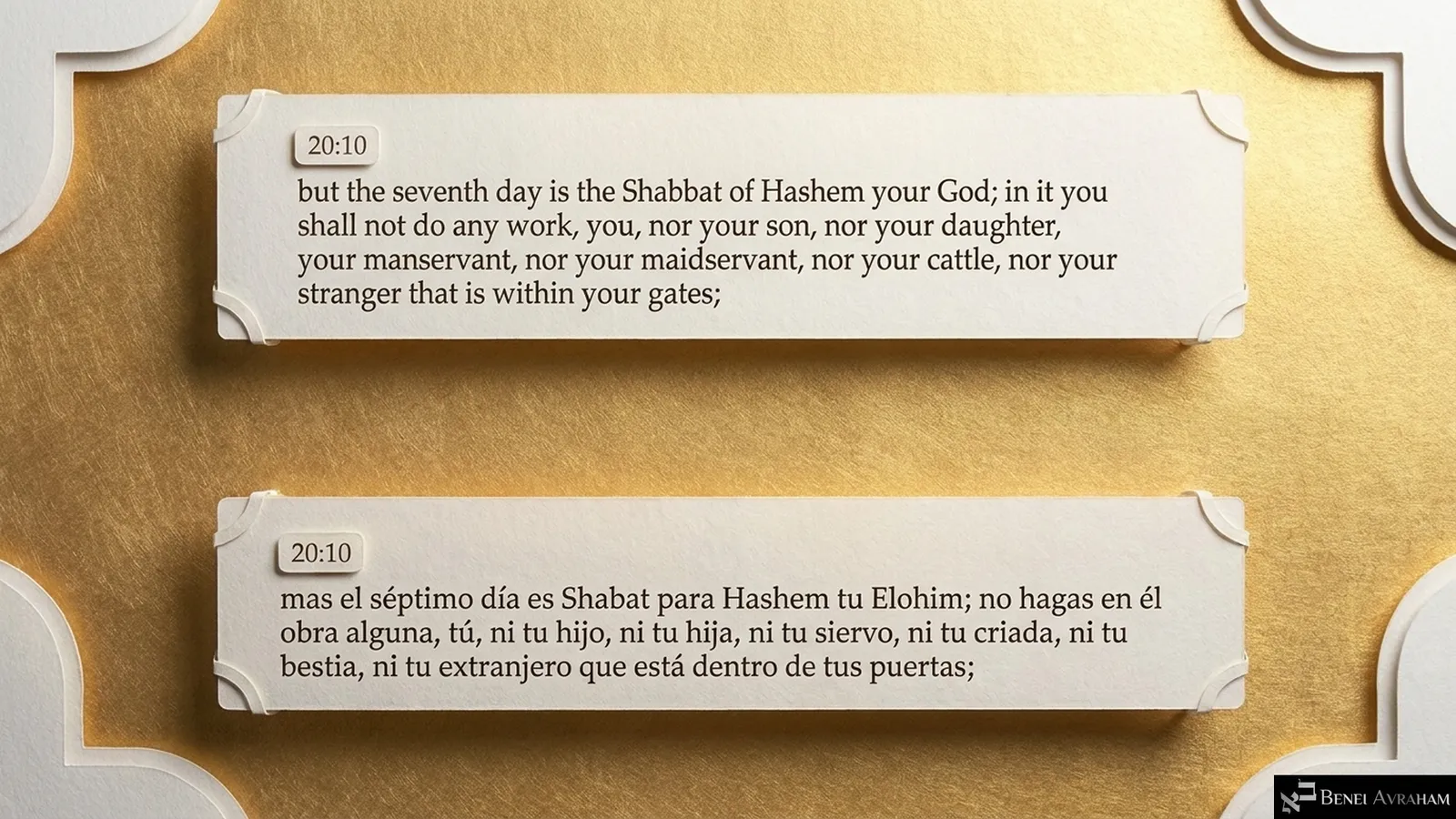
Gold paper with two white cards: the seventh day is the Shabbat of Hashem your God; in it you shall not do any work (Exodus 20:10).
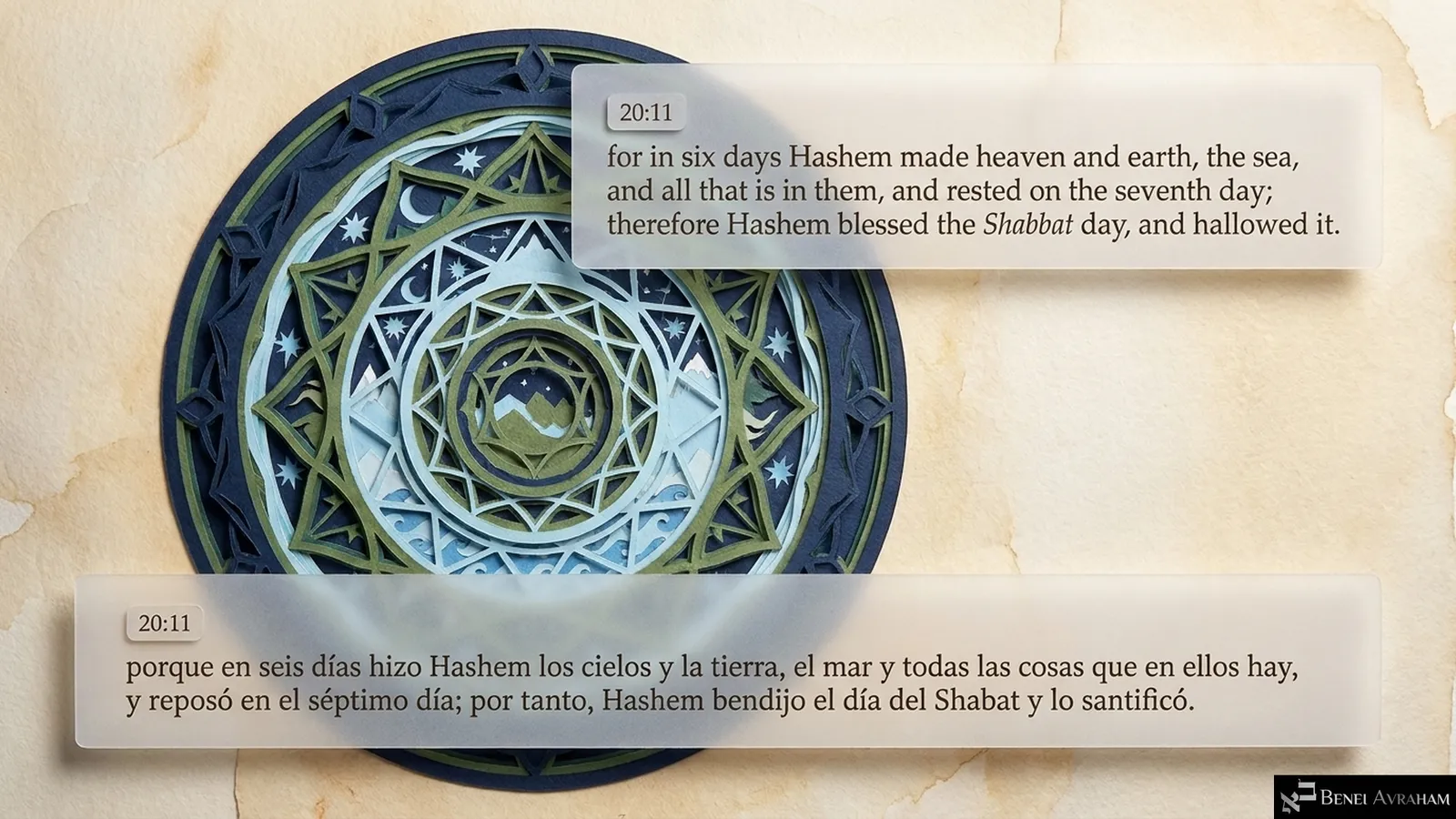
A paper star wheel of creation: in six days Hashem made heaven and earth… and rested on the seventh day (Exodus 20:11).
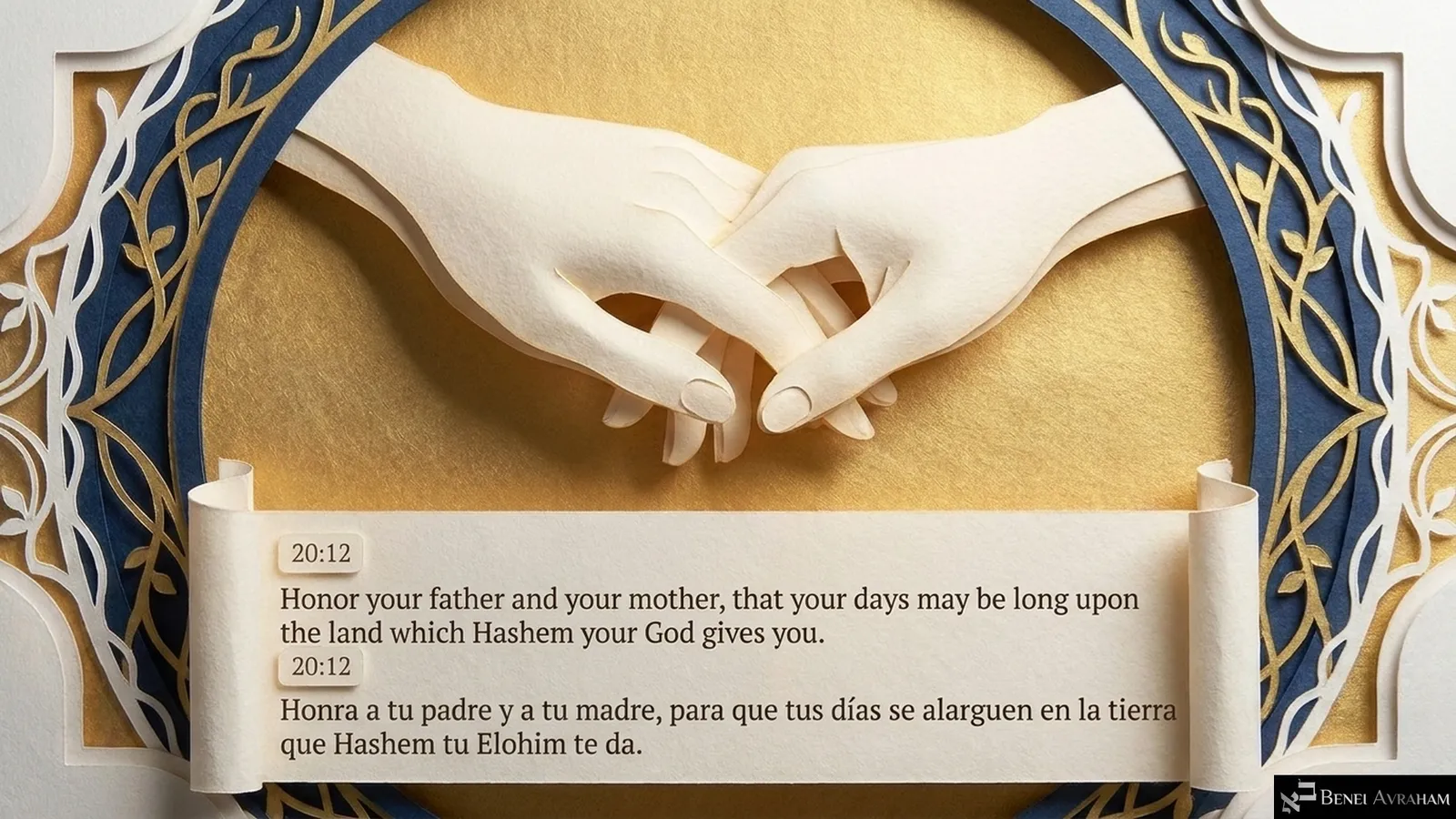
Two paper hands joined: “Honor your father and your mother, that your days may be long upon the land” (Exodus 20:12).
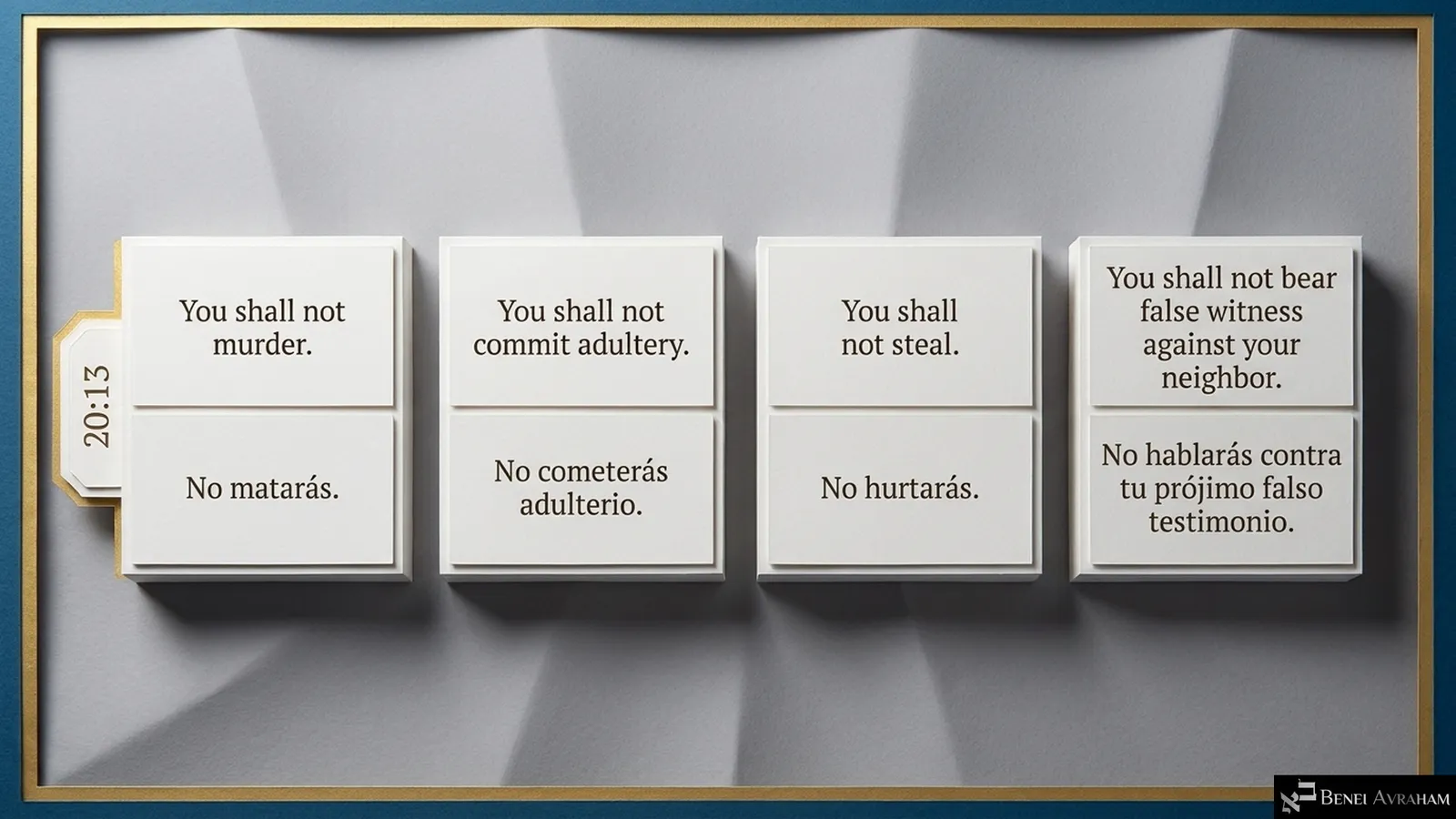
Four white blocks: You shall not murder. You shall not commit adultery. You shall not steal. You shall not bear false witness (Exodus 20:13).
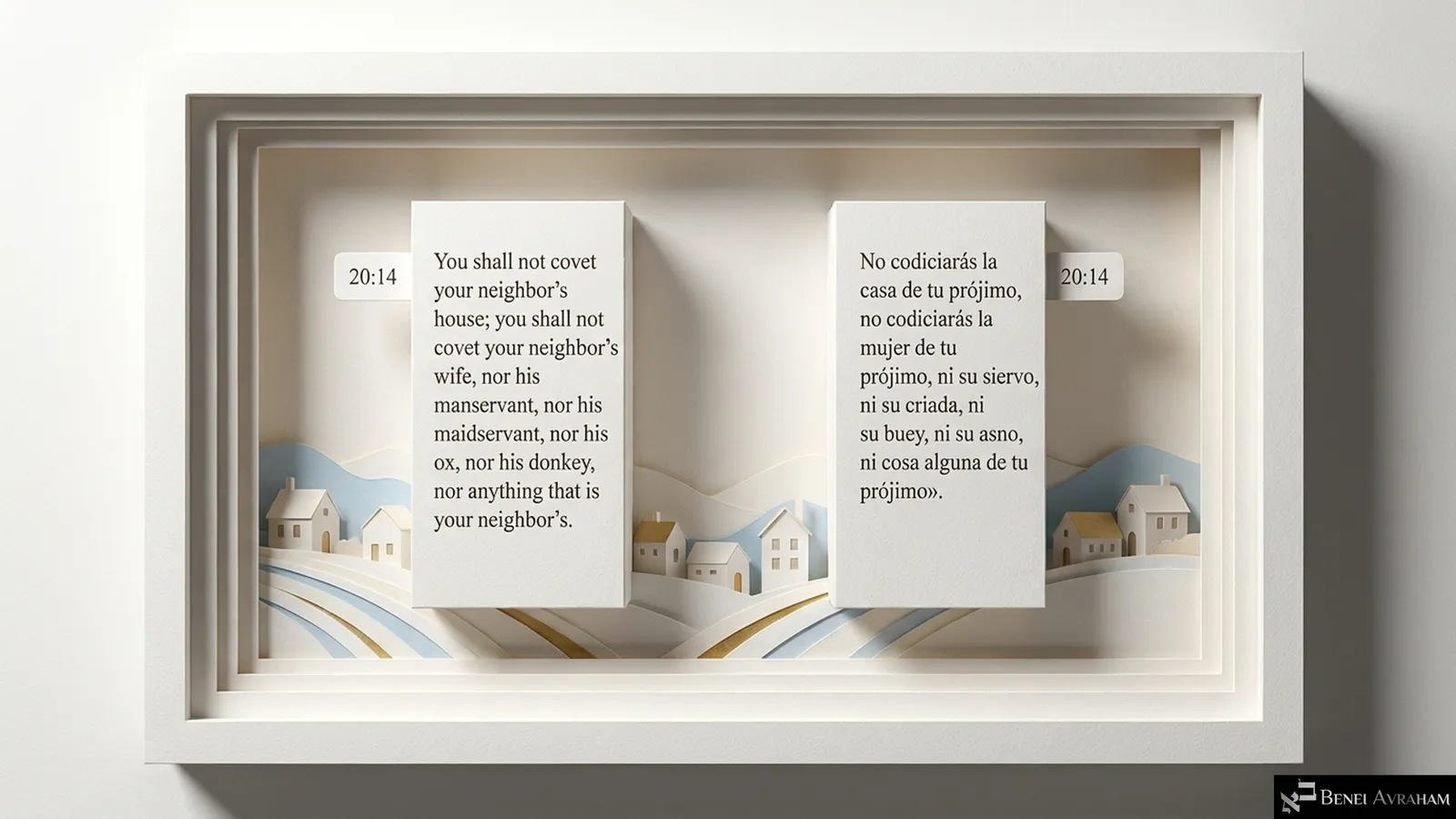
A white paper frame with little houses: “You shall not covet your neighbor’s house… nor anything that is your neighbor’s” (Exodus 20:14).
Shevi’i · Exodus 20:15–23

Seventh Portion
Title card for the seventh portion on a torn paper mountain: “Parashat Yitro — 7th Portion”.
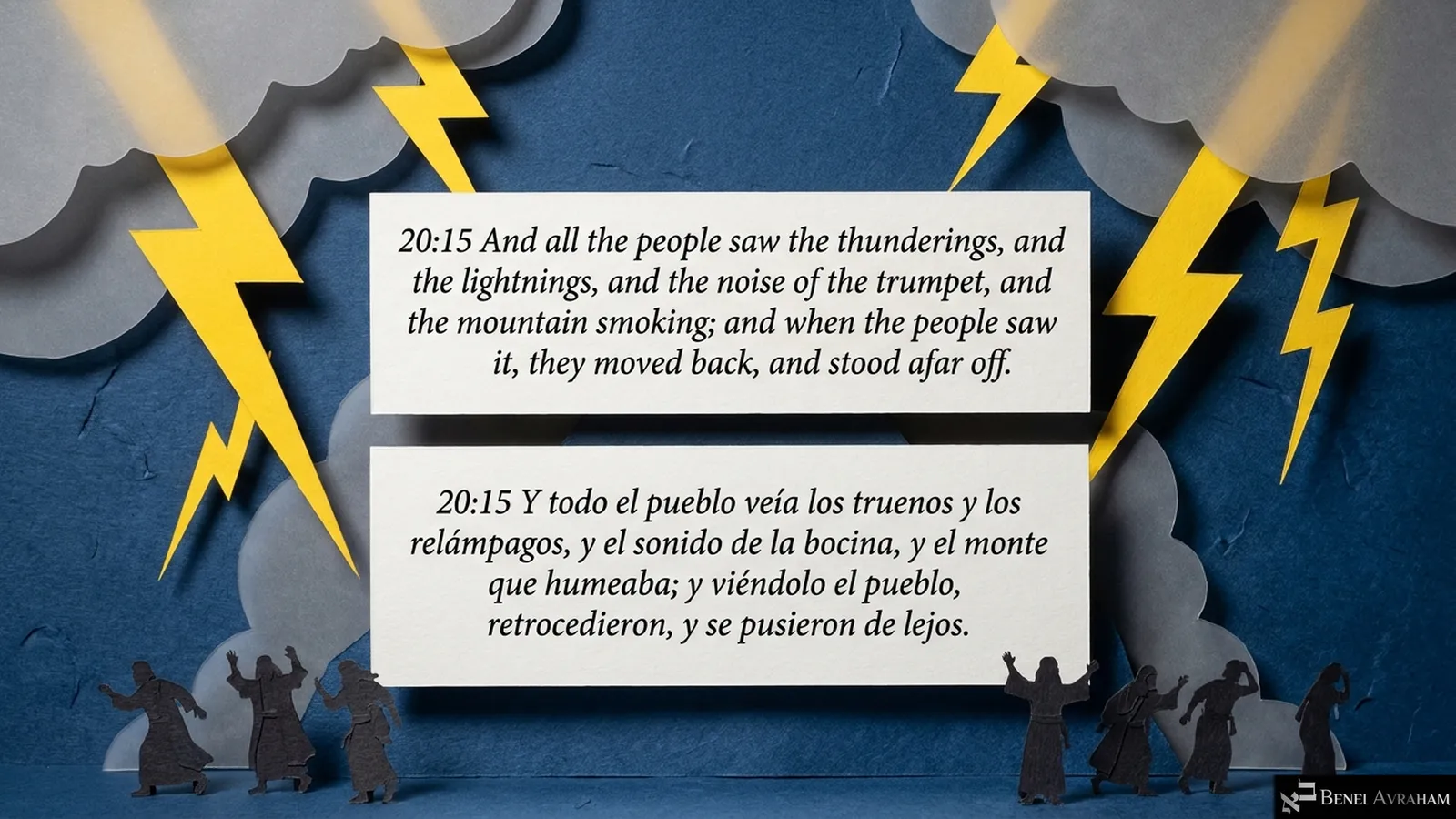
Paper figures shrink back under yellow lightning: all the people saw the thunderings and the lightnings, and stood afar off (Exodus 20:15).
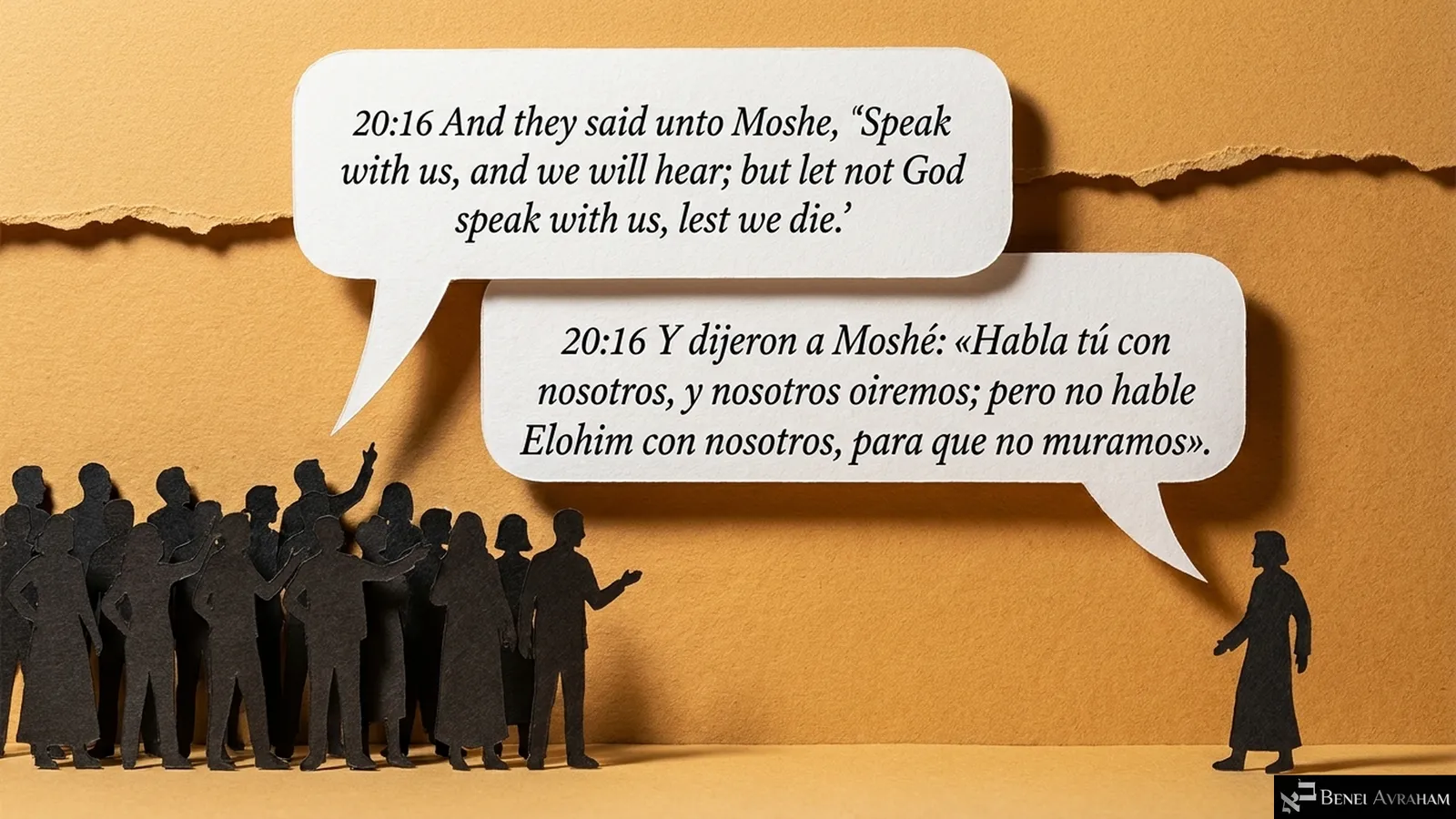
Speech bubbles above the crowd: “Speak with us, and we will hear; but let not God speak with us, lest we die” (Exodus 20:16).
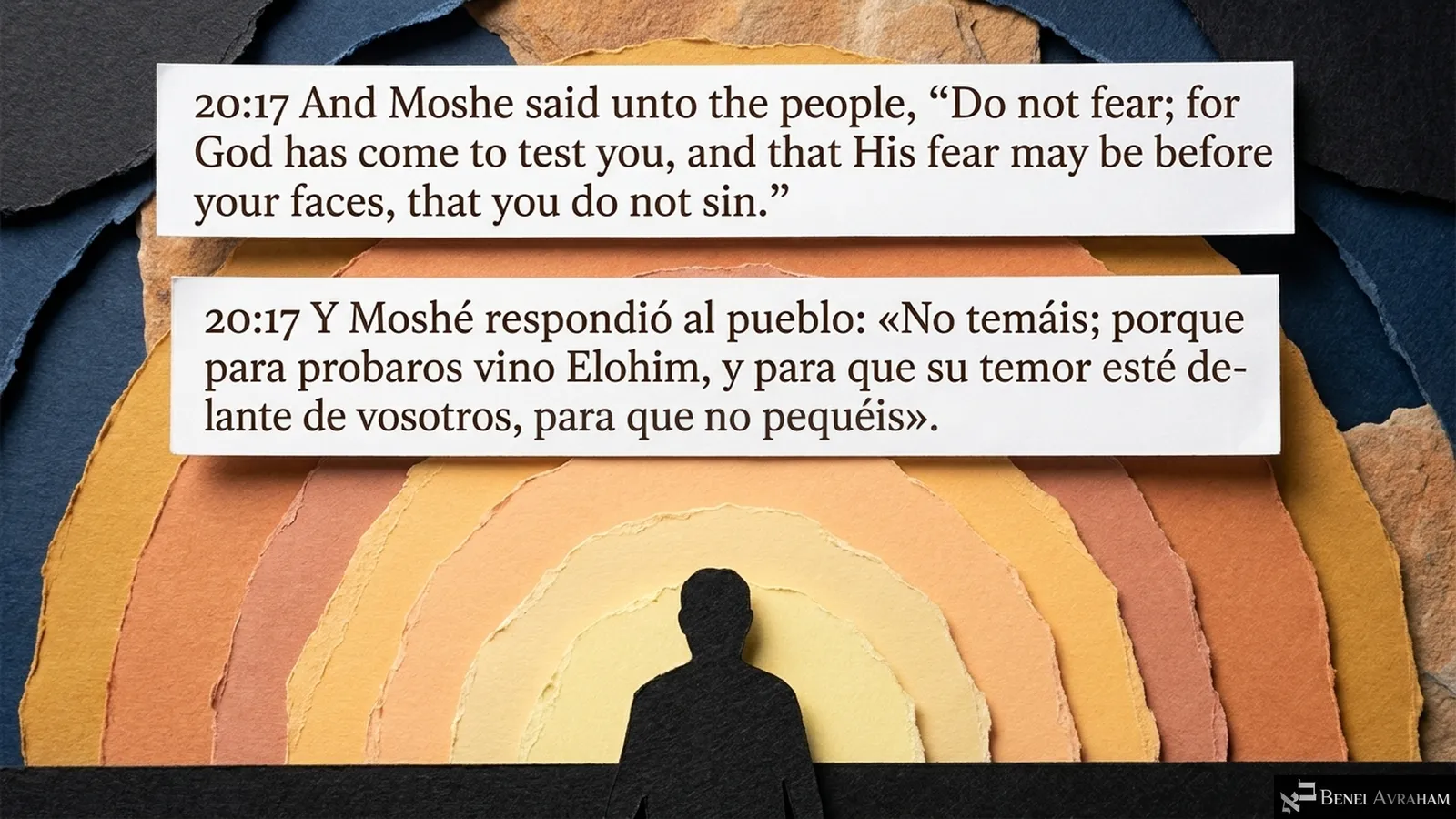
Moshe against a rising paper sun: “Do not fear; for God has come to test you” (Exodus 20:17).
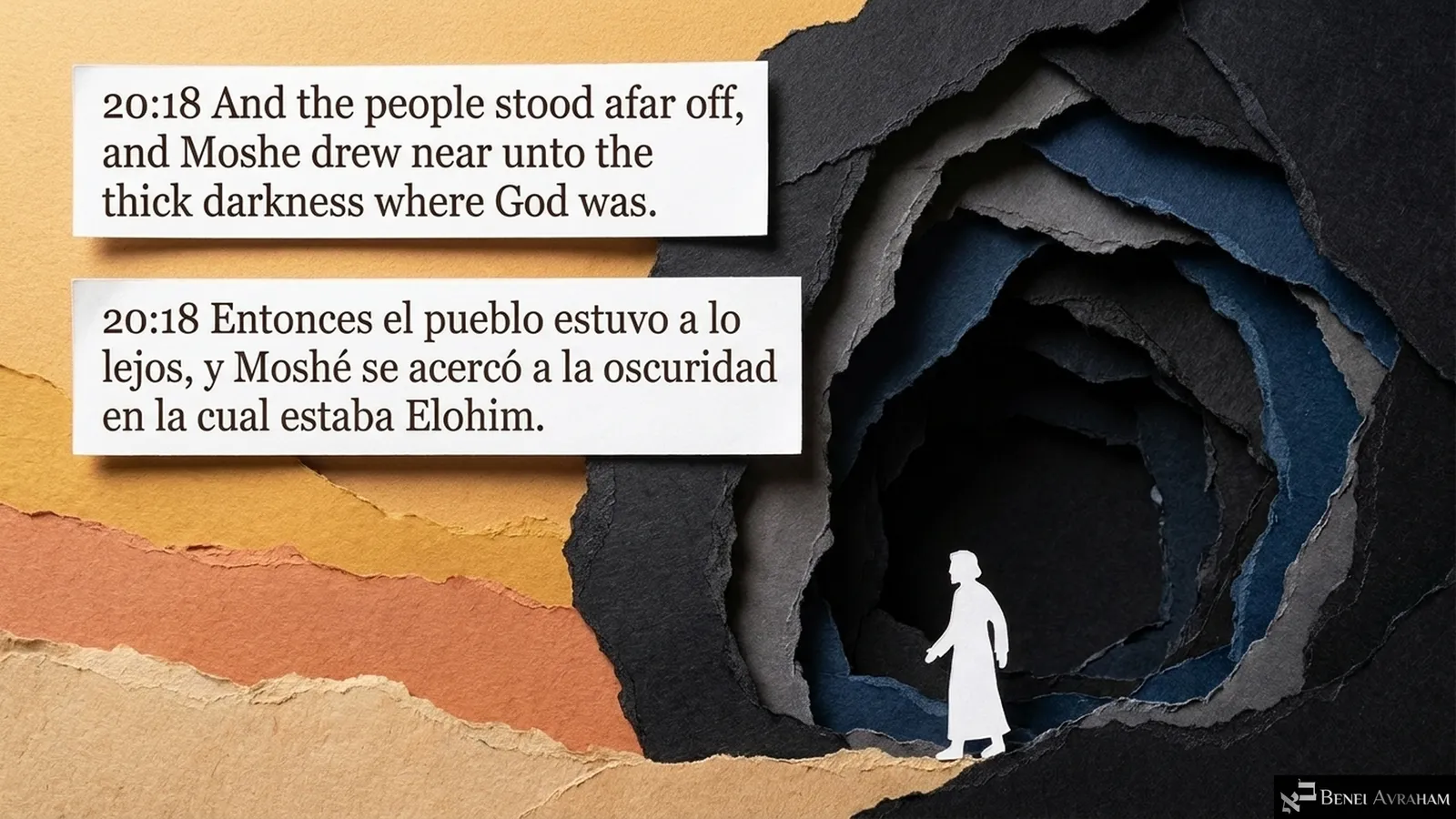
A white figure walks into a dark paper cave: Moshe drew near unto the thick darkness where God was (Exodus 20:18).
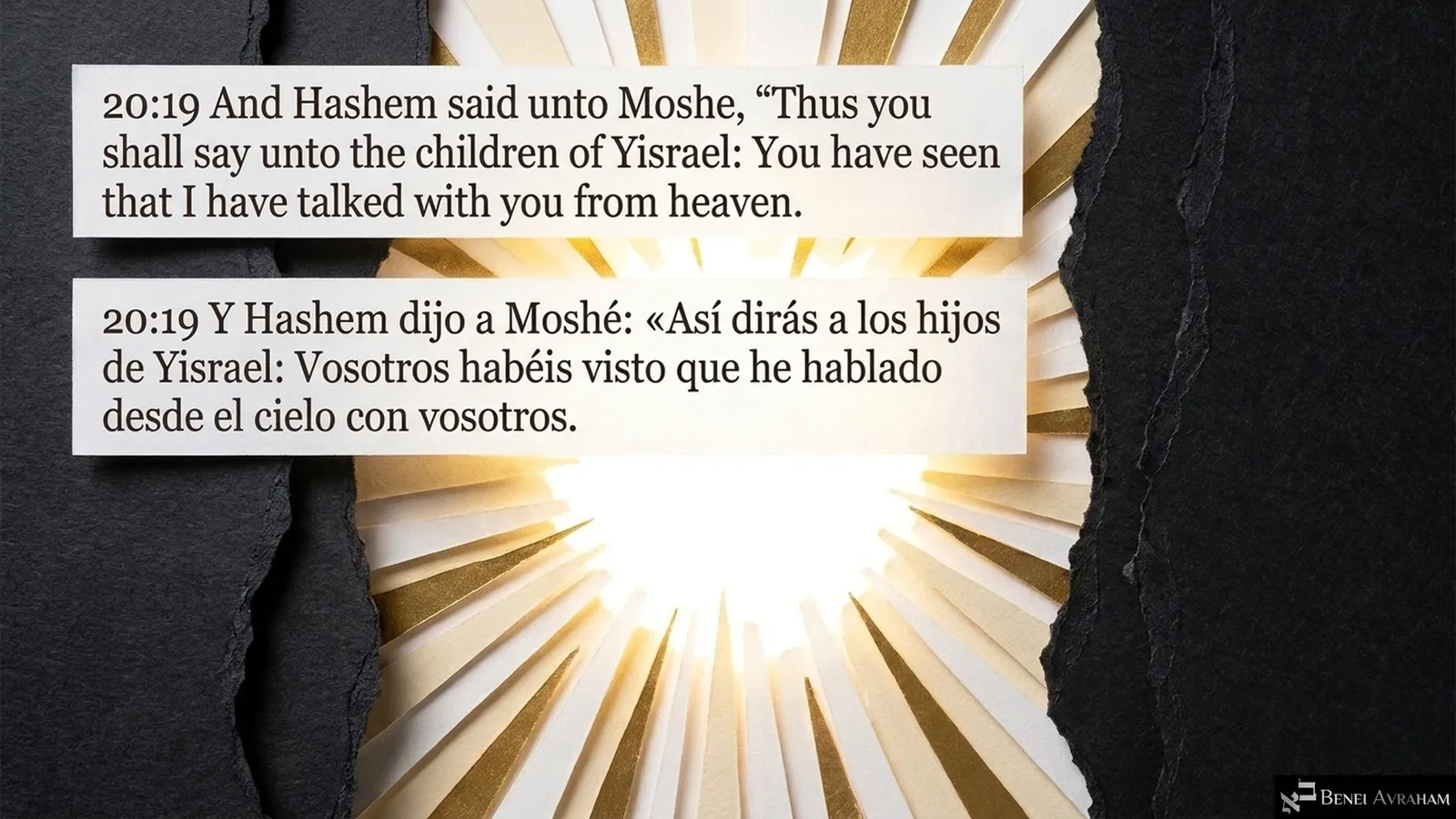
Light bursting through torn black paper: “You have seen that I have talked with you from heaven” (Exodus 20:19).
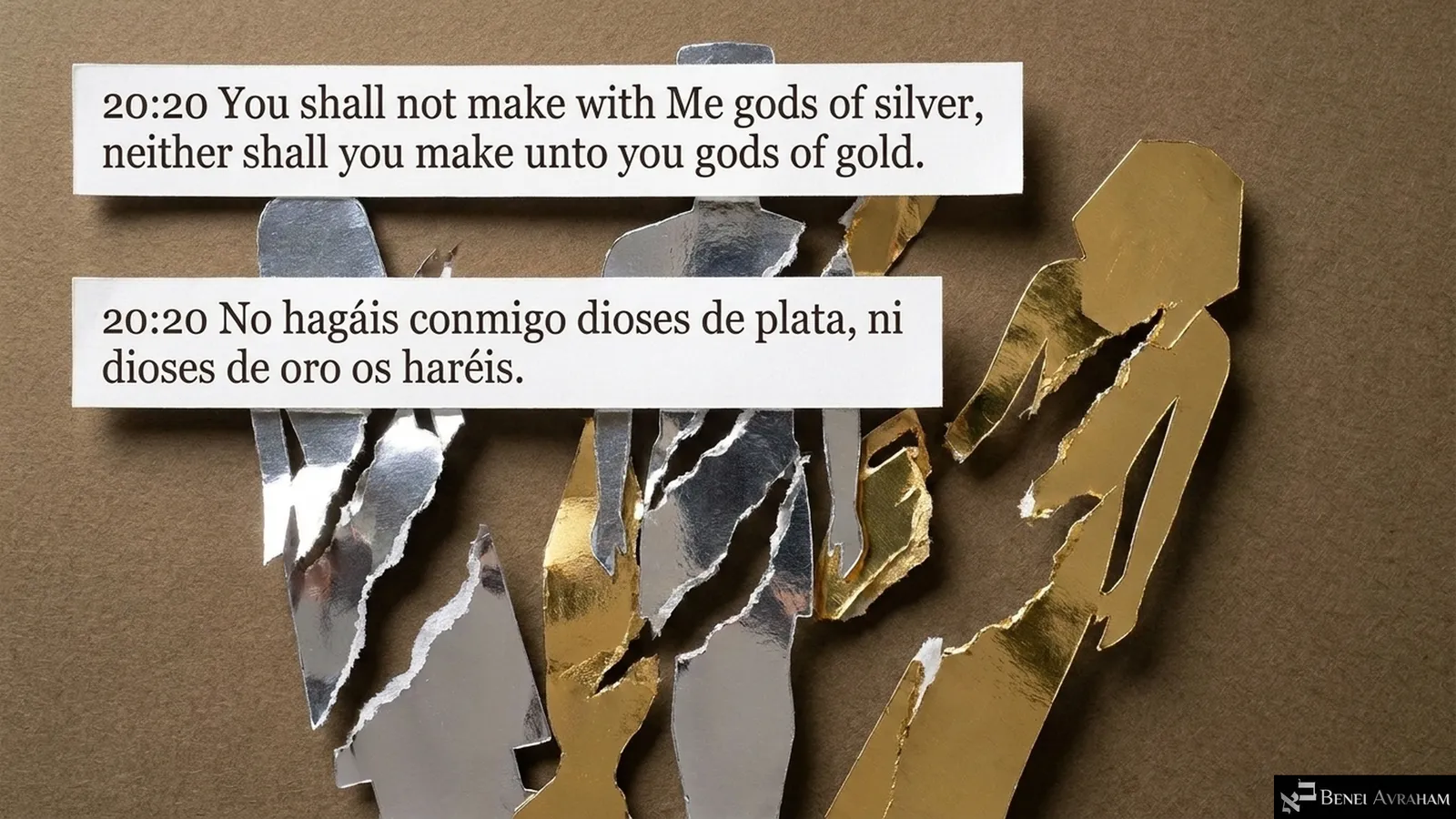
Torn silver and gold paper figures: “You shall not make with Me gods of silver, neither… gods of gold” (Exodus 20:20).
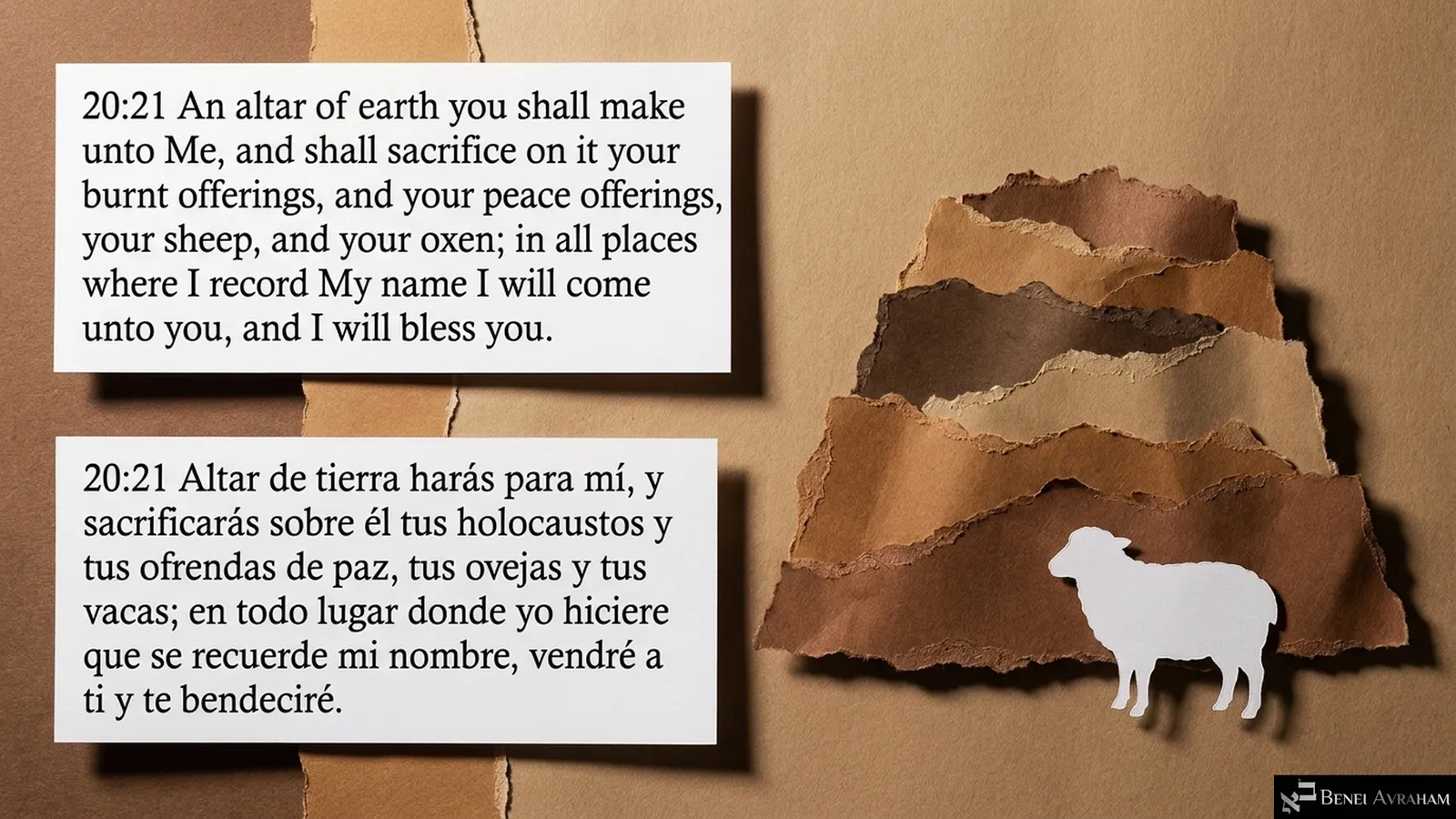
A paper lamb beside a mound of layered earth: “An altar of earth you shall make unto Me… I will come unto you, and I will bless you” (Exodus 20:21).
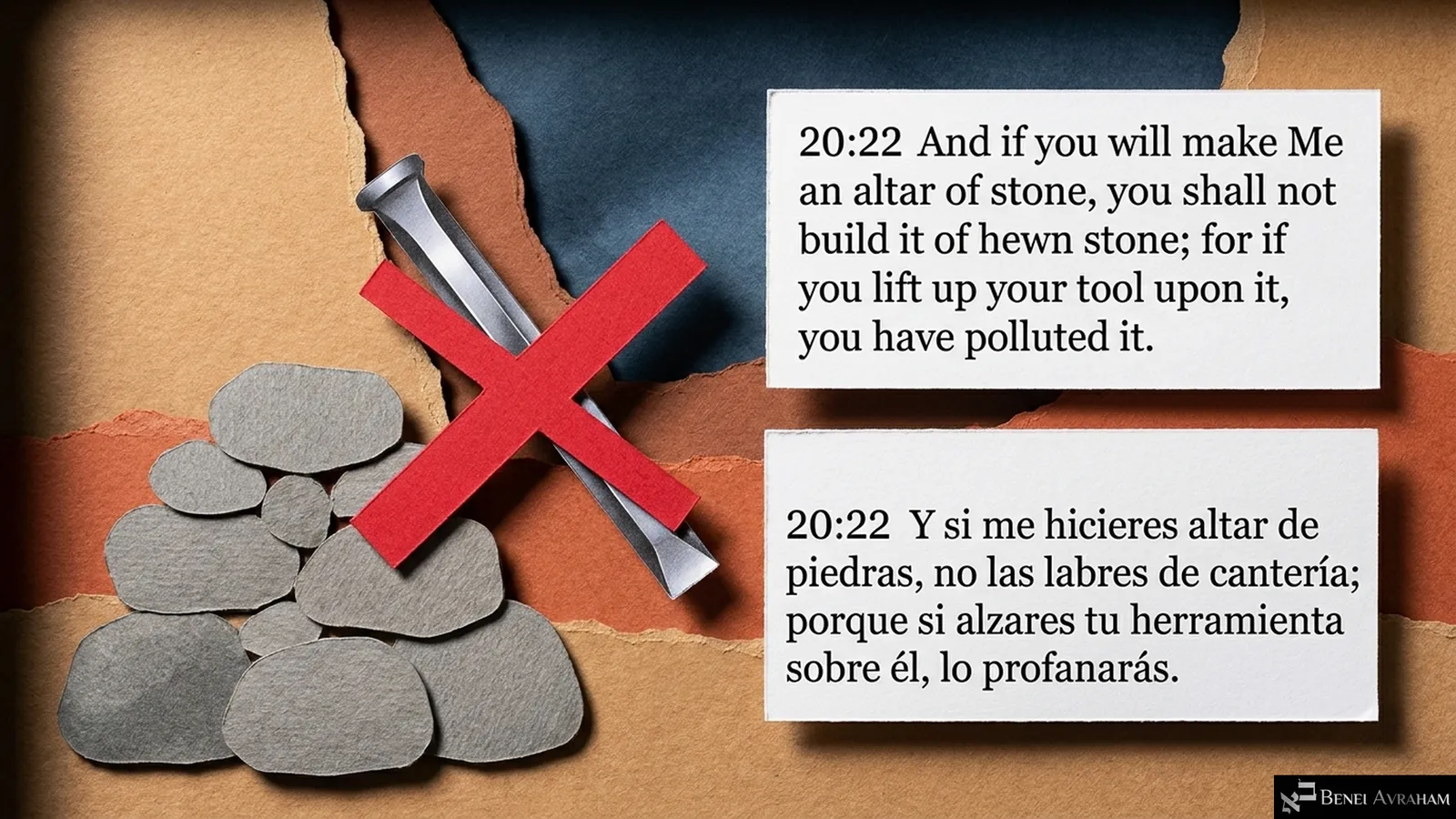
A chisel crossed out beside rough stones: if you lift up your tool upon it, you have polluted it (Exodus 20:22).
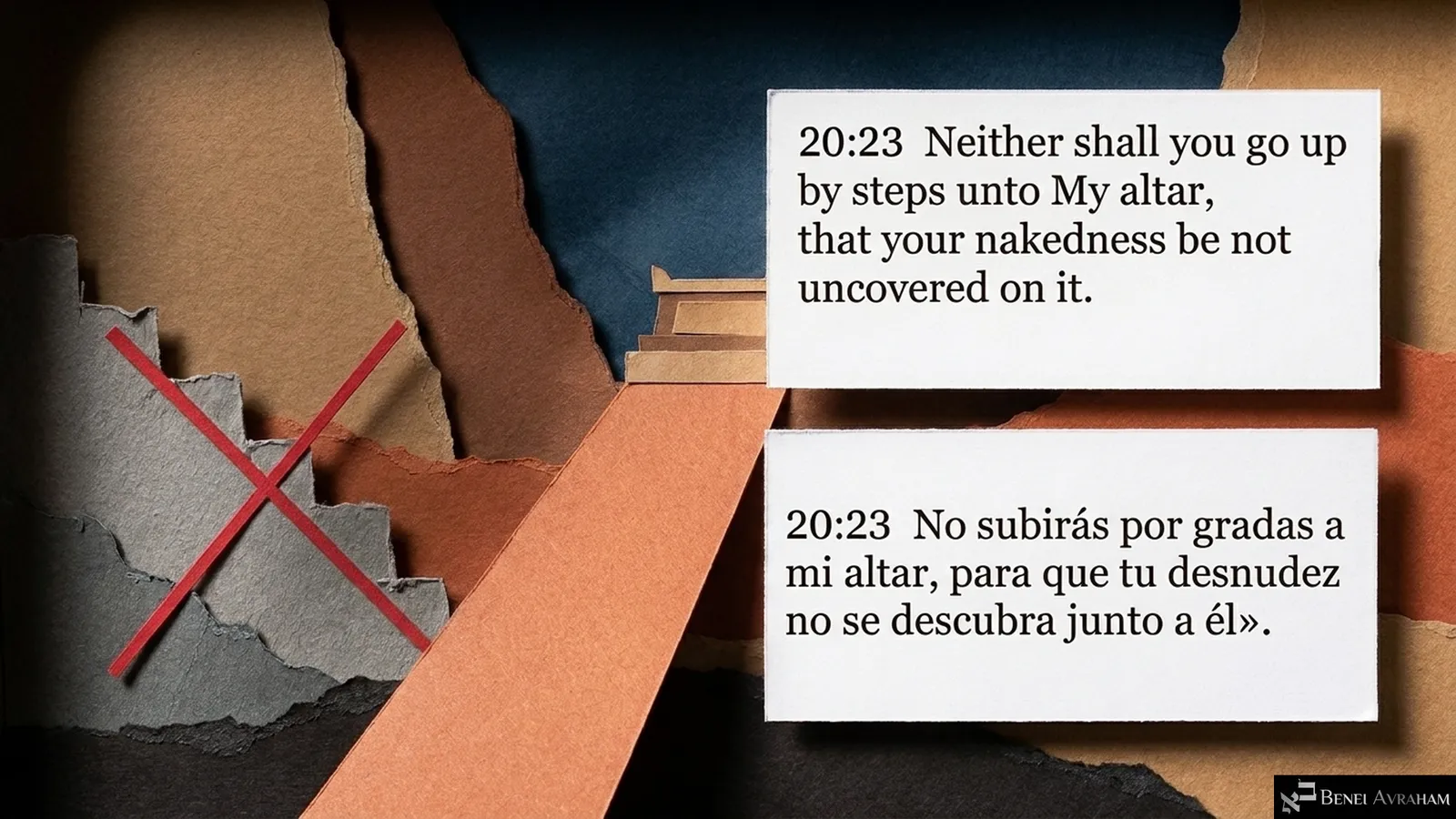
Steps crossed out beside a ramp: neither shall you go up by steps unto My altar (Exodus 20:23).
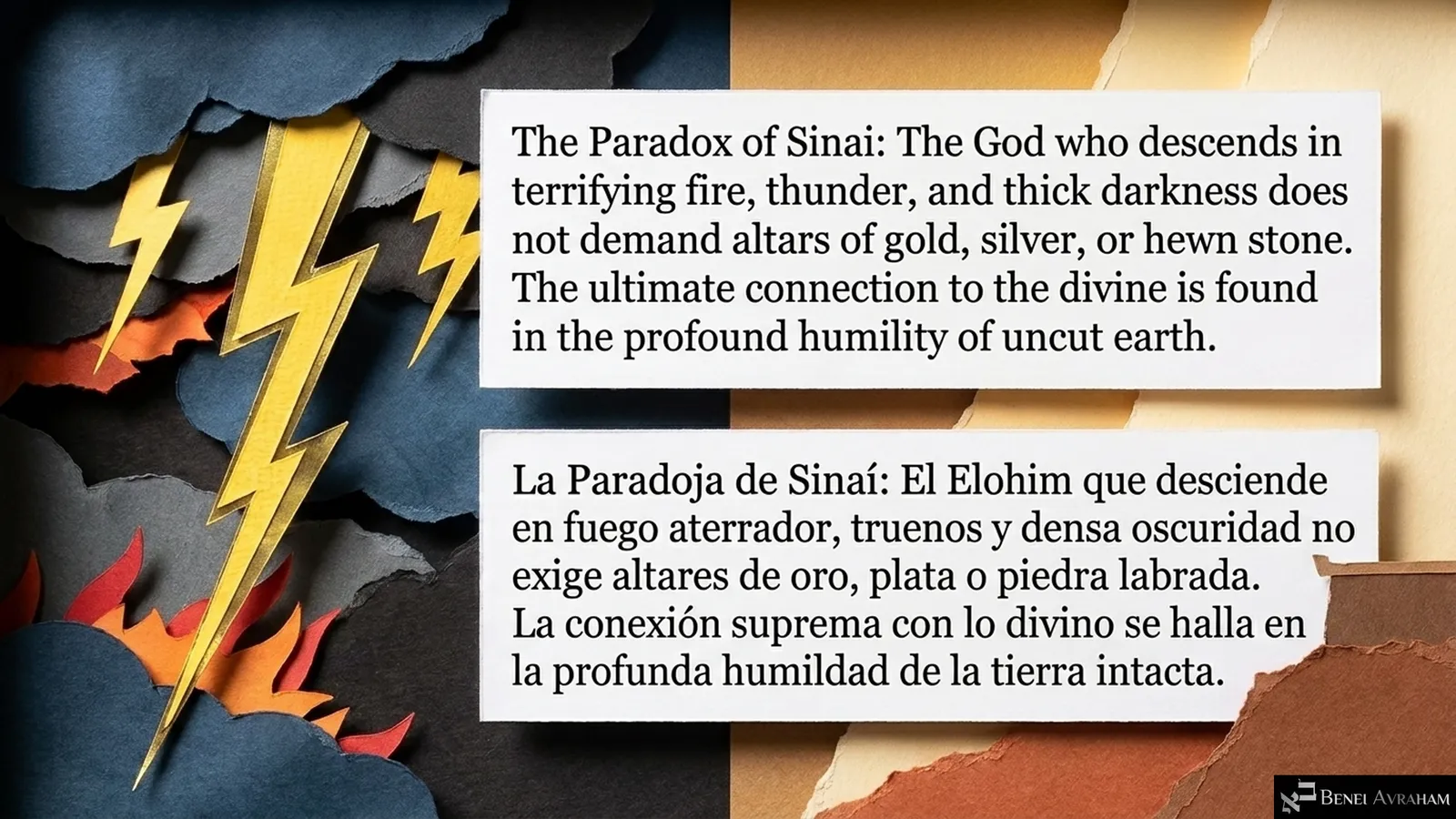
Paper lightning and flames beside a summary: the God who descends in fire asks for an altar of simple earth (Exodus 20:15–23).
Haftarah · Isaiah 6:1–7:6; 9:5–6

Haftarah: Holy, Holy, Holy
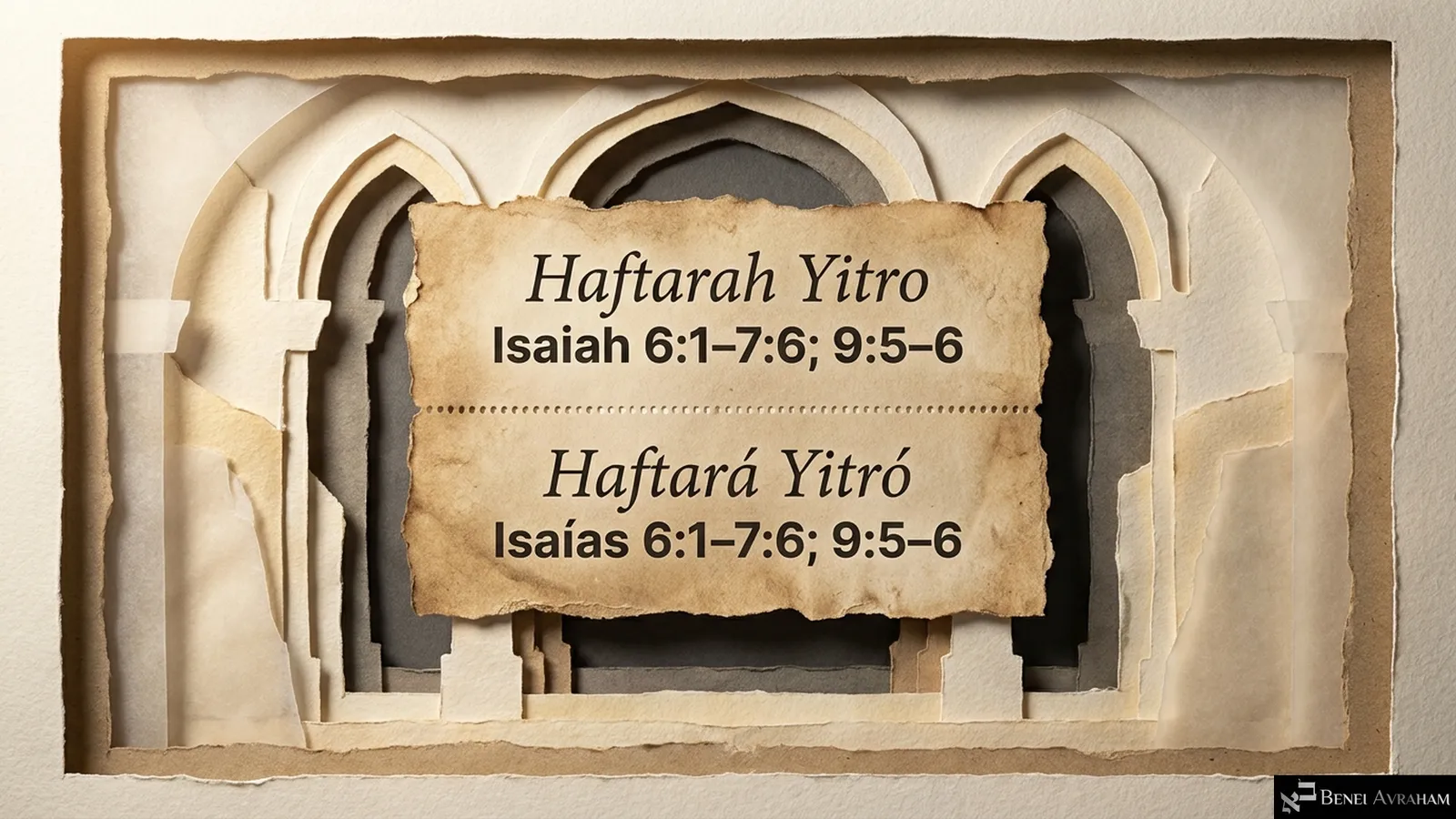
Title card for the haftarah in a paper archway: “Haftarah Yitro, Isaiah 6:1–7:6; 9:5–6”.
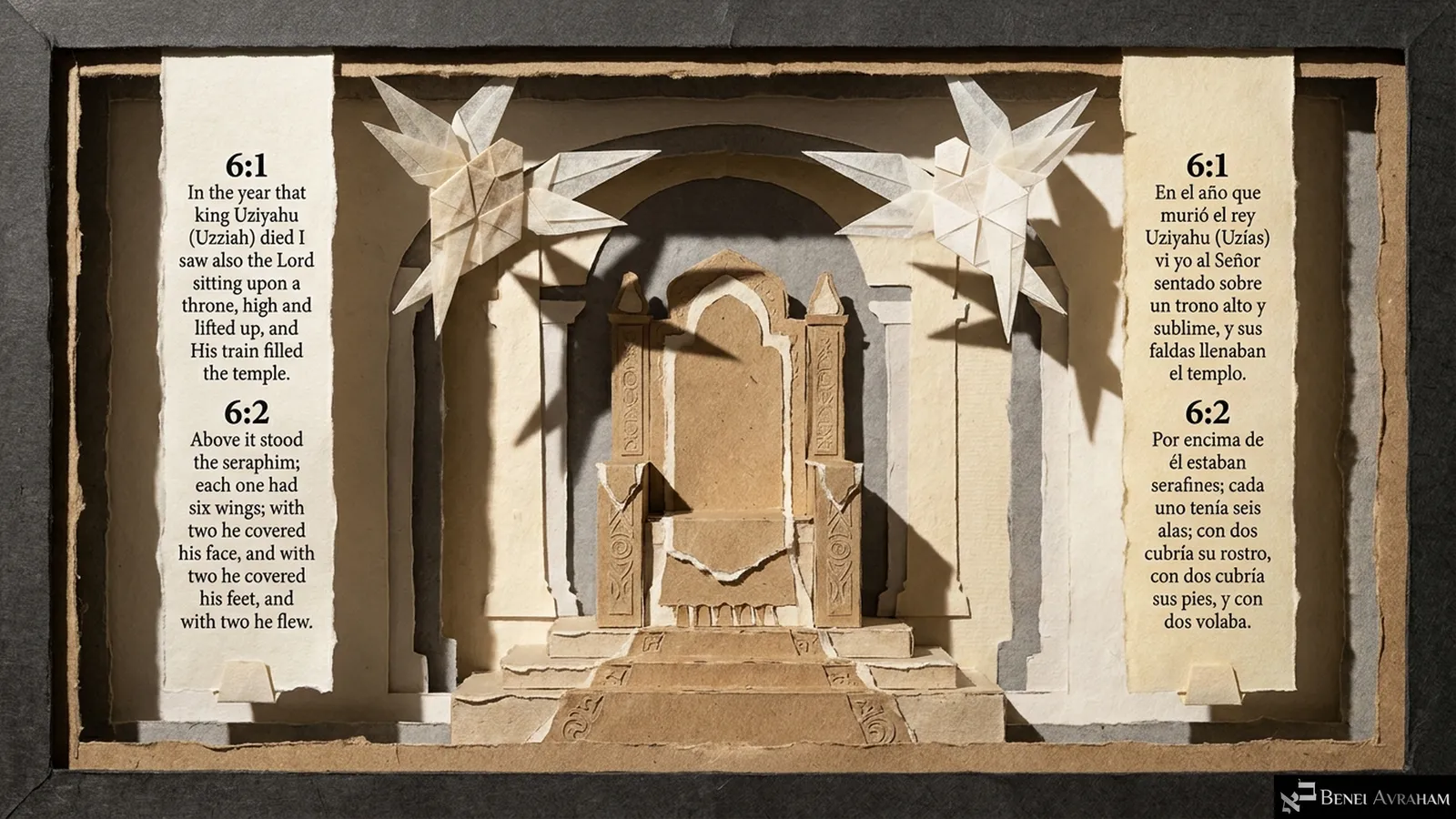
A paper throne between winged seraphim: “I saw also the Lord sitting upon a throne, high and lifted up, and His train filled the temple” (Isaiah 6:1–2).
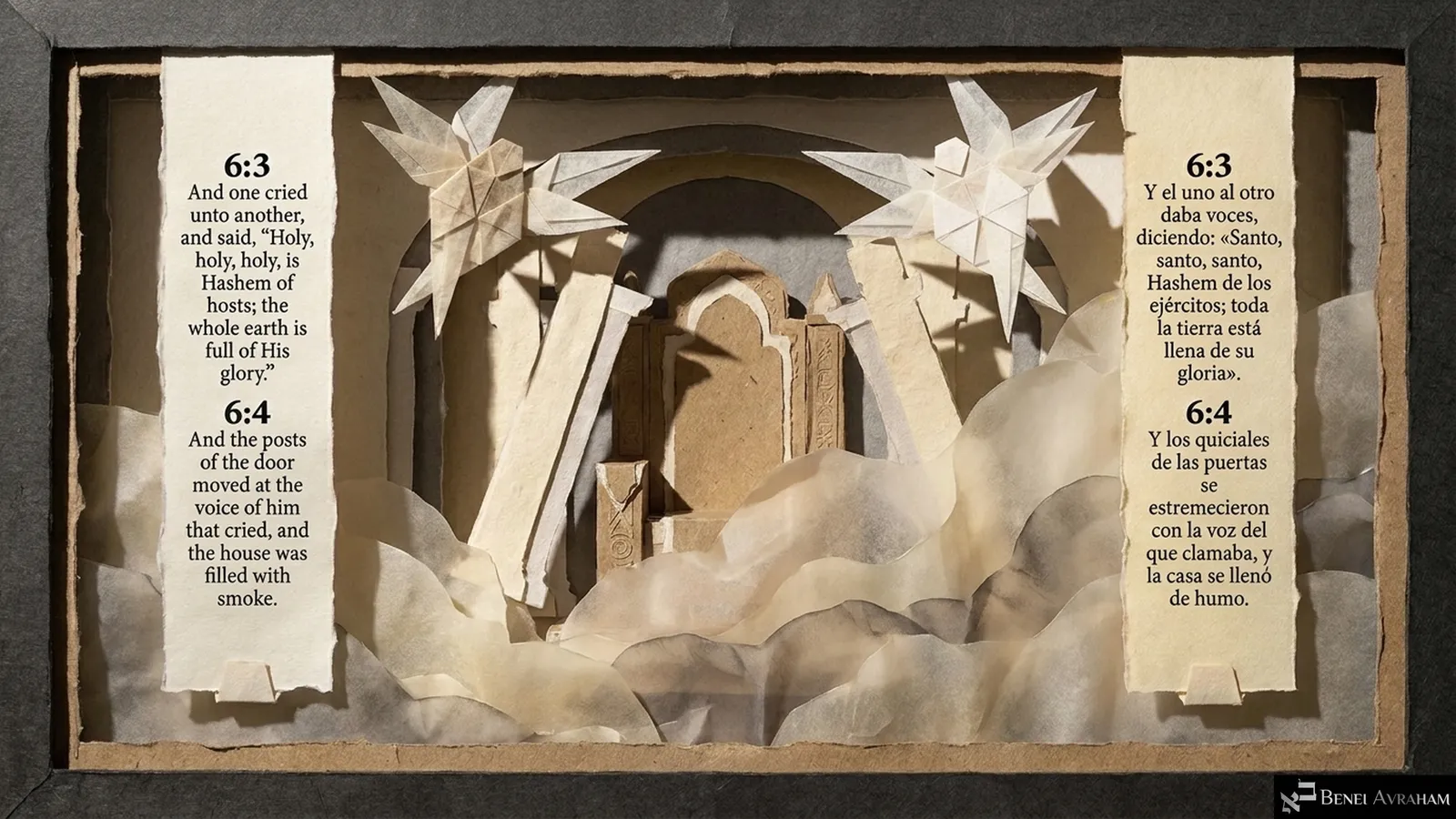
Seraphim above the smoke-filled temple: “Holy, holy, holy, is Hashem of hosts; the whole earth is full of His glory” (Isaiah 6:3–4).
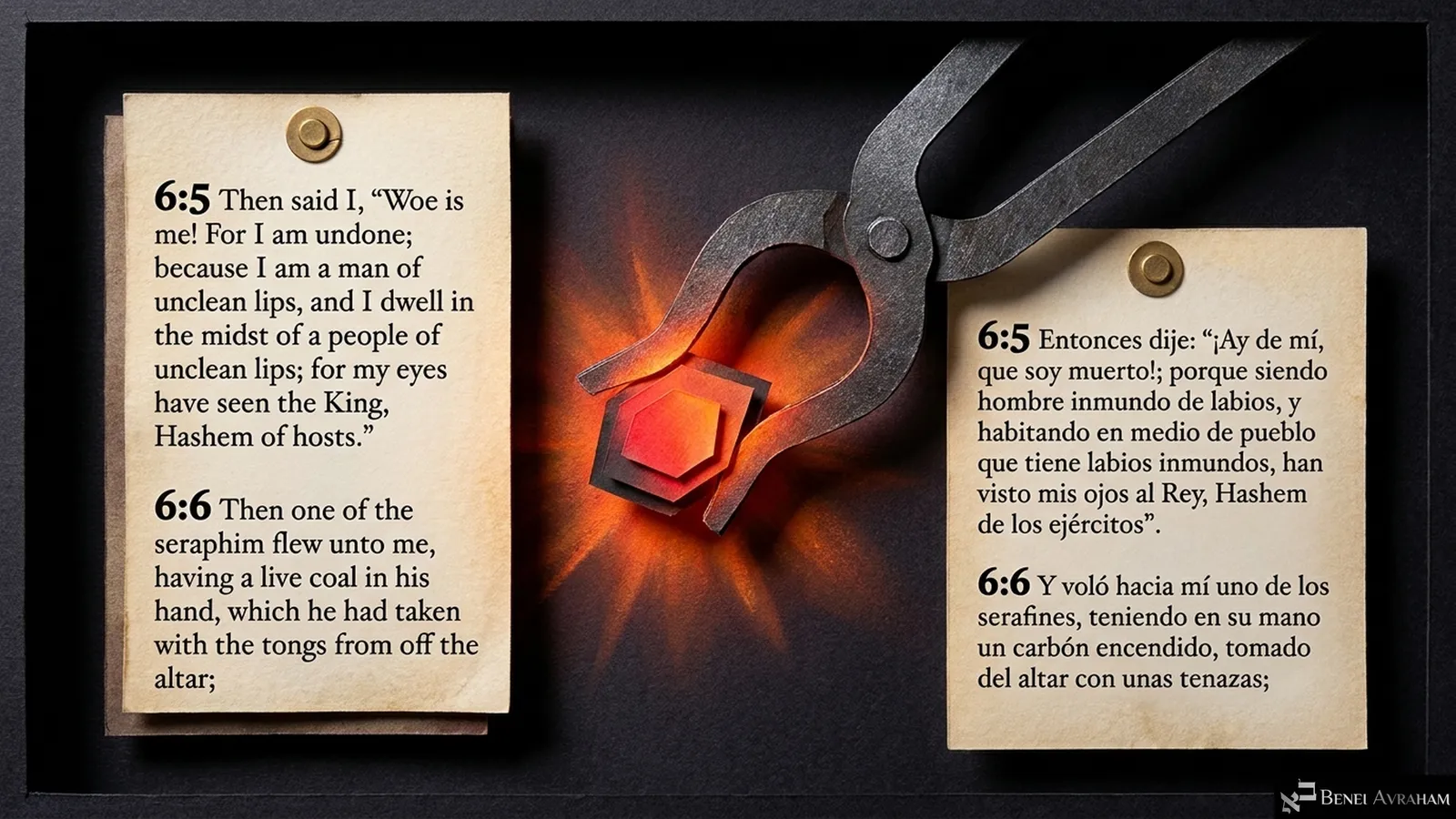
Tongs holding a glowing coal: “Woe is me! for I am a man of unclean lips” — a seraph flew with a live coal from the altar (Isaiah 6:5–6).
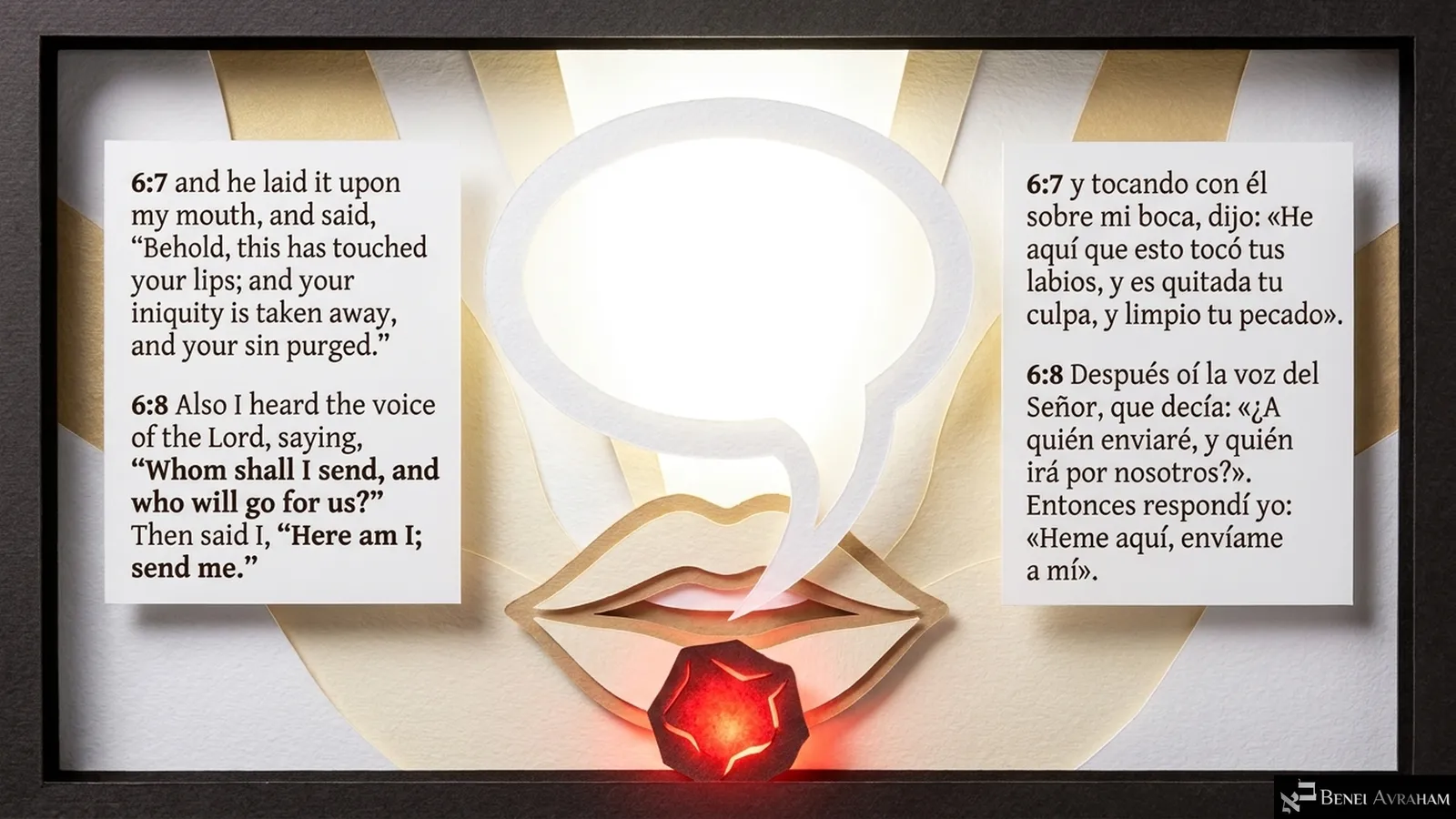
Paper lips touched by a red coal: “Whom shall I send?” — “Here am I; send me” (Isaiah 6:7–8).
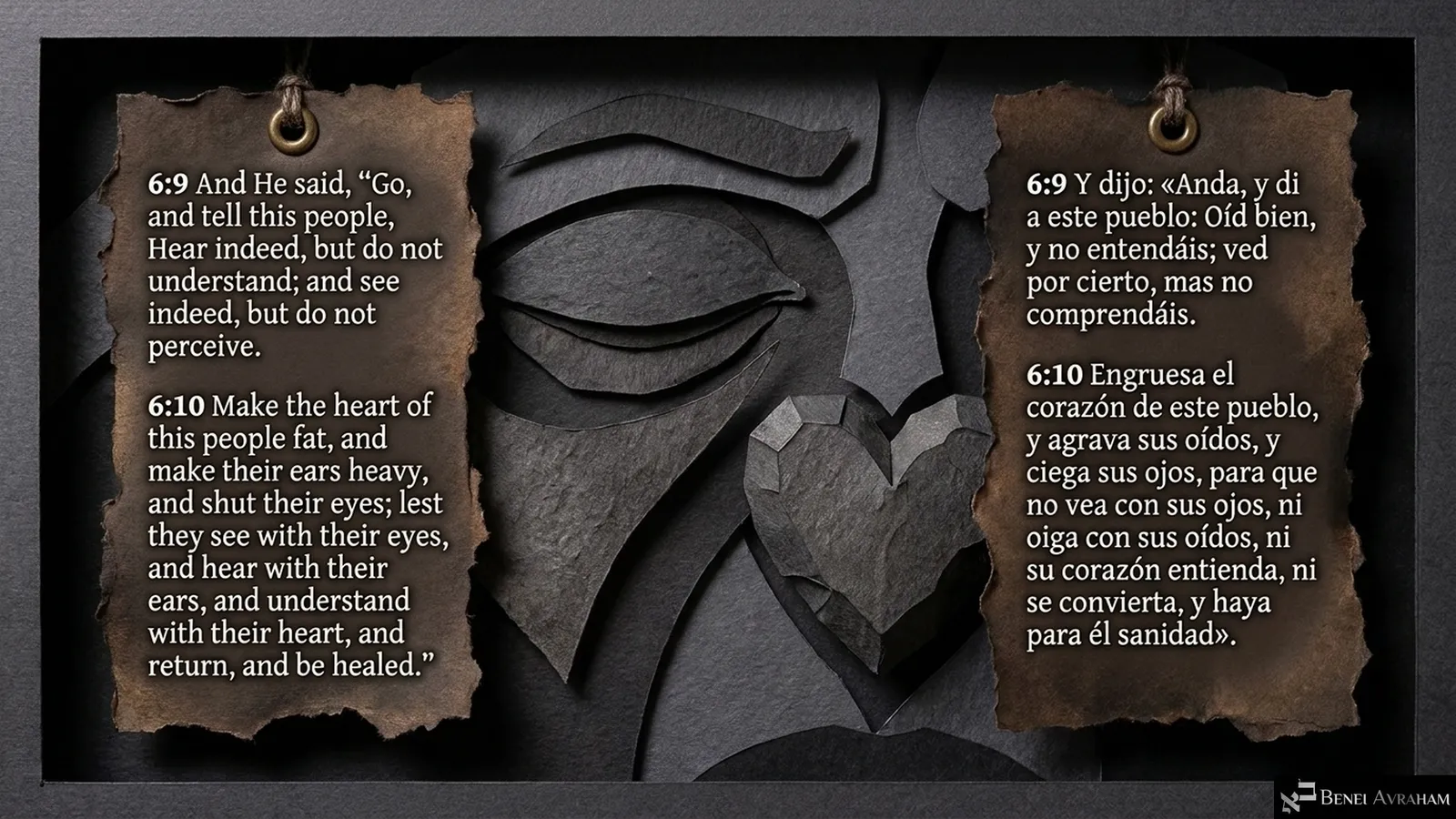
A closed paper eye and a stone heart: “Hear indeed, but do not understand… Make the heart of this people fat” (Isaiah 6:9–10).
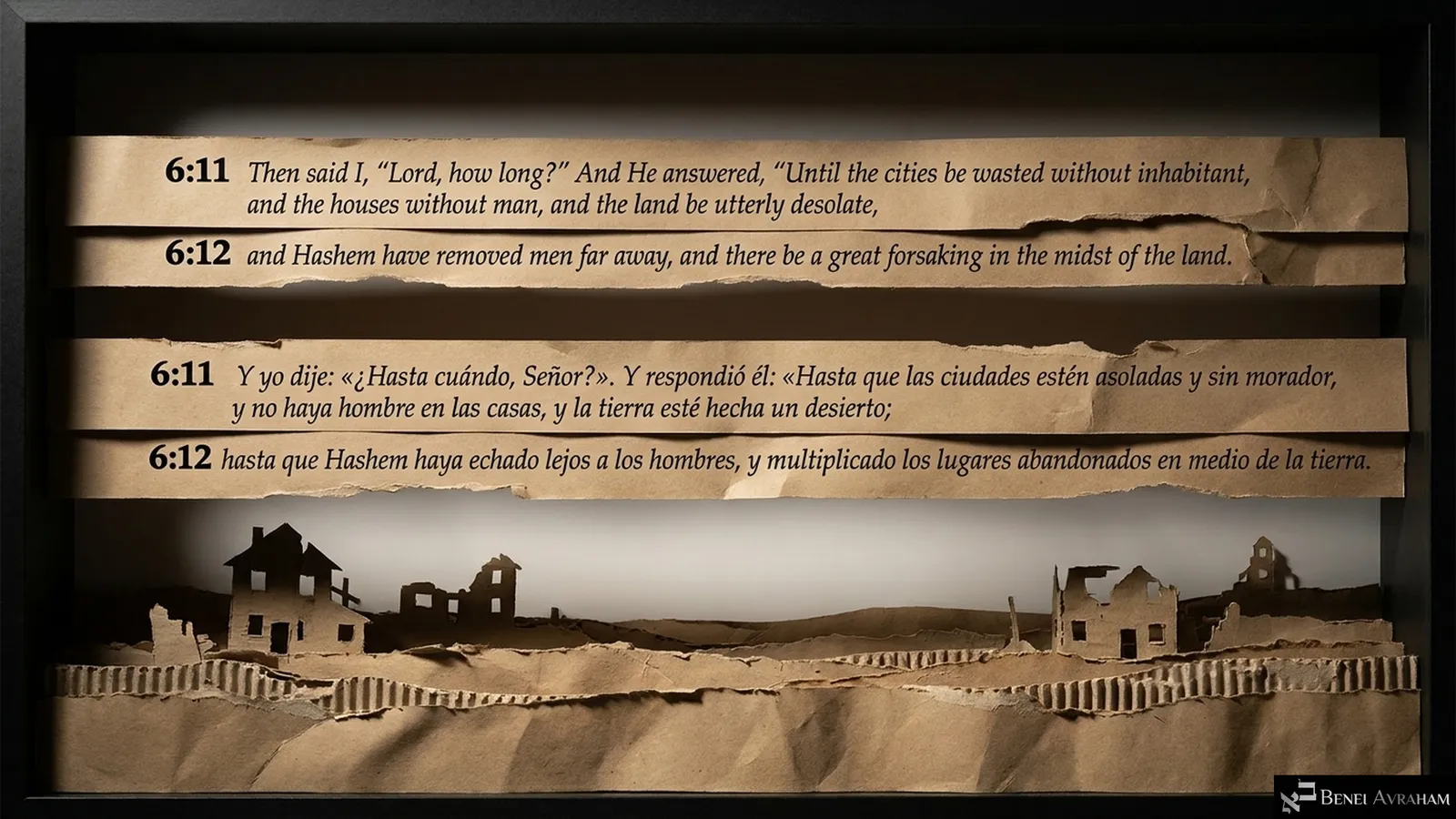
Paper ruins along a bare horizon: “Lord, how long?” — “Until the cities be wasted without inhabitant” (Isaiah 6:11–12).
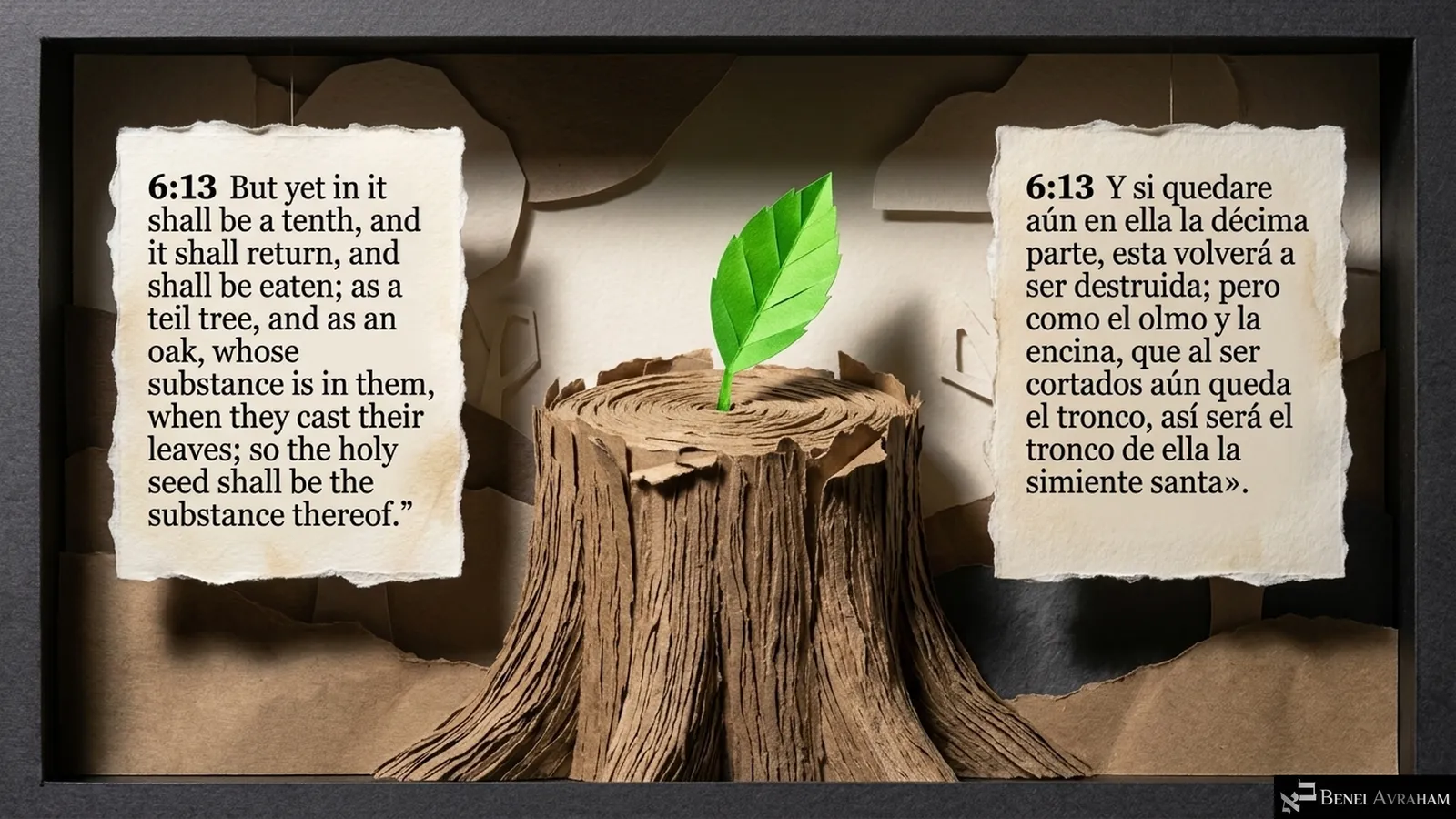
A green leaf sprouting from a paper stump: so the holy seed shall be the substance thereof (Isaiah 6:13).
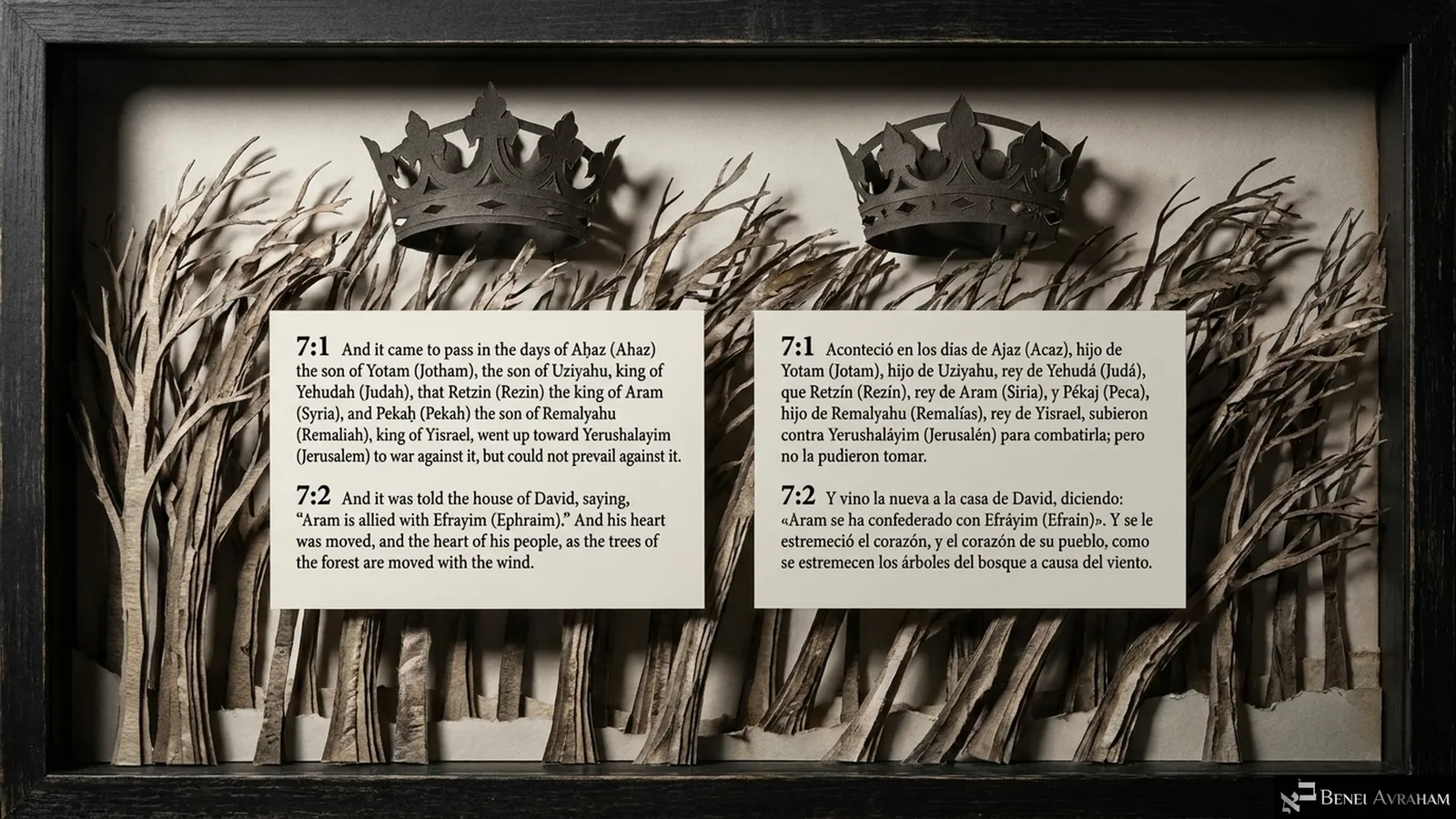
Two crowns over trees bent by the wind: Retzin and Pekaḥ went up toward Yerushalayim; the heart of the people was moved as the trees of the forest (Isaiah 7:1–2).
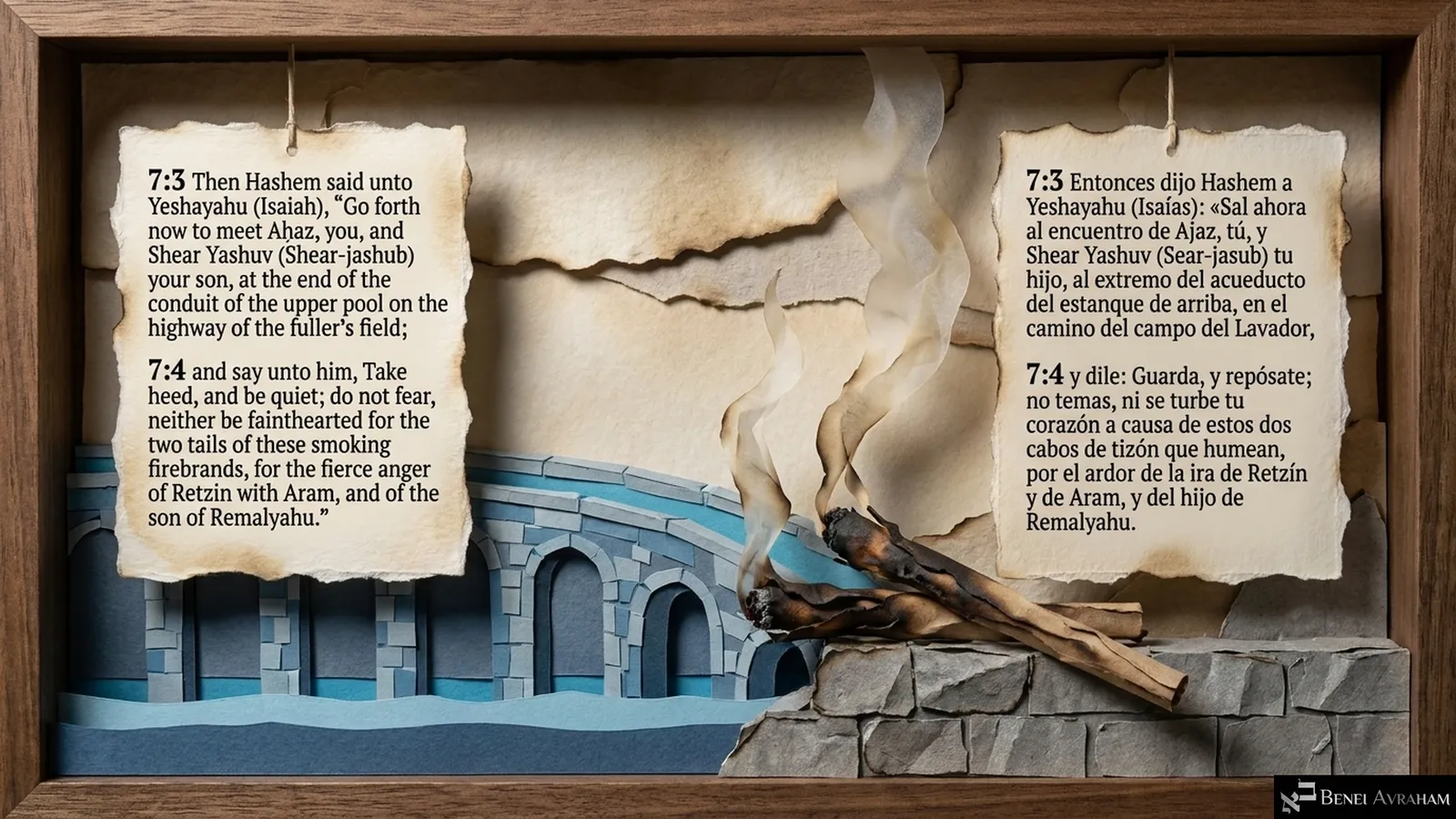
Smoking firebrands beside the upper pool: “Take heed, and be quiet; do not fear… for these two tails of smoking firebrands” (Isaiah 7:3–4).
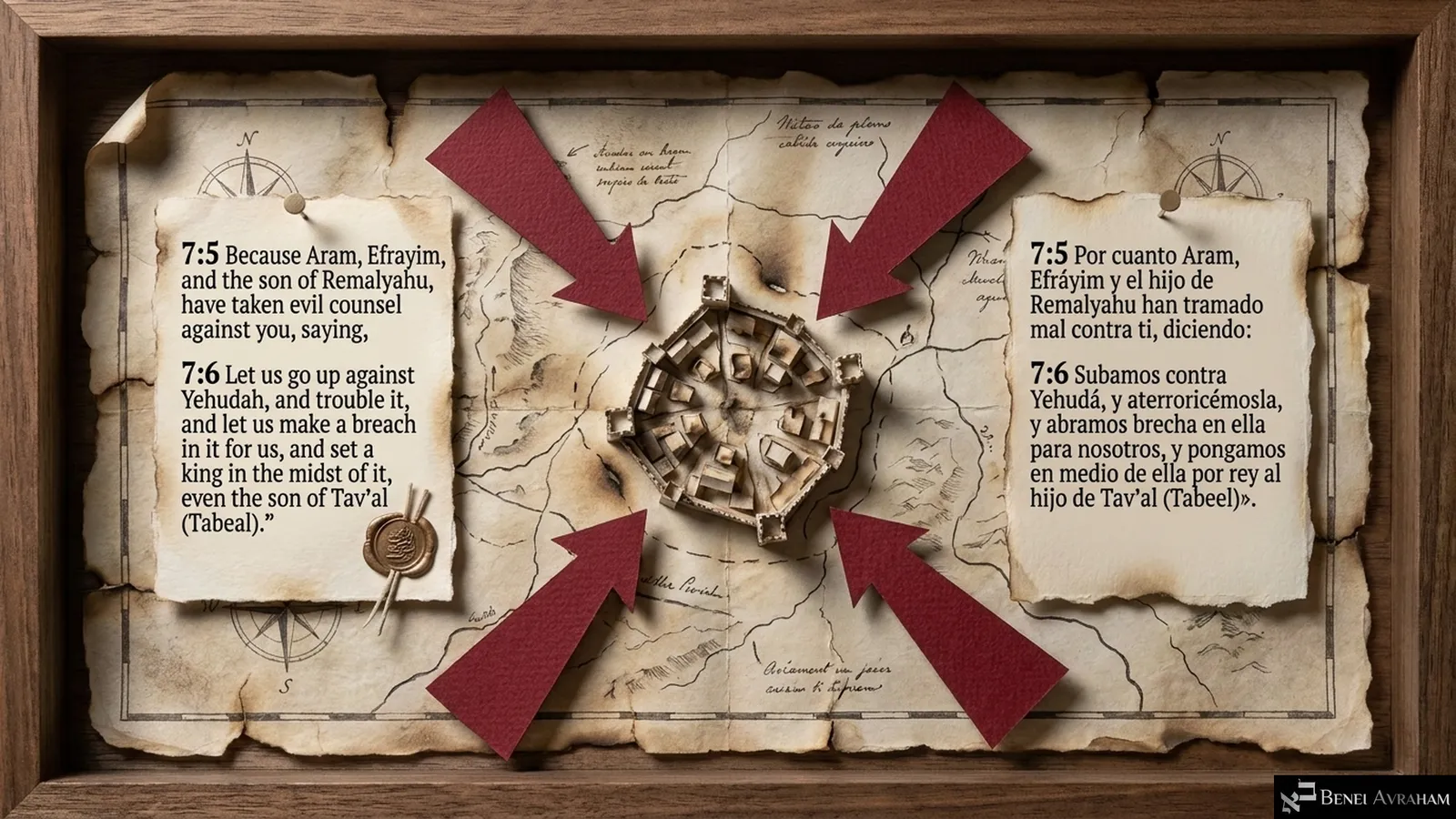
Red arrows closing on a paper fortress on a map: “Let us go up against Yehudah… and set a king in the midst of it” (Isaiah 7:5–6).
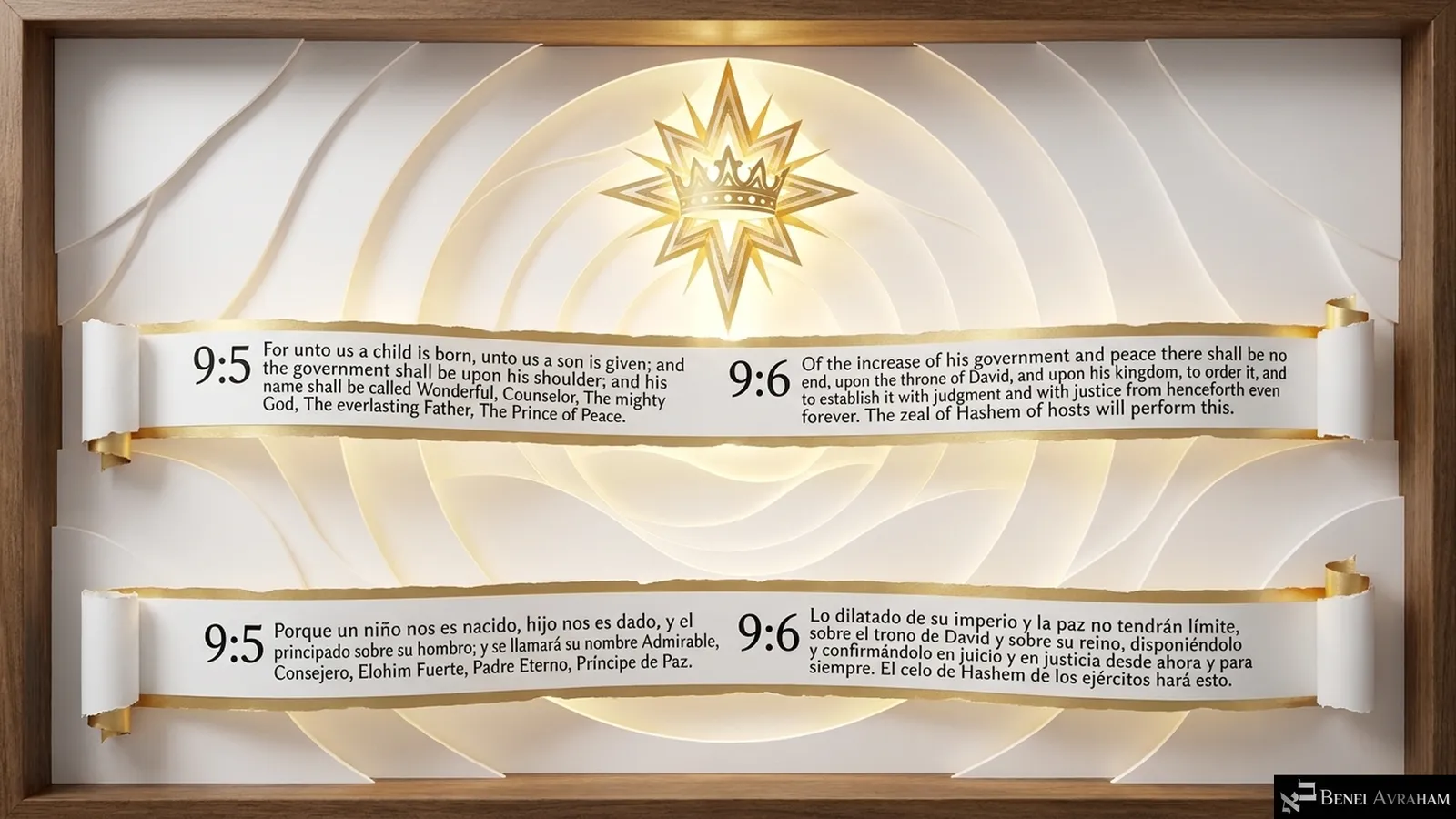
Paper scrolls beneath a glowing star and crown: “For unto us a child is born, unto us a son is given” (Isaiah 9:5–6).