SMS/Text 469-608-9944
Parashat Vayishlaḥ · Genesis 32:4–36:43 · Haftarah Obadiah 1:1–21

Vayishlaḥ: A Visual Journey

Illustrated teaching slides from Benei Avraham, in English and Spanish, walking through Parashat Vayishlaḥ portion by portion: Yaakov sends messengers to Esav and hears that he is coming with four hundred men; he divides his camp, prays, and sends drove after drove as a gift; alone at the Yabbok he wrestles until dawn, is named Yisrael, and calls the place Peni’el; Esav runs to meet him and they embrace; Yaakov settles at Sukkot and Shechem, where Dinah is taken and Shimon and Levi avenge her; God sends Yaakov back to Beit-El and confirms the name Yisrael; Raḥel dies giving birth to Binyamin, and Yitzḥak dies and is buried by his two sons; and the chapter closes with the generations of Esav, the chiefs of Se’ir, and the kings of Edom. The haftarah follows: Obadiah’s vision against Edom, whose pride will be brought down, until saviors come up on Mount Tziyon and the kingdom is Hashem’s. Tap any image to open the slideshow; use the arrows (or swipe) to move through every slide.

Rishon · Genesis 32:4–13

First Portion

Title slide: Parashat Vayishlaḥ, first portion (Rishon), Genesis 32:4–13, framed in layered paper canyons.
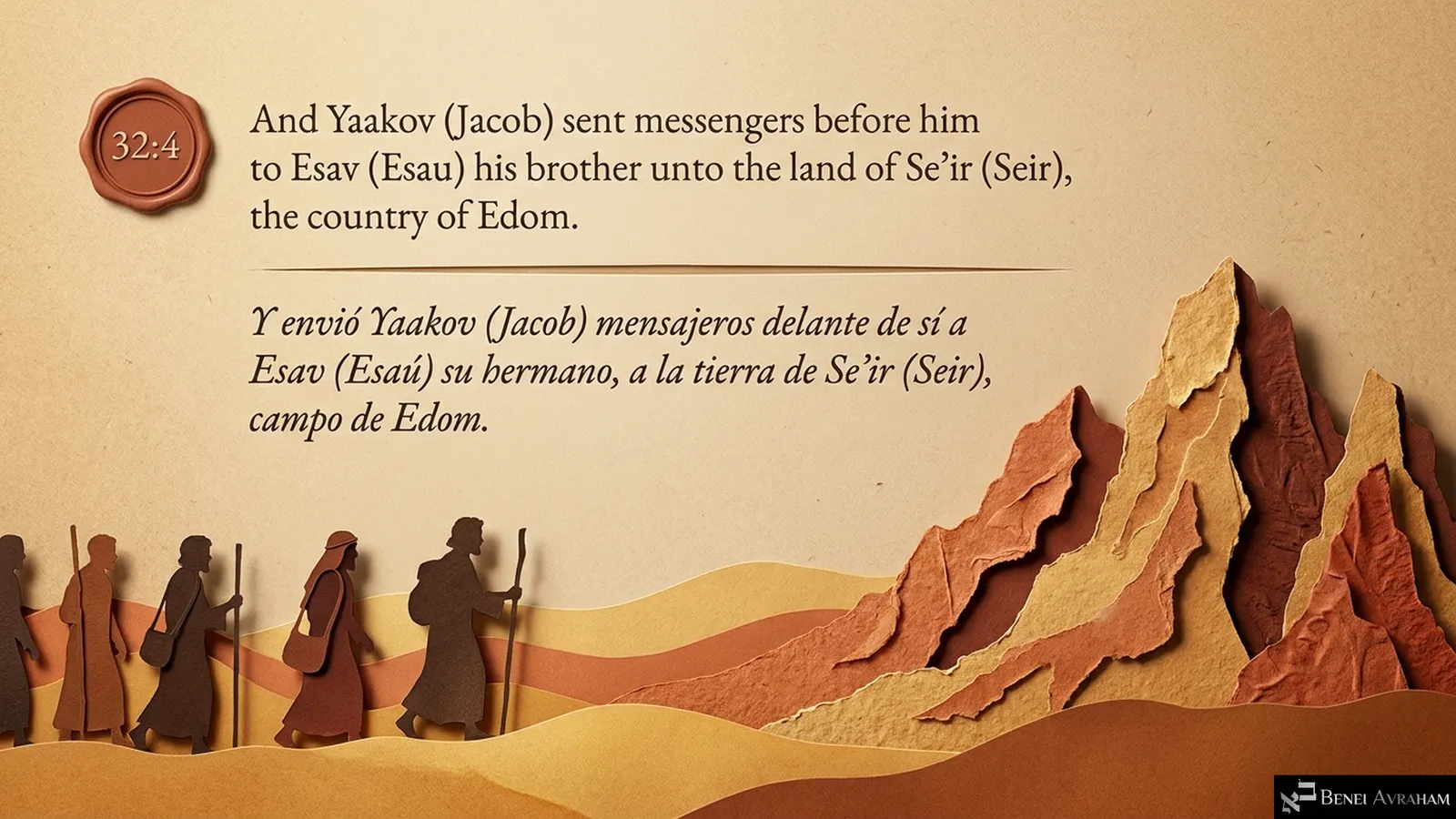
Yaakov sends messengers before him to Esav his brother, to the land of Se’ir, the country of Edom (Genesis 32:4).
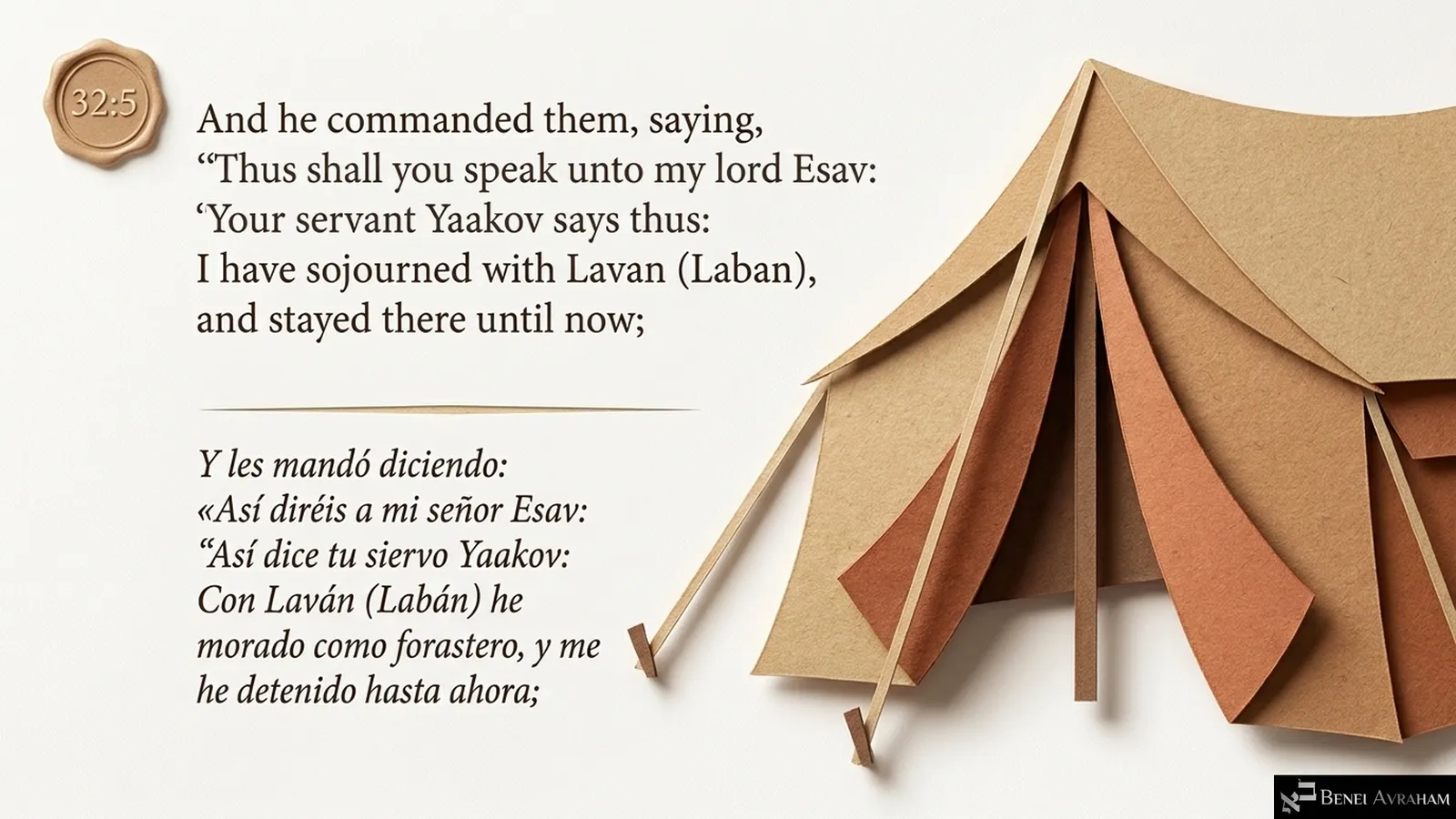
A paper tent: “Thus shall you speak unto my lord Esav: Your servant Yaakov says thus: I have sojourned with Lavan, and stayed there until now” (Genesis 32:5).
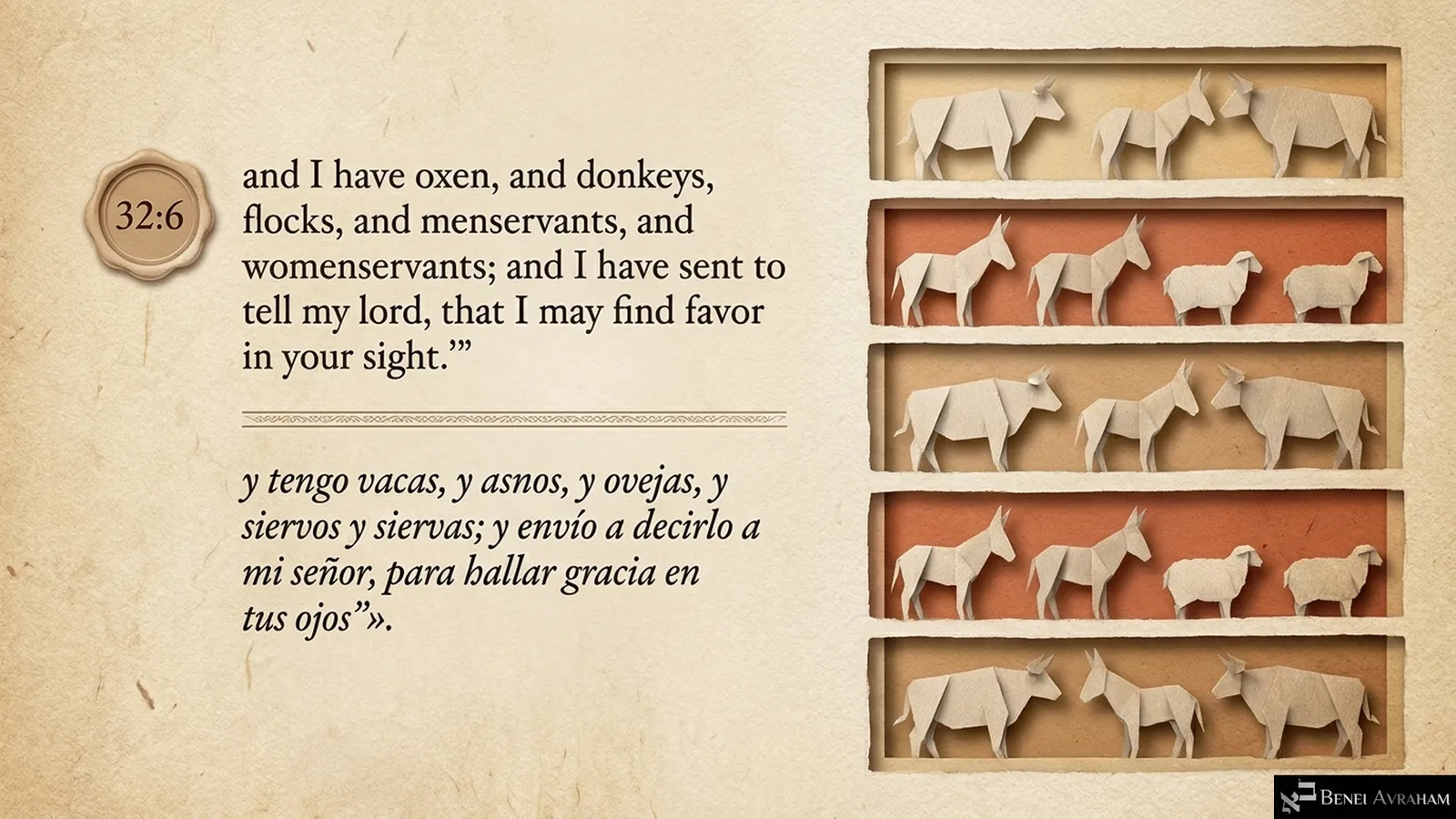
Paper oxen, donkeys and sheep on shelves: “I have oxen, and donkeys, flocks, and menservants … that I may find favor in your sight” (Genesis 32:6).
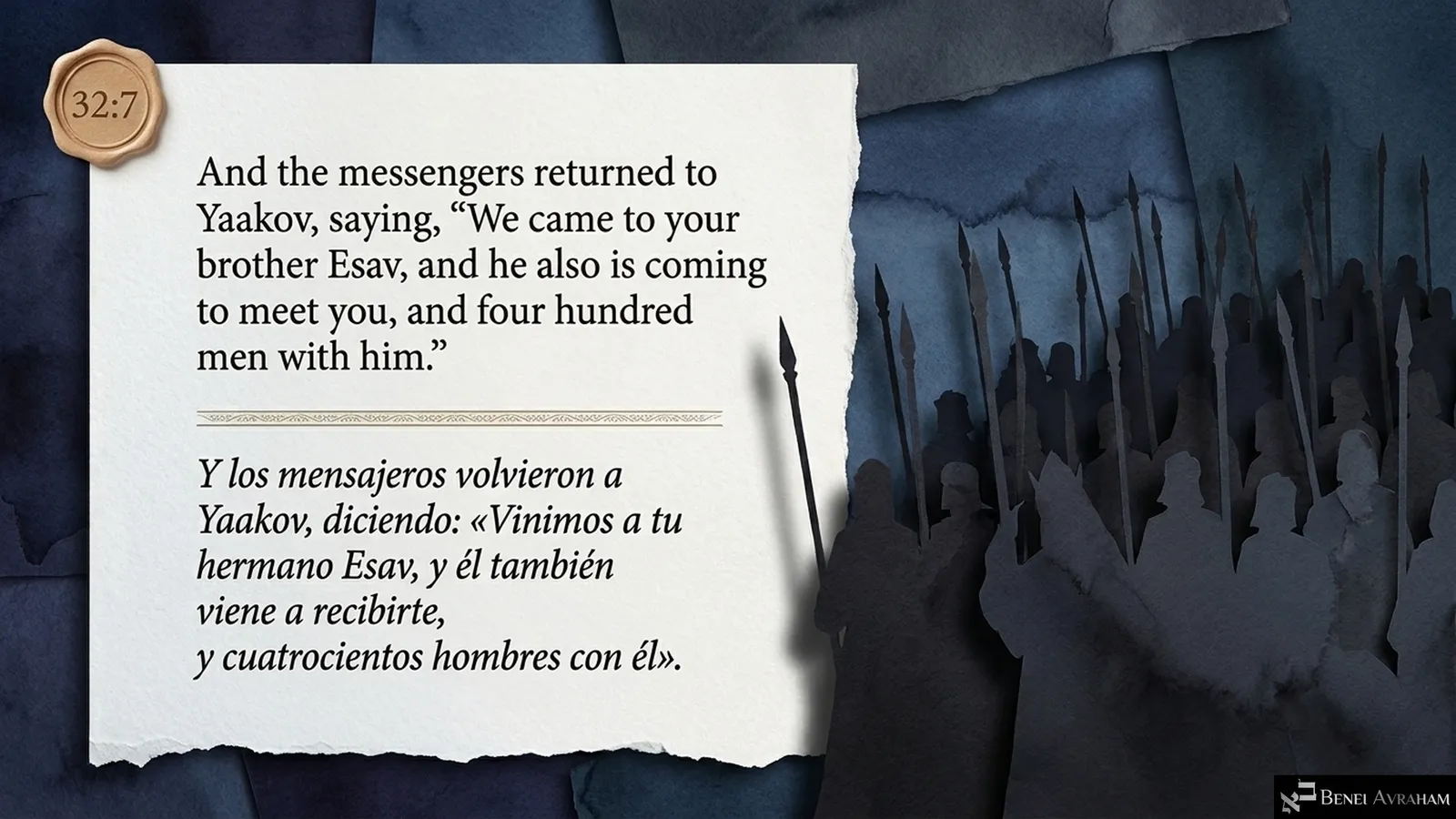
Dark paper spearmen behind the card: “We came to your brother Esav, and he also is coming to meet you, and four hundred men with him” (Genesis 32:7).
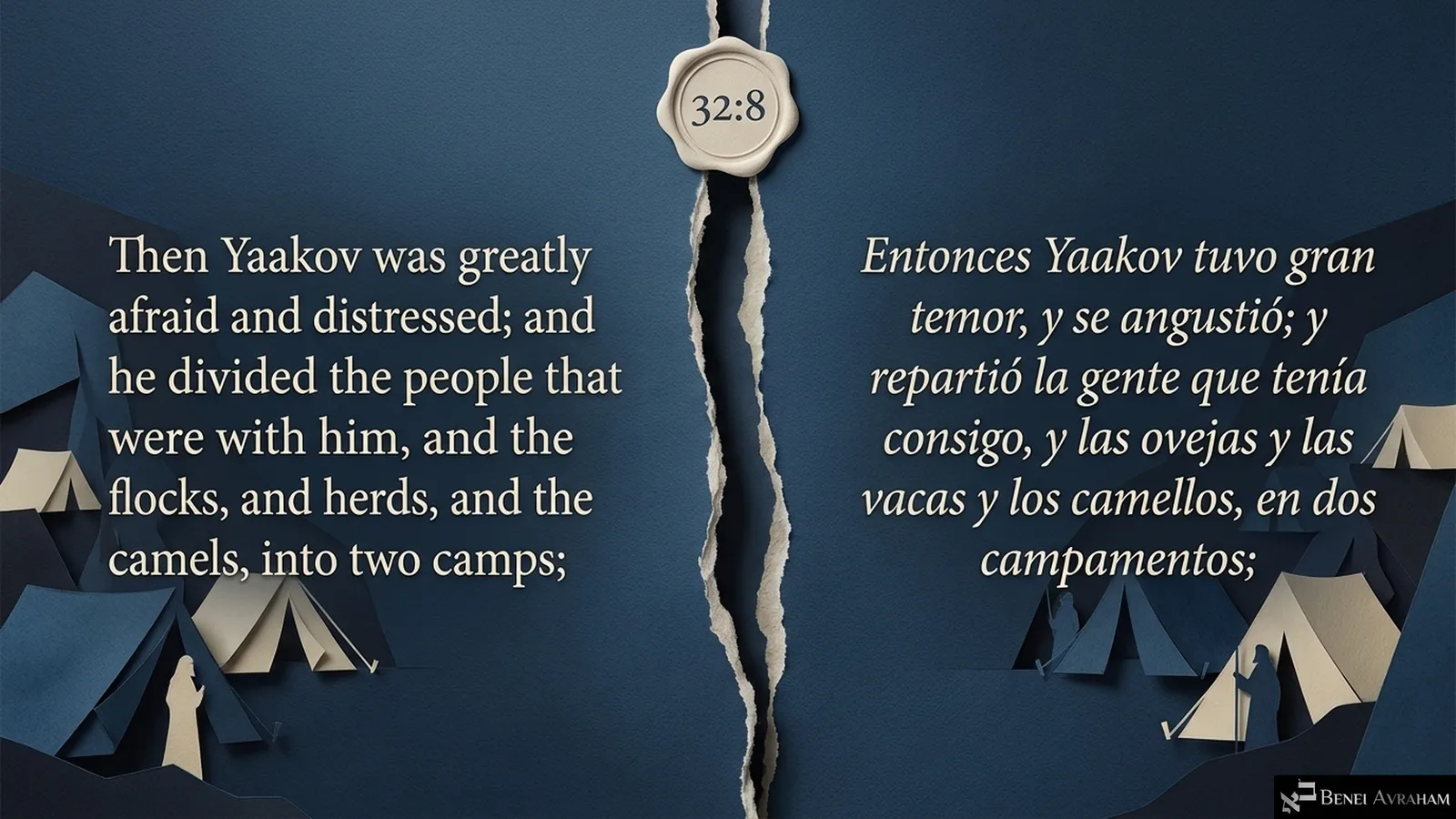
A torn seam splits the night camp: Yaakov, greatly afraid and distressed, divides the people, flocks, herds and camels into two camps (Genesis 32:8).
Shattered dark paper below a white sky: “If Esav comes to the one camp, and strikes it, then the other camp which is left shall escape” (Genesis 32:9).
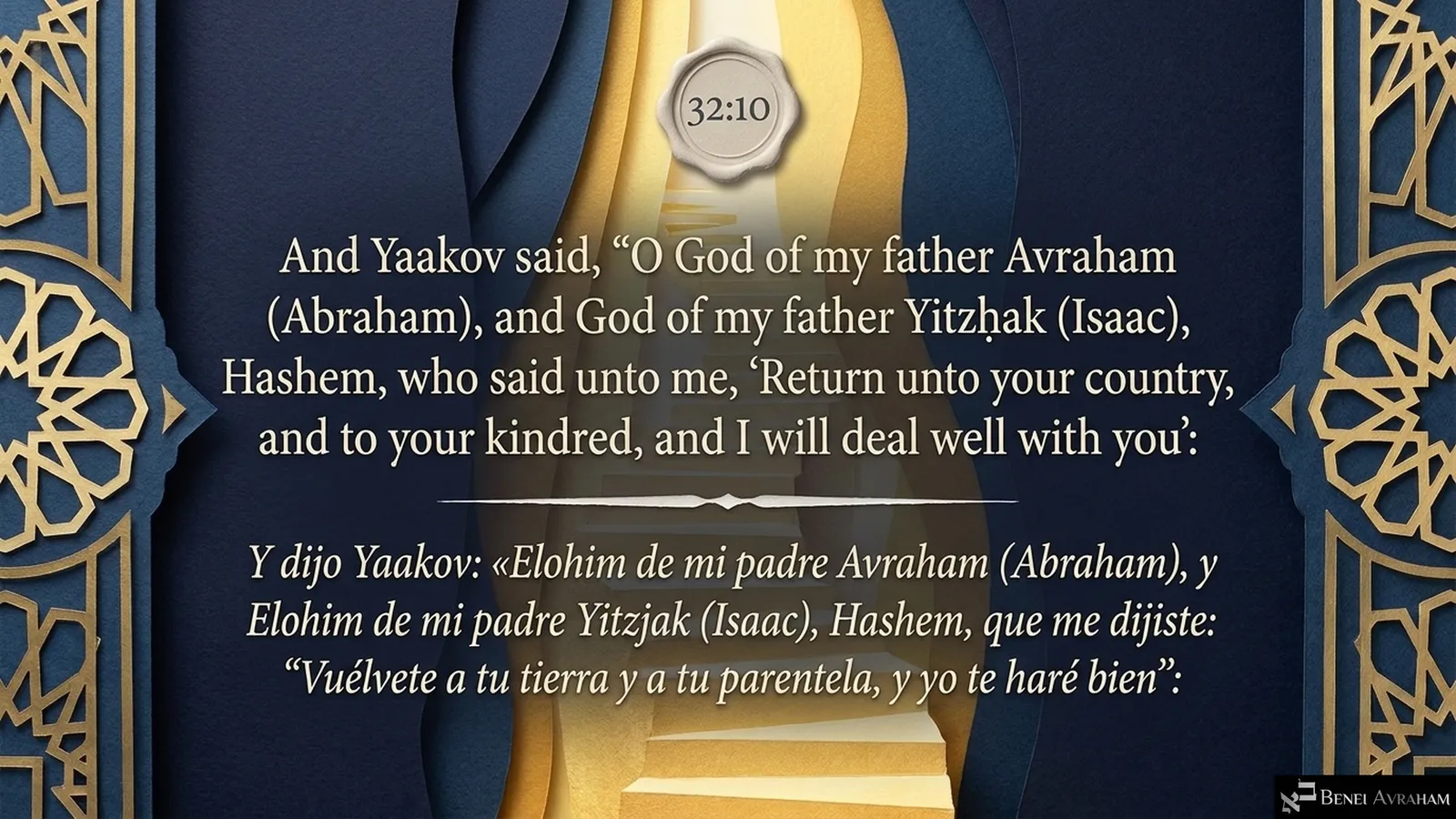
Golden steps between carved lattice doors: Yaakov prays, “O God of my father Avraham, and God of my father Yitzḥak, Hashem, who said unto me, Return unto your country” (Genesis 32:10).
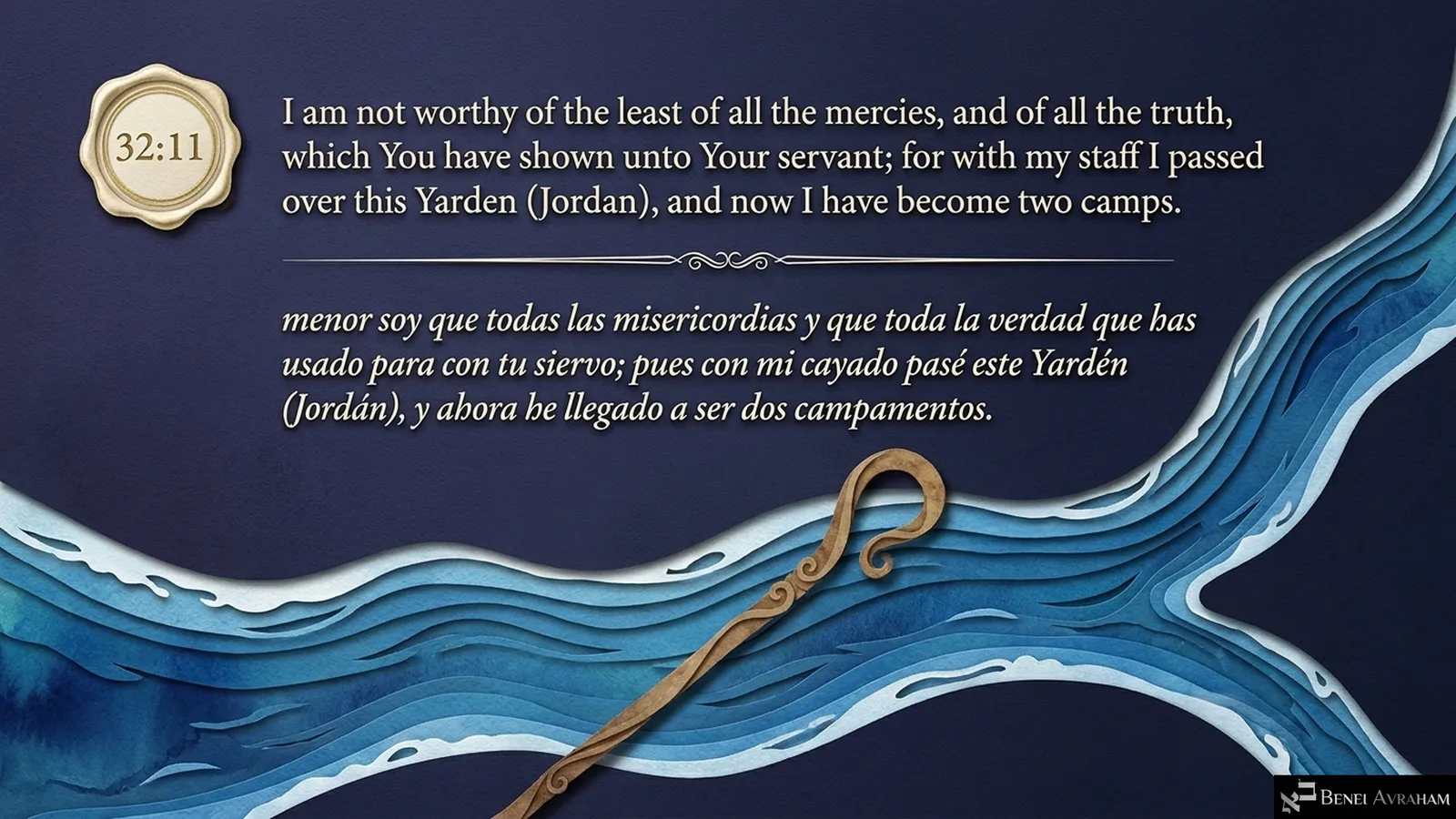
A shepherd’s staff above a paper river: “With my staff I passed over this Yarden, and now I have become two camps” (Genesis 32:11).
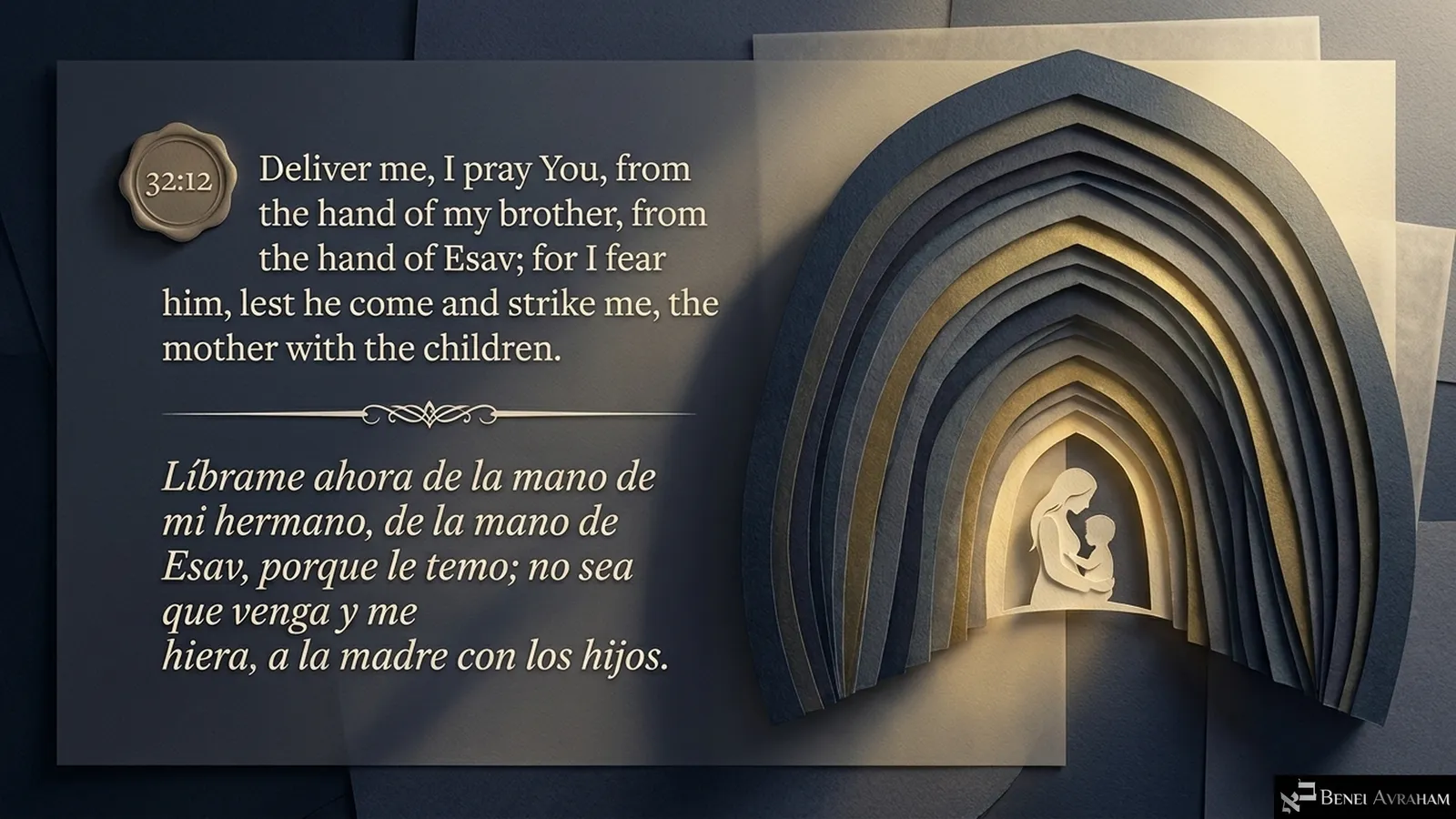
A mother and child sheltered in a paper archway: “Deliver me, I pray You, from the hand of my brother … lest he come and strike me, the mother with the children” (Genesis 32:12).
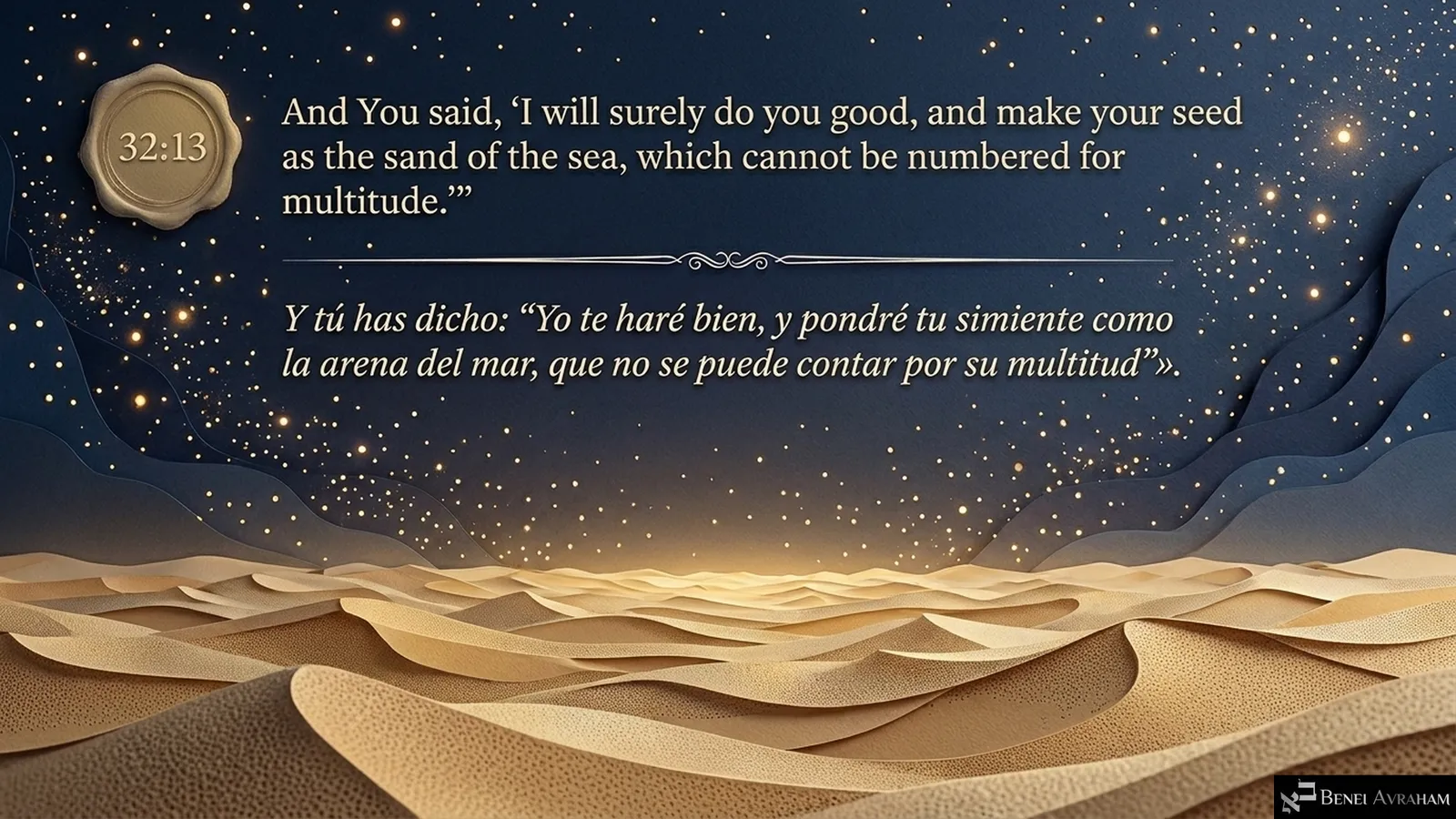
Stars over paper sand dunes: “I will surely do you good, and make your seed as the sand of the sea, which cannot be numbered for multitude” (Genesis 32:13).
Sheni · Genesis 32:14–30

Second Portion

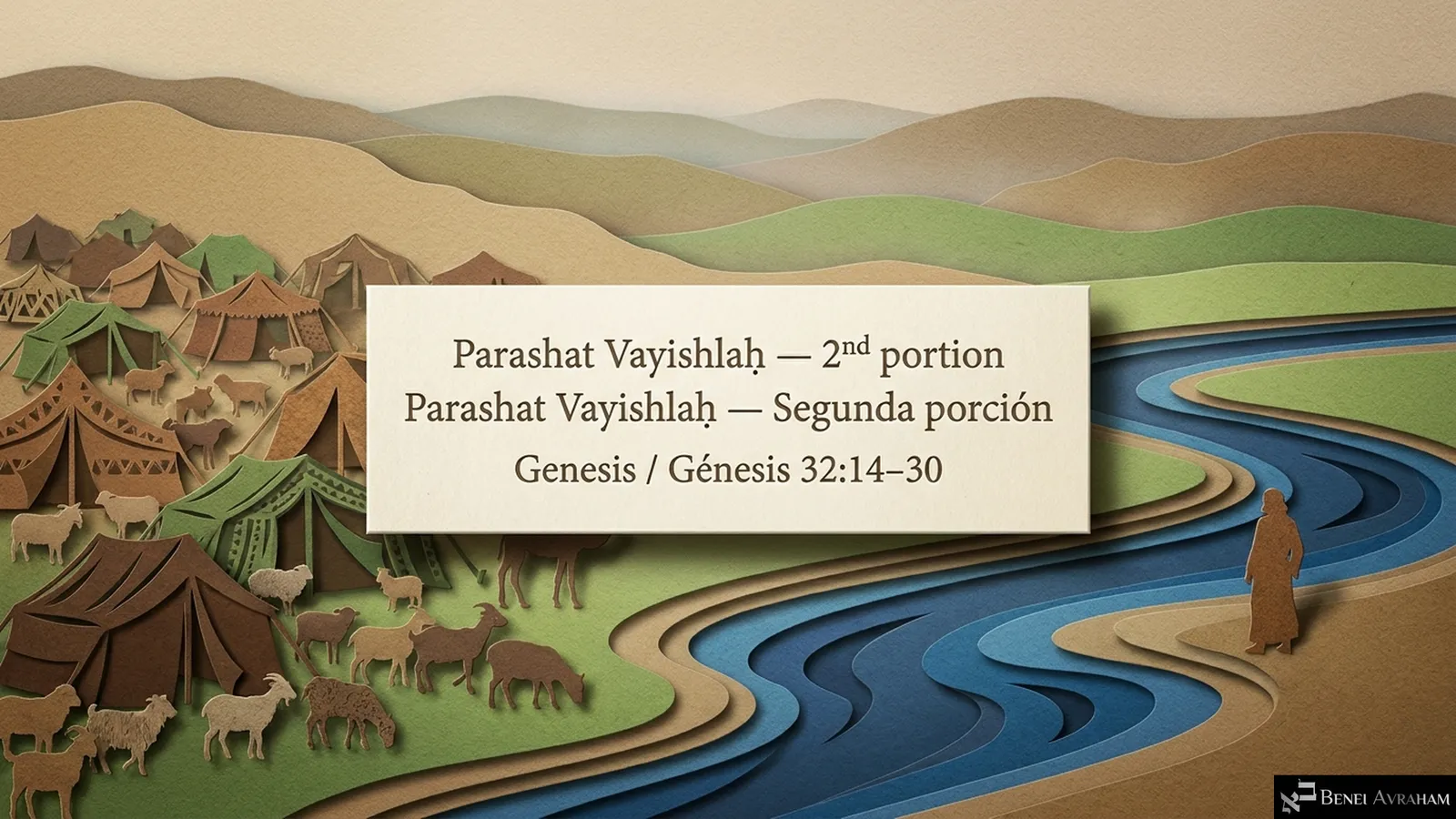
Title slide: Parashat Vayishlaḥ, second portion, Genesis 32:14–30, with tents, flocks and a figure by a winding river.
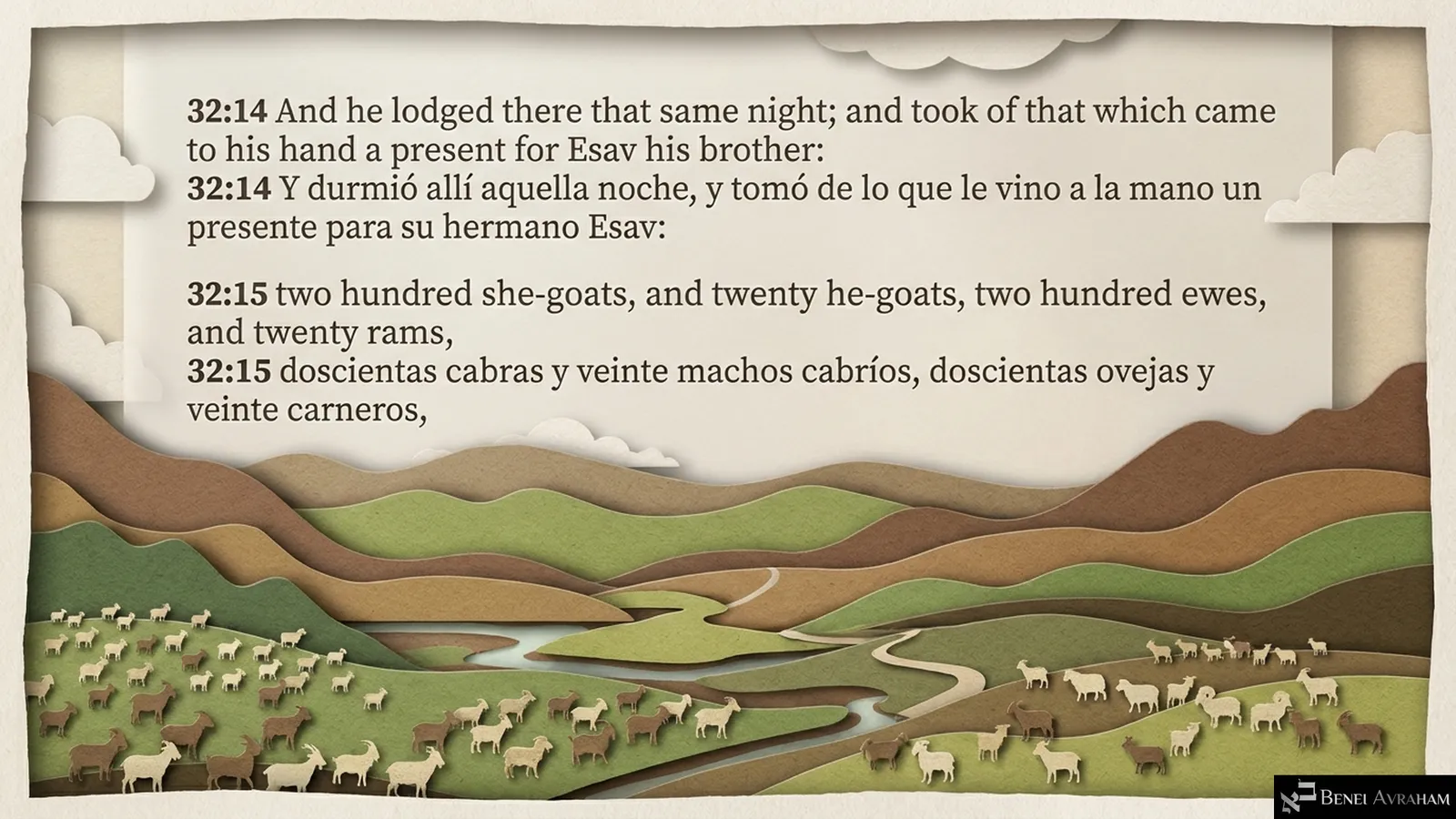
Paper flocks of goats and sheep across green hills: Yaakov takes a present for Esav, two hundred she-goats and twenty he-goats, two hundred ewes and twenty rams (Genesis 32:14–15).
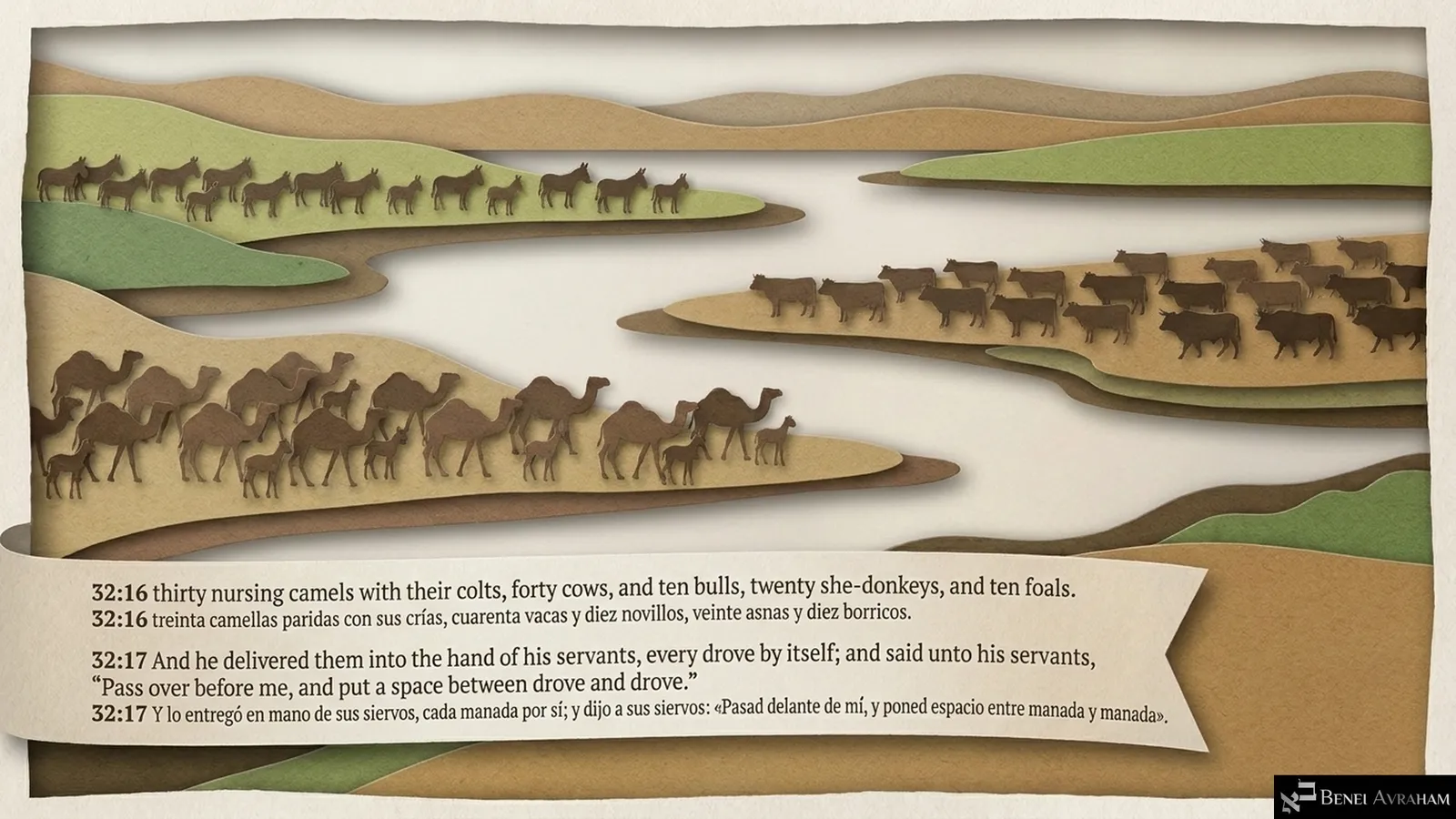
Droves of camels, cows and donkeys with spaces between them: “Pass over before me, and put a space between drove and drove” (Genesis 32:16–17).
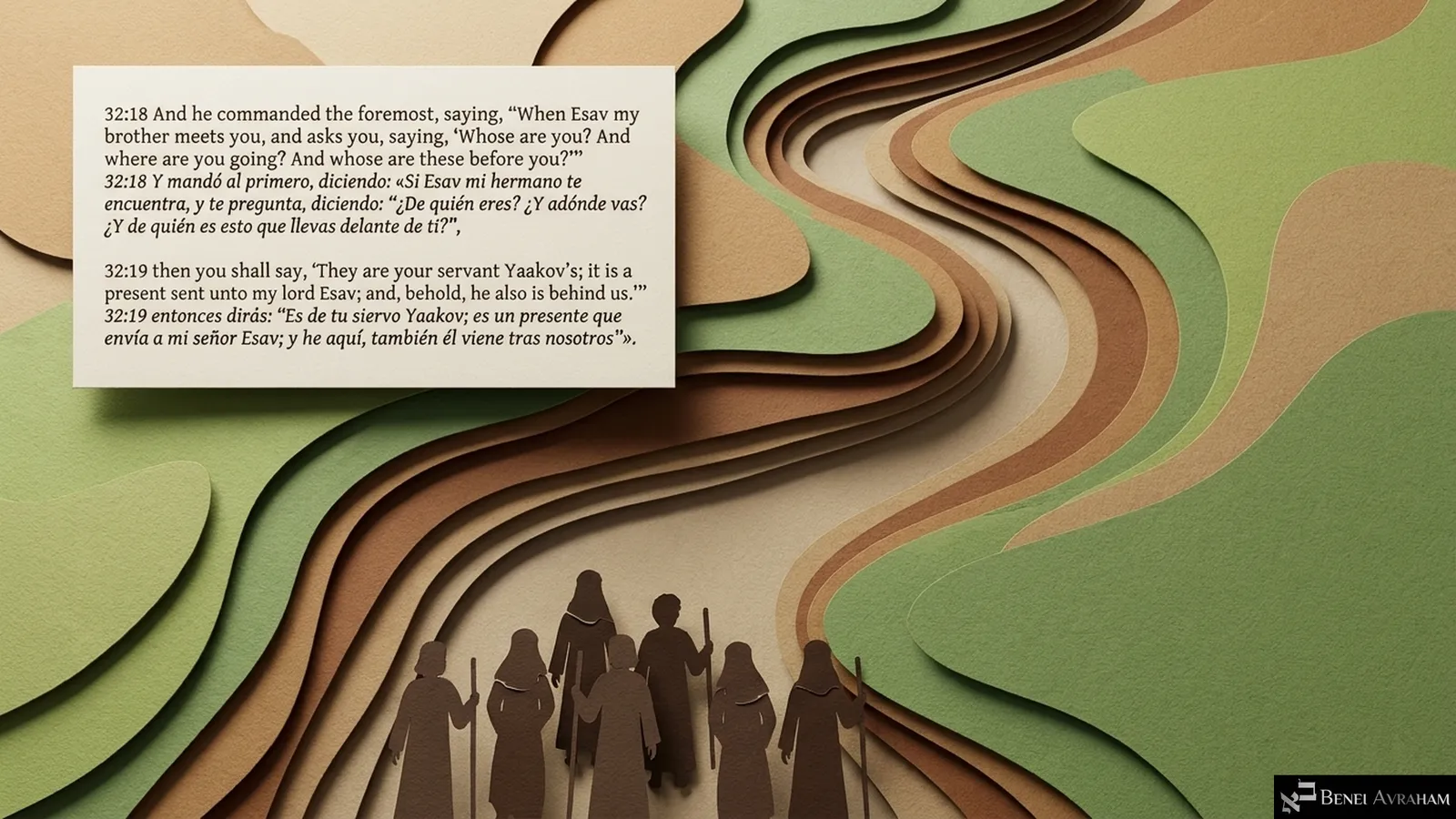
Shepherds on a winding paper road: “When Esav my brother meets you … say, They are your servant Yaakov’s; it is a present sent unto my lord Esav” (Genesis 32:18–19).
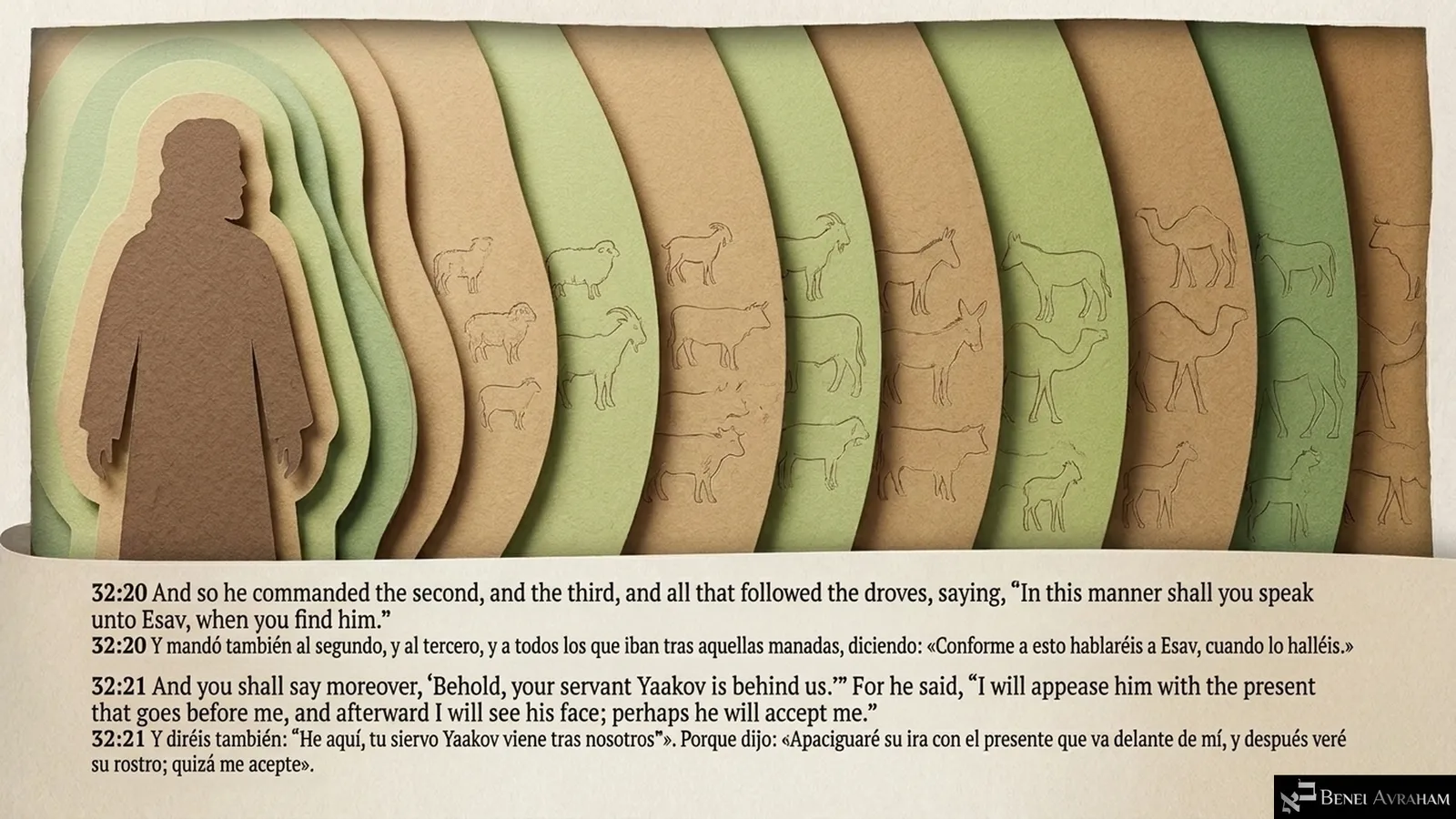
Yaakov stands behind layered panels of animals: “I will appease him with the present that goes before me, and afterward I will see his face” (Genesis 32:20–21).
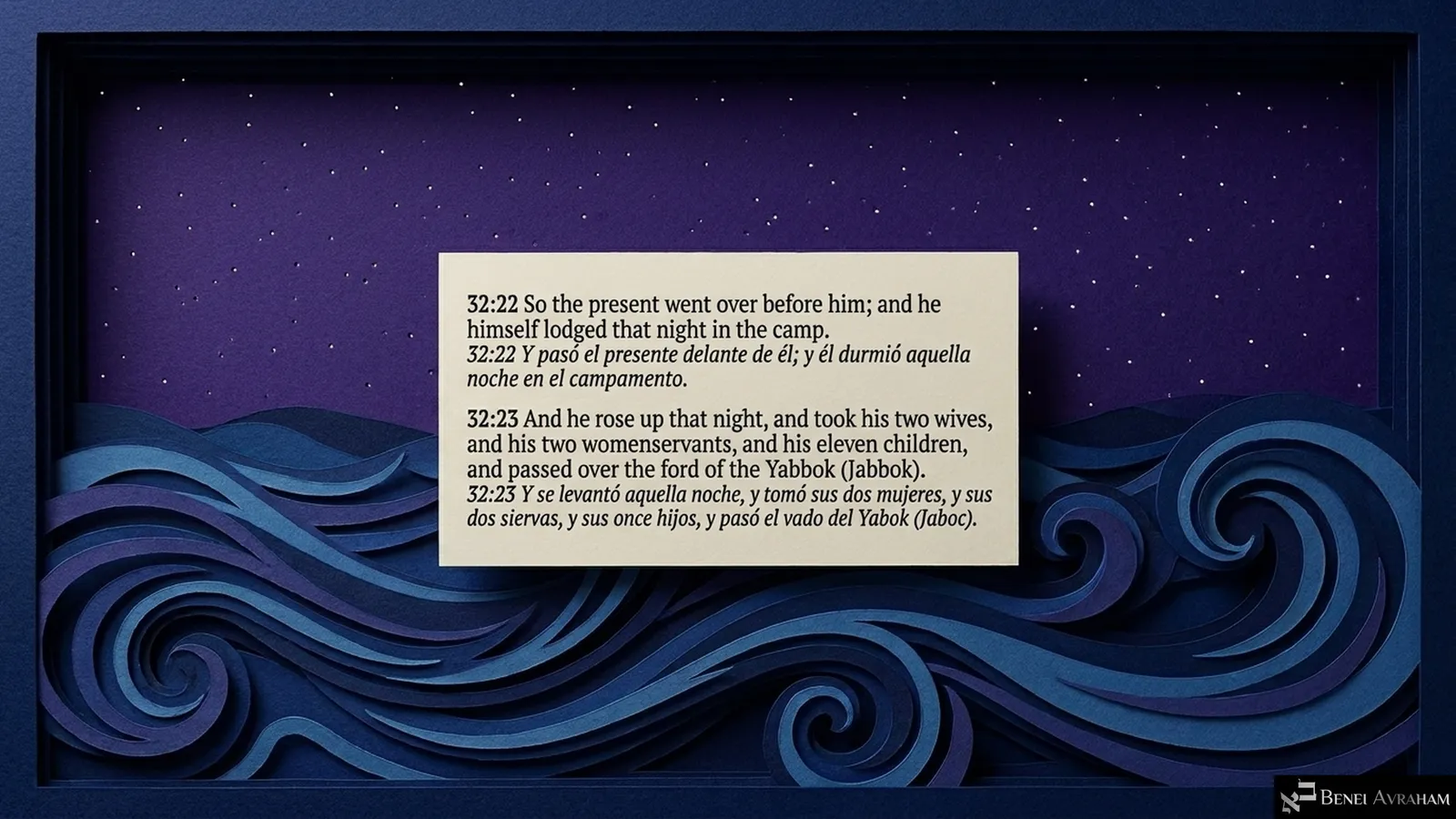
Swirling paper waters under the stars: the present goes over before him, and that night Yaakov takes his household across the ford of the Yabbok (Genesis 32:22–23).
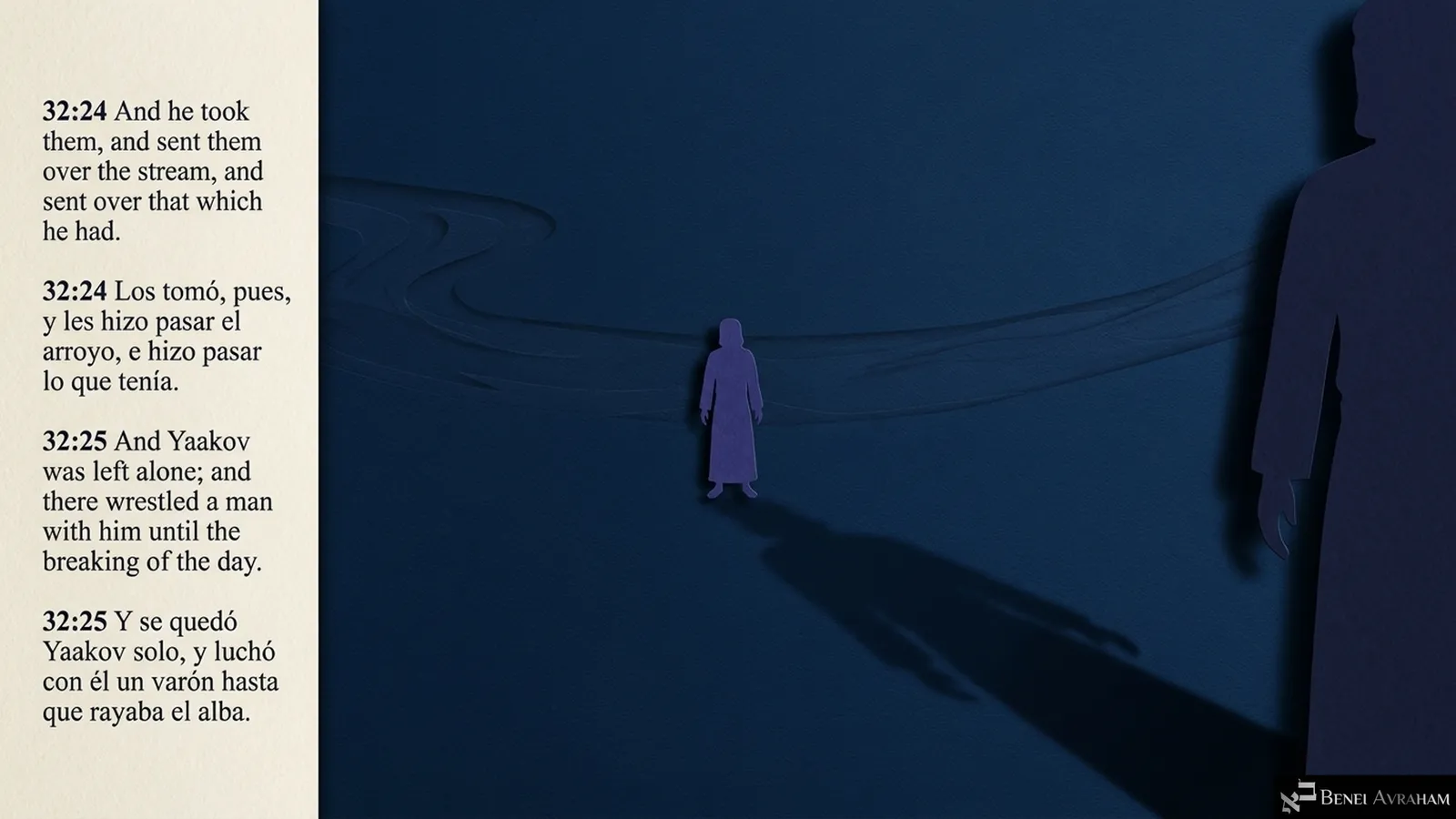
A small figure alone by the stream as a tall shadow approaches: Yaakov was left alone, and a man wrestled with him until the breaking of the day (Genesis 32:24–25).
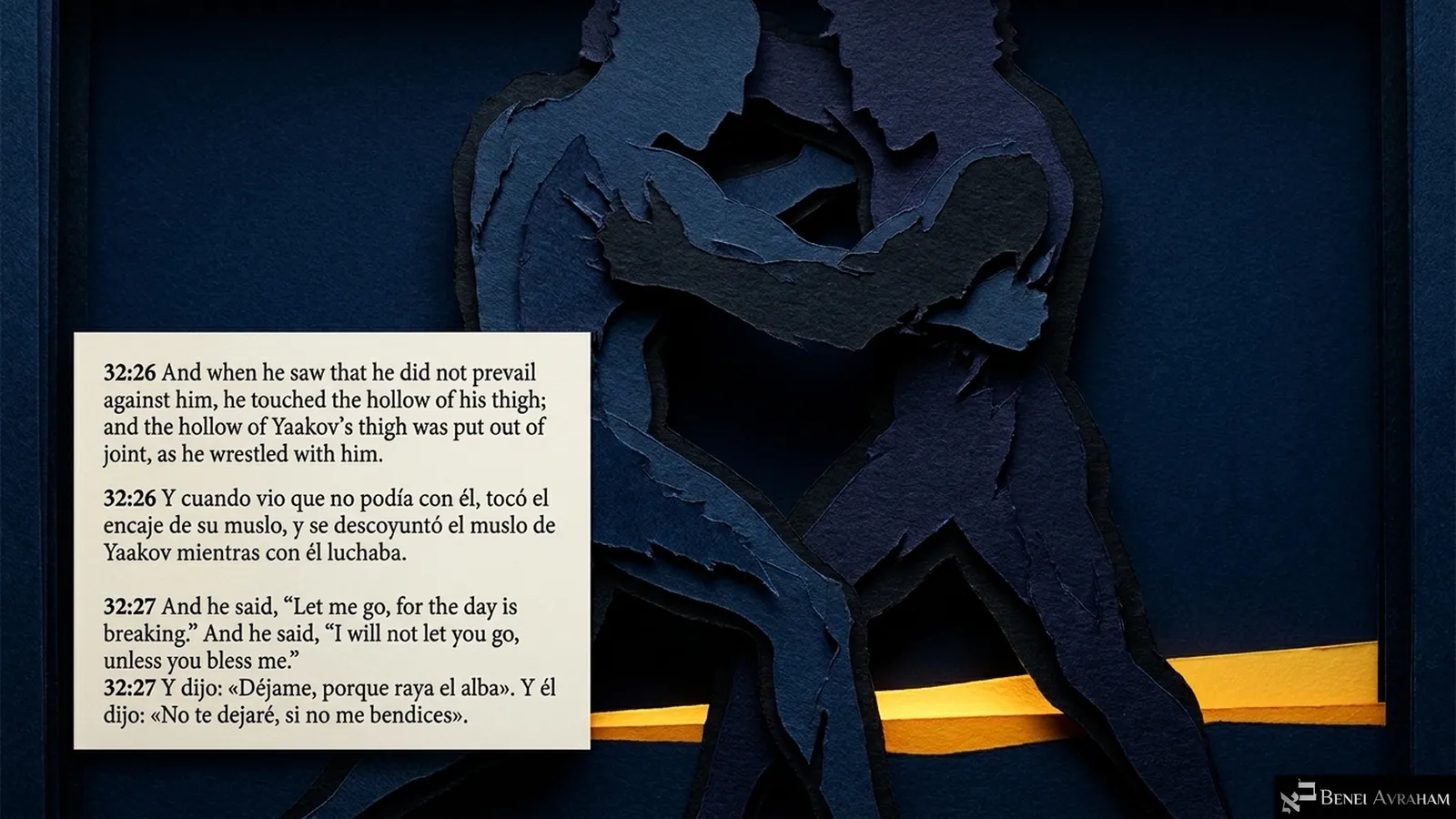
Two paper figures wrestle as dawn breaks: the man touches the hollow of Yaakov’s thigh, and Yaakov says, “I will not let you go, unless you bless me” (Genesis 32:26–27).
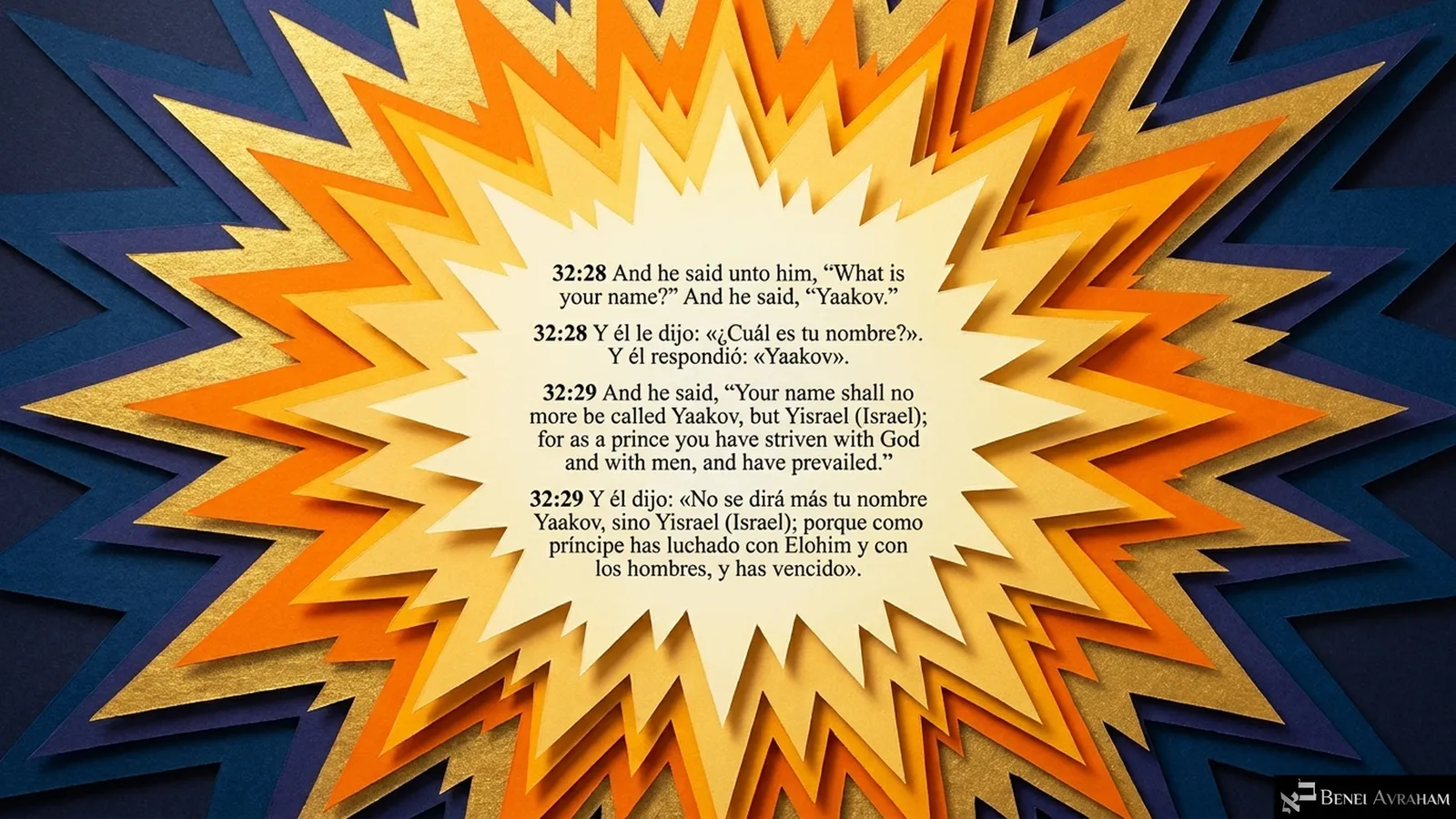
A burst of golden paper rays: “Your name shall no more be called Yaakov, but Yisrael; for as a prince you have striven with God and with men, and have prevailed” (Genesis 32:28–29).
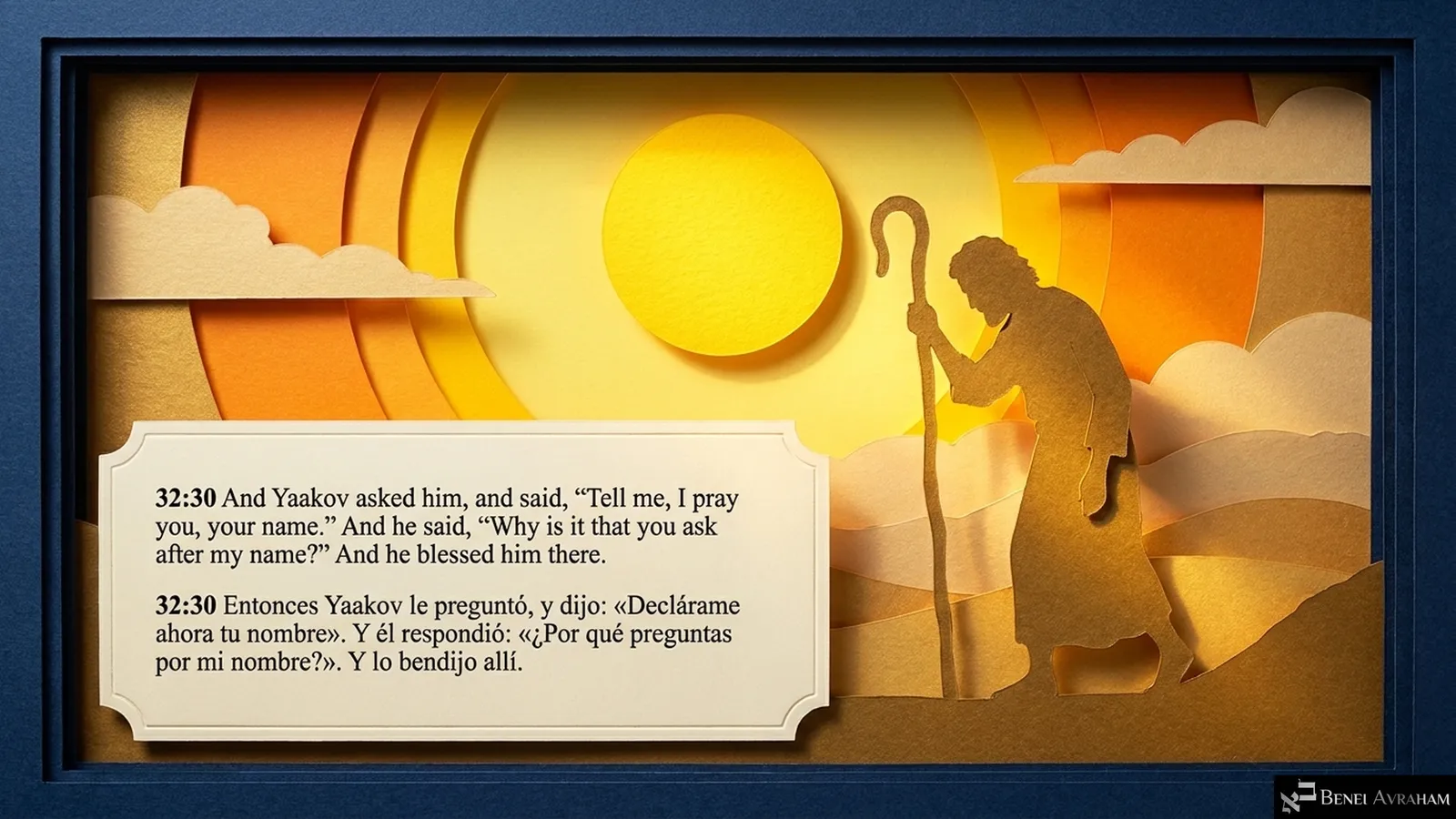
Yaakov leans on his staff at sunrise: “Tell me, I pray you, your name.” “Why is it that you ask after my name?” And he blessed him there (Genesis 32:30).
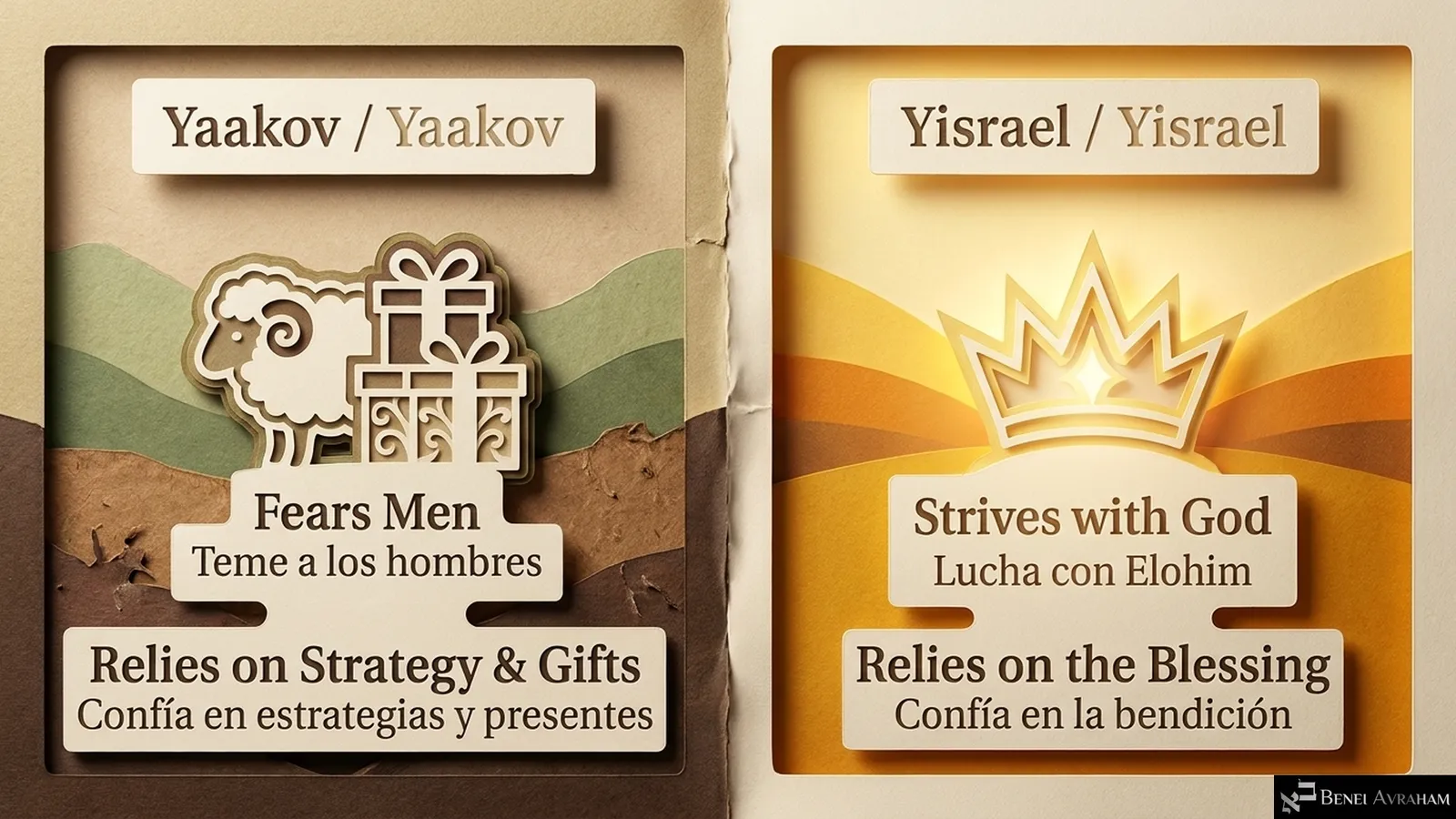
Summary of the portion, Yaakov and Yisrael side by side: Yaakov fears men and relies on strategy and gifts; Yisrael strives with God and relies on the blessing (Genesis 32:14–30).
Shlishi · Genesis 32:31–33:5

Third Portion

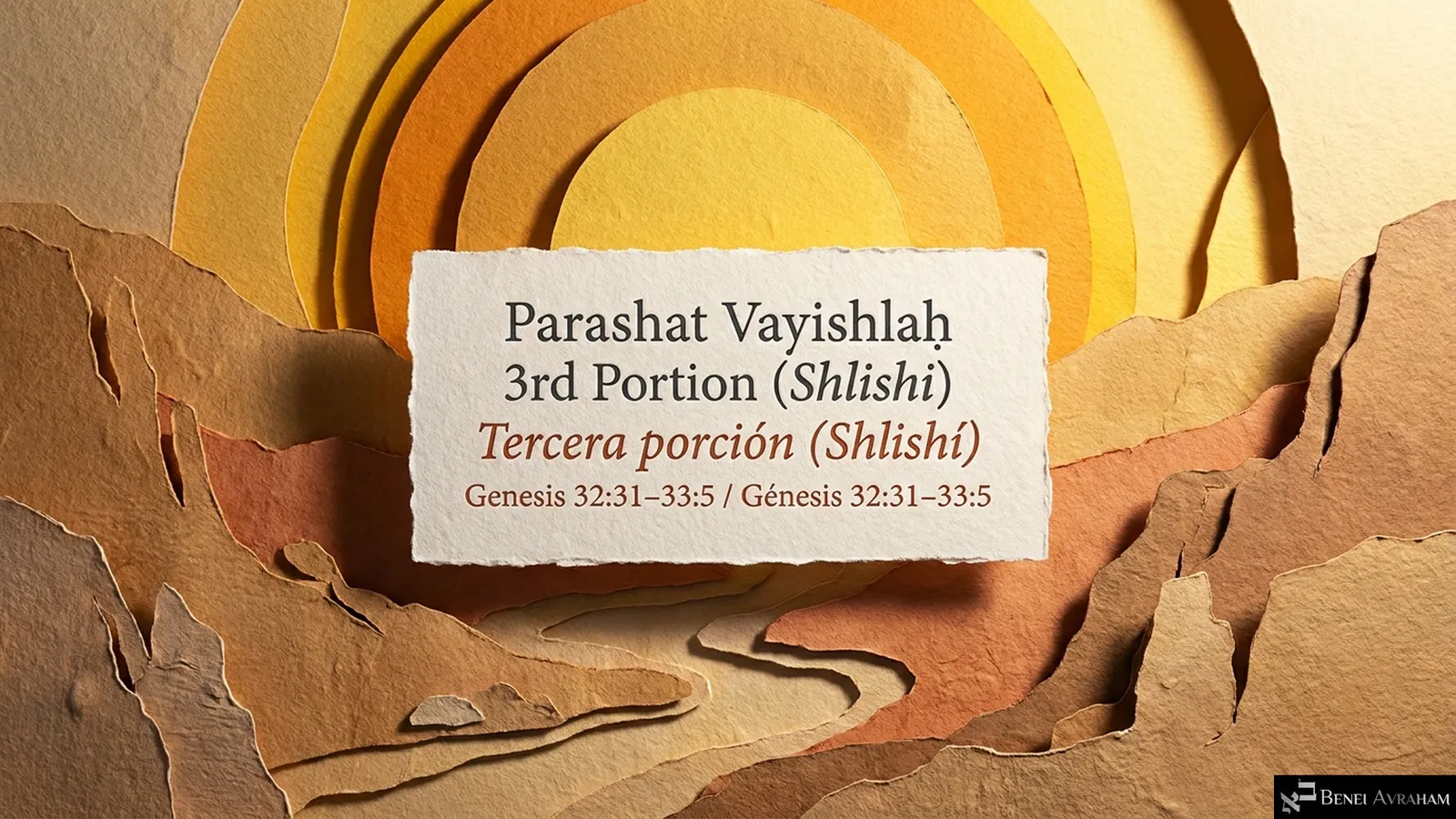
Title slide: Parashat Vayishlaḥ, third portion (Shlishi), Genesis 32:31–33:5, with a rising sun over paper canyons.
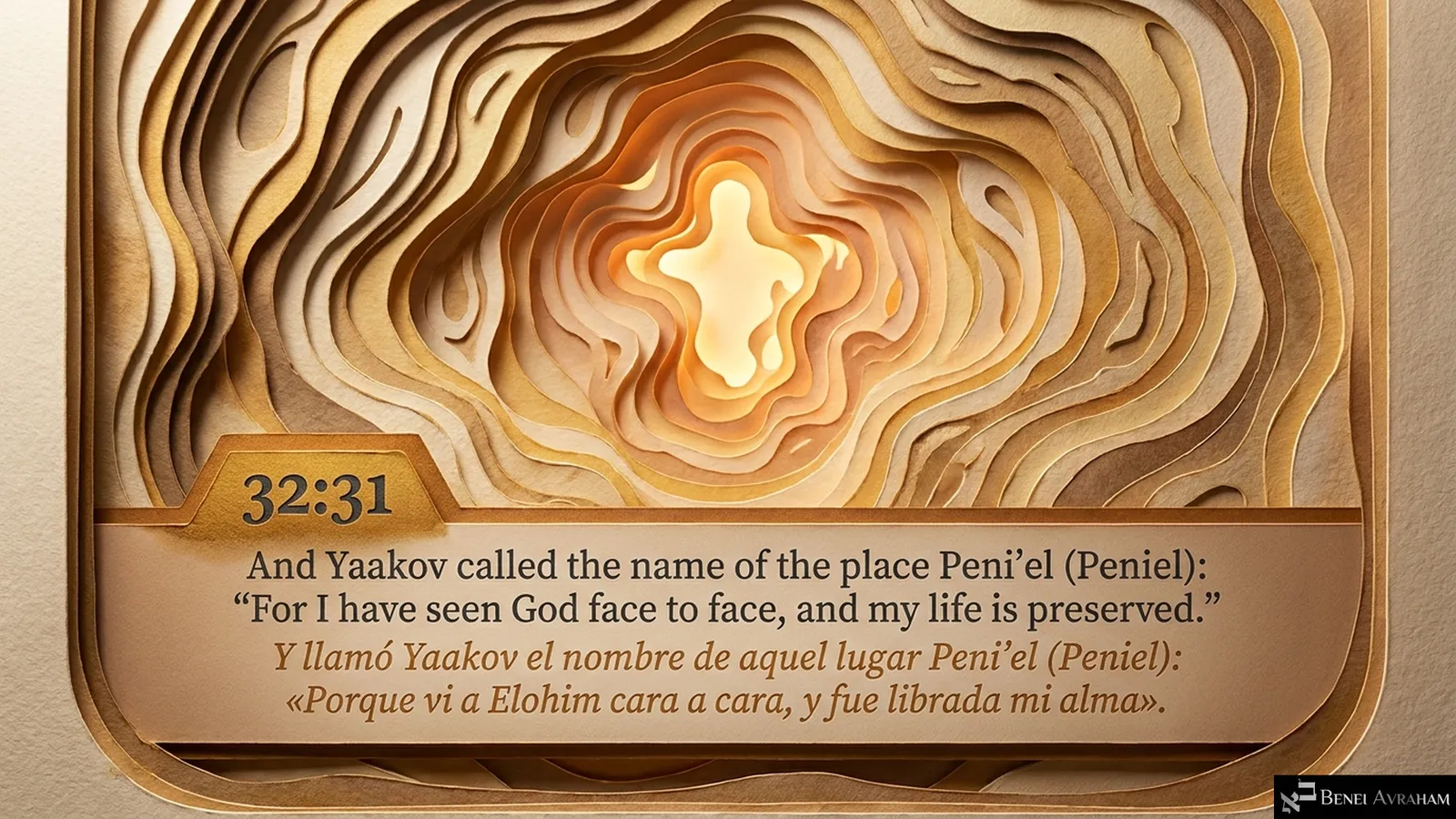
A glowing light at the center of layered paper: Yaakov calls the place Peni’el, “For I have seen God face to face, and my life is preserved” (Genesis 32:31).
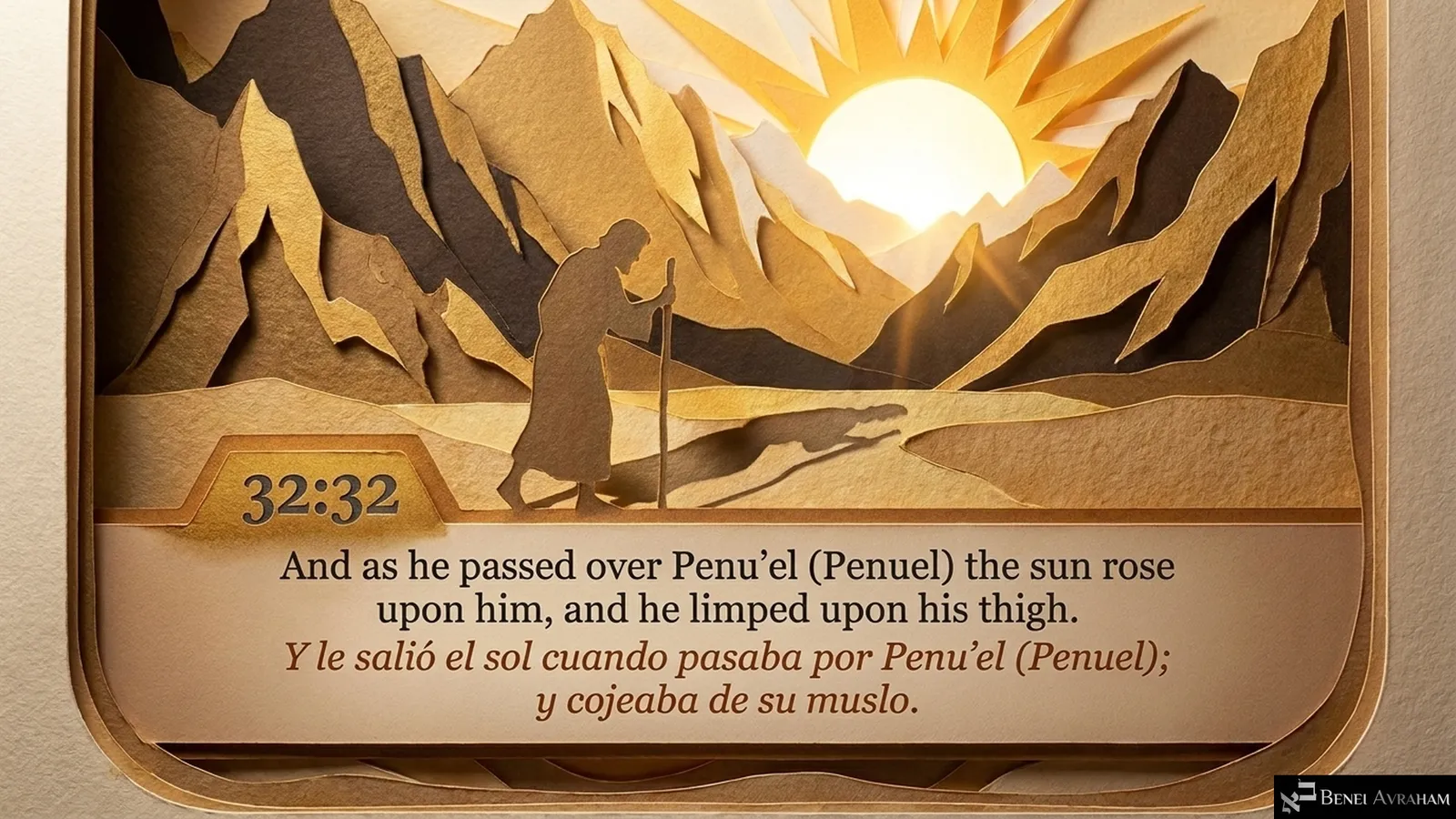
Yaakov limps with his staff toward the sunrise: as he passed over Penu’el the sun rose upon him, and he limped upon his thigh (Genesis 32:32).
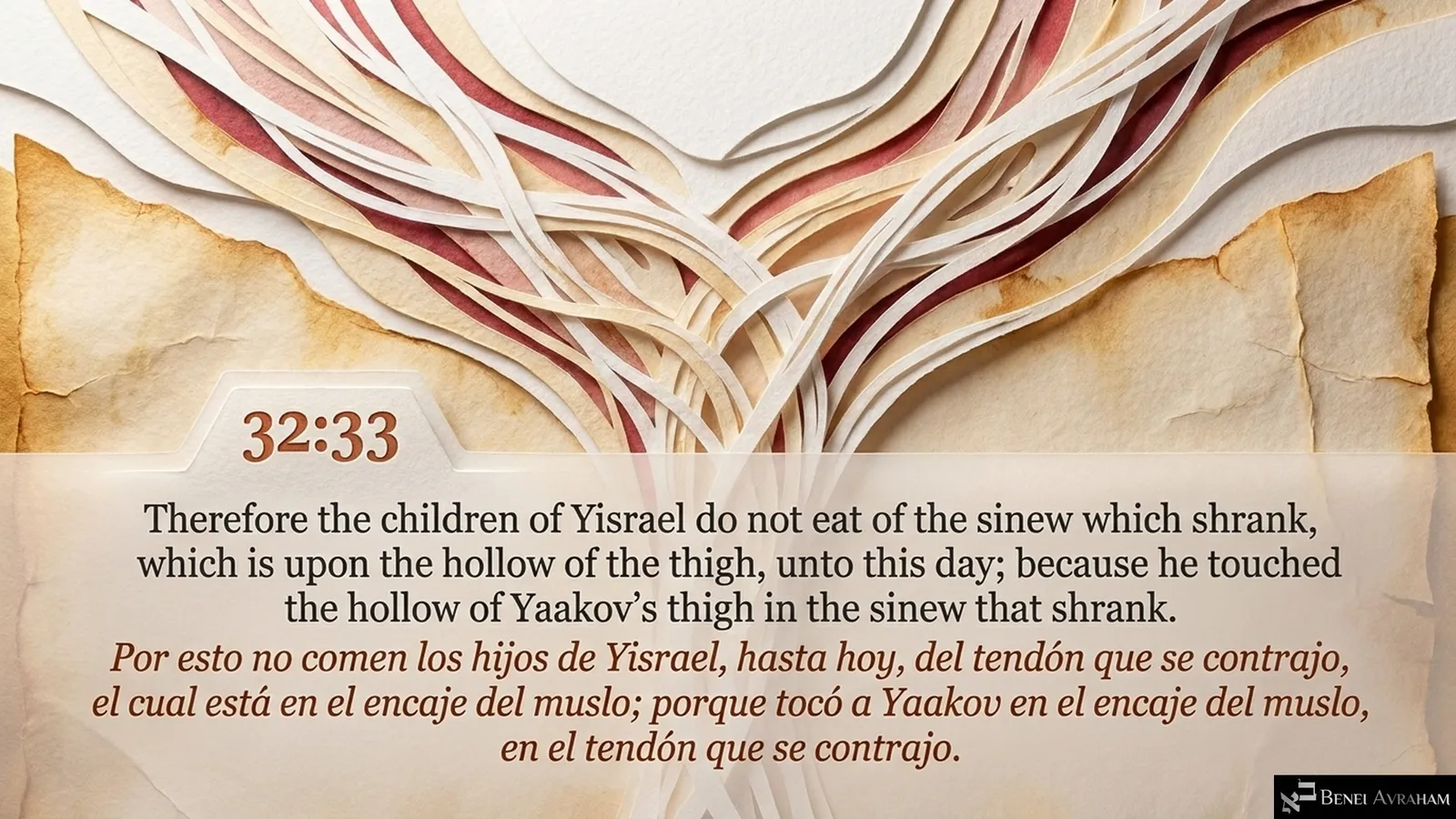
Paper strands like sinews: therefore the children of Yisrael do not eat of the sinew which shrank, upon the hollow of the thigh, unto this day (Genesis 32:33).
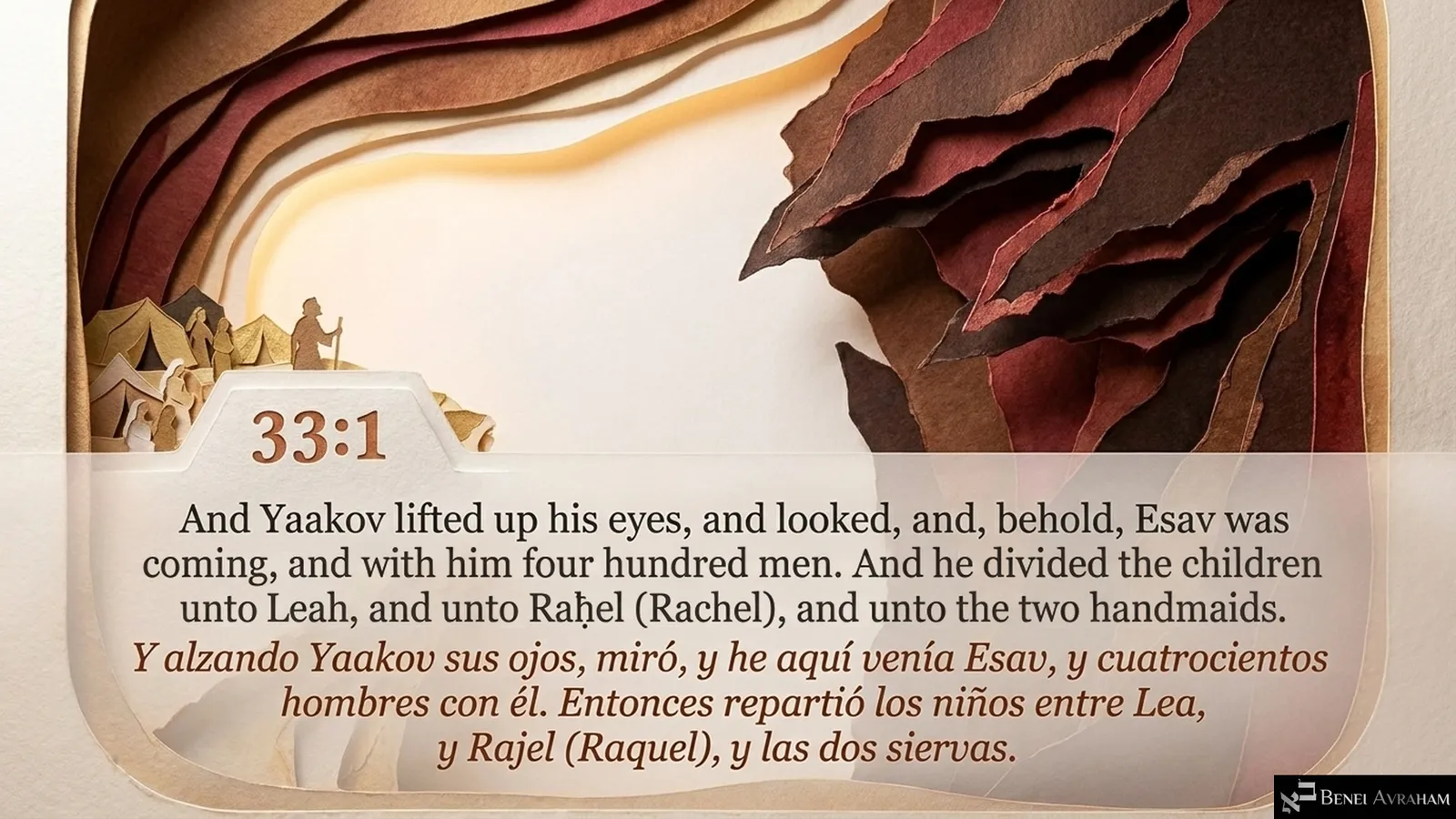
Yaakov looks up from his camp and sees Esav coming with four hundred men, and divides the children among Leah, Raḥel and the two handmaids (Genesis 33:1).
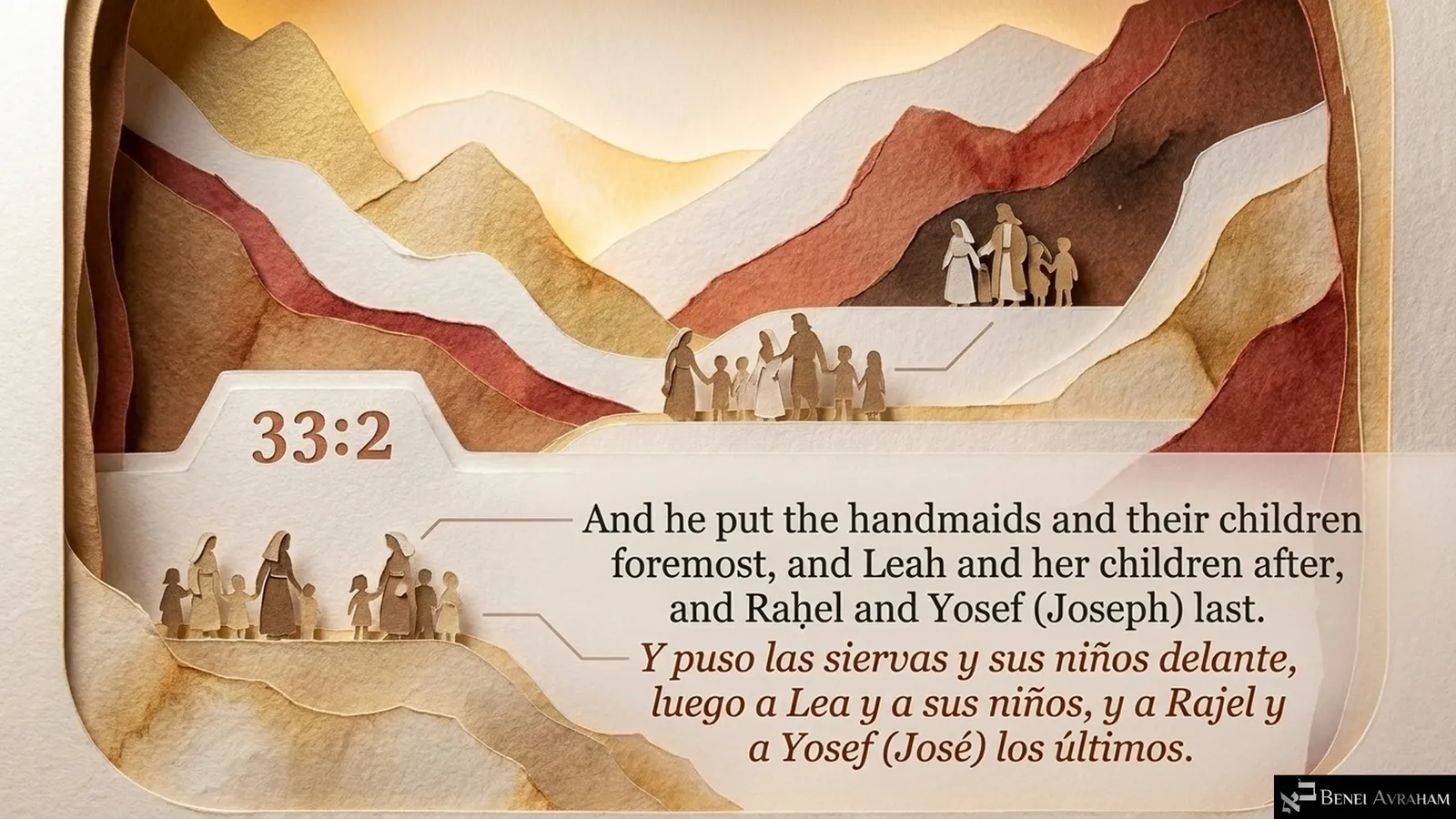
Three paper groups along a mountain path: the handmaids and their children first, then Leah and her children, and Raḥel and Yosef last (Genesis 33:2).
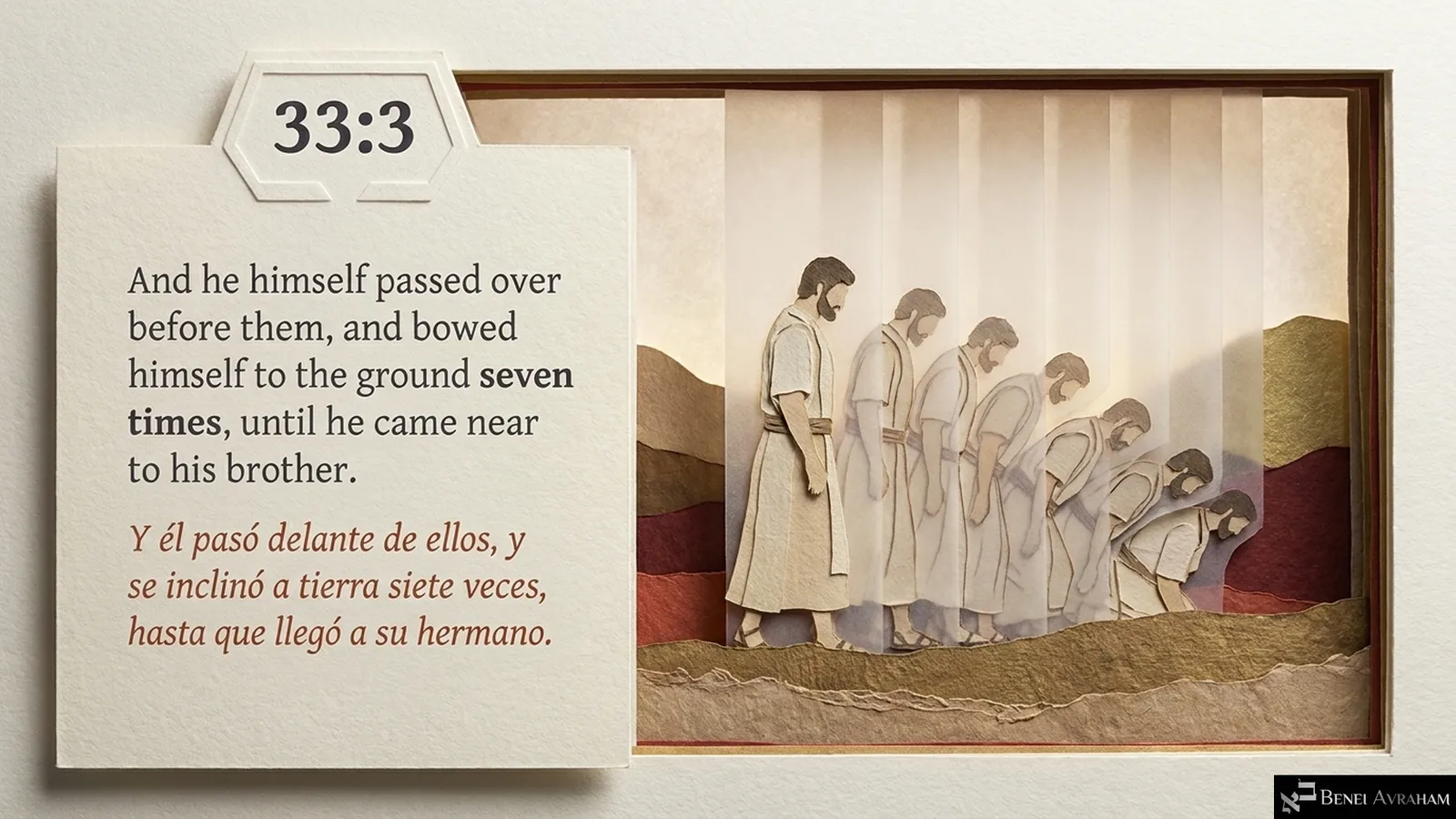
Seven paper figures of Yaakov, each bowing lower: he passed over before them and bowed himself to the ground seven times, until he came near to his brother (Genesis 33:3).
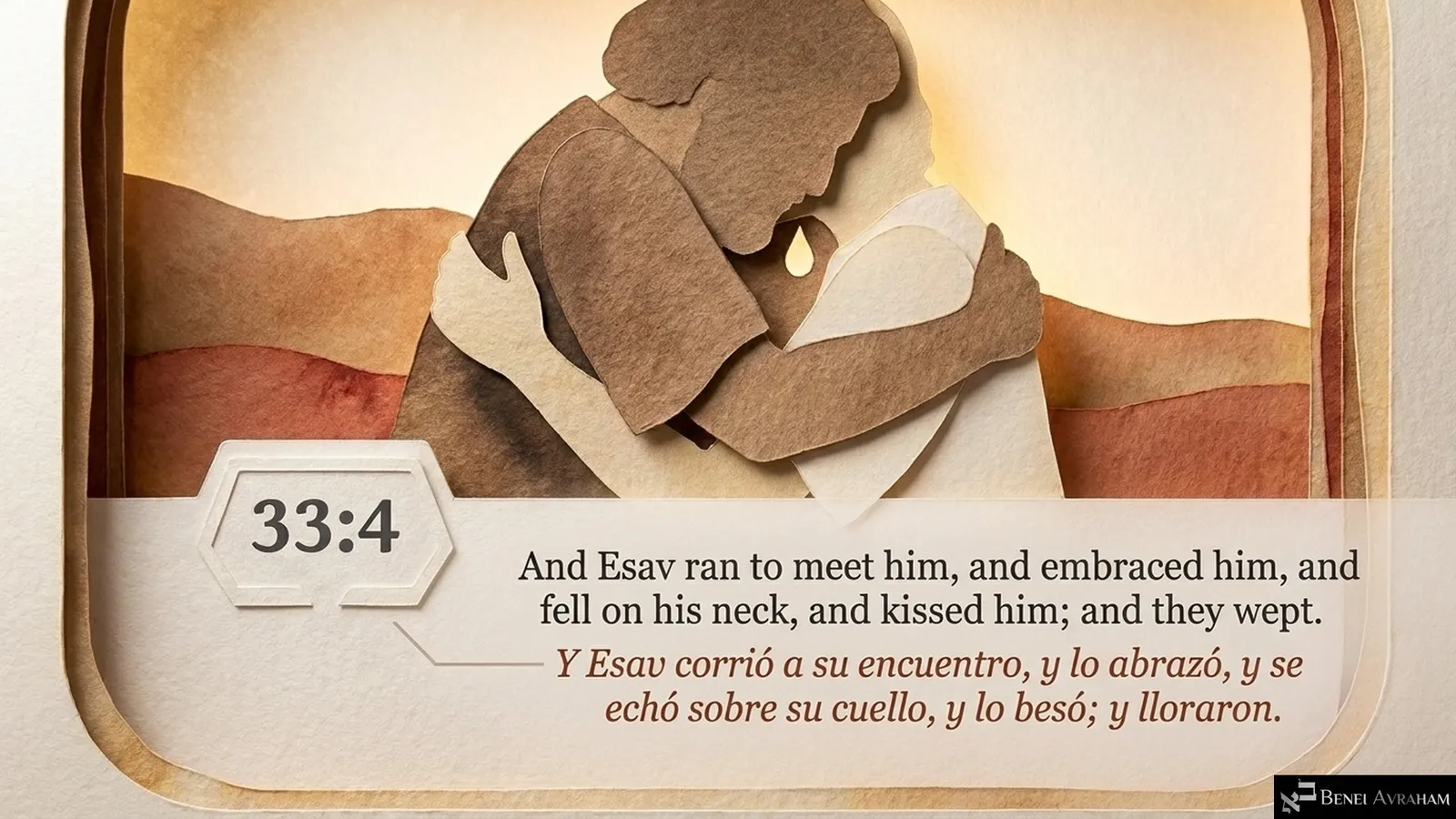
The brothers embrace with a falling tear: Esav ran to meet him, embraced him, fell on his neck and kissed him; and they wept (Genesis 33:4).
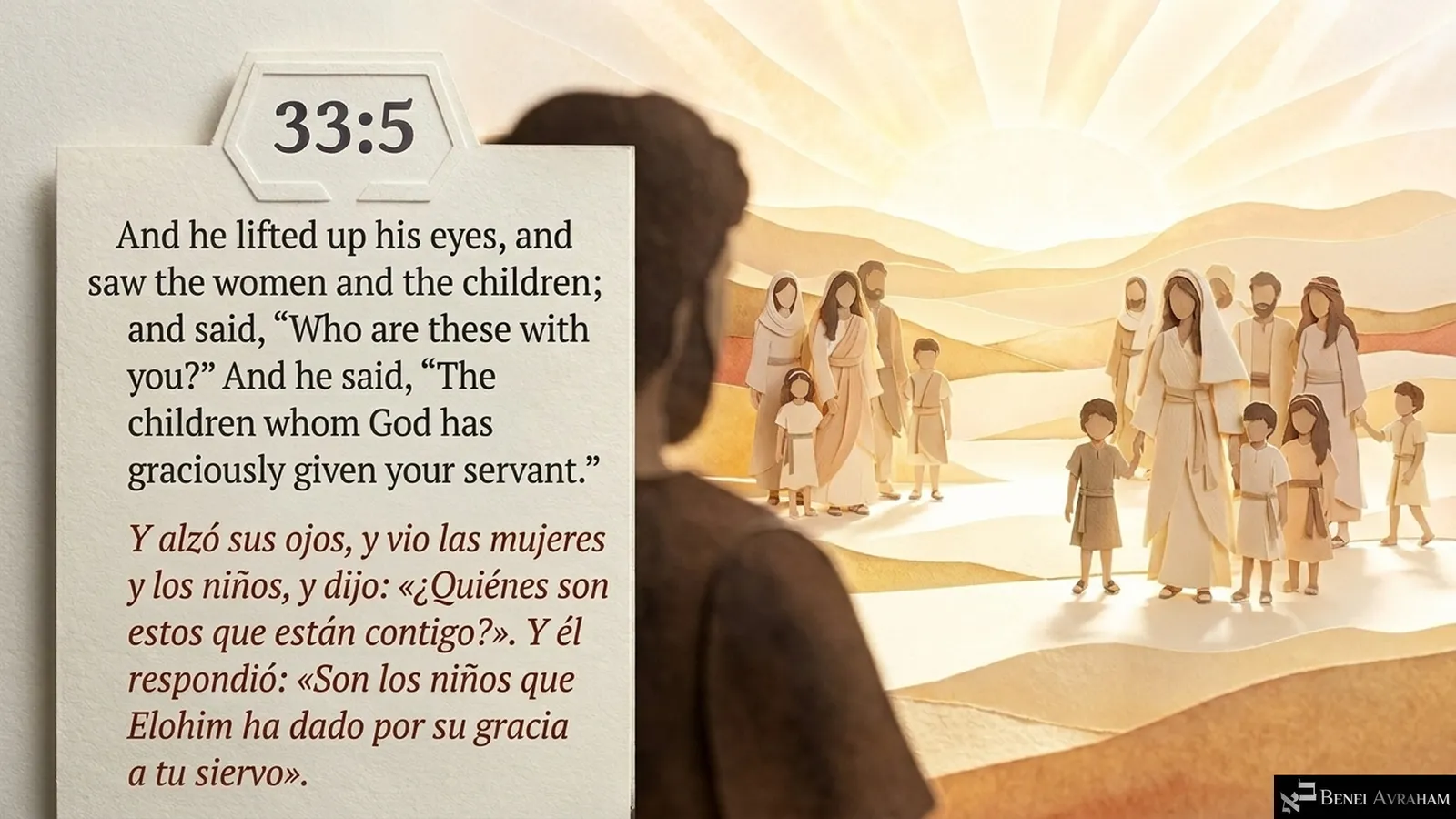
Esav looks at Yaakov’s wives and children in the sunlight: “Who are these with you?” “The children whom God has graciously given your servant” (Genesis 33:5).
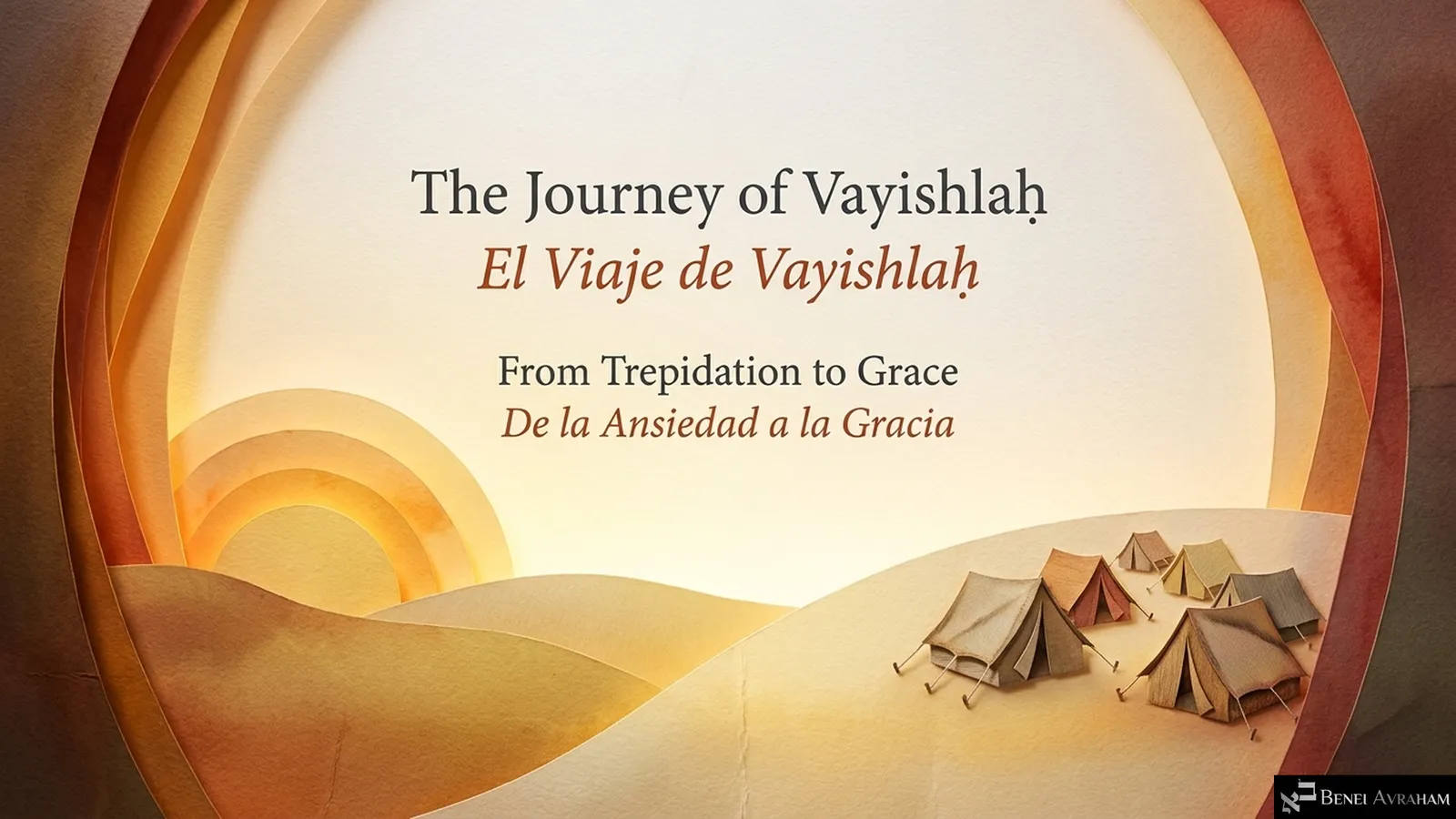
Closing slide of the portion, “The Journey of Vayishlaḥ: From Trepidation to Grace,” with tents beneath a paper sunrise (Genesis 32:31–33:5).
Revi’i · Genesis 33:6–20

Fourth Portion
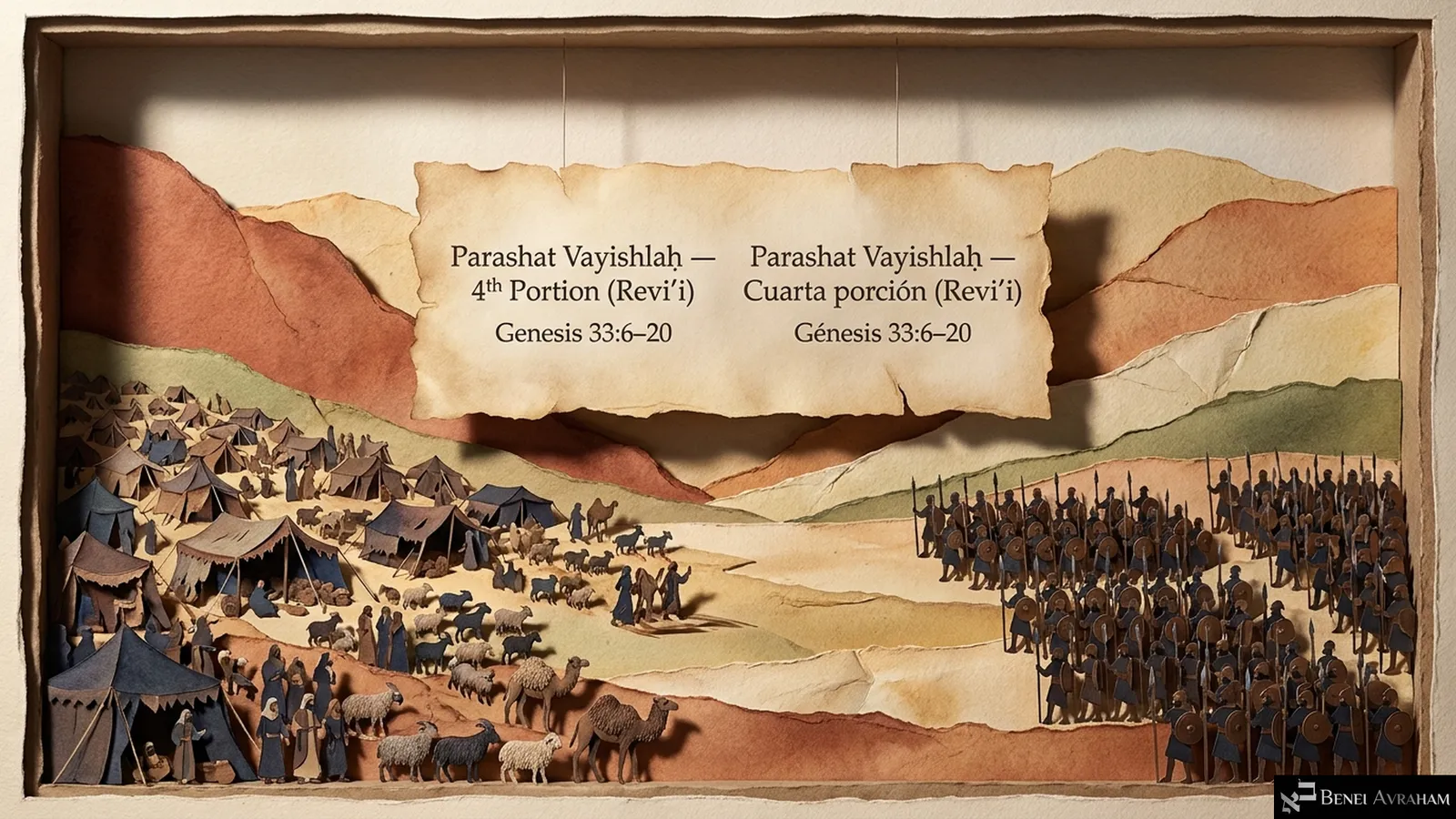
Title slide: Parashat Vayishlaḥ, fourth portion (Revi’i), Genesis 33:6–20: Yaakov’s camp and flocks facing Esav’s four hundred armed men.
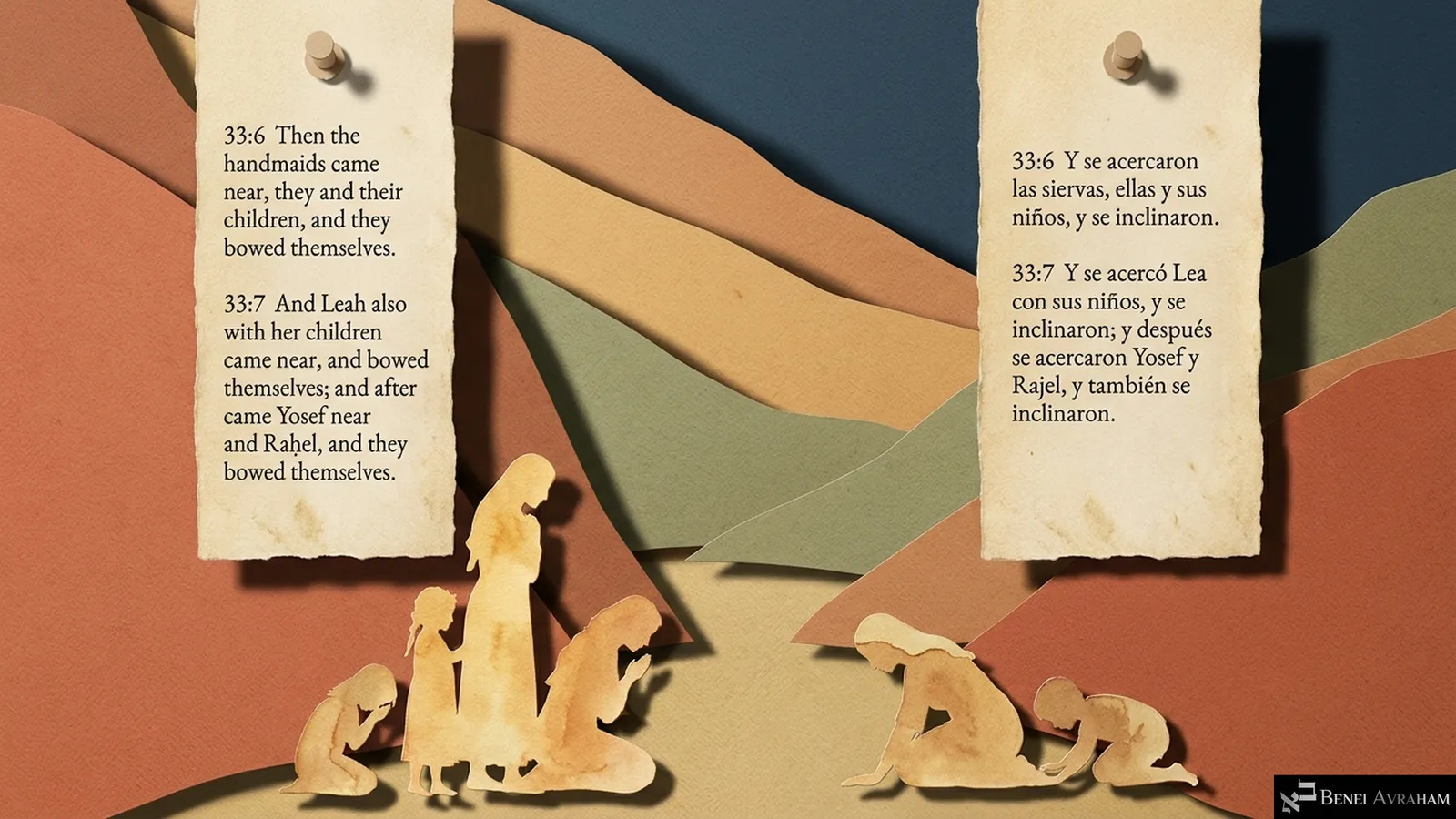
Women and children bow down: the handmaids, then Leah and her children, and last Yosef and Raḥel come near and bow themselves (Genesis 33:6–7).
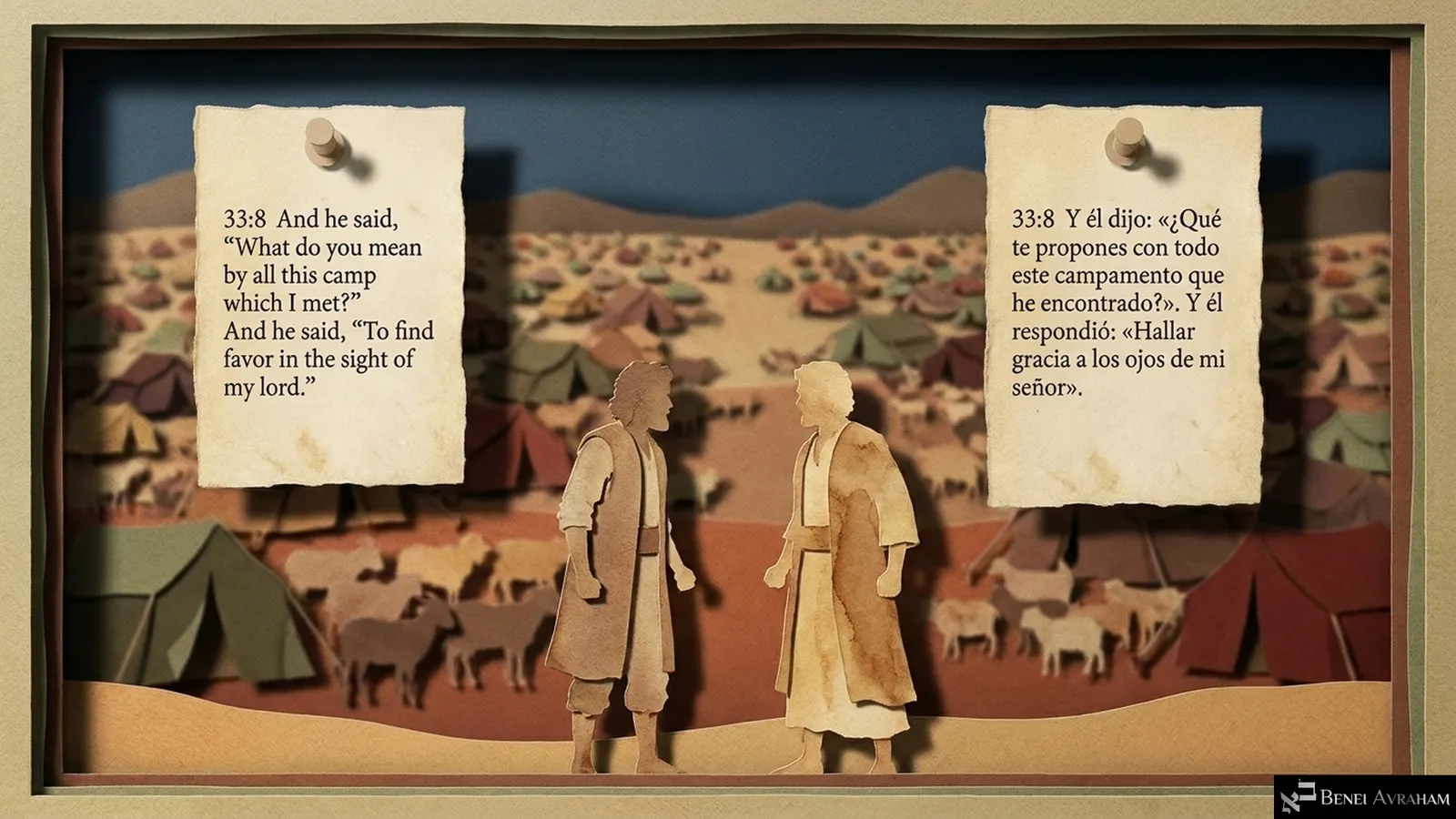
The brothers face each other before the camp: “What do you mean by all this camp which I met?” “To find favor in the sight of my lord” (Genesis 33:8).
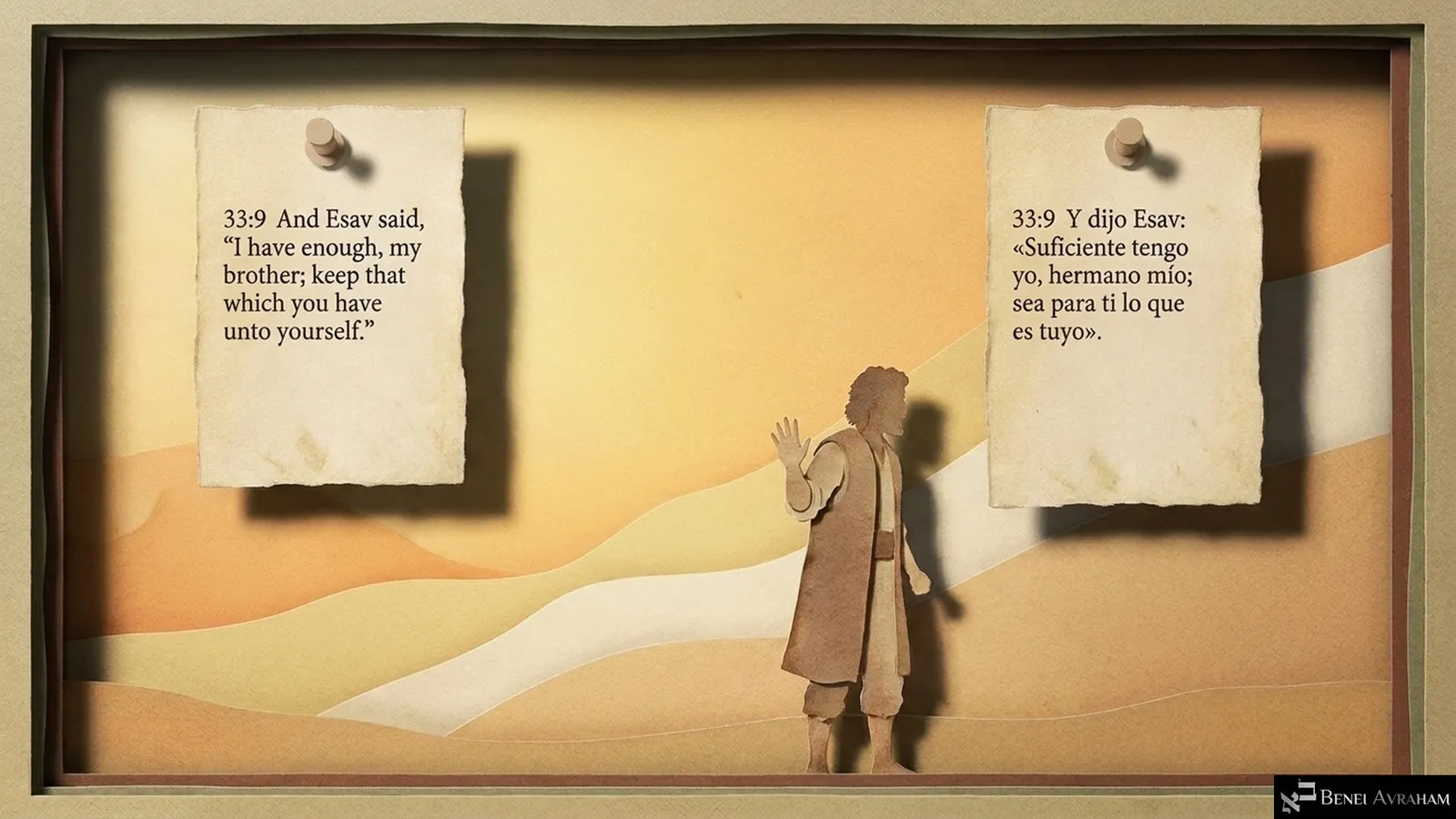
Esav raises his hand: “I have enough, my brother; keep that which you have unto yourself” (Genesis 33:9).
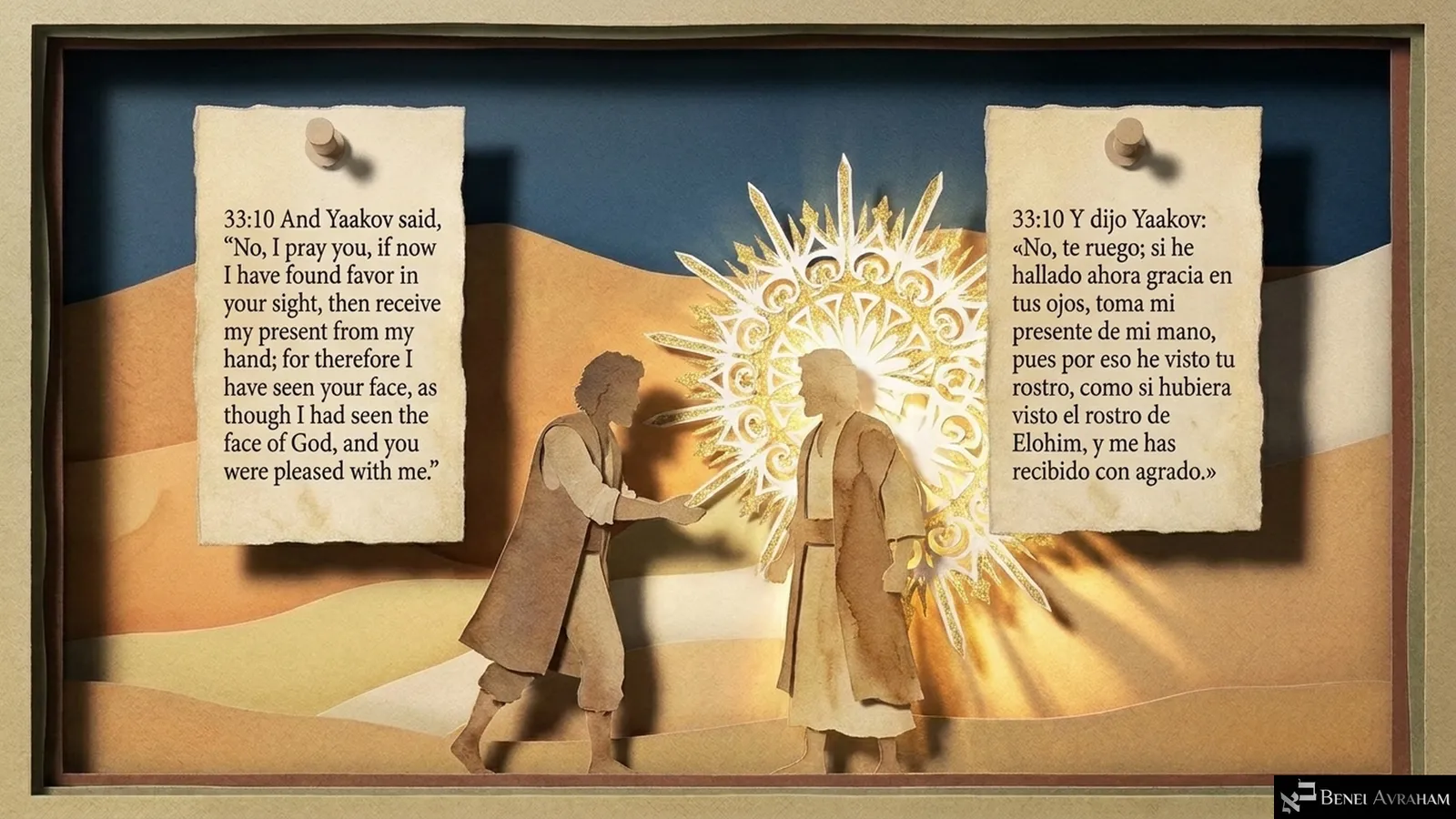
A radiant paper halo behind Yaakov: “I have seen your face, as though I had seen the face of God, and you were pleased with me” (Genesis 33:10).
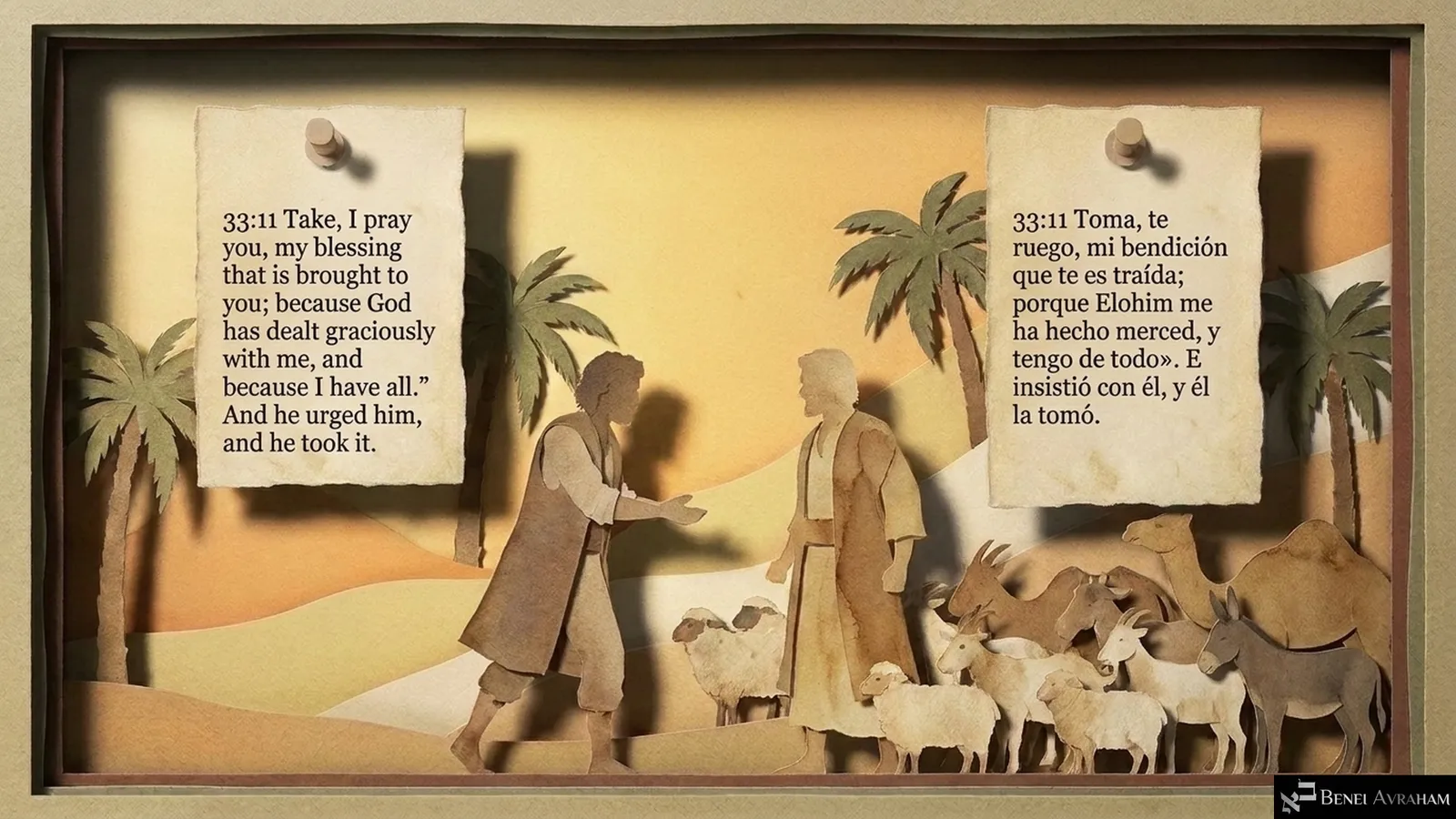
Palm trees and flocks: “Take, I pray you, my blessing that is brought to you; because God has dealt graciously with me,” and Esav took it (Genesis 33:11).
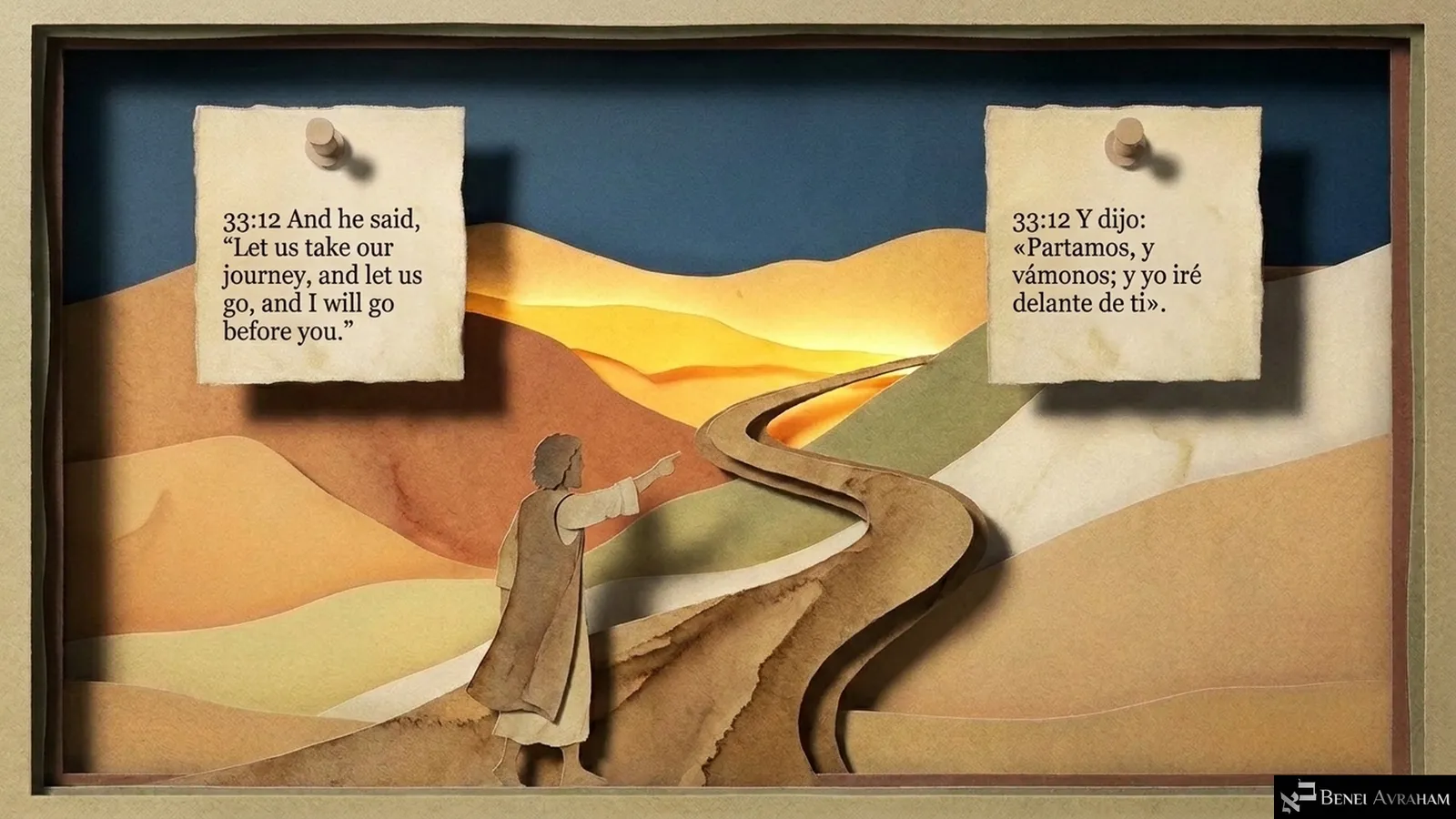
Esav points down a winding road: “Let us take our journey, and let us go, and I will go before you” (Genesis 33:12).
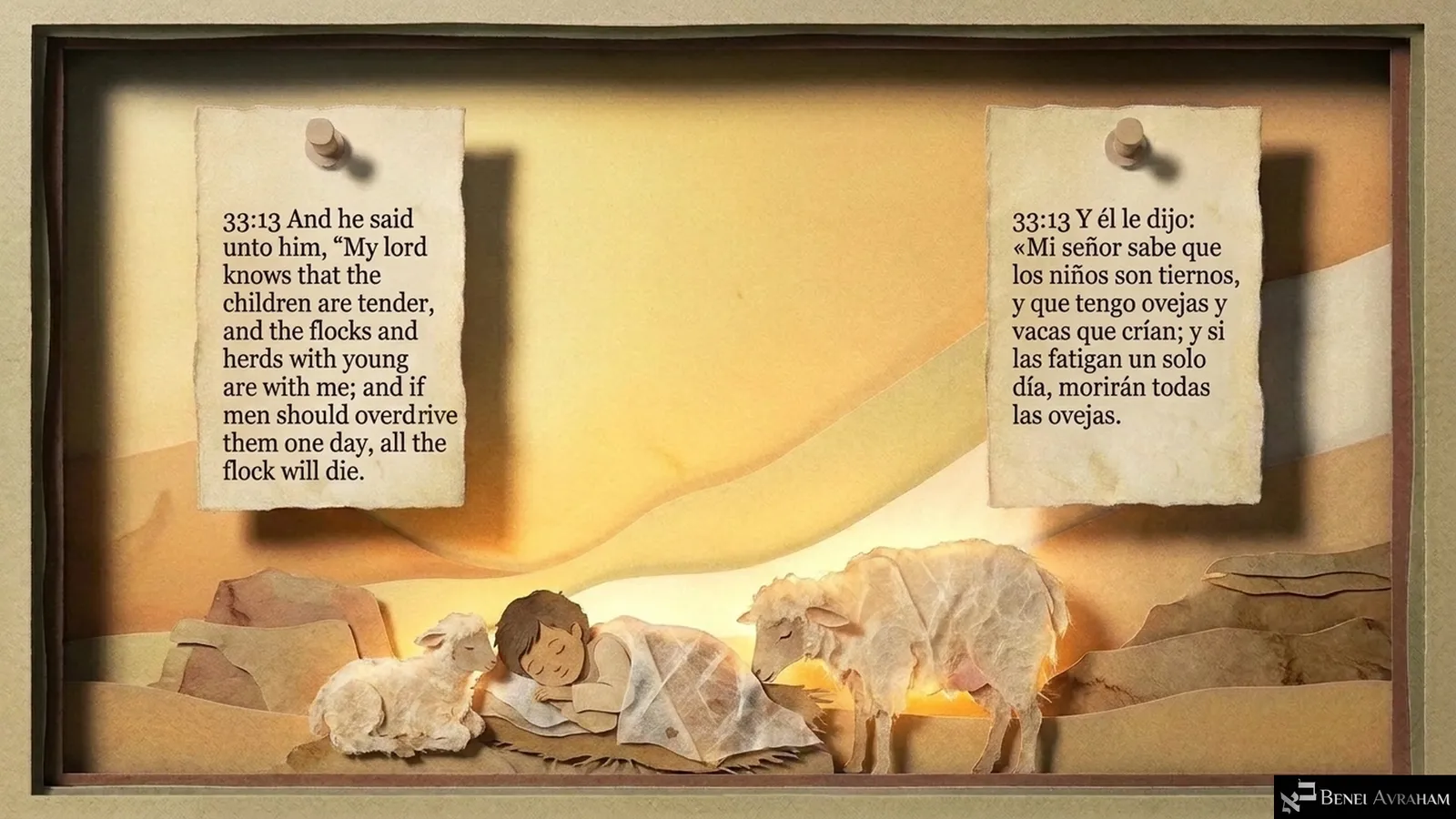
A child asleep beside a lamb and ewe: “My lord knows that the children are tender, and the flocks and herds with young are with me” (Genesis 33:13).
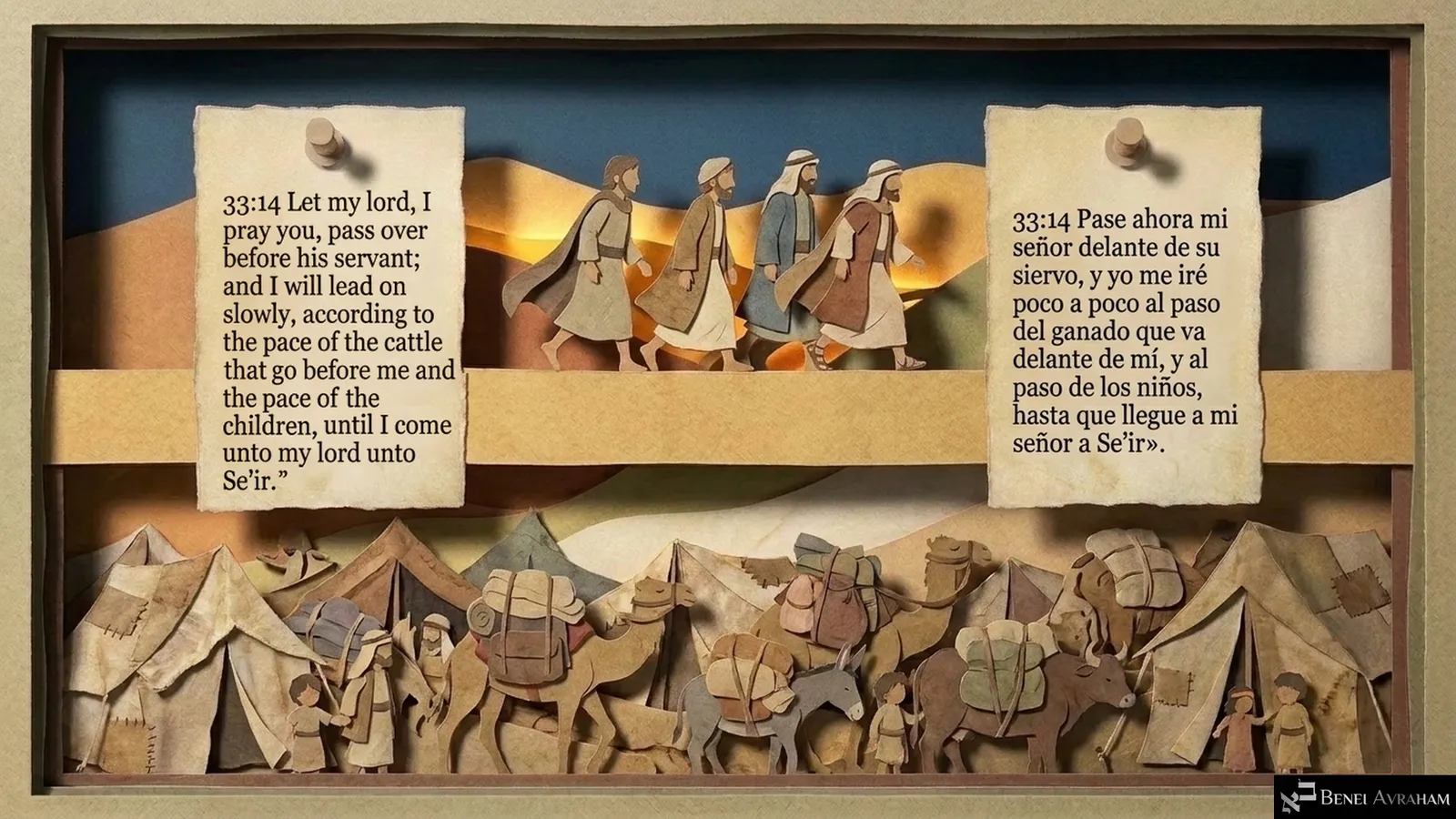
A caravan of laden camels, donkeys and children: “I will lead on slowly, according to the pace of the cattle … and the pace of the children, until I come unto my lord unto Se’ir” (Genesis 33:14).
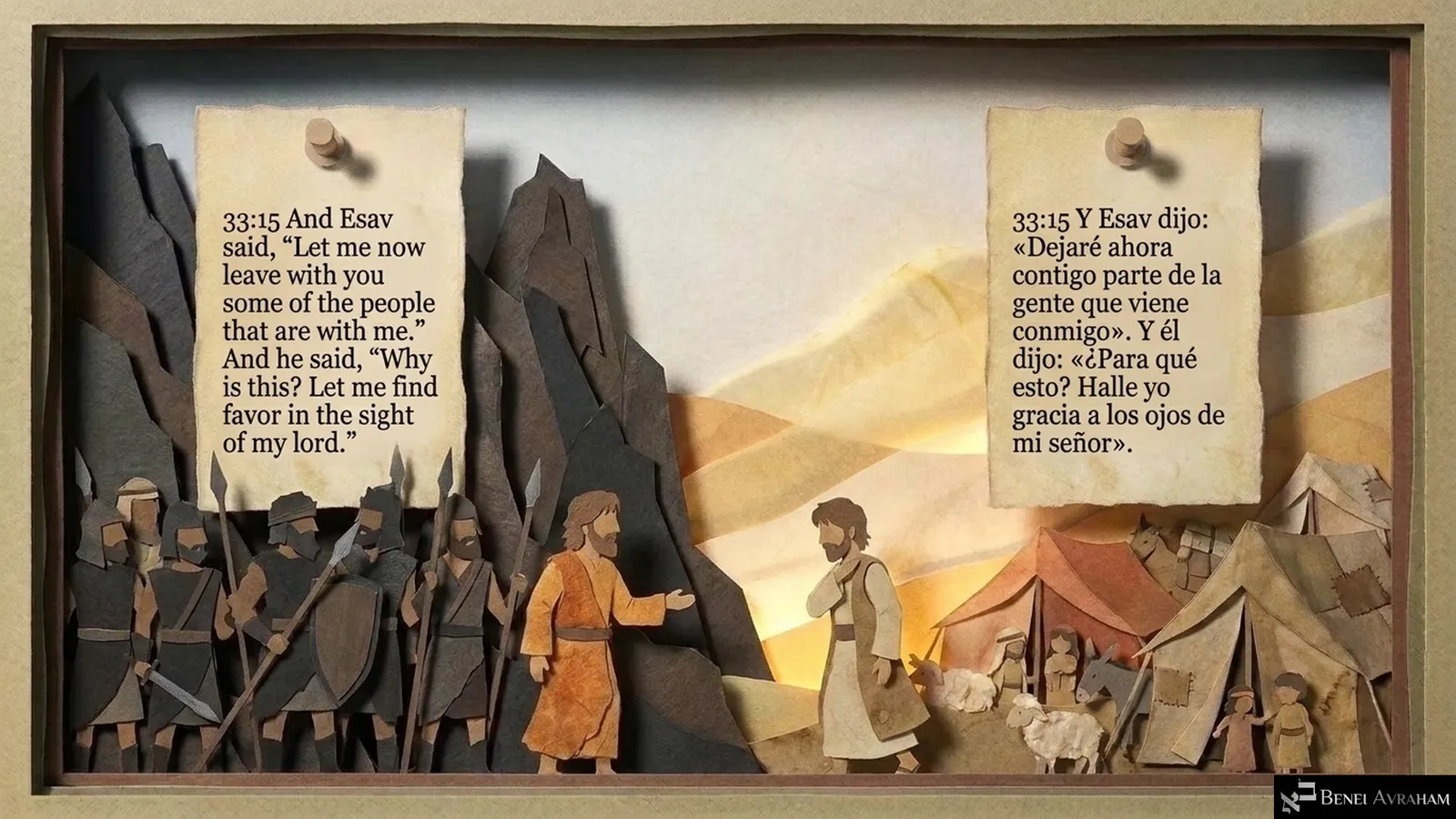
Esav and his armed men by the mountains: “Let me now leave with you some of the people that are with me.” “Why is this? Let me find favor in the sight of my lord” (Genesis 33:15).
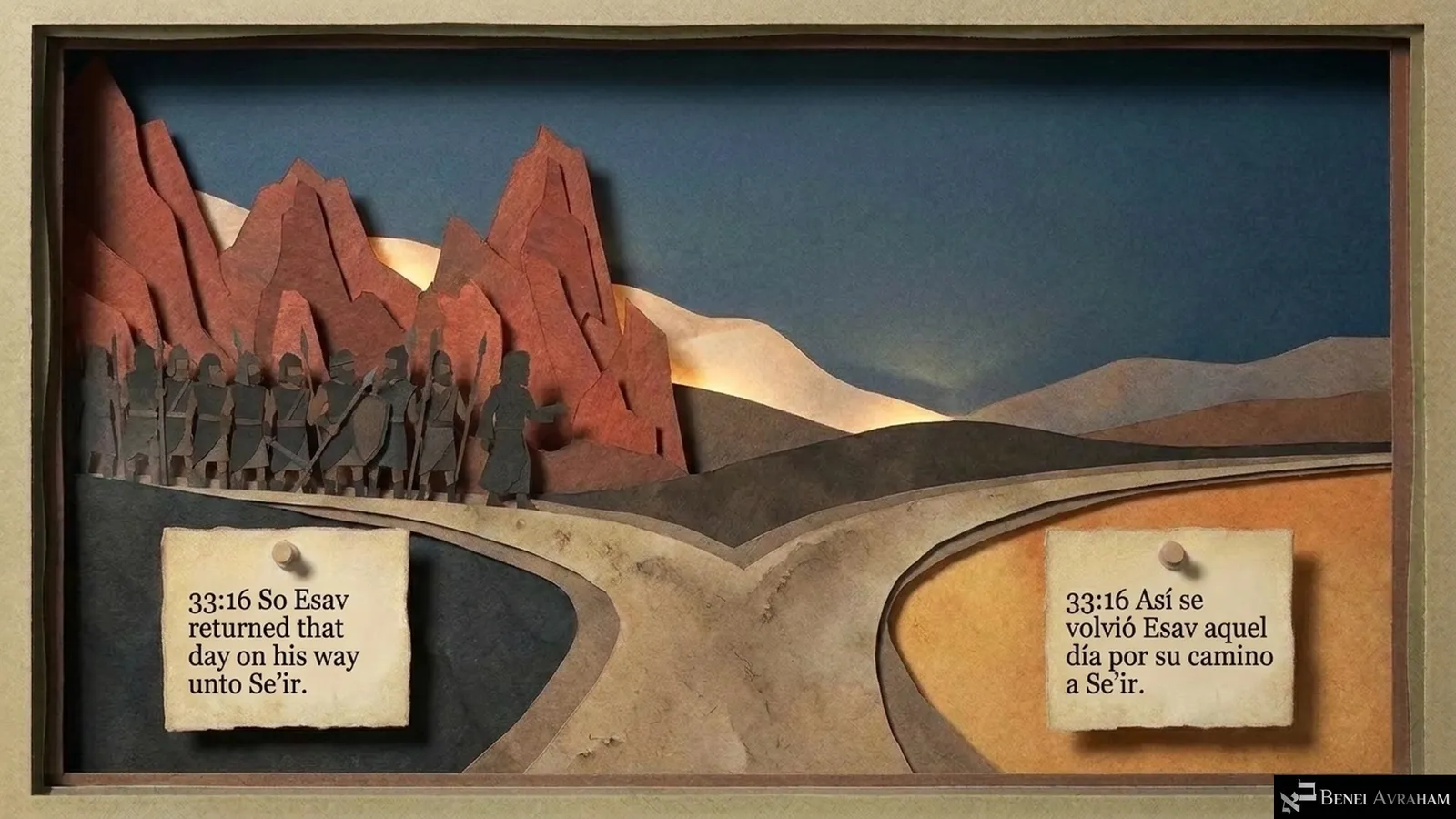
A fork in the road: Esav and his men return that day on their way unto Se’ir (Genesis 33:16).
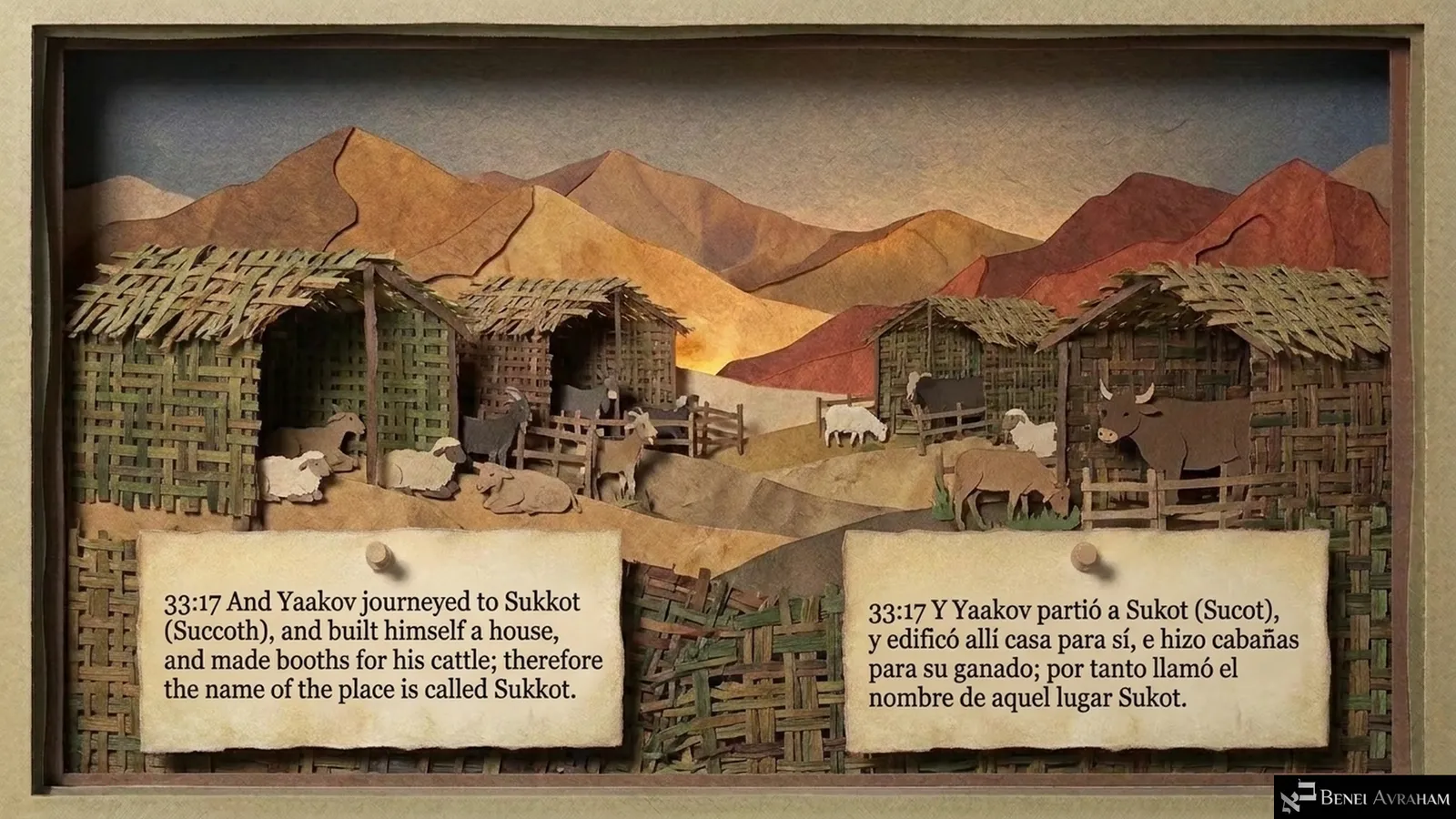
Woven paper booths for the cattle: Yaakov journeys to Sukkot, builds himself a house and makes booths, so the place is called Sukkot (Genesis 33:17).
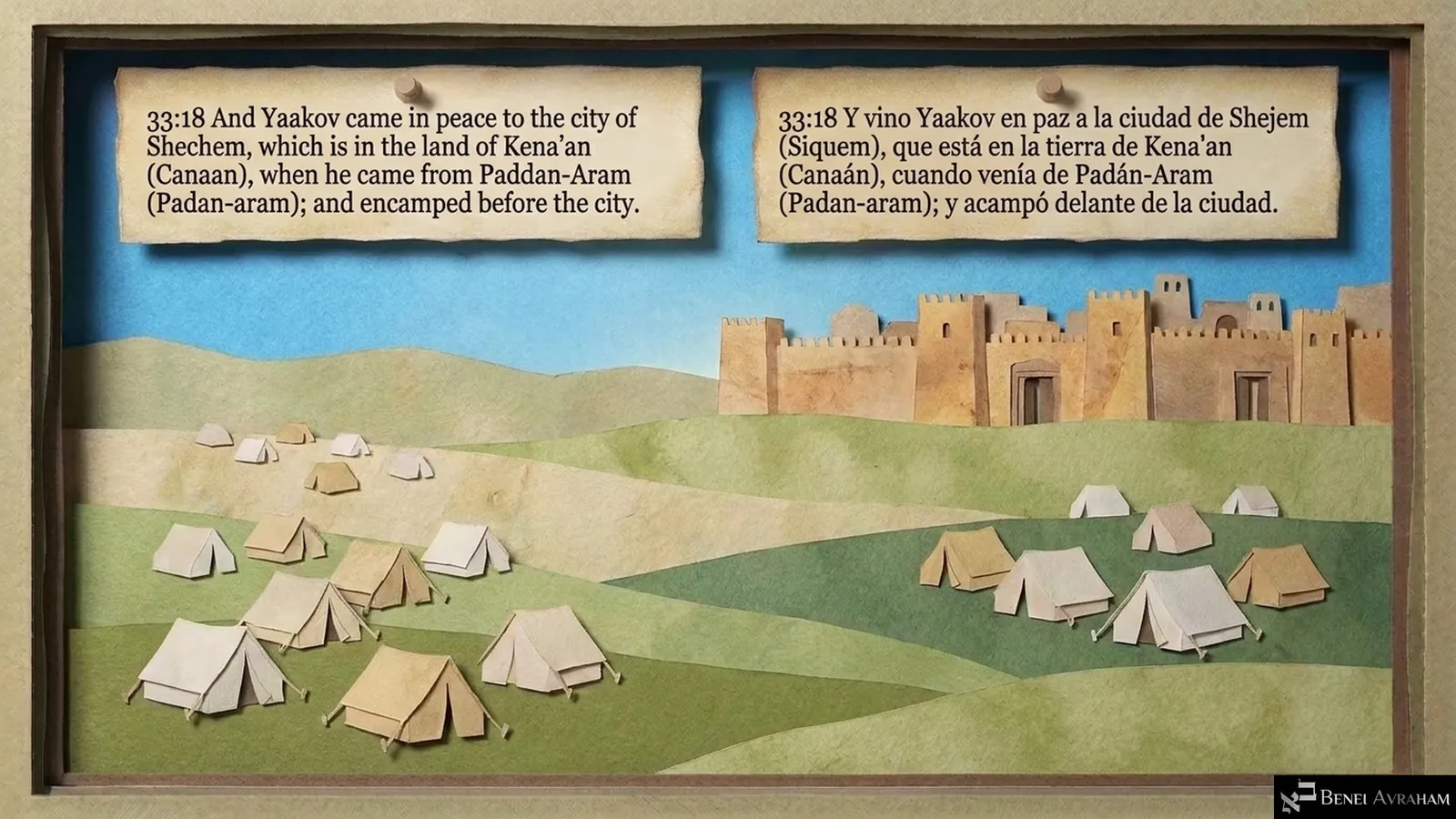
Tents pitched before a walled city: Yaakov comes in peace to the city of Shechem in the land of Kena’an and encamps before the city (Genesis 33:18).
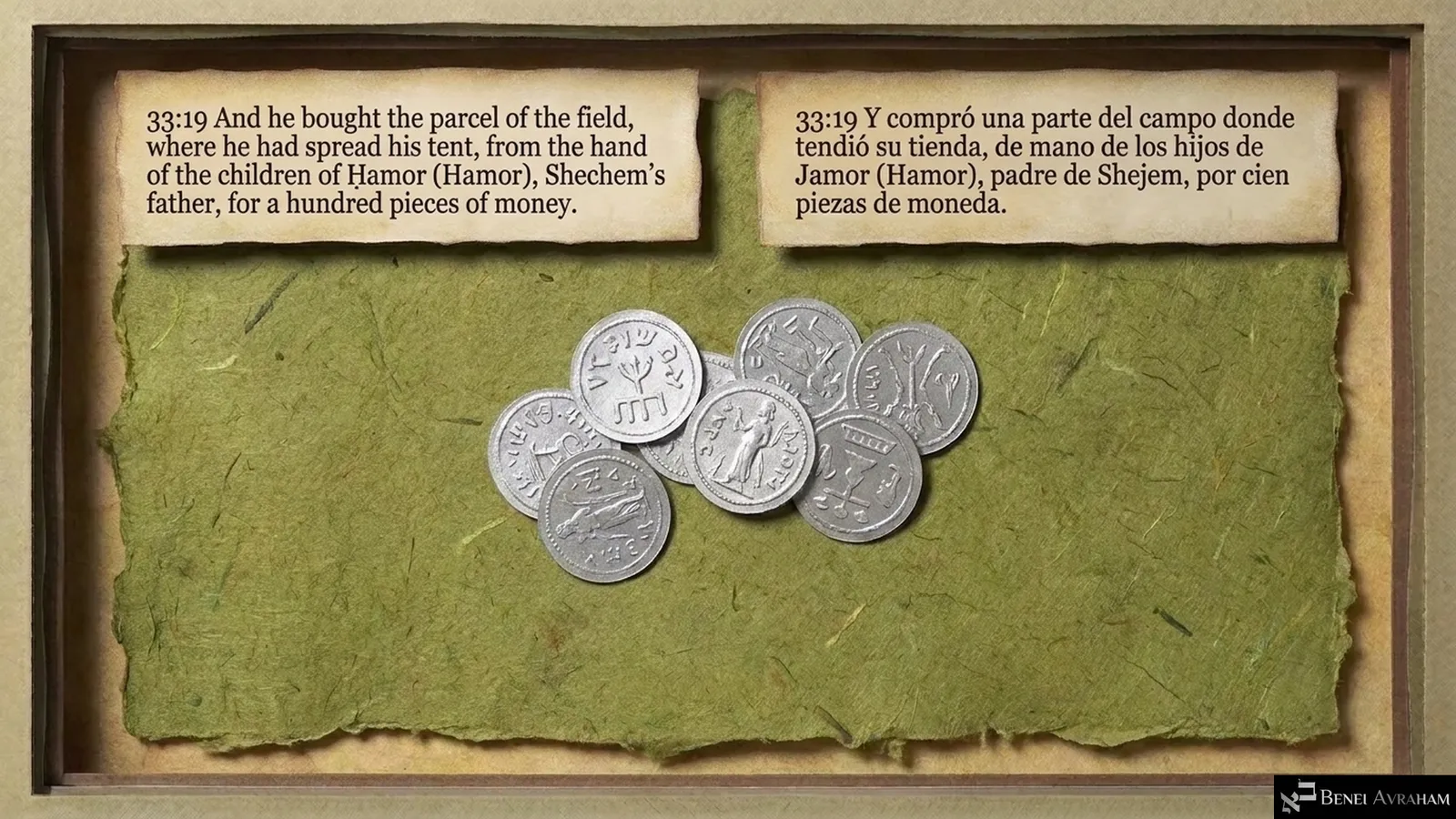
Silver coins on a field of green paper: Yaakov buys the parcel of the field from the children of Ḥamor for a hundred pieces of money (Genesis 33:19).
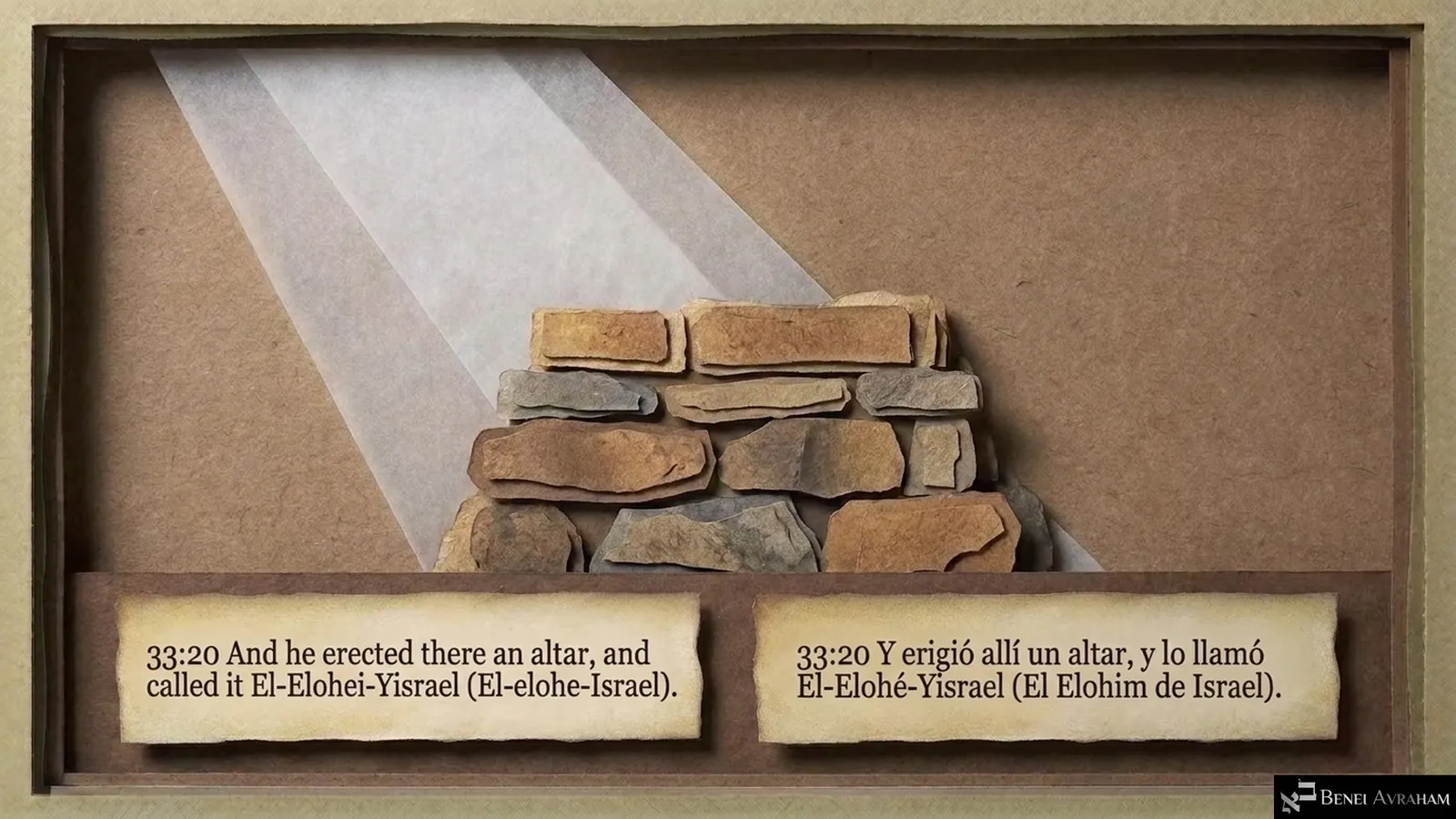
A shaft of light on a stone altar: Yaakov erects an altar there and calls it El-Elohei-Yisrael (Genesis 33:20).
Chamishi · Genesis 34:1–35:11

Fifth Portion
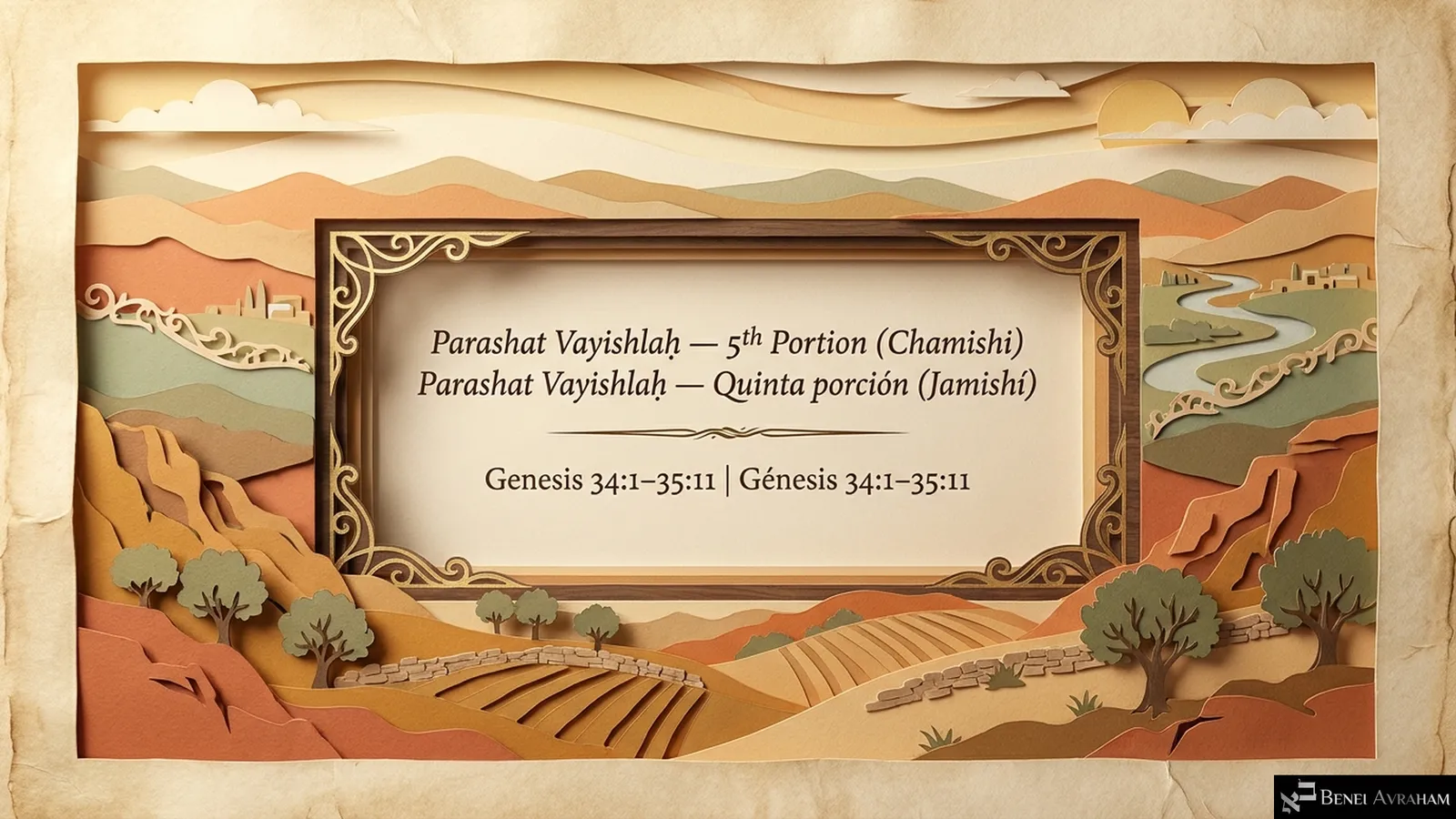
Title slide: Parashat Vayishlaḥ, fifth portion (Chamishi), Genesis 34:1–35:11, in a gilded frame over paper fields and olive trees.
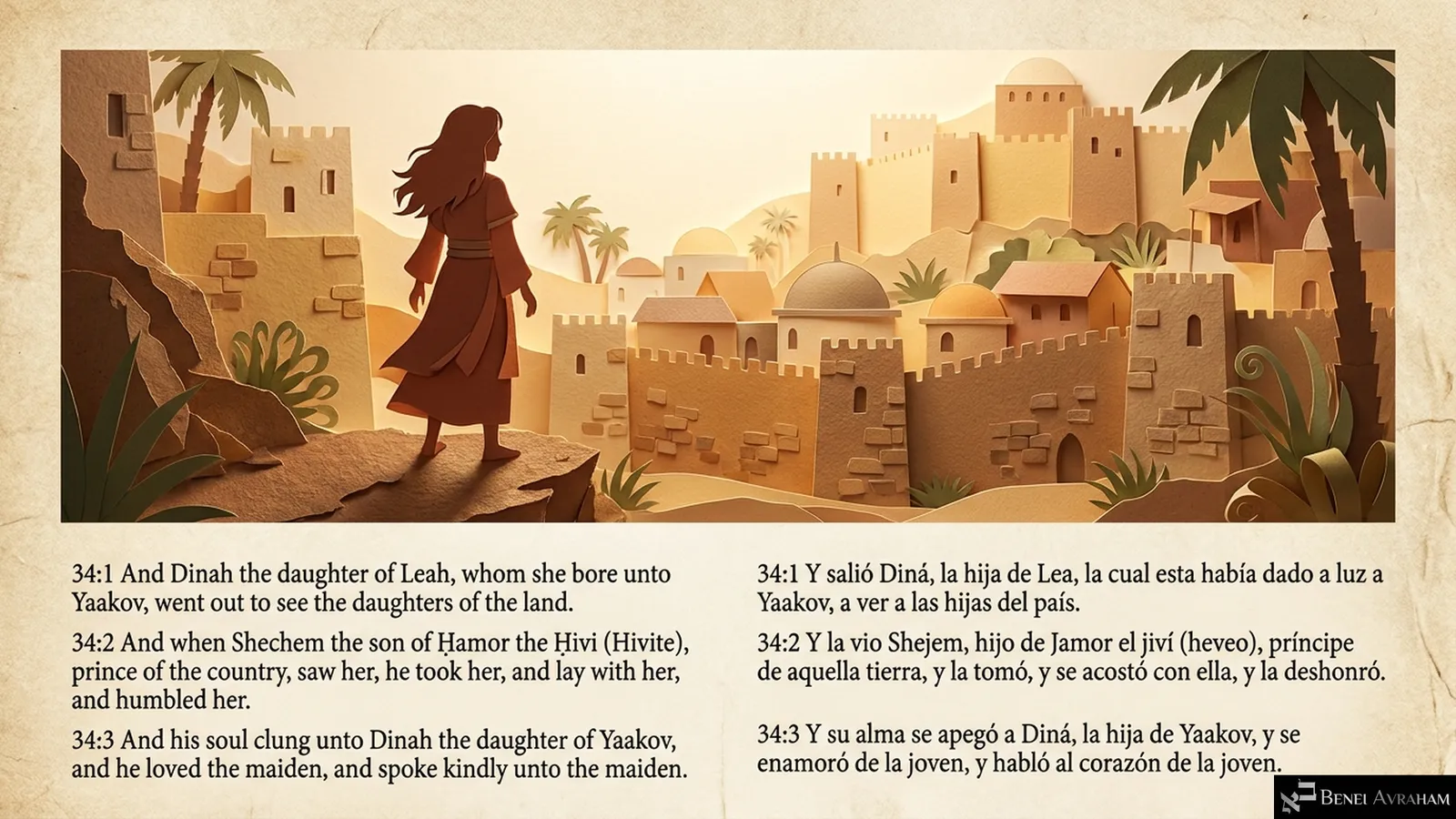
Dinah looks out over the walled city of Shechem: she went out to see the daughters of the land, and Shechem the son of Ḥamor took her (Genesis 34:1–3).
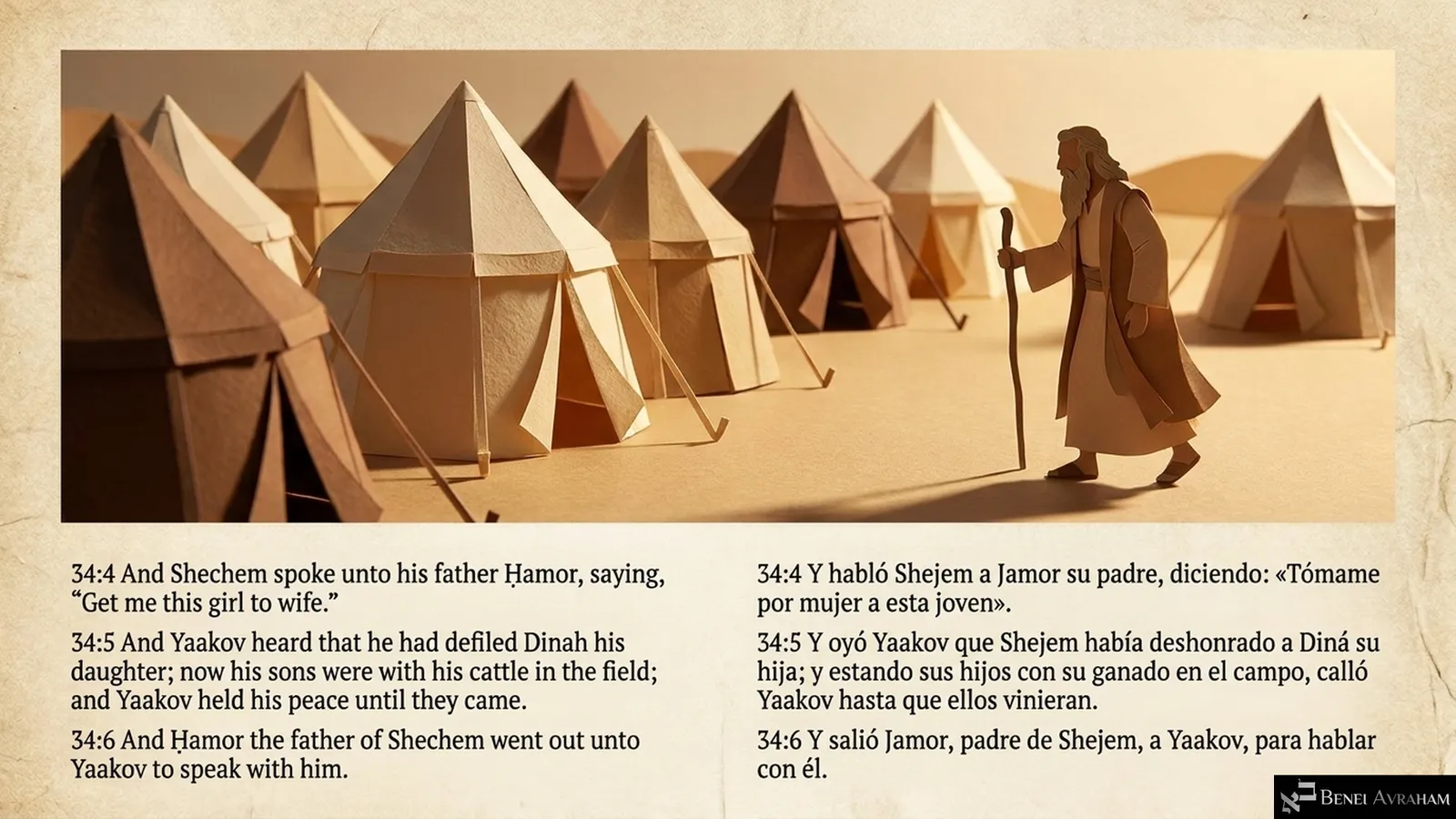
Yaakov walks among the tents with his staff: he hears that his daughter has been defiled and holds his peace until his sons come, and Ḥamor goes out to speak with him (Genesis 34:4–6).
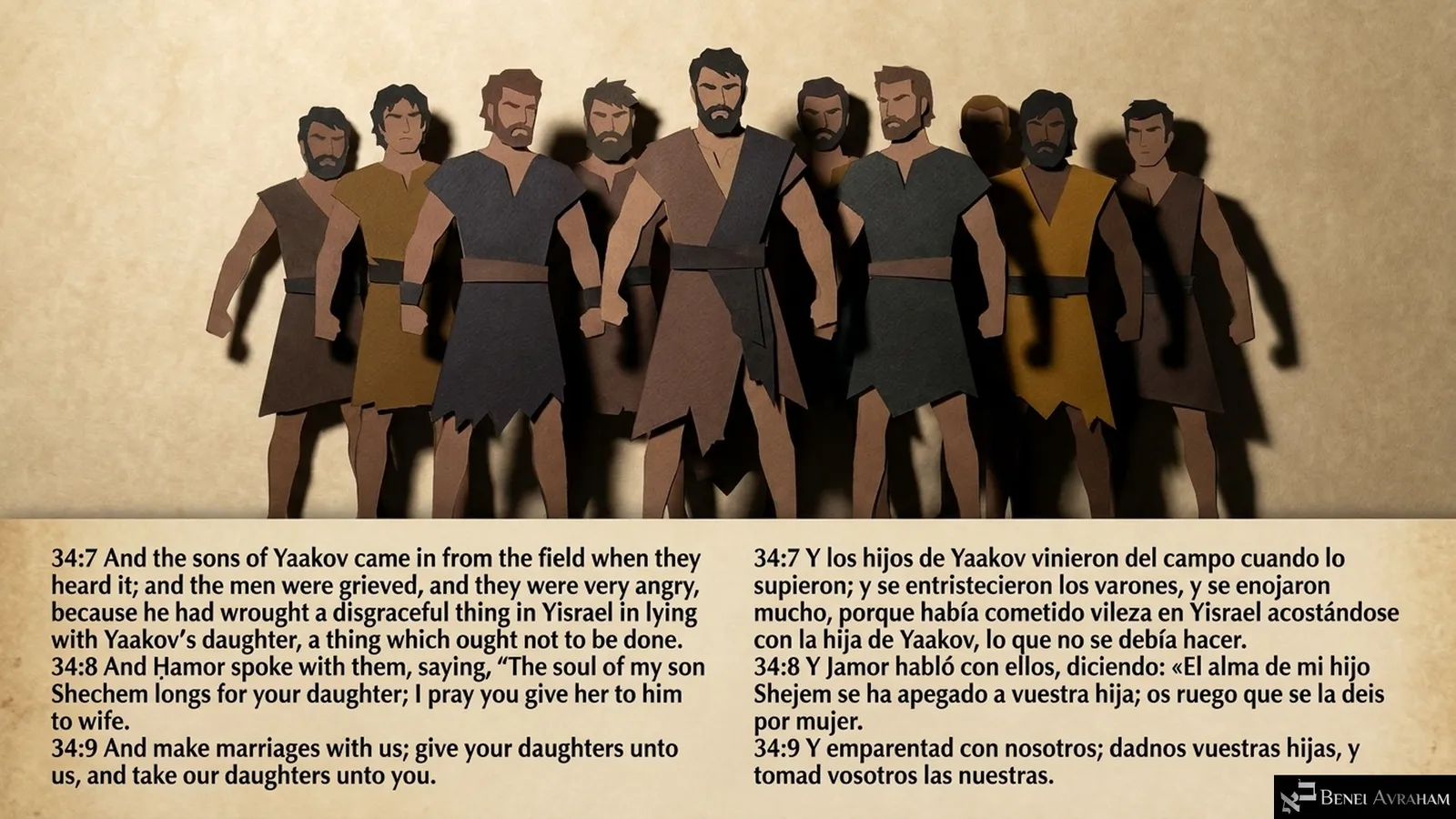
Yaakov’s sons stand together in anger: the men were grieved and very angry, and Ḥamor asks, “Make marriages with us” (Genesis 34:7–9).
Paper flocks and coins frame the offer: “Dwell and trade in it,” and Shechem says, “Ask of me ever so much dowry and gift … but give me the maiden to wife” (Genesis 34:10–12).
A paper maze of dark walls: the sons of Yaakov answer Shechem and Ḥamor deceitfully, “We cannot give our sister to one that is uncircumcised” (Genesis 34:13–15).
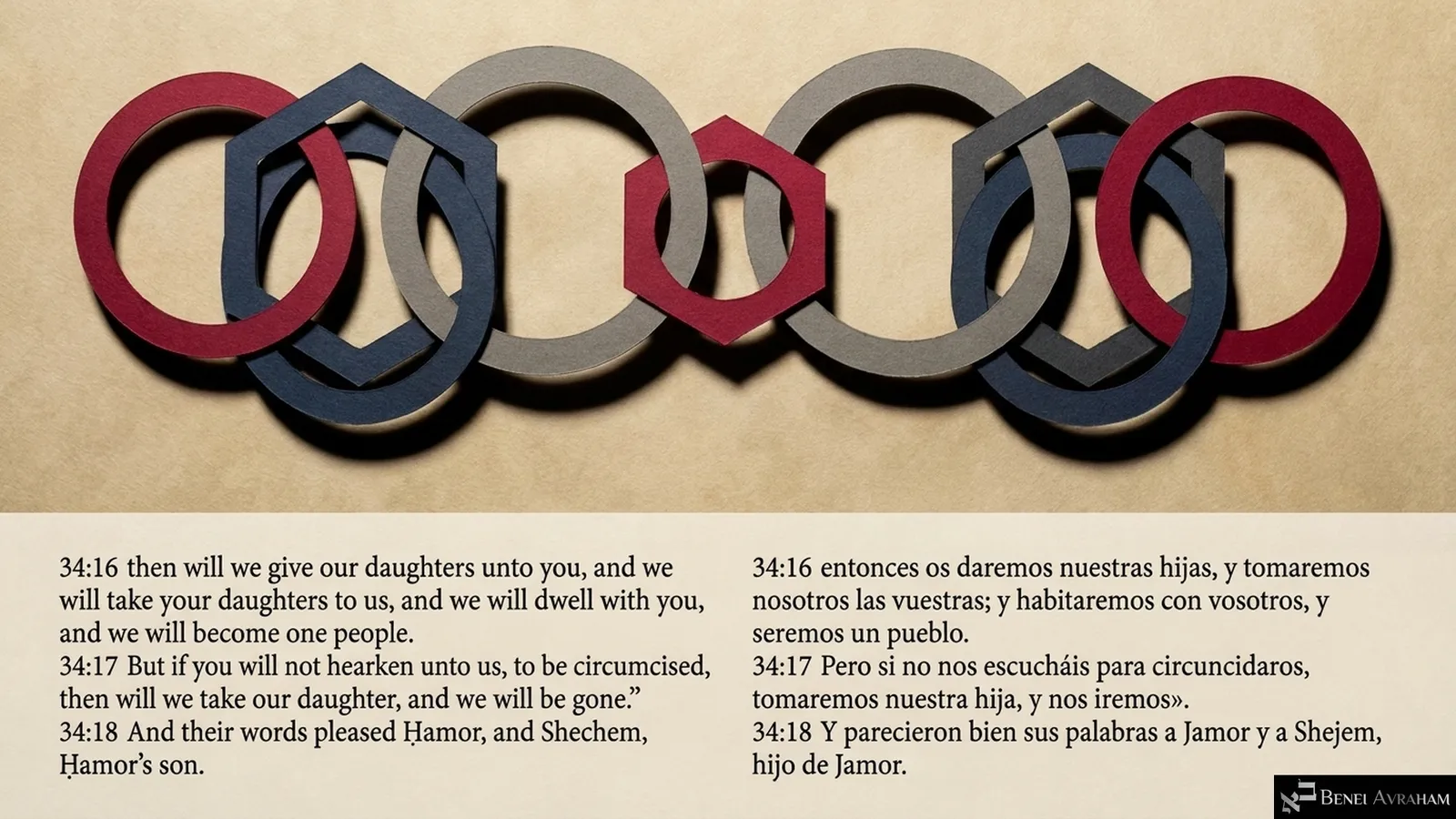
Interlocking paper rings of red, blue and grey: “We will become one people,” and their words pleased Ḥamor and Shechem (Genesis 34:16–18).
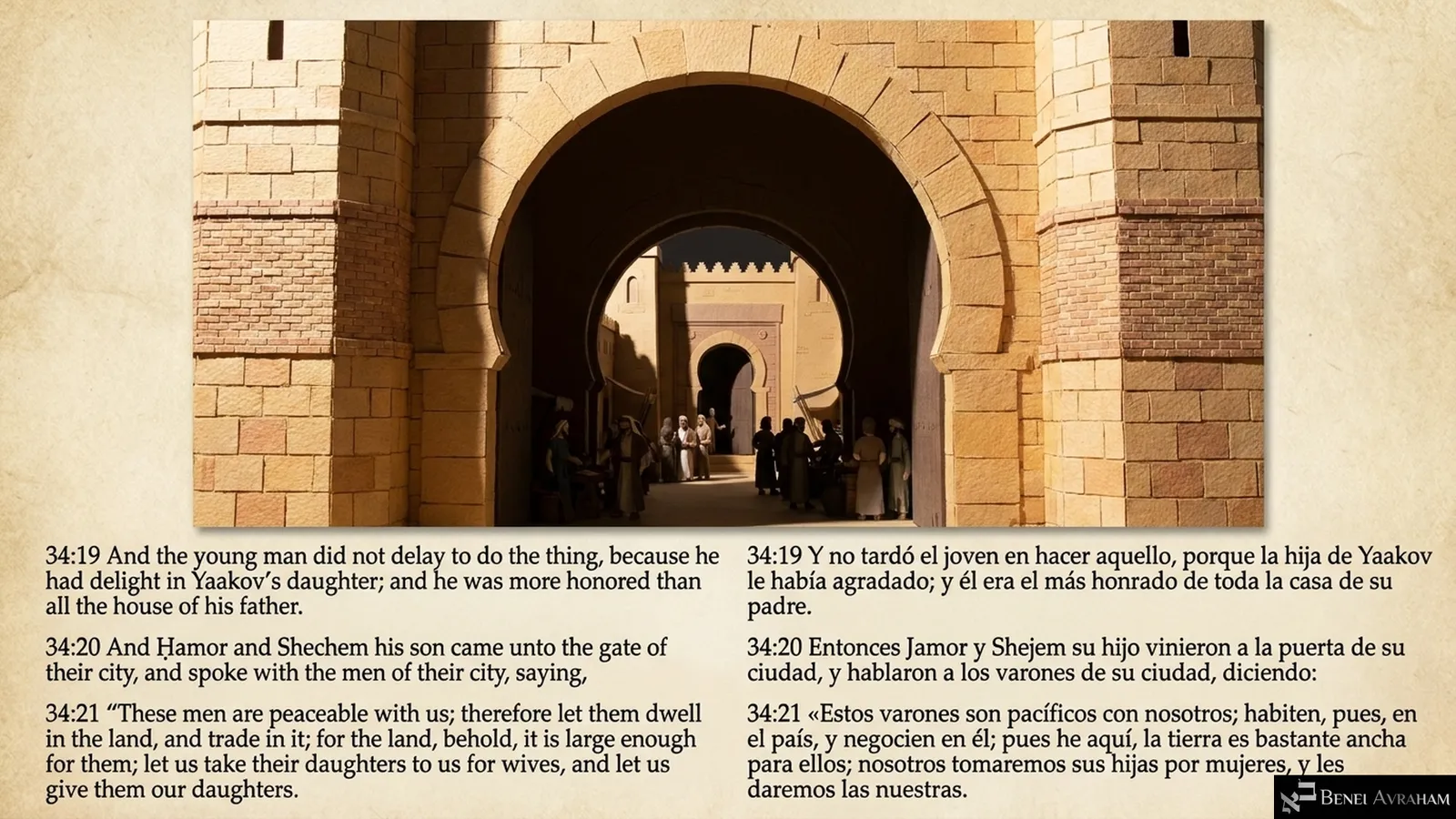
A great arched city gate, with men gathered inside: Ḥamor and Shechem come to the gate of their city and speak to its men, “These men are peaceable with us” (Genesis 34:19–21).
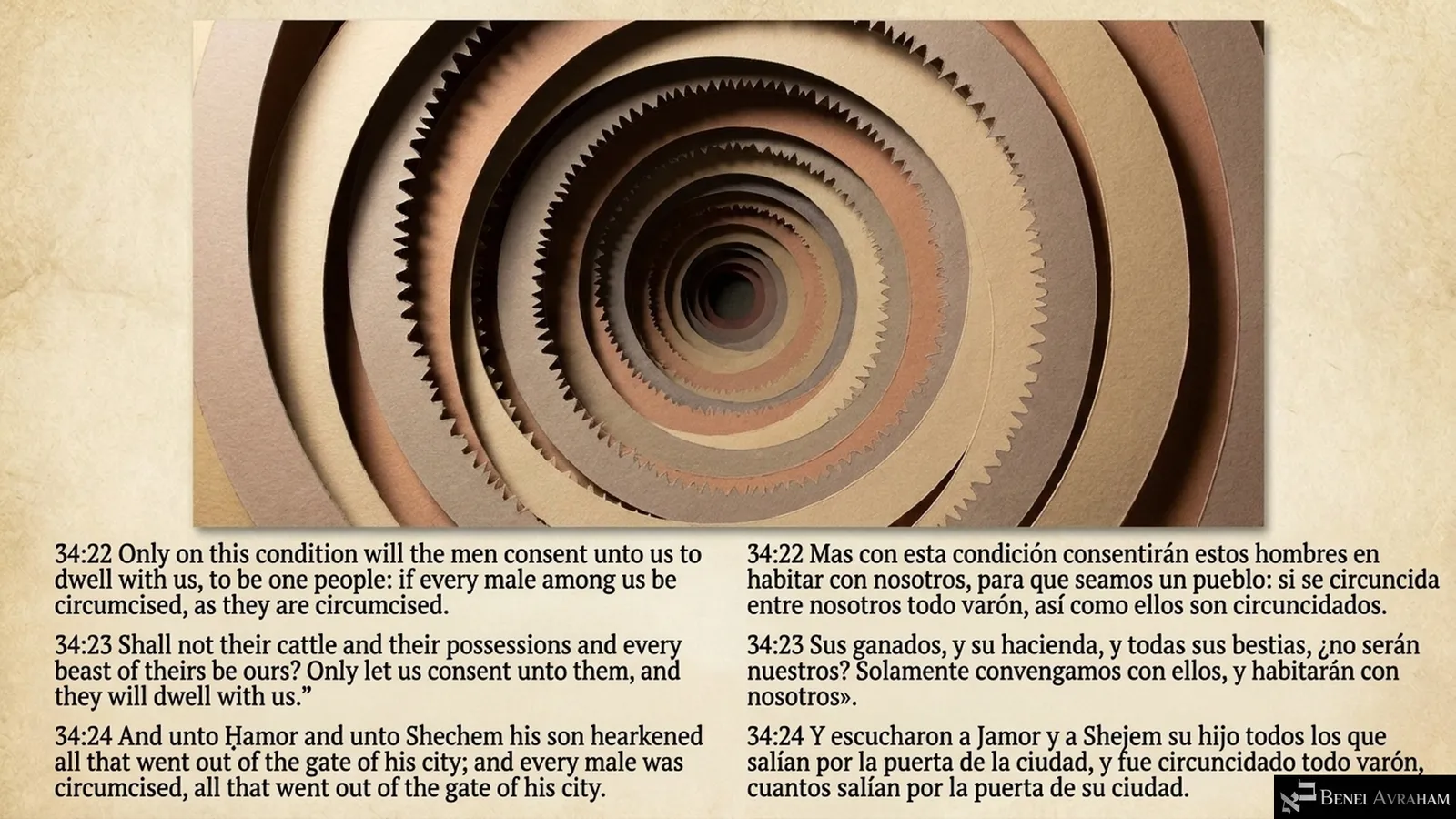
Rings of paper spiral down into darkness: “Only on this condition will the men consent unto us,” and every male of the city was circumcised (Genesis 34:22–24).
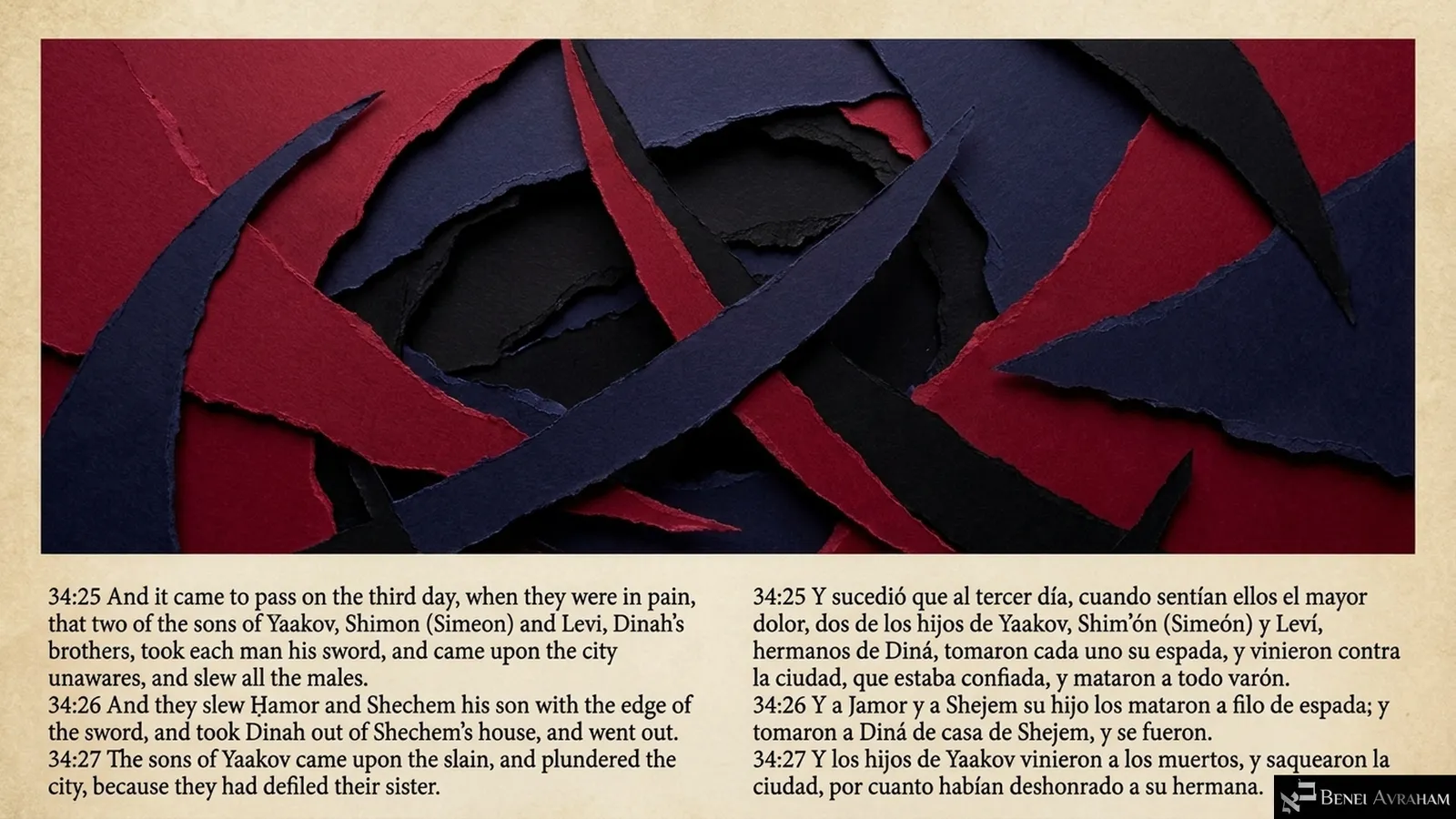
Torn shards of red, blue and black paper cross like blades: Shimon and Levi take each man his sword, come upon the city and slay all the males (Genesis 34:25–27).
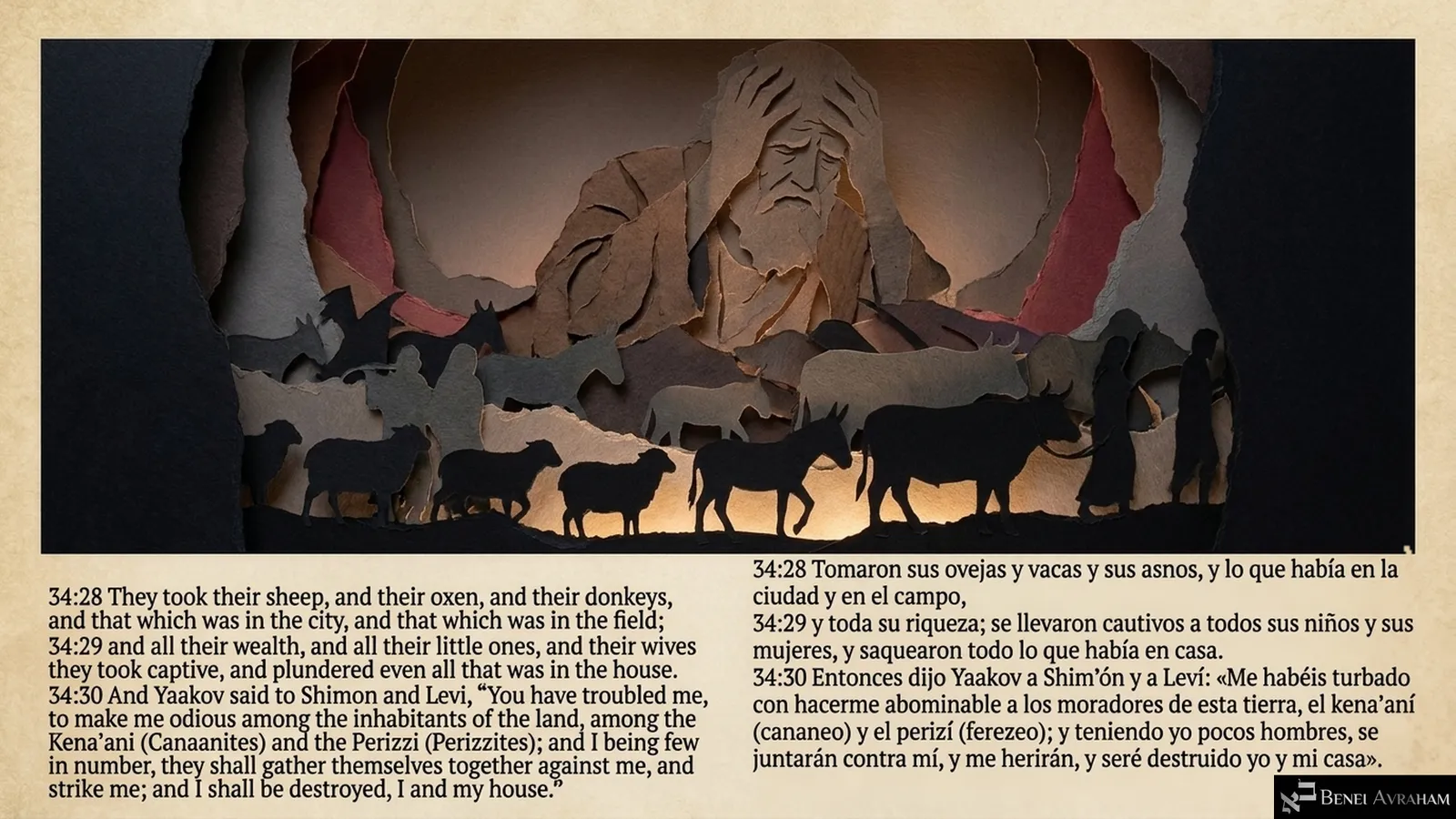
Yaakov holds his head in his hands as the flocks are driven away: “You have troubled me, to make me odious among the inhabitants of the land” (Genesis 34:28–30).
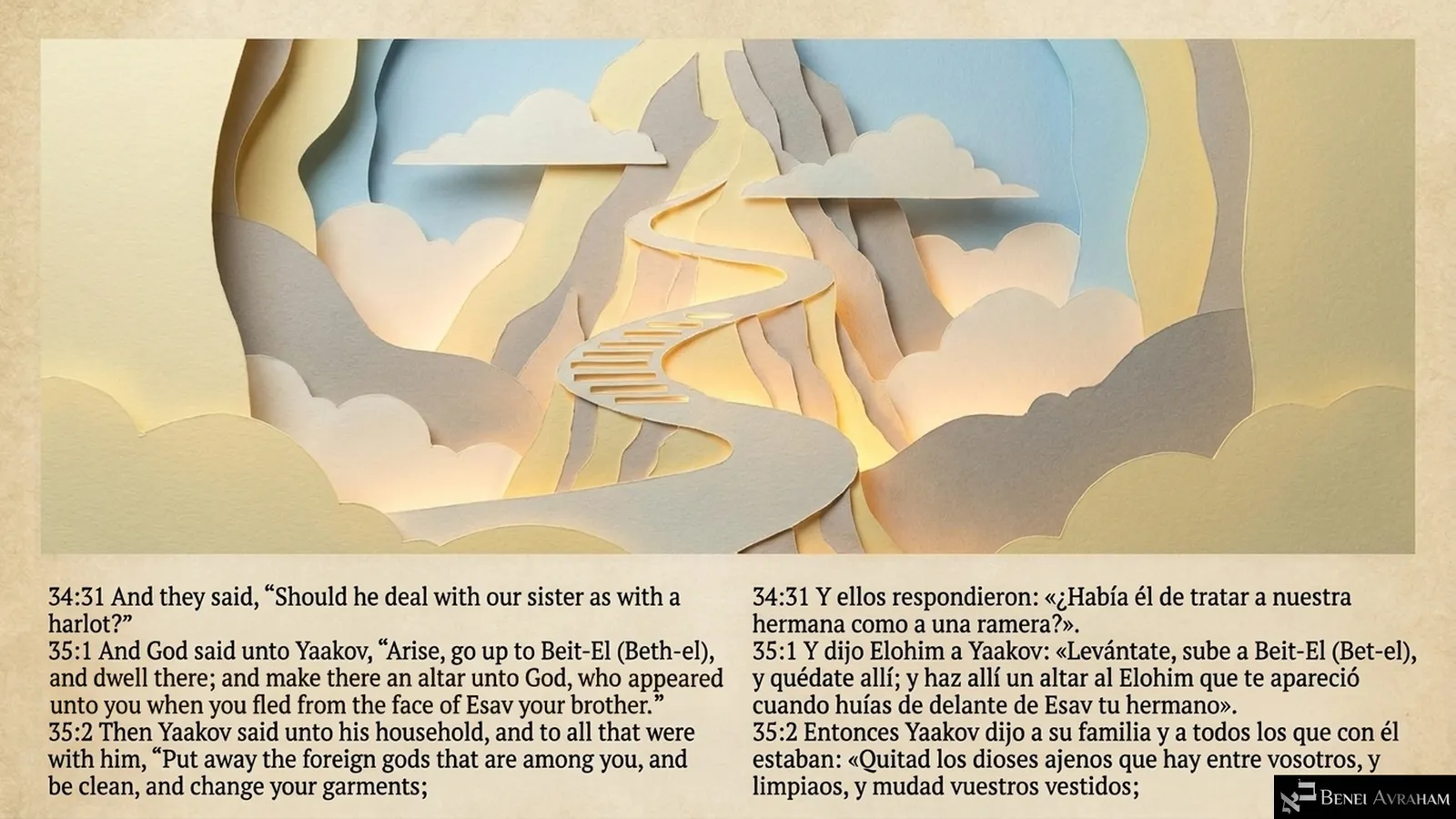
A winding paper stair climbs a mountain into the clouds: “Arise, go up to Beit-El,” and Yaakov tells his household, “Put away the foreign gods that are among you” (Genesis 34:31–35:2).
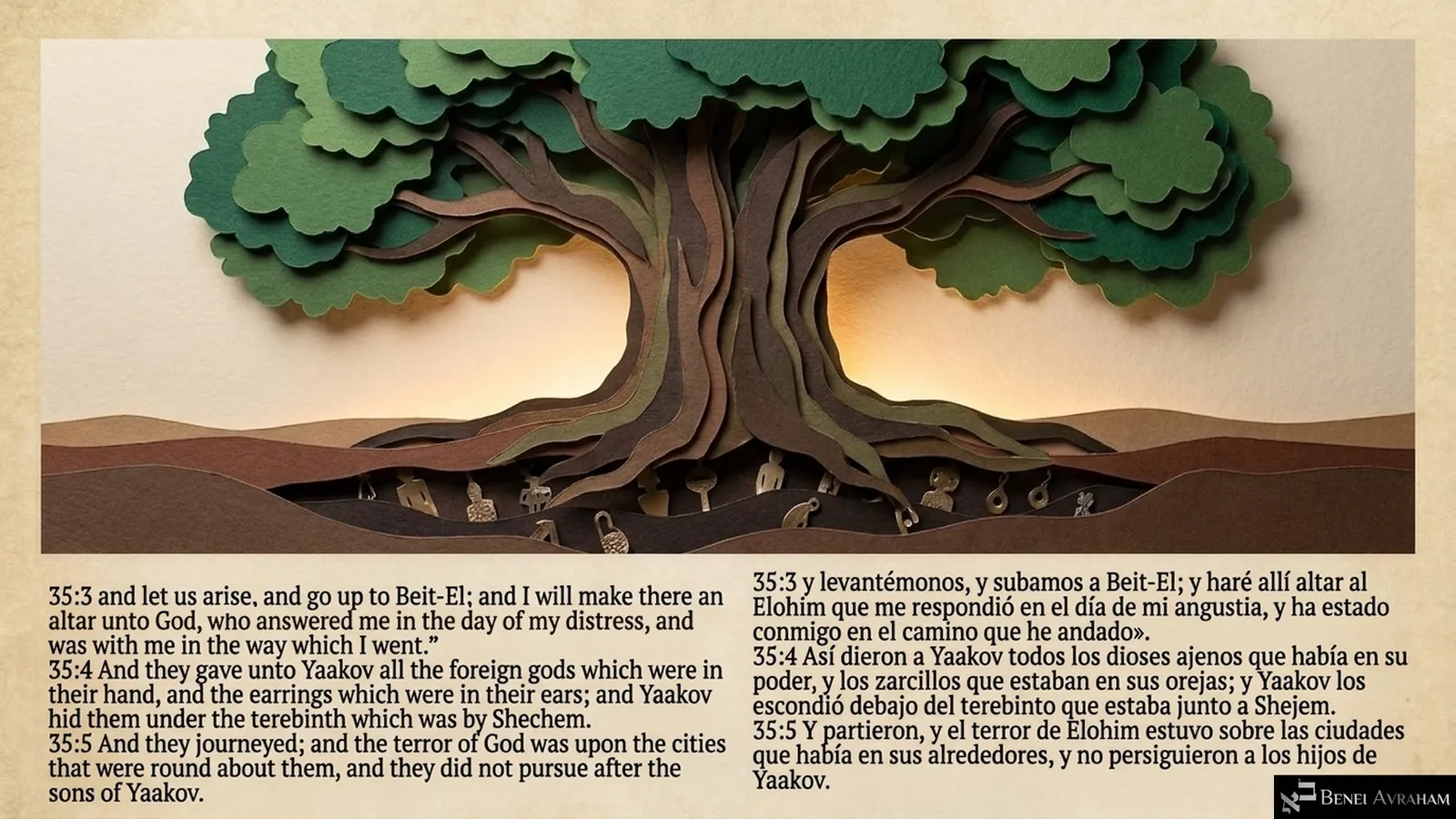
A great terebinth with the foreign gods and earrings buried among its roots: Yaakov hides them under the terebinth by Shechem, and the terror of God is upon the cities (Genesis 35:3–5).
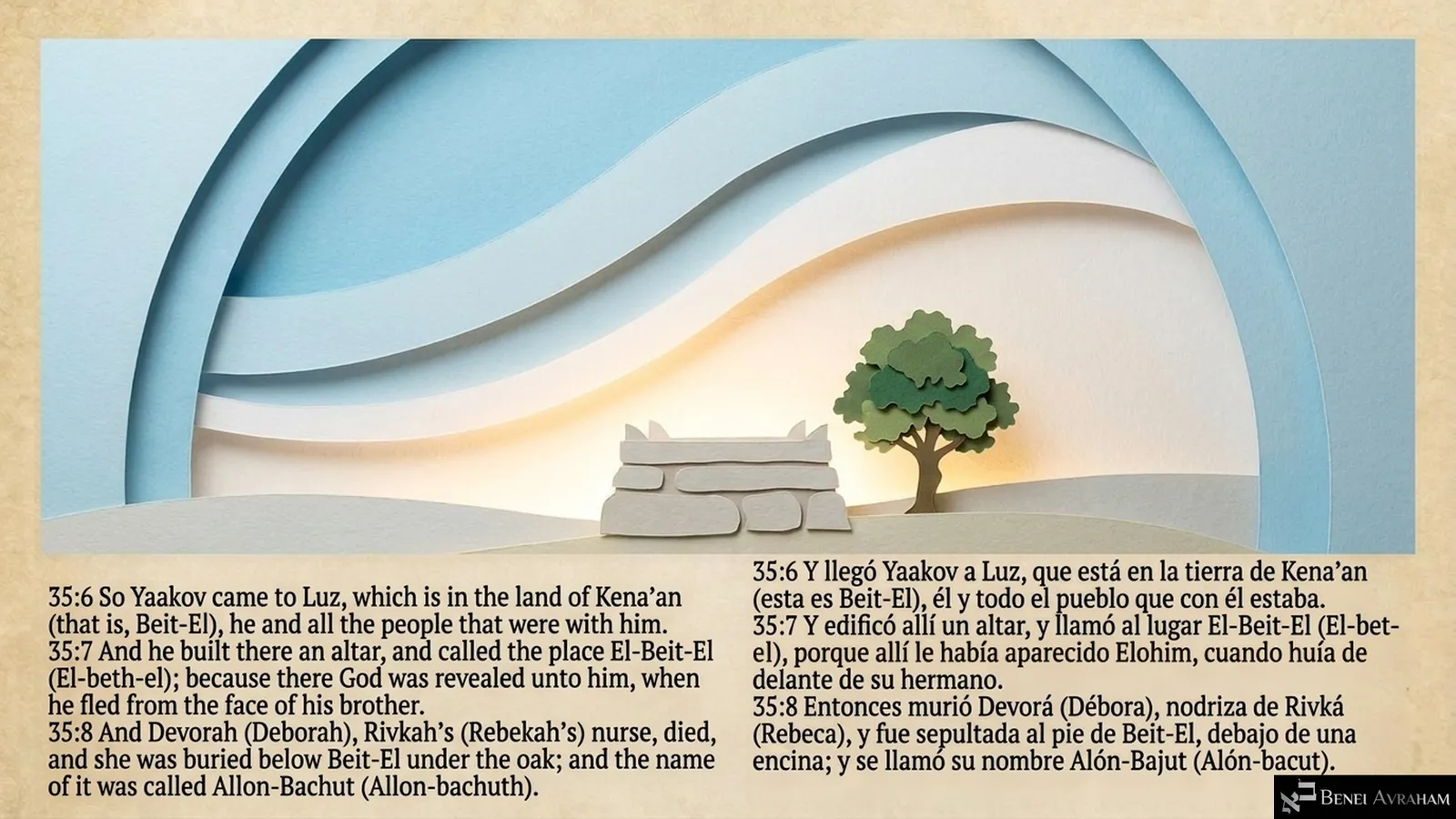
A simple stone altar beside a lone oak under a sweeping sky: Yaakov comes to Luz, builds an altar and calls the place El-Beit-El, and Devorah, Rivkah’s nurse, is buried under the oak (Genesis 35:6–8).
A burst of gold and blue paper rays: God appears to Yaakov again, “Your name shall not be called any more Yaakov, but Yisrael,” and “I am God Almighty; be fruitful and multiply” (Genesis 35:9–11).
Shishi · Genesis 35:12–36:19

Sixth Portion
Title card for the sixth portion: green hills and a winding river meet red mountains, “Parashat Vayishlaḥ, The Sixth Portion (Shishi), Genesis 35:12–36:19”.
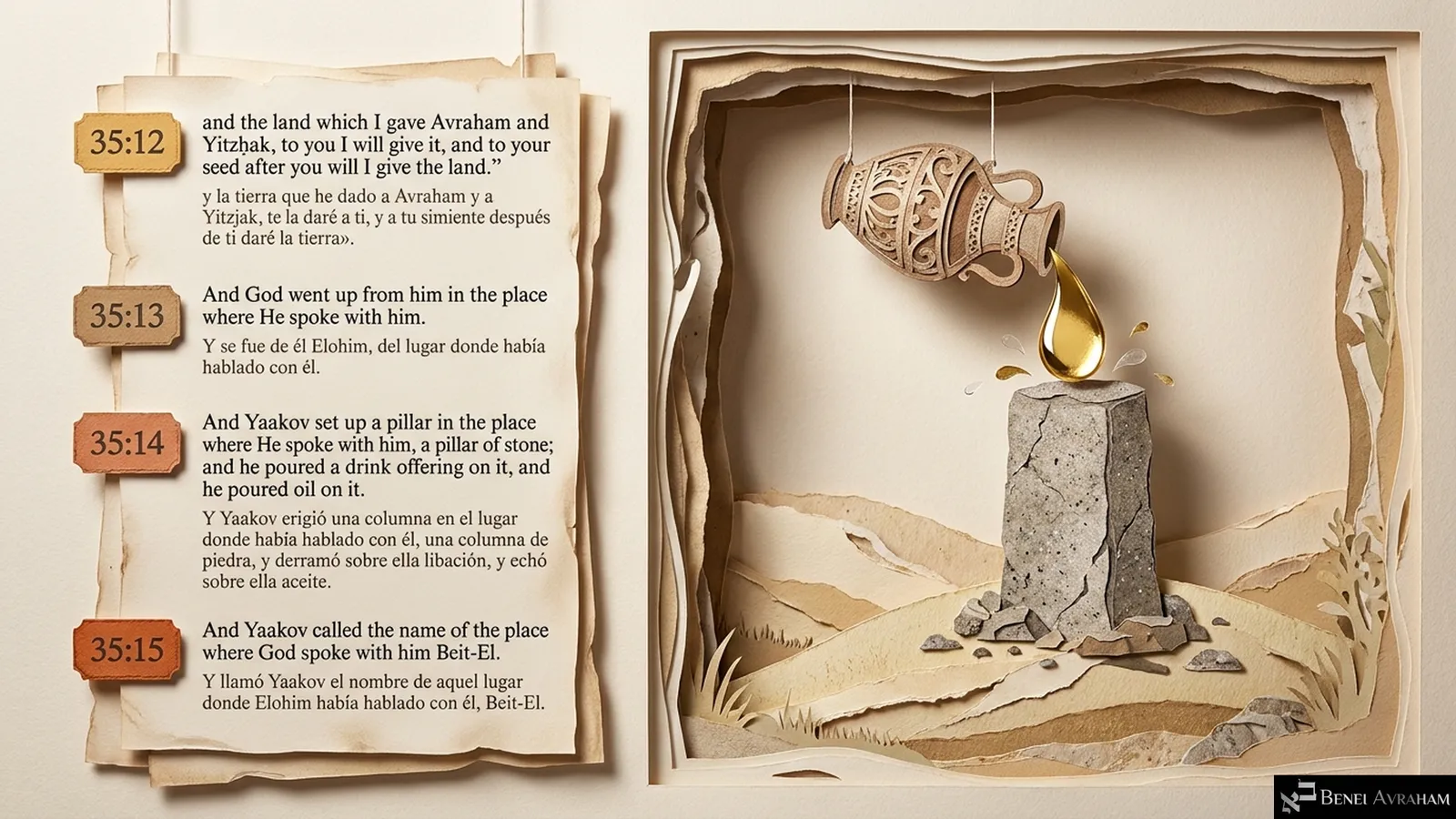
Oil pours from a paper jug onto a standing stone: Yaakov sets up a pillar of stone where God spoke with him, pours a drink offering and oil on it, and calls the place Beit-El (Genesis 35:12–15).
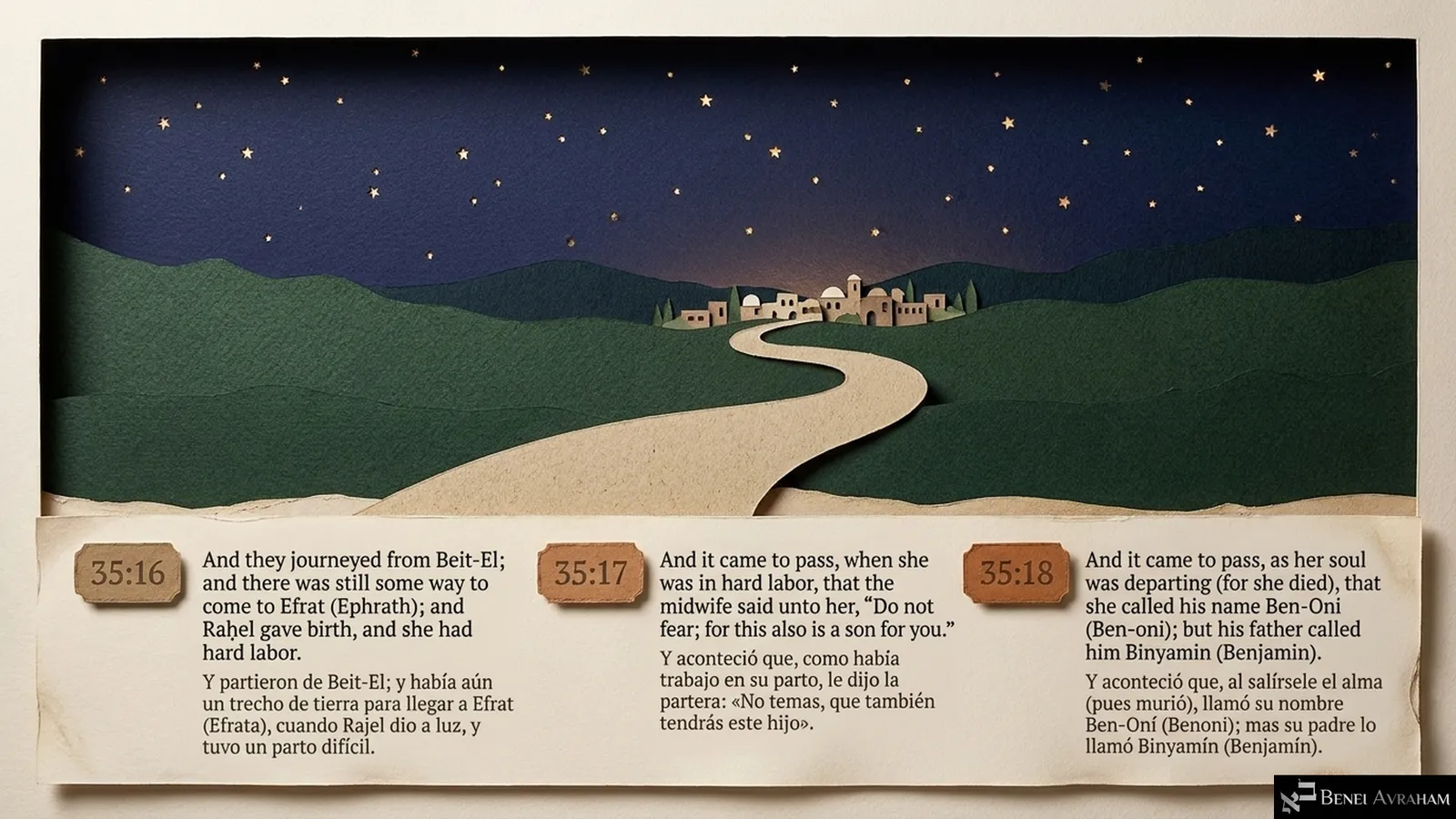
A starry night over the road to Beit Leḥem: on the way to Efrat Raḥel gives birth in hard labor, calls him Ben-Oni as her soul departs, and his father calls him Binyamin (Genesis 35:16–18).
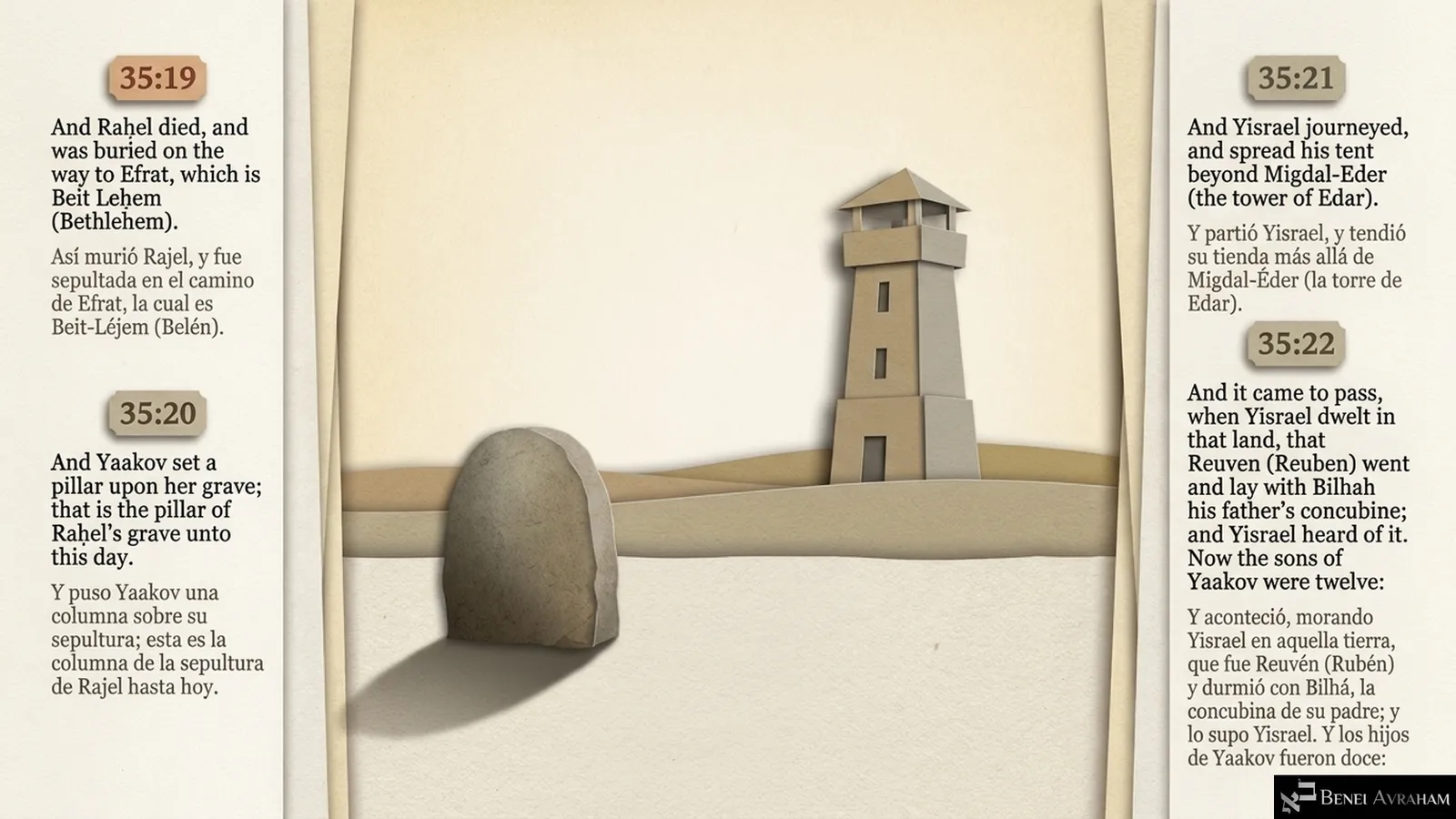
A rounded gravestone and the tower of Edar: Raḥel is buried on the way to Efrat, Yaakov sets a pillar on her grave, and Yisrael spreads his tent beyond Migdal-Eder (Genesis 35:19–22).
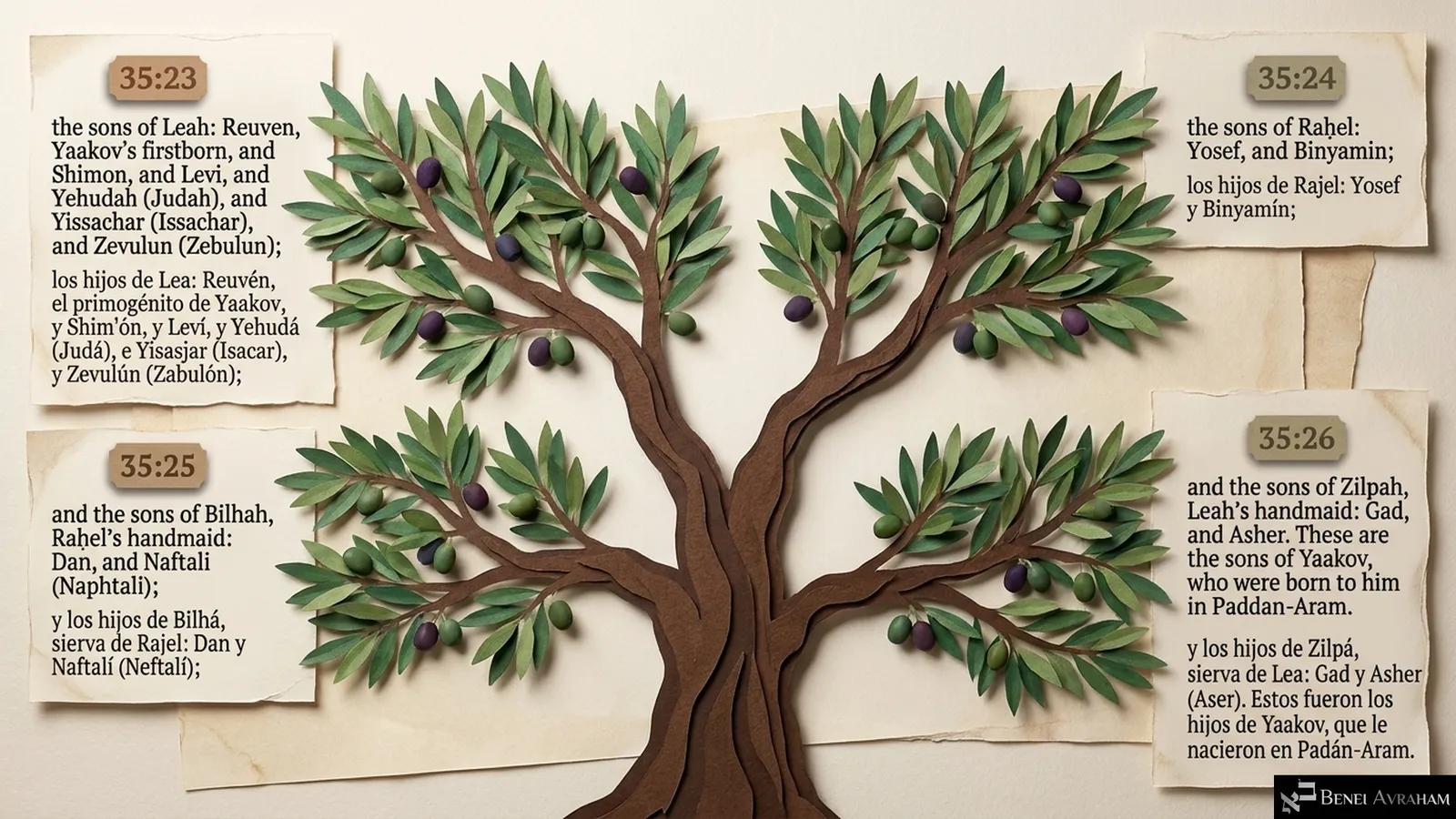
A paper olive tree with four notes around it: the twelve sons of Yaakov, the sons of Leah, of Raḥel, of Bilhah and of Zilpah, born to him in Paddan-Aram (Genesis 35:23–26).
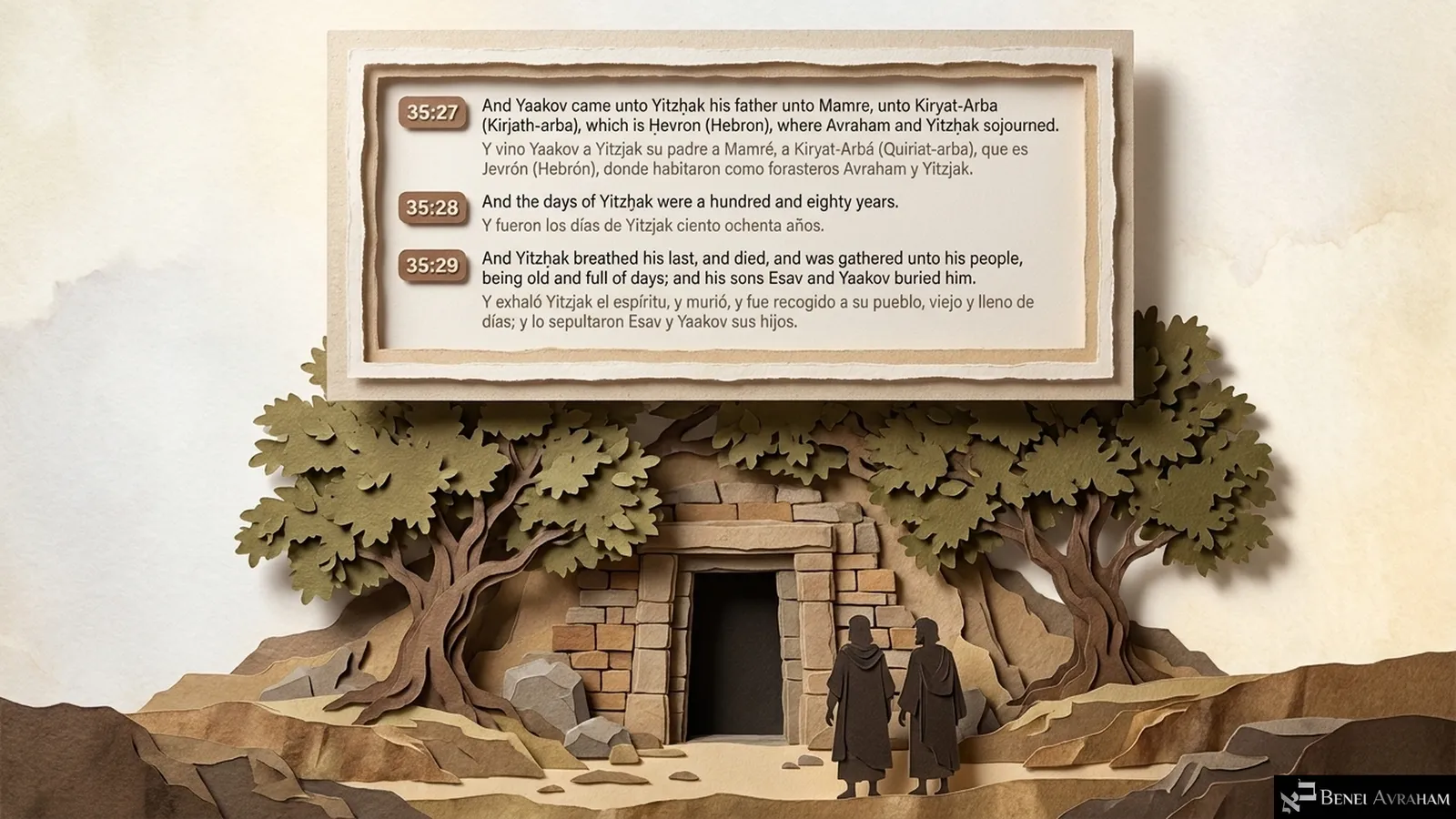
Esav and Yaakov stand before a stone tomb among the trees: Yaakov comes to his father at Ḥevron, and Yitzḥak dies a hundred and eighty years old and his sons bury him (Genesis 35:27–29).
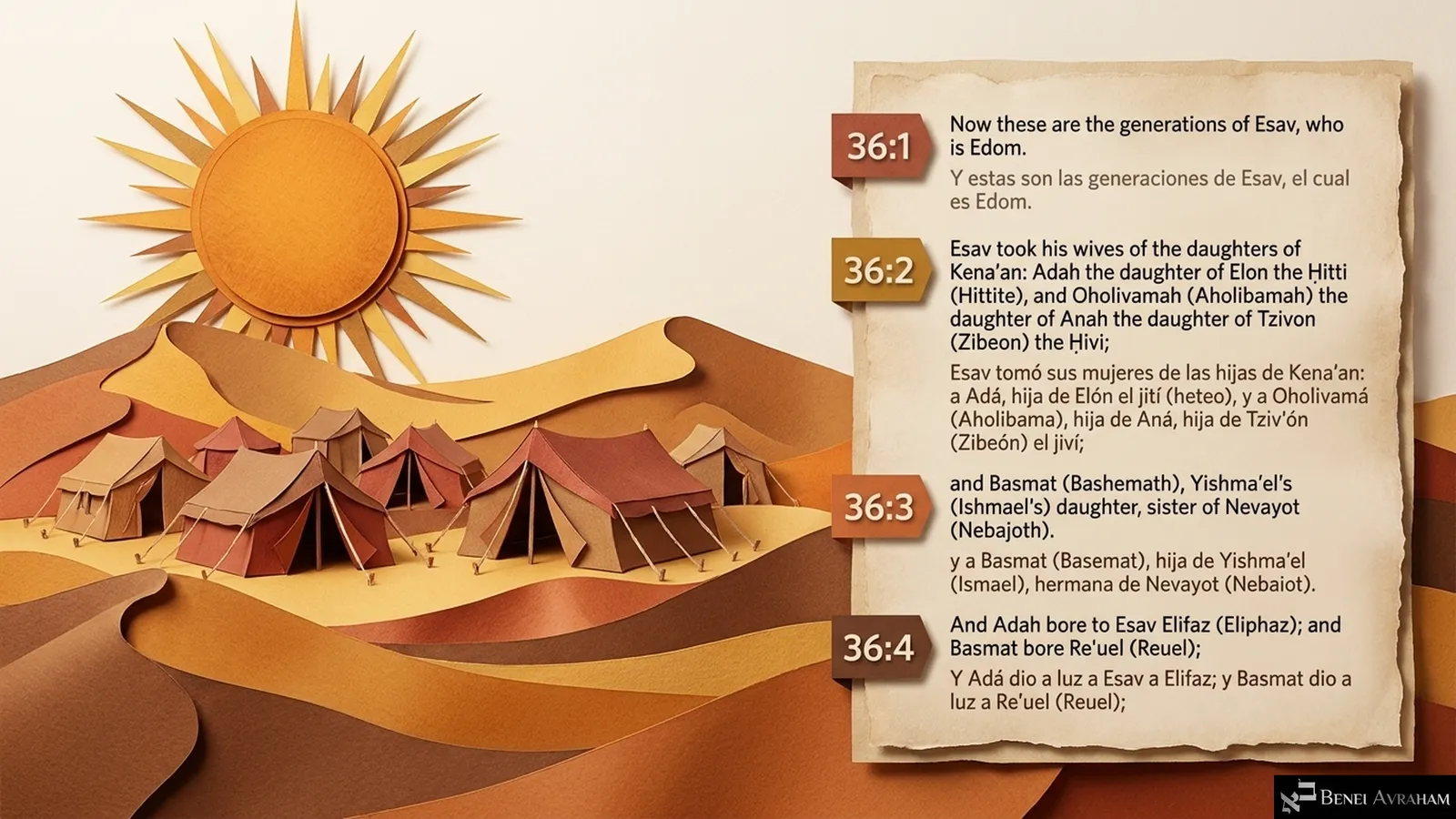
Paper tents under a blazing sun among the dunes: the generations of Esav, who is Edom, his wives from the daughters of Kena’an and Basmat, and the sons born to him (Genesis 36:1–4).
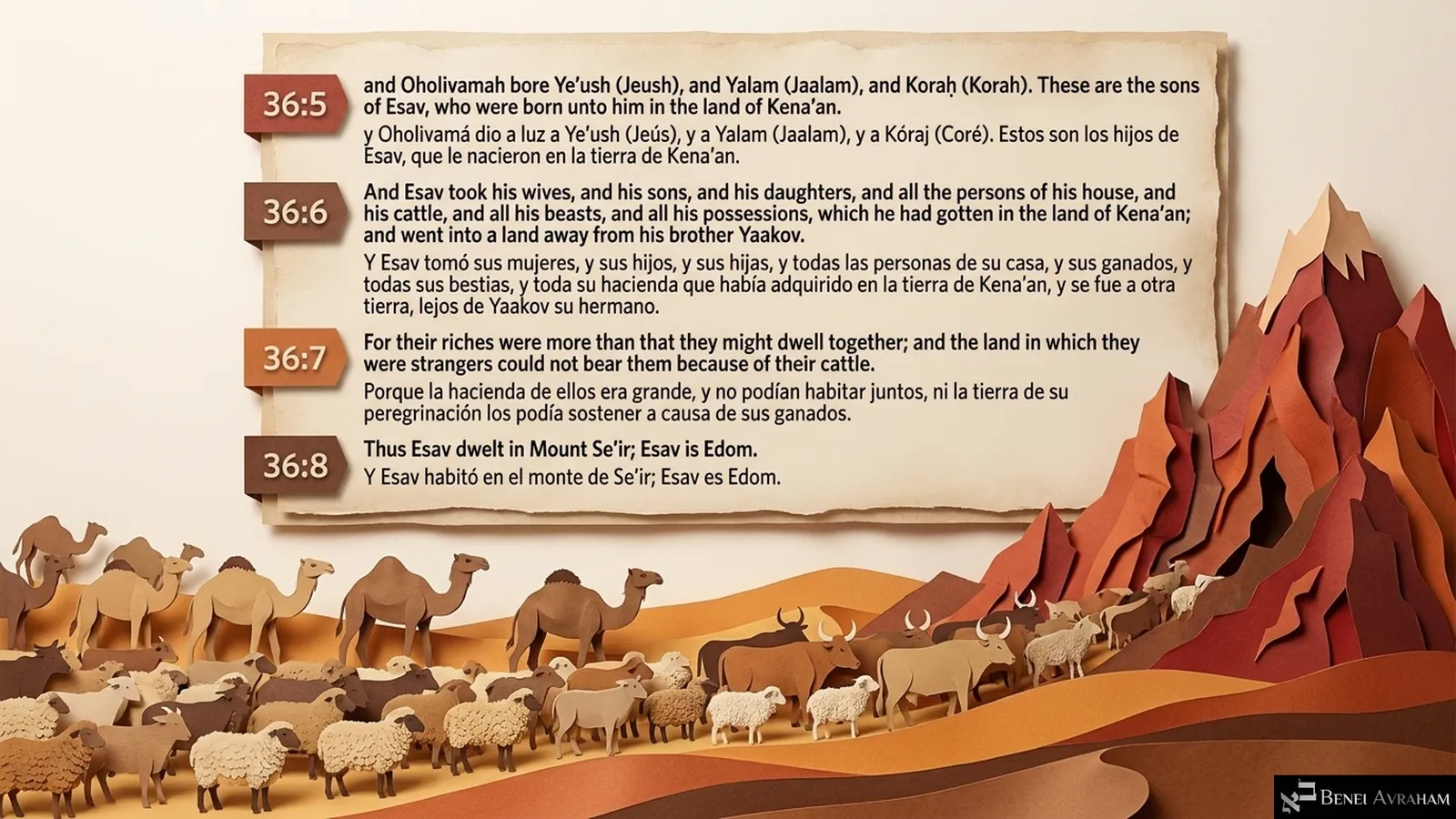
Camels, sheep and cattle travel toward a red mountain: Esav takes his household and all his possessions to a land away from his brother Yaakov, and dwells in Mount Se’ir (Genesis 36:5–8).
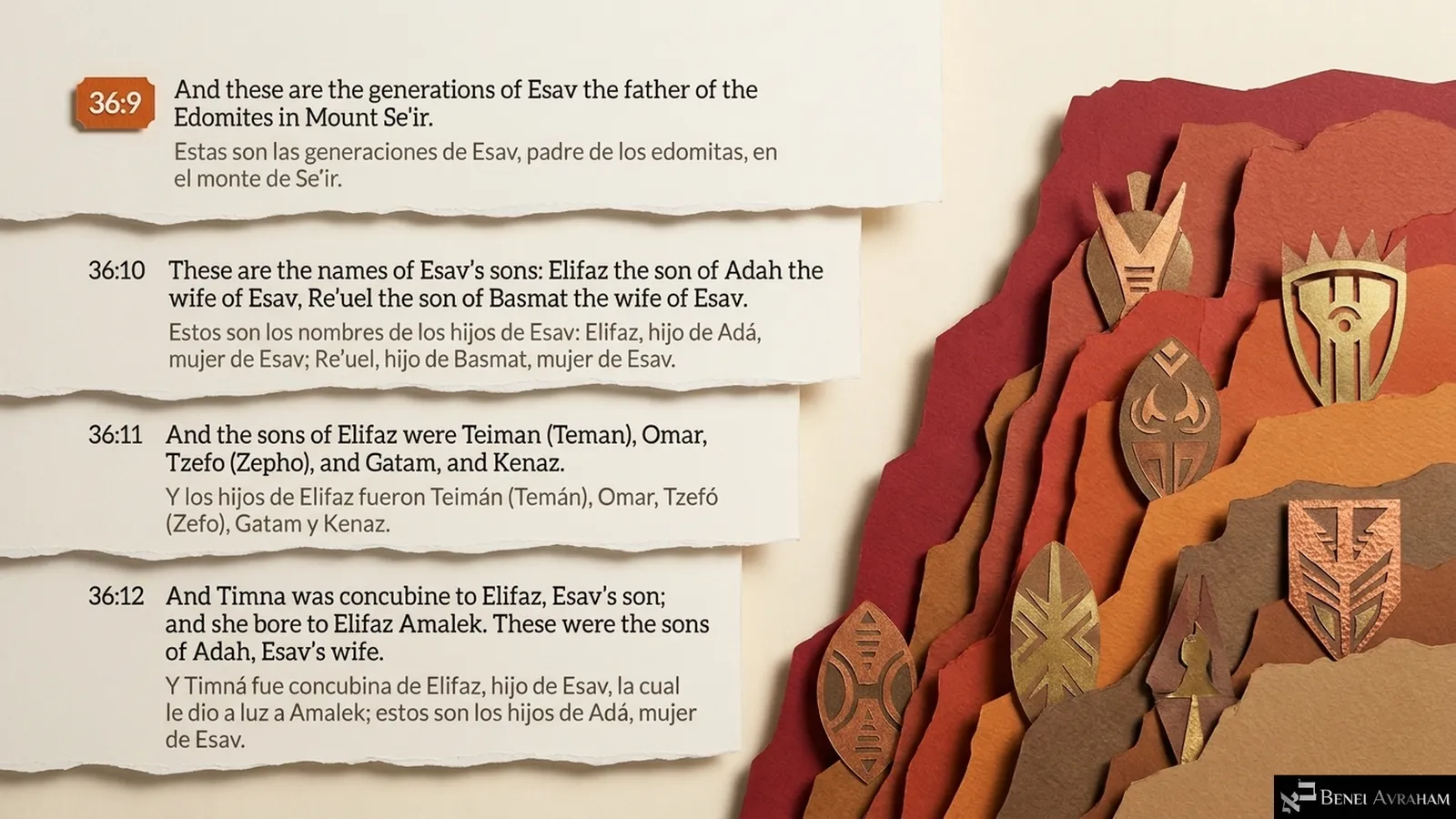
Paper shields and crests climb a red mountainside: the generations of Esav, father of the Edomites in Mount Se’ir, his sons Elifaz and Re’uel, and the sons of Elifaz (Genesis 36:9–12).
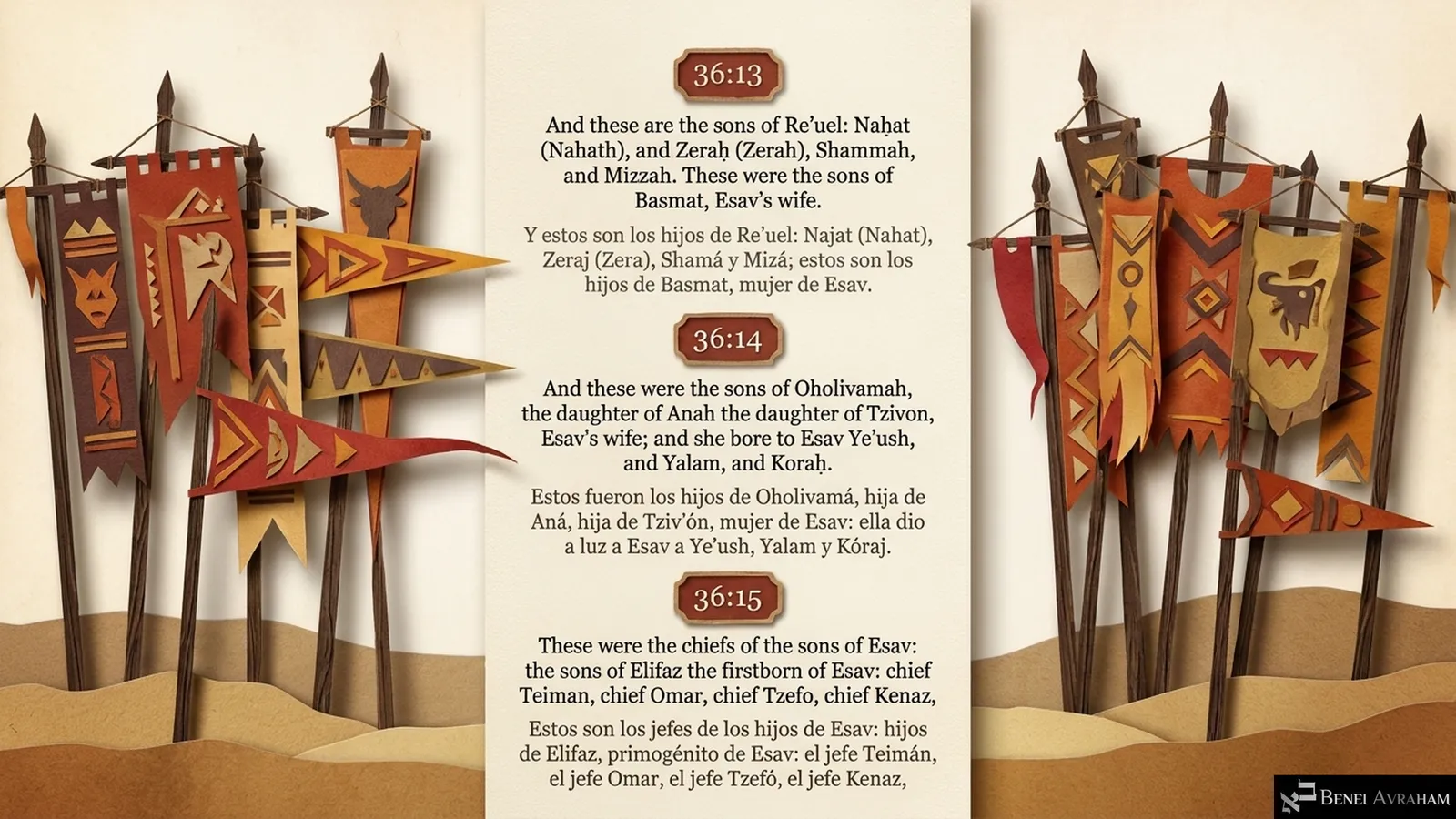
Tribal banners and pennants of Edom on tall poles: the sons of Re’uel and of Oholivamah, and the chiefs of the sons of Esav, chief Teiman, chief Omar, chief Tzefo, chief Kenaz (Genesis 36:13–15).
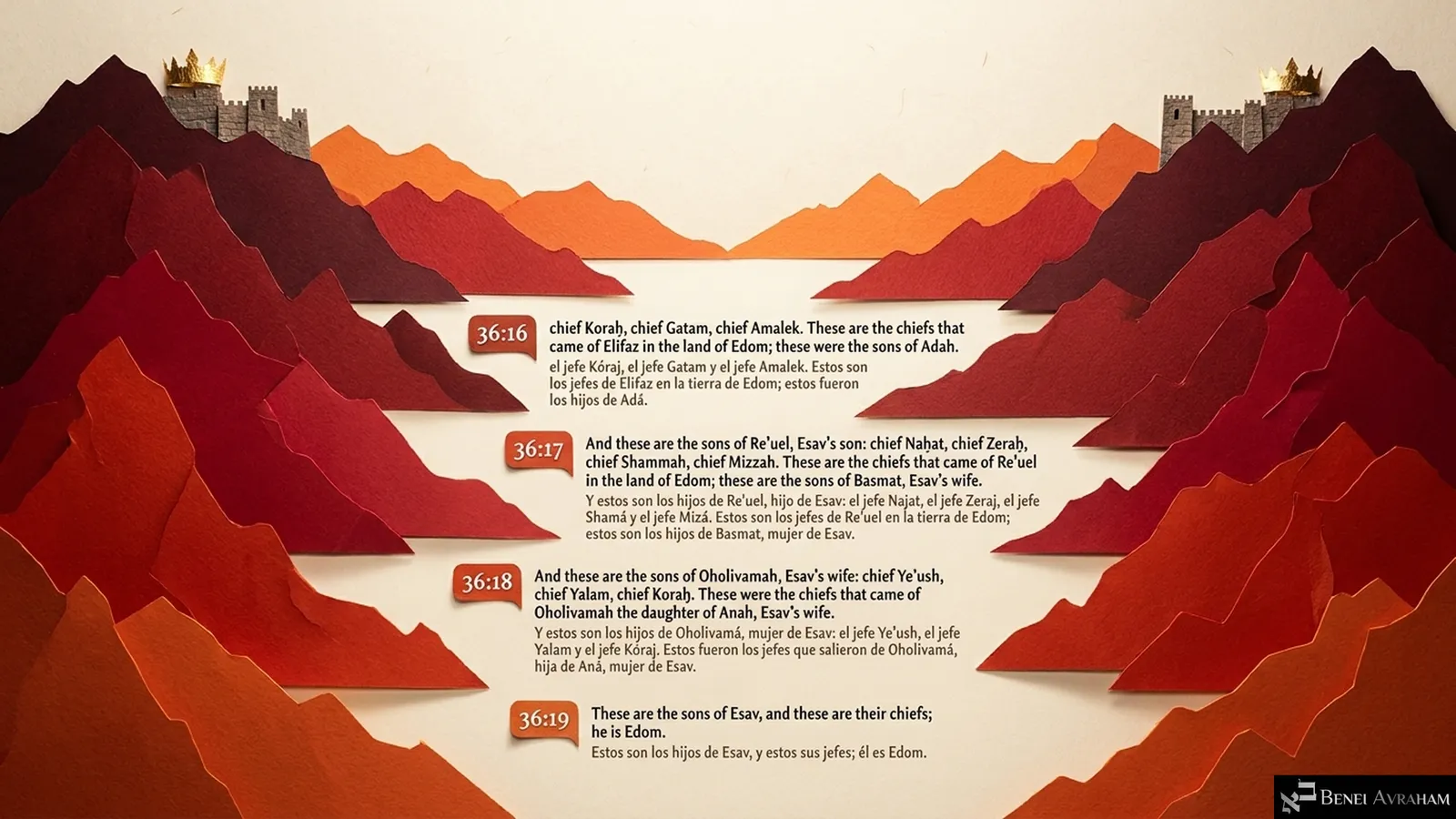
Rows of red mountains with crowned castles on the heights: the chiefs that came of Elifaz, Re’uel and Oholivamah in the land of Edom; these are the sons of Esav, and he is Edom (Genesis 36:16–19).
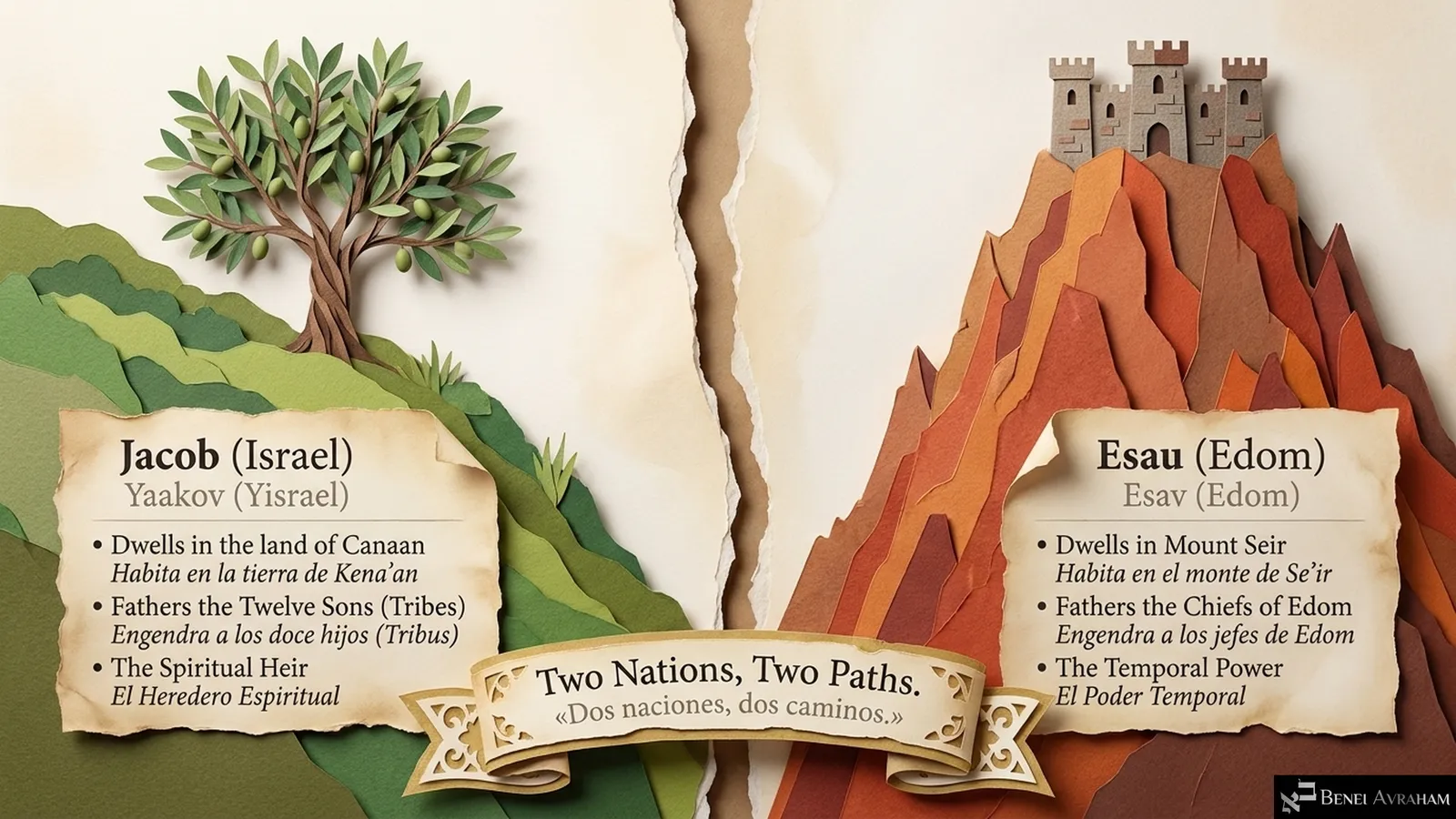
Two nations, two paths: an olive tree on green hills for Yaakov (Yisrael), the twelve sons and the spiritual heir, and a castle on a red mountain for Esav (Edom), the chiefs and the temporal power.
Shevi’i · Genesis 36:20–43

Seventh Portion
Twin title cards before red-rock mountains and a rising sun: “Parashat Vayishlaḥ, 7th Portion, Genesis 36:20–43” and “Séptima porción, Génesis 36:20–43”.
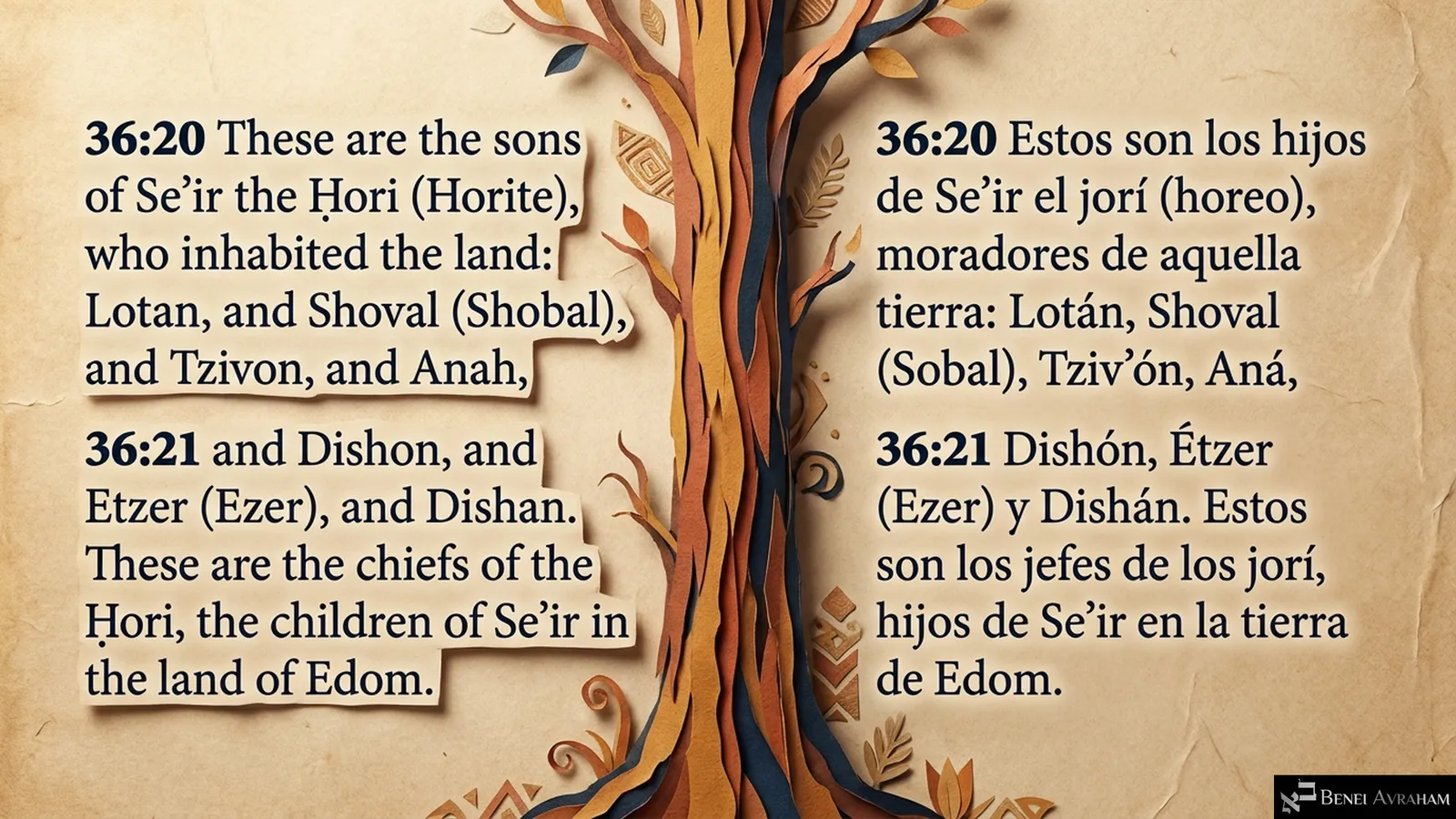
A paper tree trunk divides the page: the sons of Se’ir the Ḥori, who inhabited the land, Lotan, Shoval, Tzivon, Anah, Dishon, Etzer and Dishan, chiefs of the Ḥori in the land of Edom (Genesis 36:20–21).
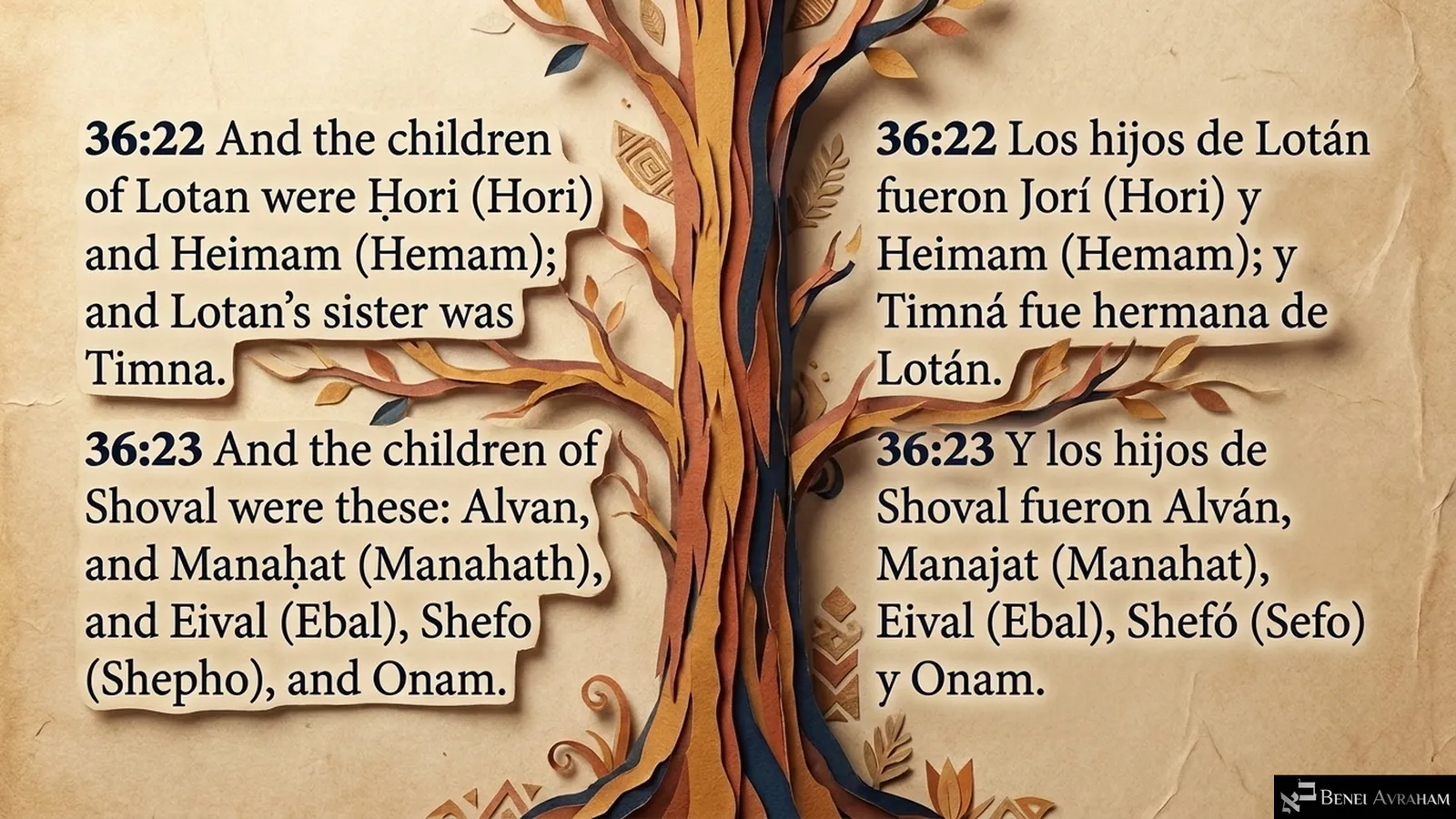
The paper tree with its branches and leaves: the children of Lotan, Ḥori and Heimam, and Lotan’s sister Timna, and the children of Shoval (Genesis 36:22–23).
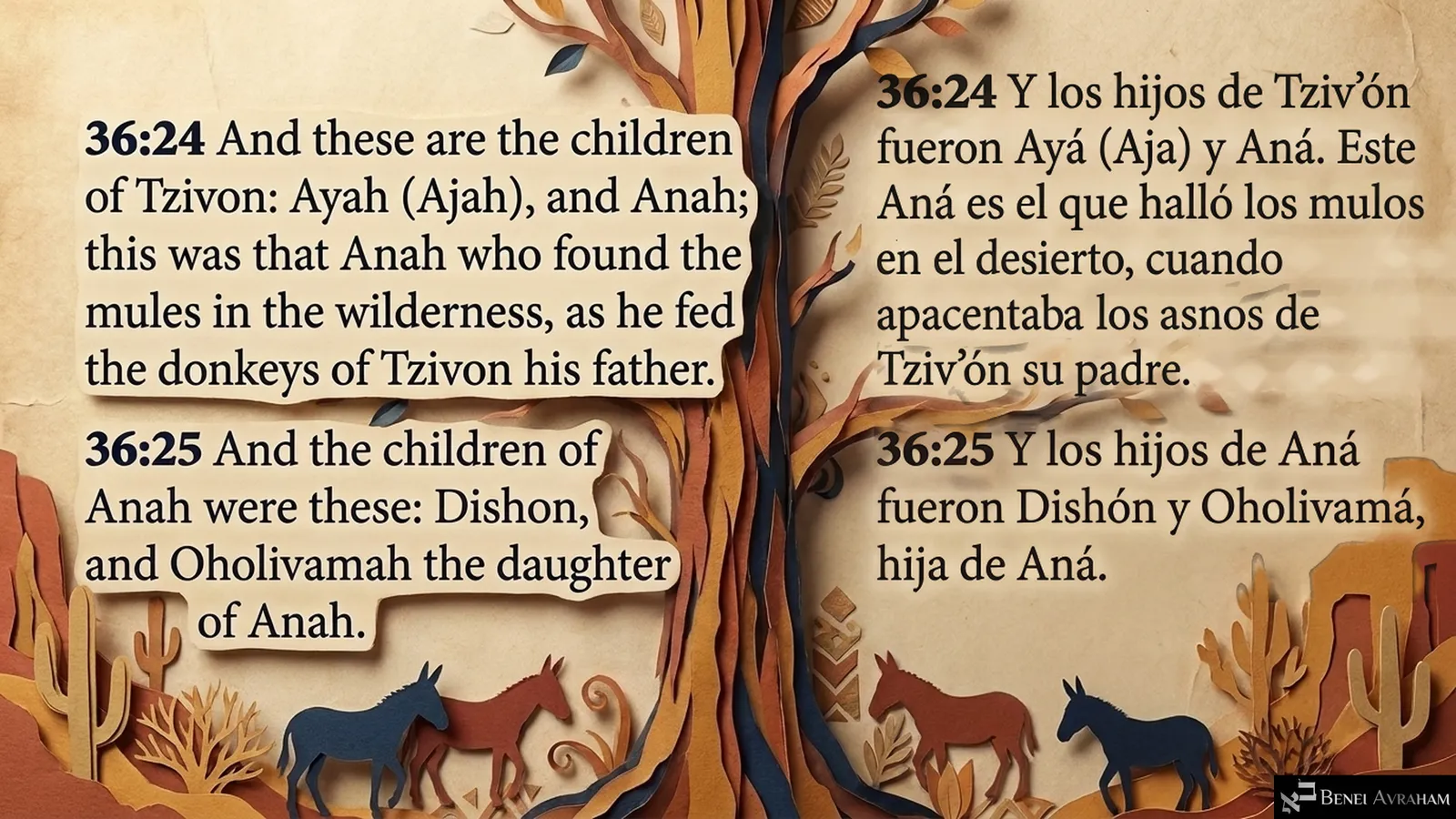
Donkeys and mules among the desert cactus at the foot of the tree: Anah who found the mules in the wilderness as he fed the donkeys of Tzivon his father, and the children of Anah (Genesis 36:24–25).
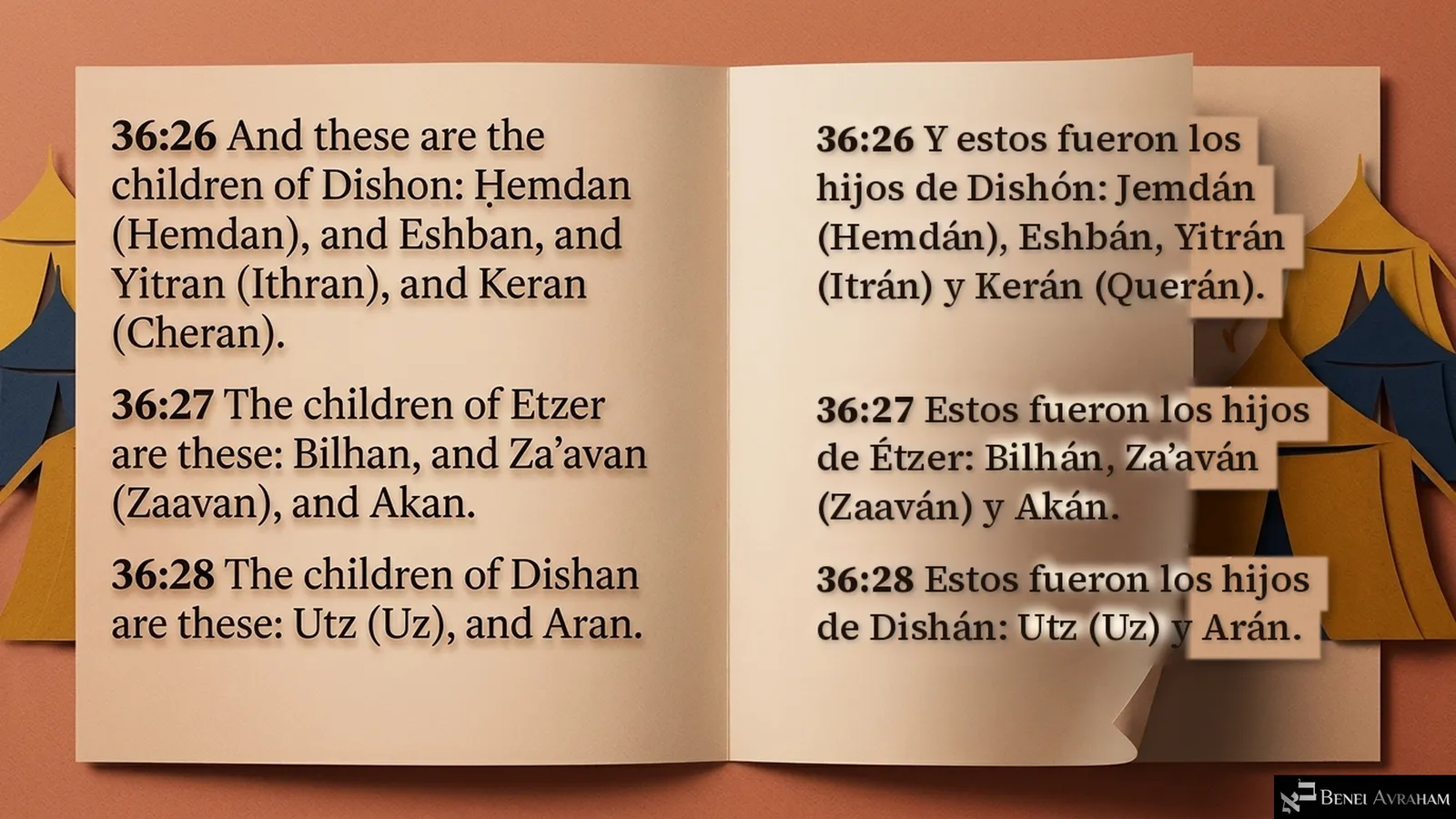
An open paper book between tents: the children of Dishon, of Etzer and of Dishan (Genesis 36:26–28).
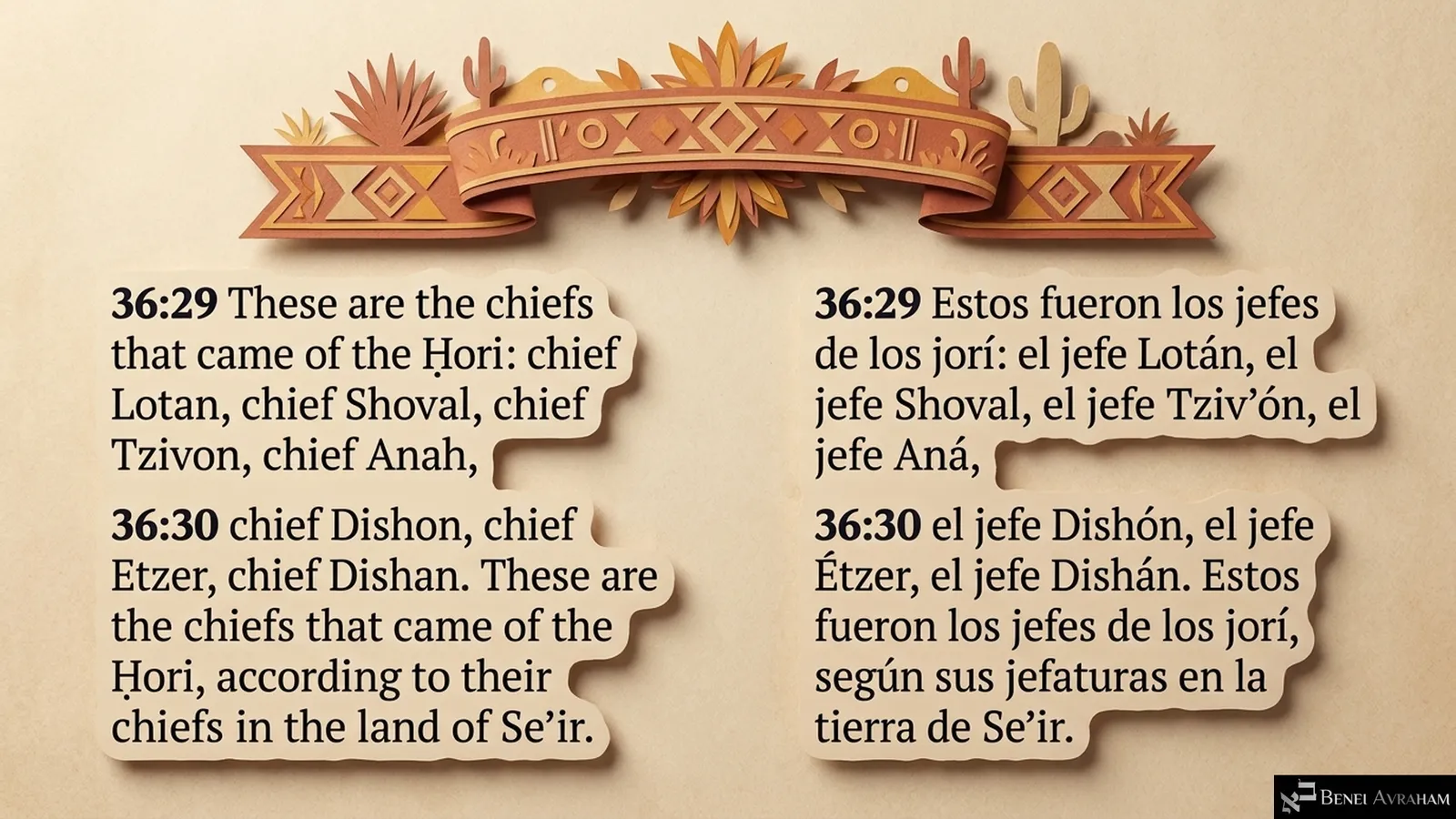
A desert banner with cactus and leaves: the chiefs that came of the Ḥori, according to their chiefs in the land of Se’ir (Genesis 36:29–30).
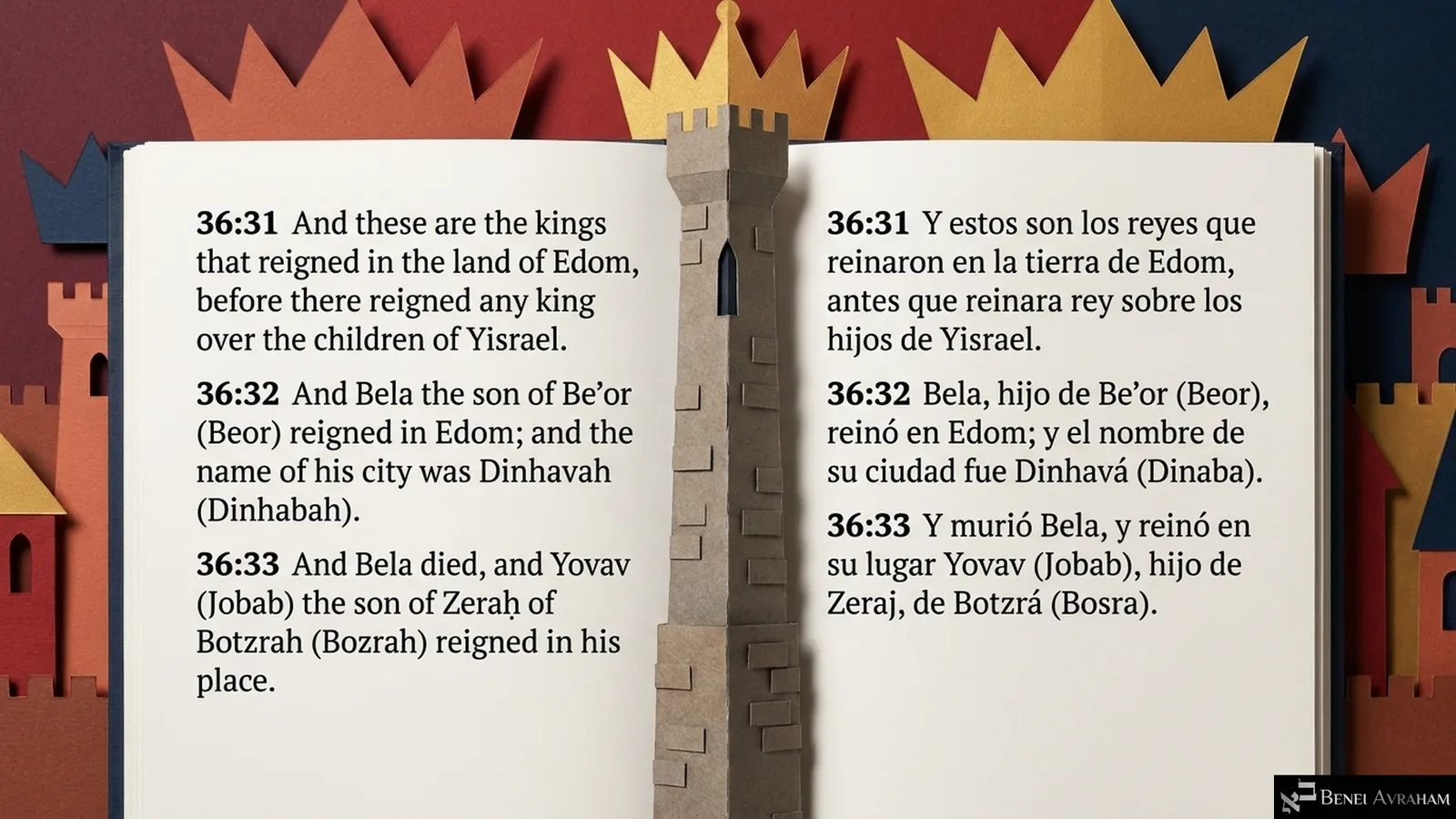
An open book with a paper watchtower rising from its spine, crowns and castles behind: the kings that reigned in Edom before any king over Yisrael, Bela son of Be’or and Yovav son of Zeraḥ (Genesis 36:31–33).
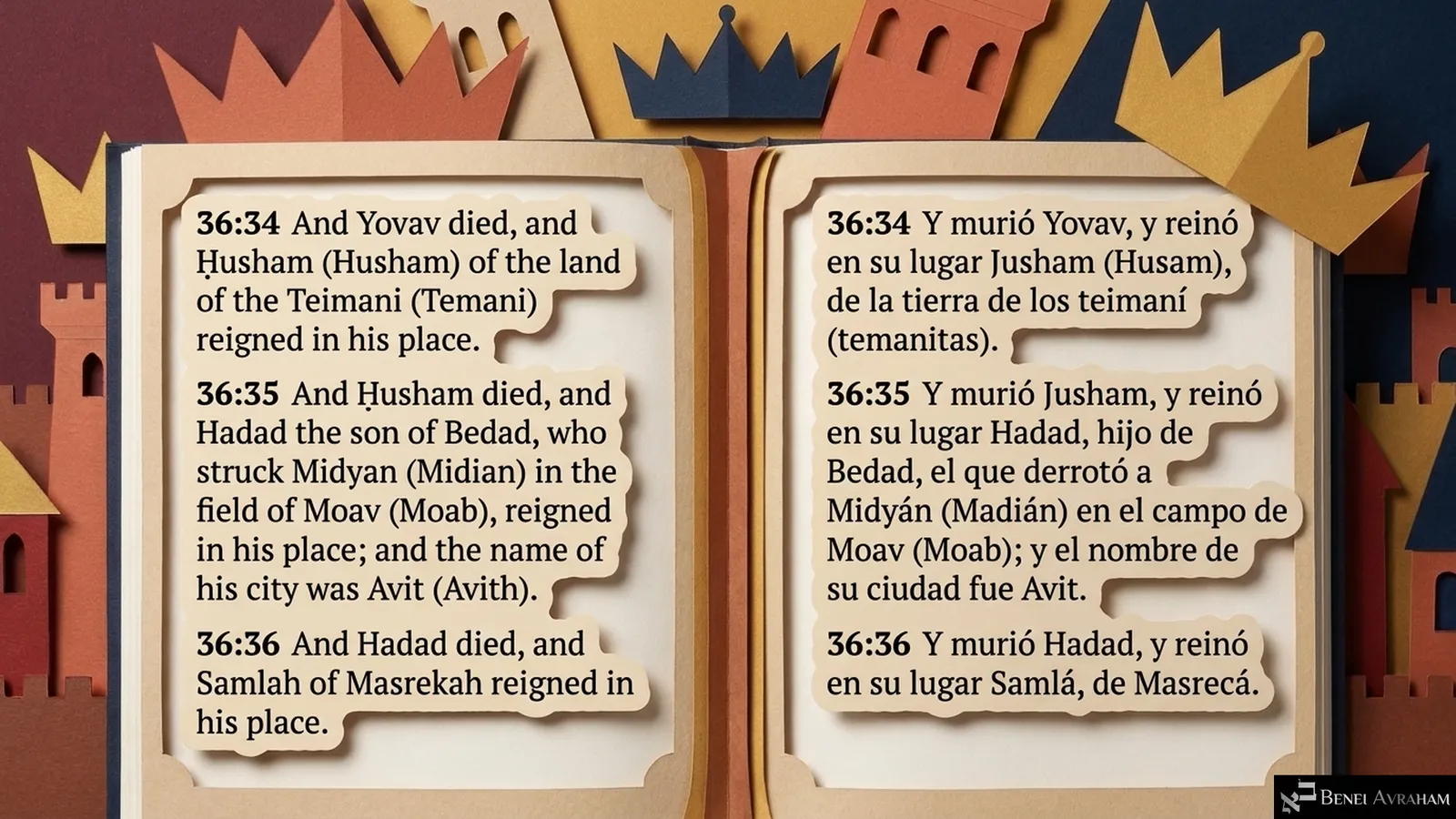
Crowns and castles above an open book: the kings of Edom continue, Ḥusham of the land of the Teimani, Hadad son of Bedad who struck Midyan, and Samlah of Masrekah (Genesis 36:34–36).
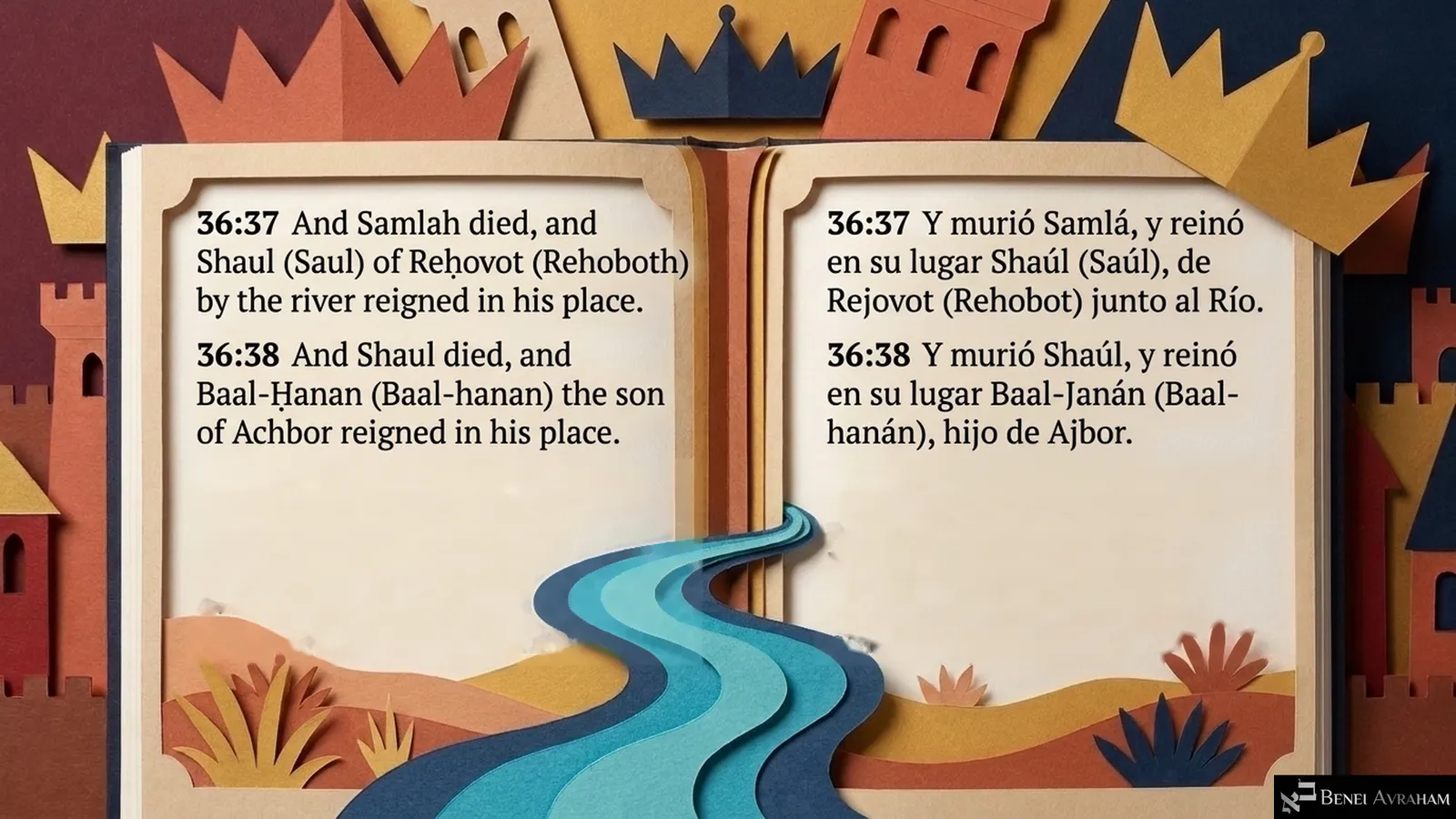
A blue paper river winds out of an open book among castles and crowns: Samlah dies and Shaul of Reḥovot by the river reigns in his place, then Baal-Ḥanan the son of Achbor (Genesis 36:37–38).
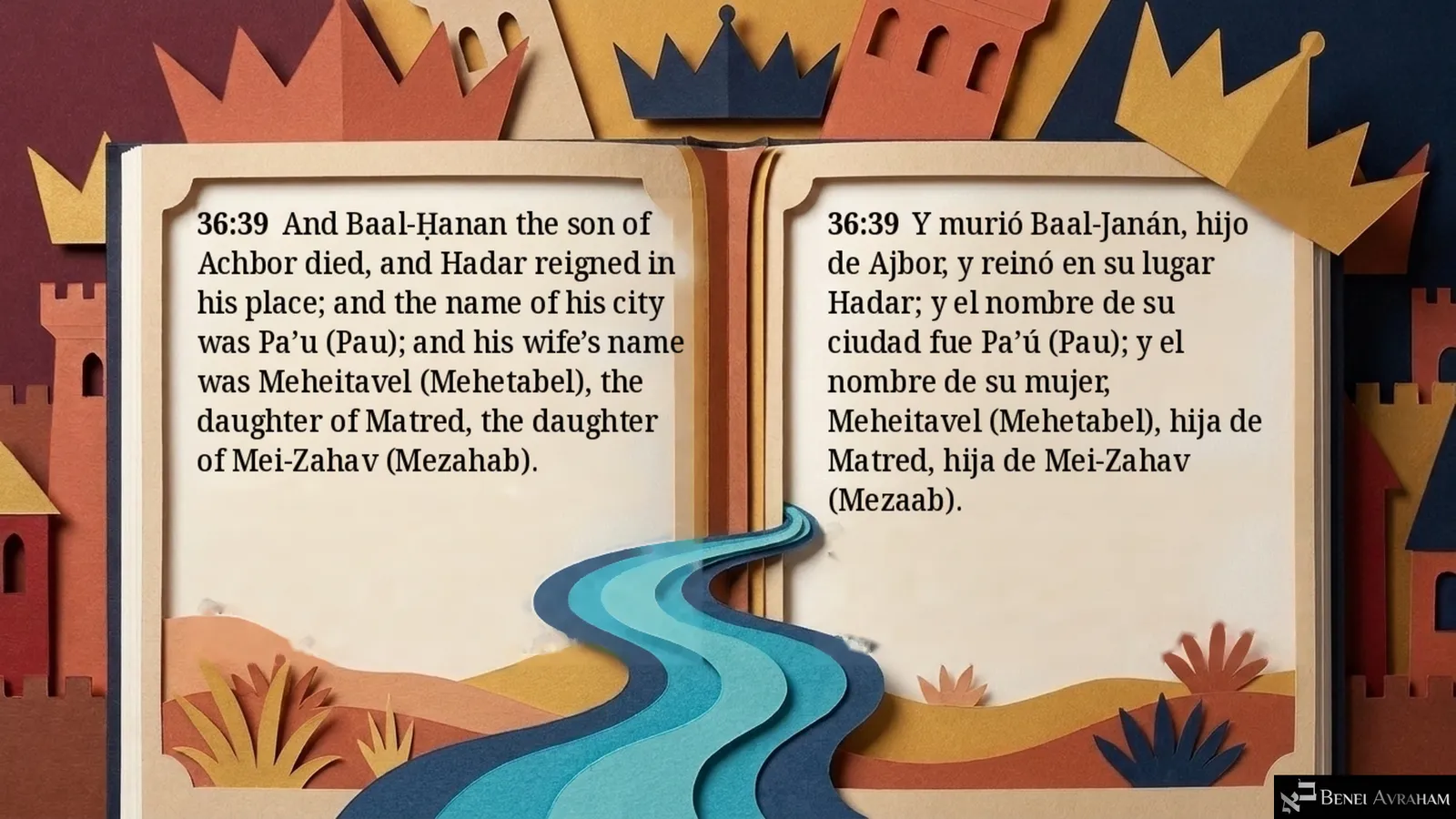
The same river and open book: Baal-Ḥanan the son of Achbor dies and Hadar reigns in his place; the name of his city is Pa’u, and his wife is Meheitavel, the daughter of Matred, the daughter of Mei-Zahav (Genesis 36:39).
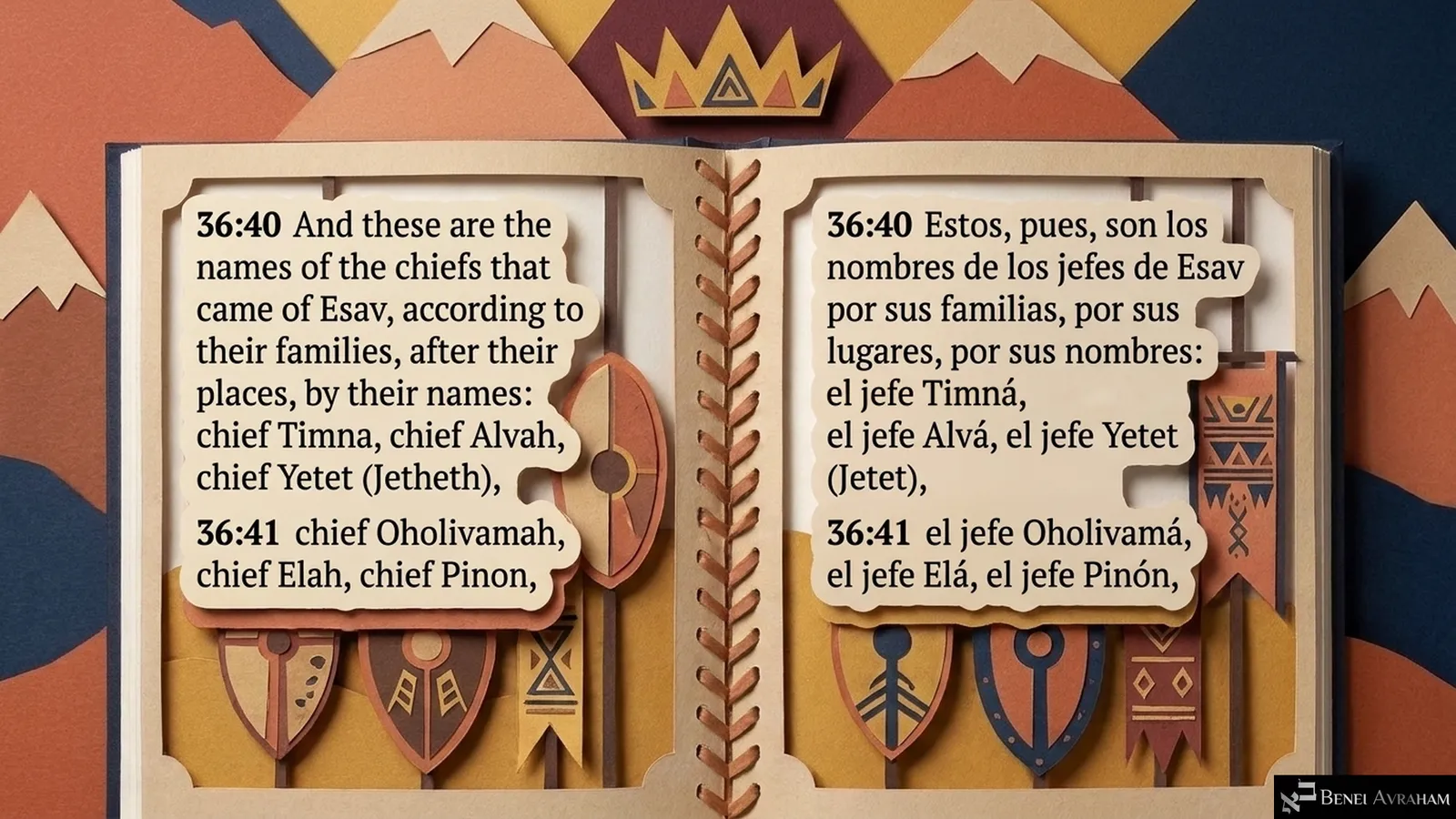
Shields and banners of the chiefs below an open book: the names of the chiefs that came of Esav, chief Timna, chief Alvah, chief Yetet, chief Oholivamah, chief Elah, chief Pinon (Genesis 36:40–41).
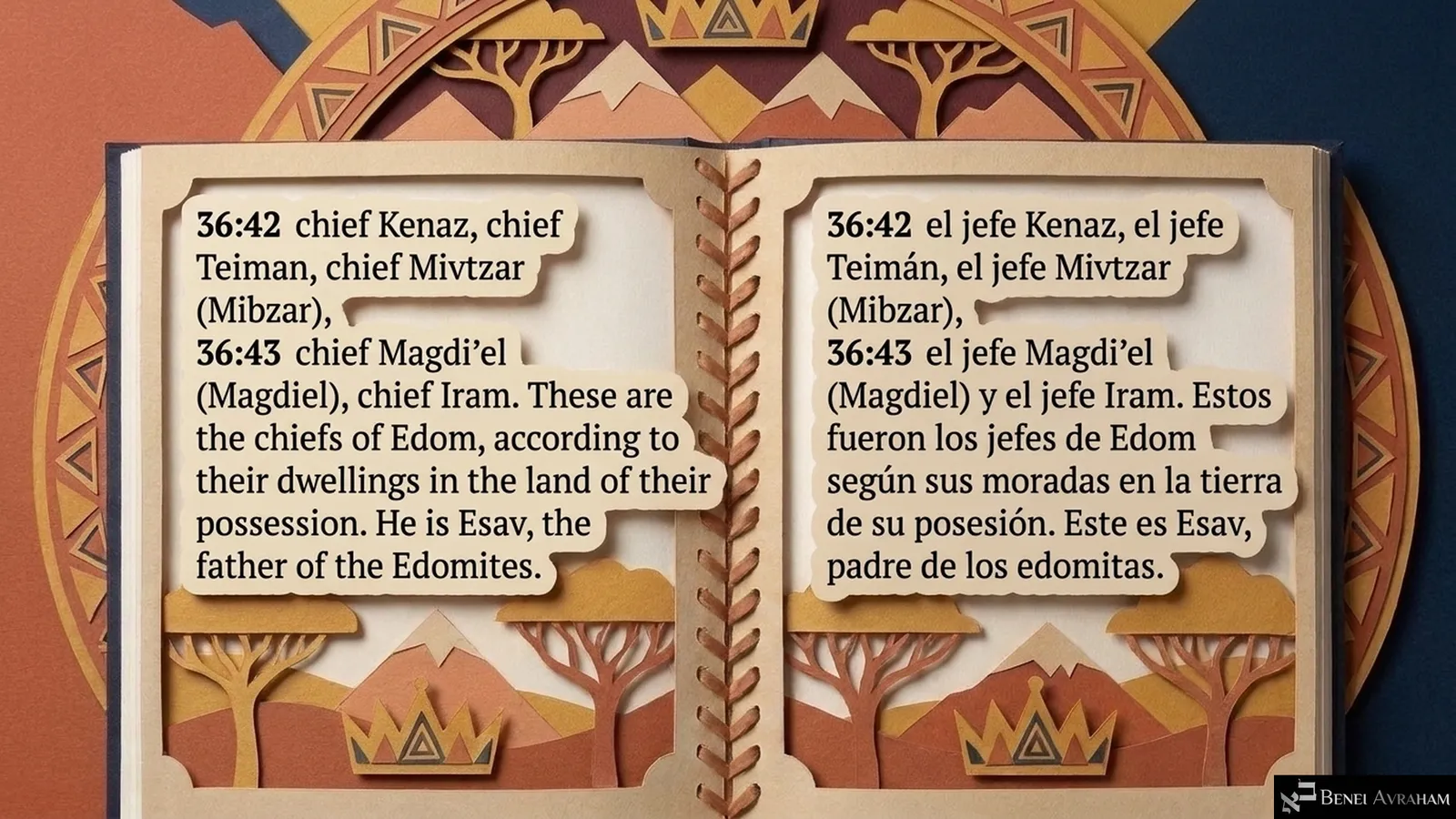
An open book with paper trees, mountains and a crown: chief Kenaz, chief Teiman, chief Mivtzar, chief Magdi’el, chief Iram; these are the chiefs of Edom, and he is Esav, the father of the Edomites (Genesis 36:42–43).
Haftarah · Obadiah 1:1–21

Haftarah: The Vision of Obadiah
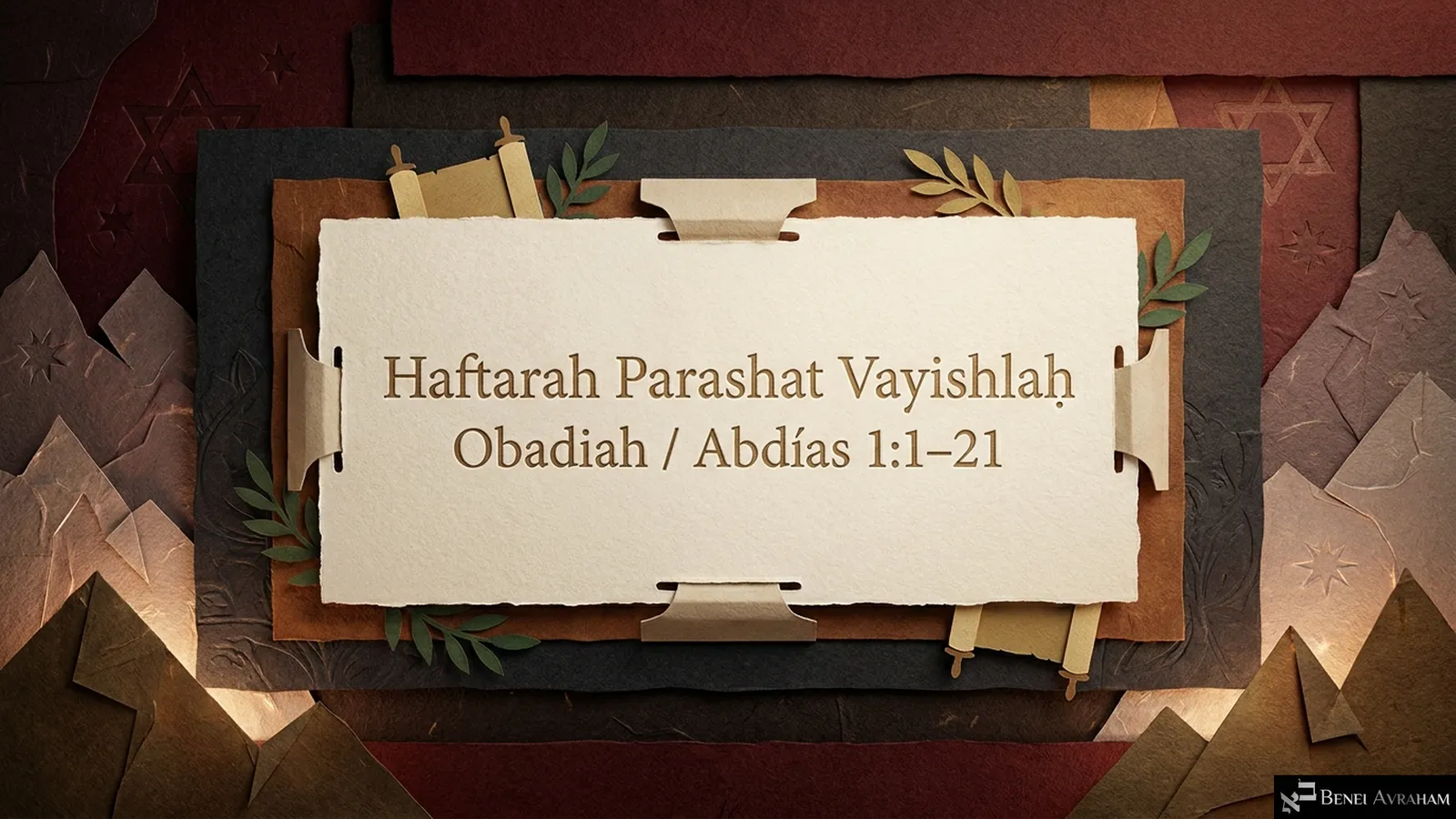
Title card on layered paper with scrolls and olive branches: “Haftarah Parashat Vayishlaḥ, Obadiah / Abdías 1:1–21”.
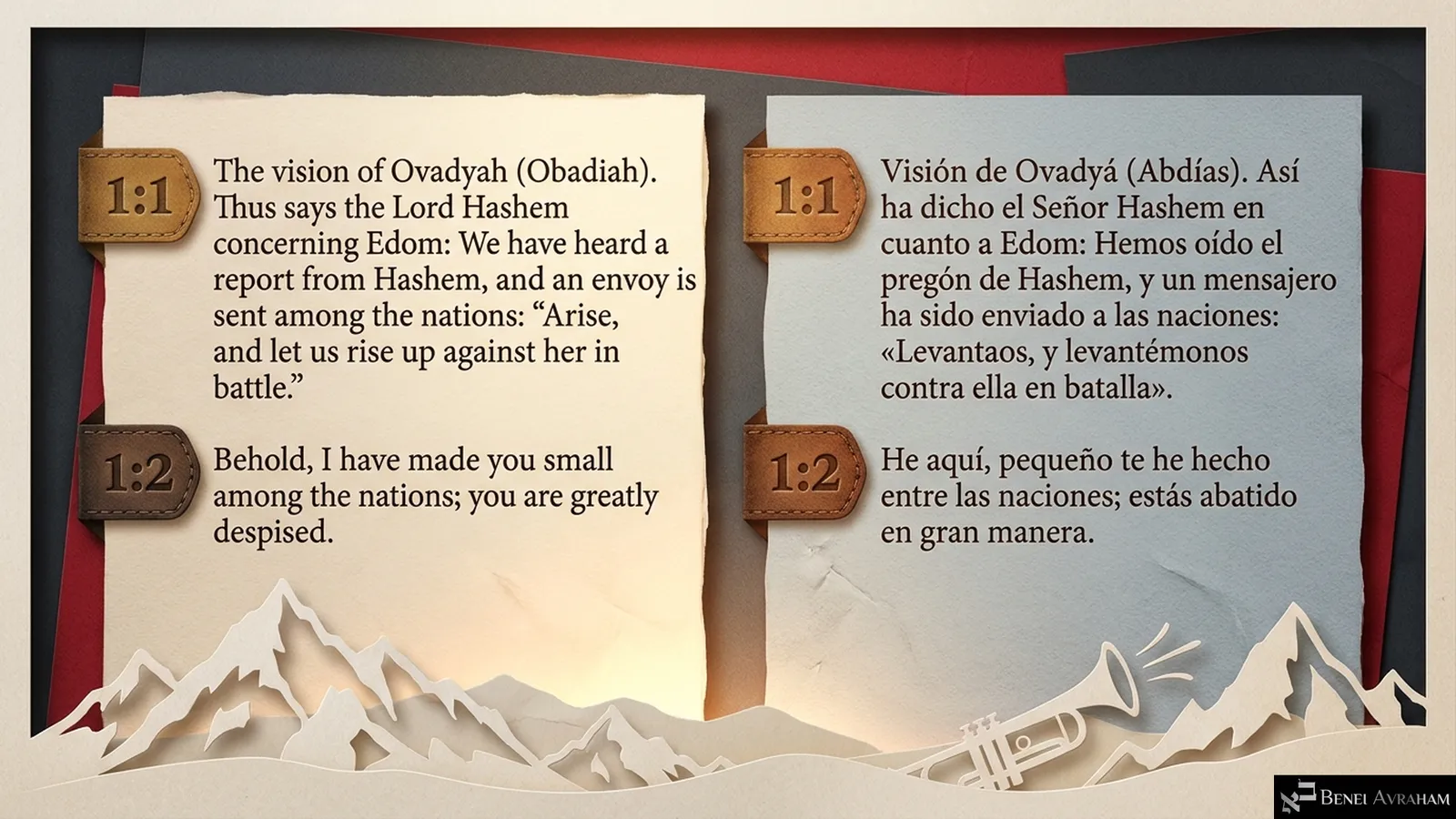
Two paper pages with leather verse tabs above white mountains and a trumpet: the vision of Ovadyah concerning Edom, “Arise, and let us rise up against her in battle”; “I have made you small among the nations” (Obadiah 1:1–2).
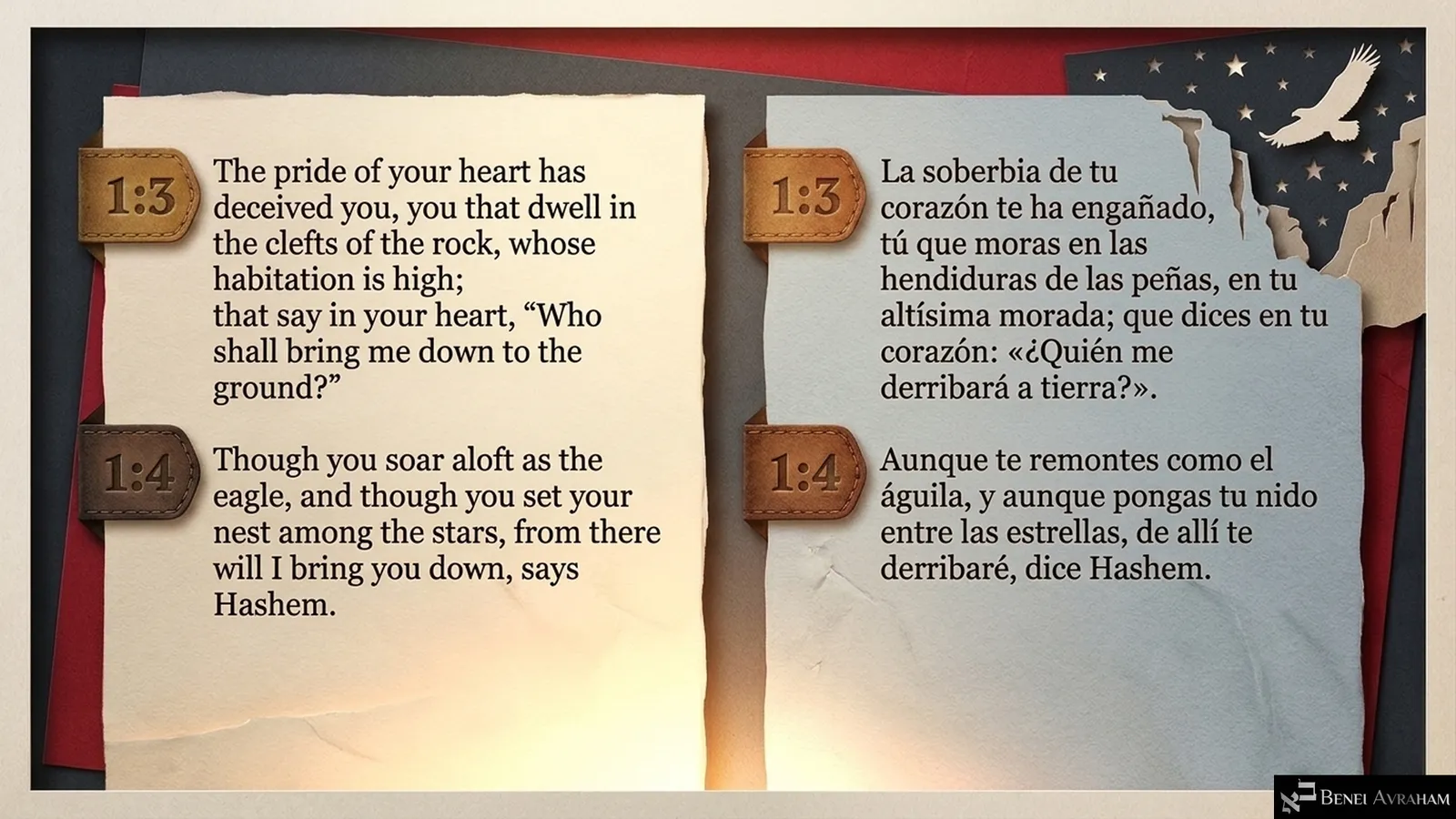
An eagle soars among the stars above the clefts of the rock: “The pride of your heart has deceived you … Though you set your nest among the stars, from there will I bring you down” (Obadiah 1:3–4).
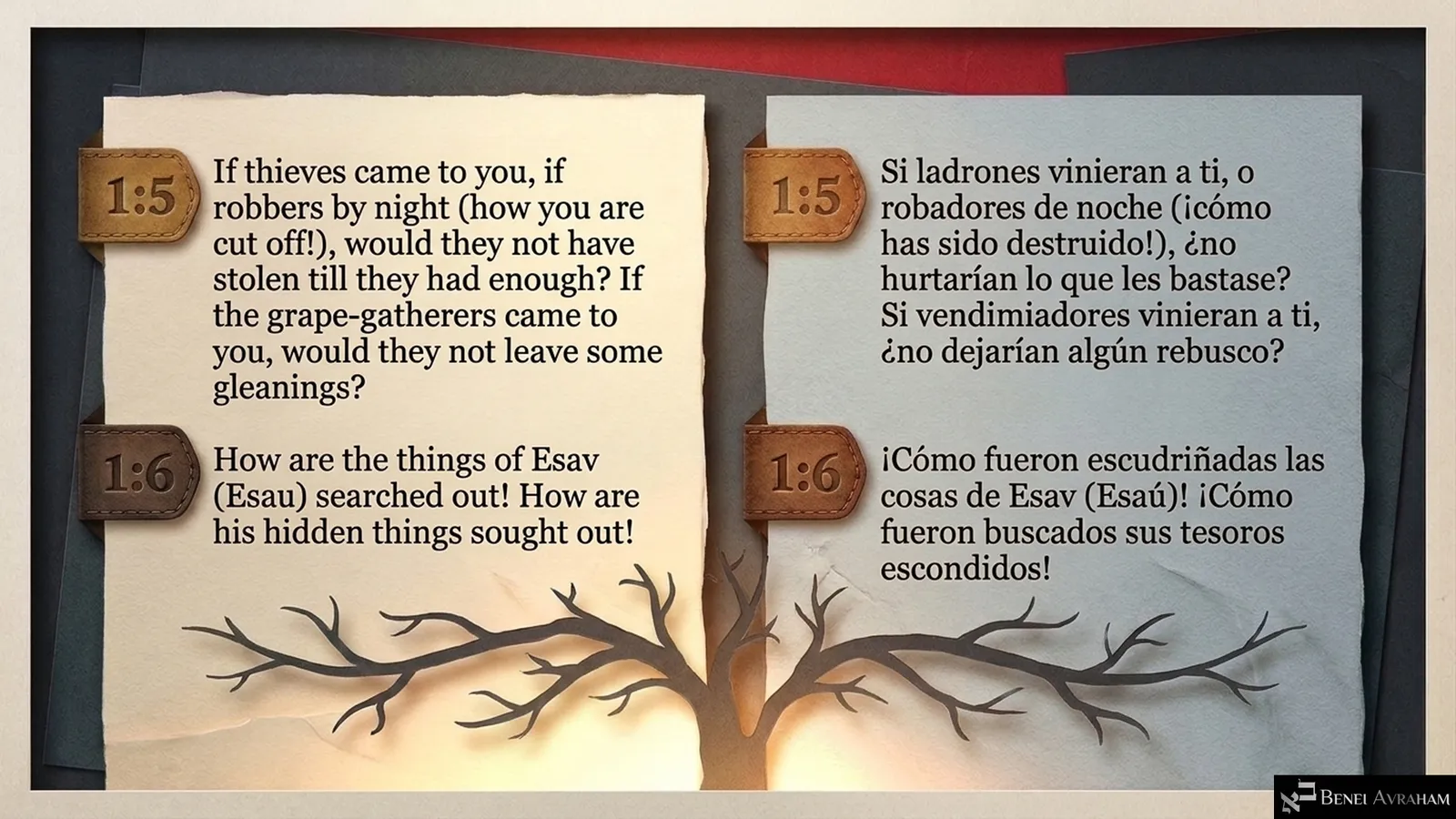
Bare paper branches spread across the two pages: if thieves came by night they would steal till they had enough; “How are the things of Esav searched out! How are his hidden things sought out!” (Obadiah 1:5–6).
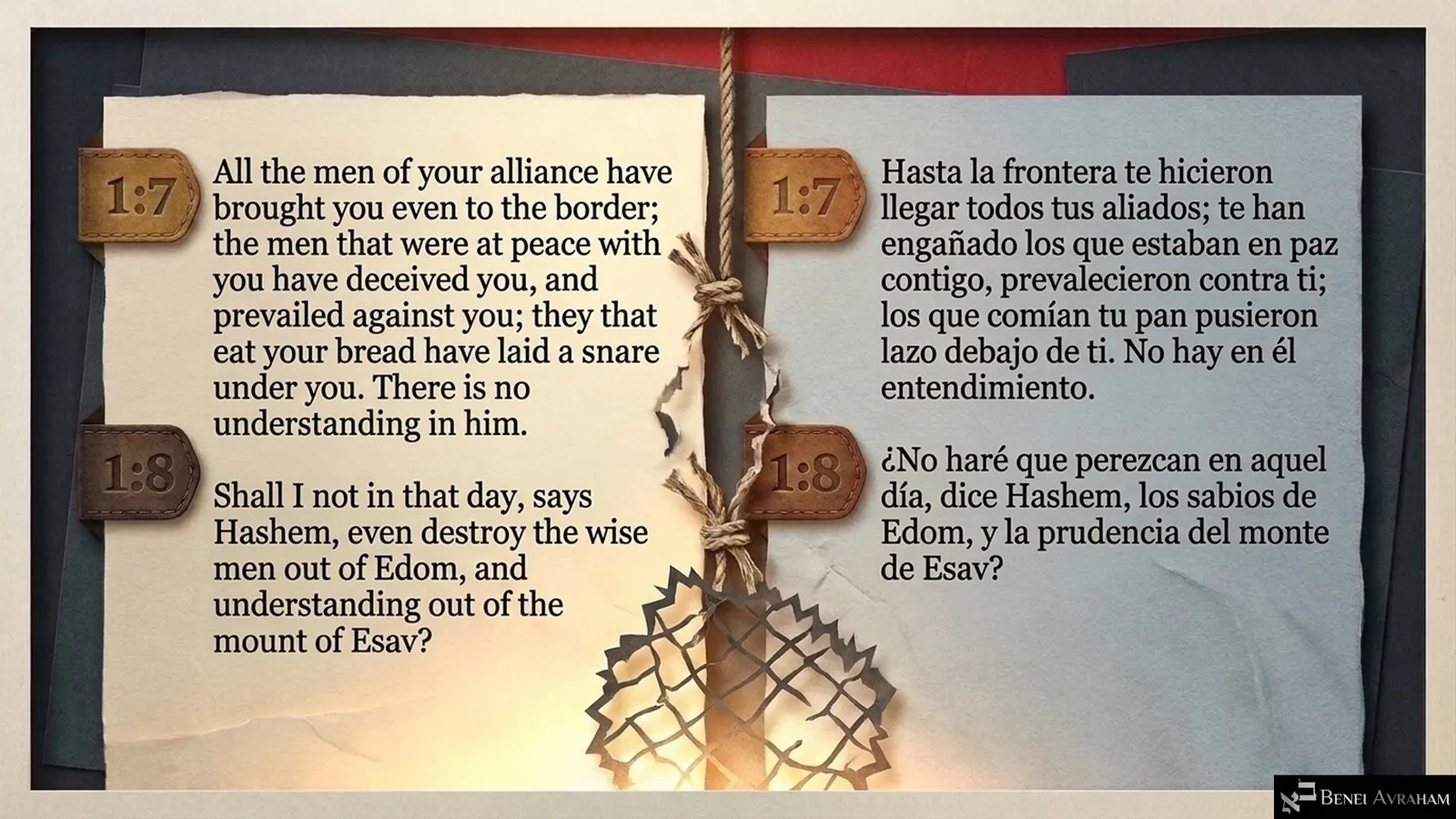
A knotted rope and a torn net hang between the pages: “They that eat your bread have laid a snare under you,” and Hashem will destroy the wise men out of Edom (Obadiah 1:7–8).
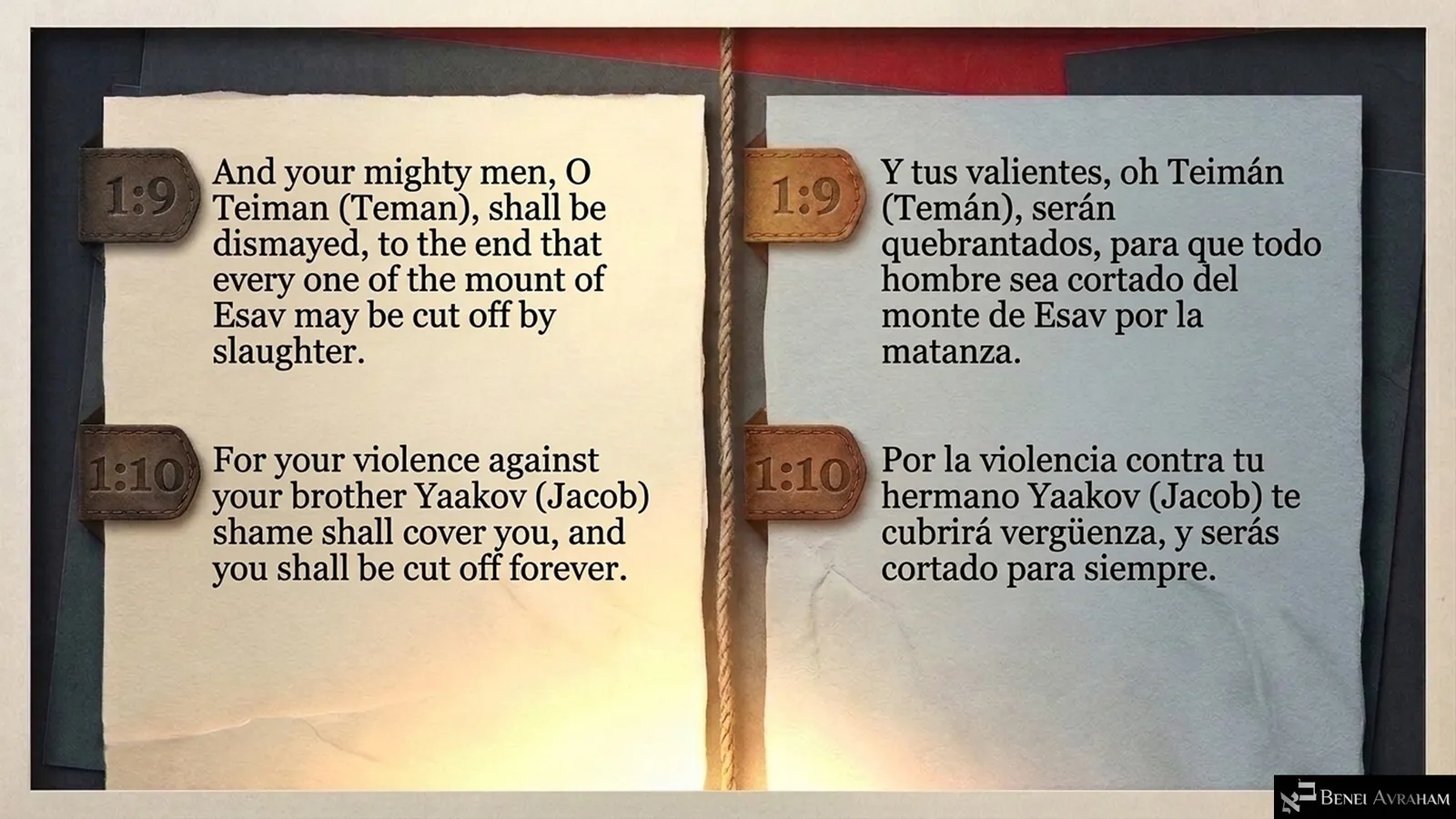
A rope hangs between the two pages: “Your mighty men, O Teiman, shall be dismayed,” and “For your violence against your brother Yaakov shame shall cover you” (Obadiah 1:9–10).
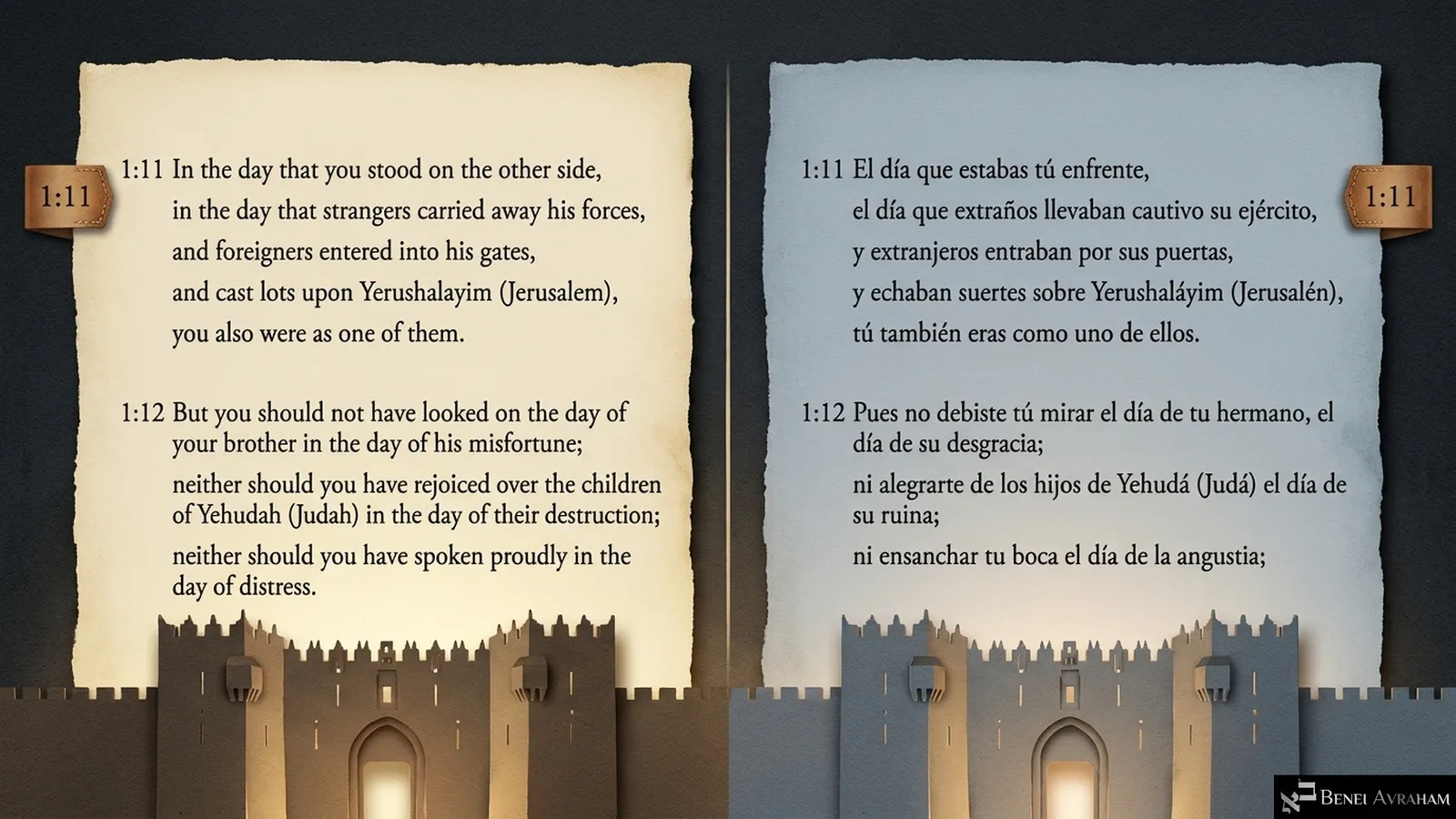
The walls and gate of Yerushalayim in paper beneath two pages: “In the day that strangers … cast lots upon Yerushalayim, you also were as one of them”; “you should not have rejoiced” (Obadiah 1:11–12).
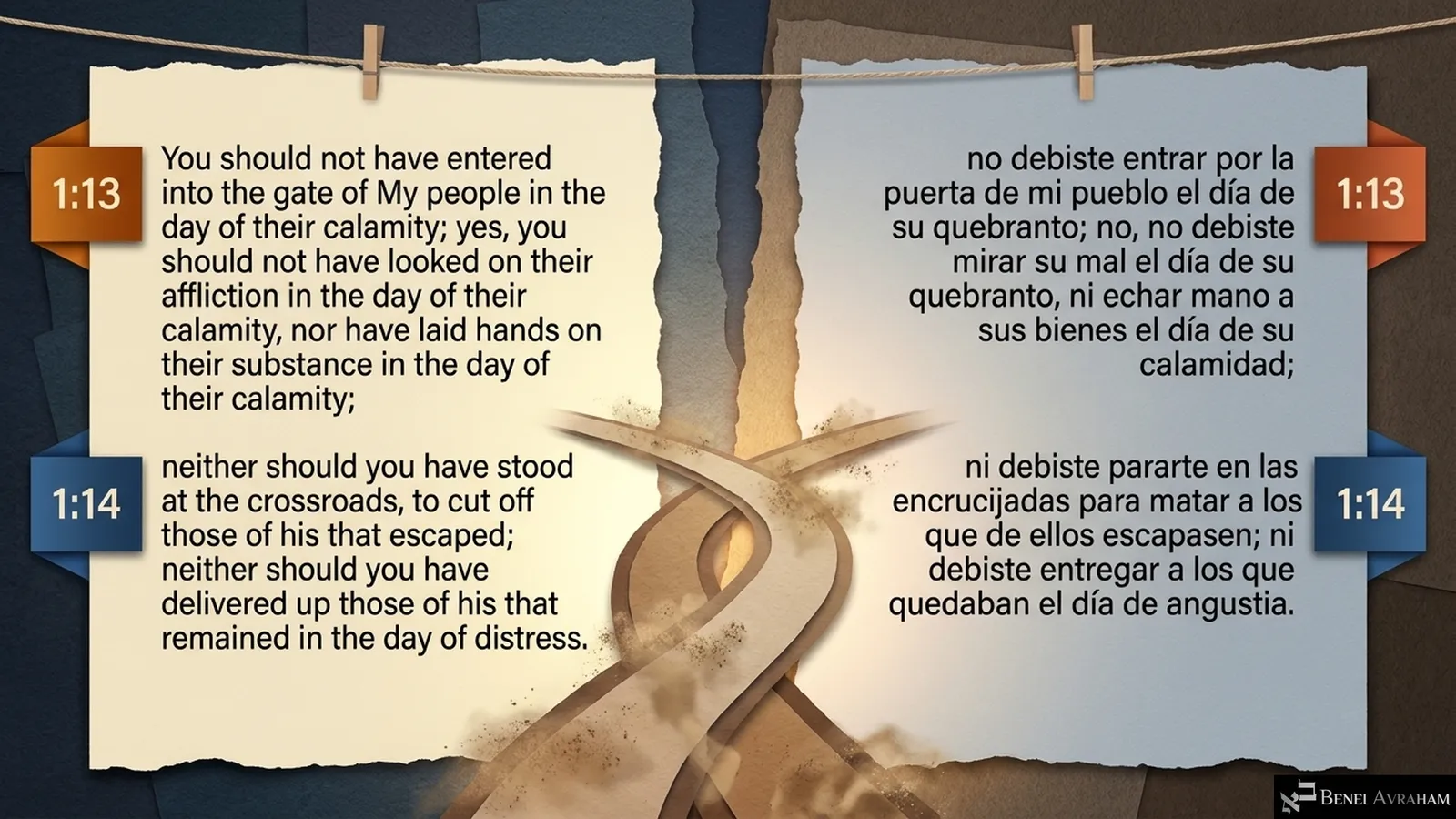
Two paper roads cross and tangle in a cloud of dust: “You should not have entered into the gate of My people in the day of their calamity … neither should you have stood at the crossroads” (Obadiah 1:13–14).
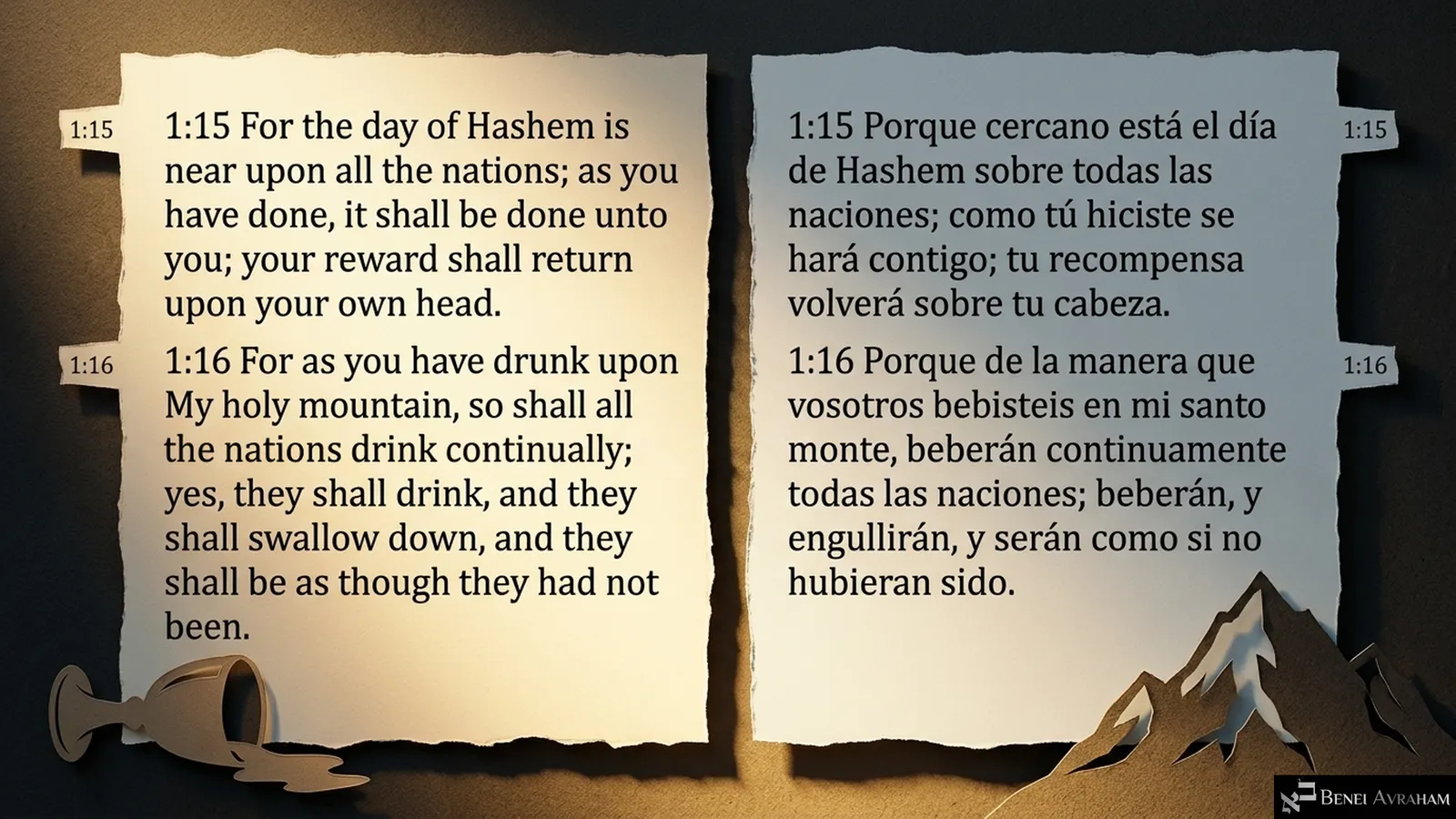
An overturned cup spills at the foot of the page beside a dark mountain: “The day of Hashem is near upon all the nations; as you have done, it shall be done unto you” (Obadiah 1:15–16).
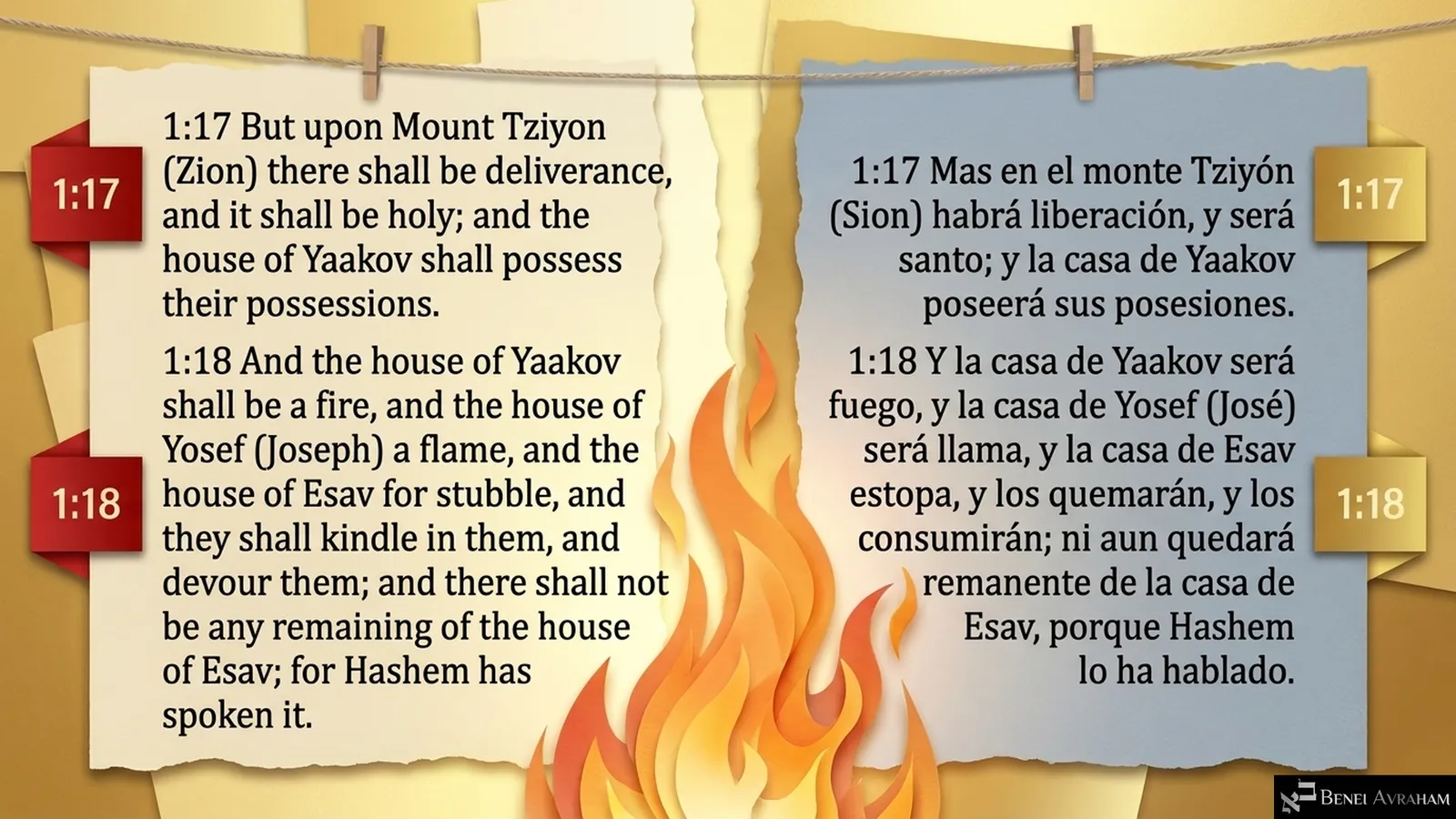
Paper flames leap between the two pages: upon Mount Tziyon there shall be deliverance, and the house of Yaakov shall be a fire, the house of Yosef a flame, and the house of Esav for stubble (Obadiah 1:17–18).
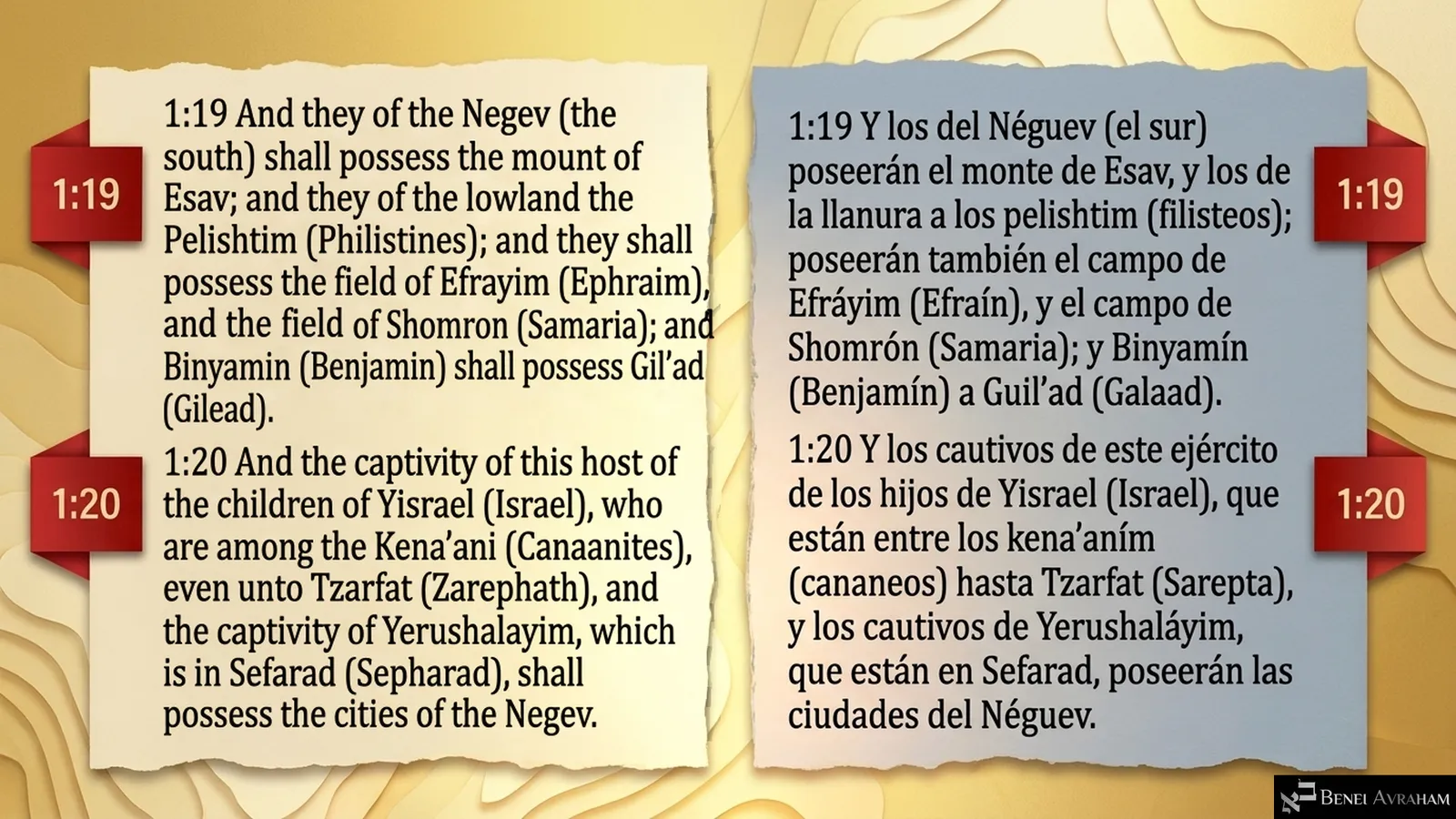
Two torn pages on a golden map of the land: they of the Negev shall possess the mount of Esav, Binyamin shall possess Gil’ad, and the captivity of Yerushalayim shall possess the cities of the Negev (Obadiah 1:19–20).
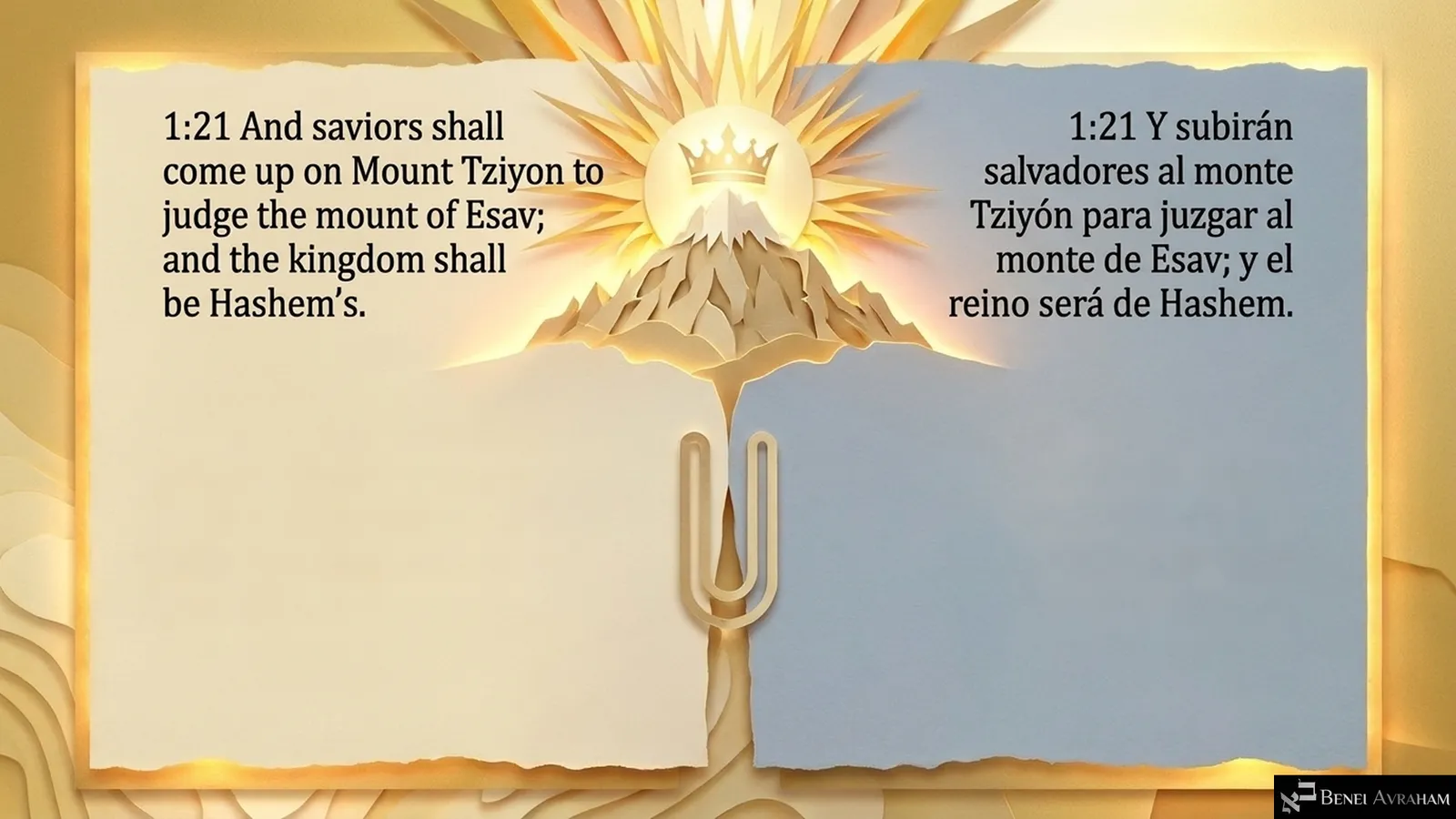
A crowned mountain shines in a burst of golden light between the pages: “Saviors shall come up on Mount Tziyon to judge the mount of Esav; and the kingdom shall be Hashem’s” (Obadiah 1:21).