SMS/Text 469-608-9944
Parashat Vayetze · Genesis 28:10–32:3

Vayetze: A Visual Journey

Illustrated teaching slides from Benei Avraham, in English and Spanish, walking through Parashat Vayetze portion by portion: Yaakov leaves Be’er-Sheva, dreams of a ladder reaching to heaven, and vows at Beit-El; he meets Raḥel at the well and Lavan takes him in; he serves seven years for Raḥel and is given Leah, then serves seven more; Leah, Bilhah and Zilpah bear his sons, and at last Raḥel bears Yosef; Yaakov’s flocks increase with the streaked, speckled and spotted, and Hashem tells him to return to the land of his fathers; he flees with his family, Raḥel takes the household idols, and Lavan overtakes him in Gil’ad; they make a covenant at the heap of Gal’ed and Mitzpah, and the angels of God meet Yaakov at Maḥanayim. Tap any image to open the slideshow; use the arrows (or swipe) to move through every slide.

Rishon · Genesis 28:10–22

First Portion

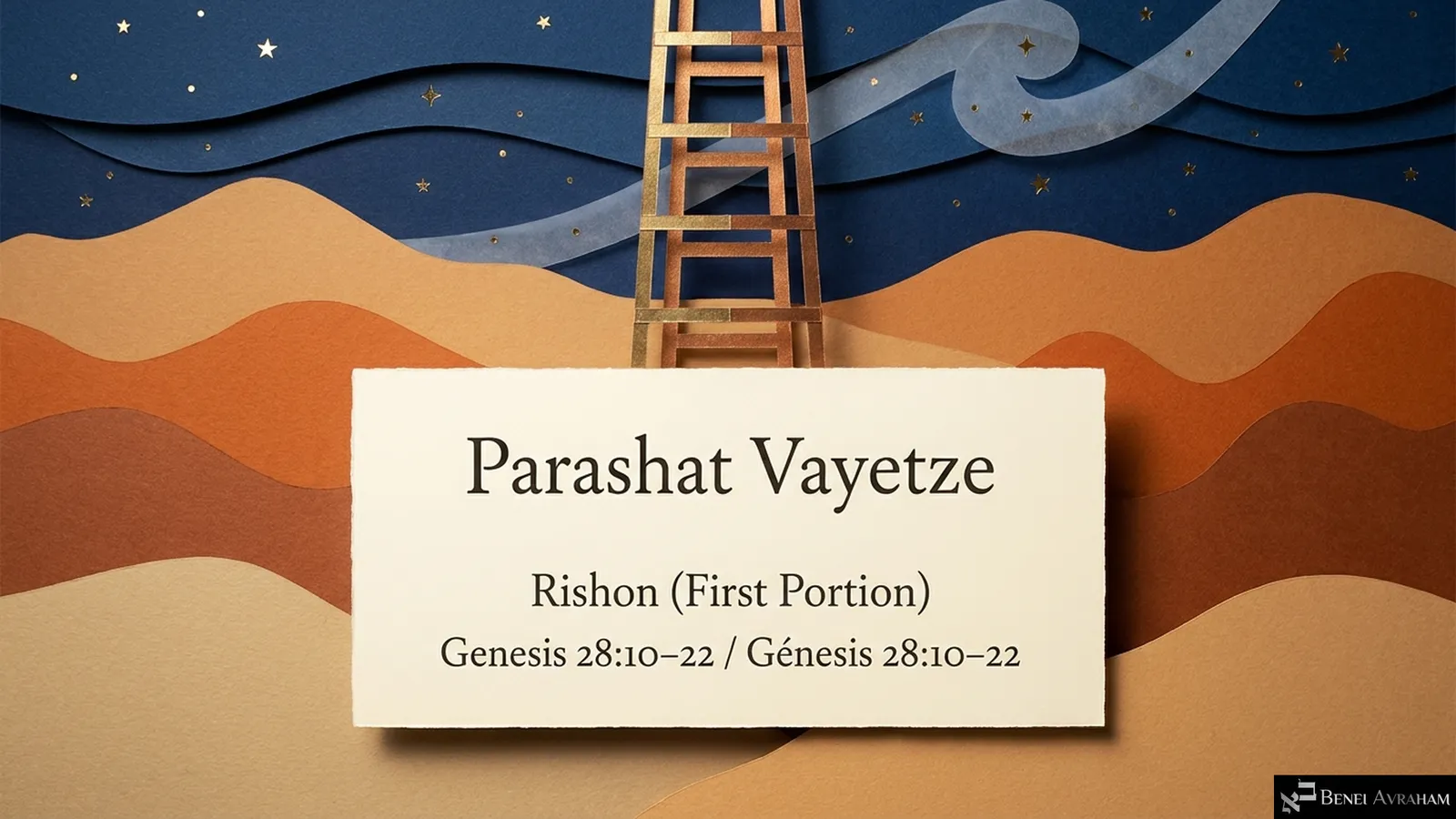
Title slide: Parashat Vayetze, first portion (Rishon), Genesis 28:10–22, with a golden ladder rising into the night sky.
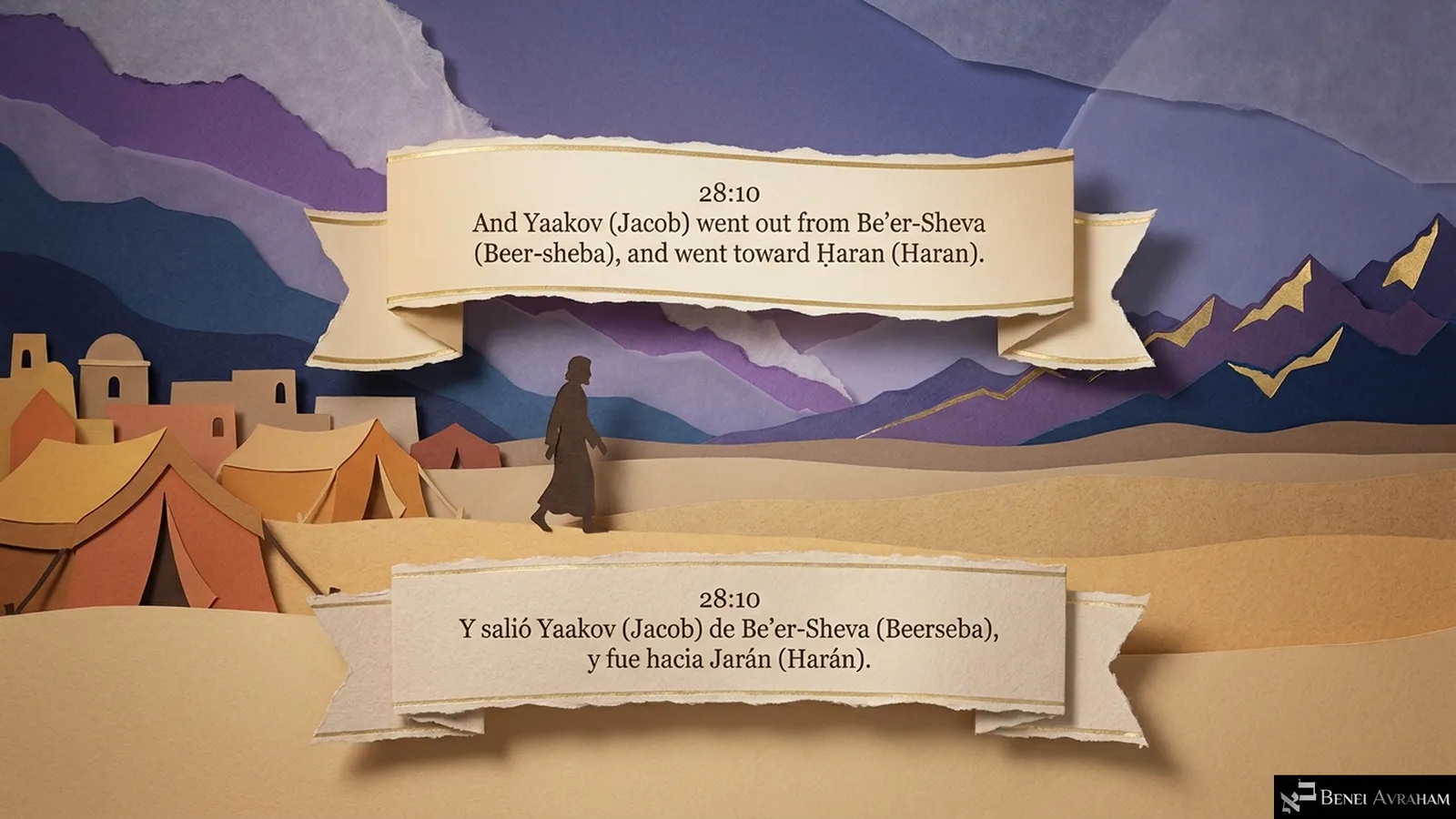
Yaakov sets out from Be’er-Sheva toward Ḥaran, walking past tents across the desert (Genesis 28:10).
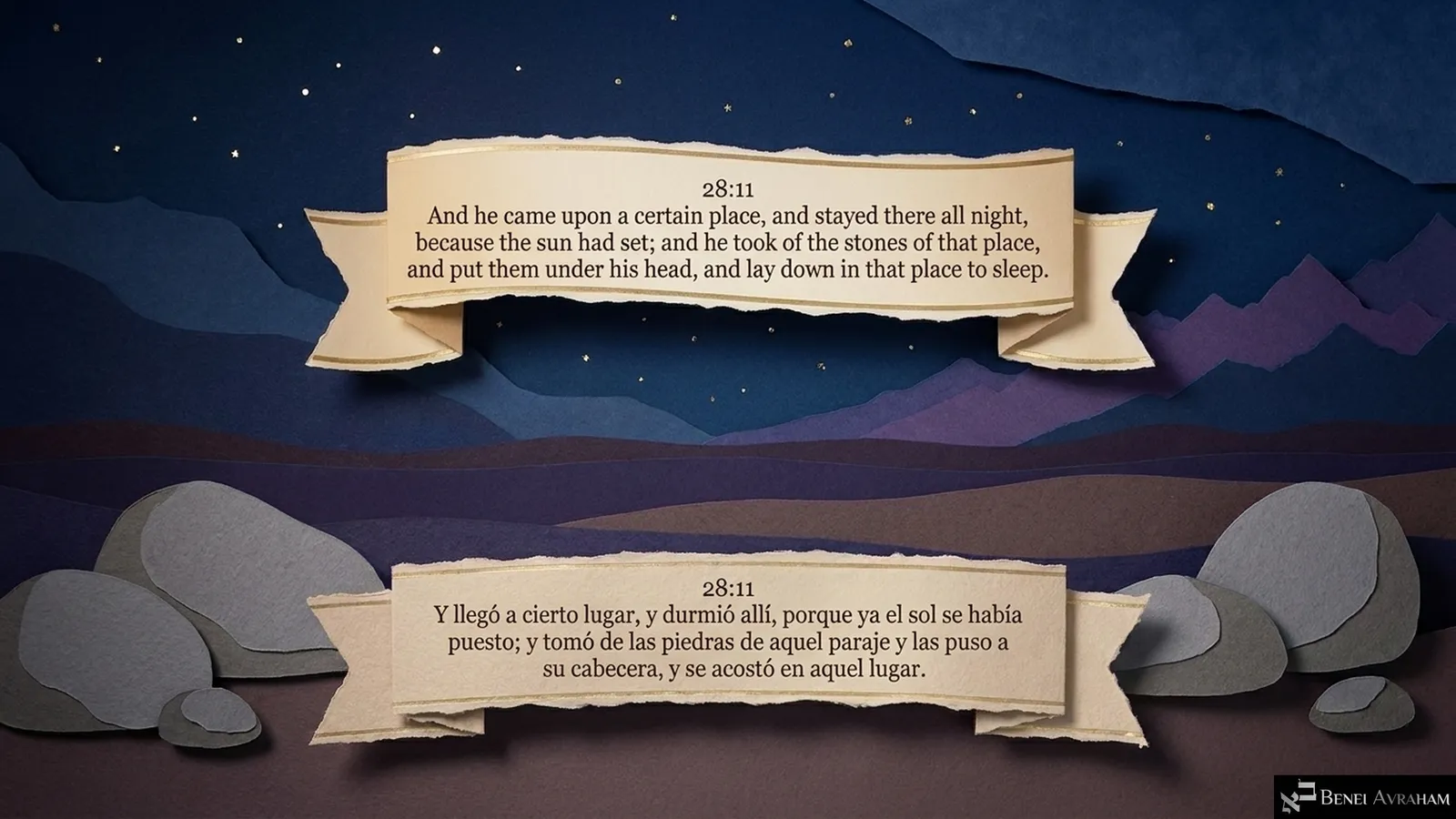
Night falls; Yaakov takes stones of the place for his head and lies down to sleep (Genesis 28:11).
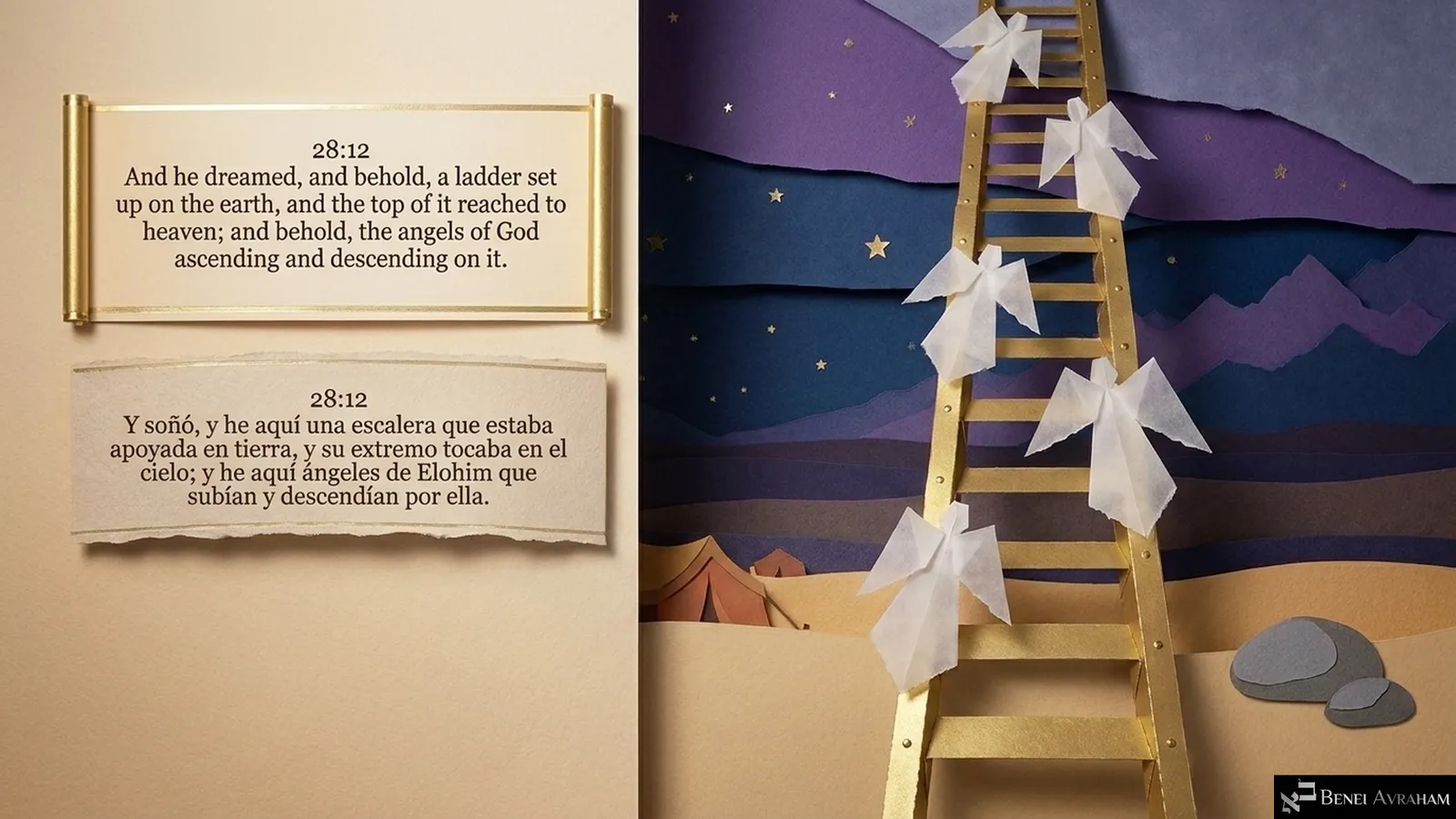
Yaakov’s dream: a ladder set on the earth reaching to heaven, with angels ascending and descending on it (Genesis 28:12).
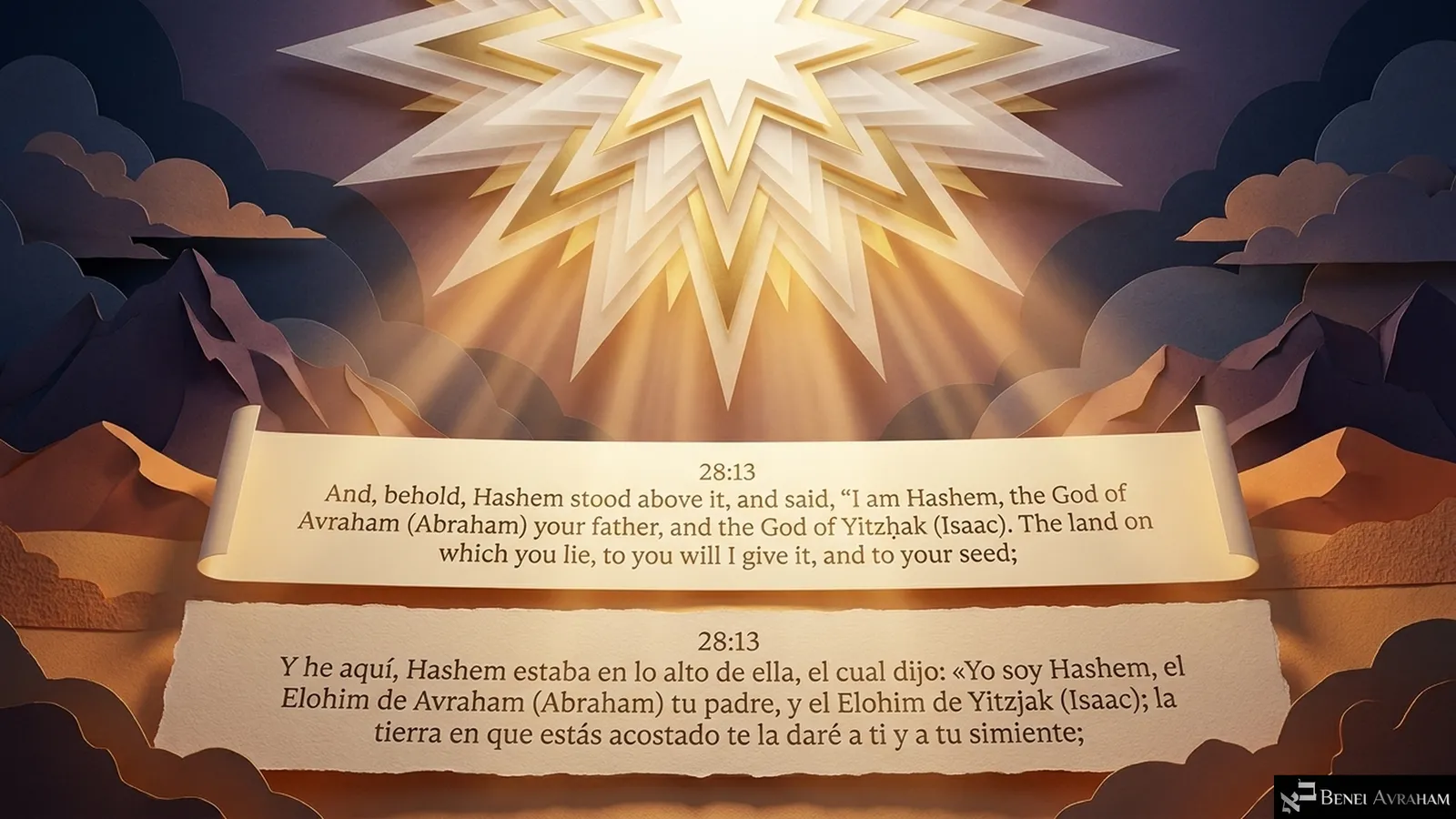
Hashem stands above the ladder: “I am Hashem, the God of Avraham your father … the land on which you lie, to you will I give it” (Genesis 28:13).
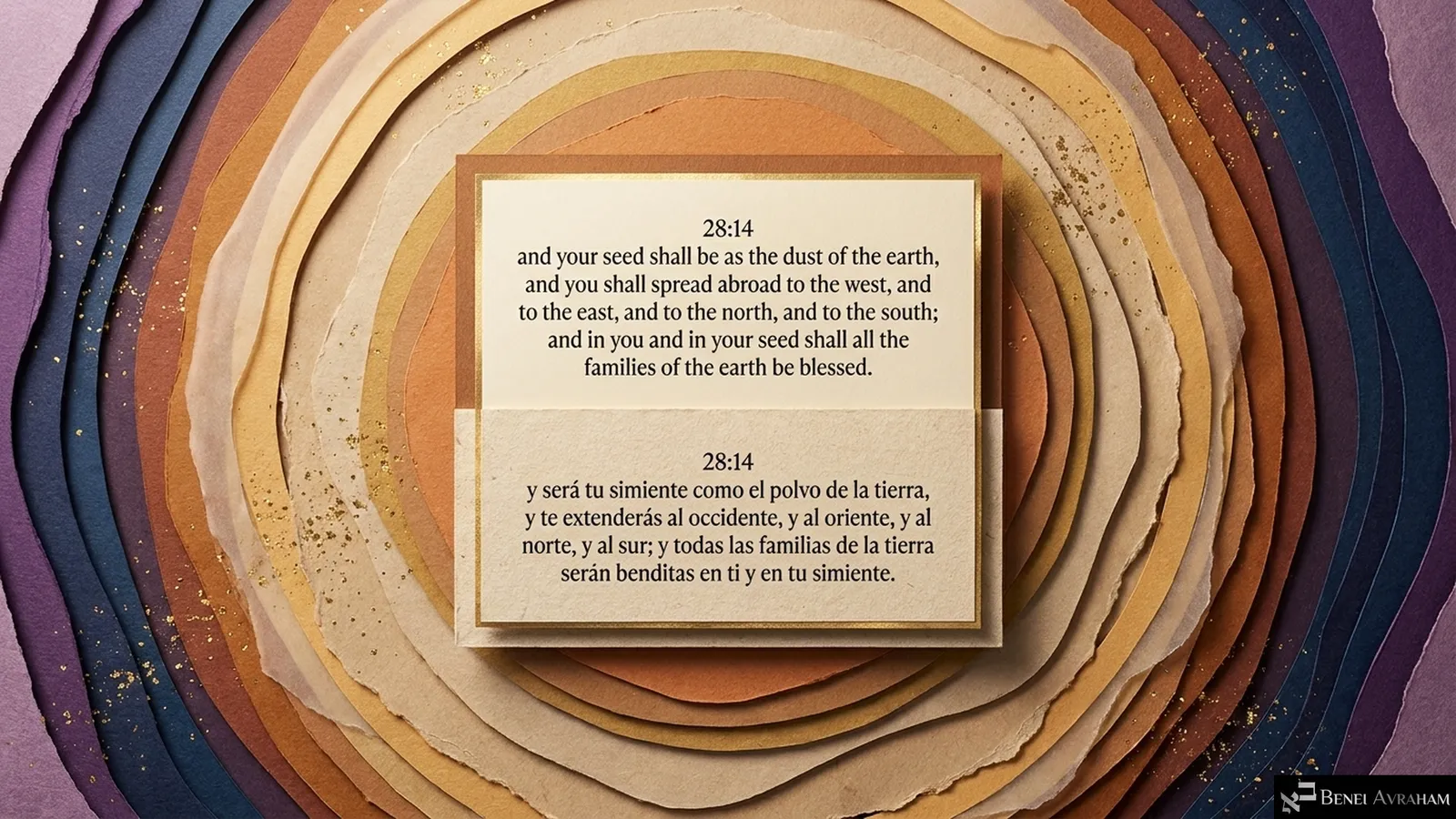
“Your seed shall be as the dust of the earth … and in you and in your seed shall all the families of the earth be blessed” (Genesis 28:14).
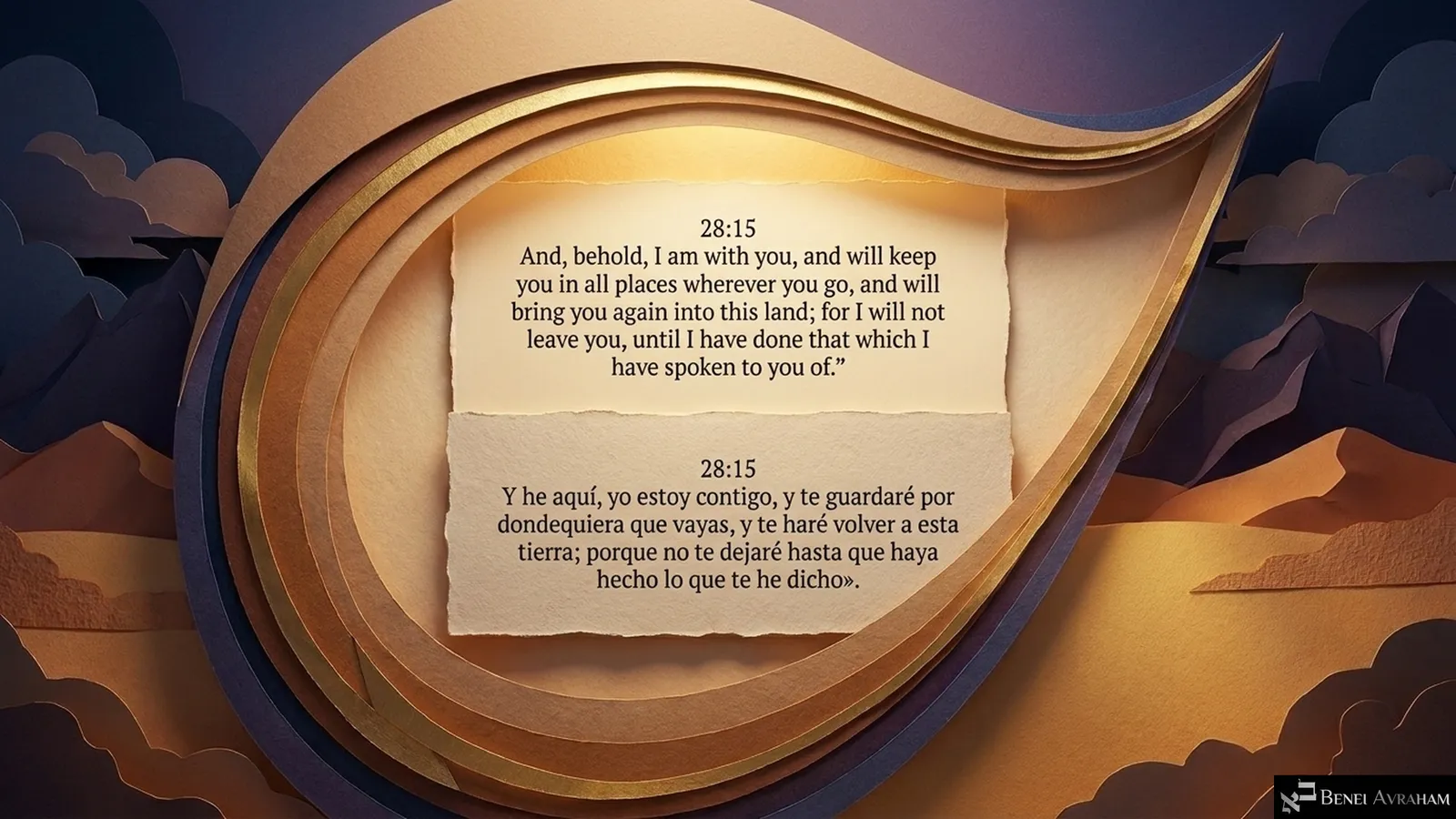
“Behold, I am with you, and will keep you in all places wherever you go, and will bring you again into this land” (Genesis 28:15).
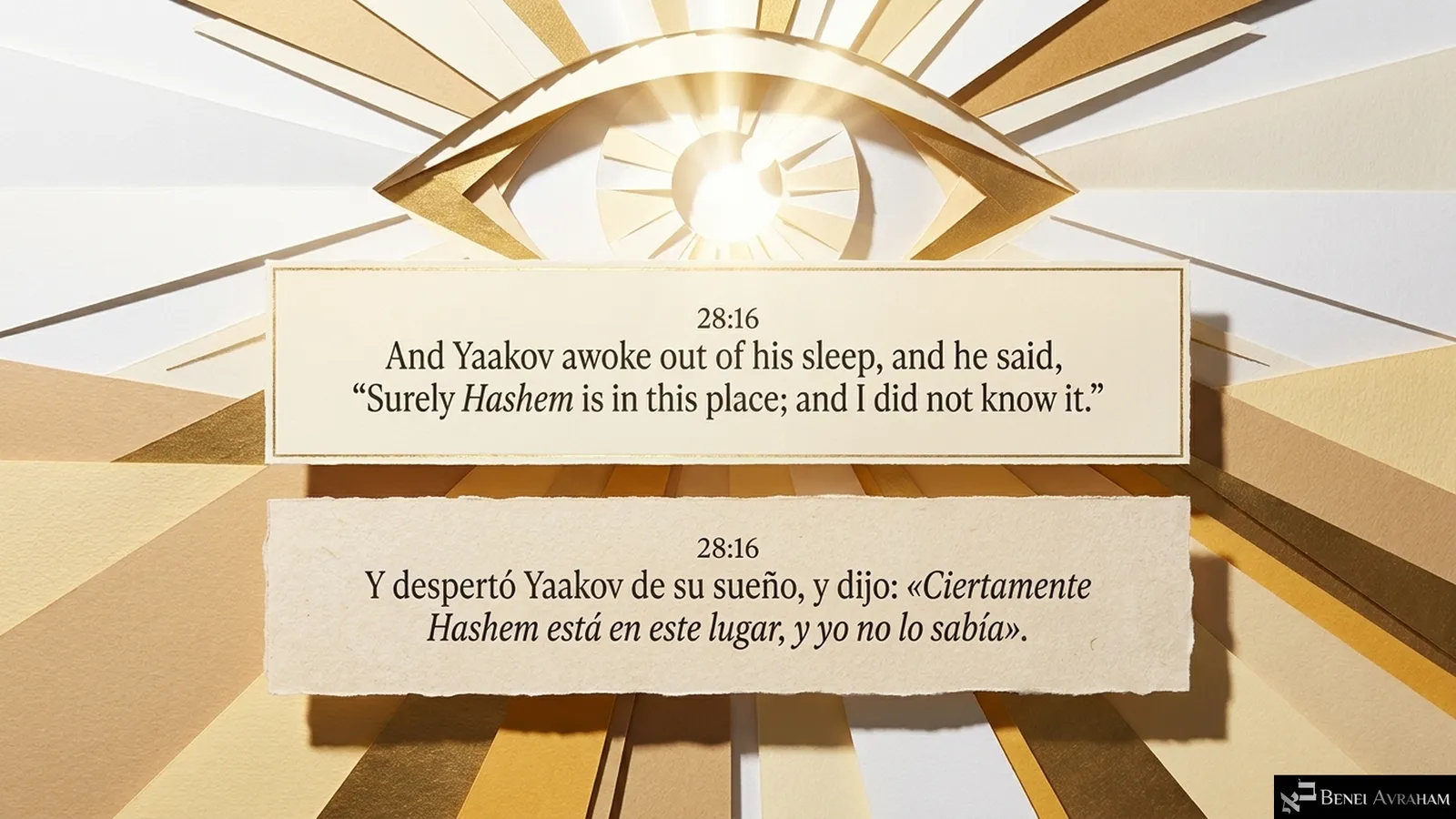
Yaakov awakes beneath a radiant paper-cut eye: “Surely Hashem is in this place; and I did not know it” (Genesis 28:16).
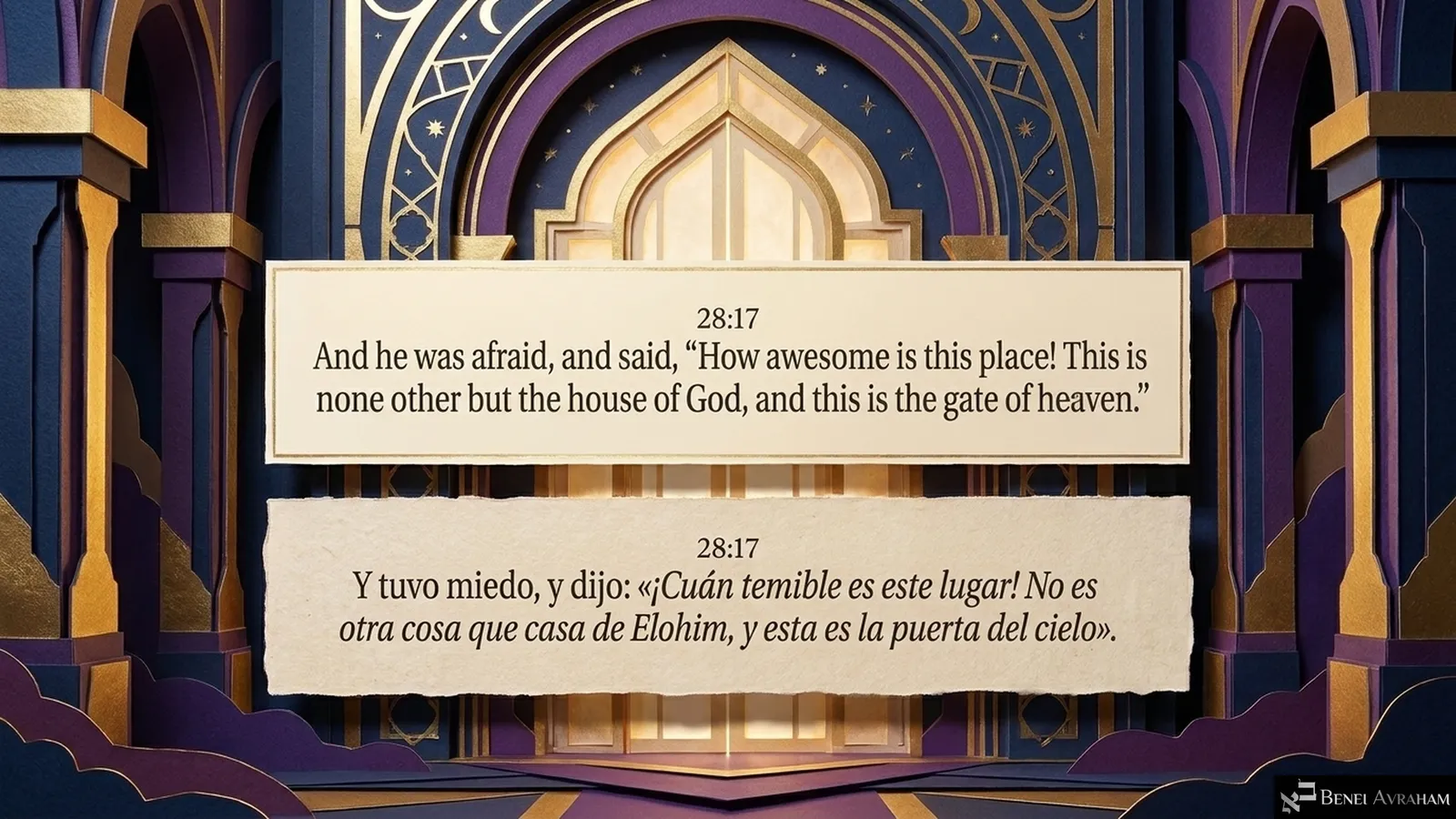
“How awesome is this place! This is none other but the house of God, and this is the gate of heaven” (Genesis 28:17).
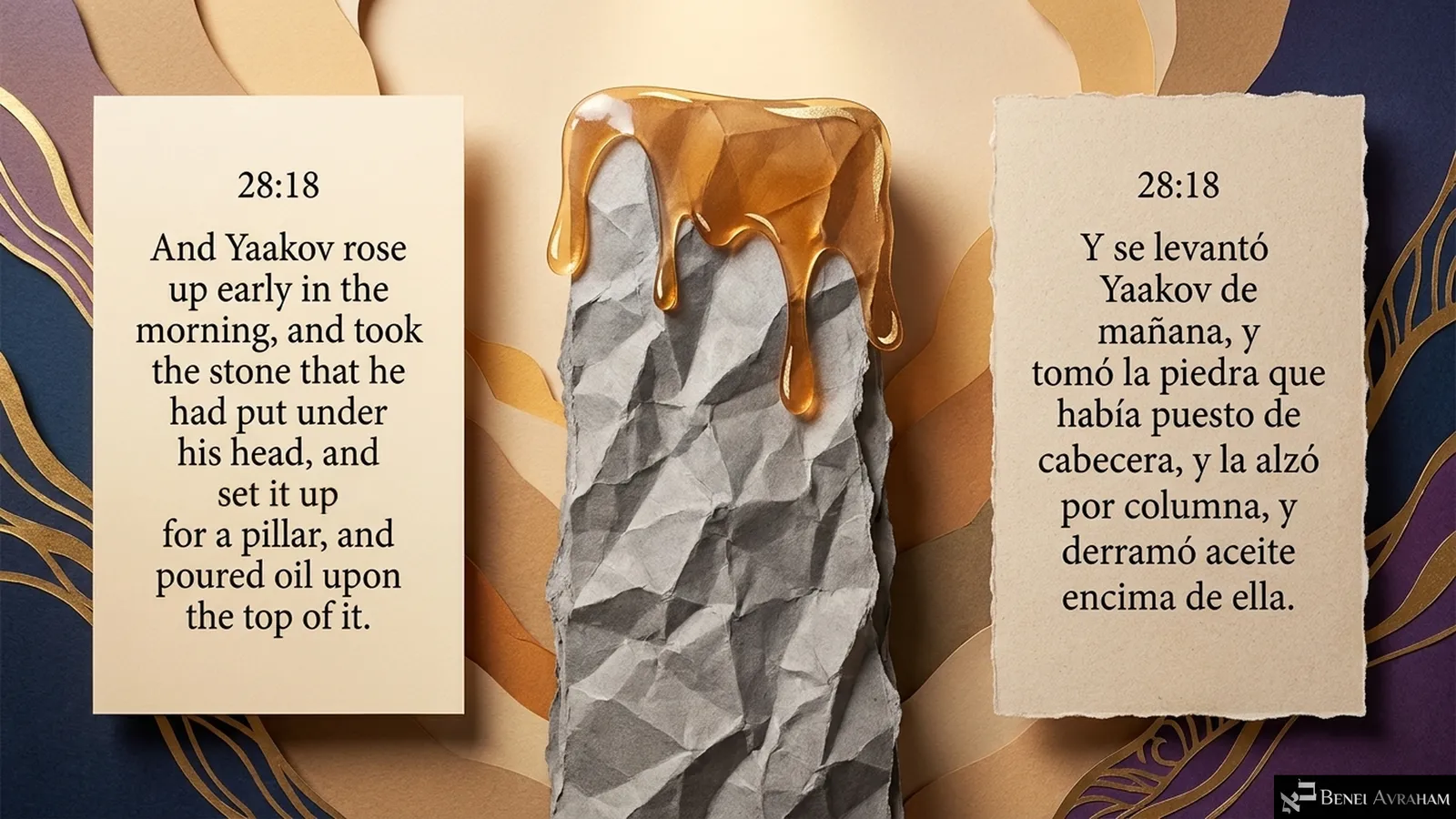
Yaakov sets up the stone from under his head as a pillar and pours oil on top of it (Genesis 28:18).
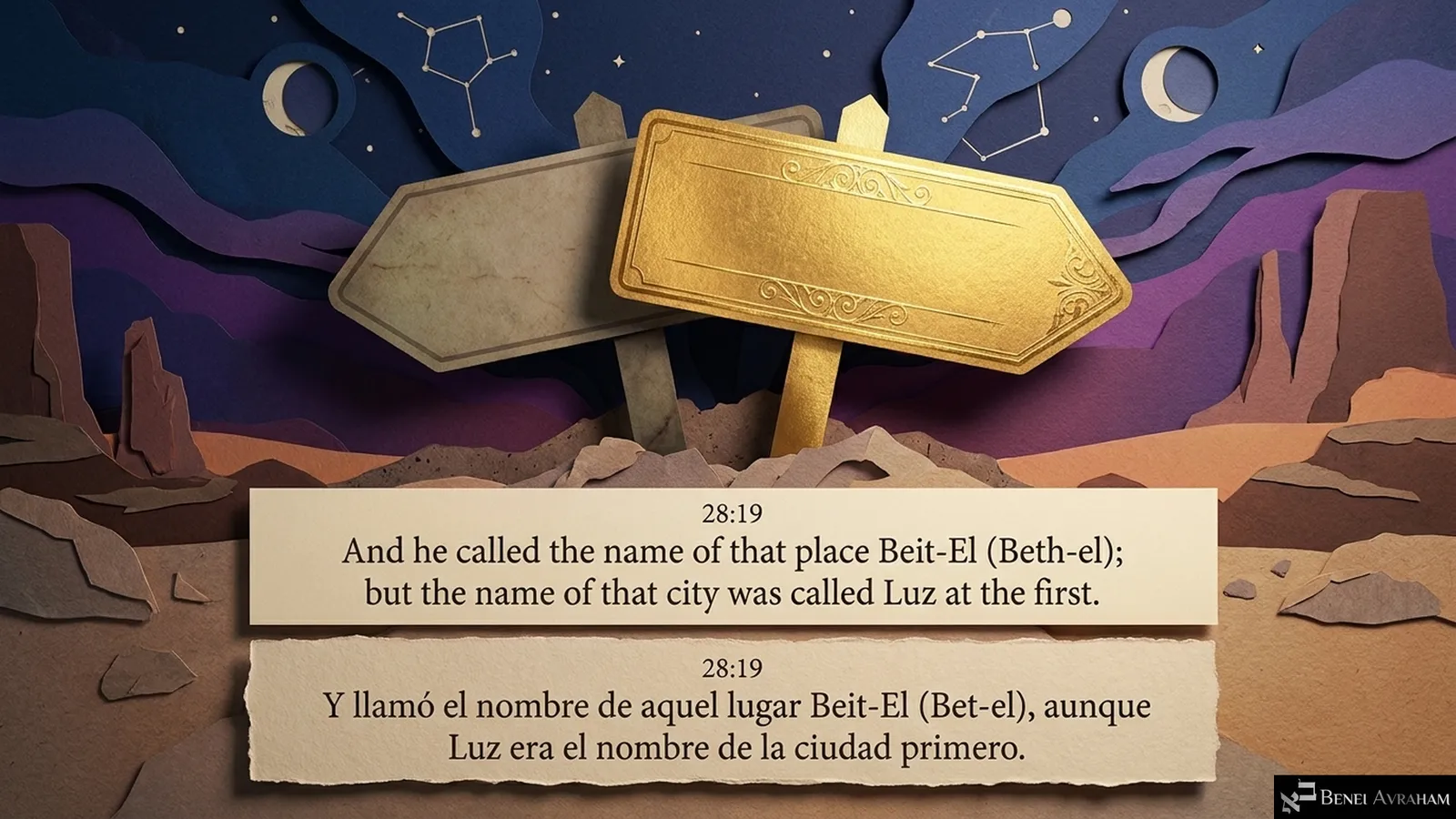
He calls the place Beit-El, though the city was called Luz at first, under paper-cut signposts and stars (Genesis 28:19).
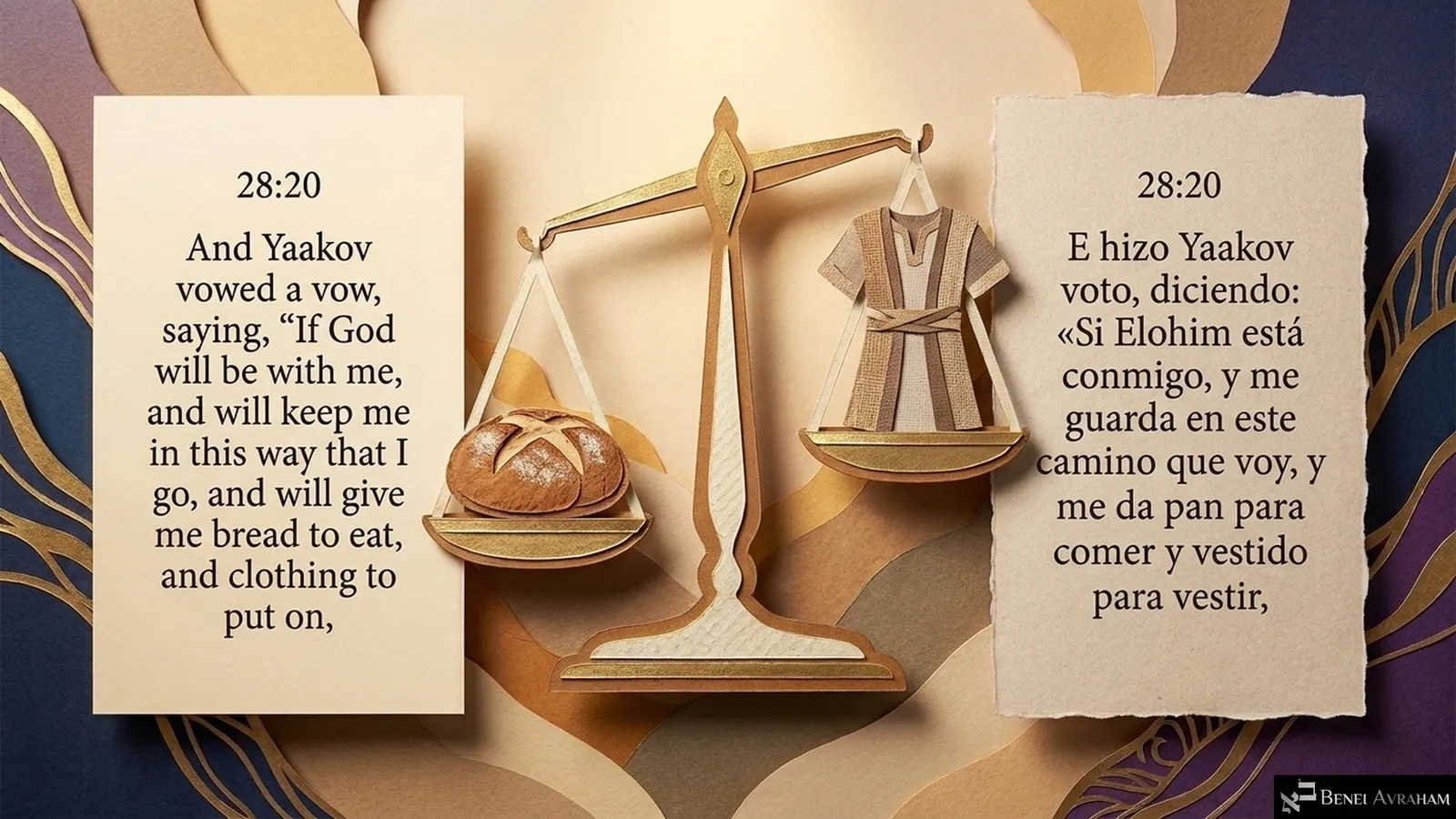
Yaakov’s vow, with bread and a garment on a golden scale: “If God will be with me … and will give me bread to eat, and clothing to put on” (Genesis 28:20).
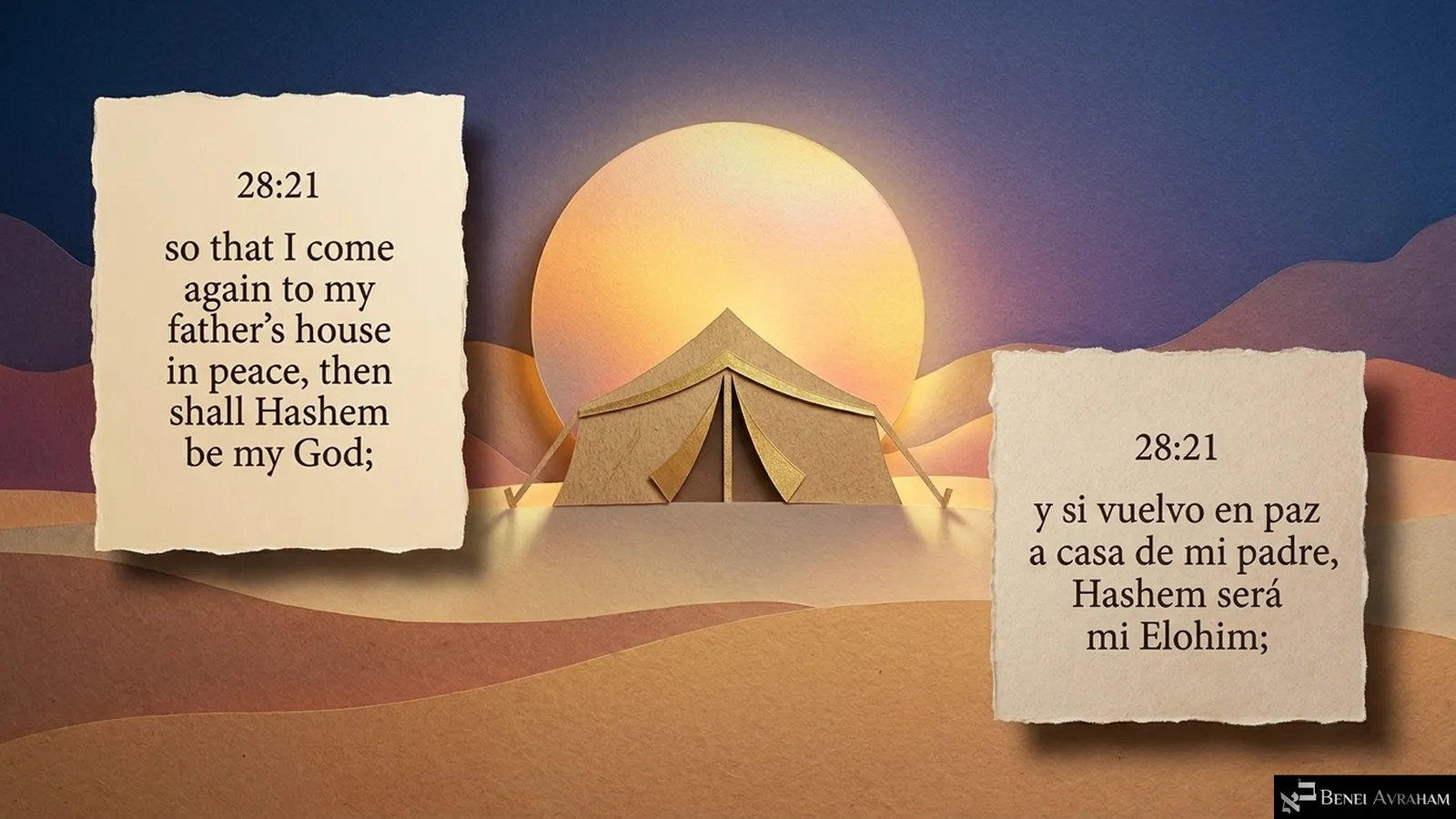
“So that I come again to my father’s house in peace, then shall Hashem be my God,” beside a tent at sunrise (Genesis 28:21).
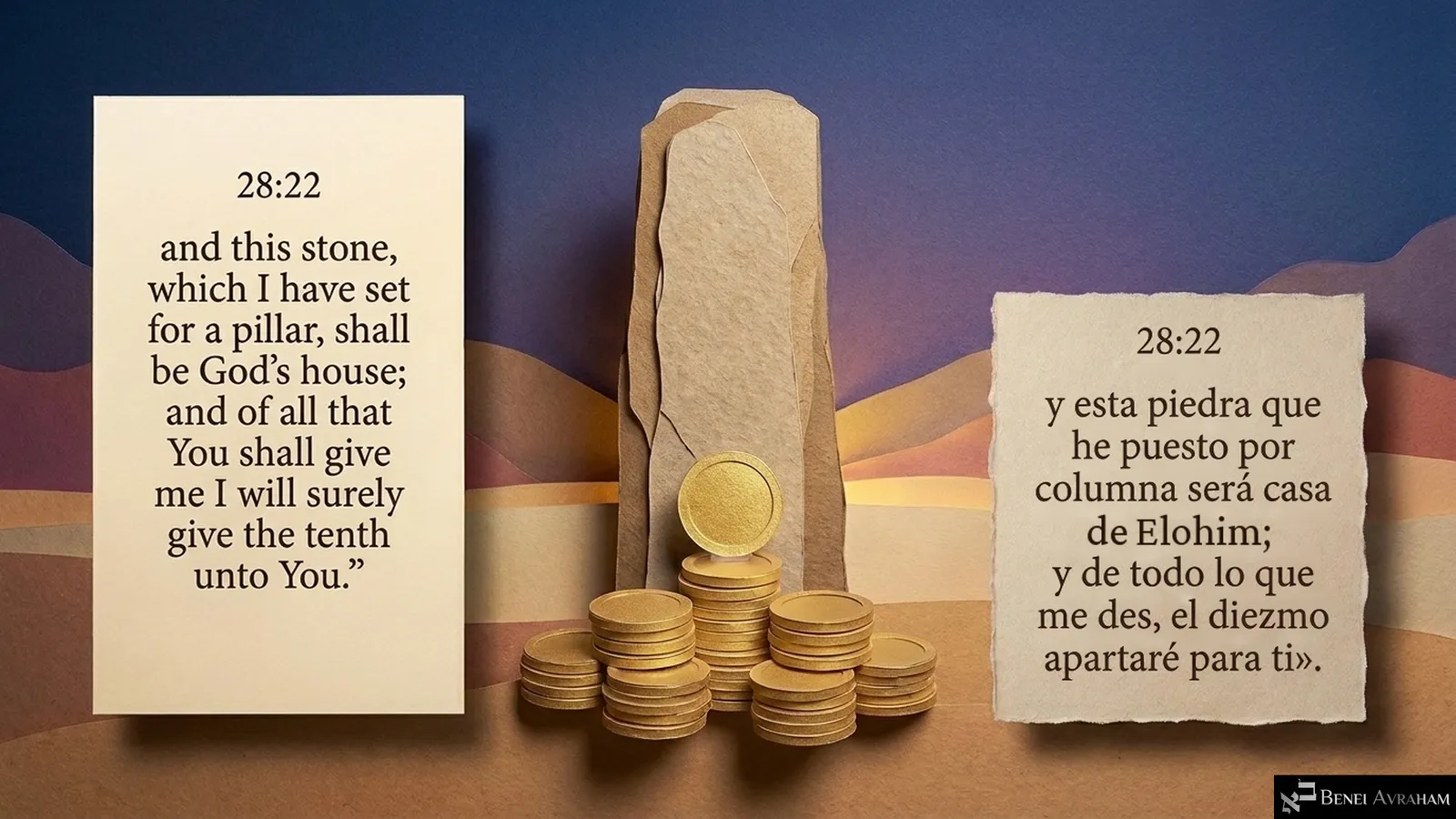
The pillar stone and a pile of coins: “Of all that You shall give me I will surely give the tenth unto You” (Genesis 28:22).
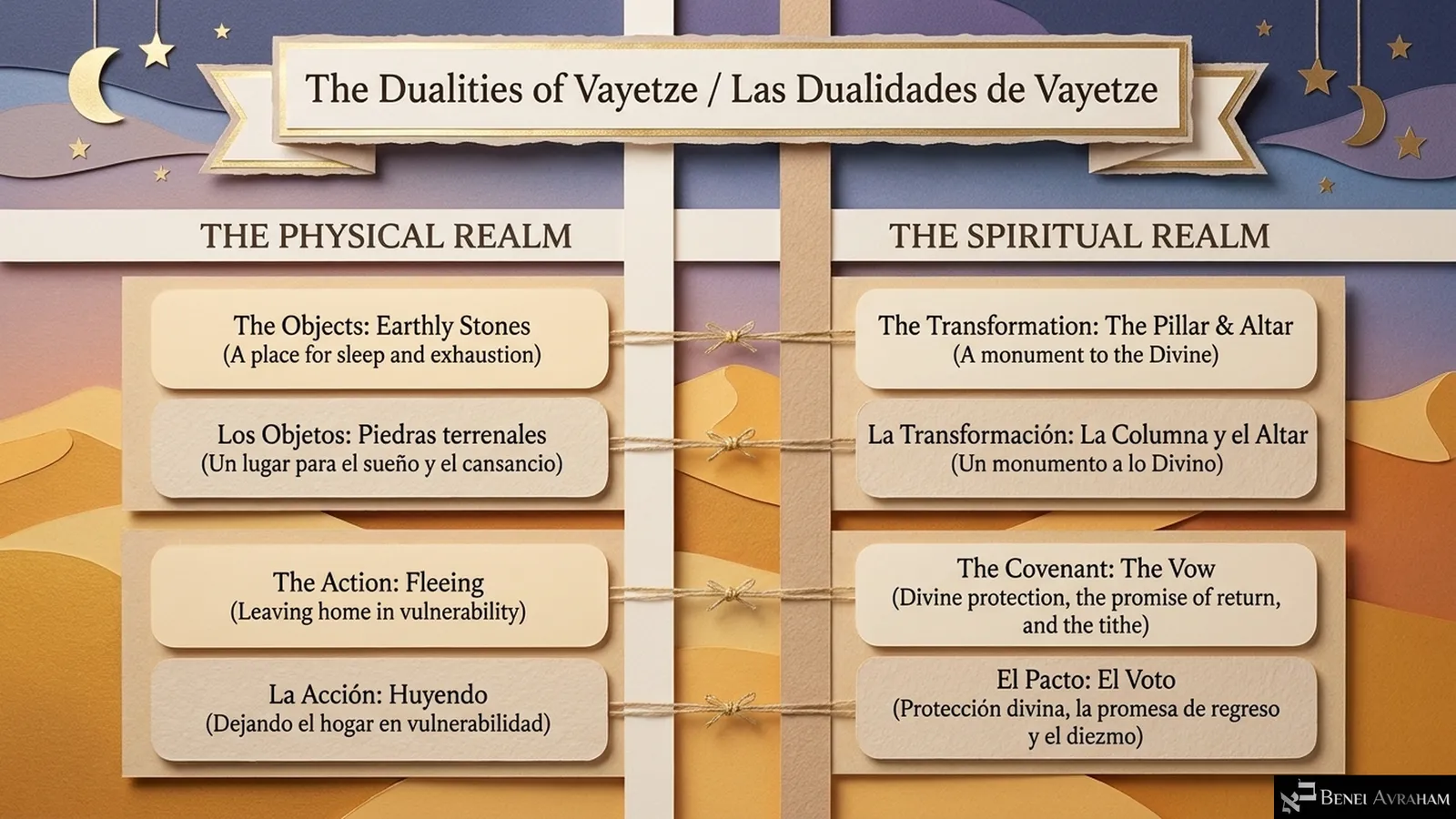
Summary of the portion, the dualities of Vayetze: earthly stones become the pillar and altar, and Yaakov’s flight becomes the covenant of his vow (Genesis 28:10–22).
Sheni · Genesis 29:1–17

Second Portion
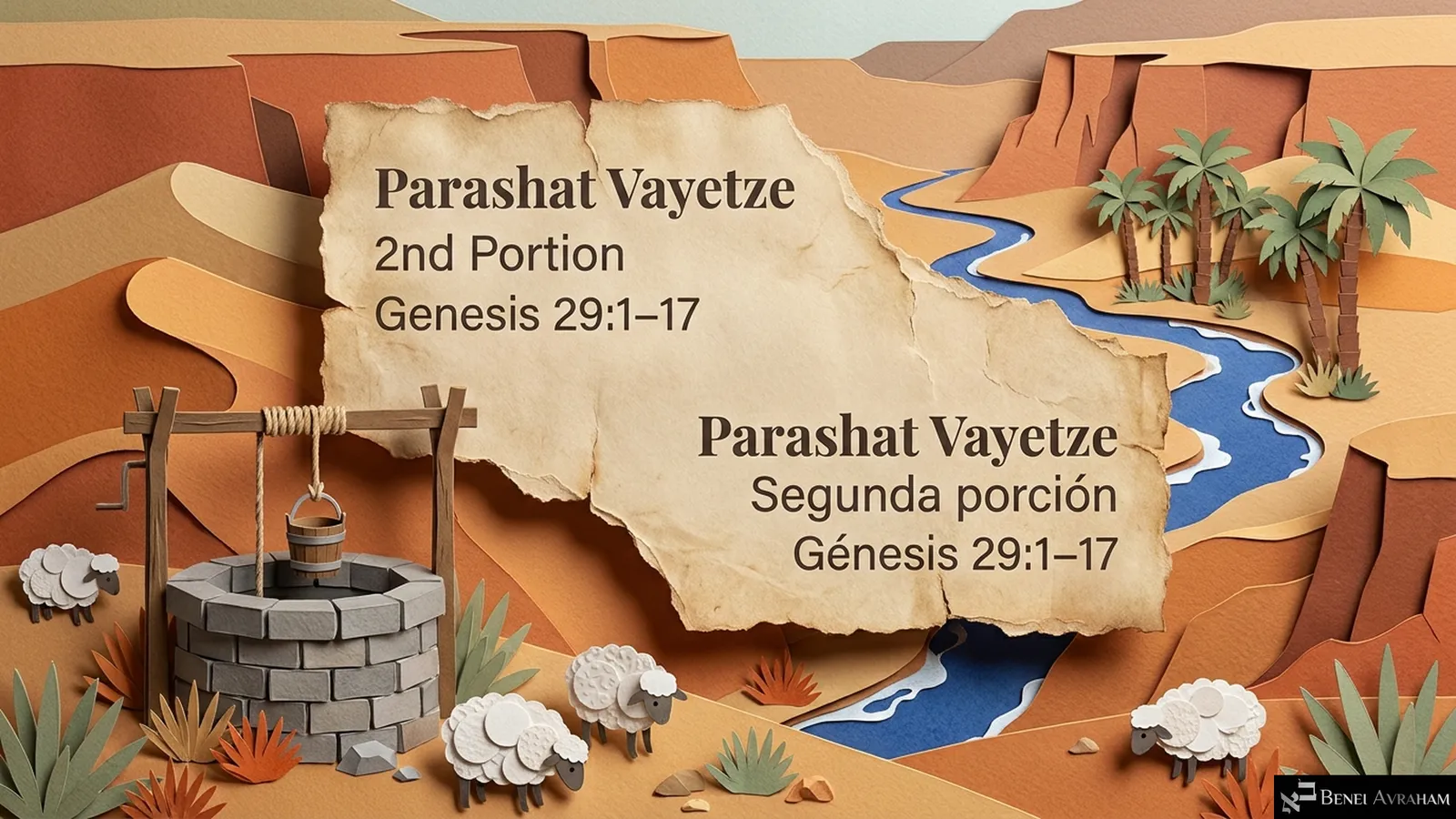
Title slide: Parashat Vayetze, second portion, Genesis 29:1–17, with a well, sheep and a river through red canyons.
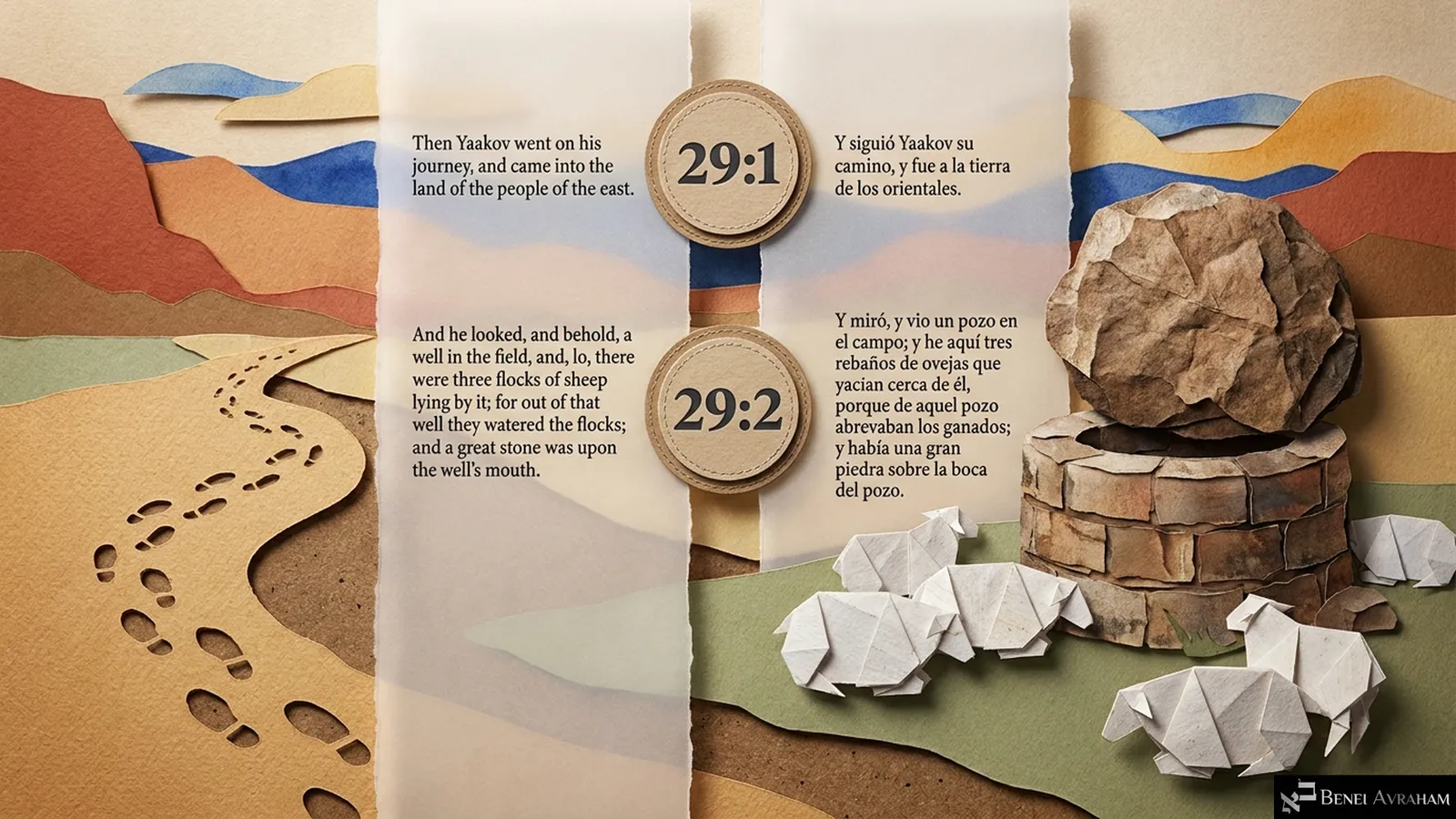
Yaakov comes to the land of the people of the east and sees a well in the field, with three flocks lying by it and a great stone on its mouth (Genesis 29:1–2).
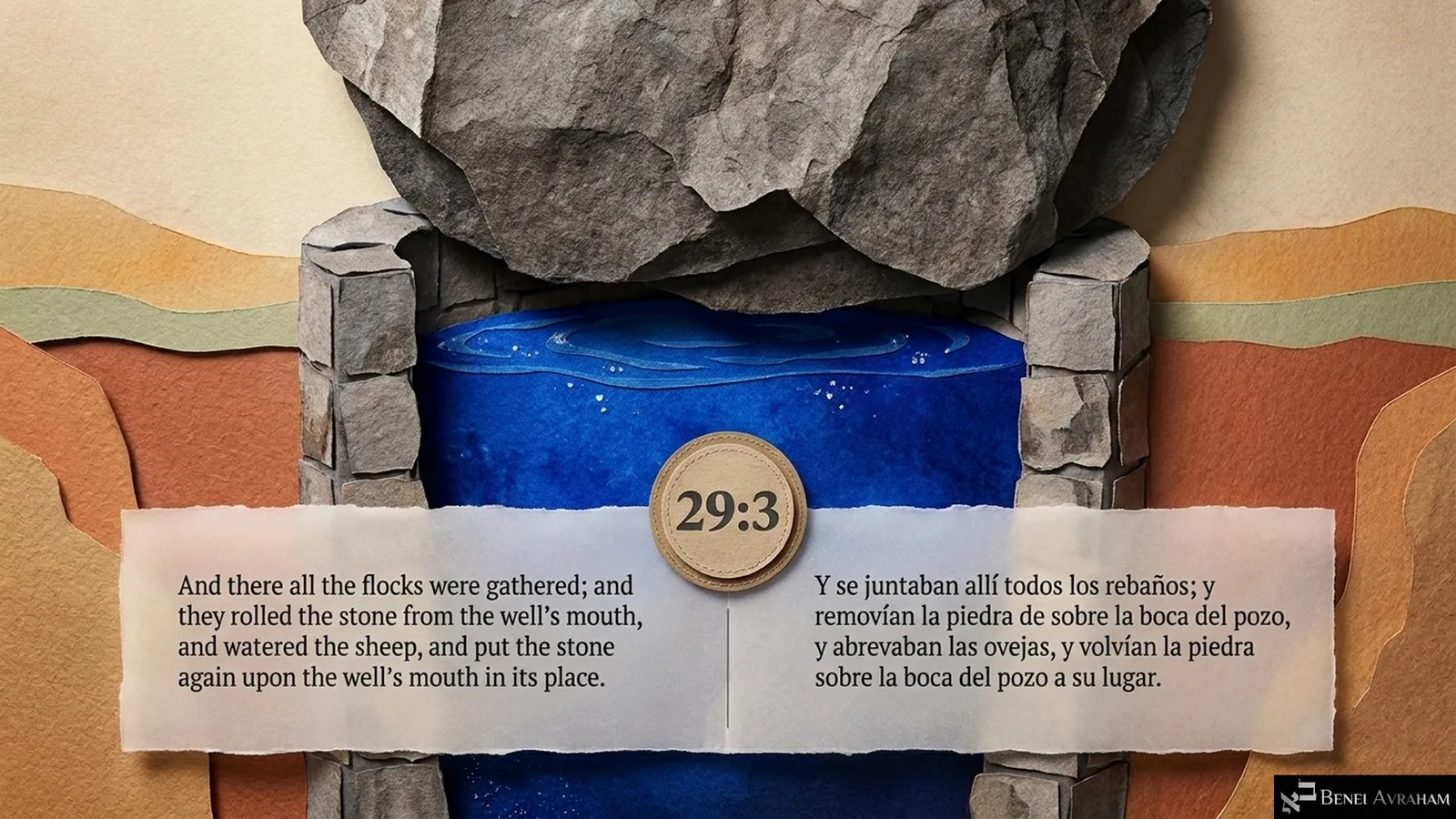
All the flocks gather, and the shepherds roll the stone from the well’s mouth, water the sheep and put the stone back (Genesis 29:3).
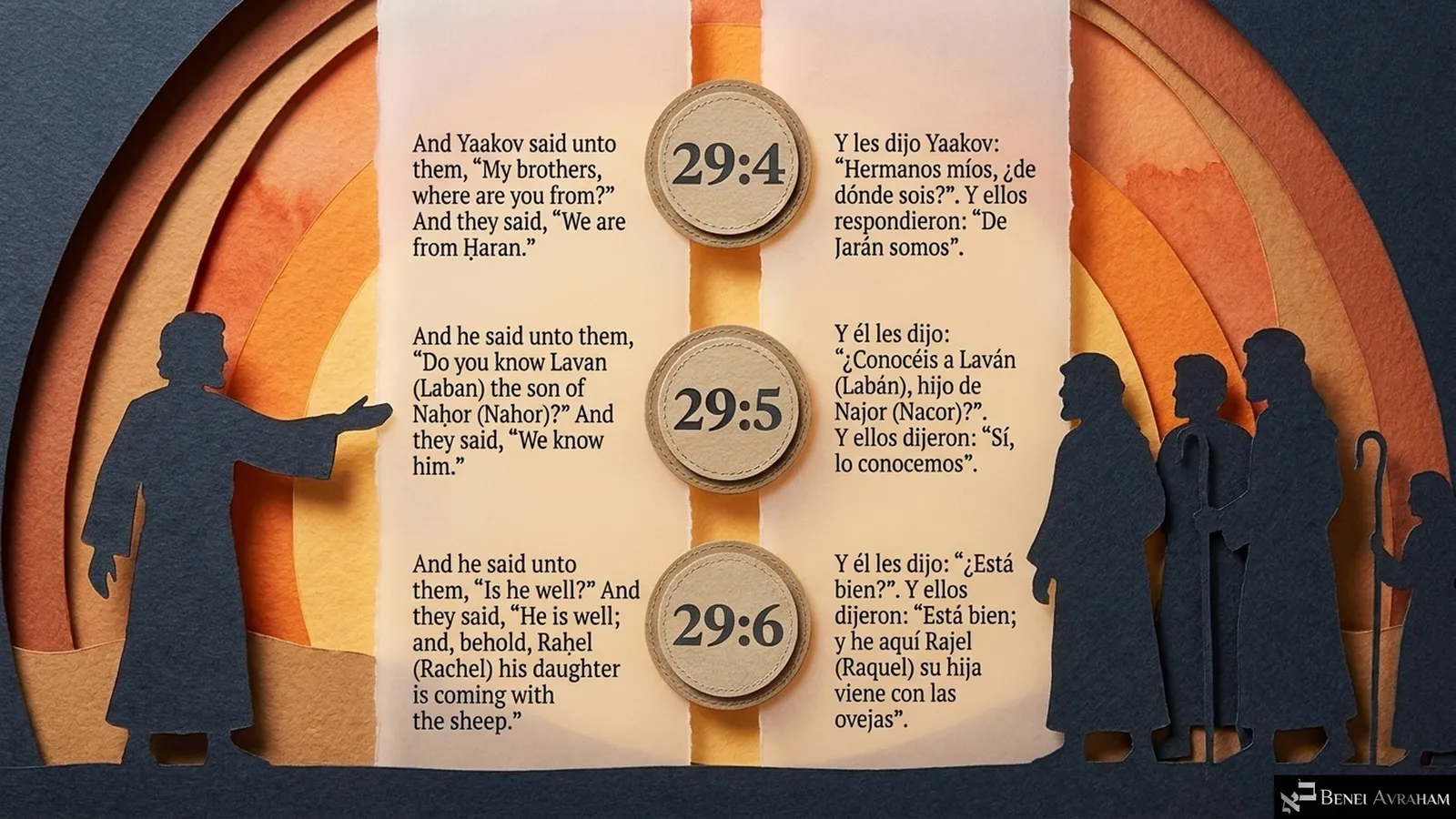
Yaakov asks the shepherds where they are from; they know Lavan, the son of Naḥor, and Raḥel his daughter is coming with the sheep (Genesis 29:4–6).
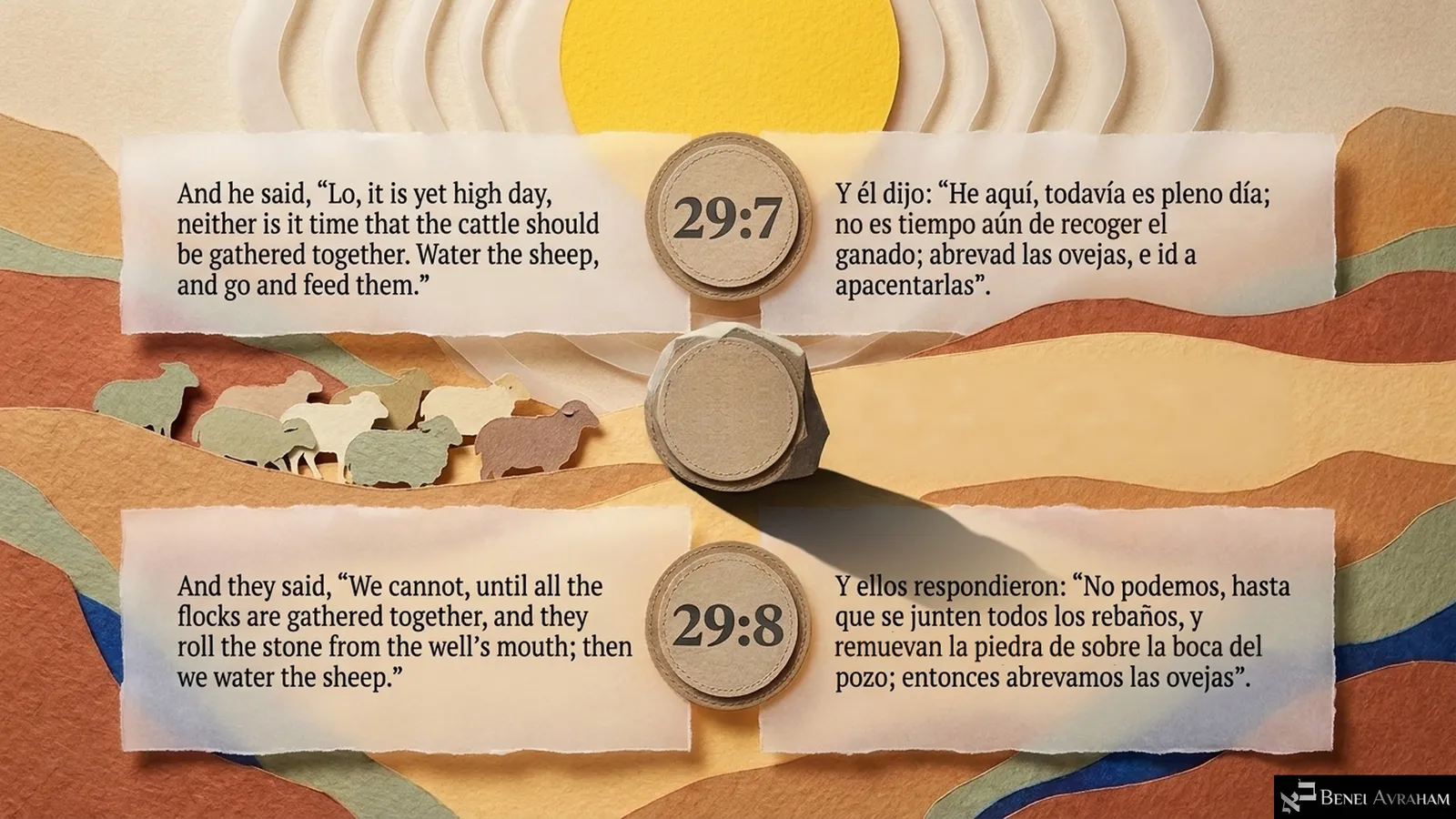
“Lo, it is yet high day … water the sheep”; the shepherds answer that they cannot until all the flocks are gathered (Genesis 29:7–8).
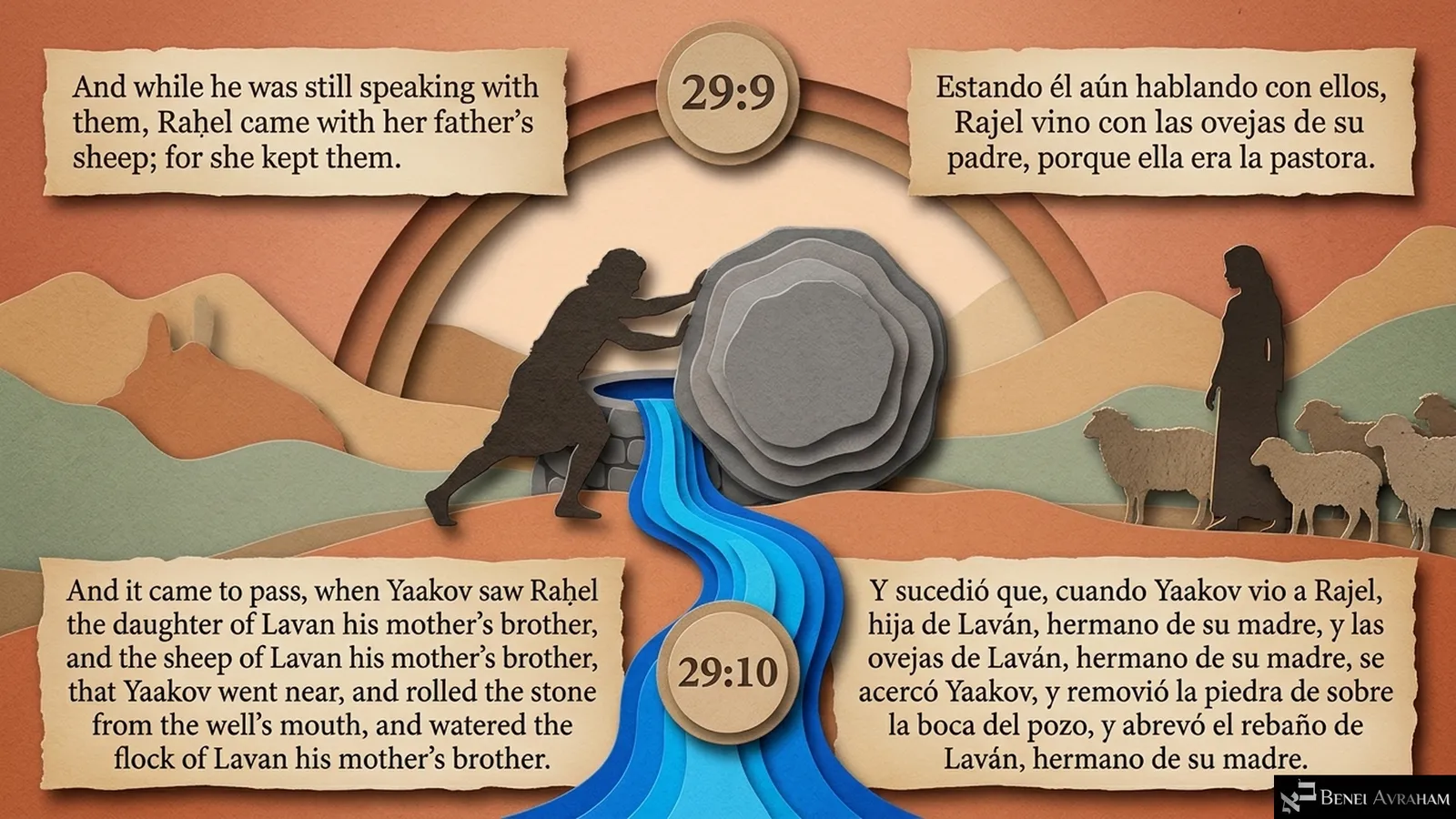
Raḥel comes with her father’s sheep, and Yaakov rolls the stone from the well’s mouth and waters Lavan’s flock (Genesis 29:9–10).
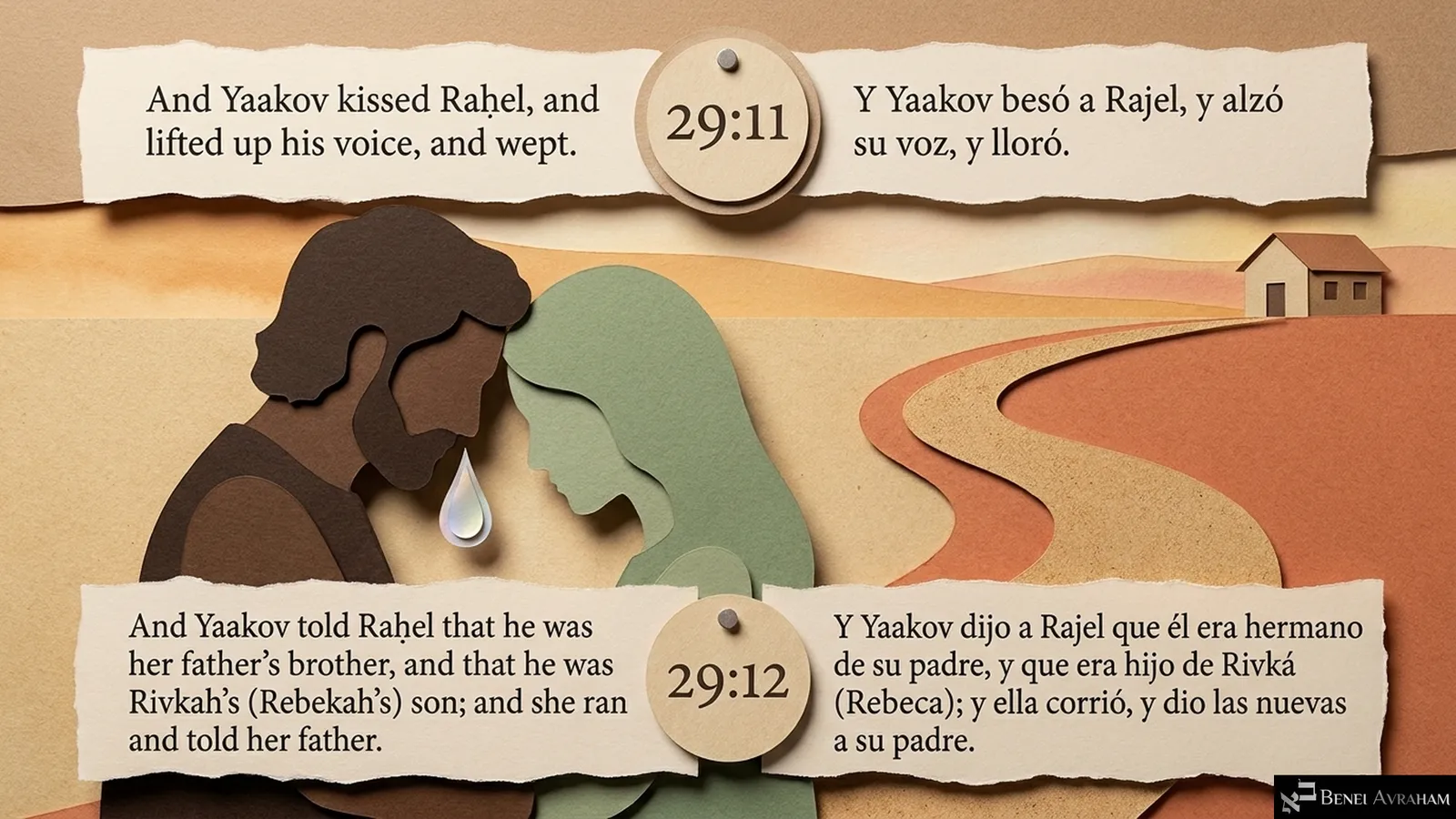
Yaakov kisses Raḥel and weeps, and tells her he is Rivkah’s son; she runs to tell her father (Genesis 29:11–12).
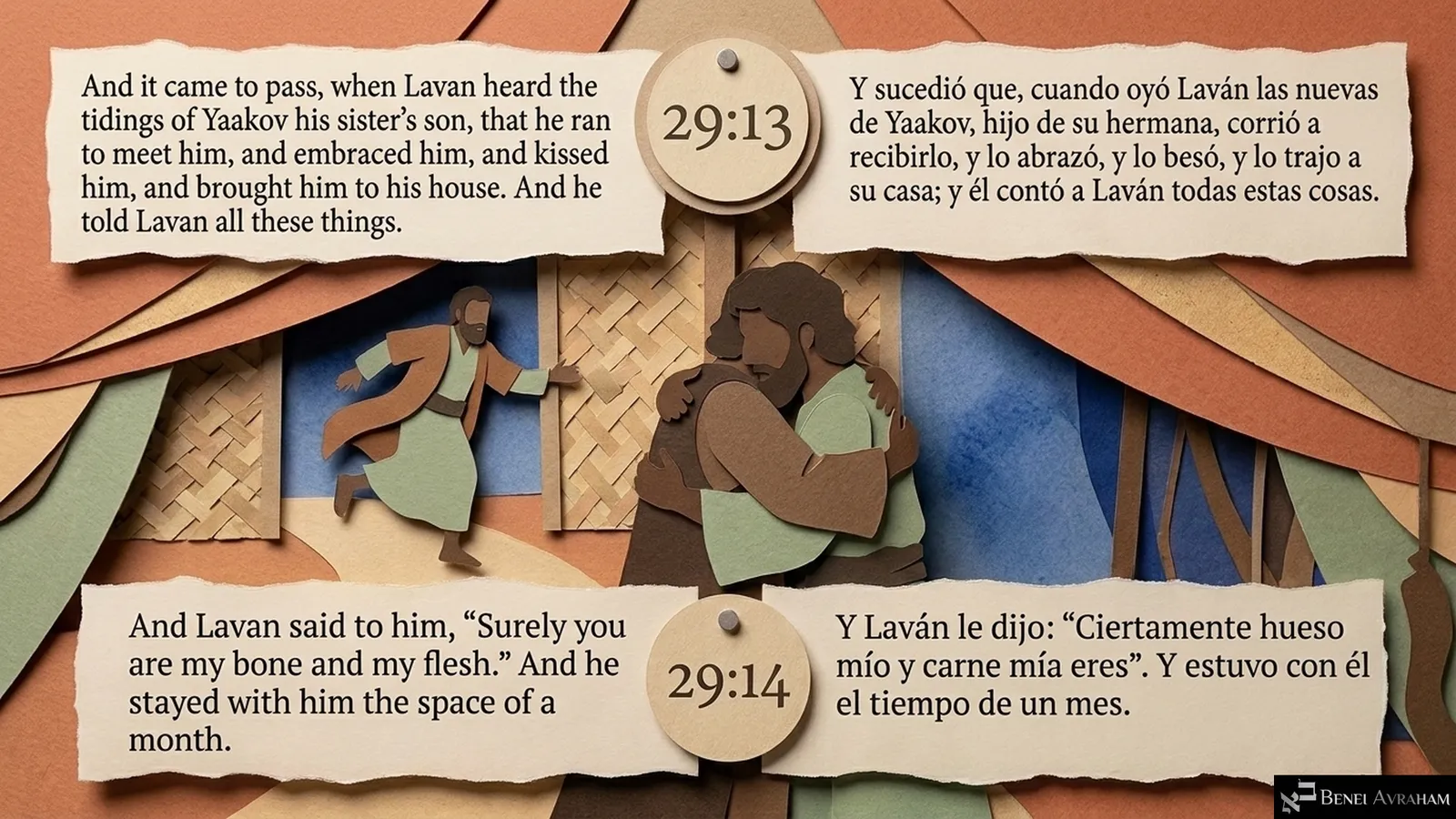
Lavan runs to meet Yaakov, embraces and kisses him, and says, “Surely you are my bone and my flesh” (Genesis 29:13–14).
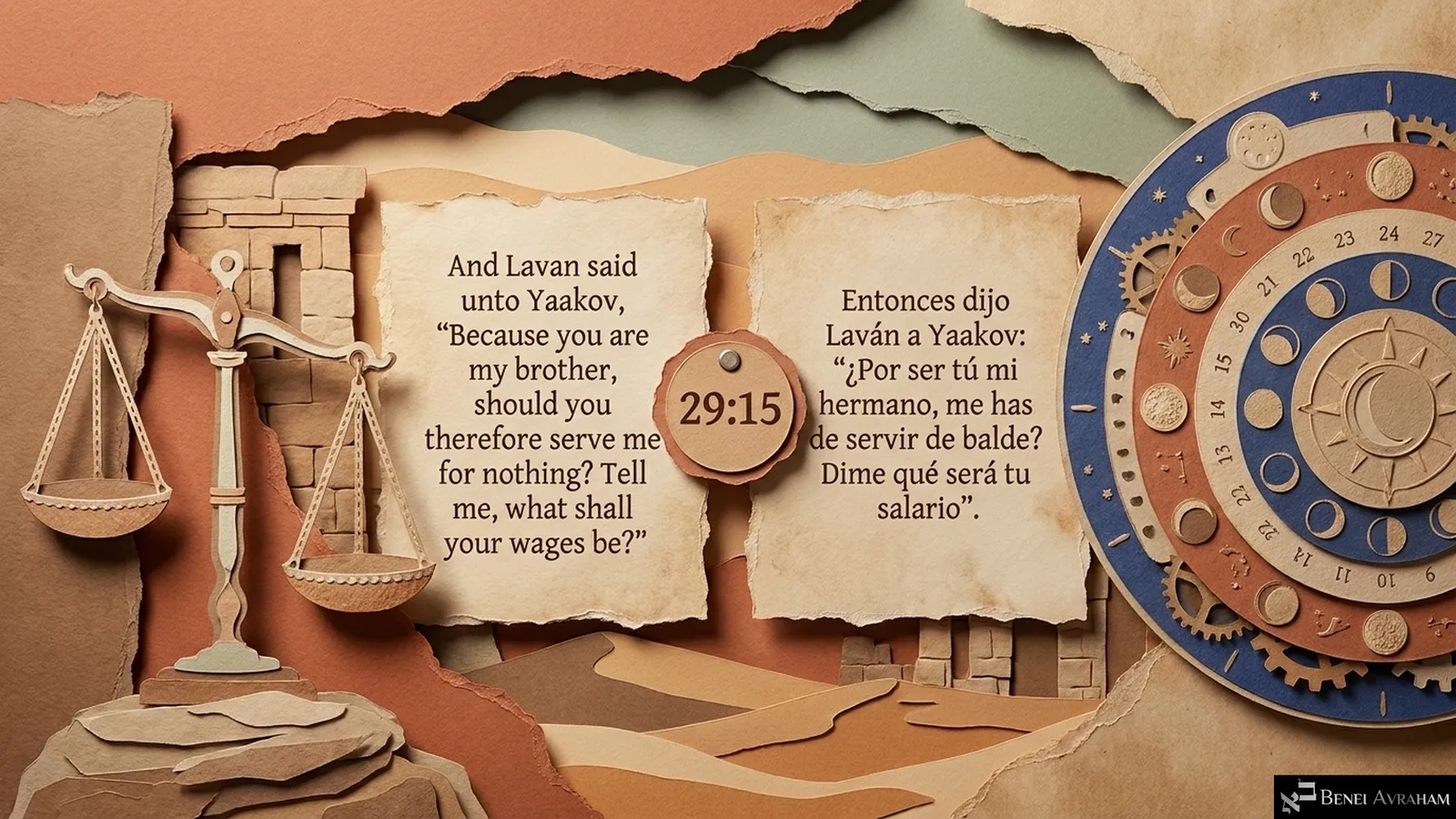
Between a balance and a turning calendar wheel, Lavan asks, “Should you therefore serve me for nothing? Tell me, what shall your wages be?” (Genesis 29:15).
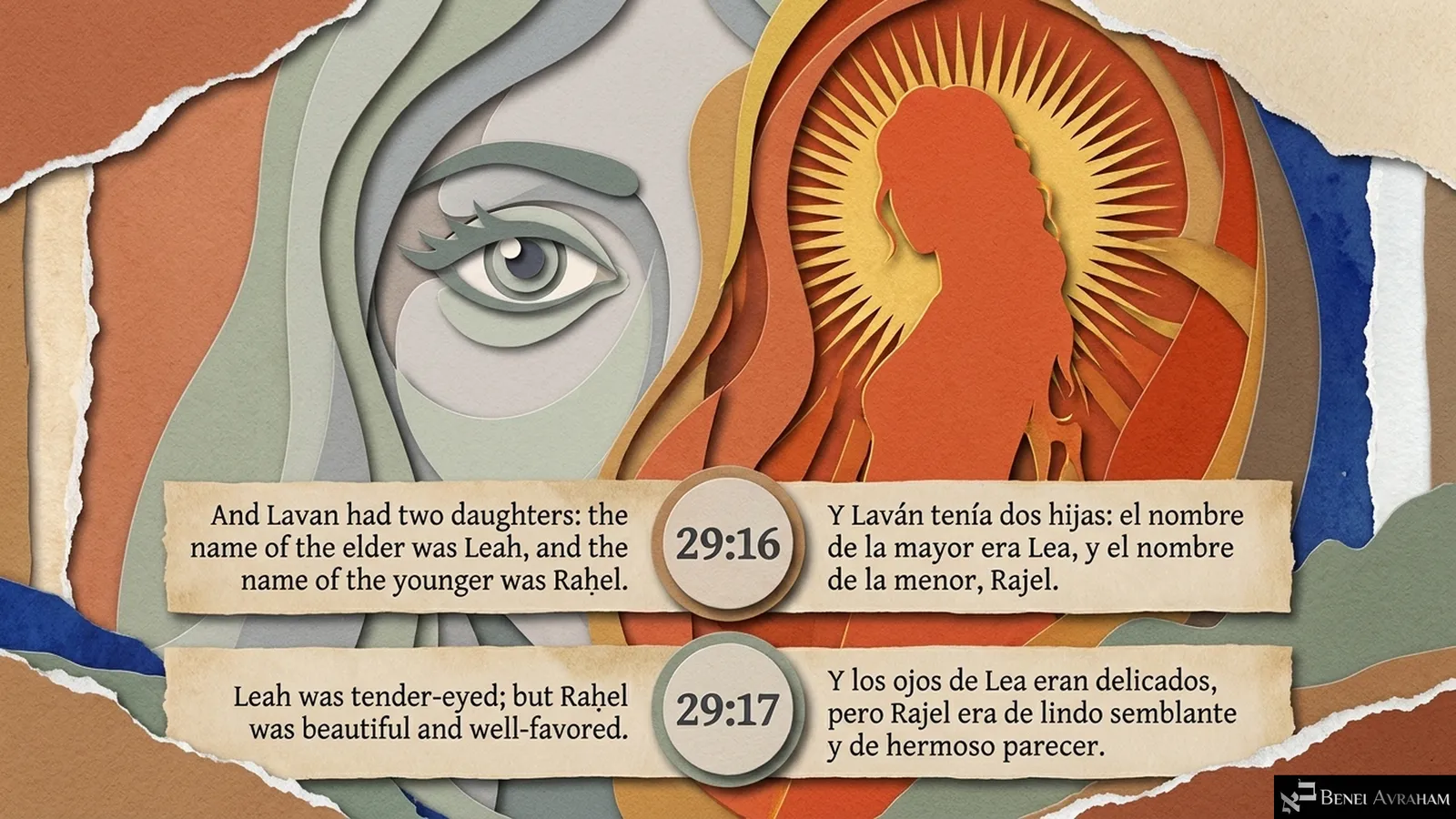
Lavan’s two daughters: Leah, the elder, was tender-eyed, and Raḥel was beautiful and well-favored (Genesis 29:16–17).
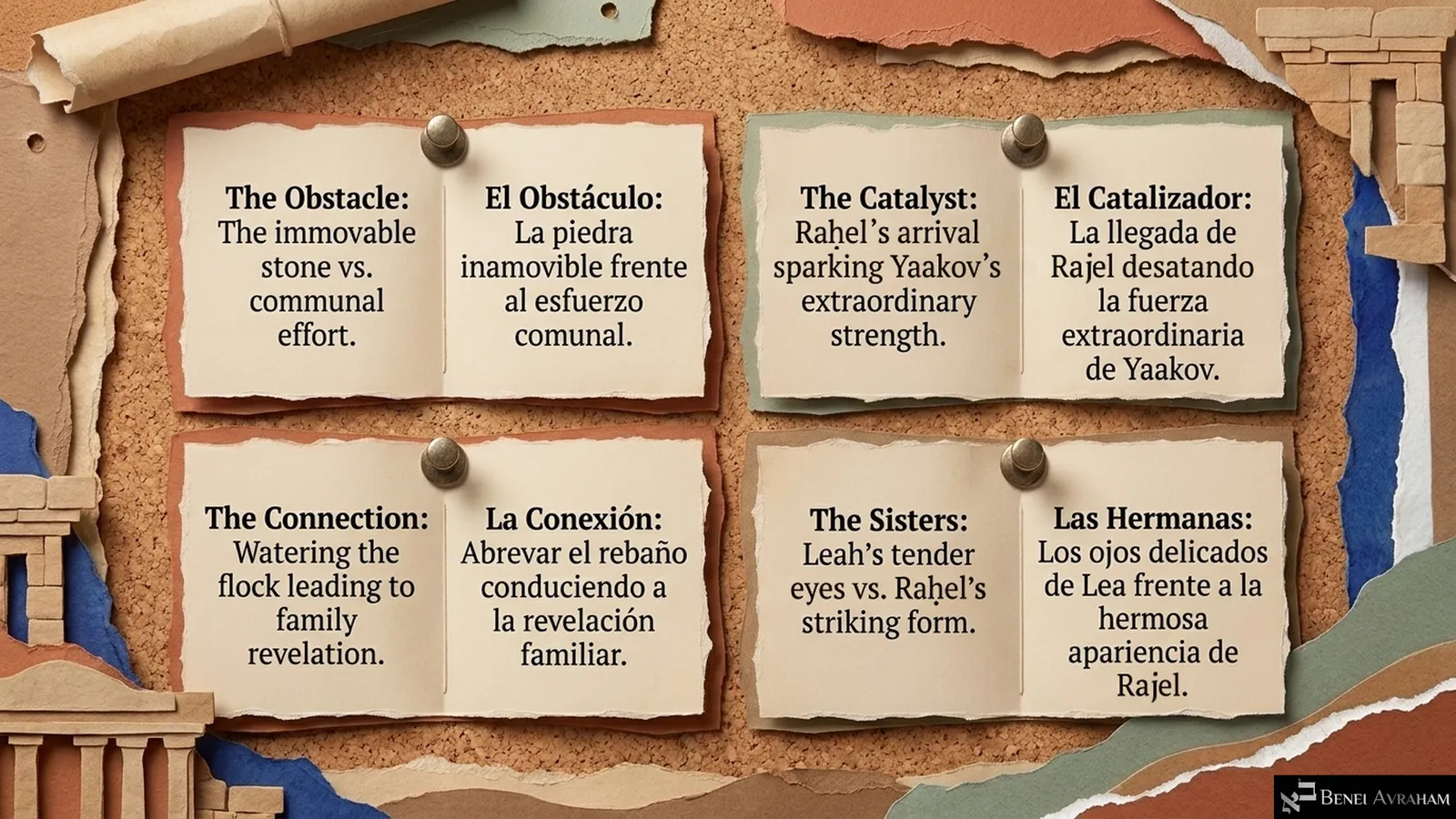
Summary of the portion on a corkboard: the obstacle, the catalyst, the connection and the sisters (Genesis 29:1–17).
Shlishi · Genesis 29:18–30:13

Third Portion

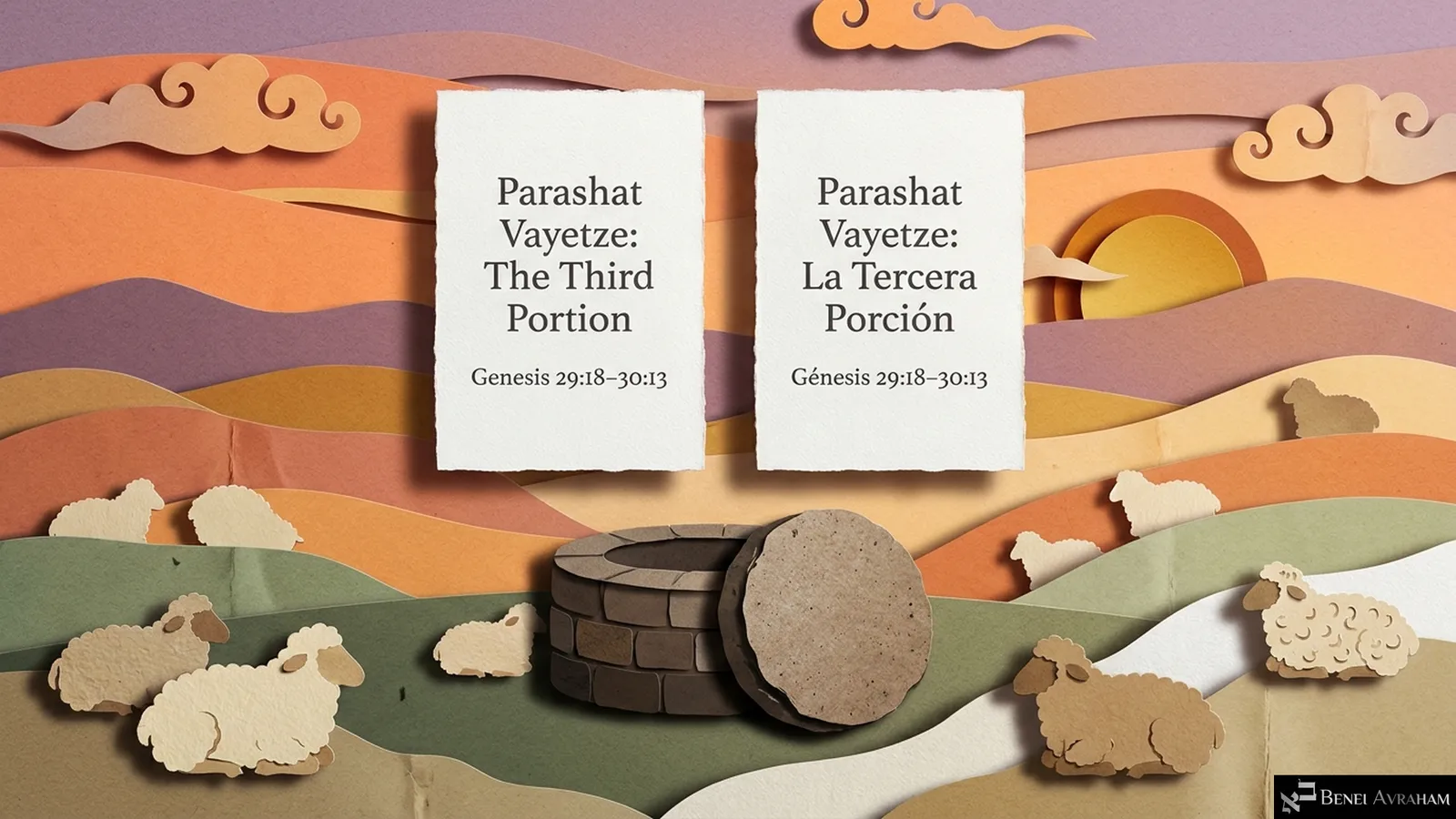
Title slide: Parashat Vayetze, third portion, Genesis 29:18–30:13, with a covered well and resting sheep.
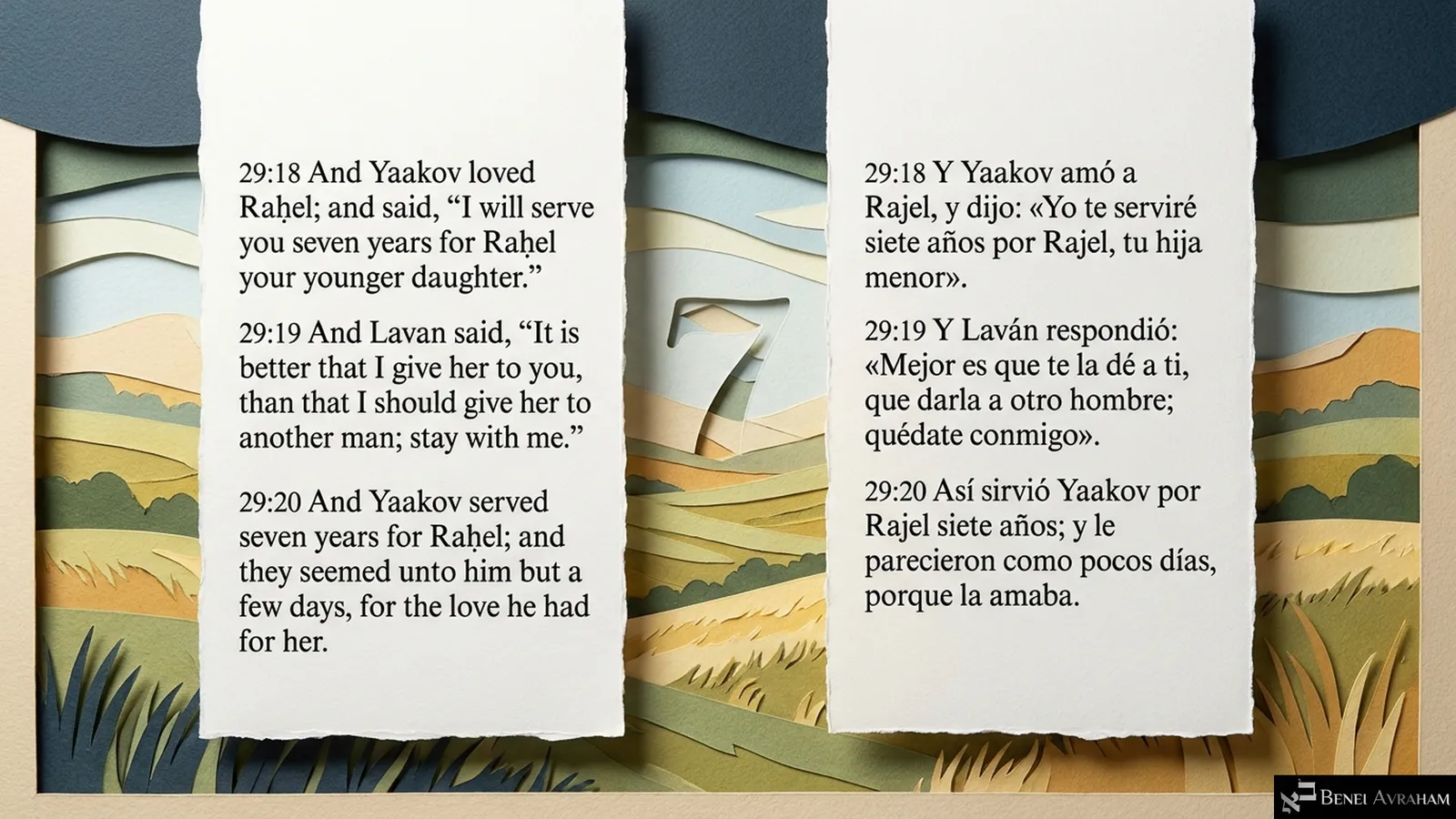
Yaakov loves Raḥel and serves seven years for her, and they seem to him but a few days, for the love he had for her (Genesis 29:18–20).
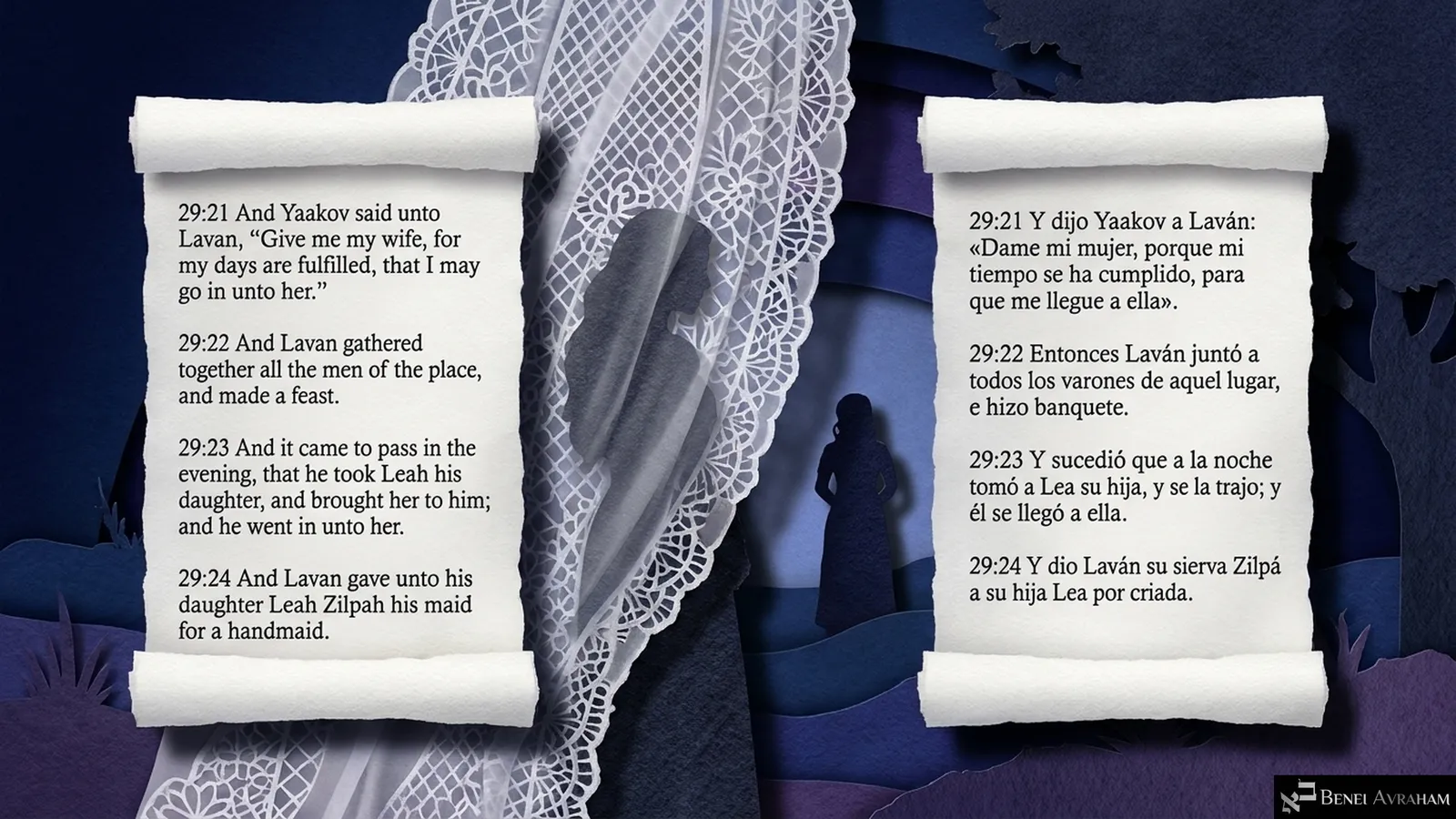
Behind a lace veil, Lavan brings Leah to Yaakov in the evening and gives her Zilpah as a handmaid (Genesis 29:21–24).
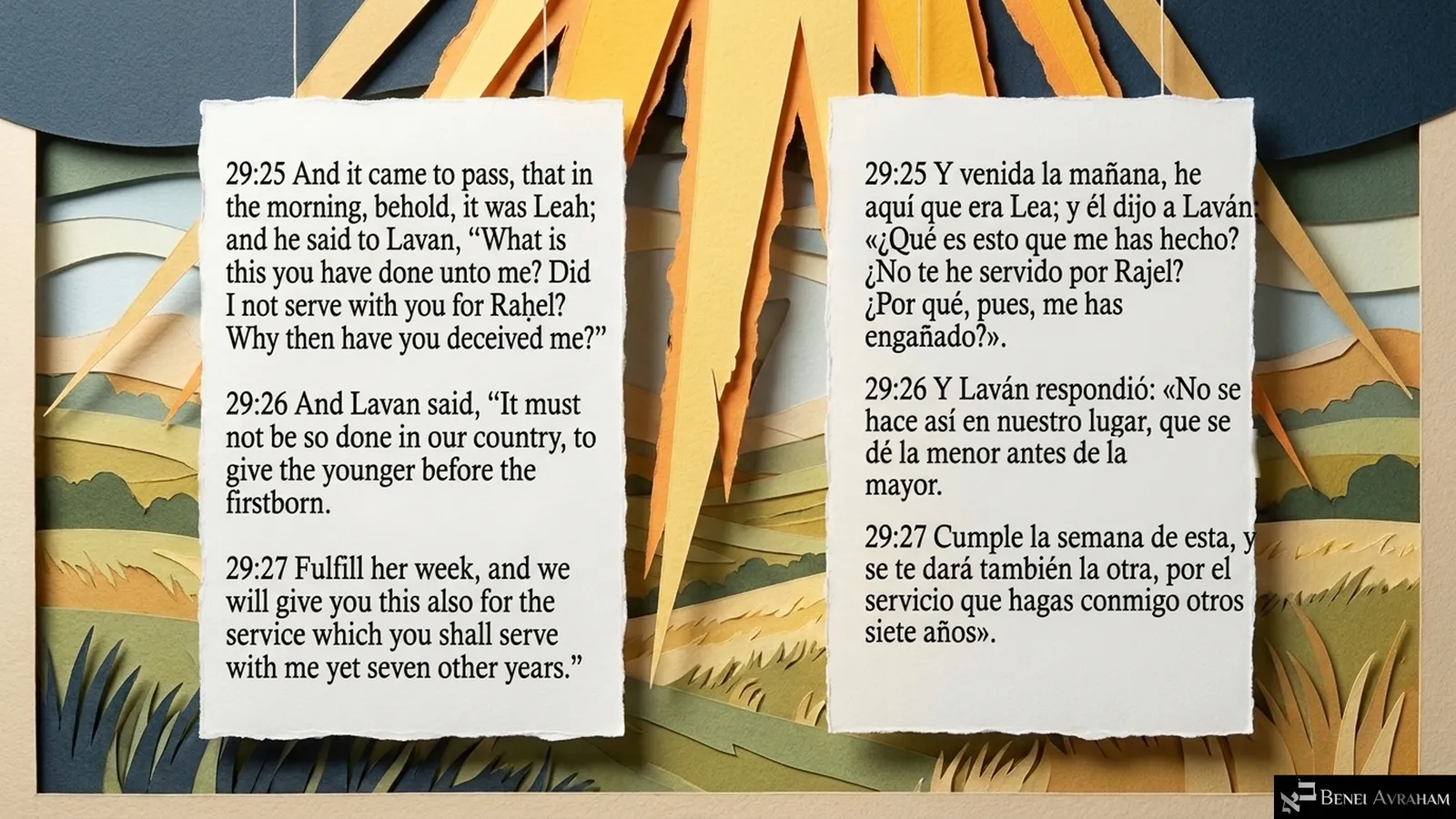
In the morning, behold, it was Leah: “Why then have you deceived me?” Lavan answers that the younger is not given before the firstborn (Genesis 29:25–27).
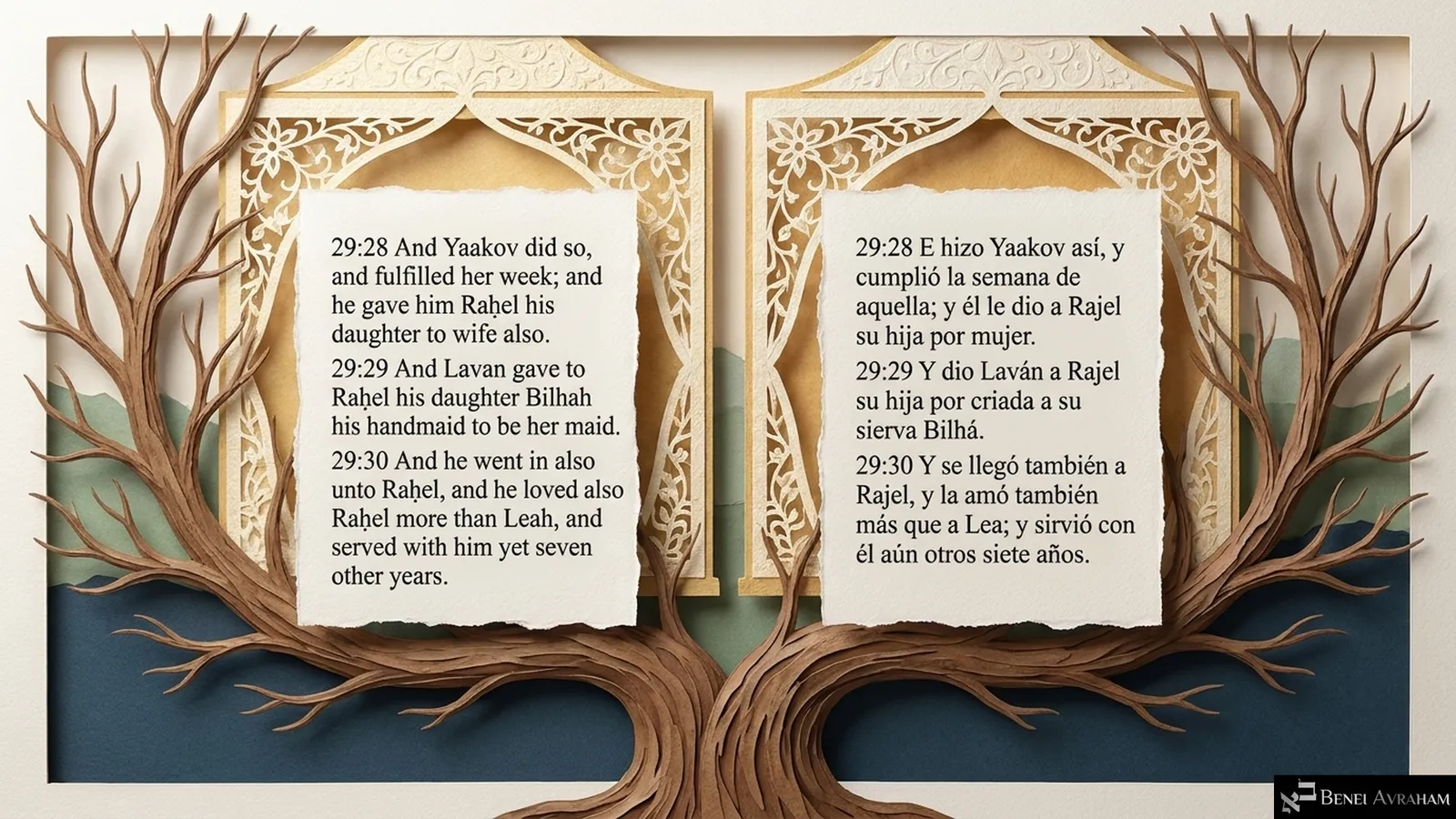
Between two lattice gates on a branching tree, Yaakov fulfills Leah’s week and also marries Raḥel, who receives Bilhah as her maid (Genesis 29:28–30).
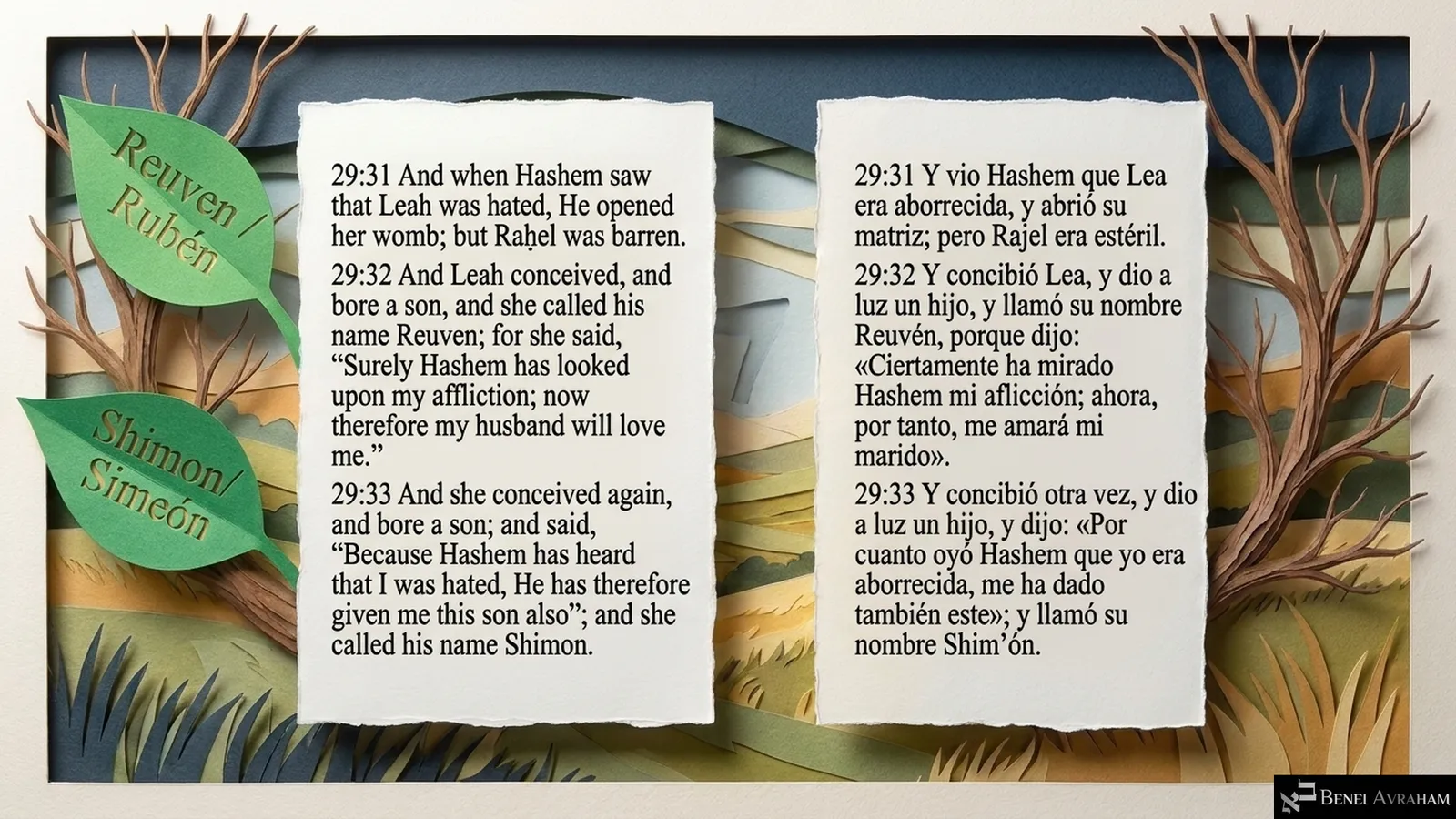
Hashem sees that Leah is hated and opens her womb: she bears Reuven and Shimon, shown as the first leaves of the family tree (Genesis 29:31–33).
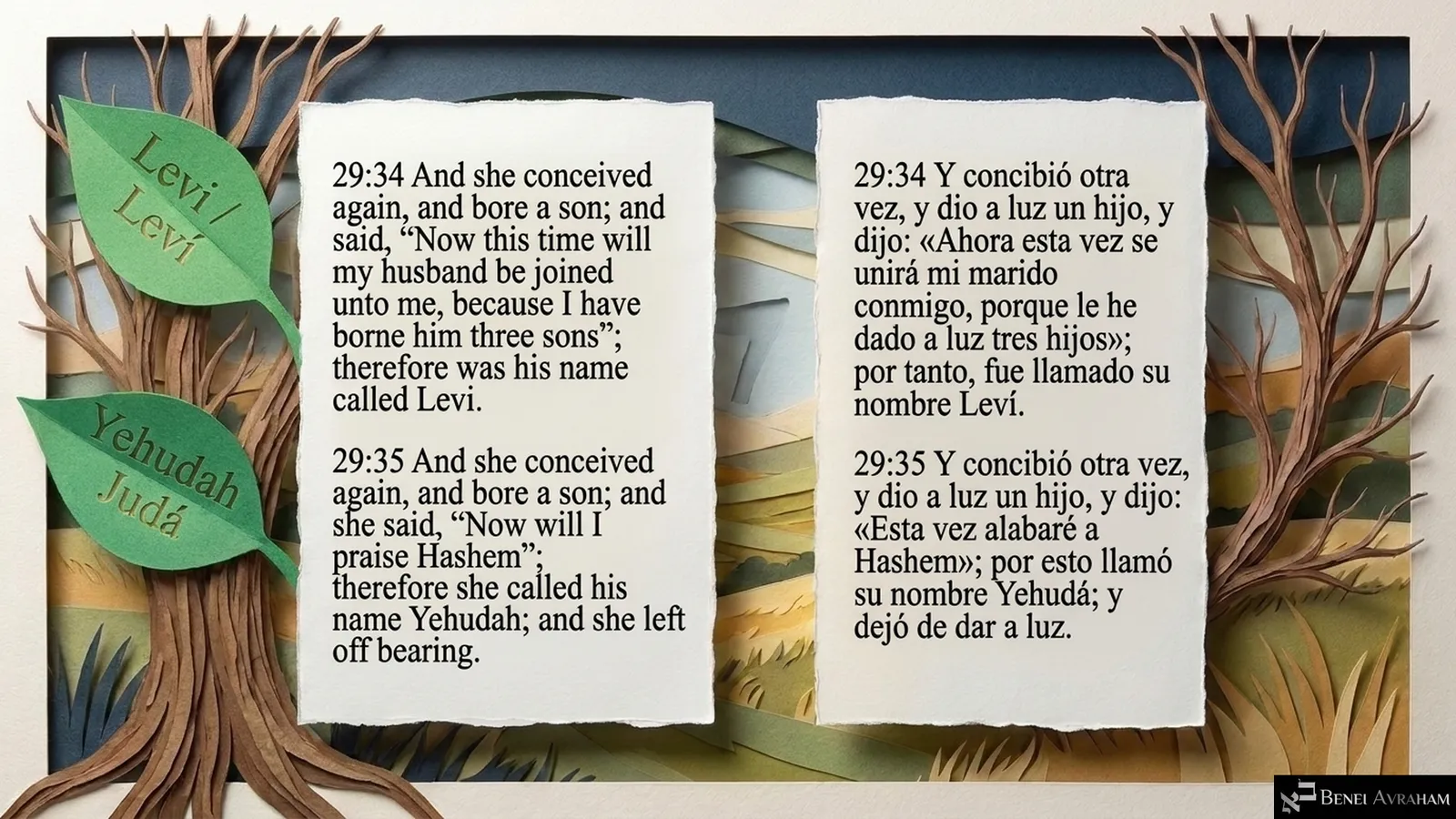
Leah bears Levi and then Yehudah: “Now will I praise Hashem” (Genesis 29:34–35).
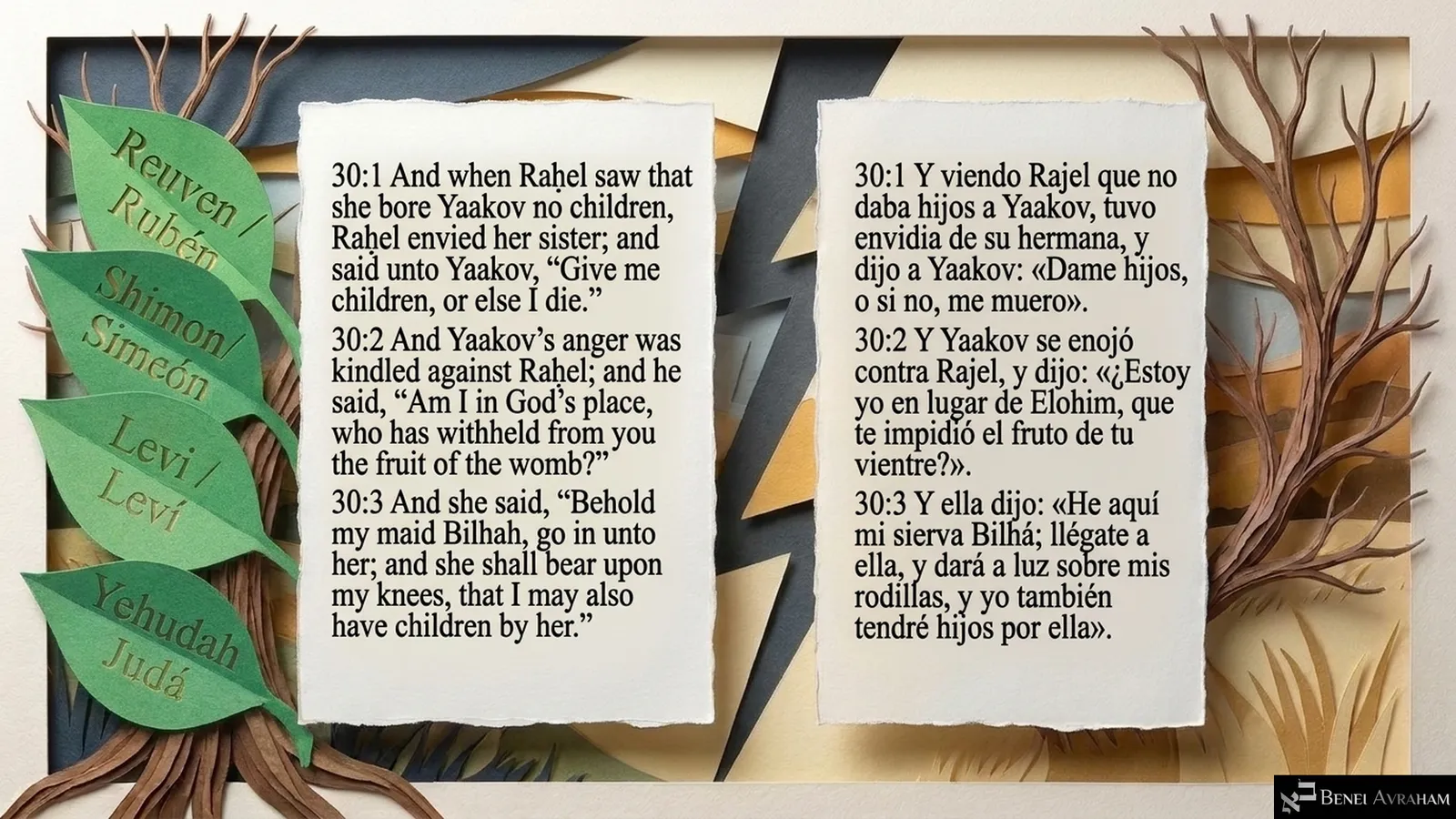
Raḥel envies her sister: “Give me children, or else I die”; Yaakov answers, “Am I in God’s place?” and Raḥel gives him Bilhah (Genesis 30:1–3).
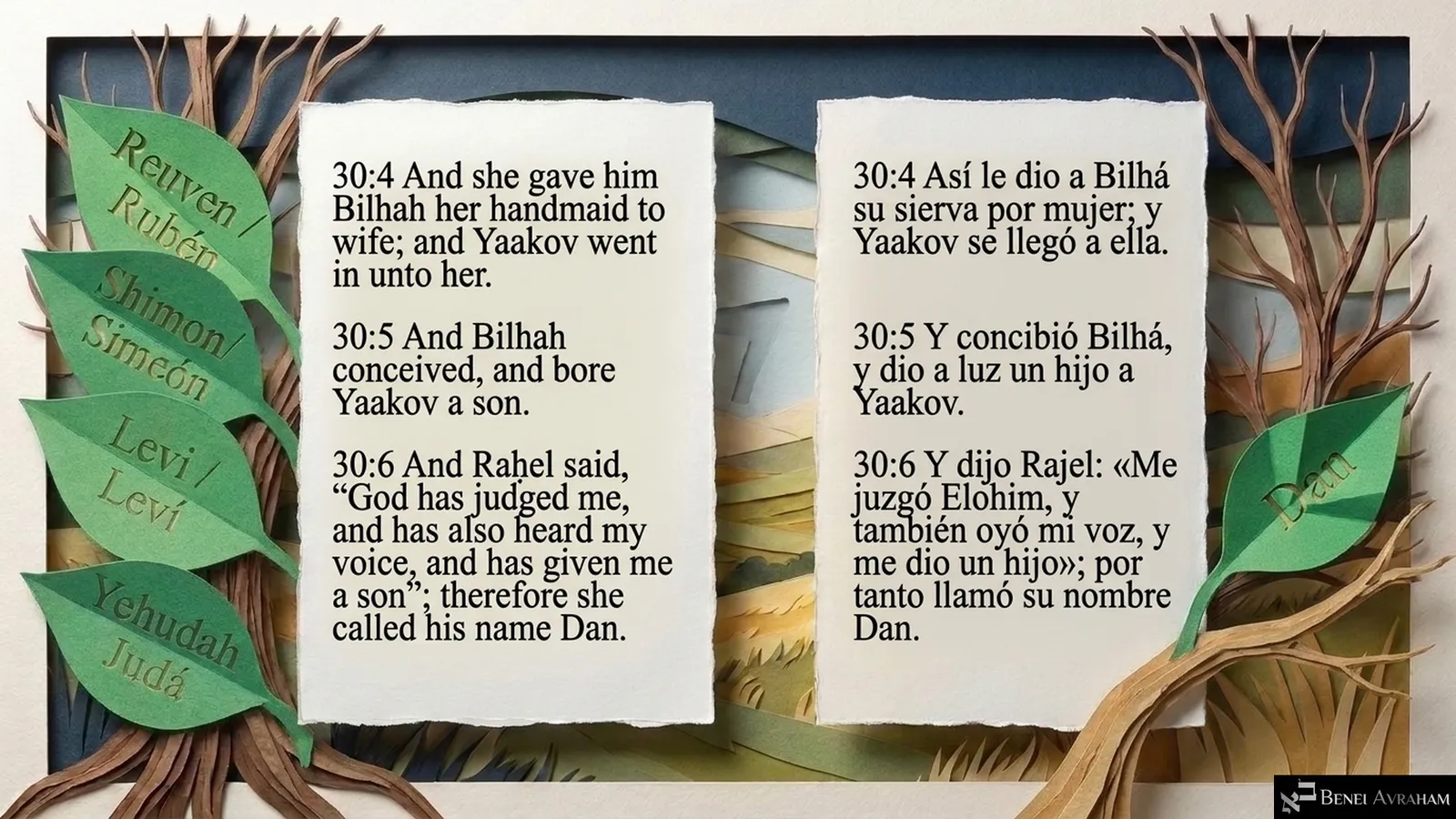
Bilhah bears Yaakov a son, and Raḥel says, “God has judged me … and has given me a son,” and calls him Dan (Genesis 30:4–6).
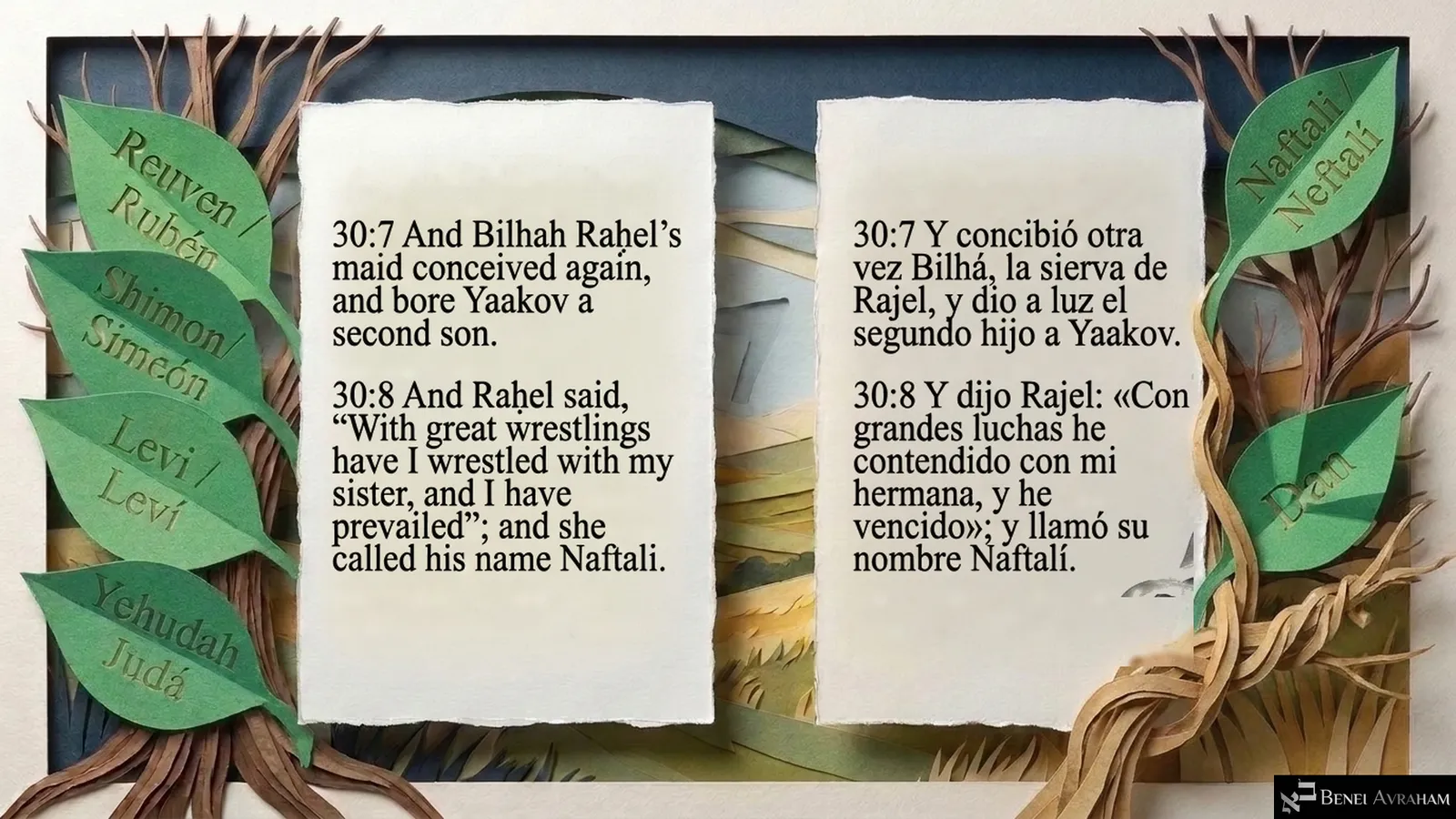
Bilhah bears a second son, and Raḥel says, “With great wrestlings have I wrestled with my sister,” and calls him Naftali (Genesis 30:7–8).
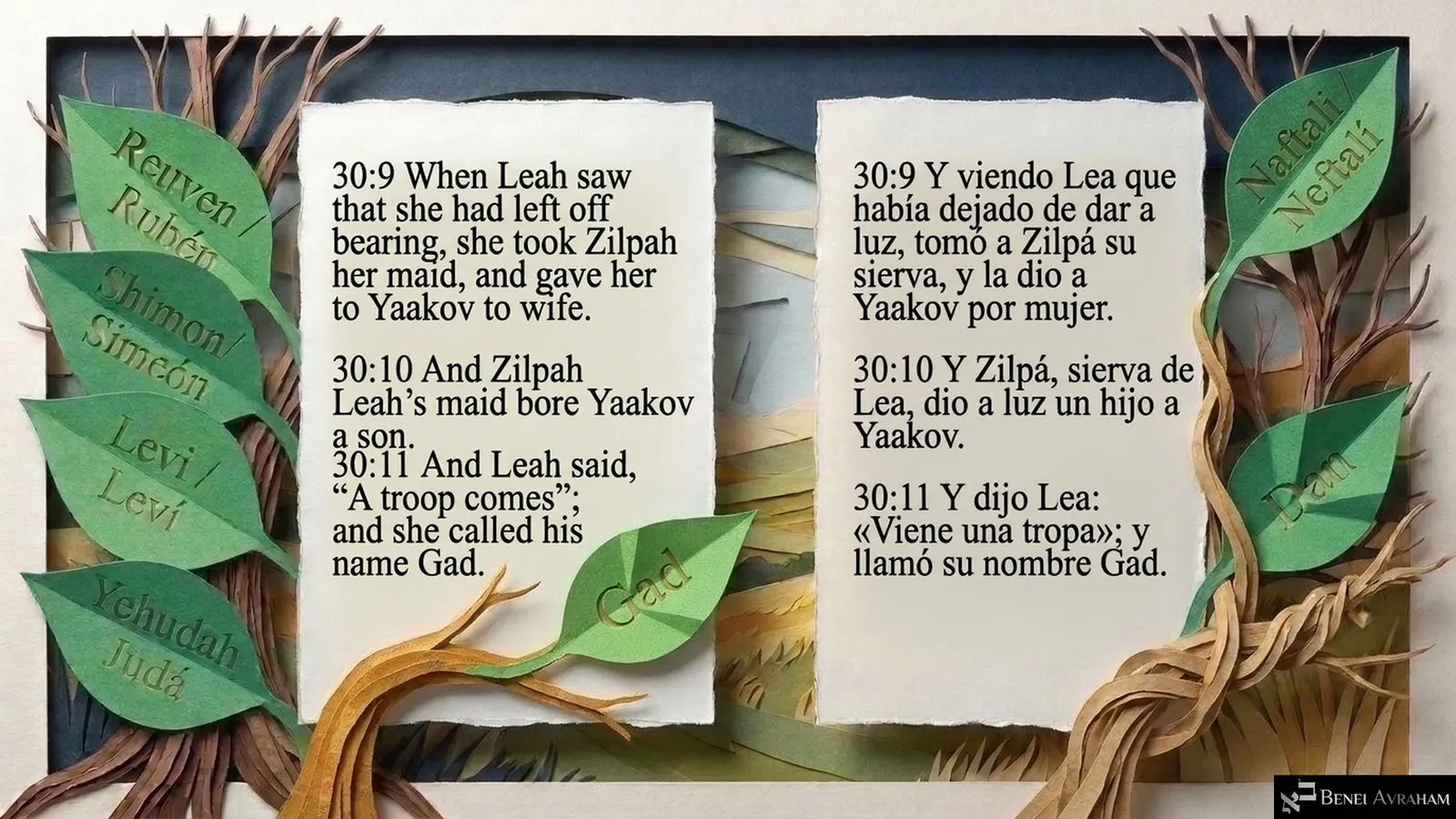
Leah gives Zilpah her maid to Yaakov; Zilpah bears a son, and Leah calls him Gad: “A troop comes” (Genesis 30:9–11).
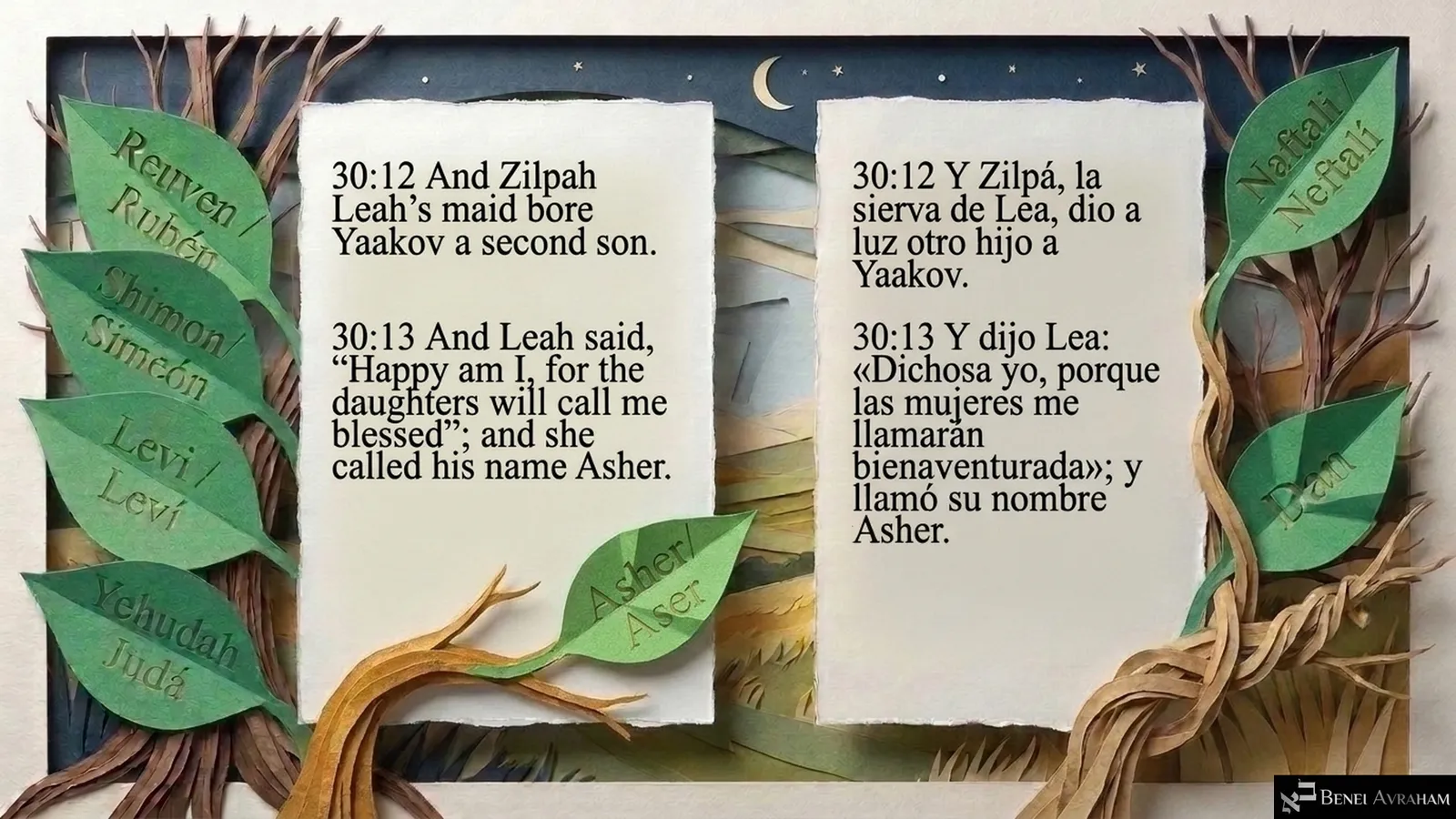
Zilpah bears a second son, and Leah says, “Happy am I,” and calls him Asher, completing the leaves of the tree so far (Genesis 30:12–13).
Revi’i · Genesis 30:14–27

Fourth Portion
Title slide: Parashat Vayetze, fourth portion, Genesis 30:14–27, with sheep and a lit tent inside a pomegranate-vine frame.
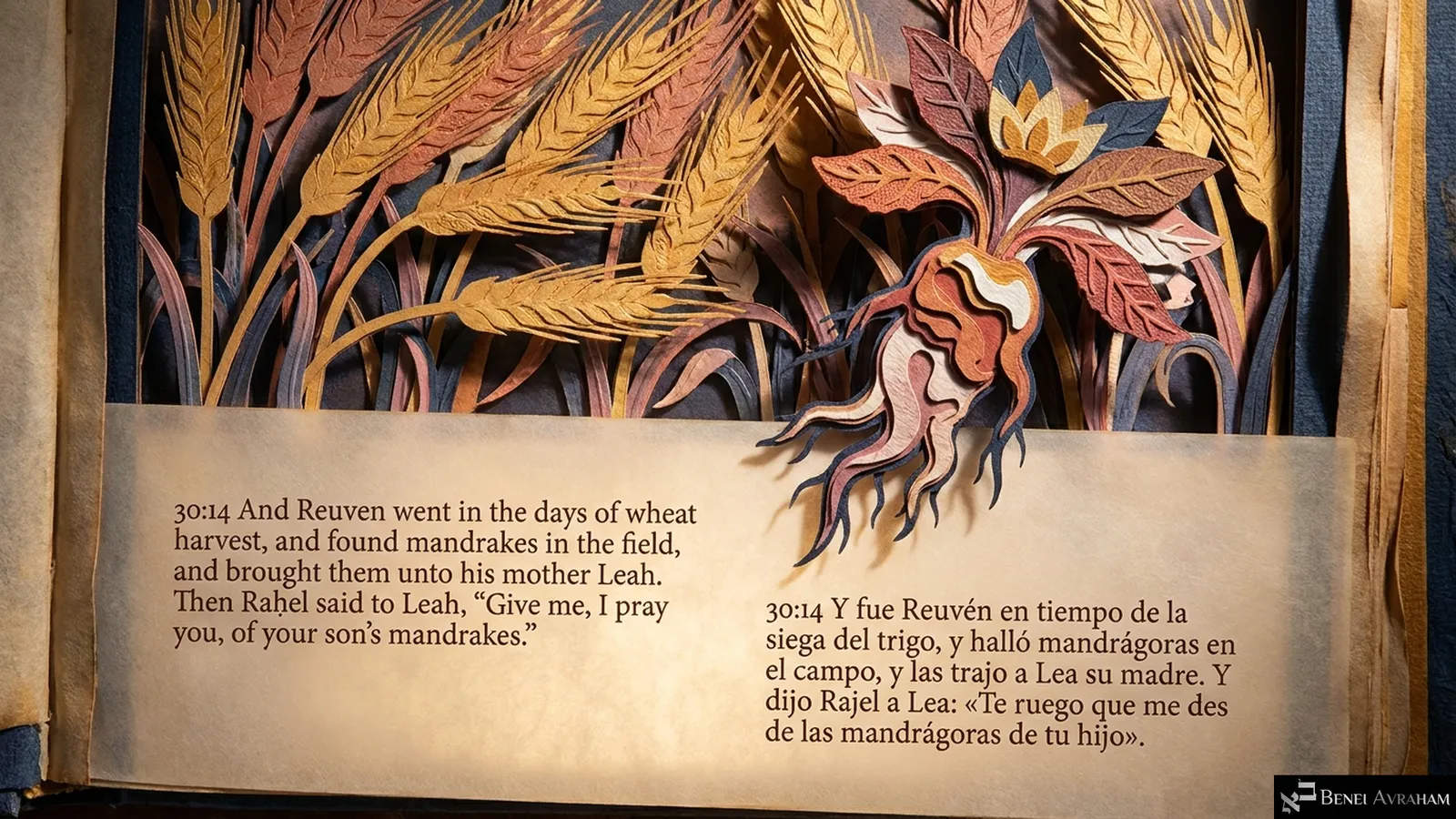
In the days of wheat harvest Reuven finds mandrakes in the field, and Raḥel asks Leah for her son’s mandrakes (Genesis 30:14).
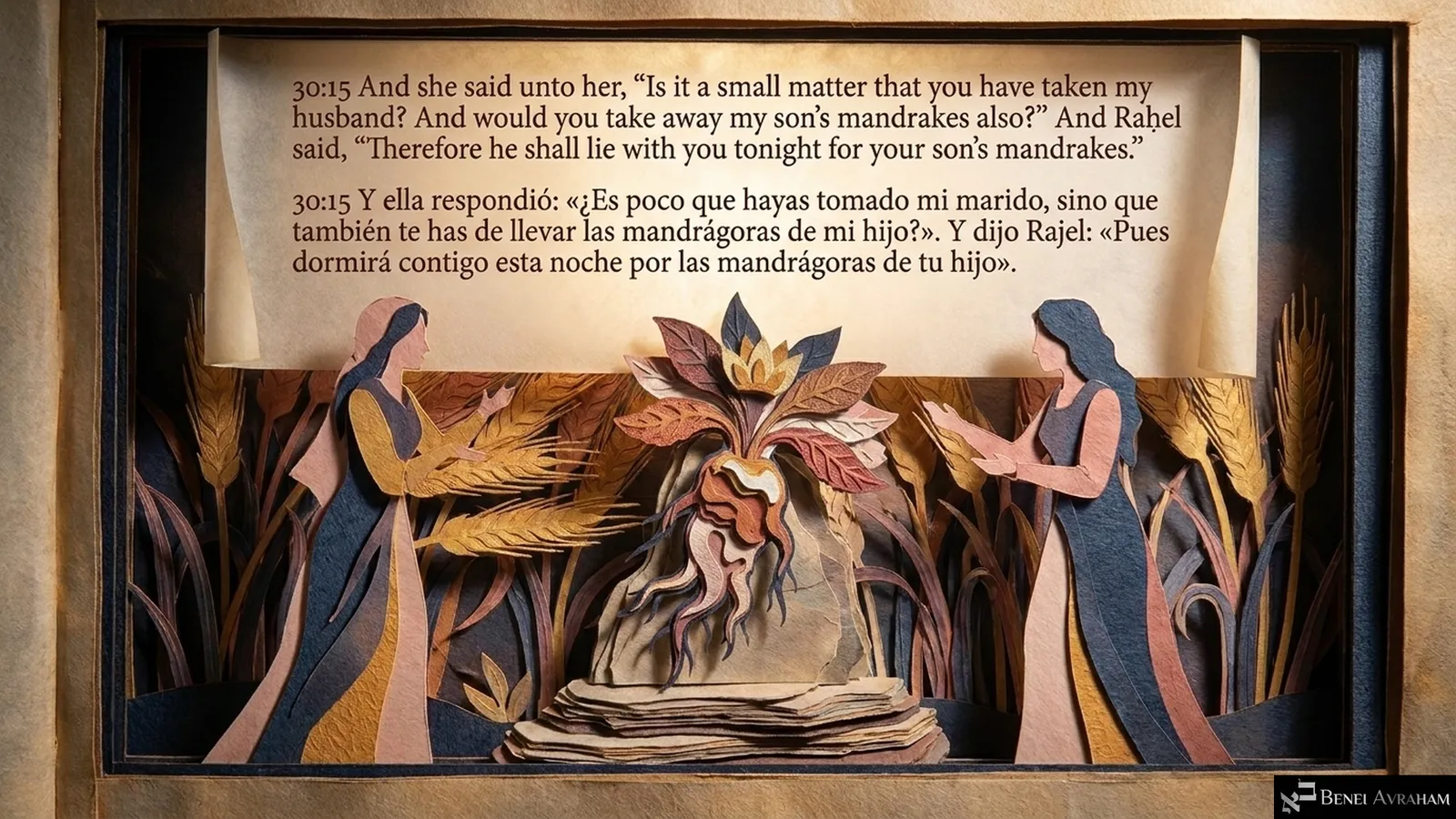
Leah and Raḥel face each other over the mandrakes: “He shall lie with you tonight for your son’s mandrakes” (Genesis 30:15).
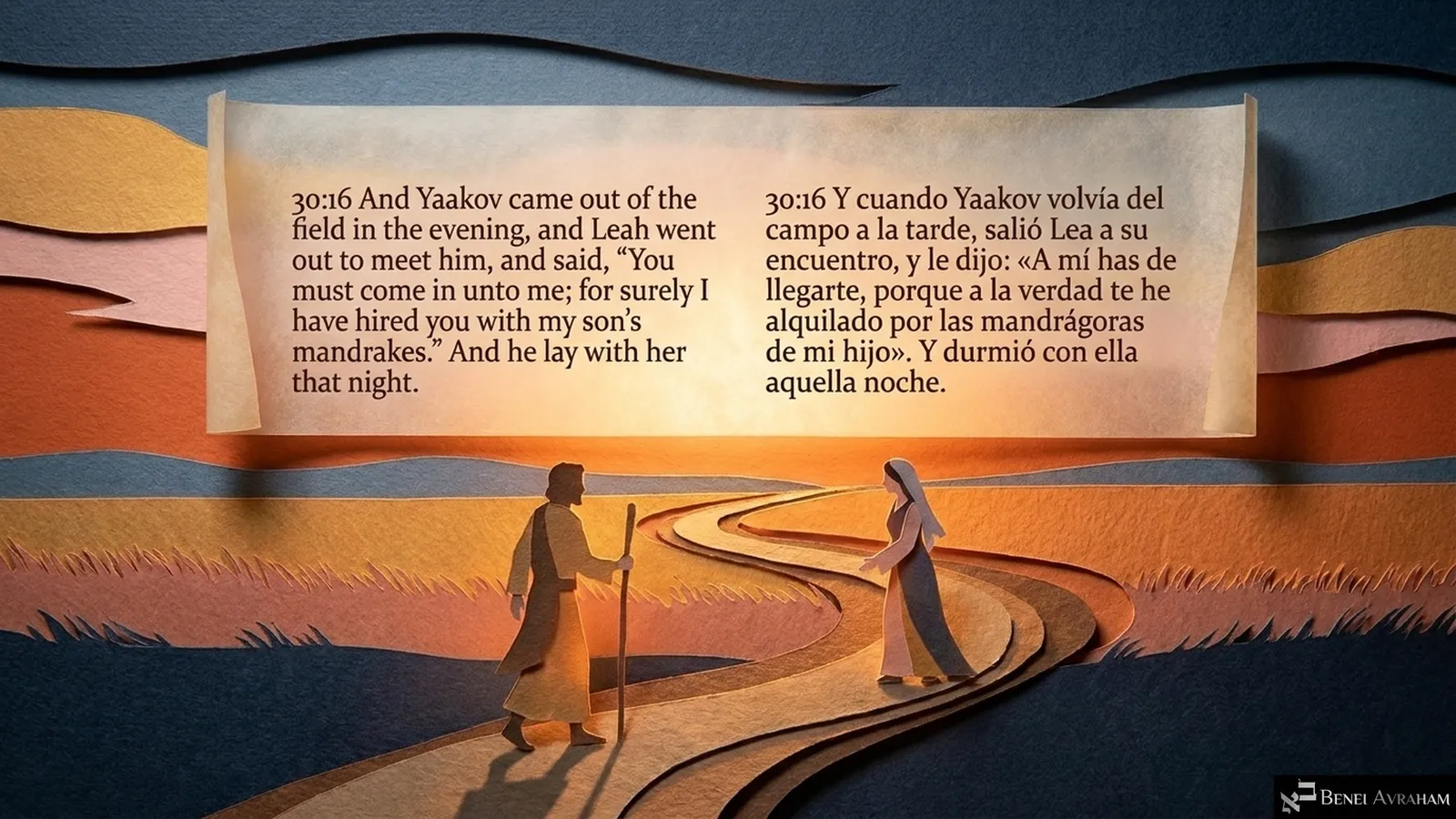
Leah goes out to meet Yaakov in the evening on a winding path: “I have hired you with my son’s mandrakes” (Genesis 30:16).
A ray of light falls on a glowing seed: God hearkens to Leah, and she bears Yaakov a fifth son (Genesis 30:17).
“God has given me my hire,” says Leah, and she calls her son Yissachar (Genesis 30:18).
The seed grows into a leafy plant as Leah bears Yaakov a sixth son (Genesis 30:19).
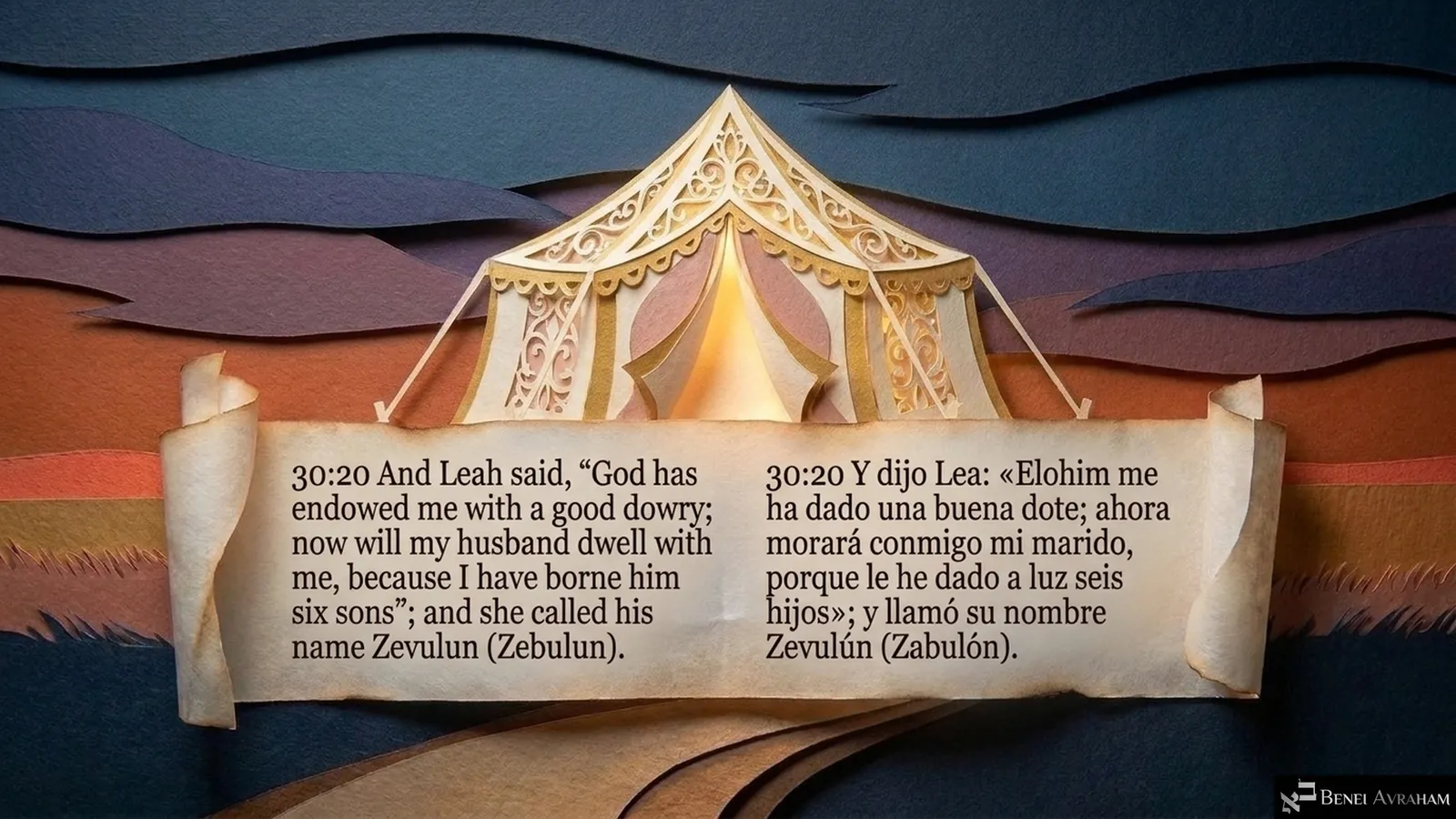
Before a lace-cut tent, Leah says, “God has endowed me with a good dowry,” and calls her son Zevulun (Genesis 30:20).
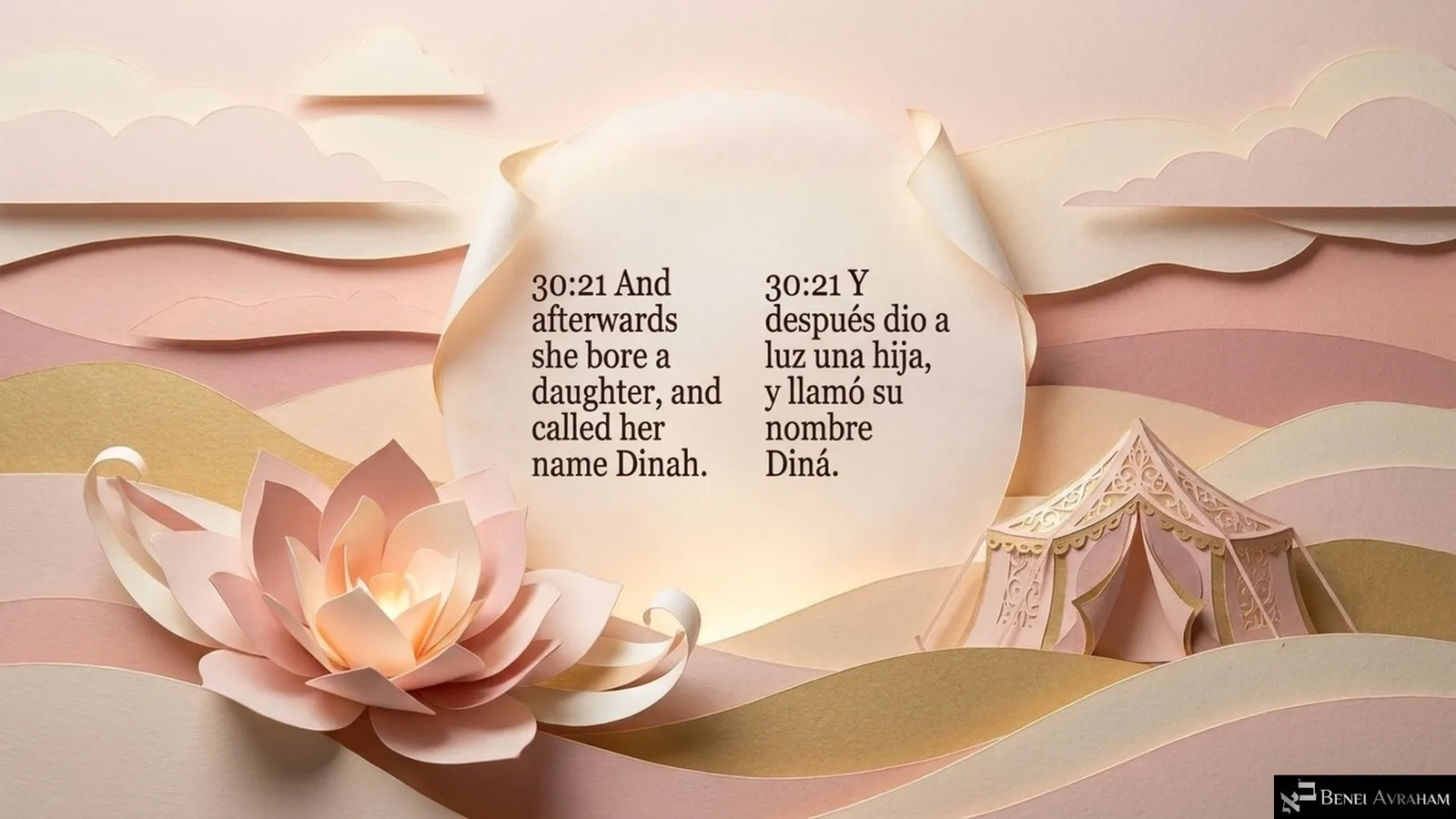
Beside a paper lotus and a pink tent, Leah bears a daughter and calls her name Dinah (Genesis 30:21).
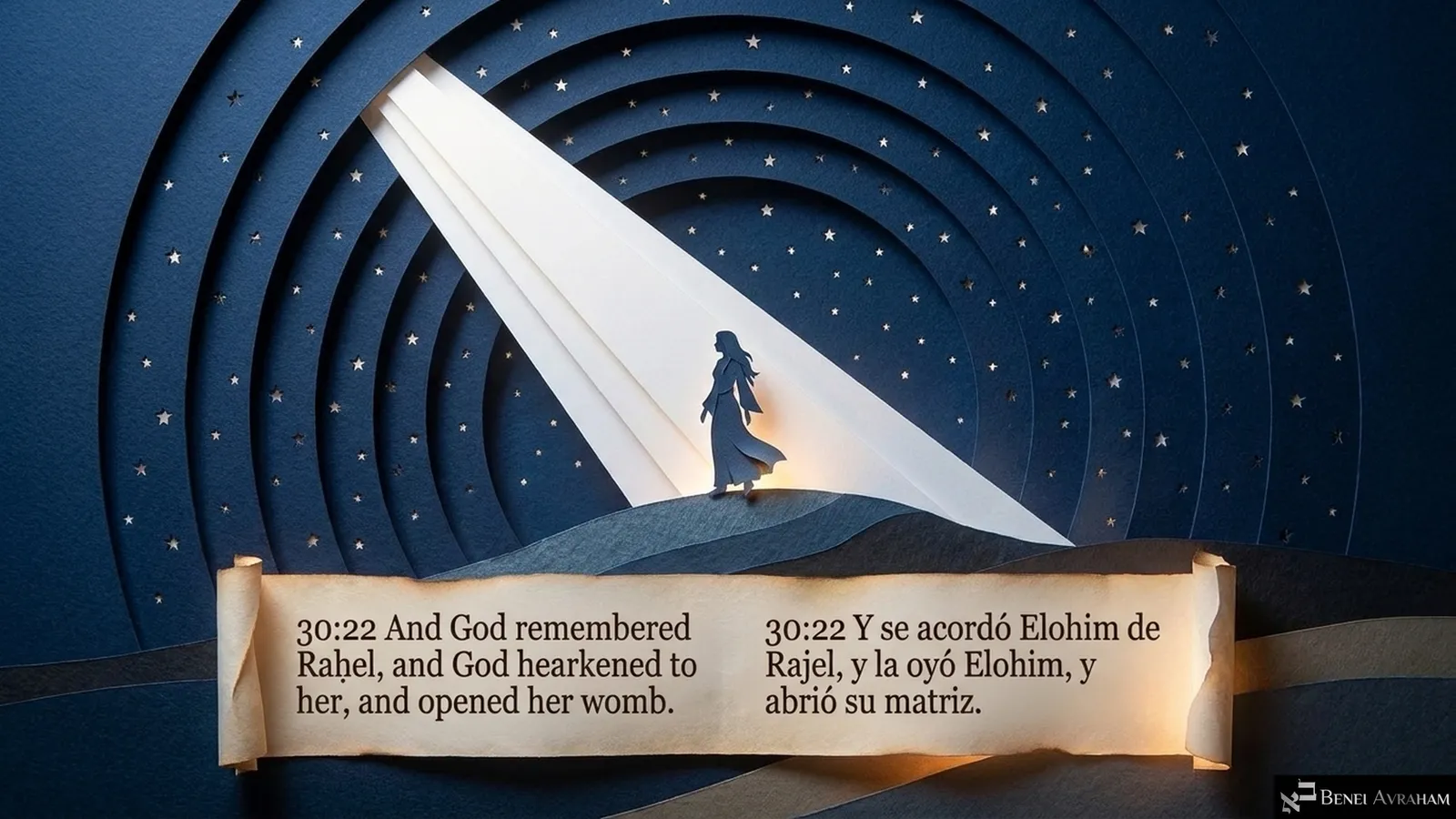
A beam of light falls on a lone figure under the stars: God remembers Raḥel, hearkens to her and opens her womb (Genesis 30:22).
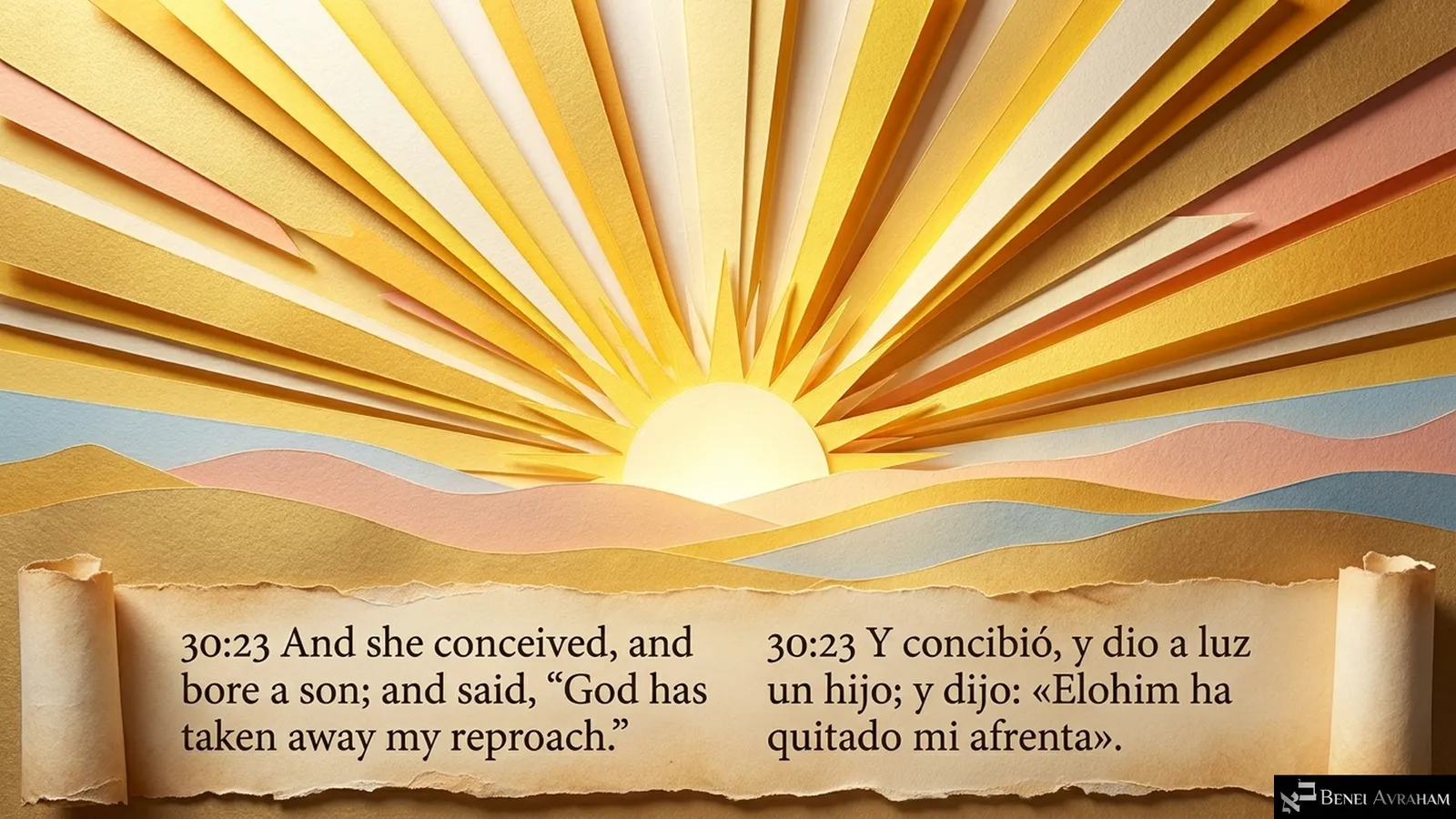
A paper sunrise: Raḥel bears a son and says, “God has taken away my reproach” (Genesis 30:23).
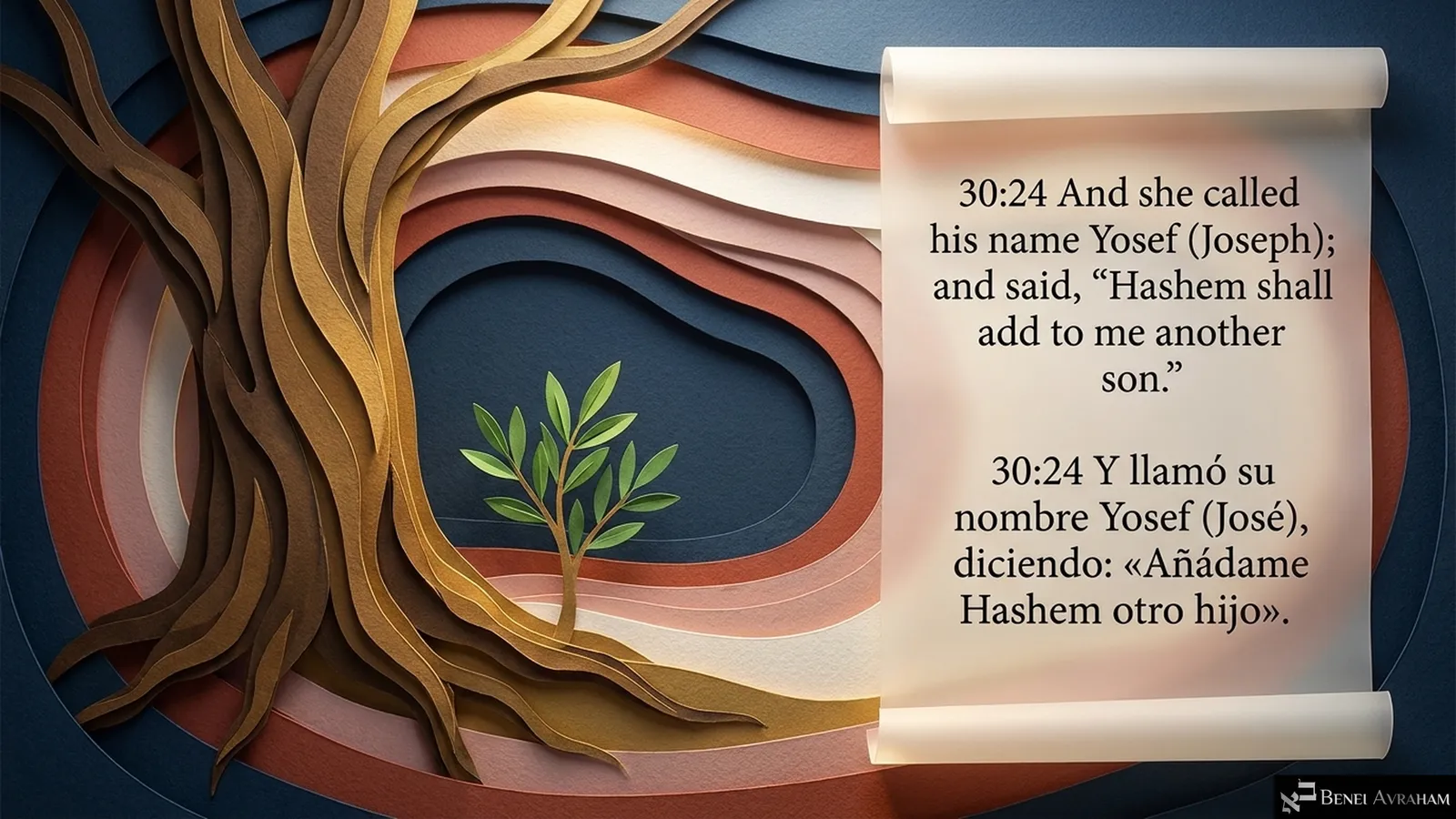
A young shoot beside an old tree: she calls him Yosef, saying, “Hashem shall add to me another son” (Genesis 30:24).
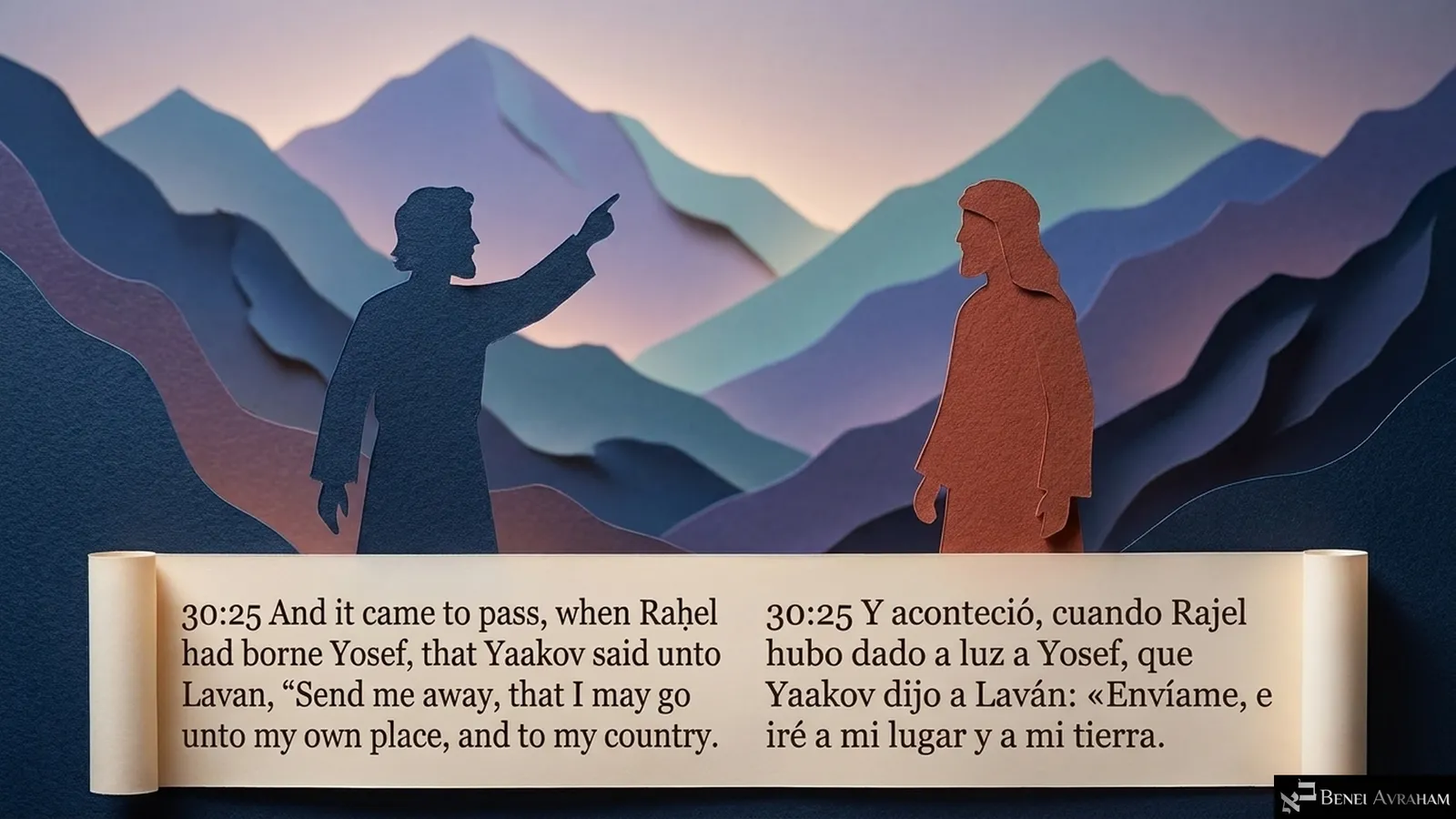
Yaakov points toward the mountains and says to Lavan, “Send me away, that I may go unto my own place, and to my country” (Genesis 30:25).
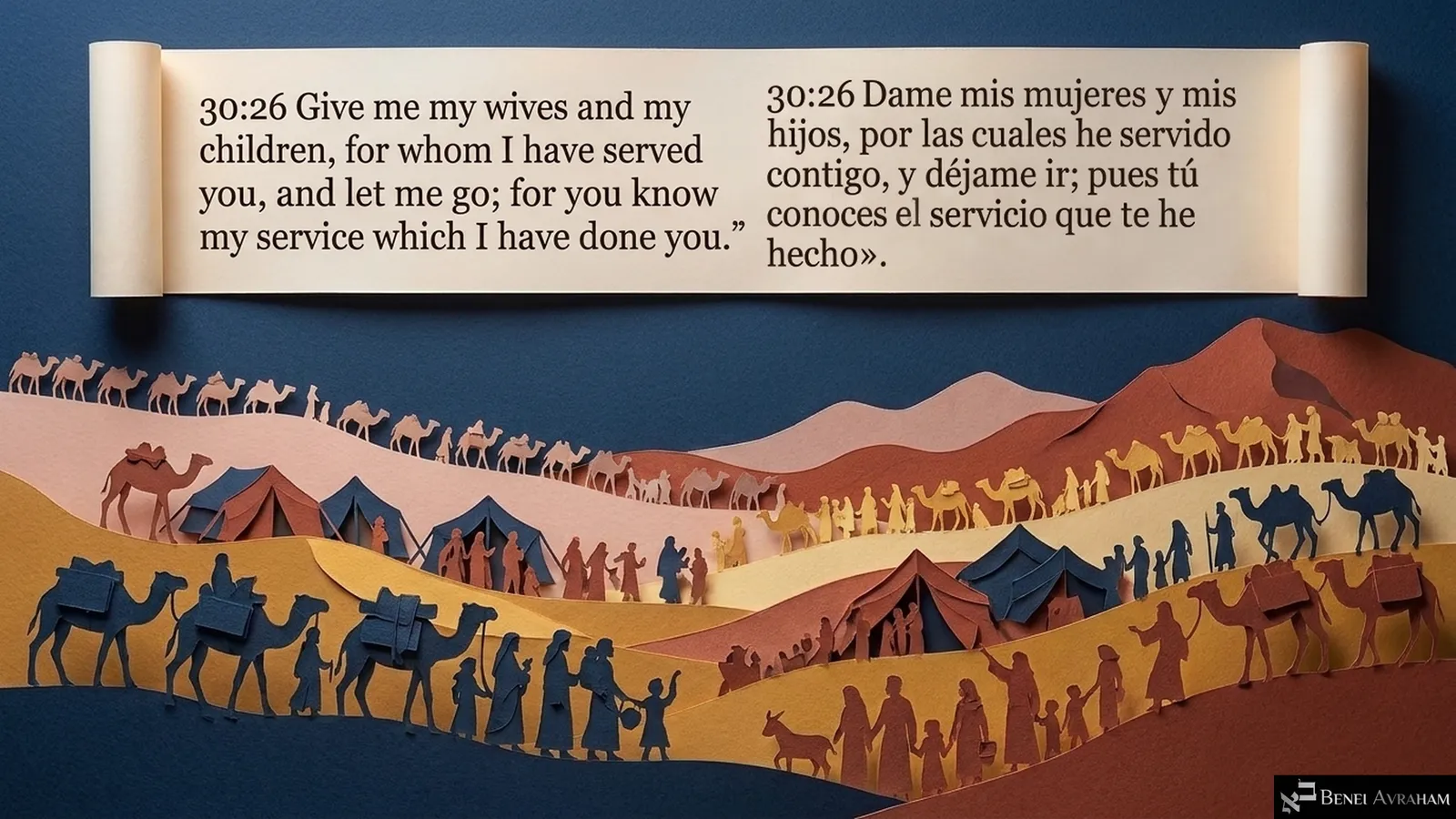
“Give me my wives and my children, for whom I have served you, and let me go,” above a long caravan of camels, tents and families (Genesis 30:26).
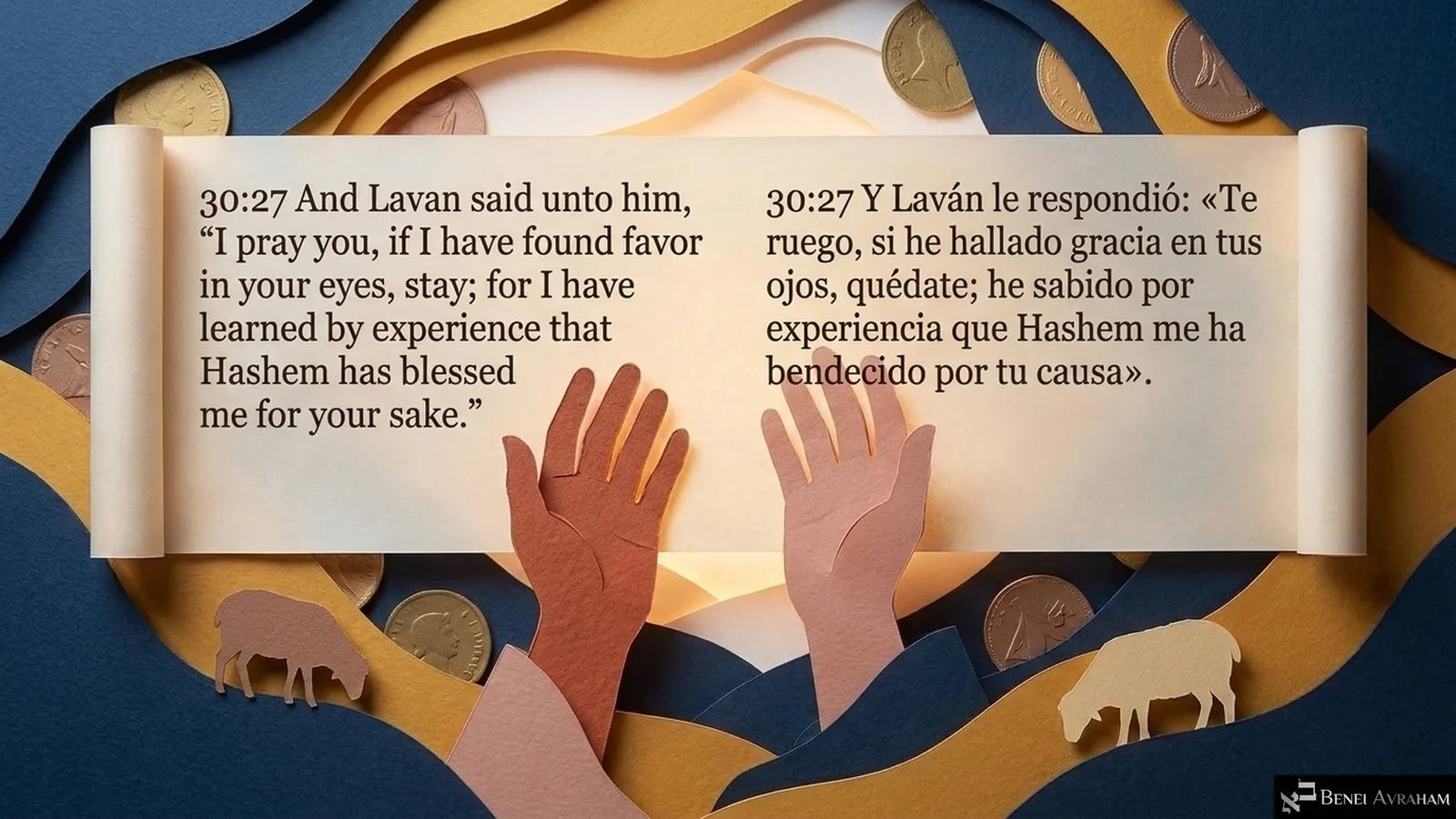
Two open hands among coins and sheep: “I have learned by experience that Hashem has blessed me for your sake” (Genesis 30:27).
Chamishi · Genesis 30:28–31:16

Fifth Portion
Title slide: Parashat Vayetze, fifth portion (Chamishi), Genesis 30:28–31:16, on layered paper under moons and stars.
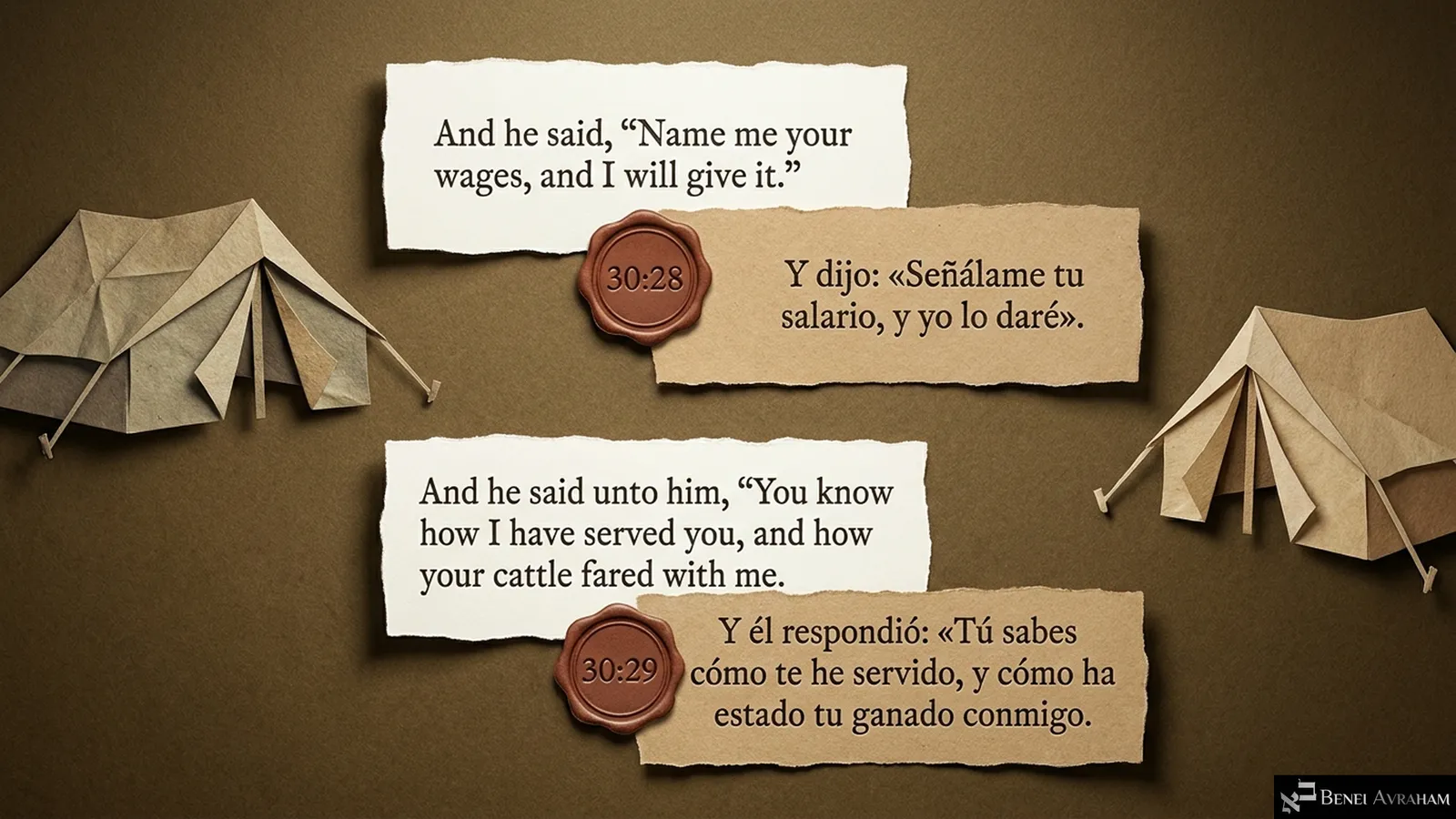
Two paper tents and wax seals: “Name me your wages” … “You know how I have served you, and how your cattle fared with me” (Genesis 30:28–29).
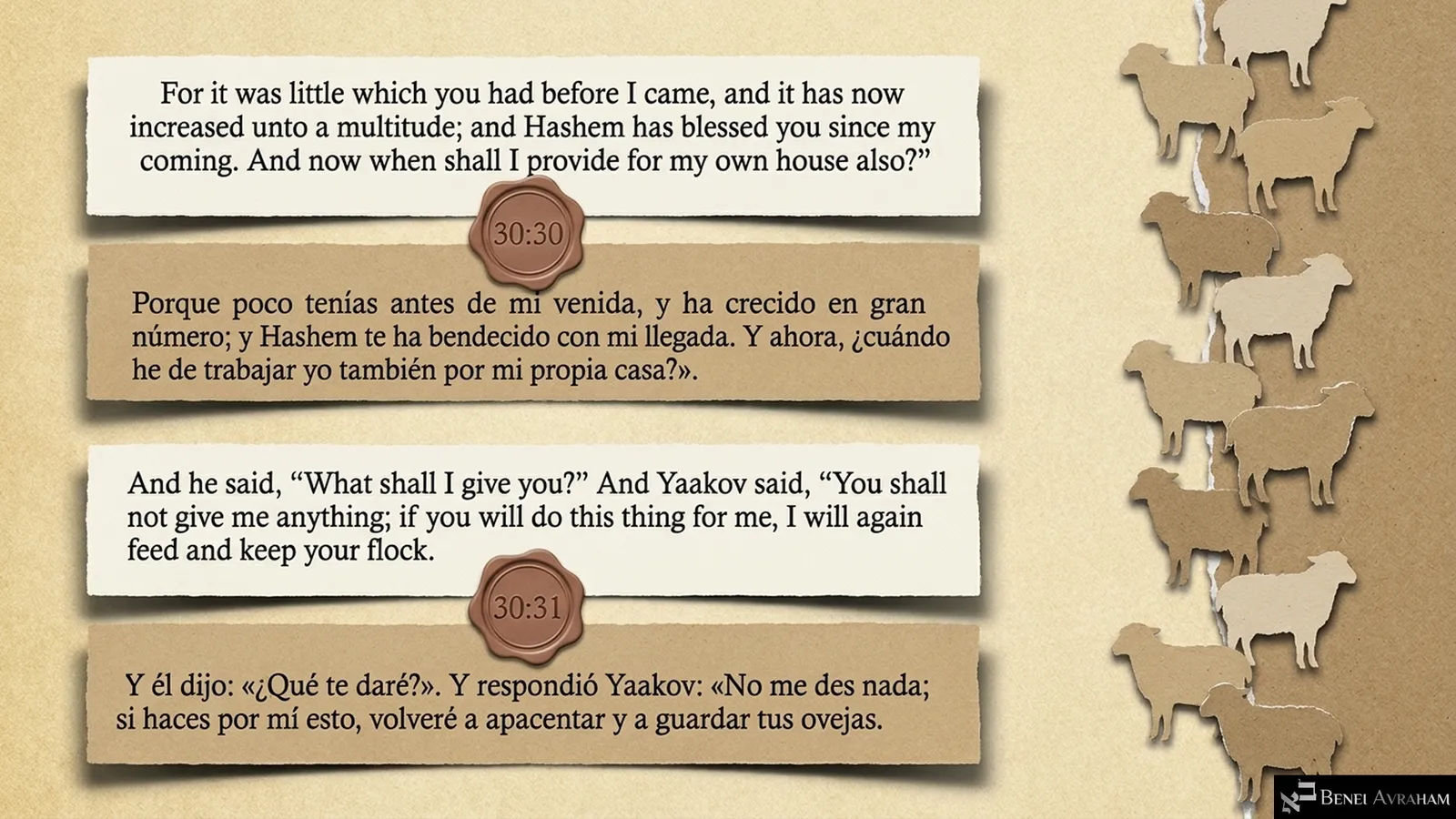
“It was little which you had before I came”: Yaakov will again feed and keep Lavan’s flock, with a column of paper sheep (Genesis 30:30–31).
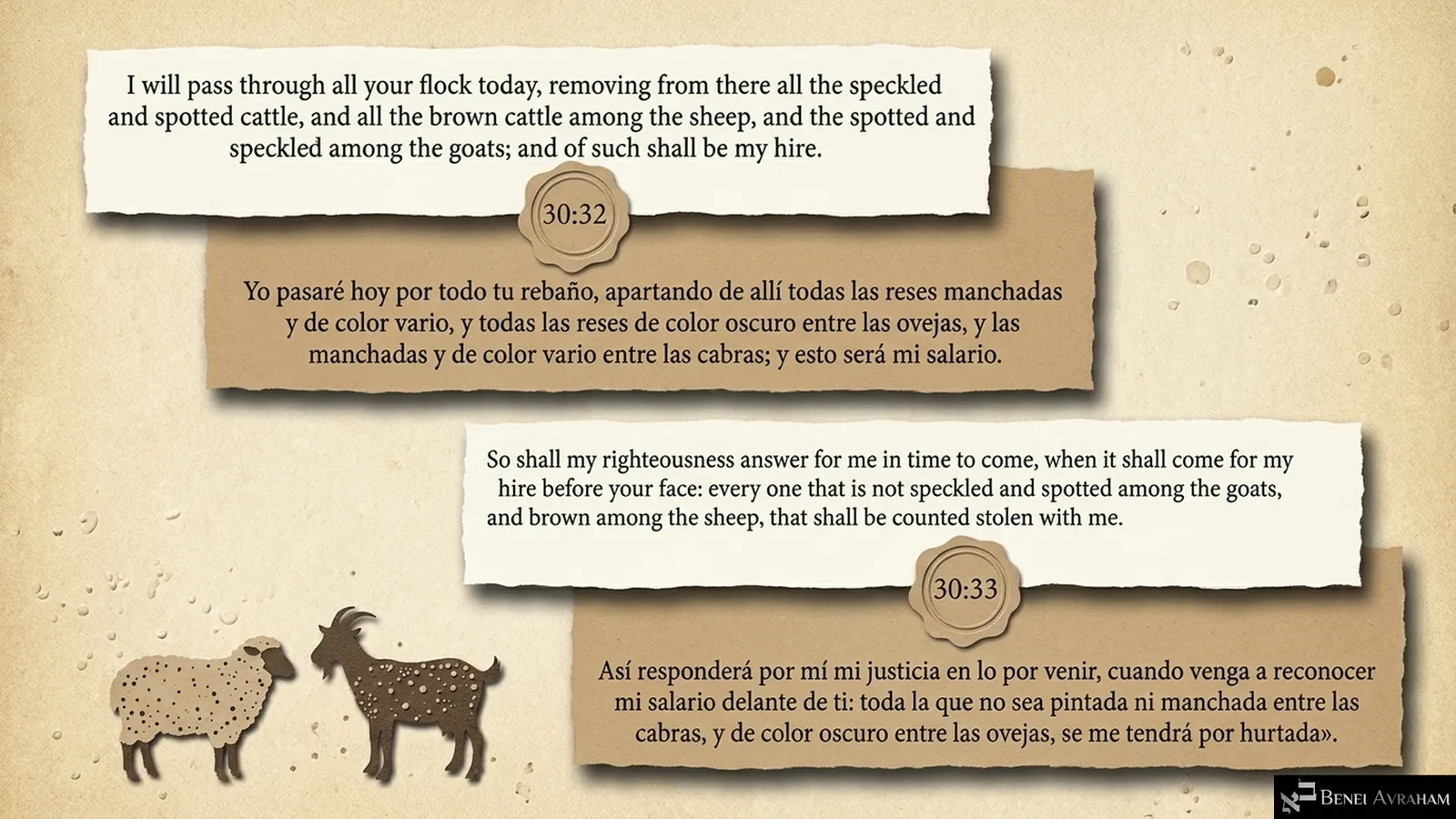
Yaakov’s hire: every speckled and spotted goat and every brown sheep, with a spotted sheep and goat in the corner (Genesis 30:32–33).
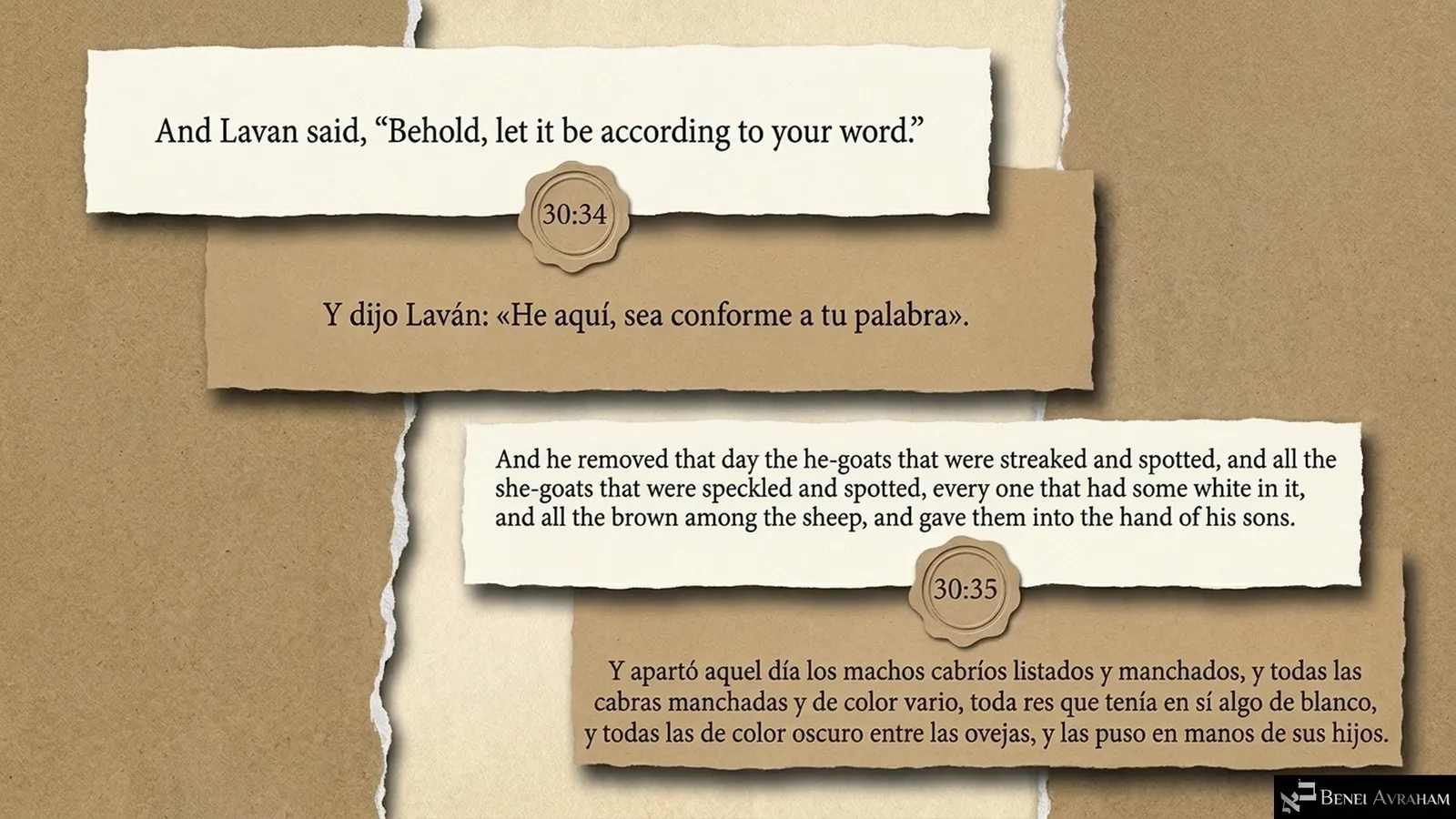
“Let it be according to your word”: Lavan removes the streaked, spotted and brown animals and gives them into the hand of his sons (Genesis 30:34–35).
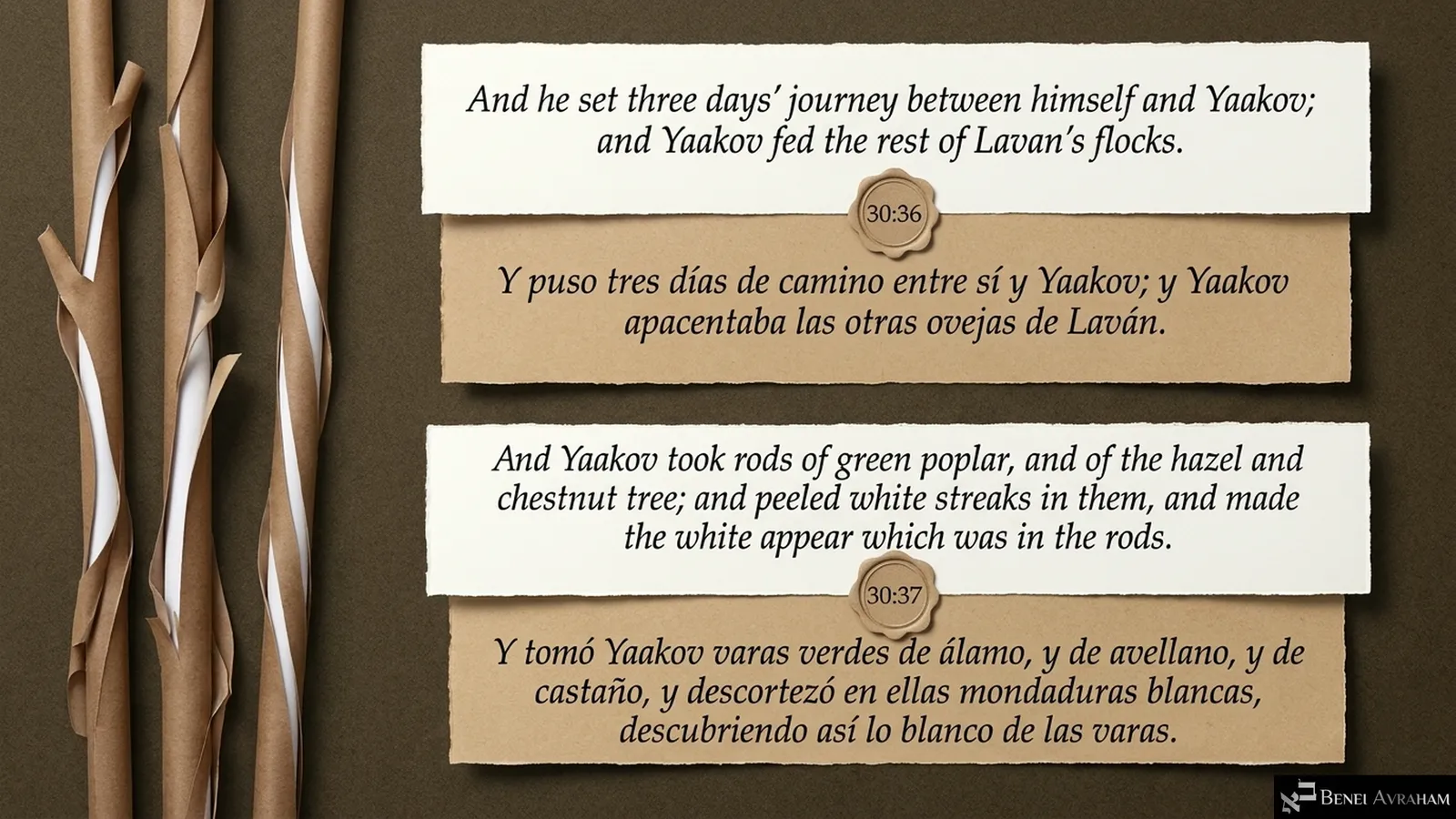
Peeled rods of poplar, hazel and chestnut: Lavan sets three days’ journey between himself and Yaakov, and Yaakov peels white streaks in the rods (Genesis 30:36–37).
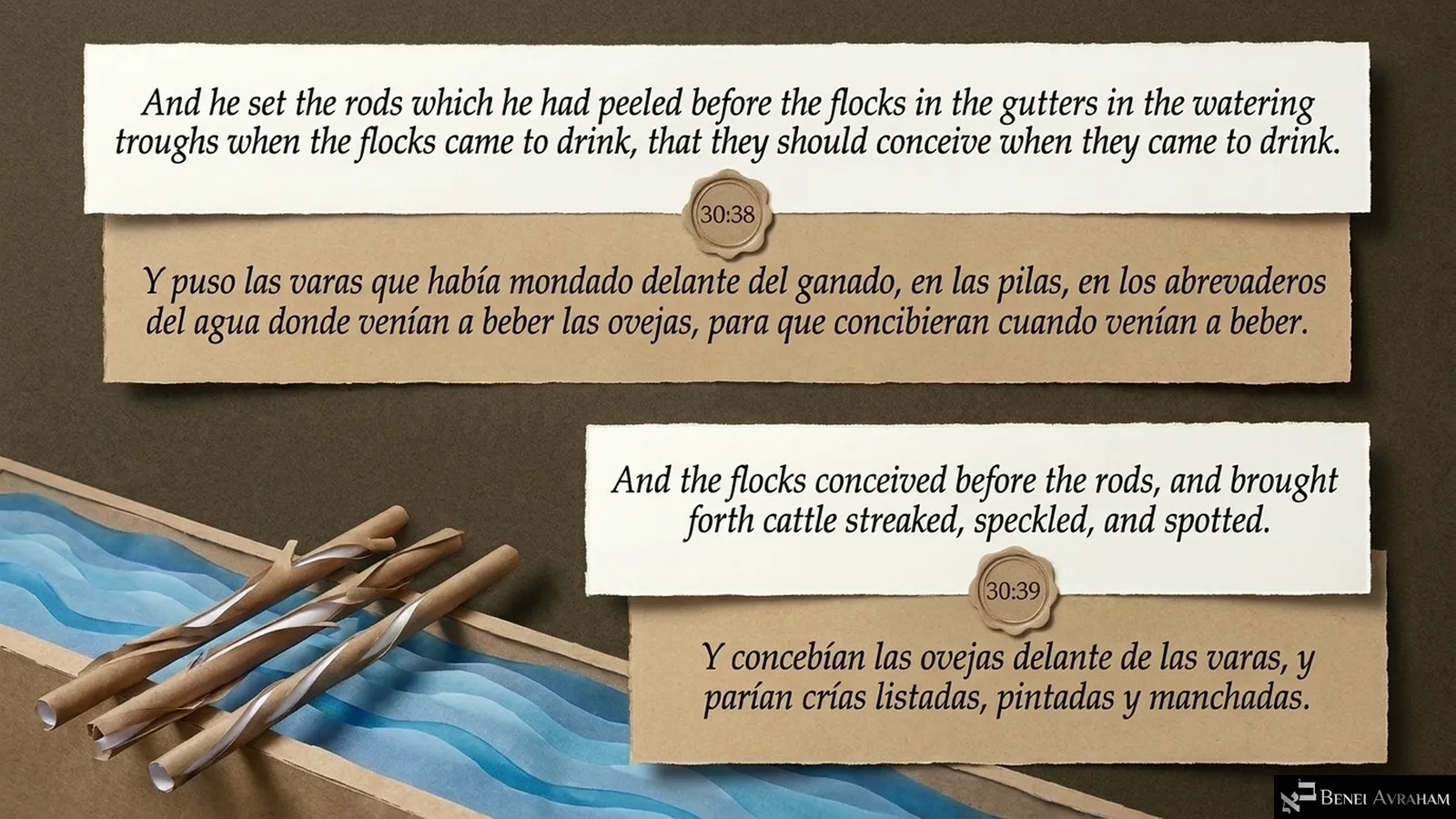
The peeled rods laid by the watering troughs, and the flocks conceive before the rods and bring forth streaked, speckled and spotted young (Genesis 30:38–39).
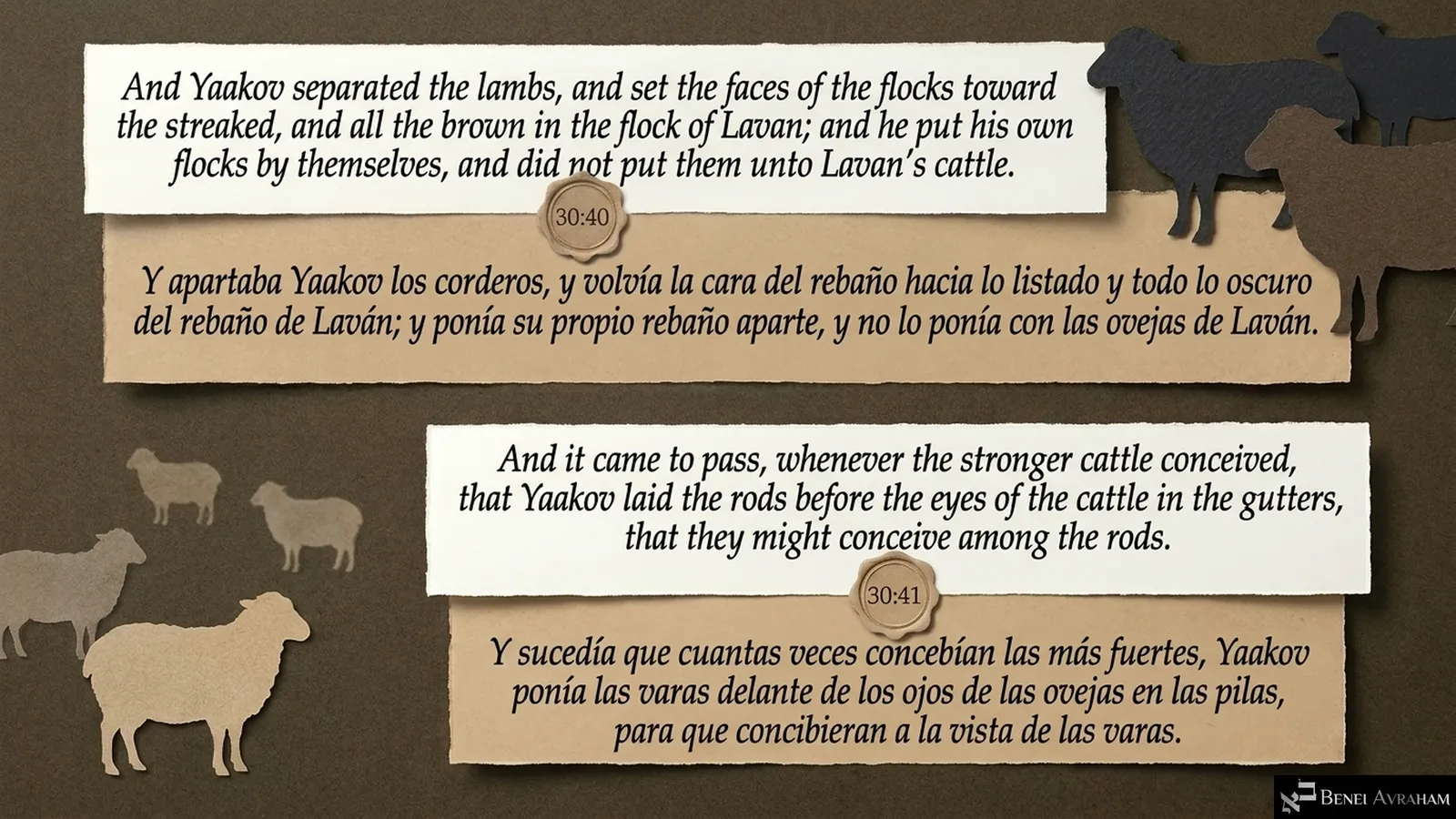
Yaakov separates the lambs and lays the rods before the stronger cattle, with dark and light paper sheep (Genesis 30:40–41).
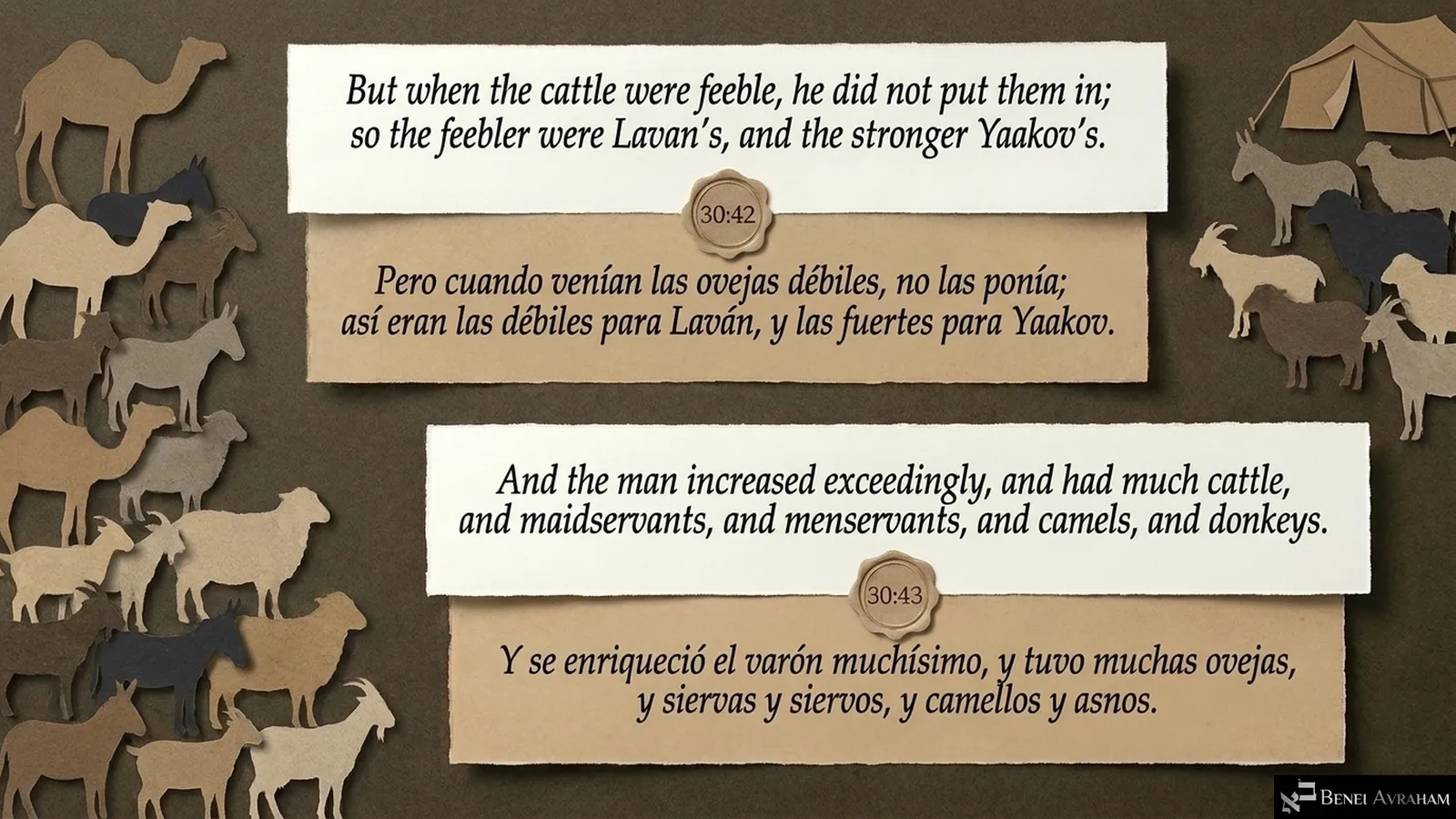
The feebler go to Lavan and the stronger to Yaakov, and the man increases exceedingly, with cattle, servants, camels and donkeys (Genesis 30:42–43).
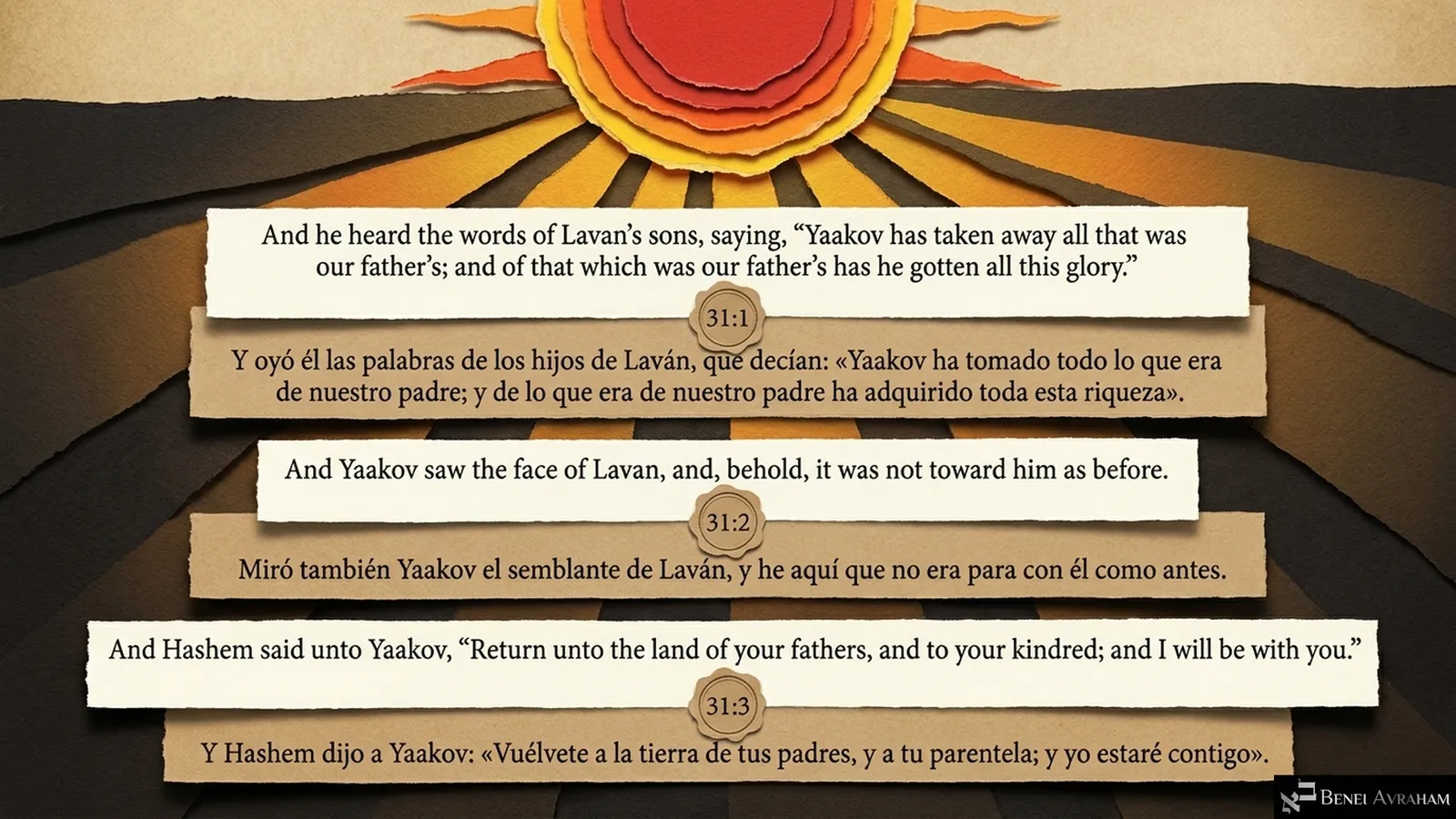
Under a setting paper sun, Yaakov hears the words of Lavan’s sons, sees that Lavan’s face has changed, and Hashem says, “Return unto the land of your fathers” (Genesis 31:1–3).
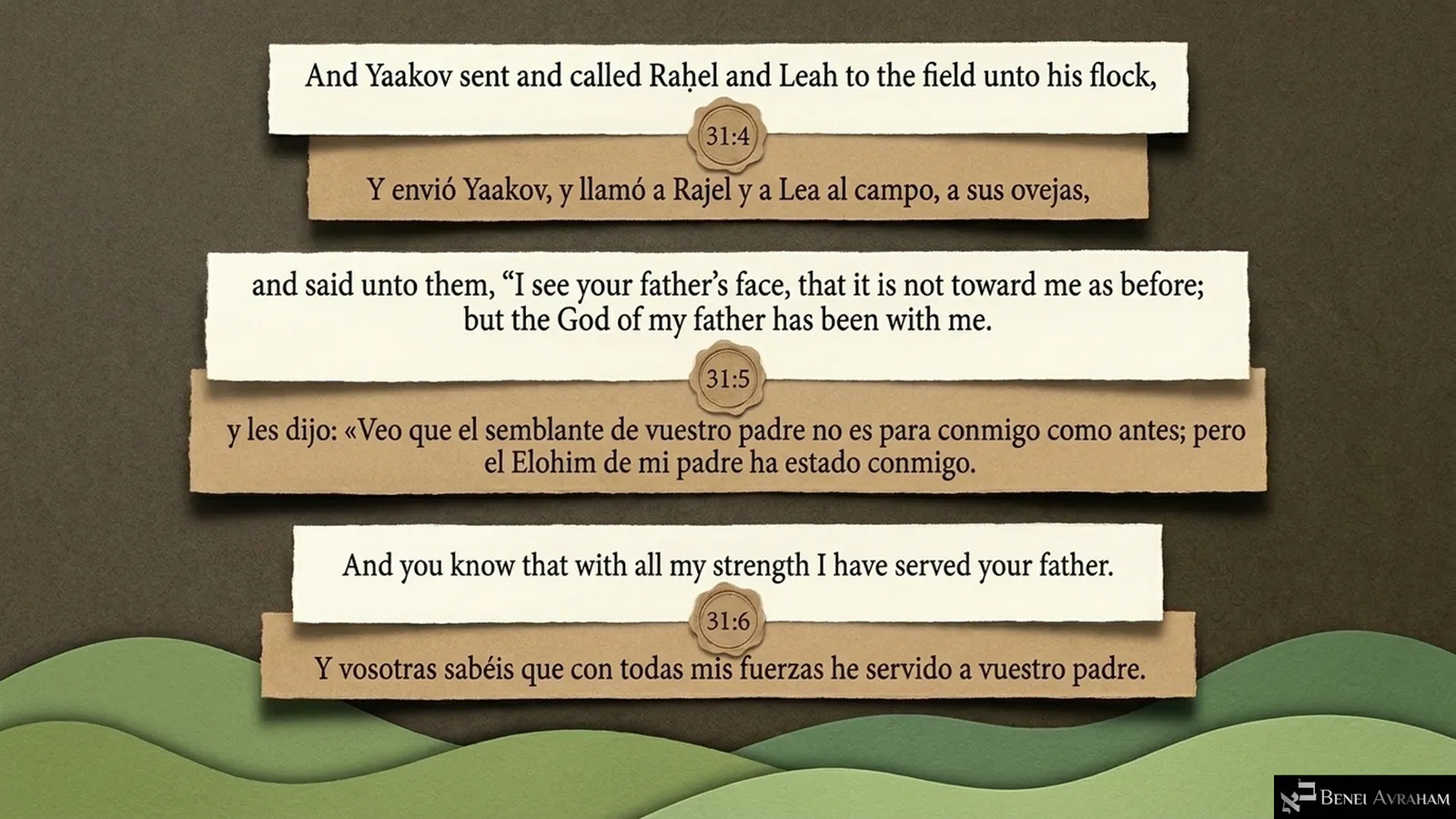
Yaakov calls Raḥel and Leah to the field: “The God of my father has been with me … with all my strength I have served your father” (Genesis 31:4–6).
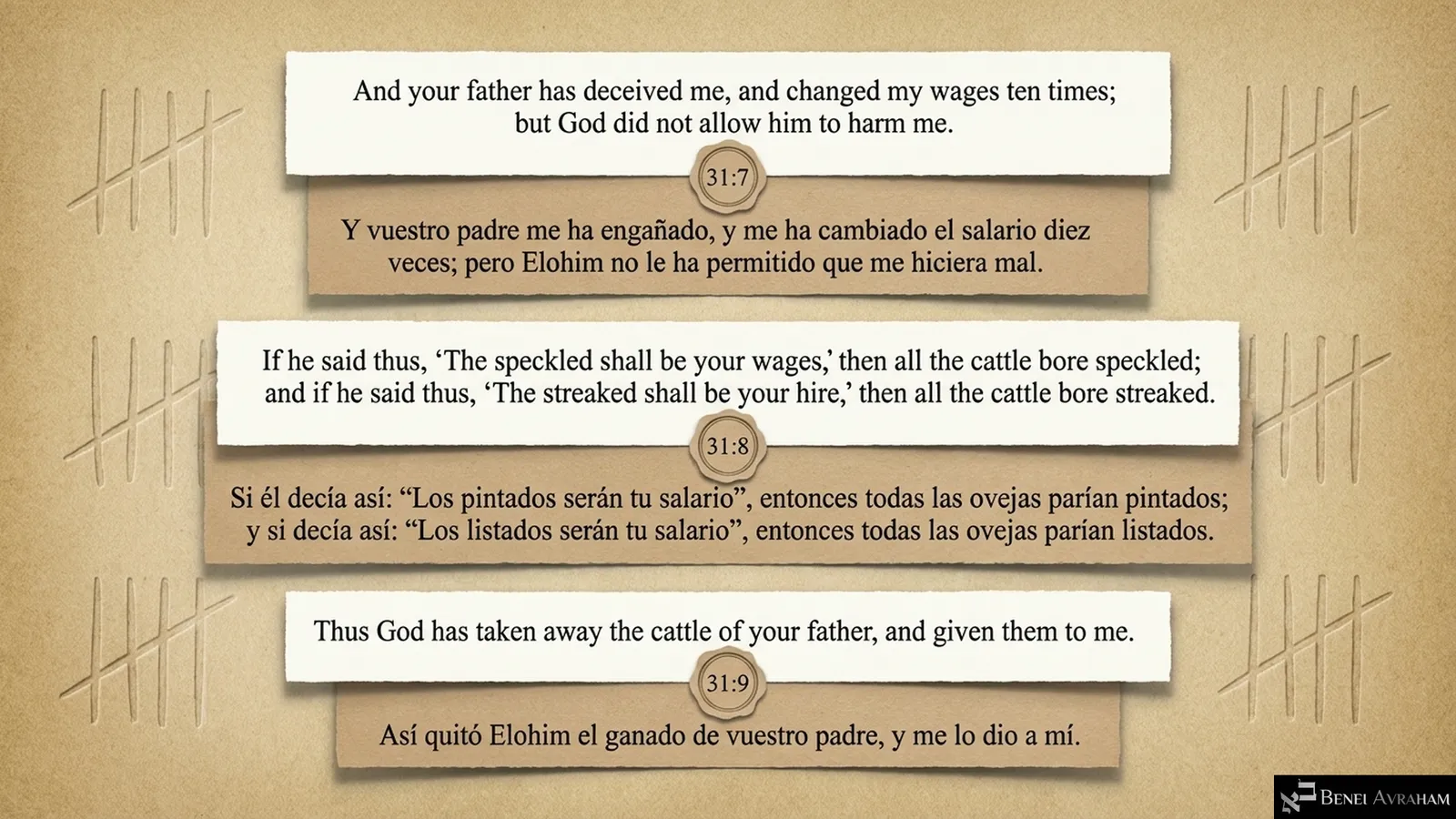
Tally marks of ten changed wages: “Your father has deceived me … but God did not allow him to harm me” (Genesis 31:7–9).
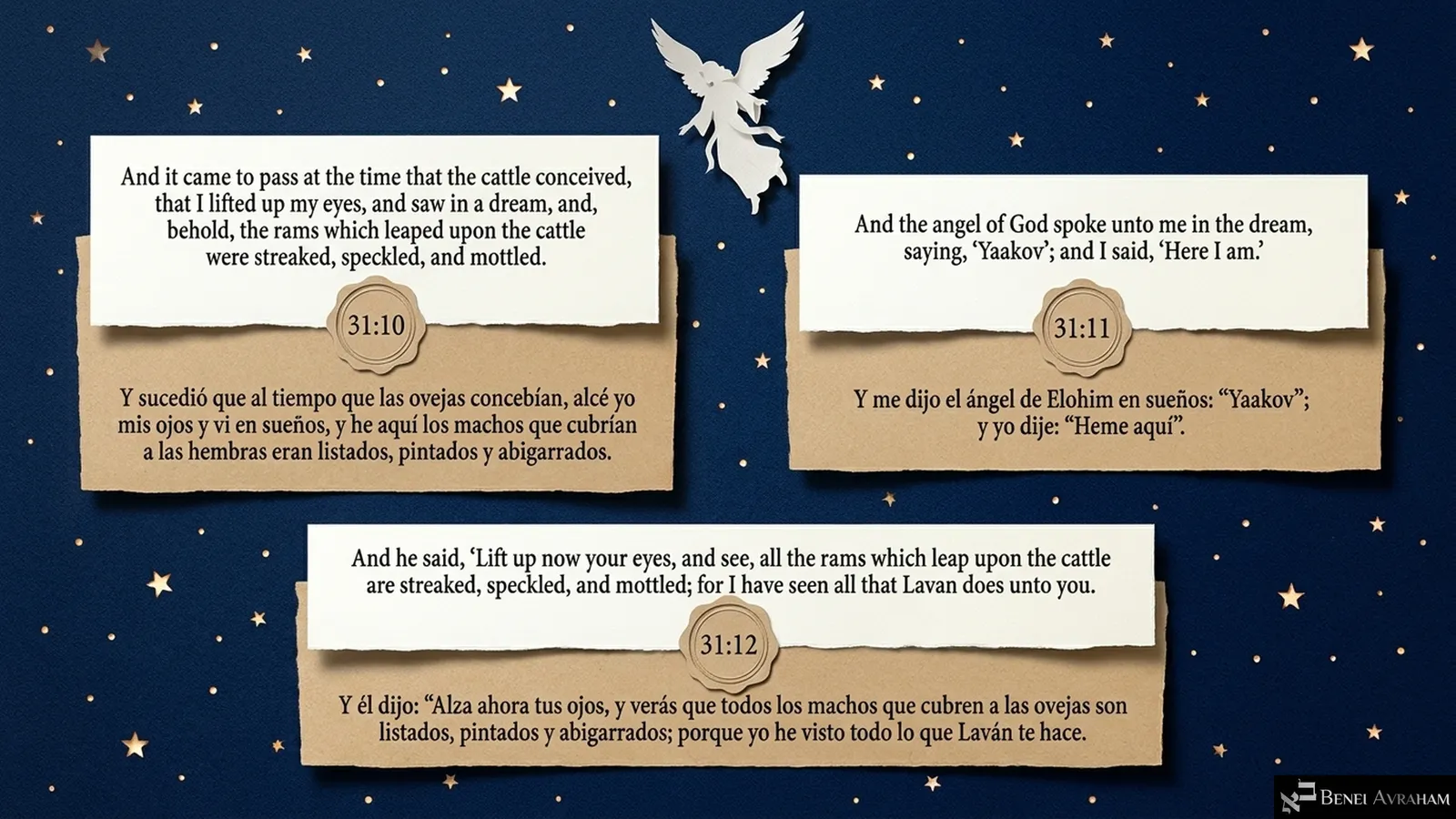
A paper angel among the stars: in a dream the angel of God shows Yaakov the streaked, speckled and mottled rams (Genesis 31:10–12).
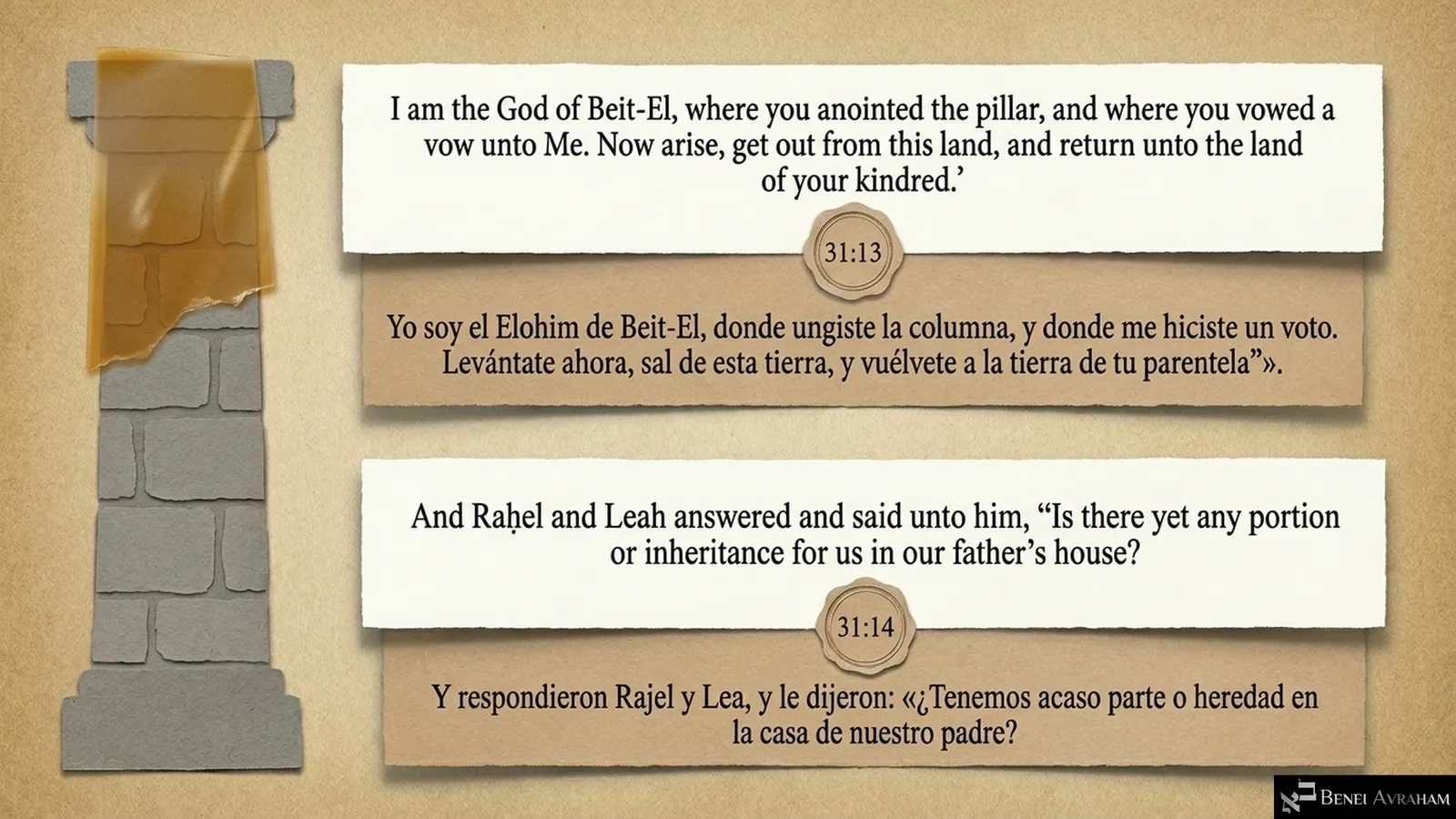
Beside an anointed stone pillar: “I am the God of Beit-El … return unto the land of your kindred,” and Raḥel and Leah ask, “Is there yet any portion for us in our father’s house?” (Genesis 31:13–14).
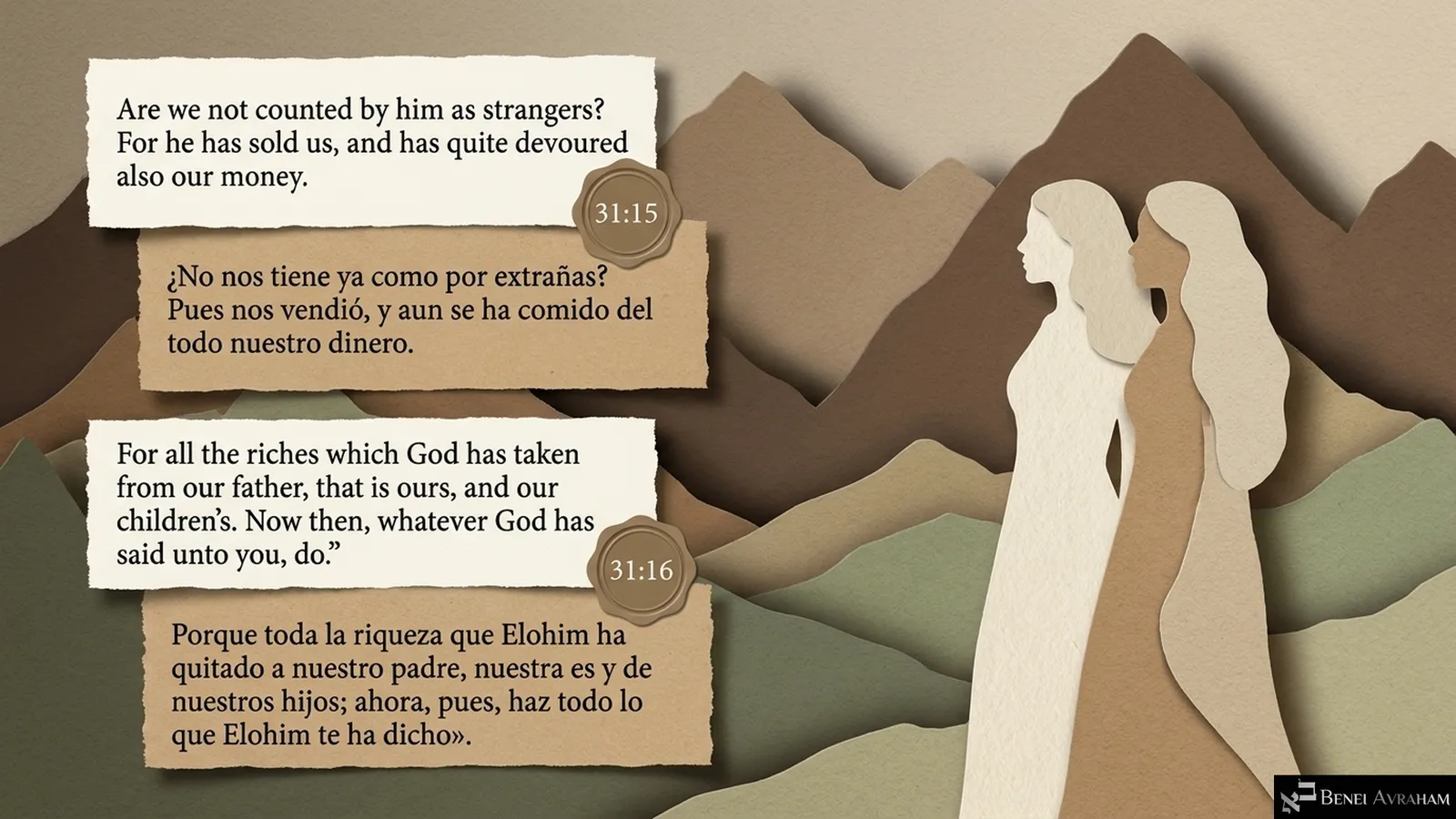
The two sisters stand before the mountains: “Whatever God has said unto you, do” (Genesis 31:15–16).
Shishi · Genesis 31:17–42

Sixth Portion
Title slide: Parashat Vayetze, sixth portion (Shishi), Genesis 31:17–42, with a camel caravan in a wooden frame.
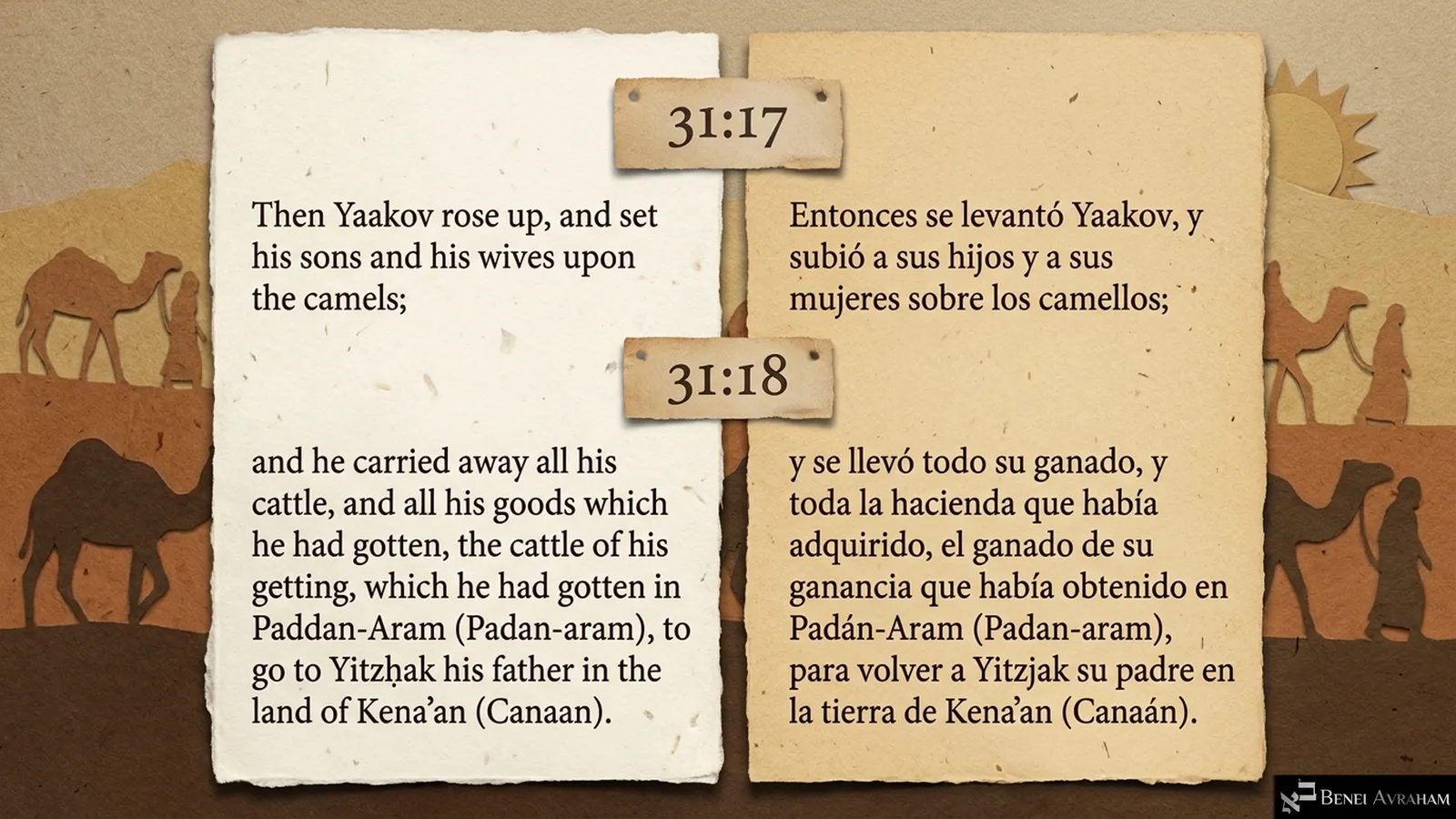
Yaakov sets his sons and his wives on camels and carries away all his cattle and goods toward Yitzḥak his father in Kena’an (Genesis 31:17–18).
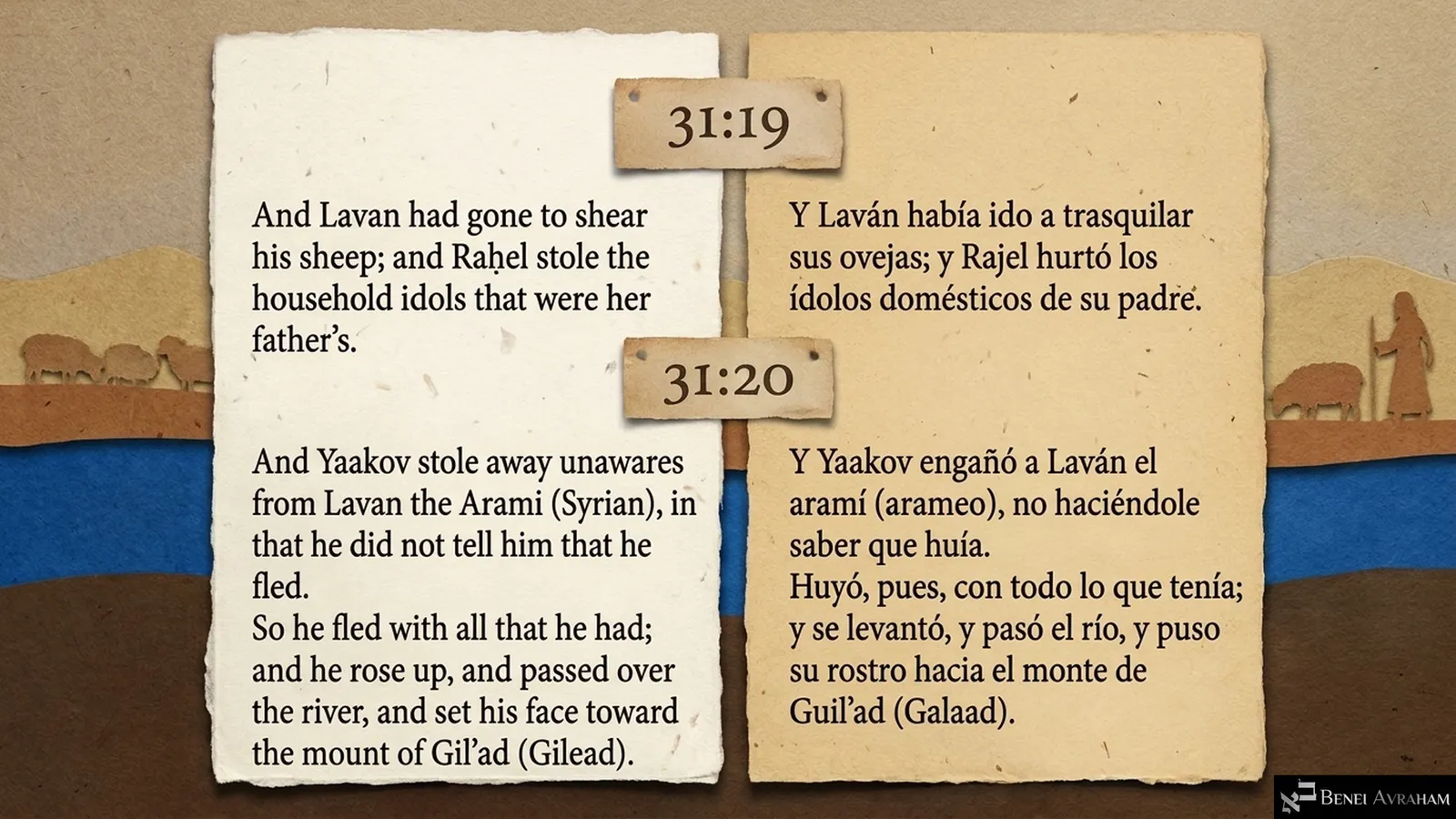
Lavan goes to shear his sheep and Raḥel steals the household idols; Yaakov flees, crosses the river and sets his face toward Gil’ad (Genesis 31:19–21).
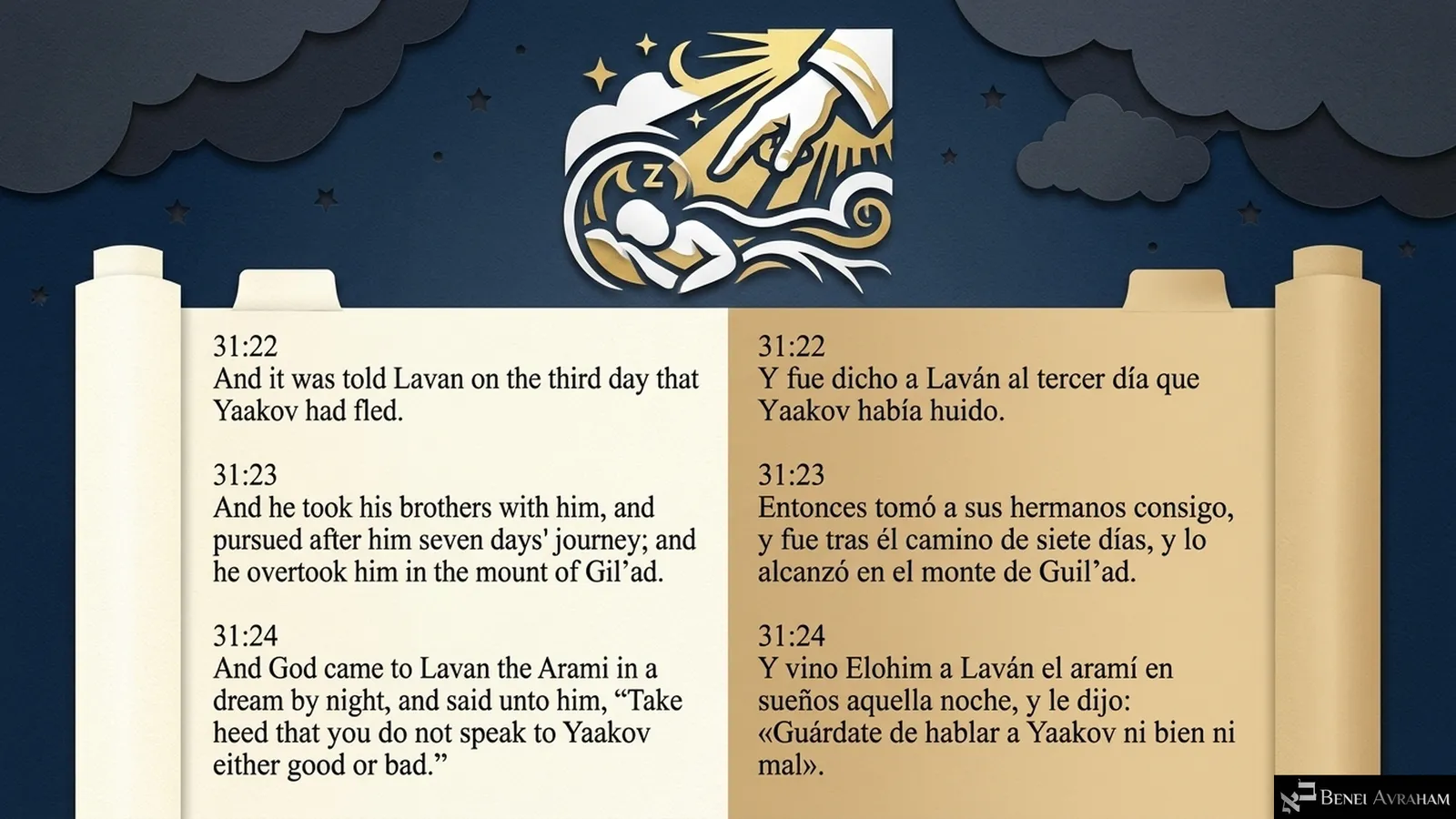
A golden hand reaches into a dream: Lavan pursues Yaakov seven days to Gil’ad, and God warns him, “Take heed that you do not speak to Yaakov either good or bad” (Genesis 31:22–24).
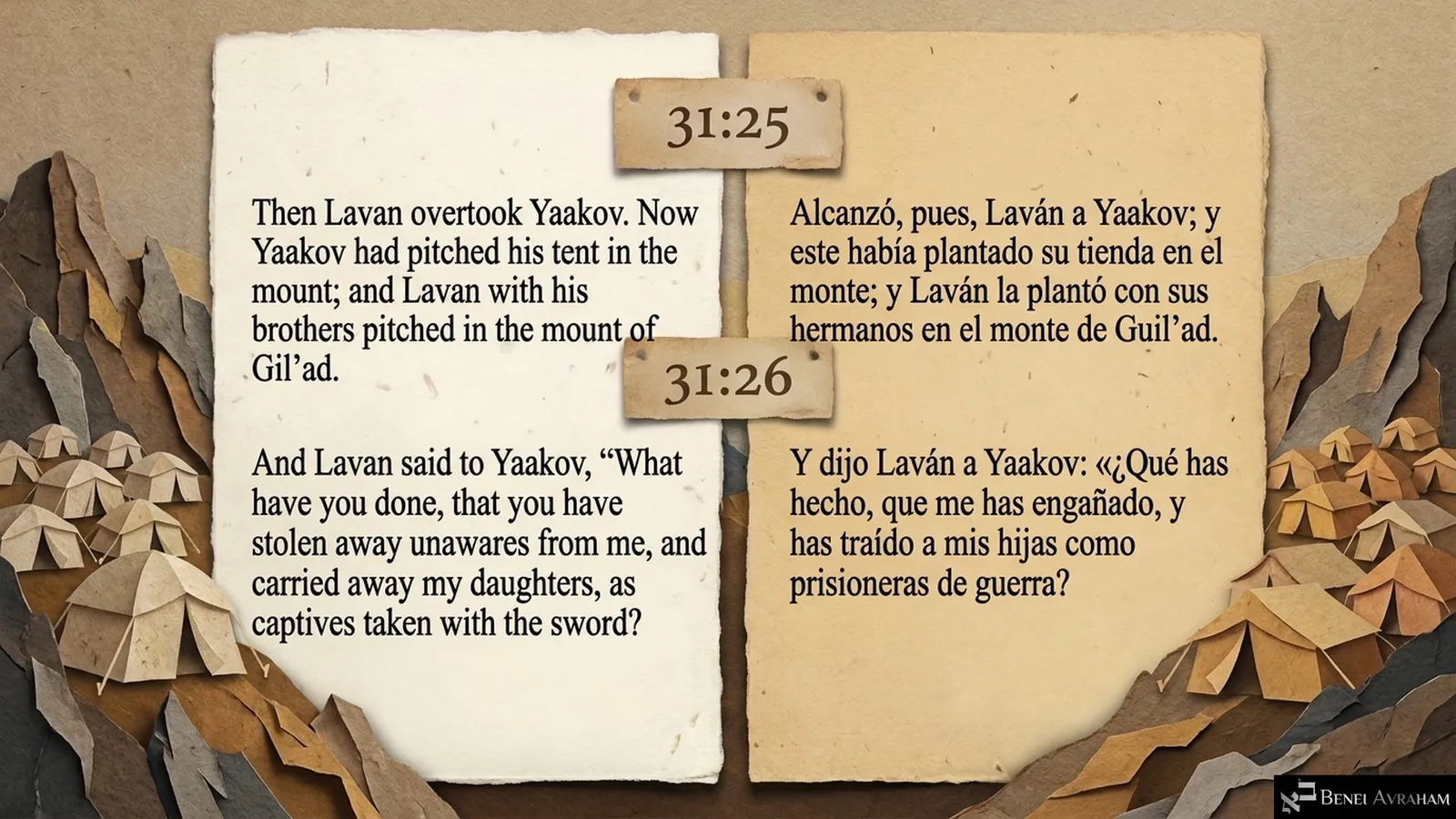
Tents pitched on the mount of Gil’ad: Lavan overtakes Yaakov and asks, “What have you done … carried away my daughters, as captives taken with the sword?” (Genesis 31:25–26).
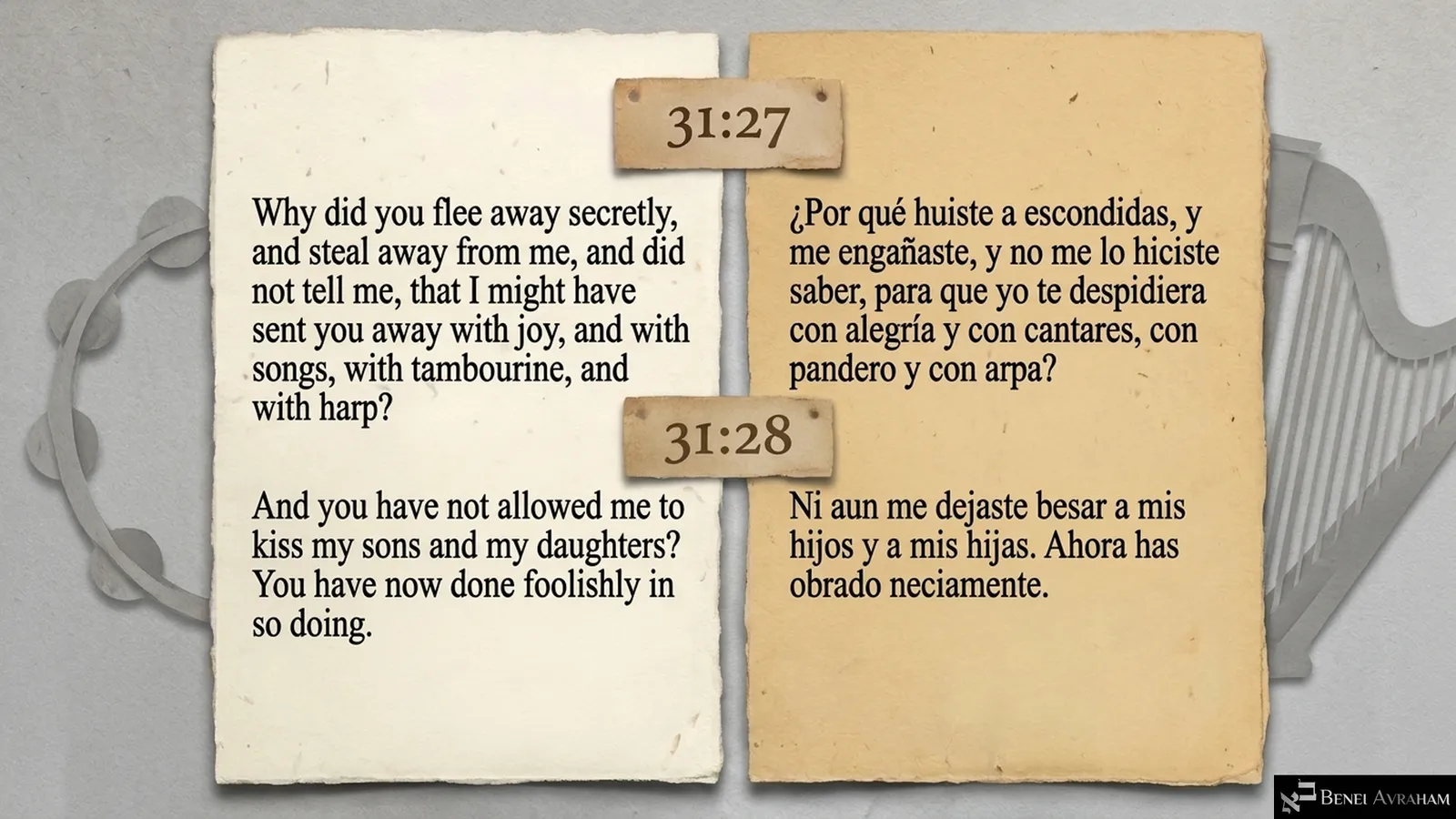
A paper tambourine and harp: “Why did you flee away secretly … that I might have sent you away with joy, and with songs?” (Genesis 31:27–28).
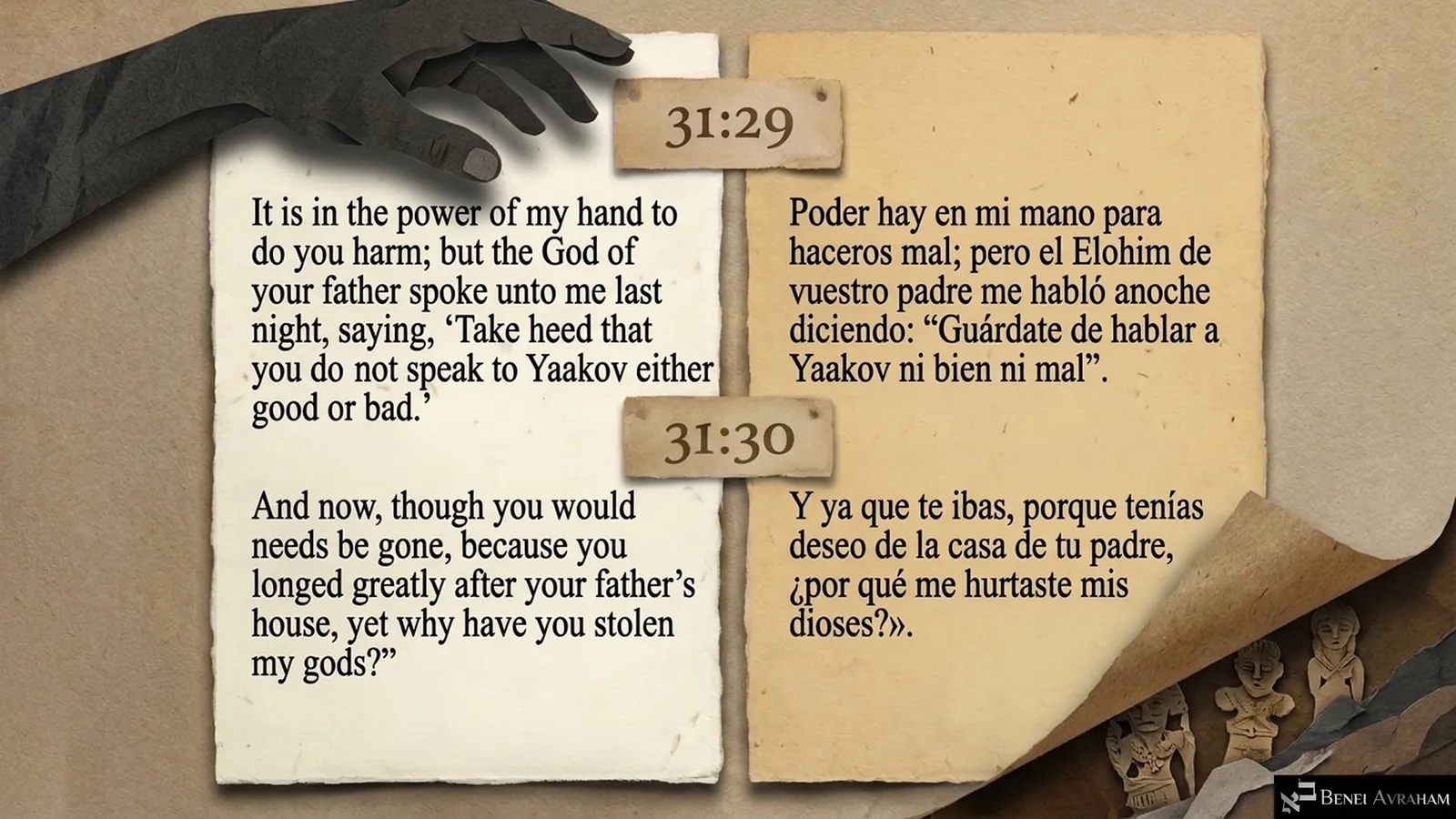
A shadowed hand above the text, and the stolen household idols behind a curled page: “Why have you stolen my gods?” (Genesis 31:29–30).
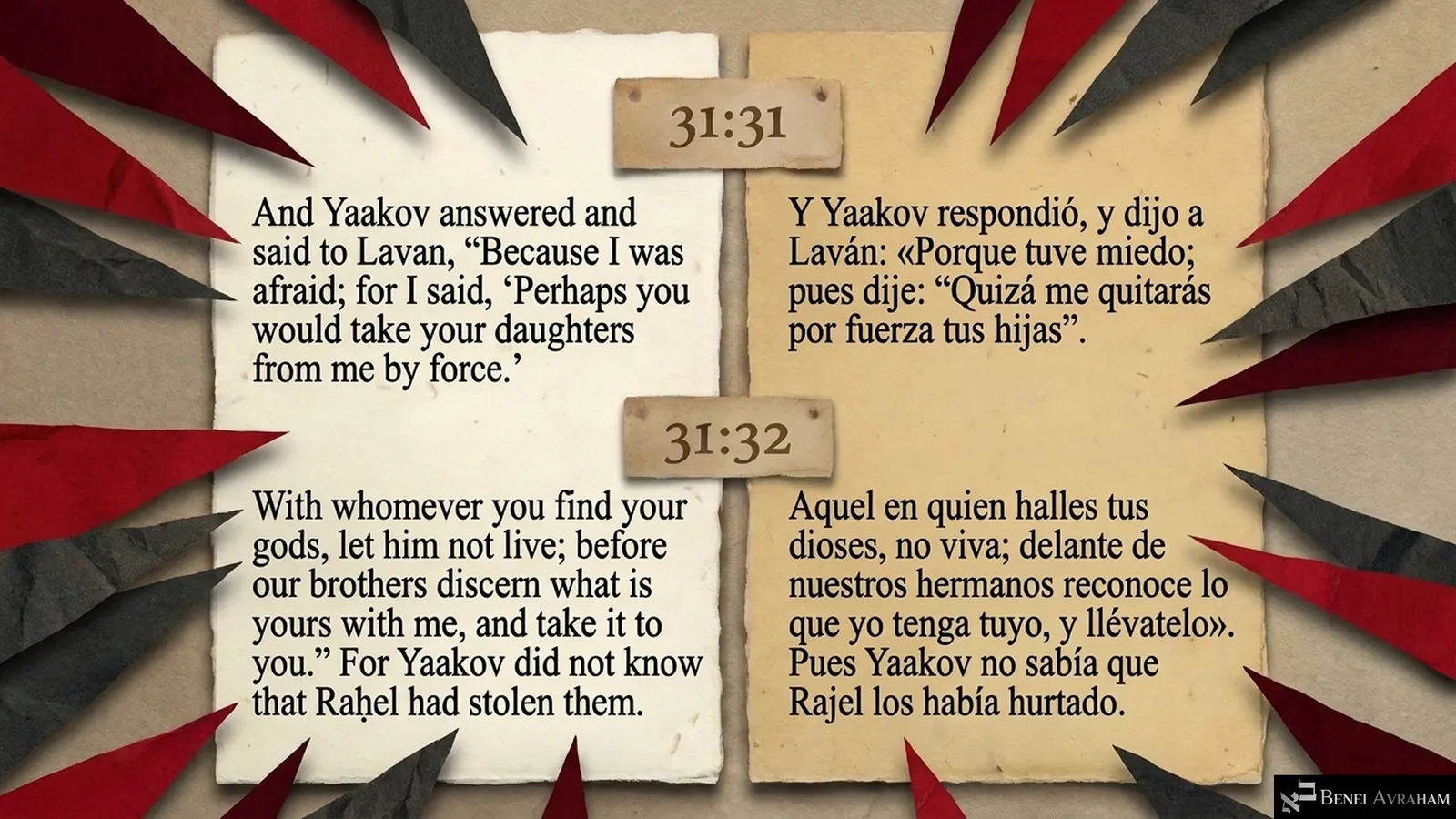
Yaakov answers Lavan, “Because I was afraid,” and says, “With whomever you find your gods, let him not live,” not knowing that Raḥel had stolen them (Genesis 31:31–32).
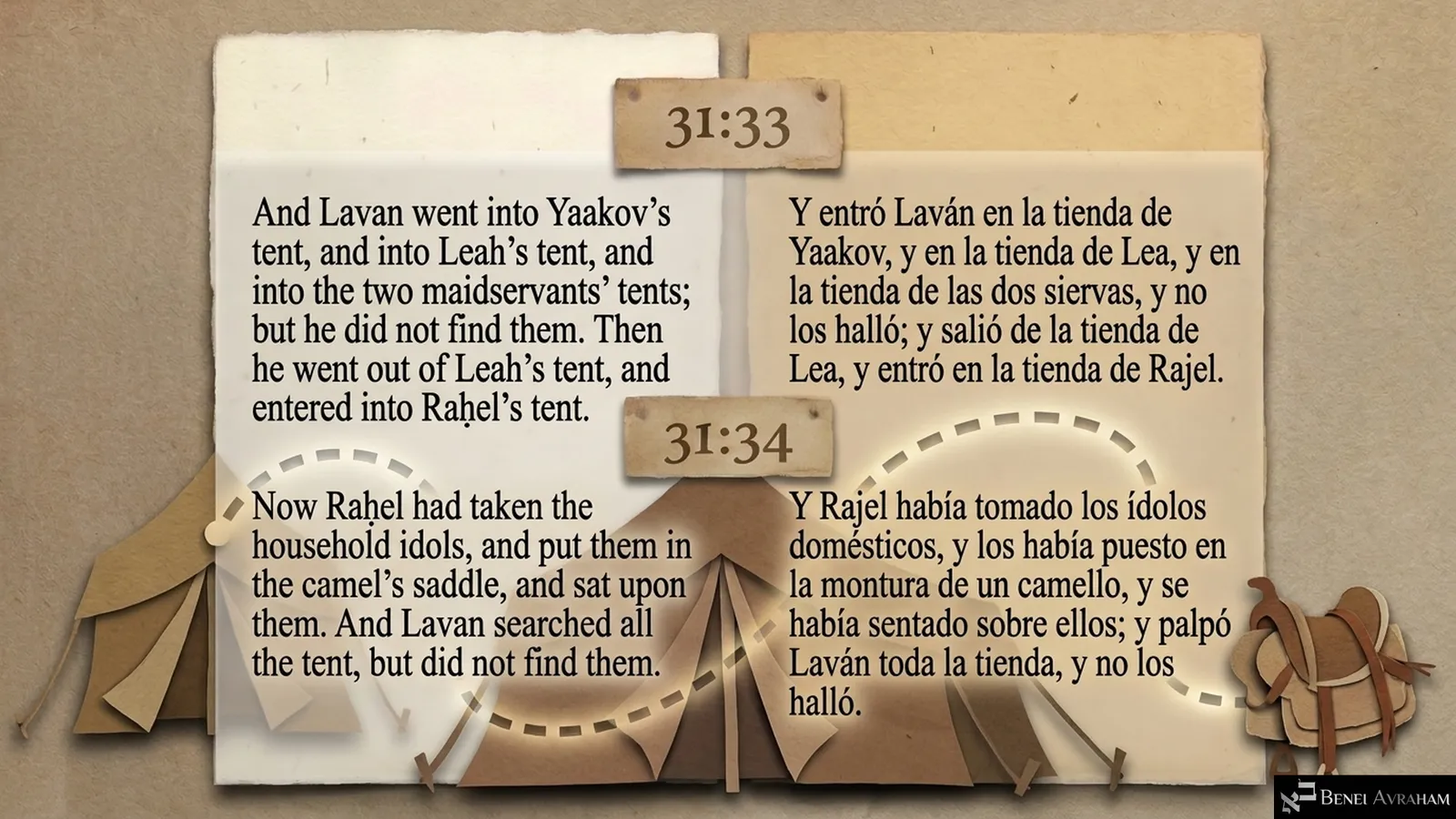
A dotted path through the tents: Lavan searches Yaakov’s, Leah’s and the maidservants’ tents, while Raḥel sits on the idols in the camel’s saddle (Genesis 31:33–34).
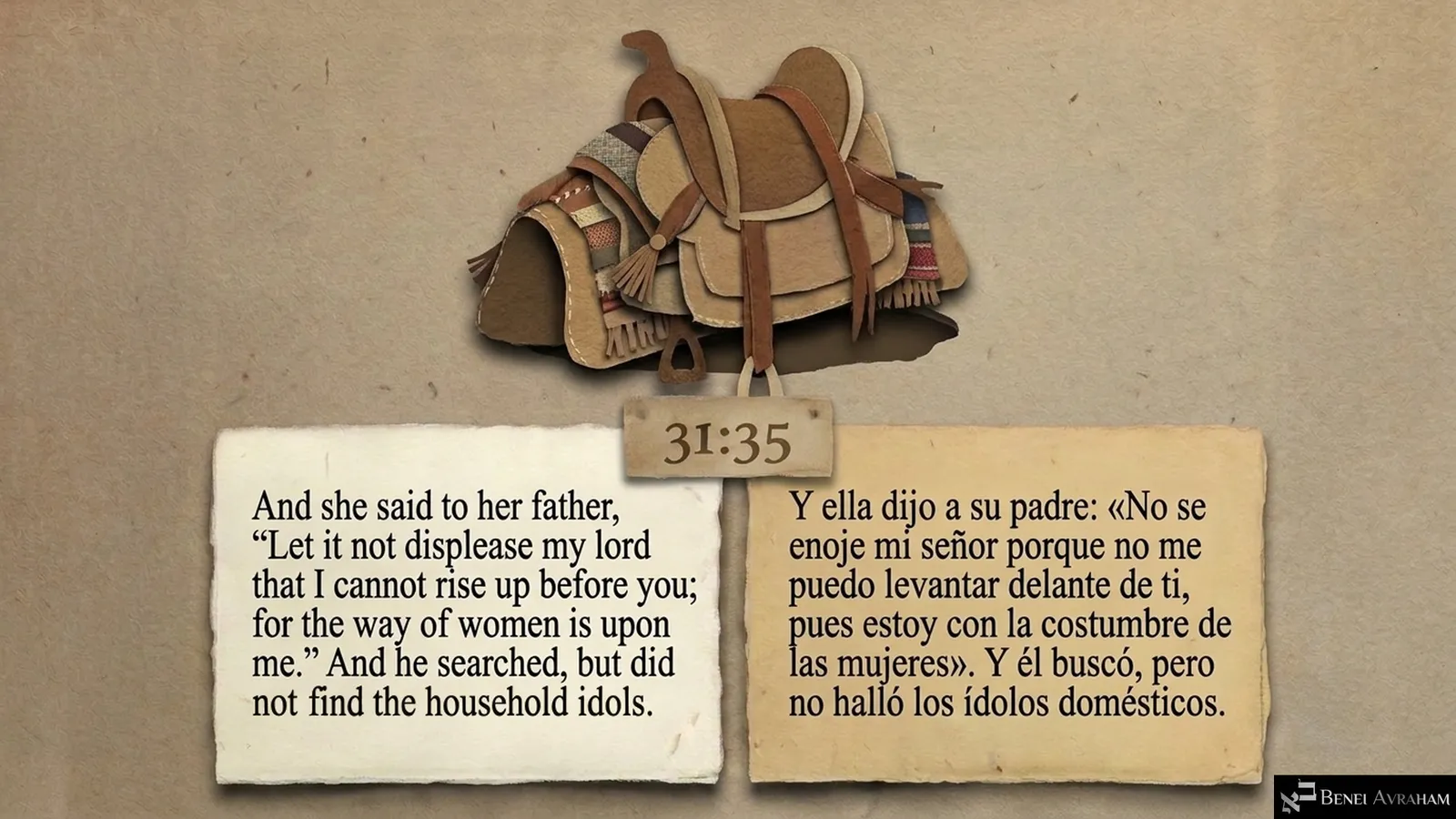
The camel’s saddle: “Let it not displease my lord that I cannot rise up before you,” and Lavan does not find the idols (Genesis 31:35).
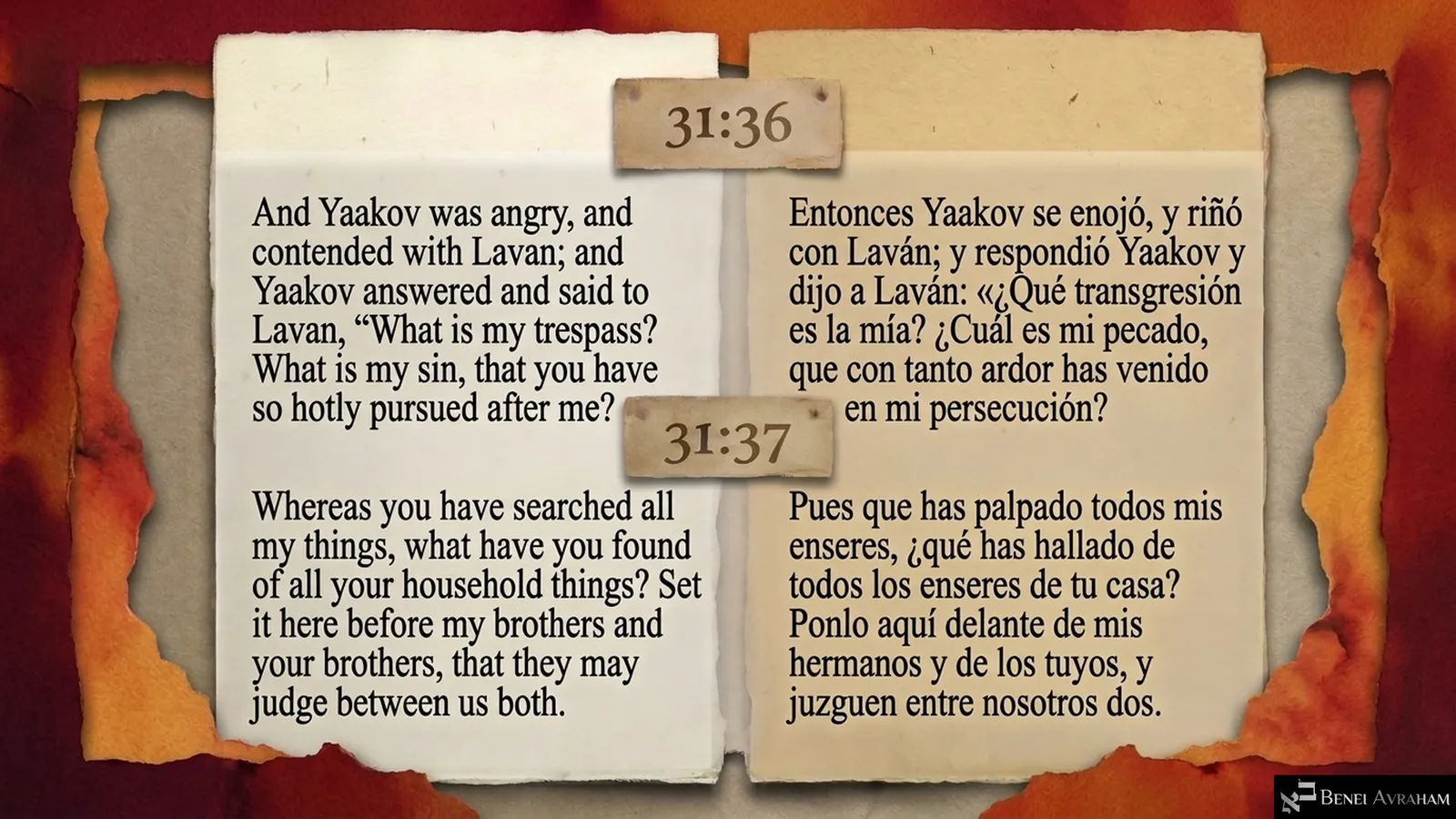
Pages framed by burning edges: Yaakov contends with Lavan, “What is my trespass? … Set it here before my brothers and your brothers” (Genesis 31:36–37).
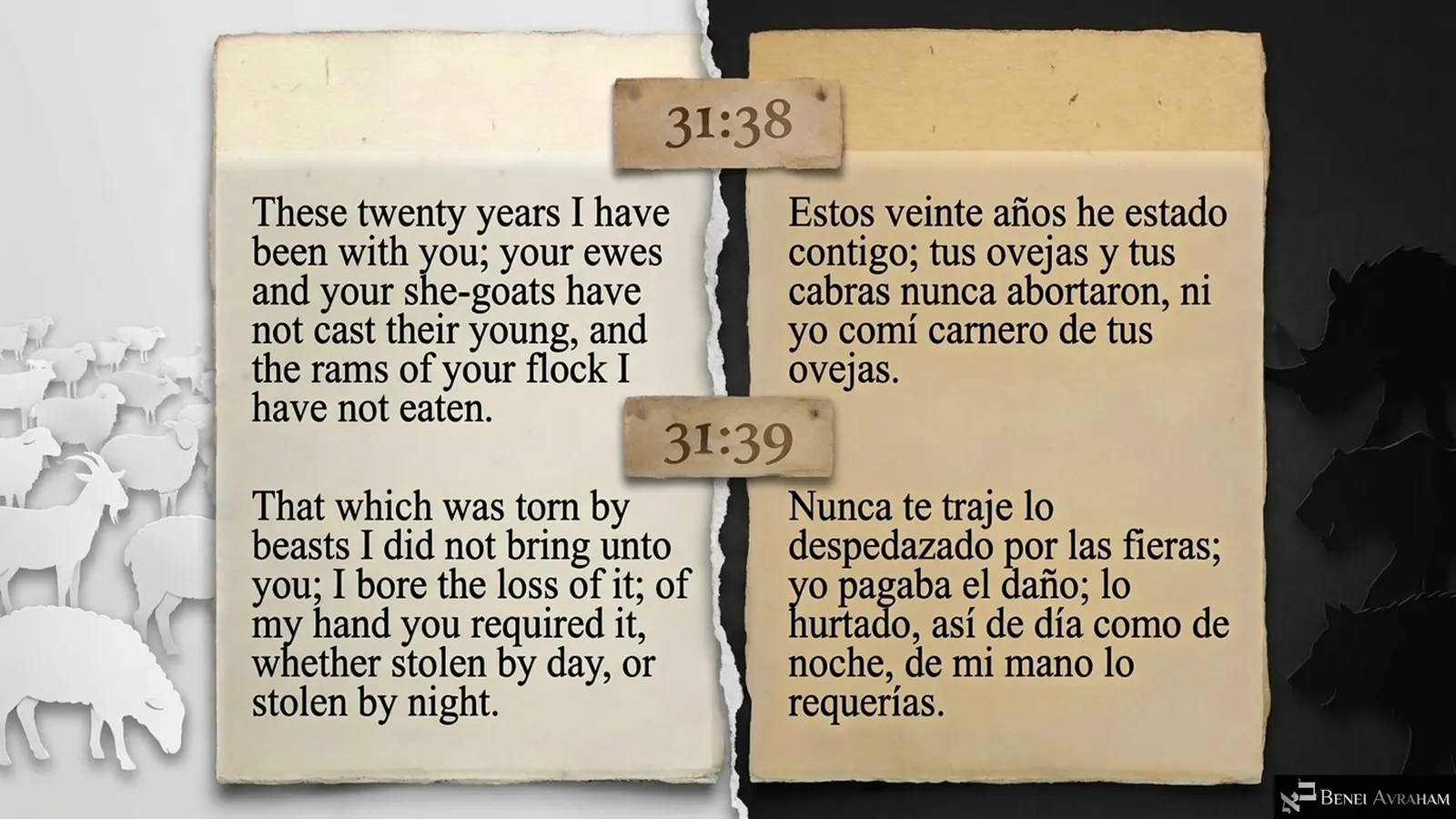
White sheep on one side and dark beasts on the other: “These twenty years I have been with you … that which was torn by beasts I did not bring unto you” (Genesis 31:38–39).
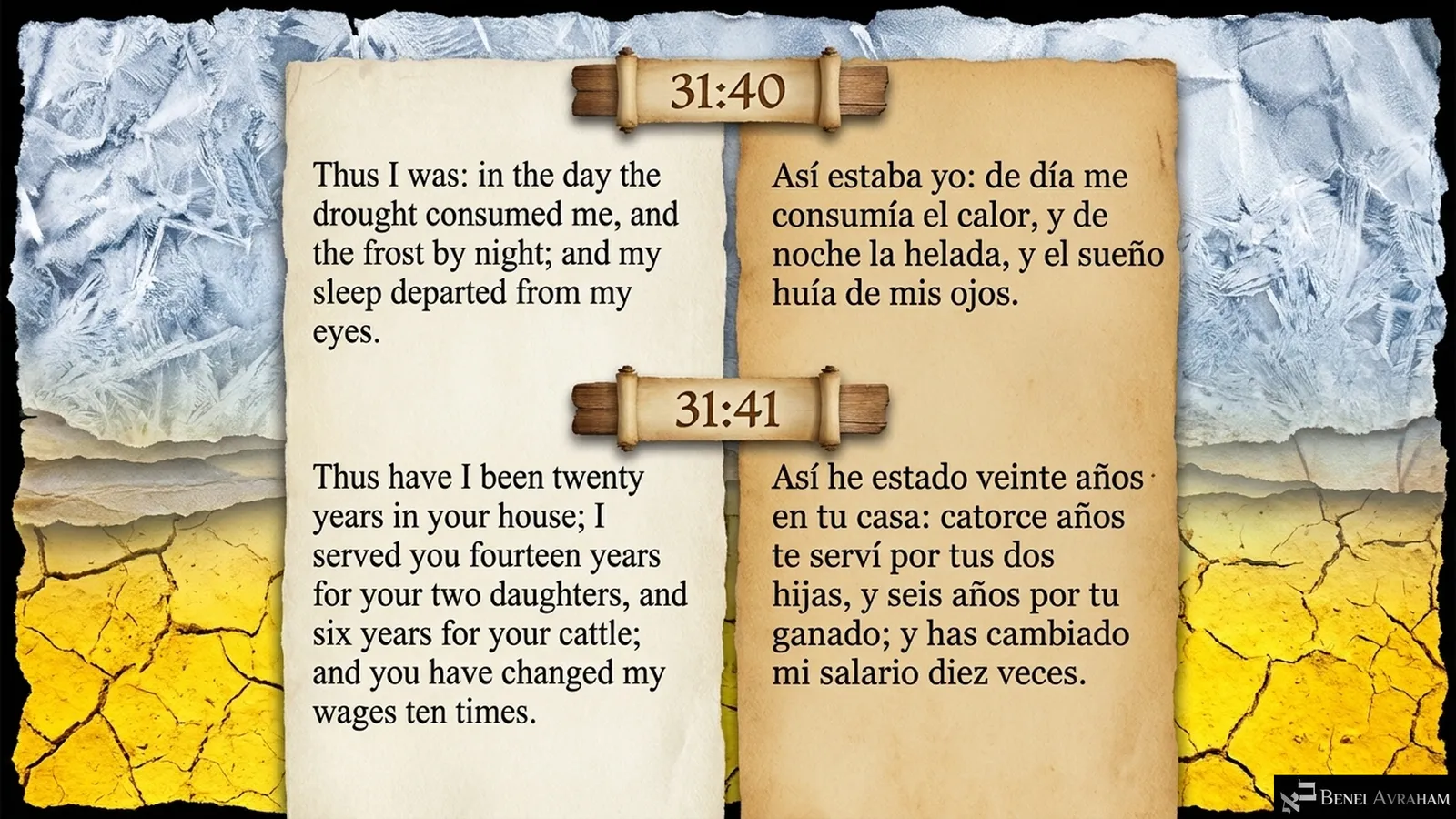
Frost above and cracked drought below: “In the day the drought consumed me, and the frost by night … you have changed my wages ten times” (Genesis 31:40–41).
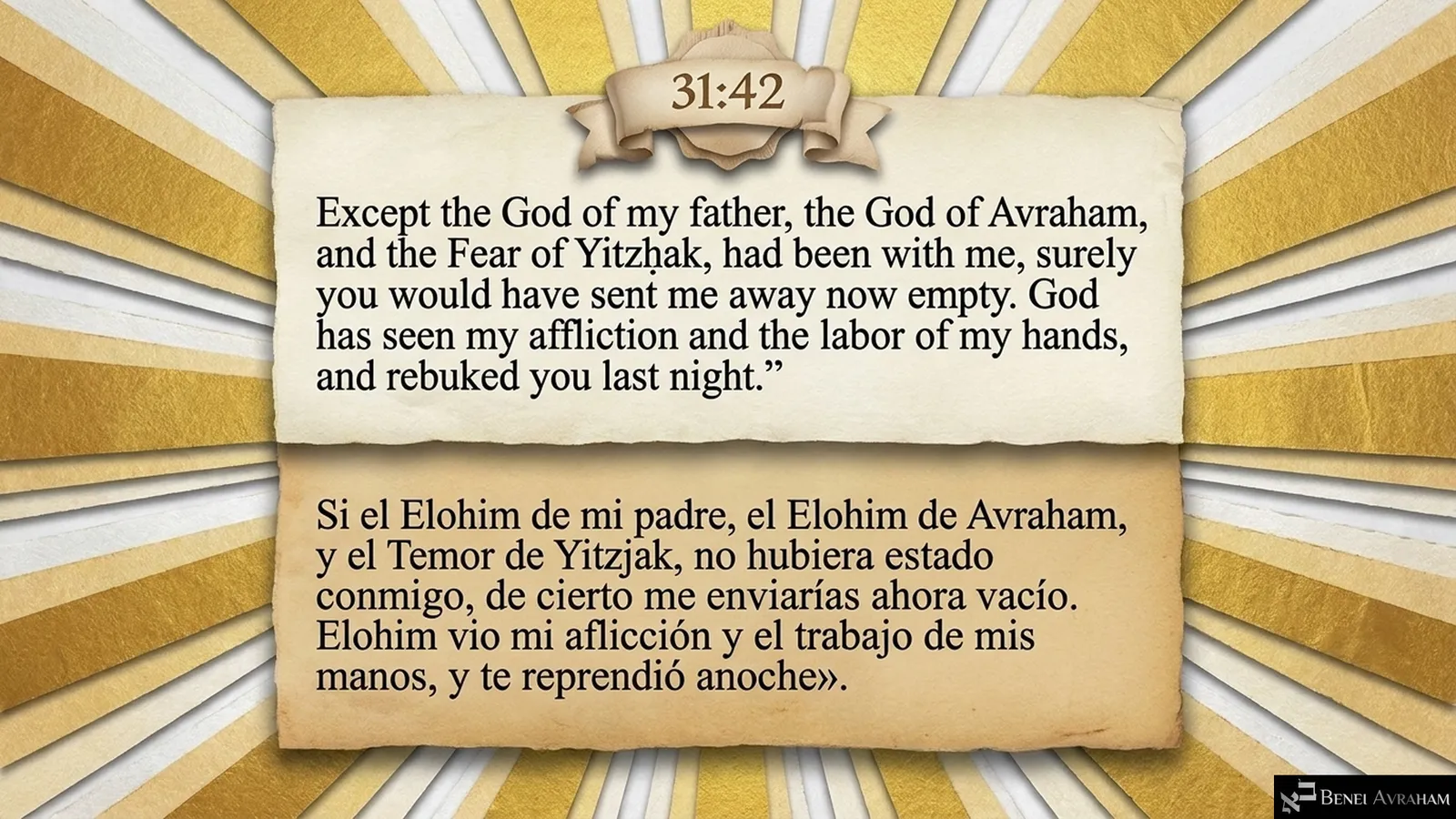
Golden rays: “Except the God of my father, the God of Avraham, and the Fear of Yitzḥak, had been with me … God has seen my affliction” (Genesis 31:42).
Shevi’i · Genesis 31:43–32:3

Seventh Portion

Title slide: Parashat Vayetze, seventh portion, Genesis 31:43–32:3, with a heap of paper stones in a wooden frame.
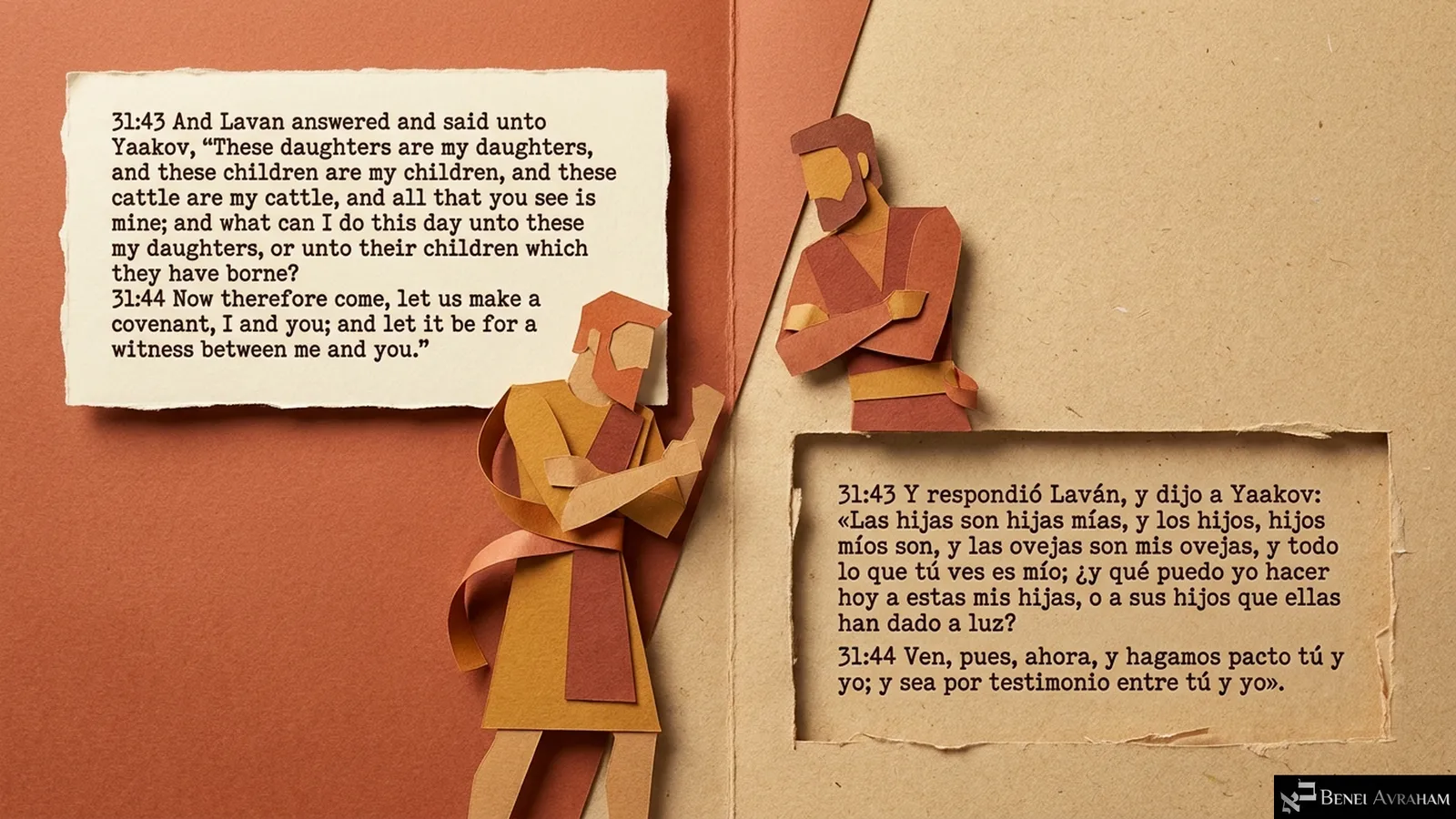
Lavan and Yaakov face each other: “These daughters are my daughters … come, let us make a covenant, I and you” (Genesis 31:43–44).
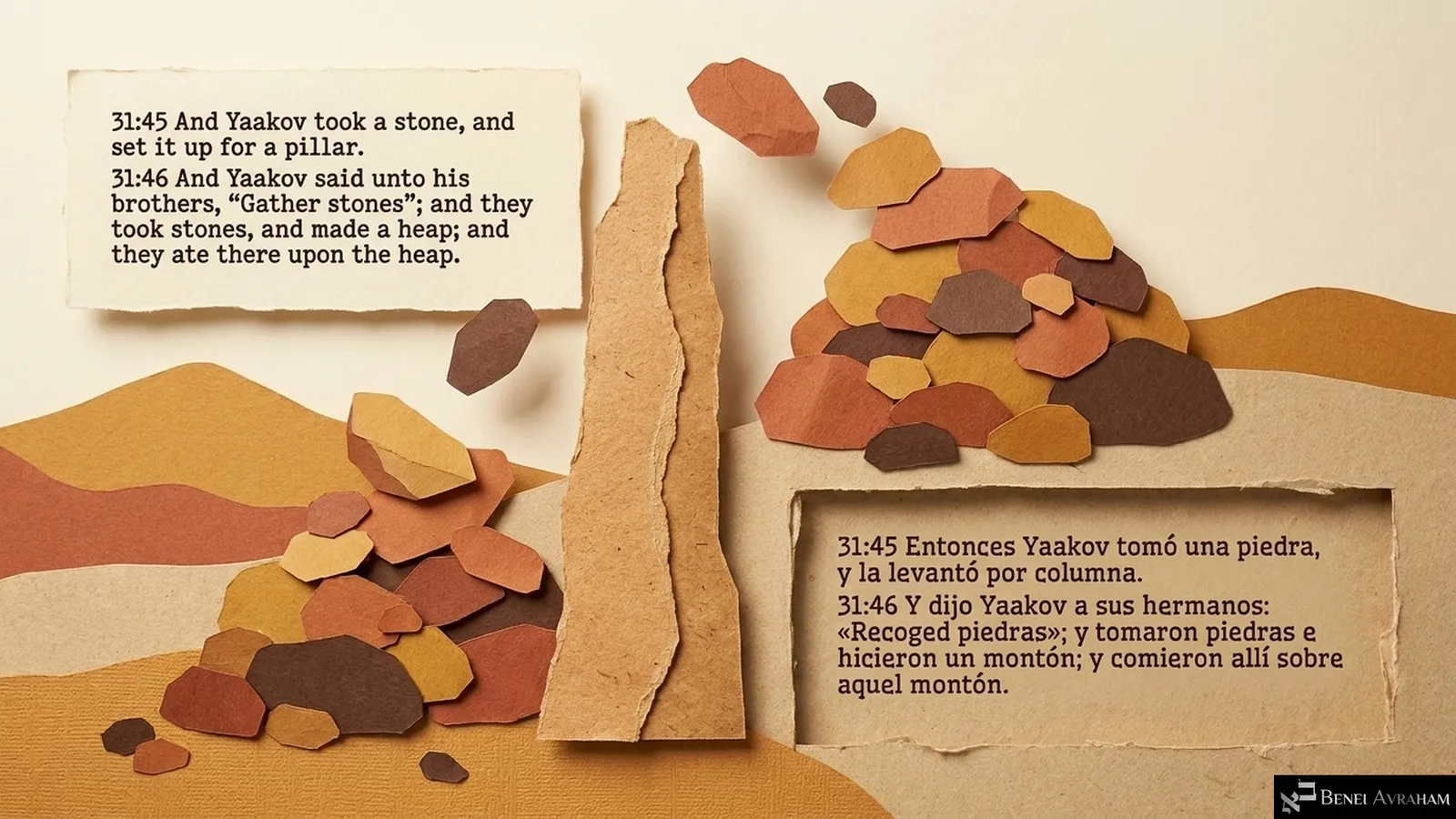
Yaakov sets up a stone pillar, and his brothers gather stones into a heap and eat there upon the heap (Genesis 31:45–46).
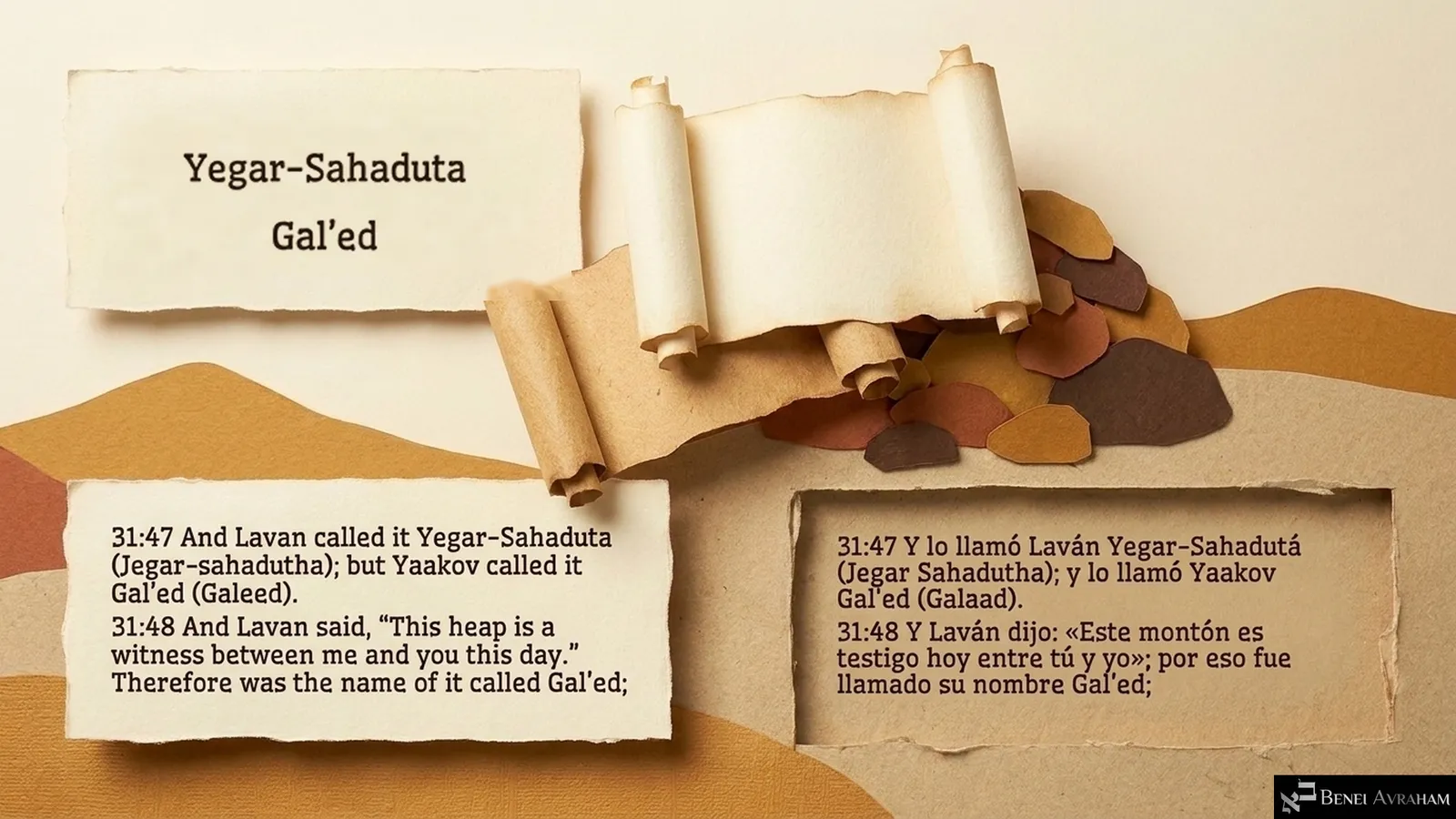
An unrolled scroll on the heap of stones: Lavan calls it Yegar-Sahaduta and Yaakov calls it Gal’ed, “This heap is a witness between me and you” (Genesis 31:47–48).
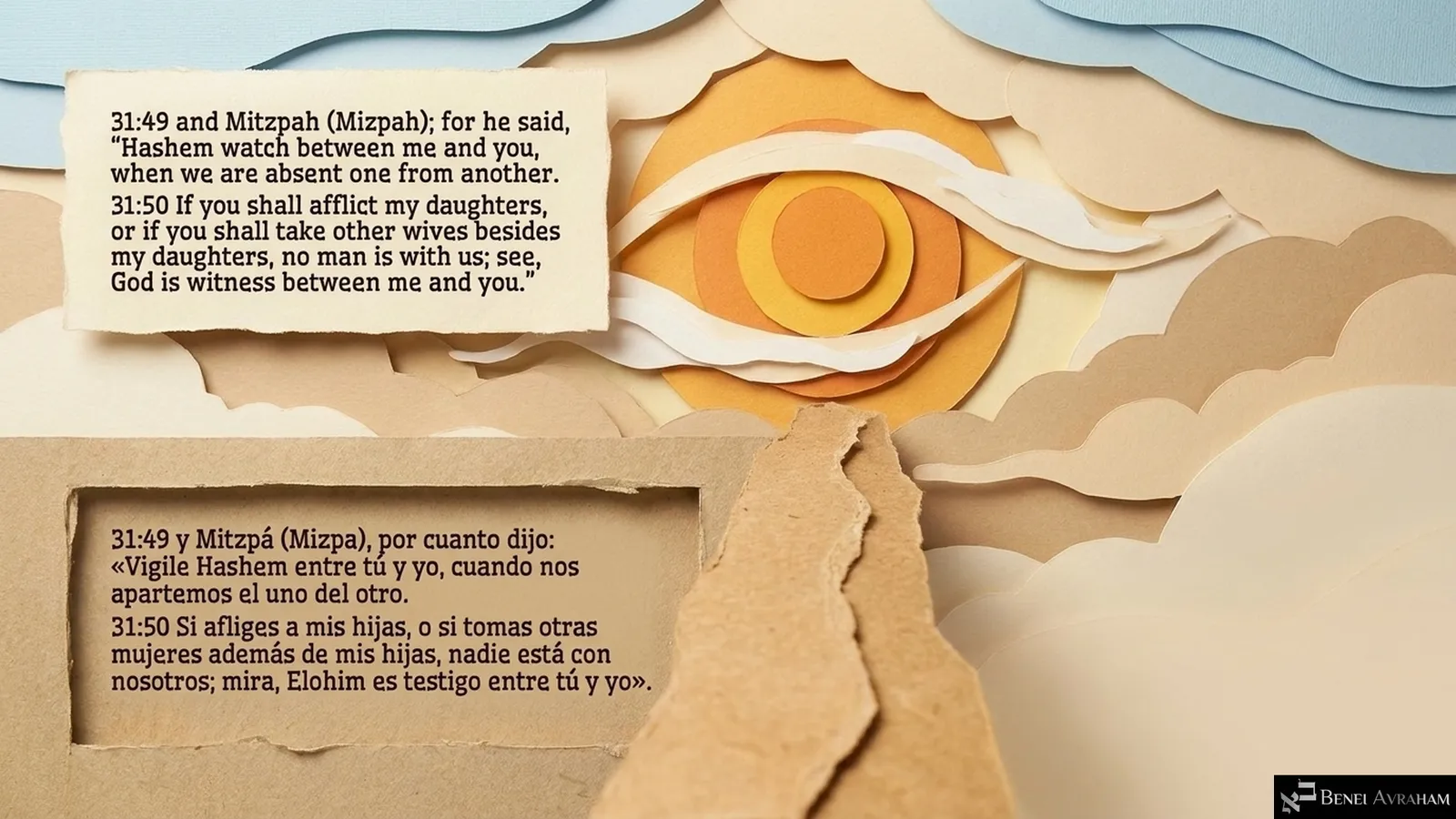
A paper eye in the sun over the pillar: Mitzpah, “Hashem watch between me and you, when we are absent one from another” (Genesis 31:49–50).
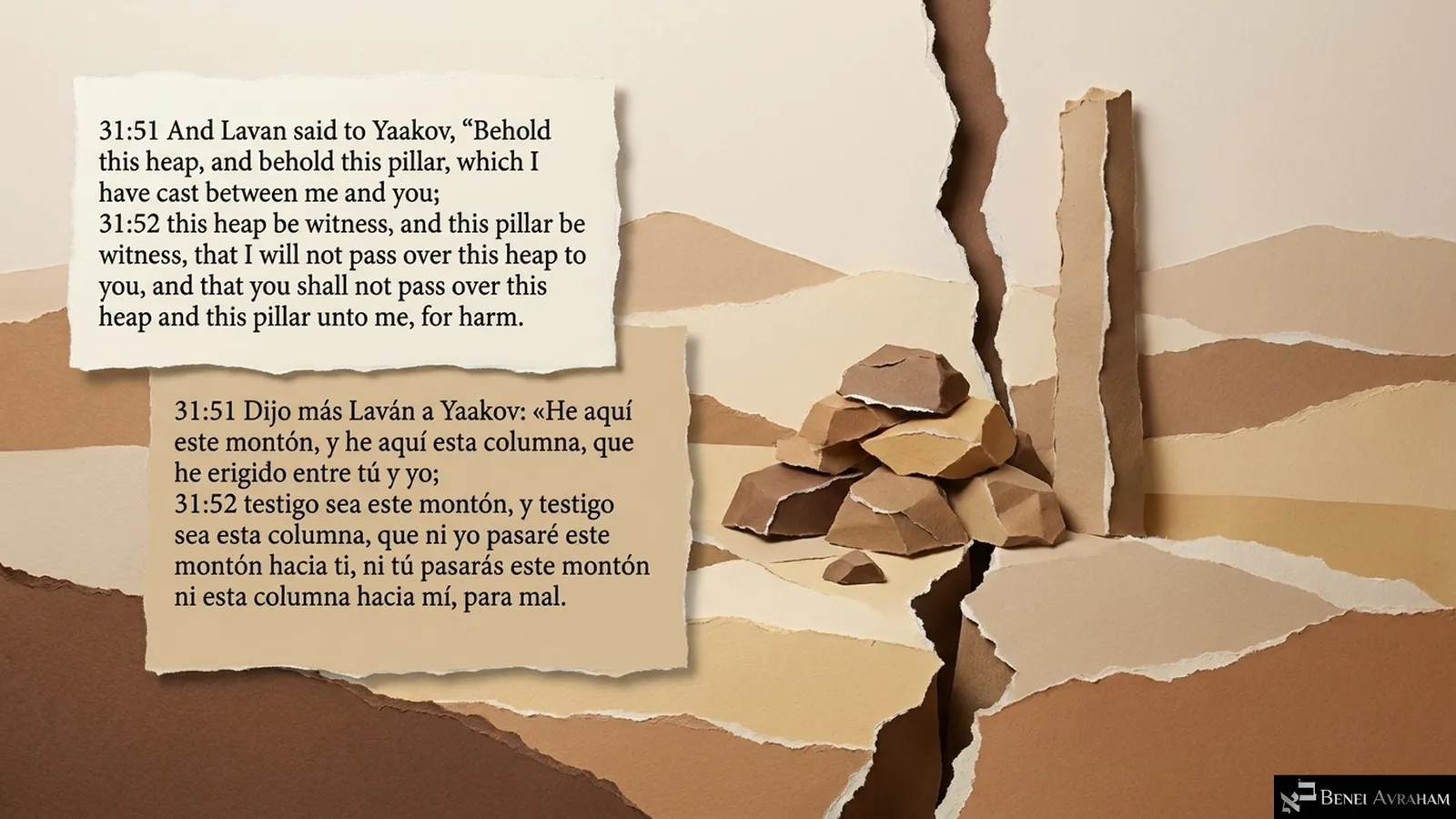
The heap and the pillar beside a torn line in the ground: neither will pass over this heap to the other for harm (Genesis 31:51–52).
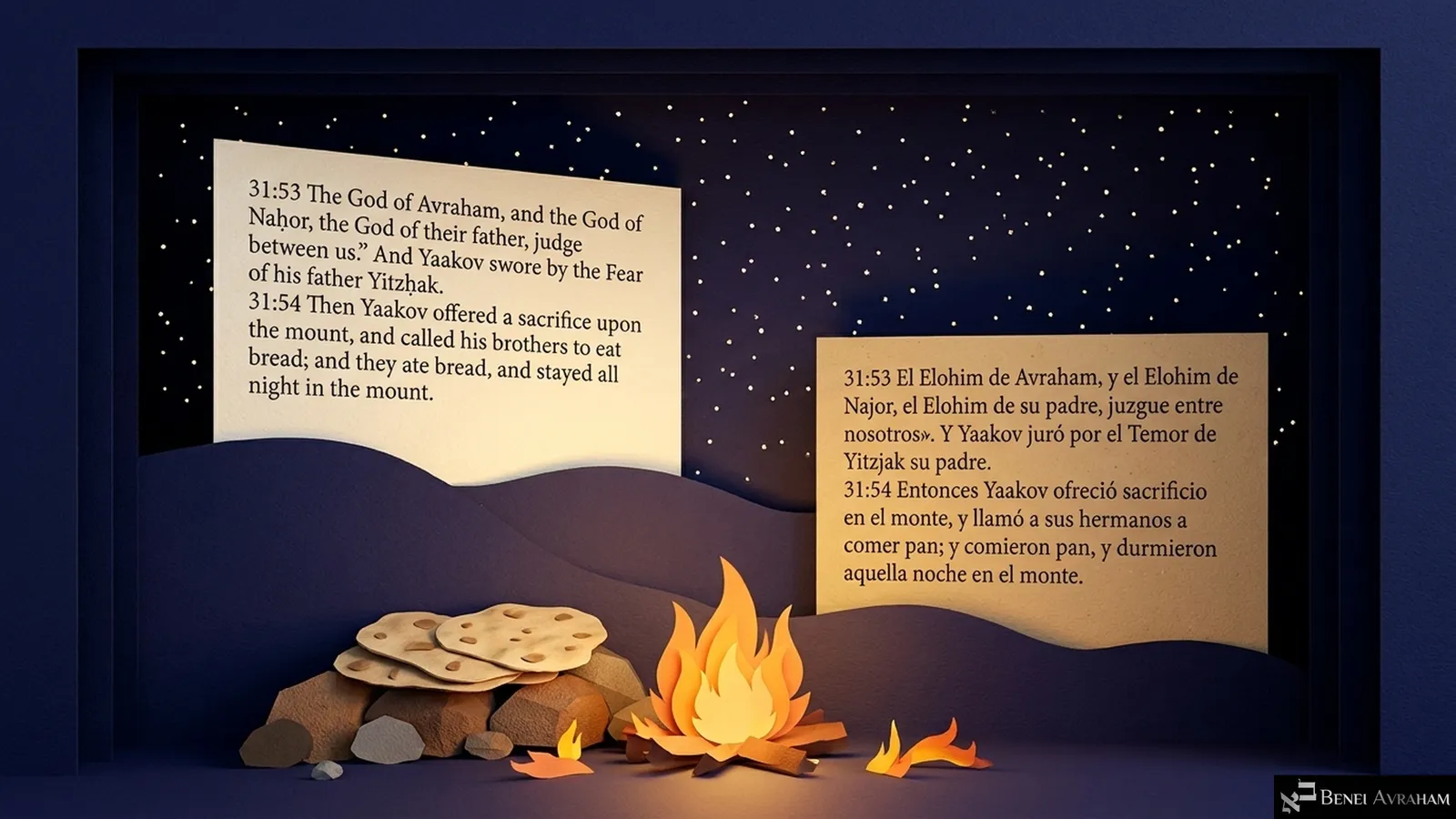
Bread on the stones and a fire under the stars: Yaakov swears by the Fear of his father Yitzḥak, offers a sacrifice and eats bread with his brothers on the mount (Genesis 31:53–54).
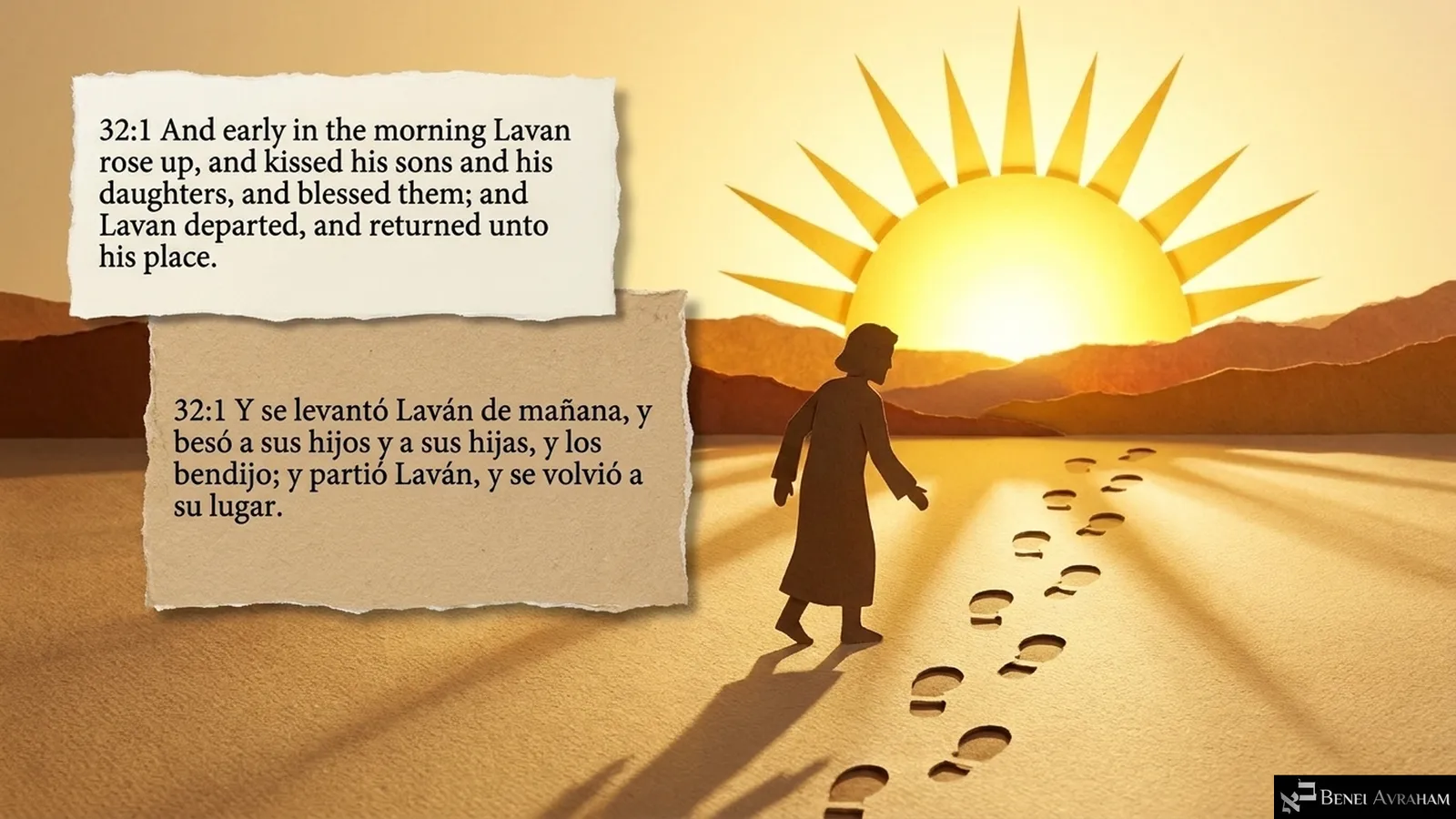
At sunrise Lavan kisses his sons and daughters, blesses them, and returns to his place (Genesis 32:1).
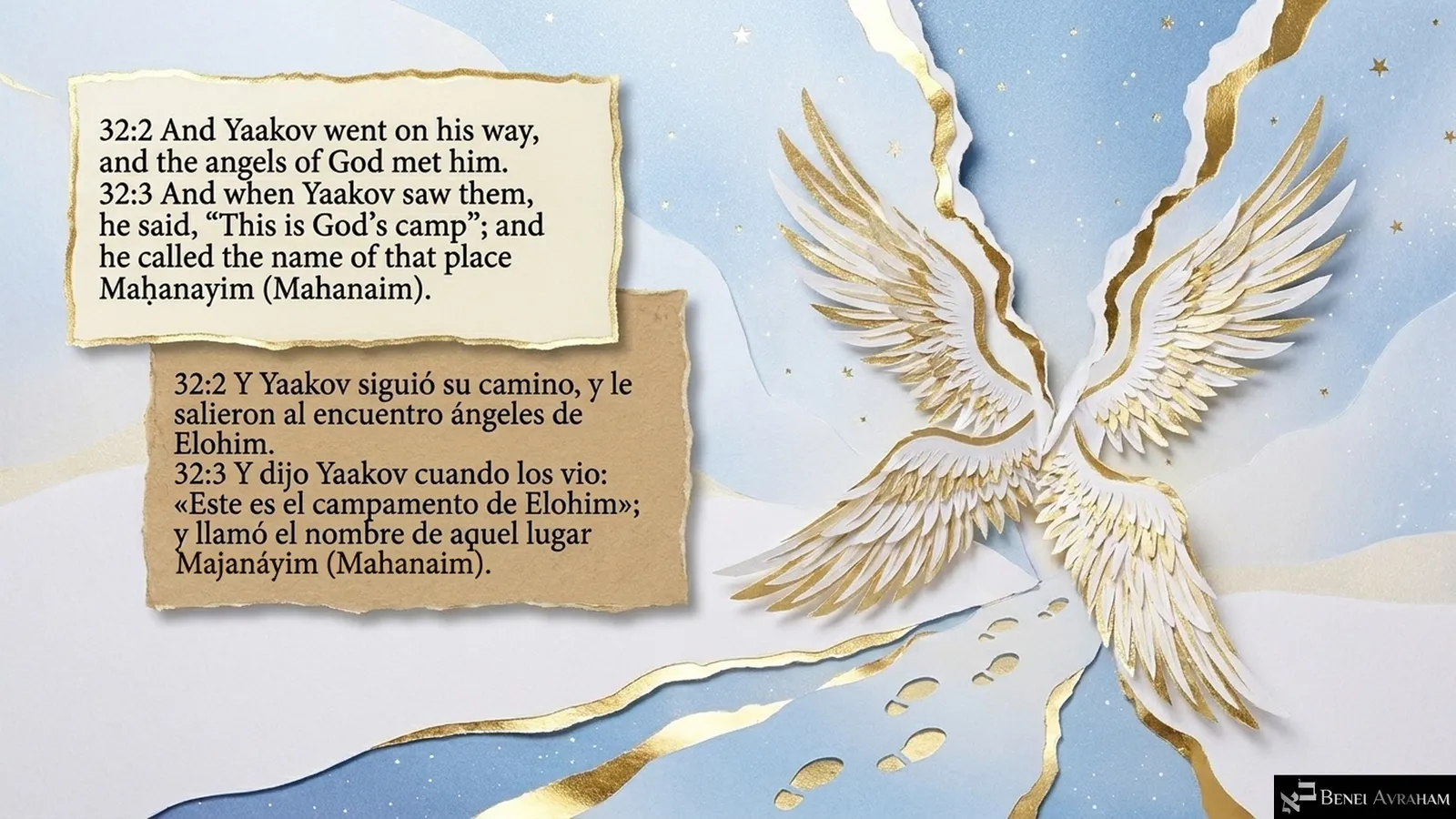
Golden paper wings above a path of footsteps: the angels of God meet Yaakov, and he calls the place Maḥanayim, “This is God’s camp” (Genesis 32:2–3).