SMS/Text 469-608-9944
Parashat Vayeshev · Genesis 37:1–40:23 · Haftarah Amos 2:6–3:8

Vayeshev: A Visual Journey

Illustrated teaching slides from Benei Avraham, in English and Spanish, walking through Parashat Vayeshev portion by portion: Yaakov dwells in Kena’an and loves Yosef more than all his sons, giving him a coat of many colours; Yosef dreams of sheaves and stars, and his brothers hate him; sent to Shechem, he finds them at Dotan, where they strip him, cast him into a pit and sell him for twenty pieces of silver, and bring the bloodied coat to their father; Yehudah goes down from his brothers, and Tamar, denied Shelah, wins her right with his signet, cord and staff, and bears Peretz and Zeraḥ; in Mitzrayim Hashem is with Yosef in Potifar’s house, he flees from Potifar’s wife and is cast into prison, and there he interprets the dreams of Par’oh’s butler and baker, but the butler forgets him. The haftarah follows: Amos rebukes Yisrael for selling the righteous for silver and the poor for a pair of shoes, and declares, “The lion has roared, who will not fear?” Tap any image to open the slideshow; use the arrows (or swipe) to move through every slide.

Rishon · Genesis 37:1–11

First Portion

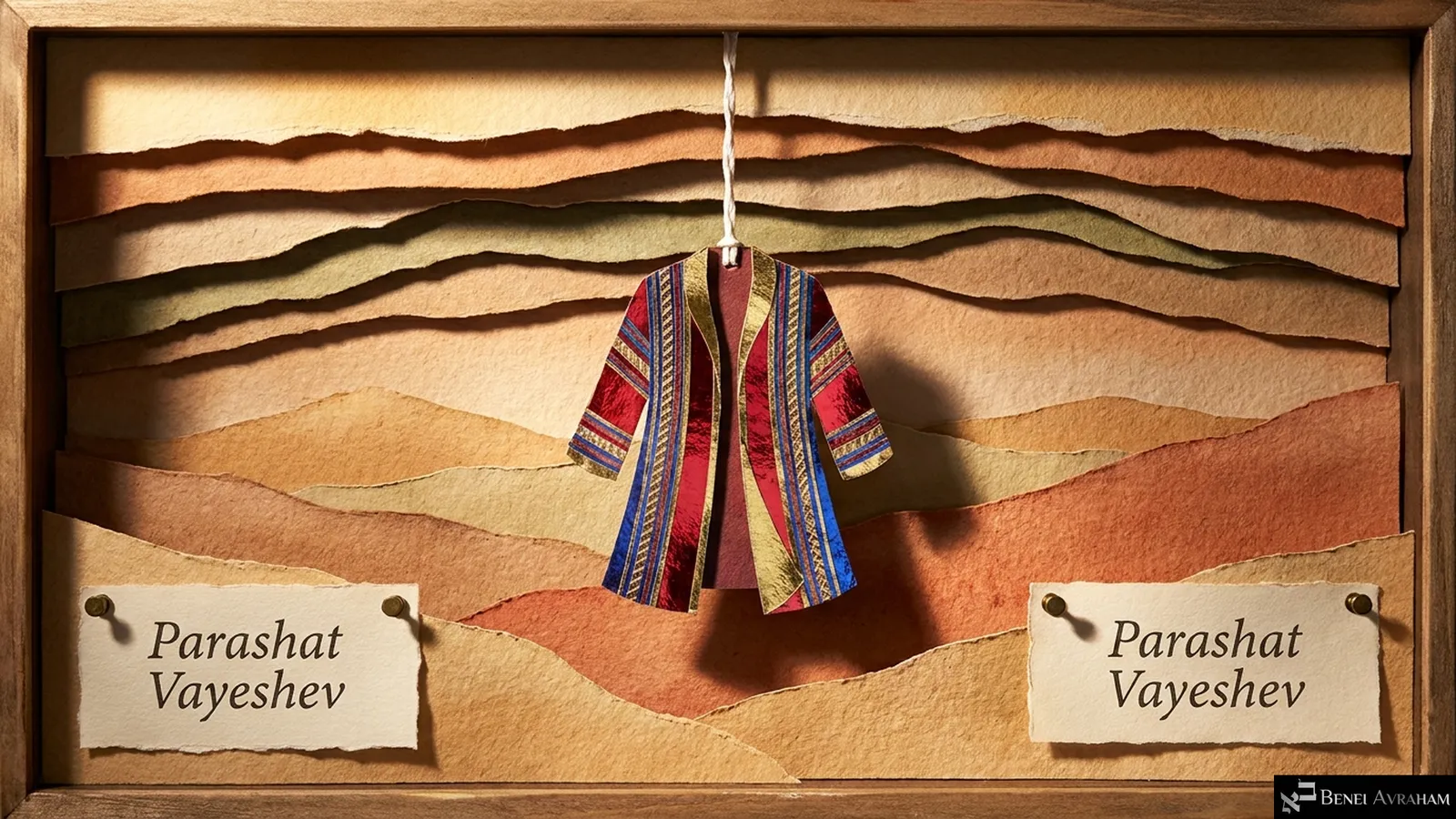
Title card for the first portion: a coat of many colours hangs over layered paper hills, “Parashat Vayeshev”.
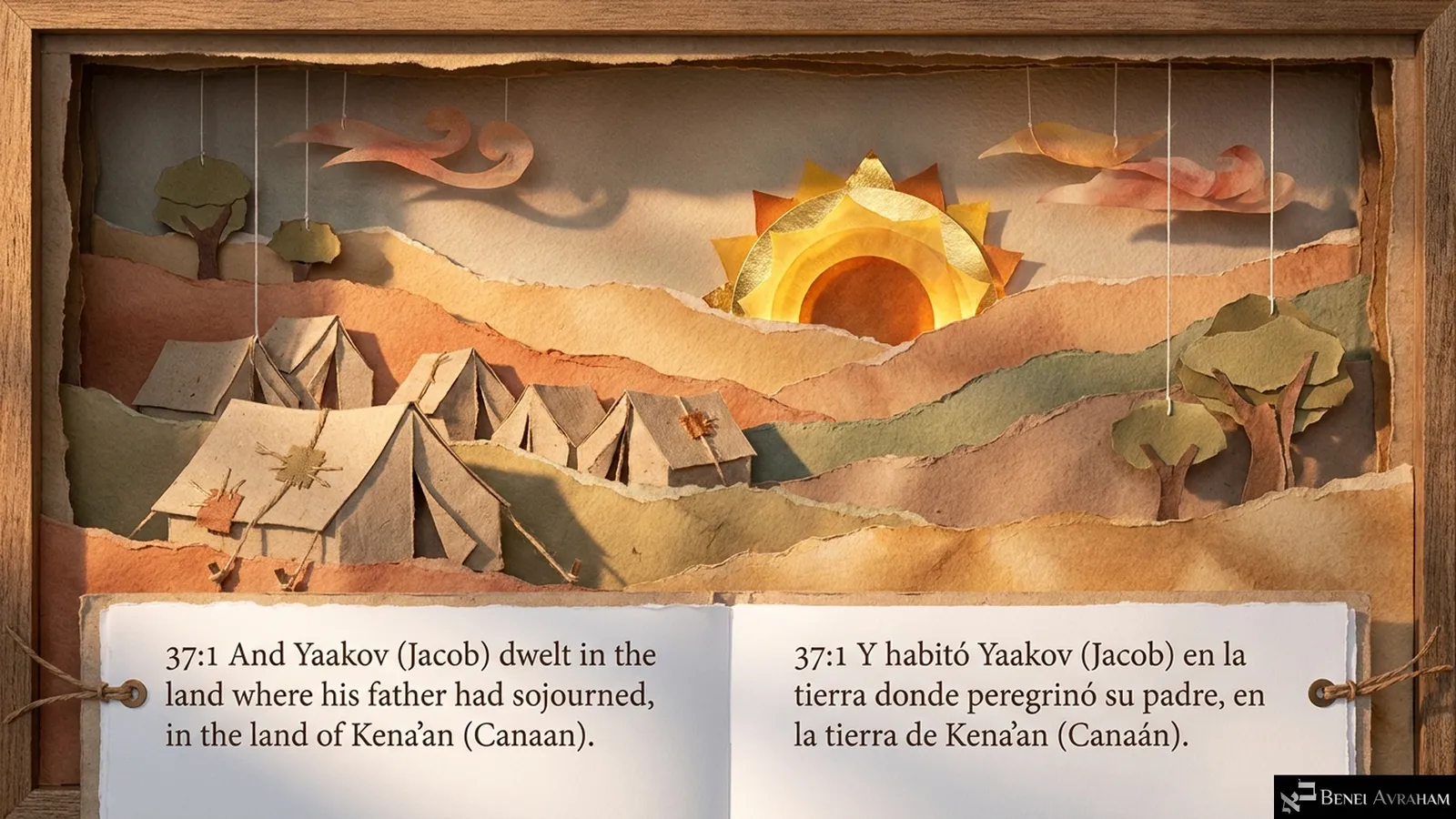
Paper tents and a golden sun over the hills of Kena’an: Yaakov dwelt in the land where his father had sojourned (Genesis 37:1).
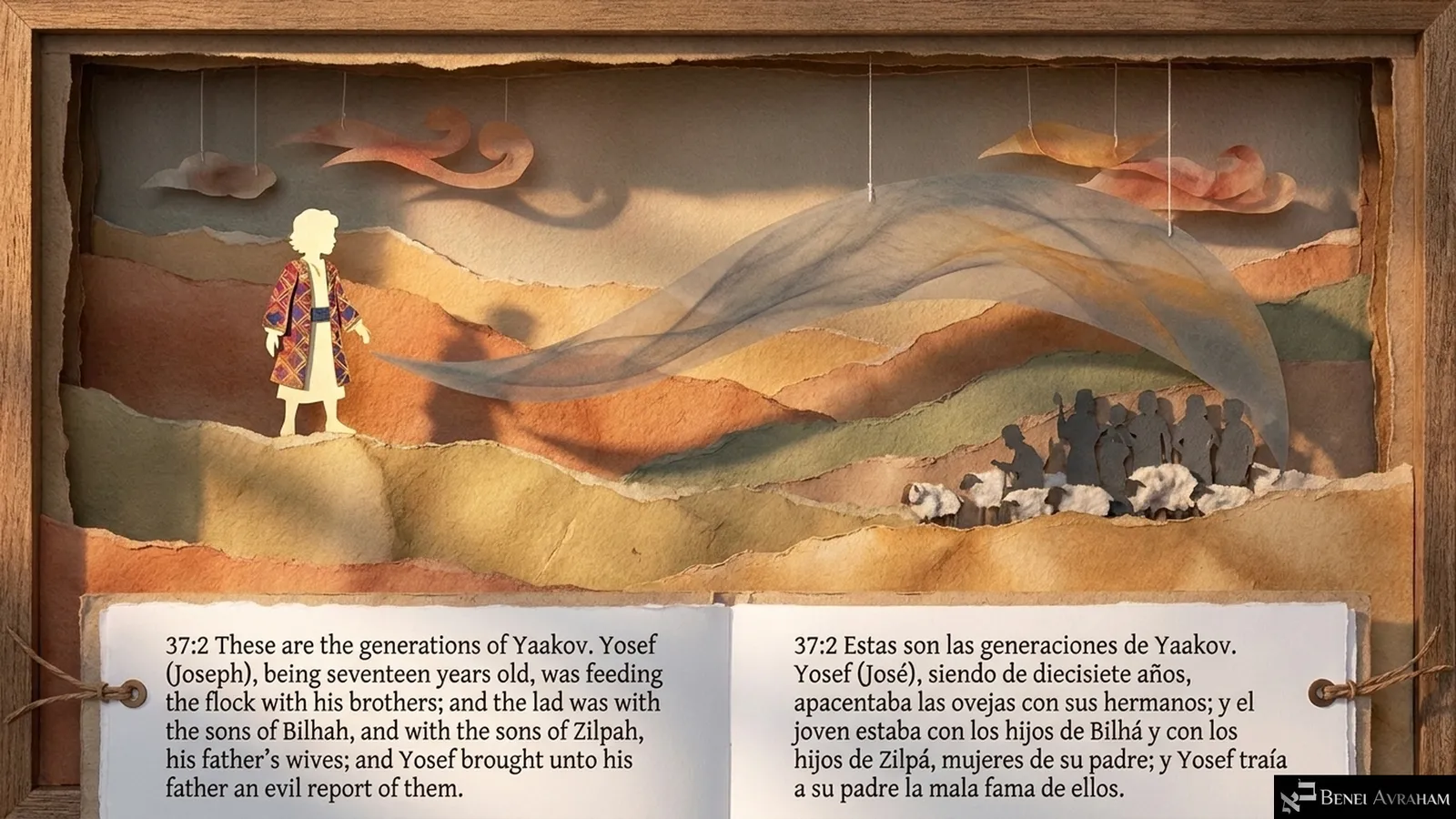
Seventeen-year-old Yosef stands apart while his brothers tend the flock, a grey wind of rumour between them: Yosef brought unto his father an evil report of them (Genesis 37:2).
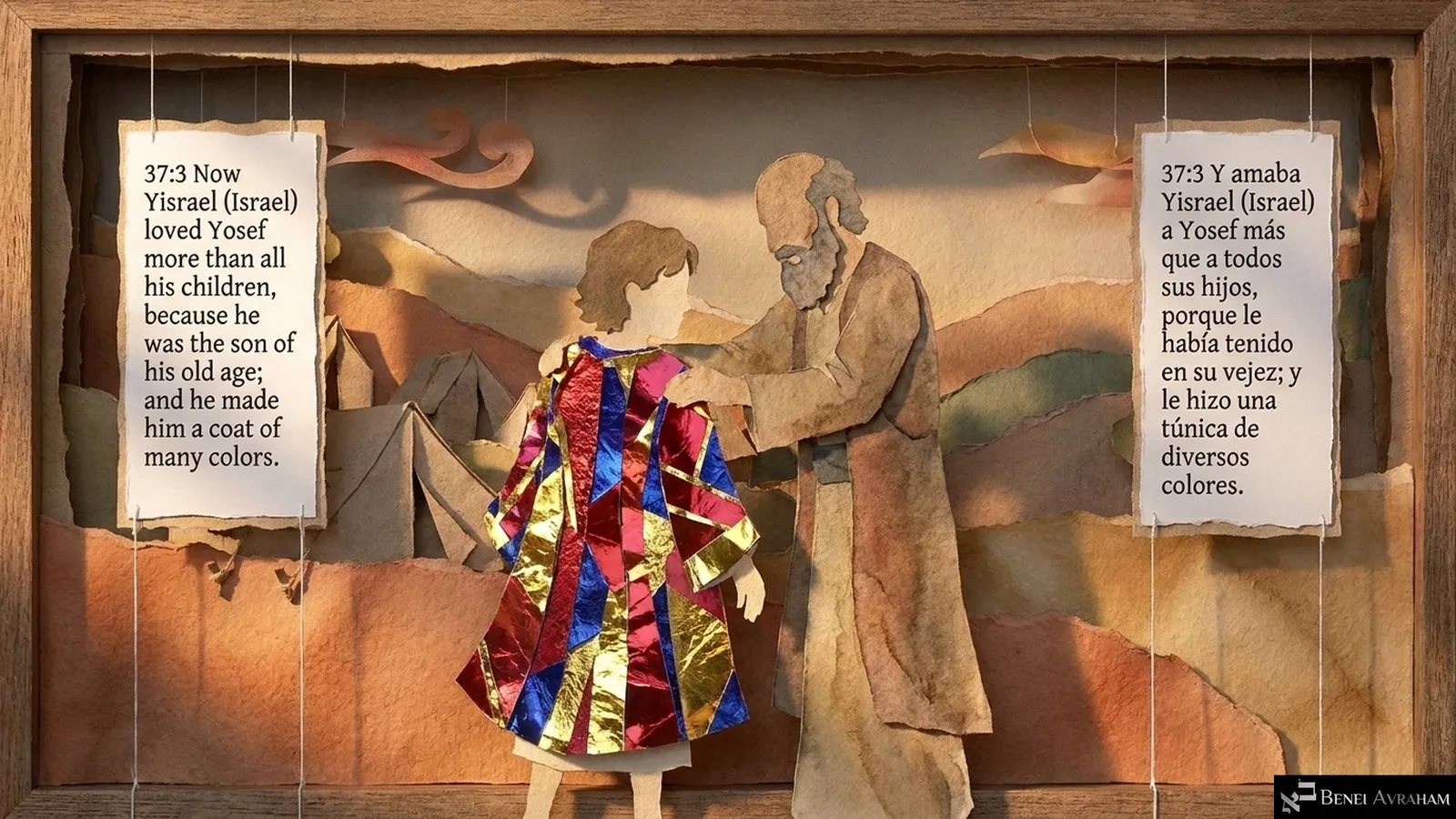
Yisrael lays a coat of many colours on Yosef’s shoulders: he loved Yosef more than all his children, because he was the son of his old age (Genesis 37:3).
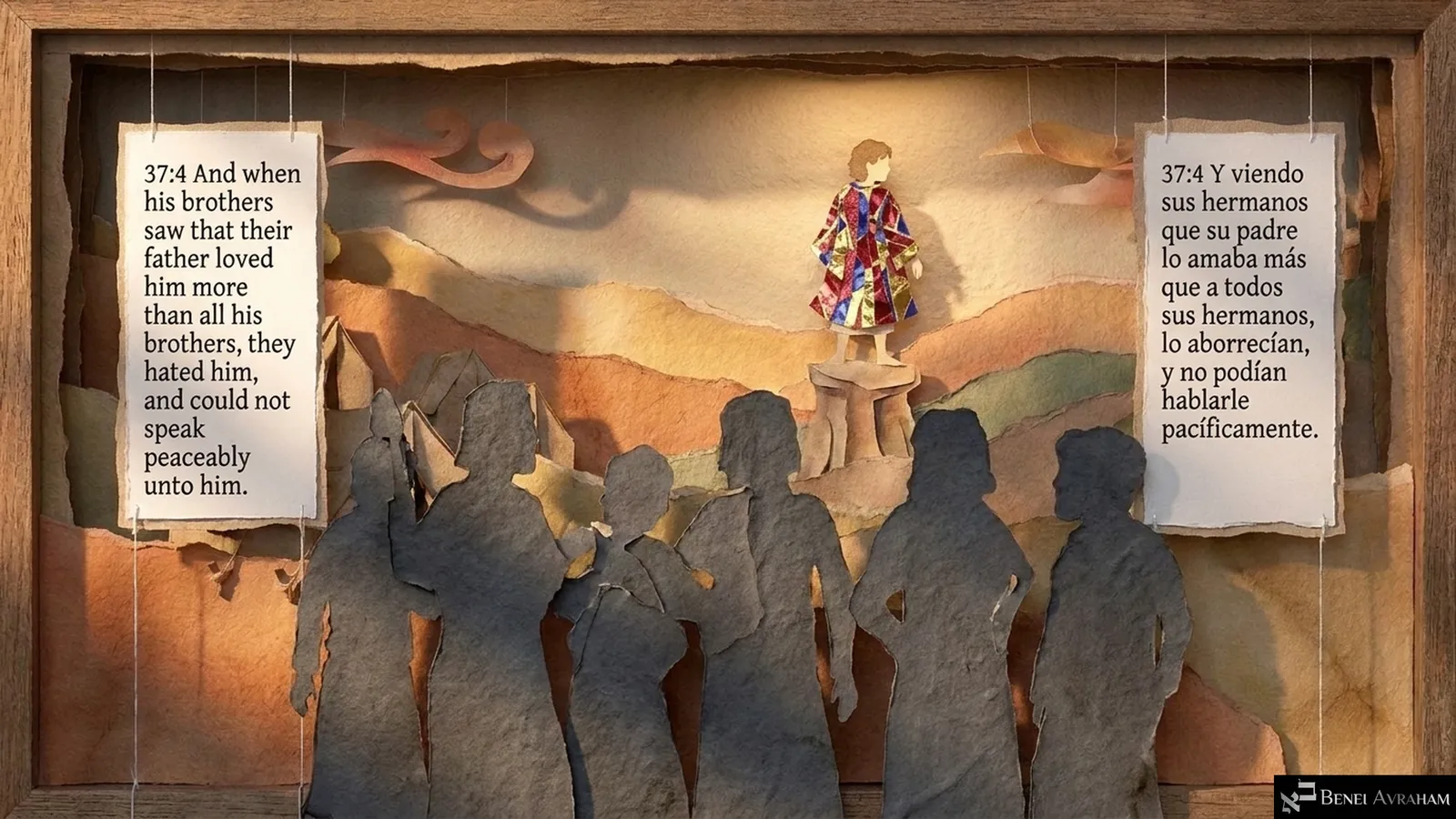
Yosef in his bright coat stands on a rock above the dark silhouettes of his brothers: they hated him, and could not speak peaceably unto him (Genesis 37:4).
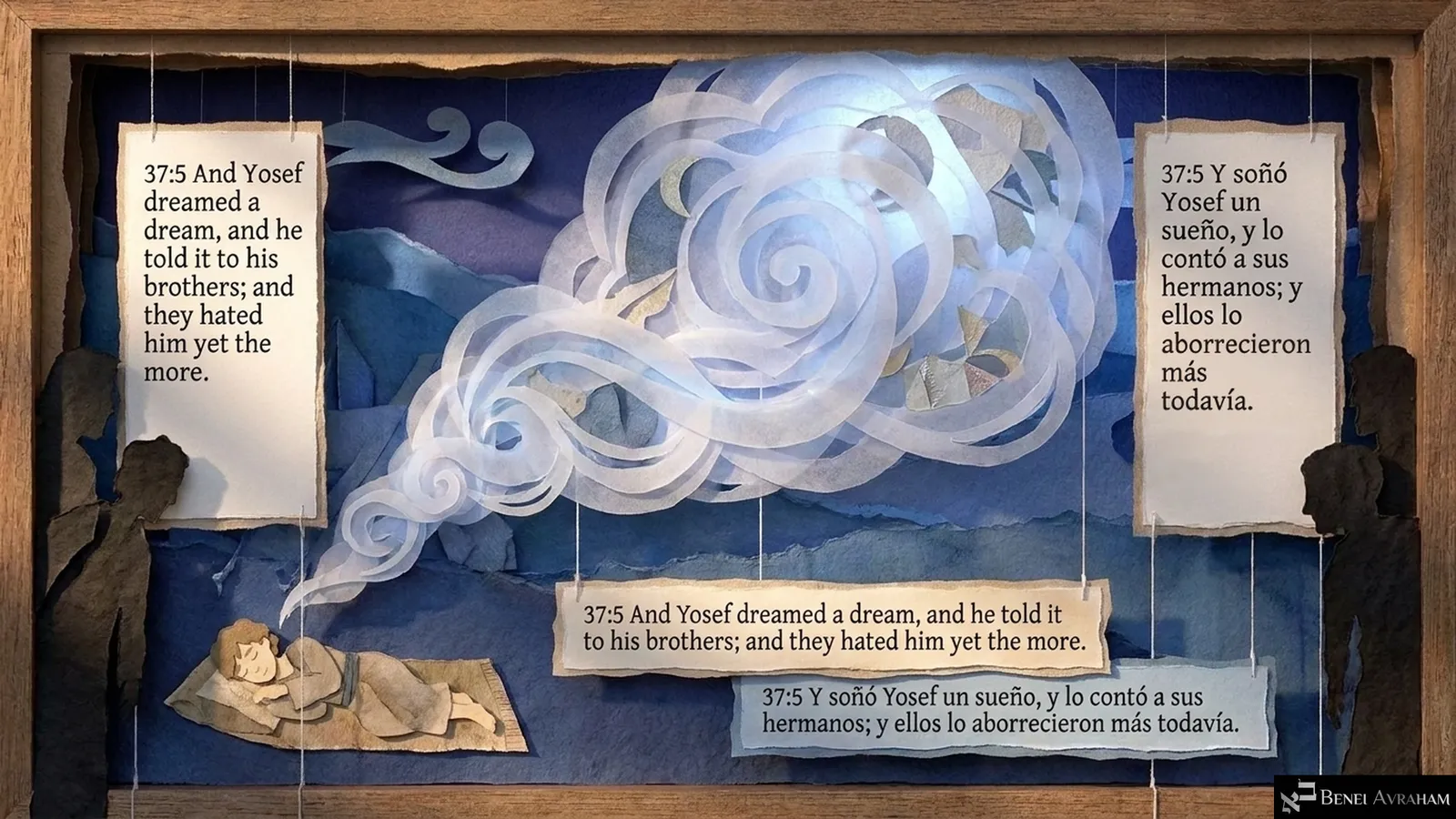
Yosef sleeps under a night sky as a white swirl of dream rises above him: Yosef dreamed a dream and told it to his brothers, and they hated him yet the more (Genesis 37:5).
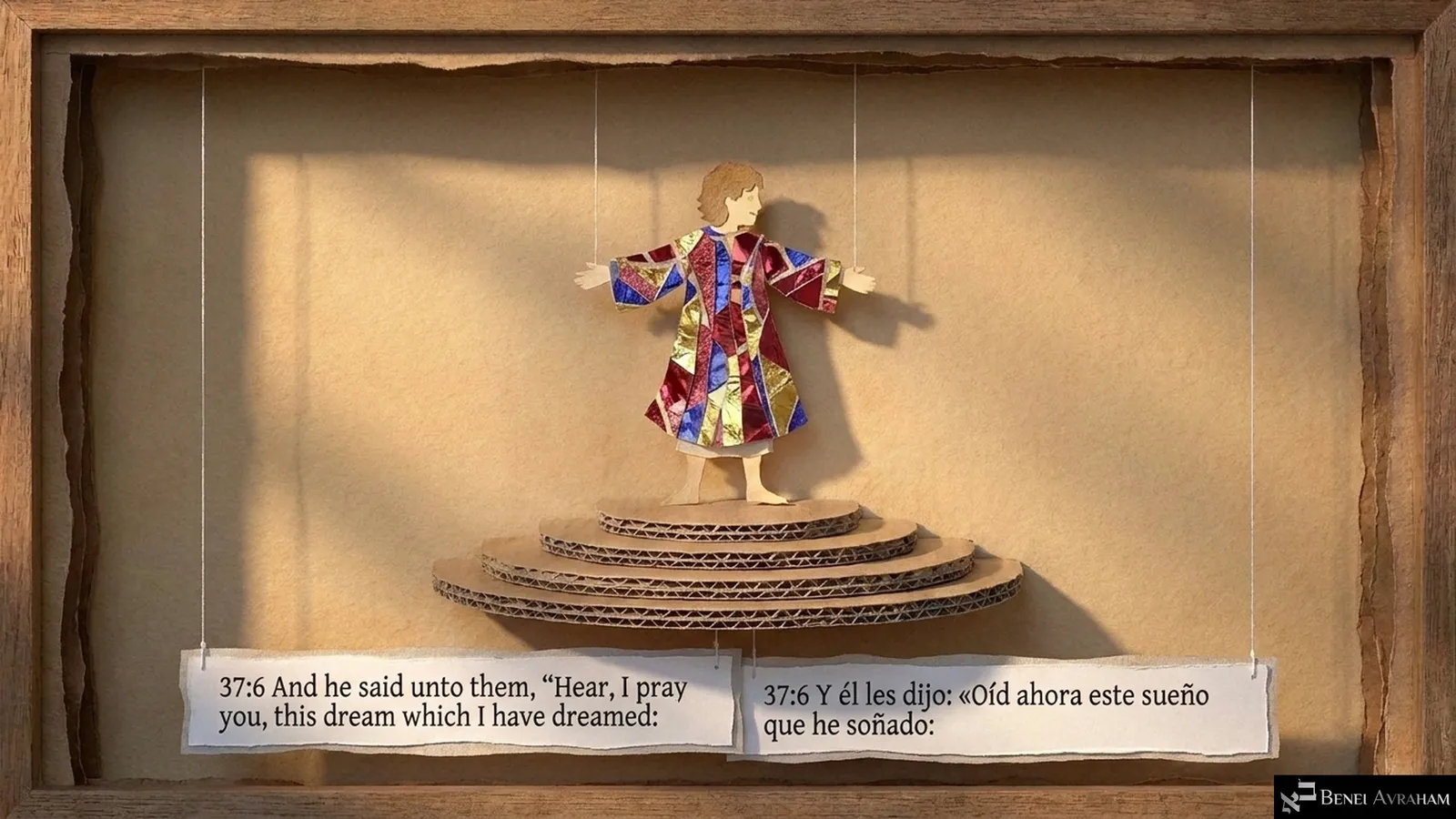
Yosef in his coat of many colours stands on a raised platform, arms open: “Hear, I pray you, this dream which I have dreamed” (Genesis 37:6).
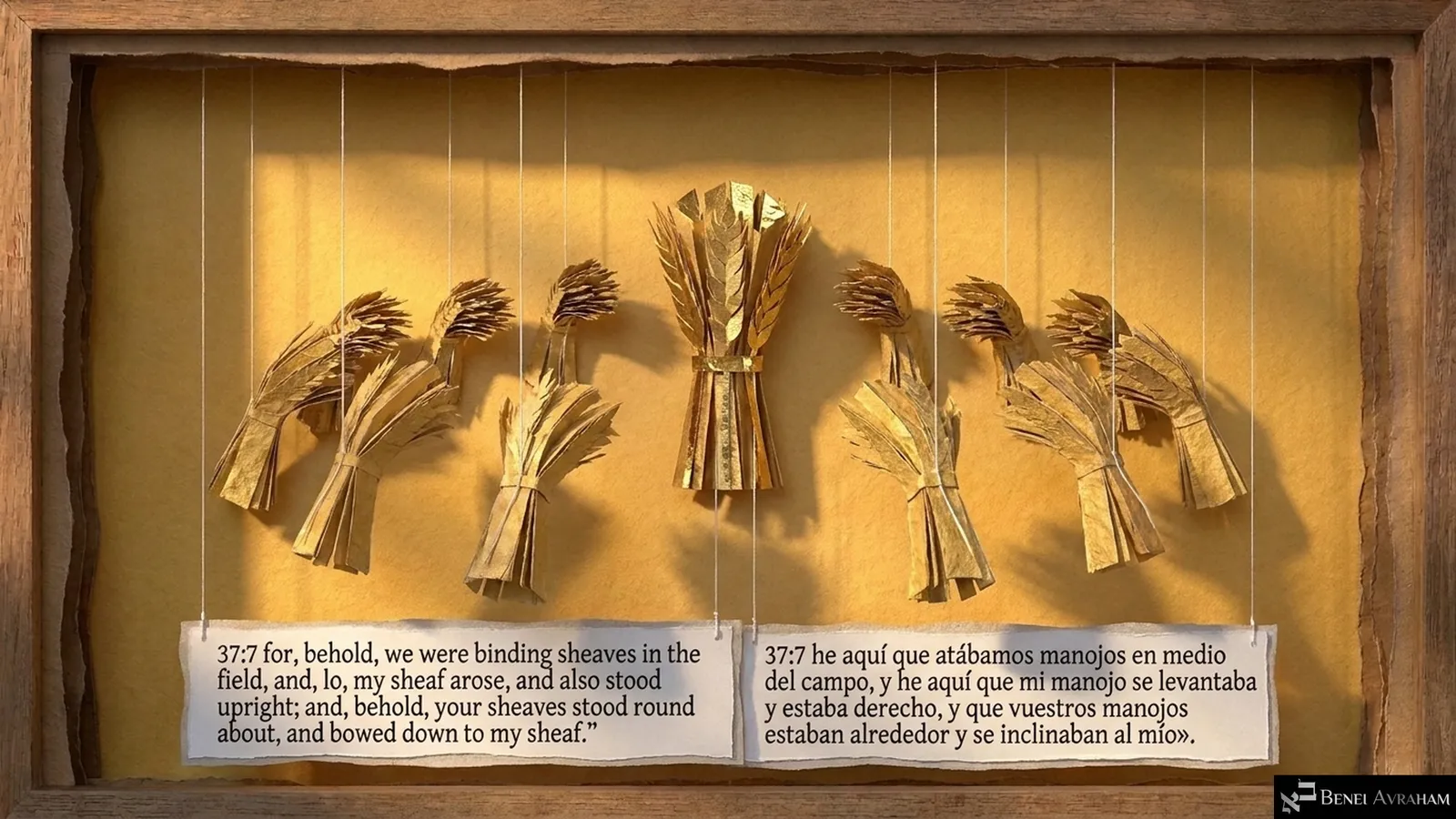
Golden paper sheaves bow down around one standing sheaf: “My sheaf arose, and also stood upright; and your sheaves stood round about, and bowed down to my sheaf” (Genesis 37:7).
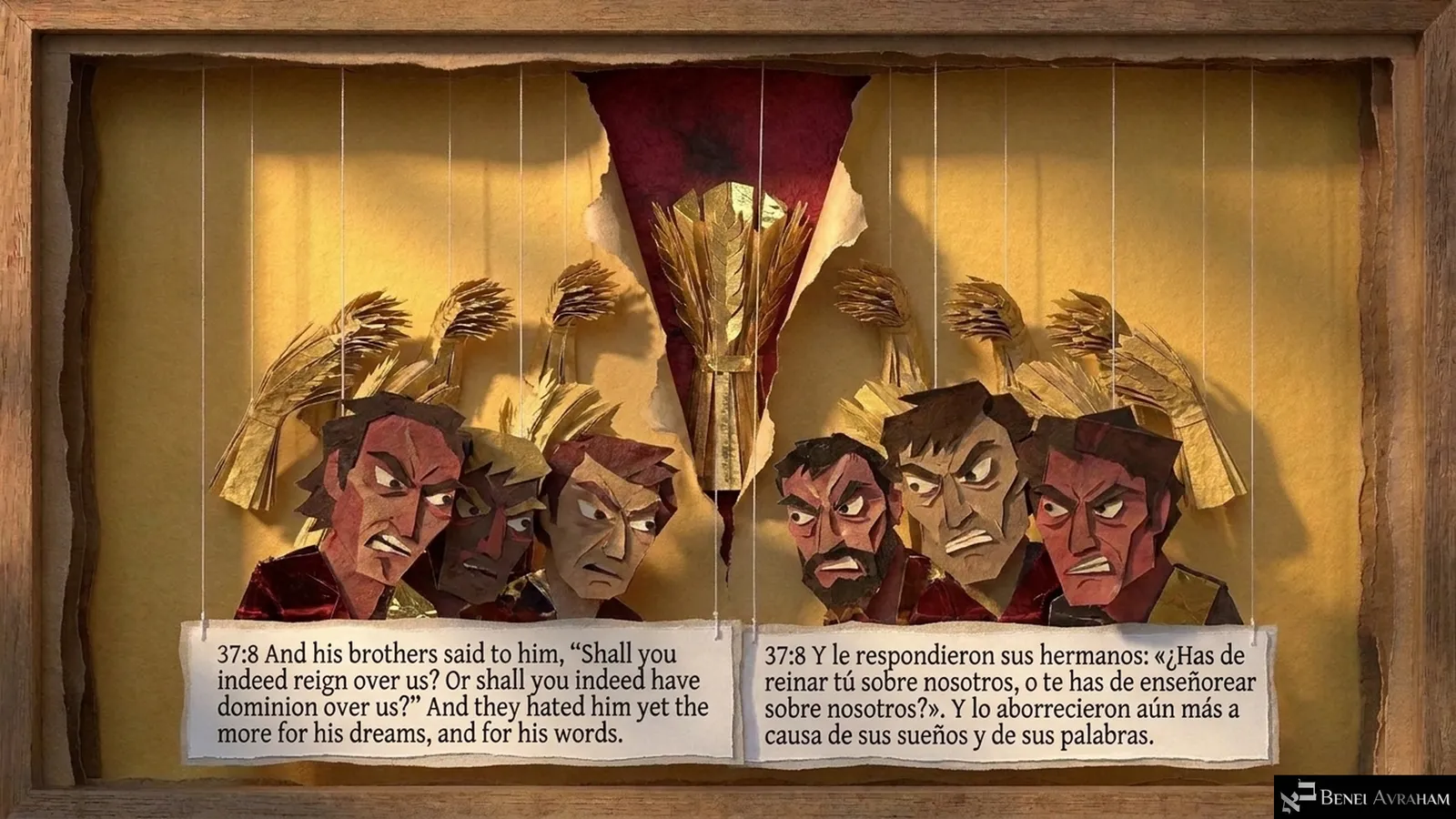
Angry paper faces of the brothers in front of the bowing sheaves: “Shall you indeed reign over us?” And they hated him yet the more for his dreams, and for his words (Genesis 37:8).
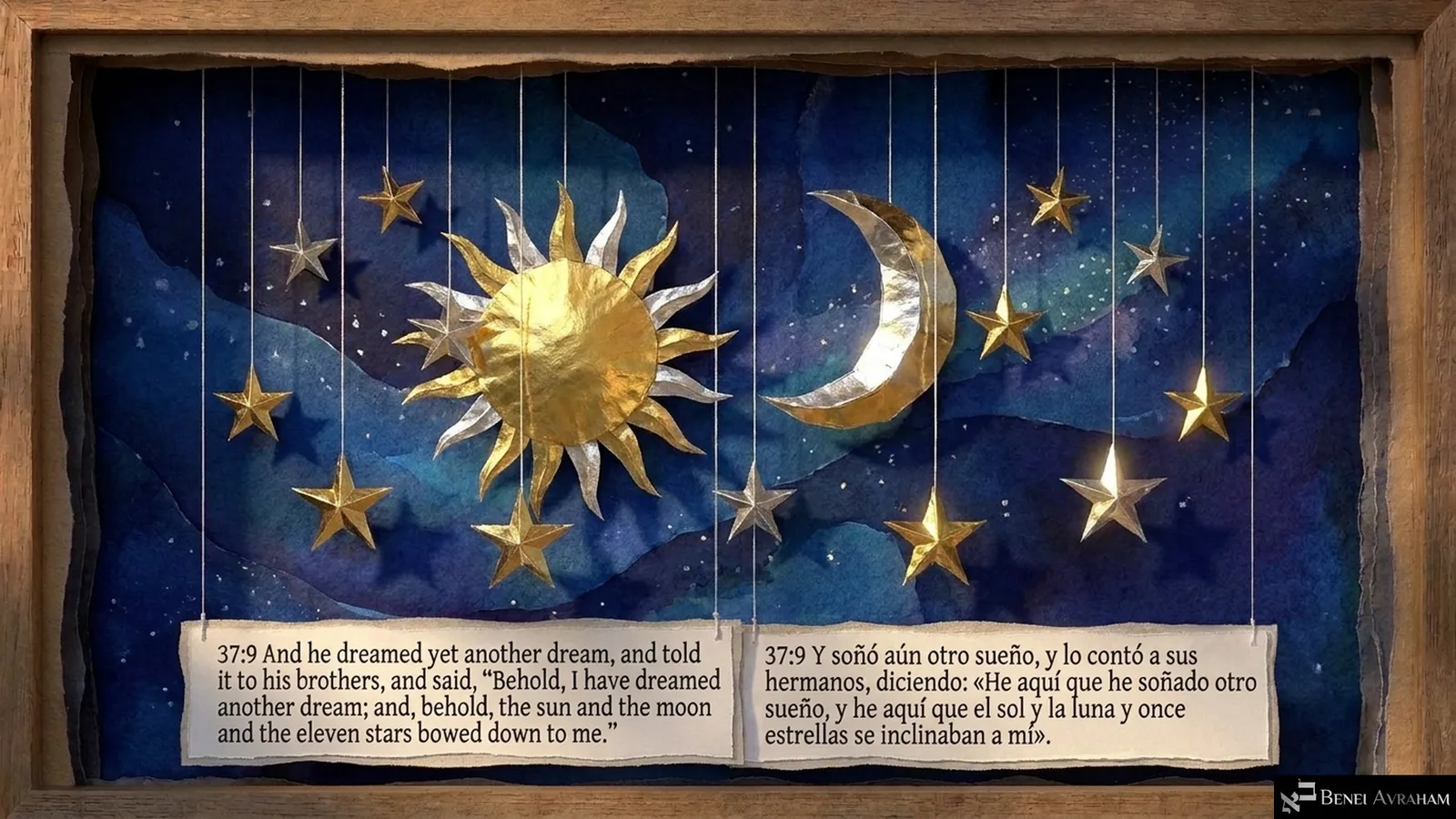
A golden sun, a silver moon and eleven stars hang in a deep blue night: “Behold, the sun and the moon and the eleven stars bowed down to me” (Genesis 37:9).
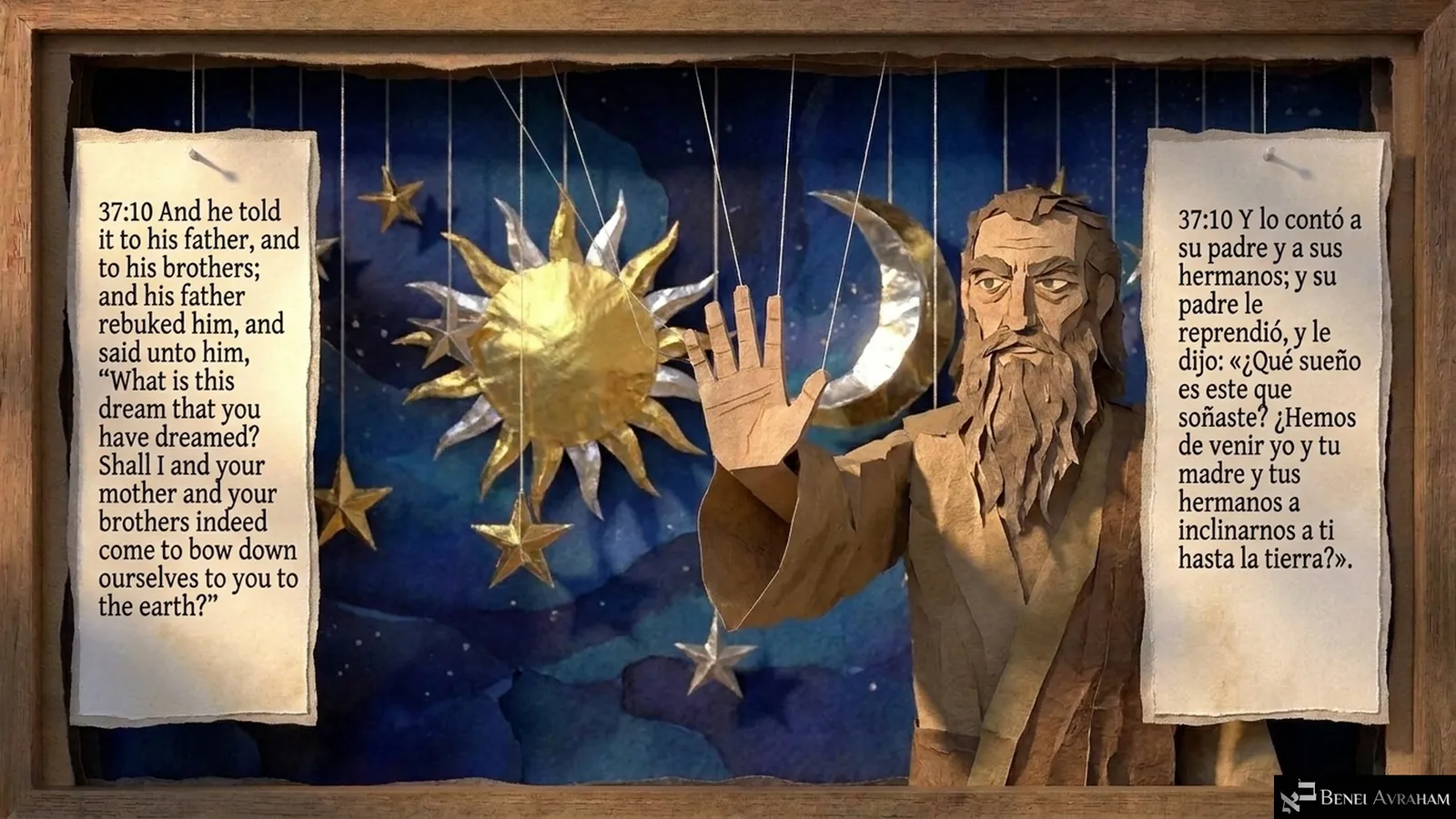
Yaakov raises his hand against the sun, moon and stars: his father rebuked him, “Shall I and your mother and your brothers indeed come to bow down ourselves to you?” (Genesis 37:10).
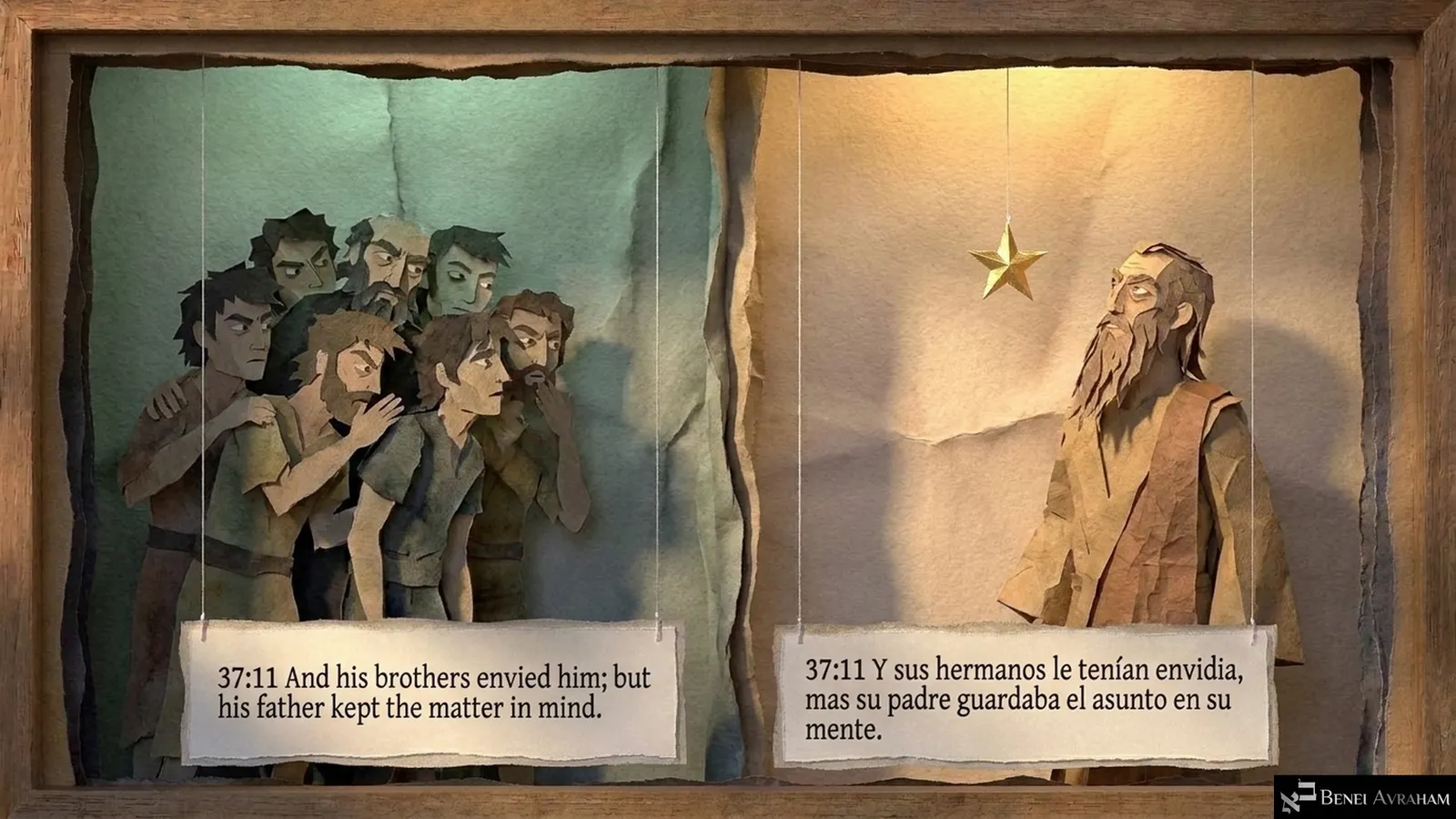
The brothers huddle together in the shadows while Yaakov looks up at a single star: his brothers envied him, but his father kept the matter in mind (Genesis 37:11).
Sheni · Genesis 37:12–22

Second Portion
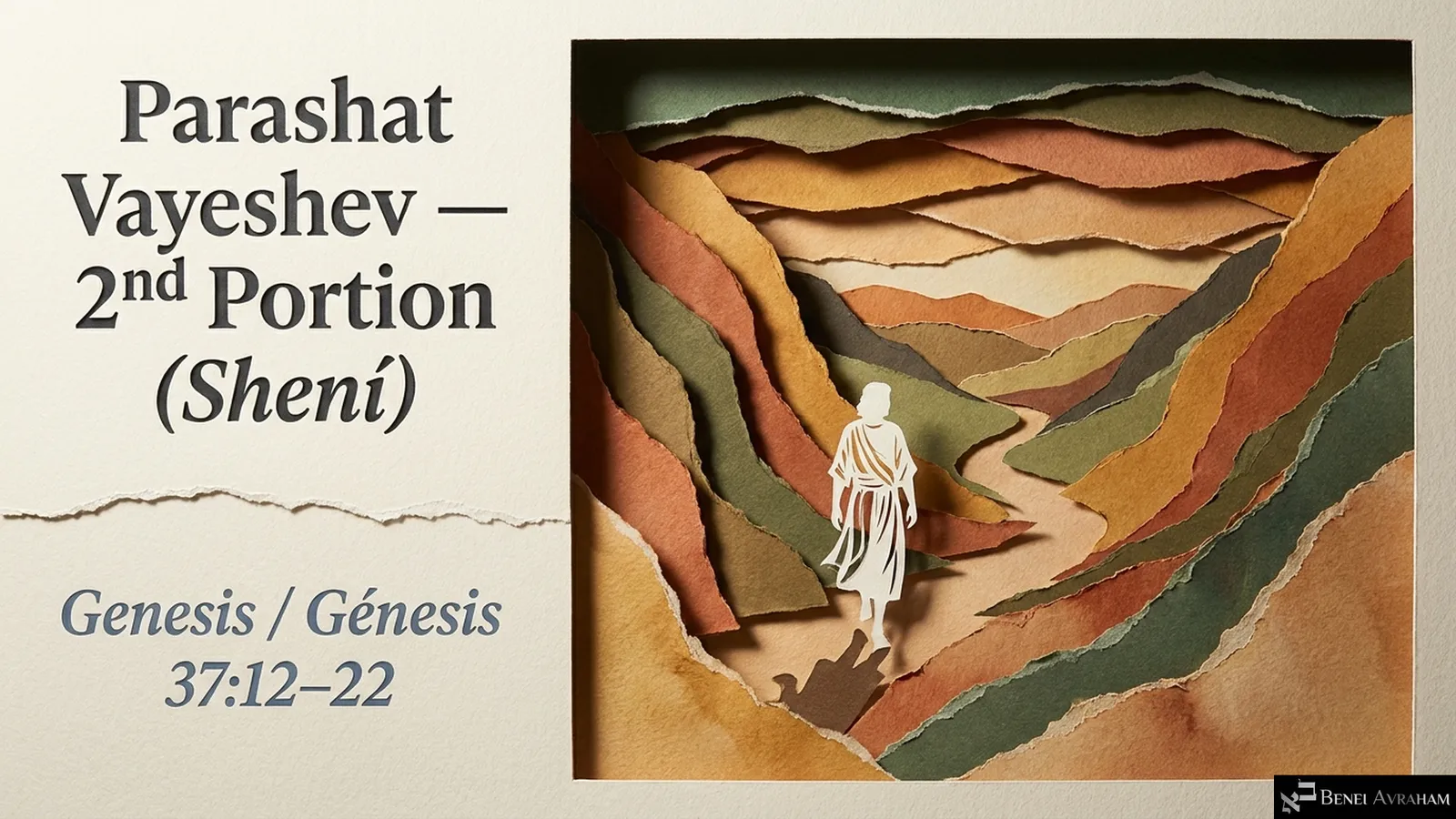
Title card for the second portion: a white paper figure walks down a valley of layered hills, “Parashat Vayeshev, 2nd Portion (Sheni), Genesis 37:12–22”.
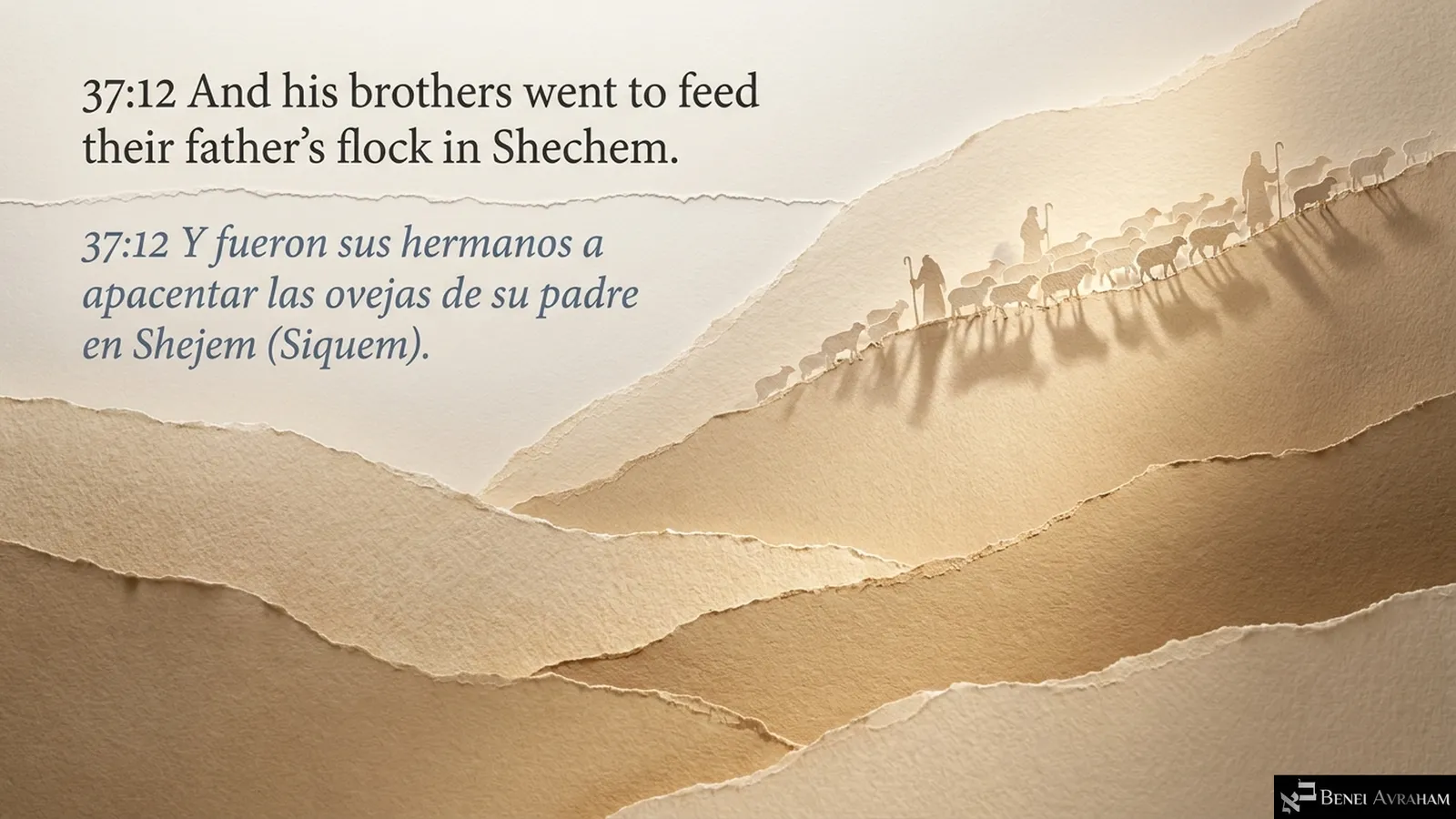
Shepherds lead their flocks along a pale ridge: his brothers went to feed their father’s flock in Shechem (Genesis 37:12).
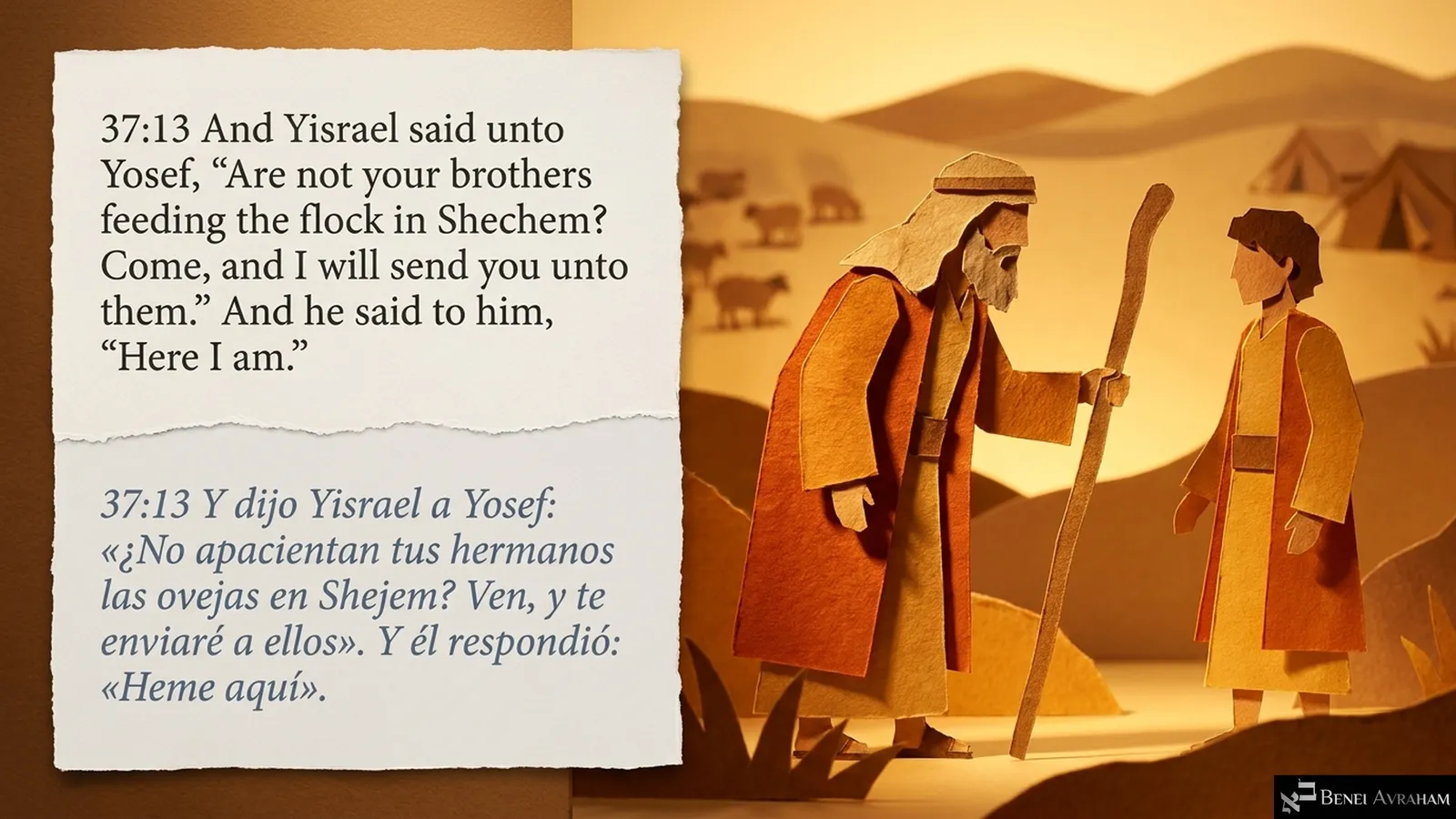
Yisrael, leaning on his staff, speaks with young Yosef among the tents: “Come, and I will send you unto them.” And he said, “Here I am” (Genesis 37:13).
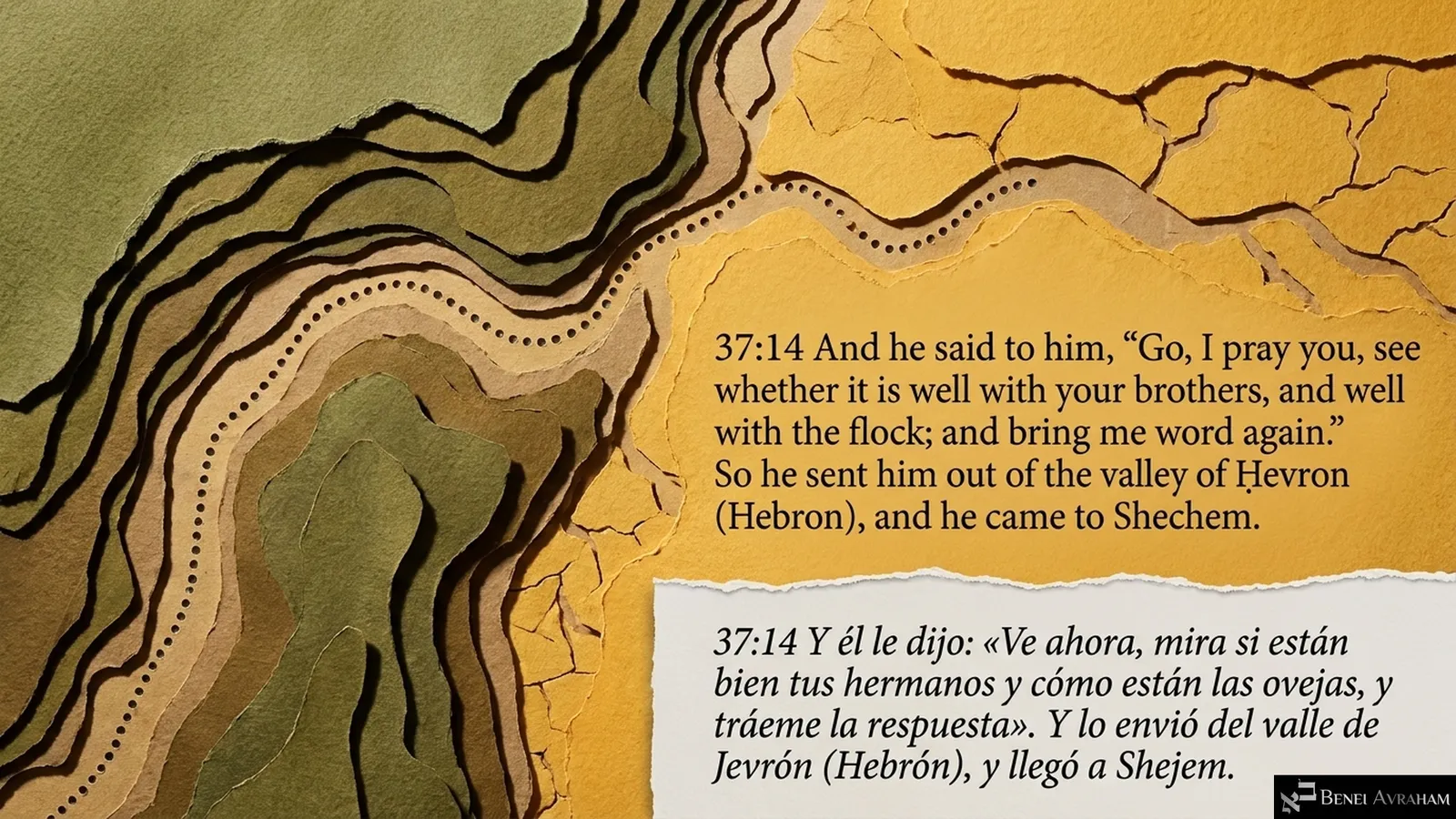
A dotted path winds out of green valleys into cracked golden land: “Go, see whether it is well with your brothers”; so he sent him out of the valley of Ḥevron, and he came to Shechem (Genesis 37:14).
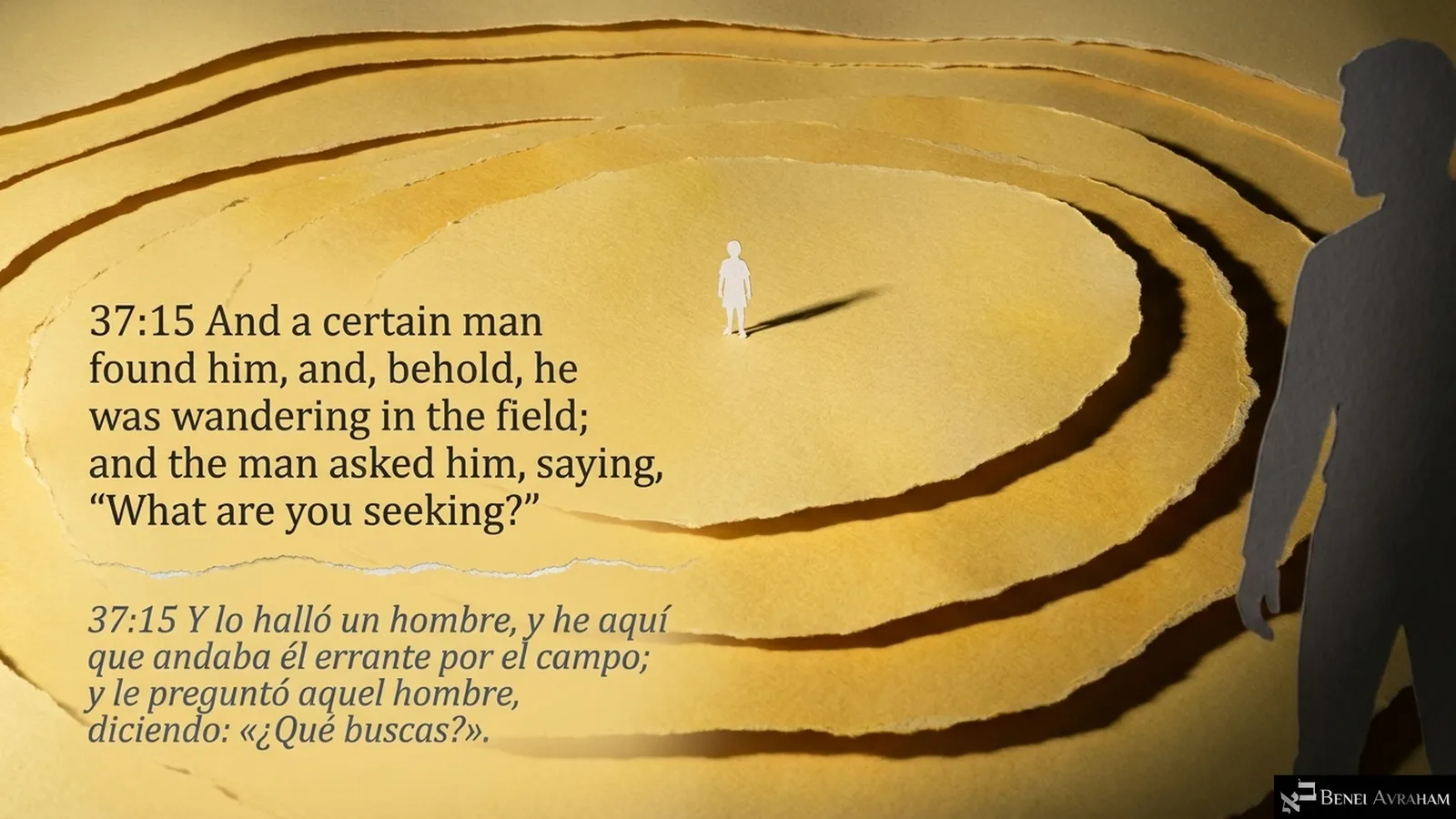
A small white figure stands alone in the middle of a paper spiral as a tall man watches: Yosef was wandering in the field, and the man asked him, “What are you seeking?” (Genesis 37:15).
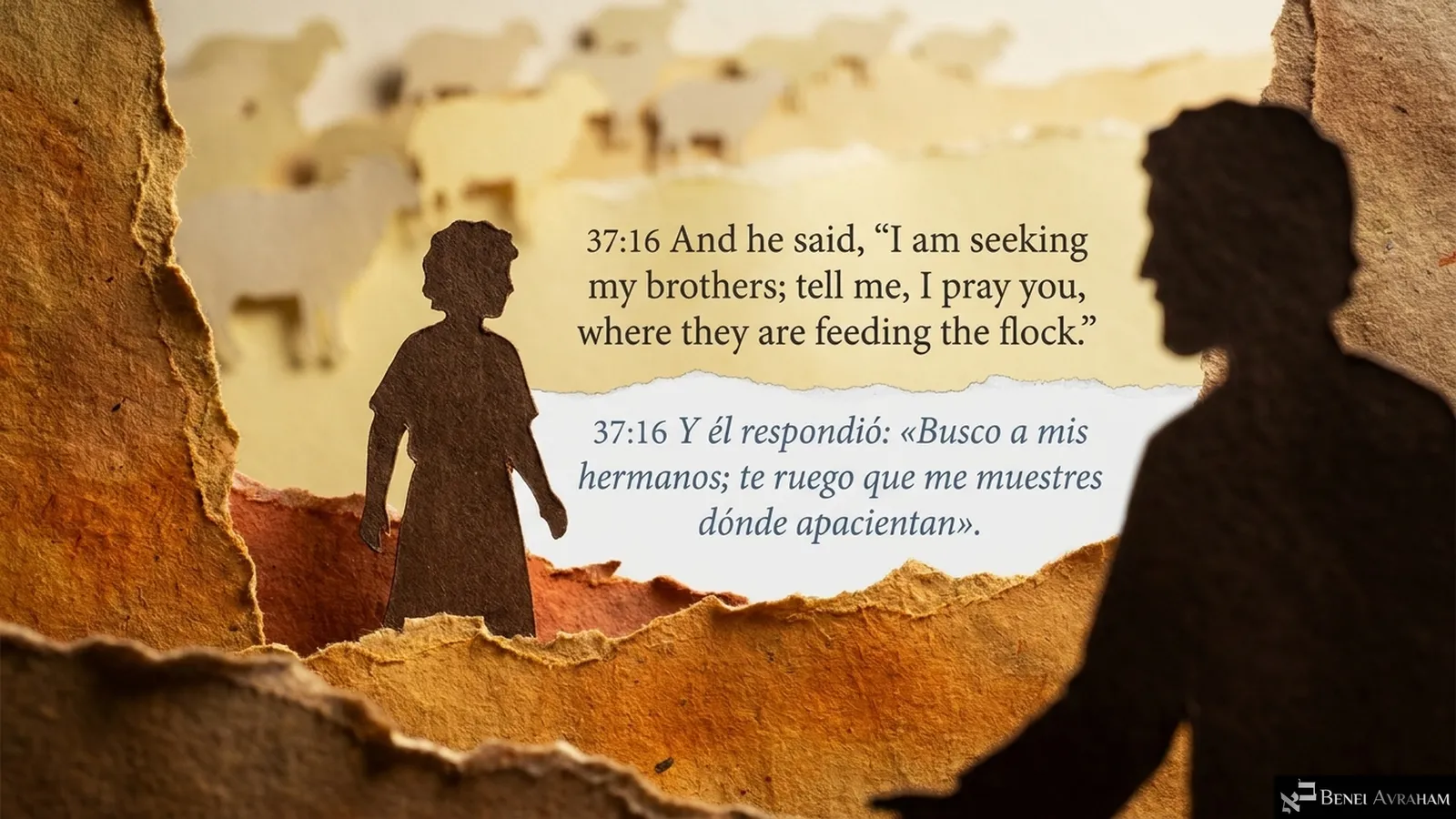
Yosef faces the stranger, flocks behind them: “I am seeking my brothers; tell me, I pray you, where they are feeding the flock” (Genesis 37:16).
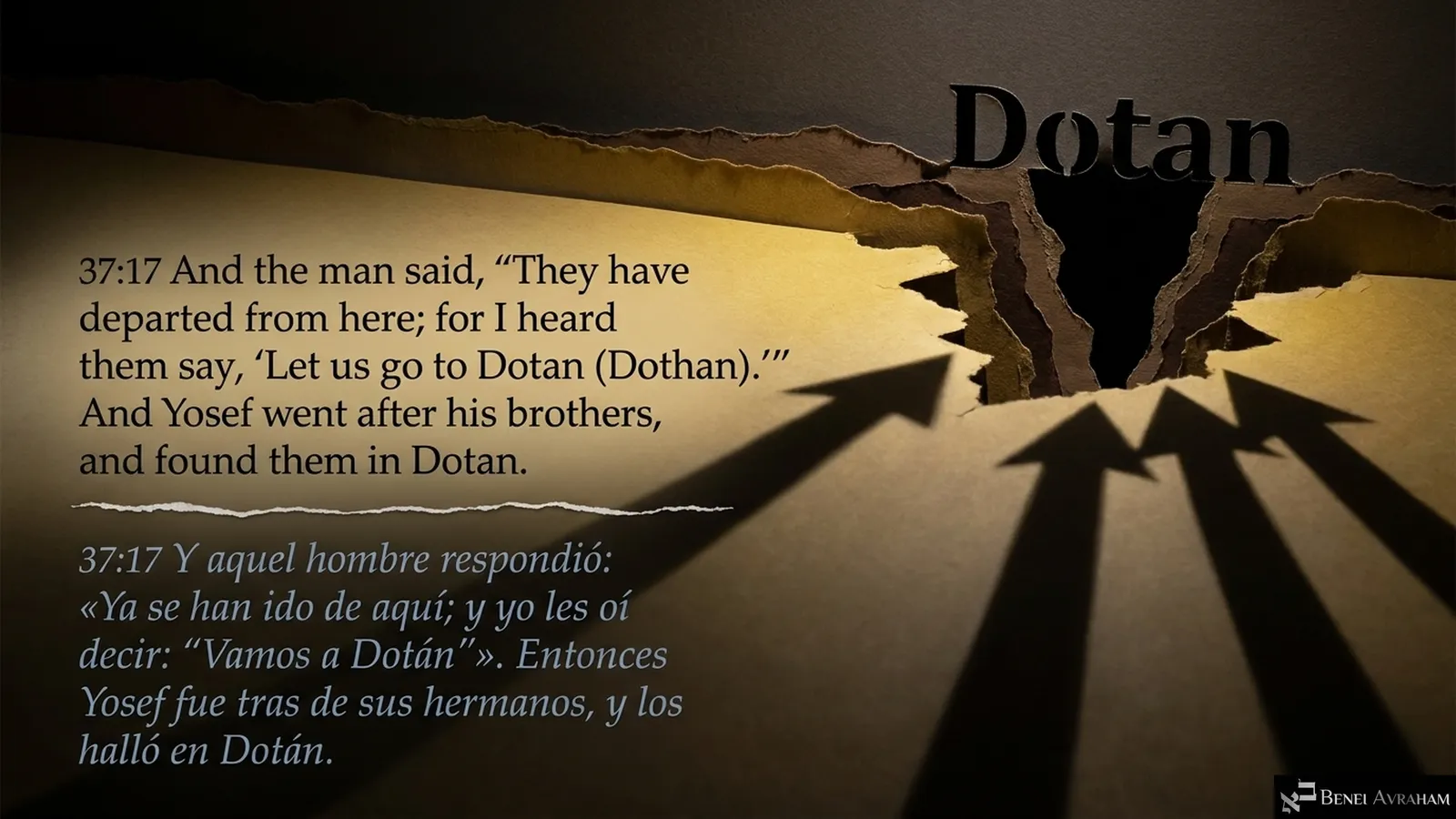
Shadow arrows point to a dark cleft in the paper beneath the word “Dotan”: “I heard them say, ‘Let us go to Dotan,’” and Yosef went after his brothers and found them in Dotan (Genesis 37:17).
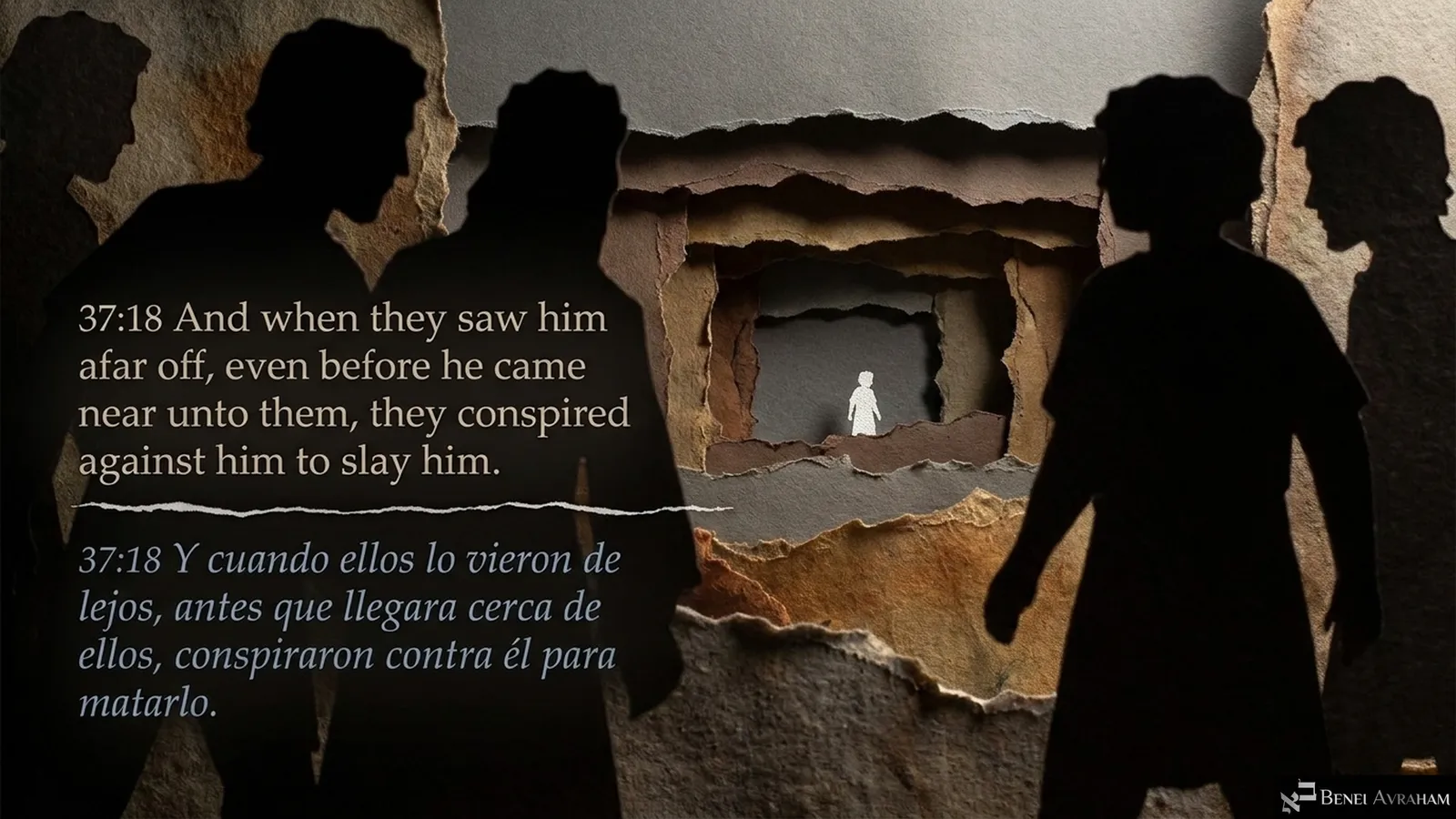
Dark silhouettes of the brothers watch a small white figure far off through layers of torn paper: before he came near unto them, they conspired against him to slay him (Genesis 37:18).
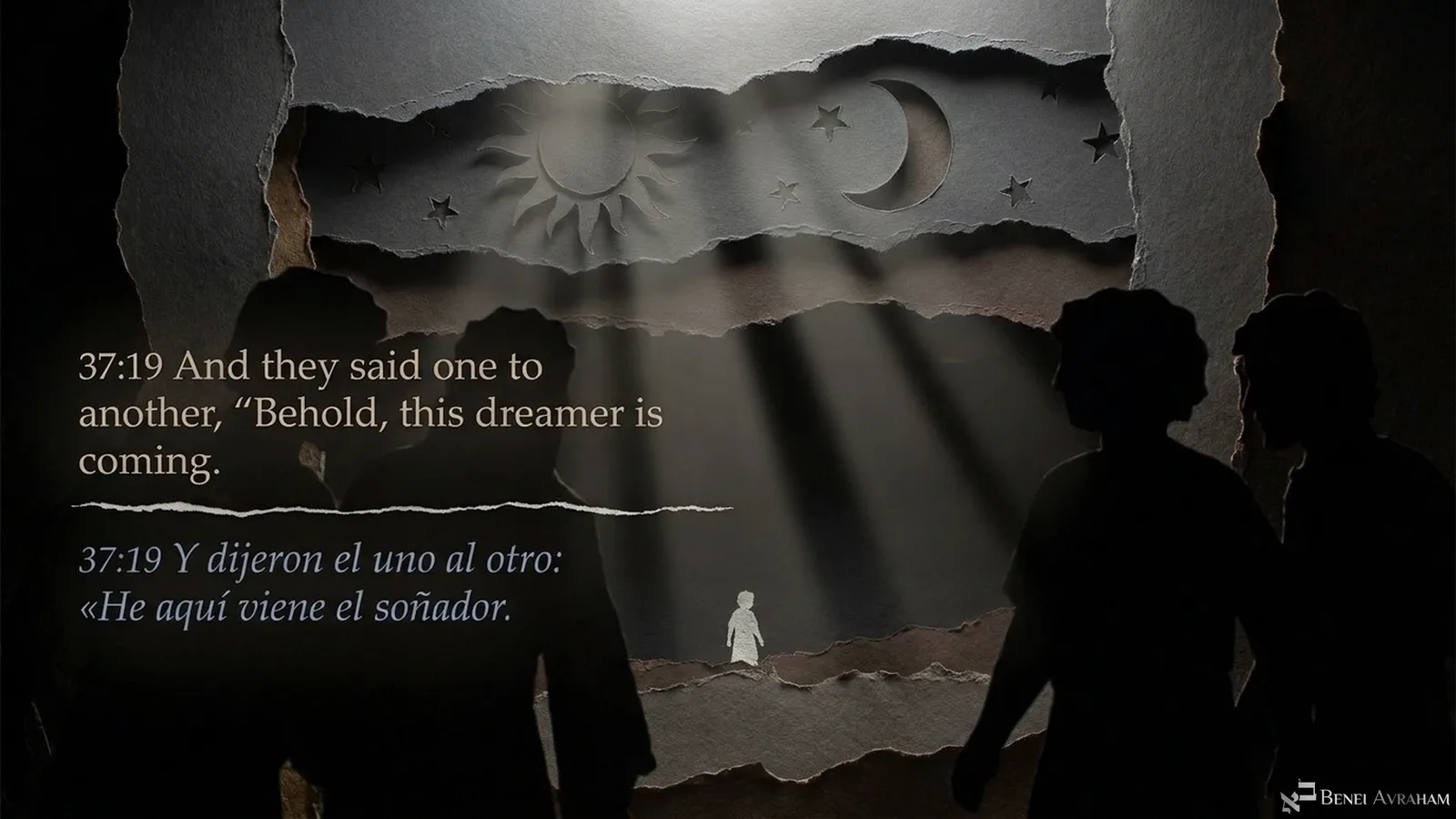
Under a paper sun, moon and stars the brothers watch a small white figure approach: “Behold, this dreamer is coming” (Genesis 37:19).
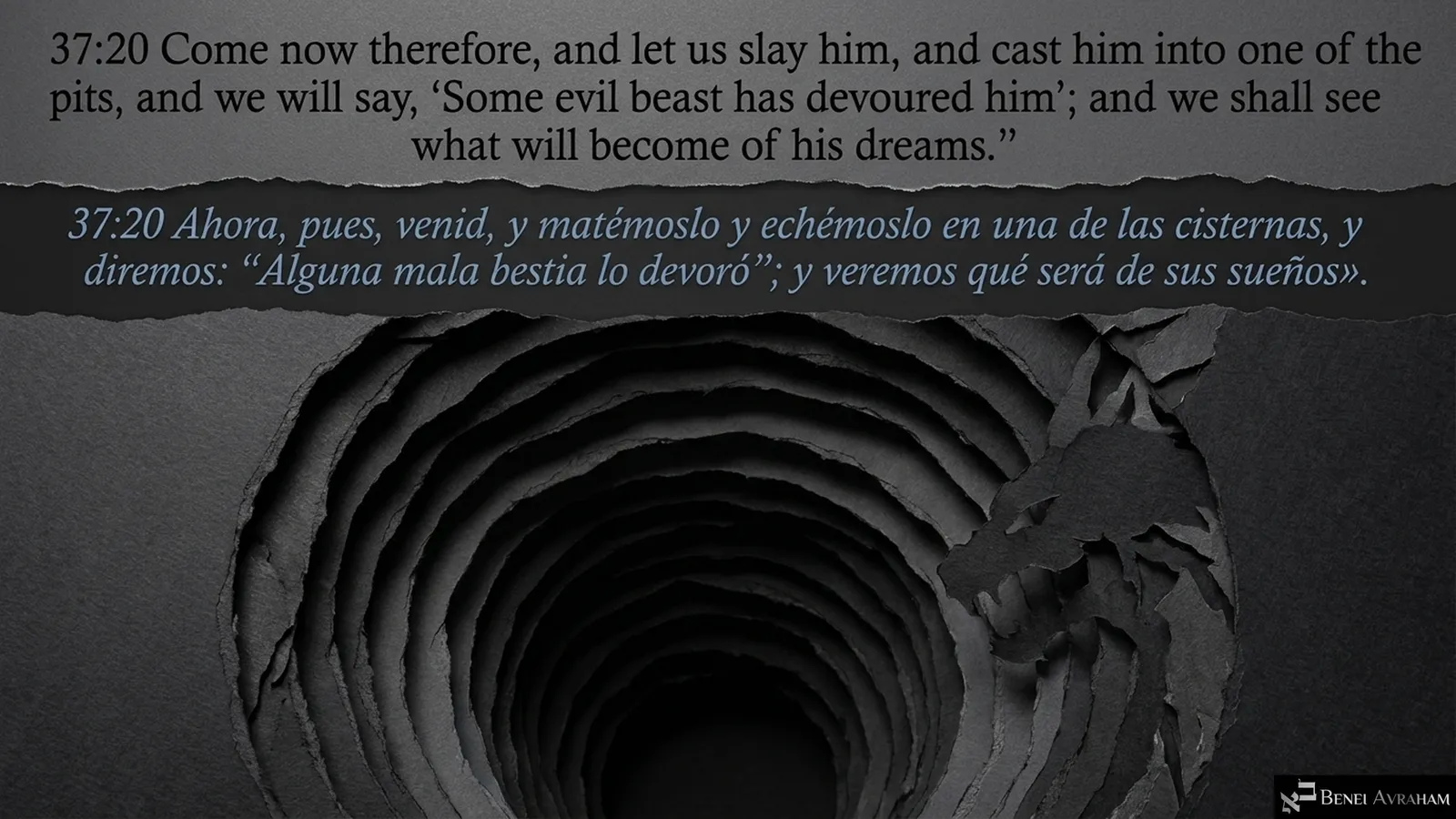
A deep spiral pit of grey torn paper, with the shape of a wild beast at its edge: “Let us slay him, and cast him into one of the pits … and we shall see what will become of his dreams” (Genesis 37:20).
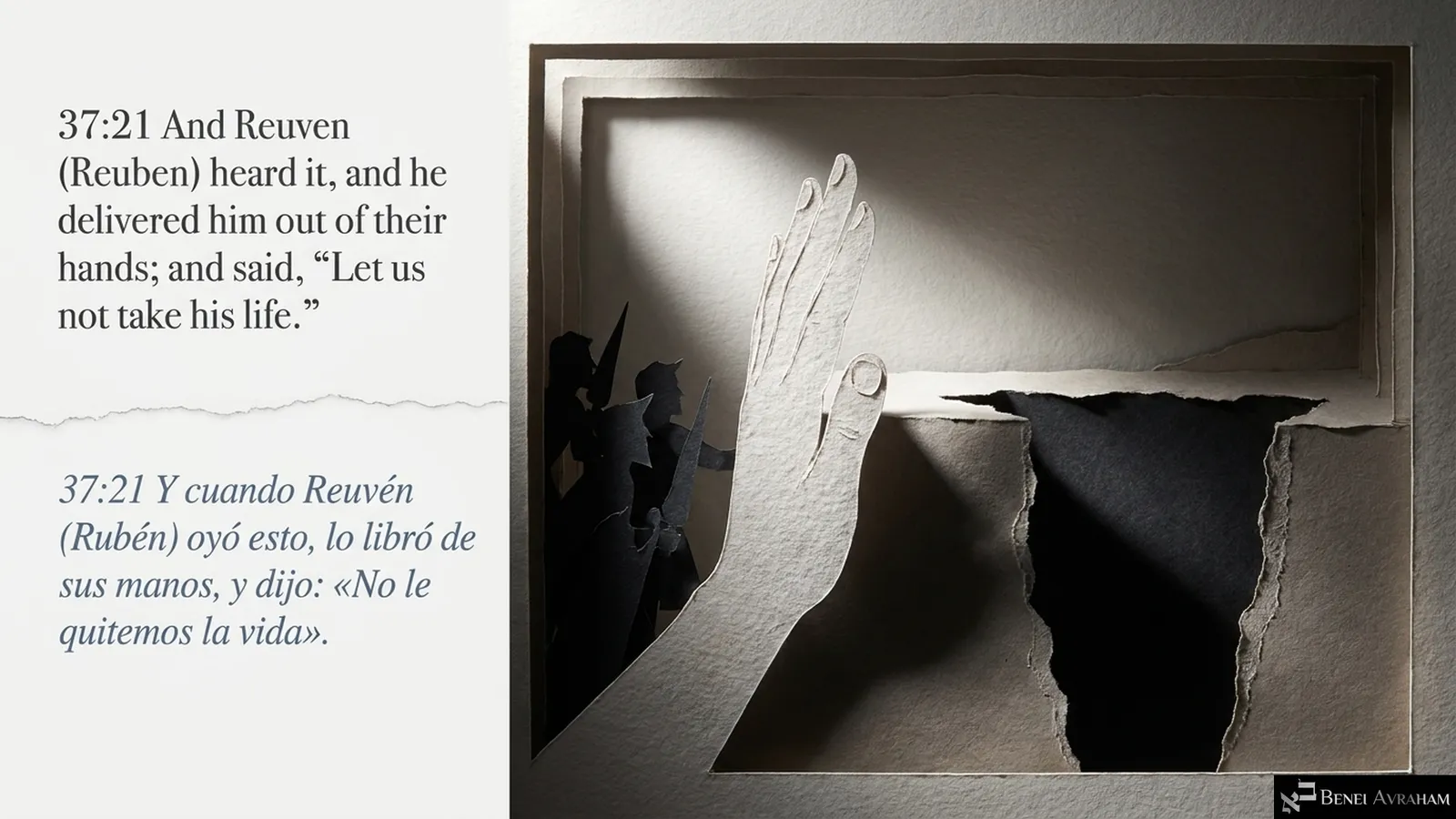
A pale paper hand is raised between the brothers and a dark pit: Reuven heard it and delivered him out of their hands, saying, “Let us not take his life” (Genesis 37:21).
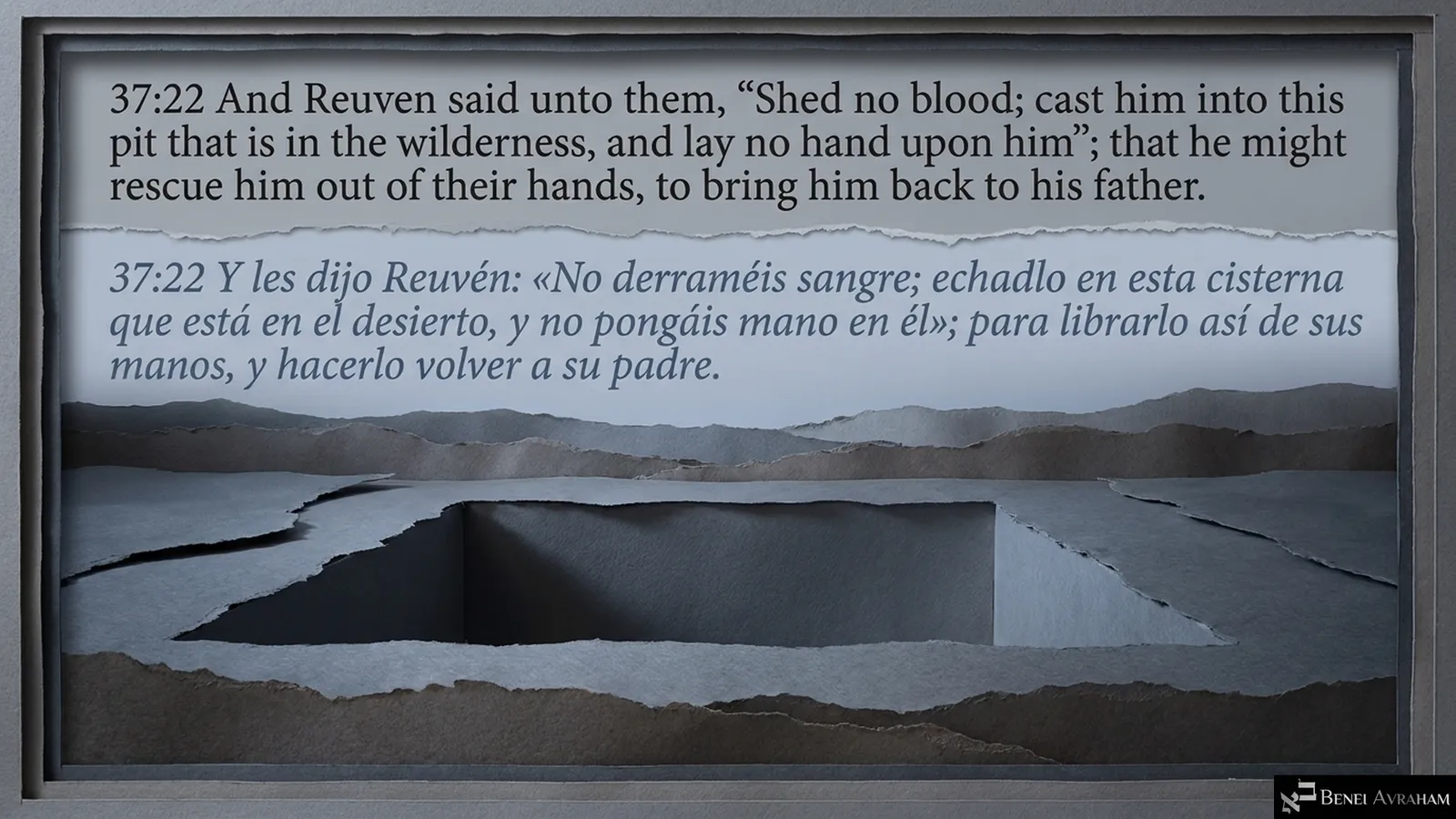
An empty square pit cut into grey paper hills: “Shed no blood; cast him into this pit that is in the wilderness,” that Reuven might bring him back to his father (Genesis 37:22).
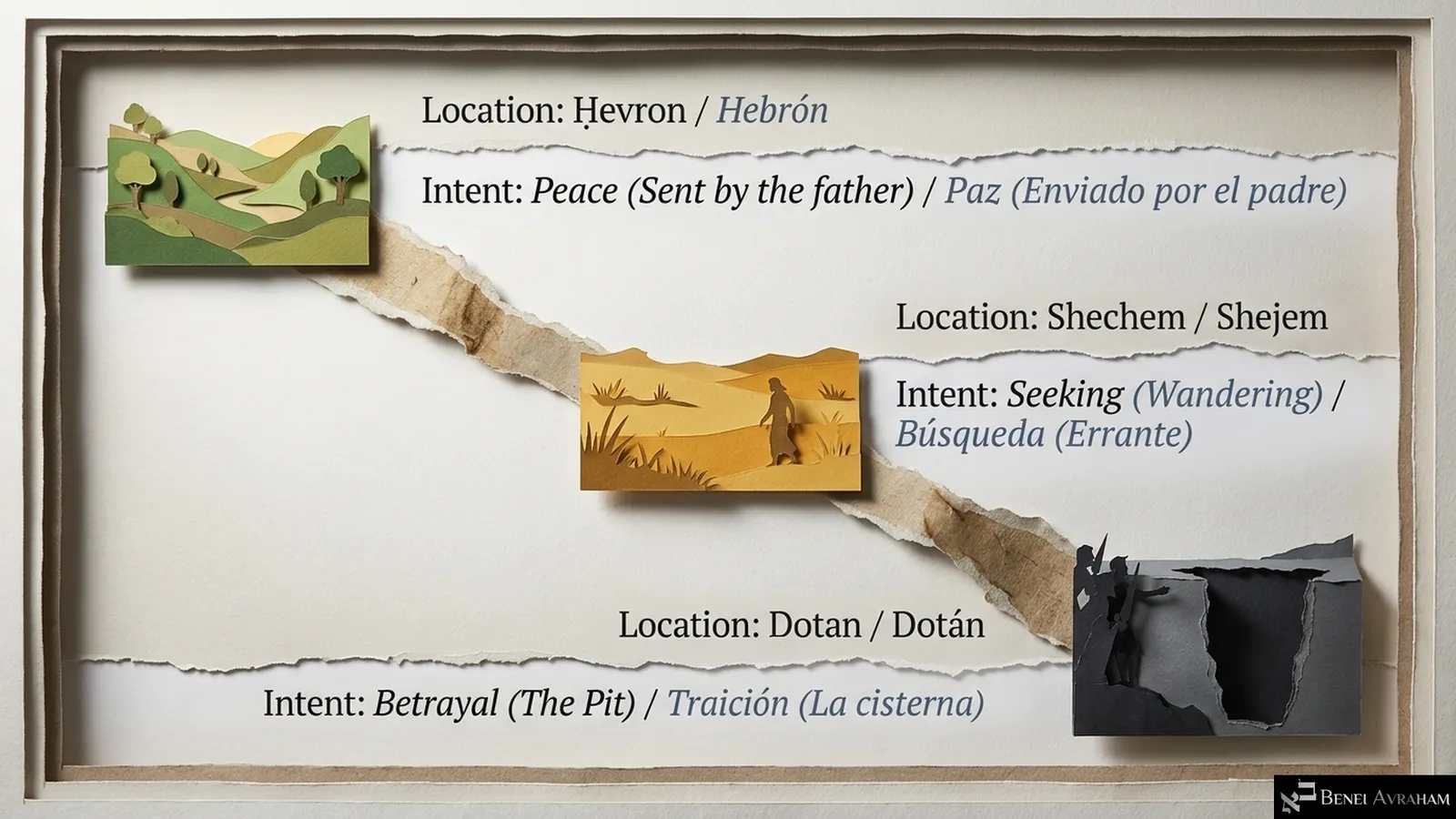
Yosef’s journey in three paper scenes along a torn path: Ḥevron, sent in peace by his father; Shechem, seeking and wandering; Dotan, betrayal and the pit.
Shlishi · Genesis 37:23–36

Third Portion
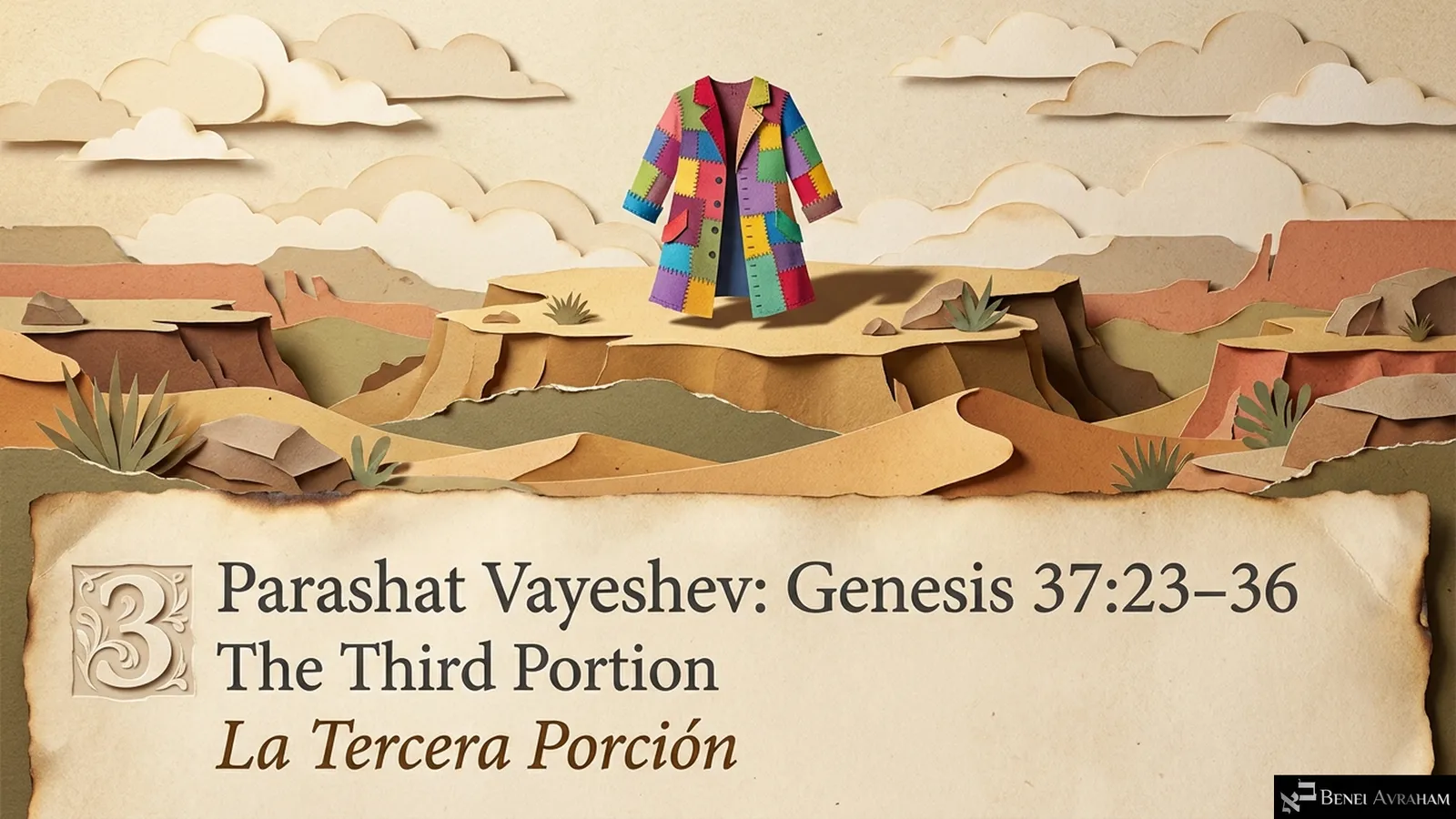
Title card for the third portion: a patchwork coat stands on a desert mesa, “Parashat Vayeshev: Genesis 37:23–36, The Third Portion”.
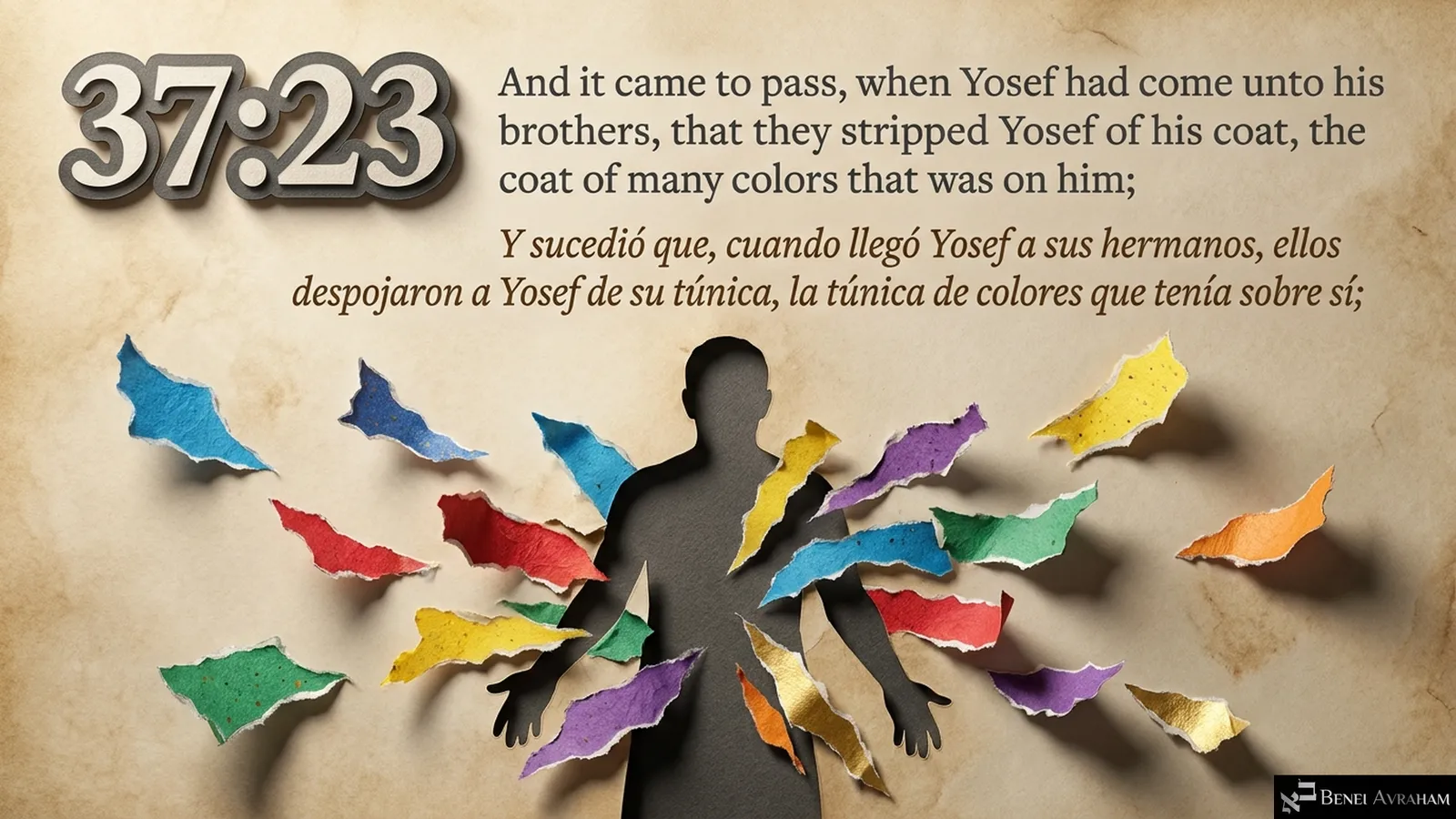
A dark paper silhouette as bright scraps of the coat fly away: they stripped Yosef of his coat, the coat of many colours that was on him (Genesis 37:23).
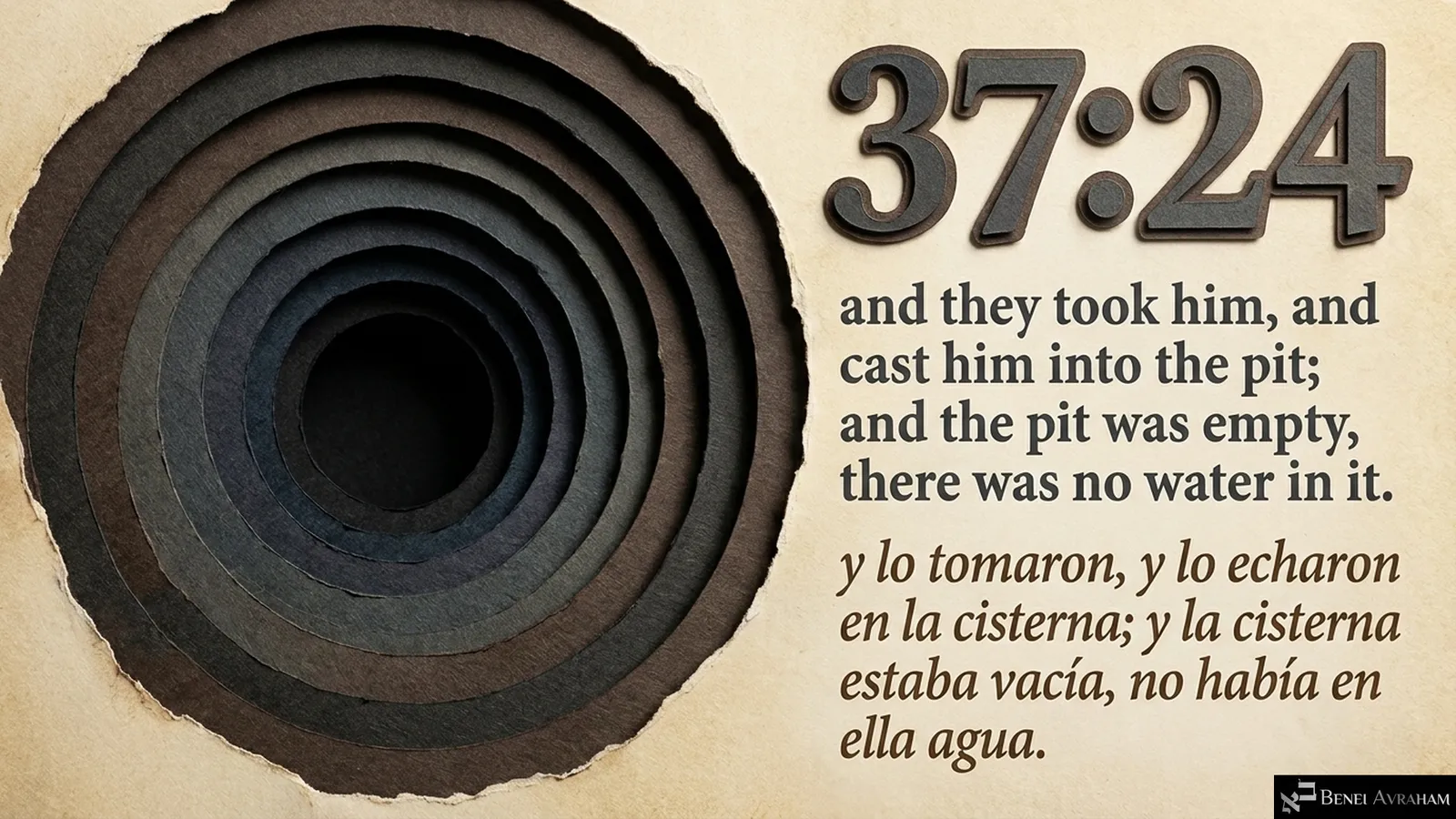
Rings of dark paper spiral down into an empty pit: they took him and cast him into the pit; and the pit was empty, there was no water in it (Genesis 37:24).
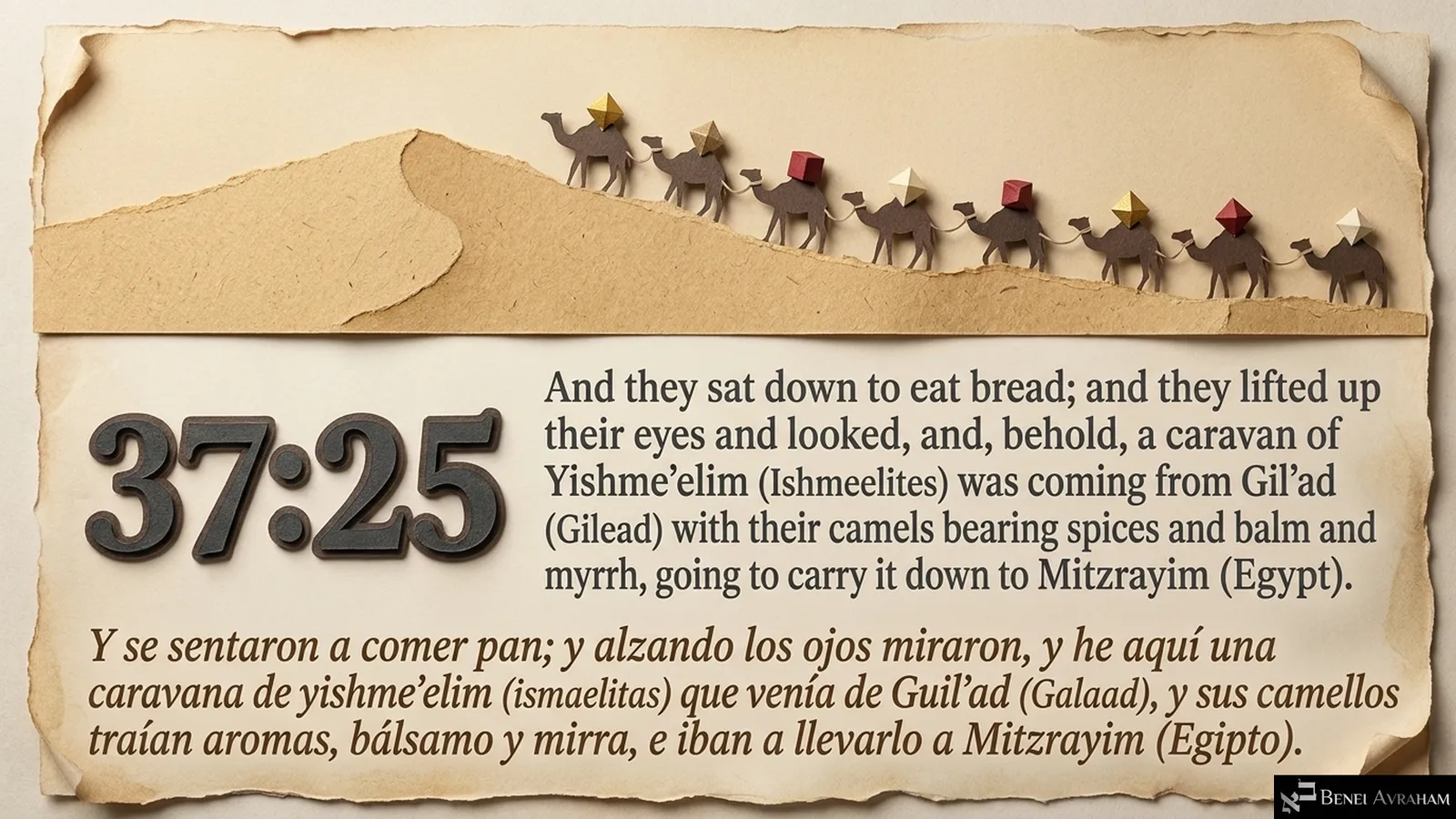
A caravan of paper camels laden with spices crosses a sand dune: a caravan of Yishme’elim coming from Gil’ad, bearing spices and balm and myrrh down to Mitzrayim (Genesis 37:25).
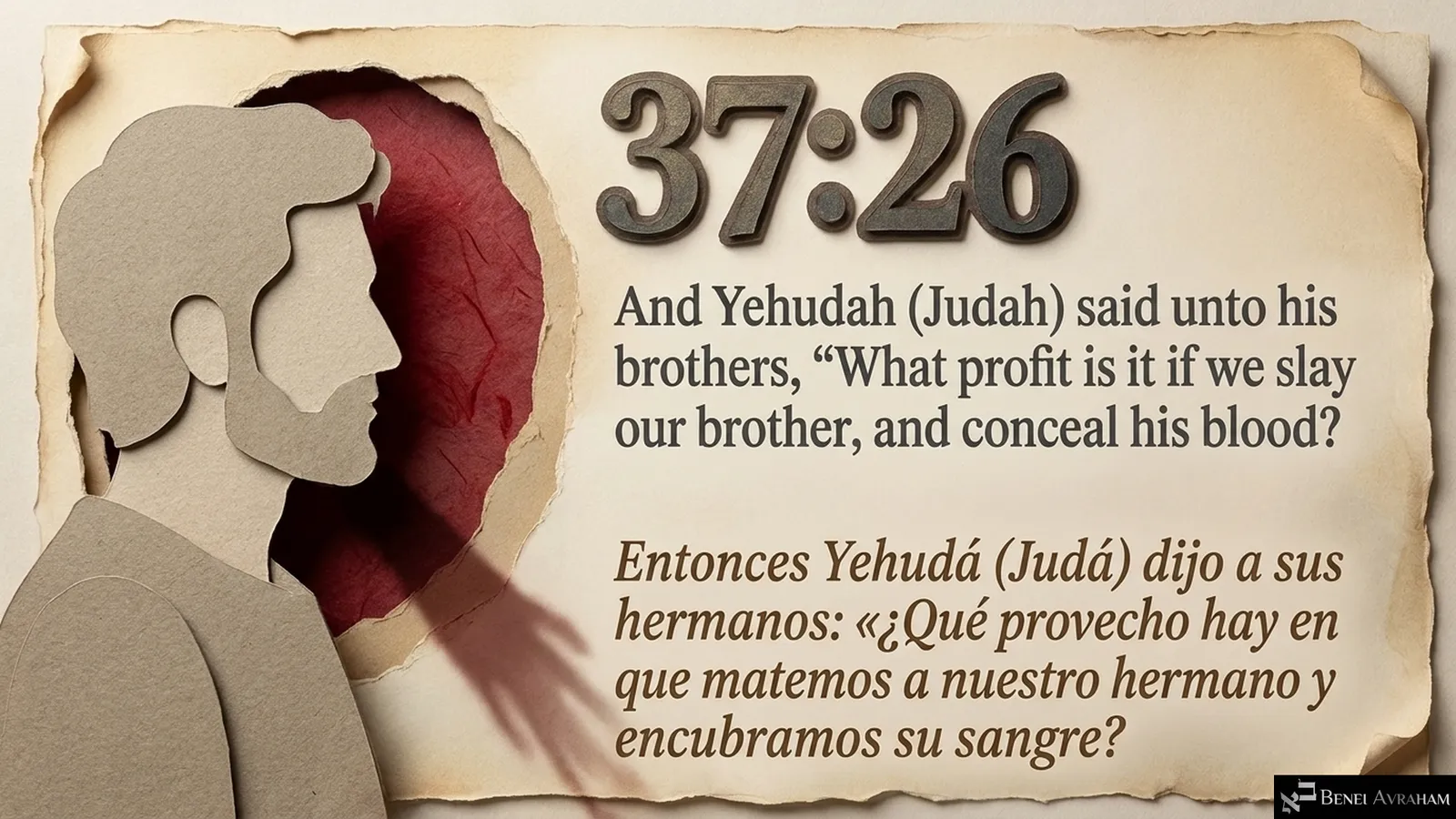
Yehudah’s paper profile against a deep red stain: “What profit is it if we slay our brother, and conceal his blood?” (Genesis 37:26).
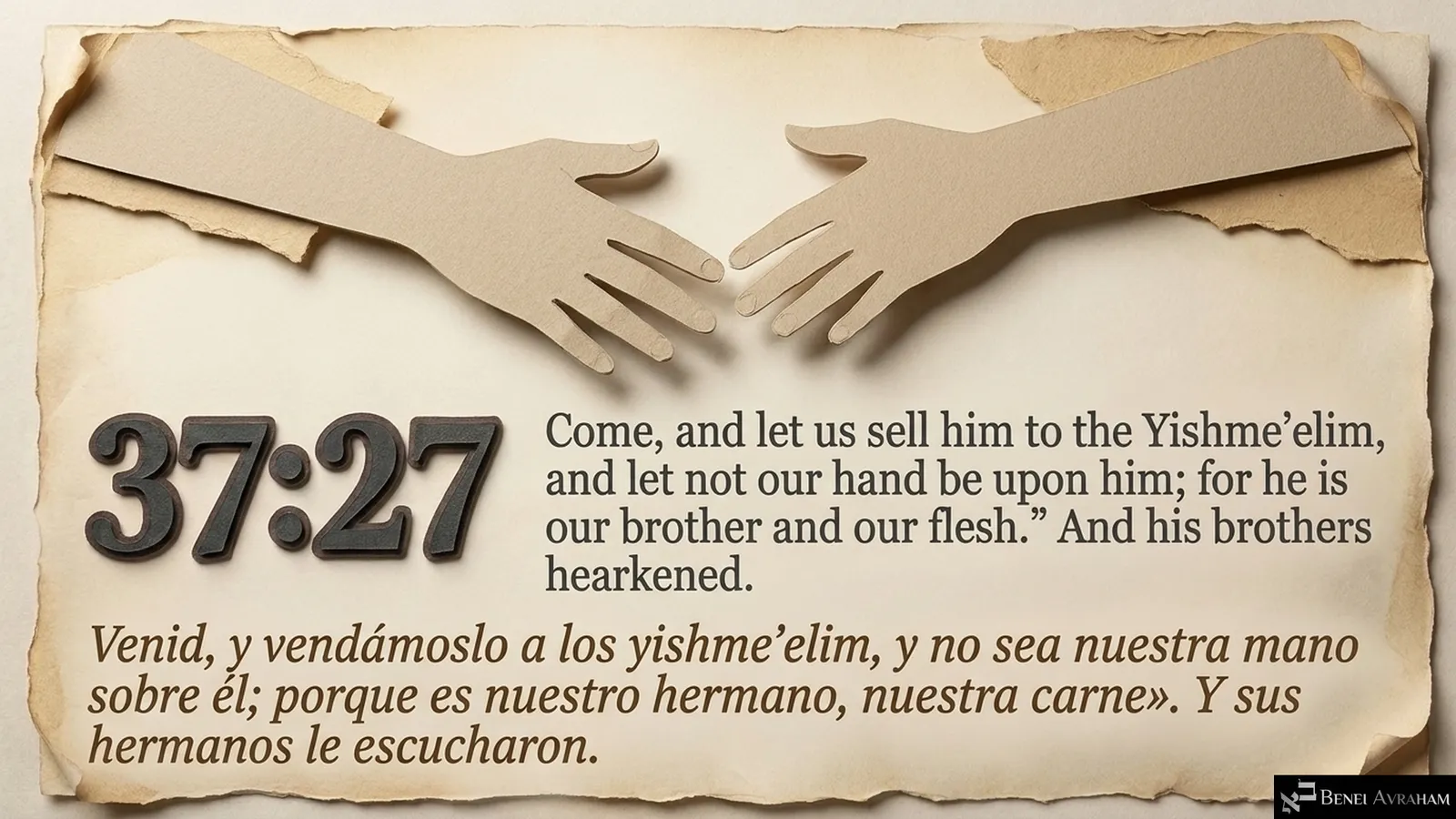
Two paper hands reach toward each other: “Let us sell him to the Yishme’elim, and let not our hand be upon him; for he is our brother and our flesh” (Genesis 37:27).
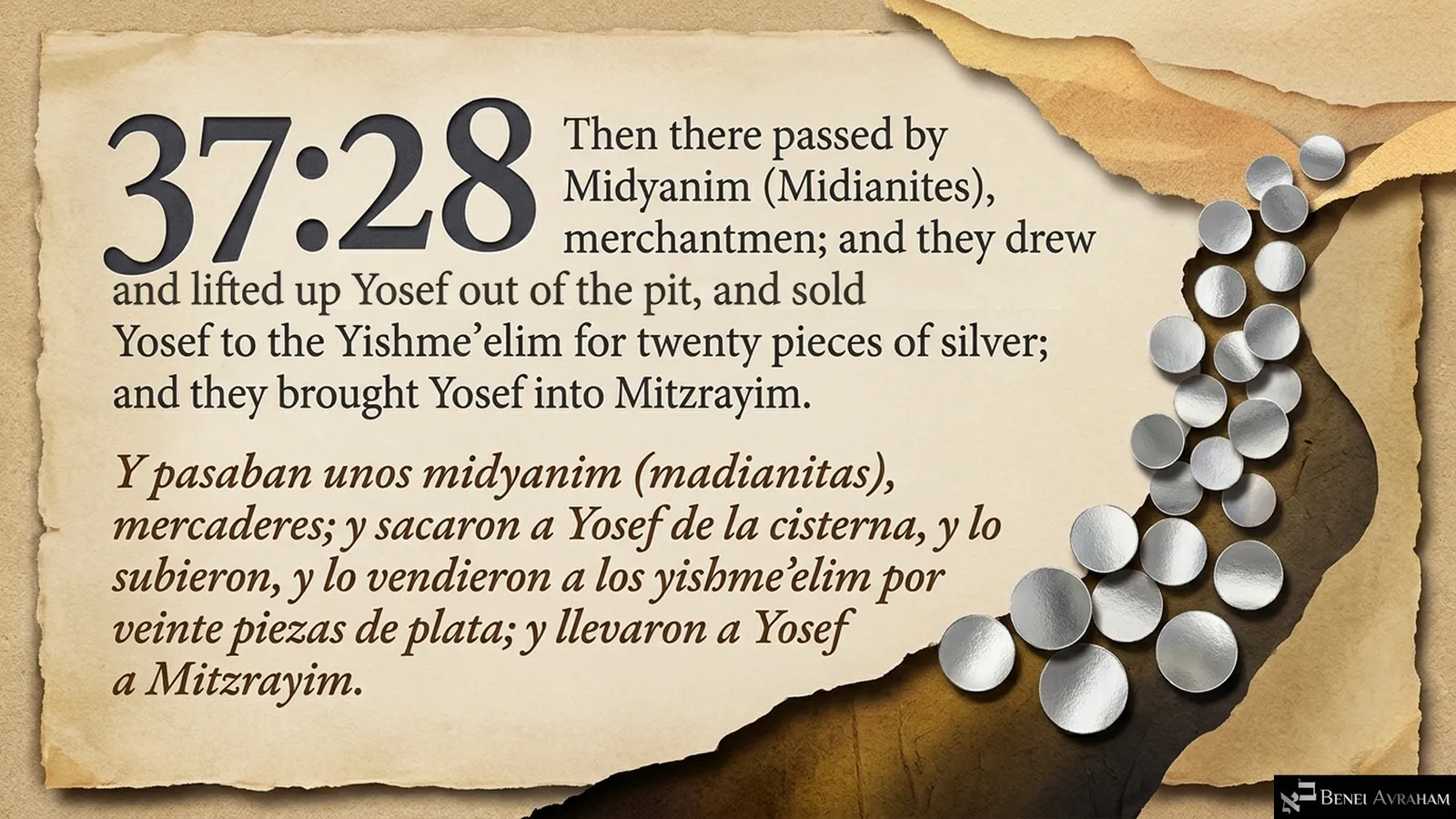
A stream of silver coins pours across torn paper: they drew Yosef up out of the pit and sold him to the Yishme’elim for twenty pieces of silver (Genesis 37:28).
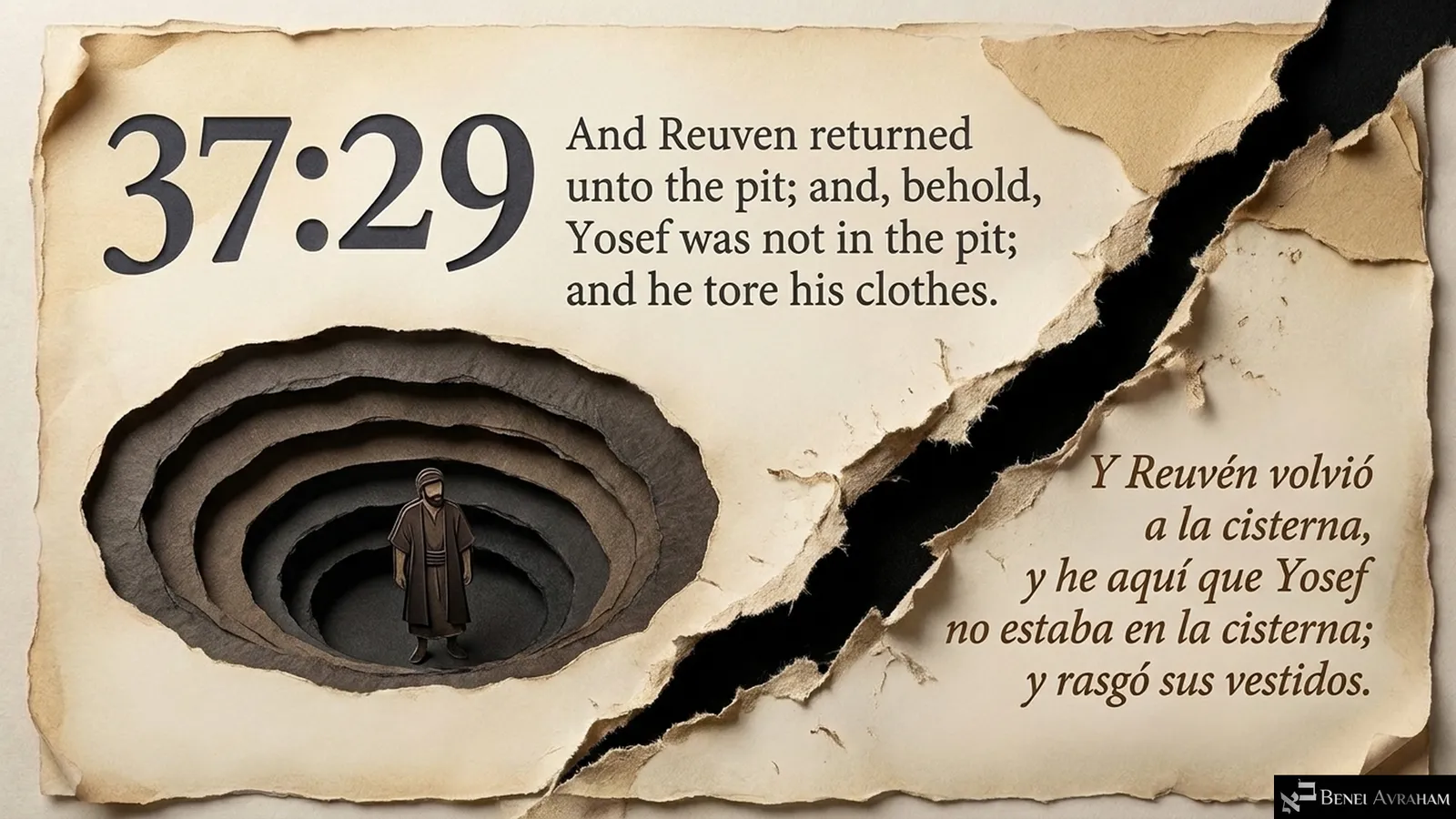
A tear splits the page beside a deep paper pit with a lone figure at its bottom: Reuven returned unto the pit, and behold, Yosef was not in the pit; and he tore his clothes (Genesis 37:29).
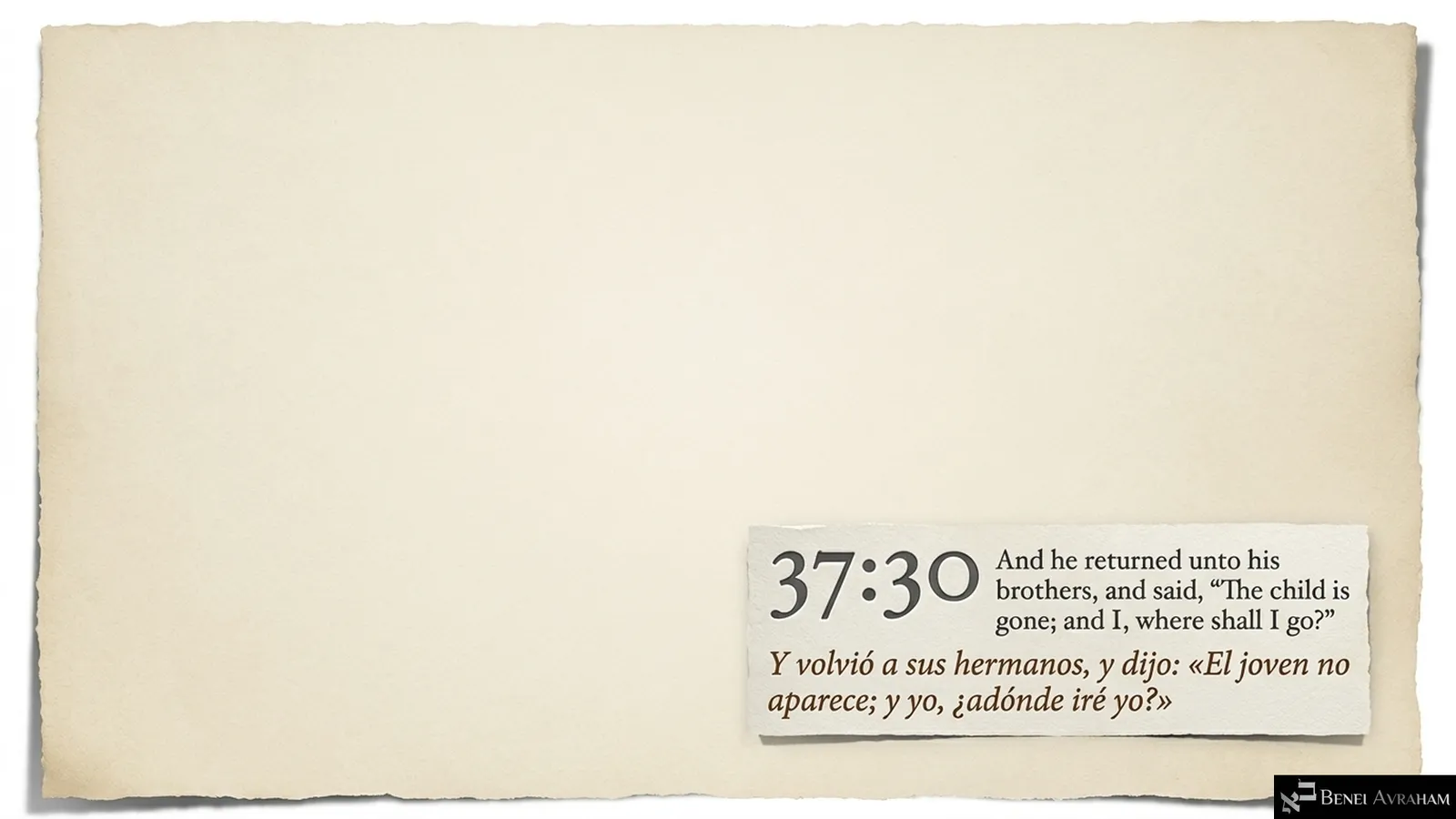
A small card on a blank sheet of paper: Reuven returned unto his brothers and said, “The child is gone; and I, where shall I go?” (Genesis 37:30).
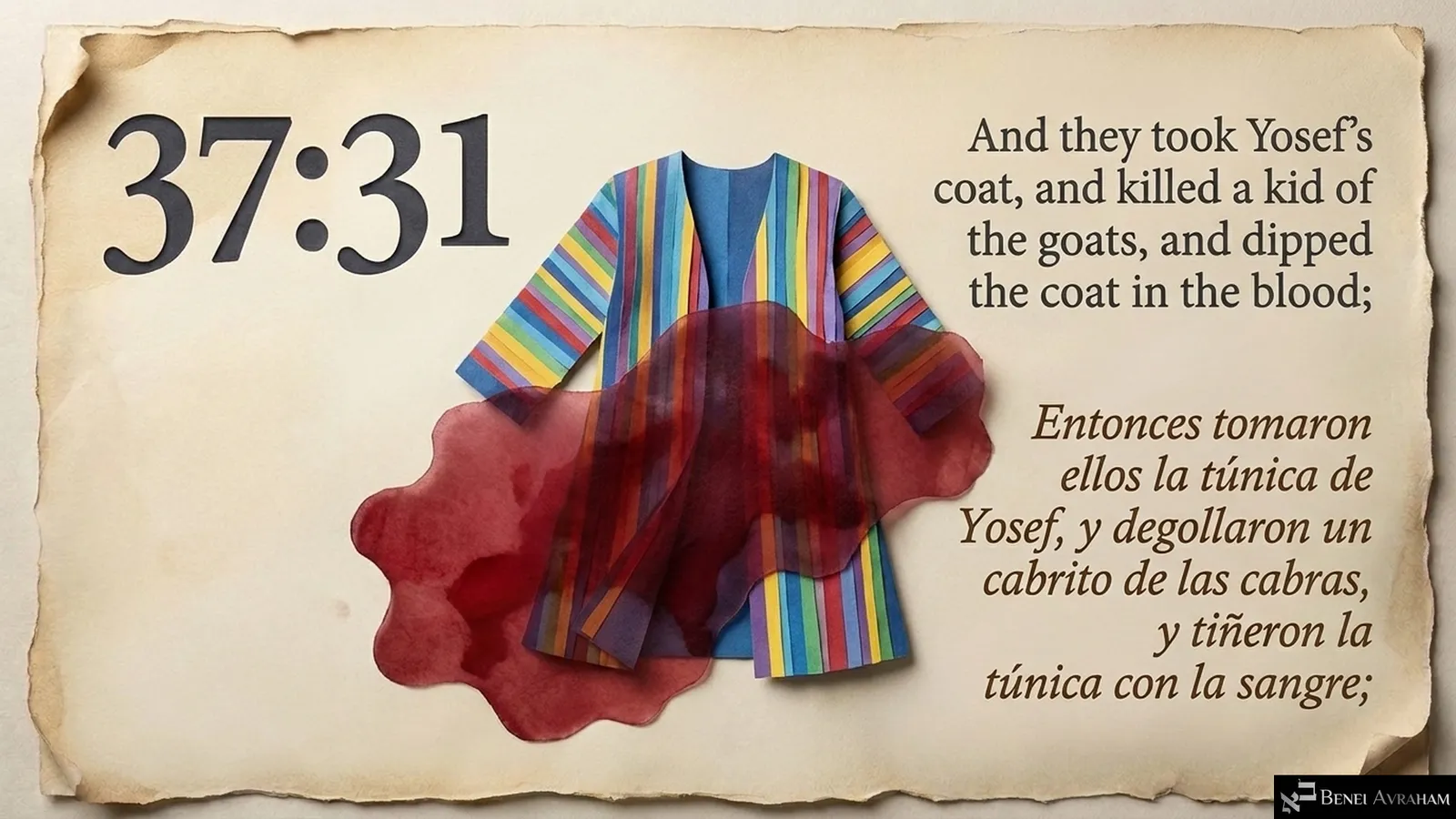
A striped paper coat soaked in a red stain: they took Yosef’s coat, and killed a kid of the goats, and dipped the coat in the blood (Genesis 37:31).
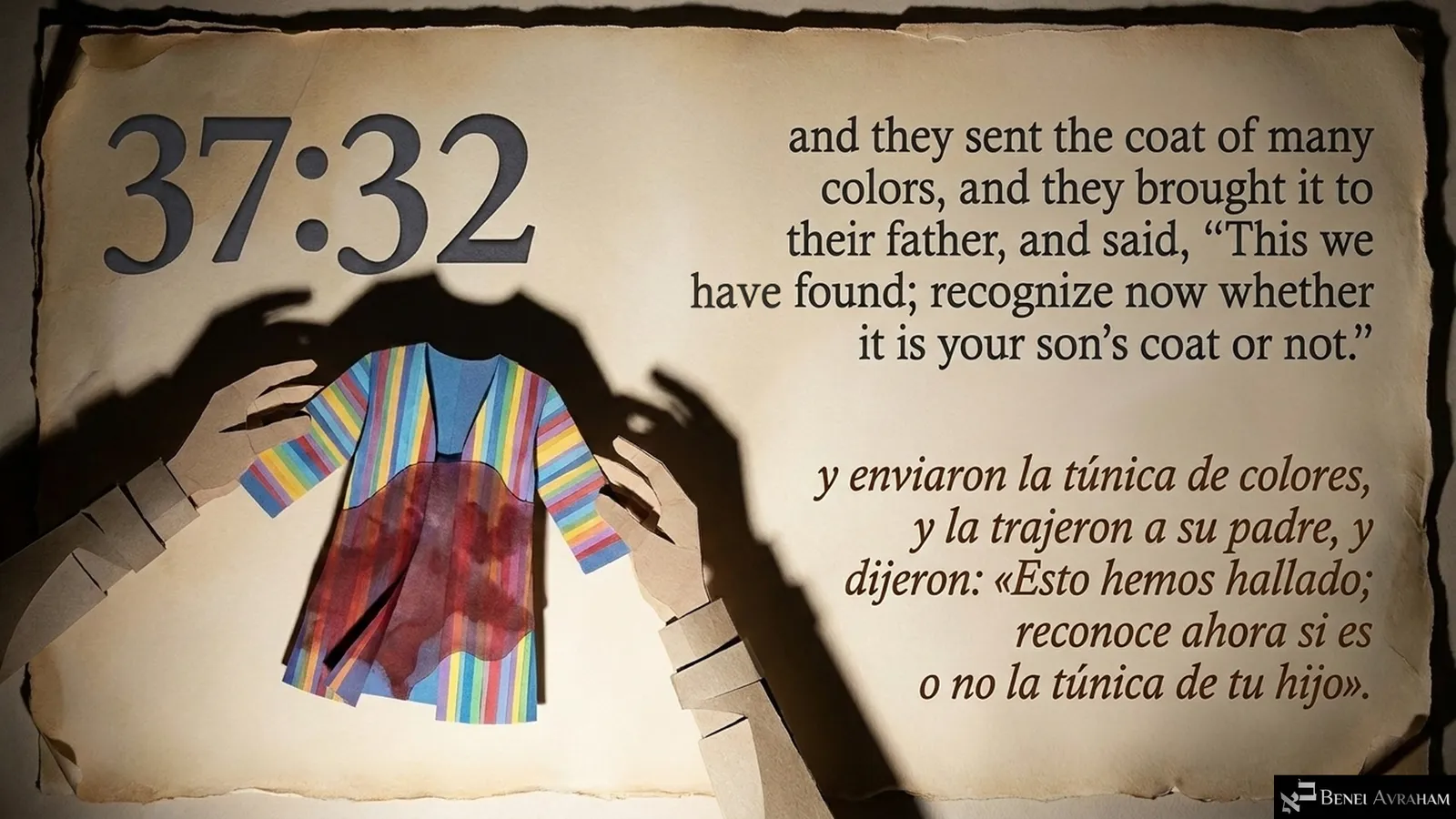
Paper hands reach for the bloodied coat as shadows fall across it: “This we found; recognize now whether it is your son’s coat or not” (Genesis 37:32).
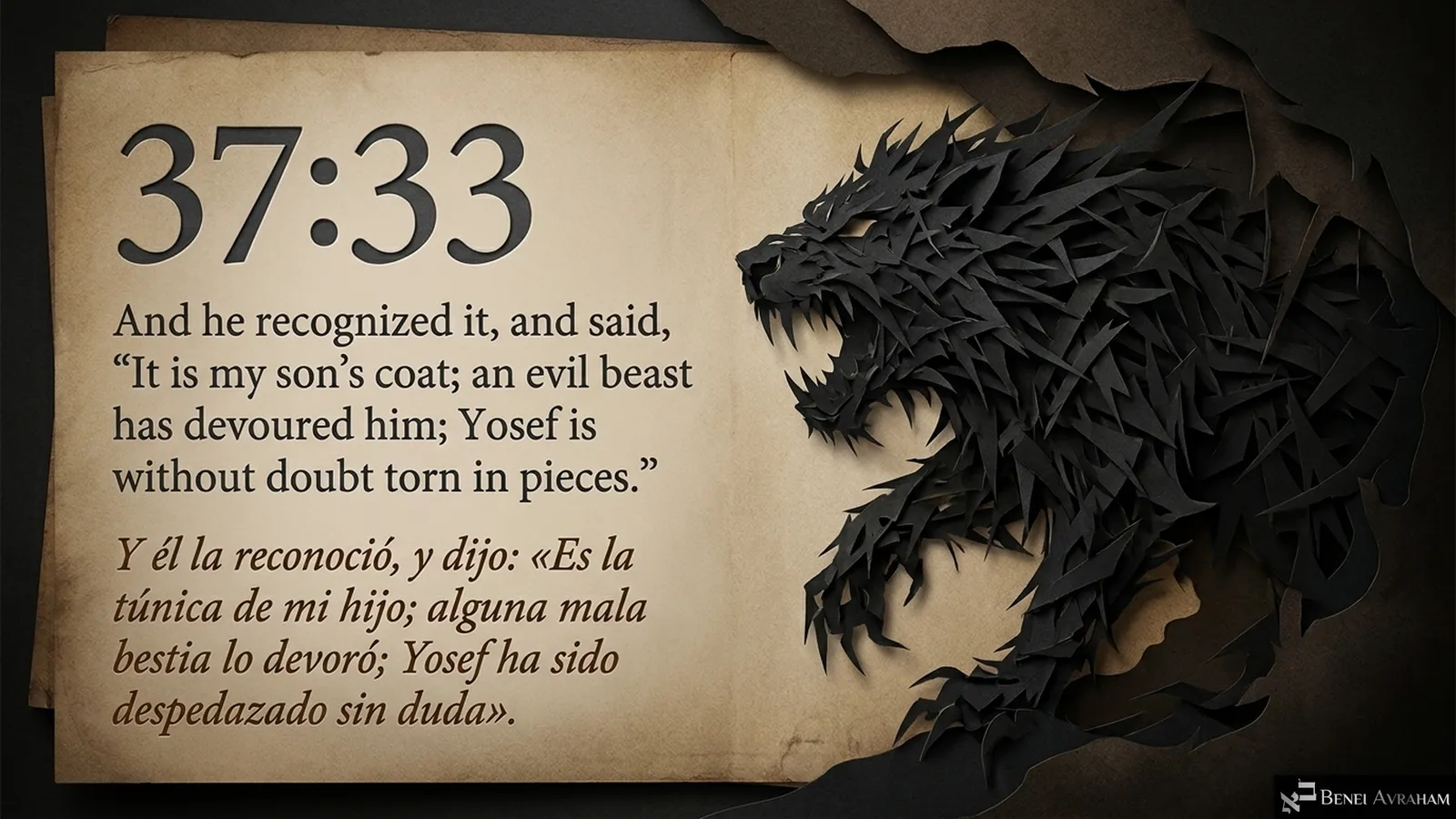
A shaggy black paper beast bursts from the page: “It is my son’s coat; an evil beast has devoured him; Yosef is without doubt torn in pieces” (Genesis 37:33).
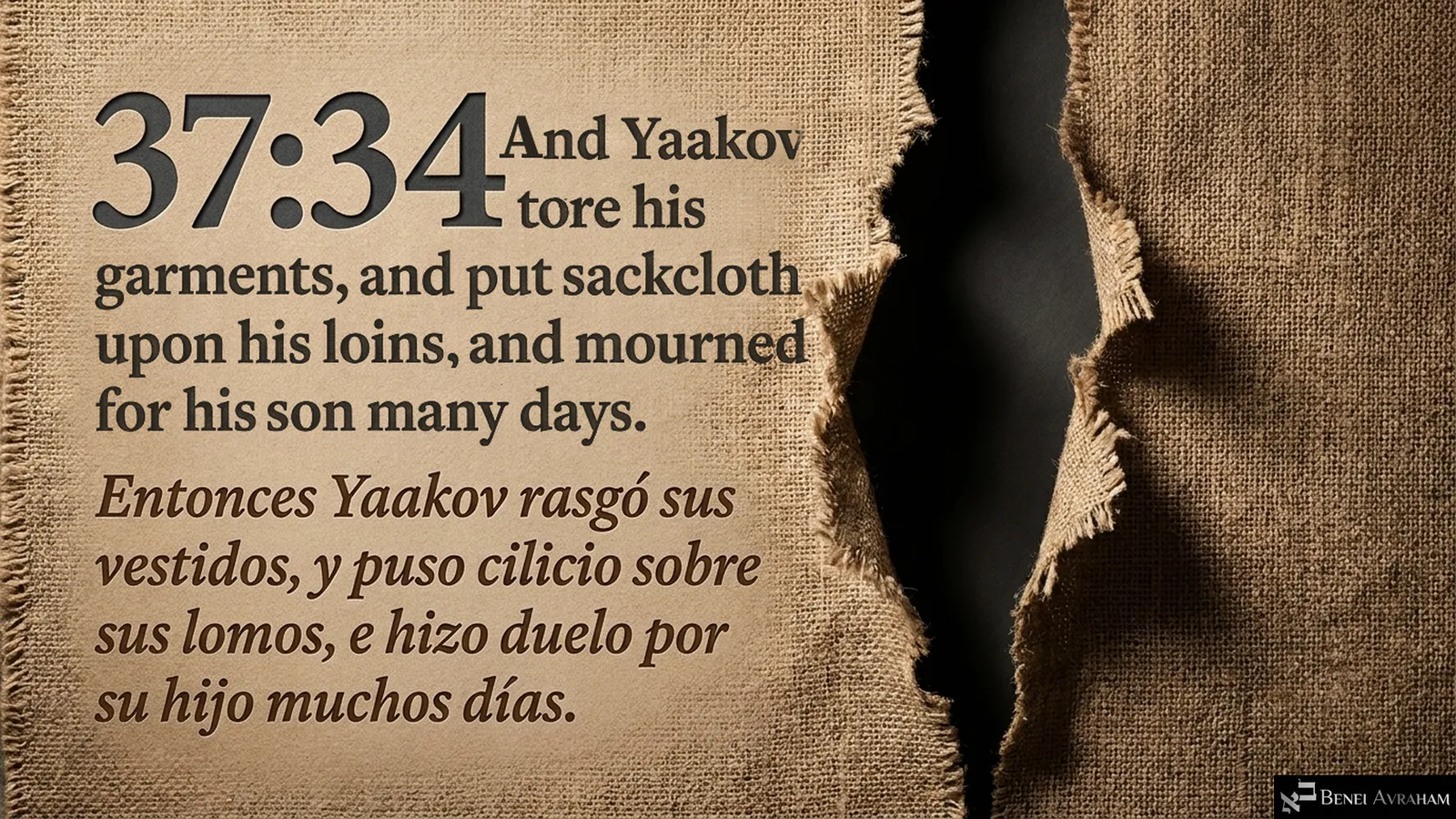
A rent in rough sackcloth: Yaakov tore his garments, put sackcloth upon his loins, and mourned for his son many days (Genesis 37:34).
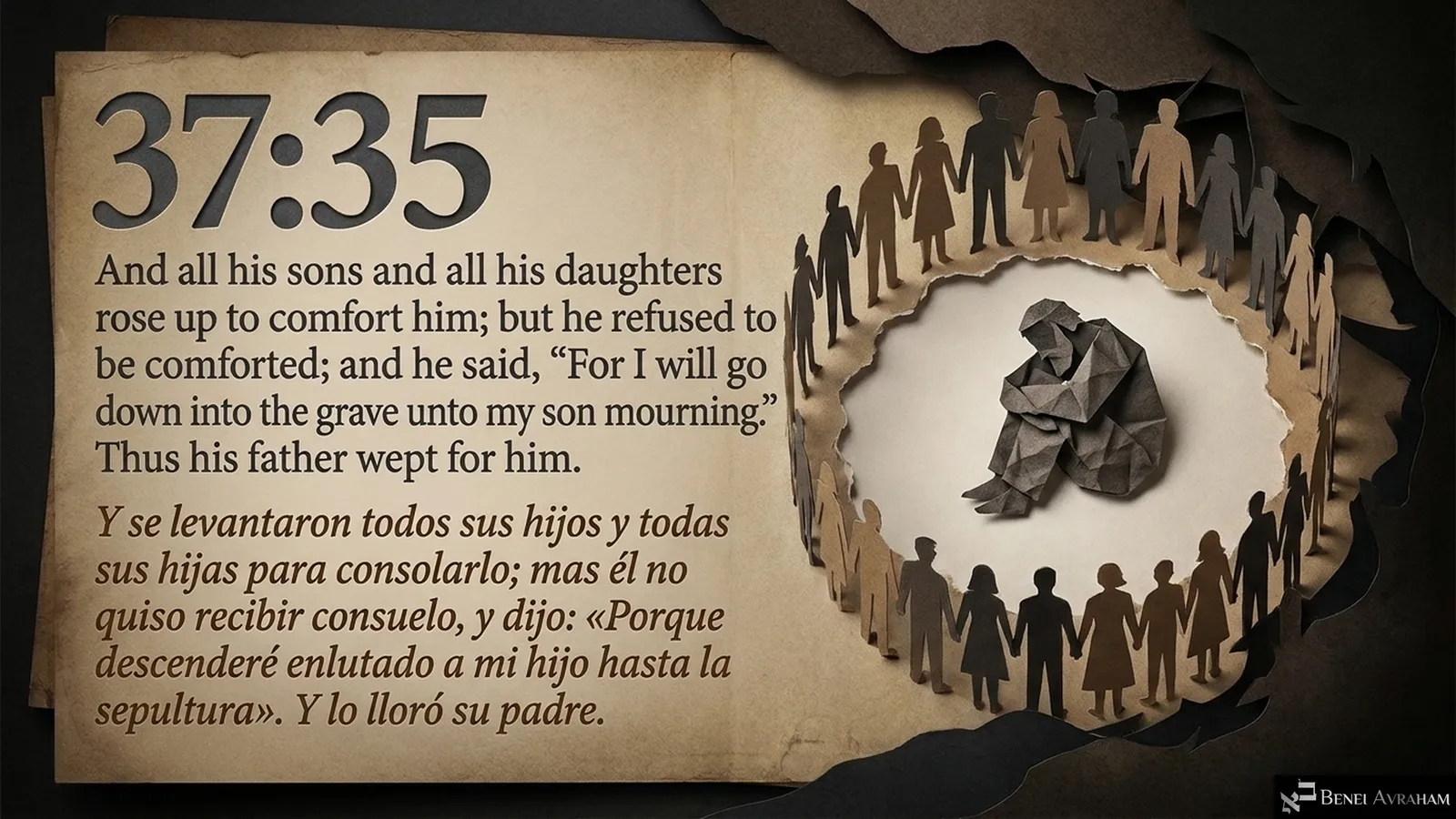
A ring of paper figures holding hands surrounds Yaakov, bowed in grief: he refused to be comforted, “For I will go down into the grave unto my son mourning” (Genesis 37:35).
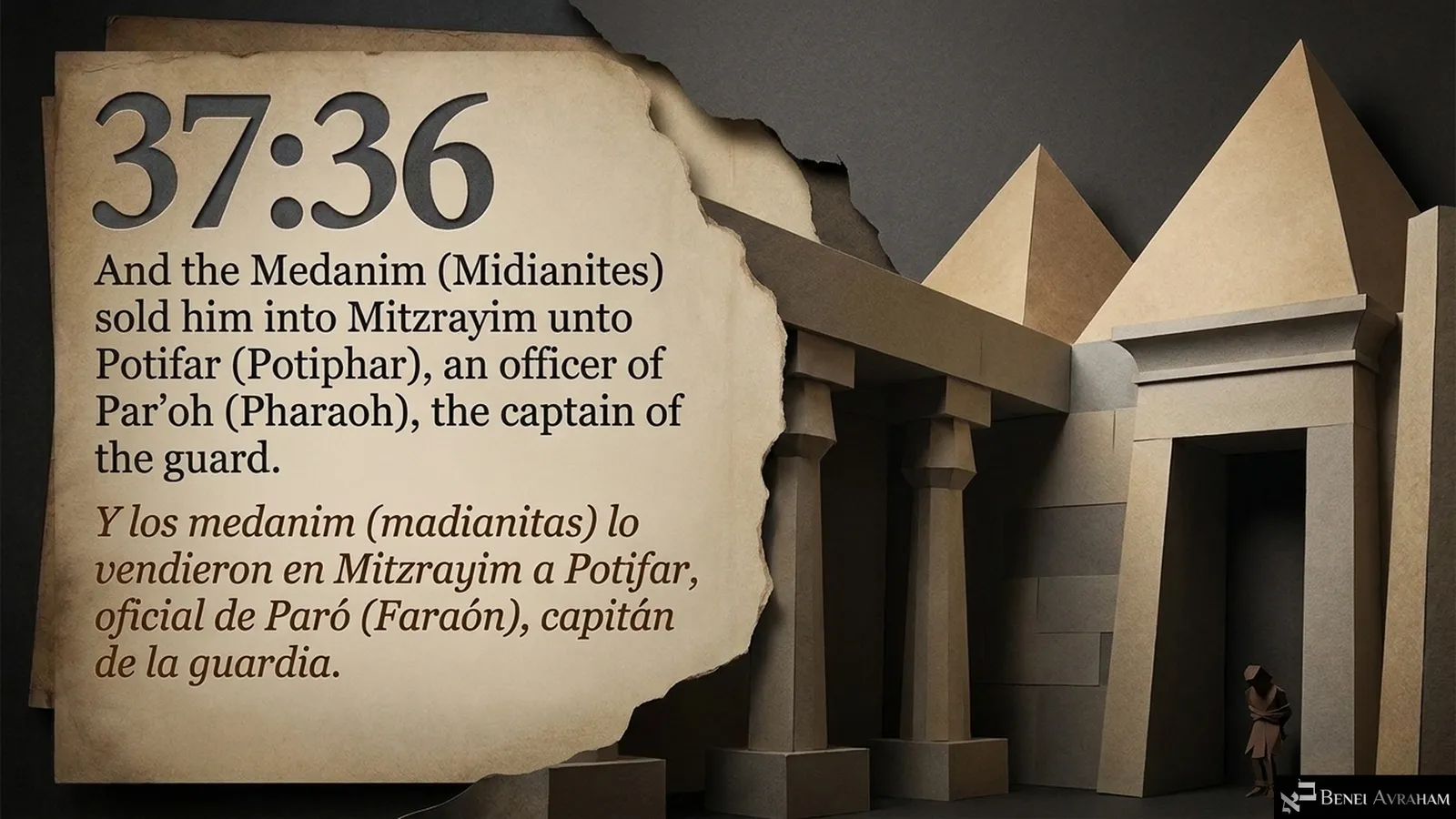
Paper pyramids and a temple gate of Mitzrayim, a small figure at the door: the Medanim sold him into Mitzrayim unto Potifar, an officer of Par’oh, the captain of the guard (Genesis 37:36).
Revi’i · Genesis 38:1–30

Fourth Portion
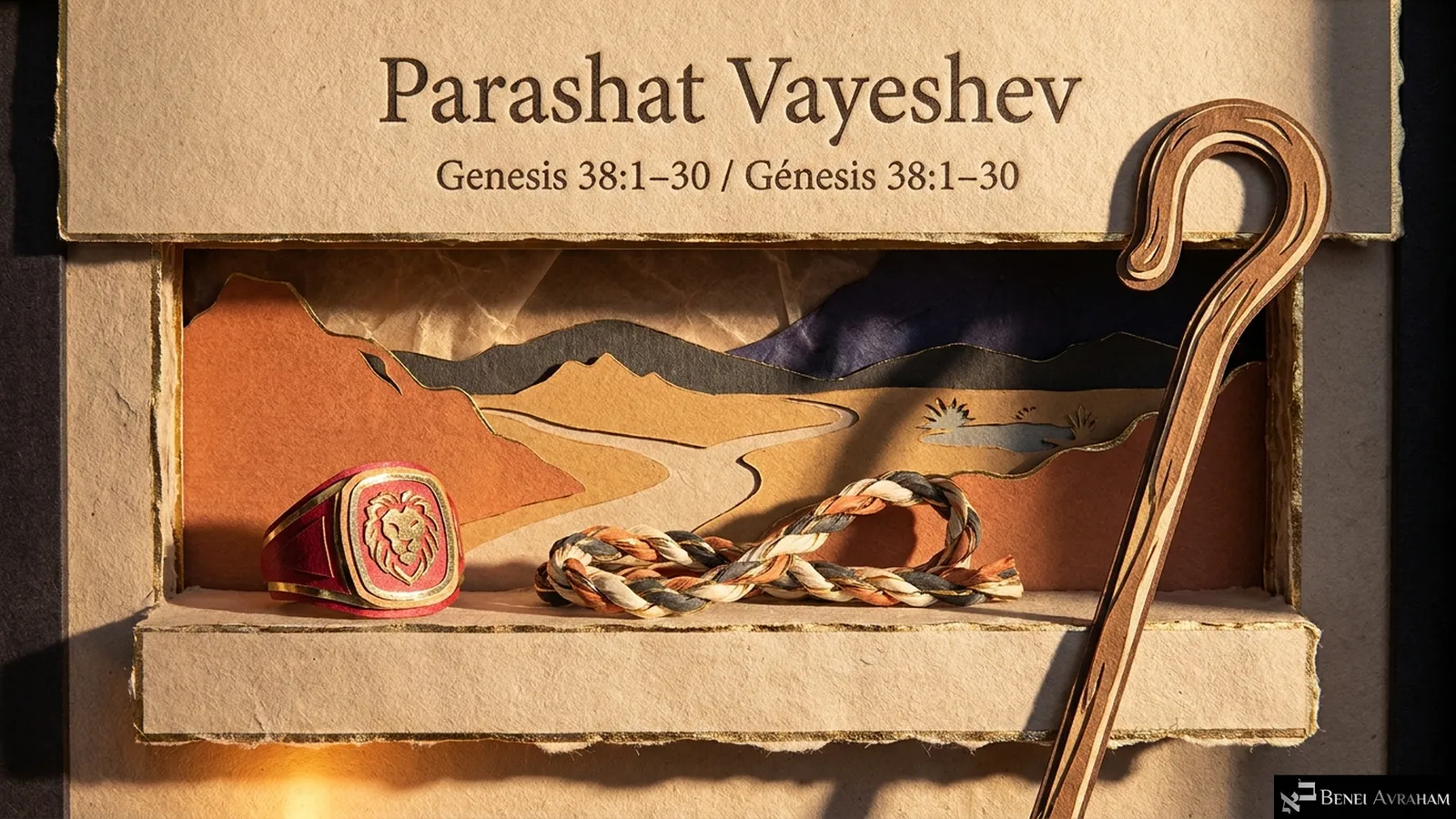
Title card for the fourth portion: a lion signet ring, a braided cord and a shepherd’s staff on a paper shelf, “Parashat Vayeshev, Genesis 38:1–30”.
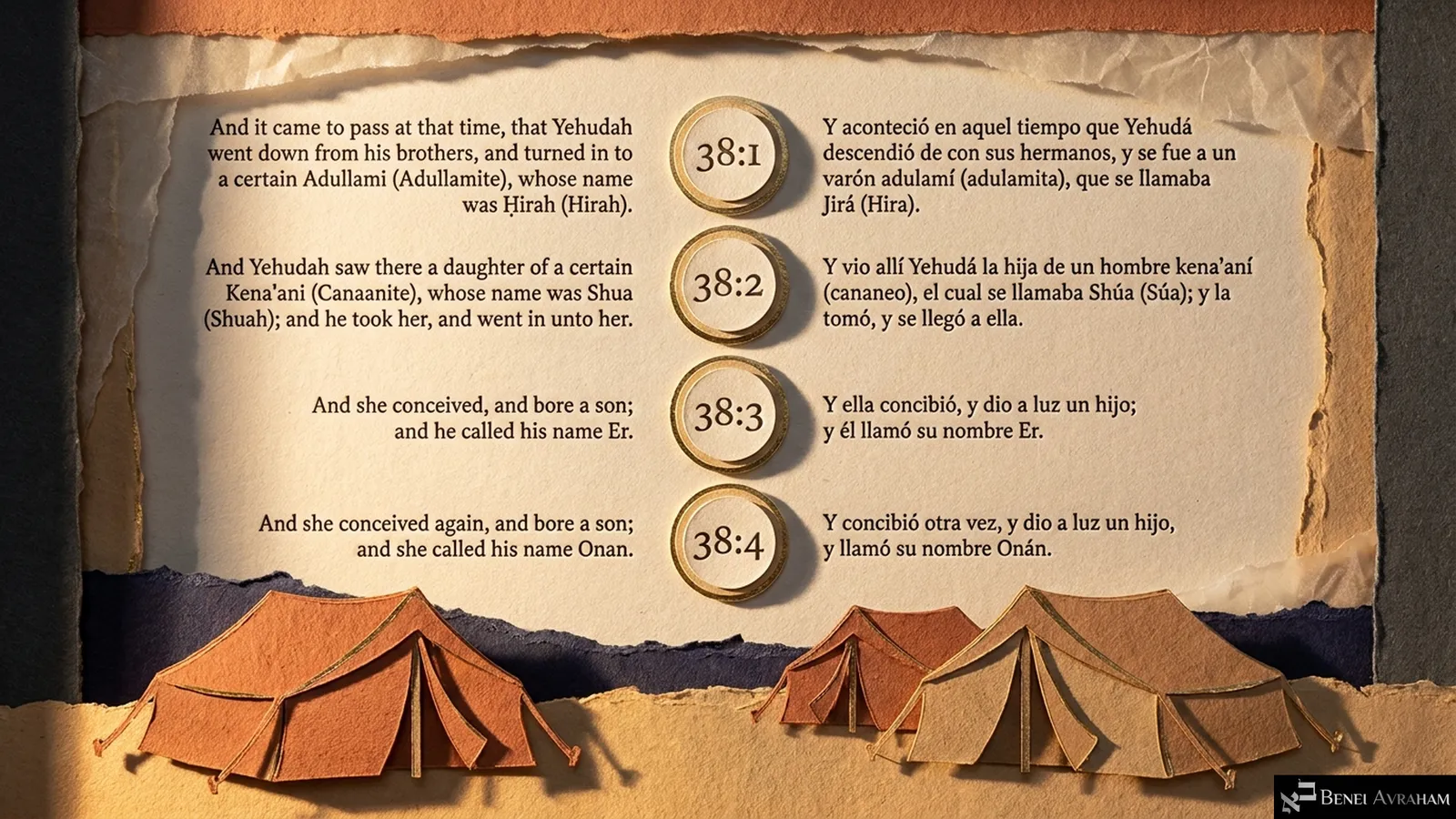
Numbered medallions between the English and Spanish, with paper tents below: Yehudah goes down from his brothers, takes the daughter of Shua, and she bears Er and Onan (Genesis 38:1–4).
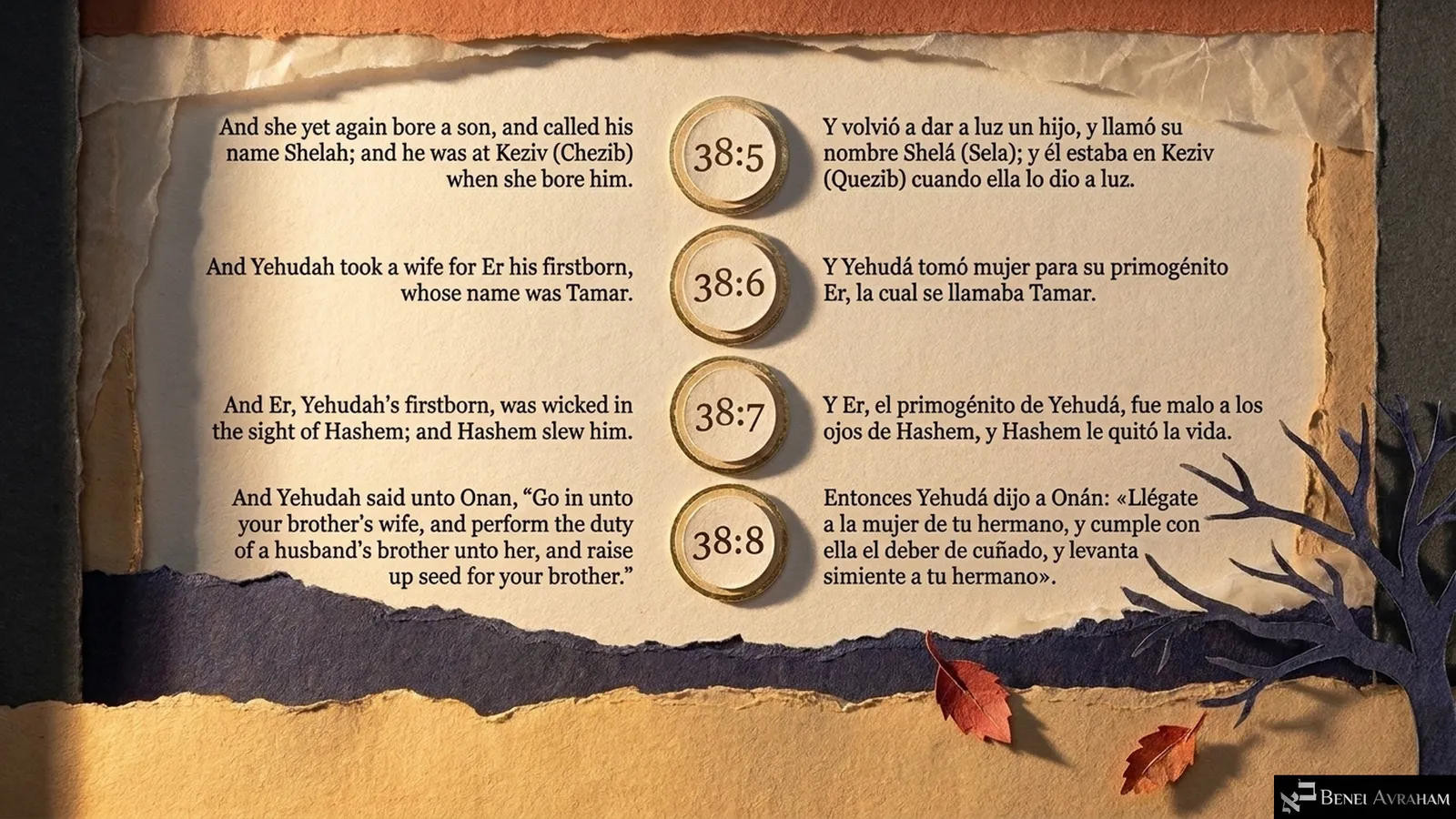
Medallions numbered 38:5–8 on torn paper, a bare tree and falling leaves below: Shelah is born at Keziv, Er takes Tamar, Er dies, and Yehudah tells Onan to raise up seed for his brother (Genesis 38:5–8).
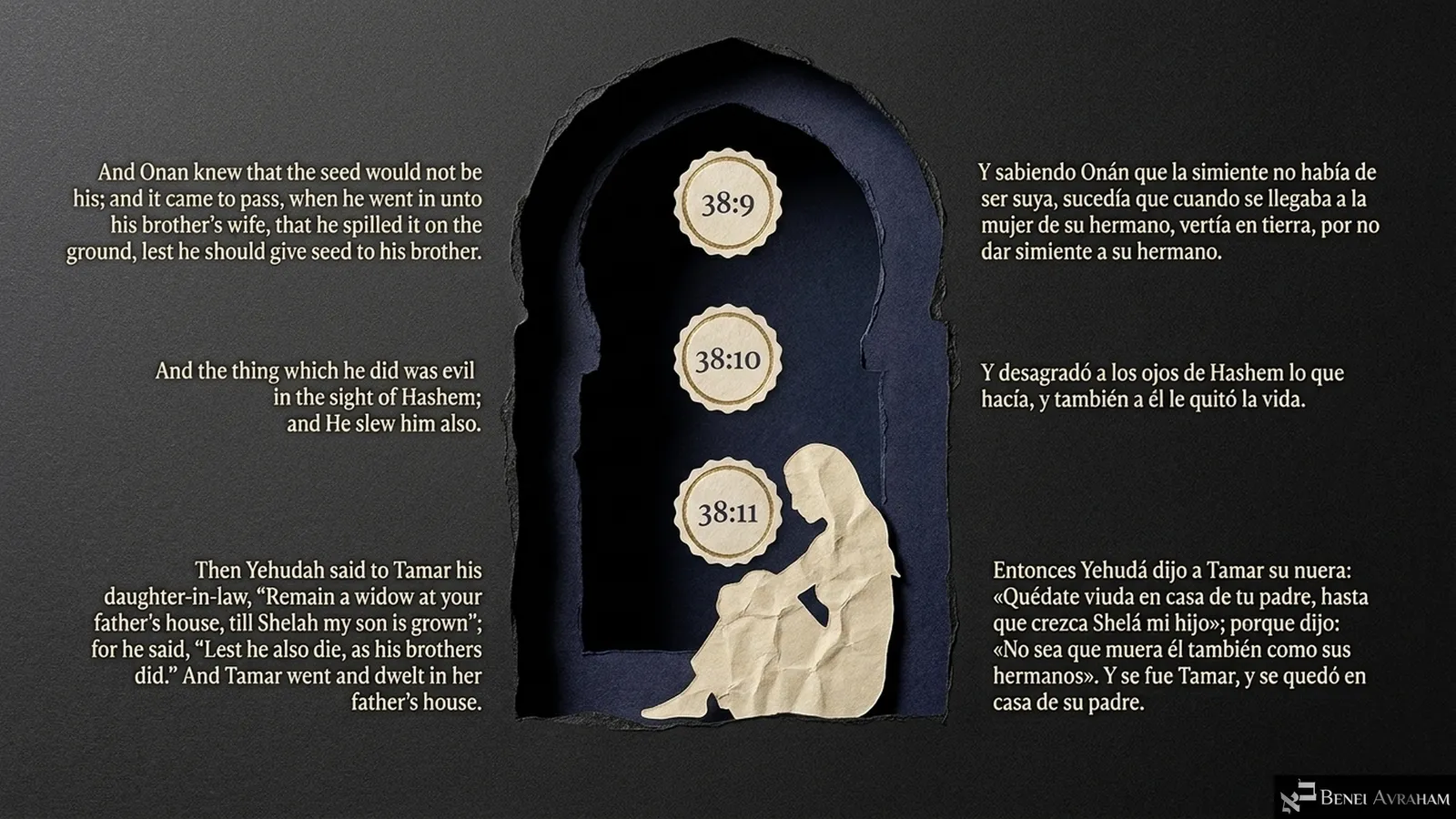
Tamar sits alone in a dark arched doorway: Onan dies too, and Yehudah tells her, “Remain a widow at your father’s house, till Shelah my son is grown” (Genesis 38:9–11).
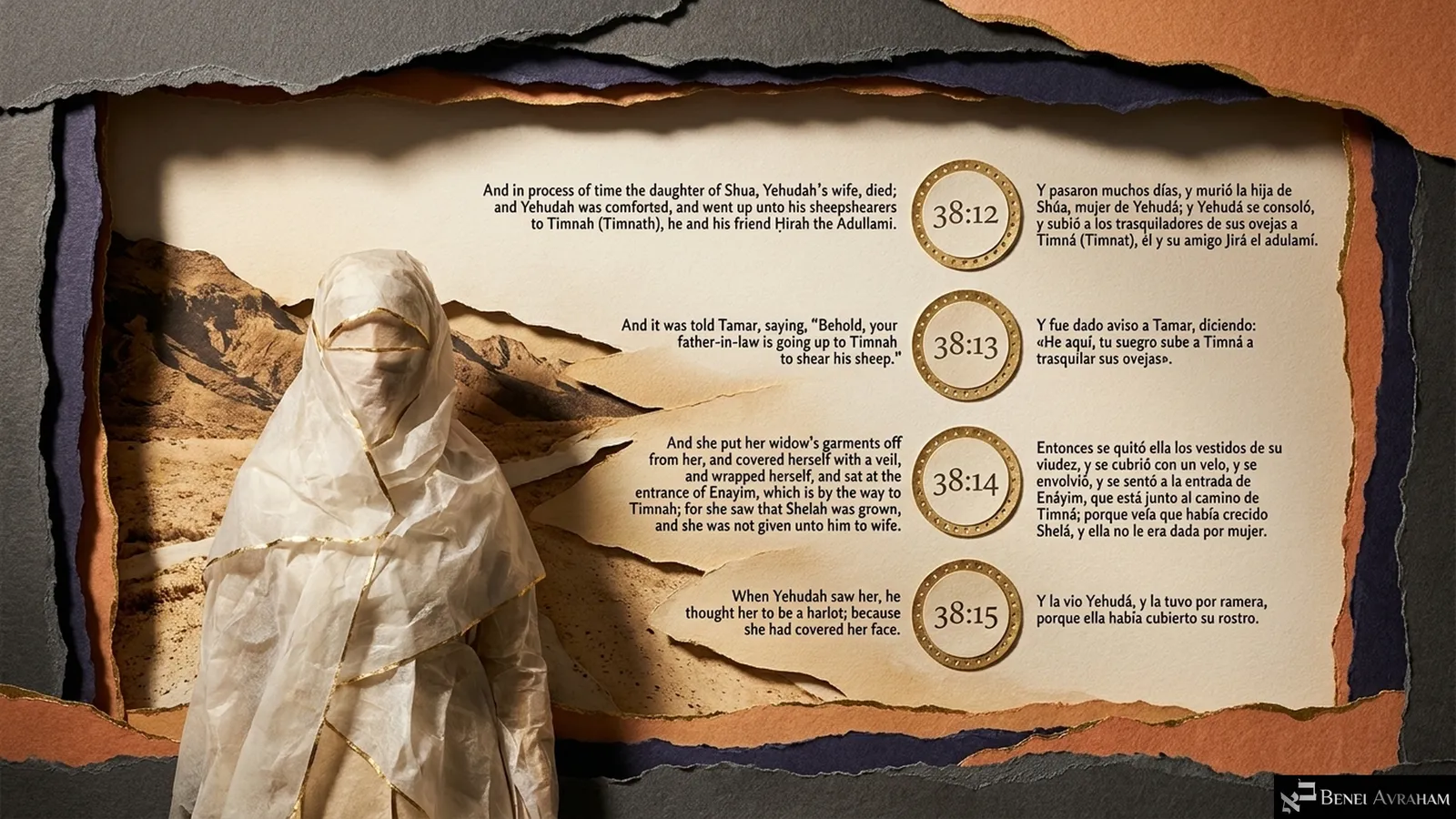
Tamar, veiled in white paper, sits by the road among the hills: she put off her widow’s garments, covered herself with a veil, and sat at the entrance of Enayim on the way to Timnah (Genesis 38:12–15).
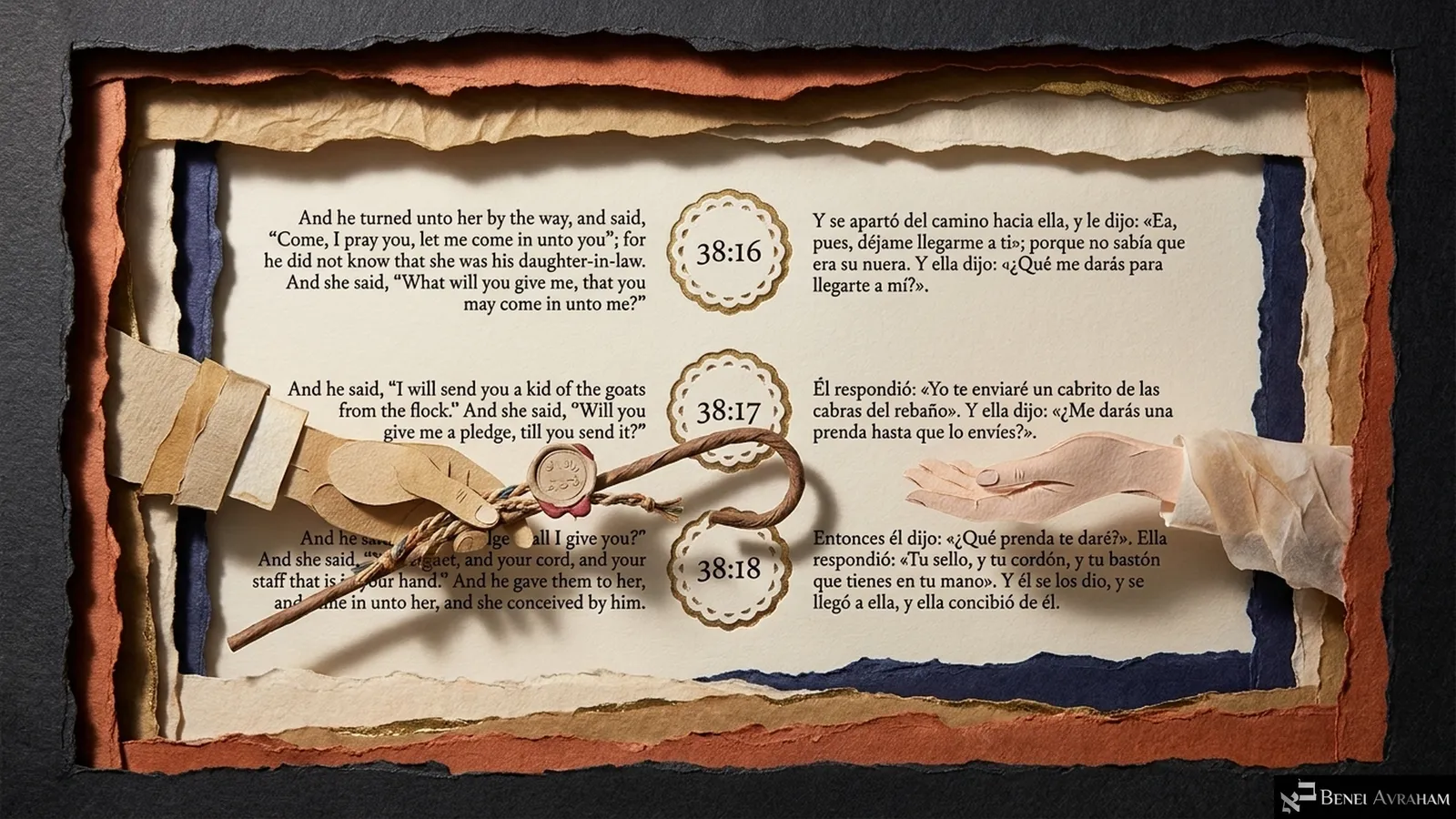
Yehudah’s paper hand holds out his seal, cord and staff toward Tamar’s open hand: “What pledge shall I give you?” “Your signet, and your cord, and your staff” (Genesis 38:16–18).
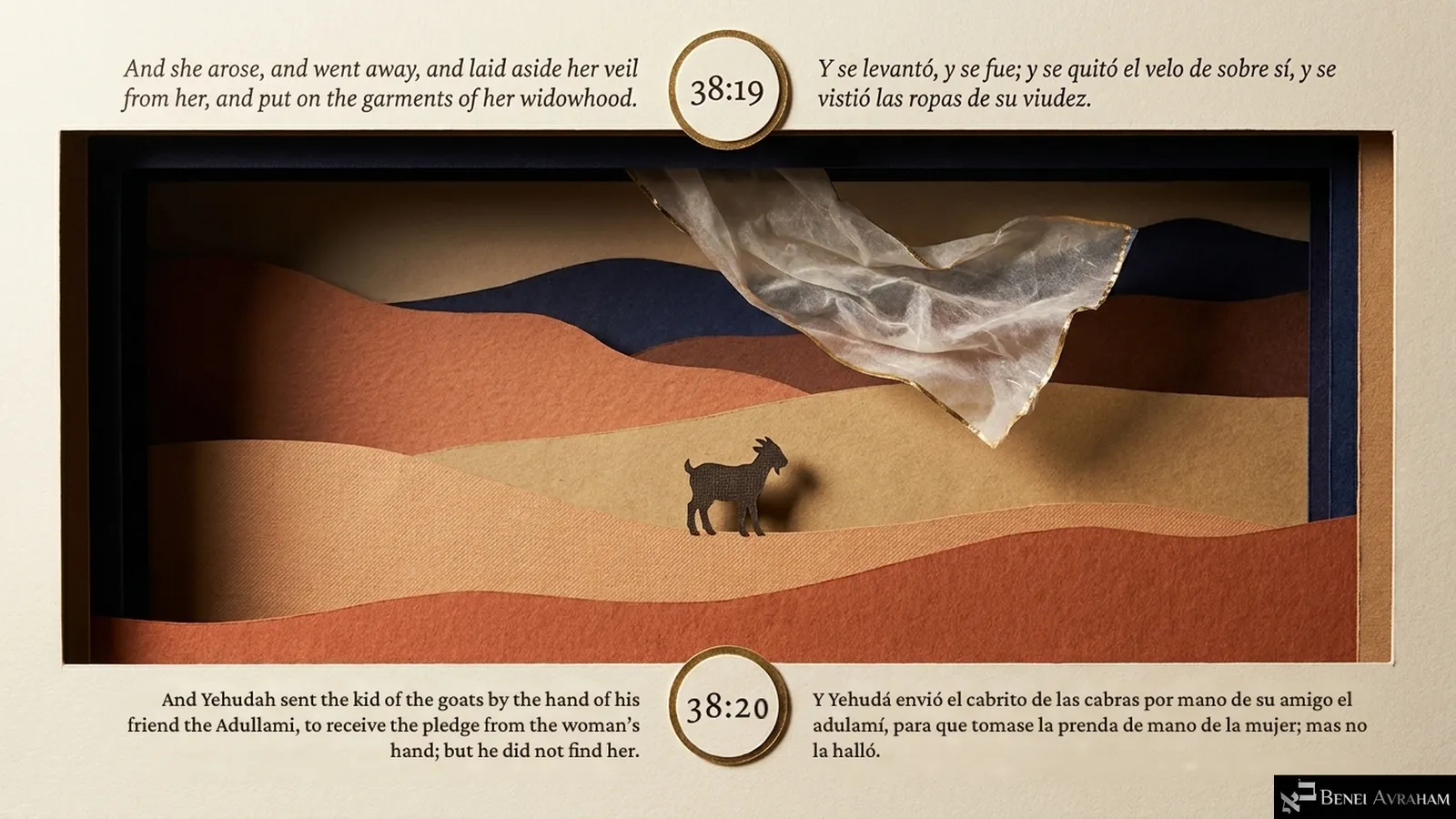
A white veil drifts away over red paper hills where a lone goat stands: Tamar put on the garments of her widowhood again, and Yehudah sent the kid by the hand of his friend, but he did not find her (Genesis 38:19–20).
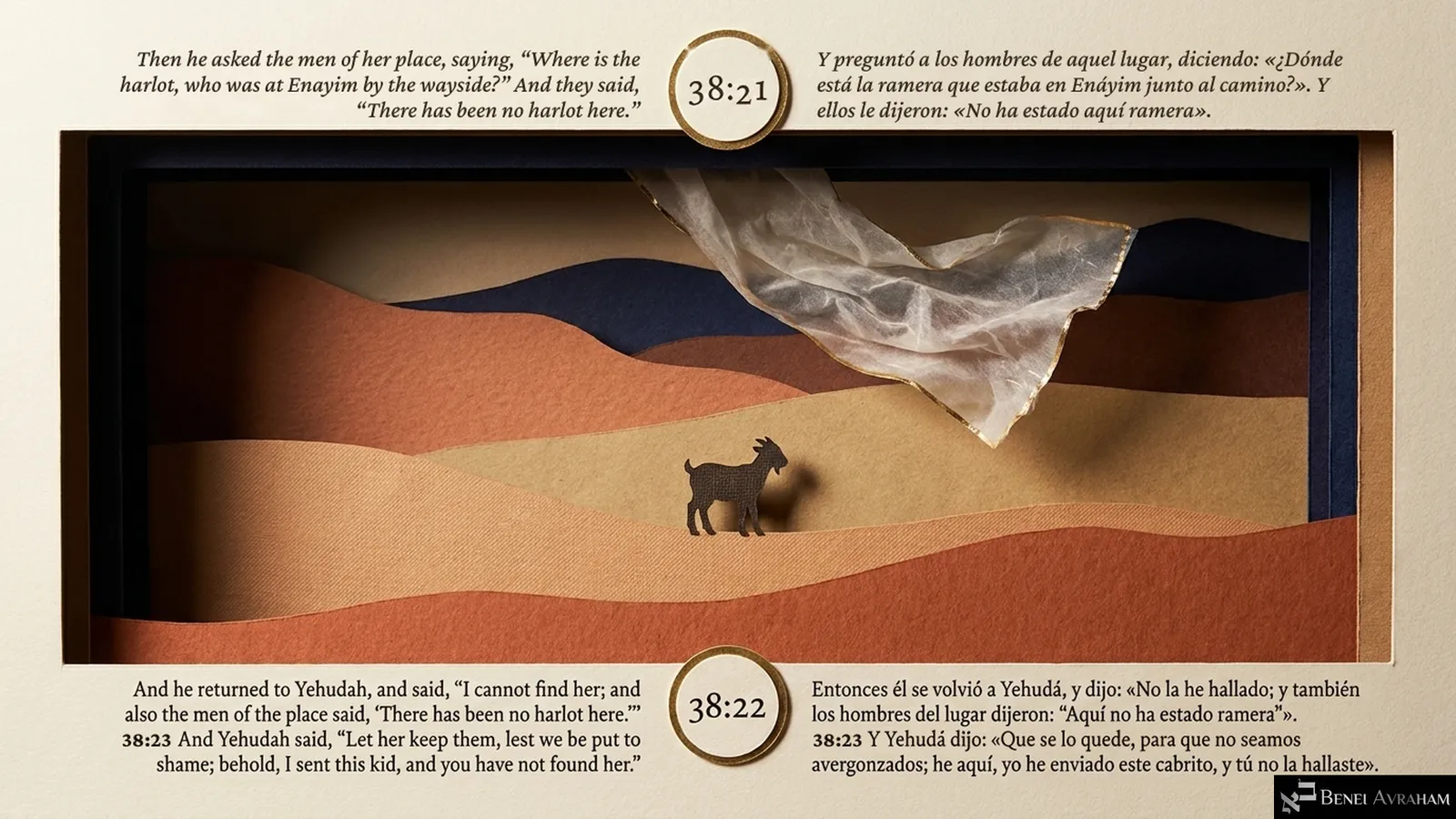
The same red hills and lone goat: “Where is the harlot, who was at Enayim by the wayside?” … “Let her keep them, lest we be put to shame” (Genesis 38:21–23).
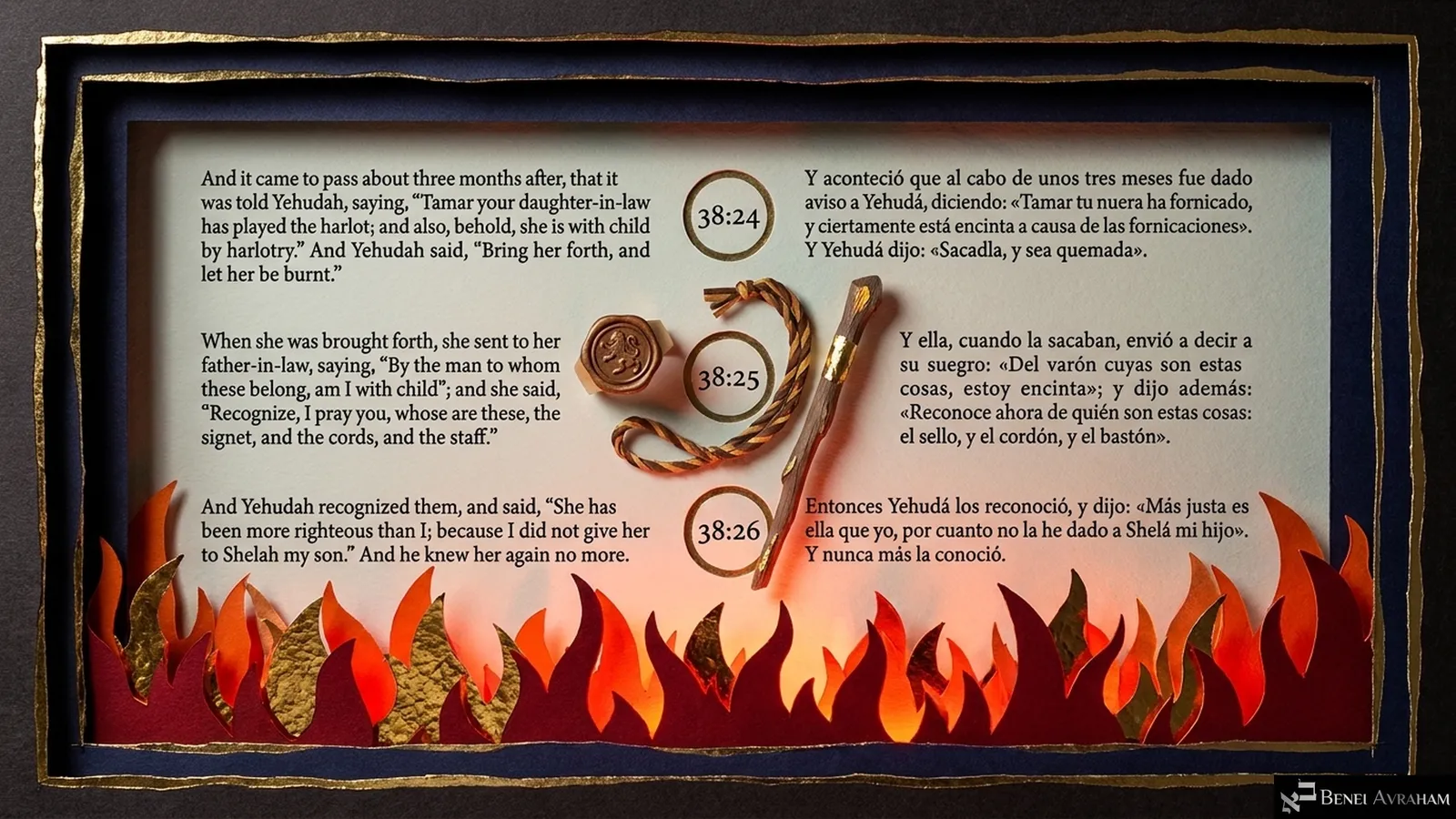
Yehudah’s seal, cord and staff lie above leaping paper flames: “Recognize, I pray you, whose are these,” and Yehudah said, “She has been more righteous than I” (Genesis 38:24–26).
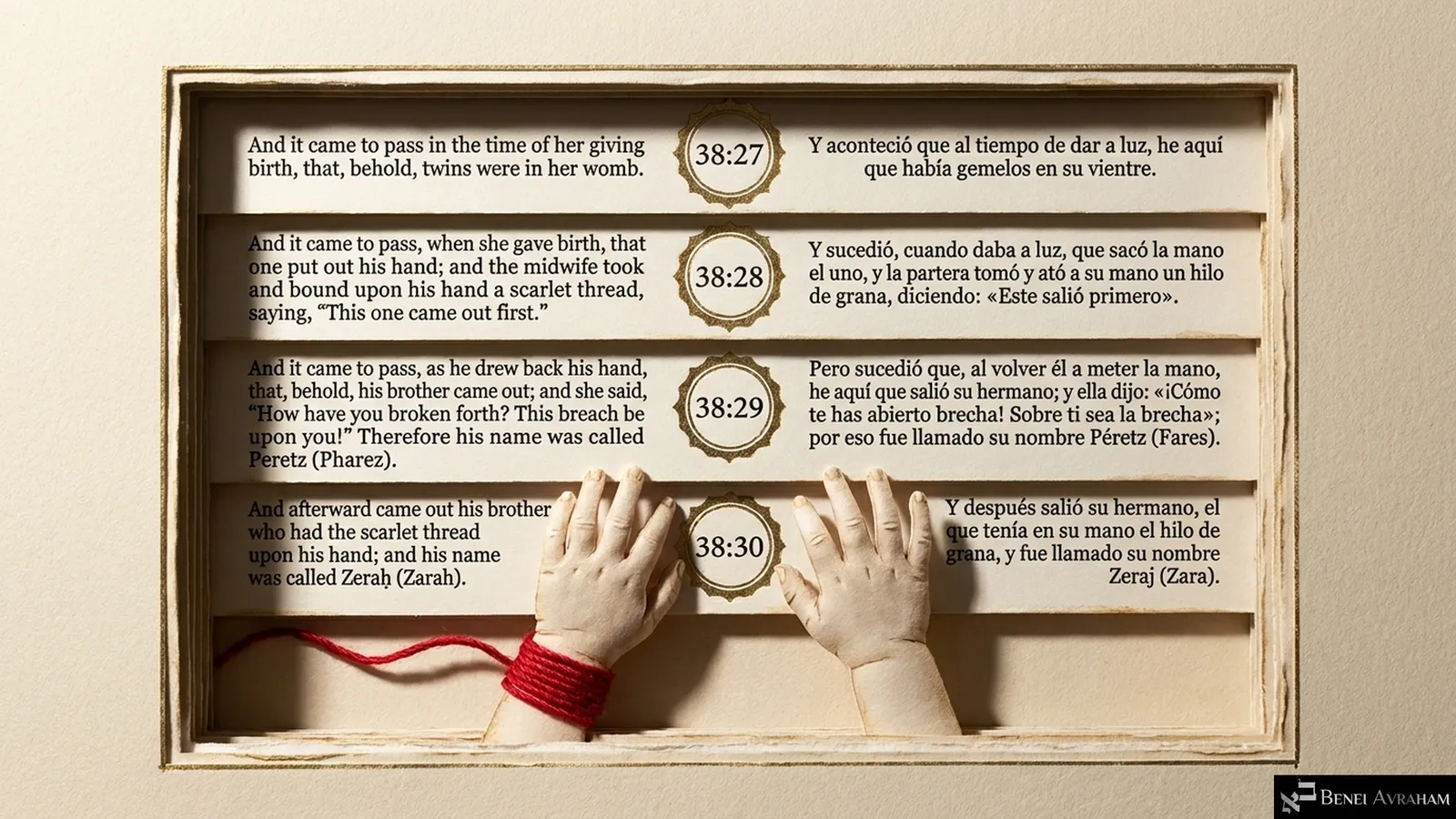
Two paper baby hands reach out, one wrist bound with a scarlet thread: twins were in her womb, and the midwife bound a scarlet thread upon one hand; Peretz came out, then Zeraḥ (Genesis 38:27–30).
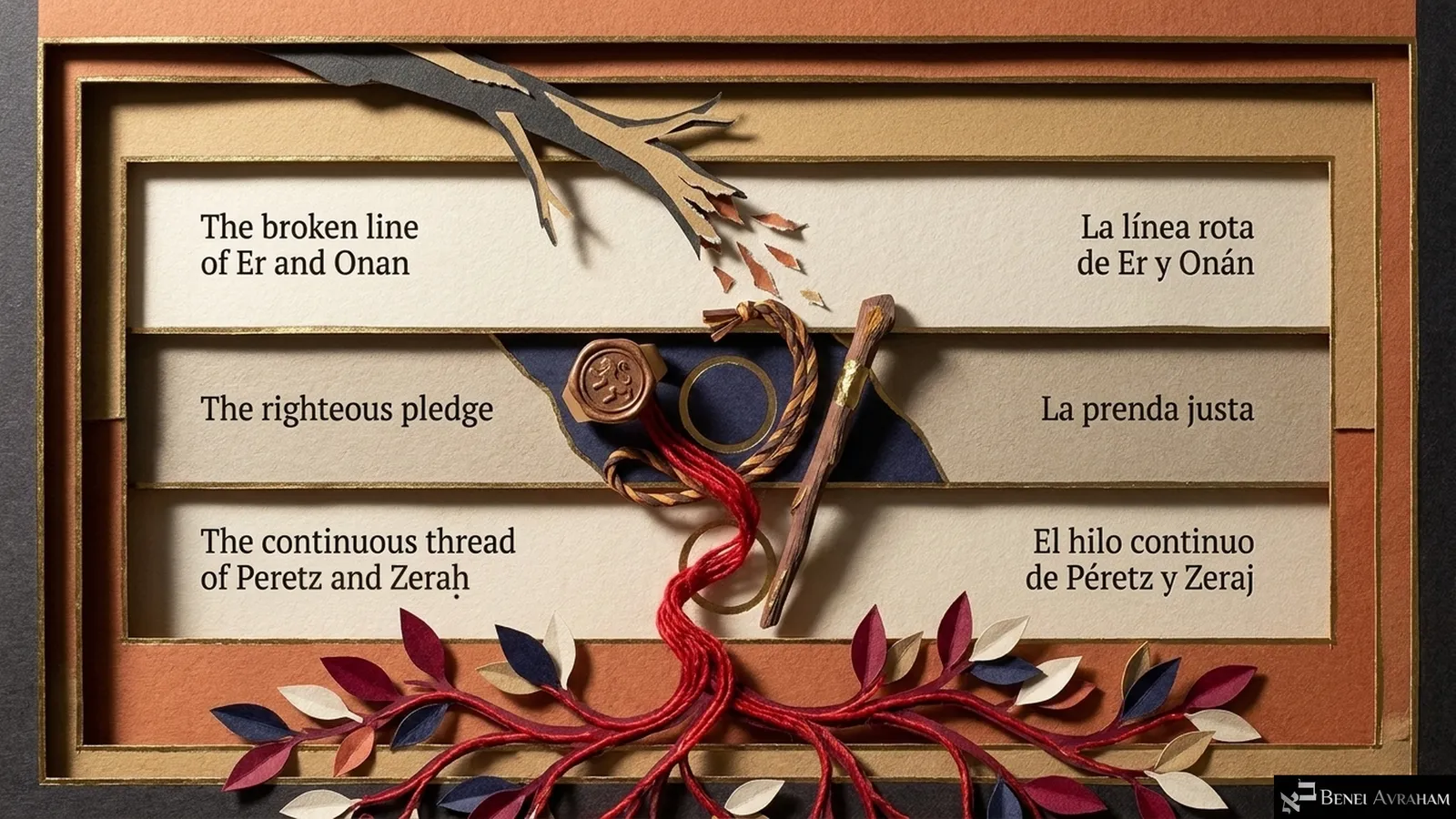
A broken branch above, a scarlet thread growing into a tree below, with the seal, cord and staff between: the broken line of Er and Onan, the righteous pledge, and the continuing line of Peretz and Zeraḥ.
Chamishi · Genesis 39:1–6

Fifth Portion

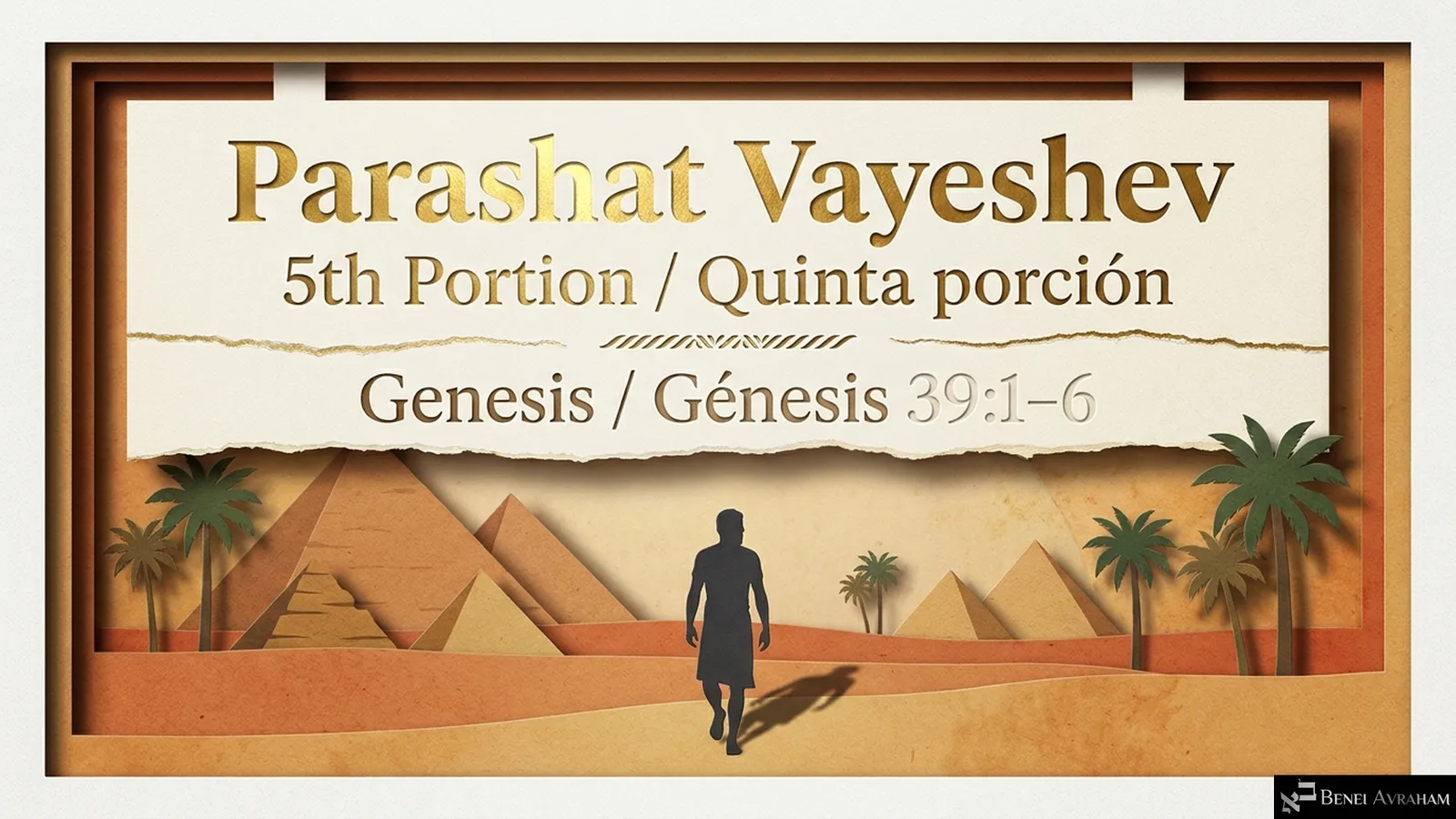
Title card for the fifth portion: a lone figure walks among paper pyramids and palms, “Parashat Vayeshev, 5th Portion, Genesis 39:1–6”.
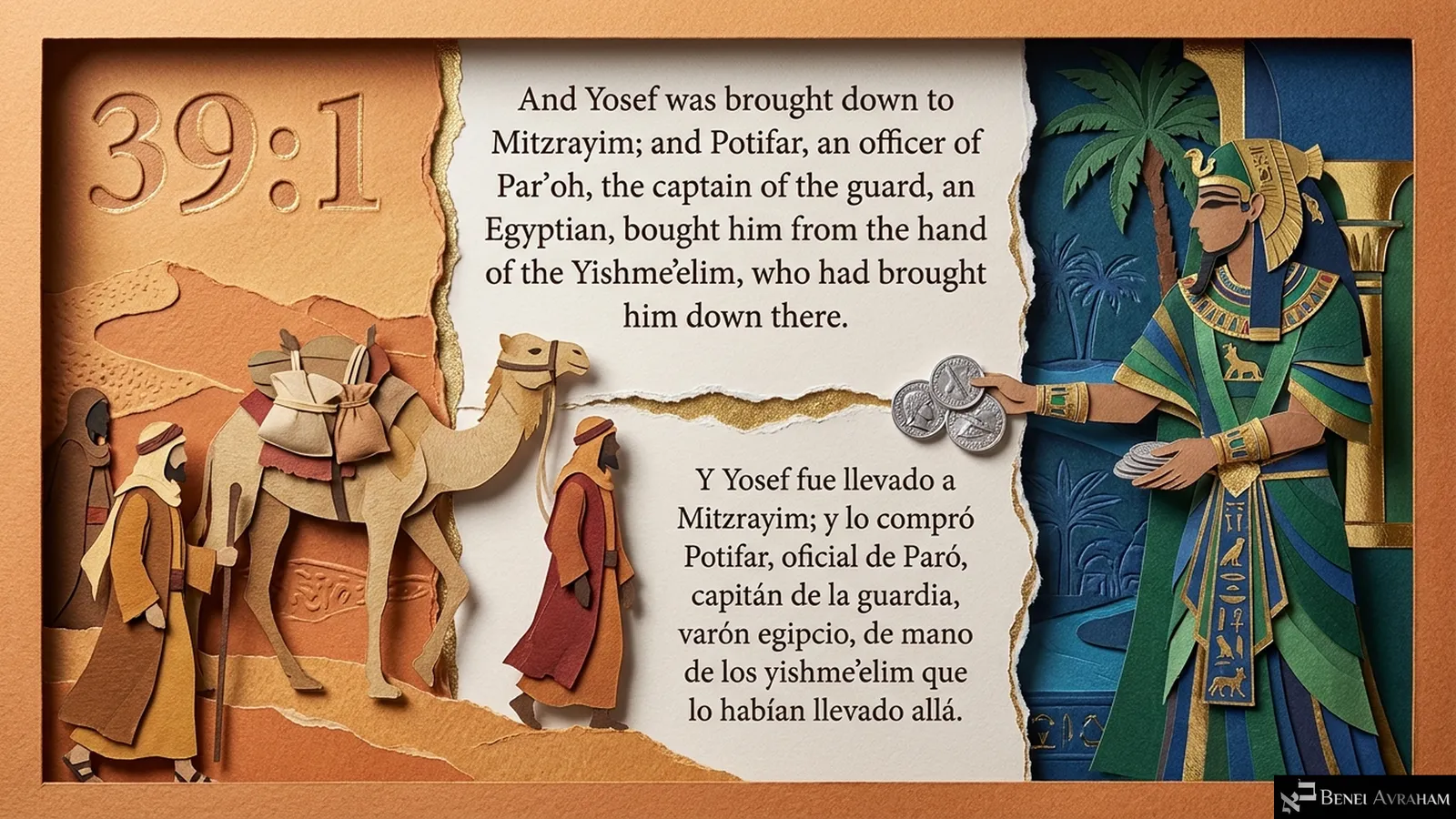
Yishme’elim lead a laden camel as an Egyptian officer holds out silver coins: Potifar, an officer of Par’oh, bought Yosef from the hand of the Yishme’elim (Genesis 39:1).
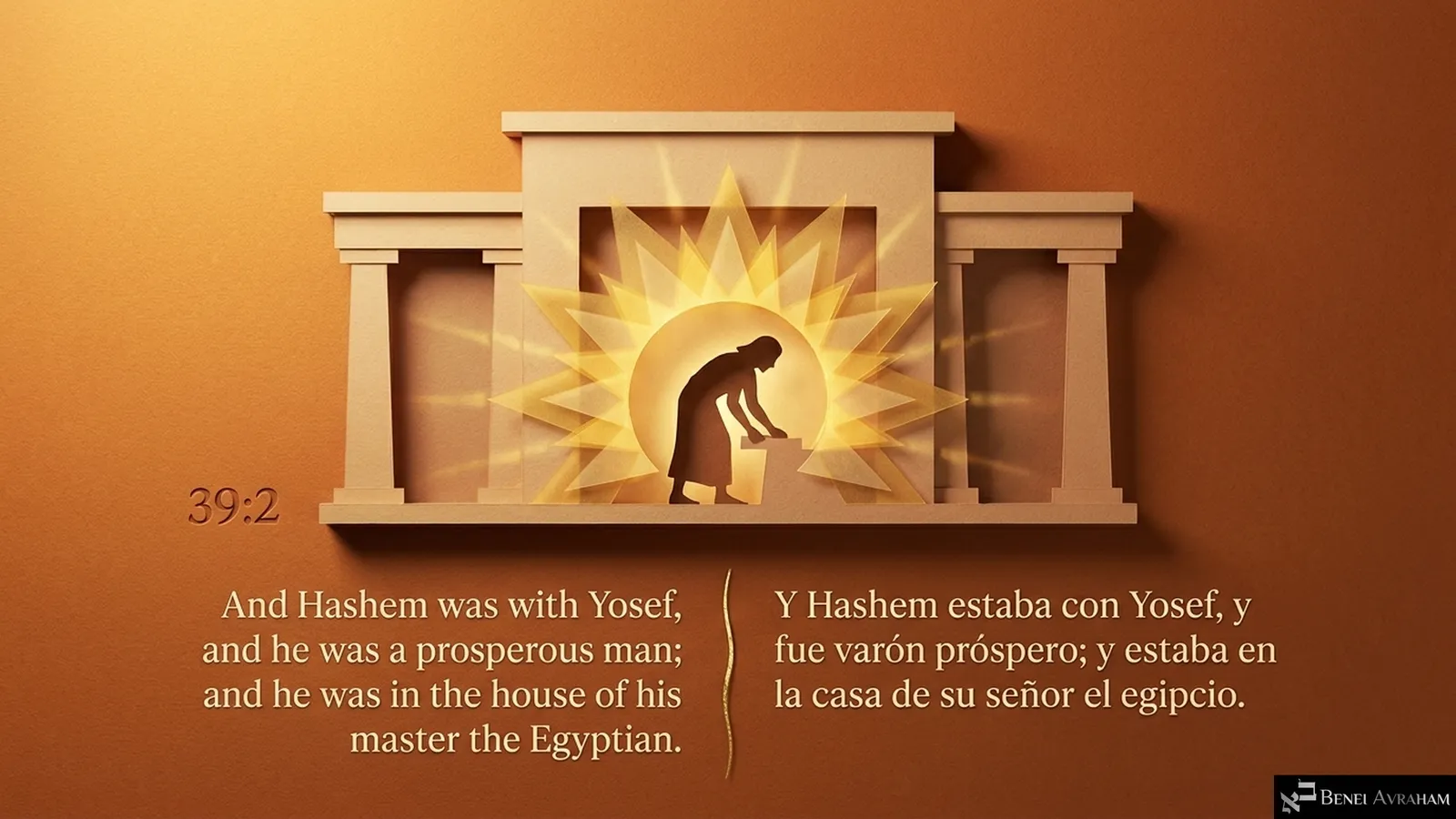
Yosef bends at his work inside a paper Egyptian portico, a golden burst of light behind him: Hashem was with Yosef, and he was a prosperous man (Genesis 39:2).
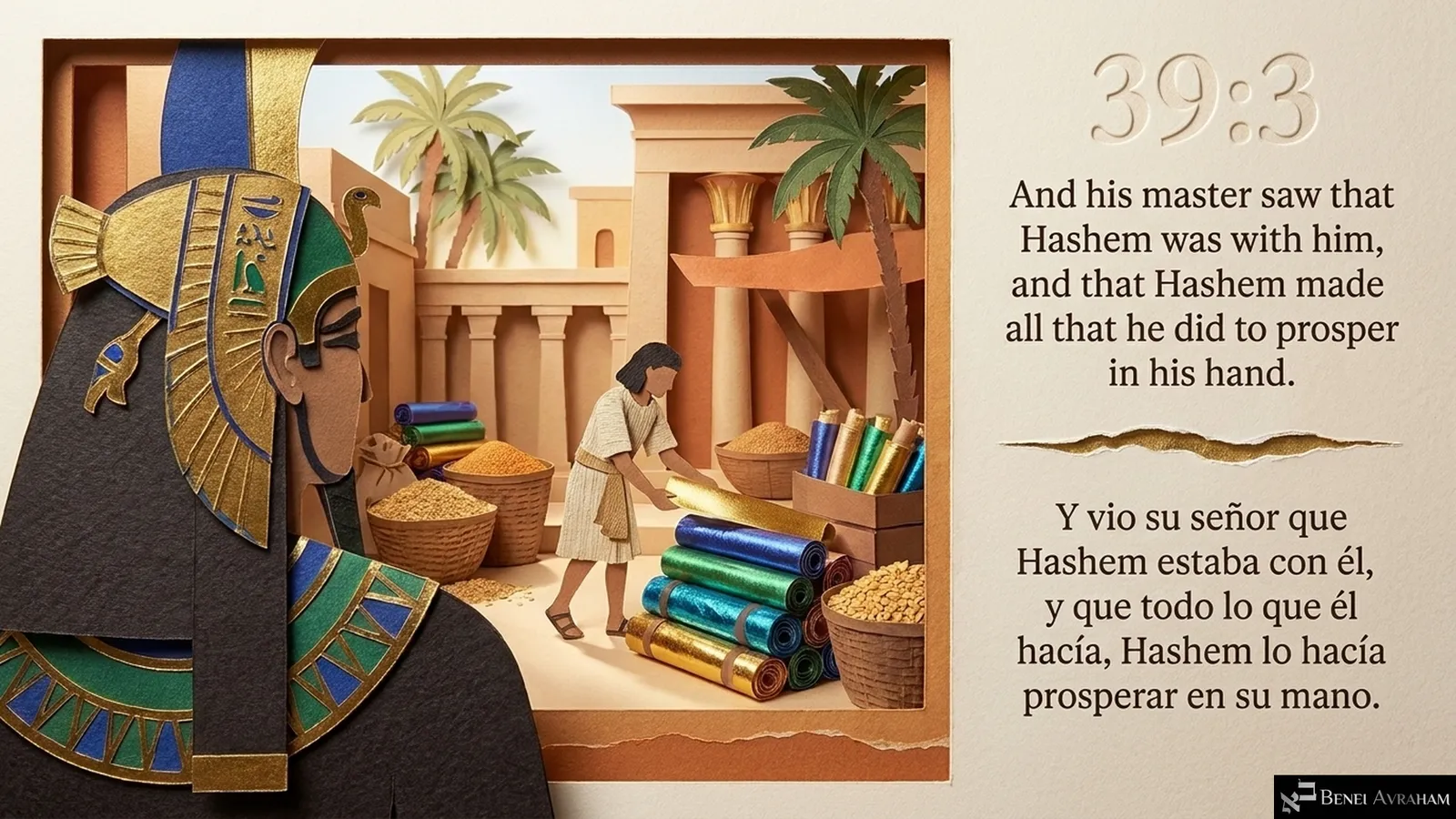
Potifar watches Yosef tend rolls of cloth and baskets of grain in a busy courtyard: his master saw that Hashem made all that he did to prosper in his hand (Genesis 39:3).
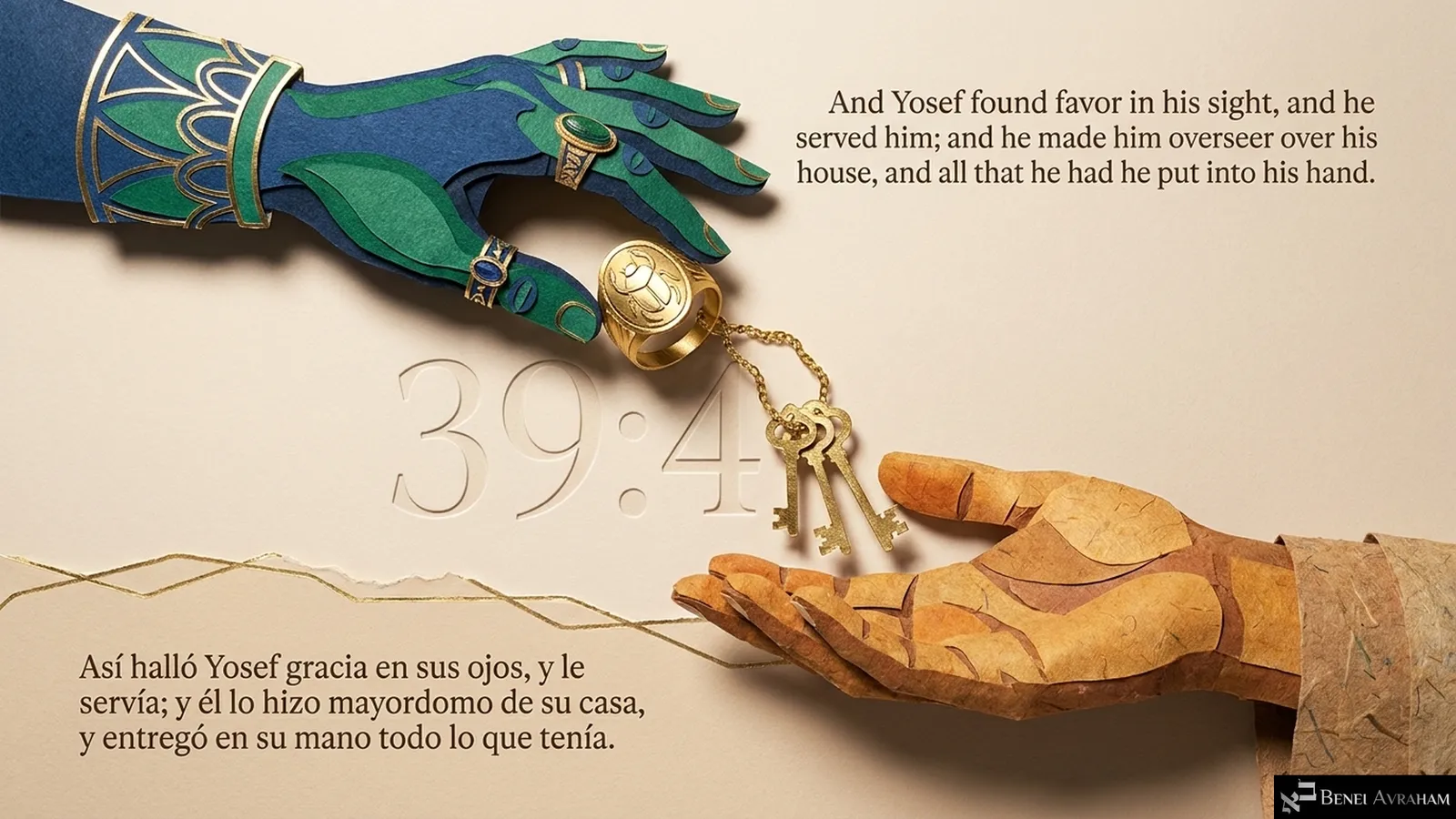
Potifar’s jewelled hand drops a signet ring and keys into Yosef’s open palm: he made him overseer over his house, and all that he had he put into his hand (Genesis 39:4).
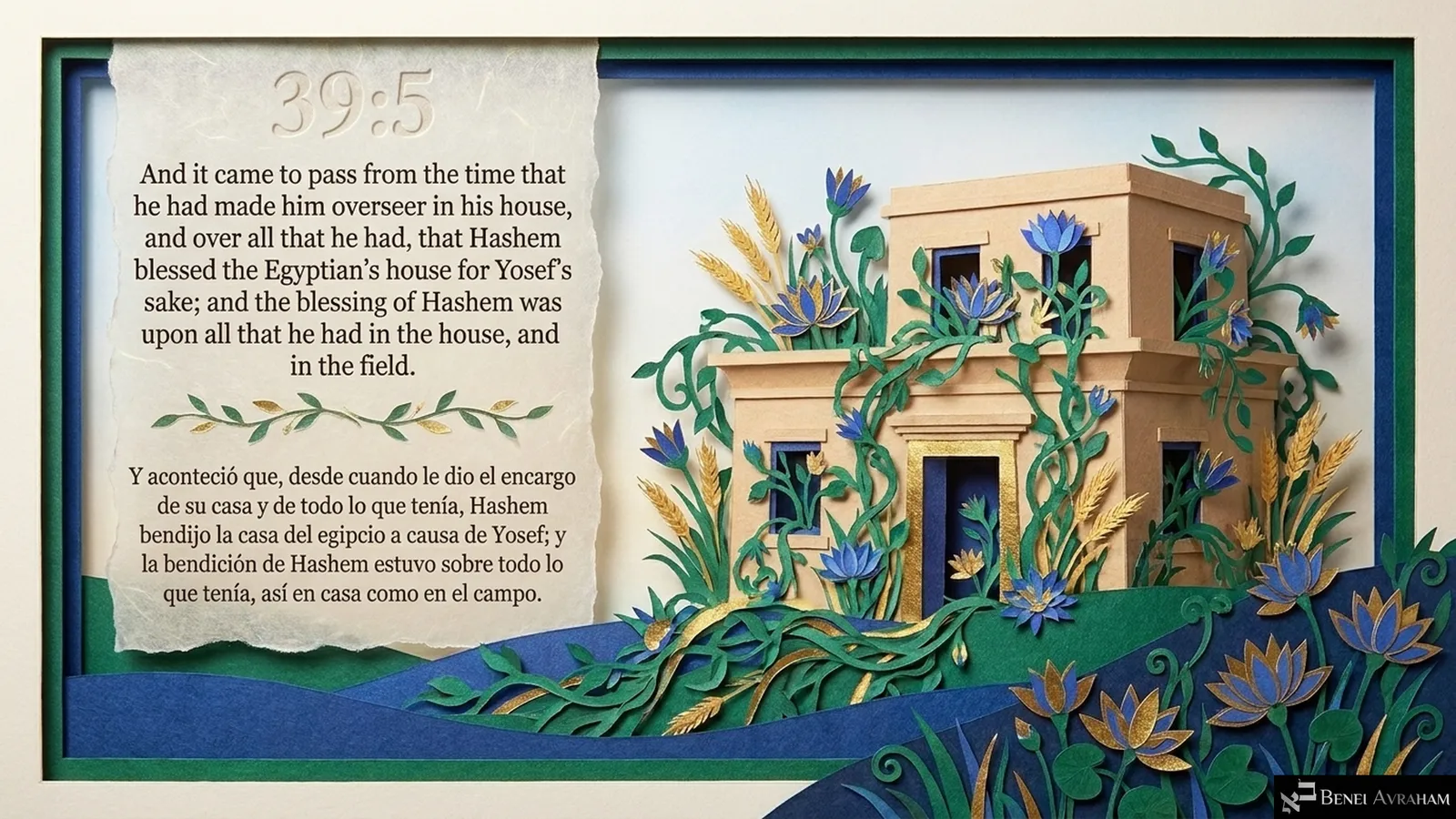
A paper house bursts with lotus flowers, vines and wheat: Hashem blessed the Egyptian’s house for Yosef’s sake, in the house and in the field (Genesis 39:5).
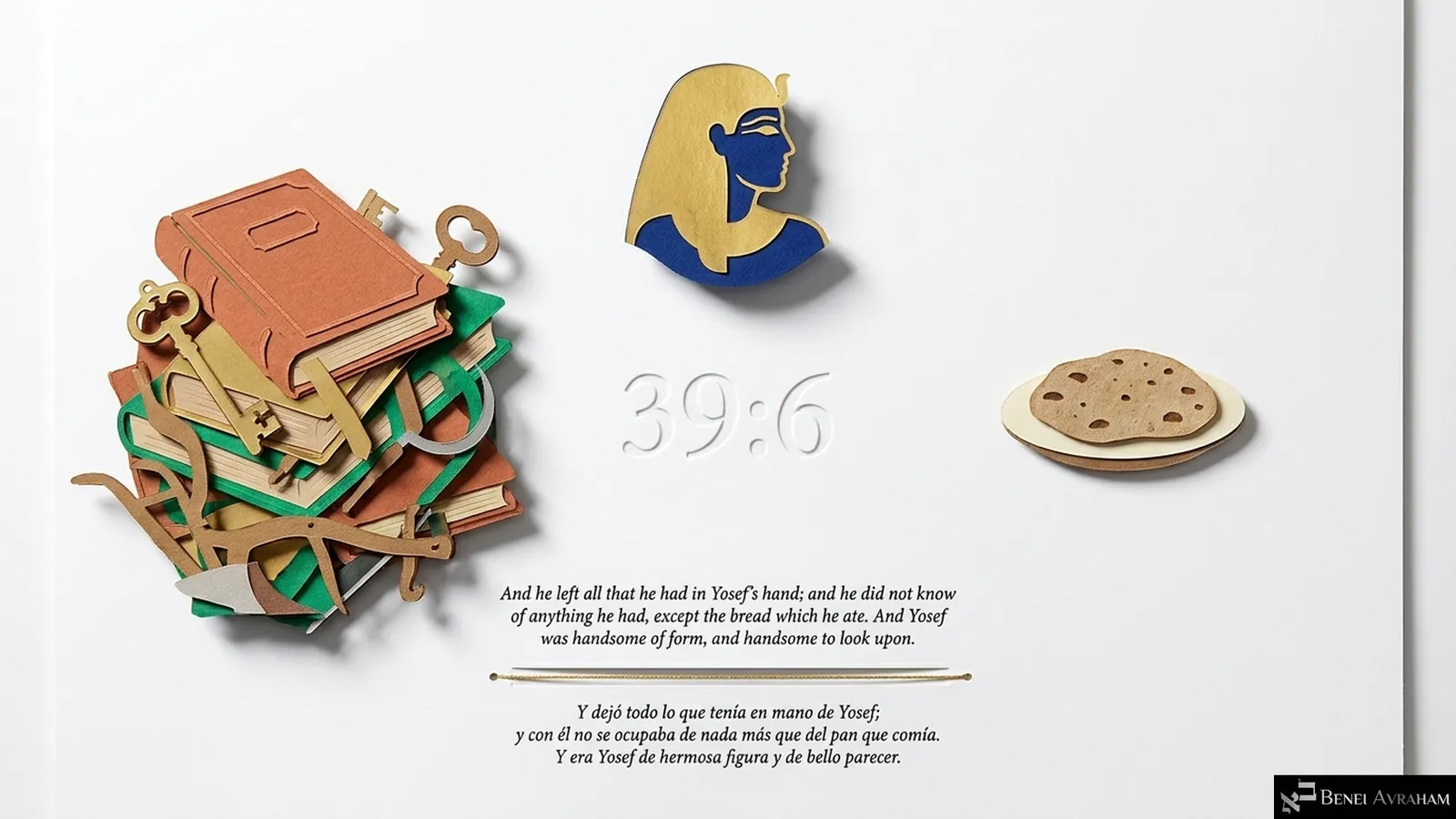
Books and keys piled on one side, a plate of bread on the other, with Potifar’s portrait between: he left all that he had in Yosef’s hand, and knew of nothing except the bread which he ate (Genesis 39:6).
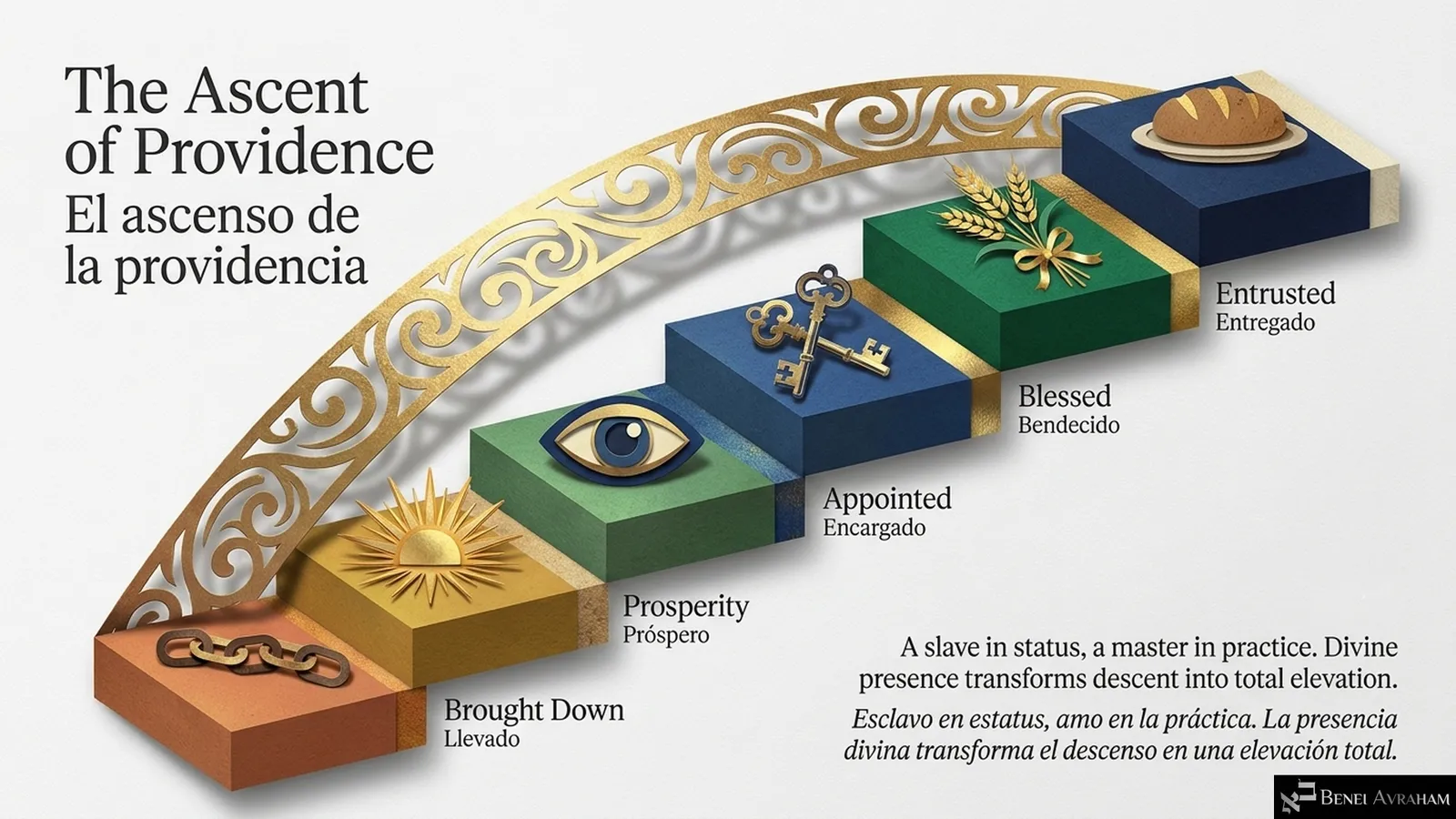
Coloured steps climb under a golden arch from chains to sun, eye, keys, wheat and bread: Yosef’s ascent, brought down, prospering, appointed, blessed, entrusted; a slave in status, a master in practice.
Shishi · Genesis 39:7–23

Sixth Portion

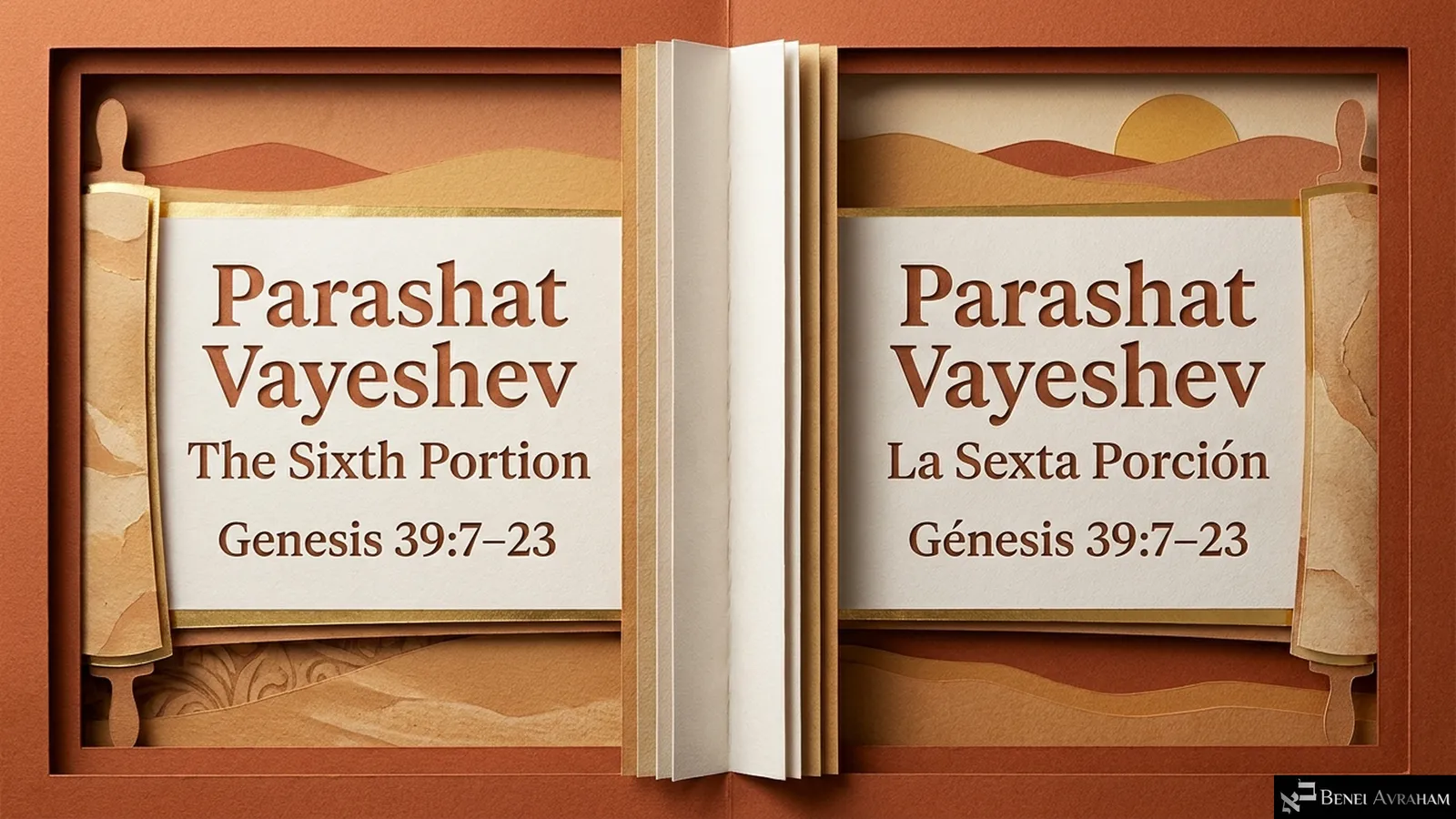
Title card for the sixth portion on an open paper book with two scrolls: “Parashat Vayeshev, The Sixth Portion, Genesis 39:7–23”.
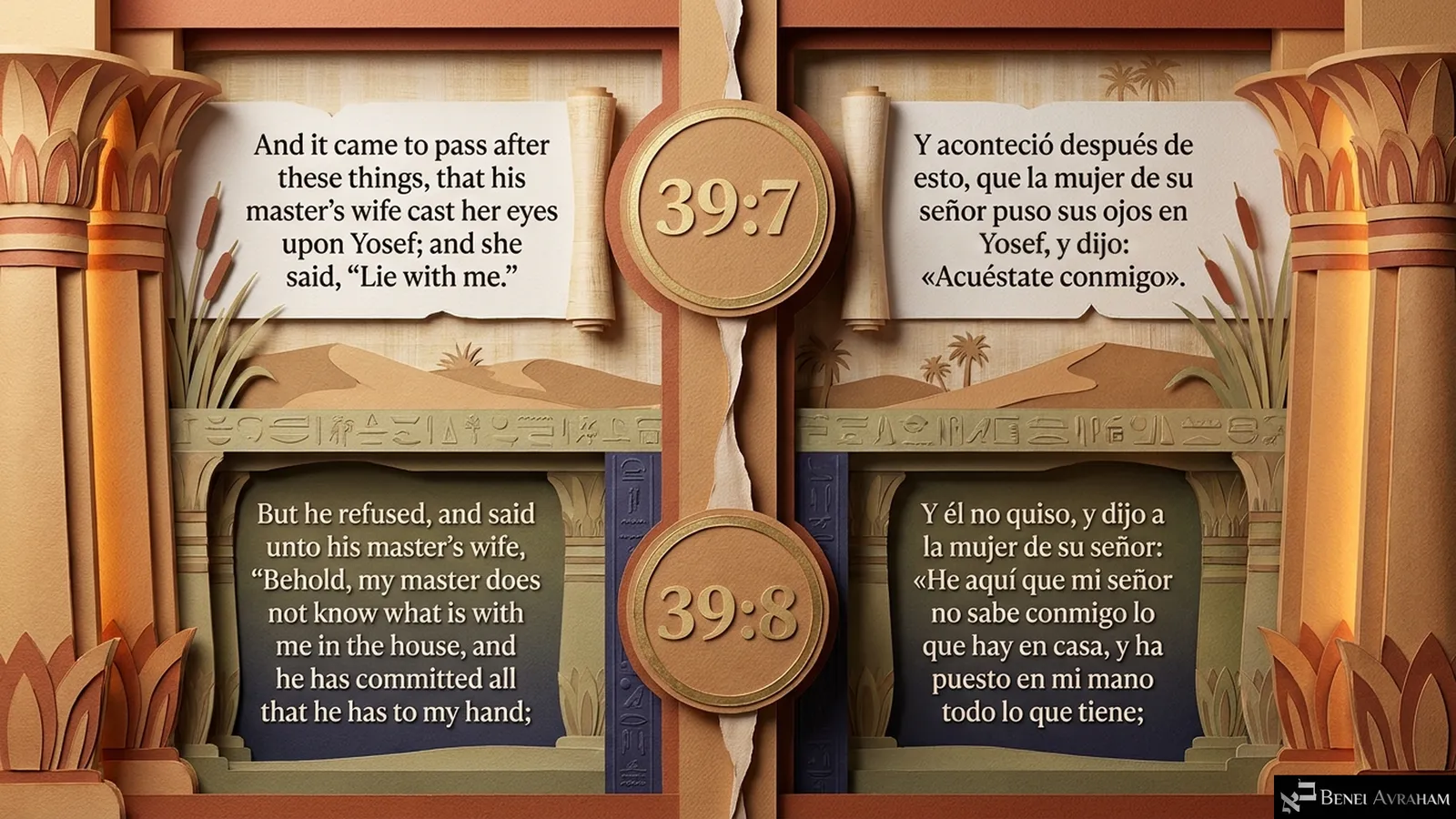
Egyptian columns, reeds and hieroglyphs frame two medallions: his master’s wife said, “Lie with me,” but he refused, “My master has committed all that he has to my hand” (Genesis 39:7–8).
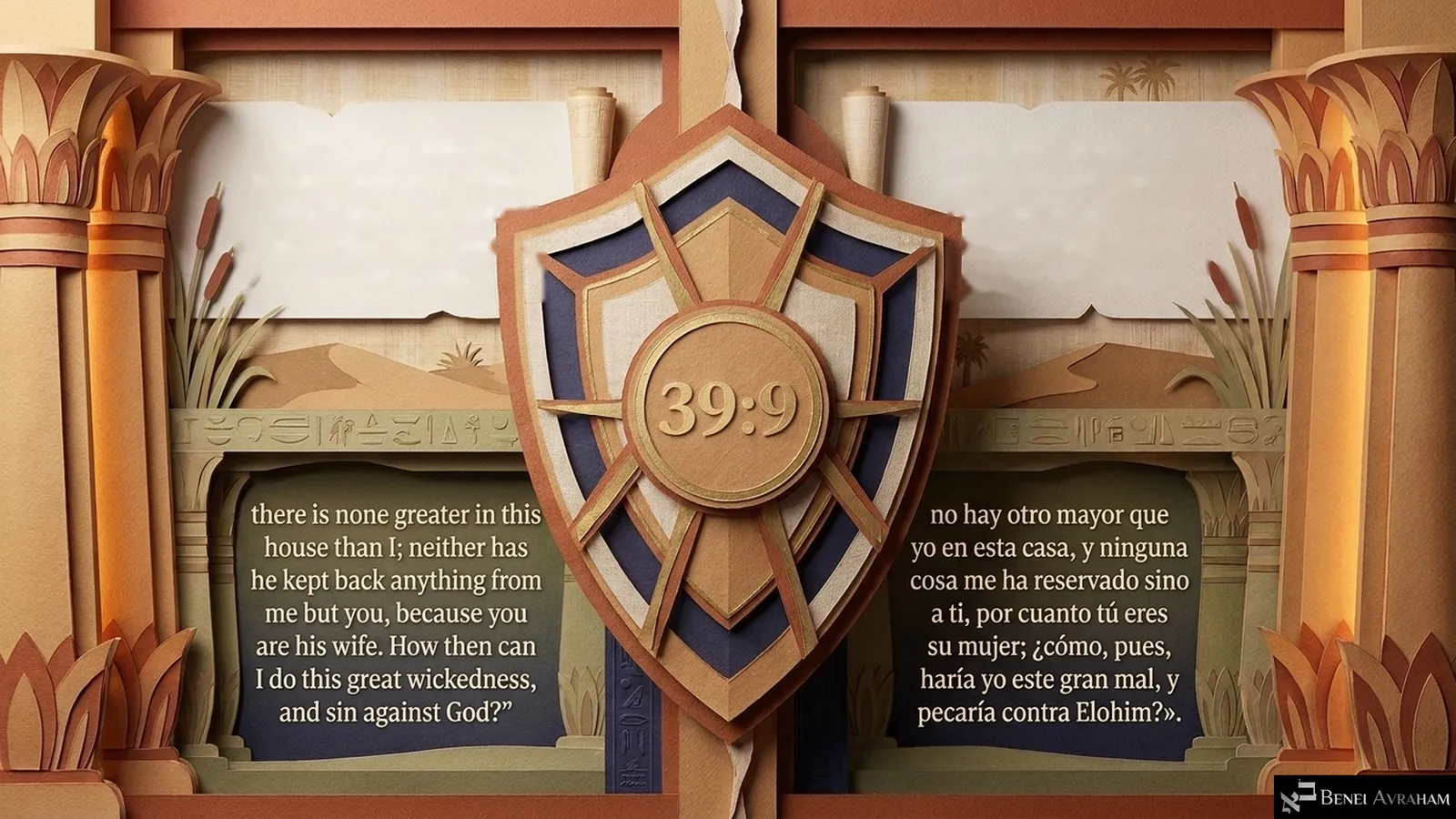
A paper shield marked 39:9 stands between the panels: “There is none greater in this house than I … How then can I do this great wickedness, and sin against God?” (Genesis 39:9).
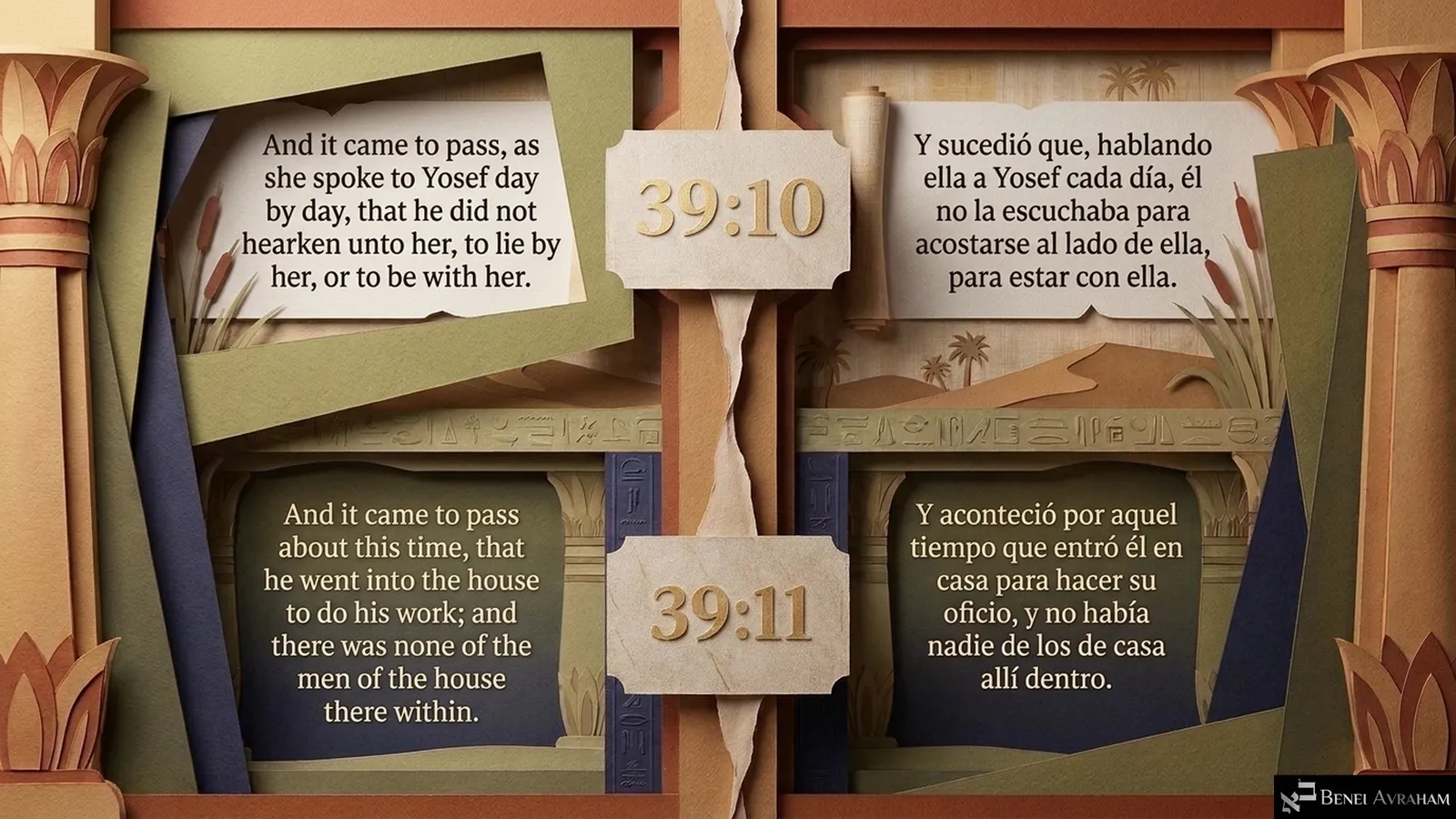
Slanted green panels frame the verses between Egyptian columns: she spoke to Yosef day by day, but he did not hearken unto her, and one day none of the men of the house were within (Genesis 39:10–11).
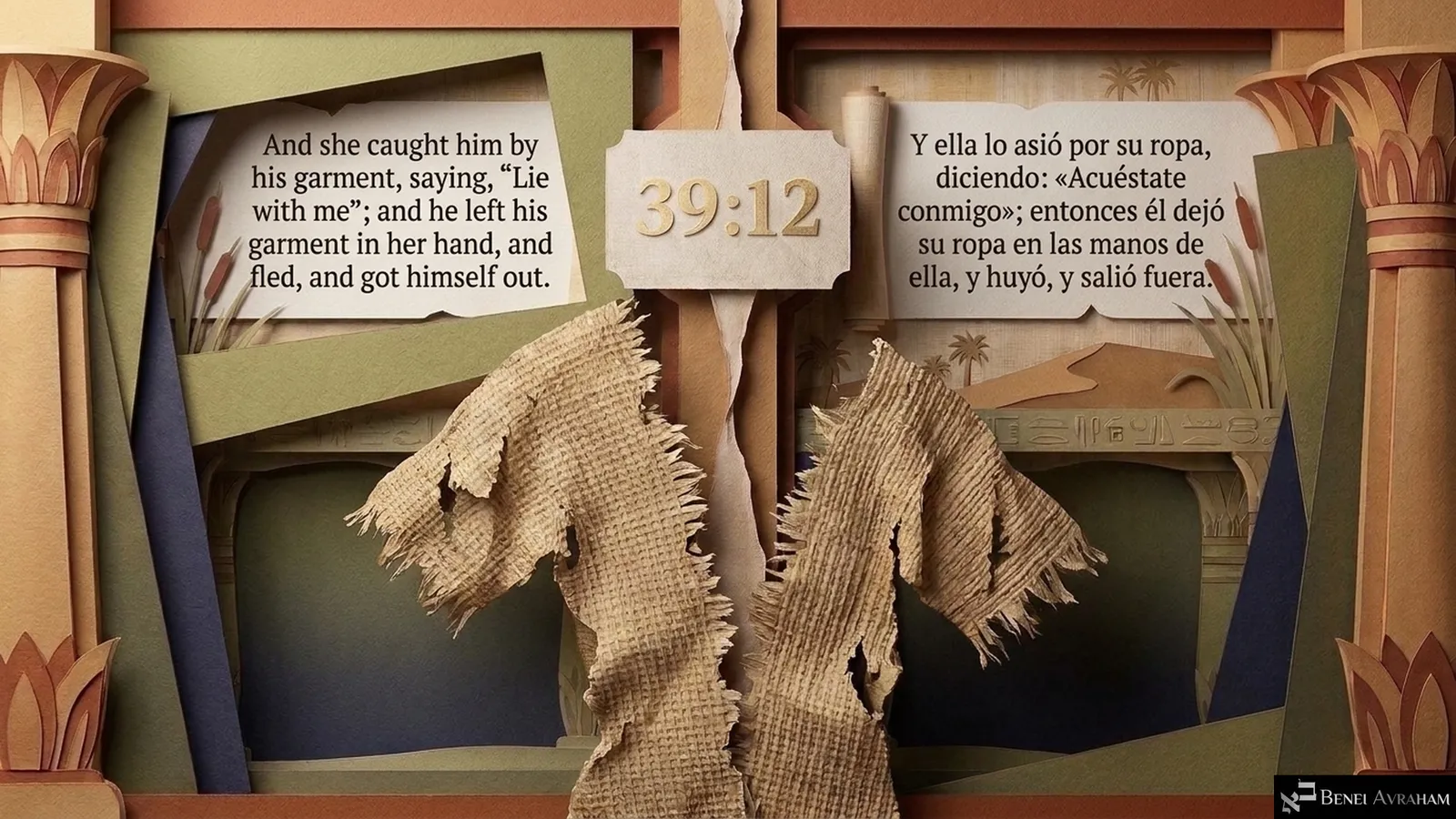
A burlap garment torn in two hangs between the panels: she caught him by his garment, and he left his garment in her hand, and fled, and got himself out (Genesis 39:12).
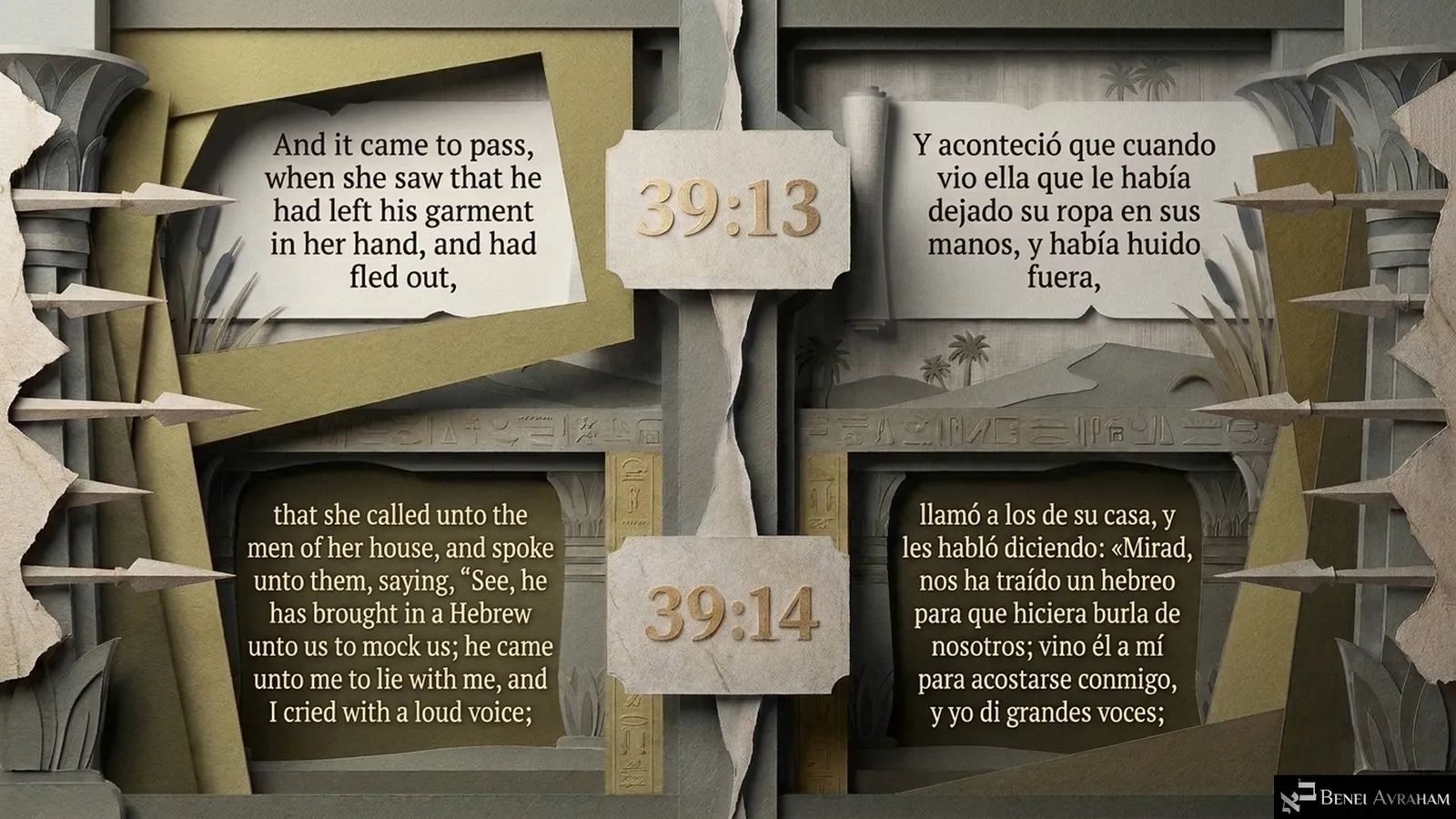
Paper spears point in from both sides of grey columns: she called unto the men of her house, “See, he has brought in a Hebrew unto us to mock us” (Genesis 39:13–14).
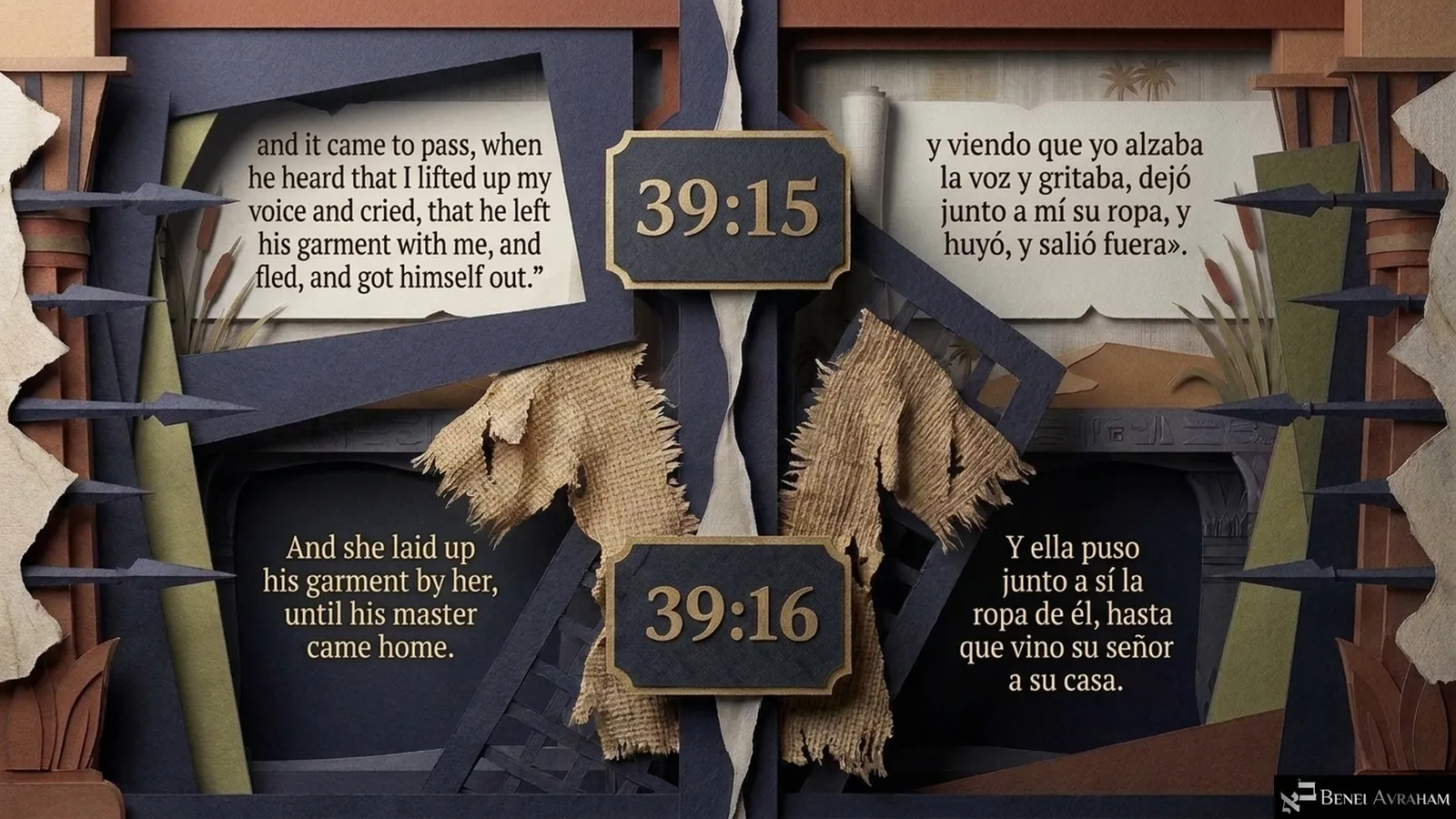
The torn burlap garment hangs between dark panels and paper spears: “he left his garment with me, and fled,” and she laid up his garment by her until his master came home (Genesis 39:15–16).
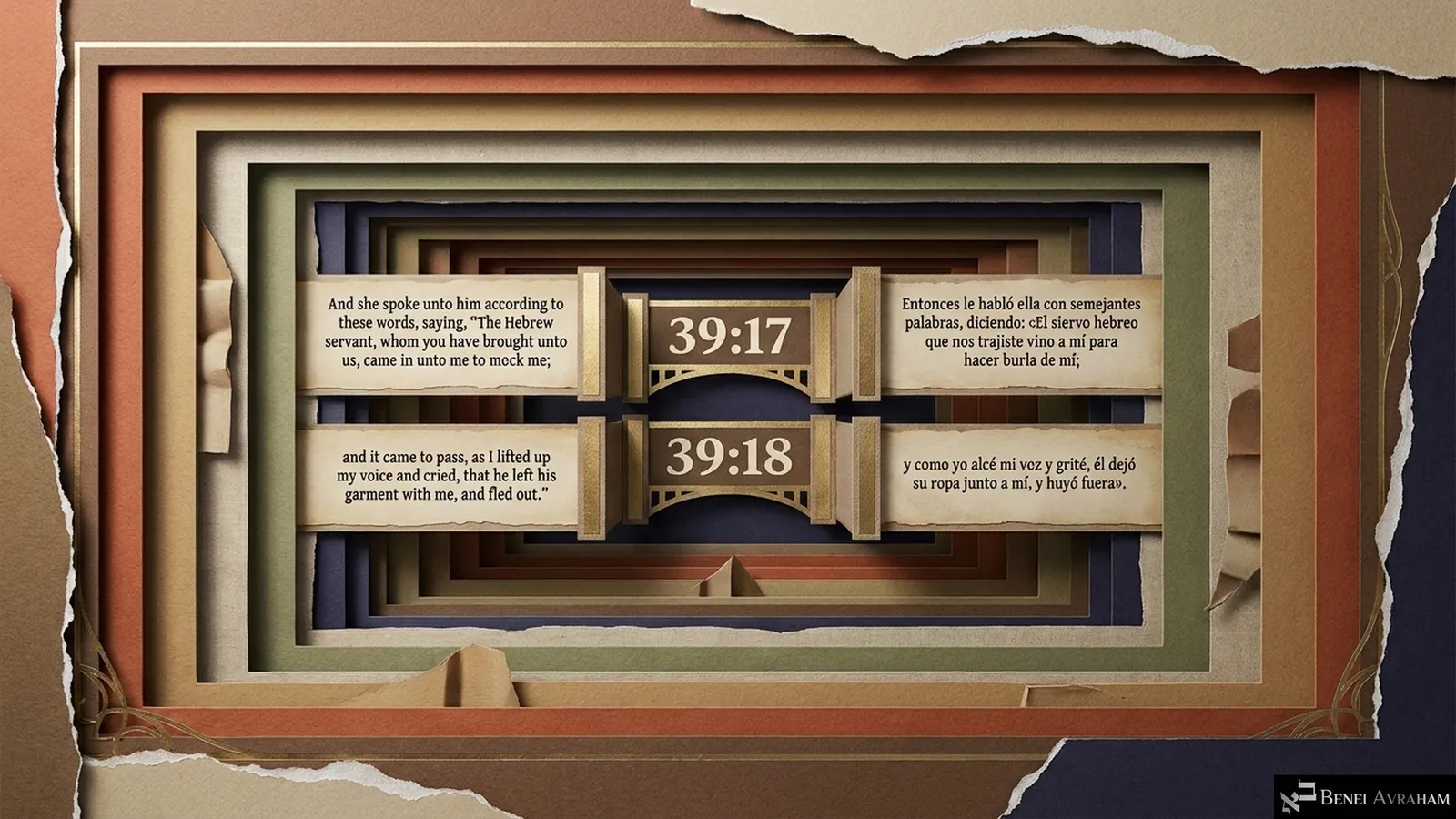
Nested paper frames draw the eye inward to two bridged plaques: she spoke unto him, “The Hebrew servant, whom you have brought unto us, came in unto me to mock me” (Genesis 39:17–18).
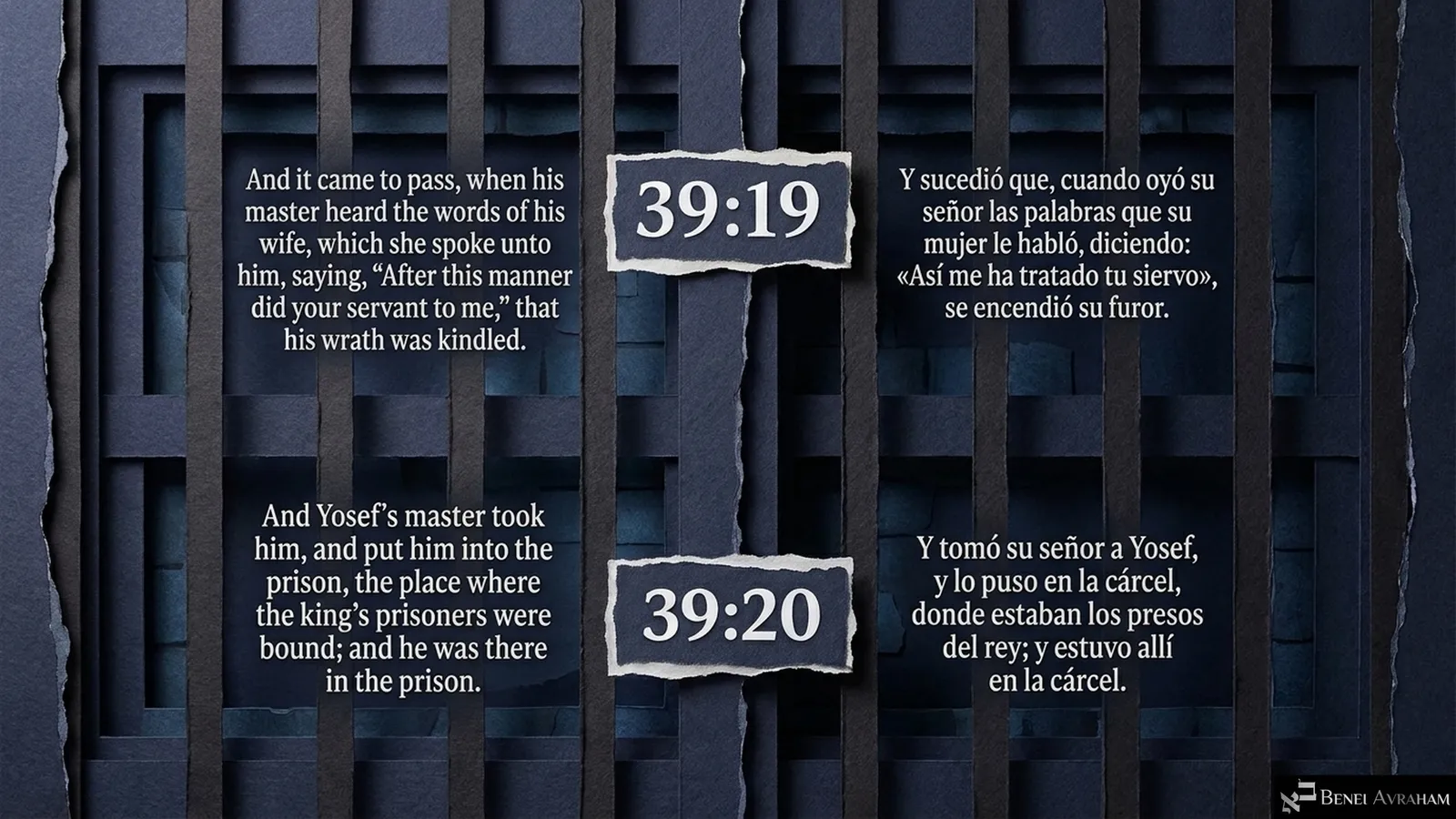
Dark prison bars of woven paper: his master’s wrath was kindled, and he put Yosef into the prison, the place where the king’s prisoners were bound (Genesis 39:19–20).
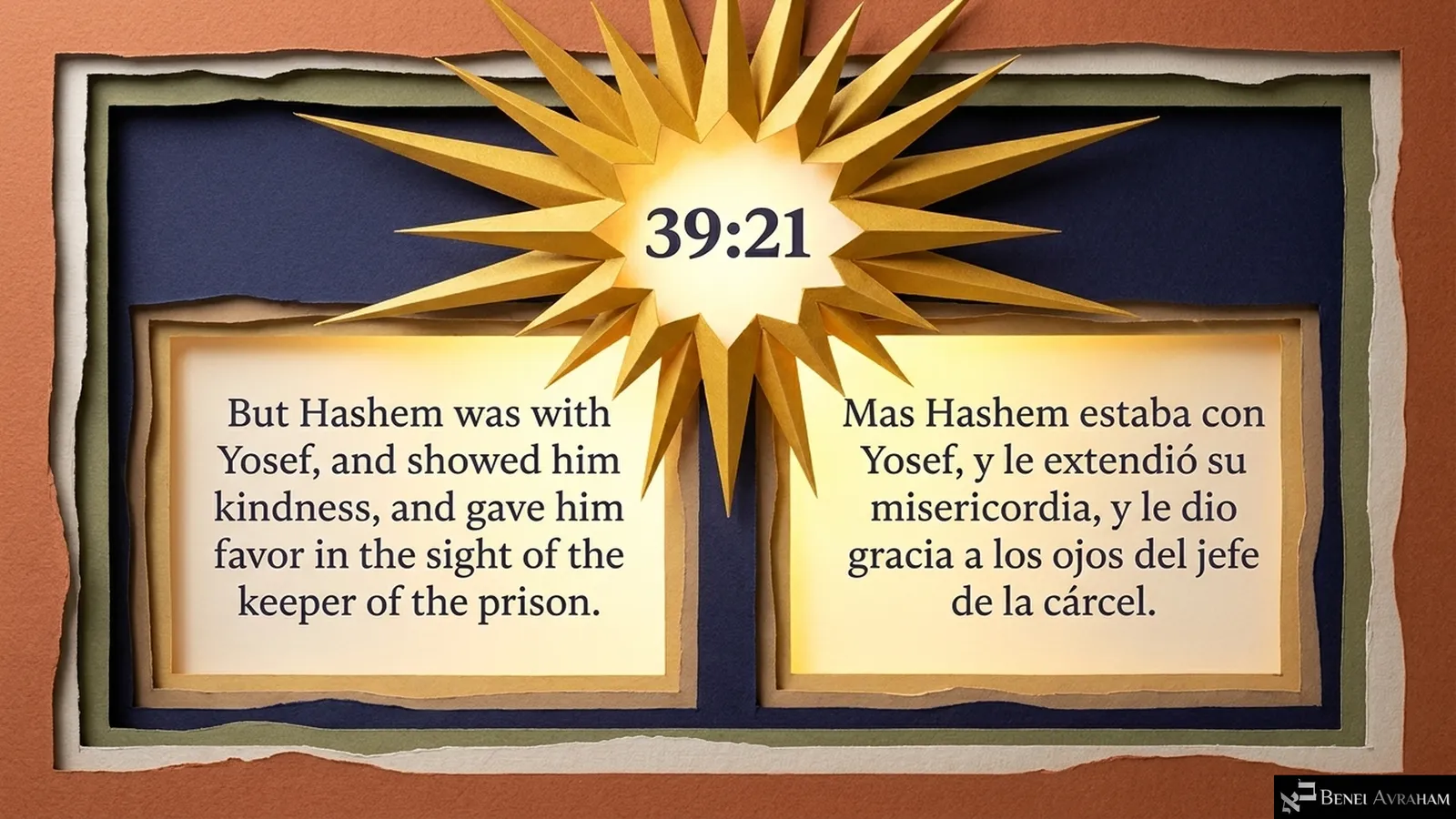
A golden paper star bursts above the prison panels: but Hashem was with Yosef, and showed him kindness, and gave him favour in the sight of the keeper of the prison (Genesis 39:21).
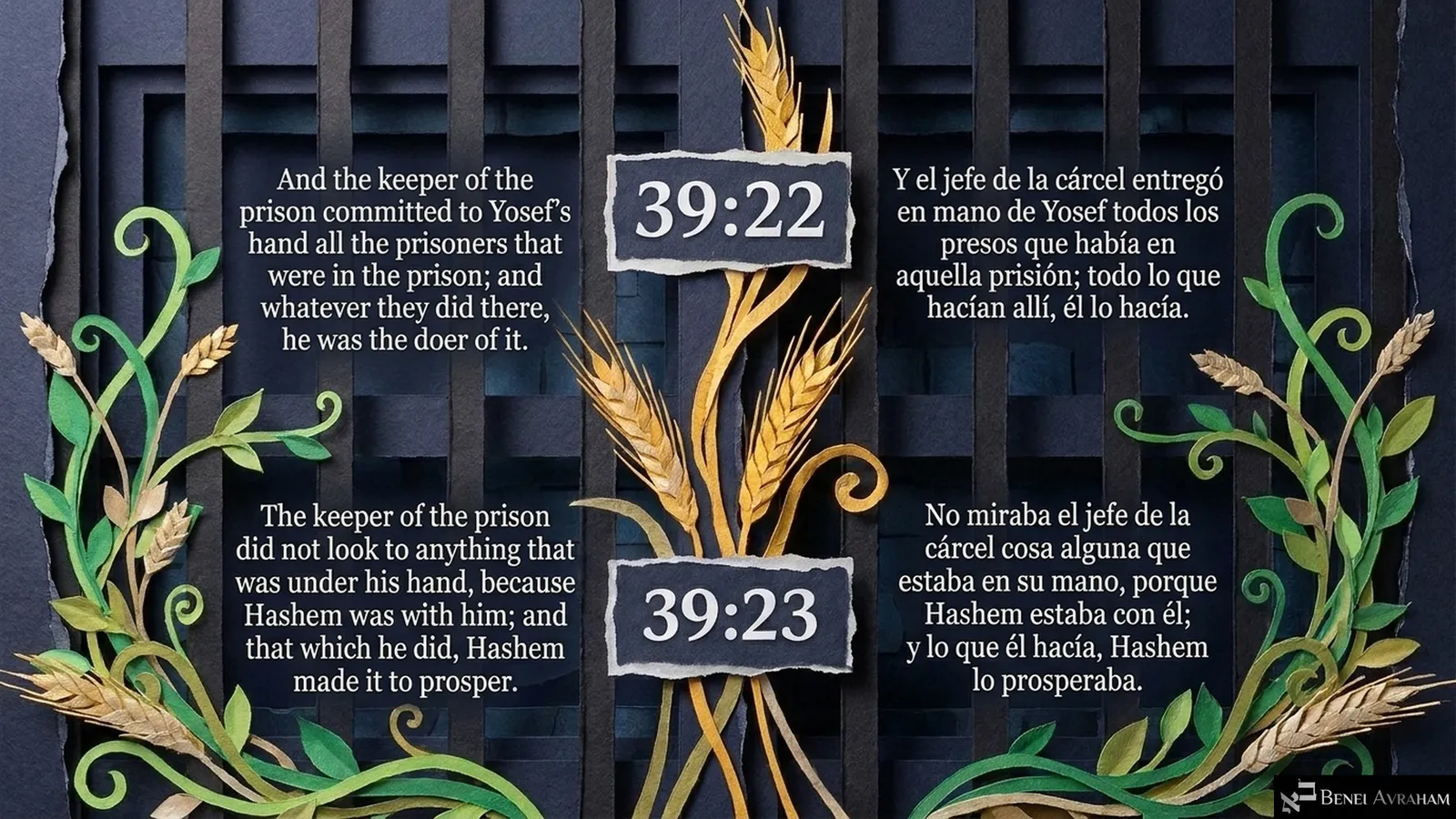
Golden wheat and green vines grow up through the prison bars: the keeper committed all the prisoners to Yosef’s hand, because Hashem was with him, and that which he did, Hashem made it to prosper (Genesis 39:22–23).
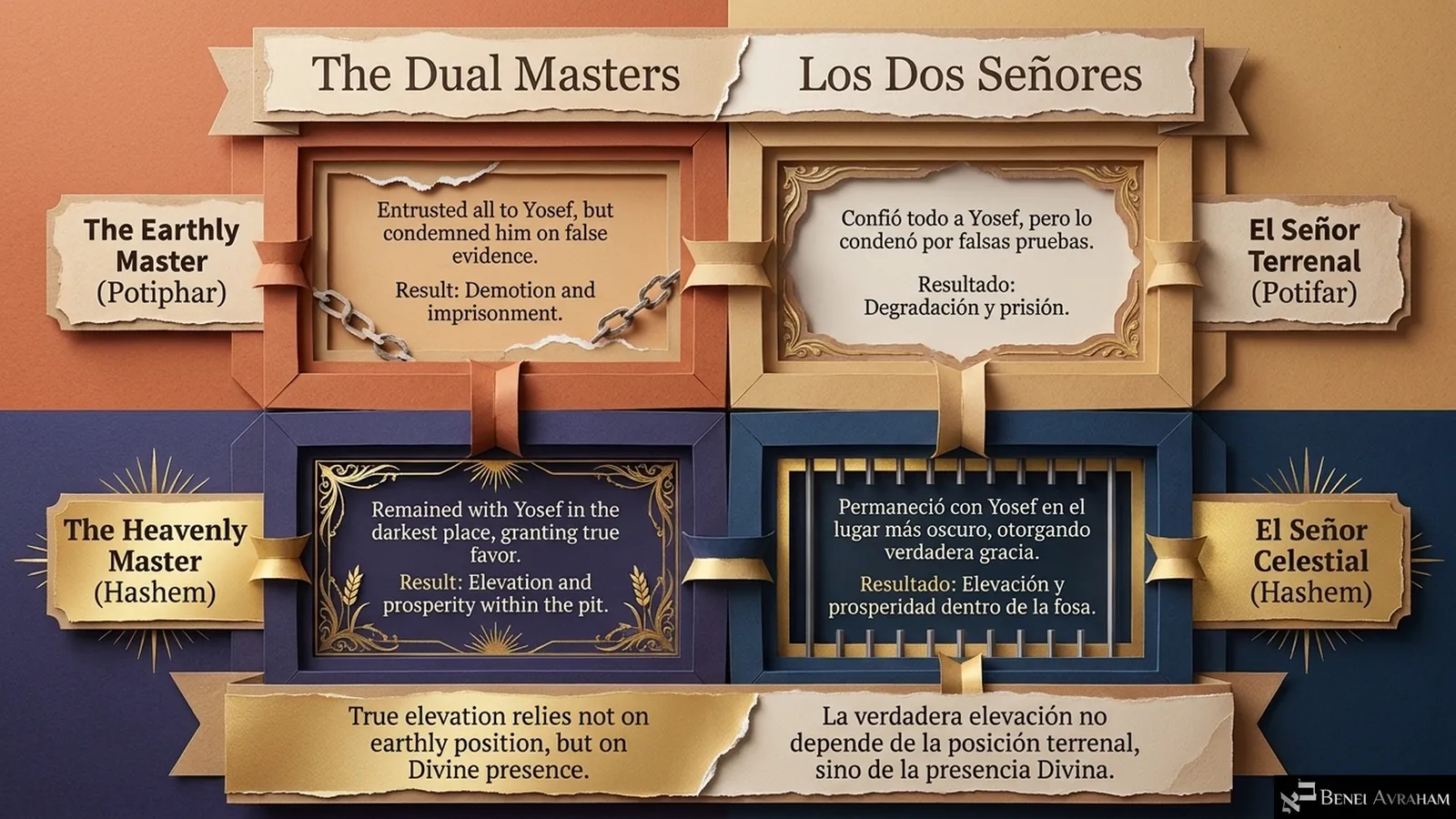
Two masters compared in paper frames: the earthly master, Potifar, entrusted all to Yosef but condemned him on false evidence; the heavenly master, Hashem, stayed with him in the darkest place and raised him up.
Shevi’i · Genesis 40:1–23

Seventh Portion

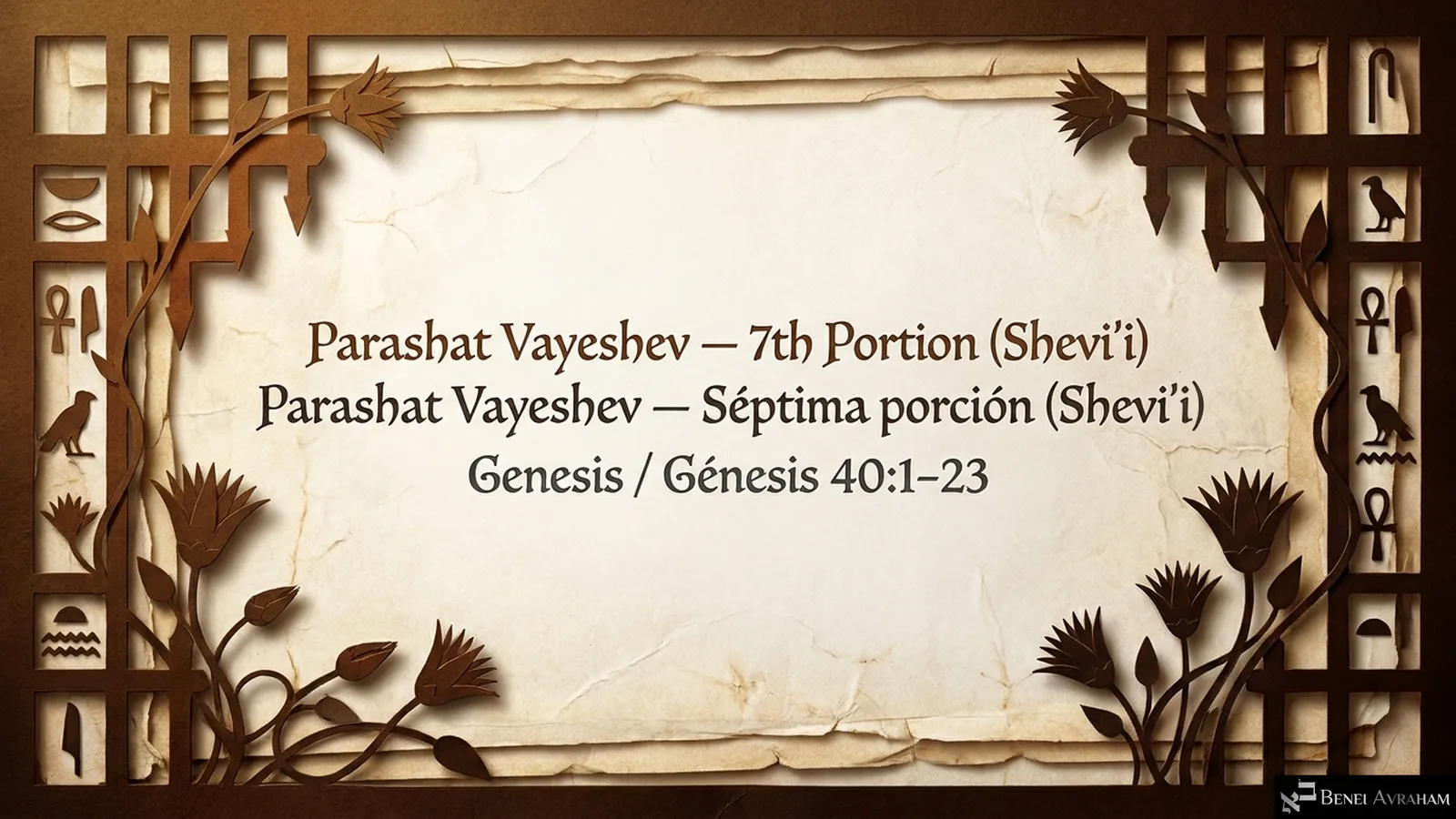
Title card for the seventh portion framed by paper lattice, lotus flowers and hieroglyphs: “Parashat Vayeshev, 7th Portion (Shevi’i), Genesis 40:1–23”.
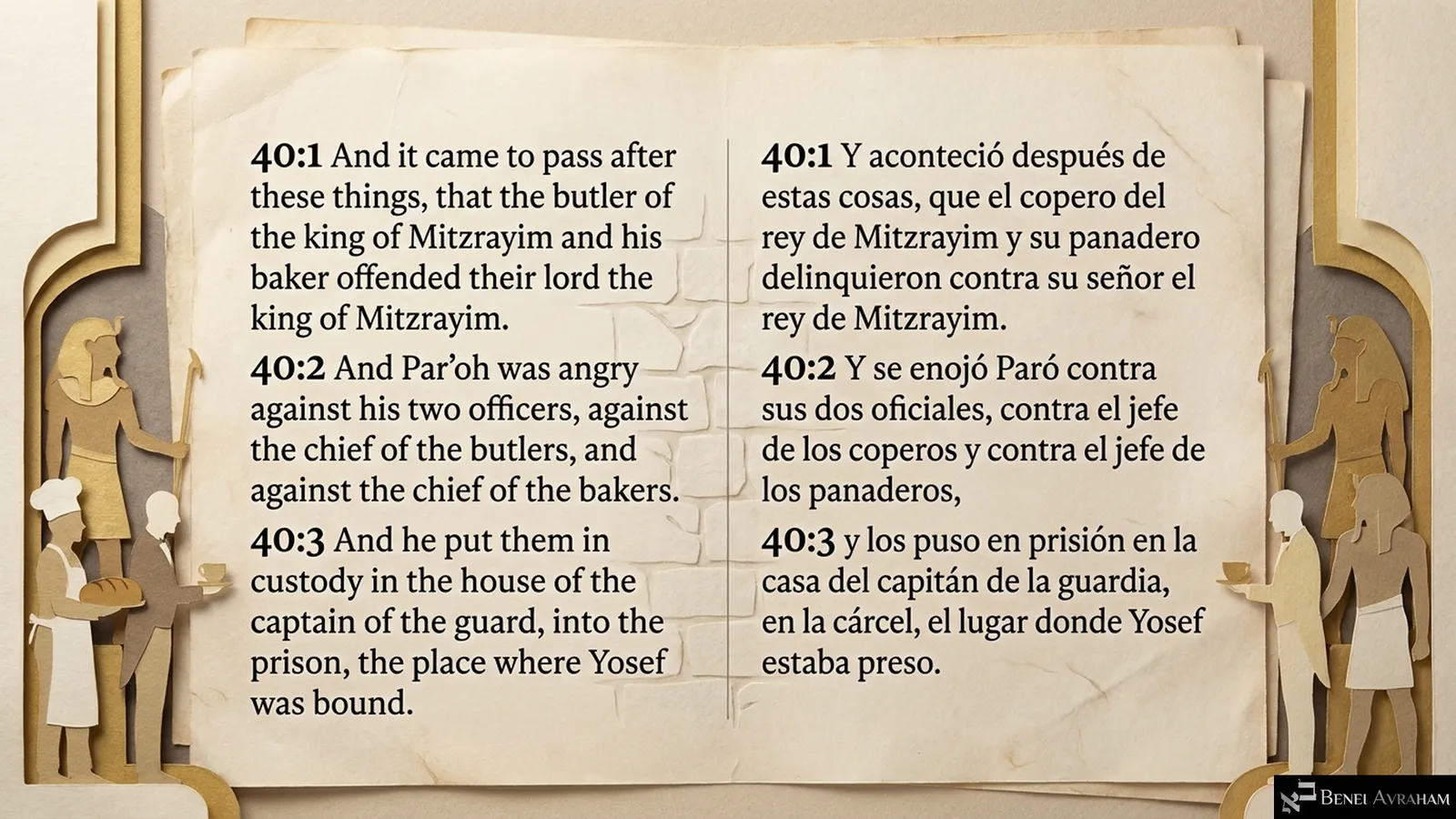
Paper figures of the baker and the butler stand beside an open papyrus: the butler and the baker of the king of Mitzrayim offended their lord, and he put them in the prison where Yosef was bound (Genesis 40:1–3).
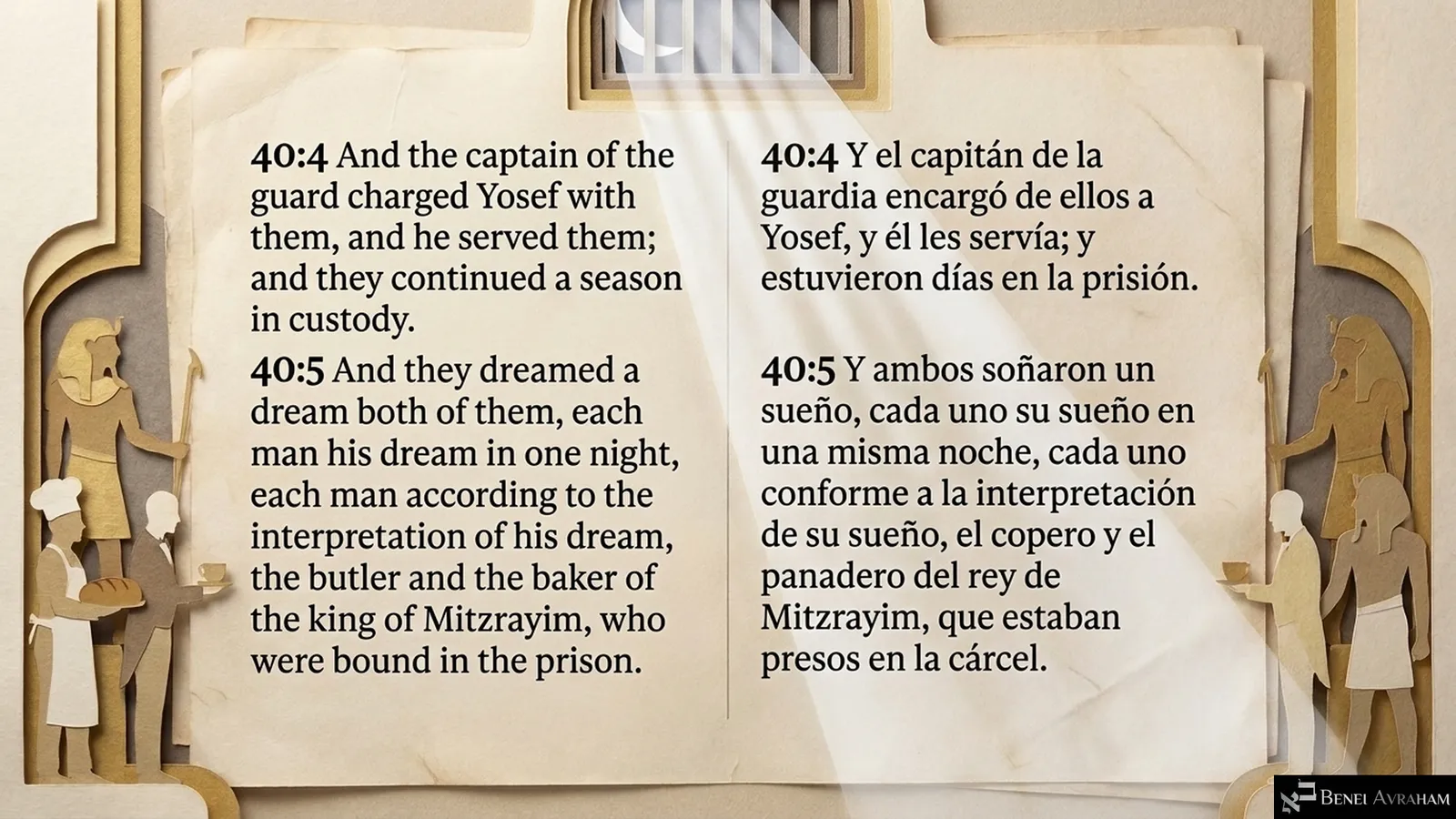
A beam of light falls through a barred prison window onto the open papyrus: Yosef served the butler and the baker, and they each dreamed a dream in one night (Genesis 40:4–5).
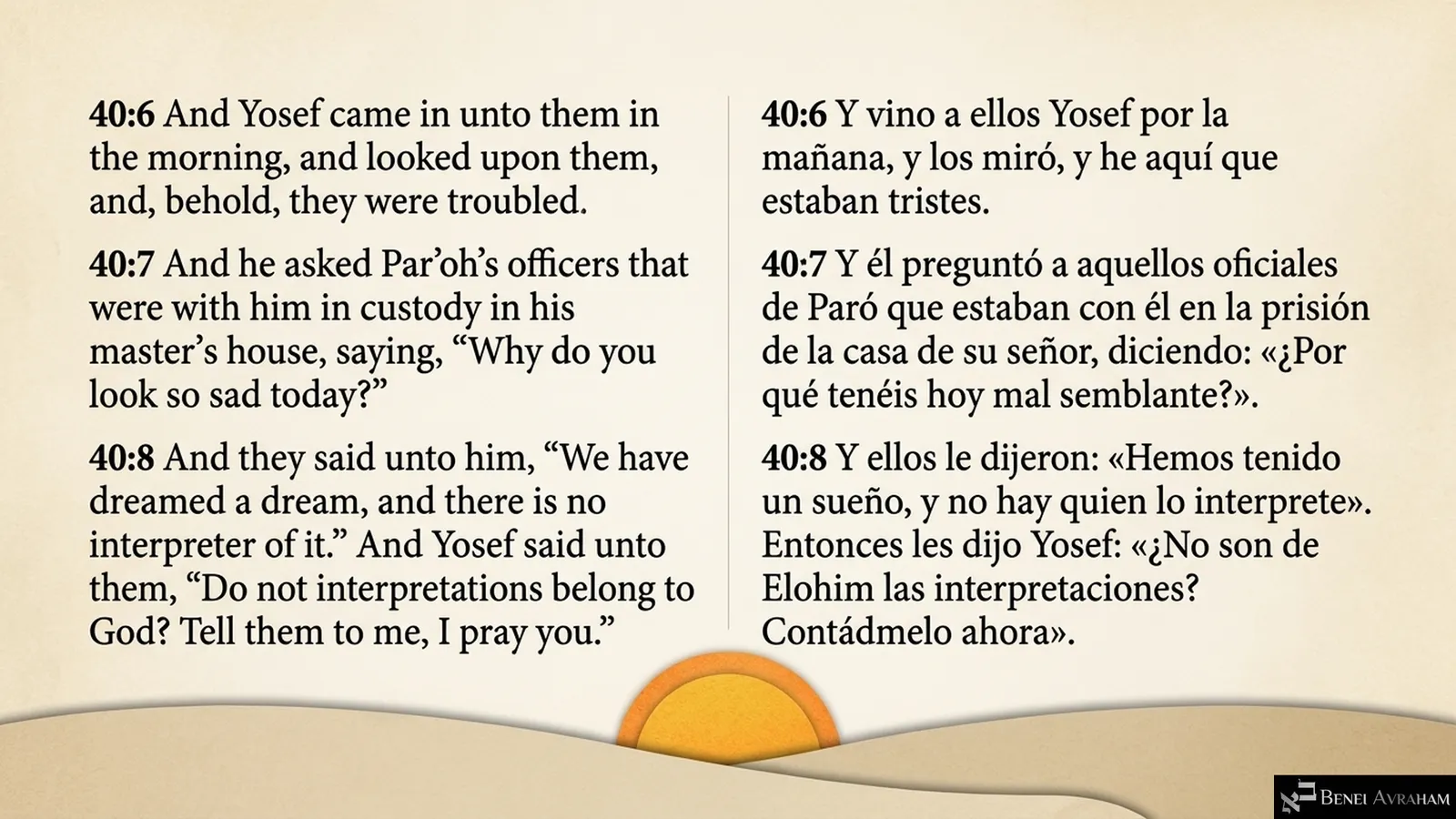
A paper sun rises over the dunes below the text: Yosef found them troubled in the morning; “Do not interpretations belong to God? Tell them to me, I pray you” (Genesis 40:6–8).
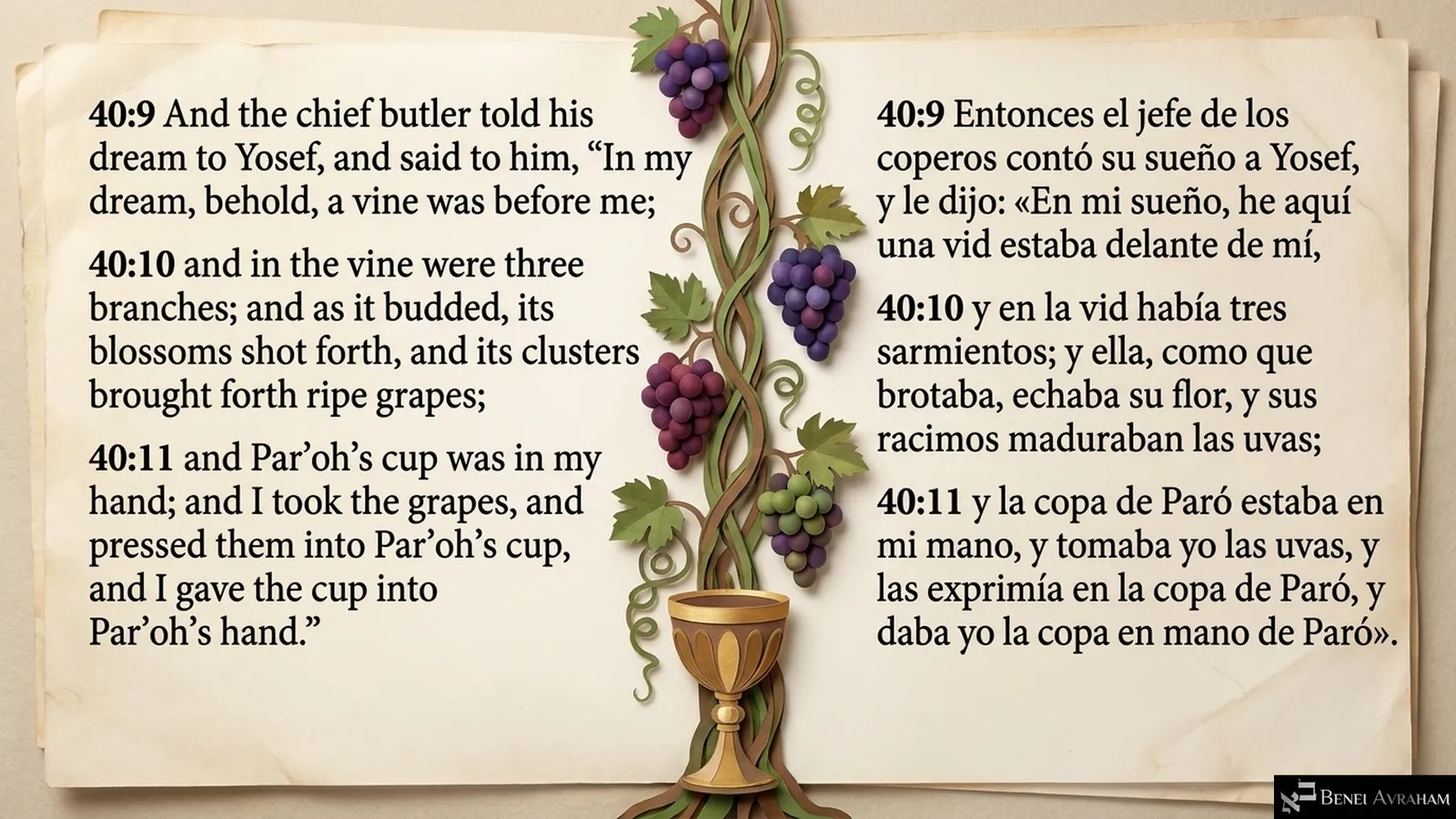
A paper vine with clusters of purple and green grapes climbs out of a golden cup: the chief butler’s dream of a vine with three branches, and Par’oh’s cup in his hand (Genesis 40:9–11).
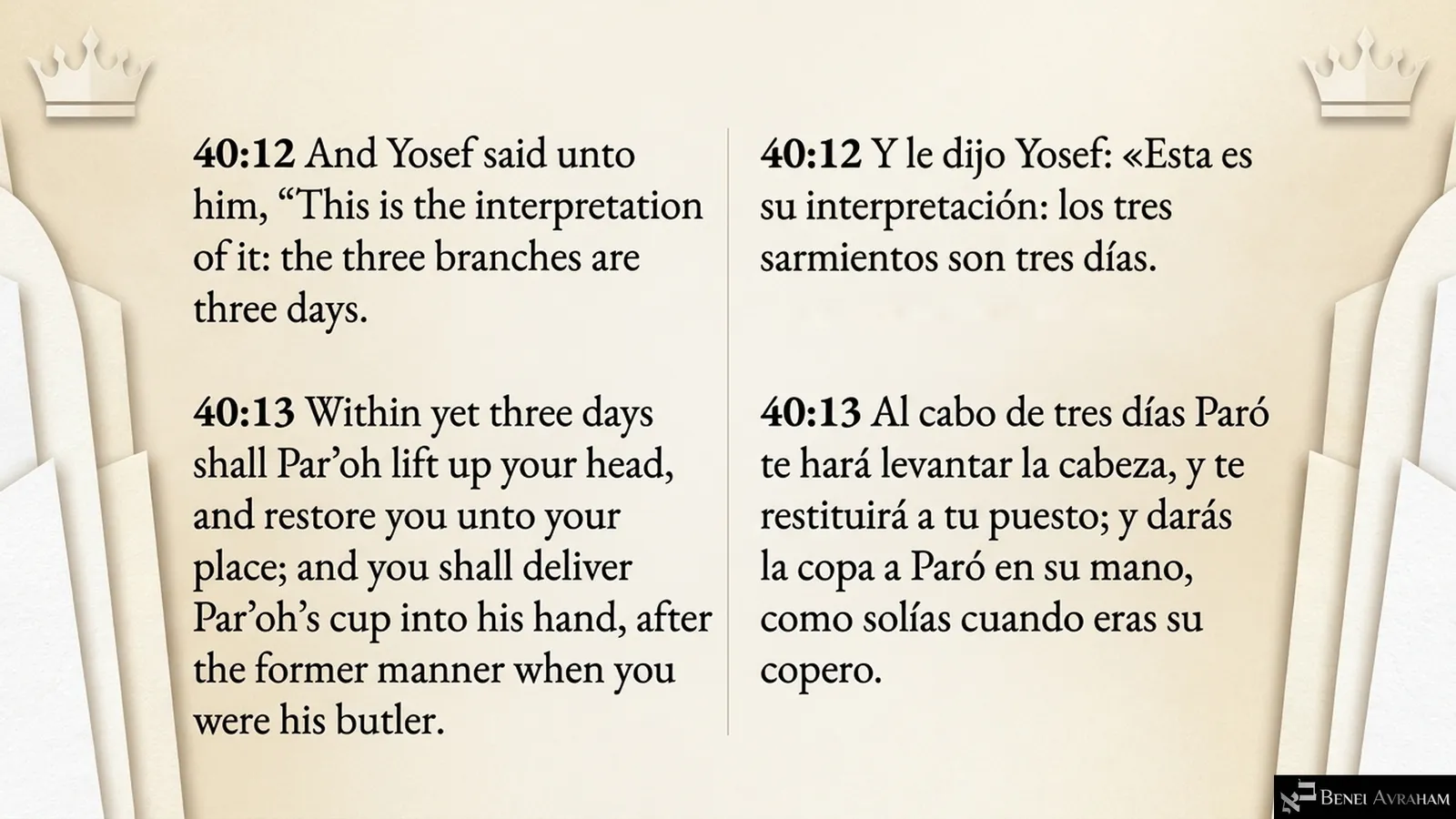
White paper crowns above the open pages: “The three branches are three days; within yet three days shall Par’oh lift up your head, and restore you unto your place” (Genesis 40:12–13).
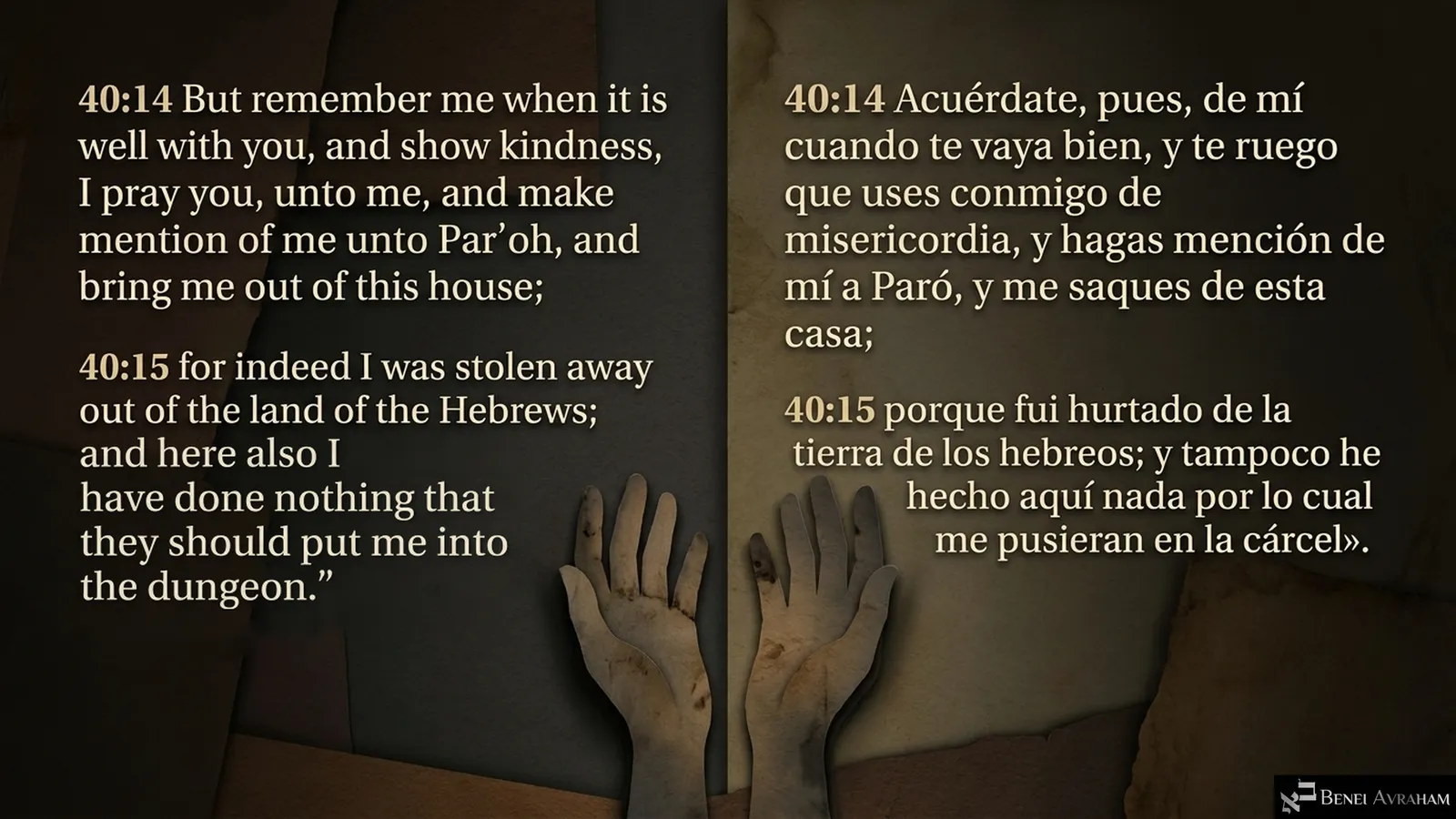
Two pale hands reach up out of the darkness: “Remember me when it is well with you … for indeed I was stolen away out of the land of the Hebrews” (Genesis 40:14–15).
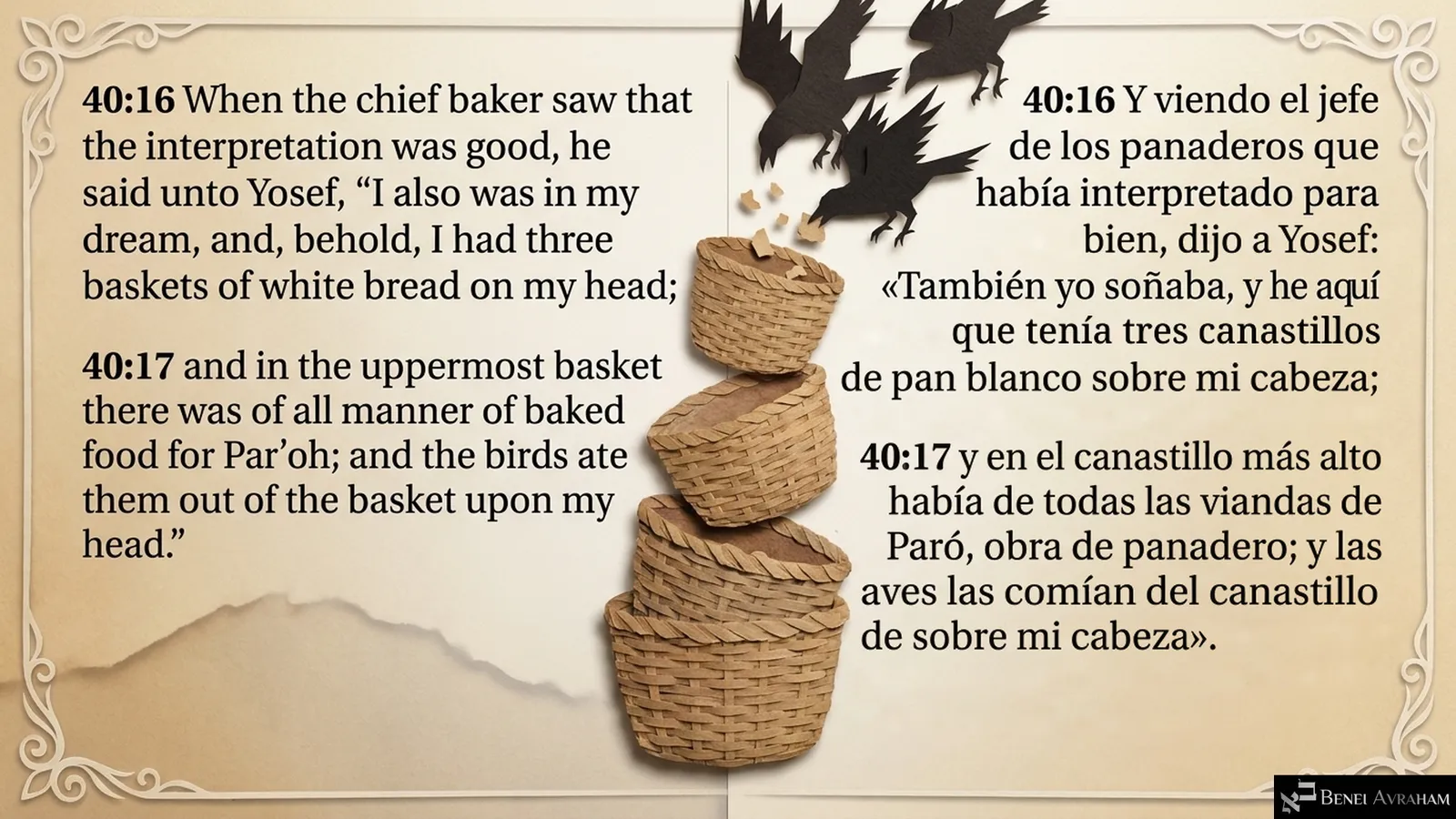
Black paper birds peck at a stack of woven baskets: the chief baker’s dream of three baskets of white bread on his head, and the birds ate them out of the basket (Genesis 40:16–17).
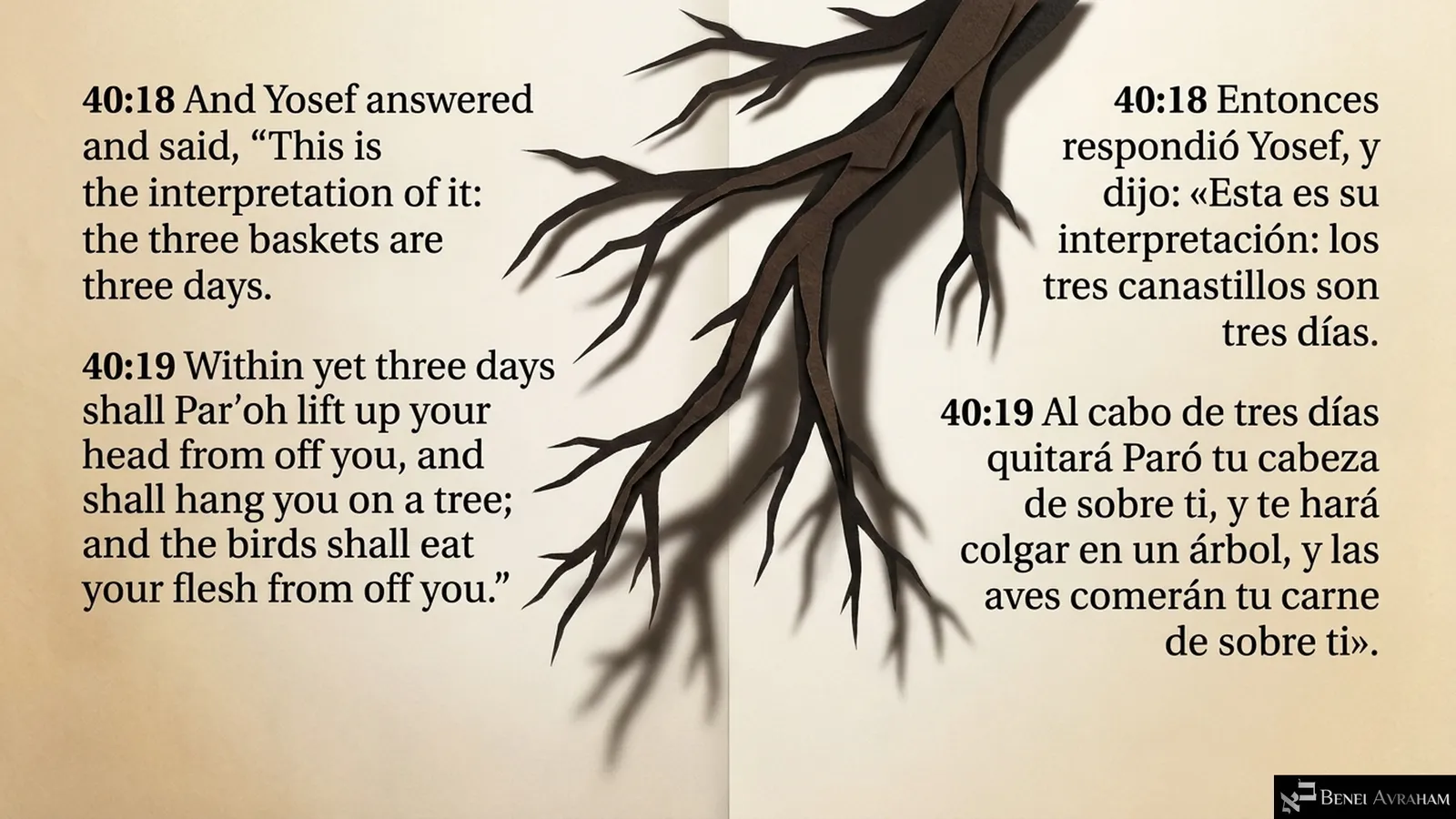
A bare dark branch reaches across the open pages: “The three baskets are three days; within yet three days shall Par’oh … hang you on a tree, and the birds shall eat your flesh” (Genesis 40:18–19).
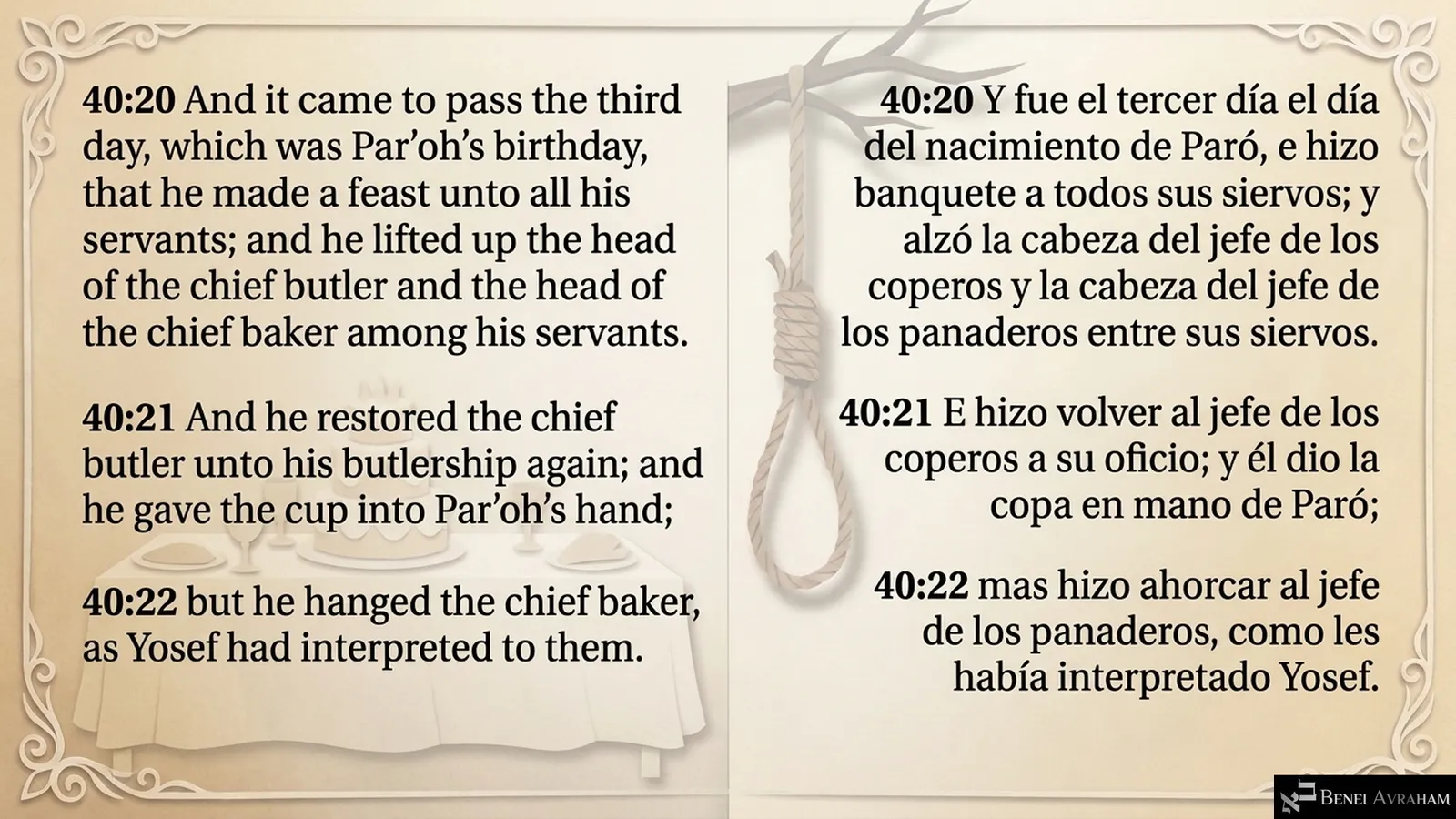
A noose hangs from a branch above Par’oh’s birthday table: he restored the chief butler unto his butlership, but he hanged the chief baker, as Yosef had interpreted to them (Genesis 40:20–22).
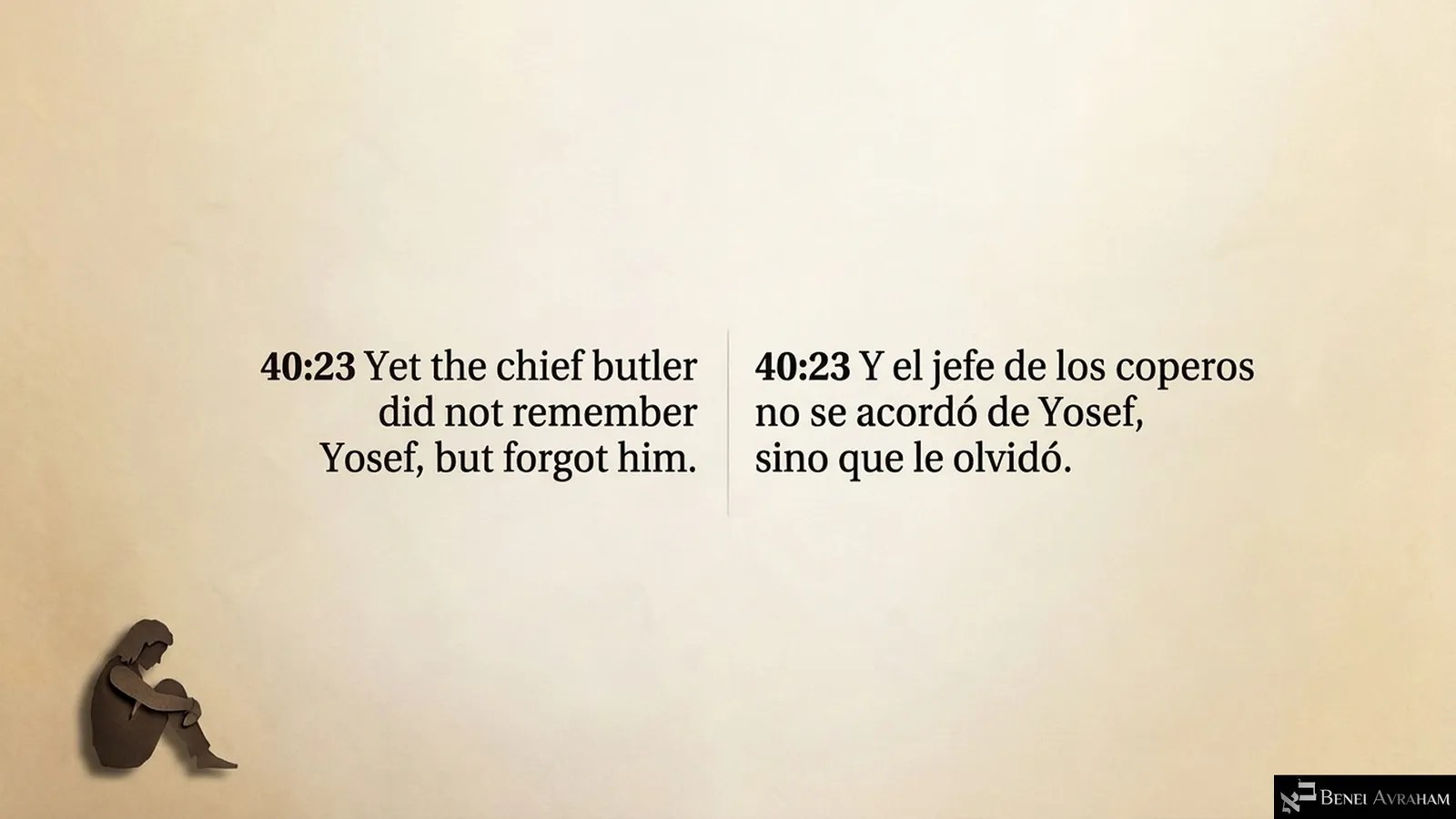
A small paper figure sits alone, hugging his knees, in the corner of an empty page: yet the chief butler did not remember Yosef, but forgot him (Genesis 40:23).
Haftarah · Amos 2:6–3:8

Haftarah: The Words of Amos
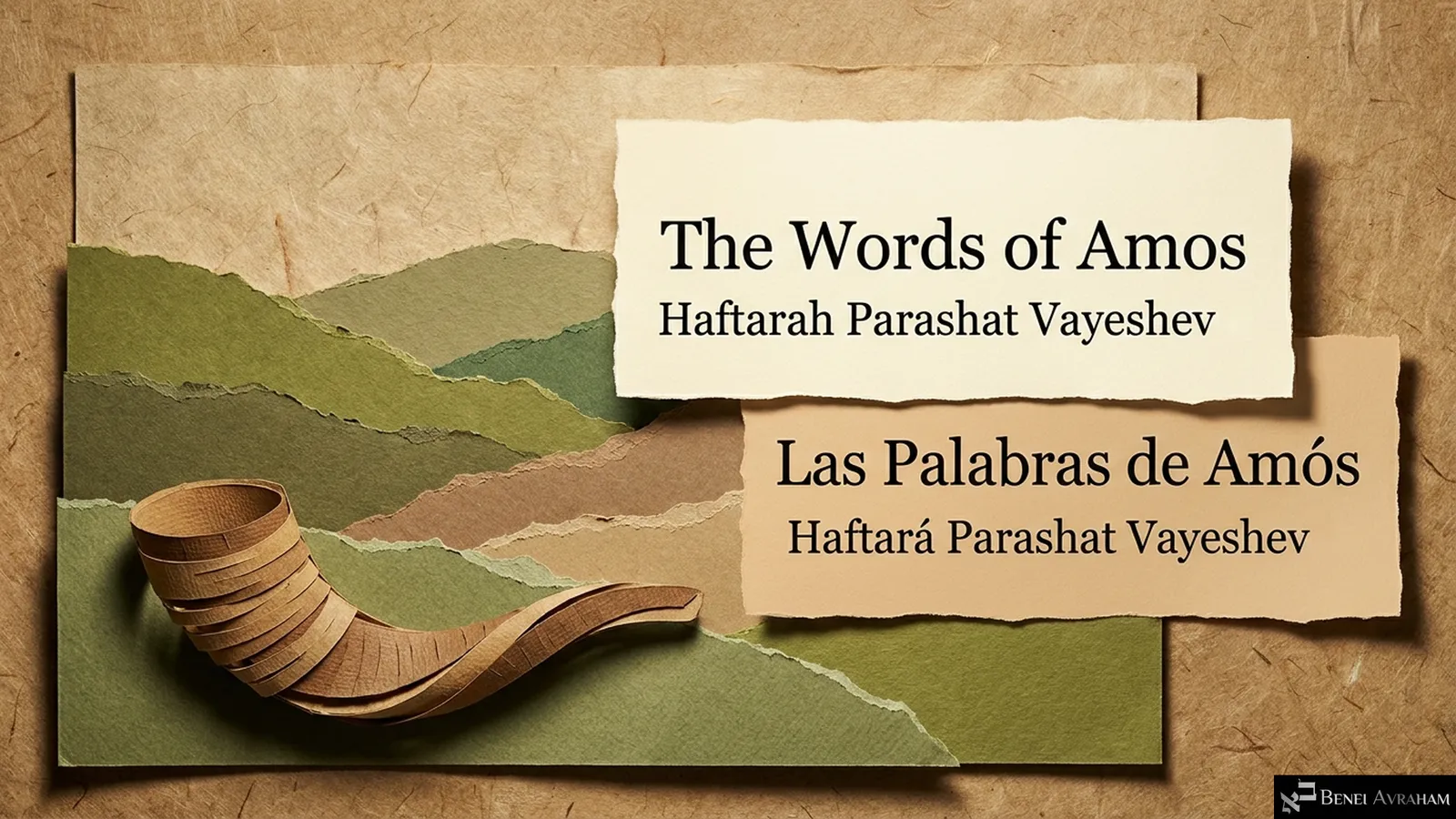
Title card for the haftarah: a paper shofar rests on green layered hills, “The Words of Amos, Haftarah Parashat Vayeshev” and “Las Palabras de Amós”.
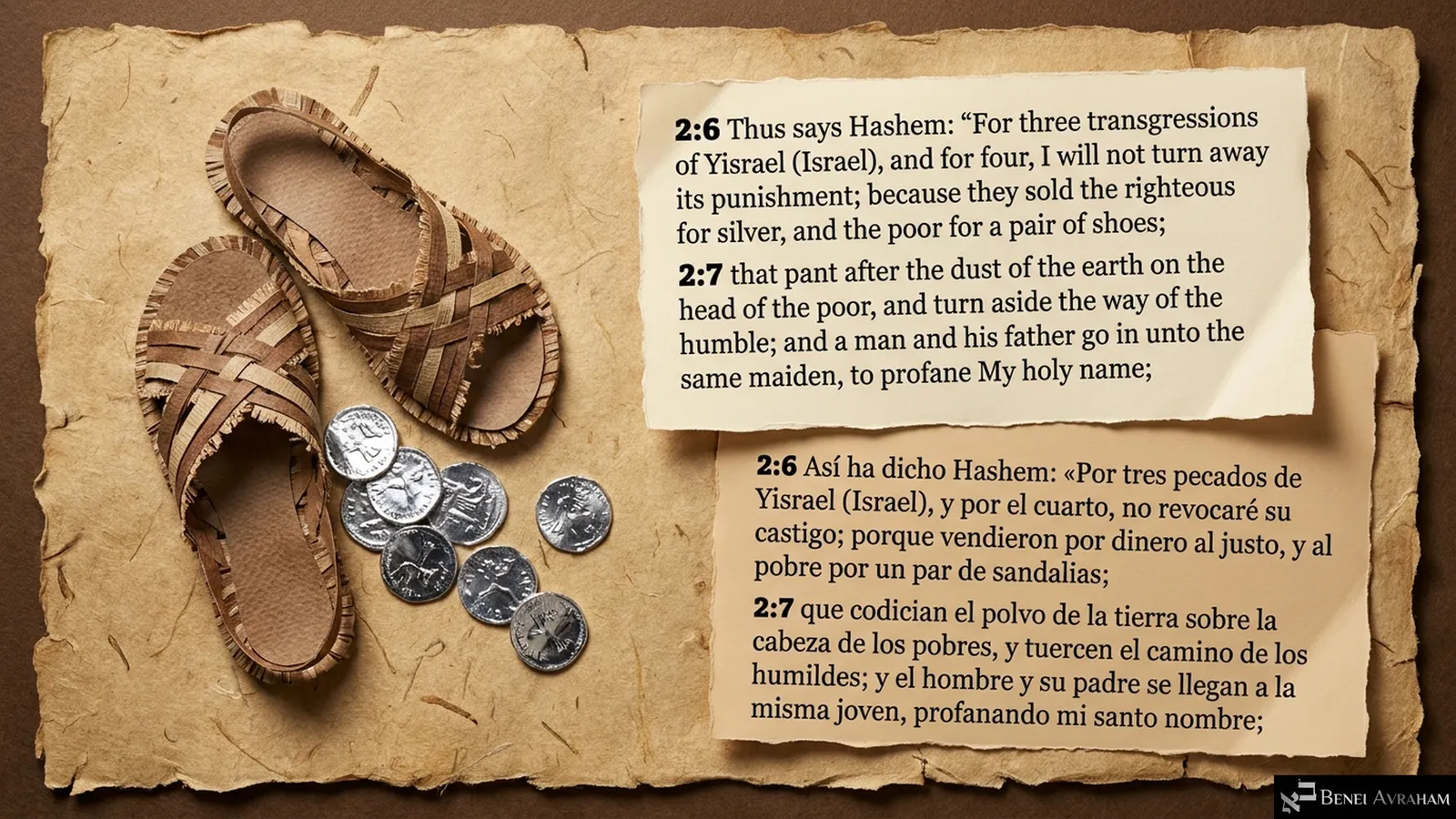
A pair of woven paper sandals and a few silver coins: “because they sold the righteous for silver, and the poor for a pair of shoes” (Amos 2:6–7).
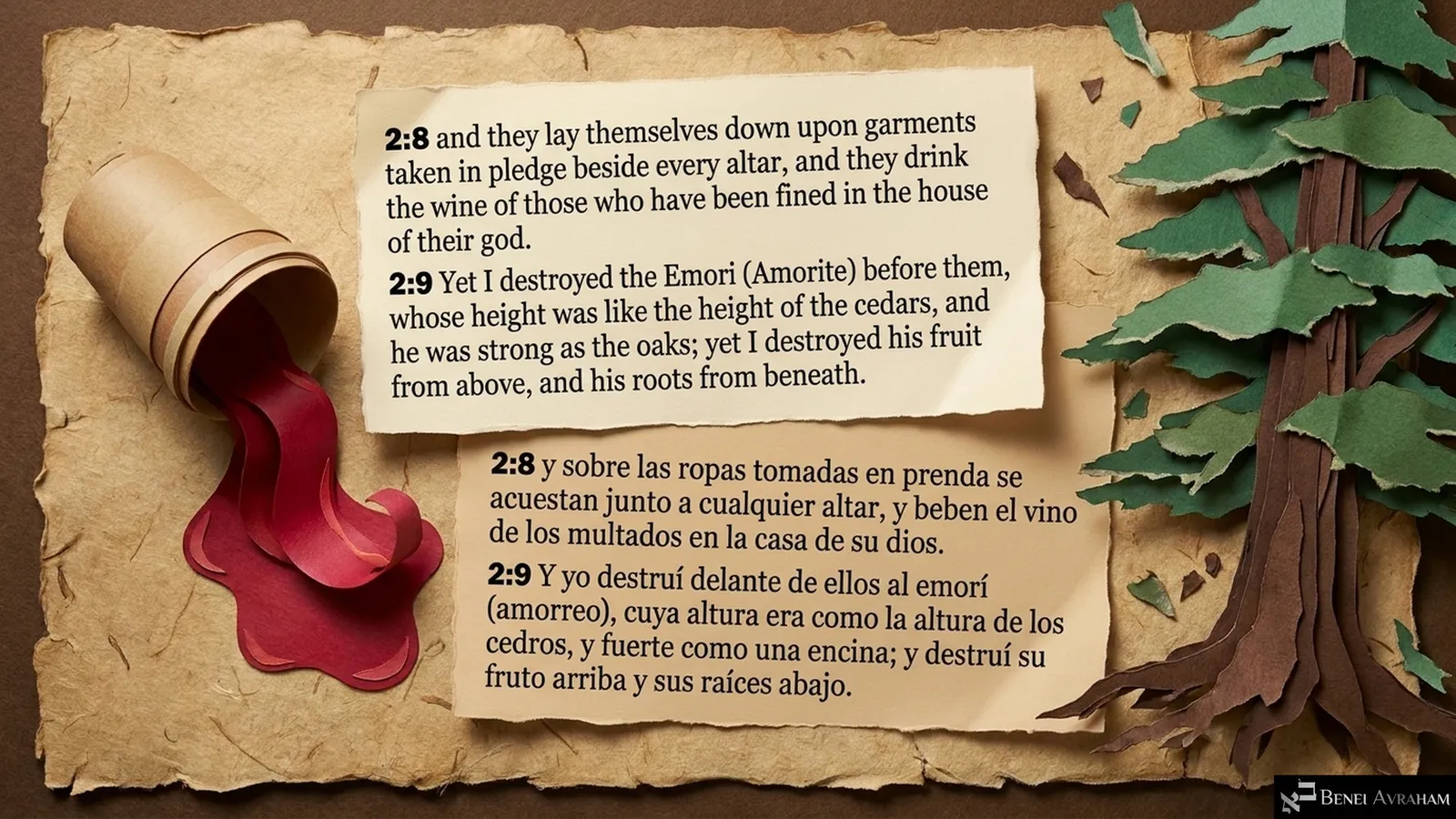
A cup spills red wine beside a tall paper cedar: they drink the wine of those who have been fined, “yet I destroyed the Emori before them, whose height was like the height of the cedars” (Amos 2:8–9).
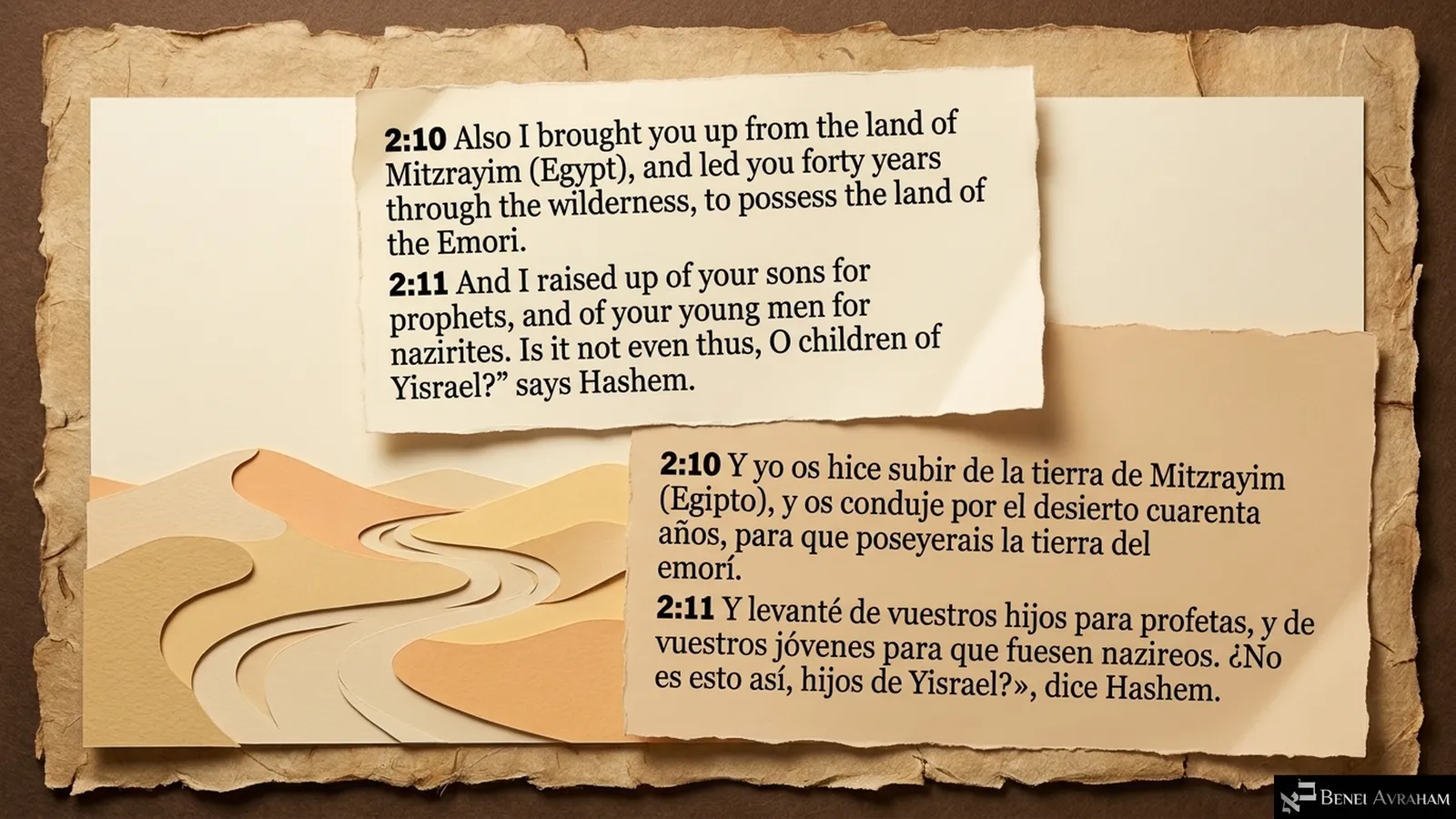
A winding paper path through the sand dunes: “I brought you up from the land of Mitzrayim, and led you forty years through the wilderness,” and raised up prophets and nazirites (Amos 2:10–11).
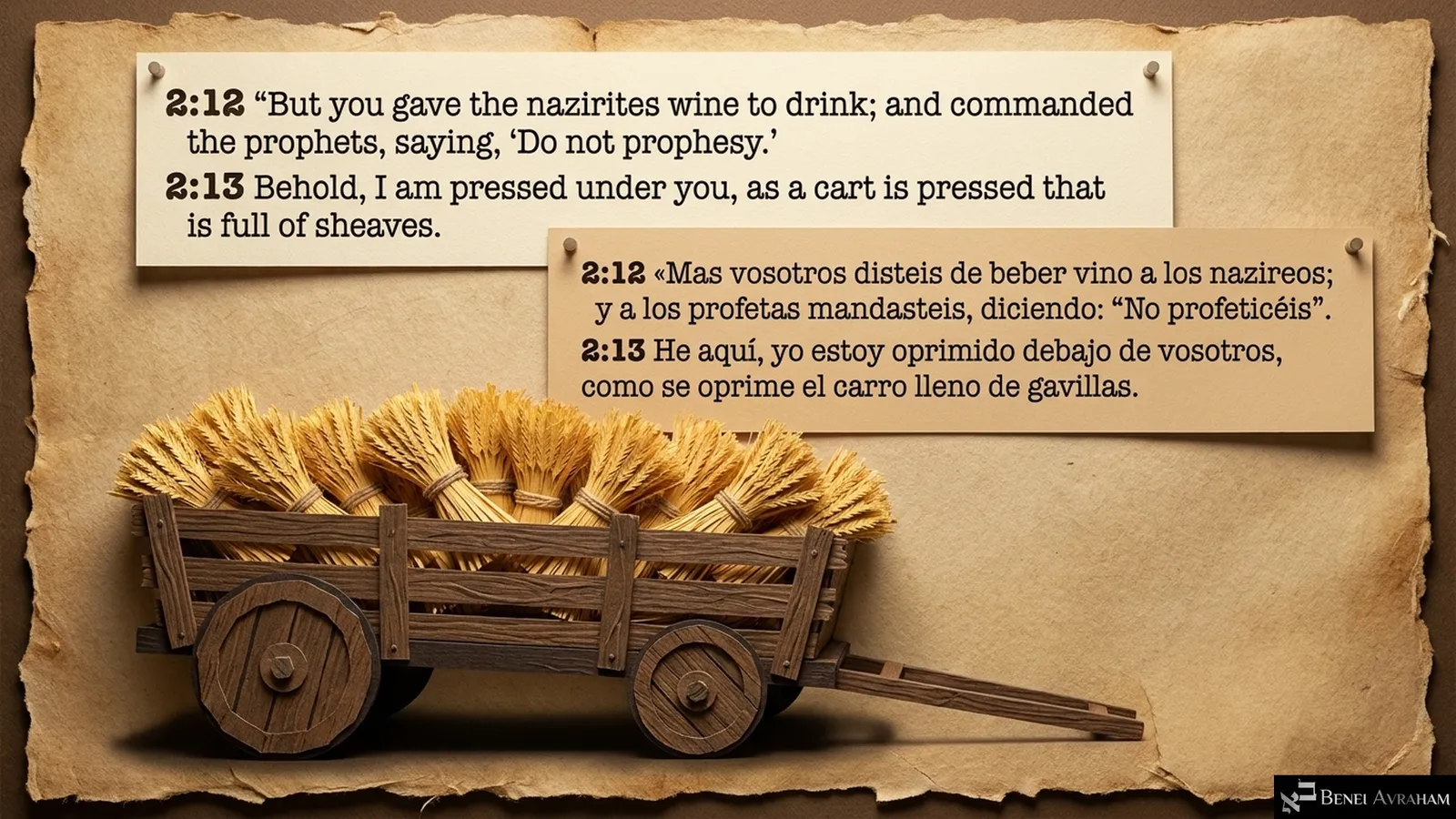
A wooden cart piled high with golden sheaves: “You gave the nazirites wine to drink … Behold, I am pressed under you, as a cart is pressed that is full of sheaves” (Amos 2:12–13).
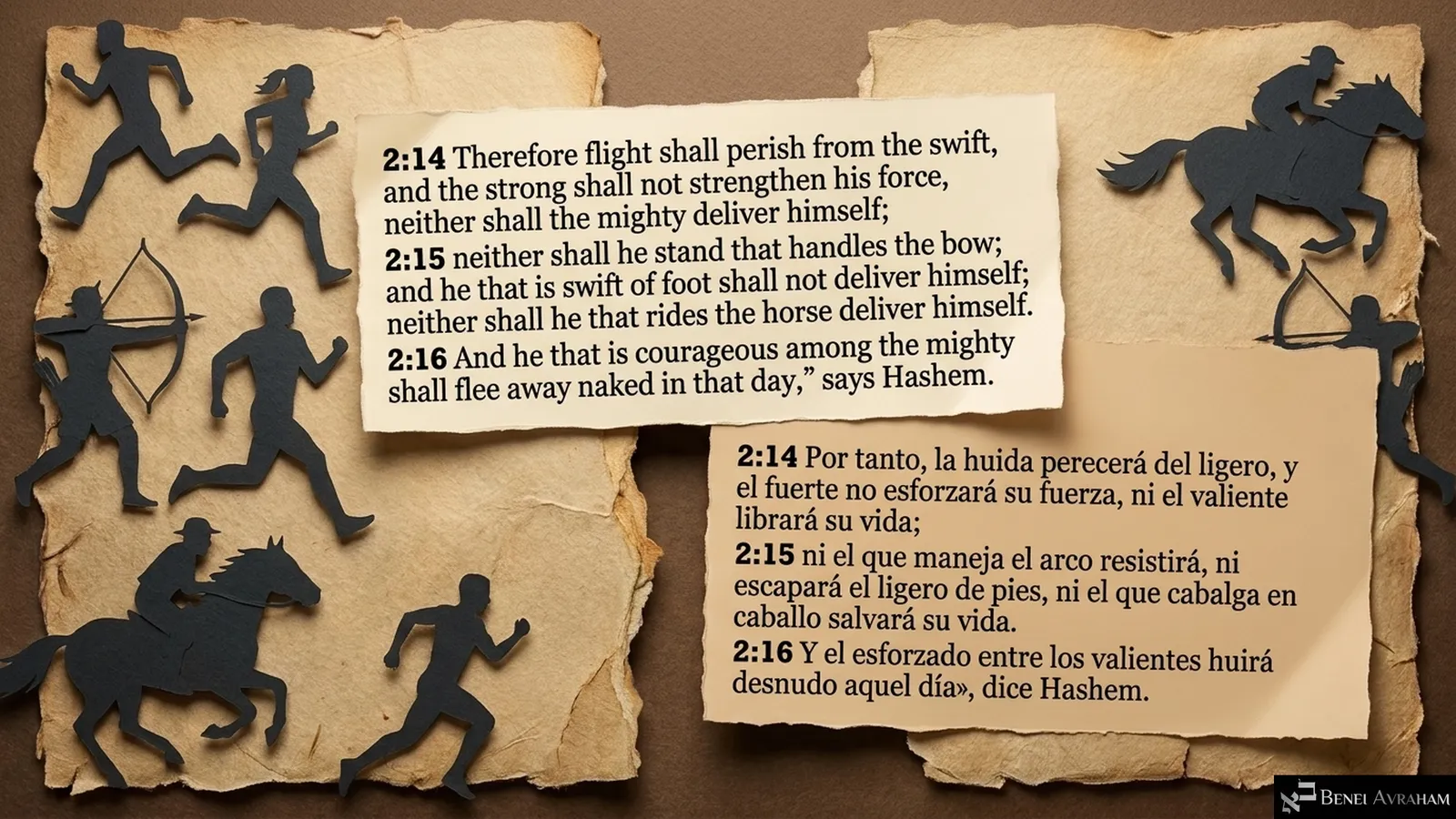
Black paper runners, archers and riders flee across the torn pages: “Flight shall perish from the swift … and he that is courageous among the mighty shall flee away naked in that day” (Amos 2:14–16).
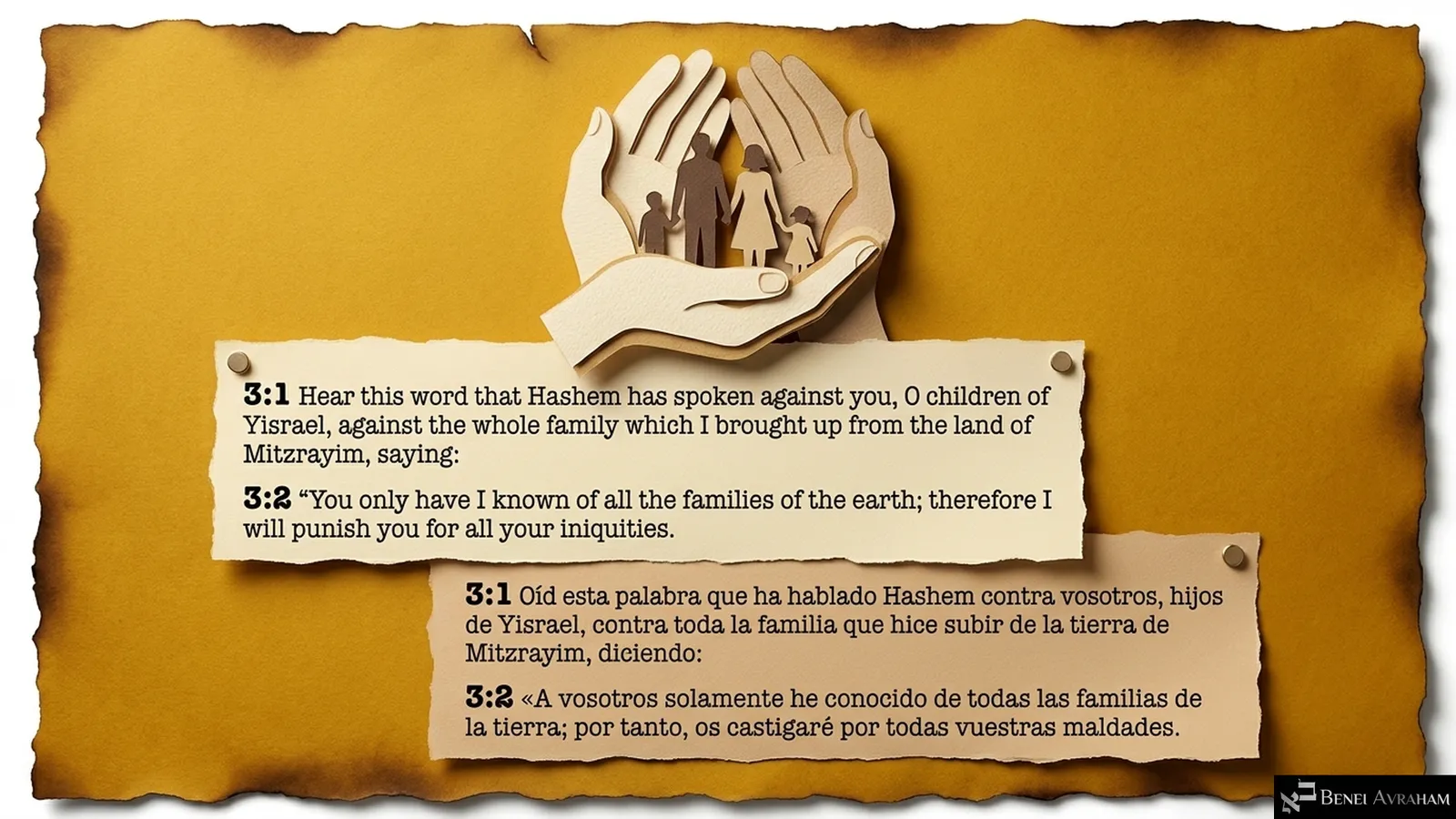
Two paper hands cup a small family: “You only have I known of all the families of the earth; therefore I will punish you for all your iniquities” (Amos 3:1–2).
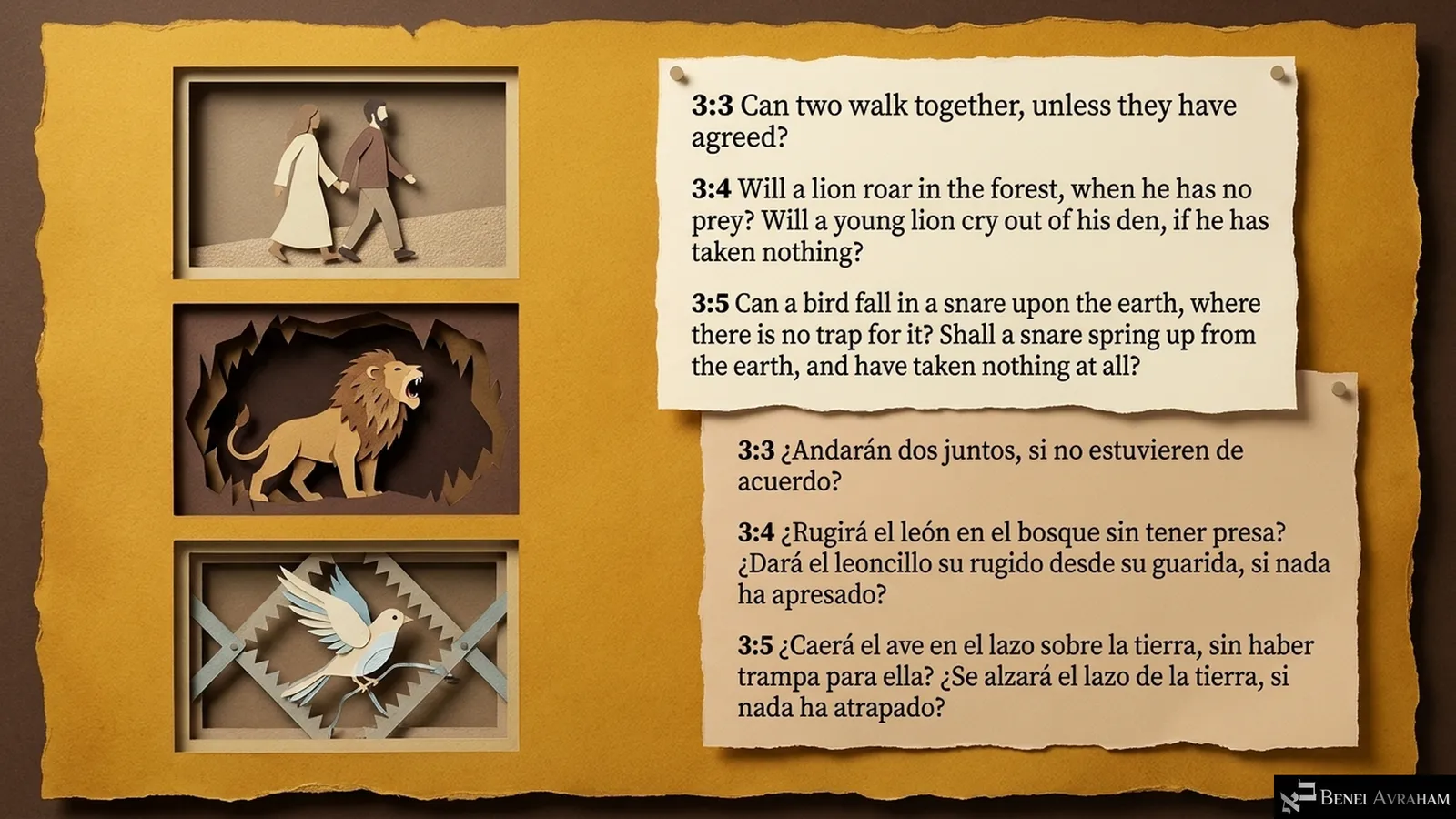
Three paper scenes beside the text: two walking together, a roaring lion, and a bird by a snare: “Can two walk together, unless they have agreed? Will a lion roar in the forest, when he has no prey?” (Amos 3:3–5).
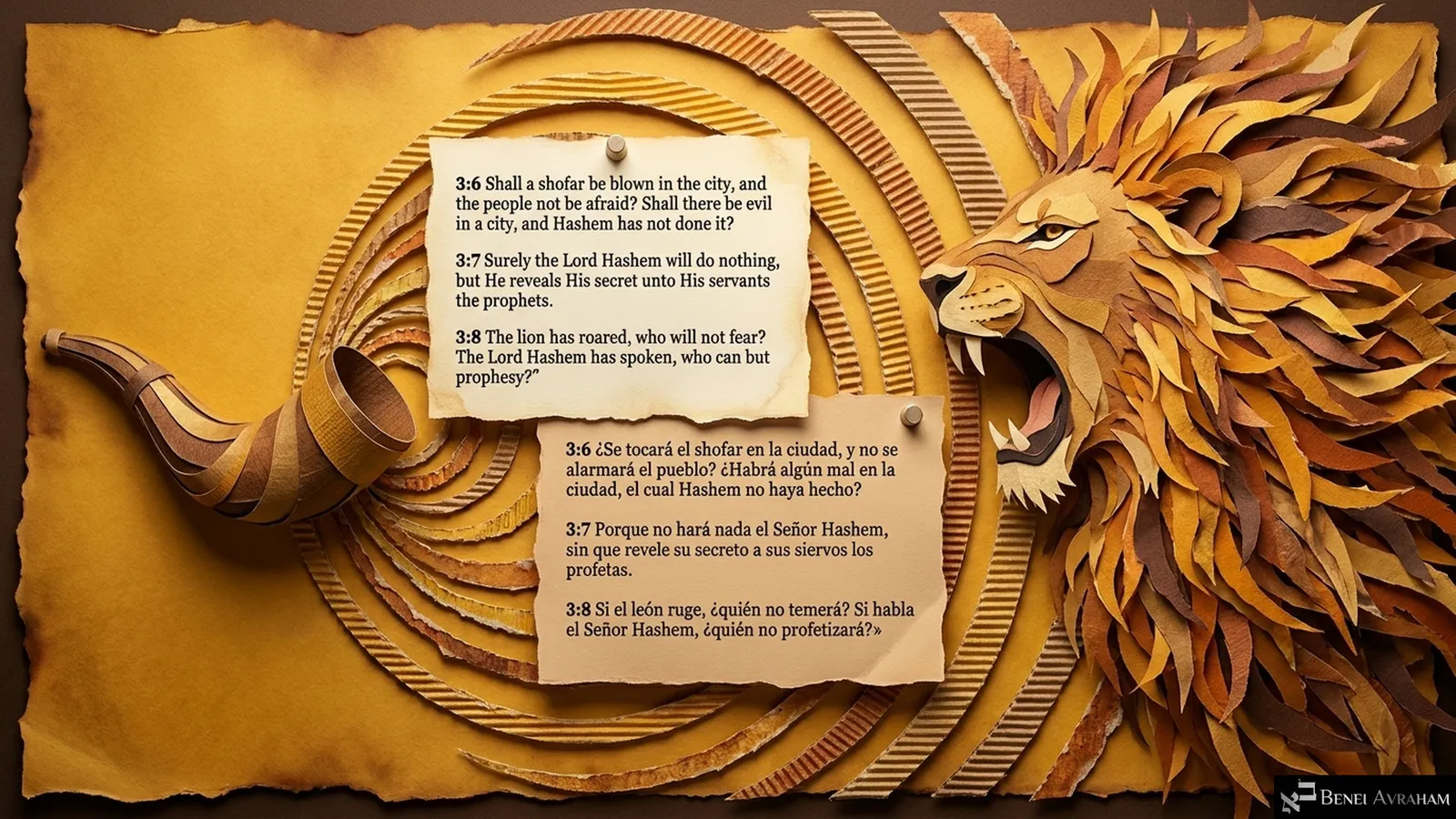
A great paper lion roars beside a shofar as rings of sound spiral outward: “The lion has roared, who will not fear? The Lord Hashem has spoken, who can but prophesy?” (Amos 3:6–8).