SMS/Text 469-608-9944
Parashat Toldot · Genesis 25:19–28:9 · Haftarah Malachi 1:1–2:7

Toldot: A Visual Journey

Illustrated teaching slides from Benei Avraham, in English and Spanish, walking through Parashat Toldot portion by portion: Yitzḥak prays for Rivkah, the twins struggle in her womb, and Esav sells his birthright to Yaakov for a bowl of red stew; in a famine Yitzḥak stays in Gerar, says Rivkah is his sister, and reaps a hundredfold; the Pelishtim envy him and stop up the wells, and he digs Esek, Sitnah and Reḥovot; Hashem appears to him at Be’er-Sheva, and Avimelech comes to make a covenant; Rivkah and Yaakov bring the savory food, and Yitzḥak blesses Yaakov in place of Esav; Esav’s bitter cry, his blessing “by your sword”, and his anger; Yaakov is sent to Paddan-Aram with the blessing of Avraham, and Esav takes Maḥalat, daughter of Yishma’el. The haftarah follows: “I have loved you,” says Hashem, “yet I loved Yaakov, and I hated Esav,” and Malachi rebukes the priests who despise His name, recalling the covenant of life and peace with Levi. Tap any image to open the slideshow; use the arrows (or swipe) to move through every slide.

Rishon · Genesis 25:19–26:5

First Portion

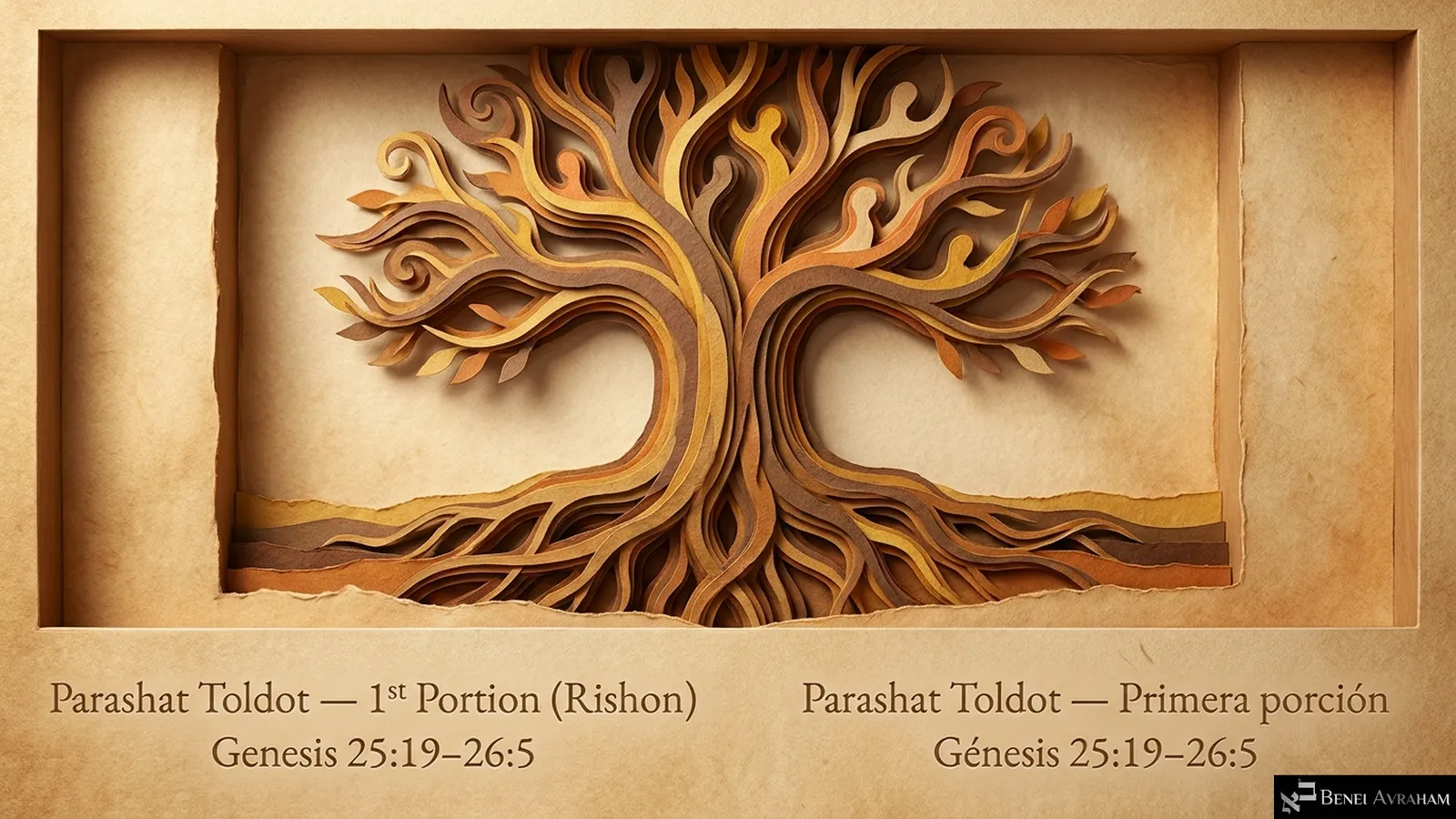
Title slide: Parashat Toldot, first portion (Rishon), Genesis 25:19–26:5, with a paper-cut tree.
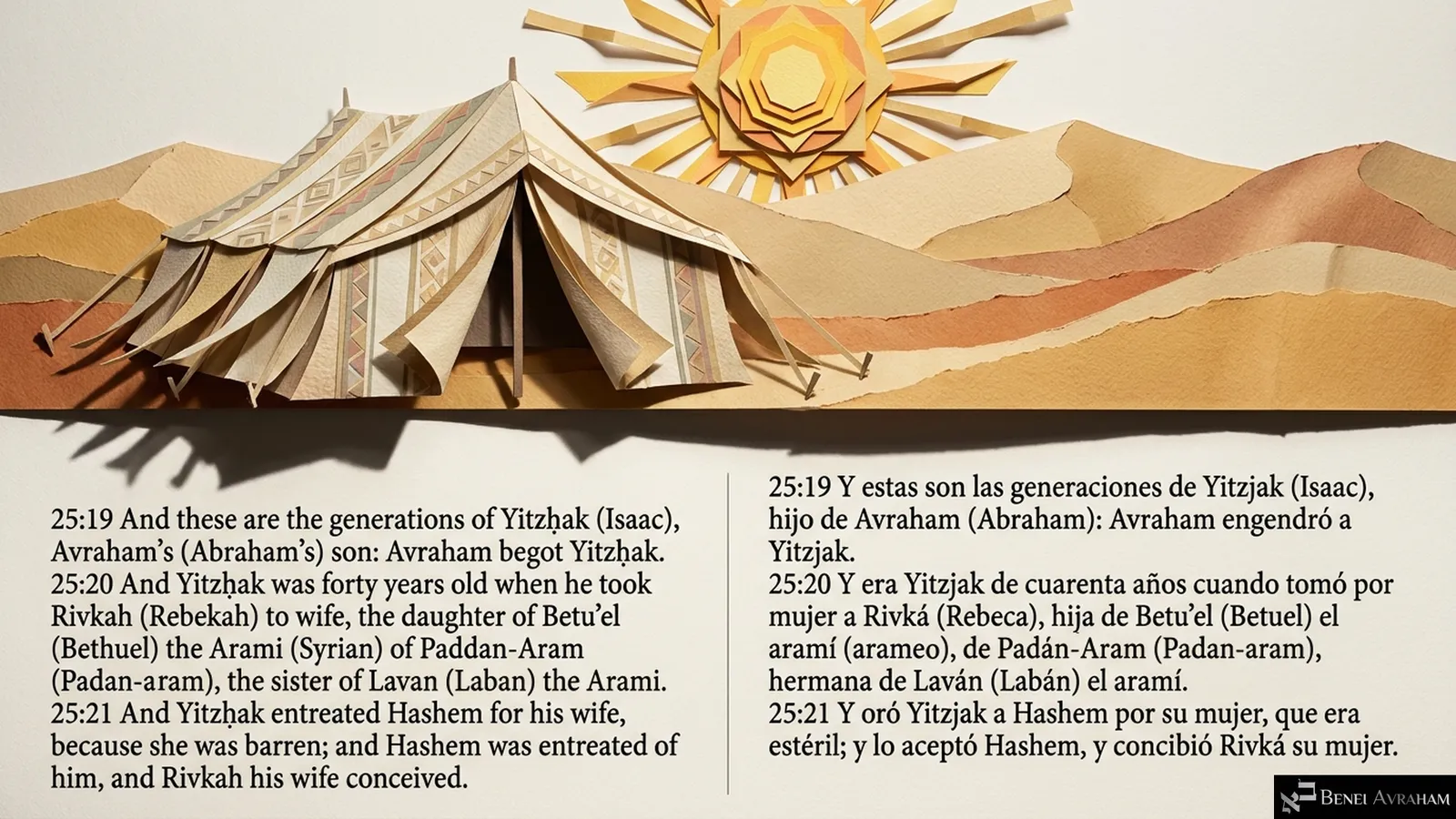
Yitzḥak marries Rivkah and prays for her, because she was barren, and Hashem answers him (Genesis 25:19–21).
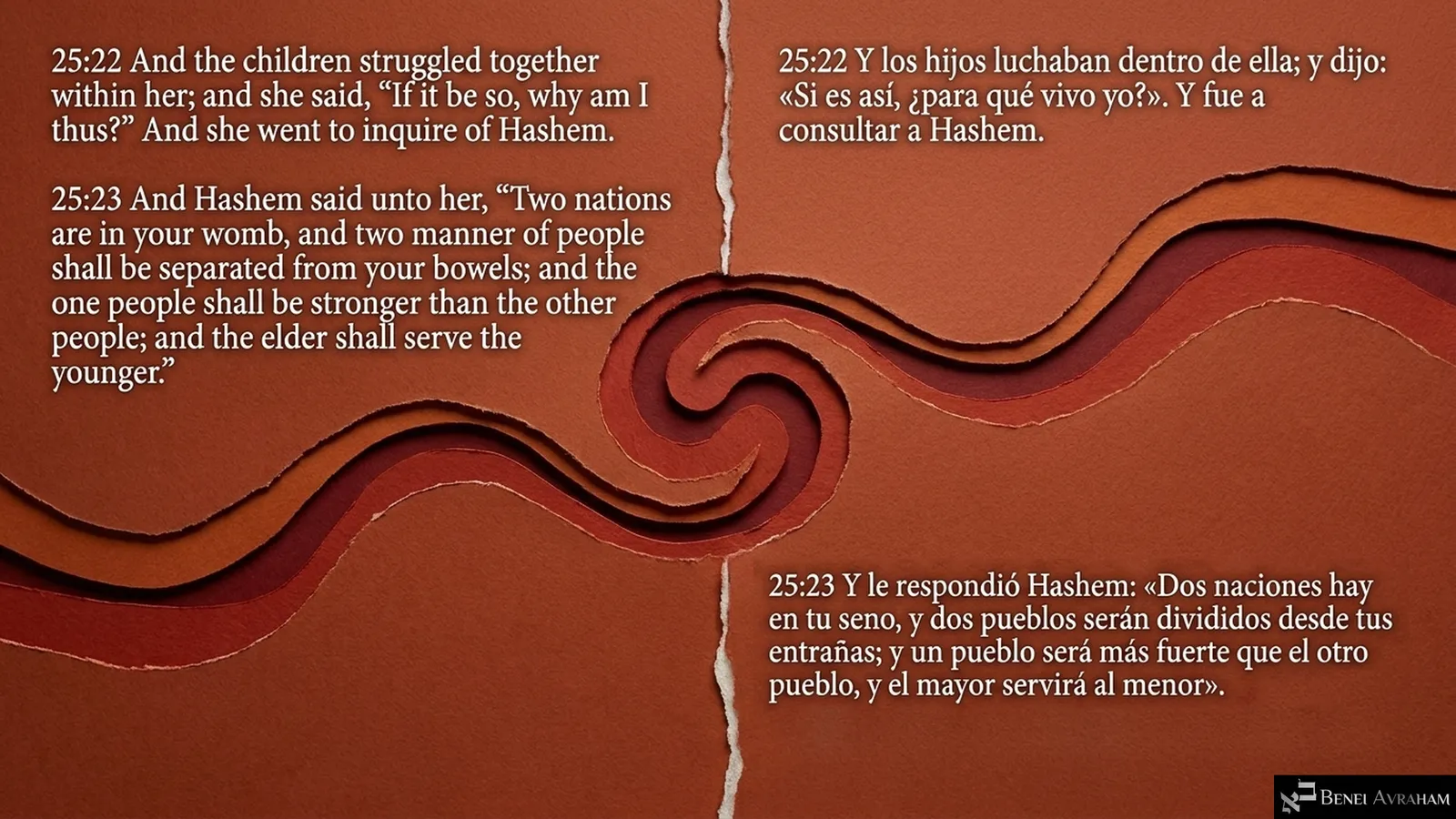
The children struggle within Rivkah; Hashem tells her that two nations are in her womb (Genesis 25:22–23).
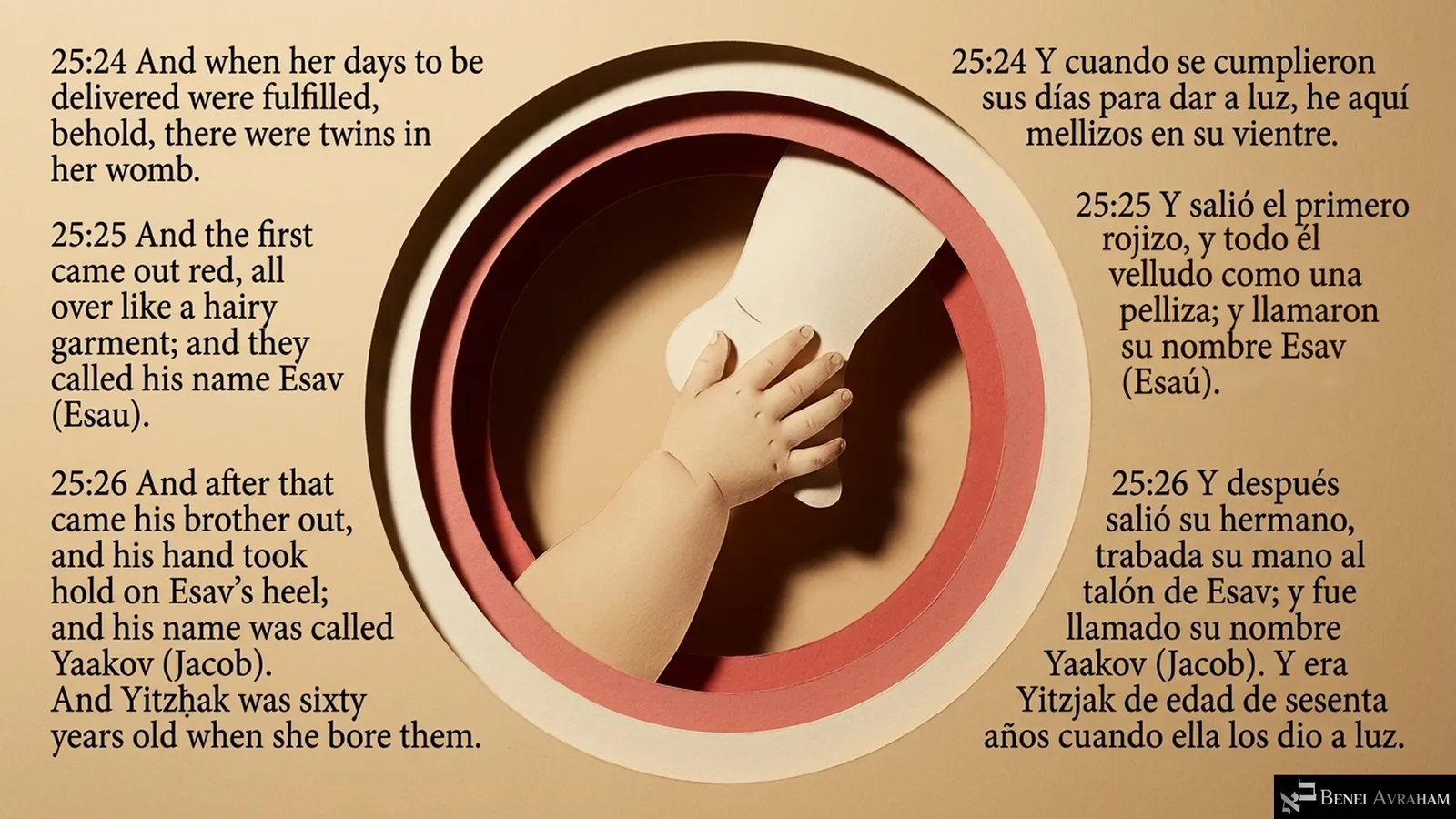
Esav is born red and hairy, and Yaakov comes out holding his brother’s heel (Genesis 25:24–26).
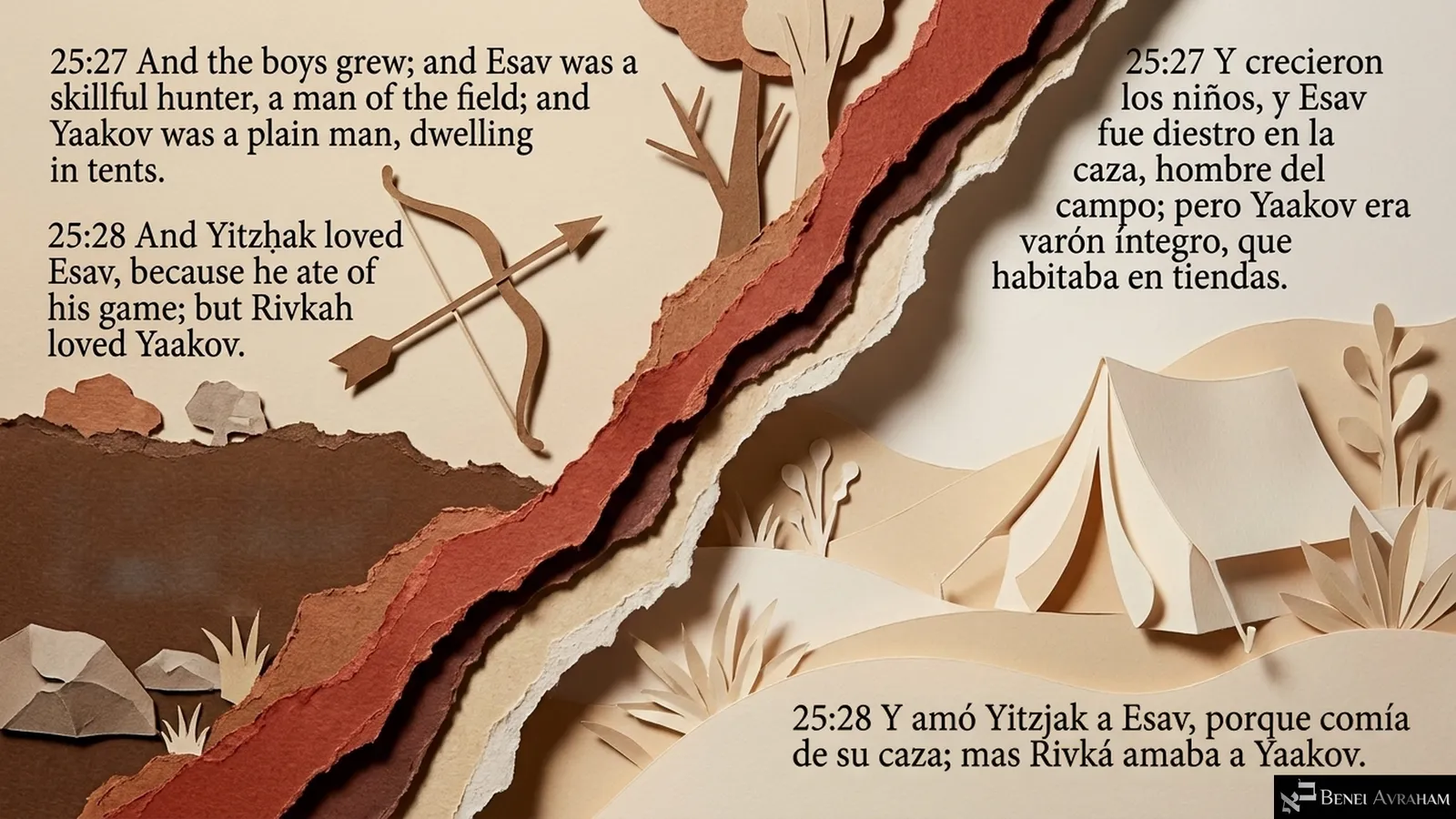
Esav the skillful hunter and Yaakov the quiet man dwelling in tents; Yitzḥak loves Esav, Rivkah loves Yaakov (Genesis 25:27–28).
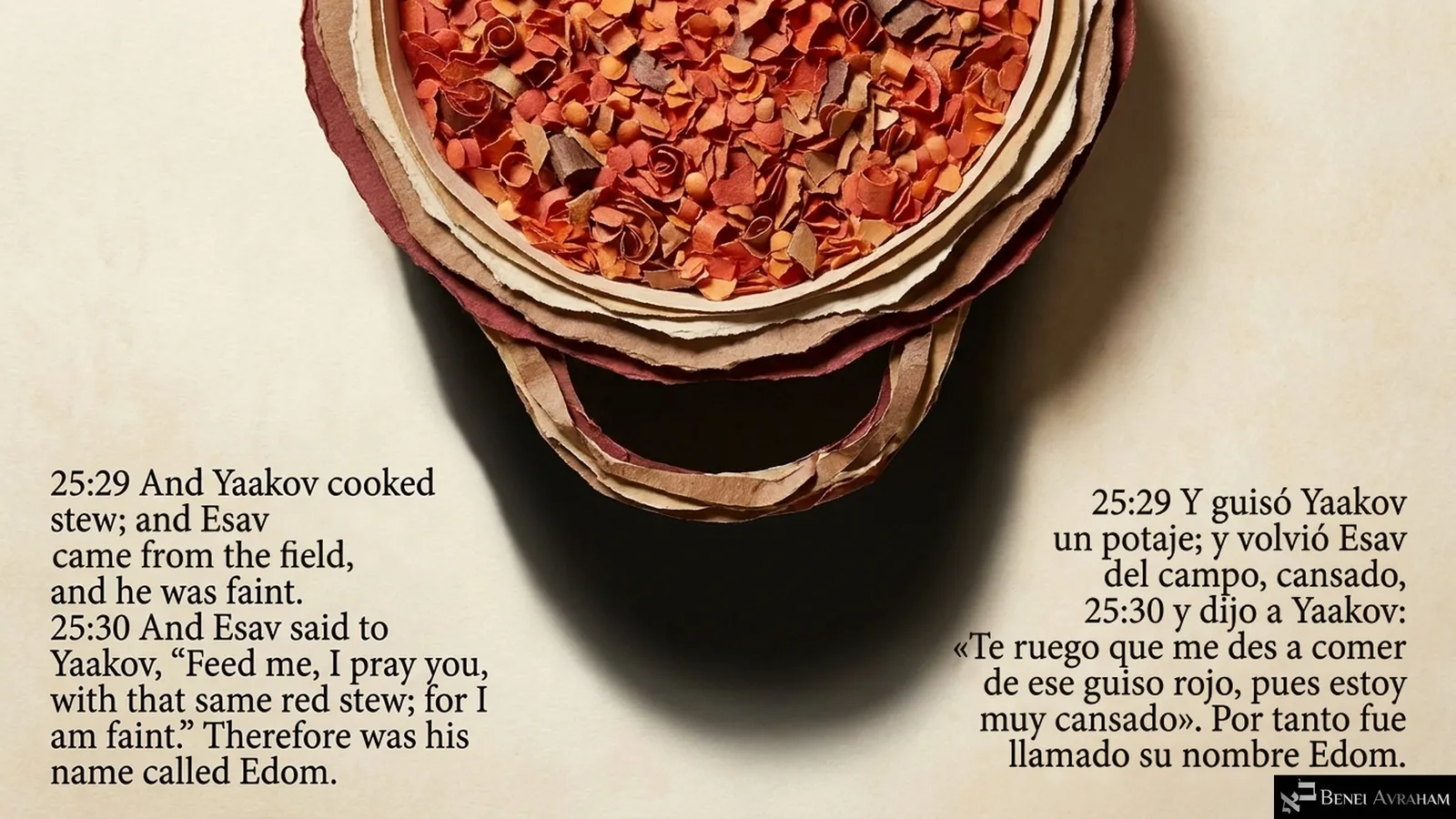
Esav comes in faint from the field and asks for the red stew, so he is called Edom (Genesis 25:29–30).
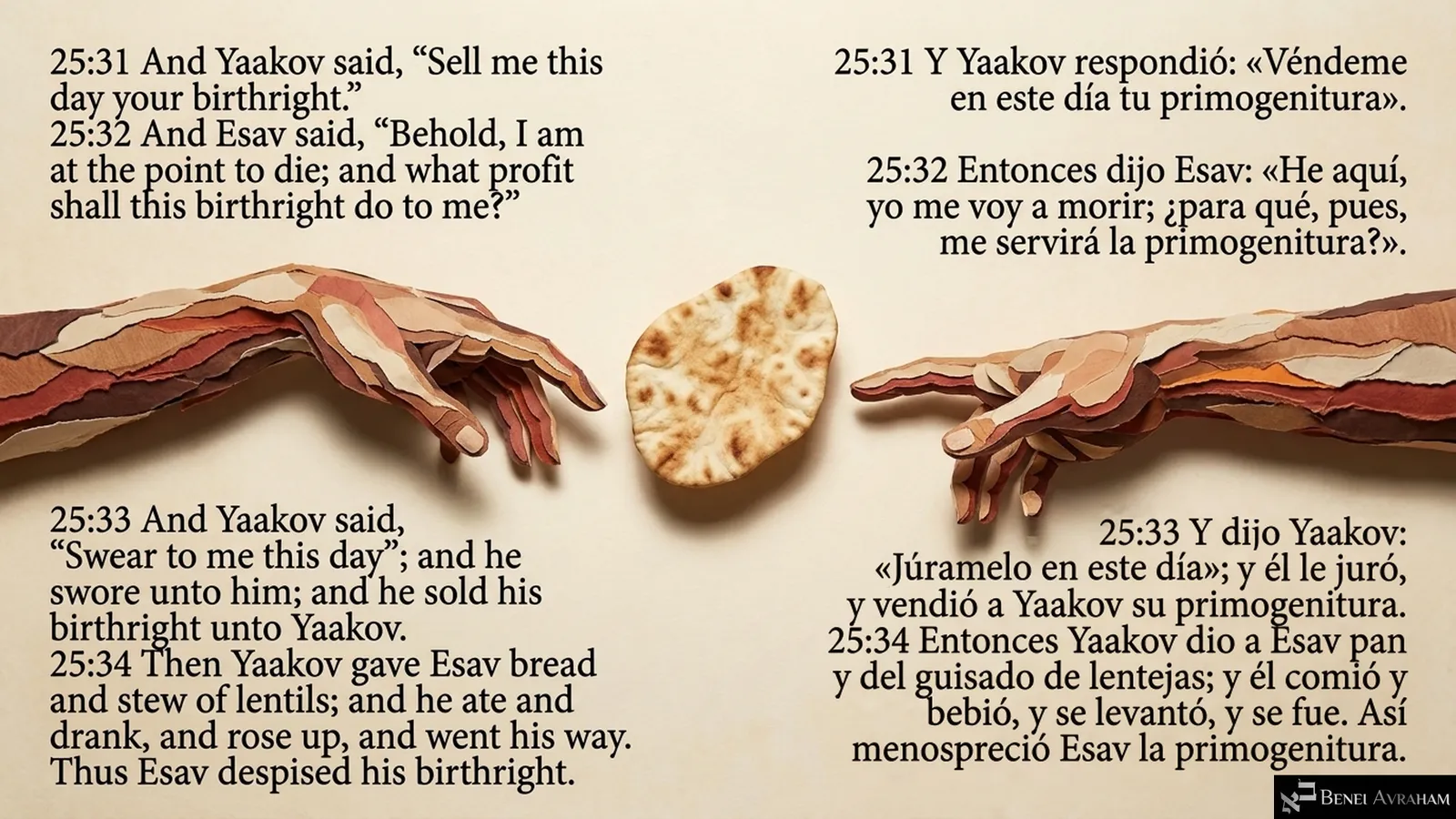
Esav sells his birthright to Yaakov for bread and lentil stew (Genesis 25:31–34).
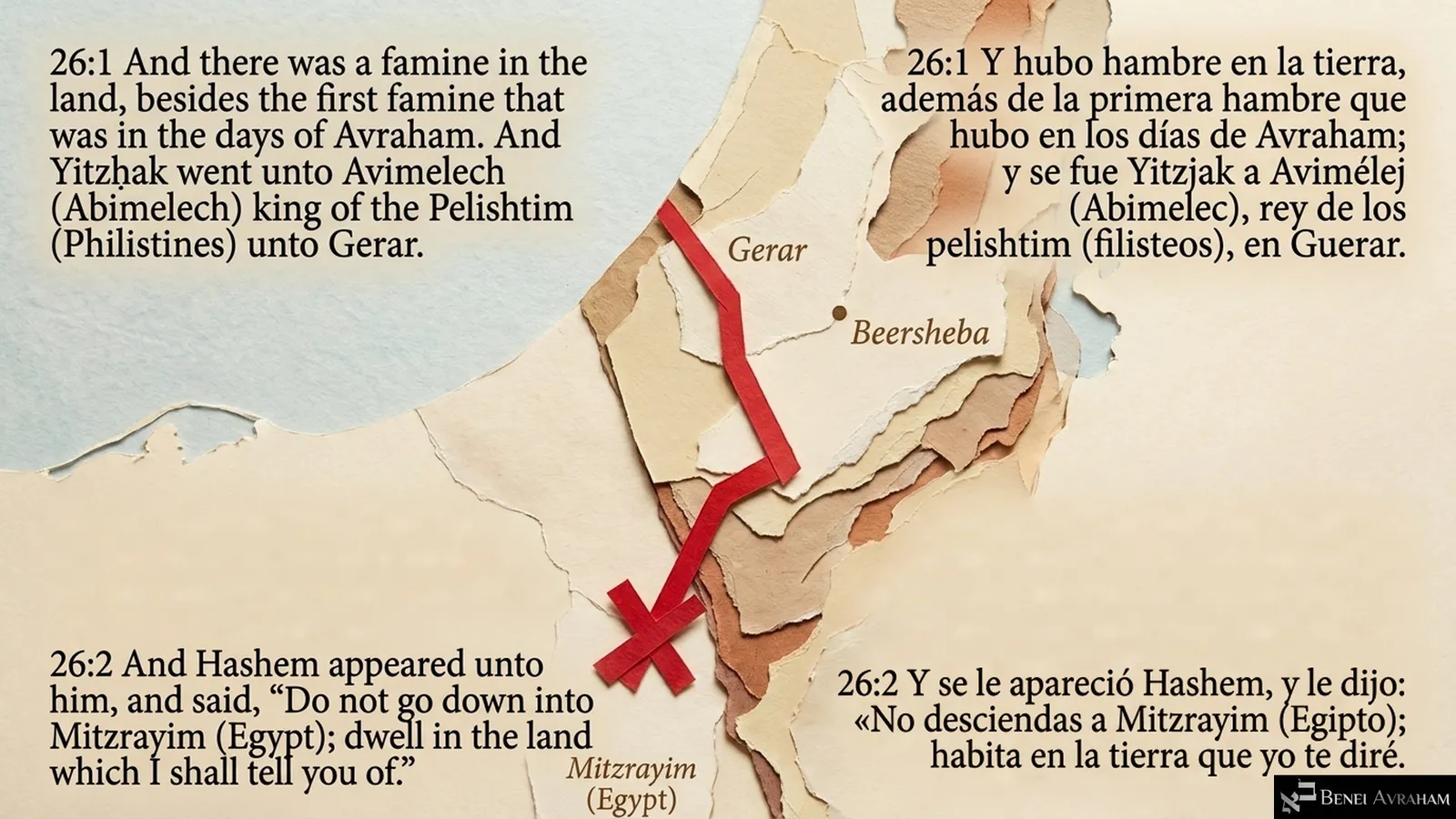
Famine in the land: Yitzḥak goes to Avimelech in Gerar, and Hashem tells him not to go down to Mitzrayim (Genesis 26:1–2).
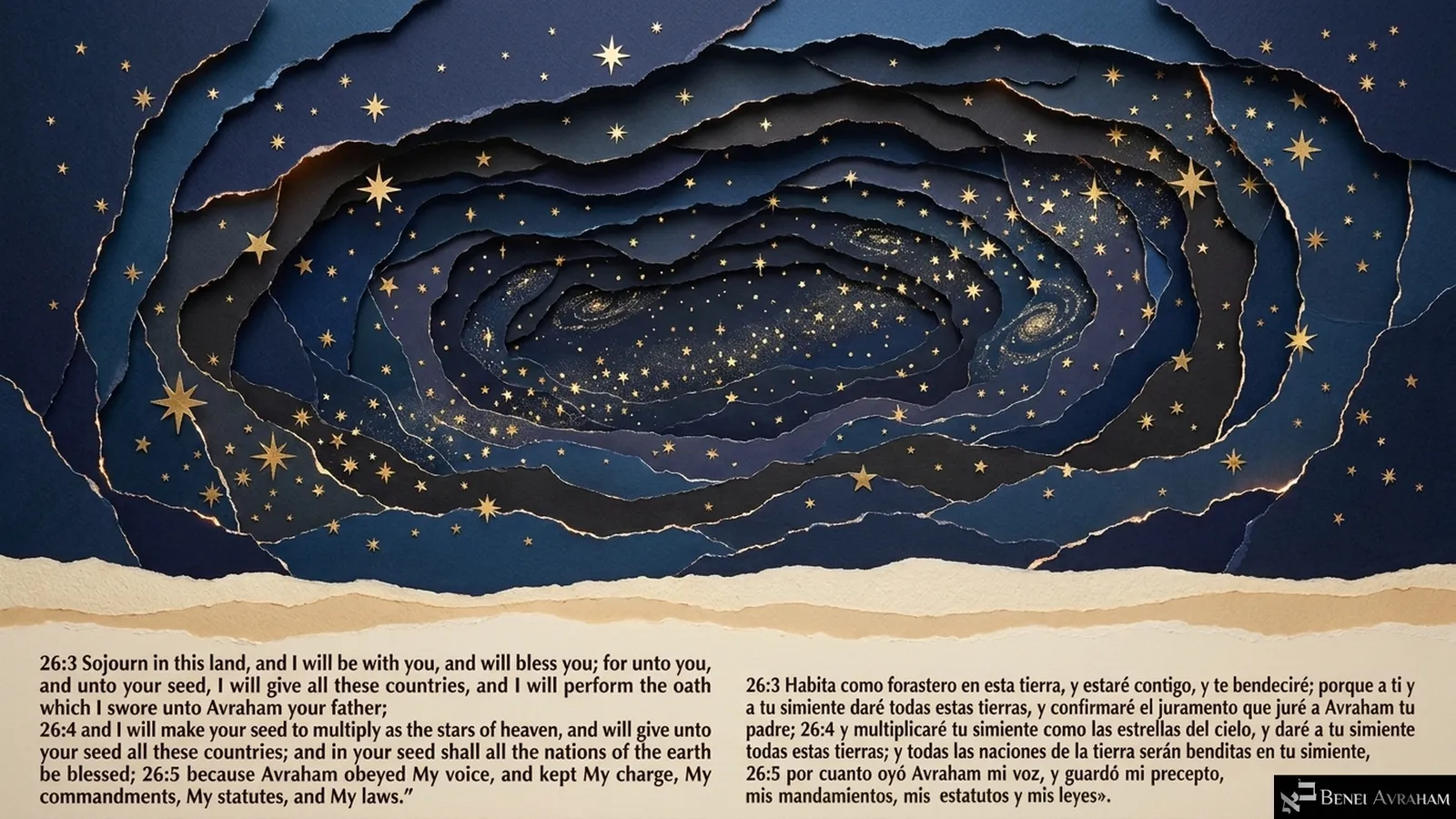
Hashem confirms the oath to Avraham: Yitzḥak’s seed will be as the stars of heaven (Genesis 26:3–5).
Sheni · Genesis 26:6–12

Second Portion

Title slide: Parashat Toldot, second portion, Genesis 26:6–12, over paper-cut hills.
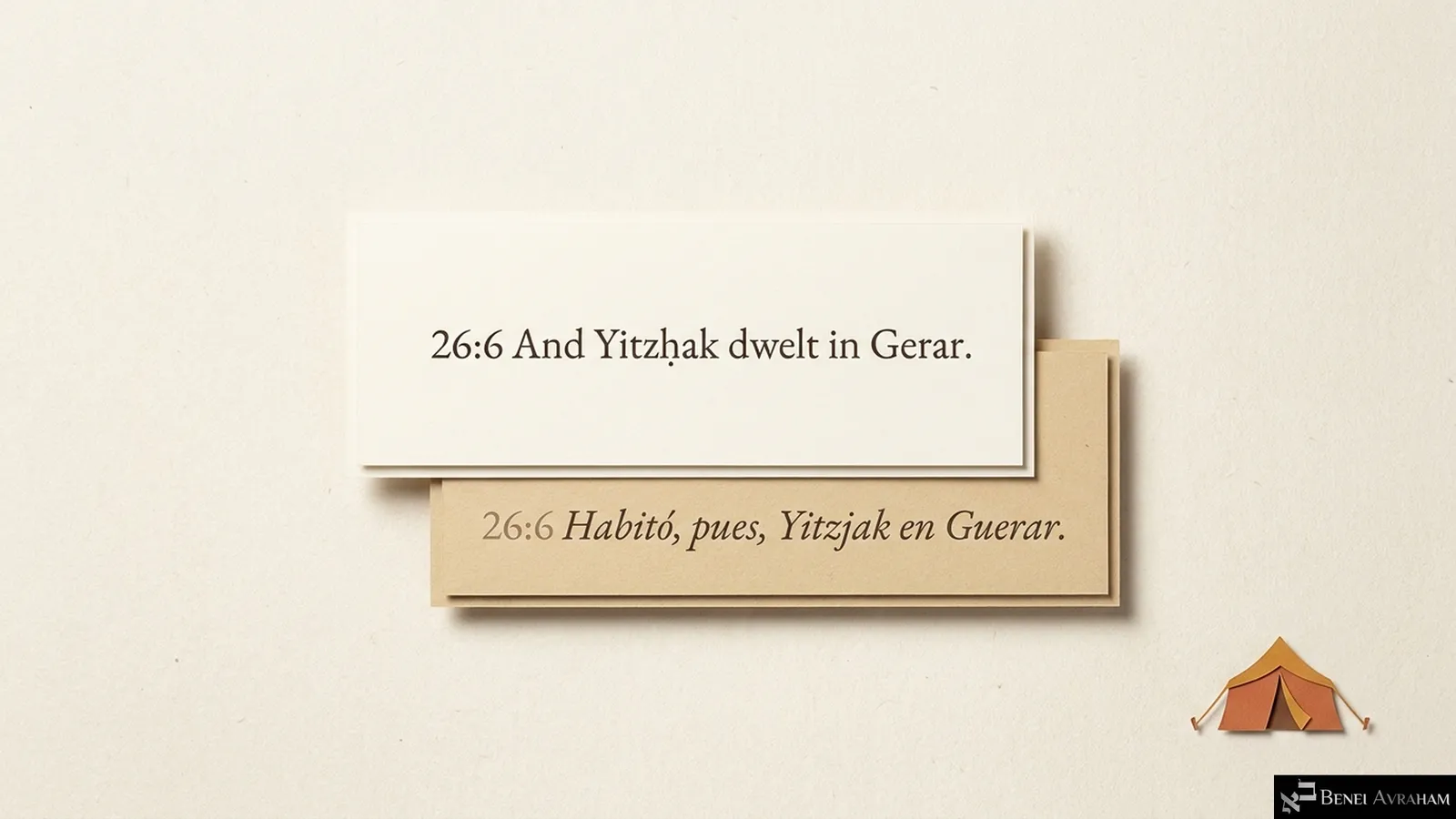
Yitzḥak dwells in Gerar, with a small tent below the verse card (Genesis 26:6).
Afraid of the men of the place, Yitzḥak says of Rivkah, “She is my sister” (Genesis 26:7).
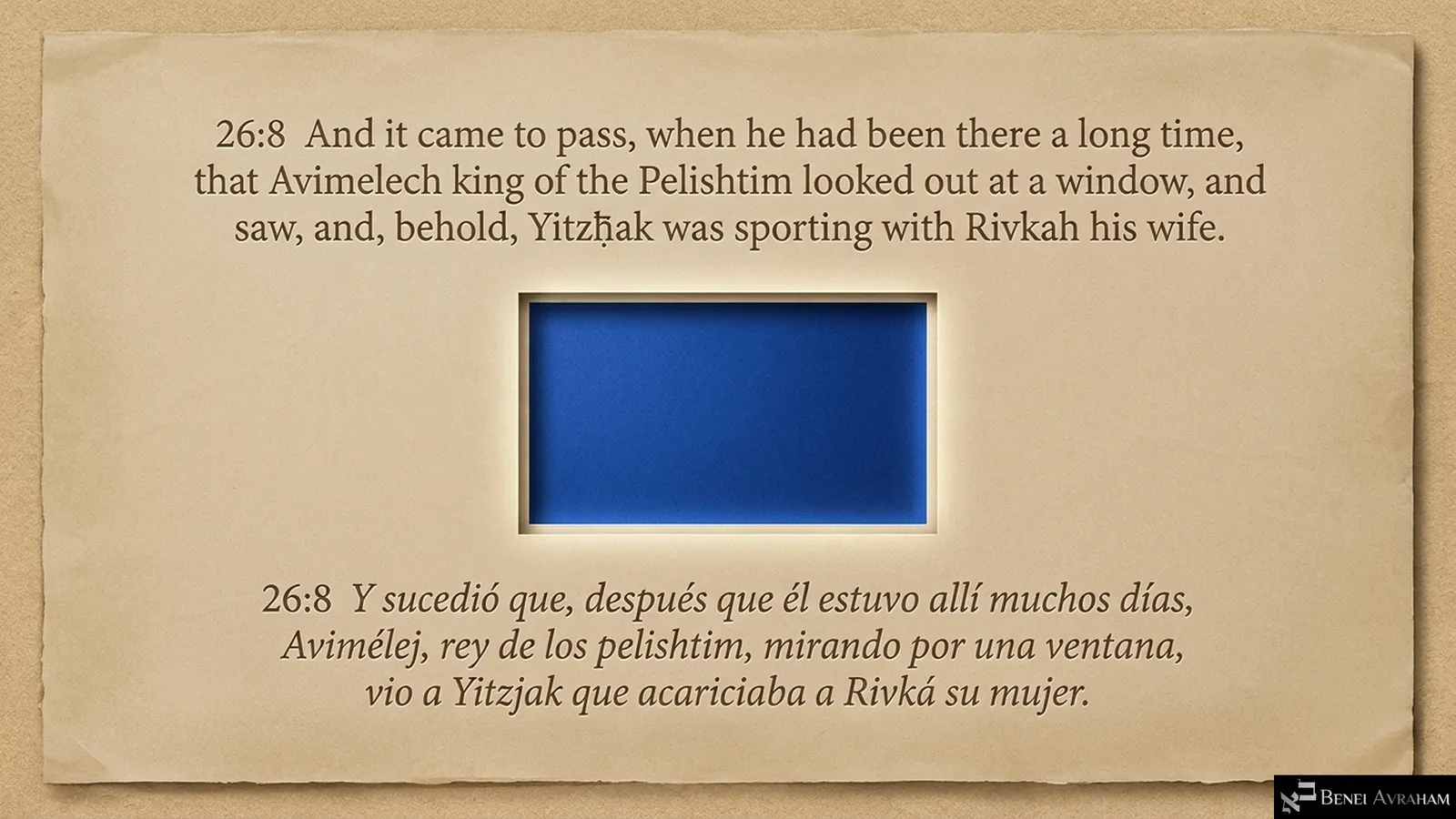
Avimelech looks out of a window and sees Yitzḥak sporting with Rivkah his wife (Genesis 26:8).
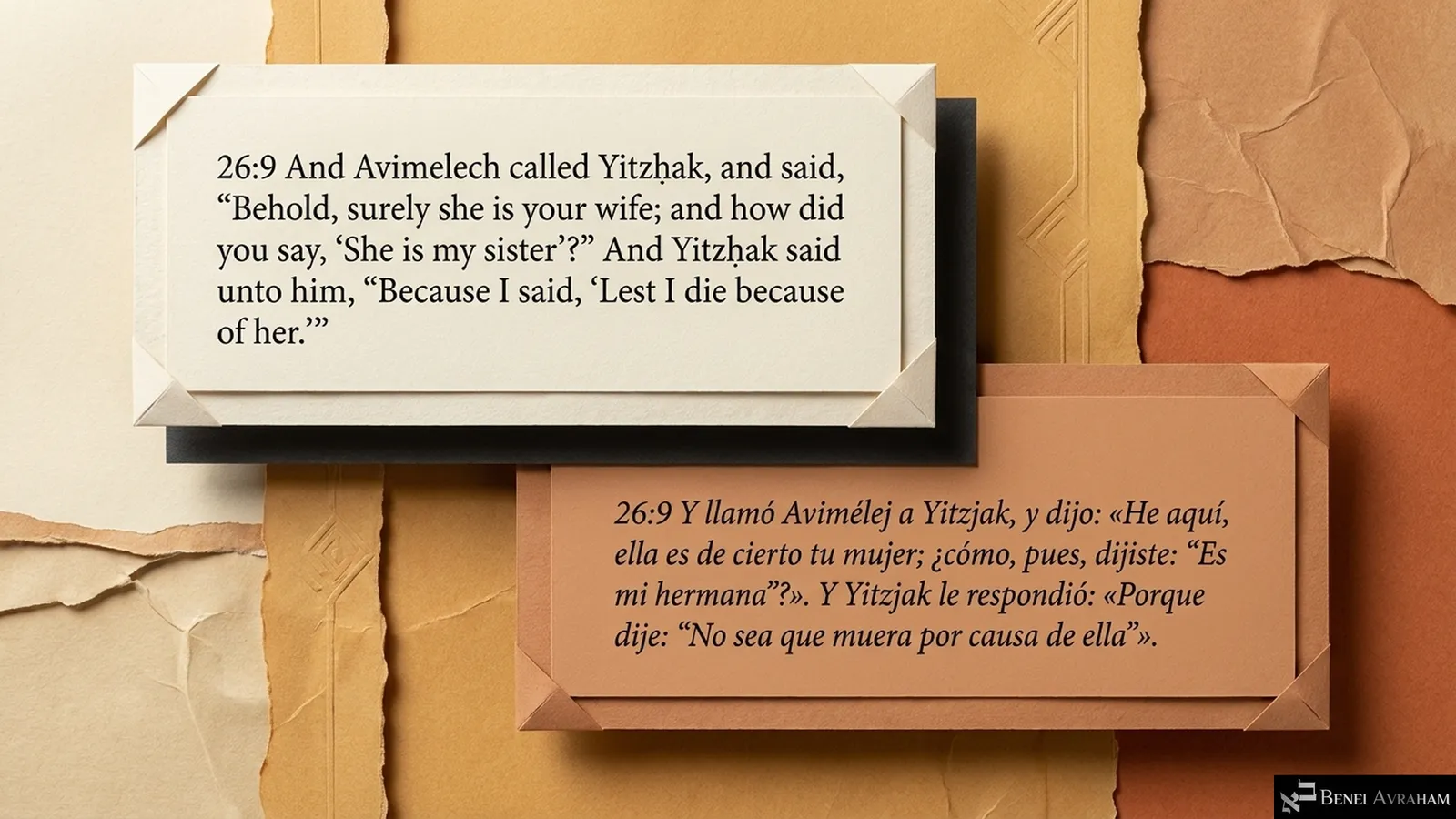
Avimelech calls Yitzḥak: “Surely she is your wife; how did you say, ‘She is my sister’?” (Genesis 26:9).
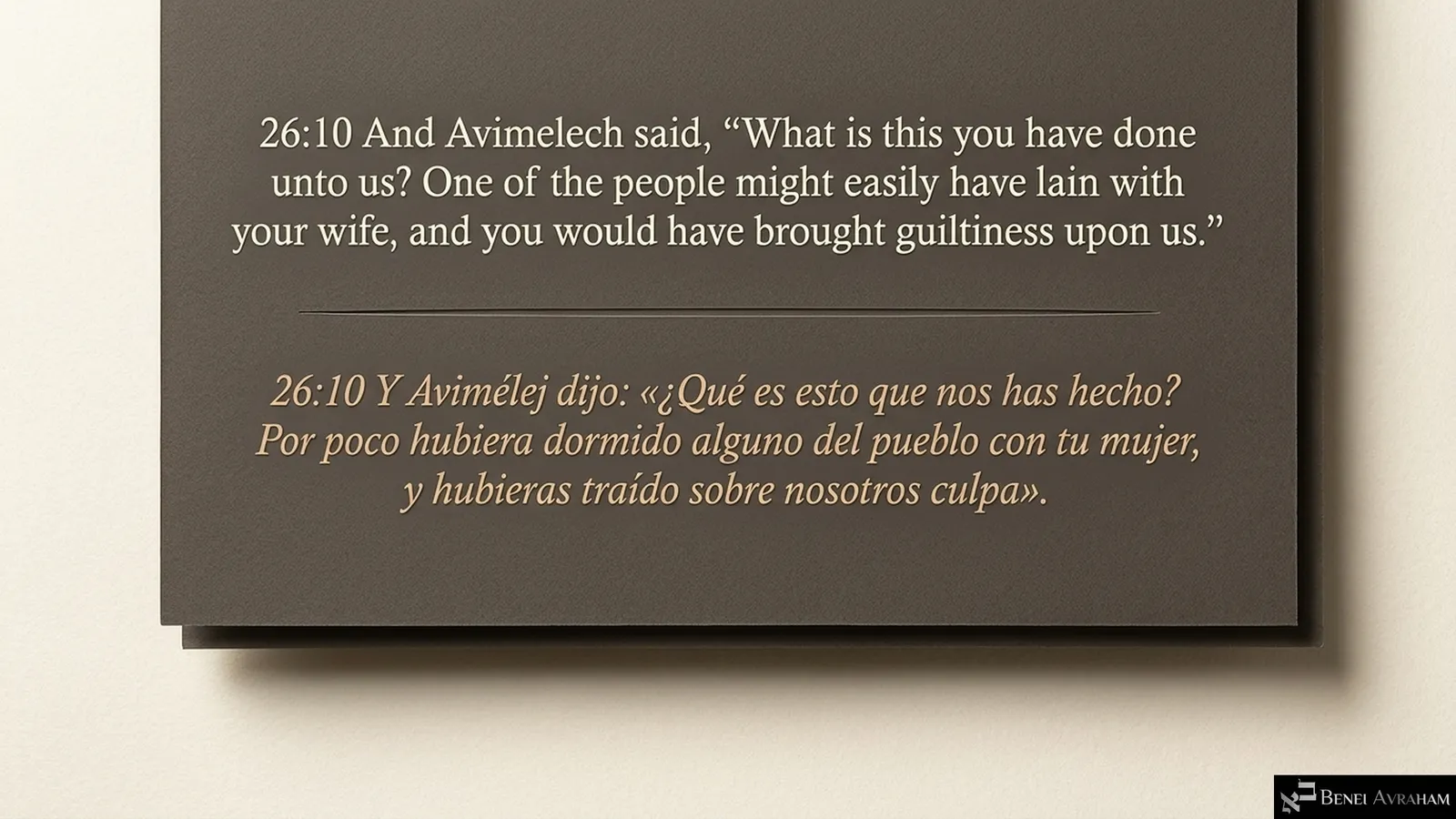
Avimelech: “What is this you have done unto us?” You would have brought guilt upon us (Genesis 26:10).
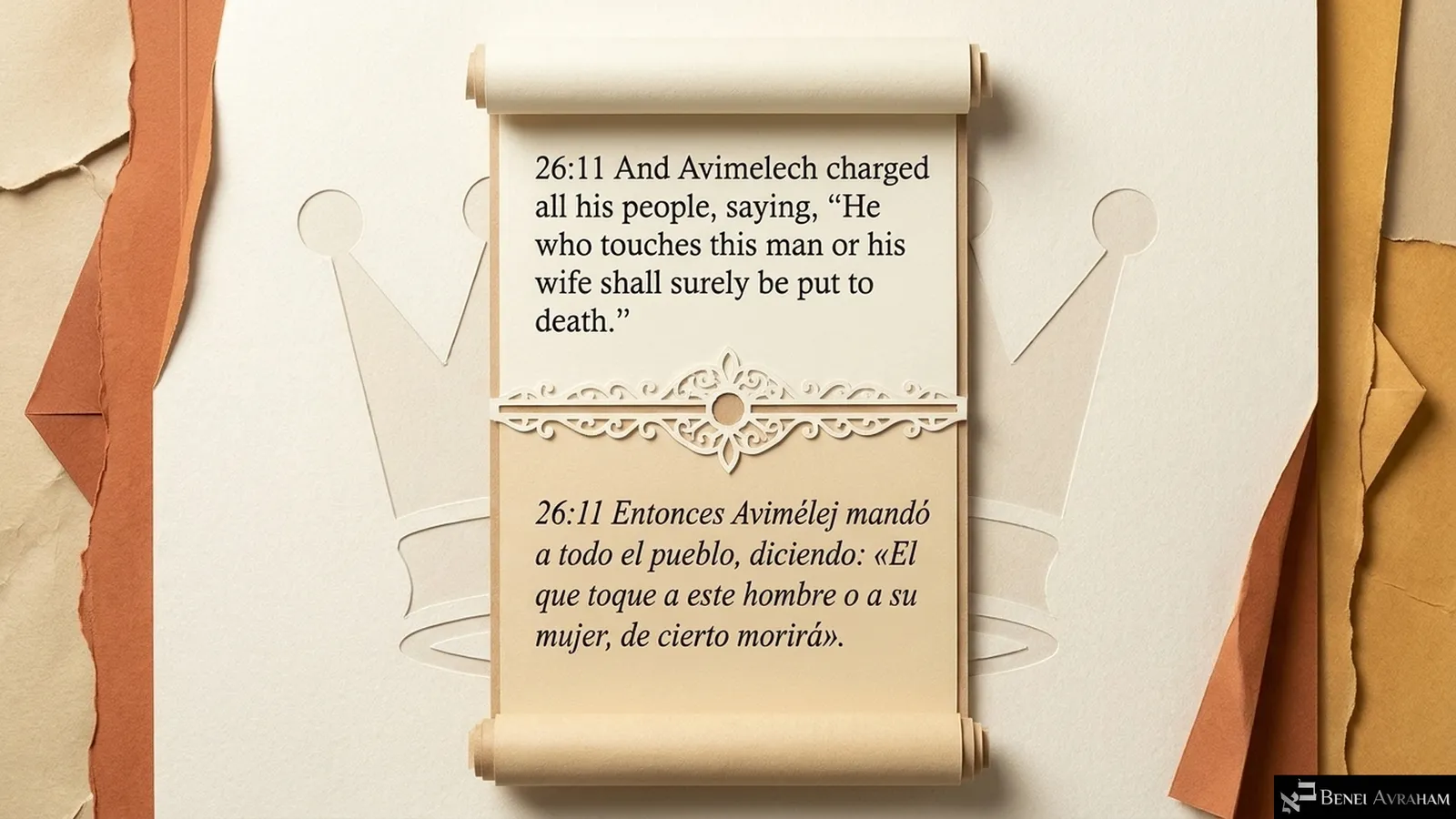
Avimelech charges all his people: whoever touches this man or his wife shall surely die (Genesis 26:11).
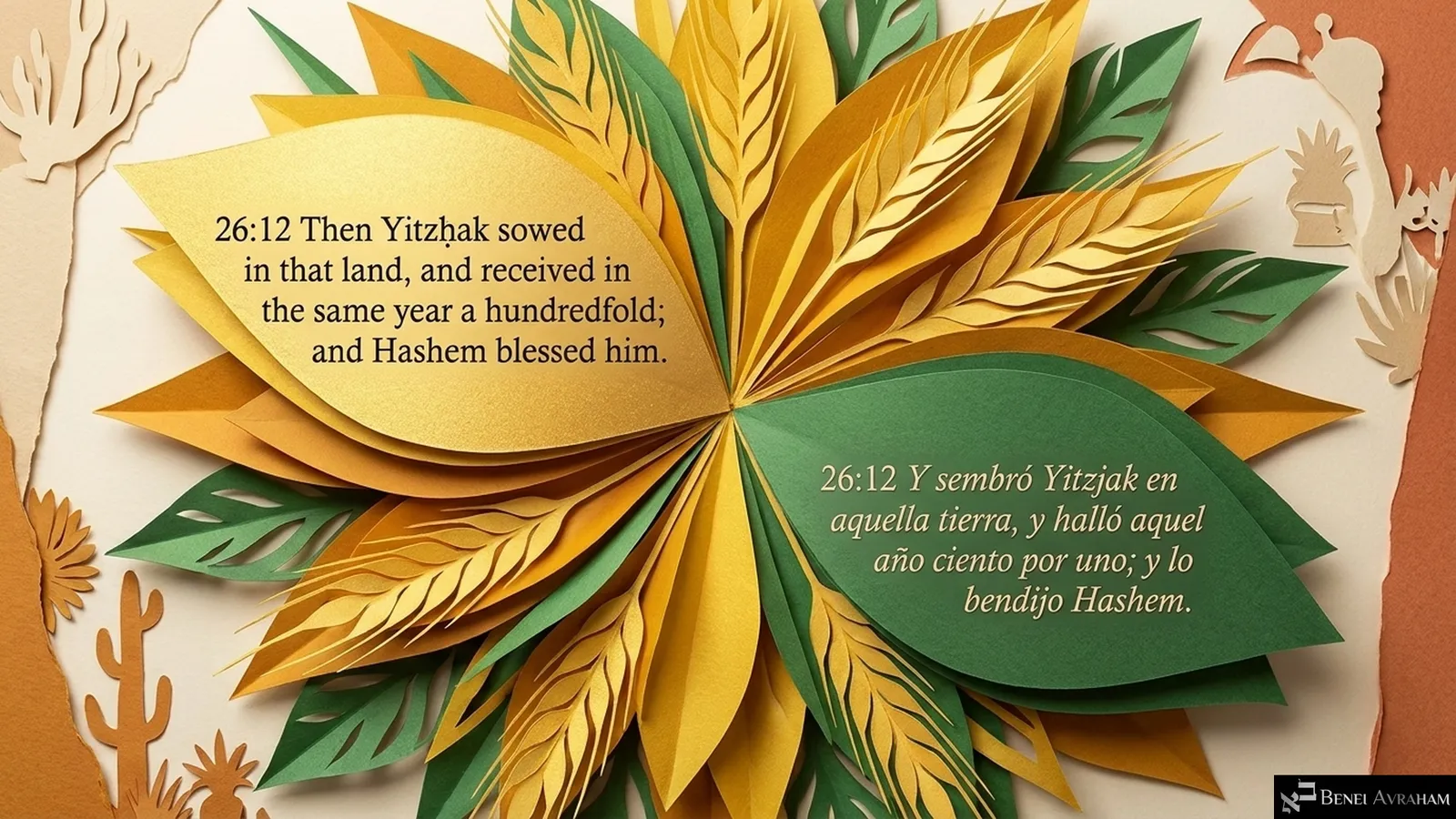
Yitzḥak sows in the land and reaps a hundredfold in the same year, and Hashem blesses him (Genesis 26:12).
Summary of the portion in four medallions: vulnerability and fear, truth revealed, sovereign protection, unprecedented blessing (Genesis 26:6–12).
Shlishi · Genesis 26:13–22

Third Portion

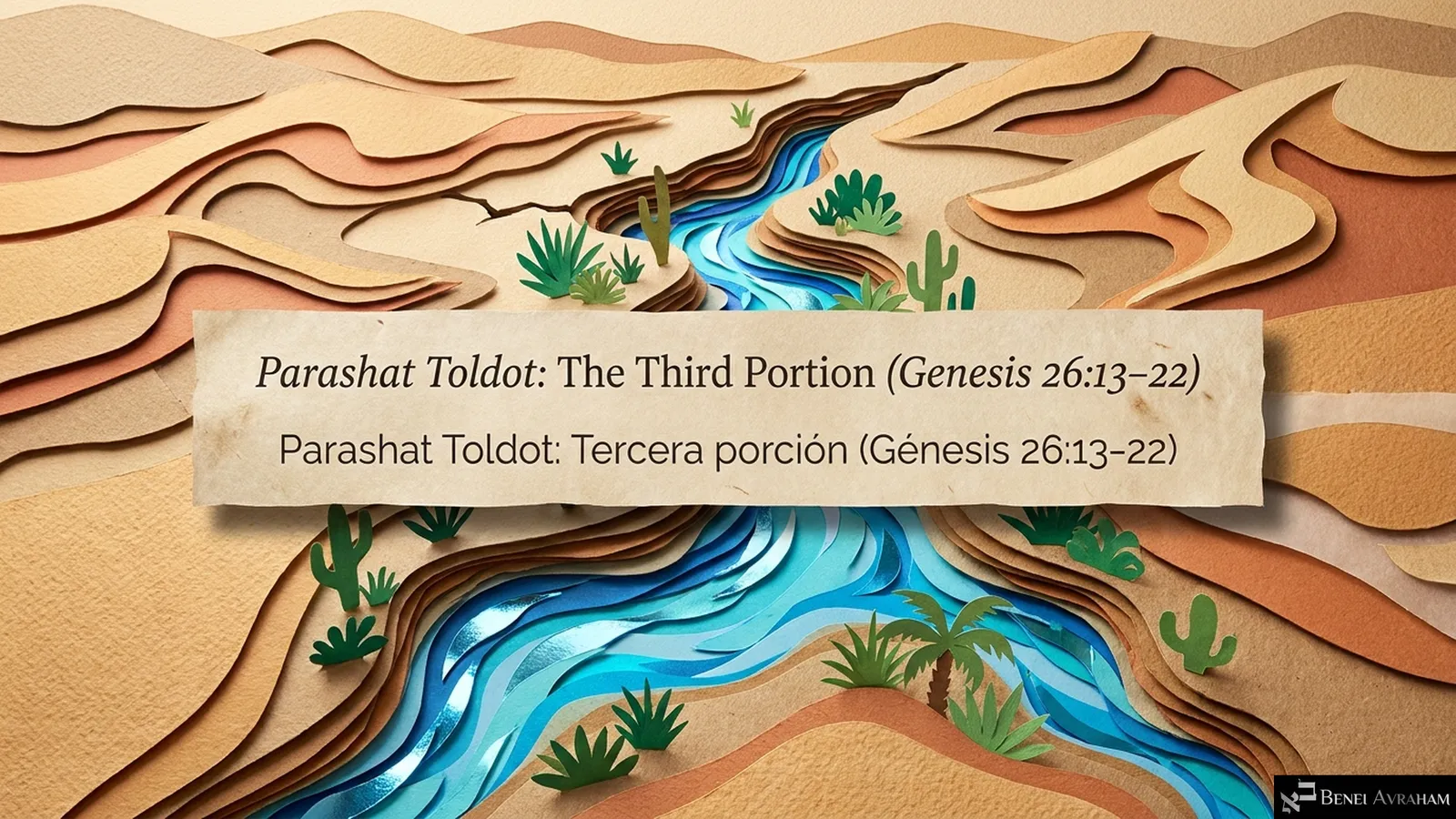
Title slide: Parashat Toldot, third portion, Genesis 26:13–22, with a river winding through the desert.
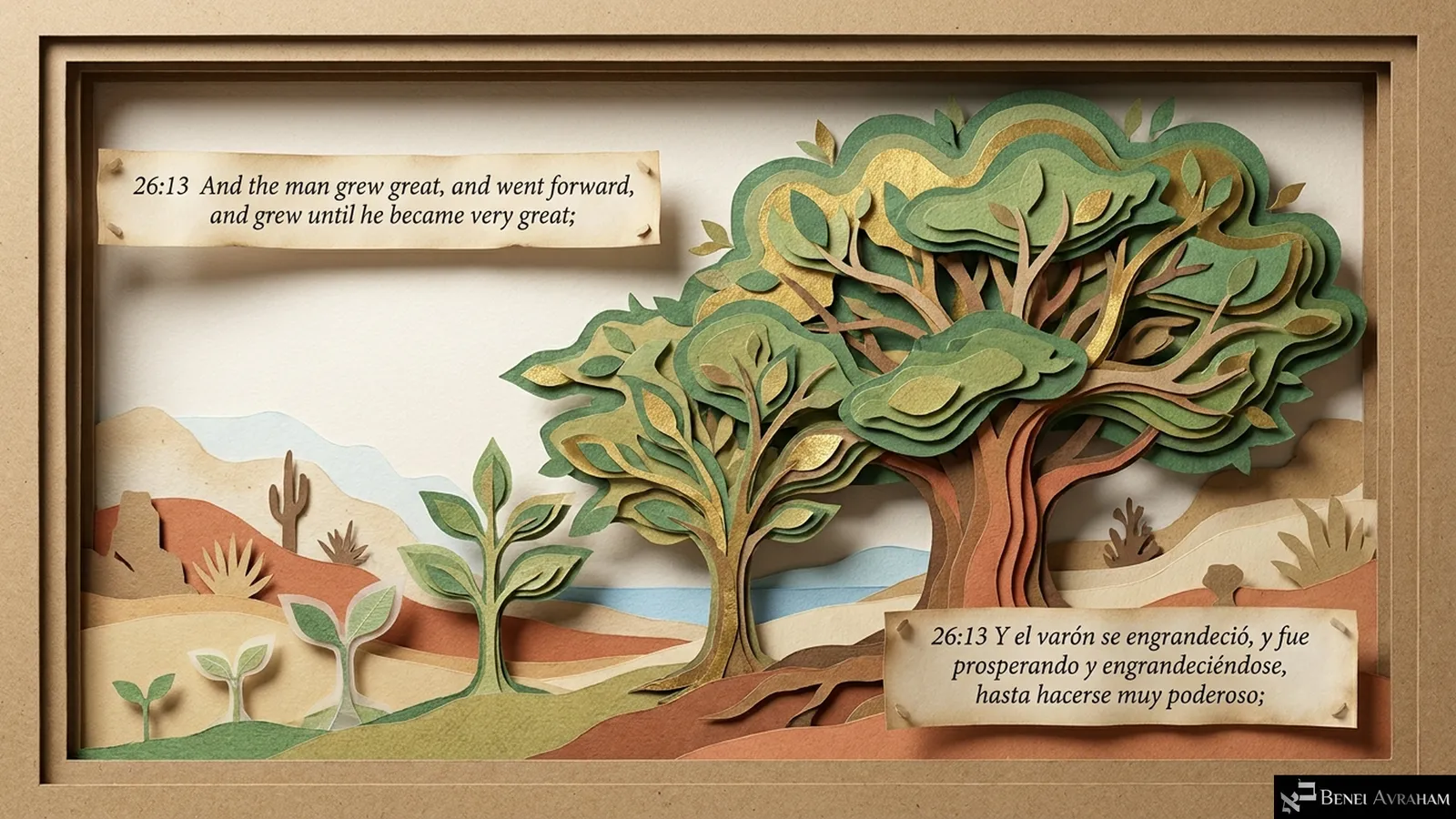
The man grows great and goes on growing until he becomes very great, shown as a spreading tree (Genesis 26:13).
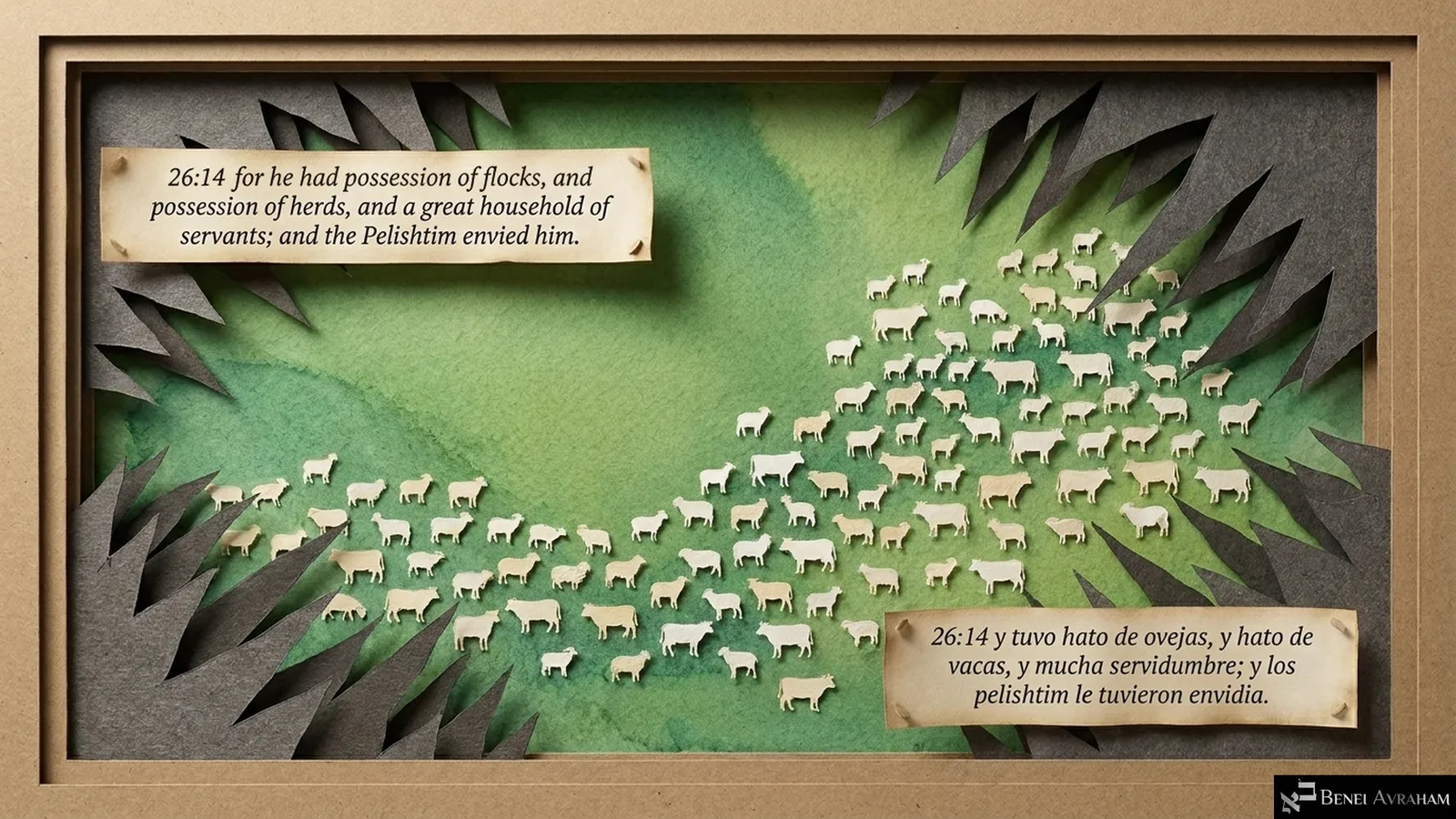
Flocks, herds and a great household of servants, and the Pelishtim envy him (Genesis 26:14).
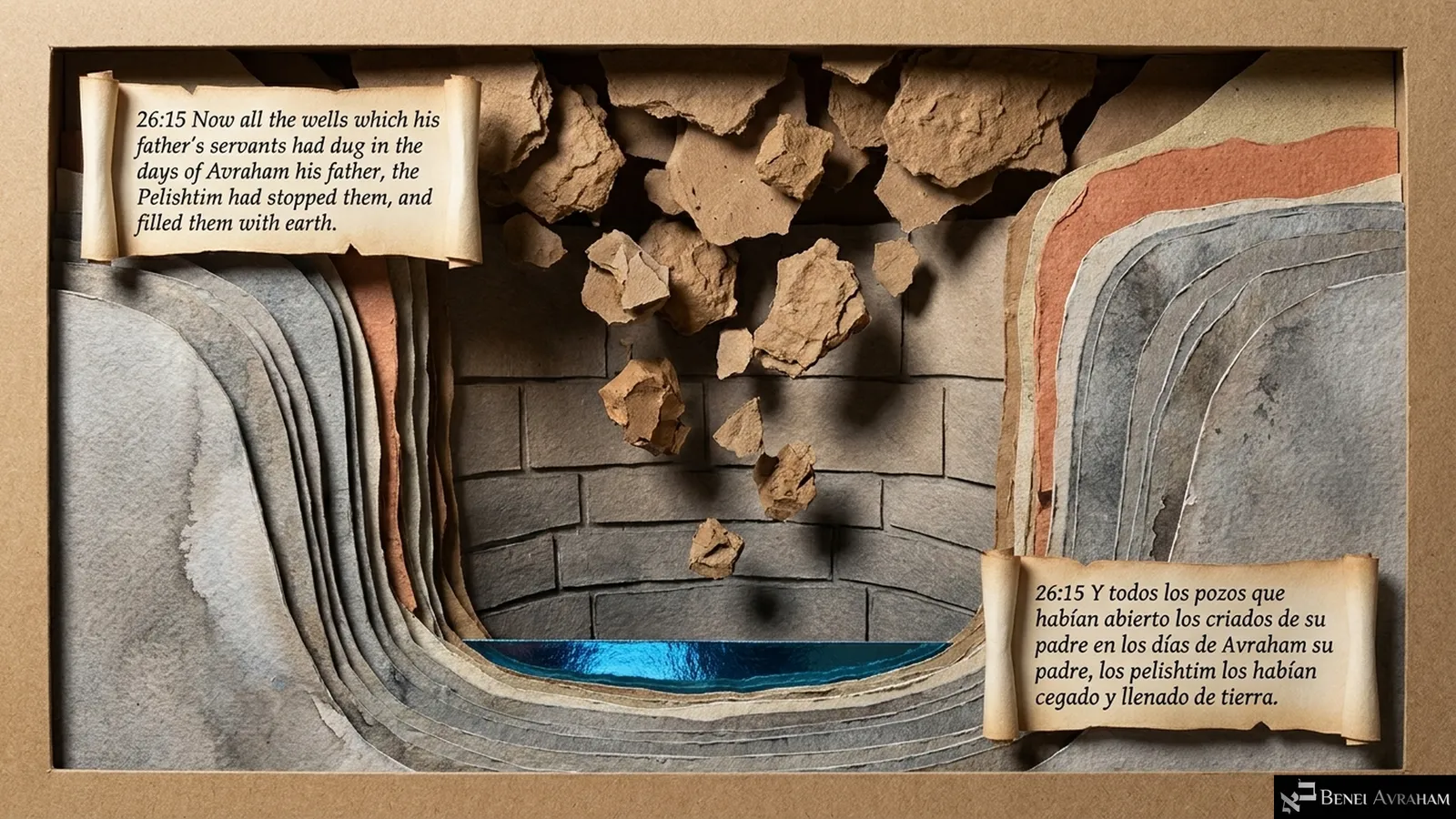
The Pelishtim stop up the wells that Avraham’s servants had dug and fill them with earth (Genesis 26:15).
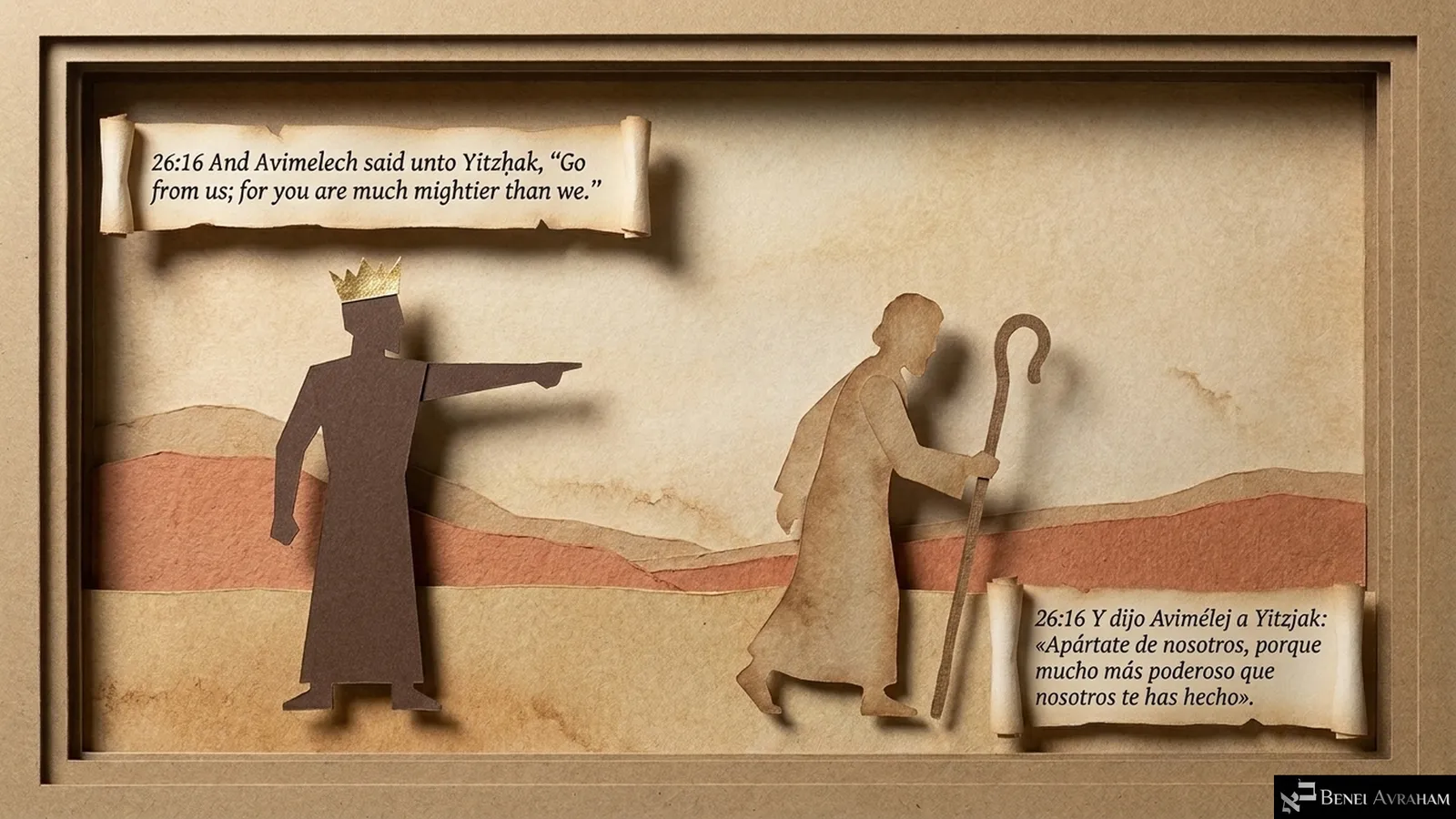
Avimelech points Yitzḥak away: “Go from us, for you are much mightier than we” (Genesis 26:16).
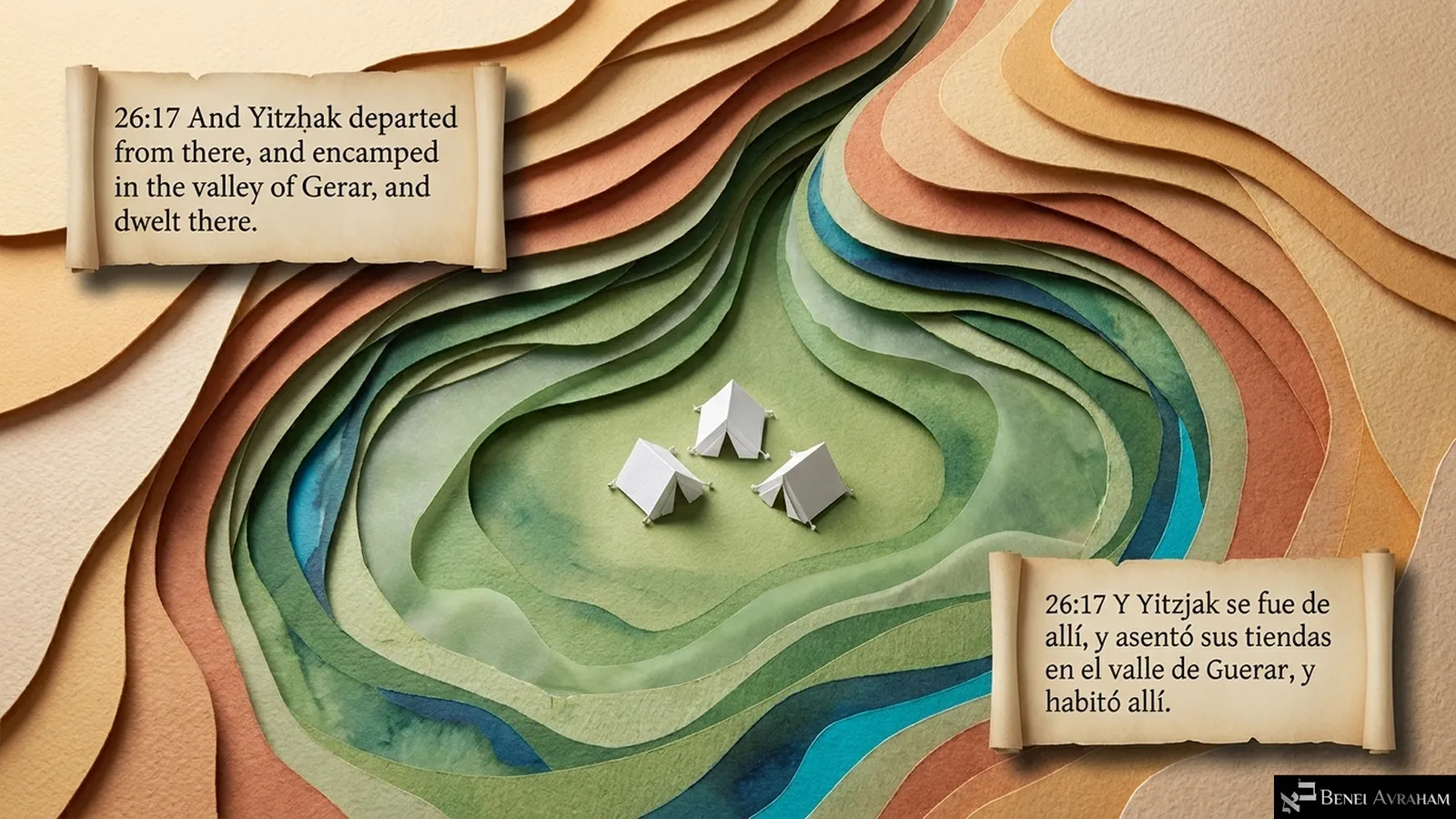
Yitzḥak encamps in the valley of Gerar and dwells there, his tents in a green valley (Genesis 26:17).
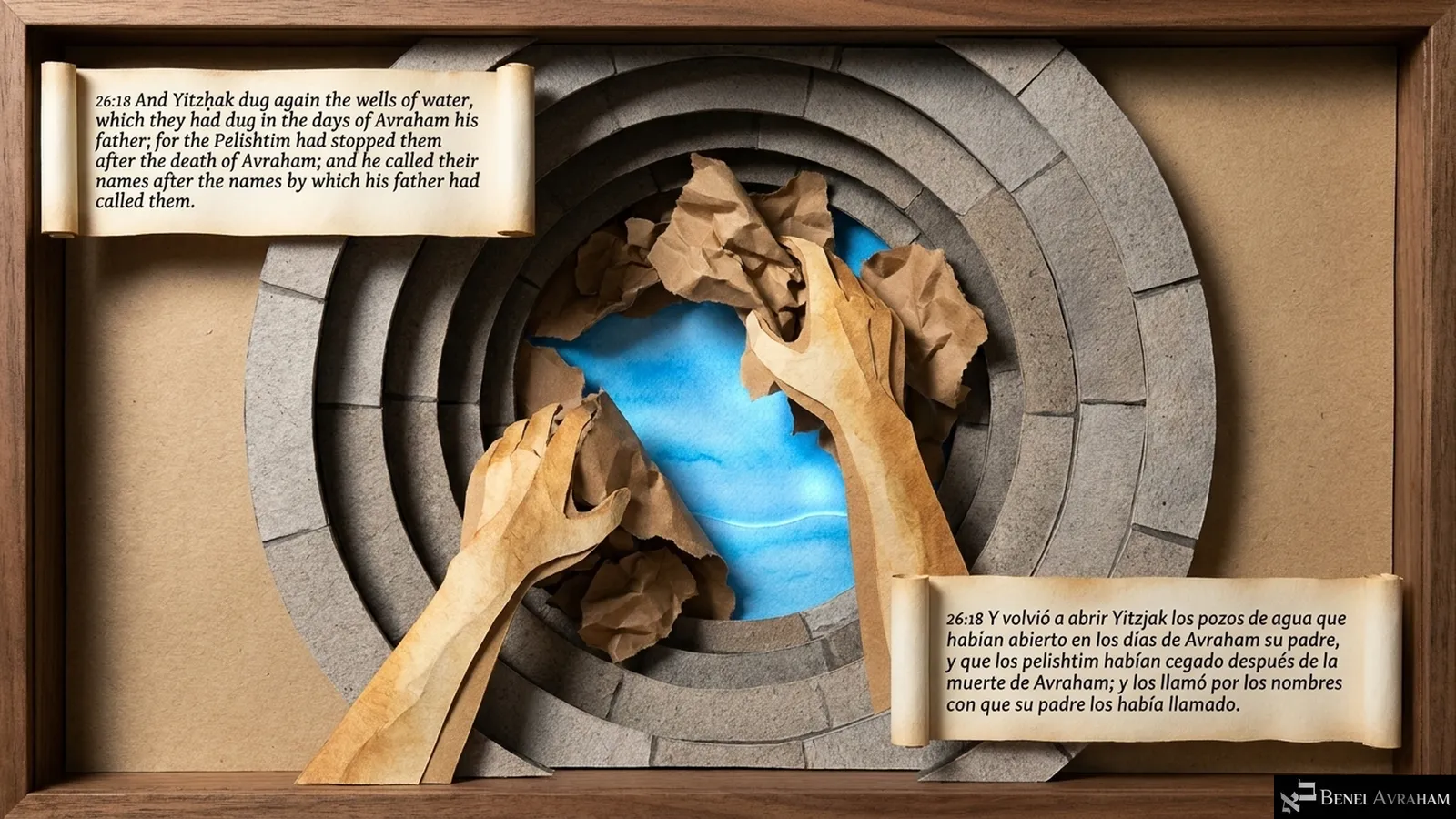
Yitzḥak digs again his father’s wells and calls them by the names Avraham had given them (Genesis 26:18).
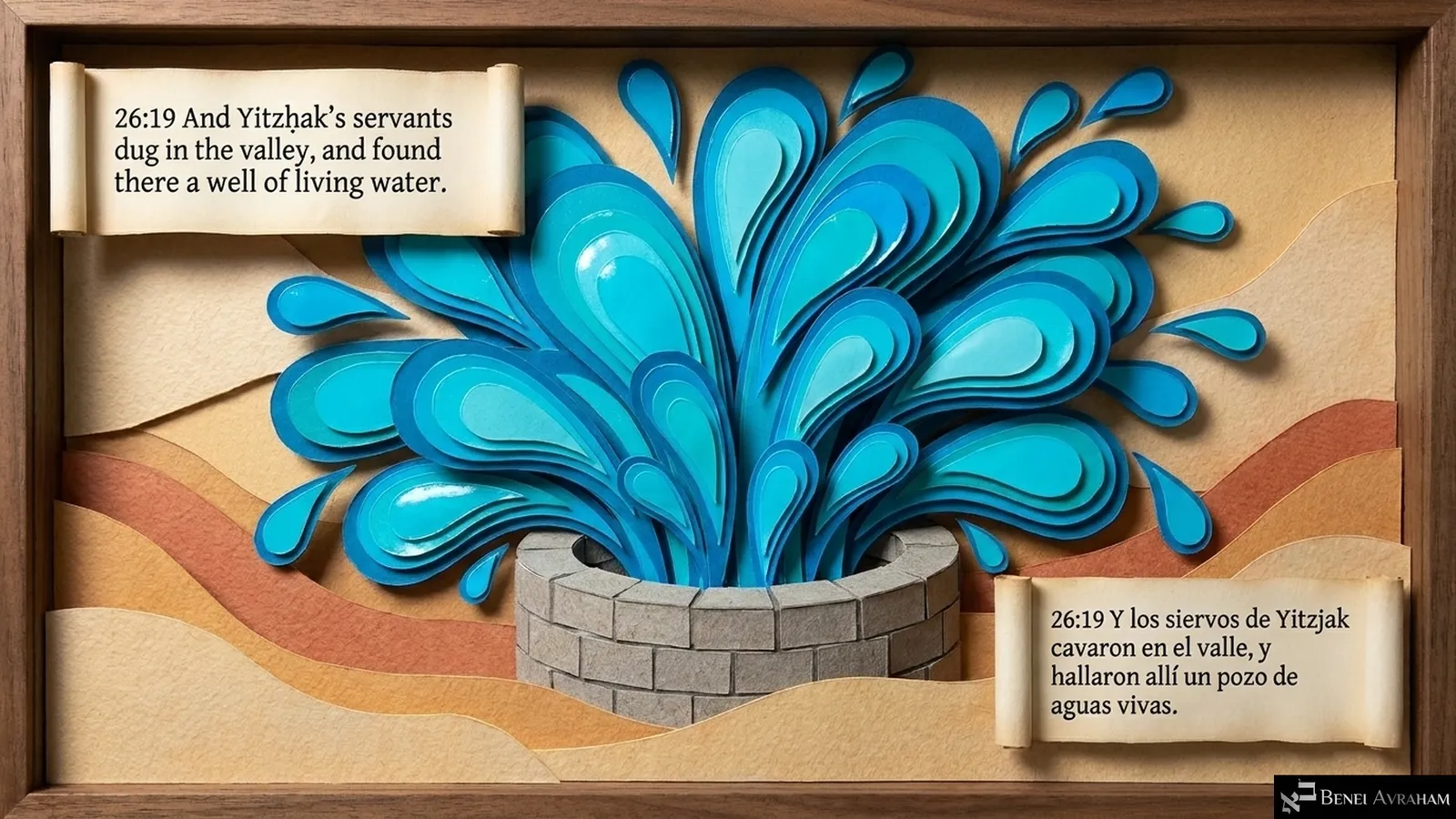
Yitzḥak’s servants dig in the valley and find a well of living water (Genesis 26:19).
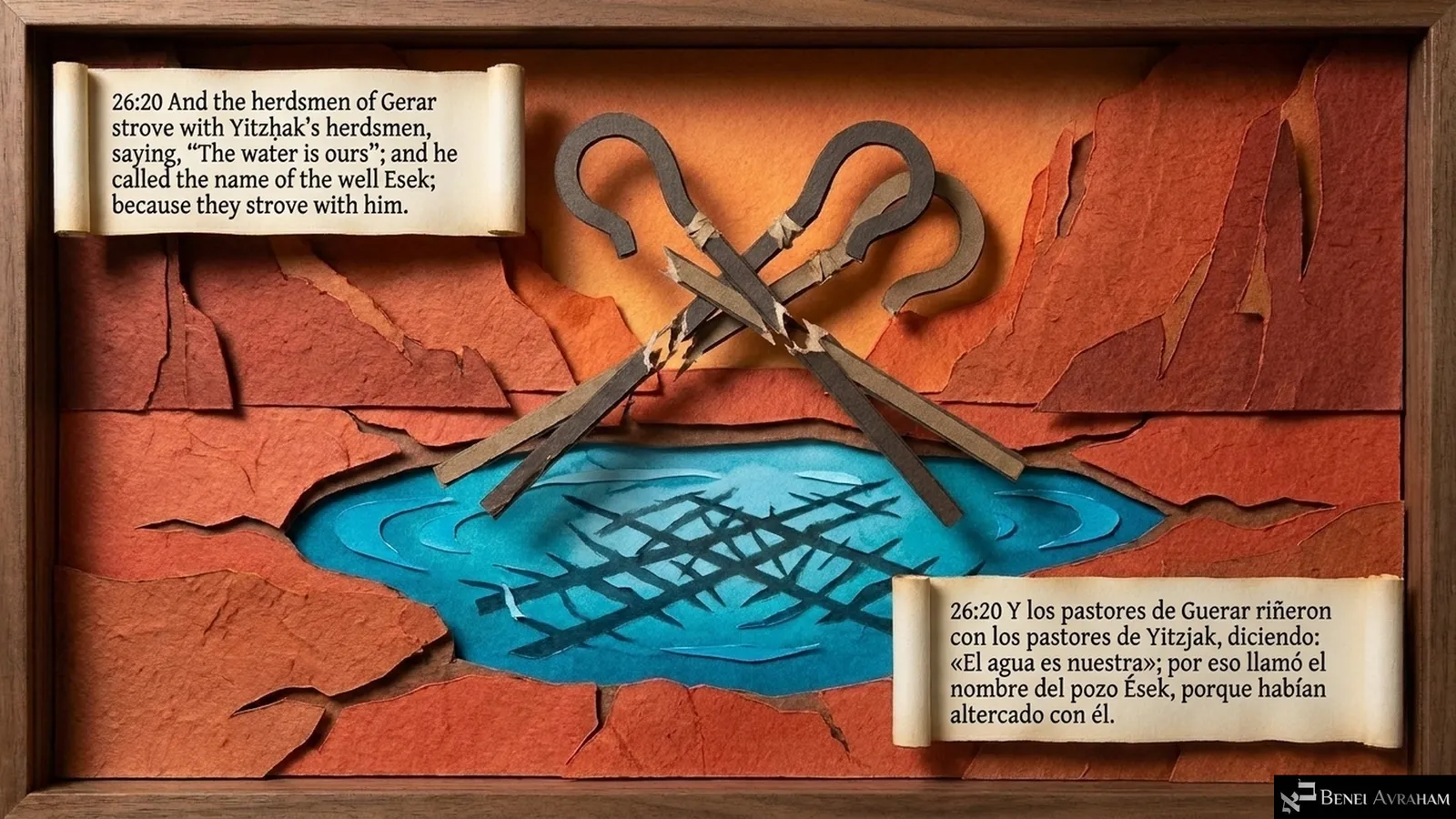
The herdsmen of Gerar strive over the water, so the well is named Esek (Genesis 26:20).
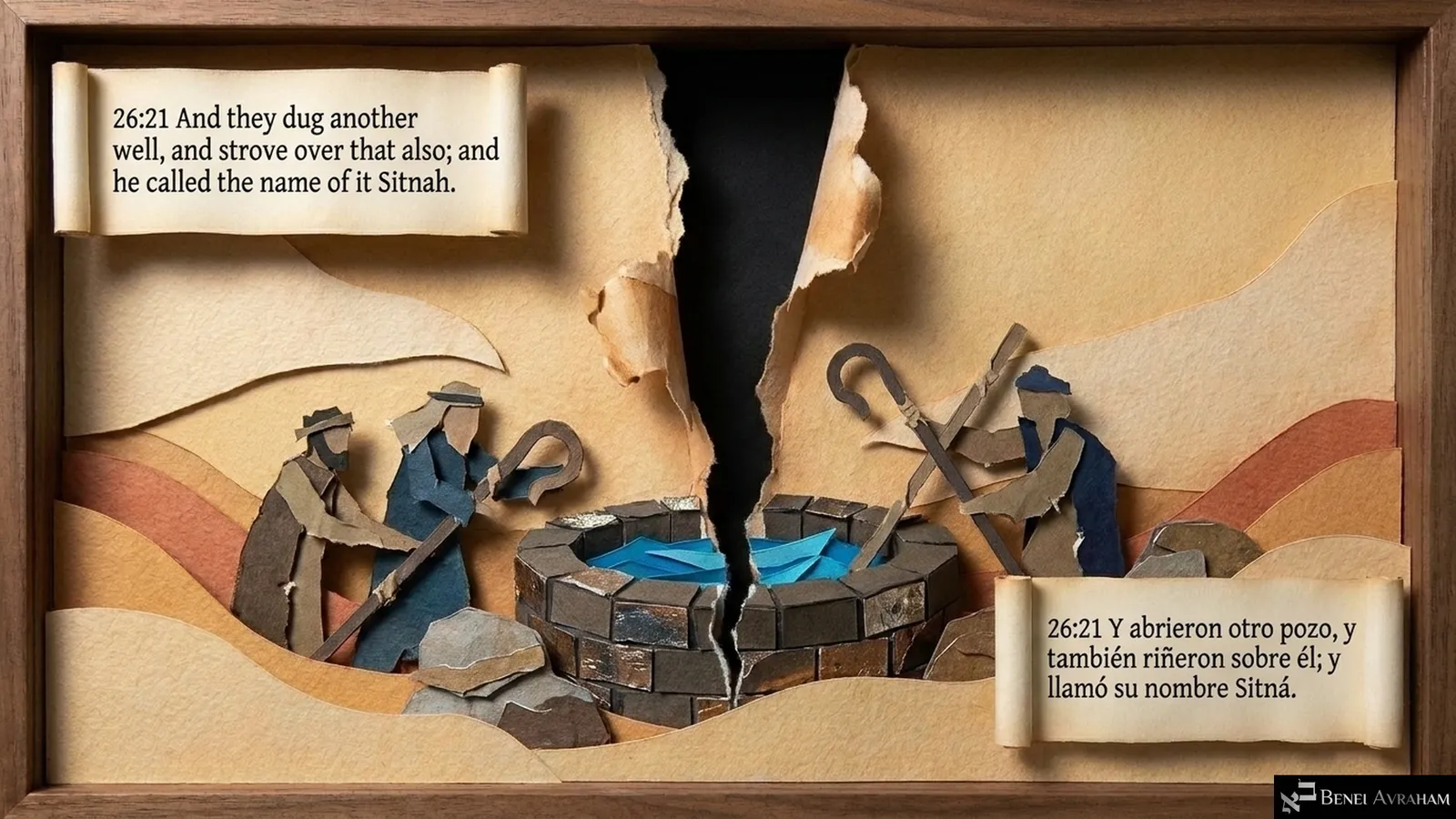
They dig another well and strive over it as well, and Yitzḥak names it Sitnah (Genesis 26:21).
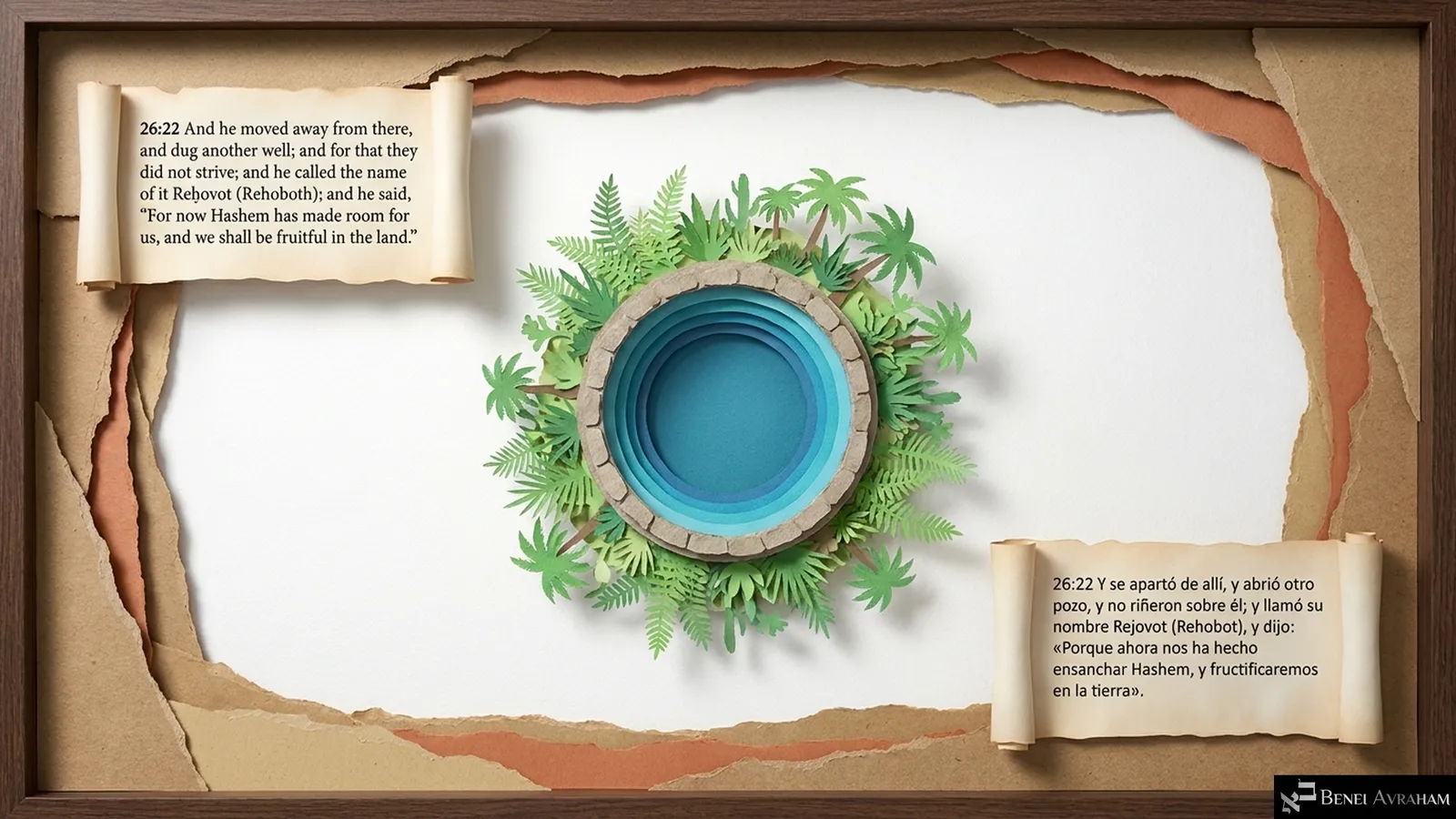
A third well with no strife: Reḥovot, “for now Hashem has made room for us” (Genesis 26:22).
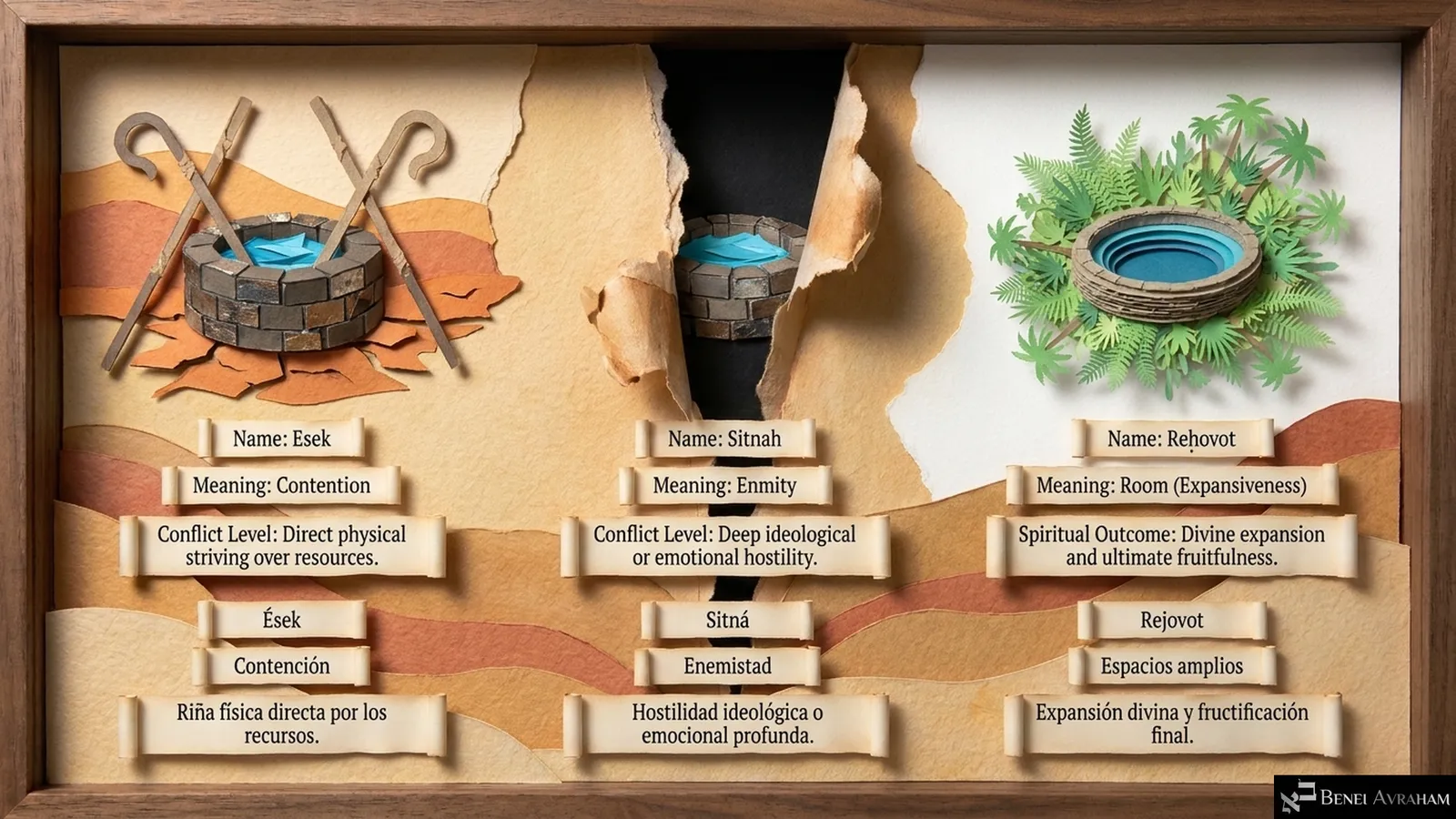
The three wells compared: Esek (contention), Sitnah (enmity) and Reḥovot (room and fruitfulness) (Genesis 26:20–22).
Revi’i · Genesis 26:23–29

Fourth Portion

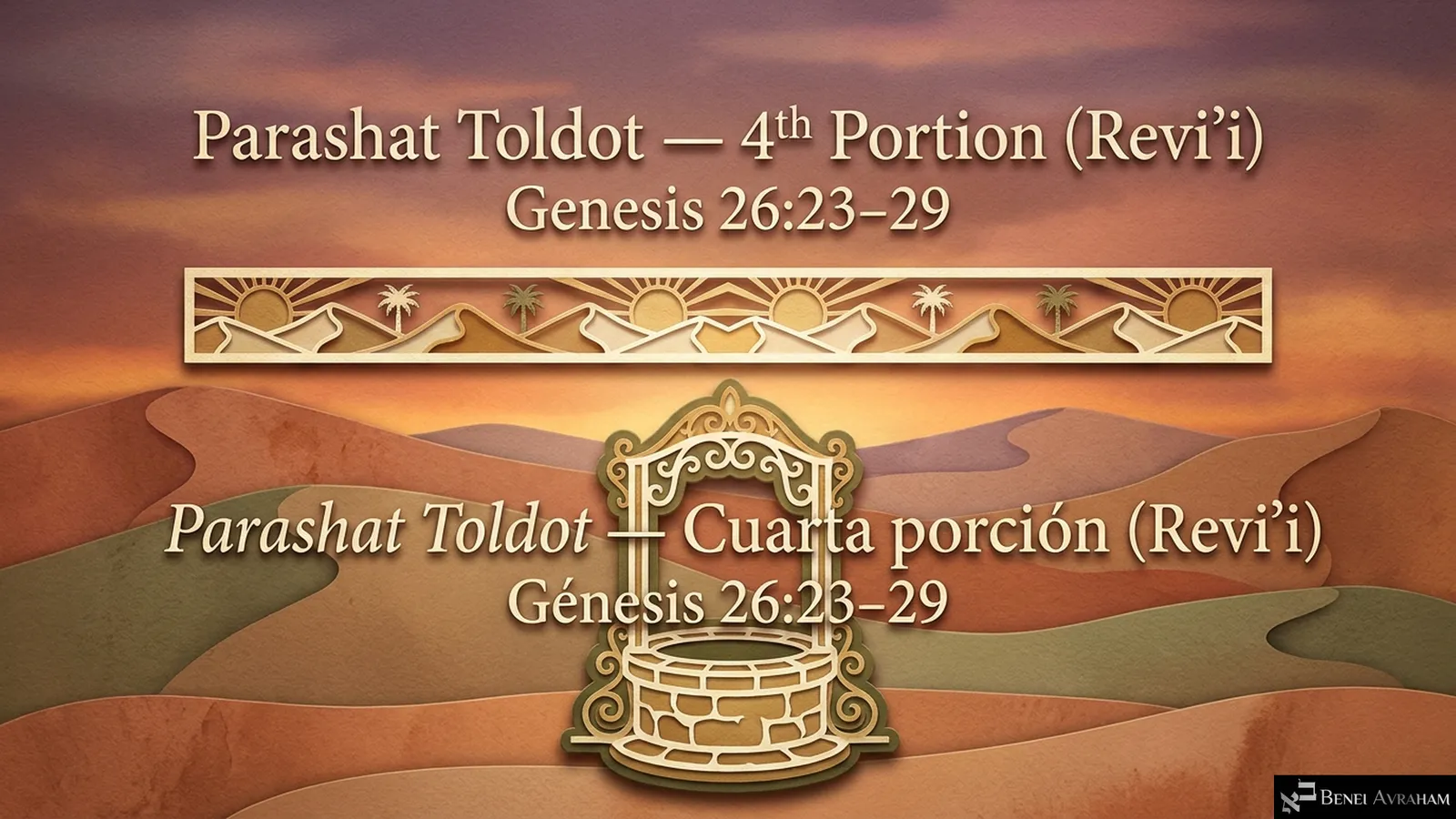
Title slide: Parashat Toldot, fourth portion (Revi’i), Genesis 26:23–29, with a well at sunset.
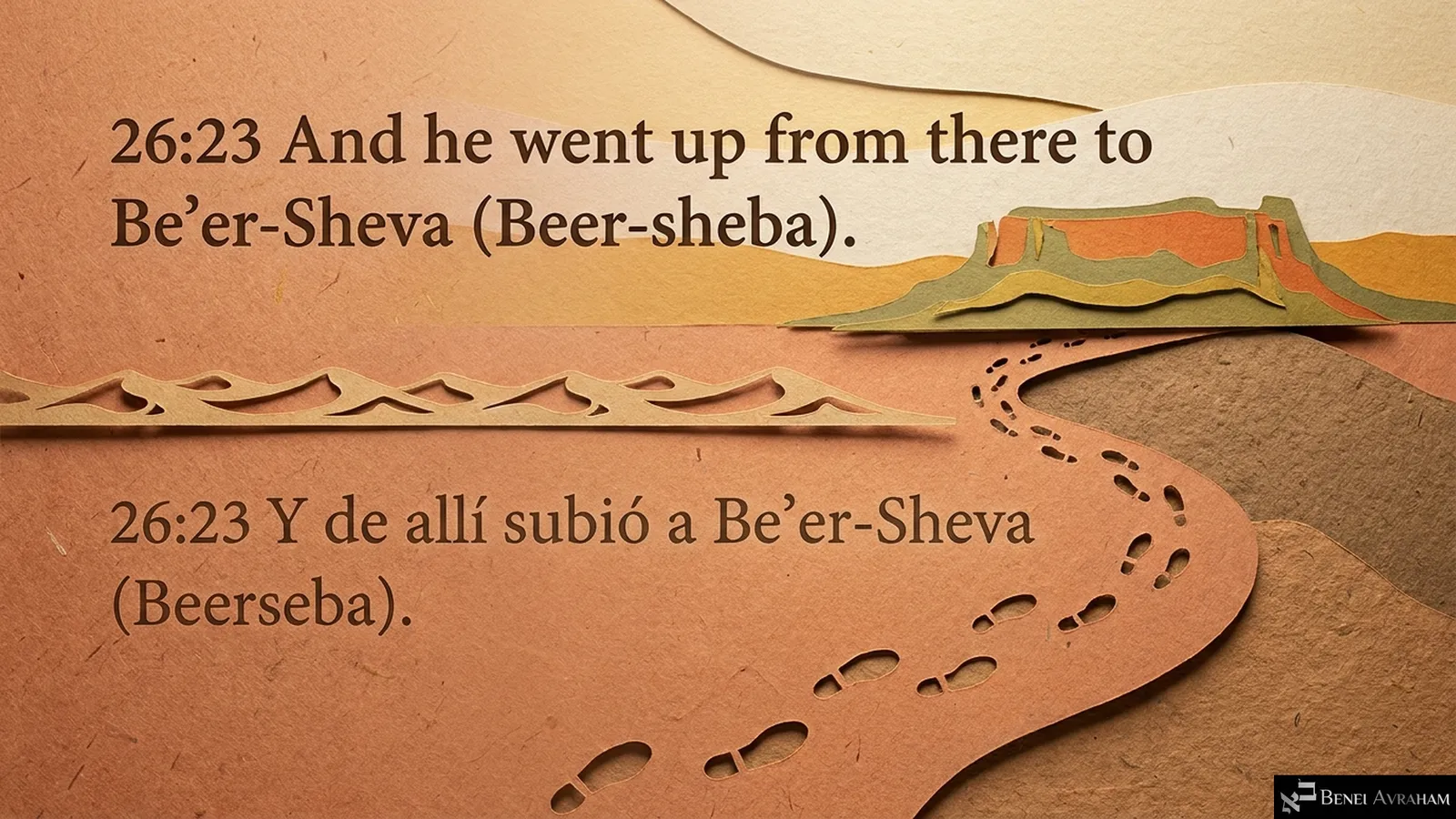
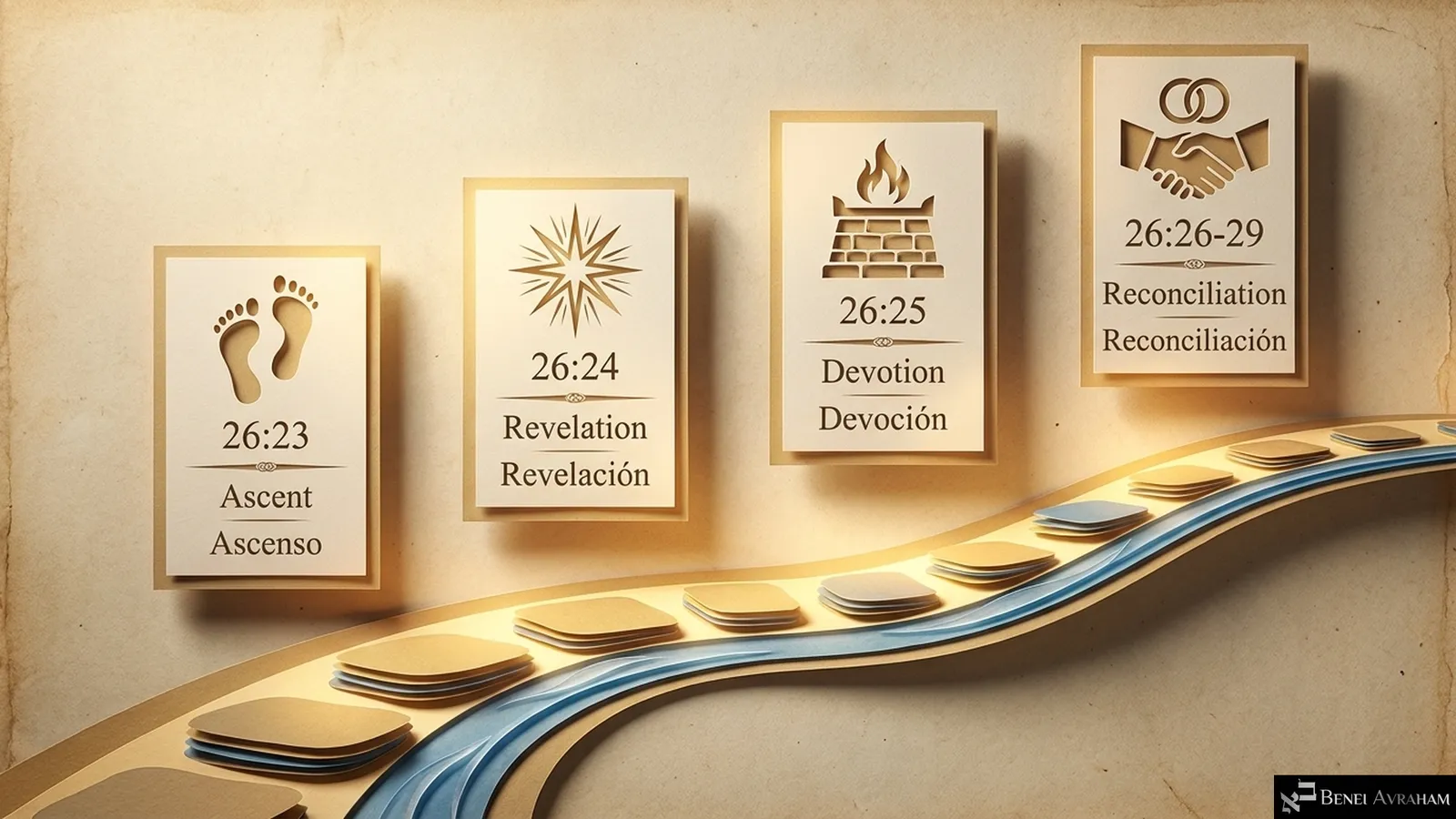
Yitzḥak goes up from there to Be’er-Sheva, footprints along a desert path (Genesis 26:23).
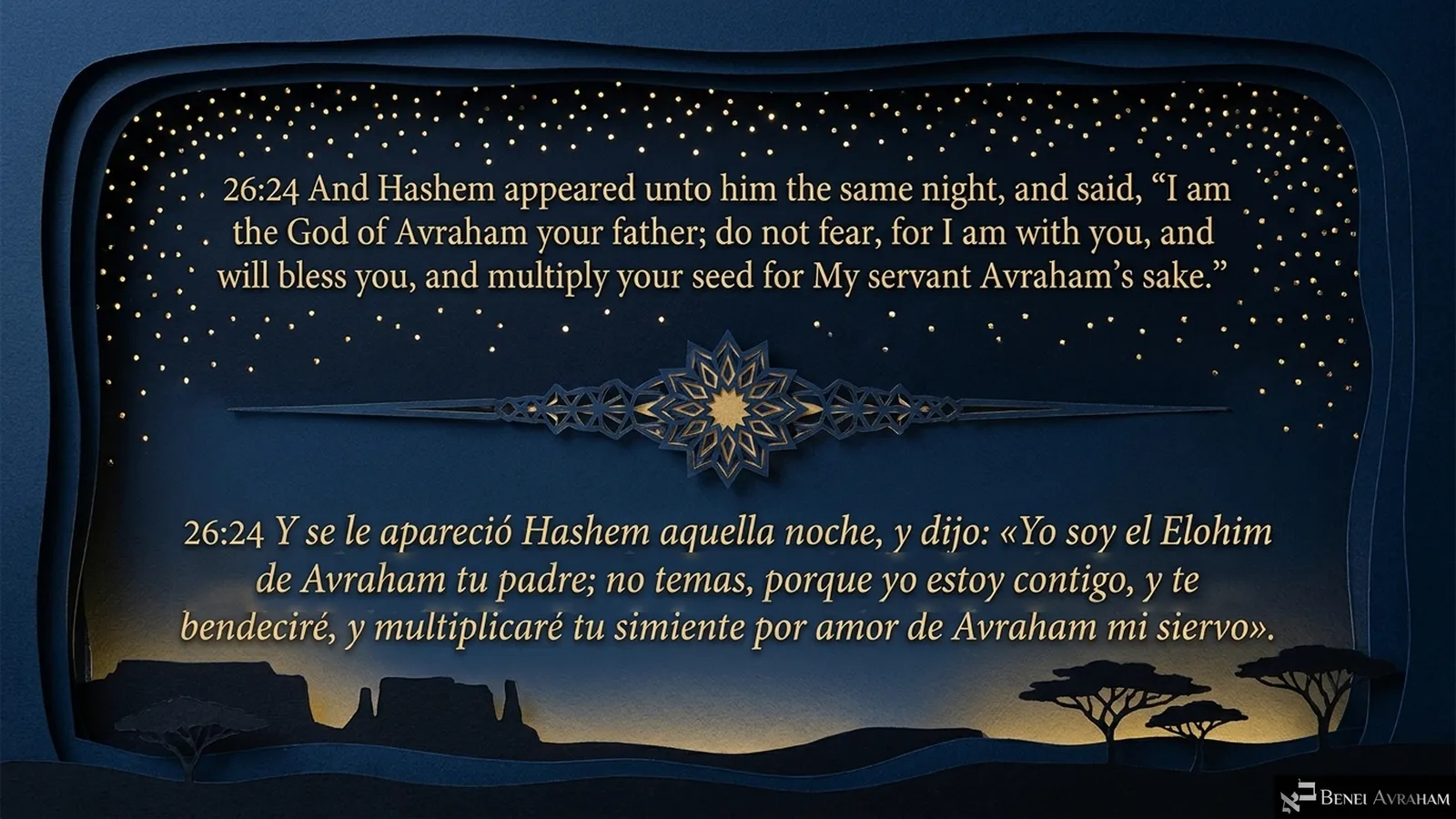
Hashem appears to Yitzḥak at night: “I am the God of Avraham your father; do not fear, for I am with you” (Genesis 26:24).
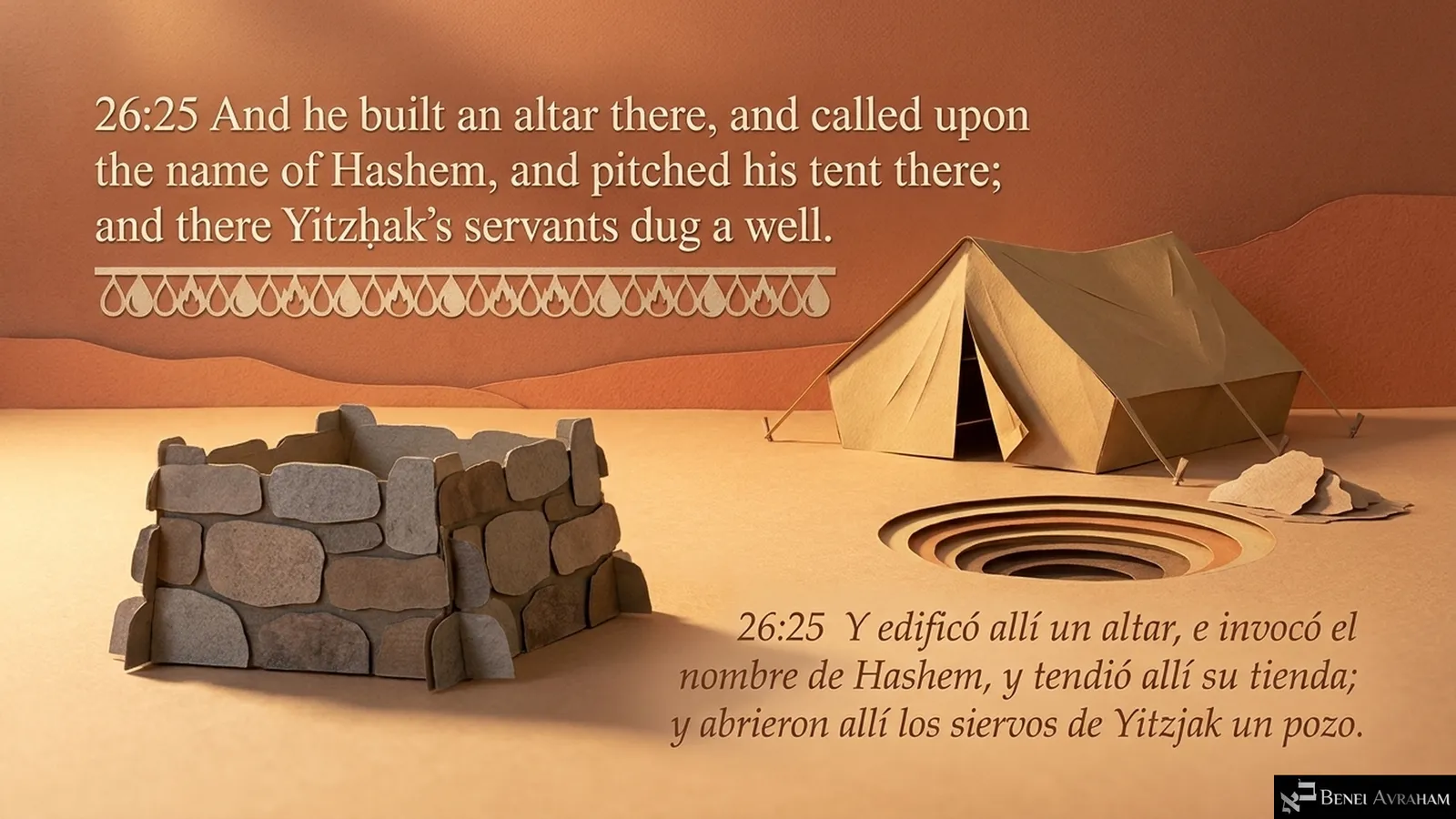
Yitzḥak builds an altar, calls on the name of Hashem, pitches his tent, and his servants dig a well (Genesis 26:25).
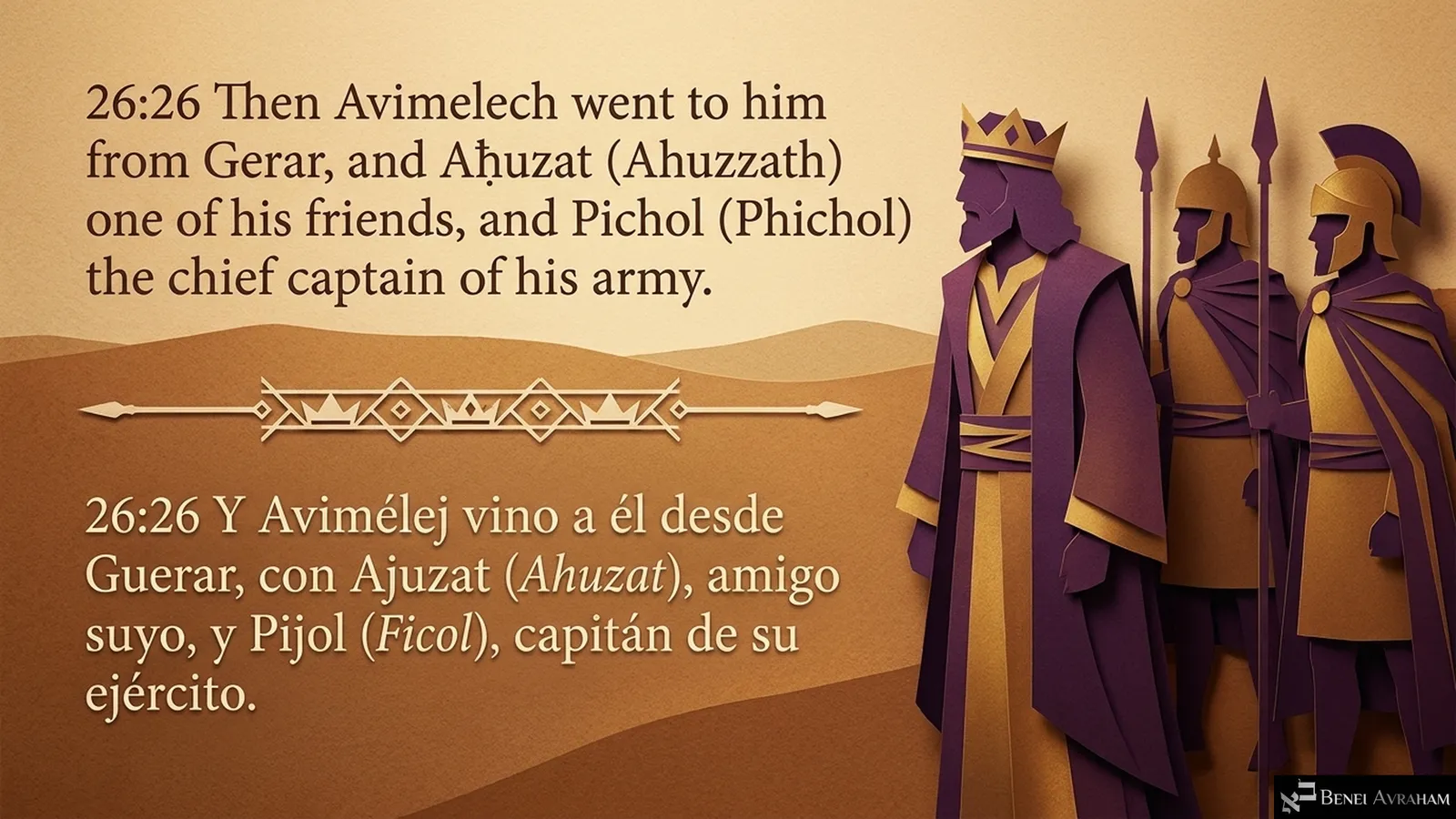
Avimelech comes from Gerar with Aḥuzat his friend and Pichol the captain of his army (Genesis 26:26).
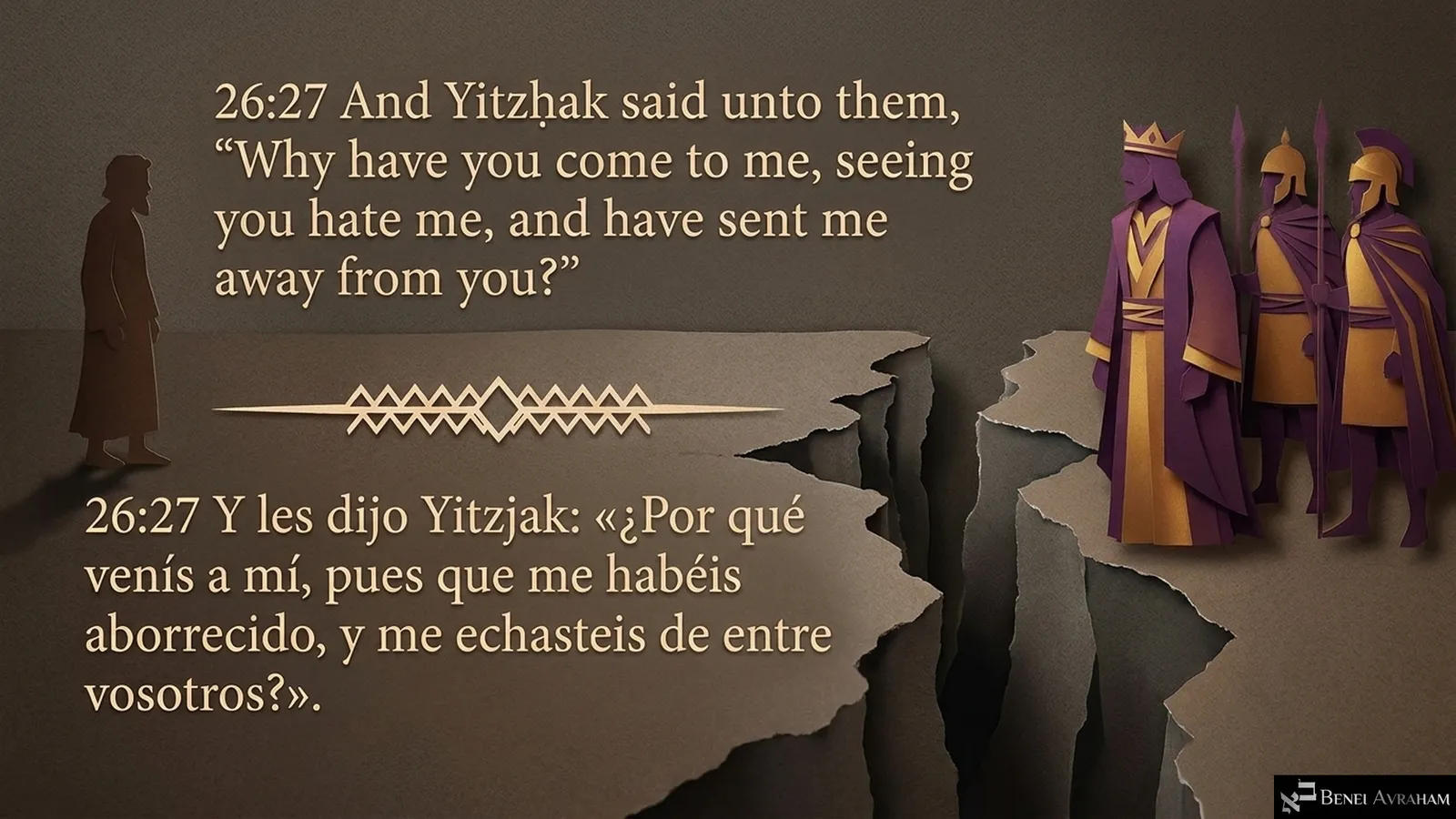
Yitzḥak asks them, “Why have you come to me, seeing you hate me and sent me away?” (Genesis 26:27).
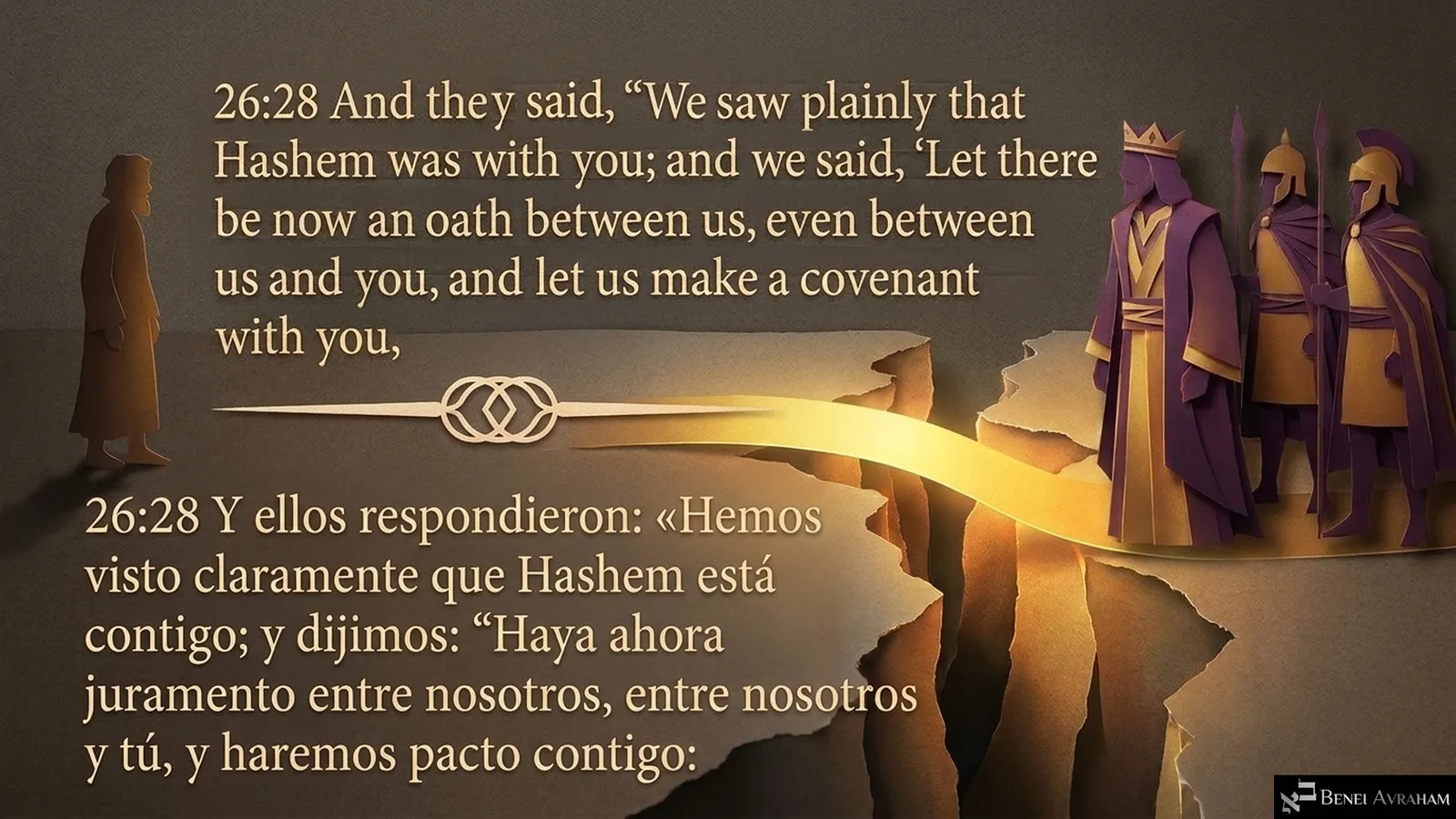
Avimelech and his men: “We saw plainly that Hashem was with you … let us make a covenant with you” (Genesis 26:28).
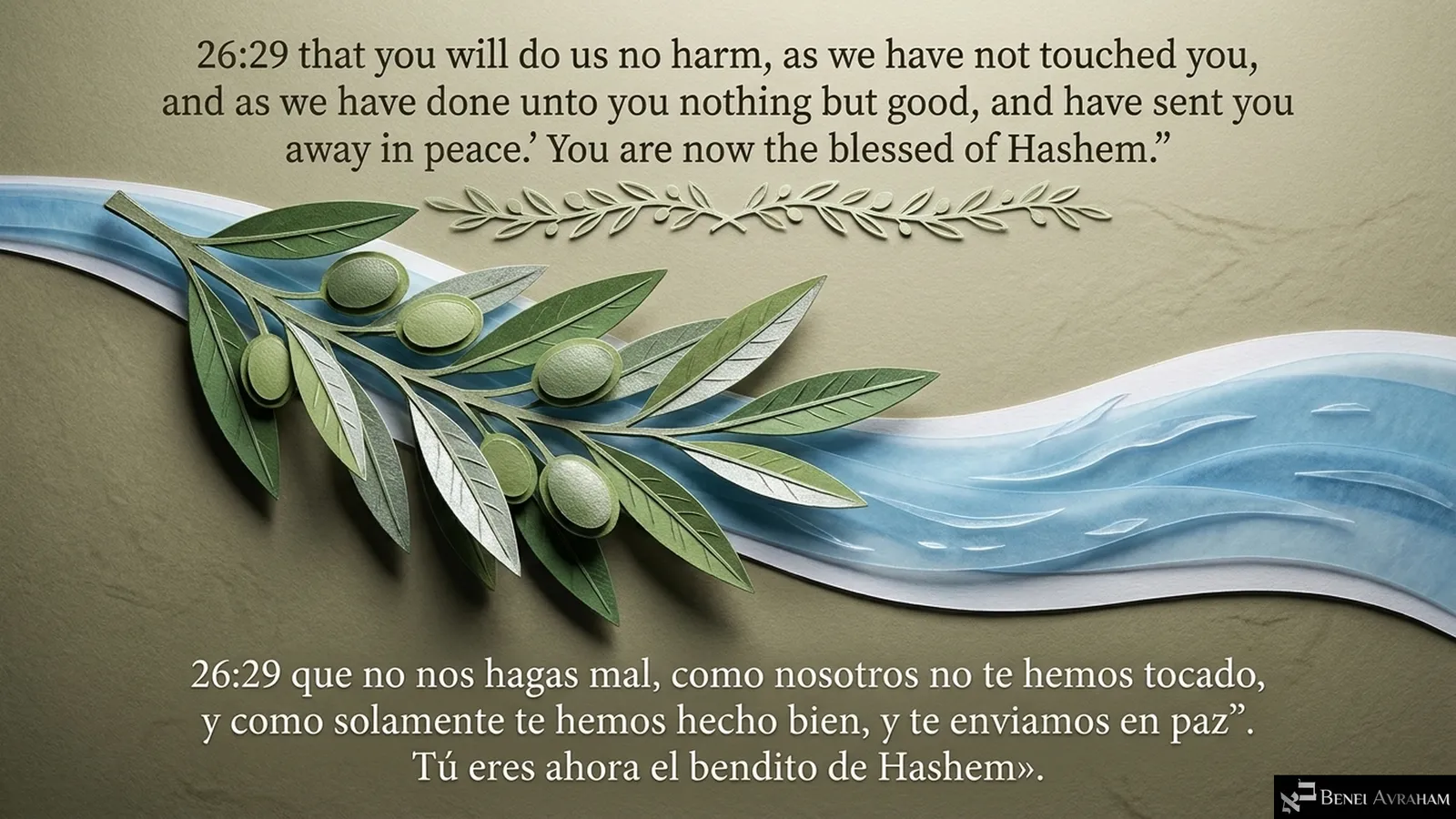
An olive branch over a stream: “You are now the blessed of Hashem” (Genesis 26:29).
Summary of the portion as steps along a path: ascent, revelation, devotion and reconciliation (Genesis 26:23–29).
Chamishi · Genesis 26:30–27:27

Fifth Portion

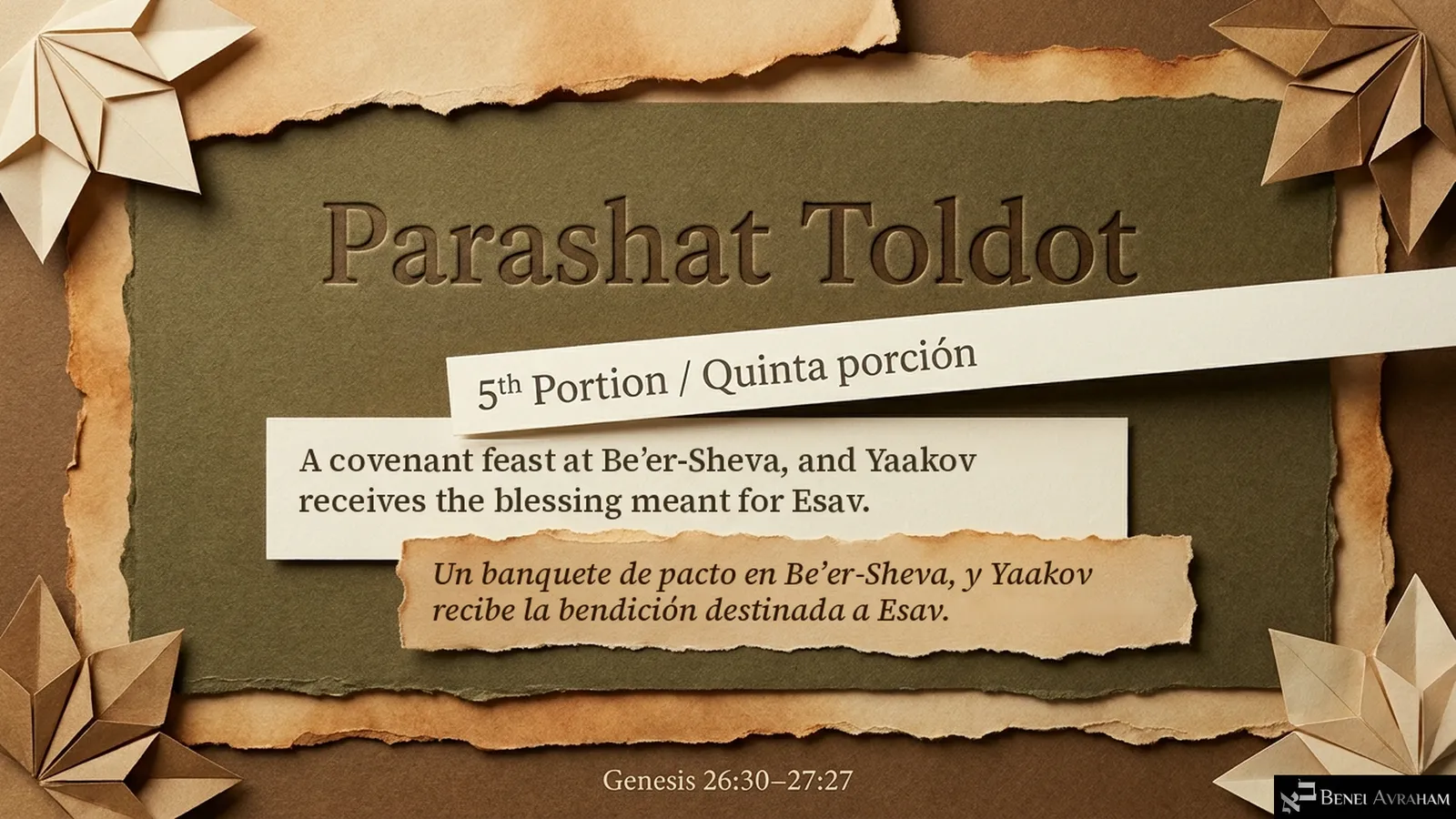
Title slide: Parashat Toldot, fifth portion, Genesis 26:30–27:27: a covenant feast at Be’er-Sheva, and Yaakov receives the blessing meant for Esav.
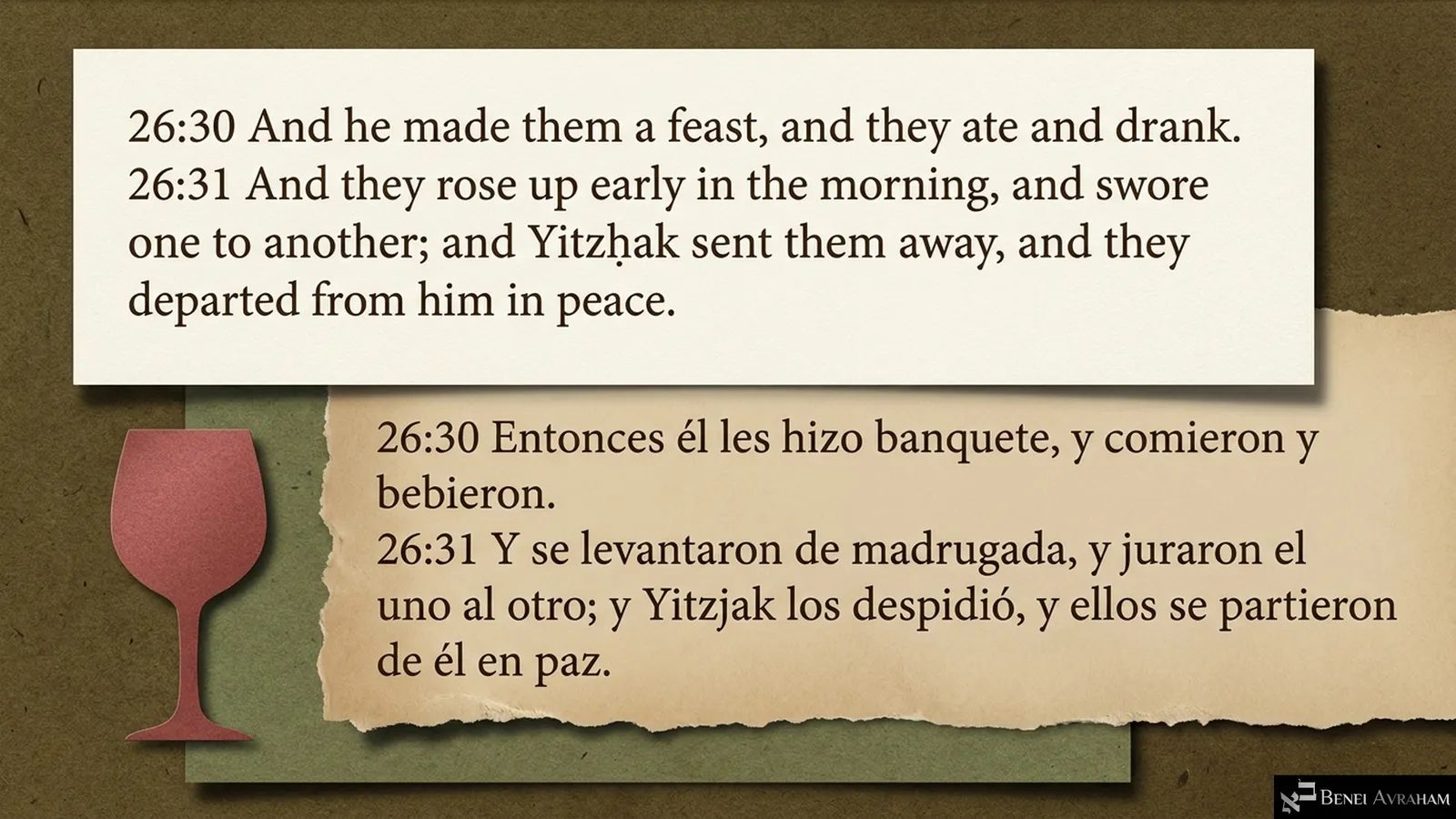
Yitzḥak makes them a feast; in the morning they swear to one another and depart in peace (Genesis 26:30–31).
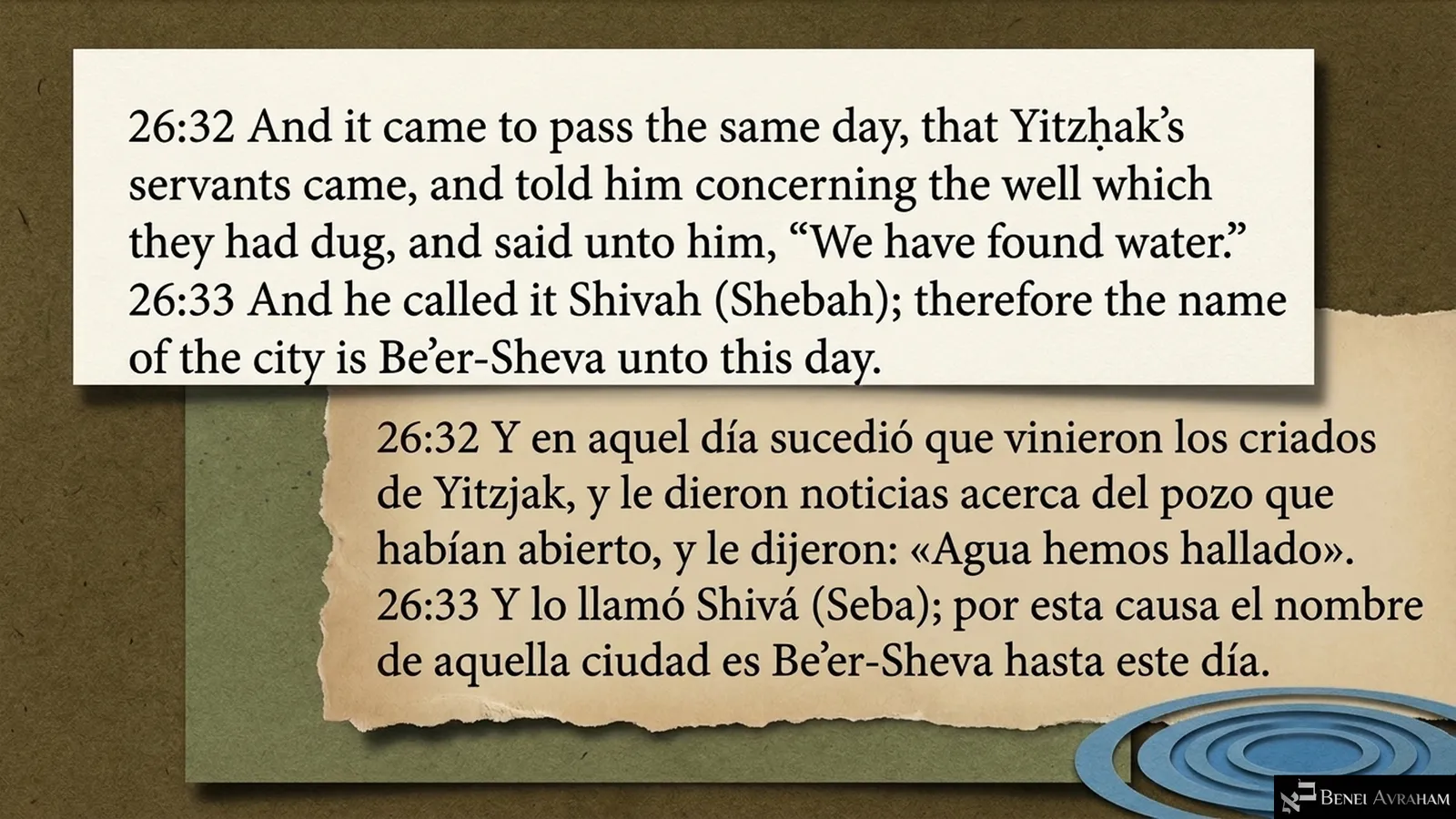
Yitzḥak’s servants report, “We have found water,” and he calls the well Shivah: Be’er-Sheva (Genesis 26:32–33).
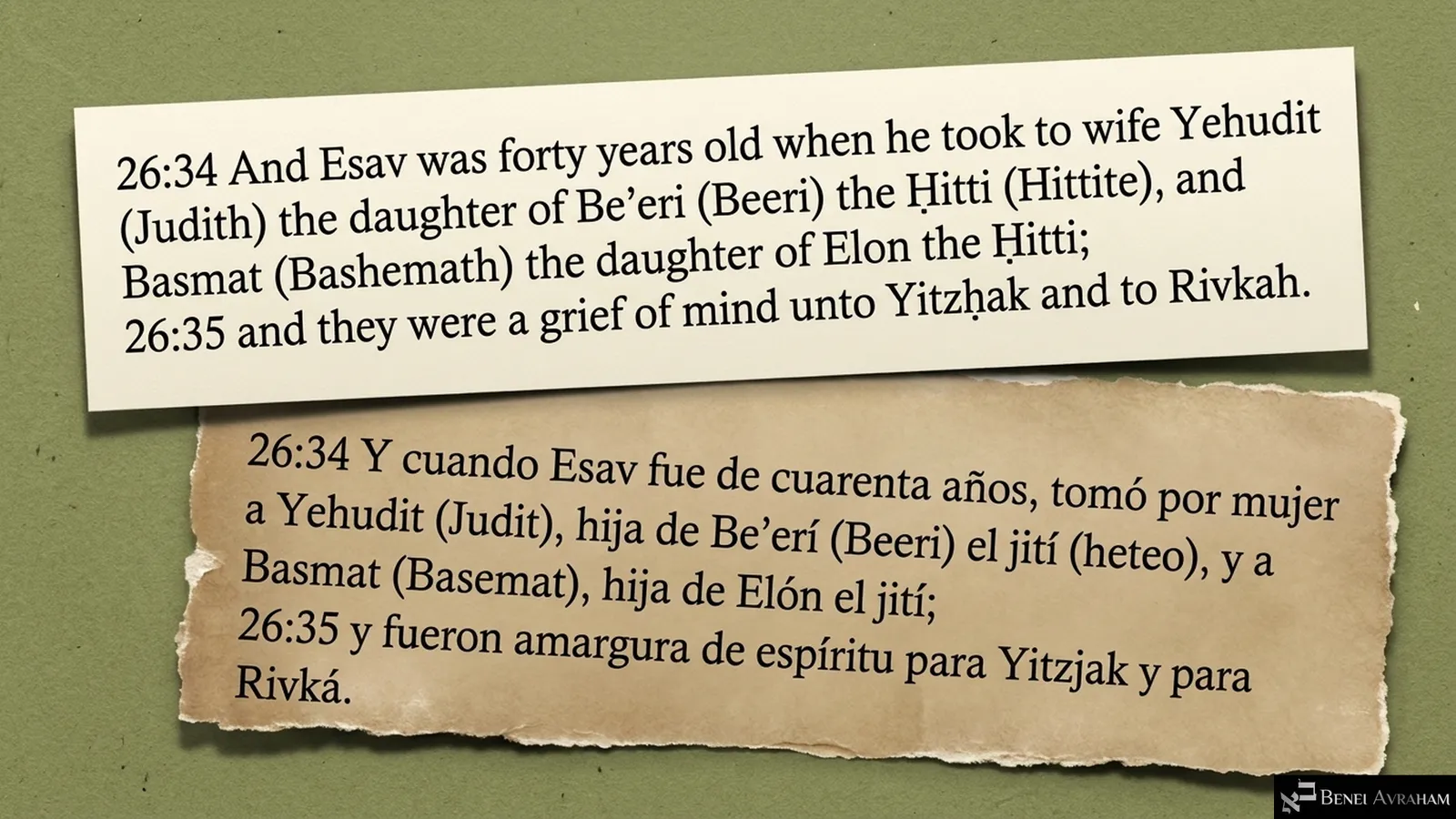
Esav marries Yehudit and Basmat, Ḥittite women, a grief of mind to Yitzḥak and Rivkah (Genesis 26:34–35).
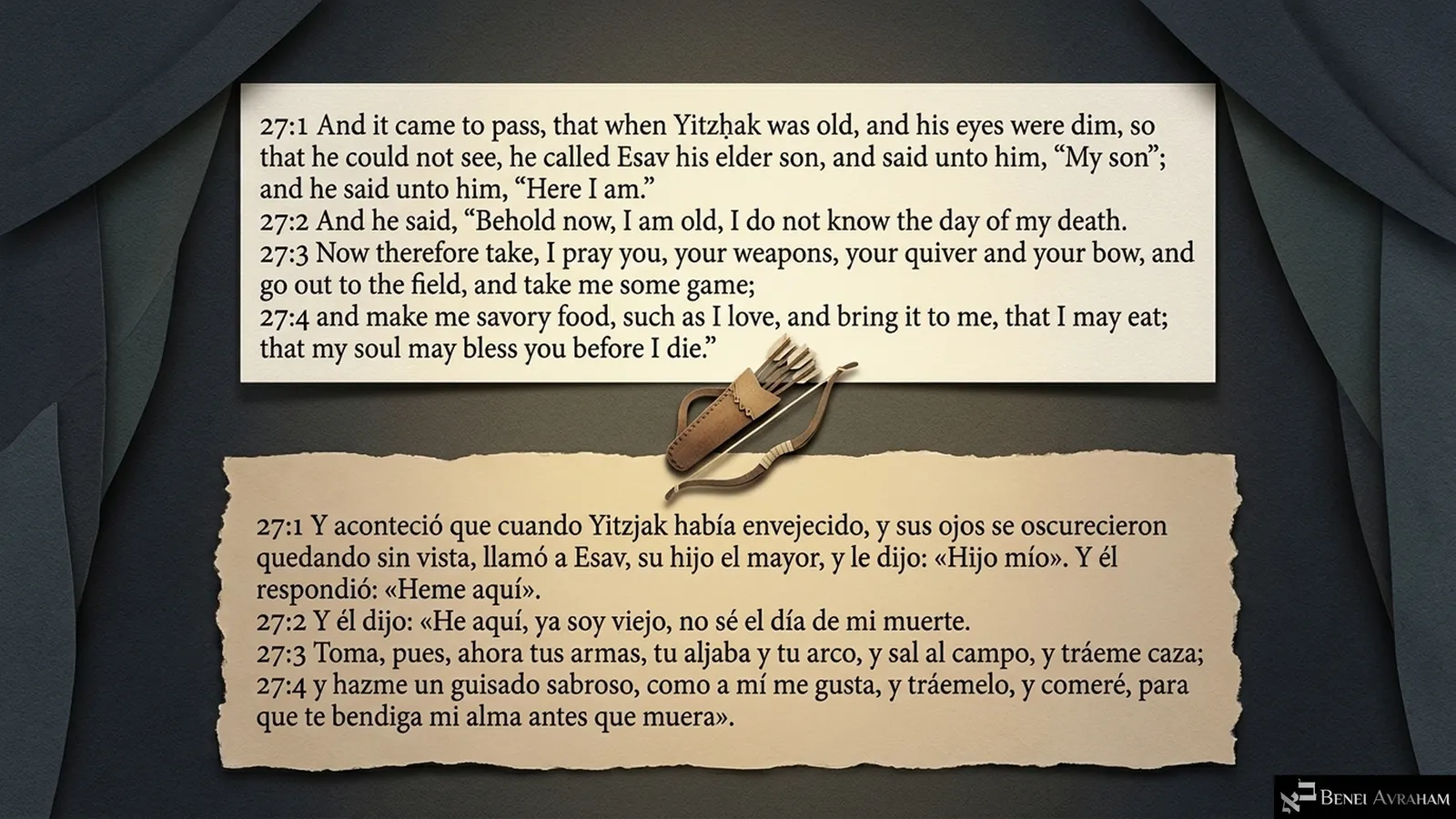
Old and blind, Yitzḥak sends Esav to hunt game and make savory food, so that he may bless him (Genesis 27:1–4).
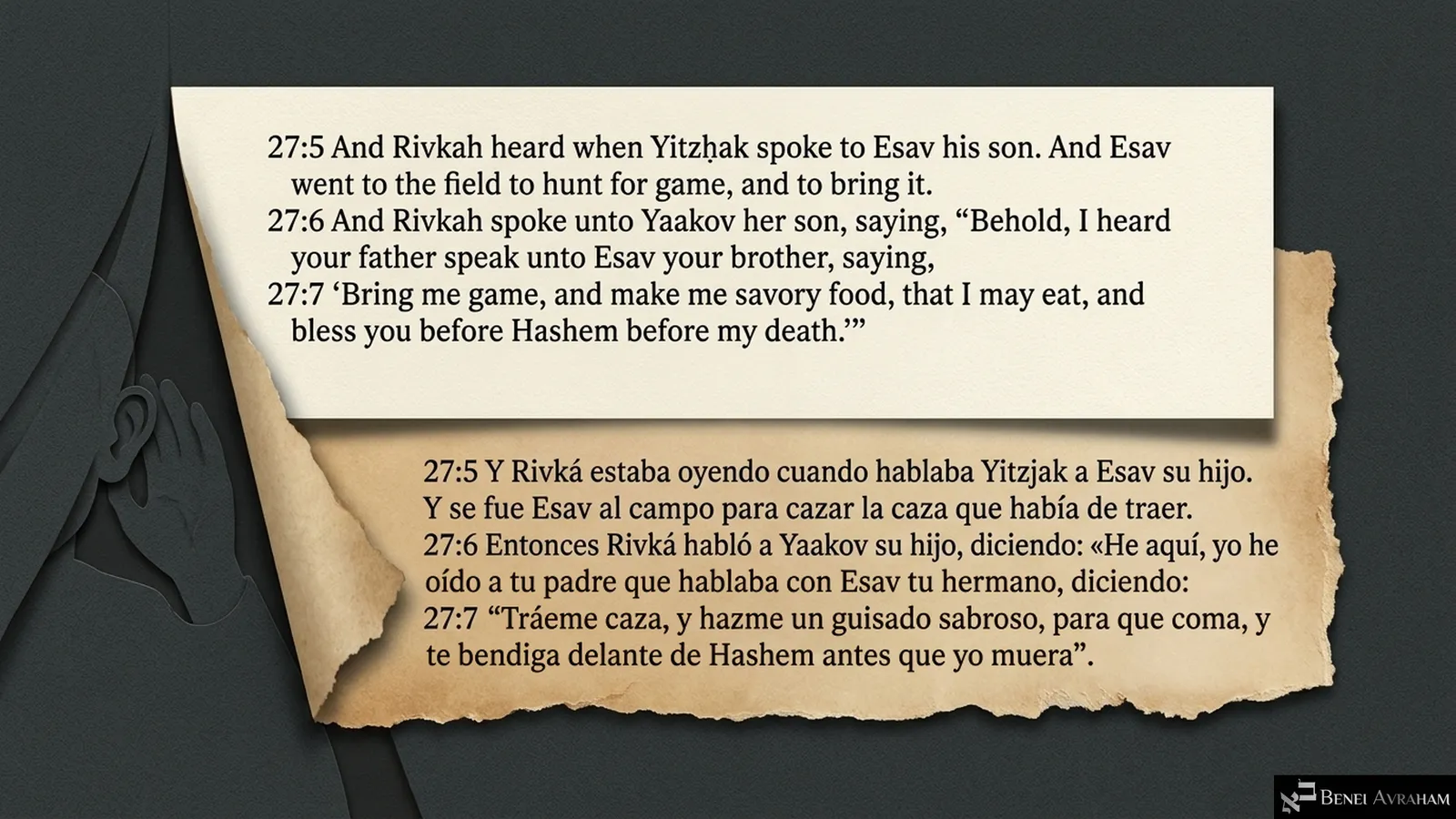
Rivkah overhears Yitzḥak and tells Yaakov what his father said to Esav (Genesis 27:5–7).
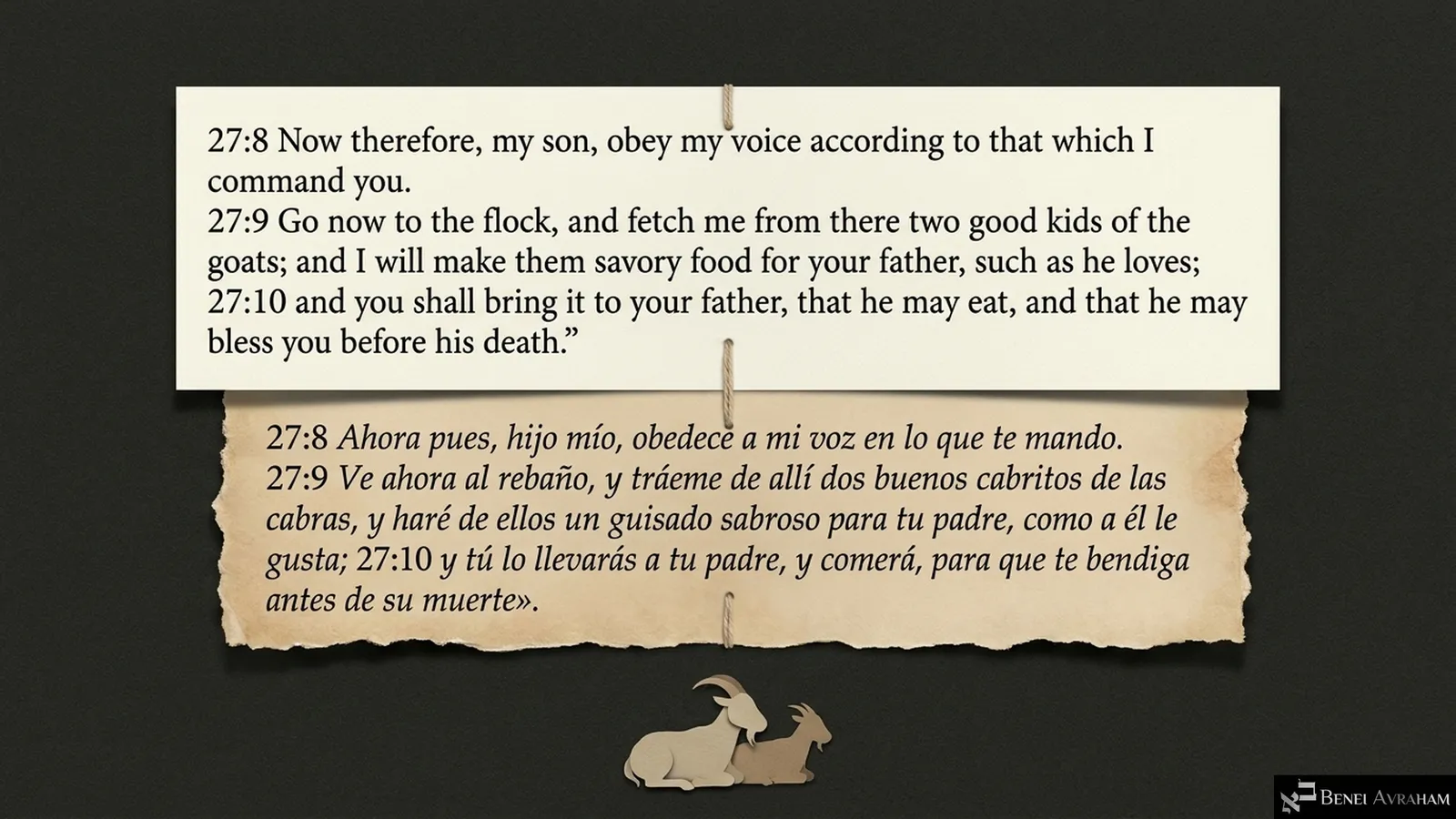
Rivkah tells Yaakov to fetch two good kids of the goats so she can make his father’s favourite food (Genesis 27:8–10).
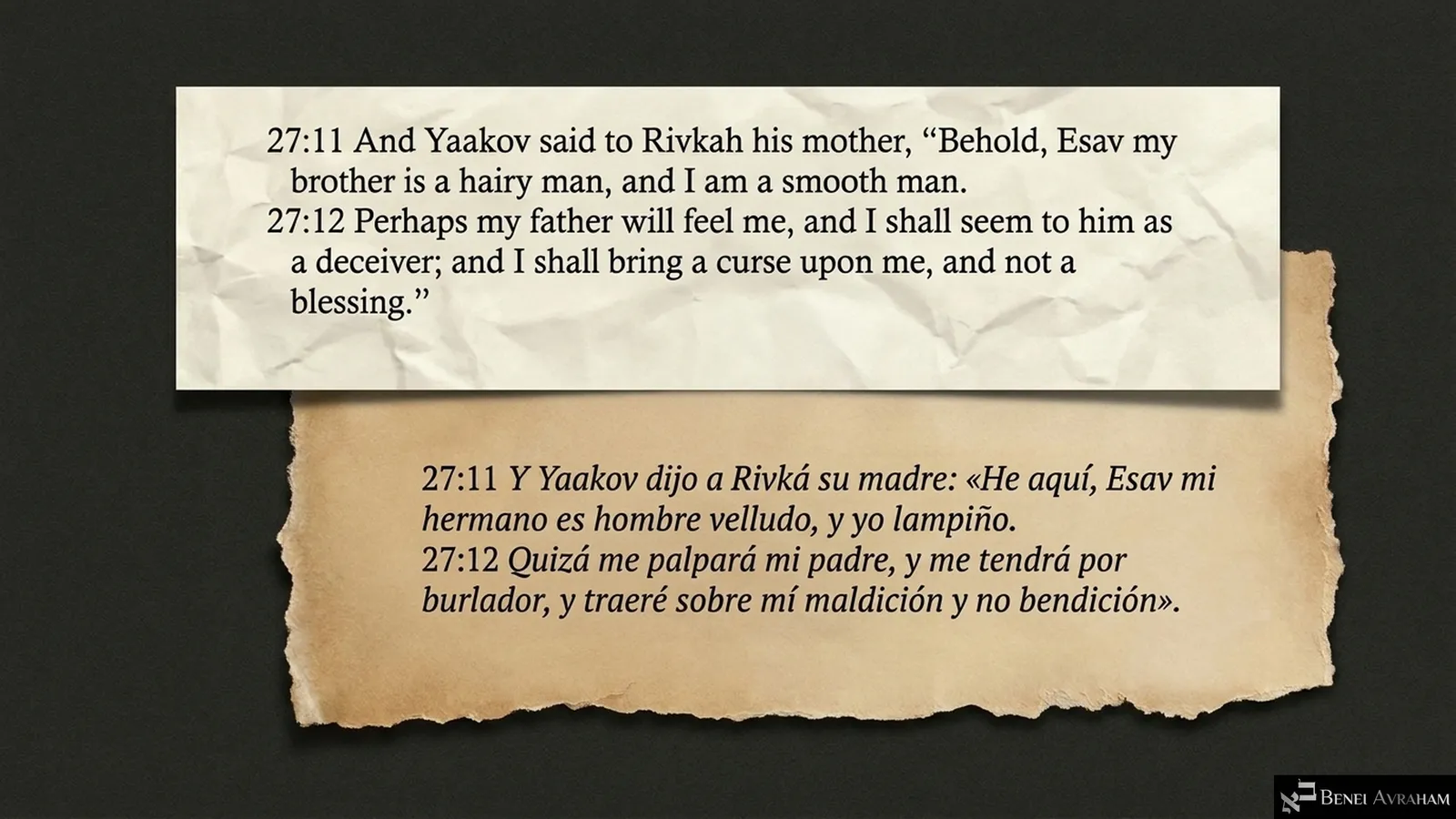
Yaakov fears his father will feel him, since Esav is hairy and he is smooth (Genesis 27:11–12).
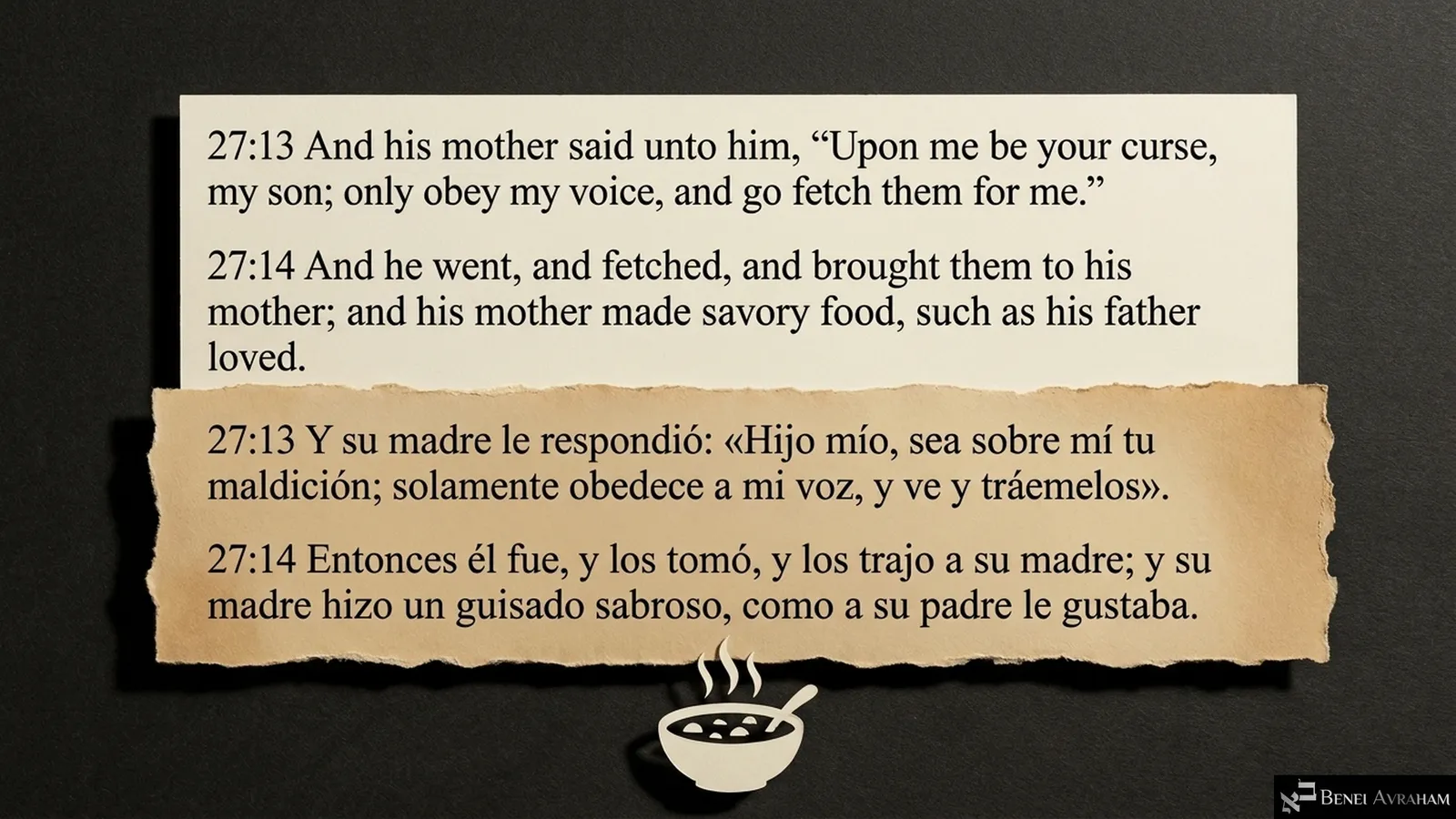
“Upon me be your curse, my son”: Rivkah makes the savory food (Genesis 27:13–14).
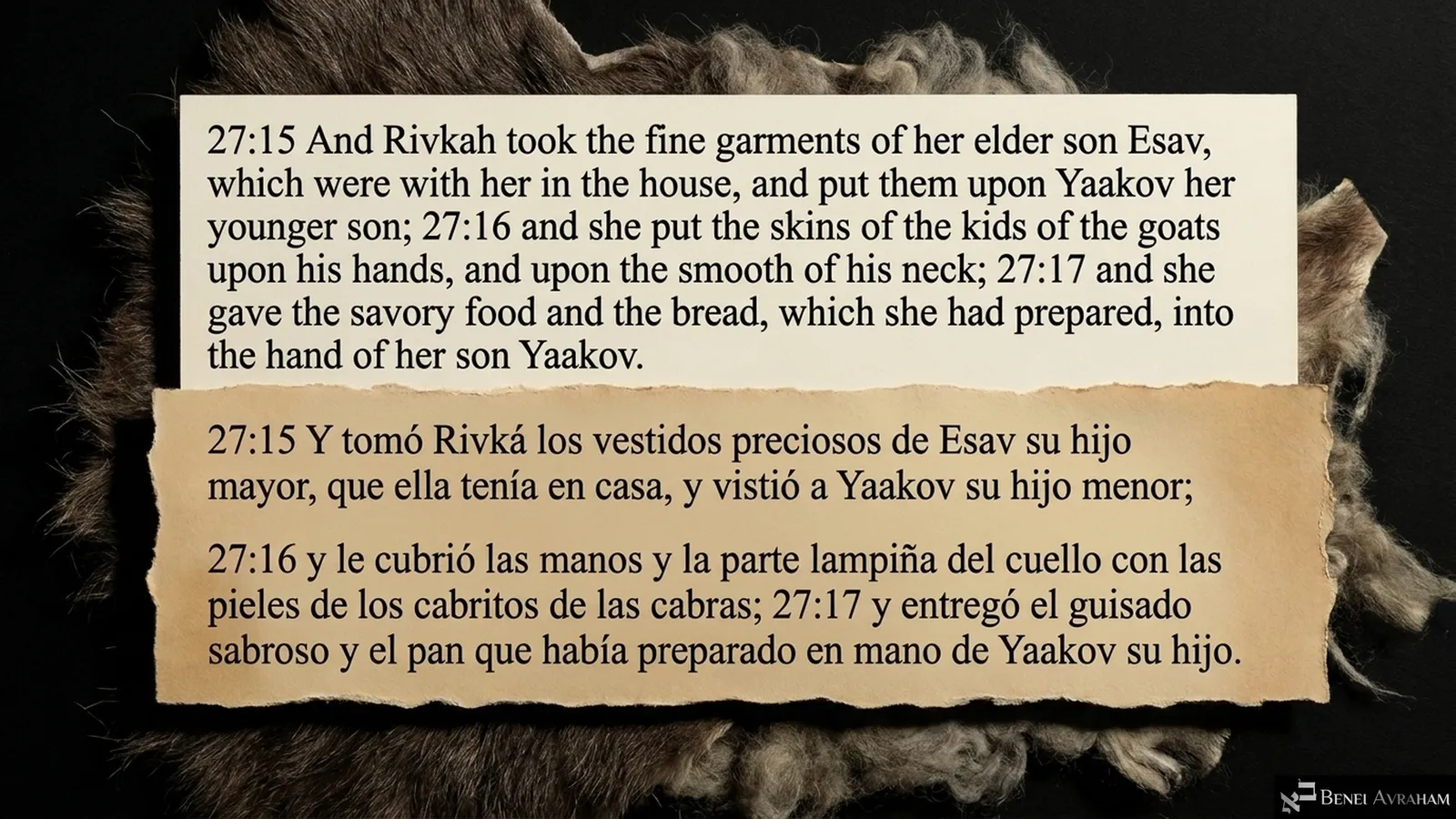
Rivkah dresses Yaakov in Esav’s garments and covers his hands and neck with goatskins (Genesis 27:15–17).
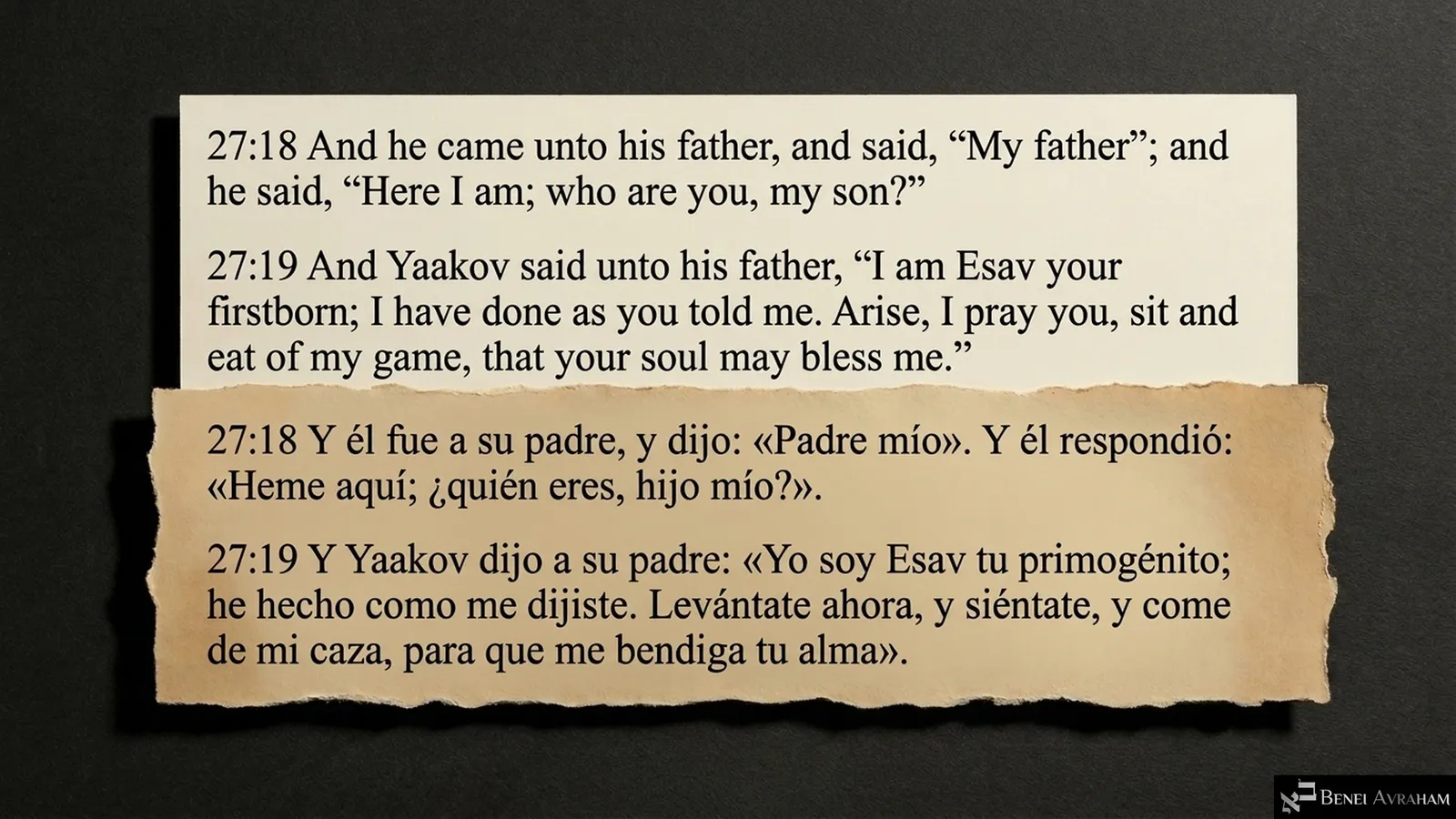
Yaakov goes in to his father: “I am Esav your firstborn” (Genesis 27:18–19).
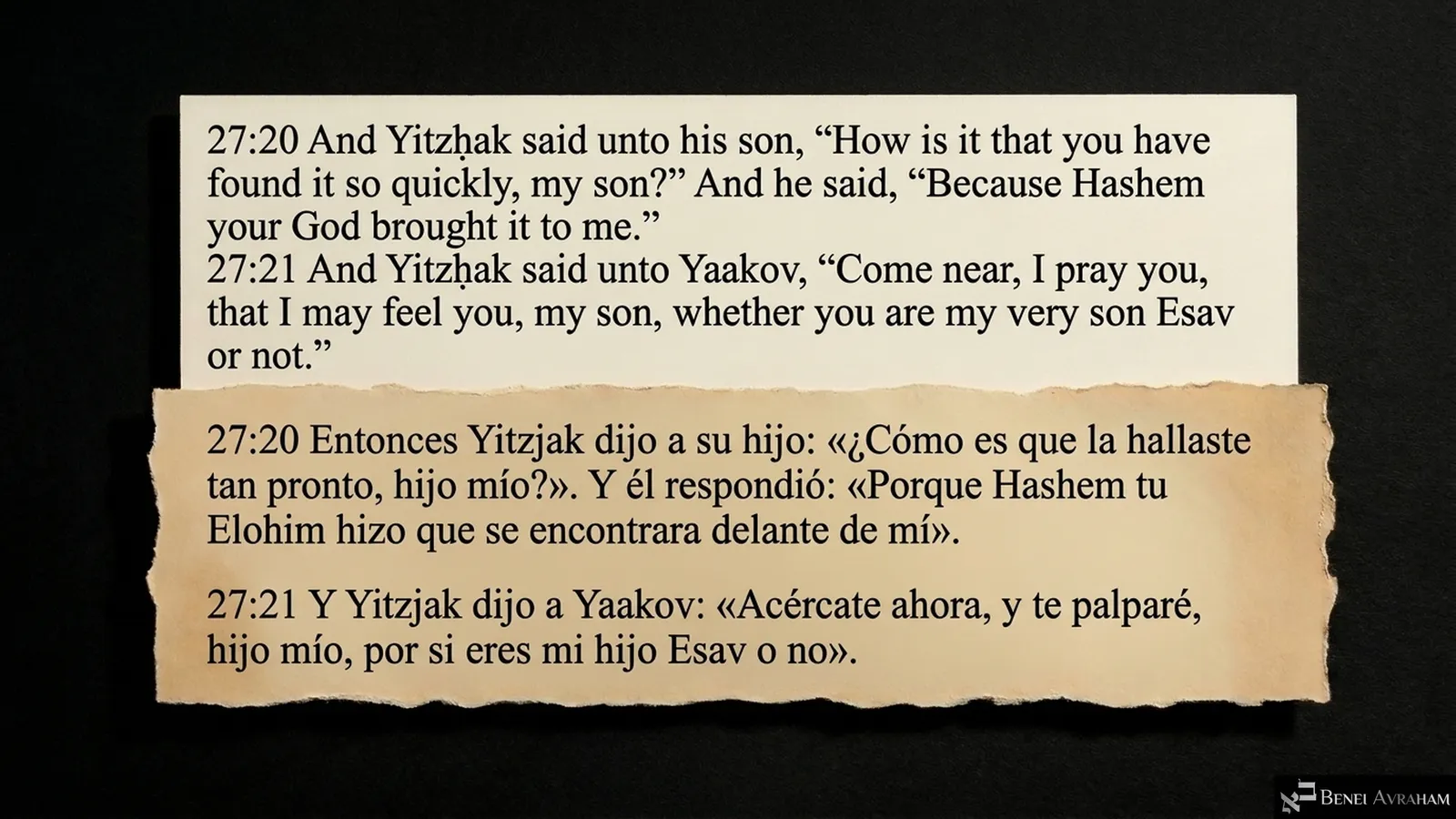
“How is it that you have found it so quickly?” Yitzḥak asks to feel his son (Genesis 27:20–21).
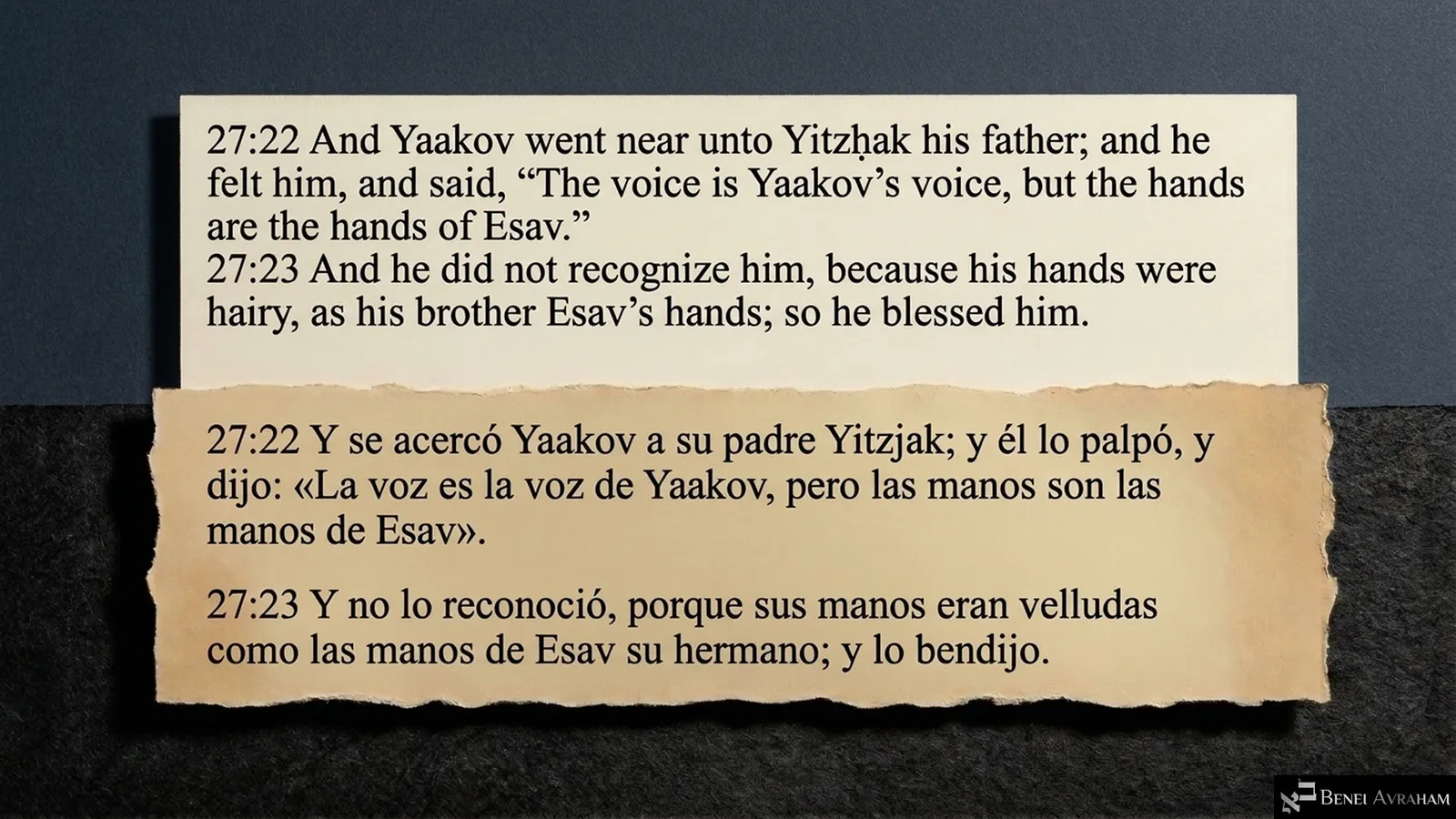
“The voice is Yaakov’s voice, but the hands are the hands of Esav,” and Yitzḥak blesses him (Genesis 27:22–23).
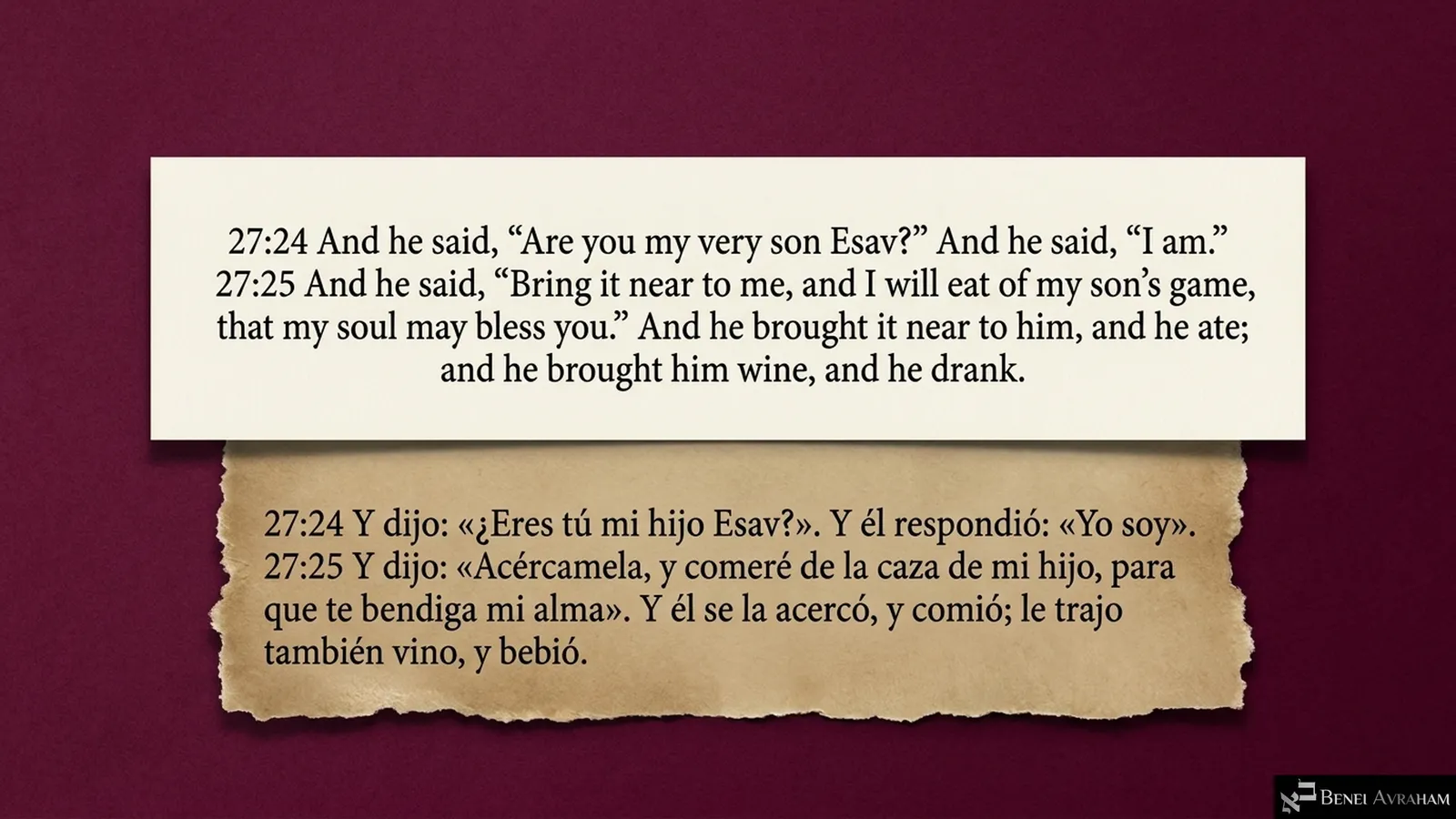
“Are you my very son Esav?” Yitzḥak eats the game and drinks the wine (Genesis 27:24–25).
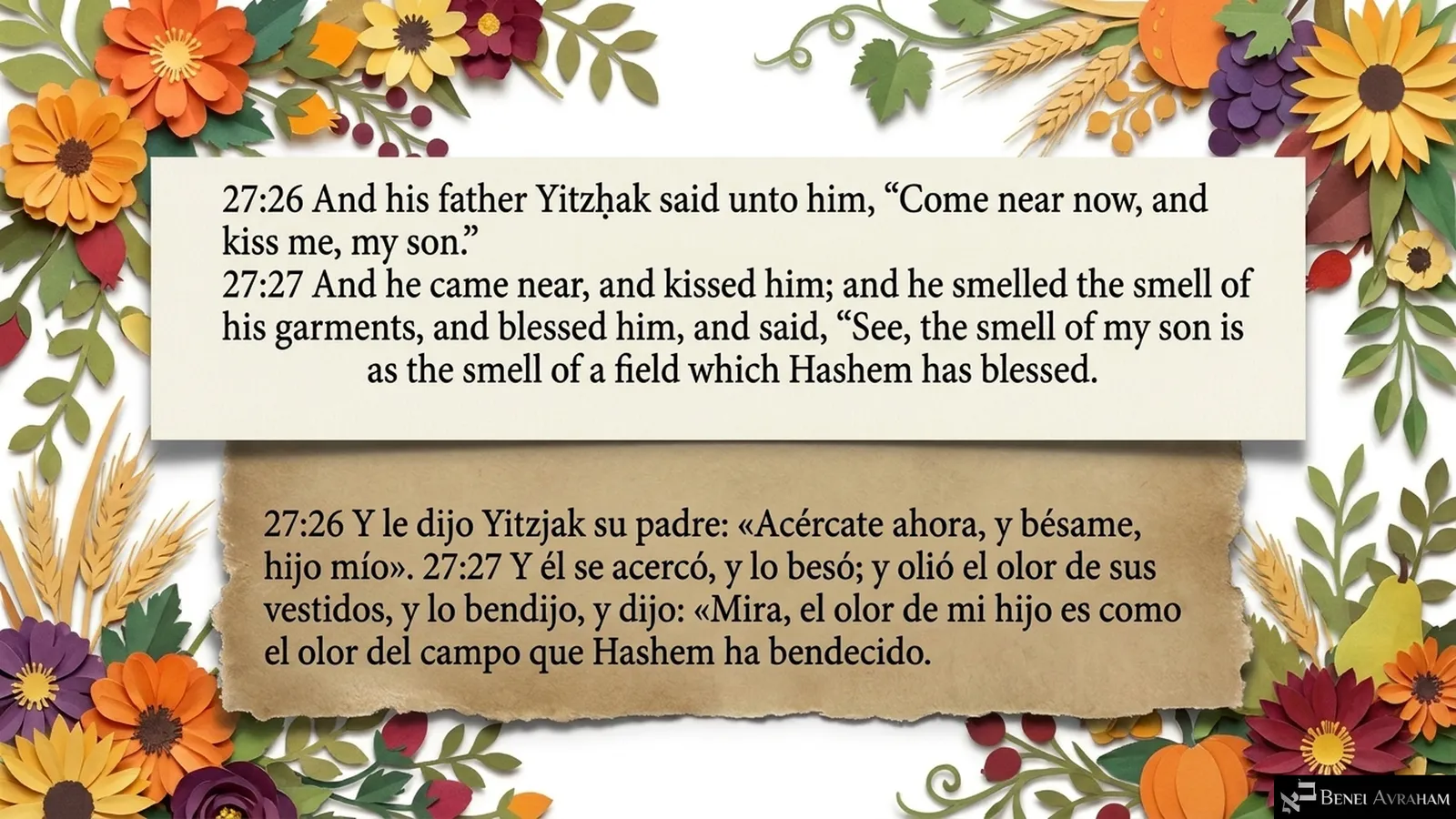
Yitzḥak kisses Yaakov and smells his garments: “as the smell of a field which Hashem has blessed” (Genesis 27:26–27).
Shishi · Genesis 27:28–28:4

Sixth Portion
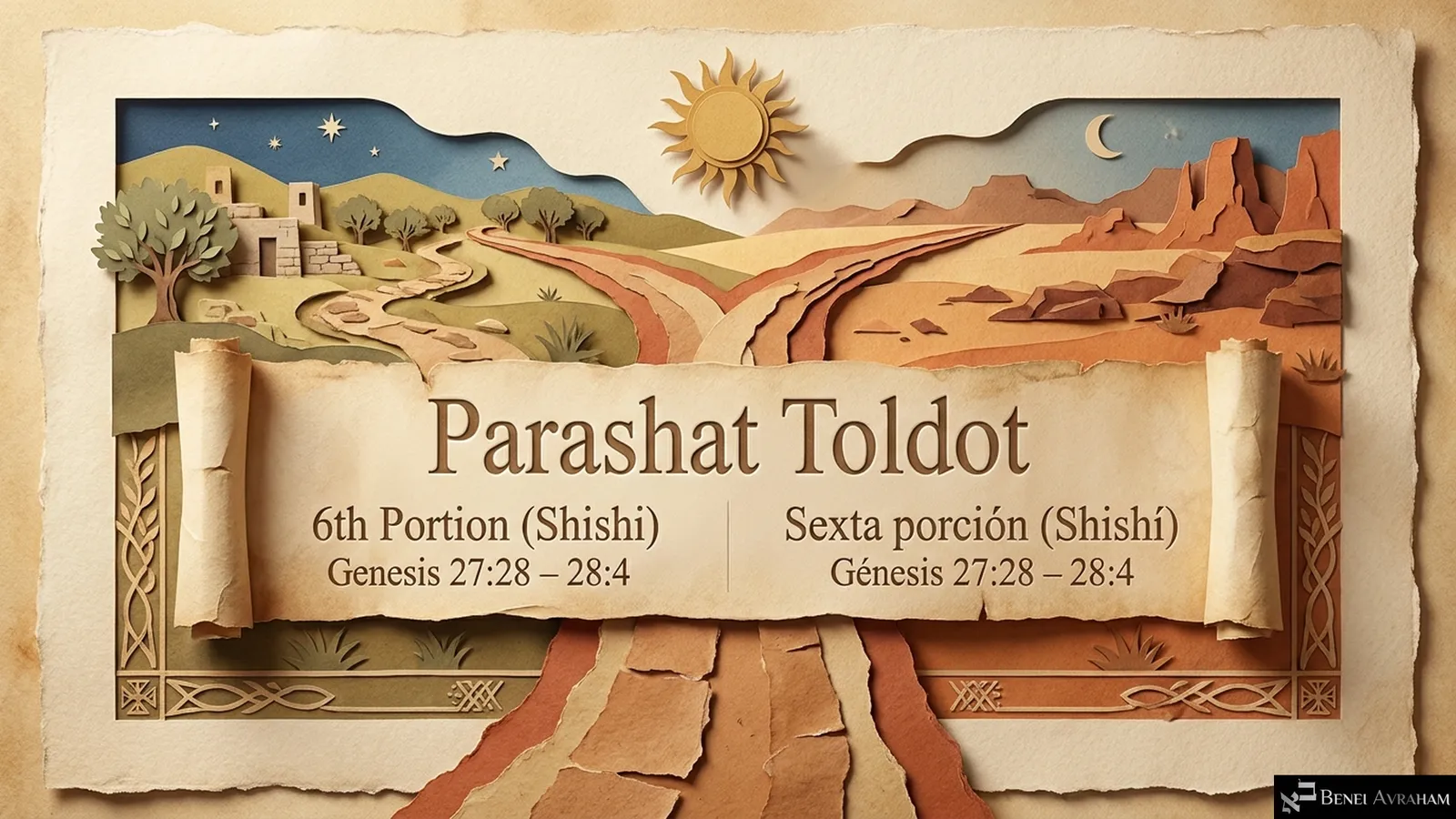
Title slide: Parashat Toldot, sixth portion (Shishi), Genesis 27:28–28:4, on a paper scroll.
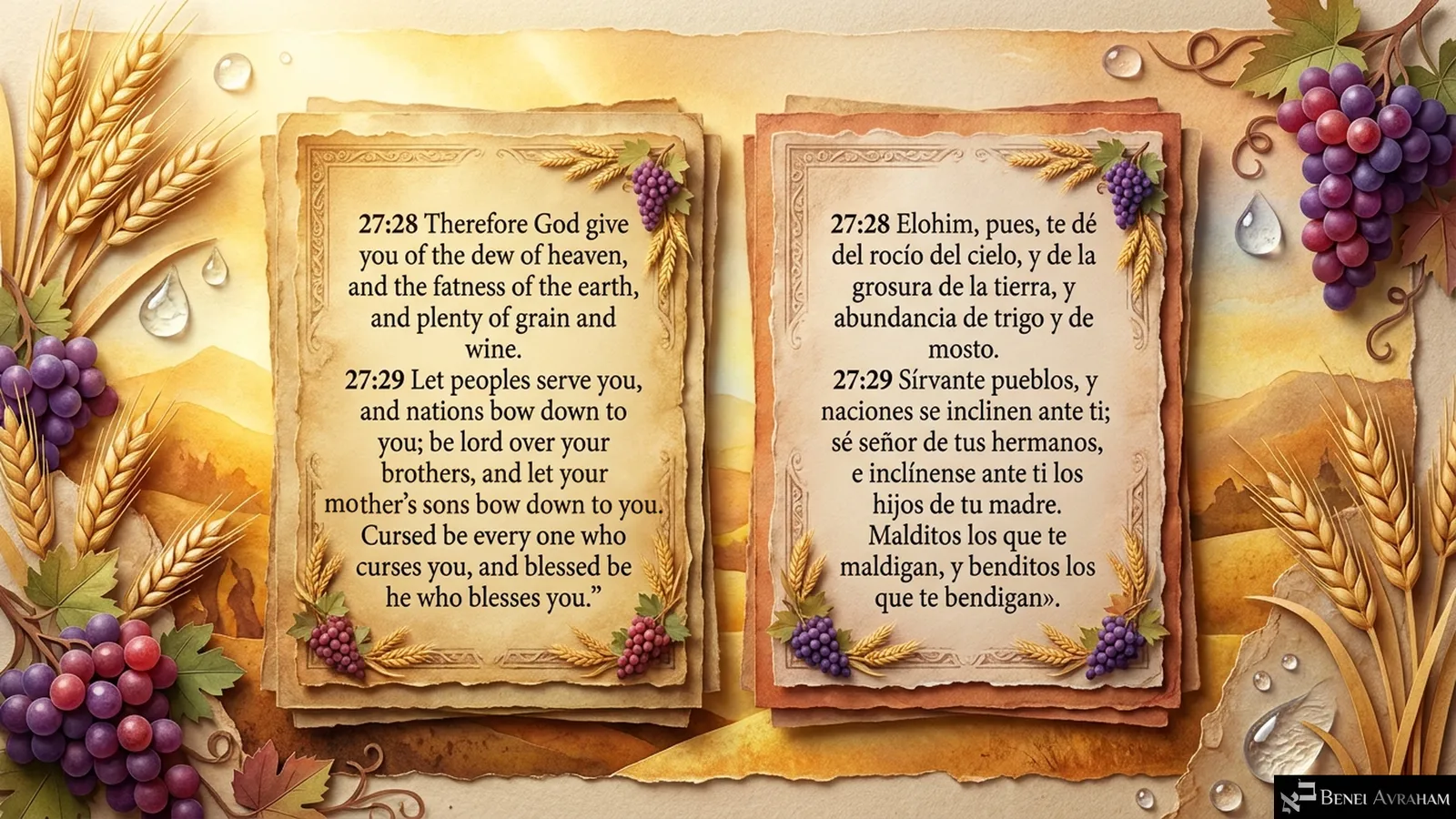
The blessing of dew, grain and wine, and “Let peoples serve you”, among vines and wheat (Genesis 27:28–29).
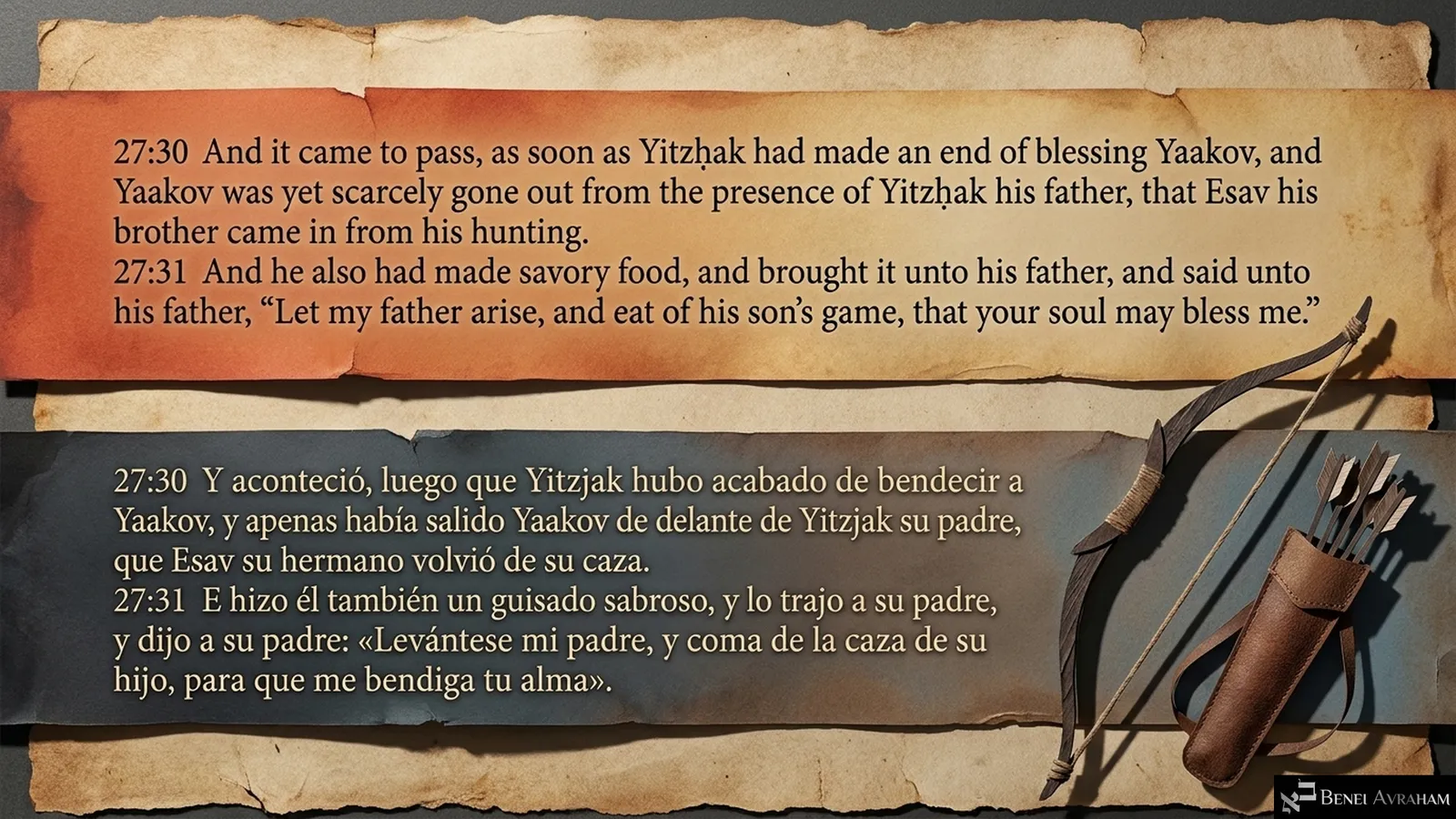
As soon as Yaakov goes out, Esav comes in from his hunt with savory food for his father (Genesis 27:30–31).
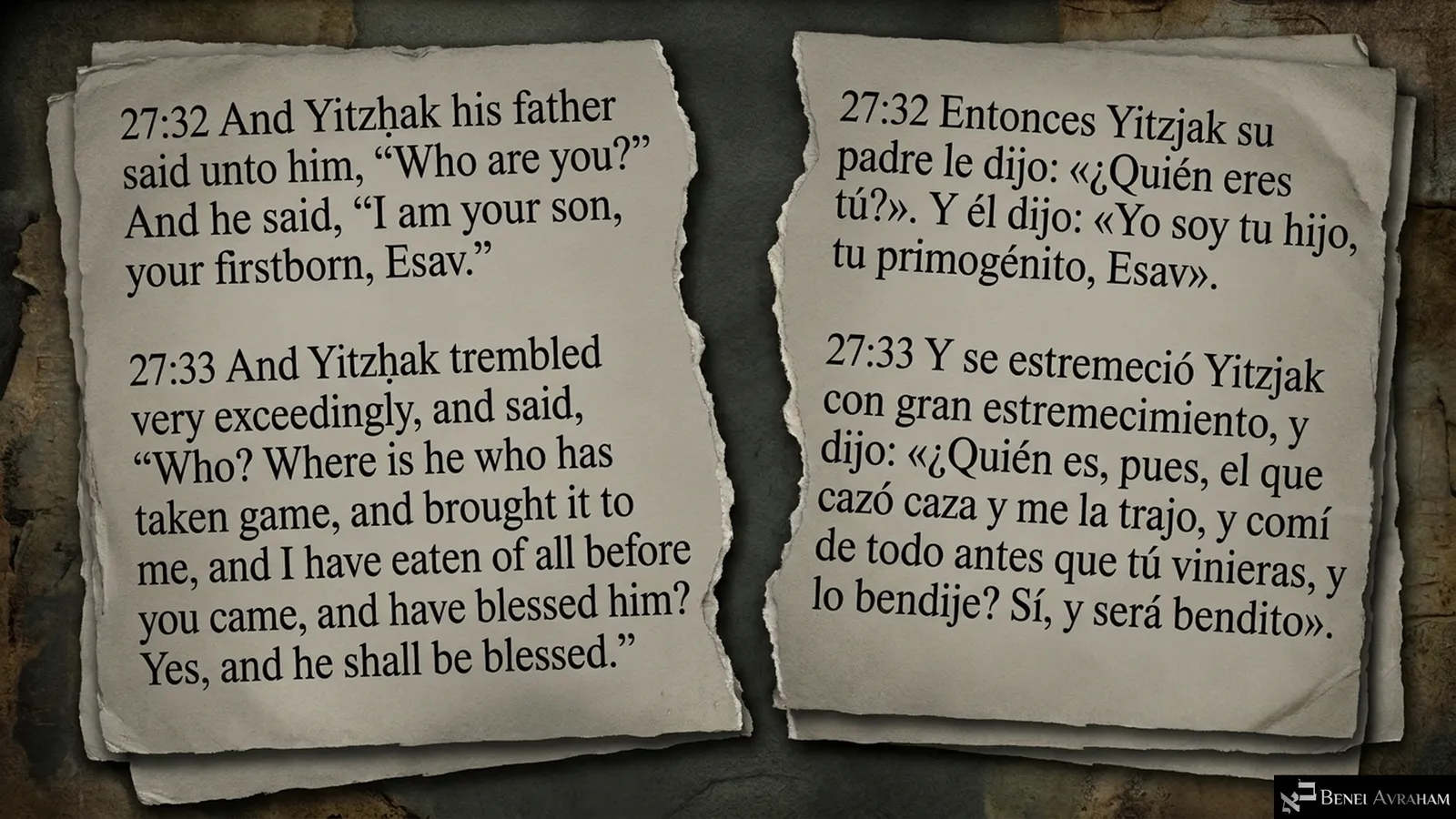
“Who are you?” Yitzḥak trembles exceedingly: “I have blessed him; yes, and he shall be blessed” (Genesis 27:32–33).
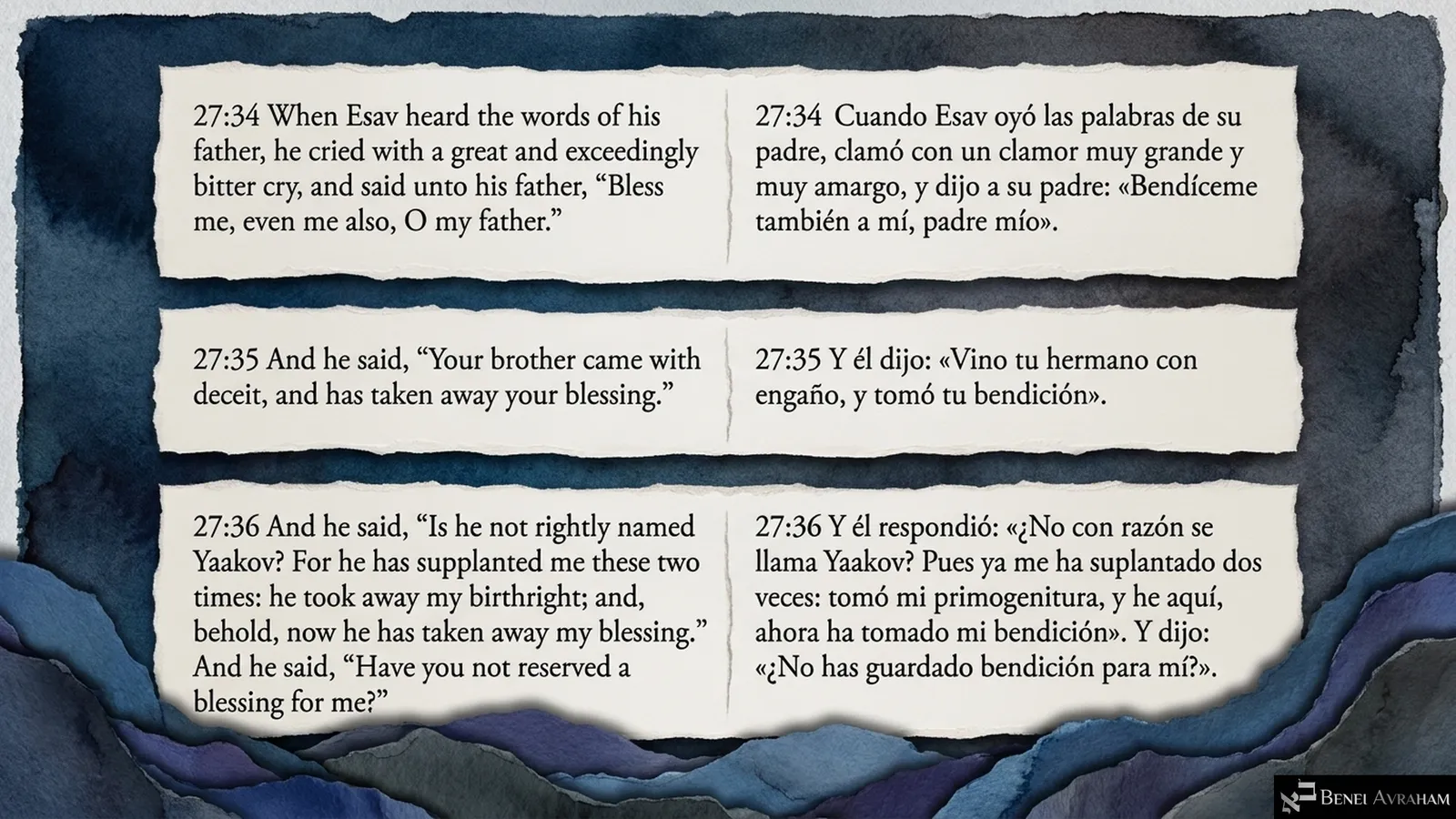
Esav’s bitter cry, “Bless me, even me also, O my father,” and “Is he not rightly named Yaakov?” (Genesis 27:34–36).
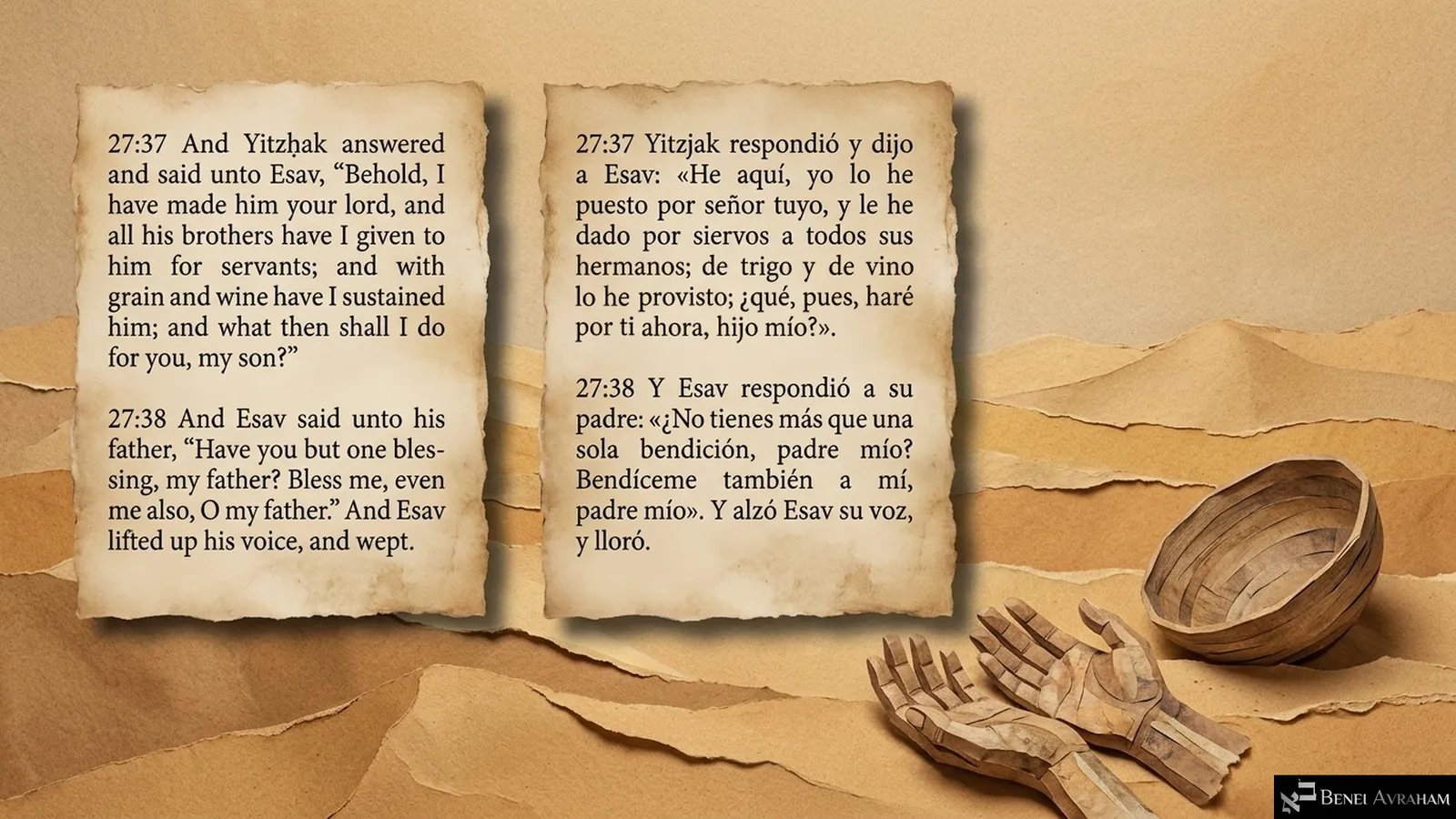
“Have you but one blessing, my father?” Esav lifts up his voice and weeps (Genesis 27:37–38).
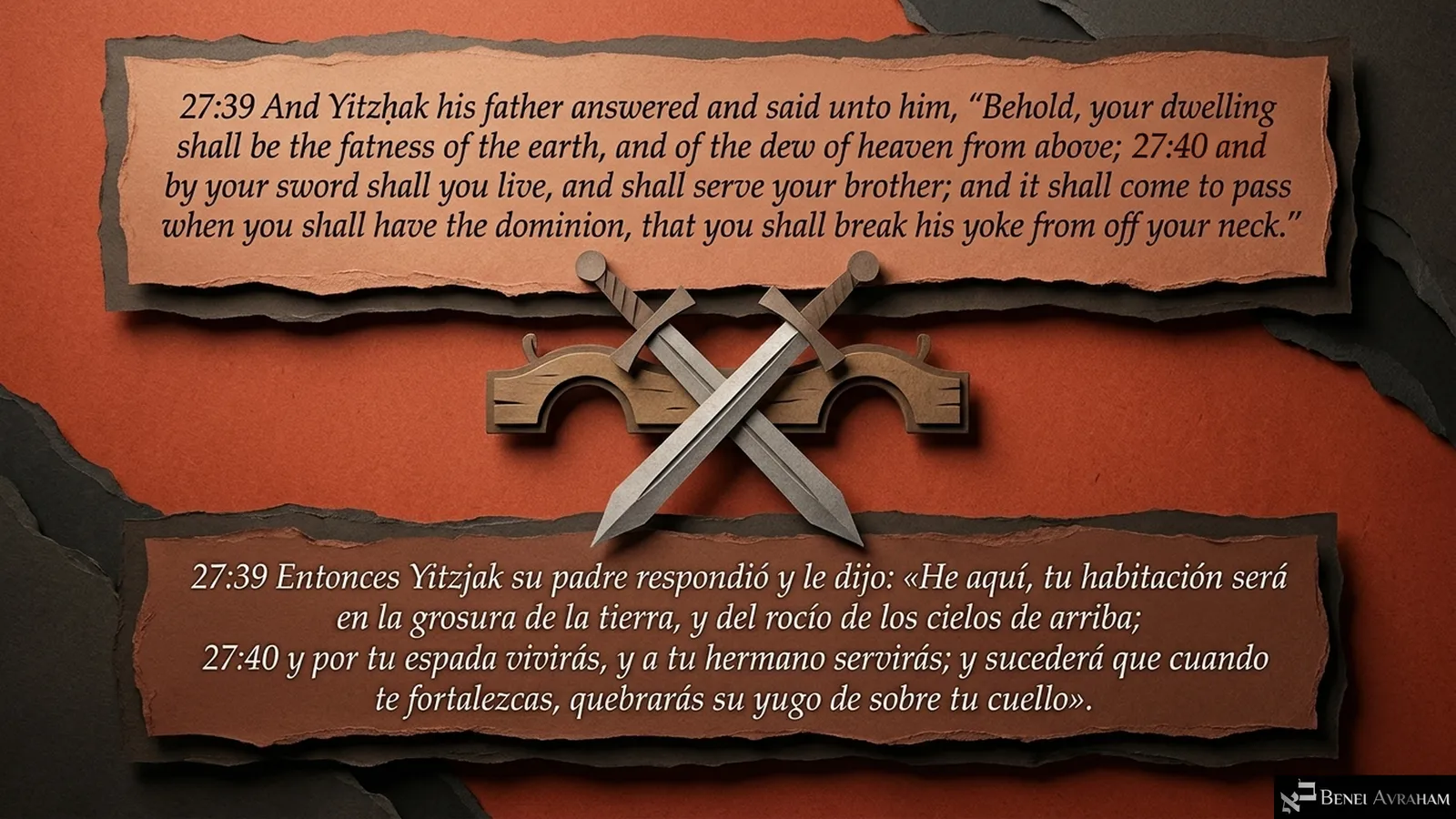
Esav’s blessing under crossed swords: “By your sword you shall live … you shall break his yoke” (Genesis 27:39–40).
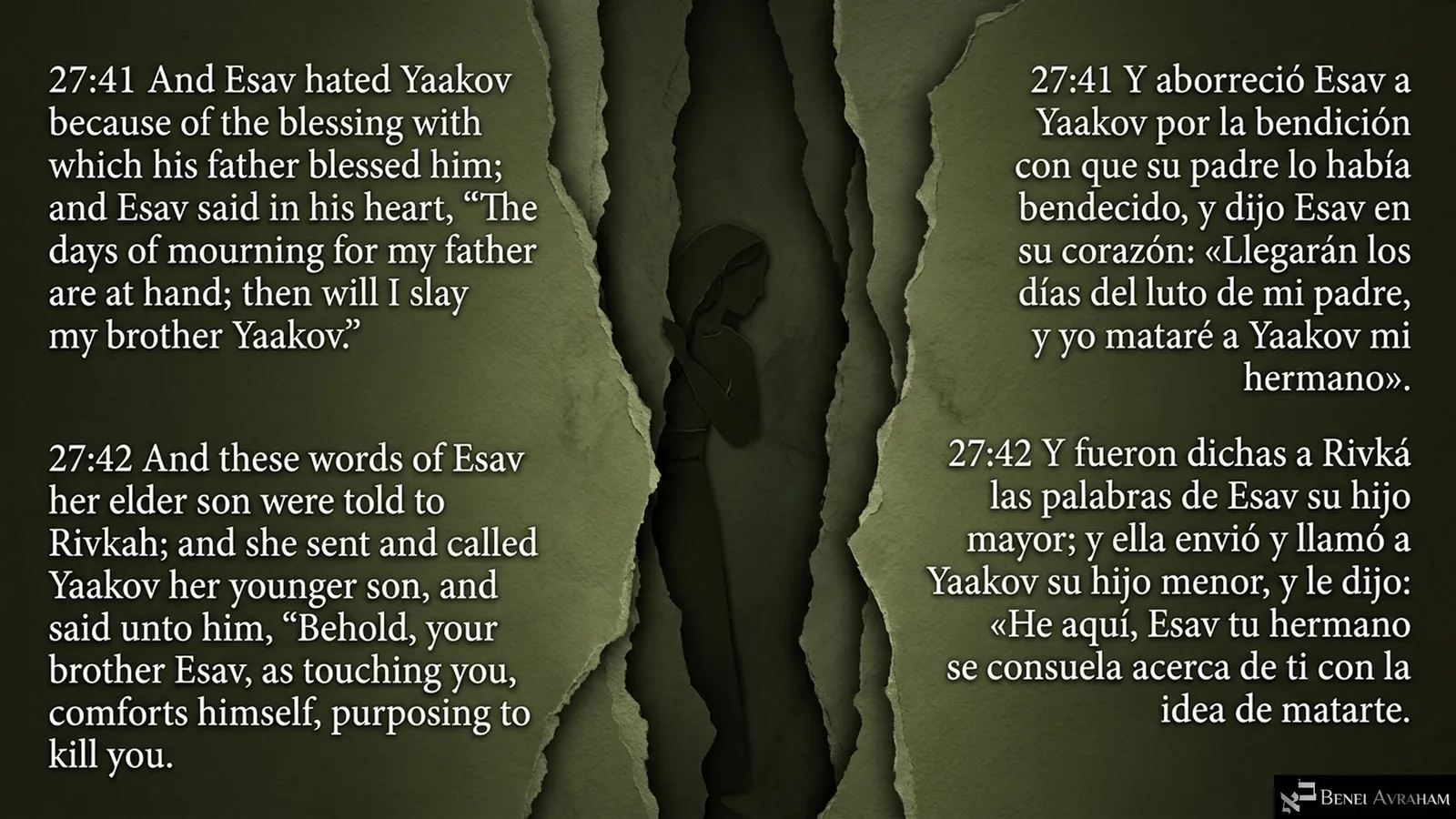
Esav plans to kill Yaakov, and Rivkah hears of it and warns her younger son (Genesis 27:41–42).
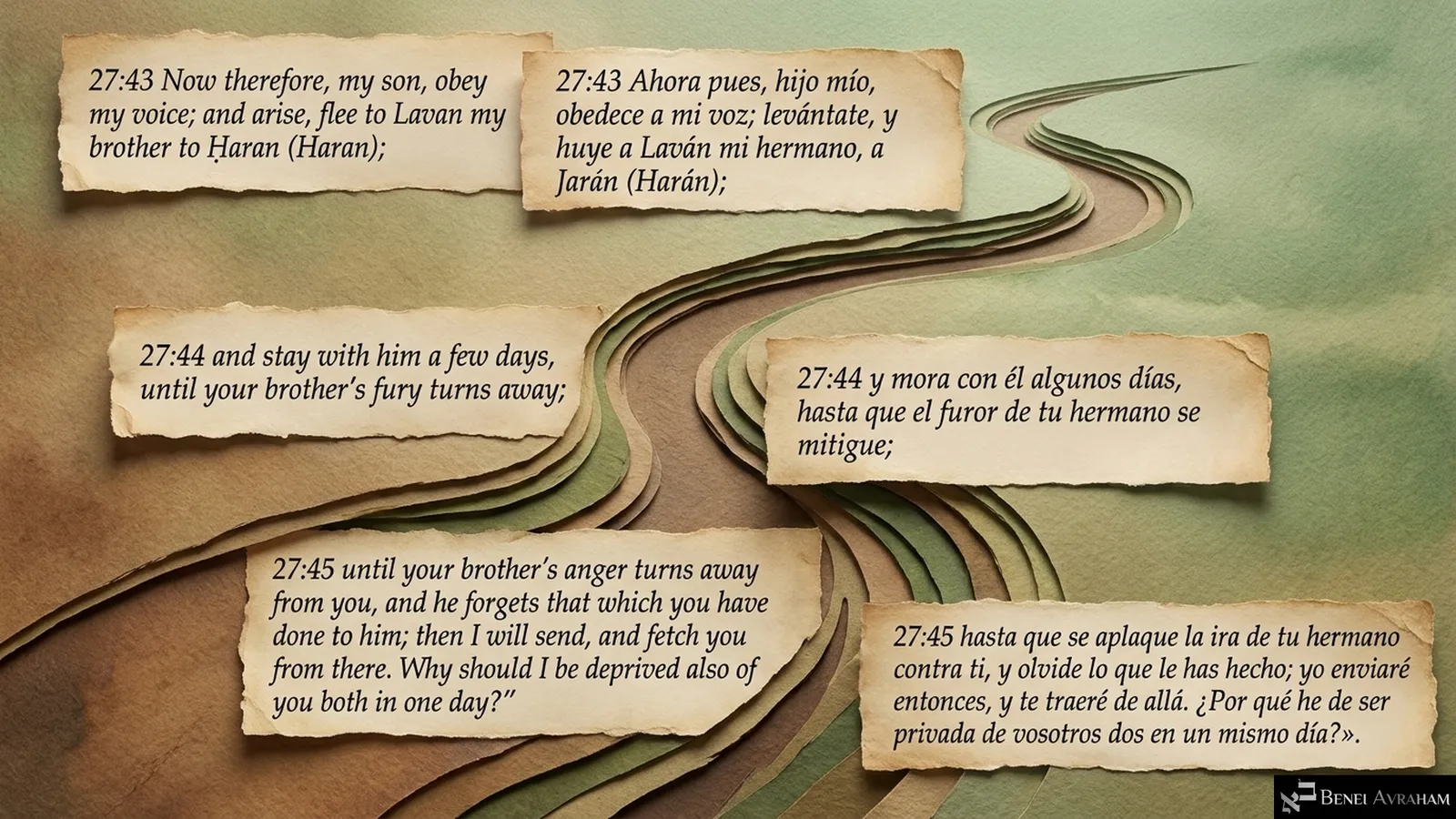
Rivkah tells Yaakov to flee to Lavan her brother in Ḥaran until Esav’s anger turns away (Genesis 27:43–45).
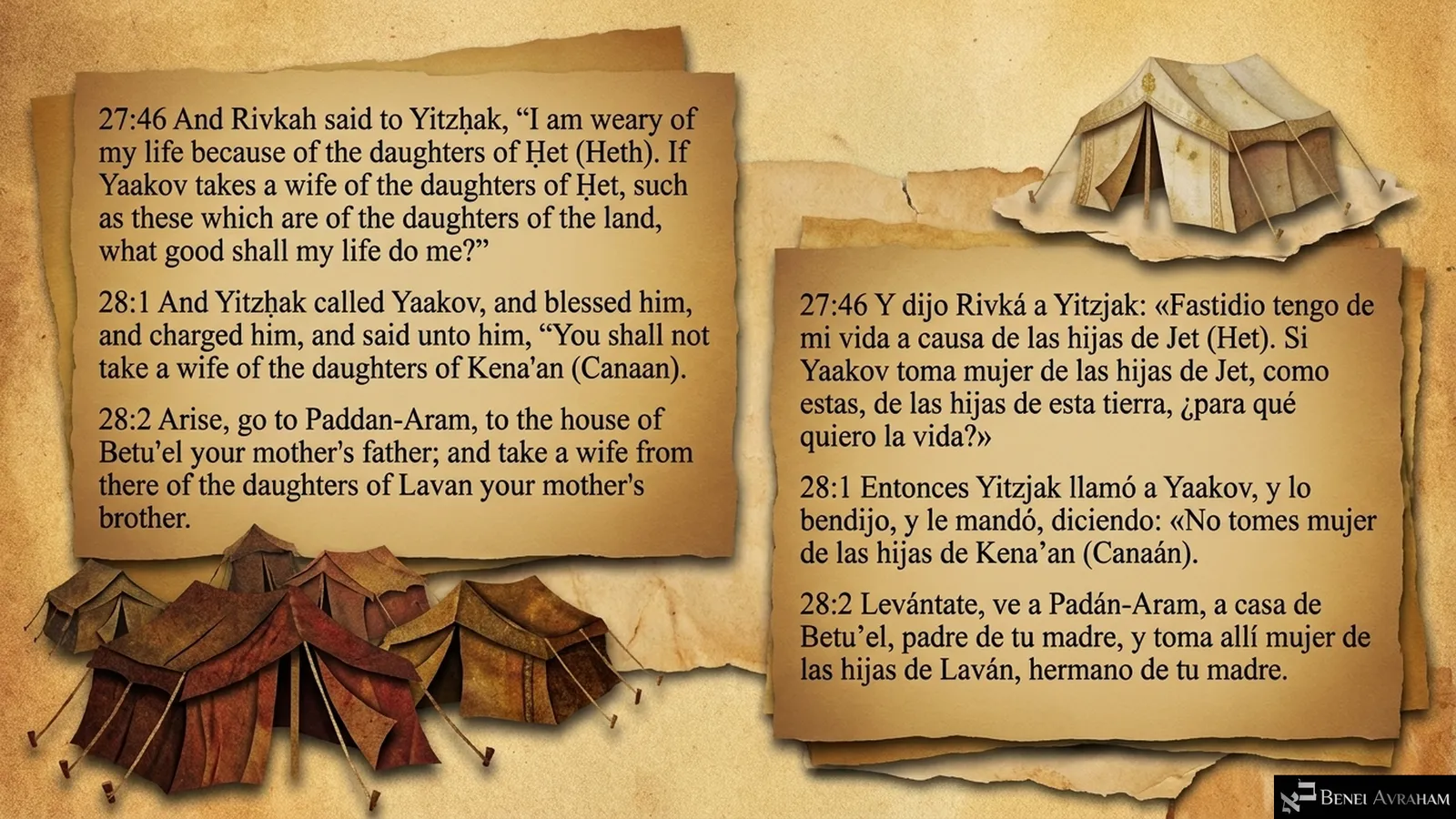
Rivkah is weary of the daughters of Ḥet; Yitzḥak sends Yaakov to Paddan-Aram to take a wife from Lavan’s daughters (Genesis 27:46–28:2).
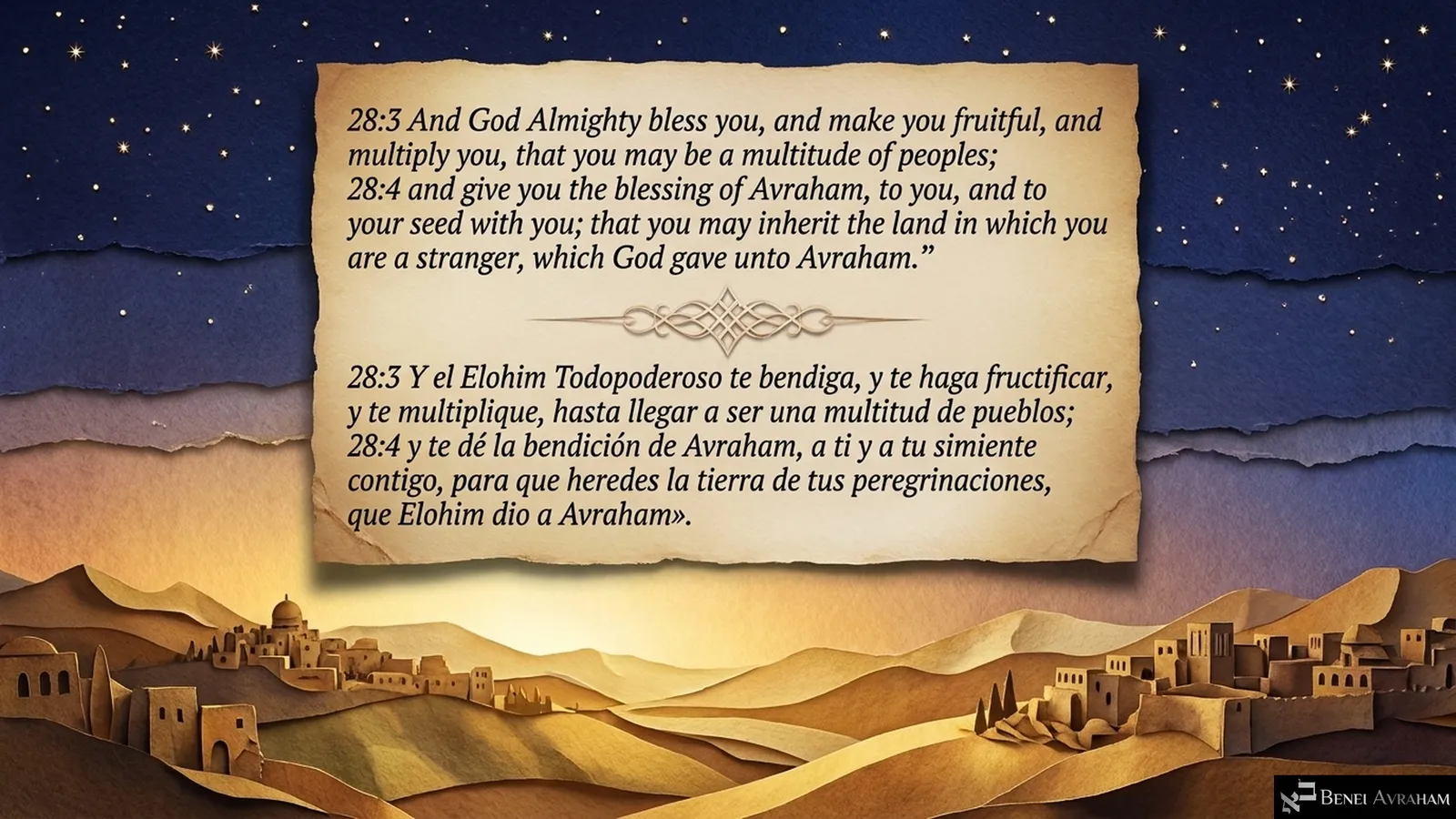
“God Almighty bless you … and give you the blessing of Avraham” over a starlit city (Genesis 28:3–4).
Shevi’i · Genesis 28:5–9

Seventh Portion

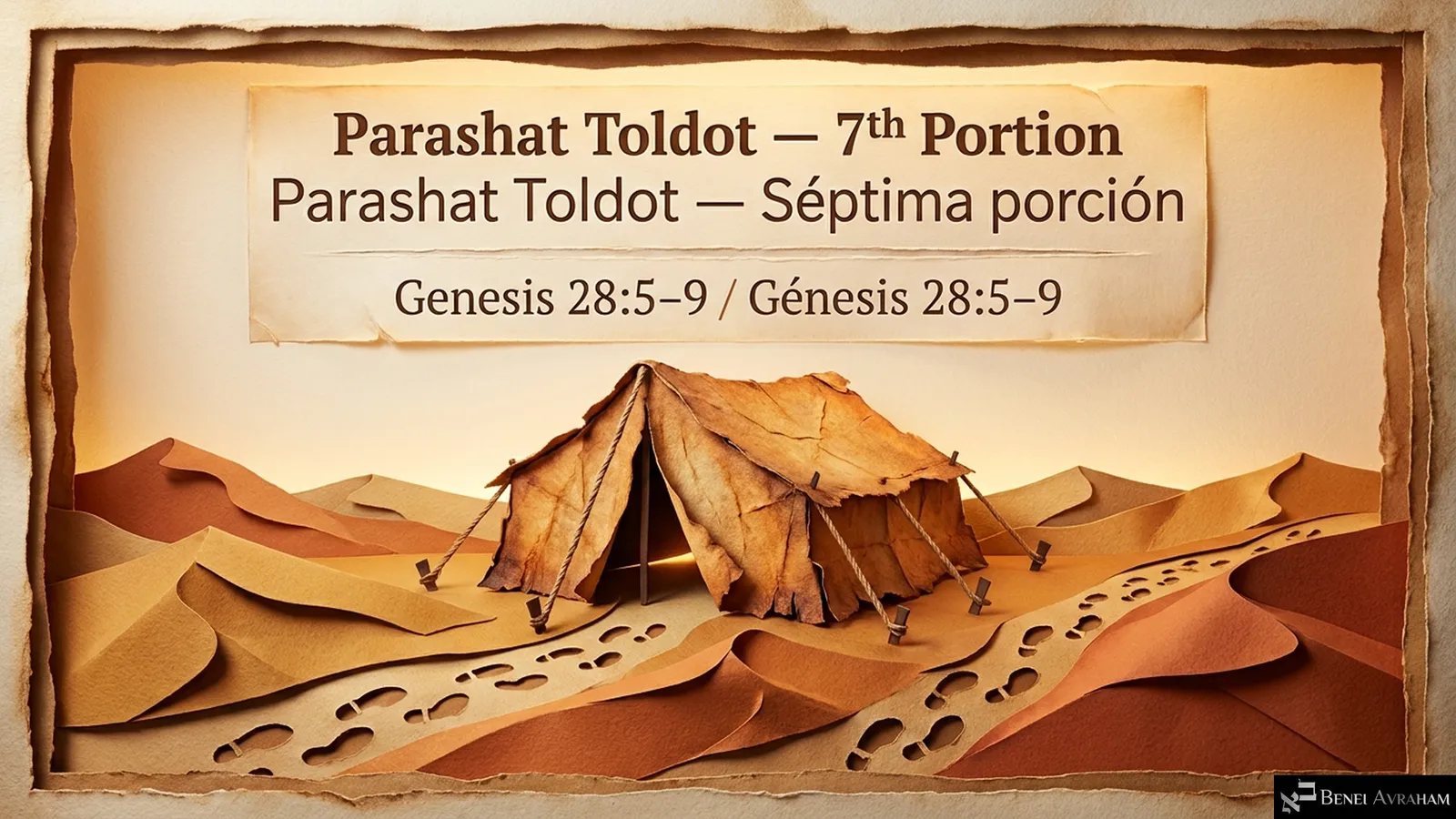
Title slide: Parashat Toldot, seventh portion, Genesis 28:5–9, with a tent and footprints in the desert.
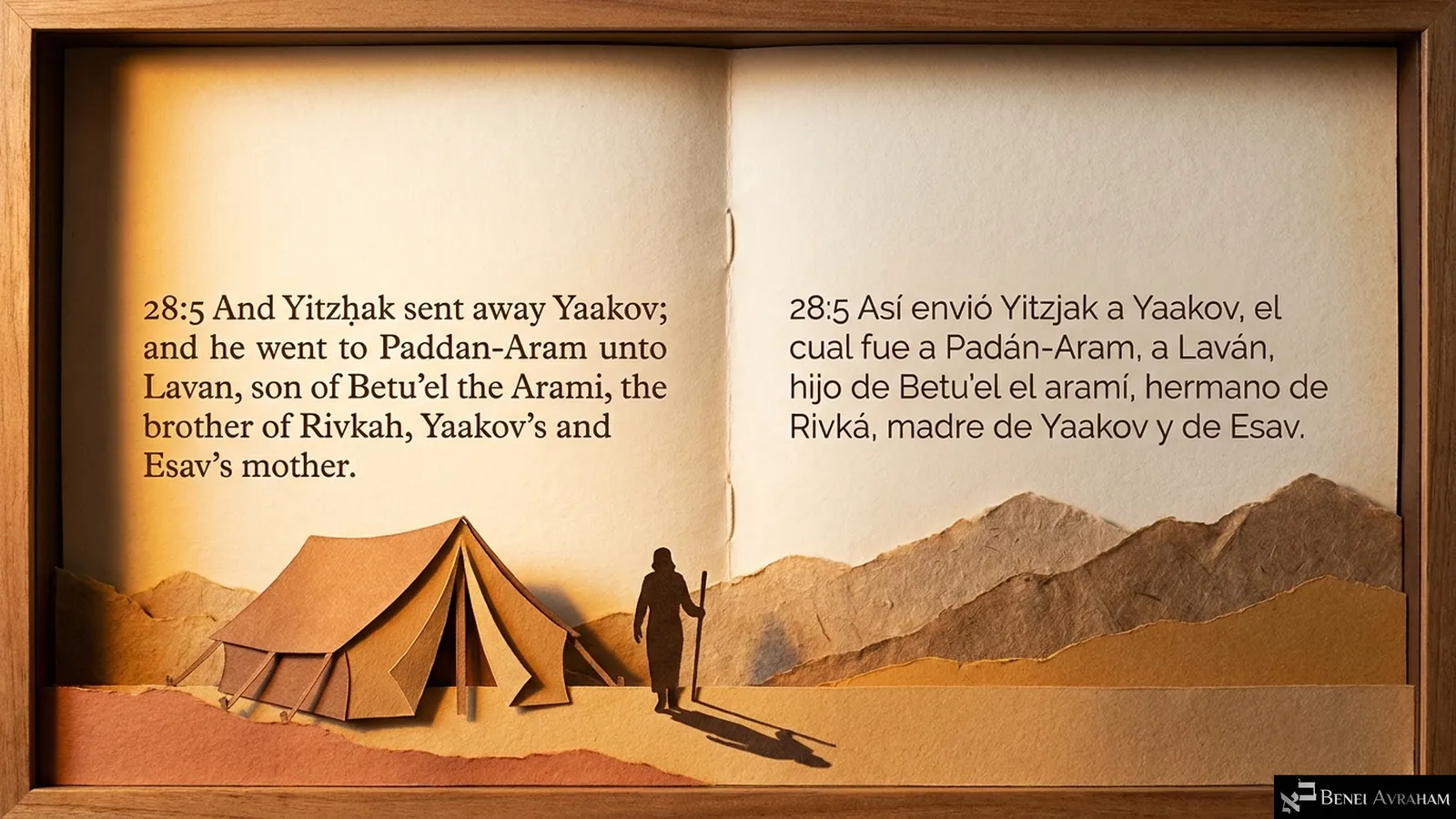
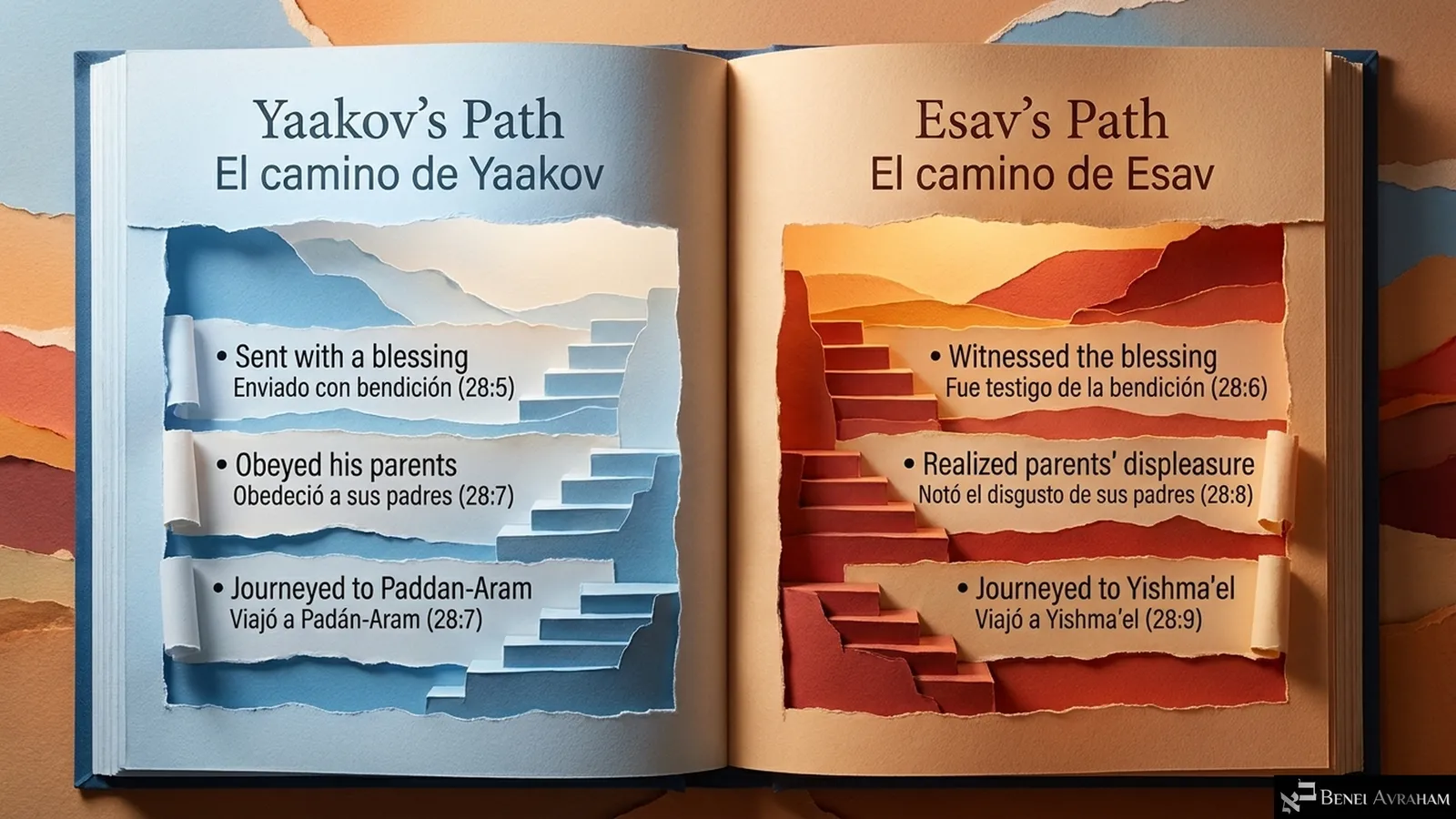
Yitzḥak sends Yaakov away to Paddan-Aram, to Lavan, Rivkah’s brother (Genesis 28:5).
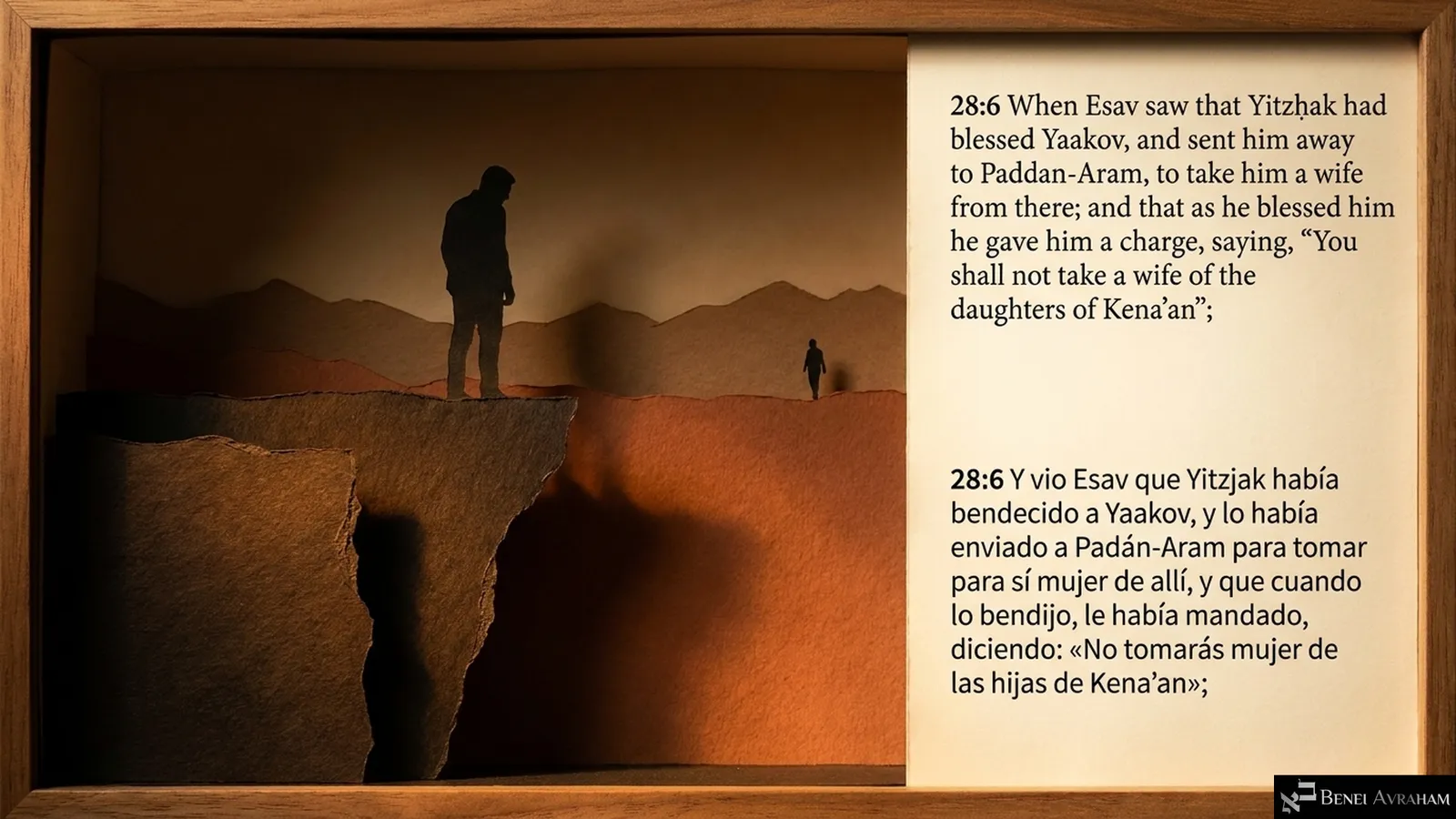
Esav sees that Yitzḥak blessed Yaakov and charged him not to take a wife of the daughters of Kena’an (Genesis 28:6).
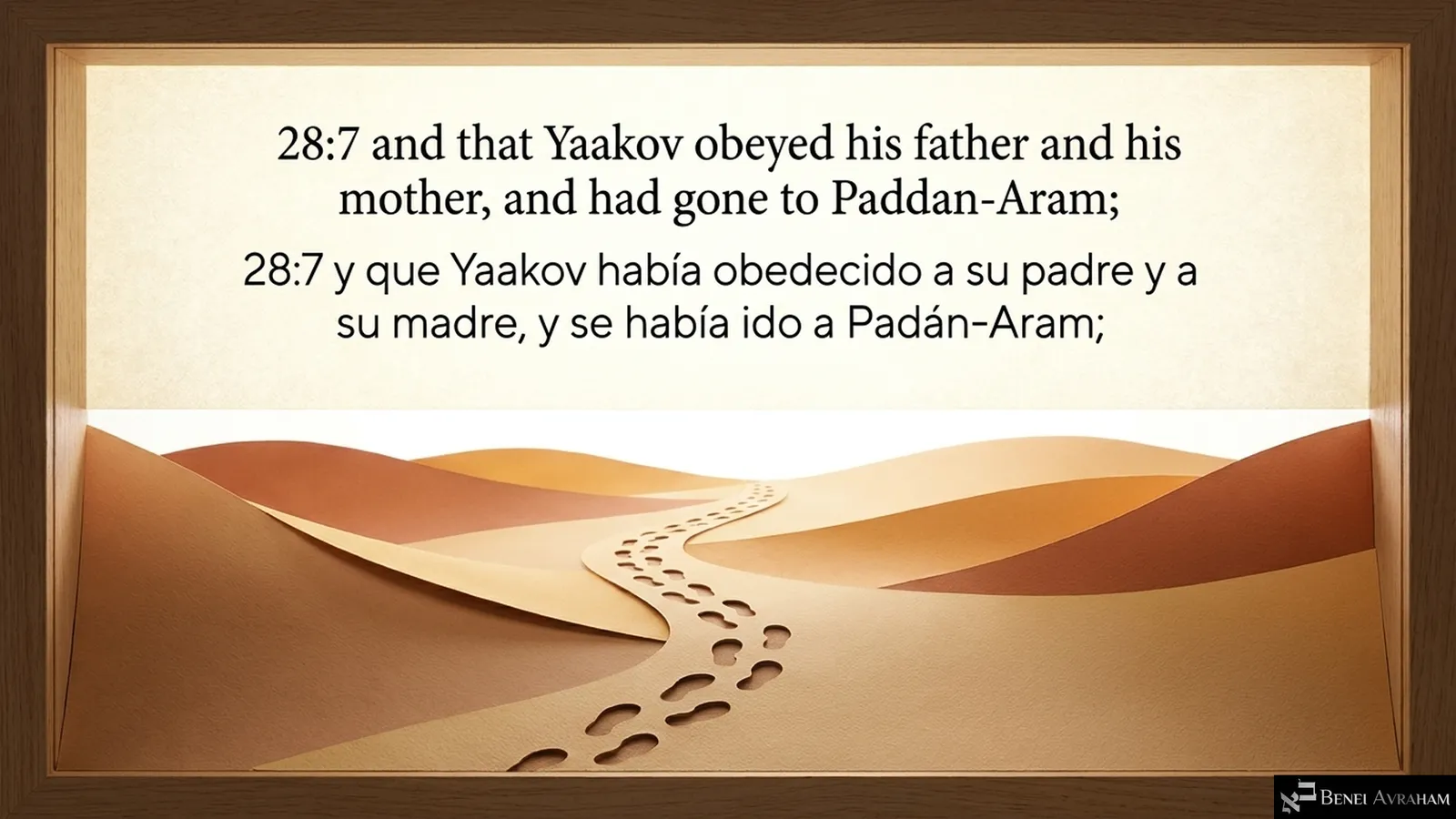
Yaakov obeys his father and mother and goes to Paddan-Aram, footprints across the dunes (Genesis 28:7).
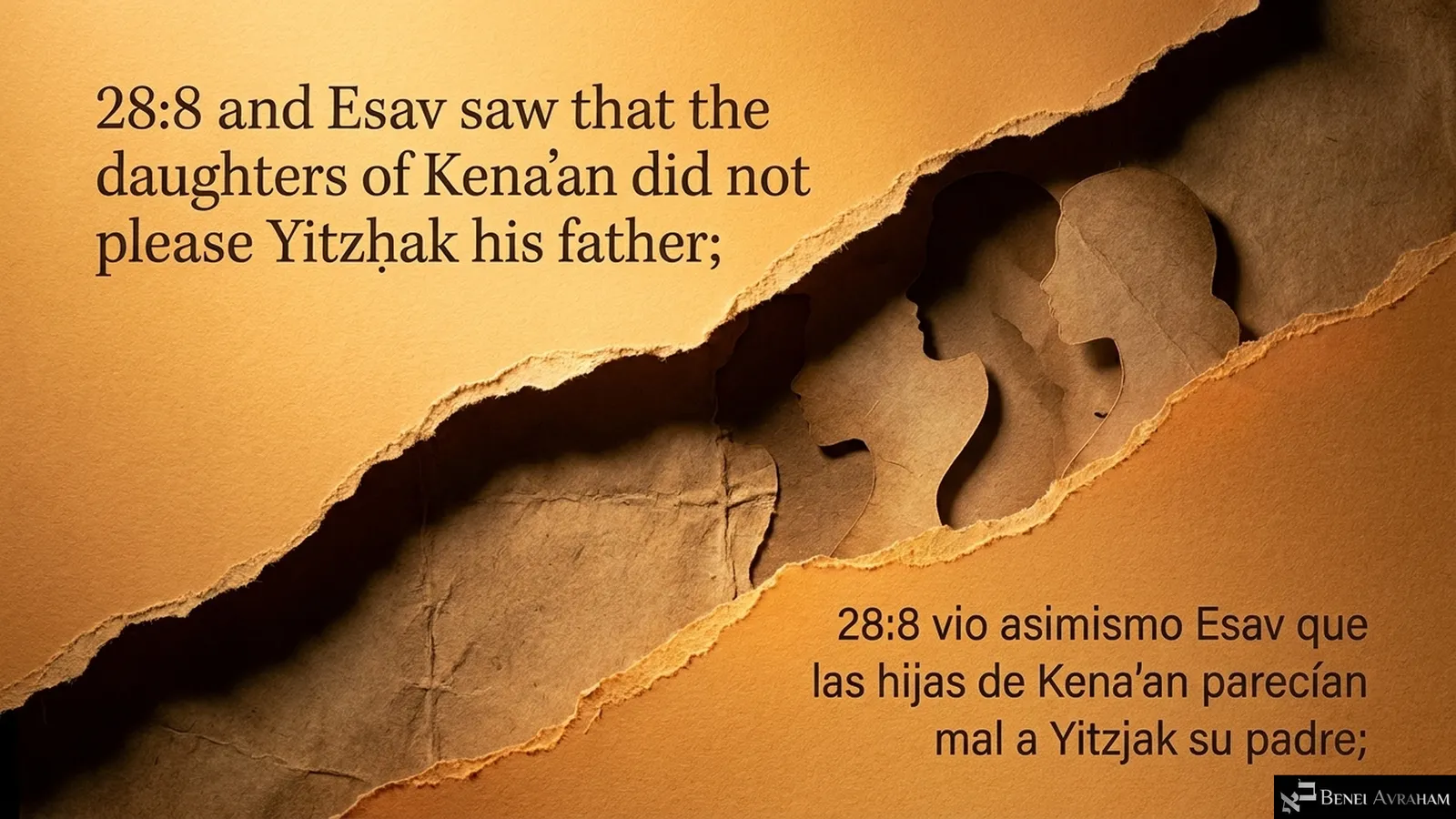
Esav sees that the daughters of Kena’an do not please Yitzḥak his father (Genesis 28:8).
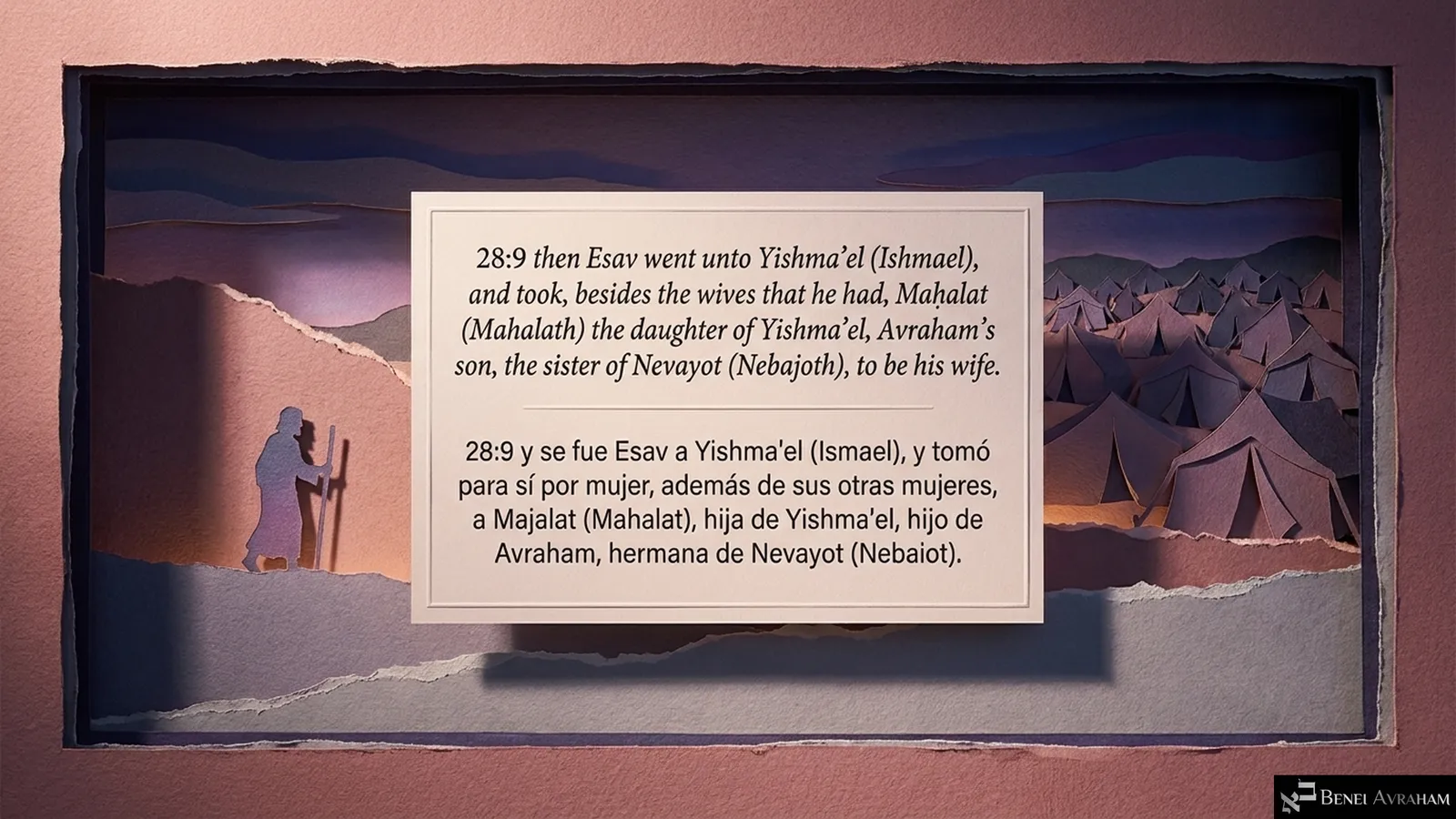
Esav goes to Yishma’el and takes Maḥalat, the daughter of Yishma’el, as his wife (Genesis 28:9).
Two paths compared: Yaakov’s path (sent with a blessing, obeyed his parents) and Esav’s path (Genesis 28:5–9).
Haftarah · Malachi 1:1–2:7

Haftarah: Parashat Toldot
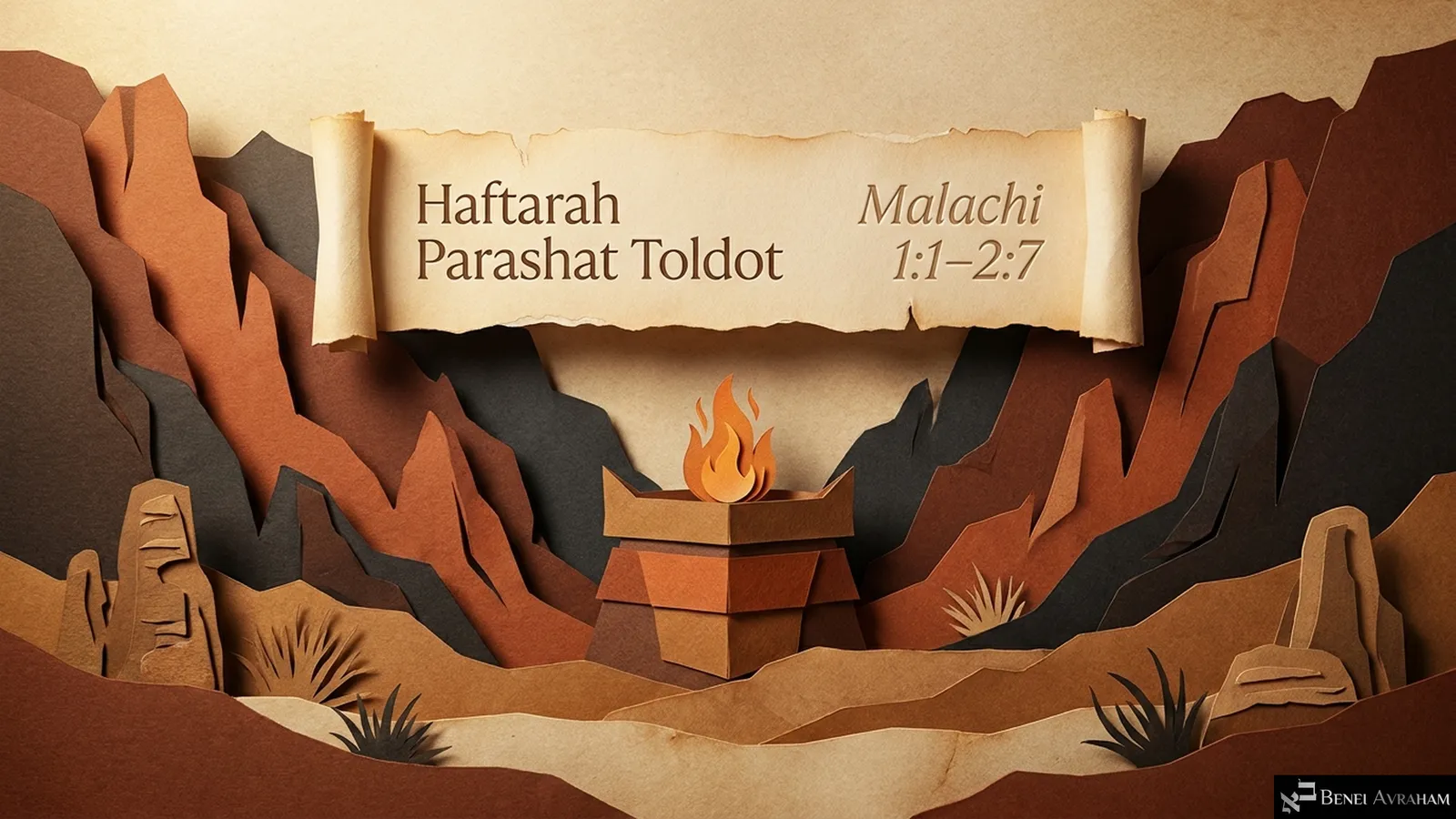
Title slide: Haftarah of Parashat Toldot, Malachi 1:1–2:7, with an altar fire in a canyon.
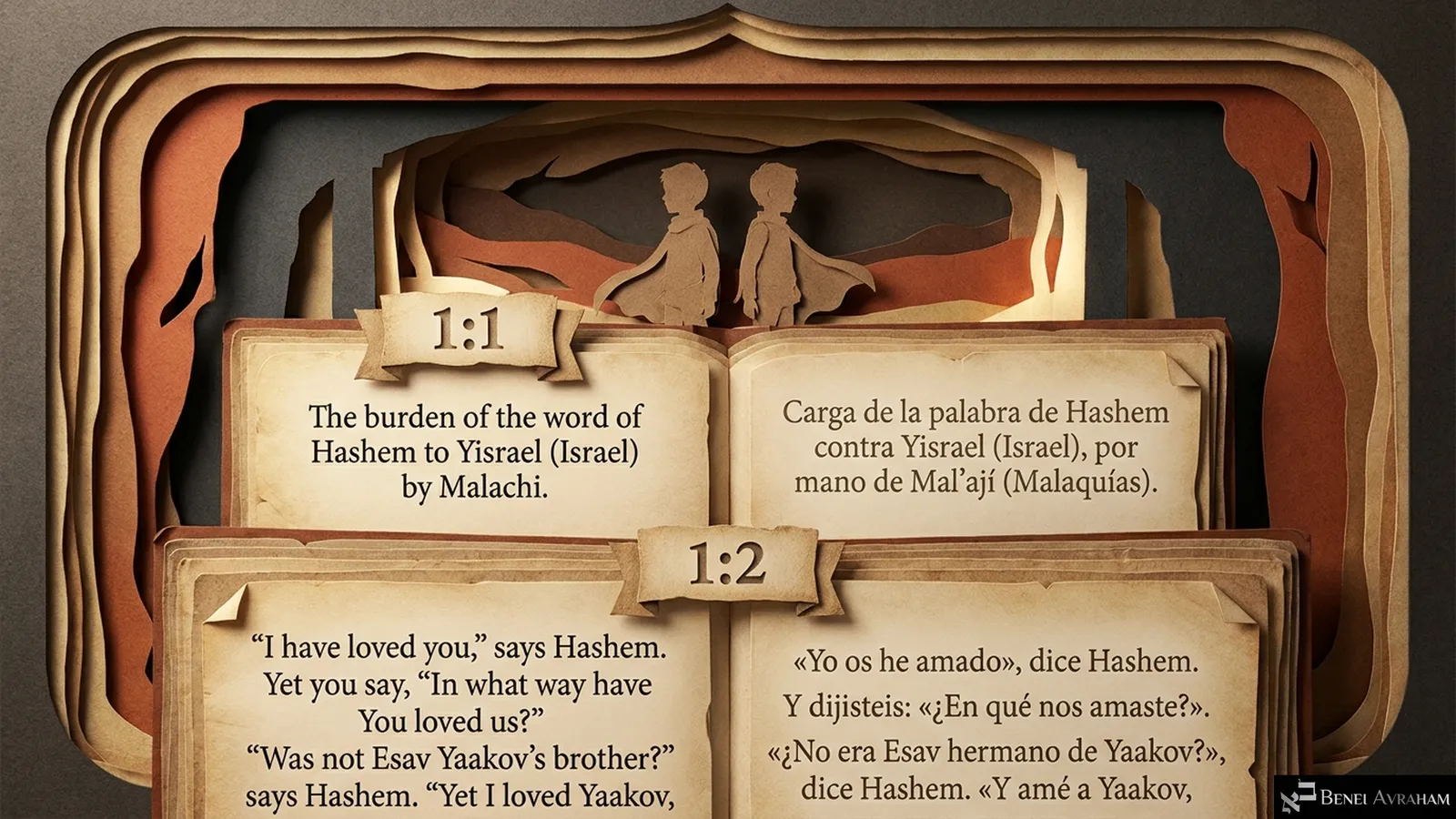
“The burden of the word of Hashem to Yisrael by Malachi”: “I have loved you,” says Hashem, “yet I loved Yaakov” (Malachi 1:1–2).
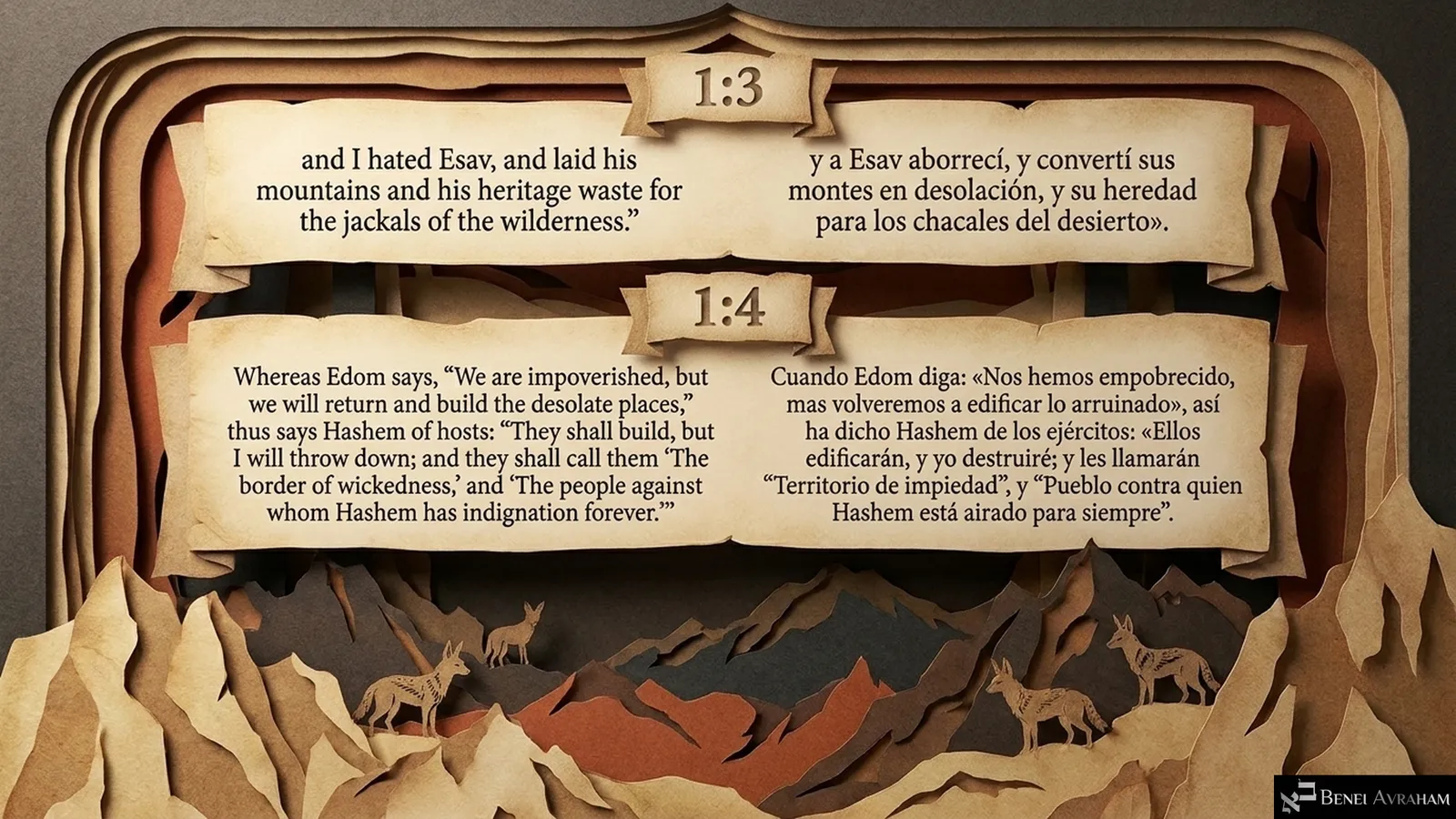
“I hated Esav”: Edom says it will rebuild, but Hashem will throw down (Malachi 1:3–4).
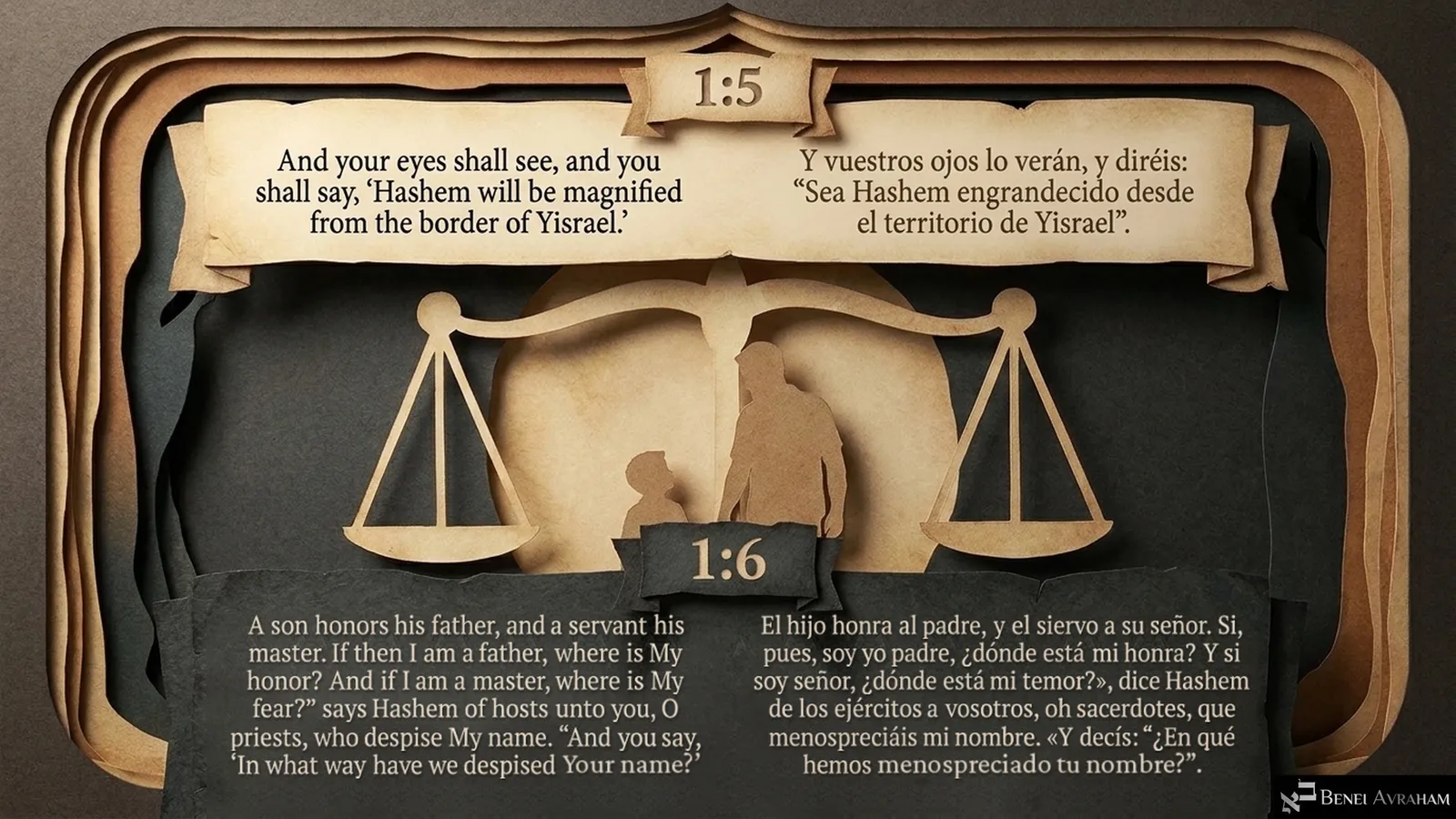
“Hashem will be magnified from the border of Yisrael”; a son honors his father, so where is My honor? (Malachi 1:5–6).
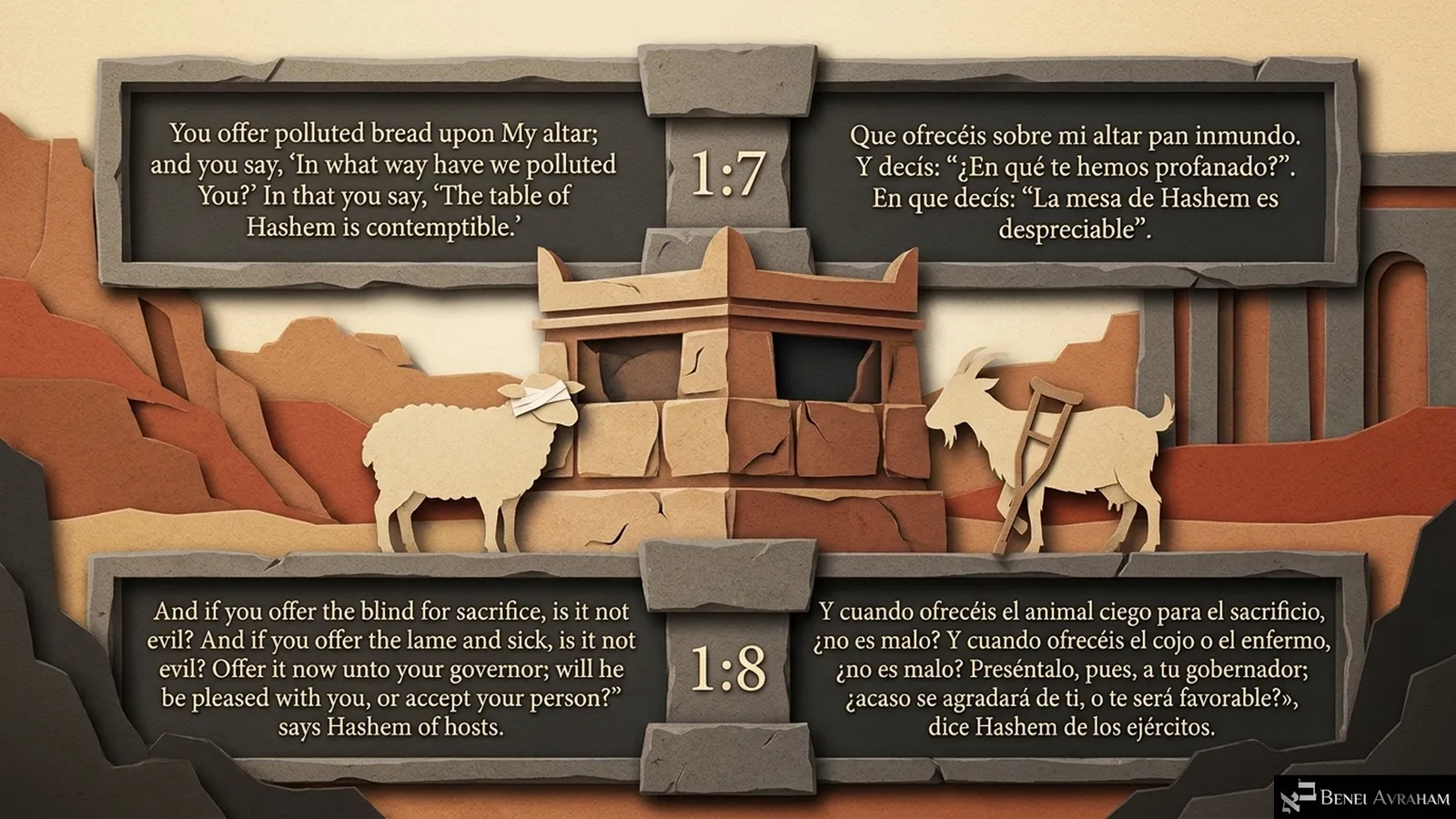
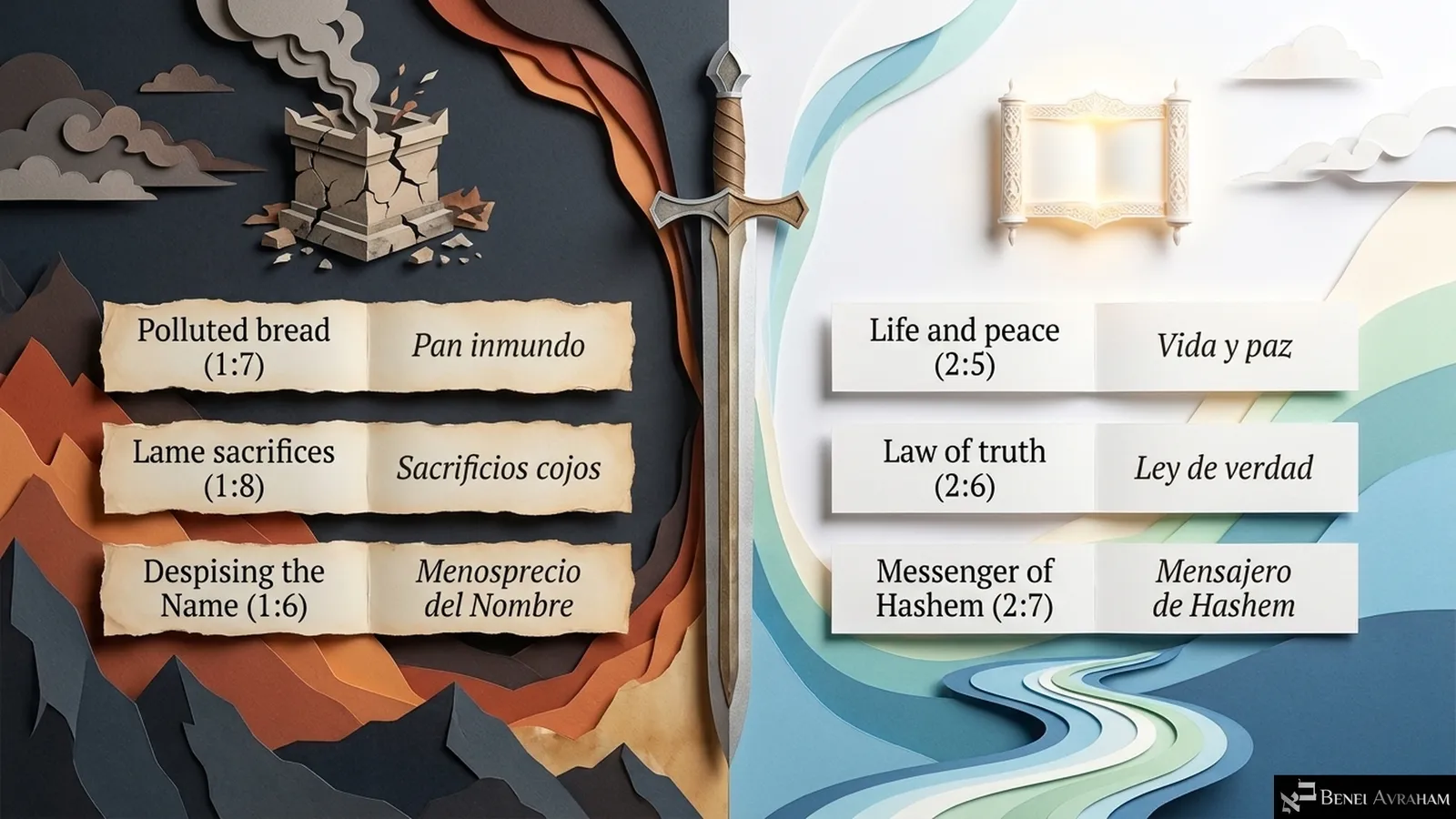
Polluted bread on the altar, and blind, lame and sick animals offered: “Offer it now unto your governor” (Malachi 1:7–8).
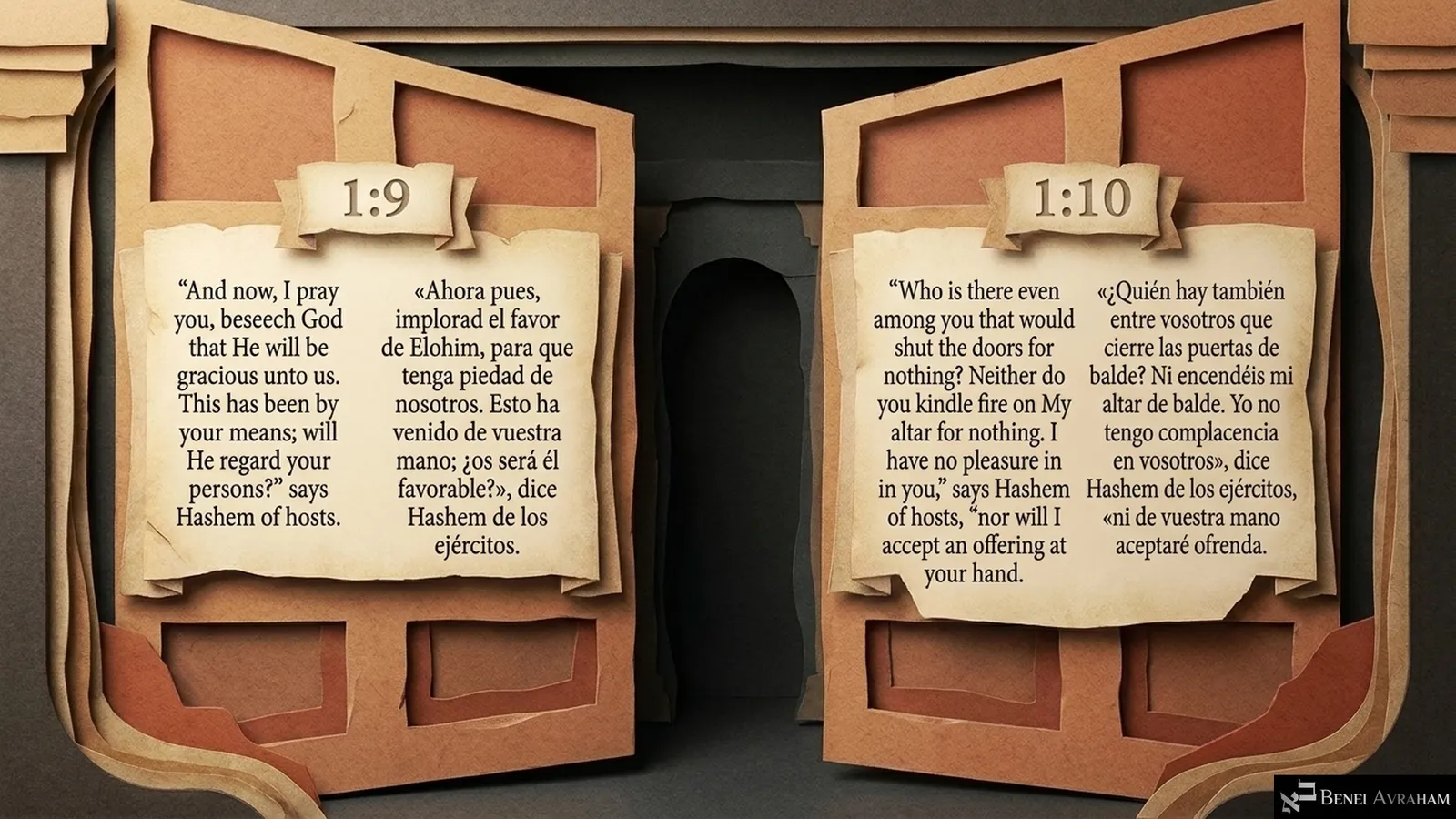
“Beseech God that He will be gracious”; “who would shut the doors?” Hashem takes no pleasure in such offerings (Malachi 1:9–10).
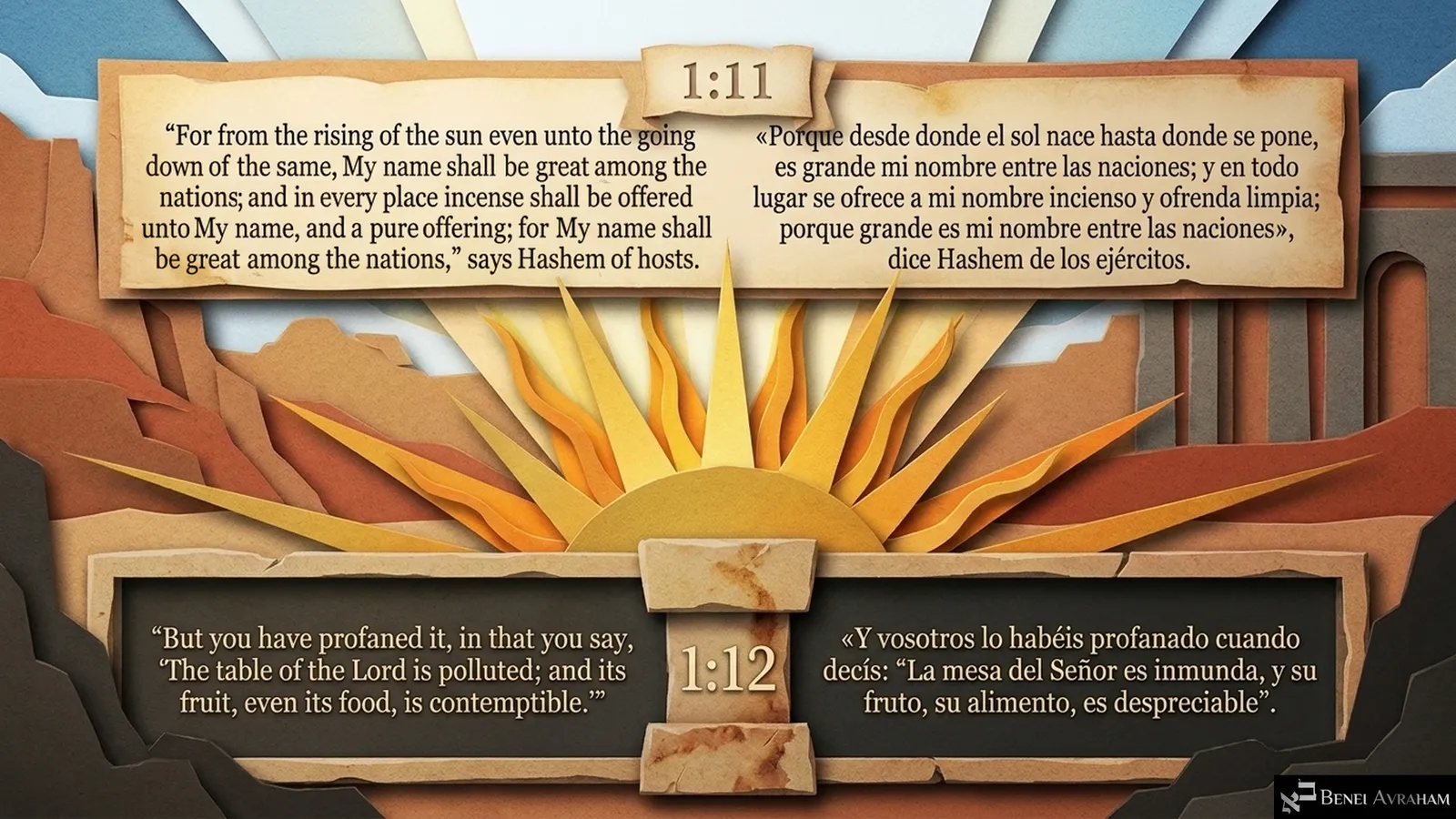
“From the rising of the sun … My name shall be great among the nations,” but you have profaned it (Malachi 1:11–12).
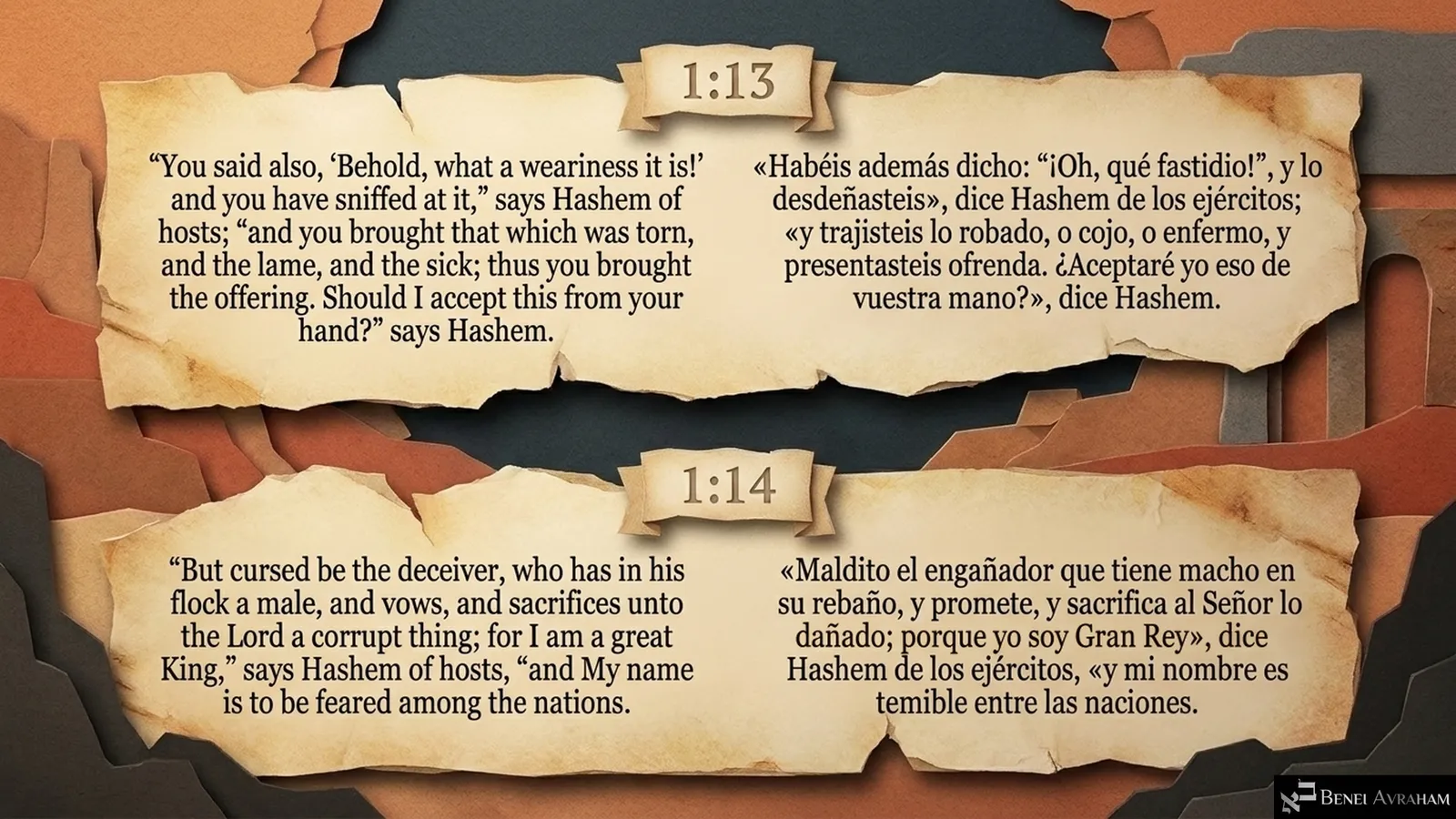
“What a weariness it is!” and the deceiver who offers a corrupt thing: “I am a great King,” says Hashem of hosts (Malachi 1:13–14).
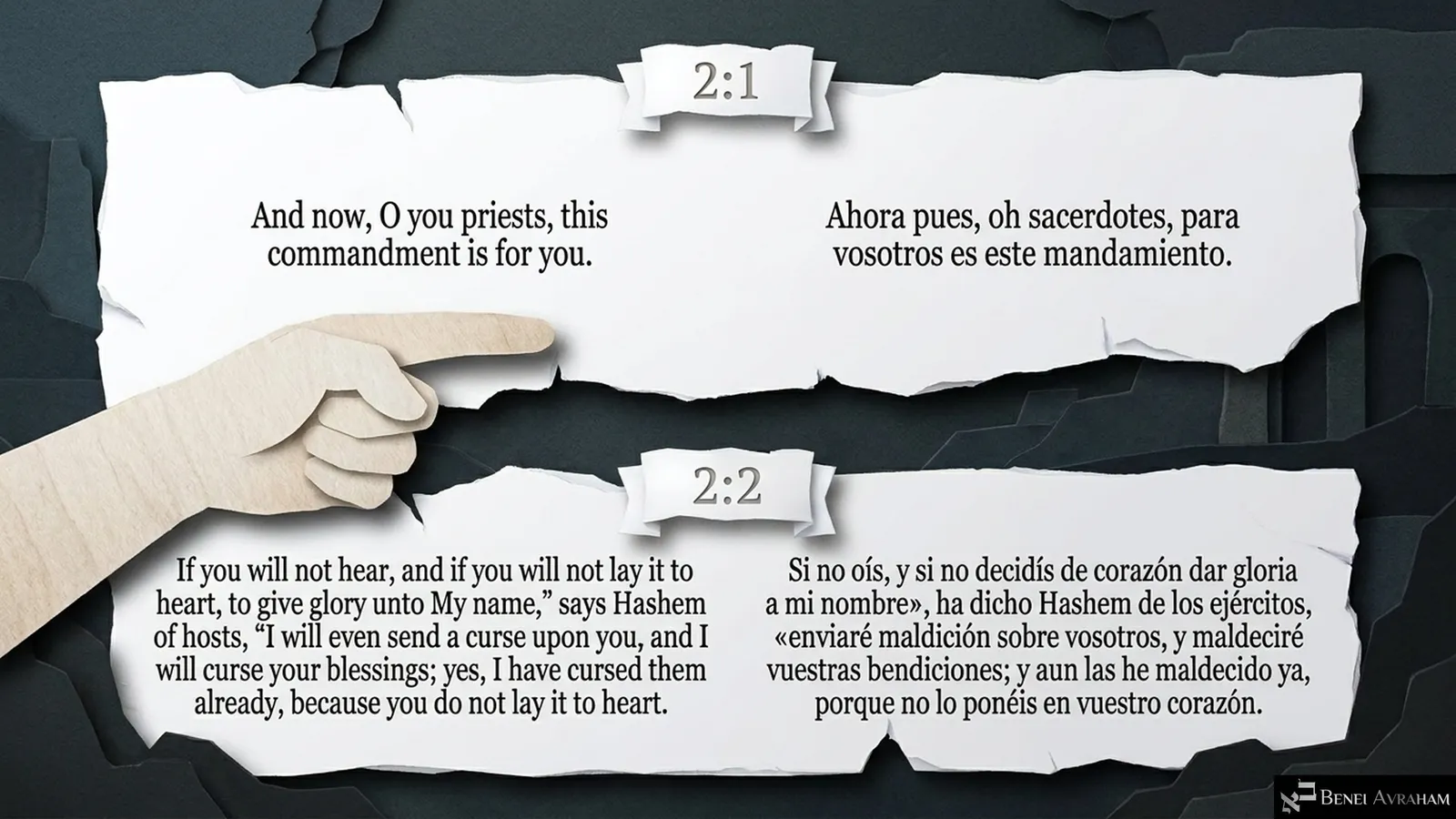
“And now, O you priests, this commandment is for you”: if you will not lay it to heart, I will curse your blessings (Malachi 2:1–2).
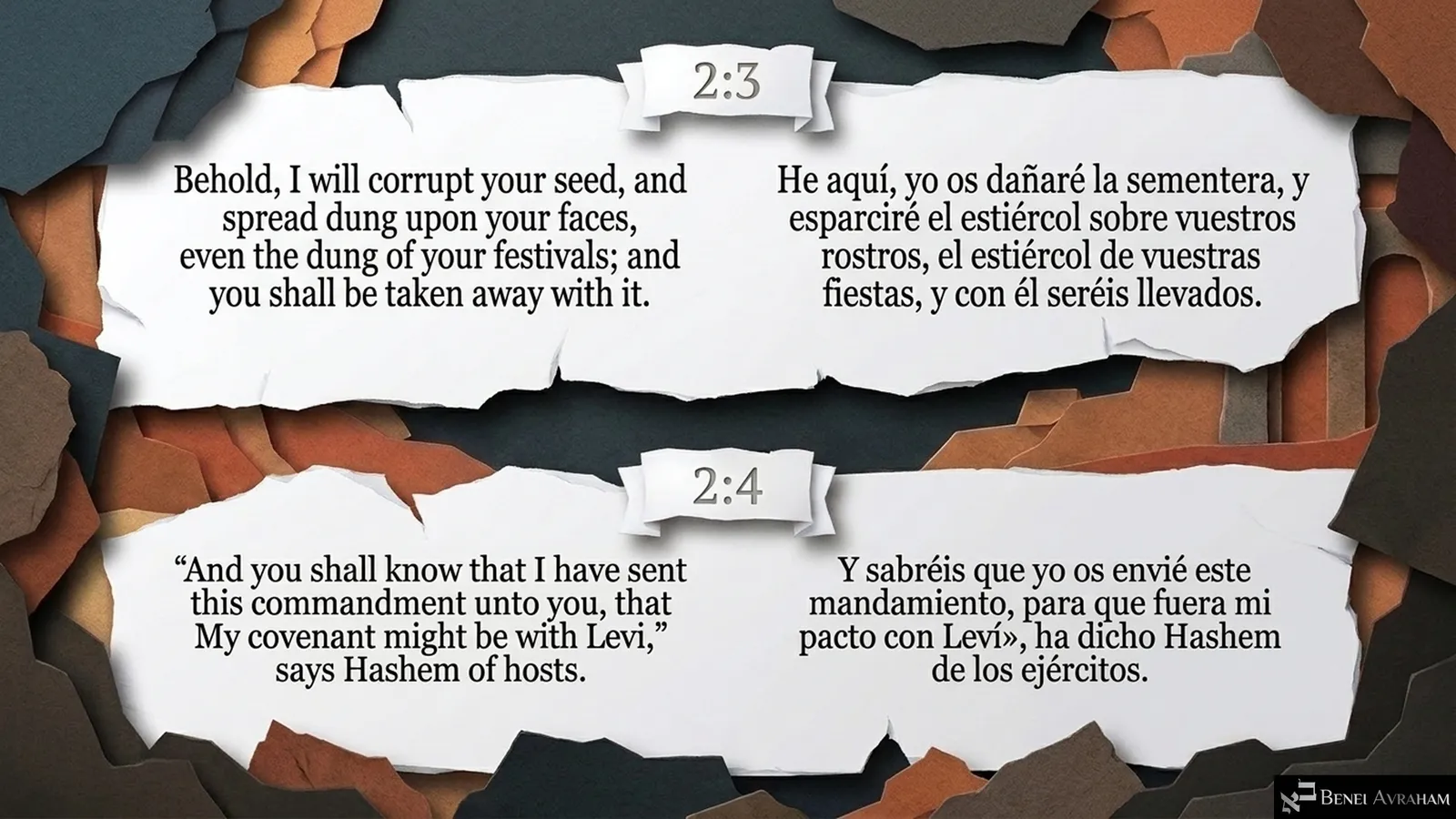
“I will corrupt your seed”; the commandment is sent so that My covenant might be with Levi (Malachi 2:3–4).
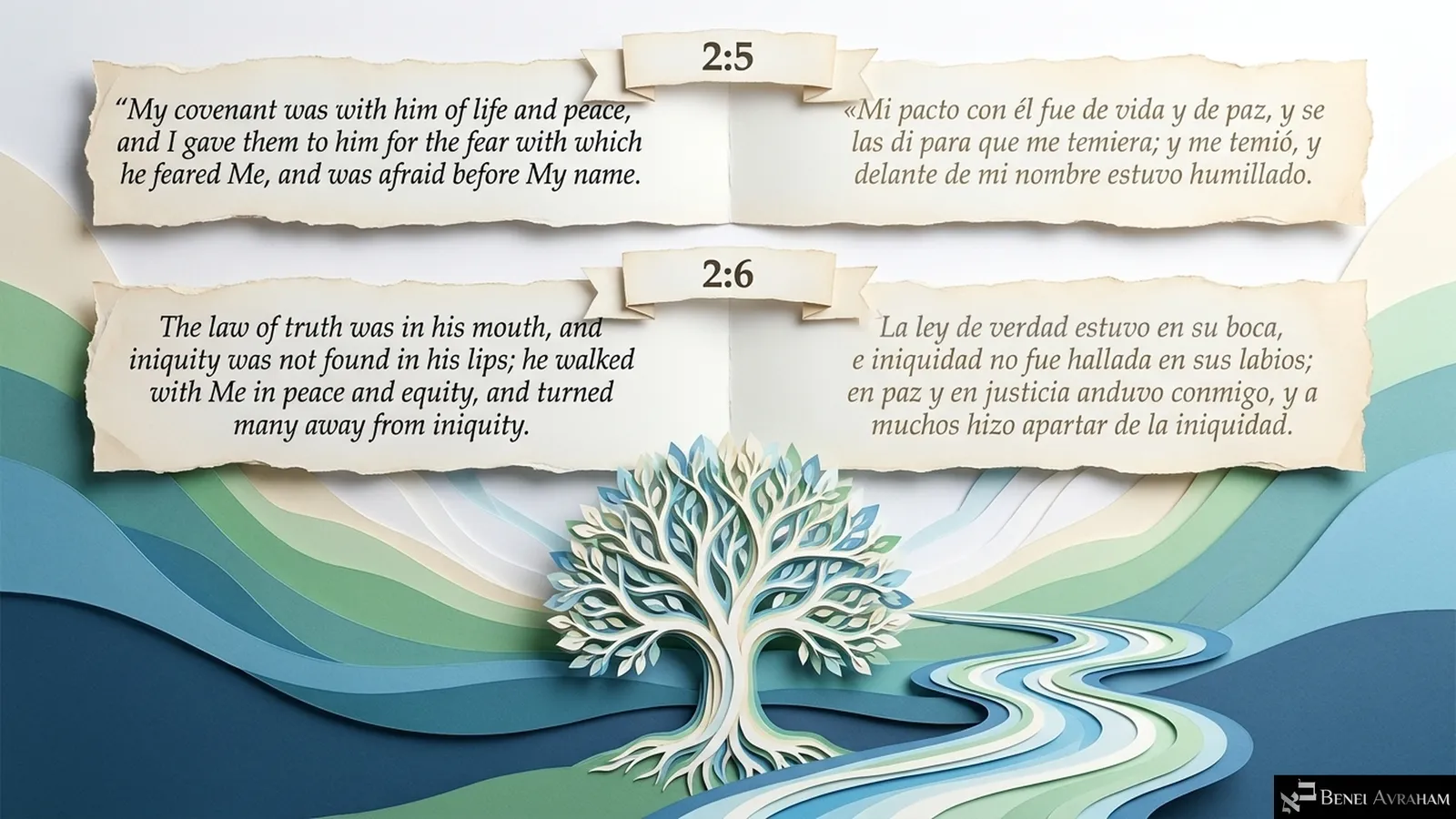
The covenant of life and peace with Levi: “The law of truth was in his mouth” (Malachi 2:5–6).
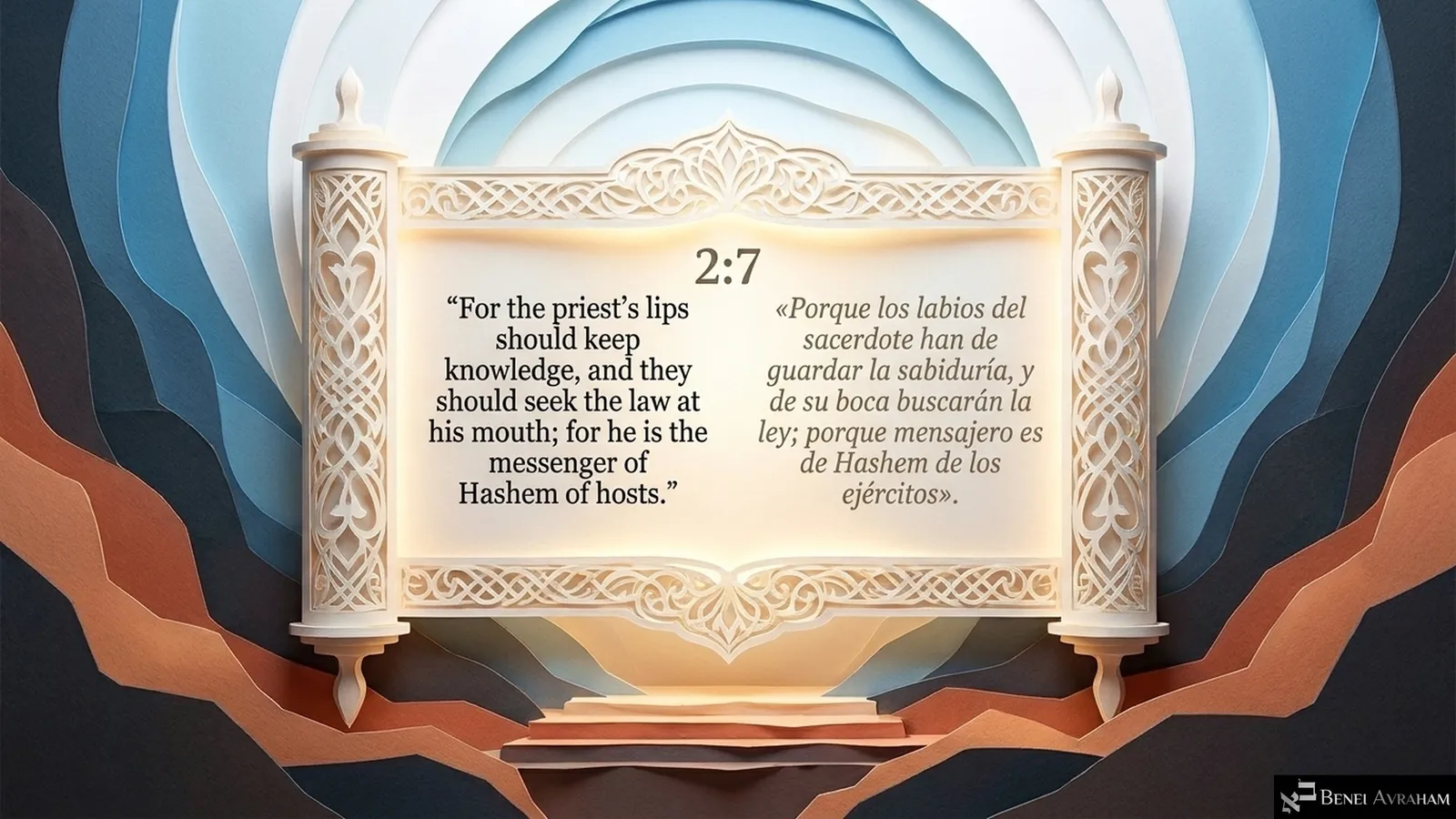
“The priest’s lips should keep knowledge … for he is the messenger of Hashem of hosts” (Malachi 2:7).
Summary of the haftarah: polluted bread, lame sacrifices and a despised Name, set against life and peace, the law of truth and the messenger of Hashem (Malachi 1:6–2:7).