SMS/Text 469-608-9944
Parashat Beshalaḥ · Exodus 13:17–17:16 · Judges 4:4–5:31

Beshalaḥ: A Visual Journey

Illustrated teaching slides from Benei Avraham, in English and Spanish, walking through Parashat Beshalaḥ portion by portion: Hashem leads the people by the way of the wilderness in a pillar of cloud by day and a pillar of fire by night, and Moshe carries the bones of Yosef; Par’oh’s chariots overtake them by the sea, and Moshe says, “Do not fear, stand still, and see the salvation of Hashem”; the sea is divided and the children of Yisrael go through on dry ground, the waters a wall on their right hand and on their left, and the waters return upon the Egyptians; Moshe and the children of Yisrael sing, “Who is like unto You, O Hashem, among the gods?” and Miryam leads the women with timbrels; the bitter waters of Marah are made sweet — “I am Hashem who heals you”; bread rains from heaven, with a double portion on the sixth day and rest on the Shabbat, and a jar of manna is kept for the generations; water comes from the rock at Massah and Merivah, and Yisrael prevails over Amalek while Aharon and Ḥur hold up Moshe’s hands, and Moshe builds an altar, Hashem Nissi. The haftarah from Judges 4:4–5:31 follows: Devorah the prophetess and Barak go up against Sisera, Yael strikes him with the tent peg, and Devorah sings, “so let all Your enemies perish, O Hashem.” Tap any image to open the slideshow; use the arrows (or swipe) to move through every slide.

Rishon · Exodus 13:17–14:8

First Portion

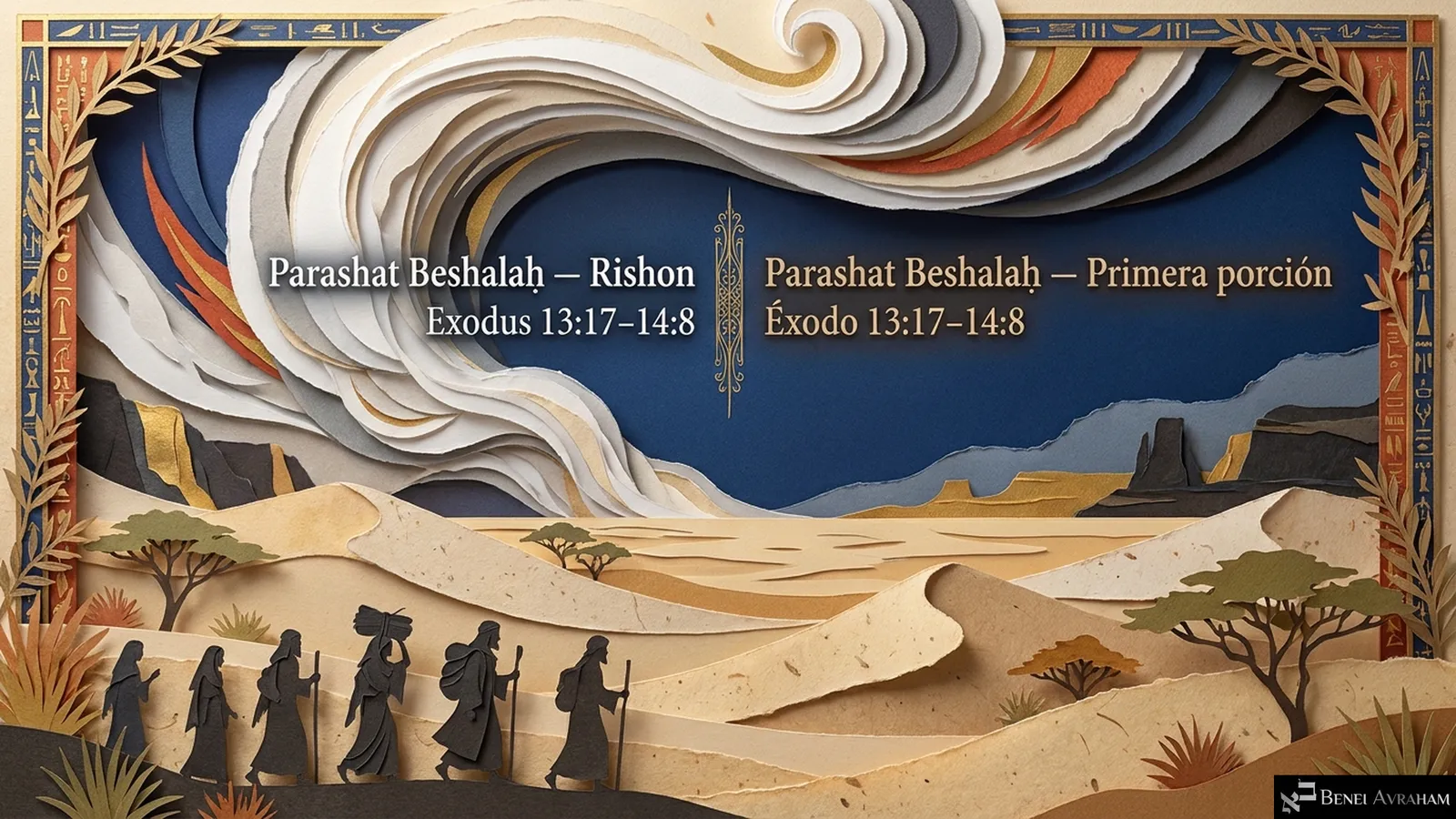
Title card for the first portion: paper families walk out under a swirling sky — “Parashat Beshalaḥ — Rishon, Exodus 13:17–14:8”.
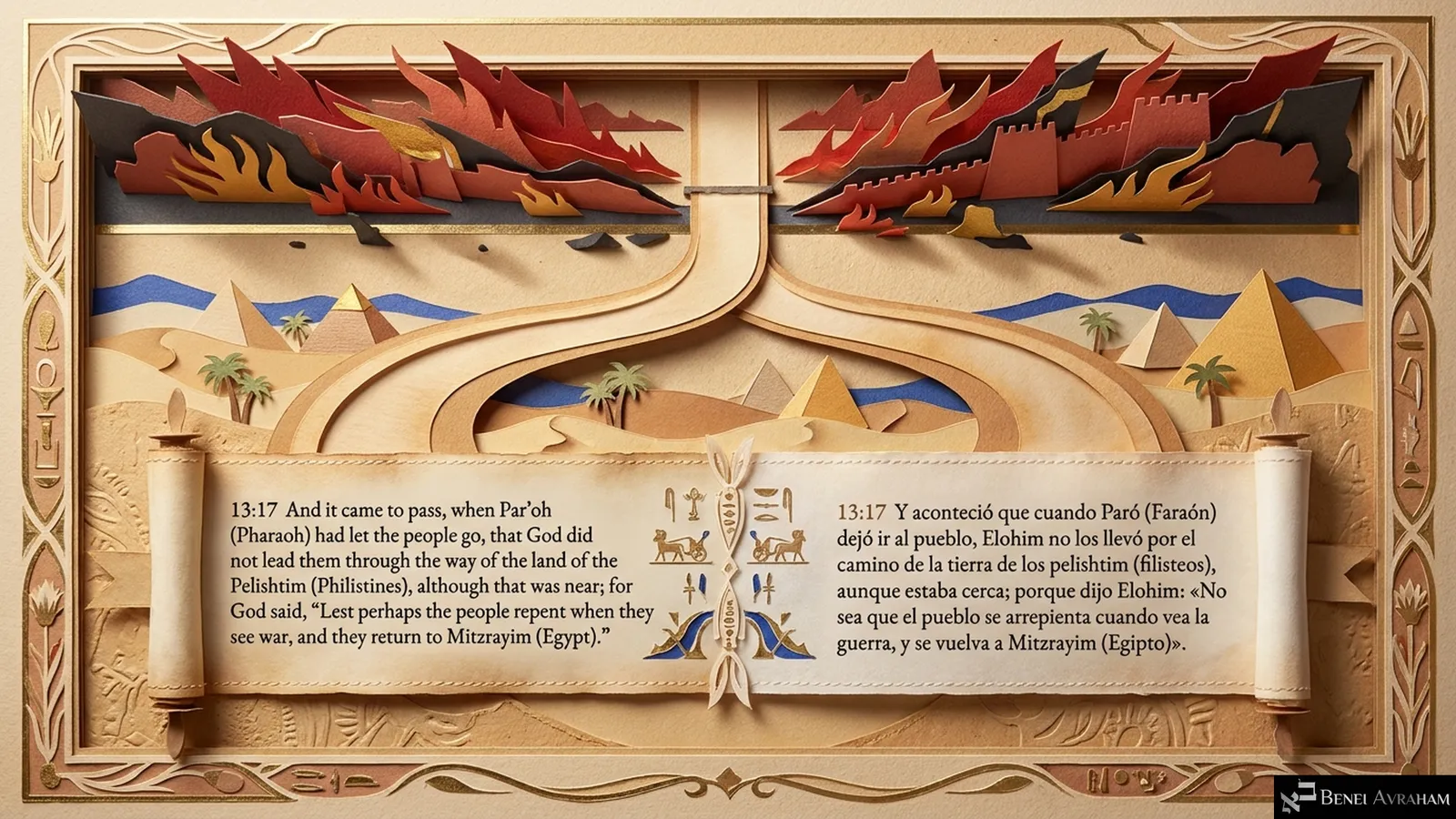
A paper road forks between burning walls and the pyramids: God did not lead them by the way of the Pelishtim, lest the people repent when they see war (Exodus 13:17).
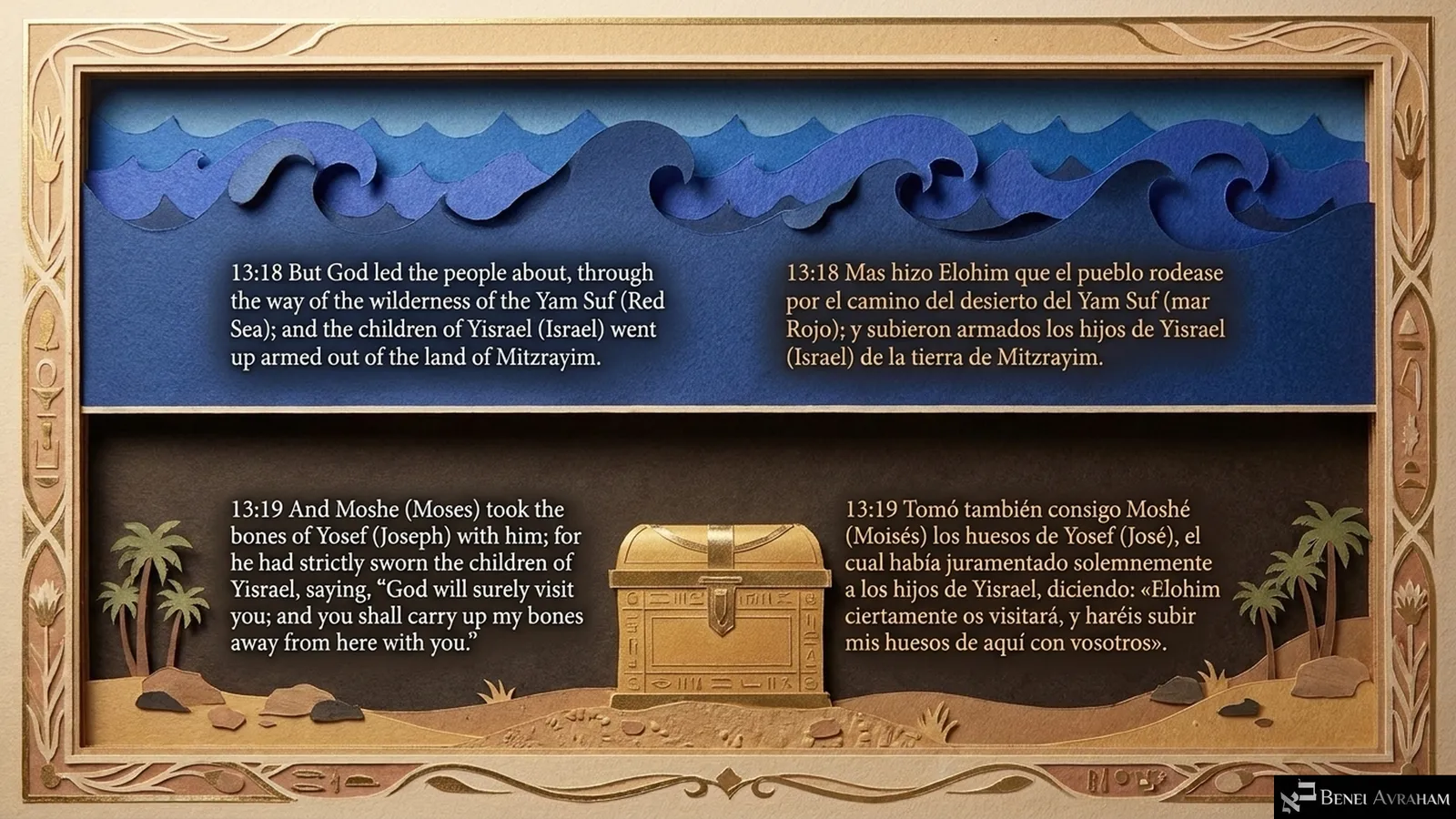
Blue paper waves above and a golden chest below: God led the people by the way of the wilderness of the Yam Suf, and Moshe took the bones of Yosef with him (Exodus 13:18–19).
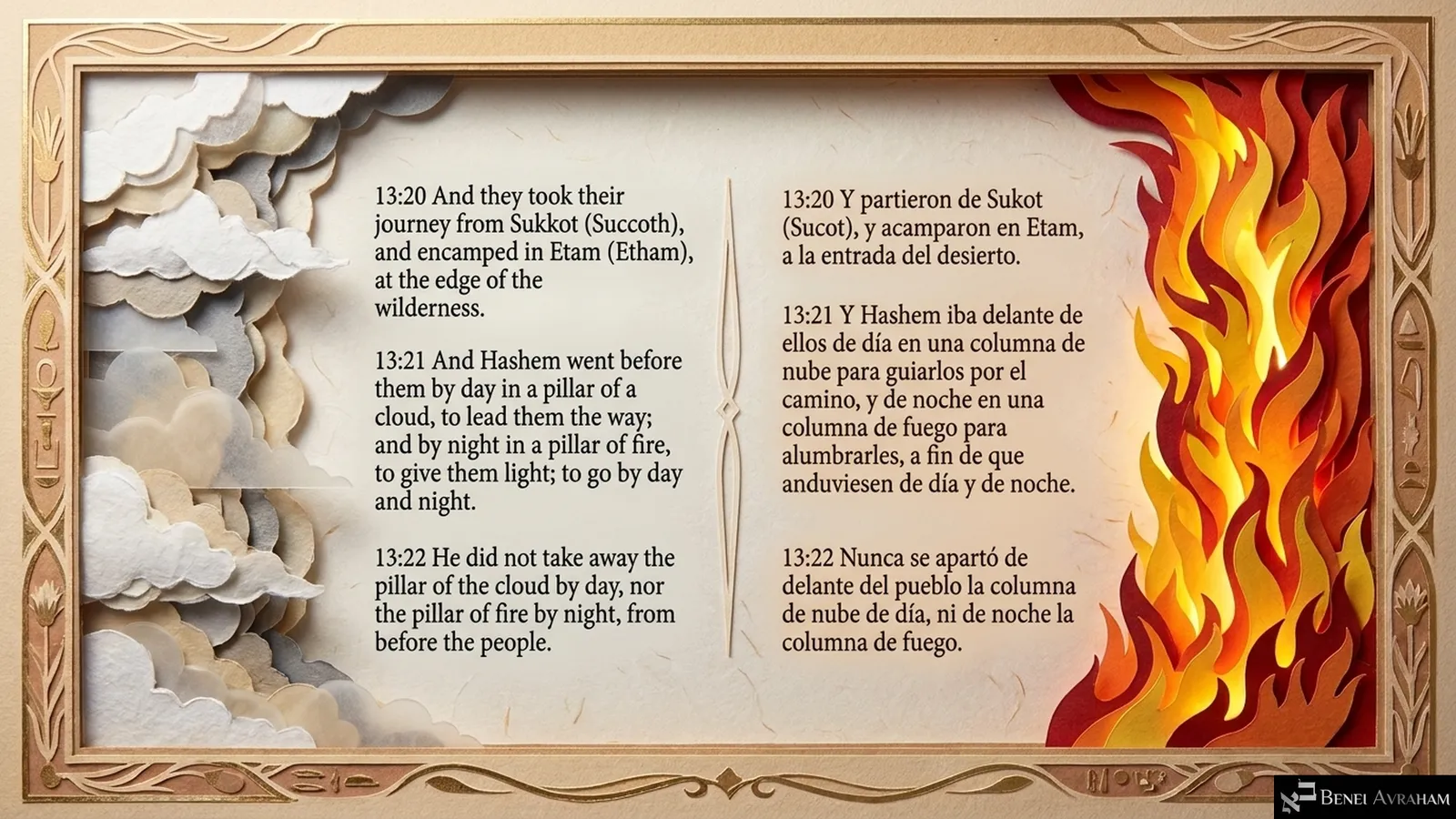
Paper clouds on one side and flames on the other: Hashem went before them by day in a pillar of cloud, and by night in a pillar of fire (Exodus 13:20–22).
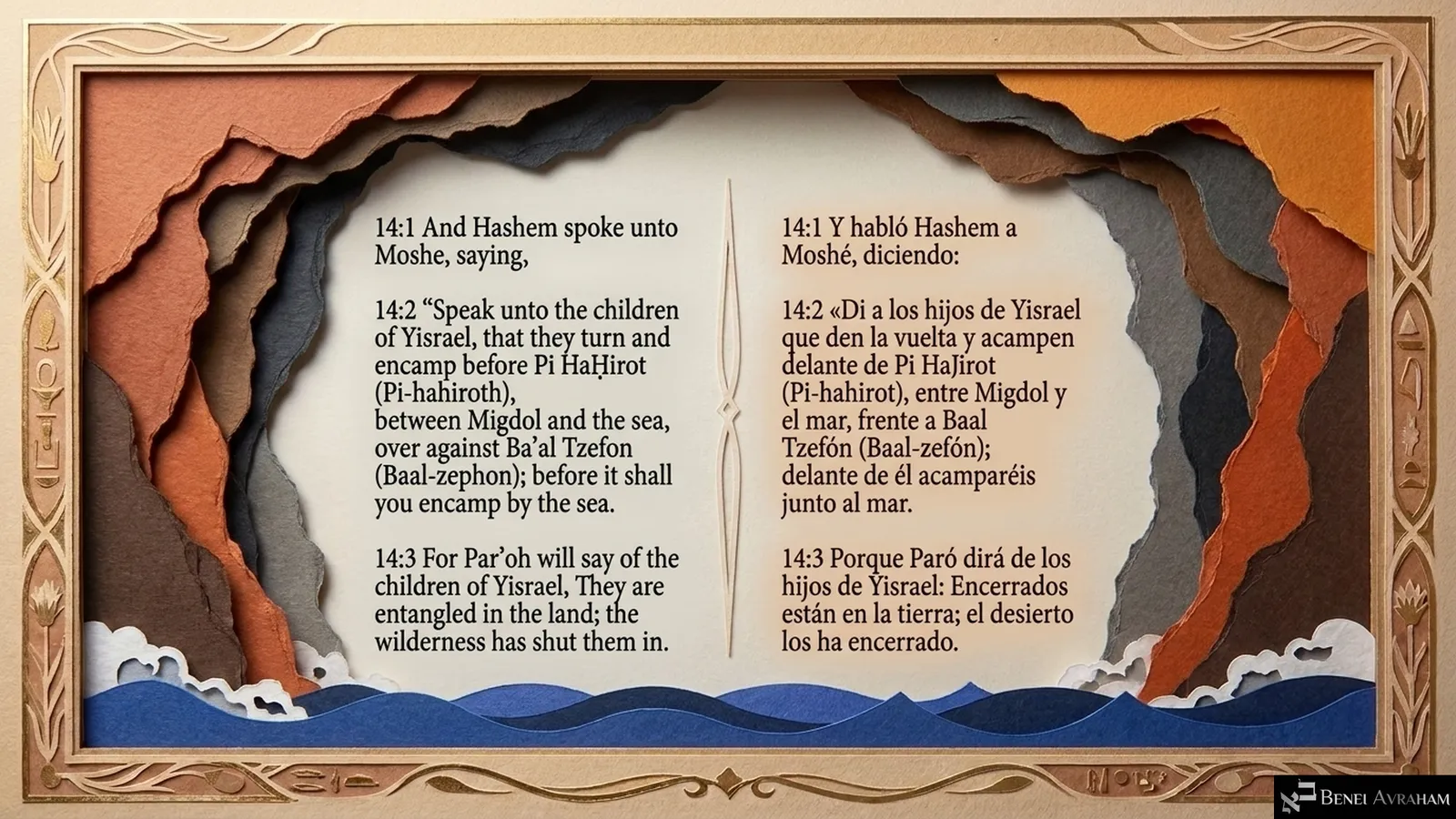
A layered paper cave opening onto the sea: “Speak unto the children of Yisrael, that they turn and encamp before Pi HaḤirot… by the sea” (Exodus 14:1–3).
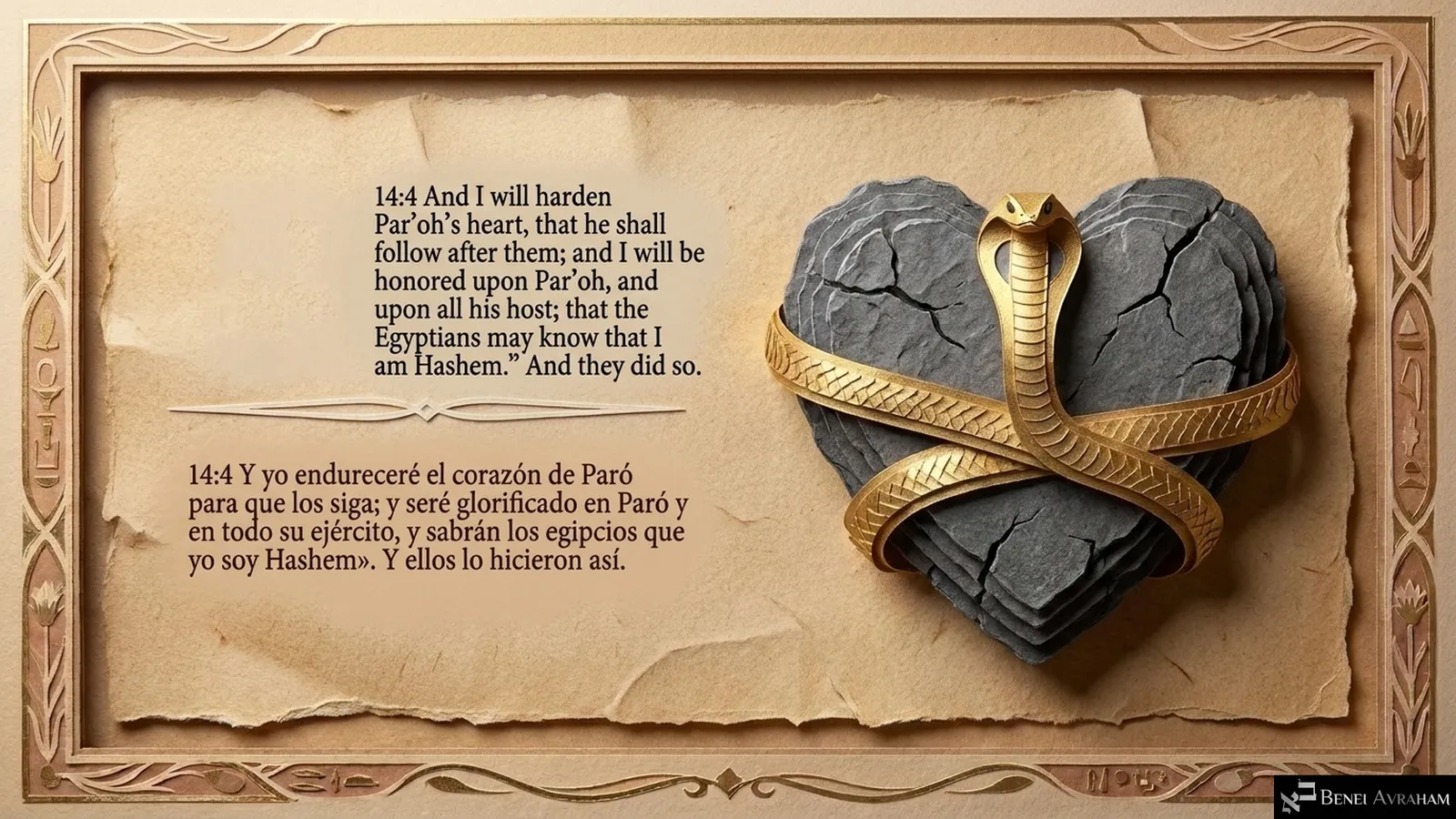
A grey stone heart wrapped by a golden serpent: “I will harden Par’oh’s heart… and the Egyptians shall know that I am Hashem” (Exodus 14:4).
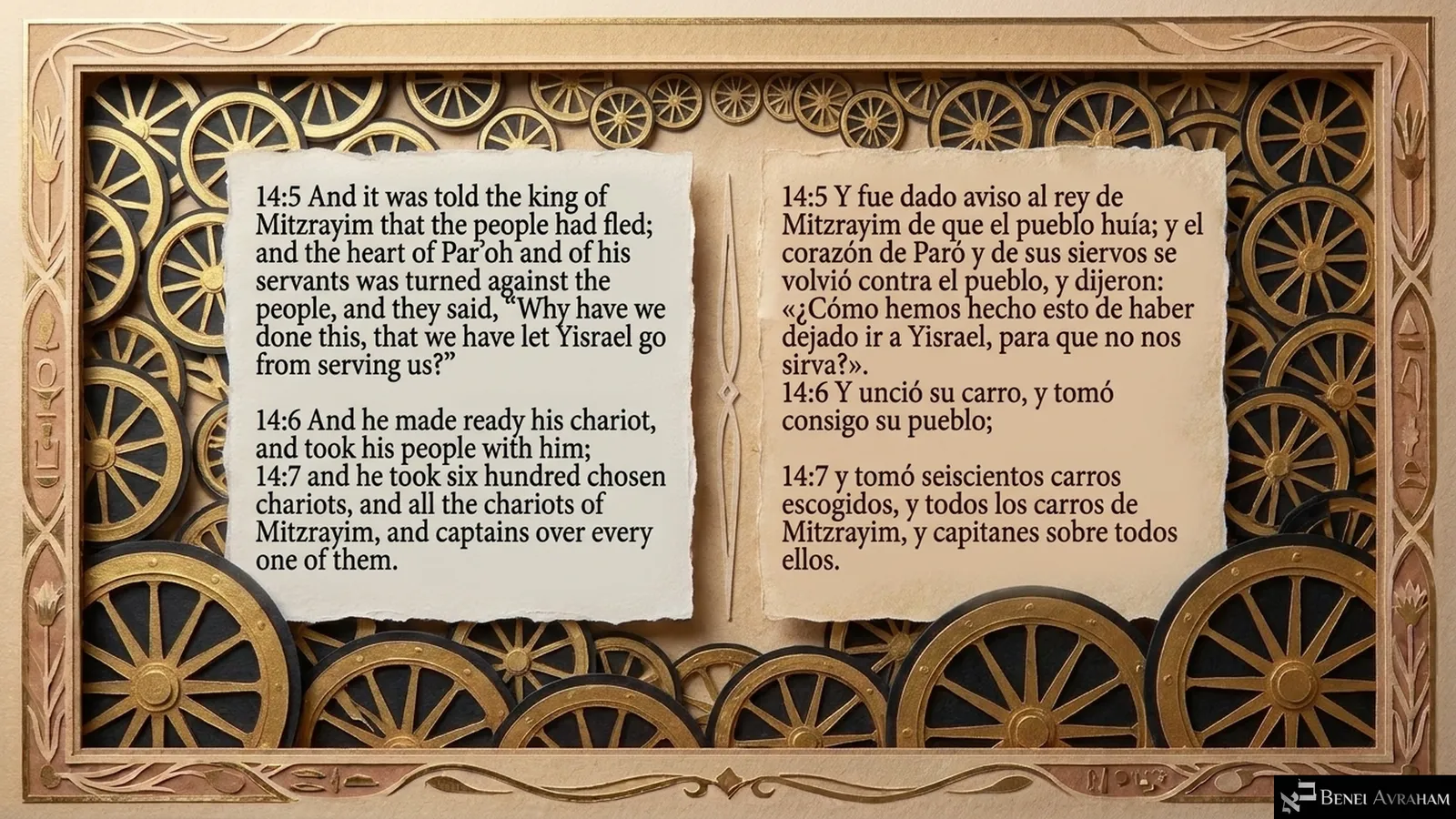
Golden chariot wheels around the cards: Par’oh made ready his chariot and took six hundred chosen chariots (Exodus 14:5–7).
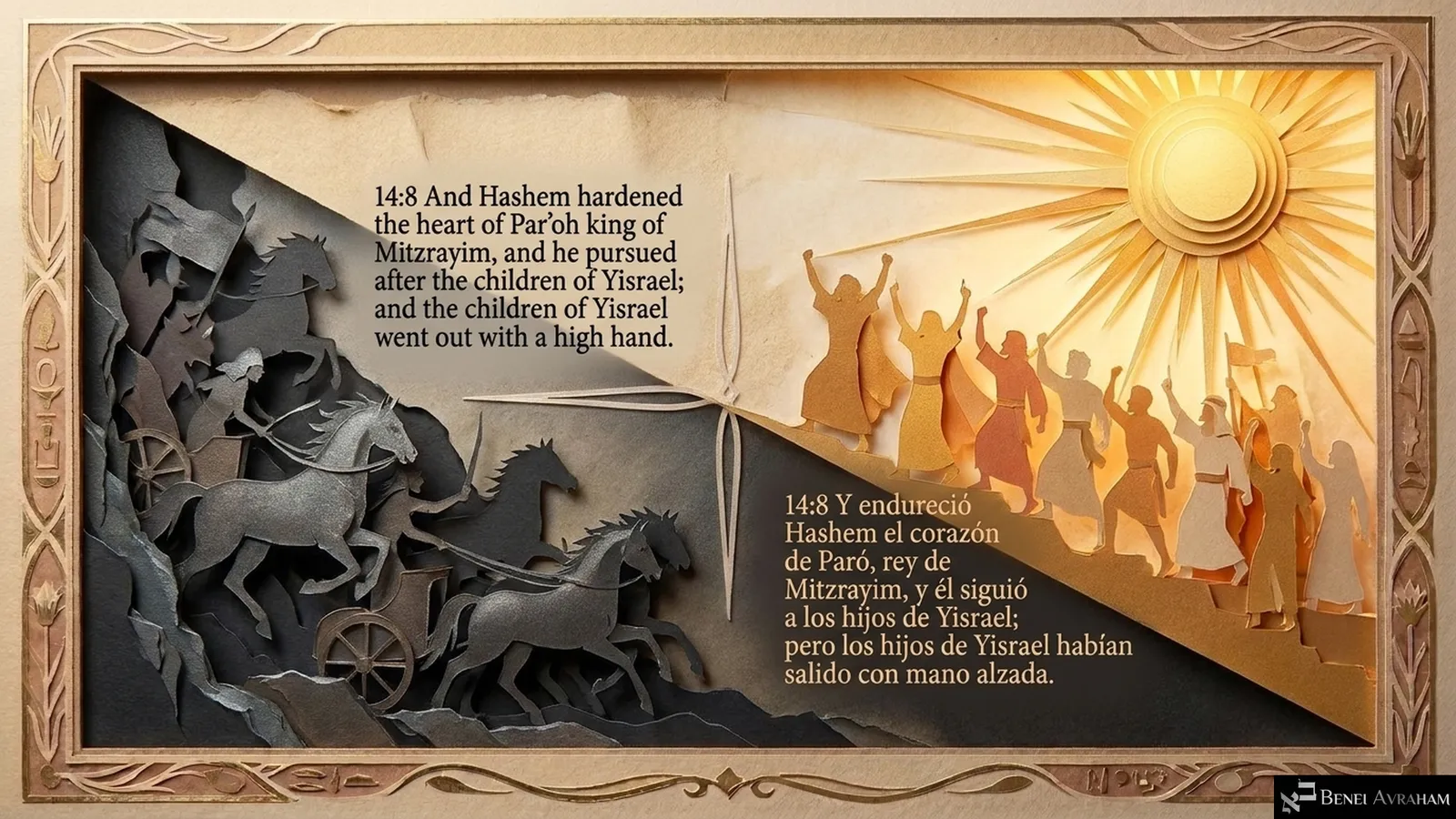
Grey paper chariots behind, sunlit people ahead: the children of Yisrael went out with a high hand (Exodus 14:8).
Sheni · Exodus 14:9–14

Second Portion

Title card for the second portion hanging in a paper shadow box: “Parashat Beshalaḥ — 2nd portion, Exodus 14:9–14”.
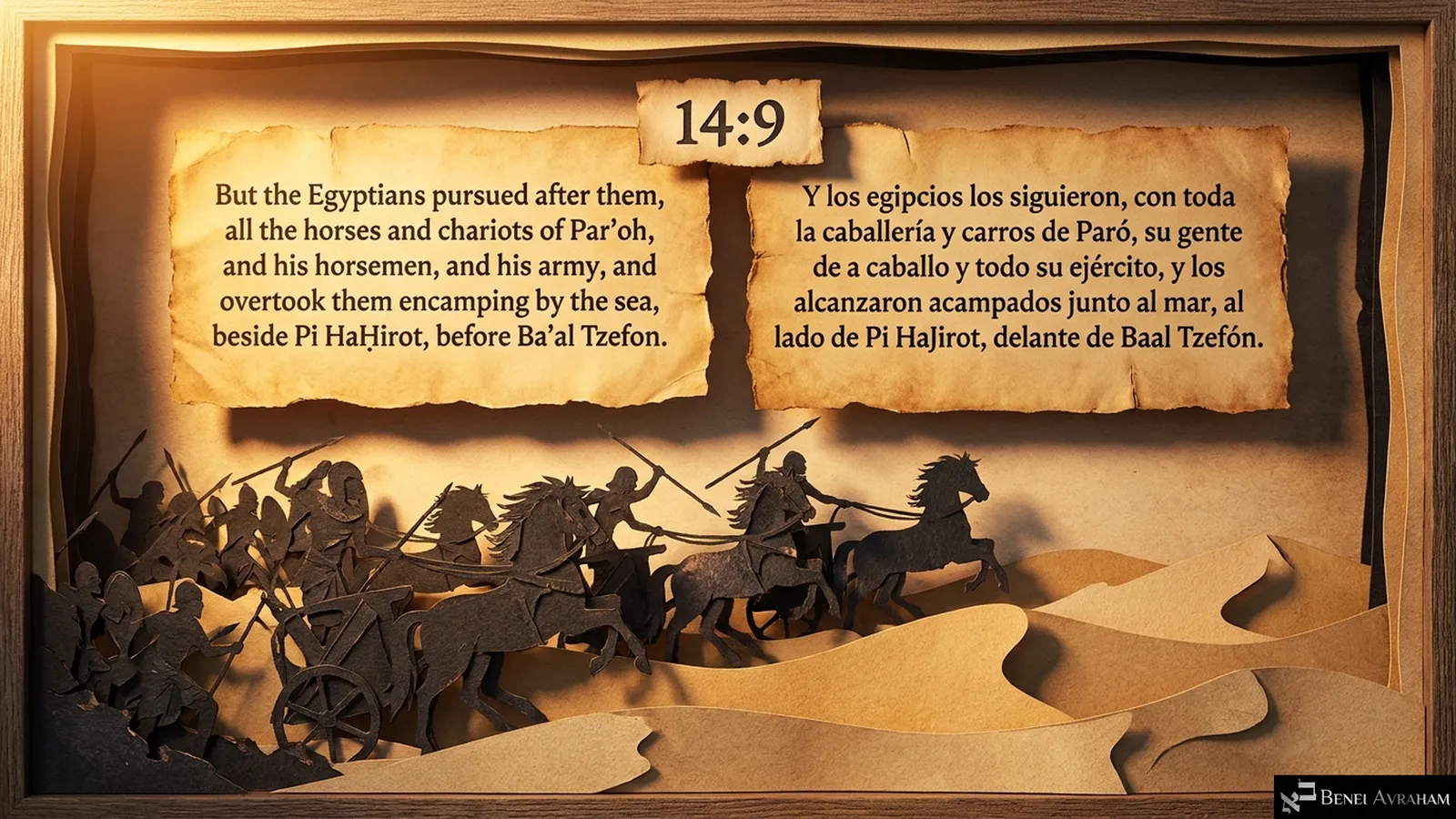
Paper horsemen and chariots racing over the dunes: the Egyptians overtook them encamping by the sea, beside Pi HaḤirot (Exodus 14:9).
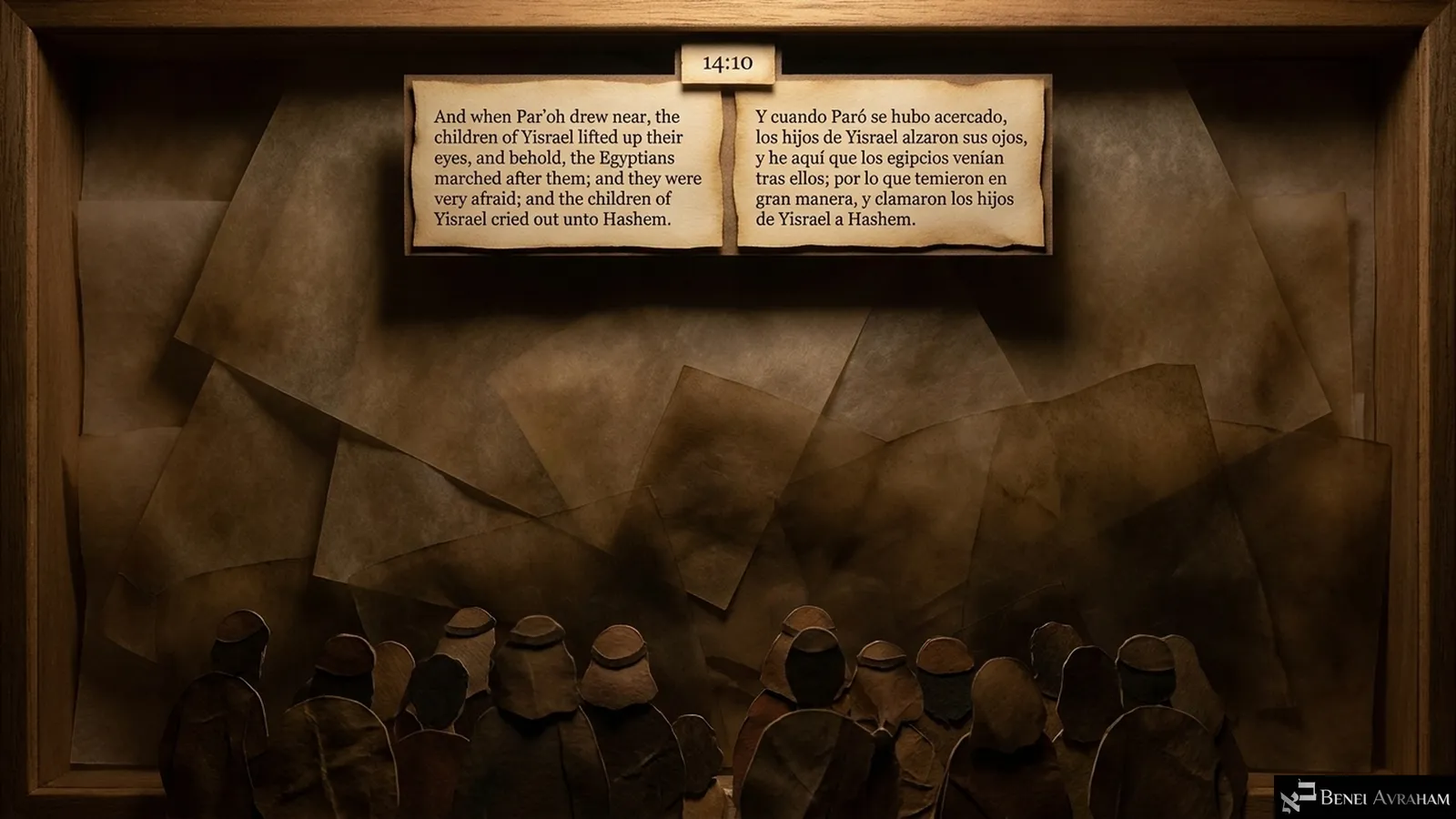
A crowd of paper figures under a dark sky: the children of Yisrael lifted up their eyes, and behold, the Egyptians marched after them (Exodus 14:10).
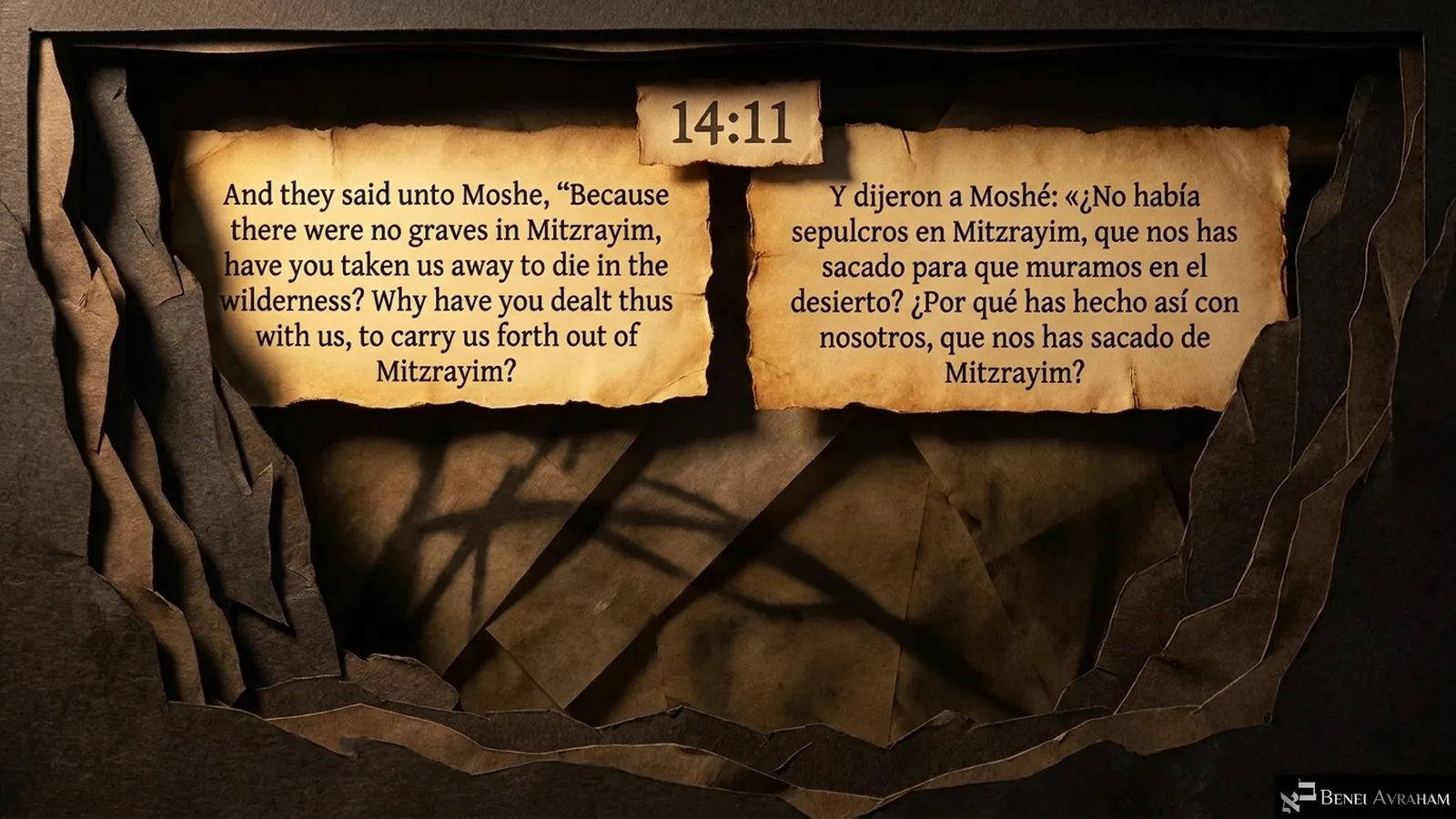
Torn rock walls in shadow: “Because there were no graves in Mitzrayim, have you taken us away to die in the wilderness?” (Exodus 14:11).
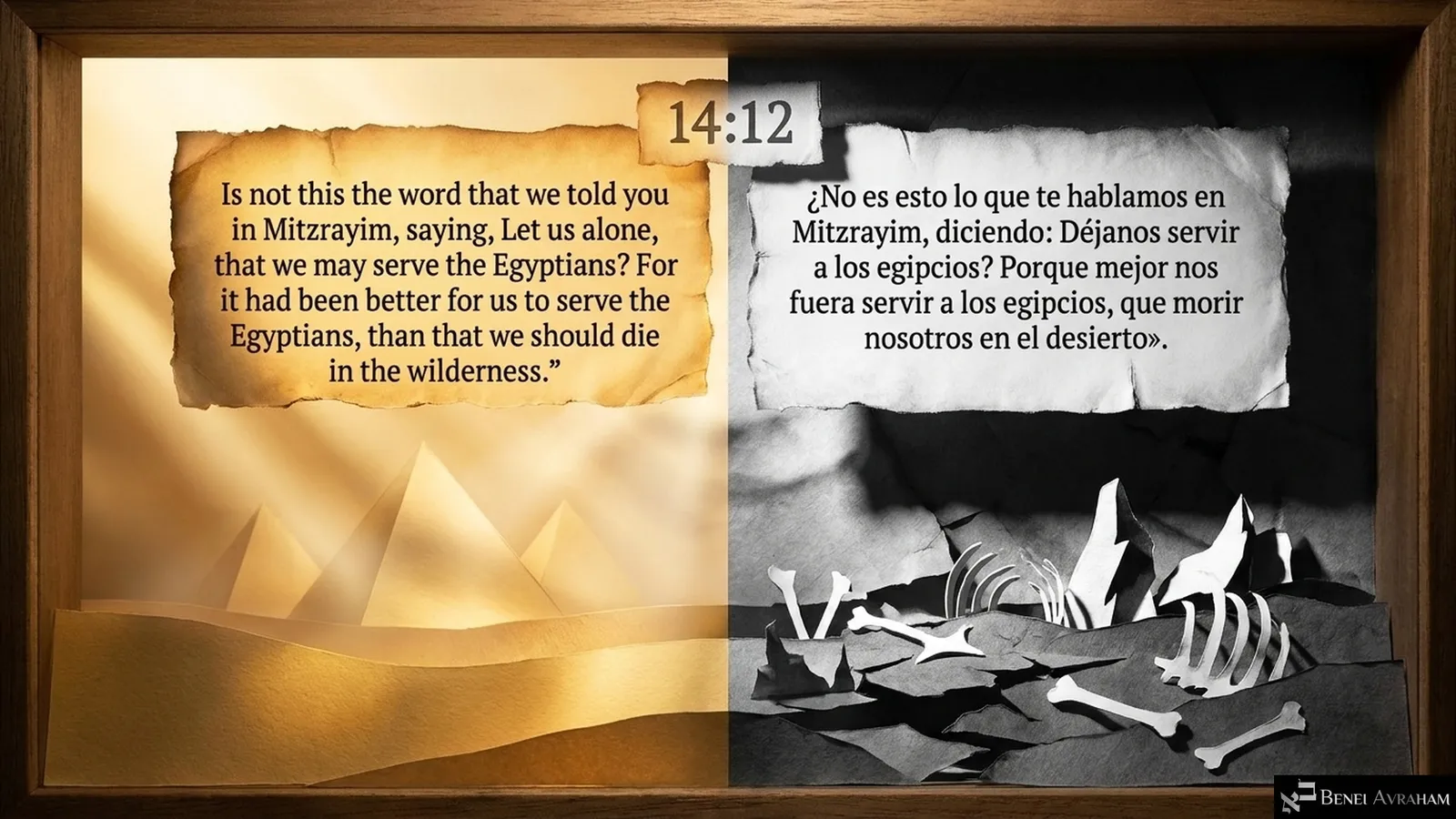
Pyramids on one side, bleached bones on the other: “It had been better for us to serve the Egyptians, than that we should die in the wilderness” (Exodus 14:12).
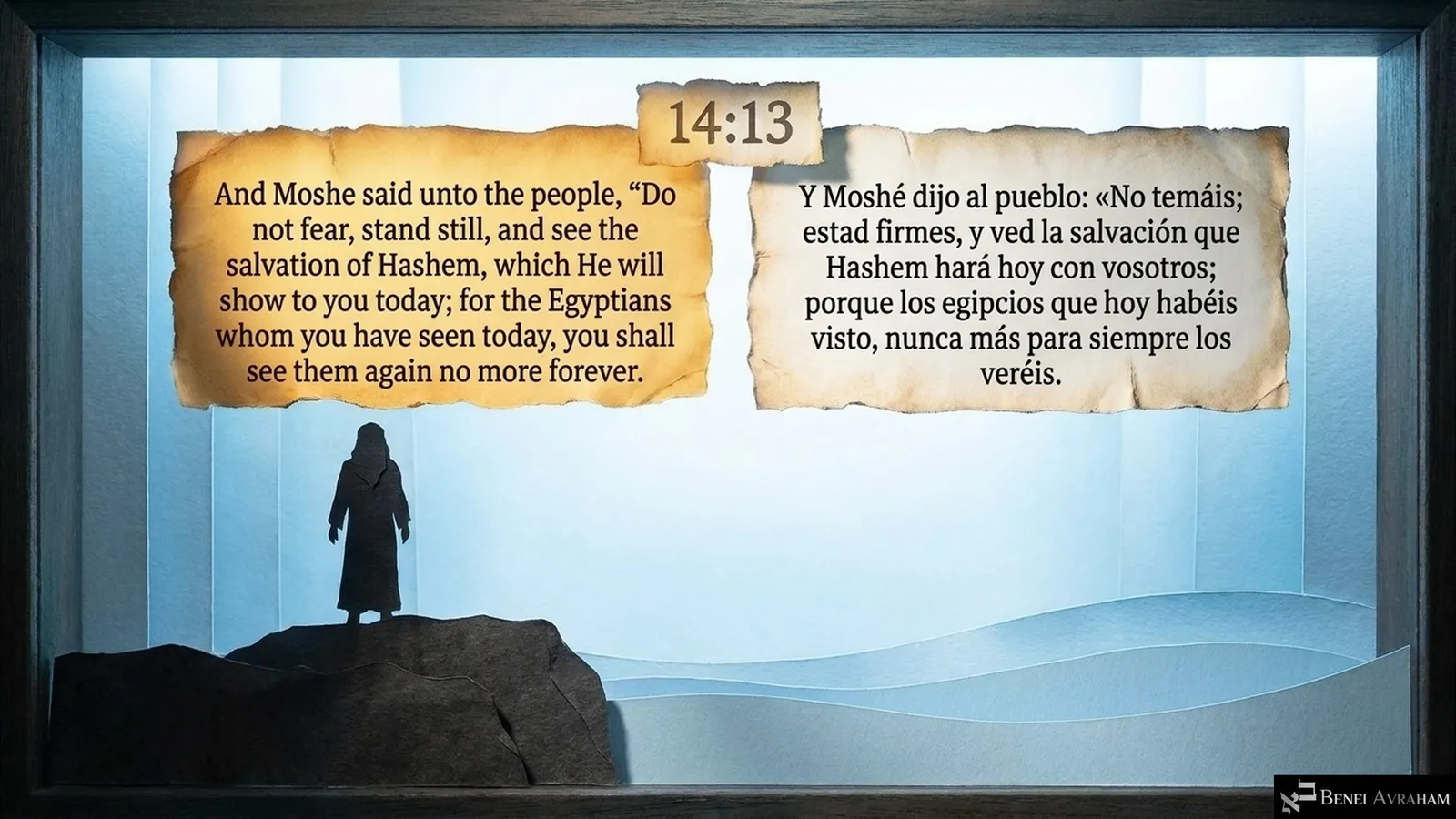
Moshe on a rock before pale blue waters: “Do not fear, stand still, and see the salvation of Hashem” (Exodus 14:13).
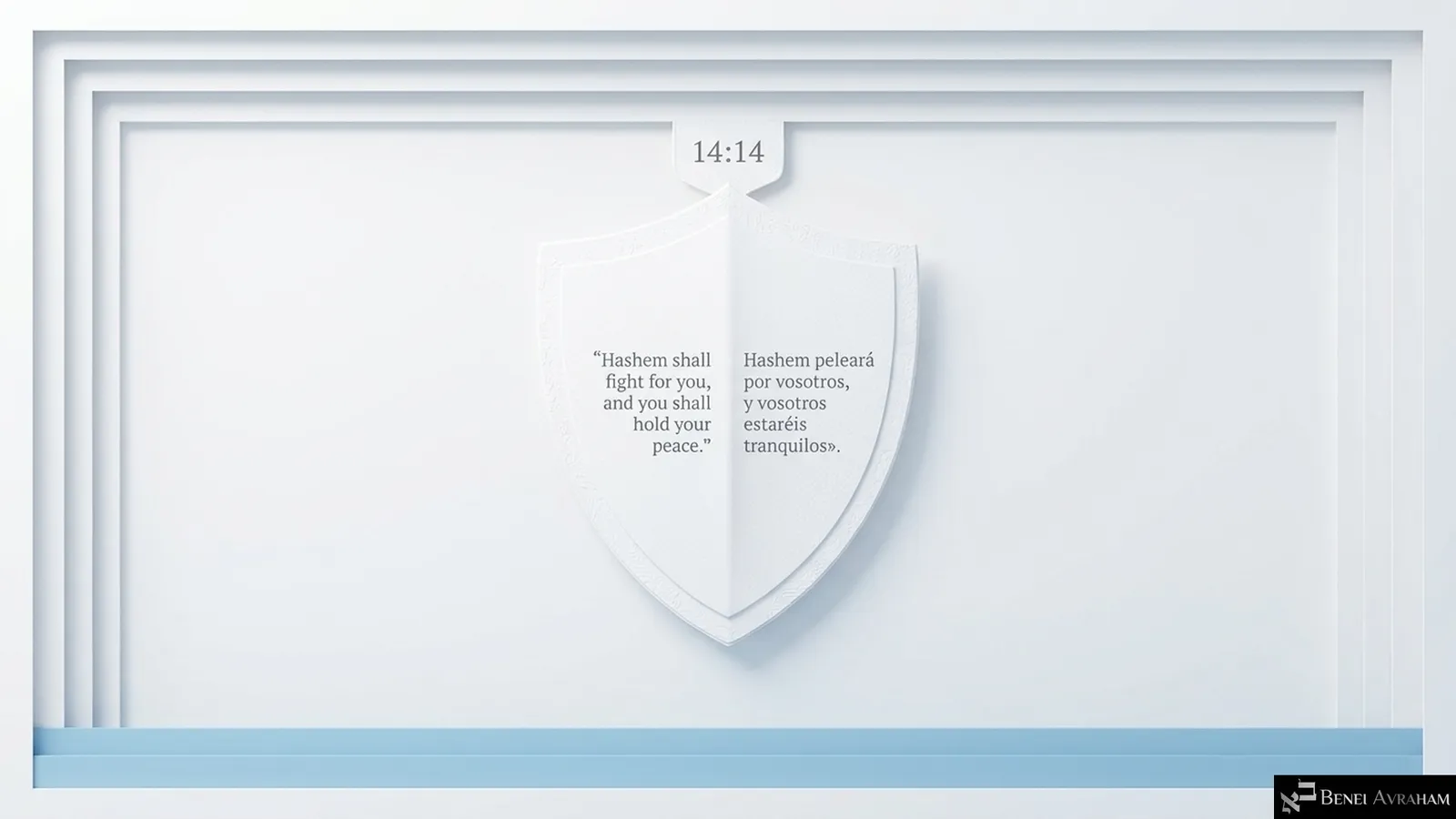
A white paper shield: “Hashem shall fight for you, and you shall hold your peace” (Exodus 14:14).
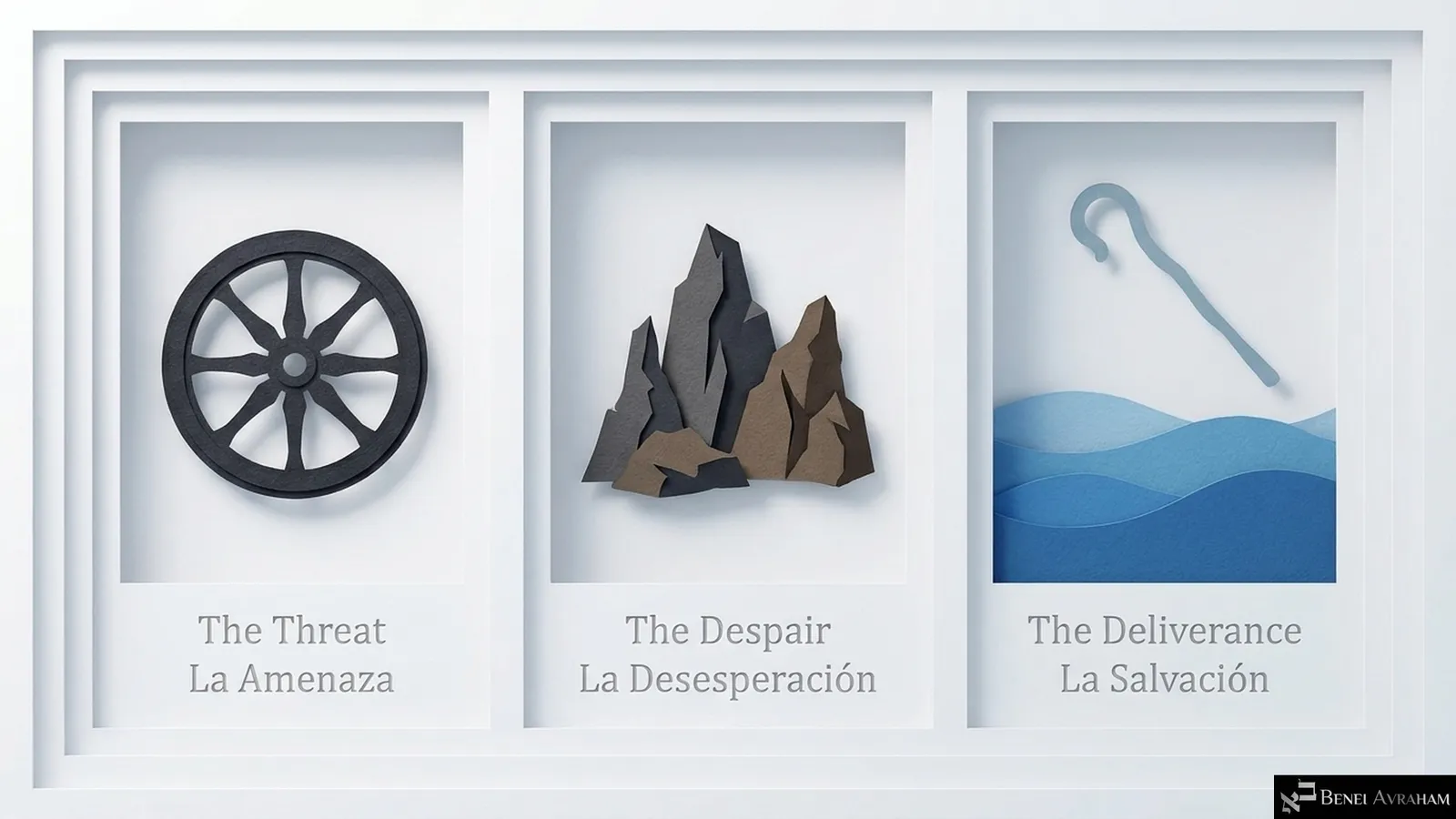
Three white paper frames — a chariot wheel, rocks and a shepherd’s staff over water: the threat, the despair, the deliverance (Exodus 14:9–14).
Shlishi · Exodus 14:15–25

Third Portion

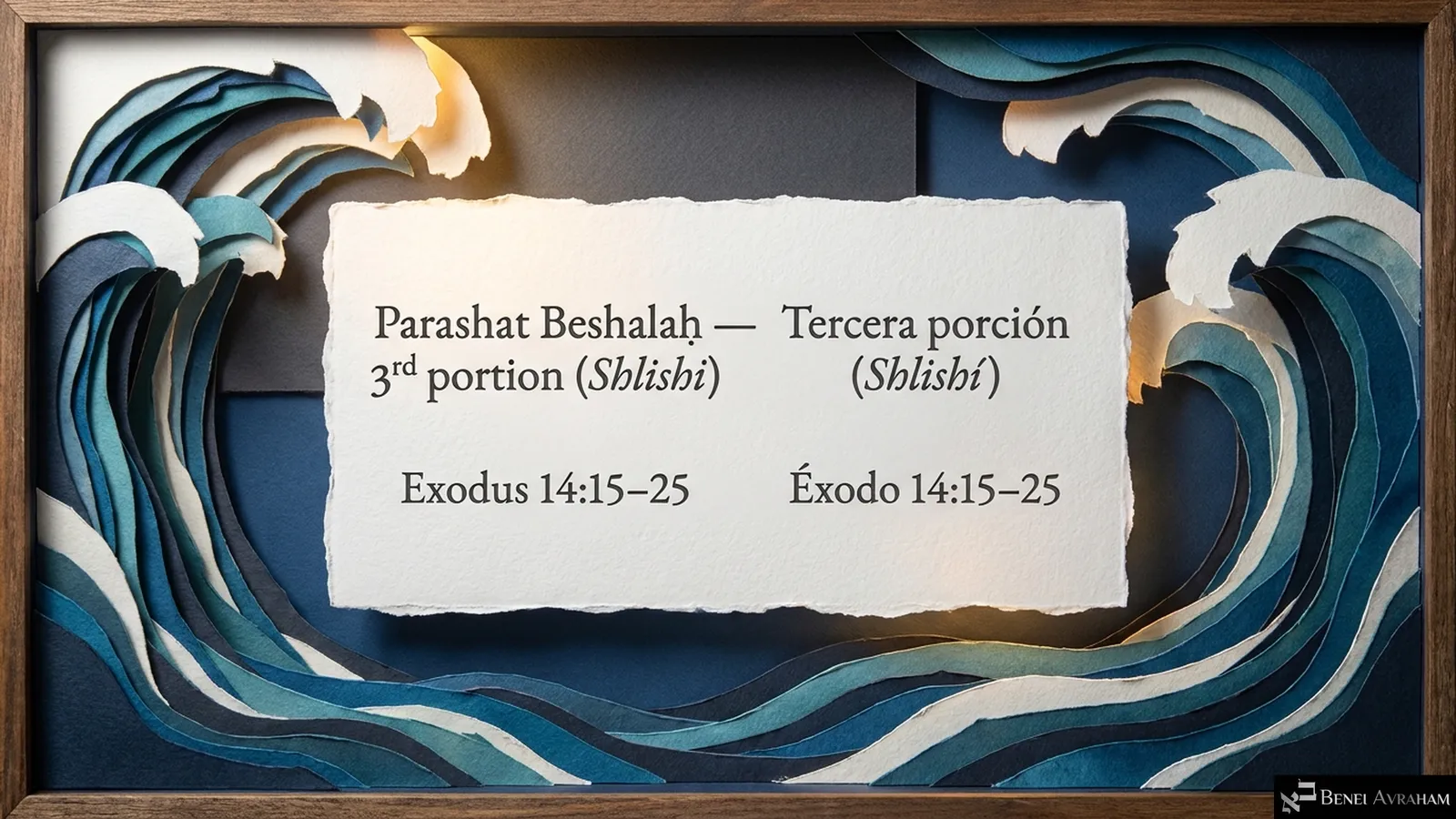
Title card for the third portion between curling paper waves: “Parashat Beshalaḥ — 3rd portion (Shlishi), Exodus 14:15–25”.
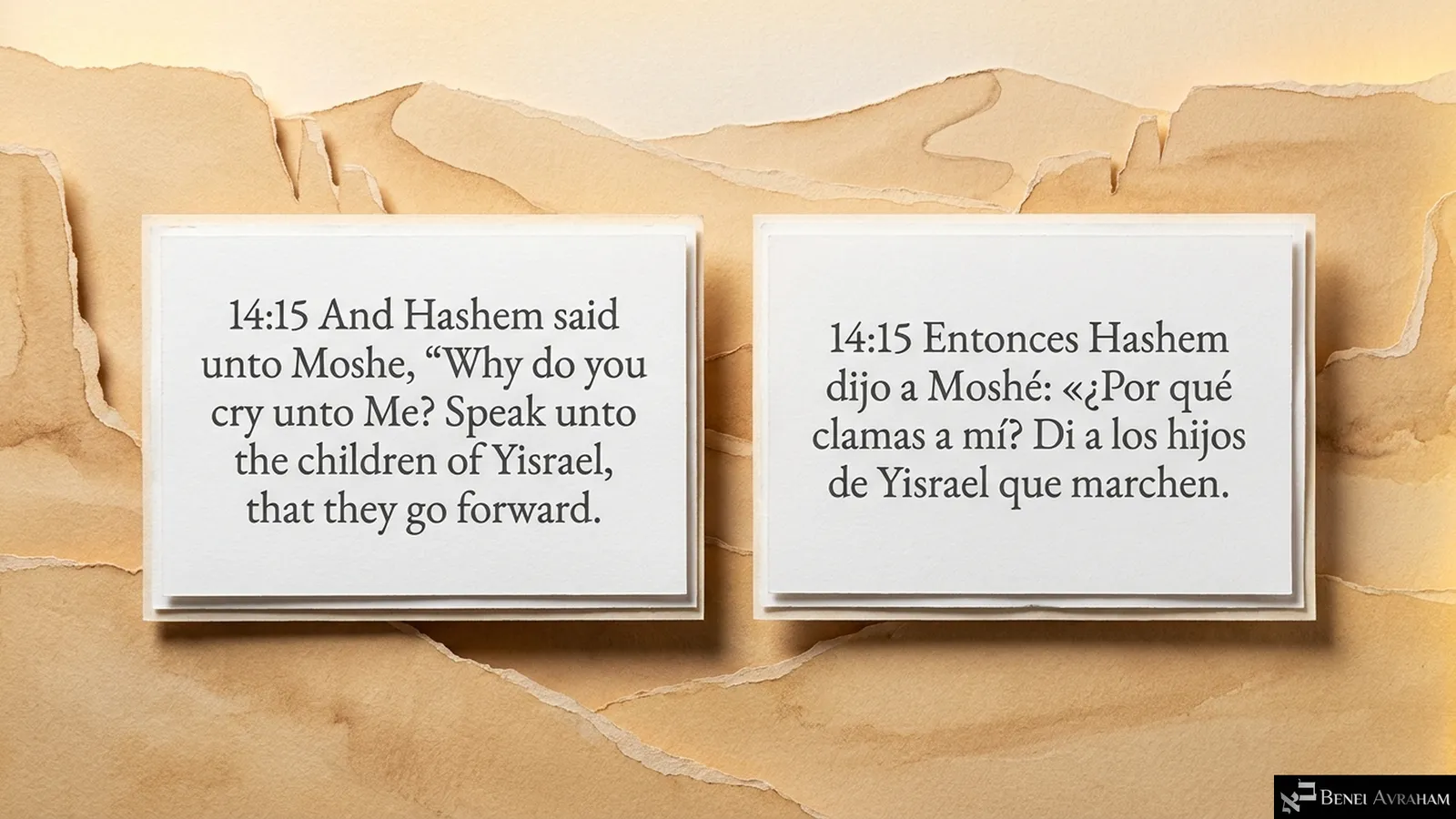
Two white cards on sand-coloured paper: “Why do you cry unto Me? Speak unto the children of Yisrael, that they go forward” (Exodus 14:15).
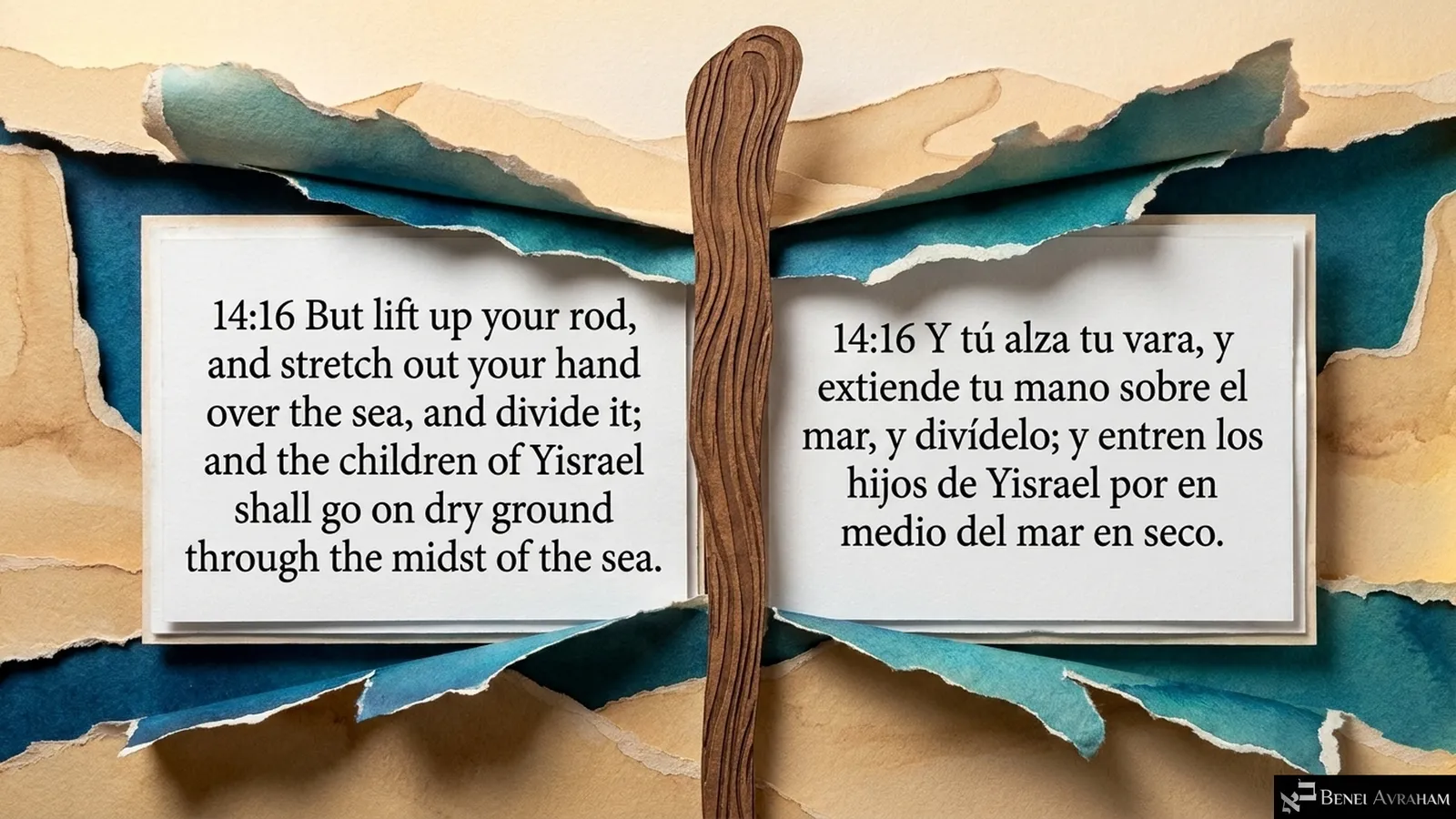
A carved wooden staff divides torn blue paper: “Lift up your rod, and stretch out your hand over the sea, and divide it” (Exodus 14:16).
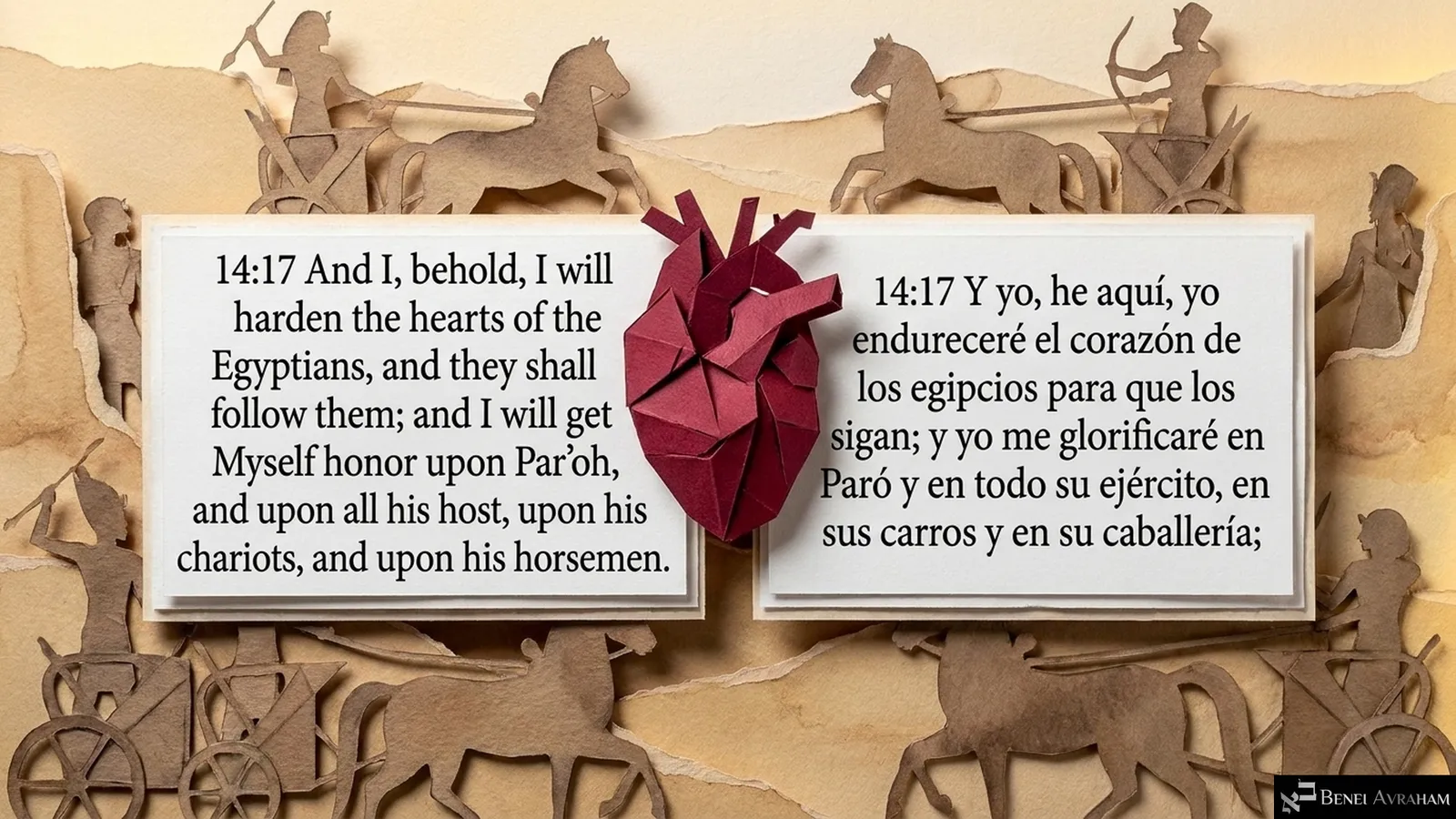
A folded red paper heart among chariots: “I will harden the hearts of the Egyptians… and I will get Myself honor upon Par’oh” (Exodus 14:17).
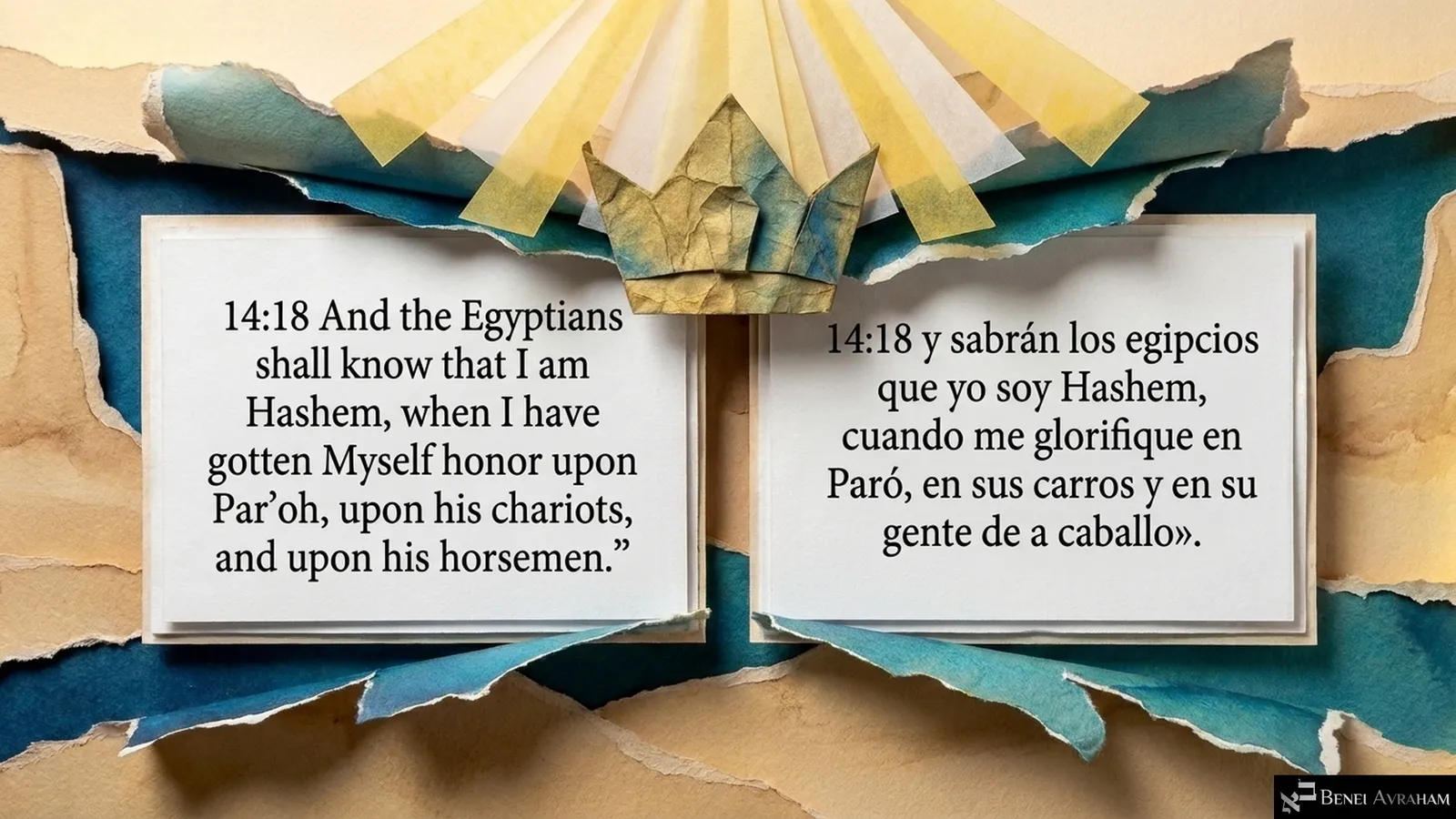
A paper crown in rays of light: “the Egyptians shall know that I am Hashem” (Exodus 14:18).
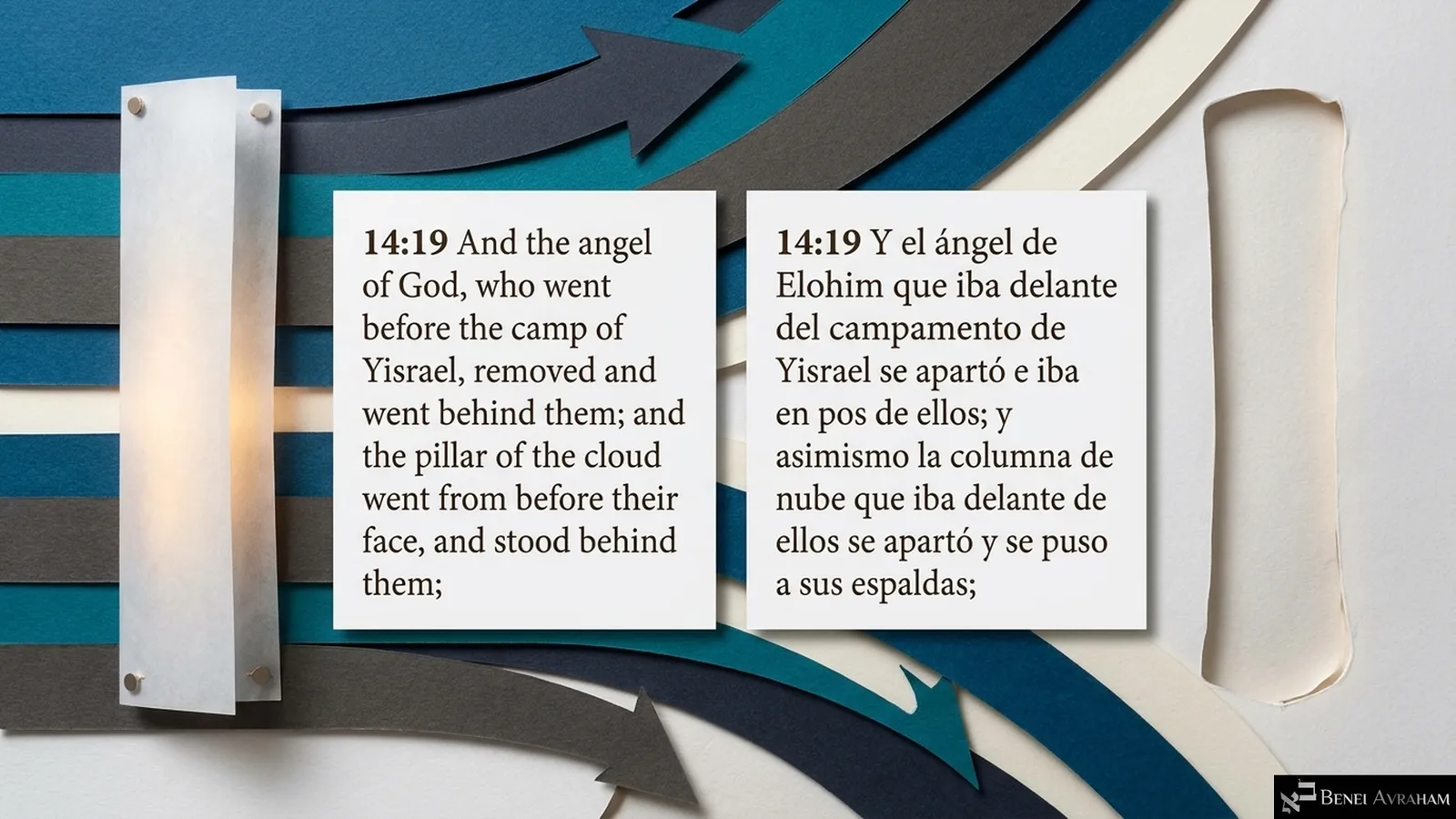
A translucent pillar moves behind the paper arrows: the angel of God and the pillar of the cloud went behind them (Exodus 14:19).
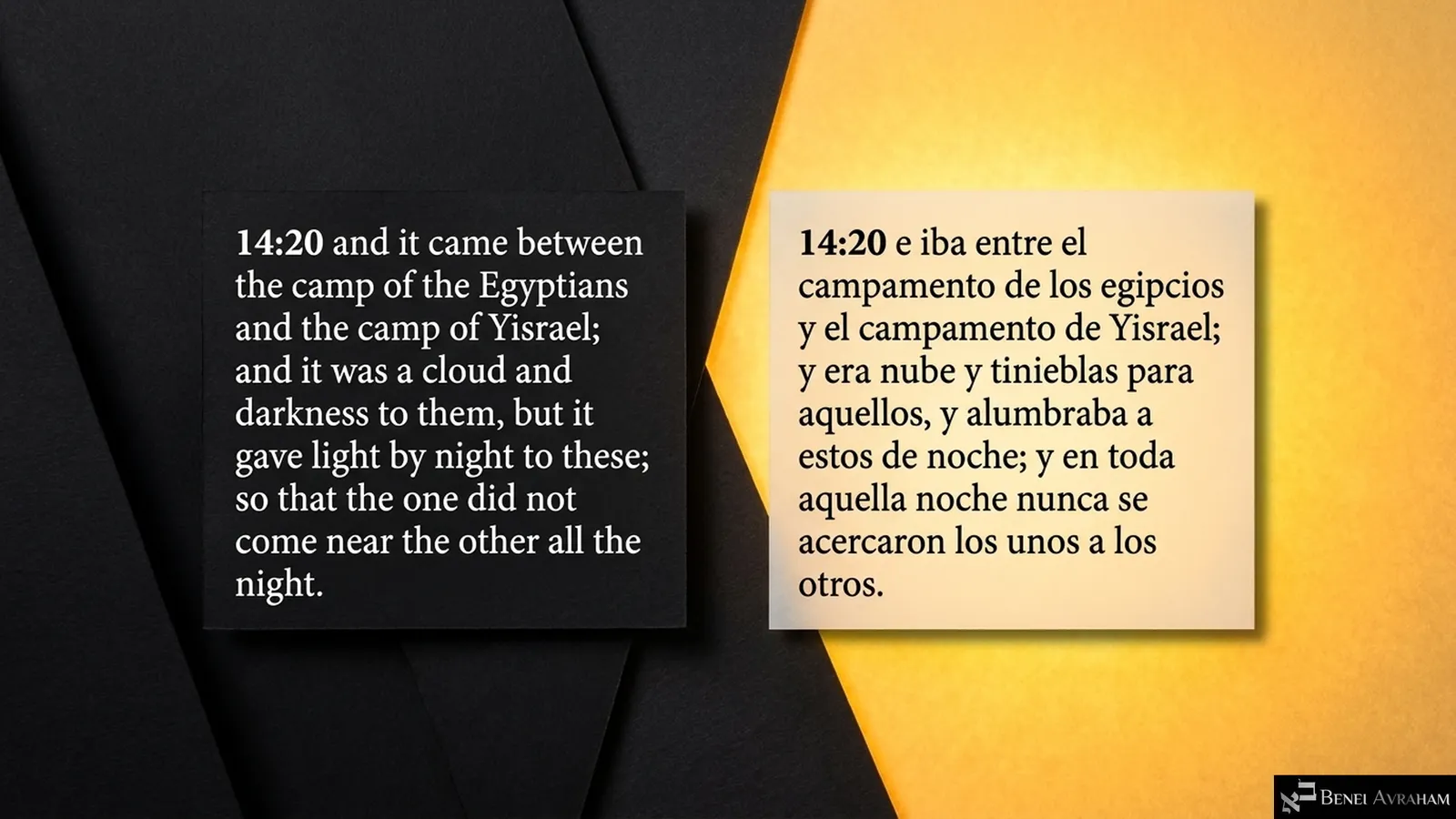
Black paper and golden light side by side: a cloud and darkness to the one, light by night to the other (Exodus 14:20).
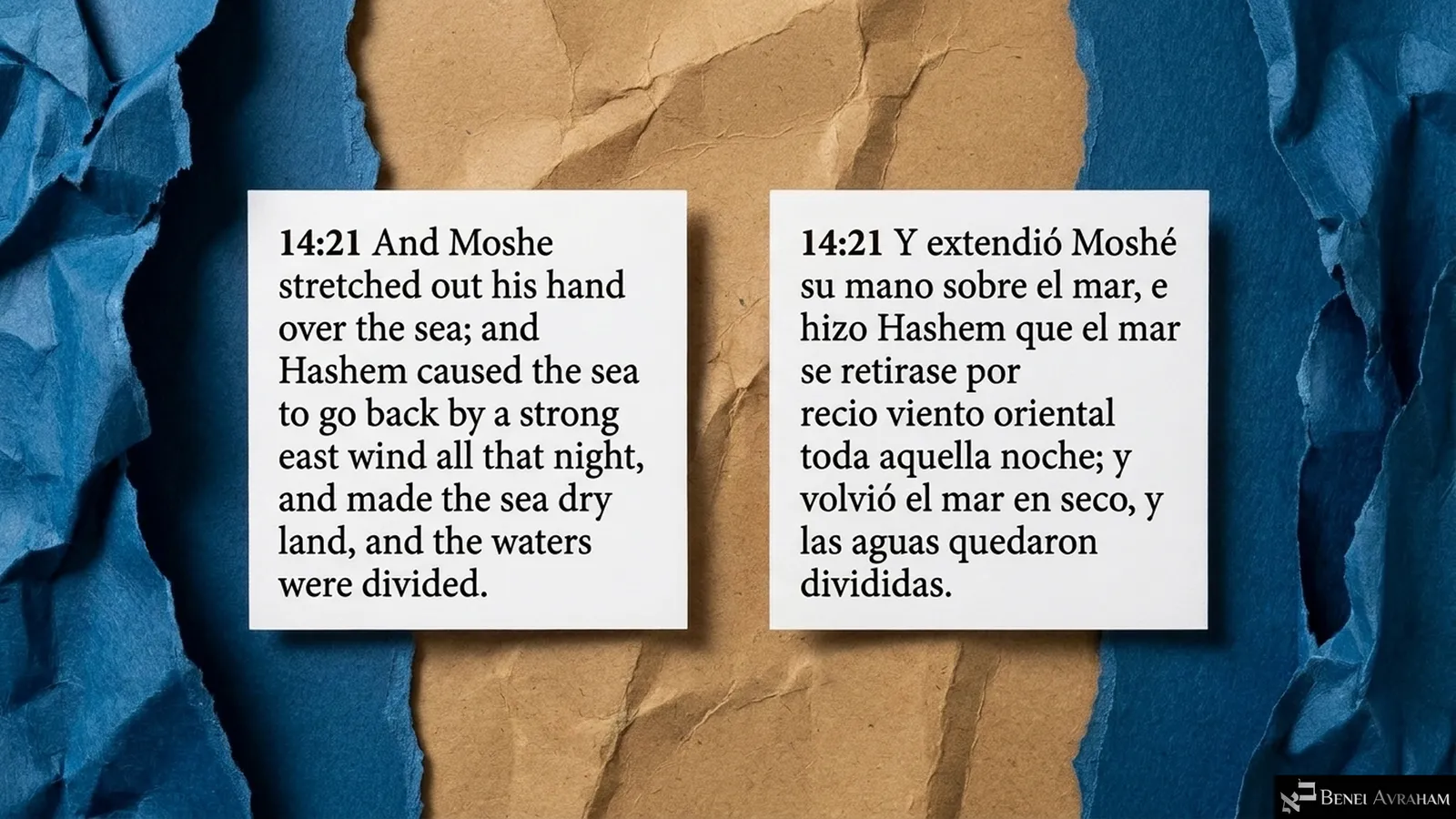
Torn blue paper sea parted by brown paper ground: Hashem caused the sea to go back by a strong east wind all that night (Exodus 14:21).
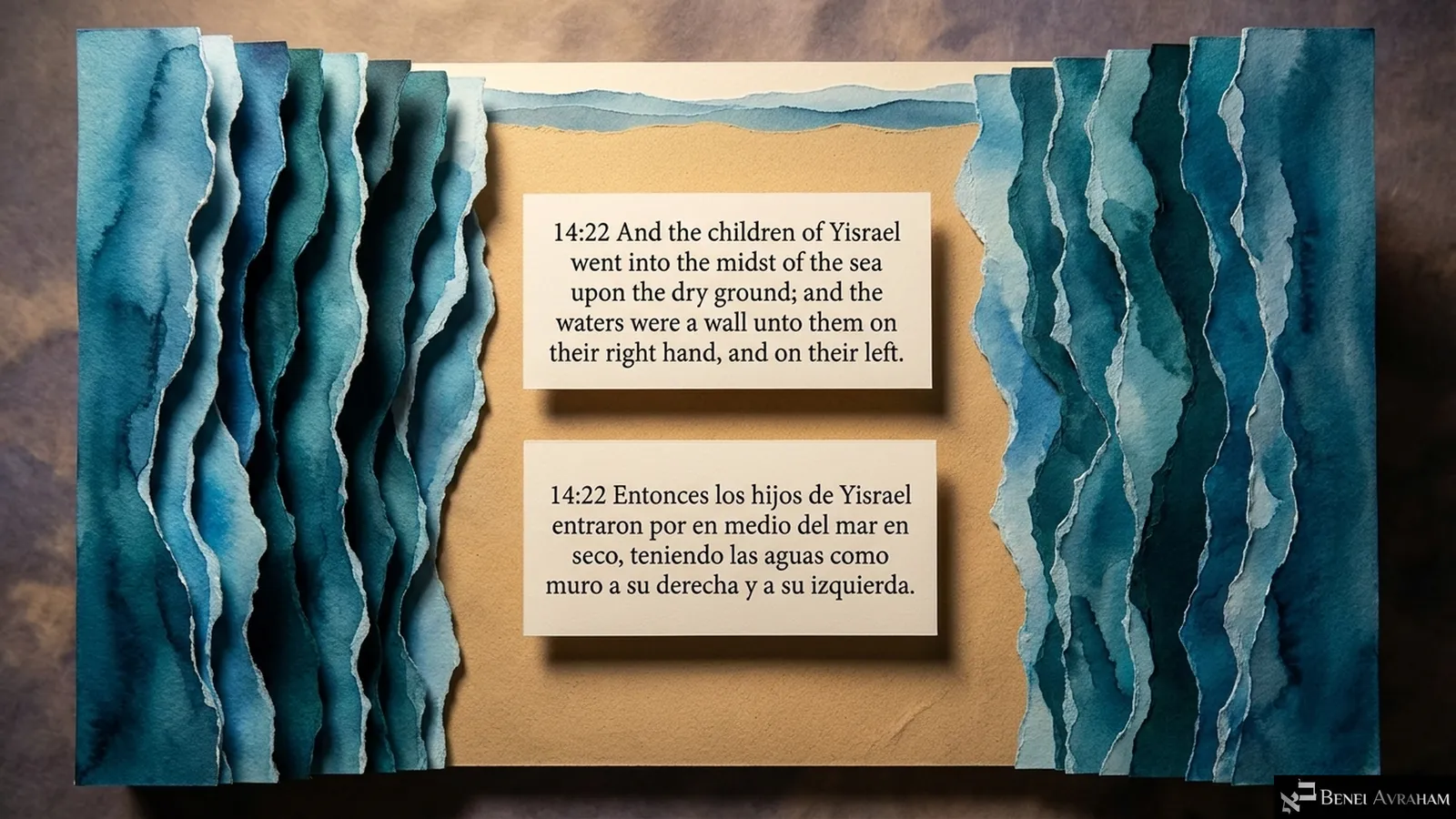
Two walls of watercolour paper waves: the waters were a wall unto them on their right hand, and on their left (Exodus 14:22).
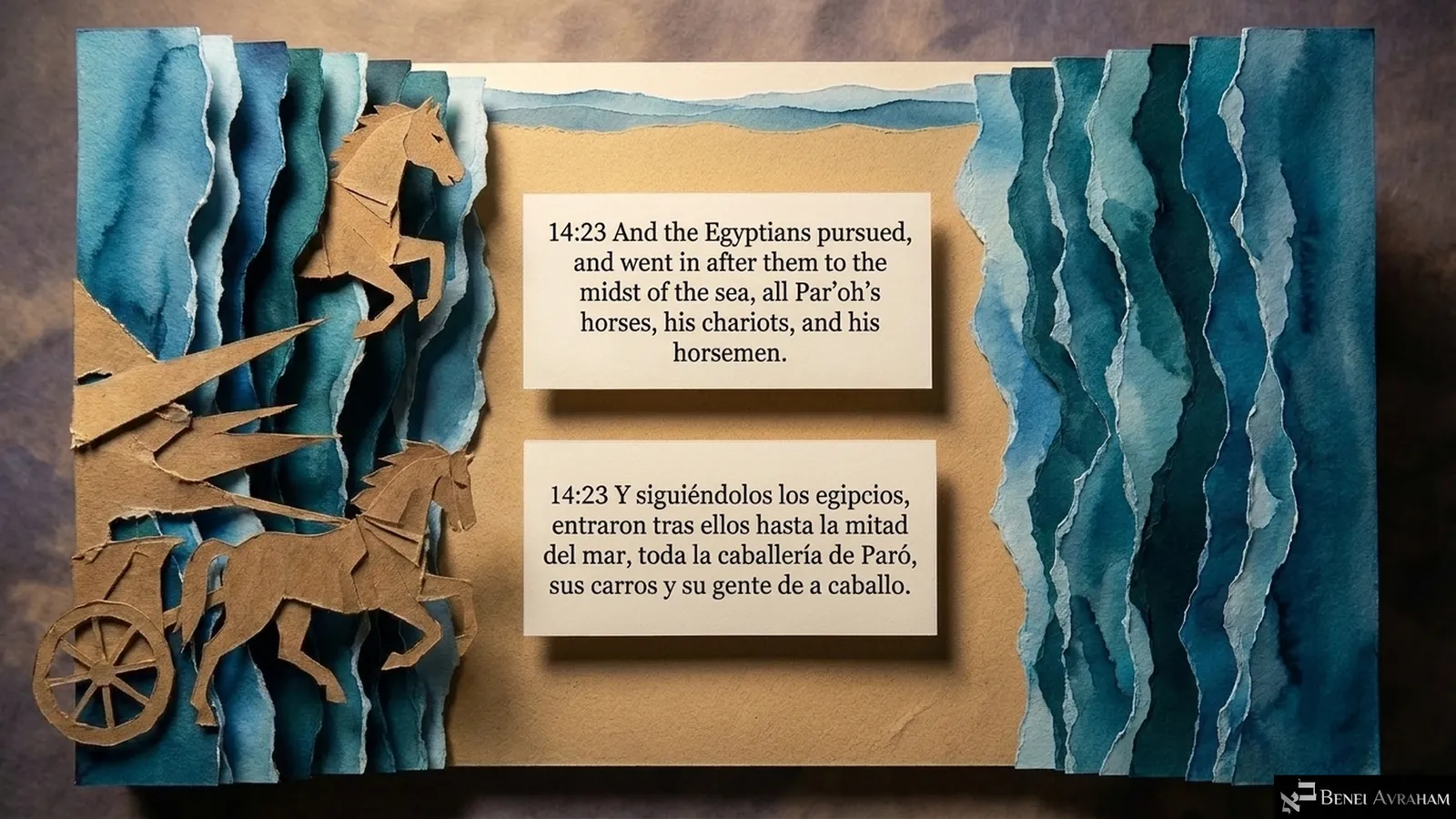
Paper horses and a chariot rushing between the walls of water: the Egyptians went in after them to the midst of the sea (Exodus 14:23).
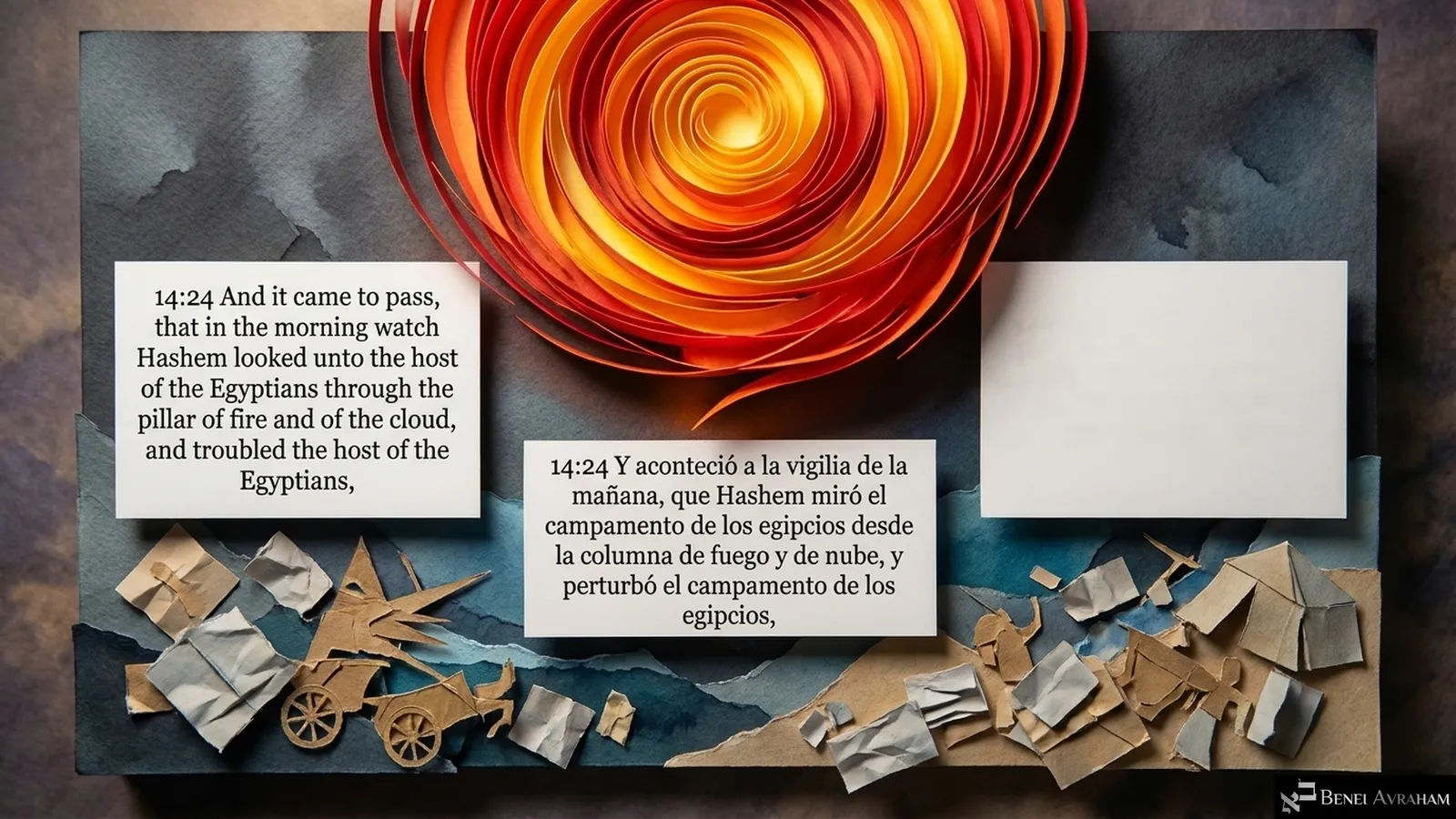
A spiral of orange paper flame over crumpled tents: Hashem looked unto the host of the Egyptians through the pillar of fire and of the cloud (Exodus 14:24).
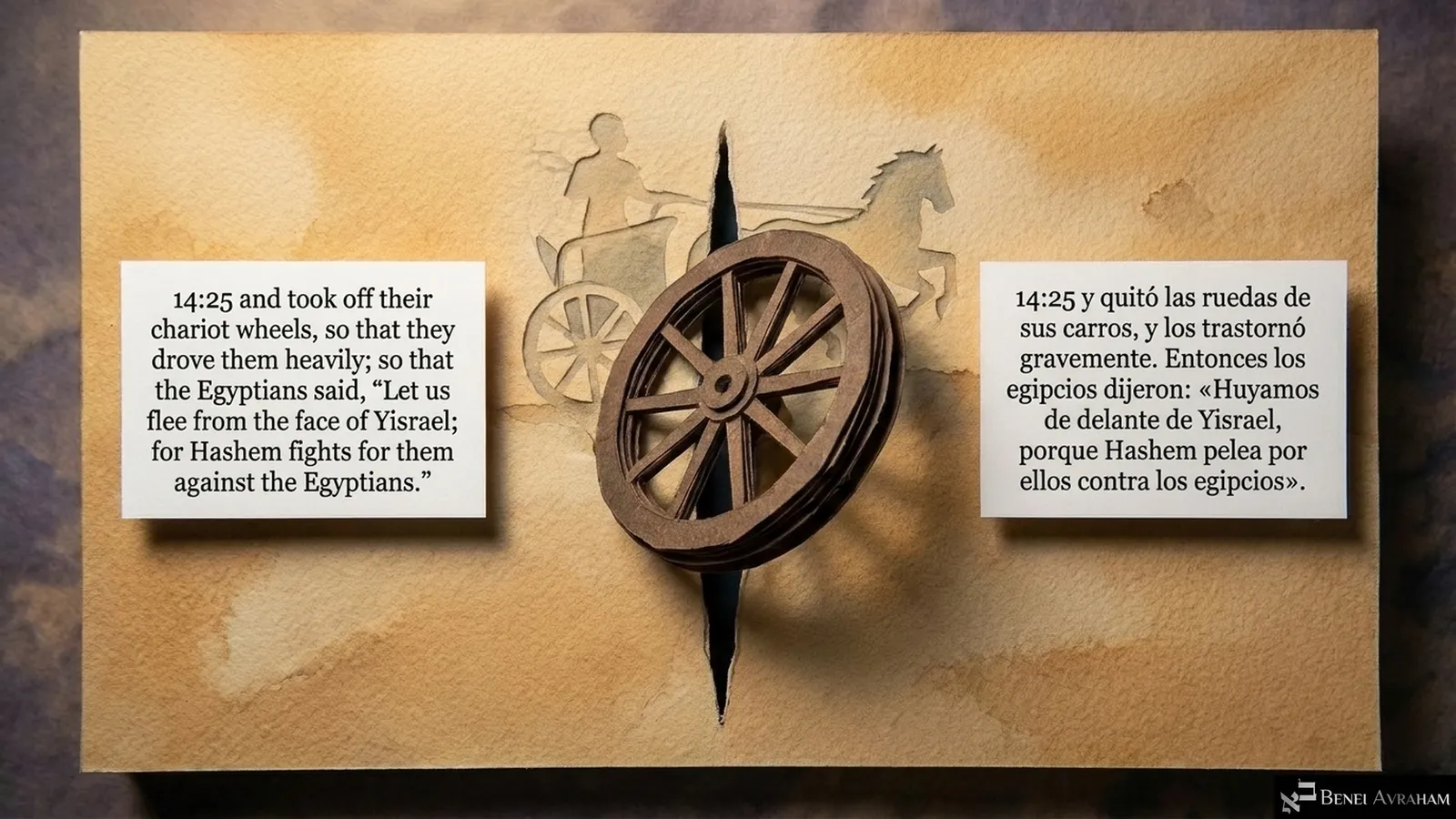
A broken wooden wheel: He took off their chariot wheels — “Let us flee from the face of Yisrael; for Hashem fights for them” (Exodus 14:25).
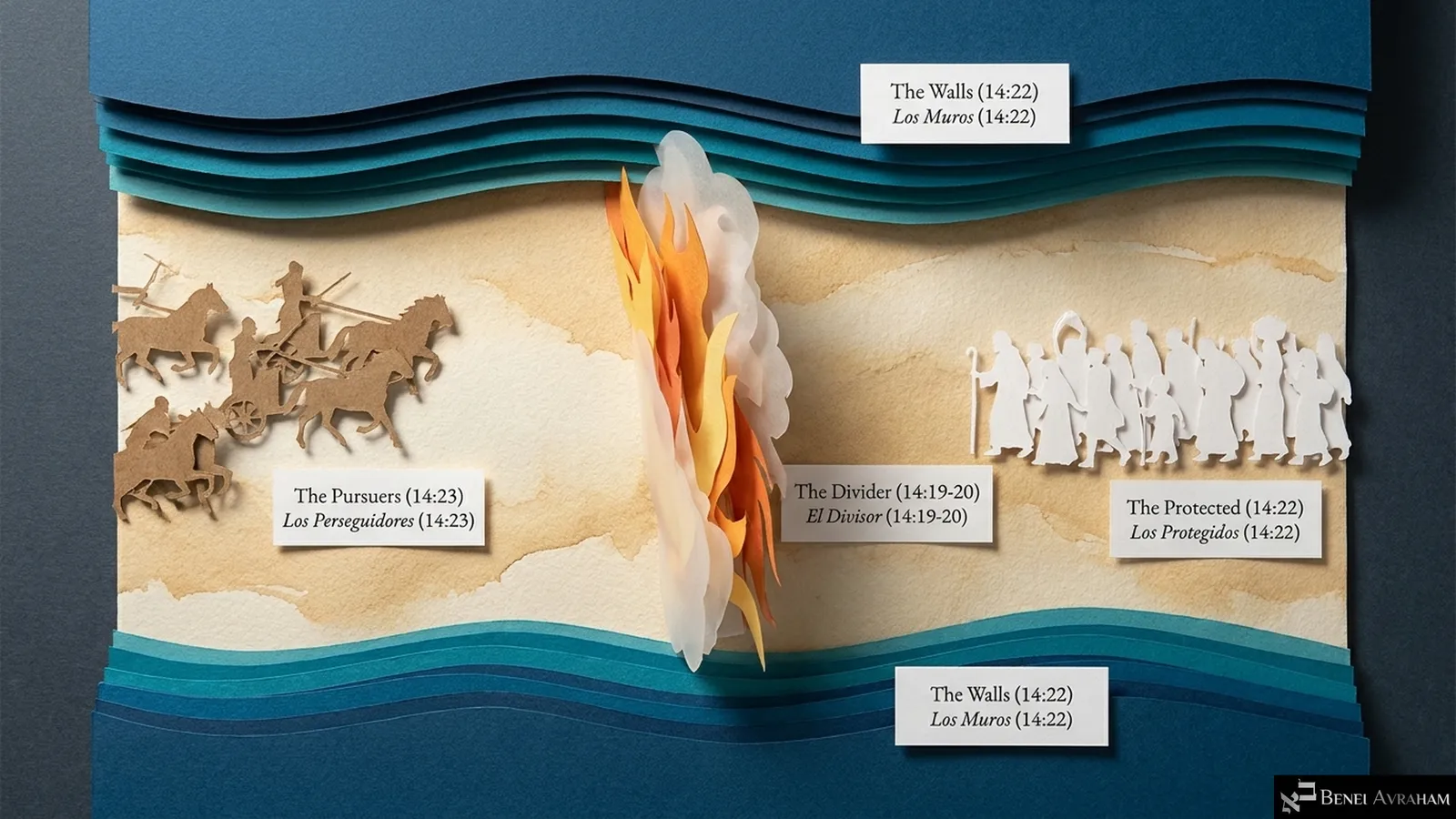
A paper diagram of the crossing: the pursuers, the divider, the protected and the walls of water (Exodus 14:19–23).
Revi’i · Exodus 14:26–15:26

Fourth Portion
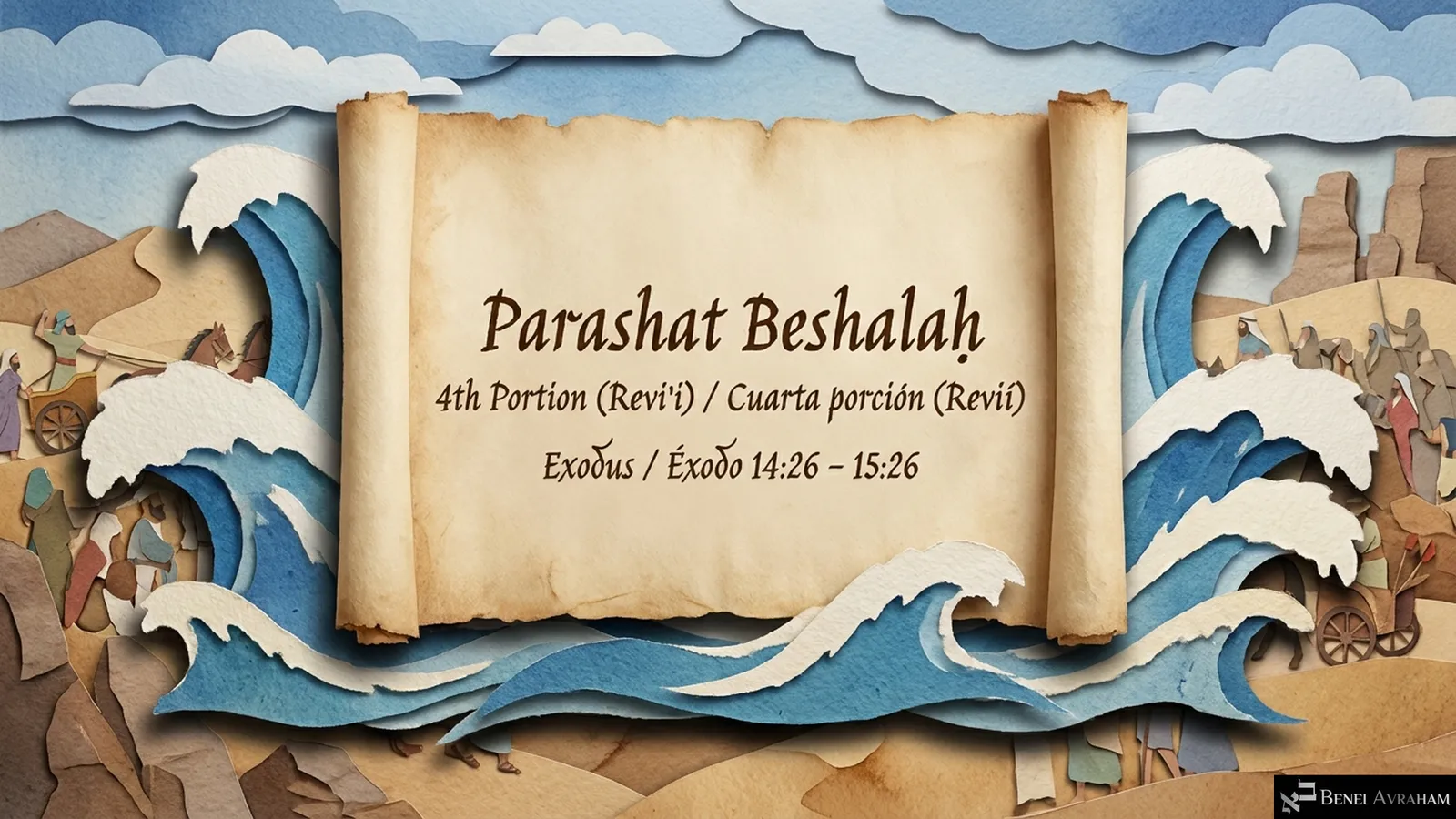
Title card on a parchment scroll between paper waves: “Parashat Beshalaḥ — 4th Portion (Revi’i), Exodus 14:26–15:26”.
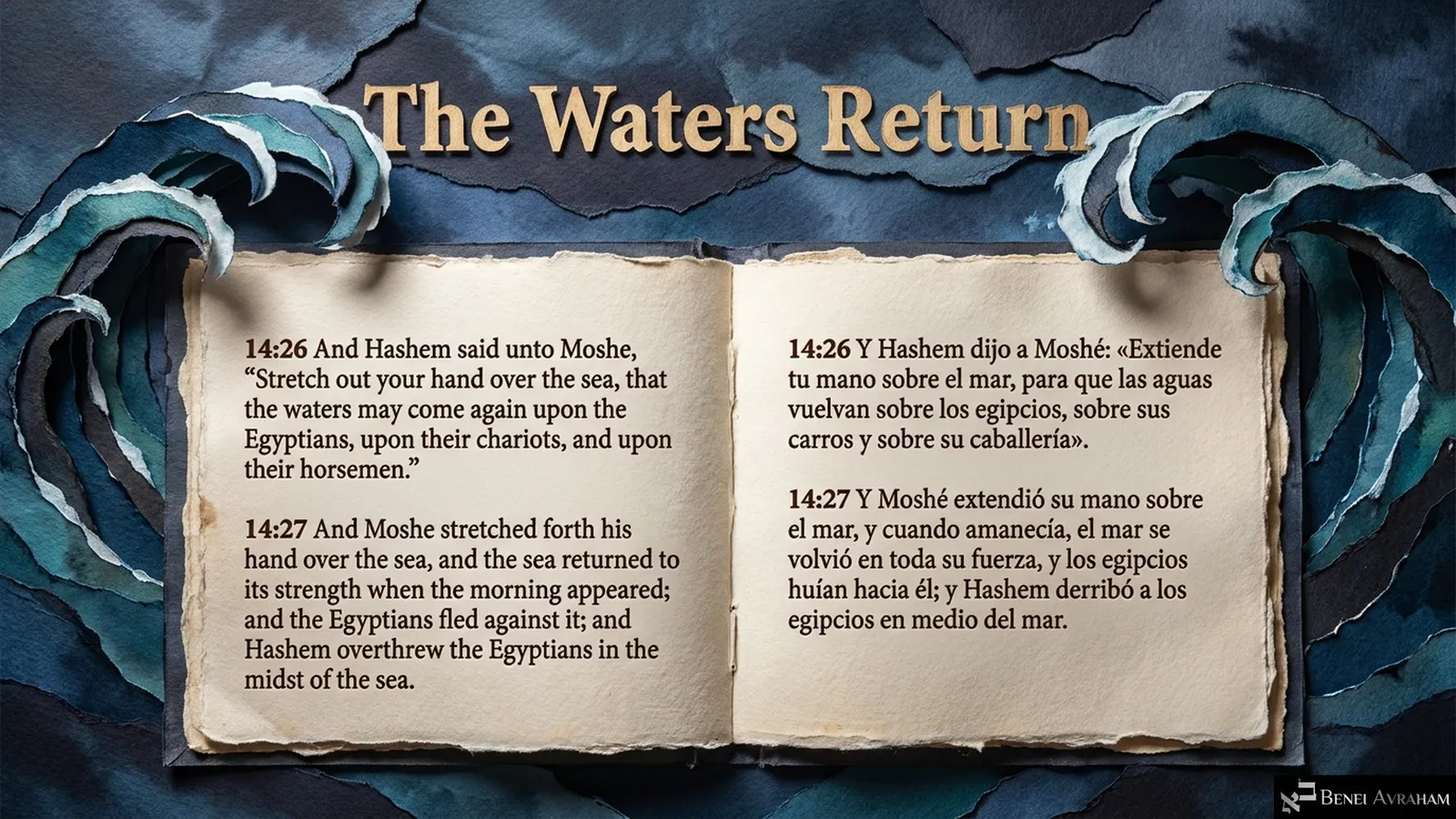
An open book between crashing paper waves, “The Waters Return”: Moshe stretched forth his hand over the sea, and the sea returned to its strength (Exodus 14:26–27).
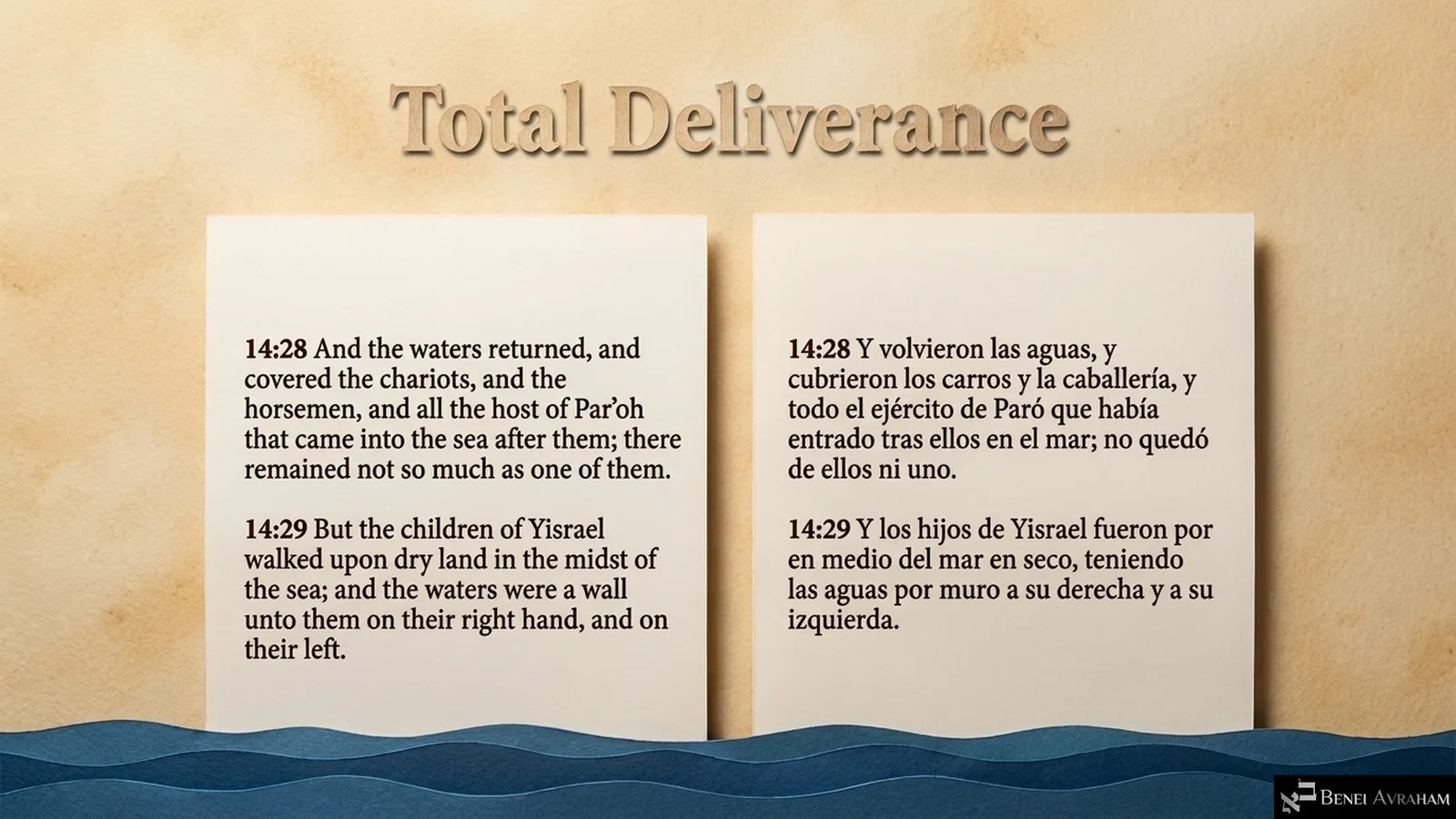
Two paper pages over blue waves, “Total Deliverance”: there remained not so much as one of them (Exodus 14:28–29).
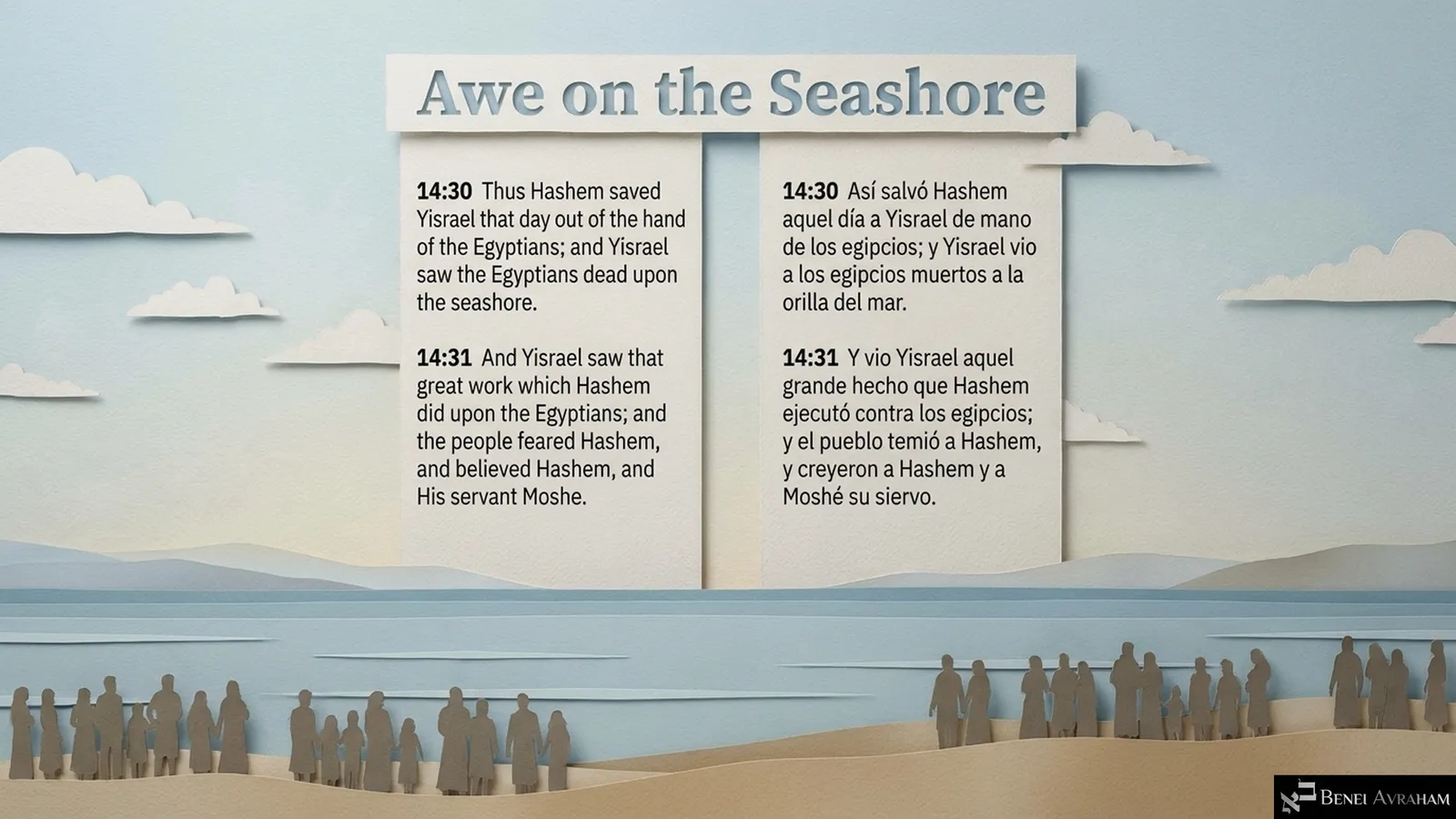
Paper figures along the shore, “Awe on the Seashore”: Yisrael saw the Egyptians dead upon the seashore, and believed Hashem (Exodus 14:30–31).
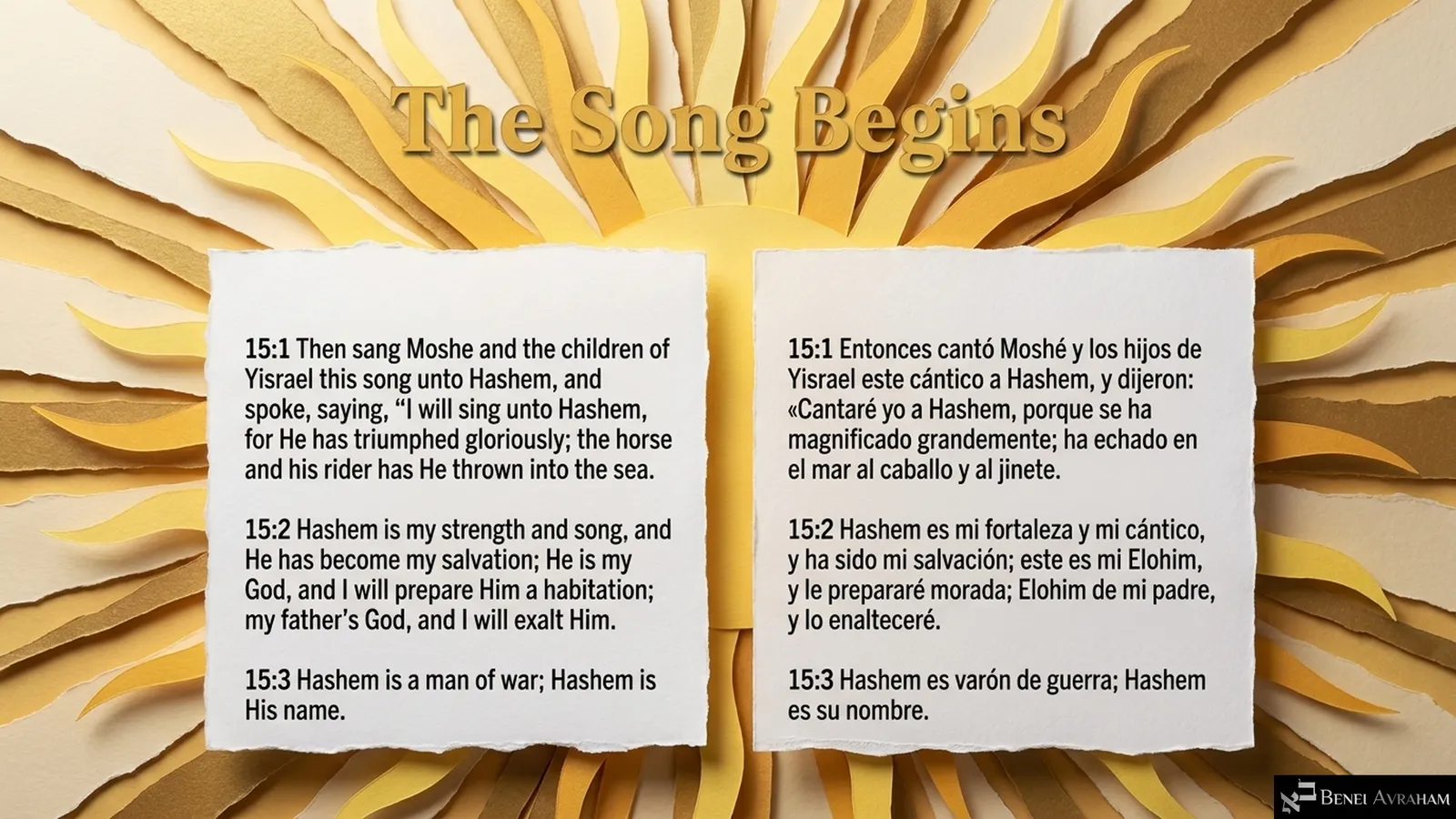
Golden paper sun rays, “The Song Begins”: “I will sing unto Hashem, for He has triumphed gloriously” (Exodus 15:1–3).
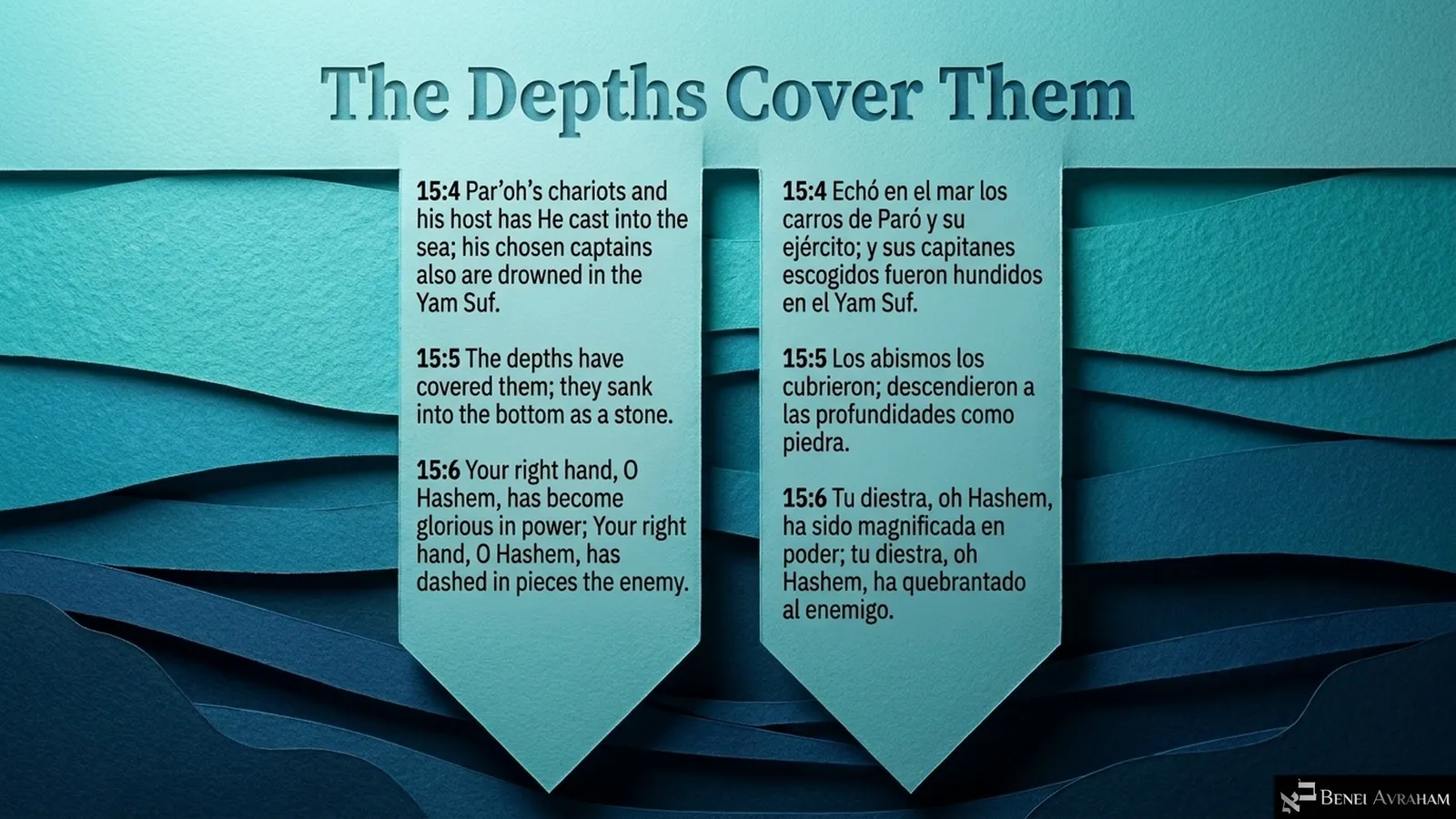
Paper banners in teal layered depths, “The Depths Cover Them”: Par’oh’s chariots and his host has He cast into the sea (Exodus 15:4–6).
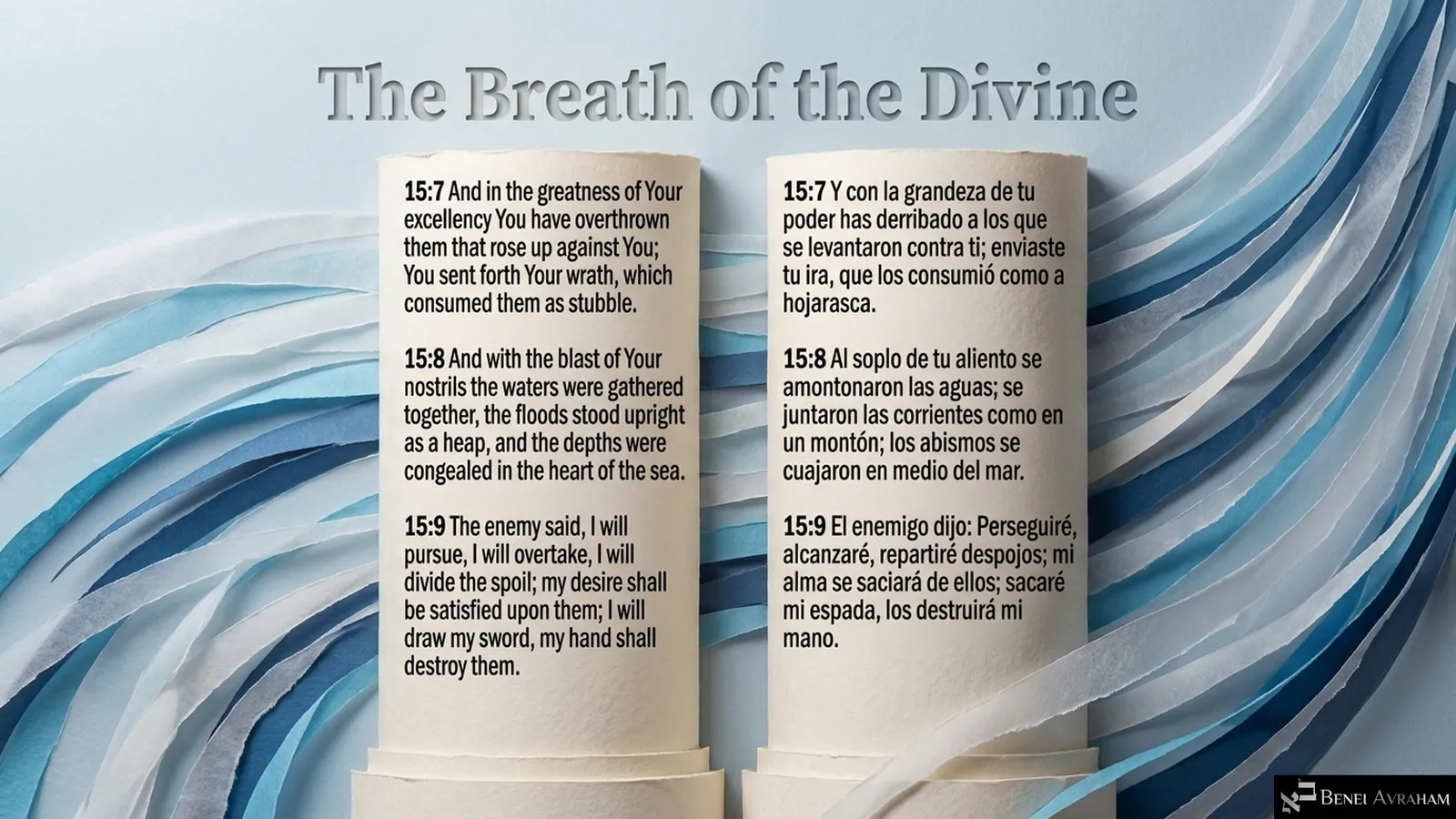
Paper pillars in sweeping blue ribbons, “The Breath of the Divine”: with the blast of Your nostrils the waters were gathered together (Exodus 15:7–9).
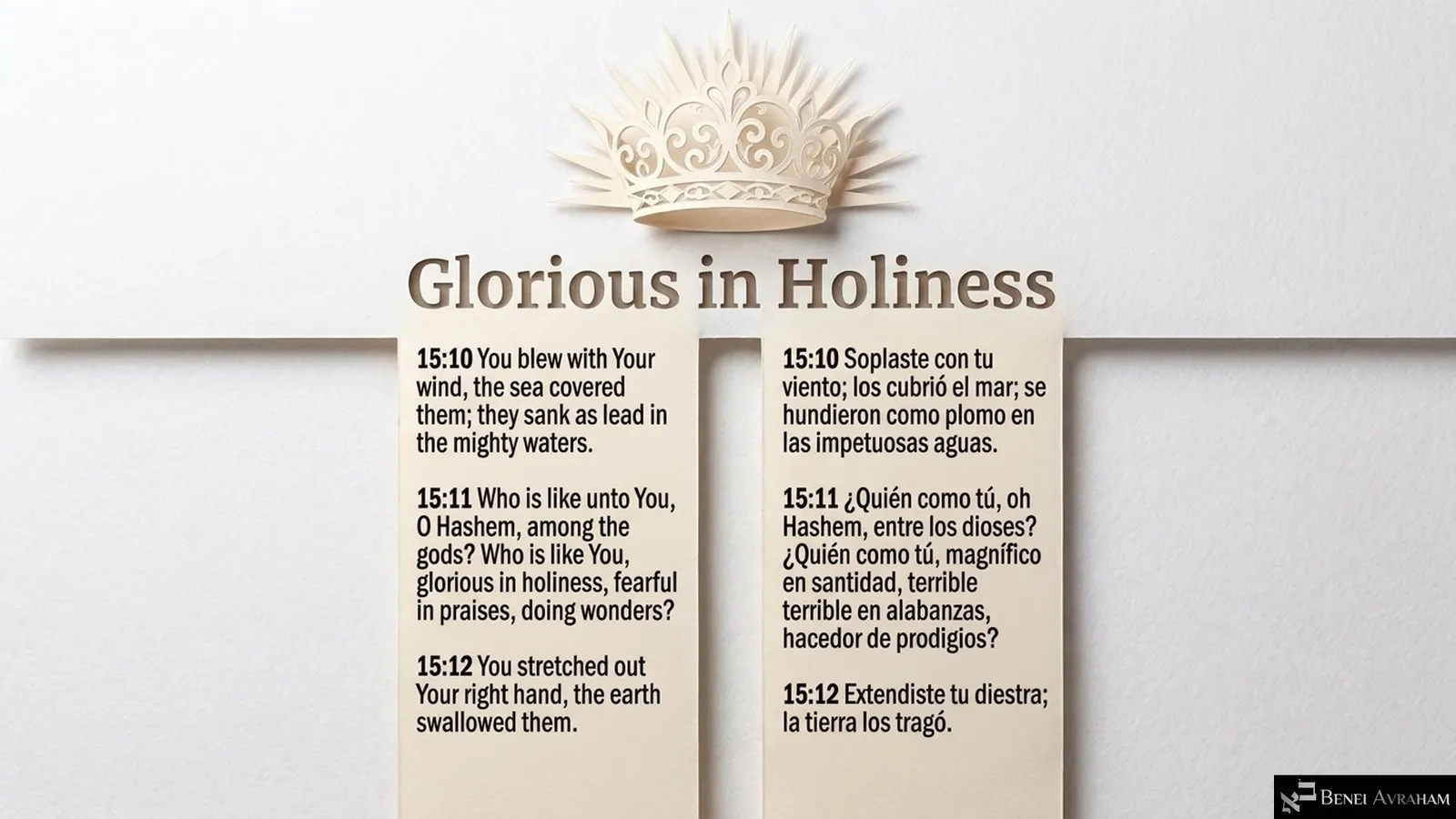
A white paper crown, “Glorious in Holiness”: “Who is like unto You, O Hashem, among the gods?” (Exodus 15:10–12).
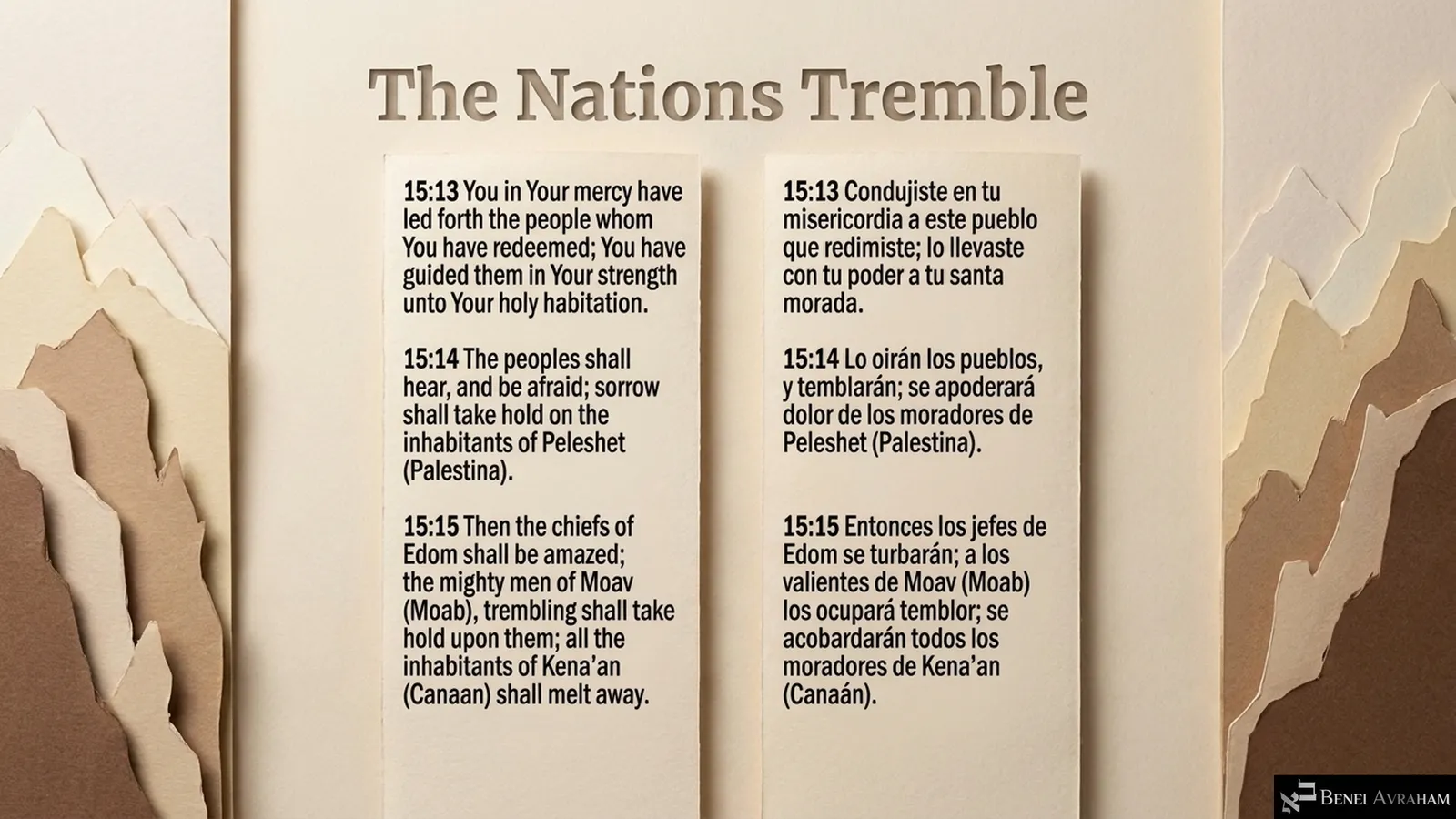
Paper scrolls among tan mountains, “The Nations Tremble”: the peoples have heard, and are afraid (Exodus 15:13–15).
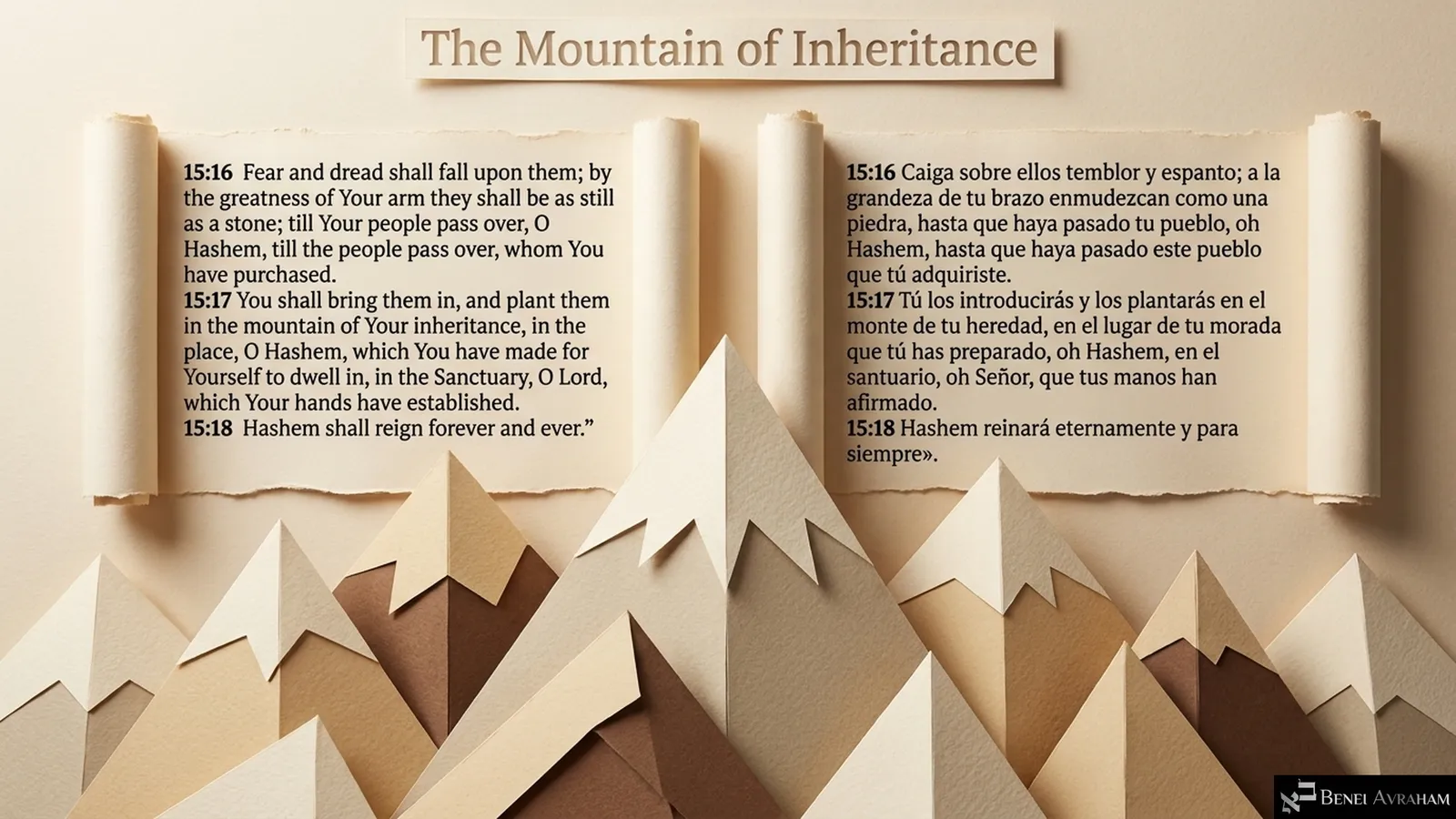
Paper peaks below a scroll, “The Mountain of Inheritance”: “You shall bring them in, and plant them in the mountain of Your inheritance… Hashem shall reign forever and ever” (Exodus 15:16–18).
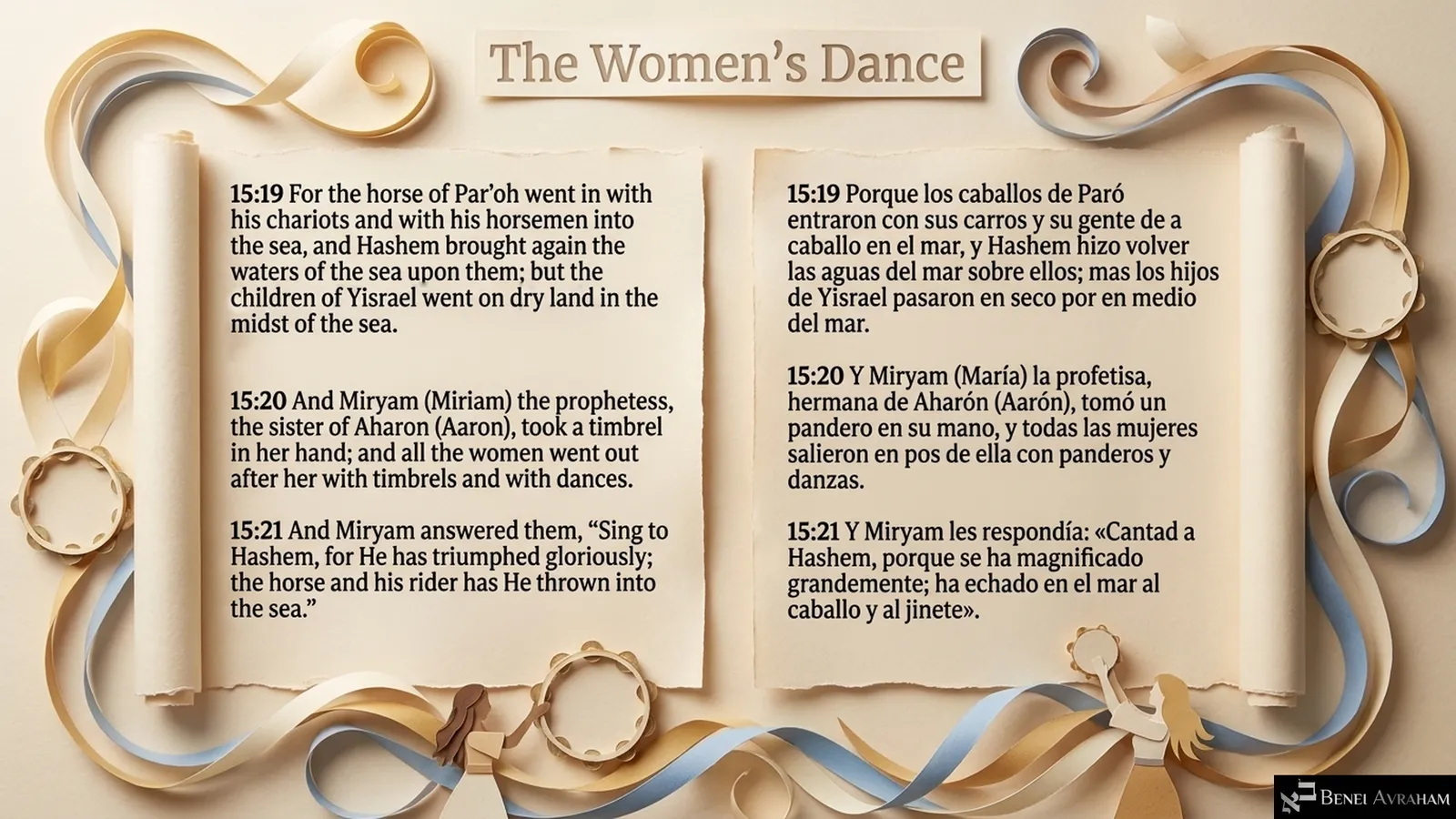
Ribbons and timbrels around the scroll, “The Women’s Dance”: Miryam the prophetess took a timbrel in her hand (Exodus 15:19–21).
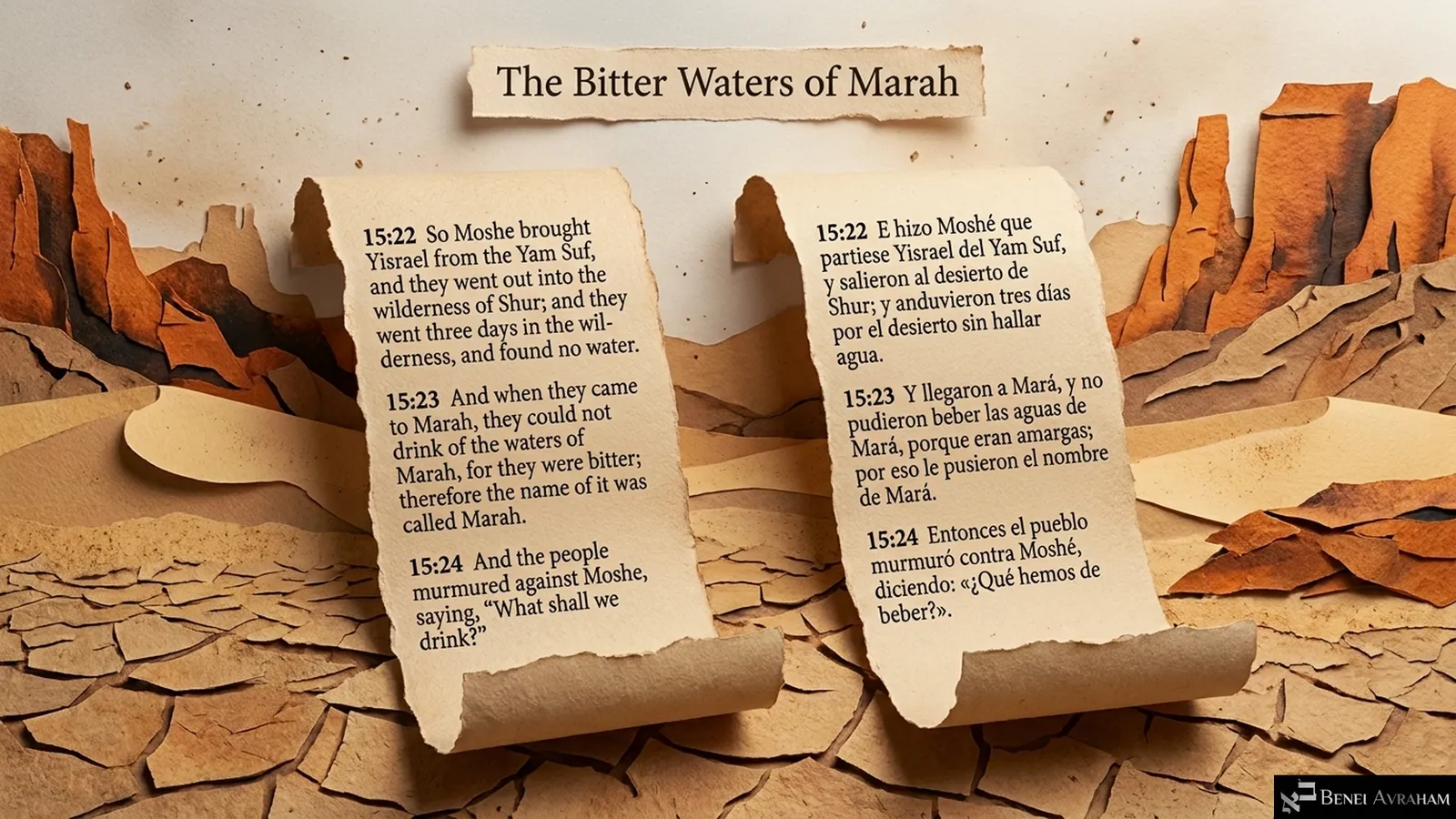
Curling scrolls over cracked earth, “The Bitter Waters of Marah”: they could not drink of the waters of Marah, for they were bitter (Exodus 15:22–24).
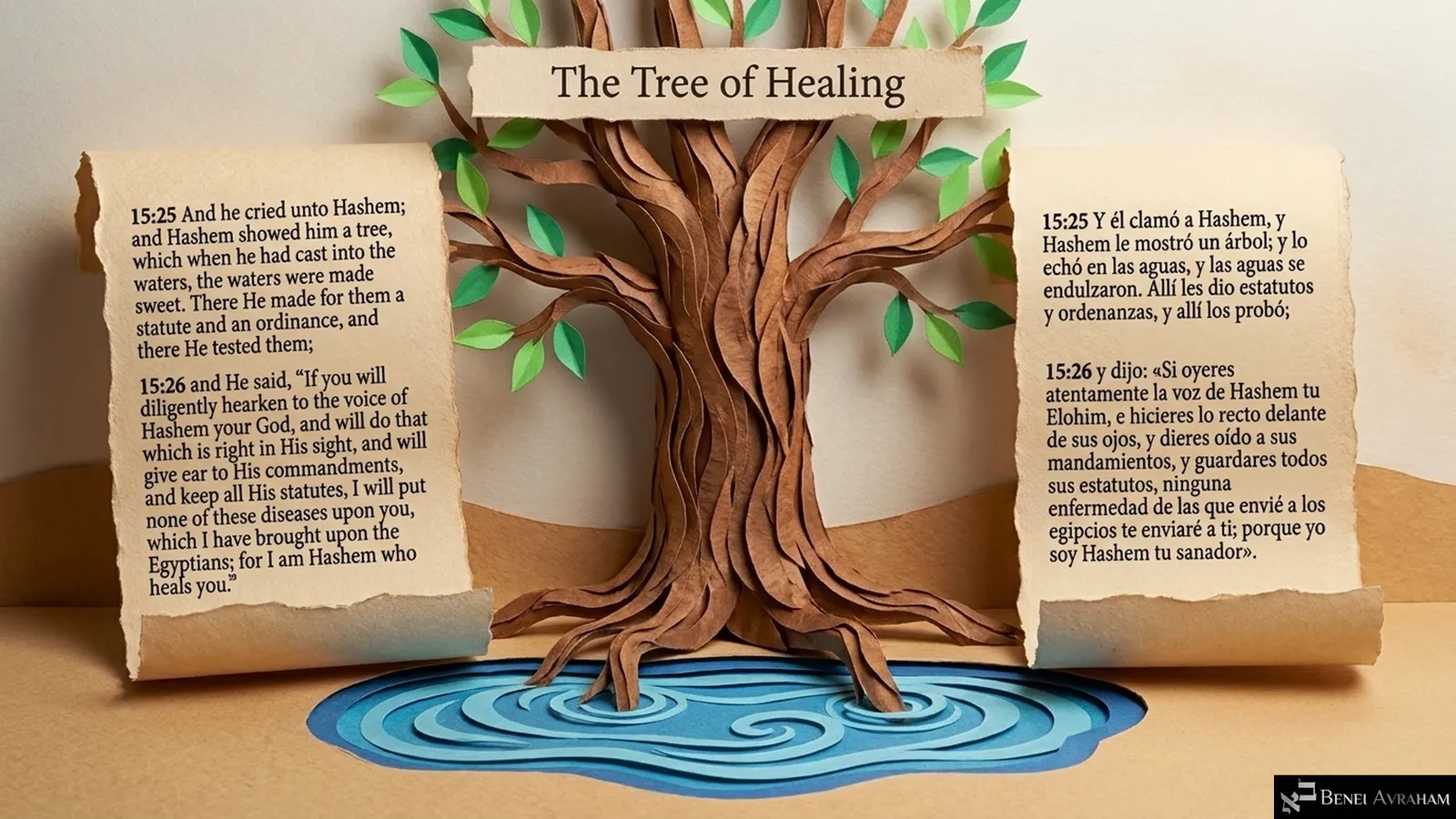
A paper tree over a blue pool, “The Tree of Healing”: “I am Hashem who heals you” (Exodus 15:25–26).
Chamishi · Exodus 15:27–16:10

Fifth Portion
Title card for the fifth portion in a cut-paper canyon: “Parashat Beshalaḥ — The Fifth Portion, Exodus 15:27–16:10”.
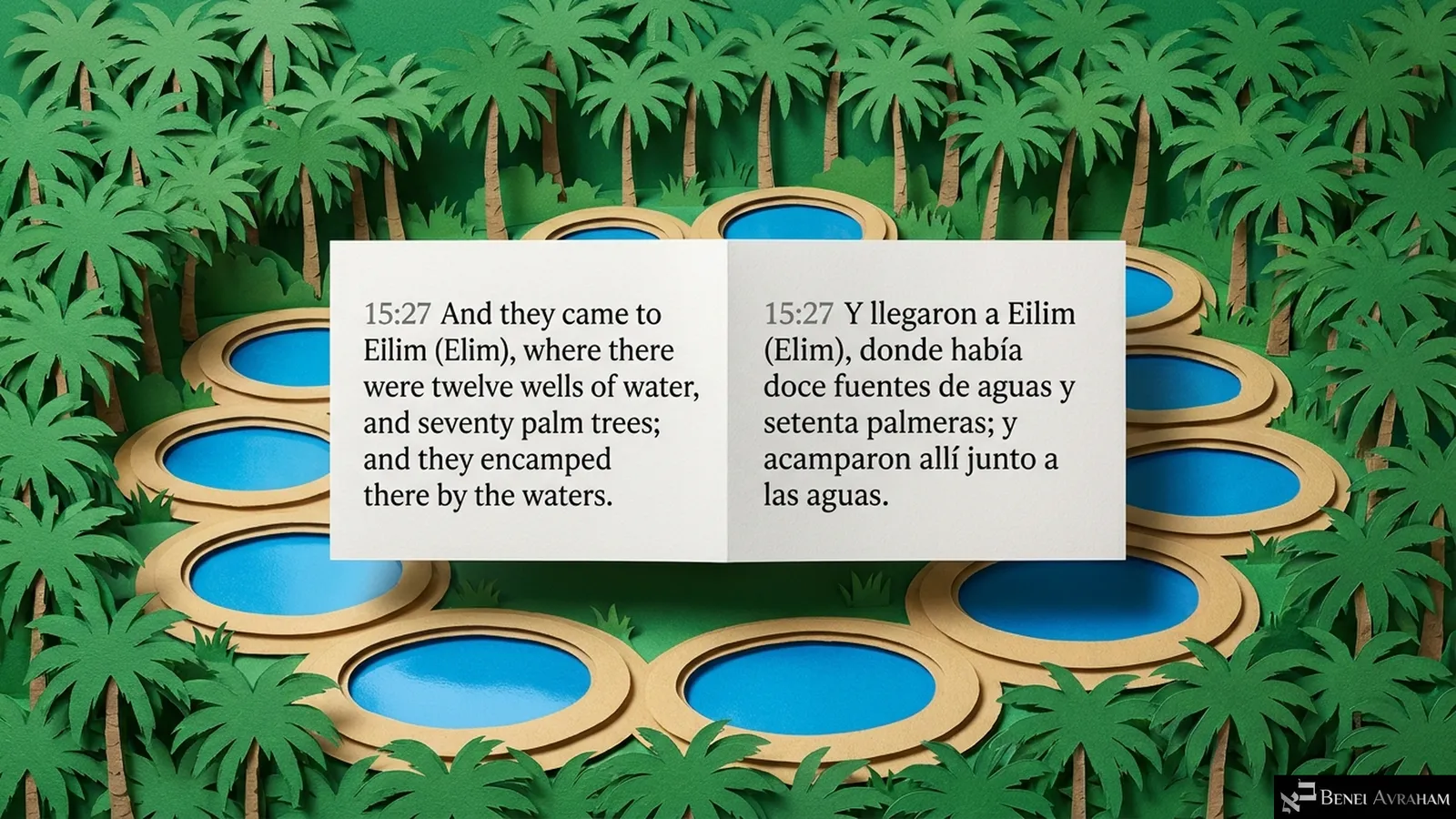
Twelve paper wells among green palms: they came to Eilim, where there were twelve wells of water, and seventy palm trees (Exodus 15:27).
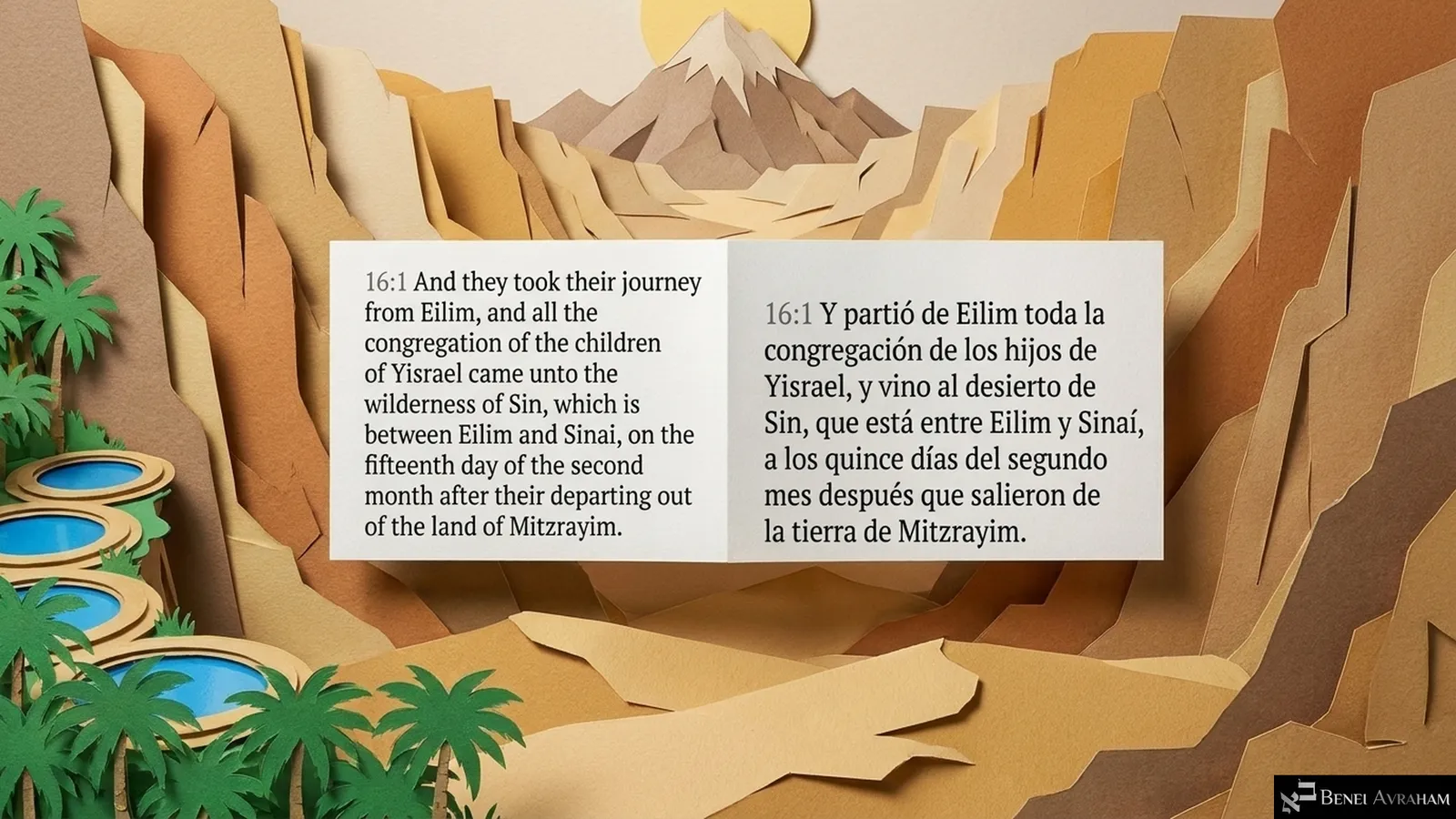
A narrow paper canyon toward the mountain: they came unto the wilderness of Sin, between Eilim and Sinai (Exodus 16:1).
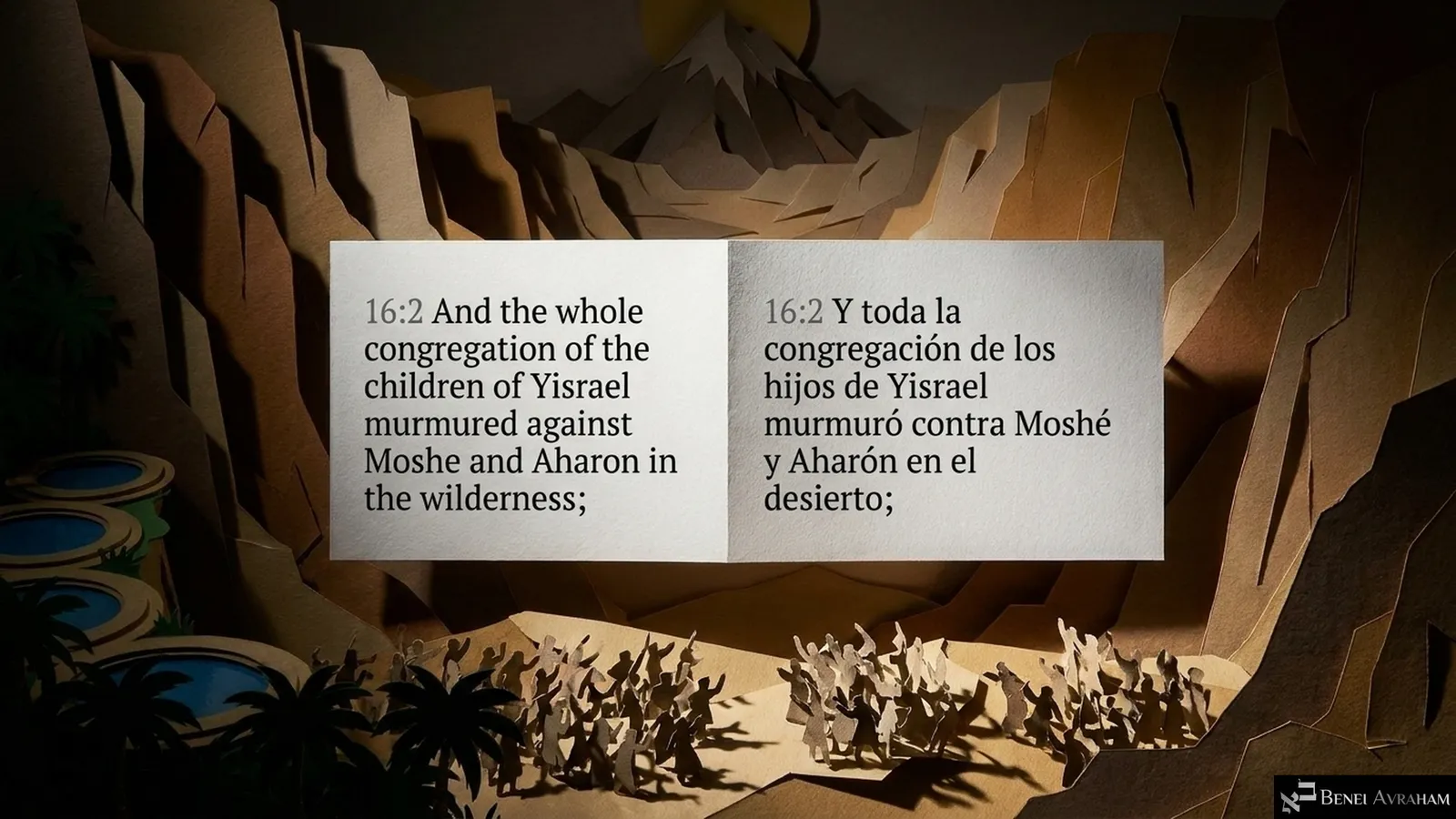
Paper figures crowd beneath the cliffs: the whole congregation murmured against Moshe and Aharon in the wilderness (Exodus 16:2).
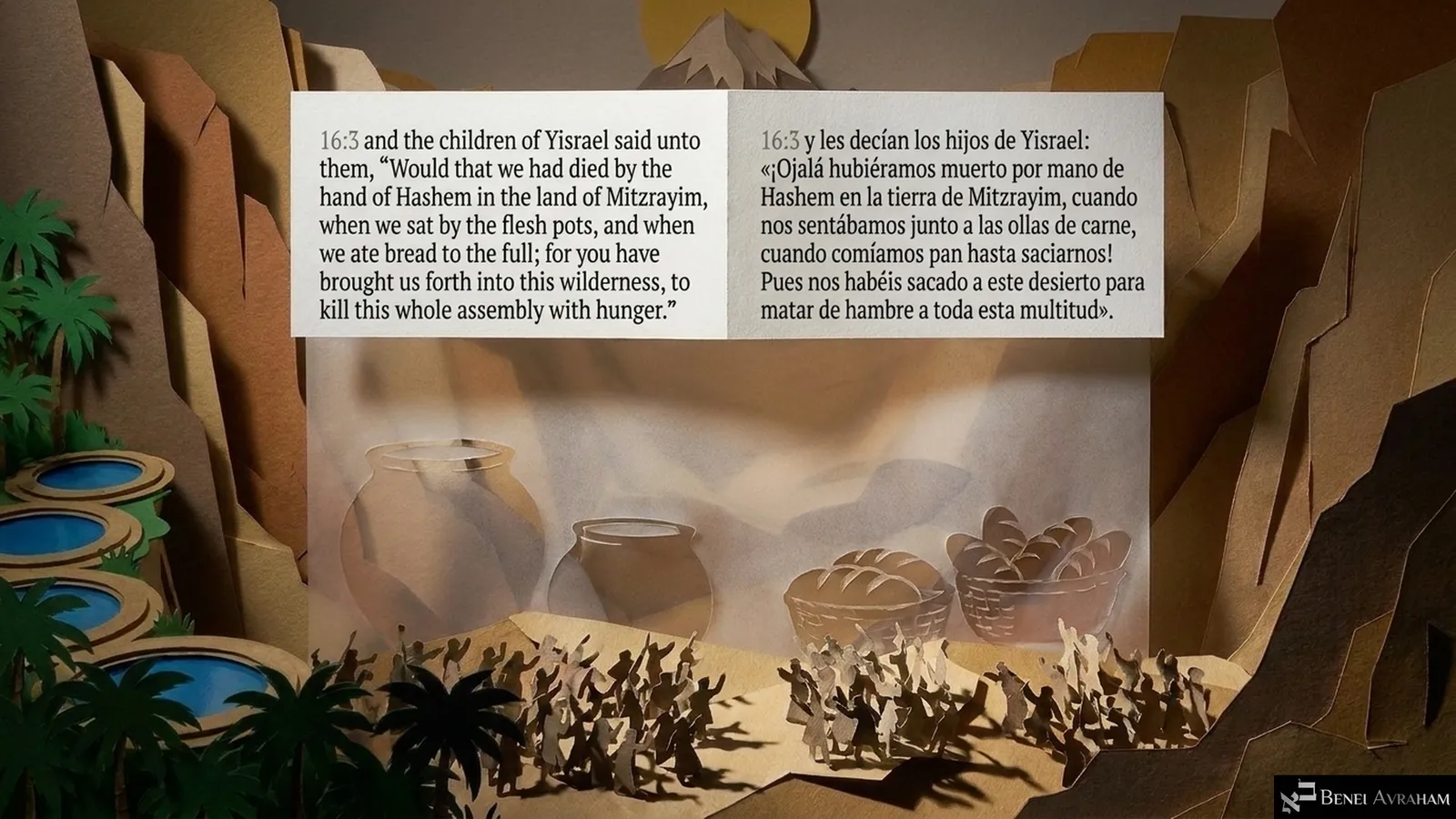
Paper pots and loaves fading in the mist: “Would that we had died… when we sat by the flesh pots, and when we ate bread to the full” (Exodus 16:3).
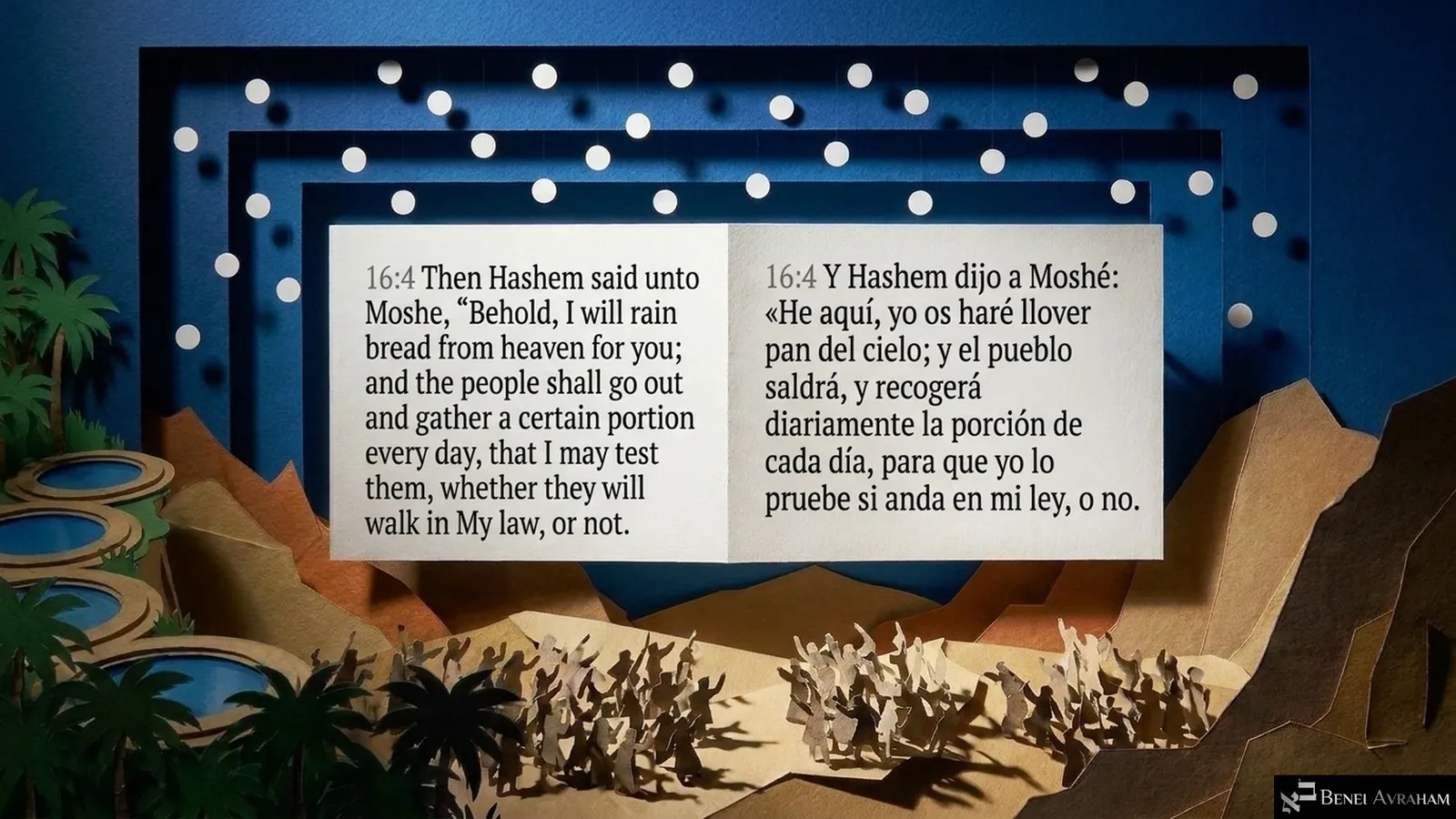
White paper dots fall from a night sky: “Behold, I will rain bread from heaven for you” (Exodus 16:4).
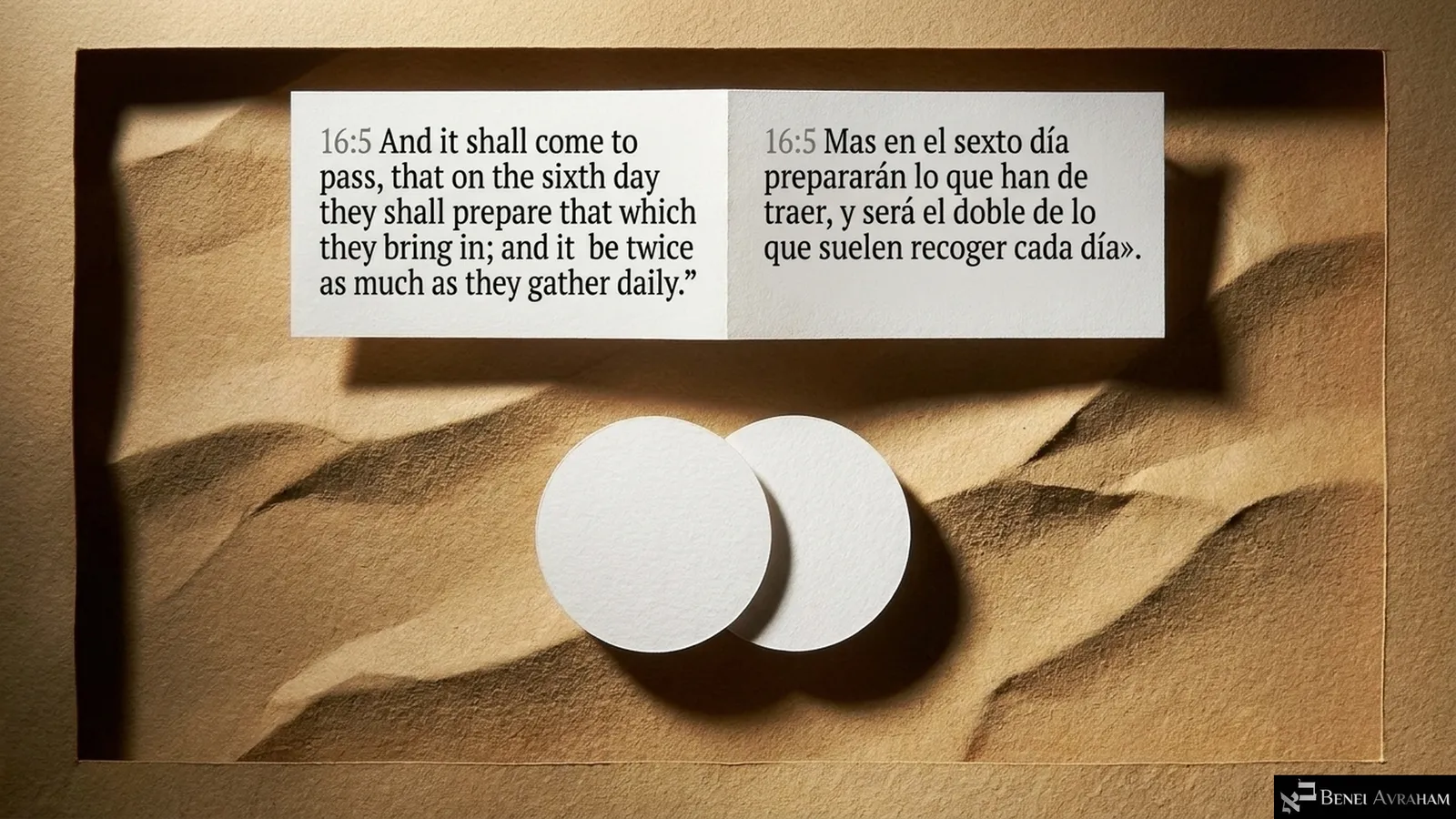
Two white paper wafers on the sand: on the sixth day it shall be twice as much as they gather daily (Exodus 16:5).
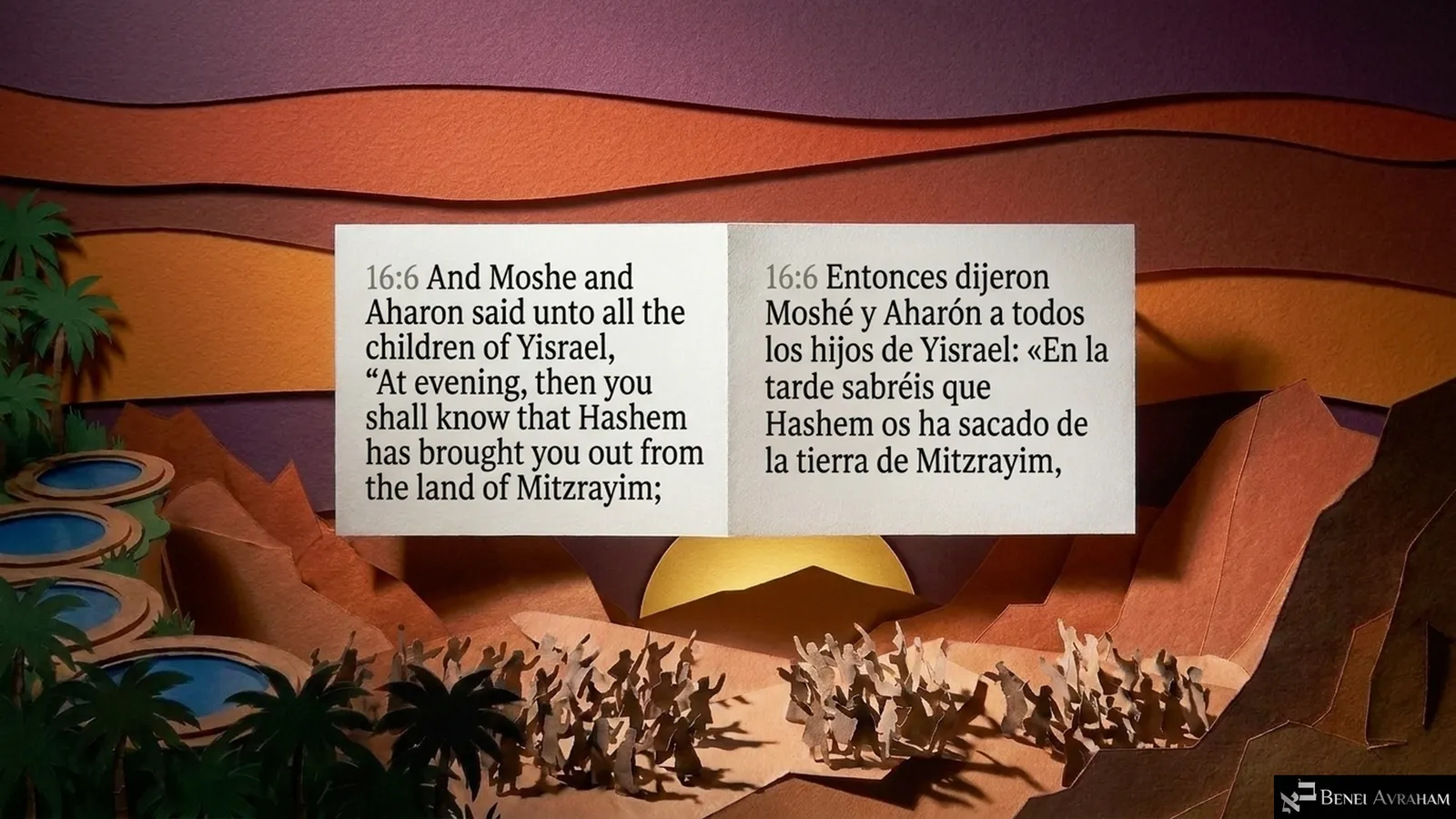
A setting paper sun over the camp: “At evening, then you shall know that Hashem has brought you out from the land of Mitzrayim” (Exodus 16:6).
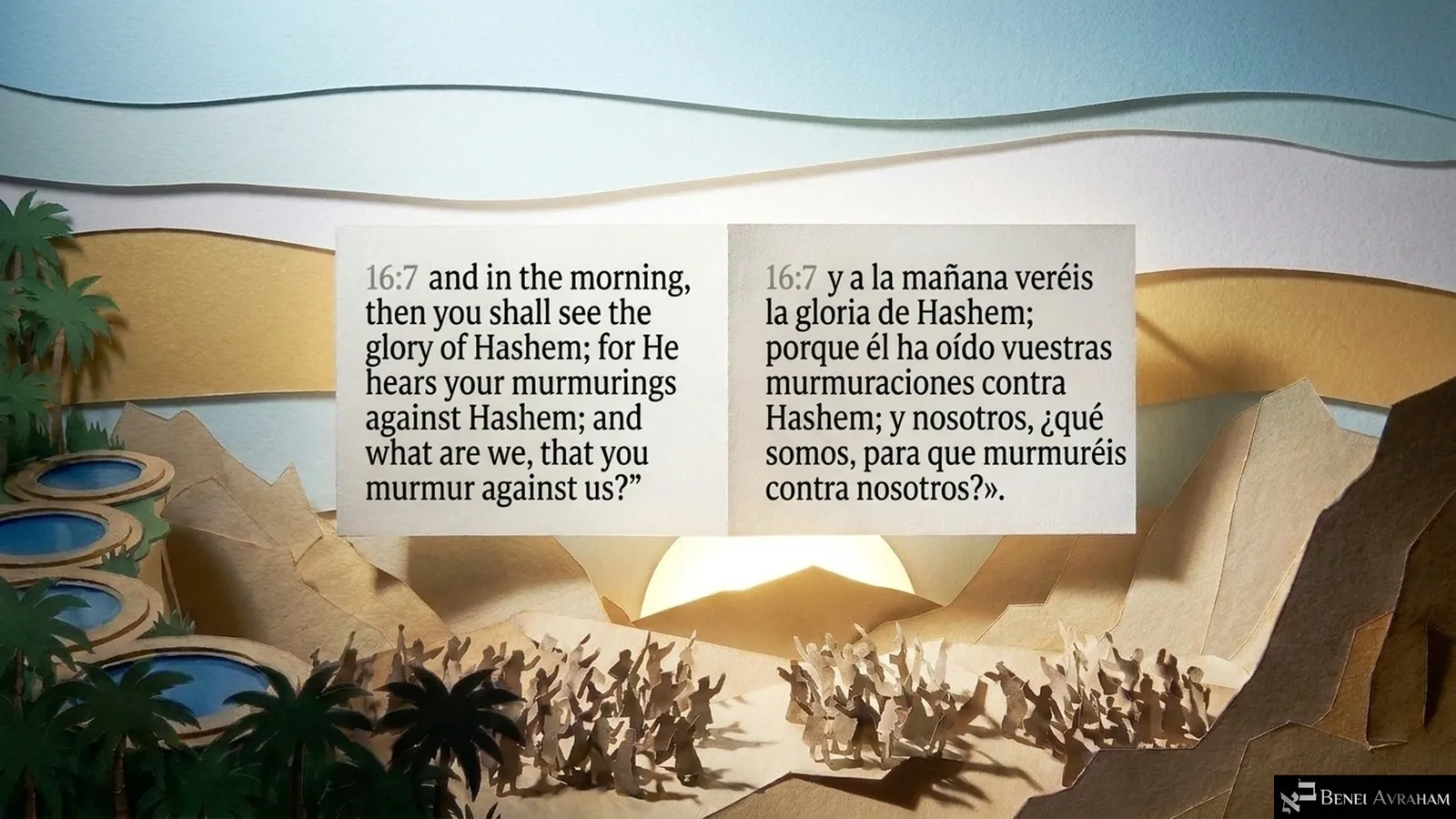
A rising paper sun: “In the morning, then you shall see the glory of Hashem” (Exodus 16:7).
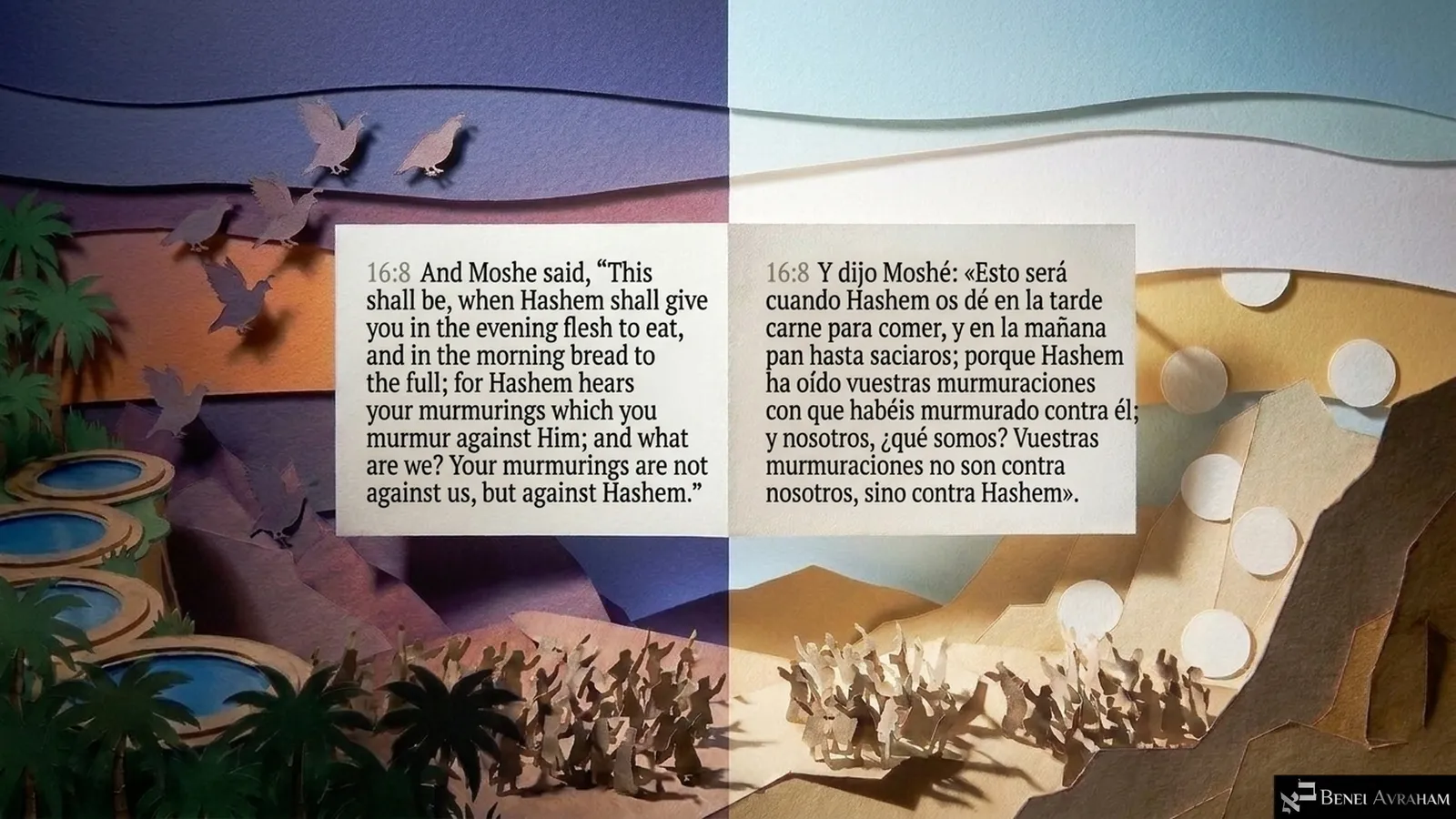
Quails above and manna below: “Your murmurings are not against us, but against Hashem” (Exodus 16:8).
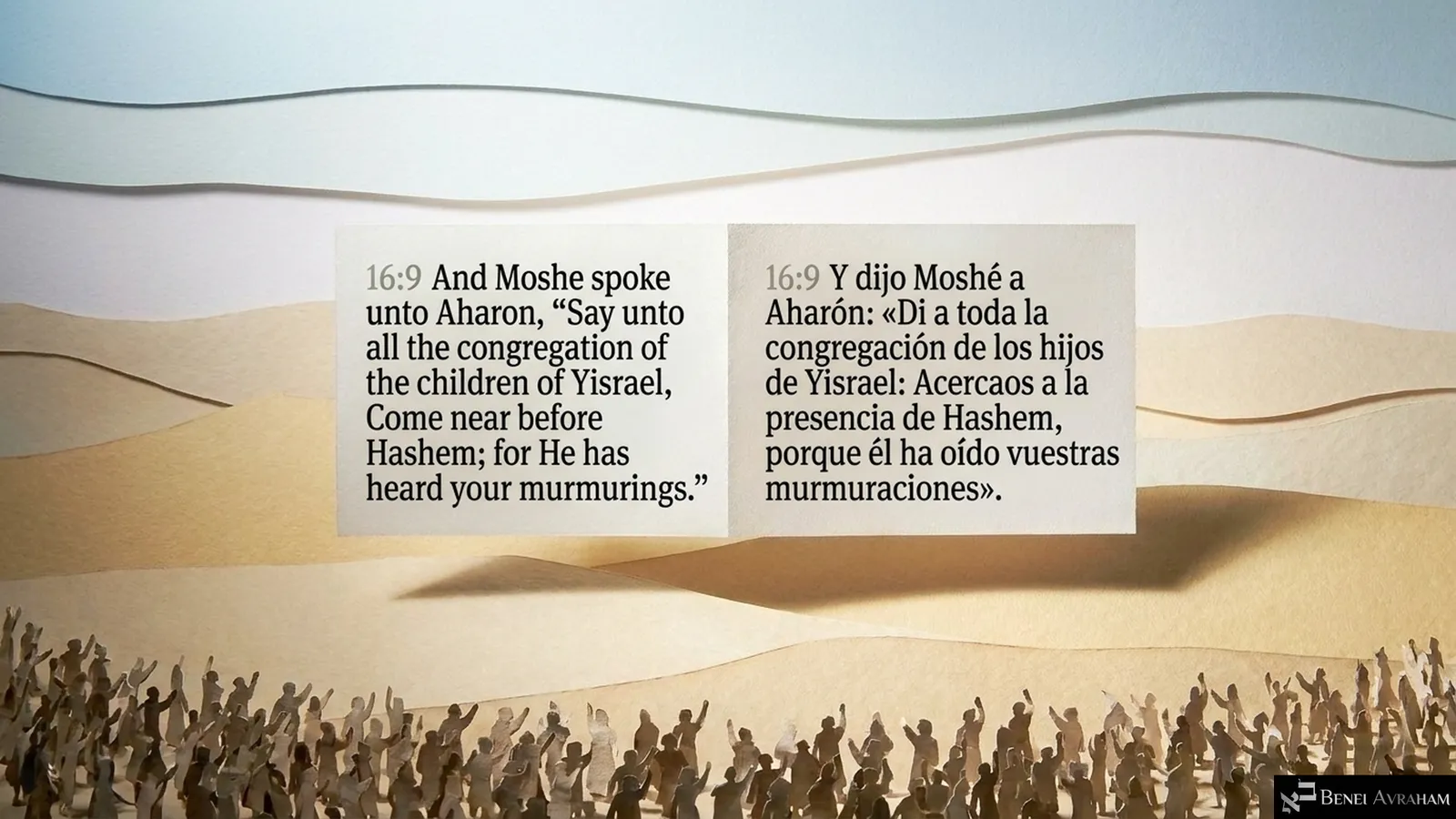
The paper crowd before the dunes: “Come near before Hashem; for He has heard your murmurings” (Exodus 16:9).
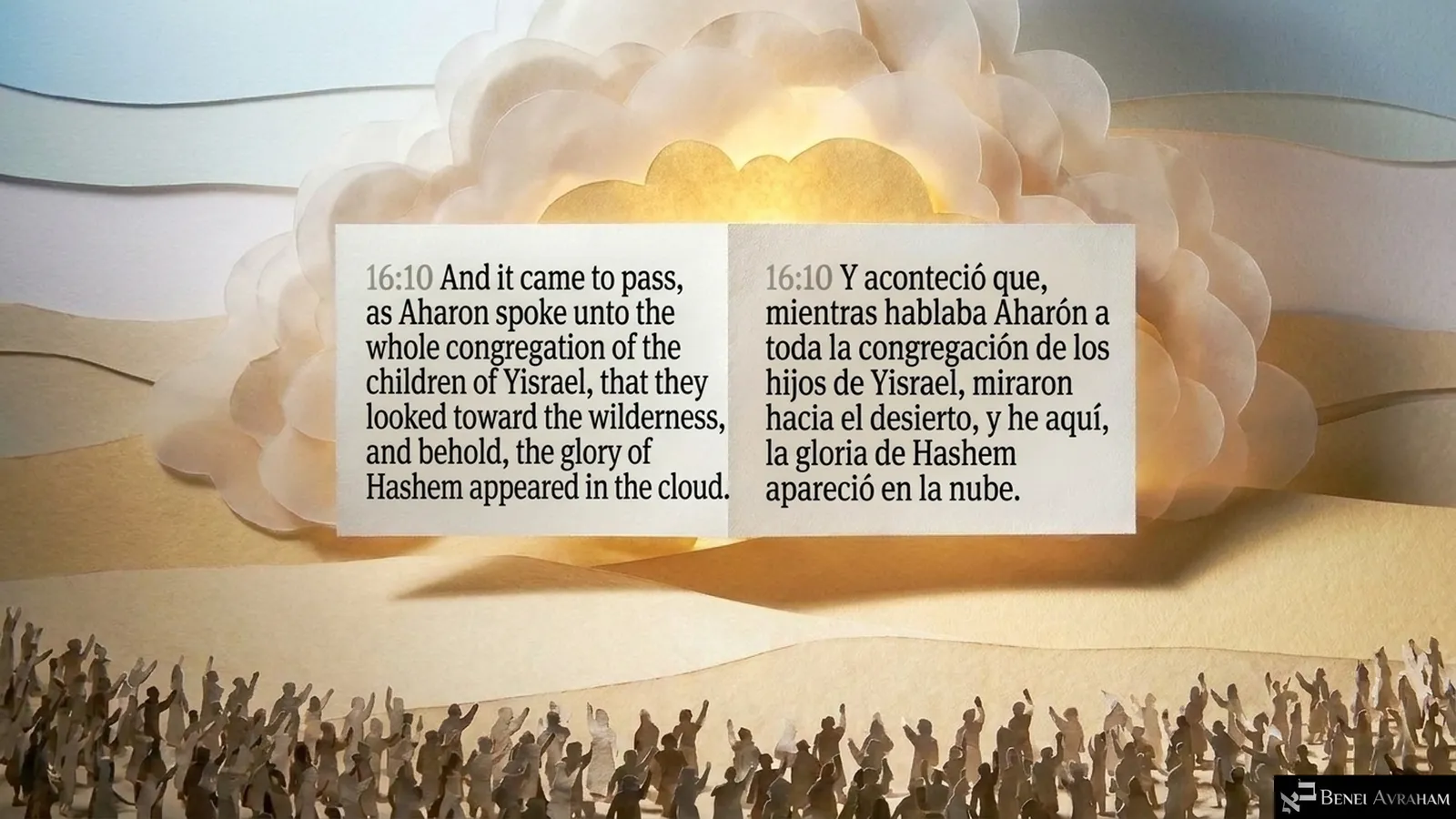
A glowing paper cloud over the wilderness: the glory of Hashem appeared in the cloud (Exodus 16:10).
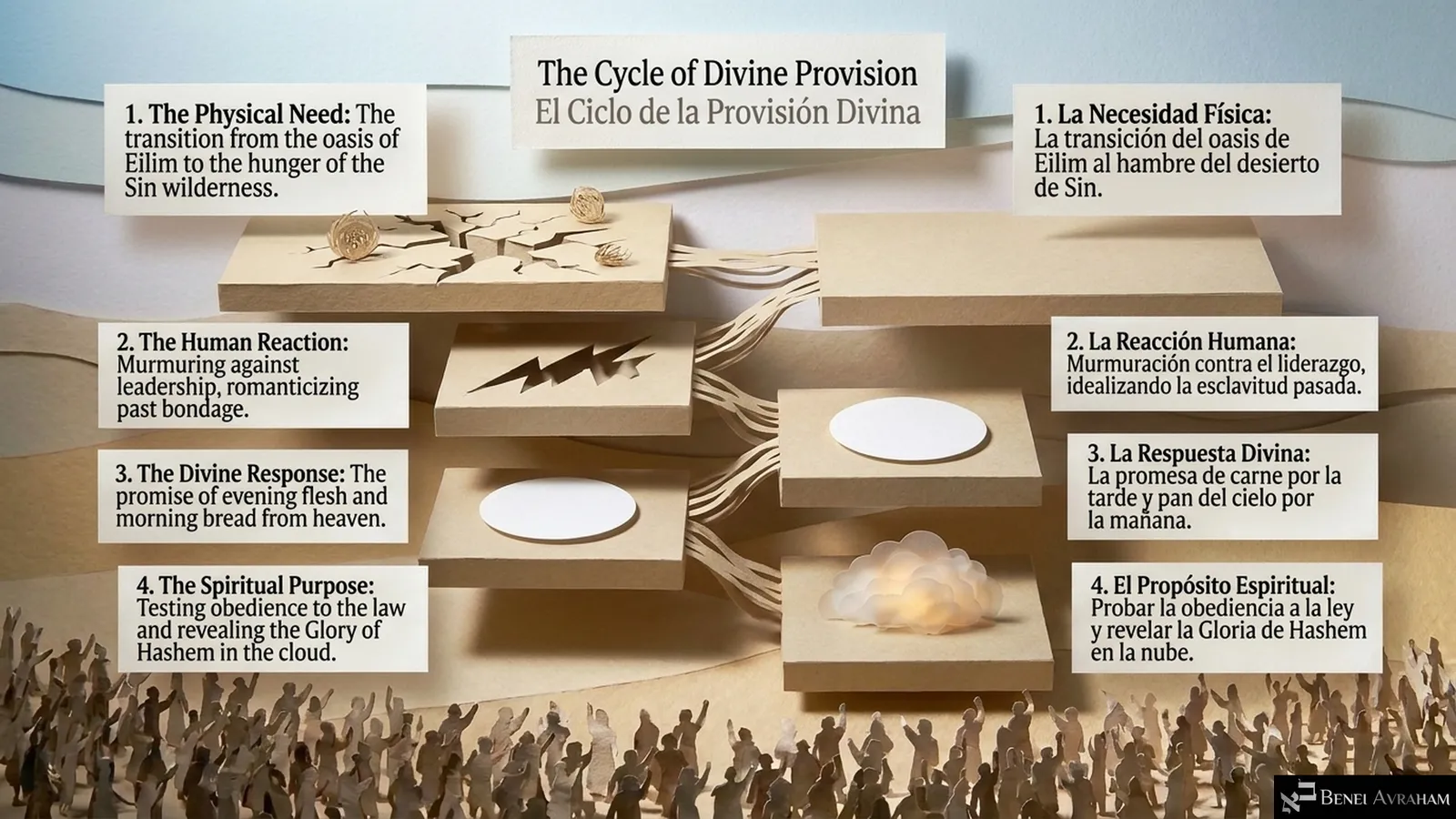
A paper chart of the fifth portion: the physical need, the human reaction, the divine response and the spiritual purpose (Exodus 15:27–16:10).
Shishi · Exodus 16:11–36

Sixth Portion
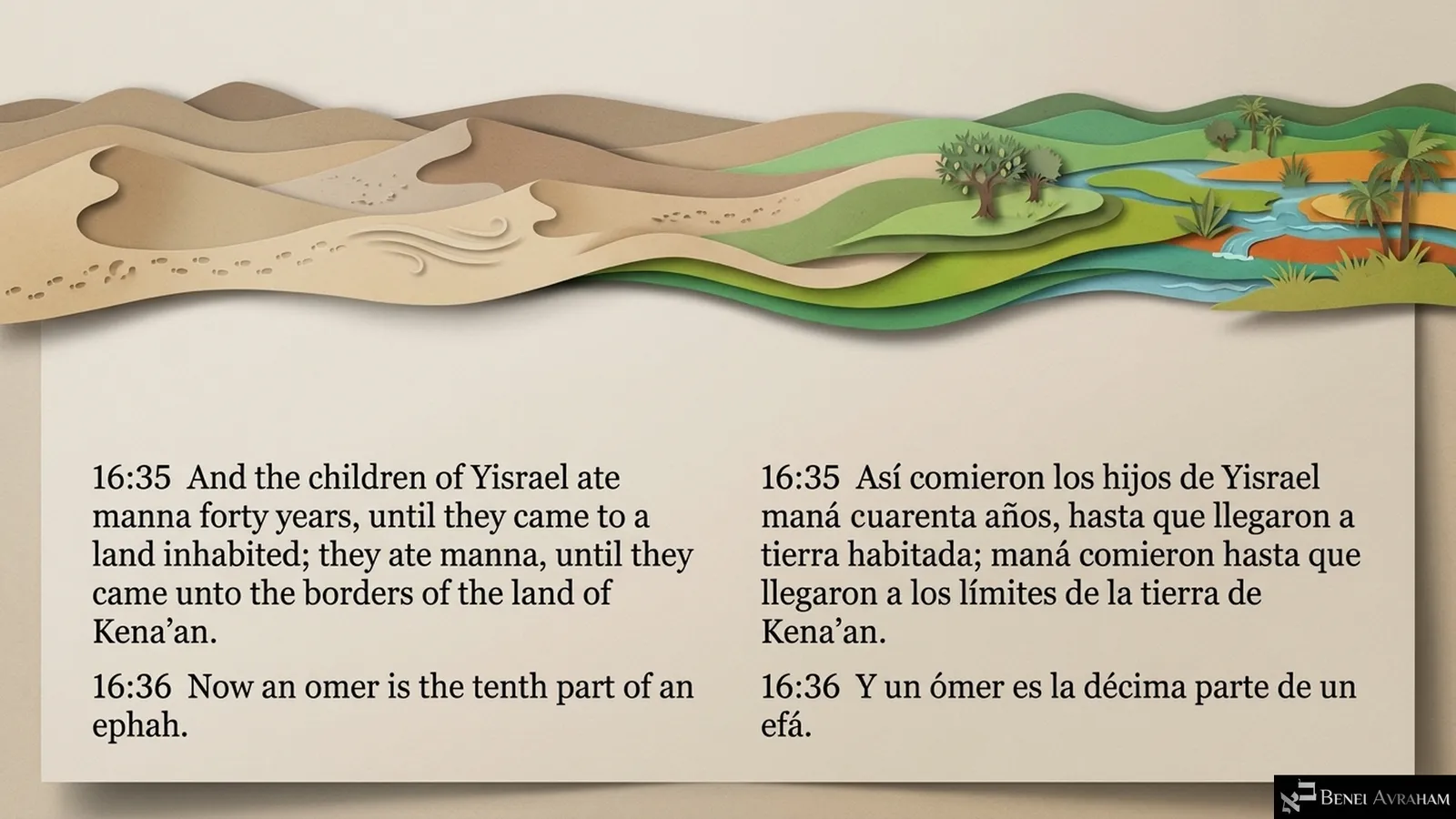
Title card for the sixth portion over paper dunes at night: “Parashat Beshalaḥ — 6th portion (Shishi), Exodus 16:11–36”.
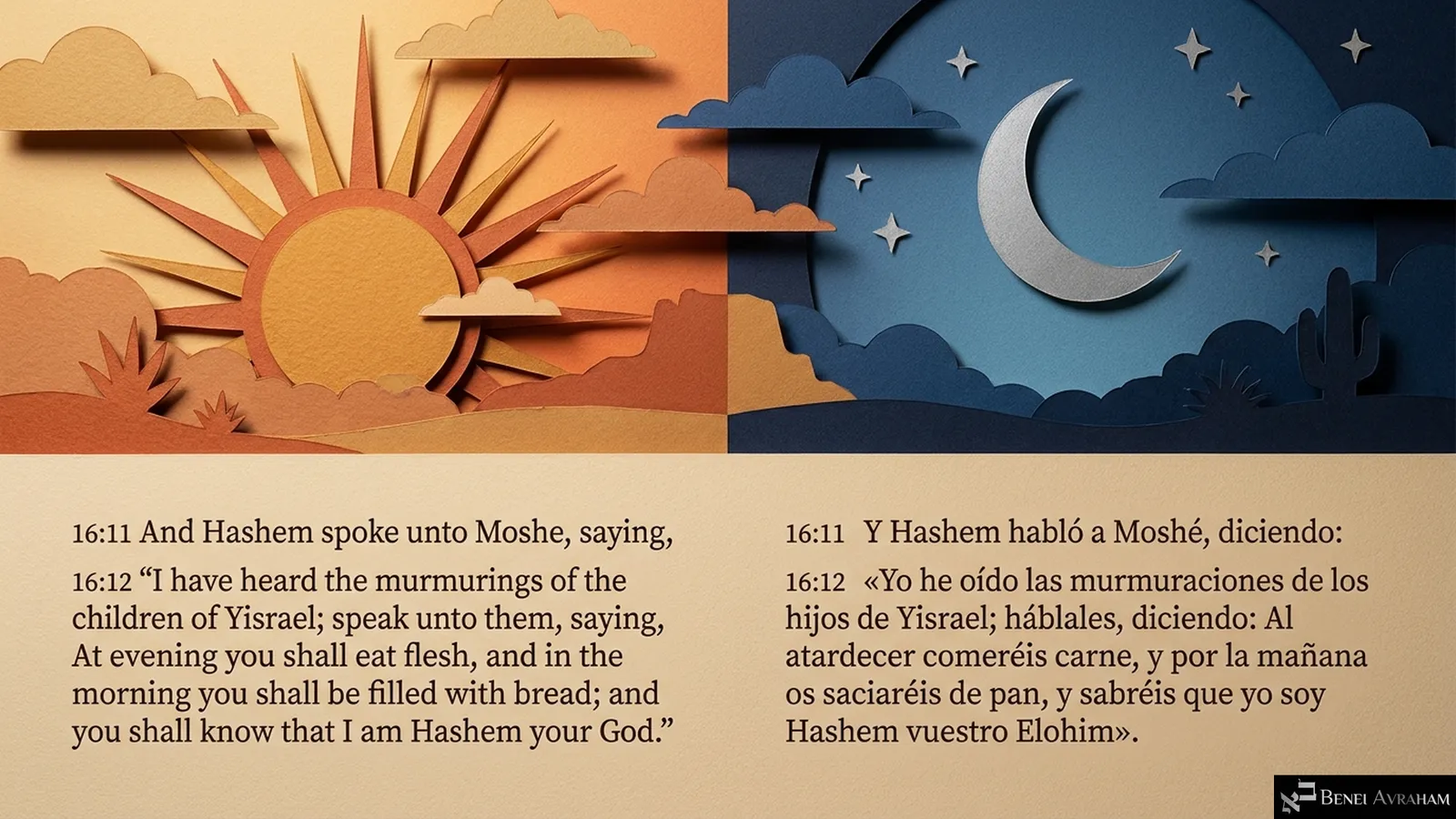
A paper sun and a crescent moon: “At evening you shall eat flesh, and in the morning you shall be filled with bread” (Exodus 16:11–12).
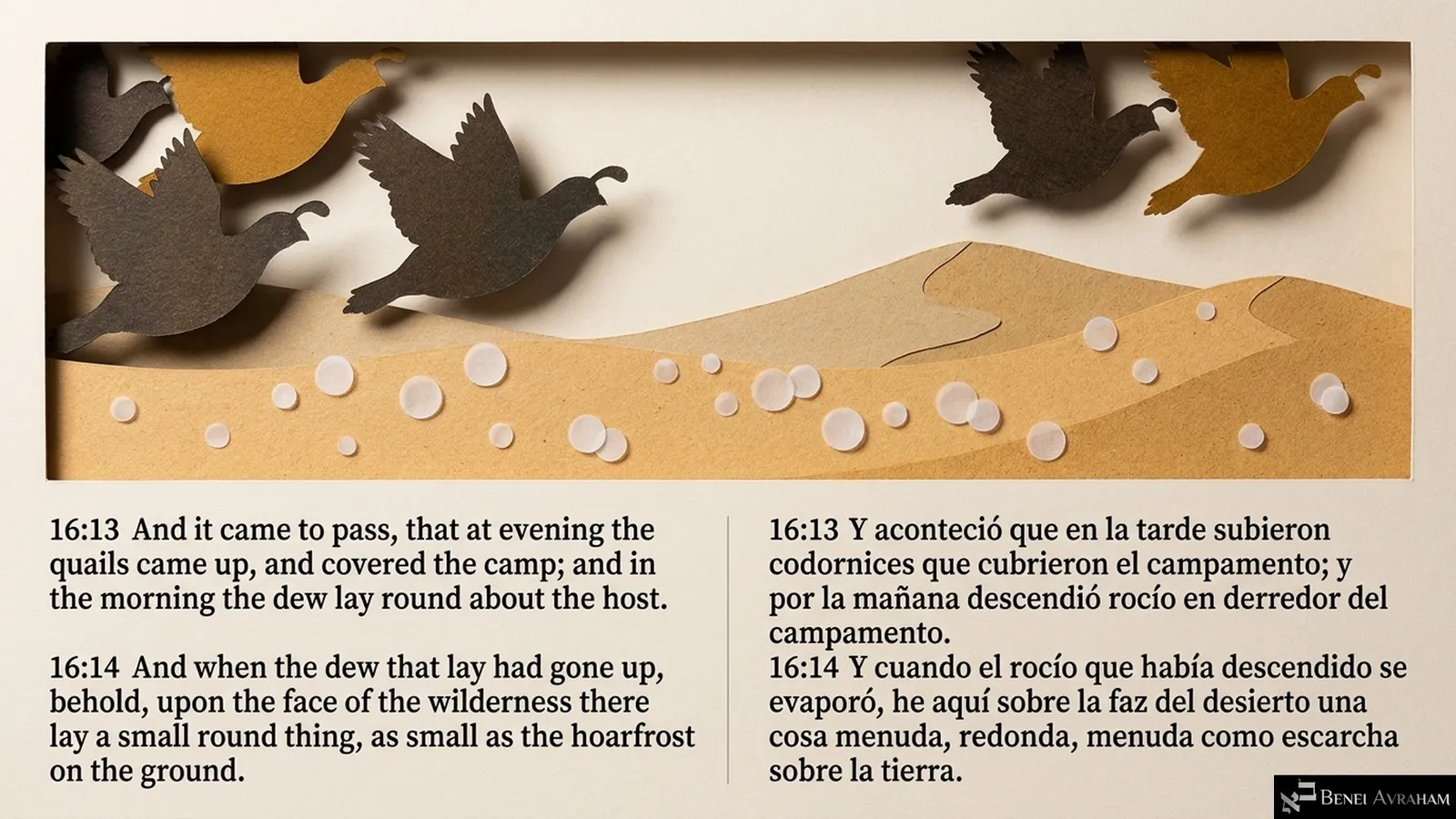
Paper quails fly over the camp and dew lies on the sand: a small round thing, as small as the hoarfrost on the ground (Exodus 16:13–14).
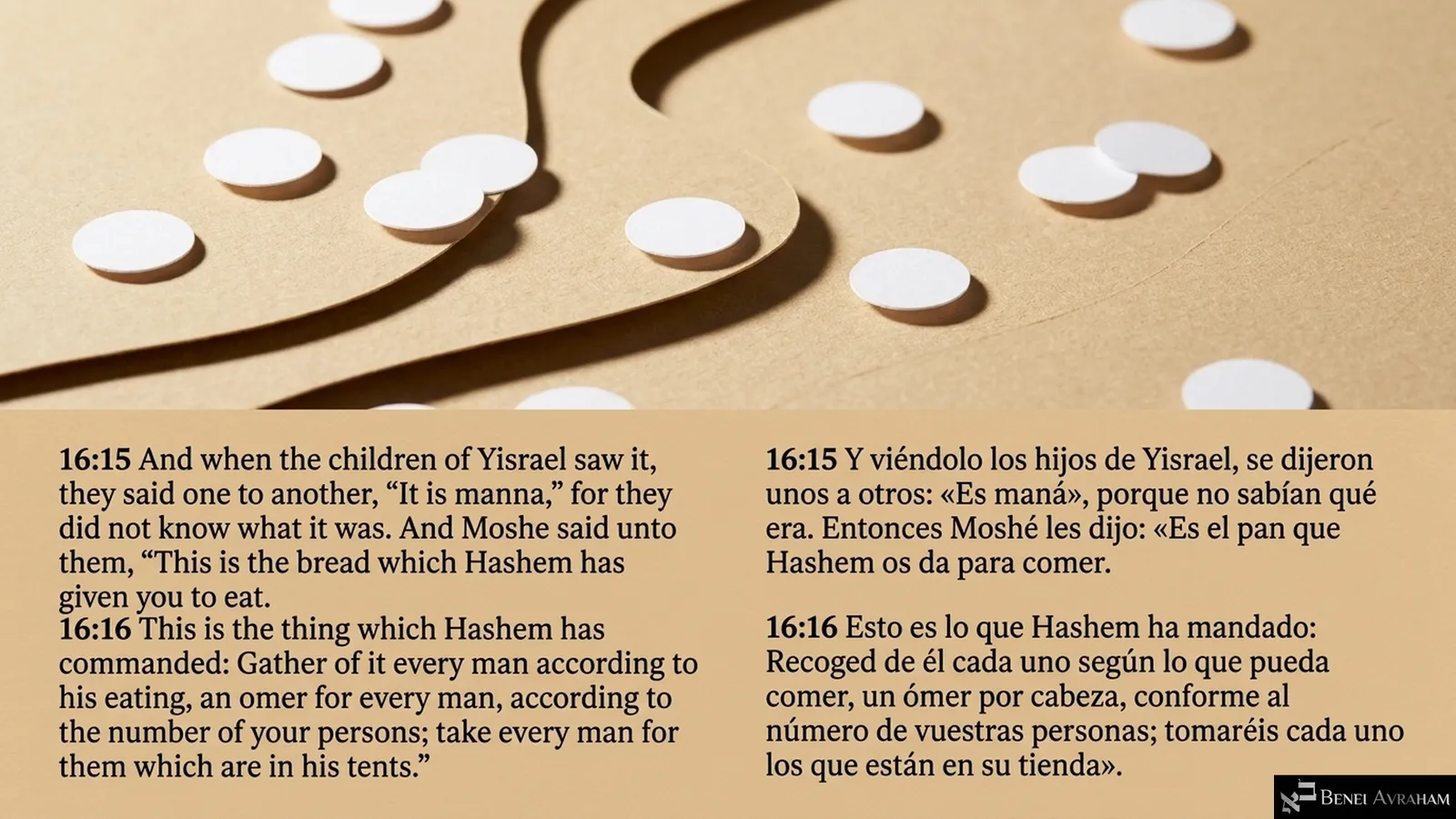
White paper wafers scattered on the sand: “It is manna… This is the bread which Hashem has given you to eat” (Exodus 16:15–16).
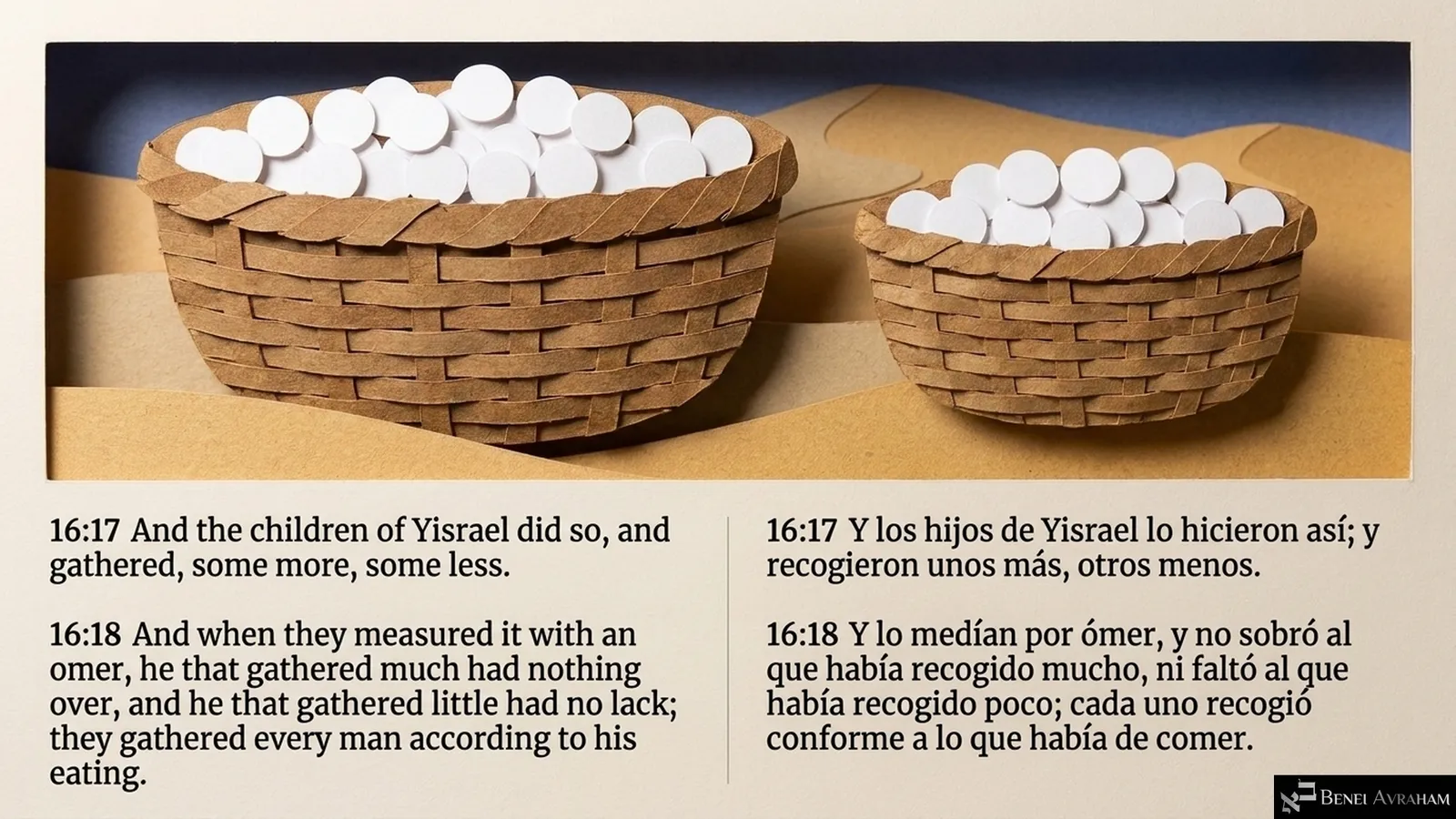
Two woven paper baskets of manna: he that gathered much had nothing over, and he that gathered little had no lack (Exodus 16:17–18).
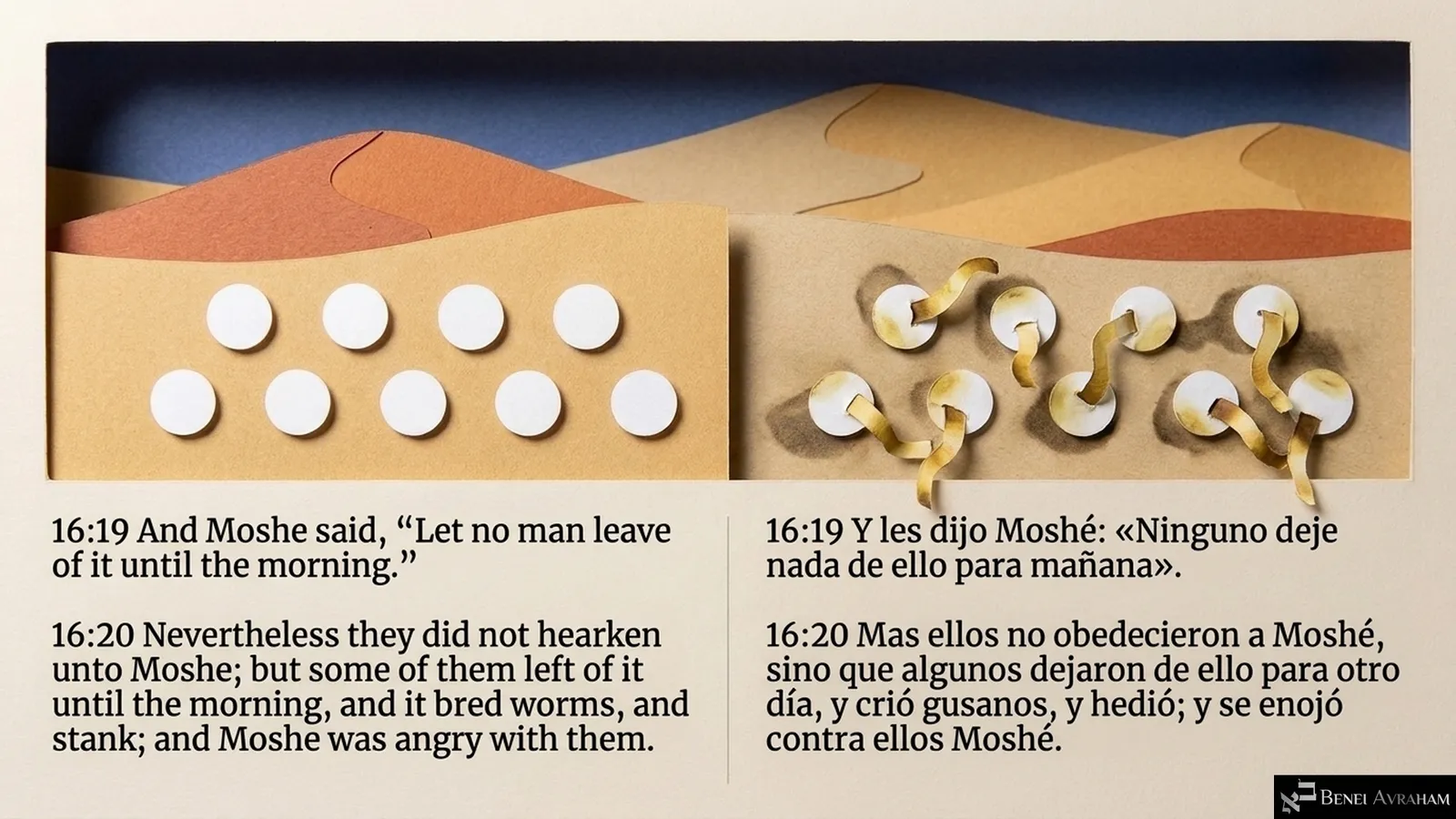
Fresh wafers beside wormy ones: some of them left of it until the morning, and it bred worms, and stank (Exodus 16:19–20).
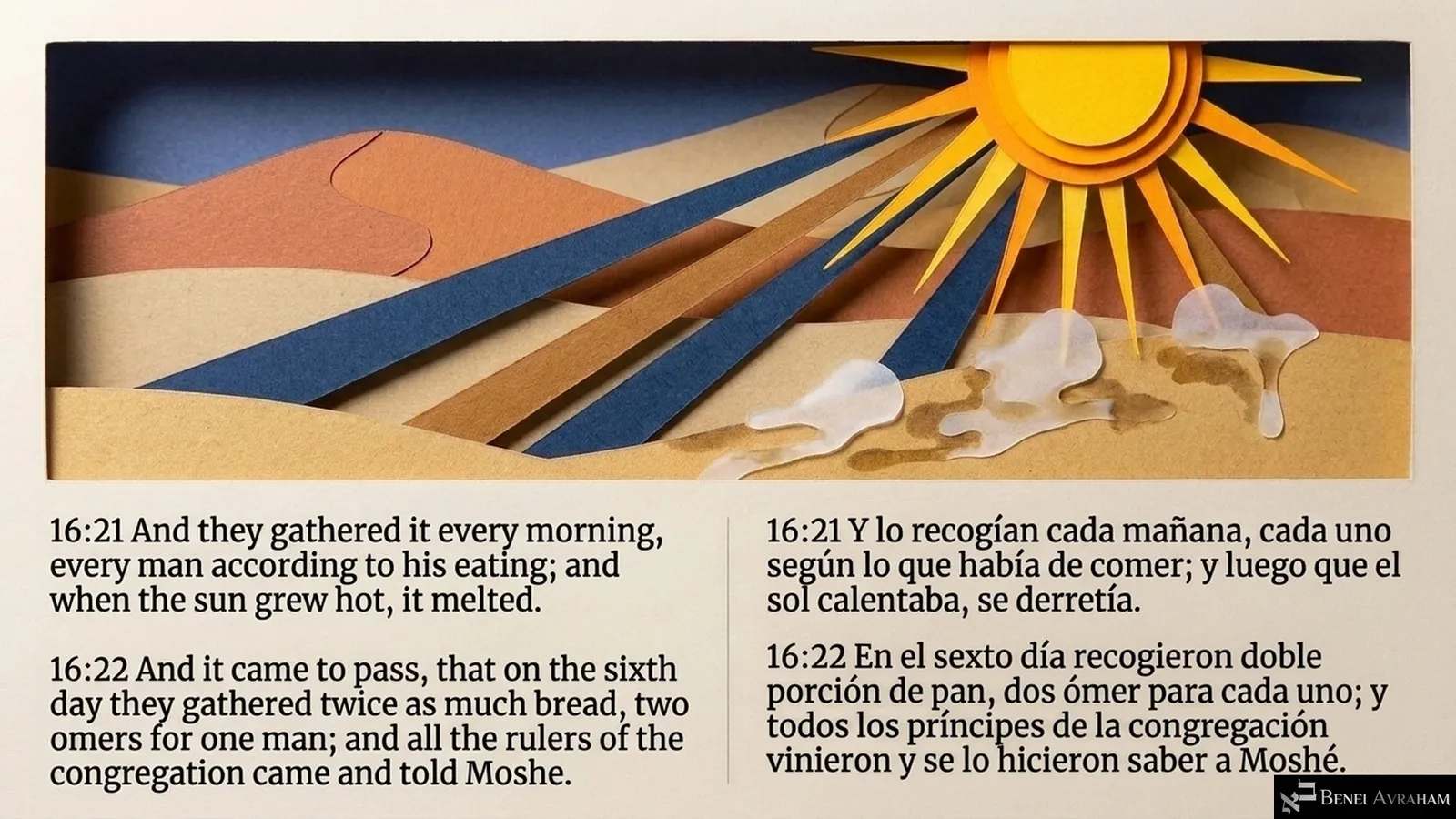
A paper sun with long rays over melting manna: when the sun grew hot, it melted; on the sixth day they gathered twice as much (Exodus 16:21–22).
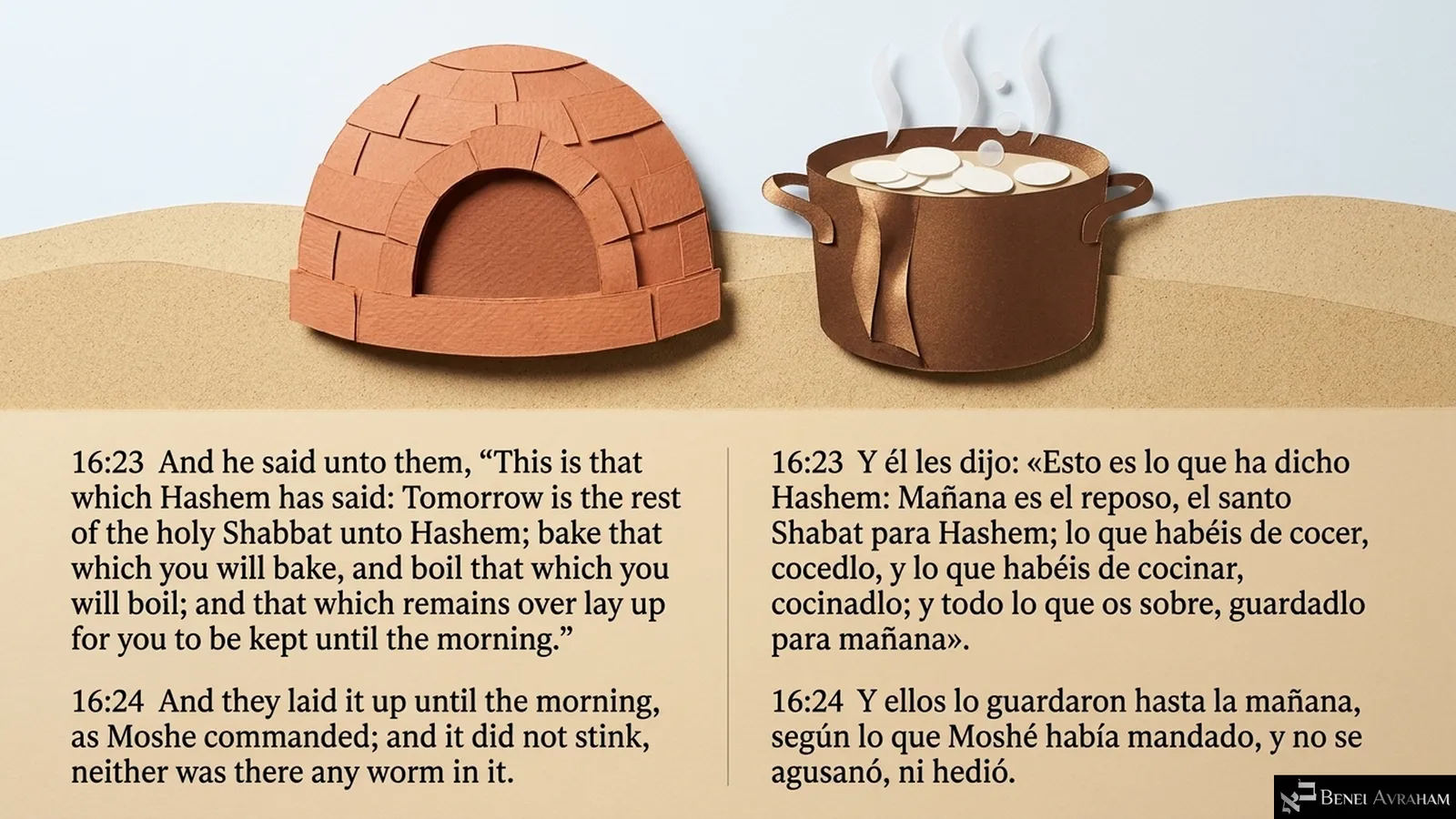
A clay oven and a cooking pot: “Tomorrow is the rest of the holy Shabbat unto Hashem” (Exodus 16:23–24).
Empty paper dunes under a dusky sky: on the seventh day, the Shabbat, there shall be none (Exodus 16:25–27).
A single paper tent beneath the stars: “Abide every man in his place… So the people rested on the seventh day” (Exodus 16:28–30).
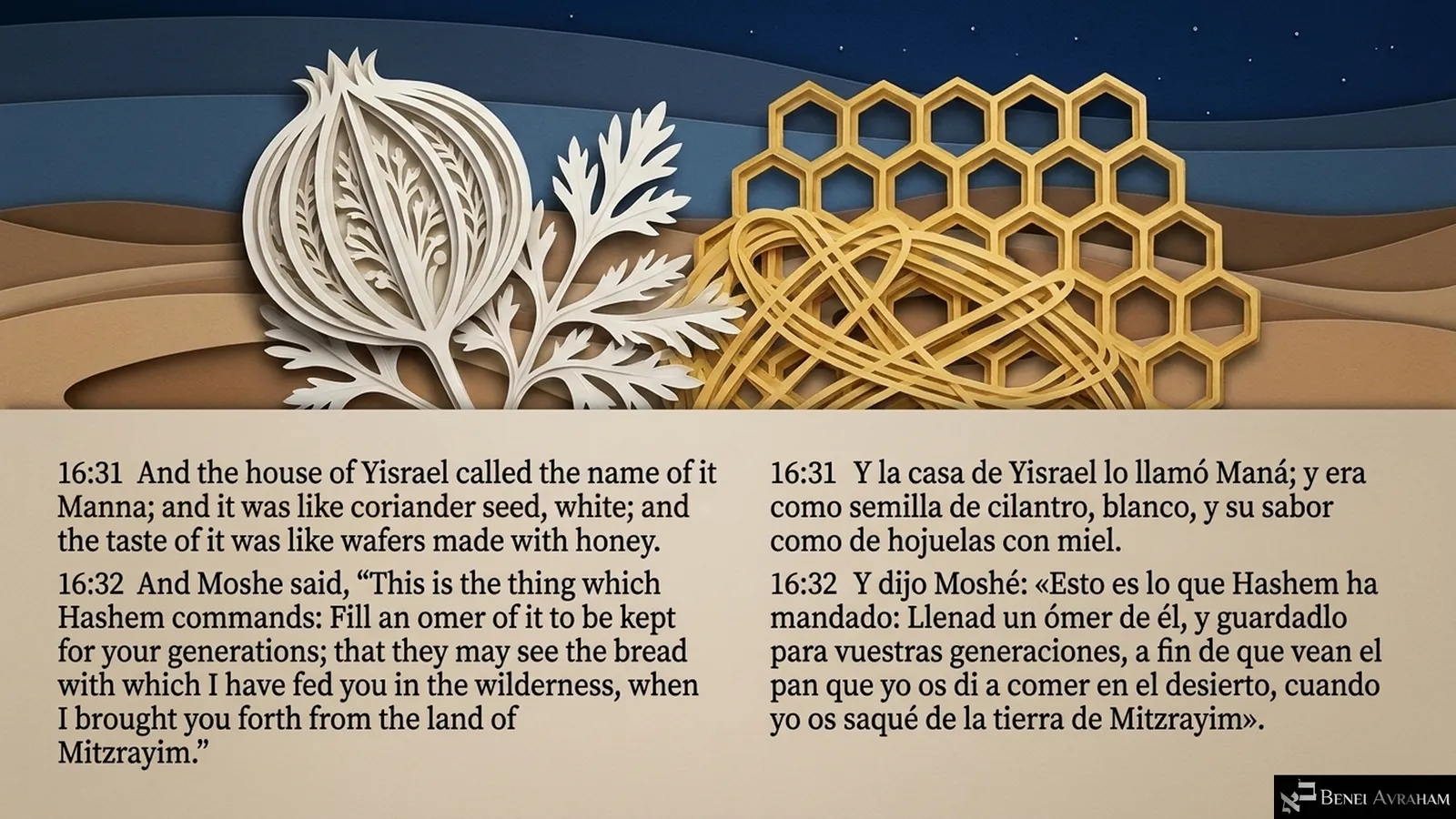
Coriander, honeycomb and a white seed head: it was like coriander seed, white; and the taste of it was like wafers made with honey (Exodus 16:31–32).
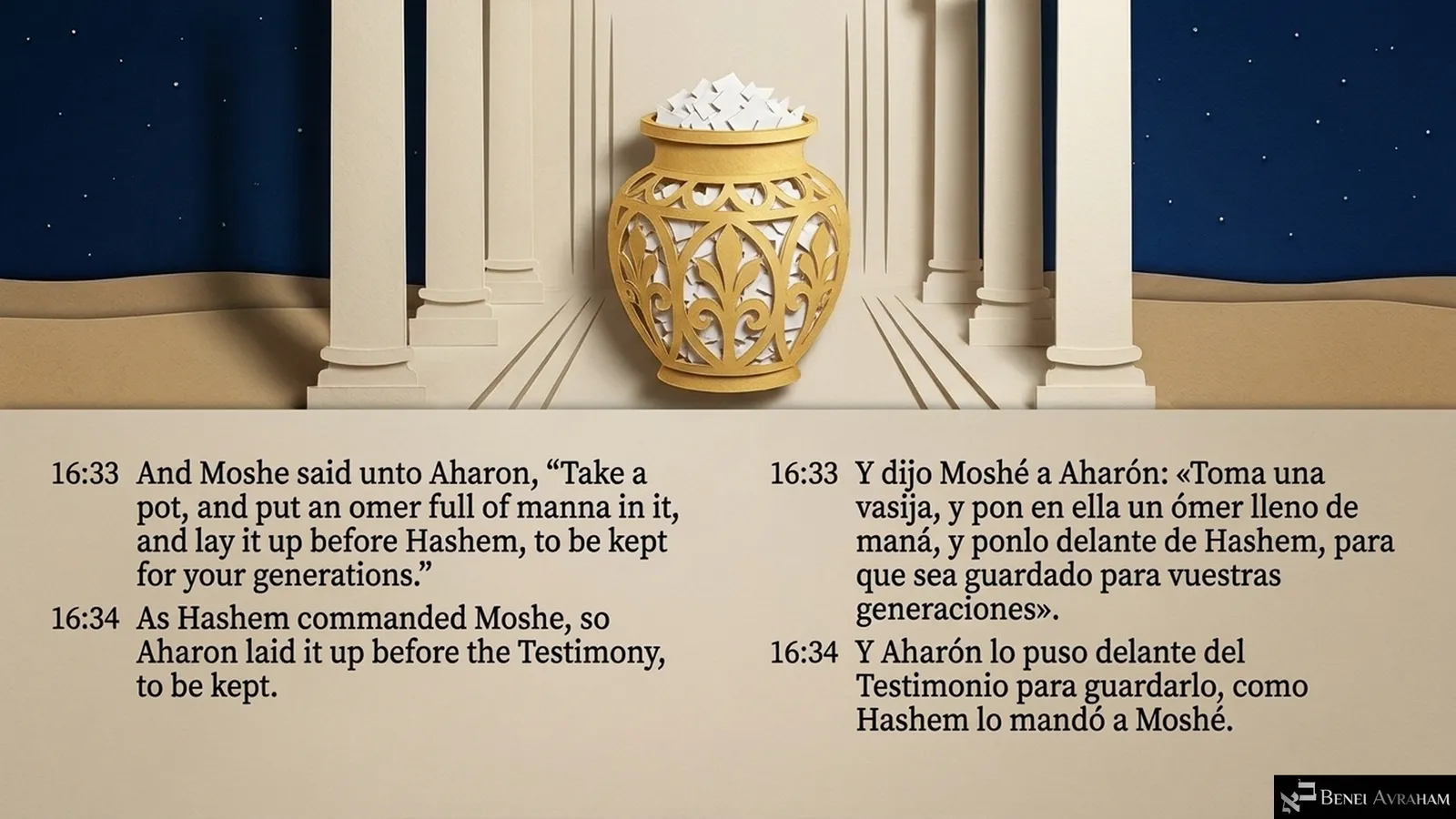
A golden paper jar of manna between white pillars: Aharon laid it up before the Testimony, to be kept (Exodus 16:33–34).
A paper landscape from desert to green fields: the children of Yisrael ate manna forty years, until they came unto the borders of Kena’an (Exodus 16:35–36).
Shevi’i · Exodus 17:1–16

Seventh Portion
Title card for the seventh portion in a paper canyon: “Parashat Beshalaḥ — 7th Portion (Shevi’i), Exodus 17:1–16”.
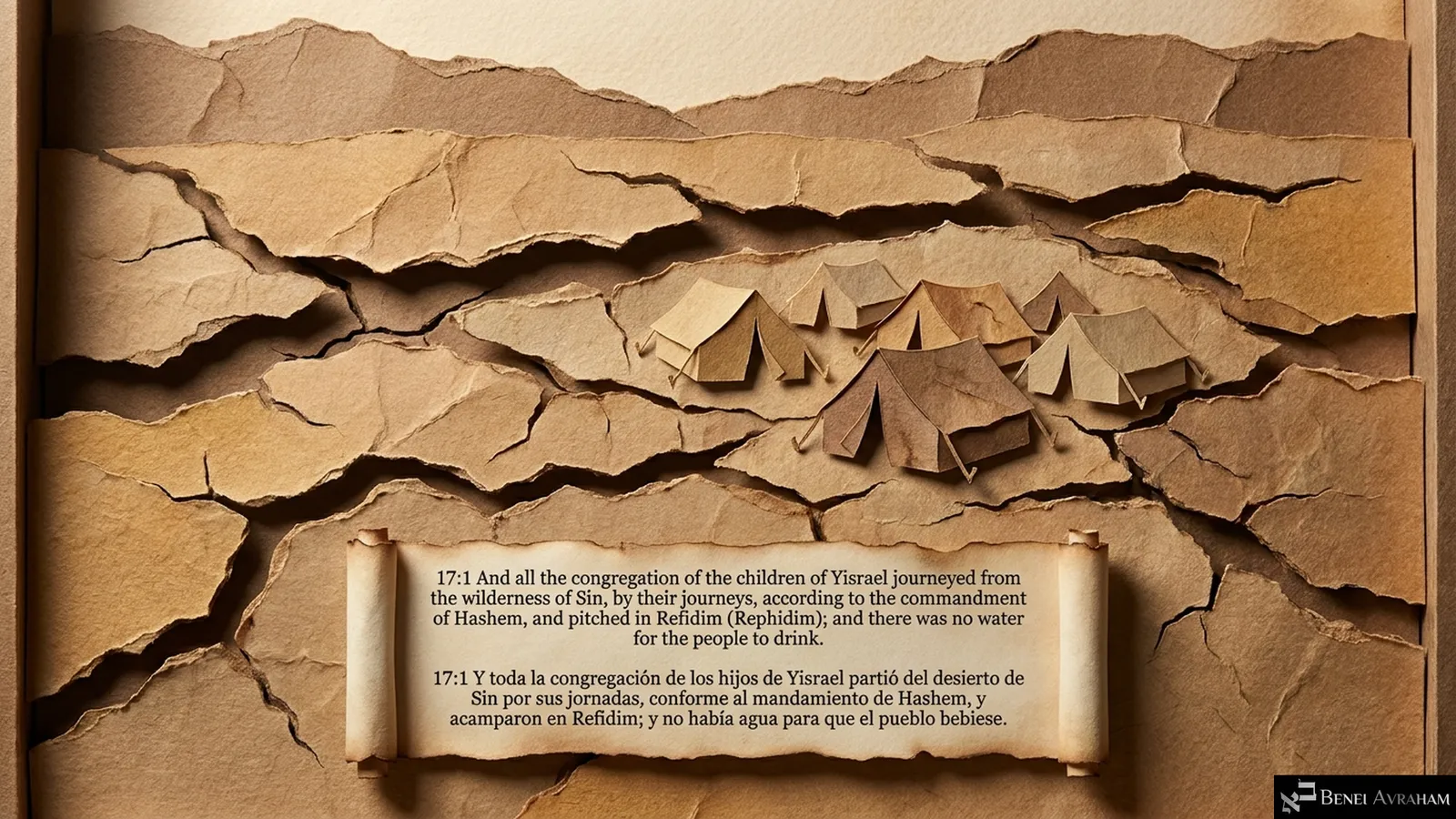
Paper tents on cracked earth: they pitched in Refidim, and there was no water for the people to drink (Exodus 17:1).
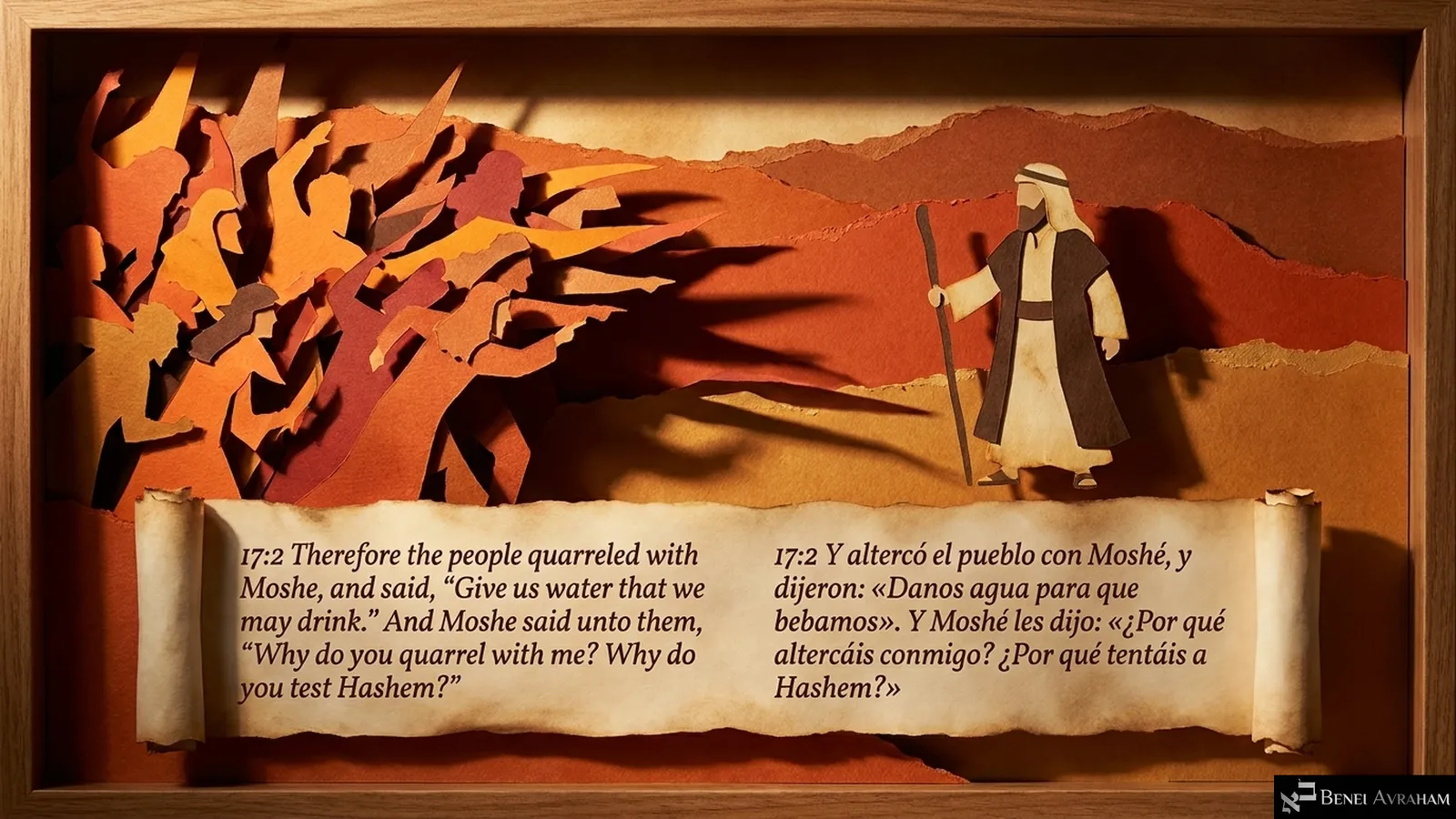
An angry paper crowd before Moshe: “Give us water that we may drink.” — “Why do you test Hashem?” (Exodus 17:2).
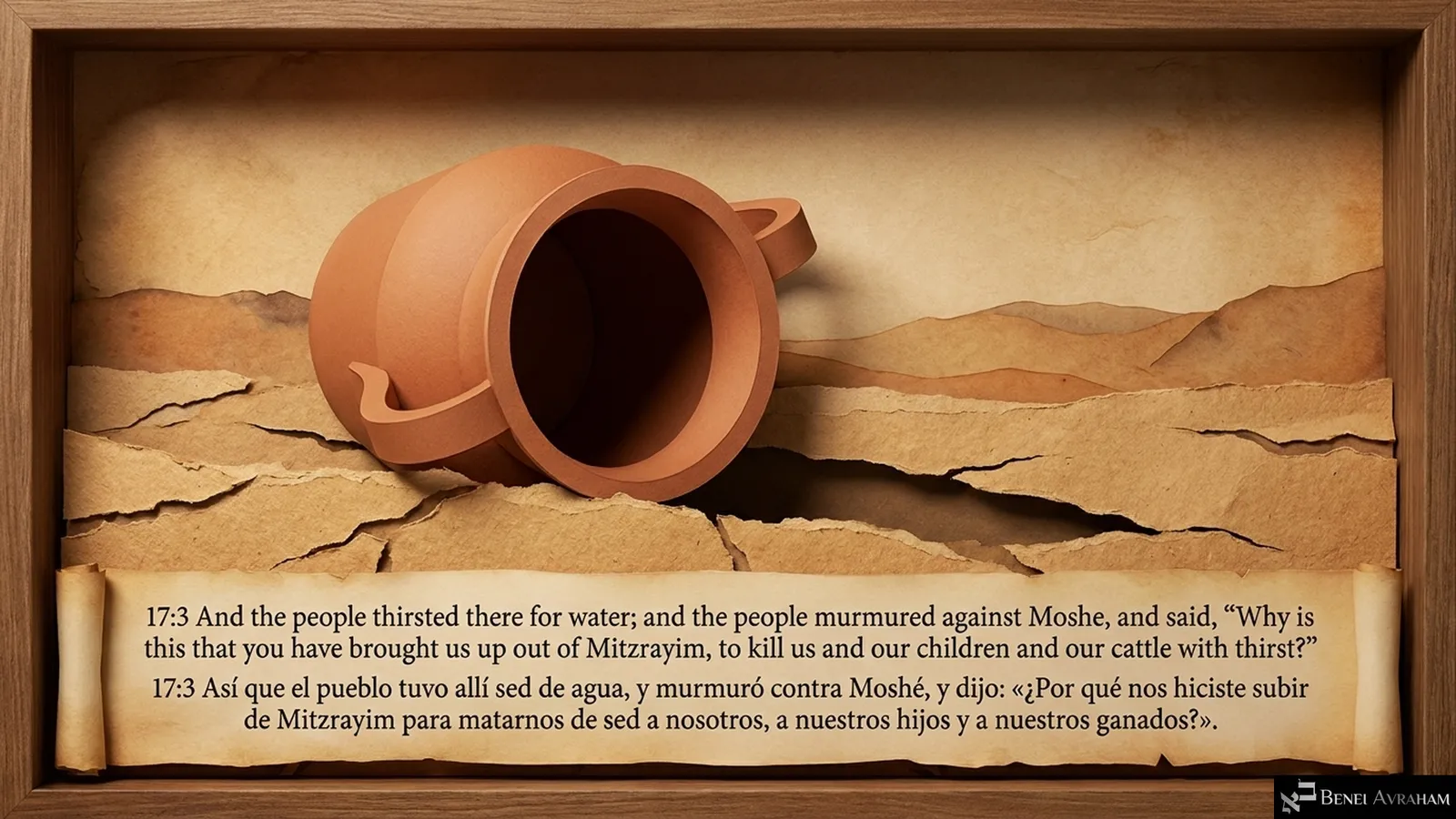
An empty clay jar on dry ground: “Why is this that you have brought us up out of Mitzrayim, to kill us… with thirst?” (Exodus 17:3).
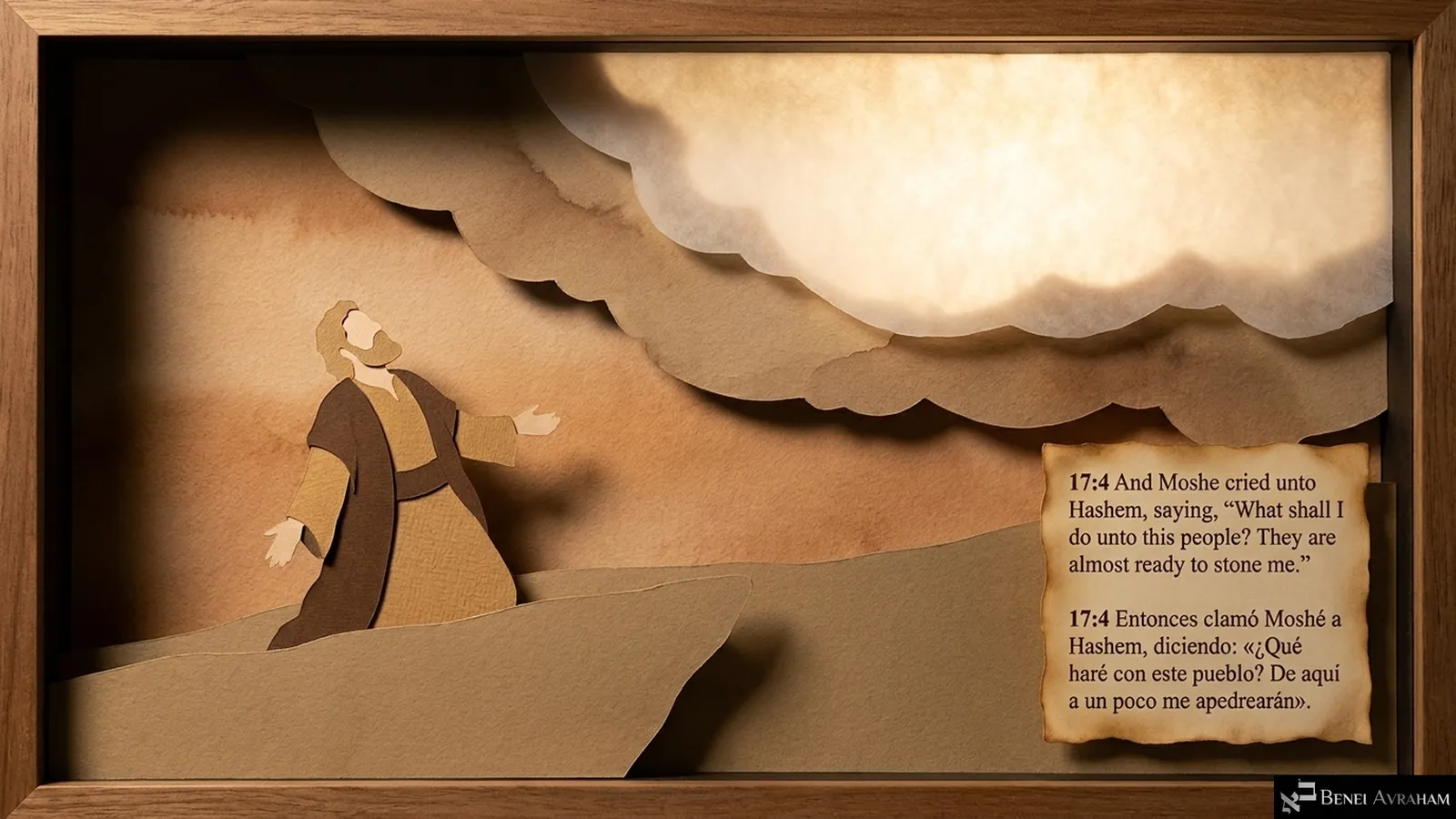
Moshe cries out beneath the paper clouds: “What shall I do unto this people? They are almost ready to stone me” (Exodus 17:4).
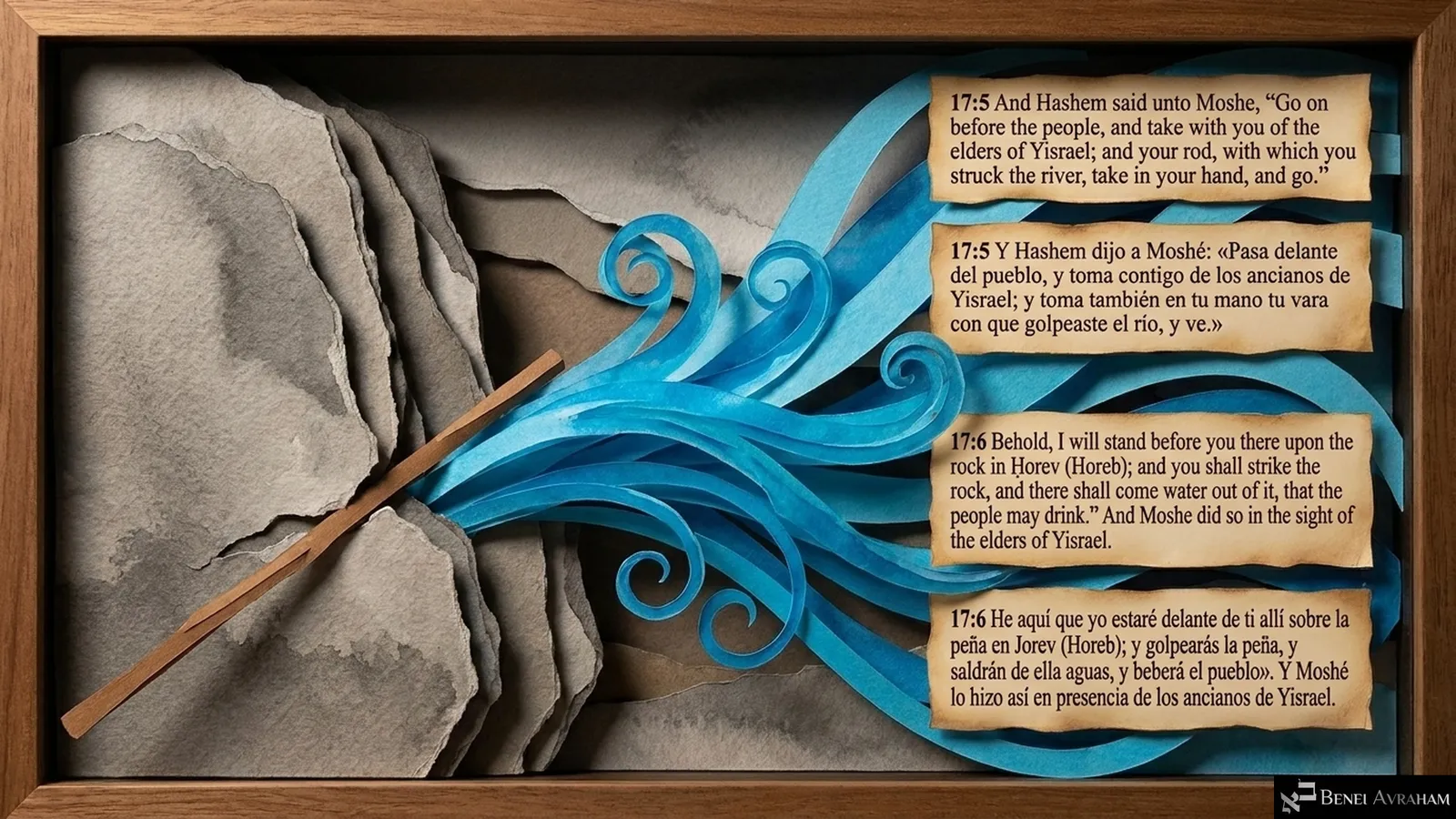
Blue paper water bursts from the rock: “You shall strike the rock, and there shall come water out of it” (Exodus 17:5–6).
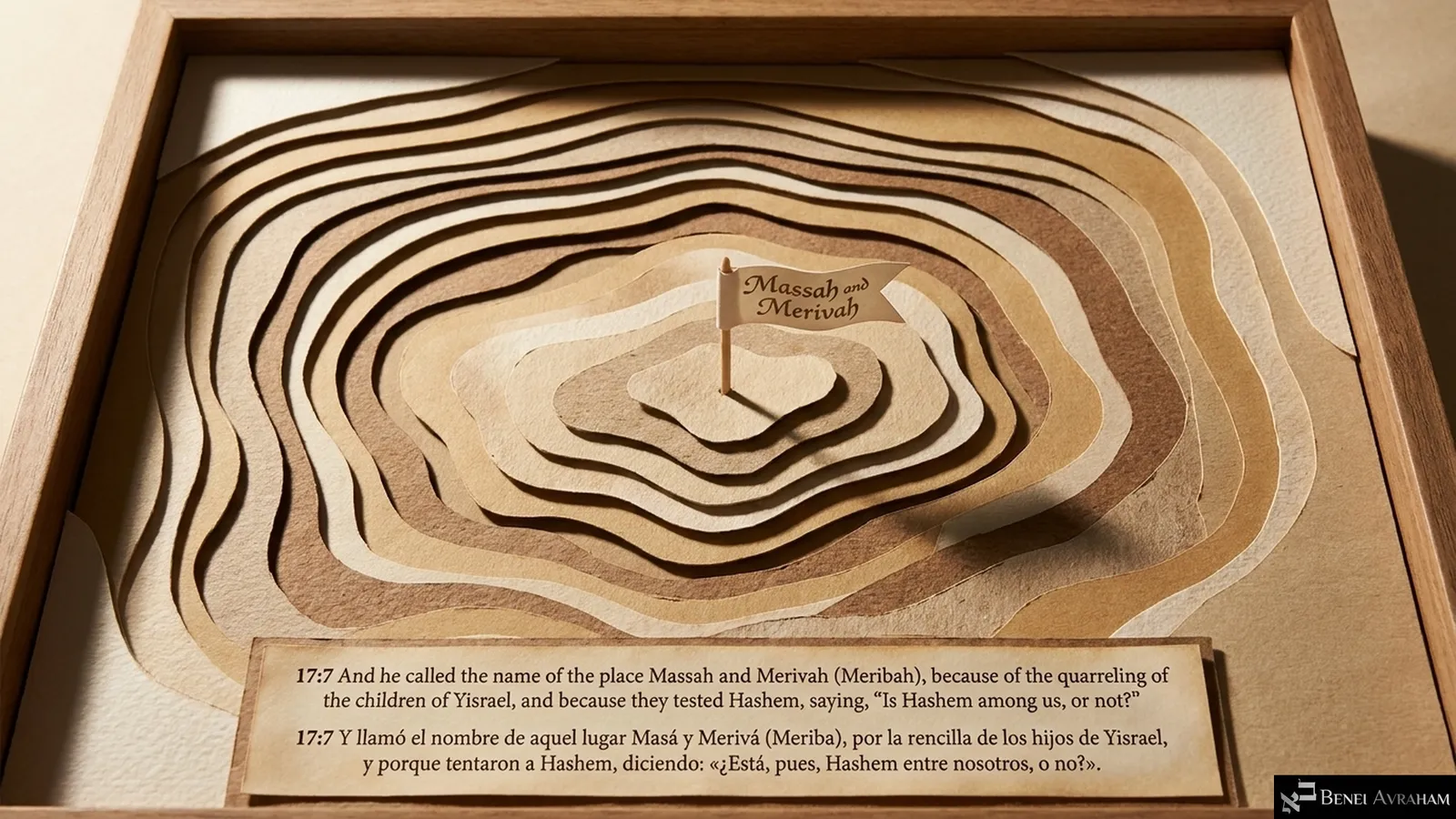
Contour layers around a small flag: he called the name of the place Massah and Merivah — “Is Hashem among us, or not?” (Exodus 17:7).
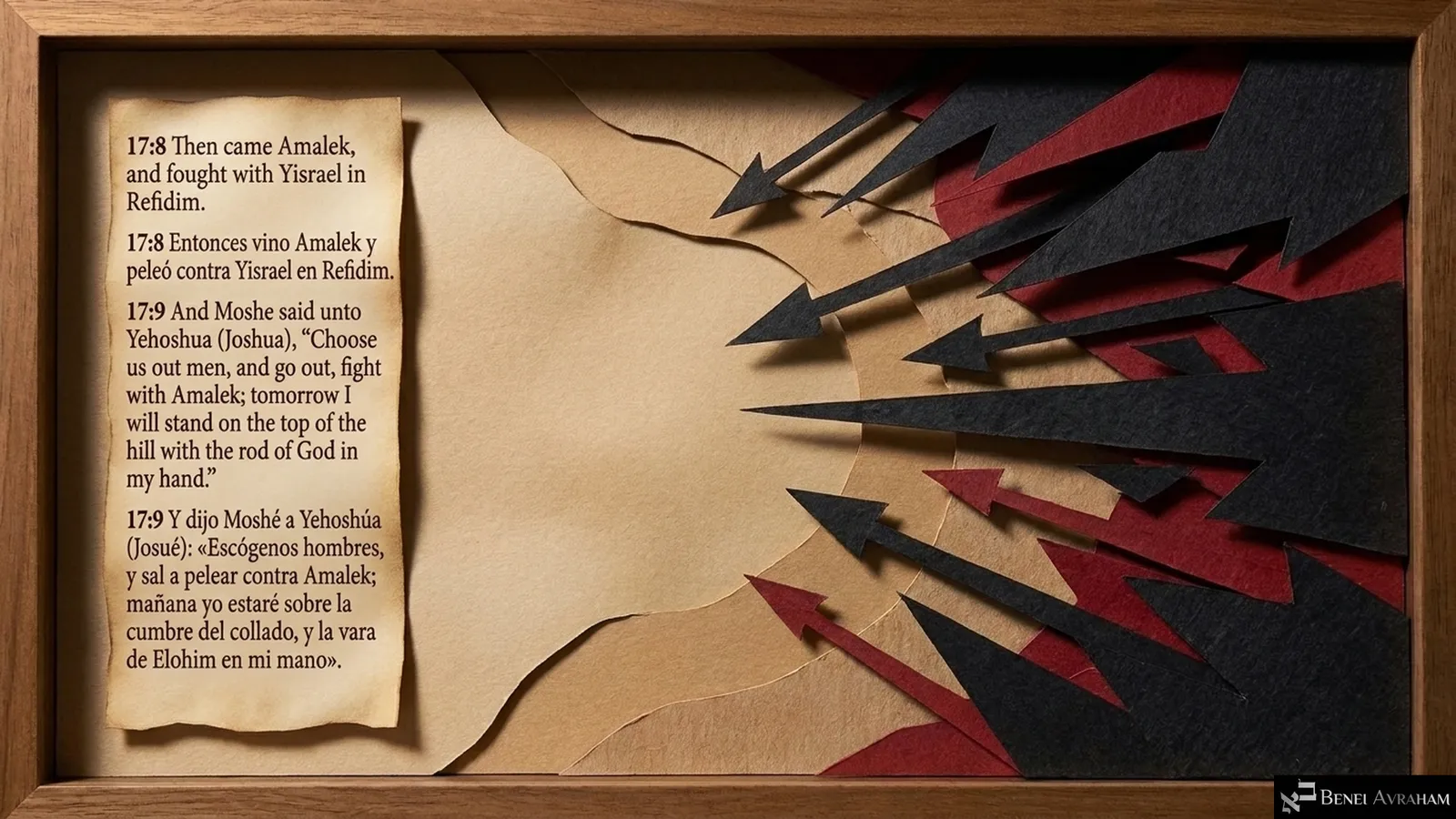
Black and red paper arrows clash: then came Amalek, and fought with Yisrael in Refidim (Exodus 17:8–9).
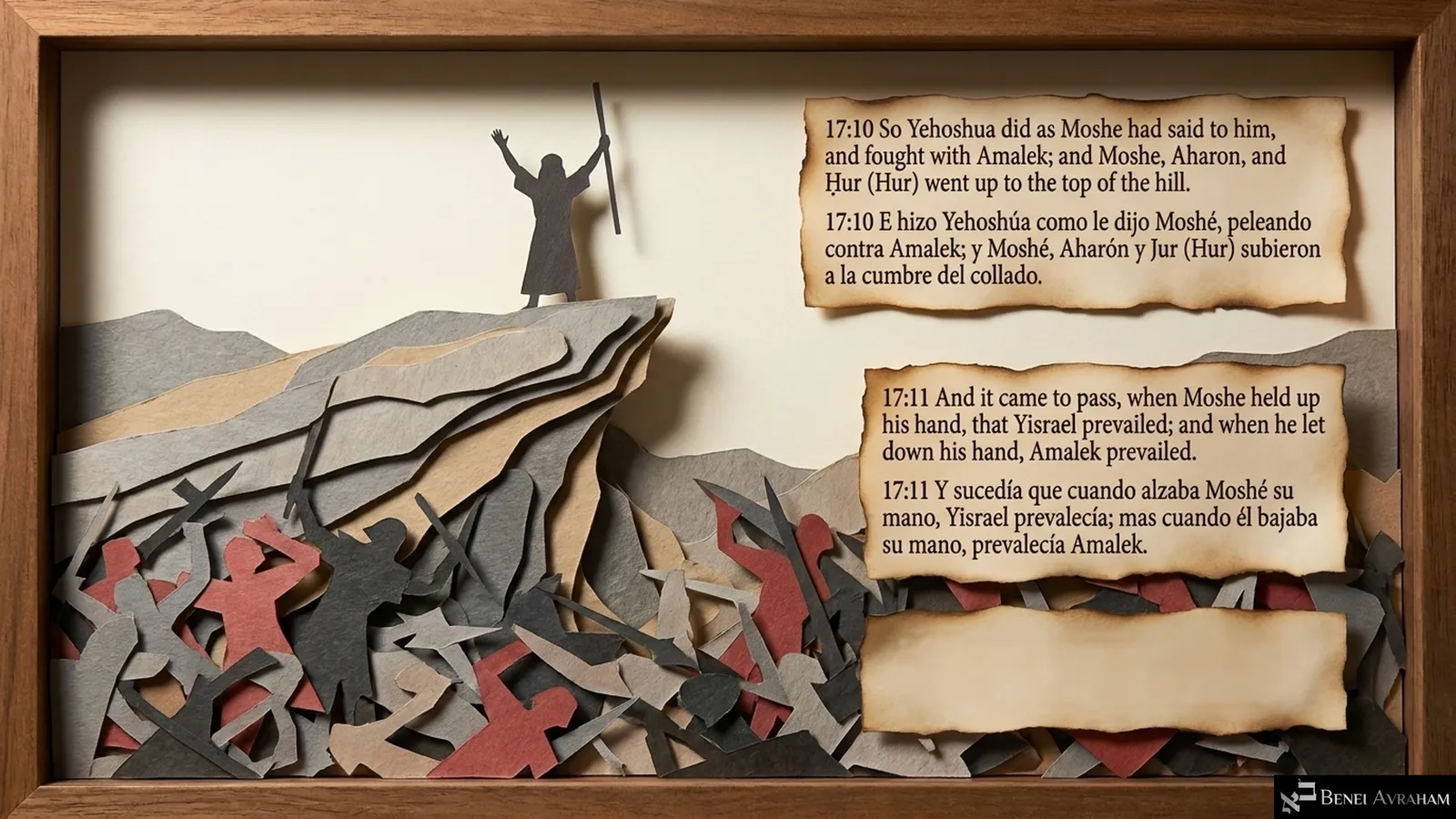
Moshe on the hilltop above the battle: when Moshe held up his hand, Yisrael prevailed (Exodus 17:10–11).
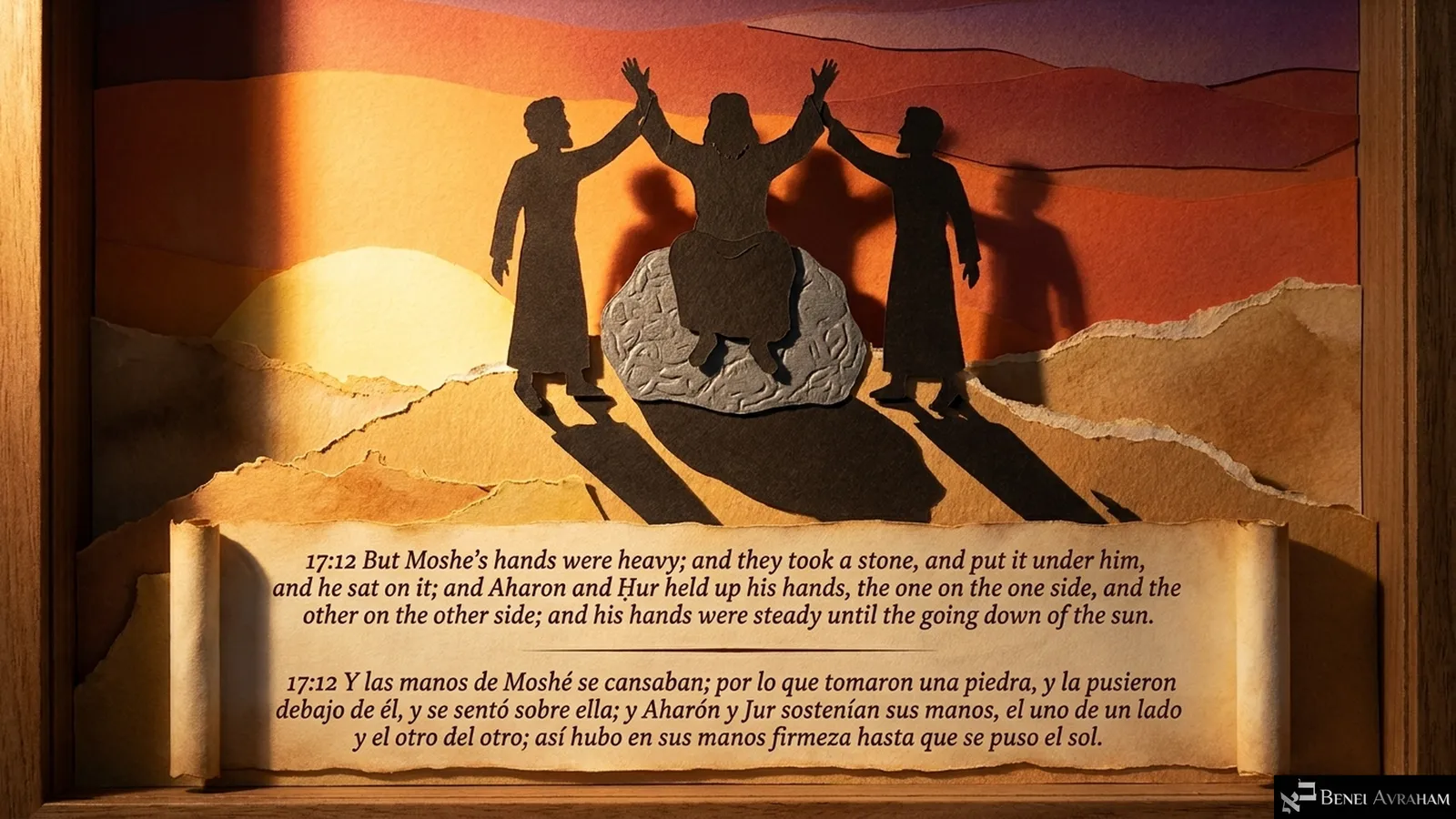
Aharon and Ḥur hold up Moshe’s hands at sunset: his hands were steady until the going down of the sun (Exodus 17:12).
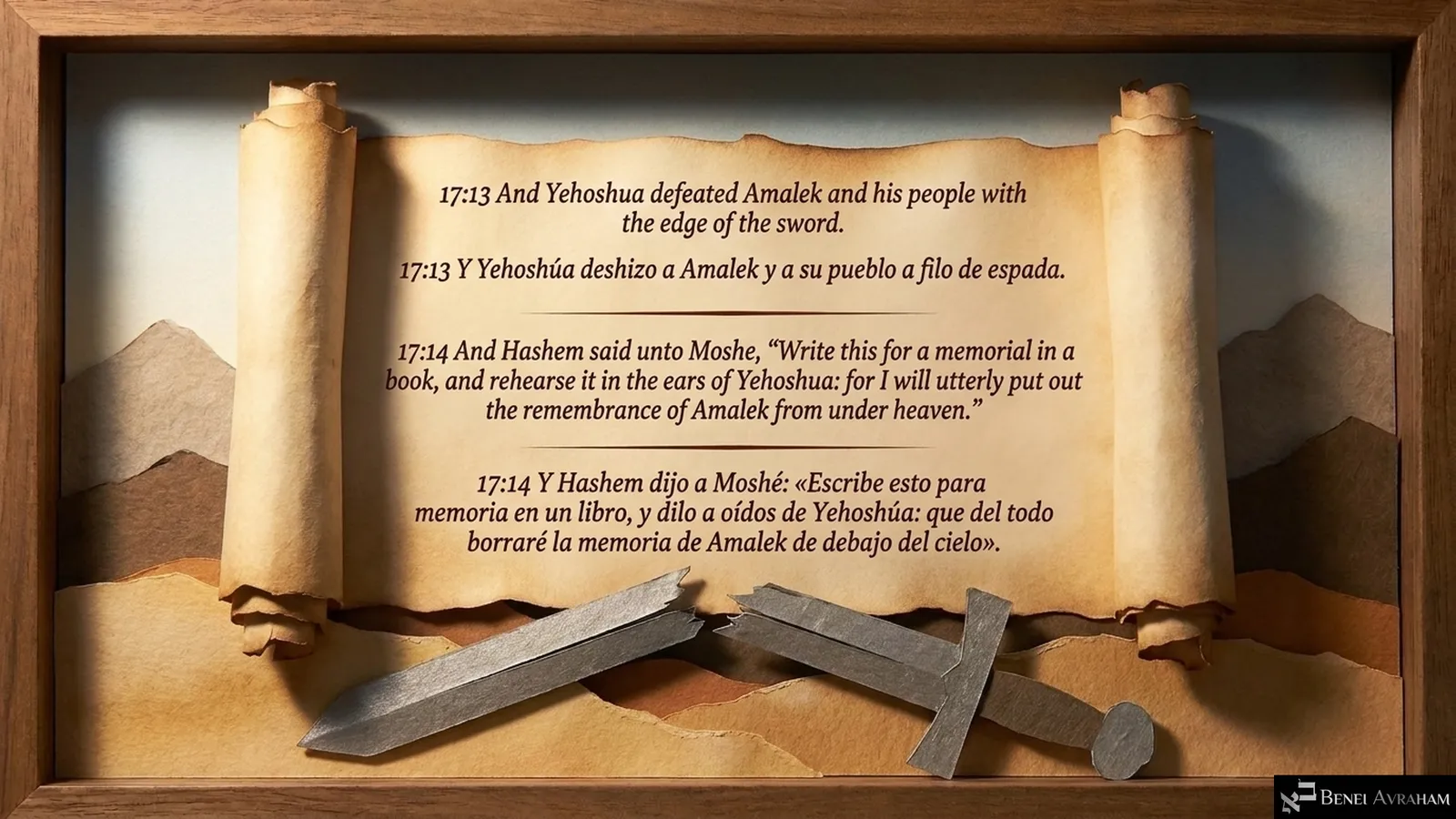
A scroll above a broken sword: “Write this for a memorial in a book… for I will utterly put out the remembrance of Amalek” (Exodus 17:13–14).
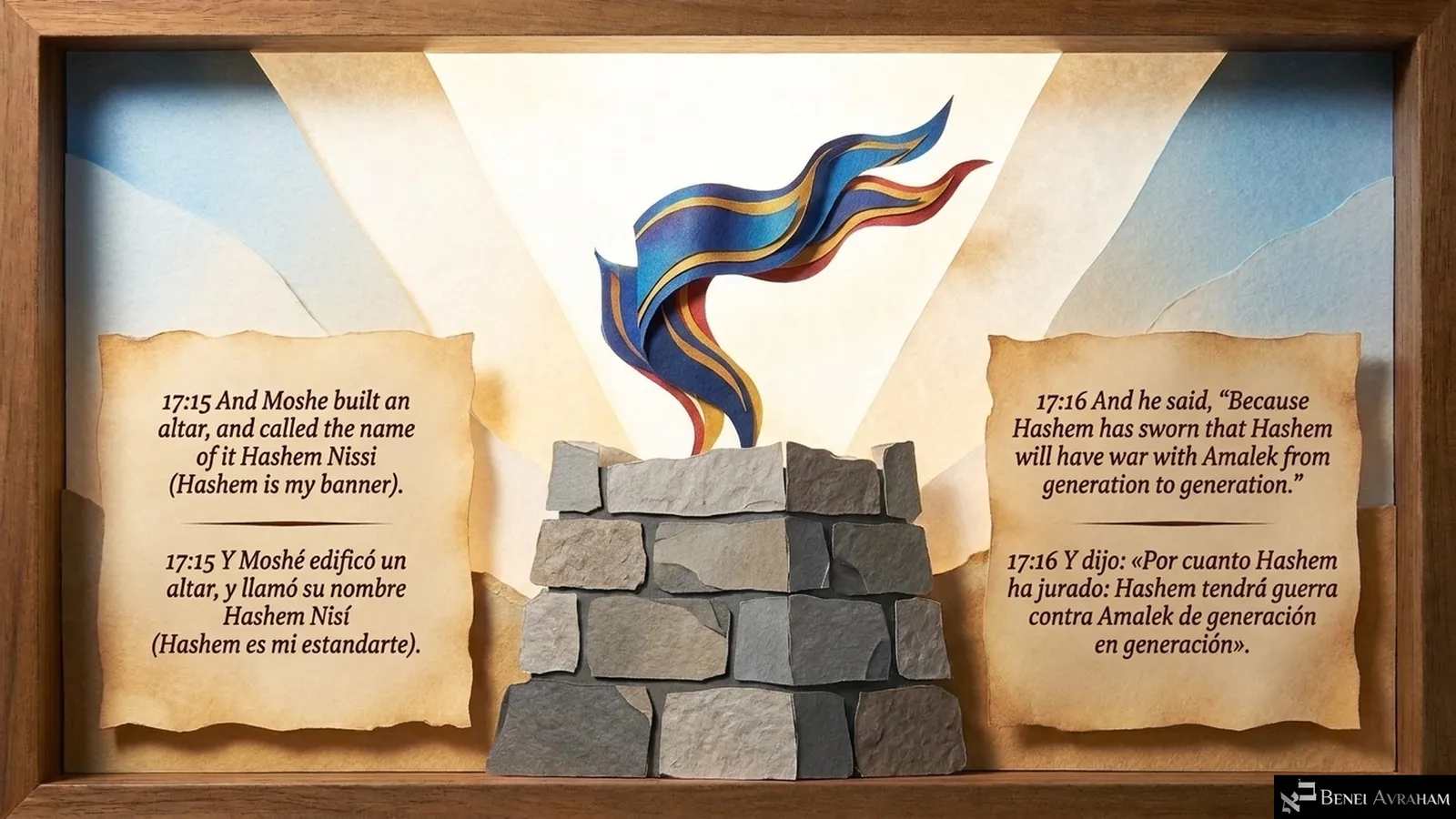
A stone altar beneath a waving banner: Moshe built an altar, and called the name of it Hashem Nissi (Exodus 17:15–16).
Haftarah · Judges 4:4–5:31

Haftarah: The Song of Devorah
Title card for the haftarah with a paper palm tree: “Haftarah Beshalaḥ, Judges 4:4–5:31”.
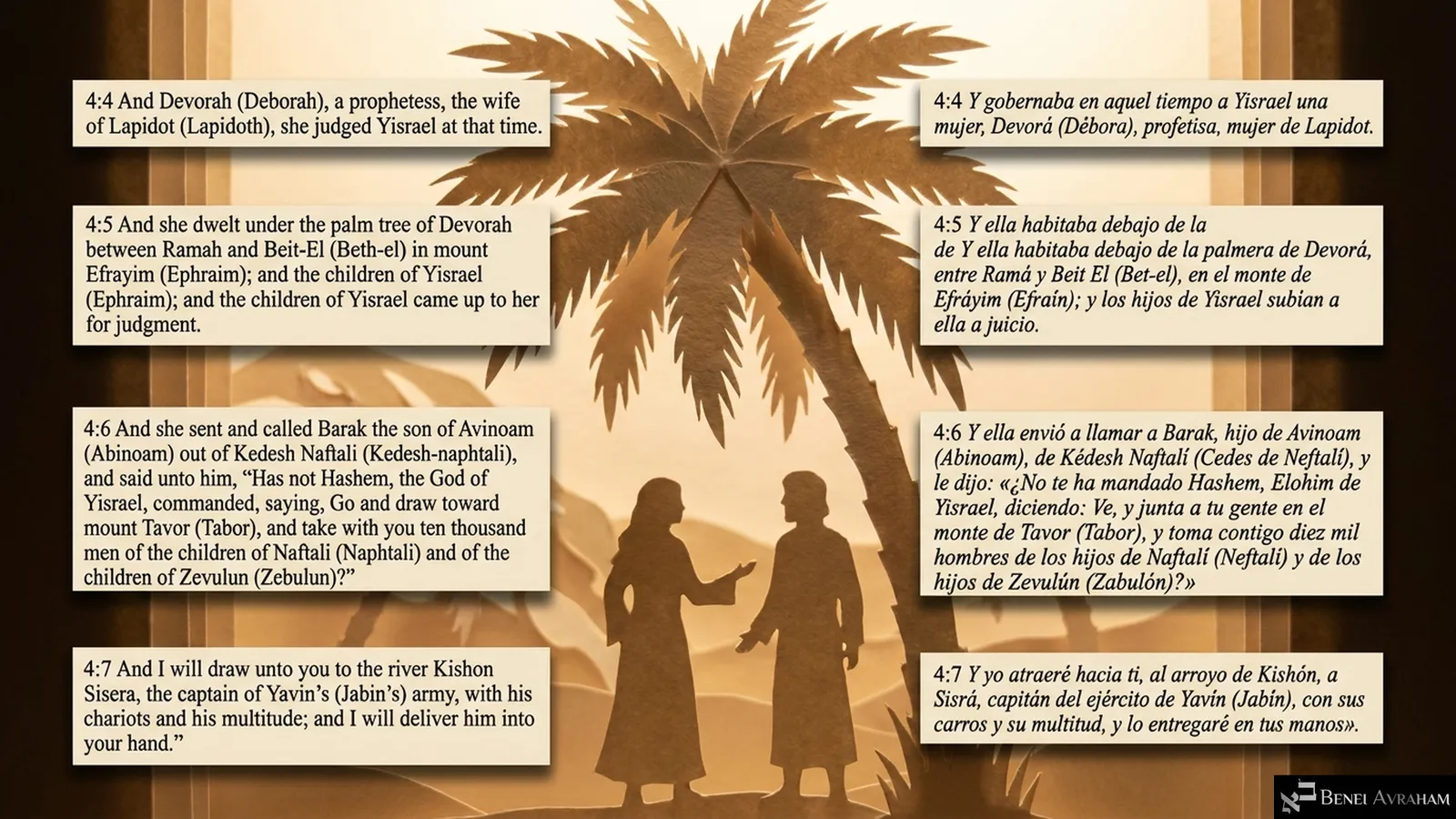
Devorah under her palm tree speaking with Barak: she judged Yisrael, and sent and called Barak the son of Avinoam (Judges 4:4–7).
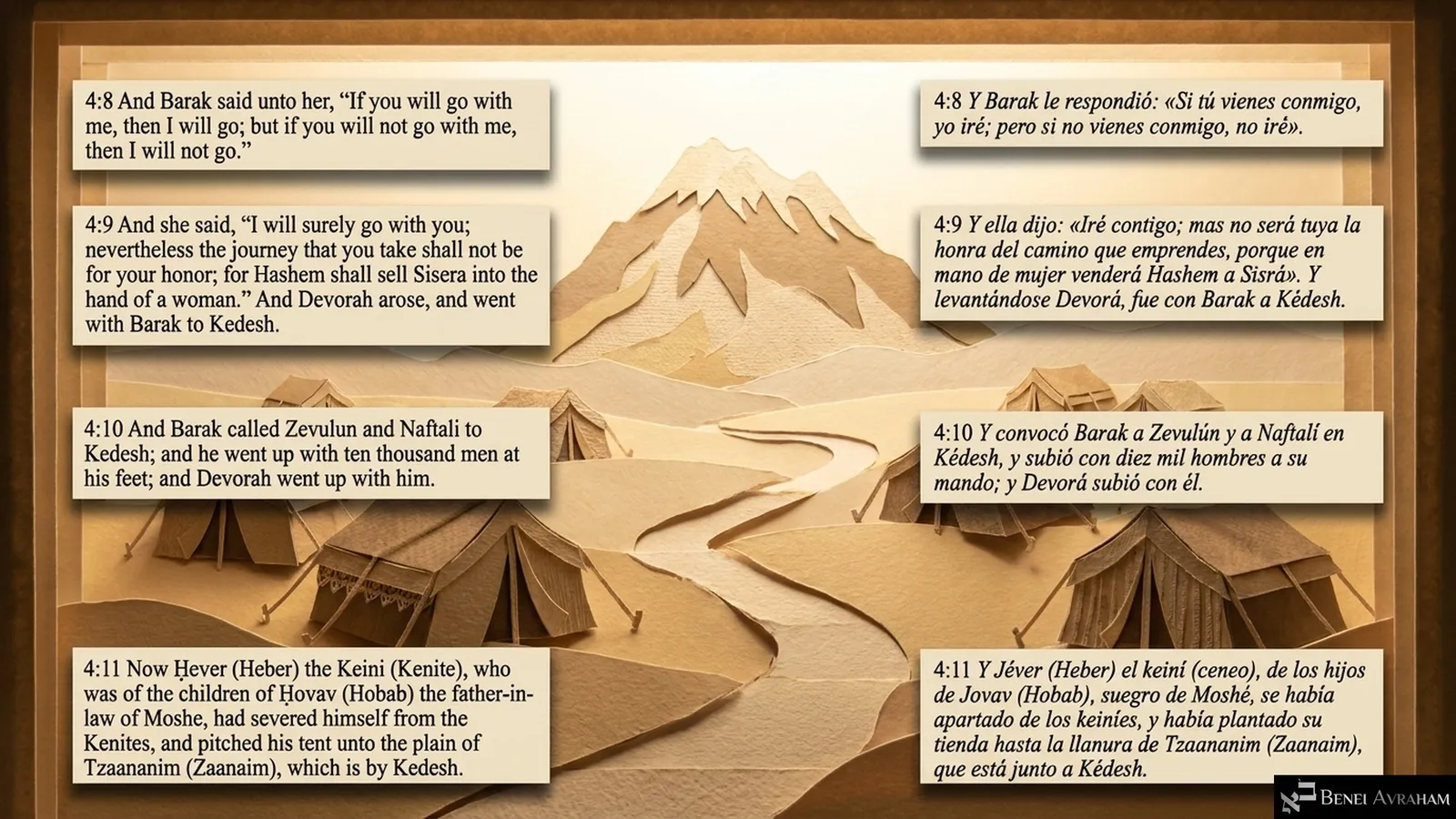
Paper tents along a winding road below Mount Tavor: “If you will go with me, then I will go” — Devorah arose and went with Barak to Kedesh (Judges 4:8–11).
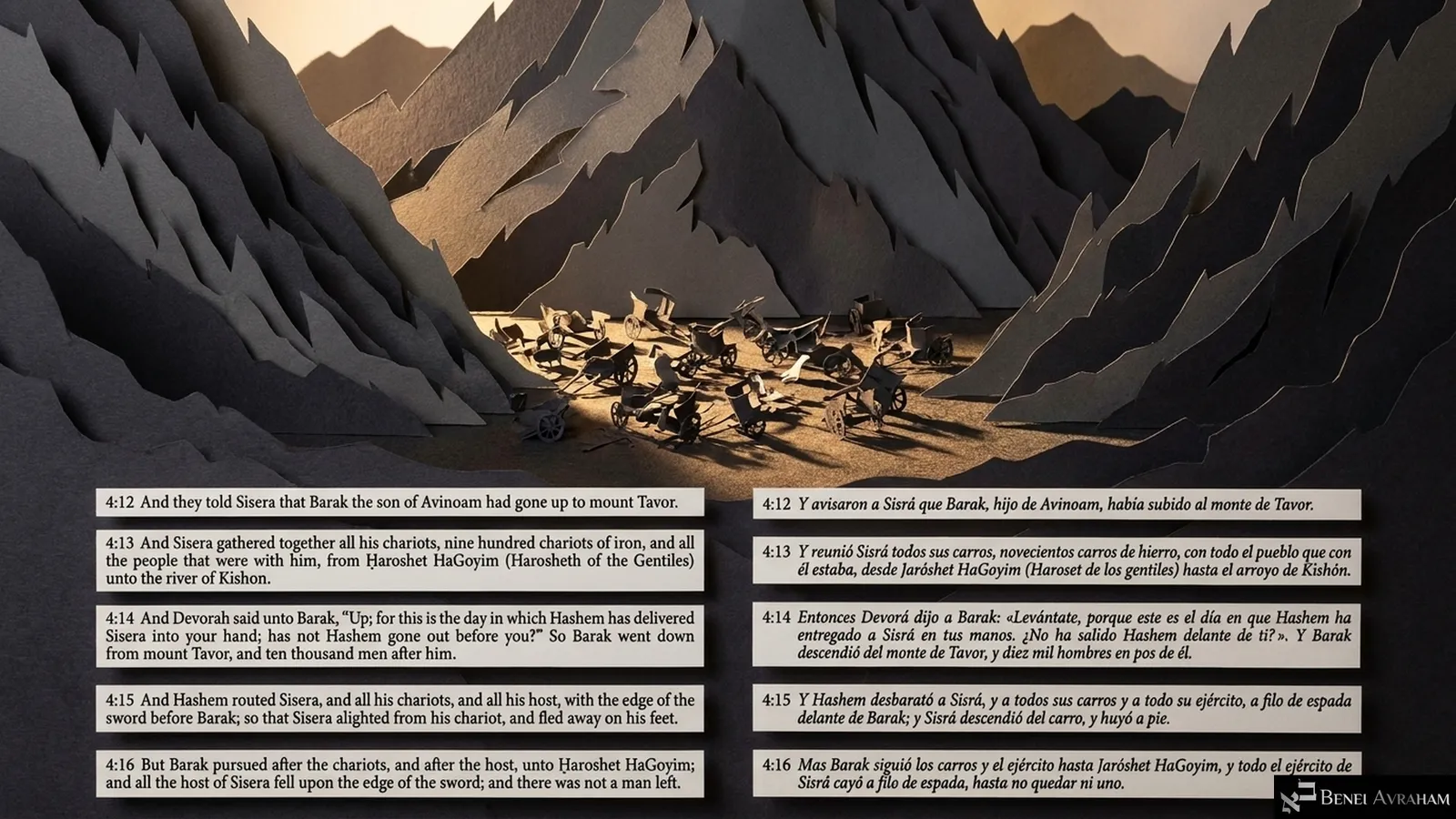
Dark paper mountains over the battlefield: Hashem routed Sisera and all his chariots before Barak (Judges 4:12–16).
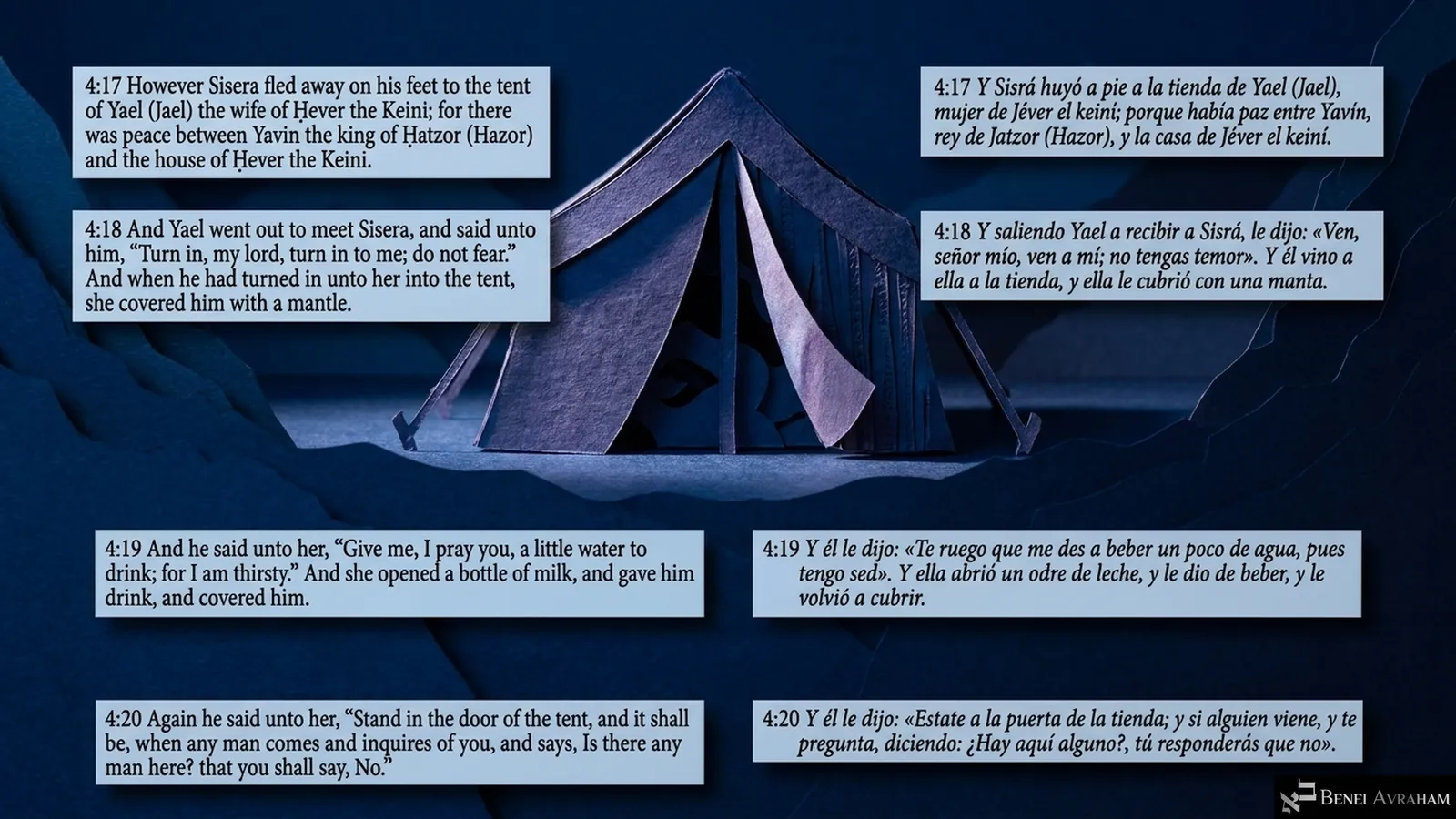
A paper tent under a night sky: Sisera fled to the tent of Yael, and she covered him with a mantle (Judges 4:17–20).
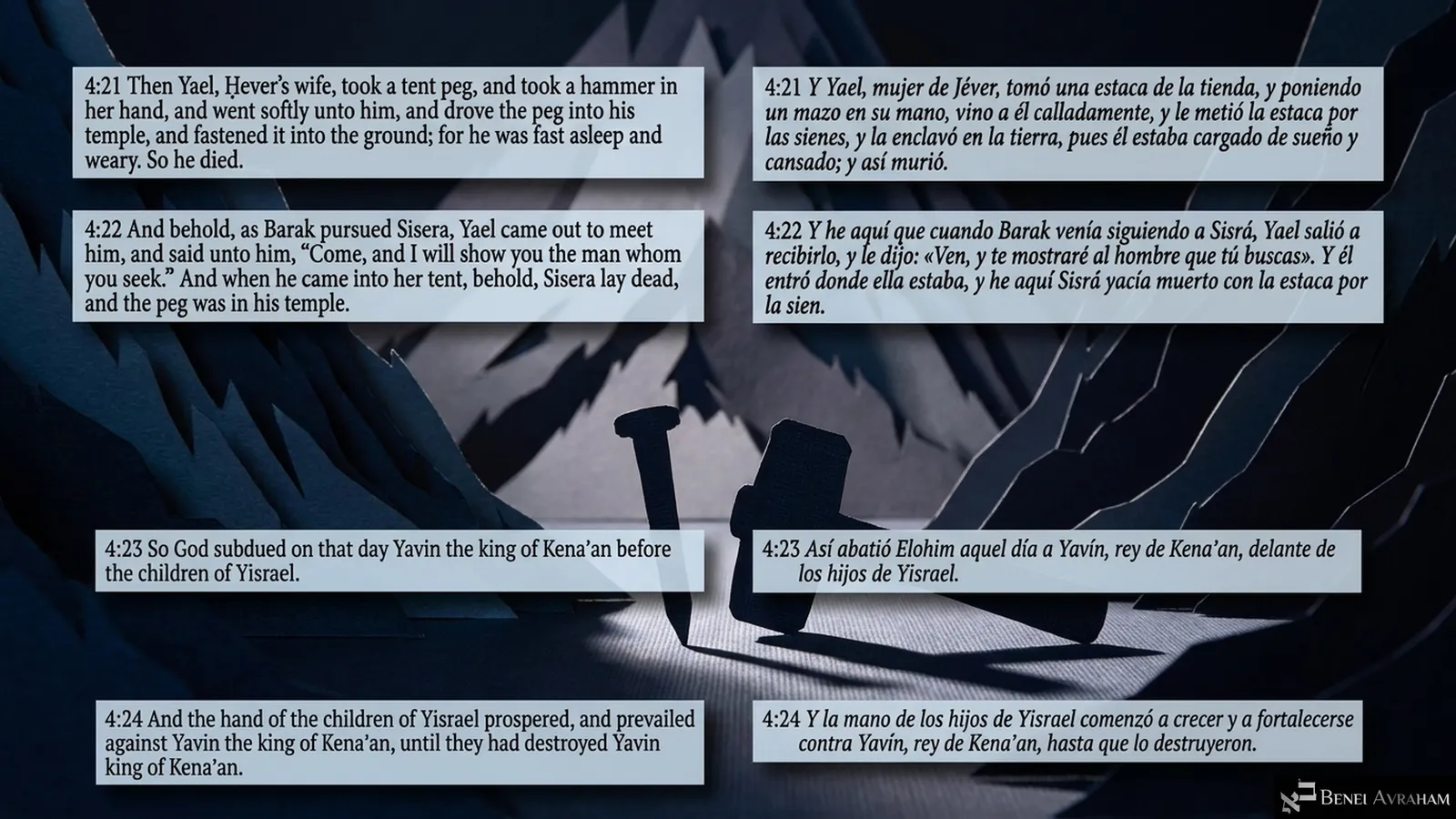
A tent peg and hammer in shadow: Yael drove the peg into his temple; so God subdued Yavin king of Kena’an (Judges 4:21–24).
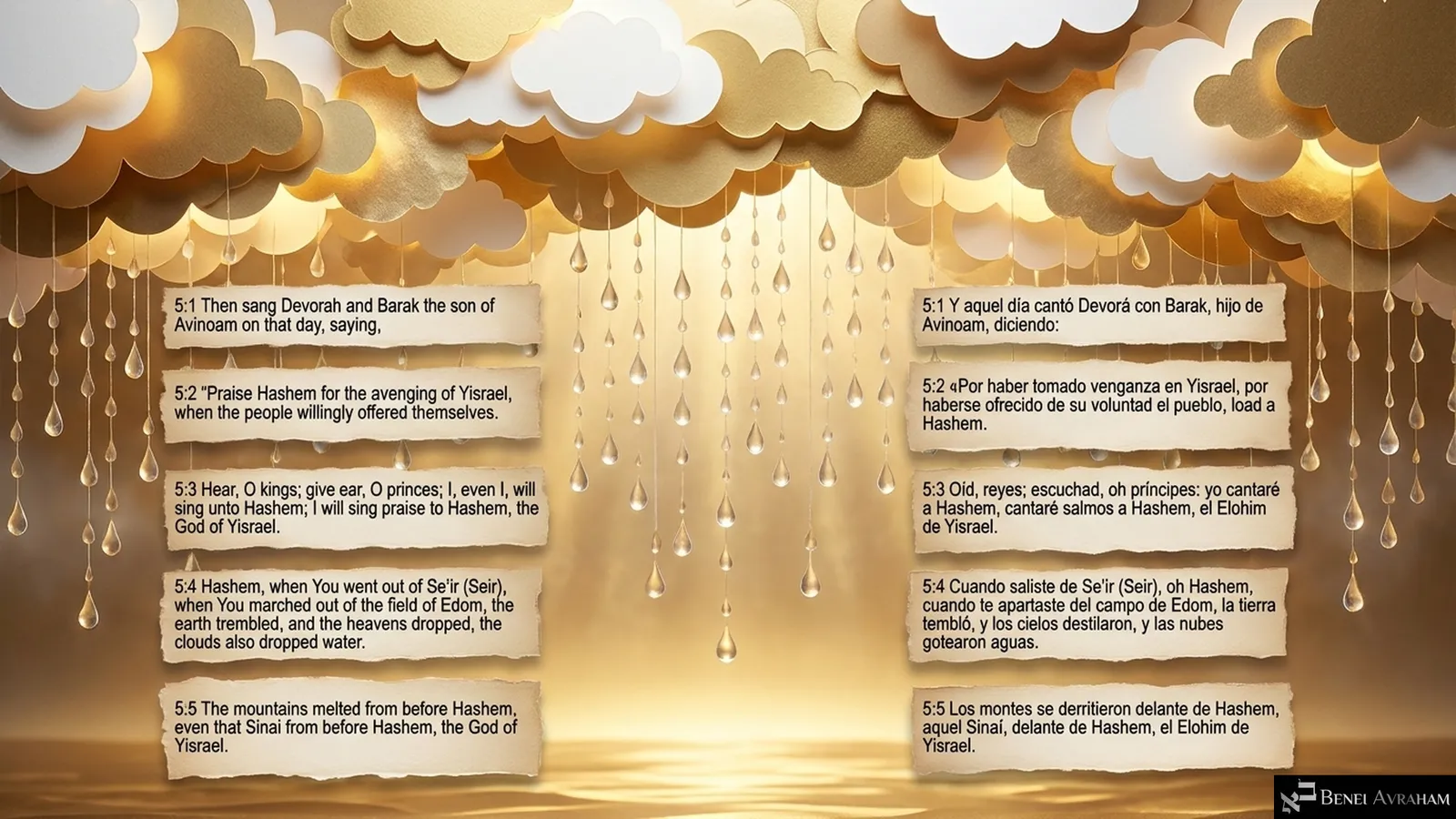
Golden paper clouds and falling drops: “Hear, O kings… the earth trembled, and the heavens dropped, the clouds also dropped water” (Judges 5:1–5).
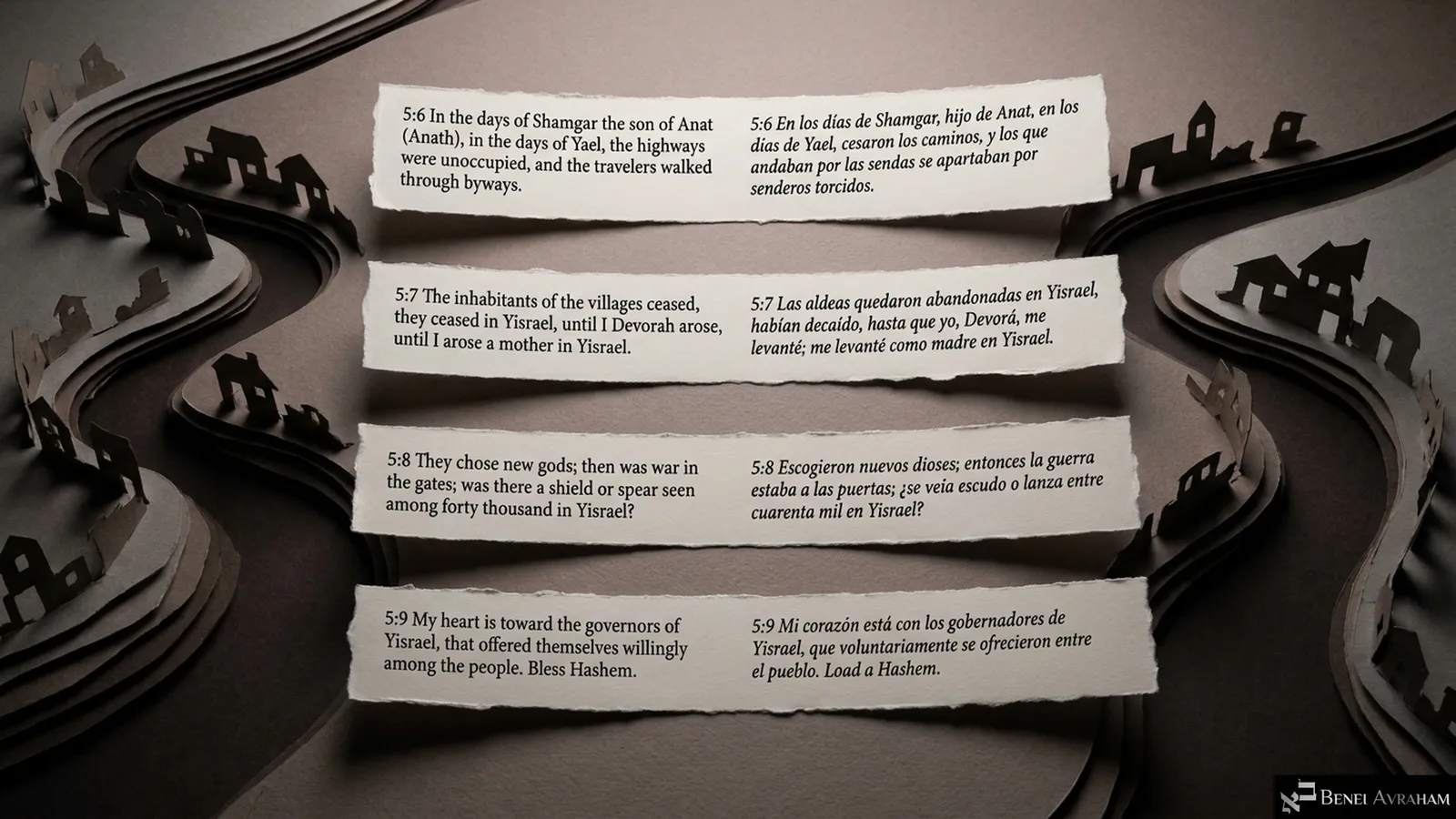
Empty paper roads past little villages: the highways were unoccupied… until I Devorah arose, a mother in Yisrael (Judges 5:6–9).
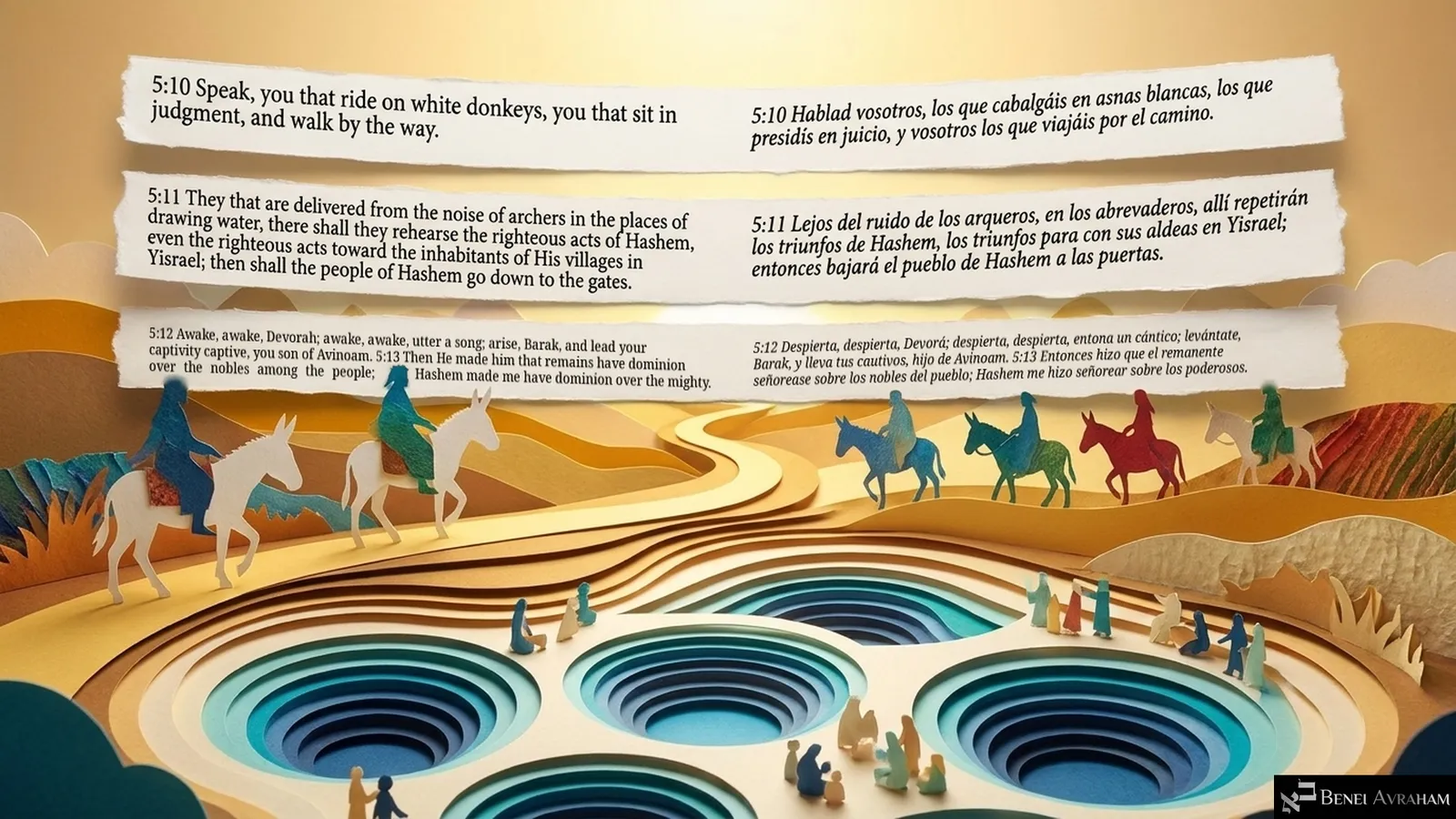
Paper riders on white donkeys above the wells: “Awake, awake, Devorah… arise, Barak, and lead your captivity captive” (Judges 5:10–13).
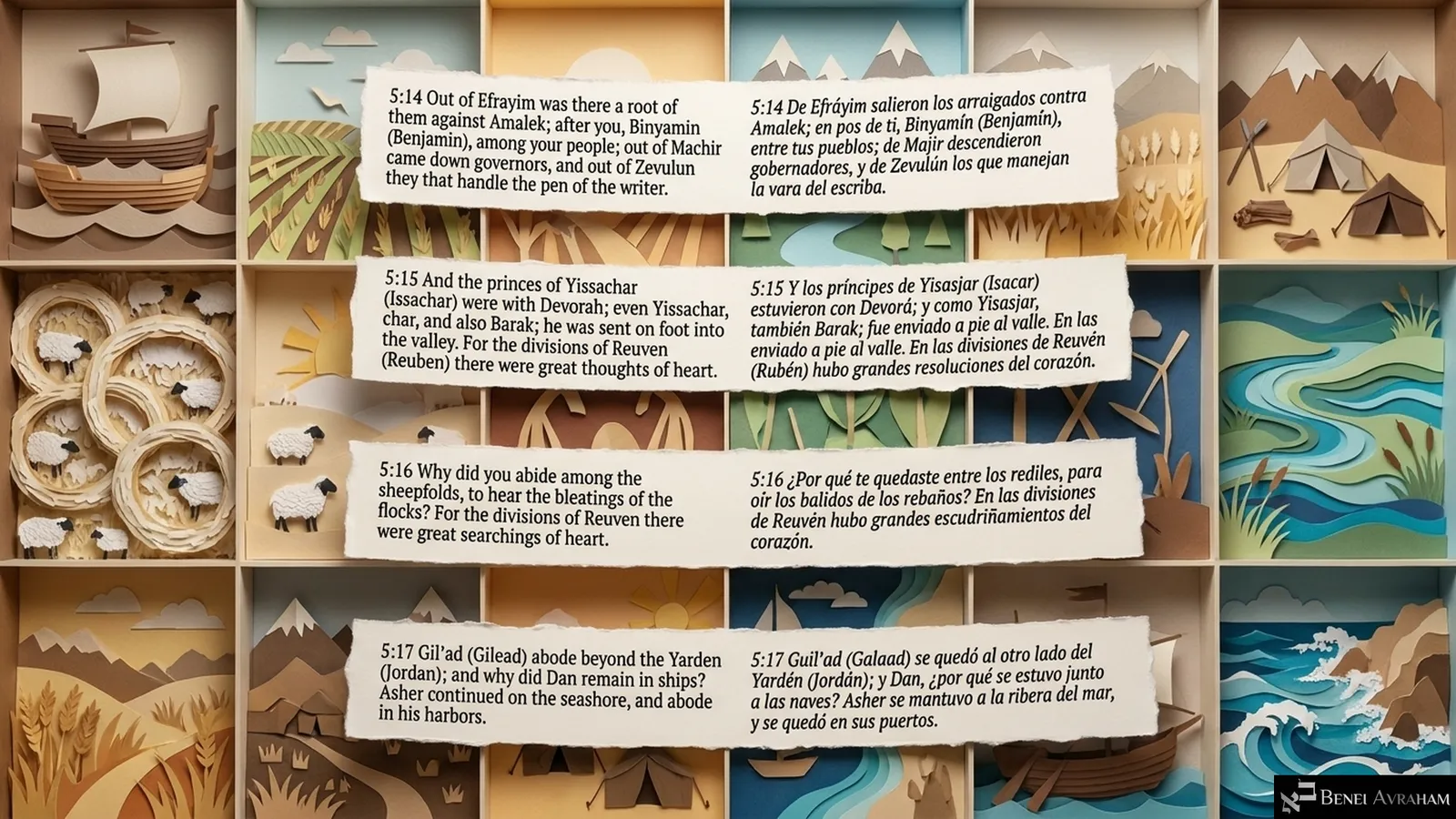
A paper cabinet of the tribes — ships, flocks and fields: the princes of Yissachar were with Devorah; why did you abide among the sheepfolds? (Judges 5:14–17).
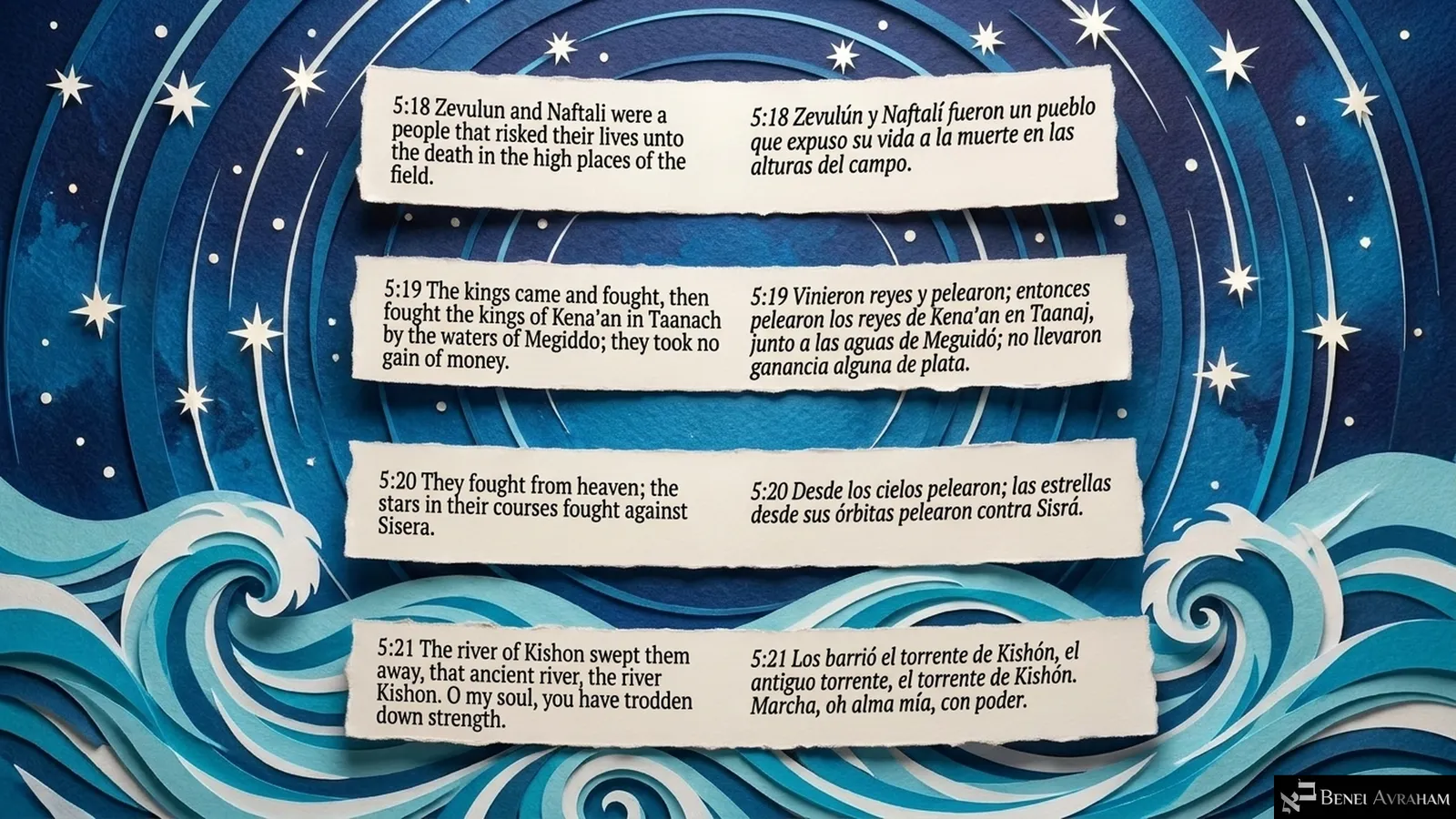
Paper stars over curling waves: the stars in their courses fought against Sisera, and the river of Kishon swept them away (Judges 5:18–21).
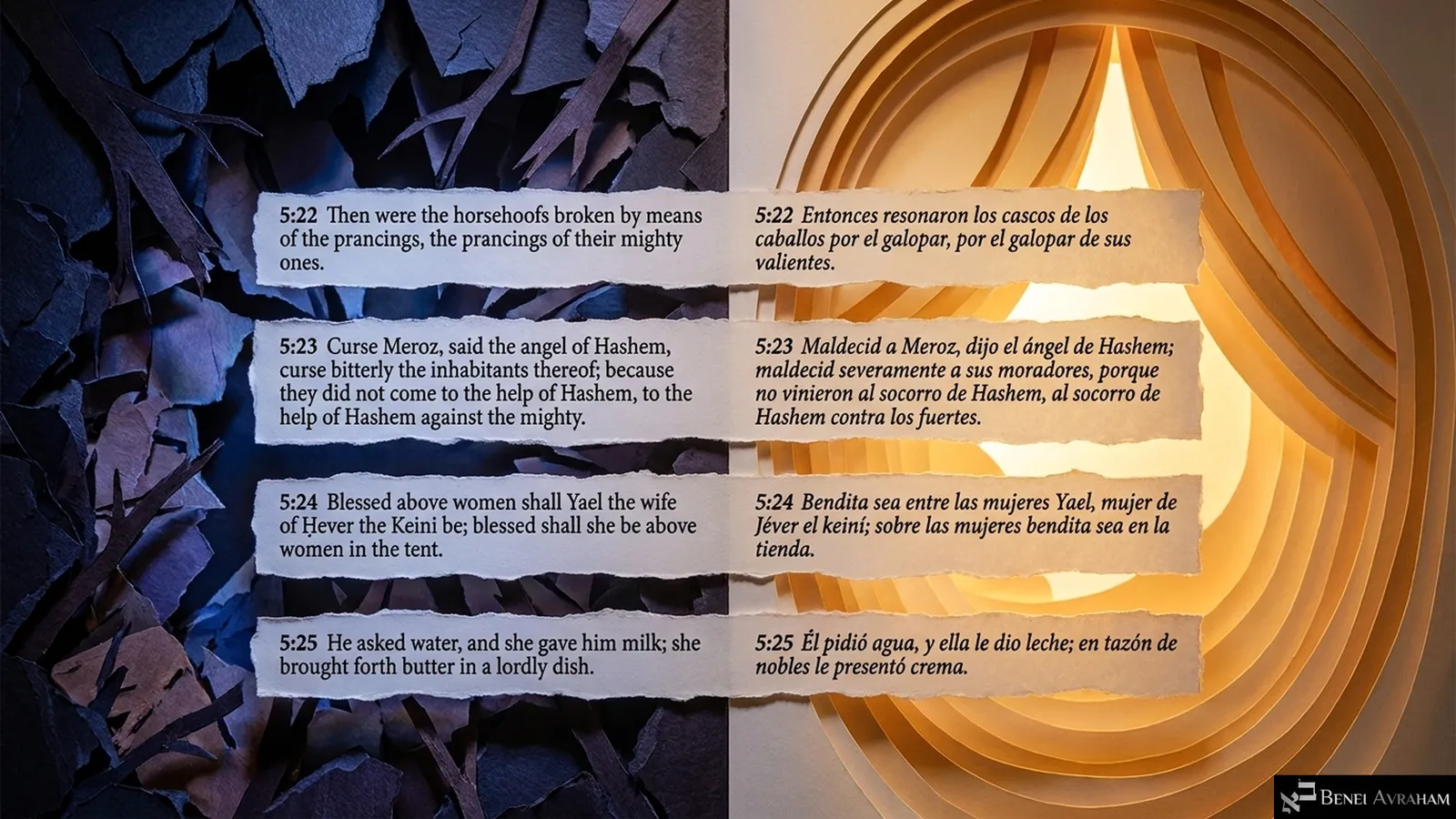
Dark torn paper beside a golden canopy: blessed above women shall Yael be (Judges 5:22–25).
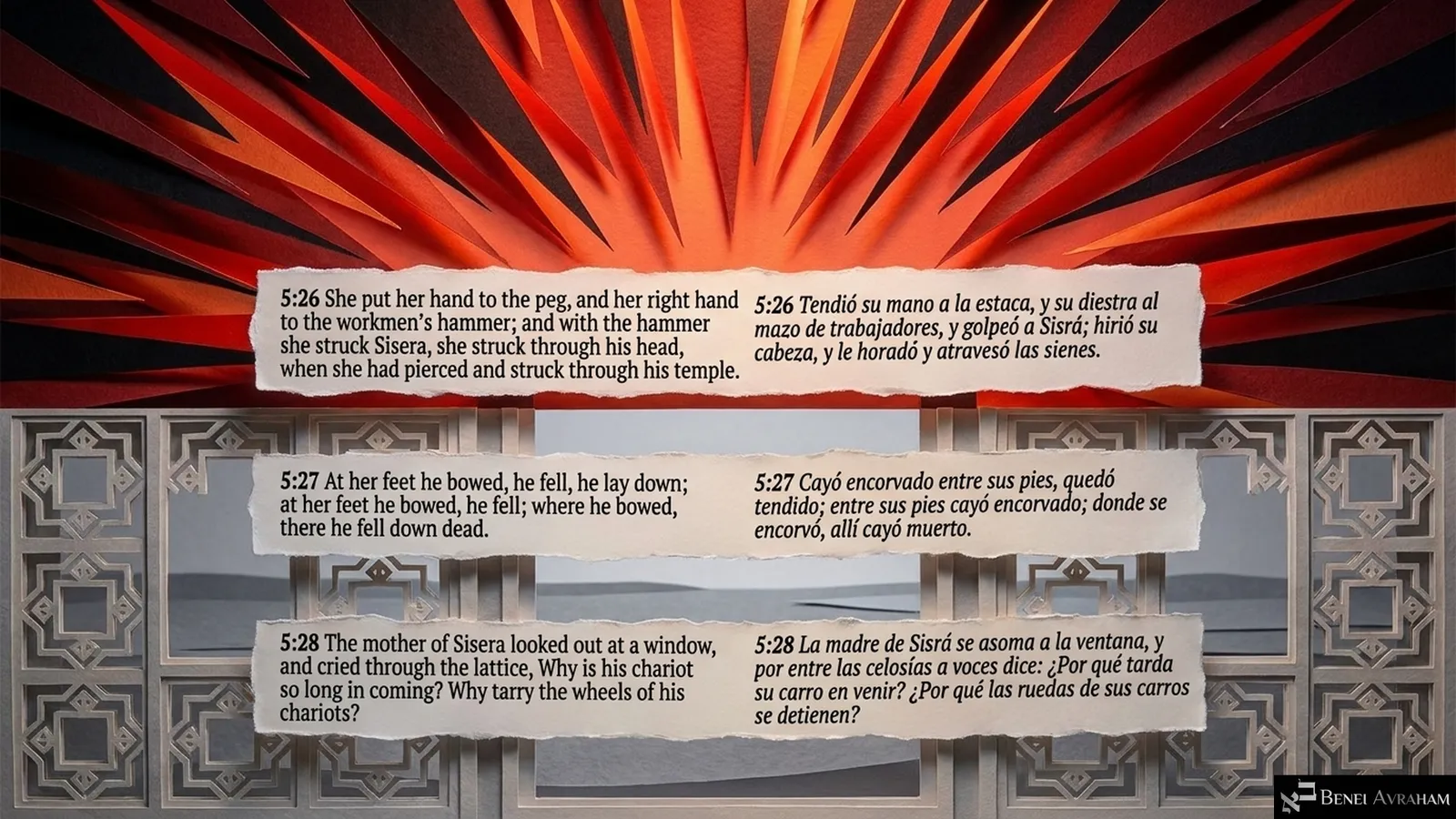
Red paper rays and a latticed window: the mother of Sisera looked out at a window — “Why is his chariot so long in coming?” (Judges 5:26–28).
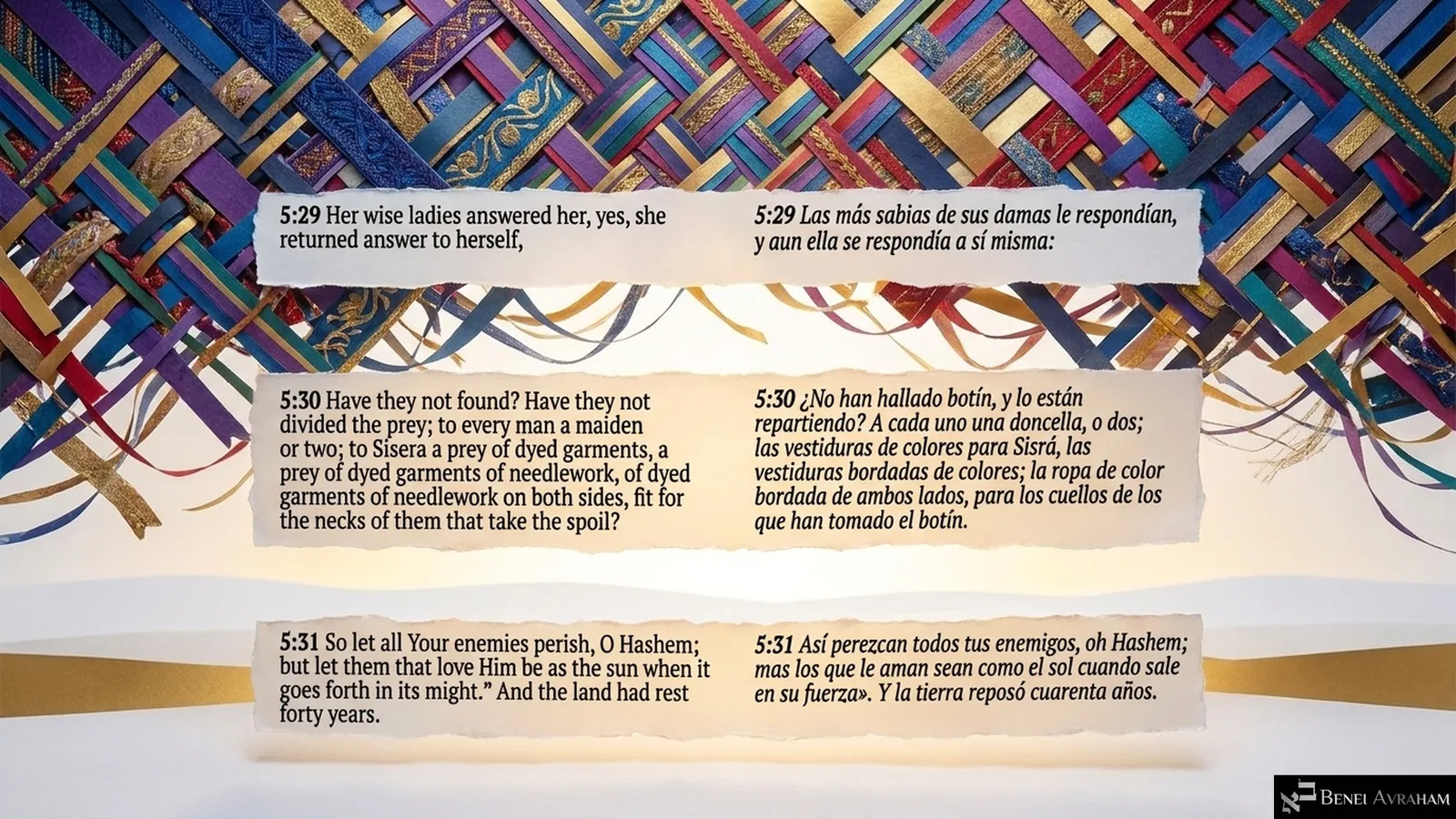
Woven ribbons of coloured cloth: “So let all Your enemies perish, O Hashem; but let them that love Him be as the sun when it goes forth in its might” (Judges 5:29–31).
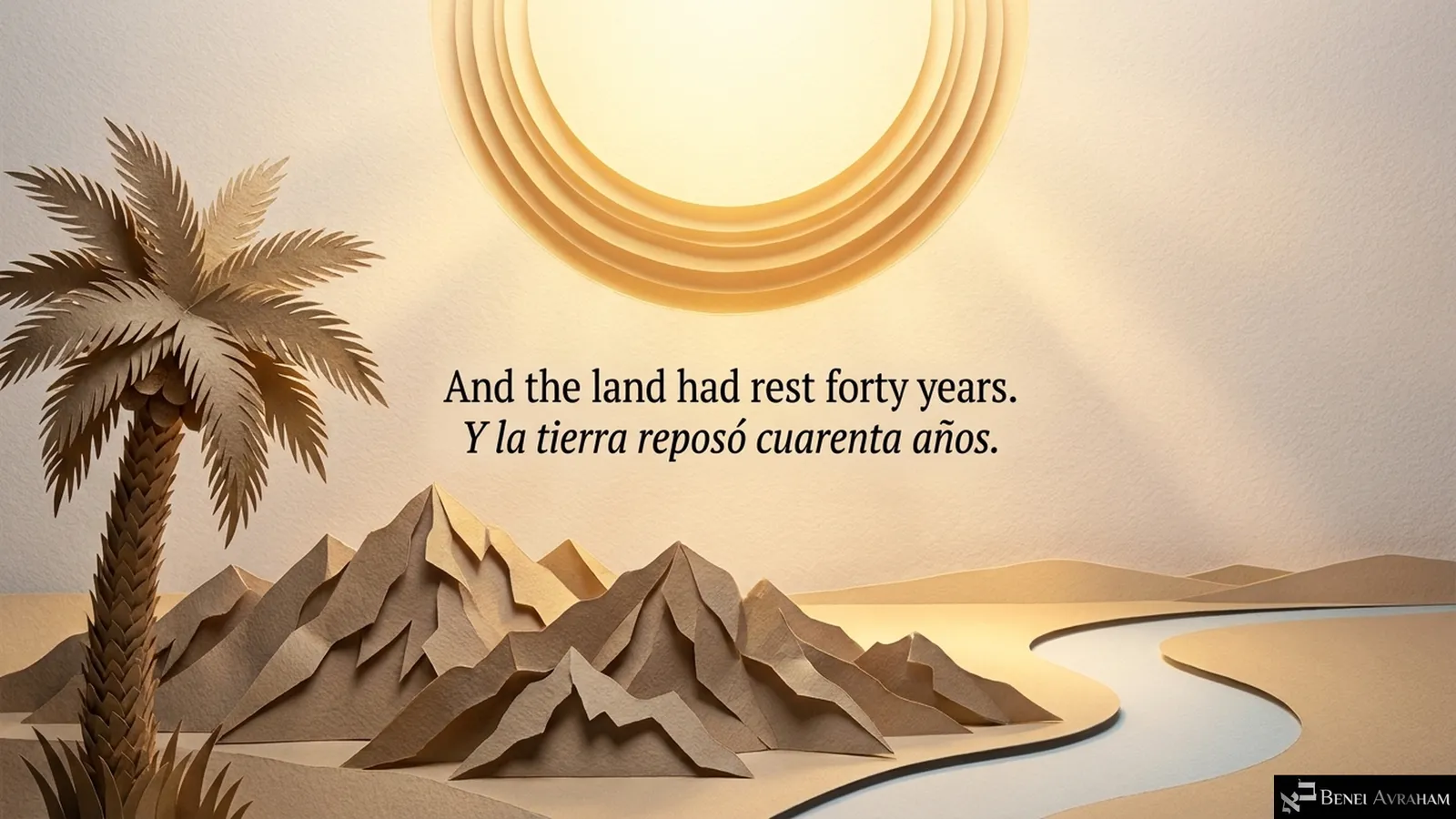
A paper sun over the palm, the mountains and the river: “And the land had rest forty years” (Judges 5:31).