SMS/Text 469-608-9944
Parashat Mishpatim · Exodus 21:1–23:19

Mishpatim: A Visual Journey

Illustrated teaching slides from Benei Avraham, in English and Spanish, walking through Parashat Mishpatim portion by portion: “Now these are the judgments which you shall set before them” — the Hebrew servant who goes out free in the seventh year or has his ear bored at the doorpost, the cities of refuge, and honor for father and mother; life for life and eye for eye, the goring ox, the open pit and restoring what was stolen; fire in the field, things left in a neighbor’s keeping, and “You shall neither vex a stranger, nor oppress him; for you were strangers in the land of Mitzrayim,” with Hashem who hears the cry of the widow and the fatherless; firstfruits and the firstborn, no false report and no following a multitude to do evil, and helping even an enemy’s donkey under its burden; and no bribe, the seventh year’s rest for the land, the Shabbat, and the three feasts of unleavened bread, harvest and ingathering. The slides for the rest of the parsha (Exodus 23:20–24:18) and the haftarah will be added here. Tap any image to open the slideshow; use the arrows (or swipe) to move through every slide.

Rishon · Exodus 21:1–19

First Portion

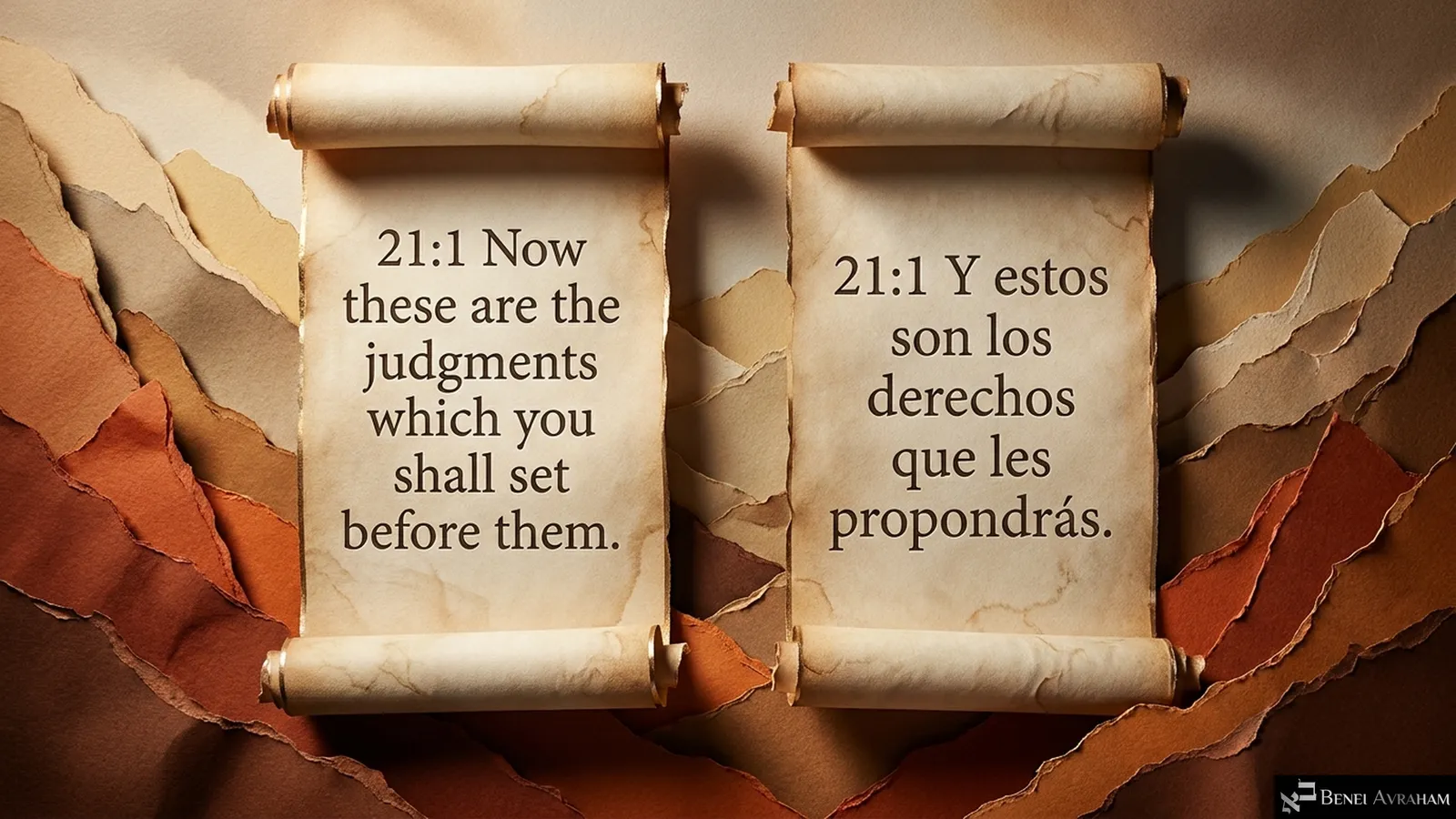
Two paper scrolls over torn earth-coloured layers: “Now these are the judgments which you shall set before them” (Exodus 21:1).
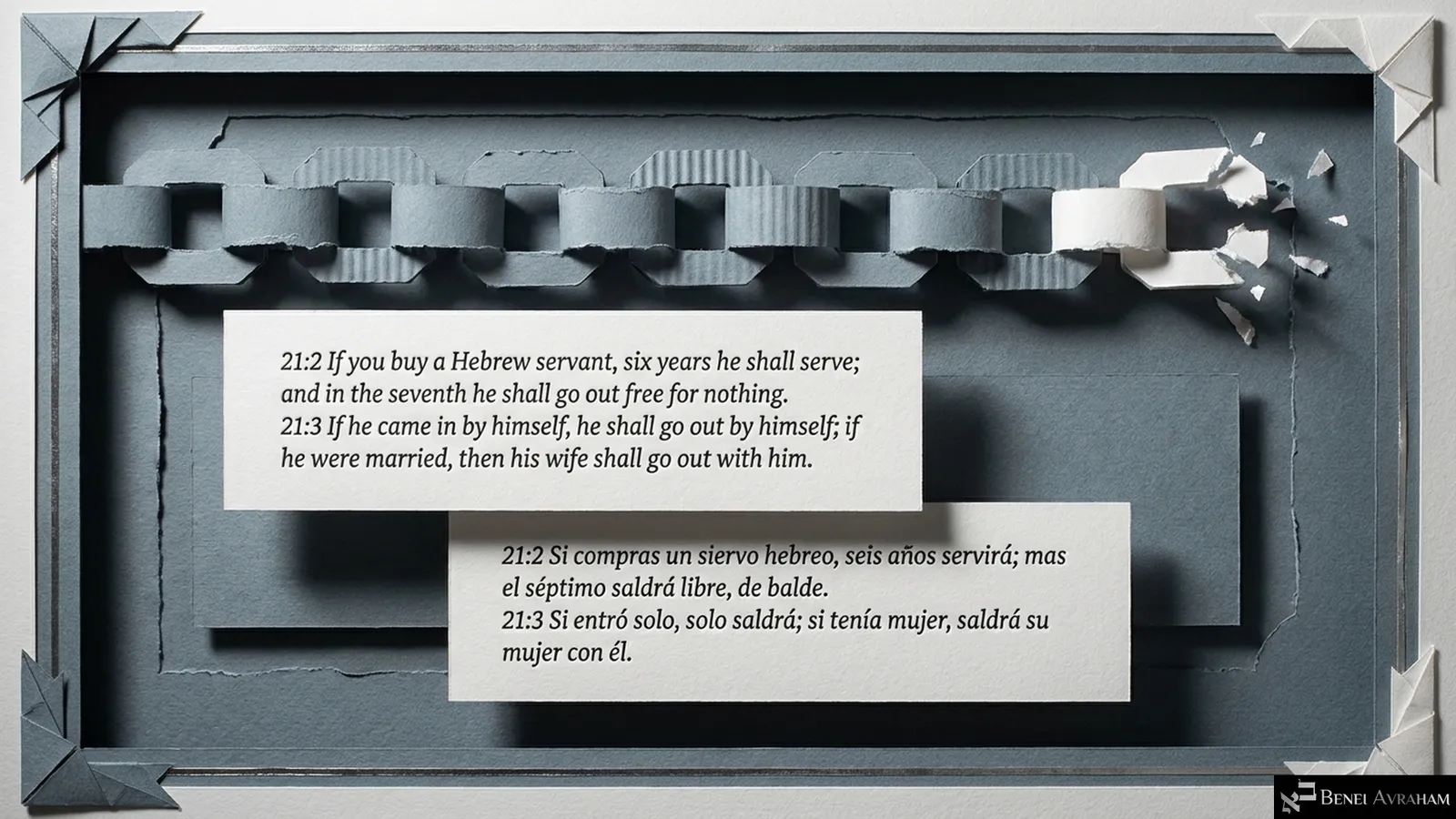
A grey paper chain breaking at the last link: a Hebrew servant shall serve six years, and in the seventh he shall go out free (Exodus 21:2–3).
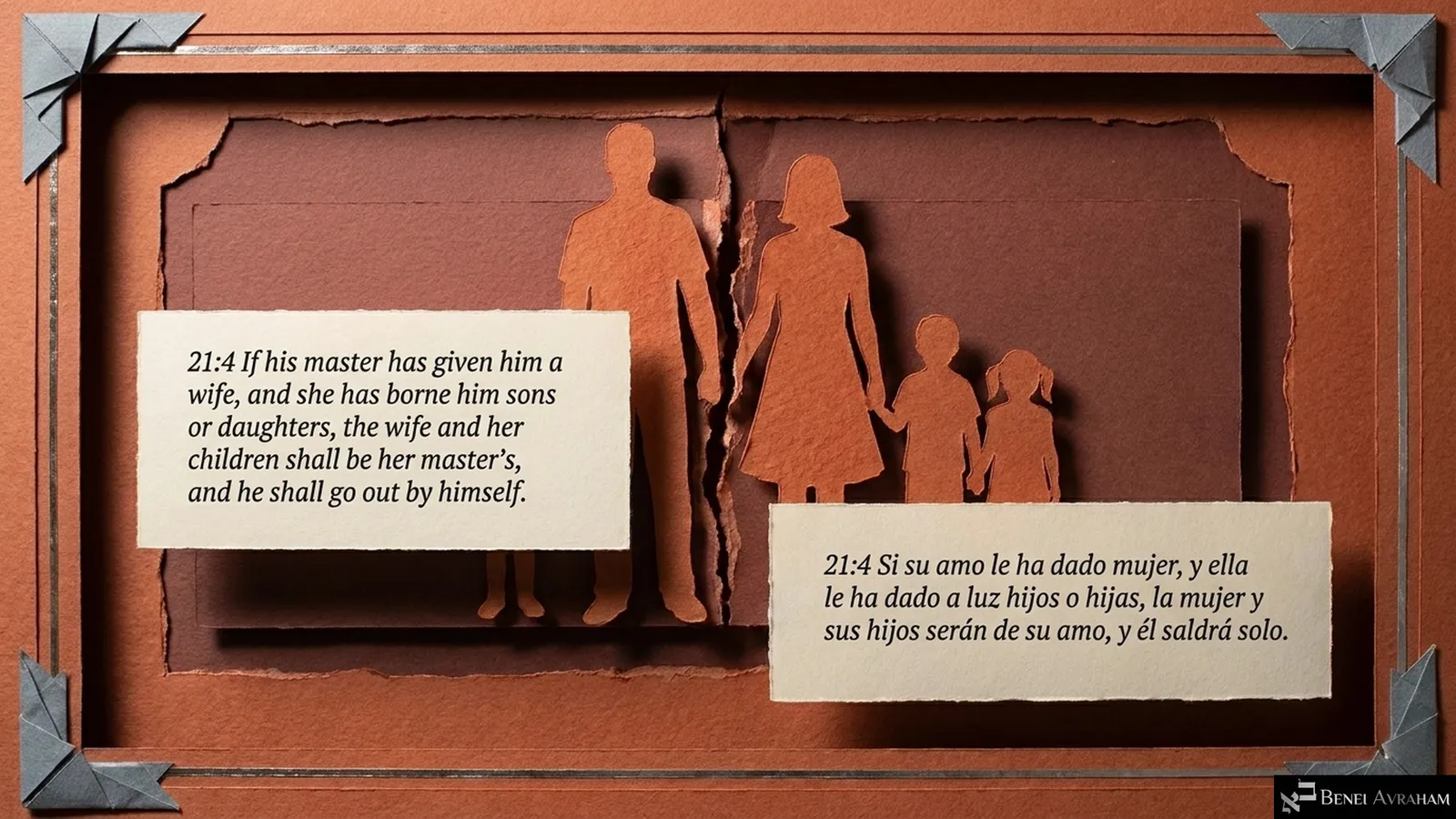
Paper silhouettes of a family torn apart: the wife and her children shall be her master’s, and he shall go out by himself (Exodus 21:4).
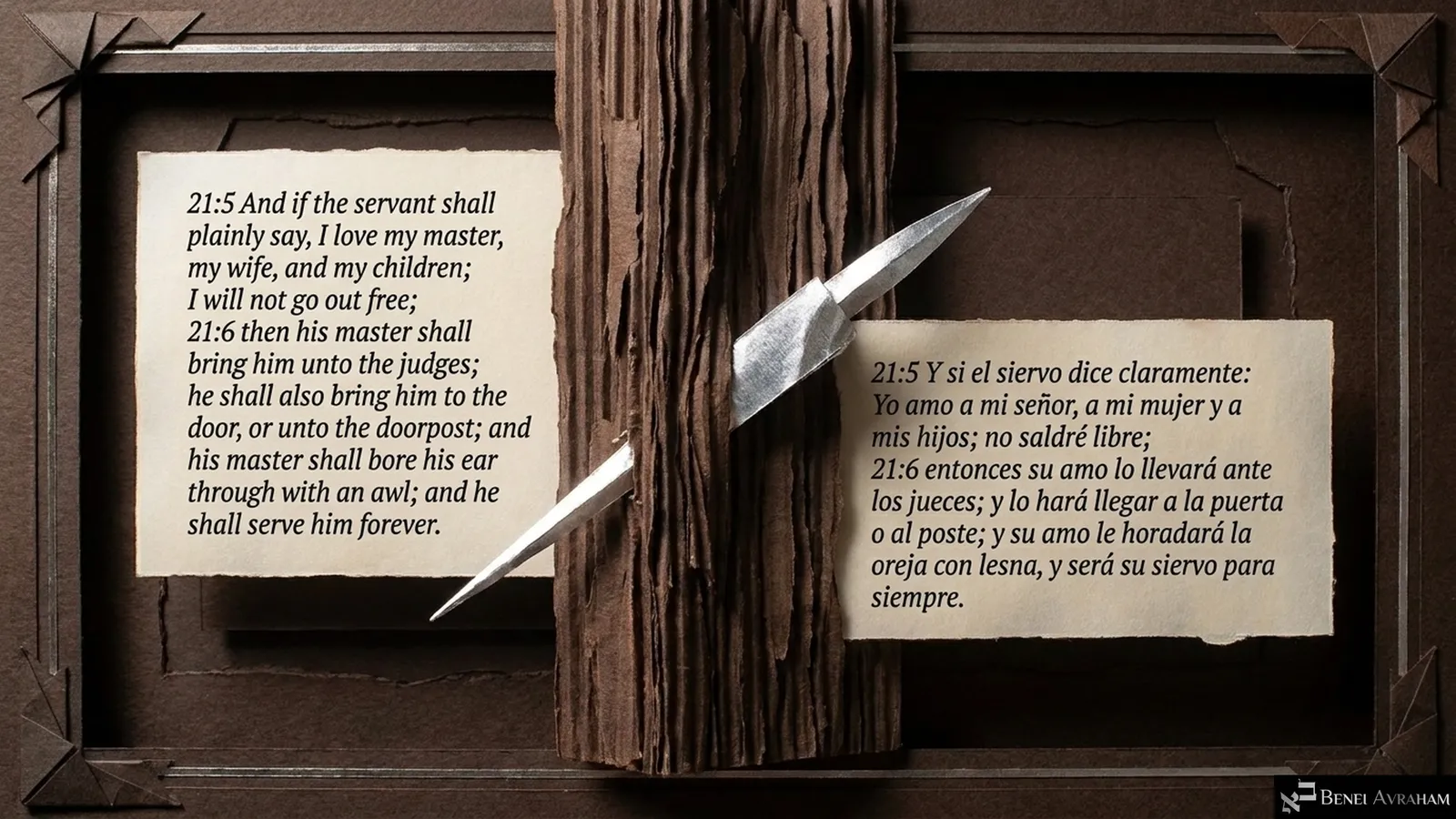
A paper awl through a wooden doorpost: “I love my master… I will not go out free” — and he shall serve him forever (Exodus 21:5–6).
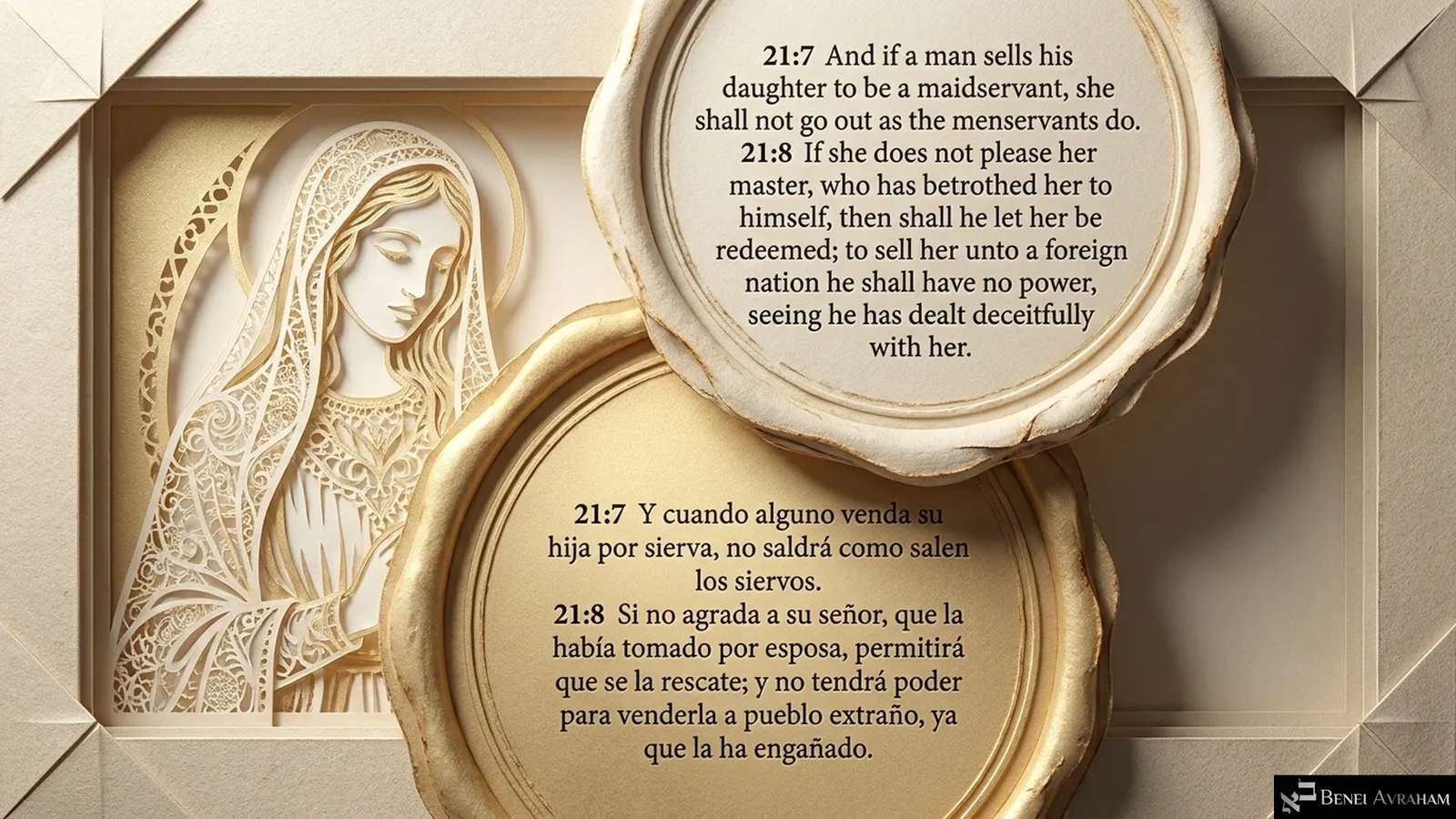
A carved paper portrait of a young woman beside two wax-seal cards: the law of the daughter sold as a maidservant (Exodus 21:7–8).
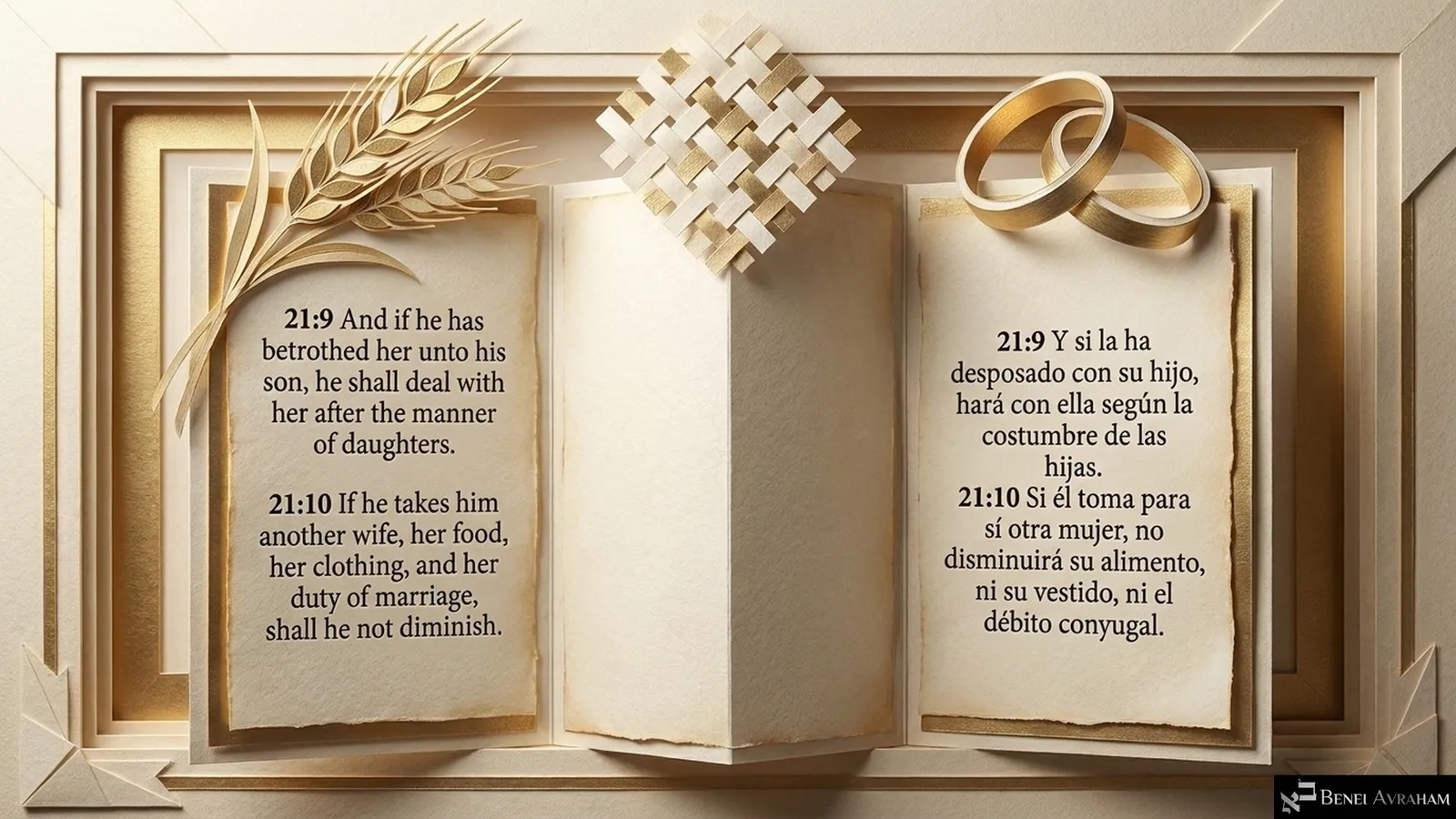
Wheat, a woven knot and two rings above an open book: her food, her clothing and her duty of marriage shall he not diminish (Exodus 21:9–10).
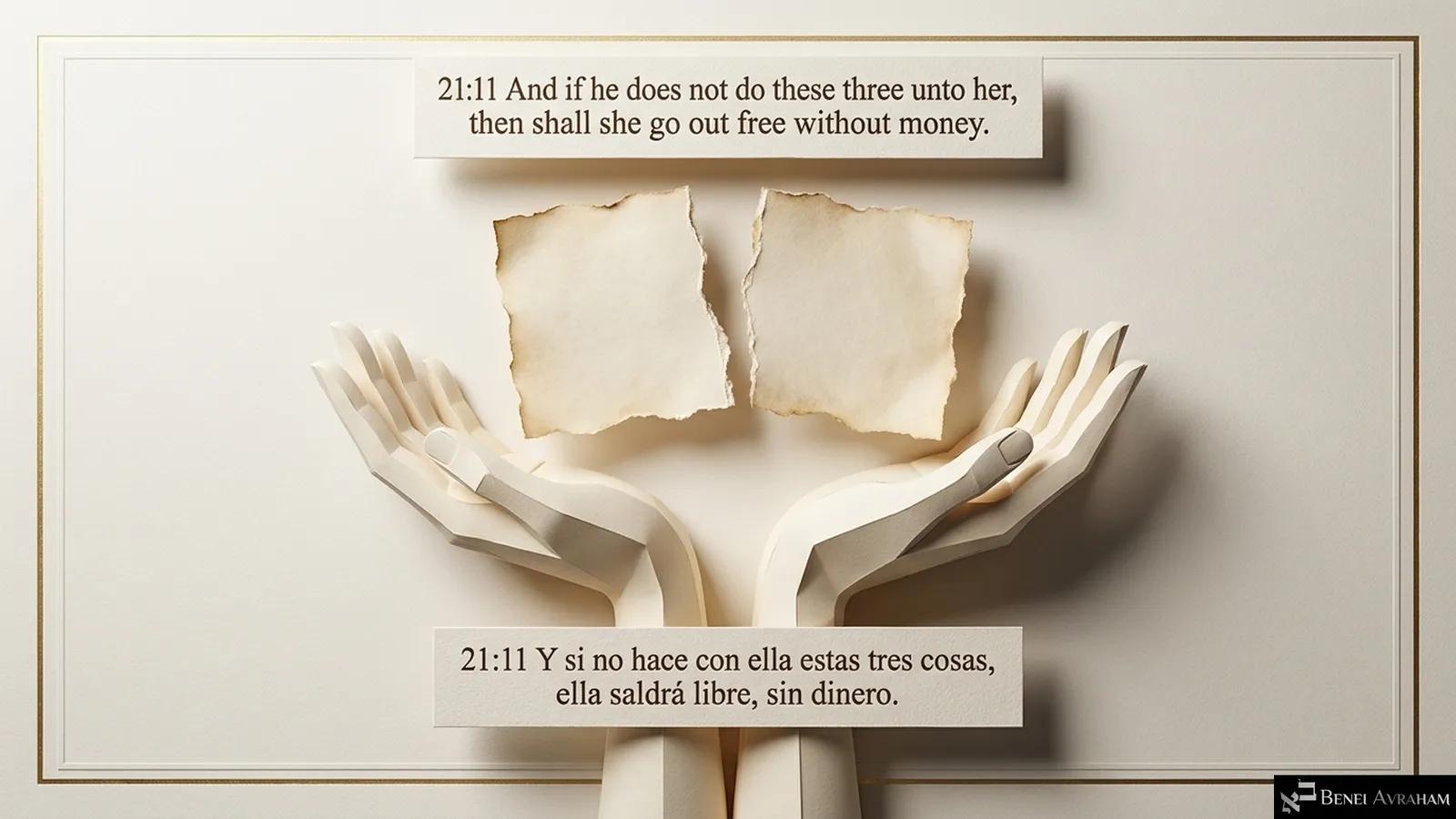
Two paper hands holding two blank cards: she shall go out free without money (Exodus 21:11).
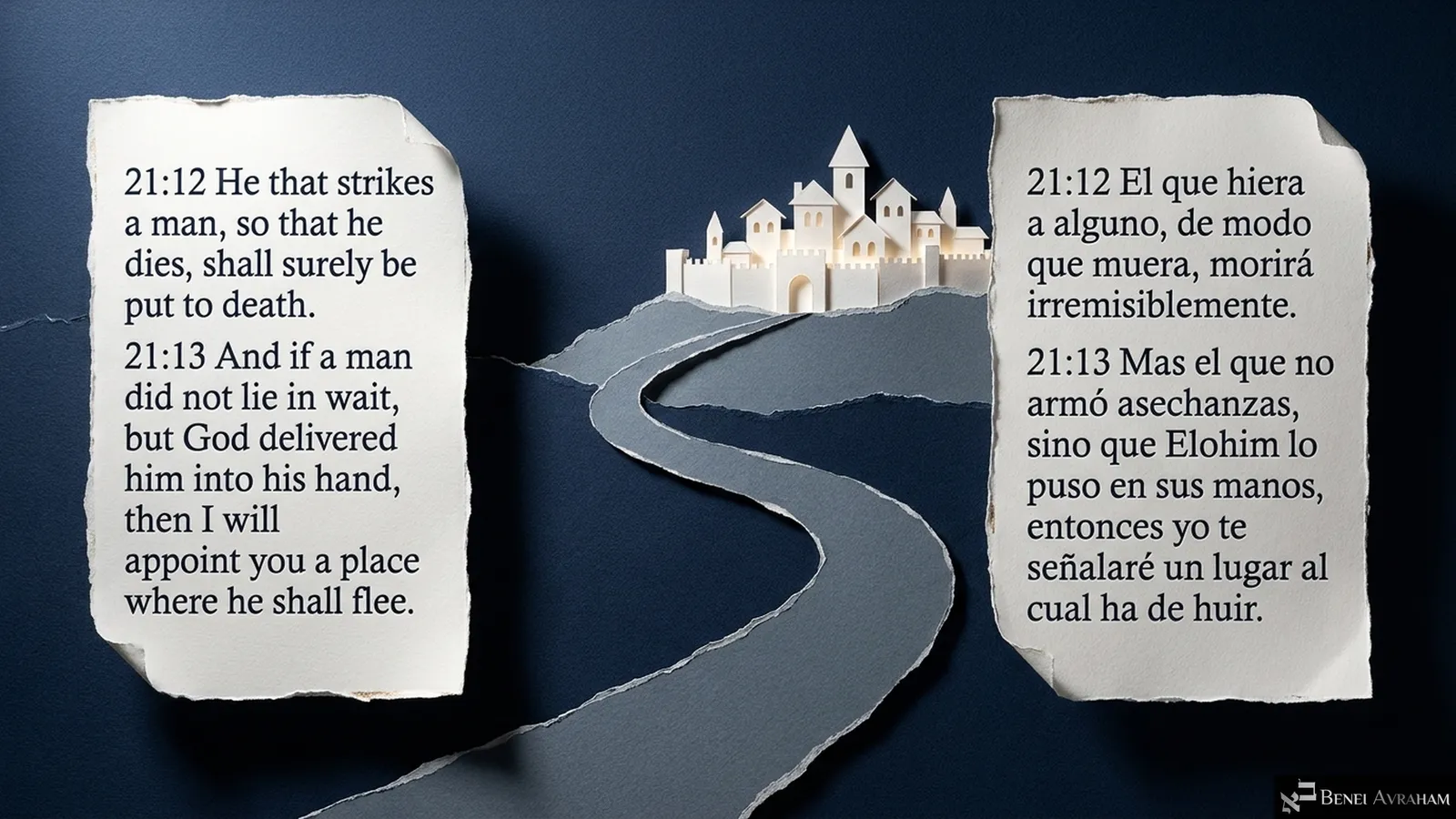
A paper road winding up to a walled city: “I will appoint you a place where he shall flee” (Exodus 21:12–13).
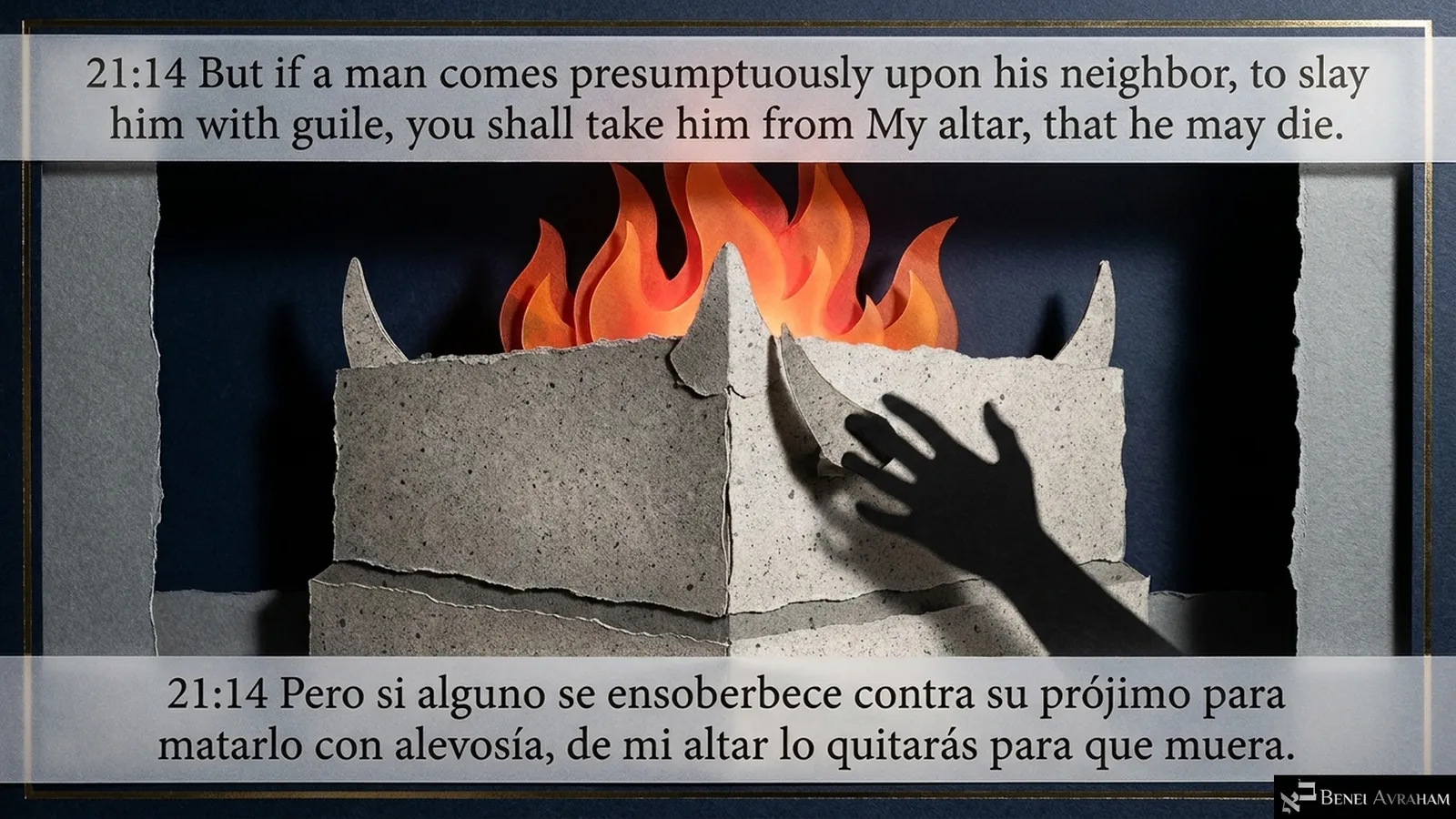
A paper hand reaching for a horned altar in flame: “You shall take him from My altar, that he may die” (Exodus 21:14).
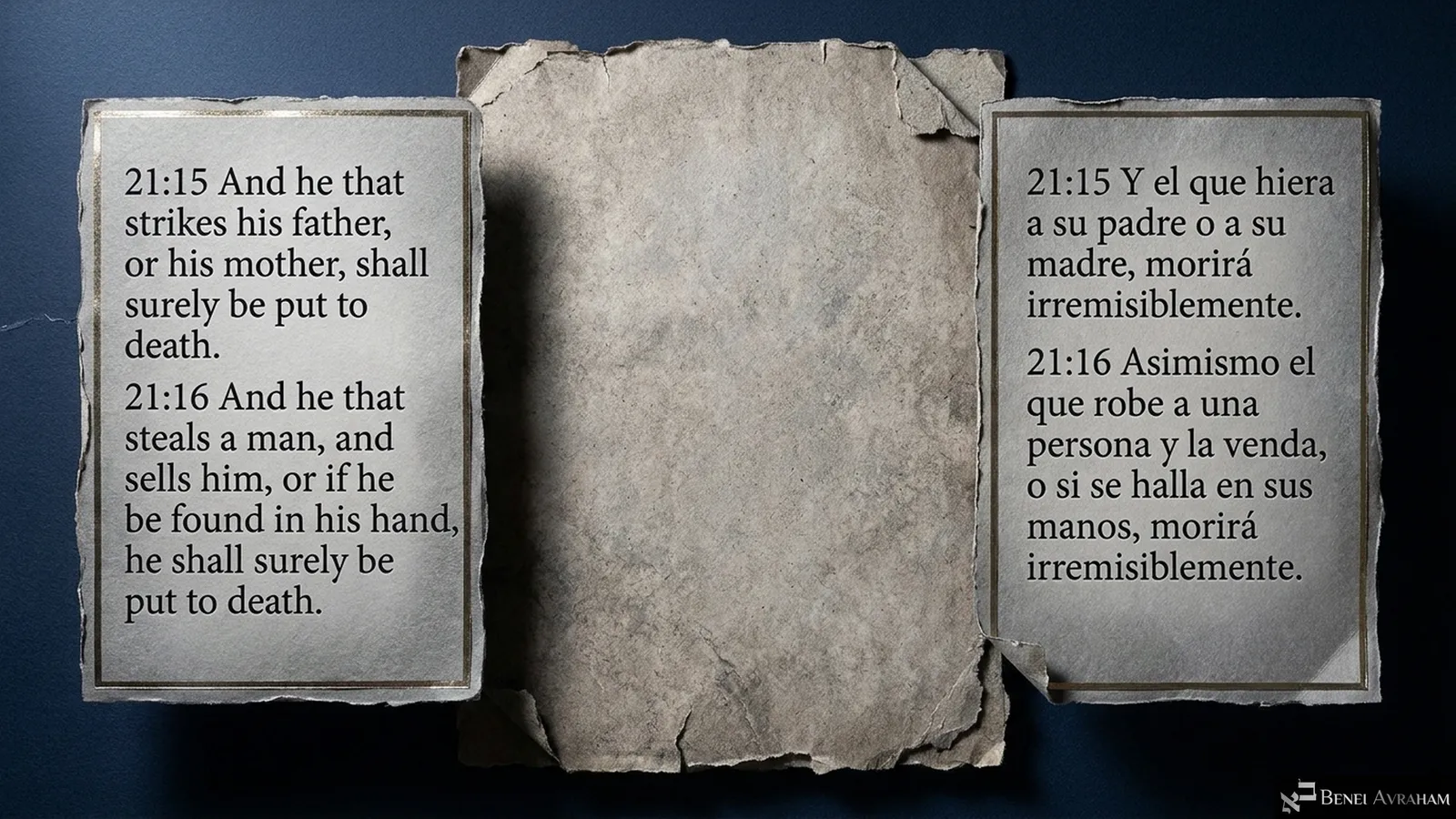
Grey stone tablets on dark blue: he that strikes his father or his mother, and he that steals a man, shall surely be put to death (Exodus 21:15–16).
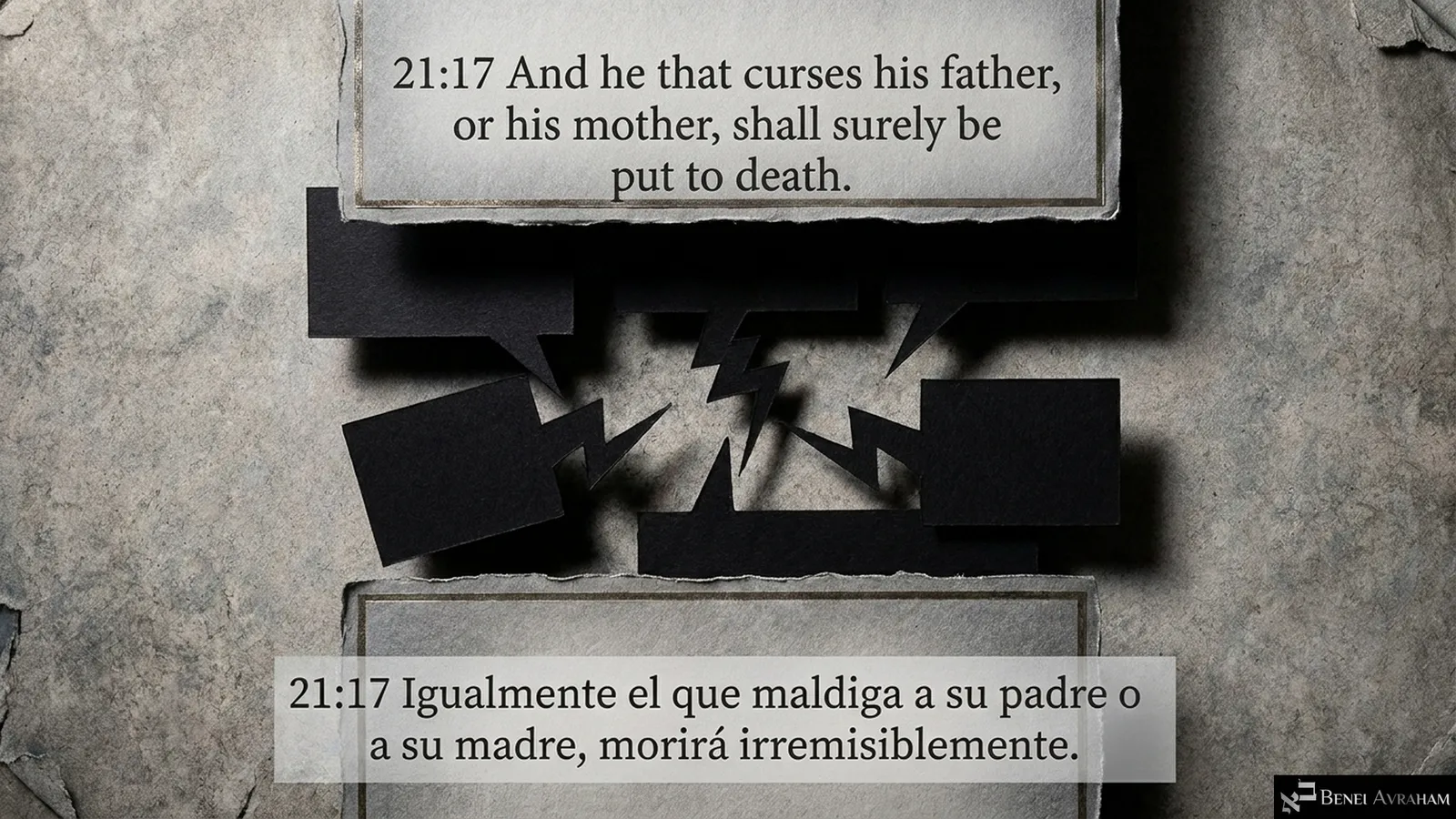
Black paper speech bubbles cracking on stone: he that curses his father or his mother shall surely be put to death (Exodus 21:17).
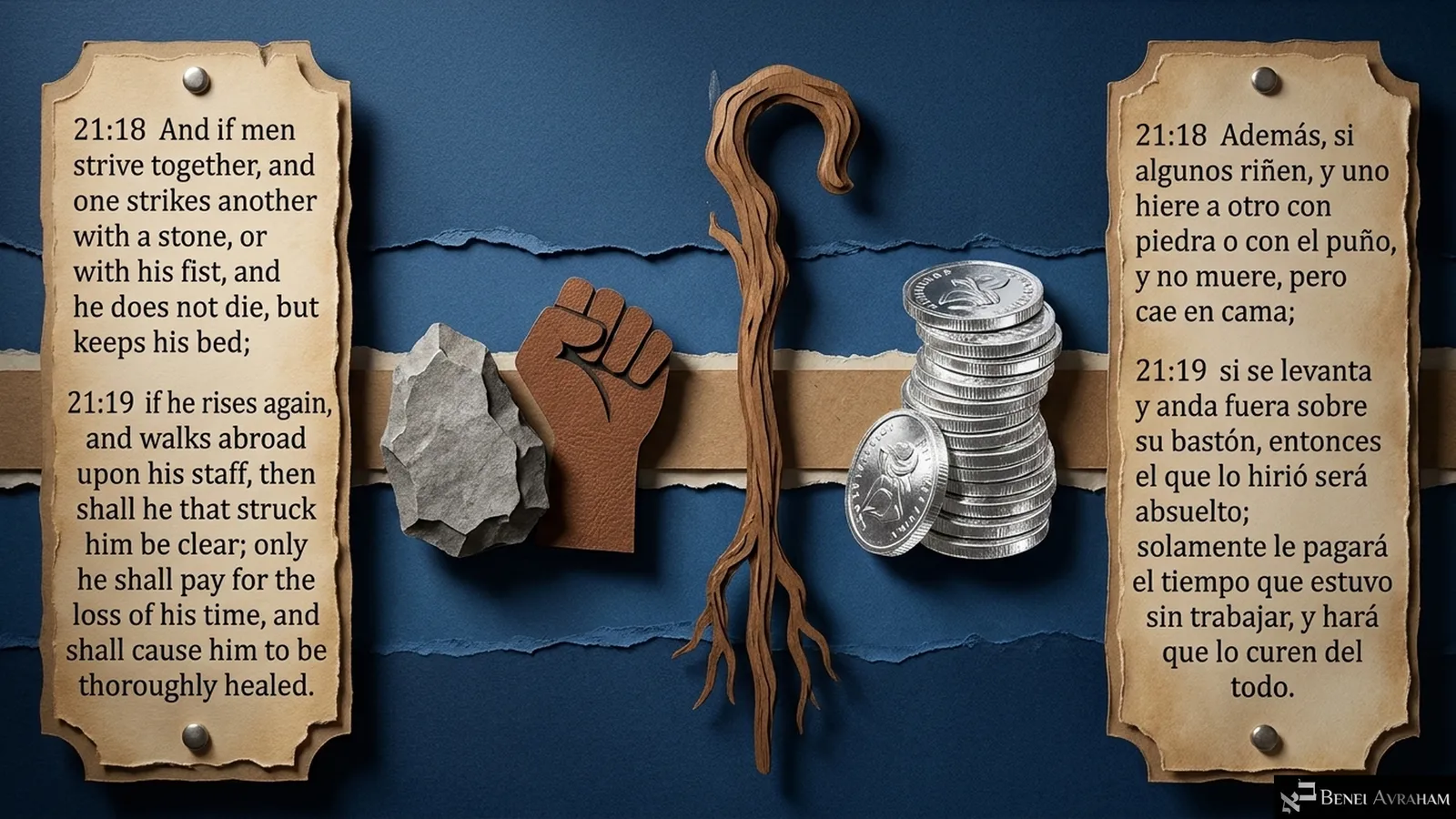
A stone, a fist, a staff and a stack of coins: he shall pay for the loss of his time, and cause him to be thoroughly healed (Exodus 21:18–19).
Sheni · Exodus 21:20–22:3

Second Portion

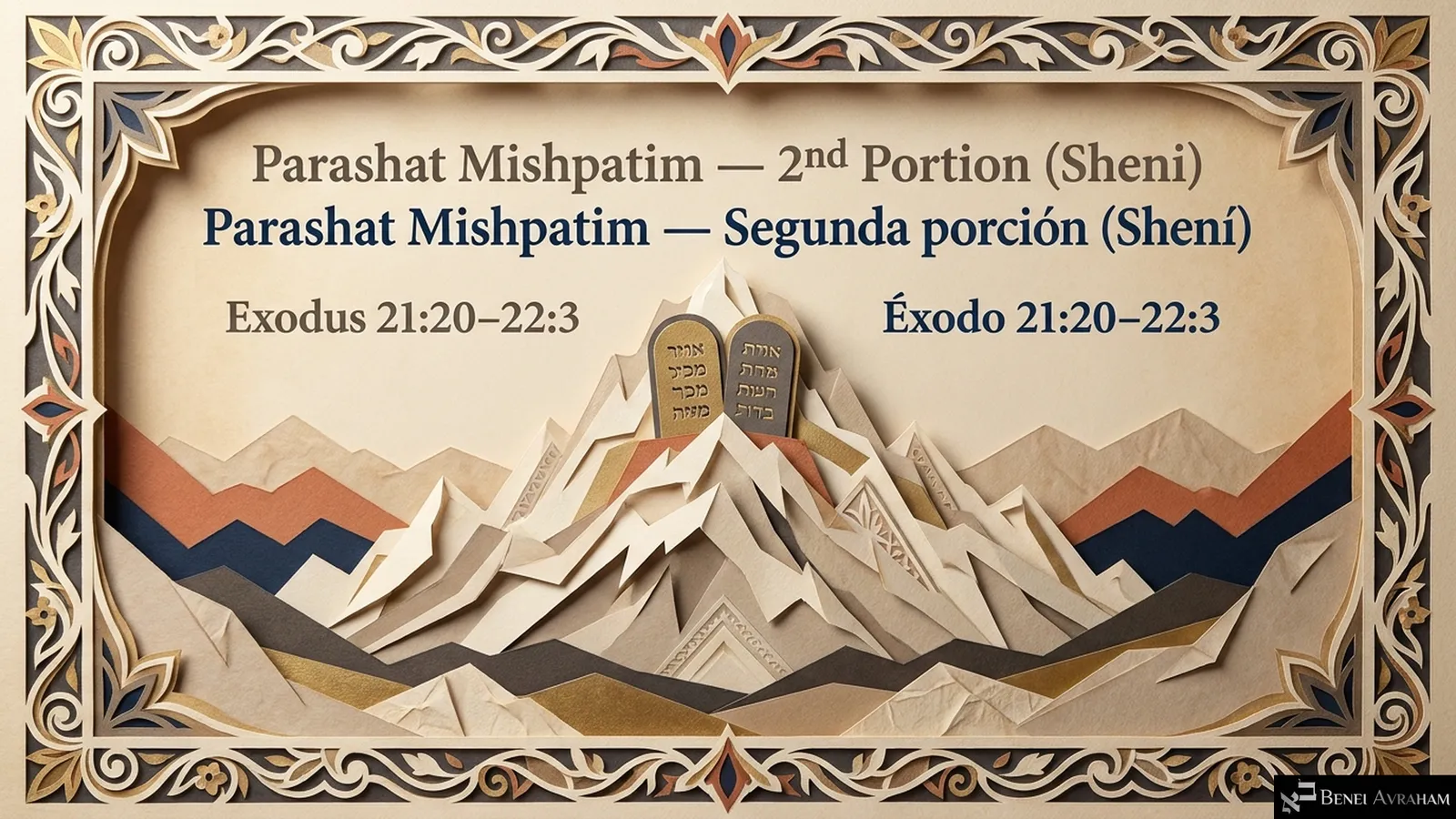
Title card for the second portion with the tablets on a paper mountain: “Parashat Mishpatim — 2nd Portion (Sheni), Exodus 21:20–22:3”.
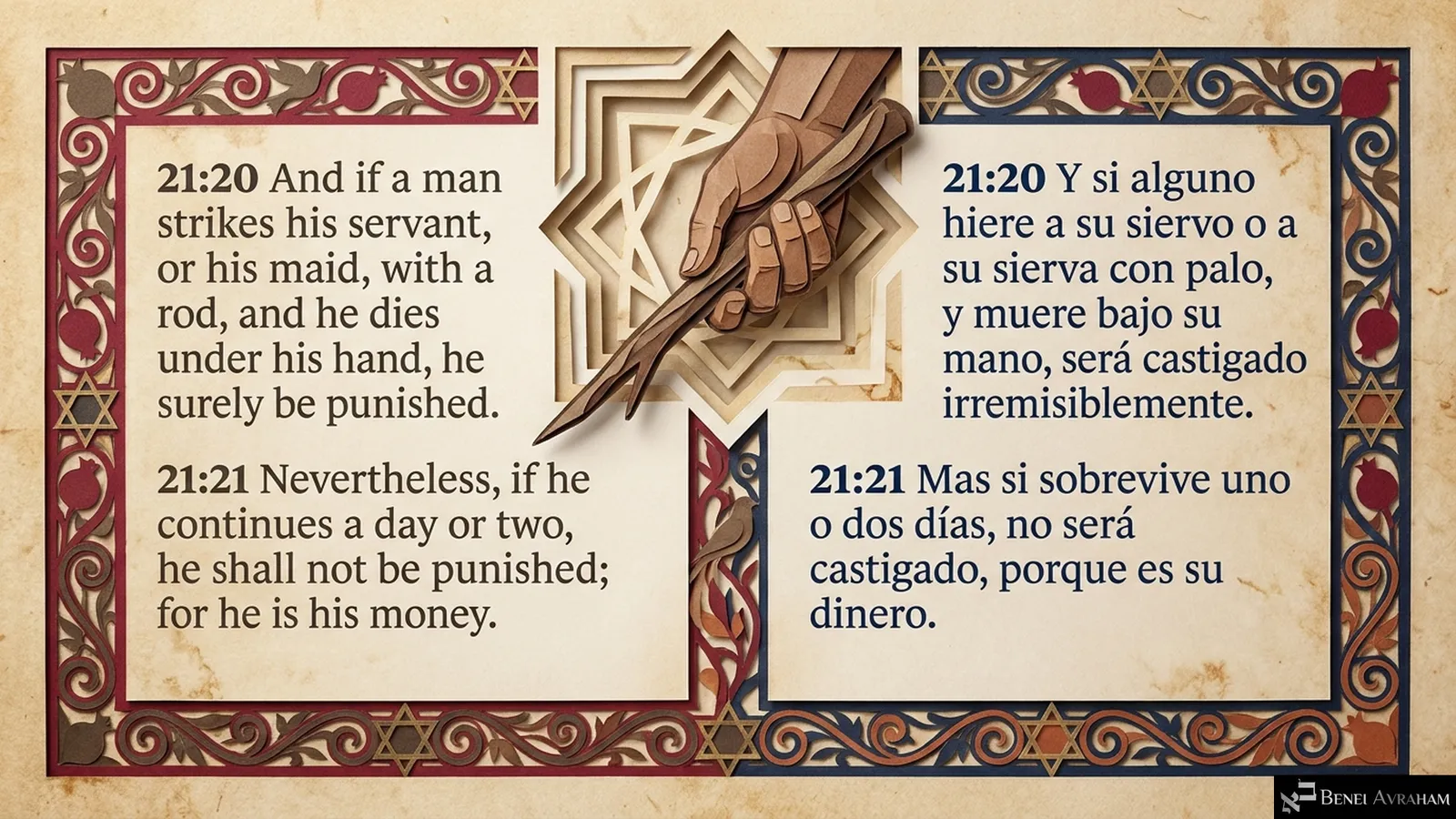
A paper hand with a rod in an ornate frame: if a man strikes his servant with a rod and he dies, he shall surely be punished (Exodus 21:20–21).
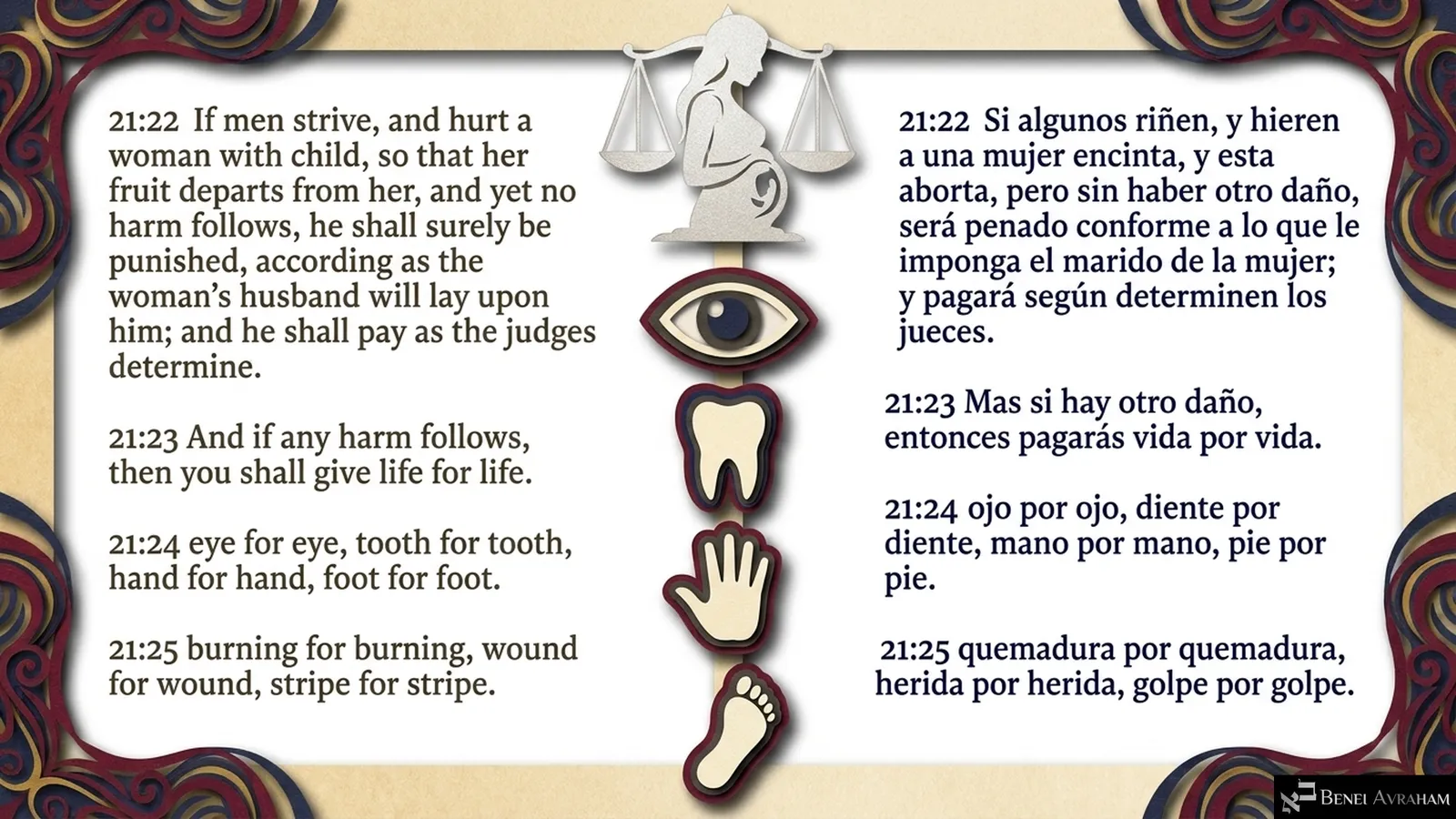
A balance, an eye, a tooth, a hand and a foot: life for life, eye for eye, tooth for tooth (Exodus 21:22–25).
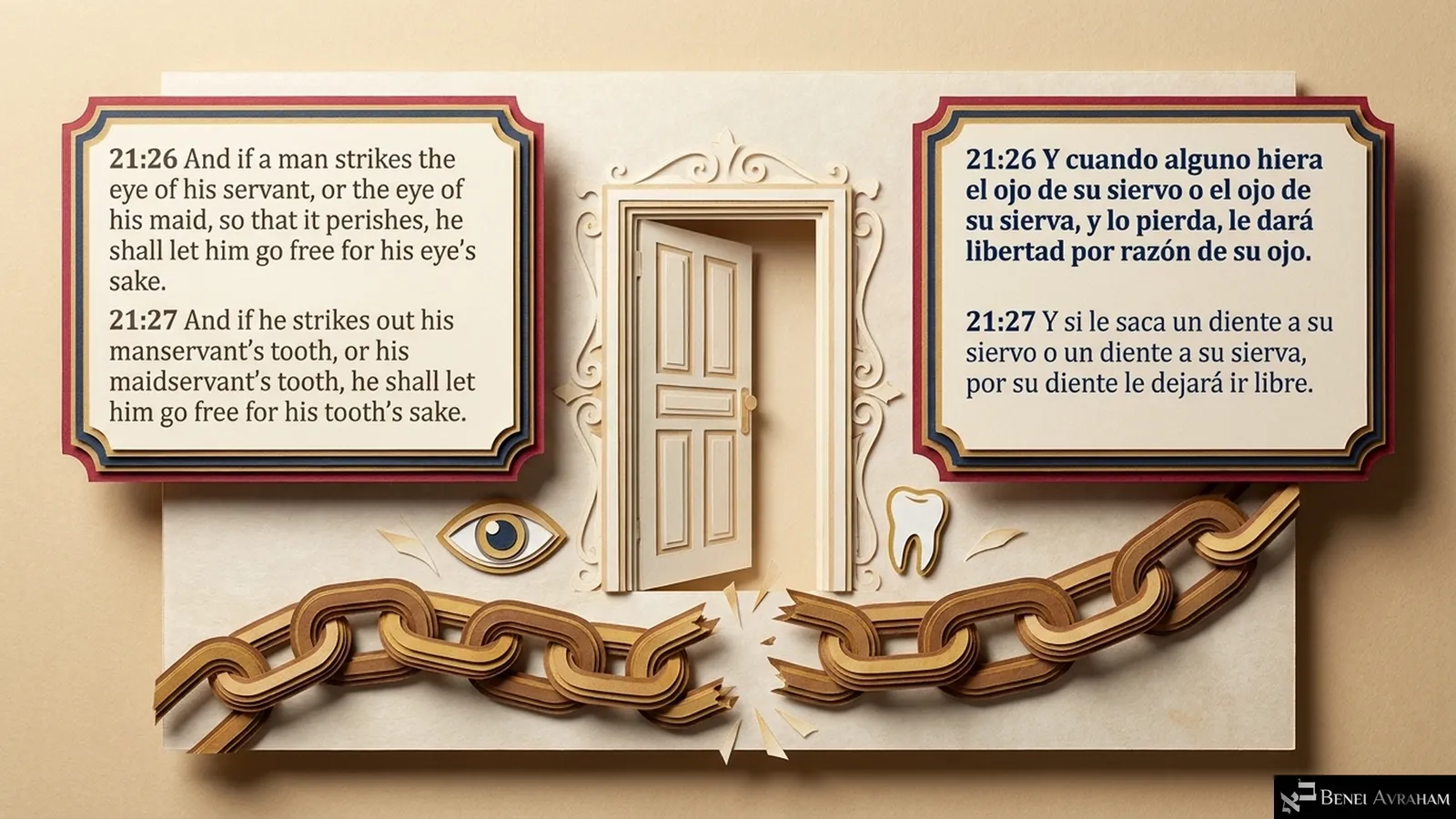
An open door, an eye and a tooth beside a broken chain: he shall let him go free for his eye’s sake… for his tooth’s sake (Exodus 21:26–27).
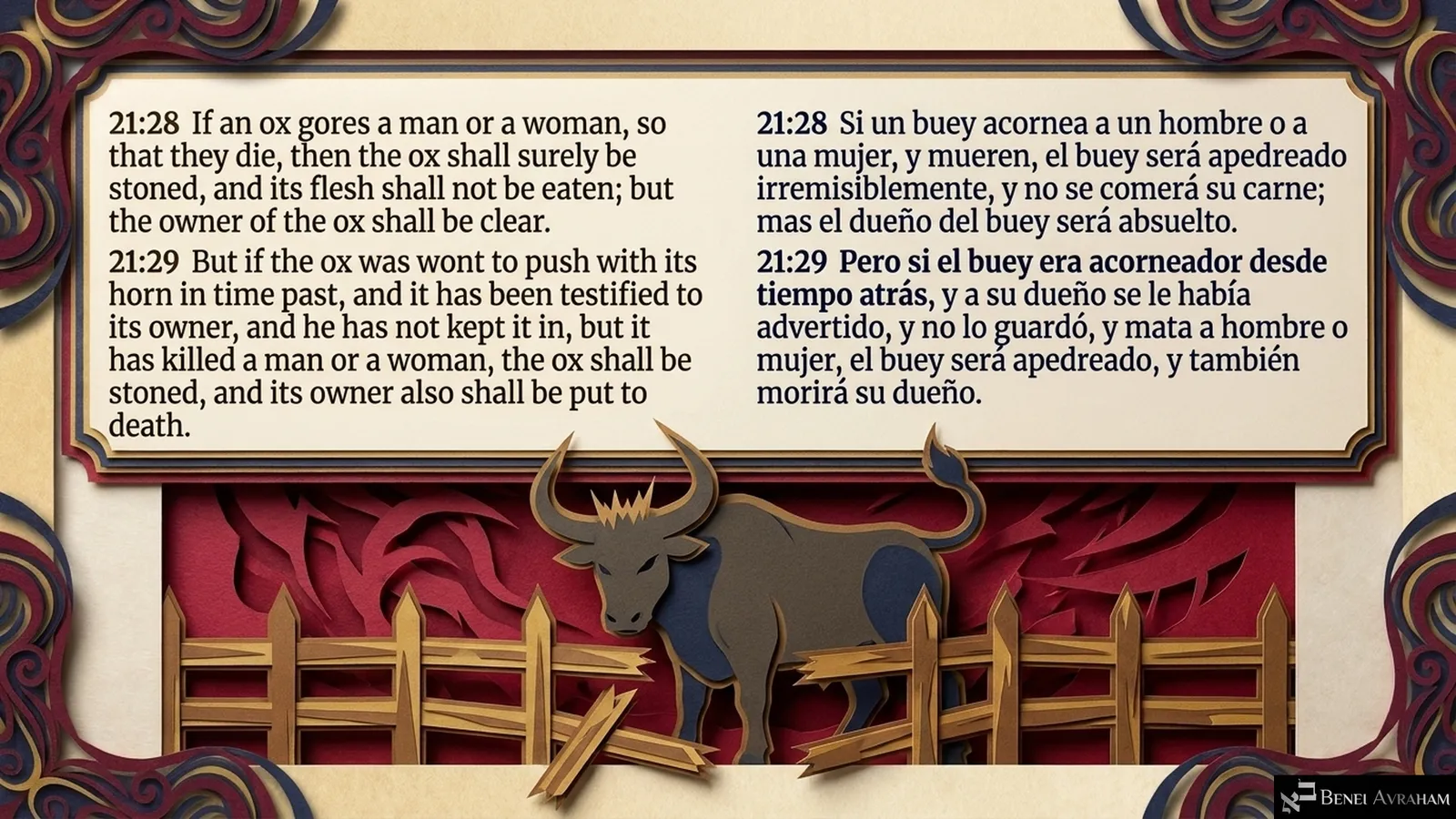
A paper ox behind a broken fence: if an ox gores a man or a woman… and if the ox was wont to push with its horn (Exodus 21:28–29).
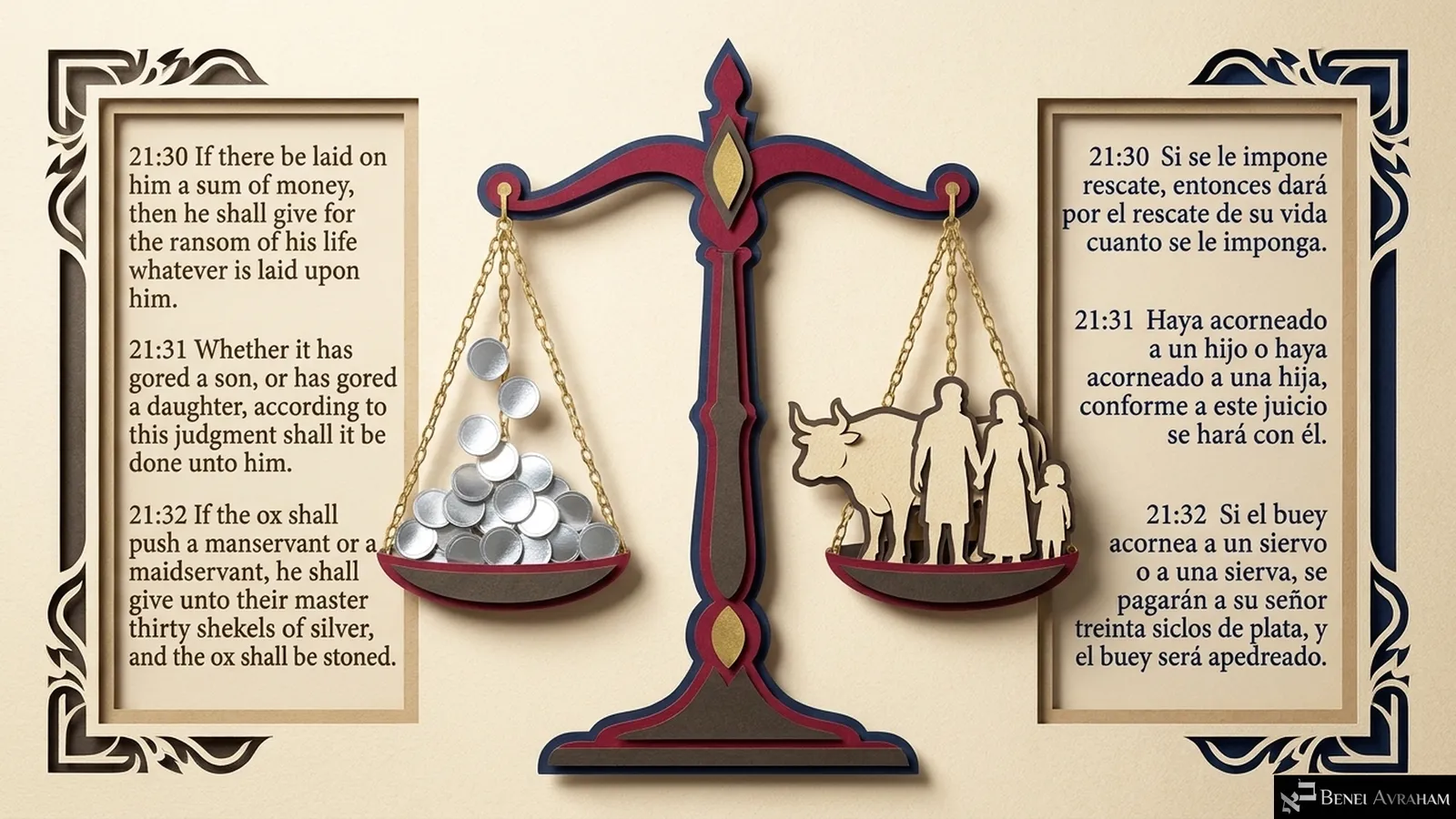
A great balance weighing silver against the ox and a family: the ransom of his life, and thirty shekels of silver (Exodus 21:30–32).
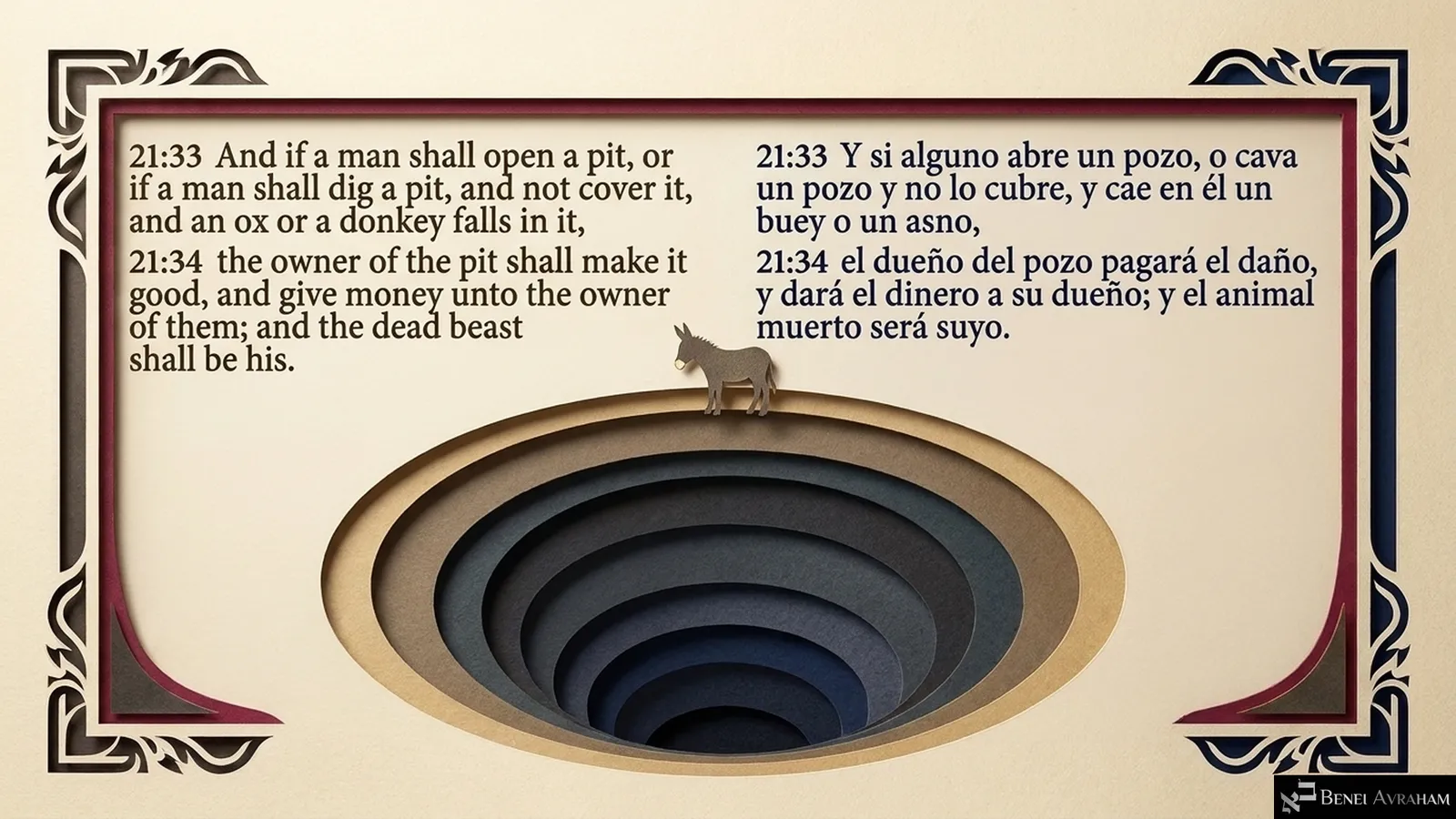
A paper donkey at the edge of a deep layered pit: the owner of the pit shall make it good (Exodus 21:33–34).
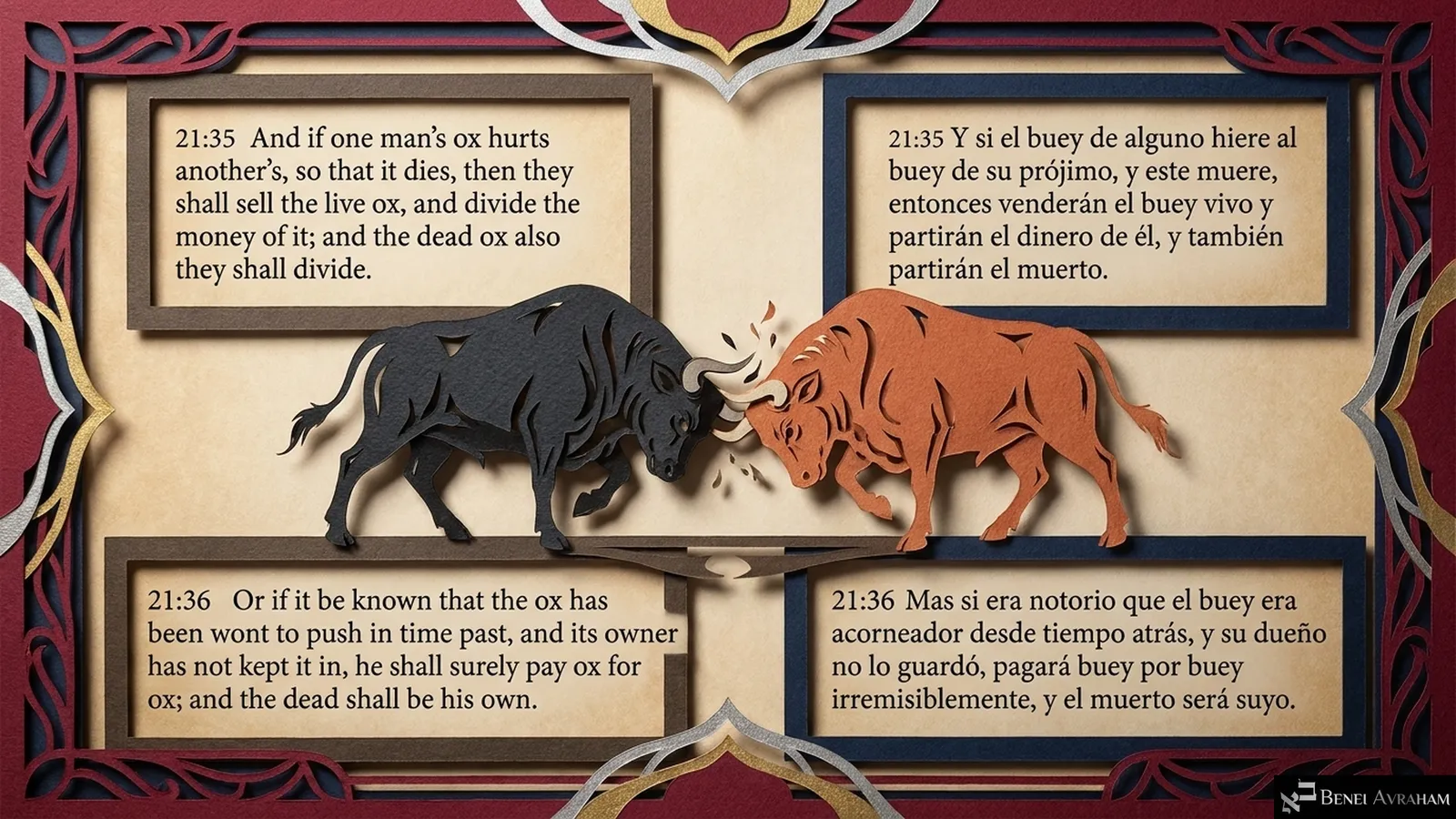
Two paper oxen locking horns: they shall sell the live ox, and divide the money of it; and the dead ox also they shall divide (Exodus 21:35–36).
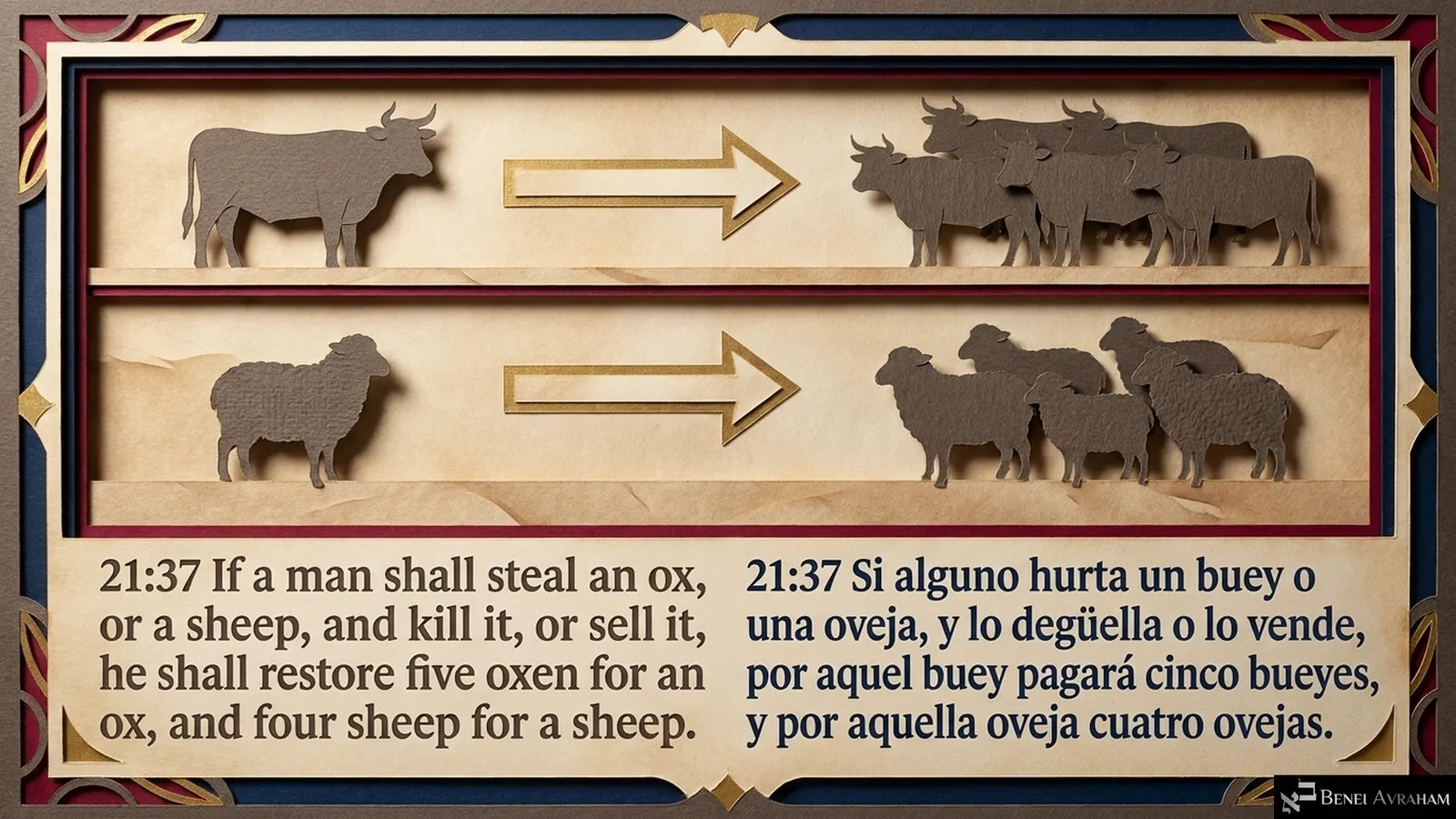
One ox and one sheep with arrows to five oxen and four sheep: he shall restore five oxen for an ox, and four sheep for a sheep (Exodus 21:37).
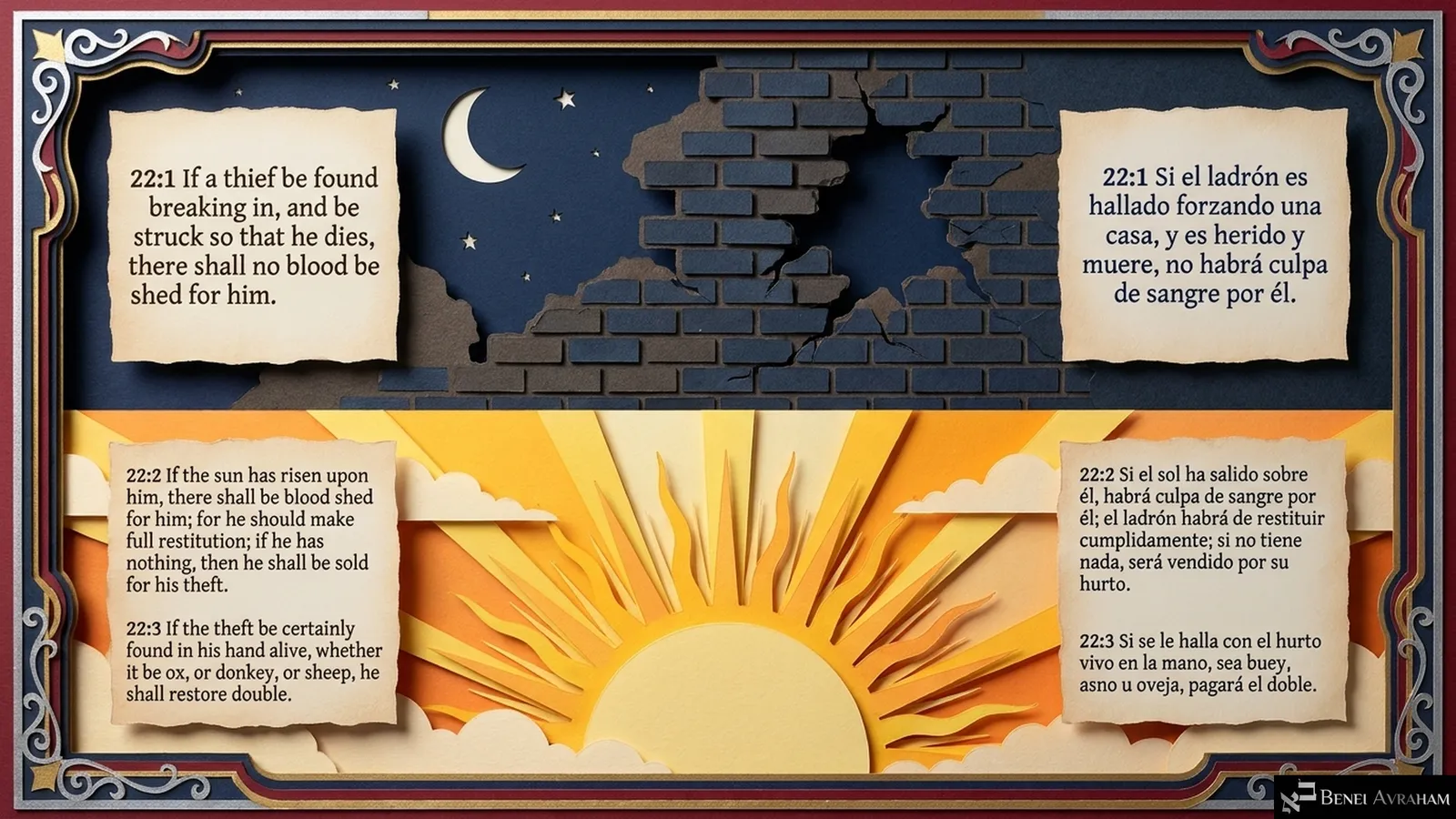
A broken brick wall at night and a rising paper sun: the thief found breaking in, and if the sun has risen upon him (Exodus 22:1–3).
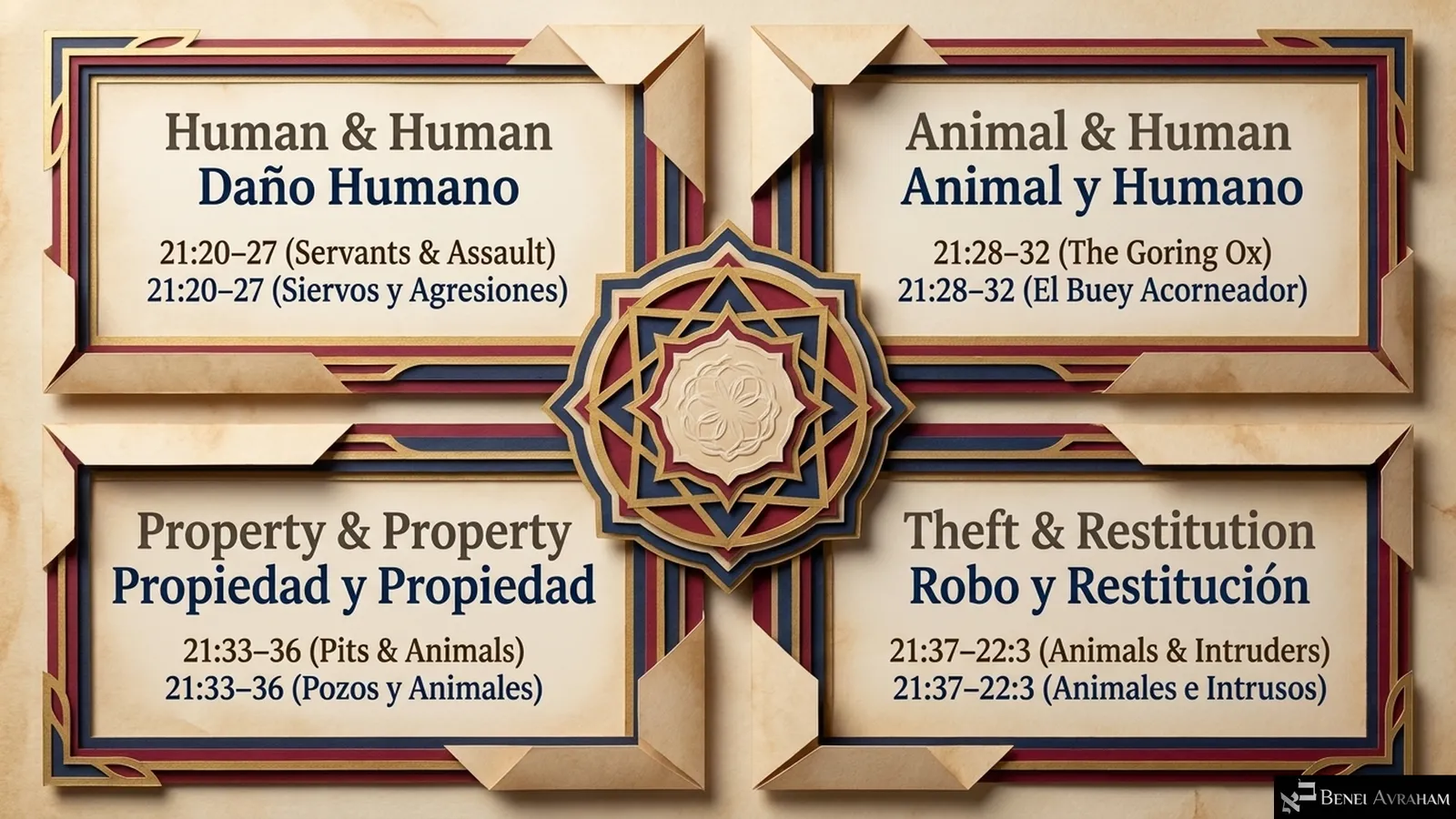
A four-part paper chart of the second portion: human harm, the goring ox, pits and animals, theft and restitution (Exodus 21:20–22:3).
Shlishi · Exodus 22:4–26

Third Portion

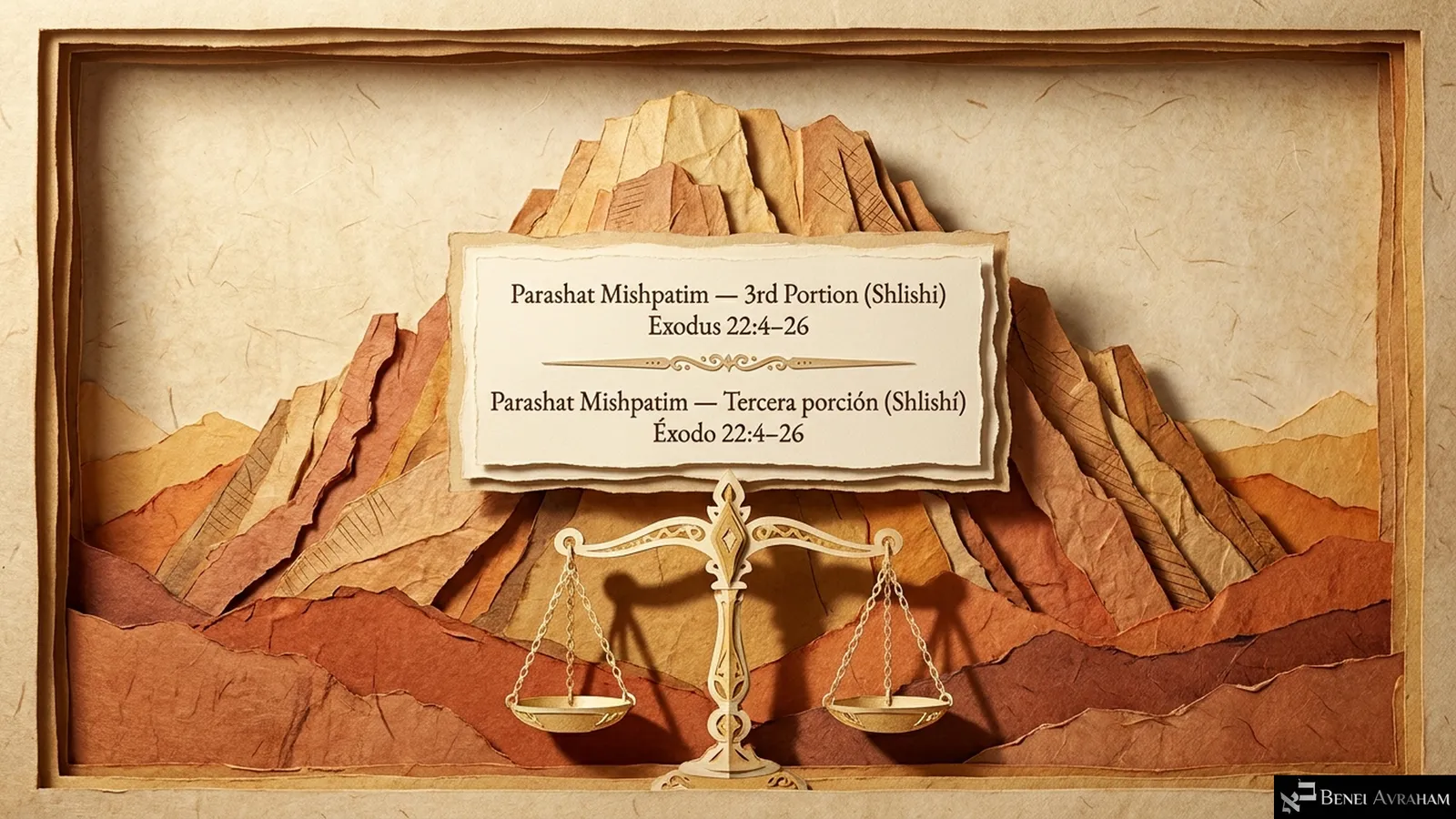
Title card for the third portion over a paper mountain and balance: “Parashat Mishpatim — 3rd Portion (Shlishi), Exodus 22:4–26”.
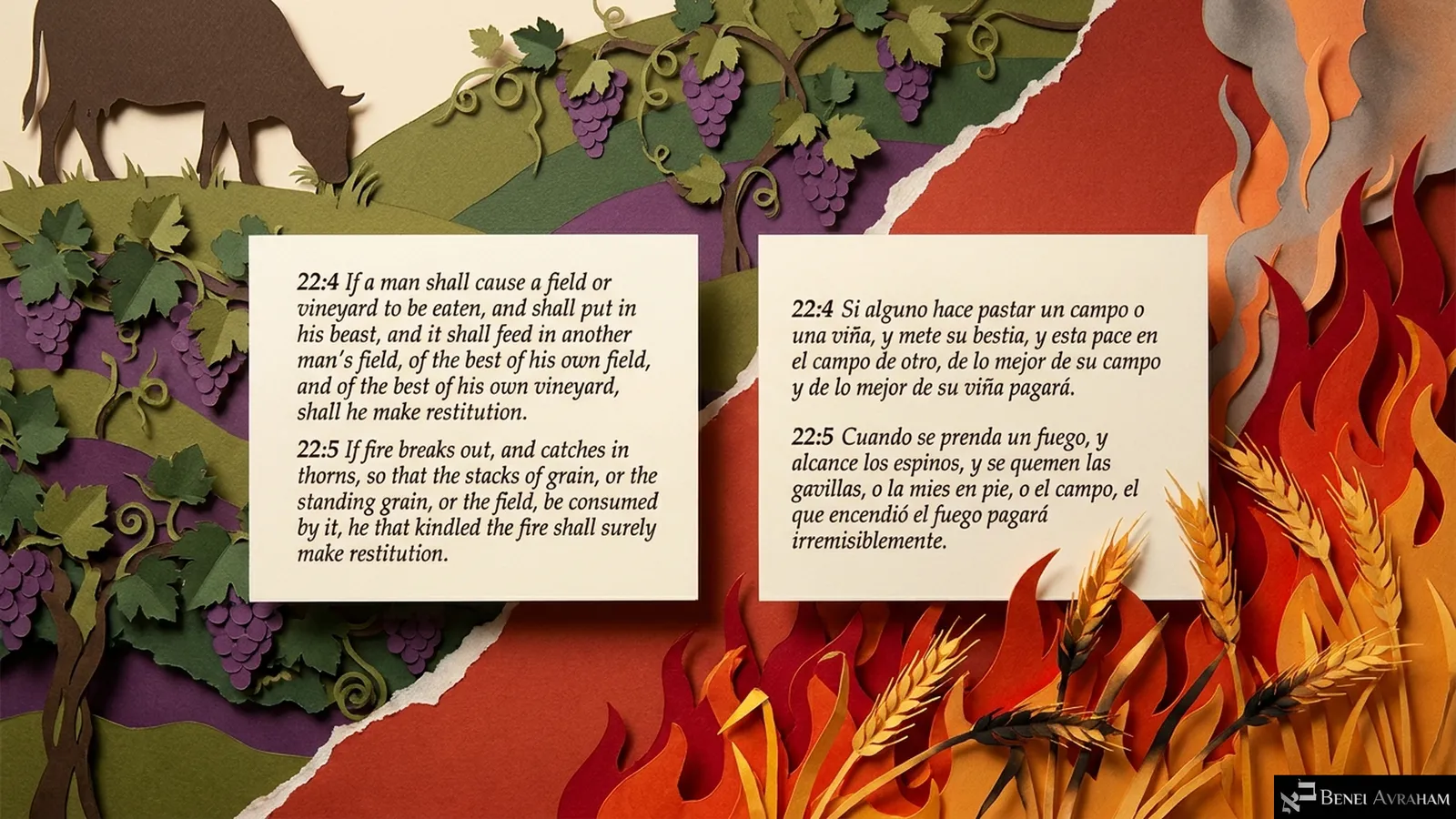
Vineyards and paper flames in standing grain: he that kindled the fire shall surely make restitution (Exodus 22:4–5).
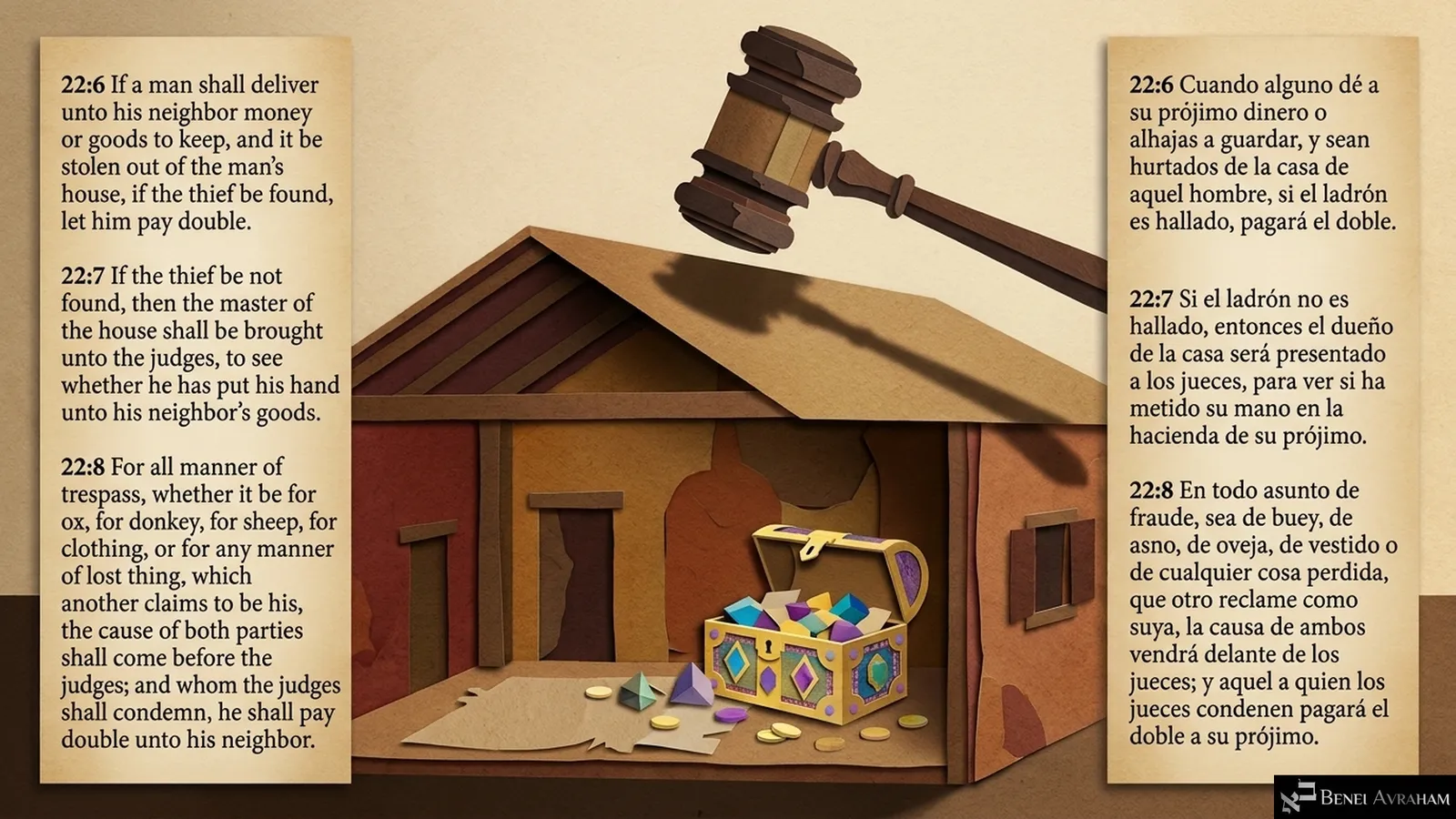
A wooden gavel over a paper house and treasure chest: whom the judges shall condemn, he shall pay double unto his neighbor (Exodus 22:6–8).
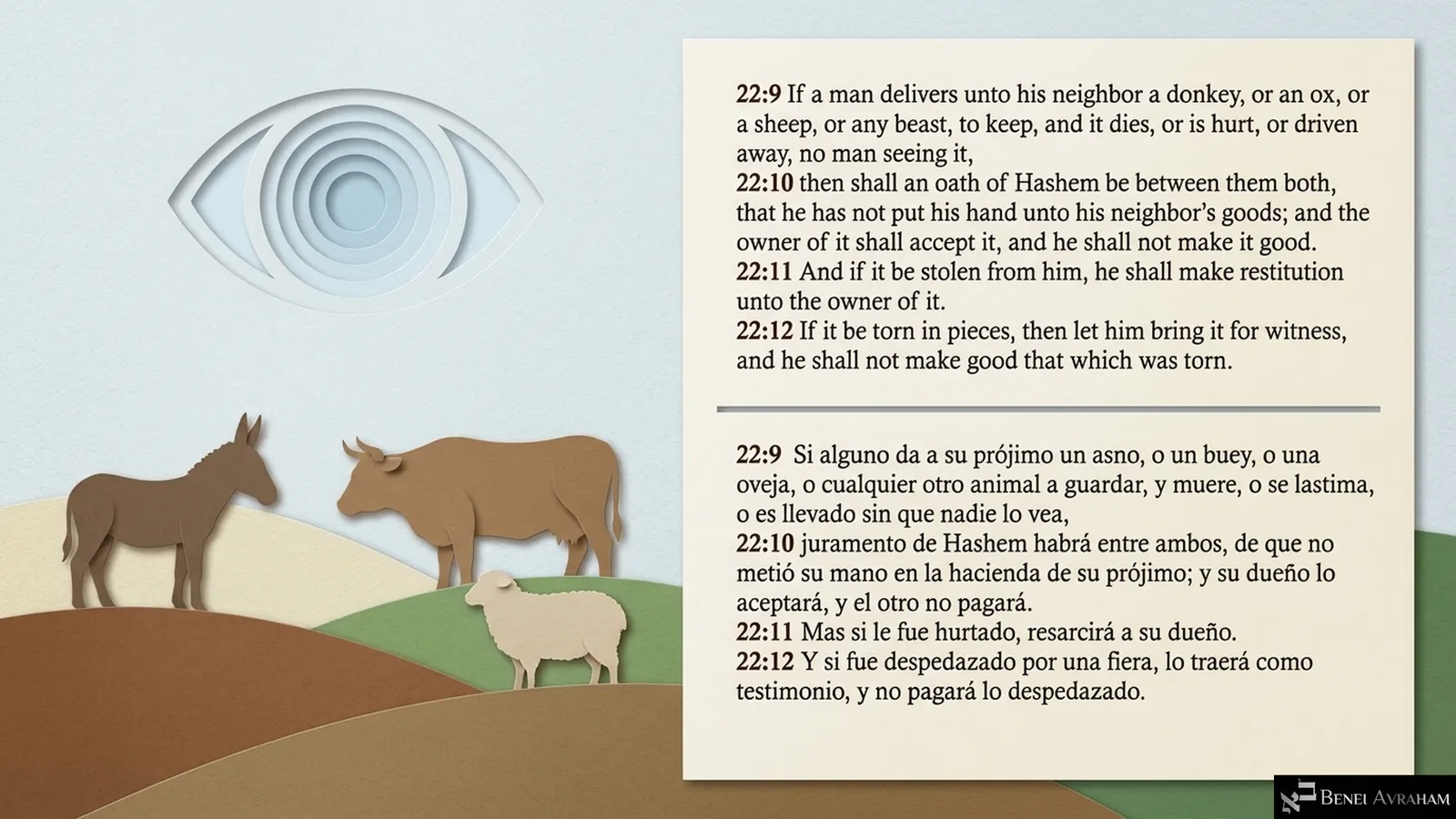
A paper eye above a donkey, an ox and a sheep: an oath of Hashem shall be between them both (Exodus 22:9–12).
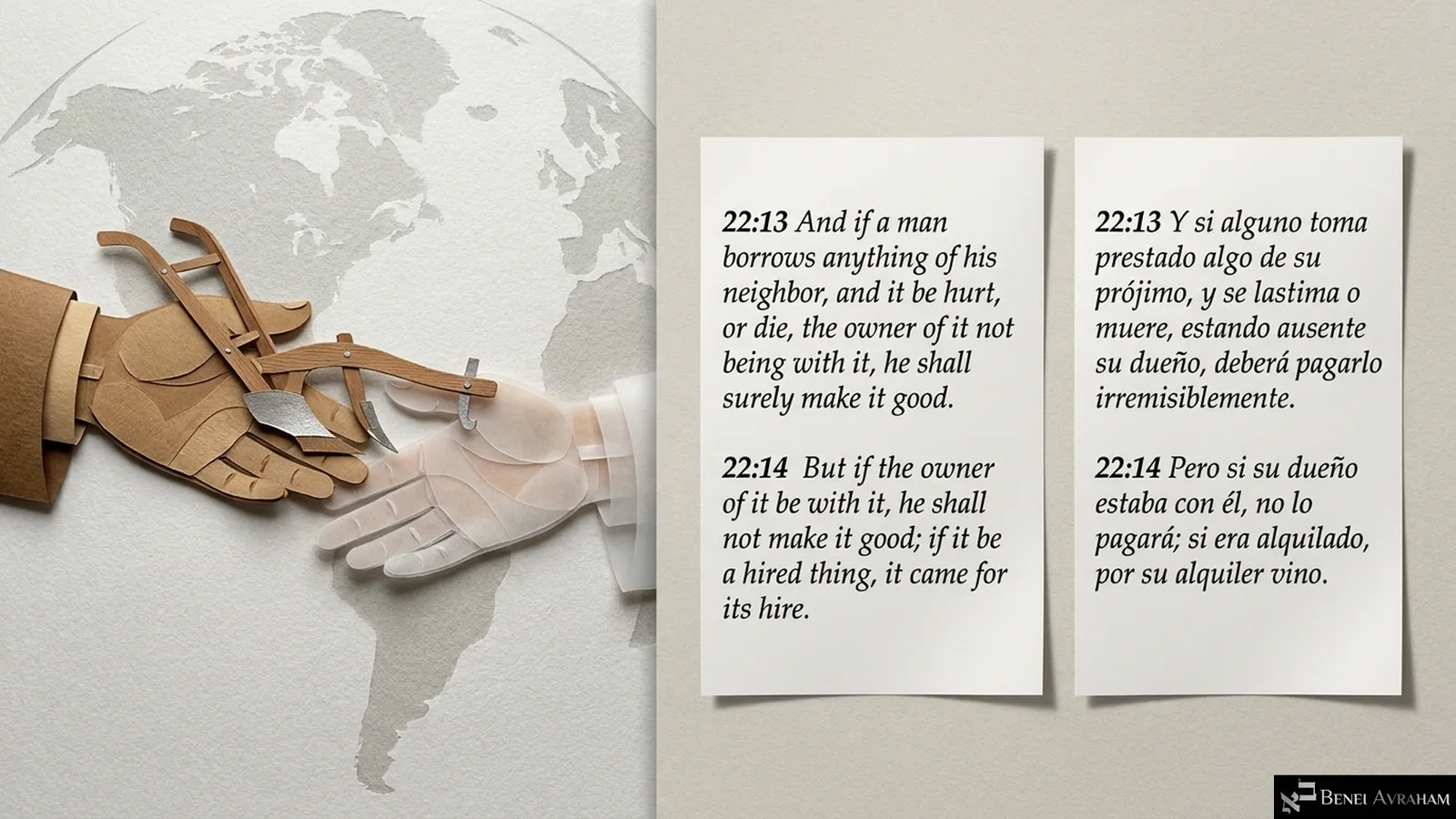
Two paper hands passing a borrowed tool over a map: if a man borrows anything of his neighbor, and it be hurt (Exodus 22:13–14).
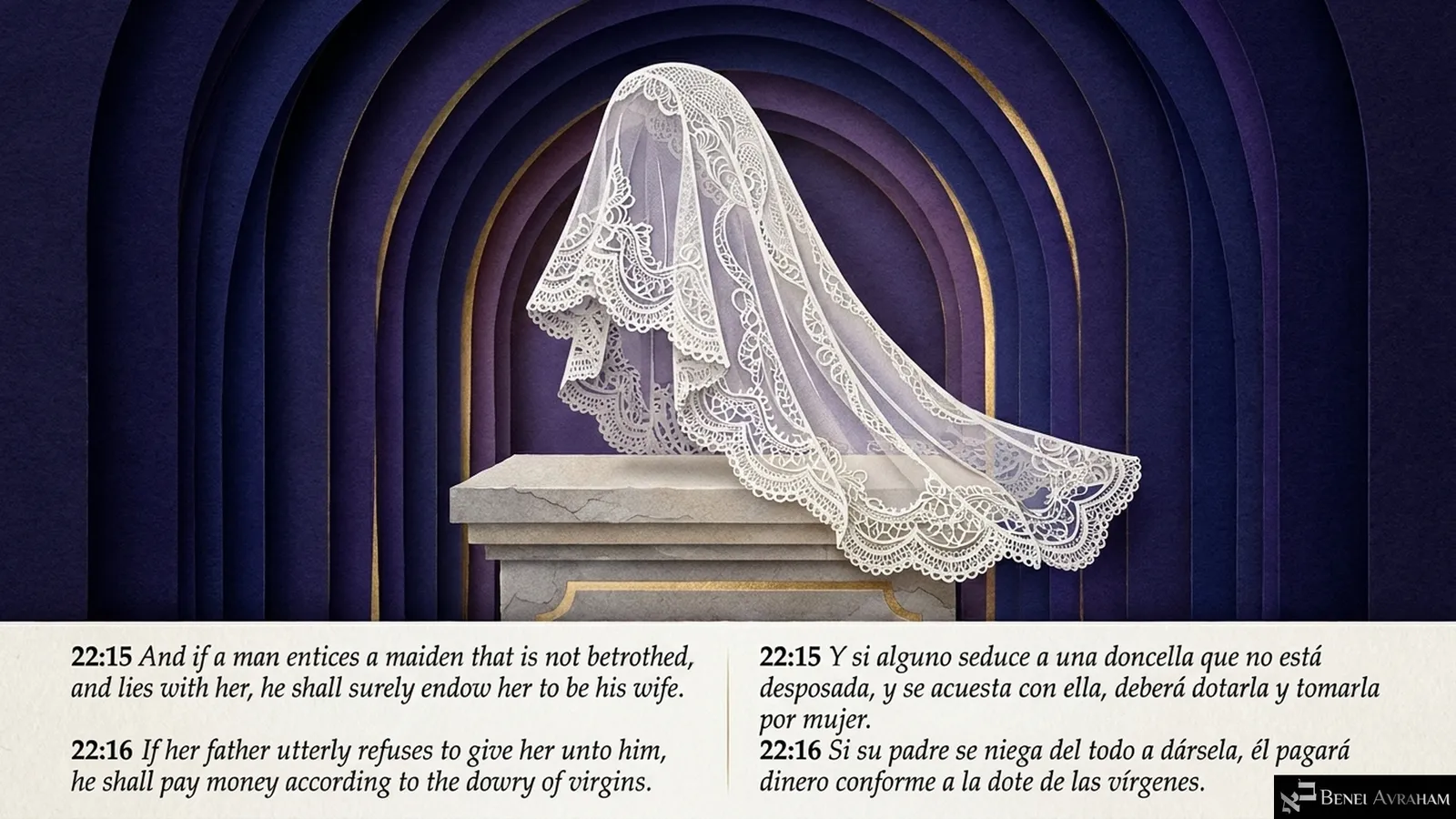
A white lace veil draped on a stone pedestal: he shall surely endow her to be his wife (Exodus 22:15–16).
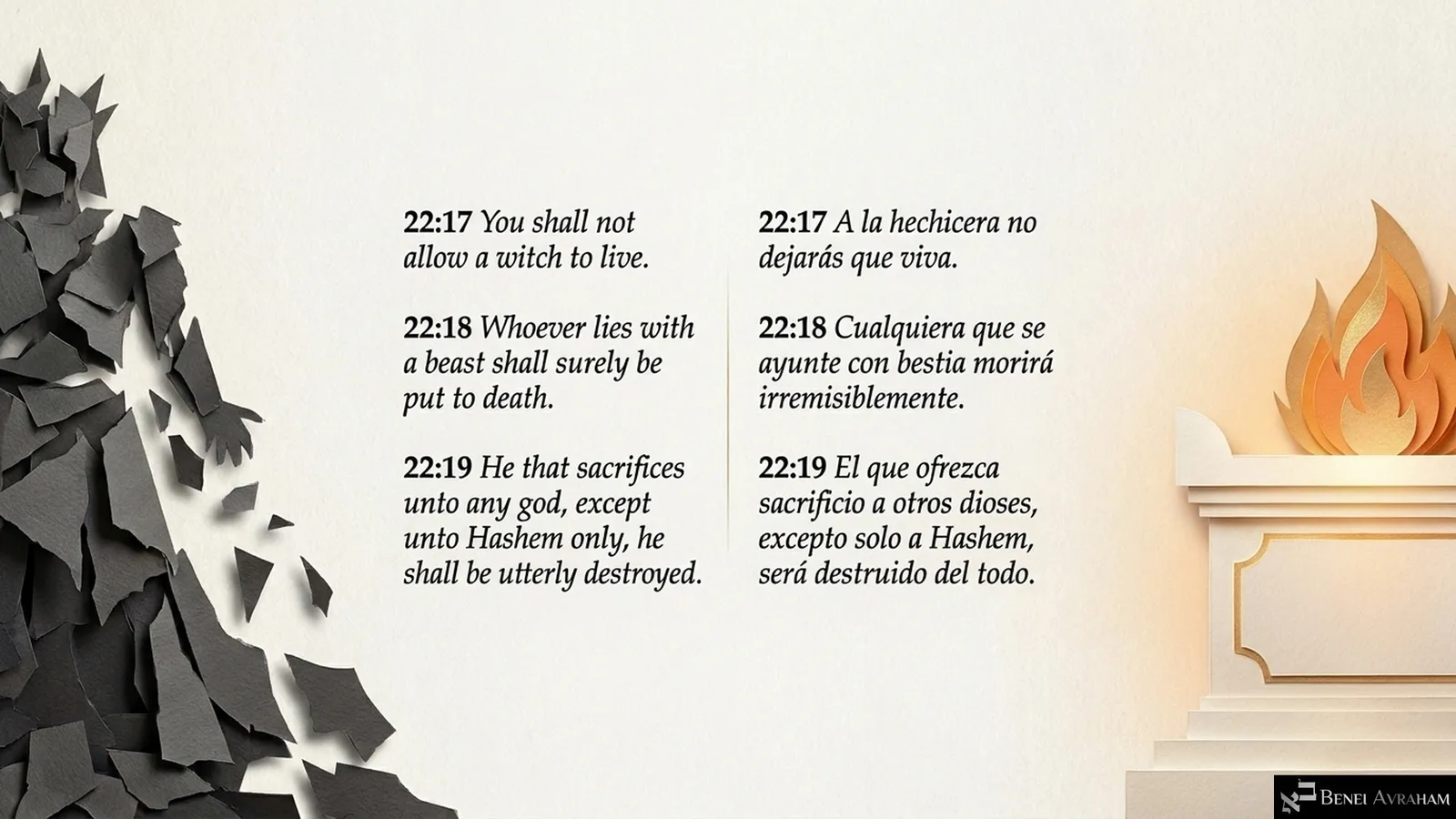
Shattered grey paper beside a white altar flame: he that sacrifices unto any god, except unto Hashem only, shall be utterly destroyed (Exodus 22:17–19).
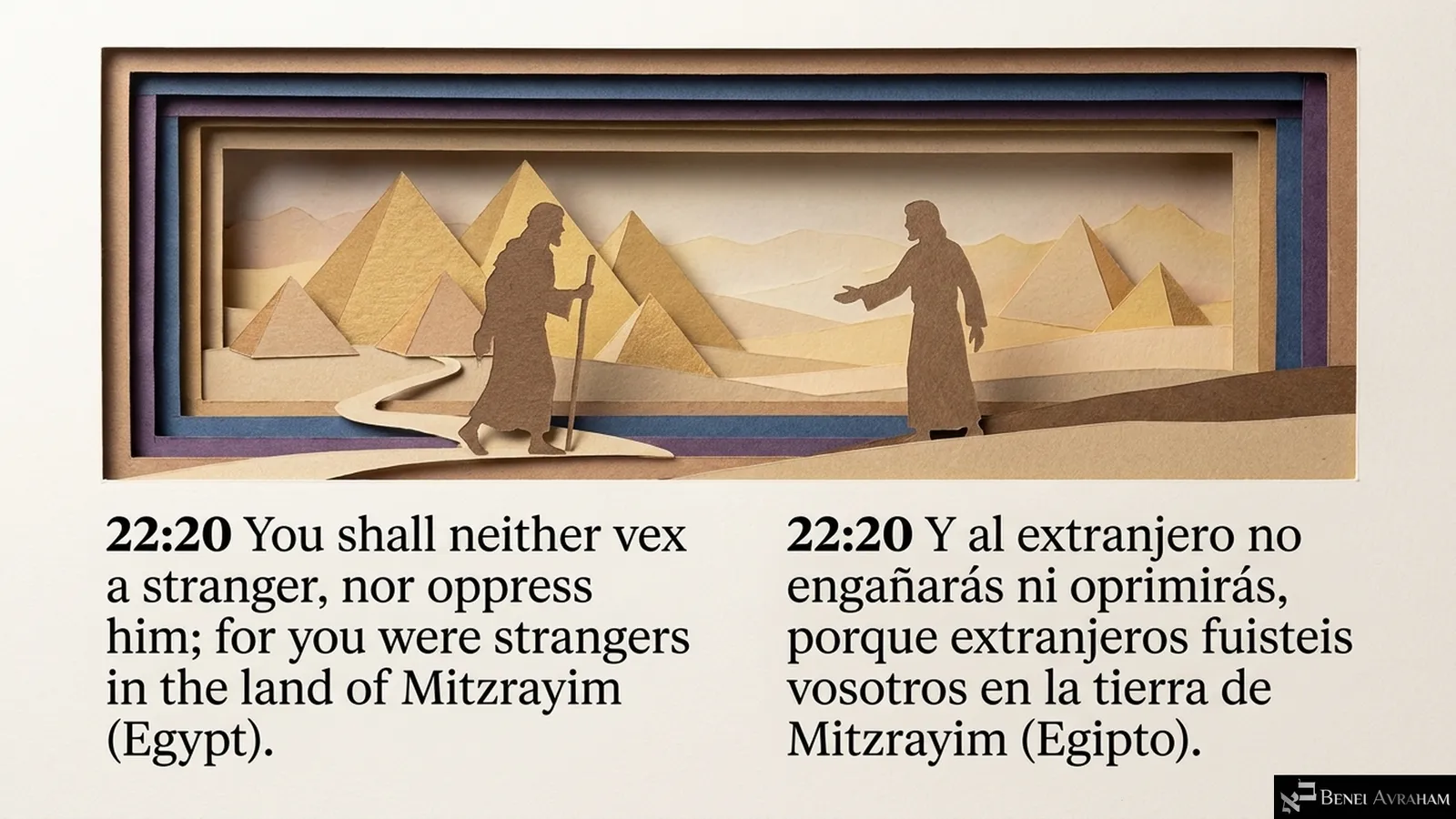
Paper travellers before the pyramids: you shall neither vex a stranger, nor oppress him; for you were strangers in the land of Mitzrayim (Exodus 22:20).
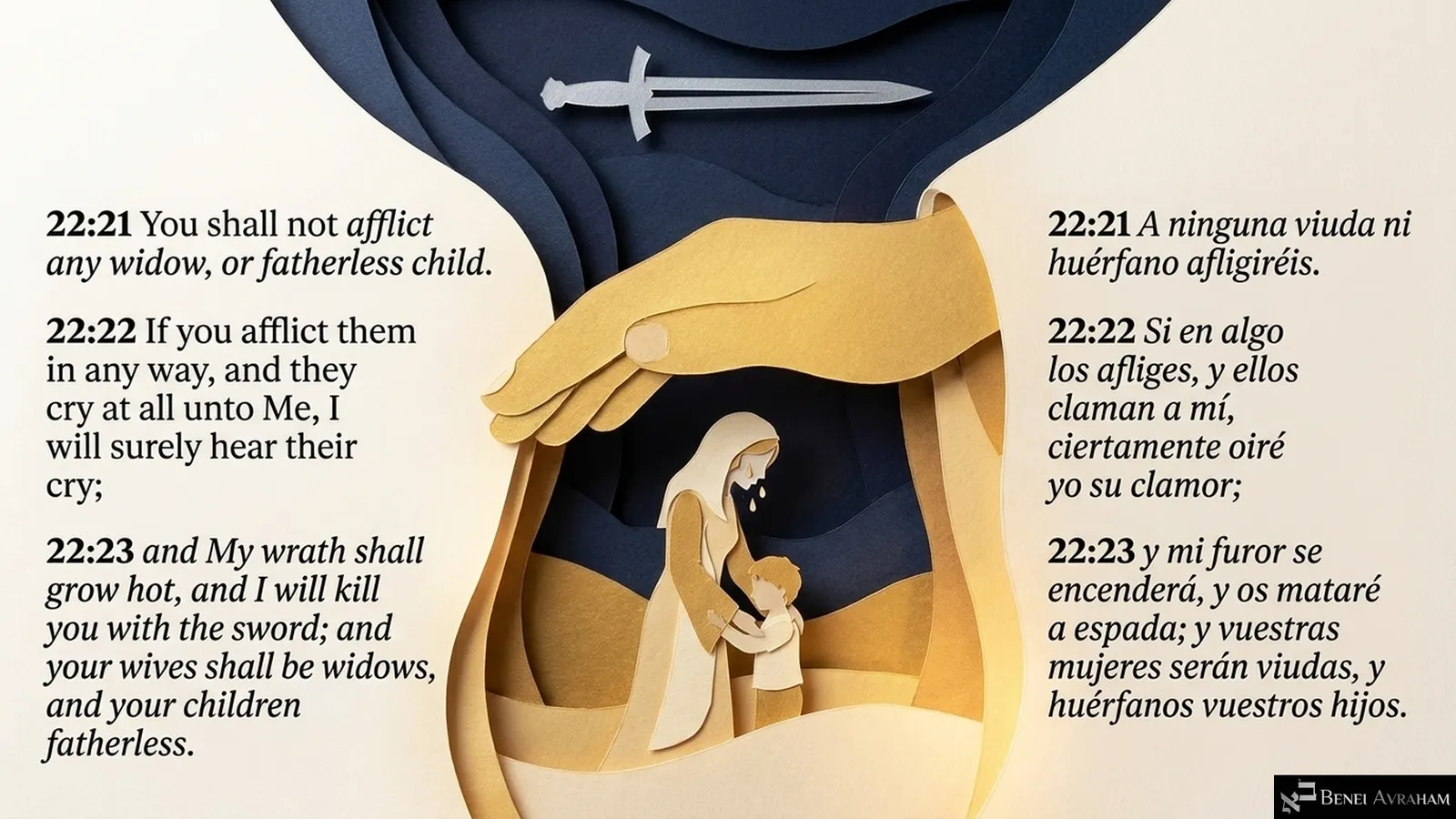
A great paper hand sheltering a widow and child: “If they cry at all unto Me, I will surely hear their cry” (Exodus 22:21–23).
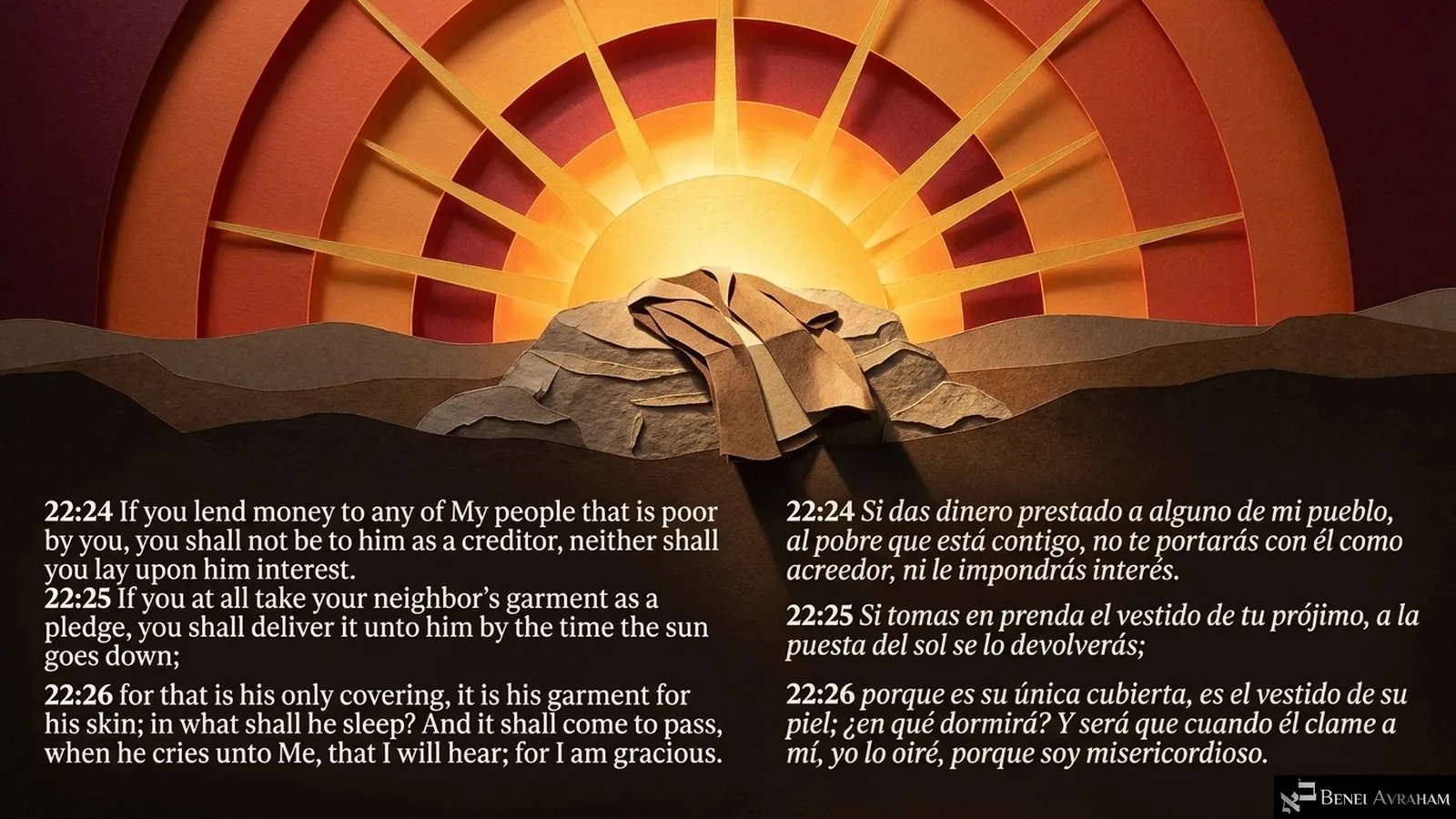
A folded garment on a rock before the setting sun: you shall deliver it unto him by the time the sun goes down… for I am gracious (Exodus 22:24–26).
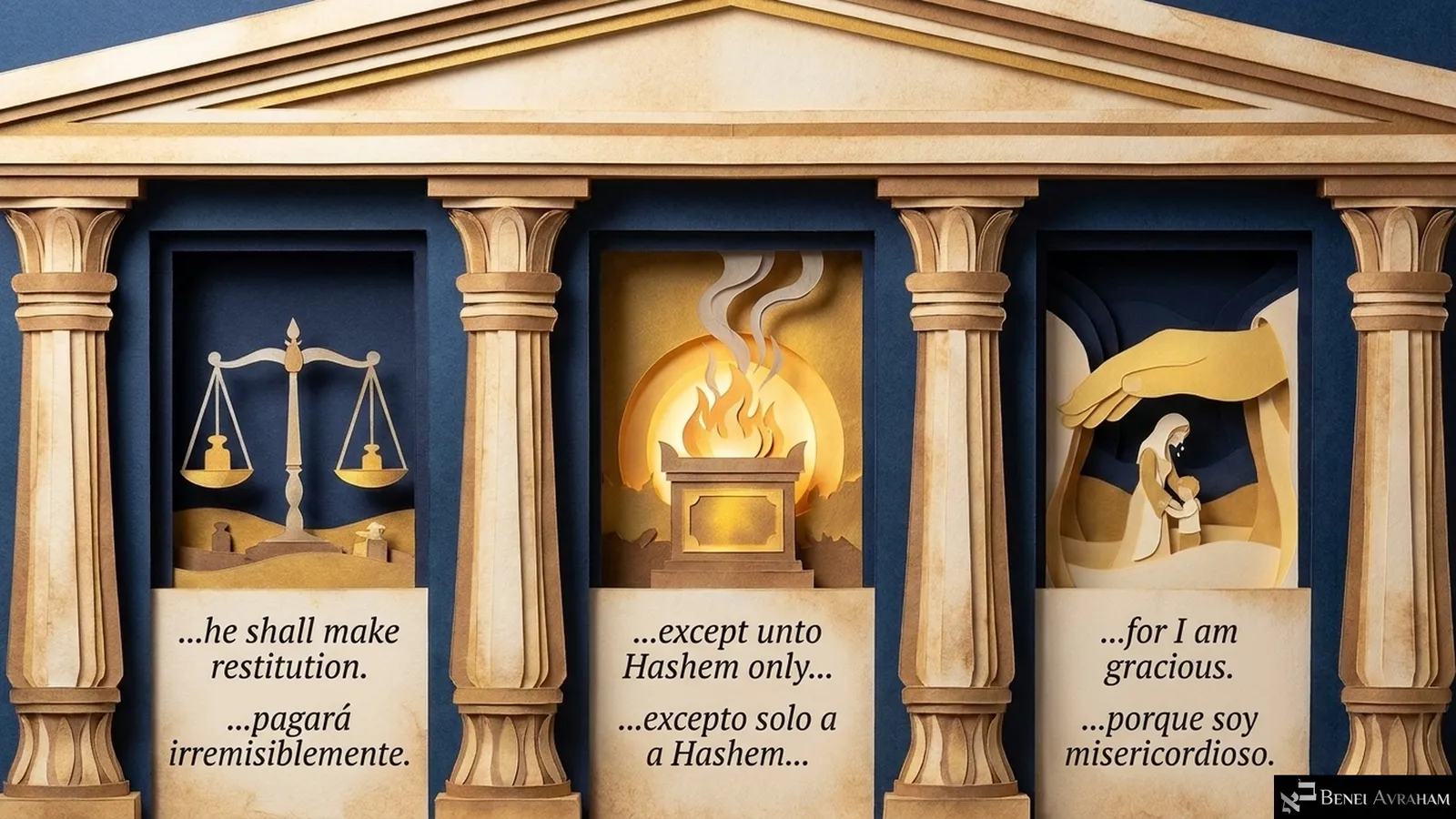
Three paper alcoves between columns — scales, an altar flame and a sheltering hand: “he shall make restitution… except unto Hashem only… for I am gracious” (Exodus 22:4–26).
Revi’i · Exodus 22:27–23:5

Fourth Portion

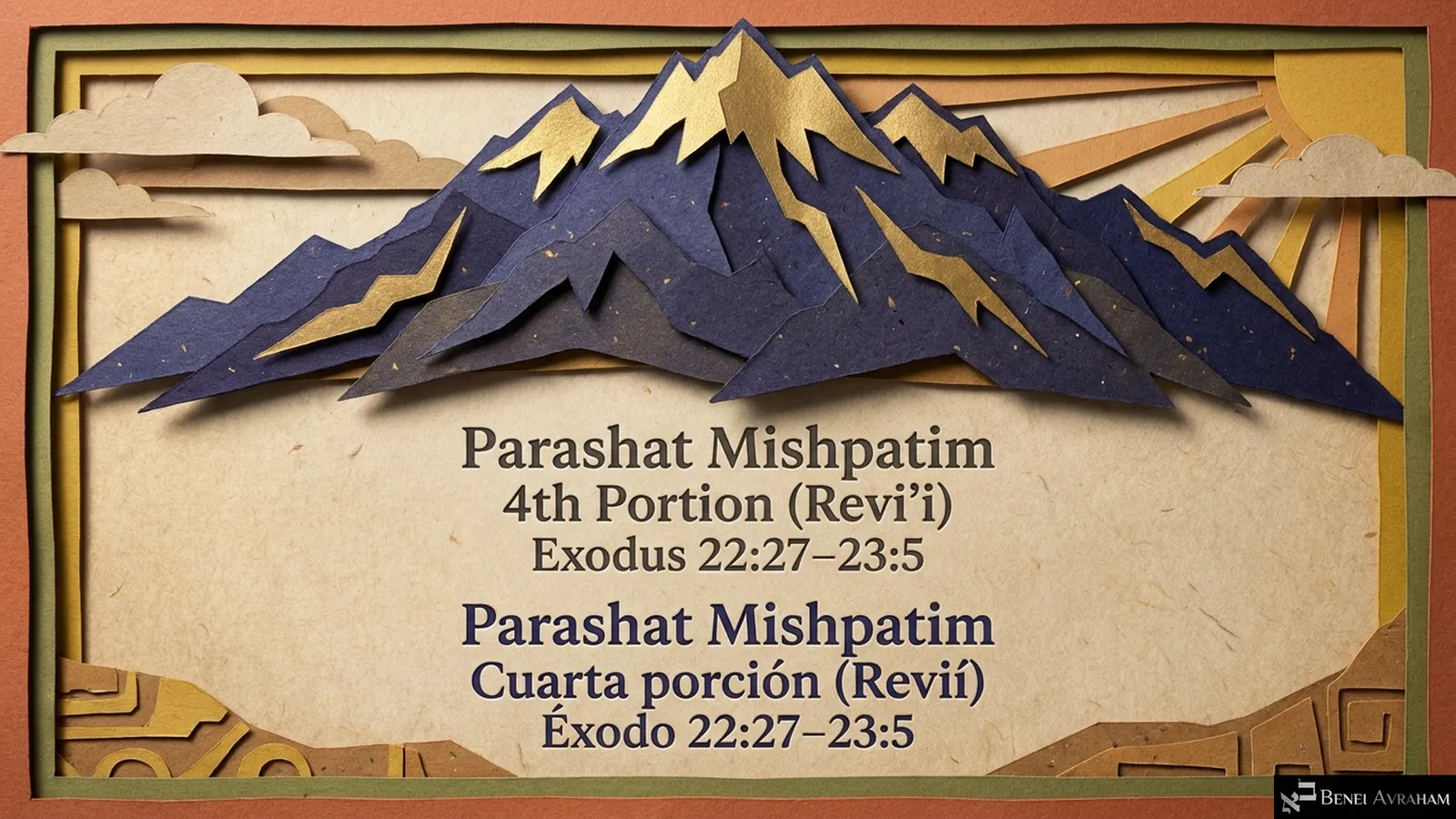
Title card for the fourth portion beneath a navy paper mountain: “Parashat Mishpatim — 4th Portion (Revi’i), Exodus 22:27–23:5”.
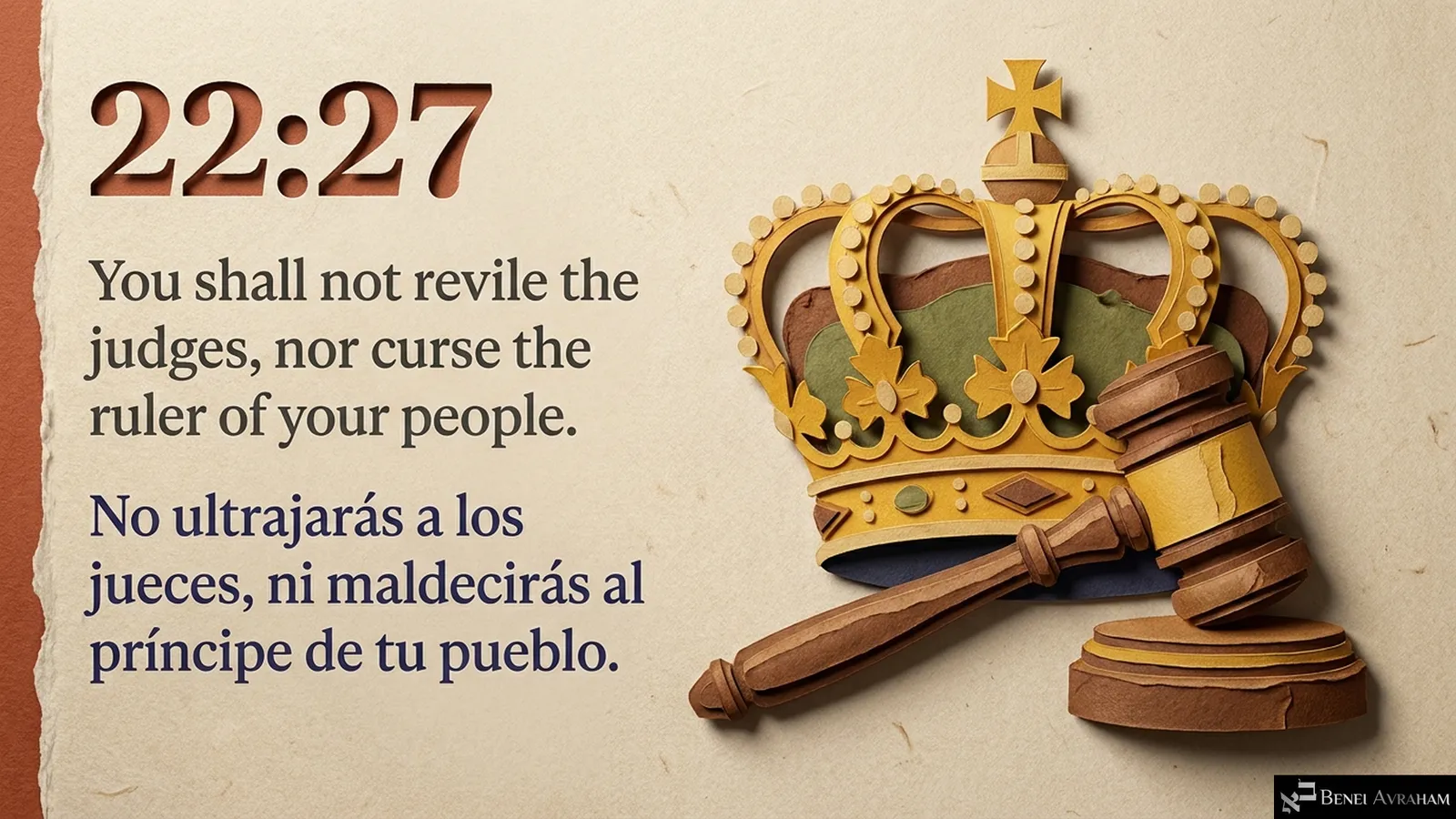
A paper crown and gavel: you shall not revile the judges, nor curse the ruler of your people (Exodus 22:27).
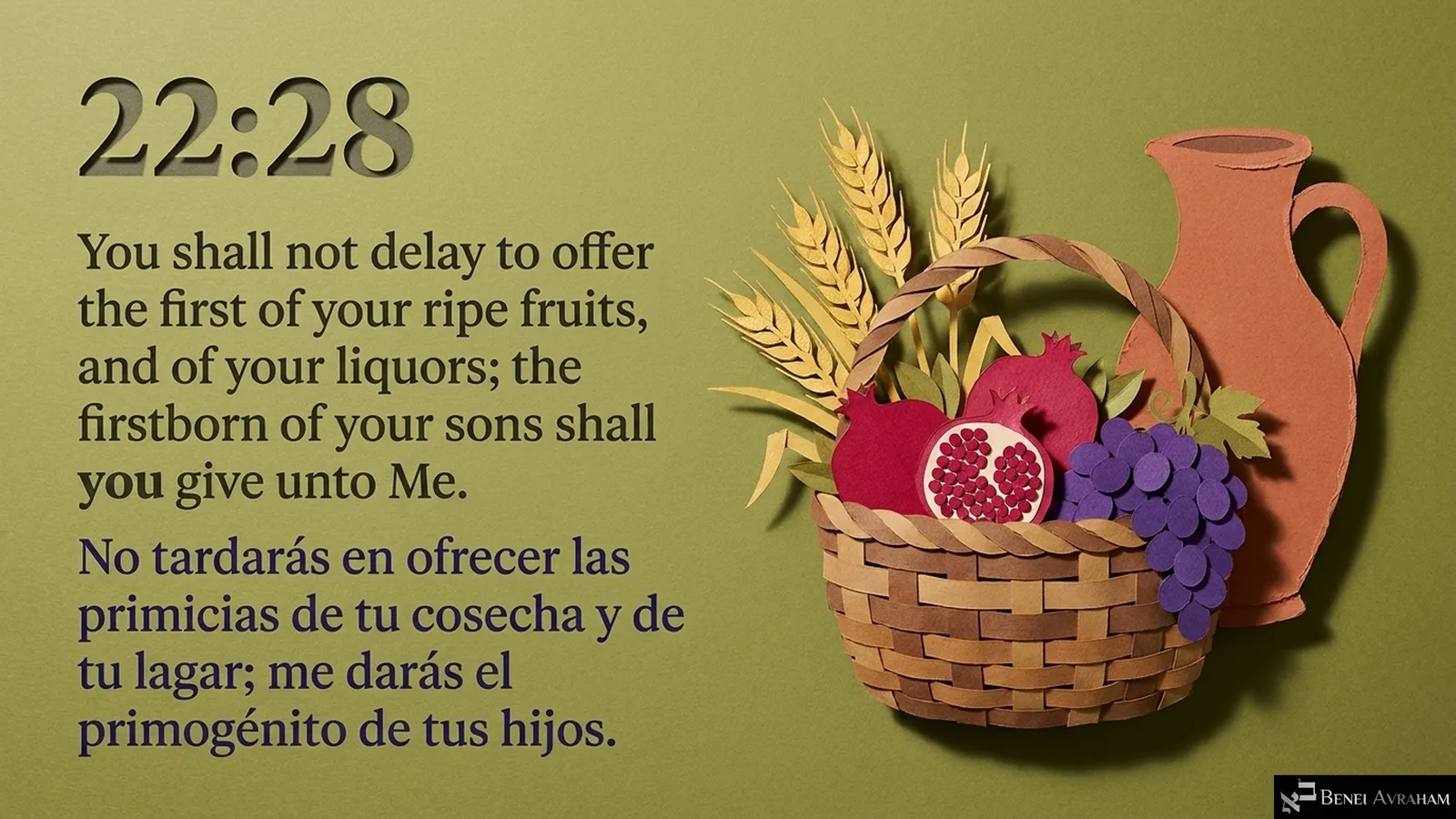
A woven basket of grain, pomegranate and grapes beside a jug: you shall not delay to offer the first of your ripe fruits (Exodus 22:28).
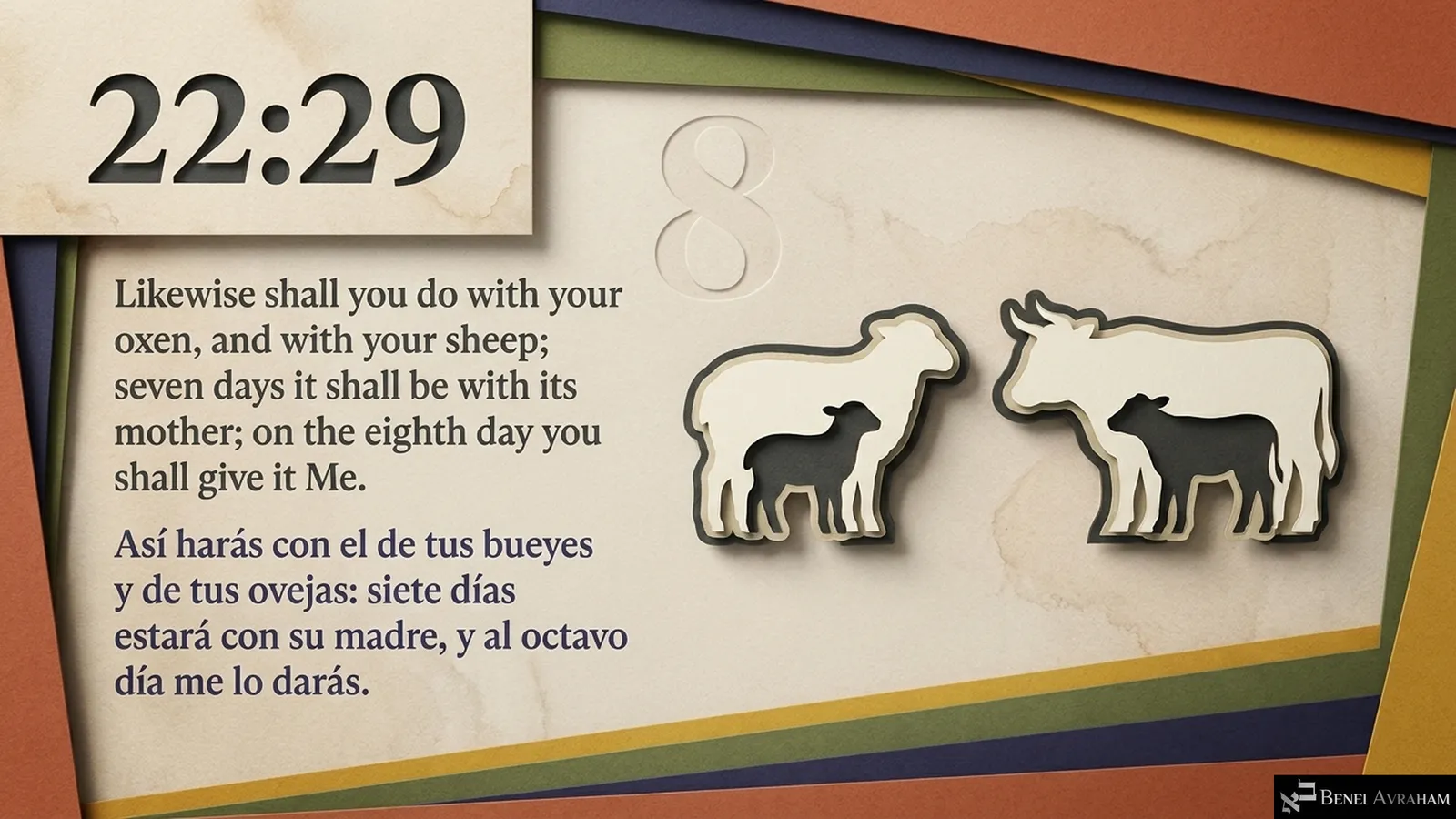
Paper sheep and cattle with their young: seven days it shall be with its mother; on the eighth day you shall give it Me (Exodus 22:29).
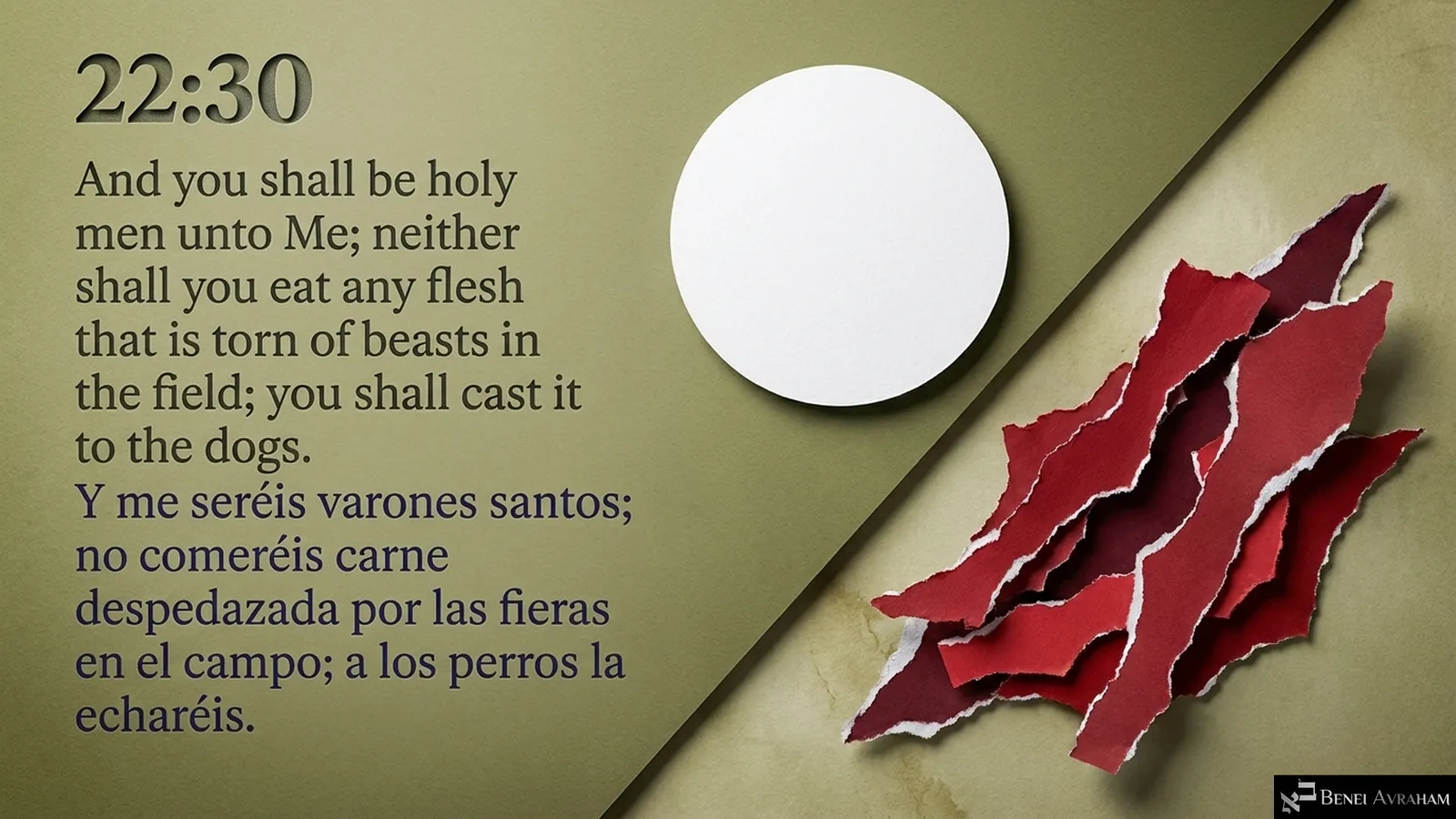
Torn red paper beside a white circle: you shall be holy men unto Me; neither shall you eat any flesh that is torn of beasts in the field (Exodus 22:30).
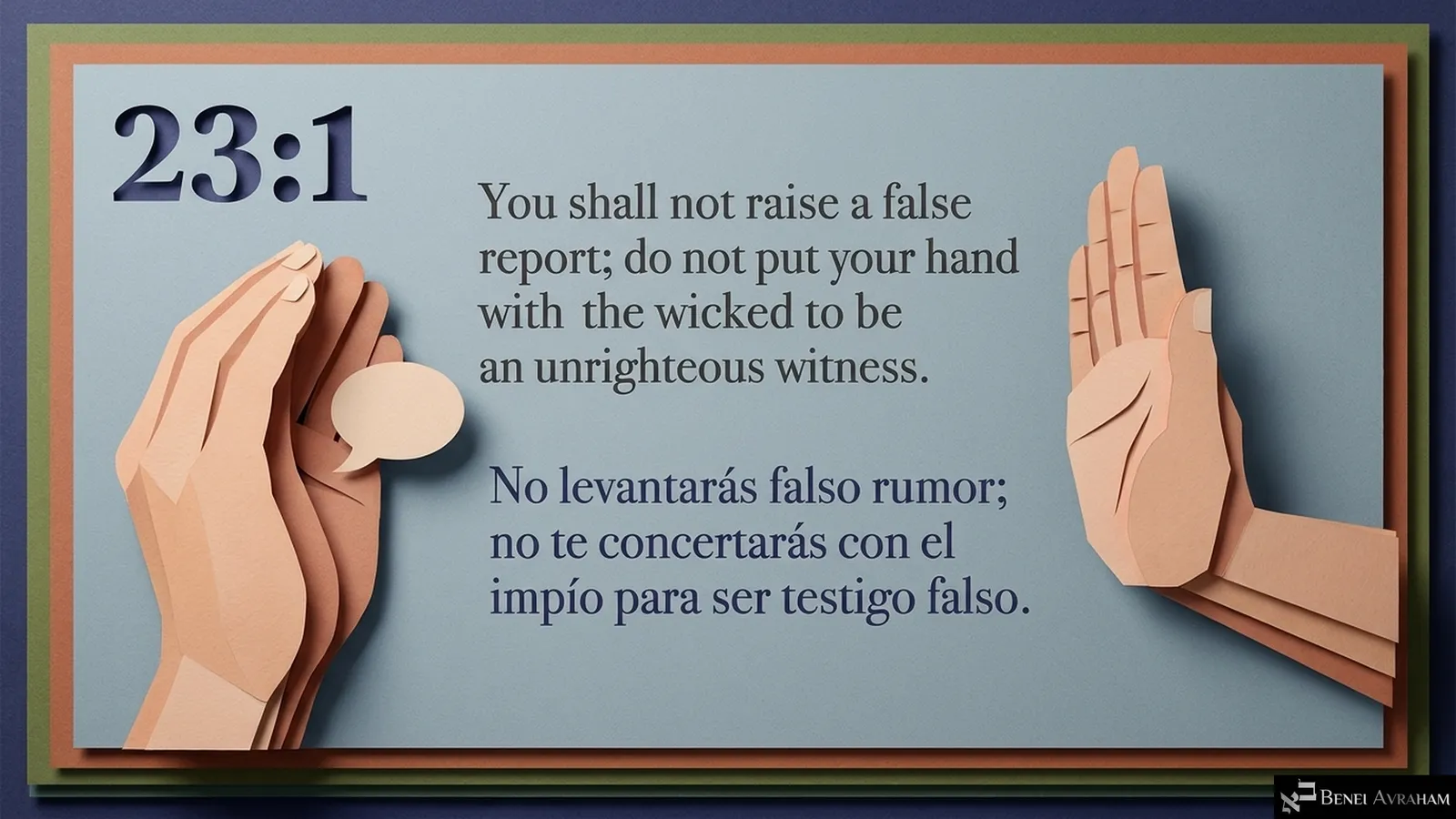
Paper hands, one whispering and one raised to refuse: you shall not raise a false report (Exodus 23:1).
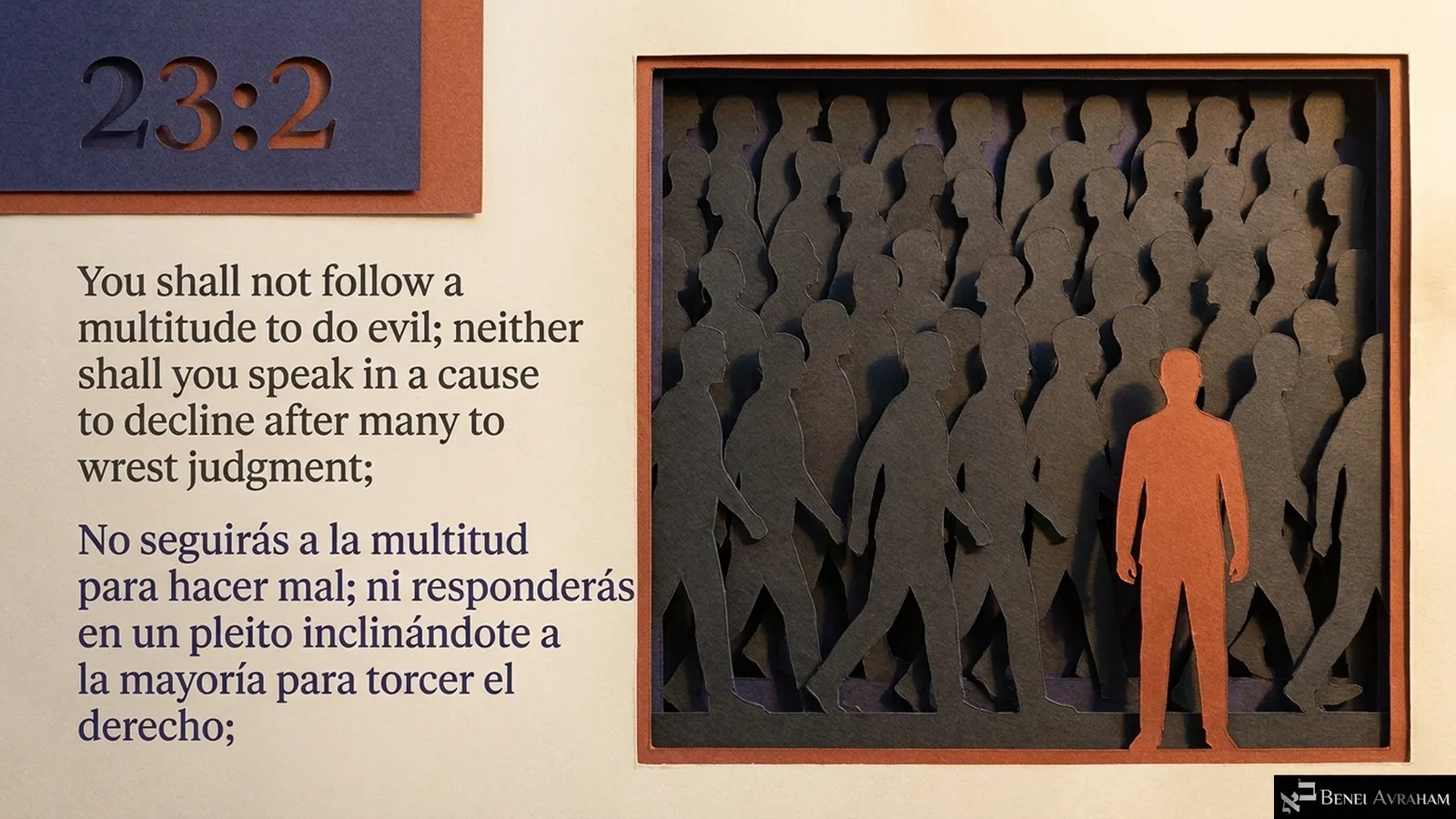
One orange figure standing apart from a dark crowd: you shall not follow a multitude to do evil (Exodus 23:2).
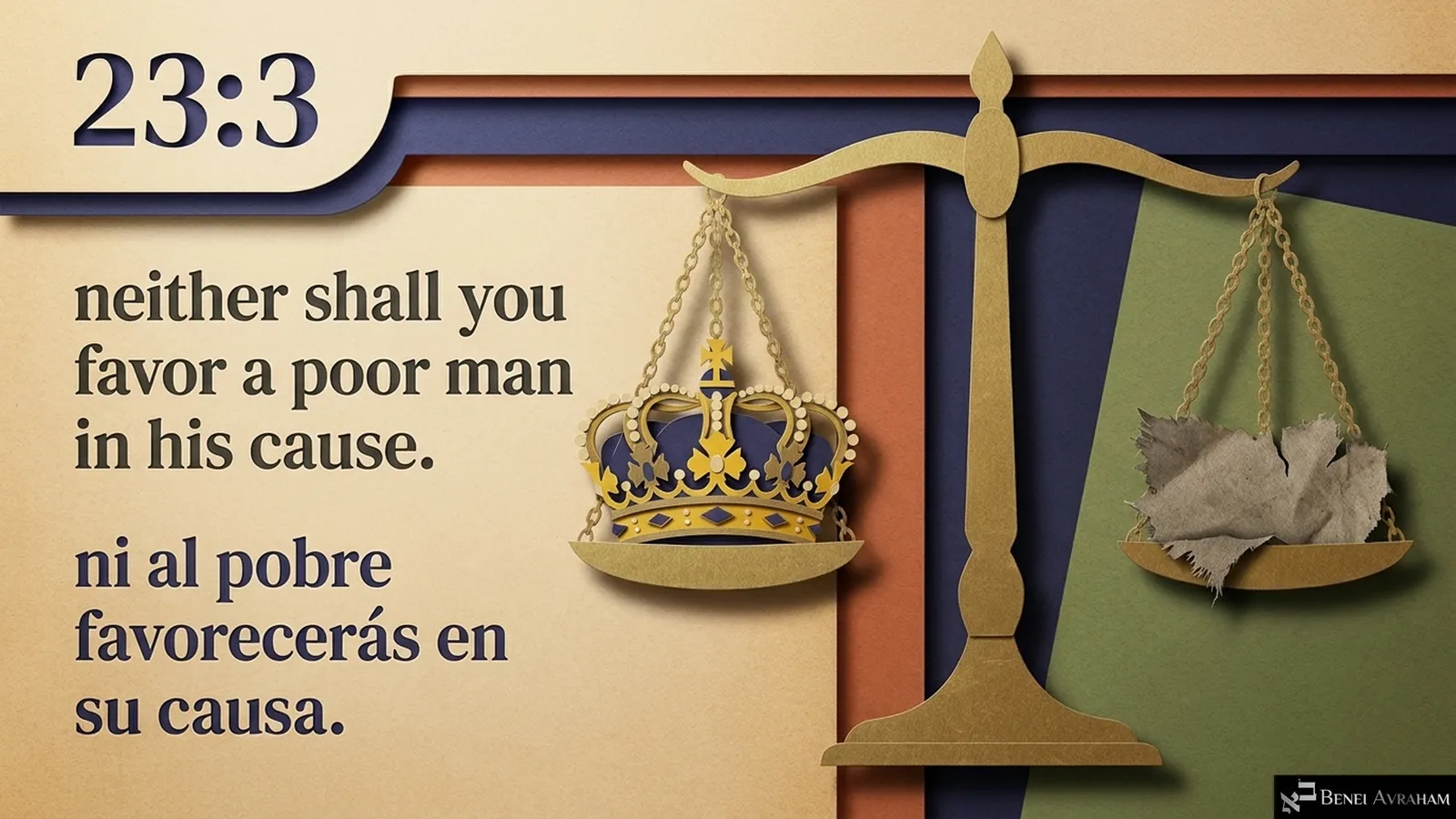
A balance with a crown on one side and rags on the other: neither shall you favor a poor man in his cause (Exodus 23:3).
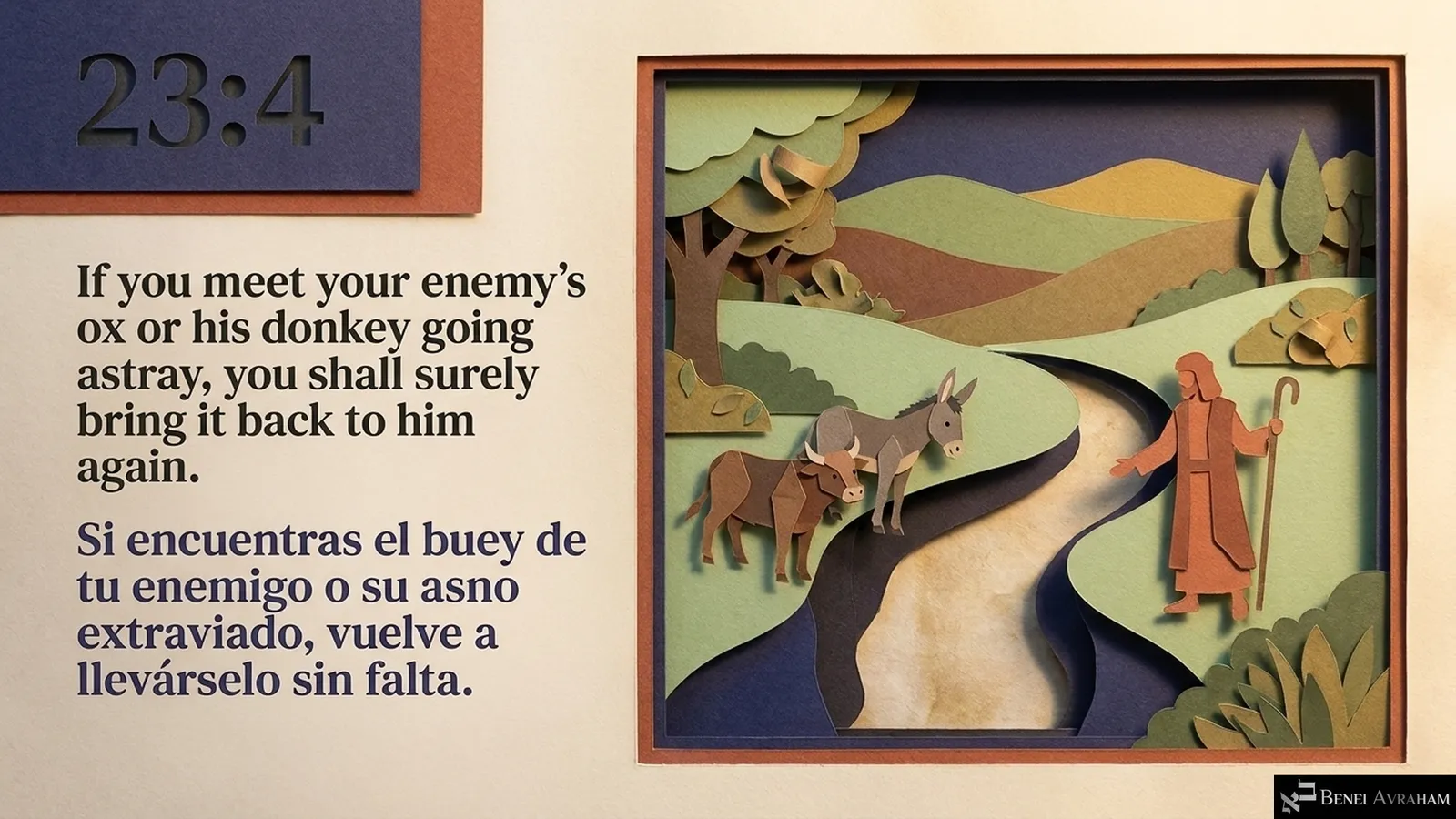
An ox and a donkey wandering on a paper road: if you meet your enemy’s ox or his donkey going astray, you shall surely bring it back (Exodus 23:4).
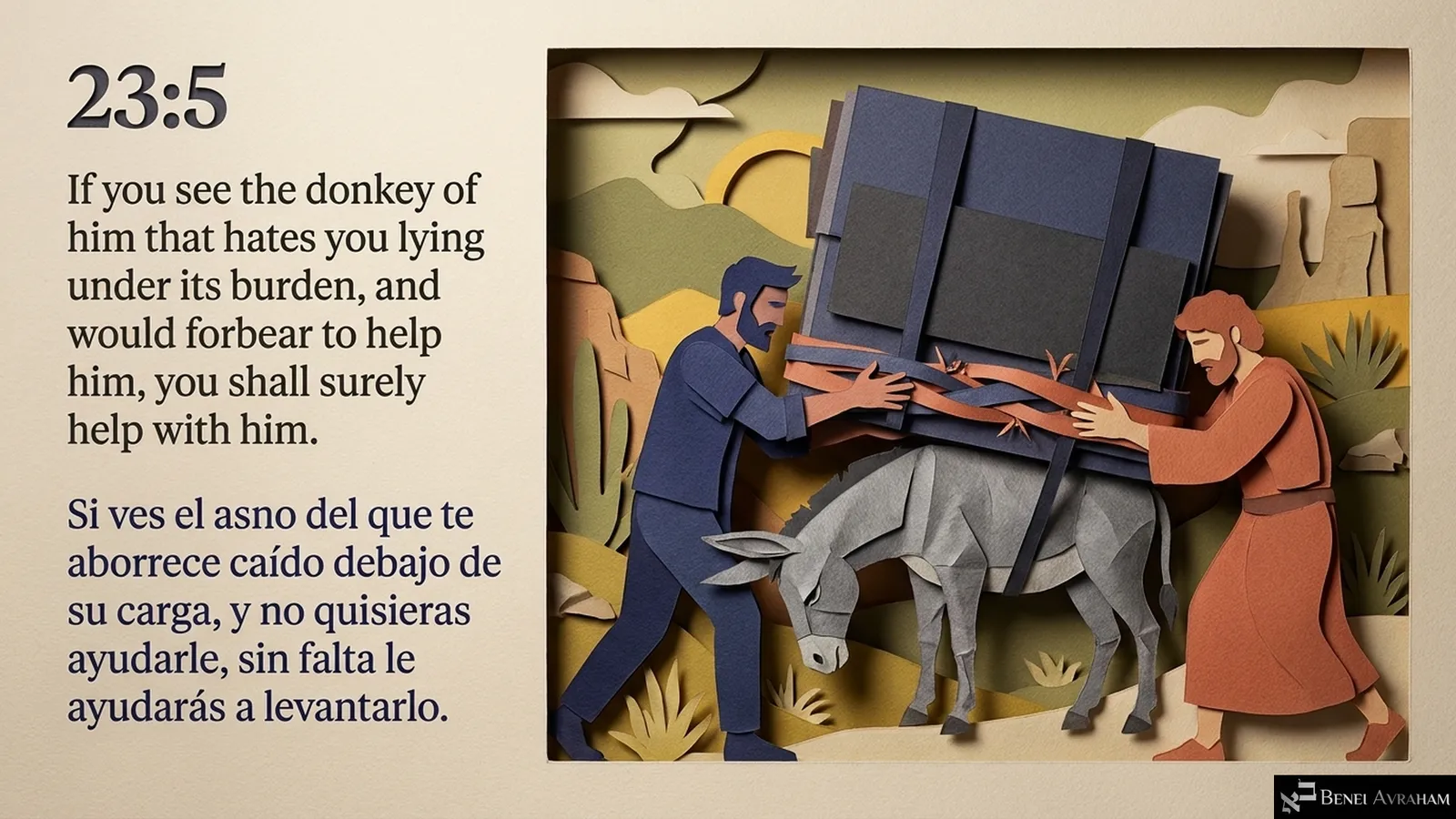
Two men lifting a donkey’s burden together: you shall surely help with him (Exodus 23:5).
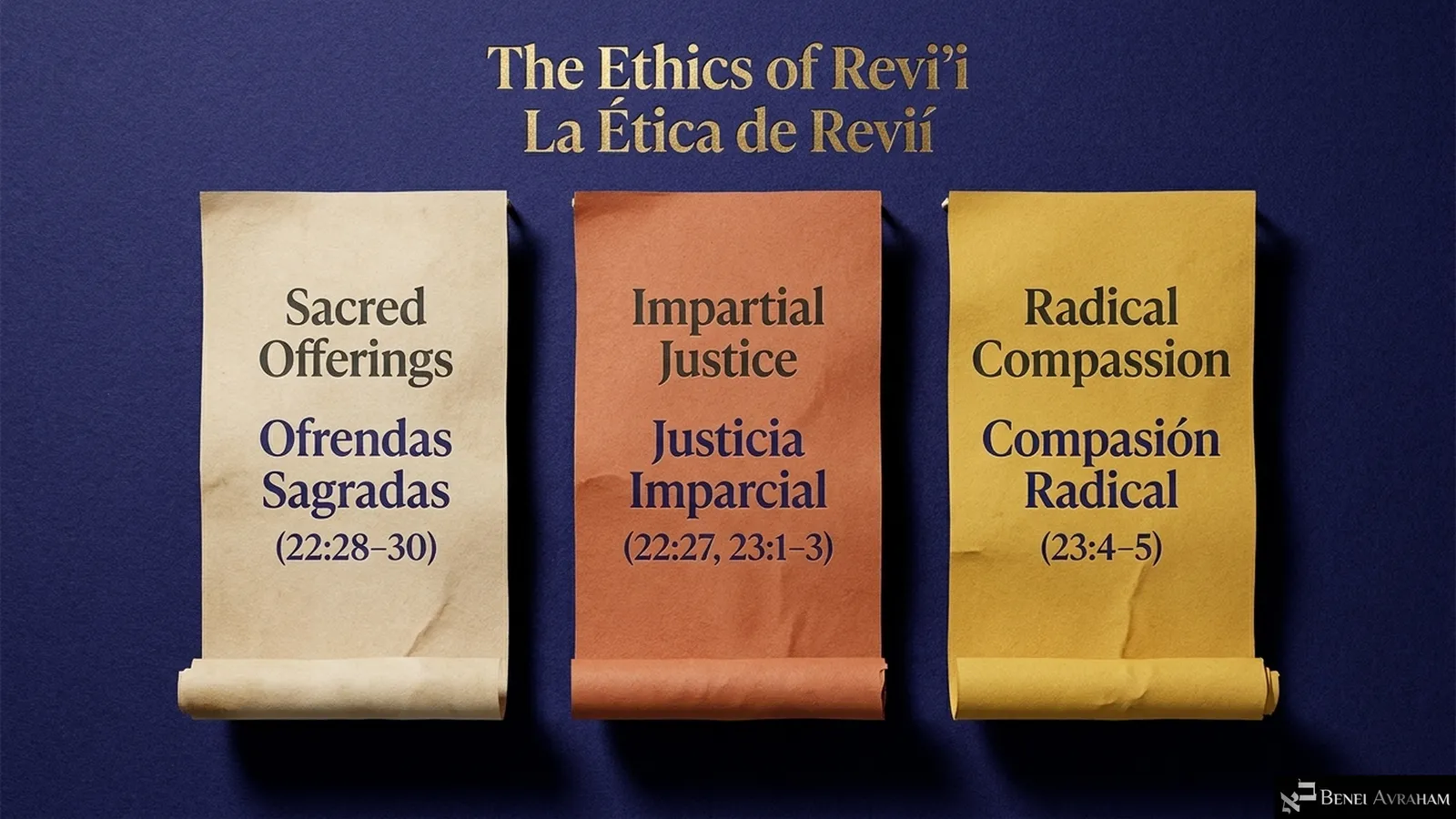
Three paper scrolls, “The Ethics of Revi’i”: sacred offerings, impartial justice, radical compassion (Exodus 22:27–23:5).
Chamishi · Exodus 23:6–19

Fifth Portion

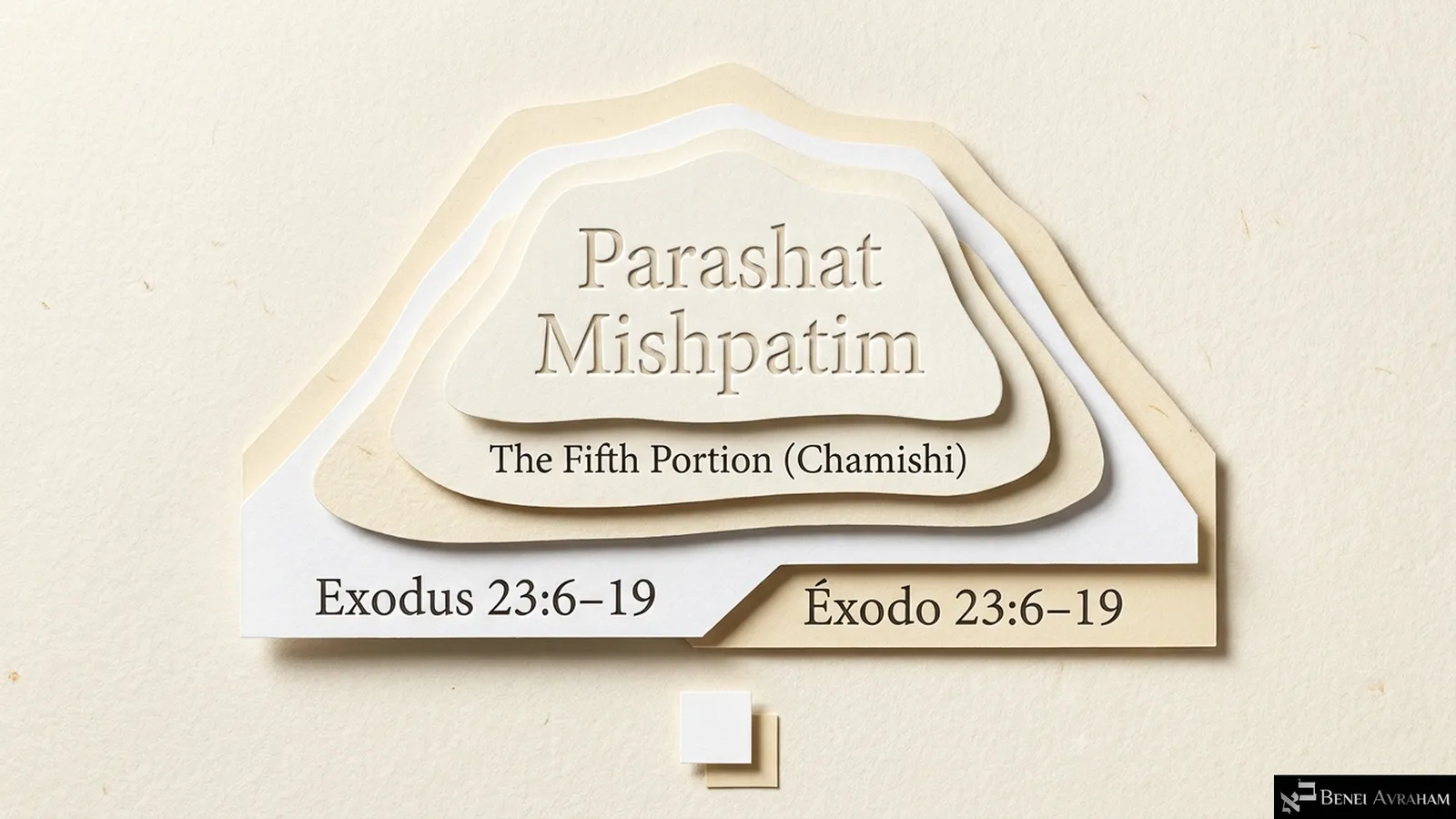
Title card for the fifth portion in layered cream paper: “Parashat Mishpatim — The Fifth Portion (Chamishi), Exodus 23:6–19”.
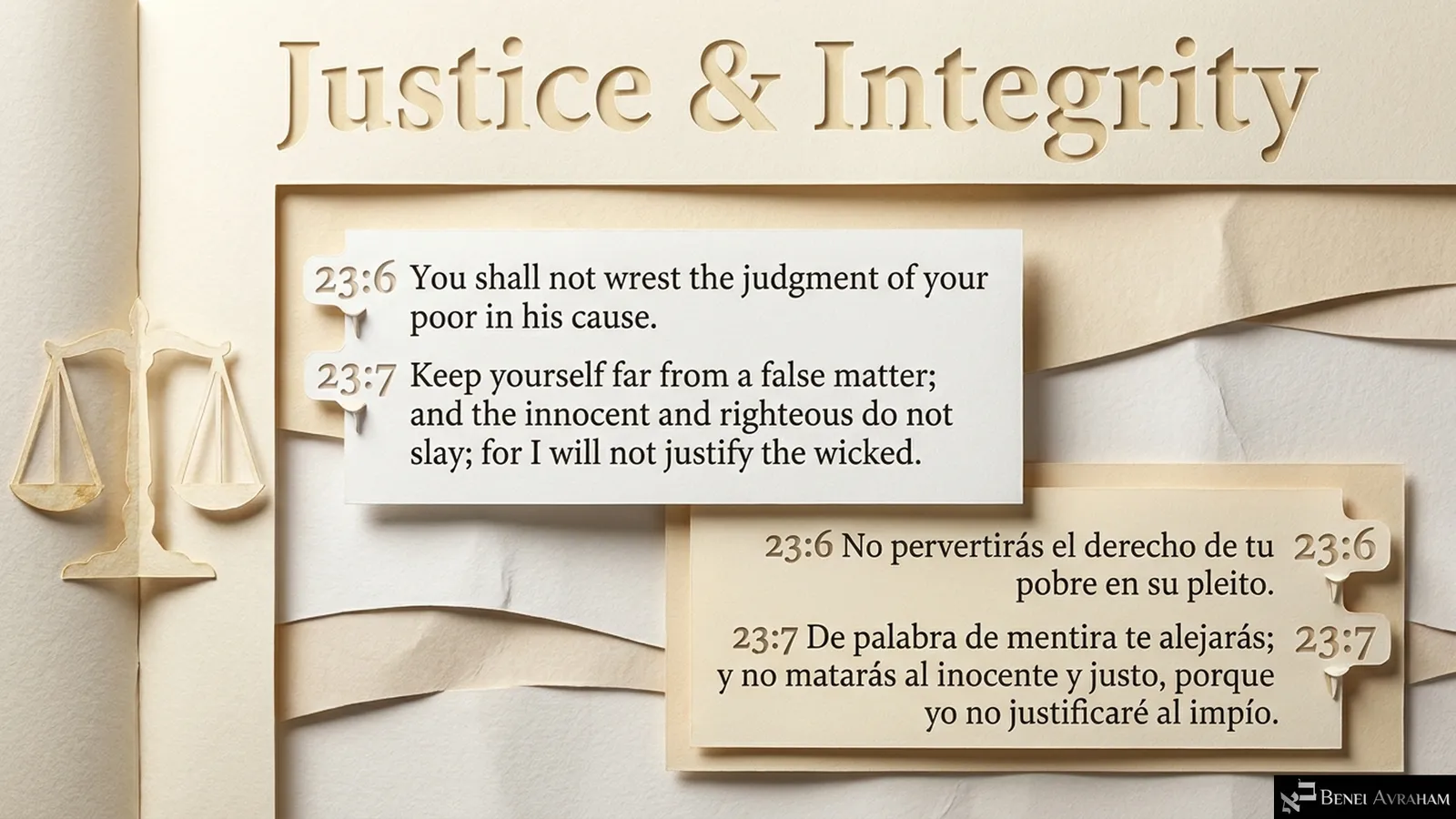
A cream paper balance, “Justice & Integrity”: you shall not wrest the judgment of your poor; keep yourself far from a false matter (Exodus 23:6–7).
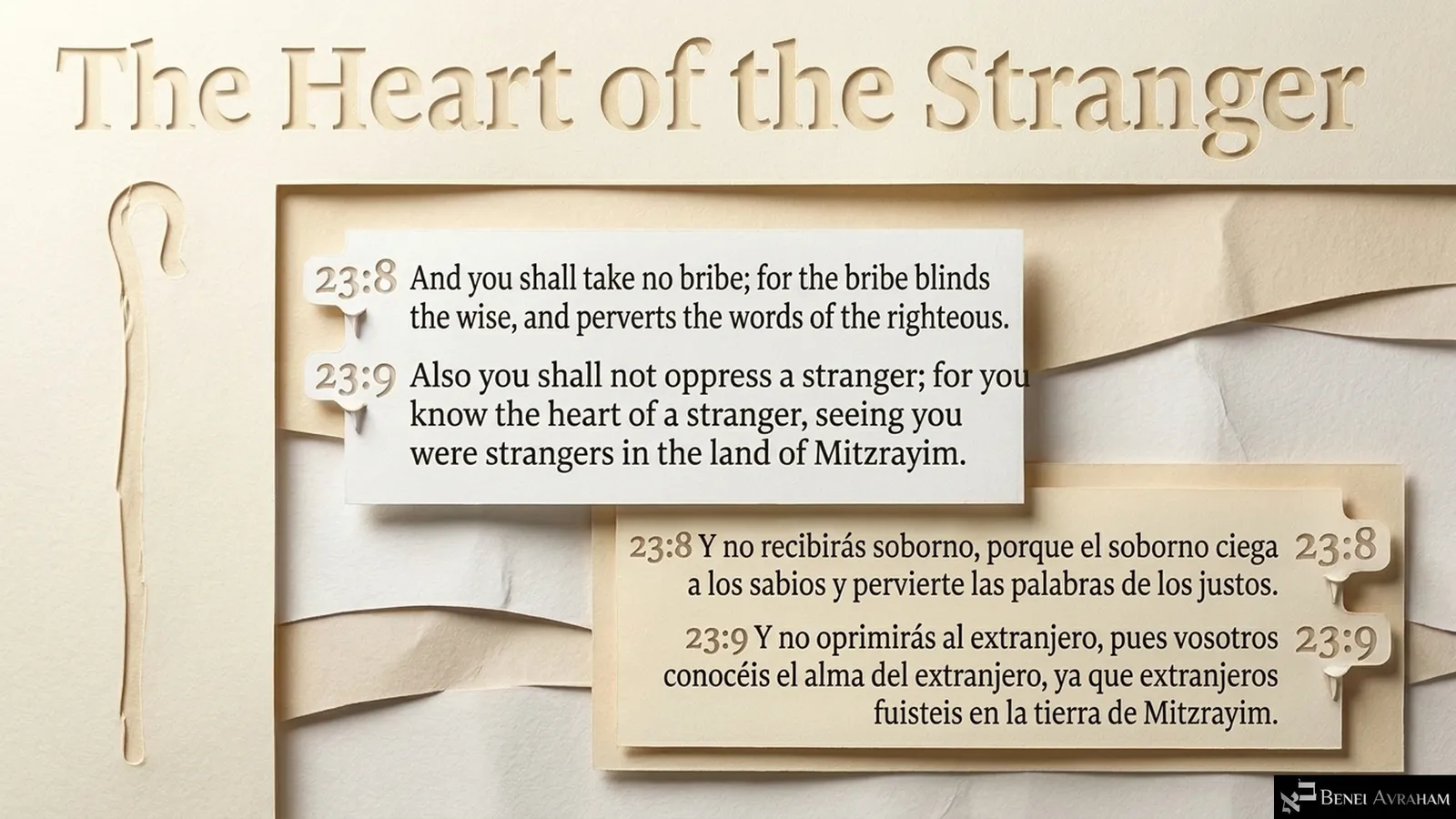
A paper staff, “The Heart of the Stranger”: you shall take no bribe… you know the heart of a stranger (Exodus 23:8–9).
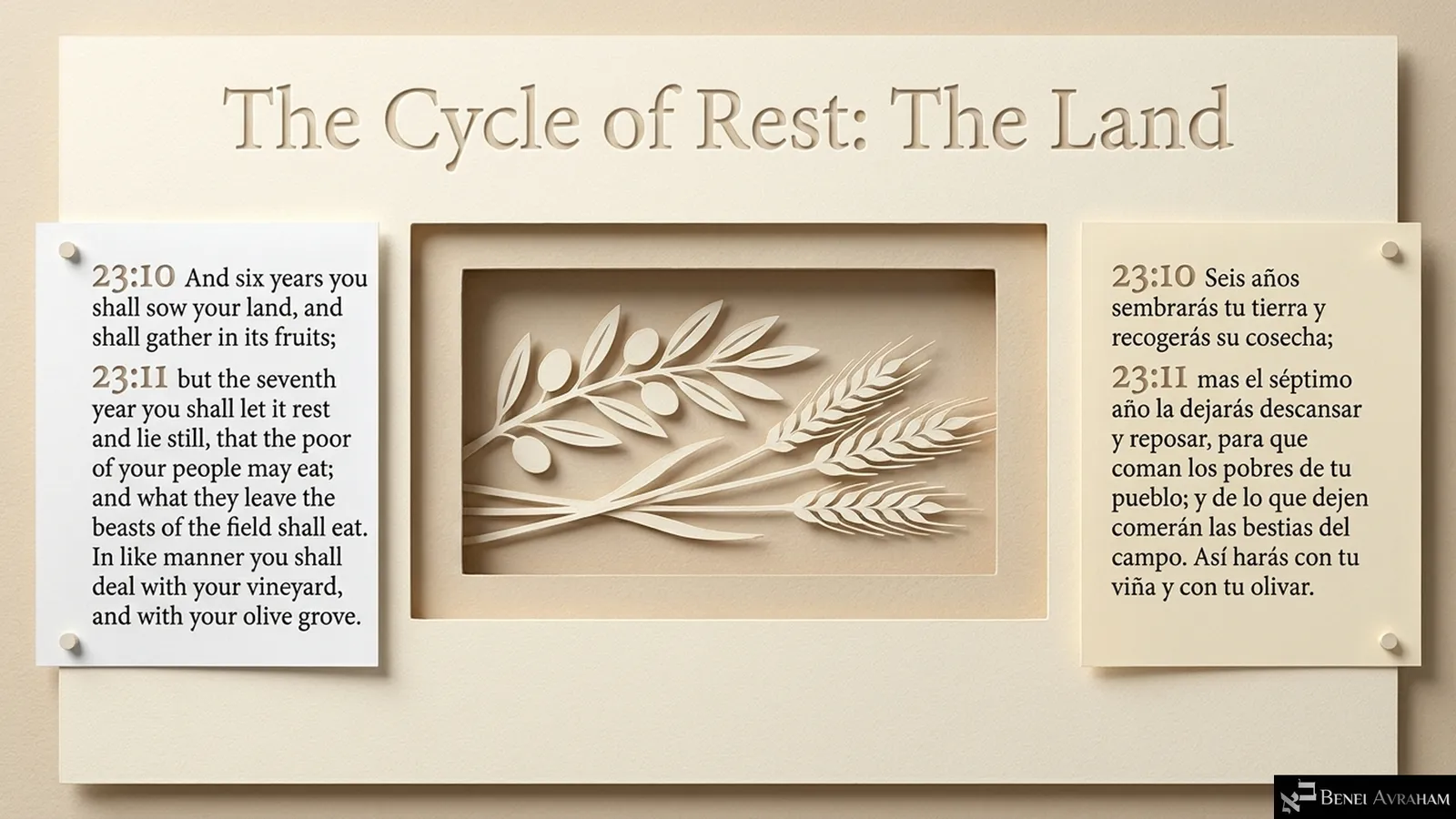
Olive branch and wheat in relief, “The Cycle of Rest: The Land”: the seventh year you shall let it rest and lie still (Exodus 23:10–11).
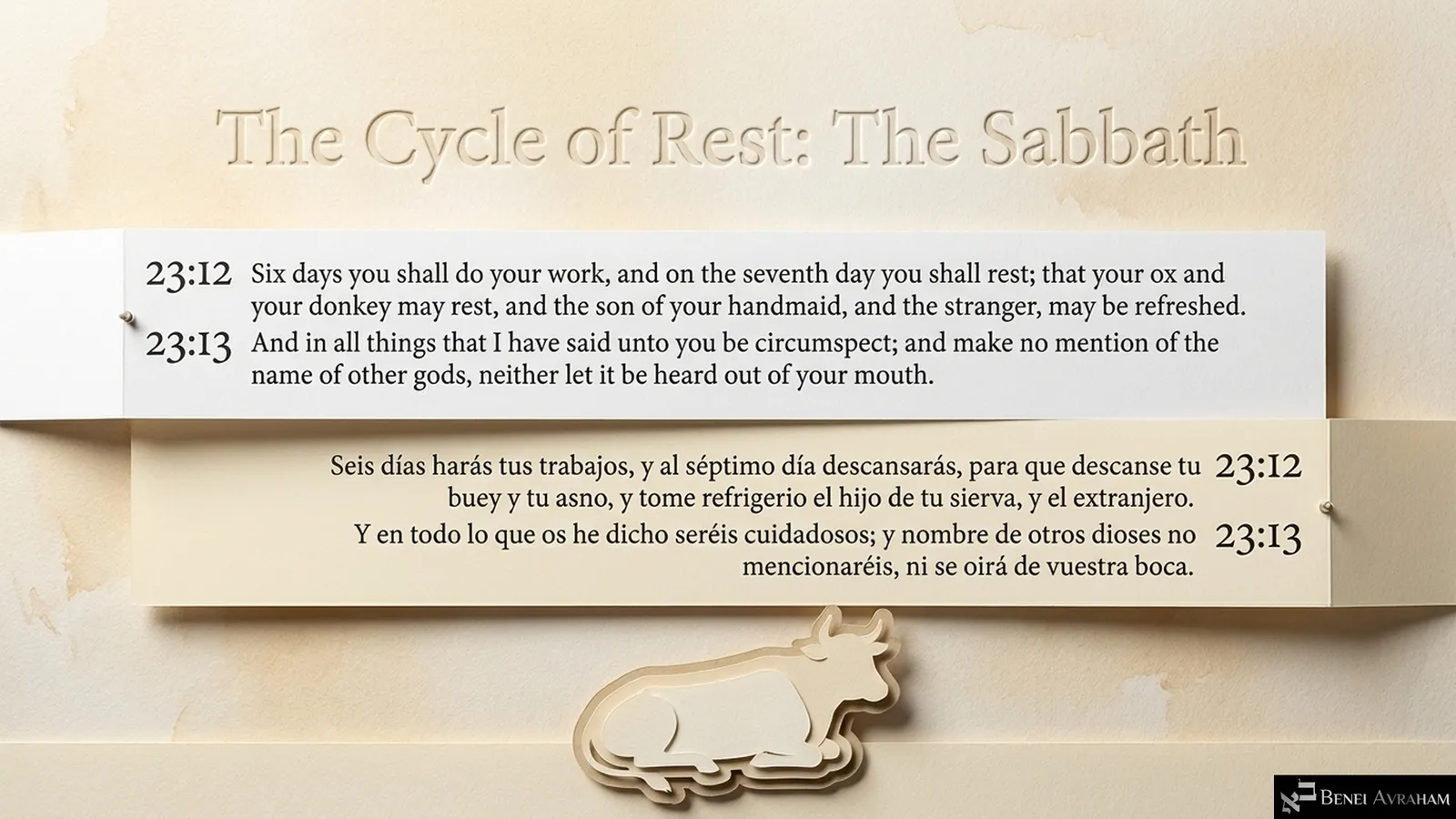
A resting paper ox, the cycle of rest on the seventh day: six days you shall do your work, and on the seventh day you shall rest (Exodus 23:12–13).
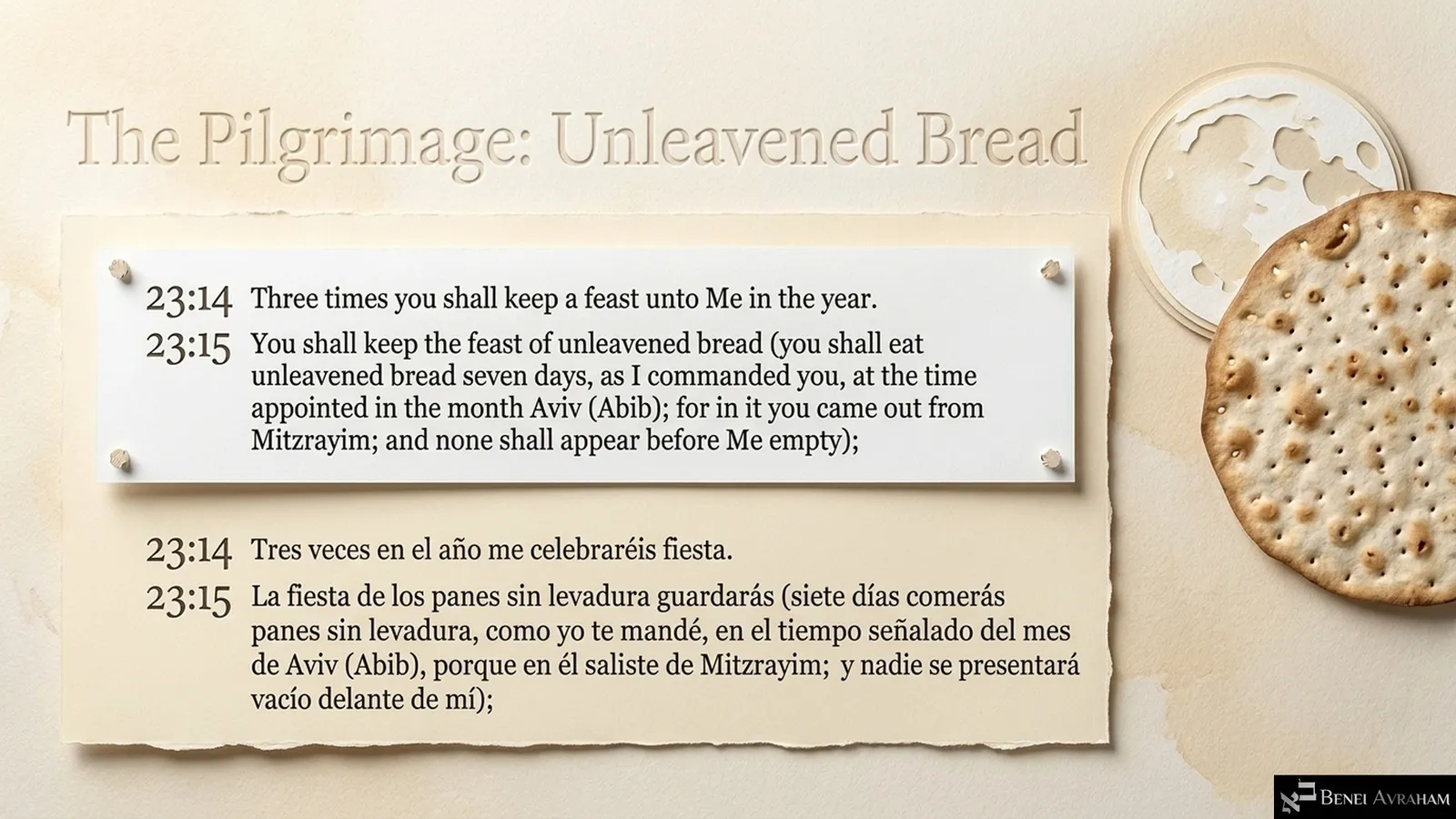
A round matzah and full moon, “The Pilgrimage: Unleavened Bread”: three times you shall keep a feast unto Me in the year (Exodus 23:14–15).
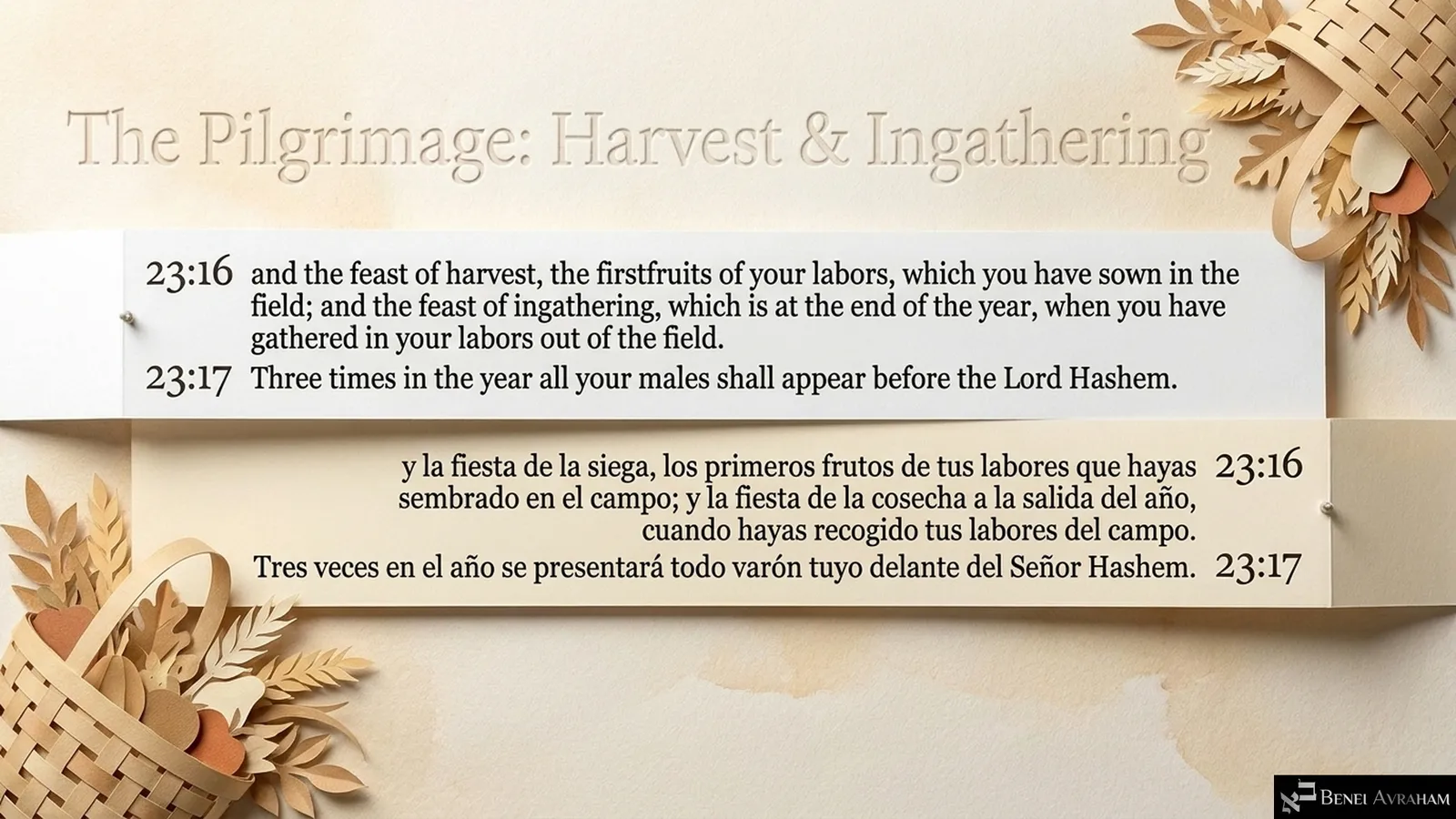
Paper baskets of harvest, “Harvest & Ingathering”: the feast of harvest and the feast of ingathering (Exodus 23:16–17).
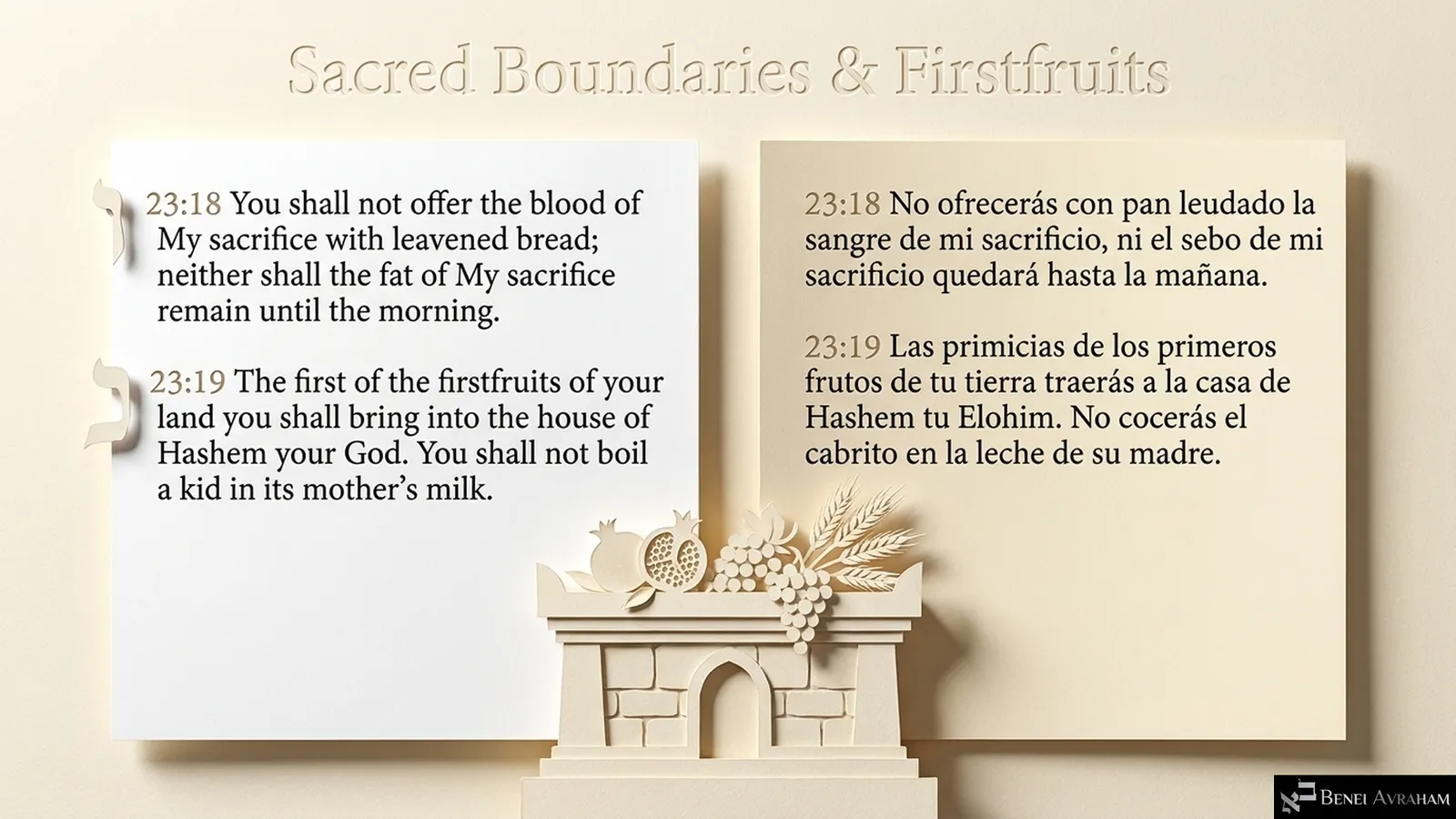
A small paper altar with firstfruits, “Sacred Boundaries & Firstfruits”: you shall not boil a kid in its mother’s milk (Exodus 23:18–19).