SMS/Text 469-608-9944
Parashat Ḥayei Sarah · Genesis 23:1–25:18 · Haftarah 1 Kings 1:1–31

Ḥayei Sarah: A Visual Journey

Illustrated teaching slides from Benei Avraham, in English and Spanish, walking through Parashat Ḥayei Sarah portion by portion: the death of Sarah in Kiryat-Arba and Avraham’s purchase of the field and cave of Machpelah from Efron the Ḥittite; Avraham, old and blessed in all things, sends his servant to find a wife for Yitzḥak from his own family; the servant’s prayer at the well of Naḥor and Rivkah’s kindness to him and his camels; the servant tells his story in Lavan’s house, and Rivkah says, “I will go”; Yitzḥak meets Rivkah in the field at evening and takes her into Sarah’s tent; Avraham’s sons by Keturah, his death “in a good old age”, and his burial by Yitzḥak and Yishmael; and the twelve princes of Yishmael. The haftarah follows: as King David grows old, Adoniyah claims the throne, and Natan and Bat-Sheva remind David of his oath that Shlomo will reign after him. Tap any image to open the slideshow; use the arrows (or swipe) to move through every slide.

Rishon · Genesis 23:1–16

First Portion

Title slide: Parashat Ḥayei Sarah, the first portion, Genesis 23:1–16, with paper-cut hills and olive trees under a deep blue sky.
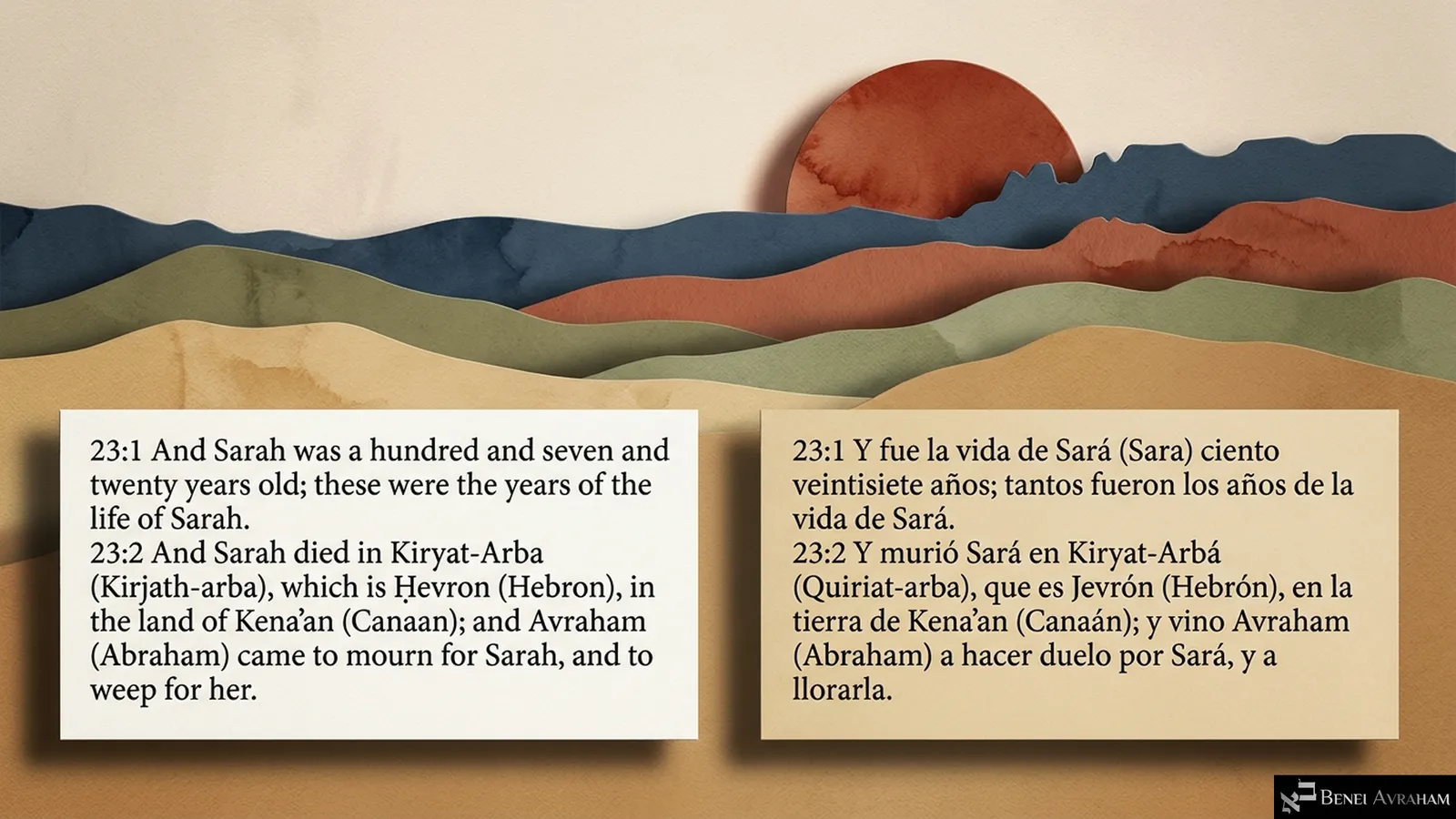
A red sun sets behind layered hills as Sarah dies at a hundred and twenty-seven in Kiryat-Arba, which is Ḥevron, and Avraham comes to mourn and weep for her (Genesis 23:1–2).
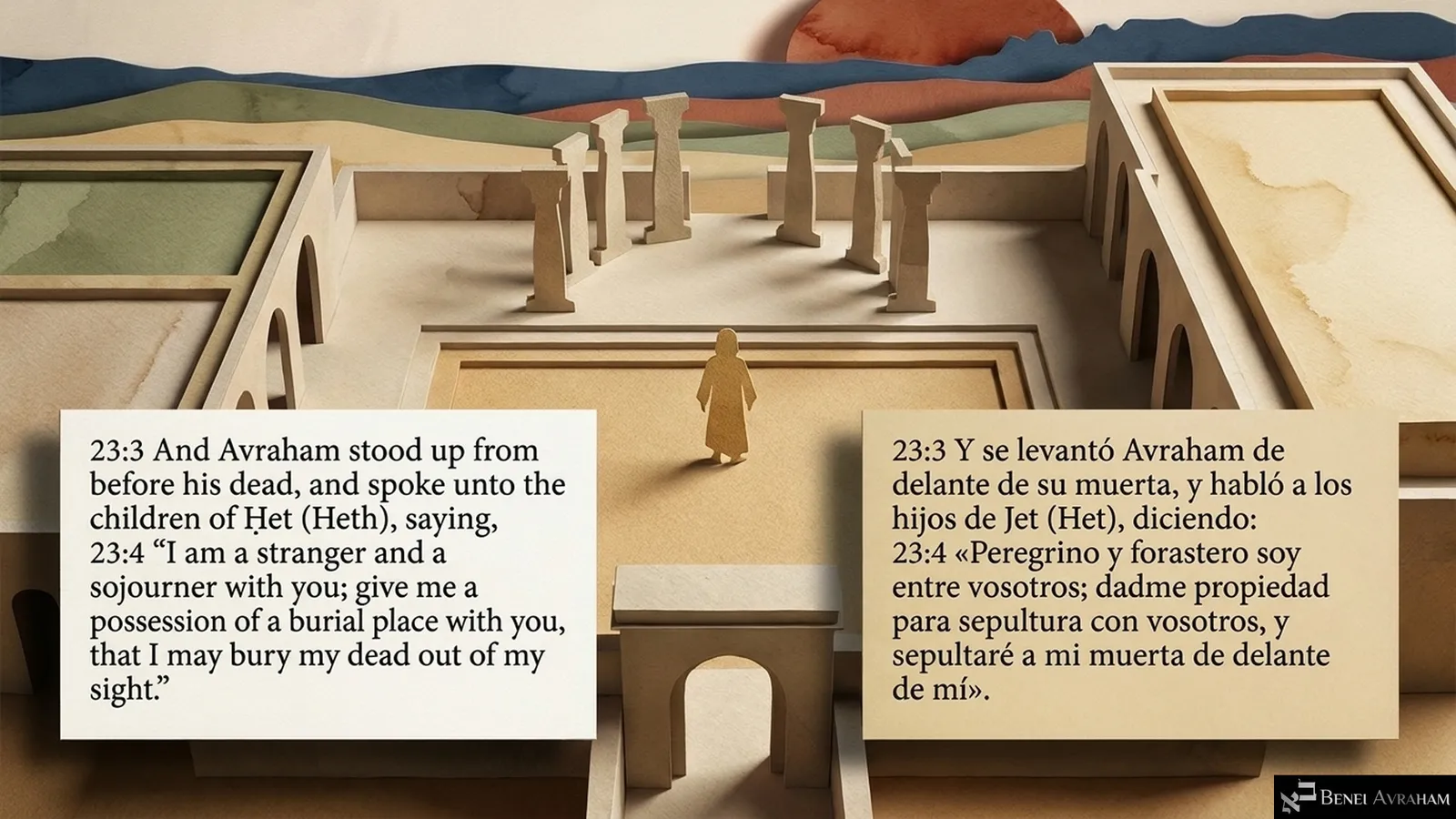
Avraham stands alone in a walled courtyard of columns before the children of Ḥet and asks for a burial place for his dead (23:3–4).
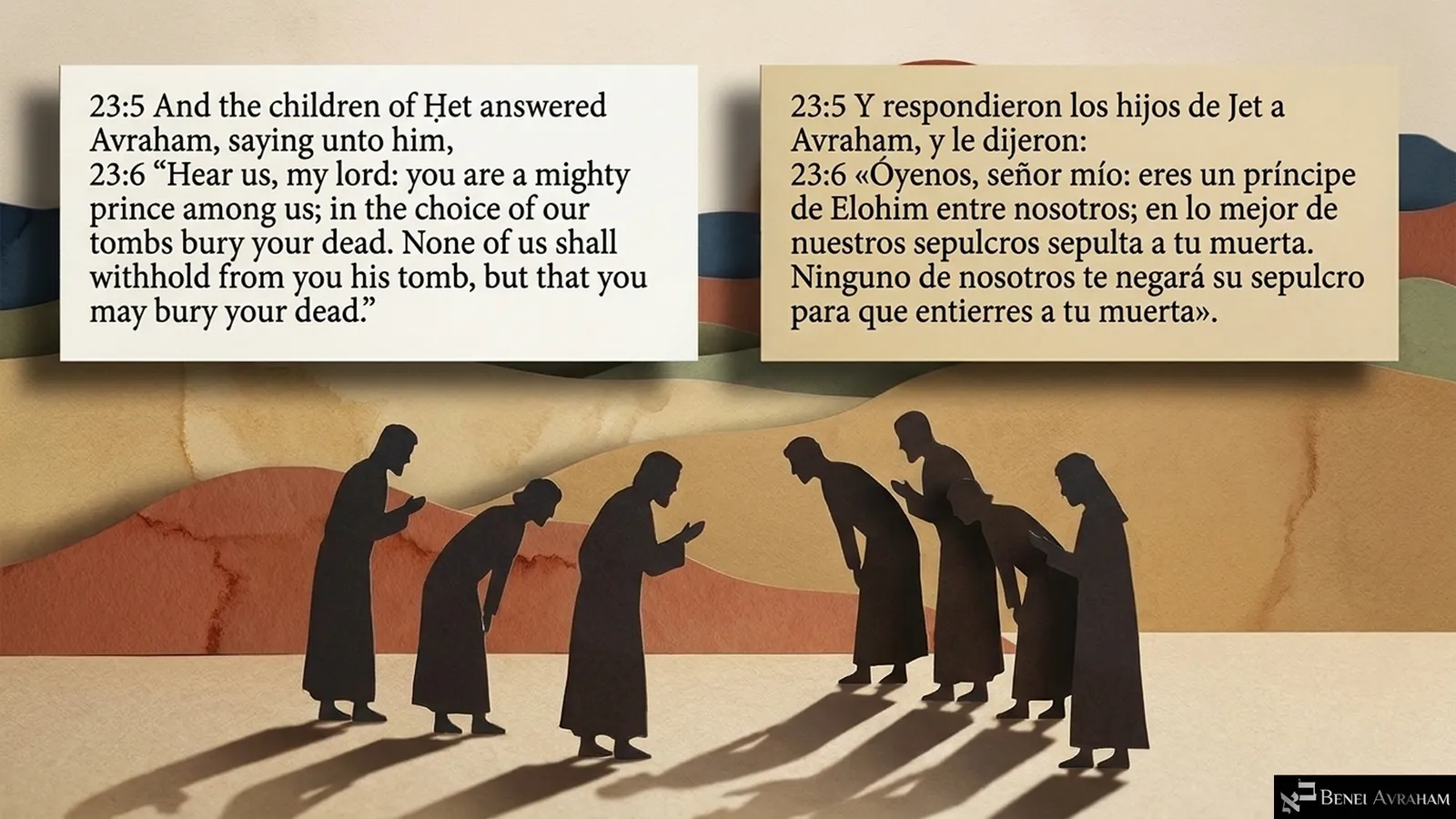
The children of Ḥet bow before Avraham: “Hear us, my lord: you are a mighty prince among us” (23:5–6).
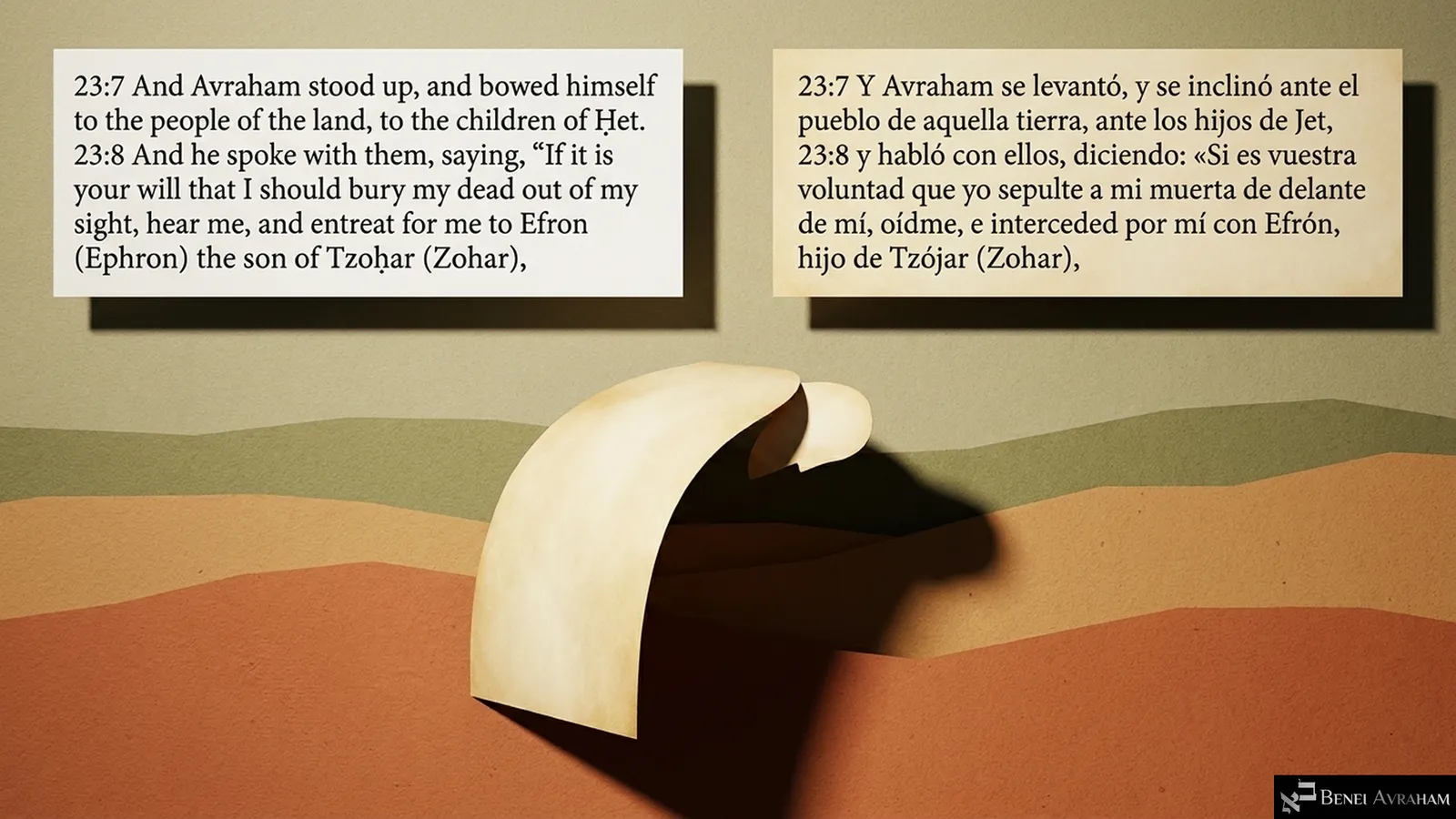
Avraham bows to the people of the land and asks them to entreat Efron the son of Tzoḥar for him (23:7–8).
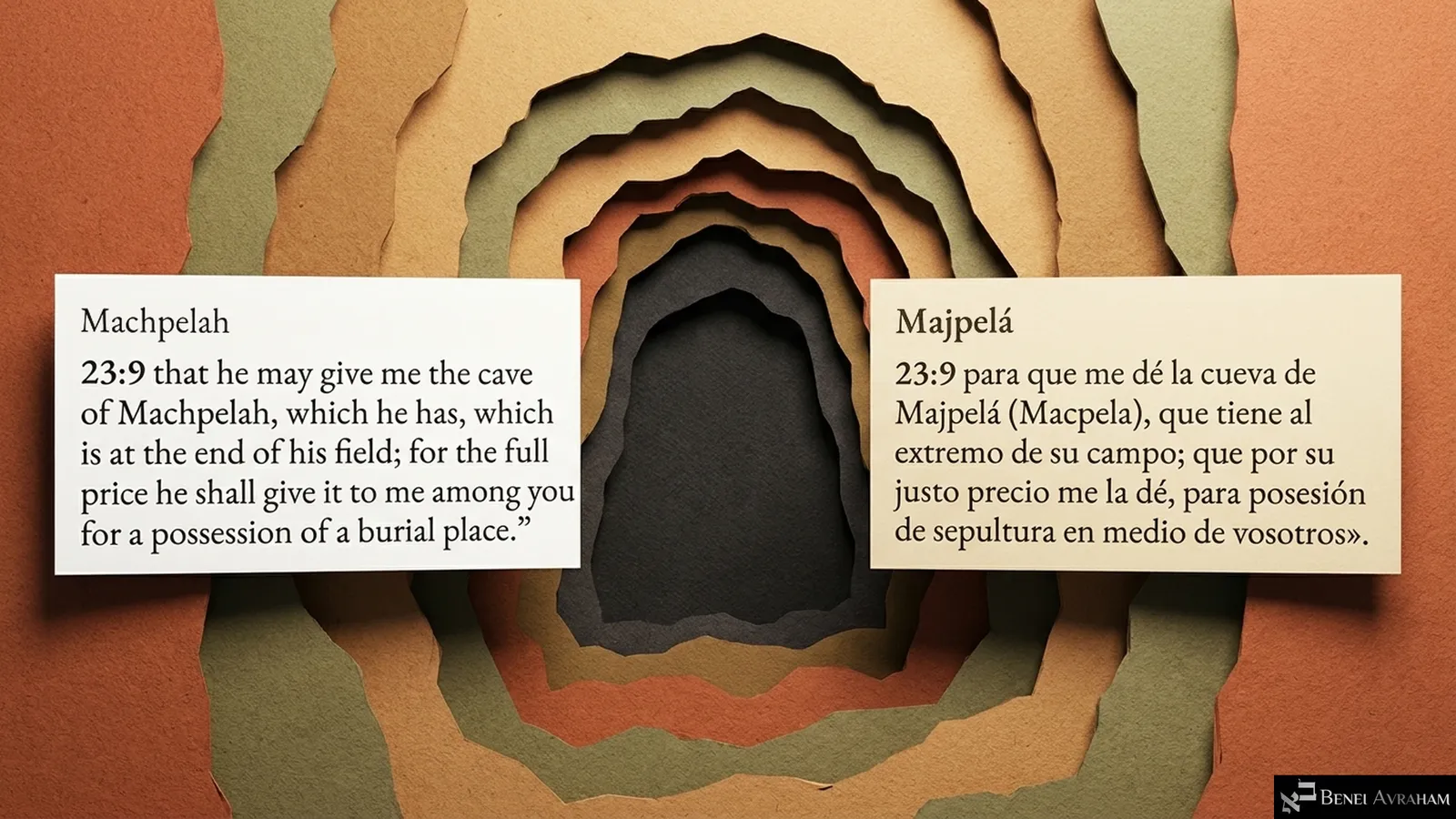
“Machpelah”: torn paper layers open onto the dark mouth of the cave at the end of Efron’s field (23:9).
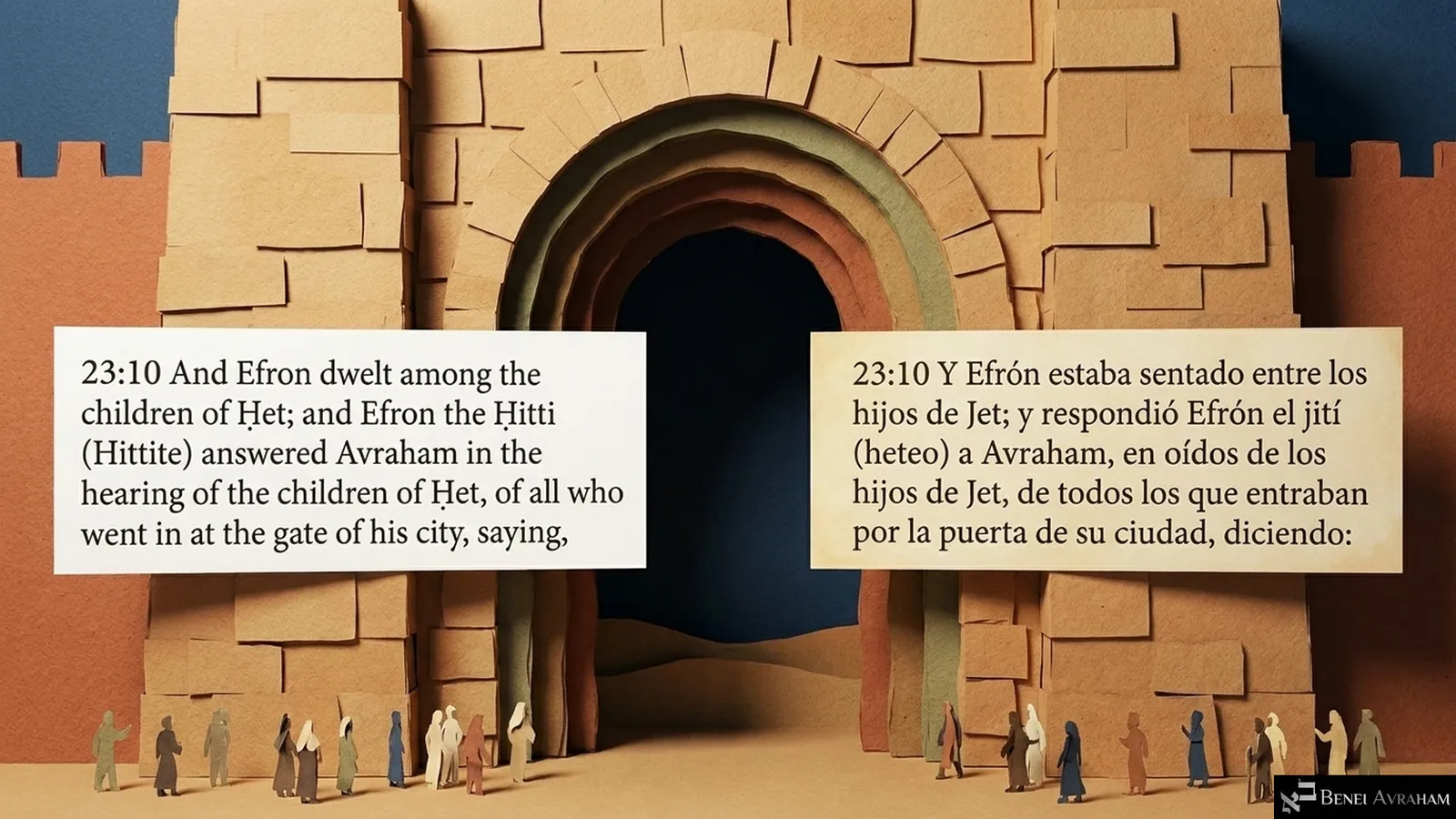
The great arched gate of the city, with townspeople gathered below, where Efron the Ḥitti answers Avraham before all the children of Ḥet (23:10).
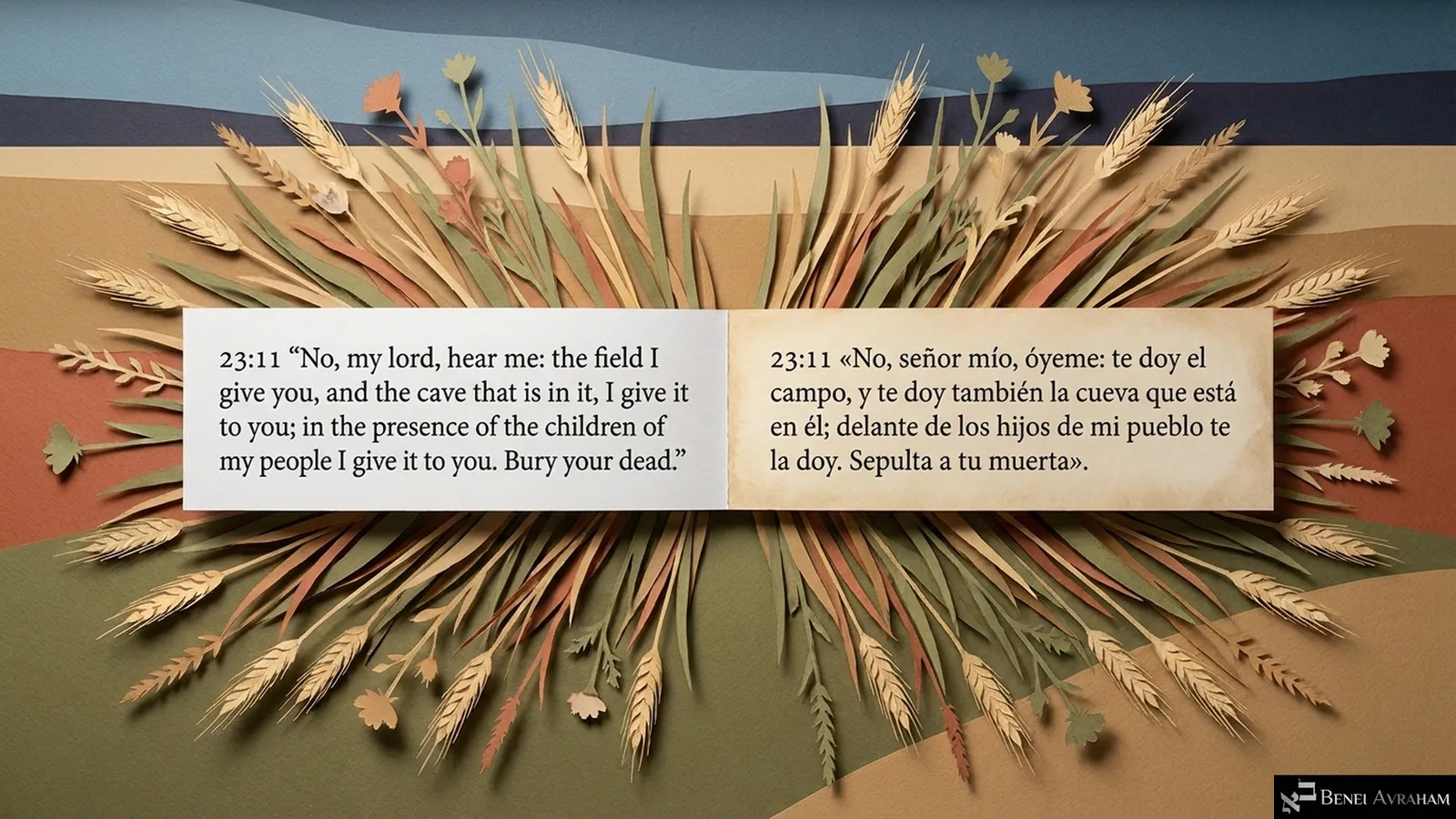
Stalks of wheat and wildflowers burst around Efron’s offer: “The field I give you, and the cave that is in it” (23:11).
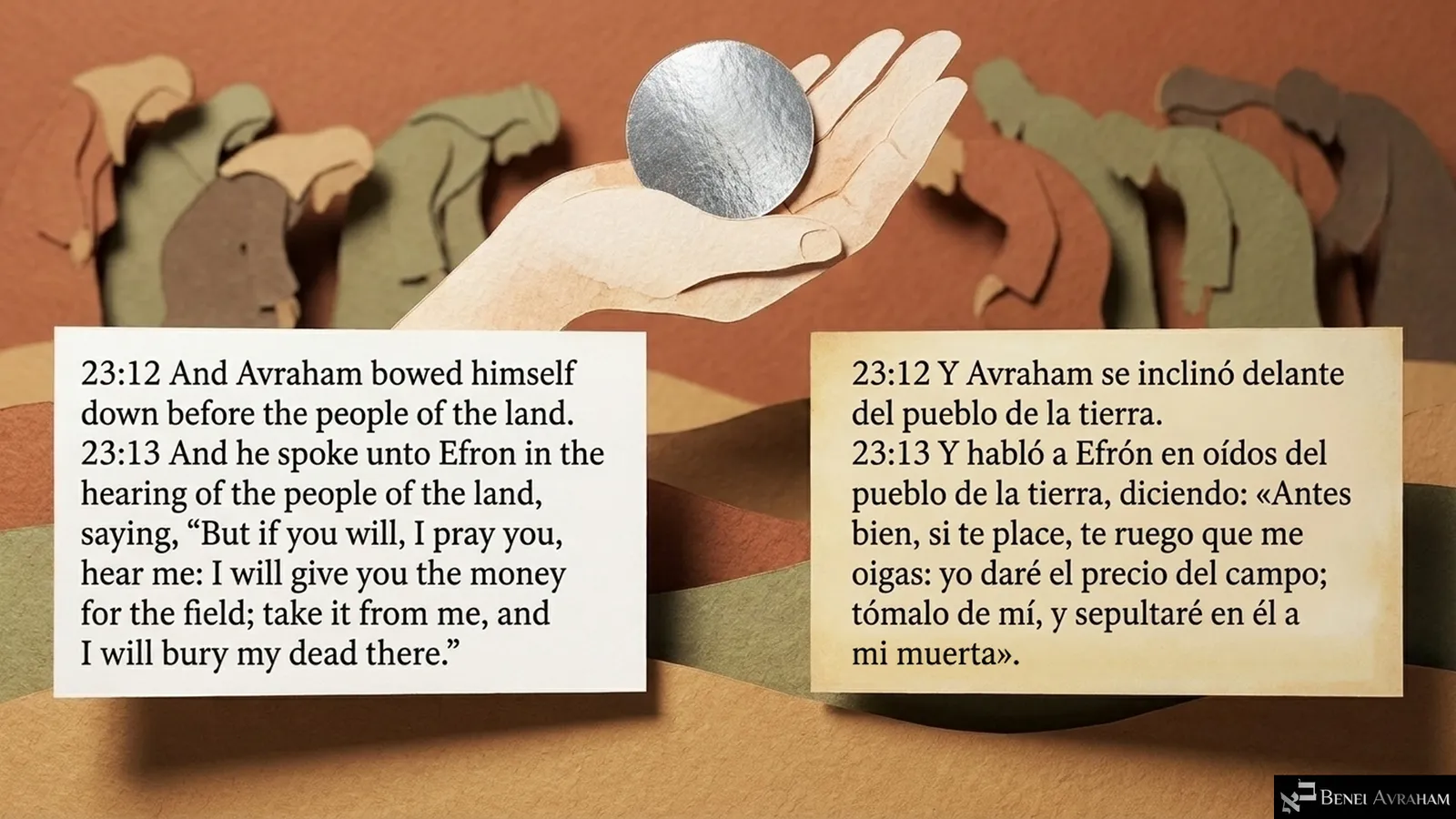
Bowed figures stand behind an open hand holding a silver coin as Avraham offers to pay for the field (23:12–13).
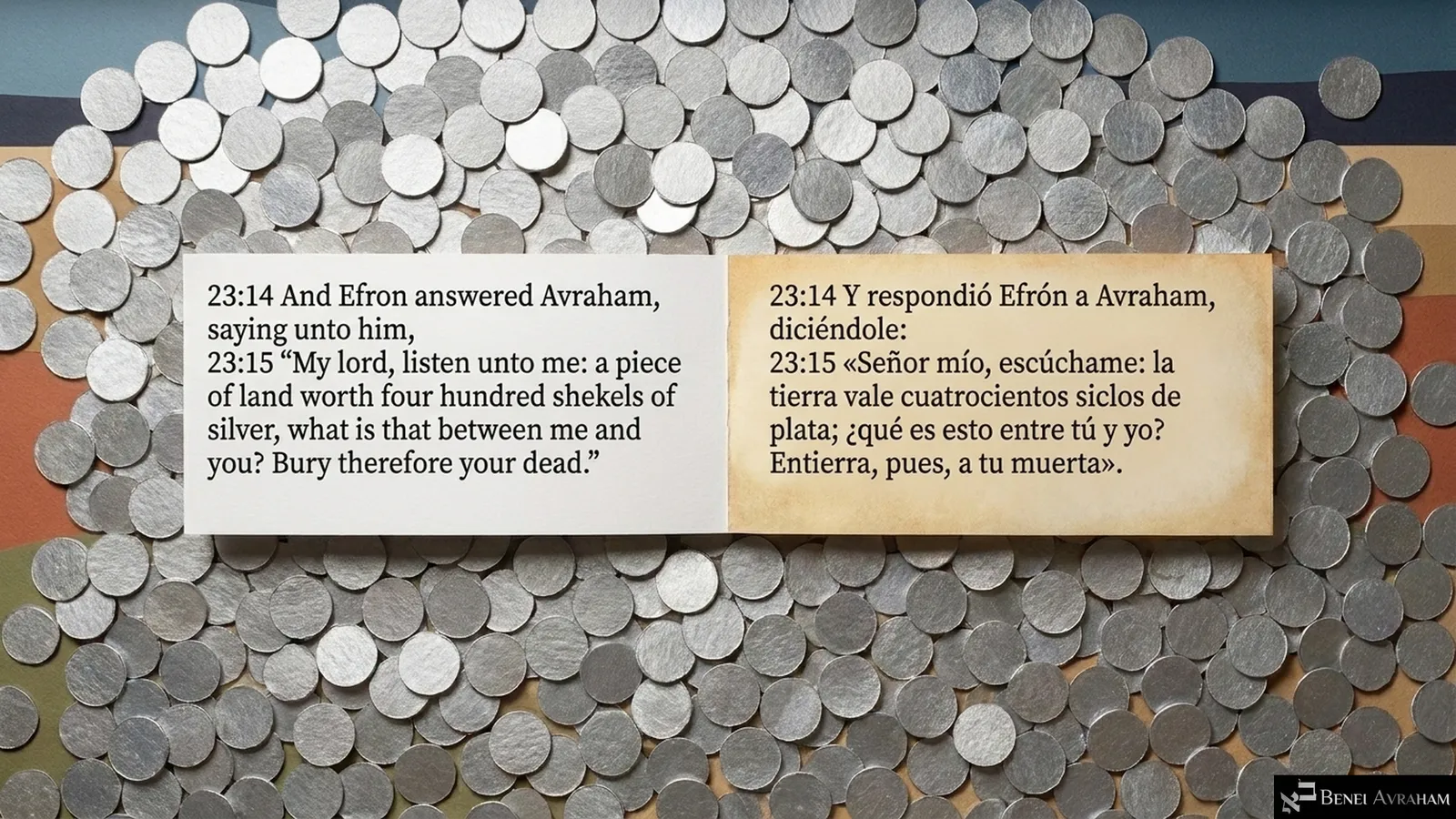
A heap of silver coins around Efron’s answer: “A piece of land worth four hundred shekels of silver, what is that between me and you?” (23:14–15).
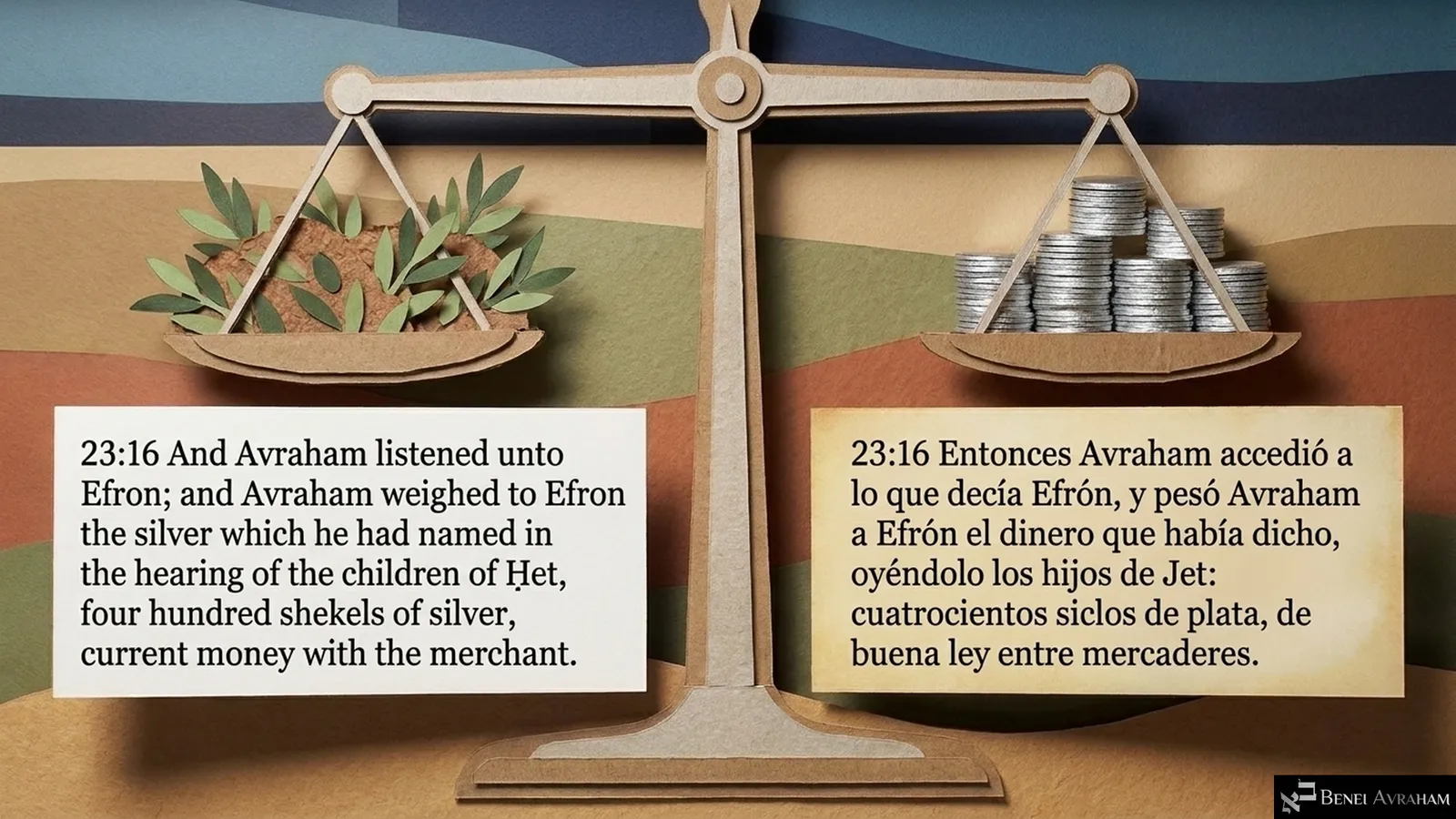
A balance weighs the land against stacks of silver as Avraham pays Efron four hundred shekels, current money with the merchant (23:16).
Sheni · Genesis 23:17–24:9

Second Portion
Title slide: Parashat Ḥayei Sarah, the second portion, Genesis 23:17–24:9, in an ornate frame against a paper-cut desert sunrise.
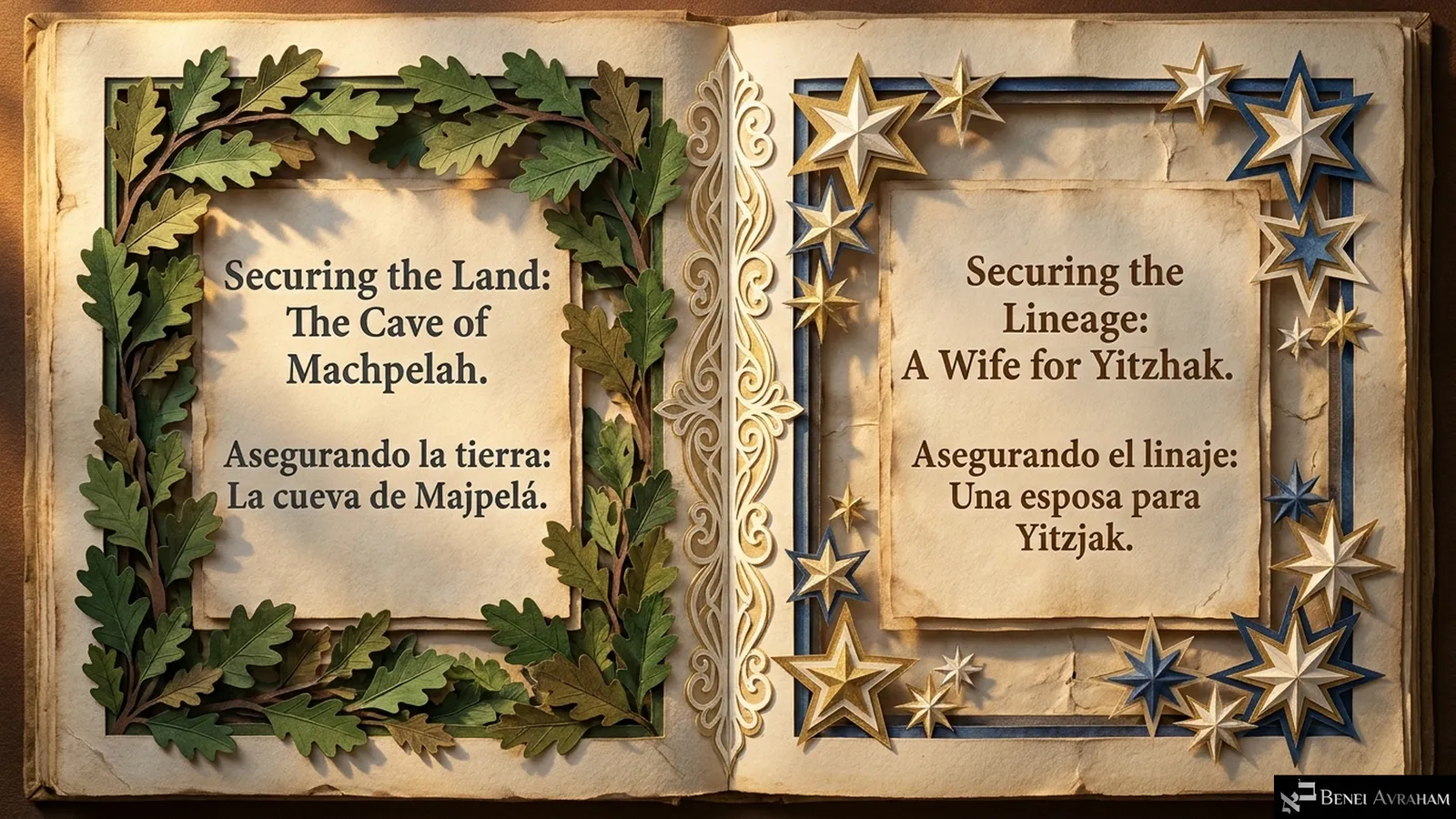
An open book with two panels: “Securing the Land: The Cave of Machpelah” framed in oak leaves and “Securing the Lineage: A Wife for Yitzḥak” framed in stars (Genesis 23:17–24:9).
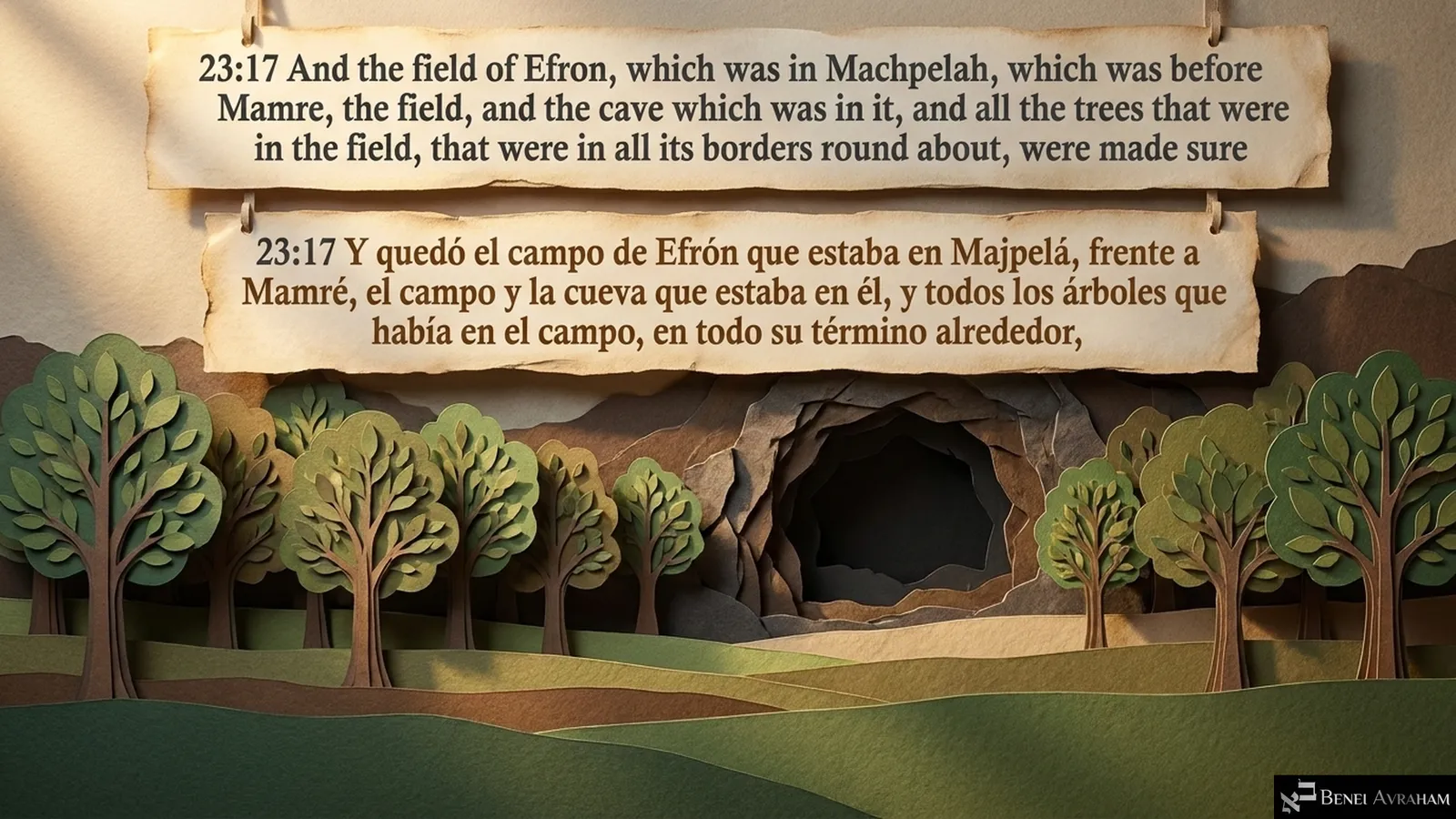
Hanging signs above a grove of paper-cut trees and the cave describe the field of Efron in Machpelah before Mamre, with all its trees, made sure to Avraham (Genesis 23:17).
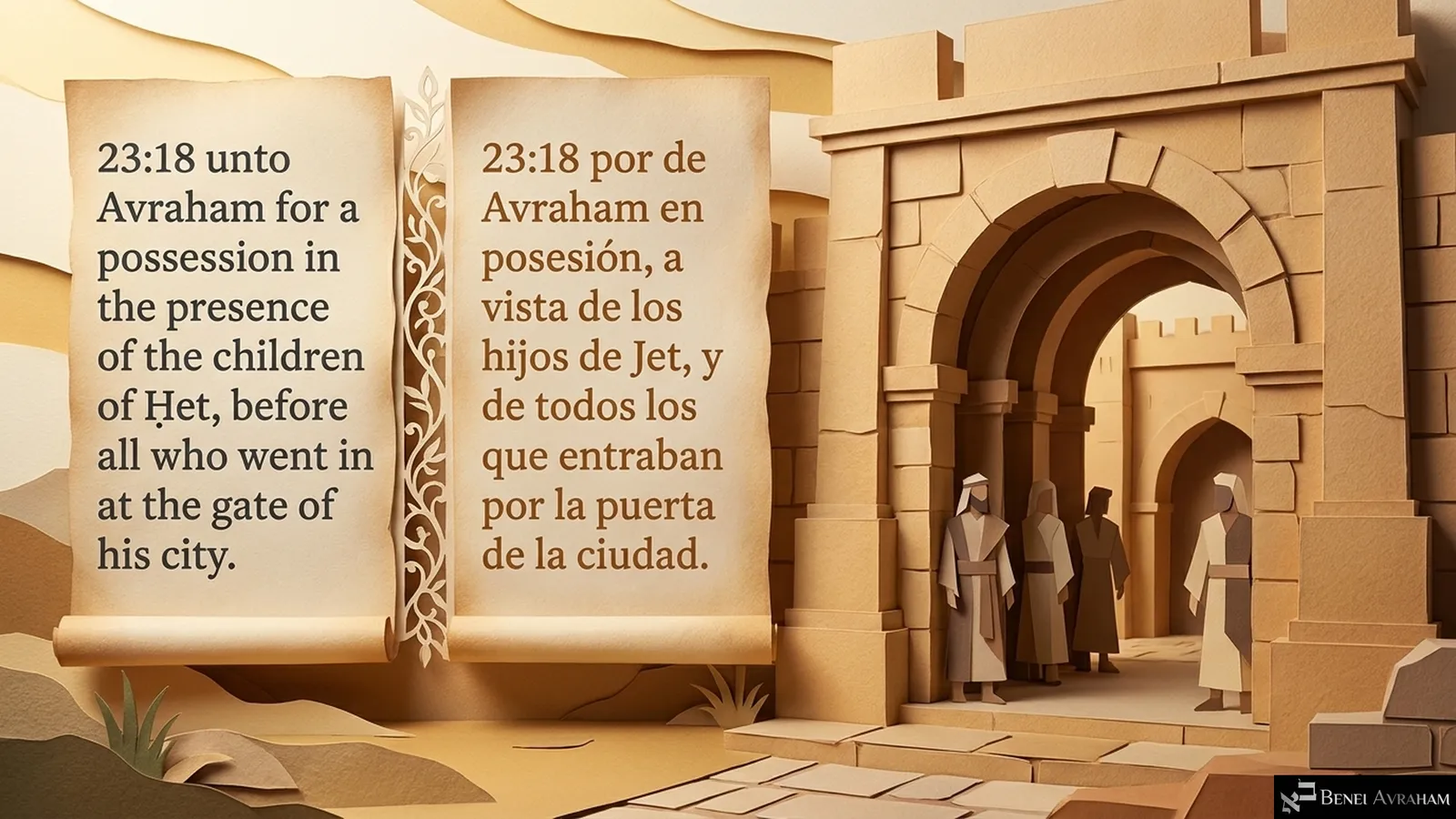
Two scrolls beside a stone city gate where elders stand, as the field passes to Avraham before all who went in at the gate of his city (23:18).
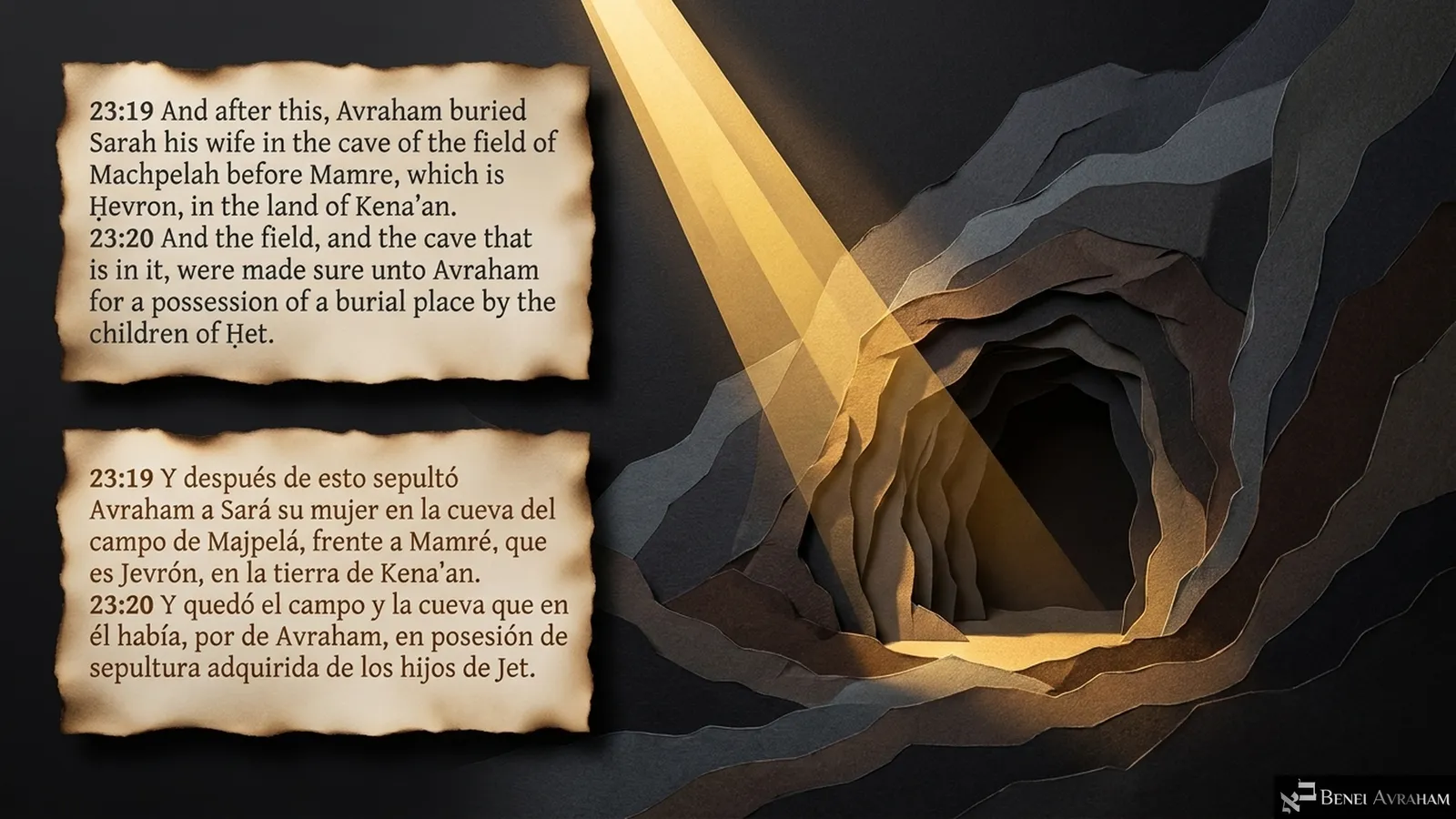
A shaft of light falls into the dark cave where Avraham buries Sarah his wife, in the field of Machpelah before Mamre, which is Ḥevron (23:19–20).
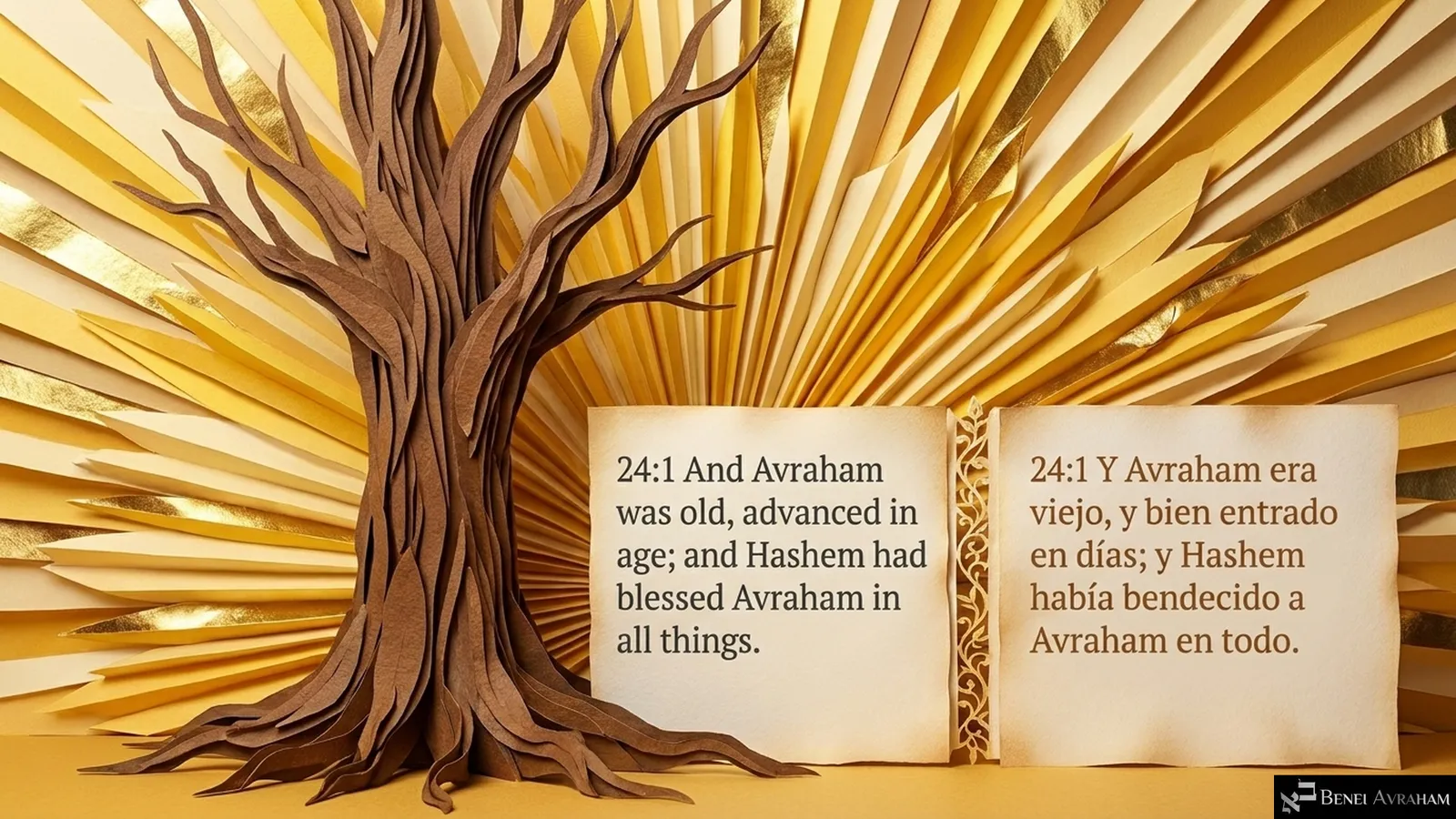
An old tree spreads before a golden fan of paper rays: Avraham was old, and Hashem had blessed him in all things (24:1).
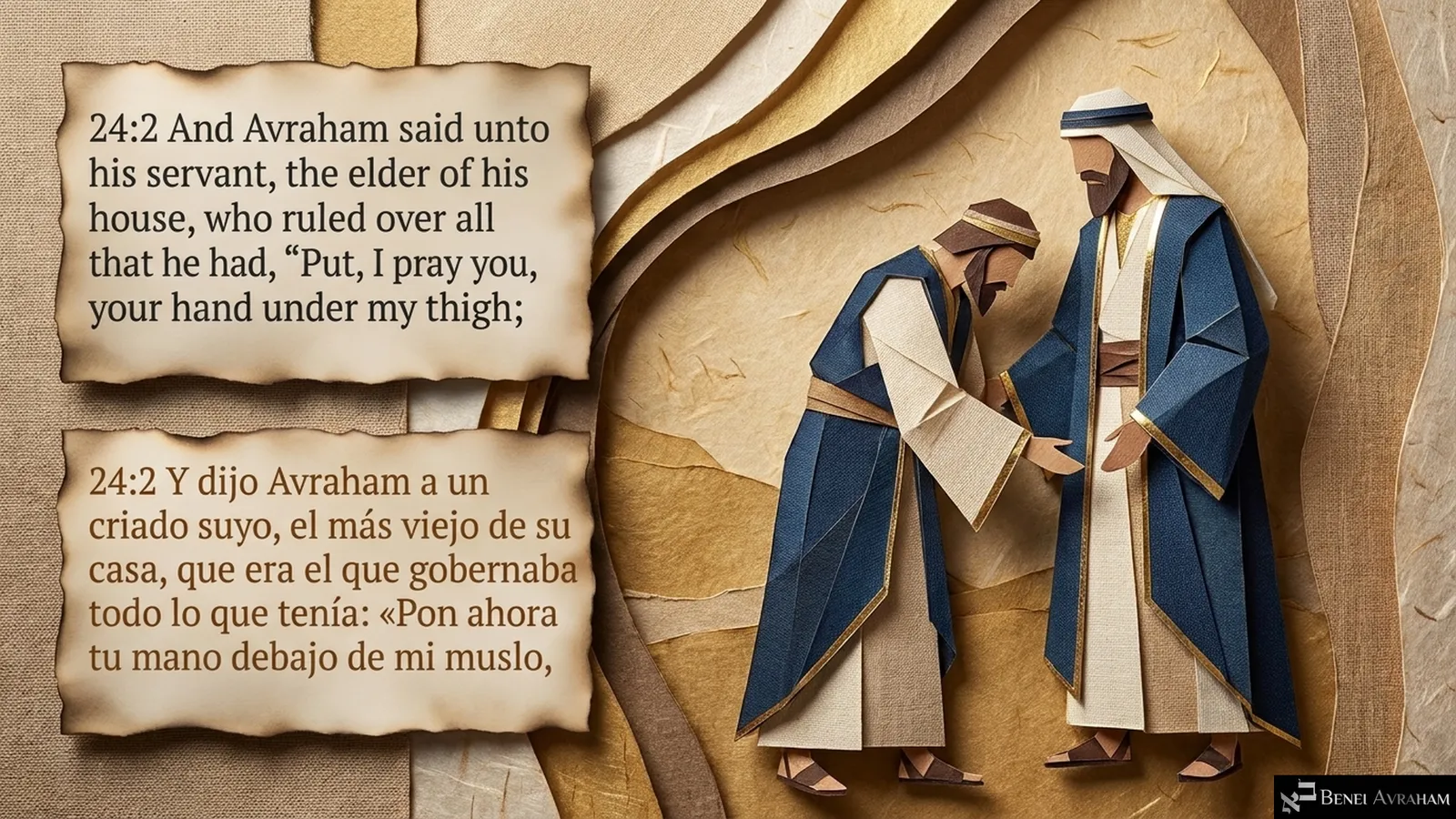
Avraham, tall in a blue robe, speaks to his bowing servant, the elder of his house: “Put, I pray you, your hand under my thigh” (24:2).
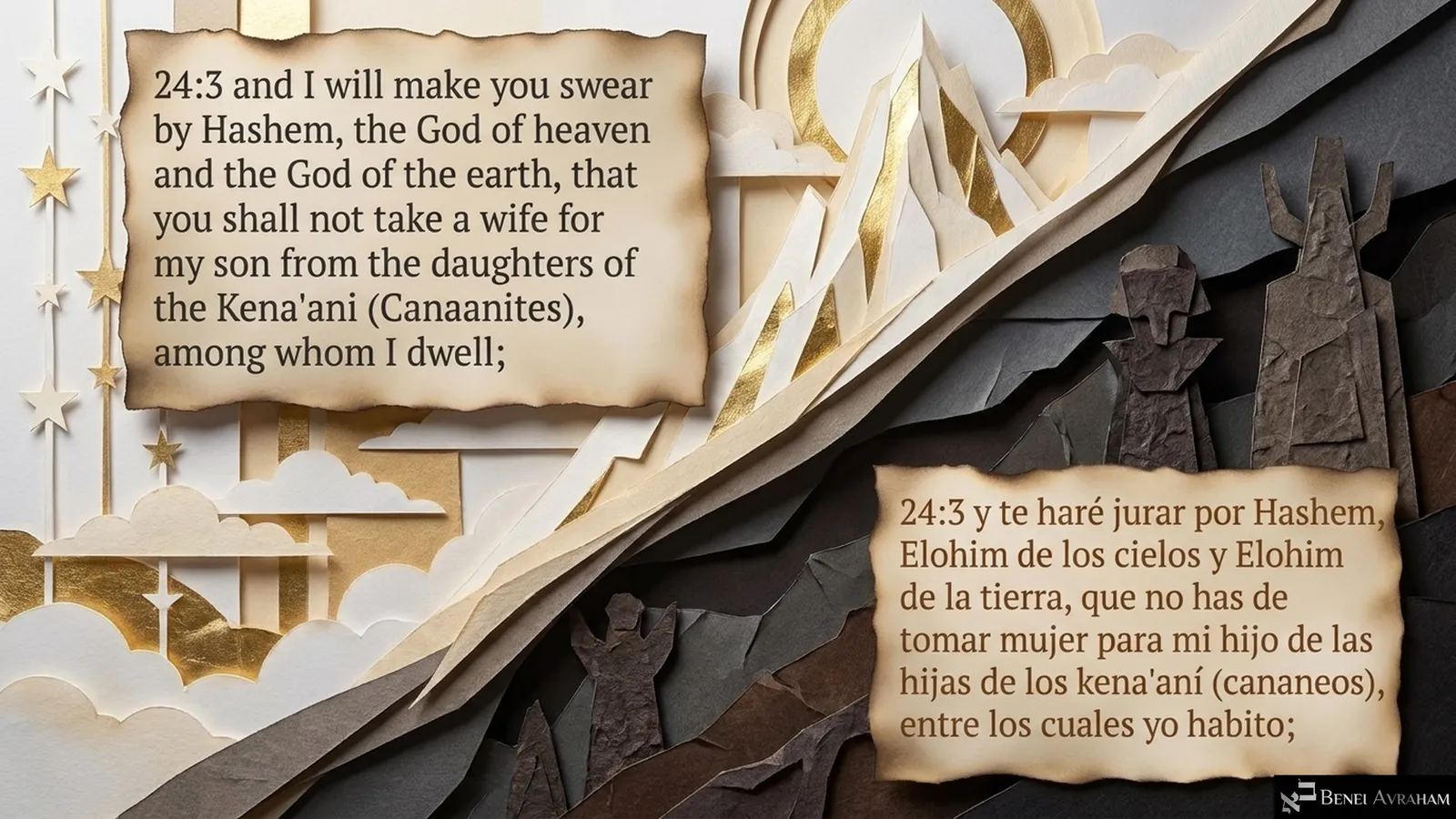
Gold mountains and stars rise above dark figures of the land as Avraham makes his servant swear not to take a wife for his son from the daughters of the Kena’ani (24:3).
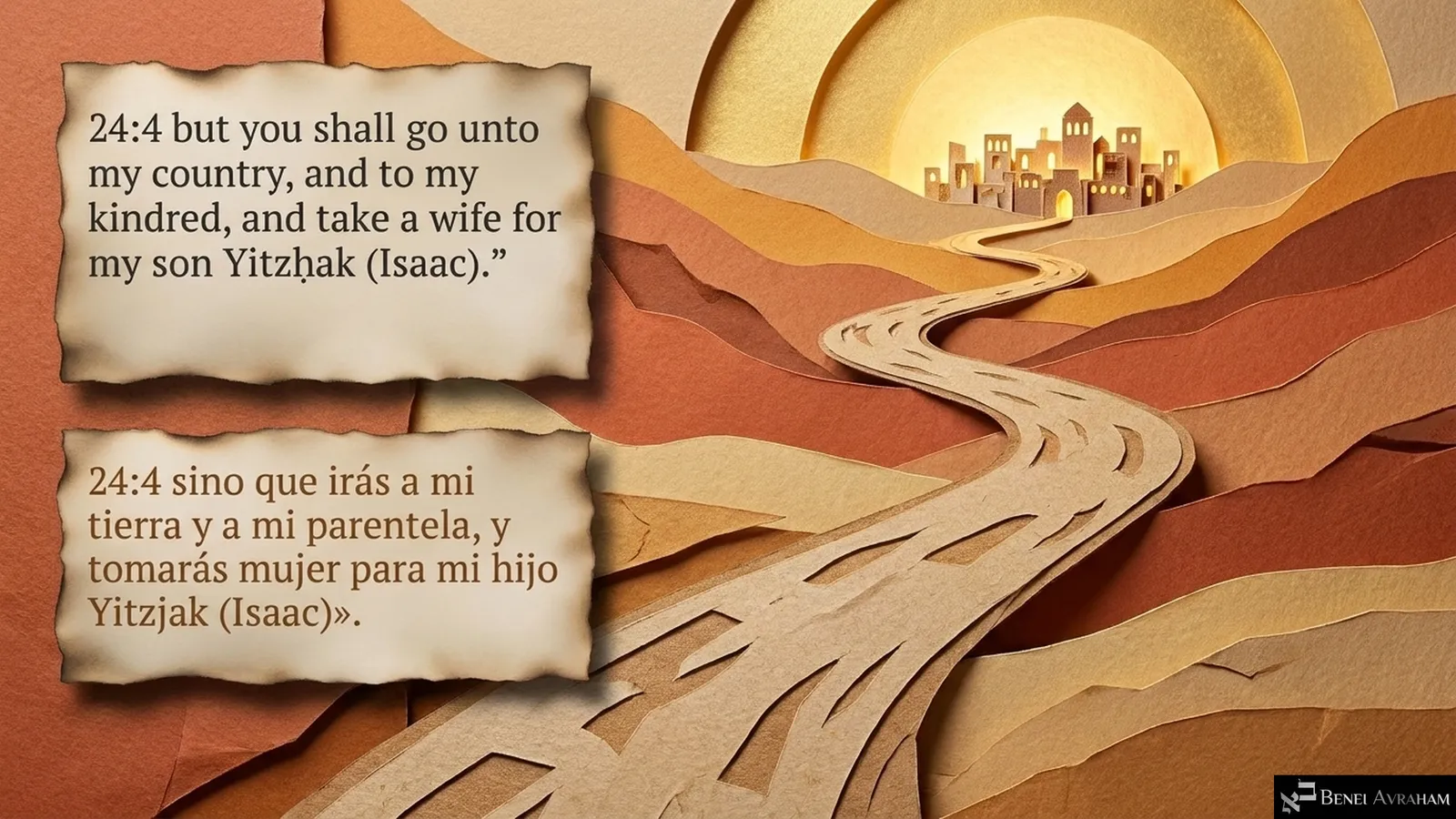
A winding road leads to a city under a golden sun: “Go unto my country, and to my kindred, and take a wife for my son Yitzḥak” (24:4).
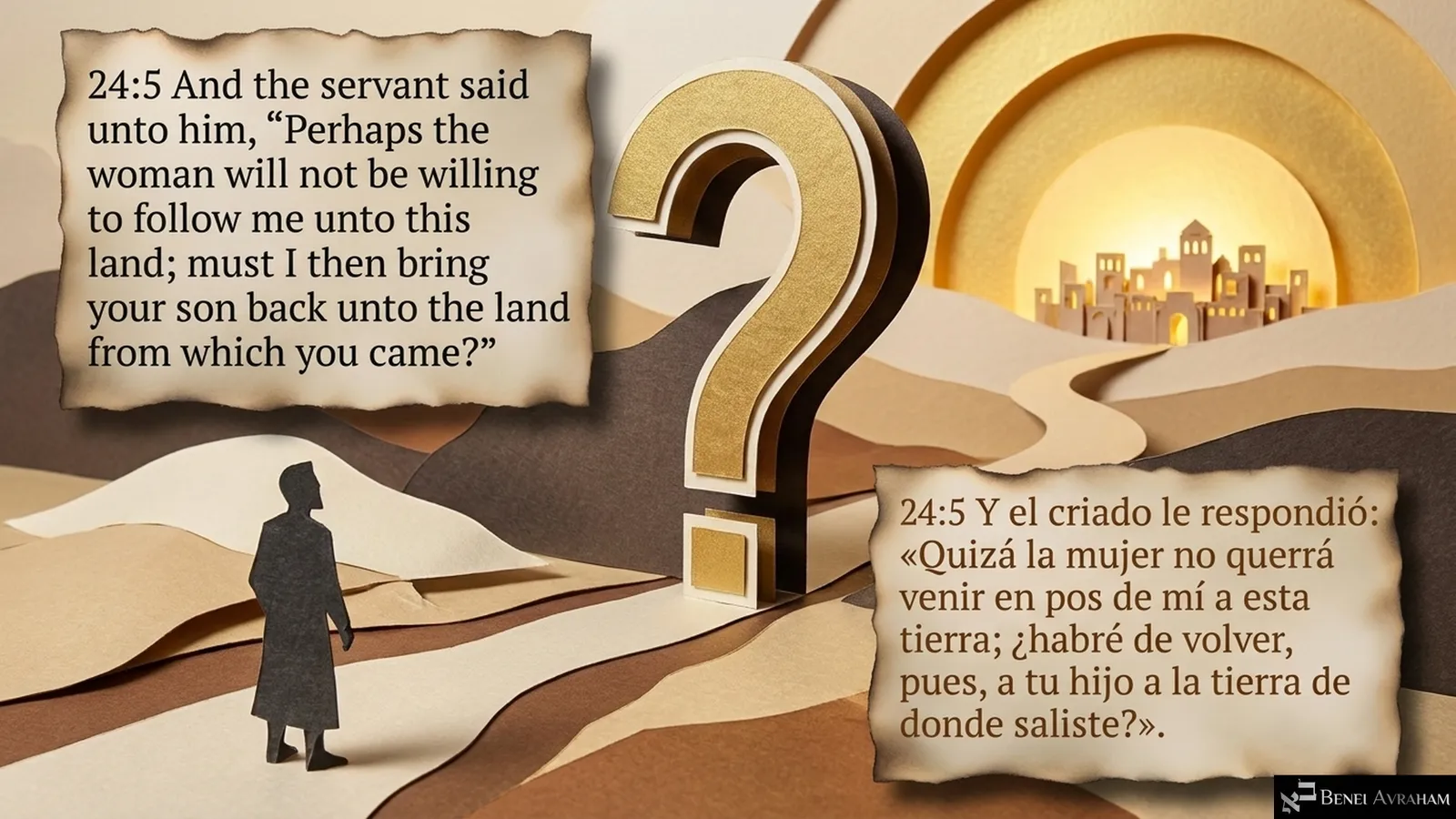
A lone traveller faces a great golden question mark: “Perhaps the woman will not be willing to follow me unto this land?” (24:5).
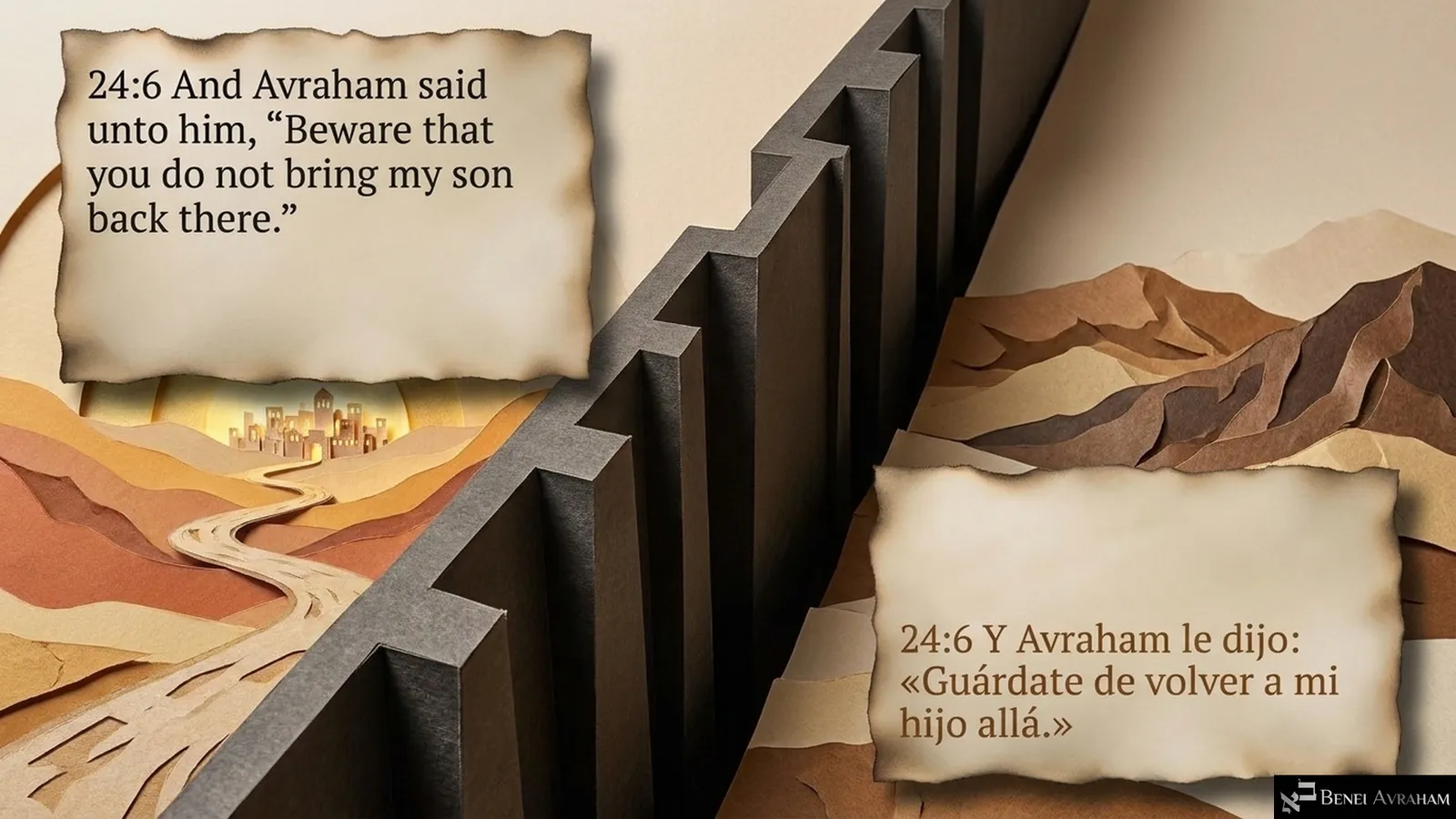
A dark wall divides the road home from the far hills: “Beware that you do not bring my son back there” (24:6).
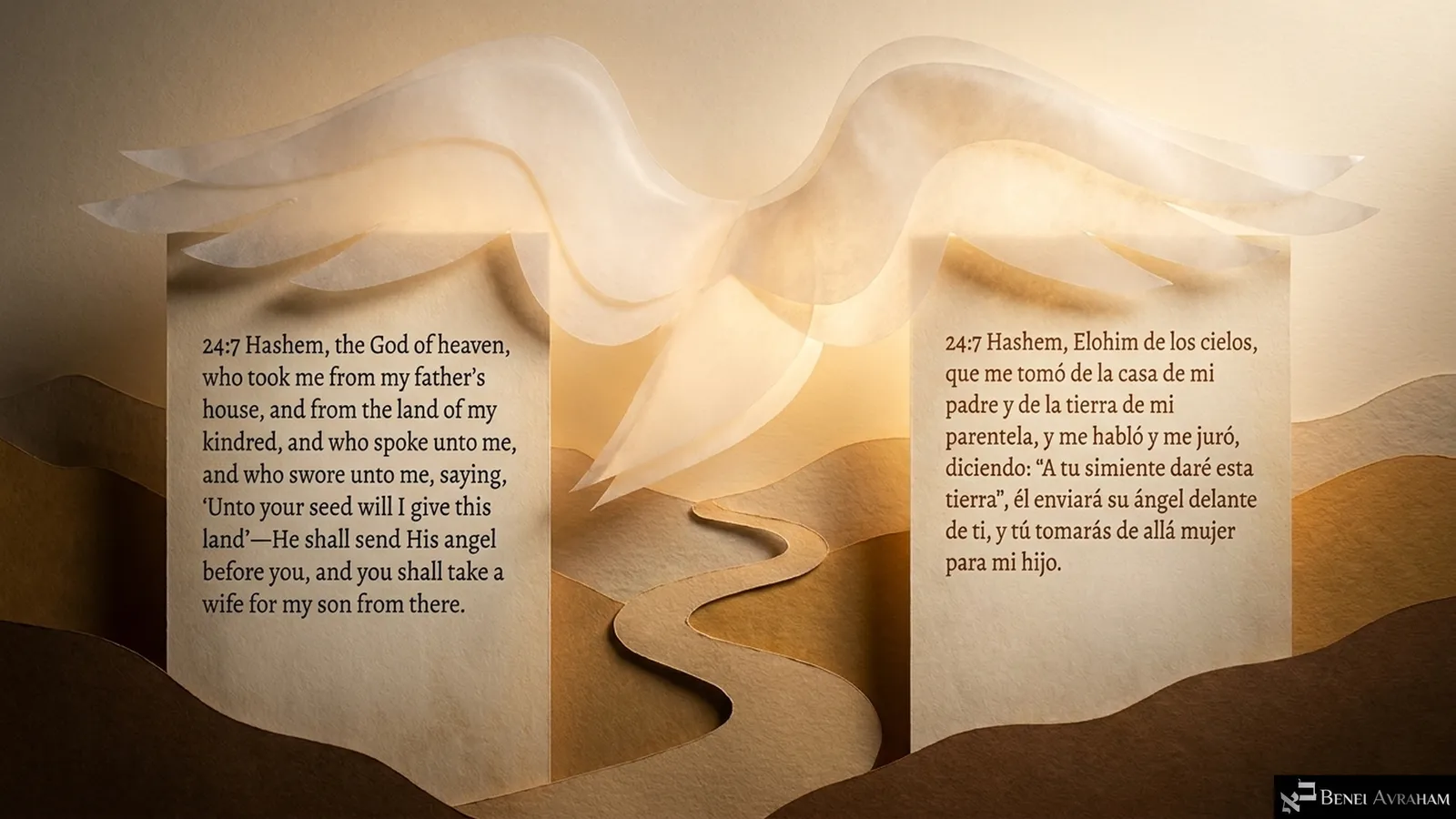
Paper wings of light spread over two tablets: Hashem, the God of heaven, will send His angel before the servant (24:7).
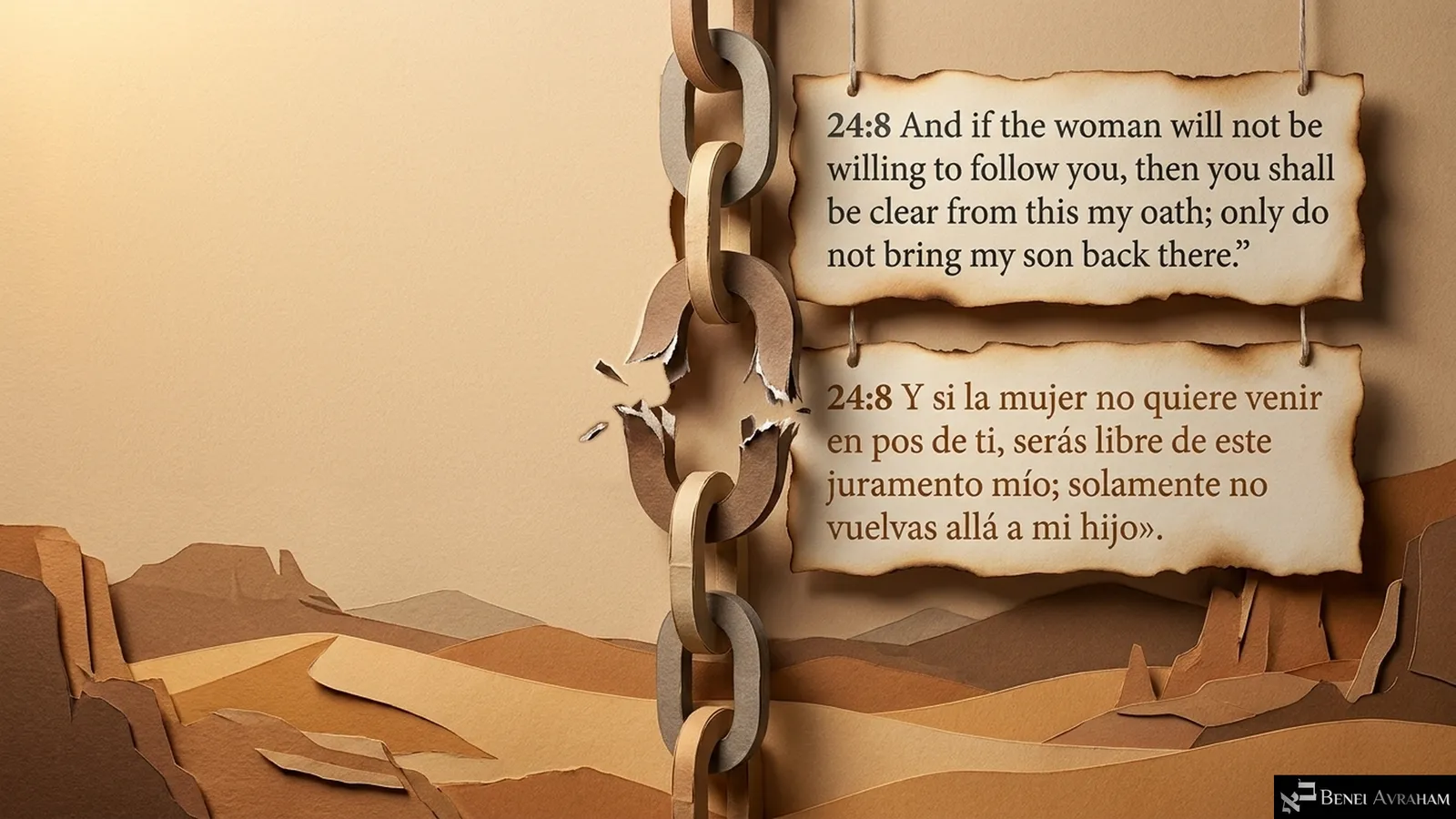
A broken paper chain hangs beside the verse: if the woman will not follow, the servant is clear from the oath, only he must not bring Avraham’s son back there (24:8).
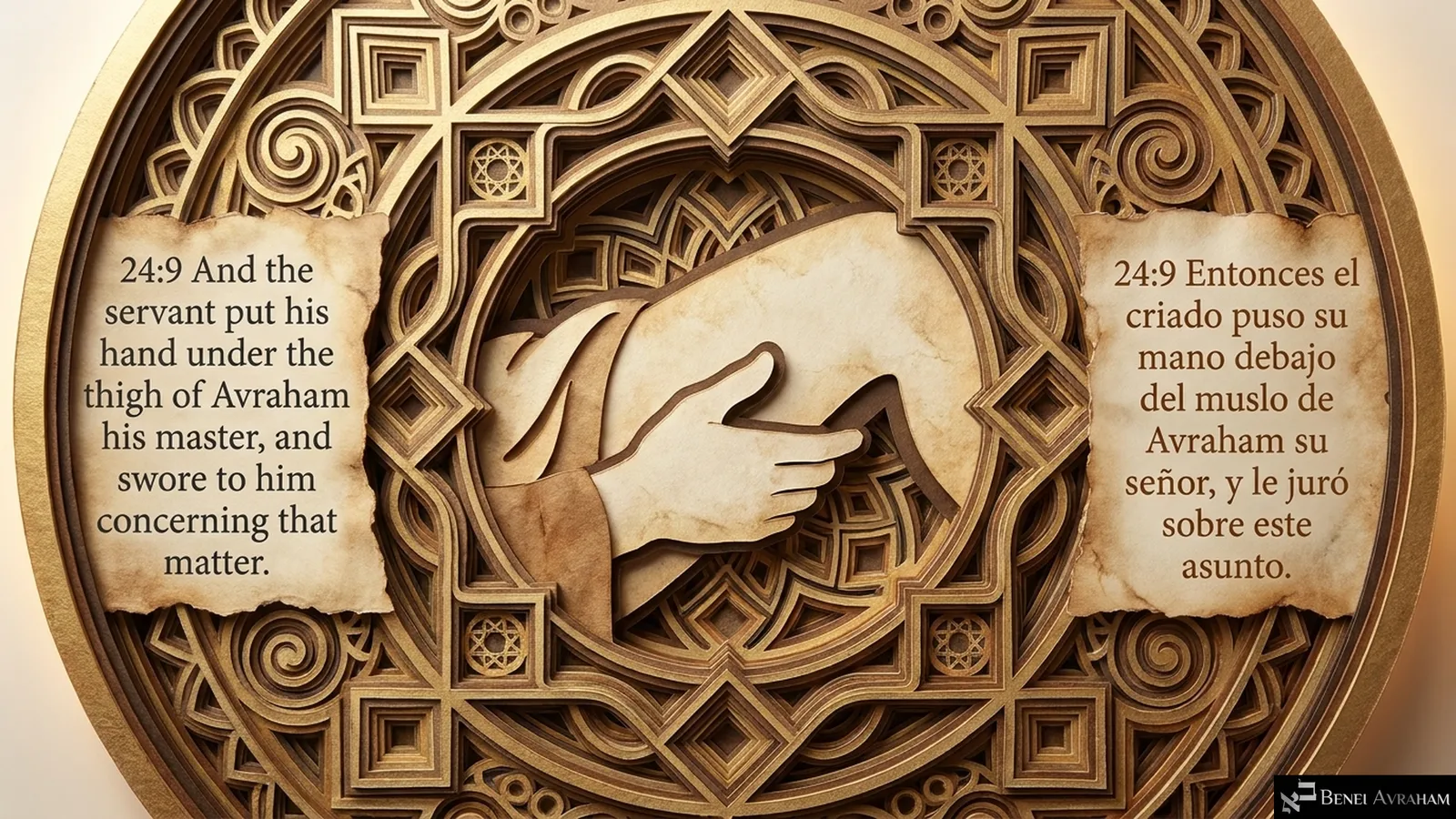
Two hands meet at the centre of an ornate golden medallion as the servant puts his hand under Avraham’s thigh and swears to him (24:9).
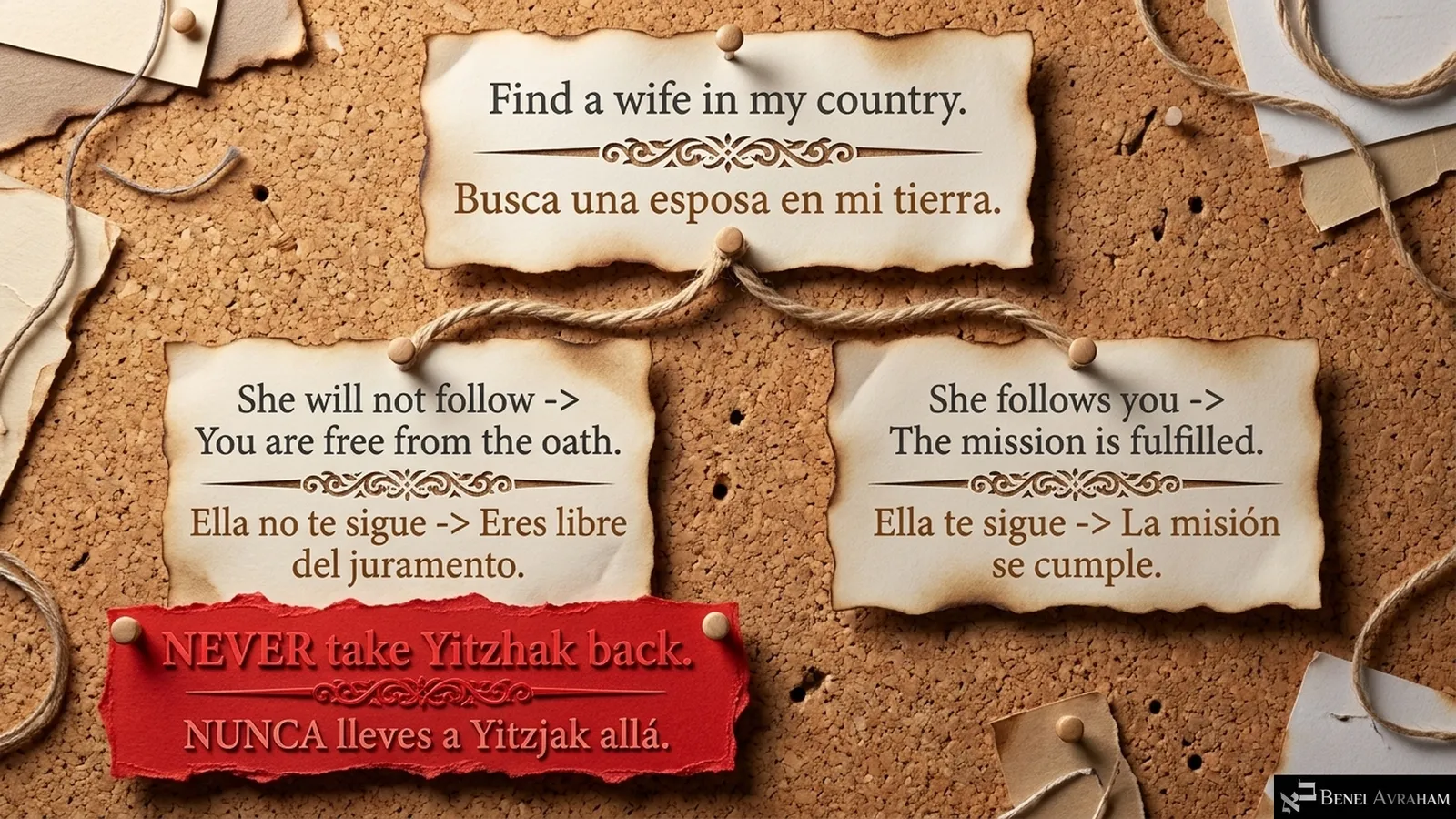
Diagram of the oath pinned to a corkboard: “Find a wife in my country” branches to “She will not follow: you are free from the oath” and “She follows you: the mission is fulfilled,” with a red card, “NEVER take Yitzḥak back” (24:2–9).
Shlishi · Genesis 24:10–26

Third Portion
Title slide: Parashat Ḥayei Sarah, the third portion, Genesis 24:10–26, in a wooden shadow box of paper-cut desert dunes.
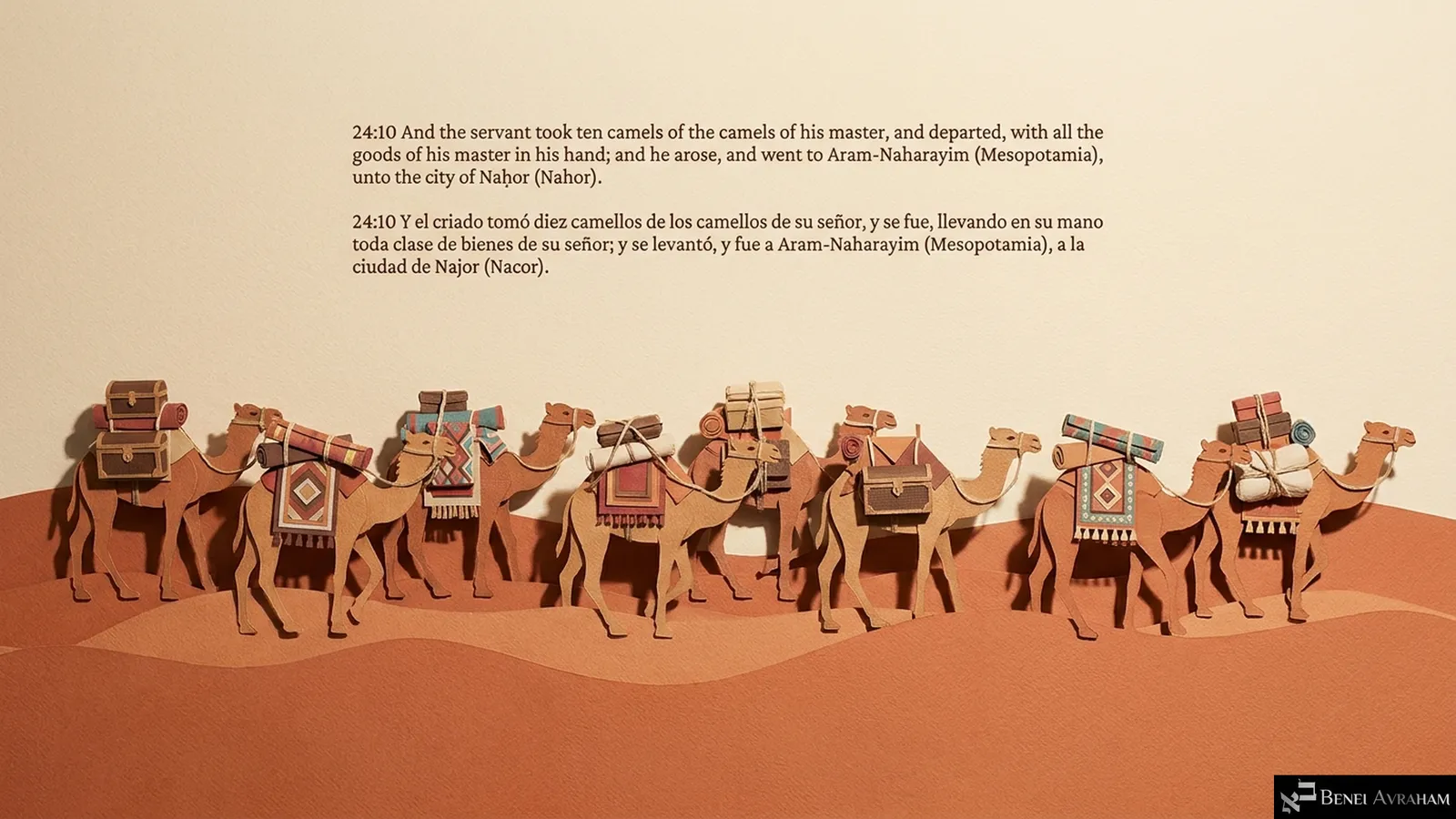
A caravan of ten laden paper-cut camels crosses the desert as the servant sets out for Aram-Naharayim, to the city of Naḥor (Genesis 24:10).
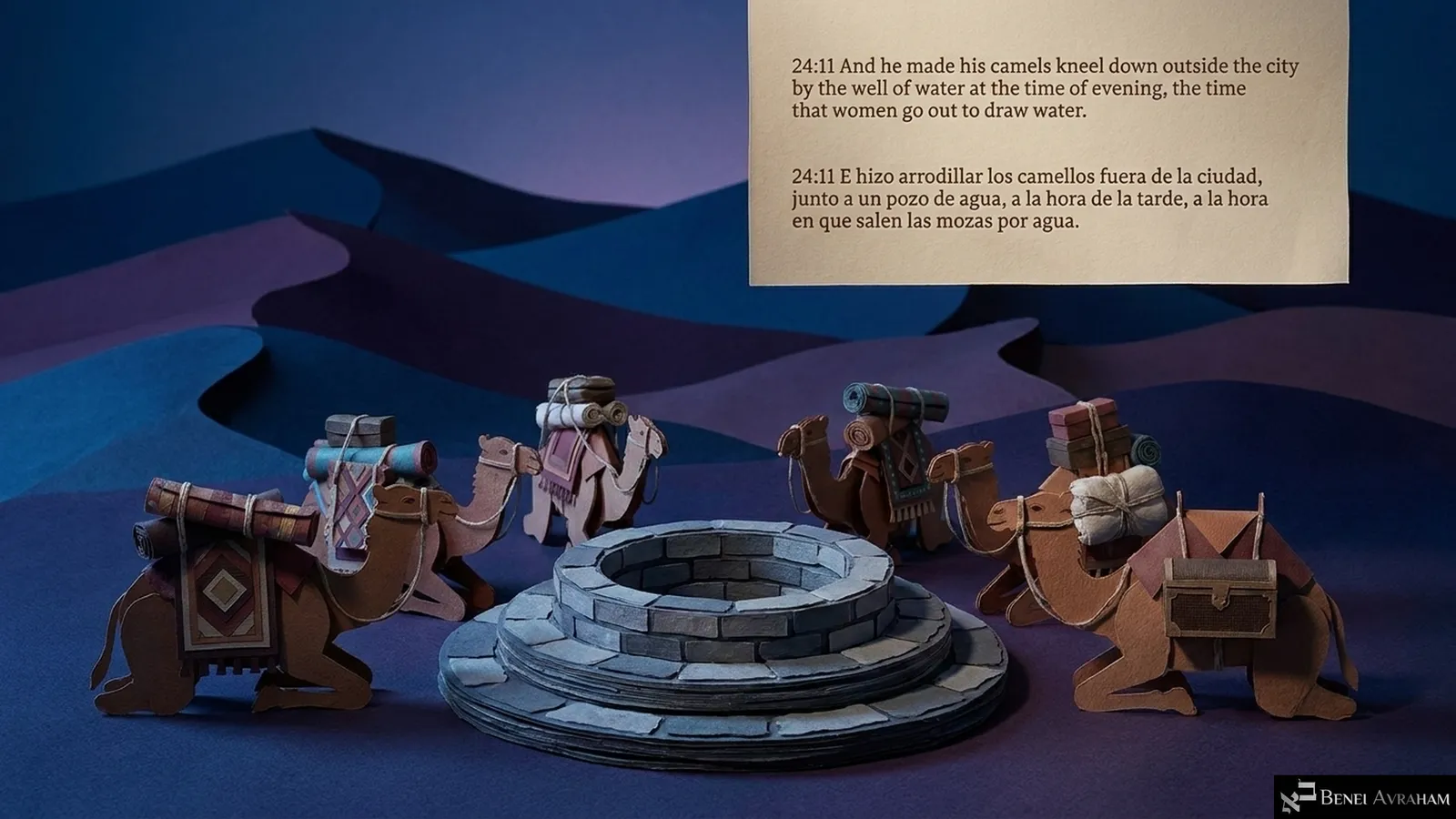
Laden camels kneel around a stone well among blue evening dunes, at the time when women go out to draw water (24:11).
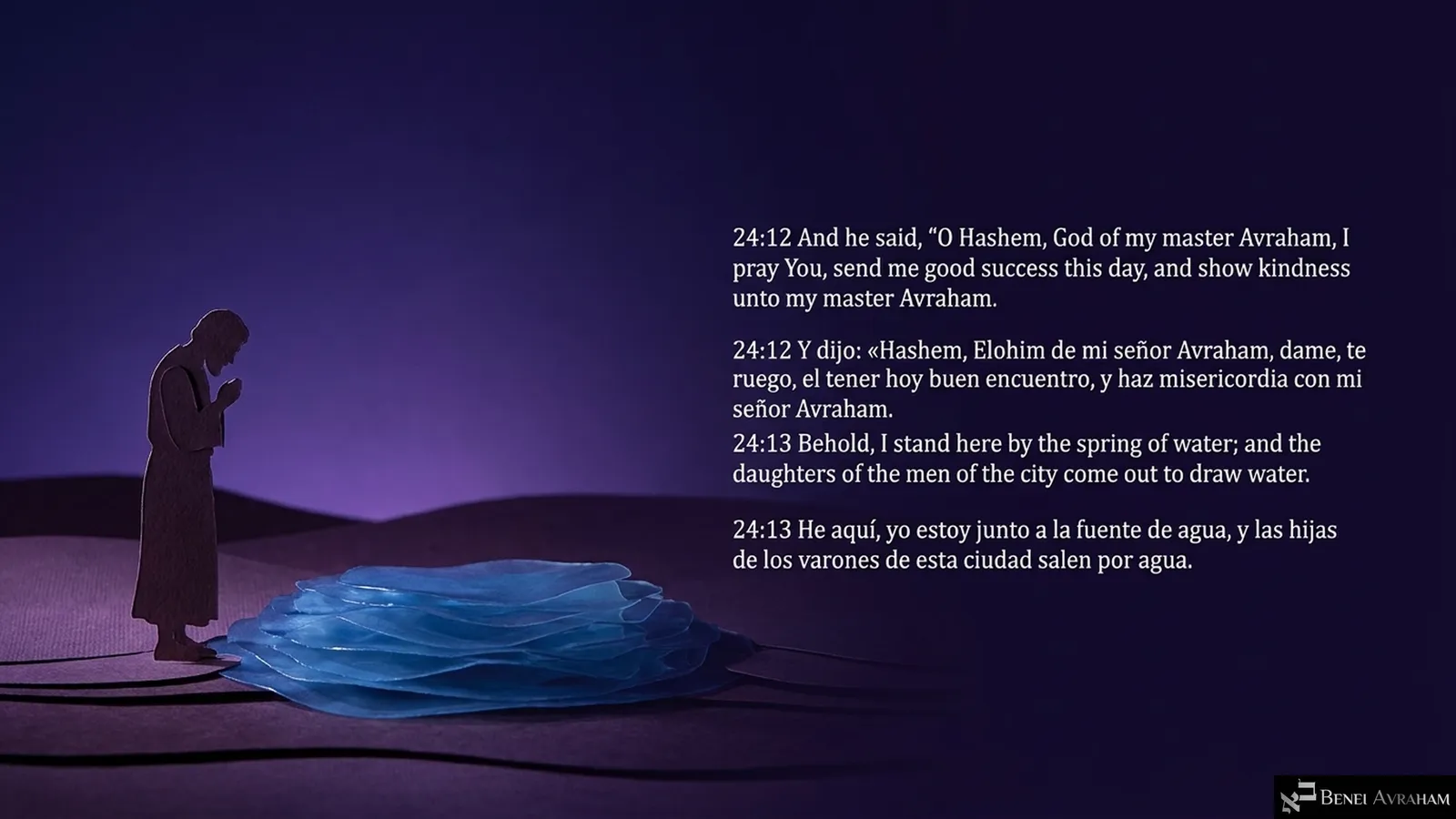
The servant stands with bowed head and folded hands beside a shimmering spring at dusk and prays, “O Hashem, God of my master Avraham, send me good success this day” (24:12–13).
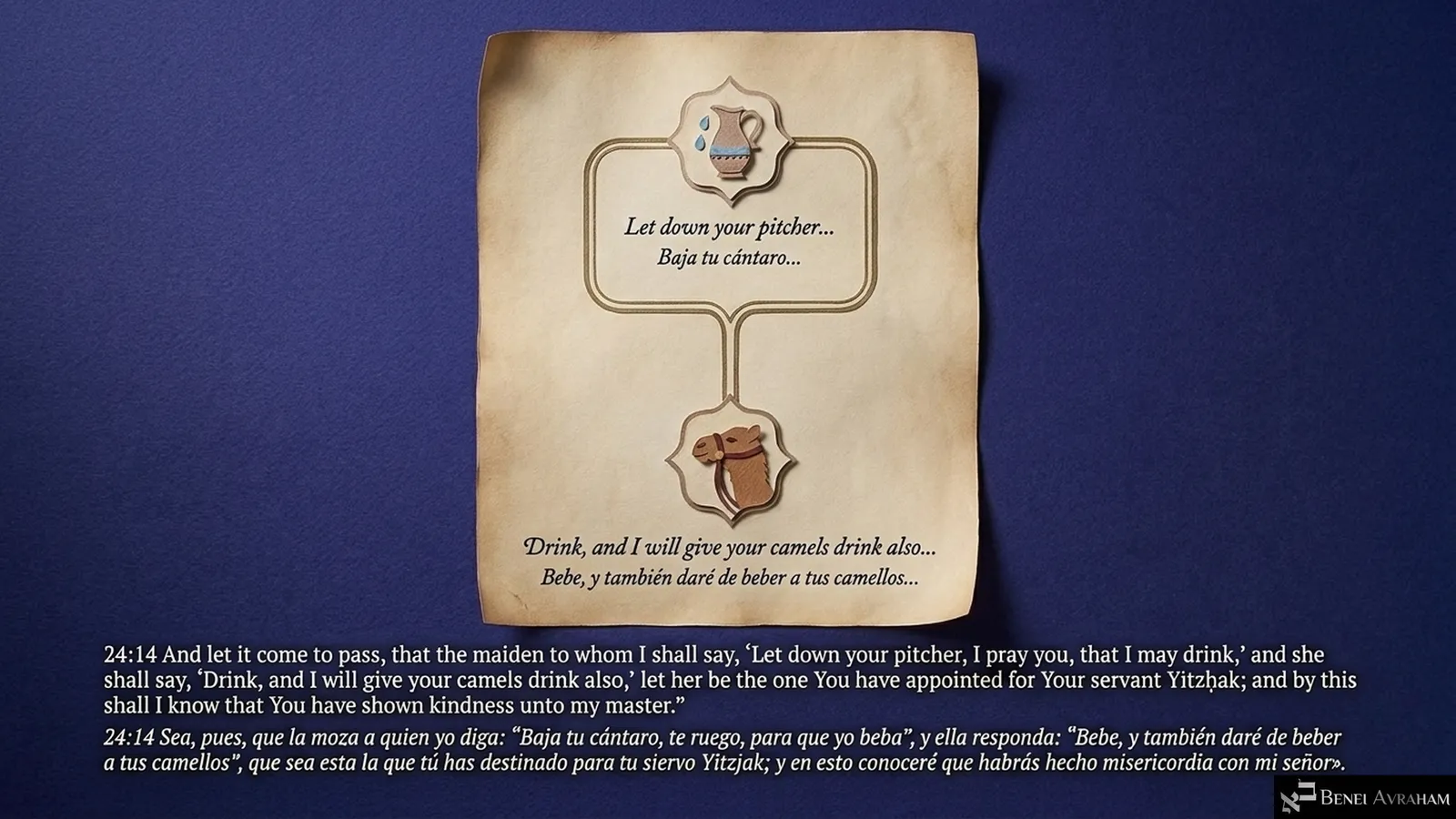
A parchment card links a pitcher to a camel, “Let down your pitcher” and “Drink, and I will give your camels drink also,” the sign the servant asks of Hashem (24:14).
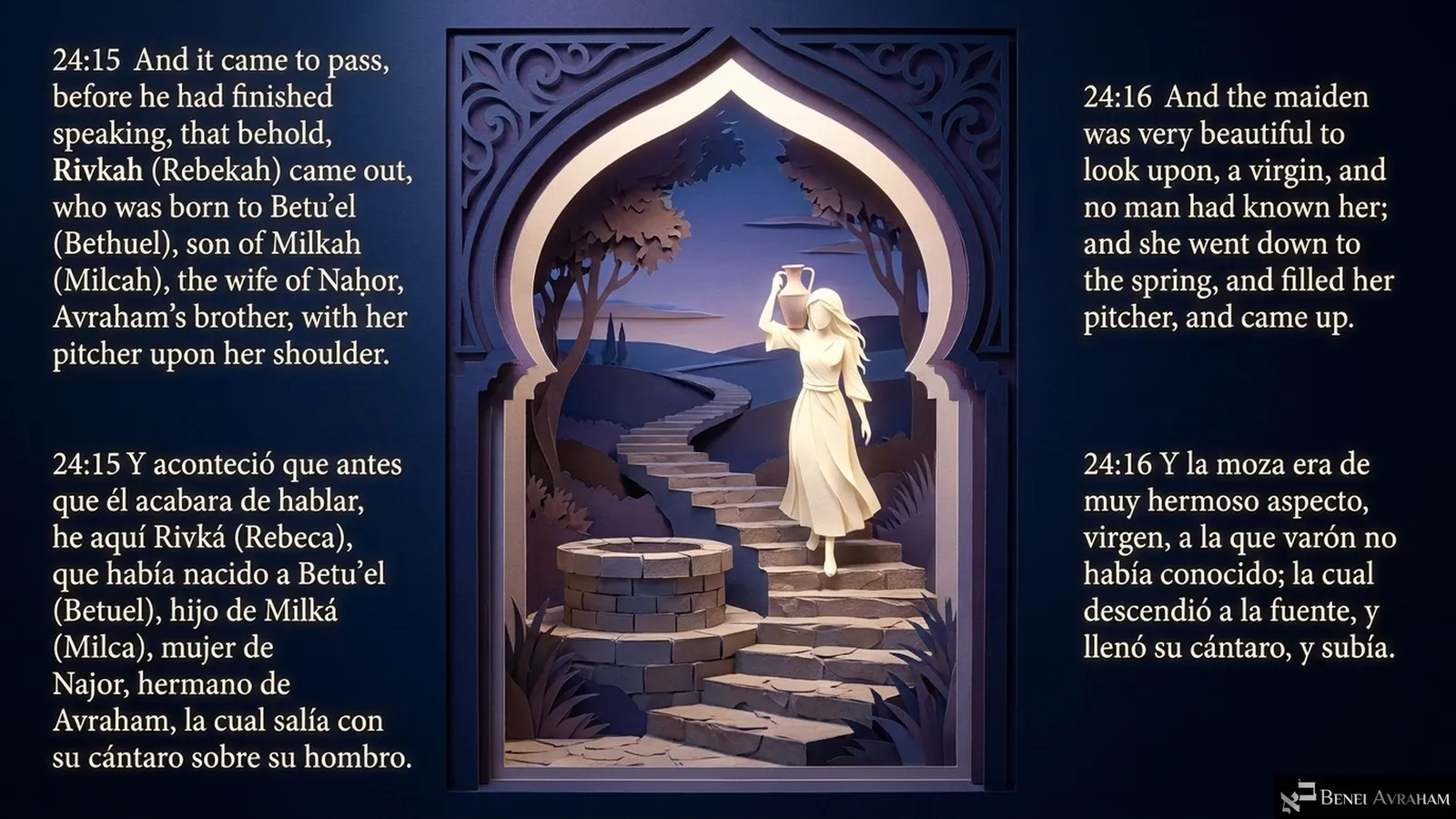
Framed in a carved arch, Rivkah comes down the winding steps to the spring with her pitcher upon her shoulder (24:15–16).
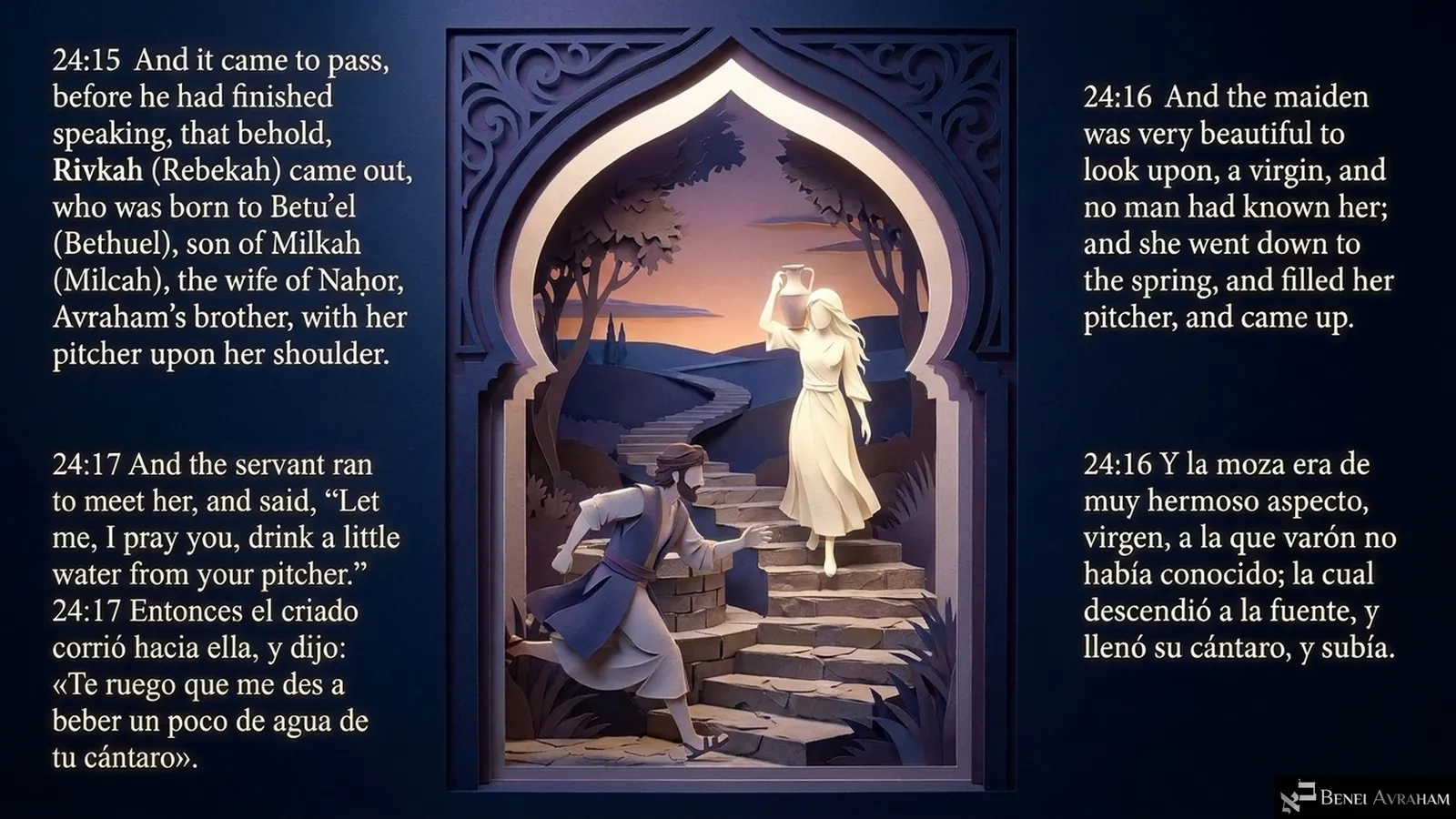
In the same arched frame the servant runs to meet Rivkah on the steps: “Let me, I pray you, drink a little water from your pitcher” (24:15–17).
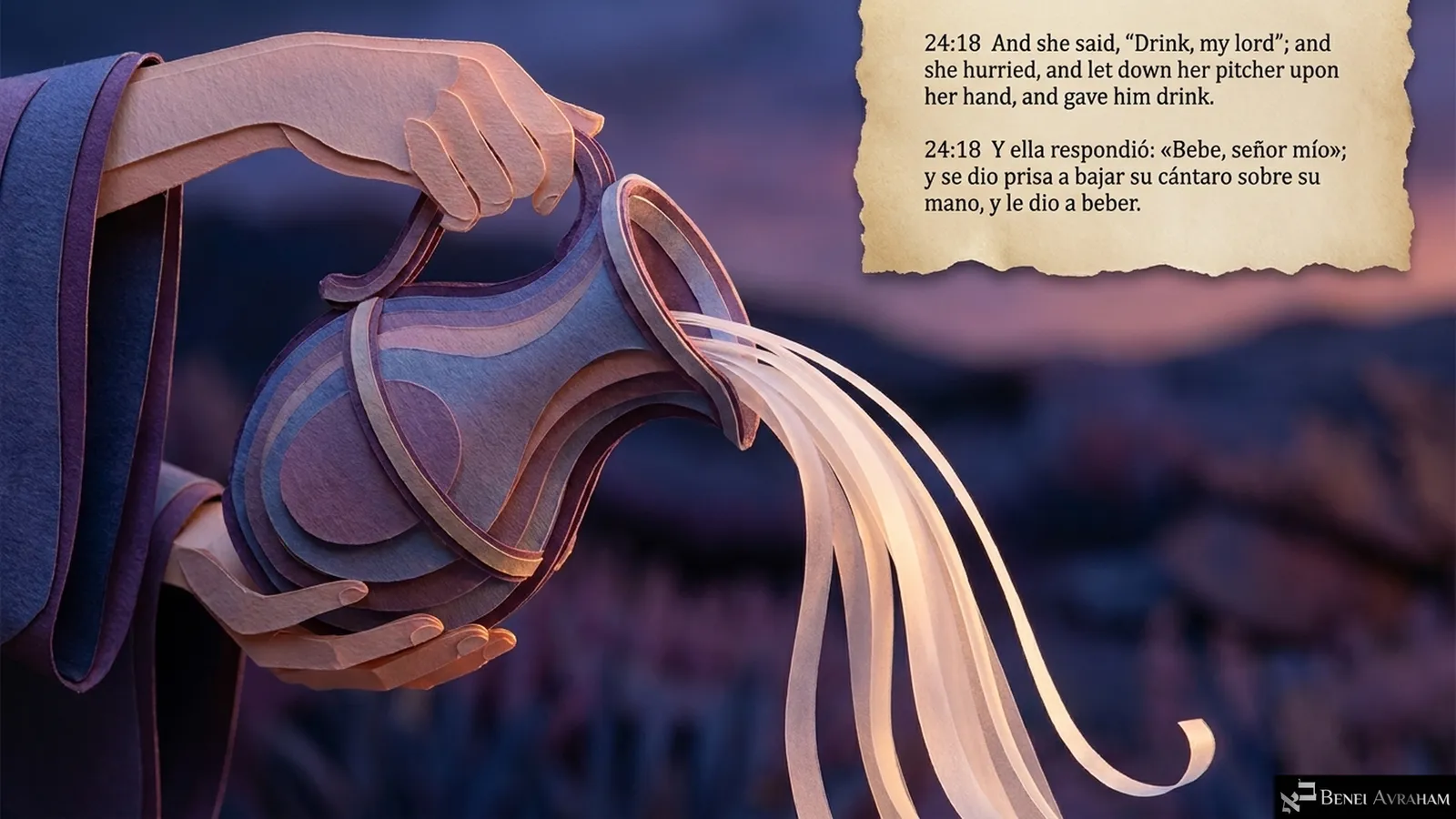
A hand tips a large pitcher and water streams out as Rivkah says, “Drink, my lord,” and lets down her pitcher upon her hand (24:18).
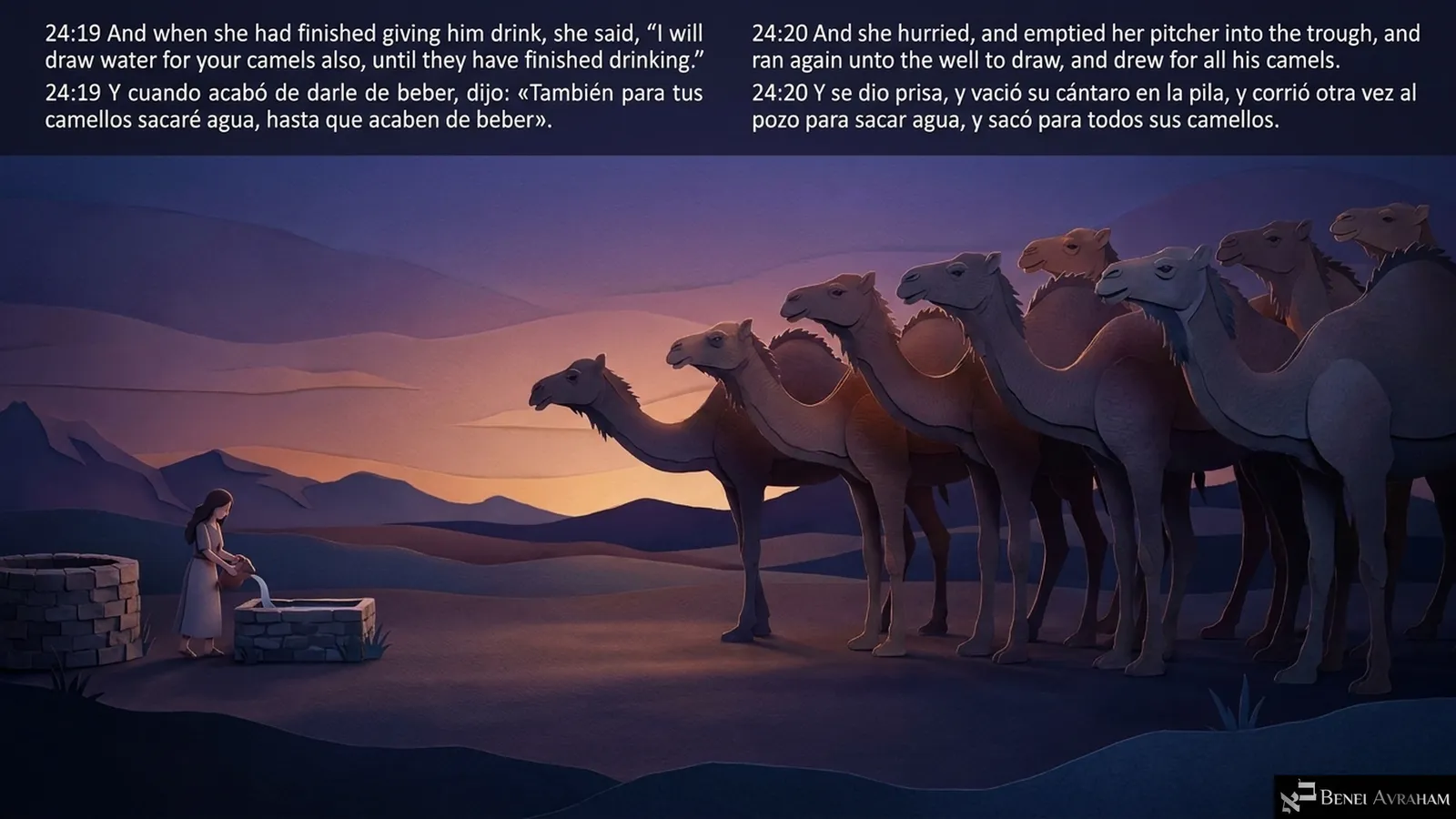
At sunset Rivkah pours water into the trough beside the well as a long line of camels waits to drink (24:19–20).
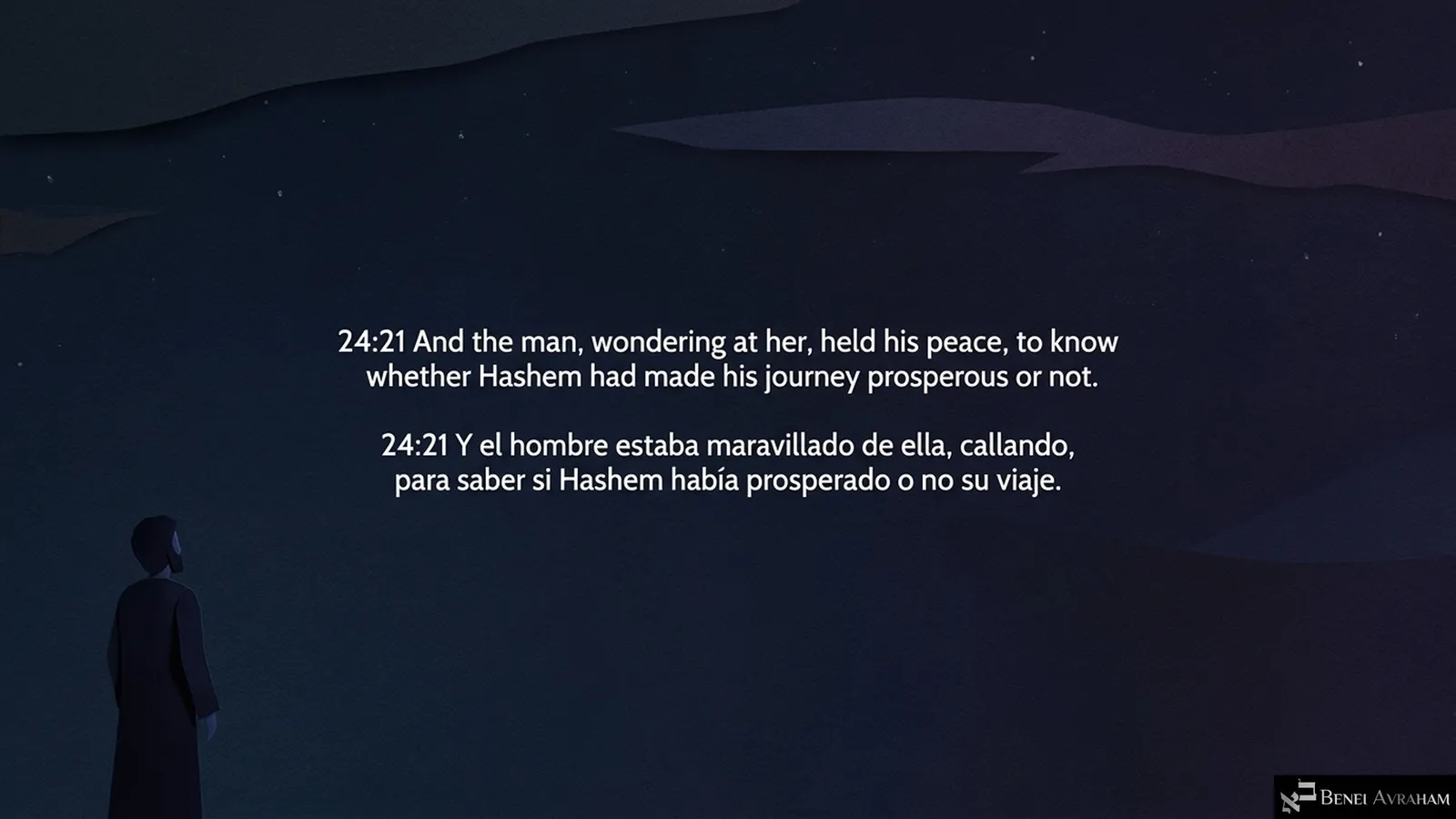
Under a dark, starry sky the servant stands alone, wondering at her and holding his peace, to know whether Hashem had made his journey prosperous (24:21).
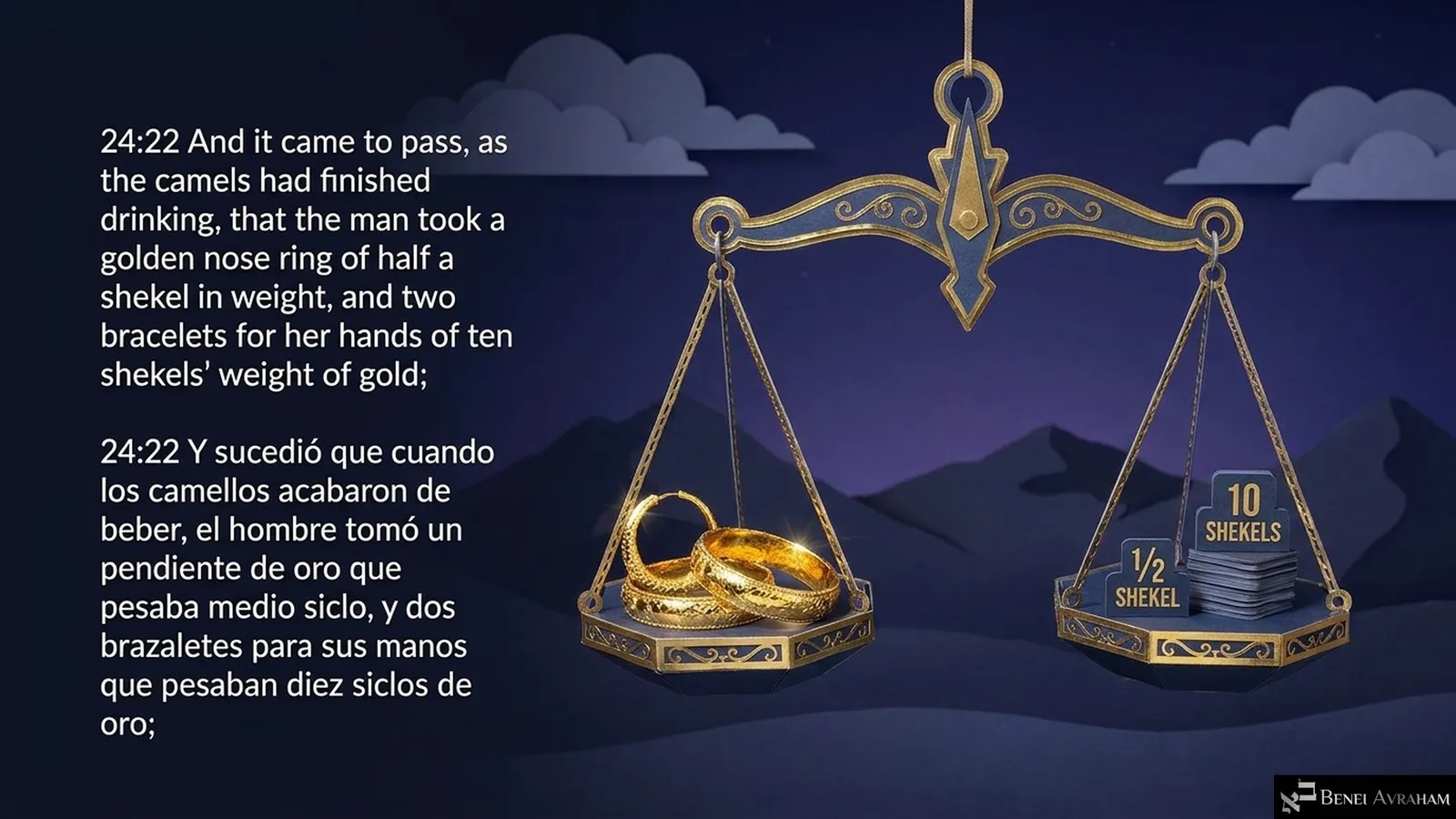
A golden balance weighs the nose ring and bracelets against weights marked ½ shekel and 10 shekels (24:22).
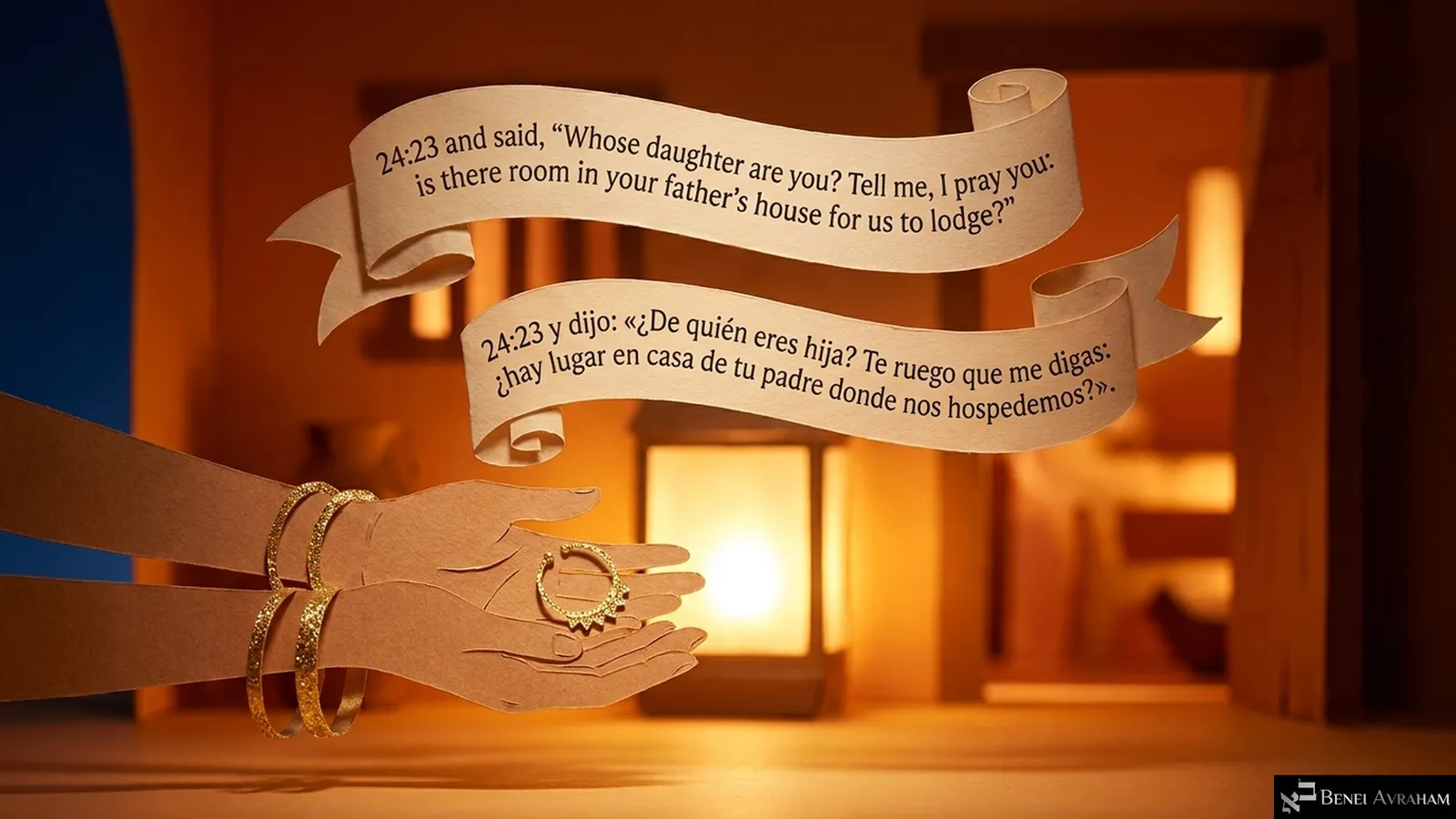
Paper hands hold out a golden nose ring and bracelets before a lamplit house as the servant asks, “Whose daughter are you?” and whether there is room to lodge (24:23).
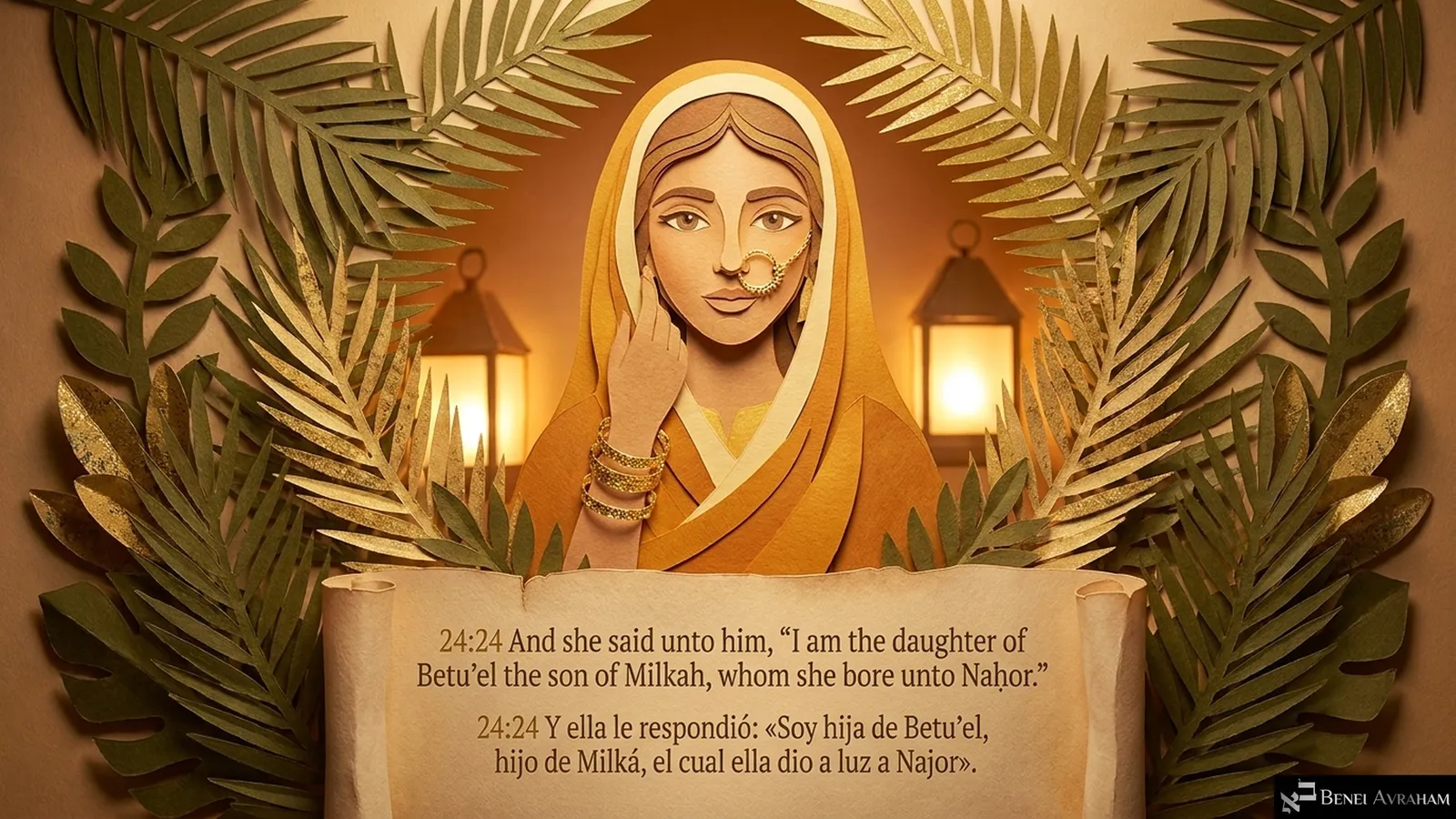
Rivkah, in a golden shawl with her nose ring and bracelets, framed by palm fronds and lanterns: “I am the daughter of Betuel the son of Milkah, whom she bore unto Naḥor” (24:24).
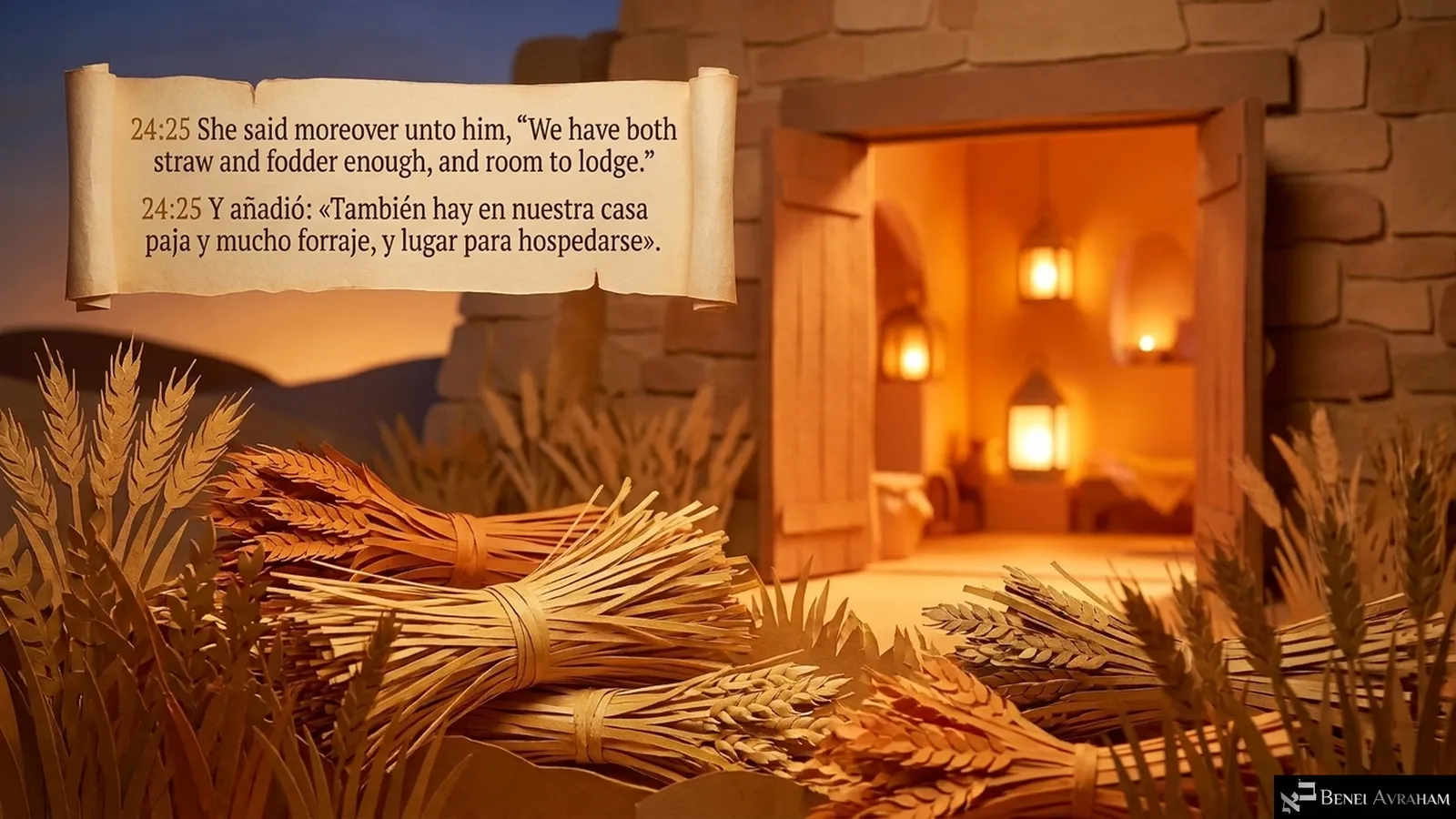
Sheaves of straw lie before an open, lamplit doorway: “We have both straw and fodder enough, and room to lodge” (24:25).
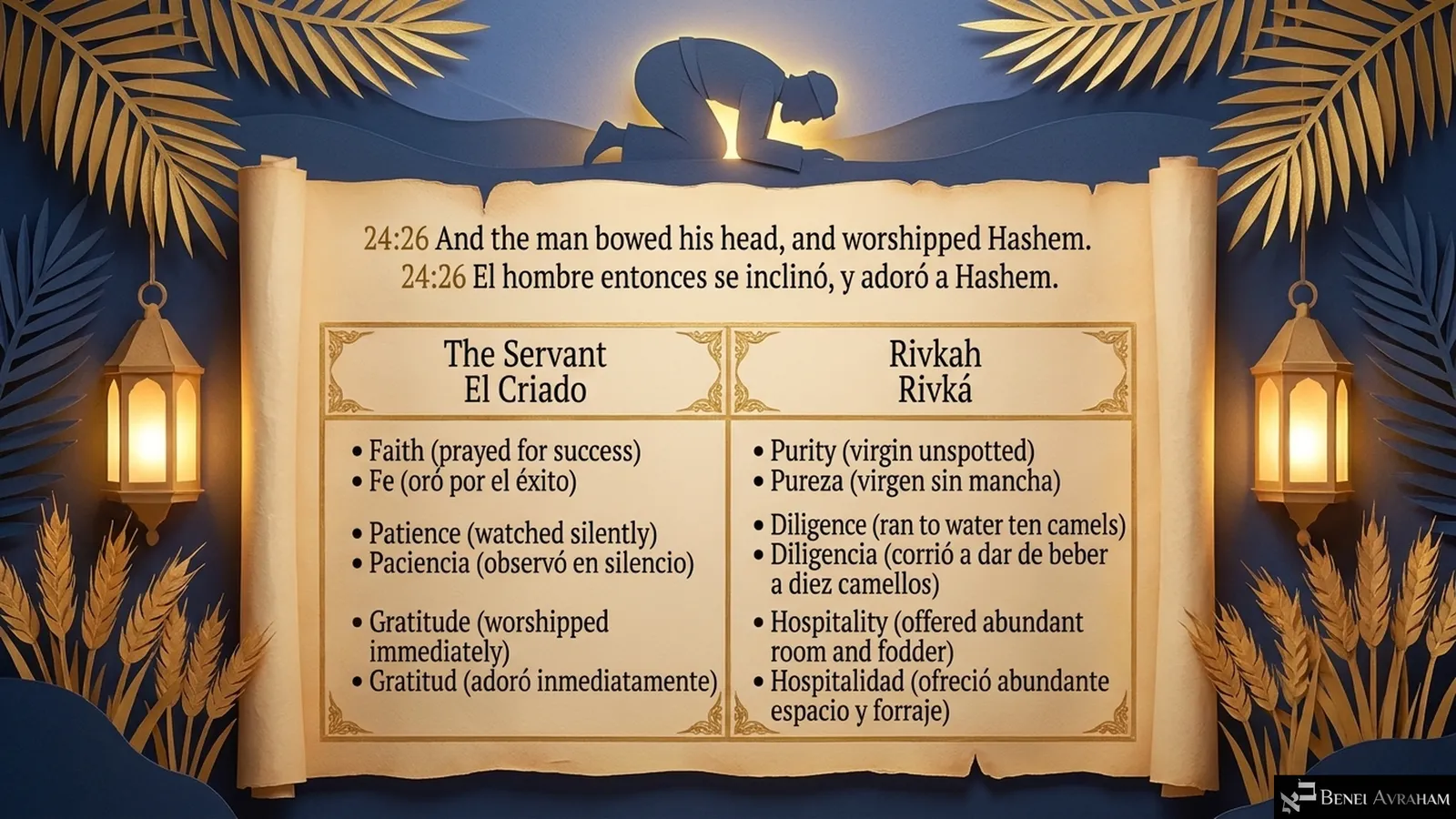
The servant bows to the ground above a scroll that sets his faith, patience and gratitude beside Rivkah’s purity, diligence and hospitality (24:26).
Revi’i · Genesis 24:27–52

Fourth Portion
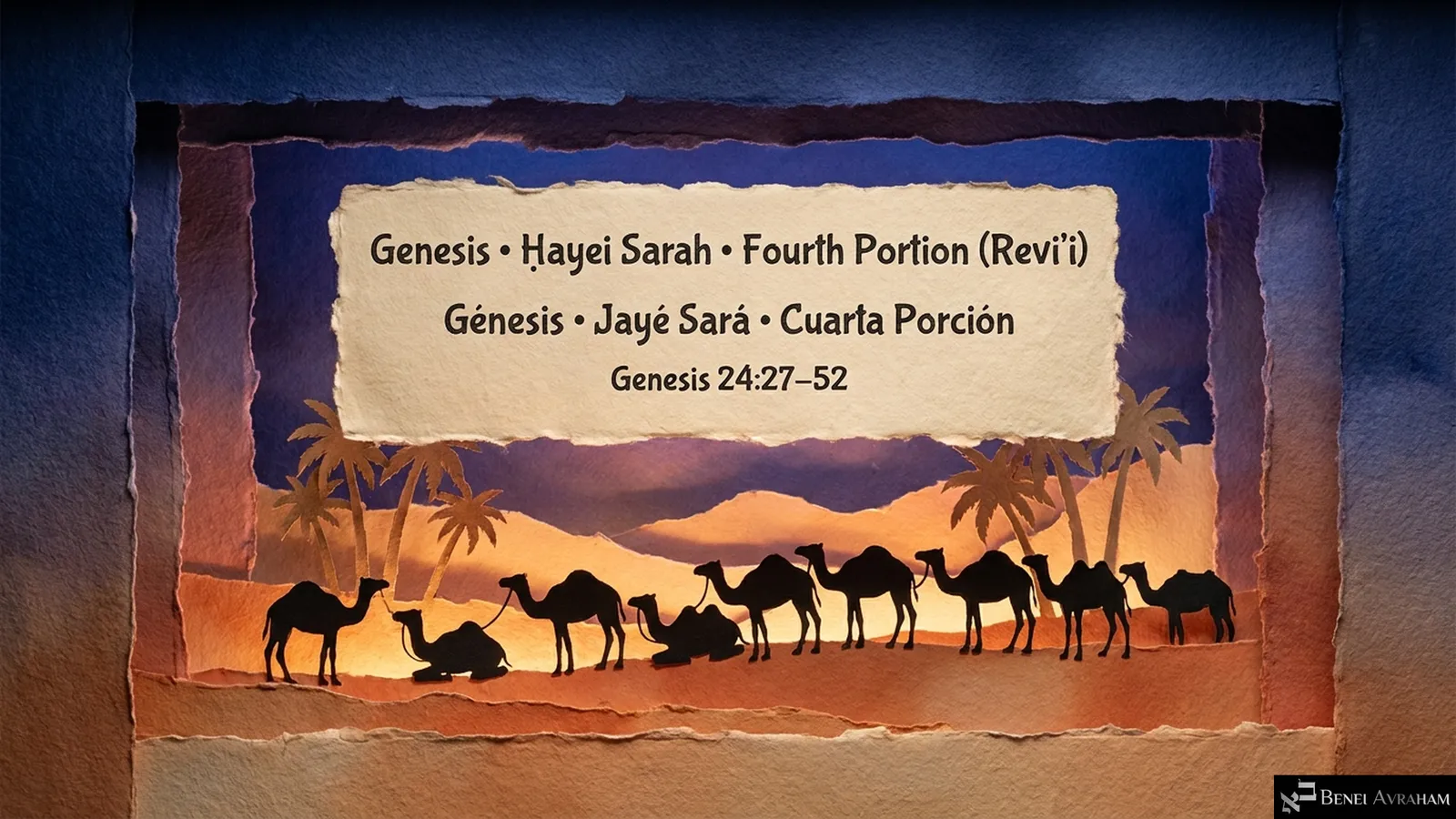
Title slide: Parashat Ḥayei Sarah, the fourth portion, Genesis 24:27–52, with a silhouetted camel caravan and palms in a torn-paper frame.
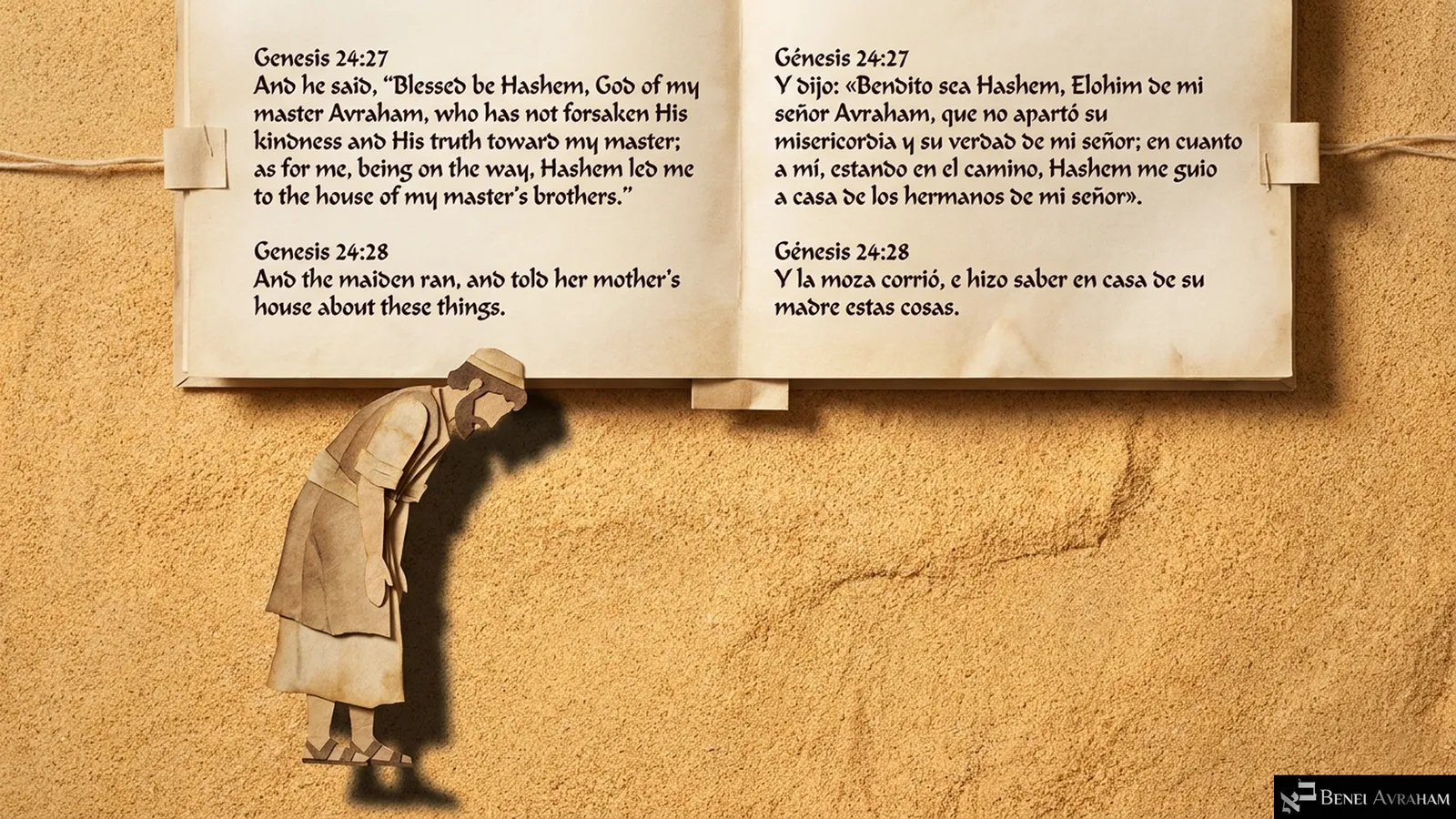
A paper-cut servant bows before an open book: “Blessed be Hashem, God of my master Avraham,” and the maiden runs to tell her mother’s house (Genesis 24:27–28).
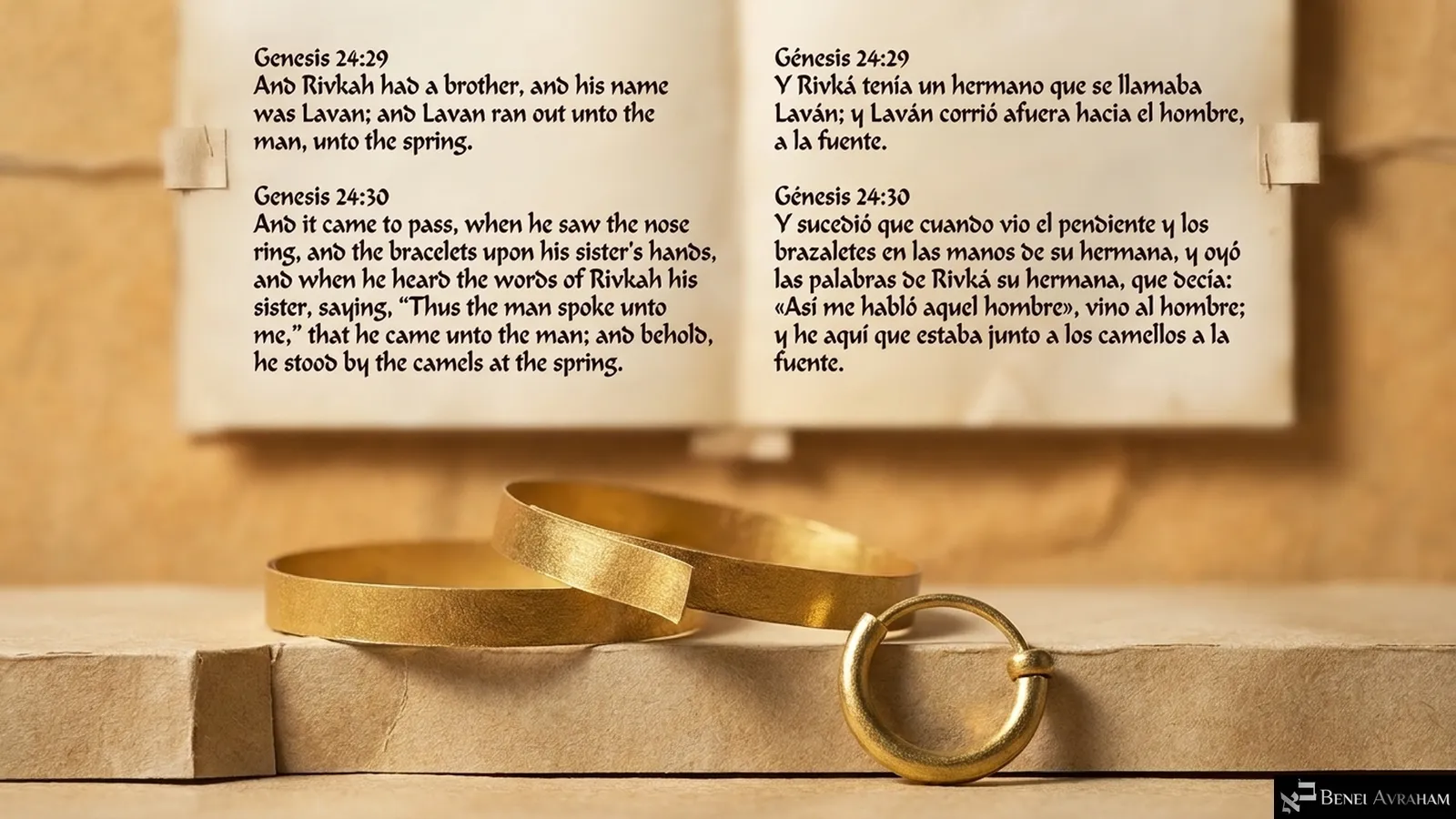
Gold bracelets and a nose ring lie on a stone ledge below an open book as Lavan sees them and runs out to the man at the spring (24:29–30).
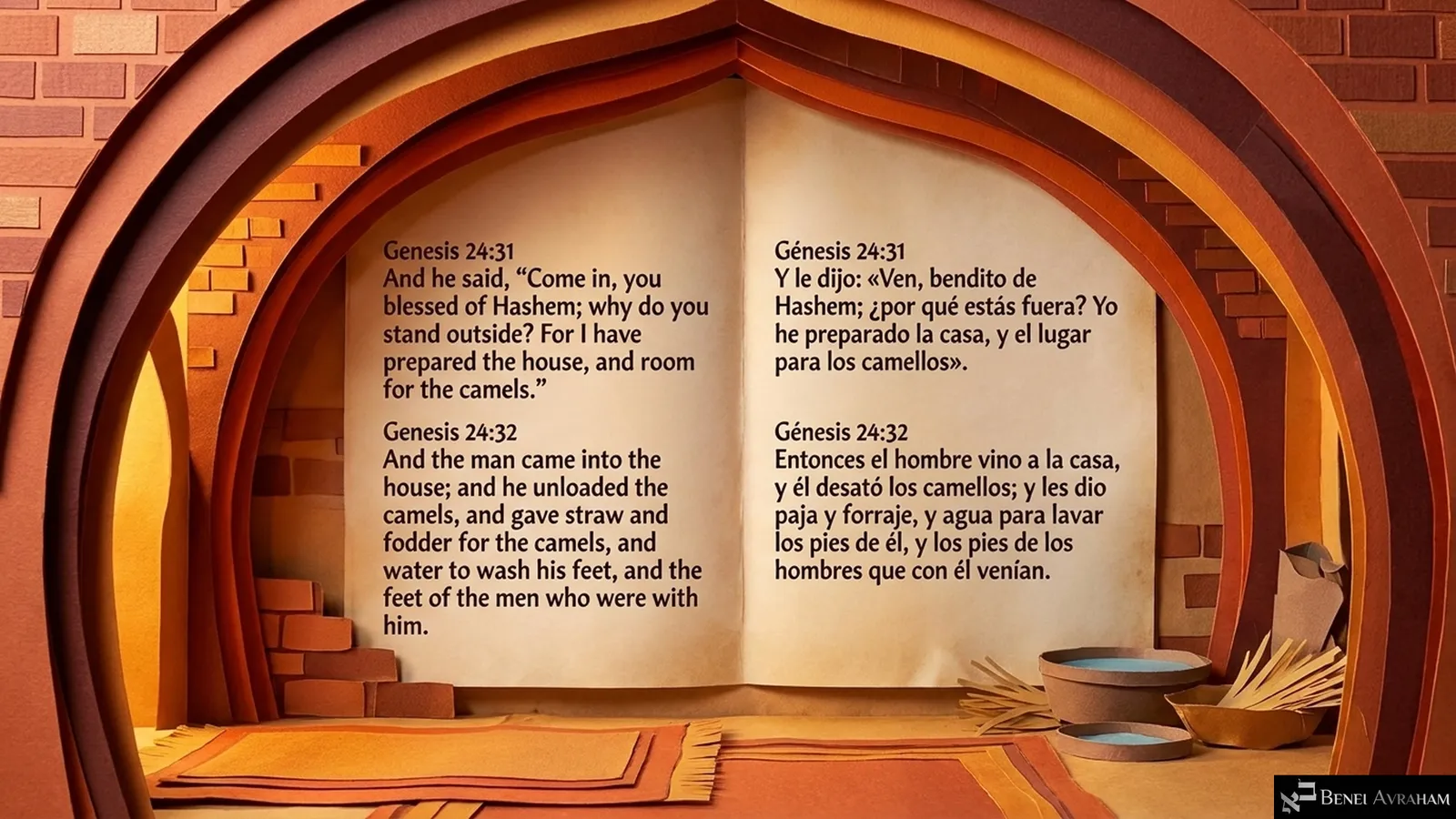
An open book within a paper-cut arched doorway, with rugs, a water basin and straw: “Come in, you blessed of Hashem,” and the camels are unloaded and fed (24:31–32).
Empty bowls stand on a stone table as the servant will not eat until he has told his errand: “I am Avraham’s servant” (24:33–34).
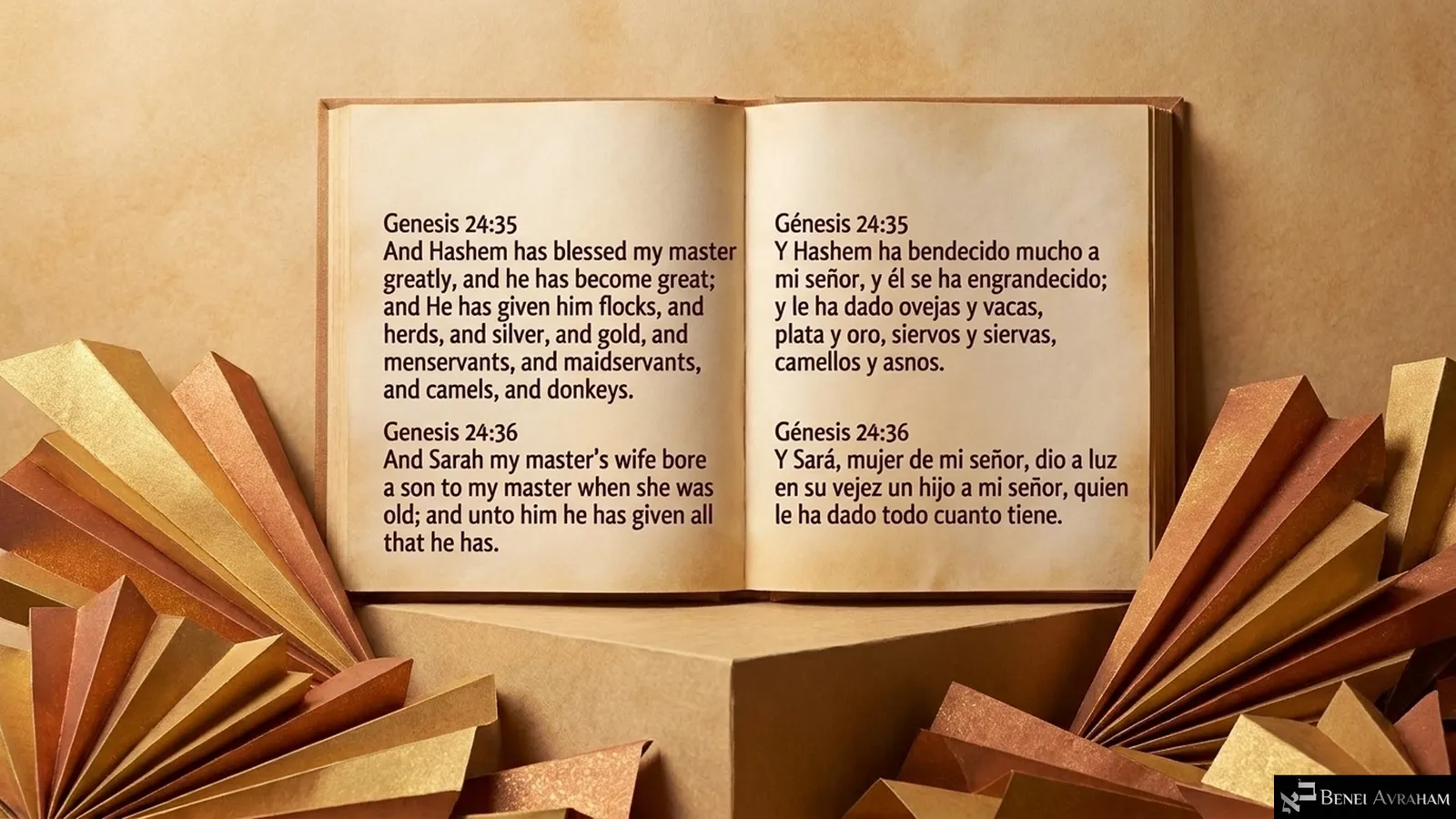
An open book among golden paper fans tells how Hashem has blessed Avraham greatly and how Sarah bore him a son in her old age (24:35–36).
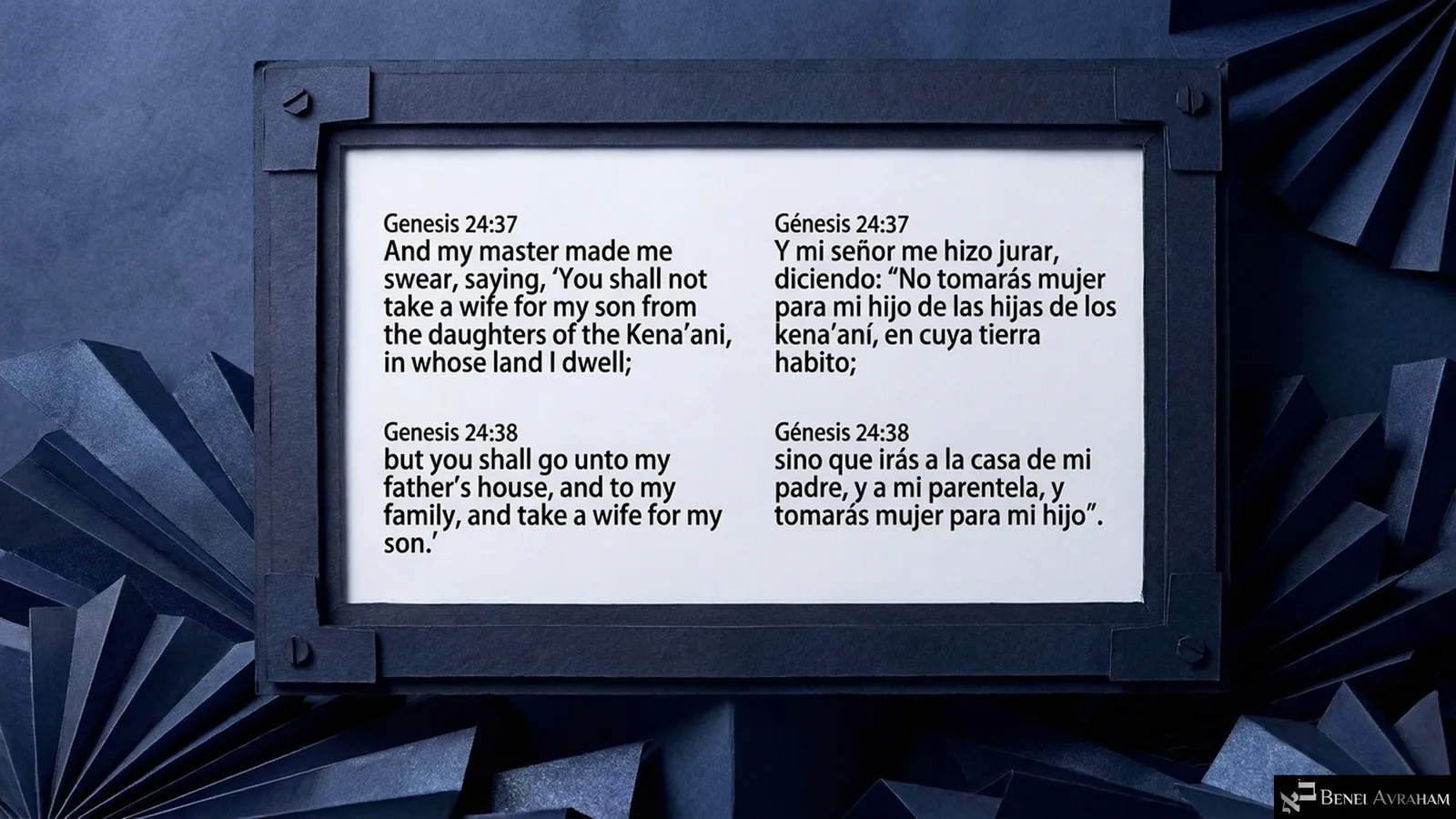
A dark paper frame holds the servant’s account of his oath: take no wife from the daughters of the Kena’ani, but go to Avraham’s father’s house (24:37–38).
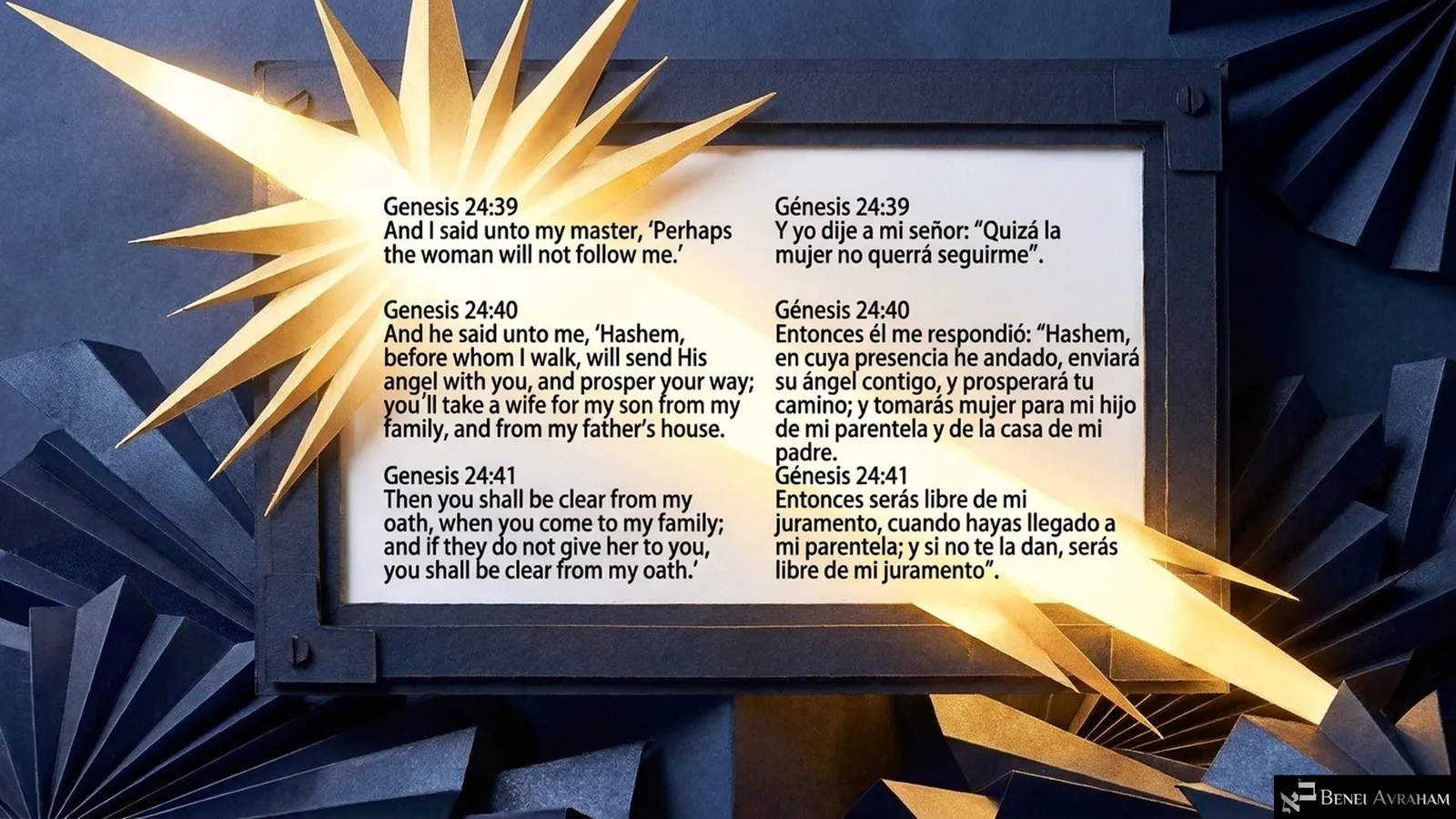
A burst of golden light breaks across the frame as the servant recounts that Hashem will send His angel with him and prosper his way (24:39–41).
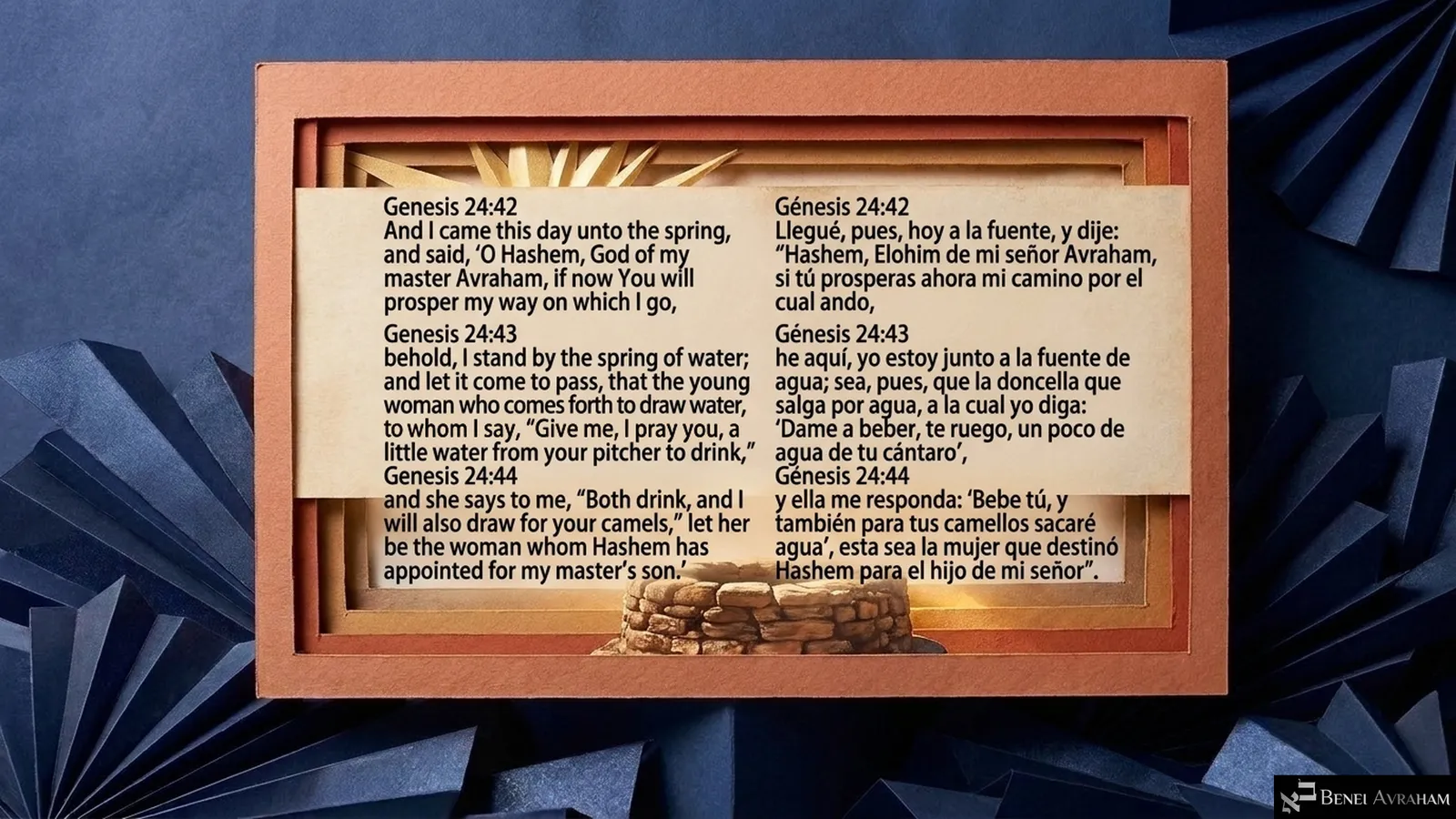
An orange paper frame above a stone well holds the servant’s retelling of his prayer at the spring and the sign he asked for (24:42–44).
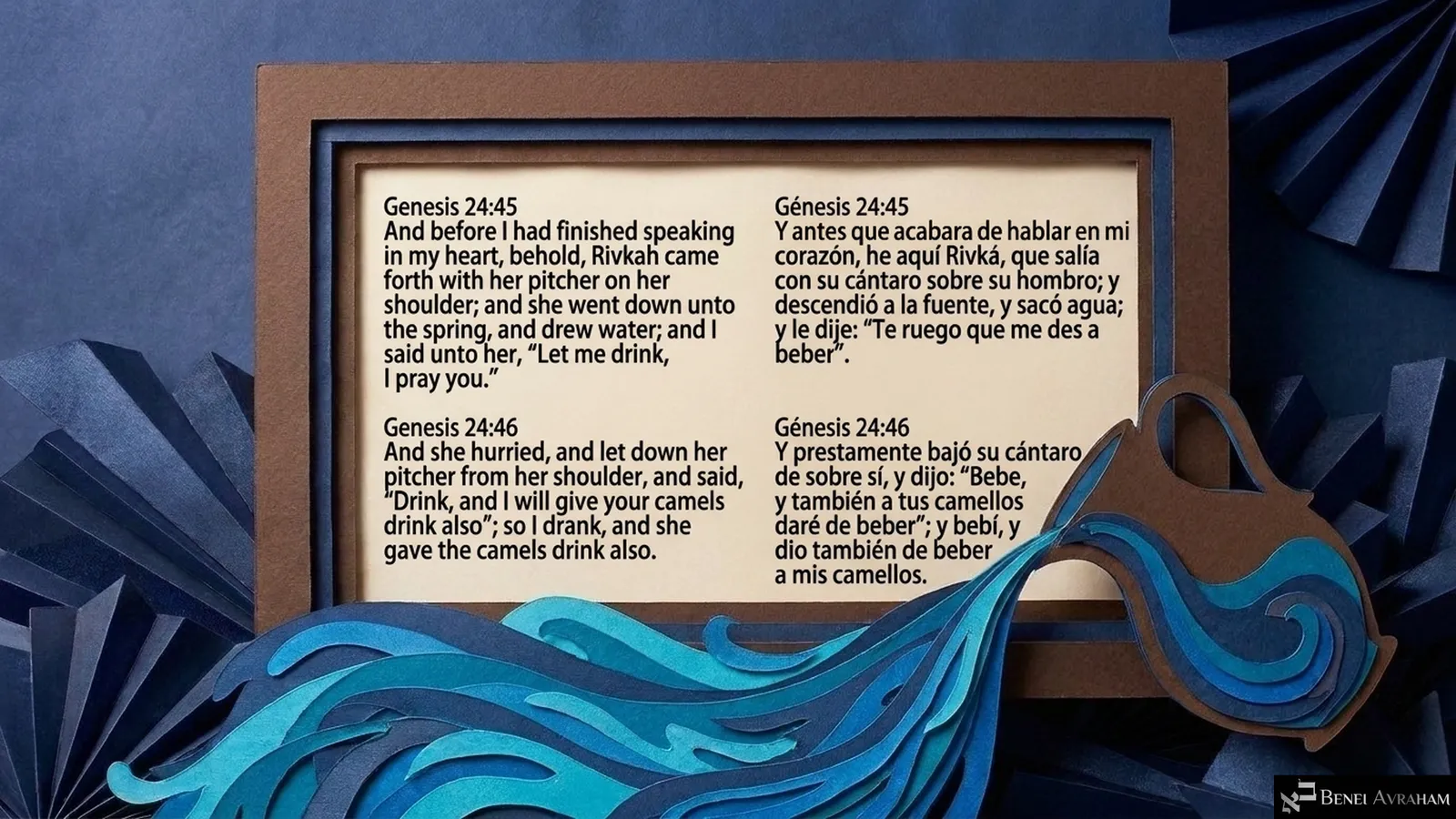
Water pours from a paper-cut pitcher across the foot of the frame as the servant tells how Rivkah gave drink to him and to his camels (24:45–46).
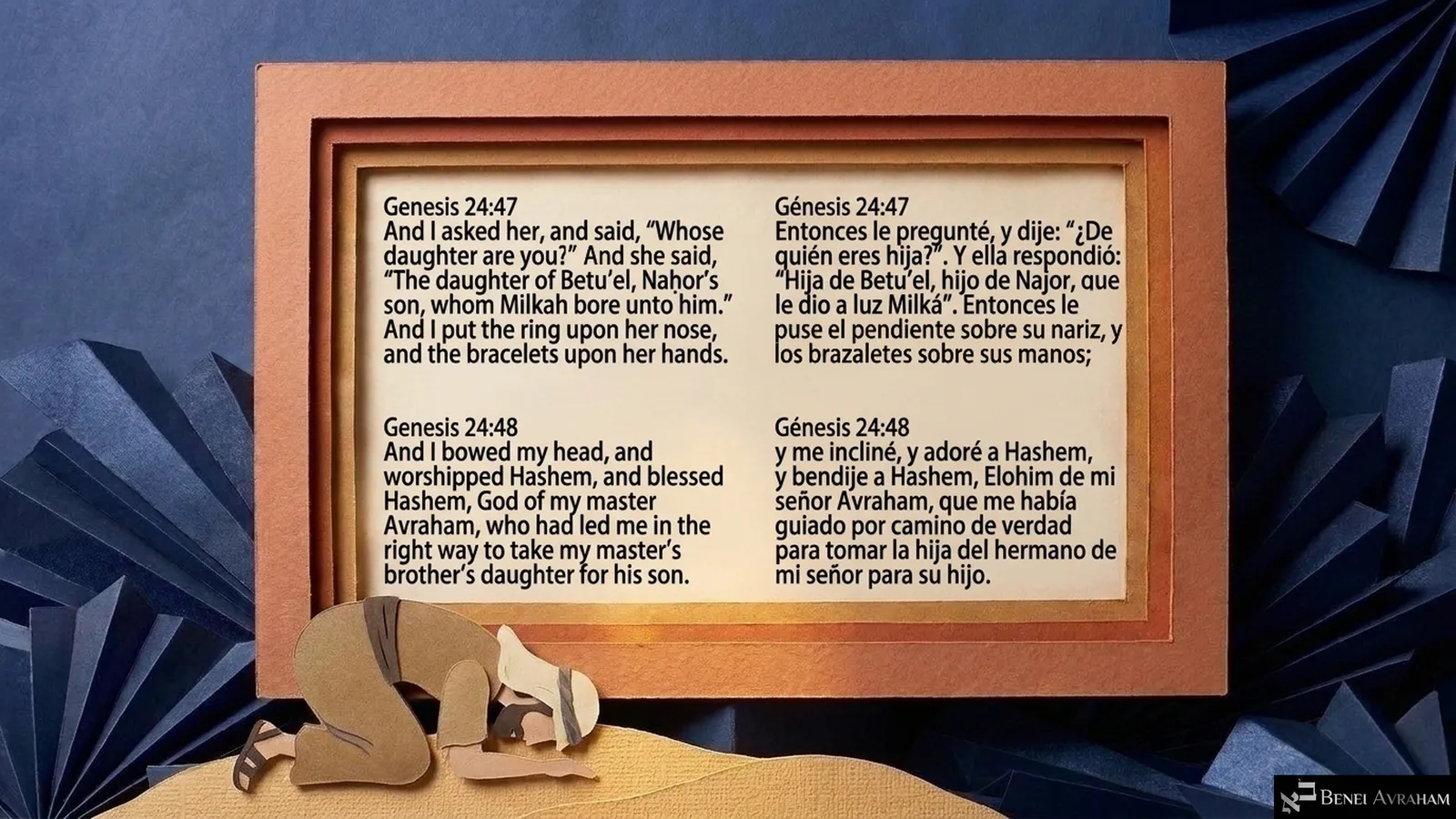
The servant bows to the ground below the frame as he tells how he put the ring on Rivkah’s nose and worshipped Hashem, who led him in the right way (24:47–48).
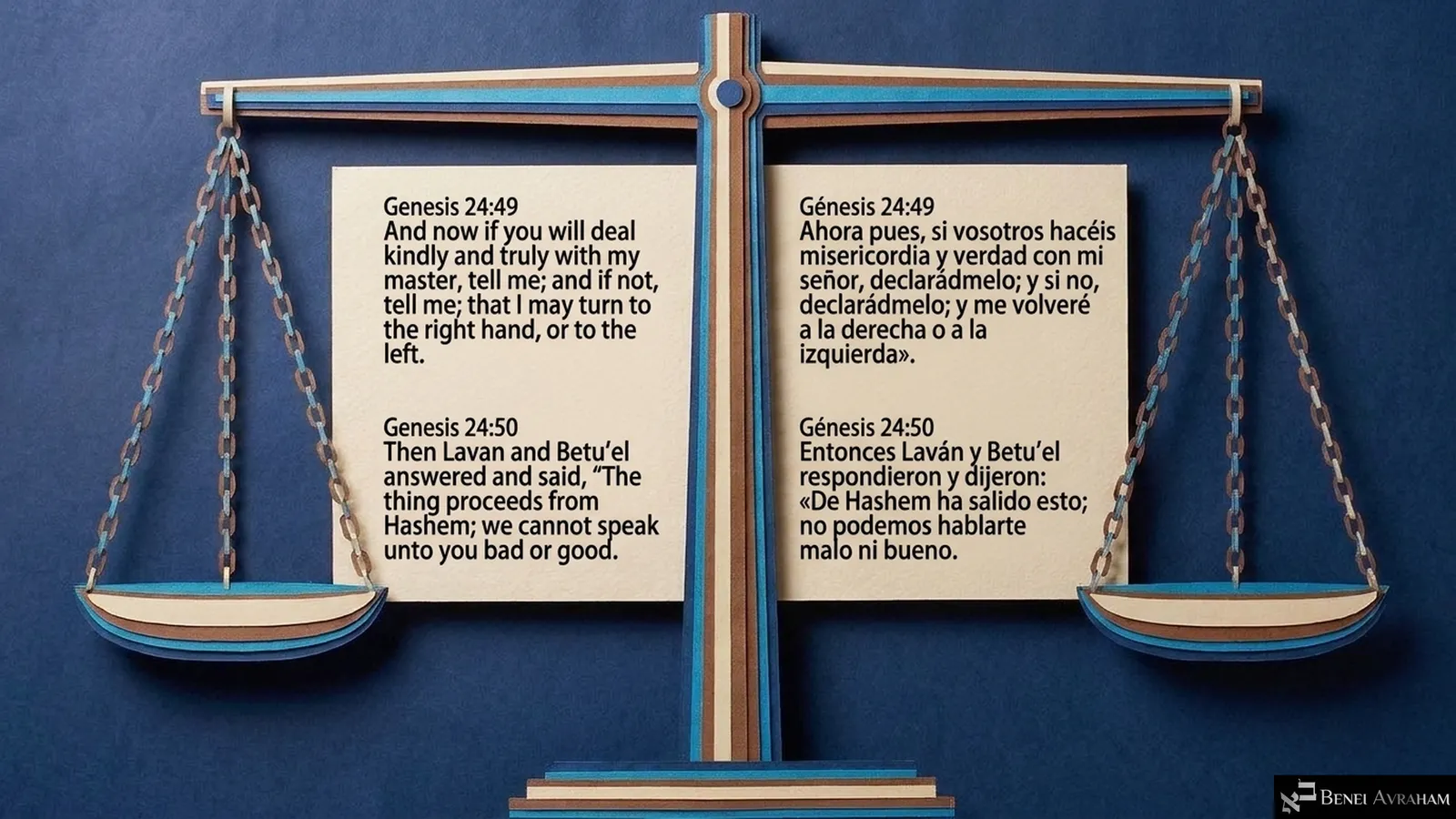
A paper-cut balance holds the servant’s plea and the answer of Lavan and Betuel: “The thing proceeds from Hashem” (24:49–50).
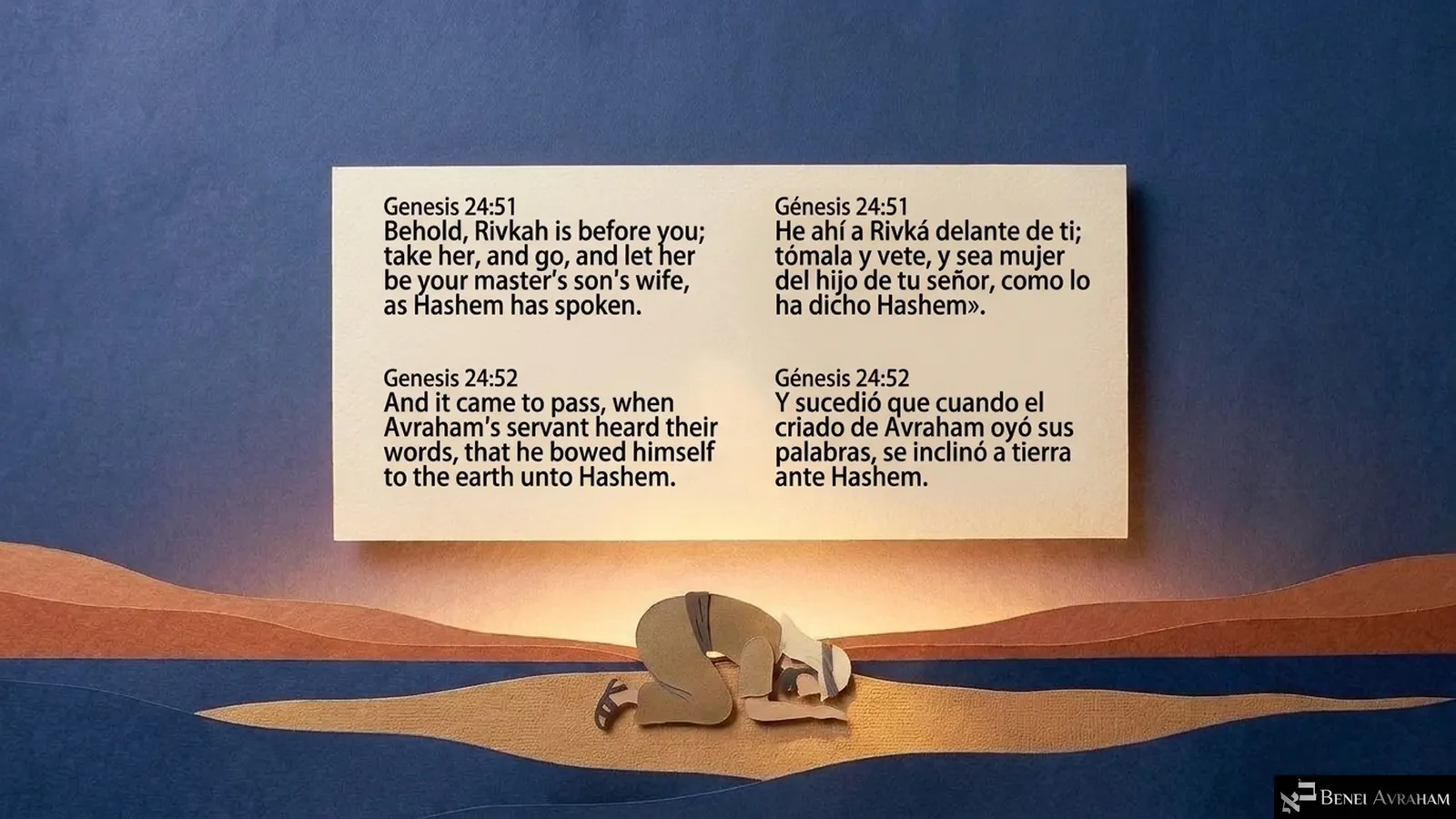
The servant bows to the earth in a glow of light beneath the verses: “Behold, Rivkah is before you; take her, and go” (24:51–52).
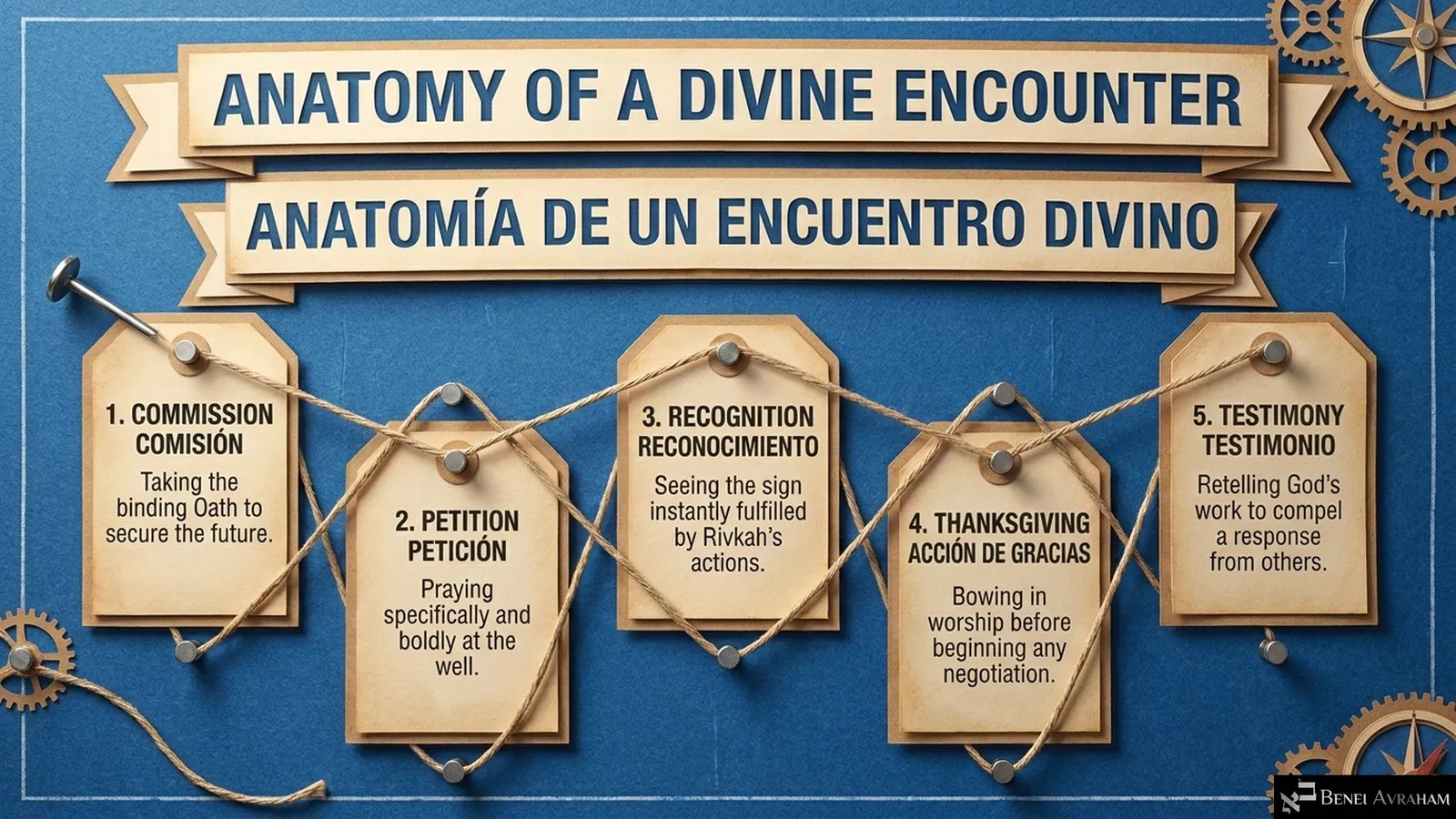
“Anatomy of a Divine Encounter”: five tags strung on twine trace commission, petition, recognition, thanksgiving and testimony (24:2–52).
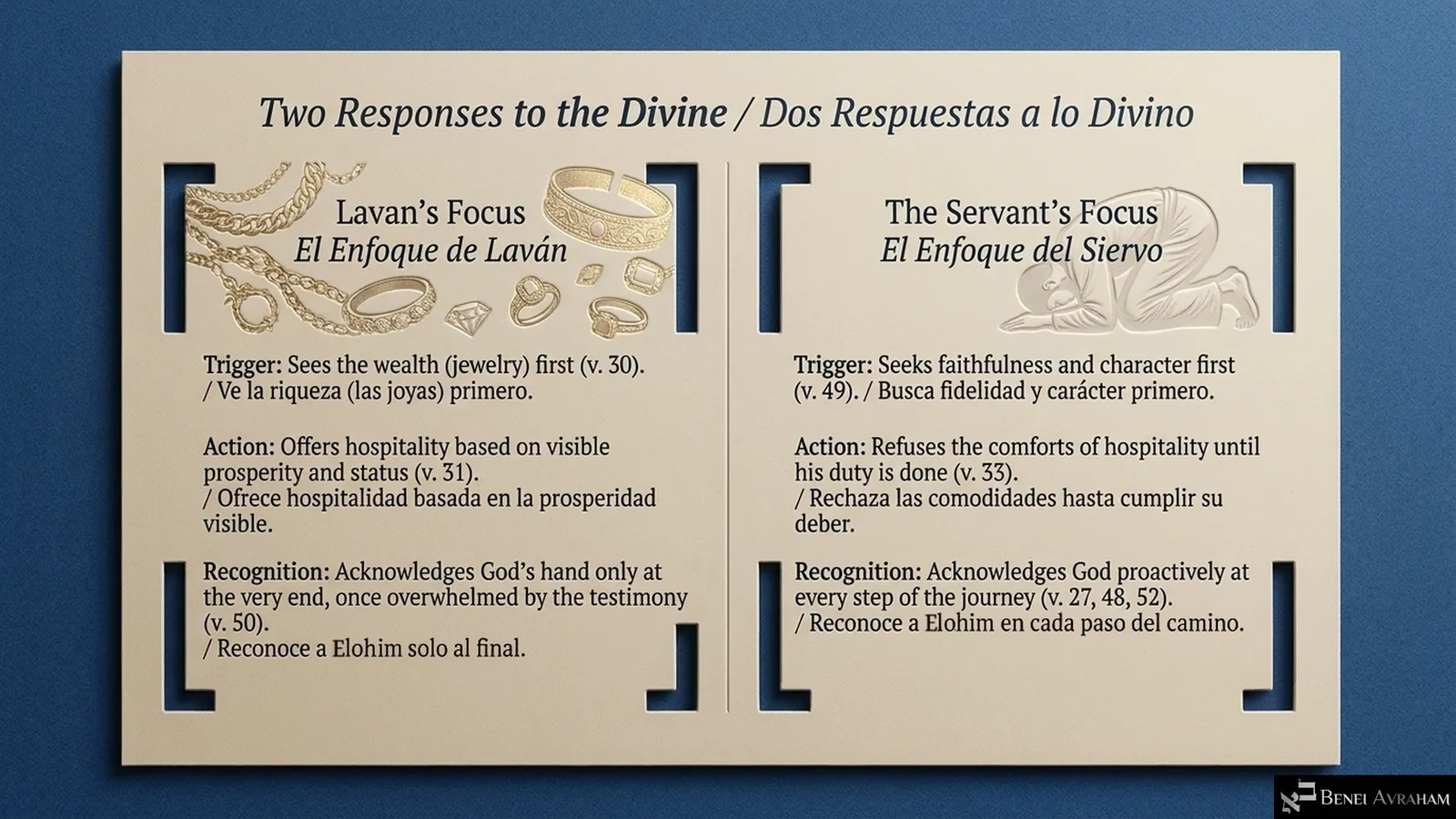
“Two Responses to the Divine”: a carved panel sets Lavan’s focus on the jewelry beside the servant’s faithfulness and his recognition of Hashem at every step (24:27–52).
Chamishi · Genesis 24:53–67

Fifth Portion
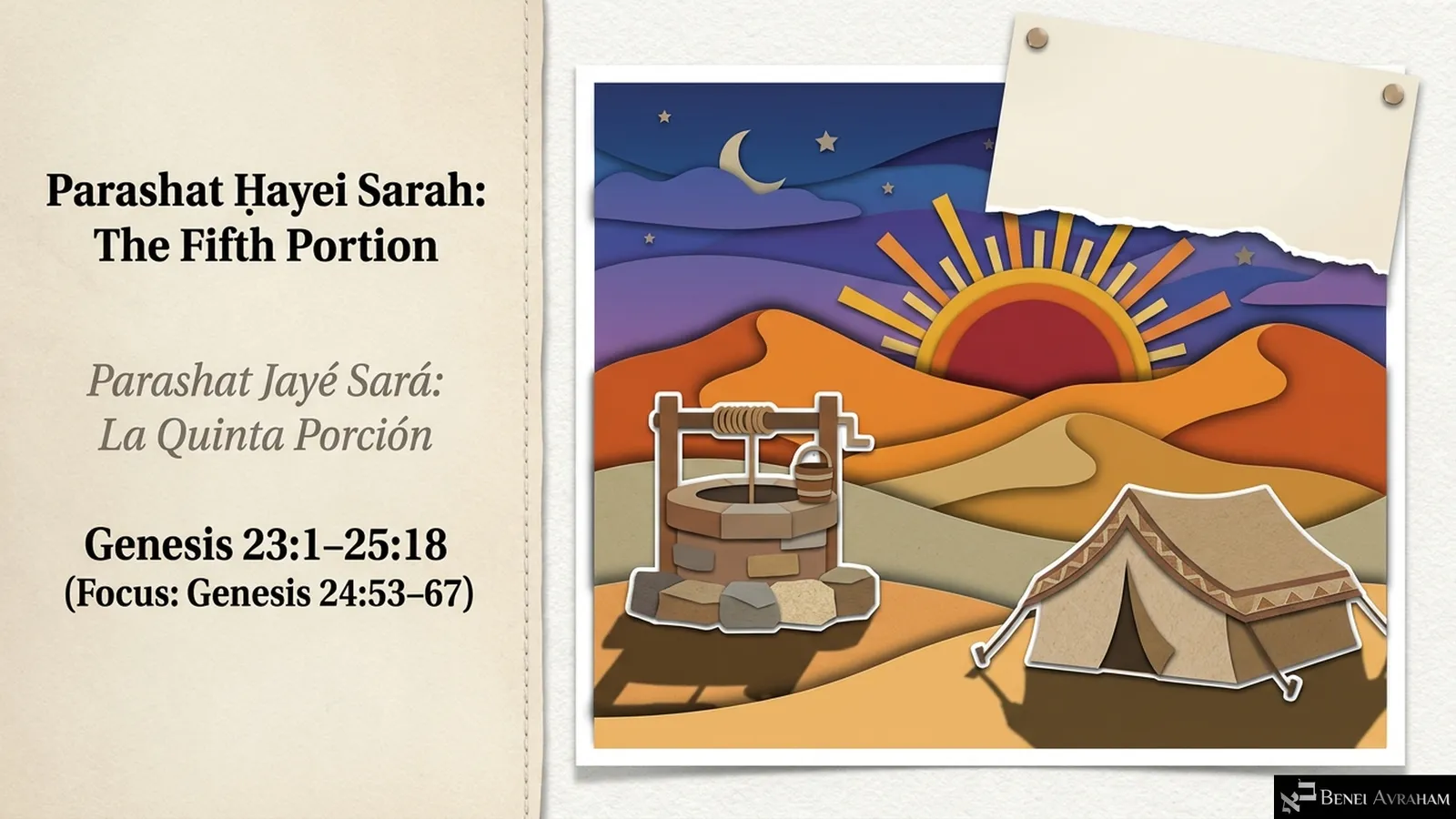
Title slide: Parashat Ḥayei Sarah, the fifth portion (Genesis 24:53–67), beside a pinned paper-cut picture of a well and a tent beneath a setting sun and a crescent moon.
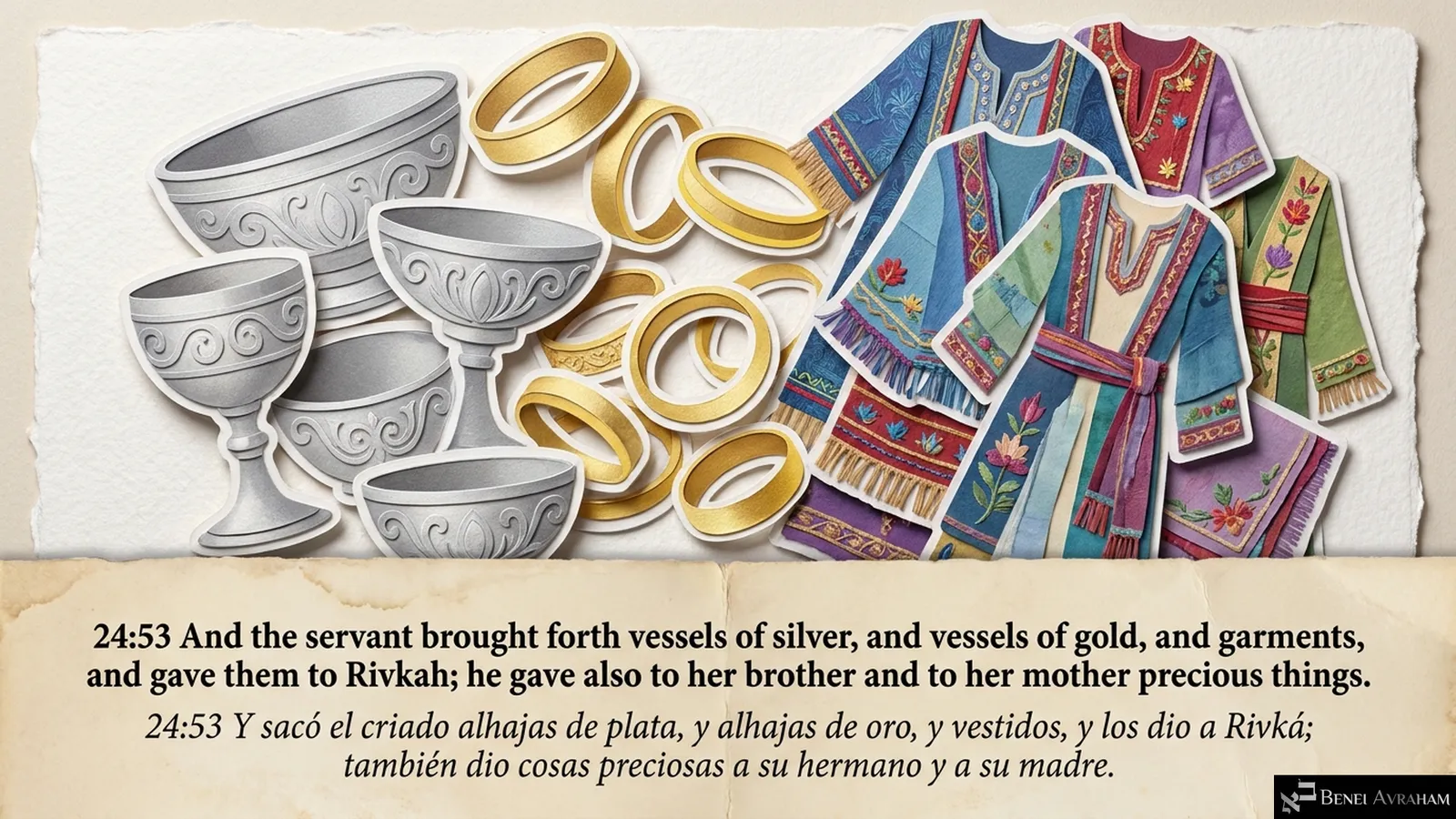
Silver goblets, gold rings and embroidered garments spread across the top as the servant gives gifts to Rivkah and precious things to her brother and her mother (Genesis 24:53).
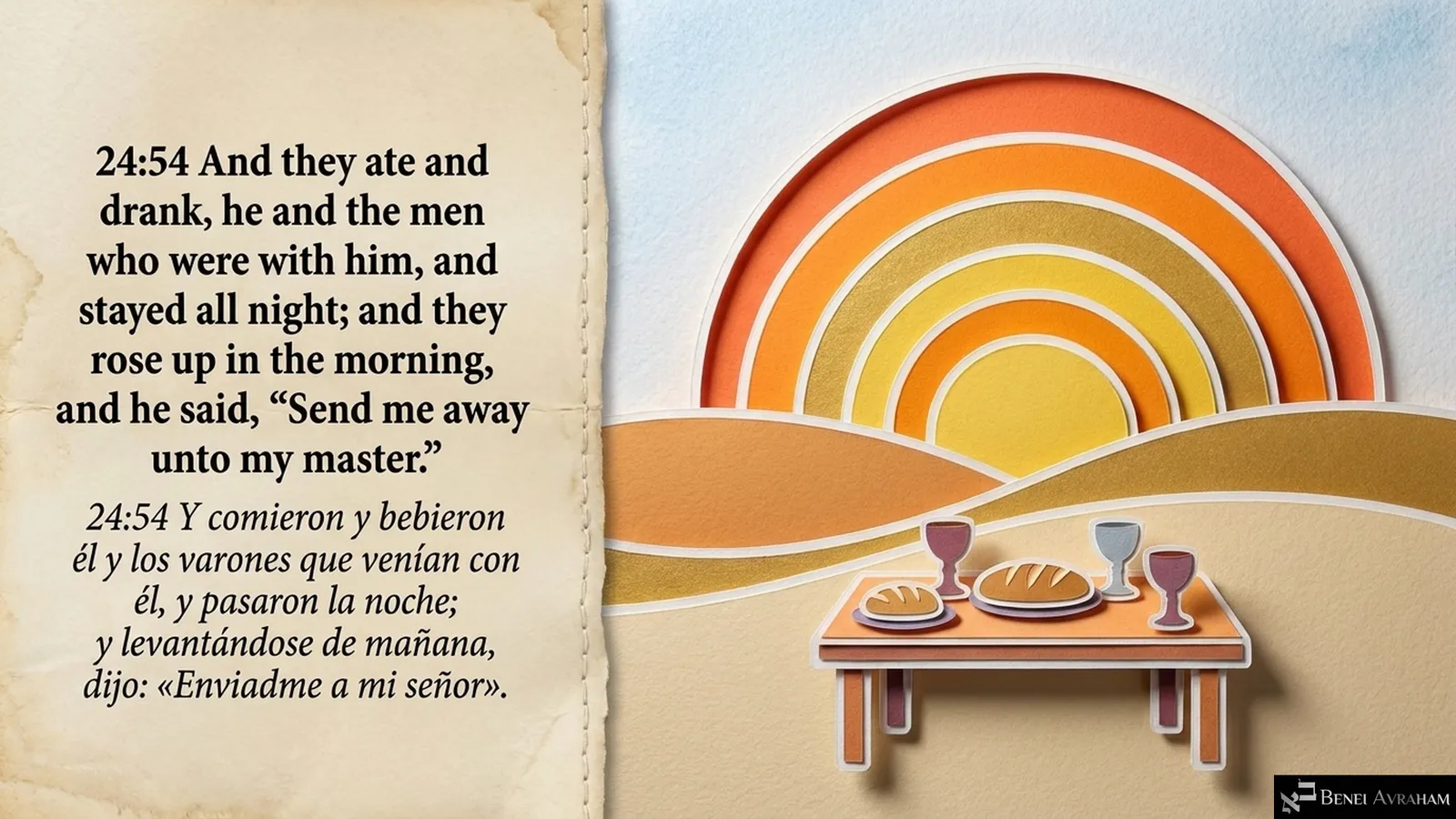
A table set with bread and cups beneath a rising paper-cut sun, as the servant and his men eat, drink and stay the night, and in the morning he says, “Send me away unto my master” (24:54).
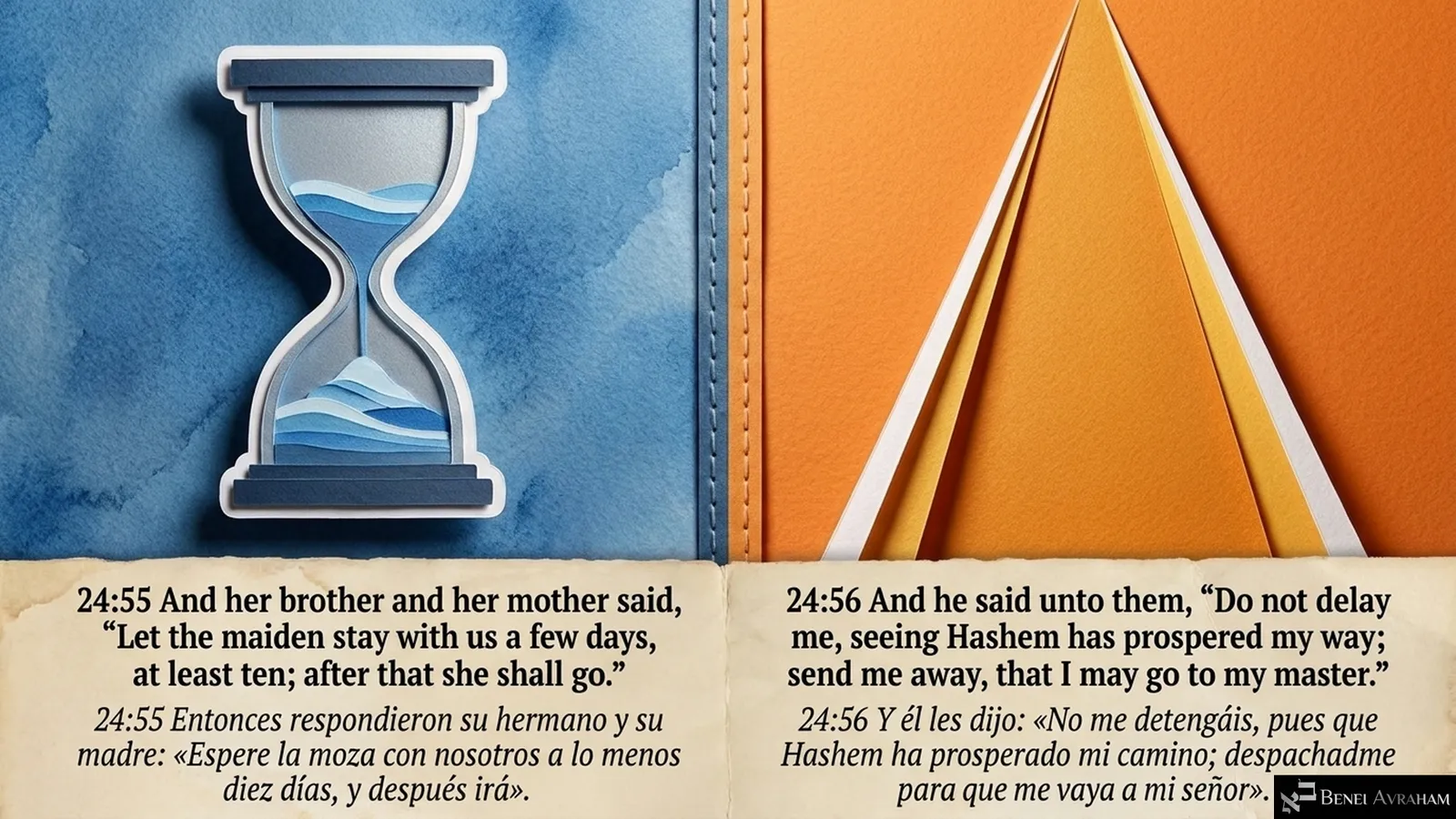
An hourglass of blue sand beside a road rising into the distance: her brother and mother ask that the maiden stay at least ten days, but the servant answers, “Do not delay me” (24:55–56).
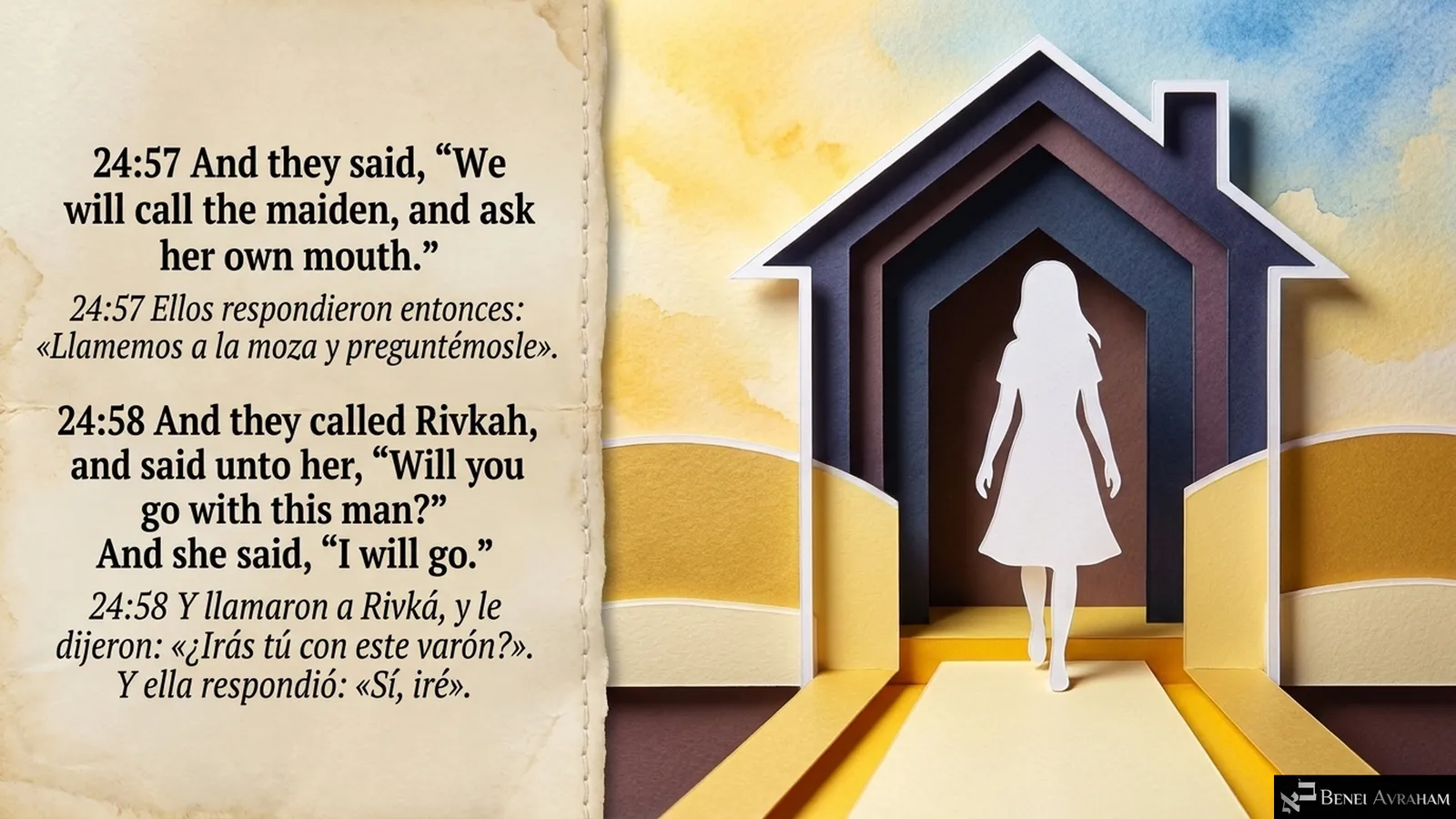
The white silhouette of a young woman steps out through a layered house doorway as Rivkah is asked, “Will you go with this man?” and answers, “I will go” (24:57–58).
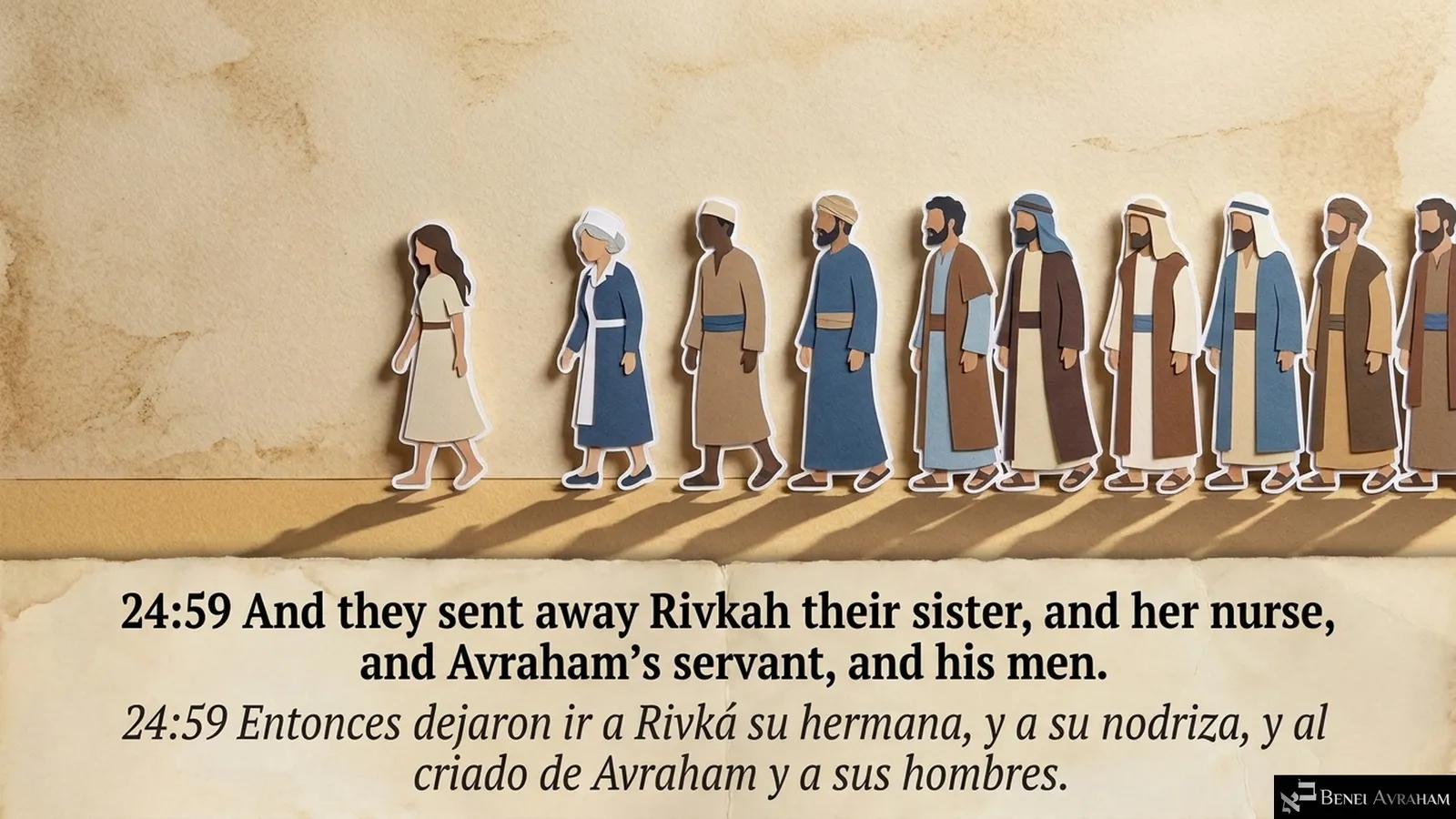
Rivkah leads a line of paper-cut figures, her nurse, Avraham’s servant and his men, as her family sends her away (24:59).
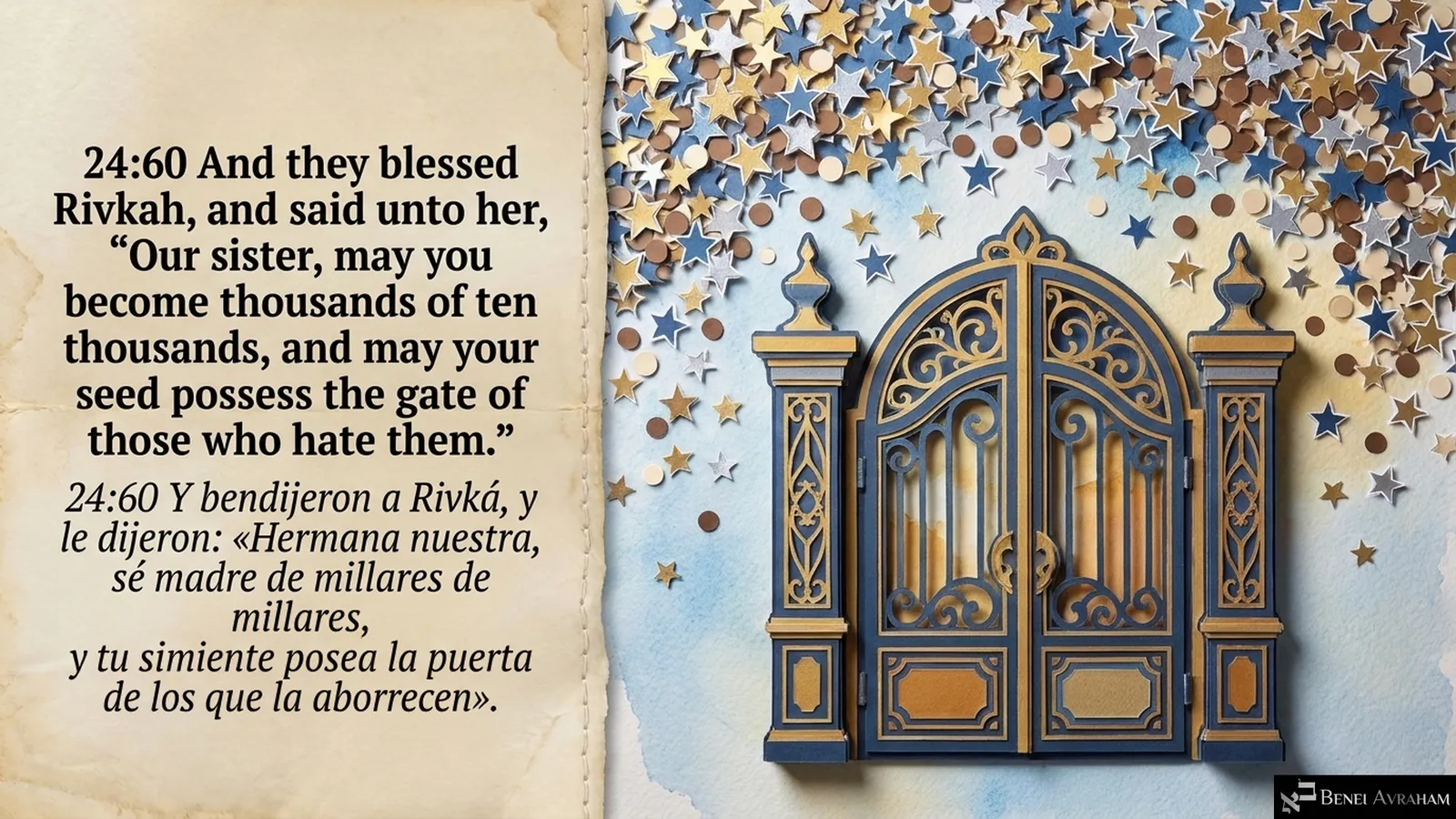
An ornate gate beneath a shower of paper stars as Rivkah’s family blesses her: “May you become thousands of ten thousands, and may your seed possess the gate of those who hate them” (24:60).
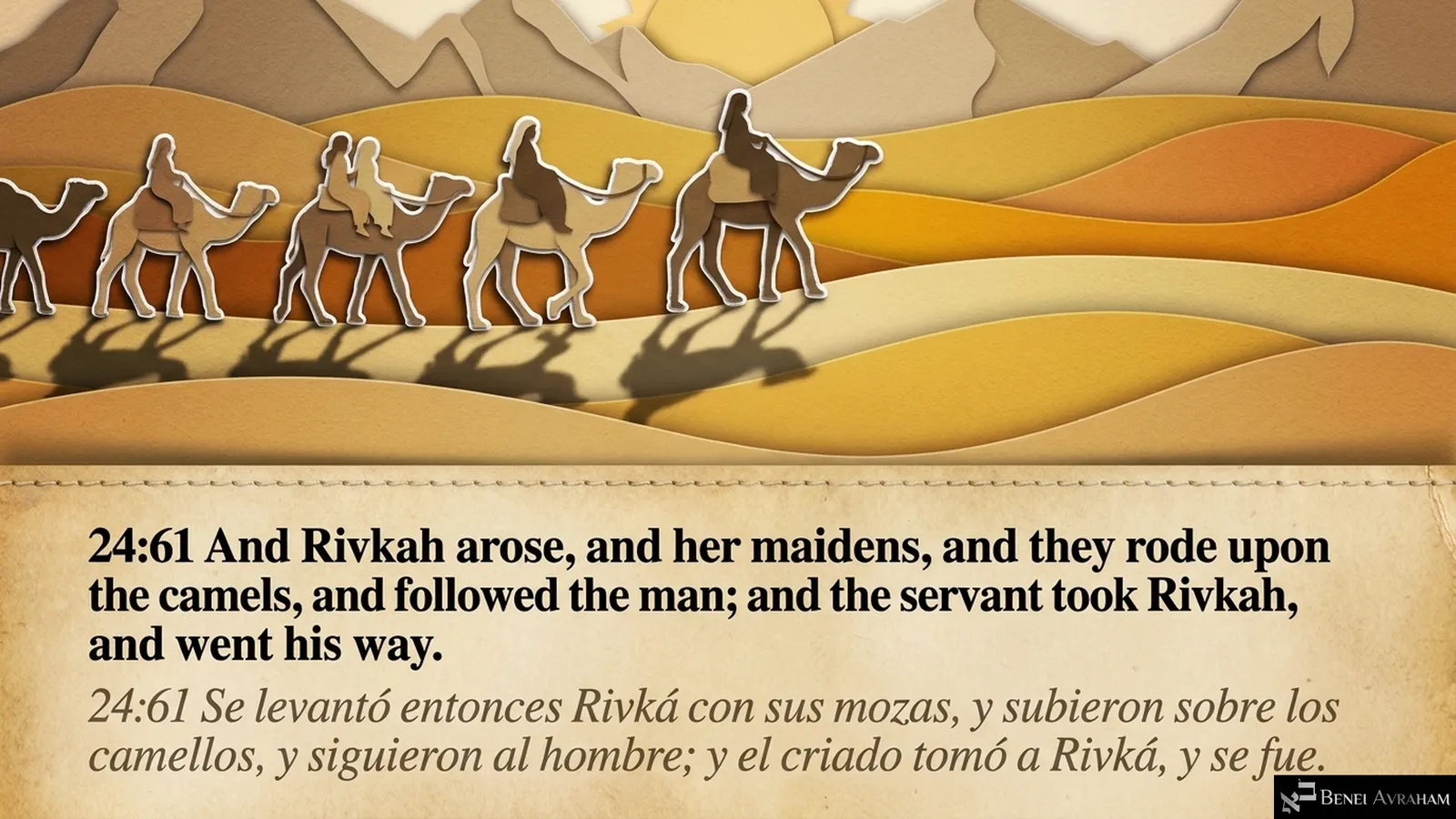
Paper-cut camels with riders cross golden dunes as Rivkah and her maidens follow the man, and the servant takes Rivkah and goes his way (24:61).
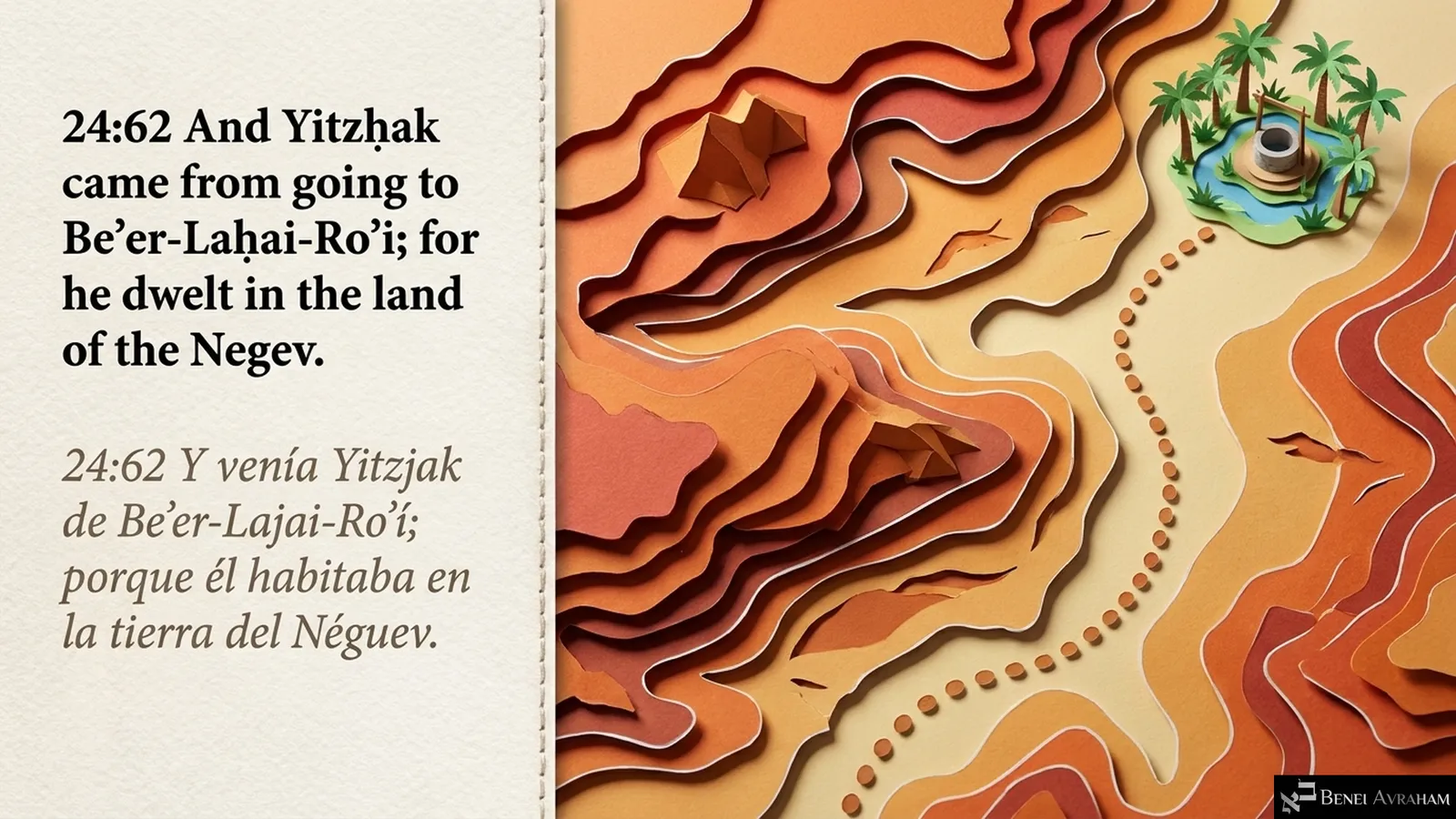
A dotted trail winds across layered desert hills to an oasis well among palm trees as Yitzḥak comes from Be’er-Laḥai-Ro’i, dwelling in the land of the Negev (24:62).
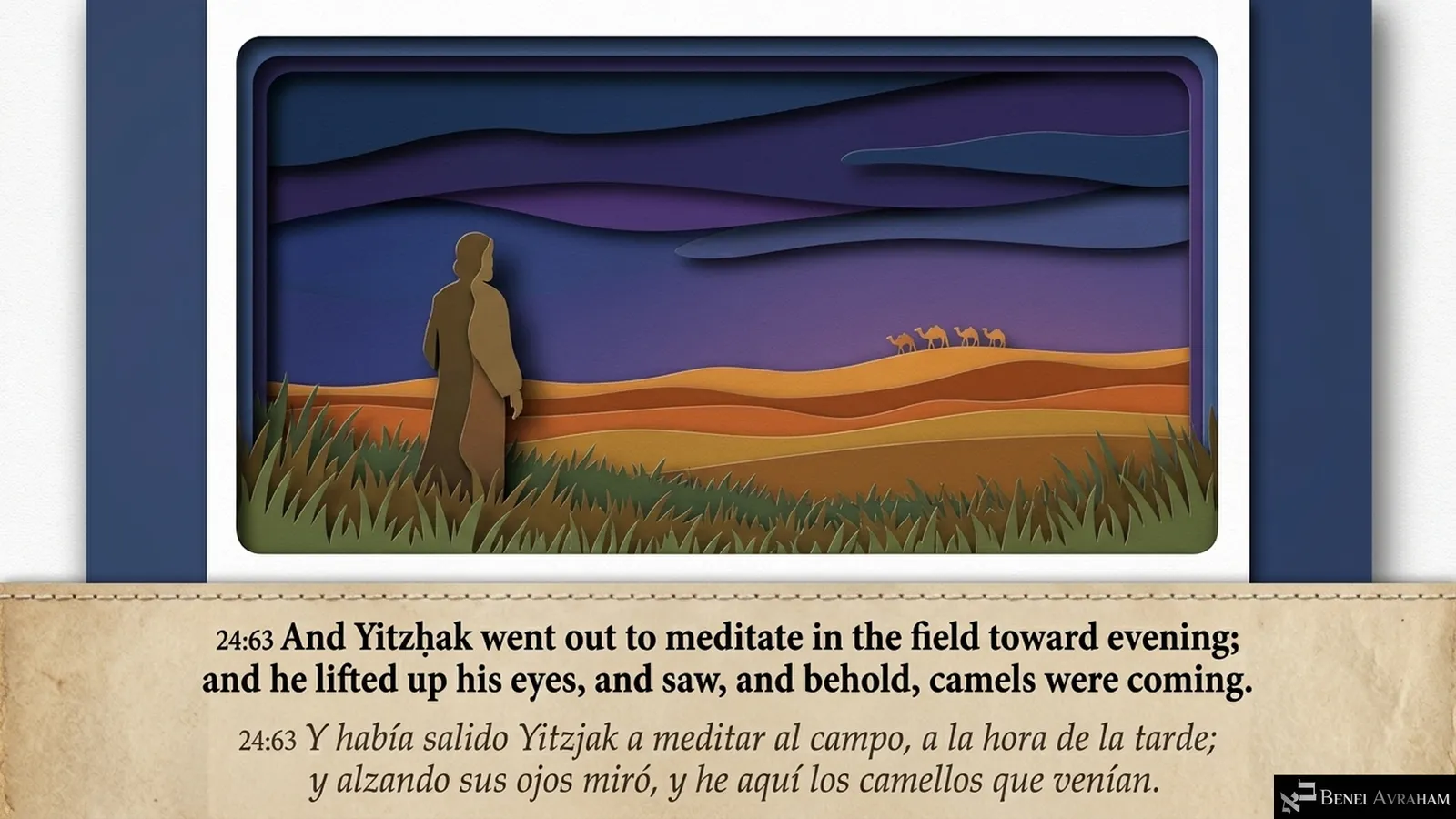
Yitzḥak stands in a grassy field at dusk under a purple sky, and far off on the horizon camels are coming (24:63).
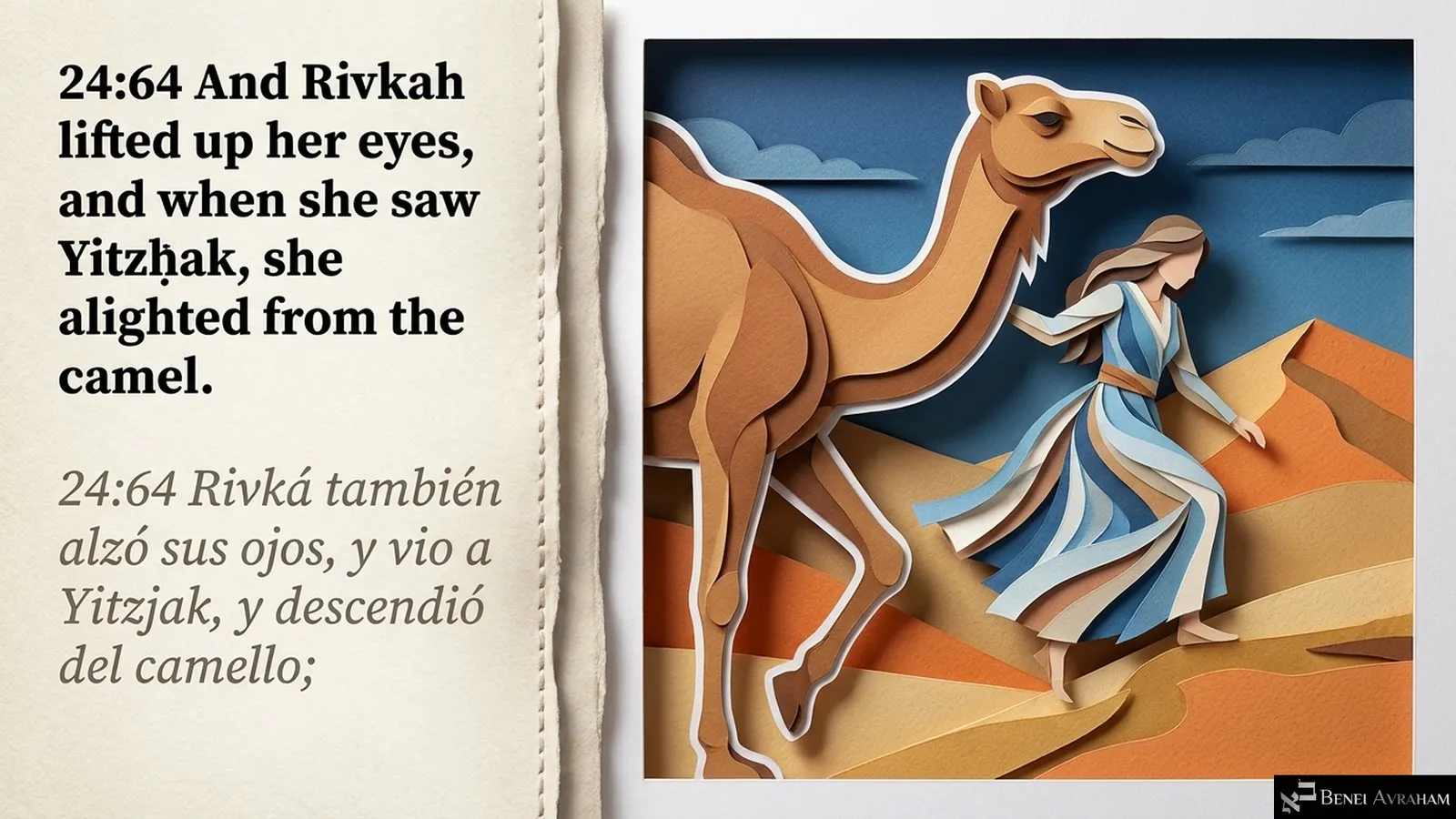
Rivkah, in flowing blue, steps down from a paper-cut camel among the dunes as she sees Yitzḥak (24:64).
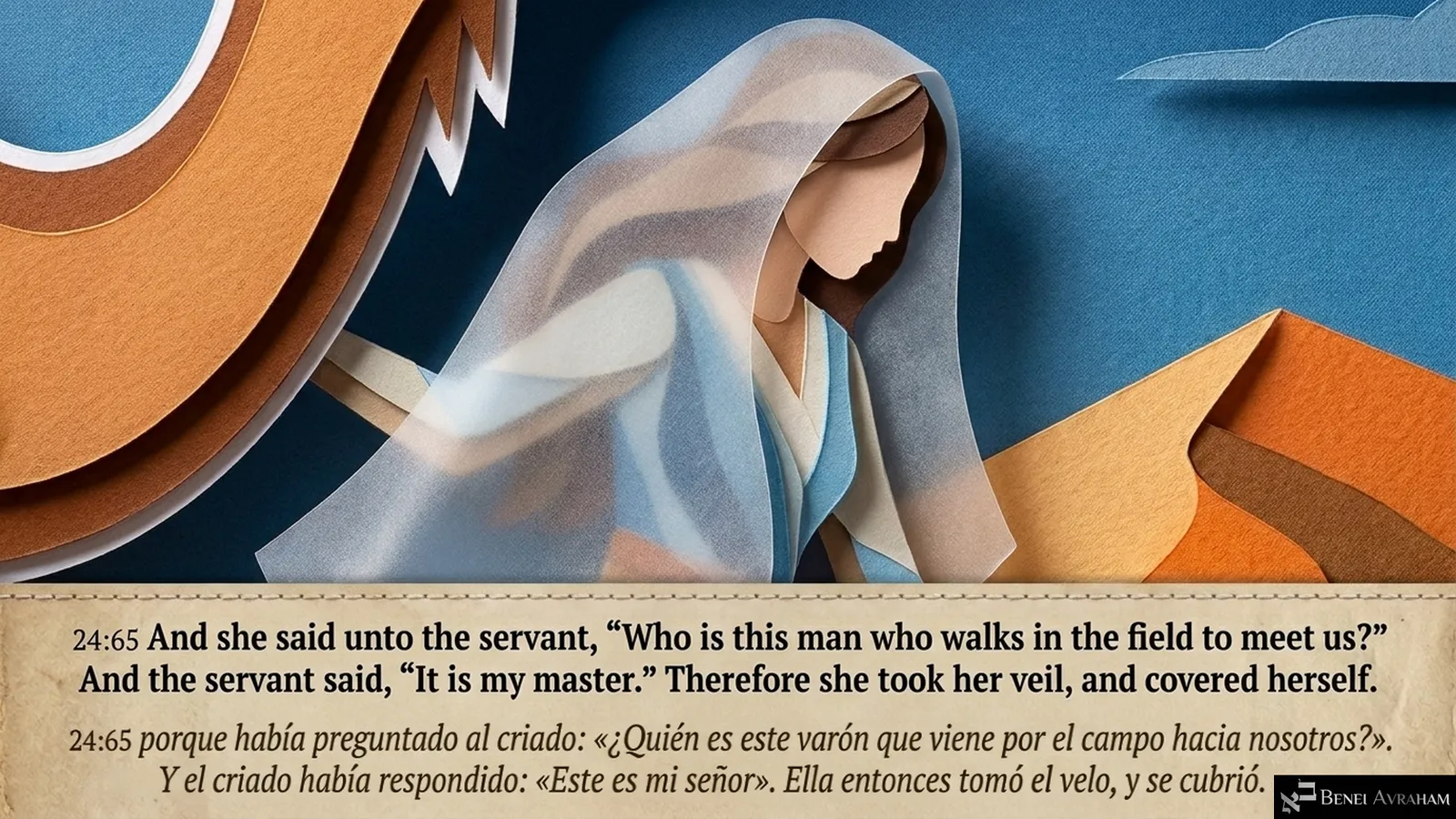
Rivkah draws a translucent veil over her head and covers herself as the servant tells her, “It is my master” (24:65).
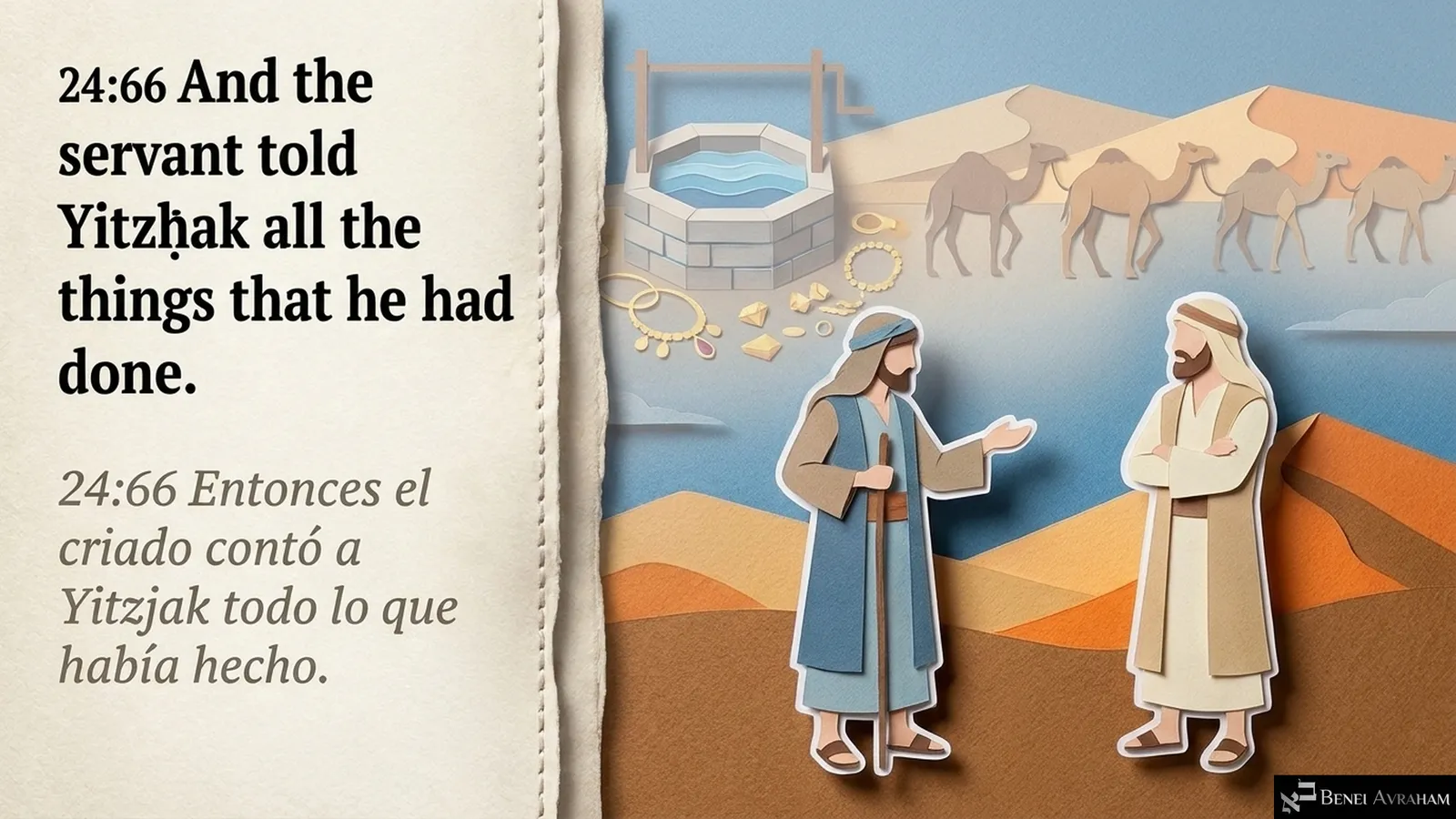
Beside a well, with camels and scattered gold jewelry behind them, the servant tells Yitzḥak all the things that he had done (24:66).
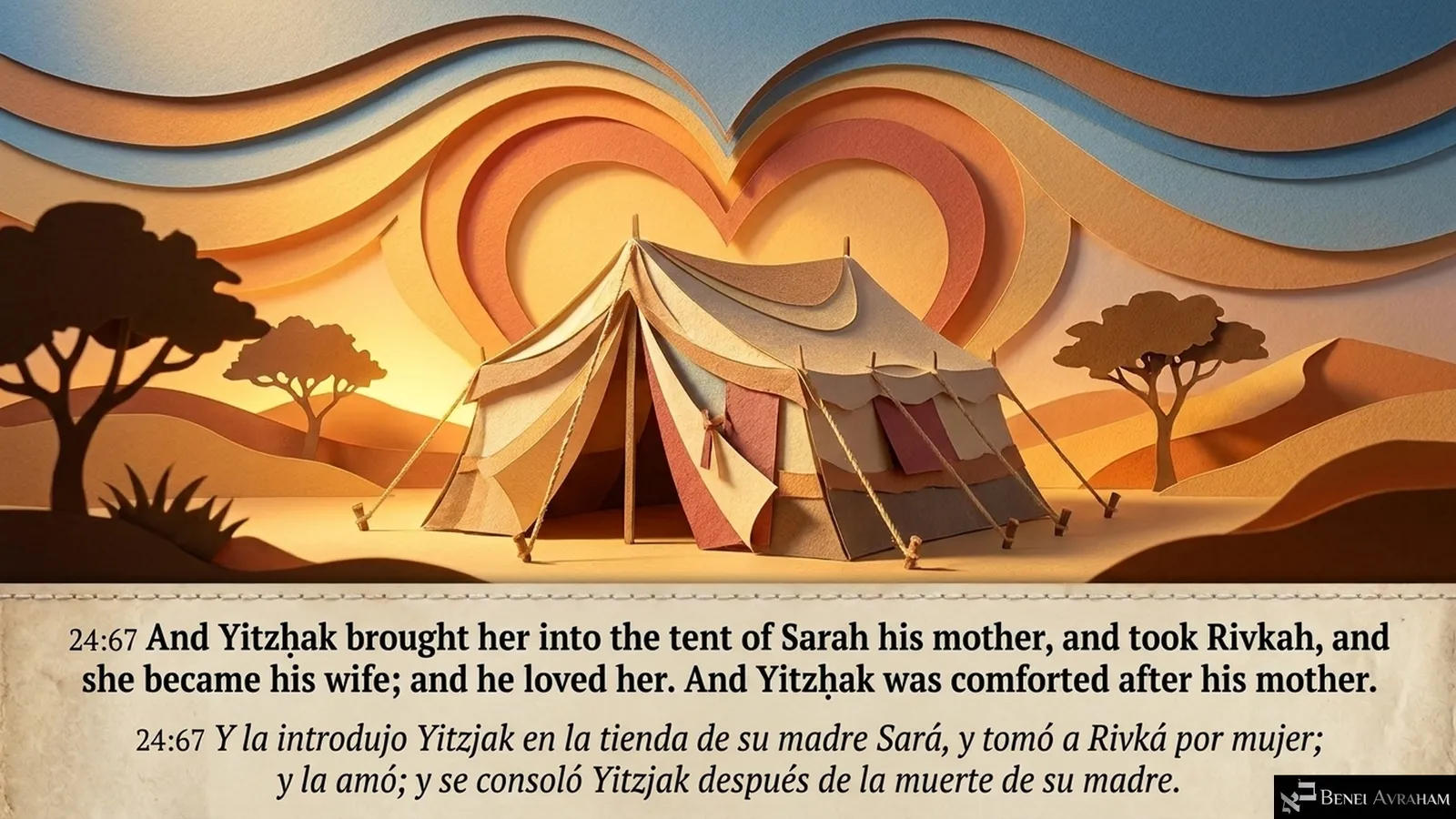
A glowing tent beneath a sunset sky curved like a heart, as Yitzḥak brings Rivkah into the tent of Sarah his mother, loves her and is comforted after his mother (24:67).
Shishi · Genesis 25:1–11

Sixth Portion
Title slide: Parashat Ḥayei Sarah, the sixth portion, Genesis 25:1–11, on a framed card set in layered paper-cut desert hills.
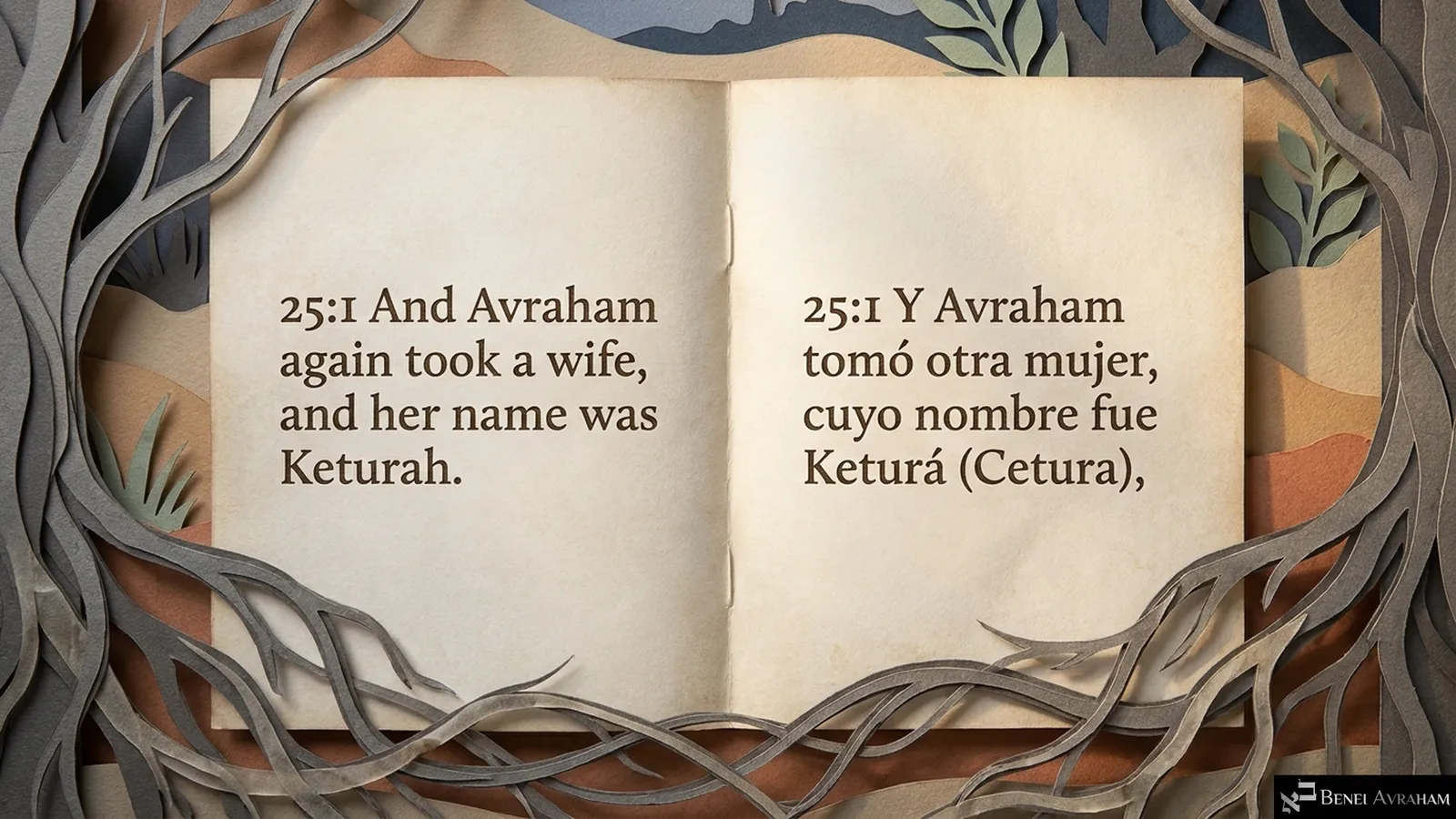
An open book framed by twisting grey paper-cut roots and branches tells how Avraham again took a wife, and her name was Keturah (Genesis 25:1).
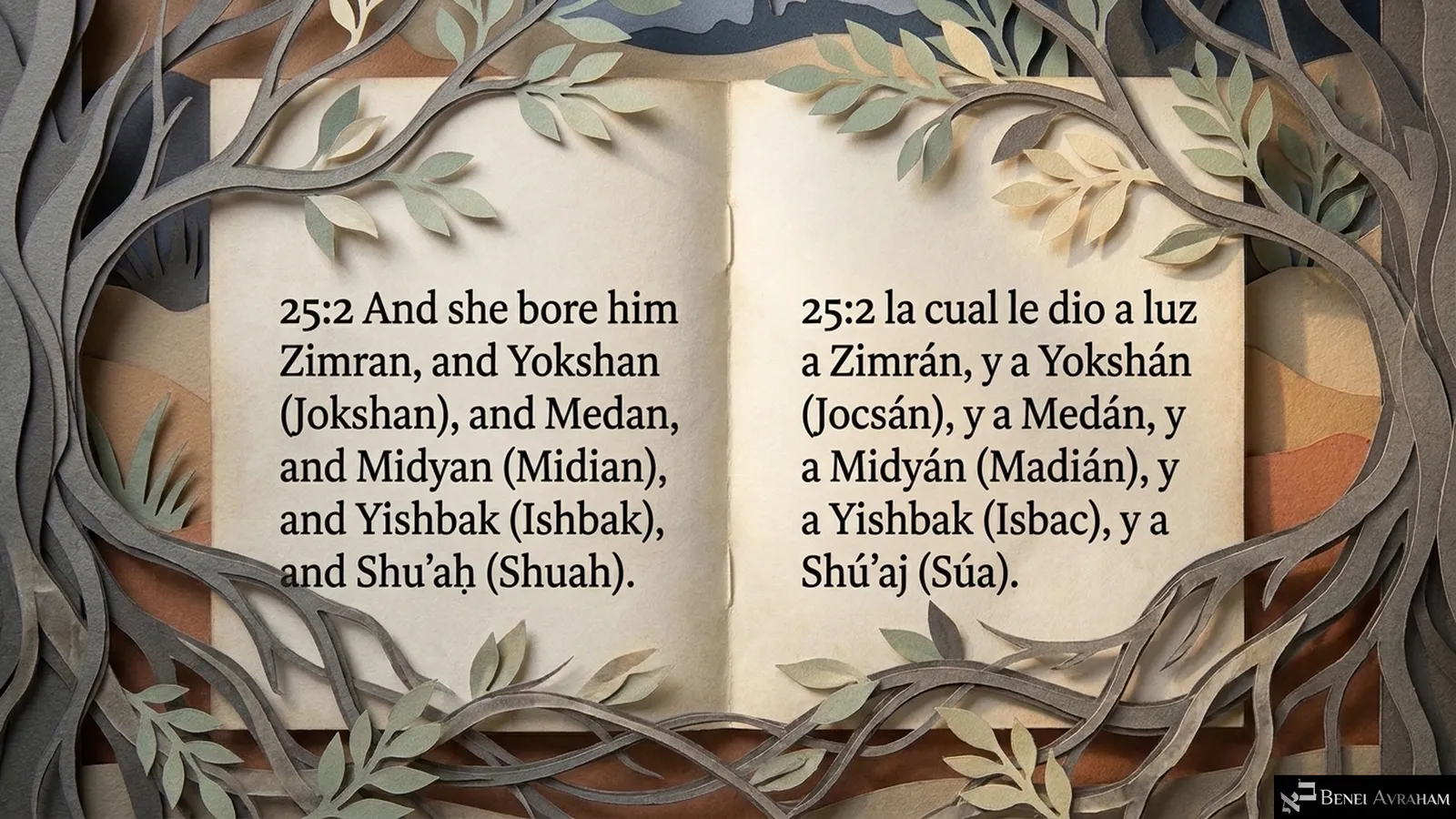
Leafy branches curl around an open book listing the sons Keturah bore to Avraham: Zimran, Yokshan, Medan, Midyan, Yishbak and Shu’aḥ (25:2).
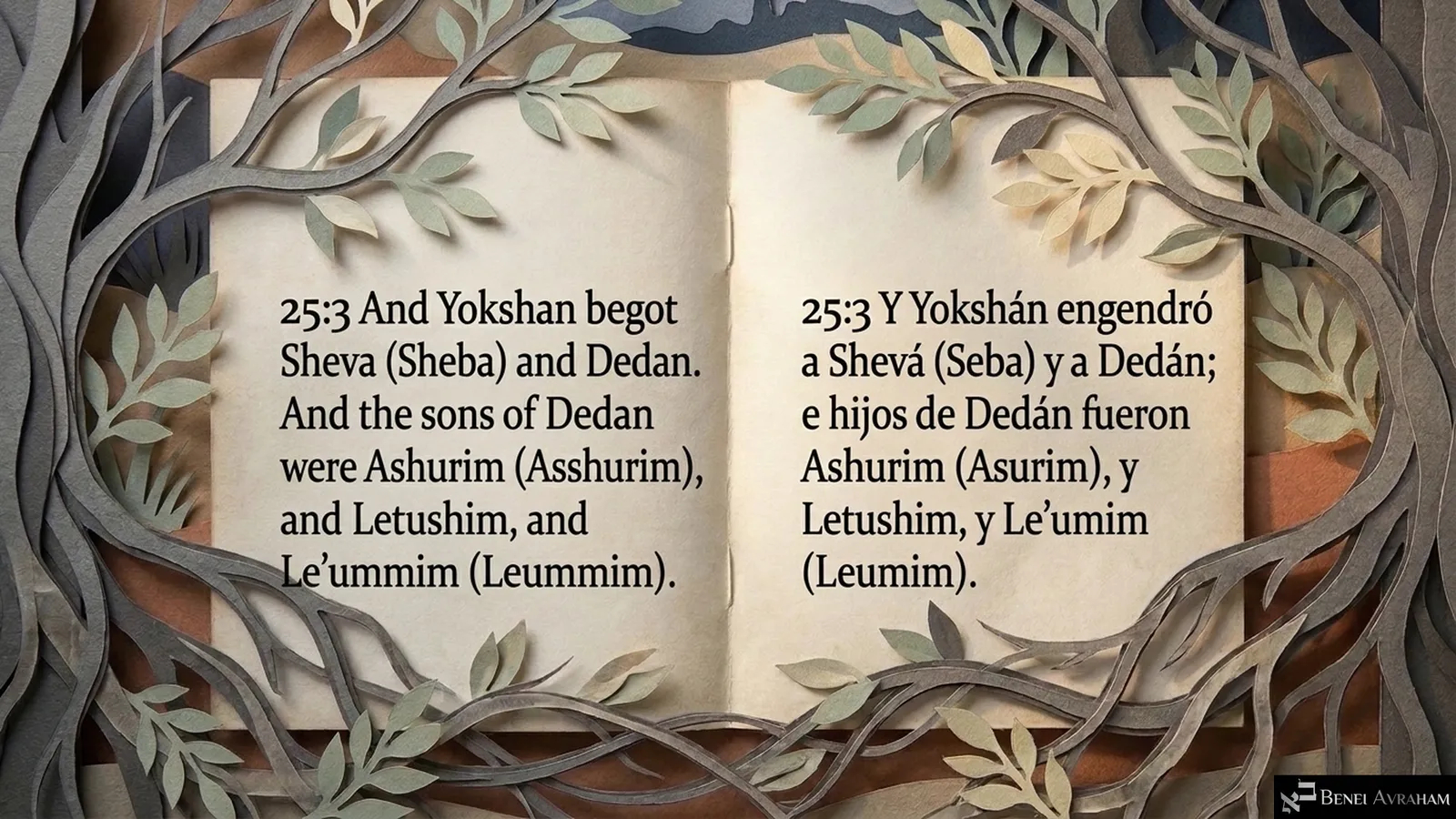
The open book among leafy branches names the next generation: Sheva and Dedan, the sons of Yokshan, and the sons of Dedan (25:3).
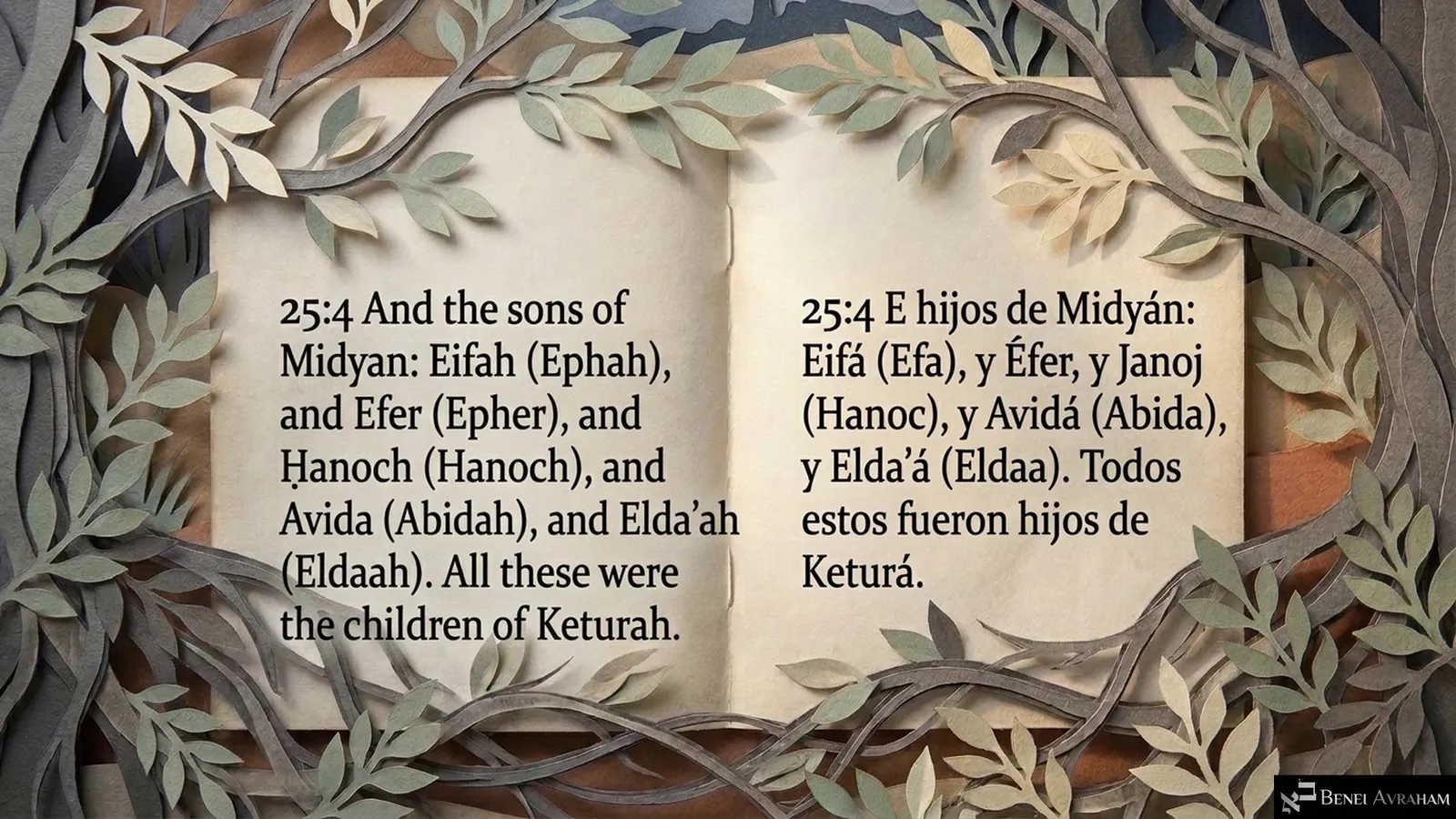
Branches thick with paper leaves surround the open book naming the sons of Midyan, all of them children of Keturah (25:4).
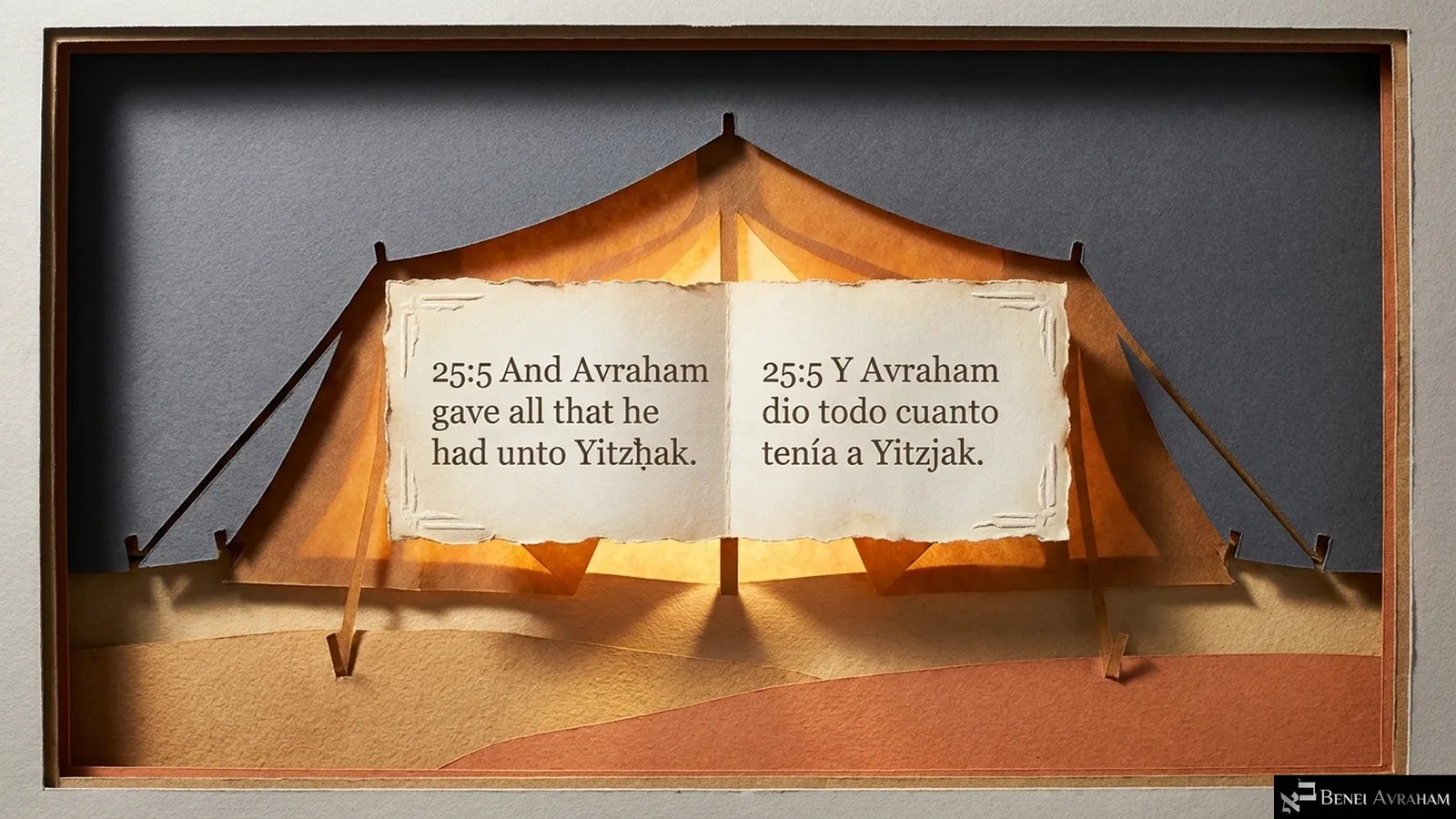
A card glows in front of a lamplit tent as Avraham gives all that he had unto Yitzḥak (25:5).
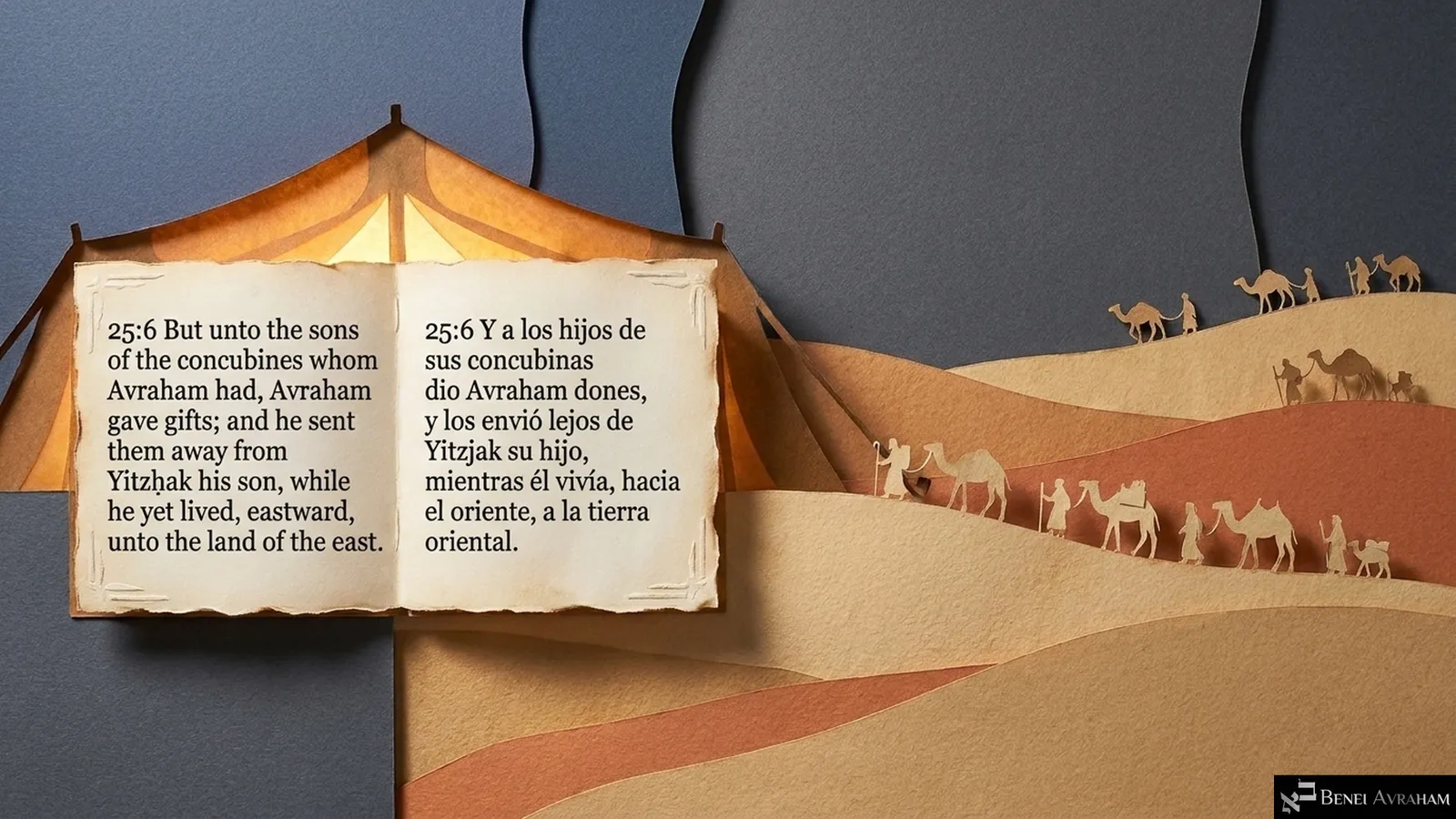
Beside Avraham’s tent, caravans of camels and travellers wind away across the dunes as he sends the sons of the concubines eastward with gifts, away from Yitzḥak (25:6).
A great sun of layered paper rings rises behind the card counting the years of Avraham’s life: a hundred and seventy-five years (25:7).
Under a starry purple night sky, a last glow sinks behind the hills as Avraham breathes his last, old and full of years, and is gathered to his people (25:8).
Two winding paths of layered paper meet before a glowing sun as Yitzḥak and Yishmael bury Avraham in the cave of Machpelah, before Mamre (25:9).
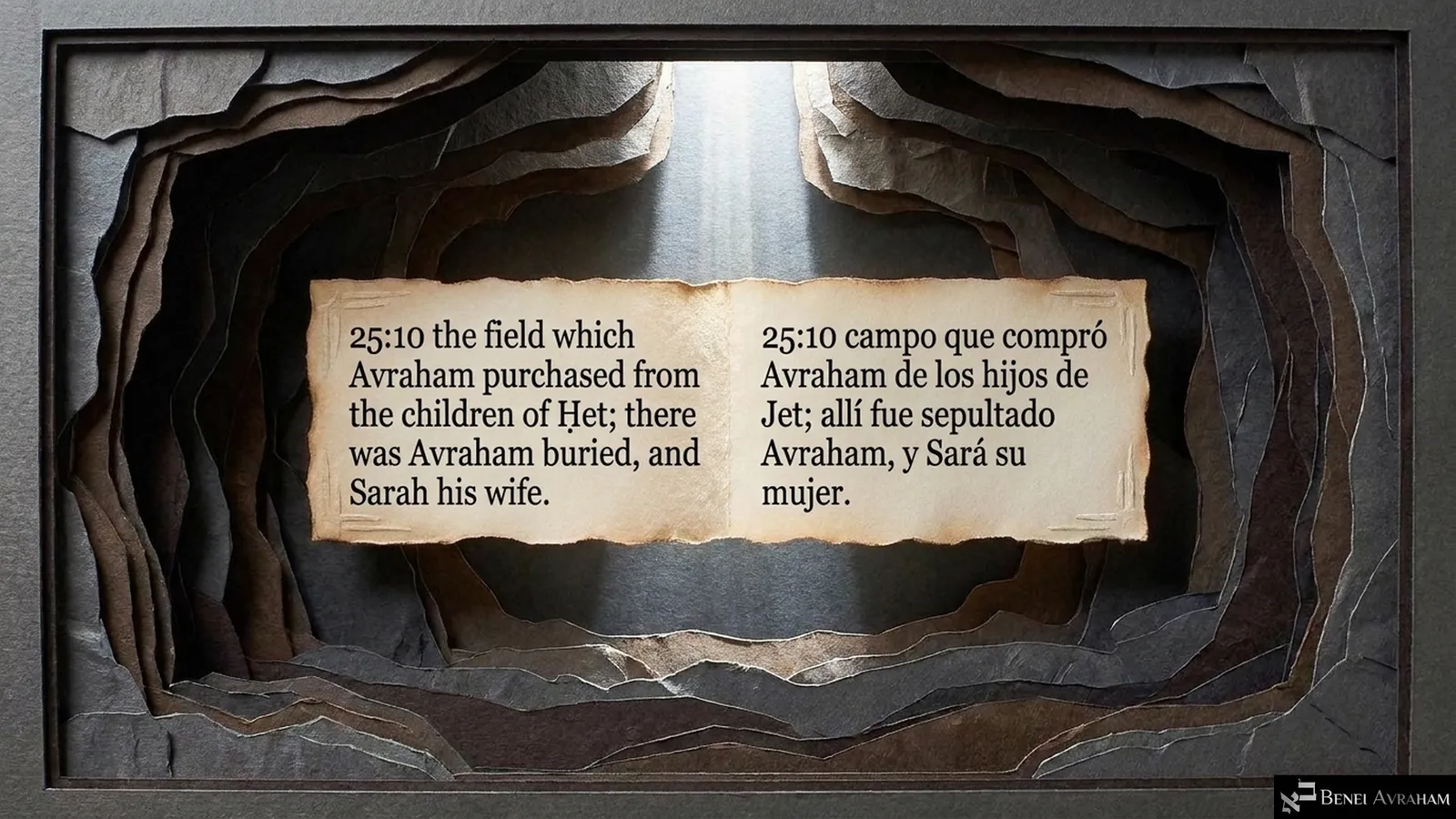
Light falls from above into a cave of torn grey paper layers, where Avraham was buried with Sarah his wife in the field bought from the children of Ḥet (25:10).
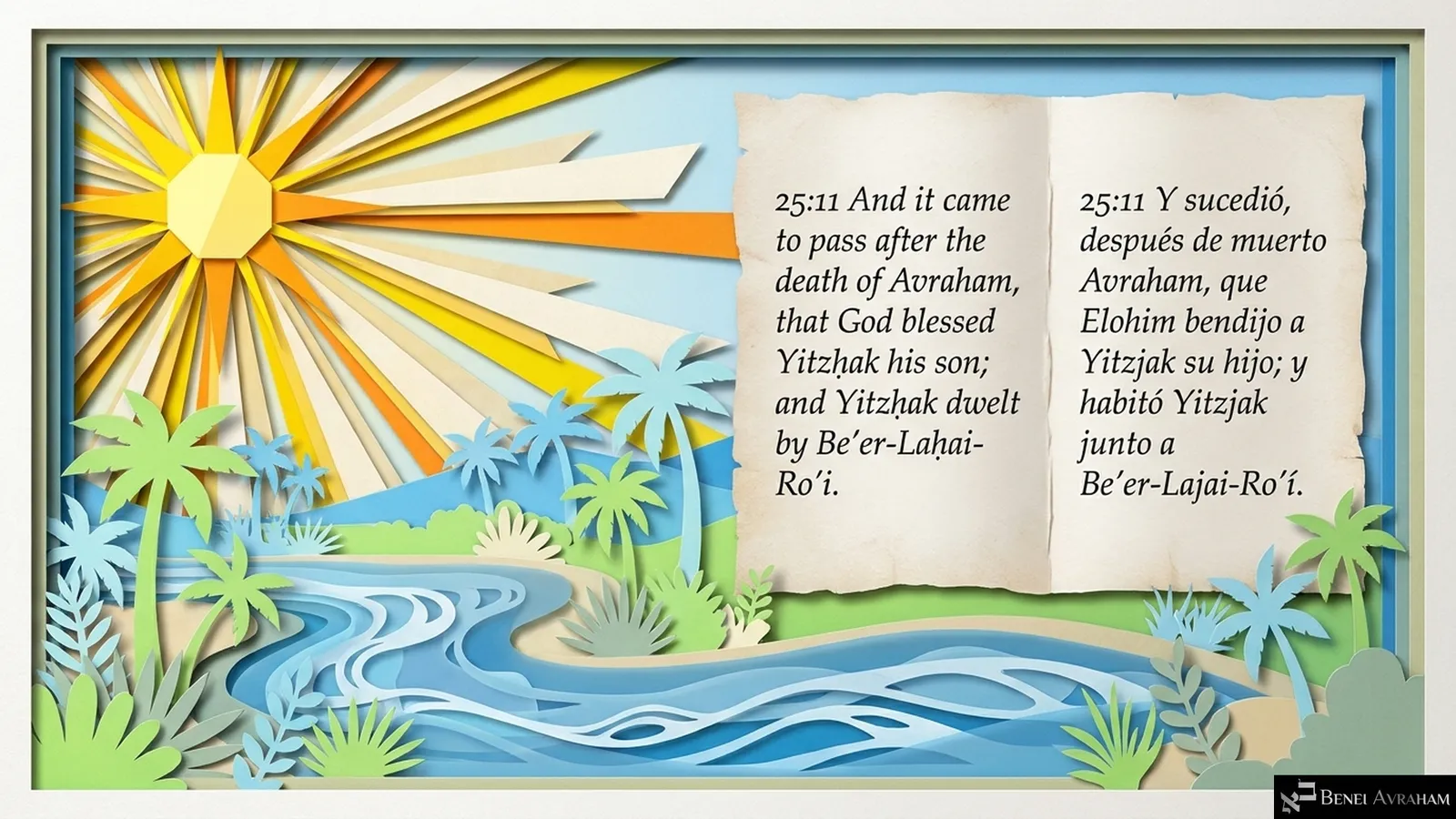
A bright paper-cut sun shines over palm trees and a winding river as God blesses Yitzḥak after the death of Avraham, and Yitzḥak dwells by Be’er-Laḥai-Ro’i (25:11).
Shevi’i · Genesis 25:12–18

Seventh Portion

Title slide: Parashat Ḥayei Sarah, the seventh portion, Genesis 25:12–18, with a small paper-cut tent among layered desert dunes.
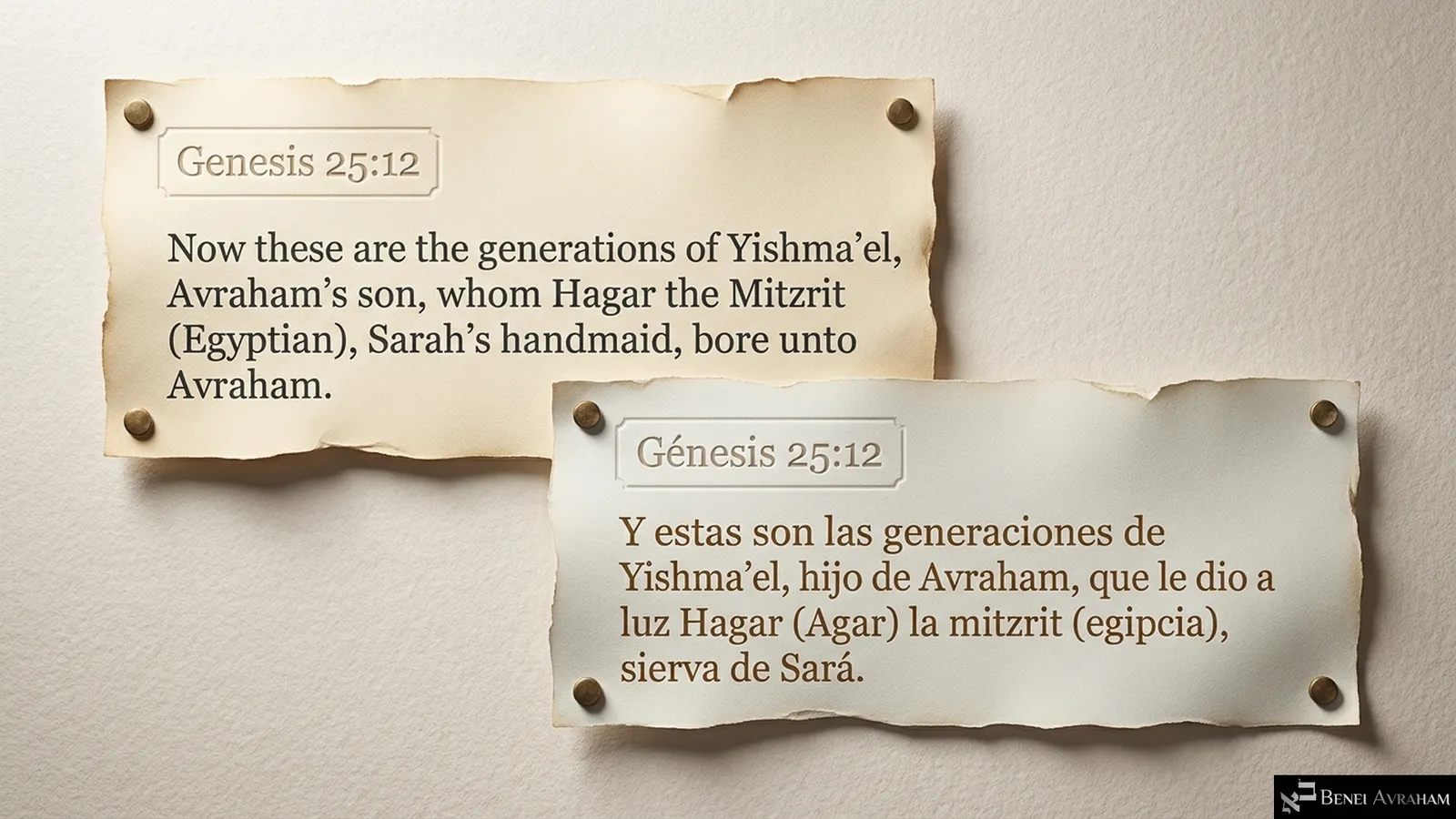
Torn parchment cards pinned to the wall record the generations of Yishmael, Avraham’s son, whom Hagar the Egyptian, Sarah’s handmaid, bore unto Avraham (Genesis 25:12).
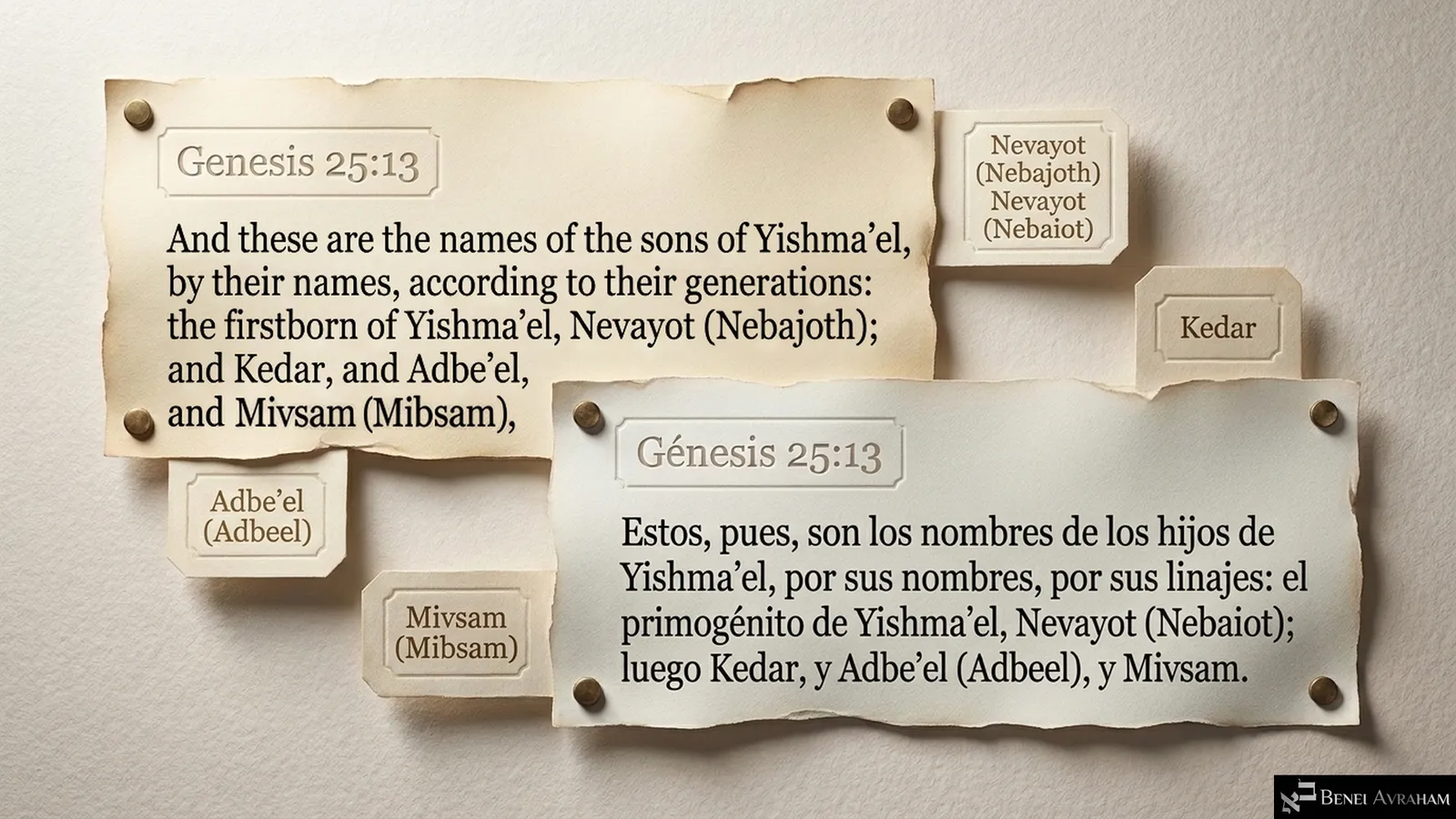
Pinned name tags for Nevayot, Kedar, Adbe’el and Mivsam surround the cards naming Yishmael’s firstborn and the sons who followed (25:13).
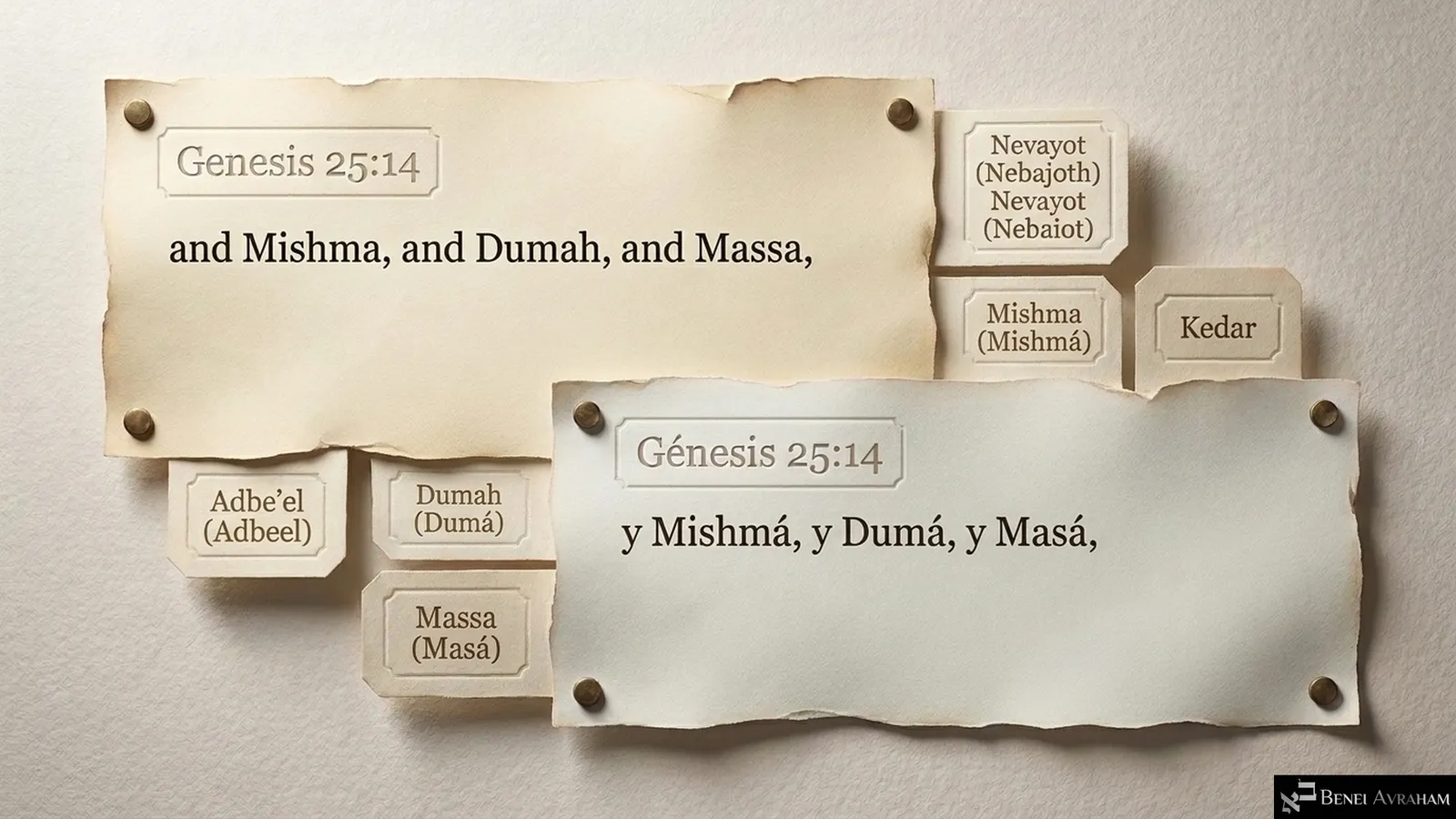
New name tags for Mishma, Dumah and Massa join the board of Yishmael’s sons (25:14).
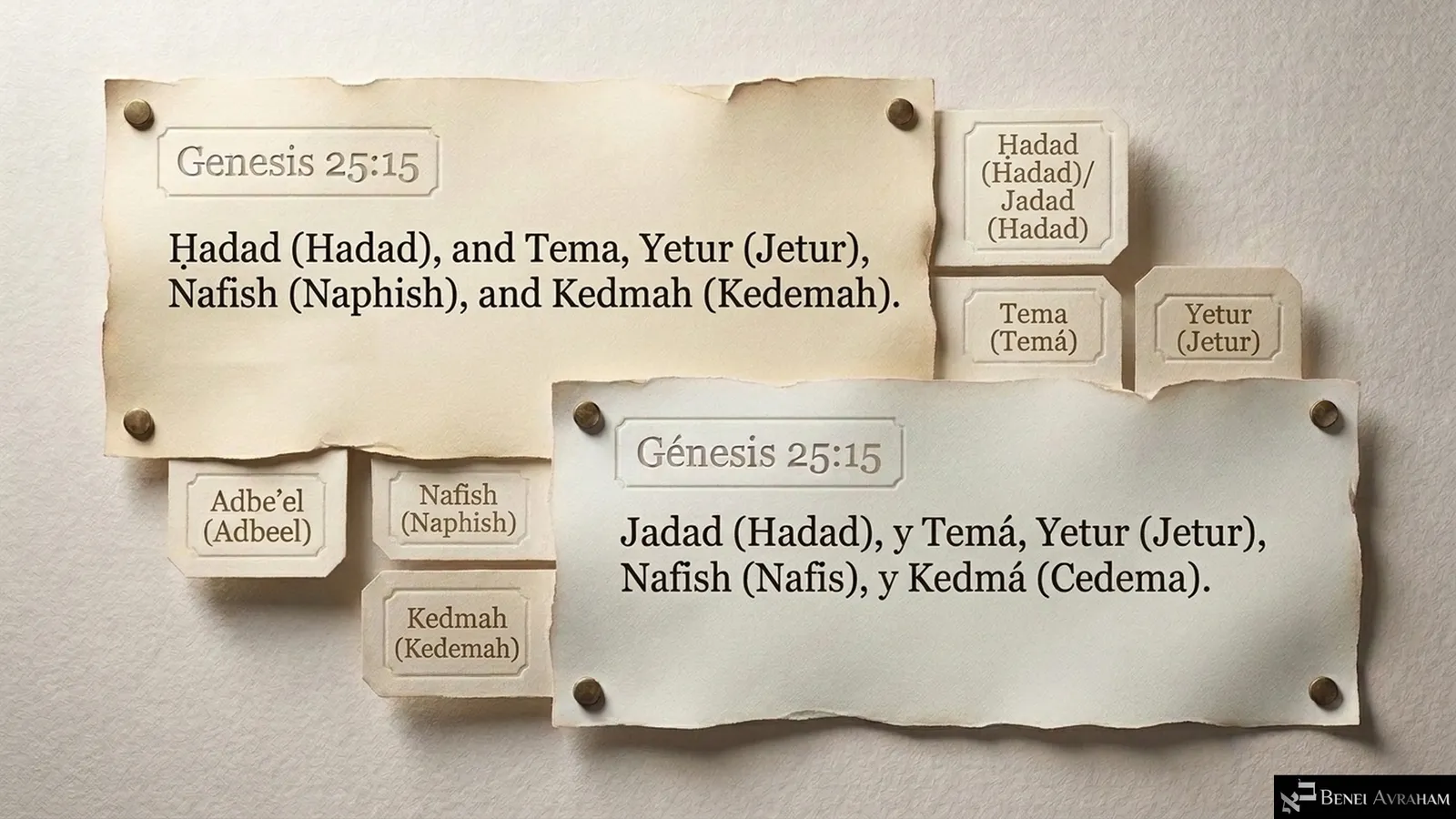
Name tags for Ḥadad, Tema, Yetur, Nafish and Kedmah complete the board of Yishmael’s sons (25:15).
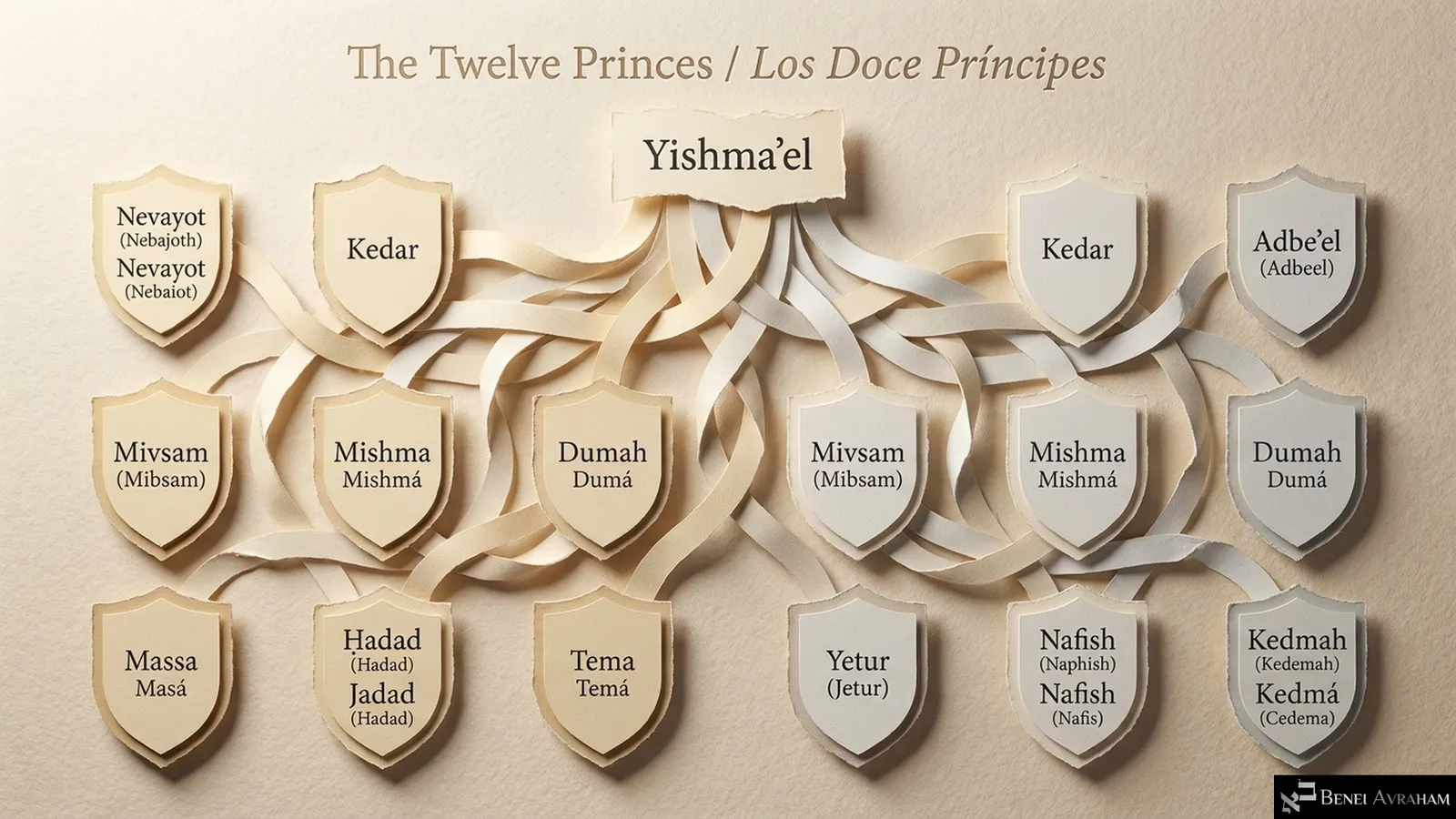
“The Twelve Princes”: Yishmael at the top, with paper ribbons branching out to twelve shields bearing the names of his sons (25:16).
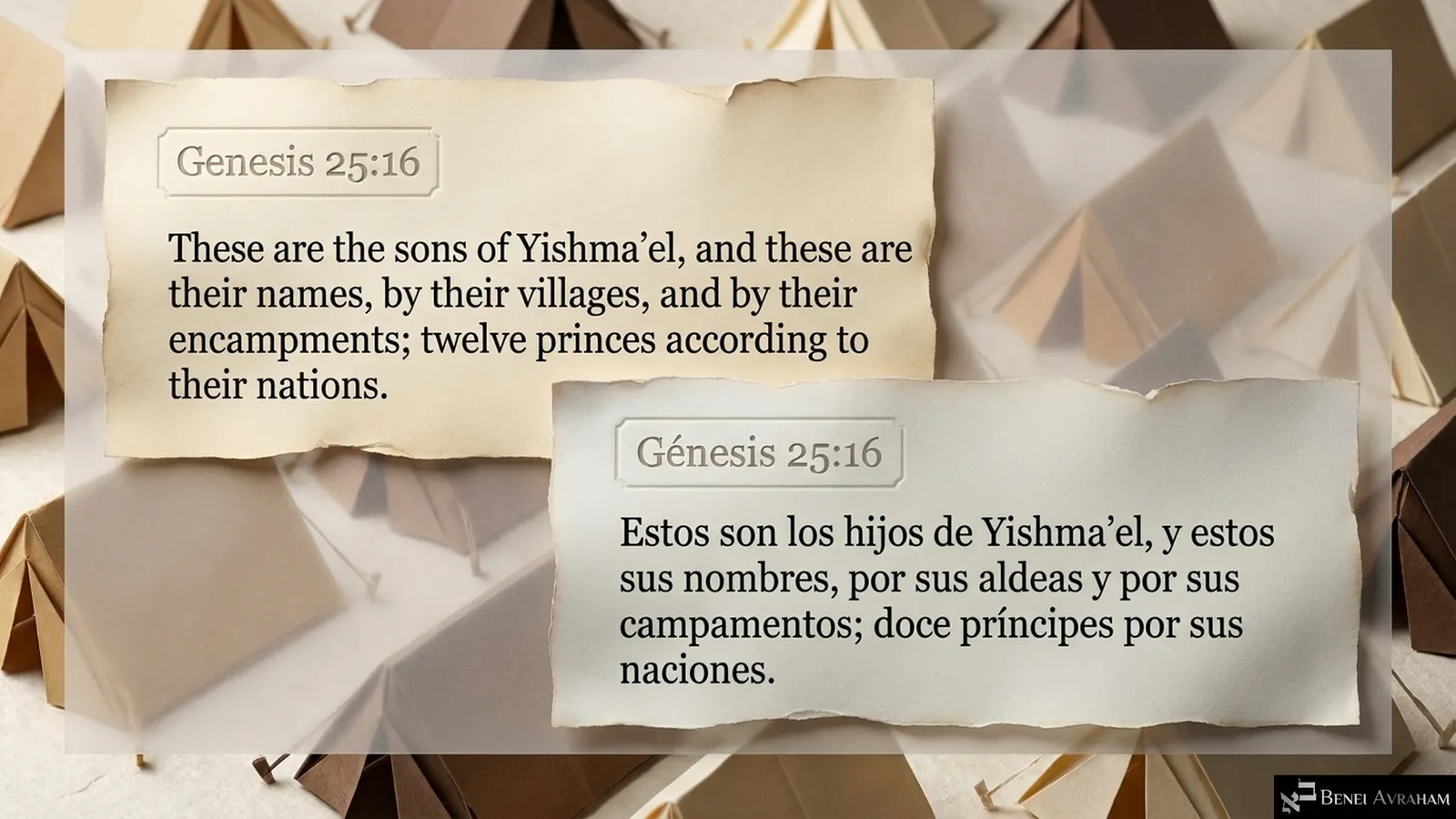
Paper-cut tents fill the background behind the cards naming the twelve princes of Yishmael, by their villages and their encampments (25:16).
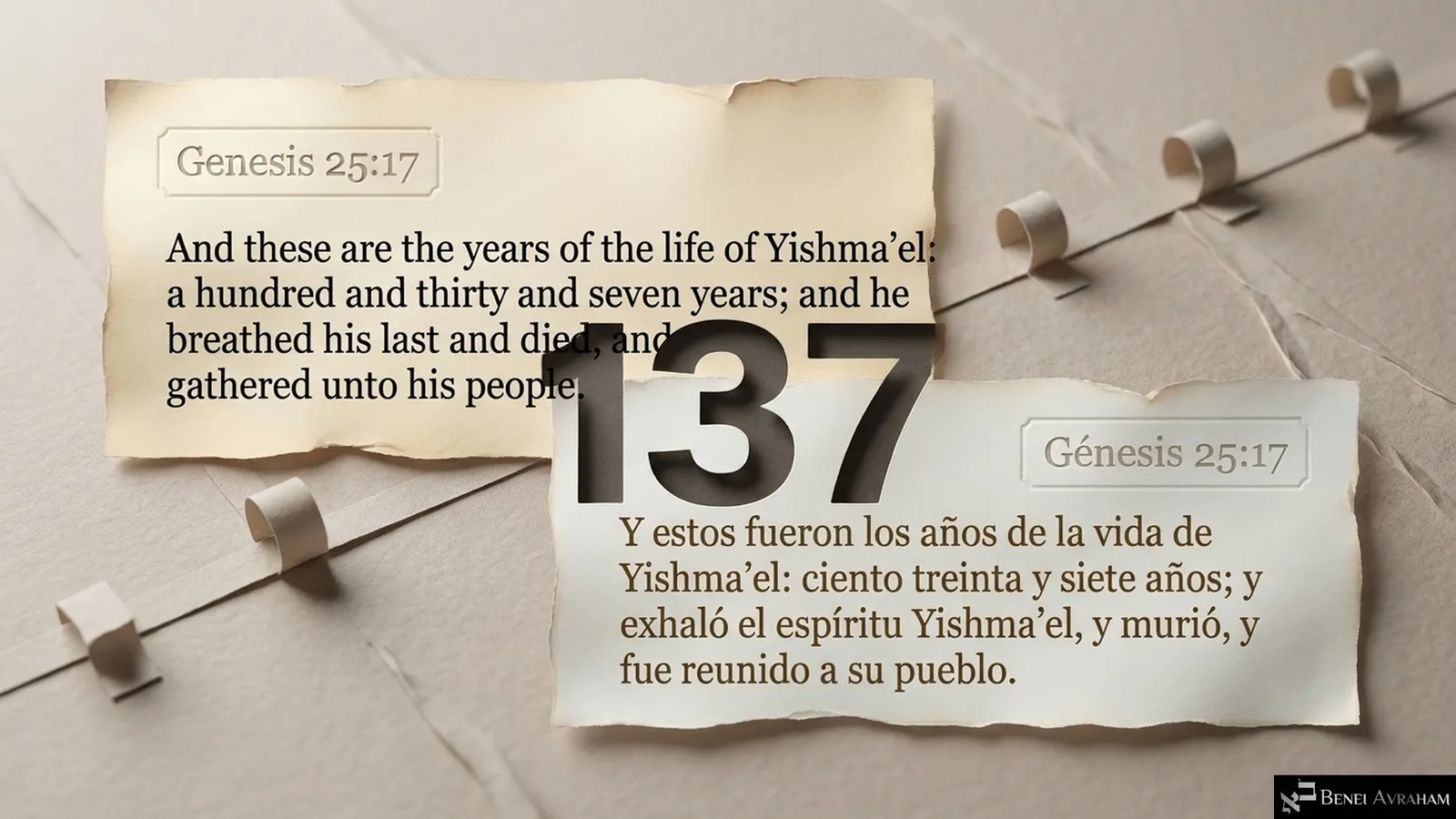
A large paper-cut “137” beside a winding paper ribbon marks the years of Yishmael’s life before he breathed his last and was gathered unto his people (25:17).
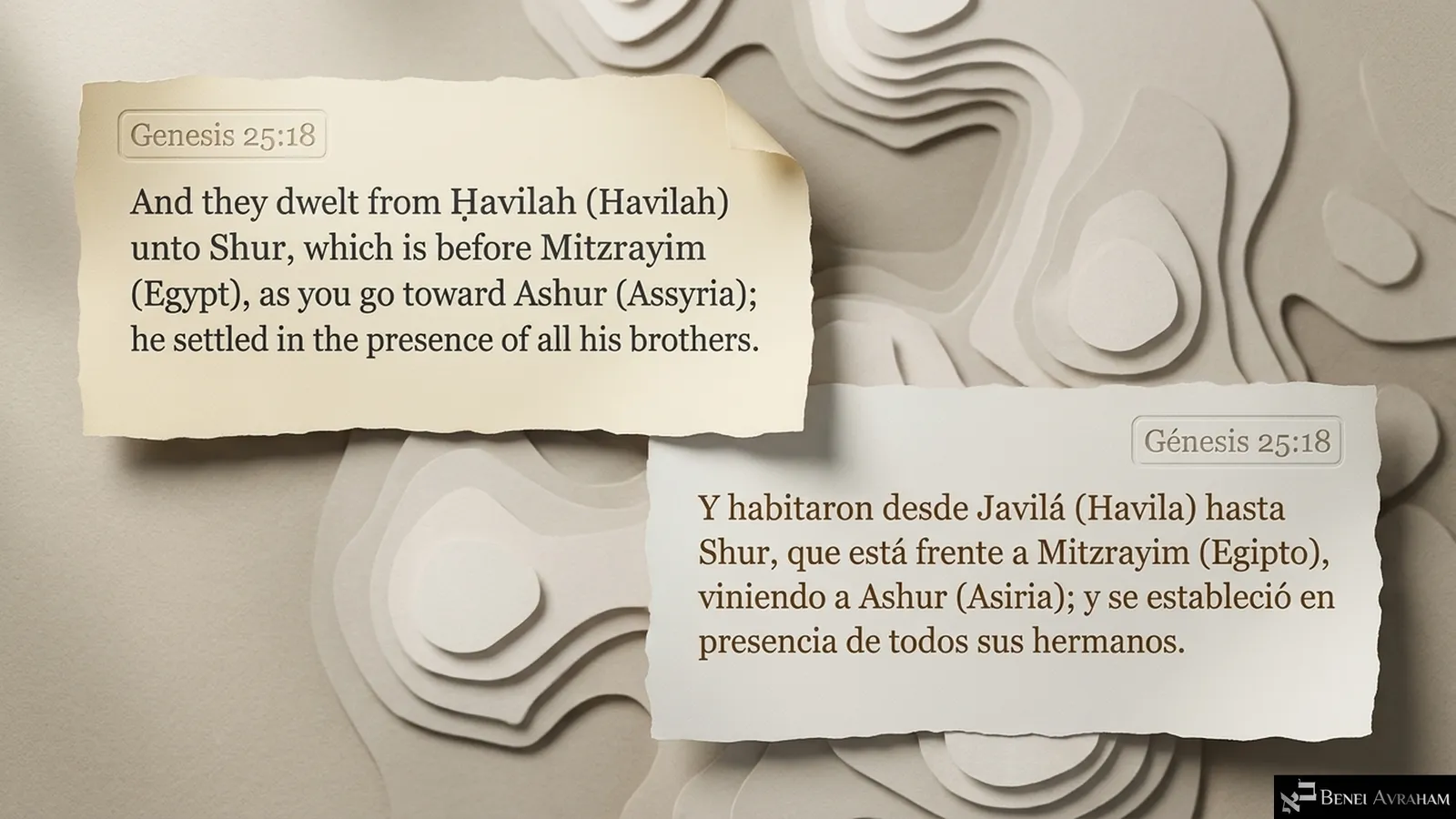
Layered paper contours like a relief map frame the cards telling how Yishmael’s descendants dwelt from Ḥavilah unto Shur, before Mitzrayim (25:18).
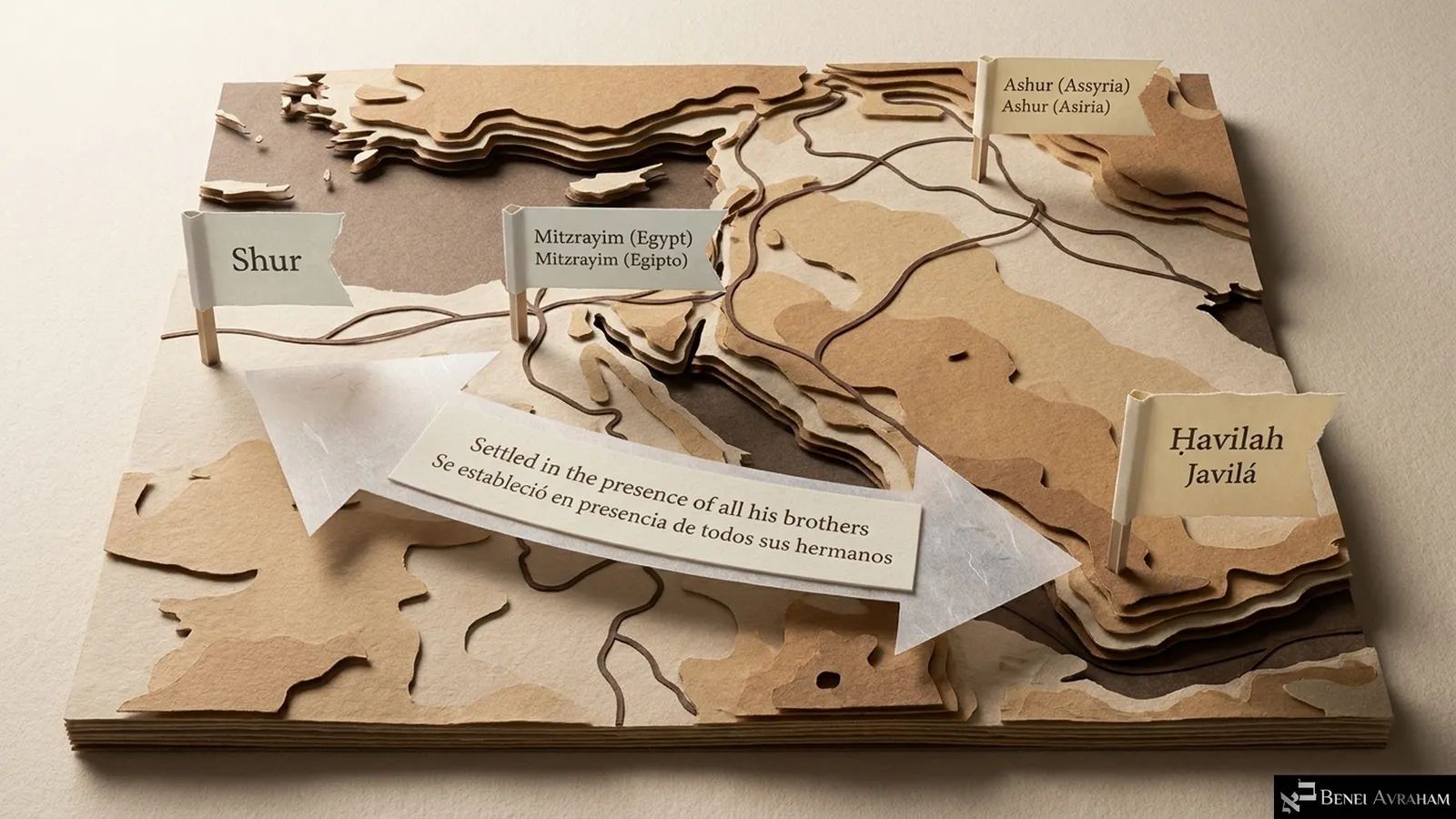
A paper relief map with flags at Shur, Mitzrayim, Ashur and Ḥavilah, and an arrow reading “Settled in the presence of all his brothers” (25:18).
Haftarah · 1 Kings 1:1–31

Haftarah: A Tale of Succession
Title slide for the Haftarah of Ḥayei Sarah, “A Tale of Succession”: a jewelled crown and a lion above an ornate parchment scroll (1 Kings 1:1–31).
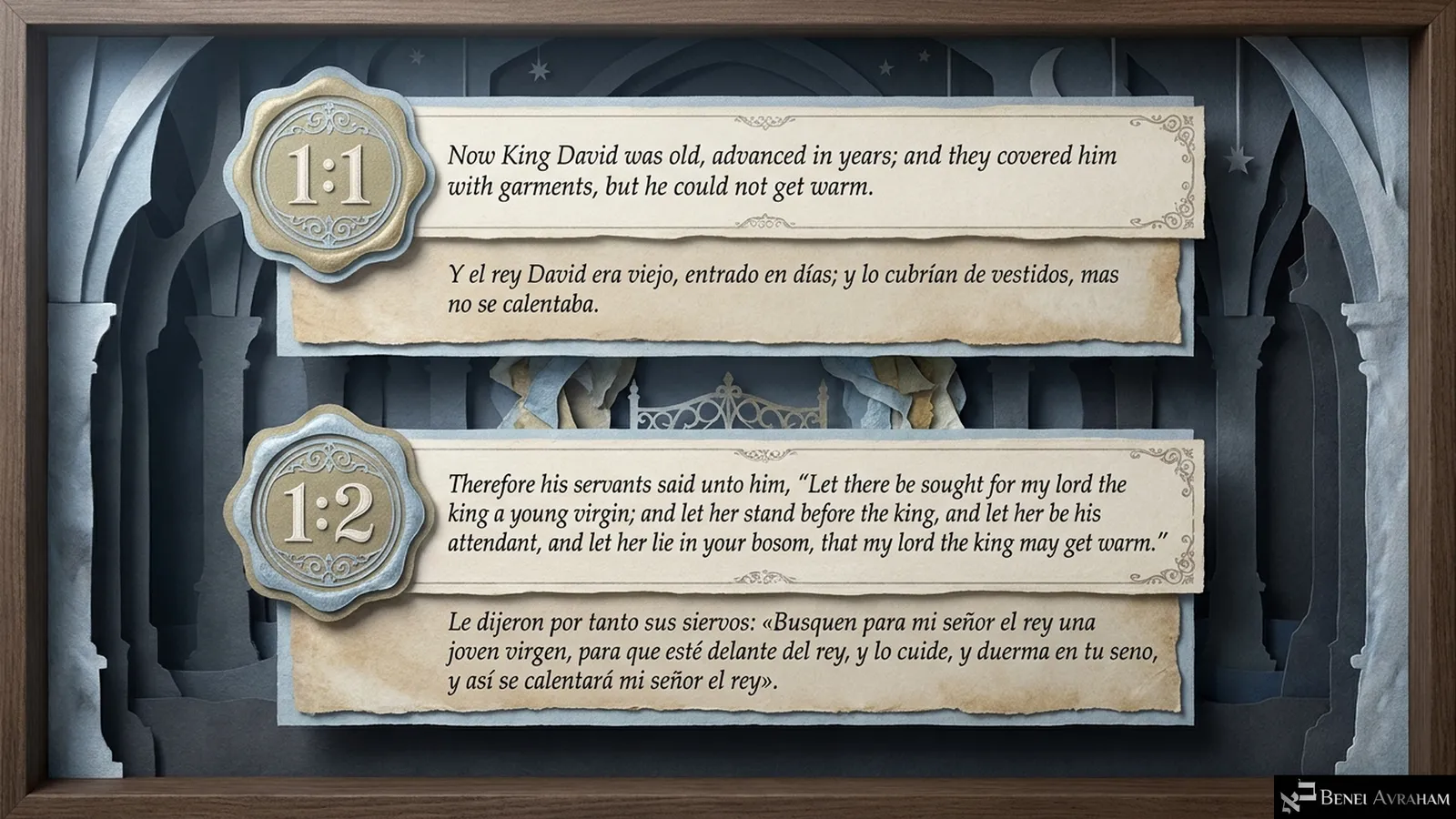
In a moonlit paper-cut palace, King David grows old and cannot get warm, and his servants propose seeking a young virgin to attend him (1 Kings 1:1–2).
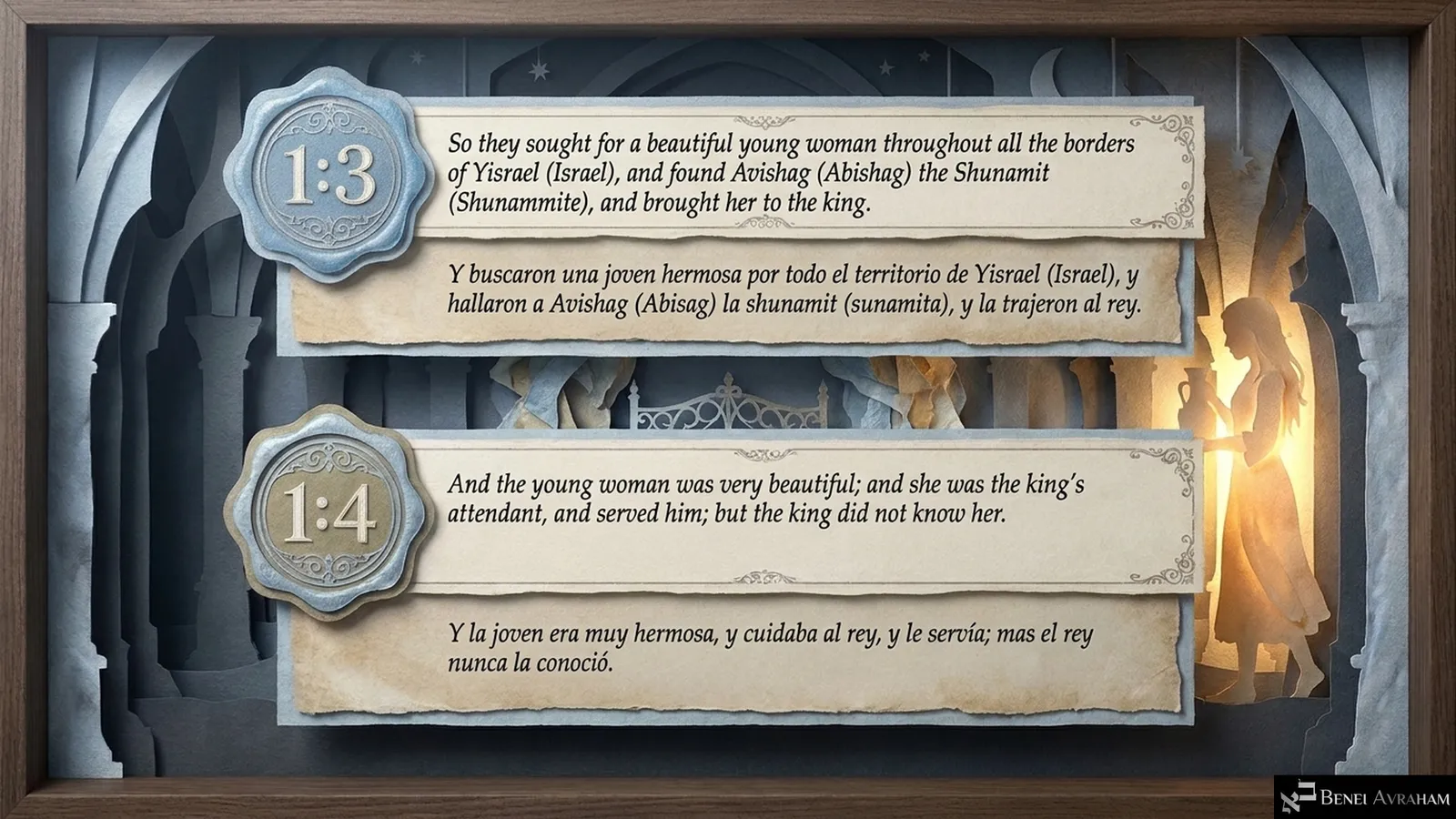
A young woman stands in a glowing palace doorway as Avishag the Shunamit is brought to serve the aged king (1:3–4).
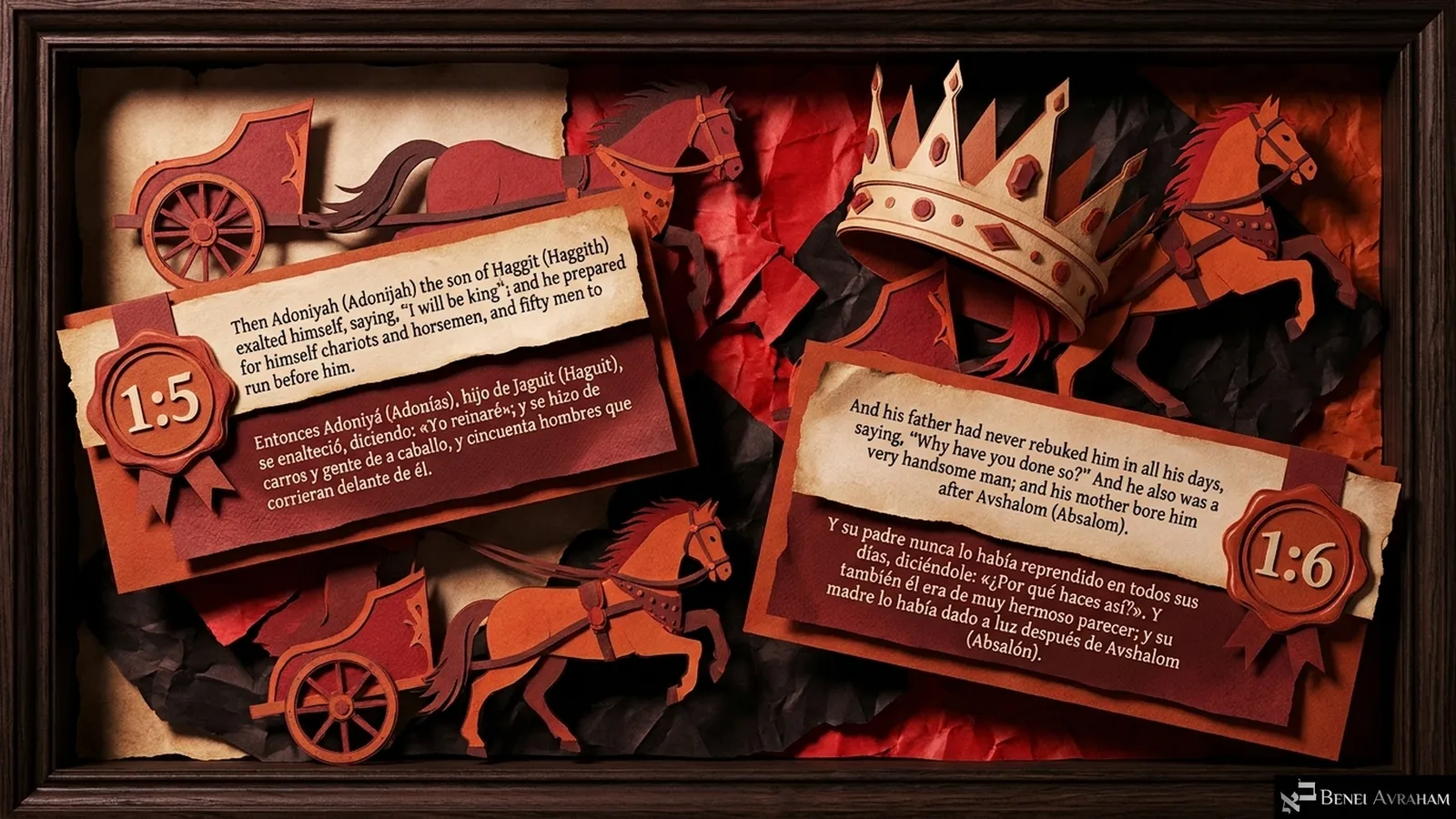
Red paper chariots, galloping horses and a crown fill the scene as Adoniyah exalts himself, saying, “I will be king,” a son his father never rebuked (1:5–6).
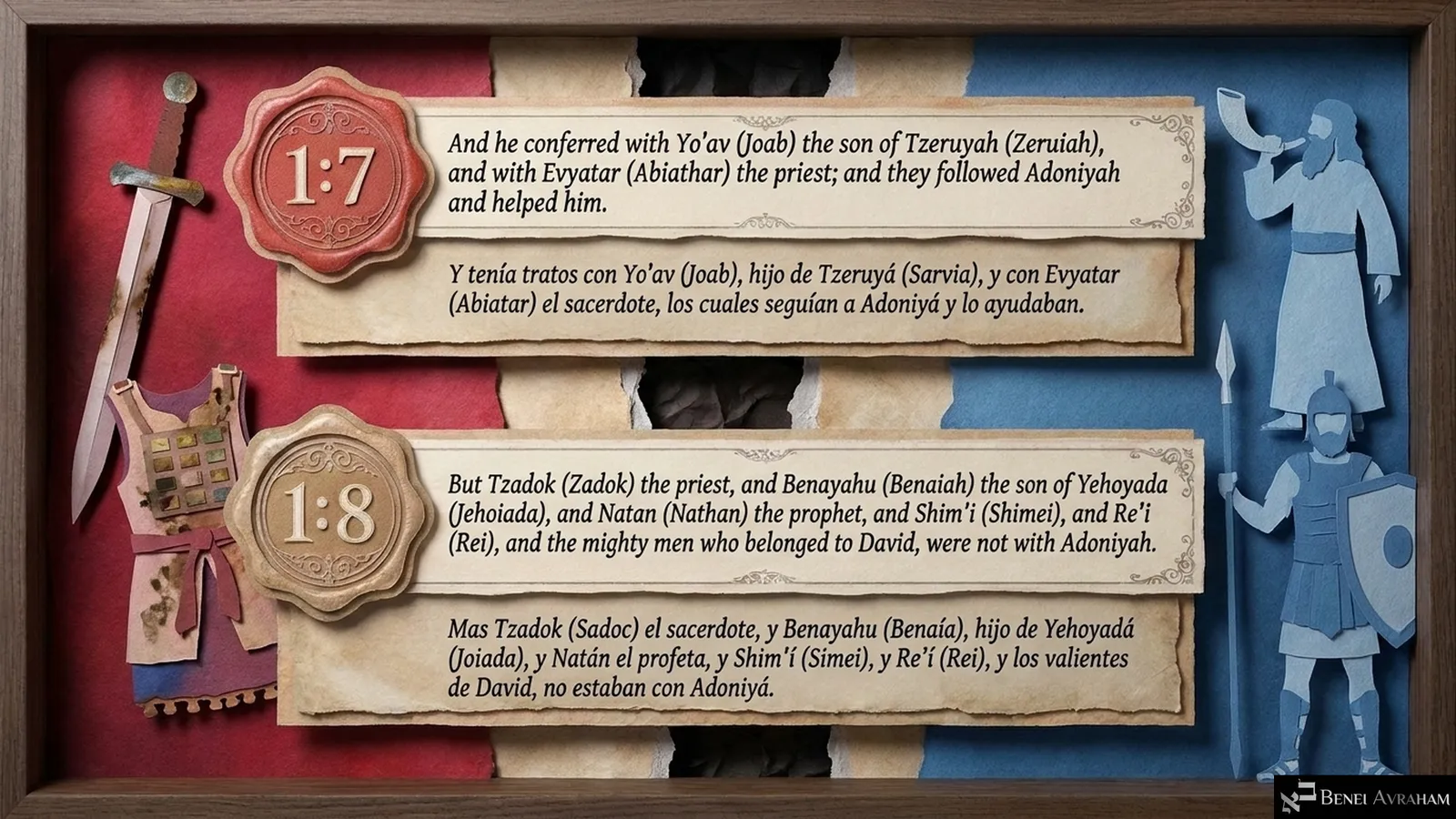
A sword and armour on red stand opposite a figure blowing a horn and a guard with a spear on blue, as Yoav and Evyatar follow Adoniyah while Tzadok, Benayahu and Natan do not (1:7–8).
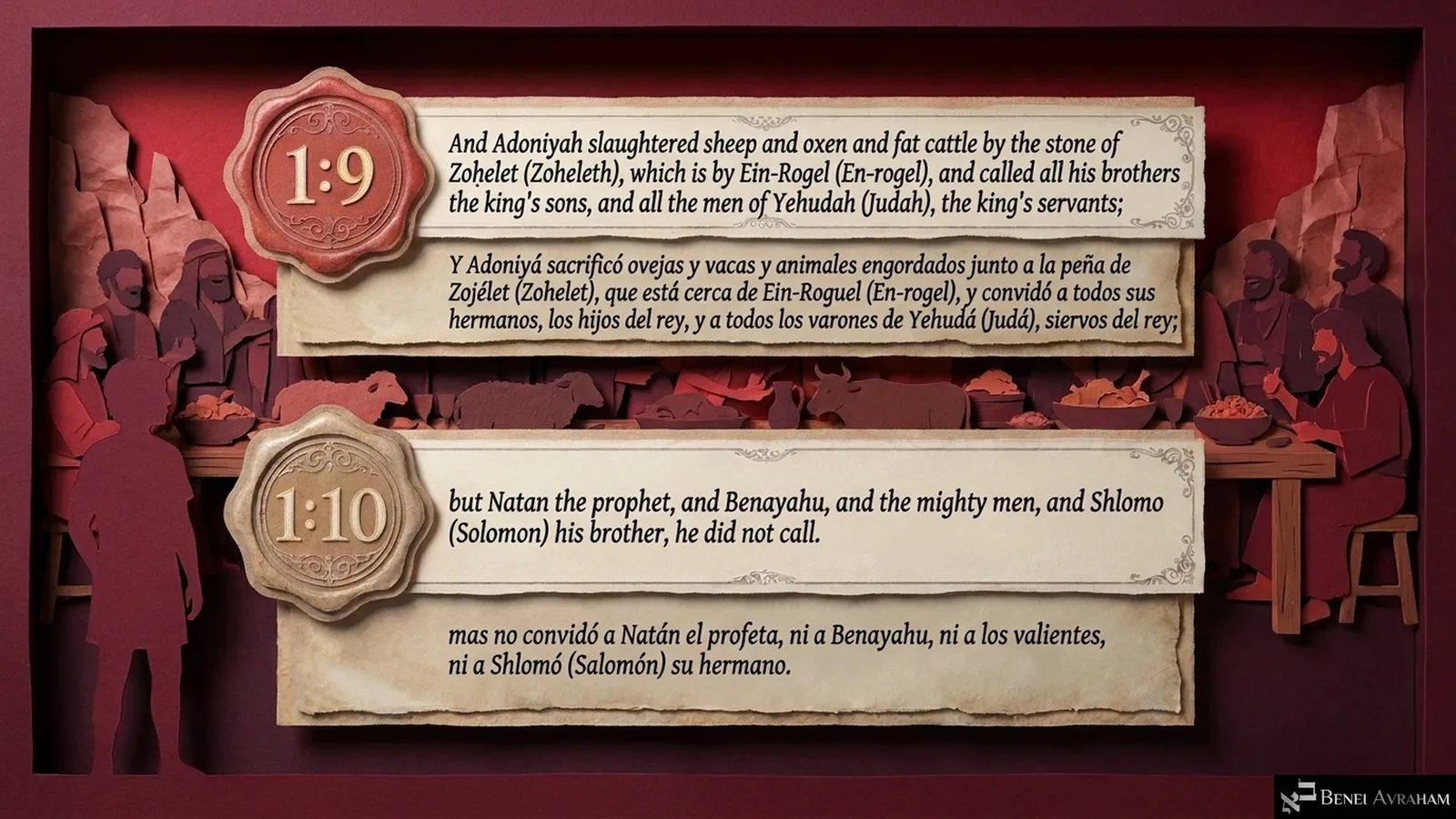
Adoniyah’s feast by the stone of Zoḥelet in dark red silhouettes, with the king’s sons invited but Natan, Benayahu and Shlomo left out (1:9–10).
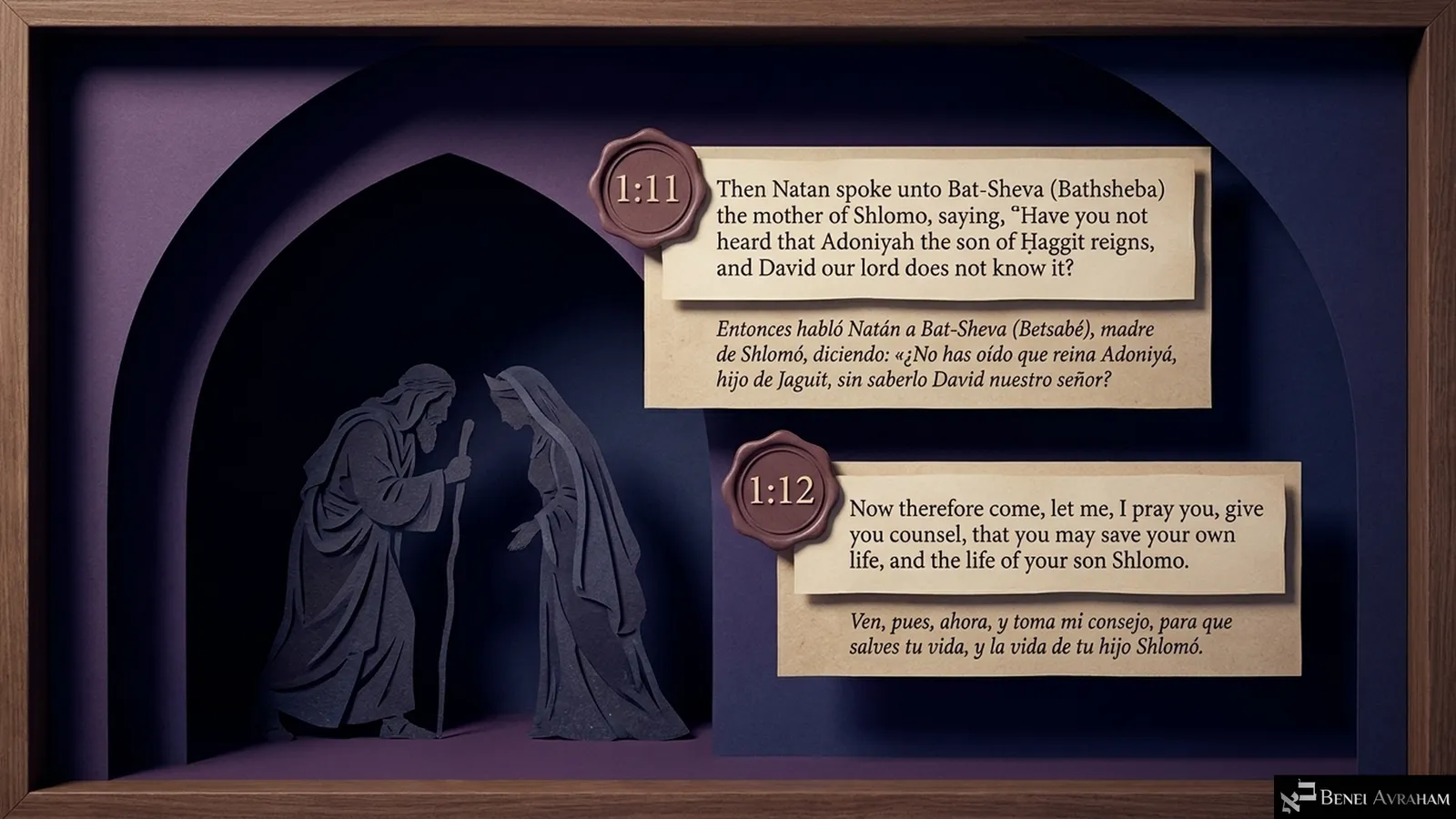
In a dark arched chamber, Natan leans on his staff to counsel Bat-Sheva, telling her that Adoniyah reigns and David does not know it, so she may save her life and Shlomo’s (1:11–12).
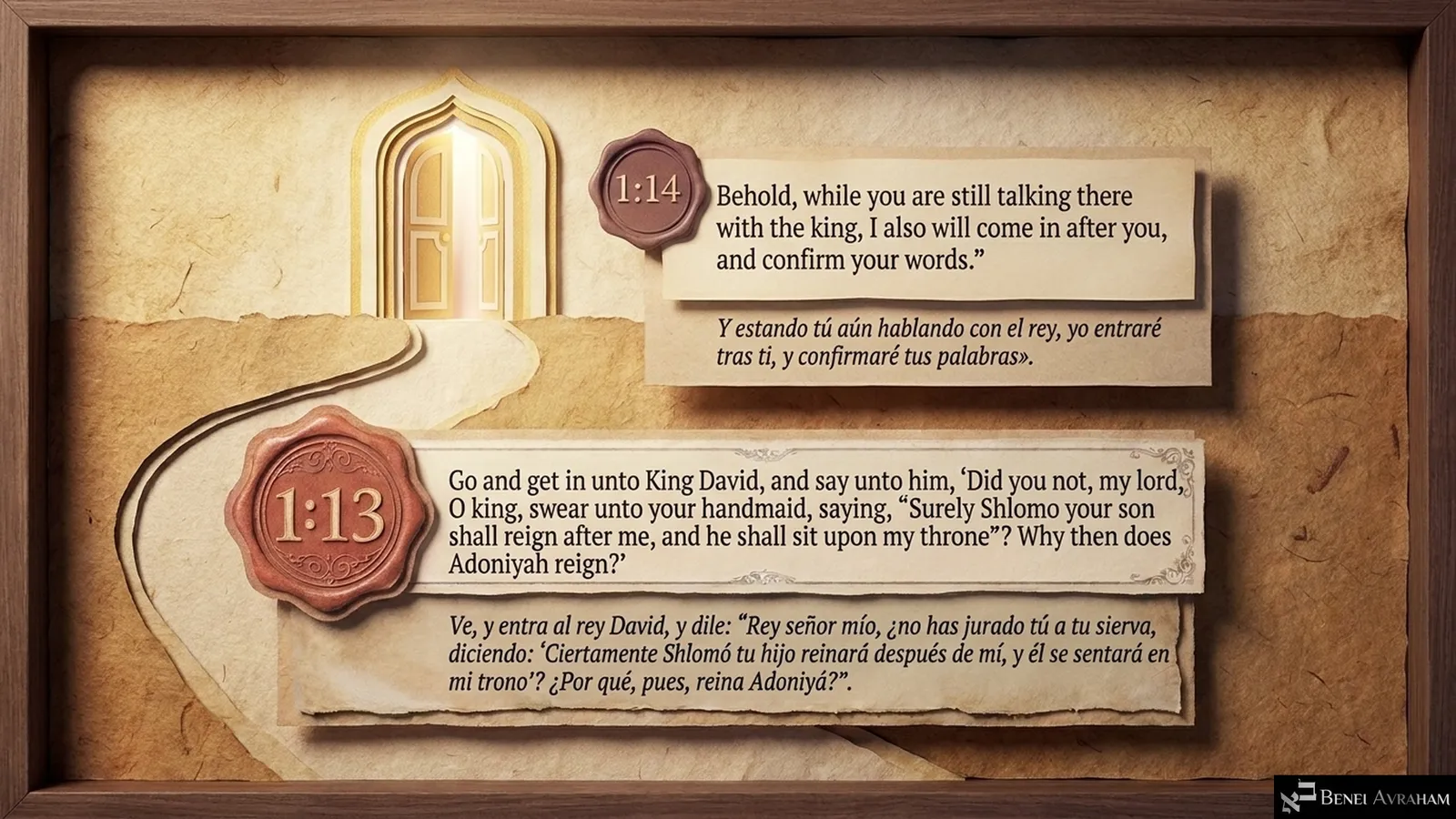
A winding paper path leads up to a glowing palace door as Natan sends Bat-Sheva in to remind the king of his oath that Shlomo would reign (1:13–14).
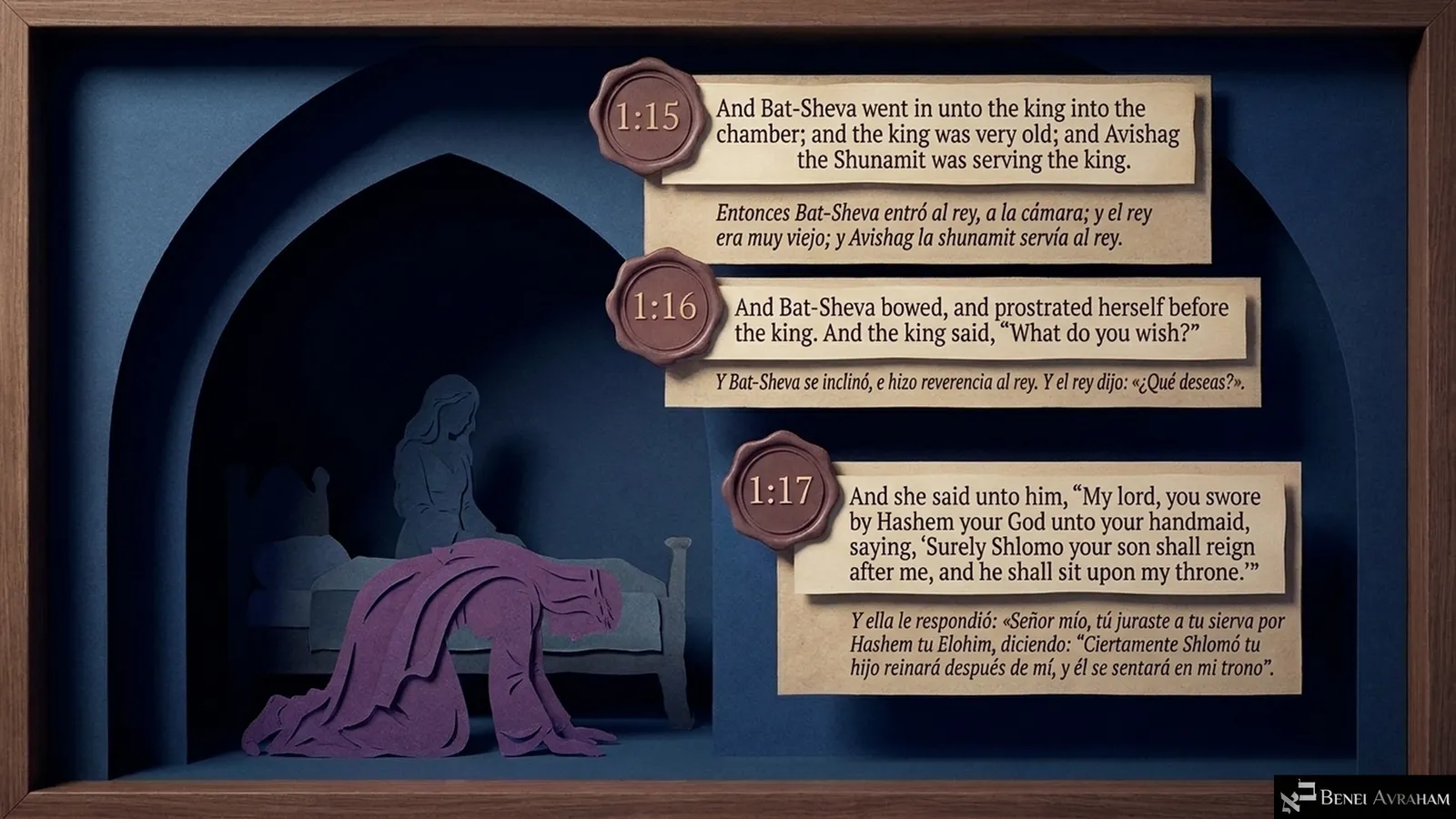
In the king’s chamber Avishag sits by the bed as Bat-Sheva bows low and reminds David, “You swore by Hashem your God,” that Shlomo would reign after him (1:15–17).
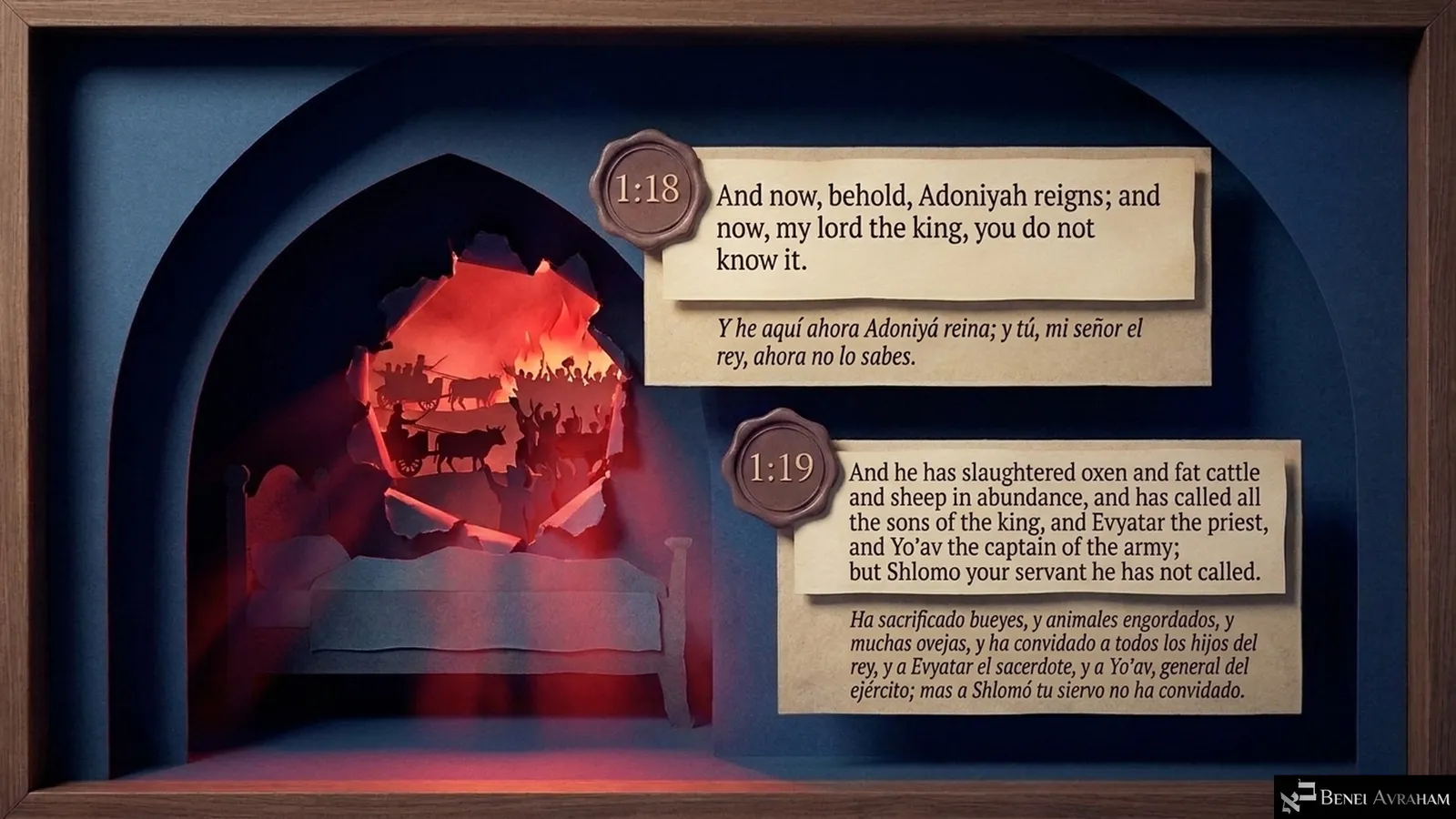
Through a torn opening above the king’s bed, a fiery scene of chariots and feasting shows Adoniyah reigning and calling all but Shlomo (1:18–19).
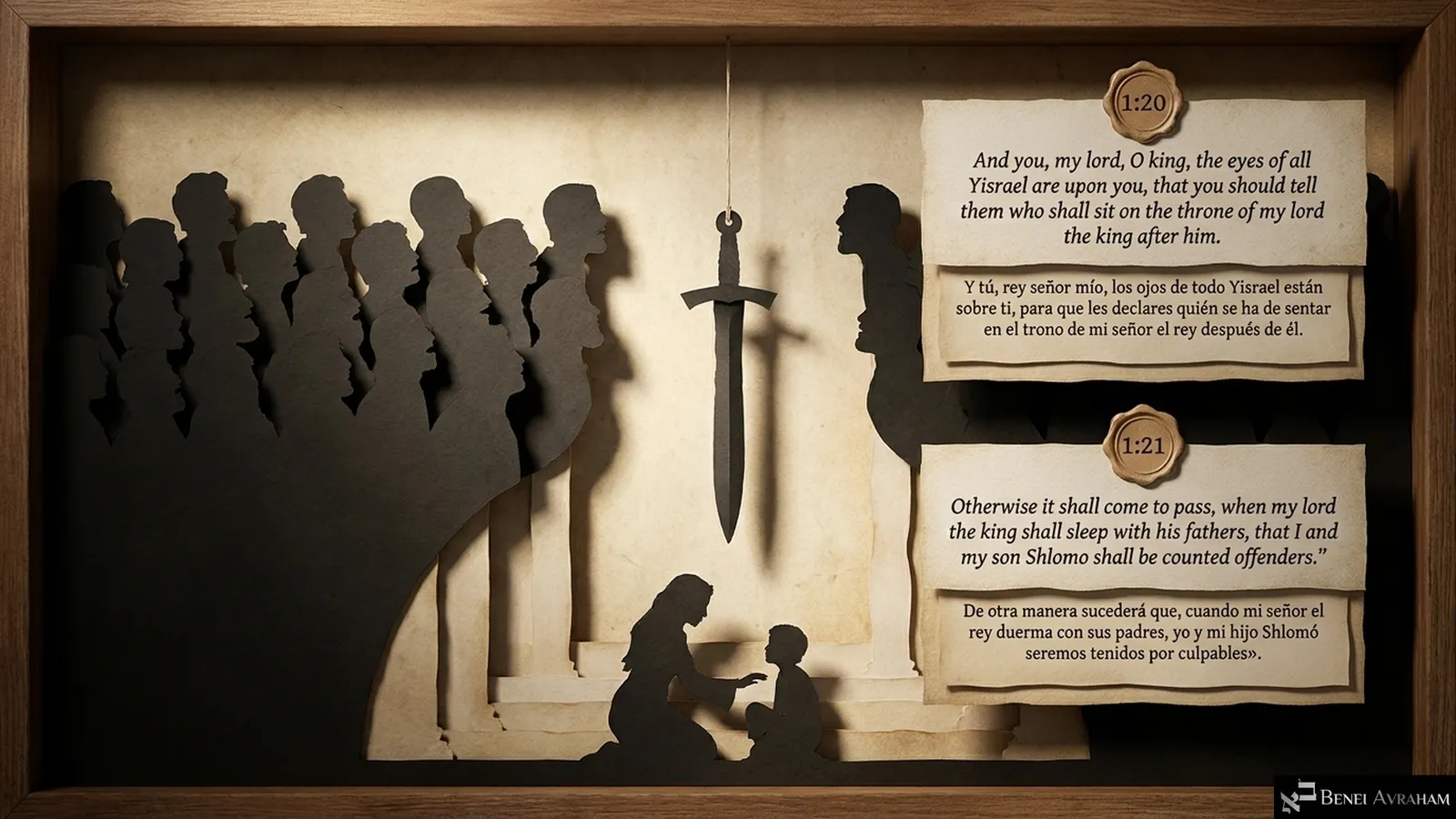
A crowd of silhouettes faces a sword hanging by a thread over Bat-Sheva and her young son as the eyes of all Yisrael wait for the king to name his heir (1:20–21).
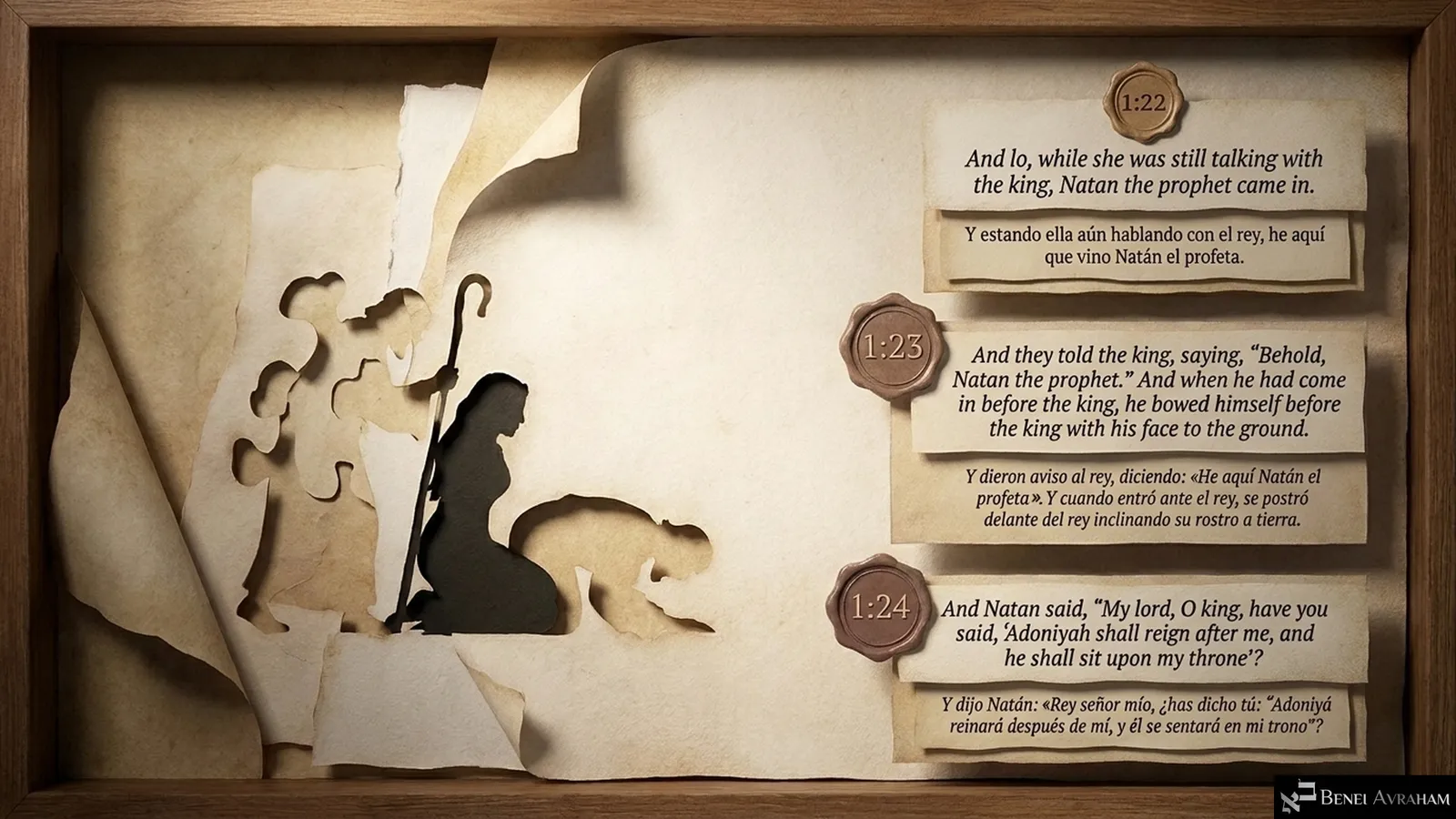
Natan the prophet, staff in hand, comes in beside the kneeling Bat-Sheva and bows before the king, asking, “Have you said, Adoniyah shall reign after me?” (1:22–24).
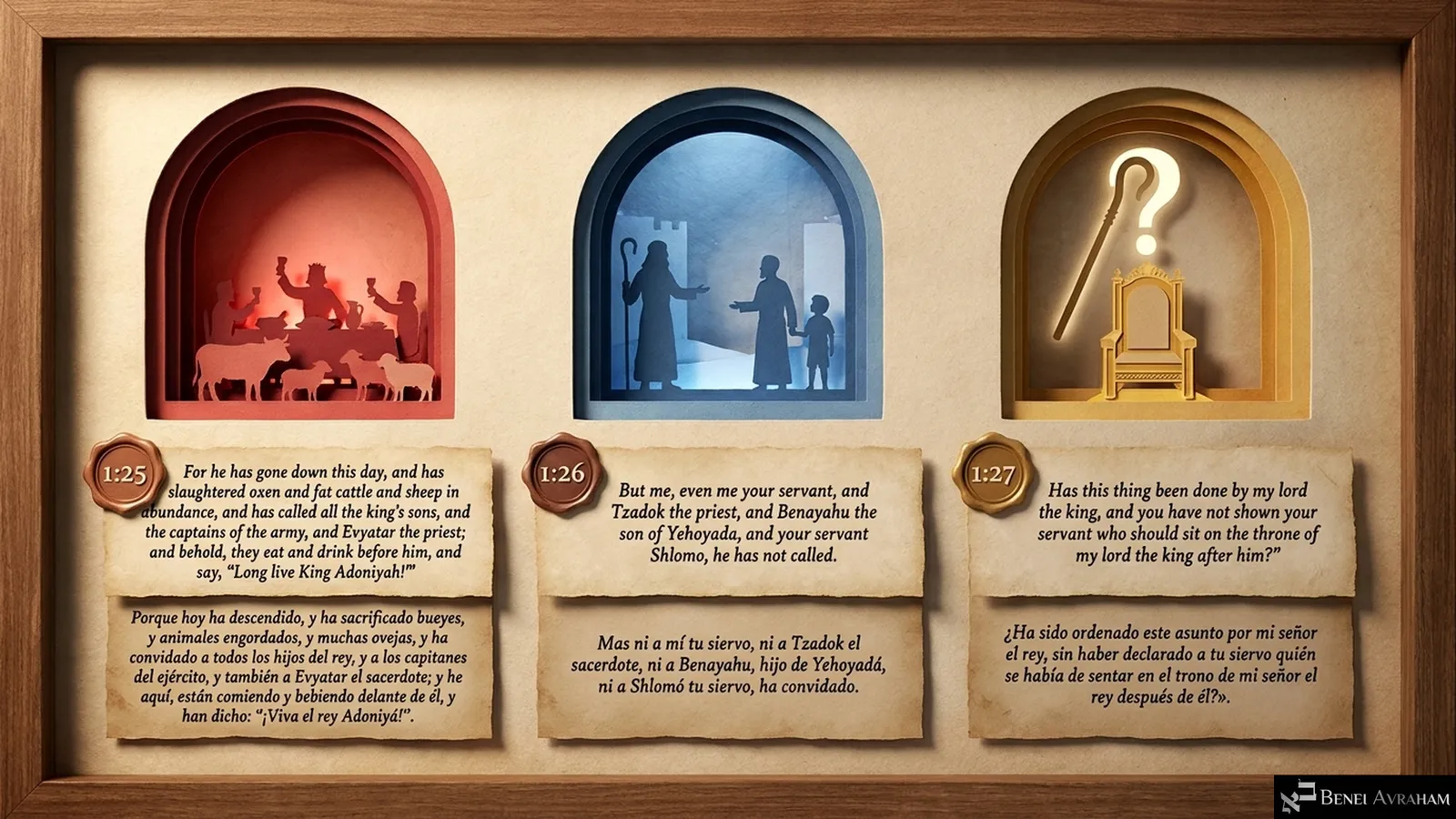
Three arches show Adoniyah’s feast, Natan, Benayahu and young Shlomo left uninvited, and an empty throne with a staff and a question mark (1:25–27).
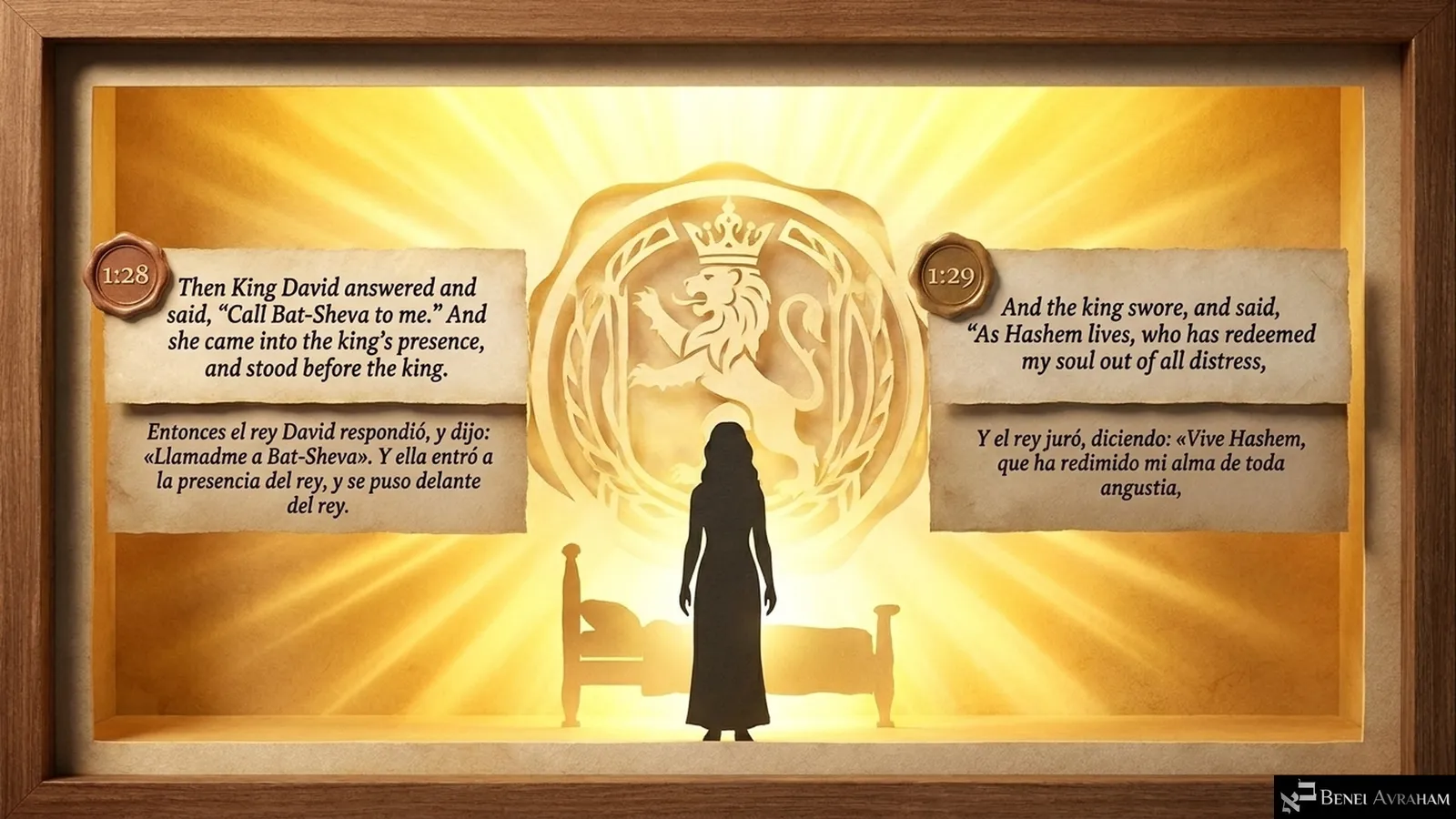
In a burst of golden light before a royal lion seal, Bat-Sheva stands by the king’s bed as David calls for her and swears, “As Hashem lives” (1:28–29).
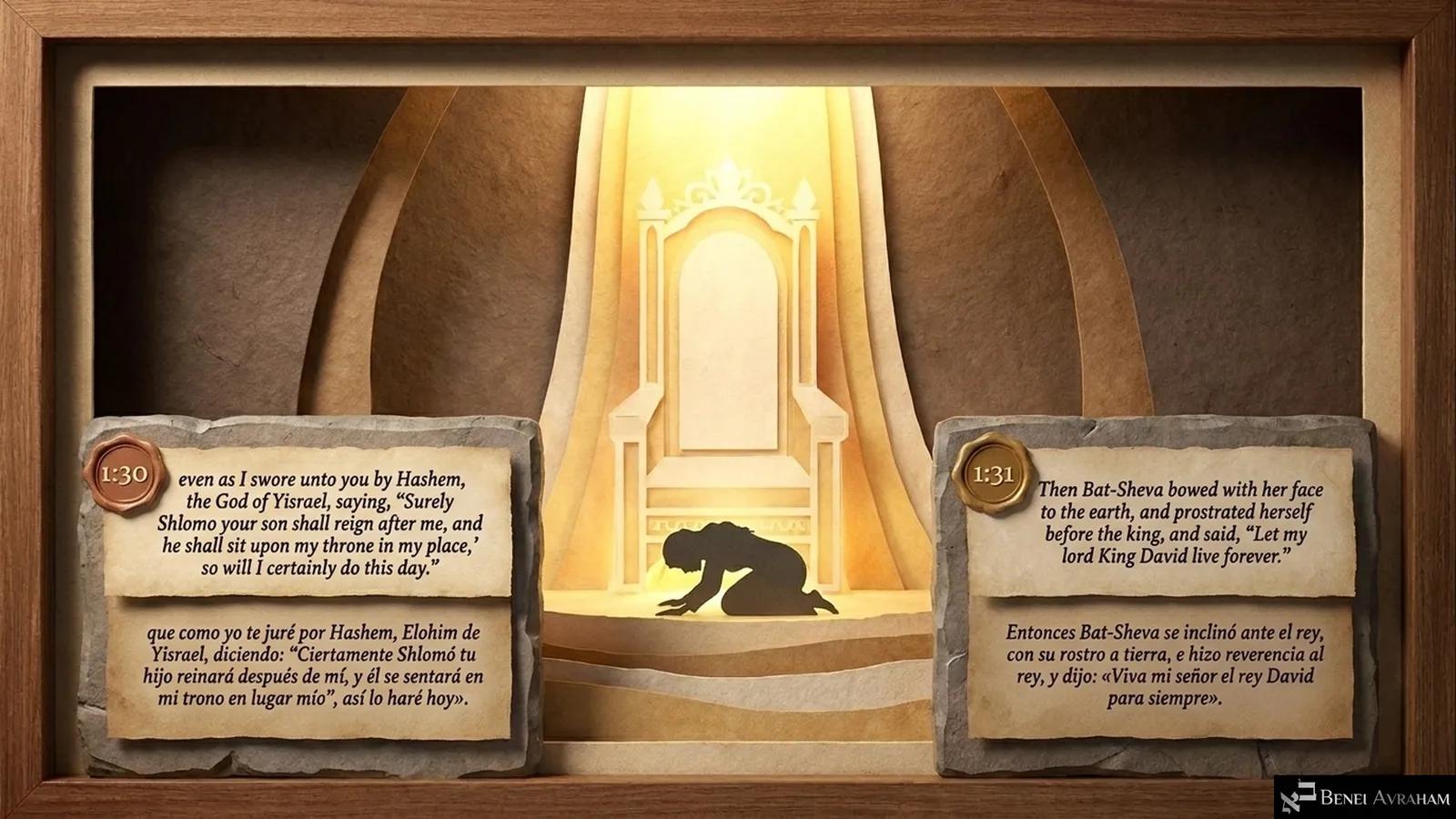
Bat-Sheva bows to the ground before a glowing throne as David swears that Shlomo shall reign after him, and she says, “Let my lord King David live forever” (1:30–31).